Influencer Speak: How Content Creators May Be Using Pitch Trends to Engage Audiences
Emma Bertoutian, Priscilla Lee, Ani Mkrtchyan, Matthew Vardanyan, Alicia Volinski
Social media is home to many forms of advertisements, some subtle, and others not. Sponsored content posted by social media influencers is often quite easy to recognize, spurring our investigation into the linguistic features that aid in this recognizability. At first, one may consider an influencer’s choice of words to be the primary contributor to their advertisement effectiveness, but what can be said of the less explicit, but essential, forms of speech modulation that are harder to identify? We conducted a partial speech analysis of various social media influencers, focusing on their average pitch and what kinds of pitch patterns they employed, inspired by previous work done by Rodero et al. to identify rhetorically effective pitch patterns. Our findings indicated an increase of 5.4% in pitch between sponsored and unsponsored influencer content. While our sample size within the context of this project is too small to serve as a sufficient representation of all female American influencers, our findings may be significant in regards to the importance of pitch manipulation in the influencer community. The concepts of taste leadership and opinion leadership, may further illuminate the ways in which influencers carefully curate pitch as a linguistic element in order to create and reinforce both notions of sophistication and feelings of relatability that contribute to their advertising success (Ki & Kim, 2019).
Keywords: Influencers, American culture, voice pitch patterns, sponsorship, consumerism
[expander_maker id=”1″ more=”Read more” less=”Read less”]
WHAT WAS OUR IMPETUS? WHAT DID WE ALREADY KNOW?
Thanks to specific linguistic cues, many people can easily identify sponsored content on social media long before a product or service is even mentioned.To examine this phenomenon, our project serves as a partial speech analysis of female American social media influencers, using the modulation of pitch as our key variable. Rodero et al.’s 2017 study titled “Pitch Range Variations Improve Cognitive Processing of Audio Messages” examined the effects of different pitch patterns on the processing of verbal information by listeners. The study’s 30 female participants were shown 16 commercials, each with a different pitch range and pattern. They found that high-low pitch patterns (e.g. a sentence where a speaker moves from high to low pitch) resulted in the highest levels of immediate recall, recognition memory, sympathetic nervous system activation, and self-reported “effectiveness.” Low-high pitch patterns were the second most effective. The study concluded that having either one of the high-low or low-high was much more effective than when they remained high in pitch or low in pitch throughout. Their findings laid the groundwork for our study.
HOW DID WE APPROACH THIS STUDY?
To explore whether influencers use pitch strategically, we conducted a small-scale speech analysis inspired by prior experimental work on pitch perception (Rodero et al., 2017), but we focused on how pitch is actually utilized by influencers in a real-world social media context. We selected a sample of eight short-form videos from TikTok created by female influencers. To make a meaningful comparison, we divided the videos into two groups: four sponsored posts (identified through hashtags such as #ad) and four unsponsored posts, including common formats like “get ready with me” and “day in the life”. These categories allowed us to examine whether pitch use differs when influencers are explicitly promoting a product versus when they are engaging more casually with their audience.
Using the speech analysis software Praat, we measured the average pitch (in Hz) of each video. This provided a general sense of whether sponsored content is spoken at a higher or lower overall pitch. However, average pitch alone does not capture the dynamic nature of speech, so we also analyzed pitch patterns within utterances. To do this, we focused on the first utterance of each video. We divided each first utterance into two parts and compared their average pitch values (e.g. subject and predicate, dependent and independent clause, etc.). Based on this comparison, we categorized each utterance into one of two pitch patterns: High-Low (HL), Low-High (LH). If the pitch difference between the two parts was minimal (less than 20 Hz), we labeled the pattern as indiscernible, since it did not show a clear directional shift.
By combining these two approaches (overall pitch measurement and first utterance pattern classification), we were able to identify both subtle differences in pitch level and broader trends in how influencers structure their speech. This method allowed us to connect quantitative acoustic data and larger questions about communication strategies and social media as a linguistic community.
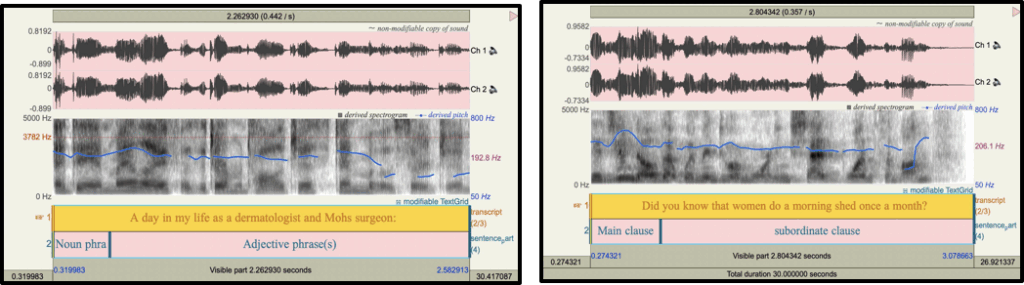
Figure 4: Ex. of Unsponsored HL Pattern Figure 5: Ex. of Sponsored HL Pattern
WHAT DID WE FIND?
There were small discrepancies between the pitch data from the sponsored group of videos and the pitch data from the unsponsored group of videos. Overall, we found that the average pitch of all the sponsored videos was 228.28 Hz, while the average pitch of all the unsponsored content was 216.38 Hz (See Figure 5). This means that the average pitch of the sponsored content creators was approximately 5.4% higher than that of the sponsored creators. In our analysis of first utterance pitch patterns, we found that the sponsored group used one low-high (LH) pattern, two high-low (HL) patterns, and one indiscernible pattern (where the increase or decrease in pitch was smaller than 20Hz) (See Figure 3). Our unsponsored group was slightly less variable, exhibiting two high-low (HL) patterns and two indiscernible patterns (See Figure 4). This being said, the sponsored group was 25% more likely to use an attention-grabbing pitch pattern than the unsponsored content creators. Being that our sample size was so small, (only eight videos total), it is hard to establish whether or not this data is truly representative of the linguistic habits of these groups of influencers. Despite this, the data we collected could point to the possibility of influencers utilizing affective pitch patterns to elicit a particular feeling towards their sponsored content.
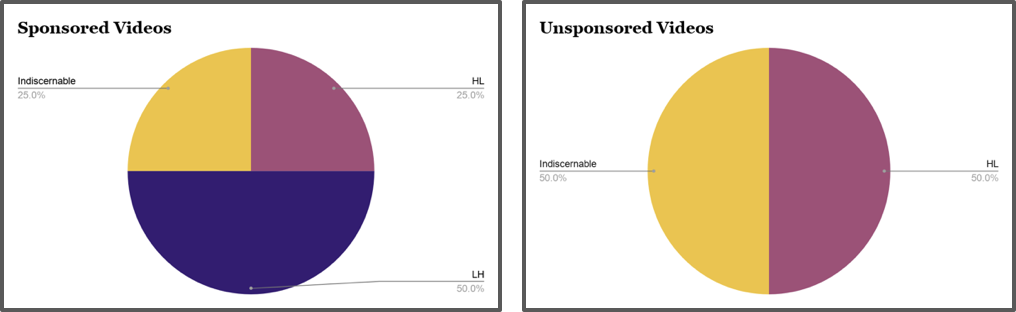
Figure 3: # of First Utterance Pitch Patterns Figure 4: # of First Utterance Pitch Patterns
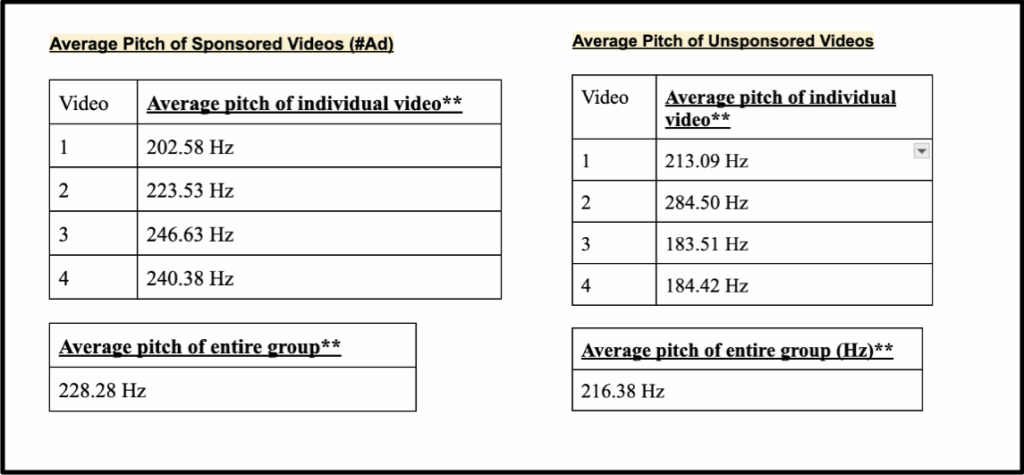
Figure 5: Average Pitch of Videos by Group (**rounded to nearest hundredth)
WHAT HAVE WE LEARNED?
Whether they know it or not, female influencers tend to use the same high-low and low-high pitch patterns that have already been suggested to increase advertisement effectiveness. The moderate increase of 5.4% in the average sponsored influencer pitch compared to the average unsponsored influencer pitch communicates to us that higher pitch may be being used by influencers in order to contribute to both the recognizability and effectiveness of their advertisements. Ki & Kim 2019 evaluate social media influencers on the basis of relative taste leadership, which refers to an influencer’s propagation of their aesthetic preferences, product-related or otherwise, and opinion leadership, which refers to an influencer’s propagation of their general preferences, frequently those that resonate with their audience or induce a mimicry response (Ki & Kim, 2019). When present in different proportions, these criteria can be mapped directly onto our sponsored and unsponsored groups, with taste leadership primarily utilized in the former and opinion leadership primarily utilized in the latter. Taste leadership builds upon, and is therefore reliant on, an audience’s existing preferences and perspective on what constitutes “sophisticated taste” (Ki & Kim, 2019). Apart from just a moderate increase in pitch and/or inclusion of HL or LH pitch patterns, variables such as key lexical choices, nonverbal gestures, prosody, embedded captions, carefully curated visuals, and sometimes even the tone established by background music, or a lack thereof, characterize the complex interplay of linguistic and non-linguistic features that contribute to effective taste leadership.
When assessing the variance within our sponsored and unsponsored groups, we believe that outliers in average pitch and pitch pattern use can be attributed to the specific strategies used when fostering their individual positions as taste and opinion leaders. In our sponsored group, one influencer’s advertisement for Canva stands out as having the lowest average pitch (202.58 Hz), as well as being the only advertisement which does not utilize a discernible pitch pattern in its first utterance (See Figures 5 and 3). This advertisement is brief, visually sleek, and the influencer is curiously out of frame for most of the clip’s duration. Low pitch is often interpreted as a sign of emotional stability (Scherer, 2003), and in conjunction with the aforementioned aesthetic choices, this influencer exhibits feelings of assurance and clarity. These feelings are likely related to the sort of “elevated” taste a potential Canva user would deem necessary in a visual development software, thereby increasing their chances of paying for the service. As such, we believe our findings suggest that pitch, as a linguistic feature, is modulated in influencer-specific ways in order to reinforce an established form of taste and opinion leadership.
References
Alasal, M. S. (2025). Investigating the role of social media language in Formation Digital Identity: The mediating effect of social influence. E-Learning and Digital Media. https://doi.org/10.1177/20427530251391105
Bucholtz, M., & Hall, K. (2005). Identity and interaction: a sociocultural linguistic approach. Discourse Studies, 7–5, 585–614. https://doi.org/10.1177/1461445605054407
Campaner, L. R., & Adriano, T. (2025). A rhetorical analysis on the language of social media influencers relative to the behavior of their followers. Psychology and Education: A Multidisciplinary Journal, 48(6), 883-914. https://doi.org/10.70838/pemj.480604
Eckert, P. (2000). The Linguistic Construction of Identity in Belten High. Linguistic variation as social Practice, 2-5, 46-138 https://web.stanford.edu/~eckert/PDF/eckertchap252000.pdf
Ki, C.-W. ‘Chloe,’ & Kim, Y.-K. (2019). The mechanism by which social media influencers persuade consumers: The role of consumers’ desire to mimic. Psychology & Marketing, 36(10), 905–922. https://doi.org/10.1002/mar.21244
Rodero, E., Potter, R. F., & Prieto, P. (2017). Pitch Range Variations Improve Cognitive Processing of Audio Messages. Human Communication Research, 43(3), 397–413. https://doi.org/10.1111/hcre.12109
Scherer, K. R. (2003). Vocal communication of emotion: A review of research paradigms. Speech Communication, 40(1), 227–256. https://doi.org/10.1016/S0167-6393(02)00084-5
Sikandar, Z. (2025). The Impact of Social Media on English Language Use Among Young Adults: Linguistic Transformations, Challenges and Implications for Formal Writing. Journal of Applied Linguistics and TESOL, 8(1)
[/expander_maker]