othering

Tech Bros and Tech Woes: A Perspective on Gendered Sociolinguistics in the Tech Industry

Jenny Wang, Madhavi Vivek, Rajana Chhin, Audrey Chung

In the expanding realm of technology, language serves as more than just a communication tool — it is a powerful marker of identity and belonging. Our study delves into gendered linguistic practices within the tech industry, focusing on “tech bro” culture and its impact on female experience and career advancement in this male-dominated field. Through interviews with male and female tech students and analysis on social media content, podcasts, and scholarly articles, we uncovered lexical variations and interactional patterns unique to the tech community. Utilizing a blend of qualitative and quantitative methods, we observed terms like “tech debt,” distinct pitch variations, and exaggerated “urban” accents during conversation. Our findings reveal that females in tech often adapt their language to conform to the hyper-masculine expectations of the tech workplace, further reinforcing clear gender biases and stereotypes within the industry. By highlighting these subtle linguistic barriers that perpetuate gender biases, we aim to emphasize the need for a more inclusive and supportive tech environment for all individuals.

[expander_maker id=”1″ more=”Read more” less=”Read less”]

Introduction and Background

The technology industry has long been known for its clear gender gap, given its predominantly male sector enforcing stereotypes and biases against women in the workplace. Despite advancements over the years, the tech industry still exhibits pervasive gender bias, often manifested through language. Recently, the term “tech bro” has been used to characterize the toxic masculinity prevalent in the workplace (Jones 2022). Our research aims to explore the unique lexicon and interactional patterns of this group, observing how they reinforce gender stereotypes and impact female experience in tech. In other words, how does the dense network of “tech bros” correlate to their use of vernacular variables? Does gender bias exist within language commonly used by “tech bros?”

Existing literature highlights the significant role of gendered language — the words and phrases that inherently carry gender bias—in shaping workplace dynamics. For instance, terms like “chairman” and “assertive” often assume a male subject, whereas words like “bossy” and “hysterical” are typically applied to females in leadership roles (Holmes 2008). Holmes’ study suggests that women in tech adopt more masculine speech patterns to gain respect and authority, such as using direct imperatives when commanding subordinates or purposefully disengaging from workplace arguments. Despite the growing awareness of these issues, there remains a gap in understanding the specific linguistic behaviors of “tech bros” and their effects on female colleagues.

Our hypothesis claims that the linguistic practices of “tech bros” do contribute to the exclusion of women from the tech sector. This exclusion manifests in daily communication, feedback, perception of qualifications, and performance evaluations. Our research aims to find out whether the male-dominated environment serves as a barrier to community entry and inclusion for women. Additionally, we aim to study the speech variation between genders within the community and its role in building professional relationships. By analyzing tech jargon and interactional patterns, we hope to uncover the subtle and pervasive barriers that gendered language creates in promoting workplace gender equality and diversity.

Methods

In order to conduct our research, our team relied on three main methods for data collection:

  1. Media: We collected quotes from social media portrayals of the stereotypical “tech bro”.
  2. Online Tech Hubs: We gathered data from popular tech communities on platforms like Discord and cross-referenced jargon with scholarly articles.
  3. Interviews: We conducted a total of three sets of interviews with male and female identifying students in the tech industry in order to evaluate of indexical shift as well as gendered language.

Going in order, we consistently evaluated new information against previous data. Further analysis included examining the spectrograms of interview snippets for distinct phonological features.

Results and Analysis

The following section will focus on the results of our study.

1. Media

As per our methodology, one of our primary sources of information was through the portrayal of stereotypical “tech bros” on social media. While this type of content is not the most scientific, it does provide context on societal expectations placed on the average “tech bro.” The comedic video linked here demonstrates several “tech bro” characteristics while mocking common stereotypes, such as remote work culture, cost-of-living in the Bay Area, and popular hobbies and vacation spots within tech communities. Additionally, we observed that the creator of the video speaks with an exaggerated coastal urban accent, similar to those of surfers or “frat bros.” This hyper-masculine accent underscores the inherently masculine nature of “tech bro” culture and serves as a starting point for developing a hypothesis surrounding the existence of a gender gap reflected in language.

2. Online Tech Hubs

Our team visited popular internet communities within the tech industry. The following quotes were taken from a popular Discord server called cscareers.dev, which is a community for student developers seeking internship and new grad opportunities in tech with over 8000 members.
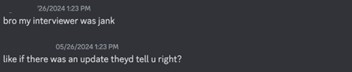
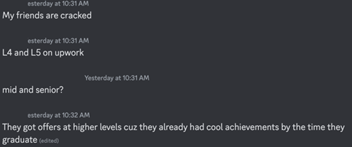
Figure 1. Pictures from a conversation on Discord server cscareers.dev.

From these quotes in Figure 1, we gather that there is a linguistic overlap between tech communities and gamer communities. This would make sense as demographically, they are both male dominated, and technology and gaming share many similarities as fields and industries. Specific jargon like “jank” to describe an interviewer of poor quality and “cracked” to describe extremely accomplished people are two examples of somewhat-expected buzzwords. According to Wiktionary, the term “jank” exists as both computing slang and video game slang, though it is rarely used in technical contexts. The usage of this term colloquially shows the adoption of computing and gamer slang in broader environments. In the same vein, “cracked,” which usually carries video gaming implications, being used to express skill levels outside of gaming also shows the adaptive nature of the jargon.

3. Interview: Indexical Shift

Our first interview was conducted with Brandon and Brian, both third-year cognitive science students at UCLA. Brandon is a product manager intern, and Brian is a software engineering intern. Because the two have an established friendship, I conducted the interview with both participants present to simulate as natural of a conversation as possible. The interview was split into first, a professional chat, and second, a casual conversation in order to evaluate for indexical shifts. Throughout the professional chat, I asked Brian and Brandon questions about their experiences in tech through their professional organizations at UCLA. The following is a transcription of a snippet of the conversation:

Brian: Ensuring like, there’s not a lot of tech debt, I think is like super important across all the projects within DevX as a whole makes everything run very smoothly and there’s no churn.

Brandon: Yeah yeah, for sure. I think that’s a huge thing too, for a lot of projects, is because people are bouncing. Um, people bounce from projects all the time, um having tech debt is just like absolutely horrendous because like people who don’t know anything about the project, for lack of a better term, like a shitload of…

For the casual conversation, I asked the participants to describe updates in their lives, as well as share gossip, as if we were catching up. This is in order to establish the most natural and comfortable environment.

Brandon: ‘Cause I remember, I had- there was something about- but anyway, I saw them together, like they were like, like homies, like they were like, headed to a party together. I was like “oh, like birds of a feather” you know? Shit, like that tracks, that hella tracks, you know? Like I’m not surprised.

Brian: That’s wild.

Generally, I noticed that participants, especially Brandon, deliberately talked slower during the professional chat. During the casual conversation, I found that Brandon tended to stutter more, as well as exhibit doubling in order to emphasize certain phrases. In the professional chat, instead of doubling phrases, he slowed down and replaced those instances with filler words.

Tech jargon was noticeably present during the professional chat, including words like:

  • Tech debt: shortcuts in code that achieve the goal faster, but at the cost of uglier, harder-to-maintain code.
  • Churn: the frequent change of resources or team members within a project.
  • Bounce (rate): the rate at which people leave or exit, typically used in the context of webpage visits.

The following spectrograms closely examine Brandon’s use of the word “shit” in both the casual and professional context.
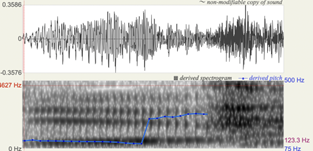

Figure 2. Spectrogram of Brandon’s use of “shit” in a casual conversation.
Figure 3. Spectrogram of Brandon’s use of the word “shit” in a professional conversation.

Here, we can see that during the casual conversation, there is a significant increase in pitch towards the end of the word, indicating a high rising terminal, which can be especially common amongst young people. In the spectrogram for the same word used in a professional context, Brandon maintains the same pitch. This is likely because a high rising terminal is not situationally acceptable in all professional settings. For example, it is usually not encouraged during job interviews. We can gather that a “tech bro” like Brandon understands this and subconsciously omits high rising terminal in professional contexts.

4. Interview: Gender and Culture

Our second interview was conducted with Jiin Kim, a fourth year Linguistics and Computer Science major who has experience as a software engineer through her internship at Microsoft. As she explained tech-specific language throughout the interview, she defined them in layman’s terms, constantly checking to assure my comprehension of the terms as an outsider to the tech sector. She mentioned how it can be hard to feel included entirely when there is a linguistic barrier made of tech jargon and expressions that often feel very exclusive and not easily accessible to be understood. She herself felt intimidated as an incomer into an established tech workspace. Linguistically, she found herself assimilating into the culture by reflecting speech patterns of those around her—particularly those superior to her. If she finds them to speak more directly, using imperatives, she herself would do the same. Even through a digital space, if she noticed someone using more emoticons in their messages, she would reflect that frequency. As a woman in the tech space, she attributes her not having much experience with discrimination or feeling out of place with the changing ages. As a young college student in an internship program seeking to give more opportunities to a diverse group of tech-workers, she felt well-supported by her company and her peers.

Our last interview was conducted with Matt Nieva, a fourth year Computer Science and Engineering major with experience as the Development Team Director for ACM (Association for Computing Machinery) at UCLA and as a software engineering intern at Cisco. Throughout his interview, he went deep into tech jargon, throwing out multiple technical words while describing tech projects in–depth. When asked about why tech-bro culture revolves so heavily around a specific tech lexicon, he responded saying that tech-jargon is perceived as proof of expertise.  There is a certain linguistic exclusivity that makes those who use it hold more authority and credibility. These common words in tech-space also seep into his daily vocabulary as well, signifying to others that he is a member of this tech-bro community.

These are words such as:

  • Bandwidth: the energy or mental capacity required to deal with a situation
  • Parallelize: a programming term to adapt a program for running on a parallel processing term
    • This however can be used in daily life as setting two thing simultaneously in motion
  • Velocity: rate of progress; a metric for work that has been done

In efforts to assimilate, he, like Jiin, would mimic the linguistic patterns of those around him. He discovered the concept of downtalking versus uptalking—downtalking being lower in pitch and making a speaker sound more assertive, and uptalking being higher in pitch and making a speaker sound less credible. One reason why downtalking could be perceived as more respectable might be that it is, based on pitch, masculine indexing, while the other is more feminine indexing.

Discussion and Conclusion

As mentioned in the background, tech-bro culture is characterized by an informal, male-centric atmosphere that often perpetuates gender discriminatory behavior and aids in maintaining the gender gap in the tech industry. The establishment of Title IX in 1972 was a turning point for the number of women in STEM, but women still face the leftover effects of this gender power dynamic now in more covert ways. This inequality is visible in how more masculine indexing ways of leadership such as authoritative/assertive styles that assert hierarchical status difference is perceived as more valid of leadership than leading in what is considered more feminine indexing ways such as facilitating group discussion.

Beyond perceived leadership and professionalism, research has found that gender comes to play even within the informal discourse at the workplace. Small talk is a core strategy to foster team and build rapport; however it is culturally coded as feminine specifically when it is not about anything that is work related or distinctly masculine. Research showed that at a female workplace, these pre-meeting talks would last longer and delve into topics such as family, beauty, healthcare, while when studying three different New Zealand IT organizations, small talk was either non-agenda work related or about sports. This may sound trivial but interpersonal discourse is key in fostering work relationships and an overall culture. This difference is visible in humor as well, where a female boss might make a self-deprecating joke to reestablish good relations with her subordinates, workplaces that were more masculine in one meeting  consisted of humor that 90% of was sarcastic or negative jibes intended to deflate the addresses. Gender hierarchy in the workplace, particularly within the linguistic space, is covert and embedded subtly into the ways we talk, the ways we perceive authority, etc.

Our findings indicate that the sociolinguistics of the tech industry have unique qualities, including those of which have an effect on the perception of male and female individuals that work in tech. As a male-dominated field, gender bias is highly prevalent in the industry. Our aim was to strengthen this claim in which this bias is confirmed and correlated to female “success” (defined as experience and career advancement), via the exploration of the pattern of language adaptation by females to male tech industry speech. Through this study, we found that the perpetuation of this gender bias is tied to the inherent gender gap that this industry creates in that a male-dominated environment contributes to female exclusion and strict gender-based hierarchy. Our research indicates that this exclusion and hierarchy contributes to the barrier against female success in male-dominated fields such as the tech industry. The continued observation of male-dominated power structures can aid in the effort for people of all genders in high-earning fields. There is thus a need for collective action toward increasingly inclusive, supportive, and sustainable workplace environments, especially the tech industry, for female-identifying people and other minority individuals.


References

Duchene, A., & Heller, M. (2012). Language in late capitalism: Pride and profit. Routledge.

Gleeson, P. (2017). Working with Coders. https://doi.org/10.1007/978-1-4842-2701-5.

Holmes, Janet. Gendered Discourse at Work , 2 Apr. 2008, onlinelibrary.wiley.com/doi/10.1111/j.1749-818X.2008.00063.x/abstract.

Ignatow, G. (2003). “Idea hamsters” on the “Bleeding edge.” Poetics, 31(1), 1–22. https://doi.org/10.1016/s0304-422x(02)00042-6.

Jones, H., & Sudlow, B. (2022). A contemporary history of Silicon Valley as global heterotopia: Silicon Valley metaphors in the French news media. Globalizations, 19(7), 1122–1136.

Moldovan, Andrei. “Technical Language as Evidence of Expertise.” MDPI, Multidisciplinary Digital Publishing Institute, 21 Feb. 2022, www.mdpi.com/2226-471X/7/1/41.

https://www.ucats.org/a-closer-look-at-gender-diversity-in-tech-departments-across-the-usa.html

miinii (@officialmiinii). (2024) “women in computer science stand up!” https://www.tiktok.com/@officialmiinii/video/7342179255356230955.

Tripathi, Pooja (@winnie_thepooj). (2024) “POV: date with a tech bro” https://www.tiktok.com/@winnie_thepooj/video/6962561340086996230?is_from_webapp=1&sender_device=pc&web_id=7279640957828630062.

Nasso, Austin (@austinnasso). (2024) “POV: you’re talking to a tech bro” https://youtube.com/shorts/qmGL0-U2Z58?si=DAulz7gNkYjYpRVH.

https://en.wiktionary.org/wiki/jank#Etymology.

https://en.wiktionary.org/wiki/cracked

[/expander_maker]

, , , , ,

The Power of Language in Human-Animal Relationships

Armine Mkrtchyan

Language is not merely a tool for communication but a fundamental factor that shapes our understanding of the world around us. The words we use when speaking about our surroundings, the symbols we attach to them, and then the meanings we impart play a profound role in sculpting our perceptions. This intricate process of assigning meaning extends notably to our interactions with non-human animals where the language we use plays a significant role in how we perceive, categorize, and consequently treat them. Whether in scientific settings, on farms, or in casual conversations, our choice of language can either humanize or devalue these creatures. It is a complex procedure that bears more weight than many realize. Through the lens of symbolic interactionism, specific linguistic categorizations, and inherent anthropocentric biases, it is clear how language shapes the views of non-human animals and reinforces human superiority within societal hierarchies, ultimately leading to their exploitation. It becomes evident that language is not just a conduit for casual expression but a driving force that molds our views and actions towards the non-human inhabitants of our shared world.

[expander_maker id=”1″ more=”Read more” less=”Read less”]

Symbolic interactionism explores the idea that symbols are used to represent the world, all in order to make sense of it (Arluke and Sanders, 1996, p. 9). These symbols are not inherently fixed but are rather subjective, influenced by an individual’s cultural, racial, and experiential background. Despite their subjective nature, these symbols are often collectively agreed upon within specific cultures or societies, shaping a shared understanding of meanings and representations. This is the core idea of E.O. Wilson’s biophilia which highlights the influence of culture on our relationship with the world around us (Herzog, 2010, p. 30). Ochs and Schieffelin’s perspective on socialization adds another layer to the understanding of how our attitudes and behaviors are shaped. They argue that, through the process of language acquisition, individuals also learn cultural meanings and become socialized into a competent member of society (Ochs and Schieffelin, 1984). It is through such a process that we can explain how and why we act in certain ways toward certain things. Our actions and attitudes are driven by the meanings that we have assigned, which have been acquired through culture, but ultimately processed and altered individually.

The way that these meanings are passed around and shared in the first place is through shared symbols. One common symbolic system is language. The words that we assign to different ideas have the power to shape and/or create new meaning associations. Taking animals as an example, there are many metaphors and sayings that affect our perceptions. For example, “It is easier to order a pound of beef from the butcher than a pound of cow” (Herzog, 2010, p. 31). This juxtaposition starkly illustrates the different connotations associated with the two terms. The act of ordering a pound of cow conjures a distressing image, evoking the inhumane treatment and handling of a living being. On the other hand, ordering a pound of beef illustrates a mundane act of ordering food. This simple example demonstrates how words are not just neutral tools for communication. Instead, they are mirrors reflecting our attitudes and moral views.

Moreover, the context from which the terms originate is significant. Different contexts justify distinct language patterns when referring to animals. In biomedical research laboratories that use animals as test subjects, animals are often depersonalized, devoid of names to maintain a detached, clinical approach. This practice ensures that researchers do not form emotional attachments to the subjects of their experiments (Birke, 2007). Similarly, in the realm of factory farming, dehumanizing and objectifying terms are used to refer to animals, reducing them to mere commodities. As seen in the documentary titled Death on a Factory Farm, employees of the Wiles hog farm used degrading terms when speaking to or about the animals they were about to painfully slaughter, serving as a precursor to the violence that would soon ensue (Simon, 2009). In one incident, an employee labels one of the piglets as a “stupid little pig” moments before smashing its head against a wall to “let it bleed out” (Simon, 2009). In another instance, another employee says that he would like to, “shoot the motherfucker [because he hates] pigs” (Simon, 2009). Such derogatory terms are most often not used when speaking about household pets who have assumed the roles of family members. The specific words used to describe animals in these contexts can either evoke neutral, negative, or positive connotations, thereby shaping the societal attitudes and treatment of these beings accordingly.

By framing animals in language that carries negative connotations, an inherent anthropocentric view is constructed. “Anthropocentrism … refers to the related idea that humanity is and should be the measure of all things” (Noske, 2007, p. 78). In this perspective, humans tend to see themselves as separate from the rest of nature, often viewing other living beings and the environment primarily in relation to human interests and needs. This perspective prioritizes human desires, ambitions, and overall well-being above those of other species. Language use further reinforces this idea, perpetuating a social construct that legitimizes human dominance and control over non-human animals. In doing so, humans are unfairly placed at the top of the sociozoological scale by their own standards, relegating non-human animals to a lower status (Arluke and Sanders, 2010, p. 170). This hierarchy becomes evident in the terms and phrases commonly used, many of which carry subtle but profound negative connotations. Words and phrases like “vermin,” “pests,” or “beasts” can connote a sense of inferiority, portraying animals as nuisances or inferior creatures in comparison to humans.

By employing such demeaning language, there comes an inherent distancing or “othering” of these non-human animals, reinforcing the perception of them as entirely separate and less deserving of empathy or consideration. This process of “othering” involves the psychological, social, and linguistic mechanisms by which individuals or groups are marked as inherently different or “other” from the dominant societal group or norm. In the context of animals, this “othering” manifests in various ways, primarily through language and societal attitudes. When animals are labeled with derogatory terms or reduced to negative stereotypes, it consequently reinforces the perception that they are less deserving of moral consideration or ethical treatment. This linguistic distancing perpetuates a societal mindset that wrongfully justifies the exploitation and mistreatment of animals, as they are perceived as inferior or insignificant compared to superior humans.

As a further result of the “othering” of non-human animals comes the widespread abuse and exploitation of these creatures to fulfill human needs and desires. This distancing from animals creates a moral disconnection, allowing for their mistreatment without due consideration for their welfare. Animals are often objectified and reduced to mere commodities or resources, viewed primarily in terms of their utility to humans. This perception of animals as inherently inferior or devoid of significant moral consideration justifies their exploitation across various industries, including agriculture, entertainment, fashion, research, and more. Consequently, as seen in the film Earthlings, animals are subjected to confinement in factory farms, exploited in circuses and entertainment industries, used for their fur or skin in the fashion industry, and subjected to unethical experiments in laboratories (Monson, 2005). The process of “othering” not only justifies but also perpetuates these exploitative practices, creating a cycle where animals are marginalized, their suffering disregarded, and their rights dismissed in favor of human interests and convenience.

The “othering” of other beings solely based on their species, otherwise known as speciesism, is best understood in the context of a familiar concept: racism. Marjorie Spiegel draws an insightful comparison between racism and speciesism, identifying them as two ways of “othering” certain groups (Spiegel, 2007). Both racism and speciesism involve the judgment and discrimination of a group of animals based on perceived differences when compared with the presumed “superior” group. As such, a subjective hierarchical categorization unfolds. This classification leads to the justification of the discrimination, exploitation, and mistreatment of those deemed inferior based on arbitrary characteristics, whether that be race or species. In both ideas, the oppression of the “other” is damaging especially because there is no sound way to decide “who is better than whom” when looking through a strictly evolutionary lens (Spiegel, 2007, p. 238). This goes to show that the differences we have drawn between groups are completely fabricated. They have no sound reasoning behind them, except for made-up ways to put others down to elevate themselves. Consequently, the unwarranted utilization and exploitation of these marginalized groups, whether in industries like factory farming, fashion, or entertainment, stand as morally unwarranted actions.

Yet, the abuse and exploitation of animals continues. The reason for doing so serves one main purpose: to elevate the status of humans. Humans, who already regard themselves as the highest-ranking animals on the sociozoological scale, employ all means necessary to ensure that no other animal comes close to occupying this level (Arluke and Sanders, 2010). To do this, they put other animals down and make sure that they cannot pass them up. One way they do this is by belittling animals. Starting from degrading words such as “treacherous and cowardly” when speaking of dogs, this manifests itself in the lowering of animals’ worth through tangible actions (Spiegel, 2007, p. 235). As a result, animals are often marginalized and viewed as inferior, justifying their unfair treatment and abuse. This is evident in dog fights. In dog fights, dogs are abused to entertain a crowd and to, ideally, boost the ego of male dog owners (Evans et al., 2007). The dogs’ well-being is the last concern of the participants in this show. They can be thrown around, seriously injured, or even killed, but those issues are not weighed as important as the reputation of the dog owners amongst peers. Just this one example is strong enough to display the unfortunate carelessness of humans regarding animals, for the sake of their own status. All in all, it just shows that humans, as a whole, lack basic empathy and ethical consideration of non-human animals.

In stark contrast to the degrading language often used to describe animals, there are instances where language suggests a paradigm shift towards recognizing animals as deserving of empathy, respect, and consideration. One notable example is in the realm of pet ownership, where animals are often treated as beloved members of the family rather than mere possessions. Communities within the FluentPet project exemplify this shift in perception (Wilson, 2021). Here, pet lovers invest significant time and effort into teaching their animals to communicate using specialized soundboards. Each pet is given a name, treated as an individual with distinct preferences and personalities, and afforded the opportunity to express themselves in meaningful ways. In this way, these animals are not only regarded as companions but also as sentient beings capable of forming deep emotional bonds with their human counterparts. The language used within these communities reflects a view of animals as intelligent, deserving creatures with inherent worth. By acknowledging animals’ capacity for communication and understanding, these practices challenge traditional notions of superiority and domination, fostering a more compassionate relationship between humans and animals. Through language that elevates animals to the status of deserving individuals, we begin to reshape societal attitudes and behaviors, paving the way for more ethical treatment of all living beings. For instance, animals on farms may be treated with greater consideration and compassion, even in the processes leading to their death. Take for example Nuria, a cow who was given a name and afforded a more humane end (DW Documentary, 2023). By recognizing animals as deserving of dignity and respect, farmers may adopt practices that prioritize welfare, opting for methods of slaughter that minimize suffering. On this opposite end of the spectrum, language once more emerges as a significant shaper of perceptions.

Exploring patterns in language use toward animals makes it clear that the root of the problem comes from an anthropocentric perspective that employs specific language patterns to maintain a particular order. The meanings attached to the degrading language that is used when speaking or thinking about non-human animals open the doors to their further mistreatment. This language often carries negative connotations, depicting them as inferior or unworthy of empathy. Terms and expressions laden with derogatory or dehumanizing implications not only influence societal perceptions but also establish a framework that legitimizes the exploitation and disregard of these creatures’ well-being. Justifications for their use and abuse in various industries deeply take over. By embedding negative connotations into our language regarding animals, we inadvertently contribute to a mindset that rationalizes their mistreatment, reinforcing a cycle where their suffering is overlooked, their rights diminished, and their exploitation perpetuated, all for the greater purpose of elevating human status. Instances where this is not the case are, unfortunately, few and in between.

All in all, by examining these facets, this paper underscores the intricate relationship between language and human perceptions of animals, emphasizing the significant role of linguistic constructs. Language not only shapes our thoughts but also dictates the actions that come thereafter. Influenced so much by our thoughts and attitudes, our actions reflect the degrading perceptions we have of animals. With these in mind, the wrongful exploitation of animals unfolds with the accompanying wrongful justification of them. As a further consequence of their use and abuse, humans hold on tightly to the idea that their actions are warranted as a means of maintaining their high status on the sociozoological scale. Ultimately, these detrimental consequences stem from the immense power vested in language, underscoring its ability to shape societal attitudes and perpetuate unjust practices towards non-human animals.

References

Arluke, A. & Sanders, C.R. (1996). 9-18 in Regarding Animals (Animals, Culture and Society). Temple University Press.

Arluke, A. & Sanders, C.R. (2010) The Sociozoologic Scale. Regarding Animals (Animals, Culture and Society) (167-186). Temple University Press.

Birke, L. (2007). Into the Laboratory. In Kalof, L. & Fitzgerald, A. (Eds.), The Animals Reader (323-335). Berg Publishers.

DW Documentary. (2023). Factory farming, animal welfare and the future of modern agriculture [Video file]. Retrieved from: https://www.youtube.com/watch?v=6VOqNVt_cmM.

Evans, R., Kalich (Gauthier), D, & Forsyth, C.J. (2007). Dogfighting: Symbolic Expression and Validation of Masculinity. In Kalof, L. & Fitzgerald, A. (Eds.), The Animals Reader (209-218). Berg Publishers.

Herzog, H. (2010). Some We Love, Some We Hate, Some We Eat: Why It’s So Hard to Think Straight About Animals. New York, NY: Harper.

Monson, S. (Director). (2005). Earthlings [Film]. Nation Earth.

Noske, B. (2007). Speciesism, Anthropocentrism, and Non-Western Cultures. In Flynn, C.P. (Ed.). Social Creatures: A Human and Animal Studies Reader (77-87). Lantern Books.

Ochs, E. & Schieffelin, B. (1984). Language acquisition and socialization: Three developmental stories and their implications. In R. Shweder, & R. Levine (Eds.), Culture Theory: Essays on Mind, Self and Emotion (276-320). Cambridge University Press.

Simon, T. (Director). (2009). Death on a Factory Farm [Film]. HBO.

Spiegel, M. (2007). An Historical Understanding. In Flynn, C.P. (Ed.). Social Creatures: A Human and Animal Studies Reader (233-244). Lantern Books.

Wilson, L. (2021). From Clever Hans to Bunny the TikTok Dog: An Exploration into Animal-to-Human Communication. The Macksey Journal, 2(1).

[/expander_maker]

, , ,

Friendships For the Mono- and Bi-Lingual College Student: Does The Language You Speak Make A Difference in How You Make Friends?

In the course of our research, we endeavored to examine the difference in the social life of UCLA college students, their capacity to make friends, and satisfy their need for social support with fellow students based on their status as a monolingual or bilingual speaker of English. Drawing on support from previous research dealing with different student populations, we concluded that the way bilingual students are treated and form communities is different from the way monolinguals do, whether because of “othering” by speakers who did not understand their language or culture or because they sought out connections with those who shared their ethnic or linguistic ties. It was almost universal in our interviews where bilingual speakers had a bias towards others who spoke their non-English language, and many of the monolinguals admitted to preferring the company of those who shared their language and culture. Not every speaker who our team interviewed had an exactly identical experience, however- none of our bilingual speakers derived from the same culture or spoke the same language- and there were a few interesting perspectives and outliers.

[expander_maker id=”1″ more=”Read more” less=”Read less”]

Introduction

In the course of their education, every single college student is faced with the point where they realize that they are now, effectively, adults and they are now- potentially for the first time- on their own. Many freshmen entering into university are inbound to a new city, a new county, new state, or even an entirely new country. The locale, culture, and people are all different than where they are originally from.

This gap in culture (and sometimes even language) and the responsibilities endowed by college life can make it difficult to make friends in a new place– but it is also extremely pivotal for mental and social well being to make social connections, given the loneliness of being far from home and isolation from the people one knows.

Researching into how students- particularly bilingual students- construct their new friendships is invaluable for anyone incoming to university. Using UCLA students as a representative example, we can explore some of the insights of students navigating their new social landscape. Most specifically, we want to see how- and if- monolinguals and bilinguals differ when it comes to trying to form friendships, and why.

Methods

We began our research on how bilinguals and monolinguals in college differ in making friends and their differing level of social satisfaction in the college environment by consulting various published literature on the subject, but intended to do our own interviews and surveys to see if anecdotal evidence matched the broader scientific findings. Across many different papers- from bilingual college students of Chinese or Latinx descent all the way to the bias of young monolinguals from 4 to 6 years of age- we found a fairly consistent trend: bilinguals liked grouping with other bilinguals (specifically ones of their own culture and language) and monolinguals tended a slight cognitive bias (conscious or otherwise) towards other grouping with monolinguals.

When we had seen the literature’s assessment of college friendships by bilinguals, we formed our hypothesis about the difference: that bilinguals tended to find it easier to make friends with bilinguals from their culture and that monolinguals tended either to “not care” or stick with monolinguals. We also sought out whether being bilingual was particularly helpful in making social connections compared to monolinguals, and other potential social benefits of bilingualism in a predominantly English-controlled American college environment. With our research question and secondary and tertiary objectives in mind, we put our theories and the broader literature to the test through qualitative and quantitative surveys and interviews.

Results

The results of the interviews with bilinguals were quite illustrative in relation to social connections through their first language. Using direct quotes from interviews, many of the answers were quite straightforward:

INTERVIEW 1 – BILINGUAL

I: Did you find it easier to connect and meet people who spoke the same language as you?

J: Yes, most definitely. Uhm, I really liked connecting with people who also spoke Vietnamese because there were a lot of like, you know, Vietnamese language jokes that only Vietnamese people would get.

INTERVIEW 2 – BILINGUAL

I: Have you found it easier to connect with people who speak the same language as you?

S: […] Definitely, yeah. It’s much easier. I mean, it really depends on the person. I wouldn’t say, “Oh, I’m going to go and make friends with whoever speaks Farsi”, because some people, it depends on how approachable they are or if I vibe with them. But in terms of, uh, having one thing to connect. Yes, I would say it’s much easier for me to connect to someone who speaks the same language versus non-Farsi.

INTERVIEW 3 – BILINGUAL

I: Do you find it easier to connect with people who speak the same language(s) as you?

E: Definitely, I feel like it’s easier if I can also speak your language and understand what I’m saying.

Very consistently across bilingual speakers that we interviewed, sharing a language and culture was essential for forming social ties. They expressed feeling at ease with people who spoke their own language, or how being among a bilingual speaker enhanced their experience more than it would be otherwise.

INTERVIEW 1 – MONOLINGUAL

I: Do you think language or culture has any bearing on who you choose to interact with in your day to day life?

A: Uhm, I definitely would say so… it’s easier for me to talk to or be around someone who has the same language and culture as me.

INTERVIEW 2 – MONOLINGUAL

I: Do you think language or culture has any bearing on who you choose to interact with in your day to day life?

J: […] It kinda sounds like an asshole thing to say– but I think that I’m accepting of a lot of different cultures and stuff– I think there are some subconscious elements, but I wouldn’t know what they were, there are probably some groups I don’t interact with just off of, I don’t know, vibes…

Monolinguals, in their parallel questions to the bilingual speakers, hedged a little when answering but definitely seemed to be likewise confident that they preferred to stay within their own clade of language and culture.

When it came to the respective groups, bilinguals occasionally went out of their way to specifically connect with their own cultures (the interviewee of Interview 1 professed to specifically looking for Southeast Asian clubs on campus in order to connect with others and make friends) but monolinguals had no such compunctions (no one we interviewed was, for instance, attending an “Born American Student” or “Monolingual English” club, nor did such a thing exist). When it came to making friendships, typically they went for shared hobbies unrelated to culture (in one case, gaming clubs).

This is not a zero sum game, however– in many cases, bilinguals at UCLA had the added benefit of being able to draw on their extra language in addition to monolingual strategies, meaning their opportunities for friendships were more diverse than the monolingual opportunities. Though the potential for exclusion from these more monolingual-oriented experiences is possible, rejection by monolingual speakers for language or culture was rare, if existent at all.

Many of the monolinguals we interviewed wished they had the opportunity to learn other languages and be fluent in them, viewing their English exclusion as a missed opportunity; only one subject of interview wanted to remain a monolingual, though when pressed admitted he would like to learn American Sign Language (and advocated that the rest of the US did, as well) and wasn’t sure if that counted as being multilingual. Broadly speaking in our interviews, bilinguals were happy to provide a social bridge for monolingual to monolingual interactions and delighted to get the chance to share their culture or language with others. No one regretted being bilingual or thought it made their social opportunities at UCLA worse.

Conclusion

A primary finding that stood out in our research was the absence of in-group/out-group biases within both groups. Instead, we found that linguistic diversity among the population created opportunities for cultural exchange and that in-group preferences did not completely discourage students from reaching out to other cultures. Our results revealed that bilingual students expressed stronger social ties to their cultural communities compared to their monolingual counterparts who conversely expressed a strong desire for second-language acquisition.

These findings led us to conclude that: (1) linguistic diversity can foster a positive school environment by providing opportunities for cultural exchange among different cultures, (2) in-group/out-group biases do not pose negative effects on social relationships among bilingual and monolingual students, (3) bilingualism and second-language acquisition can potentially enhance the social experience of students.

However, these findings are limited by several factors within our study. Firstly, our population of study is representative of a unique environment with a relatively higher proportion of politically liberal, ethnically diverse students than the average American university. Our research is also limited to the study of English-speaking students, restricting our data from being representative of environments with speakers of different dominant languages. Given these limitations, we believe that linguistic diversity thrives most successfully in diverse environments wherein cultural exchange is a social norm and speakers are collectively open-minded to learning

We believe that our findings contribute to a deeper understanding of the importance of second-language acquisition in childhood development to enhance social connections in adulthood and potential positive effects of bilingualism in combating cultural differences in diverse settings. Furthermore, these findings highlight the importance of language knowledge of one’s own culture in strengthening community ties and individual identity. We believe that future research in bilingual and monolingual differences should focus on studying the potential positive effects of second-language acquisition on social skills, educational development, and in overcoming cultural differences.

References

Byers‐Heinlein, K., Behrend, D. A., Said, L. M., Girgis, H., & Poulin‐Dubois, D. (2016). Monolingual and bilingual children’s social preferences for monolingual and bilingual speakers. Developmental Science, 20(4). https://doi.org/10.1111/desc.12392

Toppelberg, C. O., & Collins, B. A. (2010). Language, culture, and adaptation in immigrant children. Child and adolescent psychiatric clinics of North America, 19(4), 697–717. https://doi.org/10.1016/j.chc.2010.07.003

Wang, L., Gonzalez, P. D., Lau, P. L., Vaughan, E. L., & Costa, M. F. (2023). “Dando gracias”: Gratitude, social connectedness, and subjective happiness among bilingual Latinx college students. Journal of Latinx Psychology, 11(3), 203-219. https://doi.org/10.1037/lat0000227

Sebanc, A. M., Hernandez, M. D., & Alvarado, M. (2009). Understanding, Connection, and Identification: Friendship Features of Bilingual Spanish-English Speaking Undergraduates. Journal of Adolescent Research, 24(2), 194-217. https://doi.org/10.1177/0743558408329953

Xu, C. L. (2022). Portraying the ‘Chinese international students’: a review of English-language and Chinese-language literature on Chinese international students (2015–2020). Asia Pacific Education Review, 23(1), 151–167. https://doi.org/10.1007/s12564-021-09731-8

[/expander_maker]

, , , , ,

Long-Term Implications of Accent Representation in Children’s Media

Roni Grushkevich, Claire Lim, Kendall Vanderwouw, Daniel Zhou

Who is the most memorable villain you remember from your childhood era? We hypothesize that most individuals will remember a villain portrayed with a heavy accent. This is due to the phenomenon of othering and the idea that children will have a hard time connecting with a character that sounds different from them and the standard variety. We will use the childhood show, Phineas and Ferb, to see if this is true. Through the conduction of a survey, analyzing voice recordings in Praat, and doing sound analysis from an episode of Phineas and Ferb we will be able to see the phenomenon of othering. In Praat, we proved this phenomenon by showing that Dr. Doofenshmirtz, the antagonist, has a lower /æ/ F1 formant than Phineas and a native American English speaker. Additionally, analyzing the Hail Doofania episode, we were able to prove that Doofenshmirtz pronounced 6 sounds differently from a native American English speaker. All this proves the idea that villains are portrayed differently with negative attributes on children’s TV shows.

[expander_maker id=”1″ more=”Read more” less=”Read less”]

Introduction/Background

Our group proposes to do research on the effects of villainization in children’s shows, which has possible long-term implications on people’s perceptions of membership in their ingroup. This membership perception can be encapsulated by the phenomenon of othering. Othering is a process in which a more powerful and/or influential group reinforces differences and authority over another (Williams & Korn, 2017). Hence, our project aims to look at whether adoption of othering by children’s shows’ producers for villainous characters influences the audience’s perceptions of who is “good” (ingroup) and who is “bad” (outgroup).

Previous studies conducted by sociolinguists Calvin Gidney and Julie Dobrow (1998) indicated most foreign accented villains in children’s shows were exclusively European such as German, British, and Russian. These accents in particular are often characterized with high arrogance, intelligence, and socioeconomic status while low on friendliness, pleasantness, and honesty (Shah, 2019). These sentiments towards European accents may be reflective of World War II, Revolutionary War, and Cold War hostilities that dominated media/propaganda during the time.

We choose to look at the children’s show Phineas and Ferb, where the main antagonist, Dr. Doofenshmirtz, is portrayed with an exaggerated foreign accent. Heroes typically speak in the standard dialect and embody idealistic standards (Dobrow & Gidney, 1998), which holds true for the show’s protagonists, Phineas and Ferb. Through these differences in speech patterns, nonstandard accents become associated with “otherness” and antagonism (Constable, 2021).

Specifically, we will examine the phonetic production of vowels by accented English-speaking villains. When villains “mispronounce” English vowels, it is an obvious symbol of their communicative differences. That said, Dr. Doofenshmirtz is a great character to analyze as he does not speak the standard variety like most viewers. In addition, we plan to explore another linguistic variable that distinguishes Doofenshmirtz’s speech from the American standard.

Survey

To supplement the studies we will be citing, we also found it important to explore the existence of accented villains within the media we consumed as children and the types of accents they adopt. To do this, we constructed a preliminary survey prompting college-aged students (aged 18 to 24) to name “the most memorable villain from the movies/shows [they] watched as a child (age 2-10).” In the second iteration of the survey, participants were asked if they distinctly recall the villain expressing an accent coupled with any overall impressions they had of the villain. The survey was shared amongst UCLA students and other college friends, as long as all participants fell within the age range.

Figure 1

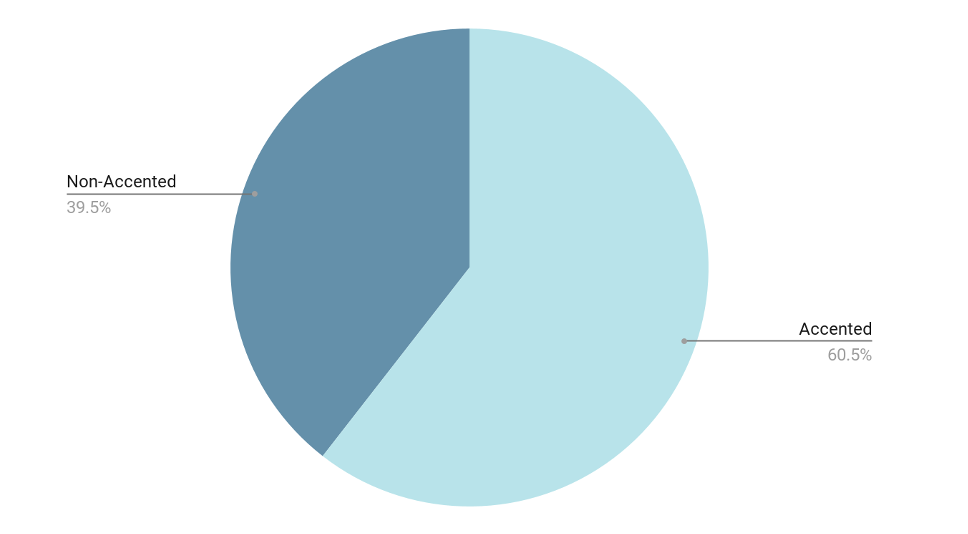
The results of the survey demonstrated a strong prevalence of foreign accents in the villains chosen, evidenced by Figure 1. Out of 38 total responses, 23 responses were accented villains. Not only was a clear statistical significance demonstrated of the trend, but actually a majority of the villain choices were associated with foreign accents. Given the breadth of types of respondents coming from California to Uganda to Singapore accompanied by the complete autonomy of selection of the villain, the survey results highlight the abundance of accented villains in popular media.

Figure 2

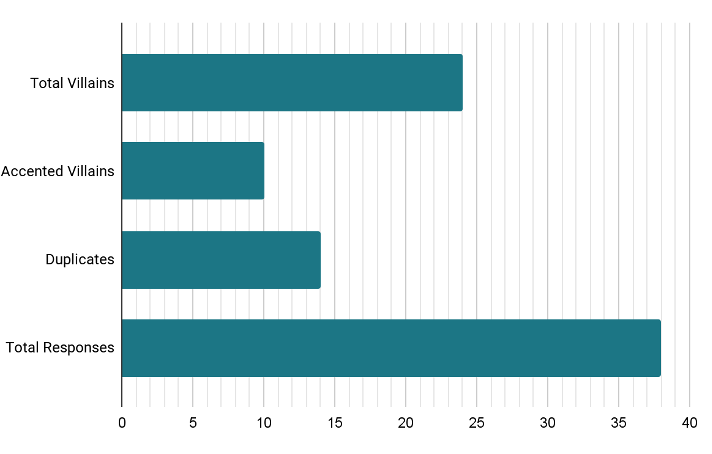
In addition, the values from Figure 2 present an interesting observation regarding the variety and uniqueness of villain selections. In total there were only 24 unique villains chosen. Of those 24 villains, only 10 were actually accented. The disparity between the number of accented villains and number of accented responses is explained by the incredibly high number of repeat selections of villains that are accented. For instance, Ursula (who adopts a condescending British accent) from The Little Mermaid was listed five times and Dr. Doofenshmirtz was repeated four times. In fact, of the 14 duplicate responses, 12 contained accented villains. This informs on the consolidation of popular children’s media; most children consume much of the same television shows and movies (Disney).

Another interesting note revolves around the traits that stand out or make the villain memorable. The comments on the impressions of the villain fell into two camps: “scary”/“intimidating” or “cool”/“respectable”. Not a single comment mentioned how the villain sounds or their voice. The “othering” of the villains through accented speech takes an implicit or passive effect on the viewer rather than being the focal point. The viewer then subconsciously categorizes the character in the out group. These observations and key takeaways from the survey helped propel the main research portion of the study and guided the choice of Dr. Heinz Doofenshmirtz as the character to analyze. 

Methods

Our main goal in collecting data was to show that Doofenshmirtz follows German pronunciation patterns when speaking English. His nonstandard speech is meant to “other” him from the protagonists, determining his characterization as “bad.” Therefore, our data took a two-pronged approach: first, we used the spectrogram software Praat to analyze sound files of subjects speaking. This way, we could look at Doofenshmirtz’s articulatory properties and point to which features distinguish him as German-sounding. Then, we sent speakers of English to watch an episode of the show and comment on which non-standard features they heard him using. Between these two methods, we gained an understanding of both how Doofenshmirtz speaks and how English-speakers perceive his speech.

When researching in Praat, we looked at the vowels /i/ and /æ/. /i/ exists in both English and German, so we expected no statistical difference in the articulation of a German versus English speaker. On the other hand, the /æ/ sound exists in English but not German. In English, German-speakers tend to replace this sound with the higher vowel /ɛ/, which is easier to produce based on its presence in the German language.

We used samples from four subjects in Praat, two German-accented speakers and two “standard” American speakers. Our “baseline” German accent came from a 50-year-old native speaker who grew up in Düsseldorf but now lives in California. We were particularly interested to see how his speech compared to the German-accented Doofenshmirtz (who, intriguingly enough, was voiced by an American actor). We also took a sample from an 18-year-old native Californian, who we determined to have “standard” vowel production. Finally, we compared her speech to the pronunciation of the show’s protagonist, Phinneas (who was also voiced by an American actor, but was intended to have “standard” production).  We wanted to ensure that our samples were comparable, so our first three subjects all produced Doofenshmirtz’s catchphrase: “Curse you, Perry the Platypus!” (/i/ is found in the word /ˈperi /, while /æ/ is prominent in /ˈplætəpəs/). Although no samples existed of Phinneas saying this sentence, we located a similar sentence where he still said both words in proximity.

Our other group of data came from observing Doofenshmirtz’s speech throughout an episode. Inherently, the sounds of the German language differ from those of English. Some sounds feel tricky or unnatural to non-native speakers. Speakers often replace an English sound with a similar foreign counterpart they know how to produce, just as how a German speaker might replace /æ/ with the /ɛ/ sound of their native language. Often, it is this sound substitution that creates the phenomenon of an accent. For our project, we wanted to see how American individuals perceived Doofenshmirtz’s so-called accent. We asked two college-aged subjects to watch Season 1, Episode 26 – “Out of Toon / Hail Doofania” and explain how his speech compares to the substitutions we’d expect of a German-speaker.

Results/Analysis

Praat

In Praat, we used the “View & Edit” feature to analyze something called formants (lines on a spectrogram that indicate a concentration of energy). For this project, we were mainly concerned with the first formant (F1), which shows vowel height. We found that all of our subjects had similar F1 formants for the vowel /i/. Since this sound exists in both languages, non-native speakers made no substitutions when speaking English. Our Hz values ranged from 376.7 to 460, meaning there was less than a 100-Hz difference between how the two most differently accented speakers produced the vowel. Therefore, the data showed no trends in production variations for Germans and Americans in /i/.

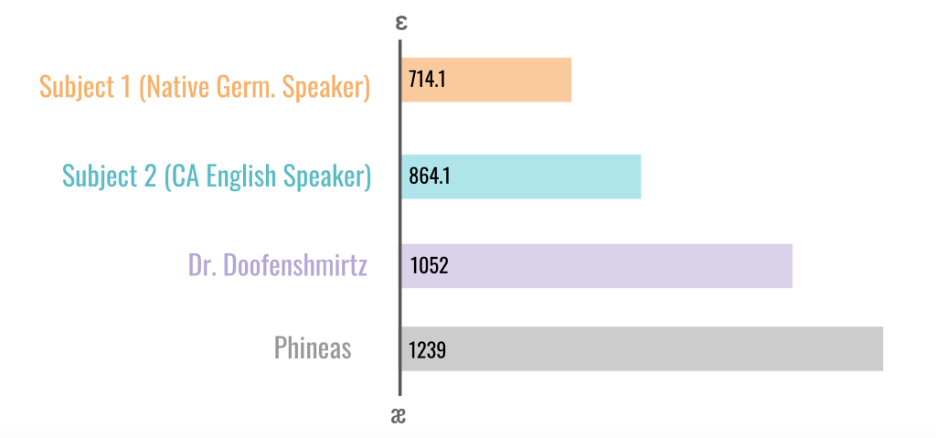
On the other hand, the data showed interesting patterns when it came to /æ/. We predicted that German speakers would have a lower F1 value than English-speakers (due to the fact that /ɛ/ has a lower F1 than /æ/). Overall, we found this to be true. Our authentic German subject had the lowest F1 of the group at 714.1. Likewise, our highest formant value came from “standard” speaker Phineas at 1239. Interestingly, the dubbed voices had a much higher average F1 formant, which we hypothesized had something to do with the nature of the audio files. If we separate our samples by this type of audio file (real speakers vs dubbed speakers), we find that German speakers’ formants are 100-150 Hz lower than those of American speakers. This indicates that they do, in fact, produce ash more similar to /ɛ/.

Figure 3

Sound Analysis

We paid attention to foreign-sounding allophones, compared to a Californian English speaker’s pronunciation, in Hail Doofania. We only analyzed Dr. Doofenshmirtz’s speech and ignored any pronunciation deviations in his song.

In his speech, we identified 6 sounds that were pronounced differently from how a Californian English speaker would pronounce the sounds. The most frequently occurring deviations were his pronunciation of the alveolar approximant ([ɹ]) and voiced postalveolar affricate ([dʒ]). 23 of the 34 deviations were [ɹ] and 6 deviations were [dʒ]. We identified pronunciation deviations just from hearing and our personal judgments given the time and resource constraints of this project.

We looked at the German International Phonetic Alphabet (IPA) sounds to see if the allophones used by Dr. Doofenshmirtz were from the German sound repository. We proposed that his mispronunciation of English allophones was because he was borrowing German sounds to pronounce English sounds. But, the sounds that Dr. Doofenshmirtz used were actually not found in the German IPA

As the allophones used by German speakers for the different analyzed sounds were not what Dr. Doofenshmirtz used, we came up with 2 possible explanations to account for Dr. Doofenshmirtz’s different pronunciations.

First, we suggest that the producers might have wanted to distance Dr. Doofenshmirtz from a German identity. Perhaps they wanted Dr. Doofenshmirtz to have some accent aspects which alluded to a German identity but not have the character be too strongly associated with a German identity. Podesva (2011) posits that the creation of an identity or a “persona” utilizes several linguistic features, and different components of a linguistic feature are adopted depending on the context the speaker is in. This suggests that a bricolage of linguistic features are used to construct an identity. For Dr. Doofenshmirtz, this means that his identity as an individual from Drusselstein (a fictional East European country) was not solely reliant on his accent but on other features too. Hence, it is possible that the show’s producers did not use the German allophones to pronounce the different Californian English sounds to index Dr. Doofenshmirtz’s heritage, but utilized other linguistic and non-linguistic features to do so.

Second, it could be because Dr. Doofenshmirtz is voiced by Dan Povenmire, a native Californian English speaker. Thus, Dr. Doofenshmirtz’s mispronunciation could stem from how a Californian English speaker perceives a German accent to sound like and not how an actual German accent sounds like.

Interestingly, we found that our German speaker pronounced the sounds we studied, in the same way that Californian English speakers do. We attribute this to his exposure to the Californian English accent and was able to distinguish the different allophones and use them according to the context he was in.

Discussion and Conclusions

We looked at the amount of time Dr. Doofenshmirtz spoke in Hail Doofania to gauge the significance of his accent’s contribution to his identity. Dr. Doofenshmirtz had 112 seconds of speech time in the 9 minute and 11 second episode (551 seconds). This equates to about 20% of the episode. As such, Doofenshmirtz has only 20% of the episode to leave an impression on the audience, making it crucial for the producers to adopt several indices to create Doofenshmirtz’s character as an “evil scientist”. The identified indices were: his accent, his clothing (lab coat), the content of his speech (his plans to take over the Tri-state Area) and actions (fighting with Perry the Platypus).

We felt that some younger audience members might be too young to comprehend the sinister nature of Dr. Doofenshmirtz’s plans and might instead rely on auditory and visual cues (his accent and attire & fight scenes, respectively) to index Dr. Doofenshmirtz as a villain. By extension, we think that it is possible for these auditory and visual cues to lay the groundwork for associations that these child audiences make with someone who is “bad” and in an outgroup.

Given that it is more likely for children to come across speakers of different accents than people dressed in lab coats in their everyday lives, we believe that it is possible for them to consequently (because of cartoon villains having accents) associate people with accents as members of an outgroup. This demonstrates how accented villains are part of the phenomenon of othering and can influence children’s perception of “good” and “bad”.

We believe that the results we obtained through Praat were very useful. They supported our findings and proved that accented speakers sound different from the standard. We wish we had more time to obtain and analyze more data. On the other hand, the survey results were not very helpful. We were not able to come to any conclusions through the survey results, but we definitely feel that the survey pushed us in the right direction.

One of the most important takeaways that we believe show producers should know is that they must be mindful of the stereotypes they create or reinforce in their audience. These shows have long term implications that heavily influence individuals.


References

Constable, E. (2021, March 17). Dear Disney, stop teaching kids that foreign accents are evil. LHS Epic. https://lhsepic.com/9602/opinion/dear-disney-stop-teaching-kids-that-foreign-accents-are-evil/

Dobrow, J. R., & Gidney, C. L. (1998). The Good, the Bad, and the Foreign: The Use of Dialect in Children’s Animated Television. The Annals of the American Academy of Political and Social Science, 557, 105-119. JSTOR. https://www.jstor.org/stable/1049446

Flege, J. E., Bohn, O.-S., & Jang, S. (1997). Effects of experience on non-native speakers’ production and perception of English vowels. Journal of Phonetics, 24(4), 437-470. ScienceDirect. https://doi.org/10.1006/jpho.1997.0052

Paquette-Smith, M., Buckler, H., White, K. S., Choi, J., & Johnson, E. K. (2019). The Effect of Accent Exposure on Children’s Sociolinguistic Evaluation of Peers. Developmental Psychology, 5(4), 809-822. American Psychological Association. https://psycnet.apa.org/doi/10.1037/dev0000659

Phineas and Ferb Wiki. (n.d.). Drusselstein | Phineas and Ferb Wiki | Fandom. Phineas and Ferb Wiki. https://phineasandferb.fandom.com/wiki/Drusselstein

Shah, A. P. (2019). Why are Certain Accents Judged the Way they are? Decoding Qualitative Patterns of Accent Bias. Advances in Language and Literary Studies, 10(3), 128-139. Australian International Academic Centre PTY.LTD. https://doi.org/10.7575/aiac.alls.v.10n.3p.128

Sharma, M. (2016). CHAPTER SEVEN: Disney and the Ethnic Other: A Semiotic Analysis of American Identity. In Teaching with Disney (pp. 95-107). Peter Lang AG. Williams, M. G., & Korn, J. (2017). Othering and Fear: Cultural Values and Hiro’s Race in Thomas & Friends’ Hero of the Rails. Journal of Communication Inquiry, 41(1), 22-41. SAGE. 10.1177/0196859916656836

[/expander_maker]

, , ,
Scroll to Top