bilinguals

CODE SWITCHING!: A phenomenon among bilinguals and its deeper role in identity formation

Leon Kaprielian, Octavio Santana, Sahil Sadiq

In an era marked by globalization and multiculturalism, the phenomenon of code-switching has emerged as a crucial aspect of language dynamics and identity formation among bilinguals. The complexities of code-switching, its popularity, and its deeper ramifications for people navigating many linguistic and cultural domains are explored in this research. We examine how code-switching is used in immigrant communities as a tool for social interaction, identity negotiation, and effective communication through a multidisciplinary lens that takes into account linguistic, cognitive, cultural, and social factors. Based on naturalistic observations and interviews with Farsi, Spanish, and Arabic bilingual speakers, we investigate the complex patterns of code-switching in various age groups and social circumstances. Our research shows that code-switching is a reflection of complex social dynamics, such as social hierarchy, respect for elders, and the maintenance of cultural identity, rather than just a linguistic issue. This study emphasizes how crucial it is to comprehend language practices in a multicultural and globalized world by shedding light on the significance of code-switching in forming people’s identities and social structures.
[expander_maker id=”1″ more=”Read more” less=”Read less”]

Introduction

Code-switching was formerly thought to be a linguistic oddity, but research has since shown that it is a regular aspect of language use. It illustrates the intricate interactions between linguistic, cognitive, cultural, and social elements that influence social interaction and identity formation. Determining the mechanics of bilingualism and multiculturalism, illuminating the complex ways language influences social structures and human interaction requires an understanding of code-switching. 

What is code-switching?!

Code-switching is the fluid transition between two or more languages in a single discourse and is an effective communication and identity-negotiation technique for immigrant communities. Moreover, it is a great way for individuals to build rapport with members who speak the same language.   The informal aspect of this will lead to a higher frequency of code-switching and a willingness to express one’s cultural identity, as opposed to a formal environment.  In terms of the types of code-switching, it comes in three forms, intrasentential, intersentential, and tag switching.
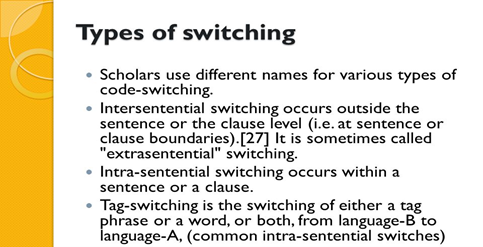
Figure 1: Types of code-switching: intersentential, intra-sentential, and tag-switching

New to code-switching? Here are the methods we used and how you can do it too!

In this post, we’ll discuss methods used for collecting the data that include studying code-switching in a natural environment, and with the authentic use of language by bilingual or multilingual speakers. One of the ways we are going to collect the data is by naturalistic observation. This involves observing naturally occurring conversations in its most pure form, which is essentially the most authentic form of data collection by bilingual and multilingual individuals. To give an extra set of diversity and universality in this regard, there are going to be 3 languages discussed: Farsi, Spanish, and Arabic.

Results

Farsi (Dari)

There is a difference in the amount of code-switching in regards to whether a Gen Z immigrant is speaking with their own age group or with elders.  In Farsi, when one is speaking with elders, it occurs at a much higher frequency and it is more on the “Intersentential” level.  The reasoning is due to 1) Innate understanding that the elders prefer the native language 2) The elders’ proficiency in English is not as advanced.

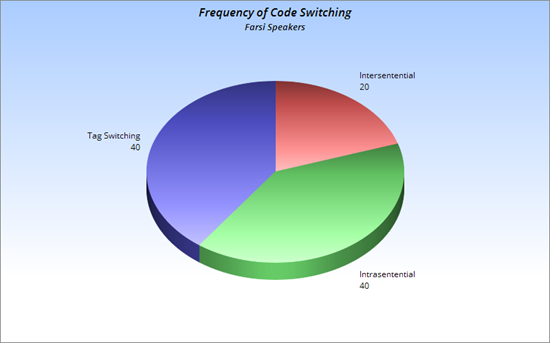
In regards to when the Gen Z bilinguals speak amongst themselves, there is more English spoken, and during the naturalistic observation, the ratio was 80% English to 20% Farsi.  When the code-switching did occur, unlike with the elders, which (was usually intersentential), it was intrasentential and tag-switching

Figure 2: Frequency of code-switching among Farsi speakers (Example: “Bro he’s extremely نابغه (genius) when he explains things. – this is an example of tag-switching)

Lastly, although naturalistic observation was the main method to keep the results as organic as possible, interviews with 2 of the Gen Z members were held to articulate and discuss potential biases and limitations.  One of the members (20 years old) said the code-switching just happened naturally without much thought.  The eldest in the observation (29) said that he does it naturally but also consciously, either due to the fact certain words in Farsi seem articulated better, and also to build rapport with the group culturally, which ties into our main thesis that the phenomenon of code-switching is usually intimately linked to one’s cultural identity.

Spanish

To continue, Spanish and English bilingual speakers tend to gravitate towards an unofficial language, Spanglish. This is when English and Spanish are combined in conversation. Spanglish is a form of code-switching, setting the foundations for forming one’s identity, while simultaneously maintaining their culture.

The method used was a naturalistic observation of a phone call between a bilingual speaker and their parents. They answered the phone in English, just like they do with friends and people of the same age. Spanish was used rarely and the language used had no link to what type of person they were speaking to. The phone then got passed to the speaker’s grandma, and that is when the bilingual speaker started speaking only Spanish. The Spanish the speaker used were easy to decipher that they were speaking to someone of an older age because words like “usted”(you) and “mande”(excuse me) were used. These are formal words and are used when speaking to strangers or elders.

After tallying up the number of formal words used in the phone call, all of them came when speaking Spanish, except one coming from English. The research shows that code-switching can occur within a family and also how a change of language is made to show respect. The same goal could not be achieved with English, since Spanish has an emphasis on formal speaking, causing the speaker to have a complete shift of identity when code-switching.
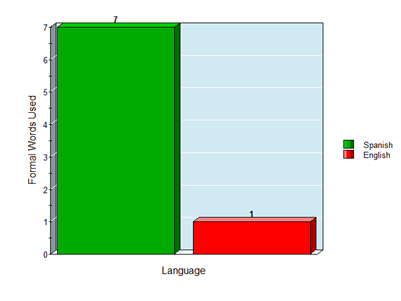
Figure 2: Frequency of formal words used between Spanish and English from a bilingual speaker

Language is inherently tied to respect when concerning age, class, and gender in Spanish, showing how language can shape the way one thinks.

Arabic

Bilingual Arabic speakers are more likely to use religious jargon (inshallah, mashallah) when interacting with parents and other elders. When speaking to friends, siblings, and cousins they are most likely to speak a 70/30 mix of English and Arabic in contrast to a 20/80 mix when speaking to Elders. Another important consideration is the intonations and accents used for certain words when speaking each language. Because Arabic and English have a very different set of sounds, the same word can be pronounced differently depending on the spoken language. For example, most native speakers of both English and Arabic know that Pepsi – with a p – is the correct pronunciation of the soda, however, they will still pronounce it like Bebsi with a b sound when speaking Arabic. This is done to signal that the speaker is native in Arabic and is part of the Society of native Arabic speakers who do not use the P sound.

Discussion and Conclusions

All three languages investigated truly show just how intricate and complex languages are, especially when it comes to code-switching. Our research shows how code-switching plays an extremely crucial role in forming one’s identity and how it goes beyond just language. It reflects social dynamics like social status, respect for elders, and cultural identity preservation. Our study contributes to the gap of knowledge of understanding how native languages travel down from generation to generation in immigrant families in America, and how code-switching shapes who we are and the social groups we belong to.

References

Albirini, A. (2011). The sociolinguistic functions of codeswitching between Standard Arabic and Dialectal Arabic. Language in society, 40(5), 537-562.

Heller, M. (2020). Code-switching and the politics of language. In The bilingualism reader (pp. 163-176). Routledge.

Kachramanian, C. (2021). Bilingual Interactions: An Investigation into Code-switching and Its Purposes among Armenian-Dutch Bilinguals.

Klavans, J. L. (1985). The syntax of code-switching: Spanish and English. In Proceedings of the Linguistic Symposium on Romance Languages (Vol. 14, pp. 213-231). Amsterdam: Benjamins.

Martin-Jones, M. (1995). Code-switching in the classroom: Two decades of research. One speaker, two languages: Cross-disciplinary perspectives on code-switching, 90-111.

Myers‐Scotton, C. (2017). Code‐switching. The handbook of sociolinguistics, 217-237.

[/expander_maker]
, , , , , ,

The Power of Bilingualism: Cultural Identification Amongst LA Bilinguals

Marnie Cavanaugh, Reese Gover, Ethan Lee, Elisa Marin, Eva Reyman

Did you know that Los Angeles is the second most bilingual city in the US? Intrigued by the relevance of this topic, we were interested in taking a deeper dive into how the bilingual experience in LA shapes cultural identification and belonging, focusing on bilingual Spanish speakers. Although bilingualism can allow someone to connect to a broader range of people, we hypothesized at the beginning of our research that English-Spanish bilinguals in LA may feel cultural isolation. Feeling too American to connect to Hispanic culture, but with the knowledge of the Spanish language, too Hispanic to fit into American mainstream culture. However, our research concluded that being bilingual does not hinder one’s ability to connect with multicultural communities. Rather, bilingualism enhances it. Bilingualism helps thousands in the LA area connect with their Hispanic culture through the use of Spanish and American mainstream culture through their knowledge of English. Speech communities become expanded through their understanding of two or more languages. Cultural identification does not have to mean choosing one culture over the other. Many bilingual individuals choose to identify cross-culturally. Bilingualism in the LA area seems to be a tool to form greater connections rather than a tool that inhibits one’s ability to understand their cultural identification.

[expander_maker id=”1″ more=”Read more” less=”Read less”]

Introduction and Background

Our project examines Spanish-English bilingualism within Los Angeles, specifically focusing on how speaking Spanish and English affects the size and strength of speakers’ speech communities. Our community of practice is Spanish-English bilinguals who primarily reside in Los Angeles. Among this population, we studied the narrative aspects of language and language in use, asking bilinguals to tell their own stories through a mix of semi-structured interviews and survey responses. Using these methods, we examined how Spanish-English bilinguals in L.A. utilize their knowledge of both languages to signal belonging in various speech communities and how their bilingualism affects the communities to which they belong. Our main questions are: What role does Spanish-English bilingualism play in the size of one’s speech community within Los Angeles? Does Spanish-English bilingualism lead to increased community, or does it cause feelings of isolation? We hypothesized that, though bilingualism may theoretically create larger speech communities, Spanish-English bilinguals in L.A. may feel isolated from English- and Spanish-speaking communities.

Bilingualism is a trait that most people in the world share (Schroeder et al. 2017). But much of the bilingual experience is yet to be discovered. Our focus on the development of cultural identity amongst Spanish-English bilinguals in Los Angeles fits within the knowledge gaps in previous research surrounding this topic.

Ana Sanchez-Munoz (2018) discusses Los Angeles as a bilingual, bicultural city, emphasizing the unique role that Spanish and English speakers play in creating their sociolinguistic environment. Her research examines language practices in educational settings, finding that English is more commonly spoken than Spanish, suggesting that Spanish-English bilinguals may assume different linguistic identities in formal (i.e., educational) and casual settings. Thus, we were inspired to obtain data on the languages that Spanish-English bilinguals utilize more often in different social environments.

Likewise, Norma Mendoza-Denton and Bryan James Gordon (2011) argue that Hispanic identity is mediated through language ideologies prioritizing English speakers over Spanish speakers. Bilinguals occupy a liminal space, where they’re privileged over non-English speakers, especially in professional settings, and pressured to fit within an English-majority society through linguistic assimilation (Mendoza-Denton & Gordon 2011). Their research provides a framework for us to formulate interview questions surrounding participants’ feelings of inclusion/exclusion within English- and Spanish-speaking communities.

Moreover, Carmen Silva-Corvolan (1986) observed 27 Spanish-English bilinguals in East L.A., researching the effects of linguistic contact between multiple languages. She found that where consistent language contact occurs, linguistic simplification often follows. This is important to consider not only to understand how bilinguals may have differing levels of fluency in different languages but also because the shifts in language unique to Los Angeles bilinguals suggest the formation of unique, bilingual-focused speech communities.

Research focusing on the cognitive and developmental aspects of bilingualism helped structure our survey and interview questions. Raluca Barac and Ellen Bialystok (2012) discuss the effects of bilingualism on cognitive ability. A survey of 104 bilingual and monolingual six-year-olds found that bilingual children performed better on cognitive tasks when they received instructions in their primary language (Barac & Bialystok 2012). The findings from this study suggest that Spanish-English bilinguals may feel more comfortable utilizing the language they learned first and thus participate more in the speech communities associated with their primary language.

This literature review provided us with a baseline of knowledge. It structured our methods, allowing us to explore the topic of cultural identification among Spanish-English bilinguals in Los Angeles in an informed, systematic manner. Our findings suggest that contrary to our hypothesis, speaking Spanish is integral to participants’ feelings of inclusion in both Spanish and English speech communities. The majority of participants reported feelings of belonging to both language communities. Additionally, many participants noted that bilingualism was a beneficial attribute in their personal and professional lives.

Methods

We used three different methods of data collection to provide our project with a well-rounded, comprehensive understanding of our topic. First, we utilized a review of relevant literature (noted above) to provide context and relevant information for our research. As well, the knowledge gaps we identified justified our research questions. Second, we used a 14-question survey incorporating True/False, Likert scale, and optional open-ended questions. The criteria for survey respondents were that they are Spanish-English bilinguals primarily residing in Los Angeles; responses were anonymous, though demographic data (age, gender, primary language) was collected. Finally, we utilized a 15-question, semi-structured interview to gain in-depth, qualitative data. Each group member conducted one interview, resulting in five interviews. Similarly to survey participants, interviewees were required to be Spanish-English bilinguals primarily residing in Los Angeles. Interviews lasted 20-30 minutes each. The observable elements of communication we studied included participants’ fluency in both languages, the speech communities they most identified with and participated in, and feelings of isolation or inclusion regarding speech communities.

Results and Analysis

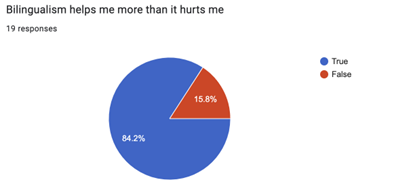
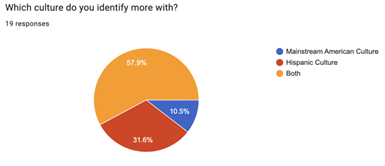
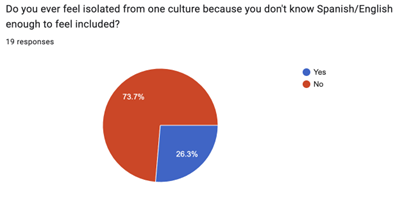
We first surveyed Spanish-English bilingualism and received nineteen responses. The survey had twelve demographic, multiple choice, true/false, and Likert-scale type questions, as well as two optional open-ended questions, where respondents could expand on their previous answers. We received seven responses for these open-ended questions, which expanded on the question, “Do you ever feel isolated from one culture because you don’t know Spanish/English enough to feel included?” We also received eight responses expanding on the true/false statement, “Bilingualism helps me more than it hurts me.” The survey questions and responses are shown in Figures 1, 2, and 3 below.

Figure 1: Responses to survey question: “Do you ever feel isolated from one culture because you don’t know Spanish/English enough to feel included?”
Figure 2: Responses to survey prompt: “Bilingualism helps me more than it hurts me”
Figure 3: Responses to survey question: “Which culture do you identify more with?”

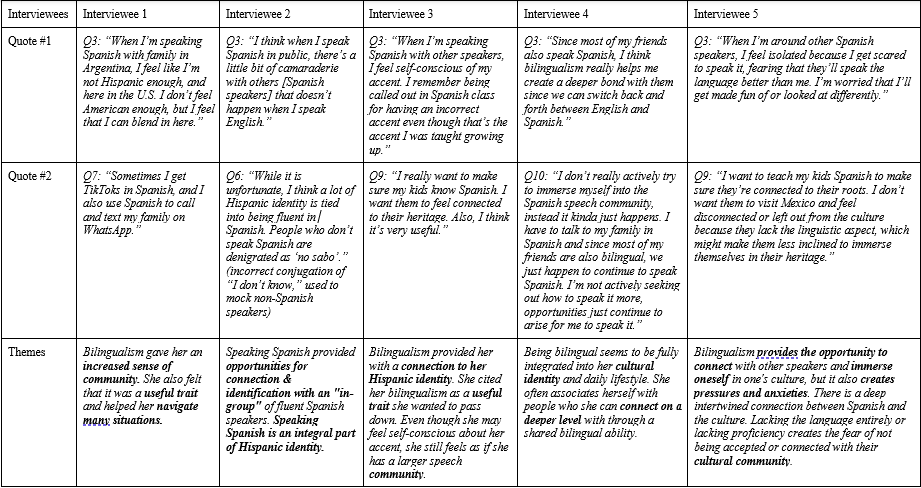
After the survey, we each conducted one interview. Table 1 provides select quotes from each interview, along with the main themes that these quotes suggest. Out of five interviewees, two specifically mentioned feeling insecure speaking Spanish and fearing they would be made fun of for their speaking ability, one interviewee stated “[in Argentina] I don’t feel like I’m Hispanic enough”. The other two interviewees didn’t mention personal experiences of feeling isolated. Despite citing feelings of isolation, interviewees also spoke about how bilingualism is beneficial. Interviewees stated that their speech community is larger and their connection to their heritage increased due to their ability. Bilingualism was seen as a positive trait that they desired to pass on.

Table 1: Quotes from interviews with five Spanish-English bilinguals

Discussion and Conclusions

Throughout the study, we found our original hypothesis that Spanish-English bilinguals would feel isolated to be generally incorrect. Our interviewees claim that being bilingual has aided them in the way of social and professional opportunities, with one stating “I’ve had more educational opportunities since I do research in Spanish [at university]”. While two of our interviewees explicitly expressed insecurity about speaking Spanish, it was a general feeling among our interviewees that bilingualism made them feel included. Our interviewees see their bilingualism as a crucial part of their identity and a method for connecting with their heritage. Interviewees cited connection to culture as a main reason for wanting to pass on bilingualism. The data collected is useful for understanding the importance of language to Hispanic identity in Spanish-English bilinguals.

References

Ahearn, L. M. (2021). Living Language: An Introduction to Linguistic Anthropology. Wiley Blackwell.

Barac, R., & Bialystok, E. (2012). Bilingual Effects on Cognitive and Linguistic Development: Role of Language, Cultural Background, and Education. Child Development, 83(2), 413–422. http://www.jstor.org/stable/41416093

Mendoza-Denton, N., & Gordon, B. J. (2011). Language and Social Meaning in Bilingual Mexico and the United States. In The Handbook of Hispanic Sociolinguistics (pp. 553–578). Wiley-Blackwell. https://www.norma-mendoza-denton.com/_files/ugd/e4ef1f_932d492a6a7e4b73ba091db41ee046f3.pdf

Sanchez-Munoz, A. (2019). Bilingualism in California: The Case of Los Angeles. In Biculturalism and Spanish in Contact: Sociolinguistic Case Studies (pp. 51–68). Taylor & Francis/Routledge.

Schroeder, S. R., Lam, T. Q., & Marian, V. (2017). Linguistic Predictors of Cultural Identification in Bilinguals. Applied linguistics, 38(4), 463–488. https://doi.org/10.1093/applin/amv049

Silva-Corvalan, C. (1986). Bilingualism and Language Change: The Extension of Estar in Los Angeles Spanish. Language, 62(3), 587–608. https://doi.org/10.2307/415479

[/expander_maker]

, , , ,

Spanglish – The Art of Code-Switching

Devan, Jessica Jary, Malia Salgado, Mao Mao, Valeria Carreon

In Hispanic neighborhoods, “Spanglish”— a linguistic practice that combines Spanish and English—has gained popularity as a way to communicate, even if some people do not realize that it involves code-switching. While the Chicanx and Latinx community is made up of people from a wide range of backgrounds, most of them are Spanish-English bilingual. In this research project, our group sought to investigate that when they are being interviewed, whether the Spanglish bilingual individuals would tend to code-switch, or rely heavily on one specific language while still understanding the other. We chose this research focus because we believe that studying the connection between the mixing of languages and the topic of conversation, as well as finding how often speakers code-switch, can help other Spanish-English bilingual speakers learn the semantics behind each individual code switch, thus breaking language barriers. We hypothesized that because of the participants’ daily reliance on both English and Spanish, code-switching via Spanglish would be prevalent in the interviews we conducted.

[expander_maker id=”1″ more=”Read more” less=”Read less”]

Methods

In order to test our hypothesis, we decided to interview five to ten individuals who are able to understand English and Spanish and speak both languages to varying degrees of fluency. Our interviews consisted of ten questions, five were asked in English and the other five were asked in Spanish. The participants were interviewed individually in various environments and locations, and through various methods including questionnaires, phone interviews, recorded disputes, and gossip interviews. The age range of our participants is from 18 to 55. All of them come from Mexican households and are either first or second-generation immigrants, but all described themselves as bilinguals and having spent the majority of their lives in the United States. Our younger interviewees have all lived in the United States for their entire lives and have learned Spanish from the older generations, whereas the older interviewees all immigrated to the United States in search of a better future, and they picked up English after their immigration. Nevertheless, our research is able to determine that members of this community code-switch and employ Spanish in their everyday lives, despite the fact that these participants come from very diverse origins. For the interviews that were specifically on ages 18-25, we noticed a more noticeable code-switching when answering the question. For our tables below we witness that younger interviewees felt more comfortable jumping in between languages. They use more words like “pues” “ósea” “si” “no”. Another example we can look at is this dialogue that was said during the interview by a 19-year-old.

Question: “What do you wanna be when you grow up?”

Answer : “ Social media marketing, algo asi”

Question: “What was your favorite childhood meal?”

Answer: “Rice and beans, revueltos?”

Question: “Cual es tu vacación ideal?”

Answer: “ Tropical area in a small town and like an ocean front house, view”

Question: “La mejor fiesta que haz tenido?”

Answer: “When I was eighteen”

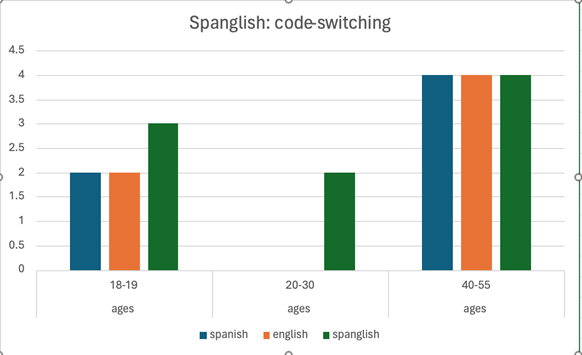
Figure 1: Uses of Spanish, English, and Spanglish among interviewees

Whilst interviewing our older interviewees between the ages of 35-55, we noticed that these individuals tended to try to stick to speaking one language whilst answering the questions. 3 out of 4 of the interviewees in this category that we interviewed chose to answer all questions in English even though their native language is Spanish. As a result of Spanish being their dominant language whilst answering the 10 questions, these interviewees struggled quite a bit while trying to come up with English responses. Even though they were struggling, these 3 individuals stuck to answering in English even though they understood they could answer questions in Spanish, which we can see in the example below.

(During the beginning of an interview, she started speaking English and stated “My name is” before proceeding to tell me she would much rather speak en Español/ in Spanish. Additionally, she usually answered the questions I asked in English in the same language) :

First question

Question: What did you want to be when you grew up?

Answer: “Nurse”

Question: “Why did you want to be a nurse?”

Answer: “Because I like it. Take care of the kids.”

Second question

Answer: “Chile rellenos, rice, and beans”

Question: “Why do you like rice and beans? What do you like about them?”

Answer: “Because my mother show me how to make it when I was little kid.”

Third question

Answer: “My plan for tomorrow. Work. I have to work.”

Fourth question

Answer: “Aliens– That’s not real. I don’t believe in that.”

Fifth question

Answer: “Sunday– When i’m not working I go to the church with my sister sometime.”

Question: “Do you like going to church?”

Answer: “Yea”

With this, we concluded, and observed distinct dynamics in the nature of conversation for interviewees, which prompted us to make adjustments throughout the process. Notably, individuals aged 30 and above, primarily parents or older adults, approached the interviews with a more formal tone. They consistently responded in the language the question was initially posed, even if English presented some challenges for them. However, the interactions with friends and close family members, ranging from 18 to 25 years old, established a more relaxed atmosphere. This rise in comfort level led to much more frequent code-switching for the older adults, as they seamlessly shifted between the two languages. Recognizing that a strict question-and-answer format might yield more formal responses, we decided to incorporate recorded conversations on various topics. Subsequently, our findings indicated that the frequency of code-switching was less influenced by the relationship dynamics and more by the nature of the conversation topic. This discovery led us to uncover numerous instances of code-switching in these recorded discussions.

Discussion and Conclusions

Overall, our research successfully validated our hypothesis through multiple avenues of investigation. Notably, we demonstrated that Spanish-English bilingual speakers transition between codes more often than they may think. Moreover, a pattern surfaced during our research: participants tended to match the language used in the responses in formal interviews that were organized around predetermined questions. Nevertheless, in more relaxed conversational contexts, this pattern did not continue. Instead, participants were able to switch between languages with ease in familiar settings, even mixing vocabulary from both linguistic domains. This highlights the profound interacting influence of Hispanic culture and American culture on the Spanglish bilingual speakers, and showcases the intricate dynamics of living with two languages daily. It further underscores the evolution of Spanglish as a unique linguistic bridge, allowing us to forge a connection between both languages. Moreover, it emphasizes the significant presence of the Spanglish-speaking community, providing a touching connection to their ancestral roots while fostering a sense of closeness to the newly found home.

[/expander_maker]

, ,

Bilingual Investigation

Hana Almony, Lauren Campsey, Hannah Her, Ariana Cheng, Madeline Flood

In everyday discourse, language is influential in how we speak and engage with others. Specifically, looking at bilingual native Spanish, second language English speakers was explored in this study because the question we sought to answer was does an individual’s native language have an influence on a second language? To investigate this question, we hypothesized that it indeed does, and the language that one speaks will impact responses to the same interview questions in both Spanish and English. In conducting this research, agents of socialization were considered because the participants were native Spanish speakers with English as a second language so interview questions were geared towards the significance of language in relation to identity and self-expression. Moreover, this relates to the idea of linguistic relativity as this shows that one’s particular language use is correlated with one’s perception and idea of reality. In this study, linguistic relativity was evident when analyzing bilingual female individual participants in which we found similarities and differences in responses of each respective language. The goal of this study is to inform about the effects of language use through the modality of bilingual speakers and how language choice through one’s thinking may connect to specific conversations and everyday discourse.

[expander_maker id=”1″ more=”Read more” less=”Read less”]

Introduction and Background

Have you ever thought about how the language you speak affects the way you view the world around you? By understanding how language functions within society we can have a greater understanding of how impactful linguistic practices can be. For our project we chose to view bilingualism and how modality can affect perception. More specifically, in the context of native Spanish speakers with English as their second language. To investigate this hypothesis we used points of reference from Claire Kramsch’s Language and Culture and Nick Riemer’s book called Routledge Handbook of Semantics. Riemer’s book is a collection of the works of many leading scholars and academics from around the world. Both Kramsch and Reimer provide an overview of entire linguistic subjects and sub-disciplines. We focused on chapters such as modality, participant roles, and linguistic relativity in order to gain meaning and conceptualization. We also read articles from the Linguistic Society of America such as “Language and Thought” and “Linguistics in Everyday Life” to gain a greater understanding of linguistic theories in order to apply them to our research. We looked specifically at linguistic relativity to answer our question on how language can influence perception and the way we think paired with bilingual studies to help analyze differences within Spanish-English speakers.

Methods

To gather our data, we were able to interview five female individuals in the UCLA community who are native speakers of Spanish and also learned English as a second language. The setup of the interview was semi-structured and in-person with audio-recording for each participant. Two separate interviews were conducted by a bilingual group member, consisting of the same set of 10 questions in English and Spanish. Questions varied from how being bilingual affects communication and expression and how they use it in their daily lives. We also had controls in our study to limit variability throughout the interviews. The controls are the same set of interview questions in both English and Spanish, one interviewer to maintain the same personality and comfortability throughout the interviews, the same gender combination of a female interviewer and female participant for similar interaction types, having the participants bilingual in those two languages only, and maintaining similar environment conditions (time of day, public, and approximate number of people around). After the audio files finished processing, each version was manually transcribed by each group member and compared to see any similarities or differences in results. We looked into various aspects of modality in bilingualism and how it affects conversations and word choice. In relation to our hypothesis, the comparison between each interview was very surprising.

Results and Analysis

Throughout our interviews, we found that there were many similarities and differences in the participants’ responses. Though we were expecting differences specifically between each participant’s English and Spanish answers, we learned that the language didn’t completely dictate how the participants expressed themselves. The responses in general in both Spanish and English were very similar, if not the same, in both languages. The participants also all agreed that they spoke with an accent in English and Spanish, reflecting the influence on each language. The participants’ linguistic identities have pieces of English and Spanish – they are aware of their link to each of these languages and cultures, creating a consciousness in their pronunciations. We also noticed that when answering questions in Spanish, there were more pauses – these pauses did not have a specific pattern and differed between the participants, indicating that this has to do with their thought process in word choice. The participants shared that they mainly spoke Spanish with their family members and occasionally with friends depending on the environment. This language-specific context shows that they associate their linguistic identity with English for most of their communication, hence the pausing had more to do with comfortability with the language than for cultural reasons. Another way the interviews differed was the length and detail within answers in Spanish compared to English. According to Reimer (2016), a language can influence what or how much information is shared by the speaker. This was apparent when analyzing the different answers for each language. The English responses were more engaging and personal compared to in Spanish, signifying a linguistic influence over word choice and sentence length.

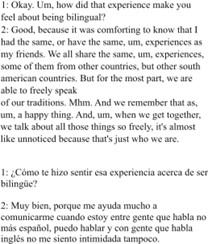
Figure 1: Sample responses in English and Spanish for the interview question “Happiness to me is …”
Figure 2: Sample responses in English and Spanish for the interview question “When did you start speaking Spanish and when did you start learning English?”

The examples above show the main findings of our study. Figure 1 highlights our last interview question, “Happiness to me is …” All of the participants’ answers had to do with love for someone – in this example, family. This depicts how the answer to this particular question was the same in both languages, reflecting that the individual shares the same values and thoughts in both languages. The lack of detail was prominent in many other questions as seen in Figure 2, asking the question, “When did you start speaking Spanish and when did you start learning English?” Though the general answer was similar, the participant went into more detail about their childhood when answering in English. The concept of linguistic relativity, though not in the traditional sense, was prominent in our study – the participants were all L2-English Native Spanish speakers and through their answers, we can see how, outside of family, English is the more spoken language, creating a sense of normalcy and identity within the English language.

Discussion and Conclusions

Within a conversation, the particular language an individual is speaking in can influence how they express themselves and this can largely be attributed to how culture and language are so intertwined (Kramsch, 2014). With this connection in mind, we hypothesized that L2-English Native Spanish speakers will have different responses to the same questions depending on the language that they are speaking in. Though our assumption was that there would be vastly different responses, in reality, the degree of the linguistic relativity of the responses was not as high as anticipated. The data revealed that participants had very similar responses in both languages, but the Spanish responses were shorter and less detailed than the English responses. We observed agents of socialization when analyzing our interviews as L2-English Native Spanish speakers had a deeper connection to their family structure. We learned that these specific participants have mainly tied Spanish to family members and situations. The connection between language and their background creates strong cultural bonds within the community. There were limitations in our study that may have contributed to our results. There were a total of five participants. This is a relatively small sample size. If a similar experiment were to be done in the future, the results would be more accurate with a larger sample size for a greater range in human variability to produce a more precise conclusion. These participants, though native Spanish speakers, have grown up and lived in the United States for a majority of their lives – we did not take into consideration the role of cultural assimilation, reflecting the likelihood that their answers in both languages would be very similar. This raises the question of how the participants relate to Spanish. The results of our study have taught us the role of language in our thought process and communication and the importance of being more aware and mindful in our everyday interactions as our language choice can contribute to how others feel in the conversation.

References

Aneta Pavlenko, Blackledge, A., Piller, I., & Teutsch-Dwyer, M. (2001). Multilingualism, Second Language Learning, and Gender. Berlin, New York De Gruyter Mouton.

Becker, K. R. (1997). Spanish/English Bilingual Codeswitching: A Syncretic Model. Bilingual Review / La Revista Bilingüe, 22(1), 3–30. http://www.jstor.org/stable/25745367

Bohman, T. M., Bedore, L. M., Peña, E. D., Mendez-Perez, A., & Gillam, R. B. (2010). What you hear and what you say: language performance in Spanish–English bilinguals.

International Journal of Bilingual Education and Bilingualism, 13(3), 325–344. https://doi.org/10.1080/13670050903342019

Comrie, B. (2012). Language and Thought | Linguistic Society of America. Linguisticsociety.org. https://www.linguisticsociety.org/resource/language-and-thought

Jacqueline Toribio, Almeida. “Code‐Switching among us latinos.” The Handbook of Hispanic Sociolinguistics, 4 Feb. 2011, pp. 530–552, https://doi.org/10.1002/9781444393446.ch25.

Jesús-Ortiz, E., & Calvo-Ferrer, J. R. (2023, November 25). His or Her? Errors in Possessive Determiners Made by L2-English Native Spanish Speakers. Languages, 8(4), 1-16. https://doi.org/10.3390/languages8040278

Kanno, Y. (2003). Negotiating bilingual and bicultural identities: Japanese returnees betwixt two worlds. L. Erlbaum.

Kramsch, C. (2014). Language and Culture. AILA Review, 27(1), 30–55. https://doi.org/10.1075/aila.27.02kra

Linguistics in Everyday Life | Linguistic Society of America. (n.d.). Www.linguisticsociety.org. Retrieved March 16, 2024, from https://www.linguisticsociety.org/content/linguistics-everyday-life#Domain

Niño-MurciaM. (2009). Bilingualism and identity: Spanish at the crossroads with other languages. Benjamins.

Ramírez, D. (2003). L1 regression in Spanish-English bilinguals. In Selected proceedings of the first workshop on Spanish sociolinguistics (pp. 89-95). Somerville: Cascadilla Proceedings Project.

Riemer, N. (2019). The Routledge handbook of semantics. Milton Park, Abingdon New York, Ny Routledge.

Slobin, D. (1996). Social interaction, Social Context, and Language. Psychology Press.

 [/expander_maker]

, , , ,

Parent & Child Communication Dynamics in Heritage Language Speakers

Jessica Nepomnyshy, Andrew Gerbs, Christabel Odoi

Language is often considered a window into a culture, but what happens when that window starts to close? In many families, heritage language communication can be a complex and nuanced issue, especially when it comes to older and younger siblings. While the older generation may have grown up speaking the language fluently, their younger siblings may struggle to maintain their proficiency. Data was collected and analyzed, showing the trend that older siblings were more proficient than their younger siblings when communicating with their parents in their heritage language. This correlates with our background research which discusses sibling language proficiency and code-switching within bilingual families. We explore the communicative differences between parents and their children, and how confidence when speaking, code-switching, and understanding of the heritage language all play small roles in the relationship children have with their parents. Our main findings indicated that the younger siblings had less proficiency and that parents were more likely to support heritage language use with their older child, which could create a closer relationship between them.

[expander_maker id=”1″ more=”Read more” less=”Read less”]

Introduction and Background

A few questions we aimed to understand were: When examining heritage language communication between a parent and their second-generation children, is one sibling more proficient than the other when corresponding with the parent? Are communication dynamics and abilities differing between siblings, and? How is the confidence and language style of one sibling different from the other sibling when in communication with the parent? We hypothesized that if the older sibling is more proficient in the heritage language than the younger sibling, then the parent often will encourage the less proficient sibling to communicate more in the heritage language as one may avoid using the language due to difficulty.

Siblings play an important role in shaping the overall language environment within immigrant families, and their language choices influence the family language policy. Older siblings often act as language experts and help younger siblings develop their language skills (Kheirkhah & Cekaite, 2017). However, younger siblings may find it easier to use English over their heritage language, leading to more code-switching, which is defined as the alternation between two or more languages in the context of a conversation or situation.

Heritage language ties how siblings communicate with their parents as data has shown that bilingual Chinese language speakers strived to maintain their language due to their parents’ wish for them to know Chinese strongly. Language is the factor that facilitates communication between family, siblings, and spouses (Budiyana, 2017). Heritage language is important as it strengthens and reinforces bonds with the heritage community and leads to greater overall connectedness with family and friends who also speak the language (Vallance 2015).

Methods

We explored data from five bilingual families: one parent and two children with varying proficiencies in a heritage language. All participants signed a consent agreement (parents signed for their adolescent children under 18) and completed a survey that functioned both as a pre-selection tool and a way to gather relevant socio-demographic info, where asked age of all participants, all languages spoken, and amount of years the language has been spoken. Names and any identifiable information were removed to maintain participants’ anonymity.

Parents were asked to sit down with each sibling and audio-record a conversation in the heritage language to the best of their abilities, asking for up to ten minutes of audio recording. The parent was asked to maintain the flow of the conversation by asking follow-up questions when their child responded to the question posed to observe a more natural conversation. We tasked each parent and sibling to answer three conversational questions: “Tell me about your favorite part of your day today,” “Let’s discuss a movie TV show that you recently watched that you enjoyed,” and “What is your favorite thing to do on the weekend?” By gathering audio recordings, we were able to notice differences between the pairs of siblings in comparing the number of times each sibling code-switched, their confidence levels, and whether a sibling self-corrected or if a parent was inclined to correct their child when errors were made. Through observing these three key features in heritage language-speaking siblings and their conversations with a parent, we can better understand the role language holds in maintaining a relationship between siblings and parents.

Results and Analysis

From our five sets of participants, one parent and two siblings per set, we transcribed, counted, and observed the frequency of each sibling’s code-switching from their heritage language to English. From this data, we counted the number of code-switches that younger siblings produced and calculated that on average they would switch to English twelve times in ten minutes, which is around 83% of the time. When the same method was used to count and calculate for the older siblings, we concluded that they code-switched on average seven times within their ten-minute conversations, equaling 70% of the time.

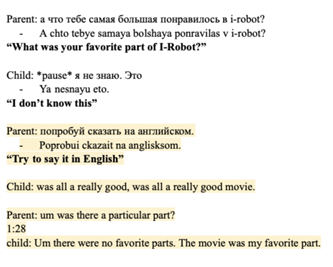
Through observing code-switching patterns, we noticed that parents were more likely to correct their older children when they made errors or code-switched from their heritage language to English. When it came to younger siblings, parents were more lenient in allowing their children to continue speaking in English as shown in an example in Figure 1.

Figure 1- Conversation between parent and younger child- parent allows for English language use

The younger sibling in this example is asked by the parent to respond in Russian, and when the sibling responds in English, the parent continues to follow up in the non-heritage language. One can also observe that earlier in the transcript the younger sibling can say that they don’t know how to say something using their heritage language, right before code-switching to English. The younger sibling also seems to avoid giving many details when speaking, as they are less confident in using the heritage language throughout their speech. One can observe this when the sibling uses a filler word before reiterating the same two responses to their parent.

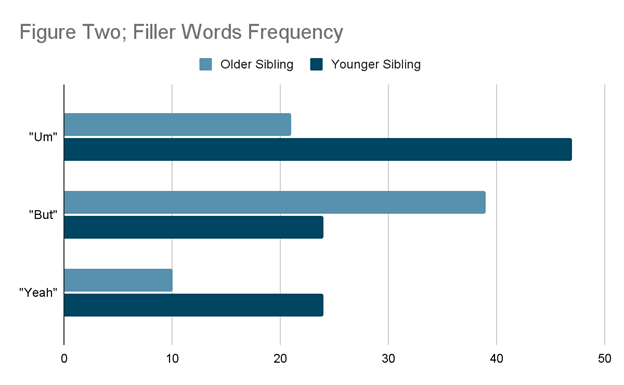
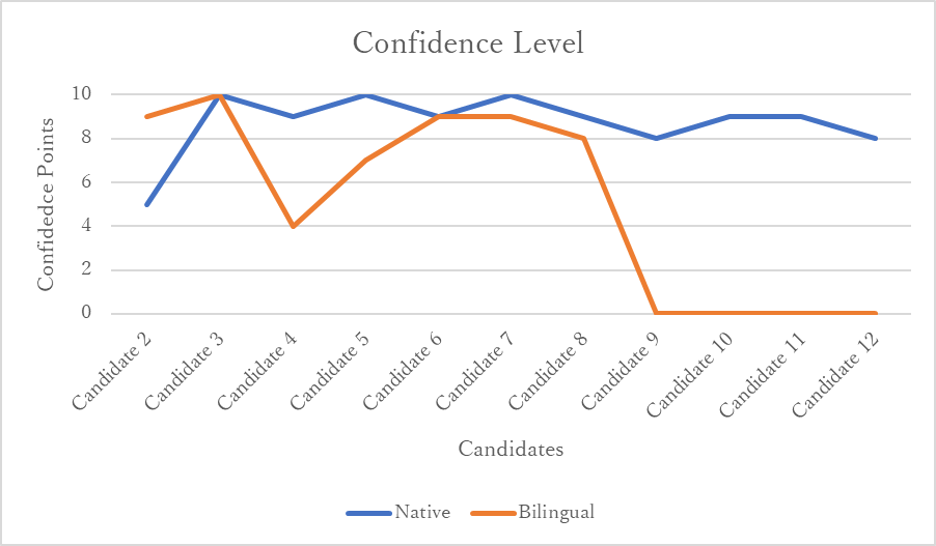
We observed noticeable differences in confidence levels between siblings when conversing with parents in the audio recording. Siblings used filler words like, “um” “but” and “yeah” which indicated how sure one was when answering a question. This analysis revealed that higher usage of filler words showed that a sibling was less confident in using their heritage language when answering questions. We counted the number of filler words used throughout all interviews and showed them in Figure 2.

Figure 2- Amount of times siblings use filler words in speech

This data was collected to validate our results as we compared the number of filler words used to the level of confidence siblings showed in their language use. “Um” was used significantly more than “But” and “Yeah” as it was used as a break when one was thinking of more dialogue. “But” was used significantly more by the older sibling and was observed to occur before or after they code-switched to transition back to the other language. “Yeah” was used less often, but was an indicator used when one was finishing a train of thought. Many siblings had limited vocabulary when speaking, so it was imperative to our study to track the number of filler words.

Discussion and Conclusions

Researching heritage language maintenance within families opens one’s eyes to the efforts parents make to preserve and pass on their language to their children. Many aspects play into siblings’ understanding, communication, and confidence when using a heritage language, and we as researchers were able to uncover differences between how older and younger siblings communicate with their parents. The hypothesis we explored was that older siblings are more proficient in the heritage language as compared to the younger siblings, and because of this, the parents would encourage the less proficient sibling to communicate more in the heritage language as a way to improve their language skills. After observing a variety of communication aspects between siblings and parents, we were able to conclude that our hypothesis was partially true. We found that out of all our sibling pairs, every younger sibling was less proficient in speaking their heritage language, as they code-switched more often and exhibited less confidence through using filler words, in comparison to the older siblings who demonstrated a stronger grasp of the language. As researchers, we hypothesized that the less proficient sibling, within our data being the younger one, would be more likely to get corrected by their parents when making grammatical mistakes, or code-switching, but we were wrong. It was more likely that a parent would correct the older sibling’s heritage language use and allow the younger and less proficient sibling to speak English. We can consider the idea that parents are more likely to correct their older children as a way to preserve and maintain their proficiency, knowing that the younger sibling holds less strength in the language.

If we had more time to further this study, we would most likely broaden the number of subjects we had, provide deeper questions, and use surveys to gauge more attitudes on language use, and the impact it has on parent and child relationships. A few limitations that we did not consider were whether the genders of siblings played a role in their proficiency, if parents being immigrants played a role in proficiency, and whether the age at which the language was learned played a factor in subject experiences. We were able to conclude that older siblings were much more likely to be the stronger speakers when it came to using the heritage language, in comparison to their younger siblings. Unfortunately, we could not fully determine if parents had a closer bond with the more proficient children, but we can assume that they can connect more through bilingual communication.

References

Altman, C., Burstein Feldman, Z., Yitzhaki, D., Armon Lotem, S., & Walters, J. (2013). Family language policies, reported language use and proficiency in Russian – Hebrew bilingual children in Israel. Journal of Multilingual and Multicultural Development, 35(3), 216-234. doi:10.1080/01434632.2013.852561

Budiyana, Y. E. (2017). Students’ parents’ attitudes toward Chinese heritage language maintenance. Theory and Practice in Language Studies, 7(3), 195. doi:10.17507/tpls.0703.05

Kheirkhah, M., & Cekaite, A. (2017). Siblings as language socialization agents in bilingual families. International Multilingual Research Journal, 12(4), 255-272. doi:10.1080/19313152.2016.1273738

Nitta, F. (1996). Socialization of “International children”. Kazoku Syakaigaku Kenkyu, 8(8). doi:10.4234/jjoffamilysociology.8.97

SORENSON DUNCAN, T., & PARADIS, J. (2020). Home language environment and children’s second language acquisition: The special status of input from older siblings. Journal of Child Language, 47(5), 982-1005. doi:10.1017/s0305000919000977

Vallance, A. (2015, 12 21). The Importance of Maintaining a Heritage Language while Acquiring the Host Language. https://digitalcommons.wayne.edu/cgi/viewcontent.cgi?article=1021&context=honorstheses#:~:text=Maintaining%20the%20heritage%20language%20strengthens,who%20also%20speak%20the%20language

 [/expander_maker]
, , , , ,

The Generational Effects on Code-switching in Conversation Content and Word Choice

Isabelle Sandbank, Leonardo Diaz-Garcia, Huiyu Liu, Taehwan Kim

This study investigates the variations in code-switching behaviors between undergraduate students and faculty members at UCLA, with an emphasis on the generational impacts on word choice and conversation content. It utilizes a mixed-methods approach that incorporates surveys and text analysis, and it reveals that while both professors and students code-switch, there are clear disparities in their patterns of when they do it. In particular, younger students regularly code-switch with abbreviated phrases or words, whereas senior faculty members and professors typically tend to use formal language. Additionally, it also reveals that the word and phrase choices used while code-switching differ between generations, with younger students selecting more colloquial language when talking about day-to-day affairs and older faculty members favoring more modern language use and more serious topics. These results have significant repercussions for comprehending how generational disparities influence language practices and social identities.

[expander_maker id=”1″ more=”Read more” less=”Read less”]

Introduction 

UCLA is known for being a very multicultural and diverse university, according to the school’s website. Through its population, it represents 118 countries and is home to over 5,000 international students (UCLA Facts & Figures, 2023). Within this body are multilingual students, professors, and faculty, some of which have the ability to switch between two languages, or varieties, at once, also known as code-switching (CS) (Washington-Harmon, 2022). Code-switching, a widely used technique, enables multilingual speakers to jump between languages without losing the syntax or structure of the prior language. People often code-switch from one language, such as English, to another, like their home language, in order to identify with a specific social group or convey specific information. Through the categorization of code-switched words in text messages, we were able to distinguish linguistic variations in word choice between bilingual UCLA undergraduates and the older professors and faculty members of the university to show that age affects the content of CS.

Background

Code-switching (CS) is a common phenomenon in multilingual communities (Bhatti, 2018). It is often a useful communicative tactic for bilingual communities as they believe code-switching helps them express what they want to communicate more clearly, directly, and efficiently (Bahous, 2013). It’s interesting to see that many who code-switch do not realize it- most students who speak in a bilingual environment do not realize that they are infusing English terminology when using a non-English language, and it seems that audience, context, identity and the effectiveness of information transmission will make multilingual people code-switch (Sichyova, 2005). This isn’t from unawareness due to a young age, as a recent study shows that even teachers do not realize that they code-switch (Bahous, 2013). Although we are aware of code-switching among both professors and students, there is still a lack of research that examines the linguistic disparities between these two cohorts.

Changes in CS patterns are also inseparably linked to personal experience. The speaker will tend to change languages according to the conversational style of the person whom they’re talking to; they will move between obvious CS and non-obvious CS, indicating their position in the group (Ellison, 2021). According to the findings of the Ellison study, which looked at the patterns of code-switching between languages such as Hindi and English, it was found that people of different ages often have distinctive and unique methods when it comes to changing between languages.

Does this mean that students and professors differ in their word choice of code-switching as well? Although previous research has looked at code-switching situations, this is currently a new idea and one we would like to explore.

Methodology

The population includes two distinct school cohorts, comprising of undergraduate students and faculty members at UCLA, with different age groups and unique school identities. Yet, each has something in common: they are all bilinguals. The experiment was conducted by sending out surveys to the UCLA community and asking them to share conversation logs screenshots. In the survey, participants would be asked about their demographic (i.e. gender, age, and school identity), their awareness of code-switching, and the frequency of code-switching in different scenarios. Furthermore, the participants were requested to share their email addresses voluntarily to facilitate follow-up communication, enabling us to collect the screenshots of their conversation logs at the end of the survey.

We used the judgmental sampling method, which uses our knowledge to select the individuals or cases to be included in the sample based on the research question addressed. Judgmental sampling method is a method that targets a population and maximizes the benefits of the analysis (Jagero, 2011). This provided a direction for data collection for our project.

After collecting surveys and participants’ conversation logs, researchers translated, transcribed, and categorized their code-switched sentences and words before analyzing possible patterns of code-switching between our established age parties (undergraduate students and faculty/professors).

Acknowledging the potential for bias in our study prior to presenting our findings is vital. The text samples are more susceptible to bias compared to our surveys. This is because there is a possibility that certain participants may have selectively shared specific segments of their text conversation with us, and the screenshots of the conversations shared by students and teachers may only represent a subset of the entire conversation.

While we may use alternate techniques of data gathering in future research, we must emphasize that for this specific study, we must consider the chance that it may not be composed of all possible data. Privacy issues are in fact a delicate subject that cannot be ignored, but something we would’ve hoped to get around.

Results and Analysis 

Our research revealed that undergraduate students had a proclivity to employ abbreviated phrases or words via code-switching more often than faculty, who were more inclined to incorporate formal language while code-switching. By comparing two sets of conversational logs between undergraduate students and faculty, we observed that the former demonstrated a higher rate of code-switching within the logs as well.

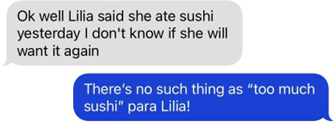
Figure 1: CS Text message in English (switching to Hindi) from undergraduate student to another Shaam ko: “right now”

Our analysis revealed that undergraduate students were more apt to partake in code-switching during informal conversations with close friends. We observed this phenomenon primarily through the use of nouns pertaining to daily life (e.g., lunch, cafe, and waitlist, see Figure 2). Moreover, these students tended to initiate sentences with shorter verbal phrases such as “I gonna” and “I am”, while also utilizing code-switching at the conclusion of a sentence when they wished to express a particular time frame, specifically denoting in English for requests to happen “right now” or “today” (see Figure 1).

Figure 2: CS Text message in Mandarin (switching to English) from undergraduate student to another
Figure 3: CS Text message in English (switching to Spanish) from faculty to another older adults
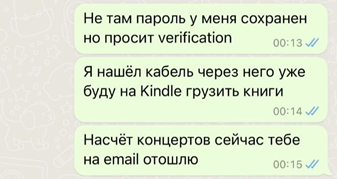
Figure 4: CS Text message in Russian (switching to English) from professor to another older adult

Faculty seem to talk most about modern issues such as technology or politics, but at times, even in simple conversations such as talking about what to eat for dinner, they may code-switch just to use the word “for” in their native language (see Figure 3). Prepositions were a common code-switched word in faculty conversations. Further screenshots provided by UCLA faculty revealed a preference for proper nouns and more formal terms, such as “Kindle,” “verification,” and “email” (see Figure 4). Our data demonstrated that undergraduate students code-switched more often than faculty members when communicating through text messaging, or at times, more common to professors, email.

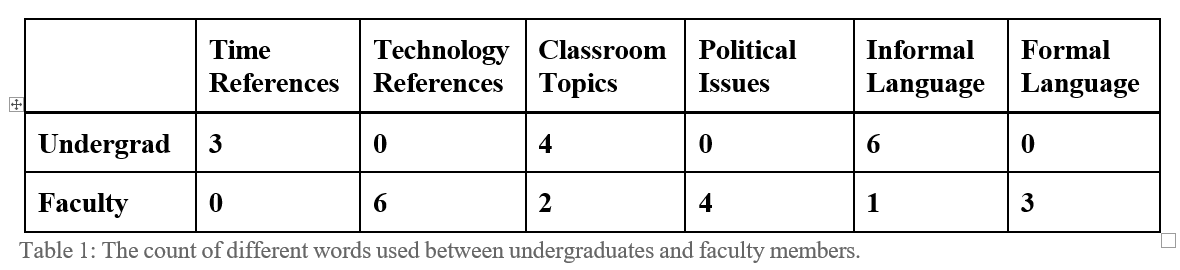
As stated so far, we’ve found code-switched words to fall into similar categories, such as prepositions, technological terms, legal jargon, or classroom topics. Table 1 categorizes the words used between undergraduates and faculty in order to more easily display the differences between both groups. The last two categories are a little vague- informal language relates to any time in which the participants shortened their words (example: “u” for “you”). Formal language relates to any time in which participants used words often meant to be polite (example: Mr. or Mrs.).

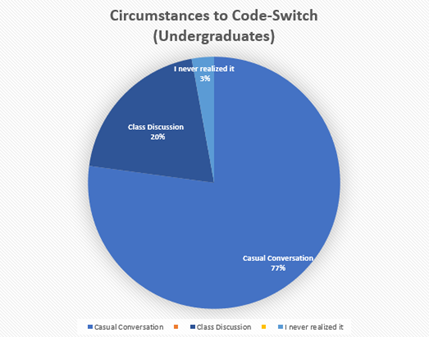
Figure 5: Pie Chart Denoting Undergraduate Code-Switching Circumstances (Casual Conversation: 27, Class Discussion: 7, I never realized it: 1); n = 35

In our survey, we asked both parties under which circumstance they code-switched in more to see if it may provide an explanation for the texting outcomes we obtained. For example, perhaps faculty talked about citizenship and taxes because they were talking to employers, and maybe undergraduates spoke about getting waitlisted and class because they were codeswitching during class discussions. Yet our survey results show that most students code-switch in casual conversation with their friends, with only 20% of undergraduates code-switching during class-related activities.

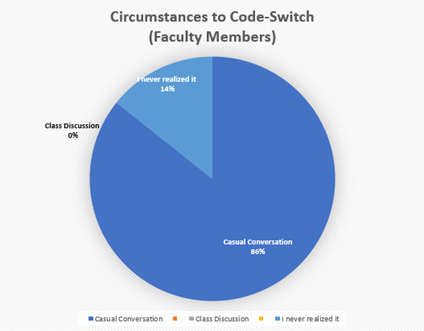
Figure 6: Pie Chart Denoting Faculty/Professor Code-Switching Circumstances (Casual Conversation: 6, Class Discussion: 0, I never realized it: 1);  n = 7

Here, our hypothesis is once again proven wrong, displaying that none of our older participants code-switched with employers but instead solely during casual conversation. There was an option to state where else they code-switch, but all other participants (except for those who couldn’t recall or stated they didn’t realize it) said that they only code-switch among friends and family during casual conversation.

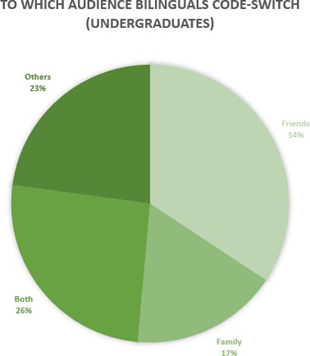
Figure 7: Pie Chart Denoting Audience of Undergraduate Code-switching (Family: 6, Friends: 12, Both: 9, Others: 8); n = 35

Using the same dataset, we made another distinction between undergraduate students and faculty members using one of the questionnaires from the survey: To which specific audience did you code-switch to more often? There are four variables that we chose to analyze, which are Friends, Family, Both, and others. The data of “others” include answers like, “teachers,” “people my age who look ethnically similar to me,” and “work environment.” The pie-chart above represents the data of undergraduate students. Based on the chart, we could tell how undergrads tend to CS with friends the most, followed by both friends and family (2nd), others (3rd), and family (4th). This corroborates the notion that bilingual undergraduate students are more likely to engage in code-switching during informal settings, such as chatting with friends, rather than in more intimate settings, like family discussions.

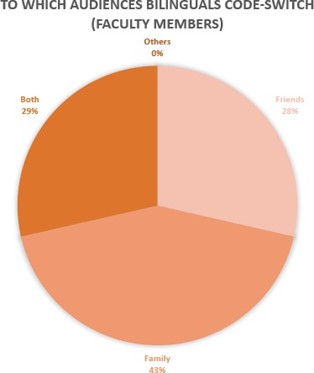
Figure 8: Pie Chart Denoting Audience of Faculty/Professor Code-switching (Family: 3, Friends: 2, Both: 2, Others: 0); n = 7

Next, this is another pie-chart that represents the data of faculty members and professors. Based on the chart, we could tell that UCLA faculty members and professors tend to CS with family members the most, followed by both (2nd), friends (2nd), and others (3rd). In contrast to the data regarding undergraduates, it is evident that faculty members tend to code-switch more frequently in personal settings, such as family conversations.

Conclusion

This research focused on the possibility of age affecting the way that bilinguals code-switch, both in content and environment. Through analysis of text messages and survey data, we were able to display some common bilingual texting patterns in UCLA undergraduates and faculty. Our research showed that bilingual people, regardless of age, do tend to transition between languages in casual conversations rather than in more formal, workplace or educational, situations. However, we saw some intriguing contrasts in the subjects that younger and older bilinguals code-switched about. It seems that when talking about less casual subjects, like political issues and business, older bilinguals are more inclined to switch languages. This could be the result of having more exposure to these kinds of interactions, while younger bilinguals may not code-switch in these certain situations because they have not yet encountered these themes as frequently. Our research also revealed that bilinguals’ code-switching behavior is influenced by the setting in which they are in. In casual situations, like conversations with friends, bilingual undergraduates tend to engage in code-switching more frequently than the faculty, who tend to reserve code-switching for more personal environments, such as with their families. The complexity of bilingualism and code-switching, as well as the ways that environment and age can affect these behaviors, are highlighted by our study. Understanding these subtleties is crucial for efficient communication and social integration in an increasingly linked society.

Although it seems as if most bilingual individuals, no matter the age, code-switch in casual conversations, older bilinguals tend to code-switch when talking about less casual topics, such as political issues and business, while younger bilinguals code-switch about daily life issues, like where to get lunch next.

References

Bahous, R. N., Nabhani, M. B., & Bacha, N. N. (2013, August 20). Code-switching in higher education in a multilingual environment: a Lebanese exploratory study. Language Awareness, 23(4), 353–368. https://doi.org/10.1080/09658416.2013.828735

Bhatti, A., Shamsudin, S., & Said, S. B. M. (2018, May 14). Code-Switching: A Useful Foreign Language Teaching Tool in EFL Classrooms. English Language Teaching, 11(6), 93. https://doi.org/10.5539/elt.v11n6p93

Ellison, T. M., & Si, A. (2021, June 28). A quantitative analysis of age-related differences in Hindi–English code-switching. International Journal of Bilingualism, 25(6), 1510–1528. https://doi.org/10.1177/13670069211028311

Jagero, N., & Odongo, E. K. (2011, March 30). Patterns and Motivations of Code Switching among Male and Female in Different Ranks and Age Groups in Nairobi Kenya. International Journal of Linguistics, 3(1). https://doi.org/10.5296/ijl.v3i1.1164

Mabule, D. R. (2015). What is this? Is It Code Switching, Code Mixing or Language Alternating? Journal of Educational and Social Research. https://doi.org/10.5901/jesr.2015.v5n1p339

Sichyova, O. N. (2005, November 22). A note on Russian-English code switching. World Englishes, 24(4), 487–494. https://doi.org/10.1111/j.0883-2919.2005.00432.x

Washington-Harmon, T. (2022, May 23). This survival tactic many BIPOC use could be harmful to their mental health. Health. Retrieved March 11, 2023, from https://www.health.com/mind-body/health-diversity-inclusion/code-switching

[/expander_maker]
, , , ,

Code-switching and Conversation Consistency: How Bilingual Speakers Code-switch to Communicate Effectively

Danbi Jang, Louise Chen, Katherine Escobar, Alena Hong

Bilingual speakers code-switch for conversation consistency. Code-switching is more effective when describing cultural words with only that language and when both speakers are in an argument situation because code-switching increases conversation compatibility. Our research looked at the Kim’s Convenience Season 1 show and analyzed the Korean-Canadian bilingual family code-switching pattern. We analyzed Kim’s family’s conversation and found that intra-sentential code-switching is the most frequent type. Additionally, we realized that the function of each code-switching frequently happens for expressing identity, objectification, interjection, and clarifying repetition. The results showed that bilingual code-switching is necessary and efficient between two bilingual speakers when they intend to create connections with each other or solve problems. As a result, code-switching creates smoother conversations for bilingual speakers so they rather naturally mix two languages than only talking in one.

[expander_maker id=”1″ more=”Read more” less=”Read less”]

Introduction and Background

If you are a bilingual speaker, you must code-switch at least once. Bilingual communities frequently use code-switching. It has become a powerful communication tool for expressing and developing language skills. Code-switching is the process in which a bilingual (or multilingual) person alternates between two (or more) different languages in a bilingual (or multilingual) communication environment. There are several reasons bilinguals do code-switching. According to past research by Stępkowska (2022), bilingual people may demonstrate dissimilar verbal behavior in their two languages. Interlocutors perceive languages differently depending on their language in a given context. Additionally, attitudes toward languages permeate daily life and impact communication patterns within the couple (ibid.). Based on past research, we were curious whether bilingual speakers are more compatible than speakers who do not code-switch. According to another research, code-switching gives “a built-in sensibility that conversational regularities are both content-independent and context-sensitive” (Dumanig et al., 2015). Therefore, our research question is how bilingual speakers code-switch to communicate effectively. We mainly focused on Korean-Canadian bilingual speakers’ families and close friends, as well as investigated how Korean-English bilingual speakers code-switch to communicate effectively in complicated discussion situations and daily life.

Methods

We mainly collected data from the show Kim’s Convenience, season 1. We observed code-switching in bilingual speakers, how frequently they switched, and what purpose and function the code-switch served to communicate with other bilingual speakers in conversations. We attempted to provide transcriptions of specific examples of code-switching. We analyzed the type of code-switching primarily in categories of Inter-sentential, Intra-sentential, and Extra-sentential code-switching. We defined Inter-sentential code-switching as the language switch done at sentence boundaries, like sentences before, in the middle, or after another sentence. In our data, we have mostly seen this type of code-switching in fluent bilingual speakers. Intra-sentential code-switching is done within the sentences, with no pauses or interruptions to indicate a shift. The speakers in the show usually switched this type when they called Korean appellations, or greetings within part of the sentence. Finally, we found extra-sentential code-switching, which is switching a slang or a single word from one language to another (ESEN, 2022). In addition, we defined culturally related words or phrases such as 갈비찜(galbi-jjim) and those expressing feelings and interjections as extra-sentential code-switching.

Furthermore, we investigated the functions and purpose of code-switching and how the speakers resolved their disputes and communicated well based on the context of conversations. We classified the functions of code-switching into four which are interjections, objectification, clarifying repetition, and expressing identity. Then, we focused on examining when the bilingual speakers use code-switching to communicate more effectively in the conversation. Also, we quantified whether the data retrieved from the show conveyed more compatibility and resulted in conflicts resolved by observing any frequent types of code-switching and different functions of code-switching in speech patterns of the show. We hypothesized that code-switching plays a different role in each context, helping promote effective communication.

Results and Analysis

From the data we collected, we observed that code-switching is a highly-efficient communication tool for the Korean-English bilingual Kim’s family. At the same time, there are several talks taking place in between the monolingual speaker and the bilingual speaker. In the same way that code-switching helps bilinguals solve problems more easily and quickly in situations where there might be an argument, misunderstandings tend to last longer and occur more frequently in monolinguals because they cannot do code-switching. For instance, in episode 7 from 18:15-19:13, there is a good example of a monolingual and bilingual argument about Taekwondo and Hapkido that doesn’t go smoothly. Here we include a shortened version of the script.

Mr. Kim:  wah you know 태권도(Taekwondo)?

Customer:  Not really but I’m a big fan.

Mr. Kim:  They have 태권도 (Taekwondo) in Africa?

Customer:  oh yeah! Somalia won silver at the 2003 international open.

Mr.Kim:  wow impressive! You don’t look Somalian.

Customer:  No I’m not. This is just a Taekwondo fact.

Mr. Kim:  태권도(Taekwondo) is Korean.

Customer:  I know.

Mr. Kim:  I am a Korean

Customer:  I know.

Mr. Kim:  합기도(Hapkido) is Korean too!

Customer:  Hapkido?

Mr. Kim:  Yea but the much better fight style! Choi he invited 합기도(Hapkido) while serve in the military in Japan.

Customer:  So.. in a way it could also be considered as Japanese martial art.

Mr.Kim:  No! (angry face) You joking me?

Customer:  no… I just meant… Taekwondo was invented by Korean too?

Mr.Kim:  Of course Korean!

Customer:  I didn’t realize Korean was that strong!

In this case, Mr. Kim and the monolingual customer have a small fight because the customer does not truly know about Taekwondo or Hapkido, but he thinks he does. So, the original topic was to discuss a group of children learning Taekwondo, but due to the misunderstanding, Mr. Kim needs to expand more about Taekwondo and Hapkido knowledge. In a way, it implies that there is a higher chance for monolingual speakers to have misunderstanding or misapprehension thus reducing the consistency of the conversation. When the same situation happens on two bilingual speakers, they don’t need to stop and explain the content of their code-switching. According to Brezjanovic-Shogren (2002), code-switching “establishes a connection between the contributions of the participants thus making the conversation coherent. Considering participants are always “talking about something”, focusing on the “description of the topic” will answer directly what is the topic of the conversation.” This suggests that code-switching helps speakers stay on a certain topic and creates consistency for the conversation. Thus, there is a positive relationship between code-switching and communication.

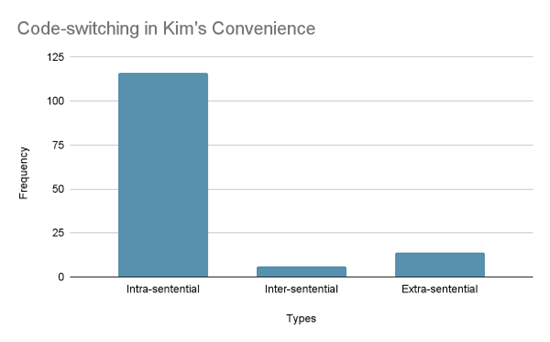
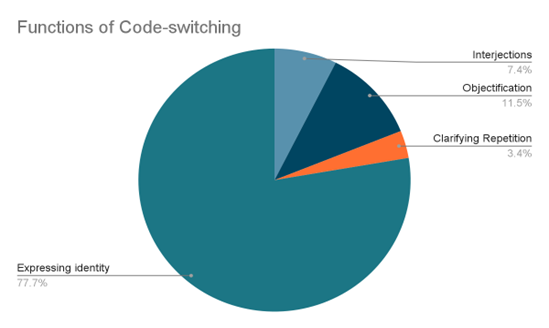
There are three types of code-switching, intra-sentential, inter-sentential, and extra-sentential. To our surprise, intra-sentential is far more numerous than the other two types (See Fig.1). This is because inserting another language phrases or words is more natural and simple than whole sentences. A significant number of these intra-sentential data come from Korean appellations, such as 아빠(Dad), 엄마(Mom), 아줌마(Auntie). The transformation of the titles into Korean reflects the function of code-switching in expressing identity and establishing connection. Prihatin (2018) proves that code-switching occurs to express identity when an individual wishes to express solidarity with a social group. According to the statistics (See Fig.2), this function is the most common one, accounting for 77.7 percent. There are also three other major roles of code-switching, namely, objectification (11.5%), interjection (7.4%), and clarifying repetition (3.4%). Code-switching uses for objectification can quickly help speakers get a more concrete image in their mind about the topic. Because this function is often present on culturally relevant code-switching, it can often be classified as the extra-sentential type. For example, Mr. Kim says Korean 합기도 (Hapkido) instead of English pronunciation Hapkido in episode 7 where the conversation takes place between him and his bilingual daughter, Janet. Because Hapkido is a Korean traditional activity, Mr. Kim wants Janet to quickly recall what 합기도(Hapkido) is and all the information related to it. This is where the advantage of code-switching comes in. Sometimes people code-switch to interrupt someone, this is the function called Interjection, doing so helps get attention or start a new topic. In other cases, code-switching is able to emphasize or reaffirm the topic when the speaker does clarifying repetition (See Appendix).

Fig. 1. Frequency of each type of code-switching in Kim’s Convenience
Season 1


Fig. 2. Percentage of each function of code-switching in Kim’s Convenience, Season 1

Discussion and Conclusions

The findings from our study contributed to our understanding of interpersonal communication, more so how to make communication more effective through the use of code-switching. Our data suggests that code-switching occurs as a way to fulfill a purpose in communication such as expressing identity through the ability to relate to cultural values and strengthen relationship bonds. Additionally, through other functions such as objectification, repetition, and interjections, it improves communication by clearing any misunderstanding for phrases that do not translate well into the dominant language. In a similar field of research, Helena Merschdorf presented a TED Talk about the paradox of intercultural communication. Her studies suggest that there are invisible understandings, where biases from our primary language and culture can cause misunderstandings and misconstrue due to societal norm differences (Merschodorf, 2022). In the case of Kim’s Convenience, we found that code-switching occurred to address these societal differences. As the show was based in Canada, the respectful terms don’t translate with the same cultural significance so characters would code switch in order to express their Korean identity, avoiding an invisible understanding of potential disrespect or disregard for their Korean heritage. For example, in episode 8, the context surrounds a neighborhood pastor for Koreans, though all are welcome. The pastor is very close with the Kims as he is a frequent patron at the convenience store, but because he takes advantage of his important and influential role at the church, he believes he can get away with taking gum without needing to pay anything. The Kims are obviously worried because the continual free gum will begin to add up once rent is due, or Pastor Choi could begin to take something of greater value should he get comfortable not paying. Mrs. Kim did not want to let this continue, so she code switches and says “목사님 (Moksanim) I think we cannot…” (E8, 20:41). The purpose of this code switch was to express their Korean identity by using a formality to show respect to Pastor Choi despite telling him something that he probably would not like to hear. Because the formality does not translate in English, the code-switch in this instance eliminates a misunderstanding of disrespect as Mrs. Kim did not want to let the pastor continue misunderstanding their kindness for generosity.

Originally, our focus was to explore if code-switching would make communication more effective in couples that are in an argument. What we ended up studying was the types of code-switches and the instances in which they occur. By isolating four different purposes for the code-switch, we unveiled that by serving one of those purposes, code-switching was used to prevent miscommunication or to find a way to clarify true meaning despite a language barrier. As Merschodorf (2022) suggested, a way to prevent misunderstandings is to take into account the different linguistic knowledge from other cultures before communicating. By doing so it would prevent any marginalization or discriminatory language. This could be done through “pidgin” languages such as Konglish or Spanglish, where combining two languages that were stripped to the simplest forms, may serve as a means to accommodate both parties in a conversation in a way that keeps all cultural identities intact. Though marginalization can be perceived as a phenomenon usually concerned with targeting an individual’s identity, excluding someone through unfamiliar words and phrases without considering their needs can also be a form of marginalizing. Code-switching can then resolve this issue by allowing speakers to clarify what their true intending may be in an inclusive manner. This could be seen in episode 9 of Kim’s Convenience, where this episode follows interactions between Pastor Nina and Mrs. Kim. Mrs. Kim was dealing with embarrassment over her son’s Jung intimate relations with someone from the church, so when Pastor Nina said she heard something about Mrs. Kim, her mind was worried that there was gossip about how sexually active her son is though Pastor Nina was talking about 갈비찜, the meat dish galbi-jjim (E9, 10:03). Her attempt to code switch was to affirm and create a closer relationship with one of her church regulars, Mrs. Kim, by relating to her culture and being inclusive of the Korean language. Additionally, she asks Mrs. Kim if her pronunciation was correct, showing that she is eliminating an egocentric bias of assuming she was correct, and actively seeks feedback from Mrs. Kim as she recognizes that she is unfamiliar with Korean linguistic culture. Overall, our findings uncover that code-switching in a broader context serves to prevent misunderstandings as a result of a language barrier, through the fulfillment of communication purposes such as expressing identity, objectification, repetition for clarification, and interjections for emphasis. Without such purposes in mind, perhaps code-switching might not have an influence on the quality of communication between speakers as misunderstandings could occur without the clarification and inclusivity that code-switching can elucidate.

References

Brezjanovic-Shogren, J. (2002). ANALYSIS OF CODE-SWITCHING AND CODE-MIXING AMONG BILINGUAL CHILDREN: TWO CASE STUDIES OF SERBIAN-ENGLISH LANGUAGE INTERACTION. Wichita State University, 1-82. https://soar.wichita.edu/bitstream/handle/10057/5051/t11060_Brezjanovic%20Shogren.pdf?sequence=3&isAllowed=y

Choi, I., Kohler, R., White, K., dirs. Kim’s Convenience. 2016; Ottawa, Ont.: Canadian Broadcasting Corporation (CBC). Netflix. https://www.netflix.com/browse?jbv=80199128

Choi, I., Kohler, R., White, K., writers. Kim’s Convenience. Season 1, episode 7, “Hapkido.” Directed by Dawn Wilkinson, featuring Paul Sun-Hyung Lee. Aired November 22, 2016, in Canadian Broadcasting Corporation (CBC). https://www.netflix.com/watch/80236367?trackId=14170289&tctx=2%2C0%2Cb8235341-19ea-4083-9317-21b3f05687f2-7917841%2CNES_EDA12732B35623D7FB1CFDD00F5D6A-B9F225DDE3A711-4A0417714B_p_1679516526251%2C%2C%2C%2C%2C80199128%2CVideo%3A80199128

Choi, I., Kohler, R., White, K., writers. Kim’s Convenience. Season 1, episode 8, “Service.” Directed by James Genn, featuring Paul Sun-Hyung Lee, Jean Yoon, and Hiro Kanagawa. Aired November 29, 2016, in Canadian Broadcasting Corporation (CBC). https://www.netflix.com/watch/80236368?trackId=14170289&tctx=2%2C0%2Cb8235341-19ea-4083-9317-21b3f05687f2-7917841%2CNES_EDA12732B35623D7FB1CFDD00F5D6A-B9F225DDE3A711-4A0417714B_p_1679516526251%2C%2C%2C%2C%2C80199128%2CVideo%3A80199128

Choi, I., White, K., writers. Kim’s Convenience. Season 1, episode 9, “Best Before.” Directed by James Genn, featuring Jean Yoon and Amanda Brugel. Aired December 6, 2016, in Canadian Broadcasting Corporation (CBC). https://www.netflix.com/watch/80236369?trackId=14170289

ESEN, S. (2022). Code switching: Definition, types, and examples – owlcation. Code Switching: Definition, Types, and Examples. https://owlcation.com/humanities/Code-Switching-Definition-Types-and-Examples-of-Code-Switching

Merschodorf, H. (2022, June 17). The Surprising Paradox of Intercultural Communication [Video]. TED. https://www.ted.com/talks/helena_merschdorf_the_surprising_paradox_of_intercultural_communication?utm_campaign=tedspread&utm_medium=referral&utm_source=tedcomshare

Pietikäinen, K.,S. (2014). ELF couples and automatic code-switching. Journal of English as a Lingua Franca, 3(1), 1-26. https://doi.org/10.1515/jelf-2014-000

Prihatin, Y. (2018). CODE SWITCHING USED BY ENGLISH DEPARTMENT STUDENTS OF PANCASAKTI UNIVERSITY ON FACEBOOK. View of code switching used by English department students of Pancasakti University on facebook. https://journal.peradaban.ac.id/index.php/jdpbi/article/view/358/287

Yun, S. (2009). The socializing role of codes and code -switching among Korean children in the U.S (Order No. 3356438). Available from Linguistics and Language Behavior Abstracts (LLBA). (305085390).https://www.proquest.com/dissertations-theses/socializing-role-codes-code-switching-among/docview/305085390/se-2

[/expander_maker]
, , ,

Language Proficiency and Cultural Identity of Korean Heritage Speakers

Griffin Gamble, Erin Kwak, Joanna Kwasek, and Hannah Shin

A heritage language is defined as a minority language spoken at home that is not part of a dominant language in society. This study looked specifically into Korean heritage speakers living in the United States and investigated whether language proficiency in Korean will align with the degree of Korean cultural identity. In order to study this relationship, we utilized two separate data collection methods: an elicitation task to assess language proficiency and a self-reported questionnaire to record cultural identity. As expected, we found that the more grammatical errors the participants made, the less they identified with their Korean culture. This finding suggests a positive relationship between Korean language proficiency and Korean self-identity, which contradicts previous findings that higher proficiency in a heritage language predicts a more balanced bicultural identity that is not dominated by one culture.

[expander_maker id=”1″ more=”Read more” less=”Read less”]

Introduction and Background

With the U.S. being known as a melting pot of cultures, numerous languages are constantly being spoken and intermingled in public and private. Following this observation, we were interested in understanding how heritage speakers–more specifically, Korean heritage speakers–juggle multiple cultural identities.

Previous findings suggest that one’s cultural identity and language proficiency are correlated. Lee (2002) studied the relationship between heritage language proficiency and cultural identity of Korean heritage speakers. They were able to observe that Korean heritage speakers who were proficient in Korean largely reported having a bicultural identity, or one that is equally American and Korean (Lee, 2002). Furthermore, Adaobi (2014) studied the link between a minority language, Etulo, and the majority language, Tiv, to understand if bilingualism affects self-identity. Similarly to Lee (2002), Adaobi found that Eluto speakers identified with both cultures, but did experience a sense of identity conflict, or dual identity, from time to time (Adaobi, 2014). Such findings indicate that proficiency in both the dominant and minority languages facilitate a unique bicultural identity.

One of the biggest limitations that we observed in the studies above was the use of self-assessments as a measure of language proficiency. Self-reports can be unreliable in producing standardized data, as it does not involve an objective assessment of language proficiency; it is susceptible to biases about how well one believes they can speak a language. Therefore, in our study, we have decided to implement a widely used method in the study of bilingualism: the elicitation task (Bialystok and Frohlich, 1980; Dechert, 1983). As grammatical competence is often a strong predictor of overall oral proficiency (Magnan, 1988), it is plausible to assume that grammatical errors will decrease as the proficiency level increases. With such assumptions, the current study conducted a grammaticality judgment of participant speech to determine language proficiency (Cornips & Poletto, 2005), in hopes of enhancing both the validity and reliability of the research addressing heritage language proficiency and cultural identity.

We hypothesized that there will be a positive relationship between Korean language proficiency and Korean cultural identity. In other words, Korean heritage speakers who 1) exhibit higher grammatical accuracy in Korean and 2) are able to utilize more cultural references will identify with the Korean identity to a larger degree.

Methods

We studied twelve Korean heritage speakers currently living in Southern California, between the ages of 15 and 23. Eight of the participants identified as female, three as male, and one as other. They had differing levels of exposure to formal Korean language education but all of them used Korean at home with their family (aligning with our definition of a heritage speaker).

Table 1: Participant Demographics

The study utilized two separate data collection methods. The first was an elicitation task, which involved a slideshow that depicted the Korean fairytale titled The Heavenly Maiden. We began by telling the story to the participants in English, accompanied by the corresponding image for each scene (See Figure 1).

Figure 1: Example of a slide from the elicitation task

The participants were then asked to retell the story in Korean as we flipped through the images in the slideshow. Their speech was recorded and transcribed for further analysis. The second data collection method was a questionnaire that was distributed to participants after the elicitation task. By doing so, the questions regarding ethnicity, culture, and comfortability in speaking Korean did not influence their performance in the storytelling task. The survey also included questions about the participants’ general background information, such as their age, the circumstances in which they learned Korean, in what situations and how frequently they use Korean today, etc.

The recording was reviewed for two main variables: instances of any grammatical errors (such as subject, verb, and object word order errors) and the usage of culturally-relevant vocabulary within the story. Regarding the culturally-relevant vocabulary, there are a few terms, such as 선녀 (“heavenly maiden”) and 두레박 (“bucket”), that are important aspects of the fairytale. We expected to find that participants who are more in touch with Korean culture would be able to better identify and use those cultural references.

Results and Analysis

Out of the twelve participants, only ten participants fully participated in our study as two people opted out of the elicitation task as they felt that the task would be too difficult with their language abilities. However, we still decided to give them the option of completing the questionnaire so that we could note any potential patterns.

When analyzing the data, we noticed two main patterns amongst the participants: irregular formality and sentence structure. These were interesting to us because the Korean language is highly sensitive to different degrees of formality–that is, a speaker should not be suddenly switching between multiple formality levels unless the recipient has changed. An instance of irregular formality can be seen in this excerpt of participant 1’s transcript: “사슴이 남자에게 도움을 요청했습니다. 사냥꾼이 사슴을 사냥하고 있었다.” The first sentence ends with –습니다, which is formal and respectful. However, the next sentence ends with –다, which is less formal and more direct. Additionally, Korean sentences typically follow a subject-object-verb order, but the participants seemed to use different word order structures purposefully. Korean-American speakers were repeatedly and deliberately utilizing an alternative word order structure as a stylistic choice, not as a momentary mistake. An example of irregular sentence structure can be observed in this excerpt of participant 4’s transcript: “사슴이 살려달라고 그래서 나무속에 숨겨놨는데 사냥꾼이 와서 찾았어요 사슴을.” This sentence notably ends with an object (“사슴을”), which is not common in Korean speech, and more resembles English’s subject-verb-object order.

Surprisingly, participants were generally lacking in the use of cultural references with two people using none, seven people using one, and one person using two. Patterns regarding the usage of cultural referents were thus not evident, which made it difficult to answer the relevant aspect of our hypothesis.

Regarding the self-reported cultural identity of our participants, a majority of our participants considered themselves Korean-American, but more Korean or equally Korean and American. None of our participants considered themselves fully American with no Korean identity. Interestingly, the participant with the least amount of errors and highest self-perception of being Korean (i.e., they viewed themself as fully Korean, rated themself 5 in Korean proficiency, and 5 for how comfortable they are in speaking Korean), only utilized one cultural referent throughout the whole speech. She instead opted for a more casual and simple nuance, using Korean versions of an English word, such as “샤워” ([ɕʰawʌ] ‘shower’) and 버켓 ([bʌket̚] ‘bucket’). We also noticed that the two people who opted out of the task but filled out the questionnaire were the only ones who marked “very uncomfortable” for the question asking how comfortable they are in speaking Korean and “strongly agree” for the statement “I celebrate most American holidays.”

In comparing the self-identity question to their overall error ratio in speech, we found that the average error ratio increased as the participants identified as more American (See Figure 2). Although we were not able to run a formal statistical analysis due to our limited sample size, we expect this trend to transfer onto a bigger sample size as well due to its concreteness.

Figure 2: Self-Identity and Error Ratio

Another interesting observation we made was that those who marked that they took Korean in school for foreign language credit (which were participants 9, 10, A, and B) had either: the highest ratios of errors or completely opted out of the elicitation task due to low proficiency.

Discussion and Conclusion

The results suggest that language proficiency and cultural identity seem to have a positive correlation, as the participant who rated herself as fully Korean had the least errors in speech, and the average error ratio of participants increased along with American identity. In addition, we also observed a common linguistic pattern among our Korean-American participants. Those who rated themselves a score of 2 or 3, and therefore did not fully identify as Korean, were using a word order structure similar to English subject-verb-object (SVO). This word order is not technically ungrammatical in Korean, but it’s usually only used if the second clause is an afterthought therefore it can come off as awkward especially if used repetitively. However, the Korean-American participants appeared to be using it as a stylistic choice, and not by mistake. This finding opens up a new area of research for bilingualism: emerging linguistic patterns in heritage speakers that were not previously observed in native speakers. By studying how this linguistic trend is preserved or even replaced within generations, we would also be able to study how multiple languages reform as they come in contact with a different language. In the case of our participants, it was mainly the fusing of English and Korean that prompted the rise of English’s SVO-like word order structure in Korean.

One of the biggest limitations was our small sample size. A larger sample size would help identify stronger, statistically significant correlations between our variables, and in turn, promote the external validity of our findings. Furthermore, we could better target the elements within our hypothesis by improving the elicitation task. As we were unable to observe a consistent use of cultural references among the participants, we could better assess the role of cultural proficiency or cultural awareness by utilizing or creating a story that prompts the use of more cultural references. The analysis method of our study would also have been more standardized if the grammaticality judgment was not done by the researchers themselves. Although we were limited in our time and resources, recruiting a panel of native Korean speakers to rate the grammaticality of each participant’s speech would lead to a more concrete assessment of language proficiency.

So why do these findings matter in our day-to-day lives? First of all, the observations we made throughout our study support the idea of a bidirectional relationship between language and identity. Even though our main research question dealt with the positive connection between language proficiency and the corresponding cultural identity, this relationship encompasses so many other factors such as our attitude towards our culture, the amount of language use per day, the quality of language use, the context of language use, and much more. Each of the aforementioned variables could equally serve as a byproduct of or the driving elements behind one’s language proficiency. For instance, one could be using their heritage language only with their parents because they lack proficiency, or lack proficiency because they only use it with their parents and no one else. If you factor in the role of cultural identity, it further raises the question of “which came first?” as it could be the depth of cultural identity that motivates language use or vice versa. Knowing this, it brings us to the second reason why the findings of this study are important: we could potentially promote language proficiency and cultural identity by elevating one another! To provide an example, enhancing one’s cultural identity could serve as a big motivator behind learning a heritage language. The positive attitude allocated to a specific culture could definitely act as an incentive for learning a language while enhancing the learning process itself. Similarly, one might wish to identify with their heritage culture on a deeper level. The findings in this study suggest that increasing one’s proficiency in their heritage language could in turn intensify one’s respective cultural identity.

References

Adaobi, N. O. (2014). Bilingualism and identity in etulo. OGIRISI: A New Journal of African Studies, 10(1), 23. https://doi.org/10.4314/og.v10i1.2

Bialystok, E., & Fröhlich, M. (1980). Oral Communication Strategies for Lexical Difficulties.

Interlanguage Studies Bulletin, 5(1), 3–30. http://www.jstor.org/stable/43135243 Cornips, L., & Poletto, C. (2005). On standardizing syntactic elicitation techniques (part 1).

Lingua, 115(7), 939–957. https://doi.org/10.1016/j.lingua.2003.11.004

Dechert, H. W. (1983). How a story is done in a second language. In C. Faerch, & G. Kasper, (Eds.), Strategies in Interlanguage Communication, 175-196. New York: Longman.

Jee, M. J. (2016). Exploring Korean heritage language learners’ anxiety: ‘We are not afraid of Korean!’ Journal of Multilingual and Multicultural Development, 37(1), 56–74. https://doi.org/10.1080/01434632.2015.1029933

Lee, J. S. (2002). The Korean language in America: The role of cultural identity in heritage language learning. Language, Culture and Curriculum, 15(2), 117–133. https://doi.org/10.1080/07908310208666638

Magnan, S.S. (1988). Grammar and the ACTFL Oral Proficiency Interview: Discussion and Data. The Modern Language Journal, 72, 266-276.

Montrul, S. (2013). How “Native” Are Heritage Speakers?, Heritage Language Journal, 10(2), 153-177. doi: https://doi.org/10.46538/hlj.10.2.2 

Rothman, J. (2009). Understanding the nature and outcomes of early bilingualism: Romance languages as heritage languages. International Journal of Bilingualism, 13(2), 155–163. https://doi.org/10.1177/1367006909339814

[/expander_maker]
, , , , ,

Native English Speakers and Bilingual Speakers with English as L2, Difference Between their Syntactic Knowledge Acquisition

Viktoria Hovhannisyan, Alisara Koomthong, Tomoe Murata, Kota Tsukamoto

Syntactic knowledge is the understanding of the connection between the words in a sentence. This skill develops over time in children when being exposed to a language from their environment. Previous research demonstrated that bilinguals show different structured outcomes for language and cognitive performance, in terms of being at disadvantage. This study argues that bilinguals with English as a second language speakers who grew up acquiring English tend to develop syntactic awareness more effectively and, as a result, perform better on grammatical tasks as opposed to native English speakers. We collected data from 20 undergraduate students and asked them to complete grammar tasks along with answering questions that would reveal the level of their syntactic knowledge. We found that native English speakers are more knowledgeable in syntactic structures based on their scores than international bilingual English speakers.

[expander_maker id=”1″ more=”Read more” less=”Read less”]

Intro & Background:

This study is designed to test two populations, native English speakers and non-native English speakers in the adult population. The research is aiming to observe metalingual awareness, more specifically syntactic awareness in adult monolingual and bilingual populations. To narrow down our focus of the study, we will not be assessing any other aspects of language, such as phonological awareness, vocabulary size, or accent.

Over the years, various studies have suggested that bilingual speakers have disadvantages in language and cognitive performance.  For example, one study has demonstrated that bilingual children develop vocabulary more gradually in each language and perform poorly on language proficiency tasks than monolingual speakers of the same language (Bialystok and Feng, 2011 & Oller and Eilers, 2002). Additionally, another study has shown that adult bilinguals have limited vocabulary size (Portocarrero, Burright, & Donovick, 2007). They also produce fewer words in verbal fluency tasks (Rapp, 2005). This topic has been very well researched, and the results of several studies have actually shown that there is a disadvantage to bilingualism.

However, the study that was conducted on the children population found that bilingual children sometimes perform better than their monolingual peers on grammaticality judgment task which is a form of assessing metalinguistic awareness (Foursha-Stevenson & Nicoladis, 2011). They argue that some of these differences can be accredited to the fact that bilinguals have to learn to control attention to language choice. Based on the results where the children undergo those differences, we believe that the same concept applies to the adult bilingual population. Furthermore, a study that tested the effects of monolingualism-bilingualism on a foreign language learning using a grammatical judgment task showed that bilinguals performed significantly better than monolinguals after adolescence, although there was no difference in performance before adolescence (Yeganeh 2013). The author also points out that being bilingual is effective for foreign language acquisition after adolescence and they achieve higher results in the learning process. In short, two different studies suggest that bilinguals perform better than monolinguals on grammaticality judgment tasks during childhood and after adolescence. Moreover, we believe that native English speakers do not typically spend as much time learning grammar rules as the bilingual population, since they acquire language naturally (i.e., family, friends, schools, home, community). Whereas the non-native speakers who grew up in a foreign language environment generally square language in the school setting where they get formal lessons on topics such as syntactic rules. Considering this difference in both populations in addition to the bilingual advantage in grammar judgment tasks, we predict that non-native English speakers would perform better on grammatical assessment than native English speakers.

Methods:

To test our hypothesis, we collected 20 responses from undergraduate college students, 8 male and 11 female and 1 other, who are either native monolingual English speakers or bilingual English speakers. We assumed that the ideal bilingual candidate should have learned English at around elementary school or after. As for an ideal native English speaker, they should not have been exposed to any second language input from the time of birth to about 7 years old. This reasoning was based on the critical period hypothesis, which argues that there is an ideal time window to acquire language in a linguistically rich environment and after that period it is much harder to acquire language (Bailey, Bruer, Symons, & Lichtman, 2001).

The study consists of two parts which was aimed to generate data about an individual’s English language skills and beliefs. The first part of the survey asked a series of bibliographical questions relating to their personal background and their history with language acquisition. Some of the questions were the following: “Is your first language English?”, “Do you speak a language other than English natively?”, “At what age were you first exposed to the English language?” etc.  The second part of the survey asked all participants to take the “Michigan ECPE” grammar test which consisted of about 10-15 sentences that were designed to test an individual’s English grammar level. We used the highest level of the test since we were testing both native and non-natives college students who most likely already reached proficiency in the English language. Here is one of the examples of the grammar assessment.

To test the metalinguistic awareness of grammar of the individuals, we will modify the “Michigan ECPE ” grammar test and add a section after each sentence where participants will be asked to explain as to why they believe the answer they chose is grammatically correct. To analyze and evaluate the feedback of an open-ended response, we will categorize the response based on some key components of the response. First, we will be looking for key terminology used in the response. If the participant explains their answer giving the exact grammatical rule they applied, we would count that the participant has meta-knowledge about the syntactic rules and we will assign full credit for their response. When the participant does not define their answer using terminology but explains the gist of the rule then a full credit would be given for their response. If the participant does not use terminology nor explain the rule’s gist but rather gives a logical answer that explains their reasoning, we would assign a half-credit for their answer. Lastly if the participants give a very generic explanation such as “it sounds just right” or “I feel like it matches with the sentence” then we would not assign any credit to their explanation since it is lacking the source of their meta-knowledge. 

To test the link between participants’ confidence level and proficiency, we will ask the participants to rate their confidence level after each question. Additionally, at the end of the questionnaire we asked participants if they have ever received formal lessons on English grammar during the schooling years. This step is crucial to determine the exposure of language input through the development of the participants.

Results & Analysis:

Based on the results, there was not a definite or clear trend that can confirm or annul our hypothesis. Our first group of participants, native English speakers, the majority of them scored much higher and are more confident than our bilingual speakers with English as L2 participants, which goes against our hypothesis.

Figure 1

Figure 1 presents one of our questions that we’ve given to our participants. We believe that this question gives an accurate representation of our overall results. 75% of the participants scored correctly and within that percentile, 73% are native English speakers. The other 25% that answered incorrectly, most of them were internationals (80%). However, we also decided to look further into Question 10 where our participants struggled the most.

Figure 2

As shown in Figure 2, 60% of the participants chose “In whole” which was incorrect. Within that percentile, 33% were international bilingual speakers and 67% were native English speakers. This resulted in a large portion of the participants that answered incorrectly were native English speakers. As for the ones that answered correctly, 50% were bilinguals and 50% were native. From this, we concluded that the question might have been too complicated which gave us mixed results.

Even though most of the participants that scored highly were English speakers, there were some bilingual speakers that scored very highly. Looking at each participant, we noticed a pattern occurring in international bilinguals that did well: all were exposed to the English language at a young age.

Figure 3

Figure 3 above is our ninth participant that scored 11/11. She was one of our two participants that got a perfect score with the other one being a native English speaker. As shown in Figure 3, she has been exposed to the English language at a very young age, even though she grew up in a foreign environment. Due to this observation, we analyzed the international bilingual speakers that did poorly on the assessment and noticed that they were not exposed to English until either in high school or college.

In terms of confidence level, most of the participants scored average or high after they finished the test. Only two participants scored low, ranging from 3 to 5 out of 10, on their confidence spectrum. Overall, native English speakers placed their confidence level higher than international bilingual speakers as shown in Figure 4 below.

Figure 4 (Bilingual candidates 9 to 12 are 0 because there are no candidates).

Discussion & Conclusion:

Based on our findings, it did not align with our hypothesis. In page 3, “Methods” section, sentences from line 3 explains in detail that since we expected the international bilinguals with English as L2 to have more proficiency in syntactic knowledge, the result turned out to be quite the opposite. The points that we mentioned are probably the amount of time people have spent learning English. For the candidates, we only divided them into native English speakers and non-native English speakers. It could have been more detailed since international bilinguals do not always have proficiency in two languages. Additionally, we have not gathered their morphological knowledge, such as speaking and listening, so it is difficult to consider whether a candidate is proficient enough in the language. According to the article “Retaining an accent,” by Francois Grosjean, not every person growing up in the same country does have the same language level, and it will depend on their living environment (see paragraph 9 and 10 on Retaining an Accent). The project allowed us to gather a lot of information about them. Still, at the same time, we found a few points that we needed to adjust or add to proceed with a more detailed project.

For future reference, we believe this experiment is just the beginning of analyzing the bilingual’s and native speakers’ knowledge of English. To make the research more precise, we could separate the bilingual candidates in detail, such as bilinguals who grew up with English as their L1 and bilinguals who grew up with English as their L2. Both candidates have the categorization of bilinguals, but their level of proficiency will turn out different by their background in learning the language. It will indeed affect their knowledge when they are exposed to speaking English as their L1 and L2. Focusing on their ages will also make the project more solid. We gathered their ages but did not reference our analysis. Therefore, if we were to continue working on this project, we would want to focus more on the relationship between age and language. According to Inna Figotina, an educator, the age of a person starting to learn a language will affect their engagement with the language (listen after 21:00 on The Future is Bilingual). On the methodology, we could have set the questions more simply (see page 4, paragraph 3, “Methods”). We will change the difficulty of each quiz by putting Q1 as very easy and Q10 as most difficult. For our research, this method will allow us to figure out the English level, and we can create more analysis on each candidate group; native English speakers did not score perfectly but many got the difficult questions correctly, and many international bilingual candidates got high points but none of them got difficult questions correct. By changing these methods and the target participants, we could gather the information for a deeper analysis of the relationship between bilingualism and English.

In conclusion, research on bilingual speakers and native English speakers allowed us to recap the behavior and the attitude toward the language. Many of the previous experiments and the research supported our hypothesis. However, the result was not the one that we expected. We still believe in our hypothesis that native speakers will not take much effort into learning their own language (English) compared to non-native or international bilingual speakers. However, it can be interesting to figure out how learning will always relate to how they will master one language. Overall, the research brought us to a new idea of bilingualism and the behavior toward their language, and we will continue to focus on that point.


References:

Bailey, Bruer, Symons, & Lichtman (2001) in Bailey D.B., Bruer J.T., Symons F.J., Lichtman J.W. (Eds.). (2001). Critical thinking about critical periods. Baltimore: Paul Brookes.View Full Reference List)

Bialystok, E., & Feng, X. (2009). Language proficiency and executive control in proactive interference: evidence from monolingual and bilingual children and adults. Brain and language, 109(2-3), 93–100. https://doi.org/10.1016/j.bandl.2008.09.001

Cummin, J. (2004). D. Kimbrough Oller & Rebecca E. Eilers (eds), Language and literacy in bilingual children. Clevedon, England: Multilingual Matters, 2002. Pp. vii 310. Journal of Child Language, 31(2), 424-429. doi:10.1017/S0305000904226290

Foursha-Stevenson, C., & Nicoladis, E. (2011). Early emergence of syntactic awareness and cross-linguistic influence in bilingual children’s judgments. International Journal of Bilingualism, 15(4), 521–534. https://doi.org/10.1177/1367006911425818

Grosjean, François. (2013). Having an accent in a language. Psychology Today,  https://www.psychologytoday.com/us/blog/life-bilingual/201301/retaining-accent

Portocarrero, J. S., Burright, R. G., & Donovick, P. J. (2007). Vocabulary and verbal fluency of bilingual and monolingual college students. Archives of clinical neuropsychology : the official journal of the National Academy of Neuropsychologists, 22(3), 415–422. https://doi.org/10.1016/j.acn.2007.01.015

Rapp, B. (2015). Handbook of Cognitive Neuropsychology: What Deficits Reveal about the Human Mind. Psychology Press. Philadelphia 2001, pp. 321-345.

Google. (n.d.). The future is bilingual – 1 year as a published author – interview with inna. (2021) Google. Retrieved May 20, 2022, from https://podcasts.google.com/feed/aHR0cHM6Ly9hbmNob3IuZm0vcy8yNmVlZTNkNC9wb2RjYXN0L3Jzcw?sa=X&ved=0CAkQlvsGahcKEwjQ_s2E29r3AhUAAAAAHQAAAAAQAQ

Yeganeh, M. T. (2013). Age constraint on foreign language learning in monolingual versus bilingual learners. Procedia – Social and Behavioral Sciences, 70, 1794–1799. https://doi.org/10.1016/j.sbspro.2013.01.255

[/expander_maker]
, , ,
Scroll to Top