flirting

Lights, Camera, Flirtation: An Analysis of Male and Female Verbal Flirting Techniques, As Represented in 5 Romantic Comedies from 1989–2023

Sherry Zhou, Amo O’Neil, Jared Ramil, Juliana Rodas, Thalia Rothman

Our paper seeks to analyze the ways in which flirting and romantic communication has changed, in regards to both gender and societal norms. In doing so, we collected and analyzed data regarding the frequencies and distribution of flirting between main characters of five different romantic comedy movies. We collected data pertaining to four variables: frequency of compliments, pitch change from, sexual jokes, and meaningful questions. Our analysis of the data revealed a number of observations indicative of s in present day society. Most significantly, we observed an increase of female or more female presenting characters initiating flirtation over time, a reflection of changing gender norms in society. With the rise of digital media and the Internet, online content such as movies have become more impactful to the way society processes social norms. Our study calls for continued analysis of the reflections of media representations and narratives onto society, and vice versa.

[expander_maker id=”1″ more=”Read more” less=”Read less”]

Introduction and Background

The societal obsession with flirtation and romance permeates modern life at every level. It is the subject of conversations with friends, podcasts, television, books and social media posts. When it comes to how exactly to flirt, most resort to clichés like batting eyelashes and using bad pickup lines. Our research aims to analyze the ways in which the media portrays successful romance, specifically in romantic-comedy movies. Through study, we sought to understand societal shifts in romantic dynamics as portrayed in popular media and their potential implications on real-life interactions.

Flirting is a broad category of physical and verbal communication, and men and women often favor very different strategies. Gender divides in courtship can be traced through time — a study of 19th century love letters showed men expressing their passion through poetic language and elaborate vocabulary while women were expected to be reserved and polite (Wyss 2008). Modern studies showed women tend to have a more reserved flirting style, and men tend to be more playful (Hall and Xing 2015). Women were also found to be more polite with the opposite gender (Cabrera 2022), and had more interest in men’s personality traits, while men focused on women’s physical appearance (Apostolou and Christoforou 2020). Finally, gender roles were found to be strongly predictive of flirtation styles among men and women, though men were also strongly influenced by sexual orientation (Clark, Oswald, and Pedersen 2021).

Our research delves into the evolution of verbal flirting styles between male and female characters depicted in enemies-to-lovers romantic comedies from 1989 to 2023. We hypothesized that time would reveal a less strict gender divide in flirting methods; in particular, we expected female leads to be more direct with sexual comments and male leads to give more personality-related compliments and ask more questions.

Methods

Our research seeks to answer the following question: How have male and female verbal flirting styles portrayed in romantic comedies changed over time? In doing so, we watched and analyzed five different romantic comedies that spanned several decades ranging from the 1980s to the 2020s: When Harry Met Sally (1989), 10 Things I Hate About You (1999), The Proposal (2009), Set It Up (2018), and Red, White, and Royal Blue (2023) (LGBTQ+ case study).

While watching these films individuals, we noted the frequencies and distribution of four specific verbal flirting approaches, our variables, expressed by the romantic leads:

  1. Compliments: Film scenes containing romantic leads complimenting each other based on physical attractiveness or personality.
  2. Voice Pitch Changes: Noticeable pitch changes among the romantic interests were documented (i.e., whether a character’s voice went lower or higher), excluding natural vocal changes.
  3. Sexual Comments: Scenes where characters exchanged sexual remarks to each other. (e.g. lewd remarks, provocations)
  4. Questions: Questions that were asked, as a means for the romantic leads to familiarize each other (e.g. discussions of one’s past life, interests)

Our study we utilized the content analysis research method to quantify the occurrence of these four variables between the main characters of each film. Using the criteria above, we documented the frequency of each variable, and labeled which characters expressed them. Next, we determined which flirting style was mostly preferred by either men or women, as well as examining how these patterns have evolved over time. In the case study of “Red, White, and Royal Blue,” the romantic lead, Prince Henry, is portrayed as a “bottom,” indicating his flirting techniques as more feminine. The data from this film was analyzed to determine whether flirting patterns translated to heterosexual relationships.

To visualize our results, we formulated our data into two types of pie charts, both in percentages. As can be seen in Figure 2, the first chart documented gender based distribution in flirting: how frequently each character utilized all flirting styles throughout the film. The second chart, Figure 3, depicted variable distribution, showing how regularly each of the four flirting techniques that we observed was used in each film.

Results and Analysis

The results of our study on the evolution of verbal flirting styles in romantic comedies from 1989 to 2023 reveal significant trends that reflect broader societal shifts. The total instances of verbal flirting varied significantly across the movies, with “Red, White, and Royal Blue” (2023) having the highest number of recorded instances (56), followed by “When Harry Met Sally” (1989) with 42.
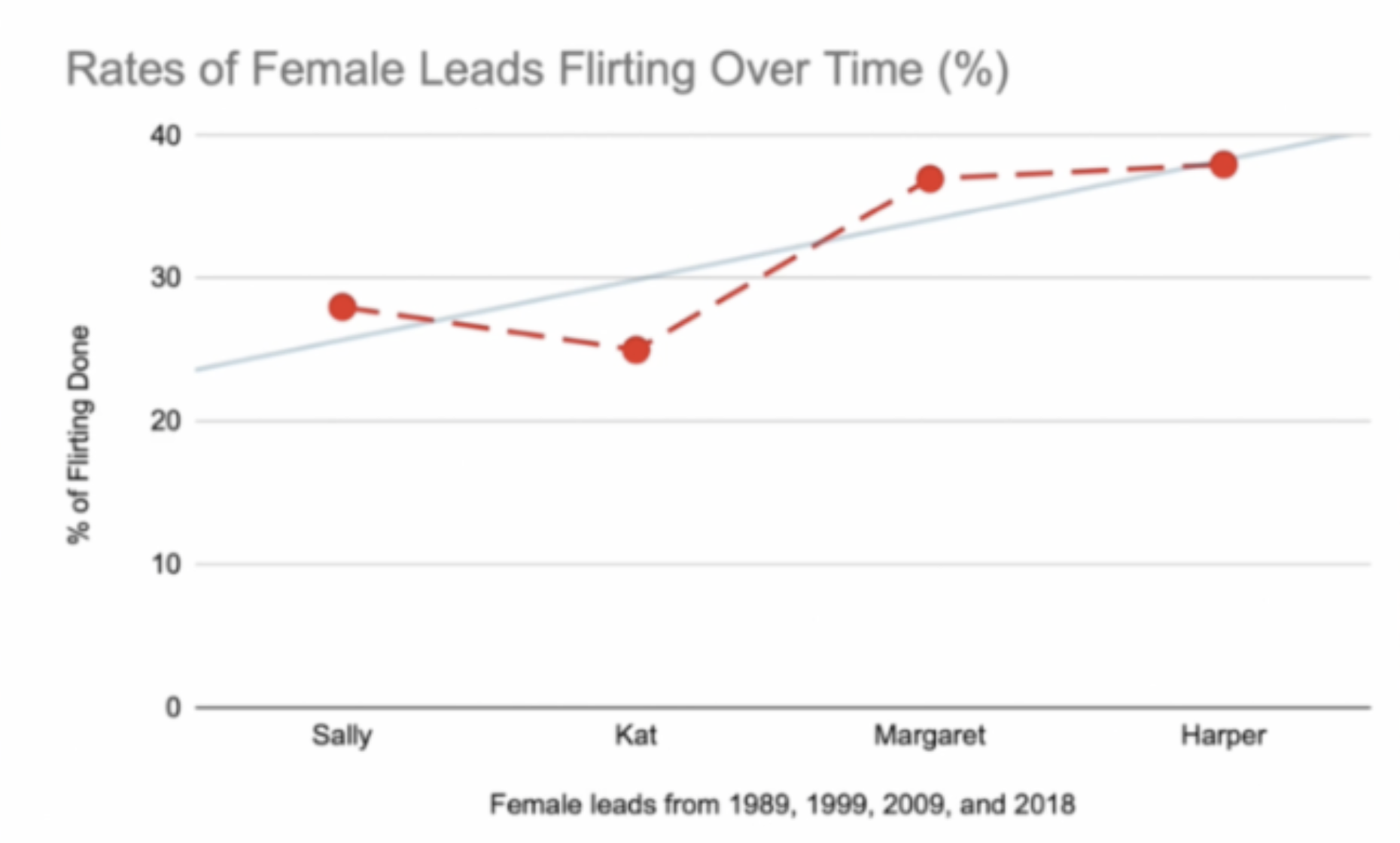
Figure 1: Rates of Female Leads Flirting Over Time

As can bee seen in Figure 2, Men consistently had higher instances of flirting than women in heterosexual relationships, indicating a persistent gender disparity. For example, Harry had 30 recorded instances compared to Sally’s 12, and Andrew had 17 instances versus Margaret’s 14. Although there was a slight increase in the ratio of women’s flirting over time, as can be seen in Figure 1, men still dominated the number of recorded instances. “Red, White, and Royal Blue” (2023) stands out as an exception, with a nearly equal distribution of flirting instances between the male leads, Alex and Henry, who had 29 and 27 instances, respectively.
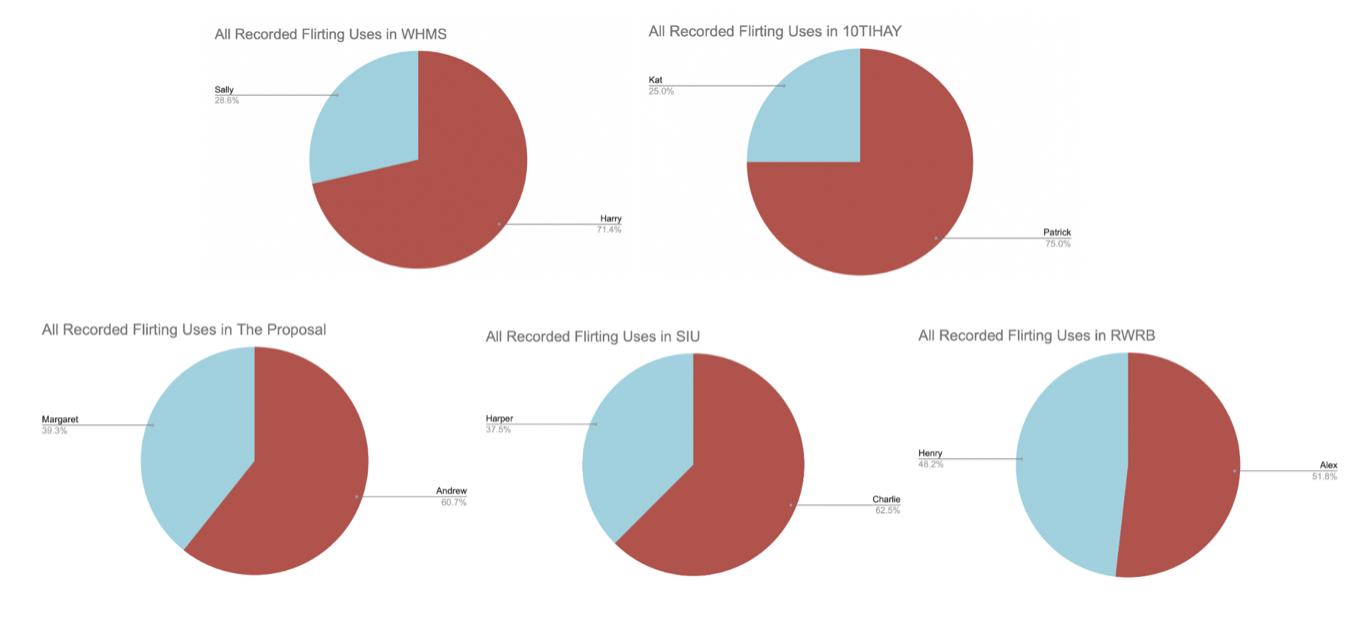
 

Figure 2: Gender Based Distribution of Flirting
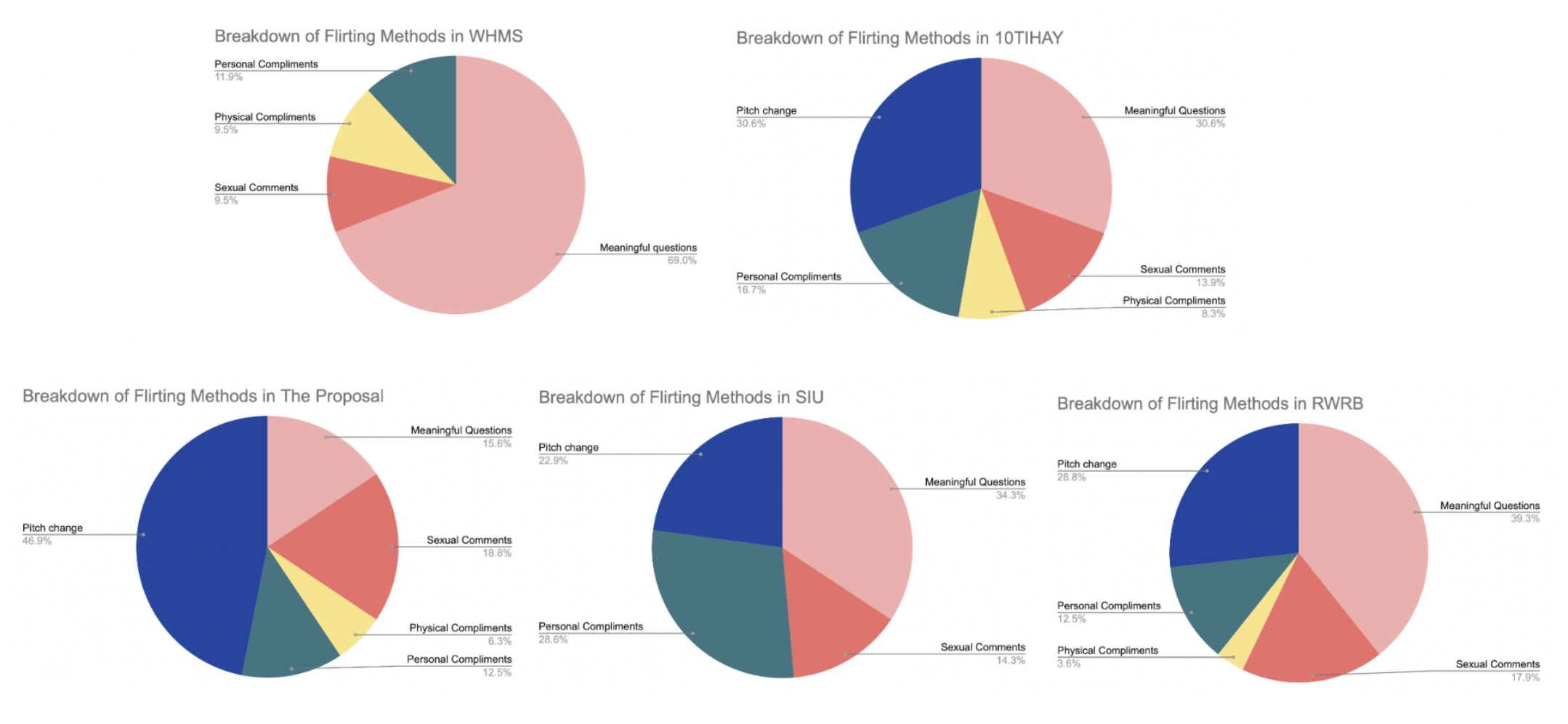
 

Figure 3: Variable Distribution of Flirting

Our study also revealed trends in the types of flirting used. As can be seen in both figures 2 and 3, meaningful questions (MQ) showed fluctuating popularity, with men generally asking more questions than women. Harry asked the most questions (18), while Andrew asked the fewest (1). Among women, Sally stood out with 11 MQs, the highest recorded for female characters. The use of sexual comments increased over time, becoming more prevalent in films like “The Proposal” andRed, White, and Royal Blue.” Physical compliments saw a decline, with women rarely complimenting men’s appearances. Sally was the only woman who did so, once, while men also showed a decreasing trend. Conversely, personal compliments became more popular, with “Set It Up” having the highest number of personal compliments among the movies analyzed. The use of pitch changes as a flirting method varied, showing no clear trend over the years.

A closer examination of the data reveals some nuanced patterns. For instance, in “10 Things I Hate About You” (1999), Patrick had 27 total recorded instances of verbal flirting, while Kat had 9. Patrick’s flirting included a mix of MQs, sexual comments, physical and personal compliments, and pitch changes. Kat’s flirting style included MQs and pitch changes, with no recorded sexual comments or physical compliments. In “The Proposal,” Andrew had 17 instances of verbal flirting, with a significant use of sexual comments and pitch changes, while Margaret had 14 instances, using more MQs and pitch changes.

In “Set It Up” (2018), Charlie had 23 recorded instances of verbal flirting, using MQs, sexual comments, and a significant number of personal compliments. Harper had 12 instances, also using MQs and pitch changes, with a balanced mix of flirting styles. “Red, White, and Royal Blue” showed a unique pattern with Alex and Henry almost equally splitting their flirting instances. Both characters used MQs, sexual comments, physical and personal compliments, and pitch changes, reflecting a more balanced and modern portrayal of romantic interactions.

Overall, the study indicates a shift towards more balanced and diverse representations of flirting styles in romantic comedies. While traditional gender roles are still evident, the increasing representation of women engaging in flirting and the balanced portrayal in “Red, White, and Royal Blue” suggest a trend towards more equal interactions. The rise in sexual comments and personal compliments points to a trend towards more open communication in romantic relationships. These results largely reflect the shift in societal gender norms, which have, in recent years, changed to emphasize female empowerment and gender equality. Our results also reflect the ways in which modern day society has become more accepting of previously frowned upon topics, such as homosexuality and sexual intercourse.

Discussion and Conclusion

Our research delves into the evolution of verbal flirting styles in romantic comedies from 1989-2023, revealing significant trends and changes that reflect broader societal shifts. Understanding these changes is crucial because media representations influence real-life perceptions and behaviors. Relationships are fundamental to our lives— they shape our experiences, influence our well-being, and give us a sense of connection and belonging. As media consumers, it is essential to be vigilant about the content we consume and the messages they convey. By critically engaging with media, we can protect our relationships from being impacted by unrealistic or harmful portrayals.

Additionally, these findings can benefit various groups. In the entertainment industry, writers, directors, and producers can use our insights to create more authentic romantic interactions that resonate with modern audiences. By understanding these evolving trends, they can develop characters and storylines that better reflect contemporary relationships. To improve communication and foster healthier romantic interactions, media professionals should strive for authenticity and diversity in portraying relationships— avoid falling back on outdated gender stereotypes and instead, reflect on the complex, evolving nature of modern romance. Educators in gender studies, communication, and media studies can build on our research to explore further how media influences societal perceptions of gender roles and relationships. They should integrate discussions of media representation into curricula on gender and communication, using film examples to illustrate the impact of societal changes on interpersonal dynamics. Our findings provide a foundation for examining the interplay between media representation and real-life communication styles. Individuals can benefit from this research by reflecting on their own communication styles and the societal norms they perpetuate. Increased awareness can foster more inclusive and egalitarian interactions in personal relationships. Additionally, recognizing and challenging the stereotypes depicted in films can help audiences consider how stereotypes might influence their own perceptions and behaviors in relationships.

By leveraging these insights, we hope to contribute to a more nuanced understanding of romantic communication and support the ongoing evolution towards more inclusive and representative portrayals of relationships in media. This not only enriches the storytelling in romantic comedies, but also promotes healthier perceptions of romance and interpersonal relationships in real life.

References

Apostolou, M., & Christoforou, C. (2020). The art of flirting: What are the traits that make it effective?. Personality and Individual Differences, 158, 109866. https://doi.org/10.1016/j.paid.2020.109866

Cabrera, L. (2022). Quantitative and qualitative analysis of politeness and gender effects in romantic comedies [Doctoral dissertation, Trinity College Dublin]. Trinity’s Acess to Research Archive, Centre for Language and Communication Studies (Theses and Dissertations).

Clark, J., Oswald, F., & Pedersen, C. L. (2021). Flirting with gender: The complexity of gender in flirting behavior. Sexuality & Culture, 25(5), 1690-1706. https://doi.org/10.1007/s12119-021-09843-8

Hall, J.A., Xing, C. (2014). The verbal and nonverbal correlates of the five flirting styles. Journal of Nonverbal Behavior, 39(1), 41–68. https://doi.org/10.1007/s10919-014-0199-8

Wyss, Eva. (2008). From the bridal letter to online flirting: Changes in text type from the nineteenth century to the internet era. Journal of Historical Pragmatics, 9(2), 225-254. https://doi.org/10.1075/jhp.9.1.04wys.
, , ,

Click, Swipe, Connect: Flirting Directly and Indirectly through Online Mediums and In-Person Interactions

Natasha Motamed, Sasha Bok, Angelica Limoanco, Ashley Lopez

Does the medium in which you flirt with someone change your flirting style? Are you more likely to use direct language such as complimenting when trying to flirt online versus in-person, or are you more likely to use a pick-up line? The following research project will investigate how individuals flirt online via private messaging on dating apps such as Hinge, Bumble, and Tinder, and text messages versus in-person interactions and whether they use direct or indirect language in their flirting practices. Based on previous findings, we hypothesized that flirting on various online mediums will employ greater directness, whereas in-person flirting would consist of more indirect language. To test these hypotheses, we compared screenshots of online flirting interactions with flirting scenes between contestants on The Bachelor and Bachelor in Paradise.

Our main finding was that flirting on online mediums consisted of both direct and indirect communication through the usage of compliments and pick-up lines, respectively. Therefore, our hypothesis was partly true in predicting that online mediums would at least employ direct communication. On the other hand, we were surprised to discover that in-person flirting employed direct communication rather than indirect communication, which was what we had initially predicted.

[expander_maker id=”1″ more=”Read more” less=”Read less”]

Introduction and Background

How exactly do you interpret what flirting is? According to Wade (2018), flirting refers to words or nonverbal actions that include any semblance of romantic and sexual relations between individuals. Moreover, when communicating face-to-face, flirtatious speech is also often used with laughter and animated speech (Whitty, 2016). With flirting, it is prevalent within our society today both in-person as well as on online mediums. Regardless of whether someone uses pick-up lines or compliments to flirt, people tend to communicate differently depending on the modality they are using, i.e. online or in-person.

For our research, we investigated how people flirt differently depending if it is in-person or online. We researched and observed the similarities and differences of flirting indirectly or directly between in-person interactions of The Bachelor and Bachelor in Paradise contestants and online private messages on various dating mediums, direct messages, and texts, which were obtained from 18-29-year-old UCLA students. When looking at the linguistics of flirting, indirect communication can be defined as nonverbal choices such as pauses and bouts of silence, where the recipient must contextualize the situation in order to more accurately discern the speaker’s implied message (Joyce, 2012). Pick-up lines are a perfect example when it comes to indirect flirting since there might be hidden messages beyond what is actually being said. A popular example of this would be the infamous saying “Netflix and Chill,” which requires contextual clues in order to decipher the sexual innuendo being implied.

On the other hand, direct communication means there is no hidden meaning in what is being said, so the speaker will use exact words for their intended meaning (Joyce, 2012). An example of direct communication while flirting is a compliment, such as “I think you are gorgeous.” We had hypothesized that flirting on various online mediums will utilize greater directness, whereas in-person flirting will use more indirect language and word choice. Whether it was a Bachelor franchise contestant flirting in-person or a UCLA student flirting online, they had all found different methods of flirting depending on where they communicated from (see below in Results).

Methods

To investigate these hypotheses, we observed two target populations –– the first consisted of male, female, and non-binary/non-conforming UCLA students, ages 18 to 29, from any ethnic or socioeconomic background. While people of all ages and demographics use the internet, according to Smith (2014), the majority of internet users are actually between the ages of 18 to 29. Additionally, it has also been noted that they utilize technology to start romantic relationships (Meenagh, 2015). Therefore, we analyzed their online communication through various online platforms such as dating apps (Hinge, Bumble, and Tinder) and private text messaging. Our second target population included cisgender male and female contestants, ages 21-35 years old, from any ethnic background and socioeconomic status, on the television shows The Bachelor and Bachelor in Paradise. We observed their in-person communication through their methods of flirting shown on-screen.

The communicative/language aspects our project looked at included directness versus indirectness which is observed through word choice and specifically manifested through pick-up lines versus straightforward phrases and complimenting. These practices are used as a means to flirt in both in-person and online contexts.

We recruited the participants for our first target population and collected their screenshots by posting a Google Form on various platforms that UCLA students use such as GroupMe chats from various classes, Instagram stories, and Slack groups. Participants were asked to submit one or more screenshots where they used flirting on the following platforms: Hinge, Bumble, Tinder, or private messaging.

Our total data set included 33 screenshots of conversations on various online platforms as well as 21 in-person interactions observed from The Bachelor franchise shows. Throughout the analysis process, we highlighted and noted which interactions utilized indirect and direct communication by analyzing word choice in addition to the use of compliments and pick-up lines.

 Results and Analysis

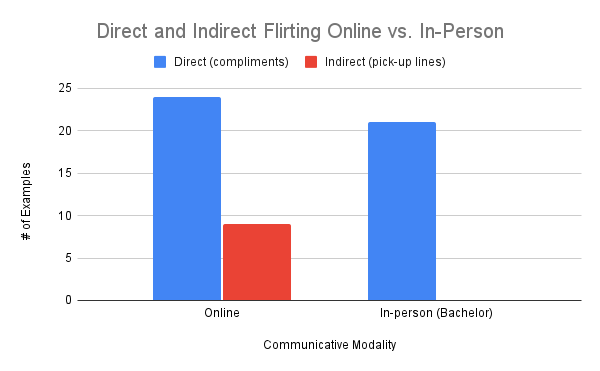
Figure 1: Bar graph comparison of direct and indirect communication in in-person vs online interactions

As a result, in Figure 1 we see a comparison of direct and indirect communication within in-person and online interactions. Direct communication like compliments were seen the most in online mediums as well as in in-person interactions. Indirect communication such as pick-up lines were only seen in online interactions.

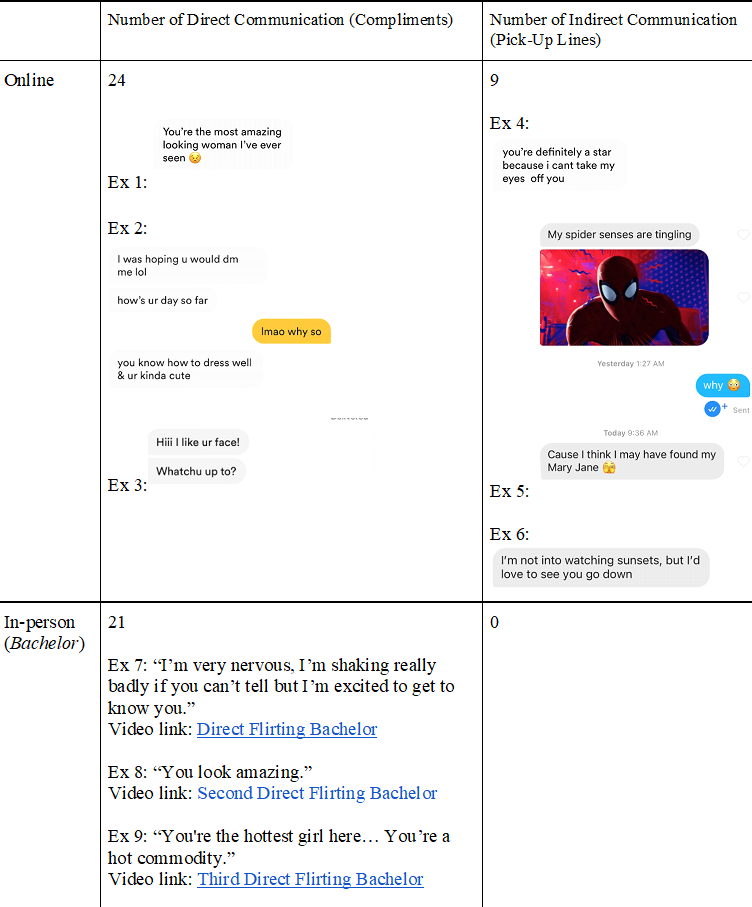
Figure 2: Breakdown of the number of direct and indirect communication within online and in-person interactions and examples of each type of communication.

After collecting our empirical evidence, we observed that out of 33 online flirting interactions, 24 of them contained direct communication manifested through compliments whereas only 9 interactions contained indirect communication through the use of pick-up lines. Examples of direct and indirect communication observed are shown in Figure 2 above. This shows that although both direct and indirect communication are utilized on online platforms, the majority of online interactions use direct communication. In contrast, out of a total of 21 in-person flirting interactions, all of them contained direct communication and none of them contained any indirect communication or the usage of pick-up lines. Examples of direct communication in in-person interactions are linked in Figure 2 above.

After observing 33 screenshots and 21 in-person interactions, we found that pickup lines were very prominent in online mediums and were used indirectly compared to in-person interactions. Participants in The Bachelor franchise were more direct in their conversations while pursuing a romantic relationship. They did not utilize any indirect communication such as through pick-up lines in person. But in both mediums, compliments were utilized. For example, the following compliments were used on online mediums: “you know how to dress well and ur kinda cute”, “I like ur face”, “I think you’re gorgeous”, “you really fine”, and “that smile won me over”. The following compliments were used in in-person interactions: “I’m very nervous, I’m shaking really badly if you can’t tell but I’m excited to get to know you,” “you look amazing,” “you’re the hottest girl here,” and “you’re a hot commodity.” In online mediums, it is much more common to see someone use direct language when they ask if someone is free when compared to in-person interactions. Individuals will use direct language such as “Are you free this Tuesday” or “U free later tn tho?” We found that people online were more indirect through their usage of pickup lines and it was rare to see pickup lines like “you’re definitely a star because I can’t take my eyes off you” used in person. Both online and in-person interactions used direct and explicit word choices in the form of compliments in order to get their meanings across. However, in the in-person interactions, our observations found that the flirting did not result in any individual asking out another person. Overall, we found that flirting online utilizes both direct and indirect communication through the use of complimenting and pick-up lines, respectively, whereas in-person interactions solely use direct communication as a means to show romantic interest.

Discussion and Conclusion

For our Post Data Collection Analysis, we concluded that word choice can result in either direct or indirect communication, for example through compliments or pick-up lines, respectively. We observed both the screenshots and Bachelor scenes through the lens of explicit and implicit word choice, and ultimately placed them into their respective categories, as seen in the chart and graph above.

Based on these findings alone, we could predict that flirting on online mediums could potentially lead to higher or more frequent usage of direct and indirect communication through the employment of pick-up lines and compliments. We attribute this trend possibly to people feeling more confident or comfortable when there is a physical distance between the parties involved and also due to the anonymity veil provided by device screens.

In regards to the validity of our observations and findings, we do acknowledge that there are limitations in having The Bachelor represent in-person flirting practices due to the possibility of it being scripted. Therefore, it’s important to note potential differences between our samples from the reality show and what actually happens within everyday life.

That being said, we believe that our observational results can benefit anyone who communicates online or would like to explore the benefits of talking to and meeting new people online, especially in the romance department. As daily users of technology and online communication yourselves, you can definitely utilize our findings to improve your methods of obtaining the best romantic partner ever! We want you to succeed romantically as much as possible, so take our results into consideration when looking for your future partner in crime!

For future purposes, it’s also important that we research and examine any new and upcoming trends and patterns that arise from our behaviors within these online modalities, especially since we live in this technological age where the majority of society is now heavily reliant on social media as a primary means of communication.

References

Joyce, C. (2012). The impact of direct and indirect communication. Journal of the International Ombudsman Association.

Meenagh, J. (2015). Flirting, dating, and breaking up within new media environments. Sex Education, 15(5), 458–471. https://doi.org/10.1080/14681811.2015.1033516

Smith, J. (2014). The Perceived Impact of Online Versus Offline Flirting on Romantic Relationships [Master’s thesis, University of Dayton]. OhioLINK Electronic Theses and Dissertations Center.

‌Wade J. A. (2018). (I Think) You Are Pretty: a Behavior Analytic Conceptualization of Flirtation. Perspectives on behavior science, 41(2), 615–636. https://doi.org/10.1007/s40614-018-0136-y

Whitty, M. T. (2004). Cyber-flirting: An examination of men’s and women’s flirting behaviour both offline and on the Internet. Behaviour Change, 21(2), 115-126. https://doi.org/10.1375/bech.21.2.115.55423

 [/expander_maker]

, , , , ,

Love at First Site? The Impact of Medium and Sex on Flirting Behavior

Christian Bury, Maddy, Valerie Beketava, Marissa Schulner, Luming Zhou

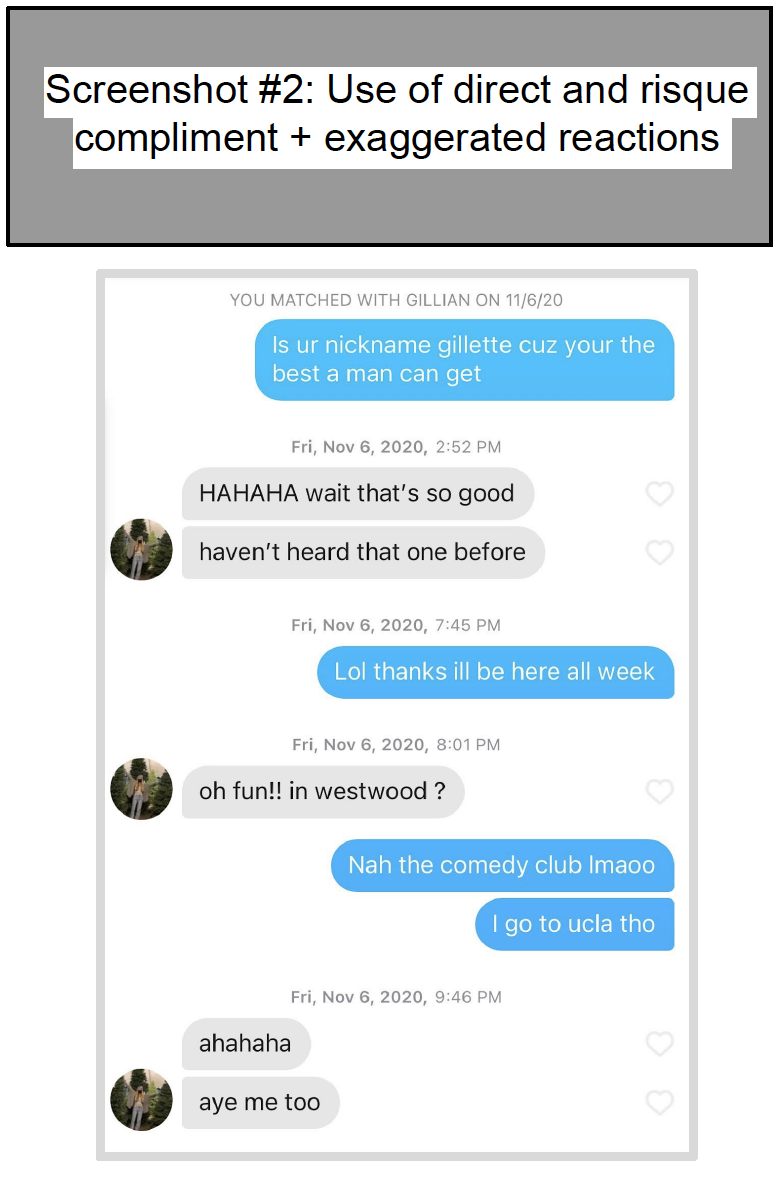
Smiling at the cute cashier, batting your eyes at your work-crush, or even strutting up to greet an attractive stranger at the bar, whether Dr. Love himself, or merely an average joe looking to land a date, we’re all aware of the tried-and-true signs of flirting. It’s with this familiarity in mind, that the recent emergence of social media and popular dating apps have revolutionized these age-old flirting techniques, reimagining themselves in the form of risqué DM’s and overly animated texts featuring the all too infamous winky face emoji. Biological sex has long stood as the primary element of influence within flirting behavior, but with the prevalence of today’s digital technology, the actual medium of such communication has been introduced as yet another important factor regarding one’s approach to flirting. Despite this being the case, a few features of flirting remain ubiquitous across both face-to-face and virtual mediums regardless of biological sex: the use of compliments and exaggerated reactions. With this in mind, the following article lays-out and reflects on the aforementioned features of flirting, shedding light on how differences among sex and medium impact flirting behavior, perception, and tendencies.

[expander_maker id=”1″ more=”Read more” less=”Read less”]

Introduction

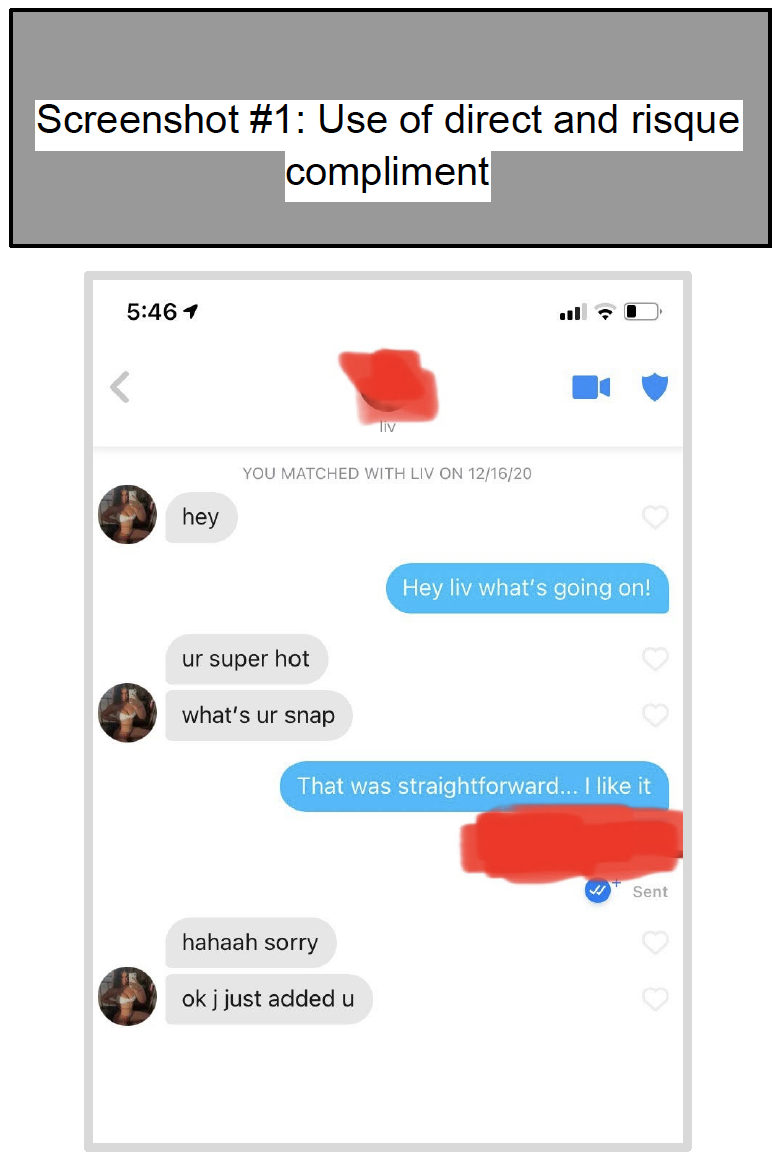
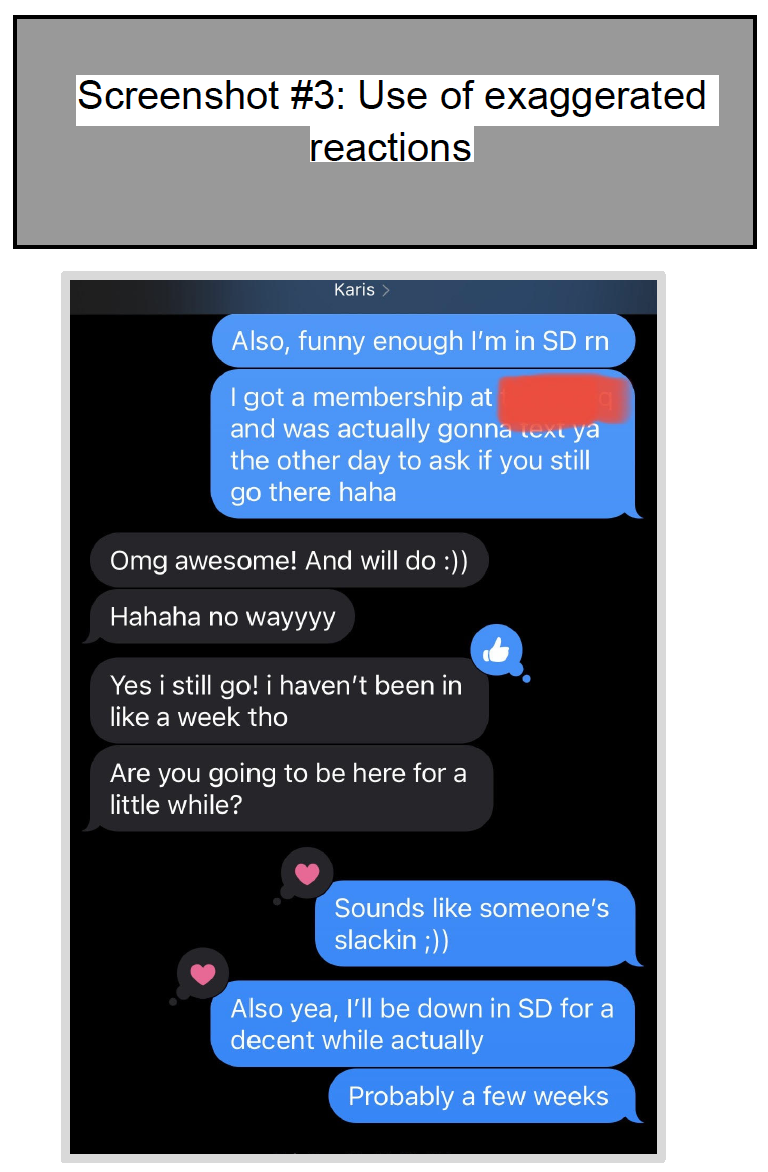
Before diving into all the nitty-gritty details of these recent observations, it is important that we introduce the background of such research, and more specifically, the features of flirting we will be paying special attention to. With longstanding studies on flirting and communication, it doesn’t take an astrophysicist to know that flirting relies heavily on non-verbal signals and exaggerated reactions such as laughing, smiling, looking someone in the eye for a significant period, and winking (Eckert & McConnell, 2003). For this exact reason, more contemporary research has concluded that without the traditional non-verbal signals of face-to-face communication, virtual flirting tends to rely on emojis, capitalization, and punctuation, as substitutes for conveying exaggerated excitement (Whitty, 2004). Our study of “exaggerated reactions” refers to the act of responding over-enthusiastically while flirting, usually laughing, smiling, or speaking louder and faster to signal interest and excitement. More specifically, this feature may take form in face-to-face contexts by giggling at an attractive person’s joke as if it’s way funnier than it actually is, or appear in a virtual sense, with the excessive use of emojis, punctuation, and capitalization, while texting “HAHAHA…waaaaiitt, I LOOOOVE that!!!!” Likewise, in regard to modern analysis surrounding the use of compliments between men and women, it’s been widely observed that women are more likely to both give out and accept compliments, while men are more likely to deflect and misread compliments when flirting (Tannen, 1990). From this standpoint, we’ve chosen to further examine such behavior, particularly researching what we’ve classified as “direct and risque compliments.” This feature refers to the act of essentially cutting straight to the point and making a flirtatious or sexually suggestive compliment while flirting. Most notably, such behavior may be observed within the likes of face-to-face flirting by telling someone “you’re gorgeous,” or appear in a virtual context while sliding into someone’s DM’s to say “you’re super hot, can I get your snap?” Now at this point, you may be thinking so what’s the big deal? Well, by taking these features into account, we’ve developed exciting new insight on the medium and types of compliments preferred by men and women, in addition to which medium is perceived to involve more exaggerated reactions, as well as direct and risqué compliments. We predict that flirting face-to-face is the preferred medium of both men and women, being perceived as more sincere, and therefore, more effective. Moreover, we also expect to find that flirting virtually tends to involve more direct and risqué compliments, as well as exaggerated reactions.

Methods

With regards to the methodology of such research, we decided to approach this study with three separate phases and means of collecting data. First and foremost, we developed a multiple choice google survey, gathering responses from 27 male and 27 female UCLA students. In particular, this survey gauged the tendencies and perceptions, as well as the use of compliments and exaggerated responses by men and women when flirting face-to-face and/or virtually. Next, we cross compared our survey results with 14 anonymously submitted screenshots of flirting over Tinder, Instagram DM’s, and Text messages, effectively countering the potential survey bias of our data by presenting more “real-world” flirting behavior in practice. Lastly, we gathered and analyzed an assortment of media clips containing flirting scenes from various movies and shows, once again cross referencing such examples with our survey data and screenshots of virtual flirting to develop more comprehensive results. 

Results and Analysis

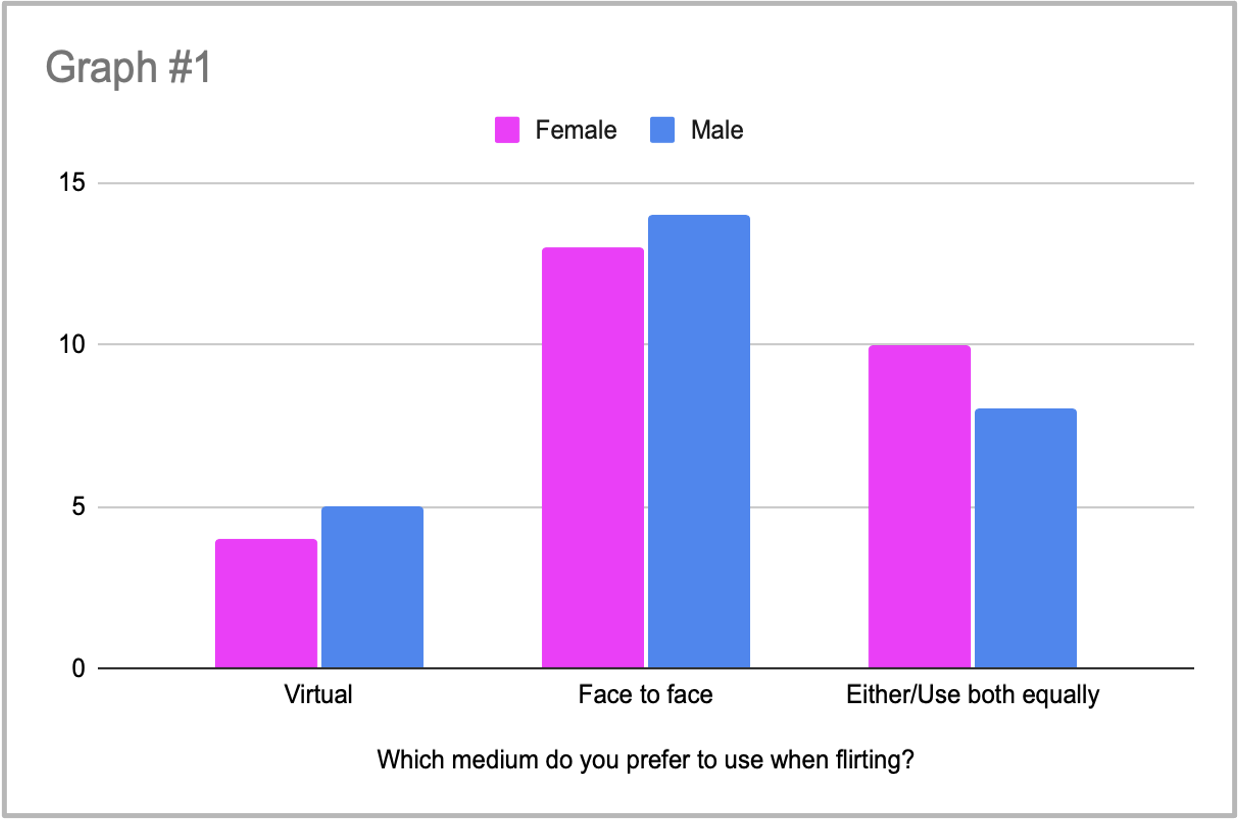
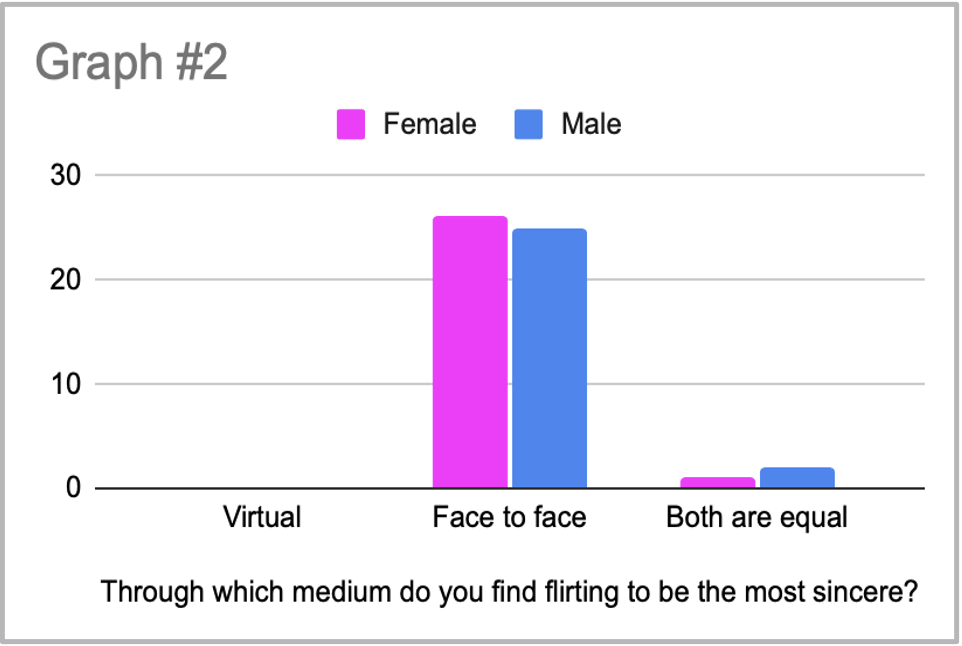
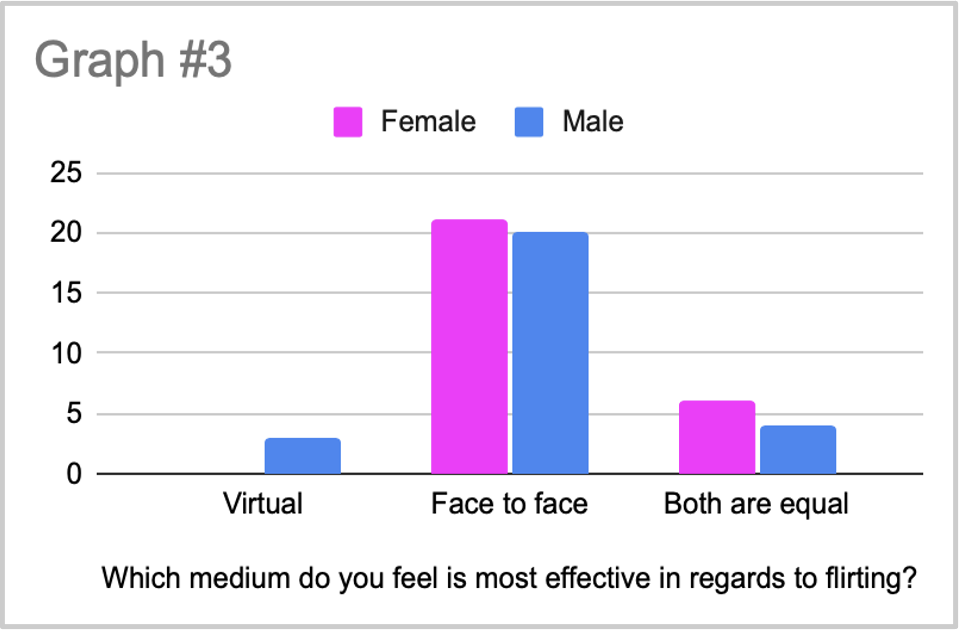
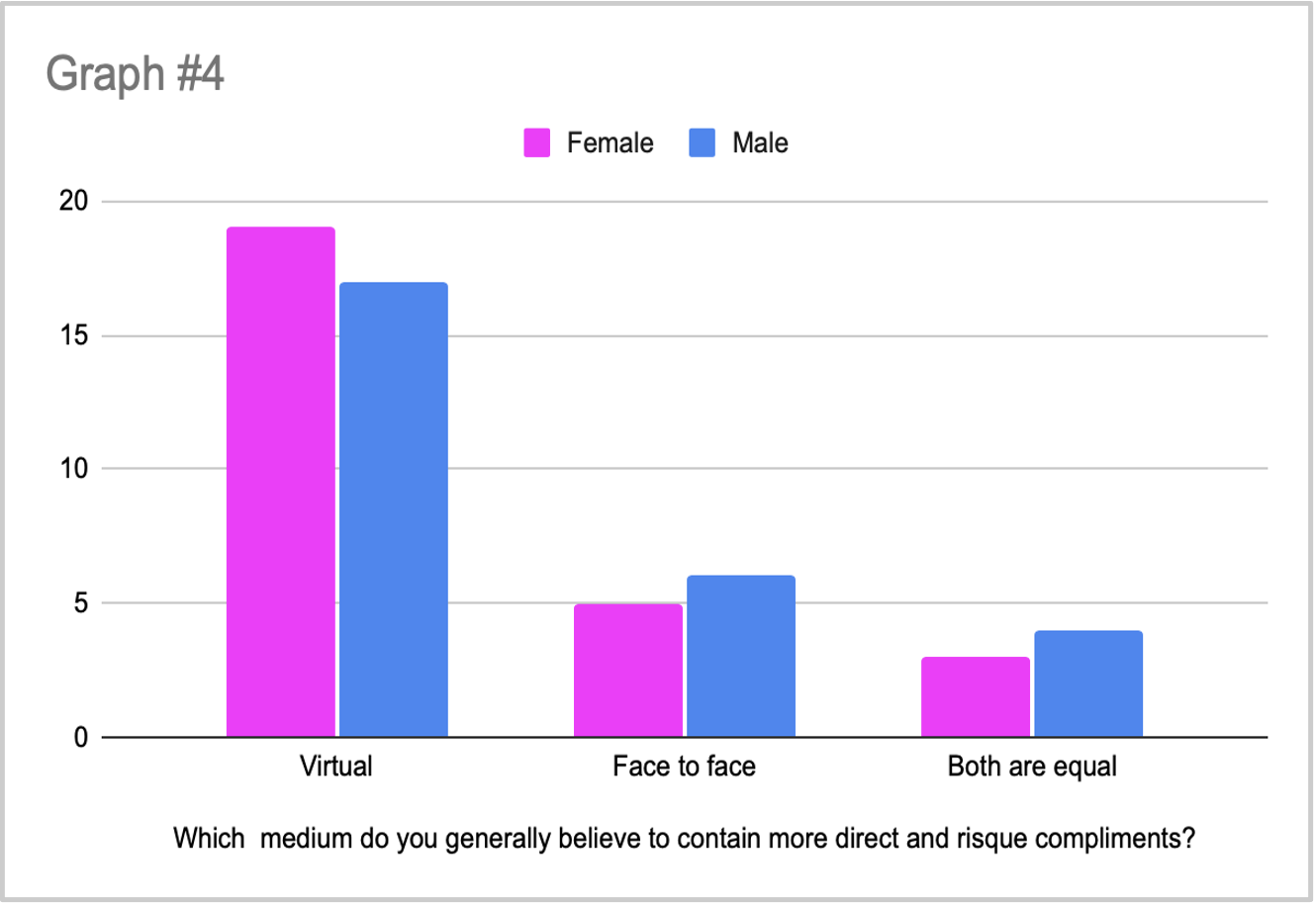
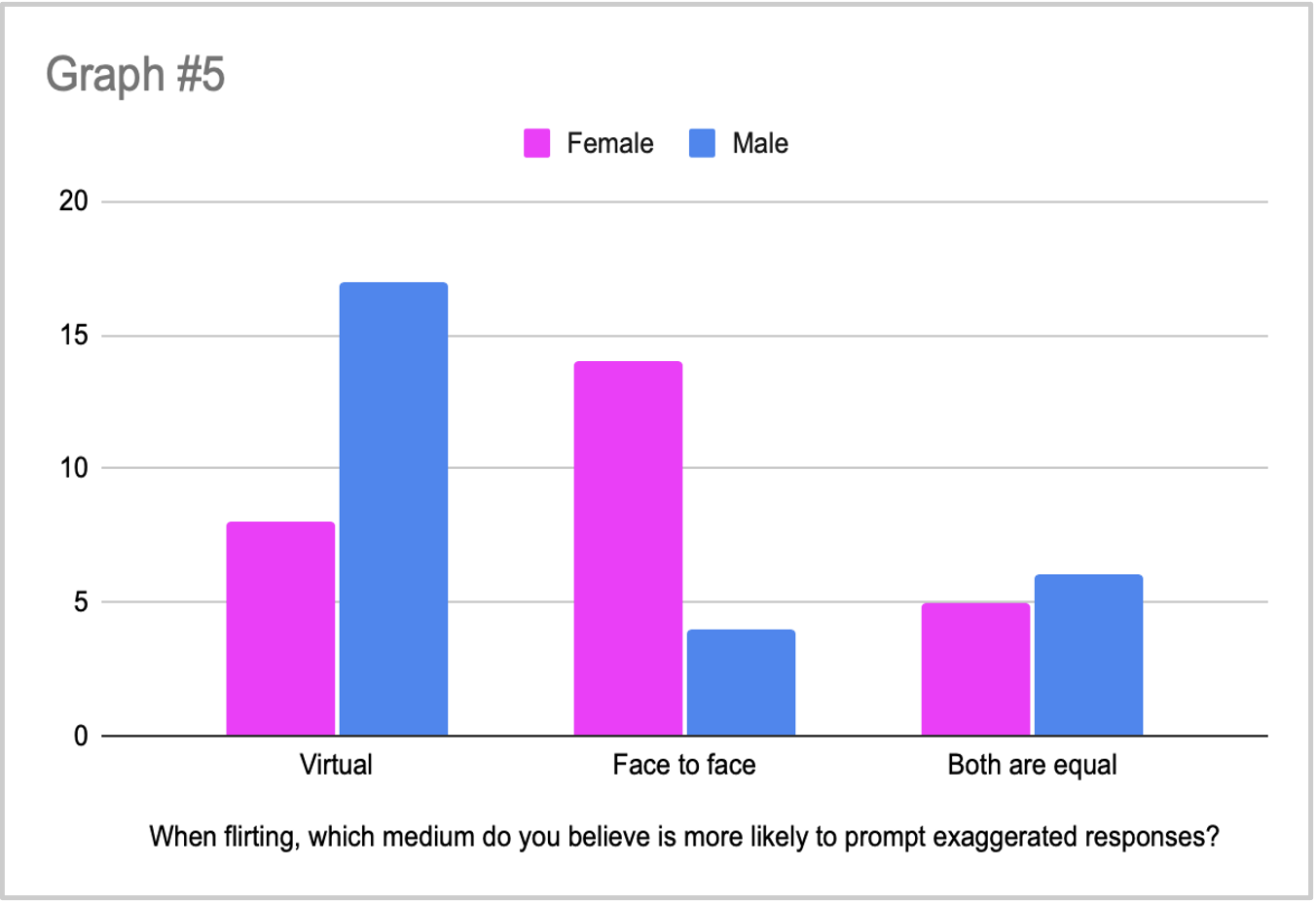
Moving on to the results and analysis of this three-phase approach to data collection, we see that our survey results indicate that men and women are strikingly similar when it comes to their perception and use of really any notable feature and medium of flirting. In this case, our survey data shows that the only notable disparity between sex appears over which medium is more likely to contain exaggerated reactions, with men saying that virtual flirting contains more exaggerated reactions, while women reported the contrary, highlighting the exaggerated reactions of face-to-face flirting instead (as seen in Graph #5). Beyond this minor disagreement, both men and women said that face-to-face was their preferred flirting medium (Graph #1), agreeing that it’s more sincere (Graph #2), and therefore, more effective (Graph #3), while also perceiving that virtual flirting tends to involve far more direct and risqué compliments (Graph #4).


Taking this into account, our analysis of the virtual flirting screenshots showed that in many cases people will say things online that they may not say in person (Screenshot #1 and #2). This observation carries over similarly to an apparently high volume of exaggerated messages and responses (Screenshot #2 and #3). As noted earlier, this behavior likely stands as a means of compensating for the lack of traditional nonverbal flirting signals missing from virtual mediums. Lastly, our examination of media clips focused mainly on scenes from the films “Back to the Future”, “Crazy, Stupid, Love”, and “The Departed” (see links below).

“Back to the Future” Flirting Scene

“Crazy, Stupid, Love” Flirting Scene

“The Departed” Flirting Scene

In each case, all three clips displayed an exchange of compliments, usually coming from the man initially, as well as indications of exaggerated reactions, usually occurring in the form of giddy laughter, smiling, and louder, faster speech.

Discussion and Conclusions

Relying on surveys, research, and media analysis we draw several conclusions regarding flirting behaviors among young adults. By analyzing our survey results we can conclude that flirting face-to-face is the preferred medium of both men and women. This came as no surprise to us but was very interesting to analyze the many possible reasons and explanations that resulted in this conclusion. One reason for this result is that both genders indicated that they found flirting in person to be perceived as more sincere, effective, and the most time effective method of getting to know a person they are attracted to. Virtual flirting was shown to be more prone to direct and risqué communication that can often be misinterpreted whereas in-person can be seen to show much more clear and precise expression of intentions. The more playful and sincere compliments observed through in-person flirting is preferred for both men and women over the more scandalous and risqué ones prevalent among virtual flirting. As we previously assumed, virtual flirting prompts much more exaggerated and animated reactions than in-person. We assume that this exaggerated behavior is used as an attempt to combat the non-verbal cues we get when flirting in person. These non-verbal cues include smiling, touching, laughing, as well as other micro-expressions we observe when you are attracted to another person. Those who are more introverted and less confrontational may prefer online flirting as their preferred medium as there is much less physical embarrassment when a flirting tactic fails to elicit the desired response. For an online flirting medium such as Tinder, where you most likely have not met the person, you are talking to and, the person may believe they have to come off strong to provoke a response and make an impression among a much larger pool of potential partners. While our survey did compare results among both men and women, our analysis found that the medium, rather than sex, has a much larger impact on the use and perception of compliments and exaggerated response when flirting. Overall, most of our research data and analysis confirmed our hypothesis that young adults prefer face-to-face over online flirting, leaving the door open for further insight that could promote future research on this topic.


References

Tannen, D. (1990). You just don’t understand: Women and men in conversation. New York, NY: Morrow.

Eckert, P., & McConnell-Ginet, S. (2003). Language and gender. Cambridge: Cambridge University Press.

Holmes, J. (1988). Paying compliments: A sex-preferential politeness strategy. Journal of Pragmatics, 12(4), 445–465. https://doi.org/10.1016/0378-2166(88)90005-7

Smith, J. (2014). The Perceived Impact of Online Versus Offline Flirting on Romantic Relationships . (Electronic Thesis or Dissertation). Retrieved from https://etd.ohiolink.edu/

Narissra M. Punyanunt-Carter and Thomas R. Wagner.Cyberpsychology, Behavior, and Social Networking.Apr 2018.229-233.http://doi.org/10.1089/cyber.2017.0608

Whitty, M.T. (2004). Cyber-flirting: An examination of men’s and women’s flirting behaviour  both offline and on the Internet. Behaviour Change, 21(2), 115-126

[/expander_maker]

, , , , ,

Does She Listen to ‘Girl in Red’? Linguistic Markers in WLW Flirting

Tiffany Dang, Brianna Lombardo, Carlos Salvador Vasquez, Denisa Tudorache, Yuyin Yang

The present article focused on linguistic markers that are adopted by the Women Loving Women (WLW) population when identifying potential members of the WLW community. More specifically, this study focused on the strategies used by members of the WLW community for identifying fellow WLW with the intentions of pursuing a romantic or sexual relationship. Through analyzing popular YouTube videos featuring strategies on flirting with WLW, our first study captured the common beliefs regarding the need to take an extra step, and the possible methods on identifying WLW before taking any romantic or sexual advances. Followed-up by semi-structured interviews in study two with UCLA students who self-identify as WLW, we were able to examine the accuracy of the tips offered by the YouTube videos. This allowed for further investigation on the existence of specific linguistic markers adopted by WLW when flirting. We found that both popular YouTube videos and participants both discussed the need for WLW to take an extra step before they can comfortably pursue another woman and tend to make a conscious effort to not be too direct.

[expander_maker id=”1″ more=”Read more” less=”Read less”]

Introduction and Background

While there have been past studies done on examining the speech of gay men, particularly the California vowel shift among gay men (Podesva, 2011), and one that revealed a concept of gay-dar, the belief that gay men possess an ability to pick out each other in a crowd (Shelp, 2003), little research has been done on uncovering linguistic patterns within the Women Loving Women population (WLW). A member of the WLW community is loosely defined as anyone who identifies as a woman and differs from the mainstream preferences in terms of their sexual practice and identity (Eliason & Morgan, 1998). Due to being seen as deviant from the mainstream practices, they may feel the need to take different approaches when making romantic pursuits in order to establish a mutual understanding of their interest in women when talking to another individual. As WLW may often struggle with compulsory heterosexuality, the fear of being perceived as predatory, as well as the potential dangers that come with revealing their sexuality, we aimed to investigate whether there were any linguistic markers adopted among the members of the community to aid in implicitly seeking each other out. This study explores the ways WLW work around the potential barriers they face when pursuing romantic interests and when revealing their identity in hopes of gaining insight on ways to improve the inclusivity of a general community. We hypothesized that WLW would adopt practices where they refer to certain WLW-group-specific terminologies or features before making romantic or sexual advances towards another woman.

Methods

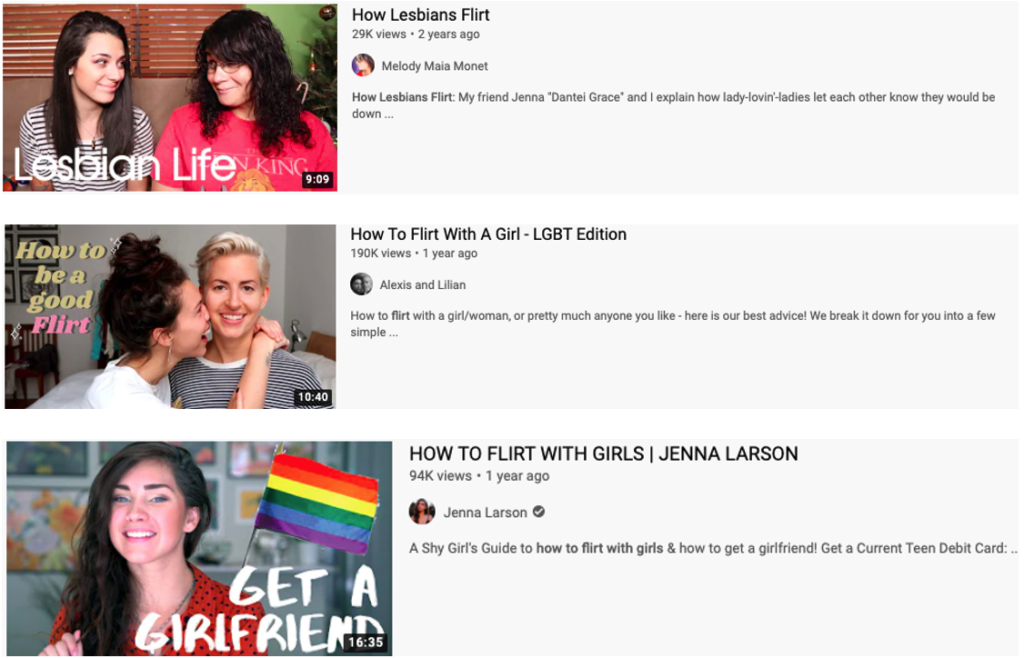
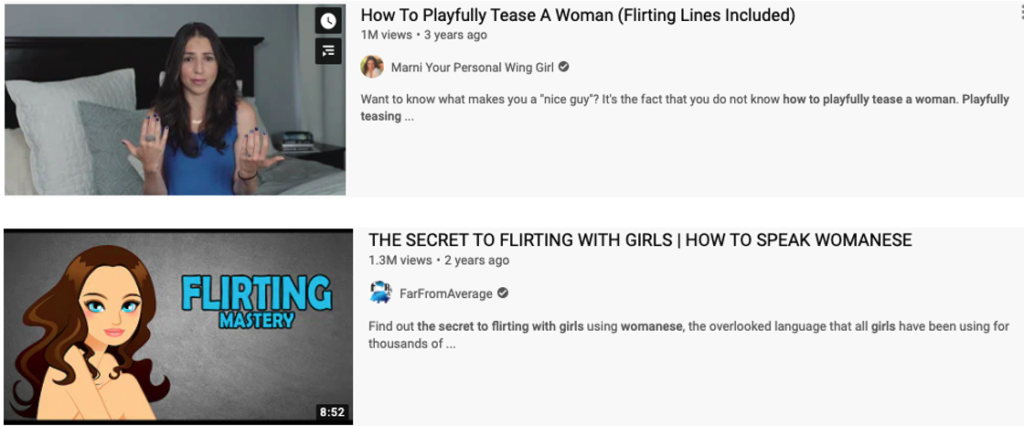
Study 1 collected people’s lay knowledge on identifying WLW by looking at popular YouTube videos that featured strategies on how to initiate romantic/sexual advances with a WLW. We found three relatively popular videos created by members of the WLW community who also covered a large realm of dating advice and made a list of those that were related to indexing sexual identity. In addition, we watched two videos that featured heterosexual dating advice and made note of the advice given to men to romantically or sexually pursue other women. By comparing the two lists of notes, we were able to identify potential strategies that are WLW group-specific.

Study 2 consisted of two semi-structured interviews that took place and were recorded through Zoom. We interviewed a total three members of the WLW community, with two of them being in a committed relationship. They were primarily asked to describe and draw from their past experiences. The interviews were guided by six open-ended questions (see Appendix A) with the interviewer following up with questions when necessary. Our questions focused on the WLW’s description of their experiences in establishing mutual interest in women using non-direct measures. Participants were recruited using snow-ball sampling and all answers were kept anonymous. After the interviews, we listened to the audio recordings and made notes of the different ways WLW chose to index their sexual identity as well as the cues they used to determine the sexual identity of their romantic interest.

Study 1 Results

In Study 1, we were able to uncover several recurring themes. One point made consistently across multiple videos was that the WLW always felt the need to immediately make their sexuality known once they realized they had feelings for the other party.

Reasons for this were that they did not want to confuse the other party into thinking that they just wanted a female friend, and they also did not want the other party to assume that the speaker is straight and think differently of them. WLW worry about giving ambiguous signals if they were to not reveal their sexual identity soon enough, which leads to the subtle incorporations of various cues in conversations, such as mentioning the pride parade, to demonstrate their sexual identity.

They also made mentions of lurking through the other party’s social media for signs pertaining to possible membership of the WLW community to know whether it would be appropriate for them to make romantic advances. WLW also tend to be cautious in making advances as they adopt a “flirting by not flirting” technique. This allows them to slowly determine if the other party has reciprocated romantic feelings without being too overbearing and only continue to proceed if there is a positive response.

Figure 1: A selection of videos on WLW flirting used in Study 1

WLW flirting:  Video 1      Video 2     Video 3

In contrast, when we explored flirting advice geared towards men to pursue women, there was no  mention for men to index their sexual identity to women before flirting or at any stage of the courting process. The videos generally focused on advising men to be indirect to increase excitement in women and how to appear playful and masculine.

Figure 2: A selection of videos on heterosexual flirting used in Study 1

Heterosexual Flirting: Video 1      Video 2

Although there was some overlap in advice given to women to pursue other women and given to men to pursue women, such as being subtle and indirect, the reasoning behind it was different,  and a clear difference was the need for WLW to drop hints about their sexual identity. Because there tends to be less confusion in intentions when a male approaches a female, neither party is advised to hint at their own sexual identity nor advised on how to determine the other party’s sexual identity. In contrast, a common theme across videos geared towards WLW is to use references to hint at their own gayness or try to determine whether the other party is gay before advancing.

Study 2 Results

Interview 1

A summary of common themes that arose in Interview 1 are presented in Table 1 below along with some illustrative examples given by the interviewee.

Table 1: Recurring themes and examples from Interview 1

Interview 2

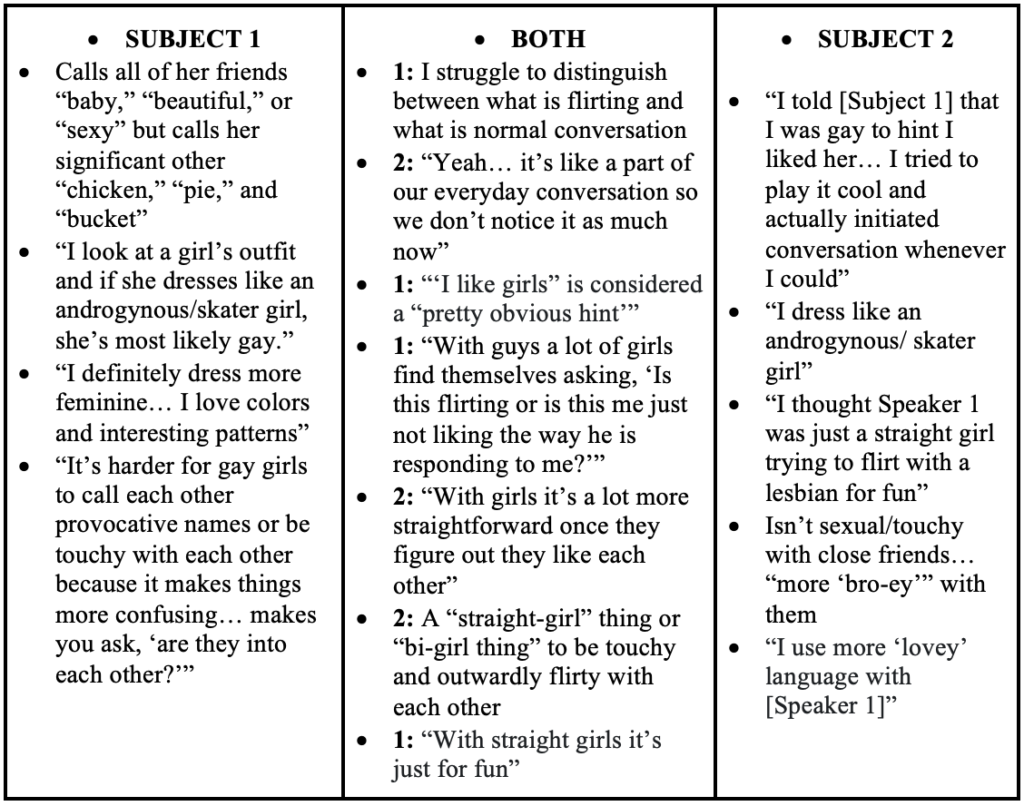
To illustrate the results derived from Interview 2, Table 2 consists of the most important statements made by both Subject 1 and Subject 2 in the conversation. It is important to note that Subject 1 and Subject 2 have been in a WLW relationship for over a year. When answering the interviewer’s questions, they both reflected on when they first met and how this has changed or remained consistent. The middle column consists of what they answered similarly.

Table 2: Noteworthy excerpts from each subject of Interview 2 and areas of overlap


Study 2 Analysis

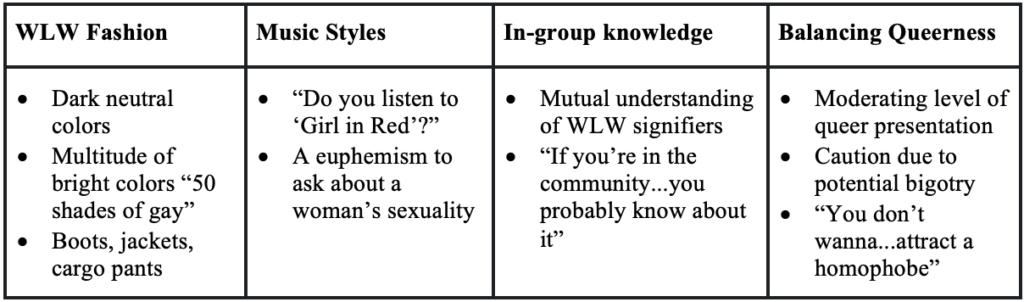
From our interviews we gathered that the majority of strategies available for Women-Loving Women to identify and flirt with other WLW are mostly non-linguistic in nature. In both interviews, WLW referred to style of dress as a primary identifier for fellow WLW. These and other aspects of popular WLW culture were also drawn upon during the flirting itself, which leads us to one overtly linguistic flirting strategy we found was used by WLW– compliments. Compliments between WLW referenced nonverbal yet mutually understood markers of WLW identity, so they were used to confirm sexuality and communicate an attempt to flirt, in addition to their function as simple compliments. Importantly, compliments between WLW and platonic ones between heterosexual women were said to differ solely in their content and not their form. We conclude that this arises from a need or desire for WLW to flirt “under the radar” to avoid the very real danger of homophobia and bigoted comments.

We also noted the potential for confusion and ambiguous interpretations of these, arguably necessary, nonverbal flirting methods. Subject 1 even described a trend among WLW to pull back on “standard” physical or verbal affection (at least among other WLW) as a way to avoid creating confusion since more open displays of platonic affection are expected among groups of women. This may contribute to a societal perception of WLW as being “colder” or “more masculine.” Future studies might investigate whether or not this is true among a larger sample size.

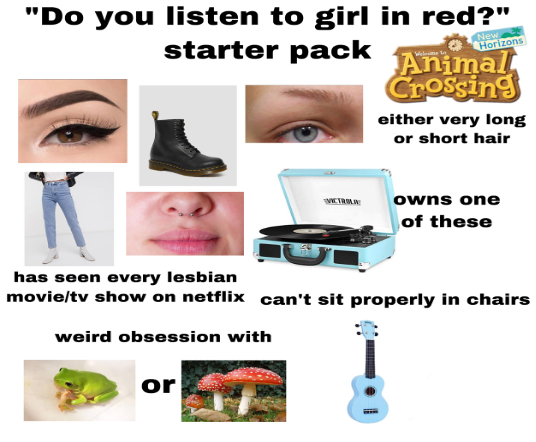
Figure 3: A meme employing WLW popular music artist ‘Girl in Red’ to euphemistically index a WLW identity


Discussion and Conclusions

Our ultimate takeaway from these interviews was a strong indication that, motivated by a possible fear of negative attention, members of WLW groups feel the need to be covert in romantic contexts. As a result of this covertness, we noticed a trend of relying on nonverbal cues (like clothing choice) more than an awareness of individuals phonetically or lexically indexing their “gayness.”

Even in situations where an individual might directly state “I like girls,” the implication of “I’m romantically interested in you” often remains covert. This gives the other individual a choice as to whether or not an interaction is romantic in nature, but can end up causing some confusion. Thus arises the stereotype that WLW do not flirt. In many cases, their advances can easily be interpreted as platonic interaction among women in a society where affection among women is more normalized than among men, and where revealing your sexuality to the wrong person can have negative repercussions.

Further Reading Recommendations: Although we did not cover this information in our study, there have been numerous studies done on the language WLW may use that distinguish their patterns from heterosexual women. Robin Lakoff in Language and A Woman’s Place (1975), defines stereotypical “women’s language features (WL)” as those associated with “heterosexual women’s performance of femininity.” She contrasts this with the existence of typical “men’s language features (ML),” thus creating a binary of “women’s speech v men’s speech.” It would be interesting to use this and analyze whether women in the WLW community use either one or both of the language features, and whether this could be a distinguishing feature.


References

 Eliason, M.J., Morgan, K.S. Lesbians Define Themselves: Diversity in Lesbian Identification. International Journal of Sexuality and Gender Studies 3, 47–63 (1998). https://doi.org/10.1023/A:1026204208243

Lakoff, Robin (1975). Language and A Woman’s Place. Language in Society, Vol. 2, No. 1, 45-80.

Podesva, R. J. (2011). The California vowel shift and gay identity. American speech, 86(1), 32-51.

Rich, A. (1980). Compulsory heterosexuality and lesbian existence. Signs: Journal of women in culture and society, 5(4), 631-660.

Rieger, G., Linsenmeier, J. A., Gygax, L., Garcia, S., & Bailey, J. M. (2010). Dissecting “gaydar”: Accuracy and the role of masculinity–femininity. Archives of Sexual Behavior, 39(1), 124-140.

Shelp, S. G. (2003). Gaydar: Gaydar. Journal of Homosexuality, 44(1), 1-14.


[/expander_maker]

, , , , ,
Scroll to Top