Swearing

Profanity Amongst Undergraduate Students

Jesus Nocelotl, Fernanda Madrazo

For most people, college can be a difficult and exciting journey within one’s life. The new experience of living on your own, independence and responsibility of forming your own decisions, and for many, the chance to make and begin new meaningful friendships. Oftentimes, in communities that foster a sense of group identity and culture, such as college, and especially for young adults, the formation of friendships and relationships starts with interaction and language between individuals. Language is an essential aspect of our everyday lives, proven to be an effective way of communicating with others and a tool for forming relationships through shared experiences and identity.

The importance of social interactions in a college aged environment is of great significance, as many young adults see college as a new chapter within their life and an opportunity to form new bonds. Especially in the age of social media, college students often resort and feel the need for social and group identities to create friendships. One of the most commonly observed uses of language in college environments is the use of profanity to communicate between individuals. Profanity is commonly used in conversation as a measure to emphasize meaning, common slang, or a sense of group identity. For our group’s research project, undergraduate students and their prevalent use of expressing profanity in active conversation was used to analyze deeper meanings between language and social identity. Throughout our findings, we observed the most commonly used phrases and made relevant connections to age, group identity, and especially gender identity, to support and provide deeper meaning to the importance of language, young adult life, and college environment.
[expander_maker id=”1″ more=”Read more” less=”Read less”]

Introduction and Background

In observed profanity used in conversation, the choice and diction are influenced by the people engaging in conversation and present scenarios. For our research proposal, our group was interested in evaluating how prolific profanity is present in conversation by fellow undergraduate students at UCLA. When deciding on a target population, our group thought that fellow undergraduates would be a good target since we are more likely to relate to and understand undergraduates and their profane word usage. In addition to common relation, it is observed that college-aged students would be most likely to engage in active conversation using slang and profanity1, which would help gather more information and more culturally and generationally relevant profane words. Profane words are of special interest as they often carry more emphasis and meaning within American youth culture, and are especially observed when trying to “fit in” a certain group. Although much can be inferred on the significance of profanity to “fit in”, not much research is conducted on undergraduates’ frequency of profanity in relationship to observed gender groups. Since not much has been researched on the relationship between gender identity and profanity prevalence in college environments, our group decided to shift focus to explore this interesting topic. For our group’s initial hypothesis, we believed that through our findings, we would expect to see undergraduate males engaging in high volumes/cases of profanity within active conversation compared to their female counterparts. Our initial hypothesis was structured around gender roles and through our own shared experiences as young adult undergraduates, where males are often seen as casually expressing profanity and females are more likely to be reserved and professional in their profane word choices.

Methods

To gather information about this research topic, our group decided to conduct an online survey that would be accessible to the target population via social media. The survey was mostly focused on the topic of profanity, and asked what were the most common swear words individuals used and allowed them to elaborate on the scenario where they would be most comfortable using their selected word. Since the survey was already targeted to undergraduate students and required general information such as gender and undergraduate grade level, we included the opportunity for individuals to provide more information if they felt comfortable. Further elaboration included but was not limited to: gender identity, group membership, and race. This elaboration was important to the research project, as it allowed us to understand where profanity and relation sentiment could be applied to, such as Sororities, Fraternities, and group and social identity.

Results and Analysis
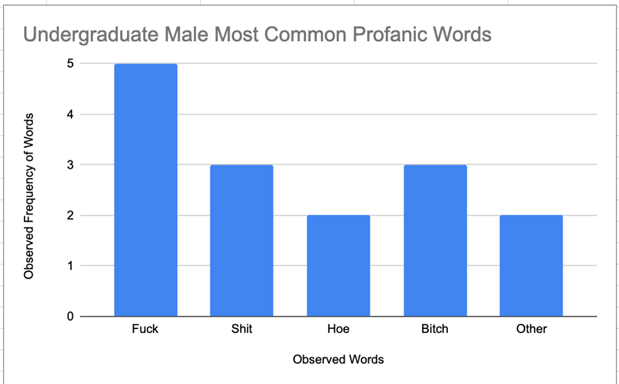
Figure 1: Data table displaying the observed frequency of profane word choices submitted by male undergraduate students of varying identities. Information and word columns obtained from our group’s undergraduate survey

The results of our survey yielded a varied spread of words that students self-identified as their most commonly used. As indicated in Figure 1, “fuck” was the most frequently used word, but “bitch” and “hoe” were not too far behind, with 5 and 3 people identifying it, respectively. However, the most surprising aspect of the survey came in the results of the questions where students explained what each word meant to them. Male respondents most commonly ranked “fuck” as their most used word, and said they used it with friends as a catch-all to mean many different things. However, male-identifying respondents also explained that they believed that the words “bitch” and “hoe” were related to and connotated women. For example, “A female” or “a rude person, usually a woman tbh. like when my boss is being a pain, “shes such a bitch”’ were two responses given by men who completed the survey. The majority of men who completed the survey answered in similar ways, saying that the meaning they gave to these words align with the original view which centered around patriarchal and misogynistic views on gender roles.
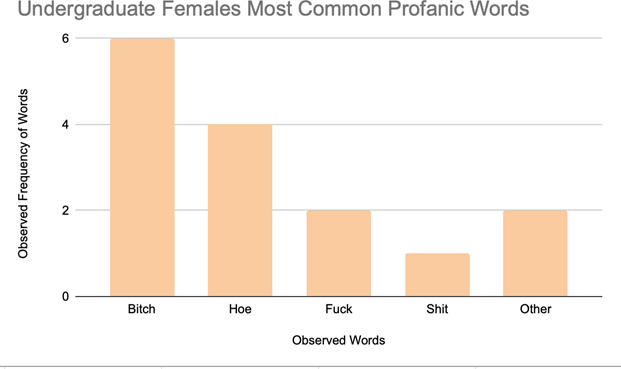
Figure 2: Data table displaying the observed frequency of profane word choices submitted by female undergraduate students of varying identities. Information and word columns obtained from our group’s undergraduate survey

On the other hand, Figure 2 demonstrates that female-identifying respondents use the words “bitch” and “hoe” more frequently than other swear words. Overwhelmingly, the meaning ascribed to these words is positive. For example, respondents said, “just means like “girlll”, or “bitch is either a positive or a negative thing. my best friend is my bitch (positive)… i rarely use it in the negative context. it can also be a positive general exclamation of support, like if a friend does something they’re proud of or wears a nice outfit and i want to show encouragement.” Women use these words in the context of friendship, endearment, or as a way to show sisterhood. They have redefined what the words mean and reframed them in a positive way that uplifts and supports other women, instead of denigrating them as men might intend the words for.

Discussion

The results of the research we conducted were fairly surprising to us. We expected there to be a difference in usage of profanity between genders, but the questions that we asked as follow-up in the survey were very enlightening. We discussed the results in a comparison to racial slurs that have been reclaimed throughout history. Racial minorities used slurs that were originally demeaning to them, and now use them in a context that expresses solidarity, unity, respect, and understanding within their own communities. The results that we obtained from our research could point toward a similar trend in college students when it comes to words which typically denote negative attitudes toward women. The female culture in college and in young people is reclaiming the meanings of these words in a similar fashion in order to empower women and reframe traditionally gendered views. We would like to see this research continued on a much broader scale, encompassing students in different regions of the United States, and also expanding toward different age groups. Further research can be done to expand understanding on how changing gender roles can be reflected in individual meaning given to the words in common vocabularies.

References

Güvendir, E. (2015, March 16). Why are males inclined to use strong swear words more than females? an evolutionary explanation based on male intergroup aggressiveness. Language Sciences. https://www.sciencedirect.com/science/article/abs/pii/S0388000115000194

Howard University News Service, Haynes, A., NewsVision, H. U., Miles, P., Thomas, V., Steib, A., Alabi, N., Pierre, A., & Harris, T. (2010, January 31). Profanity among college students. Howard University News Service. https://hunewsservice.com/news/profanity-among-college-students/

National University of Ukraine on Physical Education and Sport, Babushko, S., Solovei, L. (2019). What Makes University Students Swear. Borys Grinchenko Kyiv University of Ukraine. https://files.eric.ed.gov/fulltext/EJ1305437.pdf

The University of Mississippi Undergraduate Research Journal, Knirnschild, J. (2019) “The Gender Differences in Perceived Obscenity of Vulgar, Profane, and Derogatory – Language Usage among U.S. University Students,” The University of Mississippi Undergraduate Research Journal: Vol 3, Article 4 /https://egrove.olemiss.edu/cgi/v iewcontent.cgiarticle=1050&context=umurjournal#:~:text=Men%20have%20been%20found%20to,with%20women%20being%20scrutinized%20more

Wong, S. C., Teh, P. L., & Cheng, C.-B. (2020). How Different Genders Use Profanity on Twitter? International Conference on Compute and Data Analysis. https://doi.org/10.1145/3388142.3388145

 [/expander_maker]
, ,

“Speaking of women’s comedy…”: An Analysis of Linguistic Traits by Male and Female Standup Comedians

Samuel Alsup, Eden Moyal, Jinwen (Wiwi) Shi, Yitian (Riley) Shi

The question of whether women can be funny is long outdated and has, thankfully, been answered in the affirmative. This project investigates how funny people – namely, stand-up comedians – perform (or don’t perform) their womanhood in speech. Studies conducted by 20th-century scholars highlighted multiple facets of language that are characteristic of women’s conversation, such as tag questions, hedges, and excessively specific use of color terms. This study attempts to answer the question: do 20th-century conclusions regarding “women’s language” in conversation hold up in the context of contemporary stand-up comedy (Lakoff 1998)? Transcriptions of live stand-up acts by White North American men and women indicated that certain features associated with women are indeed more salient in women’s standup, while others seem to be equally used by men and women. This points to a decreased divide over recent decades in what is traditionally seen as acceptable ways of being a man or a woman, and a trend toward accepting the vast spectra of gender identity and gender performance.

[expander_maker id=”1″ more=”Read more” less=”Read less”]

Introduction and Background

Research into “women’s language” in the 1970s and 1980s pointed to proposed differences in speech between men and women (Men, women and language — a story of human speech), including certain features of conversational speech that are more salient among, and characteristic of, women. Researchers such as Lakoff (1998), Tannen (1990), and Cameron (1997) codified these differences, noting the response to a society that taught women to be polite and therefore unimposing. A few of the features of “women’s language” include hedging, tag questions, and filler words. On the other hand, men use more expletives and are more likely to drop the “g” sound at the end of a word (Bailey and Timm, 1976, cited in Guvendir 2015; Fischer 1958).

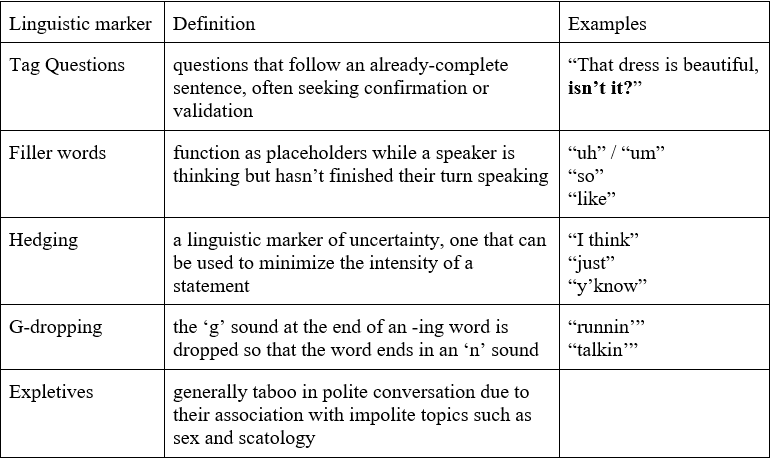
We examined the following phenomena: tag questions, filler words, hedging, g-dropping, and expletives. Definitions and examples of each can be found in the below table.

Table 1: Explanation and examples of linguistic features examined

Since these observations were made last century, we examined whether they would hold up in contemporary times. In recent years, society has witnessed a trend of greater gender equality, including breaking down traditional gender expectations (Solbes-Canales, Valverde-Montesino, & Herranz-Hernández, 2020). Therefore, it occurred to us that it might be necessary to re-examine gender-associated language. If men and women are slowly creeping closer to each other in fields like business, sports, politics, and more, could language be among those fields as well?

Our initial hypothesis was that established linguistic gender differences would hold up over time, since we expected that linguistic norms shift more slowly than political trends and social issues.

We looked at stand-up comedy in particular for a number of reasons:

  1. Stand-up is one of those historically-male careers, where women are considered the outlier. With women making inroads in this field, we thought to examine if language has shifted also.
  2. Comedy, like gender and language, is a performance. Because comedy is explicit in its performance, it allows for sensitive topics to come to light in a humorous, non-threatening way.
  3. Stand-up comedy is a version of communication in which the speaker does not end their turn or wait for a response. Because there is no verbal interaction from the audience for both men and women, we can surmise that the playing field is relatively level and the only changing factor would be the comedian’s performance.

Methods

We theorize that when speaking about gender, it seems likely that the speaker would indicate a particular stance, either in solidarity with or opposition to the demographic they’re talking about. A total of ten White, North American comedians were analyzed, each in the context of stand-up comedy. We examined sets/parts of sets where the comedian was speaking on the topic of gender or feminism, for a total of eleven minutes (639 seconds) for all comics combined. We counted instances of tag questions, filler words and phrases, hedging, g-dropping, and expletives.

 To help minimize variability, we ensured that the data was from stand-up comedy performances from the past five years. We noted each time that each linguistic feature was used in each act and kept a tally per comedian. We also recorded a general topic for each clip, so as to give slightly more specific context as to the content of the act. We then quantitatively analyzed the number of various gender-associated markers that were used in the clips, which ranged from thirty seconds to two minutes, using an average use of each feature per gender alongside the totals of each performer. We compared the five masculine-presenting comedians to the five feminine-presenting comedians to see if either of the genders we examined fit the conclusions discussed in the existing literature. In order to make sure that longer clips wouldn’t hold more weight, we set our evaluation to a per-30-second rate.

Results & Analysis

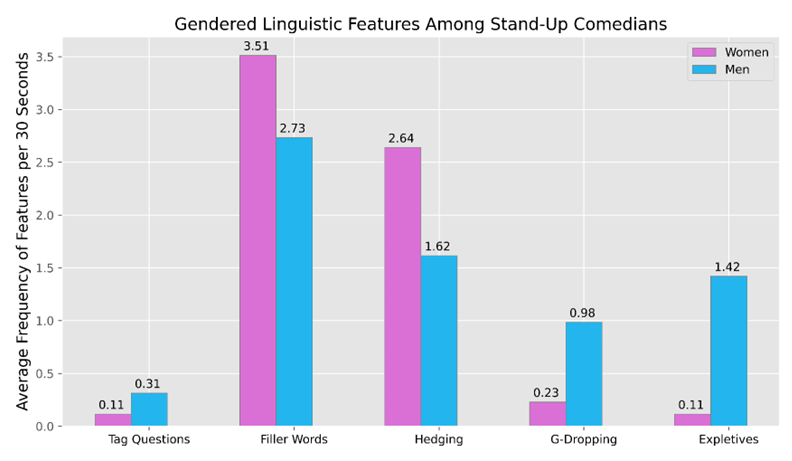
We found that the average usage of the relevant linguistic features per 30 seconds for males in our data set was: 0.31 tag questions, 2.73 filler words, 1.62 hedges, 0.98 g-drops, and 1.42 expletives. In contrast, the average usage per 30 seconds for females was: 0.11 tag questions, 3.51 filler words, 2.64 hedges, 0.23 g-drops, and 0.11 expletives. The figures below show a comparison between male and female comedians for the linguistic features mentioned.

Fig. 1: Bar graph showing average feature use for men and women comedians

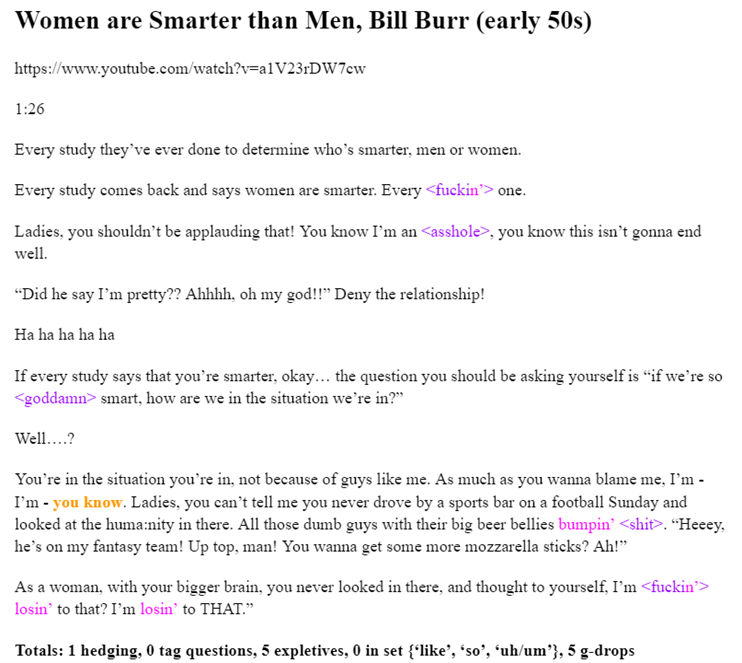
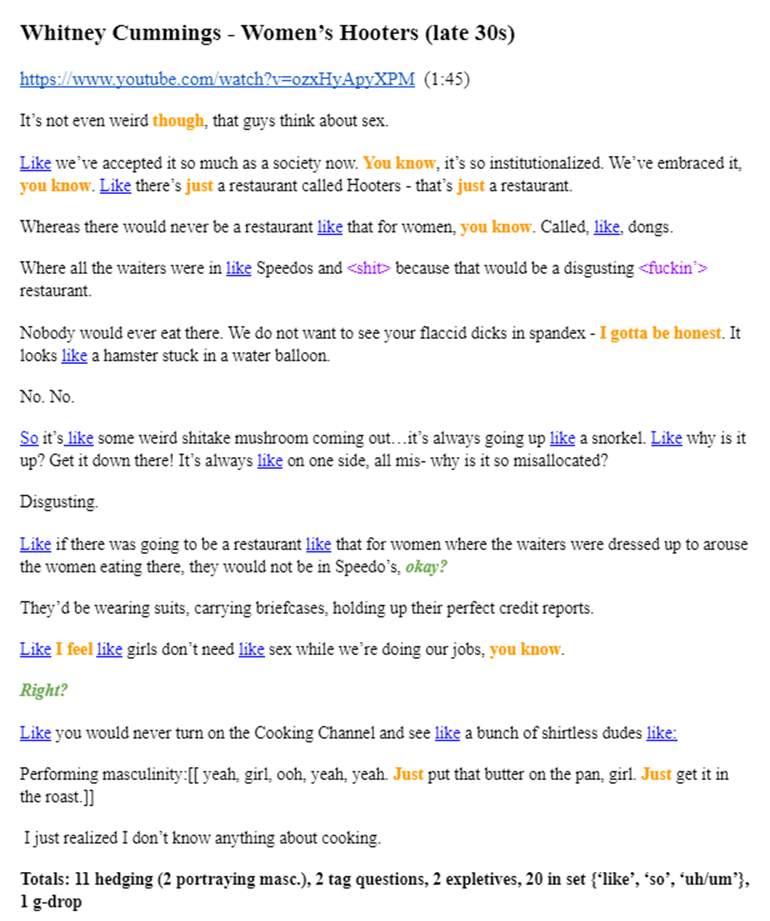
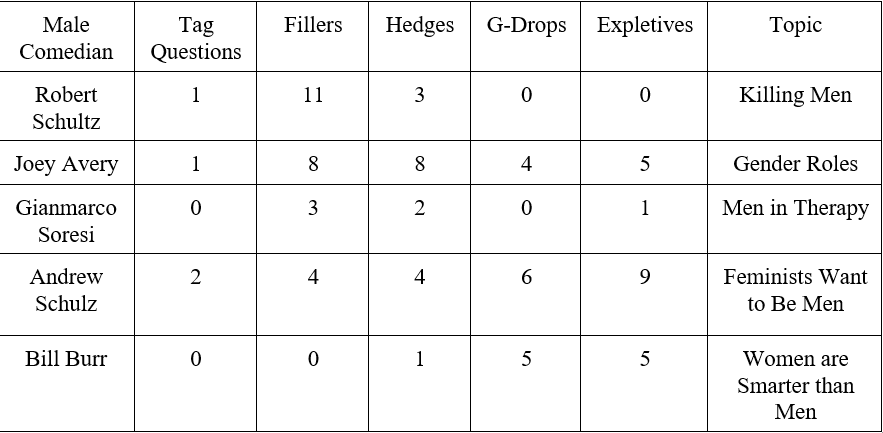
Our most “classic” exemplifiers of masculine and feminine speech were Bill Burr and Whitney Cummings, respectively. Bill Burr used many expletives and g-drops, and very few hedges and fillers. In contrast, Whitney Cummings used many hedges and fillers, and very few g-drops and expletives. We will relate each linguistic feature to them for context but note that they are the extreme ends of the spectrum. Transcripts from each comic’s set, as well as our summarized dataset, can be found below.

Fig. 2: Transcript of Clip by Bill Burr
Fig. 3: Transcript of Clip by Whitney Cummings
Table 2 Breakdown of Linguistic Features in Men’s Sets
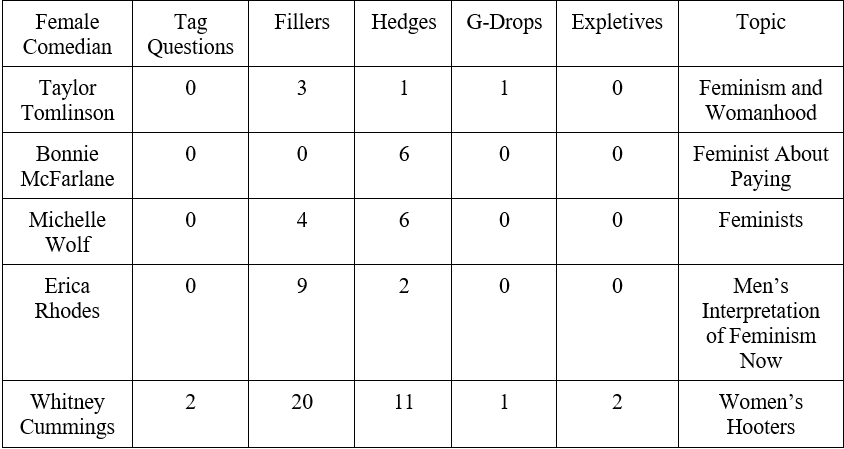
Table 3: Breakdown of Linguistic Features in Women’s Sets

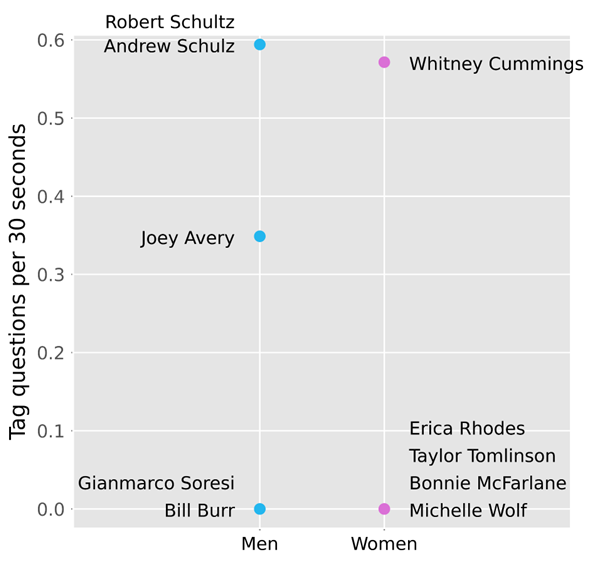
First, we found that there wasn’t a big difference in the usage of tag questions between male and female comedians. Tag questions weren’t used very frequently regardless of gender; less than one time per minute on average, with half of our comedians not using any at all.

Fig. 4: Scatter Plot of Men and Women’s Tag Question Use

Bill Burr didn’t use any tag questions, while Whitney Cummings utilized tag questions twice. This difference does not appear significant across the rest of our comedians.

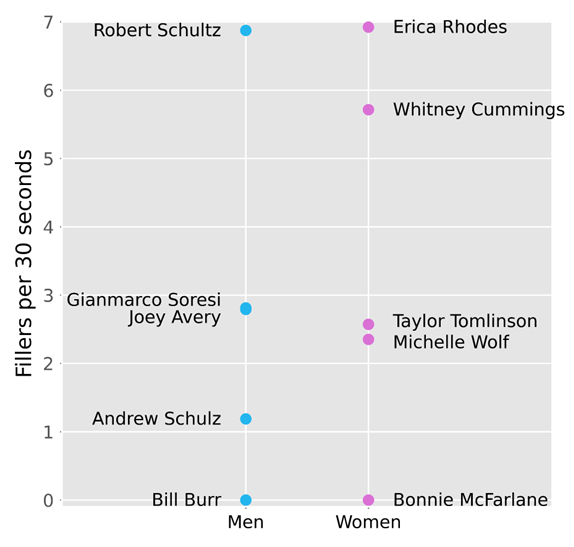
We saw that our female comedians used fillers more often than their male counterparts, by about one or two every 30 seconds. The graph below does show one male outlier, who was one of the younger men on stage. This will be touched on in the discussion.

Fig. 5: Scatter Plot of Men and Women’s Filler Use

Bill Burr didn’t use any fillers, whereas Whitney Cummings used an average of six filler words per thirty seconds. However, the results were more marginal over the full dataset, with an average difference of just one filler per minute between men and women.

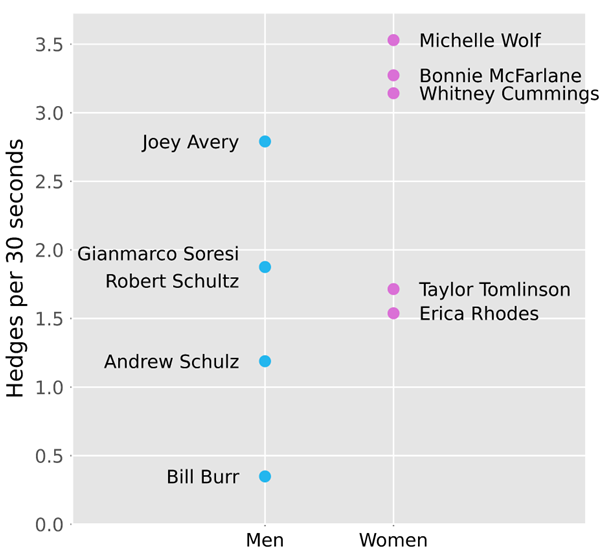
Our female comedians tended to hedge at least once more per 30 seconds than our male comedians. The figure below shows that three out of five female comedians hedged more than the top-hedging male.

Fig. 6: Scatter Plot of Men and Women’s Hedge Use

Bill Burr accordingly hedged one time, whereas Whitney Cummings utilized hedging eleven times in a similar timeframe. While there appears to be a correlation between hedging and feminine speech in our dataset, it’s not conclusive according to our statistical analysis.

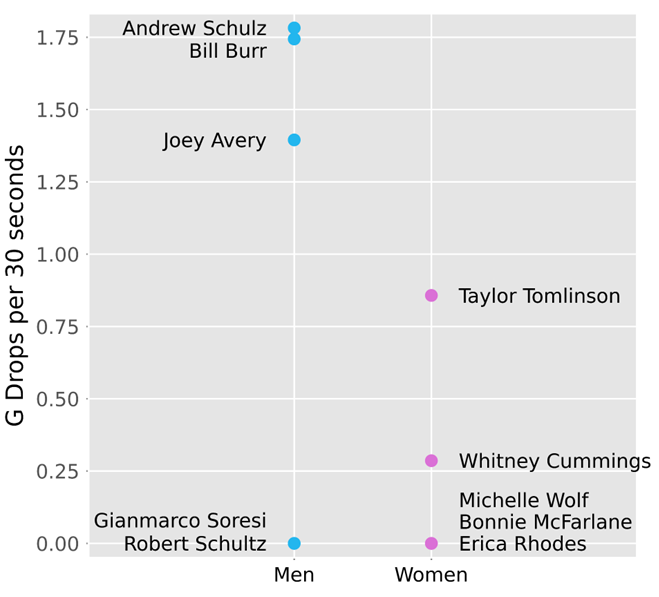
G-dropping results appeared to be much more correlated to gender than any previous linguistic feature we measured: the average female used it four times less than the average male comedian. While three female comedians and two male comedians didn’t use any g-dropping, among those who used it, the men did so much more frequently, as seen in the graph below.

Fig. 7: Scatter Plot of Men and Women’s G-Drop Use

Bill Burr and Whitney Cumming utilized g-dropping five times and one time, respectively. Though there appeared to be a correlation, with a 124% difference between the average usage of g-dropping between males and females, there wasn’t statistical significance in our small dataset.

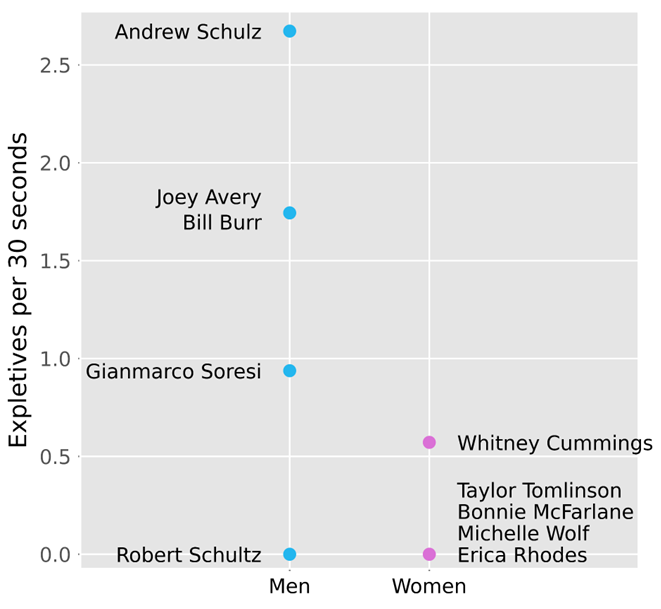
One linguistic feature that proved to have statistical significance was the usage of expletives. Four out of five female comedians didn’t use expletives at all, while only one male comedian didn’t use them. The males that used them did so at a rate ranging from two per minute to more than five per minute, as seen in the graph below.

Fig. 8: Scatter Plot of Men and Women’s Expletive Use

Bill Burr used expletives five times compared to Whitney Cummings’ two uses. Interestingly enough, Whitney Cummings was the only female comedian who used any expletives at all, even though she tended to (otherwise) stick to what previous research deemed feminine speech.

Overall, the biggest differences between males and females in our data are in hedging (47.9%), which was slightly more common in females, g-drops (124.0%), and expletives (171.2%), which were both more common in males. Tag questions were rarely used by any of the comedians, so even the 95% differential between the sexes is statistically meaningless. Filler phrases had a slight correlation with being more common in feminine speech, but not a very significant one (25.0% differential).

Discussion

An overall examination of the results of our data shows several things.

First, some linguistic features thought to be more characteristic of women have indeed held up in a stand-up context as well as over several decades. For example, we saw that women did indeed hedge more frequently, and used much fewer expletives and g-drops than men on stage. It’s important to note that the difference between men and women for hedging wasn’t large enough to be significant. However, we can say that there might be some correlation between gender and frequency of hedge use. The results were similar for g-dropping and fillers, as they both appeared to have a correlation in our data, however, not enough to be statistically significant. As an example, female comic Taylor Tomlinson hedged twice with one g-drop and three fillers in a 35-second clip, while male comic Gianmarco Soresi hedged twice as well, with no g-drops and three fillers, in a 32-second clip. This comparison shows very little difference between them, pointing to placement somewhere in the middle of the spectrum of gender performance.

For expletive use, though, the difference between men and women was statistically significant – that is, large enough to make generalizations. This conclusion does stem from research showing that men are more casual in conversation than women, allowing for less formal speech.

However, plenty of linguistic features thought to be more characteristic of men or women in the past don’t hold up as well anymore. This could be due to simply the passage of time, the shift to allowing for more fluid gender identities in contemporary times, or potentially because of standup being a different kind of linguistic environment in that it is non-conversational. While we expected to find a more significant gap between men and women in their use of linguistic features, in reality, speech was a lot more ambiguous and closer rather than disparate.

We can look at the use of filler words for an example of this ambiguity. Though there can be exemplified differences between male and female performance, such as what we see between Whitney Cummings and Bill Burr, in today’s age it is much less common to exert these drastically different performances. Instead, we see more use of fillers somewhere in the middle of the spectrum, with most comedians closer to the center than to either traditionally gendered pattern. Thus, we end up with our dataset showing a very marginal difference.

Some other observations that we made revolved around the differences within the group of male comedians. The two male comedians who displayed the most classically ‘male’ use of the features we examined were the two oldest, being born in the 1980s or earlier. The younger ones, born in the early 1990s or later, were much more likely to use features traditionally associated with women. That is, younger men were more comfortable using hedges and filler words especially. This observation might indicate that younger men are becoming more comfortable with performing certain aspects of femininity, which reflects a greater trend in playing with gender in the last few years. Alternatively, it could reflect the increasing acceptance of traditionally female features of speech – its dissociation from femininity and increased generality.

Conclusion

An analysis of contemporary stand-up comics for features of speech marked feminine or masculine showed that conclusions made in 20th-century literature no longer hold up. Features that were characteristic of ‘women’s language’ in 1990 are, thirty years later, more general and practiced by male speakers as well as females – especially by younger men who grew up in less rigid society than their older counterparts. This difference between younger and older men may indicate that younger men are becoming more comfortable performing certain aspects of femininity. This perhaps reflects a greater trend towards playing with gender and comfort in gender-expansiveness or perhaps reflects women’s speech becoming less associated with women and more acceptable in general society as time passes.

It is important also to recognize that stand-up comedy is unique among linguistic discourse contexts, as there is no back-and-forth. Since stand-up language is monologuing rather than conversational, this may factor into how speakers perform gender, and it sets this study apart from earlier studies like Lakoff’s.

Looking forward, there are multiple ways to expand this study to include a more diverse group of comedians. One way to do this would be to examine how supposed ‘gender’ differences look when race is accounted for. Lakoff and other researchers focused their observations on white women – therefore, women (and men) who aren’t white may actually display very different expressions of language, with different characteristics and perhaps at different frequencies.

Another forward-looking study could include comedians of a gender-expansive experience. Comedians who are not locked to an identity as either ‘man’ or ‘woman’ may display yet even more different expressions of gender in their language. It’s important to include not just individuals who fit a binary definition of gender. Though this concept was much less spoken about during the original studies conducted in the 1970s-1990s, society more willingly recognizes the expansive nature of gender and performance now, and linguistic study should not only reflect that sentiment but set out to describe how it fits in with language and linguistic study.

With ever-persistent debates about whether language will ever really be as egalitarian, as gender-neutral, as inclusive as we want it to be (“Women are witches, men are studs”), it is our job as linguists to catalog, describe, and advocate for change on the linguistic level so that it can influence and be influenced by the social level.

References

Cameron, D. (1997). Performing gender identity: Young men’s talk and the construction of heterosexual masculinity. In On Language and Sexual Politics (1st ed., pp. 47-64). Taylor & Francis Group.

Fischer, J. L. (1958). Social influences on the choice of a linguistic variant, WORD, 14:1, pp. 47-56, DOI: 10.1080/00437956.1958.11659655

Gordon, Mo. (2023, April 13). ‘Women are witches, men are studs.’ Universiteit Leiden, www.leidenlanguageblog.nl/articles/women-are-witches-men-are-studs-blog-mo-gordon.

Güvendir, E. (2015). Why are males inclined to use strong swear words more than females? An evolutionary explanation based on male intergroup aggressiveness. Language Sciences, vol. 50, pp. 133-139. https://doi.org/10.1016/j.langsci.2015.02.003

Lakoff, R. (1998). Extract from Language and woman’s place. In D. Cameron (Ed.), The Feminist critique of language: A reader (2nd ed.) (pp. 242-252). London, England: Routledge, Taylor and Francis Group.

Solbes-Canales, I., S. Valverde-Montesino, & P. Herranz-Hernández. (2020). Socialization of gender stereotypes related to attributes and professions among young Spanish school-aged children. Frontiers, www.frontiersin.org/articles/10.3389/fpsyg.2020.00609/full.

Tannen, D. (1990). You just don’t understand: Women and men in conversation. Ballantine Publishing Group.

TED. (2014, July 31). Men, women and language — a story of human speech | Sophie Scott | TEDxUCLWomen.  YouTube. https://www.youtube.com/watch?v=iteK4P0nDO8

Appendix

Video Links:

Men in Therapy – Gianmarco Soresi

Women are Smarter than Men – Bill Burr

Feminists Want to be Men – Andrew Schulz

Gender Roles – Joey Avery

Feminism and Womanhood – Taylor Tomlinson

Men’s Interpretation of Feminism Now – Erica Rhodes

Women’s Hooters – Whitney Cummings

Feminists – Michelle Wolf

Feminist About Paying – Bonnie McFarlane

Killing Men – Robert Schultz

Transcripts:

Transcripts Repository

[/expander_maker]
, , , , , ,

“It’s just a game”: Toxic Triggers in the Competitive FPS Valorant

David Vuong, Emma Tosaya, Jane Heathcote, Kai Garcia

If you have ever played an online game, of any variety, chances are you have run into a toxic player or two. Online gaming has a long, deep rooted history of toxicity, often attributed to many games’ violent or competitive natures. However, toxicity can stem from a variety of sources, from racism to sexism to even a player’s enjoyment of toxic environments. This article aims to find the link between toxic nature and the online first-person shooter (FPS) Valorant. From the moment it was announced, Valorant was one of the most anticipated game releases of 2020. With its release coinciding with the COVID-19 quarantine, its popularity received a drastic boost, giving it a uniquely diverse player base – including a rising number of female FPS players. Focusing specifically on female-received toxicity, randomly selected interactions between players will be analyzed based on word choice and context to study in-game triggers for toxicity.

[expander_maker id=”1″ more=”Read more” less=”Read less”]

Introduction

For those unfamiliar with the game, Valorant is a team based tactical shooter game, played online in teams of five. Each player is assigned a rank based on skill level (which ranges from lowest at Iron 1 to highest at Radiant) as displayed in Figure 1, and an account level (which indicates how much an individual has played the game on a particular account) as displayed in Figure 2.

Figure 1 – Valorant ranks
Figure 2 – Valorant account levels

The small team sizes and hierarchical structure create easy situations to call out fellow players, and the fast-paced and competitive gameplay leads to frequent incidents of toxic behavior. Performance based toxicity is made even easier thanks to the format of in-game statistics (see Fig. 3). Players have access to both their own and the opposing team’s statistics for a particular game. Each individual player’s username is displayed next to an image of the agent they have chosen and rank, followed by KDA count (kills, deaths, and assists to kills), loadout indicating what kind of weapon they are using, and credits showing each player’s current money. All of this information is necessary for knowledgeable gameplay but makes it easy to target a specific player – such as the person with the least kills.

Figure 3 – Valorant in-game loadout menu

Riot, the developer of Valorant, has made several attempts to quash performance-based rank toxicity. Visible ranks were removed in game, meaning the rank information found next to the agent image in Figure 3 were removed. Despite these attempts, there has been no real success or documented decrease in rank toxicity.  A recent survey created by the Anti-Defamation League found that 89% of young gamers between the ages of 13 and 17 had experienced a disruptive, negative encounter in Valorant during the past six months (ADL, 2021). Toxicity in Valorant has become an expected part of the game, despite the fact that such “deviance” in games has the consequence of driving off new players and supports a reputation of toxicity (Shores et al., 2014).

In this study, we wanted to dig deeper into the linguistic phenomenon involved in this toxicity and explore how a player’s word choice and lexicon give insight into why they might feed into such a toxic environment. Analyzing the context and frequency of these toxic statements is important to better understand the triggers of toxicity in a community that is intended to promote teamwork. By looking at audio recordings and chat transcripts from a variety of sources, we predicted that gameplay-based comments would be the most common form of toxicity, but that other categories such as gender or race would have a key role in players’ decisions to make these comments.

Methods

There were two parts to our study: interaction analysis and community familiarity.

Part 1: Interaction Analysis:

Using a variety of open-source mediums, we collected random clips of toxic in-game encounters on YouTube, Twitch, and TikTok. Twitch is a platform in which people can stream their gameplay live to a virtual audience, and TikTok is a platform in which users can submit small one-minute clips or compilations. Using Twitch’s Valorant category, TikTok’s search function utilizing hashtags, and requesting clips from anonymous individuals, we analyzed 10 randomly selected clips of female Valorant players. As the demographic of Valorant players is overwhelmingly male, and considering sexism was one of our categories, we decided to focus specifically on female directed toxicity to avoid any skews in data. We looked for two instances of female-received toxicity in a single clip, which we called the primary and secondary interactions. The primary interaction was considered the first identifiable toxicity aimed at the female player after she had spoken, and the secondary was considered to be the second instance of toxicity. After creating transcripts for these interactions, we placed them into one of four categories based on the toxic word choice employed: sexism, profanity, performance, or racism. For example, an interaction where a male teammate referred to the female gamer’s bad play as a “woman moment” was placed in the “sexism” category. The primary and secondary interaction could be either the same or different forms of toxicity, and some even contained multiple types of toxicity in a singular interaction (ex. performance-based primary, sexist secondary). In the instances where there was more than one category documented, all categories noted were considered when compiling the final data.

Part 2: Community Familiarity

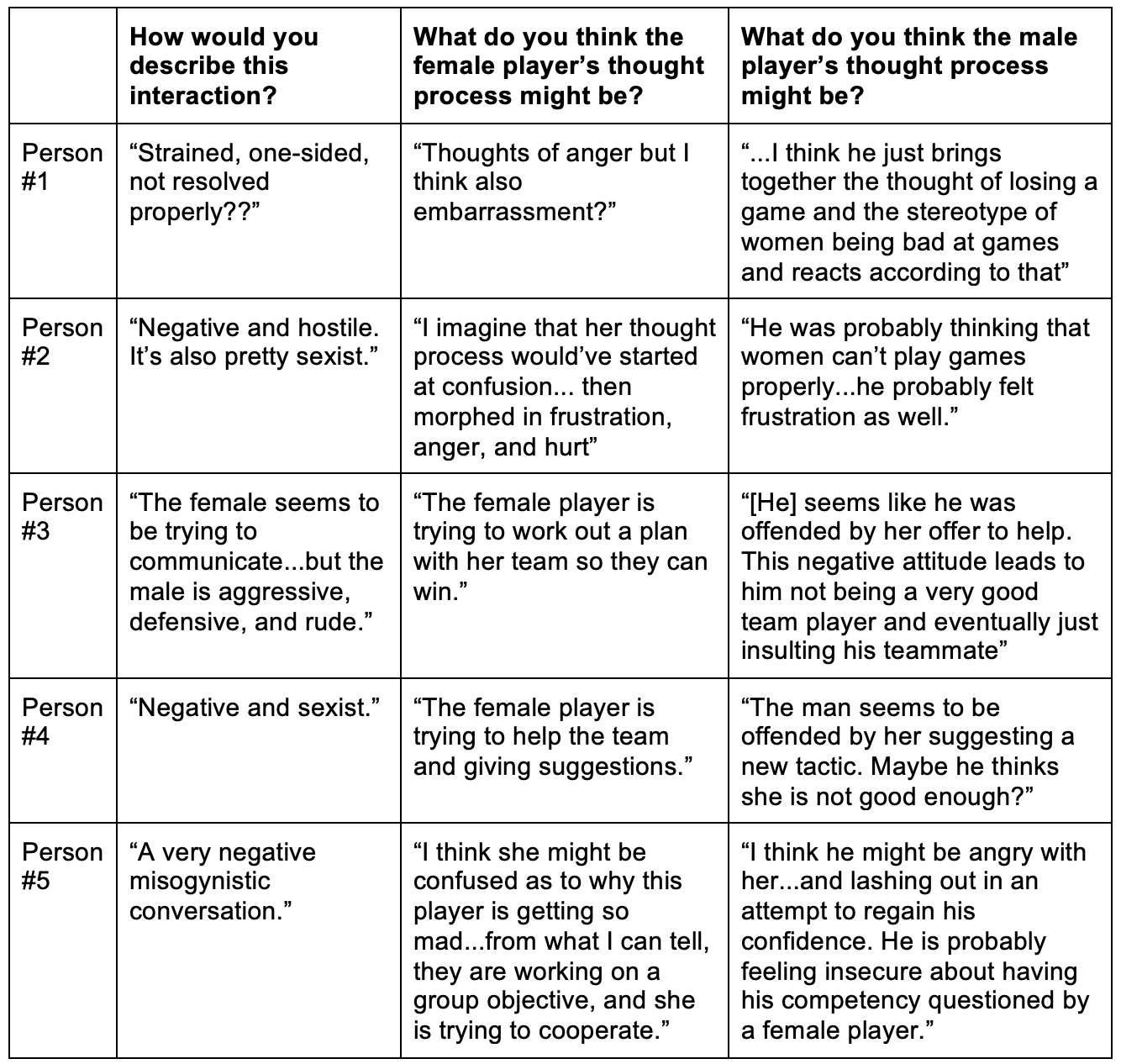
We also wanted to see how familiar the toxic Valorant jargon was to people outside the community of practice, as well as their thoughts and impressions on the nature of the negative interaction. To do this, we created a familiarity survey to send to several non-Valorant players. The survey consisted of one of our interaction transcripts and analysis questions. A total of 5 participants were shown the transcript – 4 female and 1 non-binary. We asked the participants to describe the nature of the interaction and to elaborate on the potential thought processes of both the female and male gamers.

The questions were kept as general as possible, and both the questions and transcript were sent via text so as to not incur any bias towards a specific category of toxicity. The first question asked was simply, “How would you describe this interaction?”. The following two questions focused on what the participants thought each of the player’s take on the interaction was, essentially asking if the participant viewed the interactions in the same way that our data collection did: sexist, racist, performance based, or straight profanity-based toxicity.

Analysis

Please note that the following video and data does include offensive language.

The video found below contains a clip from our randomly selected subjects who experienced toxicity in game.

https://youtu.be/pON7BYP6wAk

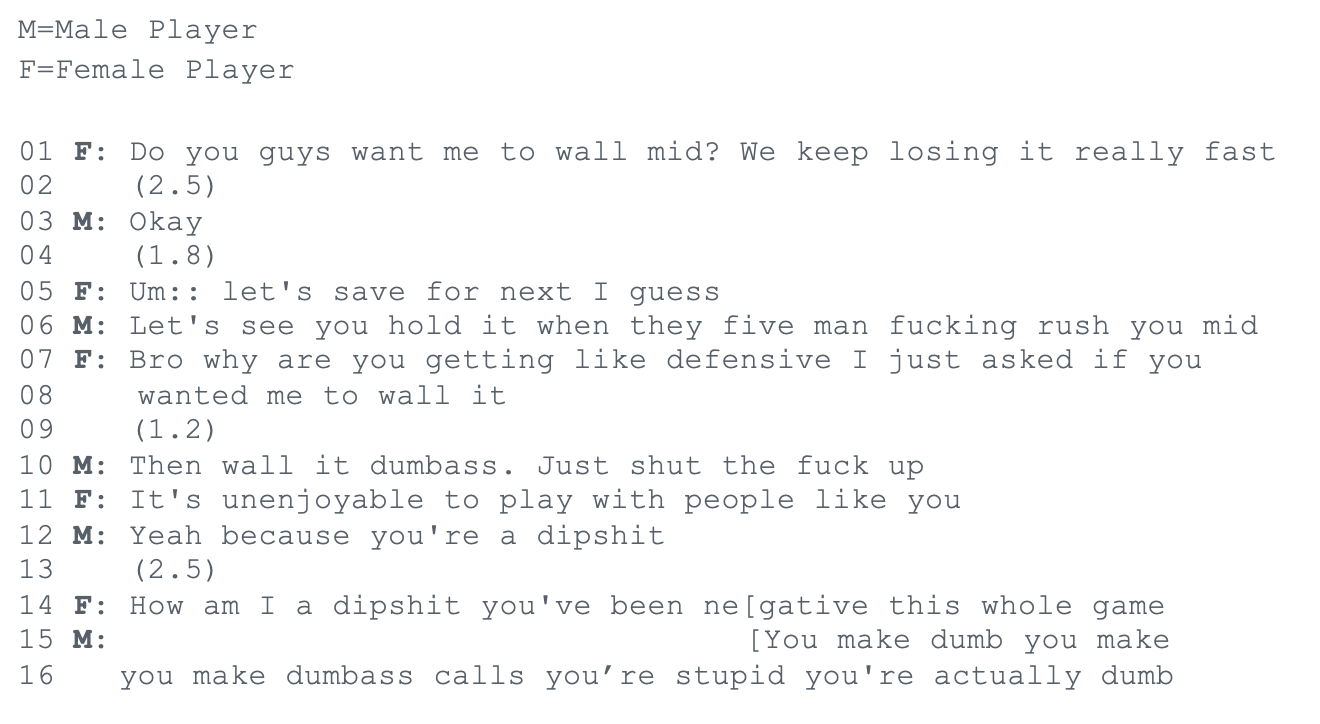
The continuing excerpt shows an example of how the project categorized terminology and phrases to collect data on types of toxicity. It is also the specific excerpt provided to subjects outside of the Valorant community for familiarity testing.

The excerpt opens with a question from the female player, targeted to her fellow teammates and related to the general game strategy. The primary toxic interaction occurs in Line 6, when the male player questions the female player’s ability to perform a game-related task (hold a site against the enemy team). The game terminology within this line flags it as performance-based toxicity according to our categorization methods. After the female player calls out his toxicity (Lines 7-8), there is a brief pause (1.2 seconds, Line 9) before he insults her and her abilities again in Line 10. This is the secondary interaction and is another example of a performance-based toxic comment.

Although the interaction continues past this point, we focused on the primary and secondary interaction, since we are only interested in the beginning trigger to the overall toxic encounter. Using the same methods as demonstrated above, we analyzed the other randomly gathered video clips and accumulated our final results.

Results

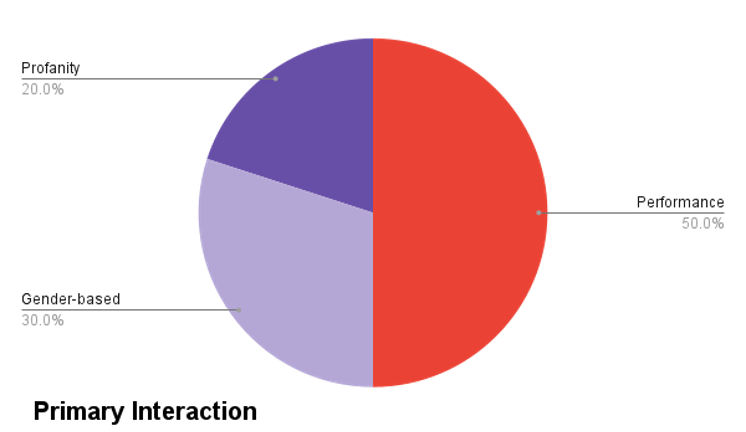
Overall, the most frequent type of toxicity encountered at the beginning of a negative interaction was performance-based insults, which aligns with our hypothesis. Figure 4 indicates that this performance toxicity appeared first in half of the videos we analyzed, followed by gender-based discrimination at 30% and general profanity directed towards the female player found in the remaining 20%.

Figure 4 – Primary interactions: type of toxicity, by frequency

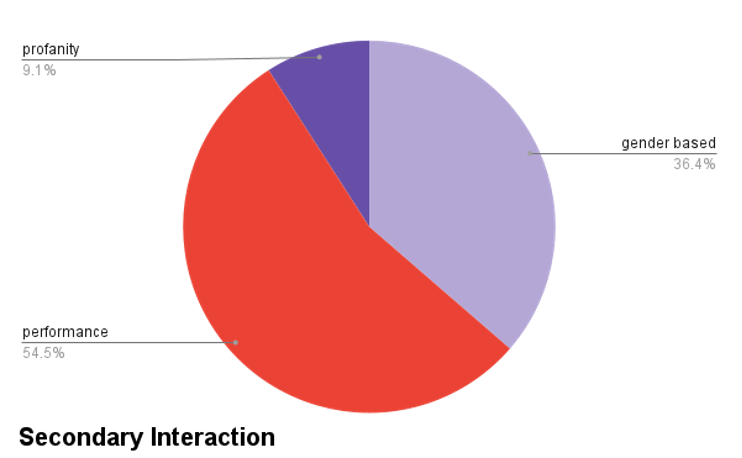
Performance was even more relevant in the secondary interaction, making up 54.5% of the comments, as seen in Figure 5. Once again, gender-based toxicity and general profanity made up the rest of the encounters studied, although both categories combined make up less than half of the interactions recorded.

Figure 5 – Secondary interactions: type of toxicity, by frequency

No encounters of racist toxicity were documented as the immediate trigger for negative encounters, even though racism remains a known issue in Valorant. We did find instances of spoken racial slurs in the videos analyzed; however, as they were not the first or second instance of toxic comments, they were not included in our analysis.

After sending the example transcript to individuals outside of the Valorant community, we were able to analyze their answers and determine if they also regarded comments as negative. As demonstrated in Figure 6, all five individuals described the interaction using words with negative connotations. When asked about the potential thought processes behind the male player’s triggered toxicity, the most common themes were gender-based stereotypes and frustration/defensiveness over game performance. This aligns with the results of our data analysis and demonstrates that individuals outside the community view game toxicity as negative.

Figure 6 – Subject responses to familiarity survey

Discussion and Conclusions

As stated above in the results section, most of the toxic comments were classified as performance-based toxicity. However, contrary to the initial hypothesis, the trigger for these particular cases of toxicity cannot simply be defined by their lexical counterparts. In the end, most of the clips collected were of toxic players who were underperforming themselves, while the receiver of toxicity was outperforming the toxic player. This suggested that the trigger for toxicity was not simply related to low performance, but other factors beyond gameplay that were playing a key role in toxic behavior. Additionally, when the comments were transcribed as part of our survey questionnaire, the participants analyzing the conversations stated that the interaction was extremely negative and had misogynistic undertones. Not only was the toxicity understandable to persons outside of the community of speech, but the responses also suggest that the survey participants believed the toxicity triggers extended beyond surface level word choice. With that in mind, we can view these comments not only as an indication of performance toxicity, but rather a demonstration of sexism as the underlying trigger for in-game toxicity.

As also noted in the results above, this project did not yield any data on racism. Despite this fact, further studies could focus on racial discrimination as a trigger to toxicity within Valorant. As there is no way to determine a player’s race in Valorant except from their voice, a different data collection method would need to be employed to study racism in-game. Possible future studies could have subjects who speak African American Vernacular English or subjects with non-standard American accents volunteer clips of their toxic interactions, instead of having a female only subject demographic. Previous research (Buyukozturk, 2016) has found that one of the major contributors to racial gaming toxicity is the obscured nature of online interaction. Toxic gamers can draw stereotype-laden conclusions about a player based solely on their voice, and they may express their toxicity more readily than they would in real life because they feel safe hidden behind a digital avatar. It would be interesting to analyze the word choice and context of racist gaming encounters and compare them to documented examples of in-person racist speech.

For other future analysis, a much larger data sample would be needed to back the current findings. A larger data set would provide not only more conclusive results but would help expand the scope of toxic behaviors beyond our focused categories (sexism, profanity, performance and racism). As Valorant is still a relatively newer game (less than 2 years old), there is much more research that could be done to help explain toxic trends. The broader implications of these findings could extend to other phenomena in society as well, such as the reasons behind toxicity towards female colleagues in male dominated work environments. Studying the triggers of this deviance has the potential to increase awareness towards harassment and general toxicity prevalent in all aspects of life.


References

Anti-Defamation League. (2021, September 15). Most U.S. Teens Experienced Harassment When Gaming Online, ADL Survey Finds. https://www.adl.org/news/press-releases/most-us-teens-experienced-harassment-when-gaming-online-adl-survey-finds

Beres, N.A., Frommel, J., Reid, E., Mandryk, R.L., & Klarkowski, M. (2021). Don’t You Know That You’re Toxic: Normalization of Toxicity in Online Gaming. Proceedings of the 2021 CHI conference on Human Factors in Computing Systems.

Buyukozturk, B. (2016). Race, Gender, and Deviance in Xbox Live: Theoretical Perspectives from the Virtual Margins. Sociology of Race and Ethnicity, 2(3), 387–398. https://doi.org/10.1177/2332649216645529

Cook C. L. (2019). Between a troll and a hard place: the demand framework’s answer to one of gaming’s biggest problems. Media Commun. 7 176–185. 10.17645/mac.v7i4.2347

Kowert R. (2020). Dark Participation in Games. Frontiers in psychology, 11, 598947. https://doi.org/10.3389/fpsyg.2020.598947

Shores, K., He, Y., Swanenburg, K.L., Kraut, R.E., & Riedl, J. (2014). The identification of deviance and its impact on retention in a multiplayer game. Proceedings of the 17th ACM conference on Computer supported cooperative work & social computing. https://dl.acm.org/doi/10.1145/2531602.2531724

[/expander_maker]


, , , , ,

“Pussy!”: Gendered Insults While Video Gaming

Nisha Porchezhiyan

The present article is a research study about the use of gendered insults while playing Super Smash Bros and Mario Kart. This study consisted of three players, one female and two male playing both of the games and analyzing their conversations to see which gender used “pussy” as an insult more often and what types of triggers each gender had for the word. This paper argues that men use the word “pussy” as an insult more than women while playing video games, typically as either retaliation for when their character gets hit in the game or as a generic insult that is not caused by any action in the game. On the contrary, women typically use “pussy” as an insult only when another player calls them that insult. The results of the study support the thesis and the results align with the conclusions of previous researchers. The data collected implies that the high male frequency of “pussy” might reinforce gender stereotypes where women are seen as weaker than men, because they use female genitalia as an insult for being weaker.

[expander_maker id=”1″ more=”Read more” less=”Read less”]

Video Gaming and Swearing

Video gaming is a culture that uses excessive swearing among the players, acting as a means of communication where the use of gendered insults is common. Gendered insults are derogatory words about females or female genitalia, such as “pussy,” “whore,” “sissy,” etc. This study will focus on the use of the word “pussy” while playing the video games Super Smash Bros and Mario Kart. Super Smash Bros is a fighting game where players’ characters battle on a stage, known as the map. Mario Kart is a racing game where players’ characters race each other around the map, or the racetrack. I used a sample of Arizona State college students and transcribed their conversations while playing these games; this type of research will help me explore the distribution of the word “pussy” based on the gender identities of the speakers and the different triggers each gender has when they use “pussy” as an insult. While both genders use “pussy” as an insult, men use it more often than women while playing the Mario Kart and Super Smash Bros and with different triggers for the word: women use it only when they get called a “pussy” by another player, while men use it when their character gets hit/falls off the map, or as a general insult without anything happening in the game.


What research was done before?

Beginning with gendered insults, feminist social constructionist theory argues that using gendered insults and sexual language about females shows male sexual power over women because of the objectification of women (Murnen, 2006). The author argues that men use gendered insults more than women, while women use them less often. What Murnen argued was similar to the results I found in my research with college student gamers, a group that reinforces social stereotypes with the high frequency of swear words, known as “flaming” other players. “Flaming” is insulting a friend as a joke or a tease, with no ill intent behind the insult. This is why most insults said during video games are not meant to be personal insults, but just friendly commentary among friends (Elliot, 2013). The insults used during video games act as a means of communication among the players; video game players use excessive swearing which reinforces stereotypes because players often do not think before speaking while playing video games (Finnegan, 2019).

Specifically, on gendered insults while video gaming, the use of excessive swearing can contribute to gender norm regulation, leading to the frequent use of gendered insults in regular societal discourse (Felmlee, 2019). While this is a broad statement and the findings of this research cannot be extrapolated that extremely, my research does build on the basis of Felmlee’s work.

How was this study designed?

This research project focused on the use of the word “pussy” while playing Mario Kart and Super Smash Bros on the Nintendo Switch. Because I only had three controllers, the sample size was three people: one African American/Portuguese male, one white female, and one white male. The participants knew their conversations during the game would be recorded, but they did not know what I was specifically looking for. For the Mario Kart video game, the participants played Bell Cup, which all three of them decided to be the hardest cup (set of four races). This was chosen because harder games would aggravate the players more, leading to a higher frequency of gendered insults used. For the Super Smash Bros video game, the participants played three rounds (one battle) and the participants were given the flexibility of choosing their own character. All of the games the participants played were recorded from which I pulled excerpts and transcribed to be used as data.

What were the results?

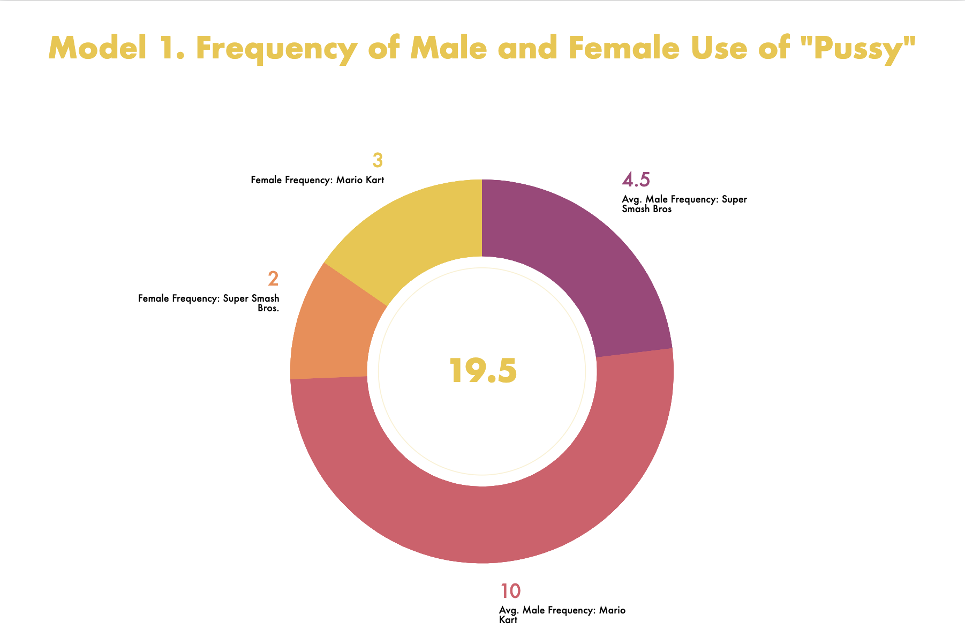
By tallying the frequency of the word “pussy” as an insult, I was able to create a pie chart to visualize the frequency of the male use of “pussy” and the female use. Because there were two males and one female in my study, I averaged the male frequency. As seen in Model 1, the total average male frequency was 14.5 uses of “pussy” and the total female frequency was 5 uses of “pussy.”

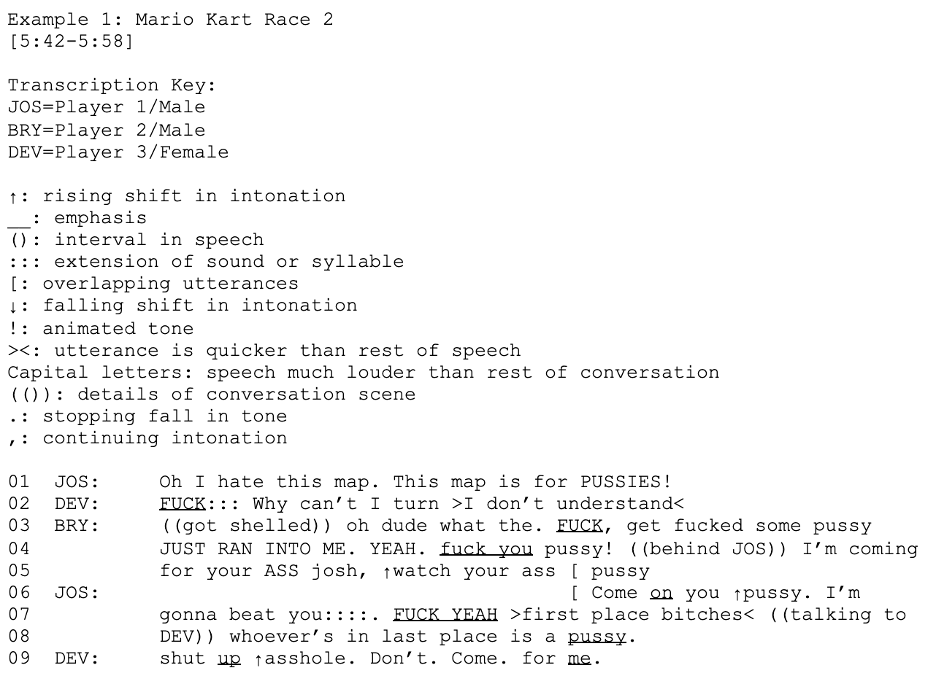
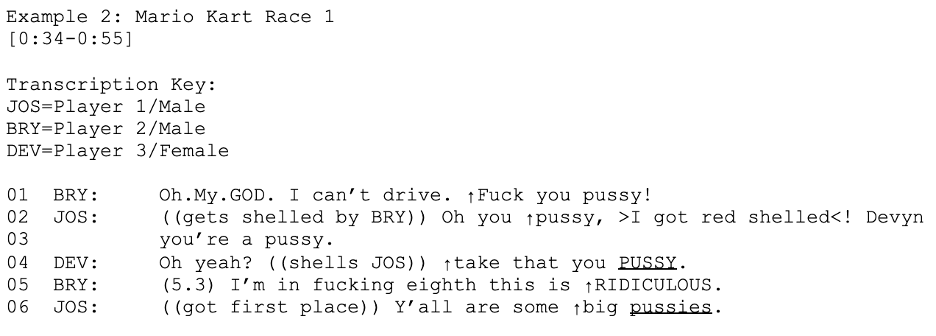
Example 1 is an excerpt from the second race in Mario Kart where “pussy” was used six times. In lines 4,5 BRY (male) gets hit by JOS (male) and calls him a “pussy,” but the other four occurrences of the word were used even though no action occurred in the game (lines 1,3,6,8). This data supports the thesis that for males there are two triggers of “pussy,” either when a character gets hit or when nothing happens in the game. In line 8, JOS calls DEV (female) a “pussy” but she responds by calling him an “asshole” instead.

What do the results mean?

Looking at the pie chart from Model 1, male players used “pussy” at a higher frequency than the female player, supporting my thesis than men are more likely to use the word “pussy” as an insult compared to women. This supports the findings of Murnen’s research and might imply that male use of the word “pussy” is higher because of their positioning in society with more power due to gender stereotypes (Murnen, 2006).

The transcripts from Examples 1 and 2 support my thesis that male use of the word “pussy” has two different triggers, either when their character gets hit or without any action occurring in the game. Moreover, as seen in Example 2, the female player (DEV) only used the word “pussy” after another player called her a “pussy,” but throughout the entire set of games, she never used the word first. This could be because she did not want to use gendered insults due to their sexist nature but might have wanted to fit in with the group which consisted mostly of men. This is supported by Example 1 where DEV opted to use the gender-neutral insult “asshole” instead of “pussy” which might imply that women are inclined to swearing, but do not want to reinforce gender norms and the objectification of females and female genitalia. This contradicts the findings of Ashwell’s research who argues that gendered insults are so problematic because they lack a gender-neutral alternative (Ashwell, 2016).

Ultimately, the research supported my thesis that men use “pussy” as an insult while video gaming at a higher frequency than women, and how women only use “pussy” after they are called the insult.

Some limitations of this study is that the sample size used was very small and cannot be generalizable for the entire population of college-level video gamers. Moreover, there were more males than females in the study, but ideally there should have been an equal amount. The study should also have focused on other types of gendered insults to be able to provide a conclusion on gendered insults as a whole.

Based on these results, for future research, I recommend looking into socio-political beliefs of the participants and whether there is a correlation between their political views and their use of gendered insults.


References

Ashwell, L. (2016). Gendered Slurs. Social Theory and Practice, 42(2), 228-239. Retrieved February 8, 2021, from http://www.jstor.org/stable/24871341

Elliot, T. P. (2012). Flaming and gaming – computer-mediated-communication and toxic disinhibition. University of Twente (student thesis).

Felmlee, D., Inara Rodis, P., & Zhang, A. (2019). Sexist Slurs: Reinforcing Feminine Stereotypes Online. Sex Roles. doi:https://doi.org/10.1007/s11199-019-01095-z

Finnegan, J. (2019). Bad language and Bro-up Cooperation in Co-sit gaming. Approaches to Videogame Discourse Lexis, Interaction, Textuality.

Francesca, Thaliakr, Rachel, Robert, Youredoingamazing, Jc, Rose, K. (2018, April 12). Everyday misogyny: 122 subtly sexist words about women (and what to do about them). Retrieved March 18, 2021, from http://sacraparental.com/2016/05/14/everyday-misogyny-122-subtly-sexist-words-women/

Murnen, S. K. (2006). Gender and the use of sexually degrading language. Psychology of Women Quarterly. doi:https://doi.org/10.1111/j.1471-6402.2000.tb00214.x

[/expander_maker]

, , ,
Scroll to Top