I Am Who You Are Not: Insults in Films

Anthony Waller, Avery Robinson, Nicole Rasmussen, Jun Jie Li

Creativity and complexity are not often two factors that are considered when we insult; we typically go to our personal shelf of offensive phrases and let our selections do their damage. When we look at high school oriented films, however, we see that insults are a means of identity negotiation and employ creative and complex techniques that serve to compound the effect and project a strategic process of identity projection and negotiation. In this article, we will be examining how films act as a social mirror by reflecting a description of contemporary teenage culture. Specifically, we will be considering two factors that we believe to have had a significant impact on the motivation of portrayals: gender and time. Looking at several classic selections that spans the decades of the 80’s through the 00’s, we utilized a nexus and inductive approach in isolating specific linguistic elements of insults that appear most salient to our research. We conducted a series of comparative analyses of creativity and complexity parameters and extrapolated a loose correlation between gendered insults and the passage of time. From there, we will be discussing some implications of this correlation and how insulting is a process of identity prioritization and constructivism through self-isolation.

[expander_maker id=”1″ more=”Read more” less=”Read less”]

Introduction: How We Offend

For our research, we will be investigating the depiction of insults in teenagers as portrayed in films of high school settings from the 1980s, 1990s, and 2000s. Specifically, we want to take a look at how the complexity and creativity, as defined below, of insult formation are expressed across gender boundaries, and how the mechanism of that formation has evolved over the decades. Based on our preliminary observations, we are expecting to see depictions of greater structural complexity and communicative creativity in females characters over males. We also believe that there will be an inverse proportional relationship between the integration of elaboration in insult formation and the time period.

Background

Film can often provide valuable insights into how an era sees itself (Kalinak, 2010). Its choices shed light on realities and stereotypes, and insults and derogatory language natural entry points for analysis. Insults and derogatory language have two important, interdependent functions: the attack and distancing of the other and the defense and reassertion of the self. Teenagers are at a critical stage of self-discovery, and these functions offer insight into their views of self (Goffman, 1971). Choices in insult delivery will show the teenager’s prioritization in their identity expression, therefore by analyzing teenagers’ conspicuous insult expression, we can learn a great deal of what adults think of their successors.

The basis of our first hypothesis rests on Lakoff’s features of women’s speech. According to Lakoff, women are expected to use super-polite forms e.g. indirect language or euphemisms, and avoid swear words (Mooney & Evans, 2015). Therefore, if women want to insult someone, they would need to be more creative in order to get their point across while still adhering to the conventions of what is acceptable for women to say.

Our reasoning for predicting a general decline in complexity and creativity as we get closer to the current time is due to the improvement in technology and the emergence of “text speak,” “meme culture,” and the general notion that teenage speech has become more coded and somewhat less markedly intelligent (Brinkley, 2013, Dijk, 2016). Teenagers have found ways to say more with a lot less and to make a greater use of the referential creativity (see below).

Methods: Nexus and Induction

For our research, we will be utilizing a nexus and inductive approach; we will be drawing conclusions based on data and observations that we make in teenage films. Below we have six films, two from each of the three decades of our research parameter, that we believe will be illustrative of the teenage perception:

1980’s: The Breakfast Club, Ferris Bueller’s Day Off

1990’s: Clueless, 10 Things I Hate About You

2000’s: Mean Girls, The Princess Diaries

As we watch these films, we will be observing and taking notes of specific instances of derogatory language use by teenagers, as well as creativity and complexity levels. One way we have found to quantify these measures is to check if an insult actually contains an insult or a derogatory word, or whether it contains a series of words, reliant on references and word plays, constructed to make an insult. Additionally, we will analyze word choices in terms of commonality of use, with the thought in mind that less common words constitute a more creative insult. Once we have our data on creative versus non-creative insults, we will be able to form a ratio. We will compare the ratio between men and women in the movies, between the different decades, and between men and women differences in different decades. Further methods of analysis will include measurements of length, as well as comparisons of the types of references made across our parameters. As we have mentioned previously, we predict that insult use is more creative among women, and that insult use has become less creative since the 1980s.

Definitions / Parameters

Complexity: a function of length, diction, syntax.

Length: number of words in an insult or an insult group

Diction: word choice (common/uncommon)

Syntax: construction; whether the insult is formed in a non-declarative, complex way

Creativity: a measure of tone, reference, and blatant insult word choice

Tone: insults delivered through the use of tone or body language

Reference: use of references that are contextually significant in making the meaning of an insult apparent. This can fall into two main categories:

Cultural: An appeal to cultural, epistemic domains, such as arts and history, that are predominantly apparent to the individuals.

Social: An appeal to social norms, an attempted outing of the individual from the social hierarchy from an identity perspective.

Presence of blatant insult word: whether one insults with a pre-established jab or creates the pointedness themselves.

Results: Correlations

Our data from the 1980s is from Ferris Bueller’s Day Off and The Breakfast Club. The combined data from the two films tells us that the average word length per female insult is 5.71, and for males is 12.54. 46% of the insults were syntactically significant, and only 5.6% of those which were syntactically significant were from females. Social and cultural references were 19% and 14%, respectively, with females contributing 0% to both categories. 14% of the insults included uncommon and notable lexicon, but again with 0% contribution from females. In 5% of the data we saw insults delivered through tone, all attributed to male insults.

Our data from the 1990s films Clueless and 10 Things I Hate About You were 64% female. The average word length for a female-given insult is 8.84 words, and for males it was 8.54 words. 46% of the insults given were syntactically significant, and 78% of these are attributed to females. Only 15% of insulted included uncommon word choice, and about 44% of these were given by women. In regards to references, females made up around 80% of all cultural referenced insults, 50% of socially referenced insults. 27% of the insults were delivered through the use of tone, and 88% of those were female-delivered.

Our data from the 2000s derives from Mean Girls and Princess Diaries. From these films, 94% of the insults were from females. The average female word length was 6.45, and the average male word length is 9. 46% of the total insults were syntactically significant, and 93% of those were from women. In regards to references, 6% of the insults included cultural references and 13% included social references; all of these are attributed to females. 21% of the insults contained uncommon word choice, 93% from females. In regards to insults delivered through tone, 15% of the total insults employed this method and 80% is due to females. Finally, 66% of the insults contained an actual insult word, with 95% of that being from females.
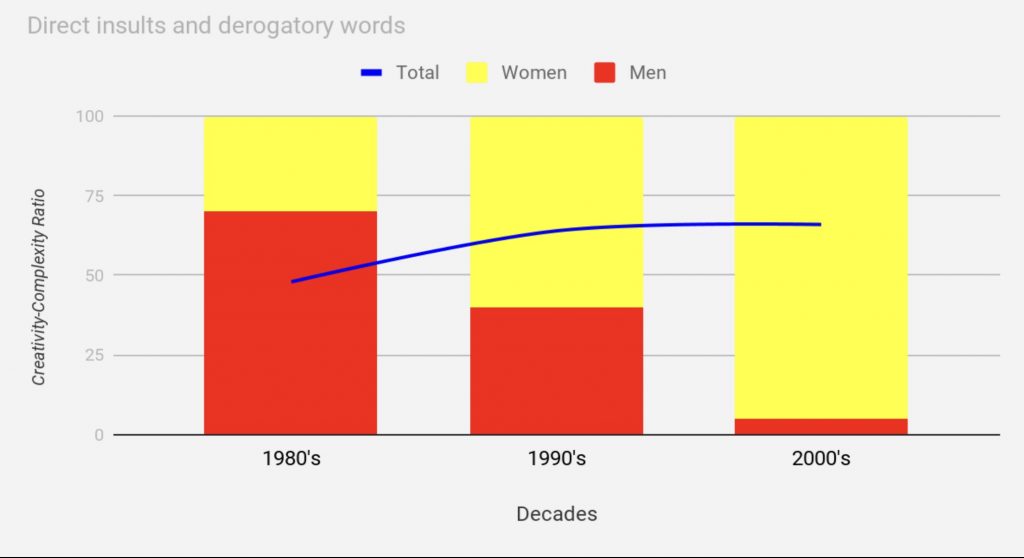
Figure 1: Direct Insults and Derogatory Words Over Time.

Our data from the 80s show us that males employed much more complex and creative insults than females at the time. Going into the 90s, the trend shifts, and the majority of our data point to women being a bit more creative and complex in their insult use than their male counterparts. Finally, in the 2000s, we see a drastic change in our results with women demonstrating much higher levels of insult creativity and complexity than men. We were off from our original predictions.  We see from our data that insults, among females, increased in complexity and creativity. Additionally, we do not see a decrease in general creativity as we moved through the decades.
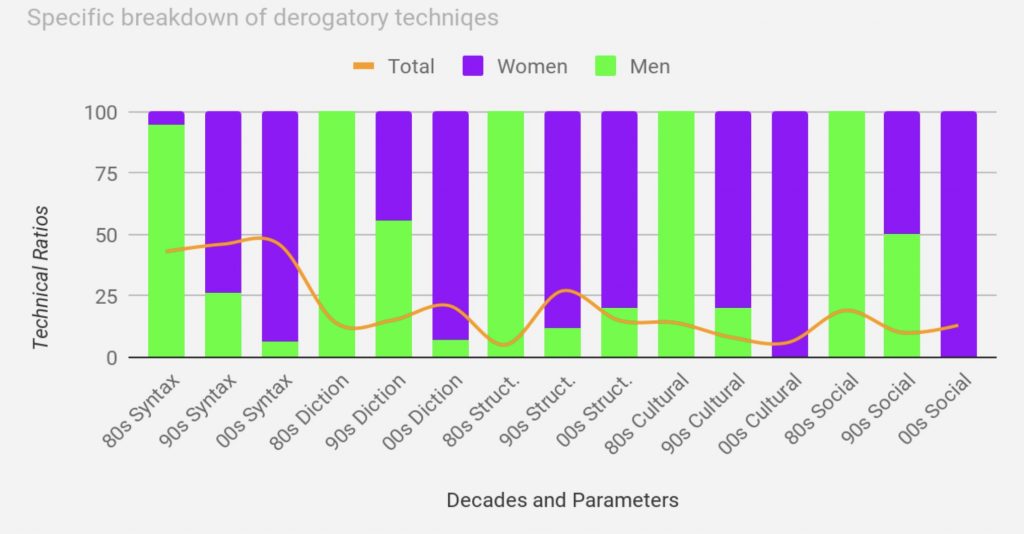
Figure 2: Breakdown of Derogatory Techniques Across Decades – Syntax, Diction, Structure, Cultural and Social References.

Discussion and conclusions: Why We Offend

First, from a pragmatic perspective, why do teenagers feel the need to beat around the bush in insults? At first glance it seems rather counterintuitive, but as we have seen, they serve important linguistic functions. For one, creative and complex insults can inflict a greater amount of damage by constructing a vehicle in which the insult can be delivered in more deceptive and cognitively disorienting way. It can also be viewed as a “flex” of intellectual superiority, or as a way to make the insult less refutable, as a retort would necessitate an equal level of craftsmanship (Goffman, 1971).

But why do we insult? What do we have to gain in insulting others? From our observations, it appears to be a practice of identity projection, of a more aggressive degree, because it is forceful definition of the self via an equally forceful definition of the other. In other words, along the same line of “who am I if not myself?,” it appears that the teenage response is merely “I am not you.” This seems to suggest that identity is only salient, or more radically, only existent, through expression and a process of negotiation and prioritization with the other. Insults serve as a way to categorize and define oneself against others (Marsden, 2009).


References

Brinkley, A., & McGraw-Hill Education (Firm). (2013). American history : Connecting with the past (Twelve edition, Updated. Updated AP ed.). New York, NY: McGraw-Hill Education.

Dijk, C. V. (2016). The Influence of Texting Language on Grammar and Executive Functions in Primary School Children. Retrieved from https://www.ncbi.nlm.nih.gov/pmc/articles/PMC4816572/

Goffman, E. (1971). Relations in public: Microstudies of the public order. New York: Basic Books.

Kalinak, K. M. (2010). Film music a very short introduction. Oxford: Oxford University Press, USA.

Marsden, E. (2009). What the Fuck? An Analysis of Swearing in Casual Conversation. Retrieved from https://www.academia.edu/3871040/What_the_Fuck_An_Analysis_of_Swearing_in_Casual_Conversation

Mooney & Evans (2015) Language and Gender. In Language, Society and Power (pp. 108-131). London: Routledge.

[/expander_maker]
, , ,

“Language 1, Language 2, and The Ol’ Switch-A-Roo” Mix & Match: Bilingual Edition

Language preferences and code-mixing among UCLA bilinguals in different social settings

Shiqi Liang, Leen Aljefri, Yingxue Du and Tianyi Shao

Here at UCLA, we have a diverse student body coming from many different backgrounds, which means we do have a sizable bilingual population on campus. Bilinguals and multilinguals often find themselves navigating through different social settings that require them to speak different languages. As bilingual speakers, switching between languages is quite common for us that it almost becomes a daily routine. However, when we really carefully think about that daily routine, there are so many questions we want to ask. Do we have a preference of one language compares to the other? Do our preferences vary? How do they vary? Do we mix languages? If so, how and why do we mix languages? Do bilinguals here at UCLA have a specific language preference when it comes to discussing fluid dynamics or gossiping about the latest juicy drama? Based on our study of 47 questionnaire responses collected from UCLA bilinguals and multilinguals, we arrive at the conclusion that among them, English is predominantly preferred in academic and professional related settings as well as social settings. At the same time, non-English languages are preferred in family settings and are present in social settings as well. We observed that code-mixing, the practice of mixing different languages together, is generally avoided, except when it is used as a tool for clarification.

[expander_maker id=”1″ more=”Read more” less=”Read less”]

Bilinguals experience potential conflicts between the two cultures behind the languages they speak. Language preference among bilinguals is related to the process of acculturation and socialization. Previous studies have identified the relationship between language preference and socialization, and literature addressing the relation can provide us with insights into the subject of interest. Song (2017) addresses the relationship between second language acquisition and socialization in “Second Language Learning as Mode-Switching” through the following idea: if social relations/context changes, then people employ a different linguistic and pragmatic mode to adapt to the new social expectation. Song adds that learning a second language requires the understanding of different speaking norms, linguistic values, and the rules of grammar. Language preference among bilinguals, therefore, can indicate the preference of one social norm to another to some extent. On the other hand, the fact that language preference among bilinguals is related to socialization is further addressed through a study conducted on infants and 9-month-old children (Valji & Poka, 2014), in which the infants show no preference for one language over the other and the 9-month-old children show preference in their native languages over the non-native language. As the social situations get more complicated when the bilinguals enter adulthood, the factors that might influence them to choose one language over the other are increasingly complicated and it is reasonable to articulate a relationship between social circumstances of a specific conversation and the language preference in that specific setting.

Observing the way multilinguals communicate with individuals in predominantly monolingual community is different than observing multilinguals in their own communities. Social and linguistic characteristics of multilinguals can be more noticeable when directly contrasted to monolinguals in the same community. As a first step to understanding what it means to be multilingual in a monolingual community, it is useful to look at a small bilingual population in such a community. The main focus of this project is to study the change in language preference according to situations and the frequency of code-mixing (practice of mixing different languages in one interaction) in bilinguals. In an effort to determine if a trend exists among the bilingual population here at UCLA when it comes to linguistic behavior, we conducted a case study and surveyed a group of 47 bilinguals at UCLA.

To better illustrate exchanges and preference in the use of language among bilinguals, here is an exchange between two English-Mandarin bilingual speakers talking about. The excerpts from this conversation is to present an example of how bilingual speakers interact with each other and how code-mixing happened during the conversation. The two bilingual speakers have conversations in their native language, and case study is to record and transcribe their conversation, and analyze the part that code mix happened. Throughout the whole conversation, code-mixing happened four times when participant B’s spoke. The four code-mixing can roughly be divided into two categories based on their cause, for clarification purposes and habit of word using.

A: 不是,我是说现在就你一个人在这个...... 空间啊?

   No, I mean right now are you just alone in that...... space?

B: 现在?Right now?

   Right now? Right now?

This is where code-mixing first happened during the conversation, and the purpose of it is to clarify the meaning of the word “现(xian)在(zai)”, which means present time. However, the meaning is not clear enough, because that word can represent different length of present time, and that can make the whole sentence a different meaning. Here, the phrase “right now” appeared as a clarification, which is similar to the purpose of the next exchange.

A:我听说过,但我不清楚是治愈(Zhi Yu)的还是致郁(Zhi Yu)的?

  I’ve heard about that, but I am not quite sure if it’s a healing story or a gloomy story.

Bhealing的那种,...... 结果两个人无意间卷进了road trip, 然后慢慢变好。

   It’s the healing type, .... The two people happened to be on a road trip, and things are getting better.

In this exchange, individual B needs to use another language to clarify her sentence since the Mandarin for “healing” and “gloomy” has the same pronunciation, “zhi yu”. In the second case she chose to say “road trip” in English mostly because she want to evoke a special cultural reference not widely available in Chinese culture.

The main methodology of this research is centered around analyzing data gathered through an online questionnaire designed to generate simple yet precise responses from participants. Before answering the survey, participants would read a text that ask them to evaluate themselves and only proceed to answer the questions if they match all the requirements of what we consider to be bilingual/multilingual. There are 10 mandatory questions and 6 additional questions if the participant speaks more than 2 languages. Participants would first self-report the languages they speak (free response) then choose scenarios in which they would prefer to speak a certain language and the reasons behind that. In order to avoid half-completed questionnaires and encourage complete responses, questions that involves picking scenarios and reasons would be in forms of multiple choice instead of free response. However, if none of the options provided are satisfying, participants are free to enter their own response through the “other” option. The questionnaire itself was distributed among the researchers’ group of bilingual friends and an incentive (free boba) was provided to further encourage participation. You can find the full questionnaire here.

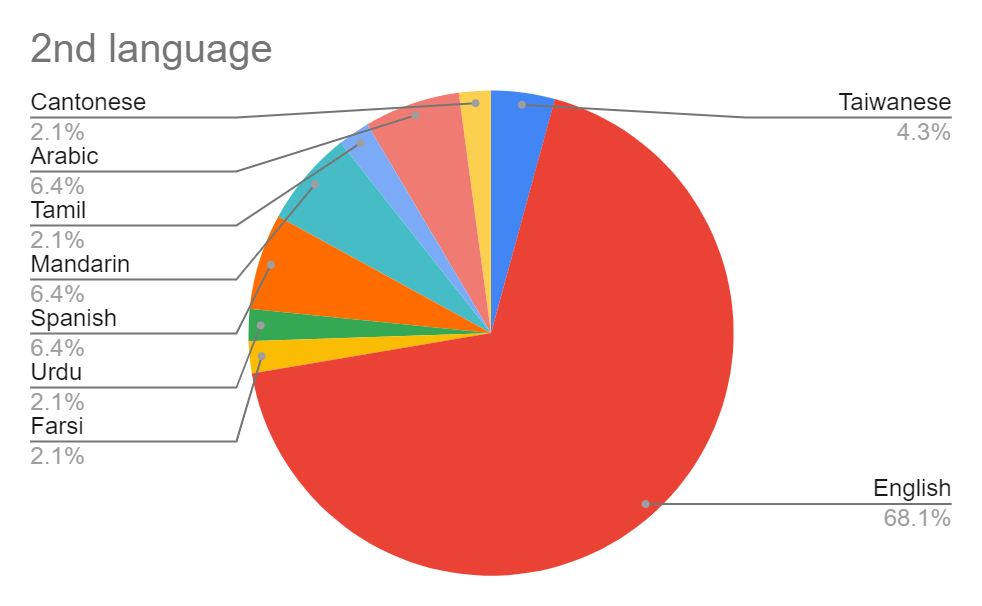
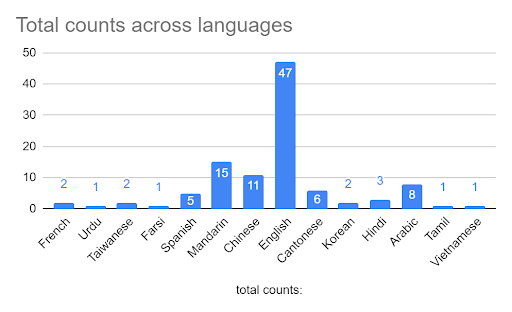
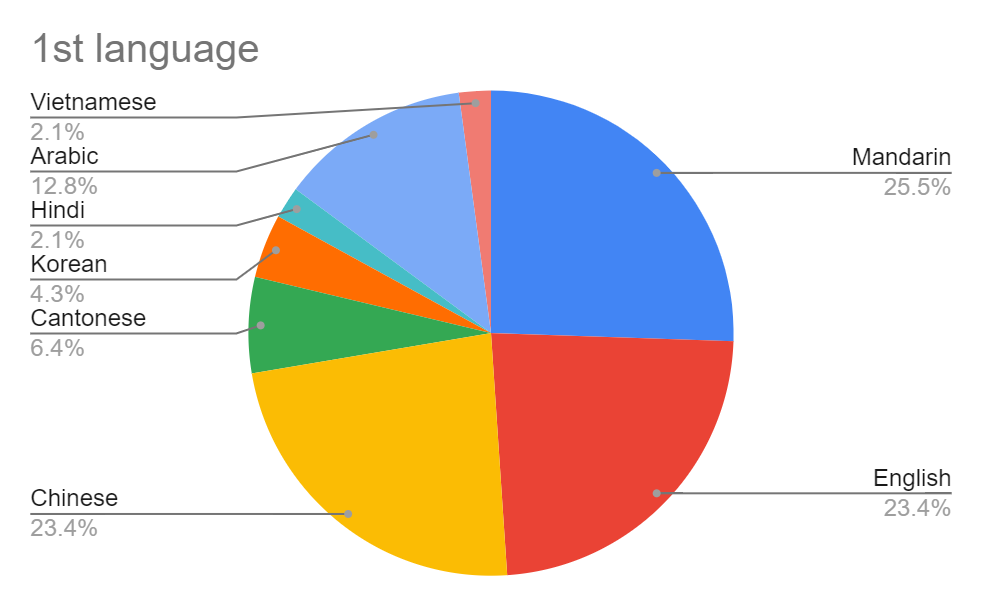
In the end 47 responses were gathered and subsequently analyzed. You can find our raw data and analysis here. Out of all those responses, all 47 of them indicated English as a language they speak, with the Chinese language family (Mandarin, Cantonese and Taiwanese) ranking the second most self-reported spoken language with 34 responses. But yet surprisingly, only 23.4% of participants consider English as their first language.

Chart 1.1 and 1.2: self-identified “first language” and “second language”
Chart 2: total counts of languages participants reported speaking
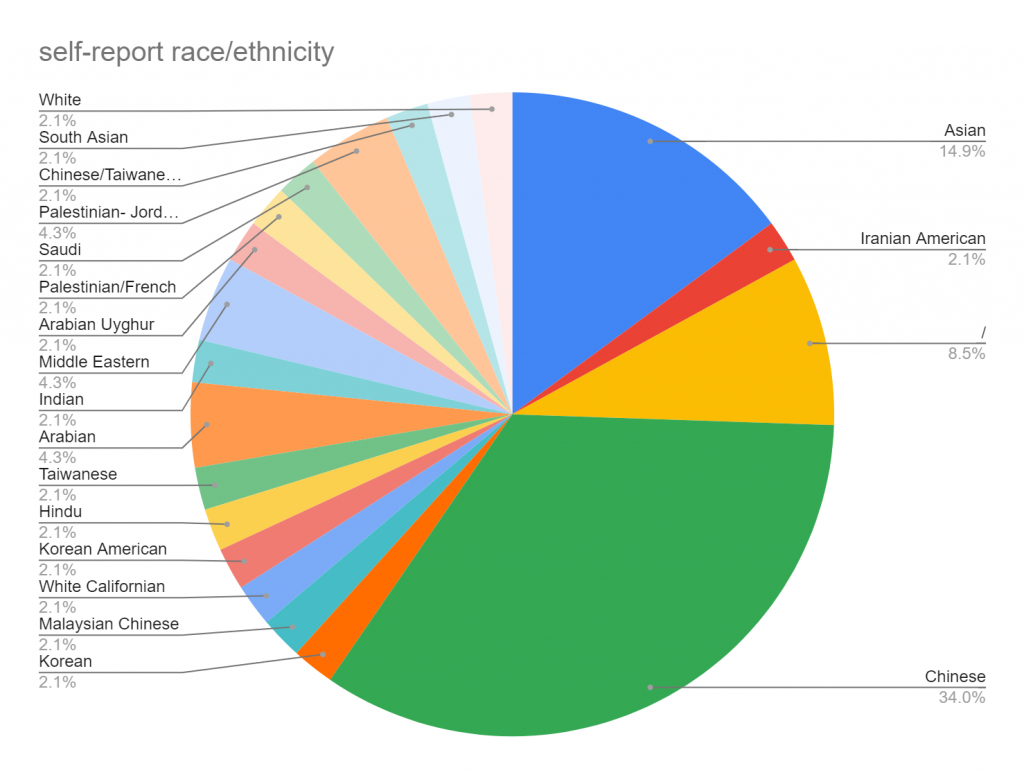
Chart 3: self-report race and ethnicity among participants. “/” means decline to answer.

Unfortunately, as the sample size is relatively small and might not be an accurate representation of the entire student population at UCLA, the sample selection might be biased and the conclusions derived from the questionnaires might not be a representation of the entire multilingual student population. English, Mandarin and Arabic were selected because they have the most speakers and thus could relatively better represent themselves.

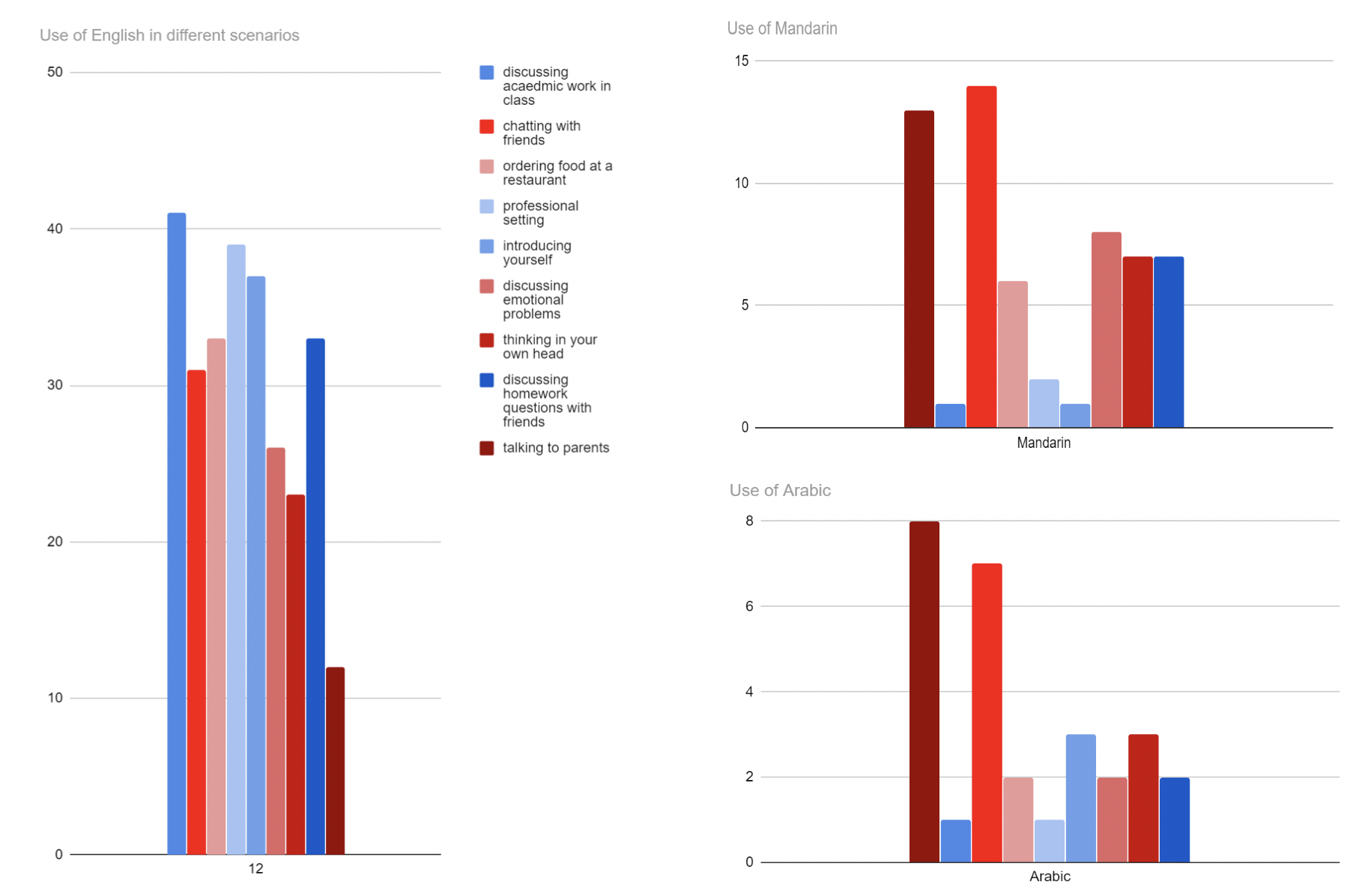
Chart 4.1, 4.2 and 4.3: language preferences in different scenarios. Red-schemed bars represent social/emotional/casual settings and blue-schemed bars represent academic/professional settings.

We could see that English is predominantly used in academic and professional setting (discussing academic work, discussing homework questions with friends, etc) and often used in social settings (talking to friends), yet less often used in family settings (talking to parents). Chinese and Arabic are less often used in academic and professional settings, but more prominent in social and family settings. This is rather predictable since UCLA is mostly a monolingual community and using a non-English language to discuss academic work is regarded as a social taboo. The prominence of non-English languages in family settings could be best explained by language preference in immigrant households in general. Children would mostly speak their parents’ native language in their own household due to new immigrants’ limited English proficiency.

Surprisingly, a lot of students also choose to discuss emotional issues in English. We predicted that since English is often associated with professional and academic settings, students might prefer a language that isn’t heavily associated with cold and rigid setting to discuss emotional issues. Our best explanation for this observed pattern is that some non-English languages, such as Mandarin and Arabic, are often associated with a more reserved culture. Thus, students may feel more comfortable speaking in English.

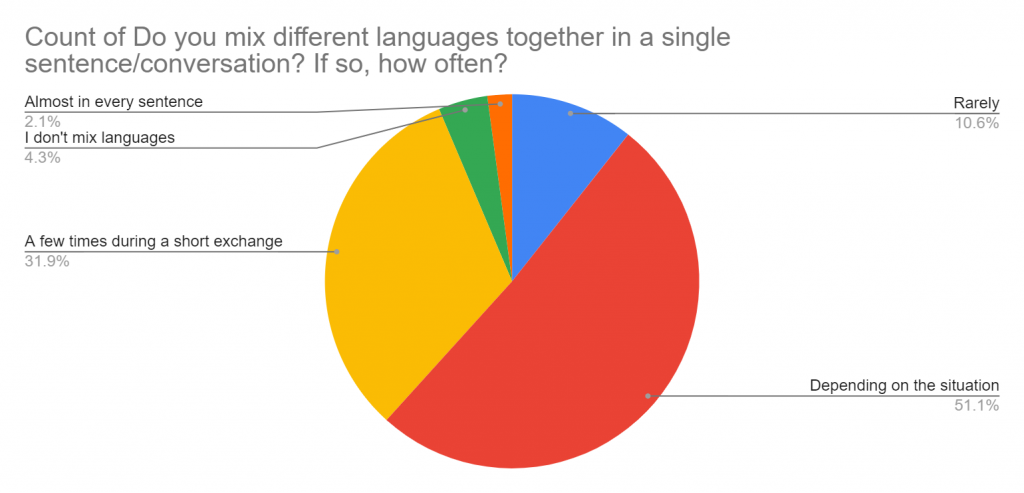
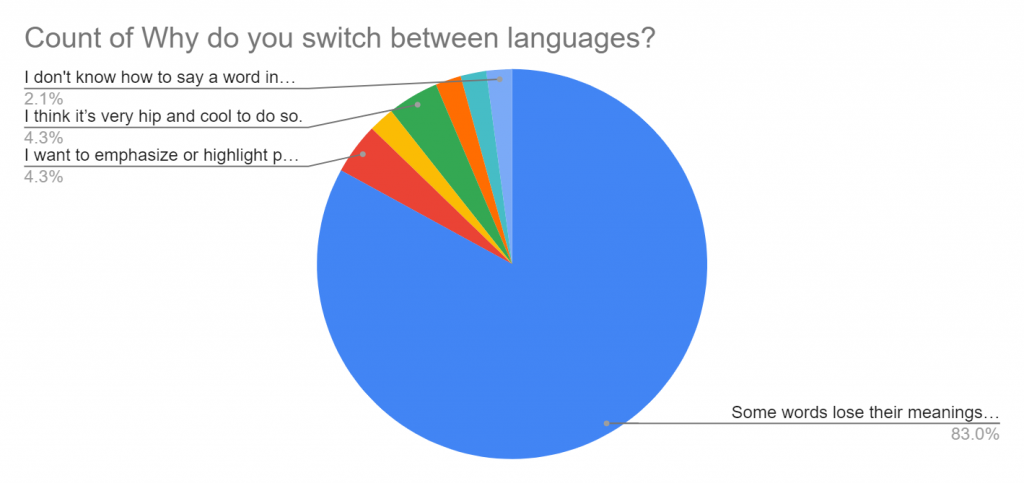
In terms of code-switching, most students answered “depends”. Only a few answered “almost in every sentence”. Data suggest that most students don’t prefer not to mix languages too often in their daily conversations. As for reasons for mixing language, almost everyone answered “in order to avoid misunderstanding or meanings lost in translation” or some variety of the same reason.

Chart 5.1 and 5.2: code-mixing among UCLA individuals. The first chart talks about the frequency of code-switching and the second one deals with reasons behind code-switching or lack of code-switching.

The complete reasons found in Chart 5.2 are listed below, from lowest to highest frequency:

    • I don’t know how to say a word in Spanish
    • I don’t know how to say a word in Chinese so I switch to English
    • I don’t know how to say a word in Chinese so I switch to English
    • I think it’s very hip and cool to do so.
    • I don’t
    • I want to highlight a part of my identity
    • Some words lose their meanings when translated to another language, so to avoid misunderstanding I would mix the language together

As predicted, the majority of the responses confirmed the hypothesis that English would be the favored language in academic settings. Conversely, the other language by majority is likely to be spoken in more personal conversations such as speaking to family and friends.

While, UCLA is home to a large multilingual community, the general language of instruction is English. In a way, the level of English knowledge is controlled by the admission requirements. Consequently, that may play a role in justifying the preference for speaking English in academic settings. It is the university’s expectation of its affiliates, and so it is upheld by the student population regardless of multilingualism within the community itself.


References:

Song, S. (2017). Second Language Learning as Mode-Switching. Second Language Acquisition as a Mode-Switching Process, 75–100. doi: 10.1057/978-1-137-52436-2_5

Valji, A., & Polka, L. (2004). Language preference in monolingual and bilingual infants. The Journal of the Acoustical Society of America, 115(5), 2505–2505. doi: 10.1121/1.4783066


About the Authors

Shiqi (Susan) is a second-year statistics major at UCLA. She enjoys studying human geography and drawing in her free time.

Leen is a first-year engineering student from Saudi Arabia.

Christie is a senior majoring in theatre and has working experience of teaching bilingual children before. She enjoys listening to music and observing sunset glow and sunrise glow.

Tianyi is a senior majoring in Mathematics/economics at UCLA. She enjoys video games, music, and photography and she loves making observations about her life.

[/expander_maker]

The Language of Good and Evil in the Disney Universe

Wendy Barenque, Maria Martignano Cassol, Kelli Sakaguchi, Sophia Siqueiros, Ellis Song

Every year Disney and Pixar release blockbuster hits watched by millions of children. Disney and Pixar characters have a huge impact on how children learn to view people in real life through the use of regional and foreign accents categorizing intrinsic “goodness” or “badness” (Lippi-Green, 2012). Recently, there has been a rising trend in the usage of “switch characters” in the Disney and Pixar cinematic universe. “Switch characters” are characters who are able to fake membership in the “good” character category and later reveal to not belong to this category. In this research, accent along with other linguistic variables such as pitch and creaky voice were tracked to determine if correlations exist between these linguistic variables and “switch characters” portrayals of “goodness” and “badness.” Does a “switch character” use a linguistic variable differently when portraying themselves as good rather than bad? For example, if linguistics changes do occur, do audiences begin to associate a certain pitch, accent, or creaky voice with “good” or “bad” categories of people? Specifically, we examined how the language aspects of “switch characters” changed between pre- and post- revelation scenes in nine Disney and Pixar films such as Frozen and Zootopia. Ultimately, we found a linguistic trend that may affect the audience’s perspective on movie characters. Keep on reading to see the effects these movies may unconsciously have on your associations of “good” and “bad” people!

[expander_maker id=”1″ more=”Read more” less=”Read less”]

In this project, we examined the correlation between linguistic features and a character’s group membership (as good or bad) in Disney and Pixar films. The specific characters we looked into are those we call “switch characters.” “Switch characters” are those that fake membership as one of the “good guys” but are later revealed as villains. The three linguistic features we felt were most important consisted of pitch, creaky voice, and accent.

Some important definitions:

Pitch: how high or low the speaker’s voice is.

Creaky Voice: also known as vocal fry, happens when the speaker drops their voice to their lowest natural register for emphasis.

Accent: pronunciation specific to an individual or location.

We predicted there would be a change in one or more of these features when a “switch character’s” true membership was revealed. For pitch, we compared range (high, medium, low) of the “switch characters” before and after their reveal to determine if there is a trend in pitch change in a certain direction. Similarly, we looked at the presence of creaky voice preceding and following the switch. In analyzing accents, we aimed to identify any kind of change the character’s pronunciation may undergo.

Our analysis studied the use of linguistic profiling (being able to identify social characteristics based on the language used by the speaker) used by movie makers to reinforce the goodness or badness of a character. We presumed speaker agency in pitch, creaky voice, and accent, through the lens of Speaker and Audience Design Models (Bell, 1984, p. 158). This means that we assumed that “switch characters” actively shift their language based on what group they identify with to distance themselves from or bring themselves closer to their audience.

We based our project on Lippi-Green’s (2012) research that revealed a correlation between accents and variations of standard English with villains. We expanded on her project by looking at additional linguistic variables in Disney and Pixar movies made after 1995 which we believe better represent modern society. The nine movies and characters we analyzed are Frozen (Prince Hans), Coco (Ernesto de La Cruz), Big Hero 6 (Professor Callaghan), Toy Story 3 (Lotso), The Incredibles 2 (Evelyn Deavor), Monsters Inc. (Mr. Waternoose), Toy Story 2 (Stinky Pete), Cars 2 (Sir Miles Axlerod), and Zootopia (Dawn Bellweather).

Methodology: A Sneak Peek into Film Analysis   

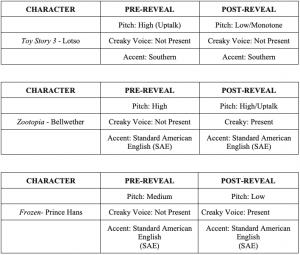
Here is an example from Toy Story 3. This example is representative of the methodology that the group utilized to accurately label all nine “switch characters” – pitch, creaky voice, and accent. For the purpose of data collection, a chart adapted from Soares (2017) was used to organize and uniformize character analysis. We repeated the process with all nine films and compiled the analysis into graphs included below.

This selected scene features an exchange between the hero Buzz and the villain Lotso. At the beginning of this scene, Buzz is unaware that Losto is a villain. We see Buzz requesting a group transfer to the Butterfly playroom. Things take a turn for the worse, however, as Lotso only agrees to let Buzz transfer playrooms. Click on the link to see what happens next!

Focusing on “pitch,” the group found uptalk in phrases such as, “showed initiative” and “we got a keeper.” Uptalk is a manner of speaking with a rising intonation at the end of sentences. The italics represent Lotso’s rising intonation. After Lotso’s villainous nature is revealed, uptalk disappears and we hear a deepening and leveling of pitch. Phrases such as, “family man” and “back in the timeout chair” exemplify this deepening and leveling. Therefore, the group labeled Lotso’s pre-reveal pitch as “high: (uptalk)” and post-reveal as “low/monotone.”

Focusing on “creaky voice,” the group didn’t find any phrases that employed a rough voice quality and a lowered pitch. Therefore, the group labeled Lotso’s pre-reveal and post-reveal “Creaky Voice” as “Not Present.”

Focusing on “accent,” the group agreed that Lotso’s phrases possessed the slurred speech patterns of a Southern American accent. Lotso’s Southern accent was exemplified in words containing “r’s” such as ”caterpillar.” Therefore, the group labeled Lotso’s pre-reveal and post-reveal accent as “Southern.”

Results

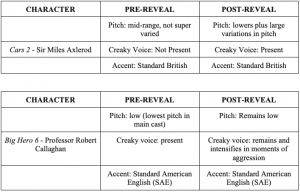
We noted that eight characters changed at least one linguistic element (pitch, creaky voice, or accent) after their reveal. Our prediction based on Lippi-Green’s analysis proved true, language aspects in the Disney universe do correlate to a character’s identity as good or bad.

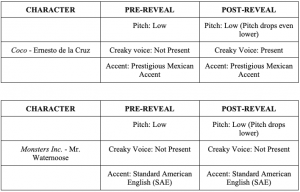
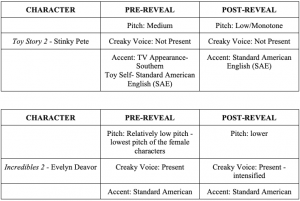
Charts 1-9. Linguistic Analysis of Disney and Pixar “Switch Characters” Comparison of pitch, creaky voice and accent pre-reveal and post-reveal.

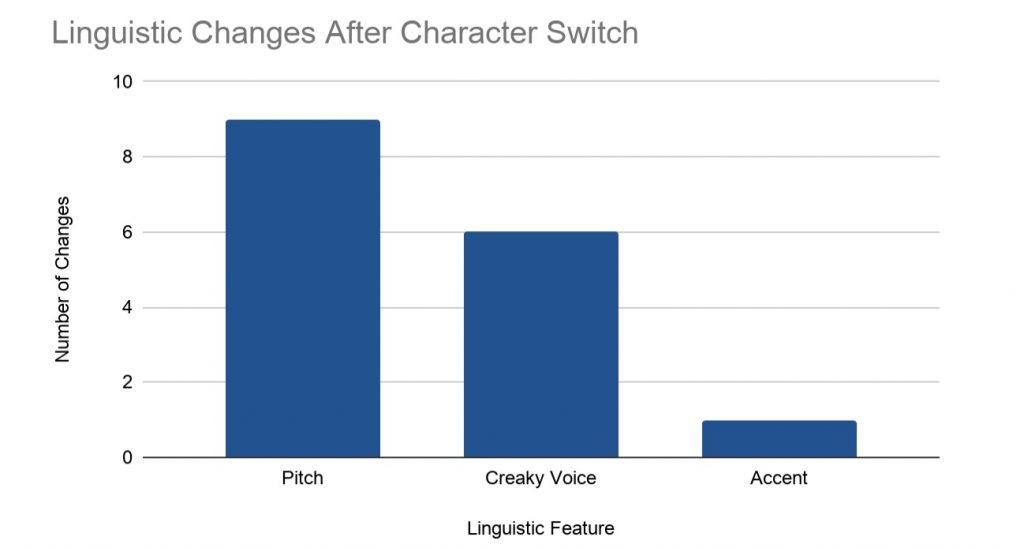
The linguistic aspect that changed most was pitch, followed by creaky voice and accent. Only one character, Stinky Pete, had an accent change, settling completely into Standard American English (SAE) after the reveal as opposed to switching between Southern American and SAE. Considering that Stinky Pete employed SAE before revealing himself as a villain, we decided to view accent as not indexing goodness or badness in his character. This diverges from our initial prediction, since Lippi-Green’s study demonstrated a strong relationship between accent and intrinsic goodness and badness.

Fig 1. Linguistic Changes After Character Switch. Amount of characters that presented change in a certain linguistic after their reveal as villains.

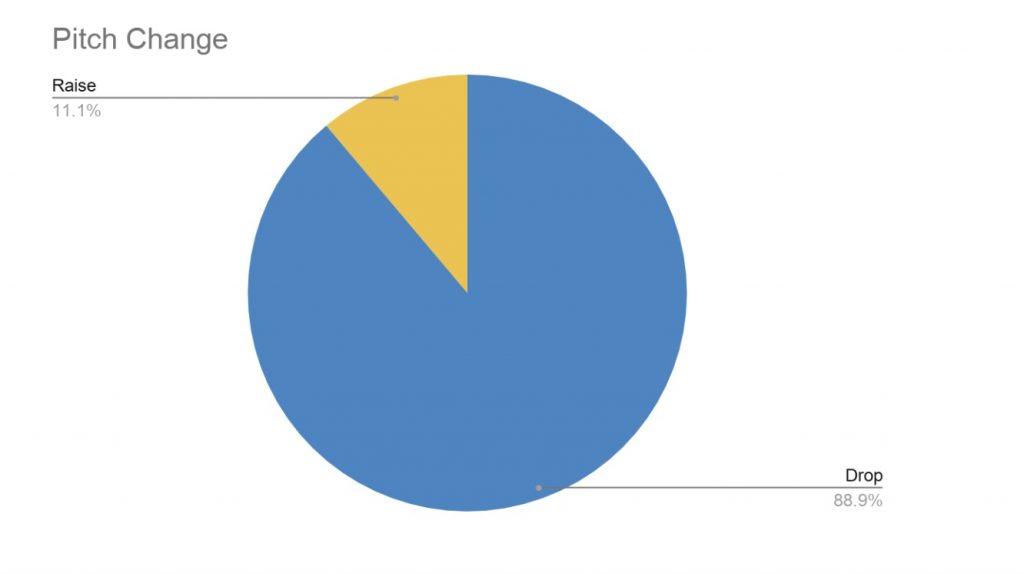
After determining which aspects changed after the reveal (pitch and creaky voice) we analyzed exactly how these aspects changed. For eight of the nine characters, there was a drop in pitch, and only one character had a rise in pitch. It is also worth noting that some of the characters’s pitch dropped when they produced especially aggressive statements or when they mocked their villainous persona. From our data, we conclude that a strong correlation exists between lower pitch and evil personas.

Fig 2. Pitch Change. Percentage of “switch characters” that presented either a rise or drop in pitch.

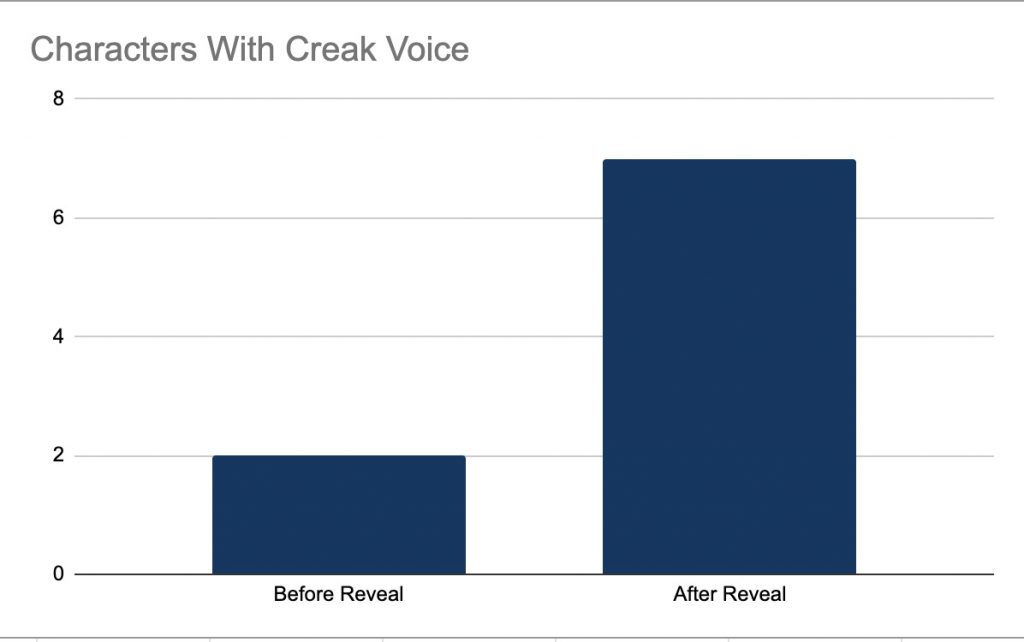
The other linguistic aspect we noticed a change in was creaky voice. Six characters used creaky voice after their reveal. Of the characters that initially presented creaky voice all maintained creaky voice after reveal. One thing to note is that creaky voice is closely related to pitch, therefore a drop in pitch normally meant the addition of creaky voice.

Fig 3. Characters With Creaky Voice. The number of characters that presented creaky voice before their reveal and number of characters that presented creaky voice after their reveal.

Overall, our data supports the hypothesis that certain linguistic aspects correlate with group membership (as good or bad). However, this change seems to be mostly related to pitch and not accents as studied by Lippi-Green (2012). Drop in pitch seems to be the universal linguistic aspect in Disney and Pixar’s universe that signifies a villainous persona and a higher pitch seems to signify and contribute to blending in with good characters.

Discussion

We know that Disney and Pixar movies have helped to socialize children into stereotyping and othering, based on accents in the research done by Lippi-Green (2012) and others. But do “switch characters” also contribute to this categorization in children? Through this study, we conclude that pitch, as well as the presence of creaky voice, are heavily correlated to an evil persona. So do children begin to associate these features with villains after seeing such movies?

Children tend to relate a higher pitch to brightness (Marks, Hammeal, Bornstein, 1987). This association creates a positive attitude towards a higher pitch, as shown by Banaji and Greenwald in “Into the Blindspot.” Therefore a lower pitch may imply a more negative attitude towards the person speaking. This could imply that children are wary of those with lower pitches in their speech and so, when the “switch characters” do this, it only reinforces this association.

There aren’t enough studies on children’s perception of creaky voice to conclude its influence on them. But if lower pitch implies a negative attitude, then the lowest register (creaky voice) will most likely imply one as well.

As a result, we can theorize that children notice and are affected by the changes in pitch and the use of creaky voice. However, our conclusions on the effect of the movies on the audience can only be hypothetical, as our data does not include audience responses.

Conclusion

In our study we analyzed how certain linguistic features (pitch, creaky voice, and accent) changed when a character switched from good to bad. The purpose of our study was to find linguistic trends in these characters.

Our data showed that most “switch characters” dropped pitch and added creaky voice when they revealed to be evil, while their accent remained constant. Looking at Marks, Hammeal and Bornstein (1987), we found that children are likely to view a higher pitch positively and theorized that Disney and Pixar movies might contribute to this phenomenon, or, at the very least, rely on it for indicating a character’s identity as good or bad.

However, we can’t make definite conclusions because our small sample size and lack of data of the audience’s response. So, we can only theorize what kind of impact these “switch characters” have on their audience and what linguistic trends are present in the Disney universe. But linguistic trends in Disney characters remains an important topic to be researched, because of the continued promotion of the dominant ideology presented in Disney and Pixar movies, especially considering the size of their audience.


References

Banaji, M., & Greenwald, A. (2013). Blindspot: Hidden biases of good people. New York: Delacorte Press.

Bell, A. (1984). Language Style as Audience Design. Language in Society, 13 ( 2), 145-204. Retrieved from https://www.jstor.org/stable/4167516?seq=10#metadata_info_tab_contents

Girard, F., Floccia, C., & Goslin, J. (2008). Perception and awareness of accents in young  children. British Journal of Developmental Psychology, 26(3), 409-433.

Lippi-Green, R. (2012). Teaching Children how to discriminate: What we learn from the Big Bad Wolf. English with an Accent: Language, Ideology and Discrimination in the United States, 7, 101-129.

Marks, L. E., Hammeal, R. J., & Bornstein, M. H. (1987). Perceiving Similarity and Comprehending Metaphor. Monographs of the Society for Research in Child Development, 52(1),1-92.

Soares, Telma O. (2017). Animated Films and Linguistic Stereotypes: A Critical Discourse Analysis of Accent Use in Disney Animated Films. Bridgewater State University Master Theses and Projects. 53, 1-53.

[/expander_maker]


, , , ,

Modifier Use Between Male and Female Bosses in Movies and Television Shows

Grace Gibbons, Maya Kardouh, Orla Lynagh-Shannon, Diya Razdan

Does one’s gender affect the language features that he or she uses? Previous studies, specifically by Robin Lakoff, a prominent linguist, have shown that women’s language differs from men’s in that women are expected to “talk like a lady” and consequently use more hedges, intensifiers, tag questions, and adverbs in their language (Lakoff, 1975). Lakoff argued that this difference in language features reflects uncertainty, less assertiveness, and unequal power in women as compared to men. Another study done by Hanafiyeh and Afghari refuted such argument where the hypothesis was rejected in their data (Afghari and Hanafiyeh, 2014).

Such contradiction motivated us to conduct our own study by investigating the same question, however, the setting would be specific, workplace settings, and the language scripted. We did that by selecting male and female boss characters from 2000s movies and TV shows. We compared if there is a difference between the number of modifiers used by male vs. female characters.

Although the language used by the characters is scripted, it still reflects how the two genders are intended to be viewed and the reality that they are intended to mimic. The specific language feature we investigated was modifiers per adjective, which can be divided into qualifiers and intensifiers. Our selected movies were The Proposal, Horrible Bosses, The Devil and Wears Prada, and TV shows were The Office and Parks and Recreation.

[expander_maker id=”1″ more=”Read more” less=”Read less”]

Modifiers consist of qualifiers, which are words or phrases that precede an adjective or an adverb to weaken or minimize it, as well as intensifiers, which are words or phrases that emphasize and strengthen adjectives and adverbs. In order to see if the use of modifiers is related to gender in the workplace, we compared the number of times qualifiers and intensifiers are used by female boss characters vs. male boss characters when speaking to an employee in an office setting. Our hypothesis was that there is a significant difference between the number of times that modifiers are used between female and male boss characters since the heightened use of modifiers is already linguistically associated with females. Not only is the use of modifiers associated with females, but it is also associated with passiveness. Inversely, the decreased use of modifier words is an indicator of assertiveness, which is tied to males. When we investigated how the media portrays assertiveness in males versus females in positions of power, we expected to see these associations to be reflected in the scripts, in which women are portrayed as less assertive even when it is logical for them to be so in their character’s position.

We chose to study this particular topic because gender inequity, now more than ever, is an increasingly relevant topic. In the context of the workplace, boss and subordinate roles add an extra layer of power interplay that affects the identities males and females adopt. For example, most organizations have males occupying senior level positions. Furthermore, women tend to avoid assertiveness and positions of visibility in order to “avoid conflict” (Sing, Magliozzi, Ballakrishnen, 2018). Across the board, women in the workplace therefore tend to find themselves in positions of submissiveness and passivity. We predicted that this would transfer over to language use by way of use of modifiers, which are typically seen as less assertive. With this in mind, our target population was aimed at men and women in positions of authority, as they are portrayed in film and television.

Linguistically, we focused on qualifiers and intensifiers and what their usage indicates about the speaker. A modifier’s function is to increase or decrease the quality signified by the word it modifies. Furthermore, we used Lakoff’s description of women’s language as hyper-polite and non-assertive as opposed to men’s language being more assertive as a base for our expectations of the two genders’ language in workplace environments. We set out with the belief that females are more inclined to use both qualifiers and intensifiers, which are seen as more passive than assertive. In contrast, we expected more of the men in film and television to use fewer qualifiers and intensifiers to come off more assertive and direct.

We selected scenes from movies and TV shows made in the 2000s that involve interactions between a female boss character with her employee(s) or a male boss character with his employee(s). The sample number was three female and three male boss characters. We analyzed enough scenes to count 20 adjectives and adverbs per character. Then, we counted intensifiers and qualifiers used per adjective/adverbs.

We defined modifier words as intensifiers and qualifiers, specifically, we adopted the Towson University definition “qualifiers are function parts of speech. They do not add inflectional morphemes, and they do not have synonyms. Their sole purpose is to “qualify” or “intensify” an adjective or an adverb.” Qualifiers include words as “kind of”, “barely”, “possibly”, “probably”, “sort of”, “slightly”, and “somewhat.” Intensifiers include words such as “rather”, “absolutely”, “totally”, “really”, “utterly”, “completely”, “very”, “quite”, and “extremely.”

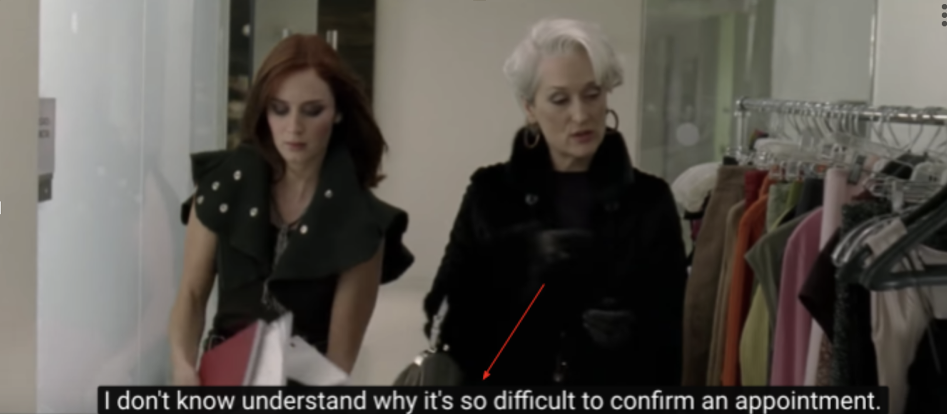
Figure 1a: In this scene of The Devil Wears Prada, Meryl Streep uses the intensifier “so” to modify the “difficult” adjective and emphasize it.
Figure 1b: In this scene of The Office, Steve Carell uses the qualifier “a little bit” to modify the adjective “rough” and lessen its severity.

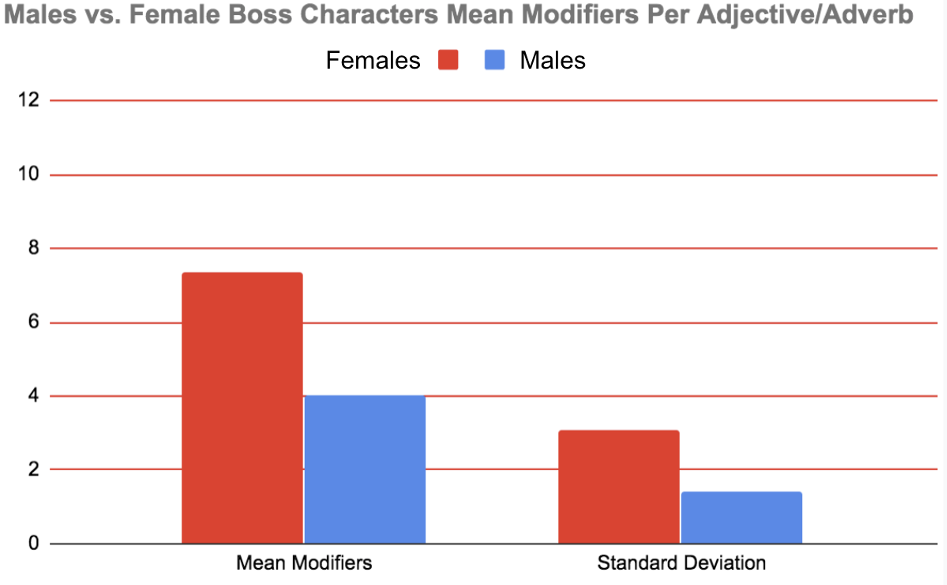
Adding the numbers of qualifiers and intensifiers and dividing them by 20 adjectives/adverbs, we found the numbers of total modifiers per adjective/adverb used. Calculating the average and standard deviations for the total modifiers per adjective/adverb for the male and female groups, we used the statistical significance test to evaluate if there indeed is a significant difference in this language feature between males and females as proposed by Lakoff.

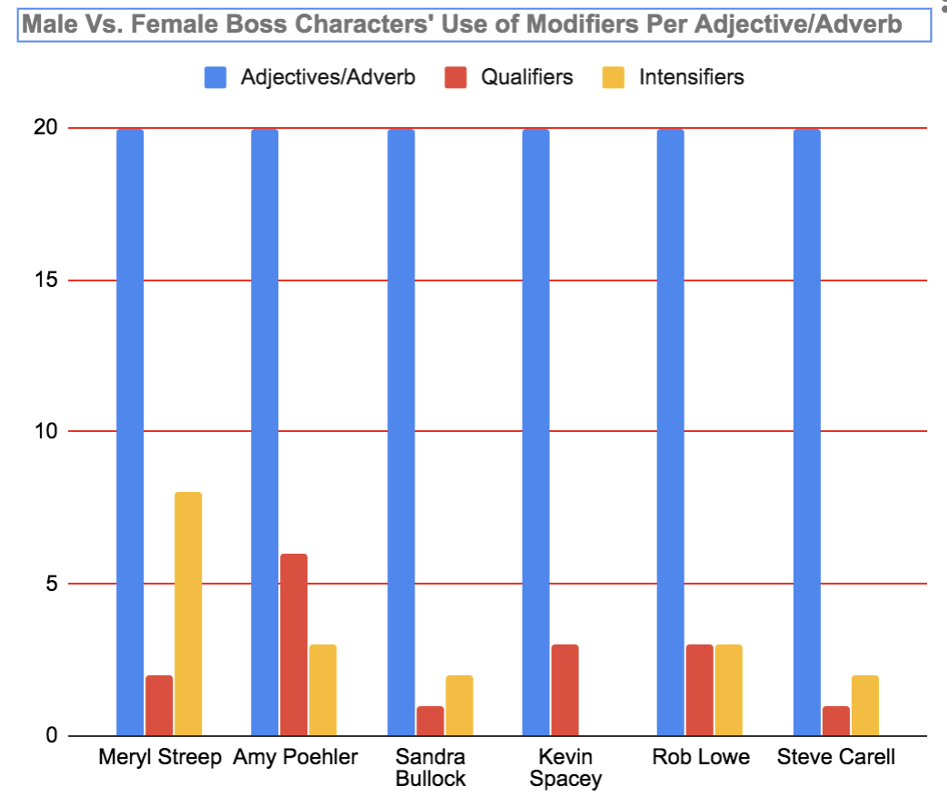
We observed a greater average of modifiers per adjective/adverb in the female boss characters group as compared to the male boss characters group. The female group also had greater standard deviations well. All women tended to use both qualifiers and intensifiers. Specific characters such as Meryl Streep in The Devil Wears Prada used more intensifiers than qualifiers, conversely Kevin Spacey in Horrible Bosses used very few qualifiers and no intensifiers at all. No trend was seen in qualifiers or intensifiers use alone. Although females on average used more modifiers than males, the difference was not significant according to the statistical significance test.

Figure 2a: A variation in the use of intensifier and qualifiers is seen among both men of the same group and women in the same group. In other words, no trend is seen. Note that Meryl Streep in The Devil Wears Prada used the highest number of intensifiers per adjective/adverb, while Kevin Spacey in Horrible Bosses did not use any intensifiers at all.
Figure 2b: Although female bosses showed a higher number of modifiers per adjective/adverb, according to the statistical significance test, there was not a significant difference between males’ and females’ use of modifiers per adjective/adverb.

Analyzing our data, we found that there was no statistical significance in the number of modifiers used by females in comparison to male characters. Though there was a slight tendency for female boss characters to use more modifiers on average, there was not enough of a difference for the results to be deemed significant. This being said, some choices in the way we conducted our study may have impacted these results –  as such, our results do not necessarily reflect how male and female language use differs in real life. For one thing, most of the shows we analyzed were comedies. The fabricated nature and humorous intent behind many of the scenes we observed may have led them to be less authentic representations of genuine language use.

Furthermore, the number and types of scenes we looked at may also have skewed the data — using a larger sample size may have reduced the effect of outliers and randomizing the scenes we chose may have produced more accurate results. Therefore, while our experiment in particular did not show any statistically significant difference in modifier use, it is possible that different contexts or circumstances may yield more stratified results.

While we see that our hypothesis was not supported, there are multiple possible explanations for the observed results. We originally believed that stereotypes of the sexes would persist in these portrayals of male and female bosses, but the difference in the amount of modifiers used between the sexes was not nearly significant enough to support this idea. We now realize that since holding positions of power is already associated with masculinity, this could potentially explain why the female bosses overall were very similar to the male bosses in their use of modifiers. Because the language of both the observed male and female characters follow similar speaking patterns, this could explain how these women fit the “boss” role as men started working before women and their language became associated with the work positions they occupied. We believe that this conclusion is very important, since it shows how in this data sample females who achieve positions of power generally take on linguistic styles more related to males, which further perpetuates the idea that men are more fit for positions of power.

As we previously mentioned, gender inequity is an increasingly relevant topic. And because all of us behind this study identify as women, we hope ourselves to not be victims of gender inequity in our own careers. Thankfully, studies like these will continue to investigate, highlight, and hopefully change this inequity in all aspects of life, not just in the workplace.

For further information on the comparison of men and women’s speech patterns in the workplace, we recommend listening to “Deborah Tannen on Talking from 9 to 5 – The John Adams Institute.” This talk was given by the linguistics professor at Georgetown University who specializes in the role of speakers’ gender in language. Tannen sheds light on how women and men in the workplace differ in how they ask for information, delegate, and make decisions.

References:

Ballakrishnen, S., Fielding-Singh, P., & Magliozzi, D. (2019). Intentional Invisibility: Professional Women and the Navigation of Workplace Constraints. Sociological Perspectives, 62(1), 23–41. https://doi.org/10.1177/0731121418782185

Crosby, F., & Nyquist, L. (1977). The female register: An empirical study of Lakoff’s hypotheses. Language in Society, 6(3), 313-322. doi:10.1017/S0047404500005030

Deborah Tannen on Talking from 9 to 5—The John Adams Institute. (1995). Retrieved from https://www.youtube.com/watch?v=UCMmTmD-OJI

Fahy, P.J. (2002). Use of Linguistic Qualifiers and Intensifiers in a Computer Conference. Hanafiyeh, M., & Afghari, A. (2014). GENDER DIFFERENCES IN THE USE OF HEDGES,TAG QUESTIONS, INTENSIFIERS, EMPTY ADJECTIVES, AND ADVERBS: A COMPARATIVE STUDY IN THE SPEECH OF MEN AND WOMEN.

Lakoff, R. (1973). Language and Woman’s Place. Language in Society, 2(1), 45-80. Retrieved from www.jstor.org/stable/4166707

Park, G., Yaden, D. B., Schwartz, H. A., Kern, M. L., Eichstaedt, J. C., Kosinski, M., Seligman, M. E. (2016). Women are Warmer but No Less Assertive than Men: Gender and Language on Facebook. PloS one, 11(5), e0155885. doi:10.1371/journal.pone.0155885

QUALIFIERS / INTENSIFIERS – words like very, too, so, quite, rather. (2019). Retrieved November 13, 2019, from Towson.edu website: https://webapps.towson.edu/ows/qualifiers.htm

Why Women Stay Out of the Spotlight at Work. (2018, August 28). Retrieved November 13, 2019, from Harvard Business Review website: https://hbr.org/2018/08/sgc-8-28-why-women-stay-out-of-the-spotlight-at-work

[/expander_maker]


About the authors

Dr. Daria Bahtina is a Continuing Lecturer in the Department of Linguistics at UCLA. Her research interests include sociolinguistics, multilingualism, language and identity, perception and expression of social categories, meta-communicative strategies, common ground, experimental linguistics, and research design.

Most blog posts are the product of collaborative work by the undergraduate students at UCLA, many of them majoring in disciplines other than linguistics. This blog is a platform to share their hands-on experience of studying sociolinguistic phenomena in vivo. 

For questions, contact us at languagedlifeuclaATgmailDOTcom

Welcome to Languaged Life!

Why do we speak the way we do? How do we use language to project our identity or to perceive the identity of others? Which linguistic resources do we draw on to mark and defend social group boundaries, or negotiate or question them? What is the range of social actions that we can accomplish through language in our daily interactions?

Languaged Life seeks to answer these and other questions at the intersection of language and society, putting language center stage.

This blog is intended as a repository of student research projects completed as part of UCLA Linguistics classes “Introduction to Sociolinguistics”, “Bilingualism”, “Language and Gender”, and some others taught by Dr. Daria Bahtina. These projects are a product of students’ ten-week journey through different approaches, methods, and forms of evidence found in the study of language and society. Key topics range from gender to power dynamics, from individual multilingualism to language ideologies in the media, from the micro-analysis of ordinary interactions to the performative nature of social identity. A common thread running through these explorations is the aim to identify social processes that shape and are shaped by distinctive ways of using language.

Scroll to Top