Media

Real Talk: Colloquialism in TV Dialogue vs. Natural Conversations

Namrata Deepak, Renee Rubanowitz, Kylie Shults, Alik Shehadeh, George Faville

Iconic TV catchphrases like “Yada-yada-yada,” “D’oh,” That’s what she said,” and “Bazinga!” have been seamlessly integrated into our everyday conversations. Such a phenomenon prompts amusing discussions and questions surrounding the relationship between real-world conversation and on-screen dialogue. While some aspects of on-screen language, like exaggerated accents or absurd dialogue, are accepted as fictional, others are more representative of natural everyday speech. This study delves into the linguistic choices made by sitcom writers to make fictitious situations more comedic and relatable, contrasting our findings with real-world conversations that lack such agendas. In examining the intentional use of linguistic choices by screenwriters to enhance comedic effects in television sitcoms, we hypothesize that scripted language possesses observably fewer contractions, first-person pronouns, second-person pronouns, present tense verbs, more prepositions, and increased word length when compared directly to natural conversation.

Expanding on Biber’s Theory of Multidimensional Analysis (1992) and Quaglio’s analysis of Friends (2009), our research deconstructs and compares the dialogues from The Office (U.S.), Modern Family, and Community with comparable, real-world conversational data obtained from the Santa Barbara Corpus of Spoken American English (Du Bois, 2000-2005). Using Biber’s Factor 1 as a measuring tool that focuses on colloquial language, we selected specific linguistic features to measure their frequency in sitcom clips versus comparable real-life conversations to obtain evidence to explore our hypothesis further.

While our findings generally align with existing evidence for our identified linguistic features, the extent of differences between scripted and natural language could have been more pronounced. Consequently, further research may also be warranted, as our hypothesis was disproved for word length and prepositions, indicating a more remarkable similarity between TV dialogue and natural conversation than expected. Nevertheless, our study contributes to ongoing discourse on the relationship between on- and off-screen language, offering valuable insights into the linguistic choices that shape perceptions of comedic situations and beloved characters.

[expander_maker id=”1″ more=”Read more” less=”Read less”]

Introduction and Background

Situational comedies, or sitcoms, tend to put relatable yet exaggerated characters in outlandish situations to prompt entertainment and humor in audiences (Simply Sitcoms; The situations that precede the comedy). Think about shows like Modern Family, where miscommunications are key to every episode, or The Office (U.S.), where the seemingly ordinary workplace is exaggerated by eccentric characters like Michael Scott. As sitcoms become more intertwined with American popular culture, a fascinating question arises: Do they accurately capture the subtleties of natural conversation?

Further inquiry into scripted banter reveals a core sociolinguistic component – screenwriters make deliberate choices about language that have implications for language learning, language evolution, and more. This study aims to analyze the linguistic differences between dialogue in U.S. sitcoms and natural conversations, focusing on specific linguistic choices that signal colloquialism.

Guided by the question – “To what extent does scripted language represent actual language in depictions of humor?” – our team hypothesizes that the screenwriters for Modern Family, The Office, and Community intentionally use linguistic choices and manipulation to augment comedic effects, resulting in dialogue dissimilar from natural conversation. Specifically, we predict that scripted language has fewer contractions, first-person pronouns, second-person pronouns, more prepositions, and shorter word lengths.

Our target population consists of the participants in the selected conversations: the characters in Modern Family, The Office, and Community, as well as the actual family members, coworkers, and friends in the recordings we used. Together, these participants form a sample of sitcom characters and a sample of the general American population, which we will contrast to test our hypothesis.

To further analyze and gather more resources to support our investigation, we turned to previous case studies exploring scripted language’s limitations compared to organic speech, including a study on the sitcom Friends (Quaglio, 2009). Additionally, we referenced Bednarek’s study on Gilmore Girls (2011), which analyzes how a show’s dialogue contributes to creating a specific kind of dialogue unique to itself and defining the genre it is a part of. Though we are expanding on past theories, we acknowledge the need for extended research on more contemporary and diverse sitcoms for the most comprehensive overview of these rich hypotheses.

Methods

Our research question led to three critical questions when designing our study: what data are we using, what linguistic features are we focusing on, and how will we collect data?

What data are we using?

For data, we chose to look at situational comedies since they tend to mirror (and potentially exaggerate) everyday situations. We transcribed 2-3 minute conversations from the first and last seasons of Modern Family, The Office, and Community, constituting our scripted dialogue corpus. We then found contextually similar real-life conversations to each show (between family members, coworkers, and friends, respectively) from the Santa Barbara Corpus of Spoken American English and chose three 2-minute segments from each one to transcribe.
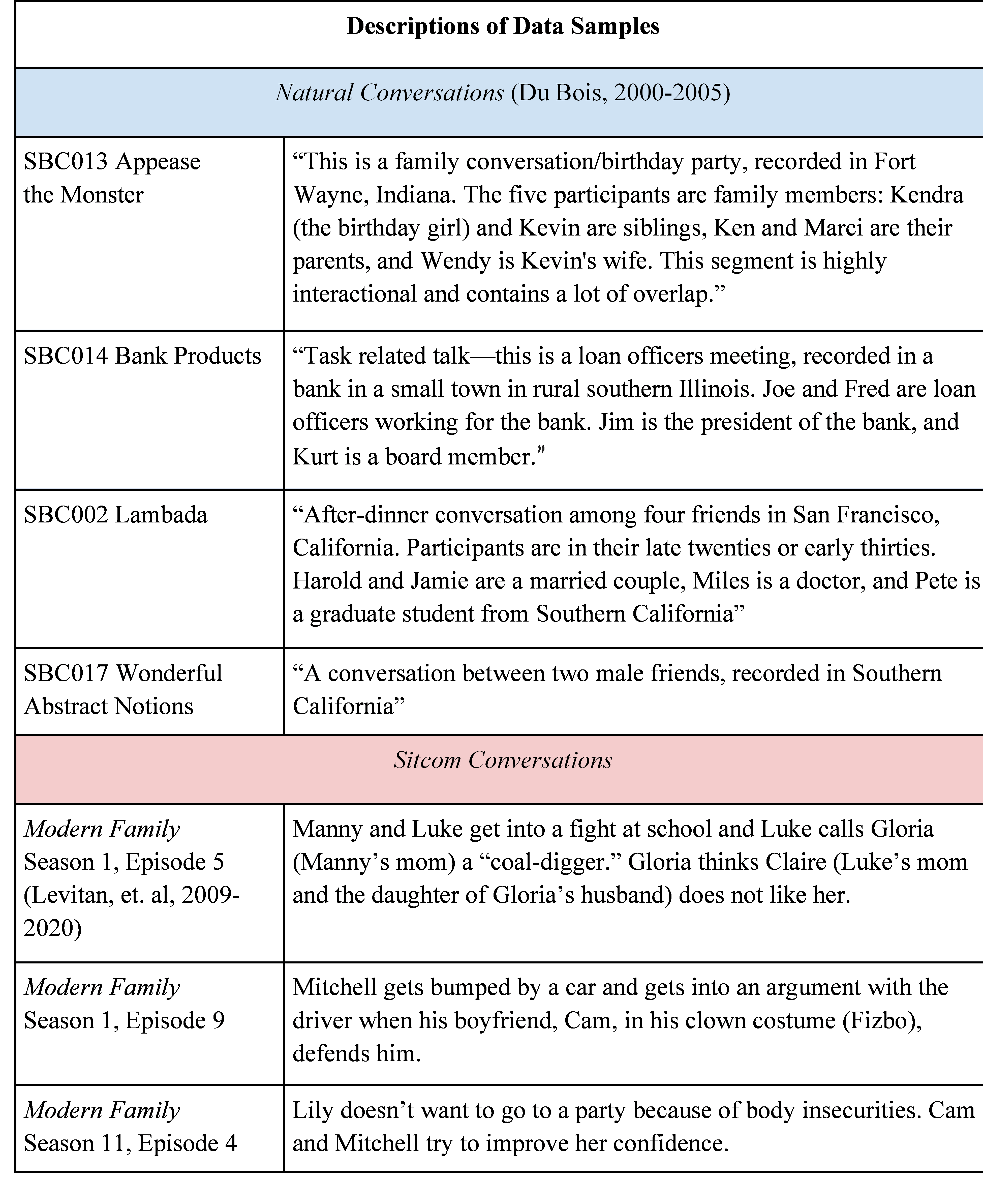

Figure 1. Descriptions of the data samples used.

What linguistic features are we focusing on?

When selecting our linguistic features, we used Factor 1 of Biber’s Multidimensional Analysis as a starting point since it was theorized to show the most significant difference between humor and natural conversation (Eberhardt, 1988). We believe a crucial reason for this difference is because of colloquialism, which is what Factor 1 measures – in real life, we are likely to be more colloquial and use less intentional language, unlike TV, where dialogue is meant to produce entertainment. We focused on contractions, first-person pronouns, second-person pronouns, present tense verbs, prepositions, and word length.

How did we collect the data?

For contractions, first-person pronouns, second-person pronouns, and prepositions, we used a software called AntConc to measure the frequency of each variable within each conversation (see the figure below for the specific terms we used). We counted present tense verbs manually. For word length, we took the total number of characters within the dialogue and divided it by the number of words to produce an average character length for each word.
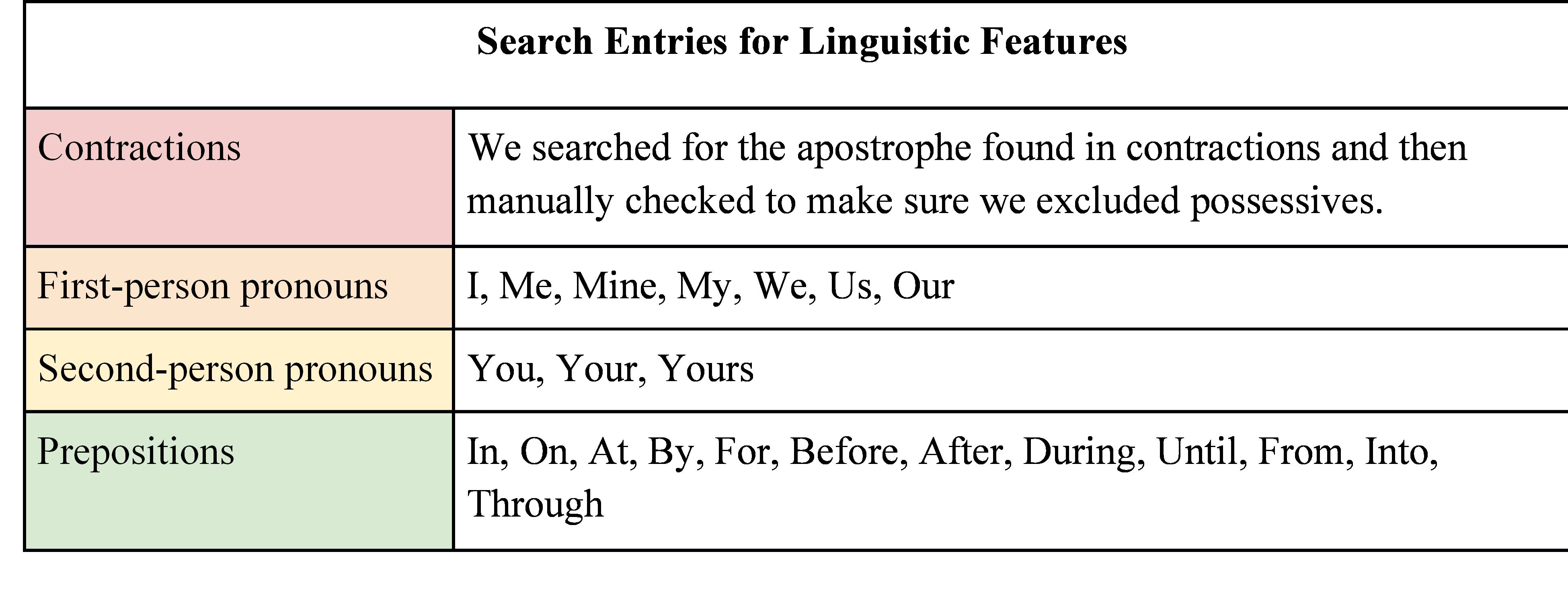
Figure 2. Search entries used in AntConc.

Results and Analysis

After we collected our data, we mapped it visually, with “Words Per Minute” as the y-axis and “Linguistic Features Analyzed” as the x-axis, including columns for each scenario. When analyzing and interpreting the data, we focused on the most significant disparities between linguistic features in the sitcoms and the in-person interactions. We also calculated the average number of differences across all linguistic features compared to natural conversations.

Modern Family

Below are excerpts and transcripts from a Modern Family (Levitan, et. al, 2009-2020) episode and the “Appease the Monster” family conversation from the Santa Barbara Corpus of Spoken American English (Du Bois, 2000-2005). The most apparent difference between the two sources is the degree of interruption – the natural conversation shows much more overlap. At the same time, the sitcom mostly has one line occurring at a time. This variation can mainly be attributed to the practical demands of filming a TV show, so we focused on more specific word choices to see if the actual language (rather than its delivery) also differs.

We assessed 1:45-2:30 of the Modern Family clip below:

Figure 3. Transcript of Modern Family ”Coal-Digger” conversation.

We assessed 0:00-1:00 of the “Appease the Monster” conversation here: Audio Recording of the “Appease the Monster” Conversation (0:00-1:00)

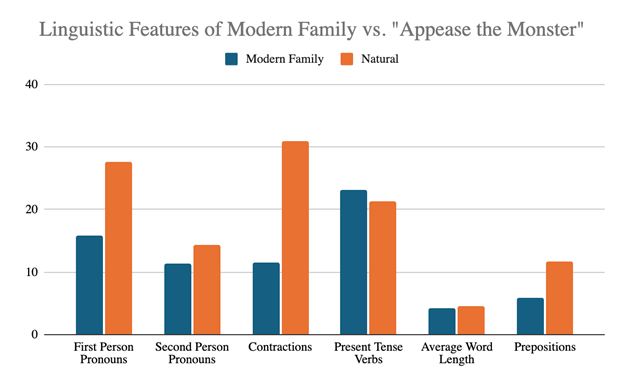
Figure 4. Transcript of the “Appease the Monster” conversation.
Figure 5. Linguistic comparison of Modern Family clip vs. “Appease the Monster” conversation.

After measuring our selected linguistic features within the Modern Family and “Appease the Monster” conversations, we can see in Figure 5, illustrating linguistic features on the x-axis and frequency on the y-axis, that natural conversations have more first-person pronouns, second-person pronouns, and contractions – all supporting our hypothesis. However, the remaining categories – present tense verbs, average word length, and prepositions – all display a relationship that is inverse to the predictions of our hypothesis.

The Office
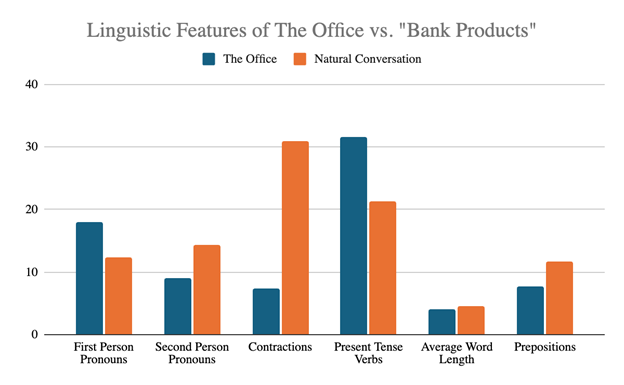
Figure 6. Linguistic comparison of The Office vs. “Bank Products” conversation.

As we hypothesized, The Office comparison chart above shows that natural conversations use more first-person pronouns, second-person pronouns, and contractions. However, the data in Figure 6 does not substantiate predictions that natural conversations would use more present tense verbs, shorter word lengths, and fewer prepositions.

Community
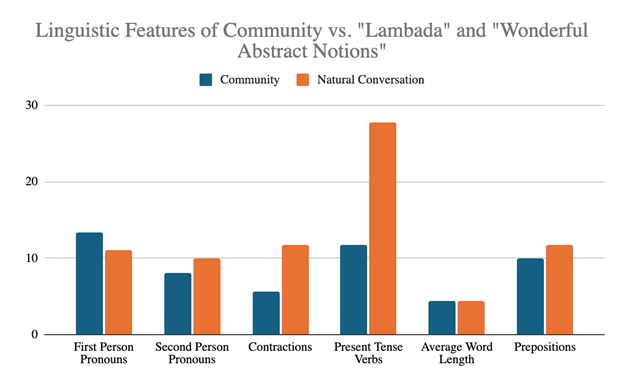
Figure 7. Linguistic comparison of Community vs. “Lambada” and “Wonderful Abstract Notions” conversations.

We can see in the Community comparison chart above that while natural conversations have more second-person pronouns and contractions, the rest of the linguistic categories display an inverse relationship to what was predicted, subsequently disproving our hypothesis. 

Synthesis
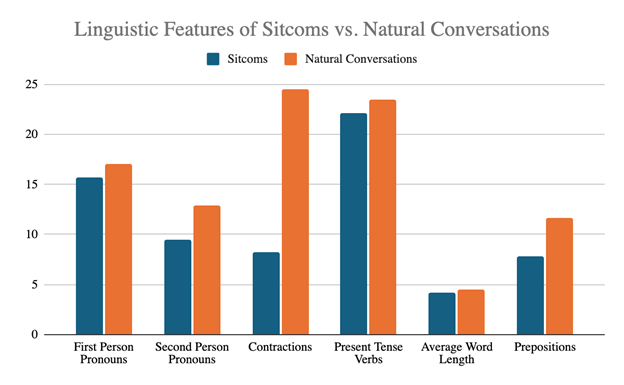
Figure 8. Average number of each linguistic feature in TV dialogues vs. in natural conversations.

Thus, Figure 8, which illustrates the average difference between all of our observed television programs and real-life conversations, demonstrates that sitcoms followed our hypothesized patterns for first-person pronouns, second-person pronouns, contractions, and present-tense verbs. However, when looking at average word length and preposition frequency, the sitcoms showed results that were opposite to what was expected, with shorter words and fewer prepositions. An important note is that, except for contractions, the differences seen are very slight.
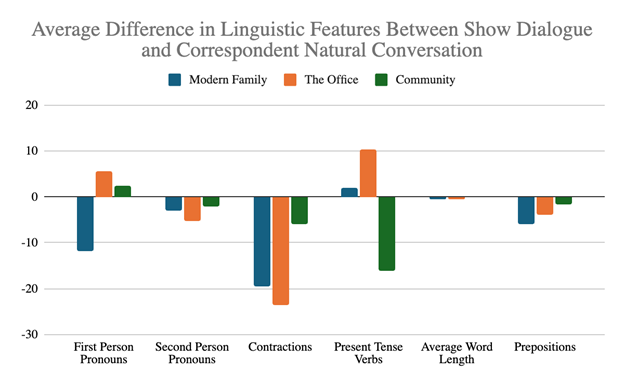
Figure 9. Average difference in number of each linguistic feature between each show and the corresponding natural conversation(s).

To zoom in a little further, Figure 9 complicates our results as we look at the specifics of each show. Modern Family is the only show that demonstrated fewer first-person pronouns than the corresponding natural conversation. Community is the only show with fewer present tense verbs than its corresponding natural conversation, per our hypothesis. The Office appears the most natural, disobeying our hypothesis for the linguistic features of word length and prepositions. As mentioned, all three shows did not follow our hypothesized difference in average word length or prepositions, suggesting that our sitcom data is considerably closer to natural conversation than expected.

Discussion and Conclusion

From the data analysis we conducted, we concluded that while there is a slight difference between TV and natural conversations (especially for first-person pronouns, second-person pronouns, contractions, and present tense verbs), the differences are insignificant and do not indicate much deviation. Additionally, the data disproved our hypotheses around word length and prepositions; regarding these features, sitcoms were more “natural” than actual natural conversations. However, we acknowledge the fact that our investigation had limitations. Due to the narrow timeline of our project this quarter, we did not collect and analyze as much data as we would have hoped in order to find more substantial differences between scripted and non-scripted language.

Revisiting our initial research question: To what extent does scripted language represent actual language in depictions of humor?

Initially, our data may seem surprising since we found fewer differences than expected, but there might be a reason why these sitcoms tend to lean more toward natural-sounding conversations. The craft of screenwriting tiptoes on a delicate balance between accurately portraying real-life scenarios and creating humorous and engaging dialogues meant to captivate audiences. Our three Emmy Award-winning shows have achieved widespread acclaim and popularity, and part of this success can be attributed to linguistics, as their language choices play a crucial role in effectively resonating across various audiences and demographics.

TV dialogue has far-reaching linguistic influence, especially in the language learning classroom, where teachers often encourage students to use sitcoms (and other scripted content) to practice English and attain competency. The nuances of our data suggest that while the language English learners are studying has a certain degree of difference from conversational English, it still shares similarities to natural language and, thus, may serve as a helpful tool. Taking our research in conjunction with Quaglio’s study on Friends (which did find a significant difference) suggests that more research is needed to see how this could affect the language learning process and whether sitcoms are practical language learning tools (Quaglio, 2009).

Additionally, Quaglio’s findings suggest that TV dialogue is its own register of English, different from the spontaneous and natural conversation it hopes to (and is assumed to) emulate. Our data complicates this theory, indicating that this register is becoming closer and closer to standard/conversational English with our three sitcoms or that more research is needed to ferment a pattern. To read more about the role of TV in social development and cultural unity, read this blog post: “Role of Television in Sociocultural Development of a Society.” To see more concrete examples of the linguistic reach of TV, read this article about words and practices that natural conversation has borrowed from TV dialogue: 10 Ways Television Has Changed the Way We Talk.

To expand on this topic further, it would be important to attain cross-linguistic data. How do these patterns of difference occur in other languages? Due to the importance of media to culture, this would help clarify whether TV dialogue is simply a register of English or a cross-cultural phenomenon.


References

Biber, D. (1992). On the complexity of discourse complexity: A multidimensional analysis. Discourse Processes, 15(2), 133–163. https://doi.org/10.1080/01638539209544806.

Bunniefuu. (2013, May 17). 09X24/25 – finale. The Office Transcripts. https://transcripts.foreverdreaming.org/viewtopic.php?t=25498#google_vignette.  

Du Bois, J. W, et. al (2000-2005). Santa Barbara Corpus of Spoken American English | Department of Linguistics – UC Santa Barbara. UCSB Linguists. Retrieved May 20, 2024, from https://www.linguistics.ucsb.edu/research/santa-barbara-corpus.

Eberhardt, S. (1988). Identifying_Multidimensional_Patterns_across_Register_Variation. Retrieved May 6, 2024, from https://www.unibamberg.de/fileadmin/engling/fs/Chapter_21/Index.html?23DimensionsofEnglish.html.

Gervais, Merchant, et. al (Executive Producers). (2005-2013). The Office [TV Series]. Deedle-Dee Productions; 3 Arts Entertainment; Shine America; Universal Television.

Hoey, E. (2018). Conversation analysis. https://pure.mpg.de/rest/items/item_2328034_3/component/file_2328033/content.

Levitan, Lloyd, et. al (Executive Producers). (2009-2020). Modern Family [TV Series]. Steven Levitan Productions; Picador Productions; 20th Century Fox Television.

Nini, A. (2019). The Multi-Dimensional Analysis Tagger. In Berber Sardinha, T. & Veirano Pinto M. (eds), Multi-Dimensional Analysis: Research Methods and Current Issues, 67-94, London; New York: Bloomsbury Academic.

Quaglio, P. (2009). Television Dialogue and Natural Conversation: Linguistic Similarities and Functional Differences. Corpora and Discourse, 189-210. https://aogaku-daku.org/wp-content/uploads/2018/04/Television-dialog-corpora-and-discourse.pdf.

Russo, Russo, Harmon, et. al (Executive Producers). (2009-2015). Community [TV Series]. Krasnoff/Foster Entertainment; Russo Brothers Films; Harmonious Claptrap; Universal Televsion; Sony Pictures Television; Yahoo! Studios.

The Office (USA) – season 1 episode 1: “pilot. Genius. (2005). https://genius.com/The-office-usa-season-1-episode-1-pilot-annotated.  

Zago, R. (2017). English in the Traditional Media: The Case of Colloquialisation Between Original Films and Remakes. Transnational Subjects Linguistic Encounters: Selected papers from XXVII AIA Conference, 2, 91-104. https://unora.unior.it/bitstream/11574/176955/1/Atti%20AIA%20curatela.pdf#page=119.

[/expander_maker]
, , ,

Political Polarization: Why are you fighting in the comment section?

Kathryn Cunningham, Anna Tobey, Leia Broughton, Maya Athwal, Nicole Pacheco

Note: This article was written in Spring 2024, prior to Biden stepping down from the presidential race and Trump winning the 2024 presidential election.

Are all news headlines made equal? For our project, we analyzed the potential effects of framing in online news headlines on readership responses in the comments. Digital tools for political discourse are becoming increasingly popular, and we want to investigate how framing in the media can influence political cognition and amplify the political polarization we see in comment sections today. We hypothesized that different framings in headlines would provoke politically biased emotional responses against the opposing political party. We conducted critical discourse analysis of six different headlines pertaining to a singular political event — Michael Cohen’s testimony against Donald Trump — on two news sites from each of the following categories: left-leaning, right-leaning, and neutral. We then compared these analyses of the lexical and syntactic choices used to frame Cohen and Trump with the corresponding comments on each article. We observed high-frequency keywords and identified eight categories for different comment types, considering how each headline could have prompted the intense responses we saw. The results of this project are important in understanding the power of party framing and how it can divide us simply through subtle choices in language.

[expander_maker id=”1″ more=”Read more” less=”Read less”]

Introduction

Have you recently read a comment section that looks more like a war zone and wondered: how did we get here? In our research project, we analyzed news headlines and comments trying to find the source, and we may have part of the answer. Digital tools for political discourse are becoming increasingly popular, and we wanted to better understand how framing influences political cognition and produces the political polarization we see in comment sections today. With this goal in mind, our project explores how framing in news headlines influences reader responses in the comments. Issue framing is when an author uses certain language to subtly present their opinion on a topic, and this can appear in anything from word choice to using passive voice to minimize someone’s culpability in an event. A single event or person can be presented in many different ways, and each of those ways could influence the reader into having a different opinion on the same event (Wang 2024). We specifically focus on party framing, which is when a frame is endorsed by a particular political party; this is extremely influential in the public’s formation of opinions — even more so than regular framing techniques. People will even dismiss a certain opinion just because it comes from the opposing party (Slothuus and de Vreese 2010). We hypothesize that framing in headlines can provoke emotionally-charged comments, with more negative and extreme headlines resulting in more hostility towards members of the opposing party.

Methods

We first analyzed six headlines from news sites of varying political affiliations, focusing on articles about Michael Cohen’s testimony in Donald Trump’s trial. As a control group, we first looked at headlines from PBS NewsHour and The Associated Press, which are perceived as more neutral news sources (Knight Foundation, 2018). Our two left-leaning news sites were The New York Times and HuffPost, and our right-leaning sites were Fox News and the New York Post (AllSides Technologies, 2024). To analyze these headlines, we looked into their uses of framing in their word choice and sentence structure and how these were used to assign blame and express the sites’ own opinions on Trump and Cohen.

After analyzing the headlines, we turned to the comment sections from the left- and right-leaning sources. The neutral sources did not have attached comment sections, and we felt that they served us best remaining as the control from which to compare our other headlines. In analyzing the comment sections, our goal was to see if there was a connection between negativity and framing in the headlines and patterns of hostility and rudeness in the comments. This method limited our options, with many potential news sources pay walling their comment sections or simply not including them at all. Despite the fact that most comments are made on social media (Stroud et al. 2016), we preferred to avoid social media comments, as we felt that they would likely be less genuine and more filled with trolls and “bots.” In order to best organize our analysis, we compiled the most popular comments from each source, and then we compared them to each other to find shared patterns. We built a categorization system, shown in Fig. 11, that best captures the nuance of each comment section in comparison to the others so as to make for better comparison and more accurate connections to the headlines.

Results and Analysis

Our results from our initial analysis of each news headline showed variations in the framing of characters, actions, and descriptions involved in the news story, dependent on each news site’s lexical and syntactic choices. We observed that, despite these variations, each news site’s framing generally reflected their established political bias. For example, the syntactic choices in framing Cohen’s character varies greatly between Fig. 6, which refers to Cohen as an “ex-con”, and Fig.1, which refers to Cohen by name. These choices aligned with the political bias of each news site, thereby demonstrating a consistent correlation between the linguistic framing of each headline and political bias of each site. AP’s headline was a bit more left-leaning than expected, but it was later reposted on HuffPost, proving their left-leaning bias.

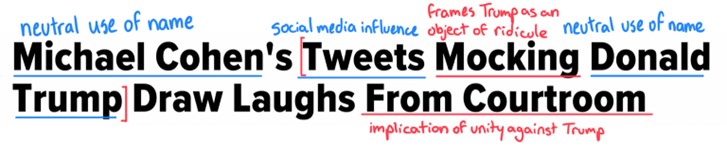
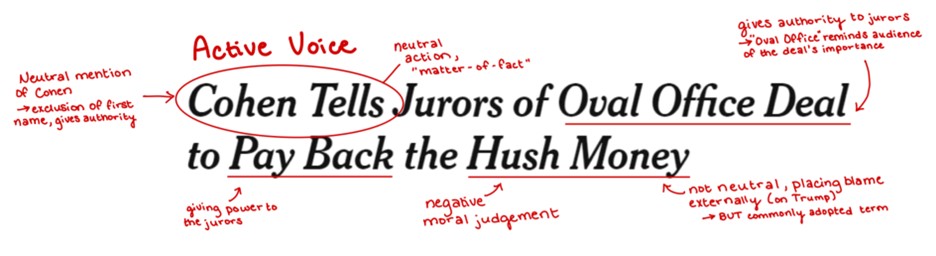
Figure 1. Annotated headline from The New York Times (Left).

The New York Times does not mention Trump by name, but it reminds readers of the power Trump once possessed as president by mentioning the Oval Office. The “hush” of “hush money” creates a negative moral judgment against Trump, but overall, this is one of the more neutral headlines.

Figure 2. Annotated headline from HuffPost (Left).

HuffPost frames Trump as an object of ridicule in this headline, granting Cohen power over him. Interestingly, it focuses on a more “gossip” style of reporting rather than things relevant to the trial. The focus on berating Trump makes this headline very biased.

Figure 3. Annotated headline from The Associated Press (Neutral).

The Associated Press features a vaguely left-leaning headline. Cohen is granted credibility with connotations of celebrity, intrigue, and duplicity. There is a clear negative morality judgment against Trump in calling it a “scheme” instead of a “trial.”

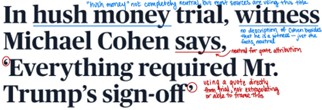
Figure 4. Annotated headline from PBS NewsHour (Netural).

This PBS NewsHour headline is the most neutral of the six. They use an actual quote from Cohen, focusing on the facts.

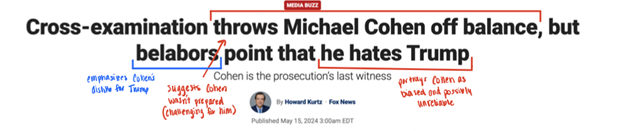
Figure 5. Annotated headline from Fox News (Right).

The Fox News headline frames Cohen as bumbling and spiteful. Trump becomes a victim of a hateful Cohen in this frame, creating sympathy for Trump and a distrust in Cohen.

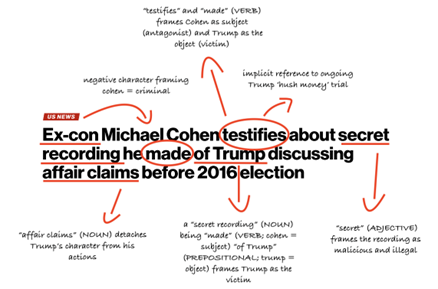
Figure 6. Annotated headline from the New York Post (Right).

The New York Post frames Cohen as untrustworthy by describing him as an “ex-con.” Trump is a clear victim in this version of events. The headline also implies that Cohen is dredging up “old” events to ruin Trump’s 2024 campaign.

Following this, we observed the top comments received by each article with a particular focus on keywords responding to the framing effects of the headline. Firstly, we observed a larger frequency of comments about Trump, the trial, and the general political situation, rather than of Cohen and his testimony. As predicted in our hypothesis, the more polarized headlines had more drastic and emotion-filled comments than the more neutral headlines. Both political sides were firm in their stance, unwilling to budge and change their perspective, with comments typically made to degrade or vilify the other side.

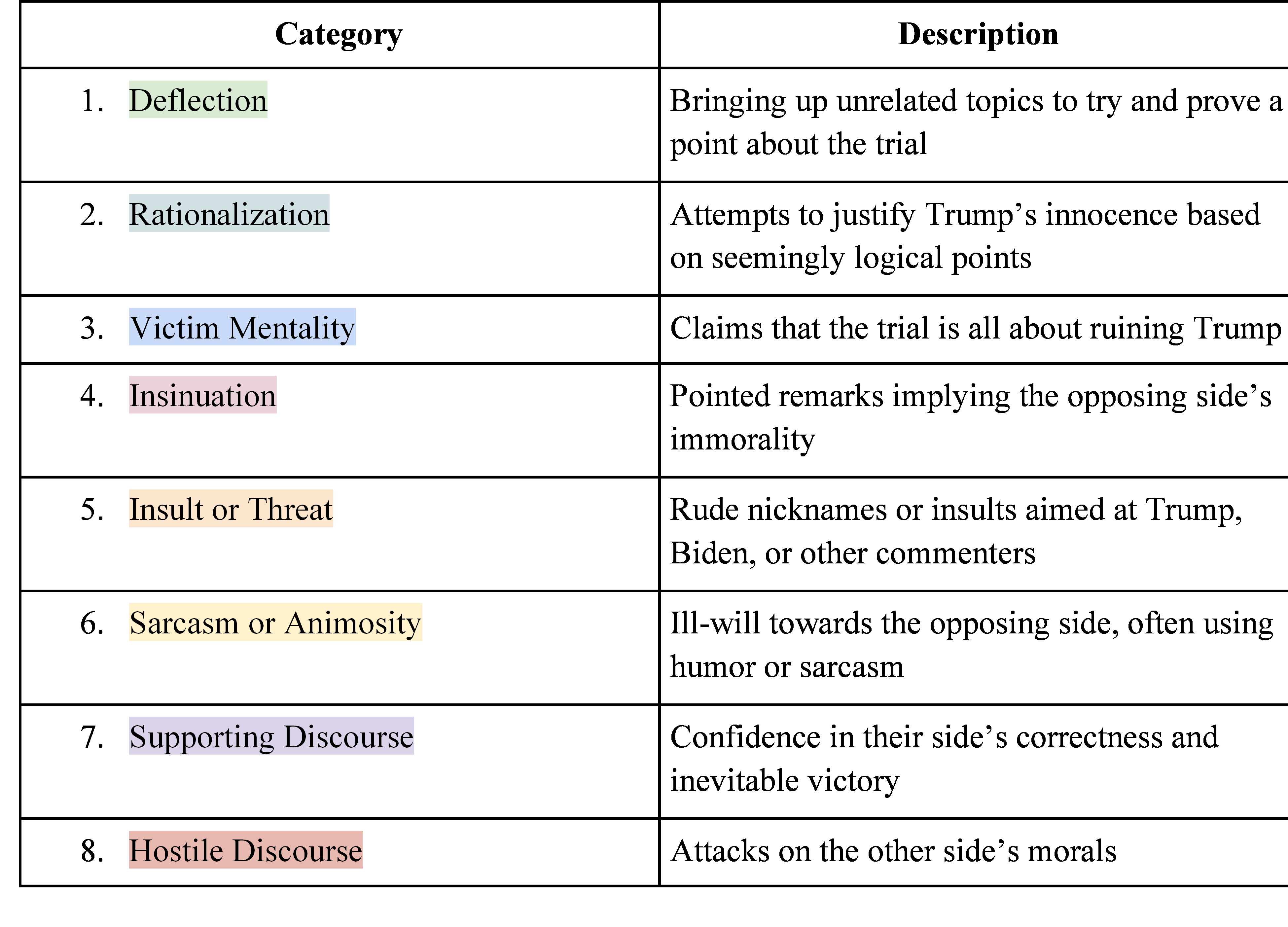
Using keywords and notes from our initial observations, we identified eight key categories of comment-types which reflected similar biases that we observed from our headline analysis (Fig. 11). We created a color-coding system for analyzing our top comments according to these categories to measure the frequency of each category within each news sites’ comment section.

Figure 11. Eight categories used for comment analysis.

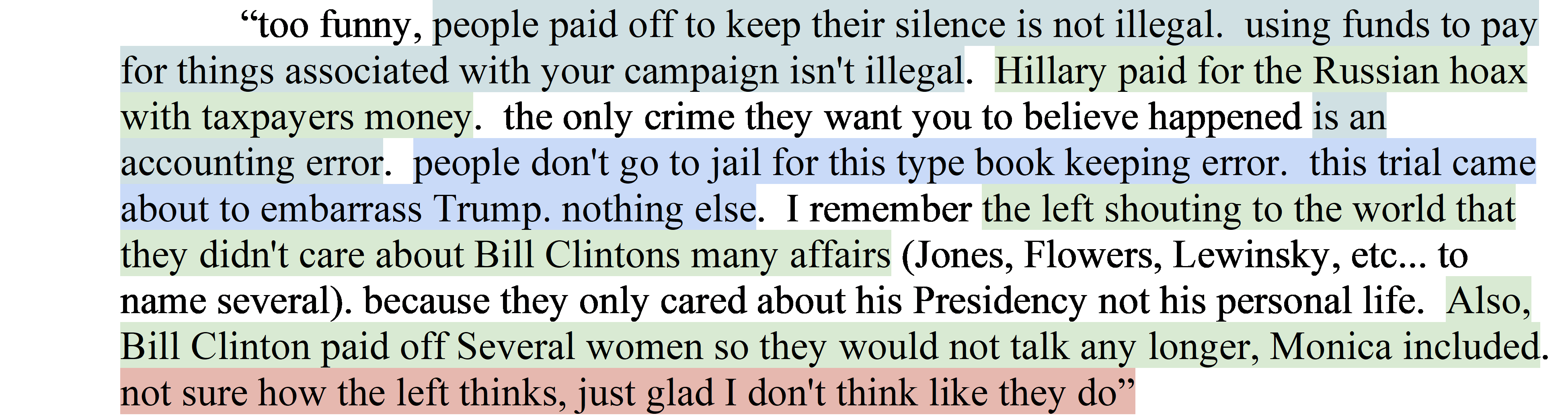
As we hypothesized, hostile discourse, sarcasm and animosity, and insult or threat against the opposing party were consistently apparent across all four sources. However, we observed variations between left- and right-leaning discourse styles between both comment sections, and these are potentially related to the framing of each corresponding headline. These two comment analyses below demonstrate this difference in discourse style: 

Figure 12. Comment under article from The New York Times (Left).


Figure 13. Comment under article from the New York Post (Right).

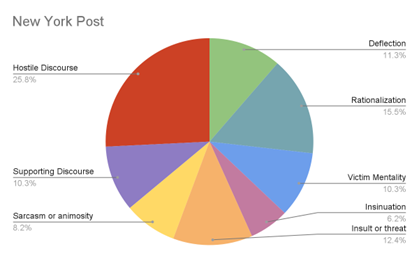
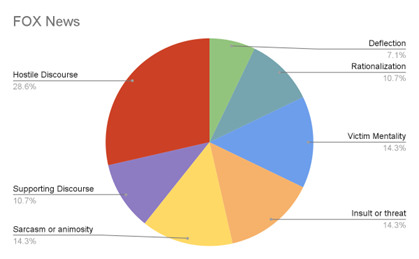
We believe that these differences are potentially related to each party’s political and moral ideologies, which were reinforced by each headline’s framing. For example, higher frequencies of deflection and victim mentality among right-leaning comments might reflect defensive language in response to Trump’s victimization in right-leaning headlines and Trump’s vilification in left-leaning headlines.

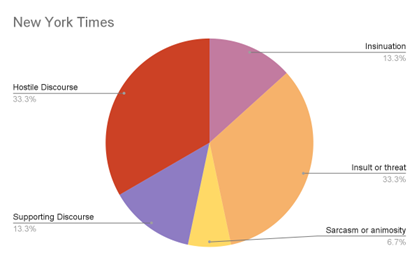
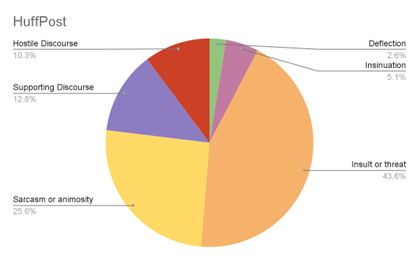
As shown in Figs. 7 and 8, we observed that hostile discourse, insult or threat, and sarcasm or animosity had the highest measure of frequency in our left-leaning sources. Figs. 9 and 10 show that hostile discourse, victim mentality, rationalization, and insult or threat had the highest measure of frequency in both our right-leaning sources. Interestingly, we also observed that supporting discourse was present in both sides, particularly in responding to others’ comments to reinforce their political beliefs. We believe that these findings show potential consequences for politically biased news headline framing that are manifested in comment sections by the reinforcement of certain political ideologies and antagonization of opposing parties, creating a sort of “echo chamber.”

Figure 7. Comment categorization for The New York Times article (Left).

The New York Times comments tend to focus on the insinuation of Republican corruption. The comments were mainly directed towards Trump, attacking and vilifying him. When Cohen was mentioned, it was typically a positive association or connotation. Comments appeared heavily moderated, or perhaps the more neutral headline resulted in less intense comments.

Figure 8. Comment categorization for the Huffpost article (Left).

The HuffPost had less serious comments heavily filled with sarcasm, mockery, and insults towards Trump. With almost no mention of Cohen, the comments were mainly full of mocking and taunting remarks, with few attempted claims of substance.

Figure 9. Comment categorization for the New York Post article (Right).

The New York Post focuses mainly on the content of the article, with strong remarks that the trial was set up by immoral Democrats. With the victimization and support of Trump, Cohen is framed as a devious liar who cannot be trusted.

Figure 10. Comment categorization for the Fox News article (Right).

The Fox News comments had a mixture of the victimization of Trump and framing Cohen as an incompetent liar. The commenters also had a strong belief that the trial was fraudulent and biased.

Discussion and Conclusions

Our findings suggest that political framing in headlines through lexical and syntactic choices does create biased responses across the political spectrum. With political polarization in media becoming increasingly prevalent, especially considering 2024 is an election year, our findings are very relevant to discussions around the impact of media on public opinion and discourse. For instance, we found that headlines considered to be more neutral, such as the New York Times, resulted in less discourse between political parties, specifically with less engagement from the right, and the more biased headlines resulted in more hostile rhetoric and discourse in the comment sections between members of opposing parties. Therefore, our findings suggest that headlines that are considered to be more biased provoke stronger, more polarized discourse. Given that our study was limited by factors such as comment moderation and paywalls, a more comprehensive study might include social media responses or a broader range of politically-affiliated news sites rather than just the six we analyzed. For future research, we believe that our ideas can be expanded into a larger study using emerging AI models to analyze larger datasets from social media, which would yield more conclusive results. Perhaps they could detect bots and trolls on social media as well, removing that from consideration.

The next time you are scrolling through the comment section on a political piece, take a moment to recognize what might cause strong feelings one way or another and how that is really affecting your perception of current events. With the tools presented, you now might be able to understand why there is so much fighting in the comment section.

References

AllSides Technologies. (2024). AllSides Media Bias Chart. AllSides. https://www.allsides.com/media-bias/media-bias-chart.

Baratta, A. M. (2008). Revealing stance through passive voice. Journal of Pragmatics, 41(7), 1406-1421. https://doi.org/10.1016/j.pragma.2008.09.010.

Boydstun, A. E., Gross, J. H., Resnik, P., & Smith, N. A. (2013). Identifying Media Frames and Frame Dynamics Within and Across Policy Issues. New Directions in Analyzing Text as Data, 27-28. https://faculty.washington.edu/jwilker/559/frames-2013.pdf.

Gligorić, K., Lifchits, G., West, R., & Anderson, A. (2021). Linguistic effects on news headline success: Evidence from thousands of online field experiments (Registered Report Protocol). PLOS ONE, 16(9). https://doi.org/10.1371/journal.pone.0257091.

Knight Foundation. (2018). Perceived accuracy and bias in the news media. Gallup. https://knightfoundation.org/wp-content/uploads/2020/03/KnightFoundation_AccuracyandBias_Report_FINAL.pdf.

Slothuus, R., & de Vreese, C. H. (2010). Political Parties, Motivated Reasoning, and Issue Framing Effects. The Journal of Politics, 72(3), 630–645. https://doi.org/10.1017/s002238161000006x.

Stroud, N. J., Van Duyn, E., & Peacock, C. (2016). Engaging News Project: News Commenters and News Comment Readers. Center for Media Engagement, Moody College of Communication, University of Texas at Austin. https://mediaengagement.org/wp-content/uploads/2016/03/ENP-News-Commenters-and-Comment-Readers1.pdf.

Wang, H. (2024). Linguistic Analysis of News Title Strategies in Media Frame—A Case Study of ‘The Mueller Investigation’ in the News Titles of The New York Times and Fox News. Journalism and Media, 5(1), 342-358. https://doi.org/10.3390/journalmedia5010023.

Zhou, Z. (2022). Discourse Analysis: Media Bias and Linguistic Patterns on News Reports. Advances in Social Science, Education and Humanities, 637, 271-277. http://dx.doi.org/10.2991/assehr.k.220131.049.

[/expander_maker]
, , , , , ,

Dialogues of Fame: Unveiling Gender Dynamics in Celebrity Interviews

Elizabeth Escamilla, Penelope Hernandez, Kenzie MacDougal, Jason Ye

Human interaction is complex and, at a sociolinguistic level, can be challenging to parse. With that in mind, we chose to analyze celebrity interviews — definite and structured slices of conversation whose participants were conscious of the invisible future viewer. Informed and inspired by studies such as Julia T. Wood’s “Gendered Media: The Influence of Media on View of Gender,” Rossi and Stiver’s “Category-Sensitive Actions in Interaction,” and Tavitz and Perez’s “Language influences mass opinion toward gender and LGBT equality,” we investigate patterns of interaction and indexical shifts as they may be affected by the genders of the involved parties. Taking two-minute segments from each interview, we classified questions as personal or professional and invasive or appropriate. Anything deviating from expected interview etiquette was noted, whether that be word choice or tone of voice, as well as the reactions of any third parties. Most importantly, we classified the ways in which interviewees responded to invasive lines of questioning, specifically as one of the following: retaliatory questioning, a passive aggressive remark, a humorous deflection, a partial answer, or a direct answer. A significant trend of women receiving more invasive and personal questions quickly appeared, though our investigation suffers from a possible selection bias. Therefore, future investigations should pull from a much larger and more varied sample of interviews.

[expander_maker id=”1″ more=”Read more” less=”Read less”]

Introduction and Background

Celebrity interviews aren’t conversations that take place in a vacuum; they may be viewed by hundreds, if not thousands, of people. Additionally, the predefined question-answer format of an interview makes it easier to parse for sociolinguistic analysis. Needless to say, we found celebrity interviews to be generous data points for analyzing patterns informed by the gender identities of the involved parties.

Studies like Julia T. Wood’s “Gendered Media: The Influence of Media on View of Gender” show us how the media’s representation of men, women, and queer people may affect a viewer’s understanding of gender roles. Problematic patterns are uncovered: “men and women are portrayed in stereotypical ways that reflect and sustain socially endorsed views of gender… depictions of relationships between men and women emphasize traditional roles and normalize violence against women” (Wood, 2013). Unlike fictional movies and television shows, the interactions recorded in celebrity interviews involve real people, or at least believable personas designed with the public eye in mind. It follows that interviews with respected, famous individuals play a greater role in influencing what people deem socially acceptable behavior. Thus, when audiences watch mistreatment of women play out with little to no consequence, they may feel validated in their own experiences with misogyny, as either a perpetrator or victim.

Media is both what its creator produces and what the viewer brings to their experience with it. The manners in which interviewers and interviewees carry themselves both reflects and defines current standards for human sociolinguistic communication. Inspired by “Category-Sensitive Actions in Interaction,” we hope to identify patterns in lines of questioning and the manner in which these questions are handled. That study outlines how boundaries of social membership are exposed in ordinary interactions — “the distribution of rights and constraints to perform certain actions creates boundaries in people’s activity space, which are typically respected but sometimes exposed or even crossed” (Rossi and Stivers, 2020). As it pertains to our investigation, when an interviewee is asked an invasive question, this may be classified as a transgression of these silent boundaries.

So, we aim to contribute to a growing body of work suggesting that different behaviors and patterns of interaction vary based on the gender of the interviewee, unfortunately often at the expense of women and queer individuals.

Methodology

We chose to study a variety of variables for this project, including the frequency of personal versus professional questions, word choice and tone of voice used by the interviewer, and the methods interviewees used to navigate controversial questioning.

Upon examining an interview, we followed a set of steps to extract and prepare the data for analysis moving forward. First, it’s important to classify any questions as being professional, personal, appropriate, or invasive.  Professional questions relate strictly to the interviewee’s work, while personal questions deviate from this. Similarly, appropriate questions are given to those that are deemed socially acceptable, such as topics commonly discussed with acquaintances, while invasive questions are not. Next, we take note of any speech or tone used by either interviewer or interviewee that may deviate from the expected etiquette of interviews. From here, we classify methods used by interviewees to ease out of or address uncomfortable questioning. We chose to classify these among the following: direct answer, partial answer, humorous deflection, passive aggressive remark, or retaliatory questioning. Humorous deflection involves the use of humor in an effort to avoid responding to the question. A passive aggressive remark includes any form of snarky or sarcastic response, including those done purposefully to attack the interviewer. Retaliatory questioning is the act of answering the original question with a question of one’s own. Finally, if the selected interview happens to involve more than one interviewee, it is important to also take note of any third party reactions or interactions to awkward questioning. 

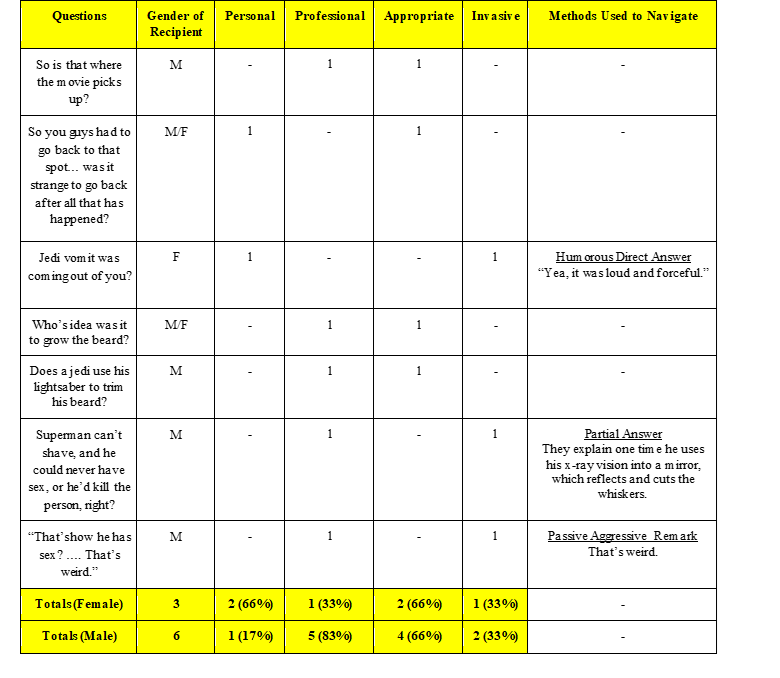
To demonstrate our methodology, we will examine an interview with Scarlett Johansson and Jeremy Renner for their film The Avengers (2012). The first question, directed at Johansson, was: “Were you able to wear undergarments [with your costume]?” This question was labeled personal and invasive. Johansson responded with a passive aggressive remark and retaliatory questioning: “I’ll leave it up to your imagination, okay, whatever you feel like I should be wearing or not wearing under that costume” (Passive Aggressive Remark) and “What is going on? What? Since when did people start asking each other about- in interviews about their underwear?” (Retaliatory Questioning). Later on in the interview, Jeremy Renner is asked a question about an injury: “I understand you got hurt pretty badly though. How’d you do that?” This was labeled as professional and appropriate, and no other notes were taken as there was no unique use of tone, word choice, or navigation methods.

Results & Analysis

In this section, we will break down the details of our results and perform analysis on each individual dataset table (interviews); let’s start with some visuals demonstrating the overall statistics.

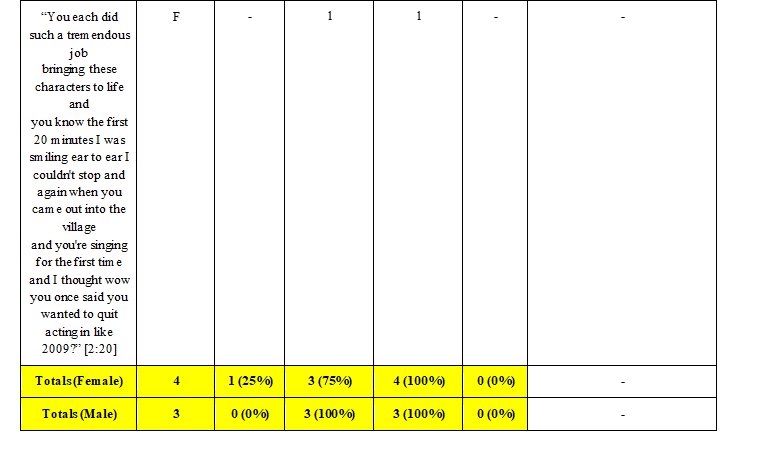
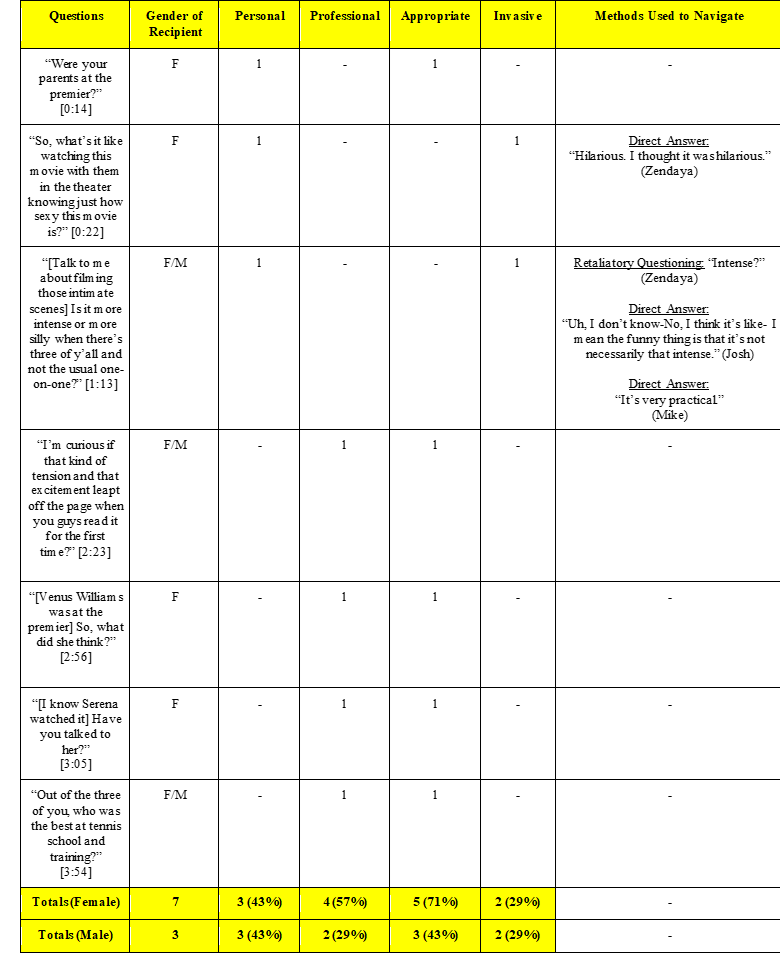
Table 1. This table shows the totaled data from individual datasets (interviews) into one table.


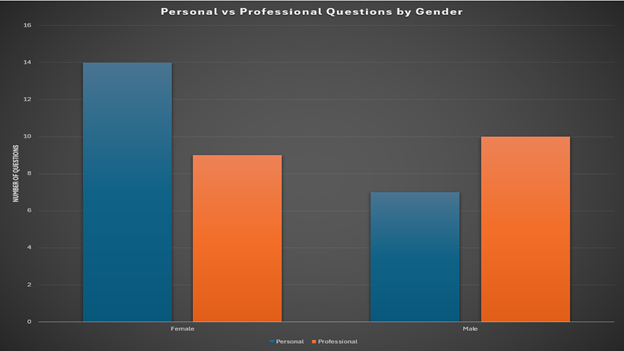
Figure 1. This graph shows the number of personal vs. professional questions the interviewees received based on their respective gender.


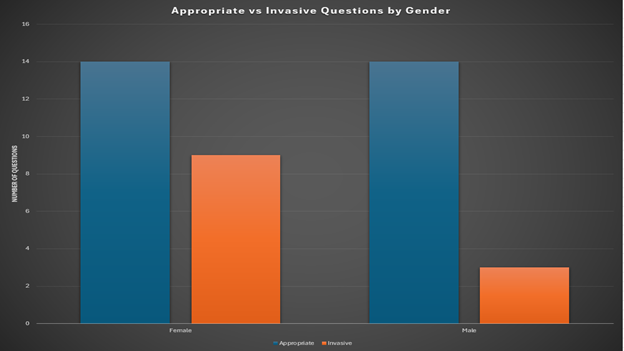
Figure 2. This graph shows the number of appropriate vs. invasive questions the interviewees received based on their respective gender.

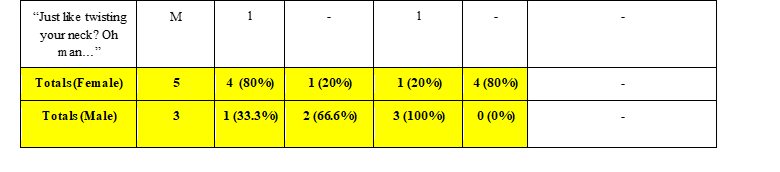
Just from these few charts, we can already gauge a sense of skewedness, one that seems to confirm our hypothesis: female interviewees, regardless of the gender of the interviewer, are likely to encounter more personal questions compared to male interviewees. Indeed, we can see that 61% of the questions asked to female interviewees were personal, as opposed to 41% of the questions posed to their male counterparts (49% increase). On top of that, we found 39% of the questions asked to female interviewees were also invasive in nature, while only 17% were invasive for male interviewees, which is a 129% increase, more than twice as many invasive questions. This disparity in question types based on the interviewees’ gender is alarming.

To navigate these invasive lines of questioning, we found that male and female celebrities tend to employ different methods. Female celebrities mostly used retaliatory questioning, humorous deflection, and direct answers — the first two methods being more indirect ways of signaling to the interviewer that the line of questioning was inappropriate. Male celebrities, on the other hand, mostly used direct answers and passive-aggressive remarks, which we speculate is due to men feeling more comfortable asserting themselves in these socially invasive situations.

Now, having discussed the key points of our results, we will provide additional analysis on each individual dataset (interview) separately.

Table 2. Data for The Avengers interview with Scarlet Johansson and Jeremy Renner (Male Interviewer).

This first dataset/interview was already touched on in the previous section on methodology, it suggested the same disparity in question types between the female and male interviewees. Scarlet Johansson received a disproportionate amount of personal and invasive questions and had to defend herself using mainly retaliatory questioning, while Jeremy Renner received only appropriate or professional questions.

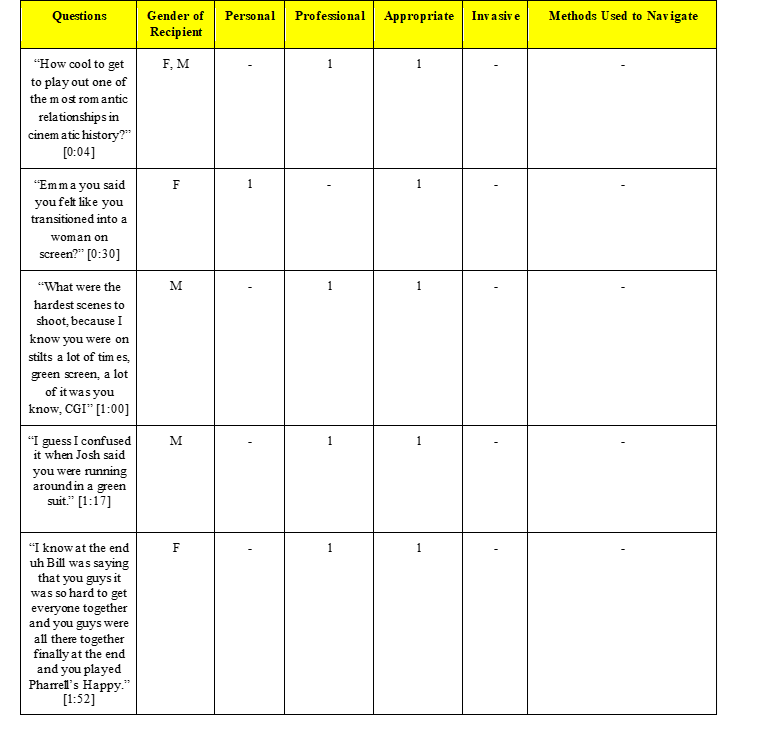
Table 3. Data for Dan Stevens and Emma Watson interview for Beauty and the Beast (Female Interviewer).

This dataset/interview is an outlier amongst all the other datasets. First thing we noticed is the empty “Methods Used to Navigate” column; we didn’t need to fill in any. All the questions were appropriate and professional with only one personal (but appropriate still) question directed at Emma Watson. Interestingly, this is also the only interview in our entire dataset pool with a female interviewer; more evidence and data would be needed to come to any meaningful conclusions about whether the gender of the interviewer correlated with the fact there were no invasive questions.

Table 4. Data for interview with Zendaya, Mike Faist, and Josh O’Connor for Challengers (Male Interviewer).

There are two invasive questions, and both were directed at Zendaya. The note-worthy takeaway here is the fact that both her co-stars Josh and Mike came to her support/rescue with direct answers trying to further alleviate the awkward situation after Zendaya responded initially with a retaliatory question.

Table 5. Data for interview with the cast of Star Wars: The Last Jedi (Male Interviewer).

Out of the three invasive questions in this dataset/interview, two were directed at a male interviewee (certainly an outlier too in and of itself). Here, we see the use of a passive aggressive remark employed by the male celebrity and a partial answer instead of a more direct one, though the tone does not detract too much from a direct one. The female interviewee employed a humorous direct answer; though a direct answer, the tone is more of just a humorous answer without the impact of a completely direct response.

Table 6. Data for interview with Christian Bale and Anne Hathaway for The Dark Knight Rises (Male Interviewer).

Both invasive questions were directed at Anne Hathaway, and humor and deflection were used to navigate the situation. All four of the questions directed at her were personal. While the male interviewee also received only personal questions, none of them were invasive.

Circling back to our hypothesis one more time after the more detailed look into each dataset, we can establish the clear gender bias in type and appropriateness of questions posed to celebrities in interviews, with female celebrities disproportionately subjected to more personal and invasive questions — confirming our suspicions and reflecting societal attitudes and expectations around gender.

Discussion and Conclusions

Based on our findings, we can conclude that there needs to be more discussions about indexicality and societal attitudes towards celebrity culture. Our study found that female interviewees are more likely to receive personal and invasive questions compared to their male coworkers. We observed that interviewees have various strategies to navigate these invasive questions, such as using humor or redirecting the conversation. This finding aligns with our hypothesis and suggests that gender does play a significant role in the nature of questions asked in celebrity interviews.

When comparing our own study with previous research, we can view consistent results with Rossi and Stivers, Tavits and Perez, and Wood. They show that female celebrities often face questions that cross personal boundaries, contributing to the systemic stereotyping and underrepresentation of women in the media. Interestingly, in the Tavits and Perez article, they found that “the effects of feminine pronouns parallel those of gender-neutral pronouns: both heighten the salience of non-males in memory, which is then associated with people expressing more liberal opinions toward women and LGBT groups in politics” (Tavits and Perez, 2019). This article informs us of variables that affect how a viewer might perceive the interactions captured in celebrity interviews. To continue, Wood’s article on gendered media can help us to better see the media’s representation of men, women, and queer people and how that may affect a viewer’s understanding of gender roles (Julia T. Woods, 2013). Interviews play a greater role in what is acceptable and what is normalized amongst gender groups.

Our study suggests that the media continues to reinforce traditional gender roles by subjecting female celebs to more personal scrutiny. Wood did a great job at explaining this. She stated how “depictions of relationships between men and women emphasize roles and normalize violence against women” (Wood, 2013). This not only affects the celebrities themselves but also influences public perceptions of acceptable behavior towards different genders. Everything we do in the media gets translated and put into practice outside of the media. So, whatever we allow to happen online will be manifested in real life interactions.

We focused on American celebrities, but if we were to dive into other environments, we would have more evidence to contribute and offer more indications to analyze gender dynamics in media interactions. For the future, we could expand on our study by examining a more diverse range of celebrities, locations, and interview formats.

When we look at our findings holistically, we can understand how the media plays a huge role in shaping public discourse around gender. When we examine the patterns within celebrity interviews, we can see there is a large need for more equitable and respectful media strategies. In our findings, we want to emphasize and analyze these dynamics because they are crucial for social change. It is important to challenge changing media practices so they can better promote gender equality and respect for all individuals in any field of work.

In conclusion, our study not only contributes to understanding media and gender but also calls for a more conscientious and equitable approach to media representation. The media we consume online does not exist in isolation. It shapes our perceptions and behaviors in several tangible ways. Gender biases and stereotypes reinforced in digital content can manifest in real-life interactions. By promoting respectful and equitable interactions online and through interviews, we can adopt more inclusive and respectful behavior towards all genders in our everyday lives, professional or not.

References

Montiel, A. V. (2014). Media and gender a scholarly agenda for the Global Alliance on Media and gender. United Nations Educational, Scientific, and Cultural Organization.

Pewsey, G. (2021, July 13). The world owes Megan Fox an apology. Grazia. https://graziadaily.co.uk/celebrity/news/megan-fox-michael-bay/.

Rossi, G., & Stivers, T. (2020). Category-sensitive actions in interaction. Social Psychology Quarterly, 84(1), 49–74. https://doi.org/10.1177/0190272520944595.

Tavits, M., & Pérez, E. O. (2019). Language influences mass opinion toward gender and LGBT equality. Proceedings of the National Academy of Sciences, 116(34), 16781–16786. https://doi.org/10.1073/pnas.1908156116.

Wood, J. T. (2013). Gendered Media: The Influence of Media on Views of Gender. Chapel Hill, NC; Department of Communication, University of North Carolina at Chapel Hill.

[/expander_maker]
, , , ,

“Swag Toh Dekho:” Hindi-English Code-Switching in Bollywood Movies of the Last 30 Years

Krithi de Souza, Kara Bryant, Sophia Adams, Medha Kini

Bollywood! We know (and love) the films for their grand and magnificent dance sequences, epic love stories, and extra long running times. Bollywood is often referred to as the “Indian Hollywood,” and this Hindi cinema industry has a large fanbase of its own. But how much overlap is there between Bollywood and Hollywood? Is there a strong language barrier that separates them? If you’ve watched a modern Bollywood movie, you would know that English words are often scattered throughout the script or used for funny catch phrases and apologetic remarks. But has that always been the case? In our project, we analyze the code-switching in three different Bollywood movies — Kuch Kuch Hota Hai, Student of the Year, and Rocky aur Rani Kii Prem Kahaani — all made by the famous filmmaker, Karan Johar. Each movie was released in a different decade, and we wanted to know how code-switching in Bollywood movies has changed as time passed. Read more to find out about the patterns we observed as the movies became more recent!

[expander_maker id=”1″ more=”Read more” less=”Read less”]

Introduction and Background

In this project, we decided to focus on changes in code-switching from the 1990s onward in order to analyze how globalization and other factors have impacted screenwriting in Bollywood. Hindi-English code-switching has been a part of Indians’ vernaculars for over a century. Far before the advent of the internet age, British colonial rule led to English being incorporated into Hindi to indicate prestige and education (Rai, 2009). Then, as globalization increased over the last 30 years, particularly through the development of the internet as a global resource, more and more Indians gained access to English content through online means. In addition to formalized English education, the population increasingly consumed media produced in English. This came in the form of professionally developed productions such as English-language movies and television, as well as informal, interpersonal content such as social media videos coming from YouTube, Tiktok, and more. Moreover, the Indian economy liberalizing in 1991 brought more access to things such as satellite TV, social media, and other global market products (Kumar, 2013). All this likely affected how often characters code-switched in Bollywood movies.

Our hypothesis is that code-switching will increase overall as the year of release for the films progresses. In other words, as time passes, code-switching will occur more often and become more prevalent in the films as a result of increasing globalization and access to English media. To measure this, we have chosen three Bollywood movies that were produced across three decades — Kuch Kuch Hota Hai (KKHH) (1998), Student of the Year (2012), and Rocky aur Rani Kii Prem Kahaani (Rocky aur Rani) (2023) — to analyze. They are all written by the same screenwriter, Karan Johar, in an attempt to eliminate variables across different filmmakers’ tastes. They all also come from roughly the same genre, romantic comedies, for the same reason. We will use this data to draw conclusions about how much exposure the effects of globalization had on the Bollywood industry. Furthermore, we will be able to say how English use in Bollywood films reflects English use in different populations within India in real life.

Figure 1. Movie posters from KKHH, Student of the Year, and Rocky aur Rani.

Methodology

Based on existing research, we found many different ways to categorize code switches in movies. Our data collection was modeled after a study done on code-switching in three Bollywood movies from three different decades (Anttila, 2015). We categorized the code-switching into two different types: proper code-switching and loanwords. Loanwords are what we define as phrases that were otherwise incorporated into a Hindi matrix sentence, such as the sentence “तु नहिइ  educated है” or “tuu nahiiN educated hai” (Translation: “You are not educated”). “Proper” code-switching as we are defining it for this research project occurred when characters included full phrases or sentences in English, such as “How are you?” (Bali et. al, 2014).

Watch this short clip to see an example of code-switching in Rocky aur Rani.

Each film was watched by at least two members of our team to minimize errors. While watching the movie, every instance of code-switching by the main characters was tallied into one of these two categories. When multiple instances of English words were uttered in a phrase, we used our best judgment to determine its categorization. We only tallied the code-switching of two to three main characters per movie to minimize variables across character type (age, class, education) and maintain a reasonable scope for project.

Results and Analysis

The oldest movie, KKHH, focuses on a best friend duo. Between those two main characters, they produced 13 loanwords and 58 proper code switches, for a total of 71 code switches overall. The next movie, Student of the Year, was released 14 years later. We counted 193 loanwords and 135 proper code switches across three main characters, or 328 code switches overall. Lastly, Rocky aur Rani came out 12 years after that and had 328 loanwords and 290 proper code switches between two main characters, totaling 618 overall code switches. The total number of code switches across the three movies can be visualized in the bar graph below:

Figure 2. Total number of code switches.

Given the data, our hypothesis was correct. The amount of code switches steadily increased across all three movies. Notably, we focused on one fewer protagonists in Rocky aur Rani, yet it still almost doubled the number of total code switches. Thus, we see that over the last 30 years, English usage in Bollywood movies has gone up considerably.

There were several patterns we noticed while analyzing the code switches. Many of the most common instances of code-switching came from characters using popular English phrases, such as “thank you,” “I’m sorry,” or “you’re welcome.” All of these were considered proper code switches for the purposes of our study, although there was some debate of whether they should be considered a single loanword unit because of how they were tied to one meaning. For example, we never saw a code switch like “thank आप,” or “thank aap” (Translation: “thank you”).

One of the biggest changes we noticed over the years was the use of Hindi-English code-switching in songs. Most Bollywood movies are musicals regardless of genre. Music is inherent to the industry, and we counted code-switching in the lyrics of songs the same way we counted spoken lines of dialogue. KKHH has eight songs, Student of the Year has seven, and Rocky aur Rani has eleven. KKHH had no code-switching in the songs. Every song was sung exclusively in Hindi. Student of the Year had slightly more code-switching in the songs, particularly in Shanaya’s entrance song, “Gulabi Ankhen,” which included many brand names. Additionally, there was one song titled in English, “The Disco Song.” Although the title is not an exclusive indicator of English use in the song itself, it does reveal a trend that English was becoming more accepted in the music side of Bollywood. This pattern continued with Rocky aur Rani, which had two songs with some English in the title: “What Jhumka?” and “Heart Throb.” More importantly, the content of the songs throughout the movie had regular code switches. It appears that songs are more resistant to incorporating English, since KKHH had code-switching in dialogue but not songs. However, by 2024, English was heavily included in Bollywood song lyrics. code This may be related to Shet (2022)’s findings that code-switching in film songs signifies purpose in discourse rather than for “aesthetic” purposes like in dialogue.

Another pattern was the use of brand names as a form of code-switching. Given that English can be a signifier of prestige, this effect is heightened when the code-switching indexes luxury items. Characters in Student of the Year and Rocky aur Rani regularly referenced brands such as Louis Vuitton, Ferrari, Jimmy Choo, and Versace. The character Rocky in Rocky aur Rani did this the most consistently. His character is upper class and frequently mentions his possessions by brand name. Interestingly, his code-switching often indexes a superficial, vapid personality as a result. This counters what Antilla (2015) found in her assessment, that English had become a language of professionalism and accomplishment. Rocky frequently uses English slang, but since he uses it haphazardly and without formal education, he is sometimes considered an idiot by those around him. Therefore, we can surmise that not only is the amount of English code-switching changing, but that its meaning in Bollywood is changing too.

Both code-switching in songs and use of brand names can be seen in the example below, which shows three lines from the verse of the song “Heart Throb” in Rocky aur Rani.

Figure 3. Lyrics from “Heart Throb”

In just this excerpt, lasting six seconds in the song, there are five loanwords: “swag,” “heart throb” twice, “Prada,” and “Gucci.” The line roughly translates to “Look at the swag, it’s like Prada and Gucci gave birth to a son.” Thus, we see Rocky using English slang (“swag,” “heart throb”) and brand names (Prada, Gucci) to signify coolness and style.

Discussion and Conclusion

Our analysis of our three films — Kuch Kuch Hota Hai, Student of the Year, and Rocky aur Rani Kii Prem Kahaani — show a clear trend of increasing code-switching. Since these three films came out in sequential decades following the explosion of the internet age and social media usage, the data supports our hypothesis that globalization and media exposure are driving forces behind these changes. Each film demonstrates a greater frequency of English phrases and loanwords, suggesting that modern day Bollywood films are catering to an audience that is more familiar with an inclusion of English.

However, there are several limitations to our study. In future research, it would be helpful to have access to the scripts, so we can accurately count the number of code-switches used in the films. Our method of manually tallying code-switching instances while watching the movies might not have captured every instance accurately. Having access to scripts that we could read would provide a more precise count and better context for each instance of code-switching. Additionally, we focused on three films from a single filmmaker, which might not fully represent broader trends across the industry.

Future research could address these limitations by expanding our method to include films from various filmmakers and genres and collect data from multiple characters, not just the protagonists. Furthermore, it would be beneficial to perform research confirming the correlation between code-switching in Bollywood and English usage in real life. We could do this by exploring the perception of English among viewers who recently finished watching Bollywood movies. Researchers can also analyze if non-English speakers’ perception of English changes after watching a Bollywood film due to the presence of code-switching between Hindi and English. Another possibility would be to compare native Hindi speakers’ code-switching with that of the fictional characters to see if the frequency is comparable. This would be one way to determine whether Hindi-English code-switching changes when it is scripted versus non-scripted. Therefore, due to this research, researchers can discover the impact code-switching has on society.

Since our research project effectively replicated Anttila (2015)’s project studying three movies from 1988, 1996, and 2005, it will be interesting to see if the use of Hindi-English code-switching will continue to trend upward. Anttila found that code-switching increased over time across her three movies, just like we did. But if this study were performed again another ten years from now, will English in Bollywood movies continue to increase or will it eventually stagnate? Is there a “saturation point” for English usage? At a certain point, the question becomes when is the movie itself “bilingual” rather than the characters?

In conclusion, analyzing Bollywood movies can help assess how English is perceived and used in India. The findings suggest that English is steadily increasing across Bollywood. Since media is a reflection of its society, we can conclude that English access is increasing overall in India, thus reflecting trends of a globalized society and proliferation of digital media. This increase in code-switching suggests that English is becoming more ingrained in everyday society in India, not just as a symbol of prestige but also as a tool for communication. Due to the creation of the Internet and the rise in social media, there is now greater access to English across India. These platforms provided greater access to English content in the media. This creates a positive feedback loop because as more people use the Internet, their exposure to English increases, encouraging them to adopt English in their vernaculars, which in turn exposes more people to English. Our research project highlights the increasing presence of English in Bollywood films, reflecting broader societal changes driven by globalization and digital media.

References

Anttila, H. (2015). You come-come, memsaabCode-switching in Sherni (1988), Raja Hindustani (1996) and Dus (2005) (Publication No. 6357) [Master’s Thesis, University of Vaasa]. OSUVA Open Science.

Bali, K., Sharma, J., Choudhury, M., & Vyas, Y. (2014). “I am borrowing ya mixing?” An analysis of English-Hindi code mixing in Facebook. Proceedings of The First Workshop on Computational Approaches to Code Switching, 116-126. https://aclanthology.org/W14-3914.pdf.

Kumar, A. (2013). Globalization and Changing Patterns in the Hindi Cinema Industry. Journal of South Asian Studies, 29(2), 433-448

Rai, A. (2009). English in Postcolonial India: History, Politics, and Cultures. Oxford University Press.

Shet, J. P., & Premkumar G. (2022). To switch and mix or not to: Code switching and code mixing in Indian film songs. Journal of Positive School Psychology, 6(3), 1417-1430. https://www.journalppw.com/index.php/jpsp/article/view/1672.

[/expander_maker]
, , , , ,

The Linguistic Portrayal of Social Mobility in Bollywood Cinema through Hinglish

Hashim Baig, Siuzanna Shaanian, Georgia Lewis, Jacob Cook, Christian Atud

The rise of English as the global lingua franca has had profound effects on multiple cultures worldwide. One such spot is the Indian subcontinent, especially with the emergence of India from centuries of colonial rule. This paper looks at how Hindi-English code-switching (popularly called Hinglish) in Bollywood films post-2000 both reflects and constructs social identities. It analyzes five contemporary Bollywood films and argues that the increase in Hinglish usage corresponds with characters’ social mobility, still signifying English as a potent symbol of prestige. This research aims to unearth the interplay of dynamics between language usage and perceived social standing in contemporary Indian cinema.

[expander_maker id=”1″ more=”Read more” less=”Read less”]

Introduction

English, being a global language, has influenced many cultures worldwide. One of the most impacted cultures was that of India, a former British colony. One of the most exciting consequences of this influence is the rise of Hinglish — a mixture of Hindi and English — primarily in the context of Bollywood films. Our project will investigate how Bollywood movies use Hinglish as a means of social change by depicting a character as having a higher social status through excessive code-switching into English.

Background

Bollywood is the leading film industry in India, providing fertile ground for the use and experimentation of different languages and linguistic expressions. The most salient is the integration of English into Hindi dialogues, often called Hinglish. This is relevant since some of the more recent films with this thematic feature in the foreground also depict the interaction between the English and Hindi languages as facilitators of social mobility. The fact that English is the prestigious code in Indian society and Bollywood is very influential in molding cultural trends, thus marking these films as good starting points for studying linguistic portrayals of social mobility.

Literature Review and Context

The Colonial Hangover

The continuing popularity of English in India began during the British colonial era, when the English language was used in administration and education. Within this context, the English language symbolized both sophistication and higher social status. Chandra (2014) says that in recent times, English has become a fashionable aspect of filmmaking in India, “associated with modernity and prestige.” Chakraborty (2022) also mentions what he refers to as the ‘Colonial Hangover.’ Knowledge of English, he says, is equated with higher social status and respect.

Bollywood’s Linguistic Landscape

Even in their language use, Bollywood films reflect changes in society. According to Rao (2010), English is identified with modernity and prestige; Hindi, however, is an intimate language of traditional values. Furthermore, this dichotomy has been depicted using code-switching. Context and social aspirations govern the switch between Hindi and English.

Code-Switching as a Tool of the Narrative

Si (2011) holds that code-switching is not random but rather a narrative device in Bollywood movies. English words or phrases are inserted into Hindi dialogues to portray a character’s social mobility, education, or cosmopolitanism. The present paper seeks to understand how, drawing from these studies, such linguistic choices could potentially stand synecdochally for social mobility in contemporary Bollywood films.

Project Design

This paper endeavors to examine and find evidence of any relationship that may exist between patterns of code-switching and the rise and fall of the characters’ social status in five films: Thank You for Coming (2023), Sukhee (2023), Laapataa Ladies (2023), Mission Raniganj: The Great Bharat Rescue (2023), and 3 Idiots (2009). The reason these movies have been selected for this purpose is that they essentially belong to a genre of ‘rags-to-riches’ stories and because they have been widely viewed.

Methodology

Collectively, we utilized a mixed-methods approach; qualitative content analysis was combined with quantitative frequency measures. We analyzed under what context code-switching occurs. That is, for particular scenes, social interaction and visual information related to socioeconomic status. We also counted the frequency of code-switching. We grouped each instance of code-switching into one of two categories: light and heavy. Light code-switching refers to sporadic insertions and alternations of English into Hindi, as well as forms borrowed from English. Heavy code-switching would refer to the use of extended English expressions, sentences, and rapid switching between English and Hindi. Each instance was counted across different narrative stages: exposition, rising action, climax, and falling action. Hopefully, through such an examination, we may develop insight into how Hinglish use is representative of social identities and how code switching shapes them in Bollywood films.

Results and Analysis

In this research, we found that there was a moderate use of light phrases in middle socioeconomic environments, with much more frequent usage towards and between people in high social positions. Light phrases are pervasively used in these environments and are almost entirely used for referring to specific items such as “boreholes” or “walls,” as well as specific titles such as “Sir” or “Doctor.”

Figure 1. Relative Distribution of Light-Switching: Categories. This pie chart summarizes the relative distribution of the types of light switching observed in this study. A majority of the switches were used to refer to nouns or specific nouns. Each category is defined by its context and use case. Discrimination was made between titles and nouns, as their use cases were notably distinct.

In this study, the average amount of light utterances per movie totals to around 400 phrases. Of those 400 phrases, about 25%, on average, include non-noun switching. This subset mostly consists of expressions/sayings (e.g., ‘Thank you,’ ‘I’m sorry’) and modifiers (insertion of adjectives, adverbs, etc.). Of the nouns, it is worth noting that a majority of these utterances are a form of borrowing from western culture. These include scientific/official names (e.g., ‘Carbon Dioxide,’ ‘Instagram’) and specific titles (e.g., ‘Doctor,’ ‘Sir,’ ‘Upper Management’). In especially institutionalized contexts, such as in educational or professional settings, this tendency is much more pronounced, as it would correlate with intelligence and competency. It is akin to using proper jargon when in an official discussion between peers or co-workers. Although nouns and titles share similar linguistic qualities, a distinction must be made between the two in order to account for their differing use cases. Titles, in particular, were commonly used towards individuals of high standing as a form of politeness and respect in a professional setting. One of the most common examples of this would be the usage of the word ‘Sir’ towards high ranking individuals. It is also worth noting that verbs were more commonly used in heavy switches and see little to no usage in light switches. This is largely due to the usage of English verbs in command/directive phrases rather than as a simple insertion/alternation. Most commands would be issued by an individual with authority and power. This would lead to the switching of the entire sentence to English, which would give the order a more serious/official connotation and allow the individual to leverage their position.

In regards to heavy code-switching, we observed 40-70 instances of heavy switching per movie, on average. This number would fluctuate depending on the overall setting of the movie. Movies set in professional settings, such as Mission Raniganj, would see a higher usage of heavy code-switching as a marker for ‘officiality.’ This trend exists because a much larger cast of characters are depicted as ‘intelligent’ and ‘powerful’ enough to use these forms. Heavy-switching forms can also be split into several categories: extended sayings/proverbs, official conduct, and narrative effect. The frequency of each category would also depend on the movie genre, with action movies opting for more instances of official conduct. Official conduct, in this study, would be a character’s tendency to use English as a medium to denote seriousness, power, and hierarchical respect. Medal ceremonies, press conferences, and board discussions would include many instances of ‘official’ code switching. Usage of English for narrative effect would mostly be tied to specific characters as part of one’s personality and could be used to highlight/exaggerate a powerful point during the movie. Such instances include the usage of English to look cool, smart, or funny. On the topic of sayings and proverbs, scriptwriters would use large English expressions to flesh out a specific character’s identity. One character, for example, would use the expression “I know this place like the back of my hand” as a catchphrase to denote professionalism, while also being entertaining for the audience.

Another interesting finding includes intentionality when switching between English and Hindi. We found several instances where rapid switching between English and Hindi would depend on the context and emotion behind each utterance. Some pivotal scenes would hinge on the differentiation between officiality and intimacy. Moments where a character must command/exert one’s authority in an official manner would invite the use of English. In moments of weakness, intimacy, and affection, characters would often switch back to Hindi. This finding runs similar to Rao (2010)’s findings, where he would describe this tendency as a “preservation of Indian values.”

To demonstrate this, we can take a look at an example from the movie Mission Raniganj.

Figure 2. Mission Raniganj. Protagonist Rescue Officer Gill (Left) confronts main antagonist Director Technical Dayal (Right) in front of a board of managers (Mission Raniganj: The Great Bharat Rescue, 2023, 1:40:32). Gill and Dayal each appeal to the managerial board using both English and Hindi. When appealing to status, they switch to English. Conversely, they switch to Hindi when appealing to emotion.

In this scene, the main character, Gill, is the main rescue officer in charge of rescuing 70 miners who were trapped in the Raniganj Colliery. Gill is rich and depicted as intelligent, calm, and heroic in a majority of the scenes he appears in. The other characters in this scene, such as Director Ujwall and Director Dayal, are all well-dressed and depicted as intelligent, powerful people. In this scene, the managing board is picking out an individual to head into the mines through a borehole to help manage the manual rescue of the miners. CO2 gas is forming, making the operation potentially lethal. Director Dayal, in an attempt to steal the credit, says: “No, we can’t be so selfish; [Gill has a bright future]; we can’t send a talented officer [down to sacrifice his life].” Gill responds: “Thank you for your concern sir, but I promise you, [I will have my morning tea with you].” The blue words that are within brackets represent phrases in Hindi, whereas all other words are mentioned in English.

This scene demonstrates the intentional switching between English and Hindi in an official setting. Here, we see both individuals speak in English when formulating an official response, such as Gill’s appreciation and Dayal’s request. They both, however, intentionally switch to Hindi when appealing to emotion and intimacy. This scene is powerful and successfully depicts Gill as not only intelligent but magnanimous in a way that parallels Indian values.

Film Analysis Examples (Excluding the already discussed Mission Raniganj)

  • Thank You for Coming
    • Brief Summary: Kanika Kapoor is the lead character. This 32-year-old unmarried girl lives with her mom and grandmother. Kanika goes on a journey searching for love and sexual satisfaction for herself, getting intertwined along the way with her college friend, a professor, and much later with some guy called Rahul. Nothing seems to satisfy her enough for her to reach that satisfaction. She learns that during depression, particularly after breakups or on her birthdays, Kanika finds support from her best friends, Pallavi and Tina.
    • Scene Example: In the first five minutes of the film, a young elementary school Kanika gets in trouble with her principal and asks to leave because she announces during a school play that their presentation of “conception” is incorrect and not how babies are made, but rather men and women “must have sex.” Following this formative memory and pivotal scene, the film cuts to Kanika’s mother speaking to the principal in Hinglish: “I don’t want to confuse my child, Miss Kukreja. Main ek clinic chalata hoon aur mareez aate hain-” (Translation: “I don’t want to confuse my child, Miss Kukreja. I run a clinic and patients come-”).
    • Visual Cue: Kanika’s mother is dressed in a floral suit jacket and pants as she communicates with the principal, who is much older than her mom. The principal is noticeably older and dressed in a sari. Her hair is perfectly curled, and she wears mid-sized purple hoop earrings.
    • Analysis: In Thank You for Coming, the mother of the protagonist repeats what her daughter has been telling her regarding how serious she is in going back to school, which she finds professional, in Hinglish. In the real sense, her daughter discusses with her classmates about sexual intercourse, which is not appropriate to her. Her use of the word “clinic” in English shows the pride she wants to pass on to the principal, implying that her work is medical. She then further reiterates that with English, saying “I do not want to confuse my child,” and stressing the gravity and formality of the issue at hand. This again pushes home the fact that she is a medical professional, hence her daughter’s excellent knowledge of sex.
  • Sukhee
    • Brief Summary: This light-hearted film narrates how Sukhee, an exuberant 38-year-old Punjabi housewife, gets tired of living a monotonous life and books herself a flight to Delhi for her high school reunion. Over that week, Sukhee rediscovers her teenage self and more; she got to experience new things for the first time in her life that brought back a zest for living. Through this journey, she undergoes a dramatic transformation from her housewife-mother duo role to rediscovering and asserting the woman within.
    • Scene Example: Towards the end of the film, after the crazy ups and downs of a reunion adventure, Sukhee and her three girlfriends are shown to have reunited and are sharing lessons learned and goals set for themselves. This emotional ending has the women sharing their plans for growth and evolution. One of the friends, Mansi Parekh, shares her goal-cum-intention, which contains a heavy amount of code-switching: “Central sunishchit karunga ki meri agli naukri mein mujhe respect, promotion, aur equal opportunities milein.” (Translation: “In my next job, I’ll assure respect, promotion, and equal opportunities.”)
    • Visual Cue: The frame contains the four ladies dressed in relatively executive but casual clothes. Mansi, for instance, is dressed in a traditional blouse and denim. As all four pose in the camera frame, they demonstrate the increasing connotation of relative wealth and distance from the ideas of poverty, while maintaining the idea of closeness in their talk about future aspirations and promises to each other. Here, at the outset, Mansi is shown code-switching to express her goals and to “exaggerate and intensify” the need to achieve them (Alam & Quyyum 2016). The words “respect,” “promotion,” and “equal opportunities” are translated into English to show what makes them so vital and imperative. This also automatically infers an acknowledgment of the prestige factor because she fights for something that is her right, and by using English, she demonstrates her achievement of some type of social status.
    • Analysis: Here, Mansi is employing code-switching for the portrayal and “amplification as well as emphasis” of the desire that her demands be fulfilled sequentially. As Alam & Quyyum (2016) states: “respect,” “promotion, and “equal opportunities” are in English so that she lays stress on the importance and necessity of it. It automatically carries with it respectability as well because she is struggling for something she has to get. The use of English emphasizes the achievement of a particular social status.
Figure 3. Alam & Quyyum’s Functions of Code-Switching (2016). Alam & Quyyum (2016) describe the functions of code-Switching in conversational language. In relation to this study, several of Alam et al.’s findings provide reasons as to why characters code-switch regardless of the ‘weight’ of the code-switch. In this instance, the scriptwriters of Sukhee use English as a means to ‘amplify & emphasize’ Mansi’s desire for positional power. This is further exaggerated by India’s perception of English as a formal, powerful language.
  • Laapataa Ladies
    • Brief Summary: This is a story of two newlywed brides who get mixed up in a crowded train shortly after their weddings. One bride ends up with the wrong husband, Manohar, after landing at their destination, and they stay together until their situation can be resolved. It turns out that this bride is being abused by her just-married husband. When the two reunite, he slaps her, and therefore, she happens to be freed. They later find Manohar’s wife and reunite. The mixed-up, now-free bride is sent back to school to pursue her dreams.
    • Scene Example: In the following example, a character employs code-switching for just one word: “Kaise be? Hum to bahut saal se try kar rahe hain, kho hi nahi rahi sasuri…” (Translation: “How? I’ve been trying for many years, the damned thing is not going away…”)
    • Analysis: In contrast to examples of intra-sentential code-switching, this sentence only uses a singular English word: ‘try.’ It’s important to mention that an equivalent word for ‘try’ exists in Hindustani, so this is not merely an example of borrowing. Since no connotative meaning would be foregone if the native word were used, the reasons for employing this word would be social or linguistic. This word happens to be one syllable, as opposed to the Hindi word for ‘try.’ A quicker onset or lexical retrieval may be another reason for code switching in instances like this.
  • 3 Idiots
    • Brief Summary: This was a story about the friendship of three engineering students, and a satirical take on the societal pressures of the Indian education system.
    • Scene Example: During a classroom scene, one character uses Hinglish to make a point: “Sir, yeh formula toh practically impossible hai apply karna.” (Translation: “Sir, this formula is practically impossible to apply.”)
    • Visual Cue: He is shown in a prestigious engineering college, reflecting his academic aspirations.
    • Analysis: This student provides the most compelling example of using Hinglish during classroom discussion while he shows his learning journey through the use of 3 Idiots. Such switching tells that this character feels comfortable in both Hindi and English. It is a widespread phenomenon found in most urban educational institutes in India where the language of instruction is English. Hinglish allows the character to put his ideas across much better since the technicality of English is complemented by the conversational ease of Hindi. The same selection also exemplifies the pressure and tensions that an Indian student experiences in such an extremely stressful learning environment, where proficiency in English is equated with academic and professional success. The use of English terms such as “practically impossible” emphasizes the technicality of the discussion and how well the character is acquainted with academic vocabulary pertinent to the discussion, which is also an example of the fusion of cultures and languages common to modern Indian writing.
  1.  
  •  
  •  

Discussion and Conclusions
Our results elucidate the social mobility aspect of English usage and code switching in Indian cinema. In the films we analyzed, those who used more English were depicted as having a higher social status, better education, and better job prospects than those who used mostly or exclusively Hindi. The lexical decisions of Bollywood script writers is pertinent in this context, as well as Indian society as a whole, given the oversized impact that these movies have on the culture of South Asia. As such, code-switching in Indian cinema is reflective of broader social perceptions of English and its associations with coolness, erudition, etc.

India has more than a billion people. Given our small sample size of five movies, we are not able to make sweeping generalizations about code-switching in Indian society outside the context of its cinema. If we look at code-switching as a plot device used by Indian moviemakers, we are able to better understand the implicit interpretations of such language usage and thus, how it correlates with class and other socioeconomic indicators. This paper focused on several linguistic aspects of code-switching, including the syntactic category of the English words used. Overall, our statistical analysis is in line with previous findings on this topic, that is to say, that mostly nouns and titles are used in intra-sentential code-switching.


References

Balabantaray, S. R. (2020). Impact of Indian cinema on culture and creation of world view among youth: A sociological analysis of Bollywood movies. Journal of Public Affairs. https://doi.org/10.1002/pa.2405.

Chakraborty, O. (2022). Prevalence of Colonial Hangover in Bollywood Movies with Primary Focus on Queen and English Vinglish. https://www.questjournals.org/jrhss/papers/vol10-issue5/Ser-1/G10053338.pdf.

Chandra, S. (2014). Main ho gaya single I wanna mingle…: An evidence of English code-mixing in Bollywood Song Lyrics Corpora. 16(1). https://www.researchgate.net.

Mahbub-ul-Alam, A., & Quyyum, S. (2016). A Sociolinguistic Survey on Code Switching & Code Mixing by the Native Speakers of Bangladesh. Manarat International University Studies, 6(1). https://www.researchgate.net.

Rao, S. (2010). “I Need an Indian Touch”: Glocalization and Bollywood films. Journal of International and Intercultural Communication, 3(1), 1–19. https://doi.org/10.1080/17513050903428117.

Si, A. (2011). A Diachronic Investigation of Hindi–English Code-Switching, Using Bollywood Film Scripts. International Journal of Bilingualism, 15(4), 388–407. https://doi.org/10.1177/1367006910379300.

[/expander_maker]
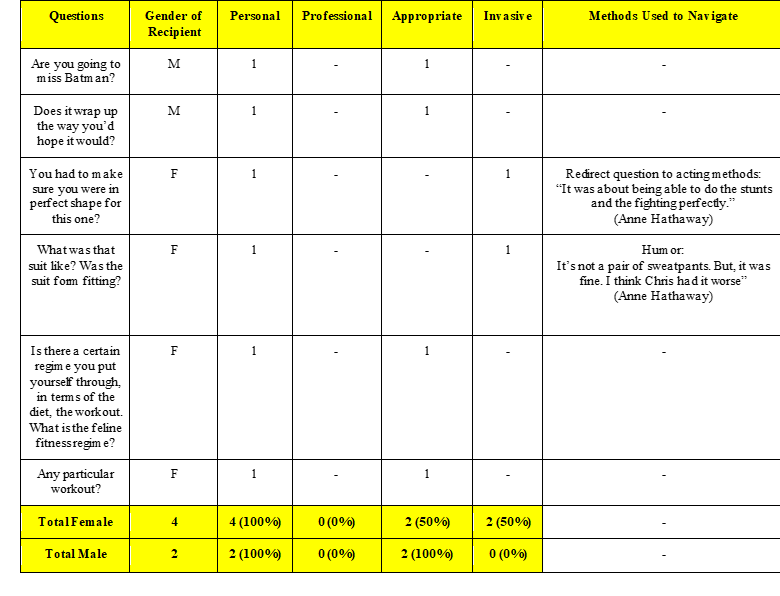
, , , , , ,

Language Ideologies in Animated Films: Why does that character sound like that?

Talla Khattat, Jacob Gutierrez, Edna Tovar, Grace Yang, Al Jackson, Espie Maldonado

Why do all military characters in animation films have Southern accents? Throughout this blog, we aim to understand the world of languages in animated films and take you along with us. Audience members digest the creative choices that are made on screen and unconsciously learn to associate linguistic patterns with certain sociocultural elements. This research paper aims to observe the linguistic elements of accents and dialects to understand the correlating relationship with the language ideologies and cultural attitudes. We observed the films Aristocats (1970), The Secret of NIMH (1982), The Rescuers Down Under (1990), and Zootopia (2016), and categorized the different patterns observed based on several different elements. Our findings show that minority accents can be tokenized to invoke assumptions about a character in order to save screen time. We call on future research to understand how impactful some of these harmful depictions can be and emphasize the importance of respectful representation.

[expander_maker id=”1″ more=”Read more” less=”Read less”]

Figure 1: Aristocats end scene

Introduction and Background

Many would agree that animated films are a huge part of one’s childhood. From Disney princes and princesses to a mice version of the United Nations, everyone enjoyed their fair share of animated movies. The beauty of animation is the freedom to shape an entire world from the ground up, where every character is completely designed from scratch, and every choice, from costume, to music, to voice is made intentionally. With this freedom also comes challenges with needing to establish connections from what is seen on screen with the minds of the audience. From the start of the film, the creators need to quickly establish character relations and connections. Here, they use language shorthands that the audience is indirectly familiar with to signal the persona of the character. Our group’s research question aimed to understand throughout a series of animated films what traits or roles are typically associated with certain accents, language varieties, styles, or registers? Within this realm, we also wanted to understand how Standard American English would be treated compared to other accents or dialects. We hypothesized that non-standard varieties of English/Non-English will be associated or invoked when connected to ‘bad’ or side characters, while standard American English will be most often connected to ‘good’ characters or protagonists.

Previous research has indicated that the cultural value of individualism in the United States is reflected in the use of standard English, which often leads to a lack of tolerance towards other languages or English language variations (Wiley, 1996). Although Disney animated films are often translated into standard English, it hinders the complexity of modern language and erases many cultural elements (Bruti, 2009). Moreover, we have also found that language elements can be used to invoke association about certain groups of people in film. Previous work completed by Meek shows how language and race perform character portrayals and as the audience, we witness this work that is being “done”. (Meek, 2006). In other words, accents are often used to not only demonstrate an ethnicity, but also substantiate a portrayal of a certain stereotype associated with a certain group of people.

Methods

To gather data about the language ideologies and characters linked to them, we analyzed four different films; The Aristocats, The Secret of NIMH, The Rescuers: Down Under, and Zootopia. Particularly, we noted what accents and languages were used (or created) in these films and what characters or themes they were associated with. We chose to focus on animated animal characters since we felt that filmmakers could ‘get away with more’ and because language is the main humanizing factor in animal characters, we could better see how language/accents were being used to invoke assumptions about the character.

Watching the movies completely through and inspired by the methodology of a paper written by Janne Sønnesyn, we then categorized our character findings into several categories including their: language/accent, role in the movie, costume, character features, gender, and other distinguishable elements. In sum, we analyzed 66 characters along these 6 categories.

Moreover, by codifying our analyses, we can answer the research question, what traits or roles are associated with certain accents, language varieties, styles, and registers? How do the filmmakers express differentiation amongst characters through the use of language and character design?

Results and Analysis

After empirically analyzing our data, we found several patterns that confirmed part of our hypothesis and refuted others. We looked at our data as an aggregate, combining the findings from all four movies and examining the results in this way.

Figure 2: Character accent pie chart by percentage

First Result

Referencing Figure 1 which provides a visual representation of the distribution of the observed character accents, we were able to establish four distinct results. Firstly, we found that the protagonist(s) of the films indeed were associated with the American Standard English accent 54% of the time. Furthermore, 100% of the protagonists had European or American accents — in other words, no minority population accents were represented in the protagonists of these films.

Second Result

This point leads to a second key finding that minority population accents were typically attached to side characters. In fact, 64% of all side characters had a minority accent. Put differently, minority population accents were overrepresented in this character role and underrepresented in others. Heroes did not tend to have minority population accents. Notably however, no antagonist had a minority population accent either — which refuted part of our hypothesis.

Figure 3: Character ‘Duke Weaselton’ from Zootopia

Along the same lines as our minority population accents, non-rhotic accents (accents that ‘drop’ the pronunciation of ‘r’), were commonly used in connection to characters of low socioeconomic status or working class. Some examples of these non-rhotic accents were the New York accent and AAVE (African American Vernacular). We noted 5 characters that used a non-rhotic accent; 3 were associated with petty crime,1 was a working-class shop employee, and 1 was a ‘street’ cat (what we interpreted as houseless for our analysis). Figure 2 depicts one such character from Zootopia, Duke Weaselton, who has a New York accent and is one of the movie’s shady characters — involved in thievery, bootlegging, and evading arrest.

Third Result

Another pattern that emerged was the use of the American Southern Accent to invoke themes of militarism, violence, and unintelligence. Of all 5 characters observed to have the American Southern Accent, 2 were antagonists, 4 invoked themes of militarism (deduced through plot; such as one of the antagonists, McLeach —figure 4 — having the American Southern Accent and a past in the military), and 3 were displayed as unintelligent (deduced through plot — such as one character with the American Southern Accent calling, as seen in this clip (“It’s In My DNA – Zootopia” ‘DNA’, “dunnuh”). 

Figure 4: The Rescuer’s: Down Under villain, McLeach

Fourth Result

The final pattern that we noticed through our data is that ‘sophisticated’ characters had American and European accents 88% of the time. We coded ‘sophisticated’ as characters that were portrayed as respected, legendary, wise, or graceful, which we deduced through plot and surrounding character reactions. For instance, one character in The Secret of NIMH was sought out in answer to the protagonist’s dilemma, since they were canonically ‘all-knowing’ and powerful. Of the 9 characters we coded as ‘sophisticated’, only one did not have an American or British accent.

Discussion and Conclusions     

This study offers insights into the impact of accent features on stereotypes among animal characters in animation. While we cannot definitively speak on behalf of the filmmakers as to whether these depictions were intentional, we establish these findings as results of our observations. Furthermore, we recognize that these choices could be made subconsciously.

Media is one of the greatest socialization agents. Animated films play a huge role in influencing children’s perceptions of the world and other people. With repeated representation of problematic stereotypes, viewers will believe they are true. Our data spans 46 years, emphasizing that while progress has been made, there is a long way to go. While there are less explicitly harmful linguistic stereotypes being utilized, it is still true that protagonists consistently speak with ASE while side characters are relegated to minority accents. The biggest difference throughout time is a diversification of accents, but their distribution has remained the same. We must also consider the level of authority as a source of knowledge Disney has. For those who do not question the status quo, they are even more likely to believe in stereotypes when they come from a ‘reputable’ source like Disney. For this reason, it is crucial for filmmakers and powerful studios to be responsible and inclusive with the media they produce.

To further broaden our understanding of this phenomenon, it would be worthwhile to extend research to human characters in Disney animated films. According to Brous, this type of linguistic stereotyping occurs in films such as Frozen, Coco, and Moana (2020). It is clear that the negative representation through accents extends further than cartoon animals. Søraa’s work would be useful to explore a film like Brave, where the setting itself contributes to reflecting stereotypes portrayed through linguistic markers (2019). With regards to minority cultures, Towbin et al. would serve as a resource to study how non-dominant cultures are represented negatively, which can be seen in Pinocchio, Alice in Wonderland, Peter Pan, Oliver, and Aladdin (2004).

It is also essential to acknowledge the issue of stigmatization of the female characters in Disney movies, as highlighted by Soares (2017). According to Växjö (2014), Disney princesses exhibit many stereotypical linguistic features, so their characters adhere to the traditional gender roles and expectations. Moreover, it is important to examine the impact of misrecognizing accents and linguistic features in television and how it might affect child viewers, causing them to internalize negative stereotypes portrayed in animated programs. Wenke’s article (1998) can serve as a source for exploring how children’s attitudes towards people and activities can be influenced by the portrayal of linguistic elements in television programs.

In the end, the impacts of animated films and the representations of different peoples, cultures, and identities can have long-lasting impacts on the people, more importantly children who watch animated films. While it’s not a direct issue, the unintended consequences of filmmakers, animators, and writers have an important job in creating media that is representative, respectful, and for audiences of all ages, as many animated forms of media have previously encouraged and helped spread harmful stereotypes of minorities for decades.

Figure 5: The Secret of NIMH scene

References

Accents in children’s animated features as a device for teaching children to ethnocentrically discriminate. (2019). Upenn.edu. https://www.sas.upenn.edu/~haroldfs/popcult/handouts/wenkeric.htm

Bluth, D. (1990). The Secret of Nimh. Sulivan Bluth Studios.

Brous, S. (2020, December). “Frozen” In Time: Dialect and Language Ideology in Disney Films (thesis). Tri College Department of Linguistics. Retrieved from https://scholarship.tricolib.brynmawr.edu/bitstream/handle/10066/23186/Brous_thesis_2020.pdf?sequence=1&isAllowed=y. 

Bruti, Silvia. (2009) From the US to Rome Passing through Paris. InTRAlinea. Online Translation Journal > Special Issues > Special Issue: The Translation of Dialects in Multimedia > From the US to Rome Passing through Paris http://www.intralinea.org/specials/article/From_the_US_to_Rome_passing_through_Paris.

Meek, B. A. (2006). And the Injun Goes “How!”: Representations of American Indian English in White Public Space. Language in Society, 35(1), 93–128. http://www.jstor.org/stable/4169479

Reitherman, W. (1970). The Aristocats. United States; Walt Disney Pictures.

Schumacher, T. (2012). The Rescuers Down Under. United States; Walt Disney Pictures.

Søraa, I. (2019, May). The Sound of Disney (thesis). Master’s thesis in Language Studies with Teacher Education. Retrieved from https://ntnuopen.ntnu.no/ntnu-xmlui/bitstream/handle/11250/2623375/no.ntnu:inspera:2276305.pdf?sequence=1. 

Soares, T. (2017). Animated Films and Linguistic Stereotypes: a Critical Discourse Analysis of Accent Use in Disney Animated Films Part of the Bilingual, Multilingual, and Multicultural Education Commons Recommended Citation Soares, Telma O. (2017). Animated Films and Linguistic Stereotypes: a Critical Discourse Analysis of Accent Use in Disney. https://vc.bridgew.edu/cgi/viewcontent.cgi?referer=&httpsredir=1&article=1053&context=theses

Spencer, C. (2016). Zootopia. United States; Walt Disney Animation Studios.

Towbin, M. A., Haddock, S. A., Zimmerman, T. S., Lund, L. K., & Tanner, L. R. (2004). Images of gender, race, age, and sexual orientation in Disney feature-length animated films. Journal of Feminist Family Therapy, 15(4), 19–44. https://doi.org/10.1300/j086v15n04_02 

Wiley, T. G., & Lukes, M. (1996). English-Only and Standard English Ideologies in the U.S. TESOL Quarterly, 30(3), 511–535. https://doi.org/10.2307/3587696

Växjö, Kalmar (2014). Happily Ever After: A Linguistic Study of the Portrayals of the Female Characters in One Old and One New Disney Princess Film https://www.divaportal.org/smash/get/diva2:795579/FULLTEXT02.pdf

 [/expander_maker]
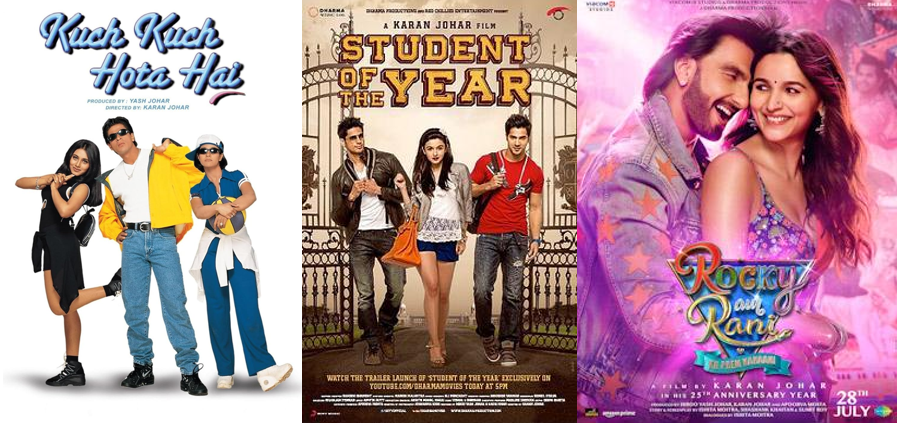
, , , ,

A Talk About “The Talk”

Tess Ebrami-Homayun, Saba Kalepari, Hannah Pezeschki, Shaina Tavari

One in five parents reports that they will never have a conversation regarding sex education with their children. The avoidance and uncomfortable nature of this conversation led us to explore the differences in communicative patterns between mothers and fathers to find what gives this conversation these attributes. To conduct our research as UCLA undergraduate students, we analyzed various media portrayals coming from advertisements, movies, and TV shows. We looked at how often euphemisms and communication aspects occur. In our research, we were able to find distinct patterns in every “talk,” such as low tones/long pauses, similar settings, conversation ending on a ‘high,’ indirectness/vague word choice, awkwardness/shame, and lack of eye contact. By bringing attention to these patterns, we can provide parents with a better understanding of how to communicate sexual health concerns to their children.

[expander_maker id=”1″ more=”Read more” less=”Read less”]

Introduction and Background

“The talk” refers to the first and awkward time when a parent(s) explicitly discusses sex and sexual health with their children, often showing typology themes of awkwardness and seriousness that are attributed to “the talk.” This conversation has an uncomfortable and awkward connotation attached to it, leading us to want to explore the linguistic and communicative patterns that collectively work together to give “the talk” this connotation (Ashcraft, 2017). In our study, we found a difference in the way parents speak to their children about sexual health depending on the child’s gender. This TED talk highlights the importance of having “the talk” to combat the negative association with the subject of sex (Talking dirty: De-stigmatising conversations on sex | Kate Dawson | TEDxGalway). Our target population is various types of media portrayals within the last 20 years of “the talk” between parents and children between the ages of 13-20. Our study attempted to answer the research question of how different communication aspects between mothers and fathers culminate in the shameful nature of “the talk.” We predicted that our research would show different communicative patterns between mothers and fathers (Grossman, 2022). Furthermore, we discovered common communicative patterns in “the talk” between mothers and fathers, such as low tones/long pauses, similar settings, resolution, awkward body language, and indirectness, including vague word choice.

Methods

The methodological design we used to collect data for our research on “the talk” was looking at available digital media examples depicting “the talk” between a parent and their child, specifically scenes from TV shows, YouTube videos, or ads using stereotypical patterns associated with “the talk.” Every member of the group had a similar idea of what to look out for in the data samples: awkwardness, similar settings, conversations about sex specifically and not puberty, long pauses, lack of eye contact, indirectness or vague word choice, and a resolution at the end of the conversation. We collected seven media portrayals from advertisements and scenes from movies and TV shows, to see how often euphemisms and communication aspects occur.

Results and Analysis

From our data results, we discovered that “mothers display similar levels of concern toward sons and daughters” about “the talk,” while fathers exclusively spoke to their sons about the talk (Butler, 2008). These results reflect similar gender stereotypes regarding the mother’s and father’s roles in the household, where the father is the ‘breadwinner,’ and the mother is the ‘homemaker’ (Robles, 2017). Mothers are often expected to take on extra household tasks, including having “the talk,” without any additional credit. Contrastingly, fathers simply have to go to work to provide income for the household, receiving praise for being the ‘king of the house.’

Notably, our results should not be taken as true results of an experiment since we did not conduct inferential statistics. In the 7 data samples we coded, the results showed low tones/long pauses, similar settings, conversation ending on a ‘high’, indirectness/vague word choice, awkwardness/shame, and lack of eye contact.

Low tones and long pauses

Low tones and long pauses were specifically prevalent in the mothers giving “the talk,” while fathers were more abrupt and aggressive in their tone of voice. This difference can show the natural softness present in mothers as opposed to fathers generally being more abrasive in their speech (Darling & Hicks, 1982). For example, in the TV show Young Sheldon, the father is giving “the talk” to his son, but his tone of voice suggests his disinterest (Figure 1):

“I’m just gonna grab a beer.”- Dad

“Has he had the talk yet?”- Grandma asked Sheldon’s Father

“Cmon’ Connie”- Dad rolling his eyes at the grandmother

“You’re probably not going to [have sex]”- Dad to his son Sheldon

In Young Sheldon, the father is seen completely brushing off the conversation and discouraging his son from having “the talk.” In contrast, what we found in the mothers in our data sample; for example, in Big Mouth, frequently talk in a low tone to support their daughter, who claimed to have had a bad sex experience and no longer wants to have sex. The mothers in our data were much more willing to have “the talk,” using softer tones to suggest supportiveness and understanding of the uncomfortable conversation.

Figure 1- Young Sheldon getting “the talk” from his father: His father does not have a low tone here.

Settings

There were also similar settings in all the data samples; nearly every scene was on a bed or couch, with the parent and child sitting on opposite ends. The lighting in our data was mostly dim, probably to depict a sense of uncomfortableness for the subjects in the data. The settings were consistent between mothers and fathers when having “the talk” with their children. For example, in Sex Education, Otis is having “the talk” with his mother in their living room on the couch (Figure 2):

“Do you want to talk about it?- Mom

*Otis in silence*

“I want you to know you can talk to me about anything. This is a safe place”- Mom

“This is not a safe place mom, you need to stop analyzing everything I do”- Otis as he storms out of the room

The mother was supportive in this conversation, while Otis was wildly uncomfortable. Part of this could be from the setting of the room, which was dimly lit, and because they are sitting on the couch trying to keep a distance between themselves. If the lighting is dim, the person is likely to feel uncomfortable (Michigan State University, 2018).

Figure 2- Sex Education characters having “the talk” on a couch: Otis and his mother are seen awkwardly sitting on the couch, and the room has dim lighting.

Ending on a ‘high’

In our data samples, “the talk” always ended on a ‘high’; there was always a resolution by the end. For example, in the Amazon ad (Figure 3) we sampled, the conversation between the mother and her daughter went like:

“I’m glad we had this talk”- Mom

“Me too”- Daughter

While the conversation is happening, the parents and the child are uncomfortable. However, by the end of “the talk,” there is some sort of resolution to end the conversation and address that the conversation was necessary.

Figure 3- Mother and Daughter in the Amazon Ad getting “the talk”: The mother and daughter are about to hug in this image after “the talk”, showing resolution.

Indirectness and Vague Word Choice

There was also indirectness and vague word choice in all of our data samples. Patterns associated with indirectness included avoiding the word “sex” explicitly and the general topic of sex in the conversation. For example, in our Bridgerton sample, Lady Bridgerton ends the conversation when her daughter asks about sex. (Figure 4):

 “How does a lady come to be with child?” – Eloise to her Mother

“What Eloise?”- Mother

“I thought a lady had to be married.”- Eloise

“Eloise that is more than enough!”- Mother

*Eloise’s brothers enter the conversation*

“Don’t look at me”- Brothers

“I do hope the two of you [the brothers] are not encouraging improper topics of   conversation”- Mother to Brothers sitting with Eloise

“Not at all Mother”- Brothers

In this conversation analysis the mother shuts down the conversation by avoiding using the word “sex,” and by deeming the conversation in general as ‘unladylike.’ Eloise did not even know what ‘sex’ was, as she thought it was a product of marriage.

Figure 4: Bridgerton Mother and Daughter having “the talk”: When approached with a question related to sex, Lady Bridgerton abruptly shuts down the conversation in efforts to avoid the topic.

Awkwardness and Shame

Awkwardness and shame are heavily associated with “the talk” from our gatherings. We found that themes of awkwardness and shame are present in all seven data samples. One example is from That 70’s Show, where we see the father on numerous occasions responding in an abrupt tone to demonstrate his strict attitude against sex to his son (Figure 5):

“Let’s talk about birth control” – Kitty Forman to her son

“Birth control? Don’t do it. That’s your birth control” – Red Forman responding to Kitty Forman to his son

“Did you know Lori is flunking out of college?” – Eric Forman asking both parents

“Don’t change the subject. You got strange thought in your little head mister and that Don is a nice girl” – Red Forman told his son in response

“Red, you’re giving him the wrong idea about sex. It’s not dirty-” – Kitty Forman in response to Red

“But it’s not clean either” – Red Forman’s response

The father was frequently stern in his approach to clearly show his son that sex is a ‘dirty’ activity he should not partake in. When it came to his son, he was quick to highlight all the reasons he should not do it because it’s shameful. The father inflicts shame on his son for even mentioning sex, while the mother tries to alleviate that shame by deeming “sex” as “not dirty.” Both parents should make their children feel comfortable and build up their self-esteem with “the talk” to normalize it (Keeton, 2019).

Figure 5- That 70s Show: In this scene, Red Forman engages in the conversation, attaching a shameful connotation to sex, while Lori expresses support and speaks more relaxed.

Eye Contact

Lastly, we noticed a lack of eye contact during “the talk” until the resolution occurred at the end. Lack of eye contact may be associated with the awkwardness of “the talk,” where neither the parent nor child wants to be there having the conversation. Avoiding eye contact can be a way that humans try to avoid the conversation as a whole (Parvez, 2023). This can be seen in our data sample from Friday Night Lights, where the mother is having “the talk” with her daughter. (Figure 6):

“What about Birth control?”- Mother

“Mom, I don’t want to talk about it.”- Daughter

“That’s the conversation.”- Mother

“Yes, we’re using birth control”- Daughter

In the beginning parts of the conversation, the daughter visibly looks uncomfortable. Not only does her body posture suggest it, but also the lack of eye contact while talking about contraceptive use. This suggests that the mother and daughter are uncomfortable with this topic (Mullis, 2020). While the conversation is obviously awkward between the mother and daughter, the mother still has a low tone of voice while trying to be supportive of the daughter’s decision to start having sex.

Figure 6- Friday Night Lights Mother and Daughter having “the talk”: They are avoiding eye contact while talking about safe sex.

Based on our 7 data samples and the above-mentioned communicative patterns relevant to “the talk” when analyzing the data, we see the gendered differences between mothers and fathers during “the talk.” Figure 8 provides a bar chart depicting how often each communicative pattern in “the talk” that we mention appears with each parent.

Discussion and Conclusions

Having identified the communicative patterns culminating in the uncomfortable nature of this conversation, parents can approach this situation differently in efforts to create a more welcoming and comfortable environment for them and their child. The samples show common themes within “the talk” in regard to communicative patterns between mothers and fathers. While our data samples supported our predictions, it is important to note that we did not conduct a true experiment or present inferential statistics. Any quotes we used to back up our results are only with the assumption that if we properly conducted an experiment, our results would be generalized to the public, however, we cannot because these are not true scientific results.

A parent’s word choice and level of directness regarding sexual health have the potential to impact their body confidence and safety (Ashcraft, 2017). The data collected shows that by changing or eliminating said behaviors, like maintaining eye contact and avoiding long pauses, parents can work towards fostering a welcoming environment when having this conversation with their children. In our attempt to examine the ways the media portrays “the talk,” we wanted to see how mothers and fathers approach the conversation, and whether it differs when talking to their sons or daughters. While “the talk” is naturally uncomfortable, it is inevitable, so children can have an honest education on sex. Hence, the importance of demonstrating the ways different approaches may foster either a successful or unsuccessful educational experience between a parent and child. By considering the various familial dynamics during “the talk” that could create an awkward and uncomfortable atmosphere, we may emphasize effective tools to help improve the overall outcome of the conversation and strengthen family communication.

Figure 7- Chart showing the difference in the mother and father’s communicative patterns  (0= it did not appear with that parent in the sample
1= barely present in the sample
2= moderately present in the sample
3= highly present in the sample)

References

Amazon (2022). “Amazon TV Spot, ‘Savings Talk’.” Amazon. https://www.ispot.tv/ad/bvmb/amazon-savings-talk

Ashcraft, Amie M, and Pamela J Murray. “Talking to Parents About Adolescent Sexuality.” Pediatric clinics of North America vol. 64,2 (2017): 305-320. doi:10.1016/j.pcl.2016.11.002

Butler, R., and Shalit-Naggar, R., (2008). “Gender and Patterns of Concerned Responsiveness in Representations of the Mother-Daughter and Mother-Son Relationship.” JSTOR, https://www.jstor.org/stable/27563524, pp. 836-851.

Darling, C. A., & Hicks, M. W. (1982). Parental influence on adolescent sexuality: Implications for parents as educators. Journal of Youth and Adolescence, 11(3), 231–245. https://doi.org/10.1007/bf01537469

Grossman, J. M., Richer, A. M., Hernandez, B. F., & Markham, C. M. (2022). Moving from Needs Assessment to Intervention: Fathers’ Perspectives on Their Needs and Support for Talk with Teens about Sex. International journal of environmental research and public health, 19(6), 3315. https://doi.org/10.3390/ijerph19063315

Herron, K. (2019). Sex Education. Eleven Company, Retrieved from Season 1 Episode 1 on Netflix.

Keeton, G. (2019). Home – focus on the family. The Talk. Retrieved February 16, 2023, from https://www.focusonthefamily.com/wp-content/uploads/2019/08/The-Talk.pdf

Michigan State University. (2018). Does dim light make us dumber?. ScienceDaily. Retrieved March 22, 2023 from www.sciencedaily.com/releases/2018/02/180205134251.htm

Mullis, M. D., Kastrinos, A., Wollney, E., Taylor, G., & Bylund, C. L. (2020). International barriers to parent-child communication about sexual and reproductive health topics: a qualitative systematic review. Sex Education, 21(4), 387–403. https://doi.org/10.1080/14681811.2020.1807316

Parvez, H. (2023). Avoiding Eye Contact in Body Language (10 Reasons). Psych Mechanics. https://www.psychmechanics.com/avoiding-eye-contact/

Robles, J., and Kurylo, A. (2017). “Let’s Have the Men Clean up’: Interpersonally Communicated Stereotypes as a Resource for Resisting Gender-Role Prescribed Activities.” JSTOR, https://www.jstor.org/stable/26378342, pp. 673-693.

YouTube. (2021, November 5). Big mouth: The sex talk. YouTube. Retrieved March 23, 2023, from https://www.youtube.com/watch?v=Es2DyU755GQ

YouTube. (2020, December 28). Bridgerton – how does a lady come to be with a child. YouTube. Retrieved March 23, 2023, from https://www.youtube.com/watch?v=vQyrXWOEzjw

YouTube. (2020, June 19). Georgie getting the talk #youngsheldon. YouTube. Retrieved March 23, 2023, from https://www.youtube.com/watch?v=UoBbDkBiep0

YouTube. (2012, December 17). Red Forman and kitty about sex. YouTube. Retrieved March 23, 2023, from https://www.youtube.com/watch?v=9DumgFFVPQs

YouTube. (2022, May 2). Tami and Julie have the sex talk | friday night lights. YouTube. Retrieved March 23, 2023, from https://www.youtube.com/watch?v=cFtexFWJ0HQ

 [/expander_maker]
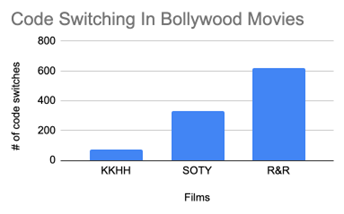
 

, , , ,

Unraveling Mean Length Utterances in Romantic Scenes: Action Versus Romance Films

Britney Lam, Iris Lin, Alice Wang, Julia Zhou

Romance is a common element across all genres of film. Whether it is an action movie, a comedy, adventure, or drama, romance is often included within the main plot. Films are created with a target audience, such as age or gender. Our research question emerged: how is romance portrayed differently in movies that are intended to cater to different audiences? Specifically, what linguistic differences can be observed between the romantic scenes? Through the analysis of 10 total films, we found that MLUs in action and romance movies did not significantly differ from each other, though MLU in dialogue succeeding romantic scenes are indeed longer in romance movies.

[expander_maker id=”1″ more=”Read more” less=”Read less”]

Introduction and Background

Stereotypically, romantic and action movies are catered towards the female and male genders, respectively. Although a lot of people, regardless of their gender identification, watch both action and romance movies, such gendered catering may still continue to exist, and characters may still exhibit different behavioral and linguistic patterns across the two genres. One specific type of scene may be the most affected by the genre of the movie — romantic scenes. If the language of romance scenes is indeed different between action and romance films, these stereotypes may affect the audience’s perception of different genres of movies, which in turn intensifies the stereotypical association between certain behaviors with one specific gender. Consequently, our research intends to observe whether the language used in romantic scenes is indeed different between romantic and action movies.

 Previous literature had tackled language style and non-linguistic elements (eye contact, body language) in romance and action movies respectively, but none had compared romance to action films in terms of dialogue length (Dewi et al., 2020; Burns et al., 2009). In a study done by Dewi et al. (2020), the word choice of characters in action films was examined to identify linguistic style patterns; their methods largely inspired our research design to study character dialogue. In research done by Burns et al. (2009), action movies were found to significantly differ from other genres in terms of actors’ behavior (e.g. fewer smiling); this made us wonder how linguistic elements may differ as well.

Thus, we chose to focus on the romance and action genres given that, stereotypically, action movies are catered more to the male audience and romance movies are catered more to the female audience (Brandenburg et al., 2004). Furthermore, building off of research done by Grant et al. (2001) that found males and females are portrayed to behave stereotypically in films, we sought to address the gap among these individual research studies by examining the linguistic features of both romance and action films, then comparing the two to identify differences between the dialogue in romantic scenes catered to different audiences, and whether or not they align with male and female stereotypes.

We set out to answer this by examining how Mean Length Utterance (MLU), a tool used to judge meaningful dialogue length, would differ before, after, and during romantic scenes between action and romance films. MLU is mainly utilized in previous research to study toddlers’ speech, but our research decided to utilize this novel measurement for our linguistic analysis, as it provides insight into the amount of information-rich utterances (Brown, 1973).

We hypothesized that romantic scenes in action films will have shorter MLUs that precede, succeed, or occur during intimate behavior, while romantic scenes in romance films will have longer MLUs that precede, succeed, or occur during intimate behavior. By examining linguistic differences between films catered to males versus females, we hoped to identify and address the stereotypical use of language in movies of action and romance genres, and subsequently propose changes to filmmaking that discourage reinforcing such stereotypes.

Methods Design

We analyzed the dialogue between heterosexual couples in 10 English-language films released between 1980 and the present (see Table 1). These films were chosen because they were high-grossing films that have accessible scripts. In our chosen romance and action films, we investigated romantic scenes that included direct or indirect displays of affection between two characters.

Direct examples included verbal confessional acts of love, including the explicit usage of the words “love” or “like.” 

Indirect examples included verbal acts without “love” or “like” and behavioral displays of intimacy, which included sharing personal thoughts and emotions, as well as hugging, holding hands, and kissing. For example, in this scene in Avatar (2009), the main characters indirectly stated their affections towards each other:

Neytiri: You are Omaticaya now. You may make your own bow from the wood of Hometree. (she looks away) And you may choose a woman.

The Amazon warrior trying so hard to sound casual. Jake suppresses a smile.

Neytiri: We have many fine women. Ninat is the best singer —

Jake: I don’t want Ninat.

Neytiri: There is Beyral — she is a good hunter —

Jake puts his fingers on her lips to stop her.

Jake: I’ve already chosen. But this woman must also choose me.

She takes his hands and their fingers intertwine, moving gently over each other.

Neytiri: She already has.

Three variables, dialogue preceding the romantic scene (“MLU Preceding”), during the romantic scene (“MLU Love”), and succeeding the romantic scene (“MLU Succeeding”), were taken from film transcripts and analyzed for their MLUs. In our research, we calculated MLU by the number of morphemes divided by the number of utterances in speech.

For example, we took this preceding statement before the romantic scene from Crazy Rich Asians. This was the dialogue before the intimate behavior of a marriage proposal.

Nick: Rachel Chu. Will you marry me and make me the happiest man in this world?

(16 morphemes and 2 utterances)

16/2 = 8 MLU

We defined utterance as speech without pause. For example, Nick speaks, pauses, and then speaks again after saying Rachel’s name – this would be considered two utterances. The word “happiest” would be counted as two morphemes, split between “happy” and the suffix “-est.” Consequently, there are 2 utterances in total, with 16 morphemes, resulting in a MLU of 8.

Additionally, another variable, “Love Presence”, was recorded for every scene we analyzed, which indicated whether a direct display of affection was present in the scene.

We repeated this process for all 10 of our films (5 romantic, 5 action) by examining the transcripts and counting the number of occurrences the words “like” and “love” were explicitly used.

Table 1: List of movies included in our analyses, with their genres and number of scenes listed.

Results and Analysis

Firstly, we can look at the descriptives of our data (see Table 2) — The average number of MLU Preceding, MLU Love, MLU Succeeding, and Love Presence in both action and romance movies.

Table 2: Descriptives of our data.

As can be seen in Table 2, notable variables that show a difference are MLU Succeeding and Love Presence. Romance movies seem to have more MLU Succeeding than action movies, which means that after the main characters confess their love for each other, romance movies seem to have longer and more meaningful utterances. Moreover, action movies seem to have a higher frequency of Love Presence than romance movies, meaning that characters in action movies may more often state their love directly.

Subsequently, four separate independent samples t-tests, with a 95% confidence interval for the mean difference, were conducted to compare if the two genres significantly differ from each other in their MLUs. All four tests revealed non-significant results, showing that in romance and action movies, MLU Preceding (t(9) = -.11, p = .915), MLU Love (t(5) = .30, p = .777), MLU Succeeding (t(4) = -1.72, p = .161), and Love Presence (t(11) = .75, p = .471) all do not significantly differ from each other. Figures 1-4 below visualize the results of the four t-tests.

Fig 1. MLU Preceding for action and romance movies.

Fig 2. MLU Love for action and romance movies.

Fig 3. MLU Succeeding for action and romance movies.

Fig 4. Love Presence for action and romance movies.

Discussion

Contrary to our hypotheses, our results showed that romance and action movies did not differ significantly in their lengths of utterances. There is a trend towards significance for MLU Succeeding, which indicates that romance movies may contain more information after the confession of love. As for the reason why there may be such a trend, maybe romance movies tend to describe what happens after the characters state their affections towards each other, while action movies tend to view the confession of love as an ending for the romance elements and focus on the “main plot” afterwards. For example, in the action movie Guardians of the Galaxy Vol. 2 (2017), one romantic scene ended as soon as the main character Quill’s affection towards the other character, Gamora, was revealed by another character, causing that the scene did not have any morphemes for MLU Succeeding (see Fig.5). This specific absence of any utterances after the MLU Love might be due to that a) the focus of the movie was not on the romance, but rather the main characters defeating the villains; b) Quill tries to deny his affections, and the scene quickly ended to express his embarrassment. In contrast, in the romance movie Crazy Rich Asians (2018), the main characters continued to express their excitement and happiness after accepting the marriage proposal, causing the MLU Succeeding to be particularly long (see Figure 6). Still, this trend can only be applied to our sample, and cannot be generalized to all the romance and action movies in general because of our limited sample size.

Fig 5. Script for Guardians of the Galaxy Vol.2, after the main character Quill’s affection is revealed.

Fig. 6 Script for Crazy Rich Asians, after the main character Rachel accepts the marriage proposal.

Because of time and resource constraints, our study has several limitations. Firstly, our sample size (10 movies and 13 scenes in total) may have limited the power of our data, having more scenes and more movies may have yielded more statistically significant results. Secondly, because we selected romantic scenes where the main characters’ affections were revealed, the linguistic variables were sometimes missing. For example, the scene from Guardians of the Galaxy Vol.2, as we mentioned before, did not contain any MLU Succeeding. These partially incomplete datasets may have further limited our statistical power. To solve this flaw in data collection, we would recommend future studies to collect more data to remedy the fact that some romantic scenes do not contain any utterances for succeeding statements of love. Alternatively, future studies can define and select romantic scenes differently, so they can control and ensure every scene will contain utterances for all three variables. Despite these limitations, our methods of investigating the MLUs of scenes are novel, as no previous research directly compared romantic scenes in romance and action movies, and little, if any, research on linguistic analyses of movies selected MLU as their method.

Given that our results showed no significant difference between how romance and action movies depicted romance, it will be interesting to look at how the two genres may have converged and become more similar over time. Comparing romance and action movies chronologically based on their release date may reveal a pattern or trend of change. In fact, our results may hint such chronological changes, as newer action movies (Guardians of the Galaxy Vol. 2 (2017) and Spiderman: Far From Home (2019)) contained more statements of love than compared to older action movies (Star Wars: The Empire Strikes Back (1980)). This difference we observed can be further explored by creating a study focused on collecting love statements from romance and action movies across time, and then comparing word choice or MLU.

Additionally, MLU is only one way of investigating the length of utterances. Future studies can use different methods. For example, linguistically, future studies can look deeper into a) how main characters explain their reasons for loving the other character; b) if main characters express their hopes of moving forward in their relationship; (c phonetically, their intonation when confessing their love. Non-linguistically, future studies can look into the main characters’ body language and eye movements when they are confessing their love. Behavior before, after, and during romantic scenes can be analyzed, as well as the setting and time of day.

Finally, recent literature has observed recent efforts by films to depict less stereotypical portrayals of romance (Brandenburg et al., 2014). There may be an emerging trend of combatting traditional narratives, which would be an interesting area of study to explore. In line with the idea of studying films chronologically across time, future research can aim to examine differences between romance and action films released in recent years and compare them to one another or to older films. If romance and action films are stereotypically catered towards female and male audiences, then it is entirely possible that films have changed over time to cater to changing societal standards. For example, if there is more demand for a female lead that is portrayed as independent and strong-willed, movies with romantic scenes may adapt linguistically to that. It will be an interesting field of study to identify these emerging patterns and trends.

References

Brandenburg, J. D., Dodds, L. A., Harris, R. J., Hoekstra, S. J., Sanborn, F. W., & Scott, C. L. (2004). Autobiographical memories for seeing romantic movies on a date: romance is not just for women. Media Psychology, 6 (3), 257-284.

Brown, R. (1973). Development of the first language in the human species. American Psychologist, 28(2), 97-106. https://doi.org/10.1037/h0034209

Burns, A. C. (2009). Action, romance, or science fiction: your favorite movie genre may affect your communication. American Communication Journal, 11(4), 1-17.

Cameron, J. (1997). (Director). (1997). Titanic [Film]. 20th Century Fox; Lightstorm Entertainment; Paramount Pictures.

Chu, John. M. (Director). (2018). Crazy Rich Asians [Film]. Color Force; Electric Somewhere; Ivanhoe Pictures; SK Global; Starlight Culture; Warner Bros. Pictures.

Dewi, N. M. A. J., Ediwan, I. N. T., & Suastra, I. M. (2020). Language style in romantic movies. Humanis: Journal of Arts and Humanities, 24(2), 109-117.

Grant, B. K. (2001). Strange days: gender and ideology in new genre film. In M. Pomerance (Ed.), Ladies and gentlemen, boys and girls: Gender in film at the end of the twentieth century (pp. 184-199). State University of New York Press.

Gunn, J. (2017). Guardians of the Galaxy Vol. 2 [Film]. Marvel Studios.

Kershner, I. (1980). Star Wars: The Empire Strikes Back [Film]. Lucasfilm Ltd.

[/expander_maker]
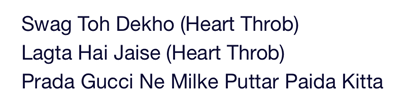
, ,

Roses are Red, Violets are Blue. You’re in Love with my Man? Guess my Voice Will Lower Too.

Kelly Eun, Isabelle Filen, Adeline Villarreal, Sylvia Le

Engaging in conversation with the man you like may lead you to feel all sorts of emotions. Maybe your heart starts racing, you find yourself laughing at every little thing he says, or you possibly say things you wouldn’t normally say. These are all very common character changes we may go through during these types of situations, but have you ever wondered if speaking to the man you like could also cause changes to your pitch? Our group conducted a sociolinguistic study in order to determine if a woman’s pitch altered while in conversation with a man of her interest, especially within the competitive environment of a dating show such as The Bachelor. With this objective in mind, the three longest running contestants were selected in order to analyze whether there was a possibility of pitch modulation while in one-on-one conversations with the bachelor. Praat was used to input data to find pitch means, as well as to discover if pitch change actually occurred.

[expander_maker id=”1″ more=”Read more” less=”Read less”]

Introduction and Background

Some of us may have a preconceived idea in regard to what happens to a woman’s voice when she talks to the man she likes, right? We could ask our friend, parent, or boyfriend to do an impression of a woman flirting with a guy and we would most likely hear something incredibly high-pitched and giddy with lots of giggling and hair twirling. This is a commonly held phenomenon in which a woman’s pitch raises in scenarios where she is interacting with a potential romantic partner (Re et al., 2012).

However, a study done in the UK (Pisanski et al., 2018) found that women on speed dates actually demonstrated a decrease in pitch value when the men they were interested in were in high demand, even highlighting how lower-pitched voices were more favorable than their higher-pitched counterparts. Why did they find a decrease in pitch? This is precisely what our group sought to uncover through our research, as we also asked ourselves…why?

To better understand typical traits associated with pitch, we discovered that higher-pitched voices are commonly indexed with fertility, youth, and femininity (Apicella and Fienberg, 2008)—all the traits men seem to absolutely swoon over, right? However, there might be some other traits men seem to be entranced by as well, such as sexual explicitness, seductiveness, dominance, and authority (Klofstad et al., 2012); such traits are also associated with a lower-pitched voice (Fraccaro et al., 2013).

Thus, we hypothesized that when we look at the average pitch values of our target population in our targeted scenario (which will be uncovered in our methodology discussion), the average pitch values of the contestants will be lower when they feel insecure of their position in the competition and higher when they feel more secure. The question we asked and pursued the answer to was the following: Does a lower pitch truly index the contestants’ desire and motive to assert their dominance through embodying a seductive, authoritative character who deserves not only a spot in the competition, but also the bachelor’s heart?

Methods

For our study, we first selected three women from Season 22 of The Bachelor (labeled as Contestants A, B, and C) who would remain for the longest duration, resulting in the selection of the winner, runner-up, and the “third place” contestant. We specifically chose these women because it allowed us to collect consistent data from the same three contestants throughout the whole season.

To analyze Contestants A, B, and C’s pitch across the entirety of Season 22, we divided the season into three stages: beginning (episodes 1-4), middle (episodes 5-7), and end (episodes 8-11). Pitch refers to the frequency of the sound waves made by a voice’s vibration. For instance, higher frequencies indicate higher pitch.

We then collected two utterances (e.g. brief comments) made by each of the three contestants per stage, for a total of 18 utterances (6 for each woman). To avoid the pitch being influenced by other voices, we only recorded utterances from one-on-one conversations between each of the contestants and the bachelor. The first utterance (Utterance A) was made by recording what the contestant had said before she received assurance from the bachelor, and the second (Utterance B) was made by recording what the contestant had said after. For the sake of this project, we not only considered comments such as “I like you too” or “I love you” as assurance from the bachelor, but we also took into consideration that a kiss could also be perceived as non-verbal assurance.

Afterwards, we separately inputted each utterance recording from each contestant and stage into Praat to determine if there was a change in pitch before and after Contestants A, B, and C received assurance from the bachelor. Praat is a software tool used in linguistic research to examine speech; in this specific study, we used it to analyze pitch. Rather than maximum pitch, the mean pitch values for Utterance A and Utterance B were used in order to account for possible pitch peaks and outliers that could arise and skew the pitch results. This would include a rise in pitch to indicate the end of a question or a potential fall of a declarative statement. So, utilizing the means of pitches provided a bigger picture.

Results and Analysis

Throughout the course of Contestant B’s run on the show, our group found a consistent increase in pitch, as evident by the table below.

Table 1: Comparison of Contestant B’s Pitch Values

Our data for pitch mean is measured in hertz (Hz), the standardized unit of frequency equal to one cycle per second. Sound frequency is determined by how waves oscillate while they travel to our ears and when the oscillation of frequency waves is higher, we hear a higher pitch.

The table shows a positive difference between Utterance B Mean Pitch and Utterance A Mean Pitch in hertz in all three stages of the competition (beginning, middle, and end), indicating that the pitches of Contestant B became higher after assurance from the bachelor. Based on our background research, this likely indicates that Contestant B became more relaxed after assurance during her conversations with the bachelor.

Additional research was conducted to find that Contestant B was the eventual winner of Season 22 of The Bachelor, meaning that she was proposed to by the bachelor in the final episode. Our group predicts that this likely contributed as a factor for the increase in her pitch, as she was one of the frontrunners of the competition.

However, it is also important to note that it is difficult to make definite inferences about how Contestant B was feeling confidence-wise as the competition progressed. For example, it is possible that she could have felt more relaxed, knowing that there were less women competing against her; contrastingly, it is also possible that the stakes became higher for her, and she felt more possessive or competitive with the remaining women.

Another important factor in the data for Contestant B is that specifically in episodes 2 and 7, Contestant B received a rose during a date from the bachelor, which is a rare occurrence as roses are typically offered during elimination “Rose Ceremonies.” The offer of this rose in addition to the lead-up to it could also have had an effect on Contestant B’s confidence, further playing a part in her pitch raise as an indicator of her ease.

When it comes to Contestants A and C, both of these women demonstrated instances where the changes of their pitch decreased (i.e. their pitches before getting a response from the bachelor were higher than their pitches after), as opposed to the increase we were anticipating. Let’s first take a look at Contestant A, whose middle and end pitch means had a decreasing comparison.

Table 2: Comparison of Contestant A’s Pitch Values

Looking at Table 2, we can see how Contestant A’s beginning stage pitch comparison was in alignment with our hypothesis. When she started her one-on-one conversation from that segment of the episode, her Utterance A had the mean pitch of 184.0992024 Hz. After the bachelor chimed in, the mean pitch of her reply was higher than before at 193.5689707 Hz. We found that this could be due to Contestant A feeling reassured by what the bachelor had said, which could have further contributed to her feeling less concerned about her placement in the competition and not as worried about having to modulate her pitch or portray a sensual appeal.

Let’s now take a look at Contestant A’s middle stage pitch comparison, which contrasts the comparison result of her beginning stage. While she had begun the conversation from this segment with a mean pitch of 177.2157487 Hz, this dropped to a mean pitch of 167.5482242 Hz after the bachelor had his turn of speaking to her. With cases like this where the contestant’s pre-assurance mean pitch value is higher than their post-assurance value, it may have been because what the bachelor had said to the contestants contributed to their feelings of uncertainty with both their relationship and place in the competition. By responding to the bachelor with a lower-pitched voice, it would be more likely to project more authority, which could strengthen their relationship with the bachelor and assert their reason to remain on the show.

Moving onto Contestant C, we can see in Table 3 that she also had two of her three pitch mean comparisons being a decrease like Contestant A.

Table 3: Comparison of Contestant C’s Pitch Values

Interestingly enough, whereas Contestant A’s mean pitch comparisons throughout the stages went from an increase to two decreases, Contestant C’s progression was in the reverse order of Contestant A’s and went from two decreases to an eventual increase by the end of the season. This development could possibly be due to Contestant C gradually reaching a place in her relationship with the bachelor that solidified her confidence, while Contestant A may have felt more hesitation with hers. It is important to note that in all of these utterances, although we used our best judgment to decipher the scenarios and contestants’ reactions, there may have been other factors outside of the ones we targeted that contributed to the pitch outcomes of these women.

Discussion and Conclusion

Upon gathering and analyzing our results, our group was able to determine that while our data somewhat aligned with our aforementioned hypothesis, the results may not have been as consistent as we previously imagined. With the conclusion of our research, we then began to account for potential limitations to the big picture we desired to paint as a result of our findings.

For example, we encountered a scenario with Contestant A in the end stage of the competition where her pitch began high. According to the scope of our project, this should indicate that her confidence level was high. However, after receiving an assuring statement from the bachelor, her pitch actually dropped, meaning that she felt less confident by the end of the interaction. An example of this scenario is shown below in Figure 1.

Figure 1 – Contestant A’s End-Stage Interaction Documentation with the Bachelor from Episode 11.

To account for this limitation, we attempted to think outside the realm of our project and dig a little deeper as to what factors could have led to this particular utterance not aligning with our hypothesis, and we may have gotten our answer from looking into something almost all of us have probably done at least once in our lives: lied.

Let’s say your boyfriend made you upset and finally mustered up the courage to ask the dreaded question: “Are you okay?” You look him dead in the eyes, clearly not okay, and say something along the lines of “I’m fine” or “I’m just tired.” Now, are you really fine or just tired? Absolutely not, but for reasons unbeknownst to everyone but the universe itself, you evaded the truth. Similarly, this could have been what we saw in our data as well.

Therefore, even though we used our best judgment to select a scenario in which the contestant received verbal assurance, when we consider the limited scope of our sociolinguistic research, we may not have been able to account for the internal psychological factors that pertain to a woman’s verbal expression of having accepted that assurance. Thus, as we saw in Contestant A’s final utterance, we presumed that her response of “I’m as ready as I’ll ever be” indicated to the listener that she has been assured and is feeling ‘ready’ to meet the bachelor’s family for the first time. Ideally, this should have been accompanied by a higher pitch to index her confidence and security in the competition. However, we can now presume that Contestant A’s statement did not actually reflect what she was feeling inside and she may have felt as though she was nowhere near ‘ready’ to meet the bachelor’s parents, thus explaining why her confidence level and (consequently) the mean pitch were lower by the end of her utterance, which actually does align with our hypothesis! If we had not calculated the mean pitch of this utterance or discovered an unexpected decrease that misaligned with our hypothesis, we would have not been able to think beyond the realm of our research and propose an internal factor that may have impacted what we found in our results. So, what our group initially identified as a suspected failure may not have been a failure at all.

Furthermore, our group looked beyond the bindings of our research and constructed further possible iterations of our project that could be used to bridge the gaps in both previous research and our project on pitch modulation and its indexicality. These iterations could dive into many possible examinations of pitch modulation such as mental/physical well-being, age of the target population, the presence of vowel shifting, and even examining a scenario in which the woman contrarily is not interested in the man she is interacting with. The inclusion of all of these external and, as we know now, internal factors could certainly come together and paint a clear and concise picture of this phenomenon, as it is one that certainly cannot be attributed to just one definitive variable.

References

Apicella, C. L. & Feinberg, D. R. (2008) Voice pitch alters mate-choice-relevant perception in hunter-gatherers. Proceedings: Biological Sciences, 276(1659), 1077–1082. https://doi.org/10.1098/rspb.2008.1542

Fraccaro, P. J., O’Connor, J. J. M., Re, D. E., Jones, B. C., DeBruine, L. M., & Feinberg, D. R. (2013) Faking it: Deliberately altered voice pitch and vocal attractiveness. Animal Behaviour 85(1), 127–136. https://doi.org/10.1016/j.anbehav.2012.10.016

Klofstad, C. A., Anderson, R. C., & Peters, S. (2012) Sounds like a winner: Voice pitch influences perception of leadership capacity in both men and women. Proceedings: Biological Sciences, 279(1738), 2698–2704. http://www.jstor.org/stable/41549338

Pisanski, K., Oleszkiewicz, A., Plachetka, J., Gmiterek, M., & Reby, D. (2018) Voice pitch modulation in human mate choice. Proceedings: Biological Sciences, 285(1893), 20181634-20181634. https://doi.org/10.1098/rspb.2018.1634

Re, D.E., O’Connor, J. J. M., Bennett, P. J., & Feinberg, D. R. (2012) Preferences for very low and very high voice pitch in humans. PloS one, 7(3), 1-8. https://doi.org/10.1371/journal.pone.0032719

[/expander_maker]
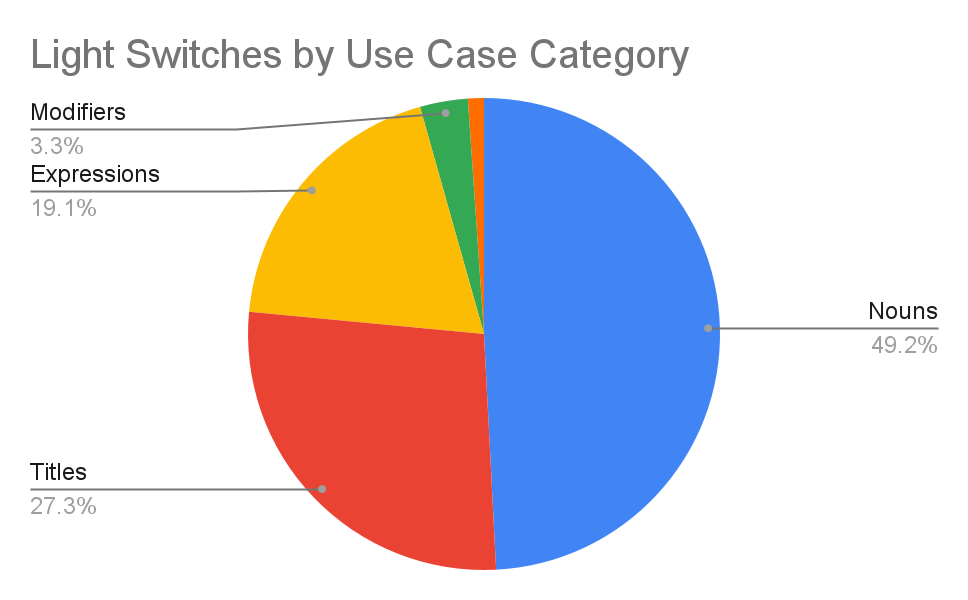
, , ,

Speak of the Devil: How Popular Film Antagonists Use Language

Sarah Belew, Jacques Gueye, Kaley Phan, Boyi Zheng

In this study, we analyze the linguistic behavior of antagonists in psychological thriller movies in order to understand/index the features in their language that make them “creepy”. We chose 4 different films to view: Misery (1990), Silence of the Lamb (1991), The Lovely Bones (2009), and Gone Girl (2004). From these films, we analyze how abnormality is constructed using subtle linguistic behaviors of word choice, intonation, and sociolect. We theorize that abnormality in the character’s linguistic traits is rooted in deviation of their demographic’s language pattern and what is considered appropriate for social interaction, or “creepy.” As a result, we find that the antagonists are aligned in their sociolects, word choice patterns of calling the antagonist’s name with great frequency, and that female antagonists have a “(Rise)-Rise-Fall” pattern in prosody. These marked patterns come together to create vivid, memorable characters that are unmistakably creepy.

[expander_maker id=”1″ more=”Read more” less=”Read less”]

Introduction and Background

What is creepiness? McAndrew and Koehnke identified the study of creepiness as a major gap in the scientific literature (2016). Their study identified creepiness correlates, such as gender identity (“being male”), physical traits (“having greasy hair”), and behavioral patterns (“stood too close to your friend”), concluding that creepiness is detected when people perceive an ambiguity of threat, often interpreted as a sexual threat among female participants.

We are unsatisfied with this approach. By eliciting people’s understanding of creepiness, perhaps we receive nothing more than a “creepiness profiling” mechanism, echoing the findings of Implicit Association Test studies conducted on racial stereotypes (Oswald et al, 2013). Are certain racial groups perceived as possessing more ambiguity of threat? Can women ever be creepy? Since our social life is riddled with implicit biases, this strand of study demands a more experimental approach that challenges our biased perception. Scripted Fictional Content (SFC) has the transformative potential in understanding the depth of this human emotion. The four psychological thriller films that we watched for our studies, including Misery (1990), Silence of the Lamb (1991), The Lovely Bones (2009), and Gone Girl (2004) demonstrated that creepiness does not rely on stereotypes and non-normativity known to our daily life. The mismatch between language stereotypes, creepiness assumptions, and the language performance confirm that actors often combine verbal strategies that run counter to expectations of norms but are not abnormal in a caricatural sense. This confirms the third-wave sociolinguistic assumption of the speaker’s agency (Eckert, 2012, Bell and Gibson, 2011). Overall, we find that actors do not achieve creepiness by piecing together socially neutral elements in the context of the movie plot and the character, which come together to deliver the creep.

Methods

In this study, we use sociophonetic and behavioral patterns to describe the technique of character building. We examined over eight hours of audiovisual media to develop a corpus study, manually coding all the speech of antagonists for marked patterns. We also listen to the other characters to qualitatively compare, so that we may develop a sketch of each antagonist including sociophonetic and rhetorical strategies. For the quantitative analysis, we pick creepiness correlates in their coded context to establish a statistical distribution per film.

In conducting this pilot study, we take the third-wave linguistics assumption that speakers consciously use sociolinguistic elements. Since there is a gap in the literature, we only landed on prosody, register (word choices), and sociolect as our relevant variables after preliminary viewing. Many previous studies demonstrated that affective prosody allows great intra-speaker speech variety, and plays a critical role in emotion expression (Frick 1985). On the other hand, socio-prosody study of inter-speaker variation is a field at its early development (Holliday 2021). Nevertheless, the evidence in our corpus convinced us that creepiness correlates, such as the markedness of the (rise)-rise-fall prosody has both intra-speaker patterns (reserved for narrative manipulation), and inter-speaker patterns (indexing non-standard dialects, feminine speech).

For our most nuanced and productive variable, the (rise)-rise-fall pattern, we have provided an edited video clip for demonstration purposes. Our coding of this pattern has followed the following rule-of-thumb criteria: (1) well-defined rising accent (L+H*) followed by a falling accent (H+L*) and a low boundary tone (L%), often the result of emphasizing the penultimate word (Beckman & Ayers 1997)  (2) exclude rising in questions, unmarked rising in enumeration and long words (3) usually occurs toward the end of an utterance (4) characteristically violating the Strong-Weak alternation in modal rhythm (Kiparsky 2014).

Here is an edited clip from Gone Girl (2004), where Amy Dunne uttered 50 instances of characteristic (rising)-rising-falling speech in the course of a 7-minute monologue.

https://drive.google.com/file/d/1Tcc106ftXEQYeOe08oTVmTule9zlkP40/view?usp=share_link 

Results and Analysis

1. Word Frequency Analysis 

The following word clouds (Figure 1) visualize how antagonists in our corpus exhibited two discourse behaviors that made their interlocutor and the audience uncomfortable. Amy Dunne (Gone Girl), Anne Wilkes (Misery), and Hannibal Lector (Silence of the Lamb) all have the name of the protagonist as their most frequent item, showing their unhealthy obsession with them. They all engaged in extensive manipulation of the protagonists, calling them by name to draw their attention. This article by Michigan State University elaborates on some of the psychology behind using someone’s name, including manipulation. George Harvey (The Lovely Bones) is the only character that does not share this pattern, particularly because of a lack of dialogue between the two (although he does refer to the protagonist by her last name occasionally). The second behavior is the use of words that may appear manipulative. These words include “know”, “think”, “see”, etc. Under different contexts, these words are used in dialogue to guide the protagonist’s thinking and actions. For example, consider the following line in “Misery” by Annie:

ANNIE:  I know you didn’t mean it when you killed her, and now you’ll make it right.

In this context, the antagonist is telling the protagonist what she believes he is thinking, in a way that he has no choice but to accept. With the other high frequency words, it is common that the antagonist used it in the same way: to make controlling statements or pure assumptions. Phrases such as “you know”, “I think you” and “you see”, were very frequent ways that these words were being used.

Figure 1: Word Clouds for each Antagonist

2. Prestigious, Psychopathic Dialects and Rhetorics

In the three antagonist-centered psychological thrillers (excluding The Lovely Bones), we see antagonists being portrayed as highly intelligent, socially prestigious characters, only to be revealed as vile, manipulative psychopaths. They are Harvard-graduate writers, head nurses, and renowned psychologists, all having high social standing. Based on the story setting and the voice acting, we qualitatively judge Amy to have virtually no accent for her background in New York, and Anne Wilkes to leave a Mid-American housewife impression but no recognizable Bakersfield phonetic feature as well. Hannibal Lector, on the other hand, speaks with the highly prestigious Mid-Atlantic English, plus Hollywood Golden Age paralinguistic sound quality: consistent nasal leakage, strong twang (forte consonant articulation), drawl (prolonged vowels), seldomly enunciating rhotics. These patterns are close to Katherine Hepburn, credited as the actor that popularized this accent (Wang 2014). However, this style of speech has been long obsolete, and the decision to act in such an accent, combined with a strange melodic quality resembling Truman Capote, the actor Anthony Hopkins has truly created an uncanny accent.

On the level of rhetoric, all three of these antagonists use elaborate rhetorical strategies. Hannibal is known for his cruel puns (‘having a friend for dinner’, implying cannibalism). As a writer, Amy uses her rhyming puzzles and vulnerable writing style to play the innocent, bubble-headed victim of a domestic murder, leaving the world lamenting her disappearance and his husband being hated by everyone. Even Anne Wilkes, the least articulate of them, uttered rhymed lines in a confession of love for Paul, showing a mastery of poetics:

The rain, sometimes it gives me the blues./ When you first came here, I only loved the writer part of Paul Sheldon. But now I know I love the rest of him, too. / I know you don’t love me. Don’t say you do./…. You’ll never know the fear of losing someone like you… /That’s very kind of you, but I bet it is not altogether true.

George Harvey, the antagonist of The Lovely Bones, has to be analyzed as an exception. Being a protagonist-centered film, the picture showed him as a more marginalized, conventionally creepy character. His speech patterns always sound like an act, given that there is little exposure to the nuances and complexity of his persona. He uses underprivileged elements preferred by men, sometimes exhibiting free in~ing, /s/~/ʃ/ alternation (Hall-Lew et al, 2021, Labov, 1966). Conspicuously, the alternation seems to happen when he is confronted by somebody else and putting on pretension. If we accept this theory and suggest that George does not exhibit his authentic speech pattern, it does not pose a problem to our thesis.

3) Prosody Distributional Analysis in the Sociolect Context

In watching Gone Girl, Lovely Bones, and Misery, we find the distribution of the (Rise)-Rise-Falling pattern to be precisely patterned with three social factors: gender, region of origin, and positions of power.

What first drew our attention was the clip played in the method section, in which Amy Dunne displayed an impressive array of the said pattern – contributing fifty out of 194 total occurrences of the pattern in the film within seven minutes. When we look at the setting of Gone Girl, in suburban Missouri, we can make sense of this pattern as a regionalism for most of the occurrences, since most characters, except for Nick, Amy, and Margo, display a non-standard accent. Perhaps due to the cultural marginality of the American Midwest, we do not find the renowned monophthong /o/ instead of /əʊ/ (‘b-oh-t’ for BOAT [boːt]), /æ/ heightened to be /e/ (‘behg’ for BAG [beg]), but instead recognize the vowel chain shift nascent to the American south (/a/ for /aɪ/, /ei/ for /ɪ/, and so on) (Labov et al, 2005). As in the previous analysis, the character Amy is designed as a native New Yorker with high social standing, often showing snobbery and resenting the simple life in the Missouri countryside. The (Rise)-Rise-Fall pattern feels quite out of place in her standard American repertoire of sounds, and we are inspired by the clip to say that the voice actors use this strategy to show a dominance over the narrative – for the first half of the film, she has set herself up as the narrator, but is later to be revealed as a psychopathic liar who is obsessed with manipulating herself and others. This agrees with the common perception of the prosody pattern- salient in TV announcements, radio shows, and advertisements. When the audience saw the run-away Amy put up the facade of a New Orlean housewife, she experienced another spike of (Rise)-Rise-Fall patterns, only that this time it is contextualized by a clear southern accent. This time, her interlocutor speaks with the same southern accent and similar rise-fall patterns. This gives us the final confirmation that the pattern we discovered is indeed marked and regionally conditioned.

The same findings are confirmed in Misery, even though a complete count of the relevant token has not been possible due to copyright reasons, we have an observation that exactly follows the above: Anne Wilkes speaks a normative accent, and only uses the (rise)-rise-fall pattern to fulfill the function of manipulation, infamous scenes such as the iconic “I’m your number one fan”. Otherwise, the same pattern only occurred in the conversation between two southern speakers, Sheriff Buster and his wife. 

Should this prosody pattern also be found among male antagonists? We do not find this to be the case, but the statistics from the three films we coded (excluding Silence of the Lamb) all speak to the fact that (Rise)-Rise-Fall indexes female identity. In all three films, male utterances of the phrase make up less than 25% of the total tokens, and characters who consistently speak this way are all decidedly Southerners. The Lovely Bones showed the same consistent pattern, with the prosody of Suzie’s mom functioning as a signal for a controlling character who commands her children to follow rules – similar to the manipulative personalities we saw.

Table: Occurrences of the Rise-Rise-Fall pattern in Gone Girl and The Lovely Bones

Figure 2: The chart shows that Amy has the most occurrences of (Rise)-Rise-Fall of any other character by a wide margin.

Figure 3: The chart shows that Suzie has the most occurrences of (Rise)-Rise-Fall of any other character.

Discussion and Conclusion

Our research has yielded a small contribution to the understanding of the interactions between language and media, by providing insights into the intricate ways in which language and presentation can be used to create a sense of creepiness or psychopathy in characters. By exploring the techniques employed by the antagonists in the four films we analyzed, we have uncovered a diverse range of patterns that contribute to the development of creepy characters.

It is important to acknowledge that our study represents a small sample size and may not be generalizable to all media or contexts. However, with our final results, we can contribute to a deeper understanding of this popular media phenomenon. We hope that our research will provide further insights into this topic, as there is much more to be learned about the nature of language in the media and our relationship with both.

At the end of our project’s journey, our findings have uncovered the intricate ways in which language and presentation can be used to create a sense of creepiness or psychopathy in characters. The identification of common patterns in the techniques used in the four films we studied is a crucial step in the advancement of our understanding of this complex phenomenon.      

In conclusion, our research has provided valuable insights into the complex phenomenon of creepiness in the media. Our analysis of language and presentation techniques used to create creepy characters can contribute to a deeper understanding of human psychology and social behavior. Our study also highlights the importance of representation and diversity in media and has practical applications for filmmakers. We hope that our research will inspire further investigations into this fascinating area of study.

References

Bauman, R., & Briggs, C. L. (1990). Poetics and performances as critical perspectives on language and social life. Annual review of Anthropology, 19(1), 59-88.

Beckman, M. E., & Ayers, G. (1997). Guidelines for ToBI labeling. The OSU Research Foundation, 3(30), 255-309.

Bell, A., & Gibson, A. (2011). Staging language: An introduction to the sociolinguistics of performance. Journal of Sociolinguistics, 15(5), 555-572.

Buckland, W. (2021). Feminism, narrative, authorship: (Gone Girl and Orlando). In Narrative and Narration: Analyzing Cinematic Storytelling (pp. 65–80). Columbia University Press. http://www.jstor.org/stable/10.7312/buck18143.9

Cao, H., Beňuš, Š., Gur, R. C., Verma, R., & Nenkova, A. (2014). Prosodic cues for emotion: analysis with discrete characterization of intonation. Speech prosody (Urbana, Ill.), 2014, 130–134. https://doi.org/10.21437/SpeechProsody.2014-14

Clopper, C. G., & Smiljanic, R. (2011). Effects of gender and regional dialect on prosodic patterns in American English. Journal of phonetics, 39(2), 237-245.

Demme, J. (Director). (1991) The silence of the lambs [Film]. Strong Heart Productions.

Fincher, D. (Director). (2014). Gone girl [Film]. Twentieth Century Fox.

Jackson, P. (Director). (2009) The lovely bones [Film]. Dreamworks Pictures.

Jacquemet, M. (1999). Conflict. Journal of Linguistic Anthropology, 9(1/2), 42–45. http://www.jstor.org/stable/43102422

Holliday, N. (2021). Prosody and sociolinguistic variation in American Englishes. Annual review of linguistics, 7, 55-68.

Hall-Lew, L., Moore, E., & Podesva, R. (Eds.). (2021). Social meaning and linguistic variation: Theorizing the third wave. Cambridge: Cambridge University Press. doi:10.1017/9781108578684

Kiparsky, P., & Youmans, G. (2014). Rhythm and meter: Phonetics and phonology, Vol. 1. Academic Press.

Labov, W. (2006) The social stratification of English in New York City—Google Books. (n.d.). Retrieved June 19, 2023, from https://www.google.com/books/edition/The_Social_Stratification_of_English_in/bJdKY0mZWzwC?hl=en&gbpv=1&dq=william+labov+1966+social+stratification&pg=PA3&printsec=frontcover

Labov, W., Ash, S., & Boberg, C. (2008). The atlas of North American English: Phonetics, phonology and sound change. Walter de Gruyter.

Leistedt, S. J., & Linkowski, P. (2014). Psychopathy and the cinema: Fact or fiction? Journal of Forensic Sciences., 59(1), 167–174. https://doi.org/10.1111/1556-4029.12359

Reiner, R. (Director). (1990) Misery [Film]. Castle Rock Entertainment.

Schegloff, E. A., Jefferson, G., & Sacks, H. (1977). The preference for self-correction in the organization of repair in conversation. Language, 53(2), 361. https://doi.org/10.2307/413107

Langlotz, A. (2017). 17. Language and emotion in fiction. In 17. Language and emotion in fiction (pp. 515–552). De Gruyter Mouton. https://doi.org/10.1515/9783110431094-017

McAndrew, F. T., & Koehnke, S. S. (2016). On the nature of creepiness. New Ideas in Psychology, 43, 10–15. https://doi.org/10.1016/j.newideapsych.2016.03.003

Oswald, F. L., Mitchell, G., Blanton, H., Jaccard, J., & Tetlock, P. E. (2013). Predicting ethnic and racial discrimination: A meta-analysis of IAT criterion studies. Journal of Personality and Social Psychology, 105, 171–192. https://doi.org/10.1037/a0032734

Stephenson, V. L., Wickham, B. M., & Capezza, N. M. (2018). Psychological abuse in the context of social media. Violence and Gender, 5(3), 129–134. https://doi.org/10.1089/vio.2017.0061

Wang, C. (2014). A Sociophonetic analysis of American theater speech as exemplified by Katherine Hepburn’s filmography. https://scholarship.tricolib.brynmawr.edu/handle/10066/13761

Werner, V. (2022). Pop cultural linguistics. In Oxford Research Encyclopedia of Linguistics. https://doi.org/10.1093/acrefore/9780199384655.013.999

Wolter, Keely (2022) FULL INTERVIEW: Accent and dialect coach Keely Wolter talks about dat dere “Midwestern accent.”—YouTube. (n.d.). Retrieved June 19, 2023, from https://www.youtube.com/watch?v=vC4gyH4nhIw

[/expander_maker]
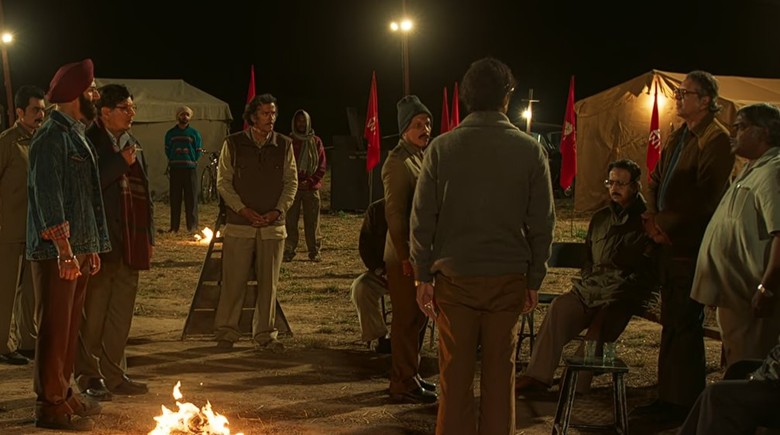
, , , ,
Scroll to Top