TikTok

Alpha Males: Talk of the Trade

Pauline Antonio-Nguyen, Elizabeth Gin, Anna James, Jennifer Padilla, Shanna Yu

An internet phenomenon: the Alpha Male. These men view the world in black-and-white gender roles steeped in misogyny, where women are not their equal and are expected to be subservient to them. This study takes the philosophies behind existing research done on conversation patterns between men and women and applies them to these alpha males. Do their beliefs and attitudes show up in how they speak? How do they navigate conversations compared to their non-alpha equivalents? While existing studies on aspects of speech like turn-taking and interruption have been largely inconclusive in the world of gender at large, we will be taking conversation analysis into the domain of alpha males in hopes of more conclusive results. What kind of language do they use to refer to those they find lesser, and do they interrupt women more than they do men? An alpha male’s word choices may reflect their misogynistic principles in potentially derogatory ways, and they may be more prone to interrupting others than a non-alpha male is.

[expander_maker id=”1″ more=”Read more” less=”Read less”]

Introduction and Background

The term “alpha male” has existed for many generations now. This term generally refers to a dominant individual, both within human social groups and animal behavior (Ludeman et. al, 2006). For further insight into exactly what an alpha male is, we recommend taking a look at this YouTube video discussing the “science” behind alpha males. The term has now evolved though, and in the internet sphere, it is generally accepted that “alpha males” are individuals who place heavy importance on being dominant, especially in terms of control over women. A good example is Andrew Tate, a self-proclaimed alpha male who took the internet by storm in 2023. We decided to look at two linguistic aspects: lexical items and conversational analysis — specifically interruption. An existing study on alpha males highlights their use of lexical pathways as a “means to further try to push their egotistical and misogynistic agenda” (Lawson, 2020). Additionally, in the eyes of an alpha male, women’s value is inherently tied to concepts like virginity and how subservient they are to the man who “owns” them. In terms of interruption, studies that cover whether men or women interrupt each other more have yielded mixed results, such as one where a “high-dominance predisposition,” a self-explanatory term established in-study, prompted men to interrupt more often than women with the same disposition (Rogers, 1975) versus another where others found that there was no significant difference between their test groups of men and women (Johnson & Aries, 1983). How exactly do alpha males interact with those around them, and does their behavior change based on which gender they speak with? Through our analysis, we look into the frequency of patterned and marked vocabulary and interruption as a way to enforce gender ideas and establish their place in a hierarchy.

Methods

Our main sources were TikTok and YouTube. We searched for videos using keywords — “alpha male podcasts,” “alpha male podcast women,” “alpha male podcast men,” etc. — to find videos. We compiled a total of 35 videos, mostly TikTok videos and some YouTube videos. The TikTok videos were used to give us our word frequency data, and both the TikTok videos and YouTube videos were used in our interruption data.

We thought the shorter TikTok videos would be a decently accurate portrayal of what alpha males would deem as “important” or “worthy” enough to emphasize because these clips were moments that editors had purposely picked out of longer episodes. We then made transcripts from the TikTok videos and used the search function to find out how many times a certain word was said in a certain context.

The four contexts were two alpha male contexts and two control contexts. We looked at when alpha male podcasters talked with other men and when they talked to women. For the control group, we looked at non-alpha male podcasters talking to other men and when they talked to women. As previously mentioned, we were also interested in the phenomenon of alpha males interrupting people in conversational settings. Therefore, we also kept track of the number of times that alpha males interrupted both the experimental and control groups.

Results and Analysis

Looking at the interruption data, we saw some interesting results. Overall, we found that both alpha male podcasters and non-alpha male podcasters were actually more likely to interrupt other men than interrupt women.
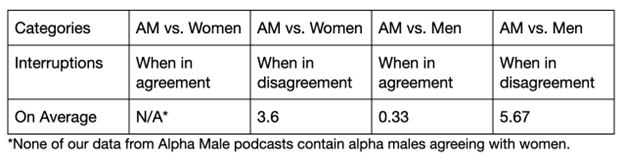
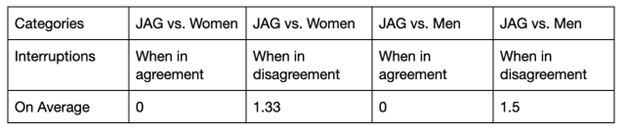
Figure 3. Results of the Alpha Male interruption data.
Figure 4. Results of the Just-a-Guy interruption data.

When we look at the breakdown of whether or not the two parties were in agreement though, we found some interesting results. We found that rather than gender being the factor that affected the average number of interruptions, the more important factor was whether or not the podcasters were in agreement with the other person. We can see this particularly clearly in the data comparing alpha male podcasters talking to other men when they agree vs. when they disagree. It was a bit hard to draw a clear conclusion because we didn’t actually have any data of alpha male podcasters agreeing with women at all. Comparing this data to the non-alpha male podcasters though, alpha male podcasters overall interrupt whoever they are talking with a lot more than non-alpha male podcasters. Also, for non-alpha male podcasters, the difference in the average number of interruptions when talking to women vs. when talking to men was much smaller.

Although we often see alpha males project their dominance over women, the projection of dominance over other men is often overlooked. In our data, we can see that projecting dominance over a man may be more important than projecting dominance over a woman. After all, an alpha male is only an alpha male if he is higher up on the hierarchy than other males. These results could also be the result of the women guests allowing the alpha male podcasters to talk for longer periods of time compared to men guests. If the women were speaking less, then there would be less opportunities for the alpha male podcaster to interrupt.

Regarding the lexical data, contrary to what we initially predicted, we did not see a high use of derogatory language towards women. Pretty substantially, the majority of words used to reference men and women were the words “men” and “women.”
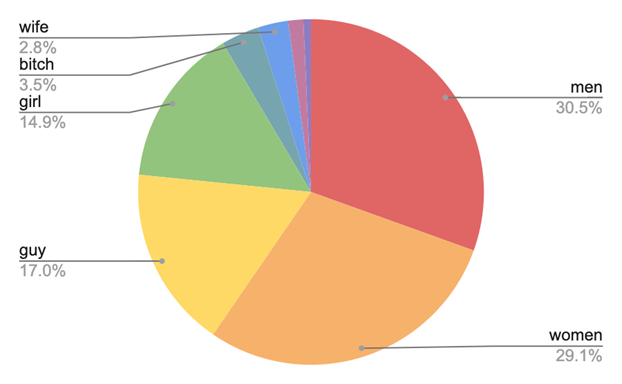
Figure 1. This graph shows the breakdown of how common the words we picked were across the TikTok videos we analyzed. The two smallest slices were too small for Google Sheets to show their data. The pink slice is for the word “hoe” at 1.4%, and the purple is for the word “female” at 0.7%.

However, when looking at a breakdown of what words are used in what context, there are more interesting results.
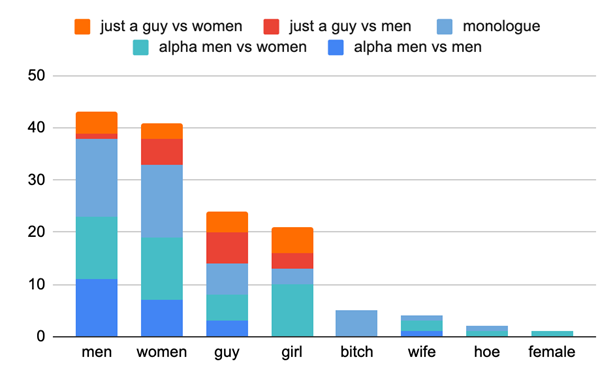
Figure 2. This graph shows the number of times each word was used across all the TikTok videos.

As we can see, alpha male podcasters use more words to refer to women than non-alpha male podcasters. The non-alpha male podcasters used only the words “women” and “girl” and didn’t use any other references when talking about women. When talking to women, alpha male podcasters almost exclusively used the word “girl.” In our data, they never used the word “girl” when talking to other men. Similarly, alpha male podcasters only used the words “hoe” and “female” when they were talking to women.

There was only one instance of an alpha male podcaster using the word “female,” and it was when he was talking to some women about cheating. The alpha male podcaster said:

What is interesting about this is that he also used the word “women” in the same sentence. He made two categories of women, “women” and “females.” When talking about the partner who receives love from a man, he used the word “women.” When he was talking about a person that a man would have sex with, he used the word “female.” This creates a dichotomy between women who are loved — “women” — and women to have sex with — “females.”

When we compiled the data, we counted both plural and singular forms for every word, and there was an overall trend of non-alpha male podcasters using singular forms, while alpha male podcasters often used the plural forms. Usually, when non-alpha male podcasters were talking about men and women, they would be talking about specific situations, while alpha male podcasters would usually be making sweeping statements about men and women in general. In general, there seemed to be an overarching pattern of alpha male podcasters talking about the general broad topic of “men and women.” On the other hand, we actually found it a little hard to find non-alpha male podcasters talking about men and women as a broad topic, and usually, they would be talking about their own personal experiences or hypothetical situations regarding romantic relationships.

Also, non-alpha male podcasters on average seemed to be younger than the alpha male podcasters, which would explain the low frequency of the word “men” by non-alpha male podcasters. It seemed that they were more comfortable referring to themselves and other men as “guys.” Interestingly though, when comparing words referencing men and women, the words “men” and “guy” were more frequent than the words “women” and “girl.” There was only a slight difference, but it is interesting to see that it was consistent that words referring to men were used slightly more than their feminine counterparts. This could also be explained by the fact that both groups of podcasters are slightly more likely to make statements relating to themselves, as they identify as men.

The most compelling data we found in the TikTok video transcripts were words that referenced men and women, and we didn’t find any other specific words that were super frequent in the videos we looked at. There was no quantitative data on other words, but overall, alpha male podcasters definitely expressed ideas of sexism and gender essentialism much more frequently than non-alpha male podcasters did.

Discussion and Conclusions

In our study, we wanted to investigate an “alpha male’s” general language and the prevalence of certain words they use. The results of our findings suggest that alpha males do try to impose and assert dominance and interrupt others when they are speaking to others. Alpha males showed intolerance when they were faced with conversations with males or females who did not agree with their point of view.

We found a lot of interesting things in our data, things that matched up with what we originally predicted and things that did not. In our lexical item results, the frequent usage of “girl” about women by alpha male podcasters is extremely interesting. Because these men often criticize women and the behaviors they associate with women when doing so, the preference for the word “girl” when talking to women directly could be taken as a form of dismissiveness towards women and their autonomy, infantilizing them and writing them off as something that needs to be taught and controlled. In the interruption results, the assertion of dominance from alpha male podcasters escalated when there was a disagreement between alphas and other men in conversations. It seems that alpha males not only want to assert their dominance over women but also other men.

Overall, these patterns that we witnessed in our research reflect underlying tactics of dismissiveness and clear tactics of dominance used by alpha males. Unlike what we thought, alpha males were more subtle in terms of low use of marked words; they instead used unmarked words, perhaps because they realized that derogatory terms are not as socially acceptable. On the other hand, something like interruption is not something that is clearly marked or visible, so alpha males seem to fully employ that tactic.

Also, some things that are important to note is that it was pretty obvious that a lot of these alpha-male podcasters were trying to “rage bait” and get a reaction out of their guests or the audience. Most of the videos that popped up were alpha male podcasters berating women about their choices on men, speaking on how women should act, etc. Due to the nature of social media algorithms, it’s impossible to randomly pick videos. However, in a way, it does show which videos are getting viewed the most and, in turn, what the average person would be more likely to come across. Something else that we did not look at specifically was sentiment analysis. If we looked more closely at what sentiments were expressed when using “girl” vs. “women,” for example, or between alpha male podcasters and non-alpha male podcasters, we might have seen more data that lined up with our original predictions. Even if alpha male podcasters did not use derogatory terms for women, they still expressed negative sentiments about women.

Alpha males are often seen as a meme or outrageous, and even though the statements they say often are, it seems that there is some kind of conscious effort to stray away from derogatory terms that would immediately be flagged by the general public. Through our analysis, we can see that there are many other factors and tactics that seem to be a part of the repertoire of alpha males. We have only looked at the surface, but hopefully, our research could serve as a starting point for investigating other factors that go into the way alpha males speak.


References

Johnson, F. L., & Aries, E. J. (1983). Conversational patterns among same-sex pairs of late-adolescent close friends. The Journal of Genetic Psychology: Research and Theory on Human Development, 142(2), 225–238. https://doi.org/10.1080/00221325.1983.10533514.

Lawson, R. (2020, January 14). Language and masculinities: History, development, and future. Annual Review of Linguistics. https://doi.org/10.1146/annurev-linguistics-011718-011650.

Ludeman, K., & Erlandson, E. (2006). Alpha Male Syndrome. Harvard Business Press.

Russell, E.L. (2021). Masculinities, Language, and the Alpha Male. In: Alpha Masculinity. Palgrave Studies in Language, Gender and Sexuality. Palgrave Macmillan, Cham. https://doi.org/10.1007/978-3-030-70470-4_2.

Roger, Derek B., Bull, Peter E., & Smith, Sally (1998). Journal of Language and Social Psychology. The development of a comprehensive system for classifying interruptions. 7:27-34.

[/expander_maker]
, , , , ,

Influencer Speech and Indexicality

Shogo Payne, Olivia Brown, Jade Reyes-Reid, Ricardo Muñoz, Priscella Yun

Stereotypically, people consider TikTok influencers to be vapid and unimportant. However, through our research on the language of TikTok influencers, we have found that through particular lexical choices, influencers establish their niche within the beauty industry by appealing to the emotions of viewers, becoming vessels for product promotion and marketability. Our work has proven that the greater frequency of inclusive and second-person pronouns, as well as language heavily using imagery and hyperbole, is the key to success for beauty influencers. We compare videos from five of TikTok’s most popular beauty influencers to see if our targeted lexical features can be shown to not only correlate with an increase in popularity on the platform but also to engage viewers as part of an exclusive community. Creators and brands will benefit from awareness of these linguistic tools’ ability to promote their message and products, while also giving them linguistic factors to consider in terms of marketing.

[expander_maker id=”1″ more=”Read more” less=”Read less”]

Background

In recent years, TikTok has risen to unfathomable popularity, overtaking leading social media apps. While the premise of short-form content like that of TikTok is not new – its predecessor being Vine – TikTok is different in that it has the ability to reach mass audiences and create communities centered around a person and their interests. This in turn gets heavily exploited by brands eager to hand out sponsorships in an attempt to market to these communities of interest.

Many of the larger “niches,” a term we define as a subculture of TikTok, establish themselves as bona fide online communities through a distinct style of content made to satisfy viewers’ expectations from creators. While this “style” of content is often related to the niche of interest, creators’ identities undeniably play a role in the reception of such content. Afterall, two creators in the same general niche may attract individuals with different preferences as a result of the linguistic differentiation. Thus, the language used by Tiktok creators is equally important in establishing a style which connects with audience members.

In the world we live in, we cannot escape from media information. Constantly, we endure such things as advertisements, billboards, and TikTok notifications. The amount of words and numbers we take in every day seems to be increasing, almost violently so. Think about how Instagram creators refer to their content output as their “feed,” which we interpret literally: a stream of consciousness which their followers consume. Consequently, and subconsciously, we have to be able to “filter” what knowledge we take in, that knowledge which is concerning to us. TikTok and similar social media platforms already have a system in place to expedite this. TikTok’s “For You” page, the home page, is where the app’s analytical system gathers recommended content, based on the user’s recent viewed-content activity, to show the user. Psychologically, this is what we deem as “influencer speech.” This phenomenon of speech has been noted by many including new articles, like in one by VICE, stating that it is “the perfect balance between buoyant yet flat; it gives just enough away, without really giving anything away; it keeps me from scrolling past the video” (Hall). The visual and audio content of a video needs to be attention-grabbing in a novel way to the user, in order to not be scrolled away. If the TikTok creator cannot capture the attention of the user within the first couple of sentences, it may as well be an admission of defeat. If we look at it differently, the main property that influencer speech holds is the ability to build an image or identity in your mind that psychologically indexes for a particular niche which may or may not suit us.

The duty of a TikTok influencer is to relate to audiences while also being marketable to brands for the purpose of product promotion. With the importance of strategic language in mind, we ask the question: Do TikTokers modify their speech to increase marketability? Our expected answer to this question was yes. Through observation of a collection of lexical features that we deem influencer speech, we found correlations with greater frequency of positive feedback, as well as indexation of leadership within a specific online community.

Previous investigation into social media advertising has proven social media promotion to now be more effective than traditional TV commercials (Chen, et al. 2023). This finding motivated our research in proving the importance of understanding social media advertising in this social media-driven landscape we find ourselves in. Additionally, a study conducted by Munaro et al. suggests that certain lexical items can increase audience engagement and brand partnerships (Munaro, et al. 2024). Previous research has also indicated that lexical terms act as facets of one’s identity in discourse (C.M Davis. 2020). We wanted to take this research a step further to address how particular lexical features often associated with influencer speech may help or hinder one’s marketability within the volatile landscape of TikTok influencing. It was important for us to address this question in a way that would be easy for non-linguists to understand while providing flexibility, so that any conclusions we found should not be so prescriptive as to limit the individuality inherent in casual speech.

We decided to look at the beauty community within TikTok for our data collection not only for its large scale – 1⁄3 of American adults use TikTok, with the majority of those users being women between the ages of 18-24, meaning the majority of TikTok users are likely beauty consumers (Bestataver 2024) – but because product promotion within this niche is highly prevalent and interwoven with the content. The content, as we will be focusing on it, will be the aforementioned lexical terms.

There is a common misconception and stereotype that influencer speech, particularly within the beauty community, is vapid and meaningless. However, we reject this ideology, instead asserting that beauty influencers use particular lexical features to garner engagement and increase marketability. We call this bundle of features “influencer speech”, or “I.S.” in its abbreviated form.

The features we used to define influencer speech are as follows: precision in synonyms, pronoun usage, and hyperbole. Firstly, precision is the usage of descriptive, repetitive synonyms used to build imagery for audiences that creates a psychological closeness to the product. Secondly, we examined usage of particular types of pronouns such as first-person, second-person, and inclusive pronouns (as in we and let’s) to gauge how influencers engaged with their audiences through their speech. Previous research asserts that inclusive language allows influencers to connect with and gain reputability amongst their audience (Prudencio, et al., 2023), thus inspiring us to look more closely at TikTok beauty influencers’ use of inclusive pronouns. Furthermore, in a podcast about effective persuasion, Professor Jonah Berger describes how tapping into consumer identities causes them to call to action while feeling a closeness (Jonah, 2023). Lastly, we looked at hyperbole, which we consider any speech that exaggerates a product’s quality and novelty and/or a consumer’s need for the product. We included hyperbole since research on its use within everyday speech suggests its use as ‘highly’ interactive, which emphasizes its potential power as a lexical term to connect with audiences (McCarthy & Carter, 2004). Within this category of hyperbole, we looked at phrases such as “life-changing,” “you need this product,” or influencers describing products as “the best ever.”

Methods
Previous research indicates TikTok’s immense value as a tool to gather legitimate sociolinguistic data (Alajmi, 2023). We examined the speech of five top TikTok beauty influencers by first inspecting five non-sponsored videos from each respective creator to create a baseline idea of their speech when they are not advertising a product. We then compared this data against their speech when they were advertising a product or doing a review, surveying five additional videos of this kind and recording how many of our target lexical features were used and how often. The relative frequency of each lexical item was counted in terms of categorizing every video into whether it contains more hyperbolic language, precision, or pronoun usage. This in turn would allow us to gauge a shift in influencer speech when promoting products through analysis of frequencies. Ultimately, this would allow us to determine the potential most effective aspects of influencer voice when it comes to influencing audiences.

We knew it was vital to consider the context of content creators’ backgrounds, which may lead to inherently unfair comparisons. This is why the five influencers we chose are leading American makeup creators known to innovate in products and methods of application. All five have at one point or another been looked to for advice and to dictate what the next trending item or application method would be. As all of the creators are American, we can generally consider their cultural backgrounds to be similar, therefore eliminating concern surrounding cultural differences as a factor in their speech.

On each video, we documented the number of views and likes garnered, then took a sample pool of 20 comments to evaluate whether the responses were mainly positive, negative, or neutral. Our evaluation process was this: comments expressing approval, excitement, or support for either the product, video, or creator are positive; comments unrelated to the topic or creator are neutral; comments expressing disapproval, disappointment, or disagreement with the video or creator are negative. We then compared these findings for each of the TikTokers to see what lexical features or variables are associated with influencers and how their presence affects the audience.

Results

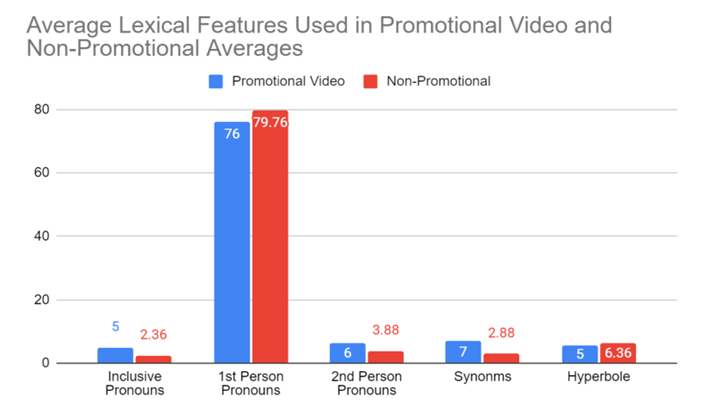
Overall, we found that influencers generally increased their usage of second-person pronouns and synonyms across all promotional content. We also found an increase in use of inclusive pronouns, with the exception of one creator from our sample, Meredith Beauty. As for first-person pronouns and hyperbolic language, we had more inconclusive results, as usage did not shift much from promotional to non-promotional content within our sample. As seen in Figure 1.1 below, inclusive pronoun usage increased 106% in sponsored content, second-person pronouns increased 62%, and synonyms increased 141%, while first-person pronoun usage decreased slightly by 18%, and hyperbole similarly had a slight decrease by 14%.

Figure 1.1. Average lexical features used in promotional videos versus non-promotional videos.

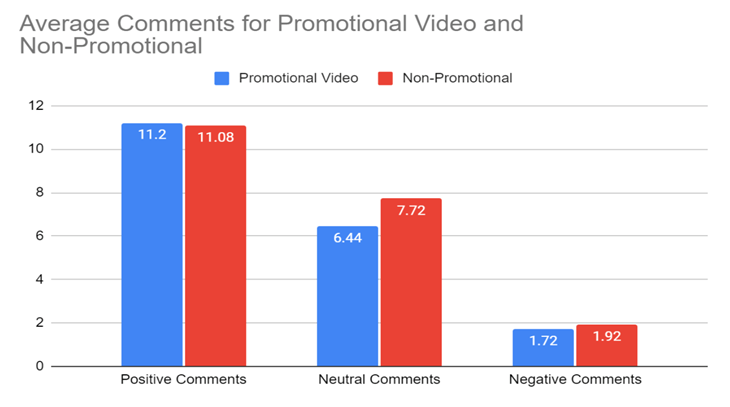
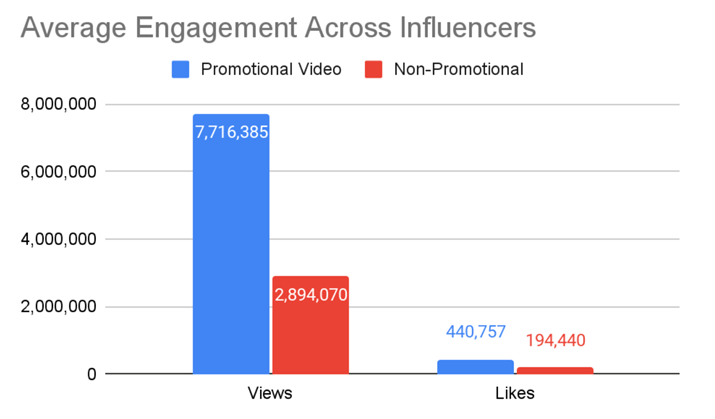
We also observed a higher number of positive comments, views, and likes within sponsored videos. Inversely, neutral and negative comments seemed to decrease with sponsored content. Figures 1.2 and 1.3 showcase our data on the quality of comments and the levels of engagement. Positive comments were shown to increase slightly by 1% in sponsored content, indicating inconclusive results due to the miniscule amount of change from sponsored to non-sponsored content. Neutral comments decreased by 16%, and negative comments decreased by 10%. As these numbers are relatively small, we cannot draw any complete conclusions from this sample. However, a large uptick in viewership of content was noted in our data, with a 106% increase for sponsored content. Additionally, likes increased by 125% in the sponsored content we observed.

Figure 1.2. Average comments for promotional versus non-promotional videos.

Figure 1.3. Average engagement across promotional versus non-promotional content.

Overall, we found that our identified lexical features of influencer speech were used more often in promotional content, indicating a correlation between usage of influencer speech and product promotion.

Discussion and Conclusion

Our findings on influencer speech and promotional content on Tiktok carry various implications in real world application of marketing strategy and engagement. For instance, our findings suggest that certain lexical terms, when used strategically in social media content, can result in higher levels of engagement. We hypothesize that this higher engagement results from creators’ indexation of a leadership role in the beauty community through the use of lexical terms audiences connect to, aiding in the development of trust between creator and consumer. Our results also raise questions about the role of influencers in our society. Rather than just provide entertainment, there is immense value in their role as a talking head for product promotion. Our analysis could help us demystify the distinction between entertainer and advertiser. Future research could examine influencer speech outside of the beauty community to see if these findings are consistent across all online influencing communities and platforms, rather than the TikTok beauty community alone.

Results that strayed from the overall trend of the data could correlate to numerous hypotheses. Demonstrating credibility by restraining from fallacies such as hyperboles and increased use of inclusive pronouns causes viewers to believe the review of the product is credible and therefore, increases the marketability of content. There may also be differences between personal speaking styles and brand guidelines that are required when creating sponsored content, such as promises to include certain phrases or even scripts given to influencers.

We acknowledge that limitations pertaining to scope occurred throughout our research project. Due to our project’s scale, we viewed 5 different influencers with 10 videos each. All the influencers were from similar backgrounds as rich, successful, American influencers. If we had more time, we could expand our sample size to include influencers from more diverse backgrounds to see if influencer speech is still used in other cultures. This revision could determine if the trends we found are generalizable. Additionally, influencers on TikTok are able to moderate their comment section, meaning our data gathered from comment sections could be inaccurate and cherry-picked by the influencer. Finally, we did not take video length into account. However, if we had more time, analyzing video length alongside these other features could reveal patterns relating to how often features were used per second or per minute, giving an even more accurate analysis of the data.

Despite these limitations, our exploration of influencer speech has revealed intriguing insights into how code-switching within influencer speech appears to aid marketability. Our thesis predicted that influencers used influencer speech more often in promotional content in order to increase marketability. After analyzing our data, we can say that this is partially true. Inclusive pronoun, second-person pronoun, and synonym usage did increase in promotional content, though our analysis of first-person pronouns and hyperbole was inconclusive. We hope that our research can serve as a catalyst for deeper inquiry into how persuasion appears in the digital world as a sociolinguistic tool.

References

Alajmi, N. M. (2023, August 1). The Speech of Social Media Influencers in Najd: Introducing a New Source of Sociolinguistic Data. Academy Publication. https://tpls.academypublication.com/index.php/tpls/article/view/6552.

Berger, J [Social Media Examiner] (2023, March 16). The Language of Persuasion: Magic Words to Get Your Way. YouTube. https://www.youtube.com/watch?v=6teWZLgvUso.

Bestvater, Samuel. (2024, February 22). How U.S. Adults Use TikTok. Pew Research Center. https://www.pewresearch.org/internet/2024/02/22/how-u-s-adults-use-tiktok/.

Chen, G., Li, Y., & Sun, Y. (2023, February 15). How youtubers make popular marketing videos? speech…Sage Journals. https://journals.sagepub.com/doi/full/10.1177/21582440231152227.

Hall, Alice. VICE. (2023, March 29). Why does everyone on TikTok use the same weird voice?. https://www.vice.com/en/article/k7zq49/why-everyone-uses-tiktok-voice.

McCarthy, Michael & Carter, Ronald. (2004). “There’s millions of them”: Hyperbole in everyday conversation. Journal of Pragmatics – J PRAGMATICS. 36. 149-184. 10.1016/S0378-2166(03)00116-4.

Munaro, A. (2024, July). Does your style engage? linguistic styles of influencers and digital consumer engagement on YouTube. ScienceDirect. https://www.sciencedirect.com/science/article/abs/pii/S0747563224000852.

Prudencio, A. B., Sherwin, C. C., Barcelona, J. A., Niduaza, B., & Tongawan, P. F. C. (2023, July). Stylistic and discourse analysis of the language of social … IRE Journals. https://www.irejournals.com/formatedpaper/1704877.pdf.

[/expander_maker]

, , , ,

The TikTok Influencer Voice: Do Sociolinguistic Features Influence the Success of TikTok Videos?

Natalia Adomaitis, Lam Hoang, Maryam Shama, Sydney Trieu, Kristina Zhao

TikTok is a growing social media platform that launched in 2016 and since has gained 1 billion monthly active users, 60% of which are a part of the Gen Z demographic. Many influencers have rapidly grown in popularity, leading to social changes due to trendsetting by these influencers. In our study, we analyzed linguistic features used by three TikTok influencers: Erika Titus, Katie Fang, and Alix Earle. Our goal was to analyze how the use of two linguistic features: filler words and rising intonation (uptalk) by female Gen Z TikTok influencers impact engagement. We gathered data by comparing analytics of 6 videos from each of the three influencers, 3 of which being their most popular videos and 3 being of average performance. We tracked the number of times rising intonation and filler words were used per video along with video length and amount of views and likes. We hypothesized that influencers incorporate these specific linguistic elements to better relate with their audience, which ultimately leads to an increase in video engagement.

[expander_maker id=”1″ more=”Read more” less=”Read less”]

Introduction and Background

TikTok has become one of the most popular video-sharing social media apps since its launch in 2016. Approximately 60% of the users and influencers who daily consume or create content on this app belong to Gen Z (Moshin, 2022; Rezek, 2022). In addition, it is predicted that TikTok will have 1.8 billion monthly users by the end of 2024 (Iqbal, 2024).

Because of the rapid growth of this app in recent years, in addition to its daily prevalence in our target demographic of Gen Z individuals (ranging from ages 18-24), and its continuous expected growth, we were motivated to investigate if the verbal linguistic content, or language and speech pattern used by TikTok influencers, had any role or influence in determining the success of their videos.

Our research focused on the sociolinguistic features frequently observed in the language content from popular TikTok influencers: Erika Titus, Katie Fang, and Alix Earle. Specifically, we analyzed upward intonation, filler words, “Valley Girl” speech, and conversational style.

  • Upward intonation- also known as “uptalk”, a speech pattern where the pitch of a voice rises, is typically used at the end of sentences to indicate a question or throughout a sentence to signal that a phrase is incomplete. This tactic can keep the viewer anticipating what will come next.
  • Filler words- Examples include “like, um, literally, actually”. Use of this speech pattern maintains the flow of speech, fills pauses in a conversation, thus keeping the viewer’s attention.
  • “Valley Girl” speech/conversational style- the previously mentioned speech patterns “uptalk” and filler words, are reminiscent of the “Valley Girl” speech and are commonly associated with being used by affluent, middle-class teenagers from California (Nycum, 2018). When used in videos, it can create a casual, one-on-one, conversational-like style that connects with Gen Z.

Erika Titus, Katie Fang, and Alix Earle all have a substantial following with Titus having 4 million followers, Fang with 5.1 million followers, and Earle at 6.8 million followers as well as belonging to the Gen Z demographic. Geographically, Titus along with Earle were born in the U.S. and currently reside in the U.S., and Fang was born in Taiwan, but resides in Canada.

These influencers mainly create lifestyle content such as daily routines, “get ready with me” videos, fashion choices, and product endorsements. Erika Titus and Katie Fang similarly produce casual, at-home, sit-down videos, whereas Alix Earle creates more spontaneous videos in addition to at-home style videos.

Our overall hypothesis is that video success (high like and view count) is attributed to influencers’ use of sociolinguistic features: upward intonation, filler words, and “Valley Girl” speech, which contribute to creating a conversation-like style that is effective at engaging and connecting with the Gen Z audience.

Methods

Our project aimed to investigate the impact of filler words and rising intonation phrases on the success of TikTok influencers’ videos. Success was measured through view count and like count, assessing whether there was a correlation between the frequency of these linguistic features and video engagement success.

To conduct this study, we analyzed six videos from each of the three selected TikTok influencers. For each influencer, three of their best-engaged videos (identified by the highest number of likes and views) were selected, along with three average-performing videos.

Several key factors were tracked for each video. We recorded the number of rising intonation phrases and counted the occurrences of filler words such as “like,” “literally,” and “um.” Additionally, we noted the number of likes and views to measure engagement success and tracked the length of each video in seconds for further analysis. This methodology enabled us to compare the frequency of linguistic features across different levels of video success.

We hypothesized that a higher frequency of filler words and rising intonation phrases would correlate with an increase in views and likes, suggesting these linguistic features enhance engagement.

Results and Analyses 

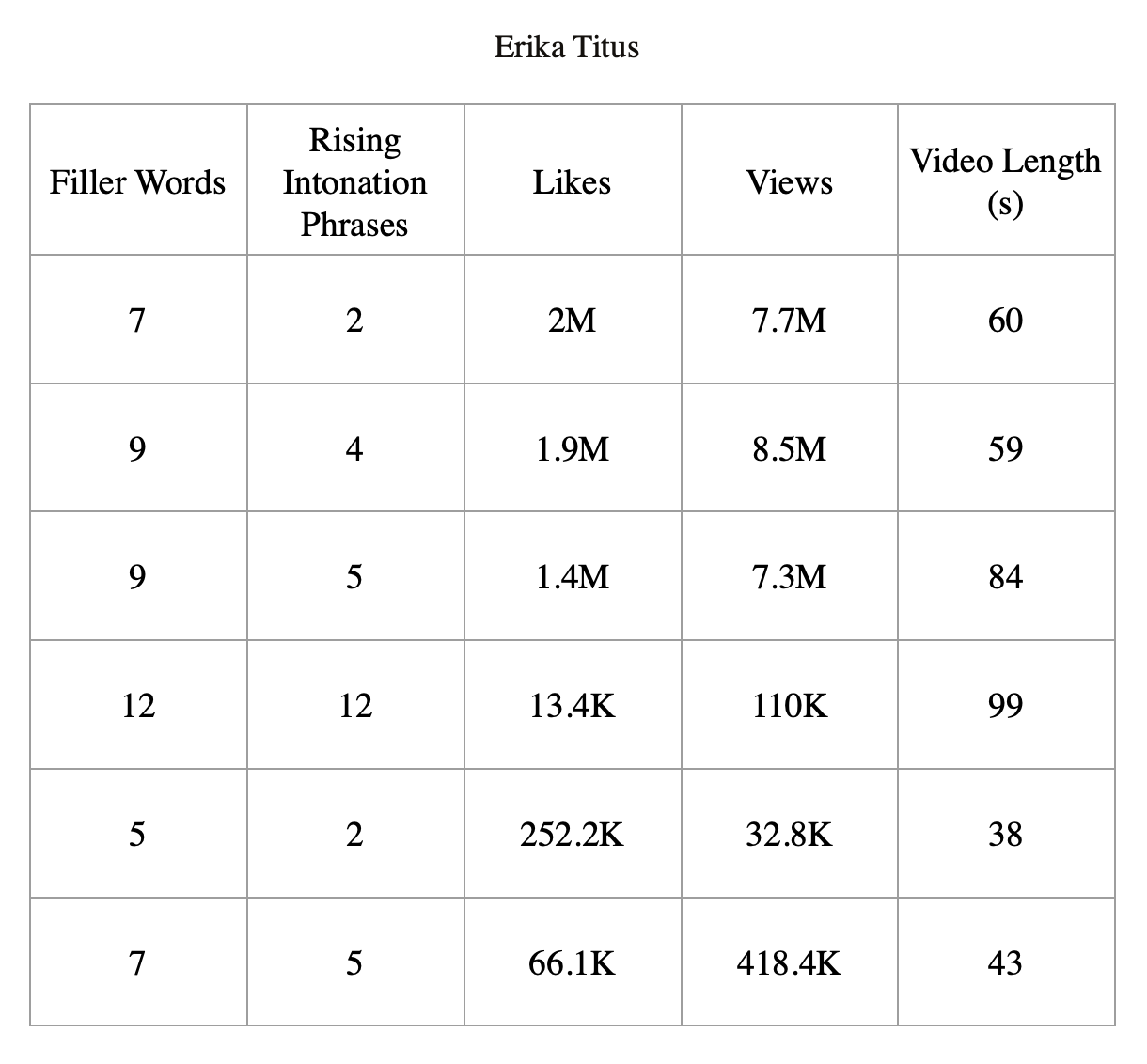
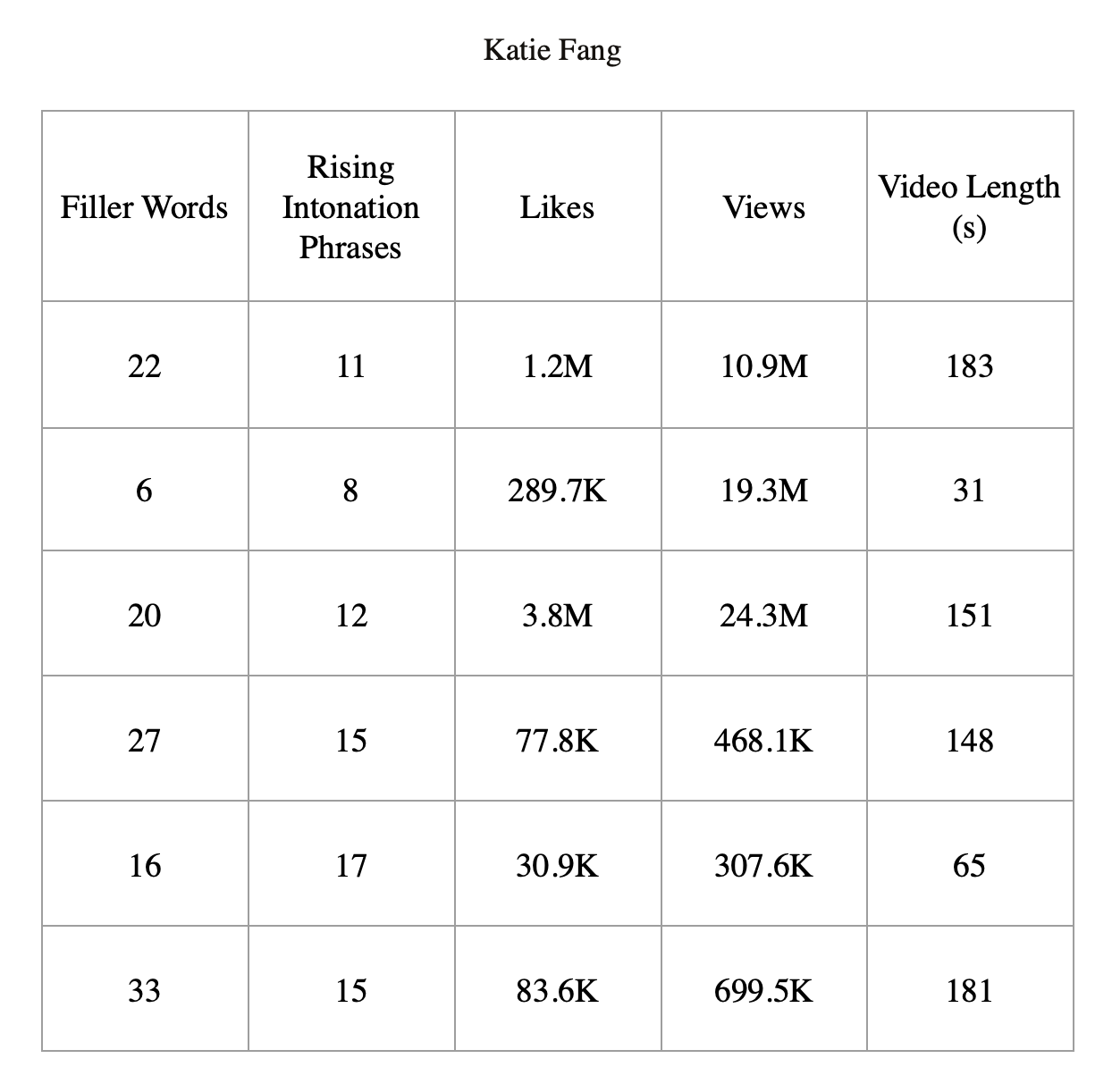
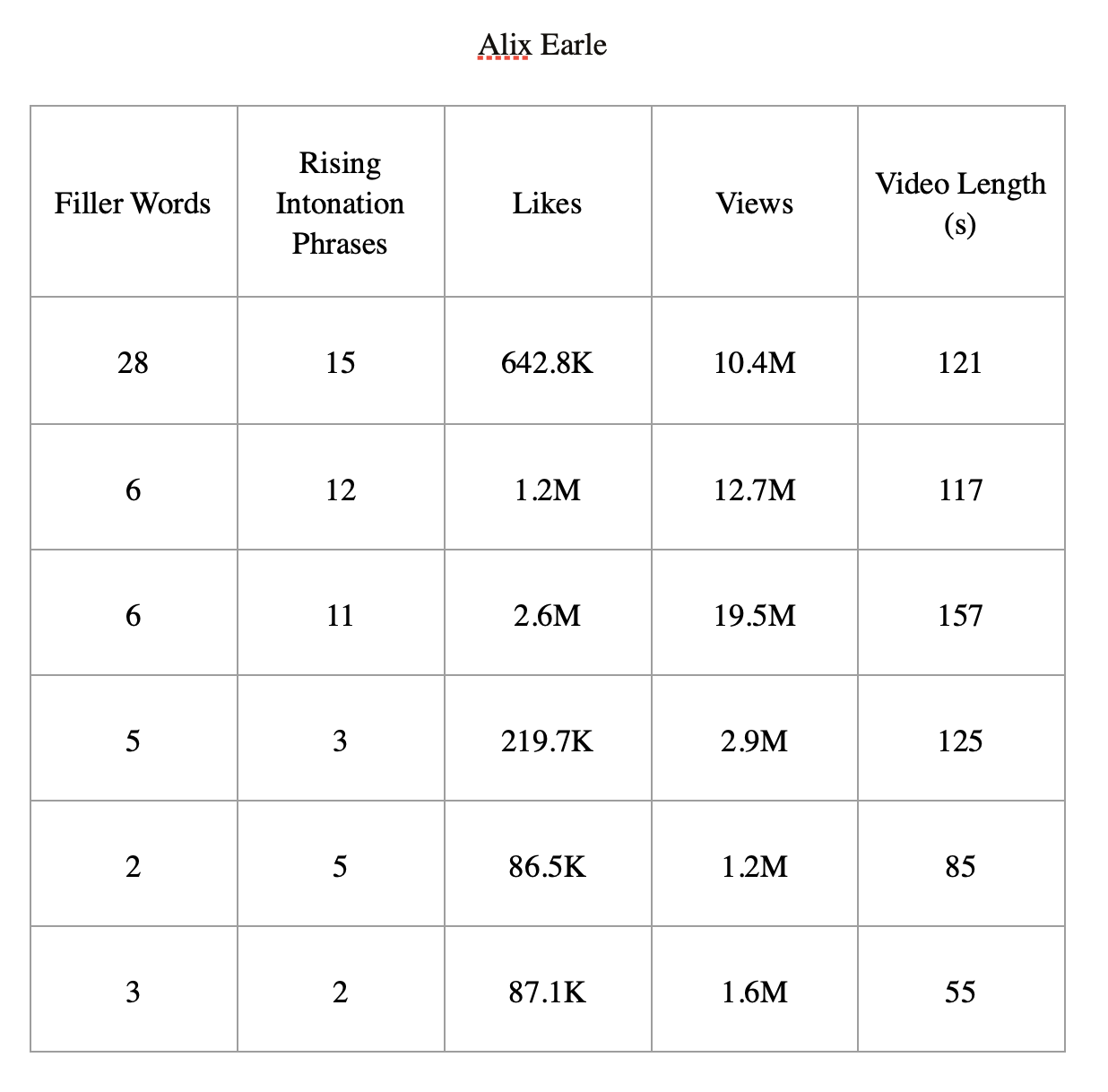
Following our methods, our results are shown below:

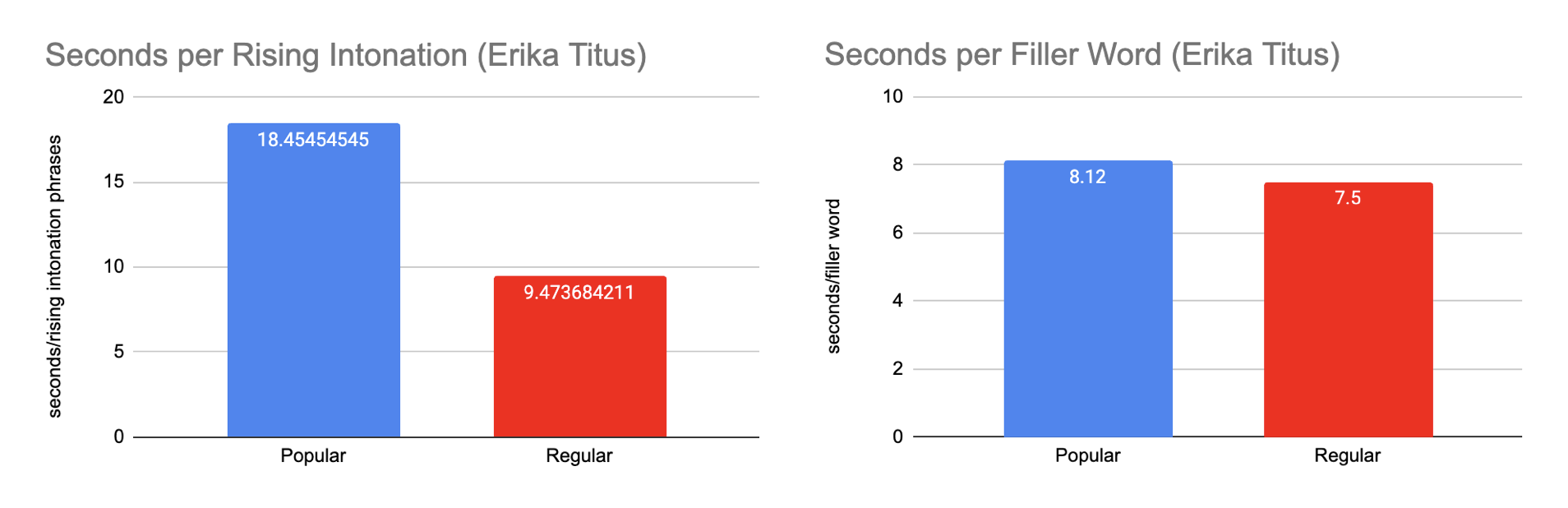
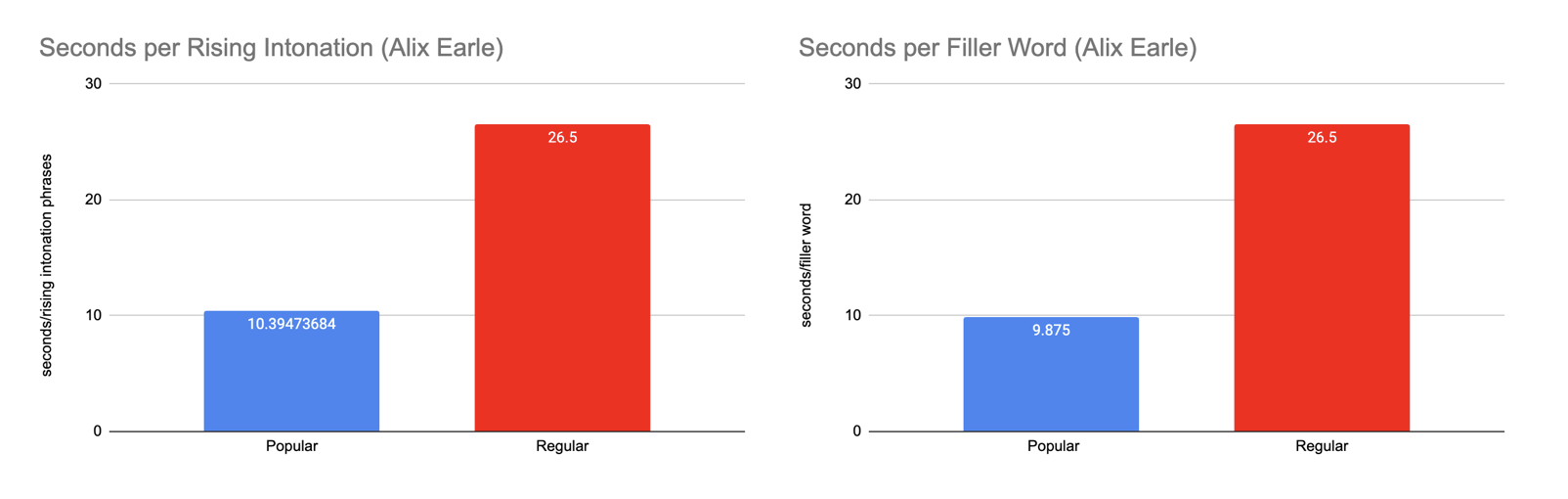
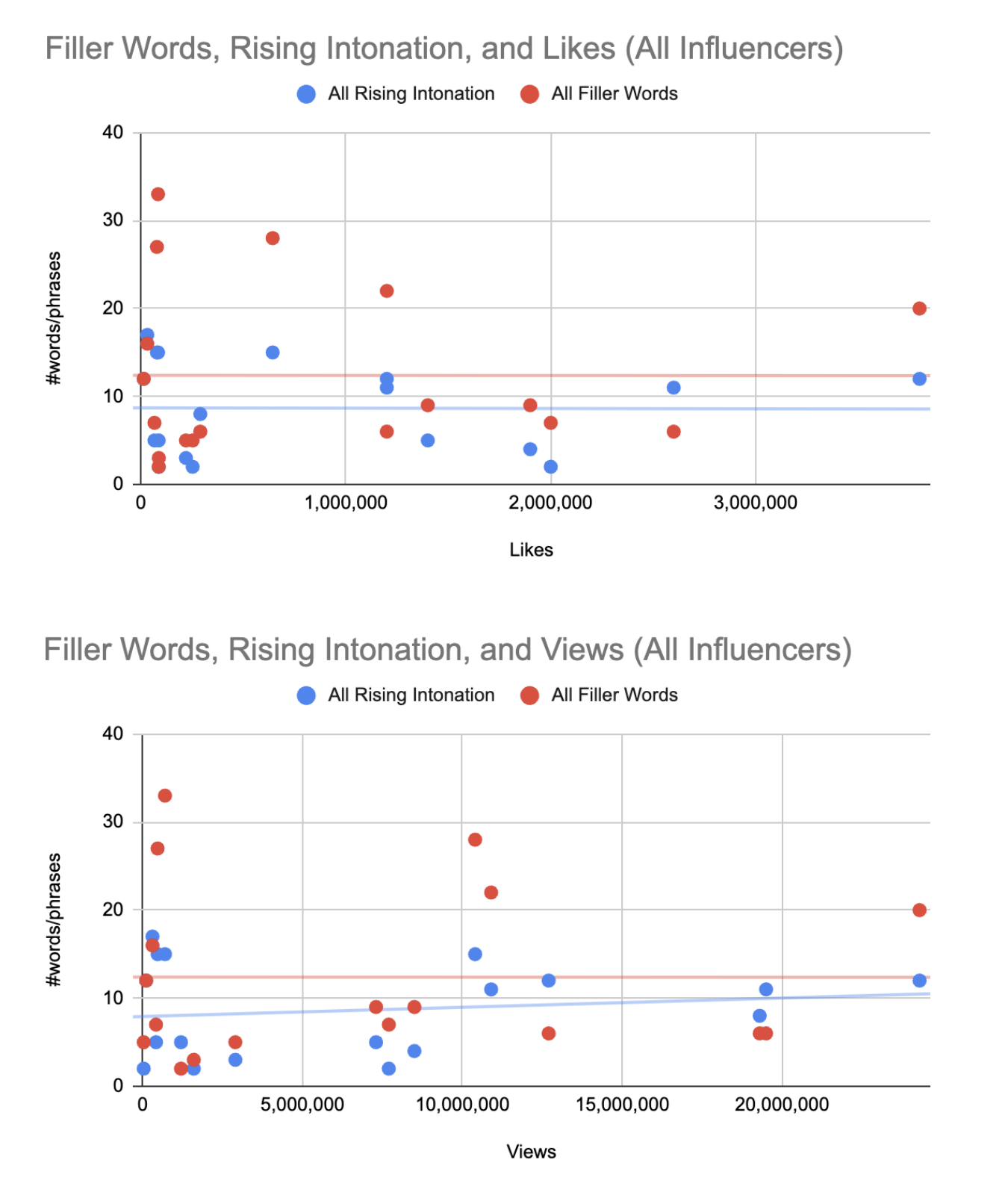
From this data, we extract two key metrics: the average frequency of rising intonation and the average frequency of filler words. We focus on the frequency of these elements in terms of occurrences per unit time (e.g., one occurrence every x seconds) rather than their rate (e.g., x occurrences per second). This perspective allows us to contextualize sociolinguistic factors within TikTok videos, which are short-form content designed to capture attention. Following our hypothesis, influencers’ most popular videos tend to employ rising intonation or filler words frequently (e.g., every 5 seconds) to maintain audience engagement.

Based on our hypothesis, we expect that higher average frequencies of rising intonation and filler words are correlated with more likes and views on the videos. We will compare these metrics between popular and less popular videos to potentially reveal their effects on engagement. Initially, we will analyze the data for each influencer individually before aggregating and analyzing the data as a whole.

Erika Titus:

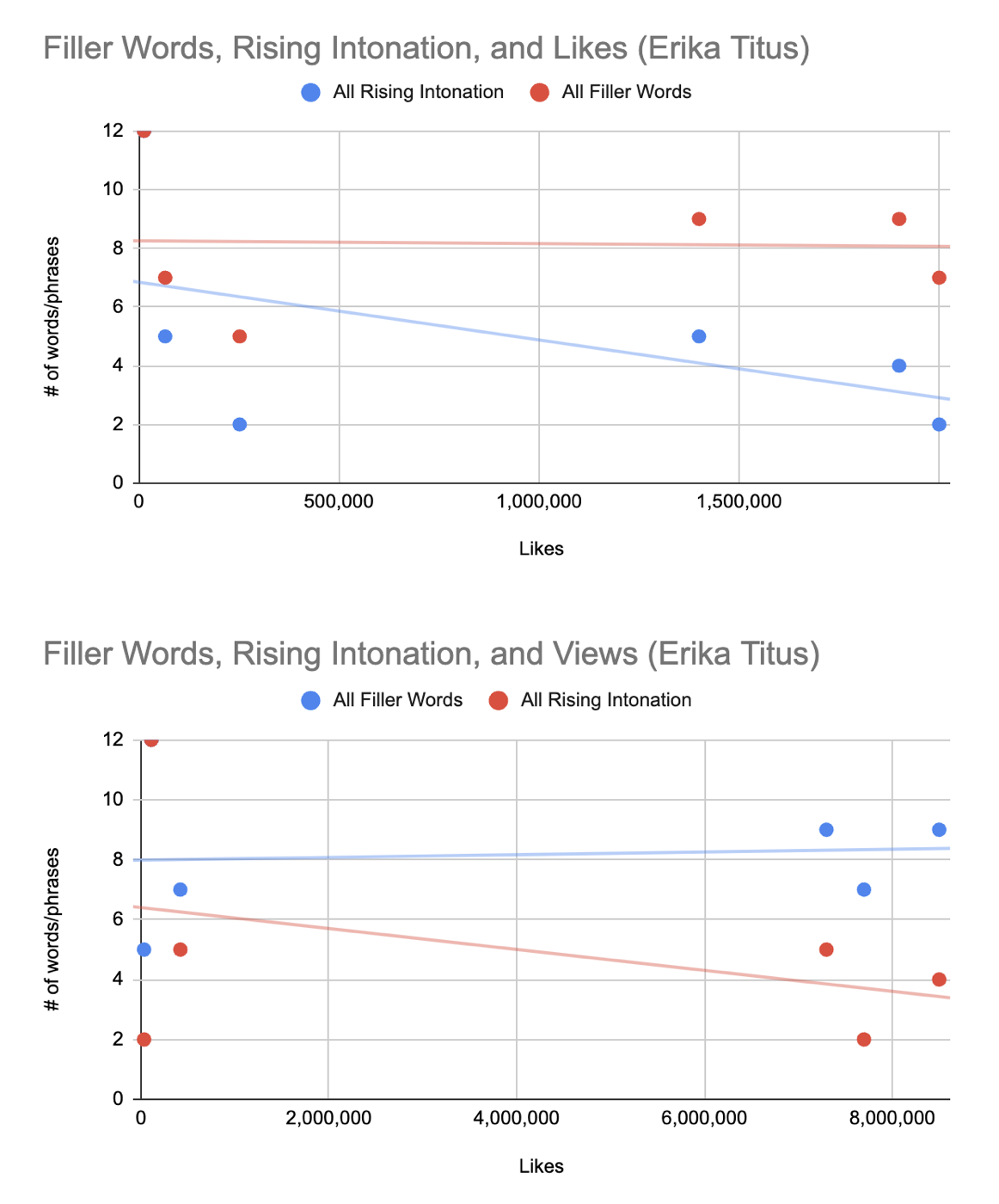
As observed in Erika Titus’s case, her popular videos exhibit an average of one rising intonation every 18 seconds, while her regular videos feature an average of one rising intonation every 9 seconds. Similarly, the frequency of filler words is lower in her popular videos compared to her regular ones. These patterns suggest that for Erika Titus, both rising intonation and filler words appear to have an inverse relationship with engagement, implying that lower frequencies of these features may be associated with higher popularity.

Katie Fang:

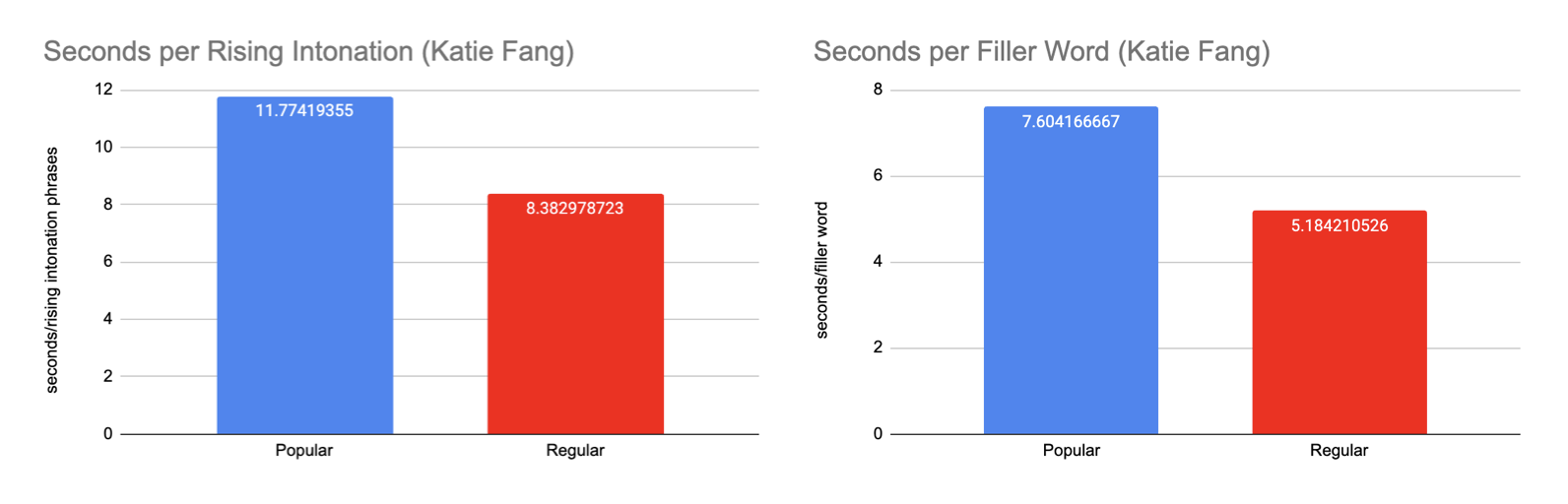
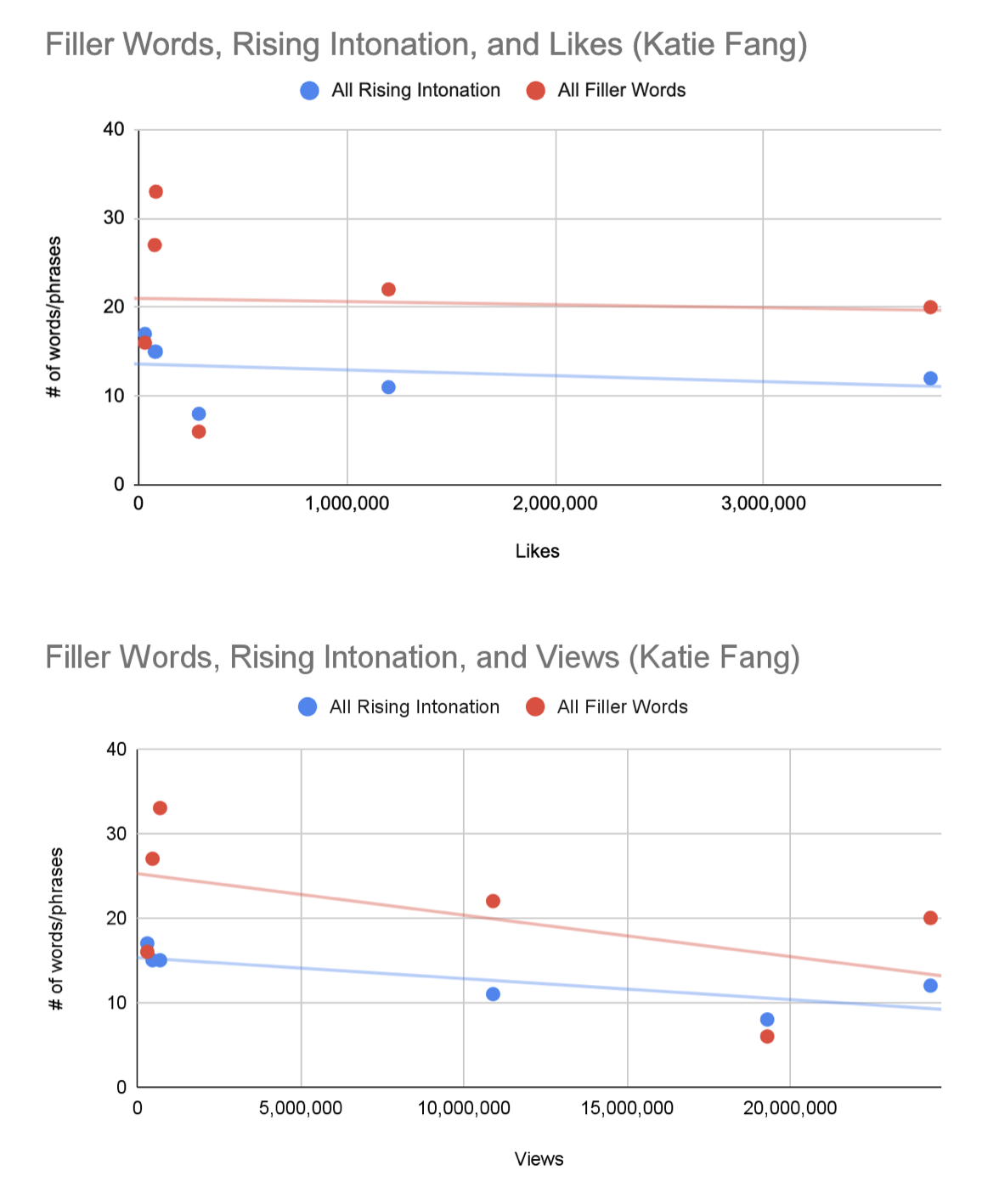
Moving on to Katie Fang, we observe a similar pattern to that seen in Erika Titus’s videos. Katie’s popular videos exhibit a lower frequency of rising intonation and filler words compared to her regular videos. Both factors again seem to have an inverse effect on engagement. From the line graphs depicting sociolinguistic factors versus views, it appears that these sociolinguistic features negatively correlate with views, suggesting that lower frequencies may contribute to higher popularity.

Alix Earle:

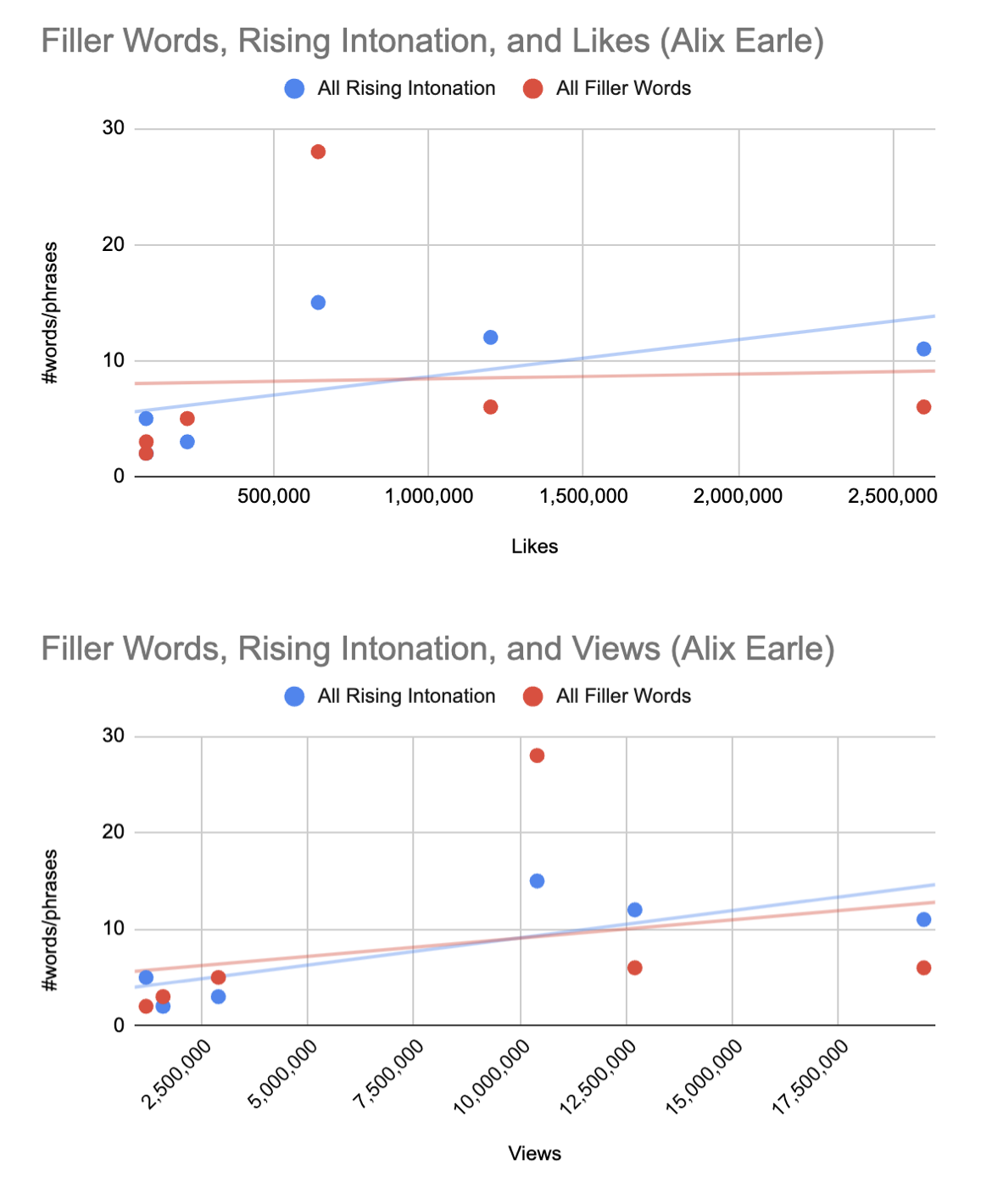
For Alix Earle, we observe the opposite pattern compared to Erika Titus and Katie Fang. Alix’s popular videos have a higher frequency of both rising intonation and filler words. These factors appear to have a positive effect on engagement. The line graphs depict a positive linear relationship between both rising intonation and filler words with views and likes, suggesting that higher frequencies of these features are associated with increased popularity.

Overall:

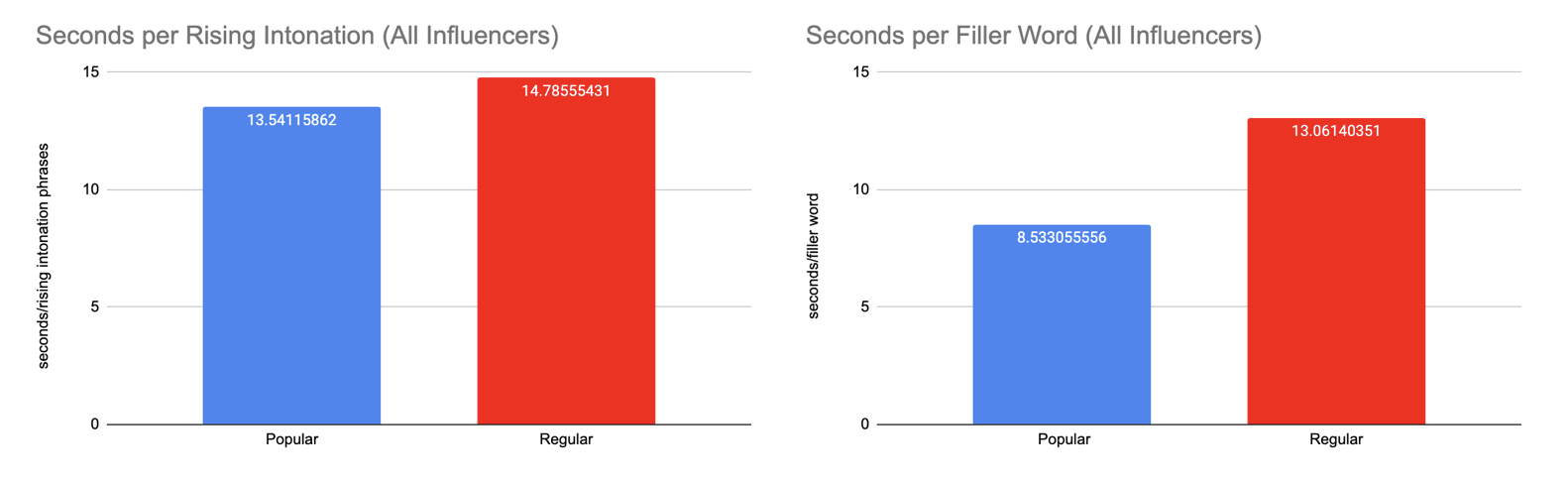
Looking at the data across all three influencers, we observe that popular videos generally exhibit a higher frequency of both rising intonation and filler words. These factors appear to have a positive effect on views and likes. However, the line graphs reveal scattered data, and the line of best fit does not clearly indicate a direct relationship, suggesting that other variables may also influence engagement.

Discussions and Conclusions

To summarize, Erika Titus and Katie Fang’s data do not support our hypothesis, but most of the data we collected from Alix Earle’s does support our hypothesis. Given these findings, our data is inconclusive about whether or not rising intonation and the use of filler words have a positive effect on the success of audience engagement on TikTok.

The differences in like and view count in the data between the influencers can be attributed to multiple factors that would need to be taken into consideration and further researched. Elements such as differences in influencers’ backgrounds, the racial identity and/or personality traits of the influencers, video content, and editing style may have played a role in the use of “uptalk” and filler words, which in turn would affect the success of their videos (Swerts, 1998).

Additionally, negative associations with “Valley Girl” speech could have also played a role in causing less engagement from audiences. Use of this speech by individuals who might not sociologically parallel the stereotypes accompanying the linguistic features of the “Valley Girl” accent, such as “being white, privileged”, can raise questions about how authenticity is perceived by the Gen Z audience, as well as reveal structural biases held by audiences on TikTok (Habasque, 2021). In an article by Sophia Smith Gaeler, Gaeler elaborates on the identities associated with these speech patterns and how linguistic features of female TikTok influencers can pave the way for new forms of English to evolve. (Gaeler, 2024).

Furthermore, having a substantial following and audience can potentially cause the influencer to be or appear more anxious, which in turn may lead to the use of more filler words that can also impact the success of a video (Bodie, 2010).

Video length, content, quality, and editing styles could also be investigated. We observed that Alix Earle created more spontaneous content, while Erika Titus and Katie Fang created more at-home content, which may have impacted the relevancy of the content to the viewer. The general public views spontaneous content as a reflection of the influencer’s true self. In a study done by Jacqueline Rifkin and Katherine Du, the participants rated content creators as “more sincere, genuine, and authentic.” (Du and Rikfin, 2023). Therefore, more people would be drawn to influencers that create more spontaneous content, which in turn would influence which particular linguistic features they utilize to engage their audiences.

Editing styles such as “jump cuts” which produce choppy transitions, can result in the cutting off of rising intonation at the end of a video and negatively affect the success of the video. As reported, the effect of these jump cuts can affect our brain’s perception of what we visually and audibly understand as starting or ending (McMullan, 2021). While collecting data, it was observed that Erika Titus and Katie Fang had choppier editing in their videos. Additional research would be needed to determine if content with these factors negatively impacts the quality of the video, in addition to the viewer’s experience, and therefore resulting in a lower like count. 

Moreover, other aspects like trends, hashtags, and the TikTok algorithm in addition to the aforementioned factors, can inconclusively support that linguistic styles may have more of an impact on the type of audience influencers attract, rather than audience engagement or video success.

Further research can be done to analyze other linguistic styles in comparison to “Valley Girl” speech and possibly account for linguistic features like word choice and vocal fry, to determine more conclusive results about the positive effects of linguistic features on audience engagement or the prevalence of certain linguistic features across varying categories of content. For example, in an article by Alice Hall on Vice, she discusses how different types of content utilize different linguistic features to capture audiences and maintain their engagement (Hall, 2023).

Other research can be done to investigate how influencers linguistically construct their personal brands, what linguistic techniques or features influencers use to engage with their audience in comments and direct messages, or how influencers use language to build and maintain a community among their followers.

This research and further research’s findings exemplify how language adapts and evolves with the increasing use of digital media and technology. It also contributes to the construction of personal identity and community on digital platforms. Lastly, it can be used to analyze how to engage audiences and keep their engagement from a marketing standpoint.

References

Bodie, G. D. (2010). A Racing Heart, Rattling Knees, and Ruminative Thoughts: Defining, Explaining, and Treating Public Speaking Anxiety. Communication Education, 59(1), 70–105. https://doi.org/10.1080/03634520903443849.

Habasque, P. (2021, December 21). Is creaky voice a valley girl feature? Stancetaking & Evolution of … Anglophonia. French Journal of English Linguistics. https://doi.org/10.4000/anglophonia.4104.

McMullan, J. (2021b, January 21). View of the Great Jump Cut (r)evolution: A case for studying the evolution of vlogging production techniques. https://firstmonday.org/ojs/index.php/fm/article/view/10547/11266.

Mohsin, M. (2022, September 3). 10 TikTok Statistics That You Need to Know in 2019 [Infographic]. Oberlo; Oberlo Dropshipping app. https://www.oberlo.com/blog/tiktok-statistics.

Nycum, R. (2018, May). In Defense of Valley Girl English. In The Compass (Vol. 1, No. 5, p. 4).

Rezek, A. “How Brands Go Viral: An Analysis of Successful Brand Marketing on Tik Tok with Gen Z” (2022). Honors Theses. 2645. https://egrove.olemiss.edu/hon_thesis/2645.

Swerts, M. (1998). Filled pauses as markers of discourse structure. Journal of Pragmatics, 30(4), 485–496. https://doi.org/10.1016/S0378-2166(98)00014-9.

Cross-Referenced Sources

Source 1: Hall, Alice. “Why Does Everyone on TikTok Use the Same Weird Voice?” Vice, 29 Mar. 2023, www.vice.com/en/article/k7zq49/why-everyone-uses-tiktok-voice.

Source 2: Rifkin, Jacqueline, et al. “Research Identifies Why People Prefer Spontaneity in Entertainment.” Phys.org, phys.org/news/2023-06-people-spontaneity.html.

Source 3: Smith Galer, Sophia. “How TikTok Created a New Accent – and Why It Might Be the Future of English.” Www.bbc.com, 23 Jan. 2024, www.bbc.com/future/article/20240123-what-tiktok-voice-sounds-like-internet-influencer.

[/expander_maker]

, , , , , , , , , ,
Scroll to Top