Race

All Jokes Aside – Indexing Gender and Race in Stand-Up Comedy

Ammi Lane-Volz, Cate Dark, Ava Kaiser, Grace Shoemaker, Alex Farfan

As playful and harmless as something titled “comedy” can seem, the political and cultural implications of what is deemed funny are not insignificant. From stand-up performance to jokes around the water cooler, comedy is used as a tool to socially bond, establish hierarchy, critique global affairs, and index identity. Our project set out to explore how stand-up comedians index their identities through mimicry, contrast, and slurs, specifically focusing on how they index themselves as part of versus separate from gendered and racial groups. We studied the specials of ten stand-up comedians from the Netflix series The Standups to see if they more often tended to align their identities through references to their own demographics (in-group indexing) or through references to outside groups (out-group indexing). We found several patterns that emerged, including higher instances of non-white comedians mentioning their race (three times more often), 60% of which consisted of in-group indexing. We also found the opposite to be true for gender, with men referencing gender almost twice as often as the female comedians, 55% of which consisted of out-group indexing. These patterns invite several follow-up questions on the different tactics comedians use when writing their sets and how their choices might be influenced by their place in society and membership of different social majority or minority groups.

[expander_maker id=”1″ more=”Read more” less=”Read less”]

Introduction and Background

Comedy holds significant cultural influence, serving both as a mirror reflecting societal norms and as a tool for challenging them. We identified a notable gap in research relating to how stand-up comedians utilize their demographic backgrounds. A study done on representations of race and gender within Comedy Central programming found that although the channel has made an effort to expand its brand by employing more female and racially diverse comedians, the type of jokes found within these skits reinforce power dynamics and white heteronormative masculinity (Marx 2016). Another study on stand-up comedy and cultural spread argued that stand-up comedians are able to reinforce and/or challenge existing cultural stereotypes through their sets, both within the comedic monologues themselves and in the audience’s minds (Yus 2002). Based on this research, it is evident that a comedian’s own demographic information, specifically gender and race, can play a role in the creation or reinforcement of stereotypes in comedy. Yet none of these studies discuss the ways in which comedians index their own demographics. To fill this gap, we wanted to answer the question of how comedians navigate indexing their identities by looking at the frequency of in-group versus out-group demographic references and how these references connect to broader social contexts.

Methods

For our analysis, we chose to look at ten thirty-minute stand-up specials from seasons two and three of the Netflix series The Standups. Each episode of this show focuses on a different stand-up comedian. Comedians from this show are of moderate acclaim, meaning their sets are polished (i.e. representative of a “standard” professional stand-up comedian) but the researchers and the general public may not know the comedians by name. Choosing specials from this show allowed for some standardization of the audience and venue, and provided us with a broader view of multiple professional stand-up comedians than just analyzing one or two longer specials.

Each researcher looked at two randomly chosen specials and noted each time that a comedian mentioned their own identity demographic (race, gender, sexuality, political affiliation, class, and age) and each time they made a comparison to another demographic. These comparisons included strategies like direct comparison or mimicry of another demographic’s accent or physical mannerisms. We also noted each time a comedian said a slur related to their own identity demographic and each time they said a slur related to a different demographic. Based on our preliminary data, we decided to whittle down our focus from the six demographic categories mentioned above to just race and gender. Within these categories, we split them into white vs. marginalized racial identity and men vs. women, respectively. It is also important to note that our sample was evenly split in terms of gender (five men, five women) and race (five white comedians, five comedians of color).

Data and Analysis

Using the data we collected for each comedian, we generated the following figures that summarize our findings:
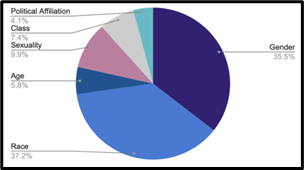
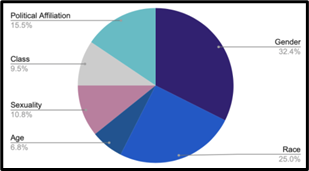
Figure 1: Total Number of References Made by Each Comedian to Their Own Demographics
Figure 2: Total Number of Comparisons Made by Each Comedian to Another Demographic

As seen in Figure 1 and Figure 2, comedians tend to reference and compare their gender and race significantly more than age, class, sexuality, or political affiliation. Using this information, we were able to narrow our analysis to focus on this key demographic data.
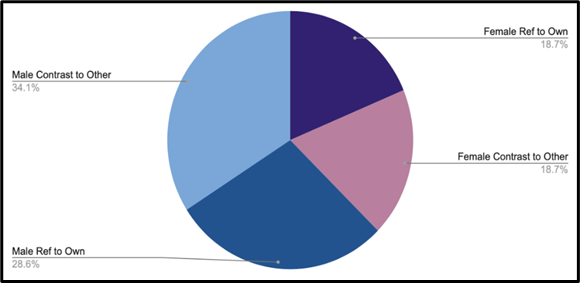
Figure 3: Total Number of Male Vs. Females References to Gender

Figure 3 demonstrates that male comedians were much more likely to reference gender to index their identities, with comparison to another gender being the most common reference type.
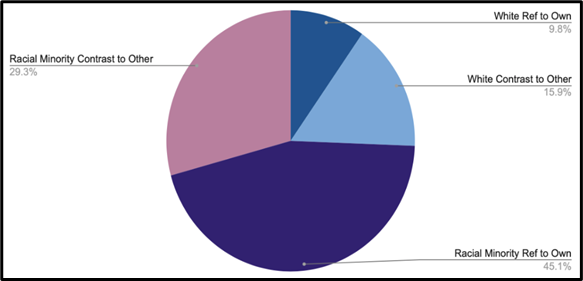
Figure 4: Total Number of White Vs. Racial Minority References to Race

Figure 4 indicates that racial minority comedians referenced race about three times more than white comedians, with references to their own race being the most common reference type. 
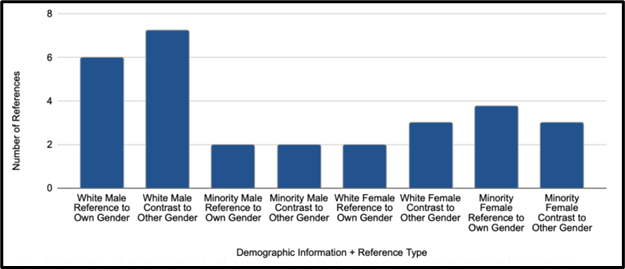
Figure 5: Average Intersectional (Race and Gender) References to Gender

Figure 5 indicates that white men were about two times more likely to reference gender than any other demographic combination.
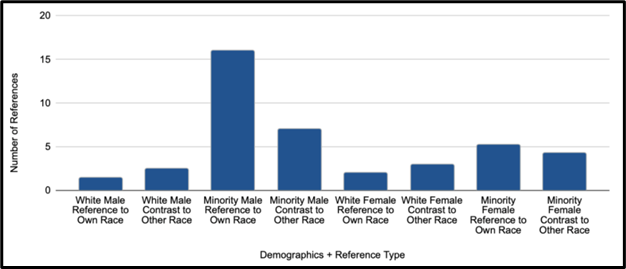
Figure 6: Average Intersectional (Race and Gender) References to Race

Figure 6 shows that minority men were three times more likely to reference their own race than any other combination of race and gender.
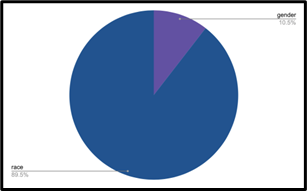
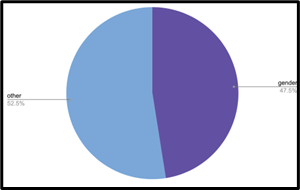
Figure 7: Total Number of Slurs Related to Comedian’s Own Demographic
Figure 8: Total Number of Slurs Unrelated to Comedian’s Own Demographics

Figure 7 shows the large majority of self-referential demographic slurs were race-related, as Black comedians tended to use the n-word multiple times in their sets. Figure 8 shows that out-group related demographic slurs were slurs related to gender and other demographics; none were race-related.

Raw Data

anthroling comedy data

Discussion

Based on our data and outside research, the frequency with which comedians index their race and gender within their sets may be linked to a few different social phenomena.

The finding that white men are more likely to index their gender identity in their comedic routines may suggest that male comedians feel compelled to incorporate their gender identity into their comedy routines, or that they find this to be more socially acceptable than women. This could reflect broader gender expectations where men are often encouraged to assert their masculinity or draw attention to their gender in public spaces (McVittie et al., 2017). Racial minority comedians’ tendency to reference their minority status could indicate a desire to confront stereotypes, draw attention to racial issues, or establish a unique comedic identity. This could stem from personal experiences of marginalization or a sense of responsibility to address racial dynamics in their performances (Sullivan et al., 2021). Additionally, the observation that power dominant demographics (white, men) more commonly used comparison than their marginalized counterparts could imply that those in positions of power feel more comfortable using comparison as a comedic tool. This could be because they have greater societal latitude to freely express themselves without fear of repercussions (Tobore, 2023). By using comparison, minority comedians risk reinforcing existing power dynamics and societal hierarchies where masculinity and whiteness are considered the norm. For a minority comedian, refraining from such comparisons can be a way to affirm their own racial or cultural identity without centering whiteness as a point of reference. Finally, the fact that gendered slurs were employed by out-group comedians, while race based slurs were only used by in-group racial minority comedians suggests a greater societal awareness or sensitivity towards racial issues than gender issues. This may stem from a recognition of the historical and ongoing harm caused by racial slurs (Wilson, 2020). Overall, our findings underscore how the comedy stage becomes a microcosm for broader societal interactions and power relations. The act of indexing one’s identity in comedy can serve as a means of negotiating power, identity, and belonging within a societal context that is stratified along lines of race, gender, and sexuality.

In general, comedy does not merely reflect the social order but actively participates in its construction and perpetuation. The comedian’s role in creating a “social contract” with the audience, wherein their narratives and identities are validated, highlights the performative aspect of social identity and the power of narrative in shaping reality. The audience is also not merely a passive receiver of comedy; they have agency in choosing where to laugh and where not to laugh. They are then an active participant in the co-creation of the comedic experience and, by extension, the social norms and power dynamics it reinforces or challenges.

Conclusion

This research underscores the potential of comedy as a site of social commentary and critique. While comedy can perpetuate stereotypes and power imbalances, it also holds the potential for subversion. Comedians who are aware of the power dynamics at play in their performances can use humor to challenge societal norms, question stereotypes, and imagine new ways of being.

In framing our findings within the broader context of power relations, language, and agency, we contribute to a deeper understanding of the role of comedy in society. This opens up important discussions about the responsibilities of comedians and audiences alike in shaping the social discourse through humor. It also suggests avenues for further research into how comedy can be used as a tool for social change, by both reinforcing and challenging the status quo.

References

Marx, N. (2016). Expanding the brand: Race, gender, and the post-politics of representation on Comedy Central. Television & New Media, 17(3), 272–287. https://doi.org/10.1177/1527476415577212

Miller, T. (Producer). (2017-2021). The Standups [TV Series]. Netflix. https://www.netflix.com/browse?jbv=80175685

McVittie, C., Hepworth, J., & Goodall, K. (2017). Masculinities and health. The Psychology of Gender and Health, 119–141. https://doi.org/10.1016/b978-0-12-803864-2.00004-3

Sullivan, J. N., Eberhardt, J. L., & Roberts, S. O. (2021). Conversations about race in black and white US families: Before and after George Floyd’s death. Proceedings of the National Academy of Sciences, 118(38). https://doi.org/10.1073/pnas.2106366118

Tobore, T. O. (2023). On power and its corrupting effects: The effects of power on human behavior and the limits of Accountability Systems. Communicative & Integrative Biology, 16(1). https://doi.org/10.1080/19420889.2023.2246793

Wilson, C. (2020, October 4). N-word: The troubled history of the racial slur. BBC News. https://www.bbc.com/news/stories-53749800

Yus, Francisco. (2002). Stand-up comedy and cultural spread: The case of sex roles. Babel A.F.I.A.L.. special issue on humour studies. 245-294. https://personal.ua.es/francisco.yus/site/Afial.pdf

[/expander_maker]
, , , , , ,

Sociolinguistic Activism and White Fragility

Jamie Seals, Makena Larson, Betsy Benavides, Faith McCormick

When looking at the work previously done on the intersection of white fragility and sociolinguistics, we noticed a gap in research that we wanted to fill. We conducted interviews between two white peers, the topic of conversation being sensitive topics such as race and racism. We hypothesized that the interviewees would take a neutral stance when speaking on the subject of race. We looked specifically at word choice, stance, and circumlocution. Using conversation analysis on all three interviews conducted, we were able to look at these linguistic elements and draw conclusions. It was found that interviewees used circumlocution, hedged and hummed, and all held a very particular stance. In our article, we delve more deeply into what we found, the examples of conversation analysis, and what the most significant takeaways were.

[expander_maker id=”1″ more=”Read more” less=”Read less”]

Introduction

For our project, we wanted to take a sociolinguistic approach to look at white fragility and discussions pertaining to sensitive topics. We looked specifically at how white people respond to questions regarding race and racism. When looking at previous work examining the intersection of white fragility and sociolinguistics, we found a lack of research that we wanted to supplement and deepen. We wanted to look at white fragility by conducting interviews with two white peers regarding race, which we could not find had ever been done. Previous research done by Robert DiAngelo, highlighted a discomfort that white people had when dealing with issues of race, “a single required multicultural education course taken in college, or required “cultural competency training” in their workplace, is the only time they may encounter a direct and sustained challenge to their racial understandings.” (DiAngelo, 2011). DiAngelo’s, along with others’ work done on white fragility, led us to our final decision on the aspects of our interviews. We conducted interviews between two white peers, both of which were twenty to twenty-two years old. We wanted to analyze these interviews specifically through a sociolinguistic lens, which makes our research unique. Our research is necessary because, by better understanding how white people feel regarding race and discussions about it, we can start to break down walls between one another and have more open conversations. These discussions allow for transparency and a sense of stronger community values within the UCLA culture and in our greater society. Furthermore, we believe that conversation is very important which is why we looked at it in depth. We did conversation analysis on our three interviews and examined them by looking at circumlocution, word choice, and stance. We hypothesized that all the participants would take a neutral stance, and we found this to be accurate but much more nuanced than we had expected. 

Methodology and Results

After careful thought and consideration throughout our experiment, we found that within our three interviews it was vital to keep in mind what key linguistic features we were searching for when conducting the research portion of our project. Having both the interviewer and the interviewee identifying as white, we hoped this environment would create a sense of comfort within the conversation. We also reassured the individuals that this was a safe space to speak freely and reflect on what they have personally experienced here at UCLA. After analyzing the recordings of each interview and uploading the conversations through Trint, a transcription processing application, we were able to effectively observe the outcome of our data and look at the speech and language patterns between the two speakers. Our first finding from the interviews was how there was still an obvious level of uncomfortability between the interviewer and interviewee when asking the questions. For example, in the second interview, the interviewee is asked the question, “do you think racism exists in UCLA culture or on campus?” The interviewee responds by saying, “yes, but it’s not like I’ve seen it directly.” This response is important to our study because it proves how students here are aware that here on campus there are individuals experiencing racism. However, they quickly reassure us that they are not involved or a part of the problem at hand. Throughout the interviews, we also noticed how, when asking the question, “Do you think UCLA is inclusive to all students?” The individuals were swift to respond and say no. However when asked if they believe racism exists on campus or in the culture here at UCLA, they take more time and reply hesitantly with “yes, Uhm, probably” (Interview 2). This longer pause can signal that the interviewee could be slightly caught off guard or uncomfortable answering the question, in fear of giving the wrong response. Secondly, we found that in our third interview, when the individual was asked about racism at UCLA, they responded with, “I heard from the grapevine that….” This immediately personifies to the interviewer that the individual wants to be excluded from the information they are about to share. The interviewer does this in a way to agree that, yes, there is exclusion here on campus happening but wants to ensure she is not accounted for in that statement. This is critical for our study because it helps us reveal how quick students are to agree there is blatant inequality here at UCLA, but in a way, they would like to acknowledge it is problematic but are quick to cover themselves before even pressing more into the issue. The second interviewee, at the opening of the conversation, also expressed their feelings on how they felt about these questions. When asked if they think UCLA is inclusive to all students, they respond with, “uh, this is not a fun topic to talk about” in the recording, the student pauses and then nervously laughs while saying this is not a fun topic to talk about. The nervous laugh along with them voicing how this is not a fun topic to talk about, are both powerful indicators the individual was hesitant to talk on this subject without feeling uncomfortable. We must circle back to our hypothesis stating these students would take a neutral stance. It is clear from our findings that our pool of participants remained completely neutral throughout the interview. All three students agreed they benefited from white privilege at UCLA, however when being asked these questions about race, we found they all displayed levels of discomfort and attempted to sever themselves from any racist or discriminatory acts people might be experiencing or hearing about in UCLA culture or campus.

Discussion

Although all three interviewees had different responses to the questions, we found a few patterns across the three. Upon answering each question, interviewees would often find ways to distance themselves from the issue. From saying things like “I’ve heard”, “Actually, I can’t really think of an example, so maybe not” or “Yes, but it’s not like I’ve seen it directly.” This is what sociologist Caprice Hollins describes as the individual approach White individuals often use when speaking about race. Individuals may find ways to maintain a positive self-image by pushing away their closeness to these issues or moving around the topic of conversation (2020, Hollis). To add onto this, something we picked up on was the interviewees avoidance using racialized language, instead opting for terms like “minorities” or “different race” instead. This is what is described as aversive racism, or racism that is manifested in subtle ways (Diangelo, 2018, p.59). Furthermore, they never directly state their opinion on some of the questions, often finding a sort of a neutral position or a middle ground. This type of stance is known as a form of White solidarity, where individuals in conversation will often build on this idea of a “common stance” regarding race-related issues. These stances rely on both silence on racial matters and a subconscious implied unity between parties to uphold this solidarity (DiAngelo, 2018, p.72). When all three of the interviewees used this back and forth, yes and no response, it is possible that they are not able to navigate that common ground which could lead to some of the discomfort demonstrated.

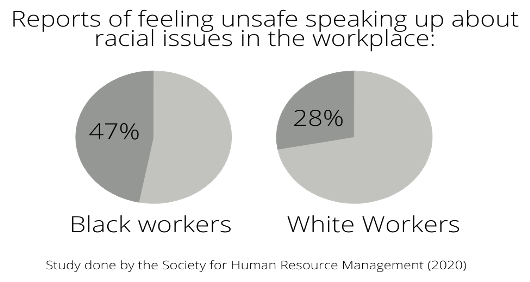
After conducting our study, most of what we saw fell in line with what sociologists are saying about conversations on race, however it does not match some of the quantitative data we found. The stances we picked up on during the interview were things we expected but did not expect to find clear discomfort. This is what prompted us to look into other research where we found that White individuals feel significantly less discomfort speaking about these topics compared to Black individuals. The following Figure 1 is demonstrative of a 2020 study done by the Society for Human Resource Management which collected data from 1,275 participants about their workplace environment. While our study focuses on universities, we feel that the study on the workplace environment is still relevant to our topic. The study found that 47% of Black respondents do not feel safe speaking out about issues of racial justice compared to 28% of White respondents who said they do not feel safe for the same reason (2020, p.11). There can be many reasons for this discrepancy. While this data could indicate that our 3 interviewees happened to be a part of the 28% of people who feel uncomfortable, it’s also possible that the perception of themselves is different than the way others (us interviewers) perceive them. If given the opportunity, we would have a second round of interviews where we would ask not only about racial issues but also how individuals feel about speaking on racial issues.

Figure 1

Observing our results and how they fit into a broader context, racial issues and racial justice has always been prevalent, deeply and radically well-established, and formed in society. UCLA represents its own subcategory of society, as a community. By theoretical implications, these findings we provided show to be significant in spaces of policy, practice, and further research. Additions are also made to the existing discussion of race and social inequalities related to. By practical applications, it presents how we can better self-reflect and ask ourselves: if certain conditions were fulfilled, not only for the student body but beyond that. Our findings can be extended to other situations, such as friend groups, educational spaces, relatives, and workplaces. Anywhere we find a place of interaction and community, this study could be applicable. Our findings help us understand a broader topic of the foundations of human interaction. With continued conversations regarding social injustice, we are better equipped to integrate our worldviews, as well as comprehend and be attentive to that of others. We can improve and create equitability for all, resulting in better representation, accountability, uplifting underrepresented groups, and improving the overall well-being of one another.

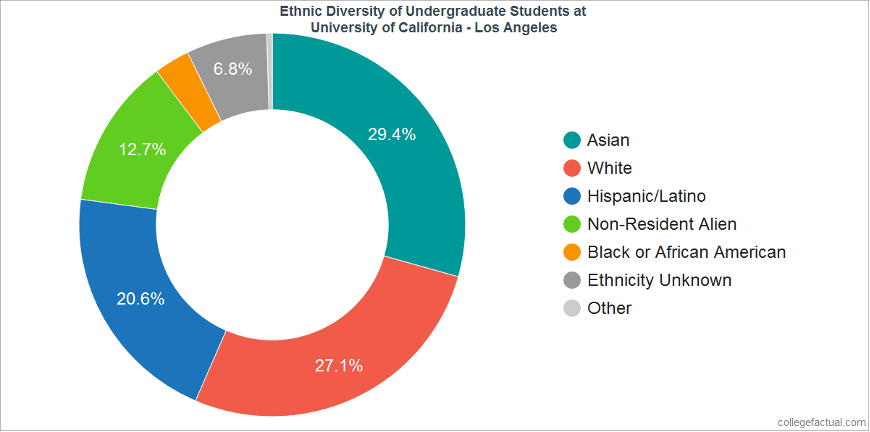
As seen below, a chart of the ethnic diversity of undergraduate students at UCLA. An article was written at Penn State in 2018 by the Diversity group in response to College Factual’s ranking of UCLA’s diversity and ethnicity. The article aimed at identifying and examining how diverse of an institution UCLA is. We found this article written at Penn State to be extremely critical and relevant to our work because it perfectly analyzes the exact breakdown of each ethnicity present on campus at UCLA. From this data in the chart, we are allowed the opportunity to more effectively determine the disproportions or inequalities that may be prevalent based just on the percentages of various ethnicities here at UCLA As seen in the chart, carefully note how the orange percentage of the chart is not even listed and exact percentage. In this chart the color that represents individuals of black or African American ethnicity accounts for less than 4% or the entire student body. This statistic is crucial to the argument we pose in our experiment because the percentage of African American and black individuals is disproportionately represented on campus here at UCLA, while the percentage of white or Caucasian presence on campus stands at 27.1% the second to highest percentage of all ethnicities listed.

Figure 2- UCLA Student Demographics Chart, 2018


References

DiAngelo, Robin (2011). White fragility. International Journal of Critical Pedagogy 3(3):54–70.

DiAngelo, D. R. (2018). White Fragility: Why It’s So Hard for White People to Talk About Racism. Beacon Press.

Diversity at UCLA – Diversity. (2018, March 8). Sites at Penn State. Retrieved June 8, 2022, from https://sites.psu.edu/pasternakcivic/2018/03/08/diversity-at-ucla/

Hollis, C. (2020). What white people can do to move race conversations forward. Youtube.com. Retrieved 6 7, 2022, from https://youtu.be/7iknxhxEn1o

Society for Human Resource Management. (2020). Together Forward. The Journey to Equity and Inclusion. Retrieved 6 5, 2022, from https://shrmtogether.wpengine.com/wp-content/uploads/2020/08/20-1412_TFAW_Report_RND7_Pages.pdf

[/expander_maker]

, , , , ,

“Sorry, I Didn’t Quite Get That: The Misidentification of AAVE by Voice Recognition Software”

Shannon McCarty, Lam Pham, Alora Thresher, Alexandria Wasgatt, Emma Whamond

This study investigates the transcription accuracy by AI speech recognition systems using natural language processing when interpreting standard American English dialects (SAE) versus African American Vernacular English (AAVE). We inspect the percentage of misidentified words, and the degree to which the speech is misidentified, by AI speech recognition systems through analyzing authentic speech found in YouTube videos. The accuracy of voice recognition with respect to AAVE will be determined by selecting for distinct AAVE features, such as G-dropping, the [θ] sound, reduction of consonant clusters, and non-standard usages of be. The methodology includes feeding YouTube clips of both SAE and AAVE through an AI speech recognition software, as well as examining YouTube’s auto-generated transcripts, which are created by automatic speech recognition based on the audio of the YouTube video. The purpose of this study is to bring attention to the needs of diversity in technology with regard to language variation, so that AI speech systems such as Amazon’s Alexa or Apple’s Siri are more accessible to all members of society, as well as to help destigmatize a variety of American English that has carried social, cultural, and historical stigma for centuries.

[expander_maker id=”1″ more=”Read more” less=”Read less”]

Introduction and Background

2020—American society finds itself at the thrilling forefront of technological innovation, yet is still plagued by racial inequality and systematic racism. Our study aimed to tackle a portion of this American duality from a sociolinguistic standpoint. We investigated AI speech recognition systems and the identification differences while processing speech of the standard American English dialect (SAE) versus African American Vernacular English (AAVE). SAE is most broadly defined as the most uniform, accepted, and understood language in the US. On the other hand, AAVE is not solely slang or a lesser form of SAE; rather, it is a language variety that has systematic linguistic patterns and carries social, cultural, and historical stigmas. We believe AI speech recognition systems will reflect our country’s racial biases by misinterpreting AAVE far more often than SAE. As these technologies become more commonplace and embedded in society, our study’s goal is to shed light on whether AI speech technology is inclusive of the AAVE dialect and its speakers.

Methods

An overview of AAVE linguistic features can be found in a paper discussing the matter by Erik Thomas (2007), though we narrowed our focus on the most defining features of AAVE in this study. These included G-dropping, the th sound (as in bath) becoming the f sound (as in fast), reduction of consonant clusters at the ends of words (wes side versus west side), and the use of the verb be (Singler, 1998).

The analysis of the main facets of the verb be included the dropping of be, the habitual be (Collins, 2006), the use of BIN and be done. The heavy focus on be was due to the fact that it is one of the biggest syntactic differences between SAE and AAVE (Lanehart, 2015). As a result, the variants of be  were most likely to affect the transcription performance of voice recognition software when processing AAVE. 

This study used the abundant linguistic resources available from YouTube to exhibit the use of SAE and AAVE dialects. We compiled audio clips of authentic, normal speech in both of these varieties and fed the audio clips into an AI transcription software, specifically dictation.io/speech, as well as examined YouTube’s AI-generated closed captions. It was important to ensure that the captions we used on YouTube were the auto-generated ones, and not captions that had been manually entered by the uploader.

To determine what percentage of speech and what types of features of the dialects were misidentified by the AI speech recognition systems, we quantified the data by categorizing the accuracy of the AI transcriptions into four groups: “All,” meaning All of the words were picked up, “Most,” “Few,” or “None.”  If every single word in the audio recording was transcribed correctly by the AI speech recognition system, then that audio clip was placed in the “All words picked up” group. If most words or only a few words were transcribed correctly by the AI speech recognition system, then that audio clip was placed in “Most” and “Few” groups, respectively. And if nothing in the audio clip was transcribed correctly by the AI speech recognition system, then that audio clip was placed in the “None” group.

Our hypothesis was that the percentage of interpretation inaccuracy in AI speech recognition systems while interpreting AAVE would be significantly higher than the inaccuracy recorded by speech recognition software while interpreting SAE (i.e. more AAVE audio clips would land in the “Few” and “None” transcription accuracy groups). This would lead to an expectation that voice recognition software is globally less effective for speakers of AAVE.

Results/Analysis

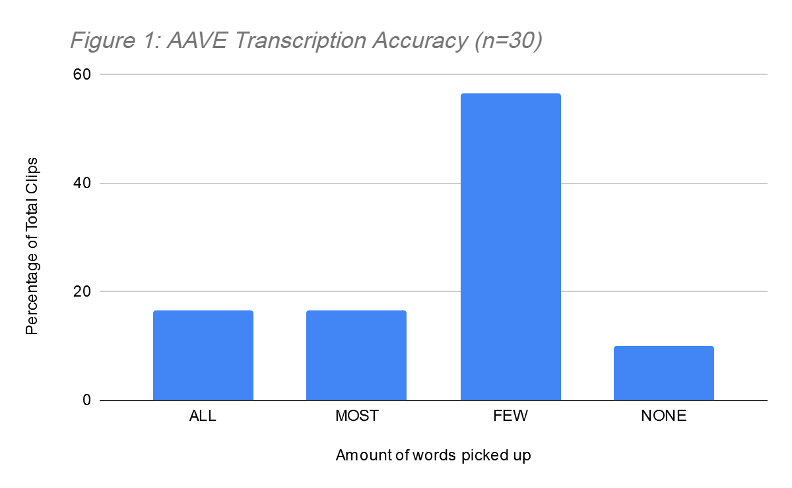
The results of this study were overall in line with the hypothesis—the transcription software picked up more SAE words than AAVE words. The vast majority of AAVE video samples collected had “Few” words transcribed correctly. Figure 1 shows the amount of AAVE words picked up by the transcription software. Our study found that for all of the clips of AAVE:

    • 16.7% “All” words were picked up
    • 16.7% “Most” words were picked up
    • 56.7% “Few” words were picked up
    • 10.0% “None” of the words were picked up

It is noteworthy that the transcription software was unable to pick up the majority of AAVE speech when the video clips were similar to the SAE video clips with regard to background noise, speaker volume, etc. We believe this is largely due to AAVE phonetics rather than AAVE syntax and word choice, which is what we were focusing on in this study.

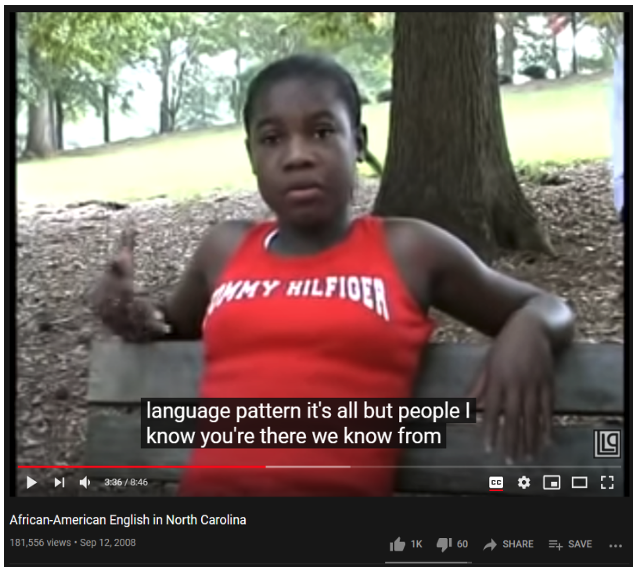
Example 1: This clip was categorized under “Few” words being picked up; in the beginning of the segment, the speaker actually says it’s a whole buncha people in New York that we know from. (“African-American English in North Carolina”, The Language & Life Project)

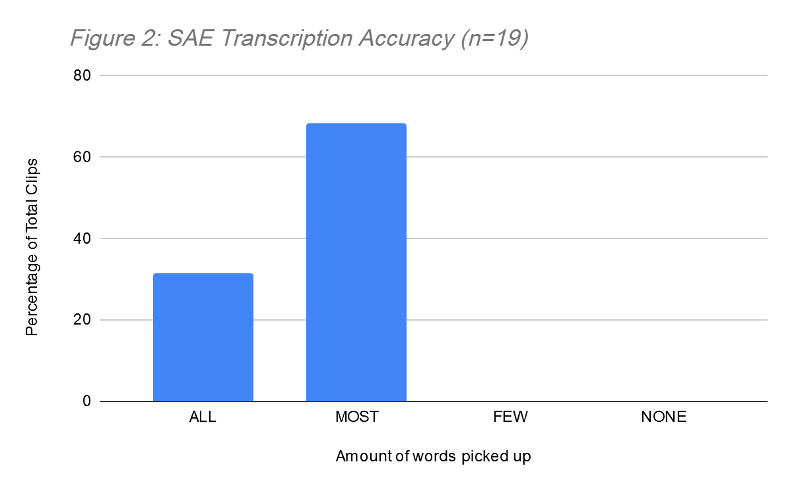
On the other hand, all video samples of SAE fell under “All” or “Most” transcription accuracy. The SAE video clips had the majority of their words picked up and transcribed correctly. According to Figure 2:

    • 31.6% of the clips had all their words picked up
    • 68.4% had the majority of their words picked up

The results of transcribing SAE versus the results of AAVE are drastically different; we believe this is largely due to the phonetic differences between the two English varieties. The only time SAE was not picked up was when the speaker was speaking faster than normal. All of the words could have blended together, and as a result, the transcription software was not able to distinguish what was being said.

Another unexpected observation for both AAVE and SAE was that women speakers were not picked up as often as male speakers; AAVE female speakers made up 66.7% of the “None” category, despite comprising less than 20% of our AAVE samples.

Limitations

We had some limitations in our project as well. Due to COVID and time restrictions, our sample size was regrettably small at only 49 clips. We also had a few clips become unusable between the time of our finding them and analyzing them. As a result of the small sample size, we ended up noticing a huge, unexpected difference between the transcription accuracy of male versus female speakers of AAVE, but we weren’t able to draw any solid conclusions as to whether this difference is representative of a larger population. However, the difference was quite apparent within the random pool we gathered, so a study with equal amounts of male and female AAVE speakers could address this issue more equitably.

Speakers that were present in the room would also have enabled a more accurate representation of AAVE and voice recognition software’s real-world interaction. Our computers and phones were limited due to the differing microphone quality, which could have influenced the amount of words the voice recognition software picked up. In addition, we had planned to use our phones’ dictation softwares as the primary method of data acquisition, which ended up being wholly impossible, so we only had the time to find and use one transcription site.

Many of the video clips were filmed in neighborhoods, with background noise included, such as cars going by, wind, and people talking. This could also have limited our transcription site and created another layer of ambiguity. However, SAE clips with similar amounts of background noise that were played were transcribed (mostly) correctly. So it is unclear if the background noise is fully a limitation or an example of voice recognition software not picking up AAVE.

Lastly, we began to wonder if the phonetics of AAVE had more of an effect on our voice recognition software than the syntax did—that is, we wondered whether the sound of AAVE was more impactful than the sentence structure. A few of us used the software to speak sentences that were syntactically AAVE, but not phonetically, as none of the researchers of this study were AAVE speakers. Those sentences were transcribed correctly, including AAVE syntax. However, we did not have enough time to pursue that avenue of research, but it would be a promising starting point for any future projects.

Discussion and Conclusions

This investigation was intended solely to pursue the question of whether there is a racially-based difference in accuracy of voice recognition software. Despite the unexpectedly small scope of our study, we believe our results are sufficient to prompt further investigation into the reasons as to why there is such a stark difference in accuracy.

To that end, a question that arises naturally is whether closing the gap in accuracy is as simple as writing and including a few more lines of code. If it is, then what’s preventing this from happening now? And if the voice recognition software instead needs to be re-constructed from the ground up, then that, in turn, spawns a whole host of follow-up questions (e.g. Who’s paying for this development? Who’s working on it? How long will it take?).

It is, as with any discussion of racially-based imbalances, also worth considering systemic variables at play. Another question worth pursuing is whether there is a higher average level of inaccessibility to the technology sector for speakers of AAVE compared to speakers of SAE, which would contribute to a broad range of consequences—one of which might be the discrepancy in accuracy of voice transcription softwares demonstrated in this study.

In 2016, Rickford and King cited Schneider (1996) to describe AAVE as “the US English dialect most examined by linguists for quite some time.” In the academic world, it’s common knowledge that the prejudices held against AAVE  — and its speakers — have no basis in fact. The drastic difference in voice recognition software transcription accuracy between SAE and AAVE is not only one more imbalance to correct in pursuit of a fully equitable society, but also a symptom of the systemic racism that influences all aspects of daily life. Studies like this one which stop at identifying the problem are only the first step; the next is to examine why the problem exists in the first place, so that work to resolve the inequity can begin.

References

Collins, C. (2006). A fresh look at habitual be in AAVE. CREOLE LANGUAGE LIBRARY, 29, 203.

Koenecke, A., Nam, A., Lake, E., Nudell, J., Quartey, M., Mengesha, Z., Toups, C., Rickford, J., Jurafsky, D., & Goel, S. (2020). Racial disparities in automated speech recognition. Proceedings of the National Academy of Sciences, 117(14), 7684-7689.

Lanehart, S. (Ed.). (2015). The Oxford Handbook of African American Language. Oxford University Press.

Lippi, R., Donati, S., Lippi-Green, R., & Donati, R. (1997). English with an accent: Language, ideology, and discrimination in the United States. Psychology Press.

Rickford, J. R., & King, S. (2016). Language and linguistics on trial: Hearing Rachel Jeantel (and other vernacular speakers) in the courtroom and beyond. Language, 92(4), 948-988.

Singler, John Victor. “What’s not new in AAVE.” American Speech 73.3 (1998): 227-256.

Thomas, E. R. (2007). Phonological and phonetic characteristics of African American vernacular English. Language and Linguistics Compass, 1(5), 450-475.

[/expander_maker]

, ,

Media Depictions of African Americans in Incidents of White-on-Black Violence

Faith Ngo, Madyllen Kung, Melissa Aguirre, Sabrina Huang

Racial inequalities have been a fundamental aspect of the underlying fabric of the United States since its conception almost 250 years ago. From brutal incidents of racialized violence to educational disparities that have continually oppressed communities of color, inequities rooted in the throngs of racism have persisted and accumulated over time. An example of such racial inequities is violent incidents in which white police officers shoot and kill unarmed African American individuals. Proof that discriminatory biases still exist today, these events have become fuel for groundbreaking social movements that are centered on uplifting the voices of oppressed communities and challenging hegemonic ideologies. 

Over the last ten weeks, we have learned about the vital role language plays in constructing and maintaining identity. Through stereotypes and “otherizing,” which have amplified the perceived differences between social groups and intensified the already vast racial boundaries, language can codify and perpetuate discriminatory biases.

As we started our project, we asked ourselves, would articles dehumanize African Americans or would they place blame on the white police officer? Would race be a salient aspect? Would there be a notable difference in the styles of language across different social identities? Or would we find a difference between various news outlets?

[expander_maker id=”1″ more=”Read more” less=”Read less”]

INTRODUCTION

Language is a powerful tool that can be used to construct our understanding of the world or perpetuate traditional beliefs. As tensions between African Americans and White Americans continue to grow, it is important to recognize the ways in which language can reaffirm discriminatory biases.

With this in mind, we decided to focus specifically on the linguistic elements news articles utilize to cover incidents of white-on-black violence. In addition to being widely accessible to the public, such articles play an important role in either reaffirming or challenging prejudicial stereotypes.

This led us to our research question: In situations of white-on-black violence, how do different news outlets utilize linguistic elements to depict and characterize African American individuals as archetypes of widely-held stereotypes?

BACKGROUND

Research has shown that the media routinely associates African Americans with criminality. News outlets disproportionately report on criminal incidents which involve African American suspects in comparison to white suspects, especially if the incident involves violence (Oliver, 2013). The overrepresentation of African Americans in incidents of crime creates a stark dichotomy between the portrayal of black and white Americans by news outlets. While violent crimes perpetrated by African Americans are widely reported on, violent incidents involving white suspects are largely ignored (Johnson and Dixon, 2008). In addition to the racial disparities apparent in coverage of crime, studies have shown that specific language is used to dehumanize African Americans regardless of their role as the perpetrator or suspect. The use of “micro-insults” in descriptions of African Americans can implicitly link them with social categories that are historically viewed as “inferior” to normative social groups (Smiley and Fakunle, 2015). On the other hand, the use of “micro-invalidations” can trivialize the experiences of black individuals (Smiley and Fakunle, 2015). Such language can have alarming effects in priming audience members towards internalizing negative stereotypes of black individuals and potentially acting upon those implicit biases (Oliver, 2013). The actions which result from biases produced and maintained by mainstream news outlets — “racial microaggressions” — form the foundation of discriminatory structures that continually relegate African Americans to the bottom of the social hierarchy (Kulaszewicz, 2015).

METHODOLOGY

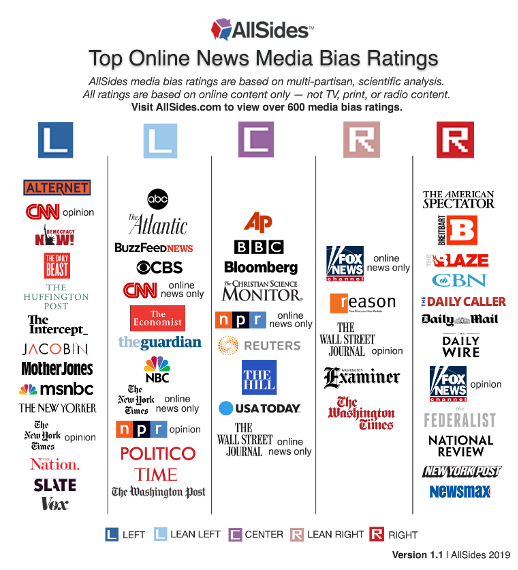
Since the manner in which white-on-black violence is depicted largely depends on the political affiliation of the reporting news source, our methodology was designed to account for a range of varying political viewpoints. Each researcher selected two liberal sources, two conservative sources, and one moderate source based on the AllSides Top Online News Media Bias Ratings chart (Figure 1). These five articles of varying political affiliations were used to analyze the following individuals: Tamir Rice, Tanisha Anderson, Trayvon Martin, and Eric Gardner. We selected these individuals because they are figures who are representative of White-on-Black incidents of violence in the United States.

Figure 1: AllSides Top Online News Media Bias Ratings We used this chart to find articles that aligned with a political orientation. One article was selected from each column from the news outlets listed in this chart. Source: https://www.allsides.com/media-bias/media-bias-chart

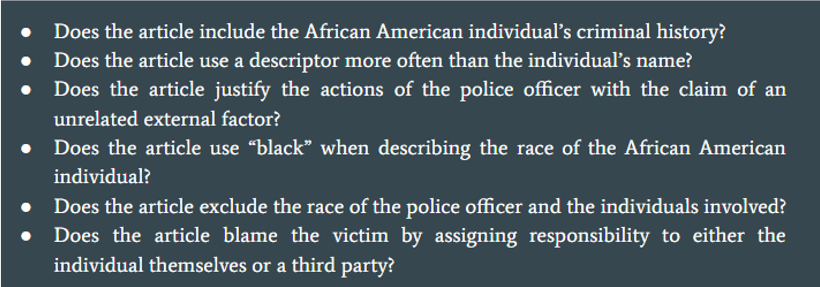
After the articles were chosen, a Total Point System was employed to evaluate the salience of race in the article through explicit references of race. The point system was designed to ask one question: to what extent did the article make race a conspicuous and contributing factor in the white-on-black incident? The following are the six criteria of the system: 

It is important to note that an article that scored six out of six points does not necessarily indicate that it is more racially biased.

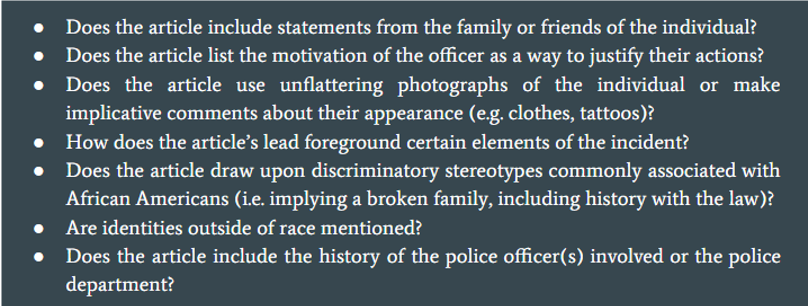
Since language also has an implicit function, the second part of our analysis involved a Guiding Question system to account for indirect references to race that could not be captured by the point system. The following are the seven criteria used in this system: 

The assessment of articles using the Guiding Question system provides insight into the discreet manner victims and assailants are framed. These questions illustrate how the language of articles can indirectly position individuals as a particular actor in larger racial narratives (this is often referred to as “interpellation”). 

RESULTS

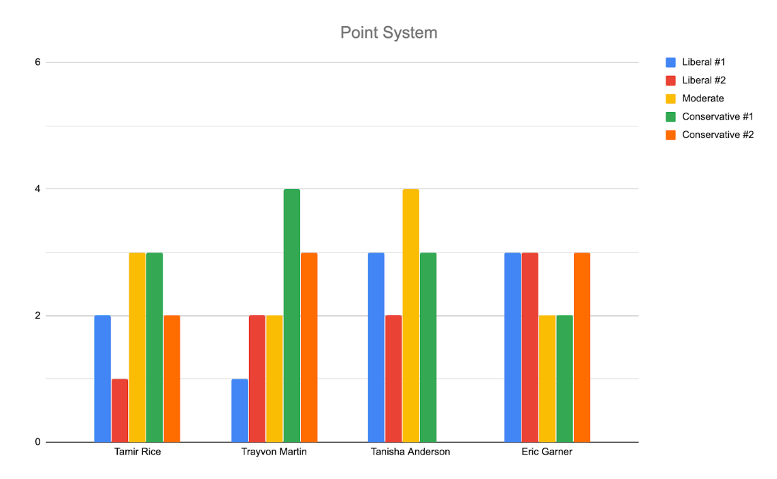
Figure 2: Point totals between various news outlets across the four individuals This bar graph depicts the varying point totals of articles which cover the deaths of Tamir Rice, Trayvon Martin, Tanisha Anderson, and Eric Garner. The different colors depict the political alignment of the articles selected.

As Figure 2 shows, point totals varied across articles which covered the deaths of our sample of individuals. We found articles on Tanisha Anderson and Trayvon Martin to have disproportionately high point totals because of their existence at the intersection of multiple oppressed identities. While Anderson had a mental disability that was commonly referred to, Martin’s appearance at the time of his death was a salient component of several articles. 

Foregrounding in the lede

In our quantitative analysis of selected news articles, we focused on the journalist’s word choice throughout the article and how such words evoke a reaction from readers (Jakobson’s “conative function” of language). However, special attention was paid to the first sentence of the article, which is often referred to as the “lede”. This sentence encapsulates the who, what, where, why, and when of the situation or topic in question and helps to set the tone for the remainder of the article. Due to the position of the lede at the beginning of the article, information included here can be utilized to foreground certain elements. 

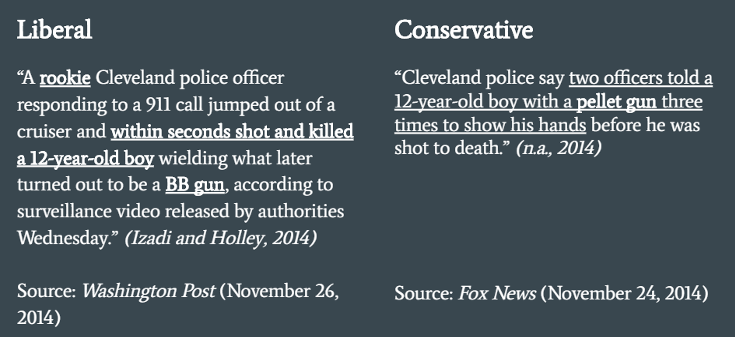
Figure 3: An example of foregrounding in the lede The ledes included in this figure are from two articles which covered the murder of Tamir Rice. Bolded and underlined words highlight the noticeable differences between each.

Across the four individuals we studied, we observed that there were noticeable differences in language use. Liberal news outlets typically included language which positioned the African American individual as the “victim”, while conservative news outlets utilized language which portrayed the police officer(s) and their actions as reasonable. Information that supported each agenda was included in the lede, while information that undermined such portrayals was either excluded or backgrounded. 

Differences in point totals between conservative and liberal news articles

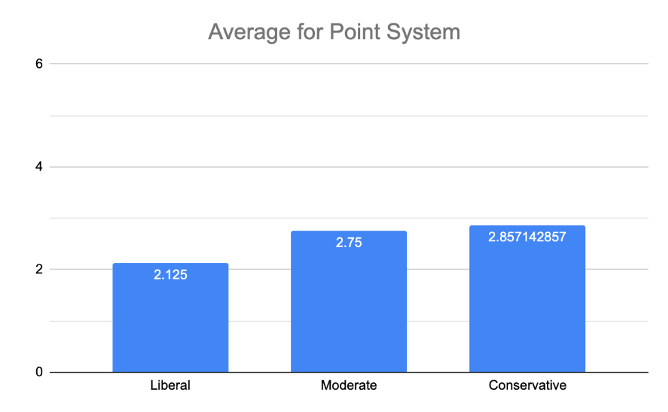
Our research also found differences in average point totals between conservative and liberal news articles (Figure 4). Although these differences were not large, it appears that conservative articles have lower point totals and conservative articles have higher point totals. Meanwhile, moderate sources had point totals that fell between the scores of liberal and conservative news outlets. However, these average point totals fell closer to those of conservative sources. 

Figure 4: Average point totals of liberal, moderate, and conservative news outlets.

Differences in guiding questions

We also found stark differences in answers obtained by way of our guiding questions. Across the twenty articles we studied, conservative articles utilized a greater degree of language that reinforced common stereotypes associated with African Americans. Conservative sources often drew upon the individual’s criminal history or appearance (e.g. wearing a hoodie) as a subtle way of shaping the individual’s character. If the officer was mentioned, it was to justify his/her actions in some way. Conversely, liberal sources often focused on the motivations of the officer and their judgment errors in interpreting the situation. The results demonstrate that in general race was made more salient in conservative sources that liberal sources as an inherent contributing factor to the situation.

DISCUSSION AND CONCLUSIONS

Our results reveal that there is a stark and noticeable difference in the language use between conservative and liberal news outlets. While liberal publications use language to position African Americans as “victims”, conservative publications position them as the “assailant” or “instigator”. Such information draws attention to the detrimental role journalism plays in furthering and reinforcing stereotypes that support the criminality of African Americans. 

There were several limitations to our research, however. One noticeable limitation is the assumption that the political alignment of a news outlet directly corresponds with its article’s attitude towards race. There are numerous factors that may play a role in the way national publications depict race that we unfortunately did not account for in this project. Other limitations include differences in publication times (which impact how much information is available to journalists and, by extension, what particular elements are salient) and personal biases.

Regardless, our results offer insight into the way African Americans are both implicitly and explicitly discriminated against. Such biases underscore the role language can play in shaping public perceptions and encouraging prejudicial actions. It also reveals ways in which we can uproot social stereotypes surrounding historically marginalized groups and tackle harmful racial disparities. 


REFERENCES

Johnson, K. A., & Dixon, T. L. (2008). Change and the illusion of change: Evolving portrayals of crime news and blacks in a major market. The Howard Journal of Communications, 19(2), 125-143. doi:http://dx.doi.org/10.1080/10646170801990979

Kulaszewicz, Kassia E.. (2015). Racism and the Media: A Textual Analysis. Retrieved from Sophia, the St. Catherine University repository website: https://sophia.stkate.edu/msw_papers/477

Oliver, M. (2003). African American Men as “Criminal and Dangerous”: Implications of Media Portrayals of Crime on the “Criminalization” of African American Men. Journal of African American Studies, 7(2), 3-18. Retrieved from http://www.jstor.org/stable/41819017

Smiley, C.J. & Fakunle, D. (2016) From “brute” to “thug”: The demonization and criminalization of unarmed Black male victims in America, Journal of Human Behavior in the Social Environment, 26:3-4, 350-366, DOI: 10.1080/10911359.2015.1129256

 [/expander_maker]

, , , ,
Scroll to Top