Social Media Use Among College Students
Jasmin Carranza, Andres Guzman, Luwuam Haile, Armine Mkrtchyan, Tzlil Pinhassi
Social media plays a significant role in the lives of college students, shaping how they connect, communicate, and express themselves. Given its pervasive influence, it is natural to assume that they would have an understanding of their own language use online. This study works to uncover just that. It specifically explores the linguistic features of grammar and vocabulary use among college students on various social media sites and examines their self-awareness of these patterns. We conducted a survey asking students about their social media usage and perceptions of their language, then analyzed their interactions through provided screenshots. Our findings confirm that students adapt their language to fit the platform’s context: Snapchat and TikTok are characterized by informal language and relaxed grammar, while LinkedIn and Facebook maintain higher formality with complex grammatical structures. Students’ perceptions of their language use closely align with their actual usage, indicating a high level of self-awareness. On platforms like Twitter and Instagram, students correctly estimate their use of informal vocabulary and abbreviations while recognizing the formality of their language on LinkedIn. This research highlights the dynamic nature of language use by college students across social media platforms, showcasing their ability to navigate different communication environments effectively. Our findings underscore students’ awareness of the distinct linguistic norms required by various social networks, adjusting their language accordingly with minimal discrepancy between self-perception and actual use.
[expander_maker id=”1″ more=”Read more” less=”Read less”]
Introduction and Background
In today’s dynamic digital age, social media is a premier medium for immediate conversation and communication, significantly influencing how individuals interact and express themselves (Merchant, 2006). Platforms like Instagram, Facebook, Snapchat, Twitter, TikTok, and LinkedIn serve as tools for social interaction and spaces where unique linguistic patterns emerge. While existing research highlights variations in language use across social media, a notable gap exists in understanding how these linguistic features manifest among college students (Kemp et al., 2021). Additionally, there is limited exploration into how these students perceive their language use across different platforms and whether their perceptions align with their usage patterns. This study addresses these gaps by examining grammar and vocabulary use among college students across various social media platforms. By analyzing formality, vocabulary, use of slang, and emoji frequency, this research aims to uncover the differences in language use. Furthermore, it investigates the self-awareness of college students regarding their language use, comparing their perceptions to their actual linguistic behaviors. Thus, our research question is: How do linguistic features, specifically grammar and vocabulary use, vary across the social media platforms of college students, and how do these students’ perceptions of their language use align with their actual usage?
Methods
To explore the linguistic features and self-awareness of language use among college students on various social media platforms, our study employed a mixed-methods approach, combining quantitative surveys with qualitative content analysis. To start, we sent out a survey to students of UCLA who self-reported their language on various social media platforms. Then, participants were asked to provide screenshots of their interactions on each of the social media sites. This allowed for a direct comparison between self-reported data and actual language use. With this information, we were able to confirm or deny each student’s self-perceptions of their online language usage. The provided screenshots were anonymized to protect participants’ privacy.
Building on previous research by Skierkowski & Wood (2012) and Kemp & Clayton (2017), we hypothesized significant variations in vocabulary use, syntax, emoticon usage, and adherence to communication norms across different social networks. By investigating aspects of text messaging, including textese density and response times, for example, we provided a comprehensive understanding of language adaptation within different social circles. Ultimately, the study contributes to the broader comprehension of communication dynamics in the digital age, offering insights into how language is utilized and adapted within college students’ social networks.
Results and Analysis
The results are important in providing insight into the nature of the linguistic choices, not only consciously but also subconsciously, by young adults in digital communication. Taking a deeper dive, we analyze the results from each platform we considered — LinkedIn, Twitter, and Instagram—and provide examples to illustrate these trends.
LinkedIn: Formal Language Use
Appearance in LinkedIn, the professional networking site, invited a thicker coat of calcified tongue for student use of semi-formal scholarly language. This meant, simply: full sentences, big words, industry talk or just a professional sheen to it overall. Analysis revealed students’ self-reports on the language they used were consistent with their actual posts.
Example: In a typical post, a student wrote, “I am thrilled to announce that I have accepted an internship position at Boeing, where I look forward to contributing to the innovative team and developing my professional skills further.”
This example underscores the formal, structured language typical of LinkedIn, reflecting the professional nature of the platform.
Twitter: Casual and Expressive Language
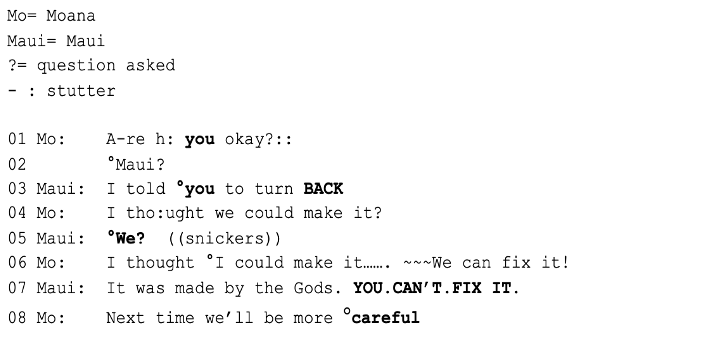
On Twitter, where brevity and timeliness reign, a similar but distinct trend was apparent. Students frequently used slang, abbreviations, and emoticons with whom they clearly identified, as they later recognized and reported in their questionnaires. The students were able to note the spontaneity and personal expression that helped keep their informal tone, well, informal.
Example: A tweet from one of the participants read, “Just saw the weirdest episode of my fave series ever! 😱🤣 Can’t believe what just happened… #mindblown #bingewatching.”
This tweet is representative of the casual and expressive language that defines Twitter, complete with emoticons and hashtags that add a personal touch.
Instagram: Visual and Informal Communication
Instagram, a visually rich platform, also is a part of the informal text conversation game. In sharing their pictures, students were juxtaposing the images with very informal language, often with self-deprecating serializations, and using all sorts of creative text styling. Once again, students’ perceptions of their language use and the actual content analyzed were highly correlated.
Example: An Instagram caption accompanying a beach sunset photo stated, “No filter needed for this sunset 🌅 🌊 #sunsetvibes #beachlife.”
The use of emojis and hashtags enhances the visual experience, reflecting the informal and personal communication style prevalent on Instagram.
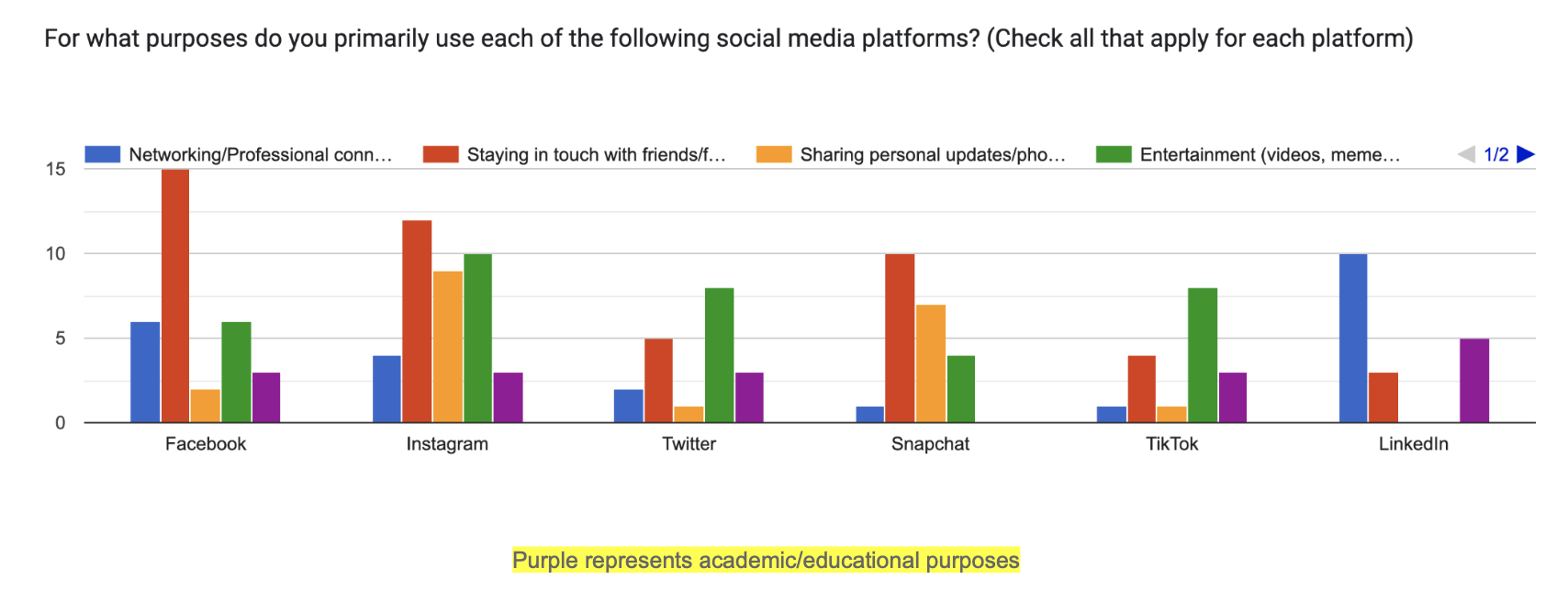
The consistency across different platforms suggests that students possess a clear understanding of the appropriate linguistic forms for each social media context. This was particularly evident in their ability to adapt their language to match the formality of the platform, whether in professional settings like LinkedIn or more personal spaces like Twitter and Instagram.
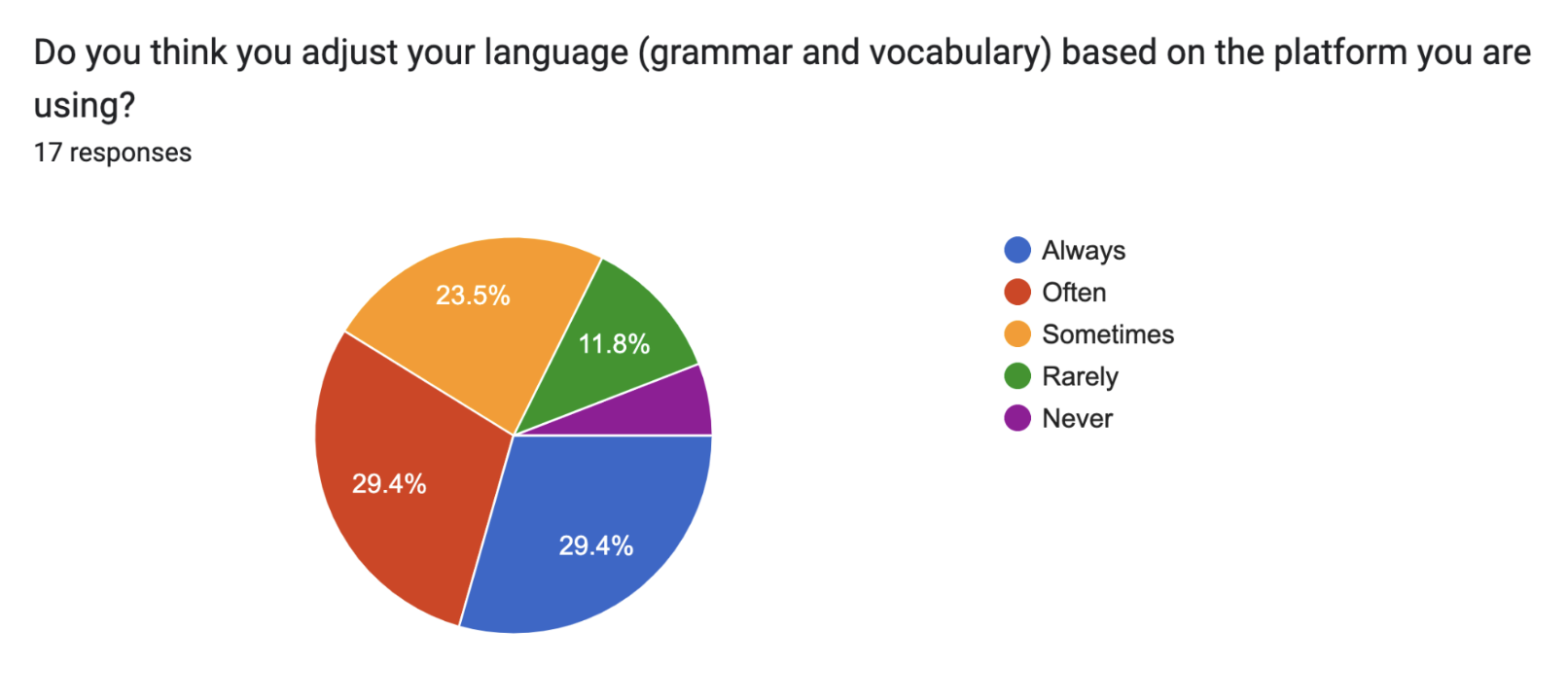
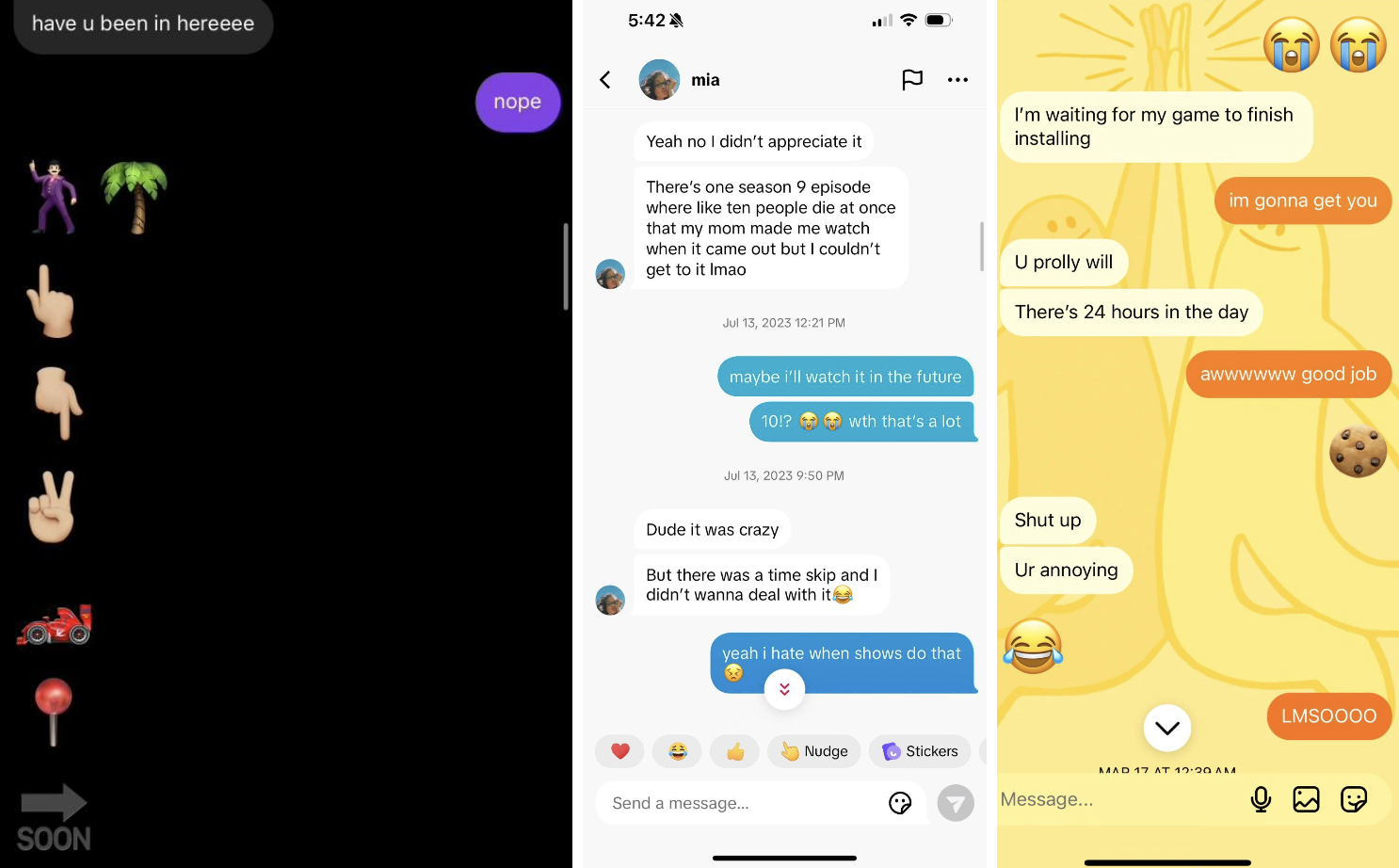
These findings are crucial for understanding the impact of digital communication on college student’s language use and identity construction in the digital age. By demonstrating how students adeptly navigate the linguistic landscapes of various social media, this research contributes significantly to broader discussions about digital literacy and the dynamic nature of language in social media settings.
Discussion and Conclusions
The study aimed to explore the linguistic features of grammar and vocabulary use among college students on various social media platforms and examine their self-awareness of these patterns. Our findings provide valuable insights into how social media environments shape language use and how aware students are of their linguistic behaviors online. One of the key findings of our research is the adaptability of college students’ language based on the context of the platform. On platforms like LinkedIn, which are perceived as professional and formal, students consistently used structured, complex sentences and formal vocabulary. This indicates a clear understanding of the expectations and norms of professional communication. Conversely, platforms such as Twitter and Instagram, known for their casual and expressive nature, saw students employing informal language, including slang, abbreviations, emoticons, and hashtags. Snapchat and TikTok, which emphasize spontaneity and visual content, also reflected relaxed grammar and informal vocabulary. These variations in linguistic styles underline the students’ ability to navigate different communication environments effectively.
Another significant aspect of our study was the alignment between students’ perceptions of their language use and their actual usage. The survey results, paired with the analysis of online interactions, revealed that students accurately estimated their use of informal vocabulary and grammar on platforms like Twitter, Snapchat, TikTok, and Instagram. Similarly, they recognized the formality required on LinkedIn and Facebook. This high level of self-awareness suggests that students are not only aware of the different linguistic norms across social media platforms but also consciously adjust their language to fit these norms. This could be attributed to the fact that social media has a great presence in the lives of college students, making it easy to be familiar with and adapt to its expectations.
The findings of this study also help us understand how digital environments influence social interactions among young adults. The fact that college students are able to alter and modify their languages to fit several different social media platforms demonstrates a form of digital code-switching. There is a clear navigation between linguistic styles and norms, which mirrors larger societal practices of adapting communication styles in several social settings. Students are not only enhancing their digital literacy but also building their online identities that correspond to their desired social persona. As such, this adaptability in language use shows a larger phenomenon of identity formation and management in today’s digital age, where college students as well as other individuals curate their self-presentation across different platforms in online environments.
In conclusion, this research highlights the dynamic nature of language use by college students across social media platforms. Students demonstrate a keen awareness of the distinct linguistic norms required by various social networks and adjust their language accordingly. The minimal discrepancy between their self-perceptions and actual usage underscores their proficiency in navigating digital communication landscapes. These insights contribute to a broader understanding of communication dynamics in the digital age, emphasizing the importance of digital literacy. As social media continues to evolve, further research could explore how these linguistic adaptations and self-awareness develop over time and across different demographic groups. Understanding these patterns can help educators and policymakers create more effective communication skills in digital contexts, preparing students for the multifaceted nature of online interactions.
References
Kemp, N., & Clayton, J. (2017). University students vary their use of textese in digital messages to suit the recipient. Journal of Research in Reading, 40(December 2017), S141–S157. https://doi.org/10.1111/1467-9817.12074
Kemp, N., Graham, J., Grieve, R., & Beyersmann, E. (2021). The influence of textese on Adolescents’ perceptions of text message writers. Telematics and Informatics, 65, 101720. https://doi.org/10.1016/j.tele.2021.101720
Merchant, G. (2006). Identity, Social Networks, and Online Communication. E-Learning and Digital Media, 3(2), 235-244. https://doi.org/10.2304/elea.2006.3.2.235
Raccanello, Paul J. (2011) “Social networking texts among college students: identity and imagination online”. Doctoral Dissertations. 216. https://repository.usfca.edu/diss/216
Skierkowski, D., & Wood, R. M. (2012). To text or not to text? The importance of text messaging among college-aged youth. Computers in Human Behavior, 28(2), 744–756. https://doi.org/10.1016/j.chb.2011.11.023