Comedy

All Jokes Aside – Indexing Gender and Race in Stand-Up Comedy

Ammi Lane-Volz, Cate Dark, Ava Kaiser, Grace Shoemaker, Alex Farfan

As playful and harmless as something titled “comedy” can seem, the political and cultural implications of what is deemed funny are not insignificant. From stand-up performance to jokes around the water cooler, comedy is used as a tool to socially bond, establish hierarchy, critique global affairs, and index identity. Our project set out to explore how stand-up comedians index their identities through mimicry, contrast, and slurs, specifically focusing on how they index themselves as part of versus separate from gendered and racial groups. We studied the specials of ten stand-up comedians from the Netflix series The Standups to see if they more often tended to align their identities through references to their own demographics (in-group indexing) or through references to outside groups (out-group indexing). We found several patterns that emerged, including higher instances of non-white comedians mentioning their race (three times more often), 60% of which consisted of in-group indexing. We also found the opposite to be true for gender, with men referencing gender almost twice as often as the female comedians, 55% of which consisted of out-group indexing. These patterns invite several follow-up questions on the different tactics comedians use when writing their sets and how their choices might be influenced by their place in society and membership of different social majority or minority groups.

[expander_maker id=”1″ more=”Read more” less=”Read less”]

Introduction and Background

Comedy holds significant cultural influence, serving both as a mirror reflecting societal norms and as a tool for challenging them. We identified a notable gap in research relating to how stand-up comedians utilize their demographic backgrounds. A study done on representations of race and gender within Comedy Central programming found that although the channel has made an effort to expand its brand by employing more female and racially diverse comedians, the type of jokes found within these skits reinforce power dynamics and white heteronormative masculinity (Marx 2016). Another study on stand-up comedy and cultural spread argued that stand-up comedians are able to reinforce and/or challenge existing cultural stereotypes through their sets, both within the comedic monologues themselves and in the audience’s minds (Yus 2002). Based on this research, it is evident that a comedian’s own demographic information, specifically gender and race, can play a role in the creation or reinforcement of stereotypes in comedy. Yet none of these studies discuss the ways in which comedians index their own demographics. To fill this gap, we wanted to answer the question of how comedians navigate indexing their identities by looking at the frequency of in-group versus out-group demographic references and how these references connect to broader social contexts.

Methods

For our analysis, we chose to look at ten thirty-minute stand-up specials from seasons two and three of the Netflix series The Standups. Each episode of this show focuses on a different stand-up comedian. Comedians from this show are of moderate acclaim, meaning their sets are polished (i.e. representative of a “standard” professional stand-up comedian) but the researchers and the general public may not know the comedians by name. Choosing specials from this show allowed for some standardization of the audience and venue, and provided us with a broader view of multiple professional stand-up comedians than just analyzing one or two longer specials.

Each researcher looked at two randomly chosen specials and noted each time that a comedian mentioned their own identity demographic (race, gender, sexuality, political affiliation, class, and age) and each time they made a comparison to another demographic. These comparisons included strategies like direct comparison or mimicry of another demographic’s accent or physical mannerisms. We also noted each time a comedian said a slur related to their own identity demographic and each time they said a slur related to a different demographic. Based on our preliminary data, we decided to whittle down our focus from the six demographic categories mentioned above to just race and gender. Within these categories, we split them into white vs. marginalized racial identity and men vs. women, respectively. It is also important to note that our sample was evenly split in terms of gender (five men, five women) and race (five white comedians, five comedians of color).

Data and Analysis

Using the data we collected for each comedian, we generated the following figures that summarize our findings:
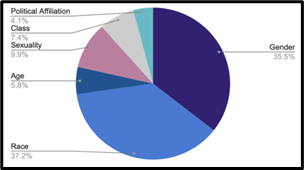
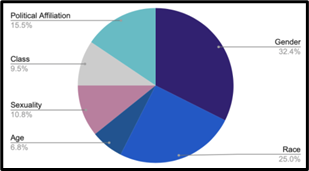
Figure 1: Total Number of References Made by Each Comedian to Their Own Demographics
Figure 2: Total Number of Comparisons Made by Each Comedian to Another Demographic

As seen in Figure 1 and Figure 2, comedians tend to reference and compare their gender and race significantly more than age, class, sexuality, or political affiliation. Using this information, we were able to narrow our analysis to focus on this key demographic data.
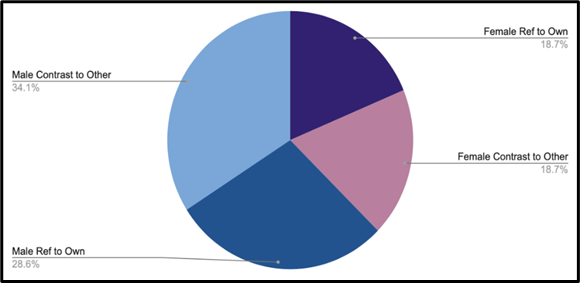
Figure 3: Total Number of Male Vs. Females References to Gender

Figure 3 demonstrates that male comedians were much more likely to reference gender to index their identities, with comparison to another gender being the most common reference type.
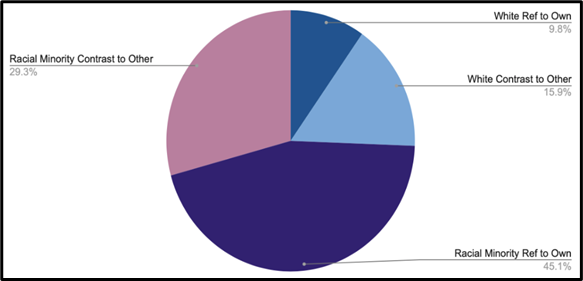
Figure 4: Total Number of White Vs. Racial Minority References to Race

Figure 4 indicates that racial minority comedians referenced race about three times more than white comedians, with references to their own race being the most common reference type. 
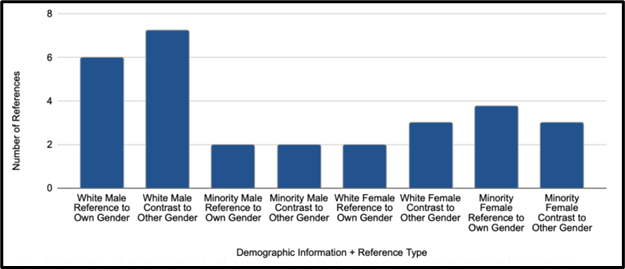
Figure 5: Average Intersectional (Race and Gender) References to Gender

Figure 5 indicates that white men were about two times more likely to reference gender than any other demographic combination.
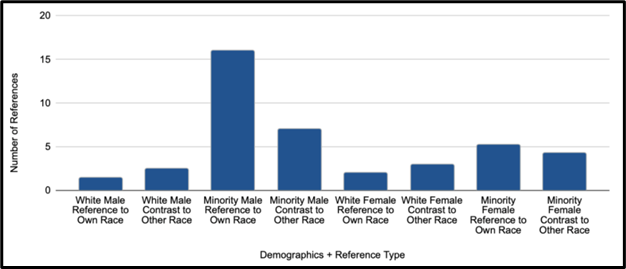
Figure 6: Average Intersectional (Race and Gender) References to Race

Figure 6 shows that minority men were three times more likely to reference their own race than any other combination of race and gender.
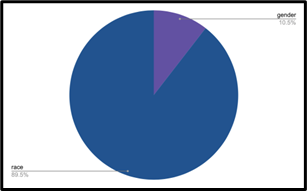
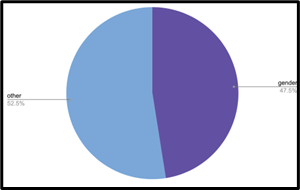
Figure 7: Total Number of Slurs Related to Comedian’s Own Demographic
Figure 8: Total Number of Slurs Unrelated to Comedian’s Own Demographics

Figure 7 shows the large majority of self-referential demographic slurs were race-related, as Black comedians tended to use the n-word multiple times in their sets. Figure 8 shows that out-group related demographic slurs were slurs related to gender and other demographics; none were race-related.

Raw Data

anthroling comedy data

Discussion

Based on our data and outside research, the frequency with which comedians index their race and gender within their sets may be linked to a few different social phenomena.

The finding that white men are more likely to index their gender identity in their comedic routines may suggest that male comedians feel compelled to incorporate their gender identity into their comedy routines, or that they find this to be more socially acceptable than women. This could reflect broader gender expectations where men are often encouraged to assert their masculinity or draw attention to their gender in public spaces (McVittie et al., 2017). Racial minority comedians’ tendency to reference their minority status could indicate a desire to confront stereotypes, draw attention to racial issues, or establish a unique comedic identity. This could stem from personal experiences of marginalization or a sense of responsibility to address racial dynamics in their performances (Sullivan et al., 2021). Additionally, the observation that power dominant demographics (white, men) more commonly used comparison than their marginalized counterparts could imply that those in positions of power feel more comfortable using comparison as a comedic tool. This could be because they have greater societal latitude to freely express themselves without fear of repercussions (Tobore, 2023). By using comparison, minority comedians risk reinforcing existing power dynamics and societal hierarchies where masculinity and whiteness are considered the norm. For a minority comedian, refraining from such comparisons can be a way to affirm their own racial or cultural identity without centering whiteness as a point of reference. Finally, the fact that gendered slurs were employed by out-group comedians, while race based slurs were only used by in-group racial minority comedians suggests a greater societal awareness or sensitivity towards racial issues than gender issues. This may stem from a recognition of the historical and ongoing harm caused by racial slurs (Wilson, 2020). Overall, our findings underscore how the comedy stage becomes a microcosm for broader societal interactions and power relations. The act of indexing one’s identity in comedy can serve as a means of negotiating power, identity, and belonging within a societal context that is stratified along lines of race, gender, and sexuality.

In general, comedy does not merely reflect the social order but actively participates in its construction and perpetuation. The comedian’s role in creating a “social contract” with the audience, wherein their narratives and identities are validated, highlights the performative aspect of social identity and the power of narrative in shaping reality. The audience is also not merely a passive receiver of comedy; they have agency in choosing where to laugh and where not to laugh. They are then an active participant in the co-creation of the comedic experience and, by extension, the social norms and power dynamics it reinforces or challenges.

Conclusion

This research underscores the potential of comedy as a site of social commentary and critique. While comedy can perpetuate stereotypes and power imbalances, it also holds the potential for subversion. Comedians who are aware of the power dynamics at play in their performances can use humor to challenge societal norms, question stereotypes, and imagine new ways of being.

In framing our findings within the broader context of power relations, language, and agency, we contribute to a deeper understanding of the role of comedy in society. This opens up important discussions about the responsibilities of comedians and audiences alike in shaping the social discourse through humor. It also suggests avenues for further research into how comedy can be used as a tool for social change, by both reinforcing and challenging the status quo.

References

Marx, N. (2016). Expanding the brand: Race, gender, and the post-politics of representation on Comedy Central. Television & New Media, 17(3), 272–287. https://doi.org/10.1177/1527476415577212

Miller, T. (Producer). (2017-2021). The Standups [TV Series]. Netflix. https://www.netflix.com/browse?jbv=80175685

McVittie, C., Hepworth, J., & Goodall, K. (2017). Masculinities and health. The Psychology of Gender and Health, 119–141. https://doi.org/10.1016/b978-0-12-803864-2.00004-3

Sullivan, J. N., Eberhardt, J. L., & Roberts, S. O. (2021). Conversations about race in black and white US families: Before and after George Floyd’s death. Proceedings of the National Academy of Sciences, 118(38). https://doi.org/10.1073/pnas.2106366118

Tobore, T. O. (2023). On power and its corrupting effects: The effects of power on human behavior and the limits of Accountability Systems. Communicative & Integrative Biology, 16(1). https://doi.org/10.1080/19420889.2023.2246793

Wilson, C. (2020, October 4). N-word: The troubled history of the racial slur. BBC News. https://www.bbc.com/news/stories-53749800

Yus, Francisco. (2002). Stand-up comedy and cultural spread: The case of sex roles. Babel A.F.I.A.L.. special issue on humour studies. 245-294. https://personal.ua.es/francisco.yus/site/Afial.pdf

[/expander_maker]
, , , , , ,

“Speaking of women’s comedy…”: An Analysis of Linguistic Traits by Male and Female Standup Comedians

Samuel Alsup, Eden Moyal, Jinwen (Wiwi) Shi, Yitian (Riley) Shi

The question of whether women can be funny is long outdated and has, thankfully, been answered in the affirmative. This project investigates how funny people – namely, stand-up comedians – perform (or don’t perform) their womanhood in speech. Studies conducted by 20th-century scholars highlighted multiple facets of language that are characteristic of women’s conversation, such as tag questions, hedges, and excessively specific use of color terms. This study attempts to answer the question: do 20th-century conclusions regarding “women’s language” in conversation hold up in the context of contemporary stand-up comedy (Lakoff 1998)? Transcriptions of live stand-up acts by White North American men and women indicated that certain features associated with women are indeed more salient in women’s standup, while others seem to be equally used by men and women. This points to a decreased divide over recent decades in what is traditionally seen as acceptable ways of being a man or a woman, and a trend toward accepting the vast spectra of gender identity and gender performance.

[expander_maker id=”1″ more=”Read more” less=”Read less”]

Introduction and Background

Research into “women’s language” in the 1970s and 1980s pointed to proposed differences in speech between men and women (Men, women and language — a story of human speech), including certain features of conversational speech that are more salient among, and characteristic of, women. Researchers such as Lakoff (1998), Tannen (1990), and Cameron (1997) codified these differences, noting the response to a society that taught women to be polite and therefore unimposing. A few of the features of “women’s language” include hedging, tag questions, and filler words. On the other hand, men use more expletives and are more likely to drop the “g” sound at the end of a word (Bailey and Timm, 1976, cited in Guvendir 2015; Fischer 1958).

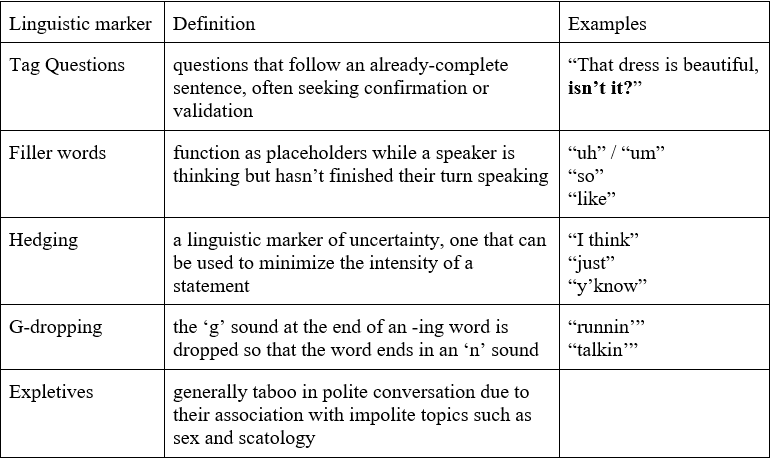
We examined the following phenomena: tag questions, filler words, hedging, g-dropping, and expletives. Definitions and examples of each can be found in the below table.

Table 1: Explanation and examples of linguistic features examined

Since these observations were made last century, we examined whether they would hold up in contemporary times. In recent years, society has witnessed a trend of greater gender equality, including breaking down traditional gender expectations (Solbes-Canales, Valverde-Montesino, & Herranz-Hernández, 2020). Therefore, it occurred to us that it might be necessary to re-examine gender-associated language. If men and women are slowly creeping closer to each other in fields like business, sports, politics, and more, could language be among those fields as well?

Our initial hypothesis was that established linguistic gender differences would hold up over time, since we expected that linguistic norms shift more slowly than political trends and social issues.

We looked at stand-up comedy in particular for a number of reasons:

  1. Stand-up is one of those historically-male careers, where women are considered the outlier. With women making inroads in this field, we thought to examine if language has shifted also.
  2. Comedy, like gender and language, is a performance. Because comedy is explicit in its performance, it allows for sensitive topics to come to light in a humorous, non-threatening way.
  3. Stand-up comedy is a version of communication in which the speaker does not end their turn or wait for a response. Because there is no verbal interaction from the audience for both men and women, we can surmise that the playing field is relatively level and the only changing factor would be the comedian’s performance.

Methods

We theorize that when speaking about gender, it seems likely that the speaker would indicate a particular stance, either in solidarity with or opposition to the demographic they’re talking about. A total of ten White, North American comedians were analyzed, each in the context of stand-up comedy. We examined sets/parts of sets where the comedian was speaking on the topic of gender or feminism, for a total of eleven minutes (639 seconds) for all comics combined. We counted instances of tag questions, filler words and phrases, hedging, g-dropping, and expletives.

 To help minimize variability, we ensured that the data was from stand-up comedy performances from the past five years. We noted each time that each linguistic feature was used in each act and kept a tally per comedian. We also recorded a general topic for each clip, so as to give slightly more specific context as to the content of the act. We then quantitatively analyzed the number of various gender-associated markers that were used in the clips, which ranged from thirty seconds to two minutes, using an average use of each feature per gender alongside the totals of each performer. We compared the five masculine-presenting comedians to the five feminine-presenting comedians to see if either of the genders we examined fit the conclusions discussed in the existing literature. In order to make sure that longer clips wouldn’t hold more weight, we set our evaluation to a per-30-second rate.

Results & Analysis

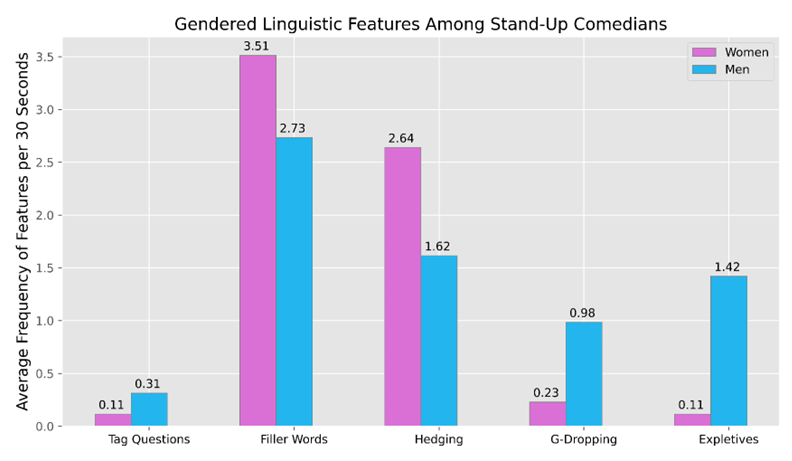
We found that the average usage of the relevant linguistic features per 30 seconds for males in our data set was: 0.31 tag questions, 2.73 filler words, 1.62 hedges, 0.98 g-drops, and 1.42 expletives. In contrast, the average usage per 30 seconds for females was: 0.11 tag questions, 3.51 filler words, 2.64 hedges, 0.23 g-drops, and 0.11 expletives. The figures below show a comparison between male and female comedians for the linguistic features mentioned.

Fig. 1: Bar graph showing average feature use for men and women comedians

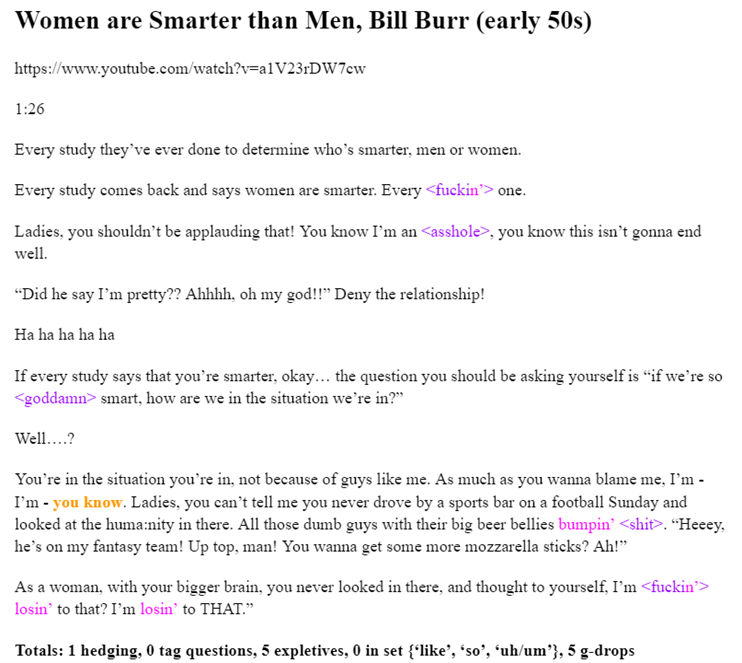
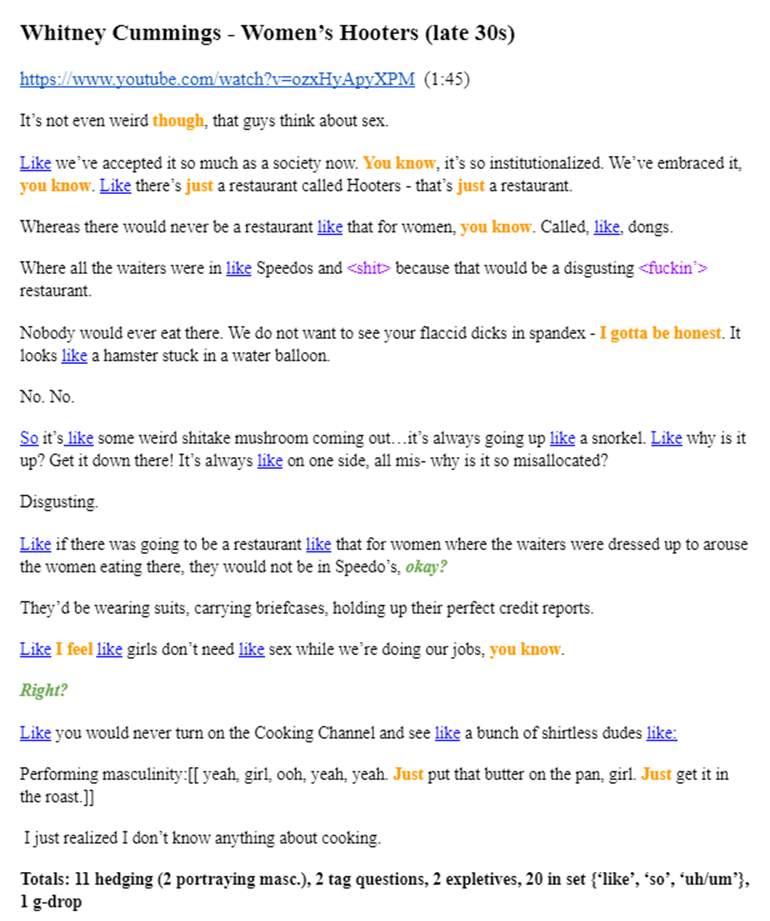
Our most “classic” exemplifiers of masculine and feminine speech were Bill Burr and Whitney Cummings, respectively. Bill Burr used many expletives and g-drops, and very few hedges and fillers. In contrast, Whitney Cummings used many hedges and fillers, and very few g-drops and expletives. We will relate each linguistic feature to them for context but note that they are the extreme ends of the spectrum. Transcripts from each comic’s set, as well as our summarized dataset, can be found below.

Fig. 2: Transcript of Clip by Bill Burr
Fig. 3: Transcript of Clip by Whitney Cummings
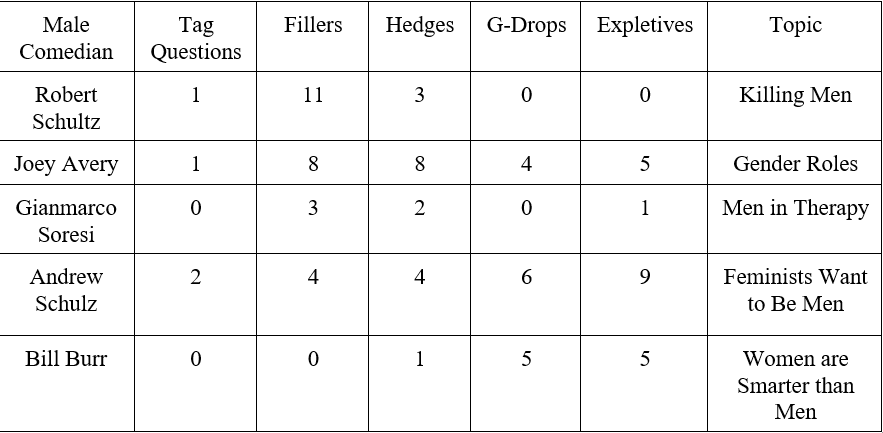
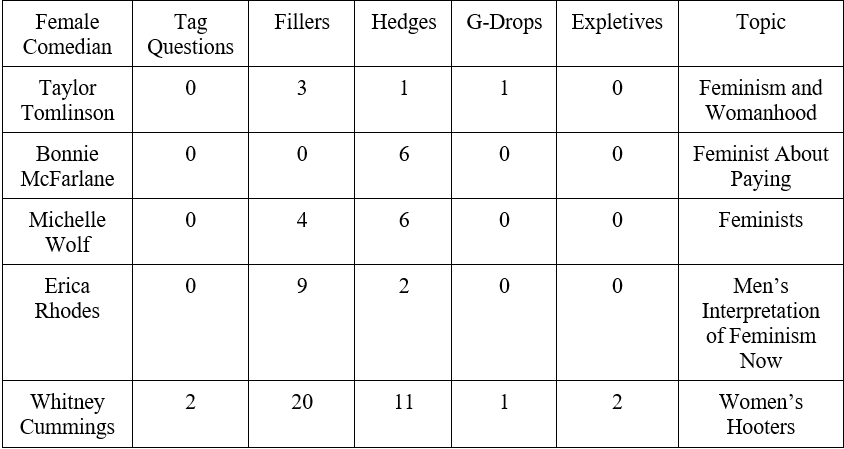
Table 2 Breakdown of Linguistic Features in Men’s Sets
Table 3: Breakdown of Linguistic Features in Women’s Sets

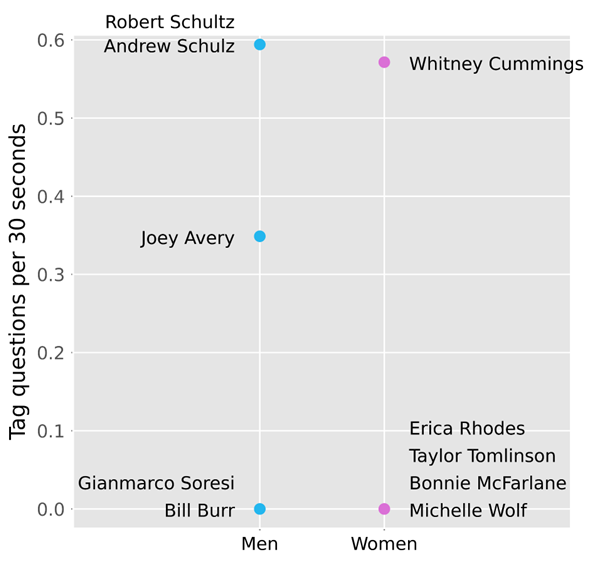
First, we found that there wasn’t a big difference in the usage of tag questions between male and female comedians. Tag questions weren’t used very frequently regardless of gender; less than one time per minute on average, with half of our comedians not using any at all.

Fig. 4: Scatter Plot of Men and Women’s Tag Question Use

Bill Burr didn’t use any tag questions, while Whitney Cummings utilized tag questions twice. This difference does not appear significant across the rest of our comedians.

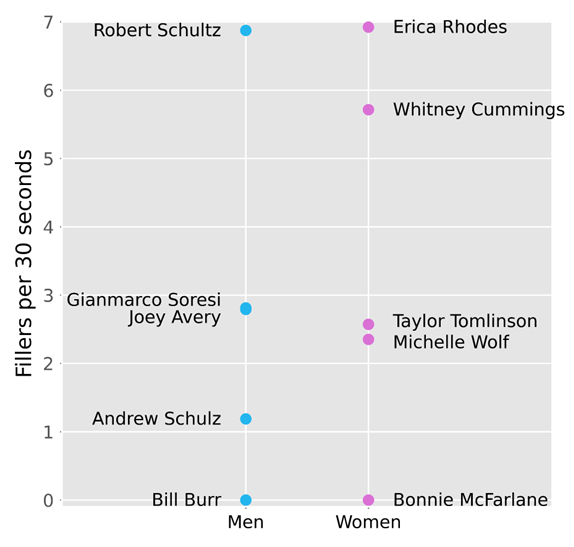
We saw that our female comedians used fillers more often than their male counterparts, by about one or two every 30 seconds. The graph below does show one male outlier, who was one of the younger men on stage. This will be touched on in the discussion.

Fig. 5: Scatter Plot of Men and Women’s Filler Use

Bill Burr didn’t use any fillers, whereas Whitney Cummings used an average of six filler words per thirty seconds. However, the results were more marginal over the full dataset, with an average difference of just one filler per minute between men and women.

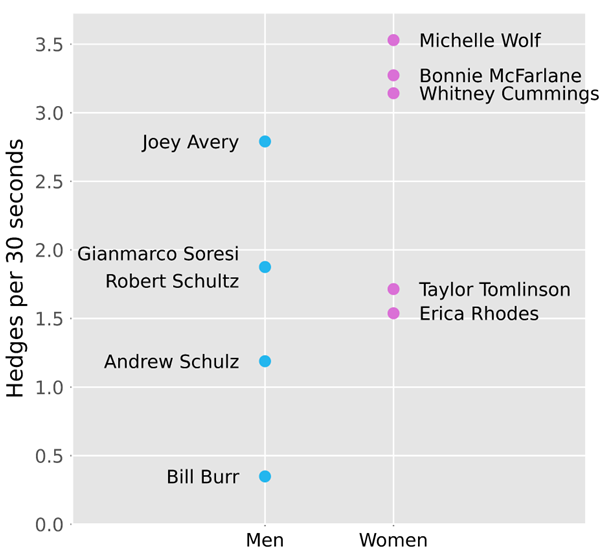
Our female comedians tended to hedge at least once more per 30 seconds than our male comedians. The figure below shows that three out of five female comedians hedged more than the top-hedging male.

Fig. 6: Scatter Plot of Men and Women’s Hedge Use

Bill Burr accordingly hedged one time, whereas Whitney Cummings utilized hedging eleven times in a similar timeframe. While there appears to be a correlation between hedging and feminine speech in our dataset, it’s not conclusive according to our statistical analysis.

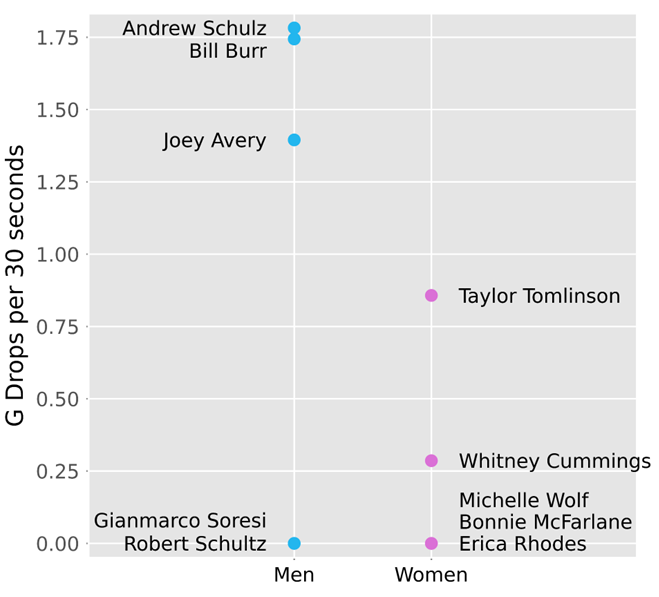
G-dropping results appeared to be much more correlated to gender than any previous linguistic feature we measured: the average female used it four times less than the average male comedian. While three female comedians and two male comedians didn’t use any g-dropping, among those who used it, the men did so much more frequently, as seen in the graph below.

Fig. 7: Scatter Plot of Men and Women’s G-Drop Use

Bill Burr and Whitney Cumming utilized g-dropping five times and one time, respectively. Though there appeared to be a correlation, with a 124% difference between the average usage of g-dropping between males and females, there wasn’t statistical significance in our small dataset.

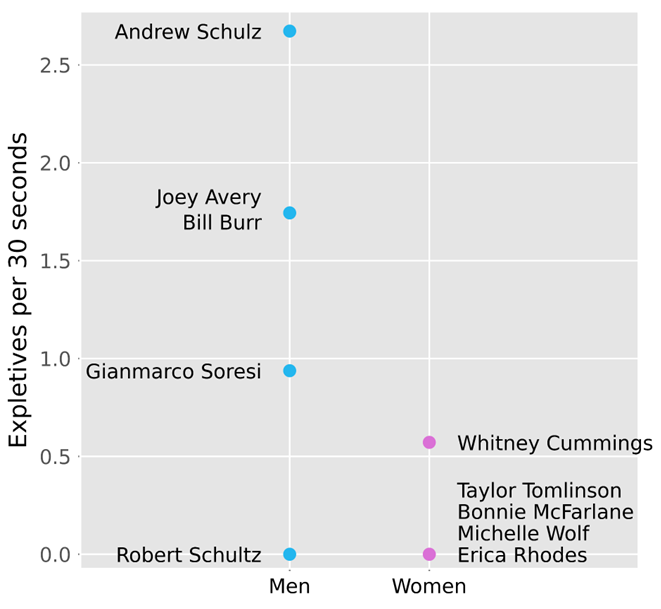
One linguistic feature that proved to have statistical significance was the usage of expletives. Four out of five female comedians didn’t use expletives at all, while only one male comedian didn’t use them. The males that used them did so at a rate ranging from two per minute to more than five per minute, as seen in the graph below.

Fig. 8: Scatter Plot of Men and Women’s Expletive Use

Bill Burr used expletives five times compared to Whitney Cummings’ two uses. Interestingly enough, Whitney Cummings was the only female comedian who used any expletives at all, even though she tended to (otherwise) stick to what previous research deemed feminine speech.

Overall, the biggest differences between males and females in our data are in hedging (47.9%), which was slightly more common in females, g-drops (124.0%), and expletives (171.2%), which were both more common in males. Tag questions were rarely used by any of the comedians, so even the 95% differential between the sexes is statistically meaningless. Filler phrases had a slight correlation with being more common in feminine speech, but not a very significant one (25.0% differential).

Discussion

An overall examination of the results of our data shows several things.

First, some linguistic features thought to be more characteristic of women have indeed held up in a stand-up context as well as over several decades. For example, we saw that women did indeed hedge more frequently, and used much fewer expletives and g-drops than men on stage. It’s important to note that the difference between men and women for hedging wasn’t large enough to be significant. However, we can say that there might be some correlation between gender and frequency of hedge use. The results were similar for g-dropping and fillers, as they both appeared to have a correlation in our data, however, not enough to be statistically significant. As an example, female comic Taylor Tomlinson hedged twice with one g-drop and three fillers in a 35-second clip, while male comic Gianmarco Soresi hedged twice as well, with no g-drops and three fillers, in a 32-second clip. This comparison shows very little difference between them, pointing to placement somewhere in the middle of the spectrum of gender performance.

For expletive use, though, the difference between men and women was statistically significant – that is, large enough to make generalizations. This conclusion does stem from research showing that men are more casual in conversation than women, allowing for less formal speech.

However, plenty of linguistic features thought to be more characteristic of men or women in the past don’t hold up as well anymore. This could be due to simply the passage of time, the shift to allowing for more fluid gender identities in contemporary times, or potentially because of standup being a different kind of linguistic environment in that it is non-conversational. While we expected to find a more significant gap between men and women in their use of linguistic features, in reality, speech was a lot more ambiguous and closer rather than disparate.

We can look at the use of filler words for an example of this ambiguity. Though there can be exemplified differences between male and female performance, such as what we see between Whitney Cummings and Bill Burr, in today’s age it is much less common to exert these drastically different performances. Instead, we see more use of fillers somewhere in the middle of the spectrum, with most comedians closer to the center than to either traditionally gendered pattern. Thus, we end up with our dataset showing a very marginal difference.

Some other observations that we made revolved around the differences within the group of male comedians. The two male comedians who displayed the most classically ‘male’ use of the features we examined were the two oldest, being born in the 1980s or earlier. The younger ones, born in the early 1990s or later, were much more likely to use features traditionally associated with women. That is, younger men were more comfortable using hedges and filler words especially. This observation might indicate that younger men are becoming more comfortable with performing certain aspects of femininity, which reflects a greater trend in playing with gender in the last few years. Alternatively, it could reflect the increasing acceptance of traditionally female features of speech – its dissociation from femininity and increased generality.

Conclusion

An analysis of contemporary stand-up comics for features of speech marked feminine or masculine showed that conclusions made in 20th-century literature no longer hold up. Features that were characteristic of ‘women’s language’ in 1990 are, thirty years later, more general and practiced by male speakers as well as females – especially by younger men who grew up in less rigid society than their older counterparts. This difference between younger and older men may indicate that younger men are becoming more comfortable performing certain aspects of femininity. This perhaps reflects a greater trend towards playing with gender and comfort in gender-expansiveness or perhaps reflects women’s speech becoming less associated with women and more acceptable in general society as time passes.

It is important also to recognize that stand-up comedy is unique among linguistic discourse contexts, as there is no back-and-forth. Since stand-up language is monologuing rather than conversational, this may factor into how speakers perform gender, and it sets this study apart from earlier studies like Lakoff’s.

Looking forward, there are multiple ways to expand this study to include a more diverse group of comedians. One way to do this would be to examine how supposed ‘gender’ differences look when race is accounted for. Lakoff and other researchers focused their observations on white women – therefore, women (and men) who aren’t white may actually display very different expressions of language, with different characteristics and perhaps at different frequencies.

Another forward-looking study could include comedians of a gender-expansive experience. Comedians who are not locked to an identity as either ‘man’ or ‘woman’ may display yet even more different expressions of gender in their language. It’s important to include not just individuals who fit a binary definition of gender. Though this concept was much less spoken about during the original studies conducted in the 1970s-1990s, society more willingly recognizes the expansive nature of gender and performance now, and linguistic study should not only reflect that sentiment but set out to describe how it fits in with language and linguistic study.

With ever-persistent debates about whether language will ever really be as egalitarian, as gender-neutral, as inclusive as we want it to be (“Women are witches, men are studs”), it is our job as linguists to catalog, describe, and advocate for change on the linguistic level so that it can influence and be influenced by the social level.

References

Cameron, D. (1997). Performing gender identity: Young men’s talk and the construction of heterosexual masculinity. In On Language and Sexual Politics (1st ed., pp. 47-64). Taylor & Francis Group.

Fischer, J. L. (1958). Social influences on the choice of a linguistic variant, WORD, 14:1, pp. 47-56, DOI: 10.1080/00437956.1958.11659655

Gordon, Mo. (2023, April 13). ‘Women are witches, men are studs.’ Universiteit Leiden, www.leidenlanguageblog.nl/articles/women-are-witches-men-are-studs-blog-mo-gordon.

Güvendir, E. (2015). Why are males inclined to use strong swear words more than females? An evolutionary explanation based on male intergroup aggressiveness. Language Sciences, vol. 50, pp. 133-139. https://doi.org/10.1016/j.langsci.2015.02.003

Lakoff, R. (1998). Extract from Language and woman’s place. In D. Cameron (Ed.), The Feminist critique of language: A reader (2nd ed.) (pp. 242-252). London, England: Routledge, Taylor and Francis Group.

Solbes-Canales, I., S. Valverde-Montesino, & P. Herranz-Hernández. (2020). Socialization of gender stereotypes related to attributes and professions among young Spanish school-aged children. Frontiers, www.frontiersin.org/articles/10.3389/fpsyg.2020.00609/full.

Tannen, D. (1990). You just don’t understand: Women and men in conversation. Ballantine Publishing Group.

TED. (2014, July 31). Men, women and language — a story of human speech | Sophie Scott | TEDxUCLWomen.  YouTube. https://www.youtube.com/watch?v=iteK4P0nDO8

Appendix

Video Links:

Men in Therapy – Gianmarco Soresi

Women are Smarter than Men – Bill Burr

Feminists Want to be Men – Andrew Schulz

Gender Roles – Joey Avery

Feminism and Womanhood – Taylor Tomlinson

Men’s Interpretation of Feminism Now – Erica Rhodes

Women’s Hooters – Whitney Cummings

Feminists – Michelle Wolf

Feminist About Paying – Bonnie McFarlane

Killing Men – Robert Schultz

Transcripts:

Transcripts Repository

[/expander_maker]

, , , , , ,

Laugh Now… Because It Won’t Be Funny Later

Angelena Escobar, Debora Gotta, Lilly Khatirnia, Talia Kazandjian

Comedy and laughter are often viewed as universal languages. It is said that comedians have the capacity to produce discourse about the darkest and most challenging aspects of life, all the while making us laugh. This meant nothing was really off the table for comedians in the 90’s and early 00’s. However, in the last five years especially, with the massive rise of social media and cancel culture, we have seen both celebrities and private citizens being reprimanded or heavily criticized for their current or past actions. Comedians, especially, who were appreciated for their dark and uncensored humor, are now having to rethink their entire routine. Keeping that in mind, is comedy still regarded as it once was or have societal values changed enough to transform the stand up comedy landscape?

[expander_maker id=”1″ more=”Read more” less=”Read less”]

Introduction

Figure 1: Kevin Hart

Stand-up comedy is one of the major sources of entertainment. It began to hit the ground running in the early 50’s and 60’s, in which socially aware comedians made their way into the spotlight (Pulliam,1991, pg 164). However, stand-up comedy did not reach its peak until the 1970’s. The main purpose of comedy was to showcase current events, culture, and the personal lives of comedians (Zoglin, 2009, pg. 3). This essentially meant that a large amount of what was taking place during a certain point of history would be a focal point of comedic routines. Comedians also implemented their personal stories as a part of their jokes. While comedy has obviously been used for comedic purposes, it has been a factor in social change as well. In “Stand-up Comedy as a Tool for Social Change”, Manwell claims it is important to draw attention to negative stereotypes to be socially progressive. He emphasizes how humor that “draws criticism for being offensive and for perpetuating negative stereotypes” is, in actuality, progressive, because it pushes the boundaries of what is socially acceptable (Manwell, 2008, pg. 50). While Manwell piece was published too early to comment on the age of social media and social awareness, the implementation of stereotypes into comedians’ stand-up routines is crucial as it allows the audience to be more socially aware.

Background

Although there has been some research done on the topic of comedians using language, there has not been research done focusing on how comedians use language to create a comedic effect. Stand-up can be succinctly described as an Anglo-American form of comedy where a solo performer aims at repeatedly making her co-present audience laugh, primarily through personal narrative. Comedians manipulate language and use comedic elements to generate humor.

Methods

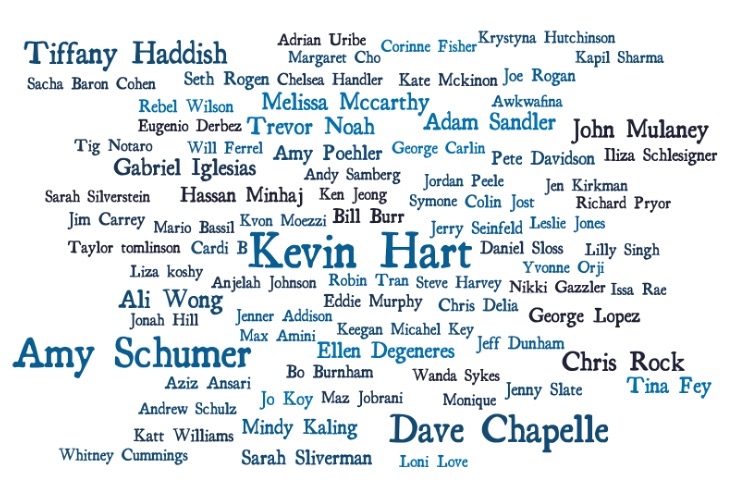
Our project was consistently developing the more information we found; therefore, we continued to tweak and modify our research question. At the beginning of our analysis, we sent out an anonymous survey to our friends and family. We received a total of 62 responses from individuals aged 18-49. There were multiple questions in that survey that were not as helpful as we continued working on our project; however, one was very important. We asked our survey takers to name both male and female stand-up comedians, and as it is seen within the word cloud: Tiffany Haddish, Amy Schumer, Dave Chappelle, and Kevin Hart were the most popular ones. Seeing that Kevin Hart garnered 50% of the responses when asked for male comedians, it was a determinant in deciding which comedian to focus on and what kind of research we can do based on him.

Figure 2: A word cloud containing the names of the comedians named by the participants. The size of the name corresponds to the frequency the comedian was listed.

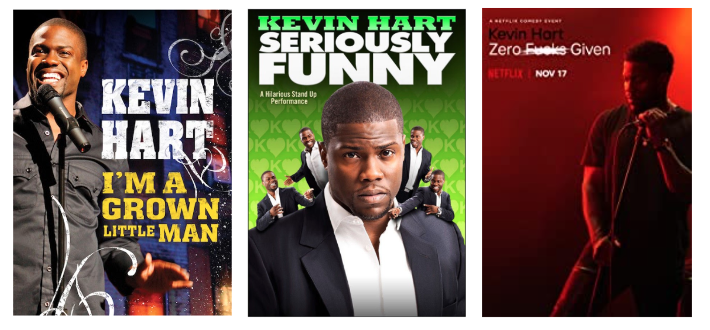
After deciding that we would work on Kevin Hart, we started to explore his past shows and decided to focus mainly on Seriously Funny, I’m a Grown Little Man, and Zero F**ks Given. These shows span a period of eleven years where we are able to observe and analyze the evolution of Kevin Hart and how/if his comedy have been influenced by fast changing social norms and values.

Figure 3: I’m A Grown Little Man (2009), Seriously Funny (2010), Zero F**ks Given (2020)

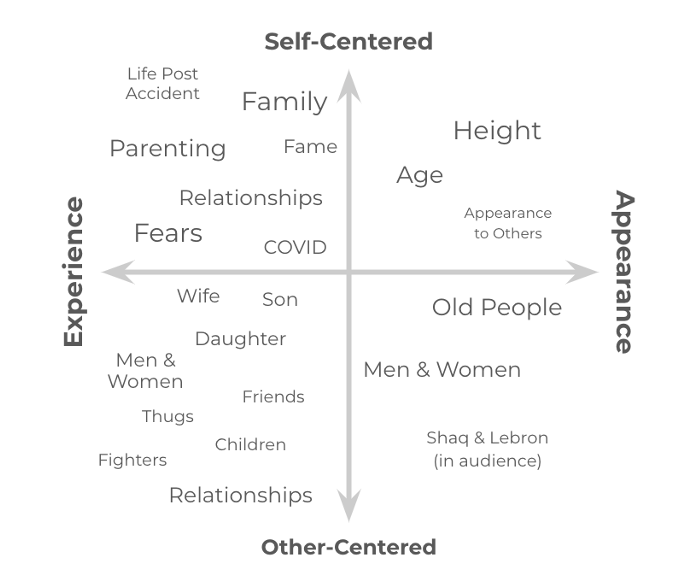
For our work to become more organized, we also decided to divide the jokes we looked at into four categories. It starts with the jokes being self-centered or other-centered, then within that there is a range of it being based on experience or appearance. Self-centered experience jokes are about Kevin Hart’s own personal experiences; Self-centered appearance jokes are about Hart’s appearance or how he is perceived outwardly; Other-centered experience jokes are about other people’s or a group of people’s actions or experiences; Other-centered appearance jokes are about how they look when they behave or are about other outward appearance features. The chart below shows the different topics of jokes Kevin Hart discussed throughout his comedy shows.

Figure 4: A visual representation of the types of jokes analyzed

Results and Analysis

The Use of Other-Centered and Community Based Jokes vs. Self-Centered

In I’m A Grown Little Man, Hart seemed to be more focused on community-based jokes. He used examples of the people he met and recreated scenarios with those individuals to portray how they acted in certain situations. One example is a specific scenario in which Hart imitates rappers and thugs to humor his audience– reflecting back to the theory of other-centered jokes. Hart made little jokes about his personal life because people weren’t as sensitive about certain topics/groups/stereotypes as they are now. Another example is the joke Hart made about a previous girlfriend of his that was White. He talked about her dad and turned it into a racial joke which the audience then took as humorous but would probably offend some people today. Hart acts out his jokes using code-switching and he indexes various communities by using alternate slang. He performs tone & slang differently when making jokes about the Black community compared to language used to connect with the White community.

Kevin Hart – Thug Laugh

Kevin Hart – Rich White Guy Laugh

In past comedy routines, Kevin Hart often used other-centered jokes in which he would use other communities as the primary focus of his jokes. While not all of Hart’s jokes were offensive, there were some that would not currently be socially acceptable. Hart has exhibited change in his most-recent stand-up, Zero F**ks Given, he tends to focus on himself and his family rather than making others the center of his joke. This not only depicts how Hart has evolved, but also showcases how the norms of what’s acceptable in comedy and society has been redefined. Considering the fact that this generation is more aware and sensitive to offensive topics, comedians are often pivoting and reconstructing their comedic routines in order to suit everyone. In the segment posted below, Hart uses intonation when telling the story about his daughter liking different guys every week. His voice rises and falls depending on what part of the story he is sharing. When name calling his daughter or son, he is relatively flat and speaking matter of factly and during other parts, he’s more animated and eccentric. Whereas before, the more offensive statements were other-centered, now the more “risque remarks “ are about him and his family. This is a significant sign of evolution in his routines reflecting social norm changes. The omission of teasing other people can stand as evidence that Hart has transformed his routines and has decided to become more adaptable to the times.

Kevin Hart – My Children


The Delivery of Jokes: No Filter vs. Socially Aware

This section of analysis focuses on Seriously Funny, Hart’s second recorded show in the touring part of his career. In this stage, he had a nonchalant attitude towards his jokes: no prevalent social awareness, no expected repercussions–and seemingly no filter–joking about any topic. Later, he defended these offensive jokes by saying “funny is funny”. To an extent, he’s correct as jokes now deemed offensive were successfully funny back then, in terms of success being measured by the intensity-and-length-of audience laughter. The change in the jokes he said is a great example of how societal norms/values have changed over time. What was accepted then, isn’t accepted now, what was funny then is now offensive. The following video is a segment from Seriously Funny. Hart’s joke is successfully delivered, and he effectively creates comedic effect through his use of intonation (the audible changes in his voice for emphasis), indexicality (personifying other people), and body gestures (for visualization of the story).  When he jokes about his son’s first gay moment, he clearly impersonates his son, the other child, and the woman who intervenes. Though his voice does not change much, unlike other segments he has done, his acting is very clear and he is able to distinctively act like the characters in his story through body motions. When he behaves like his son, he taps into how he described his son earlier in the show. He had claimed his son was, “a dumb kid that doesn’t really know what he’s doing” and shows this by waving his arms in all directions with no real or distinct rhythm. When he talks about the women who interferes, he becomes very calm and speaks in a standard tone of voice suggesting that there was no apparent problem between the two children. Lastly when he indexes his-self in that moment, he returns to an angry defensive tone and body language. Though this joke was comically effective back in 2010, this joke in particular has led to backlash–ultimately leading to Hart stepping down from being the 2019 Oscars Host. 

Watch the video and determine whether or not a joke like this would fly in current times: Kevin Hart – “My Son’s First Gay Moment” Seriously Funny (2010)

Contrastingly, in his latest comedy special, which aired in 2020 after his Oscar scandal, Kevin Hart is much more careful and aware of what he says and the types of jokes that he makes. Whereas before, the jokes were just delivered, now he actually uses self-repair in order to correct what he says or “soften the blow”. In the following video, there is an instance when he is about to make a joke on greeters, he pauses himself and makes a premise that he “… has nothing against greeters…” He makes it clear that he understands that it is an important and useful job, but it is something he does not have to or want to do. By making these comments, he’s able to go on with the joke, having established the foundation that he respects the occupation and does not see it as a bad thing. This can stand as an example of disaligning responses where Hart is able to “… revise or back down from… prior actions in order to permit preferred responses to be produced instead” (Whitehead, 2015, pg 4). In a time where there is heavy criticism to any kind of offensive remarks, making those preemptive comments or jokes about “cancelling” itself may make it so that those viewing the show don’t take it to heart as an offensive statement but rather a simple joke. He is mindful and concerned with how the wider/mainstream audience will interpret his joke. He is more socially aware of potentially offensive comments in his jokes. He is self-censoring which initiates self-repair. He does this by using specifically the use of intonation and indexicality to defer between the times that he is speaking as himself and the “persona” of those that may be after him post this joke. For example, when he impersonates the lady that is filming him as he eats his burger in front of McDonalds, he acts aggressive, angry, and accusatory. His hand is in front of him as if he is holding a phone and filming and his eyes are wide open (kind of as if he were crazy). When he is back to being himself he just describes what he did in a more relaxed tone and continues with the joke.

To further demonstrate what we mean, here are two segments from his latest comedy show attached below, where Kevin Hart makes the extra effort to communicate that he is not being offensive or seriously making a statement.

“Kevin Hart Loves Wal-Mart Greeters” Zero F***ks Given (2020)

“Why Kevin Hart Hates Snitches” Zero F***ks Given (2020)


Discussion/Conclusion

Our research aim was to understand whether societal norms have changed in the past 10 years by investigating one of comedy’s biggest stars, Kevin Hart. Starting from Seriously Funny to Zero F*cks Given, we observed an evolution in Hart’s shows–leading to conclude that societal norms and values have indeed changed. What was once received as humorous and funny may now be unacceptable by the mainstream. This generation is much more vocal about the types of jokes and statements one can make about a community. We came to this conclusion by analyzing the language used by Hart. By using different communication tools, both verbal and nonverbal, (code switching, indexicality, intonation, self-repair) we gained a greater understanding of societal value changes and impacts on systems within society, like entertainment. Despite his controversial past, Kevin Hart remains incredibly popular (as was evidenced by our survey and his record breaking show attendances). As we conclude this post, we wonder: Would you also agree with our conclusion? Where do you think the relationship with comedy and risqué remarks is headed in the future?


References

Manwell, C. F. (2008). STAND-UP COMEDY AS A TOOL FOR SOCIAL CHANGE. https://lsa.umich.edu/content/dam/english-assets/migrated/honors_files/Manwell%20Colleen-Stand-Up%20Comedy%20as%20a%20Tool%20For%20Social%20Change.pdf.

Pulliam, G. (1991). Stock Lines, Boat-Acts, and Dickjokes: A Brief Annotated Glossary of Standup Comedy Jargon. American Speech, 66(2), 164-170. doi:10.2307/455884

Whitehead, K. (2015). Everyday Antiracism in Action: Preference Organization in Responses to Racism. JOURNAL OF LANGUAGE AND SOCIAL PSYCHOLOGY, 34(4), 374-389. http://dx.doi.org/10.1177/0261927X15586433 Retrieved from https://escholarship.org/uc/item/7767x91b

Zoglin, R. (2009). Comedy at the edge: how stand-up in the 1970s changed America. Bloomsbury USA.


[/expander_maker]

, , , ,
Scroll to Top