English

The Experiences of Non-Native English Speakers at UCLA

Christina Oghlian, Cia Evangelio, Nina Esteghlal, Rikuto Kawada, Yuka Tanaka

As a native speaker of a language, we never really stop to think about the experiences and challenges of those who are not native speakers. It is especially difficult for those who are studying in a foreign country where almost everyone is fluent in a different language than them. We decided to research what challenges international students face in order to gain a greater understanding of their experiences as non-native English speakers at an American university. In addition, we want to use the results of our findings to understand what resources are available for international students who are not English-proficient.

We conducted our research by interviewing 10 international students attending UCLA, 5 of which were male and 5 of which were female, about their English academic proficiency levels and their experiences in various social settings as non-native speakers. By creating more spaces where international students can meet one another or consult with fluent English speakers about difficulties they might have with the language, educational institutions can help their international students feel more safe and comfortable in both academic and social settings.

[expander_maker id=”1″ more=”Read more” less=”Read less”]

Introduction

Think about yourself living in other countries where people do not speak your native language. What would you feel, and what difficulties would you face? This curiosity makes us want to study how each international student struggles to live in other countries. We focus on the linguistic, social, and mental challenges that international students face during their study abroad experiences. Our research question is: “How does international students’ English proficiency affect their personal life to be fulfilling while they are studying abroad, and what are the difficulties for international students to achieve their ideal life in new countries?” We hypothesize that international students with higher proficiency in speaking English have more opportunities to socialize in groups. On the other hand, international students who have lower English proficiency will face more difficulties in socialization and having an awareness of their speaking English, increasing their anxieties while they are speaking English to native speakers.

Background

International students face new challenges in a new country. There can be many reasons and situations, such as the language barrier, socialization, and mental condition. Those challenges have a huge negative impact on international students in terms of their studying or speaking English. Many international students are willing to enhance their speaking skills and engage in new social interactions, such as engaging in conversation, making new friends, and so on, in the new countries they go to (Bernhard and Gregory, 2017). Depending on the individual international students, there are differences in these achievements to be different because their English proficiency will be affected.

The linguistic barrier can make people feel they are not in the conversation while people are speaking English because they cannot understand and speak out while people are using English. This can make international students feel socially excluded because of the differences in their English ability (Hilt, 2016). In addition, linguistic barriers are affecting not only the social life of international students but also their mental awareness of their English ability in many ways. While international students feel they are not good enough at speaking English, it can affect their feelings of anxiety (Idrissi, 2022). Moreover, the linguistic barrier can also affect international students’ confidence in speaking (Iris and Lopez, 2014). Therefore, English proficiency has a huge impact on the interactions with international students, their social lives, and their awareness of anxiety.

Methods

For our research study, we aim to interview 10 international UCLA students between the ages of 18-25. Out of the 10 international students, we will specifically interview 5 males and 5 females. Our research will examine how these international students face difficulties when they are speaking English to a native English speaker. Before the interview, the students will complete a Google form asking a couple of questions about their demographics, including identity, where they are from, previous schools they have attended, and for how long they have been attending UCLA. After completing the Google form, each participant will be notified with a follow-up interview and be asked questions based on their familiarity with English. The interviews will take approximately 30 minutes, and we will ask questions related to their knowledge of English, such as, “How comfortable are you speaking English”, “What is the most complicated part about speaking the English language”, “ How comfortable are you when slang is being used in conversation”, and “What linguistic features do you pay attention to when speaking with native speakers”. Based on the interview answers, we will analyze them to see what international students struggle with and which areas of linguistics they have difficulty understanding the most. We especially want to understand how international students have a difficult time with their English ability in social situations and mental interaction.

Results and Analysis

The results that we have found are quite intriguing. We conducted a total of nine interviews and created graphs to represent our findings.  As represented on the charts, the demographic of our participants is a majority of Japanese participants followed by Indian, South Korean, and Armenian, as shown in Figure 1.
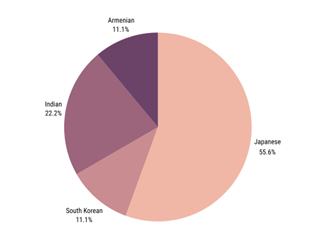
Figure 1: Demographics of Participants within the Study

A large majority of the participants were exposed to English in high school– whether that be that they went to an international school or they had an integrative English course as represented through Figure 2.
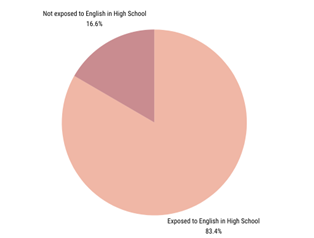
Figure 2: Percentage of Participants who were exposed to English in High School

While conducting our research, we realized it was only fair that we separate international students from what was shown in Figure 2. Out of those international students that were exposed to English in high school, Figure 3 represents what they found the most difficult when participating in conversation with native English speakers.
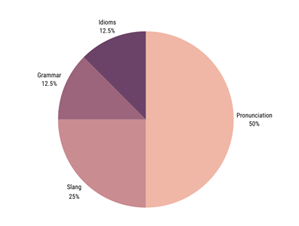
Figure 3: What International Students with strong English proficiency struggle with

On the other hand, Figure 4 shows what international students that have lesser English proficiency struggle with. Interestingly, both international students with strong English proficiency and students with lower English proficiency are most conscious about pronunciation.
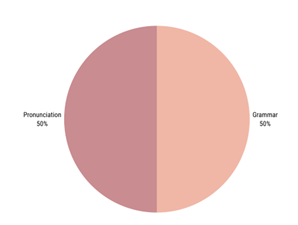
Figure 4: What International Students with lesser English proficiency struggle with

The results show that the international students that have a strong English-speaking background are most likely to feel comfortable speaking English to individuals, and group settings however, international students with no English background feel less comfortable. International students have more difficulty grasping English morphological and syntactic structures due to the complicated grammatical structures that are used in academic settings. The use of slang terms and pop culture usually in social and school settings often would give international students confusion. Most international students mentioned how they struggled understanding slang terms and pop culture and that they are still learning.

Discussion and Conclusions

Previous studies have shown that the ability to speak English is highly related to one’s involvement with the surrounding environment in which he or she grew up. The results show that international students who received an academic English education before entering university are almost as confident and comfortable with their English skills as native English speakers, whereas international students who did not receive much English education before entering university are a little more hesitant to speak English. As our research indicates, they may feel anxious or difficult to speak depending on their proficiency in English and may feel that they do not belong in that group.

Moreover, our study allows us to speculate that difficulties in grasping specific and unique syntactic structures, such as pop culture references, may have an impact on the minds and bodies of international students. While it is difficult to draw conclusions, this phenomenon may be true for many international students who did not receive much English education before college. Proficiency in English is a necessary skill for international students to adapt to social life, but confusion often arises when slang and pop culture references are mixed in. Therefore, it could be argued that international students hang out with other international students to avoid being excluded because of differences in fluency or proficiency that they do not possess compared to native English speakers. This research can be applied to various university communication settings to help understand how to properly engage with international students and what type of environment is most effective for language learning.

References

Alkhammash, R. (2022). Processing figurative language: Evidence from native and non-native speakers of English. Frontiers in Psychology, 13, 1057662–1057662. https://doi.org/10.3389/fpsyg.2022.105766

Drljaca Margic, B. (2017). Communication courtesy or condescension? Linguistic accommodation of native to non-native speakers of English. Journal of English as a Lingua Franca, 6(1), 29–55. https://doi.org/10.1515/jelf-2017-0006

Halic, O., Greenberg, K. H., & Paulus, T. M. (2009). Language and Academic Identity: A study of the experiences of Non-Native English speaking international students. International Education, 38(2), 73–93.

Hilt, L. T. (2016). Education without a shared language: Dynamics of inclusion and exclusion in Norwegian introductory classes for newly arrived minority language students. International Journal of Inclusive Education, 21(6), 585–601. https://doi.org/10.1080/13603116.2016.1223179

Idrissi, O. (2022). Anxiety as a psychological barrier to students’ speaking fluency: IELTS as a case study. International Journal of Linguistics, Literature and Translation, 5(12), 111–120. https://doi.org/10.32996/ijllt.2022.5.12.14

Jessen, A., Festman, J., Boxell, O., & Felser, C. (2017). Native and Non-native Speakers’ Brain Responses to Filled Indirect Object Gaps. Journal of Psycholinguistic Research, 46(5), 1319–1338. https://doi.org/10.1007/s10936-017-9496-9

Lopez, I. Y., & Bui, N. H. (2014). Acculturation and linguistic factors on international students’ self-esteem and language confidence. Journal of International Students, 4(4), 314–329. https://doi.org/10.32674/jis.v4i4.451

Streitwieser, B. T., & Light, G. J. (2017). Student conceptions of international experience in the study abroad context. Higher Education, 75(3), 471–487. https://doi.org/10.1007/s10734-017-0150-0

Yu, X., & Peters, B. (2019). Let All Voices Be Heard!: Exploring International Students’ Communication Challenges in the Internationalized Classroom. Journal of Interdisciplinary Studies in Education, 8(1), 107–116. https://doi.org/10.32674/jise.v8i1.1080

Cross-referencing relevant info: https://www.youtube.com/watch?v=na04NxGZuKU

[/expander_maker]
, , , ,

Navigating New Worlds: The Role of English Proficiency in the Social Integration of Chinese International Students at UCLA

Rista White, Yue Yu (Elena), Nadia Ruiz, Brianna Sobrero, Ruby Jimenez

The present study investigated whether Chinese international students (CIS) attending the University of California, Los Angeles, with high self-reported English proficiency, experience easier social integration and comfortably form more friendships with domestic students. CISs comprise the largest group of international students at UCLA, and this considerable demographic experiences various unique sociolinguistic challenges while adjusting to American university life. To answer this question, we analyzed 13 questionnaire responses that we received from individuals who identified as CISs attending UCLA. Subsequently, four respondents agreed to interviews where we learned more about their personal experiences. The findings show that greater self-reported English competence among UCLA CISs positively correlates with easier social integration and a wider variety of friendships. Given the growing population and trend of international study, these findings are helpful for the university and student organizations to consider when creating programs to improve the experience of CISs attending UCLA.

[expander_maker id=”1″ more=”Read more” less=”Read less”]

Introduction and Background

Recognizing that international students may face more struggles than ordinary American university students is important. International students come to a foreign country on a student visa or permit to pursue education, and the US has many such students (Sin et al., 2021). Our research investigates the relationship between English proficiency and social interactions and the impact of language barriers on CIS’s ability to communicate effectively with peers at UCLA. By understanding these aspects, we hope to shed light on the diverse struggles of CISs and provide insights into how English proficiency can affect their sense of culture and belonging in a foreign country.

Each year, the number of CISs in the United States increases as more students from China come to the U.S. to pursue higher education. These students often find themselves encountering a common barrier: English proficiency. Despite the significant role of English proficiency in social integration, this correlation is often overlooked. Several studies have researched second-language acquisition among international students and how it affects their academic and personal lives in the United States. However, few studies specifically study the direct correlation between proficiency in English as a second language and socialization in American universities, despite its significant influence on academic performance and social integration. Limited proficiency in the host language diminishes students’ satisfaction by impeding their ability to communicate, socialize, and comprehend lectures in academic settings (Campbell & Li, 2008, as cited in Wilczewski & Alon, 2023).

Studies also emphasize that international students are frequently prevented from mingling with American peers because of their limited exposure to American culture and language, leading them to primarily socialize with fellow international students (Liu & Dong, 2019; Moglen, 2017, as cited in Garrison & Chang-Tran, 2023). International students tend to predominantly socialize with peers from their own cultural backgrounds while rarely engaging with domestic individuals or students from different cultural backgrounds, largely due to language barriers (Wang & Zhou, 2021).

 In his TedTalk, Miga Xie (2020), recounted that he was told by his mother to stay away from other Chinese children. She believed that the way to get the most out of American education and improve spoken English was by minimizing contact with those of similar backgrounds. Miga explains that he eventually overcame the feeling of assimilating into American student culture and avoiding his culture. Xie understands that most CIS feel more comfortable around people with the same background. Still, because of the unique guidance received from his mother, he suggests that CISs should value their diversity and use it to engage in cross-cultural conversations rather than feeling obligated to socialize exclusively with people who look like them or fully assimilate into American culture.

 These studies and stories collectively demonstrate the importance of second-language proficiency in facilitating social interaction with domestic students, as insufficient proficiency often leads international students to socialize within their own international student community. Higher levels of second-language proficiency facilitate more extensive and smoother socialization experiences. While the body of existing studies reinforces our hypothesis, our research narrows its focus to UCLA as the setting and English as the specific second language, with a particular emphasis on CIS. Our study addresses a significant gap in the literature by examining the relationship between English proficiency levels and socialization in American universities.

Methods

We followed a mixed-method research design. Specifically, we utilized the facilitation approach, a process involving two research methods, using one strategy to expand on the results of another strategy (Young, 2015). Beginning with a quantitative method, we created a questionnaire on Google Forms with four sections, two of which were close-ended, to acquire data concerning CIS’s self-reported English proficiency and social connections relating to a sense of belonging. We shared the questionnaire in a group chat for CIS attending UCLA on WeChat, a dominant Chinese messaging application. After receiving 13 responses, we emailed all respondents to schedule an interview, and only four agreed. So, to take a more engaging approach, we followed up with the four people to perform semi-structured interviews. We divided our twelve open-ended interview questions into four sections: Experiences with English and Social Integration, Challenges and Strategies, Social Networks and Sense of Belonging, and Institutional Support and Suggestions.

Data Analysis and Results

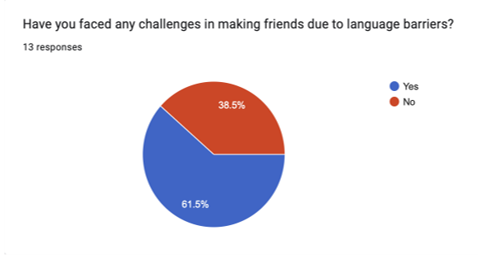
Through our close-ended survey responses, the results of one of our questions stood out to us (Figure 1). Most respondents, eight to be exact, said yes to having faced challenges making friends due to language barriers. The eight responses add value to our research, confirming the plausibility of a correlation between English language proficiency and social integration.

Fig. 1: Question 11 of Section 4, Social Connections and Sense of Belonging in our Google Form questionnaire

Interviews were recorded with participant consent. The interview transcripts were then analyzed using an interpretive analysis approach. This style of interview deconstruction consists of multiple read-throughs of interview transcripts (Hatch, 2002). The first read-throughs emphasized looking for major themes and were carried out individually. We searched for patterns and relationships within these themes on the second read-through. Then, insights were shared with other research group members, and a comparative approach was adopted. Finally, we describe emerging patterns across interviews in short sentences and connect them to supportive excerpts. This left us with bite-sized takeaways supported by evidence that we can easily connect to the preexisting sociolinguistic literature on international students.

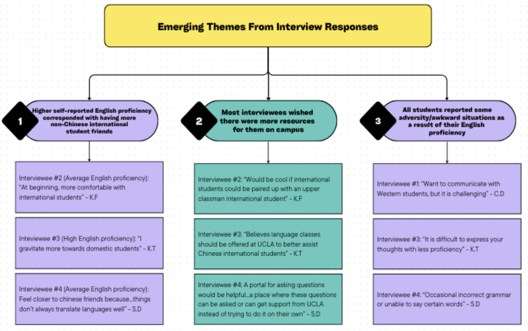
The three emerging themes are shown in Figure 2. Theme 1: higher self-reported English proficiency corresponded with having more non-Chinese international student friends. Theme 2: most interviewees wished they had more resources on campus. Lastly, in theme 3, students reported some adversity/awkward situations due to their English proficiency.

Fig. 2: Flow chart created to organize themes

Discussion and Conclusions

Three main themes emerged after evaluating the data collected by the survey and interviews. The first theme was that participants with a higher self-reported English proficiency tended to correspond with their response to having more non-Chinese international student friends. Implying that the participants felt that having a more proficient level of English helped them establish connections with non-Chinese individuals. Secondly, most, if not all, interviewees explained they wished there were more resources for them on campus. Some of these resources included the possibility of a mentor or a CIS club. This suggests that there is ample opportunity for UCLA to offer greater support to its international Chinese students and help international students create their own programs based on their needs. The final theme was that all the students reported some adversity or awkward situations resulting from their English proficiency.

While analyzing the data gathered from this study, we kept some important details in mind to help us understand our collection and conclusions. Our survey and interviews were based on self-reported proficiency levels rather than an actual language test, meaning the results are based more on a self-reported confidence level in their proficiency.

While attempting to conduct our interviews to gather more data, we found ourselves with a few limitations. One limitation was the lack of preliminary survey respondents who were willing to participate in a secondary interview. Our goal was to conduct five interviews. We secured three easily, but the other two were more difficult. Another limitation was the time available to explore our research question. With greater time, we could have spent more time collecting and examining more data.

In closing, after we analyzed the personal experiences of CIS at UCLA, we have been able to gather a better understanding of the relationship between English proficiency and the ease of social integration. We completed our research with the takeaway that there is a connection between language proficiency and socialization. Slang and cultural references are common difficulties, even with high fluency, and most people have created ideas on how to improve the international student experience. With future research, larger data samples could reveal more about these connections and other insights. Through the lens of these personal stories, we are not just uncovering challenges but also paving the way for a future where every student’s voice is heard. 

References

Garrison, Y., Park, S., Yeung, C. W., Li, Z., Ho, Y. C. S., & Chang-Tran, J. (2023). The social class worldviews of Chinese international students in the United States. Journal of International Students, 13(1), 40-58.

Hatch, J. A. (2002). Doing Qualitative Research in Education Settings: Analyzing Qualitative
Data
. (pp, 185-224). State University of New York Press.

Sin, C., Tavares, O., Aguiar, J., Biscaia, R., & Amaral, A. (2021). International students in Portuguese higher education: who are they and what are their choices? Studies in Higher Education, 47(7), 1–14. https://doi.org/10.1080/03075079.2021.1916907

Wang, P. & Zhou, G. (2021). A Study Of Chinese International Student Dropout: Acculturation Experiences And Challenges In A Pre-University English Language Improvement Program. McGill Journal of Education / Revue des sciences de l’éducation de McGill, 56(1), 52–70. https://doi.org/10.7202/1087048ar

Wilczewski, M., & Alon, I. (2023). Language and communication in international students’ adaptation: a bibliometric and content analysis review. Higher Education, 85(6), 1235–1256. https://doi.org/10.1007/s10734-022-00888-8

Xie, M. (2020, February). (Don’t) Talk to the Chinese Kids: My Journey with Diversity. and Inclusion [Video]. TEDxEmory. https://www.ted.com/talks/miga_xie_don_t_talk_to_the_chinese_kids_my_journey_with_diversity_and_inclusion?utm_campaign=tedspread&utm_medium=referral&utm_source=tedcomshare

Young, T. J. (2015). Questionnaires and Surveys. Research Methods in Intercultural Communication, 163–180. https://doi.org/10.1002/9781119166283.ch11

[/expander_maker]

, , ,

Could you pass the salt-juseyo? A Comparison of Politeness Strategies in American English and Korean

Verania Amaton, Kimberly Maynard, YueYan Kong, Yi Wang

BTS. Gangnam Style. K-dramas. Korean culture has been steadily making its way into the United States’ mainstream culture leading to more contact between the cultures and languages. Any fan of Korean media knows that Korean has built-in formality tiers, a tricky part for native speakers of English to master when learning Korean. But does the English language really lack levels of formality just because they aren’t built into its grammar? In this study, we look into alternate ways of expressing politeness in both American English and Korean. By looking at how speakers of both languages make requests, refusals, and apologies, we were able to find what types of strategies they use outside of the expected word choice and grammar. Based on our data, there are more similarities than one might expect in terms of how speakers of these languages use politeness strategies. Continue reading to learn more about how we approached a cross-cultural comparison of the politeness strategies in the U.S. English and Korean!

Figure 1 and 2: The TV series posters for Never Have I Ever, an American show, and Inheritors, a Korean drama.

[expander_maker id=”1″ more=”Read more” less=”Read less”]

Introduction and Background

With the rise of popularity of Korean media in the United States, more Americans are being exposed to Korean language and culture. One of the most notable differences between the English and Korean languages is the idea behind formality tiers which don’t exist as clearly in English. It would be unfair to presume English speakers are inherently impolite because they don’t have a built-in formality system, so we expect they would have other strategies they could use to be polite. This leads to the next question of whether Korean would also have other strategies outside of grammar to express formality and how those strategies might compare to ones used in English. First, we looked into pre-existing research on these languages and cultures to give us an idea of what we could expect.

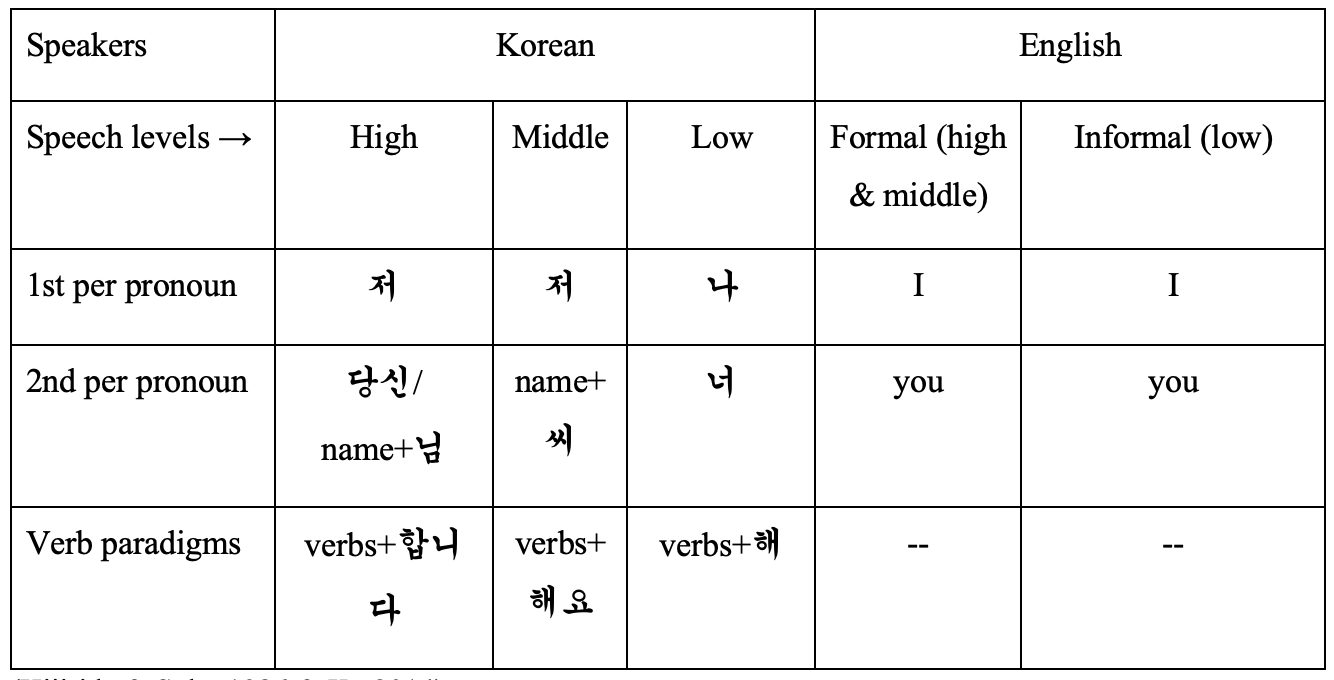
Table 1: A comparison chart between Korean and English formality tiers (adapted from Hijirida & Sohn (1986) and Ku (2014)).

Korea is considered a collectivist-low-context culture which means that Koreans have a strong emphasis on group harmony and using context more so than words to convey messages. On the other hand, America is an individualistic-high-context culture in which there is a stronger focus on individuality and more responsibility falls on speakers to explicitly state their point (Cho, 2010). This significant difference in language culture feeds into unique styles to express politeness. The two major linguistic ways one can express politeness are through positive politeness, making the receiver feel good about themselves, and negative politeness, an apologetic stance to interaction based on the assumption that one is intruding on the listener (Brown and Levinson, 1987).

Given the contrasting cultures of communication, we would expect Koreans to be more vague overall and utilize more negative politeness in order to avoid being imposing while Americans would be more direct in their politeness, thus leaning towards more positive politeness strategies.

Methods

We know from intuition that regardless of culture, both American and Korean teenagers are expected to change their speech style when addressing their peers versus adults in their lives. That is why we chose to focus on collecting data from two TV series: Never Have I Ever (American English) and Inheritors (Korean), which mainly focus on the lives of teenagers. For data collection we focused on gathering pieces of dialogue that we thought could show how these characters were expressing politeness in different situations. We categorized the data into three specific speech acts (requests, refusals, and apologies) to know how politeness theory would be displayed in English and Korean. We also split this data according to the participants, specifically into peer-to-peer and student-to-adult categories1. The analysis was primarily focused on instances of positive and negative politeness, but we kept an eye out for other strategies.

Results/Analysis

We organized our data into separate sections depending on the language, participants, and speech act. We’ll cover a couple examples for each speech act and show them in a table with some color coding to show politeness strategies used. Any negative politeness will be written in red text and positive politeness will be written in green text. At the end of this section, we will show a table that has the numbers that encompass all the data. The first speech act we looked at was requests.

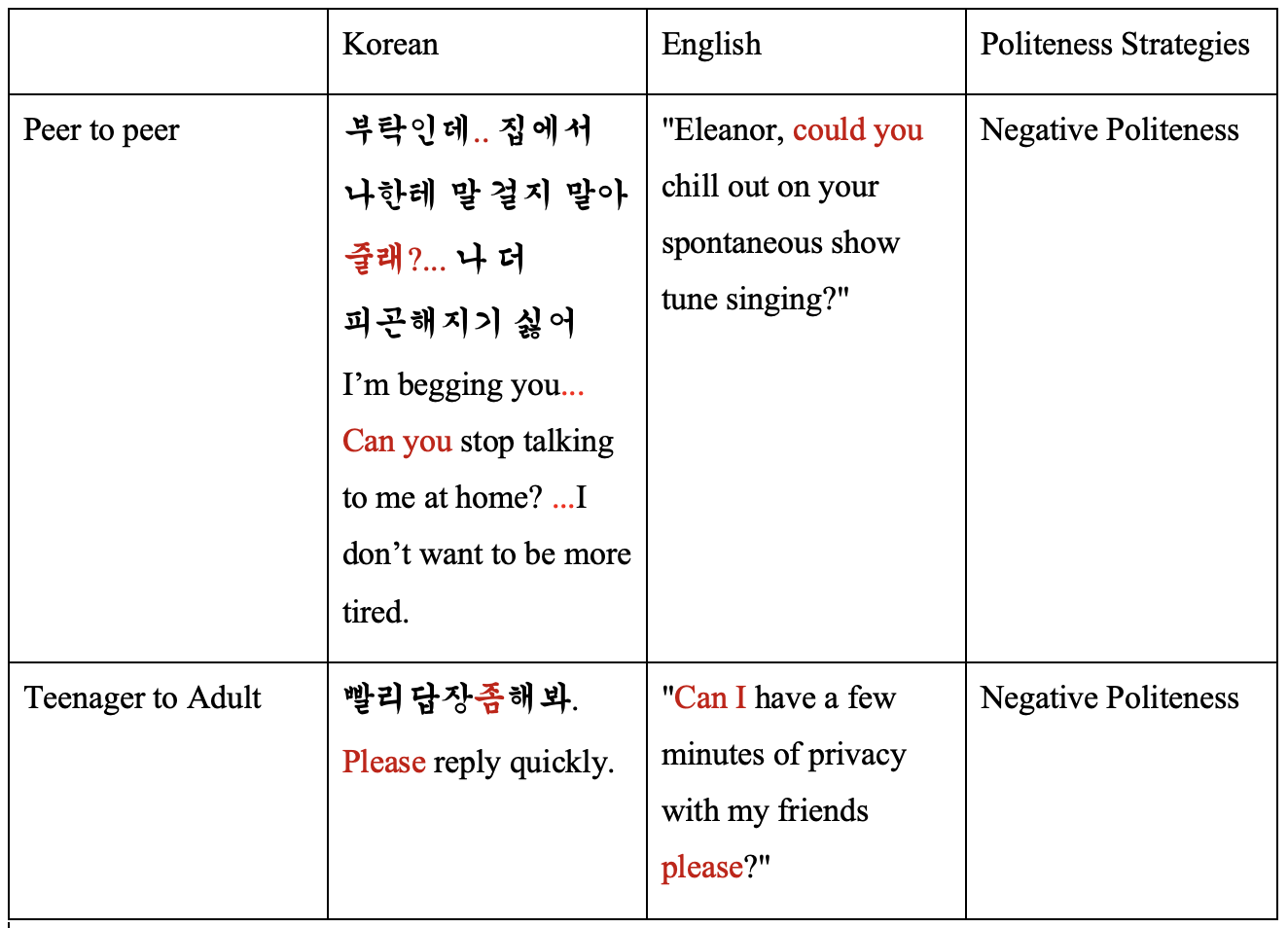
Table 2: Table on Requests in Korean and English.

In Korean we noticed the use of negative politeness strategies both between peers and between the student and adult. In the case of the peer-to-peer request shown above, there was some pausing before making the request and before explaining why the request was made. They also formatted the request as a question using “줄래? jullae?” or “Can you…” which is one way to decrease imposition or make the request feel less intrusive, thus falling into the category of negative politeness. This is similar to the use of “좀 jom” or “please” when the student is making a request to the adult, once again decreasing imposition. Something that we noticed from these Korean examples is that speakers were generally more direct than expected. In the peer-to-peer request, the student making the request explains her reasoning as her “not wanting to become more tired” which is directly related to her own wants/needs. Typically, we would expect explanations in Korean to be more vague and related to a third party or some uncontrollable situation (Lyuh 1992, p.115). Furthermore, in the student to adult example, the student used “빨리 ppalli” and “해봐 haebwa” which create a sense of urgency and is also said informally as according to Table 1. This is unexpected with a teenager approaching an adult, but we deduced that since this student was talking to her mother, the closeness of their relationship overrode the need to be more formal or polite when speaking to someone older.

While we expected more positive politeness from English speakers, surprisingly we saw a high rate of negative politeness in English requests as well. As can be seen in the examples above, English speakers tended to format their requests as questions, using forms such as “Could you…?” and “Can I…?” and again in the student to adult request we see the use of “please” to further decrease imposition. Altogether, both English and Korean showed high rates of negative politeness in their requests. In looking at the additional data, there were some instances of positive politeness in peer-to-peer requests in both languages, but it wasn’t used nearly as often in the overall data for requests.

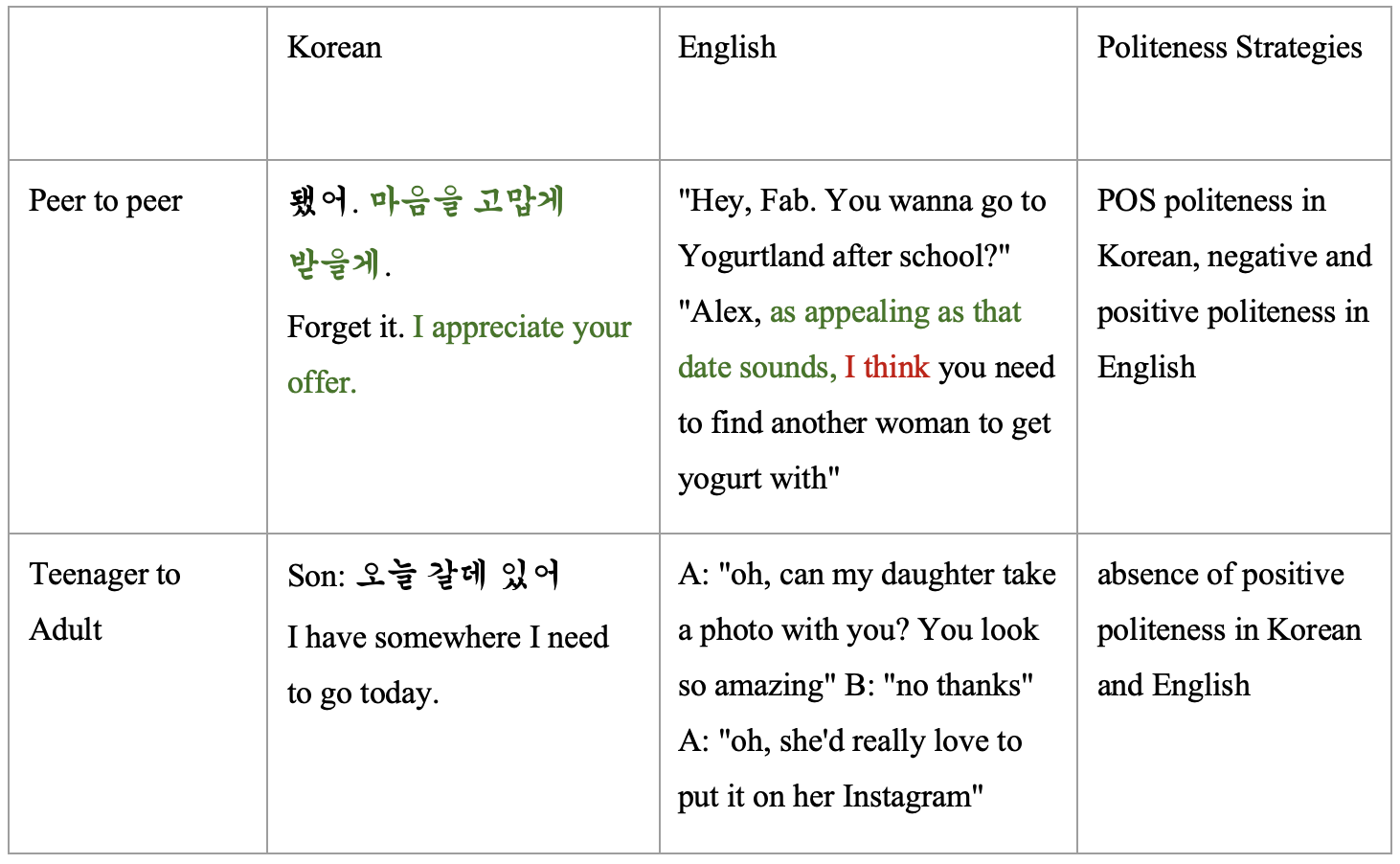
Table 3: Table on Refusals in Korean and English.

The general trend found in Korean for refusals between students is that peers are more direct and use less positive politeness when declining something. Our example in the chart above points to the use of positive politeness in using the phrase “I appreciate your offer,” but instances such as these were uncommon across our data. Between students and adults, there was more indirect speech with an absence of positive politeness as well. One of our best examples showed the use of “I have somewhere I need to go today” from a Korean student in order to decline an invitation from his mother. Unlike in our data for Korean requests, in this instance we did see the type of vagueness or reference to an outside force when providing an explanation for something, as expected of collectivist cultures. We analyzed this as the absence of positive politeness because while it was expected he would follow up with something like thanking his mother for the invitation, he focused on his lack of time. On the other hand, we found that English was much more direct across this speech act. There are instances of both positive and negative politeness, and it varies with the speaker, context, and social distance between the interlocutors (people engaging in a conversation). In the peer-to-peer example given in Table 3 for English, the speakers are friends while the teenager-to-adult interaction is between strangers. The peer-to-peer refusal was softened by the phrase “as appealing as that date sounds,” which we categorized as positive politeness because it exaggerated how much she liked the proposed idea by her peer even if she didn’t want to accept his invitation. In the English data, the first refusal is more euphemistic and the second is more direct, but both are clearly refusals.

Table 4: Table on Apologies in Korean and English.

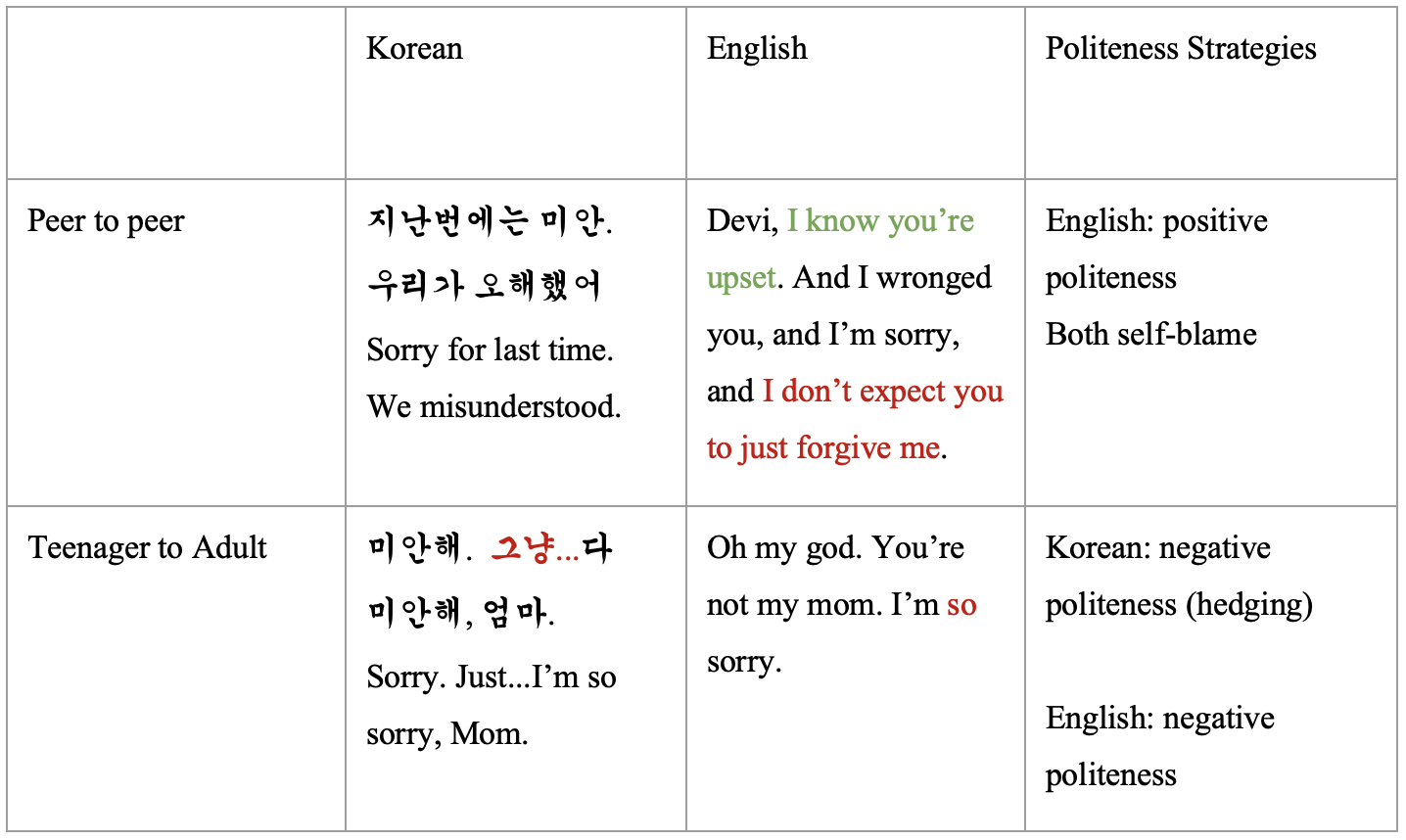
In the case of apologies, both languages behaved opposite from what we expected based on our hypothesis. In Korean, there was a much lower rate of politeness strategies being used overall. For example, in peer-to-peer, there was no use of negative politeness strategies. Even in the example given in the table, we were not able to identify any particular strategies being used. The apology was simple and straight-forward. We do believe it is worth noting that our data for the Korean apology section was scarce in sample size and could have had more examples, which may contribute to the low numbers we are seeing. In the case of student to adult apologies however, we did see more use of negative politeness strategies. As seen in the table, the student used “그냥 geunyang” or “just” with a slight pause during her apology. This is an example of hedging, a negative politeness strategy where one delays or lengthens their statement. In terms of positive politeness strategies, we saw them only being used in peer-to-peer apologies in Korean.

In English, the rates of both positive and negative politeness were higher than expected, leading us to conclude that in this particular speech act, English speakers may employ more outside help to achieve the purpose of their apologies. In one of our English examples for peer-to-peer, a speaker says “I don’t expect you to just forgive me” as a negative politeness strategy to emphasize that the receiver does not owe them their forgiveness.

Outside of politeness strategies we observed that in both languages there was a pattern for emphasizing the aspect of self-blame across apologies. This was achieved by explaining their wrongdoings within the apology in order to bring awareness to their guilt.

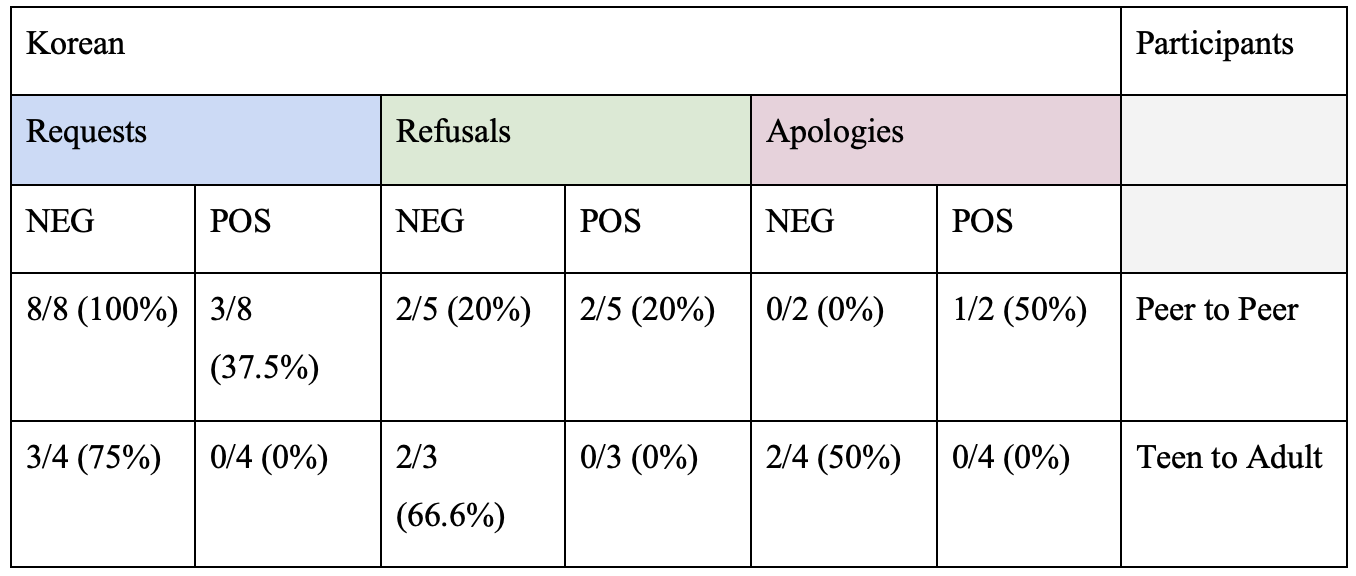
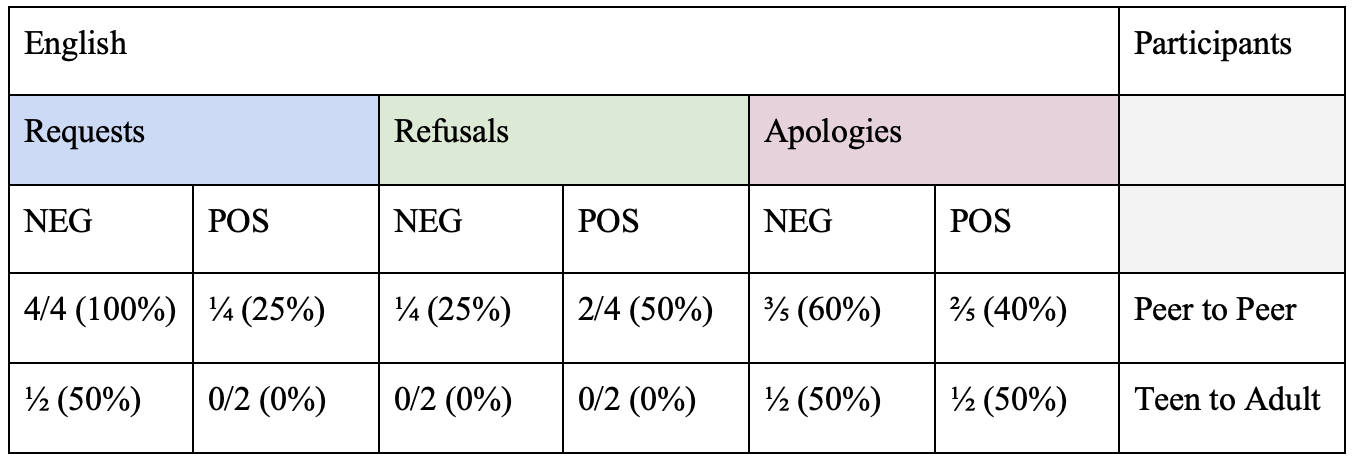
In cross comparing our data for both languages overall, we found that there was no significant difference between the rates of politeness strategies used across the three speech acts we observed. English had a 37.5% rate of politeness strategies employed overall while Korean had a similar rate of 34.9%. However, an interesting trend we could identify was that while Korean teenagers did not necessarily use more negative politeness, they did demonstrate a wider variety of it while American teenagers stuck to using the same forms in their negative politeness strategies.

Table 5: Politeness Strategy Rates in Korean.


Table 6: Politeness Strategy Rates in English.


Discussion and Conclusions

After we had collected all the data above, we found that some of our data was consistent with our hypothesis while other data went against expected politeness patterns. We concluded that the Korean language does use negative politeness more often than positive politeness. Still, English also had a lot of unexpected evidence of negative politeness.

In addition, the importance of politeness strategies goes beyond vocabulary and grammar. It can also be expressed through strategies such as hedging and pausing in interaction. Despite the lack of a formality system in English, English speakers can change formality and politeness through the use of these identified positive and negative politeness strategies.

Based on what we concluded above, this study could be helpful for cross-cultural interlocutors to gain a deeper understanding of the language and communication styles of different cultures. For example, it could help politicians who need to conduct diplomatic affairs and business workers of international companies. Language learners would also benefit because memorizing phrases isn’t always enough to fully understand the underlying nuances of a language. Being able to properly understand the politeness strategies used by someone else and being able to apply them yourself can help greatly decrease misunderstandings.

In the early stage of collecting data, we also encountered some problems. Since we had yet not narrowed down the speech acts to requests, refusals, and apologies at the beginning, the initial data collection and analysis was not smooth. In future research, those interested in this topic can narrow down the scope of speech acts before collecting their data and perform future studies with more reliable sources. Our data results were affected by a relatively small sample size as we could not watch entire seasons of our shows, but future studies should consider collecting data from entire seasons if time allows. Future researchers of this topic could improve the source material by utilizing questionnaires, naturalistic observations, real person interviews, a wider variety of TV shows, or unscripted YouTubers’ speech patterns to collect data for their studies.


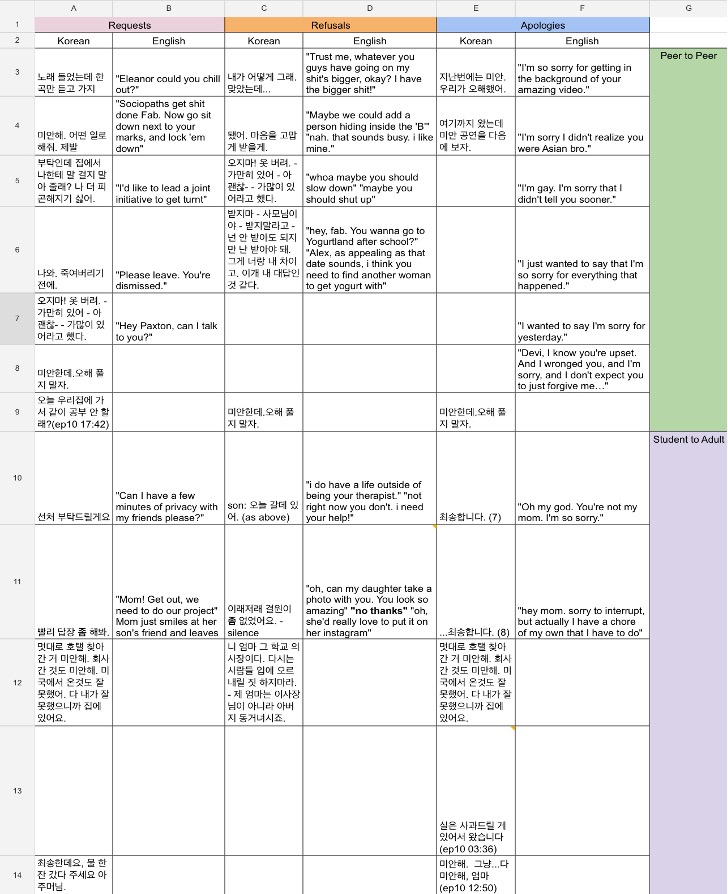
Extended Data Table:

Our data for requests, apologies, and refusals in English and Korean.


References

Brown, P., & Levinson, S. C. (1987). Politeness: Some universals in language usage. Cambridge University Press.

Cho, S. E. (2010). A cross-cultural comparison of Korean and *American social network sites: Exploring cultural differences in social relationships and self-presentation (Order No.3397528). Available from ProQuest Dissertations & Theses A&I; ProQuest Dissertations & Theses Global. (305224890). pp. 23-25

Ku, Jeong Yoon. “Korean Honorifics: A Case Study Analysis of Korean Speech Levels in Naturally Occurring Conversation.” ProQuest Dissertations Publishing, 2014. Print. P.7.

Kyoko Hijirida & Ho‐min Sohn (1986) Cross‐cultural patterns of honorifics and sociolinguistic sensitivity to honorific variables: Evidence from English, Japanese, and Korean, Research on Language & Social Interaction, 19:3, 365-401, DOI: 10.1080/08351818609389264) p. 370.

Lyuh, I. (1992) The art of refusal: Comparison of Korean and American cultures. ProQuest Dissertations & Theses A&I; ProQuest Dissertations & Theses Global. pp. 87-117

Mindy, K., Fisher, L., Klein, H., Miner, D., Shapeero, T. (Executive producers). (2020-present)

Never Have I Ever [TV series]. Kaling International, Inc.

Yoon, H. (Executive Producer). (2013). Inheritors [TV series]. Hwa & Dam Pictures.

[/expander_maker]

, ,
Scroll to Top