linguistic identity

CODE SWITCHING!: A phenomenon among bilinguals and its deeper role in identity formation

Leon Kaprielian, Octavio Santana, Sahil Sadiq

In an era marked by globalization and multiculturalism, the phenomenon of code-switching has emerged as a crucial aspect of language dynamics and identity formation among bilinguals. The complexities of code-switching, its popularity, and its deeper ramifications for people navigating many linguistic and cultural domains are explored in this research. We examine how code-switching is used in immigrant communities as a tool for social interaction, identity negotiation, and effective communication through a multidisciplinary lens that takes into account linguistic, cognitive, cultural, and social factors. Based on naturalistic observations and interviews with Farsi, Spanish, and Arabic bilingual speakers, we investigate the complex patterns of code-switching in various age groups and social circumstances. Our research shows that code-switching is a reflection of complex social dynamics, such as social hierarchy, respect for elders, and the maintenance of cultural identity, rather than just a linguistic issue. This study emphasizes how crucial it is to comprehend language practices in a multicultural and globalized world by shedding light on the significance of code-switching in forming people’s identities and social structures.
[expander_maker id=”1″ more=”Read more” less=”Read less”]

Introduction

Code-switching was formerly thought to be a linguistic oddity, but research has since shown that it is a regular aspect of language use. It illustrates the intricate interactions between linguistic, cognitive, cultural, and social elements that influence social interaction and identity formation. Determining the mechanics of bilingualism and multiculturalism, illuminating the complex ways language influences social structures and human interaction requires an understanding of code-switching. 

What is code-switching?!

Code-switching is the fluid transition between two or more languages in a single discourse and is an effective communication and identity-negotiation technique for immigrant communities. Moreover, it is a great way for individuals to build rapport with members who speak the same language.   The informal aspect of this will lead to a higher frequency of code-switching and a willingness to express one’s cultural identity, as opposed to a formal environment.  In terms of the types of code-switching, it comes in three forms, intrasentential, intersentential, and tag switching.
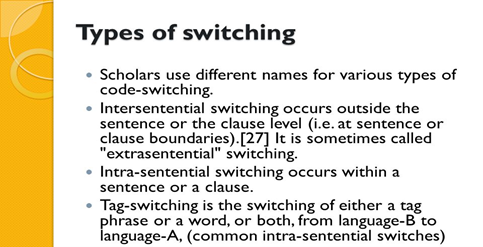
Figure 1: Types of code-switching: intersentential, intra-sentential, and tag-switching

New to code-switching? Here are the methods we used and how you can do it too!

In this post, we’ll discuss methods used for collecting the data that include studying code-switching in a natural environment, and with the authentic use of language by bilingual or multilingual speakers. One of the ways we are going to collect the data is by naturalistic observation. This involves observing naturally occurring conversations in its most pure form, which is essentially the most authentic form of data collection by bilingual and multilingual individuals. To give an extra set of diversity and universality in this regard, there are going to be 3 languages discussed: Farsi, Spanish, and Arabic.

Results

Farsi (Dari)

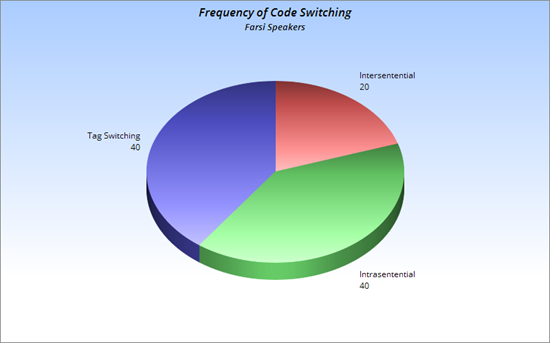
There is a difference in the amount of code-switching in regards to whether a Gen Z immigrant is speaking with their own age group or with elders.  In Farsi, when one is speaking with elders, it occurs at a much higher frequency and it is more on the “Intersentential” level.  The reasoning is due to 1) Innate understanding that the elders prefer the native language 2) The elders’ proficiency in English is not as advanced.

In regards to when the Gen Z bilinguals speak amongst themselves, there is more English spoken, and during the naturalistic observation, the ratio was 80% English to 20% Farsi.  When the code-switching did occur, unlike with the elders, which (was usually intersentential), it was intrasentential and tag-switching

Figure 2: Frequency of code-switching among Farsi speakers (Example: “Bro he’s extremely نابغه (genius) when he explains things. – this is an example of tag-switching)

Lastly, although naturalistic observation was the main method to keep the results as organic as possible, interviews with 2 of the Gen Z members were held to articulate and discuss potential biases and limitations.  One of the members (20 years old) said the code-switching just happened naturally without much thought.  The eldest in the observation (29) said that he does it naturally but also consciously, either due to the fact certain words in Farsi seem articulated better, and also to build rapport with the group culturally, which ties into our main thesis that the phenomenon of code-switching is usually intimately linked to one’s cultural identity.

Spanish

To continue, Spanish and English bilingual speakers tend to gravitate towards an unofficial language, Spanglish. This is when English and Spanish are combined in conversation. Spanglish is a form of code-switching, setting the foundations for forming one’s identity, while simultaneously maintaining their culture.

The method used was a naturalistic observation of a phone call between a bilingual speaker and their parents. They answered the phone in English, just like they do with friends and people of the same age. Spanish was used rarely and the language used had no link to what type of person they were speaking to. The phone then got passed to the speaker’s grandma, and that is when the bilingual speaker started speaking only Spanish. The Spanish the speaker used were easy to decipher that they were speaking to someone of an older age because words like “usted”(you) and “mande”(excuse me) were used. These are formal words and are used when speaking to strangers or elders.

After tallying up the number of formal words used in the phone call, all of them came when speaking Spanish, except one coming from English. The research shows that code-switching can occur within a family and also how a change of language is made to show respect. The same goal could not be achieved with English, since Spanish has an emphasis on formal speaking, causing the speaker to have a complete shift of identity when code-switching.
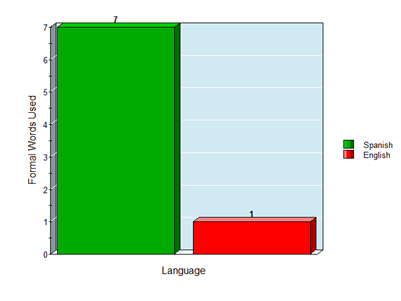
Figure 2: Frequency of formal words used between Spanish and English from a bilingual speaker

Language is inherently tied to respect when concerning age, class, and gender in Spanish, showing how language can shape the way one thinks.

Arabic

Bilingual Arabic speakers are more likely to use religious jargon (inshallah, mashallah) when interacting with parents and other elders. When speaking to friends, siblings, and cousins they are most likely to speak a 70/30 mix of English and Arabic in contrast to a 20/80 mix when speaking to Elders. Another important consideration is the intonations and accents used for certain words when speaking each language. Because Arabic and English have a very different set of sounds, the same word can be pronounced differently depending on the spoken language. For example, most native speakers of both English and Arabic know that Pepsi – with a p – is the correct pronunciation of the soda, however, they will still pronounce it like Bebsi with a b sound when speaking Arabic. This is done to signal that the speaker is native in Arabic and is part of the Society of native Arabic speakers who do not use the P sound.

Discussion and Conclusions

All three languages investigated truly show just how intricate and complex languages are, especially when it comes to code-switching. Our research shows how code-switching plays an extremely crucial role in forming one’s identity and how it goes beyond just language. It reflects social dynamics like social status, respect for elders, and cultural identity preservation. Our study contributes to the gap of knowledge of understanding how native languages travel down from generation to generation in immigrant families in America, and how code-switching shapes who we are and the social groups we belong to.

References

Albirini, A. (2011). The sociolinguistic functions of codeswitching between Standard Arabic and Dialectal Arabic. Language in society, 40(5), 537-562.

Heller, M. (2020). Code-switching and the politics of language. In The bilingualism reader (pp. 163-176). Routledge.

Kachramanian, C. (2021). Bilingual Interactions: An Investigation into Code-switching and Its Purposes among Armenian-Dutch Bilinguals.

Klavans, J. L. (1985). The syntax of code-switching: Spanish and English. In Proceedings of the Linguistic Symposium on Romance Languages (Vol. 14, pp. 213-231). Amsterdam: Benjamins.

Martin-Jones, M. (1995). Code-switching in the classroom: Two decades of research. One speaker, two languages: Cross-disciplinary perspectives on code-switching, 90-111.

Myers‐Scotton, C. (2017). Code‐switching. The handbook of sociolinguistics, 217-237.

[/expander_maker]

, , , , , ,

Bilingual Investigation

Hana Almony, Lauren Campsey, Hannah Her, Ariana Cheng, Madeline Flood

In everyday discourse, language is influential in how we speak and engage with others. Specifically, looking at bilingual native Spanish, second language English speakers was explored in this study because the question we sought to answer was does an individual’s native language have an influence on a second language? To investigate this question, we hypothesized that it indeed does, and the language that one speaks will impact responses to the same interview questions in both Spanish and English. In conducting this research, agents of socialization were considered because the participants were native Spanish speakers with English as a second language so interview questions were geared towards the significance of language in relation to identity and self-expression. Moreover, this relates to the idea of linguistic relativity as this shows that one’s particular language use is correlated with one’s perception and idea of reality. In this study, linguistic relativity was evident when analyzing bilingual female individual participants in which we found similarities and differences in responses of each respective language. The goal of this study is to inform about the effects of language use through the modality of bilingual speakers and how language choice through one’s thinking may connect to specific conversations and everyday discourse.

[expander_maker id=”1″ more=”Read more” less=”Read less”]

Introduction and Background

Have you ever thought about how the language you speak affects the way you view the world around you? By understanding how language functions within society we can have a greater understanding of how impactful linguistic practices can be. For our project we chose to view bilingualism and how modality can affect perception. More specifically, in the context of native Spanish speakers with English as their second language. To investigate this hypothesis we used points of reference from Claire Kramsch’s Language and Culture and Nick Riemer’s book called Routledge Handbook of Semantics. Riemer’s book is a collection of the works of many leading scholars and academics from around the world. Both Kramsch and Reimer provide an overview of entire linguistic subjects and sub-disciplines. We focused on chapters such as modality, participant roles, and linguistic relativity in order to gain meaning and conceptualization. We also read articles from the Linguistic Society of America such as “Language and Thought” and “Linguistics in Everyday Life” to gain a greater understanding of linguistic theories in order to apply them to our research. We looked specifically at linguistic relativity to answer our question on how language can influence perception and the way we think paired with bilingual studies to help analyze differences within Spanish-English speakers.

Methods

To gather our data, we were able to interview five female individuals in the UCLA community who are native speakers of Spanish and also learned English as a second language. The setup of the interview was semi-structured and in-person with audio-recording for each participant. Two separate interviews were conducted by a bilingual group member, consisting of the same set of 10 questions in English and Spanish. Questions varied from how being bilingual affects communication and expression and how they use it in their daily lives. We also had controls in our study to limit variability throughout the interviews. The controls are the same set of interview questions in both English and Spanish, one interviewer to maintain the same personality and comfortability throughout the interviews, the same gender combination of a female interviewer and female participant for similar interaction types, having the participants bilingual in those two languages only, and maintaining similar environment conditions (time of day, public, and approximate number of people around). After the audio files finished processing, each version was manually transcribed by each group member and compared to see any similarities or differences in results. We looked into various aspects of modality in bilingualism and how it affects conversations and word choice. In relation to our hypothesis, the comparison between each interview was very surprising.

Results and Analysis

Throughout our interviews, we found that there were many similarities and differences in the participants’ responses. Though we were expecting differences specifically between each participant’s English and Spanish answers, we learned that the language didn’t completely dictate how the participants expressed themselves. The responses in general in both Spanish and English were very similar, if not the same, in both languages. The participants also all agreed that they spoke with an accent in English and Spanish, reflecting the influence on each language. The participants’ linguistic identities have pieces of English and Spanish – they are aware of their link to each of these languages and cultures, creating a consciousness in their pronunciations. We also noticed that when answering questions in Spanish, there were more pauses – these pauses did not have a specific pattern and differed between the participants, indicating that this has to do with their thought process in word choice. The participants shared that they mainly spoke Spanish with their family members and occasionally with friends depending on the environment. This language-specific context shows that they associate their linguistic identity with English for most of their communication, hence the pausing had more to do with comfortability with the language than for cultural reasons. Another way the interviews differed was the length and detail within answers in Spanish compared to English. According to Reimer (2016), a language can influence what or how much information is shared by the speaker. This was apparent when analyzing the different answers for each language. The English responses were more engaging and personal compared to in Spanish, signifying a linguistic influence over word choice and sentence length.

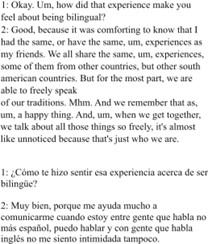
Figure 1: Sample responses in English and Spanish for the interview question “Happiness to me is …”
Figure 2: Sample responses in English and Spanish for the interview question “When did you start speaking Spanish and when did you start learning English?”

The examples above show the main findings of our study. Figure 1 highlights our last interview question, “Happiness to me is …” All of the participants’ answers had to do with love for someone – in this example, family. This depicts how the answer to this particular question was the same in both languages, reflecting that the individual shares the same values and thoughts in both languages. The lack of detail was prominent in many other questions as seen in Figure 2, asking the question, “When did you start speaking Spanish and when did you start learning English?” Though the general answer was similar, the participant went into more detail about their childhood when answering in English. The concept of linguistic relativity, though not in the traditional sense, was prominent in our study – the participants were all L2-English Native Spanish speakers and through their answers, we can see how, outside of family, English is the more spoken language, creating a sense of normalcy and identity within the English language.

Discussion and Conclusions

Within a conversation, the particular language an individual is speaking in can influence how they express themselves and this can largely be attributed to how culture and language are so intertwined (Kramsch, 2014). With this connection in mind, we hypothesized that L2-English Native Spanish speakers will have different responses to the same questions depending on the language that they are speaking in. Though our assumption was that there would be vastly different responses, in reality, the degree of the linguistic relativity of the responses was not as high as anticipated. The data revealed that participants had very similar responses in both languages, but the Spanish responses were shorter and less detailed than the English responses. We observed agents of socialization when analyzing our interviews as L2-English Native Spanish speakers had a deeper connection to their family structure. We learned that these specific participants have mainly tied Spanish to family members and situations. The connection between language and their background creates strong cultural bonds within the community. There were limitations in our study that may have contributed to our results. There were a total of five participants. This is a relatively small sample size. If a similar experiment were to be done in the future, the results would be more accurate with a larger sample size for a greater range in human variability to produce a more precise conclusion. These participants, though native Spanish speakers, have grown up and lived in the United States for a majority of their lives – we did not take into consideration the role of cultural assimilation, reflecting the likelihood that their answers in both languages would be very similar. This raises the question of how the participants relate to Spanish. The results of our study have taught us the role of language in our thought process and communication and the importance of being more aware and mindful in our everyday interactions as our language choice can contribute to how others feel in the conversation.

References

Aneta Pavlenko, Blackledge, A., Piller, I., & Teutsch-Dwyer, M. (2001). Multilingualism, Second Language Learning, and Gender. Berlin, New York De Gruyter Mouton.

Becker, K. R. (1997). Spanish/English Bilingual Codeswitching: A Syncretic Model. Bilingual Review / La Revista Bilingüe, 22(1), 3–30. http://www.jstor.org/stable/25745367

Bohman, T. M., Bedore, L. M., Peña, E. D., Mendez-Perez, A., & Gillam, R. B. (2010). What you hear and what you say: language performance in Spanish–English bilinguals.

International Journal of Bilingual Education and Bilingualism, 13(3), 325–344. https://doi.org/10.1080/13670050903342019

Comrie, B. (2012). Language and Thought | Linguistic Society of America. Linguisticsociety.org. https://www.linguisticsociety.org/resource/language-and-thought

Jacqueline Toribio, Almeida. “Code‐Switching among us latinos.” The Handbook of Hispanic Sociolinguistics, 4 Feb. 2011, pp. 530–552, https://doi.org/10.1002/9781444393446.ch25.

Jesús-Ortiz, E., & Calvo-Ferrer, J. R. (2023, November 25). His or Her? Errors in Possessive Determiners Made by L2-English Native Spanish Speakers. Languages, 8(4), 1-16. https://doi.org/10.3390/languages8040278

Kanno, Y. (2003). Negotiating bilingual and bicultural identities: Japanese returnees betwixt two worlds. L. Erlbaum.

Kramsch, C. (2014). Language and Culture. AILA Review, 27(1), 30–55. https://doi.org/10.1075/aila.27.02kra

Linguistics in Everyday Life | Linguistic Society of America. (n.d.). Www.linguisticsociety.org. Retrieved March 16, 2024, from https://www.linguisticsociety.org/content/linguistics-everyday-life#Domain

Niño-MurciaM. (2009). Bilingualism and identity: Spanish at the crossroads with other languages. Benjamins.

Ramírez, D. (2003). L1 regression in Spanish-English bilinguals. In Selected proceedings of the first workshop on Spanish sociolinguistics (pp. 89-95). Somerville: Cascadilla Proceedings Project.

Riemer, N. (2019). The Routledge handbook of semantics. Milton Park, Abingdon New York, Ny Routledge.

Slobin, D. (1996). Social interaction, Social Context, and Language. Psychology Press.

 [/expander_maker]

, , , ,

Fluency Ideologies Amongst Undergraduate Bi- and Multilinguals

Kendall Vanderwouw, Rachel Liu, Julia Tran, Nessa Laxamana, Thalia Rothman

UCLA is an incredibly diverse institution, with over 5,000 international students and 100 nations being represented. It is no surprise, then, that they boast a variety of cultural and linguistic backgrounds. From this wealth of information, we sought to explore fluency ideologies amongst bi- and multilingual undergraduates, aged 18 to 22. Through this course and personal experiences, it’s become evident that the definition of fluency is in constant flux. A largely self-defined term, fluency could encompass everything from native-level repertoire to conversational proficiency. Thus, we aimed to investigate whether linguistic background impacted self-perception of fluency.

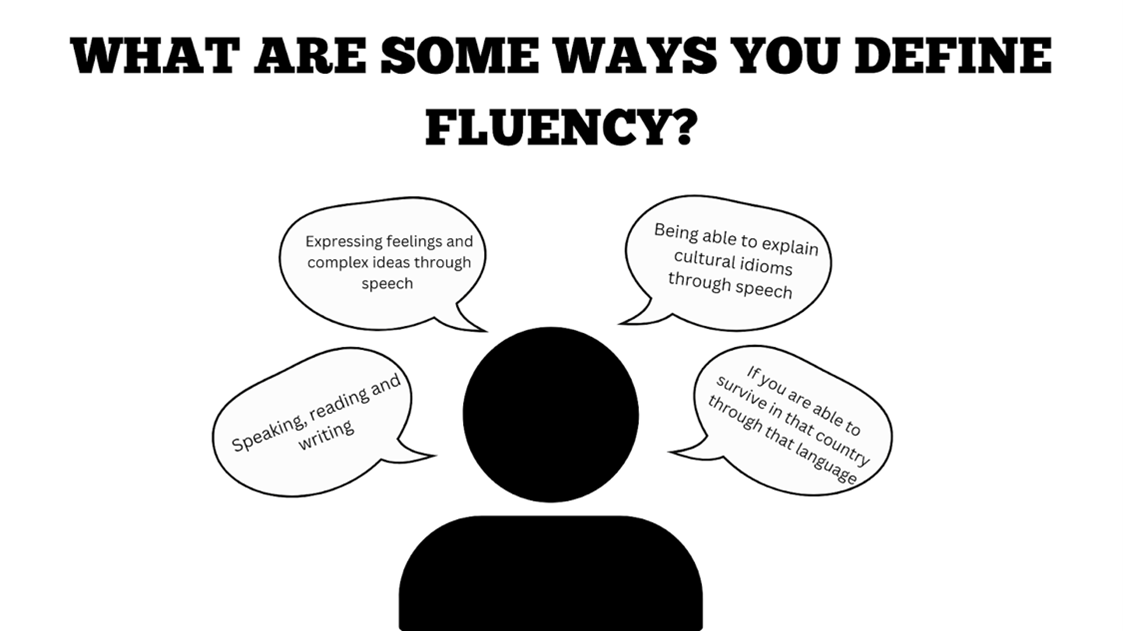
We engaged in semi-structured interviews with 30 undergraduates to explore this phenomenon and its implications amongst different languages. As we dove deeper, however, we observed little variation in how different languages defined fluency. Rather, most participants revealed similar definitions, centering around, “the ability to express feelings and complex ideas.” Instead, participants expressed a positive relationship between self-perceived fluency and a sense of familial or cultural connection. This finding and others ultimately led us to a new research question that targeted whether an individual’s fluency in a language, upbringing, environment, and cultural background can influence linguistic identity.

[expander_maker id=”1″ more=”Read more” less=”Read less”]

Introduction and Background

Our research began with questions regarding linguistic identity and fluency. Why do definitions of fluency fluctuate? Are definitions of fluency influenced by our linguistic backgrounds? What is the role of fluency in our cultural lives? Our participant pool represented a variety of cultural and linguistic backgrounds with which to answer these questions. This unique context provided a near-direct perspective into the context of language acquisition since many students had recently left backgrounds of language learning or were still in proximity to them, such as high school and familial environments.

We examined these curiosities through a series of interviews, taking an ethnographic approach to gain a more holistic understanding of the perspectives of our participants. After consolidating interview data, our research focus pivoted in a slightly different direction, one that looked at how a variety of factors—including fluency—can influence one’s linguistic identity. Our central research question was finalized as such:

Does an individual’s fluency in a language, upbringing, environment, and cultural background influence their linguistic identity?

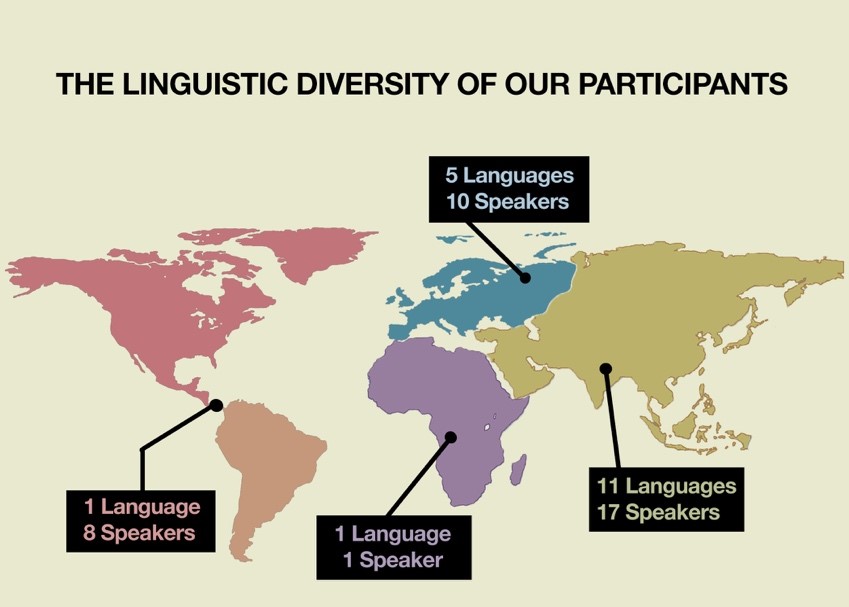
Overall, our project ultimately represented a variety of linguistic backgrounds and cultural identities, with 18 languages spoken by 30 different speakers. This is visually represented in Figure 1, created by one of our group members to illustrate the linguistic diversity of our participants.

Figure 1: Tran, J. (2024). A map illustrating the linguistic and cultural spread of our participants

 To garner a more in-depth understanding of our topic and to examine the current state of research, we engaged with readings regarding fluency ideologies as well as bi- and multi-lingual experiences. Such research provided context that informed our later analyses and conclusions.

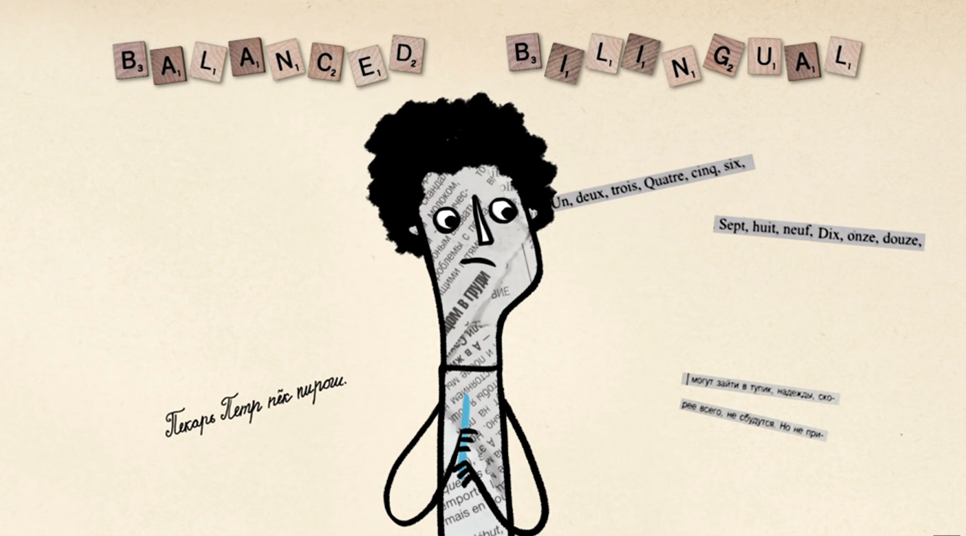
For example, we found in several articles (Zubrzycki 2019; King 2013) that self-perceived fluency had the potential to give rise to shame or embarrassment in being unable to match the proficiency of others who may be exhibiting native-level fluency. Such ideologies create the daunting expectation that fluency necessitates a native-level mastery of a language. In addition to these academic sources, we found similar ideologies being proliferated through less formal means, such as YouTube videos. One video from Ted-Ed discussed the benefits of bilingualism to our brains, and in doing so put forth the concept of a “balanced bilingual,” which they describe as an individual who has equal proficiency in their languages. The video puts this idea forth, however, in order to make the point that the majority of bi- and multi-lingual speakers use their languages in different proportions and in varying scenarios. We found that videos such as this help to contribute towards a less stringent narrative of fluency that could lessen the shame caused by self-comparison to native speakers. 

Figure 2; Ted-Ed. (2015). A screenshot from the Ted-Ed video discussing bilingualism and how it may affect an individual’s brain.

This left our group wondering whether such ideologies would be found amongst our participants, and what factors would lead to the formation of the expectation to be natively fluent. Overall, these initial investigations revealed to us that there are certainly links between linguistic identity and fluency self-perception. Our goal through this project was to contribute to this existing pool of knowledge and to provide a voice for our participants to express their unique ideologies.

Methods

Using semi-structured interviews, comprising of 12 standardized questions, we decided to take an ethnographic approach to our data collection. Through this process, we searched for self-perceptions of fluency, past language acquisition environments, as well as any current language ideologies regarding themselves. This methodology was deliberately chosen in order to produce consistent, qualitative data while also providing room for our participants to elaborate upon concepts and topics of their choosing. When permission was granted, we recorded the interviews for the purpose of deeper analysis as well as direct quoting in our project. Our participant pool were undergraduate college students, aged 18 to 22 years old.

Some of the questions that we asked were as follows: “In what circumstances / how often do you use this (these) language(s)?”, “How do you define being “fluent” in a language?”, and “Was it important to your parents/community that you were fluent in this language? What about you?”

Results and Analysis

Our data provided us with different viewpoints and ideologies regarding bilingualism and multilingualism. However, 60% of our participants defined fluency as the ability to express feelings and complex ideas, beyond the introductory phase in the language they speak. Some participants were more descriptive, stating that the ability to speak about specific things, such as the country’s government system, or even cultural idioms or slang. Some were less specific, stating that if you can get by in daily scenarios, you are fluent. 

Figure 3; Laxamana, Nessa. (2024). A graphic showcasing how our participants defined fluency.

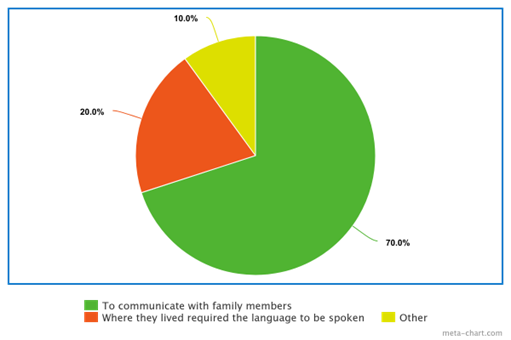
We also were able to discover different values that our participants held knowing their other language(s). 77% of our participants stated that they used their language to communicate with their family members, which is why they were able to become fluent in their language. This shows that language serves as a communication between different generations of people, for example between grandkids and grandparents.

Figure 4; Laxamana, Nessa. (2024). A pie chart illustrating when and where our participants use their non-dominant languages.

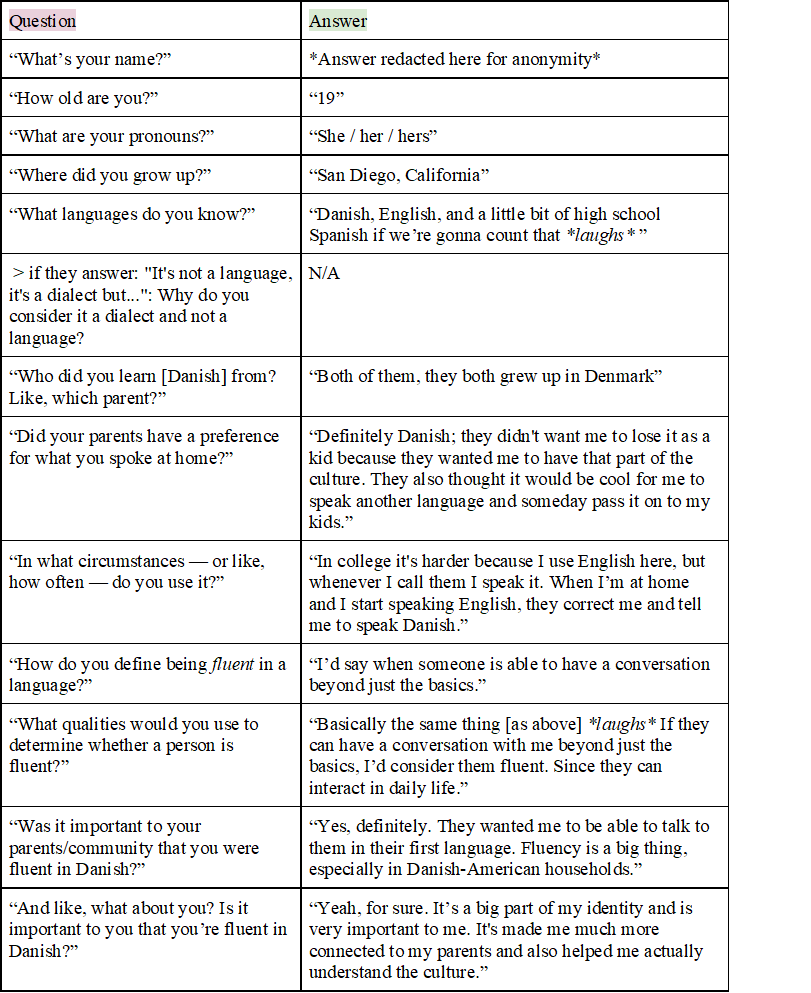
We interviewed those born in and outside the U.S., and one interviewee stated that being fluent in that language makes them feel more connected to their culture as seen in EX. 1. However, the variation in answers slightly differed between those born in different countries and those born in the U.S. For those born outside the U.S., they stated that their fluency in the language was a way to connect them back home. For those born in the U.S., they stated that fluency in the language was influential in how connected to their culture/mother tongue.

EX. 1

Discussion and Conclusion

At the center of our research was an investigation into the factors that make up and influence linguistic identity. We ultimately align our definition of linguistic identity with a reading from our initial research (Dressler 2014, p. 43), which argues that “linguistic identity can be expressed in terms of expertise (i.e. linguistic competence), affiliation (formal or informal connections), or inheritance (familial connections).” None of these factors were considered to be mutually exclusive in our research. As previously exemplified, the linguistic identities of our participants were commonly observed to be in line with more than one of the pathways mentioned above. Most importantly, our research brought about more understanding of how people’s various reasons for their language fluency are intertwined largely with their understanding of culture and belonging. Language and communication with others are important to keeping cultures and traditions alive, it serves as a sense of cultural connection for most. With our findings, we discovered an insight into how language fluency, ideology, and culture intertwine with one another.

References

Dressler, R. (2015). Exploring Linguistic Identity in Young Multilingual Learners. TESL Canada Journal32 (1), 42. https://doi.org/10.18806/tesl.v32i1.1198

King, K. A. (2013). A Tale of Three Sisters: Language Ideologies, Identities, and Negotiations in a Bilingual, Transnational Family. International Multilingual Research Journal, 7(1), 49–65. https://doi.org/10.1080/19313152.2013.746800

Ted-Ed. (2015, June 23). The benefits of a bilingual brain – Mia Nacamulli [Video]. YouTube. https://www.youtube.com/watch?v=MMmOLN5zBLY

Zubrzycki, K. (2019). Am I perfect enough to be a true bilingual? Monolingual bias in the lay perception and self-perception of bi- and multilinguals . International Review of Applied Linguistics in Language Teaching, 57(4), 447-495. https://doi.org/10.1515/iral-2016-0095

 [/expander_maker]

, , , , , ,
Scroll to Top