vocal pitch

Roses are Red, Violets are Blue. You’re in Love with my Man? Guess my Voice Will Lower Too.

Kelly Eun, Isabelle Filen, Adeline Villarreal, Sylvia Le

Engaging in conversation with the man you like may lead you to feel all sorts of emotions. Maybe your heart starts racing, you find yourself laughing at every little thing he says, or you possibly say things you wouldn’t normally say. These are all very common character changes we may go through during these types of situations, but have you ever wondered if speaking to the man you like could also cause changes to your pitch? Our group conducted a sociolinguistic study in order to determine if a woman’s pitch altered while in conversation with a man of her interest, especially within the competitive environment of a dating show such as The Bachelor. With this objective in mind, the three longest running contestants were selected in order to analyze whether there was a possibility of pitch modulation while in one-on-one conversations with the bachelor. Praat was used to input data to find pitch means, as well as to discover if pitch change actually occurred.

[expander_maker id=”1″ more=”Read more” less=”Read less”]

Introduction and Background

Some of us may have a preconceived idea in regard to what happens to a woman’s voice when she talks to the man she likes, right? We could ask our friend, parent, or boyfriend to do an impression of a woman flirting with a guy and we would most likely hear something incredibly high-pitched and giddy with lots of giggling and hair twirling. This is a commonly held phenomenon in which a woman’s pitch raises in scenarios where she is interacting with a potential romantic partner (Re et al., 2012).

However, a study done in the UK (Pisanski et al., 2018) found that women on speed dates actually demonstrated a decrease in pitch value when the men they were interested in were in high demand, even highlighting how lower-pitched voices were more favorable than their higher-pitched counterparts. Why did they find a decrease in pitch? This is precisely what our group sought to uncover through our research, as we also asked ourselves…why?

To better understand typical traits associated with pitch, we discovered that higher-pitched voices are commonly indexed with fertility, youth, and femininity (Apicella and Fienberg, 2008)—all the traits men seem to absolutely swoon over, right? However, there might be some other traits men seem to be entranced by as well, such as sexual explicitness, seductiveness, dominance, and authority (Klofstad et al., 2012); such traits are also associated with a lower-pitched voice (Fraccaro et al., 2013).

Thus, we hypothesized that when we look at the average pitch values of our target population in our targeted scenario (which will be uncovered in our methodology discussion), the average pitch values of the contestants will be lower when they feel insecure of their position in the competition and higher when they feel more secure. The question we asked and pursued the answer to was the following: Does a lower pitch truly index the contestants’ desire and motive to assert their dominance through embodying a seductive, authoritative character who deserves not only a spot in the competition, but also the bachelor’s heart?

Methods

For our study, we first selected three women from Season 22 of The Bachelor (labeled as Contestants A, B, and C) who would remain for the longest duration, resulting in the selection of the winner, runner-up, and the “third place” contestant. We specifically chose these women because it allowed us to collect consistent data from the same three contestants throughout the whole season.

To analyze Contestants A, B, and C’s pitch across the entirety of Season 22, we divided the season into three stages: beginning (episodes 1-4), middle (episodes 5-7), and end (episodes 8-11). Pitch refers to the frequency of the sound waves made by a voice’s vibration. For instance, higher frequencies indicate higher pitch.

We then collected two utterances (e.g. brief comments) made by each of the three contestants per stage, for a total of 18 utterances (6 for each woman). To avoid the pitch being influenced by other voices, we only recorded utterances from one-on-one conversations between each of the contestants and the bachelor. The first utterance (Utterance A) was made by recording what the contestant had said before she received assurance from the bachelor, and the second (Utterance B) was made by recording what the contestant had said after. For the sake of this project, we not only considered comments such as “I like you too” or “I love you” as assurance from the bachelor, but we also took into consideration that a kiss could also be perceived as non-verbal assurance.

Afterwards, we separately inputted each utterance recording from each contestant and stage into Praat to determine if there was a change in pitch before and after Contestants A, B, and C received assurance from the bachelor. Praat is a software tool used in linguistic research to examine speech; in this specific study, we used it to analyze pitch. Rather than maximum pitch, the mean pitch values for Utterance A and Utterance B were used in order to account for possible pitch peaks and outliers that could arise and skew the pitch results. This would include a rise in pitch to indicate the end of a question or a potential fall of a declarative statement. So, utilizing the means of pitches provided a bigger picture.

Results and Analysis

Throughout the course of Contestant B’s run on the show, our group found a consistent increase in pitch, as evident by the table below.
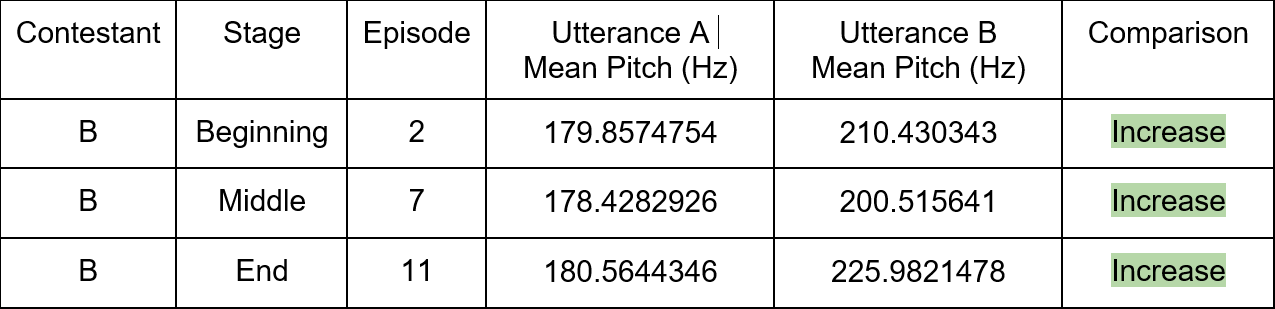
Table 1: Comparison of Contestant B’s Pitch Values

Our data for pitch mean is measured in hertz (Hz), the standardized unit of frequency equal to one cycle per second. Sound frequency is determined by how waves oscillate while they travel to our ears and when the oscillation of frequency waves is higher, we hear a higher pitch.

The table shows a positive difference between Utterance B Mean Pitch and Utterance A Mean Pitch in hertz in all three stages of the competition (beginning, middle, and end), indicating that the pitches of Contestant B became higher after assurance from the bachelor. Based on our background research, this likely indicates that Contestant B became more relaxed after assurance during her conversations with the bachelor.

Additional research was conducted to find that Contestant B was the eventual winner of Season 22 of The Bachelor, meaning that she was proposed to by the bachelor in the final episode. Our group predicts that this likely contributed as a factor for the increase in her pitch, as she was one of the frontrunners of the competition.

However, it is also important to note that it is difficult to make definite inferences about how Contestant B was feeling confidence-wise as the competition progressed. For example, it is possible that she could have felt more relaxed, knowing that there were less women competing against her; contrastingly, it is also possible that the stakes became higher for her, and she felt more possessive or competitive with the remaining women.

Another important factor in the data for Contestant B is that specifically in episodes 2 and 7, Contestant B received a rose during a date from the bachelor, which is a rare occurrence as roses are typically offered during elimination “Rose Ceremonies.” The offer of this rose in addition to the lead-up to it could also have had an effect on Contestant B’s confidence, further playing a part in her pitch raise as an indicator of her ease.

When it comes to Contestants A and C, both of these women demonstrated instances where the changes of their pitch decreased (i.e. their pitches before getting a response from the bachelor were higher than their pitches after), as opposed to the increase we were anticipating. Let’s first take a look at Contestant A, whose middle and end pitch means had a decreasing comparison.
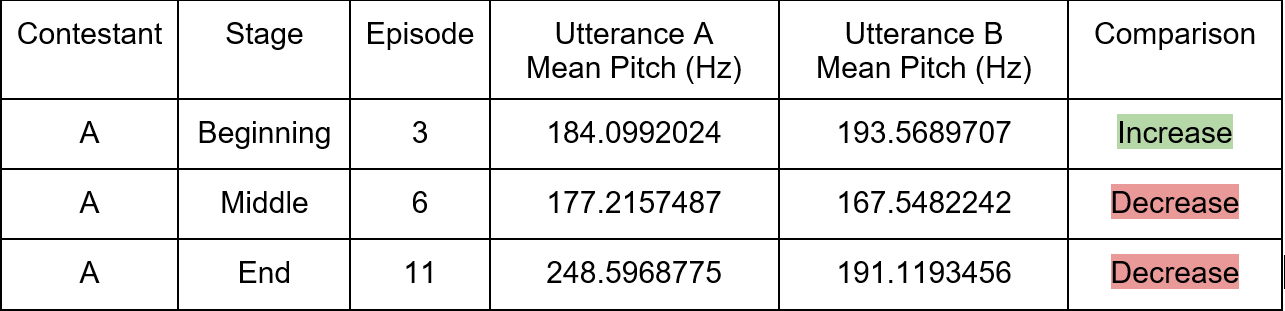
Table 2: Comparison of Contestant A’s Pitch Values

Looking at Table 2, we can see how Contestant A’s beginning stage pitch comparison was in alignment with our hypothesis. When she started her one-on-one conversation from that segment of the episode, her Utterance A had the mean pitch of 184.0992024 Hz. After the bachelor chimed in, the mean pitch of her reply was higher than before at 193.5689707 Hz. We found that this could be due to Contestant A feeling reassured by what the bachelor had said, which could have further contributed to her feeling less concerned about her placement in the competition and not as worried about having to modulate her pitch or portray a sensual appeal.

Let’s now take a look at Contestant A’s middle stage pitch comparison, which contrasts the comparison result of her beginning stage. While she had begun the conversation from this segment with a mean pitch of 177.2157487 Hz, this dropped to a mean pitch of 167.5482242 Hz after the bachelor had his turn of speaking to her. With cases like this where the contestant’s pre-assurance mean pitch value is higher than their post-assurance value, it may have been because what the bachelor had said to the contestants contributed to their feelings of uncertainty with both their relationship and place in the competition. By responding to the bachelor with a lower-pitched voice, it would be more likely to project more authority, which could strengthen their relationship with the bachelor and assert their reason to remain on the show.

Moving onto Contestant C, we can see in Table 3 that she also had two of her three pitch mean comparisons being a decrease like Contestant A.
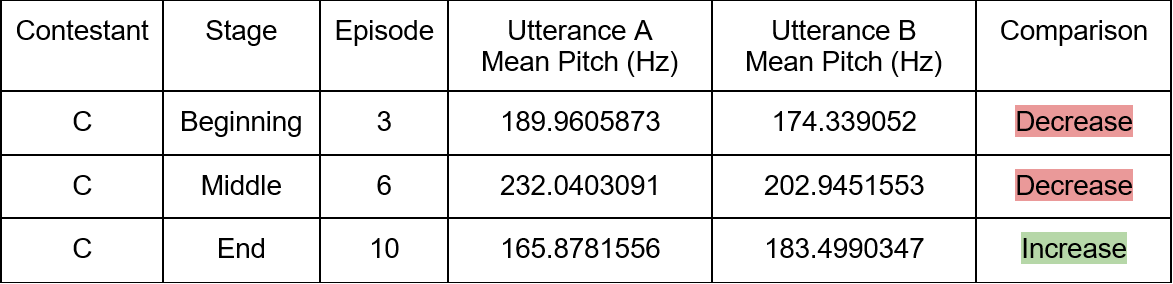
Table 3: Comparison of Contestant C’s Pitch Values

Interestingly enough, whereas Contestant A’s mean pitch comparisons throughout the stages went from an increase to two decreases, Contestant C’s progression was in the reverse order of Contestant A’s and went from two decreases to an eventual increase by the end of the season. This development could possibly be due to Contestant C gradually reaching a place in her relationship with the bachelor that solidified her confidence, while Contestant A may have felt more hesitation with hers. It is important to note that in all of these utterances, although we used our best judgment to decipher the scenarios and contestants’ reactions, there may have been other factors outside of the ones we targeted that contributed to the pitch outcomes of these women.

Discussion and Conclusion

Upon gathering and analyzing our results, our group was able to determine that while our data somewhat aligned with our aforementioned hypothesis, the results may not have been as consistent as we previously imagined. With the conclusion of our research, we then began to account for potential limitations to the big picture we desired to paint as a result of our findings.

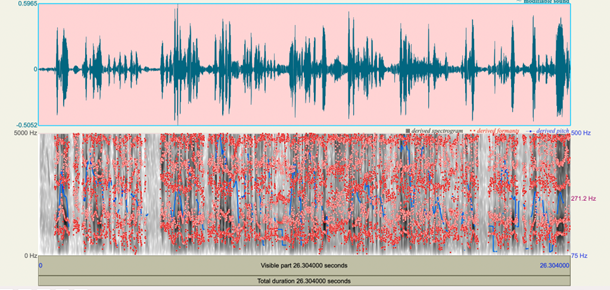
For example, we encountered a scenario with Contestant A in the end stage of the competition where her pitch began high. According to the scope of our project, this should indicate that her confidence level was high. However, after receiving an assuring statement from the bachelor, her pitch actually dropped, meaning that she felt less confident by the end of the interaction. An example of this scenario is shown below in Figure 1.

Figure 1 – Contestant A’s End-Stage Interaction Documentation with the Bachelor from Episode 11.

To account for this limitation, we attempted to think outside the realm of our project and dig a little deeper as to what factors could have led to this particular utterance not aligning with our hypothesis, and we may have gotten our answer from looking into something almost all of us have probably done at least once in our lives: lied.

Let’s say your boyfriend made you upset and finally mustered up the courage to ask the dreaded question: “Are you okay?” You look him dead in the eyes, clearly not okay, and say something along the lines of “I’m fine” or “I’m just tired.” Now, are you really fine or just tired? Absolutely not, but for reasons unbeknownst to everyone but the universe itself, you evaded the truth. Similarly, this could have been what we saw in our data as well.

Therefore, even though we used our best judgment to select a scenario in which the contestant received verbal assurance, when we consider the limited scope of our sociolinguistic research, we may not have been able to account for the internal psychological factors that pertain to a woman’s verbal expression of having accepted that assurance. Thus, as we saw in Contestant A’s final utterance, we presumed that her response of “I’m as ready as I’ll ever be” indicated to the listener that she has been assured and is feeling ‘ready’ to meet the bachelor’s family for the first time. Ideally, this should have been accompanied by a higher pitch to index her confidence and security in the competition. However, we can now presume that Contestant A’s statement did not actually reflect what she was feeling inside and she may have felt as though she was nowhere near ‘ready’ to meet the bachelor’s parents, thus explaining why her confidence level and (consequently) the mean pitch were lower by the end of her utterance, which actually does align with our hypothesis! If we had not calculated the mean pitch of this utterance or discovered an unexpected decrease that misaligned with our hypothesis, we would have not been able to think beyond the realm of our research and propose an internal factor that may have impacted what we found in our results. So, what our group initially identified as a suspected failure may not have been a failure at all.

Furthermore, our group looked beyond the bindings of our research and constructed further possible iterations of our project that could be used to bridge the gaps in both previous research and our project on pitch modulation and its indexicality. These iterations could dive into many possible examinations of pitch modulation such as mental/physical well-being, age of the target population, the presence of vowel shifting, and even examining a scenario in which the woman contrarily is not interested in the man she is interacting with. The inclusion of all of these external and, as we know now, internal factors could certainly come together and paint a clear and concise picture of this phenomenon, as it is one that certainly cannot be attributed to just one definitive variable.

References

Apicella, C. L. & Feinberg, D. R. (2008) Voice pitch alters mate-choice-relevant perception in hunter-gatherers. Proceedings: Biological Sciences, 276(1659), 1077–1082. https://doi.org/10.1098/rspb.2008.1542

Fraccaro, P. J., O’Connor, J. J. M., Re, D. E., Jones, B. C., DeBruine, L. M., & Feinberg, D. R. (2013) Faking it: Deliberately altered voice pitch and vocal attractiveness. Animal Behaviour 85(1), 127–136. https://doi.org/10.1016/j.anbehav.2012.10.016

Klofstad, C. A., Anderson, R. C., & Peters, S. (2012) Sounds like a winner: Voice pitch influences perception of leadership capacity in both men and women. Proceedings: Biological Sciences, 279(1738), 2698–2704. http://www.jstor.org/stable/41549338

Pisanski, K., Oleszkiewicz, A., Plachetka, J., Gmiterek, M., & Reby, D. (2018) Voice pitch modulation in human mate choice. Proceedings: Biological Sciences, 285(1893), 20181634-20181634. https://doi.org/10.1098/rspb.2018.1634

Re, D.E., O’Connor, J. J. M., Bennett, P. J., & Feinberg, D. R. (2012) Preferences for very low and very high voice pitch in humans. PloS one, 7(3), 1-8. https://doi.org/10.1371/journal.pone.0032719

[/expander_maker]
, , ,

Pitch Level of Female Characters in East Asian Media

Hannah Shin, Emily Matsuda, Cindy Xiaoxuan Wang

The idea of femininity is often grounded to common elements such as being tender, sweet, and obedient (Lee et al., 2002). This study aimed to test the relationship between one’s level of pitch and the aforementioned characteristics– specifically the role of East Asian media in promoting gender stereotypes through the implementation of various pitch levels. In order to address this question, we conducted a pitch analysis of female fictional characters in popular East Asian shows by obtaining the average fundamental frequency of a speech string through Praat (Boersma & Weenink, 2023). Unlike the hypothesis that higher pitch would correlate with the character’s degree of femininity, we found no significant difference in the average F0 value of stereotypically “feminine” and stereotypically “masculine” female characters. This finding suggests that pitch level alone does not override other non-linguistic and linguistic factors that altogether contribute to the perception of a “feminine” persona.

[expander_maker id=”1″ more=”Read more” less=”Read less”]

Introduction and Background

One’s style of speech serves as a unique indicator of their personality, gender, mood, age, and perhaps even their occupation. Even if we were to talk to someone over the phone, we would be able to learn a lot about the speaker’s identity due to this tight connection between speech and persona. This made us ask the question of: to what extent does one’s pitch level correspond to the speaker’s personality and perceived femininity? By analyzing fictional female characters in East Asian media, we attempted to identify the role that pitch level plays in reinforcing or rejecting gender stereotypes.

It is important to note that the average pitch level of East Asian females tends to differ from Western populations— hence the reason why we made within-group speech comparisons. For instance, Japanese women have higher pitches than Dutch women due to “the association of high pitch with attributes of physical and psychological powerlessness in the Dutch and Japanese cultures” (Van, 1995, p. 253). Additionally, Van (1995) reported that women with higher pitch are idealized and preferred by the general public in Japan, as high pitch level is correlated with many favorable social characteristics (Klofstad et al., 2012).

In East Asian culture, femininity is often associated with characteristics such as: being tender, sweet, obedient, and careful, while masculinity is described as having leadership, being confident, brave, ambitious, independent, and physically strong (Lee et al., 2002). For instance, characters designed to be “traditionally feminine” will exhibit submissive qualities as mentioned above, and pitch level may be adjusted to highlight their identities (Collins, 2011). We therefore hypothesized that female characters with a stereotypic “feminine” personality would produce higher pitch speech sounds on average than female characters who are depicted to be less “feminine.”

Although previous studies have revealed that sociocultural factors lead to a discrepancy between the speech of East Asian women and Western women, and a preference for high pitch in general, not many studies specifically investigate the role of East Asian media —specifically with regards to the use of specific linguistic styles in character portrayal— in perpetuating corresponding gender stereotypes. That is why our study aimed to address the significance of a female character’s speech style in East Asian media.

Methodology

To examine the variations of pitch levels among female characters in East Asian media, we conducted a quantitative analysis on the data obtained from audio clips, with the help of Praat. Specifically, two polarizing female characters were chosen from each of the following shows from different East Asian countries: iPartment (Chinese), Shitsuren Chocolatier (Japanese), and Secret Garden (Korean), leading to a total sample of 6 characters. Comparatively “feminine” and “masculine” characters were selected based on the aforementioned characteristics of masculinity and femininity (Lee et al., 2002). For each character, we obtained a 30-second continuous speech sample during a neutral conversation to avoid any highly emotional conversations, such as arguments and crying scenes. We utilized Praat (Boersma & Weenink, 2023) to measure the average, maximum, and minimum F0 levels of each character’s speech samples (Figure 1). We then compared our data and conducted an independent t-test (Table 2) to examine if the results of the comparison of average pitch levels for “feminine” vs “masculine” female characters were significantly different– indicated by a p-value of 0.05 or lower.

Figure 1: Example of character spectrogram through Praat (Gil Ra Im)

Results and Analysis

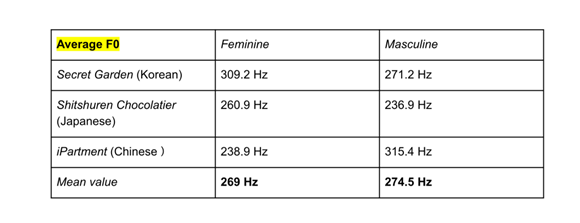
With respect to within-group comparisons, the Korean TV show Secret Garden showed results consistent with our hypothesis. The traditionally “feminine” character Ah-Young had an average F0 of 309.2 hertz, while the “masculine” character had an average F0 value of 271.2 hertz. Thus, the average F0 values obtained from this TV show provided positive evidence for our initial hypothesis that high pitch largely contributes to formulating a traditionally feminine persona. It is also important to note that the maximum and minimum F0 values possessed by the Korean feminine characters were highly similar, with the numerical difference between their maximum F0 values only being 19.8 Hz, and their minimum F0 values only differing by 4.5 Hz.

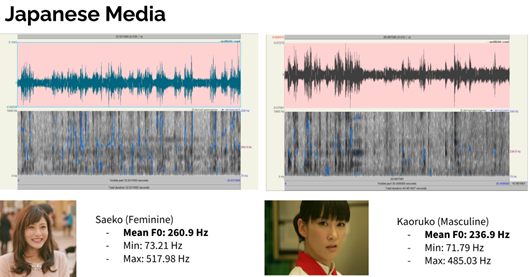
For the Japanese TV show, the stereotypically “feminine” character also had a higher average pitch than the “masculine” counterpart. Saeko, the traditionally “girly” female lead, had a mean F0 of 260.9 Hz while Kaoruko had an average pitch of 236.9 Hz. The two characters’ minimum and maximum pitch values highly aligned with one another as well, with the difference between their maximum values being 32.95 Hz and the difference between their minimum values being only 1.42 Hz. Such closely overlapping values in the minimum and maximum pitch range throughout the speech sample indicate that despite differences in average pitch level, people utilize their whole vocal range during regular day-to-day speech.

Although the data from the Korean and Japanese shows were in favor of our hypothesis, the Chinese show, iPartment, demonstrates results that suggested otherwise. The masculine character surprisingly exhibited a higher average pitch throughout her speech; specifically, the mean F0 value for the masculine character YiFei was 315.4 Hz, which is considered to be conventionally high. In comparison, the feminine character, Nuolan, had a lower average F0 of 236.9 Hz, which was significantly lower than the F0 of YiFei.

Table 1: Comparison of Average Pitch Levels

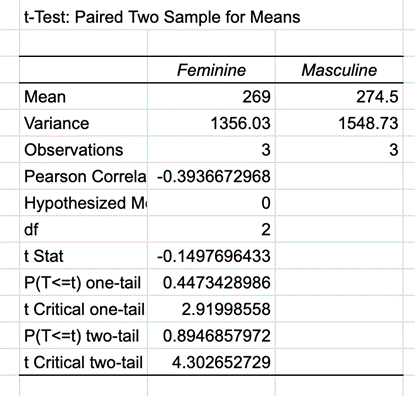
Lastly, in order to test for the statistical significance for any observed pitch differences, we conducted an independent t-test of the average value of the feminine and masculine characters’ pitch levels. The average pitch level of all stereotypically “feminine” characters was 269 Hz, while the average pitch level for the stereotypically “masculine” characters came out to 274.5 Hz. The t-test suggested that there was no statistically significant difference between these two values, as the p-value came out to p= 0.45. These findings, therefore, were insufficient in leading us to accept the initial hypothesis that the average pitch level of female characters plays a critical role in portraying a stereotypically feminine, girly persona in East Asian media.

Table 2: Independent T-Test (Feminine vs. Masculine)

Discussion and Conclusion

The sample as a whole did not support the hypothesis, as the average pitch level did not significantly differ between feminine and masculine female characters. Although we were able to observe within-group differences for the South Korean and Japanese media, we were unable to identify the predicted pattern of higher pitch in feminine characters within the Chinese drama. This suggests that pitch isn’t the only factor that contributes to one’s feminine persona– there are possible non-linguistic factors, such as appearance (ex. short hair, fashion), occupation, etc. in play that interact to achieve specific characteristics in the media. For instance, other non-linguistic similarities found within the feminine characters was their similar sense of fashion. They dressed themselves in softer colors, more feminine accessories, and wore more skirts and dresses compared to the masculine characters who had a more gender-neutral haircut, dressed in darker clothing, and largely wore pants. It is also important to note that the “masculine” female character in Secret Garden had a nontraditional occupation as a stuntwoman. Her role as a stuntwoman displayed characteristics that were previously identified as being primarily masculine: brave, ambitious, independent, and physically strong (Lee et al., 2002), which could have been a more salient factor in the portrayal of gender norms.

Additionally, it is highly likely that the impressions of masculinity and femininity differ between the three East Asian countries. Although East Asian countries may share common values and practices, there are several invariants: one of them is the link between gender norms and education level. In particular, Chinese culture often correlates masculinity with the possession of a PhD degree (Shanghai Star, 2005). In China, even a third gender type besides men and women has been proposed specifically for females with a PhD degree– this is due to the traditional belief that women are physically and mentally weaker than men, which results in unequal perceptions behind the cognitive capabilities of men and women. In comparison, such prejudiced thoughts regarding gender stereotypes and education are not as prominent in Japan and Korea. This finding above suggests that there are subtle differences in gender beliefs within East Asian culture, which might contribute to why we were not able to observe a static trend in the linguistic style of feminine female characters in media.

Figure 2: Characters from Shitsuren Chocolatier and their corresponding pitch analysis

Other linguistic factors that contribute to one’s persona could be the speaker’s word-choice, pitch contour, etc.– specifically in the Korean drama Secret Garden, the feminine female lead Ah-Young would often include a word-final nasal sound “ㅇ” that is associated with a playful, cute tone in Korean culture. For instance, she would add the “ㅇ” sound to the end of a neutral phrase “그랬어?” [kɨlɛs͈ʌ], creating an ungrammatical yet stylistic production “그랬엉?” [kɨlɛs͈ʌŋ]. Comparatively, the masculine female lead Ra-Im spoke in a more strict, direct, blunt tone throughout the drama, with the absence of a word-final nasal sound.

Some limitations of this study include the possibility of interference from background noise and thus an inconsistency in speech sample quality. Also, the speech samples were rather short, which might be insufficient in catering to all the variations in the stories’ settings and changes in characters’ personalities and corresponding degrees of femininity (if any occurred). In the future, the research could be improved by including an analysis of several media sources within one culture, instead of one representative film. Additionally, a longer speech sample that encodes the pitch variance throughout the entirety of the drama would lead to a more accurate analysis. Lastly, the speech sample could be cleaned up to minimize “noise.” This could be achieved by feeding the audio clip through a software that isolates linguistic sounds (aka speech sounds) with nonlinguistic ones, or by adjusting the level of the background noise on a higher-quality audio file.

Throughout this research, we heavily emphasized how the use of pitch levels is relevant in Chinese, Japanese, and Korean media to portray both feminine and masculine characteristics. However, it is important to note that a particular language is spoken differently depending on which linguistic community the speaker belongs to within a single country as well. For instance, an existing article regarding the pitch levels of female speech in two different Chinese villages — Jiuying Village and Taoyuan Village — explores how a specific language can be utilized and spoken differently depending on which linguistic community the speaker belongs to (Deutsch et al., 2009). Moreover, it was concluded by the authors that “the overall pitch level of a speaker’s voice is influenced by a mental representation that is acquired through exposure to the speech of others” (Deutsch et al., 2009), indicating that the speaker’s experience and lifestyle in a specific linguistic community affects their tones and pitches in the long run. For future research, focusing on a specific language and comparing how that language is spoken differently in various linguistic communities (hence the emergence and progression of regional dialects) may be beneficial for in depth analysis of a specific language.

It is also plausible that women’s voices are gradually getting deeper overall. The article published by BBC explores how social transformation is mirrored to our speech style, “women today speak at a deeper pitch than their mothers or grandmothers would have done, thanks to changing power dynamics between men and women.” (Robson, 2022). Since the expectations and social norms are changing over time, it is reasonable that our speech style is adjusting to them. To extend upon this research, we could investigate recent shows (past 5 years) from East Asian countries, as our focused media was relatively old and failed to capture the social norms in today’s society.

Altogether, this study revealed that our speech style and persona potentially have a bi-directional relationship, especially with the strong presence of the media in our day to day lives. It allowed us to consider the broad questions of: “What makes us perceive a certain character as feminine versus masculine? Could this factor potentially be linguistic in nature?” Despite not obtaining significant cross-cultural findings, the research uncovered a possibility of Korean and Japanese media implementing high pitch to portray femininity, and the potential for future research that reflect each country’s distinct position surrounding the notion of gender and in-depth analysis of the role of regional dialects in shaping persona.

References

Boersma, P., & Weenink, D. (2023). Praat: doing phonetics by computer [Computer program]. Version 6.3.10, retrieved 3 May 2023 from http://www.praat.org/

Collins, R. L. (2011). Content analysis of gender roles in media: Where are we now and where should we go? Sex Roles, 64(3-4), 290–298. https://doi.org/10.1007/s11199-010-9929-5

Deutsch, D., Le, J., Shen, J., & Henthorn, T. (2009). The pitch levels of female speech in two Chinese villages. The Journal of the Acoustical Society of America, 125(5). https://doi.org/10.1121/1.3113892

Klofstad, C. A., Anderson, R. C., & Peters, S. (2012). Sounds like a winner: Voice pitch influences perception of leadership capacity in both men and women. Proceedings of the Royal Society B: Biological Sciences, 279(1738), 2698–2704. https://doi.org/10.1098/rspb.2012.0311

Krahé, B., & Papakonstantinou, L. (2019). Speaking like a man: Women’s pitch as a cue for gender stereotyping. Sex Roles, 82(1-2), 94–101. https://doi.org/10.1007/s11199-019-01041-z

Lee, B. S., Kim, M. A., & Koh, H. J. (2002). Development of Korean gender role identity inventory. Journal of Korean Academy of Nursing, 32(3), 373-383. https://doi.org/10.4040/jkan.2002.32.3.373

Robson, D. (2022, February 25). The reasons why women’s voices are deeper today. BBC Worklife. https://www.bbc.com/worklife/article/20180612-the-reasons-why-womens-voices-are-deeper-today

Shanghai Star. (2005, March 4). Women PhDs the 3rd type of people besides men, women? China Daily. https://www.chinadaily.com.cn/english/doc/2005-03/04/content_421834.htm

van Bezooijen, R. (1995). Sociocultural aspects of pitch differences between Japanese and Dutch women. Language and Speech, 38(3), 253–265. https://doi.org/10.1177/002383099503800303

[/expander_maker]

, , , ,

Beyond the Binary: Analyzing Vocal Pitch of Non-Binary Celebrities

Megan Fu, Rowan Konstanzer, Erin Kwak, and Kimberly Gaona

Examining the speech of nonbinary individuals allows a better understanding of how different speech acoustic features such as vocal pitch, quality, and tempo are used to help construct gender identity. By investigating the speech acoustic features of non-binary celebrities, this study investigates whether coming out would cause their vocal pitch, tempo, and quality to be more divergent from cis-female and cis-male speakers. This was done by analyzing the celebrities’ pitches in their neutral interviews both before and after they publicly came out. It was hypothesized that the nonbinary individuals’ pitches would fall between the cis-female and cis-male pitches based on prior studies and research. Though this was supported by the data, a concrete conclusion was unable to be found as the differences were minor. However, an important takeaway was that a person’s pitch did not necessarily correlate with their gender identity and that there can and should be more research that includes the nonbinary community.

[expander_maker id=”1″ more=”Read more” less=”Read less”]

Key Words:

  • Non-binary (or genderqueer): an umbrella term for gender identities that are neither male nor female‍, and identities that are outside the gender binary which fall under the LGBTQ+ community.
  • Cisgender: a person whose gender identity is the same as their sex assigned at birth.
  • Vocal Pitch: the low and high frequencies of a sound. Vocal pitch is determined by the degree of tension in the vocal folds of the larynx, which itself is influenced by complex and nonlinear interactions among the laryngeal muscles.

Introduction + Background:

Where there is a plethora of research regarding the vocal pitch ranges of cis-women and cis-men, there is inadequate research on the vocal pitch of non-binary individuals. We noticed this lack of information and decided to attempt to fill it. It is important to note that there are some studies that have delved into the concept of vocal pitch differences in non-binary individuals, but none that we could find that was exclusively devoted to the fact.

Using the findings from similar studies, most notably Bradley and Schmid’s 2019 study on non-binary vocal pitch and speech patterning, we were able to piece together what we thought we could expect from the results of our study. As was found in Bradley and Schmid’s study, “the non-binary group of participants had an average F0 in between the cis-men and cis-women and had intonation not patterning like the cis-women nor the cis-men—instead patterning with a mixture of both feminine and masculine traits” (Bradley & Schmid, 2019, p. 2688). While this study also looked into the vocal frequencies of cis-men, cis-women, and non-binary peoples, it focused more on the speech patterning of those individuals.

From this study and others, we were able to derive that we should expect a similar result from our research. Based on this, we hypothesized that the vocal pitch of non-binary individuals will fall somewhere in between the average F0 of women and the average F0 of men. More specifically, in the individuals that we chose to examine, the assigned female at birth (afab) individuals’ vocal pitches will deepen/lower after coming out and the assigned male at birth (amab) individuals’ vocal pitches will rise after coming out.

Methods:

In order to test our hypothesis, we chose to examine six individuals who identify as non-binary. The individuals we chose to look at where the following celebrities: Sam Smith (AMAB), Nico Tortorella (AMAB), Jonathan Van Ness (AMAB), Amandla Stenberg (AFAB), Brigette Lundy-Paine (AFAB), and Demi Lovato (AFAB). We chose to examine these celebrities because there is heavy documentation before and after they have come out, making a more thorough analysis possible. However, it is important to note that all of the chosen individuals identify as queer and that Sam Smith is British. This could have had an effect on the results and was kept in mind while conducting our research. Other confounding variables included anxiety level, heightened emotion (based on topic sensitivity), sexuality, interview setting, and level of professionalism. Thus, interviews about neutral topics were chosen, such as albums, hair, skincare routine, and TV shows. Examples of non-neutral topics that were avoided as much as possible were those about them coming out, trauma, and politics.

Two interviews before coming out and two interviews afterward were chosen for each celebrity and analyzed. After cutting the videos to exclude other speakers, audience reactions, and sound effects, the interviews were uploaded to Praat to observe the average, minimum, and maximum pitches. The minimum and maximum pitches were checked to ensure that they were from the actual subjects and not the host, audience, background music, or any other disturbances. Because there were two interviews each, the averages of the findings were utilized to compare the pitch data before and after coming out with each individual and with each other. This information was also compared to the average pitches of cisgender individuals from outside research.

Results/Analysis:

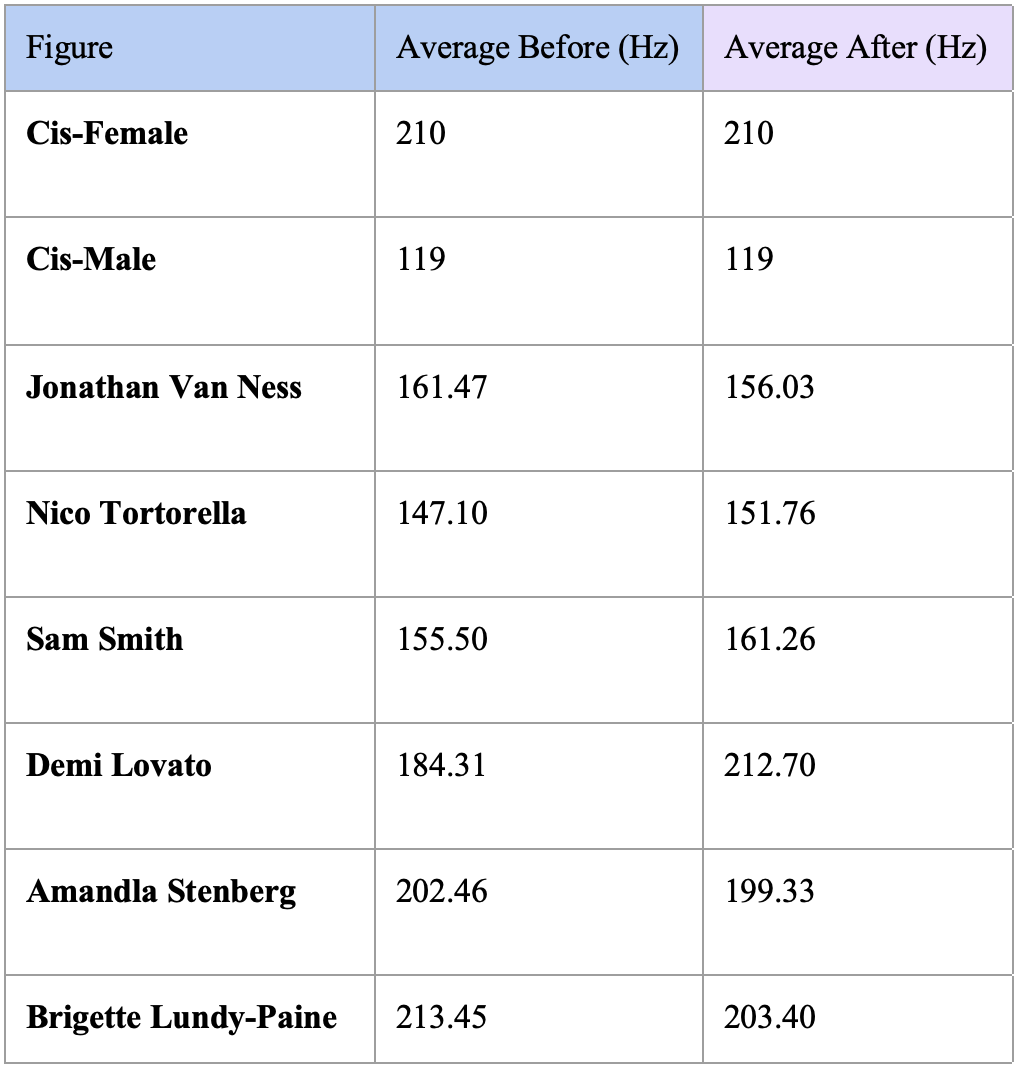
The following table and graph showcase a summary of our main findings.

Figure 1 illustrates the vocal pitches (in Hertz) of the six celebrities before and after coming out as non-binary in comparison to the female and male cisgender averages (Pépiot, 2014, p. 305). **Note that the cisgender averages do not exhibit any change before versus after.

Figure 1: Average Vocal pitches (Hz) of celebrities before and after coming out.

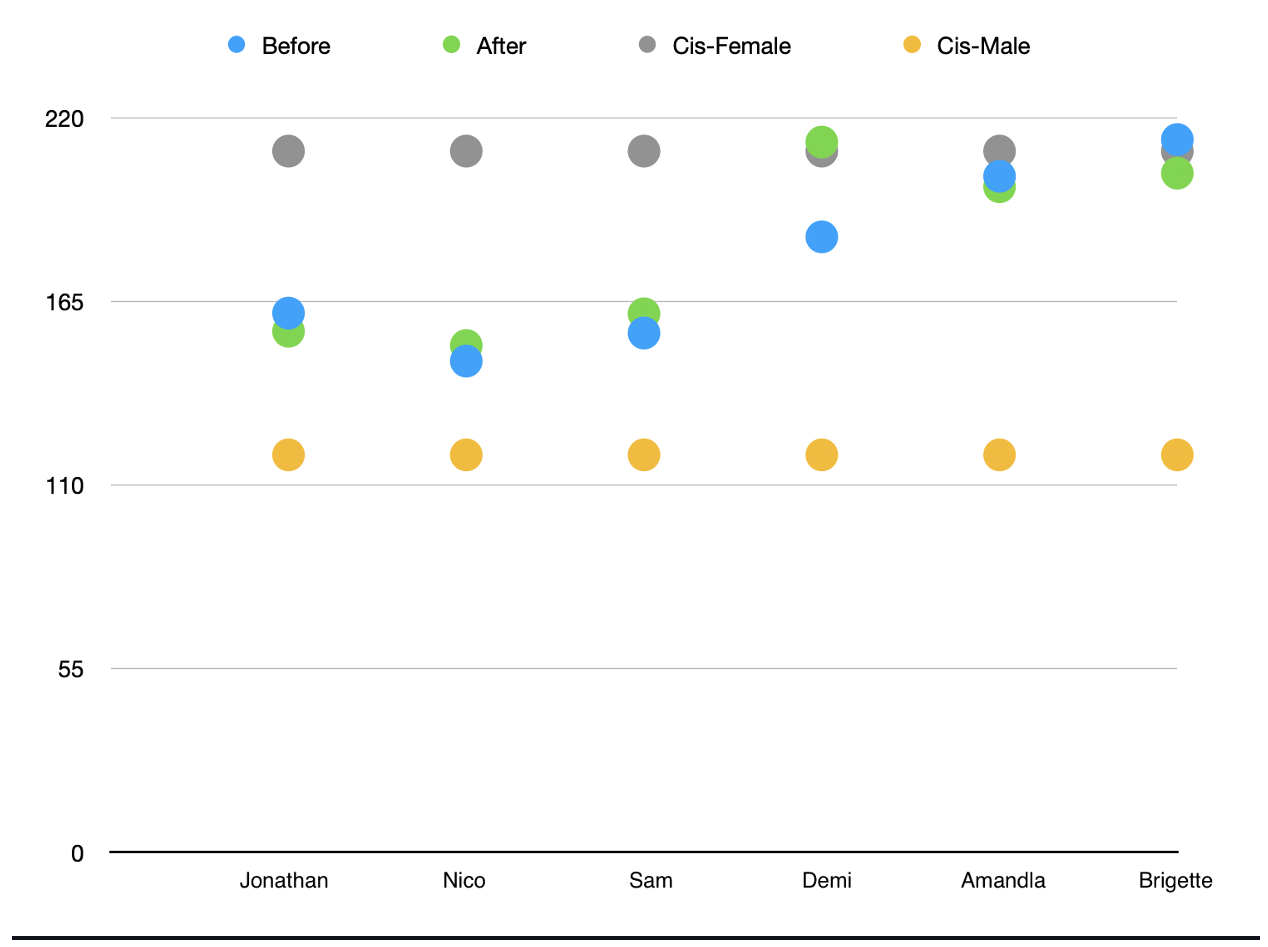
Figure 2 depicts the same data as Figure 1 but in the form of a scatter plot so one can better visualize the change in pitch of each celebrity and see them compared against one another plus the cisgender controls. The horizontal or x-axis shows the name of the celebrities. The y-axis or the vertical axis shows the frequencies in Hertz.

Figure 2: Scatter plot, vocal pitches of celebrities.

Although all the celebrities exhibited some degree of change in vocal pitch, the difference was insignificant across all six individuals (the dots for most of them are overlapping). To summarize, two out of the three assigned-male-at-birth celebrities had a (slightly) higher pitch after coming out, and two out of the three assigned-female-at-birth celebrities had a (slightly) lower pitch after coming out. Even though these findings support our original hypothesis. However, the difference for each person was only a matter of <10 Hertz. For reference, with each jump in octave, the Hertz doubles. Therefore, a difference of 5 Hertz is negligible and would be indistinguishable to the human ear. Because of this minute difference in the celebrities’ vocal pitch before versus after coming out, we would say our findings were ultimately inconclusive.

We can attribute this to many different confounding variables. First, non-binary is an umbrella term so all the individuals we analyzed could fall very differently on the broad spectrum of gender identity. Because non-binary people vary in how they express their gender (or lack thereof), this could account for why the celebrities did not exhibit much change in vocal pitch after coming out. Moreover, we only analyzed six celebrities and took a small sampling of their speech patterns which limits the scope of our conclusions. Therefore, due to the small data set and population, it would be unwise to make any generalizations about the community as a whole based on these six individuals alone. Although we opted to look at celebrities’ interviews in order to get their natural speech patterns rather than elicited ones, being in a formal interview setting could have altered their pitches alone. Even though we aimed to keep the subject matter of the interviews neutral, we could not account for the individual’s mood or emotions that particular day which also could have altered their pitch. The passage of time between each set of interviews could have also had an effect on their pitch—especially considering these celebrities are on the younger side (Gen-Z and millennials), their voices could have simply matured in the time between each interview. Lastly, it is also important to note that all of the celebrities we analyzed identify as queer. Therefore, their sexual orientations could have also been a contributing factor to any deviations from the cisgender averages.

Discussions and Conclusions:

Even though we could not fully confirm our hypothesis or make any concrete conclusions there are still some worthwhile takeaways from our findings. Most importantly, one cannot make assumptions about vocal pitch based on someone’s gender expression alone. Just because someone has a higher vocal pitch does not mean they need to present more feminine or align themselves with a female identity. The same goes for a lower pitch not necessitating a masculine identity. In summary, our findings matter as they support the idea that vocal pitch is not an accurate marker of gender identity. In addition, these results combat preconceived stereotypes about the connection between vocal pitch and gender identity.

Due to the limited scope of our research, some possible future directions we thought of include doing a long-term study following non-binary individuals on their coming out journey and closely documenting any changes in pitch. Another version of this study could entail analyzing a larger population or data pool such as college students and collecting data firsthand so the environment can be more controlled since there were external factors we could not control such as background noise and interference in the celebrity interviews.

By looking at the speech acoustic features of non-binary celebrities in their interviews before versus after coming out, we were able to see analyze how their vocal pitches diverged from cis-female and cis-male speakers. Notably, researching vocal pitch differences plays a role in understanding human interaction and expression. The voice serves as a mode of personal expression for one’s identity: “the voice is a form of communication in which people form relationships with one another, show vulnerability, and show geographical linguistic features” (Mills et al., 2017, pg. 13). With this in mind, creating a study analyzing the non-binary community helps create a better understanding of the LGBTQ+ community’s expression of identity through speech acoustic features.

Through our findings, we hope to provide greater insight into the non-binary community and serve as a starting point in seeing how gender norms also play an important role in pitch production rather than assuming biology is the sole reason. Overall, we believe our research still has a purpose in opening the floor to more linguistic research into the non-binary community which often gets overlooked or glossed over.

Further Reading and Watching:

 Vocal Branding: How Your Voice Shapes Your Communication Image — The voice is one of the most important factors for creating a social group, an image of oneself, and your perception of others. The different aspects of vocal pitch such as intensity, inflection, rate, frequency, and quality can say a lot about a person’s current emotional state such as being angry, sad, embarrassed, anxious, confident, happy, and so on. This is called a voice brand and helps describe a person’s personality or overall persona.

Queer Speech: Real or Not? – Languaged Life — In this blog post, you can read more about language as an identifier for sexuality. In this blog post, Dao et. al explore if there’s a difference between queer and straight women’s speech or if it is just a stereotype.

From Uptalk to Vocal Fry, Women Are Prolific Language Innovators — In this podcast, the hosts of Spectacular Vernacular engage with recent vocal trends for English speakers and how women are driving this change. Listen to find out more about the connection between communication, perception, and identity.

Watch Do I Sound Gay? | Prime Video — This 2014 documentary directed and starring David Thorpe explores the link between vocal quality and perceived sexual orientation. While entertaining, the film also explores the existence and accuracy of stereotypes about the speech patterns of homosexual men.


References:

Bucholtz, M., & Hall, K. (2005). Identity and interaction: A sociocultural linguistic approach. Discourse Studies 7: 585–614.

Butler, J. (1988). Performative acts and gender constitution: An essay in phenomenology and feminist theory. Feminist Theory Reader, 519–531. https://doi.org/10.4324/9781315680675-71

Erwan, P.  (2014). Male and female speech: a study of mean f0, f0 range, phonation type and speech rate in Parisian French and American English speakers. Speech Prosody 7, 305-309.

Gratton, C. (2016). “Resisting the Gender Binary: The Use of (ING) in the Construction of Non-binary Transgender Identities,” University of Pennsylvania Working Papers in Linguistics: 22(2) , Article 7.

Gratton, C. (2015). “Recreating gender”: The linguistic construction of Non-binary Gender Identities. Poster presented at the LSA Institute 2015: University of Chicago. Work in progress.

Mills, M., & Stoneham, G. (2017). The Voice Book for Trans and Non-Binary People: A Practical Guide to Creating and Sustaining Authentic Voice and Communication. https://books.google.com/books?id=N9rADQAAQBAJ

Schmid, M., & Bradley, E. (2019). Vocal pitch and intonation characteristics of those who are gender non-binary. 2019 International Congress of Phonetic Sciences. https://doi.org/10.13140/RG.2.2.17233.68961

[/expander_maker]

, , ,

The Language of Good and Evil in the Disney Universe

Wendy Barenque, Maria Martignano Cassol, Kelli Sakaguchi, Sophia Siqueiros, Ellis Song

Every year Disney and Pixar release blockbuster hits watched by millions of children. Disney and Pixar characters have a huge impact on how children learn to view people in real life through the use of regional and foreign accents categorizing intrinsic “goodness” or “badness” (Lippi-Green, 2012). Recently, there has been a rising trend in the usage of “switch characters” in the Disney and Pixar cinematic universe. “Switch characters” are characters who are able to fake membership in the “good” character category and later reveal to not belong to this category. In this research, accent along with other linguistic variables such as pitch and creaky voice were tracked to determine if correlations exist between these linguistic variables and “switch characters” portrayals of “goodness” and “badness.” Does a “switch character” use a linguistic variable differently when portraying themselves as good rather than bad? For example, if linguistics changes do occur, do audiences begin to associate a certain pitch, accent, or creaky voice with “good” or “bad” categories of people? Specifically, we examined how the language aspects of “switch characters” changed between pre- and post- revelation scenes in nine Disney and Pixar films such as Frozen and Zootopia. Ultimately, we found a linguistic trend that may affect the audience’s perspective on movie characters. Keep on reading to see the effects these movies may unconsciously have on your associations of “good” and “bad” people!

[expander_maker id=”1″ more=”Read more” less=”Read less”]

In this project, we examined the correlation between linguistic features and a character’s group membership (as good or bad) in Disney and Pixar films. The specific characters we looked into are those we call “switch characters.” “Switch characters” are those that fake membership as one of the “good guys” but are later revealed as villains. The three linguistic features we felt were most important consisted of pitch, creaky voice, and accent.

Some important definitions:

Pitch: how high or low the speaker’s voice is.

Creaky Voice: also known as vocal fry, happens when the speaker drops their voice to their lowest natural register for emphasis.

Accent: pronunciation specific to an individual or location.

We predicted there would be a change in one or more of these features when a “switch character’s” true membership was revealed. For pitch, we compared range (high, medium, low) of the “switch characters” before and after their reveal to determine if there is a trend in pitch change in a certain direction. Similarly, we looked at the presence of creaky voice preceding and following the switch. In analyzing accents, we aimed to identify any kind of change the character’s pronunciation may undergo.

Our analysis studied the use of linguistic profiling (being able to identify social characteristics based on the language used by the speaker) used by movie makers to reinforce the goodness or badness of a character. We presumed speaker agency in pitch, creaky voice, and accent, through the lens of Speaker and Audience Design Models (Bell, 1984, p. 158). This means that we assumed that “switch characters” actively shift their language based on what group they identify with to distance themselves from or bring themselves closer to their audience.

We based our project on Lippi-Green’s (2012) research that revealed a correlation between accents and variations of standard English with villains. We expanded on her project by looking at additional linguistic variables in Disney and Pixar movies made after 1995 which we believe better represent modern society. The nine movies and characters we analyzed are Frozen (Prince Hans), Coco (Ernesto de La Cruz), Big Hero 6 (Professor Callaghan), Toy Story 3 (Lotso), The Incredibles 2 (Evelyn Deavor), Monsters Inc. (Mr. Waternoose), Toy Story 2 (Stinky Pete), Cars 2 (Sir Miles Axlerod), and Zootopia (Dawn Bellweather).

Methodology: A Sneak Peek into Film Analysis   

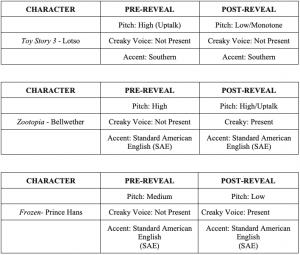
Here is an example from Toy Story 3. This example is representative of the methodology that the group utilized to accurately label all nine “switch characters” – pitch, creaky voice, and accent. For the purpose of data collection, a chart adapted from Soares (2017) was used to organize and uniformize character analysis. We repeated the process with all nine films and compiled the analysis into graphs included below.

This selected scene features an exchange between the hero Buzz and the villain Lotso. At the beginning of this scene, Buzz is unaware that Losto is a villain. We see Buzz requesting a group transfer to the Butterfly playroom. Things take a turn for the worse, however, as Lotso only agrees to let Buzz transfer playrooms. Click on the link to see what happens next!

Focusing on “pitch,” the group found uptalk in phrases such as, “showed initiative” and “we got a keeper.” Uptalk is a manner of speaking with a rising intonation at the end of sentences. The italics represent Lotso’s rising intonation. After Lotso’s villainous nature is revealed, uptalk disappears and we hear a deepening and leveling of pitch. Phrases such as, “family man” and “back in the timeout chair” exemplify this deepening and leveling. Therefore, the group labeled Lotso’s pre-reveal pitch as “high: (uptalk)” and post-reveal as “low/monotone.”

Focusing on “creaky voice,” the group didn’t find any phrases that employed a rough voice quality and a lowered pitch. Therefore, the group labeled Lotso’s pre-reveal and post-reveal “Creaky Voice” as “Not Present.”

Focusing on “accent,” the group agreed that Lotso’s phrases possessed the slurred speech patterns of a Southern American accent. Lotso’s Southern accent was exemplified in words containing “r’s” such as ”caterpillar.” Therefore, the group labeled Lotso’s pre-reveal and post-reveal accent as “Southern.”

Results

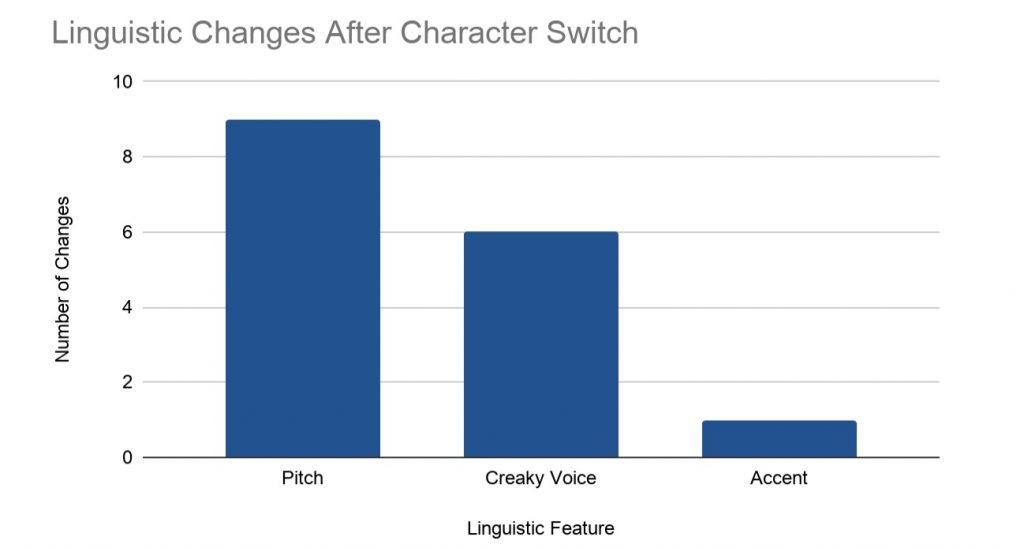
We noted that eight characters changed at least one linguistic element (pitch, creaky voice, or accent) after their reveal. Our prediction based on Lippi-Green’s analysis proved true, language aspects in the Disney universe do correlate to a character’s identity as good or bad.

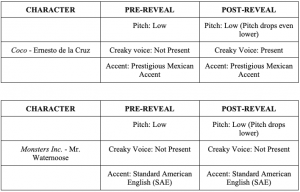
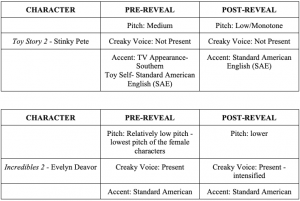
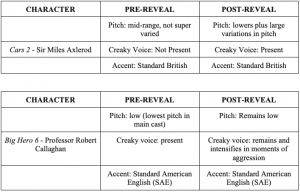
Charts 1-9. Linguistic Analysis of Disney and Pixar “Switch Characters” Comparison of pitch, creaky voice and accent pre-reveal and post-reveal.

The linguistic aspect that changed most was pitch, followed by creaky voice and accent. Only one character, Stinky Pete, had an accent change, settling completely into Standard American English (SAE) after the reveal as opposed to switching between Southern American and SAE. Considering that Stinky Pete employed SAE before revealing himself as a villain, we decided to view accent as not indexing goodness or badness in his character. This diverges from our initial prediction, since Lippi-Green’s study demonstrated a strong relationship between accent and intrinsic goodness and badness.

Fig 1. Linguistic Changes After Character Switch. Amount of characters that presented change in a certain linguistic after their reveal as villains.

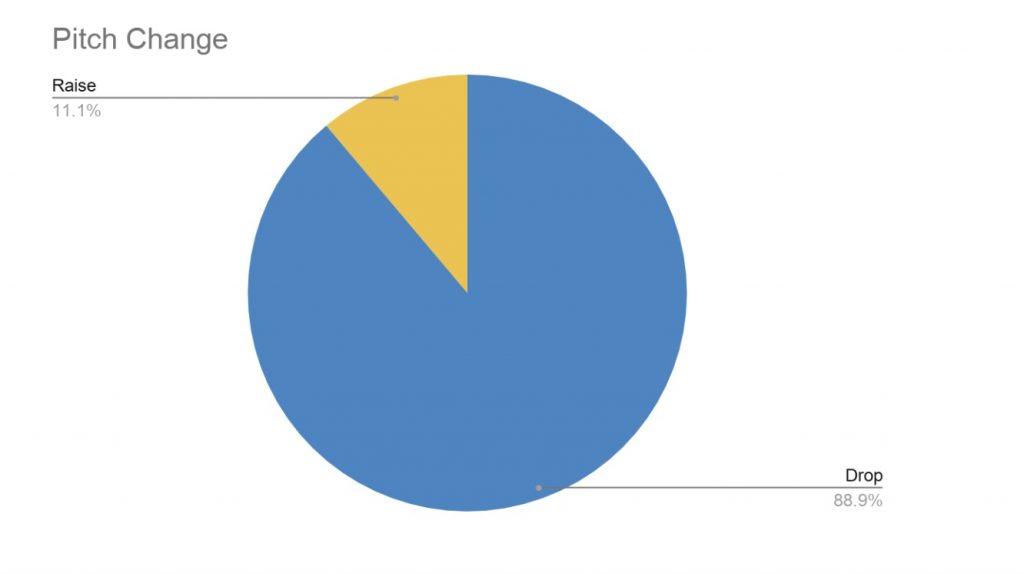
After determining which aspects changed after the reveal (pitch and creaky voice) we analyzed exactly how these aspects changed. For eight of the nine characters, there was a drop in pitch, and only one character had a rise in pitch. It is also worth noting that some of the characters’s pitch dropped when they produced especially aggressive statements or when they mocked their villainous persona. From our data, we conclude that a strong correlation exists between lower pitch and evil personas.

Fig 2. Pitch Change. Percentage of “switch characters” that presented either a rise or drop in pitch.

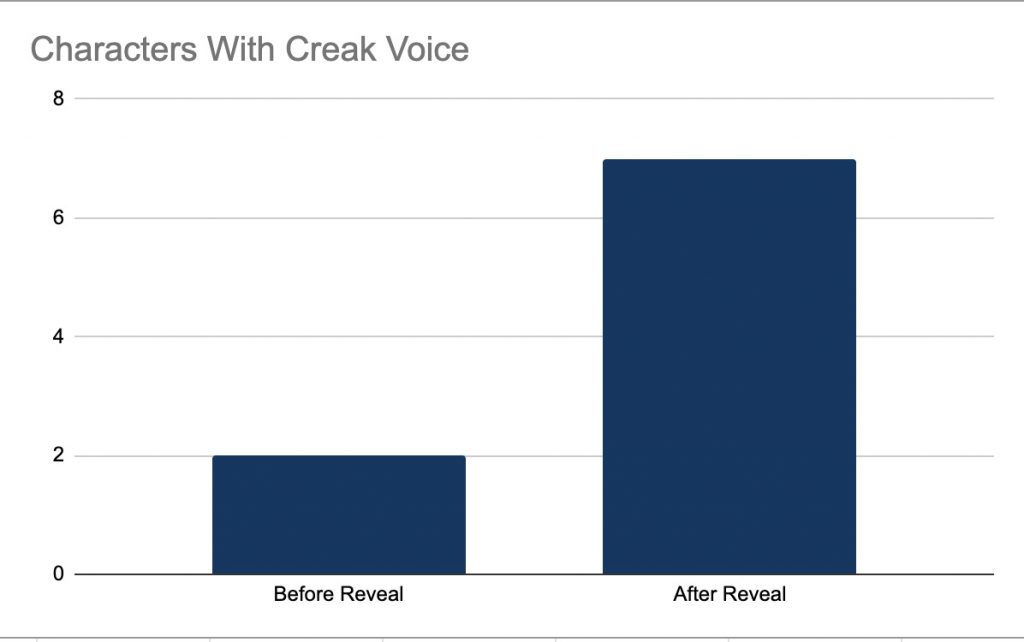
The other linguistic aspect we noticed a change in was creaky voice. Six characters used creaky voice after their reveal. Of the characters that initially presented creaky voice all maintained creaky voice after reveal. One thing to note is that creaky voice is closely related to pitch, therefore a drop in pitch normally meant the addition of creaky voice.

Fig 3. Characters With Creaky Voice. The number of characters that presented creaky voice before their reveal and number of characters that presented creaky voice after their reveal.

Overall, our data supports the hypothesis that certain linguistic aspects correlate with group membership (as good or bad). However, this change seems to be mostly related to pitch and not accents as studied by Lippi-Green (2012). Drop in pitch seems to be the universal linguistic aspect in Disney and Pixar’s universe that signifies a villainous persona and a higher pitch seems to signify and contribute to blending in with good characters.

Discussion

We know that Disney and Pixar movies have helped to socialize children into stereotyping and othering, based on accents in the research done by Lippi-Green (2012) and others. But do “switch characters” also contribute to this categorization in children? Through this study, we conclude that pitch, as well as the presence of creaky voice, are heavily correlated to an evil persona. So do children begin to associate these features with villains after seeing such movies?

Children tend to relate a higher pitch to brightness (Marks, Hammeal, Bornstein, 1987). This association creates a positive attitude towards a higher pitch, as shown by Banaji and Greenwald in “Into the Blindspot.” Therefore a lower pitch may imply a more negative attitude towards the person speaking. This could imply that children are wary of those with lower pitches in their speech and so, when the “switch characters” do this, it only reinforces this association.

There aren’t enough studies on children’s perception of creaky voice to conclude its influence on them. But if lower pitch implies a negative attitude, then the lowest register (creaky voice) will most likely imply one as well.

As a result, we can theorize that children notice and are affected by the changes in pitch and the use of creaky voice. However, our conclusions on the effect of the movies on the audience can only be hypothetical, as our data does not include audience responses.

Conclusion

In our study we analyzed how certain linguistic features (pitch, creaky voice, and accent) changed when a character switched from good to bad. The purpose of our study was to find linguistic trends in these characters.

Our data showed that most “switch characters” dropped pitch and added creaky voice when they revealed to be evil, while their accent remained constant. Looking at Marks, Hammeal and Bornstein (1987), we found that children are likely to view a higher pitch positively and theorized that Disney and Pixar movies might contribute to this phenomenon, or, at the very least, rely on it for indicating a character’s identity as good or bad.

However, we can’t make definite conclusions because our small sample size and lack of data of the audience’s response. So, we can only theorize what kind of impact these “switch characters” have on their audience and what linguistic trends are present in the Disney universe. But linguistic trends in Disney characters remains an important topic to be researched, because of the continued promotion of the dominant ideology presented in Disney and Pixar movies, especially considering the size of their audience.


References

Banaji, M., & Greenwald, A. (2013). Blindspot: Hidden biases of good people. New York: Delacorte Press.

Bell, A. (1984). Language Style as Audience Design. Language in Society, 13 ( 2), 145-204. Retrieved from https://www.jstor.org/stable/4167516?seq=10#metadata_info_tab_contents

Girard, F., Floccia, C., & Goslin, J. (2008). Perception and awareness of accents in young  children. British Journal of Developmental Psychology, 26(3), 409-433.

Lippi-Green, R. (2012). Teaching Children how to discriminate: What we learn from the Big Bad Wolf. English with an Accent: Language, Ideology and Discrimination in the United States, 7, 101-129.

Marks, L. E., Hammeal, R. J., & Bornstein, M. H. (1987). Perceiving Similarity and Comprehending Metaphor. Monographs of the Society for Research in Child Development, 52(1),1-92.

Soares, Telma O. (2017). Animated Films and Linguistic Stereotypes: A Critical Discourse Analysis of Accent Use in Disney Animated Films. Bridgewater State University Master Theses and Projects. 53, 1-53.

[/expander_maker]


, , , ,
Scroll to Top