Politeness

Formality in the UCLA Community: Communication and Self-Expression in the Digital Age

Online communication has undoubtedly brought on more opportunities for misunderstanding. However, the use of linguistic elements such as internet slang and emojis represent the myriad ways that humans expand our linguistic toolbox. Through our research, collected through online surveys and interviews with several members of the UCLA community, we found that formality is shaped by many complex factors, including similarity or difference in age, gender, and power dynamics between interlocutors. The prevalence of concepts such as mirroring suggests that maintaining appropriate levels of formality in these evolving communication mediums is an intuitive process which calls upon participants to be more attentive and creative communicators. Additionally, we found that these processes reveal that, although traditional notions of formality and politeness continue to shape our ways of interacting, the very definitions of these concepts are ever-changing.

[expander_maker id=”1″ more=”Read more” less=”Read less”]

Introduction

The rapid evolution of virtual communication technology is changing the way language is used, allowing interlocutors to use a vast range of tools such as visual elements and online slang, changing the way we come to know language. This results in the creation of a new set of language practices specific to online interactions. Naomi Baron delves into the pervasive influence of digital communication has led to a shift in language structure from traditional, standardized language to one that is more fluid and de-standardized (Baron, 2012), which is what we are aiming to look at. In our research, we investigate the nuances of formality and politeness through surveys and interviews with members of the UCLA community, allowing them to explain the nuances of their own communication habits – calling into question how concepts of formality and politeness may change over time.

Kadar and Mills discuss this in their work where they delve into politeness theory; culture is sometimes treated as rigid rules, potentially portraying individuals as passive recipients. The alternative perspective views culture as “embodied practices,” emphasizing the dynamic manifestations in individuals’ daily lives. (Kader & Mills, 2011.) We seek to understand how UCLA students navigate the world of virtual communication in an academic setting. Furthermore, we aim to gain a stronger grasp on our focus group’s subjective views regarding notions of formality and politeness. Our hypothesis suggests that UCLA students adopt more formal language when communicating with authority figures, such as older individuals or those in higher positions. This implies a tendency to avoid informal tools like slang or emojis. Despite evolving social norms, traditional notions of formality and politeness continue to influence how students speak.

Our focus group, members of the UCLA community, depend heavily on digital mediums for most interactions. When it comes to messaging, emails, and social media, students’ attitudes toward formality have a large impact on their interactions. In essence, our research looks at the variety of linguistic behaviors at UCLA, the opportunities and challenges presented by digital communication, and the effects these may have on academic connections and social relationships.

Methods

We employed a combination of qualitative and quantitative methodologies to gather data across the diverse sprawl of the UCLA community. This included participants ranging from professors and students to teaching assistants and other faculty members. The data collection process was executed through in-person interviews as well as a Google Form Survey. Our dataset consisted of 10 in-person interviews and 42 survey responses, providing a comprehensive basis for an in-depth analysis of participant responses.

The in-person interviews were approximately 15-30 minutes, while the 8-question survey was designed with efficient qualitative analysis in mind. Furthermore, the in-person interviews consisted of open-ended queries addressing a range of themes related to informal vs. formal communication and touched on aspects including abbreviations, emojis, non-verbal cues, body language, tone, familiarity, time sensitivity, and slang. The online survey consisted of predetermined response options, whereas the interviews were designed to facilitate open responses. After data collection, interview transcriptions were analyzed to identify patterns of similarity and difference between the interviews and the survey responses.

Throughout the data acquisition phase, our project encountered a few challenges. One notable limitation: our data exclusively relied on self-reported behaviors, perhaps resulting in a lack of impartiality that an observation-based method, such as conversational analysis, may have provided. (Meredith, 2020.) Moreover, the authenticity of responses generated from both interviews and the survey responses were contingent upon the honesty of the interviewee or respondent. However, the online survey was anonymous, which may have generated more genuine results from the respondents, as the perceived risk of judgment is mitigated. Lastly, the data was thoroughly analyzed to identify patterns of evidence that would either support or deny our hypothesis.

Results and Analysis

The findings suggest that in most forms of communication, people tend to mirror the habits of those they interact with. There was a tendency to adapt levels of formality based on context, such as being more formal in professional or educational settings, and less formal in casual conversations or on social media. This was also influenced by the medium of communication as well as the relationship with the individual, with more formal language used in emails and with superiors, while informal language is reserved for friends or family. Many interviewees stated that they often “mirror,” or match the communication style of the person they are addressing. This could involve adopting similar speech patterns, gestures, or even body language. Furthermore, “matching energy” involves adjusting one’s approach, such as using emojis or punctuation, to align with the other person’s formality level.

Emojis and abbreviations are more common in informal settings and less in professional contexts. Frequency of communication and level of familiarity also influence language choice, with increased informal language aligning with an increase in familiarity. Our findings suggest that non-verbal cues such as body language and eye contact allow for easier communication because they create a “live feedback loop,” a term used by several interviewees. A “live feedback loop” occurs when one concentrates on another’s non-verbal cues during an interaction as a signal for understanding their unspoken thoughts and general disposition. This represents a certain level of intuitiveness and a strong attention to detail. In online communication, where non-verbal cues are absent, looking for these cues in word choice. Individuals tend to carefully proofread emails, especially those addressed to professors. In time-sensitive scenarios, certain interviewees default to casual language, while others prefer formal expressions. Additionally, the flexibility to switch between formal and informal language within the same conversation is deemed appropriate depending on the context and relationship with the interlocutor.

We hypothesized that UCLA students adjust the formality of their linguistic patterns when interacting with individuals of superior authority, such as older individuals or those in higher positions. Our findings indicated that people tend to mirror the communication habits of those they engage with, adjusting their level of formality based on context and relationship dynamics. In professional or educational settings, where a higher degree of formality is expected, individuals typically employ formal language. In casual conversations or on social media, a more relaxed tone is used. The utilization of emojis and abbreviations, common in informal settings, diminishes in professional contexts, reflecting the hypothesis that normative ideas of formality continue to influence linguistic behaviors.
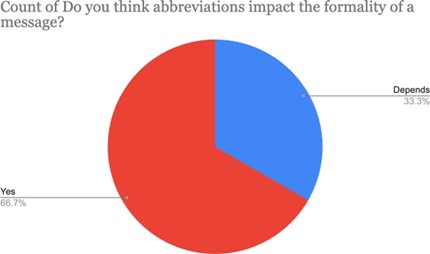
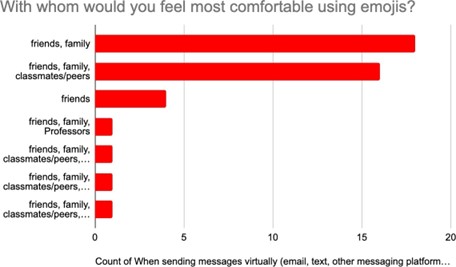
Figure 1: Responses to survey question “Do you think abbreviations impact the formality of a message?”
Figure 2: Responses to survey question: “With whom would you feel most comfortable using emojis?”

Conclusion

In conclusion, our research on the formality of linguistic patterns in virtual communication among UCLA students and faculty reveals that individuals adapt their language based on the context, medium, and relationship with the interlocutor. The findings confirm our hypothesis that students increase the formality of their linguistic patterns when communicating with authority figures, such as older individuals or those in higher positions. Emojis and abbreviations, common in informal settings, are used less frequently in professional contexts, indicating a clear distinction in language use based on the perceived formality of the situation. The concept of a “live feedback loop” in face-to-face interactions aids in understanding and adjusting communication, a feature lacking in online exchanges, where careful word choice and proofreading become essential.

Overall, this research provides valuable insights into the dynamics of virtual communication among UCLA students, emphasizing the influence of formality and politeness in linguistic patterns. Furthermore, our results reveal the delicate cooperation and reciprocity which online communication demands from its participants. Future studies could explore the impact of cultural differences on communication styles and the evolving nature of language in the digital age.

References

Baron, Naomi S., (2012). The impact of electronically-mediated communication on language standards and style’, in Terttu Nevalainen, and Elizabeth Closs Traugott (eds), The Oxford Handbook of the History of English, Oxford Academic, 6

Lorenzo-Dus, N., & Bou-Franch, P. (2013). A Cross-Cultural Investigation of Email Communication in Peninsular Spanish and British English: The Role of (In)Formality and (In)Directness. Pragmatics and Society, 4(1), 1–25. https://doi.org/10.1075/ps.4.1.01lor

Kádár, D. Z., & Mills, S. (2011). Politeness in East Asia: Chapter 2, “Politeness and culture” Cambridge University Press

O’Reilly-Shah, V. N., Lynde, G. C., & Jabaley, C. S. (2018). Is it time to start using the emoji in biomedical literature? BMJ: British Medical Journal, 363. https://www.jstor.org/stable/26964183

Meredith, Joanne. (2020). Conversation analysis, cyberpsychology, and online interaction. Social and Personality Psychology Compass, Volume 14, Issue 5.

[/expander_maker]
, , , ,

Multimodal Interactions Between Solicitors and Students on Bruinwalk

Reina, Pierce, Emily, Whitney, Nick

As the central thoroughfare on campus, Bruin Walk is a heavily trafficked walkway that is an important center of student life and interaction. Known as a place where student organizations hand out fliers about their club and fundraise, it is a site of frequent, multimodal communication between students passing by (“students”) and students marketing their clubs (“solicitors”). As students navigate solicitors from all directions who are trying to persuade them to accept their flier or buy a pastry, they must utilize different communicative strategies when indexing their acceptance or rejection of solicitors, considering norms of politeness in the unique communicative environment of Bruin Walk. Using participant observation, surveys, and interviews, this research focused on how students communicate their rejection or acceptance of solicitors in the context of politeness. We found that students overwhelmingly use non-verbal communication to signify their rejection of solicitors. Furthermore, we found that because of the unique communicative environment of Bruin Walk, students operate within altered norms of politeness. Students express their rejection in ways that normally would be considered rude, but are socially acceptable on Bruin Walk.

[expander_maker id=”1″ more=”Read more” less=”Read less”]

Introduction

If you want to get anywhere at UCLA, you’ll probably have to walk through Bruin Walk. As one of the central arteries to get to class, you will usually find a constant flow of people on Bruin Walk making it a prime location to get people’s attention and distribute information. Every weekday, student organizations, religious groups, and other groups not affiliated with UCLA set up camp on Bruin Walk. They sell food to raise money, hand out fliers to persuade people to join their club, or encourage students to support their cause. When you walk down Bruin Walk, you will certainly be bombarded by people trying to hand you fliers, see at least one club selling Porto’s pastries, or be approached by students from CalPirg asking for donations. Consequently, Bruin Walk is a site of frequent, multimodal communication between students and solicitors. Walking down Bruin Walk is a shared cultural experience of the UCLA Community, and the legacy of the phenomenon is memorialized through internet memes, skits at Spring Sing, and by tour guides explaining to potential future Bruins. While some students love checking out clubs and seeing what food is for sale, others dread the concentrated, intense intervals of social interaction it entails. As students navigate solicitors from all directions who are trying to persuade them to accept their flier or buy a pastry, they must utilize different communicative strategies when indexing their acceptance or rejection of solicitors. What are these linguistic strategies, and why do students choose them? Which ones are most frequent? Do students consider norms of politeness when interacting with solicitors? In order to answer these questions, we studied how students display rejection, support, or avoidance towards solicitors and how politeness operates in the context of Bruin Walk.

Background

Language is multimodal, meaning it encompasses more than just verbal communication and operates on “multiple levels and through multiple channels” (Jakobson, 1960, as cited in Ahearn, 2021, p. 35). Other modes of communication include “nonverbal gestures, gazes, facial expressions, body movements, written texts, computers, material objects, or other semiotic forms” (Ahearn, 2021, p. 35). Of particular interest for our research is nonverbal communication and body language as modes of meaning-making for students on Bruin Walk.

Politeness theory is a framework proposed by Brown and Levinson that seeks to understand how people use language to navigate social interaction and relationships, rooted in the concept of “face” (Brown and Levinson, 1987). Brown and Levinson describe “face” as the “public self-image that every member wants to claim for himself” (Brown and Levinson, 1987, p. 311). To make it simpler, think about the phrase “losing face”. This phrase means to be embarrassed or humiliated. Thus, people try to maintain their face in order to claim their self-image and be accepted by others. Brown and Levinson’s concept of face consists of “positive face”, which describes the desire to be approved, liked, and valued, and “negative face” which describes the desire for autonomy and freedom from imposition (Brown and Levinson, 1987, p. 311). People must cooperate with others to maintain their face, and will defend their face should it be threatened (Brown and Levinson, 1987, p. 311). Positive and negative face-threatening acts (FTAs) are those that could damage one’s self-esteem or autonomy, respectively  (Brown and Levinson, 1987, p. 313). For example, someone telling you to do something would be a negative FTA because it imposes on your autonomy. An example of a positive FTA would be declining an invitation to a party because it would. Politeness strategies are ways to mitigate FTAs (Brown and Levinson, 1987, p. 315). For example, to mitigate a negative FTA, someone could use apologetic language before asking someone to do something (I’m sorry, excuse me, etc.). Polite strategies can also be described as “face-saving acts”.

On Bruin Walk, solicitors and students must navigate dynamics of politeness with regards to positive and negative FTAs and strategies. For example, when a solicitor approaches a student, they commit a positive FTA because they risk being rejected by students. At the same time, they commit a negative FTA because they are imposing on the autonomy of students. Students navigate decisions of whether to “save the face” of solicitors or protect their own autonomy.

The target community of our research is UCLA students on Bruin Walk, including students who are walking on campus, who we call students, and those who are soliciting on Bruin Walk, who we call solicitors. The language used in this community is English, unless a specific cultural club that speaks a different language and targets members of their culture is soliciting on Bruin Walk. Solicitors set up “booths” at the tables that line either side of Bruin Walk, where solicitors might hang colorful posters and signs that visually communicate their cause. Solicitors stand in front of their tables and make statements towards students walking by encouraging them to buy something or join their club. Many clubs hand out fliers to students as well. Consequently, students passing by must respond to the high volume of solicitors trying to communicate with them as they walk by.

Methods

In order to investigate our research questions, we used participant observation, surveys, and interviews. We observed interactions on Bruin Walk during times when students would be walking to class, as these are times when most solicitors are distributing flyers. We took notes on interactions and attempted to tally students based on the types of communication they exhibited (e.g. looking away or saying “no thank you”). However, this proved difficult as hundreds of students could walk by in a period of 10 minutes during peak hours, so it was hard to tally every interaction. On one occasion of doing our fieldwork, we focused on a single solicitor (a man representing a religious group) and tallied student responses to the solicitor over a 20-minute period during a less busy time. We primarily used this data in order to draw conclusions about how students communicate on Bruin Walk.

In addition to observations, we collected seven survey responses to questions about student’s experiences on Bruin Walk. We asked about what forms of communication students use, and why they avoid or engage in interaction. We also conducted two in-depth interviews with two people to further gain insight.

Results

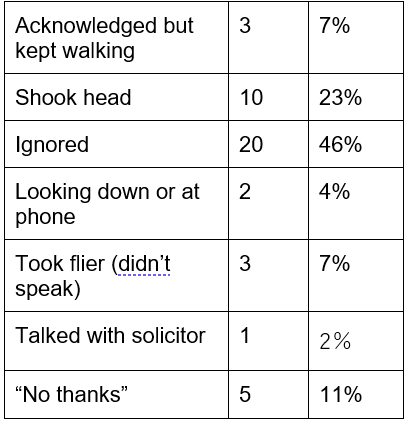
After observing and tallying the ways students interacted with the single solicitor from the religious group, we found that people overwhelmingly used non-verbal signals such as shaking their heads, looking down, or completely ignoring solicitors as a way to express their rejection. Only 13% of interactions with this particular solicitor, positive or negative, involved verbal communication. Furthermore, 46% of students completely ignored the solicitor.

Figure 1: Tally of 44 student interactions with religious solicitor over a 20-minute period

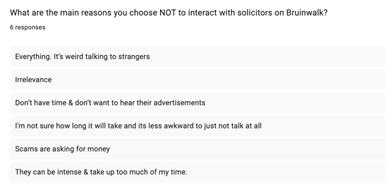
Through the use of surveys, we found that students had various reasons for not interacting with solicitors on Bruin Walk, often relating to time constraints and social awkwardness (See Appendix for more in-depth interviews).

Figure 2: Survey responses

Discussion

When looking at the dynamics of politeness on Bruin Walk, we found that students and solicitors use and interpret negative and positive politeness strategies in ways that differ from normal politeness interactions. The frequent use of non-verbal communication by students contrasts the mostly verbal communication (along with non-verbal such as body movement, colorful signs, etc.) that solicitors use. Furthermore, it is intertwined with dynamics of politeness.  Solicitors are almost always the initiators of interaction, committing a positive face threatening act when they risk being accepted or rejected by students, and a negative face-threatening act when they impose on the autonomy of students. Students assert autonomy and protect their negative face by using non-verbal communication to signify avoidance, and rarely make the effort to save the positive face of solicitors. Students feel that it is acceptable to completely ignore solicitors. While normally completely ignoring someone who risks their positive would be considered rude, it is socially acceptable on Bruin Walk. One solicitor we interviewed said that they didn’t think it was rude to ignore solicitors, because he empathized with the desire to be left alone (See Interview 3). However, he did think it was nice when people acknowledged him. Furthermore, solicitors adapt their politeness strategies based on the student’s behavior, demonstrating the specified nature of how some solicitors engage with students depending on the situation. This demonstrates how people engage in altered acts of politeness due to the unique communicative environment of Bruin Walk.

This research helps people understand that navigating politeness strategies is complex and that norms of politeness differ greatly in different settings even when situated within the same larger cultural context. For further study, it would be interesting to investigate the role of gender and ethnicity on Bruin Walk interactions.

References

Ahearn, L. M. (2021). Gesture, Sign Languages, and Multimodality. In Living Language: An Introduction to Linguistic Anthropology, Third Edition (pp. 35–53). John Wiley & Sons.

Brown, P., & Levinson, S.C. (1987) Politeness: Some Universals in Language Usage. Studies in Interactional Sociolinguistics. Cambridge: Cambridge University Press.

Appendix A: Interviews

Interview 1: 2nd Year Commuter Student

  1. How many times per day do you walk down Bruin Walk? Are you usually walking or with friends?
    I am usually by myself. I walk there about once or twice a day, since I commute and I usually pass by there when I go to Ackerman.
  2. Do you usually interact with solicitors down Bruin Walk? If so, what usually calls your attention?
    I don’t like to. I am a very awkward person.
  3. Do you like when solicitors interact with you down Bruin Walk?
    No.
  4. Why don’t you like interacting with solicitors down Bruin Walk?
    Because I am in a hurry to go to class, usually I am always running late.
  5. How do you think solicitors are most effective at getting your attention? What signals do they use?
    When there are a lot of people, I like to see what’s up because they might be selling something I’d be interested in.
  6. Are there certain strategies that you think are rude?
    I think it’s rude when they see me wearing my headphones and try to talk to me.
  7. Do you feel bad when you ignore a solicitor?
    YES! But I’m just trying to get to class.
  8. What do you think about the environment of Bruin Walk makes it so notorious for lots of interactions with solicitors?
    Since it’s always so busy with many students, every club provides different opportunities for students to interact with things of their liking. I really like that Bruin Walk exists for people who want to be more involved. But I personally would like to be more involved, it’s just the fact that I am a commuter that I do not have time to even join any clubs or be involved.

Interview 2: 2nd Year Student, Lives off-campus

  1. How many times per day do you walk down Bruin Walk? Are you usually walking or with friends?
    Maybe like 2-3 a day. I just walk alone.
  2. Do you usually interact with solicitors down Bruin Walk? If so, what usually calls your attention?
    I hate interacting with solicitors down Bruin Walk! I just hate it. Like I am just trying to get to class, and they are always waving their fliers, and waving their hands to get my attention. I even try to avoid walking down Bruin Walk, it’s the same thing every single time.
  3. Do you like when solicitors interact with you down Bruin Walk?
    No. Not at all.
  4. Why don’t you like interacting with solicitors down Bruin Walk?
    I am so awkward and I hate interacting with people I do not know. Especially people down Bruin Walk are annoying. I’m sorry.
  5. How do you think solicitors are most effective at getting your attention? What signals do they use?
    Honestly, I get why they do it. Some of them are just trying to make their money and that’s good. But they should know who and not to approach, especially when I have my head facing down to avoid them.
  6. Are there certain strategies that you think are rude?
    I just don’t like when they interact with me while they see me with my head down and my big headphones.
  7. Do you feel bad when you ignore a solicitor?
    Not really.
  8. What do you think about the environment of Bruin Walk makes it so notorious for lots of interactions with solicitors?
    There are different clubs that could potentially interest people. I know I have to join clubs and make more social interactions. Since I’ve been at UCLA, I have not really made friends, and I live in an apartment in Westwood, but I do not have many friends. I need to also build my resume for a better job, and I know that joining those clubs that are on Bruin Walk would be good. I am just socially awkward, but that’s something I need to work on. The good thing is that whenever I am ready Bruin Walk is there for me to go and join a club or something.

Interview 3: Solicitor for a Pre-Med Club

  1. Are there any circumstances in which you won’t approach someone?
    “If someone is intentionally avoidant I probably won’t talk to them. Body language is very indicative. If people are in a large group I probably won’t talk to them either.”
  2. Do you think it’s rude when people ignore you?
    “I don’t think it’s rude when people ignore me, but it’s nice when they acknowledge me. I get that people don’t want to be bothered, because sometimes I’m walking on Bruin Walk and just want to be left alone”

[/expander_maker]

, ,

Uncovering Gendered Dynamics: A Comparative Analysis of Interactions Between Customers and Service Industry Workers

Elizabeth Truong, Naomi Crandall, Zoe Jespersgaard, Jennifer Ma, Victoria Yu

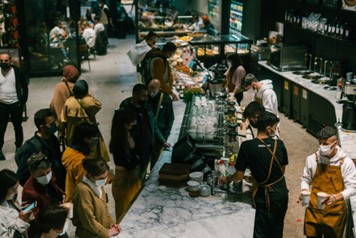
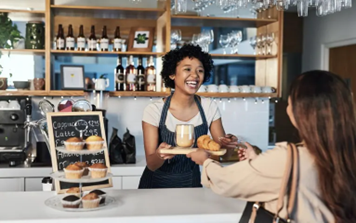
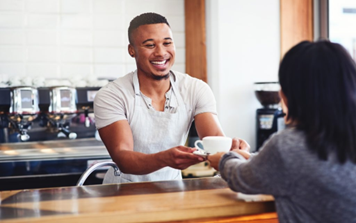
In contemporary society, coffee shops act as significant social hubs, facilitating interactions between service workers and customers that reflect broader gender dynamics. This research investigates the nuances of gendered interactions within coffee shops, focusing on American college students in the Westwood neighborhood of Los Angeles. The study aims to understand how gender influences various aspects of service worker-customer interactions, including word choice, politeness, and conversational patterns. Based on the hypothesis posited, which suggests that female-presenting customers are more likely to exhibit politeness towards service workers compared to their male-presenting counterparts, the research examines data collected through non-participant covert observation and conversation analysis. The findings reveal significant gender differences, with female-presenting individuals demonstrating more polite behaviors such as hedging and the use of politeness markers compared to their male-presenting counterparts. Female-female interactions were characterized by longer discussions and more pleasantries, while male-male interactions tended to be more direct. Overall, the study contributes to our understanding of gender dynamics in public spaces and underscores the importance of recognizing and addressing these dynamics for fostering inclusive environments.

[expander_maker id=”1″ more=”Read more” less=”Read less”]

Introduction

Within modern society, coffee shops serve as social hubs, offering an ideal setting for individuals looking for a quick respite as well as providing us with critical information regarding the nuances of gendered interactions between service workers and customers. Interactions between service industry workers and customers play a key role in shaping the experiences within public spaces, revealing broader societal norms and dynamics. In this research paper, we investigate how the dynamics of service worker-customer interactions in coffee shops are impacted by gender, specifically focusing on various aspects such as word choice, personability, and politeness. This paper is focused on studying these interactions between the demographic of American college students, with data collection taking place in coffee shops in Westwood Village, close to the campus of the University of California Los Angeles. By analyzing these factors, we aim to contribute to the understanding of gender dynamics within service interactions, uncovering any patterns or disparities present. Our hypothesis posits that female-presenting customers are more likely to exhibit politeness towards service workers compared to their male-presenting counterparts. Additionally, we anticipate greater deviations from the conventional ordering process when the gender presentation of the customer aligns with that of the service worker.

Background

In observing service encounters, we see various linguistic properties which are present in communicative patterns, contributing to the dynamics of interaction. Some specific examples include politeness strategies, turn-taking patterns, gestures, and lexical choices. Politeness theory, developed by linguists Brown and Levinson is quite in-depth, and the following video made by the University of Vienna does a great job of simplifying some of its more complex aspects: https://youtu.be/e-B-kJi0Rek. Speakers often use politeness strategies to maintain positive social relations. The desire to be perceived as kind or polite is an example of a term known as positive face (Brown and Levinson 2006). As many people wish to be accepted and liked by others, we expect most customers to utilize positive face techniques such as smiling or engaging with the server in conversation outside of their order. This can involve using polite language, such as “please” and “thank you,” or softening directives and requests. In addition, conversations typically follow turn-taking patterns, where speakers take turns to contribute to the interaction. Signals such as pauses, intonation, or body language help regulate conversation flow and indicate when it is appropriate to speak. Moreover, nonverbal cues like facial expressions, gestures, and body language are also important. They complement verbal communication and may convey sincerity, friendliness, or authority. Lastly, the selection of words and phrases reflects cultural norms, social roles, and individual identities. Lexical choices can influence identity, social status, or group membership, contributing to the overall tone and meaning of the interaction.

Similarly, the data samples we have gathered closely align with these linguistic properties and patterns seen in other service encounters. A previous study, which looked at female politeness towards other females versus towards males, found that gender played a pivotal role in the presence of politeness. The authors found that females were more likely than males to speak politely to others, especially when speaking with other females (Keikhaie and Mozaffari 2015). Across the interactions in our research, both baristas and customers use polite greetings, express gratitude, and use personalized terms to address each party, fostering a friendly and welcoming atmosphere. Turn-taking patterns were also observed, with participants getting a chance to speak and respond. Additionally, positive body language, such as smiling and maintaining eye contact, contributes to a positive customer experience by maintaining an informal and relaxed environment. Overall, the data illustrates the importance of these linguistic elements in effective communication during service encounters.

Methods

The methods we used for data collection were non-participant covert observation and conversation analysis. We opted for non-participant covert observation of the interactions between the customer and barista in order to understand the social reality and implicit features of the interactions. With the participants not knowing that they are being observed, it ensures that the data is the most accurate and unbiased as it can be. We will also be analyzing the conversations we observe to investigate and gain more insight into the deeper meaning of the words and actions throughout the interactions.

To guide this research, our general research question is, do levels of politeness differ in server-customer interactions based on gender? Within this question, we also have some more specific focuses. They are as follows: How do different genders express and navigate face-saving and face-affirming behaviors through mechanisms such as hedging and politeness markers?; Do levels of intimacy and politeness differ in same-gender interactions as compared to different-gender interactions?; Are male or female-identifying people treated with more politeness?; Do male or female-identifying people use more politeness markers? Our general hypothesis is that females will use more face-saving behaviors and be less direct when ordering and interacting with customers.

Results

In order to gain a more complete understanding of the gendered relationships between customers and service workers, we collected data from different coffee shops in the Westwood neighborhood of Los Angeles, California. The coffee shops that we collected data from include Alfred Coffee, Starbucks, Ministry of Coffee, and Stereoscope in Hollywood. Our general hypothesis for our research was that females would use more face-saving behaviors and be less direct when ordering and interacting with customers. Based on our data samples taken from various coffee shops, it can be seen that females are more likely to initiate an interaction and use pleasantries during a service encounter. After analyzing the 17 conversational samples that we have collected thus far, we were able to group some behaviors that we felt applied to our hypothesis. The following categories are presented below, accompanied by examples derived from the dataset.

Hedging

The data revealed distinct gendered differences in the interactions between customers and service industry workers. Our observations consistently indicated hedging behavior among female customers, evidenced by the frequent use of words such as “um” and employing indirect language when placing orders. Female customers had the tendency to substitute “could” for “can” during these brief interactions. Additionally, the hedging term “just” was more prevalent in the speech of female customers within the dataset. Furthermore, female customers exhibited greater pauses or displayed hesitance while placing their orders.

Introductory Greetings

Across all data sets, we found that female service industry workers were more likely to ask the customer how they were doing in addition to giving a standard greeting. Additionally, the data show that although both male and female baristas will initiate the interaction between them and their customers, females are more likely to ask about a customer’s well-being as part of the introductory greeting.

Politeness Markers

The data show that the majority of the time, female customers were significantly more likely to say “please” while making their requests. Additionally, we found that across all the data sets, there was less smiling involved in male-to-male interactions. One data set found that the male barista solely smiled at female customers, maintaining a neutral expression for male customers.

We found that female customers are more likely to respond politely and provide detailed information about their order, contrasting with the male customer’s direct and concise style.

Volume

Based on the observed data, both the customers and service industry workers maintained a consistent volume level throughout the majority of their interactions, with subtle variations in assertiveness, such as a female barista taking a slightly more assertive tone during certain interactions. Across all data sets, we found that the volume of female speakers in both roles was lower than that of their male counterparts. We also found that female customers tended to end their sentences with a higher pitch, while male customers kept their tone and volume consistent throughout the entire interaction.

Length of Discussion

Across all data sets, the longest discussions that took place were in female-female interactions while the shortest interactions tended to be in male-male interactions, with very few pleasantries.

We observed a consistent pattern between these interactions with the deviations occurring primarily in female-female interactions. One deviation that we recorded was a female barista complimenting a female customer’s sweater. Additionally, we recorded a sense of friendliness and camaraderie when a female barista made a mistake when taking an order from a female customer and the two laughed together. Across all the interactions, the male-male interactions required significantly less clarification of their orders. We were able to conclude that longer interactions are likely characterized by the female customer providing detailed information about their order. Male customers usually order without much elaboration, thus leading to shorter and more direct interactions.

Discussion

The data show that there are significant gender differences in the interactions between service industry workers and customers. The results of this study show that there were gendered differences in hedging, introductory greetings, politeness markers, volume, and discussion length. Female customers were significantly more likely to exhibit hedging behaviors than their male counterparts, demonstrating hesitation and less confidence in the interaction overall. While male customers rarely demonstrated hedging behavior and tended to have a more dominant approach to the conversation, especially when speaking to a female barista. Additionally, the data show that although both gendered service industry employees provided some sort of greeting, female service industry workers were significantly more likely to ask the customer about their well-being in addition to providing a standard greeting.

While surveying politeness markers, the data show that female-presenting customers were more likely to utilize polite terms such as “please” and “thank you” than male-presenting customers. Additionally, our study found that female-presenting customers were more likely to respond politely and provide more detailed information regarding their order while male-presenting customers tended to adopt a more concise and direct approach. Across all data sets, we found that there were fewer non-verbal politeness cues such as smiling in male-male interactions. Previous studies have produced similar results that show females interacting with other females will utilize polite behavior more often than their male counterparts. The authors explain that this may be because women are more conscious of rejection and stigma and therefore put in more effort to be perceived in a positive way (Keikhaie and Mozaffari 2015). In our research, the male-presenting customers had the tendency to adopt a more dominant and less friendly approach to these interactions, highlighting their perception of their importance and role within this particular community.

In terms of volume, our data show very little variation. Both gender identities maintained a consistent volume throughout their interactions, however, female-presenting customers and service workers utilized a lower volume overall, ending their sentences with a higher pitch. Alternatively, while studying conversation length, we found that female-female interactions were significantly longer than male-male interactions. This variation is due to the use of more pleasantries in female-female interactions as well as the absence of these pleasantries and the more direct tone used in male-male interactions.

While our study is able to successfully identify gender differences in hedging, the presence of introductory greetings, politeness markers, volume, and discussion length, it is important to note that our research is primarily focused on the Los Angeles neighborhood of Westwood. Although the individuals who visit local Westwood establishments possess very diverse backgrounds and gender identities, this is not the case in all communities across the United States. Different communities may have differing opinions on gender identities and thus have drastically different interactions based on their community’s view on gender identities. In order to gain a more complete understanding of how these interactions between service industry workers and customers vary by gender, more research must be done examining broader geographical areas. By expanding the geographic range of this study, we will be able to come to a more concrete understanding of the different practices and patterns utilized between different genders in service industry interactions.

Conclusion

After conducting a thorough literature review as well as completing data collection such as observations and conversation analyses, we found that female-presenting customers and service industry workers were significantly more likely to utilize polite behaviors than their male-presenting counterparts. The data show clear patterned differences between these service industry interactions in the categories of hedging, the presence of introductory greetings, politeness markers, volume, and the length of the interaction. In each of these categories, the female-presenting customers and service industry workers utilize more polite approaches when addressing each other and members of the opposite gender. These results provide valuable information regarding not only the gender roles within service industry interactions but also the underlying social norms and dynamics within a public sphere.

References

Brown, P., & Levinson, S. C. (2006.). Politeness: Some Universals in Language Usage. In The Discourse Reader (2nd ed., pp. 311–323). Routledge: Taylor & Francis Group.

Forseth, U. (2005). Gender matters? Exploring how gender is negotiated in service encounters. Gender, Work & Organization, 12(5), 440–459. https://doi.org/10.1111/j.1468-0432.2005.00283.x

Gibson, E. K. (2014, May 27). Would you like manners with that? A study of gender, polite questions, and the fast‐food industry. Academia.edu. https://www.academia.edu/4031180/E._K._GIBSON_-_A_study_of_gender_polite_questions_and_the_fast_food_industry

Hultgren, A. K. (2017). New perspectives on language and gender: Linguistic prescription and compliance in Call Centres. Language in Society, 46(5), 671–695. https://doi.org/10.1017/s0047404517000574

Keikhaie, Y., & Mozaffari, Z. (2015). A Socio-linguistic Survey on Females’ Politeness Strategies in the Same Gender and in the Cross-Gender Relationship. Iranian Journal of Applied Language Studies, 5(2), 51-82. doi: 10.22111/ijals.2015.1877

Schnabel, Lukas. “Politeness in Linguistics: An Overview.” YouTube, uploaded by Lukas Schnabel, 23 June 2019, https://youtu.be/e-B-kJi0Rek

Taylor, J. L. (n.d.). I Need a Coffee: Pragmalinguistic Variation of Starbucks Service Encounter Requests According to Interaction Modality. Indiana University. https://scholarworks.iu.edu/journals/index.php/iulcwp/article/download/26219/31840/61913

West, C. (1993). Reconceptualizing gender in physician-patient relationships. Social Science & Medicine, 36(1), 57–66. https://doi.org/10.1016/0277-9536(93)90305-n

 [/expander_maker]

, , , ,

Could you pass the salt-juseyo? A Comparison of Politeness Strategies in American English and Korean

Verania Amaton, Kimberly Maynard, YueYan Kong, Yi Wang

BTS. Gangnam Style. K-dramas. Korean culture has been steadily making its way into the United States’ mainstream culture leading to more contact between the cultures and languages. Any fan of Korean media knows that Korean has built-in formality tiers, a tricky part for native speakers of English to master when learning Korean. But does the English language really lack levels of formality just because they aren’t built into its grammar? In this study, we look into alternate ways of expressing politeness in both American English and Korean. By looking at how speakers of both languages make requests, refusals, and apologies, we were able to find what types of strategies they use outside of the expected word choice and grammar. Based on our data, there are more similarities than one might expect in terms of how speakers of these languages use politeness strategies. Continue reading to learn more about how we approached a cross-cultural comparison of the politeness strategies in the U.S. English and Korean!

Figure 1 and 2: The TV series posters for Never Have I Ever, an American show, and Inheritors, a Korean drama.

[expander_maker id=”1″ more=”Read more” less=”Read less”]

Introduction and Background

With the rise of popularity of Korean media in the United States, more Americans are being exposed to Korean language and culture. One of the most notable differences between the English and Korean languages is the idea behind formality tiers which don’t exist as clearly in English. It would be unfair to presume English speakers are inherently impolite because they don’t have a built-in formality system, so we expect they would have other strategies they could use to be polite. This leads to the next question of whether Korean would also have other strategies outside of grammar to express formality and how those strategies might compare to ones used in English. First, we looked into pre-existing research on these languages and cultures to give us an idea of what we could expect.

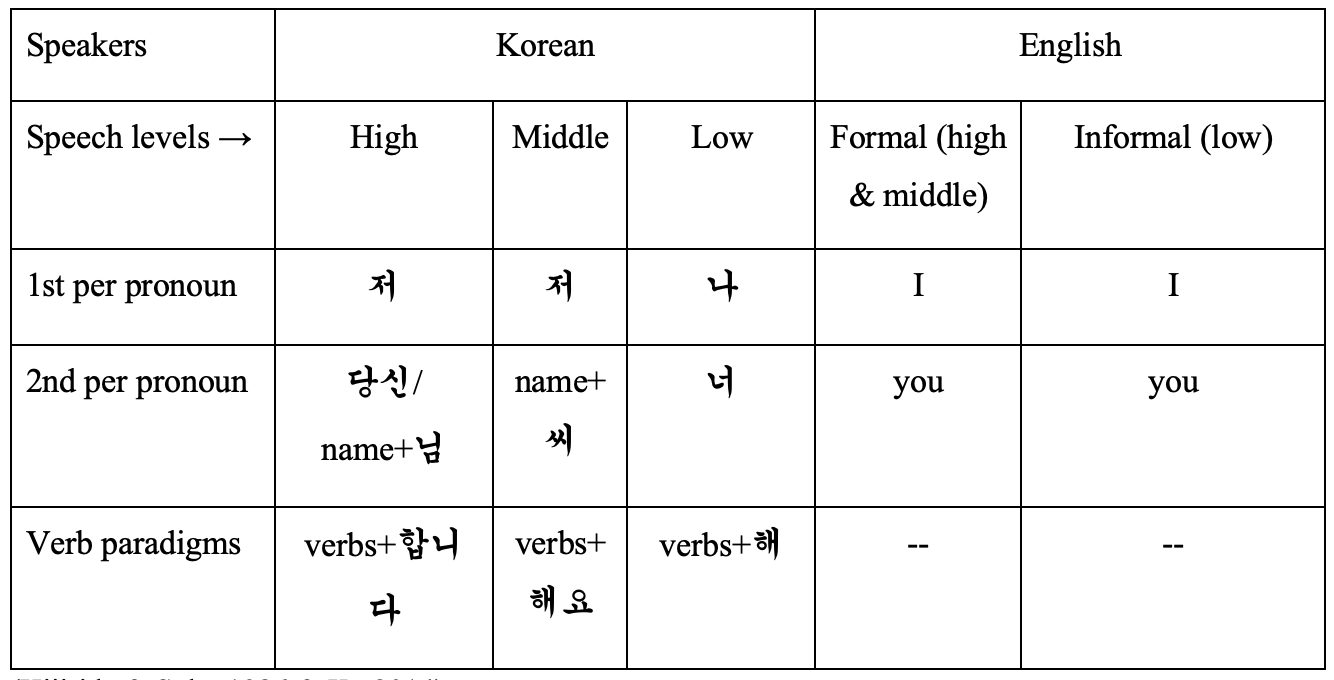
Table 1: A comparison chart between Korean and English formality tiers (adapted from Hijirida & Sohn (1986) and Ku (2014)).

Korea is considered a collectivist-low-context culture which means that Koreans have a strong emphasis on group harmony and using context more so than words to convey messages. On the other hand, America is an individualistic-high-context culture in which there is a stronger focus on individuality and more responsibility falls on speakers to explicitly state their point (Cho, 2010). This significant difference in language culture feeds into unique styles to express politeness. The two major linguistic ways one can express politeness are through positive politeness, making the receiver feel good about themselves, and negative politeness, an apologetic stance to interaction based on the assumption that one is intruding on the listener (Brown and Levinson, 1987).

Given the contrasting cultures of communication, we would expect Koreans to be more vague overall and utilize more negative politeness in order to avoid being imposing while Americans would be more direct in their politeness, thus leaning towards more positive politeness strategies.

Methods

We know from intuition that regardless of culture, both American and Korean teenagers are expected to change their speech style when addressing their peers versus adults in their lives. That is why we chose to focus on collecting data from two TV series: Never Have I Ever (American English) and Inheritors (Korean), which mainly focus on the lives of teenagers. For data collection we focused on gathering pieces of dialogue that we thought could show how these characters were expressing politeness in different situations. We categorized the data into three specific speech acts (requests, refusals, and apologies) to know how politeness theory would be displayed in English and Korean. We also split this data according to the participants, specifically into peer-to-peer and student-to-adult categories1. The analysis was primarily focused on instances of positive and negative politeness, but we kept an eye out for other strategies.

Results/Analysis

We organized our data into separate sections depending on the language, participants, and speech act. We’ll cover a couple examples for each speech act and show them in a table with some color coding to show politeness strategies used. Any negative politeness will be written in red text and positive politeness will be written in green text. At the end of this section, we will show a table that has the numbers that encompass all the data. The first speech act we looked at was requests.

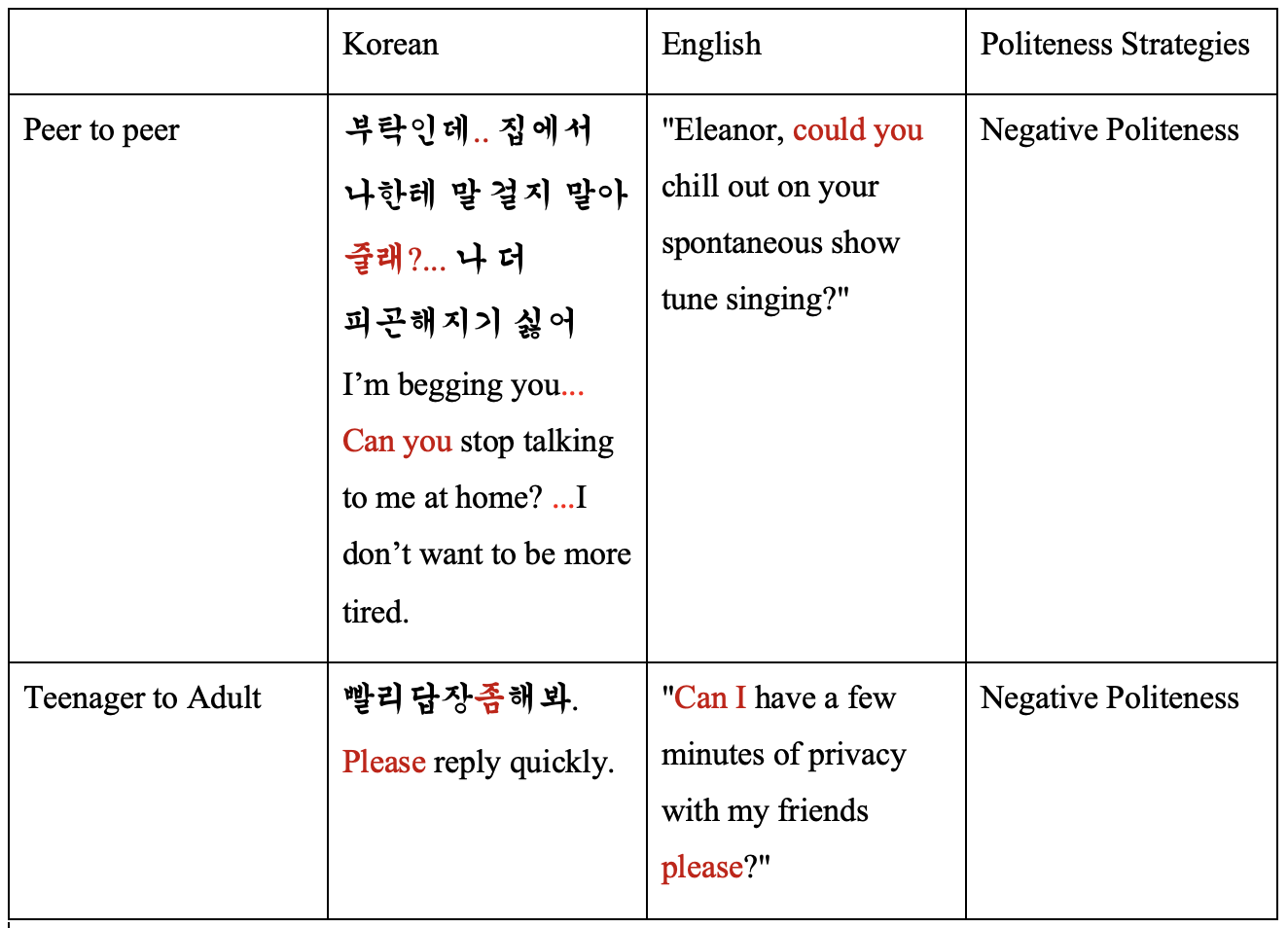
Table 2: Table on Requests in Korean and English.

In Korean we noticed the use of negative politeness strategies both between peers and between the student and adult. In the case of the peer-to-peer request shown above, there was some pausing before making the request and before explaining why the request was made. They also formatted the request as a question using “줄래? jullae?” or “Can you…” which is one way to decrease imposition or make the request feel less intrusive, thus falling into the category of negative politeness. This is similar to the use of “좀 jom” or “please” when the student is making a request to the adult, once again decreasing imposition. Something that we noticed from these Korean examples is that speakers were generally more direct than expected. In the peer-to-peer request, the student making the request explains her reasoning as her “not wanting to become more tired” which is directly related to her own wants/needs. Typically, we would expect explanations in Korean to be more vague and related to a third party or some uncontrollable situation (Lyuh 1992, p.115). Furthermore, in the student to adult example, the student used “빨리 ppalli” and “해봐 haebwa” which create a sense of urgency and is also said informally as according to Table 1. This is unexpected with a teenager approaching an adult, but we deduced that since this student was talking to her mother, the closeness of their relationship overrode the need to be more formal or polite when speaking to someone older.

While we expected more positive politeness from English speakers, surprisingly we saw a high rate of negative politeness in English requests as well. As can be seen in the examples above, English speakers tended to format their requests as questions, using forms such as “Could you…?” and “Can I…?” and again in the student to adult request we see the use of “please” to further decrease imposition. Altogether, both English and Korean showed high rates of negative politeness in their requests. In looking at the additional data, there were some instances of positive politeness in peer-to-peer requests in both languages, but it wasn’t used nearly as often in the overall data for requests.

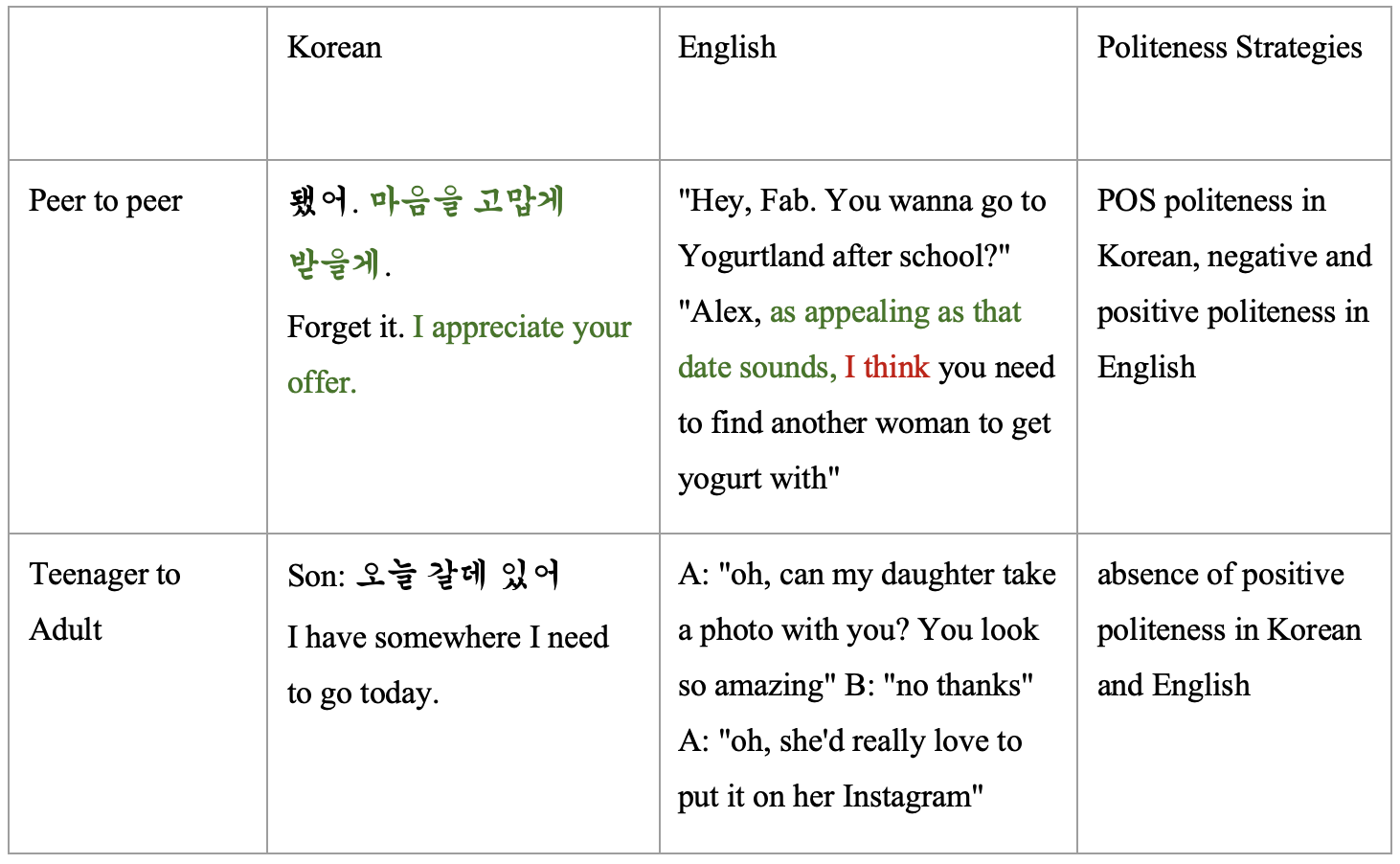
Table 3: Table on Refusals in Korean and English.

The general trend found in Korean for refusals between students is that peers are more direct and use less positive politeness when declining something. Our example in the chart above points to the use of positive politeness in using the phrase “I appreciate your offer,” but instances such as these were uncommon across our data. Between students and adults, there was more indirect speech with an absence of positive politeness as well. One of our best examples showed the use of “I have somewhere I need to go today” from a Korean student in order to decline an invitation from his mother. Unlike in our data for Korean requests, in this instance we did see the type of vagueness or reference to an outside force when providing an explanation for something, as expected of collectivist cultures. We analyzed this as the absence of positive politeness because while it was expected he would follow up with something like thanking his mother for the invitation, he focused on his lack of time. On the other hand, we found that English was much more direct across this speech act. There are instances of both positive and negative politeness, and it varies with the speaker, context, and social distance between the interlocutors (people engaging in a conversation). In the peer-to-peer example given in Table 3 for English, the speakers are friends while the teenager-to-adult interaction is between strangers. The peer-to-peer refusal was softened by the phrase “as appealing as that date sounds,” which we categorized as positive politeness because it exaggerated how much she liked the proposed idea by her peer even if she didn’t want to accept his invitation. In the English data, the first refusal is more euphemistic and the second is more direct, but both are clearly refusals.

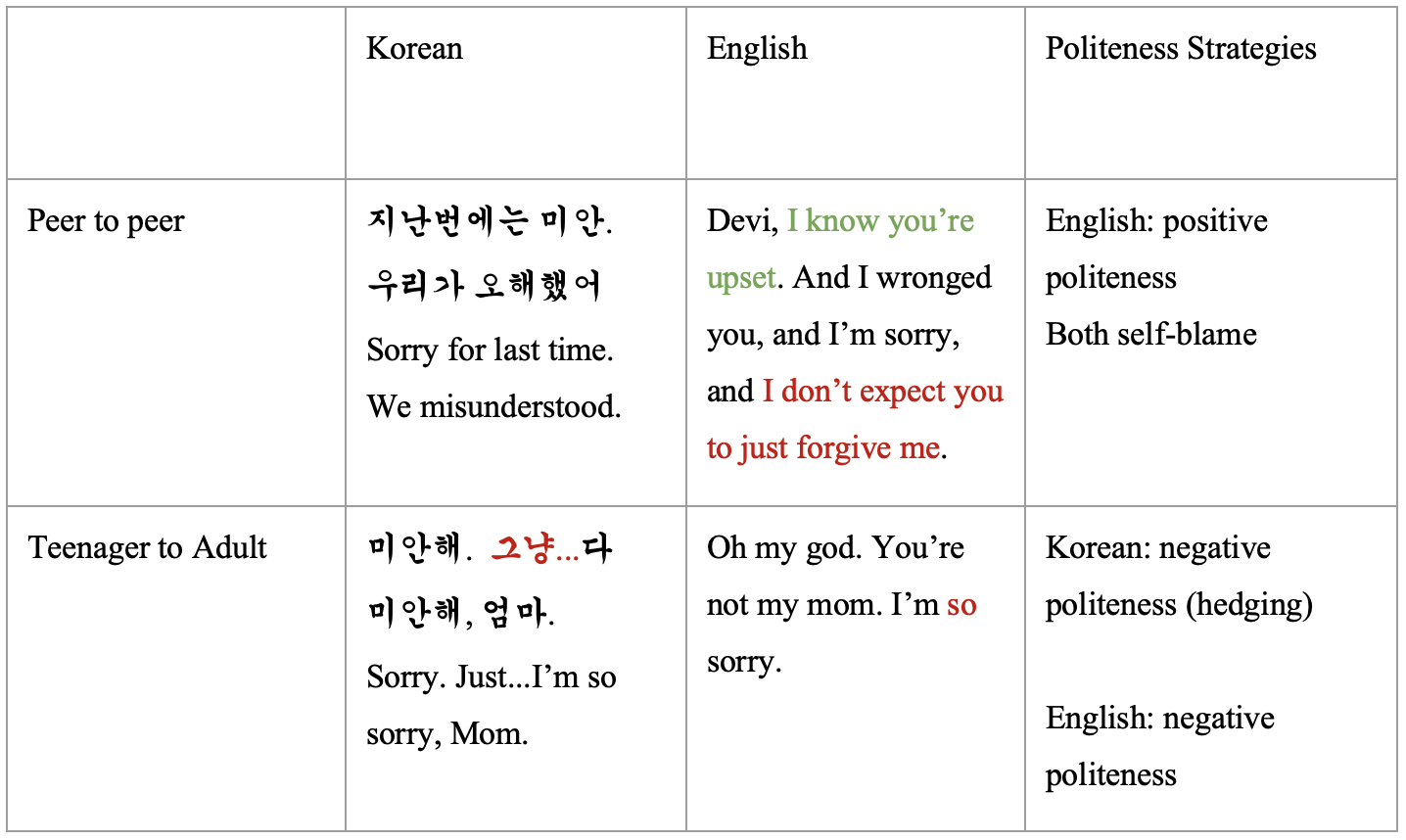
Table 4: Table on Apologies in Korean and English.

In the case of apologies, both languages behaved opposite from what we expected based on our hypothesis. In Korean, there was a much lower rate of politeness strategies being used overall. For example, in peer-to-peer, there was no use of negative politeness strategies. Even in the example given in the table, we were not able to identify any particular strategies being used. The apology was simple and straight-forward. We do believe it is worth noting that our data for the Korean apology section was scarce in sample size and could have had more examples, which may contribute to the low numbers we are seeing. In the case of student to adult apologies however, we did see more use of negative politeness strategies. As seen in the table, the student used “그냥 geunyang” or “just” with a slight pause during her apology. This is an example of hedging, a negative politeness strategy where one delays or lengthens their statement. In terms of positive politeness strategies, we saw them only being used in peer-to-peer apologies in Korean.

In English, the rates of both positive and negative politeness were higher than expected, leading us to conclude that in this particular speech act, English speakers may employ more outside help to achieve the purpose of their apologies. In one of our English examples for peer-to-peer, a speaker says “I don’t expect you to just forgive me” as a negative politeness strategy to emphasize that the receiver does not owe them their forgiveness.

Outside of politeness strategies we observed that in both languages there was a pattern for emphasizing the aspect of self-blame across apologies. This was achieved by explaining their wrongdoings within the apology in order to bring awareness to their guilt.

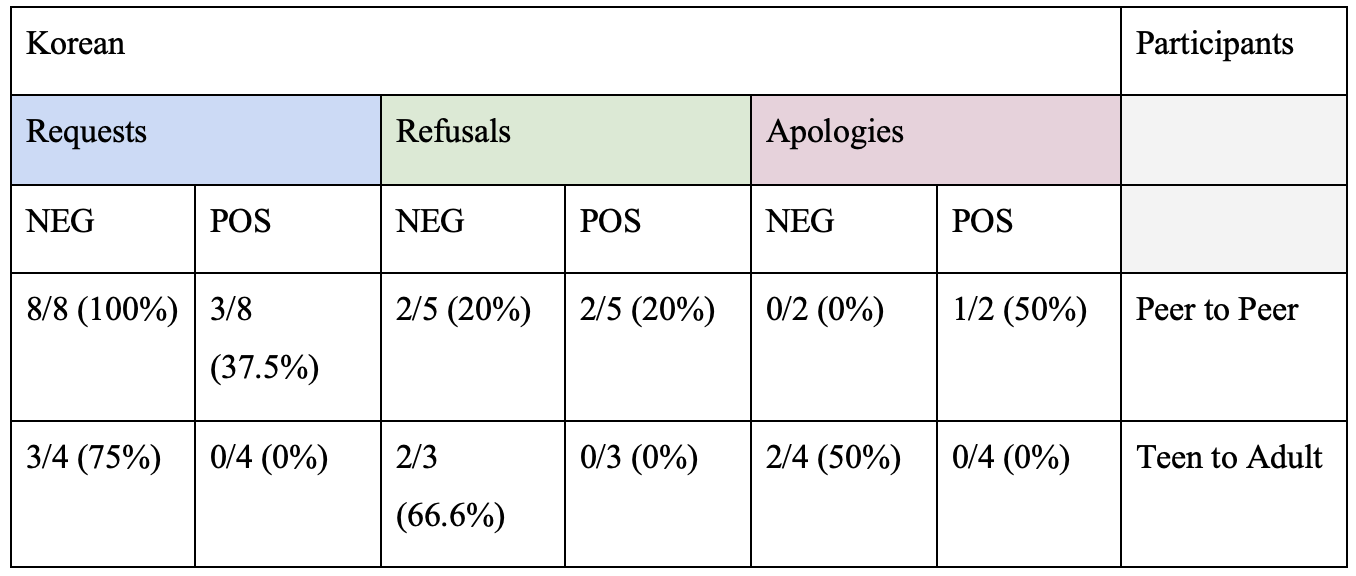
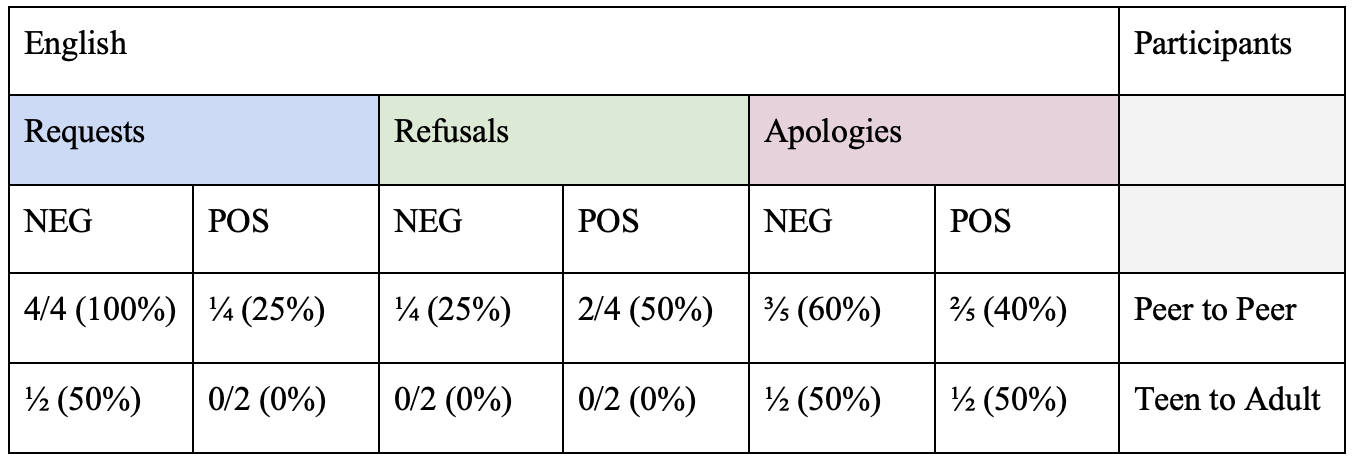
In cross comparing our data for both languages overall, we found that there was no significant difference between the rates of politeness strategies used across the three speech acts we observed. English had a 37.5% rate of politeness strategies employed overall while Korean had a similar rate of 34.9%. However, an interesting trend we could identify was that while Korean teenagers did not necessarily use more negative politeness, they did demonstrate a wider variety of it while American teenagers stuck to using the same forms in their negative politeness strategies.

Table 5: Politeness Strategy Rates in Korean.


Table 6: Politeness Strategy Rates in English.


Discussion and Conclusions

After we had collected all the data above, we found that some of our data was consistent with our hypothesis while other data went against expected politeness patterns. We concluded that the Korean language does use negative politeness more often than positive politeness. Still, English also had a lot of unexpected evidence of negative politeness.

In addition, the importance of politeness strategies goes beyond vocabulary and grammar. It can also be expressed through strategies such as hedging and pausing in interaction. Despite the lack of a formality system in English, English speakers can change formality and politeness through the use of these identified positive and negative politeness strategies.

Based on what we concluded above, this study could be helpful for cross-cultural interlocutors to gain a deeper understanding of the language and communication styles of different cultures. For example, it could help politicians who need to conduct diplomatic affairs and business workers of international companies. Language learners would also benefit because memorizing phrases isn’t always enough to fully understand the underlying nuances of a language. Being able to properly understand the politeness strategies used by someone else and being able to apply them yourself can help greatly decrease misunderstandings.

In the early stage of collecting data, we also encountered some problems. Since we had yet not narrowed down the speech acts to requests, refusals, and apologies at the beginning, the initial data collection and analysis was not smooth. In future research, those interested in this topic can narrow down the scope of speech acts before collecting their data and perform future studies with more reliable sources. Our data results were affected by a relatively small sample size as we could not watch entire seasons of our shows, but future studies should consider collecting data from entire seasons if time allows. Future researchers of this topic could improve the source material by utilizing questionnaires, naturalistic observations, real person interviews, a wider variety of TV shows, or unscripted YouTubers’ speech patterns to collect data for their studies.


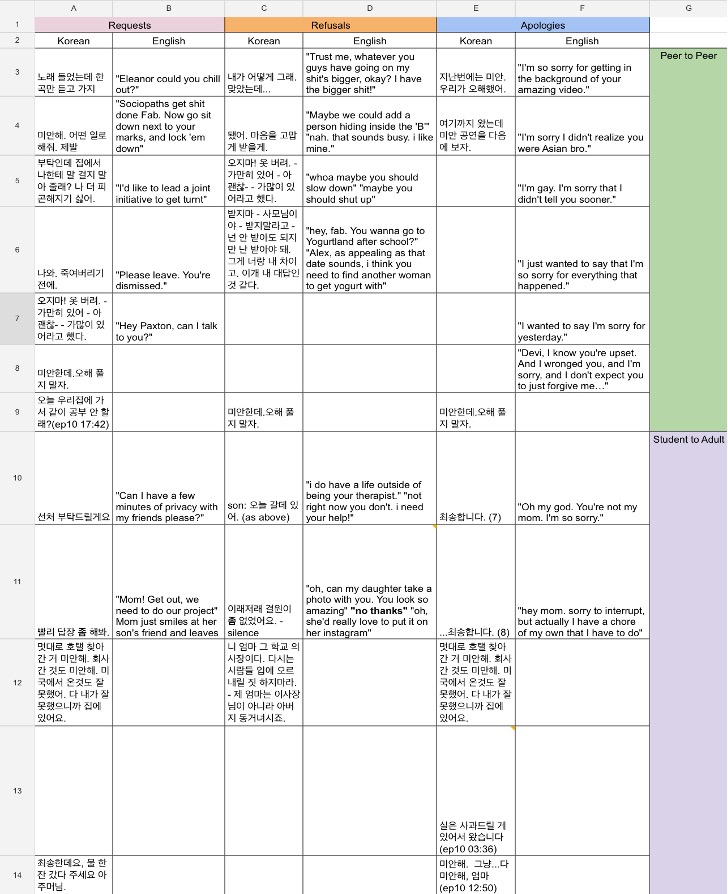
Extended Data Table:

Our data for requests, apologies, and refusals in English and Korean.


References

Brown, P., & Levinson, S. C. (1987). Politeness: Some universals in language usage. Cambridge University Press.

Cho, S. E. (2010). A cross-cultural comparison of Korean and *American social network sites: Exploring cultural differences in social relationships and self-presentation (Order No.3397528). Available from ProQuest Dissertations & Theses A&I; ProQuest Dissertations & Theses Global. (305224890). pp. 23-25

Ku, Jeong Yoon. “Korean Honorifics: A Case Study Analysis of Korean Speech Levels in Naturally Occurring Conversation.” ProQuest Dissertations Publishing, 2014. Print. P.7.

Kyoko Hijirida & Ho‐min Sohn (1986) Cross‐cultural patterns of honorifics and sociolinguistic sensitivity to honorific variables: Evidence from English, Japanese, and Korean, Research on Language & Social Interaction, 19:3, 365-401, DOI: 10.1080/08351818609389264) p. 370.

Lyuh, I. (1992) The art of refusal: Comparison of Korean and American cultures. ProQuest Dissertations & Theses A&I; ProQuest Dissertations & Theses Global. pp. 87-117

Mindy, K., Fisher, L., Klein, H., Miner, D., Shapeero, T. (Executive producers). (2020-present)

Never Have I Ever [TV series]. Kaling International, Inc.

Yoon, H. (Executive Producer). (2013). Inheritors [TV series]. Hwa & Dam Pictures.

[/expander_maker]

, ,

A Contrastive Study of Greetings

Estonian, Russian Estonian and Anglo-American Politeness Strategies

Daria Bahtina, unpublished MA thesis

The notion of politeness has attracted extensive attention in the last decades. Theoreticians analyze various instances of communicative acts and create sophisticated networks in order to reveal the norms that govern human behavior. The concepts are constructed and later used to talk about everyday communication, which might be dangerous due to the fact that theory and practice, though similar in essence, might discuss same notions using different terminologies. This paper is aimed at finding greeting tendencies in a given society concentrating on both theory and its practical realizations. The subject of investigation is the greeting behavior among Estonian- and Russian-dominant speakers in Estonia. This specific group received little attention and the findings are believed to be useful for understanding the nature of politeness in this particular culture.

The research concentrates on greeting patterns recorded in the Tartu University Library. The main hypothesis is that Estonians are apt to omit greetings in situations when the vocative, or attention-getting, function of politeness is missing (the other function being politeness-expressing). Another hypothesis is derived from the statement that Estonians generally greet less than Anglo-Americans and Russians. Next, it is also hypothesized that Russian Estonians greet more often than authentic Estonians. To test that, the first part of the study is conducted in the form of participant observation. Finally, the hypothesis is set up that in actual interaction people tend to use fewer politeness strategies than they deem polite in externally evaluating the same situations presented to them. The experiment designed for this hypothesis is a body of evaluations collected from ordinary language users where they display not the expressive, but the categorizing form of politeness.

READ FULL MA THESIS HERE 

Complimenting Behavior among Speakers of English and Russian

Cross-Cultural Study of Politeness Strategies

Daria Bahtina, unpublished BA thesis

Human communication faces numerous inaccuracies and misunderstandings due to divergences between different systems. The origin might lie in the fact that the representatives of the groups belong to divergent discourse systems. It is not difficult to imagine why there might be tensions between people with Western and Eastern cultural backgrounds, seniors and juniors, men and women, superiors and subordinates.

The aim of the study is to investigate complimenting as one of the aspects reflecting strategies that vary culturally. According to anecdotal evidence, some groups of people give compliments generously as flattery, whilst others are reluctant to word even praise. This study will attempt to find out why this should be the case by comparing Americans, British and Russians. The aim of the study is to analyze complimenting behavior from a particular point of view, namely in the superior-subordinate situation.

The first part of the work introduces the main theoretical concepts pertinent to the study and gives a general overview of politeness strategies that are believed to be true more or less universally. In this, the study draws mainly from the works by Scollon and Scollon (1995) and Brown and Levinson (1987).

The following part is a comparison between the relevant cultures outlined through a discussion of works by the researchers who deal with American, British and Russian politeness behaviors. Finally, the analysis based on theory and a survey conducted by the author is presented in order to reveal the actual situation and contemporary shifting tendencies.

The originality of the study lies in the fact that previous research in the field of comparing these particular cultures in respect to their complimenting behavior is scanty and insufficient. On the basis of these factors this work might be presented as an attempt to raise the issue that should be dealt with more thoroughly.

FULL BA THESIS HERE

Scroll to Top