gender differences

The Language of Love: Gendered Communication Patterns in Conflict

Analisa Sack, Paden Frye, Olivia Simons, Stella Kang, Jeorgette Cuellar

Our study explores the differences in how men and women express emotions in heterosexual relationships, particularly during conflict situations. The research investigates language dynamics among college-aged couples. Hypothetical conflict scenarios were used to elicit natural responses, which we then transcribed and analyzed. The findings reveal that women are more likely to use emotive language, engage in expressive communication, and employ collaborative discourse strategies during conflicts. In contrast, men tend to use direct communication styles, focusing on factual components and solution-oriented language. These results align with existing research on gendered communication patterns, supporting the hypothesis that media portrayals of emotional women and logical men have a basis in reality. This study underscores the importance of understanding gender-specific communication styles, offering insights that can enhance relationship counseling and educational programs. Future research directions include cross-cultural studies and longitudinal analyses to further explore these dynamics. The implications of this research are significant for developing tailored communication strategies in both personal and professional contexts.

[expander_maker id=”1″ more=”Read more” less=”Read less”]

Introduction and Background

We aim to investigate language dynamics and patterns within college-aged heterosexual relationships. With a specific focus on conversation, conflict, and conflict resolution. Communication styles in relationships affect conflict resolution and relational satisfaction. Prior studies have shown differences in male and female communication styles, but specific lexical patterns and their impact on conflict resolution are underexplored. We chose college-aged heterosexual relationships because this age group is shown to be especially important as shown in a study done by Sprecher (1993); typically, we see this age undergoing key developmental transitions and experiencing many situations that may be emotionally or relationally challenging. This study will analyze lexical patterns in conversations to understand gender dynamics in conflict resolution. We hypothesize that during conflict in heterosexual relationships, women are more likely than men to use emotive language, engage in expressive communication, and employ collaborative discourse strategies during conflict resolution, whereas men are more likely to use direct and assertive communication styles, focusing more on factual components of the situation and solution-oriented terms of speech.

Regarding social structures within college-aged relationships, previous research has suggested women are more emotionally active in relationships, but little applicable research has actually shown this. While women have expressed the consistency in emotions experienced being high, their expression of these emotions isn’t necessarily higher than that of men. Our study aimed to understand how men and women approach conflict resolution by looking at word choice and language use in particular (conversation analysis), evaluating how men and women use language differently to approach conflict. The language aspect we are examining is word choice (lexicon) and interaction patterns (conversation analysis) – more specifically, the use or lack of emotive language and expressive communication (Rogers, Ha, Byon, & Thomas, 2020, p. 112).

Methods

In order to collect relevant results, we thought it would be best to observe couples resolving a “natural” conflict. Since it would be nearly impossible to follow a couple around and wait for them to have a fight, we thought our best option would be to simulate a conflict and ask the couple to react to each other the way they would in real life. We understand and acknowledge that this might present flaws in our data due to self-reporting bias, where people tend to try making themselves seem “better” than they are in reality. Nevertheless, these are the hypothetical situations we presented:

  1. The first hypothetical (where the female partner is upset) is the following: “You are upset because last night you were trying to get ready for scheduled plans, but you felt rushed by the tasks that needed to be done before you left (go grocery shopping, cook dinner, wash dishes, etc..). You did several tasks alone while your partner sat on the couch and watched TV; he was aware that you were working hard and rushing because you needed to be somewhere, yet he didn’t help. You are trying to express that you feel abandoned because he wasn’t trying to help you.”
  2. The second hypothetical (where the male partner is upset) is the following: “You are upset because your partner was out late at a girls’ night and was being unresponsive to you. You knew that she would be out late; however, she didn’t text you the entire night, ignored your phone calls, and didn’t call back until she finally got home. She apologized, but made excuses about just ‘forgetting.’ You are trying to express that you feel ignored and hurt because she didn’t consider how you would feel about her silence.”

After we conducted the interviews, we analyzed the transcripts by deciding on five categories that best summed up the strategies the two participants used. These categories included justifications, connecting the argument to larger issues in the relationship, involving emotions, using logical approaches, and apologizing. We decided on a standardized way to tag parts of the dialogue with each strategy and then counted each instance of each strategy for both partners in both hypotheticals. We then created pie charts to visualize our data for both partners in both hypotheticals.

Results and Analysis

The most common strategy used by the female partner was connecting the argument to larger issues in the relationship, followed by justifications and involving emotions. For the male partner, justifications came first, followed by using a logical approach and apologizing.

After conducting controlled experiments with the implementation of two separate hypothetical situations to heterosexual college couples, it was observed that male partners exercise direct response tactics more often than females and utilize logical reasoning along with factual references in order to strengthen their argument, while also digressing at moments in order to avoid further conflict or off-track arguments. Previous studies have hypothesized that a woman’s willingness to exceed only factual comments in arguments is due to their lack of power or control in the outside world and their desire to hold more control in intimate spaces.
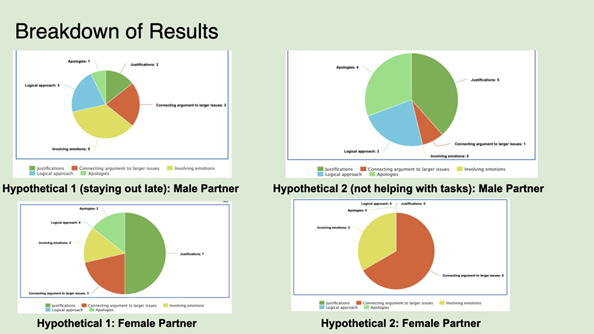
Figure 1. Results from each hypothetical separated by strategy category.

Female partners tended to use open questions and emotive language very often, expressing their feelings. Although initial questions were presented when initiating conflict resolution strategies, there were never any direct solutions posed by the female partner. Female participants also expressed a wider range of emotions, including anger, sadness, confusion, and disbelief during the conversation. Vocally, our female participant also had more shifts in tone – explicitly in words used – and differences in pitch depending on the emotions she felt at the moment. The female participant also related current conflict with previous situations where her feelings and overall well-being were disregarded, and she was forced into performing more emotionally/physically labor to make up for her partner’s negligence.

Our findings were in line with the article “Gender Differences in Perceptions of Emotionality” by Susan Sprecher used as background for the study, specifically with the idea that men will not argue as emotionally or as long as women do and tend to discuss conflicting topics without extreme emotion. We hypothesized these would be our result but ultimately gained a better understanding of the psychodynamic difference of the male versus female resolution strategy through the article’s in-depth observations.

Discussion and Conclusions

In conclusion, our hypothesis was supported by the findings of our study. We observed differences in communication during conflict resolution within heterosexual relationships. Women were more inclined to use more emotive language, characterized by a higher frequency of elements such as tag questions. This aligns with Robin Lakoff’s observations in “Language and Woman’s Place,” where tag questions – phrases like “isn’t it?” or “right?” added to the end of statements – serve to invite confirmation or agreement, thereby fostering a more inclusive and collaborative dialogue (Lakoff 54). In our research, women used tag questions seven times compared to men’s two instances. For example, in Hypothetical 1, a woman asked, “Do you trust me or my friend’s stories?” (F, 02:18), illustrating the use of tag questions to engage the listener. Conversely, men demonstrated a tendency toward a more direct communication style, often employing justifications. This logical approach focuses on explaining actions or decisions assertively. For instance, in Hypothetical 2, a man stated: “You usually just want to do stuff your own way because if I do something my way, you don’t like the way it’s done” (M, 00:49). This directness reflects a more frequent use of logical elements in his communication, aimed at justifying perspectives or actions.

Further, our results are in alignment with studies done about typical communication style differences in gender. In the article “Gender Issues: Communication Differences in Interpersonal Relationships” from Ohio State University, we learn that society has a general understanding of women having to ‘read between the lines’ in relationships: “Studies indicate that women, to a greater extent than men, are sensitive to the interpersonal meanings that lie ‘between the lines’ in the messages they exchange with their mates. That is, societal expectations often make women responsible for regulating intimacy, or how close they allow others to come” (Torppa). As we concluded from our own research, it appears that women are more inclined to connect a specific argument to the larger scope of the relationship. When something brought up in conflict triggers a larger, recurring issue, the female partner is likely to open up the conversation to what she can see by ‘reading between the lines.’

According to research done by Jessica Cindaro regarding male and female differences in communicating conflict, prior literature suggests a tendency for women to be more emotive in their communication styles, while men tend to be more direct and assertive, using emotions less. Cindaro explains that this is in part because of gender stereotypes and the environment in which men and women are raised in and the messages they receive growing up about how best to communicate (Cindaro). We see in our results that there is an even distribution involving emotions, but that the male partner takes more of a logical approach more often than the female partner.

These findings underscore the distinct communication styles of men and women, and such insights can be valuable in enhancing communication strategies across various contexts, from personal relationships to professional interactions. Also, by providing deeper insights into how communication styles differ between genders, our findings can inform relationship counseling and therapy practices, allowing therapists to develop more effective strategies that are tailored to each gender. This improved understanding can contribute to better communication and conflict resolution within relationships, ultimately supporting potentially healthier interpersonal dynamics.

In the future, our research aims to open avenues for expanding the scope of study. One possible direction is conducting cross-cultural studies to investigate whether the communication patterns we observed are consistent across different cultural contexts or if they vary significantly. This would provide a broader understanding of how cultural influences shape gender communication styles. Additionally, we could undertake longitudinal studies to track how communication styles and conflict resolution strategies evolve over time within relationships. These long-term studies can offer deeper insights into the dynamics of long-term relationships, shedding light on how communication evolves and how couples adapt their conflict resolution strategies over the years.

Another question that might be brought up in relation to our study is one of media’s influence on a person’s gender identity. In the TED Talk “Secrets of Children’s Media: Effects of Gender Stereotypes,” Rifa Momin reveals that children are influenced by the stereotypes they continuously hear as they grow up. From children’s television to storybooks, the power of media influence contributes to “children developing a sense of maleness and femaleness based off of these stereotypes and organiz[ing] their behaviors around them” (Momin). This presents a bigger question about our research: Do the stereotypes we perceive men and women to inhabit originate from their media intake? If children were not exposed to media that perpetuates gender stereotypes, would they grow up to act differently than the way society has led us to believe we’re ‘inclined’ to act?

Overall, the study we have conducted opens a wide variety of discussion topics regarding gender stereotypes, communication styles, and conflict within heterosexual college-aged relationships. While our study is not reflective of every single relationship out there, we hope we accomplished our goal of sparking conversation to further understanding about why men and women communicate differently.


References    

Cinardo, J,  (2011) Male and Female Differences in Communicating Conflict. Honors Theses. 88. https://digitalcommons.coastal.edu/honors-theses/88.

Lakoff, R. (1973). Stanford. Language and Woman’s Place. https://web.stanford.edu/class/linguist156/Lakoff_1973.pdf.

Momin, R. (2022, March). Secrets of children’s media: Effects of gender stereotypes. Rifa Momin: Secrets of Children’s Media: Effects of Gender Stereotypes | TED Talk. https://www.ted.com/talks/rifa_momin_secrets_of_children_s_media_effects_of_gender_stereotypes?language=en.

Rogers, A. A., Ha, T., Byon, J., & Thomas, C. (2020). Masculine gender‐role adherence indicates conflict resolution patterns in heterosexual adolescent couples: A dyadic, observational study. Journal of Adolescence, 79(1), 112–121. https://doi.org/10.1016/j.adolescence.2020.01.004.

Sprecher, Susan. Sexuality. SAGE Publications Inc., 1993.

Sprecher, S., & Sedikides, C. (2019, August 14). Gender differences in perceptions of emotionality: The case of close heterosexual relationships – sex roles. SpringerLink. https://link.springer.com/article/10.1007/BF00289678.

Torppa, C. B. (2010, February 25). Gender issues: Communication differences in interpersonal relationships. Ohioline. https://ohioline.osu.edu/factsheet/FLM-FS-4-02-R10.

[/expander_maker]

, , , , ,

Gender Portrayals in Hip-Hop Lyrics

Jazmin Flores, Charlene Juarez, Javier Nuñez-Verdugo, Sofia Nyez

Hip-hop music as a genre has grown in popularity and oftentimes notoriety among younger generations for its catchy beats, the interesting artists behind them, and the relationships that come as a result of them, whether those be for better or for worse. Beyond its redeeming qualities, however, there has been a push in recent years especially to investigate the prominence of gendered violence in the form of lyricism. In this study, we analyzed the frequency with which certain gendered noun substitutions are found in the top hip-hop songs of 2023 written by men and women alike. With an emphasis on analyzing opposite-sex noun substitutions, our group found that women more often than not tend to refer to men in their music the most out of any other gender-to-gender category. Additionally, we found that women also tend to use the substitute “bitch” up to 3 times more than men do. 

[expander_maker id=”1″ more=”Read more” less=”Read less”]

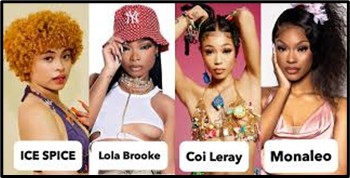
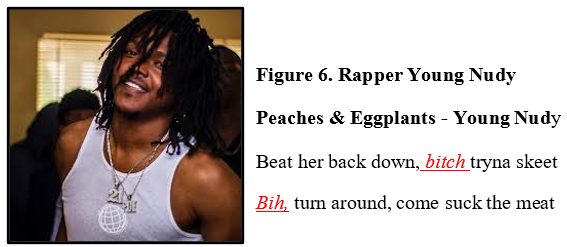
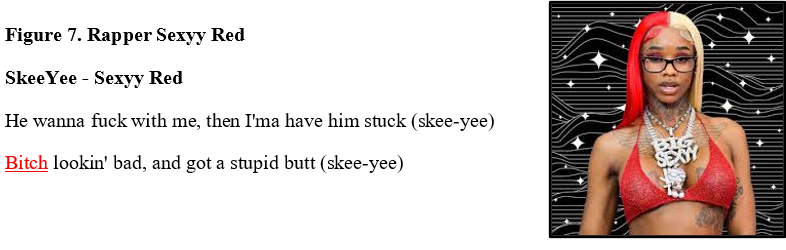
Figure 1. Several songs that will be analyzed in this article.

Introduction

Hip-hop is a largely male-dominated industry that often finds itself as an entertaining medium/genre for promoting self-pride and rapper “beef” in the form of diss tracks towards other artists. However, the genre has also found itself to be associated with more negative ideas relating to arrogance, misogyny, hypersexuality, and drugs in the public eye. This study will focus on the issues of misogyny surrounding the hip-hop/rap industry, specifically on how women are portrayed in songs via the lyrics, to understand how these communities have contributed to creating a hostile environment for women in our society. In more recent years, there has been an uptick in female rappers who have aimed to take back their power (Krasse, 2019). Female rap artists have transformed targeted, derogatory phrases like “bitch,” “hoe,” and “slut” into forms of empowerment. Through their music and lyrics, they reclaim ownership of these words, reshaping them into symbols of strength and resilience. In doing so, they redefine societal perceptions and assert their power in the face of adversity. This study will mainly focus on the differences between how male and female rappers portray the opposite gender in their music, with a strong focus on how male rappers sexualize or objectify women and how women threaten men’s masculinity. Additionally, we will also take some time to address same-gender portrayals in the hip-hop genre using similar research strategies. We will be examining this through the lexical use and variation across the aforementioned categories.

Background

In recent years, there has been a glorification of this genre of music despite its content. While we are aware that misogyny is clearly present in these songs, it is interesting to analyze how it has influenced our society for better or for worse. First, we will be focusing on the language that current male and female rap artists use in their work. Music has the power to change a person’s mood or perceptions in relation to sexism (Cobb & Boettcher, 2007). Therefore, we will also comment on how the content of current male and female rap artists’ music has affected younger generations. It is important to analyze how the use of explicit language about women has affected society’s perception of them.

Figure 2. Popular rappers included in Spotify playlist ‘RapCaviar Presents: Best Hip-Hop Songs of 2023.’

In this study, we proposed the question: How has misogyny manifested itself in Hip-Hop/Rap music in 2023 comparatively between men and women, as demonstrated through their lyrics when addressing the same or opposite gender? Based on previously investigated data (Sallam & Shim, 2021), we expect to find that men describe women negatively at a higher rate than when they describe themselves, when women describe men, and when women describe themselves.

Methodology

In our study, we will be examining the descriptors of the genders (such as “wack”) and any noun substitutes (such as “hoe”). Popular artists like Gunna, Central Cee, and Travis Scott commonly use noun substitutes like “gold diggers,” ”bitches, and ”hoes” in reference to women. The use of insulting and/or derogatory language towards another on the basis of gender can be seen as a means of affirming the gender of the speaker. While the reasons behind such thoughts are nuanced, the pressing reason that we would like to highlight is gendered linguistic violence being a means of reinforcing traditional gender norms that paint men as superior to women. For a modern-day example of this, we can look no further than to the self-proclaimed “Alpha Male” influencer Andrew Tate, who was popular for a large part of 2023 for his social media content aimed at defending rather reductive and traditional views on gender (Radford, 2024). These views have the end goal of defending this idealized masculinity that celebrates male confidence and resentment towards women for apparently posing a threat to and stigmatizing such traditional gender norms.

The project design will consist of identifying and gathering 20 songs from 2023 male and female rappers. We have narrowed down the song selection to the top 10 rap songs by female rappers and the top 10 rap songs by male rappers from Spotify in 2023. As we analyze the lyrics of this genre, we will look at how men describe women, women describe men, men describe men, and women describe women through the use of lexical items. Specific lexical items include adjectives, phrases, and slurs that are used as forms of derogatory remarks towards the gender that is being described. To identify our data we looked at three categories of lyrics: those addressing women, those addressing men, and those talking about anything else. As a form of methodology, we will calculate how often slurs or insulting/provoking phrases are used in regard to an individual’s gender (Sallam & Shim, 2021).

Results and Analysis

To quantify our data, we looked at three categories across the board through the use of pie charts; one for male artists and one for female artists to help us compare our data. In order to qualify this data, we created a histogram with the most commonly used noun substitutions to get a side-by-side view of its usage by both groups of artists.

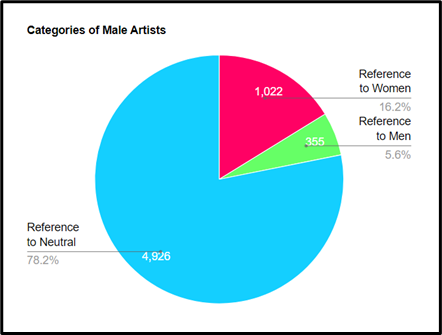
Figure 3. Pie chart to tabulate how many references MALE artists make to the following three categories – towards women, towards other men, and everything else/general language.

Figure 3 shows a greater tendency for men to refer to women at 3 times the rate than they do other men when just considering gender-to-gender ratios of speech.

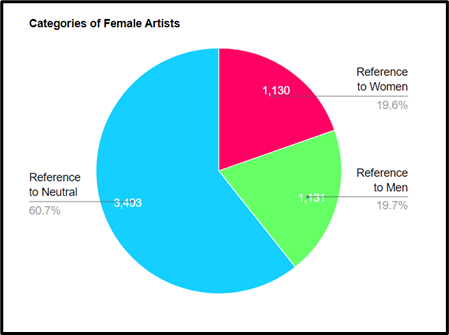
Figure 4. Pie chart to tabulate how many references FEMALE artists make to the following categories – towards men, towards other women, and general language usage.

Figure 4 shows different results and serves as a contradiction to our original hypothesis, showing that women in the top songs of the 2023 hip-hop genre have almost an equal ratio to referring to other women than they do to men (19.6% vs. 19.7%, respectively).

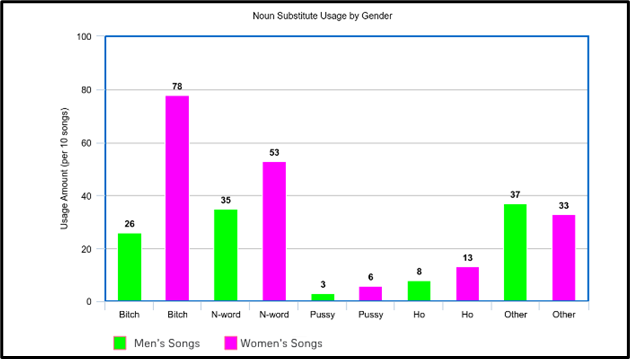
Figure 5. Bar chart tallying the total number of times a noun-substitute to refer to the opposite or same gender was used, divided by gender. Green refers to songs written and sung by men, while pink refers to the same for women.

Figure 5 directly goes against our original hypothesis that men would refer to women negatively the most out of our aforementioned gendered categories. Instead, we see that, for example, women use the selected noun substitutions (excluding “Other”) in their music more than their male counterparts in each bar with at least a 50% or more increase. Conversely, both men and women almost utilize the same rate of “Other” gendered noun substitutes. Examples of these substitutes would be “Karen” towards women and “slow” as a general derogatory noun substitute.

Discussion

Although we originally hypothesized that male artists were to have the highest scores to their female counterparts, the findings based on the data collection were that women tend to talk about men more than men talk about men. In addition, women use profanity more often than men. Specifically, the noun substitute “bitch” is used by women 3 times more than men do, which in the early stages of our study was one of the key noun substitutions. While these findings do prove the large usage of this noun substitution, we were not anticipating it to appear under female rap artists. Relating back to the hypothesis and research question, our hypothesis was disproved, given how women speaking on men was the highest subcategory. It is important to analyze hip hop for its contributions to popular culture and therefore, the influence it has on the greater population when it specifically utilizes gendered language. Some examples were seen in the number of words that were used, for instance, in Men’s Hip-Hop Top 10: there were 6,303 words versus 5,814 words for Women’s Hip-Hop Top 10. The noun substitutions for women are a direct manifestation of misogyny in hip-hop music. In the hip-hop world, words often carry a double meaning. Is it possible that we were proven wrong? Or do the usages of “bitch,” “hoe,” and “slut” carry a double meaning? It is possible that the times we simply tally these words neglected the context of its usage in the song. In particular, there is a difference when male rap artists use certain words and when female rap artists use the same word. Let’s take a look at the importance of double meaning and context:

While male artists use the noun substitution to degrade and sexualize women, female artists use it to empower women. They redefine what “bitch” means to women. By doing so, these women are taking back their power, as they no longer give men the ability to use words as weapons.

Conclusion

We believe it would be beneficial for future research to be conducted concerning this topic, as some limitations of this study included time constraints and a need for more expansion. One area of expansion includes analyzing music from other languages that hip-hop and rap are produced in besides English, and a possible comparative analysis between English-language music and foreign languages could be beneficial as a cross-cultural study. Furthermore, a study comparing the hip-hop of earlier decades to current music could also yield significant results, as hip-hop and rap are rapidly changing cultures owing to a number of factors, as detailed in Ellen Chamberlain’s TED Talk on the history of misogyny in the hip-hop industry. While a bit broad, it could also be interesting to look into some comparisons between other genres of music in conversation with the hip hop genre.

During our presentation, we were asked if the race of the rapper had anything to do with their language use. While this is probably a factor, as we investigated during the course that every aspect of a person’s personality plays a role in the way they speak, we chose to focus on the gender of the artists instead. This is because many of the artists in the hip hop industry are African American, and thus, it would be difficult to distinguish between marks of the group or marks of the music industry. We also did not want to perpetuate the stereotype of the “violent black man” or “angry black woman” through our research and decided to stick to only the gender differences. Though, it should be noted that there are definitely more factors at play in the language use of hip-hop artists besides their gender, and it could be beneficial to study more into that topic using careful consideration.

We believe that this study can fit into the larger body of research surrounding misogyny in the hip-hop industry as displayed through linguistic elements. Though the results aren’t exactly exemplary of what has been previously displayed in the literature, we believe it opens the floor for more discussion about not just the prevalence of discrimination but the forms in which it might come. While much literature believes women to be the target of discrimination from men for the most part, our research found that women not only speak about men at a higher frequency but use derogatory terms more often as well.

All in all, while progress has been made in addressing misogyny within hip-hop, rap music, and artists, there is still much work to be done. By understanding the nuances of gender representation in lyrics and challenging harmful stereotypes, the industry can move towards a more inclusive and unprejudiced community for future artists and listeners.

References

Boettcher, W. A., & Cobb M. D. (2007). Ambivalent Sexism and Misogynistic Rap Music: Does Exposure to Eminem Increase Sexism?. Wiley Online Library. https://doi.org/10.1111/j.1559-1816.2007.00292.x.

Chery, C. (2024). RapCaviar Presents: Best Hip-Hop Songs of 2023. Spotify. https://open.spotify.com/playlist/37i9dQZF1DWZFV9Asvj1J9?si=PdIXfalHQs-tcMM0hRggZg&pi=u-Abilm4LaTuW5&preview=coverart.

de Leon, A. (2007, June 6). The complex intersection of gender and hip-hop. NPR. https://www.npr.org/2007/06/06/10783904/the-complex-intersection-of-gender-and-hip-hop.

Krasse, L. (2019, Spring). A Corpus Linguistic Study of the Female Role in  Popular Music Lyrics. https://www.diva-portal.org/smash/get/diva2:1481063/FULLTEXT01.pdf.

Neff, S. (2014, May 24). Sexism Across Musical Genres: A Comparison. Undergraduate Thesis Western Michigan University. Pp. 38. https://scholarworks.wmich.edu/cgi/viewcontent.cgi?article=3486&context=honors_theses.

Prior, J. (2017, March 1). Teachers, what is gendered language?. British Council. https://www.britishcouncil.org/voices-magazine/what-is-gendered-language.

Radford, A. (2024, March 12). Who is Andrew Tate? The self-proclaimed misogynist influencer. BBC News. https://www.bbc.com/news/uk-64125045.

Sallam, A. M., & Shim, J. Y. (2021, February). Gender-biased English language in hip hop music. ARC Publications. https://www.arcjournals.org/pdfs/ijsell/v9-i2/1.pdf.

Wayne University. (2019). Misogyny in Hip Hop. TED. Retrieved June 12, 2024, from https://www.ted.com/talks/ellen_chamberlain_misogyny_in_hip_hop.

[/expander_maker]

, , , , ,

Dialogues of Fame: Unveiling Gender Dynamics in Celebrity Interviews

Elizabeth Escamilla, Penelope Hernandez, Kenzie MacDougal, Jason Ye

Human interaction is complex and, at a sociolinguistic level, can be challenging to parse. With that in mind, we chose to analyze celebrity interviews — definite and structured slices of conversation whose participants were conscious of the invisible future viewer. Informed and inspired by studies such as Julia T. Wood’s “Gendered Media: The Influence of Media on View of Gender,” Rossi and Stiver’s “Category-Sensitive Actions in Interaction,” and Tavitz and Perez’s “Language influences mass opinion toward gender and LGBT equality,” we investigate patterns of interaction and indexical shifts as they may be affected by the genders of the involved parties. Taking two-minute segments from each interview, we classified questions as personal or professional and invasive or appropriate. Anything deviating from expected interview etiquette was noted, whether that be word choice or tone of voice, as well as the reactions of any third parties. Most importantly, we classified the ways in which interviewees responded to invasive lines of questioning, specifically as one of the following: retaliatory questioning, a passive aggressive remark, a humorous deflection, a partial answer, or a direct answer. A significant trend of women receiving more invasive and personal questions quickly appeared, though our investigation suffers from a possible selection bias. Therefore, future investigations should pull from a much larger and more varied sample of interviews.

[expander_maker id=”1″ more=”Read more” less=”Read less”]

Introduction and Background

Celebrity interviews aren’t conversations that take place in a vacuum; they may be viewed by hundreds, if not thousands, of people. Additionally, the predefined question-answer format of an interview makes it easier to parse for sociolinguistic analysis. Needless to say, we found celebrity interviews to be generous data points for analyzing patterns informed by the gender identities of the involved parties.

Studies like Julia T. Wood’s “Gendered Media: The Influence of Media on View of Gender” show us how the media’s representation of men, women, and queer people may affect a viewer’s understanding of gender roles. Problematic patterns are uncovered: “men and women are portrayed in stereotypical ways that reflect and sustain socially endorsed views of gender… depictions of relationships between men and women emphasize traditional roles and normalize violence against women” (Wood, 2013). Unlike fictional movies and television shows, the interactions recorded in celebrity interviews involve real people, or at least believable personas designed with the public eye in mind. It follows that interviews with respected, famous individuals play a greater role in influencing what people deem socially acceptable behavior. Thus, when audiences watch mistreatment of women play out with little to no consequence, they may feel validated in their own experiences with misogyny, as either a perpetrator or victim.

Media is both what its creator produces and what the viewer brings to their experience with it. The manners in which interviewers and interviewees carry themselves both reflects and defines current standards for human sociolinguistic communication. Inspired by “Category-Sensitive Actions in Interaction,” we hope to identify patterns in lines of questioning and the manner in which these questions are handled. That study outlines how boundaries of social membership are exposed in ordinary interactions — “the distribution of rights and constraints to perform certain actions creates boundaries in people’s activity space, which are typically respected but sometimes exposed or even crossed” (Rossi and Stivers, 2020). As it pertains to our investigation, when an interviewee is asked an invasive question, this may be classified as a transgression of these silent boundaries.

So, we aim to contribute to a growing body of work suggesting that different behaviors and patterns of interaction vary based on the gender of the interviewee, unfortunately often at the expense of women and queer individuals.

Methodology

We chose to study a variety of variables for this project, including the frequency of personal versus professional questions, word choice and tone of voice used by the interviewer, and the methods interviewees used to navigate controversial questioning.

Upon examining an interview, we followed a set of steps to extract and prepare the data for analysis moving forward. First, it’s important to classify any questions as being professional, personal, appropriate, or invasive.  Professional questions relate strictly to the interviewee’s work, while personal questions deviate from this. Similarly, appropriate questions are given to those that are deemed socially acceptable, such as topics commonly discussed with acquaintances, while invasive questions are not. Next, we take note of any speech or tone used by either interviewer or interviewee that may deviate from the expected etiquette of interviews. From here, we classify methods used by interviewees to ease out of or address uncomfortable questioning. We chose to classify these among the following: direct answer, partial answer, humorous deflection, passive aggressive remark, or retaliatory questioning. Humorous deflection involves the use of humor in an effort to avoid responding to the question. A passive aggressive remark includes any form of snarky or sarcastic response, including those done purposefully to attack the interviewer. Retaliatory questioning is the act of answering the original question with a question of one’s own. Finally, if the selected interview happens to involve more than one interviewee, it is important to also take note of any third party reactions or interactions to awkward questioning. 

To demonstrate our methodology, we will examine an interview with Scarlett Johansson and Jeremy Renner for their film The Avengers (2012). The first question, directed at Johansson, was: “Were you able to wear undergarments [with your costume]?” This question was labeled personal and invasive. Johansson responded with a passive aggressive remark and retaliatory questioning: “I’ll leave it up to your imagination, okay, whatever you feel like I should be wearing or not wearing under that costume” (Passive Aggressive Remark) and “What is going on? What? Since when did people start asking each other about- in interviews about their underwear?” (Retaliatory Questioning). Later on in the interview, Jeremy Renner is asked a question about an injury: “I understand you got hurt pretty badly though. How’d you do that?” This was labeled as professional and appropriate, and no other notes were taken as there was no unique use of tone, word choice, or navigation methods.

Results & Analysis

In this section, we will break down the details of our results and perform analysis on each individual dataset table (interviews); let’s start with some visuals demonstrating the overall statistics.

Table 1. This table shows the totaled data from individual datasets (interviews) into one table.


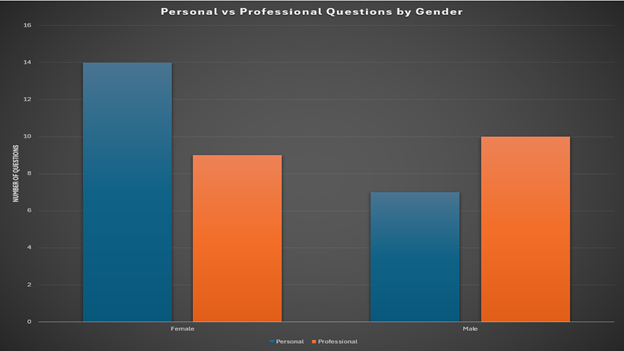
Figure 1. This graph shows the number of personal vs. professional questions the interviewees received based on their respective gender.


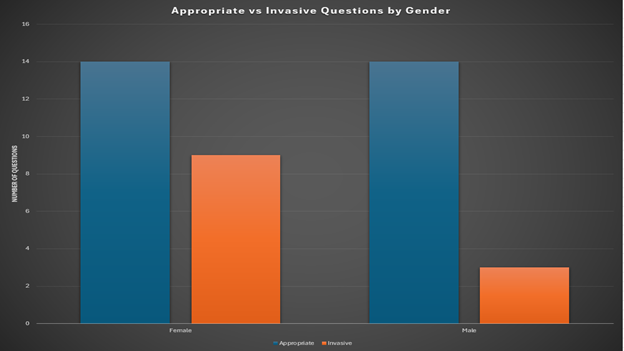
Figure 2. This graph shows the number of appropriate vs. invasive questions the interviewees received based on their respective gender.

Just from these few charts, we can already gauge a sense of skewedness, one that seems to confirm our hypothesis: female interviewees, regardless of the gender of the interviewer, are likely to encounter more personal questions compared to male interviewees. Indeed, we can see that 61% of the questions asked to female interviewees were personal, as opposed to 41% of the questions posed to their male counterparts (49% increase). On top of that, we found 39% of the questions asked to female interviewees were also invasive in nature, while only 17% were invasive for male interviewees, which is a 129% increase, more than twice as many invasive questions. This disparity in question types based on the interviewees’ gender is alarming.

To navigate these invasive lines of questioning, we found that male and female celebrities tend to employ different methods. Female celebrities mostly used retaliatory questioning, humorous deflection, and direct answers — the first two methods being more indirect ways of signaling to the interviewer that the line of questioning was inappropriate. Male celebrities, on the other hand, mostly used direct answers and passive-aggressive remarks, which we speculate is due to men feeling more comfortable asserting themselves in these socially invasive situations.

Now, having discussed the key points of our results, we will provide additional analysis on each individual dataset (interview) separately.

Table 2. Data for The Avengers interview with Scarlet Johansson and Jeremy Renner (Male Interviewer).

This first dataset/interview was already touched on in the previous section on methodology, it suggested the same disparity in question types between the female and male interviewees. Scarlet Johansson received a disproportionate amount of personal and invasive questions and had to defend herself using mainly retaliatory questioning, while Jeremy Renner received only appropriate or professional questions.

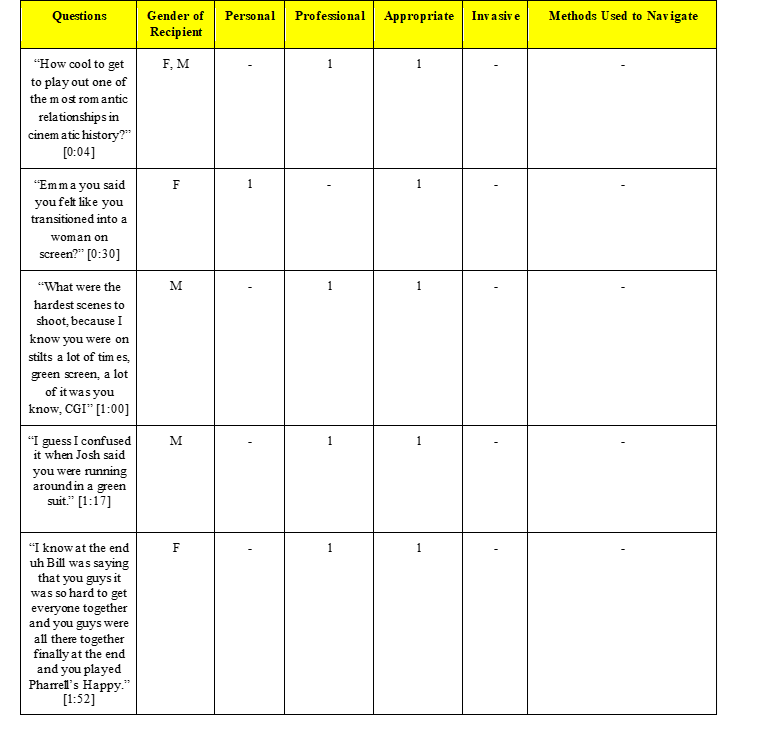
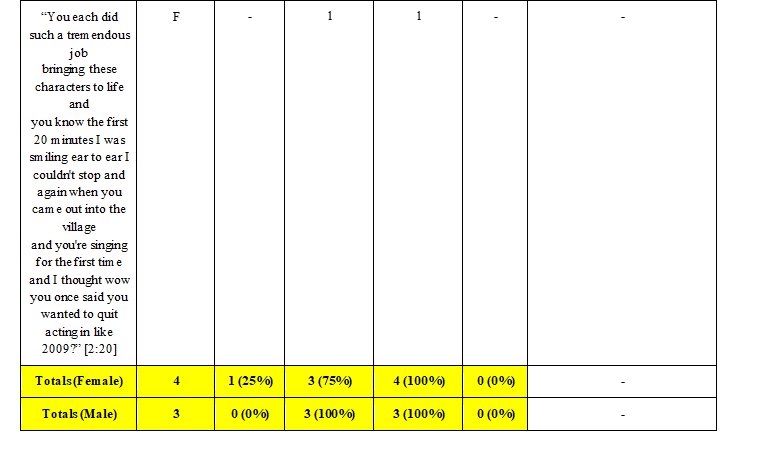
Table 3. Data for Dan Stevens and Emma Watson interview for Beauty and the Beast (Female Interviewer).

This dataset/interview is an outlier amongst all the other datasets. First thing we noticed is the empty “Methods Used to Navigate” column; we didn’t need to fill in any. All the questions were appropriate and professional with only one personal (but appropriate still) question directed at Emma Watson. Interestingly, this is also the only interview in our entire dataset pool with a female interviewer; more evidence and data would be needed to come to any meaningful conclusions about whether the gender of the interviewer correlated with the fact there were no invasive questions.

Table 4. Data for interview with Zendaya, Mike Faist, and Josh O’Connor for Challengers (Male Interviewer).

There are two invasive questions, and both were directed at Zendaya. The note-worthy takeaway here is the fact that both her co-stars Josh and Mike came to her support/rescue with direct answers trying to further alleviate the awkward situation after Zendaya responded initially with a retaliatory question.

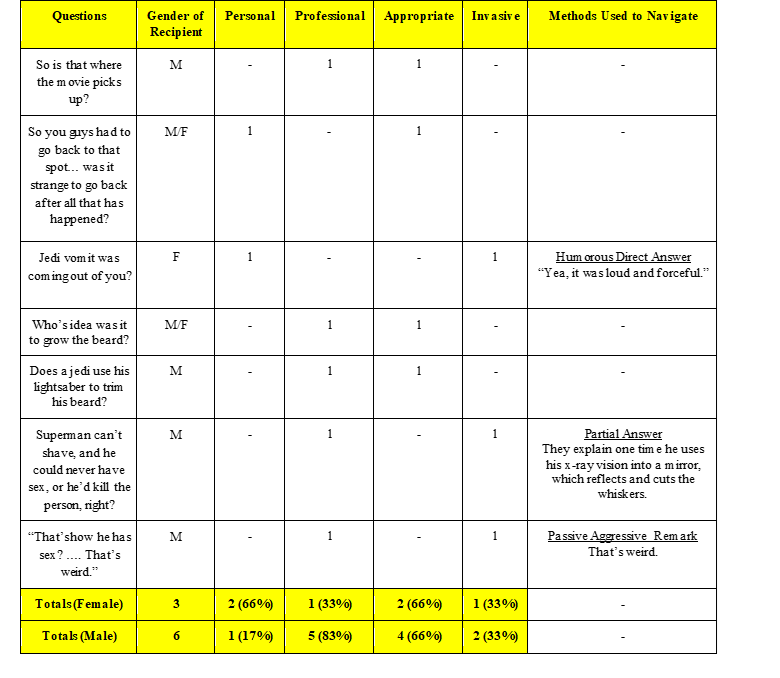
Table 5. Data for interview with the cast of Star Wars: The Last Jedi (Male Interviewer).

Out of the three invasive questions in this dataset/interview, two were directed at a male interviewee (certainly an outlier too in and of itself). Here, we see the use of a passive aggressive remark employed by the male celebrity and a partial answer instead of a more direct one, though the tone does not detract too much from a direct one. The female interviewee employed a humorous direct answer; though a direct answer, the tone is more of just a humorous answer without the impact of a completely direct response.

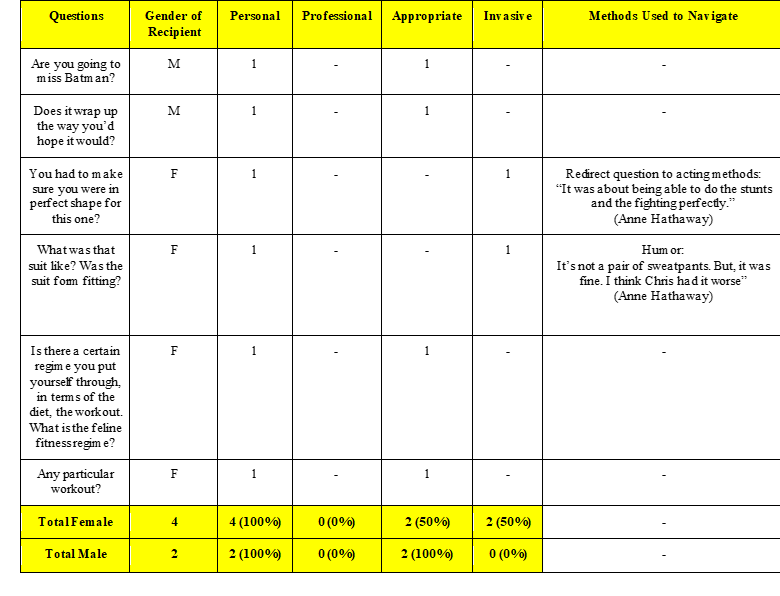
Table 6. Data for interview with Christian Bale and Anne Hathaway for The Dark Knight Rises (Male Interviewer).

Both invasive questions were directed at Anne Hathaway, and humor and deflection were used to navigate the situation. All four of the questions directed at her were personal. While the male interviewee also received only personal questions, none of them were invasive.

Circling back to our hypothesis one more time after the more detailed look into each dataset, we can establish the clear gender bias in type and appropriateness of questions posed to celebrities in interviews, with female celebrities disproportionately subjected to more personal and invasive questions — confirming our suspicions and reflecting societal attitudes and expectations around gender.

Discussion and Conclusions

Based on our findings, we can conclude that there needs to be more discussions about indexicality and societal attitudes towards celebrity culture. Our study found that female interviewees are more likely to receive personal and invasive questions compared to their male coworkers. We observed that interviewees have various strategies to navigate these invasive questions, such as using humor or redirecting the conversation. This finding aligns with our hypothesis and suggests that gender does play a significant role in the nature of questions asked in celebrity interviews.

When comparing our own study with previous research, we can view consistent results with Rossi and Stivers, Tavits and Perez, and Wood. They show that female celebrities often face questions that cross personal boundaries, contributing to the systemic stereotyping and underrepresentation of women in the media. Interestingly, in the Tavits and Perez article, they found that “the effects of feminine pronouns parallel those of gender-neutral pronouns: both heighten the salience of non-males in memory, which is then associated with people expressing more liberal opinions toward women and LGBT groups in politics” (Tavits and Perez, 2019). This article informs us of variables that affect how a viewer might perceive the interactions captured in celebrity interviews. To continue, Wood’s article on gendered media can help us to better see the media’s representation of men, women, and queer people and how that may affect a viewer’s understanding of gender roles (Julia T. Woods, 2013). Interviews play a greater role in what is acceptable and what is normalized amongst gender groups.

Our study suggests that the media continues to reinforce traditional gender roles by subjecting female celebs to more personal scrutiny. Wood did a great job at explaining this. She stated how “depictions of relationships between men and women emphasize roles and normalize violence against women” (Wood, 2013). This not only affects the celebrities themselves but also influences public perceptions of acceptable behavior towards different genders. Everything we do in the media gets translated and put into practice outside of the media. So, whatever we allow to happen online will be manifested in real life interactions.

We focused on American celebrities, but if we were to dive into other environments, we would have more evidence to contribute and offer more indications to analyze gender dynamics in media interactions. For the future, we could expand on our study by examining a more diverse range of celebrities, locations, and interview formats.

When we look at our findings holistically, we can understand how the media plays a huge role in shaping public discourse around gender. When we examine the patterns within celebrity interviews, we can see there is a large need for more equitable and respectful media strategies. In our findings, we want to emphasize and analyze these dynamics because they are crucial for social change. It is important to challenge changing media practices so they can better promote gender equality and respect for all individuals in any field of work.

In conclusion, our study not only contributes to understanding media and gender but also calls for a more conscientious and equitable approach to media representation. The media we consume online does not exist in isolation. It shapes our perceptions and behaviors in several tangible ways. Gender biases and stereotypes reinforced in digital content can manifest in real-life interactions. By promoting respectful and equitable interactions online and through interviews, we can adopt more inclusive and respectful behavior towards all genders in our everyday lives, professional or not.

References

Montiel, A. V. (2014). Media and gender a scholarly agenda for the Global Alliance on Media and gender. United Nations Educational, Scientific, and Cultural Organization.

Pewsey, G. (2021, July 13). The world owes Megan Fox an apology. Grazia. https://graziadaily.co.uk/celebrity/news/megan-fox-michael-bay/.

Rossi, G., & Stivers, T. (2020). Category-sensitive actions in interaction. Social Psychology Quarterly, 84(1), 49–74. https://doi.org/10.1177/0190272520944595.

Tavits, M., & Pérez, E. O. (2019). Language influences mass opinion toward gender and LGBT equality. Proceedings of the National Academy of Sciences, 116(34), 16781–16786. https://doi.org/10.1073/pnas.1908156116.

Wood, J. T. (2013). Gendered Media: The Influence of Media on Views of Gender. Chapel Hill, NC; Department of Communication, University of North Carolina at Chapel Hill.

[/expander_maker]

, , , ,

Tech Bros and Tech Woes: A Perspective on Gendered Sociolinguistics in the Tech Industry

Jenny Wang, Madhavi Vivek, Rajana Chhin, Audrey Chung

In the expanding realm of technology, language serves as more than just a communication tool — it is a powerful marker of identity and belonging. Our study delves into gendered linguistic practices within the tech industry, focusing on “tech bro” culture and its impact on female experience and career advancement in this male-dominated field. Through interviews with male and female tech students and analysis on social media content, podcasts, and scholarly articles, we uncovered lexical variations and interactional patterns unique to the tech community. Utilizing a blend of qualitative and quantitative methods, we observed terms like “tech debt,” distinct pitch variations, and exaggerated “urban” accents during conversation. Our findings reveal that females in tech often adapt their language to conform to the hyper-masculine expectations of the tech workplace, further reinforcing clear gender biases and stereotypes within the industry. By highlighting these subtle linguistic barriers that perpetuate gender biases, we aim to emphasize the need for a more inclusive and supportive tech environment for all individuals.

[expander_maker id=”1″ more=”Read more” less=”Read less”]

Introduction and Background

The technology industry has long been known for its clear gender gap, given its predominantly male sector enforcing stereotypes and biases against women in the workplace. Despite advancements over the years, the tech industry still exhibits pervasive gender bias, often manifested through language. Recently, the term “tech bro” has been used to characterize the toxic masculinity prevalent in the workplace (Jones 2022). Our research aims to explore the unique lexicon and interactional patterns of this group, observing how they reinforce gender stereotypes and impact female experience in tech. In other words, how does the dense network of “tech bros” correlate to their use of vernacular variables? Does gender bias exist within language commonly used by “tech bros?”

Existing literature highlights the significant role of gendered language — the words and phrases that inherently carry gender bias—in shaping workplace dynamics. For instance, terms like “chairman” and “assertive” often assume a male subject, whereas words like “bossy” and “hysterical” are typically applied to females in leadership roles (Holmes 2008). Holmes’ study suggests that women in tech adopt more masculine speech patterns to gain respect and authority, such as using direct imperatives when commanding subordinates or purposefully disengaging from workplace arguments. Despite the growing awareness of these issues, there remains a gap in understanding the specific linguistic behaviors of “tech bros” and their effects on female colleagues.

Our hypothesis claims that the linguistic practices of “tech bros” do contribute to the exclusion of women from the tech sector. This exclusion manifests in daily communication, feedback, perception of qualifications, and performance evaluations. Our research aims to find out whether the male-dominated environment serves as a barrier to community entry and inclusion for women. Additionally, we aim to study the speech variation between genders within the community and its role in building professional relationships. By analyzing tech jargon and interactional patterns, we hope to uncover the subtle and pervasive barriers that gendered language creates in promoting workplace gender equality and diversity.

Methods

In order to conduct our research, our team relied on three main methods for data collection:

  1. Media: We collected quotes from social media portrayals of the stereotypical “tech bro”.
  2. Online Tech Hubs: We gathered data from popular tech communities on platforms like Discord and cross-referenced jargon with scholarly articles.
  3. Interviews: We conducted a total of three sets of interviews with male and female identifying students in the tech industry in order to evaluate of indexical shift as well as gendered language.

Going in order, we consistently evaluated new information against previous data. Further analysis included examining the spectrograms of interview snippets for distinct phonological features.

Results and Analysis

The following section will focus on the results of our study.

1. Media

As per our methodology, one of our primary sources of information was through the portrayal of stereotypical “tech bros” on social media. While this type of content is not the most scientific, it does provide context on societal expectations placed on the average “tech bro.” The comedic video linked here demonstrates several “tech bro” characteristics while mocking common stereotypes, such as remote work culture, cost-of-living in the Bay Area, and popular hobbies and vacation spots within tech communities. Additionally, we observed that the creator of the video speaks with an exaggerated coastal urban accent, similar to those of surfers or “frat bros.” This hyper-masculine accent underscores the inherently masculine nature of “tech bro” culture and serves as a starting point for developing a hypothesis surrounding the existence of a gender gap reflected in language.

2. Online Tech Hubs

Our team visited popular internet communities within the tech industry. The following quotes were taken from a popular Discord server called cscareers.dev, which is a community for student developers seeking internship and new grad opportunities in tech with over 8000 members.

Figure 1. Pictures from a conversation on Discord server cscareers.dev.

From these quotes in Figure 1, we gather that there is a linguistic overlap between tech communities and gamer communities. This would make sense as demographically, they are both male dominated, and technology and gaming share many similarities as fields and industries. Specific jargon like “jank” to describe an interviewer of poor quality and “cracked” to describe extremely accomplished people are two examples of somewhat-expected buzzwords. According to Wiktionary, the term “jank” exists as both computing slang and video game slang, though it is rarely used in technical contexts. The usage of this term colloquially shows the adoption of computing and gamer slang in broader environments. In the same vein, “cracked,” which usually carries video gaming implications, being used to express skill levels outside of gaming also shows the adaptive nature of the jargon.

3. Interview: Indexical Shift

Our first interview was conducted with Brandon and Brian, both third-year cognitive science students at UCLA. Brandon is a product manager intern, and Brian is a software engineering intern. Because the two have an established friendship, I conducted the interview with both participants present to simulate as natural of a conversation as possible. The interview was split into first, a professional chat, and second, a casual conversation in order to evaluate for indexical shifts. Throughout the professional chat, I asked Brian and Brandon questions about their experiences in tech through their professional organizations at UCLA. The following is a transcription of a snippet of the conversation:

Brian: Ensuring like, there’s not a lot of tech debt, I think is like super important across all the projects within DevX as a whole makes everything run very smoothly and there’s no churn.

Brandon: Yeah yeah, for sure. I think that’s a huge thing too, for a lot of projects, is because people are bouncing. Um, people bounce from projects all the time, um having tech debt is just like absolutely horrendous because like people who don’t know anything about the project, for lack of a better term, like a shitload of…

For the casual conversation, I asked the participants to describe updates in their lives, as well as share gossip, as if we were catching up. This is in order to establish the most natural and comfortable environment.

Brandon: ‘Cause I remember, I had- there was something about- but anyway, I saw them together, like they were like, like homies, like they were like, headed to a party together. I was like “oh, like birds of a feather” you know? Shit, like that tracks, that hella tracks, you know? Like I’m not surprised.

Brian: That’s wild.

Generally, I noticed that participants, especially Brandon, deliberately talked slower during the professional chat. During the casual conversation, I found that Brandon tended to stutter more, as well as exhibit doubling in order to emphasize certain phrases. In the professional chat, instead of doubling phrases, he slowed down and replaced those instances with filler words.

Tech jargon was noticeably present during the professional chat, including words like:

  • Tech debt: shortcuts in code that achieve the goal faster, but at the cost of uglier, harder-to-maintain code.
  • Churn: the frequent change of resources or team members within a project.
  • Bounce (rate): the rate at which people leave or exit, typically used in the context of webpage visits.

The following spectrograms closely examine Brandon’s use of the word “shit” in both the casual and professional context.

Figure 2. Spectrogram of Brandon’s use of “shit” in a casual conversation.
Figure 3. Spectrogram of Brandon’s use of the word “shit” in a professional conversation.

Here, we can see that during the casual conversation, there is a significant increase in pitch towards the end of the word, indicating a high rising terminal, which can be especially common amongst young people. In the spectrogram for the same word used in a professional context, Brandon maintains the same pitch. This is likely because a high rising terminal is not situationally acceptable in all professional settings. For example, it is usually not encouraged during job interviews. We can gather that a “tech bro” like Brandon understands this and subconsciously omits high rising terminal in professional contexts.

4. Interview: Gender and Culture

Our second interview was conducted with Jiin Kim, a fourth year Linguistics and Computer Science major who has experience as a software engineer through her internship at Microsoft. As she explained tech-specific language throughout the interview, she defined them in layman’s terms, constantly checking to assure my comprehension of the terms as an outsider to the tech sector. She mentioned how it can be hard to feel included entirely when there is a linguistic barrier made of tech jargon and expressions that often feel very exclusive and not easily accessible to be understood. She herself felt intimidated as an incomer into an established tech workspace. Linguistically, she found herself assimilating into the culture by reflecting speech patterns of those around her—particularly those superior to her. If she finds them to speak more directly, using imperatives, she herself would do the same. Even through a digital space, if she noticed someone using more emoticons in their messages, she would reflect that frequency. As a woman in the tech space, she attributes her not having much experience with discrimination or feeling out of place with the changing ages. As a young college student in an internship program seeking to give more opportunities to a diverse group of tech-workers, she felt well-supported by her company and her peers.

Our last interview was conducted with Matt Nieva, a fourth year Computer Science and Engineering major with experience as the Development Team Director for ACM (Association for Computing Machinery) at UCLA and as a software engineering intern at Cisco. Throughout his interview, he went deep into tech jargon, throwing out multiple technical words while describing tech projects in–depth. When asked about why tech-bro culture revolves so heavily around a specific tech lexicon, he responded saying that tech-jargon is perceived as proof of expertise.  There is a certain linguistic exclusivity that makes those who use it hold more authority and credibility. These common words in tech-space also seep into his daily vocabulary as well, signifying to others that he is a member of this tech-bro community.

These are words such as:

  • Bandwidth: the energy or mental capacity required to deal with a situation
  • Parallelize: a programming term to adapt a program for running on a parallel processing term
    • This however can be used in daily life as setting two thing simultaneously in motion
  • Velocity: rate of progress; a metric for work that has been done

In efforts to assimilate, he, like Jiin, would mimic the linguistic patterns of those around him. He discovered the concept of downtalking versus uptalking—downtalking being lower in pitch and making a speaker sound more assertive, and uptalking being higher in pitch and making a speaker sound less credible. One reason why downtalking could be perceived as more respectable might be that it is, based on pitch, masculine indexing, while the other is more feminine indexing.

Discussion and Conclusion

As mentioned in the background, tech-bro culture is characterized by an informal, male-centric atmosphere that often perpetuates gender discriminatory behavior and aids in maintaining the gender gap in the tech industry. The establishment of Title IX in 1972 was a turning point for the number of women in STEM, but women still face the leftover effects of this gender power dynamic now in more covert ways. This inequality is visible in how more masculine indexing ways of leadership such as authoritative/assertive styles that assert hierarchical status difference is perceived as more valid of leadership than leading in what is considered more feminine indexing ways such as facilitating group discussion.

Beyond perceived leadership and professionalism, research has found that gender comes to play even within the informal discourse at the workplace. Small talk is a core strategy to foster team and build rapport; however it is culturally coded as feminine specifically when it is not about anything that is work related or distinctly masculine. Research showed that at a female workplace, these pre-meeting talks would last longer and delve into topics such as family, beauty, healthcare, while when studying three different New Zealand IT organizations, small talk was either non-agenda work related or about sports. This may sound trivial but interpersonal discourse is key in fostering work relationships and an overall culture. This difference is visible in humor as well, where a female boss might make a self-deprecating joke to reestablish good relations with her subordinates, workplaces that were more masculine in one meeting  consisted of humor that 90% of was sarcastic or negative jibes intended to deflate the addresses. Gender hierarchy in the workplace, particularly within the linguistic space, is covert and embedded subtly into the ways we talk, the ways we perceive authority, etc.

Our findings indicate that the sociolinguistics of the tech industry have unique qualities, including those of which have an effect on the perception of male and female individuals that work in tech. As a male-dominated field, gender bias is highly prevalent in the industry. Our aim was to strengthen this claim in which this bias is confirmed and correlated to female “success” (defined as experience and career advancement), via the exploration of the pattern of language adaptation by females to male tech industry speech. Through this study, we found that the perpetuation of this gender bias is tied to the inherent gender gap that this industry creates in that a male-dominated environment contributes to female exclusion and strict gender-based hierarchy. Our research indicates that this exclusion and hierarchy contributes to the barrier against female success in male-dominated fields such as the tech industry. The continued observation of male-dominated power structures can aid in the effort for people of all genders in high-earning fields. There is thus a need for collective action toward increasingly inclusive, supportive, and sustainable workplace environments, especially the tech industry, for female-identifying people and other minority individuals.


References

Duchene, A., & Heller, M. (2012). Language in late capitalism: Pride and profit. Routledge.

Gleeson, P. (2017). Working with Coders. https://doi.org/10.1007/978-1-4842-2701-5.

Holmes, Janet. Gendered Discourse at Work , 2 Apr. 2008, onlinelibrary.wiley.com/doi/10.1111/j.1749-818X.2008.00063.x/abstract.

Ignatow, G. (2003). “Idea hamsters” on the “Bleeding edge.” Poetics, 31(1), 1–22. https://doi.org/10.1016/s0304-422x(02)00042-6.

Jones, H., & Sudlow, B. (2022). A contemporary history of Silicon Valley as global heterotopia: Silicon Valley metaphors in the French news media. Globalizations, 19(7), 1122–1136.

Moldovan, Andrei. “Technical Language as Evidence of Expertise.” MDPI, Multidisciplinary Digital Publishing Institute, 21 Feb. 2022, www.mdpi.com/2226-471X/7/1/41.

https://www.ucats.org/a-closer-look-at-gender-diversity-in-tech-departments-across-the-usa.html

miinii (@officialmiinii). (2024) “women in computer science stand up!” https://www.tiktok.com/@officialmiinii/video/7342179255356230955.

Tripathi, Pooja (@winnie_thepooj). (2024) “POV: date with a tech bro” https://www.tiktok.com/@winnie_thepooj/video/6962561340086996230?is_from_webapp=1&sender_device=pc&web_id=7279640957828630062.

Nasso, Austin (@austinnasso). (2024) “POV: you’re talking to a tech bro” https://youtube.com/shorts/qmGL0-U2Z58?si=DAulz7gNkYjYpRVH.

https://en.wiktionary.org/wiki/jank#Etymology.

https://en.wiktionary.org/wiki/cracked

[/expander_maker]
, , , , ,

Emoji Secrets: Unveiling How Gender and Sexuality Influence Emoji Usage among UCLA Undergraduates

Fangfei Liu, Nuoya Liu, Suzy Xu, Shengliang Jin, Kelly Wu

In the digital communication era, emojis have become a new form of vibrant visual language that transcends words into icons that convey emotions and ideas. Imagine this: It’s a typical Friday evening, and a group of friends at UCLA are planning their weekend via text messages. One friend, excited about the upcoming party, sends a string of emojis – a bottle of champagne , a partying face , and a confetti ball . Another friend, more reserved, responds with just a simple thumbs up. As these messages fly back and forth, a fascinating question arises: what do these tiny digital symbols say about us? Can these tiny digital symbols reveal deeper insights into our identities and social interactions? In fact, emojis not only distribute information but also reveal more profound aspects of an individual’s identity. This research focuses on the intersection between gender and sexuality and how these identity factors play a role in influencing emoji usage among UCLA undergraduate students. By launching a mixed-methods approach, the study combines statistical analysis and qualitative content examination to indicate trends and patterns in emoji selection. The findings highlight significant differences in emoji use across genders and sexual orientations and provide insights into the various ways that individual identities shape their digital expressions.

[expander_maker id=”1″ more=”Read more” less=”Read less”]

Introduction

👋👋 Hey! The rise of digital communication has introduced emojis as a new form of language, expressing emotions, ideas, and more. Emojis hold symbolic significance and cultural connotations, making them a rich subject for linguistic analysis and in-text communication studies. Here’s the link to a TED talk titled “Emoji: The Language of the Future” by Tracey Pickett, which discusses the cultural significance and evolution of emojis.

When investigating in-text communication dynamics, especially in the context of gender and sexuality, Deborah Tannen’s difference model of communication (2007) lays a theoretical foundation, suggesting that men and women use distinct styles of speech: men typically adopt a report style focused on conveying information, whereas women use a rapport style aimed at building relationships with high involvement.

Despite growing research, there’s a gap in understanding how gender and sexuality intersect with emoji usage. Our study aims to investigate how these identity categories influence emoji use among UCLA undergraduates. By employing mixed methods, including statistical analysis and qualitative content analysis, we will identify trends and nuances in emoji selection among different gender and sexual identity groups. This research will contribute to the broader understanding of how diverse identity factors shape digital communication.

Background

Emojis are small digital icons that help with facilitating emotions and expressions during online interactions today. The icons are prevalent among the younger generation, such as college students, who are active users of online communication platforms. Prior research has indicated emojis’ socio-linguistic significance, reflecting the user’s identity, emotional state, and cultural background. Gender and sexuality are two critical factors in examining the dynamics of emoji use, and our research aims to investigate the impact these two factors have on college students’ use of emojis in online conversations.

Gender differences in emoji use have been a subject of interest in existing literature, as highlighted in Herring et al.’s research. They found distinct patterns of emoji use among different gender groups. For instance, women tend to use emojis that express solidarity and support, while men are inclined towards emojis related to sarcasm and teasing (Herring et al. 2018). The influence of sexual orientation on emoji use habits among LGBTQ+ individuals has also been explored by other scholars. Gray, for instance, has noted that emojis serve as in-group codes that aid in identity expression (Gray 2023). Our research will focus on the impact of gender and sexuality on emoji usage among diverse UCLA undergraduate students and discover the characteristics of emoji habits among different groups shaped by their backgrounds.

Methods

In this study, we used a mixed-methods approach (i.e., including statistical analysis and qualitative content analysis) in this study to identify trends, preferences, and nuances in emoji selection among different gender and sexual identity groups.

This research incorporates a convenience sampling, whereby our group members send online Google Forms to a total of 50 UCLA students to collect data on their use of emojis. And, our online survey included demographic questions about race, school year, gender, and sexual orientation. It also included the collection of screenshots of emojis that they used frequently. Finally, after completing the data collection, we analyzed all the data by using R studio and

Excel software to assess the statistical correlation between gender identity and the frequency of using certain emojis.

Results and Analysis

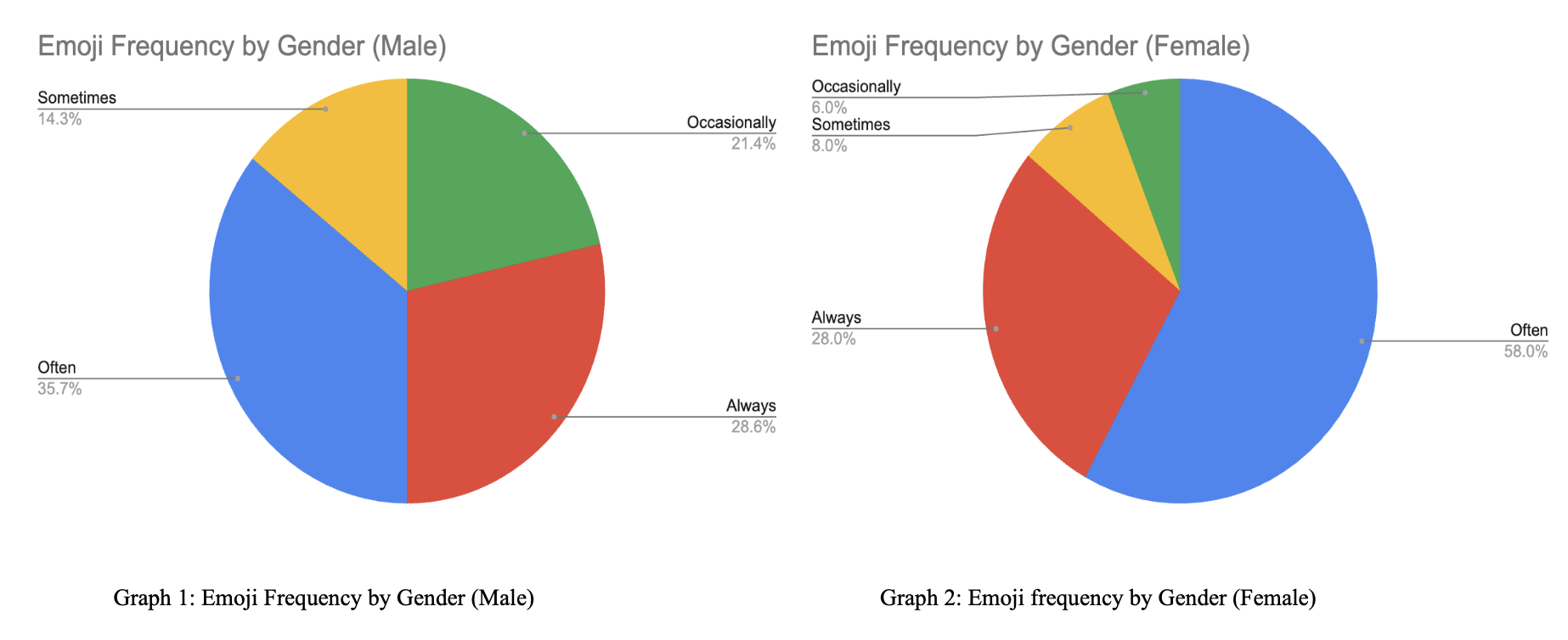
After collecting responses from all 50 UCLA undergraduates, our research presents a comprehensive analysis of the data collected on emoji usage among undergraduate students at UCLA by including both quantitative data and tabular analysis as well as qualitative content analysis. First, the data were processed to create a dataset with the frequency and types of emojis used by different groups. The pie graphs shown below illustrate the emoji frequency based on students’ gender while indicating that female students use emojis more frequently than male students do. For instance, the number of female students who selected the option “often” is 23% higher than that of male students; there are more than 1⁄5 of the male students select the option “occasionally” to show their dispreferred attitude of utilizing emojis when texting with others.

We also created some charts showing the top 5 most frequently used emojis based on students’ gender and sexual orientation. On the left side, charts 1 & 2 show the most frequent types of emojis that male and female students use during online communication. From here, we could see that the average number of different emojis used by females was significantly higher, indicating a broader expressive range. More specifically, emojis such as 😭, ❤️, 😍, and 🥺 were predominantly used by female students, emphasizing a wider variety and a relatively higher frequency of emoji usage. On the contrary, male students demonstrated a more limited and functional use of emojis. Emojis included 😂, 😎, 👌 and reflected their preference for simpler, less emotionally varied communication.

On the right side, charts 3 & 4 show the emoji frequency based on students’ sexual orientation as LGBTQ+ students exhibited distinctive patterns in emoji usage. While emojis such as ❤️ and 😍 were used by LGBTQ+ members to convey nuanced social interactions, some emojis such as 🤔️, which might not be as prevalent among heterosexual students, were used for unique identity expressions.

Besides doing quantitative analysis, we also focus on content analysis which examines the context and meanings behind emoji usage for each gender and sexuality group through collecting screenshots of their recent in-text conversation where they used emoji. From the gender perspective, female students tend to use emojis to express a wide range of emotions, from joy and love to sadness and empathy. For instance, emojis like 😭 and 🥺 often appear in conversations involving apologies or sharing emotional experiences, indicating a high level of emotional expressiveness; The use of ❤️ and 😍 highlights the importance of emotional support and connectivity in their interactions.

From Image 1, a female student claimed that she used a heart next to a “teaspoon” because she loves their boba. This illustrates her desire of providing emotional feedback to maintain her social bonds with her friends. Nevertheless, male students tend to use a narrower range of emojis to add humor and casualness into their interaction. Emojis such as 😂 and 😎 are commonly used in light-hearted conversations, indicating a preference for maintaining a relaxed and friendly tone. From Image 2, a male student was reacting to a funny video and this indicates his tendency to be friendly and approachable while implicitly showing his preference of having a simple and straightforward conversation.

From the sexuality perspective, members of the LGBTQ+ community use emojis to convey complex social interactions and support. Some emojis which might not be as prevalent among heterosexual students, appear to express empathy and encouragement while highlighting positivity and uniqueness in conversations.

From Image 3, a bisexual female student said that she was wishing her male friend to have a fun night at the club. The emojis such 🥳 and 🎃 reflects the LGBTQ+ users’ different approach to expressing encouragement and connectivity. Conversely, non-LGBTQ+ students tend to utilize a standard set of emojis that are widely understood and conventional in the community. Emojis such as 👍 and 👌 were commonly used to suggest a preference for simplicity and directness during conversation. In Image 4, a heterosexual female student was texting her mom and asking her when she would like to come with her to get a dress for graduation. The appearance of the emoji 😭 reflects a preference for widely recognized emotional expressions while indicating her demand to facilitate clear and efficient communication.

Discussion

The results of our study highlight notable variations in the use of emojis among UCLA undergraduates according to gender and sexual orientation, which has important societal ramifications for interpersonal interactions. In contrast to males, who often use emojis less frequently and instead concentrate on humor or information sharing, women are more likely to utilize a wide variety of emojis to communicate emotions and foster connections. Emojis are a tool that LGBTQ+ people use to communicate who they are and to challenge social standards. By accommodating a variety of communication styles, recognizing these distinctive patterns can promote teamwork in educational and professional contexts, improve relationships with others by encouraging better understanding and empathy, and support the acceptance and normalization of LGBT identities. By adopting these realizations, we may build a more compassionate and diverse society where digital communication tools are tailored to meet the diverse needs of all users.

Conclusion

The findings of this study support our hypothesis that there are significant differences in the frequency and types of emojis used between male and female undergraduate students at UCLA. Female students tend to use emojis more frequently and choose from a wider variety, including emoticons like 🥺, 😭, ❤️, and 😍, indicating high emotional expressiveness. On the other hand, male students prefer a narrower range of emojis such as 😂 and 😎, reflecting humor and casualness in their communication style.

Moreover, our findings suggest that members of the LGBTQ+ community, such as gay and lesbian individuals, use emojis in distinct ways to express identity and convey nuanced social interactions not as prevalent among heterosexual students. LGBTQ+ individuals often use emojis like ✨, 🌟, and 🥳 highlighting positivity, uniqueness, and emotional depth in their digital expressions. In contrast, non-LGBTQ individuals tend to use simpler emojis like 👌 and 👍 and 😭, indicating a preference for directness and simplicity in their communication. These findings have important implications for understanding how gender and sexuality influence emoji usage in digital communication. They shed light on the complexities of digital interaction and social media communication, informing future studies in this area.

References

Bai, Q., Dan, Q., Mu, Z., & Yang, M. (2019). A Systematic Review of Emoji: Current Research and Future Perspectives. Frontiers in Psychology, 10, 2221. https://doi.org/10.3389/fpsyg.2019.02221

Gray, M. (2023). Emojis and the Expression of Queer Identity: A Sentiment Analysis Approach. Master’s Thesis, University of Georgia, Athens, Georgia.

Herring, S. C., & Dainas, A. R. (2018). Receiver interpretations of emoji functions: A gender perspective. In Proceedings of the 1st International Workshop on Emoji Understanding and Applications in Social Media. Stanford, CA.

Jones, L. L., Wurm, L. H., Norville, G. A., & Mullins, K. L. (2020). Sex differences in emoji use, familiarity, and valence. Computers in Human Behavior, 108, 106305. https://doi.org/10.1016/j.chb.2020.106305

Pickett, T. (Speaker). (2017, May 17). Emoji: The Language of the Future [Video]. TEDxGreenville. YouTube. https://www.youtube.com/watch?v=Dzlek8nMrc8

Tannen, D. (2007). You just don’t understand: Women and men in conversation (1st Harper pbk. ed., pp. 74-96). New York, NY: Harper.

Wolf, A. (2004). Emotional expression online: Gender differences in emoticon use. CyberPsychology & Behavior, 3(5). Mary Ann Liebert, Inc. https://www.liebertpub.com/doi/abs/10.1089/10949310050191809

, , , ,

Uncovering Gendered Dynamics: A Comparative Analysis of Interactions Between Customers and Service Industry Workers

Elizabeth Truong, Naomi Crandall, Zoe Jespersgaard, Jennifer Ma, Victoria Yu

In contemporary society, coffee shops act as significant social hubs, facilitating interactions between service workers and customers that reflect broader gender dynamics. This research investigates the nuances of gendered interactions within coffee shops, focusing on American college students in the Westwood neighborhood of Los Angeles. The study aims to understand how gender influences various aspects of service worker-customer interactions, including word choice, politeness, and conversational patterns. Based on the hypothesis posited, which suggests that female-presenting customers are more likely to exhibit politeness towards service workers compared to their male-presenting counterparts, the research examines data collected through non-participant covert observation and conversation analysis. The findings reveal significant gender differences, with female-presenting individuals demonstrating more polite behaviors such as hedging and the use of politeness markers compared to their male-presenting counterparts. Female-female interactions were characterized by longer discussions and more pleasantries, while male-male interactions tended to be more direct. Overall, the study contributes to our understanding of gender dynamics in public spaces and underscores the importance of recognizing and addressing these dynamics for fostering inclusive environments.

[expander_maker id=”1″ more=”Read more” less=”Read less”]

Introduction

Within modern society, coffee shops serve as social hubs, offering an ideal setting for individuals looking for a quick respite as well as providing us with critical information regarding the nuances of gendered interactions between service workers and customers. Interactions between service industry workers and customers play a key role in shaping the experiences within public spaces, revealing broader societal norms and dynamics. In this research paper, we investigate how the dynamics of service worker-customer interactions in coffee shops are impacted by gender, specifically focusing on various aspects such as word choice, personability, and politeness. This paper is focused on studying these interactions between the demographic of American college students, with data collection taking place in coffee shops in Westwood Village, close to the campus of the University of California Los Angeles. By analyzing these factors, we aim to contribute to the understanding of gender dynamics within service interactions, uncovering any patterns or disparities present. Our hypothesis posits that female-presenting customers are more likely to exhibit politeness towards service workers compared to their male-presenting counterparts. Additionally, we anticipate greater deviations from the conventional ordering process when the gender presentation of the customer aligns with that of the service worker.

Background

In observing service encounters, we see various linguistic properties which are present in communicative patterns, contributing to the dynamics of interaction. Some specific examples include politeness strategies, turn-taking patterns, gestures, and lexical choices. Politeness theory, developed by linguists Brown and Levinson is quite in-depth, and the following video made by the University of Vienna does a great job of simplifying some of its more complex aspects: https://youtu.be/e-B-kJi0Rek. Speakers often use politeness strategies to maintain positive social relations. The desire to be perceived as kind or polite is an example of a term known as positive face (Brown and Levinson 2006). As many people wish to be accepted and liked by others, we expect most customers to utilize positive face techniques such as smiling or engaging with the server in conversation outside of their order. This can involve using polite language, such as “please” and “thank you,” or softening directives and requests. In addition, conversations typically follow turn-taking patterns, where speakers take turns to contribute to the interaction. Signals such as pauses, intonation, or body language help regulate conversation flow and indicate when it is appropriate to speak. Moreover, nonverbal cues like facial expressions, gestures, and body language are also important. They complement verbal communication and may convey sincerity, friendliness, or authority. Lastly, the selection of words and phrases reflects cultural norms, social roles, and individual identities. Lexical choices can influence identity, social status, or group membership, contributing to the overall tone and meaning of the interaction.

Similarly, the data samples we have gathered closely align with these linguistic properties and patterns seen in other service encounters. A previous study, which looked at female politeness towards other females versus towards males, found that gender played a pivotal role in the presence of politeness. The authors found that females were more likely than males to speak politely to others, especially when speaking with other females (Keikhaie and Mozaffari 2015). Across the interactions in our research, both baristas and customers use polite greetings, express gratitude, and use personalized terms to address each party, fostering a friendly and welcoming atmosphere. Turn-taking patterns were also observed, with participants getting a chance to speak and respond. Additionally, positive body language, such as smiling and maintaining eye contact, contributes to a positive customer experience by maintaining an informal and relaxed environment. Overall, the data illustrates the importance of these linguistic elements in effective communication during service encounters.

Methods

The methods we used for data collection were non-participant covert observation and conversation analysis. We opted for non-participant covert observation of the interactions between the customer and barista in order to understand the social reality and implicit features of the interactions. With the participants not knowing that they are being observed, it ensures that the data is the most accurate and unbiased as it can be. We will also be analyzing the conversations we observe to investigate and gain more insight into the deeper meaning of the words and actions throughout the interactions.

To guide this research, our general research question is, do levels of politeness differ in server-customer interactions based on gender? Within this question, we also have some more specific focuses. They are as follows: How do different genders express and navigate face-saving and face-affirming behaviors through mechanisms such as hedging and politeness markers?; Do levels of intimacy and politeness differ in same-gender interactions as compared to different-gender interactions?; Are male or female-identifying people treated with more politeness?; Do male or female-identifying people use more politeness markers? Our general hypothesis is that females will use more face-saving behaviors and be less direct when ordering and interacting with customers.

Results

In order to gain a more complete understanding of the gendered relationships between customers and service workers, we collected data from different coffee shops in the Westwood neighborhood of Los Angeles, California. The coffee shops that we collected data from include Alfred Coffee, Starbucks, Ministry of Coffee, and Stereoscope in Hollywood. Our general hypothesis for our research was that females would use more face-saving behaviors and be less direct when ordering and interacting with customers. Based on our data samples taken from various coffee shops, it can be seen that females are more likely to initiate an interaction and use pleasantries during a service encounter. After analyzing the 17 conversational samples that we have collected thus far, we were able to group some behaviors that we felt applied to our hypothesis. The following categories are presented below, accompanied by examples derived from the dataset.

Hedging

The data revealed distinct gendered differences in the interactions between customers and service industry workers. Our observations consistently indicated hedging behavior among female customers, evidenced by the frequent use of words such as “um” and employing indirect language when placing orders. Female customers had the tendency to substitute “could” for “can” during these brief interactions. Additionally, the hedging term “just” was more prevalent in the speech of female customers within the dataset. Furthermore, female customers exhibited greater pauses or displayed hesitance while placing their orders.

Introductory Greetings

Across all data sets, we found that female service industry workers were more likely to ask the customer how they were doing in addition to giving a standard greeting. Additionally, the data show that although both male and female baristas will initiate the interaction between them and their customers, females are more likely to ask about a customer’s well-being as part of the introductory greeting.

Politeness Markers

The data show that the majority of the time, female customers were significantly more likely to say “please” while making their requests. Additionally, we found that across all the data sets, there was less smiling involved in male-to-male interactions. One data set found that the male barista solely smiled at female customers, maintaining a neutral expression for male customers.

We found that female customers are more likely to respond politely and provide detailed information about their order, contrasting with the male customer’s direct and concise style.

Volume

Based on the observed data, both the customers and service industry workers maintained a consistent volume level throughout the majority of their interactions, with subtle variations in assertiveness, such as a female barista taking a slightly more assertive tone during certain interactions. Across all data sets, we found that the volume of female speakers in both roles was lower than that of their male counterparts. We also found that female customers tended to end their sentences with a higher pitch, while male customers kept their tone and volume consistent throughout the entire interaction.

Length of Discussion

Across all data sets, the longest discussions that took place were in female-female interactions while the shortest interactions tended to be in male-male interactions, with very few pleasantries.

We observed a consistent pattern between these interactions with the deviations occurring primarily in female-female interactions. One deviation that we recorded was a female barista complimenting a female customer’s sweater. Additionally, we recorded a sense of friendliness and camaraderie when a female barista made a mistake when taking an order from a female customer and the two laughed together. Across all the interactions, the male-male interactions required significantly less clarification of their orders. We were able to conclude that longer interactions are likely characterized by the female customer providing detailed information about their order. Male customers usually order without much elaboration, thus leading to shorter and more direct interactions.

Discussion

The data show that there are significant gender differences in the interactions between service industry workers and customers. The results of this study show that there were gendered differences in hedging, introductory greetings, politeness markers, volume, and discussion length. Female customers were significantly more likely to exhibit hedging behaviors than their male counterparts, demonstrating hesitation and less confidence in the interaction overall. While male customers rarely demonstrated hedging behavior and tended to have a more dominant approach to the conversation, especially when speaking to a female barista. Additionally, the data show that although both gendered service industry employees provided some sort of greeting, female service industry workers were significantly more likely to ask the customer about their well-being in addition to providing a standard greeting.

While surveying politeness markers, the data show that female-presenting customers were more likely to utilize polite terms such as “please” and “thank you” than male-presenting customers. Additionally, our study found that female-presenting customers were more likely to respond politely and provide more detailed information regarding their order while male-presenting customers tended to adopt a more concise and direct approach. Across all data sets, we found that there were fewer non-verbal politeness cues such as smiling in male-male interactions. Previous studies have produced similar results that show females interacting with other females will utilize polite behavior more often than their male counterparts. The authors explain that this may be because women are more conscious of rejection and stigma and therefore put in more effort to be perceived in a positive way (Keikhaie and Mozaffari 2015). In our research, the male-presenting customers had the tendency to adopt a more dominant and less friendly approach to these interactions, highlighting their perception of their importance and role within this particular community.

In terms of volume, our data show very little variation. Both gender identities maintained a consistent volume throughout their interactions, however, female-presenting customers and service workers utilized a lower volume overall, ending their sentences with a higher pitch. Alternatively, while studying conversation length, we found that female-female interactions were significantly longer than male-male interactions. This variation is due to the use of more pleasantries in female-female interactions as well as the absence of these pleasantries and the more direct tone used in male-male interactions.

While our study is able to successfully identify gender differences in hedging, the presence of introductory greetings, politeness markers, volume, and discussion length, it is important to note that our research is primarily focused on the Los Angeles neighborhood of Westwood. Although the individuals who visit local Westwood establishments possess very diverse backgrounds and gender identities, this is not the case in all communities across the United States. Different communities may have differing opinions on gender identities and thus have drastically different interactions based on their community’s view on gender identities. In order to gain a more complete understanding of how these interactions between service industry workers and customers vary by gender, more research must be done examining broader geographical areas. By expanding the geographic range of this study, we will be able to come to a more concrete understanding of the different practices and patterns utilized between different genders in service industry interactions.

Conclusion

After conducting a thorough literature review as well as completing data collection such as observations and conversation analyses, we found that female-presenting customers and service industry workers were significantly more likely to utilize polite behaviors than their male-presenting counterparts. The data show clear patterned differences between these service industry interactions in the categories of hedging, the presence of introductory greetings, politeness markers, volume, and the length of the interaction. In each of these categories, the female-presenting customers and service industry workers utilize more polite approaches when addressing each other and members of the opposite gender. These results provide valuable information regarding not only the gender roles within service industry interactions but also the underlying social norms and dynamics within a public sphere.

References

Brown, P., & Levinson, S. C. (2006.). Politeness: Some Universals in Language Usage. In The Discourse Reader (2nd ed., pp. 311–323). Routledge: Taylor & Francis Group.

Forseth, U. (2005). Gender matters? Exploring how gender is negotiated in service encounters. Gender, Work & Organization, 12(5), 440–459. https://doi.org/10.1111/j.1468-0432.2005.00283.x

Gibson, E. K. (2014, May 27). Would you like manners with that? A study of gender, polite questions, and the fast‐food industry. Academia.edu. https://www.academia.edu/4031180/E._K._GIBSON_-_A_study_of_gender_polite_questions_and_the_fast_food_industry

Hultgren, A. K. (2017). New perspectives on language and gender: Linguistic prescription and compliance in Call Centres. Language in Society, 46(5), 671–695. https://doi.org/10.1017/s0047404517000574

Keikhaie, Y., & Mozaffari, Z. (2015). A Socio-linguistic Survey on Females’ Politeness Strategies in the Same Gender and in the Cross-Gender Relationship. Iranian Journal of Applied Language Studies, 5(2), 51-82. doi: 10.22111/ijals.2015.1877

Schnabel, Lukas. “Politeness in Linguistics: An Overview.” YouTube, uploaded by Lukas Schnabel, 23 June 2019, https://youtu.be/e-B-kJi0Rek

Taylor, J. L. (n.d.). I Need a Coffee: Pragmalinguistic Variation of Starbucks Service Encounter Requests According to Interaction Modality. Indiana University. https://scholarworks.iu.edu/journals/index.php/iulcwp/article/download/26219/31840/61913

West, C. (1993). Reconceptualizing gender in physician-patient relationships. Social Science & Medicine, 36(1), 57–66. https://doi.org/10.1016/0277-9536(93)90305-n

 [/expander_maker]
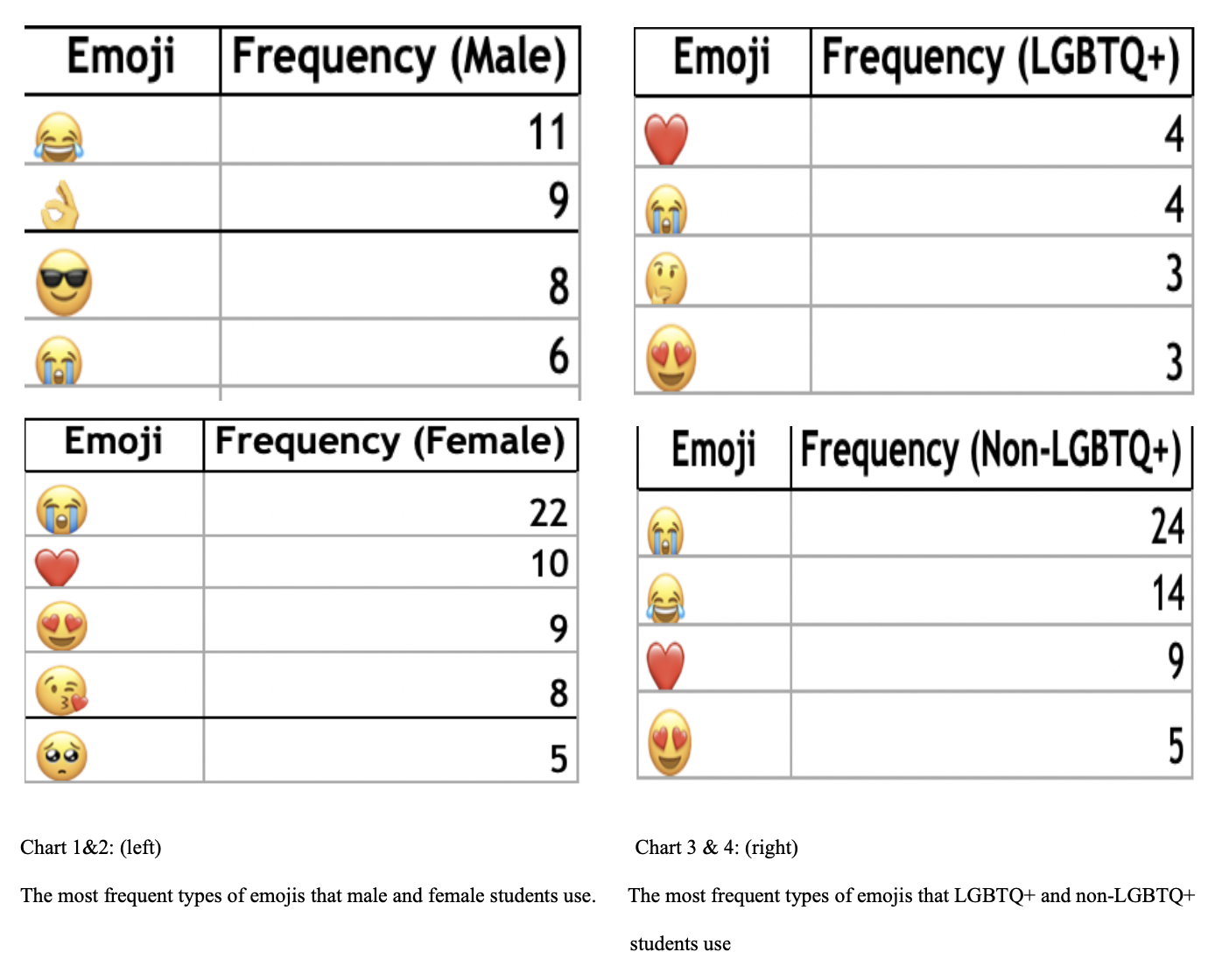
, , , ,

Gender Effect in Discourse: The Gender Dynamics in Language Use Within Service Encounters At Trader Joe’s

Denise Yanez, Natalie Leon, Diana Rinza, Maya Araujo, Zoe Klein

As customers navigate the bustling aisles of the grocery store, you finish and make your way to the checkout line. Ahead of you, a young woman, approximately your age is greeting customers with a welcoming smile. She is wearing a Hawaiian shirt that distinguishes her as a Trader Joe’s employee. When you get to her, she immediately greets you and asks about your day. She seems genuinely interested and even shares her favorite products for lunch. The adjacent cashier is an older man who rings up customers with a professional smile and a brief “Have a nice day.” Despite keeping it simple, he demonstrates the positive qualities attributed to a traditional Trader Joe’s employee. The following article will center around the interactions between customers and employees and how they differ based on a cashier’s gender expression. Research suggests a correlation between age and gender regarding these interactions. For this study, we each went to a Trader Joe’s and recorded our interactions with a male cashier and a female cashier. We concluded that while it appears that young female cashiers prefer to engage in conversational interactions, older male cashiers use a more traditional communication style when interacting with customers.

[expander_maker id=”1″ more=”Read more” less=”Read less”]

Introduction and Background

Trader Joe’s is a grocery store chain known for its friendly environment, including the cashiers’ tendency to initiate interactions between customers and employees. However, the purpose of our research is to determine whether or not these interactions differ based on a cashier’s gender expression. Prior research on gender-expression’s effect on customer service interactions shows mixed results. In a study comparing politeness between male and female fast-food employees (Gibson, 2009), it was found that cashiers were more polite to a member of the opposite sex than they were to someone of their own sex. This finding differs, however, from the results of another service-industry study (Otterbing, 2021), which highlights how shoppers prefer to interact with employees whose gender is congruent with their own. Due to these inconsistent findings, we hypothesize that there will not be a difference in types of interactions based on gender. There are strict rules and a code of conduct in a service-industry workplace, which may dictate the way an employee is allowed to interact with customers. Since Trader Joe’s employees are known for their positive interactions with their customers, we assume that they are trained to adhere to a non-gendered pattern of speech for the sake of courtesy and politeness. Of course, we are aware that there are several factors that may influence interactions, as demonstrated in a recent study comparing how millennial and Gen-Z employees perceive feedback from their managers and customers (Moore, 2023). Thus, we also hypothesize that there may be other factors that will influence interactions besides gender.

Methods

Our team conducted an observable study to investigate the conversational practices of male and female cashiers at Trader Joe’s. Our research methodology involved interviewing and recording two cashiers, a male and a female, to observe their conversational skills and how they initiated conversations with customers. We utilized our cellular devices to record the interactions of these cashiers with customers and recorded the duration of their conversations. Our team members participated in recording conversations at different locations of Trader Joe’s, including the Westwood branch, and at various times of the day to ensure the highest quality results. Our primary objective was to verify the hypothesis that gender expression influences communication and other factors that might affect the interaction.

We analyzed the conversations that took place at the Trader Joe’s checkout lines and examined the relationship between gender and the tendency to speak more when engaging with customers. We observed several elements of communication, such as the amount of silence, which helped us to understand the willingness of the cashiers to engage in conversations with customers and their overall engagement. However, we did not find any compelling evidence to support our hypothesis that gender plays a significant role in the interactions between cashiers and customers.

We acknowledge that some technical factors, such as the location and time of the recording, might have influenced our results. Nevertheless, the findings from our study provide valuable insights into the conversational practices of cashiers at Trader Joe’s and the role that gender plays in communication with customers.

Results and Analysis

Food service industries must often balance between serving as much customers as possible, while maintaining customer satisfaction. This is usually influenced by the store’s business and the amount of products a customer purchases. Therefore, as part of our analysis, we incorporated a quantitative and qualitative component, wherein duration of each interaction could not be used as a determinant. What we did measure, however, was the amount of seconds of silence and words each interaction produced. Raise your hand if you have ever heard the concept “chatty Kathy”.

Why is it never a “vocal Victor? Perhas because the tendency to talk too much is usually a stereotype is that associated with women. Our research demonstrates that this could be a myth, results showed that both sexes had similar amounts of silence. Male cashiers totaled 124 seconds of silence and female cashiers were at 121. Hardly a difference at all! Sure, ringing groceries requires concentration and silence is probably not the best measure, so we decided to tally the amount of words expressed by the cashiers. Once again, the difference between both sexes was not very significant. Women used 341 words, while men expressed a total of 317. But what about the content of the conversation? We found that cashiers on both sides of the gender spectrum were just as likely to stick to the predictable greetings, offerings of bags, and announcement of grand totals as they were to ask about your day, comment on the nice necklace that one of our researchers was wearing, or offer a lollipop for the sake of sweetening your day. Therefore, our research did not garner any compelling results to indicate that gender played a role in the interactions with the researchers. At least not a significant one.

Discussion and Conclusions

The conclusion of any project provides an opportunity for the researcher to reflect on their methodology and identify areas for improvement. After conducting our investigation, our group determined that our study may have been flawed by various unknown factors. Variables such as the gender expression of the customer potentially leading to gender bias from the employee and the positionality of the researcher—how our observations affect our analysis relative to our own presentations, perspectives, and beliefs—both affected how we analyzed our findings. Because the sample size was small, our data cannot accurately represent each and every Trader Joe’s employee at a given location, only the stores this study conducted research at. With these limitations in mind, the next step to furthering this study should encompass a methodology that better addresses such issues or any other potential limiting factors.

References

Gibson, E.K (2009). Would you like manners with that? A study of gender, polite questions and the fast-food industry. Griffith Working Papers in Pragmatics and Intercultural Communication 2, 1: 1-17.

Karrebæk, M. S., Riley, K. C., & Cavanaugh, J.R. (2018). Food and language: Production, Consumption, and circulation of meaning and value. Annual Review of Anthropology, 47, 17-32.

Moore, K. (2023). The Millenial/Zer Need for Feedback: Four Reasons Why and How to Give It. In Generation Why: How Boomers Can Lead and Learn from Millennials and Gen Z (pp. 111-128). McGill-Queen’s University Press. https://doi.org/10.2307/jj.3078925.13

Otterbing, T., Bhatnagar, R., Samuelsson, P., & Borau, S. (2021). Positive Gender Congruency Effects on Shopper Responses: Field Evidence from a Gender Egalitarian Culture. Journal of Retailing and Consumer Services, 63, 102738. https://doi.org/10.1016/j.jretconser.2021.102738

Wang, S., Beatty, S. E., & Liu, J. (2012). Employees’ Decision Making in the Face of Customers’ Fuzzy Return Requests. Journal of Marketing, 76(6), 69-86. http://www.jstor.org/stable/41714520

 [/expander_maker]
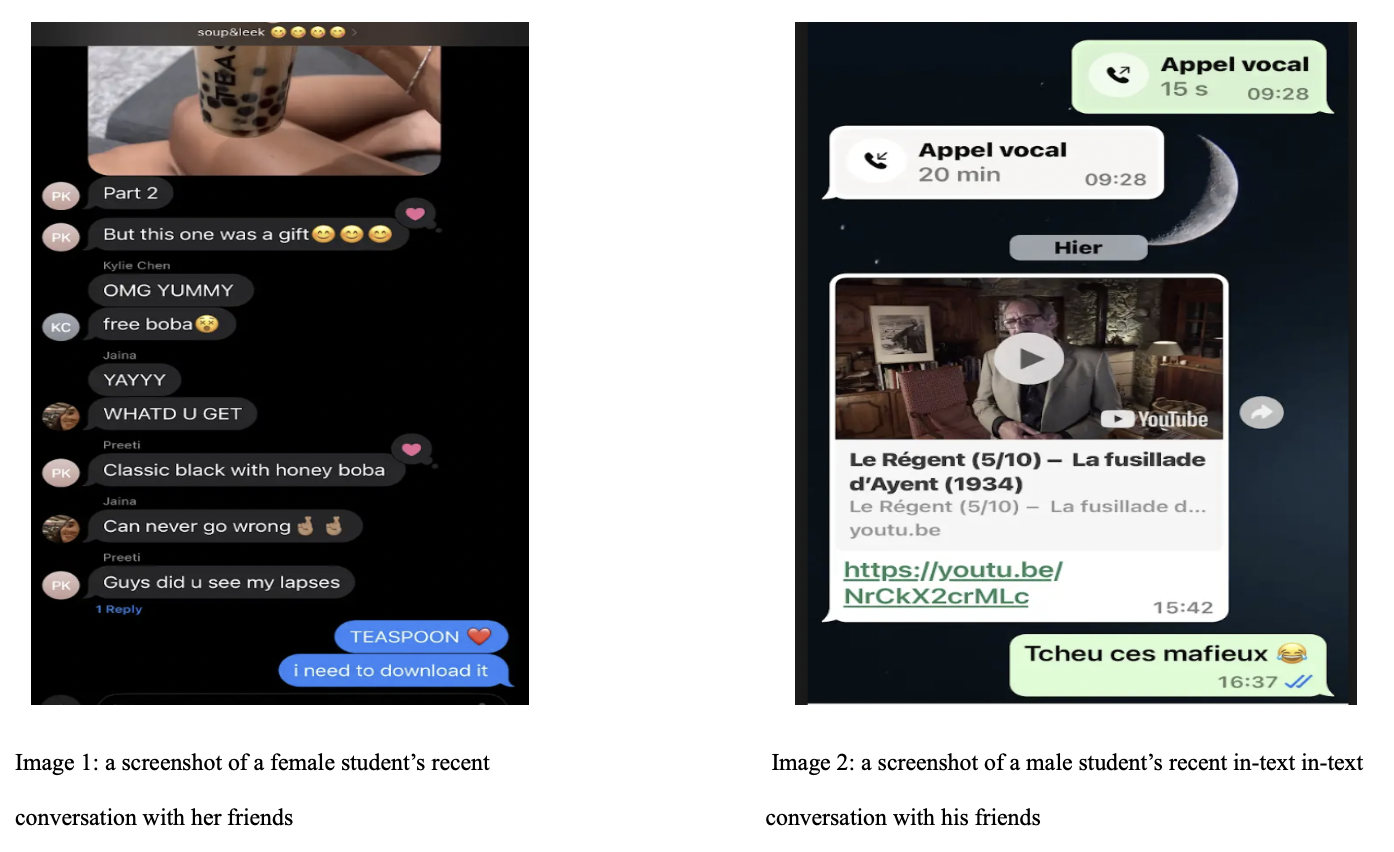
, ,

Profanity Amongst Undergraduate Students

Jesus Nocelotl, Fernanda Madrazo

For most people, college can be a difficult and exciting journey within one’s life. The new experience of living on your own, independence and responsibility of forming your own decisions, and for many, the chance to make and begin new meaningful friendships. Oftentimes, in communities that foster a sense of group identity and culture, such as college, and especially for young adults, the formation of friendships and relationships starts with interaction and language between individuals. Language is an essential aspect of our everyday lives, proven to be an effective way of communicating with others and a tool for forming relationships through shared experiences and identity.

The importance of social interactions in a college aged environment is of great significance, as many young adults see college as a new chapter within their life and an opportunity to form new bonds. Especially in the age of social media, college students often resort and feel the need for social and group identities to create friendships. One of the most commonly observed uses of language in college environments is the use of profanity to communicate between individuals. Profanity is commonly used in conversation as a measure to emphasize meaning, common slang, or a sense of group identity. For our group’s research project, undergraduate students and their prevalent use of expressing profanity in active conversation was used to analyze deeper meanings between language and social identity. Throughout our findings, we observed the most commonly used phrases and made relevant connections to age, group identity, and especially gender identity, to support and provide deeper meaning to the importance of language, young adult life, and college environment.

[expander_maker id=”1″ more=”Read more” less=”Read less”]

Introduction and Background

In observed profanity used in conversation, the choice and diction are influenced by the people engaging in conversation and present scenarios. For our research proposal, our group was interested in evaluating how prolific profanity is present in conversation by fellow undergraduate students at UCLA. When deciding on a target population, our group thought that fellow undergraduates would be a good target since we are more likely to relate to and understand undergraduates and their profane word usage. In addition to common relation, it is observed that college-aged students would be most likely to engage in active conversation using slang and profanity1, which would help gather more information and more culturally and generationally relevant profane words. Profane words are of special interest as they often carry more emphasis and meaning within American youth culture, and are especially observed when trying to “fit in” a certain group. Although much can be inferred on the significance of profanity to “fit in”, not much research is conducted on undergraduates’ frequency of profanity in relationship to observed gender groups. Since not much has been researched on the relationship between gender identity and profanity prevalence in college environments, our group decided to shift focus to explore this interesting topic. For our group’s initial hypothesis, we believed that through our findings, we would expect to see undergraduate males engaging in high volumes/cases of profanity within active conversation compared to their female counterparts. Our initial hypothesis was structured around gender roles and through our own shared experiences as young adult undergraduates, where males are often seen as casually expressing profanity and females are more likely to be reserved and professional in their profane word choices.

Methods

To gather information about this research topic, our group decided to conduct an online survey that would be accessible to the target population via social media. The survey was mostly focused on the topic of profanity, and asked what were the most common swear words individuals used and allowed them to elaborate on the scenario where they would be most comfortable using their selected word. Since the survey was already targeted to undergraduate students and required general information such as gender and undergraduate grade level, we included the opportunity for individuals to provide more information if they felt comfortable. Further elaboration included but was not limited to: gender identity, group membership, and race. This elaboration was important to the research project, as it allowed us to understand where profanity and relation sentiment could be applied to, such as Sororities, Fraternities, and group and social identity.

Results and Analysis

Figure 1: Data table displaying the observed frequency of profane word choices submitted by male undergraduate students of varying identities. Information and word columns obtained from our group’s undergraduate survey

The results of our survey yielded a varied spread of words that students self-identified as their most commonly used. As indicated in Figure 1, “fuck” was the most frequently used word, but “bitch” and “hoe” were not too far behind, with 5 and 3 people identifying it, respectively. However, the most surprising aspect of the survey came in the results of the questions where students explained what each word meant to them. Male respondents most commonly ranked “fuck” as their most used word, and said they used it with friends as a catch-all to mean many different things. However, male-identifying respondents also explained that they believed that the words “bitch” and “hoe” were related to and connotated women. For example, “A female” or “a rude person, usually a woman tbh. like when my boss is being a pain, “shes such a bitch”’ were two responses given by men who completed the survey. The majority of men who completed the survey answered in similar ways, saying that the meaning they gave to these words align with the original view which centered around patriarchal and misogynistic views on gender roles.

Figure 2: Data table displaying the observed frequency of profane word choices submitted by female undergraduate students of varying identities. Information and word columns obtained from our group’s undergraduate survey

On the other hand, Figure 2 demonstrates that female-identifying respondents use the words “bitch” and “hoe” more frequently than other swear words. Overwhelmingly, the meaning ascribed to these words is positive. For example, respondents said, “just means like “girlll”, or “bitch is either a positive or a negative thing. my best friend is my bitch (positive)… i rarely use it in the negative context. it can also be a positive general exclamation of support, like if a friend does something they’re proud of or wears a nice outfit and i want to show encouragement.” Women use these words in the context of friendship, endearment, or as a way to show sisterhood. They have redefined what the words mean and reframed them in a positive way that uplifts and supports other women, instead of denigrating them as men might intend the words for.

Discussion

The results of the research we conducted were fairly surprising to us. We expected there to be a difference in usage of profanity between genders, but the questions that we asked as follow-up in the survey were very enlightening. We discussed the results in a comparison to racial slurs that have been reclaimed throughout history. Racial minorities used slurs that were originally demeaning to them, and now use them in a context that expresses solidarity, unity, respect, and understanding within their own communities. The results that we obtained from our research could point toward a similar trend in college students when it comes to words which typically denote negative attitudes toward women. The female culture in college and in young people is reclaiming the meanings of these words in a similar fashion in order to empower women and reframe traditionally gendered views. We would like to see this research continued on a much broader scale, encompassing students in different regions of the United States, and also expanding toward different age groups. Further research can be done to expand understanding on how changing gender roles can be reflected in individual meaning given to the words in common vocabularies.

References

Güvendir, E. (2015, March 16). Why are males inclined to use strong swear words more than females? an evolutionary explanation based on male intergroup aggressiveness. Language Sciences. https://www.sciencedirect.com/science/article/abs/pii/S0388000115000194

Howard University News Service, Haynes, A., NewsVision, H. U., Miles, P., Thomas, V., Steib, A., Alabi, N., Pierre, A., & Harris, T. (2010, January 31). Profanity among college students. Howard University News Service. https://hunewsservice.com/news/profanity-among-college-students/

National University of Ukraine on Physical Education and Sport, Babushko, S., Solovei, L. (2019). What Makes University Students Swear. Borys Grinchenko Kyiv University of Ukraine. https://files.eric.ed.gov/fulltext/EJ1305437.pdf

The University of Mississippi Undergraduate Research Journal, Knirnschild, J. (2019) “The Gender Differences in Perceived Obscenity of Vulgar, Profane, and Derogatory – Language Usage among U.S. University Students,” The University of Mississippi Undergraduate Research Journal: Vol 3, Article 4 /https://egrove.olemiss.edu/cgi/v iewcontent.cgiarticle=1050&context=umurjournal#:~:text=Men%20have%20been%20found%20to,with%20women%20being%20scrutinized%20more

Wong, S. C., Teh, P. L., & Cheng, C.-B. (2020). How Different Genders Use Profanity on Twitter? International Conference on Compute and Data Analysis. https://doi.org/10.1145/3388142.3388145

 [/expander_maker]
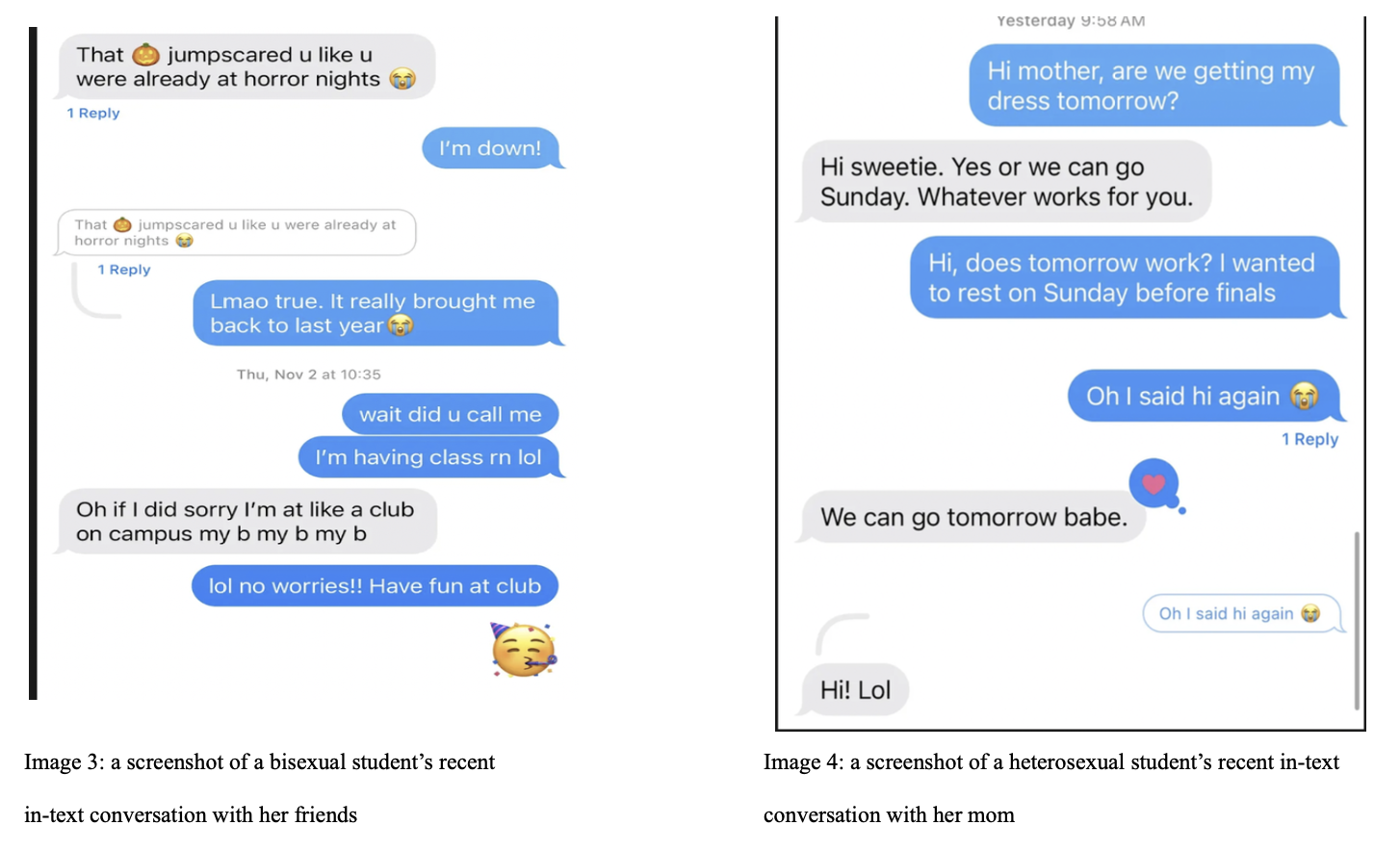
, ,

Manspreading: Myth, Message, or Management?

Cecilia Schmitz, Tommy Silva, Sinahi Torres, Ye Won Yoon 

Communication takes a variety of forms including communication through the use of body language, but oftentimes different genders have shown differences in the way they use it to portray themselves. Previous research has indicated that men will participate in “manspreading” which consists of spreading out typically in public spaces, while women accommodate others. Other research shows that people tend to spread out when they feel a sense of dominance. In order to fill any possible knowledge gap, we formed a study to discover how relevant this research is to UCLA undergraduates. Our study was based on the research question: Do men and women use spatial movement and orientation differently, and does this reflect their respective gender identity? We hypothesized that men do take up more space than women and that women’s contracted body language would only be around men. This left room for interesting questions: do men always take up more space? Do the way women use body language get influenced by the gender they are around? As you continue to read our study, you will uncover whether this is relevant or if we notice other trends amongst the students.

[expander_maker id=”1″ more=”Read more” less=”Read less”]

Introduction and Background

Body language can often better indicate a person’s expression than words and their face (Aviezer, et al., 2012). Many observations have shown body language differences between genders: men use it to assert dominance, whereas women accommodate others (Jane, 2017,). Using this, we saw how relevant it is to students at UCLA and compared whether this form of dominance is seen mainly amongst men, women, or both. Discourse is increasing aboutman-spreading: men seated and spreading their legs into others’ space (Vrugt, & Luyerink, 2000). We furthered this research focusing on the way that our target population takes up space and presents themselves through their body in their everyday life to see the difference and create a reflection of the current gender indexicality. We wanted to see if spatial orientation and body language are used to reinforce gender roles with a question: Do men and women use spatial movement and orientation differently, and does this reflect their respective gender identity? Based on current research, as well as our own observations on our fellow undergraduate UCLA population, we hypothesized that men will take up more space than women; however, we also predicted that women will occupy more space when they are only surrounded by women.  

Methods

For the observational research method, we observed three different sample groups: only males, only females, and both together, in order to answer the question of if men and women use spatial movement and orientation differently. We observed and took photographs and timelapses to see if the subjects expanded or contracted their legs, turned their feet in or out, and folded or splayed their arms when sitting. We were interested in seeing how participants used their legs, arms, and feet to expand their body frame and occupy more space, used their extremities to contract and occupy less space, or simply rested to occupy their natural body frame position. To document this, we kept a chart of body positions after each observation. Here is a detailed explanation of how we specifically observed the male-only group:

We observed a group of 15 self-identifying males in a locker room: each male was seated and was spaced out so they were at least 1.5 feet from the person next to them, meaning they each had plenty of space to expand their body position however they wanted without coming into contact with the person next to them. Every single male sat in a position that occupied space beyond their body frame. Legs were the way that most men expanded their bodies, and for every man whose feet were placed on the floor, their feet were turned outwards. While leg and foot positions were used to expand body size 100% of the time, arm position changed very frequently. Overall, at least half of the males spent a significant amount of time with their arms within their body frame. We additionally observed a group of four females watching a movie on a bed in a dorm room: they were in closer proximity, trying to fit onto one bed. Each female had their legs contracted into each other, not expanding outwards. Three of the four females had their feet turned in and their arms folded; the fourth female had their feet under a blanket and thus not visible and their arms were splayed.

To see how our subjects’ observations reflected their respective gender identities and the body language that goes along with them by repeating this process with each observation group, we also conducted interviews in which we asked our subjects whether their friends when in a crowded space, assert their personal space or accommodate others. To analyze our data, we compared already existing research to our own observations, in order to figure out which, if any, of the theories are relevant to our findings. We then compared our answers with the observations collected on how body language is associated with gender and what the body language itself is associated with. 

Image 1: Photograph of female-only group’s body language (4th member joined later)

Figure 1: Example of chart to keep track of seated leg positioning

Results and Analysis (Observation Results and Interview Results)

Observation Results

Our results found that males generally took up more space; females in general tended to contract as seen by the graphs documenting each genders’ distribution in the form of body language: all 20 men expanded their legs and all 10 women contracted.

Figure 2: Leg position observations graph (x-axis: contracted vs expanded y-axis: amount of people of either male or female)

Our data was consistent with our hypothesis that men take up more space than women, but we incorrectly predicted that women’s contracted body language would only be around men; instead, they were contracted all of the time. For example, while observing a club meeting on campus, we observed that all three men took up space with their legs, had their feet turned in, and three out of the three had their arms around another chair. On the other hand, the three women that were observed kept their legs close to their bodies, they had their feet faced forward, and two out of the three kept their arms on their bodies. Additionally, the all-female group without the presence of men was mostly contracted, with their legs, feet, and arms withdrawn into themselves.

Interview Results

Our interview of UCLA undergrads largely indicated a perception that men take up more space with their body language than women. We did not want to limit their answers to yes or no and gave options on their body position they noticed they were in most of the time. All but 1 found that men expanded their body shape in asserting their personal space, while all but 2 expressed that female companions would accommodate their space for others. Another question that we focused on in the interview was one that asked respondents if they notice a particular way of how authoritative figures in their life take up space.

Figure 3: Female and male responses to, “In what situations do you notice yourself taking up space or accommodating others by taking less space?”

In this particular question, the responses varied in their positioning because they had to incorporate the many situations they were in. We hypothesized that there would be a mix of responses due to this. We also took into account that it could be a sensitive, abrupt question to ask the respondents and left it optional for them to answer.

Figure 4: Female and male responses to, “Do you notice a particular way of taking up space within authoritative figures in your life?”

Out of 8 responses that we received, 6 females said that they did notice this pattern while 2 males said that they have noticed this trend. Although we can’t necessarily conclude a correlation between dominance and the way that people take up space, we do see a theme within our research and the participants in it.

Figure 5: Female and male responses to, “Do your male friends either assert space or accommodate others?” (x-axis: whether they assert space or accommodate others, y-axis: amount of respondents)

In the graph shown below, we are able to indicate that 7 out of 8 male participants believe that their male friends assert their space. Looking at the female participant’s response, it shows an unwavering belief that their male friends assert their space.

Figure 6: Female and male responses to, “Do your female friends either assert space or accommodate others?” (x-axis: whether they assert space or accommodate others, y-axis: amount of respondents)

We also asked the question to focus on the female body positioning, the results are shown in the figure below. 2 out of 8 male participants felt their female friends asserted space, while 6 of them noticed them accommodating space. All of the female respondents listed that they notice their female friends in accommodating space for others.

Discussion and Conclusions:

Overall, this study was designed to acknowledge the way that we and others take up space which can help us be more considerate of how it comes off to others as well as utilize it to indicate different parts of our identity, whether it be masculinity, femininity, or authority. It is also important to take into consideration that there may be limitations to this study because it was performed in the time span of only ten weeks and was focused on a population limited to UCLA undergraduates. For example, in regards to the male-only data set, there are some unique features of this data set that could impact their body position. All of these males are soccer players. They were in their locker room and surrounded by their teammates; thus, they were in a room where they have spent a lot of time in and were surrounded by people who they are comfortable with, all of which could have a big impact on the way they chose to situate their body position. Nonetheless, these findings do suggest that men are typically more inclined to assert their space in social spaces while women will tend to contract when around any gender. Using the theoretical frameworks that we learned in class, we can also postulate that men consciously or subconsciously occupy more space, especially with their legs, to indicate their masculinity; women may contract their limbs to indicate femininity. However, based on our interview questions, our findings also suggest that people view power and position of authority as a factor linked to how much space people assert. In the future, it would be interesting to study how body language and gender identity are linked with authority; how do men and women use body language differently when they want to convey power?

Ethics Declaration

All participants gave their verbal consent to be studied for body language, and all participants voluntarily completed the Google Forms survey.

References

Ashkinazi, E. The “Fashion” of Manspreading and Socioeconomic Status: A Marxist and Feminist Analysis. https://delizian.net/pdfs/other/marxist-feminist-manspreading.pdf

​​Aviezer, H., Trope, Y., & Todorov, A. (2012). Body Cues, Not Facial Expressions, Discriminate Between Intense Positive and Negative Emotions. Science, 338(6111), 1225–1229. https://doi.org/10.1126/science.1224313

Jane, E. A. (2017). ‘Dude… stop the spread’: antagonism, agonism, and# manspreading on social media. International Journal of Cultural Studies, 20(5), 459-475. https://journals.sagepub.com/doi/pdf/10.1177/1367877916637151

Vrugt, & Luyerink, M. (2000). THE CONTRIBUTION OF BODILY POSTURE TO GENDER STEREOTYPICAL IMPRESSIONS. Social Behavior and Personality, 28(1), 91–103. https://doi.org/10.2224/sbp.2000.28.1.91

Wade, Lisa (2013). Gender and the body language of power—Sociological images. Retrieved February 3, 2023, from https://thesocietypages.org/socimages/2013/12/27/gendered-and-the-body-language-of-power

 [/expander_maker]

, ,

A Talk About “The Talk”

Tess Ebrami-Homayun, Saba Kalepari, Hannah Pezeschki, Shaina Tavari

One in five parents reports that they will never have a conversation regarding sex education with their children. The avoidance and uncomfortable nature of this conversation led us to explore the differences in communicative patterns between mothers and fathers to find what gives this conversation these attributes. To conduct our research as UCLA undergraduate students, we analyzed various media portrayals coming from advertisements, movies, and TV shows. We looked at how often euphemisms and communication aspects occur. In our research, we were able to find distinct patterns in every “talk,” such as low tones/long pauses, similar settings, conversation ending on a ‘high,’ indirectness/vague word choice, awkwardness/shame, and lack of eye contact. By bringing attention to these patterns, we can provide parents with a better understanding of how to communicate sexual health concerns to their children.

[expander_maker id=”1″ more=”Read more” less=”Read less”]

Introduction and Background

“The talk” refers to the first and awkward time when a parent(s) explicitly discusses sex and sexual health with their children, often showing typology themes of awkwardness and seriousness that are attributed to “the talk.” This conversation has an uncomfortable and awkward connotation attached to it, leading us to want to explore the linguistic and communicative patterns that collectively work together to give “the talk” this connotation (Ashcraft, 2017). In our study, we found a difference in the way parents speak to their children about sexual health depending on the child’s gender. This TED talk highlights the importance of having “the talk” to combat the negative association with the subject of sex (Talking dirty: De-stigmatising conversations on sex | Kate Dawson | TEDxGalway). Our target population is various types of media portrayals within the last 20 years of “the talk” between parents and children between the ages of 13-20. Our study attempted to answer the research question of how different communication aspects between mothers and fathers culminate in the shameful nature of “the talk.” We predicted that our research would show different communicative patterns between mothers and fathers (Grossman, 2022). Furthermore, we discovered common communicative patterns in “the talk” between mothers and fathers, such as low tones/long pauses, similar settings, resolution, awkward body language, and indirectness, including vague word choice.

Methods

The methodological design we used to collect data for our research on “the talk” was looking at available digital media examples depicting “the talk” between a parent and their child, specifically scenes from TV shows, YouTube videos, or ads using stereotypical patterns associated with “the talk.” Every member of the group had a similar idea of what to look out for in the data samples: awkwardness, similar settings, conversations about sex specifically and not puberty, long pauses, lack of eye contact, indirectness or vague word choice, and a resolution at the end of the conversation. We collected seven media portrayals from advertisements and scenes from movies and TV shows, to see how often euphemisms and communication aspects occur.

Results and Analysis

From our data results, we discovered that “mothers display similar levels of concern toward sons and daughters” about “the talk,” while fathers exclusively spoke to their sons about the talk (Butler, 2008). These results reflect similar gender stereotypes regarding the mother’s and father’s roles in the household, where the father is the ‘breadwinner,’ and the mother is the ‘homemaker’ (Robles, 2017). Mothers are often expected to take on extra household tasks, including having “the talk,” without any additional credit. Contrastingly, fathers simply have to go to work to provide income for the household, receiving praise for being the ‘king of the house.’

Notably, our results should not be taken as true results of an experiment since we did not conduct inferential statistics. In the 7 data samples we coded, the results showed low tones/long pauses, similar settings, conversation ending on a ‘high’, indirectness/vague word choice, awkwardness/shame, and lack of eye contact.

Low tones and long pauses

Low tones and long pauses were specifically prevalent in the mothers giving “the talk,” while fathers were more abrupt and aggressive in their tone of voice. This difference can show the natural softness present in mothers as opposed to fathers generally being more abrasive in their speech (Darling & Hicks, 1982). For example, in the TV show Young Sheldon, the father is giving “the talk” to his son, but his tone of voice suggests his disinterest (Figure 1):

“I’m just gonna grab a beer.”- Dad

“Has he had the talk yet?”- Grandma asked Sheldon’s Father

“Cmon’ Connie”- Dad rolling his eyes at the grandmother

“You’re probably not going to [have sex]”- Dad to his son Sheldon

In Young Sheldon, the father is seen completely brushing off the conversation and discouraging his son from having “the talk.” In contrast, what we found in the mothers in our data sample; for example, in Big Mouth, frequently talk in a low tone to support their daughter, who claimed to have had a bad sex experience and no longer wants to have sex. The mothers in our data were much more willing to have “the talk,” using softer tones to suggest supportiveness and understanding of the uncomfortable conversation.

Figure 1- Young Sheldon getting “the talk” from his father: His father does not have a low tone here.

Settings

There were also similar settings in all the data samples; nearly every scene was on a bed or couch, with the parent and child sitting on opposite ends. The lighting in our data was mostly dim, probably to depict a sense of uncomfortableness for the subjects in the data. The settings were consistent between mothers and fathers when having “the talk” with their children. For example, in Sex Education, Otis is having “the talk” with his mother in their living room on the couch (Figure 2):

“Do you want to talk about it?- Mom

*Otis in silence*

“I want you to know you can talk to me about anything. This is a safe place”- Mom

“This is not a safe place mom, you need to stop analyzing everything I do”- Otis as he storms out of the room

The mother was supportive in this conversation, while Otis was wildly uncomfortable. Part of this could be from the setting of the room, which was dimly lit, and because they are sitting on the couch trying to keep a distance between themselves. If the lighting is dim, the person is likely to feel uncomfortable (Michigan State University, 2018).

Figure 2- Sex Education characters having “the talk” on a couch: Otis and his mother are seen awkwardly sitting on the couch, and the room has dim lighting.

Ending on a ‘high’

In our data samples, “the talk” always ended on a ‘high’; there was always a resolution by the end. For example, in the Amazon ad (Figure 3) we sampled, the conversation between the mother and her daughter went like:

“I’m glad we had this talk”- Mom

“Me too”- Daughter

While the conversation is happening, the parents and the child are uncomfortable. However, by the end of “the talk,” there is some sort of resolution to end the conversation and address that the conversation was necessary.

Figure 3- Mother and Daughter in the Amazon Ad getting “the talk”: The mother and daughter are about to hug in this image after “the talk”, showing resolution.

Indirectness and Vague Word Choice

There was also indirectness and vague word choice in all of our data samples. Patterns associated with indirectness included avoiding the word “sex” explicitly and the general topic of sex in the conversation. For example, in our Bridgerton sample, Lady Bridgerton ends the conversation when her daughter asks about sex. (Figure 4):

 “How does a lady come to be with child?” – Eloise to her Mother

“What Eloise?”- Mother

“I thought a lady had to be married.”- Eloise

“Eloise that is more than enough!”- Mother

*Eloise’s brothers enter the conversation*

“Don’t look at me”- Brothers

“I do hope the two of you [the brothers] are not encouraging improper topics of   conversation”- Mother to Brothers sitting with Eloise

“Not at all Mother”- Brothers

In this conversation analysis the mother shuts down the conversation by avoiding using the word “sex,” and by deeming the conversation in general as ‘unladylike.’ Eloise did not even know what ‘sex’ was, as she thought it was a product of marriage.

Figure 4: Bridgerton Mother and Daughter having “the talk”: When approached with a question related to sex, Lady Bridgerton abruptly shuts down the conversation in efforts to avoid the topic.

Awkwardness and Shame

Awkwardness and shame are heavily associated with “the talk” from our gatherings. We found that themes of awkwardness and shame are present in all seven data samples. One example is from That 70’s Show, where we see the father on numerous occasions responding in an abrupt tone to demonstrate his strict attitude against sex to his son (Figure 5):

“Let’s talk about birth control” – Kitty Forman to her son

“Birth control? Don’t do it. That’s your birth control” – Red Forman responding to Kitty Forman to his son

“Did you know Lori is flunking out of college?” – Eric Forman asking both parents

“Don’t change the subject. You got strange thought in your little head mister and that Don is a nice girl” – Red Forman told his son in response

“Red, you’re giving him the wrong idea about sex. It’s not dirty-” – Kitty Forman in response to Red

“But it’s not clean either” – Red Forman’s response

The father was frequently stern in his approach to clearly show his son that sex is a ‘dirty’ activity he should not partake in. When it came to his son, he was quick to highlight all the reasons he should not do it because it’s shameful. The father inflicts shame on his son for even mentioning sex, while the mother tries to alleviate that shame by deeming “sex” as “not dirty.” Both parents should make their children feel comfortable and build up their self-esteem with “the talk” to normalize it (Keeton, 2019).

Figure 5- That 70s Show: In this scene, Red Forman engages in the conversation, attaching a shameful connotation to sex, while Lori expresses support and speaks more relaxed.

Eye Contact

Lastly, we noticed a lack of eye contact during “the talk” until the resolution occurred at the end. Lack of eye contact may be associated with the awkwardness of “the talk,” where neither the parent nor child wants to be there having the conversation. Avoiding eye contact can be a way that humans try to avoid the conversation as a whole (Parvez, 2023). This can be seen in our data sample from Friday Night Lights, where the mother is having “the talk” with her daughter. (Figure 6):

“What about Birth control?”- Mother

“Mom, I don’t want to talk about it.”- Daughter

“That’s the conversation.”- Mother

“Yes, we’re using birth control”- Daughter

In the beginning parts of the conversation, the daughter visibly looks uncomfortable. Not only does her body posture suggest it, but also the lack of eye contact while talking about contraceptive use. This suggests that the mother and daughter are uncomfortable with this topic (Mullis, 2020). While the conversation is obviously awkward between the mother and daughter, the mother still has a low tone of voice while trying to be supportive of the daughter’s decision to start having sex.

Figure 6- Friday Night Lights Mother and Daughter having “the talk”: They are avoiding eye contact while talking about safe sex.

Based on our 7 data samples and the above-mentioned communicative patterns relevant to “the talk” when analyzing the data, we see the gendered differences between mothers and fathers during “the talk.” Figure 8 provides a bar chart depicting how often each communicative pattern in “the talk” that we mention appears with each parent.

Discussion and Conclusions

Having identified the communicative patterns culminating in the uncomfortable nature of this conversation, parents can approach this situation differently in efforts to create a more welcoming and comfortable environment for them and their child. The samples show common themes within “the talk” in regard to communicative patterns between mothers and fathers. While our data samples supported our predictions, it is important to note that we did not conduct a true experiment or present inferential statistics. Any quotes we used to back up our results are only with the assumption that if we properly conducted an experiment, our results would be generalized to the public, however, we cannot because these are not true scientific results.

A parent’s word choice and level of directness regarding sexual health have the potential to impact their body confidence and safety (Ashcraft, 2017). The data collected shows that by changing or eliminating said behaviors, like maintaining eye contact and avoiding long pauses, parents can work towards fostering a welcoming environment when having this conversation with their children. In our attempt to examine the ways the media portrays “the talk,” we wanted to see how mothers and fathers approach the conversation, and whether it differs when talking to their sons or daughters. While “the talk” is naturally uncomfortable, it is inevitable, so children can have an honest education on sex. Hence, the importance of demonstrating the ways different approaches may foster either a successful or unsuccessful educational experience between a parent and child. By considering the various familial dynamics during “the talk” that could create an awkward and uncomfortable atmosphere, we may emphasize effective tools to help improve the overall outcome of the conversation and strengthen family communication.

Figure 7- Chart showing the difference in the mother and father’s communicative patterns  (0= it did not appear with that parent in the sample
1= barely present in the sample
2= moderately present in the sample
3= highly present in the sample)

References

Amazon (2022). “Amazon TV Spot, ‘Savings Talk’.” Amazon. https://www.ispot.tv/ad/bvmb/amazon-savings-talk

Ashcraft, Amie M, and Pamela J Murray. “Talking to Parents About Adolescent Sexuality.” Pediatric clinics of North America vol. 64,2 (2017): 305-320. doi:10.1016/j.pcl.2016.11.002

Butler, R., and Shalit-Naggar, R., (2008). “Gender and Patterns of Concerned Responsiveness in Representations of the Mother-Daughter and Mother-Son Relationship.” JSTOR, https://www.jstor.org/stable/27563524, pp. 836-851.

Darling, C. A., & Hicks, M. W. (1982). Parental influence on adolescent sexuality: Implications for parents as educators. Journal of Youth and Adolescence, 11(3), 231–245. https://doi.org/10.1007/bf01537469

Grossman, J. M., Richer, A. M., Hernandez, B. F., & Markham, C. M. (2022). Moving from Needs Assessment to Intervention: Fathers’ Perspectives on Their Needs and Support for Talk with Teens about Sex. International journal of environmental research and public health, 19(6), 3315. https://doi.org/10.3390/ijerph19063315

Herron, K. (2019). Sex Education. Eleven Company, Retrieved from Season 1 Episode 1 on Netflix.

Keeton, G. (2019). Home – focus on the family. The Talk. Retrieved February 16, 2023, from https://www.focusonthefamily.com/wp-content/uploads/2019/08/The-Talk.pdf

Michigan State University. (2018). Does dim light make us dumber?. ScienceDaily. Retrieved March 22, 2023 from www.sciencedaily.com/releases/2018/02/180205134251.htm

Mullis, M. D., Kastrinos, A., Wollney, E., Taylor, G., & Bylund, C. L. (2020). International barriers to parent-child communication about sexual and reproductive health topics: a qualitative systematic review. Sex Education, 21(4), 387–403. https://doi.org/10.1080/14681811.2020.1807316

Parvez, H. (2023). Avoiding Eye Contact in Body Language (10 Reasons). Psych Mechanics. https://www.psychmechanics.com/avoiding-eye-contact/

Robles, J., and Kurylo, A. (2017). “Let’s Have the Men Clean up’: Interpersonally Communicated Stereotypes as a Resource for Resisting Gender-Role Prescribed Activities.” JSTOR, https://www.jstor.org/stable/26378342, pp. 673-693.

YouTube. (2021, November 5). Big mouth: The sex talk. YouTube. Retrieved March 23, 2023, from https://www.youtube.com/watch?v=Es2DyU755GQ

YouTube. (2020, December 28). Bridgerton – how does a lady come to be with a child. YouTube. Retrieved March 23, 2023, from https://www.youtube.com/watch?v=vQyrXWOEzjw

YouTube. (2020, June 19). Georgie getting the talk #youngsheldon. YouTube. Retrieved March 23, 2023, from https://www.youtube.com/watch?v=UoBbDkBiep0

YouTube. (2012, December 17). Red Forman and kitty about sex. YouTube. Retrieved March 23, 2023, from https://www.youtube.com/watch?v=9DumgFFVPQs

YouTube. (2022, May 2). Tami and Julie have the sex talk | friday night lights. YouTube. Retrieved March 23, 2023, from https://www.youtube.com/watch?v=cFtexFWJ0HQ

 [/expander_maker]

 

, , , ,
Scroll to Top