virtual

Formality in the UCLA Community: Communication and Self-Expression in the Digital Age

Online communication has undoubtedly brought on more opportunities for misunderstanding. However, the use of linguistic elements such as internet slang and emojis represent the myriad ways that humans expand our linguistic toolbox. Through our research, collected through online surveys and interviews with several members of the UCLA community, we found that formality is shaped by many complex factors, including similarity or difference in age, gender, and power dynamics between interlocutors. The prevalence of concepts such as mirroring suggests that maintaining appropriate levels of formality in these evolving communication mediums is an intuitive process which calls upon participants to be more attentive and creative communicators. Additionally, we found that these processes reveal that, although traditional notions of formality and politeness continue to shape our ways of interacting, the very definitions of these concepts are ever-changing.

[expander_maker id=”1″ more=”Read more” less=”Read less”]

Introduction

The rapid evolution of virtual communication technology is changing the way language is used, allowing interlocutors to use a vast range of tools such as visual elements and online slang, changing the way we come to know language. This results in the creation of a new set of language practices specific to online interactions. Naomi Baron delves into the pervasive influence of digital communication has led to a shift in language structure from traditional, standardized language to one that is more fluid and de-standardized (Baron, 2012), which is what we are aiming to look at. In our research, we investigate the nuances of formality and politeness through surveys and interviews with members of the UCLA community, allowing them to explain the nuances of their own communication habits – calling into question how concepts of formality and politeness may change over time.

Kadar and Mills discuss this in their work where they delve into politeness theory; culture is sometimes treated as rigid rules, potentially portraying individuals as passive recipients. The alternative perspective views culture as “embodied practices,” emphasizing the dynamic manifestations in individuals’ daily lives. (Kader & Mills, 2011.) We seek to understand how UCLA students navigate the world of virtual communication in an academic setting. Furthermore, we aim to gain a stronger grasp on our focus group’s subjective views regarding notions of formality and politeness. Our hypothesis suggests that UCLA students adopt more formal language when communicating with authority figures, such as older individuals or those in higher positions. This implies a tendency to avoid informal tools like slang or emojis. Despite evolving social norms, traditional notions of formality and politeness continue to influence how students speak.

Our focus group, members of the UCLA community, depend heavily on digital mediums for most interactions. When it comes to messaging, emails, and social media, students’ attitudes toward formality have a large impact on their interactions. In essence, our research looks at the variety of linguistic behaviors at UCLA, the opportunities and challenges presented by digital communication, and the effects these may have on academic connections and social relationships.

Methods

We employed a combination of qualitative and quantitative methodologies to gather data across the diverse sprawl of the UCLA community. This included participants ranging from professors and students to teaching assistants and other faculty members. The data collection process was executed through in-person interviews as well as a Google Form Survey. Our dataset consisted of 10 in-person interviews and 42 survey responses, providing a comprehensive basis for an in-depth analysis of participant responses.

The in-person interviews were approximately 15-30 minutes, while the 8-question survey was designed with efficient qualitative analysis in mind. Furthermore, the in-person interviews consisted of open-ended queries addressing a range of themes related to informal vs. formal communication and touched on aspects including abbreviations, emojis, non-verbal cues, body language, tone, familiarity, time sensitivity, and slang. The online survey consisted of predetermined response options, whereas the interviews were designed to facilitate open responses. After data collection, interview transcriptions were analyzed to identify patterns of similarity and difference between the interviews and the survey responses.

Throughout the data acquisition phase, our project encountered a few challenges. One notable limitation: our data exclusively relied on self-reported behaviors, perhaps resulting in a lack of impartiality that an observation-based method, such as conversational analysis, may have provided. (Meredith, 2020.) Moreover, the authenticity of responses generated from both interviews and the survey responses were contingent upon the honesty of the interviewee or respondent. However, the online survey was anonymous, which may have generated more genuine results from the respondents, as the perceived risk of judgment is mitigated. Lastly, the data was thoroughly analyzed to identify patterns of evidence that would either support or deny our hypothesis.

Results and Analysis

The findings suggest that in most forms of communication, people tend to mirror the habits of those they interact with. There was a tendency to adapt levels of formality based on context, such as being more formal in professional or educational settings, and less formal in casual conversations or on social media. This was also influenced by the medium of communication as well as the relationship with the individual, with more formal language used in emails and with superiors, while informal language is reserved for friends or family. Many interviewees stated that they often “mirror,” or match the communication style of the person they are addressing. This could involve adopting similar speech patterns, gestures, or even body language. Furthermore, “matching energy” involves adjusting one’s approach, such as using emojis or punctuation, to align with the other person’s formality level.

Emojis and abbreviations are more common in informal settings and less in professional contexts. Frequency of communication and level of familiarity also influence language choice, with increased informal language aligning with an increase in familiarity. Our findings suggest that non-verbal cues such as body language and eye contact allow for easier communication because they create a “live feedback loop,” a term used by several interviewees. A “live feedback loop” occurs when one concentrates on another’s non-verbal cues during an interaction as a signal for understanding their unspoken thoughts and general disposition. This represents a certain level of intuitiveness and a strong attention to detail. In online communication, where non-verbal cues are absent, looking for these cues in word choice. Individuals tend to carefully proofread emails, especially those addressed to professors. In time-sensitive scenarios, certain interviewees default to casual language, while others prefer formal expressions. Additionally, the flexibility to switch between formal and informal language within the same conversation is deemed appropriate depending on the context and relationship with the interlocutor.

We hypothesized that UCLA students adjust the formality of their linguistic patterns when interacting with individuals of superior authority, such as older individuals or those in higher positions. Our findings indicated that people tend to mirror the communication habits of those they engage with, adjusting their level of formality based on context and relationship dynamics. In professional or educational settings, where a higher degree of formality is expected, individuals typically employ formal language. In casual conversations or on social media, a more relaxed tone is used. The utilization of emojis and abbreviations, common in informal settings, diminishes in professional contexts, reflecting the hypothesis that normative ideas of formality continue to influence linguistic behaviors.
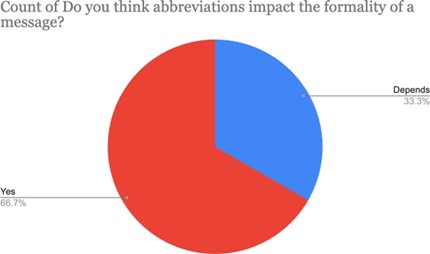
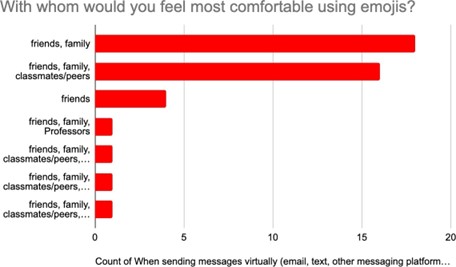
Figure 1: Responses to survey question “Do you think abbreviations impact the formality of a message?”
Figure 2: Responses to survey question: “With whom would you feel most comfortable using emojis?”

Conclusion

In conclusion, our research on the formality of linguistic patterns in virtual communication among UCLA students and faculty reveals that individuals adapt their language based on the context, medium, and relationship with the interlocutor. The findings confirm our hypothesis that students increase the formality of their linguistic patterns when communicating with authority figures, such as older individuals or those in higher positions. Emojis and abbreviations, common in informal settings, are used less frequently in professional contexts, indicating a clear distinction in language use based on the perceived formality of the situation. The concept of a “live feedback loop” in face-to-face interactions aids in understanding and adjusting communication, a feature lacking in online exchanges, where careful word choice and proofreading become essential.

Overall, this research provides valuable insights into the dynamics of virtual communication among UCLA students, emphasizing the influence of formality and politeness in linguistic patterns. Furthermore, our results reveal the delicate cooperation and reciprocity which online communication demands from its participants. Future studies could explore the impact of cultural differences on communication styles and the evolving nature of language in the digital age.

References

Baron, Naomi S., (2012). The impact of electronically-mediated communication on language standards and style’, in Terttu Nevalainen, and Elizabeth Closs Traugott (eds), The Oxford Handbook of the History of English, Oxford Academic, 6

Lorenzo-Dus, N., & Bou-Franch, P. (2013). A Cross-Cultural Investigation of Email Communication in Peninsular Spanish and British English: The Role of (In)Formality and (In)Directness. Pragmatics and Society, 4(1), 1–25. https://doi.org/10.1075/ps.4.1.01lor

Kádár, D. Z., & Mills, S. (2011). Politeness in East Asia: Chapter 2, “Politeness and culture” Cambridge University Press

O’Reilly-Shah, V. N., Lynde, G. C., & Jabaley, C. S. (2018). Is it time to start using the emoji in biomedical literature? BMJ: British Medical Journal, 363. https://www.jstor.org/stable/26964183

Meredith, Joanne. (2020). Conversation analysis, cyberpsychology, and online interaction. Social and Personality Psychology Compass, Volume 14, Issue 5.

[/expander_maker]
, , , ,

Bridging Bytes and Cultures: The Impact of AI on Linguistic and Cultural Nuances in Online Conversations

Ley’ah Mcclain-Perez and Ivan Pantoja Tinoco

The digital era is marked by the ascension of artificial intelligence. In particular, this presentation will delve into the transformative influence of ChatGPT on the online communication landscape, particularly within the microcosm of X. This AI-driven tool created by OpenAI not only redefines user interactions but also molds the linguistic contours of digital discourse. Our inquiry is rooted in a critical analysis of ChatGPT’s integration into social platforms, assessing its impact on the quality of communication, user perceptions, attitudes, and the ensuing ethical dilemmas.

Our research navigates through the multifaceted ramifications of ChatGPT, exploring its syntactic coherence and semantic relevance, alongside its occasional pitfalls that may lead to misinterpretations. It highlights the diverse demographic engaging on X, using ChatGPT for various purposes ranging from casual interaction to more substantial exchanges, thus painting a broad spectrum of digital human-AI interaction.

This exploration is not merely an academic exercise but a pivotal discourse that contributes to understanding the nuanced dynamics of digital communication in the AI era. It poses critical questions about the future of online interactions, the role of AI in shaping public discourse, and the ethical boundaries of AI integration into social platforms.

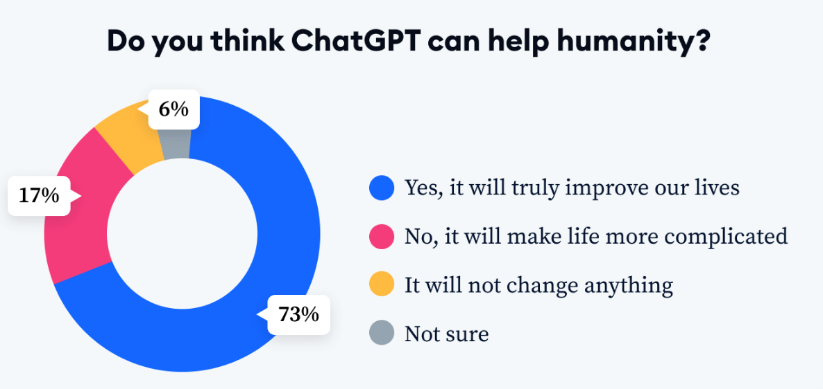
Figure 1: Demographics showing the potential of AI in the case of ChatGPT

[expander_maker id=”1″ more=”Read more” less=”Read less”]

Introduction

In the fast-paced world of online communication, the integration of artificial intelligence (AI) technologies has brought a significant shift in how people interact and engage with digital platforms such as emailing or Twitter. At the forefront of this transformation is ChatGPT, an advanced AI language model developed by OpenAI. With its widespread adoption, particularly on platforms like Twitter, ChatGPT has sparked a wave of curiosity and inquiry into its impact on interpersonal communication dynamics.

 ChatGPT’s presence on Twitter is hard to miss. Its ability to generate text responses that closely mimic human speech has made it a staple tool for many users across the platform. From casual conversations to more formal discussions, ChatGPT has seamlessly integrated into the online social media platform Twitter, which can be deceiving for those who have not incorporated AI into their lifestyles.

Twitter, renowned for its role in facilitating global connectivity, serves as a hub for real-time conversations and idea exchange. Users from diverse backgrounds come together on the platform to share thoughts, opinions, and news. With ChatGPT now part of the conversation, the dynamics of communication have undergone a subtle yet significant transformation, prompting researchers to delve deeper into its implications.

Our study seeks to address several key research questions:

  1. How does the integration of ChatGPT influence the quality and nature of communication within social media and discussion forums?
  2. What are the perceptions and attitudes of users toward ChatGPT-generated content in online interactions?
  3. What ethical considerations arise from the use of ChatGPT in facilitating online communication, and how do users navigate these concerns?
?
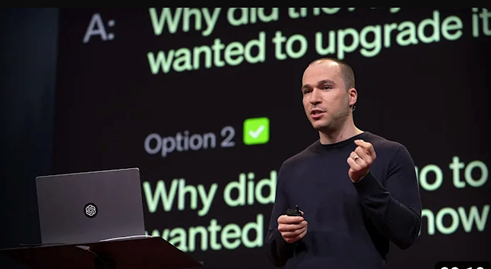
Figure 2: The Inside Story of ChatGPT’s Astonishing Potential | Greg Brockman | TED 

Methods

Our study involved a qualitative analysis of tweets gathered from X users. We collected tweets related to ChatGPT usage from teachers, recruiters, job applicants, and corporate employees. These backgrounds are important to note as these X users were most commonly found tweeting about our topic. Some keywords that we used to find tweets include “ChatGPT email,” “ChatGPT job”, and “ChatGPT ethics.” We filtered each search by tweets from the past year and tweets with the most engagement. Once we obtained these tweets, we analyzed the user’s holistic profile to ensure they were not a bot user. These keywords and filters provided a wide range of perspectives on ChatGPT integration in online communication.

Our analysis focused on categorizing tweets into for and against ChatGPT usage and into categories based on their employment background to discern users’ attitudes towards ChatGPT-generated content. In order to accomplish this, we examined the tone and vernacular of the tweets to distinguish the X user’s attitude. Furthermore, we also examined any memes or emoticons in the user’s tweets as this allowed us to better interpret the tone behind their tweet. Analyzing the tone, vernacular, memes and emoticons was crucial for us to depict any sarcasm.

Results and Analysis

After ChatGPT was implemented in online discourse, our analysis shows notable changes in the tone and linguistic expressions of conversations. The language used is a combination of official and casual, and ChatGPT comments frequently reflect the conversational tone that permeates online interactions. The limitations of AI-generated material in preserving contextual nuances are highlighted by difficulties in interpreting linguistic nuances including comedy, sarcasm, and cultural references.

Discussion

The results of our research provide a more comprehensive view of how online conversation is changing in the era of artificial intelligence. Although ChatGPT makes communication easier and improves accessibility, its effects on language use and cultural dynamics need to be carefully considered. Through adept handling of AI-generated content, we can optimize its potential to enhance digital connections while reducing the likelihood of misunderstandings and cultural insensitivity.

The key to maximizing AI-generated content’s ability to promote meaningful conversation while avoiding communicative dangers is to manage it strategically. Through the development of cultural sensitivity and contextual cue awareness, users may skillfully negotiate the complex landscape of online communication, utilizing AI’s augmentative powers without sacrificing human connection.

An ongoing conversation about the development of digital literacy and appropriate AI use is essential to this project. Giving consumers the means to understand language nuances and make sense of subtle implications helps guarantee that the emergence of AI-driven communication will continue to be a positive force for change.

References

Carrie Bradshaw Hater. “My Students Are Using CHATGPT for Their Essays and Everyone Is Turning in the Same Essay!!!” Twitter, Twitter, 4 Mar. 2024, twitter.com/nancytaughtyou/status /1764491684446900521.

Courtney Glory to Heroes Wells. “I Used CHATGPT When I Was Overtired and Needed to Get an Email to My Daughter’s Teacher That Made Sense and Didn’t Trust My Own Editing. I Don’t Care If She Knows — It’s Better than the Soup She Would Have Gotten If I Did It on My Own.” Twitter, Twitter, 28 Feb. 2024, twitter.com/ndesquiress/status/1762909572807708894.

Kepha, Brian. “Maaan ,CHATGPT Is Great at Corporate Lingo and I Love This.with It, It Is so Easy to Communicate a Serious and Business Tone Especially on Emails and Job Applications. This Is a CHATGPT Appreciation Tweet.” Twitter, Twitter, 29 Feb. 2024, twitter.com/AngelofVerdant/status/1763065674501394463.

Gawne & McCulloch. “Emoji as Digital Gestures.” Language@Internet, 2019.

Posts, Hannah. “It’s Hard to Tell. English Isn’t Her First Language, but the Communication Program I’m Using (I Lied, It’s Not Actually Email) Has a Translate Function She Could Use. in This Particular Instance She Was Just Replying, so All She Needed to Say Was ‘OK.’” Twitter, Twitter, 28 Feb. 2024, twitter.com/HannahPosted/status/1762946495324500456.

Sharma, S., & Yadav, R. (2023). Chat GPT – A Technological Remedy or Challenge for Education System. Global Journal of Enterprise Information System, 14(4), 46-51. Retrieved from https://www.gjeis.com/index.php/GJEIS/article/view/698

[/expander_maker]

, , , , ,

The Curse of Online Miscommunication

Christie Nguyen, Taymor Flower, Tatiana Paredes, Risa Nagase

With the burgeoning of technology, communication has drastically changed and shifted to texting on electronic devices. Unparalleled to this, conversations have become much more accessible, and texting has revolutionized the way we interact with one another, but at what cost? The purpose of this study was to determine the factors that lead to miscommunication in the digital world. The methodology used was survey research, in which the data collected were through questionnaires that were administered to participants individually. The participants were of the ages 18 to 22, undergraduate students at UCLA, and in a romantic, heterosexual relationship. The participants were asked a series of questions about whether or not there is miscommunication online between them and their partners. If so, they were asked to submit a screenshot demonstrating miscommunication or explain their interaction. Overall, the findings from the survey indicate that miscommunication online occurs frequently as a result of a lack of social cues, including tone, emotion, body gestures, and facial expressions. Many couples had issues with mistaking texts as a joke, missing a joke, not understanding sarcasm, not understanding passive aggressiveness, and mistaking blunt responses as rude.

[expander_maker id=”1″ more=”Read more” less=”Read less”]

Introduction and Background

With the prevalence of technology in today’s society, texting has become the most prominent form of communication. Texting is convenient and easily accessible, as it does not require all participants to be active at the same time, unlike conversing in-person or over the phone. By 2010, worldwide, there were five billion mobile connections, and it was estimated that on average, Americans sent 50 to 110 texts per day (Hall & Baym, 2011). However, the biggest issue texting entails is miscommunication, which is a result of indirectness, a lack of non-verbal cues, and a lack of impersonal connection. In computer-mediated communication, such as texting, many may use emojis to communicate, as it helps depict facial expressions and display emotions and gestures. Though, there may be incongruencies between the receiver and the sender, as the perceived meaning of the emoji may not be the intended meaning (Yang, 2019). Using emojis and texting cannot precisely convey emotions, body language, intonation, gestures, and all other cues that would be present in-person communication. For our study, we distributed surveys to individuals that are in relationships and communicate online to gauge the efficacy of communication via texting. If the participant agreed that texting results in miscommunication, we asked them to provide screenshots to corroborate our thesis. We hypothesize visual cues (e.g. facial expressions, eye contact, gestures, tone of voice) have fundamental communicative functions, and the absence of them when communicating online leads to miscommunication.

Methods

In order to conduct this study, we asked a series of questions that contextualized respondents’ opinions on, and style of, online communication; then, we asked respondents to either send in screenshots or a written account of a miscommunication with their partner. Our target audience was 18-22-year-old UCLA students in heterosexual relationships; in order to collect samples, we sent out surveys to people who we knew to be in active relationships. There were 11 survey questions in short answer format. Some of the questions that were more important in the analysis of our data were:

  • Gender identification (Male, Female, other).
  • In general, do you find it easier to communicate online or in person?
  • Why do you prefer in person/online communication more?
  • Do you feel like you can tell others what you want to say properly online? How about in person?
  • Do you feel more understood when communicating in person or online?
  • Do you find that your partner communicates in a different way than you do online?
  • Can you provide screenshots of a conversation with your partner that resulted in miscommunication? (For example: something over text that resulted in a miscommunication/argument, sarcasm that was misunderstood, misinterpreting tone, etc. No need to share anything too personal, just any type of miscommunication over text!)
  • If you can’t find any screenshots, can you provide a written account with examples of a miscommunication with your partner that occurred online?
  • How was this miscommunication resolved?

The segments of the survey we analyzed more closely were the responses related to conflict resolution in online communication. The questions relating to respondents’ perspective of online communication helped to contextualize their miscommunications with their partners; offering possible explanations to why the miscommunication happened in the first place and how dissonance in communication is resolved   The screenshots and accounts that respondents provided were the most pertinent to our analysis because they helped to emphasize the importance of body language and visual cues in communication within relationships.

Results

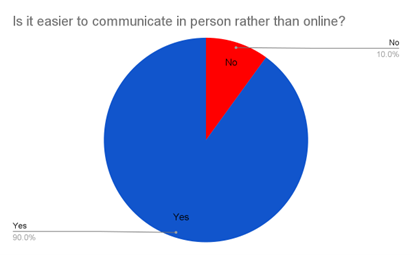
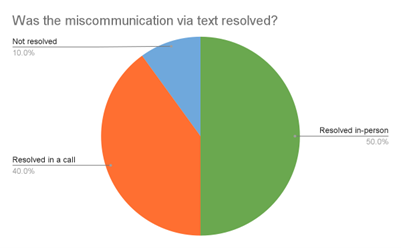
As it turns out, the results of the study indicated that a lot of miscommunication does occur when using online mediums rather than being in-person. We surveyed 20 people and when assessing our data, it revealed that 100% of our participants felt like they were more understood in person rather than online, 90% of which felt that it was easier to communicate in person as well (Figure 1). This is to say that the preferred medium to communicate is simply face-to-face. Some of our participants explicitly stated that being in person allowed for the analysis of body language, facial expressions, and tone of voice – something that texting lacks. When speaking about their interactions with their partners online, the fact that certain jokes or sarcasm would fly over their heads was common. One participant mentioned that even the tone of voice would have been enough for their partner to understand their sarcasm – something that texting did not offer. Another common occurrence was that emotions were not easily read and did not get the point across. 50% of participants then followed up and said that the miscommunication was resolved in person and 40% said that even a call afterward was helpful in getting their message across more correctly after it was not received as intended (Figure 2). When asked about if it may have been different if they would’ve talked in person rather than online, they all agreed that it would have. They reiterated that the cues that were missing from in person communication made it more difficult to understand each other.

Despite the uses of emojis, slang abbreviations, or punctuation, there still runs the risk of someone interpreting the message in an entirely different way than intended.

Figure 1: Is it easier to communicate in person rather than online?
Blue: Yes
Red: No
Figure 2: Was the miscommunication via text resolved?
Green: Yes, resolved in-person
Orange: Yes, resolved in a call
Blue: Not resolved

Similarly, because all they could see were words on a screen, participants mentioned that texting did not have the range to truly express their emotions as they felt that a lot of context would be left out and they felt the need to shorten their messages – texting did not prove to be as fluid as face-to-face conversation could have been. This is all to say that online communication feels more impersonal and cryptic than in person communication does and that ultimately leads to issues between the two parties.

In our survey, we had asked participants to provide screenshots of miscommunication, if possible, and to explain what was miscommunicated, why, and how it was miscommunicated.

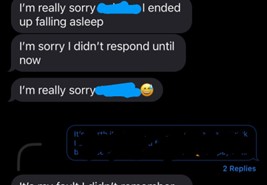
Figure 3: Misinterpreting Emoji and Conversation

In Figure 3, our participant explained that she thought her partner was ignoring her, but he had just fallen asleep. They had arranged plans together, and when he fell asleep, it completely ruined her plans because they misunderstood each other over text. Moreover, our participant explained that she was frustrated at this moment, and even more aggravated when he sent the emoji (smiley face with water drop) because she thought he was laughing and ridiculing the situation. They had called over the phone to resolve the issue, and it was more clearly understood by both parties about their intentions. It was also explained by her partner that the emoji was used to indicate nervousness, and he sent a smiling emoji to make light of the situation. This snapshot demonstrates how the use of emojis may be perceived differently, and that texting leads to miscommunication.

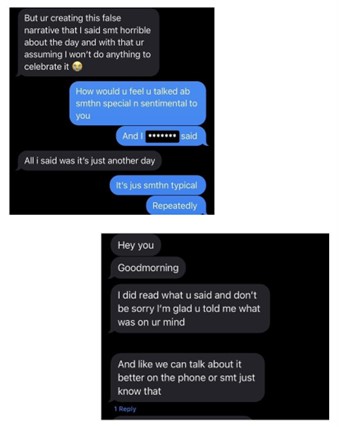
Moreover, in Figure 4, our participant had misinterpreted what their partner said and mistook it for ill intent, which led to an extremely heated argument.  The following day, their partner had suggested calling to understand each other better and to clear up any misinterpretations. This reveals how without seeing a person face-to-face and hearing their tone, it is difficult to understand their intent.

Figure 4: Misunderstanding Text and Arguing

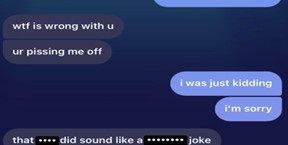
Lastly, in Figure 5, our participant includes a screenshot of his partner quickly getting aggressive with him over text. He had made a joke to her, without much indication over text that it was a joke, and that had triggered her to react angrily. With the lack of intonation, gestures, and facial expression, it is difficult to understand sarcasm over text, especially when both partners do not have the same texting styles.

Figure 5: Missing Jokes

Discussion and Conclusions

Our research has found that online communication is not as an effective medium of communication than in-person communication. The lack of non-verbal signifiers that give more depth and nuance to creating meaning are important for clear comprehension between two parties; tone of voice, inflection, facial expressions, and body language are integral to completely understanding an individual  Online communication gives society the ability to communicate with each other anywhere/anytime easily and efficiently, and still holds significant merit. The use of emojis has been understood to enhance messaging and allow more expression and personality through texts, by emphasizing certain emotions and giving more context to a written message via text. An insightful TedxTalk by Anna Lomanowska, a PhD Assistant Professor in the Department of Psychology, analyzes the challenges of communication online, and how the utilization of emojis is ineffective and leads to miscommunication. Although emojis have been very useful in capturing some nuances of people’s online messages, there is still a disconnect in comparison to in-person communication; Lomanowska cites a University of Minnesota study, which found that people disagree around 25% of the time about the meaning of emoticons and their emotional valence, giving more room to misunderstanding. 

There is a richness and depth to non-verbal communication that is impossible to recreate or replicate in text message scenarios. Communication with a romantic partner is something that is a cornerstone to a healthy relationship; disagreements and misunderstandings over text happen because there is a lack of emotional nuance and emotion, both of which are important elements in a romantic relationship that is emotionally charged and driven. Non-verbal communication signifiers can include: facial expressions, posture, gestures, eye contact, touch, space, and voice (Segal et al., n.d.). All of these elements contribute to roles of communication that can only be understood in the context of in-person interaction. Non-verbal forms of communication work to complement verbal messages, accent emotion or importance of verbal messages, substitute for verbal messages, repeat verbal messages, and even convey contradiction (where an individual says something about their body language does not match the verbal messaging) (Segal et al., n.d.).

This study emphasizes the importance of emotional nuances advanced by nonverbal cues that is lacking in online communication. This study is useful to contextualize the nature of misunderstandings that happen online and provide information to people in relationships, either romantic or platonic, on the benefits and drawbacks of meaningful conversation via text and online mediums.

References

Hall, J. A., & Baym, N. K. (2011). Calling and texting (too much): Mobile maintenance expectations, (over)dependence, entrapment, and friendship satisfaction. New Media & Society, 14(2), 316-331. https://doi.org/10.1177/1461444811415047

Segal, J., Smith, M., Robinson, L., & Boose, G. (n.d.). Nonverbal Communication and Body Language. HelpGuide.org. Retrieved March 23, 2023, from https://www.helpguide.org/articles/relationshipscommunication/Nonverbalcommunication.htm

TEDxTalks. (2019, July 10). Why Emojis Don’t Say Enough | Anna Lomanowska | TEDxUofT [Video]. YouTube. https://www.youtube.com/watch?v=1LZH_-g9FXQ&ab_channel=TEDxTalks

Yang, Y. (2019). Are you emoji savvy? Exploring nonverbal communication through emojis. Communication Teacher, 34(1), 2-7. https://doi.org/10.1080/17404622.2019.1593472

 [/expander_maker]

, , ,

Click, Swipe, Connect: Flirting Directly and Indirectly through Online Mediums and In-Person Interactions

Natasha Motamed, Sasha Bok, Angelica Limoanco, Ashley Lopez

Does the medium in which you flirt with someone change your flirting style? Are you more likely to use direct language such as complimenting when trying to flirt online versus in-person, or are you more likely to use a pick-up line? The following research project will investigate how individuals flirt online via private messaging on dating apps such as Hinge, Bumble, and Tinder, and text messages versus in-person interactions and whether they use direct or indirect language in their flirting practices. Based on previous findings, we hypothesized that flirting on various online mediums will employ greater directness, whereas in-person flirting would consist of more indirect language. To test these hypotheses, we compared screenshots of online flirting interactions with flirting scenes between contestants on The Bachelor and Bachelor in Paradise.

Our main finding was that flirting on online mediums consisted of both direct and indirect communication through the usage of compliments and pick-up lines, respectively. Therefore, our hypothesis was partly true in predicting that online mediums would at least employ direct communication. On the other hand, we were surprised to discover that in-person flirting employed direct communication rather than indirect communication, which was what we had initially predicted.

[expander_maker id=”1″ more=”Read more” less=”Read less”]

Introduction and Background

How exactly do you interpret what flirting is? According to Wade (2018), flirting refers to words or nonverbal actions that include any semblance of romantic and sexual relations between individuals. Moreover, when communicating face-to-face, flirtatious speech is also often used with laughter and animated speech (Whitty, 2016). With flirting, it is prevalent within our society today both in-person as well as on online mediums. Regardless of whether someone uses pick-up lines or compliments to flirt, people tend to communicate differently depending on the modality they are using, i.e. online or in-person.

For our research, we investigated how people flirt differently depending if it is in-person or online. We researched and observed the similarities and differences of flirting indirectly or directly between in-person interactions of The Bachelor and Bachelor in Paradise contestants and online private messages on various dating mediums, direct messages, and texts, which were obtained from 18-29-year-old UCLA students. When looking at the linguistics of flirting, indirect communication can be defined as nonverbal choices such as pauses and bouts of silence, where the recipient must contextualize the situation in order to more accurately discern the speaker’s implied message (Joyce, 2012). Pick-up lines are a perfect example when it comes to indirect flirting since there might be hidden messages beyond what is actually being said. A popular example of this would be the infamous saying “Netflix and Chill,” which requires contextual clues in order to decipher the sexual innuendo being implied.

On the other hand, direct communication means there is no hidden meaning in what is being said, so the speaker will use exact words for their intended meaning (Joyce, 2012). An example of direct communication while flirting is a compliment, such as “I think you are gorgeous.” We had hypothesized that flirting on various online mediums will utilize greater directness, whereas in-person flirting will use more indirect language and word choice. Whether it was a Bachelor franchise contestant flirting in-person or a UCLA student flirting online, they had all found different methods of flirting depending on where they communicated from (see below in Results).

Methods

To investigate these hypotheses, we observed two target populations –– the first consisted of male, female, and non-binary/non-conforming UCLA students, ages 18 to 29, from any ethnic or socioeconomic background. While people of all ages and demographics use the internet, according to Smith (2014), the majority of internet users are actually between the ages of 18 to 29. Additionally, it has also been noted that they utilize technology to start romantic relationships (Meenagh, 2015). Therefore, we analyzed their online communication through various online platforms such as dating apps (Hinge, Bumble, and Tinder) and private text messaging. Our second target population included cisgender male and female contestants, ages 21-35 years old, from any ethnic background and socioeconomic status, on the television shows The Bachelor and Bachelor in Paradise. We observed their in-person communication through their methods of flirting shown on-screen.

The communicative/language aspects our project looked at included directness versus indirectness which is observed through word choice and specifically manifested through pick-up lines versus straightforward phrases and complimenting. These practices are used as a means to flirt in both in-person and online contexts.

We recruited the participants for our first target population and collected their screenshots by posting a Google Form on various platforms that UCLA students use such as GroupMe chats from various classes, Instagram stories, and Slack groups. Participants were asked to submit one or more screenshots where they used flirting on the following platforms: Hinge, Bumble, Tinder, or private messaging.

Our total data set included 33 screenshots of conversations on various online platforms as well as 21 in-person interactions observed from The Bachelor franchise shows. Throughout the analysis process, we highlighted and noted which interactions utilized indirect and direct communication by analyzing word choice in addition to the use of compliments and pick-up lines.

 Results and Analysis

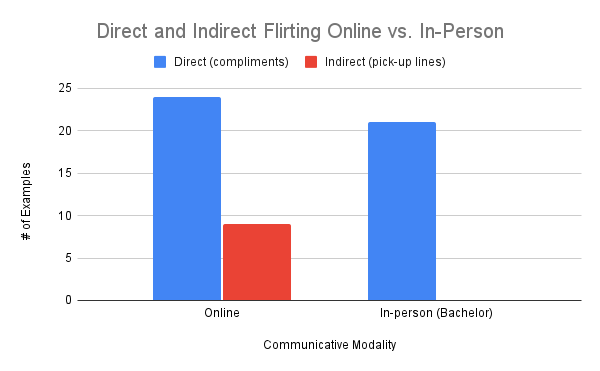
Figure 1: Bar graph comparison of direct and indirect communication in in-person vs online interactions

As a result, in Figure 1 we see a comparison of direct and indirect communication within in-person and online interactions. Direct communication like compliments were seen the most in online mediums as well as in in-person interactions. Indirect communication such as pick-up lines were only seen in online interactions.

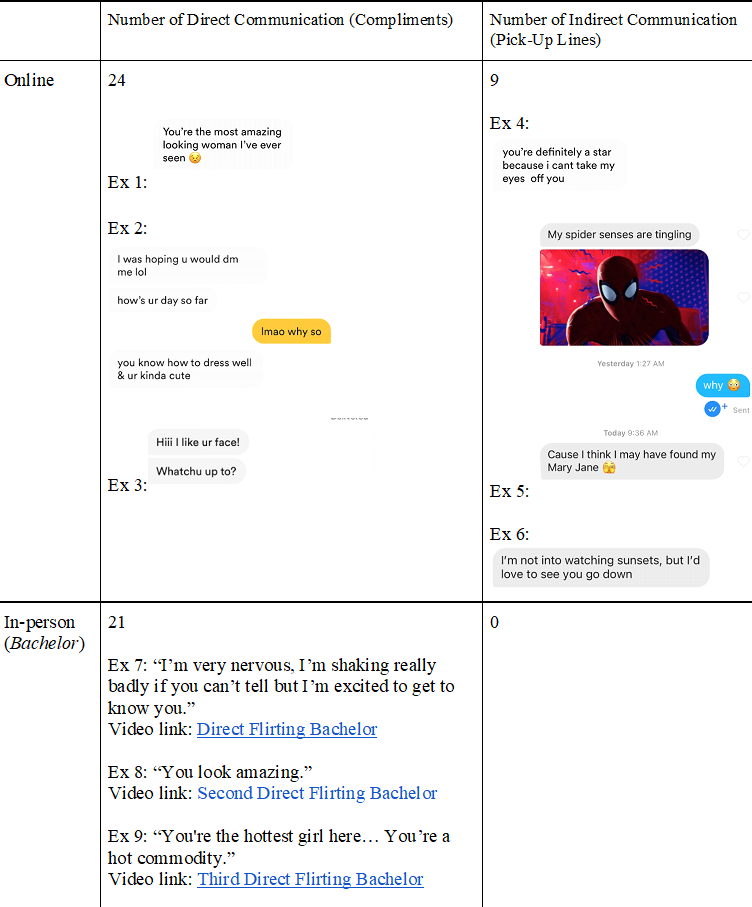
Figure 2: Breakdown of the number of direct and indirect communication within online and in-person interactions and examples of each type of communication.

After collecting our empirical evidence, we observed that out of 33 online flirting interactions, 24 of them contained direct communication manifested through compliments whereas only 9 interactions contained indirect communication through the use of pick-up lines. Examples of direct and indirect communication observed are shown in Figure 2 above. This shows that although both direct and indirect communication are utilized on online platforms, the majority of online interactions use direct communication. In contrast, out of a total of 21 in-person flirting interactions, all of them contained direct communication and none of them contained any indirect communication or the usage of pick-up lines. Examples of direct communication in in-person interactions are linked in Figure 2 above.

After observing 33 screenshots and 21 in-person interactions, we found that pickup lines were very prominent in online mediums and were used indirectly compared to in-person interactions. Participants in The Bachelor franchise were more direct in their conversations while pursuing a romantic relationship. They did not utilize any indirect communication such as through pick-up lines in person. But in both mediums, compliments were utilized. For example, the following compliments were used on online mediums: “you know how to dress well and ur kinda cute”, “I like ur face”, “I think you’re gorgeous”, “you really fine”, and “that smile won me over”. The following compliments were used in in-person interactions: “I’m very nervous, I’m shaking really badly if you can’t tell but I’m excited to get to know you,” “you look amazing,” “you’re the hottest girl here,” and “you’re a hot commodity.” In online mediums, it is much more common to see someone use direct language when they ask if someone is free when compared to in-person interactions. Individuals will use direct language such as “Are you free this Tuesday” or “U free later tn tho?” We found that people online were more indirect through their usage of pickup lines and it was rare to see pickup lines like “you’re definitely a star because I can’t take my eyes off you” used in person. Both online and in-person interactions used direct and explicit word choices in the form of compliments in order to get their meanings across. However, in the in-person interactions, our observations found that the flirting did not result in any individual asking out another person. Overall, we found that flirting online utilizes both direct and indirect communication through the use of complimenting and pick-up lines, respectively, whereas in-person interactions solely use direct communication as a means to show romantic interest.

Discussion and Conclusion

For our Post Data Collection Analysis, we concluded that word choice can result in either direct or indirect communication, for example through compliments or pick-up lines, respectively. We observed both the screenshots and Bachelor scenes through the lens of explicit and implicit word choice, and ultimately placed them into their respective categories, as seen in the chart and graph above.

Based on these findings alone, we could predict that flirting on online mediums could potentially lead to higher or more frequent usage of direct and indirect communication through the employment of pick-up lines and compliments. We attribute this trend possibly to people feeling more confident or comfortable when there is a physical distance between the parties involved and also due to the anonymity veil provided by device screens.

In regards to the validity of our observations and findings, we do acknowledge that there are limitations in having The Bachelor represent in-person flirting practices due to the possibility of it being scripted. Therefore, it’s important to note potential differences between our samples from the reality show and what actually happens within everyday life.

That being said, we believe that our observational results can benefit anyone who communicates online or would like to explore the benefits of talking to and meeting new people online, especially in the romance department. As daily users of technology and online communication yourselves, you can definitely utilize our findings to improve your methods of obtaining the best romantic partner ever! We want you to succeed romantically as much as possible, so take our results into consideration when looking for your future partner in crime!

For future purposes, it’s also important that we research and examine any new and upcoming trends and patterns that arise from our behaviors within these online modalities, especially since we live in this technological age where the majority of society is now heavily reliant on social media as a primary means of communication.

References

Joyce, C. (2012). The impact of direct and indirect communication. Journal of the International Ombudsman Association.

Meenagh, J. (2015). Flirting, dating, and breaking up within new media environments. Sex Education, 15(5), 458–471. https://doi.org/10.1080/14681811.2015.1033516

Smith, J. (2014). The Perceived Impact of Online Versus Offline Flirting on Romantic Relationships [Master’s thesis, University of Dayton]. OhioLINK Electronic Theses and Dissertations Center.

‌Wade J. A. (2018). (I Think) You Are Pretty: a Behavior Analytic Conceptualization of Flirtation. Perspectives on behavior science, 41(2), 615–636. https://doi.org/10.1007/s40614-018-0136-y

Whitty, M. T. (2004). Cyber-flirting: An examination of men’s and women’s flirting behaviour both offline and on the Internet. Behaviour Change, 21(2), 115-126. https://doi.org/10.1375/bech.21.2.115.55423

 [/expander_maker]

, , , , ,

Love at First Site? The Impact of Medium and Sex on Flirting Behavior

Christian Bury, Maddy, Valerie Beketava, Marissa Schulner, Luming Zhou

Smiling at the cute cashier, batting your eyes at your work-crush, or even strutting up to greet an attractive stranger at the bar, whether Dr. Love himself, or merely an average joe looking to land a date, we’re all aware of the tried-and-true signs of flirting. It’s with this familiarity in mind, that the recent emergence of social media and popular dating apps have revolutionized these age-old flirting techniques, reimagining themselves in the form of risqué DM’s and overly animated texts featuring the all too infamous winky face emoji. Biological sex has long stood as the primary element of influence within flirting behavior, but with the prevalence of today’s digital technology, the actual medium of such communication has been introduced as yet another important factor regarding one’s approach to flirting. Despite this being the case, a few features of flirting remain ubiquitous across both face-to-face and virtual mediums regardless of biological sex: the use of compliments and exaggerated reactions. With this in mind, the following article lays-out and reflects on the aforementioned features of flirting, shedding light on how differences among sex and medium impact flirting behavior, perception, and tendencies.

[expander_maker id=”1″ more=”Read more” less=”Read less”]

Introduction

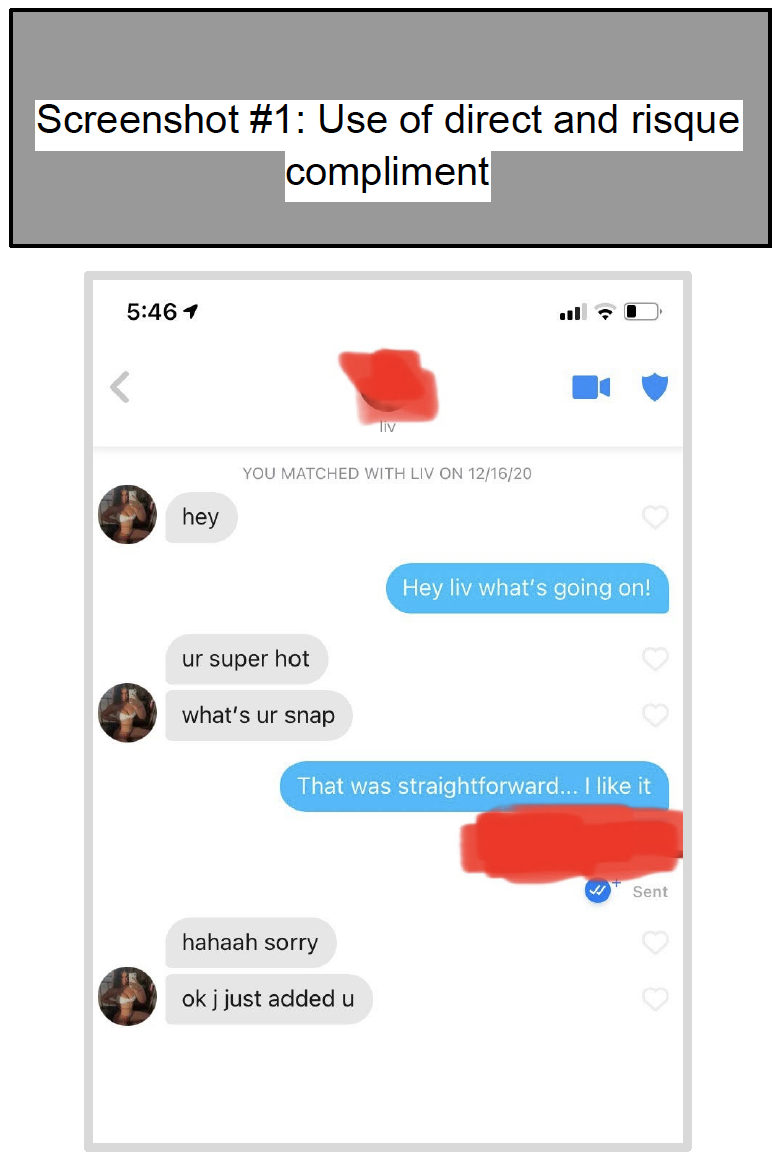
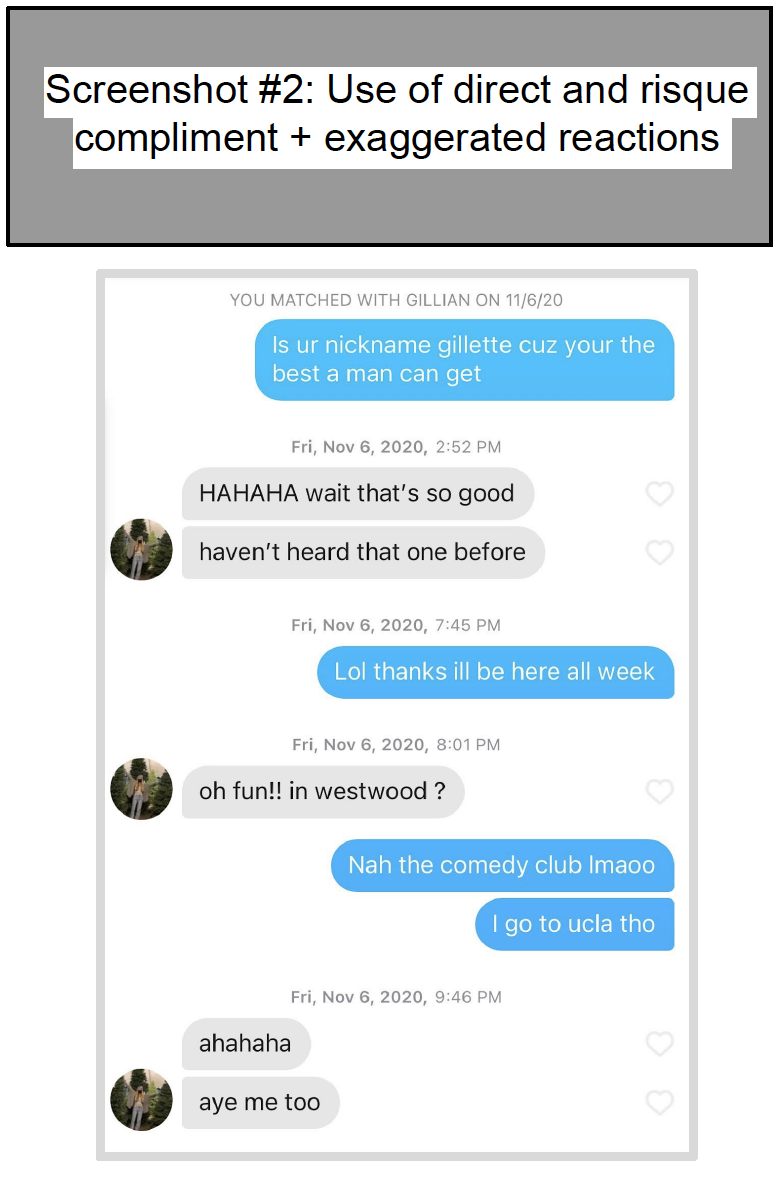
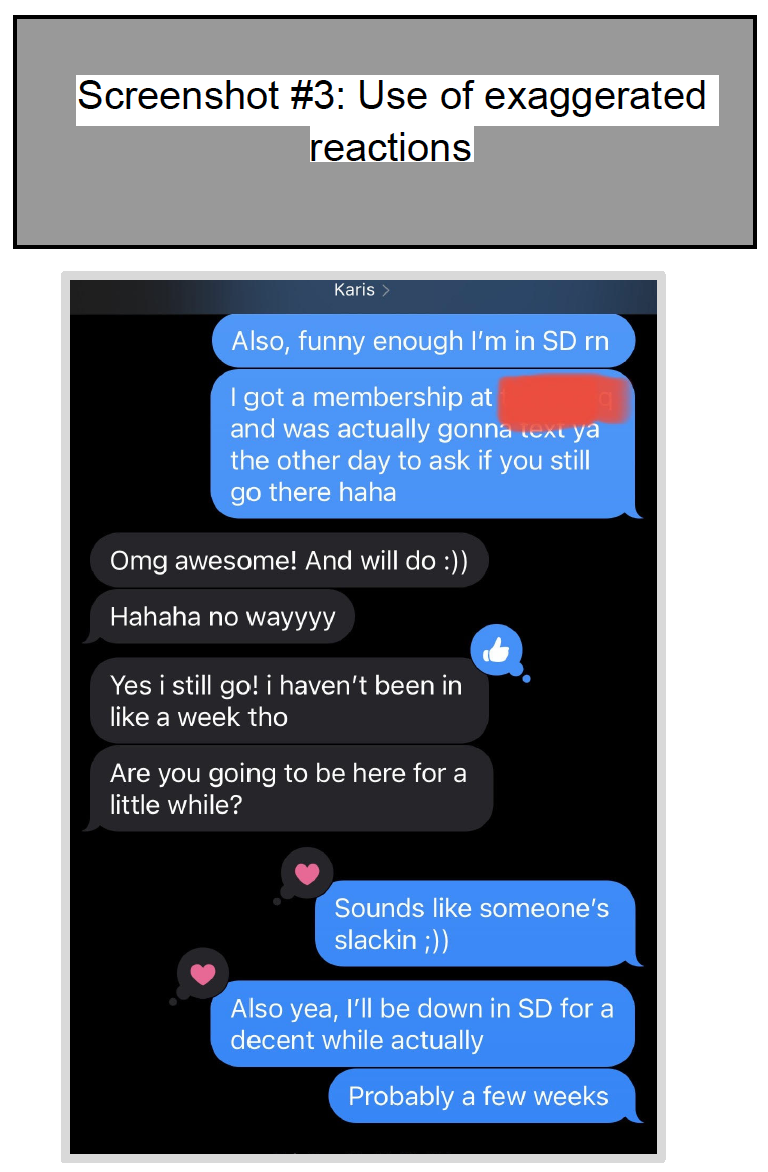
Before diving into all the nitty-gritty details of these recent observations, it is important that we introduce the background of such research, and more specifically, the features of flirting we will be paying special attention to. With longstanding studies on flirting and communication, it doesn’t take an astrophysicist to know that flirting relies heavily on non-verbal signals and exaggerated reactions such as laughing, smiling, looking someone in the eye for a significant period, and winking (Eckert & McConnell, 2003). For this exact reason, more contemporary research has concluded that without the traditional non-verbal signals of face-to-face communication, virtual flirting tends to rely on emojis, capitalization, and punctuation, as substitutes for conveying exaggerated excitement (Whitty, 2004). Our study of “exaggerated reactions” refers to the act of responding over-enthusiastically while flirting, usually laughing, smiling, or speaking louder and faster to signal interest and excitement. More specifically, this feature may take form in face-to-face contexts by giggling at an attractive person’s joke as if it’s way funnier than it actually is, or appear in a virtual sense, with the excessive use of emojis, punctuation, and capitalization, while texting “HAHAHA…waaaaiitt, I LOOOOVE that!!!!” Likewise, in regard to modern analysis surrounding the use of compliments between men and women, it’s been widely observed that women are more likely to both give out and accept compliments, while men are more likely to deflect and misread compliments when flirting (Tannen, 1990). From this standpoint, we’ve chosen to further examine such behavior, particularly researching what we’ve classified as “direct and risque compliments.” This feature refers to the act of essentially cutting straight to the point and making a flirtatious or sexually suggestive compliment while flirting. Most notably, such behavior may be observed within the likes of face-to-face flirting by telling someone “you’re gorgeous,” or appear in a virtual context while sliding into someone’s DM’s to say “you’re super hot, can I get your snap?” Now at this point, you may be thinking so what’s the big deal? Well, by taking these features into account, we’ve developed exciting new insight on the medium and types of compliments preferred by men and women, in addition to which medium is perceived to involve more exaggerated reactions, as well as direct and risqué compliments. We predict that flirting face-to-face is the preferred medium of both men and women, being perceived as more sincere, and therefore, more effective. Moreover, we also expect to find that flirting virtually tends to involve more direct and risqué compliments, as well as exaggerated reactions.

Methods

With regards to the methodology of such research, we decided to approach this study with three separate phases and means of collecting data. First and foremost, we developed a multiple choice google survey, gathering responses from 27 male and 27 female UCLA students. In particular, this survey gauged the tendencies and perceptions, as well as the use of compliments and exaggerated responses by men and women when flirting face-to-face and/or virtually. Next, we cross compared our survey results with 14 anonymously submitted screenshots of flirting over Tinder, Instagram DM’s, and Text messages, effectively countering the potential survey bias of our data by presenting more “real-world” flirting behavior in practice. Lastly, we gathered and analyzed an assortment of media clips containing flirting scenes from various movies and shows, once again cross referencing such examples with our survey data and screenshots of virtual flirting to develop more comprehensive results. 

Results and Analysis

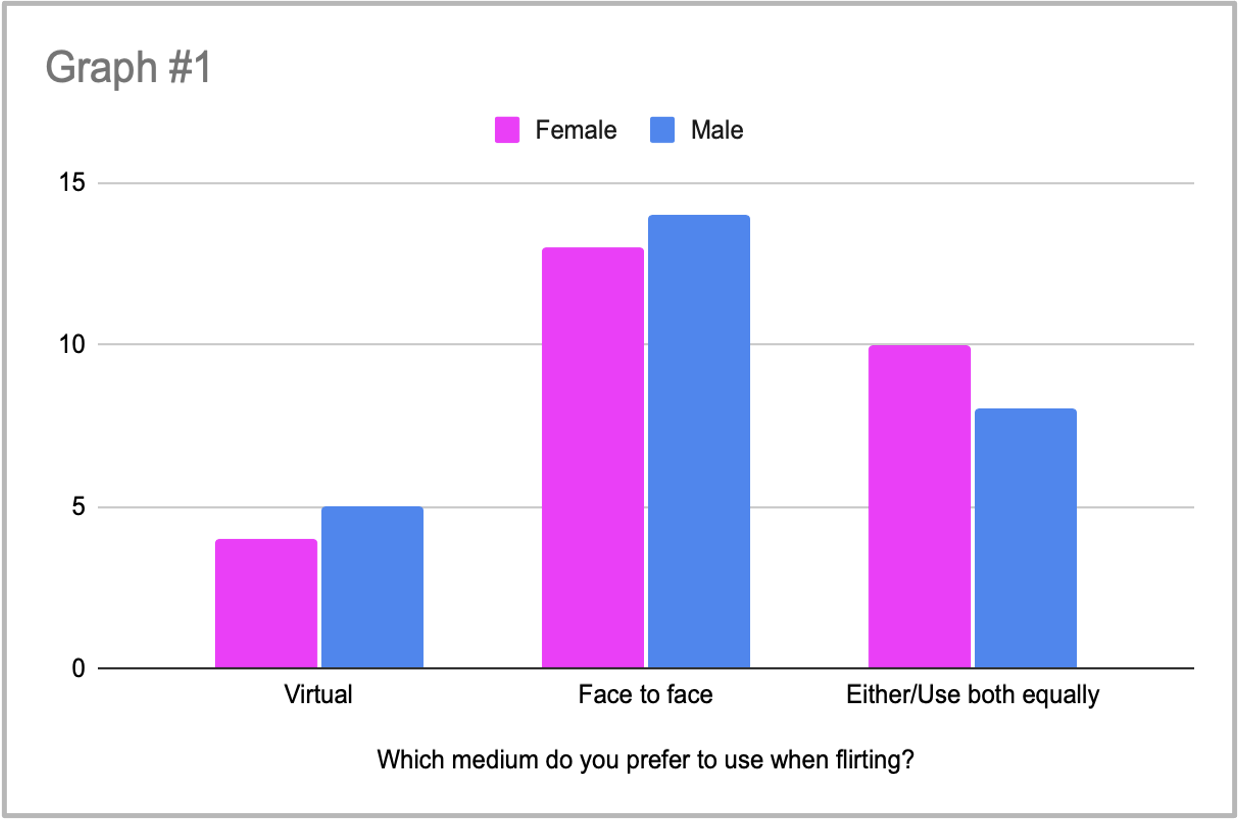
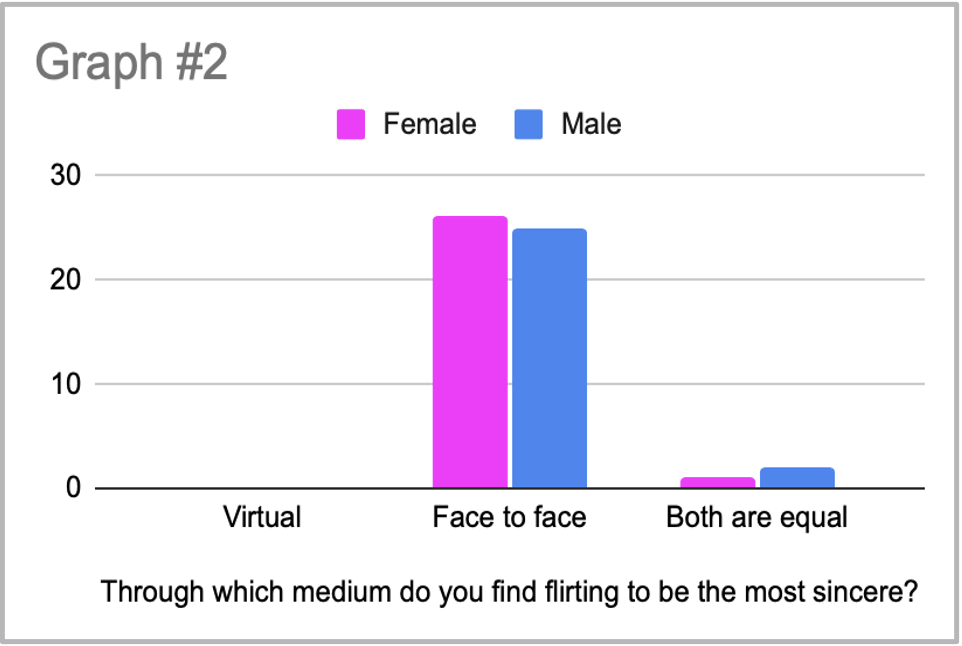
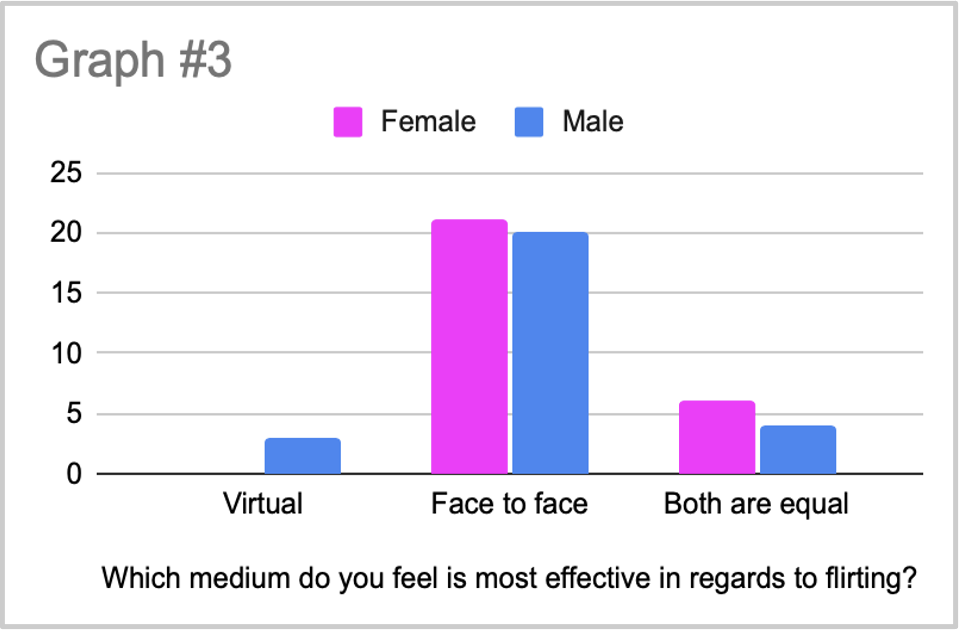
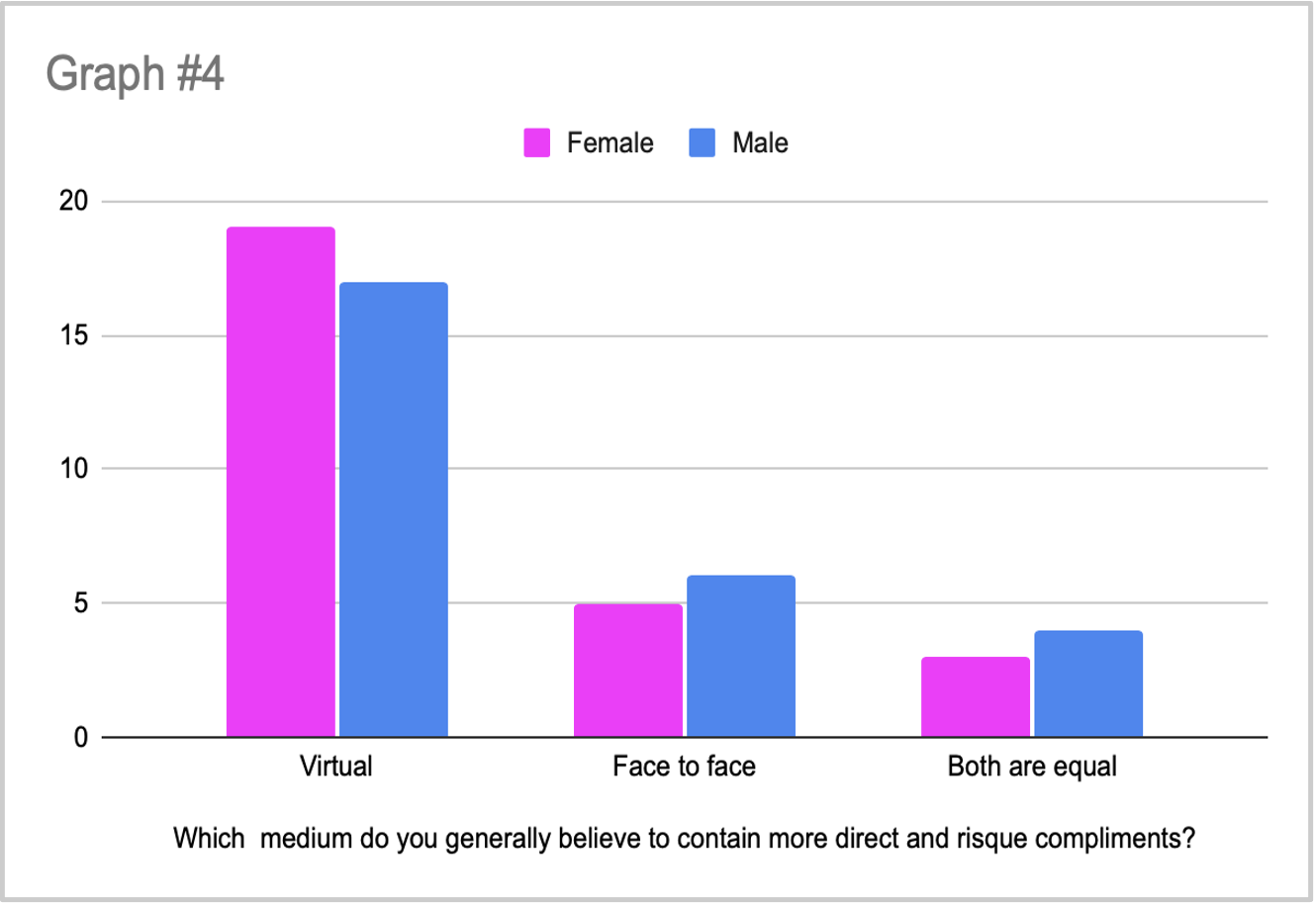
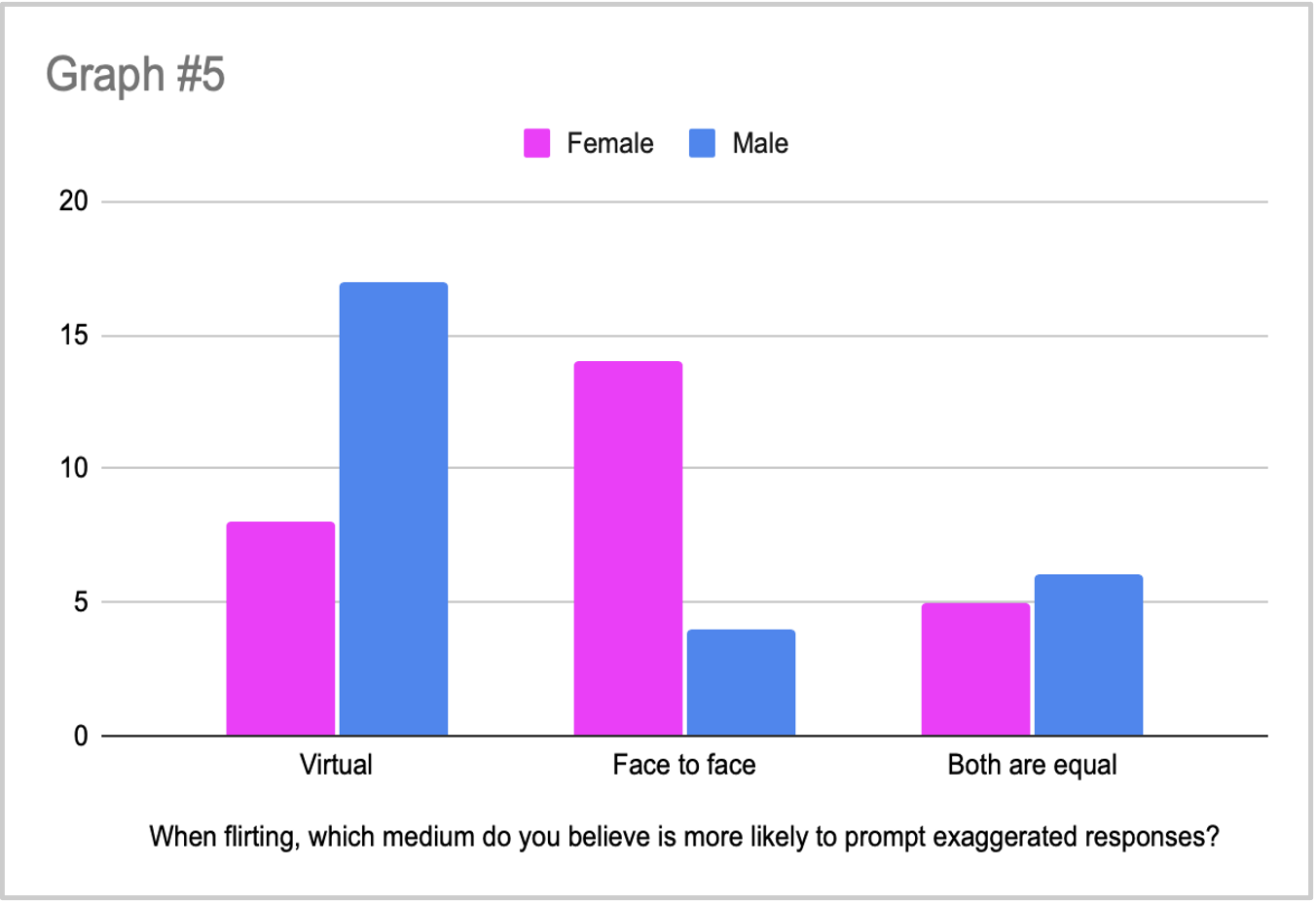
Moving on to the results and analysis of this three-phase approach to data collection, we see that our survey results indicate that men and women are strikingly similar when it comes to their perception and use of really any notable feature and medium of flirting. In this case, our survey data shows that the only notable disparity between sex appears over which medium is more likely to contain exaggerated reactions, with men saying that virtual flirting contains more exaggerated reactions, while women reported the contrary, highlighting the exaggerated reactions of face-to-face flirting instead (as seen in Graph #5). Beyond this minor disagreement, both men and women said that face-to-face was their preferred flirting medium (Graph #1), agreeing that it’s more sincere (Graph #2), and therefore, more effective (Graph #3), while also perceiving that virtual flirting tends to involve far more direct and risqué compliments (Graph #4).


Taking this into account, our analysis of the virtual flirting screenshots showed that in many cases people will say things online that they may not say in person (Screenshot #1 and #2). This observation carries over similarly to an apparently high volume of exaggerated messages and responses (Screenshot #2 and #3). As noted earlier, this behavior likely stands as a means of compensating for the lack of traditional nonverbal flirting signals missing from virtual mediums. Lastly, our examination of media clips focused mainly on scenes from the films “Back to the Future”, “Crazy, Stupid, Love”, and “The Departed” (see links below).

“Back to the Future” Flirting Scene

“Crazy, Stupid, Love” Flirting Scene

“The Departed” Flirting Scene

In each case, all three clips displayed an exchange of compliments, usually coming from the man initially, as well as indications of exaggerated reactions, usually occurring in the form of giddy laughter, smiling, and louder, faster speech.

Discussion and Conclusions

Relying on surveys, research, and media analysis we draw several conclusions regarding flirting behaviors among young adults. By analyzing our survey results we can conclude that flirting face-to-face is the preferred medium of both men and women. This came as no surprise to us but was very interesting to analyze the many possible reasons and explanations that resulted in this conclusion. One reason for this result is that both genders indicated that they found flirting in person to be perceived as more sincere, effective, and the most time effective method of getting to know a person they are attracted to. Virtual flirting was shown to be more prone to direct and risqué communication that can often be misinterpreted whereas in-person can be seen to show much more clear and precise expression of intentions. The more playful and sincere compliments observed through in-person flirting is preferred for both men and women over the more scandalous and risqué ones prevalent among virtual flirting. As we previously assumed, virtual flirting prompts much more exaggerated and animated reactions than in-person. We assume that this exaggerated behavior is used as an attempt to combat the non-verbal cues we get when flirting in person. These non-verbal cues include smiling, touching, laughing, as well as other micro-expressions we observe when you are attracted to another person. Those who are more introverted and less confrontational may prefer online flirting as their preferred medium as there is much less physical embarrassment when a flirting tactic fails to elicit the desired response. For an online flirting medium such as Tinder, where you most likely have not met the person, you are talking to and, the person may believe they have to come off strong to provoke a response and make an impression among a much larger pool of potential partners. While our survey did compare results among both men and women, our analysis found that the medium, rather than sex, has a much larger impact on the use and perception of compliments and exaggerated response when flirting. Overall, most of our research data and analysis confirmed our hypothesis that young adults prefer face-to-face over online flirting, leaving the door open for further insight that could promote future research on this topic.


References

Tannen, D. (1990). You just don’t understand: Women and men in conversation. New York, NY: Morrow.

Eckert, P., & McConnell-Ginet, S. (2003). Language and gender. Cambridge: Cambridge University Press.

Holmes, J. (1988). Paying compliments: A sex-preferential politeness strategy. Journal of Pragmatics, 12(4), 445–465. https://doi.org/10.1016/0378-2166(88)90005-7

Smith, J. (2014). The Perceived Impact of Online Versus Offline Flirting on Romantic Relationships . (Electronic Thesis or Dissertation). Retrieved from https://etd.ohiolink.edu/

Narissra M. Punyanunt-Carter and Thomas R. Wagner.Cyberpsychology, Behavior, and Social Networking.Apr 2018.229-233.http://doi.org/10.1089/cyber.2017.0608

Whitty, M.T. (2004). Cyber-flirting: An examination of men’s and women’s flirting behaviour  both offline and on the Internet. Behaviour Change, 21(2), 115-126

[/expander_maker]

, , , , ,
Scroll to Top