cultural differences

Love Across Cultures: A Comparative Study of Verbal and Nonverbal Communication of Affection in Text Messages Among American and East Asian College Students

Yoonhye Kim, Yuka Tanaka, Asaka Minami, Eugene Jo, Zivana Ongko

Have you ever wondered why a simple text message can be interpreted differently by people from different cultures? We were curious about how cultural differences affect communication in romantic relationships and identify the causes of miscommunication among people from different cultural backgrounds. This study compares how college students from East Asian and American cultures express love through text messages and explores the cultural factors that contribute to these differences. The study surveyed 30 college students between 18-24 years old, consisting of 15 American students and 15 East Asian international students from China, Japan, and South Korea. Participants provided demographic information, self-reported love languages, and text message screenshots, and their language was analyzed as direct or indirect speech. Results showed that American students tend to express love through more direct language, using terms of endearment and direct declarations of love, whereas East Asian students use more indirect and implicit expressions of affection. The study highlights the cultural differences in the understanding of love and expressions of affection, shaped by norms, values, individualism, and collectivism. The findings suggest that cultural factors play a significant role in shaping linguistic expressions of love and the use of nonverbal cues in text messages.

[expander_maker id=”1″ more=”Read more” less=”Read less”]

Introduction

Love comes in many forms, and the means of communicating love vary across countries and cultures. This study aims to compare how college students from East Asian and American cultures express love through linguistic expression, specifically in text messages. The focus is on the directness of verbal expressions of affection and the contextual meaning of indirective expressions. Our research question is: “What are the differences in verbal (text) and nonverbal (emoji) communication in expressing love through text messages between college students in America and East Asian countries who have been in a romantic relationship for more than one month, and what cultural factors contribute to these differences?” We hypothesize that American students tend to express love through a more romantic language characterized by directness and expressiveness in their verbal expressions of love, whereas East Asian students may also be more hesitant to express their feelings directly (e.g., these students tend to respect cultural norms that value modesty and reserve in emotional expression). The use of nonverbal cues like emojis in text messages may be more prevalent in East Asian cultures due to their tendency to utilize an indirect style of language.

Background

Cultural differences in the understanding of love are shaped by norms, values, and expressions of love are influenced by individualism and collectivism (Kline and Zhang, 2008). American cultures are more passionate and erotic, while East Asian cultures tend to be more pragmatic. Individualistic cultures, like those found in America, tend to place a higher value on individual autonomy and self-expression, leading to a more open and expressive approach to love and relationships (Seki et al., 2002). In America, college students often use terms of endearment, pet names (e.g., sweetie, baby, babe, honey), and direct declarations of love in their text messages (e.g., “I love you,” “I miss you,” “Thinking of you,” “Can’t wait to see you,” “You mean everything to me”). In contrast, the collectivist cultures of many Asian countries prioritize interdependence and social harmony, leading to a more reserved and indirect approach. Students from East Asian countries tend to express love through a pragmatic love language, using more indirect and implicit expressions, such as indirect compliments or expressions of concern (e.g., “Did you eat,” “I will pick you up,” “How’s your day”).

East Asians tend to use emojis more frequently as a subtle way to express affection or interest, rather than relying on explicit statements. (Togans et al., 2021). Additionally, East Asians were “more careful in which emojis they used in situations, being more sensitive to show their concerns for others” (Johnson, 2021). Love is represented more directly in Western cultures which emphasize sexual communication and passion, while Eastern Asian cultures emphasize care and pragmatism. Gesselman et al. ‘s (2019) study found that emojis express complex feelings with a single symbol, enhancing successful intimate relationships. Frequent use of emojis is linked to stronger interpersonal connections and facilitates emotional expression in romantic relationships (Gesselman et al., 2019).

Methods

We aim to conduct a study on 30 college students between the ages of 18 and 24, comprising 15 American students and 15 East Asian international students from China, Japan, and South Korea. Our research will examine how these two groups differ in their use of verbal language, with regard to directness, as well as the use of emojis, in expressing affection through text messages. American students tend to express their emotions using direct language like “I love you” or “I miss you,” whereas East Asian students tend to use implicit expressions of affection like “Did you eat?” or “You must be tired today” and more emojis to convey their concern for their partner. Participants will complete a Google Form, providing demographic information and self-reported love languages used in text messages with their partners. They will have the option to submit text message screenshots and participate in a follow-up interview to give more context about their mood and situation when sending specific messages. We will inform participants that their responses will remain anonymous, and they can select the text message segments they wish to share, as well as delete or hide particular segments of their screenshots. For analysis purposes, we’ll sort the Google Form responses into two groups: American and East Asian students, then analyze their language to categorize it as direct or indirect speech. We had difficulty finding previous studies that offer clear-cut criteria for distinguishing between direct and indirect expressions of affection in verbal communication, so we developed our own. We define direct expressions of affection as those that convey affection even when the words are taken as they are, such as “I love you” or “I care about you,” while indirective expressions of affection are those that are less explicit in their phrasing yet manage to convey feelings of love through their tone or context, such as “Are you eating and sleeping well?”

Results and Analysis

Utilizing the data from our survey, we were able to generate the following figures that summarize results to key questions.
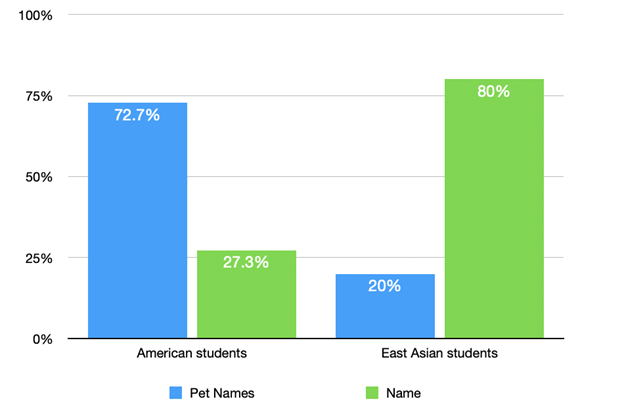
Figure 1: What do you call your partner?

As seen in Figure 1, about 72.7 % of American students tend to use direct language and terms of endearment like “baby” or “sweetie,” while 80% of East Asian students use names to refer to their partners rather than pet names. Cultural differences can be observed in the way people refer to their partners, as evident from the varying practices between American and East Asian students.
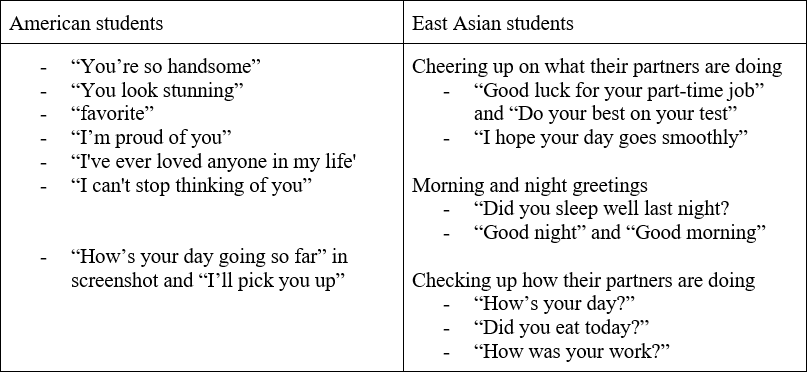
Figure 2: Verbal expressions used by American students vs. East Asian students

Using Figure 2’s data, we analyzed direct and indirect expressions of love in caring for one’s partner, and found that both groups show care and concern, albeit with different approaches. While Americans tend to use more explicit direct language, as we anticipated, such as expressing their love and thoughts toward their partners through direct compliments, Asians tend to use more indirect language, such as offering encouragement, sending morning and night greetings, and checking on their partners’ well-being daily. Interestingly, however, the expressions “I love you” and “I miss you” are frequently present in both American and Asian cultures. Additionally, Americans tend to employ more direct language, such as “looking forward to meeting you soon,” while Asians tend to use more indirect language, such as “I want the weekend to come already.” The use of different subjects in their messages also accentuates the contrast in directness. 
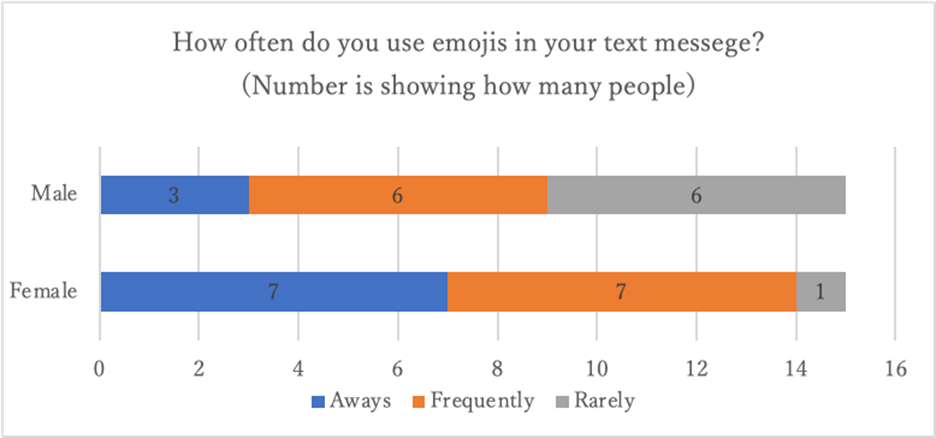
Figure 3: How often do you use emojis in your text message? (The chart displays the numerical values that correspond to the quantity of individuals)

Lastly, we examined the differences in emoji usage between East Asian and American students, and the results were unexpected. Contrary to our initial hypothesis, cultural background had little effect on emoji usage, while gender and personality traits had more dominant factors. Additionally, we analyzed the use of emojis by gender, and Figure 3 illustrates that females used emojis more frequently and explicitly, often with a literal heart, while males used heart emojis combined with other images, such as 😍 and 😘. Interestingly, despite their tendency to use indirect verbal language, Asian students were not hesitant to use direct emojis like ❤️or 🫶to express love.

Discussion and Conclusions

The present study sheds light on the cultural differences in the expression of romantic love between American and East Asian students. Our results confirm that American students tend to use more direct language and pet names when referring to their partners, reflecting the culture’s emphasis on individualism and direct communication. These expressions allow individuals to convey their personal feelings and affection directly. Interestingly, both groups frequently use the expressions “I love you” and “I miss you,” indicating that these phrases hold universal significance in expressing romantic love. We also found that American students tend to employ more explicit direct language, while East Asian students use more indirect language, such as offering encouragement and checking on their partners’ well-being daily. In contrast to our initial hypothesis, we found that cultural background had little effect on emoji usage, while gender and personality traits had a bigger impact on the use of emoji.

Moreover, our study highlights the seeming balance of indirectness with words and more direct emojis used by East Asian students, challenging the common stereotype of East Asians as being overly indirect in communication. While it is challenging to draw a definitive conclusion, we have proposed several possible explanations for this phenomenon based on cultural and linguistic factors. Indirectness is often considered polite in East Asian cultures, while emojis can effectively convey emotions and meanings that are difficult to express in words. Even shy individuals may use emojis to express their affection and maintain a balance of love in text conversations. Understanding the nuances of both direct and indirect expressions of affection can help bridge communication gaps in these situations. The practical implications of this research extend to education and counseling, providing strategies to support students from diverse cultural backgrounds in their relationships.

References

Caldwell-Harris, Kronrod, A., & Yang, J. (2013). Do More, Say Less: Saying “I Love You” in Chinese and American Cultures. Intercultural Pragmatics, 10(1), 41–69. https://doi.org/10.1515/ip-2013-0002

Gesselman, Ta, V. P., & Garcia, J. R. (2019). Worth a thousand interpersonal words: Emoji as affective signals for relationship-oriented digital communication. PLoS ONE, 14(8), e0221297–e0221297. https://doi.org/10.1371/journal.pone.0221297

Johnson, C. (2021, November 2). New research shows that where we come from can influence our use of Emojis. Miami University. Retrieved February 16, 2023, from https://miamioh.edu/news/2021/11/new-research-shows-that-where-we-come-from-can-influence-our-use-of-emojis.html

Kline, Horton, B., & Zhang, S. (2008). Communicating love: Comparisons between American and East Asian university students. International Journal of Intercultural Relations, 32(3), 200–214. https://doi.org/10.1016/j.ijintrel.2008.01.006

Laursen, Furman, W., & Mooney, K. S. (2006). Predicting Interpersonal Competence and Self-Worth From Adolescent Relationships and Relationship Networks: Variable-Centered and Person-Centered Perspectives. Merrill-Palmer Quarterly, 52(3), 572–600. https://doi.org/10.1353/mpq.2006.0030

SEDIKIDES, OLIVER, M. B., & CAMPBELL, W. K. (1994). Perceived benefits and costs of romantic relationships for women and men: Implications for exchange theory. Personal Relationships, 1(1), 5–21. https://doi.org/10.1111/j.1475-6811.1994.tb00052.x

Seki, Matsumoto, D., & Imahori, T. T. (2002). The Conceptualization and Expression of Intimacy in Japan and the United States. Journal of Cross-Cultural Psychology, 33(3), 303–319. https://doi.org/10.1177/0022022102033003006

SPRECHER, & TORO-MORN, M. (2002). A study of men and women from different sides of Earth to determine if men are from Mars and women are from Venus in their beliefs about love and romantic relationships. Sex Roles, 46(5-6), 131–147. https://doi.org/10.1023/A:1019780801500

Togans, Holtgraves, T., Kwon, G., & Morales Zelaya, T. E. (2021). Digitally saving face: An experimental investigation of cross-cultural differences in the use of emoticons and emoji. Journal of Pragmatics, 186, 277–288. https://doi.org/10.1016/j.pragma.2021.09.016

Wilkins, & Gareis, E. (2006). Emotion expression and the locution “I love you”: A cross-cultural study. International Journal of Intercultural Relations, 30(1), 51–75. https://doi.org/10.1016/j.ijintrel.2005.07.003

 [/expander_maker]

, , , , ,

アンチ vs. Haters: How do Individualist Americans and Collectivist Japanese Net 民 Express Hate Online?

Kayenat Barak, Emily Moreira, Sae Tsunawaki, Karin Yamaoka

While social media has been a revolutionary tool for facilitating access to resources and information and connecting people globally, the power to hide behind anonymous platforms has also equipped many with the ability to spread hate online. Our project analyzes such hate comments written by Japanese and American audiences to gain insights into the sociocultural factors that shape the nature of online hostility. We chose four celebrities: one American female, one American male, one Japanese female, and one Japanese male, and used multiple social media platforms to collect a total of 120 comments. Upon categorizing these comments by type, tone, and directness, we found that there are no significant differences between comments targeted towards Japanese celebrities and American celebrities. This conclusion is fascinating, as it shows that values that characterize a certain culture, such as politeness and collectivism, and the linguistic barriers they may pose were not scientifically sound when it comes to the online world.

[expander_maker id=”1″ more=”Read more” less=”Read less”]

Introduction and Background

In today’s highly technological and globalized society, social media has quickly made itself a necessity in social relationships around the world, but the power to hide behind anonymous platforms has also equipped many with the ability to spread hate online. Ranging from cancel culture to haters, online hate culture has become so integrated to our society that it has manifested itself as an interesting sociolinguistic phenomenon. It is this precise overlap between sociolinguistics and online speech around that world that we wanted to research.

Our project compares hate comments targeted towards Japanese and American celebrities as a way to gain insight into the distinct sociocultural contexts and linguistic patterns that shape the expression of online hostility. Understanding the complexities of hate speech requires an exploration of its linguistic, cultural, and sociological dimensions. By comparing hate comments written by Japanese and American audiences, we can begin to understand the variations and similarities in the ever complex issue of online hostility. Given this context, our research question then is: How are written negative comments online directed towards popular entertainment public figures similar or different between Japanese and American speakers?

Defining hate comments becomes more intricate when we consider the linguistic, cultural, and sociological differences between Japanese and Standard American English.  Negative comments are extreme forms of “online incivility”, and they can be recognized and understood differently depending on various normative concepts and cultural backgrounds (Schmid et al., 2022). To establish a comprehensive framework of what is considered a “hate comment”, we will adopt the definition proposed by Alzarouni who writes, “those (online hate) directed to a person or a particular group to express intolerance for the individual or their ideology” (2022, p. 5). Japan’s culture emphasizes hierarchy, group harmony, and politeness which translates into a high language positionality and indirect speaking style. However, American culture promotes individualism which is expressed in the way Americans speak, such as the lack of structured high language and freedom to discuss social taboos. Additionally, resistance towards progressive ideas may be observed due to Japan’s more conservative socio-political structure (Feldman, 2023). Given the contrast in these two societies, we hypothesized that Japanese hate comments would center around comments that came as a result of maintaining the national status quo, such as promoting standardized beauty norms and criticizing mannerisms, whereas American hate comments would directly criticize celebrities based on the hater’s individual moral code rather than as a result of social constraints.

Methods

Establishing a way to test this hypothesis meant that we needed to test the frequency of our linguistic variables within a controlled environment. That being said, we collected 120 hate comments on Twitter, TikTok, and Instagram directed towards Japanese and American celebrities across 4 categories. These four categories test the correlation and frequency of hate between gender and race: Japanese male, Japanese female, American male, and American female. In order to find hate comments for these 4 categories, we collected online hate directed to our representative celebrities, Kuro-chan, Ryuchell, Timothée Chalamet, and Demi Lovato.

From left to right: Timothée Chalamet, Demi Lovato (American celebrities), Kuro-chan, and Ryuchell (Japanese celebrities)

We collected this data by choosing the 30 most interacted hate comments made in 2023 under social media posts made in the same year from the celebrities’ personal social accounts. Only comments written in Japanese and made by Japanese speakers were analyzed for our Japanese celebrities; conversely, only comments written in American English were analyzed for our American celebrities. From these 120 comments, we then analyzed frequency across three linguistic variables: type of identifiable hate, tonality, and toxicity. By identifiable hate, we wanted to categorize the hate comment in regards to what it directly criticized which we classified into 6 groups: appearance, gender identity/sexuality, private affairs, personal hatred, mockery, and violence. It is important to note that hate comments were not restricted to one category, rather they could be categorized under multiple if they fit the requirements. An example of this would be a comment made to Demi Lovato, “It’s the chin for me. 🤪” which was classified as both mockery and an appearance hating comment. In order to analyze tonality, comments could also be categorized into 4 major tonal groups: serious, comedic, pitiful, or neutral. Lastly, the variable of ‘toxicity’ stems from existing previous research conducted by Won Ik Cho and Jihyun Moon on Korean online hate comments. Cho and Moon define toxicity as 1) dependent on how hateful the speech is, and 2) its ability to influence either the victim or other commenters (2021, p. 4-5). In order to gauge toxicity, we adapted this concept to instead analyze the “directness/indirectness” of the hate comments. An example of an indirect comment would be, “lowk basic but ok” which was directed to Timothée Chalamet vs. a direct comment “気持ち悪いから目覚めんな🤢🤢🤢” (“I hope you never wake up because you are disgusting”) directed towards Kuro-chan. Through this methodology, our main goal was to count and compare the frequency of these different linguistic markers and see if there were any differences, similarities, or correlations across Japanese and American hate comments, and subsequently, global hate culture.

As a disclaimer, we wanted to acknowledge some expected fluctuations in types of online hate for each of our categories. At first, we aimed to pick noncontroversial, nationally, but not internationally, acclaimed celebrities of each country with approximately similar fame in each nation in order to minimize data alteration of any kind. However, this proved to be difficult as we were unable to find hate comments directed to popular Japanese male and female celebrities. The only hate comments we could find were made to already “controversial” Japanese celebrities. Kuro-chan is problematic for his online comedic persona which is perverted, misogynistic, and violent in nature. Ryuchell is scrutinized by the Japanese public for being a transgender woman. Given these factors, we assumed our data would be skewed and expected higher rates of violent comments directed towards Kuro-chan and more hate comments regarding gender identity directed towards Ryuchell. We also expected a higher rate of gender and sexuality hate comments directed towards Demi Lovato as well, as they are bisexual and nonbinary (she/they pronouns). Our predictions were proved partly true as our data reflects that only Ryuchell and Demi received comments in regards to their sexuality or gender identity, while neither Kuro-chan and Timothée received comments of that nature. However, the hate comments were still dispersed across several different categories.

Findings

Context

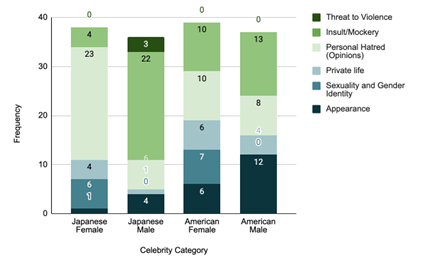
Figure 1: Aggregate counts of corresponding content categories for each comment

The data obtained from the context categories revealed both cross-cultural and cross-gender differences among the four celebrities. There were a few distinct findings we did not anticipate prior to the data collection, such as the high count of personal hatred comments toward the Japanese female celebrity as seen in Figure 1. This may come as a result of a widely disputed scandal Ryuchell was involved in last year. Yet, the discrepancy between Ryuchell and the Japanese male celebrity is still extremely wide. Timothée similarly was involved in controversy due to his dating rumors[1], but the comparable count of personal hatred comments to the American female celebrity may indicate that Japanese commenters are more harsh than Americans to controversial celebrities.

Other data that stands out in Figure 1 is the large count of insult/mockery comments targeted at the Japanese male celebrity. Again, we see a similar trend where there is a significant discrepancy between genders, rather than cross-culturally, in Japan and America. This can be explained by the general social media culture in Japan where trolling is considered a common and entertaining form of online conversation (Kaigo, 2017). Although internet trolling is seen in American online platforms as well, Japanese entertainment and comedy often involve dark humour. Another aspect of Japanese humor we see in comments and in many social conversations is “ohghiri” (大喜利), which are unique jokes that involved comedic takes on seemingly neutral or one-dimensional topics. Therefore, the combination of dark humor and ohghiri are commonly seen as a tactic of online trolling in Japan; especially when taking into account that the chosen Japanese male celebrity is a comedian, his haters may be influenced to convey their sentiments in a similar manner, perhaps as a way to mock his occupation.

Contrary to our initial hypothesis, our data showed that American celebrities received more appearance-related comments compared to their Japanese counterparts, with the aggregate count being 18 and 5, respectively. Additionally, appearance-related comments were more common for male celebrities compared to their female counterparts – almost 4 times as much for Japan, and twice as much for America. The discrepancy between genders may be attributed to the notion that commenting on a man’s appearance is less of a social taboo than commenting on a woman’s appearance. Since oftentimes women are subjects of strict beauty standards, perhaps this discourages individuals from criticizing women based on their appearance. Particularly for Timothée Chalamet, his occupation as an actor increases the frequency of hate comments regarding this appearance as attractiveness plays a significant role in his promotional activities.

Another finding that defied our hypothesis was that there were an equal number of hate comments targeting sexuality and gender identity for both Japanese celebrities and American celebrities. As we anticipated, such hate comments were exclusively directed at the female celebrities who were both members of the LGBTQ+ community. However, we assumed that a conservative society like Japan would avoid discussing topics relating to sexuality, while American progressivism meant that we expected Demi Lovato’s hate comments to be primarily about her sexuality. Surprisingly, we saw almost equal amounts of hate comments about sexuality and gender identity, where a Japanese female celebrity received 6 and the American counterpart received 7. This may be because social media permits anonymity which in turn allows commenters to code-switch and not adhere to their expected linguistic social restrictions. Japanese commenters, therefore, may feel less obligated to uphold social harmony online and express underlying opinions they would not say otherwise. Additionally, the nature of online platforms transcends cultural boundaries. The “international” online community lacks rigid cultural norms or taboos that regulate how certain topics should be treated or discussed. Therefore, Japanese commenters may be code-switching into the ‘online language’ or culture that allows them to engage in conversations that might be considered taboo in Japan.

Tone

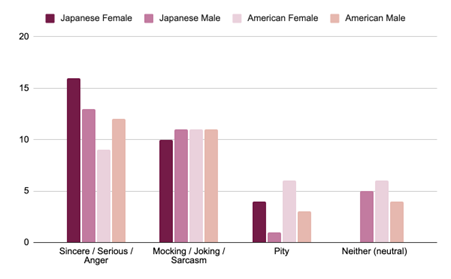
Figure 2: Each comment attributed to the style of tone by celebrities

When looking at tonality, our results show that Japanese female celebrities received the most ‘serious’ tone comments. There were no drastic differences between Japan and America when looking at tonality, excluding the pity tonality. We expected for there to be a higher rate of pity-toned comments for Japanese celebrities than for American celebrities due to Japanese culture which emphasizes politeness and humility. However, contrary to our predictions, there were more pity-toned comments for Americans overall. This may be due to the ability to be vulnerable in America, where influencers and celebrities are often encouraged to be transparent to their audience. As American celebrities tend to appeal to the masses by relating to their humanity, when celebrities face setbacks they are in turn treated with the same humanity and pity.

Another explanation for the pity tonality could be the presence of negative politeness in American online culture, as many of the pity comments we counted displayed negative politeness. Commenters at times used indirect speech to display their discontent. By framing it as a suggestion rather than a comment, the hater aimed to preserve the other person’s autonomy and avoid sounding too forceful. We think individuals in America rely on negative politeness strategies to express their criticism and avoid confrontation due to “cancel culture”.

Toxicity/Directness

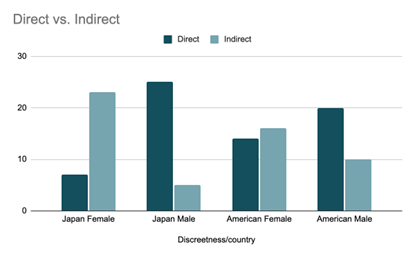
Figure 3: Comments for each celebrity separated into direct or indirect

In regards to toxicity, or directness as we refer to it in our study, we originally expected Japanese comments to be primarily indirect whereas American comments to be direct. This is based upon Japan’s high language and how it tends to place a greater emphasis on respect, politeness, and conformity, which in turn discourages individuals from expressing explicit or controversial opinions openly. In contrast, American culture generally emphasizes freedom of expression and individualism, which may lead to more direct comments being shared online. However, our results show that there was no particular pattern cross-culturally, but that a correlation did exist between genders. Overall, male celebrities tended to receive more direct comments than their female counterparts as displayed by our data.

We think that due to gender roles in both countries and views on women in Japan as submissive, they had more implicit comments. Also, it could be considered taboo to comment on a woman’s appearance directly since it can contribute to this objectification and reinforce harmful gender stereotypes. Society holds women to different standards than men when it comes to appearance and behavior and implicit comments could be used to imply those notions. Regarding the more explicit comments for Japanese male celebrities, Japanese fan culture could cause a certain devotion and obsession that can sometimes lead to more explicit or possessive comments being directed towards male celebrities.

Future Research

Due to this study’s time constraints, we cannot be certain of this idea, but a proposal for future research to test this would be to increase the sample size by collecting thousands of hate comments made to multiple celebrities within our four categories. Frequency of hate comments and their types should then be categorized and compared between not only Japan and America, but other countries around the world as well. Additionally, our findings showed that there was a stronger correlation between hate comments and gender vs. hate comments and race; thus, analyzing hate comments in accordance to both the gender of the commenter and the gender of the celebrity would also be interesting. Applying the concept of toxicity will provide insight as to whether or not speech tends to be harsher or softer when criticizing individuals of the same gender identity.

Conclusion

Ultimately, our findings showed that when categorized into types of identifiable hate, tonality, and toxicity, hate comments made by Japanese and American English speakers did not differ significantly from each other. This conclusion in particular is fascinating as it shows that the preconceived notions we had about polite vs. impolite society and linguistic barriers they may pose were not scientifically sound. In fact, it instead points that perhaps the online world may be a liminal space where culture, language, age, gender, and other sociolinguistic factors are broken down, creating instead a universal shared language and culture.

References

Alzarouni, E. (2022). Detection of Hateful Comments on Social Media Detection of Hateful Comments on Social Media. Rochester Institute of Technology. https://scholarworks.rit.edu/cgi/viewcontent.cgi?article=12308&context=theses

Cho, W. I., & Moon, J. (2021). How does the hate speech corpus concern sociolinguistic discussions? A case study on Korean online news comments. ACL Anthology. https://aclanthology.org/2021.nlp4dh-1.3/

Feldman, O. (2023). Challenging Etiquette: Insults, Sarcasm, and Irony in Japanese Politicians’ Discourse. 93–116. https://doi.org/10.1007/978-981-99-0467-9_5

Kaigo, M. (2017). The Japanese Internet Environment. Social Media and Civil Society in Japan, 1–35. https://doi.org/10.1007/978-981-10-5095-4_1

Schmid, U. K., Kümpel, A. S., & Rieger, D. (2022). How social media users perceive different forms of online hate speech: A qualitative multi-method study. New Media & Society, 146144482210911. https://doi.org/10.1177/14614448221091185

[/expander_maker]

, , , , ,
Scroll to Top