fandom culture

My Poor Little Meow Meow: K-Pop Fans and the Parasocial Abuse of Positive Politeness

Blai Puigmal Burcet, Emma Montilla, Latisha Sumardy, Sophia Wang

Korean popular music (K-pop) started off as a small subculture in the 1990s but began taking off in the West in the mid-2010s and since then has become increasingly popular and mainstream. K-pop fans are known for their borderline obsessive behavior and for finding personal validation through parasocial relationships (Kim & Kim, 2020), fostered by their online communication style. Social media as a mode of communication is unique due to its lack of a second interlocutor and how people take the tactics they use online to real-life interactions. We analyzed language use among English-speaking K-pop fans online, specifically regarding inappropriate usage of positive politeness strategies (PPS) towards celebrities. We hypothesized that tweets directed towards male celebrities will contain more PPS than those directed towards female celebrities. After analyzing replies to BTS and Blackpink, we confirmed our hypothesis as there is 2.6 times as much PPS usage in BTS’s replies versus Blackpink’s replies. The sudden and immense popularity of K-pop, stan culture, and the obsessive tendencies of fans is evident not only in the abuse of PPS online, but also in real life as we begin to see instances of fetishization of Asian American men.

[expander_maker id=”1″ more=”Read more” less=”Read less”]

Introduction/Background

K-pop has piqued our interest because the industry itself intentionally encourages fans to develop a parasocial relationship with celebrities. They succeed in this by publishing large amounts of content in the form of live broadcasts, vlogs, Instagram posts, collectible trading cards of idols included in albums, fansigns, etc. that all fabricate a sense of closeness and personal connection with the members of the group. (Ardhiyansyah et al., 2021) Fans pride themselves on knowing as much as they possibly can about members of their favorite groups, and it is common to make “guide” videos for new fans to get familiar with their faves. An example is YouTube user JinHit’s video “who is BTS? (un)helpful guide to BTS” (2021) that catalogs each BTS member’s quirks and habits for fans to memorize. Fans have also developed a K-pop-specific vocabulary that utilizes Korean loanwords to refer to different practices in the fan community, and there are entire guides on this as well, such as kpoptrash’s “a beginner’s guide to kpop vocabulary” (2020). We focused on English-speaking fans because we are interested in the explosion of K-pop’s popularity in America and the global West, and how their borderline obsessive behavior affects how they interact with real life Asian populations.

We focused on positive politeness strategies (PPS) used by K-pop fans on social media towards their favorite celebrities. According to Brown & Levinson (1987), PPS is typically reserved for use between interlocutors that have a close relationship. It includes specific linguistic features such as compliments, inside jokes, and nicknames, as it represents a language that is more personal, authentic, and used in informal situations between family and friends. When it is misused, PPS becomes a negative face threatening act that does not respect the interlocutor’s personal agency. In our case, PPS is being misused by fans towards celebrities with whom they have a one-sided relationship. They do not have a realistic chance of getting a response from these celebrities, but interact with them in a parasocial way as if they did. This particular use of PPS contributes to the fetishization of Korean celebrities, setting a precedent of inappropriate interactions that bleed into real life and how K-pop fans interact with average Asian American men. We expect to see that more PPS will be directed at men than women, and that the rise of K-pop fan communities and fan specific interactions has correlated to a rise in fetishization of East Asian men.

Methods

For this study, we decided to analyze the responses to 7 BTS and 7 Blackpink tweets from their official Twitter accounts, @BTS_twt and @BLACKPINK. We chose BTS and Blackpink because in terms of sales they are the biggest K-pop boy and girl groups in the West (McIntyre 2022), and we believe that analyzing fan interactions with these groups provides a baseline for how Western fans would interact with other K-pop groups as well. We picked the first 25 users’ replies in English under each chosen tweet. From our data pool, we omitted any tweets that either consisted of one-word phrases or were in mixed English and another language in order to make sure that our data was consistent. In total, we collected 350 users’ replies to these 14 tweets. The specific criteria that we looked for in the data were instances of fans using nicknames versus using the artists’ real names; any use of intimate language such as terms of endearment or diminutives or intimate verbs like “to love”; use of possessive language such as “my” or “our” in reference to these celebrities; and any direct 2nd person statements in the replies.

In regard to our target population, we decided not to narrow down our subjects by any specific age, gender, or location due to the anonymous nature of Twitter as a social media platform. Anonymity plays a big role in how people talk to each other online, as a prominent feature of social media is the comfort of not being able to see the person that you are sending the message or reply to. Because of this, we decided that age, gender, and location would not have a very strong impact on how people online would interact, and would be difficult for us as researchers to confirm based on looking at each Twitter user’s profile alone. However, we expect that the average English-speaking K-pop fan would probably be a female teenager located in the United States.

Data Analysis

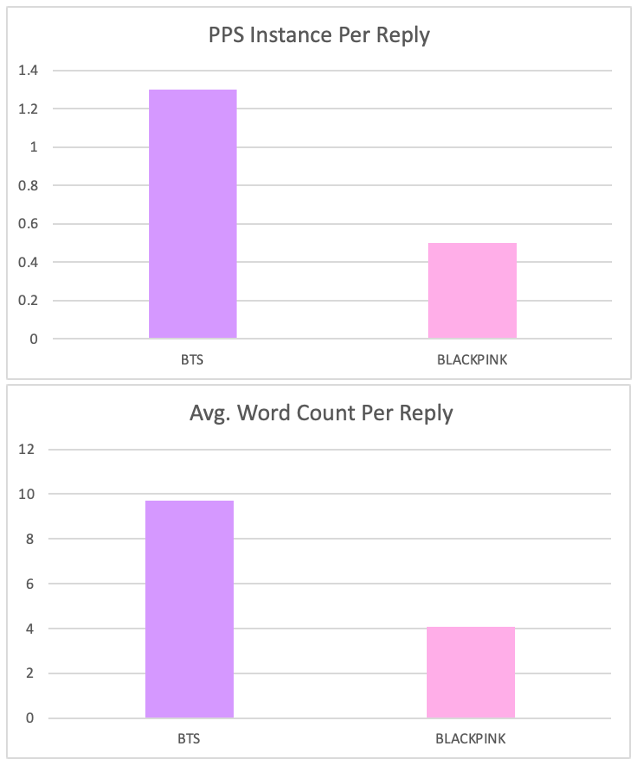
Initially, we found that there were about 1.3 instances of PPS per BTS reply versus 0.5 instances of PPS per Blackpink reply. The average word count of a reply to BTS was 9.7 words, and the average word count of a reply to Blackpink was 4.1 words. This difference in word count means that the average response to Blackpink reads something like “Jennie is such a queen”, while the average reply to BTS looks more like this:

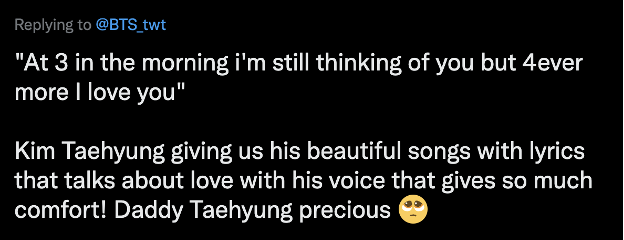
The most commonly used word overall in BTS’s replies was “you”, which co-occurred the most with verbs “love” and “miss”. BTS members were more likely to be referred to by their real names or nicknames chosen by fans rather than their stage names as well. The second-person reply containing “you” was by far the most commonly used instance of PPS, followed by intimate verbs.
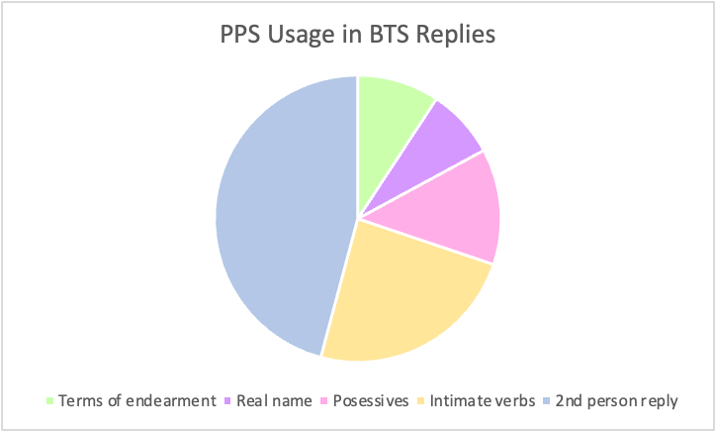
PPS Usage in BTS Replies: 2nd person reply 46%, intimate verbs 24%, possessives 13%, real name 8%, terms of endearment 9%

There was a similar pattern in Blackpink’s replies: the most commonly used word was “you”, but it was more often referring to YG, Blackpink’s management company, rather than Blackpink themselves. The most common co-occurrence with “you” was still “love”, although miss did not appear in the sample at all. The most used PPS category once again was the 2nd person reply followed by possessives “my” and “our” and then intimate verbs.
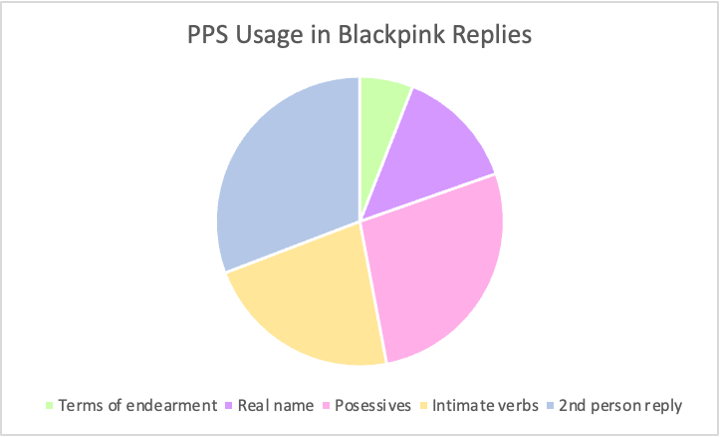
PPS Usage in Blackpink Replies: 2nd person reply 31%, possessives 27%, intimate verbs 22%, real name 14%, terms of endearment 6%

The higher word count in BTS’s replies correlated with more personal messages, where fans would overshare in a reply thread about their hardships, especially to do with their lack of an IRL social life. Although it doesn’t fit into the specific PPS criteria defined earlier, it qualitatively shows the one-sided relationship between BTS and their fans and what the fans feel comfortable saying online. Higher word average word count could also explain why there are more PPS usages per tweet in the BTS sample.
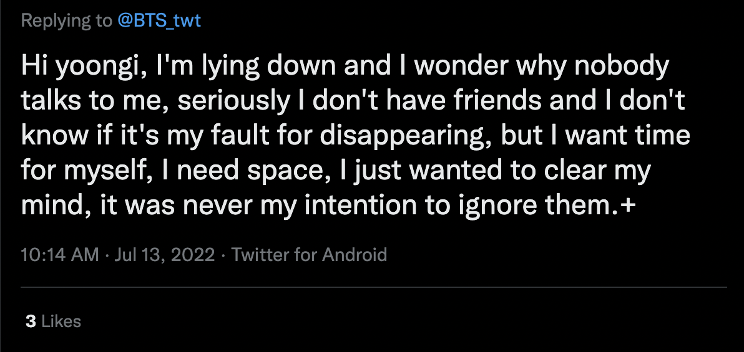
The comment continued for 5 more tweets in thread

More cute, romantic terms of endearment were used to describe BTS in their replies, while Blackpink fans were more likely to use terms of endearment to praise their performance and talent. The most common term for BTS was “baby” while, in comparison, the most common for Blackpink was “queen”. BTS’s fans were also more likely to make up their own nicknames for the members, while Blackpink fans stayed consistent with each other. For example, Blackpink’s rapper Lisa was called only Lisa or Lalisa, while BTS’s V was called a whole group of different names, including but not limited to Taehyung, Tae, Taetae, Taebear, and Jubbly. No one in the sample referred to him solely as V, the name he performs under. BTS fans were also more likely to refer to the artist as “boyfriend” or “bf” than Blackpink fans were to call the artists their “girlfriend” or “gf”.

There is a difference between the way BTS and Blackpink’s Twitter accounts are presented which could partially account for the difference in fan interactions: @BTS_twt is made to seem like the members themselves are posting, while @BLACKPINK is clearly run by their management and is more promotional than personal in nature. BTS’s posting style on Twitter, which gives a closer (although still heavily stylized and manufactured) look at the artists’ lives, could incentivize posting more personal replies if it seems like BTS could potentially see or even interact with them. This is what leads to fans feeling comfortable utilizing PPS in one-sided interactions with BTS, while Blackpink’s style of social media posts keeps their fans at a distance and makes sure that they know they are celebrities rather than their friends. Blackpink has also had consistent issues with their management underpromoting them and leaving out certain members in promotional material, so fans who know this and know that Blackpink’s company is running the account will not feel as comfortable being intimate with a corporation that is causing issues for their idols.

Discussion and Social Implications

Overall, we found that there was 2.6 times as much PPS usage per reply to BTS than per reply to Blackpink. The word choice in BTS’s replies was also more diminutive and focused on their cuteness rather than attractiveness or talent, and contained suggestions of a one-sided relationship that was not present in Blackpink’s replies. So what does this mean, and how does it affect Western society?

Historically, in the Western world, women tended to be infantilized while men were not. For example, newborn baby girls have been described as “sweet” four times as often as little boys, and many advertisements targeted towards women often depicted them as incompetent and child-like (Huot 2013).


Captions read: smart like dad, pretty like mommy

Our data goes against this Western gender norm as we see evidence of the male group being more infantilized and diminutized than the female group. And it doesn’t stop at celebrities: the obsessive desire for a relationship with these idols has leaked into reality and now affects the Asian American male population. Previously in America, Asian men in the dating pool were stereotyped as effeminate and asexual (Kao 2018) but there has been a shift in how American women view Asian men as romantic or sexual objects because of the popularity of K-pop.

 For example, from Stewart (2021):

Some Asian American men even think the K-pop phenomenon, which is often heralded as a boon for Asian male representation, is causing a fetishization of certain types of Asian men that complicates their love lives. [One] says he recently matched with a girl on Tinder who wrote in her bio that she was ‘looking for her K-pop boyfriend.’ He says her bio made him feel uncomfortable, and he didn’t meet up with her, since he wants to be seen for who he is, not as an embodiment of a stereotype.

This phenomenon has also begun to affect the K-pop industry itself: as the popularity of boy groups increase in the West, they lean into the audience’s desires and develop softer, more subversive (from a Western perspective) personas. According to Lee et at. (2020), many Westerners are drawn to Asian masculinity and find it “refreshing” and project this desire onto male celebrities as well as Asian men they encounter in real life. This produces a positive feedback loop of online fans infantilizing BTS, and then BTS increasing their cuter concepts in their promotional materials to cater to those fan desires, which then affect real life interactions.

K-pop fans have also begun to apply the same “stanning” techniques to Korean celebrities outside of the idol industry, such as breakout star of the 2022 World Cup Cho Gue-sung, a player on the South Korean national team. Tweets have surfaced from K-pop fans comparing him to idols purely because of his ethnicity and using PPS in tweets about him they would typically use for K-pop stars. (Youn, 2022) Even though as an athlete Cho already fits into a more stereotypically Western masculine archetype, he is not free of the soft, cute stereotypes that have already been applied to Korean idols before him.

Conclusion

Some may say that it is a positive thing, or a compliment to these celebrities and Asian men, that they are now the ones being sexualized after decades of asexual stereotypes and low romantic desire in the Western world (Stewart 2021). However, this is not the “equality” we should strive for. Fetishization is a form of discrimination and racism that affects real people and communities, not just the far away idols on social media in a different continent. We should not be infantilizing or fetishizing women, Asian men, or anyone. We should also question how social media allows these internet communities to encourage this behavior. The internet is a valuable tool for bringing people together, but it also houses insidious communities that can easily and accessibly indoctrinate users into harmful mindsets.


References

Ardhiyansyah, A., Maharani, D., Permata, S. S., & Mansur, U. (2021). K-pop marketing tactics that build fanatical behavior. Nusantara Science and Technology Proceedings, 66–70. http://nstproceeding.com/index.php/nuscientech/article/download/396/381

Brown, P., & Levinson, S. C. (1987). Politeness: Some universals in language usage. Cambridge University Press.

JinHit. (2021, May 25.) Who is BTS? (un)helpful guide to BTS (2021) [Video]. YouTube. https://www.youtube.com/watch?v=tkSGKGJYe4k

Kao, G., Balistreri, K. S., & Joyner, K. (2018). Asian American men in romantic dating markets. Contexts, 17(4), 48–53. https://doi.org/10.1177/1536504218812869

Kim, M., & Kim, J. (2020). How does a celebrity make fans happy? Interaction between celebrities and fans in the social media context. Computers in Human Behavior, 111,106419. https://doi.org/10.1016/j.chb.2020.106419

Kpoptrash. (2020, February 11.) A beginner’s guide to kpop vocabulary [Video]. Youtube. https://www.youtube.com/watch?v=CvigAv2mW5c

Lee J.J., Lee, R., & Park, J. (2020). Unpacking k-pop in America: The subversive potential of male k-pop idols’ soft masculinity. International Journal of Communication, 14, 20. https://ijoc.org/index.php/ijoc/article/view/13514

Stewart, J. Y. (2021, August 5.) How America tells me and other Asian American men we’re not attractive. The Seattle Times. https://www.seattletimes.com/life/i-grew-up-thinking-being-asian-detracted-from-my-masculinity-heres-how-america-tells-me-and-other-asia n-american-men-theyre-not-attractive/

McIntyre, H. (2022). Blackpink ties Twice for the most bestselling albums in the U.S. among women in k-pop. Forbes Hollywood & Entertainment. https://www.forbes.com/sites/hughmcintyre/2022/09/30/blackpink-ties-twice-for-the-most-bestselling-albums-in-the-us-among-women-in-k-pop/?sh=752b00107909

Youn, S. (2022, December 7.) How Cho Gue-sung became the breakout thirst trap of the World Cup. NBC News. https://www.nbcnews.com/news/asian-america/cho-gue-sung-became-breakout-thirst-trap-world-cup-rcna60525

[/expander_maker]
, ,

K-Netizen: Examining Possessive Behavior in K-pop Social Media Discourse

Matthew Lee, Sam Lin, Huimin Liu, Francisco Morales, Annika Park

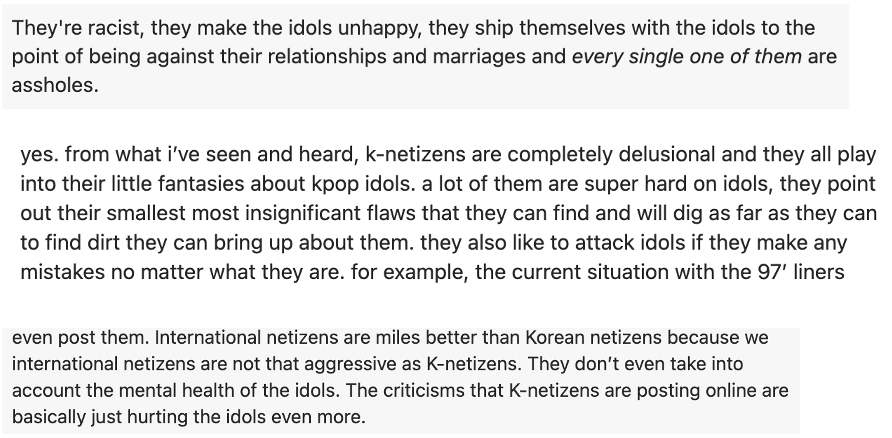
In recent years, Korean popular music, or K-pop, has led the way for a meteoric rise in global popularity of Korean culture. According to Sue Jin Lee’s study, “The Korean Wave: The Seoul of Asia,” this Korean wave—hallyu in Korean—has garnered a worldwide fanbase whose members create communities online centered around their favorite groups and idols. These K-pop fans primarily interact with their favorite artists and each other via social media posts and comments, creating online communities of internet citizens (netizens) that are each focused around certain idols. There is, however, a negative perception of Korean netizens who are seen by international fans as overly critical of K-pop groups and labels, possessive of idols, and having a sense of entitlement to celebrities. This study examines the question: does this perception of possessive Korean K-pop fans hold true? If so, what is the reason for this behavior? To find answers, the use of personal possessive pronouns in social media comments is examined to gauge possessiveness in Korean and international fans, informing a further discussion about Korean nationalism at play in K-pop social media interactions.

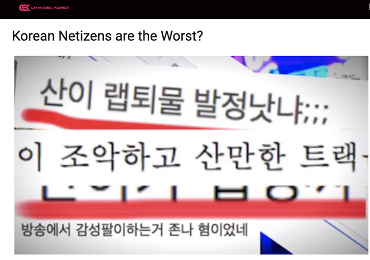
Figure 1: Social media backlash towards Korean K-pop fans from international fans

[expander_maker id=”1″ more=”Read more” less=”Read less”]

Introduction and Background

With the growing accessibility of online platforms like Facebook, Twitter, and Instagram, Korean and English-speaking social media users can react in real time to K-pop events and news. In typing up posts and leaving comments, fans create an online persona for themselves based solely around their love for certain music groups; the most devoted of these fans have been dubbed “K-pop stans.” We assert that with the growth of the Korean wave comes a sense of entitlement or possessiveness from specifically Korean fans towards their favorite idols. Our research aims to find patterns of these possessiveness or entitled tendencies in Korean social media users, and we believe that Korean fans will demonstrate these themes much more strongly than international fans of K-pop.

The idea of a netizen, or an “internet citizen,” originated in the 1990s and served as a descriptor for engineers and early Internet users who “participate in the affairs of governing and making decisions about the internet and about how the internet can impact offline society,” according to scholar Ronda Hauben’s Amateur Computerist. Over time, the term has evolved to become a broader description of anyone actively engaged in online communities. Within the past five years, Korean social media circles have especially embraced the word to the point where there is a specific word for Korean internet users: the “K-netizen,” which has the reputation of being extremely assertive and opinionated as a result of the strong sense of community they have created online. This membership may promote a sense of belonging and perhaps nationalism as an extension of their Korean citizenship, sentiment that may also extend to how K-netizens view K-pop idols. Since the K-pop industry is a major part of the South Korean culture and economy, K-netizens could feel that they are entitled to ownership over idols as a result of this interesting intersection of internet subculture with nationalism. We later explore this concept as an explanation for possessiveness in Korean fans.

Methods

In order to quantify the possessiveness of fans towards K-pop idols, we gathered instances of pronoun use by Korean and international commenters when referring to their favorite artists in social media discourse. Examples of these uses include phrases such as “your idol,” “my idol,” “our idol,” “mine,” etc. To narrow the scope of our search, research members strictly look at comments on Facebook responding to posts about three controversial breaking-news stories in regards to K-pop celebrities outlined below:

  1. HyunA and Dawn’s announcement of dating: HyunA, a singer and former member of the group Wonder Girls, and Dawn, a member of the group Pentagon, were dropped from their agency once they announced they were dating.
  2. G-Dragon and Kiko Mizuhara’s announcement of breaking up: G-Dragon is a singer who is part of boy’s group the BIGBANG, and Kiko Mizuhara is a Japanese celebrity. They were rumored to be in a relationship for years, but nothing was confirmed until it was announced that they had broken up in 2015.
  3. The Burning Sun scandal: this was a large-scale entertainment and prostitution exposé that involved multiple prominent celebrities in the K-POP entertainment industry.

[Researchers had originally initiated the project with four cases, an additional scandal involving high school bullying, but decided to omit it because they could not find enough substantial data for the case and the data gathered for other three cases was sufficient.]

Each controversy will be analyzed through two different posts announcing the news—one in English and one in Korean—in order to compare the initial reactions of Korean and international fans.

Results and Analysis

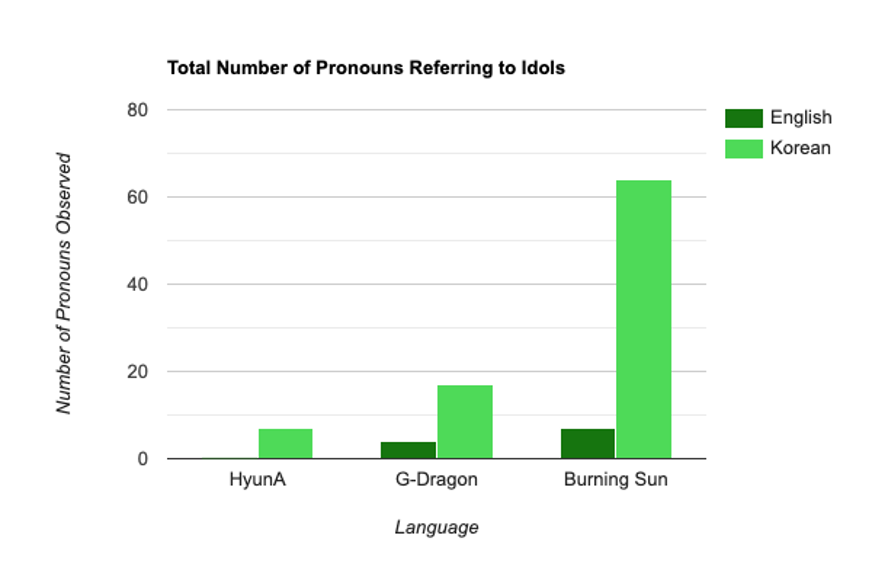
Figure 2. Total Number of Pronouns Referring to Idols

This graph visually illustrates the clear difference between how K-netizens and international fans view and react to idols. For each case, the number of Korean pronouns used at least doubled the number of English pronouns used.

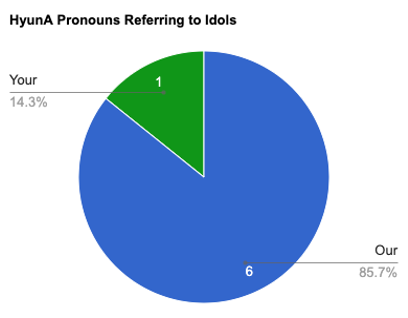
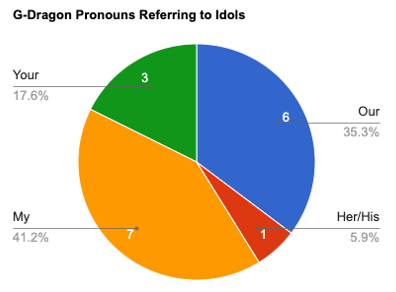
Figure 3. Types of Pronouns Used in Reference to Idols: HyunA


Figure 4. Types of Pronouns Used in Reference to Idols: G-Dragon


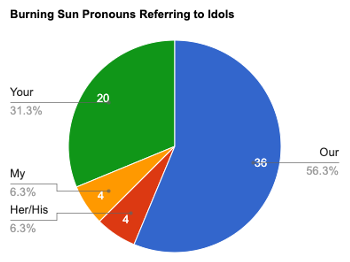
Figure 5. Types of Pronouns Used in Reference to Idols: Burning Sun

The three graphs above show the breakdown in types of pronouns used by idols in each of the three scandals. In the HyunA and Burning Sun case, the use of “our” was most prominent. However, for the G-Dragon case, the use of “my” was most common. This finding can be explained through the nature of the scandals being examined—the G-Dragon scandal was a break-up announcement and many comments expressed relief and excitement that he could be “theirs” once again. The HyunA case garnered more reaction to the fact that her and her boyfriend were dropped by their label, so a lot of people expressed sympathy (thus a communal “our” would be more common); the Burning Sun case evoked a more national response due to the scale of the scandal.

Discussion

After compiling data from Facebook posts, we find evidence consistent with our claim that K-netizens use possessive nouns when referring to idols more frequently than international, English-speaking fans. Though the total number of pronouns used in general was similar for both the Korean and English comments, our results show “possessive pronouns”—those used in contexts such as “that’s my girl” or “he’s all yours”—to be up to nine times more frequent in the Korean posts. International fans displayed uses of terms such as “idols” and “biases” to demonstrate devotion and obsession, but not necessarily a sense of “ownership” of the K-pop stars as the Korean commenters did. Given these results, it seems that the popular perception of K-netizens as being overly possessive of their favorite idols holds some level of truth.

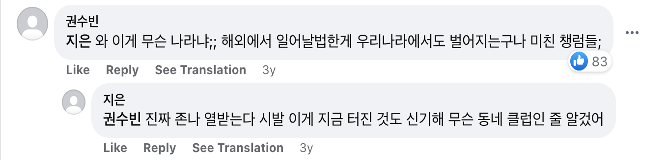
There may be many small factors affecting the observed usage of possessive pronouns, but we believe that the primary cause for possessive behavior from Korean fans stems from a deep-seeded nationalism within K-netizens that can be observed through K-pop social media interactions. The possessive pronoun “our” was used especially frequently in the Burning Sun scandal, most often in contexts referring to “our nation” (Korea). While the HyunA and G-Dragon scandals deal with dating and are mostly only scandals in the eye of the public, the Burning Sun case involved much more serious allegations of prostitution, sexual coercion, and possible police corruption. This seems to lead to more extreme responses in Korean comments, where K-netizens express shock that their country would be involved in such behavior.

Here are some examples of the comments from the Burning Scandal post:

Translation: @Jieun Wow, what country is this? What’s happening overseas is happening in our country too; those crazy people.


Translation: Why do people live so stupidly that they blindly trust money? Our country’s people are so scary that they even made the president step down.

As stated earlier, the hallyu wave of Korean culture has been driven by K-pop through the last decade, leading Korean citizens and government to hold K-pop to an extremely high standard. Korean nationalism is founded on pride in successes that can be seen internationally, so K-pop’s dominance of global charts makes it a cultural focus across the country (Koo 2020). Another example of this type of nationalism includes the nationwide buzz over Korean athletes that experience success overseas; this is seen most recently with soccer star Son Heung-Min headlining Korean news and covered at great length for becoming a prominent figure in the European football scene. While this and many other instances demonstrate Korean nationalism to be celebratory and uplifting, the problem arises when these globally successful entertainers involve themselves in “scandalous” events in the eyes of the international or Korean public. Because K-pop idols are seen as representatives of Korea and Korean culture, K-netizens are quick and harsh in their criticism of any action that could be seen as harmful to the image they want to portray to the global audiences. This explains the “bringing shame to our nation” type of comments observed in the Burning Sun scandal; though perhaps justified in this situation, the Korean comments criticizing K-pop celebrities for dating exemplifies a level of  “ownership” or authority akin to that of parents toward their children. This possessiveness leads to the international perception of Korean fans as sharing the same negative or toxic traits that they would associate with a “tiger” or “helicopter” parent.

The very concept of a “K-netizen” may also play a part in perpetuating nationalistic, possessive tendencies in Korean fans. If “netizen” gives a label to avid users of the Internet, K-netizen defines a space specific to Koreans which allows them to be closed off to the rest of the wide-open Internet. By giving themselves this label, K-netizens engage only in interactions within their own language and culture, opposite to how international fans utilize the Internet to interact with others across the globe. According to the article “Online Language: The Role of Culture in Self-Expression and Self-Construal on Facebook,” collectivism is significantly higher among Asian Americans than Caucasian Americans (De Andrea 2010). While this finding doesn’t have a one-to-one relation to the focus of our study, we assume a similar truth given the homogeneity of Korea and implications of the term K-netizen. This collectivism leads to a cycle within Korean K-pop social media where new users are introduced to the idea that they have power over or possession of the celebrities that they follow, eventually adopting linguistic traits exemplifying these behaviors much like they would in traditional Communities of Practice.

Conclusion

The nationalistic tendencies and resulting toxic comments of K-netizens isn’t a problem that we feel we can or should fix; rather, it is one that provides insight into the role that nationalism plays in social media interactions between users around the world and within their own language groups or countries. Further research into operations behind Korean social media may reveal the importance of these comments in forming the best possible product to be seen by the rest of the world. On a larger scale, we would like to see this study performed with the international entertainment exports of other countries; perhaps social media comments about artists from the United Kingdom or actors from France can reveal aspects of those countries’ nationalism and how they display these traits online.

Our data was mostly limited by sample size and platform. Though we focused on Facebook comments due to the site’s popularity among Korean social media users and its ease of access to centralized posts, we recognize that much of the international discourse about K-pop happens on newer sites like Twitter and Instagram. A more comprehensive study would compile comments from all of these sites to get a more accurate representation of linguistic features displayed. Additionally, we cannot guarantee that all of the Korean comments on Facebook were written by Korean citizens, but we assume that most of them were given that the posts were made by news sites based in Korea. Despite these shortcomings, we believe that our results show an accurate representation of the differences between Korean and international commenters when it comes to K-pop discourse. This topic has yet to be explored in depth from a sociolinguistics perspective, but the continual growth of social media makes it an issue worth researching and examining in greater detail.


References

DeAndrea, D.C. et al. “Online Language: The Role of Culture in Self-Expression and Self-Construal on Facebook.” Journal of Language and Social Psychology, Vol. 29, No. 4, Dec. 2010, pp.425-442, doi: 10.1177/0261927X10377989

Goi, C. L. (n.d.). Cyberculture: Impacts on Netizen. Retrieved April 30, 2022, from https://citeseerx.ist.psu.edu/viewdoc/download?doi=10.1.1.674.3277&rep=rep1&type=pdf

Hauben, R. Amateur Computerist Newsletter – Ais.org. 2021, http://www.ais.org/~jrh/acn/ACn34-2_one_column.pdf#page=2

Jung, S. (n.d.). Fan activism, cybervigilantism, and Othering mechanisms in K-pop fandom. Transformative Works and Cultures. Retrieved April 29, 2022, from https://journal.transformativeworks.org/index.php/twc/article/download/300/287?inline=1

Koo, Jeung Mo. “K-pop from Local to Global: A Study on Cultural Nationalism in Korean Pop Culture.” The Columbia Journal of Asia, 2022, from https://journals.library.columbia.edu/index.php/cja/article/view/9355.

Lee, S. J. Elon Journal of Undergraduate Research in Communications. Elon University, 2011, https://eloncdn.blob.core.windows.net/eu3/sites/153/2017/06/EJSpring12_Full.p

[/expander_maker]

, , , ,

Fanquan language: How Chinese Fandom Culture Sweeps the Nation

Hanlin Meng, Ming Chen, Tianyuan Yan, Weilin Zeng

‘yyds, u1s1, dbq…’ These indecipherable words all come from a prominent and active group of young people in China, namely the fans who are promoting campaigns for their idols online and call themselves Fanquan, the fan circle. As exclusive as their language seems, it has actually gained popularity among the masses. Would they eventually make it into the mainstream culture as some people are concerned about? Or would they perish after a short time period as others predict? We aim to examine the correlation between the emotional polarities of popular words from Fanquan language and their popularities, in order to gain some insight on the future of this online language register. We predict that Fanquan lexicon with positive and commendatory attributes are more easily accepted and used by the public. We have also found some fascinating phenomena going on with this virtual register such as language policing, through which we can show that people’s attitudes towards the language are actually reflections of their attitudes towards the population of its users.

[expander_maker id=”1″ more=”Read more” less=”Read less”]

Introduction and background

According to Yunfei Tan, a Chinese fan culture researcher, “In China, communities known as “fan circle” (饭圈, fànquān), transliterated from the English word ‘fan,’ have become prominent on Weibo, WeChat, QQ, and other social media platforms in the last decade distinguishing themselves from individual fans (散粉, sǎnfěn) who support their idols independently.” (Tan, 2020) In the 2010s, with the popularity of the Internet and the maturity of social media platforms like Sina Weibo, the fans of actors and singers started converging and building their groups on social media platforms. According to China People Think bank, most of these groups are combined by online female fans under 18 years old. On the one hand, the generations born in the 21st century enjoy decent material conditions to support their entertainment. On the other hand, most of them have no siblings due to the Chinese one-child policy, so they lack companions in their growth. The Internet is the best access for the fans who live diversely, to connect with others. Data shows that the number of fans in first-tier cities and fourth-tier cities is 10% higher than those living in other cities. (Yin, 2019) A salient characteristic of Fanquan language is its unique word choice on Media. Most words are original in various ways, so they are hard to understand for the people out of the circle. The exclusion makes the group enjoy their uniqueness, but it is observed that some novel words would spread in their daily conversation with others. Previous studies suggest some features of Fanquan lexicon that facilitate the spreading. (Lu, 2020) First of all, they are reproducible, which allows outsiders to mimic the use of Fanquan words. Secondly, the meanings of these words can change over time or in different contexts.

For example, “宝藏男孩” is used by fans to describe a male idol who has a tainted background. However, it is widely used outside the circle to refer to one who is versatile and gifted. It is evident that the emotions related to Fanquan lexicon can change drastically in the process of spreading. Finally, the spreading is heavily affected by people’s choice of words. Widely used Fanquan lexicon varieties are often related to trending events or applicable in multiple scenarios.

Based on previous studies, we decided to investigate the relationship between the spreading of Fanquan lexicon varieties and the emotions evoked by them. Fanquan words can be categorized as positive words and negative words. Usually, positive words are used to praise their idols. For example, the word ‘juejuezi’ is a popular Fanquan word to express admiration and can always be seen in the comments of their idols’ weibo (a platform like Twitter). However, there are also negative words for attacking the users who have negative words about their idols. The phrase ‘penzi’ is used to humiliate others that criticize their idols. We hypothesized that positive Fanquan words are more widely spread and accepted due to the variability of their meanings and more applicable scenarios compared to negative words.

Methods

Our methods consist of two parts. The first step was conducting interviews with Fanquan language users around us regarding their personal observations. Based on their accounts, we could hypothesize about the mechanisms under their linguistic behaviors. It follows that the second step was to collect responses to a list of survey questions about people’s actual use of Fanquan words and their preferences for semantic positivity or negativity.

Results and analysis

We found three interviewees, using Fanquan language at different levels and their idols are successful in different fields. Zhang Shihang has been an idol of a Korean band since her junior high. Defining herself as a moderately active user, Zhang treated Fanquan language positively and explained that the spread of the language was a process of renewing cyber languages. She added, “Fanquan word is easier to type on the keyboard and cover some ‘dangerous’ words at the same time. For example, we never say ‘jizi’ because the word related to money would be censored. Instead, we call it ‘jz’ to avoid the trouble.” Zhang always unconsciously uses yyds (greatest of all time), juele (perfect), and plmm (beautiful girls), these positive Fanquan words when talking with friends. She was pleased to explain these words to her friends to spread fan culture. Wang Durian, a fan of a Chinese table tennis player, is a severe user. She only uses the word for fun without thinking of its value. She agreed that Fanquan words are easy to understand within the circle, but she has to explain the meaning to her friends who are distant from the culture. The word she likes to use is also “yyds”.

From another interviewee, we have received some quite different opinions. Han, a 24-year-old female who has studied applied linguistics and education, expressed her concerns with the negative impact Fanquan language may have on standard Mandarin. For example, according to her, yyds (English cool, awesome) can express a lot of emotions, so people would cease to specify the language use and a lot of emotion words could die out. She has provided us with new perspectives to work on in terms of different biases on Fanquan language.

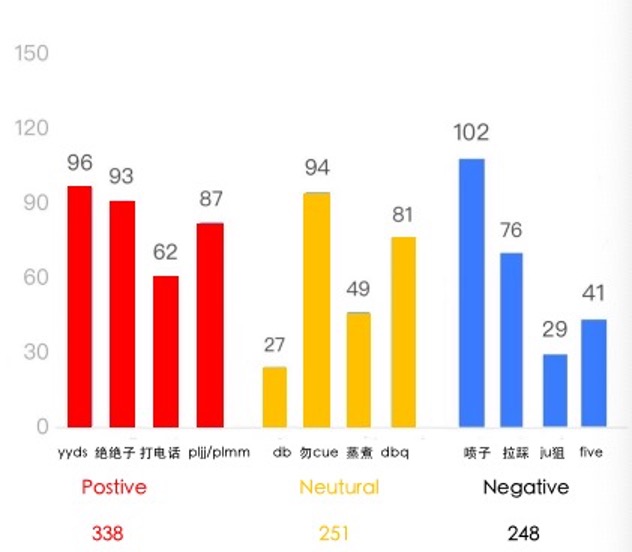
Focusing on the application degree as well as the public acceptance towards fandom lexicon, we surveyed 105 young people about their use of Fanquan words and preference for positive/neutral/negative words.

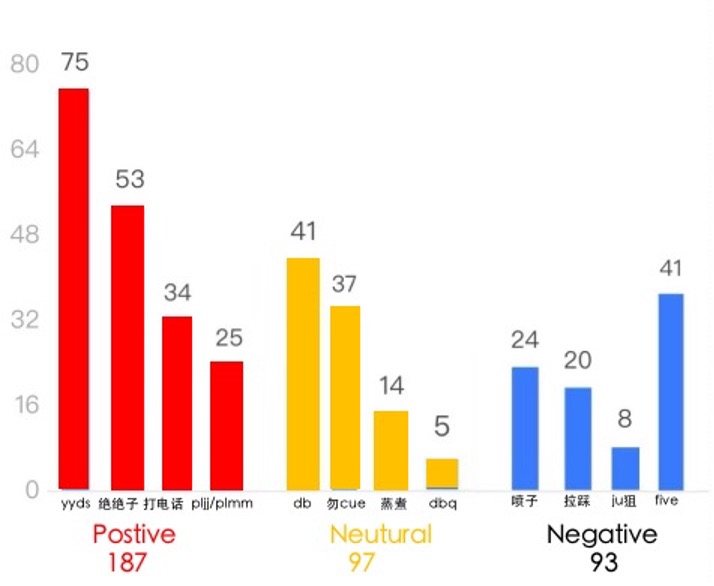
Diagram#1 shows data that was generated from question number 2 “Which following words do you know the meaning of?” Among the total of 105 participants of question 2, 89 know the meaning of more than half of the options. This further proves that – fandom lexicon is nowadays quite of a phenomenal word choice category. According to the data generated from Q2, fandom lexicon with positive attributes was chosen as “know the meaning of it” 338 times, this result has proven that they are wider known by the outsiders.

Diagram 1

Diagram#2 shows data which were generated from question number 3 “Which of the following words have you used before?” None of the options were left unchosen thus further explains that fandom lexicon are being widely applied to common daily context by outsiders of fan group members. According to the numerical data generated from Q3, fandom lexicon varieties with positive attributes are more likely to be applied at daily practice in comparison to those with neutral or negative attributes.

Diagram 2


In summary, the survey shows that the fan dictionary is not only widely known and accepted by outsiders in the fan group, but also accepted by the public and used for various purposes. In addition, another important thing we realized from this survey is that fandom dictionaries with positive attributes are generally more likely to be applied outside of fandom activities.

Since it is not very straightforward to investigate a language in its entirety in such a short passage, we would like to reference a theoretical framework from an earlier study by Teahlyn Crow (2019) on K pop language in online fandoms. First of all, we have identified the fans that are currently inventing Fanquan language as a community of speech, but we must also realize that Fanquan words alone have a wider variety of audience. The speaker does not have to fully develop their competence in Fanquan language before they can use it quite freely. That being said, it seems that the indexicalities of Fanquan words are still very robust. If a person uses Fanquan words frequently, then they are automatically identified to be a regular Fanquan language user, and there exists a stereotype that only active fans in online forums are such users. For example, the fans of a particular idol must coin words for themselves and for their idol. Identities can become very refined through language use. One can determine from a post that the fan might be a fan who not only loves her idol, but also wishes her idol to express love for another idol. This is called a CP fan, an abbreviation from English word couple.

The construction of a fan identity works both ways. Some online communities have an implicit rule that, when it comes to idol-related contents, only those who use Fanquan language can be considered true fans. Therefore, fans can create bonds and their own identities by performing linguistic activities.

Moreover, what we have found from Fanquan language features is astonishingly similar to what Crow (2019) has found in online Korean K-pop fandom and what Gardiner (2019) has found in online Japanese pop culture fandom. The most notable shared feature is language mixing including loanwords and some code-switching. The aforementioned word, CP fan, is an abbreviation made by blending English and Chinese, and there are a number of new word-compounding rules that could demonstrate fandom’s innovative power with languages. It is also worth mentioning that while Gardiner (2019) found Japanese fandom words to be mainly nouns or noun phrases, we do not see such restrictions with Mandarin fandom words. Rather, the exclusivity of Fanquan words is its most debated characteristic. The more involved the person is in the fandom culture, the more they are willing to use the language outside of fandoms and even offline in daily life, but interviewees who are not so invested in fan campaigns have commented that they do not wish Fanquan language to spread further, because it has no intrinsic value (c.f. Han’s example). Finally, the interviewees all agree that negative Fanquan language is only used to attack malicious people online. Our survey has attested that positive words are more likely to be used in communication outside of fandoms, while the negative words are not uncommon inside fandoms. These words have gotten out their original registers and acquired mainstream acceptance.

Discussion and conclusions

Overall, we have verified our hypothesis through interview analyses as well as survey data. The knowledge of Fanquan language is not limited to fans, but the majority of young people might have contact with it through friends, suggesting that Fanquan language and the fandom culture at its background are actually very influential. Those Fanquan words that can be used more widely are mostly positive words, although some negative words have emerged as not uncommon. More data is required to verify if those negative words are being widely used outside of fandoms, which can pose substantial challenges to our theory.

Furthermore, during our investigation with specific Fanquan words, we found that interestingly, negative Fanquan words are considered to be even more vicious than swears in standard Chinese, despite the fact that the latter typically involves offense on family while the former only involves the idols. This has been used as evidence by critics against Fanquan language on its hostility or aggressiveness. We hypothesize that the emerging stereotype imposed on Fanquan language declares that it has a more aggressive nature than standard language because of its association with a higher percentage of aggressive usage or users. Such attitudes have been accurately reflected in current Chinese literature and argued with little evidence. For example, Lv (2020) claims that all language that does not conform to mainstream culture, or themes of the current political agenda, should be eliminated and ‘purified’. Such censoring targeting Fanquan language is a form of language policing, which we did not anticipate but came up as a highly relevant issue that deserves more sociolinguistic research.


References

Crow, T. F. (2019). K-Pop, Language, and Online Fandom: An Exploration of Korean Language Use and Performativity amongst International K-Pop Fans. Northern Arizona University.

Gardiner, R. E. A. (2019). ‘Weeaboo Japanese’: exploring English-Japanese language-mixing in online Japanese popular culture fandom: a thesis presented in partial fulfilment of the requirements for the degree of Master in Philosophy in Linguistics at Massey University, Albany, New Zealand (Doctoral dissertation, Massey University).

Lv, W. (2020). The Analysis of the Language of “Fanquan” under the Perspective of Sociolinguistics. Modern Linguistics, 08(02), 185–191. https://doi.org/10.12677/ml.2020.82026

Lu, Huiran. 以模因理论解读“饭圈”用语传播,Journal of News Research,May. 2020, https://www.cnki.com.cn/Article/CJFDTotal-XWDK202010132.htm

[/expander_maker]

, ,
Scroll to Top