Gen Z

Linguistic Features between University Students in California and New York: Reddit Version

Clyde Villacrusis, Sydnie Yu, Monique Tunnell, Michelle Kim

How often do you find yourself saying “hella” or “bet?” How does this differ for people across different regions? The research project discussed in this blog article compares linguistic markers, particularly slang, in Reddit communities of universities in New York and California. Using basic forms of natural language processing, we analyzed posts from multiple university-specific Reddit pages to identify regional slang differences. Results show distinct slang patterns reflecting local cultures — New York slang influenced by its diverse linguistic environment, and California slang shaped by surf and tech cultures. In addition, New York university students have shown that they are less susceptible to slang and jargon, as most of them are out-of-state students and therefore, grew up in a community where it is harder for them to immerse in NY culture and its language. For California students, it is easier for them to immerse in the language culture because most are in-state students. These findings highlight the role of language in forming regional identities in digital spaces, offering insights for sociolinguistic research and digital communication strategies.

[expander_maker id=”1″ more=”Read more” less=”Read less”]

Introduction and Background

As aspiring sociolinguists, we want to learn more about how different cultures can affect slang within our own communities and thus, affect their way of speech. More specifically, how do students at different universities use slang, and what are the implications of this language?

University culture is unique and cultivates an environment of relatability and unity. Language and communication play a big role in this culture, and with the rise of social media platforms, we decided to dive into a platform largely used by university students in order to analyze raw conversations between college students within a university. More specifically, we analyzed California university slang versus New York university slang. Reddit is a great place to analyze linguistic features and speech of people across the United States and how each geographical place affects their slang. Reddit is a social networking platform that was established in 2005 (Semrush, 2024). In addition, Reddit is divided into communities called “subreddits,” where people can interact and contribute with each other comfortably in their respective community. These subreddits generally consist of people with the same interests. In this case, we examined Reddit communities for universities, meaning most users go to the same college or university. Within these subreddits, users relate to one another using university- and state-specific slang.

New Yorkers have a diverse immigrant population and fast-paced urban lifestyle. They also tend to partake less in small talk and more in longer, conversational speeches (Allen 2023). In those conversations, there are a couple of common terms, such as “real talk” (attention grabber), “the city” (refers to Manhattan), and “Stoop” (steps outside of an apartment). Conversely, Californian slang and language reflect tech and entertainment culture, primarily because of the Los Angeles area or most of the tech companies that reside in San Francisco. In addition, Californians tend to use relaxed jargon and more informal speech patterns (Bucholtz, n.d). Some of the common terms they used are: “hella” (very much), “like” (mostly as a filler word), and “dank” (excellent). Based on these backgrounds we posed the questions: How do linguistic markers, especially slang, differ in New York vs. California universities on Reddit? How do regional, cultural, and social influences affect language? Do in-state versus out-of-state student populations affect the use of slang within university subreddits?

Overall, this research study examines the different linguistic features of the California and New York universities. We aim to show that these variations reflect the unique social and cultural aspects of each region, highlighting how language usage serves as a marker of regional identity in digital communication.

Methods

Earlier this year, a Reddit user named u/Watchful1 compiled data collected by other users, u/pushshift and u/raiderbdev, on posts and comments from Reddit between 2005 and 2023. We isolated six subreddits relevant to our study. We used scripts from Watchful1’s PushshiftDumps Github repository to count the occurrences of specific keywords in each subreddit from January 1, 2021 to December 31, 2023.

For web scraping, we used Python libraries like BeautifulSoup and PRAW to extract data from Reddit communities associated with universities in New York and California. We selected subreddits based on criteria such as member count, post frequency, and relevance to student life, focusing on threads that accurately represented each region’s schools.

We aimed to collect a diverse sample of posts and comments from each selected subreddit, ensuring representation across various topics, time periods, and user demographics. In cases where automated methods might miss nuances, human annotators manually reviewed and supplemented the analysis. We also prioritized ethical considerations by anonymizing or aggregating data to protect user confidentiality, ensuring compliance with Reddit’s terms of service and data usage guidelines. We also conducted thorough reliability checks to ensure the quality and accuracy of our data and analysis results.

In addition and most importantly, we intended to select a few universities because it would be time consuming and difficult to do all of the subreddits for California and New York universities. Thus, we chose to focus on a few universities in each state with the most active subreddits and number of reddit community members.

Finally, we maintained detailed internal documentation of our data collection process, including sources, sampling methods, and any preprocessing steps applied to the data.

Results and Analysis

First, it is important to note the distribution of in-state versus out-of-state students. We collected this data from the universities, and the distribution is shown below.
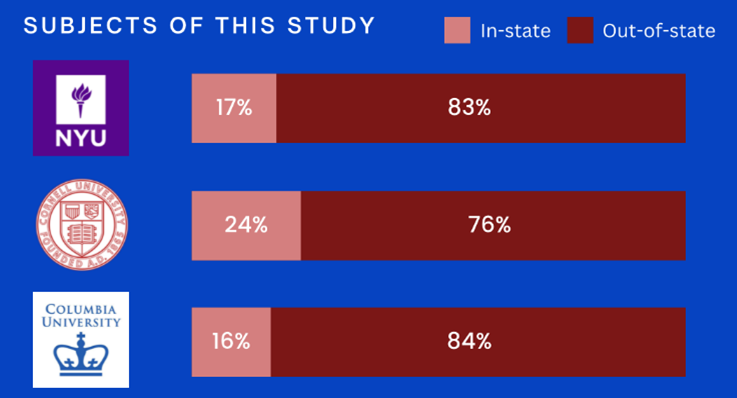
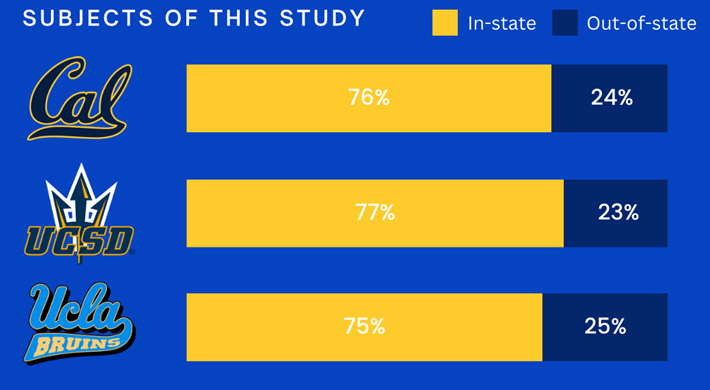
Figure 1. Number of subjects per New York university subreddit and whether they are in-state or out-of-state students.


Figure 2. Number of subjects per Californian university subreddit and whether they are in-state or out-of-state.

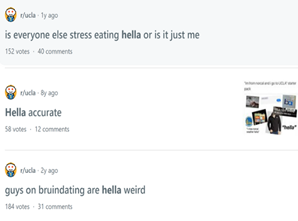
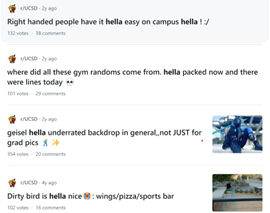
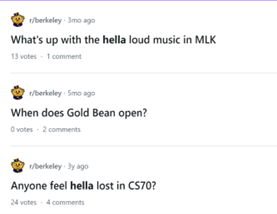
After using our methods of analyzing Californian and New York universities’ slang, we found that college students in California use the word “hella” the most at UCLA, even more than in UCSD and UCB, although it is still very prevalent in all three California schools. “Hella” means “there’s a lot of __.” The reasoning for the frequency is due to the recency of each university subreddits; the longer the comments were posted would not be helpful in determining today’s society’s slang. For instance, most of UCLA comments were from 3 to 6 months ago while UCSD and UCB’s comments were from 2-4 years ago, which is a significantly longer time. In addition, “hella” is “highly expressive [and] often” will destroy the gravity of a formal statement (Hummon 1994).

Common examples of the use of “hella” are shown below:
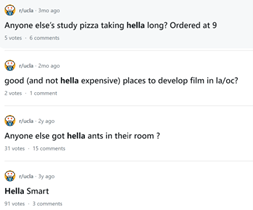
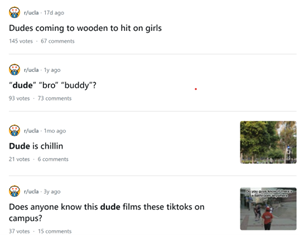
Figures 3 & 4. Instances of “hella” in r/ucla.


Figure 5. Instances of “hella” in r/UCSD.


Figure 6. Instances of “hella” in r/berkeley.

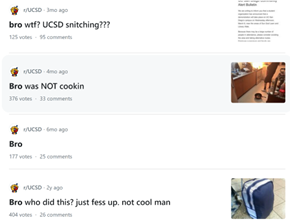
Secondly, we also found that college students among UCLA, UCB, and UCSD primarily frequent the slang “bro.” The comments we have found were not from too long ago, ranging from 4-9 months. Since these comments were recent, we can say that the accuracy of California universities students saying “bro” is likely. Moreover, we can also say the same for “dudes” because of how recent it is. Students say “bro” and “dudes” because omitting large chunks of a particular sentence or word helps the speaker say what they mean. In other words, it might be difficult for the speaker to say “brother,” a longer version of “bro.” Including the second half of the word loses the surrounding, cultural meaning of the sentence, i.e, “bro was not cooking” is not the same as “brother was not cooking” in terms of today’s societal norms. This shows how even slang has its own set of unspoken “rules” that must be followed to maintain a level of informality befitting more casual contexts. Shortening words seems to be a trend for making phrases more casual, and this could perhaps be due to how it allows a speaker to convey more in a shorter amount of time, as well as an implied mutual understanding between the speaker and listener that they understand the true meaning despite it being shortened, similar to a secret code. This could also be why slang usage is so prevalent nowadays, as everyone sees it as cool or modern to be part of a community that understands this secret code, the language of slang. Eventually, slang will become “accepted as equivalent to their unabbreviated and original forms” (Gordon 2020). Even though some slang words like “hella” are not widely spoken in other universities, it will be useful in the near future for linguistic research.

More examples of “bro” and “dudes” shown below:
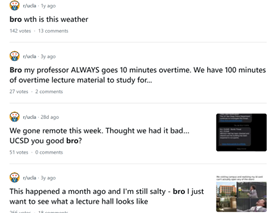
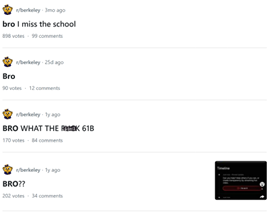
Figure 7. Instances of “bro” in r/ucla.


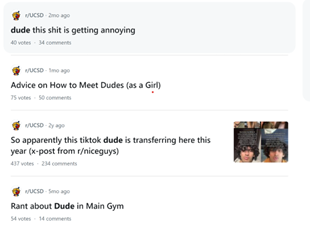
Figure 8. Instances of “bro” in r/UCSD.


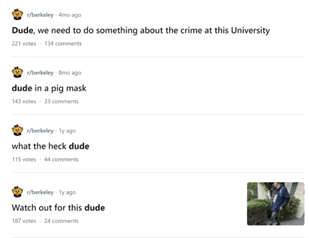
Figure 9. Instances of “bro” in r/berkeley.


Figure 10. Instances of “dude” in r/ucla.


Figure 11. Instances of “dude” in r/UCSD.


Figure 12. Instances of “dude” in r/berkeley.

Moving on to the New York universities, we found that “the city” is used more frequently at NYU and Columbia than in Cornell. “The city” means Manhattan, and college students from NYU and Columbia use it more because they are closer to Manhattan than Cornell. However, another slang term, “real talk” (used as an attention grabber), is more common in Cornell than the two other universities. In addition, the most common frequency slang in Cornell is “bet,” meaning you are either asking the person to put money on your statement or an affirmative ‘yes.’ This is also slightly common in NYU and Columbia. Moreover, what we found interesting is that the subreddit comments of these NY slangs are from 3-4 years ago. However, when we tried to fact-check this with our current methodology using a Python script, we found that the slang “bet” is used by all universities from the west to east coast. For example, there are roughly 21,348 “bet” usages at UC Berkeley, followed by UCSD, while there are 9,452 slang “bro” at UCB. We also found that “real talk” is less common in all universities.

Here is the common occurrence table including data analyzed by the Python script between January 1, 2021 and December 31, 2023:
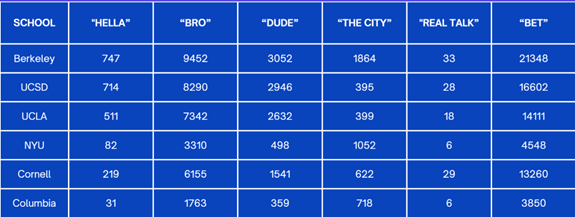
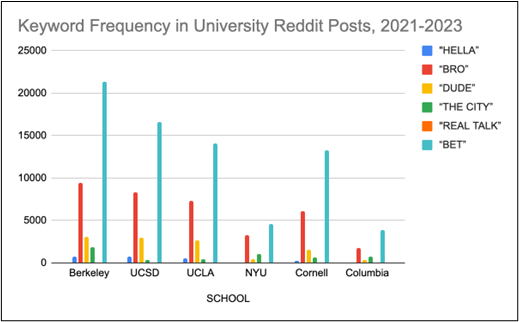
Figure 13. Table showing “bet” as the most common slang, followed by “bro” and “dude.”


Figure 14. Chart version of data appearing in Figure 13. The axes compare the 6 schools to the number of times their respective subreddits have said 6 different keywords from 2021 to 2023. “Bet” and “bro” dominate slang usage across all schools included in this study.

Discussion

After analyzing the linguistic features of California and New York, especially slang, we can safely say that slang words that would be considered be California slang are used heavily within Californian universities’ subreddits. This seems to have a direct correlation to the number of in-state students, unlike New York universities. We also observed several frequent uses of the same terms — “hella,” “bro,” and “bet” — across the Californian universities. In addition, we can say that college students who mainly grew up in an active social culture will most likely be accustomed to the slang and jargon around them.

Moreover, as for New York universities in their own respective subreddits, they use less frequent jargon and slang. Although still present, this seems to have a direct correlation with the amount of out-of-state students in each NY university, as fewer students grew up immersed in the New York culture and thus, are less likely to be accustomed to the city language influenced by the city’s culture.

Our research study contributes to a larger phenomenon in different ways. Firstly, by analyzing linguistic patterns in Reddit communities, the study sheds light on the social dynamics and communication styles within university-affiliated online spaces. This understanding can inform community management strategies and facilitate more effective online interactions. Secondly, our findings contribute to educational research by highlighting the role of language in shaping online discourse within academic communities. Sociolinguistic studies can benefit from a deeper understanding of how language reflects societal norms and values in digital environments.

Lastly, we can leverage insights from this research to develop more targeted and engaging digital communication strategies tailored to specific regional audiences. Understanding linguistic preferences and cultural references can enhance the effectiveness of online marketing and outreach efforts. For example, we can use common slang and jargon, such as using a lot of “bros” or “dudes,” in a men’s marketing campaign and planning how it will raise awareness.

Conclusion

Ultimately, each university and its own subreddit cultivates a community that is centered around shared and common experiences. These experiences can create and preserve slang and jargon that students feel comfortable using to express themselves. There is also a prevalent influence of regional culture on language and slang used by Redditors across the country, as shown by the different terms most used in California and New York. Even though students may move out of state to attend college, they will bring their own slang used by their hometown communities with them, rather than immediately assimilating into the language used in their new community. Overall, language stands as a symbol of hope and it is used so that other students accept and recognize one another as part of the same community.


References

Allen, I. L. (2023). The city in slang: New York Life and popular speech. Oxford University Press.

Bucholtz, M. (n.d.). Chapter 29- Word Up: Social Meanings of Slang in California Youth Culture. In A Cultural Approach to Interpersonal Communication: Essential Readings. essay.

Haas, C., Takayoshi, P., Carr, B., Hudson, K., & Pollock, R. (2011). Young People’s Everyday Literacies: The Language Features of Instant Messaging. Research in the Teaching of English, 45(4), 378–404. http://www.jstor.org/stable/23050580.

Hummon, D. M. (1994). College Slang Revisited: Language, Culture, and Undergraduate Life. The Journal of Higher Education, 65(1), 75–98. https://doi.org/10.2307/2943878.

Labov, T. (1992). Social and Language Boundaries among Adolescents. American Speech, 67(4), 339–366. https://doi.org/10.2307/455845.

Roth‐Gordon, J. (2020). Language and creativity: Slang. The International Encyclopedia of Linguistic Anthropology, 1–8. https://doi.org/10.1002/9781118786093.iela0192.

Saha, Koustuv & Choudhury, Munmun. (2021). Assessing the mental health of college students by leveraging social media data. XRDS: Crossroads, The ACM Magazine for Students. 28. 54-58. 10.1145/3481834.

“Top Websites in Worldwide (All Industries).” Semrush, www.semrush.com/trending-websites/global/all. Accessed 20 May 2024.

[/expander_maker]
, , , ,

The TikTok Influencer Voice: Do Sociolinguistic Features Influence the Success of TikTok Videos?

Natalia Adomaitis, Lam Hoang, Maryam Shama, Sydney Trieu, Kristina Zhao

TikTok is a growing social media platform that launched in 2016 and since has gained 1 billion monthly active users, 60% of which are a part of the Gen Z demographic. Many influencers have rapidly grown in popularity, leading to social changes due to trendsetting by these influencers. In our study, we analyzed linguistic features used by three TikTok influencers: Erika Titus, Katie Fang, and Alix Earle. Our goal was to analyze how the use of two linguistic features: filler words and rising intonation (uptalk) by female Gen Z TikTok influencers impact engagement. We gathered data by comparing analytics of 6 videos from each of the three influencers, 3 of which being their most popular videos and 3 being of average performance. We tracked the number of times rising intonation and filler words were used per video along with video length and amount of views and likes. We hypothesized that influencers incorporate these specific linguistic elements to better relate with their audience, which ultimately leads to an increase in video engagement.

[expander_maker id=”1″ more=”Read more” less=”Read less”]

Introduction and Background

TikTok has become one of the most popular video-sharing social media apps since its launch in 2016. Approximately 60% of the users and influencers who daily consume or create content on this app belong to Gen Z (Moshin, 2022; Rezek, 2022). In addition, it is predicted that TikTok will have 1.8 billion monthly users by the end of 2024 (Iqbal, 2024).

Because of the rapid growth of this app in recent years, in addition to its daily prevalence in our target demographic of Gen Z individuals (ranging from ages 18-24), and its continuous expected growth, we were motivated to investigate if the verbal linguistic content, or language and speech pattern used by TikTok influencers, had any role or influence in determining the success of their videos.

Our research focused on the sociolinguistic features frequently observed in the language content from popular TikTok influencers: Erika Titus, Katie Fang, and Alix Earle. Specifically, we analyzed upward intonation, filler words, “Valley Girl” speech, and conversational style.

  • Upward intonation- also known as “uptalk”, a speech pattern where the pitch of a voice rises, is typically used at the end of sentences to indicate a question or throughout a sentence to signal that a phrase is incomplete. This tactic can keep the viewer anticipating what will come next.
  • Filler words- Examples include “like, um, literally, actually”. Use of this speech pattern maintains the flow of speech, fills pauses in a conversation, thus keeping the viewer’s attention.
  • “Valley Girl” speech/conversational style- the previously mentioned speech patterns “uptalk” and filler words, are reminiscent of the “Valley Girl” speech and are commonly associated with being used by affluent, middle-class teenagers from California (Nycum, 2018). When used in videos, it can create a casual, one-on-one, conversational-like style that connects with Gen Z.

Erika Titus, Katie Fang, and Alix Earle all have a substantial following with Titus having 4 million followers, Fang with 5.1 million followers, and Earle at 6.8 million followers as well as belonging to the Gen Z demographic. Geographically, Titus along with Earle were born in the U.S. and currently reside in the U.S., and Fang was born in Taiwan, but resides in Canada.

These influencers mainly create lifestyle content such as daily routines, “get ready with me” videos, fashion choices, and product endorsements. Erika Titus and Katie Fang similarly produce casual, at-home, sit-down videos, whereas Alix Earle creates more spontaneous videos in addition to at-home style videos.

Our overall hypothesis is that video success (high like and view count) is attributed to influencers’ use of sociolinguistic features: upward intonation, filler words, and “Valley Girl” speech, which contribute to creating a conversation-like style that is effective at engaging and connecting with the Gen Z audience.

Methods

Our project aimed to investigate the impact of filler words and rising intonation phrases on the success of TikTok influencers’ videos. Success was measured through view count and like count, assessing whether there was a correlation between the frequency of these linguistic features and video engagement success.

To conduct this study, we analyzed six videos from each of the three selected TikTok influencers. For each influencer, three of their best-engaged videos (identified by the highest number of likes and views) were selected, along with three average-performing videos.

Several key factors were tracked for each video. We recorded the number of rising intonation phrases and counted the occurrences of filler words such as “like,” “literally,” and “um.” Additionally, we noted the number of likes and views to measure engagement success and tracked the length of each video in seconds for further analysis. This methodology enabled us to compare the frequency of linguistic features across different levels of video success.

We hypothesized that a higher frequency of filler words and rising intonation phrases would correlate with an increase in views and likes, suggesting these linguistic features enhance engagement.

Results and Analyses 

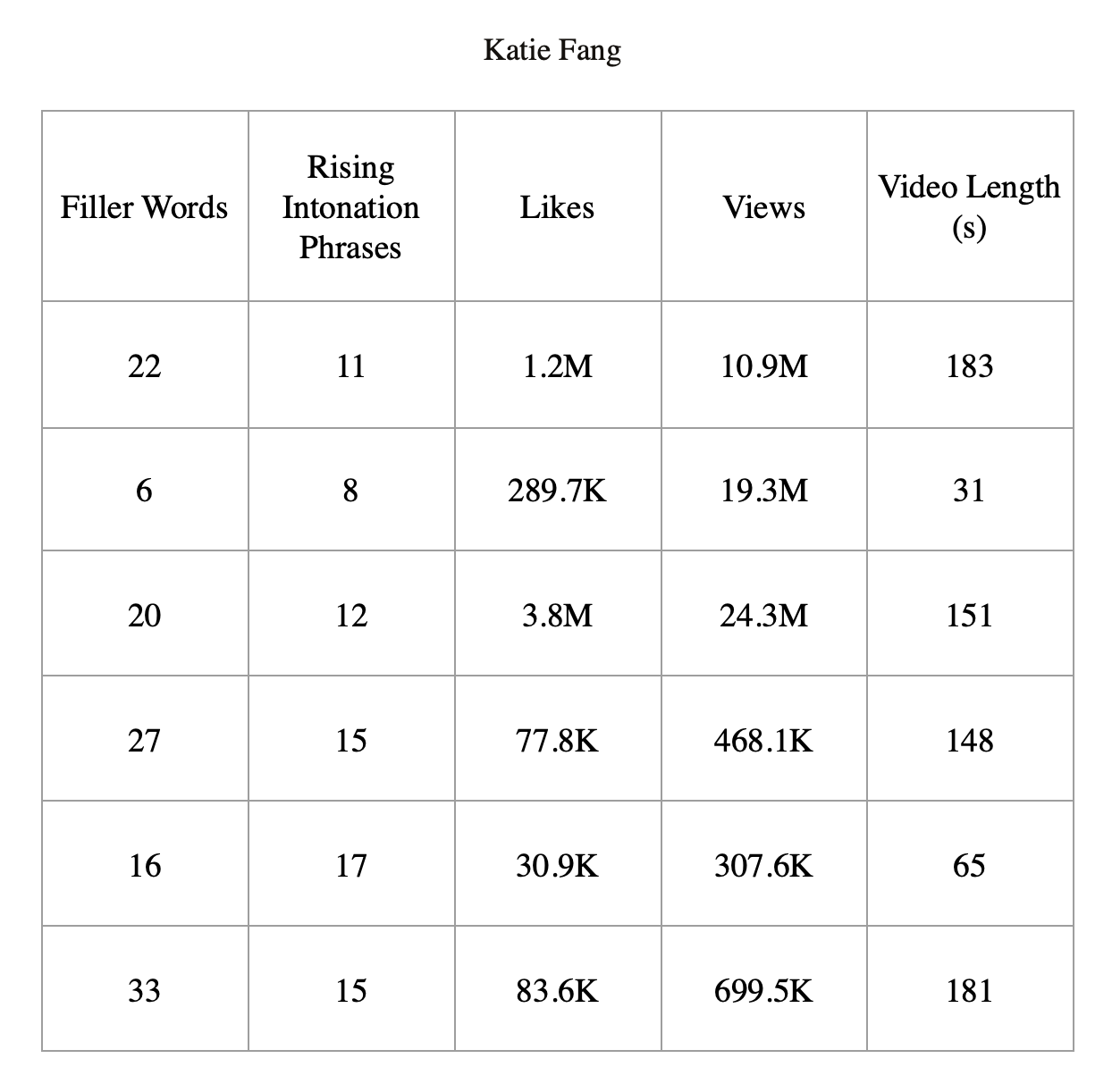
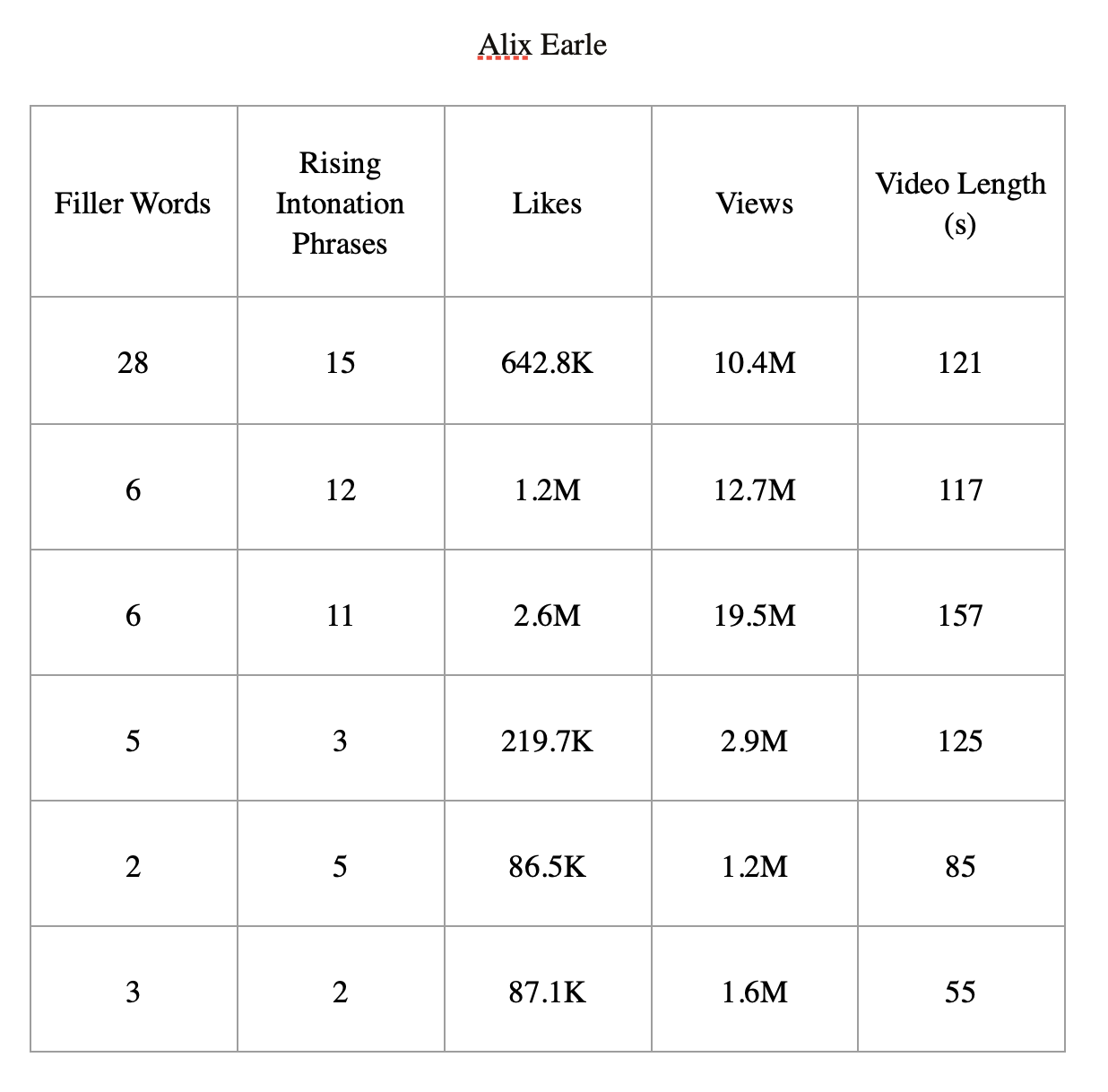
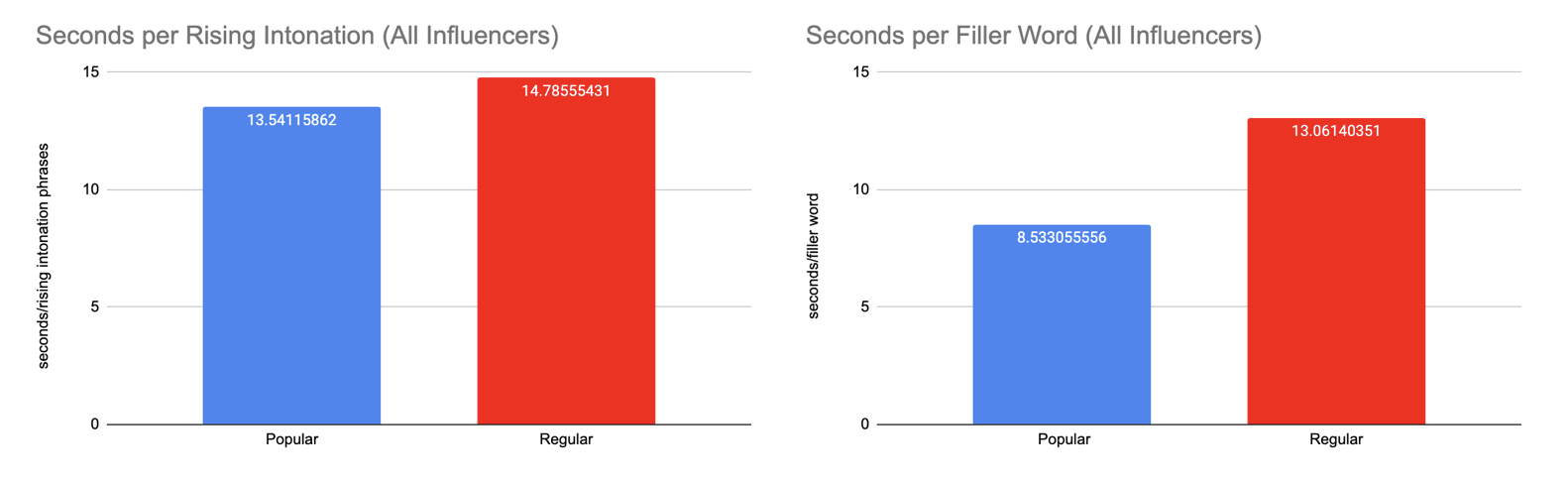
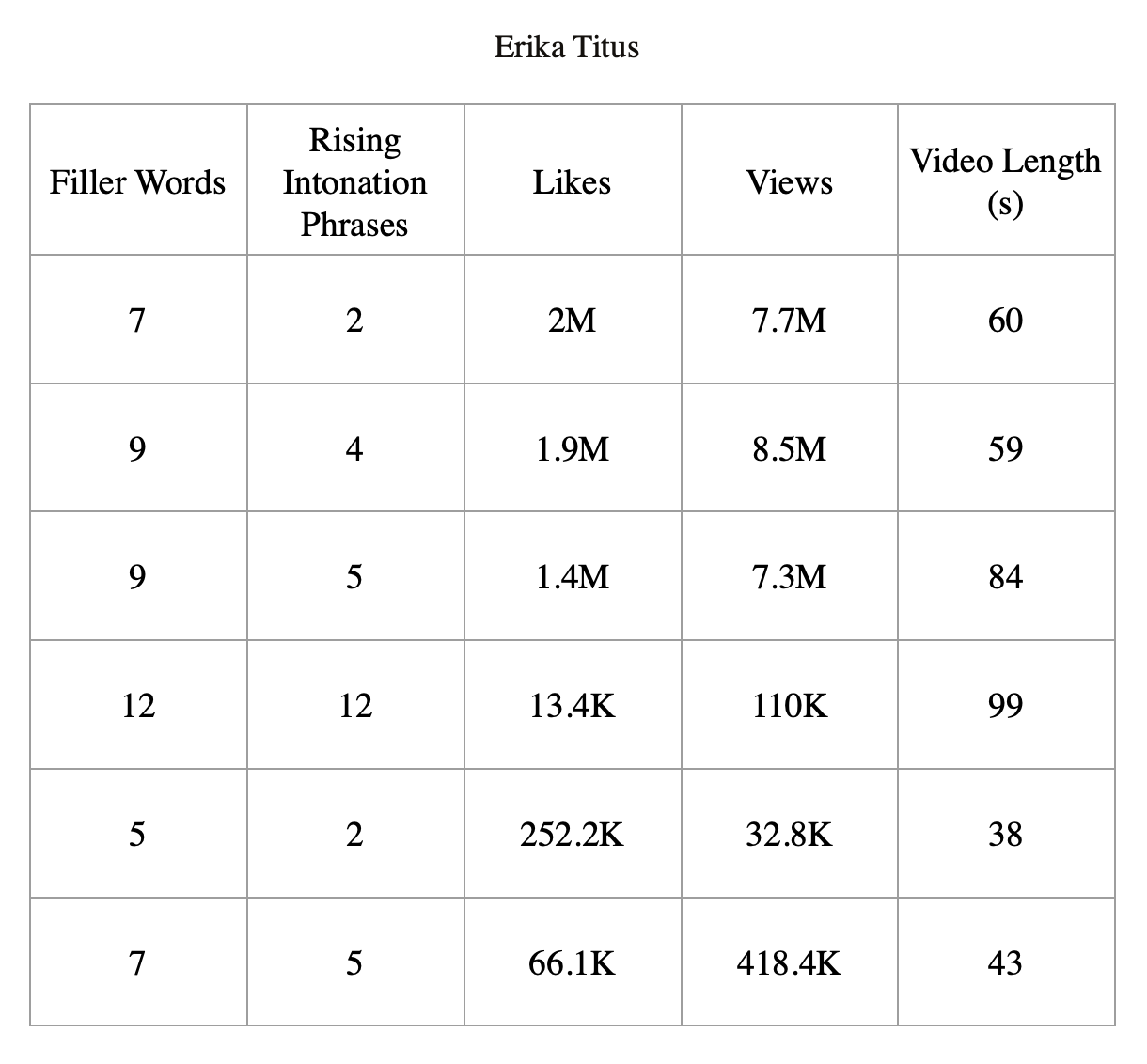
Following our methods, our results are shown below:

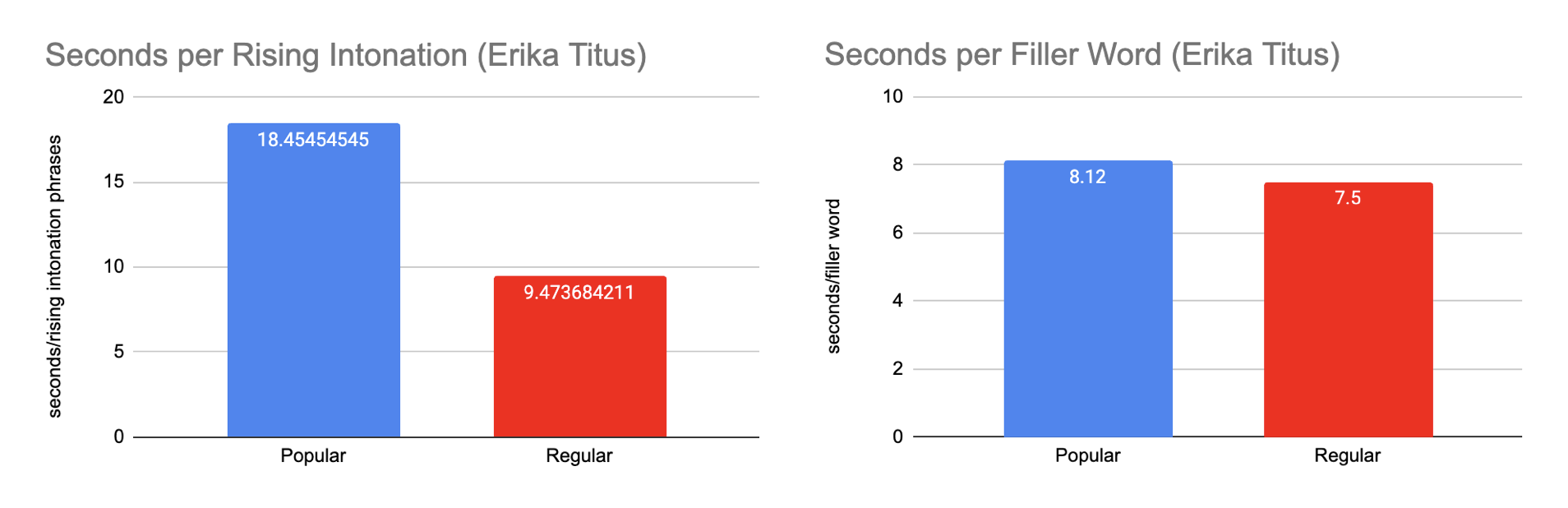
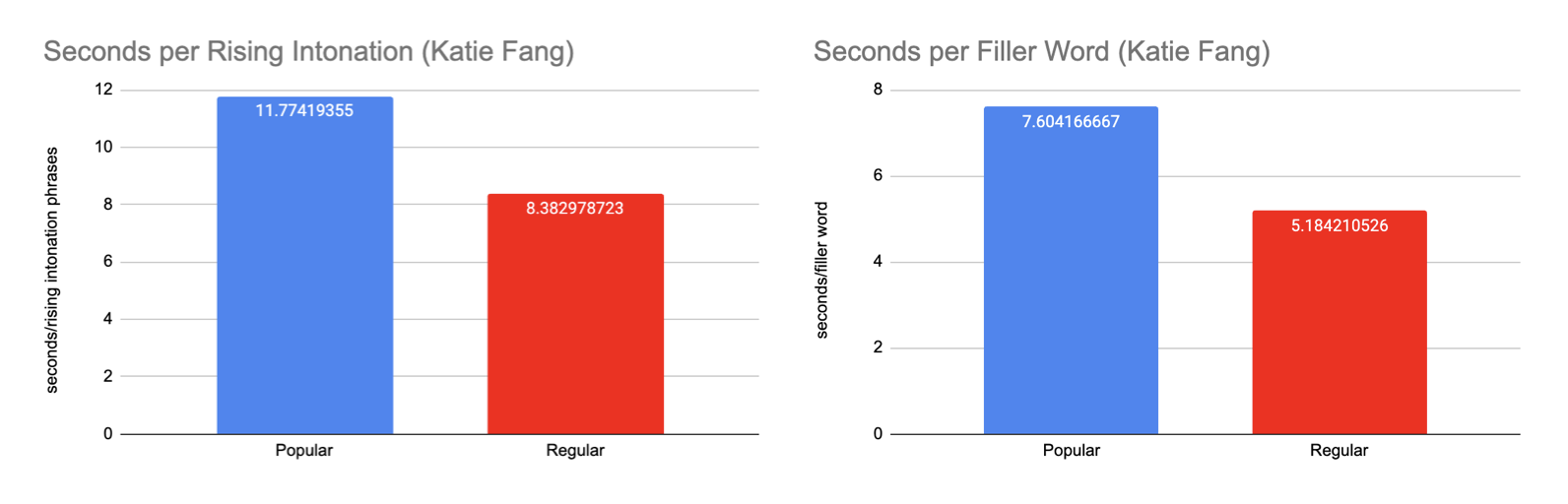
From this data, we extract two key metrics: the average frequency of rising intonation and the average frequency of filler words. We focus on the frequency of these elements in terms of occurrences per unit time (e.g., one occurrence every x seconds) rather than their rate (e.g., x occurrences per second). This perspective allows us to contextualize sociolinguistic factors within TikTok videos, which are short-form content designed to capture attention. Following our hypothesis, influencers’ most popular videos tend to employ rising intonation or filler words frequently (e.g., every 5 seconds) to maintain audience engagement.

Based on our hypothesis, we expect that higher average frequencies of rising intonation and filler words are correlated with more likes and views on the videos. We will compare these metrics between popular and less popular videos to potentially reveal their effects on engagement. Initially, we will analyze the data for each influencer individually before aggregating and analyzing the data as a whole.

Erika Titus:

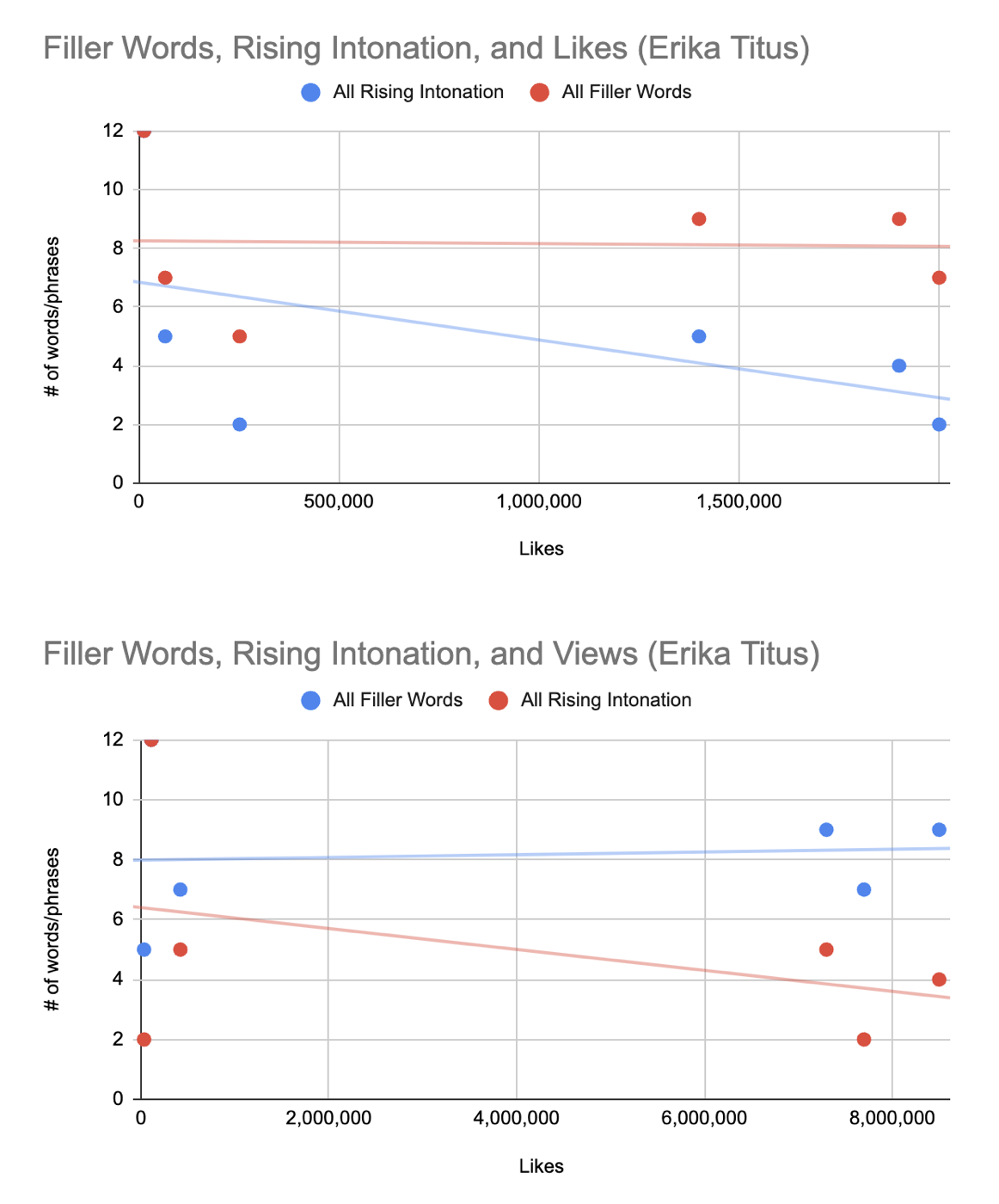
As observed in Erika Titus’s case, her popular videos exhibit an average of one rising intonation every 18 seconds, while her regular videos feature an average of one rising intonation every 9 seconds. Similarly, the frequency of filler words is lower in her popular videos compared to her regular ones. These patterns suggest that for Erika Titus, both rising intonation and filler words appear to have an inverse relationship with engagement, implying that lower frequencies of these features may be associated with higher popularity.

Katie Fang:

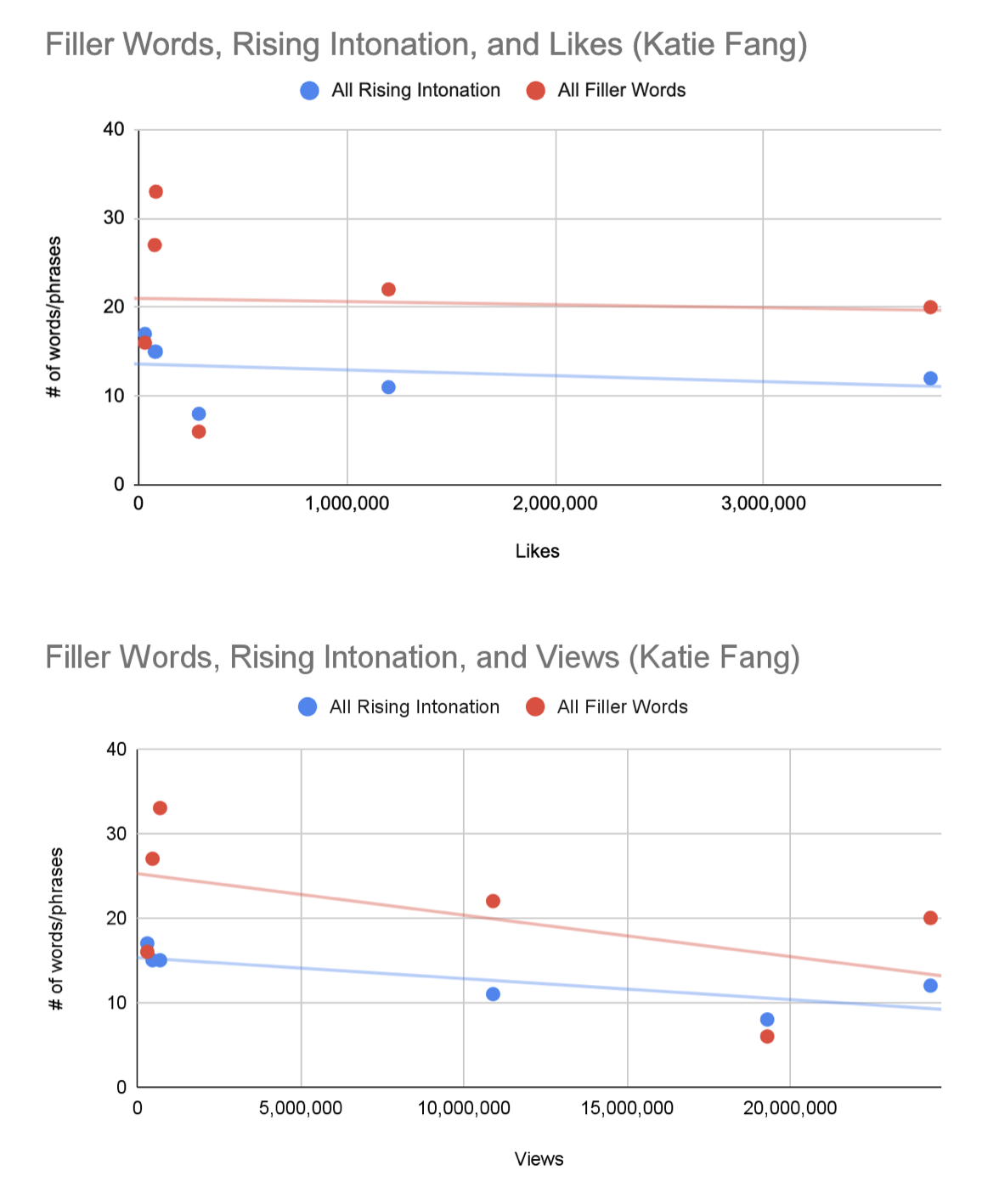
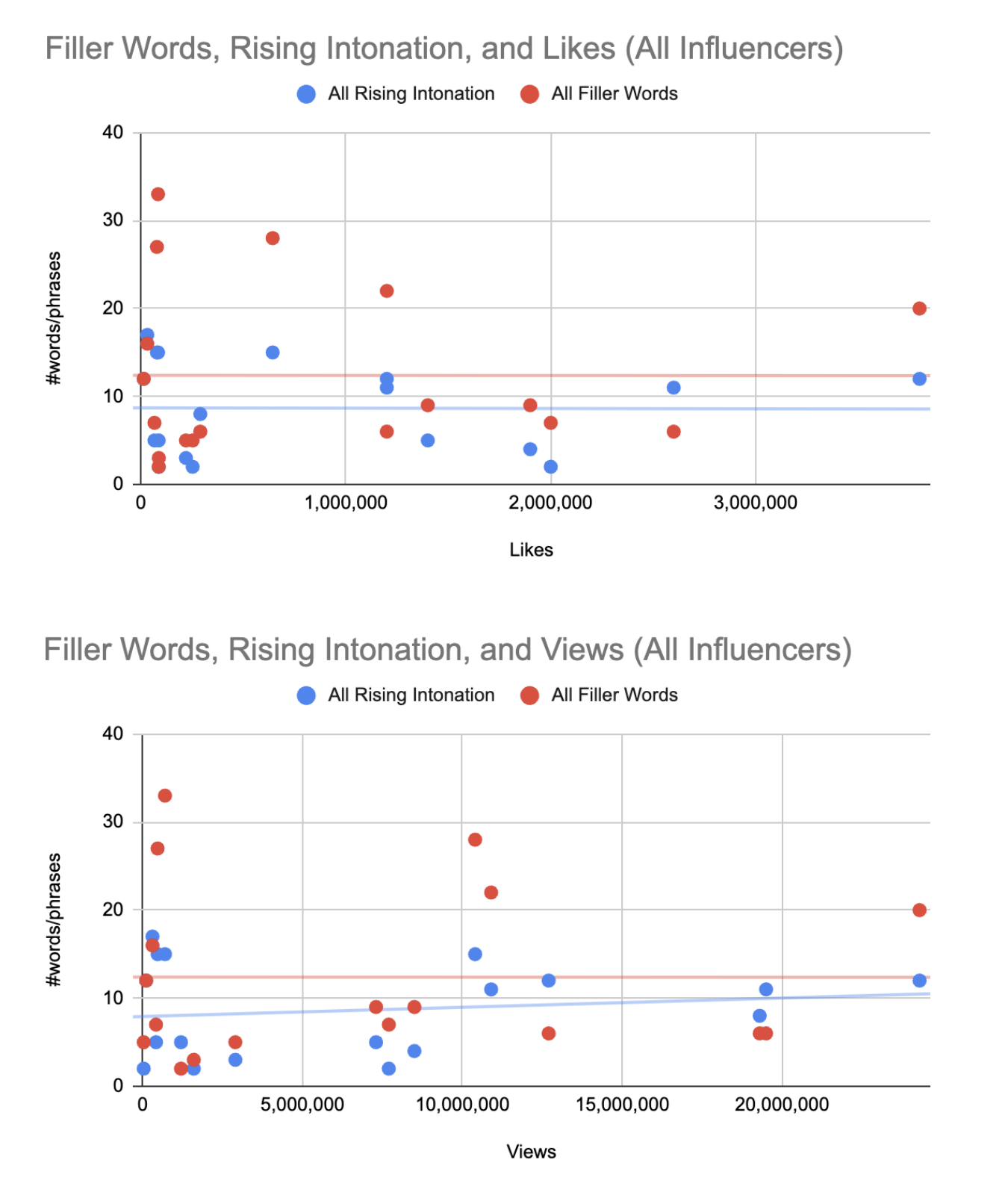
Moving on to Katie Fang, we observe a similar pattern to that seen in Erika Titus’s videos. Katie’s popular videos exhibit a lower frequency of rising intonation and filler words compared to her regular videos. Both factors again seem to have an inverse effect on engagement. From the line graphs depicting sociolinguistic factors versus views, it appears that these sociolinguistic features negatively correlate with views, suggesting that lower frequencies may contribute to higher popularity.

Alix Earle:

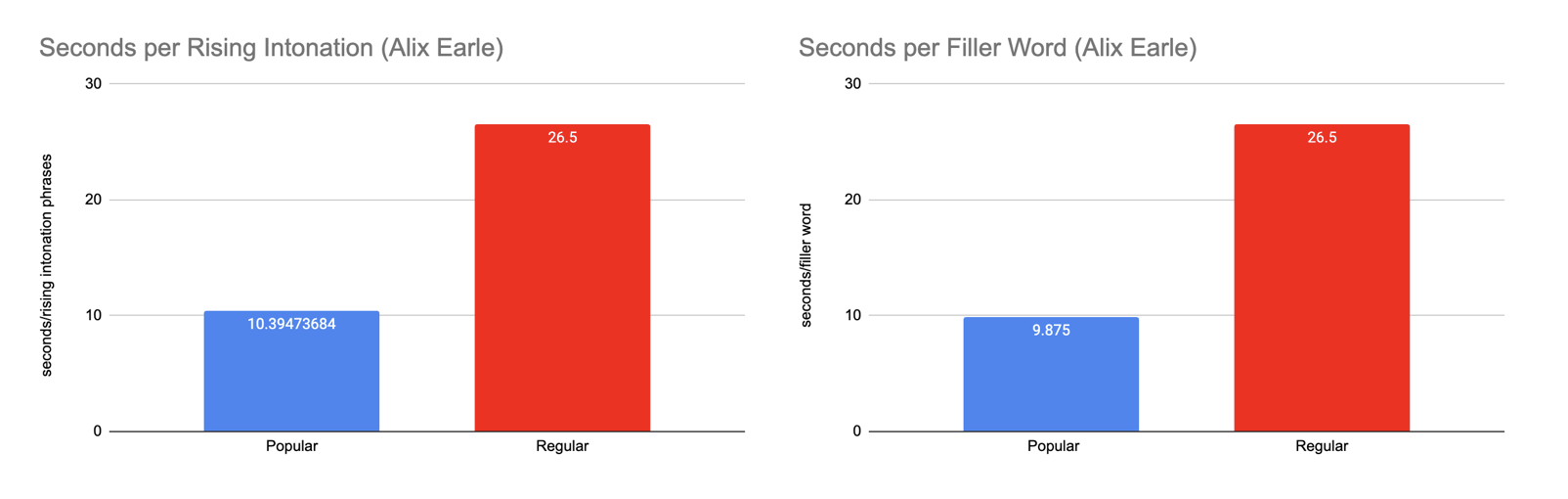
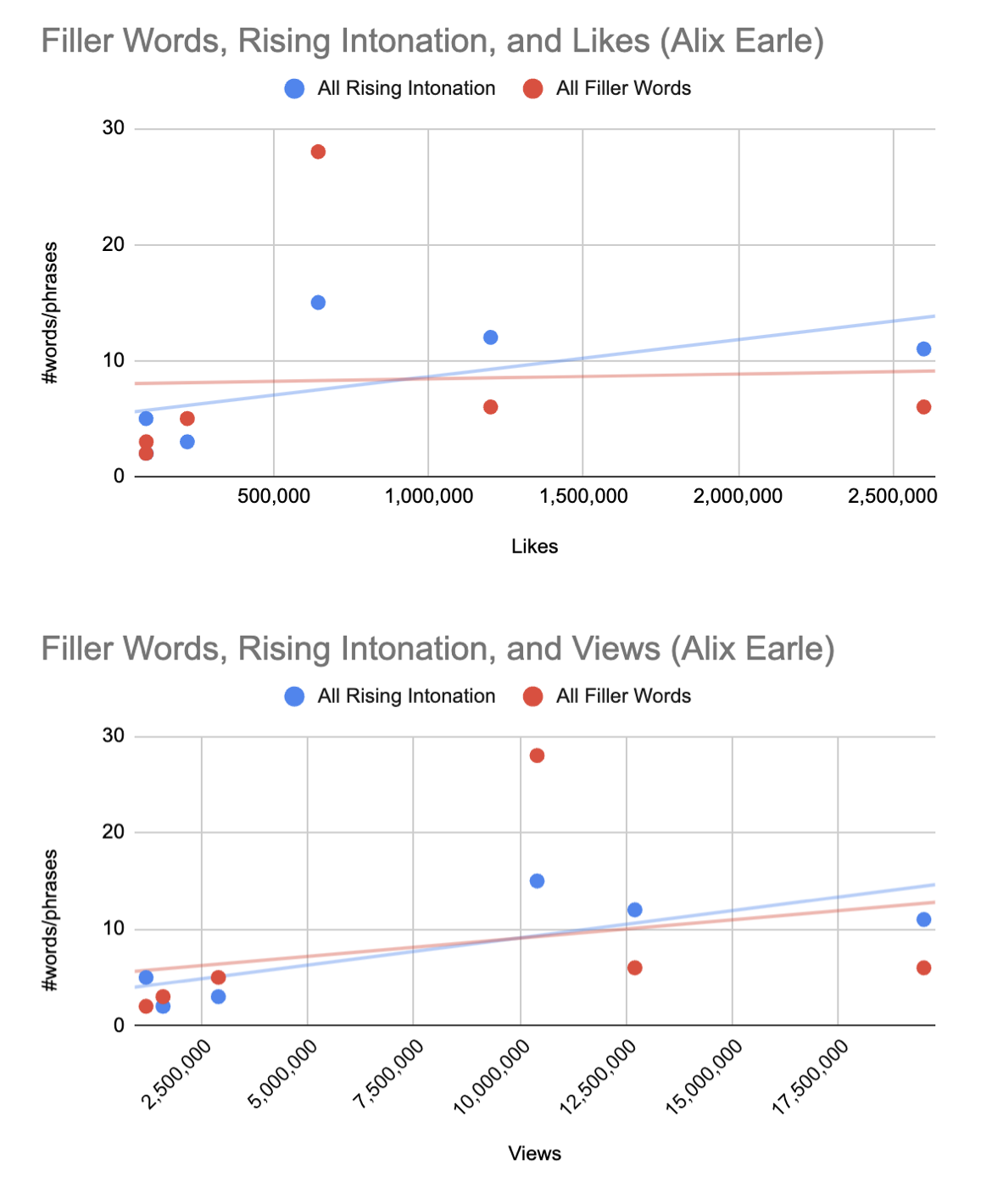
For Alix Earle, we observe the opposite pattern compared to Erika Titus and Katie Fang. Alix’s popular videos have a higher frequency of both rising intonation and filler words. These factors appear to have a positive effect on engagement. The line graphs depict a positive linear relationship between both rising intonation and filler words with views and likes, suggesting that higher frequencies of these features are associated with increased popularity.

Overall:

Looking at the data across all three influencers, we observe that popular videos generally exhibit a higher frequency of both rising intonation and filler words. These factors appear to have a positive effect on views and likes. However, the line graphs reveal scattered data, and the line of best fit does not clearly indicate a direct relationship, suggesting that other variables may also influence engagement.

Discussions and Conclusions

To summarize, Erika Titus and Katie Fang’s data do not support our hypothesis, but most of the data we collected from Alix Earle’s does support our hypothesis. Given these findings, our data is inconclusive about whether or not rising intonation and the use of filler words have a positive effect on the success of audience engagement on TikTok.

The differences in like and view count in the data between the influencers can be attributed to multiple factors that would need to be taken into consideration and further researched. Elements such as differences in influencers’ backgrounds, the racial identity and/or personality traits of the influencers, video content, and editing style may have played a role in the use of “uptalk” and filler words, which in turn would affect the success of their videos (Swerts, 1998).

Additionally, negative associations with “Valley Girl” speech could have also played a role in causing less engagement from audiences. Use of this speech by individuals who might not sociologically parallel the stereotypes accompanying the linguistic features of the “Valley Girl” accent, such as “being white, privileged”, can raise questions about how authenticity is perceived by the Gen Z audience, as well as reveal structural biases held by audiences on TikTok (Habasque, 2021). In an article by Sophia Smith Gaeler, Gaeler elaborates on the identities associated with these speech patterns and how linguistic features of female TikTok influencers can pave the way for new forms of English to evolve. (Gaeler, 2024).

Furthermore, having a substantial following and audience can potentially cause the influencer to be or appear more anxious, which in turn may lead to the use of more filler words that can also impact the success of a video (Bodie, 2010).

Video length, content, quality, and editing styles could also be investigated. We observed that Alix Earle created more spontaneous content, while Erika Titus and Katie Fang created more at-home content, which may have impacted the relevancy of the content to the viewer. The general public views spontaneous content as a reflection of the influencer’s true self. In a study done by Jacqueline Rifkin and Katherine Du, the participants rated content creators as “more sincere, genuine, and authentic.” (Du and Rikfin, 2023). Therefore, more people would be drawn to influencers that create more spontaneous content, which in turn would influence which particular linguistic features they utilize to engage their audiences.

Editing styles such as “jump cuts” which produce choppy transitions, can result in the cutting off of rising intonation at the end of a video and negatively affect the success of the video. As reported, the effect of these jump cuts can affect our brain’s perception of what we visually and audibly understand as starting or ending (McMullan, 2021). While collecting data, it was observed that Erika Titus and Katie Fang had choppier editing in their videos. Additional research would be needed to determine if content with these factors negatively impacts the quality of the video, in addition to the viewer’s experience, and therefore resulting in a lower like count. 

Moreover, other aspects like trends, hashtags, and the TikTok algorithm in addition to the aforementioned factors, can inconclusively support that linguistic styles may have more of an impact on the type of audience influencers attract, rather than audience engagement or video success.

Further research can be done to analyze other linguistic styles in comparison to “Valley Girl” speech and possibly account for linguistic features like word choice and vocal fry, to determine more conclusive results about the positive effects of linguistic features on audience engagement or the prevalence of certain linguistic features across varying categories of content. For example, in an article by Alice Hall on Vice, she discusses how different types of content utilize different linguistic features to capture audiences and maintain their engagement (Hall, 2023).

Other research can be done to investigate how influencers linguistically construct their personal brands, what linguistic techniques or features influencers use to engage with their audience in comments and direct messages, or how influencers use language to build and maintain a community among their followers.

This research and further research’s findings exemplify how language adapts and evolves with the increasing use of digital media and technology. It also contributes to the construction of personal identity and community on digital platforms. Lastly, it can be used to analyze how to engage audiences and keep their engagement from a marketing standpoint.

References

Bodie, G. D. (2010). A Racing Heart, Rattling Knees, and Ruminative Thoughts: Defining, Explaining, and Treating Public Speaking Anxiety. Communication Education, 59(1), 70–105. https://doi.org/10.1080/03634520903443849.

Habasque, P. (2021, December 21). Is creaky voice a valley girl feature? Stancetaking & Evolution of … Anglophonia. French Journal of English Linguistics. https://doi.org/10.4000/anglophonia.4104.

McMullan, J. (2021b, January 21). View of the Great Jump Cut (r)evolution: A case for studying the evolution of vlogging production techniques. https://firstmonday.org/ojs/index.php/fm/article/view/10547/11266.

Mohsin, M. (2022, September 3). 10 TikTok Statistics That You Need to Know in 2019 [Infographic]. Oberlo; Oberlo Dropshipping app. https://www.oberlo.com/blog/tiktok-statistics.

Nycum, R. (2018, May). In Defense of Valley Girl English. In The Compass (Vol. 1, No. 5, p. 4).

Rezek, A. “How Brands Go Viral: An Analysis of Successful Brand Marketing on Tik Tok with Gen Z” (2022). Honors Theses. 2645. https://egrove.olemiss.edu/hon_thesis/2645.

Swerts, M. (1998). Filled pauses as markers of discourse structure. Journal of Pragmatics, 30(4), 485–496. https://doi.org/10.1016/S0378-2166(98)00014-9.

Cross-Referenced Sources

Source 1: Hall, Alice. “Why Does Everyone on TikTok Use the Same Weird Voice?” Vice, 29 Mar. 2023, www.vice.com/en/article/k7zq49/why-everyone-uses-tiktok-voice.

Source 2: Rifkin, Jacqueline, et al. “Research Identifies Why People Prefer Spontaneity in Entertainment.” Phys.org, phys.org/news/2023-06-people-spontaneity.html.

Source 3: Smith Galer, Sophia. “How TikTok Created a New Accent – and Why It Might Be the Future of English.” Www.bbc.com, 23 Jan. 2024, www.bbc.com/future/article/20240123-what-tiktok-voice-sounds-like-internet-influencer.

[/expander_maker]
, , , , , , , , , ,

In-Person vs. Digital Communication Styles Among Classmates

Megu Kondo, Devina Harminto, Yixing Wang, Yinlin Xie, Batool Al Yousif

In the rapidly evolving landscape of communication, the distinction between in-person and digital communication has become a focal point of linguistic and sociocultural studies. This project delves into the nuanced differences in language use, expression, and understanding across these two modes of communication. The purpose of this study is to investigate how individuals adapt language styles, tones, and dialects between in-person and digital communication. Additionally, our study aims to explore these preferences specifically among classmates, shedding light on the nuances of their communication choices. By examining various linguistic features such as informality, use of emojis, turn-taking, and the adaptation to the absence of non-verbal cues in digital platforms, this study illuminates how digital communication often necessitates a shift from traditional language norms observed in face-to-face interactions. We designed a survey using Google Forms for accessibility and ease of distribution and collected data from 30 college students (18-22 years old) who engage in both in-person and digital communication.

[expander_maker id=”1″ more=”Read more” less=”Read less”]

Introduction and Background

In the evolving landscape of communication, the distinction between in-person and digital interaction has become a key area of sociolinguistic study. This project investigates how language styles, expressions, and understandings are adapted between these two modes of communication, particularly among college students. The study examines linguistic features such as informality, emoji usage, and turn-taking, shedding light on the nuances of their communication choices.

Traditionally, in-person communication has been valued for its richness and immediacy. This mode allows for a wealth of non-verbal cues such as gestures, facial expressions, and tone of voice, all of which enrich the communication experience and help in accurately conveying emotions. Face-to-face interactions also foster a sense of connection and immediacy, which are often crucial for forming strong interpersonal relationships. On the other hand, digital communication offers unparalleled convenience and flexibility. Platforms like Snapchat, Instagram, and WeChat have revolutionized how we interact, making it possible to maintain relationships over long distances with ease. The digital transformation of communication has brought about significant changes in the linguistic practices of individuals, particularly young adults. The incorporation of multimedia elements such as images, videos, and emojis attempts to bridge the gap in emotional expression that the lack of physical presence creates. However, these elements, while helpful, often fall short of fully replicating the subtleties conveyed through face-to-face interactions. The gap highlights the potential for misunderstanding and the need for enhanced digital literacy in order to navigate the complexities of modern communication.

The primary focus of this study is to assess the preferences of college students (aged 18-22) who regularly engage in both in-person and digital communication. It aims to document their perceived advantages and drawbacks of each mode, particularly in terms of emotional expressiveness and the potential for misunderstandings. Additionally, the study delves into the phenomenon of code-switching — altering one’s language, tone, or style according to the communication platform — which reflects broader cultural identities and adaptability in digital spaces.

Methodology

To examine the differences in communication styles between in-person and digital interactions among college students, we conducted a thorough survey of students aged 18-22. Our methodology ensured that we collected data from a diverse and representative sample, which is critical for drawing meaningful conclusions.

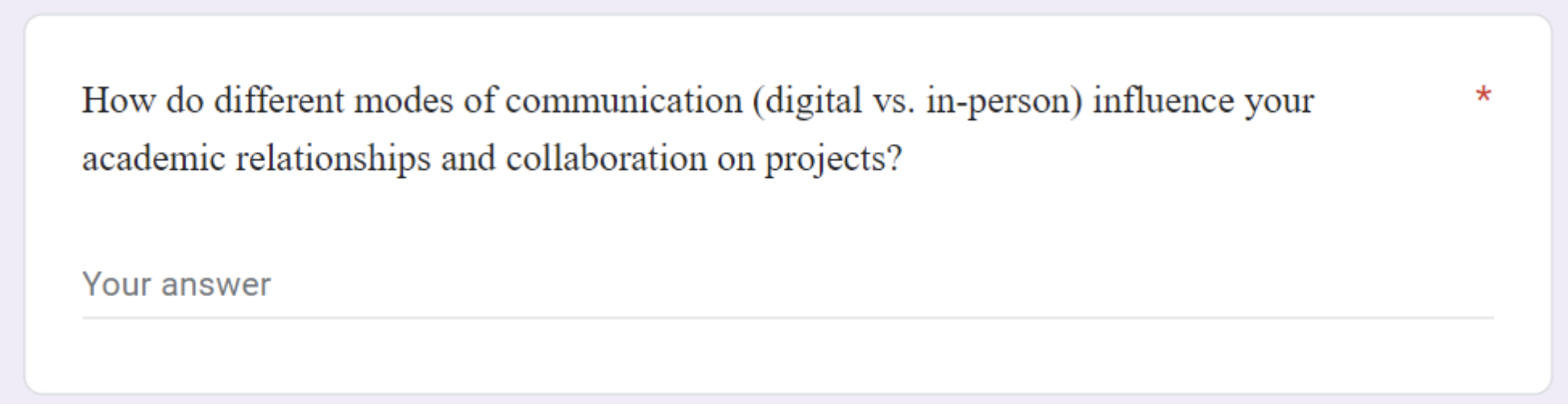
The survey was created with Google Forms, leveraging its accessibility and ease of use to reach a large audience. We divided the survey into three major sections: demographics, communication preferences, and emoji usage. The demographics section gathered basic data such as age, nationality, and primary languages spoken. The communication preferences section explored the participants’ preferred modes of communication, the differences in word and phrase usage between these modes, the ease of conveying emotions, and their awareness of changing language styles or tones. The final section focused on emoji usage, asking about frequency, meanings, and emoji-related misunderstandings. We ensured a diverse participant pool by distributing the survey through social media platforms and student groups, which reached students from a variety of cultural backgrounds and academic disciplines. 

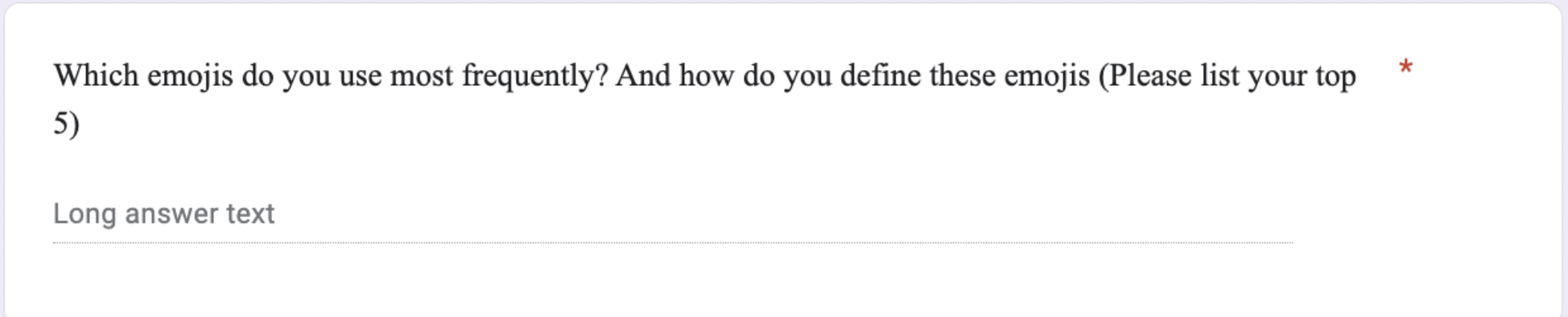
Figure 1. Example of a survey question from the section on communication preferences.

The survey responses were automatically compiled into a Google Sheets spreadsheet, allowing for efficient organization and preliminary analysis. We calculated frequencies, percentages, and averages for the quantitative data to summarize demographic information and communication preferences, giving us a clear picture of the data’s major trends and patterns. We used thematic analysis to examine qualitative data, particularly open-ended responses about emoji usage and communication preferences. This process involved coding the responses and identifying common themes, which allowed us to gain a better understanding of the participants’ experiences and perceptions. We used this methodology to gain a thorough and nuanced understanding of how college students navigate the complexities of in-person and digital communication. By analyzing both quantitative and qualitative data, we were able to identify key trends and patterns in communication styles, providing valuable insights into the changing landscape of digital communication. The use of advanced data analysis tools and rigorous thematic procedures ensured that our findings were robust and reflective of the diverse experiences within our sample. This methodology not only provided a strong framework for our research, but it also ensured that our findings were based on a diverse and representative sample, adding to the larger conversation about language use and social interaction among young adults.

Analysis and Results

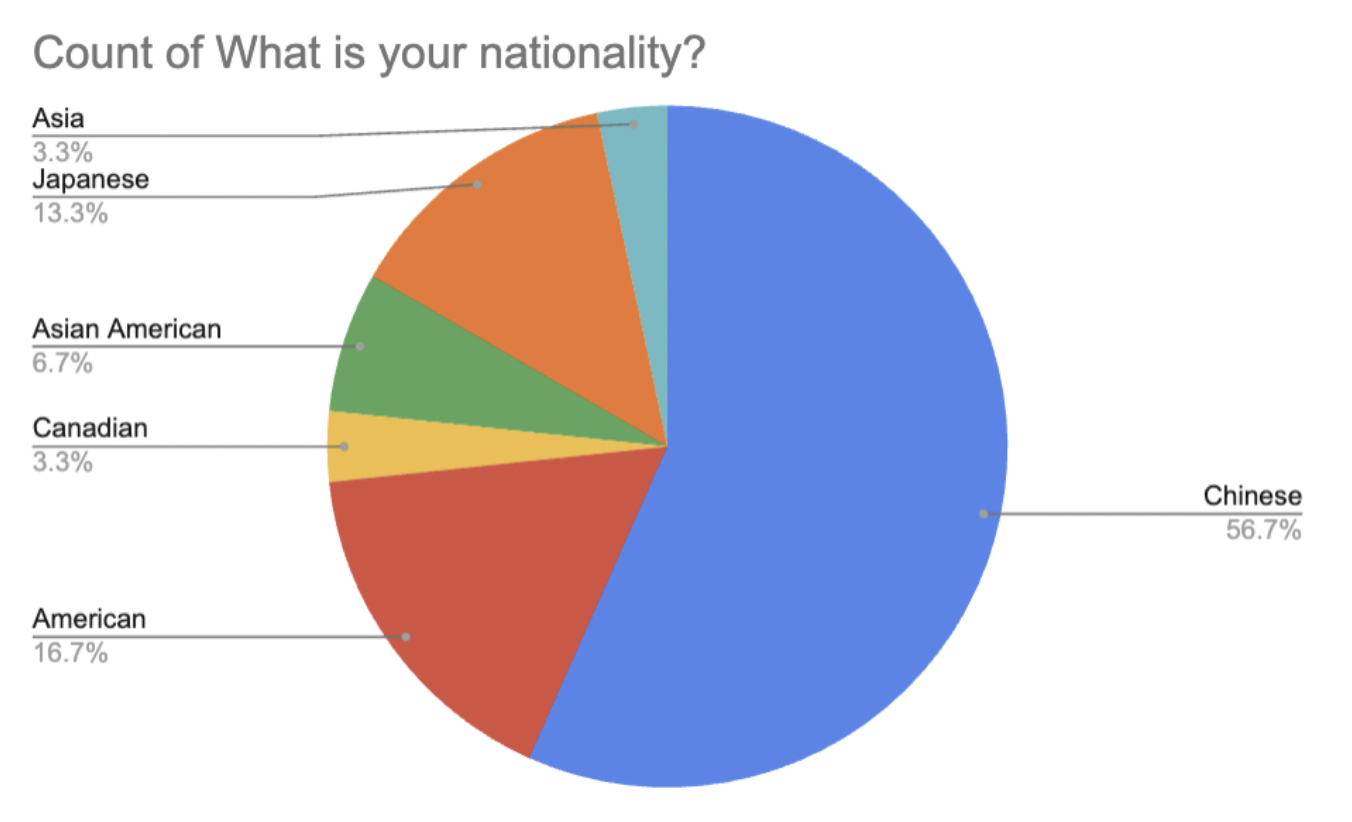
We were able to attain a total of 30 participants, whose ages were between 19 to 26. Figure 2 shows that the majority of participants were Asians at 73.3%, and the other 26.7% of the participants were American. The results of the survey garnered a better understanding of how college students prefer in-person communication over online conversation.

Figure 2. Chart detailing answers to the question “What is your nationality?”

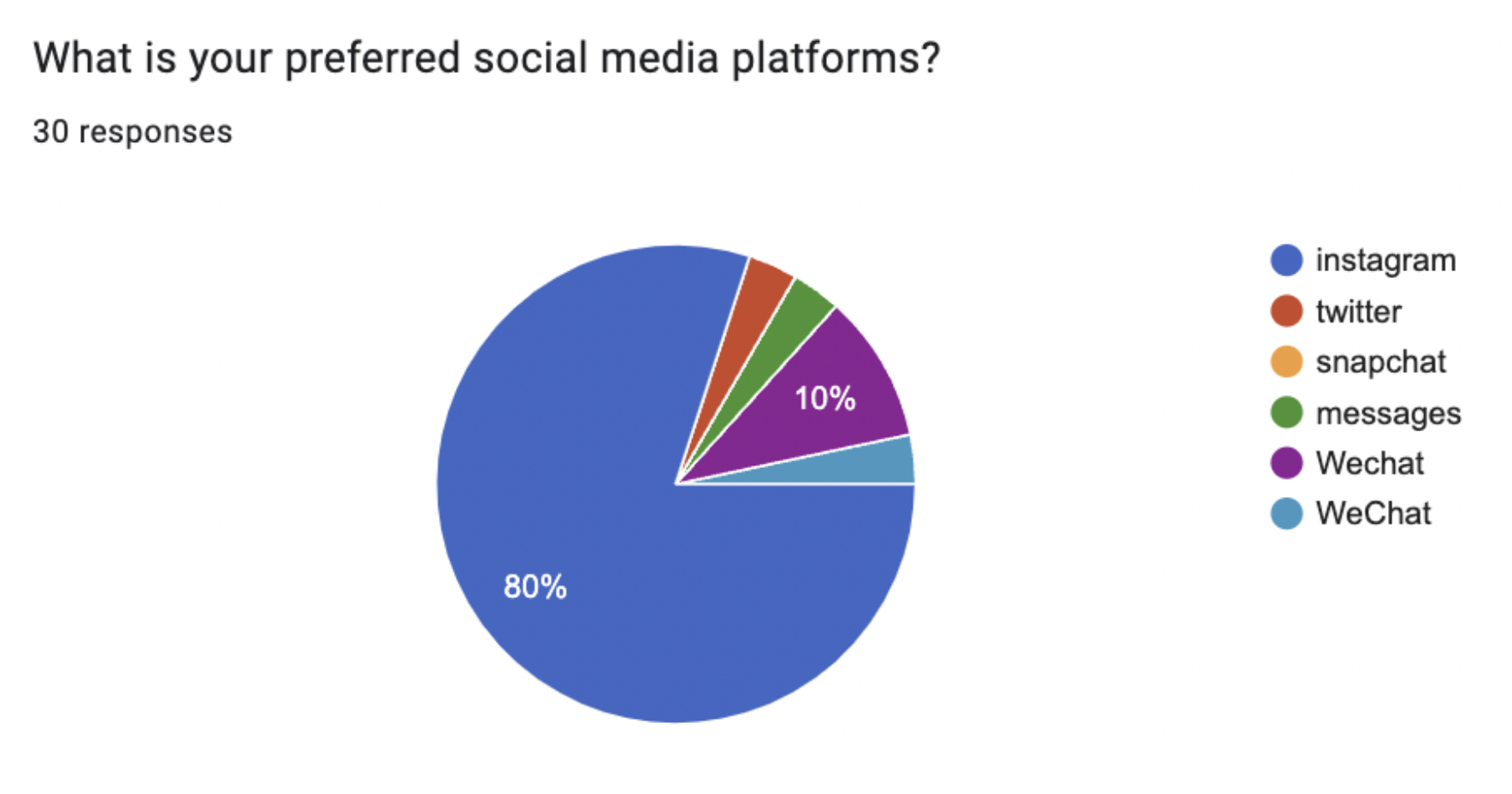
Figure 3. Chart detailing the responses to the question “What are your preferred social media platforms?”

Figure 3 shows that Instagram is the most popular social media platform among college students with 80%. 24 participants use Instagram to communicate with others since Instagram is very common among the younger generation; people can post pictures and send each other direct messages. 13.3% of the participants like to use WeChat, which is because some of them are international students who can easily communicate with their friends in China through the platform.

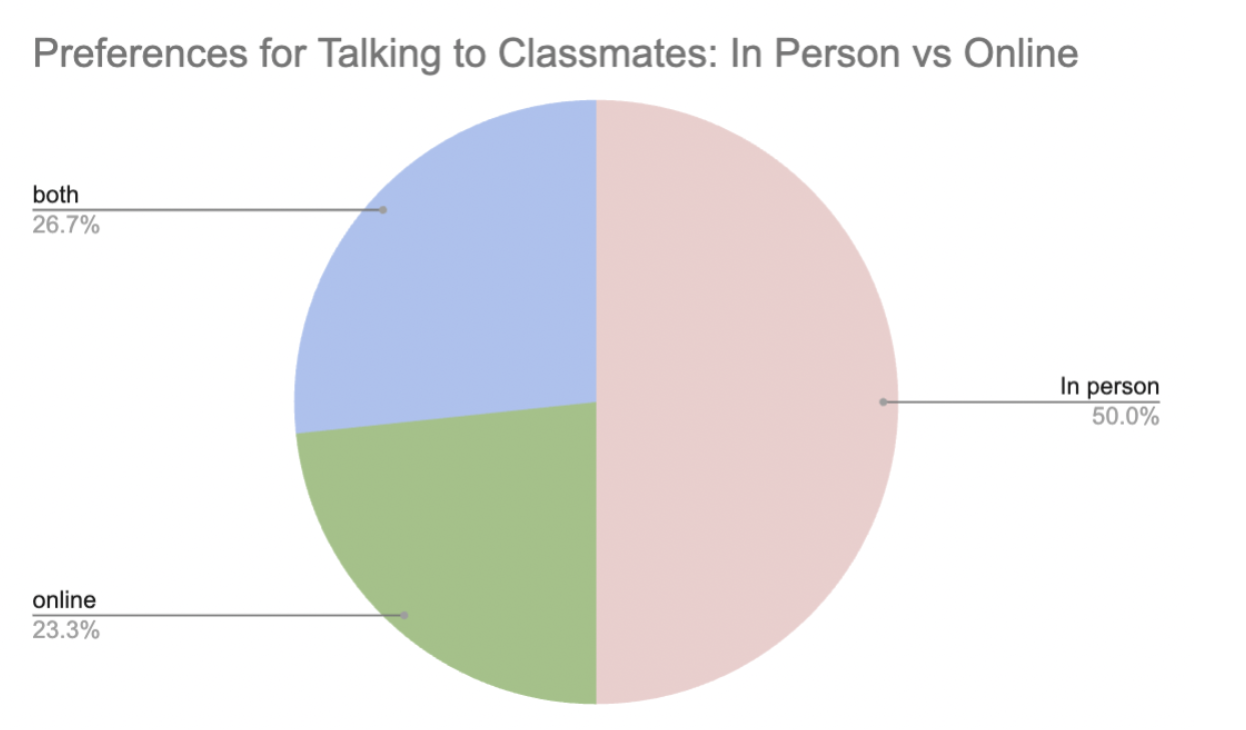
Figure 4. Chart displaying whether respondents prefer to talk to classmates online, in person, or either/both.

The data from Figure 4 shows a strong preference for in-person communication among participants, with 50% favoring this way over online interactions or a combination of both because they feel more productive communicating in person. On the other side, 23.3% prefer online communication, reflecting a significant proportion that values the convenience and accessibility of digital platforms. Meanwhile, 26.7% of participants are comfortable with both ways, suggesting a flexible communication preference that could be influenced by situational factors.

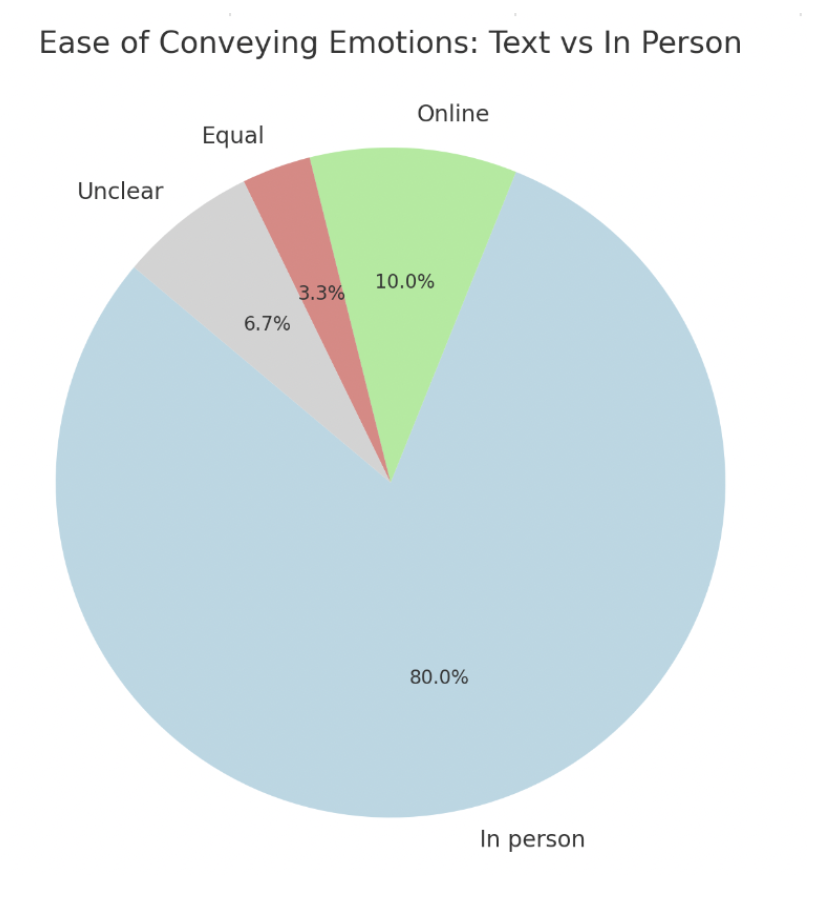
Figure 5. Chart displaying respondents’ feelings about how easy it is to convey emotion through text vs. in person.

In-person communication is generally considered to be more effective in conveying emotions than text-based communication, with 80% of respondents preferring face-to-face communication. Only 10% of respondents believe that online platforms are effective in conveying emotions, and online platforms are likely to use GIFs and emojis. This suggests that digital interactions are not perceived to be enough to express emotional states, which may lead to a lack of empathy in conversations. Face-to-face interactions remain crucial for a deeper emotional connection, underscoring the limitations of digital platforms in replicating the richness of in-person exchanges.

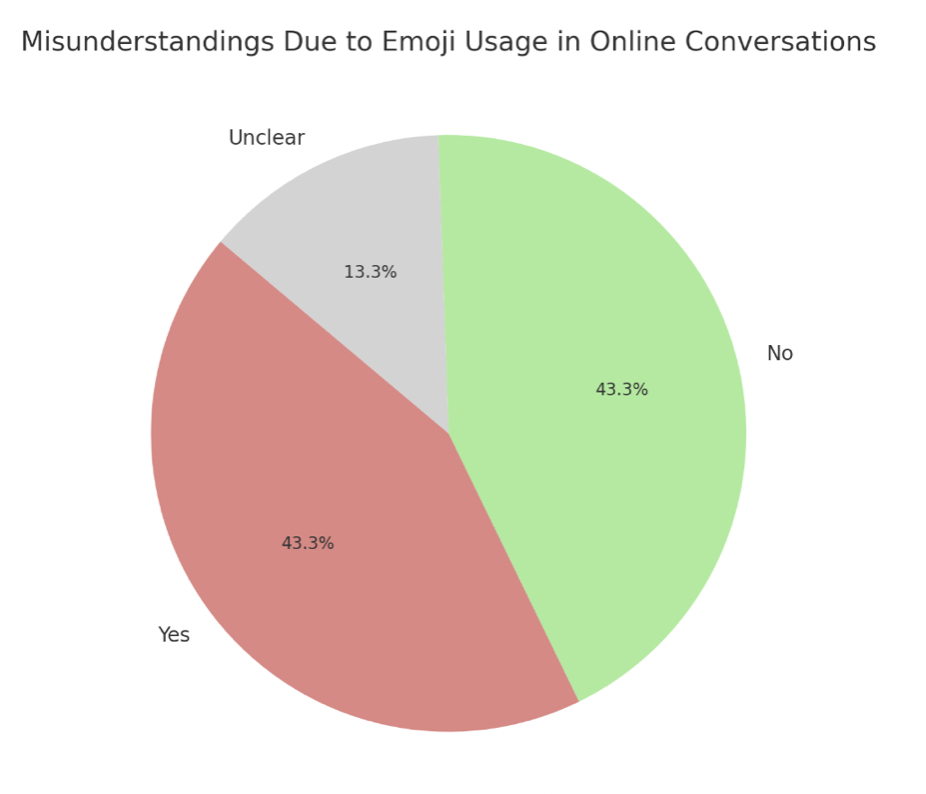
Figure 6. Chart representing whether respondents believe emojis can lead to misunderstandings.

43.3% of respondents believe that emojis can lead to misunderstandings, while the same percentage of respondents said they do not. This polarization highlights the ambiguity of emojis, which may be interpreted differently depending on individual circumstances and cultural backgrounds. The remaining 13.3% respondents were unsure of their impact. 

Figure 7. Question from emoji usage portion of survey.

Based on the data collected from our survey, it is evident that emoji interpretations vary significantly among users. An analysis of the responses revealed divergent interpretations of several emojis. For instance, the smiley emoji 😃, conventionally associated with happiness and positivity, was perceived by some participants as conveying creepiness. The skull emoji 💀, which typically signifies extreme laughter, frustration, or affection according to Apple’s official description, was interpreted by respondents as representing extreme fatigue or exhaustion, akin to the expression “I am so tired, I am dying.” Moreover, it was also seen as indicating laughter, albeit more intense and devoid of any undertones, compared to 😭. Notably, the 😭emoji has lead to the most misunderstanding in their online conversation compare to others. 😭, which Apple describes as depicting a face with an open mouth, wailing, and shedding streams of heavy tears, symbolizing inconsolable grief or intense emotions such as uncontrollable laughter or overwhelming joy, was commonly misinterpreted. Participants reported using it in adverse situations, with connotations such as “yikes” or “can’t believe my bad luck,” “need help,” and some even perceived it as laughter accompanied by a sense of embarrassment. The findings from our survey underscore the complexity and variability in emoji interpretations among users, which can be quite different from what they are officially meant to represent. This can sometimes lead to confusion in online conversations. It’s important to remember these differences when using emojis, suggesting a need for greater awareness of contextual differences in emoji usage to avoid misunderstandings and make sure our messages are clear.

For additional insights and nuances, the context of the communication also appears to play a critical role in the preferred mode. For instance, for quick updates or logistical arrangements, digital communication is often favored for its efficiency. However, for more complex discussions or sensitive topics, in-person interactions are preferred due to the richer, more nuanced exchange they enable. It is also worth noting that some students reported a gradual shift in their preferences towards digital communication as they adapted to the constraints imposed by recent global events such as the pandemic. This adaptation process reflects the dynamic nature of communication preferences in response to external changes.

Based on the data, the majority of college students still prefer and find it more effective to communicate in person, particularly for emotional interactions. The findings indicate that although some students recognize the advantages of online communication, most still believe that in-person contact is more beneficial, especially when it comes to expressing emotions, and students feel more productive since people can get through everything right away. This outcome contradicts our hypothesis, highlighting the complexity of communication preferences among college students. Further analysis shows that communication preferences may vary significantly based on factors like the student’s academic major, cultural background, and prior exposure to diverse communication platforms.

Discussion

Our findings contradict the idea that generation Z is used to being on online communication platforms. In the article by Janssen (2021), generation Z is often referred to as “digital natives.” They are considered the first generation to grow up entirely in the digital age, influencing their communication habits significantly. They are described as “native speakers” of the digital language of computers, video games, and the internet. Texting and instant messaging are preferred over traditional communication methods like phone calls and emails. Generation Z uses smartphones heavily for personal communication, often choosing texting or messaging apps over voice communication. Despite their preference for texting, generation Z adapts to professional communication norms. For example, they use email extensively at work, despite rarely using it in personal contexts. This indicates flexibility in their communication styles, adapting to different linguistic expectations based on context. Surprisingly, our findings are totally opposite from this perspective of generation Z.

For the limitations of the study, while our study focused on college students aged 18-22, this demographic may not fully represent the broader population’s communication preferences. The age group and educational environment might influence communication styles more specific to this demographic, such as familiarity with digital platforms or developmental aspects related to social interactions. Additionally, the study relies heavily on self-reported data, which can introduce bias. Participants might respond in ways they perceive as socially acceptable or based on their aspirational self-image rather than their actual behavior. This can affect the accuracy of data concerning preferred communication modes and the effectiveness of emoji usage in conveying emotions.

The phenomenon of code-switching, where individuals adapt their language based on the audience’s cultural and linguistic background, further illustrates the adaptability required in digital communication and highlights the ongoing evolution of language use on these platforms. “Another study conducted by Alfaifi (2013) on intrasentential CS in Facebook comments written by 10 Saudi Arabic-English bilinguals found that intrasentential CS was used with gossip and humor, English was used for academic and technical terms, and Arabic was used for religious topics” (Elhija 357). Digital communication often sees a higher incidence of code-switching, where bilingual or multilingual speakers switch between languages or dialects depending on the audience, topic, or platform. While this can showcase linguistic flexibility, it also highlights the challenges of maintaining cultural nuances in digital communication, which may not always provide the contextual cues necessary for appropriate language use. This underscores the persistent value of traditional communication methods in an increasingly digital world and suggests that digital platforms still need to evolve to support the subtleties of human emotion and expression fully.

Conclusion

Our study began with the hypothesis that college students would prefer online communication over in-person interactions, primarily due to the flexibility and reduced social anxiety that digital platforms are presumed to offer. This hypothesis was rooted in the belief that the modern digital environment, with its asynchronous communication and absence of physical presence, might alleviate the pressures associated with face-to-face interaction. The data, however, painted a different picture. Contrary to our expectations, 50% of the participants clearly preferred to communicate with their classmates in person, appreciating the depth of emotion and clarity that comes with real-time, face-to-face interactions. Only 23.3% expressed a preference for online communication. This finding suggests that despite the convenience of digital platforms, they are insufficient for fulfilling all communicative needs, especially those that involve emotional depth and nuance.

The results of our study provide a nuanced understanding of how college students navigate the complexities of digital and in-person communication. While digital platforms offer undeniable convenience and flexibility, our findings suggest that they do not fully replicate the emotional richness and immediacy of face-to-face interactions. Half of the participants expressed a preference for in-person communication, particularly valuing its effectiveness in conveying emotions — a fundamental aspect of human interaction that digital platforms have yet to fully capture. Moreover, our investigation into emoji use revealed a balanced scenario: emojis enhance textual communication by adding emotional depth, yet they also lead to misunderstandings in nearly half of the cases reported. This indicates a significant gap in how emotional nuances are perceived and understood in digital contexts. By realistically assessing these results, we acknowledge that while digital communication technologies have transformed how we connect and interact, they are not a complete substitute for in-person interactions. Instead, they are a complementary medium that requires further refinement to meet the emotional and contextual needs of users fully. Future research should focus on developing and testing new technologies that can better accommodate the complex dynamics of human communication, bridging the gap between the efficiency of digital communication and the emotional depth of face-to-face interactions. As a result, this study not only challenges previous assumptions about digital communication preferences but also enriches our understanding of how young adults toggle between digital and real-world interactions, shaping their social identities and relationships in the process.

References

Brenda Danet, Susan C. Herring, Introduction: the Multilingual Internet, Journal of Computer-Mediated Communication, Volume 9, Issue 1, 1 November 2003, JCMC9110, https://doi.org/10.1111/j.1083-6101.2003.tb00354.x.

Defede, N., Magdaraog, N. M., Thakkar, S. C., & Bizel, G. (2021). Understanding How Social Media Is Influencing the Way People Communicate: Verbally and Written. International Journal of Marketing Studies, 13(2), 1-. https://doi.org/10.5539/ijms.v13n2p1.

Ehrensberger-Dow, M., & Granger, S. (2019). “English as a Lingua Franca in Digital Communication: Diverse Voices, Similar Scripts?” Lexis Journal in English Lexicology, 14, 193-217. https://doi.org/10.4000/lexis.1831.

Elhija, D. A. (2023). Code Switching in Digital Communication. Open Journal of Modern Linguistics, 13, 355-372. https://doi.org/10.4236/ojml.2023.133021.

Psych Minds. (n.d.). Communication: Online vs. Face-to-Face Interactions. Retrieved from https://psychminds.com/communication-online-vs-face-to-face-interactions/.

Schroeder, J. (2019). Two Social Lives: How Differences Between Online and Offline Interaction Influence Social Outcomes. https://escholarship.org/content/qt94n9w8b9/qt94n9w8b9_noSplash_293949a5e051fffc8e1fdcc9ffc168c4.pdf?t=qdtezb.

Zhao, Y. (2021). The Impact of Digital Media on Language Styles and Communication Methods Based on Text, Image, and Video Forms. ResearchGate. https://www.researchgate.net/publication/378739166_The_Impact_of_Digital_Media_on_Language_Styles_and_Communication_Methods_Based_on_Text_Image_and_Video_Forms.

D. Janssen and S. Carradini, “Generation Z Workplace Communication Habits and Expectations,” in IEEE Transactions on Professional Communication, vol. 64, no. 2, pp. 137-153, June 2021, doi: 10.1109/TPC.2021.3069288.

Appendix

Our survey link: https://docs.google.com/forms/d/e/1FAIpQLScCFoDiKMbxxYVWXmxPAEwQIKfTjg8mx1qtZFL9oA55R9WpPg/viewform?usp=sf_link

[/expander_maker]
, , , , ,

You’re Just Somebody That I Used to Know

Audrey Edwards, Hung-Yi (Henry) Chen, Laksha Chhaddva, Sarah Manwani

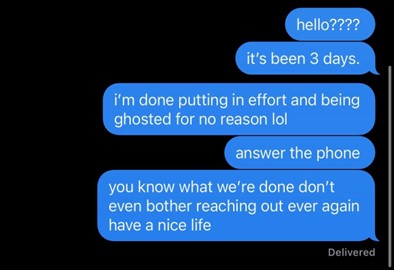
Figure 1. A text message screenshot sent in by a Gen-Zer demonstrating breakup practices over text

Let’s face it, ghosting sucks. Some may comment on the exchange above and say no response is a response, but does that provide effective closure in breakups? Although most people feel indirect breakups are outright disrespectful, the reality is that many of us are guilty of engaging in unhealthy breakup practices. However, has the rise of the Digital Age made this problem worse than before? Our study investigates how breakup practices differ amongst the two generations, Millennials, and Gen Z. Through our exploration of dating differences between these two generations using surveys and interviews, we found that tech use is more common in romantic relationships and breakups amongst Gen Z and indirect breakups are more common amongst Millennials. Ultimately, while the fact that indirect breakups wear is different, it seems like our tendency to do so is little changed by the prevalence of digital technology, one way or the other.

[expander_maker id=”1″ more=”Read more” less=”Read less”]

Introduction and Background

Our study intended to assess the effect of technology on relationship practices between Gen-Zers (born between 1997 and 2012, according to Dimock (2019)) and Millennials (born between 1981 and 1996, according to Dimock). We know that technology has impacted both Gen Z and Millennial romantic relationships, but the impact of tech use on romantic relationships is contested. Christenson’s (2018) study found that heavy social media users experience a severe decline in the quality of interpersonal relationships. On the other hand, Nicolas (2020) found that relationships formed on social media achieve similar self-disclosure and companionship as in-person relationships. More generally, Seemiller and Grace (2018) contended that Millennials were self-absorbed and ill-equipped to deal with meaningful relationships, while McGuire (2015) finds that Millennials still learn proper romantic expectations. The emergence of ghosting (the sudden cessation of communication over digital platforms) as a breakup method has further increased academic alarm, with LeFebvre and her colleagues (2019) finding that 96% of the college students they interviewed had been a part of ghosting interactions in some capacity. With this disagreement in scholarly assessments of technology and the younger generations in general, we feel that the healthiness of relationships experienced by these generations is worthwhile to study, with breakup methods as a good proxy. Baxter (1984) found that indirect breakups (without telling the partner directly, as in ghosting) were associated with self-centered breakups, prolonged the breakup process, and were a source of regret for breakups. Therefore, we expected that Gen-Zers were more likely than Millennials to use indirect breakup methods and to use technology in their breakups. If this hypothesis is true, then it demonstrates that tech use is likely to have a negative impact on breakup methods, since the biggest difference between Millennials and Gen-Zers is their exposure to tech use (as a consequence of their respective birth years).

Methods

To study the effects of technology on break-up methods, we sent a survey to Gen-Zers and Millennials that we knew and asked them to send it on to other Gen-Zers and Millennials that they knew as well. The survey was conducted through an anonymous Google Form to enable honest responses to sensitive questions. Ultimately, 27 Gen-Zers and 20 Millennials responded to the survey. The survey asked respondents how much they agreed with statements about the prevalence of technology use in their romantic relationships and their experience with breakups. The questions used the Likert scale, with respondents stating their agreement from “strongly agree” to “strongly disagree,” and binary (Yes-or-No) questions concerning whether they had encountered or engaged in specific break-up strategies described in Baxter’s (1984) study.

To complement the survey, we also conducted anonymous interviews with three Gen-Zers and two Millennials that we knew. Each interview proceeded with a set of interview questions that covered the same topics as the survey, but in an open-ended way. The interviewees were encouraged to go into detail on their experiences that relate to the questions, such as by describing the break-up experience in narrative form rather than merely categorizing it. Since the survey’s responses relied on the Likert scale and binary questions, which included no way to explain the answers, we needed a way of discovering more nuance in the relationship between technology use and healthy break-up methods. The interviews, which were fewer in number but far more detailed, provided a way to get into the details.

Results

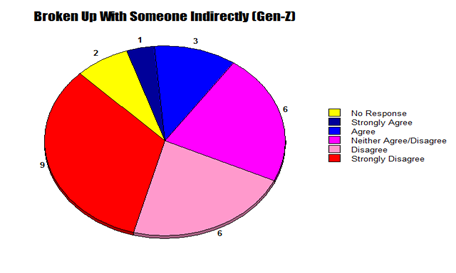
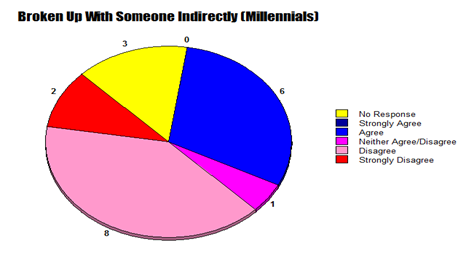
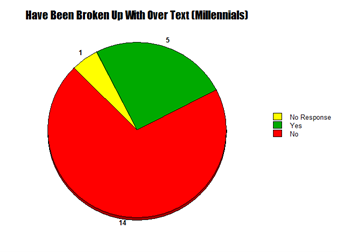
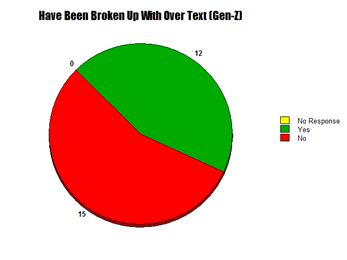
The survey results show that indirect breakup methods are less preferred by both Gen-Zers and Millennials compared with direct breakup methods.  However, Millennials are more likely to have used indirect breakup methods than Gen-Zers. 30% of Millennials report having broken up with someone indirectly, versus 15% of Gen-Zers.  The results illustrate that Gen-Zers have been broken up over text more often than Millennials, with 44% of Gen-Zers having experienced this versus 25% of Millennials. The key takeaways that we acquired from the interview questions were that both Gen-Zers and Millennials predominantly prefer direct break-ups rather than indirect breakup methods.  On the other hand, one of our Gen-Zer interviewees preferred to break up indirectly, especially if they were not in a serious relationship with their partner.  This somewhat contrasted our findings, but our interviewees still largely preferred direct over indirect breakups, and they were generally of the opinion that indirect breakups are messy and disrespectful.

Figure 2: This pie chart indicates that Generation-Z individuals most likely Strongly Disagree (9 people) or Disagree (6 people) with the statement “When terminating a relationship, you ended the relationship without ever directly stating your intention”.

Figure 3: This pie chart illustrates that Millennials disagree more than they agree with the statement “When terminating a relationship, you ended the relationship without ever directly stating your intention”.
The results illustrate that Gen-Zers have been broken up over text more often than Millennials, with 44% of Gen-Zers having experienced this versus 25% of Millennials.

Analysis

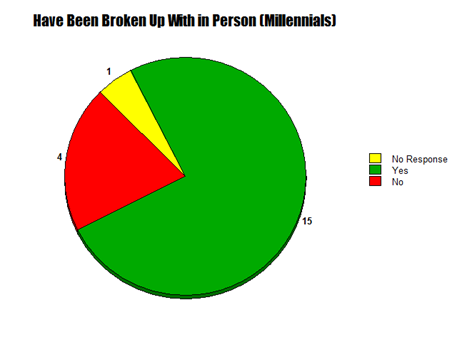
According to the results, Millennials tend to break up in person, whereas Gen-Zers break up less in person and more over text than Millennials. This confirms our hypothesis that tech use is more common among Gen-Zers for breakups. On the other hand, Gen-Zers are actually less likely than Millennials to break up indirectly, which contradicts our hypothesis. While this does not necessarily indicate that tech use leads to healthier breakup methods, it does put a wrench in the scholarly speculation that they render younger generations actively unprepared for romantic relationships.

Figure 4: This pie chart shows that a vast majority of Millennials have not been broken up with over text.

Figure 5: This pie chart shows that 44% of Gen-Zers have been broken up over text.
However, Millennials are more likely to have been broken up with in-person than Gen-Zers, with 75% of Millennials having experienced this versus 37% of Gen-Zers.

Figure 6: This pie chart indicates that Millennials are more likely than not to have been broken up with in person.

Figure 7: In the pie chart above, this chart illustrates that Generation-Z individuals are less likely than not to have been broken up with in person.

Discussion and Conclusion

Our hypothesis that Gen-Zers would engage in more indirect breakup methods than Millennials was incorrect. Contrary to our expectations, it doesn’t seem like Gen-Zers are less equipped than Millennials to deal with breakups. However, we found that technology was more extensively used in Gen-Zer breakups compared to Millennial break-ups. This verified our hypothesis that Gen-Zers use technology in romantic relationships more than Millennials and suggests that there was no correlation between being exposed to technology and the tendency to use indirect breakup methods. This is important because it suggests the rise of technology use by Generation Z doesn’t affect their relationship readiness as negatively as scholars fear. Moreover, neither of these two generations exhibited any special tendency towards indirect breakups compared with other generations. Baxter’s (1984) study found that 49% of the relationships examined were broken up through indirect means. This rate is much higher than the 30% of Millennials and the 15% of Generation Z who had engaged in at least one indirect breakup in our study. While the numbers are not fully convertible and the Baxter study involved more interviewees, one could reasonably conclude that Millennials and Generation Z are not more likely, and are quite possibly less likely, to use indirect breakup methods than Baxter’s Baby Boomer subjects. Of course, break-up methods are only a small part of the overall process of a relationship, but this finding supports the opinion of scholars who feel that the younger generations are as capable of healthy relationship practices as the older ones. 

References

Baxter, L. A. (1984). Trajectories of Relationship Disengagement. Journal of Social and Personal Relationships, 1(1), 29–48. https://doi.org/10.1177/0265407584011003

Christensen, S. P. (2018). Social Media Use and Its Impact on Relationships and Emotions (Order No. 28107583). Available from ProQuest Dissertations & Theses A&I; ProQuest Dissertations & Theses Global. (2442249267). https://www.proquest.com/dissertations- theses/social-media-use-impact-on-relationships-emotions/docview/2442249267/se-2

Dimock, Michael (2019). Defining Generations: Where Millennials End and Generation Z Begins. Pew Research Organization. https://www.pewresearch.org/fact-tank/2019/01/17/ where-millennials-end-and-generation-z-begins/

Krafchick, Julie and Yue Xu. (2020, March 10). Millennial vs. Gen Z Dating (No. S10E5) [Audio podcast episode]. Dateable. Drank Production. https://www.dateablepodcast. com/episode/s10e5-millennial-vs-gen-z-dating

LeFebvre, L. E., Allen, M., Rasner, R. D., Garstad, S., Wilms, A., & Parrish, C. (2019). Ghosting in Emerging Adults’ Romantic Relationships: The Digital Dissolution Disappearance Strategy. Imagination, Cognition and Personality, 39(2), 125–150. https://doi.org/10.1177/0276236618820519

Mateo, Ashley. (2019). How to Break Up With Someone Without Hurting Them. Oprah Daily LLC. https://www.oprahdaily.com/life/relationships-love/a27865922/how-to-break-up -with-someone/

McGuire, Kate, “Millennials’ perceptions of how their capacity for romantic love developed and manifests” (2015). Masters Thesis, Smith College, Northampton, MA. https://scholarworks.smith.edu/theses/659

Nicolas, É. M. (2020). The Impact of Social Media on Adolescent Attachment Style for Generation Z (Order No. 27737202). Available from ProQuest Dissertations & Theses A&I; ProQuest Dissertations & Theses Global. (2348090364). https://www.proquest.com/dissertations-theses/impact-social-media-on-adolescent-attachment/docview/2348090364/se-2

Seemiller, C., & Grace, M. (2018). Generation Z: A Century in the Making (1st ed.). Routledge. https://doi.org/10.4324/9780429442476

Further Reading and Listening

[/expander_maker]
, , , , ,

From Slay to On Fleek: Linguistic Features of Millennial and Gen Z Internet Communication

Aileen Dieu, Makenna Kumlue, Nicholas Litt, Jazmine Pineda, Rafael Santos

The social media community is truly that, a community. Groups of people gather based on common interests to share ideas, offer support, and even criticize opposing views, for better or worse. Millennials were the first generation to create an online community, and through that, a whole new array of lingo, trends, and even celebrities arose. Then, Gen Z entered social media and created their online community filled with their interpretations of millennial slang, as well as bringing a whole new batch of slang to the mix. However, the interactions between both groups yield confusion, amusement towards popular trends in either community, and even irritation due to a lack of comprehension of new terms. In our research, we observed the specific tokens and behavior displayed by both groups individually and in interactions with one another across varying social media platforms. We found varied sentence structure, emoji use, and critical attitudes of Millennials towards Gen Z slang. Yet, for the most part, Millennials and Gen Z communities interact fairly effectively across some parts of the internet.

[expander_maker id=”1″ more=”Read more” less=”Read less”]

Background

Digital communication plays a crucial role daily. Regardless of occupation, race, gender, or class, social media is a form of communication with others and provides a place to express opinions to a targeted audience. Social media usage began around 1997 with a website called “Six Degrees” where people could communicate with close contacts. This was popular among the Millennial generation (1981-1996), and the emergence of another application called “MySpace” in 2004 was another big hit (Ortiz-Ospina, 2019). Fast forward a decade later, Generation Z (1997-2012) has evolved to also use multiple social media platforms at once (not as much as Millennials). Recent studies showed that Millennials use 5 to 6 social media platforms at once while Generation Z use around 2 to 3 social media platforms (Vacalares et al., 2023). The advancement of technology along with the comfort of being more expressive in an online setting was appealing to Generation Z, as we see them use more current social media apps than millennials today. As a result, they have created their forms of communication and language styles that are derived from digital trends (Jeresano et al., 2022).

The types of slang used are also motivated by a sense of social conformity. Depending on the app, the social norms differ greatly based on the demographics of users as well as the app’s intended purpose. If anyone were to talk outside the “social norms” of the app, it would lead to negative feedback, loss of followers, and a negative social media presence (Taber et al., 2023). Generation Z also utilizes social media apps for various purposes such as education, shopping, entertainment, and socializing (Mude, 2023). We hope to explore more on the types of linguistic features seen across various apps like TikTok, Instagram, X, and Facebook among Millennials and Generation Z individuals. How would these differences reflect evolving cultural and technological influences?

Methods

Data for this article was acquired through observation and analysis of different word usage on various social media platforms such as TikTok, Instagram, X, and Facebook, based on usage and popularity. Observations were then assigned to team members by platform and instances of slang were captured as screenshots (See Figure 1) and then analyzed by individuals. Instances of slang, word choice, tone, and sentence structure were assigned a rating of Gen Z or Millennial based on prior perception and/or investigation of user age. Perceptions of Gen Z versus Millennial word usage and choice were based on a consensus around Gen Z’s abbreviation usage and knowledge of contemporary media culture (Jeresano et al., 2022), in comparison to the Millennial generation’s lower intelligibility for newer slang (Taber et al., 2023). The team then convened and analyzed for further patterns of linguistic choice and feature. Lack of or inaccurate user information was addressed to the best of our ability.

Figure 1. Sample posts with instances of slang usage.

Results and Analysis

There were some semantic communication barriers between those we identified as Millennials and Generation Z. Both generations demonstrated similar morphological features within their slang, namely, acronyms and euphemisms (Which may be due to the platform’s format, like character limits and censorship). However, the resemblances begin to deviate when examining specific slang words and phrases. Our data exhibits the referential and ironic nature of Generation Z’s coined words and phrases rapidly generated and circulated across each platform. These coined words and phrases, derived from internet culture and AAVE (African American Vernacular English), contain a level of specificity within them that, to use properly, one must know the original to some extent. Accordingly, our collected data suggests that Millennials tend to use outdated or misused slang or are entirely oblivious to the terms.

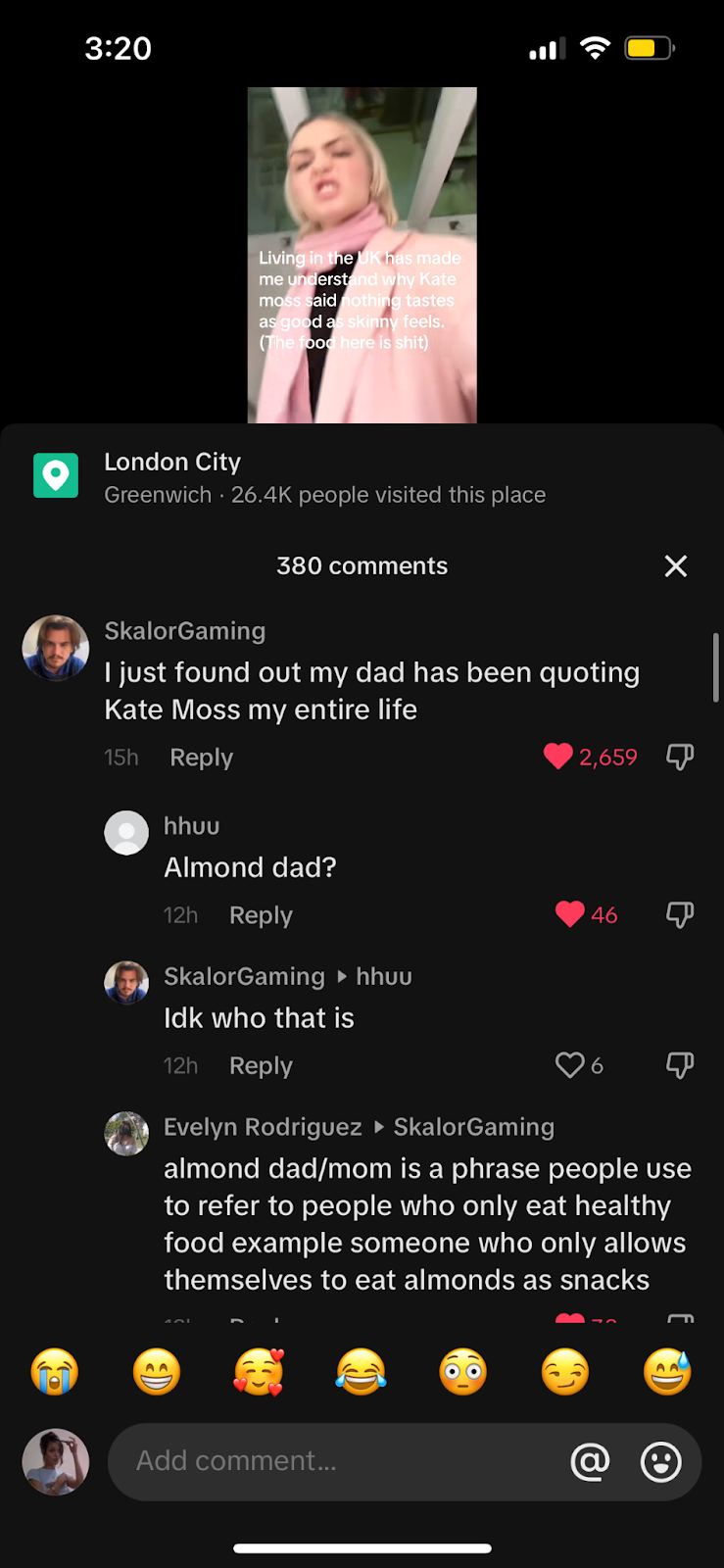
Therefore, there appears to be frustration and confusion between Millennial and Generation Z interactions, primarily exhibited on the Millennial side. In Generation Z-dominated media, like TikTok, the cross-generational interactions are question-oriented. Our data includes numerous accounts of deemed Millennials seeking meaning and context behind creators’ and commenters’ posts to better understand the jokes and discourse occurring (See Figure 2). However, apps containing older demographics tend to display rejection, ridicule, or misunderstanding of Generation Z’s communication style. Additionally, these apps depict Millennials attempting to increase their engagement and flaunt their relevance through overcompensation, i.e., frequently using slang and emojis. Thus, generating derision from members of Generation Z who come across their content. 

Figure 2. A Millennial TikTok user obtaining an understanding of a popular culture reference from the video content and learning Generation Z coined slang through user-to-user engagement within the comment section.

However, it is essential to note that the gap between generational differences in slang is shortening due to high social media exposure and interactions across generations. With the growing demographics of Generation Z-dominated apps, there tends to be more exposure to viral content from which these terms are derived. Additionally, personal interactions between each generation further the understanding and adoption of coined words and phrases. While our data exhibits the semantic communication barriers between Millennials and Generation Z, we question whether this issue will remain prevalent in the foreseeable future.

Discussion

Our results provide insights into the linguistic differences and communication trends between Millennials and Generation Z individuals in social media. Through observation of various social media platforms such as TikTok, Instagram, X (formerly Twitter), and Facebook, our research highlights distinct linguistic features and communication practices exhibited by each generation.​ Millennials tend to use “outdated” slang words and phrases, while Gen Z incorporates slang derived from abbreviations and references to other viral trends. ​This reflects the evolving cultural and technological influences on language use, with Gen Z being more influenced by internet culture and current trends. The demographics of each social media platform also play a role in the linguistic practices observed, which suggests that the linguistic features seen on these platforms may be influenced by the dominant generation using them. ​

TikTok demonstrates semantic barriers in communication between Millennials and Gen Z. Gen Z individuals on TikTok use coined words and phrases derived from internet culture and AAVE (African American Vernacular English), heavy acronym usage, and euphemisms. On Instagram, Gen Z users use informal slang with abbreviations and unique vocabulary from internet culture. At the same time, Millennials exhibit a more formal writing style with complete sentences, positive affirmations, and subtle humor. ​Both Millennials and Gen Z individuals use X, but there are some differences in their linguistic practices. ​Gen Z shows strong use of irony, informality, and word choice derived from current internet culture and technology. ​Millennials, on the other hand, use outdated terms and references, specific to their periodical upbringing, and have a more formal sentence structure.

Conclusion

In conclusion, the linguistic differences and communication trends observed between Millennials and Generation Z in social media reflect the evolving cultural and technological influences on language use. ​ Each generation exhibits distinct linguistic features and practices, influenced by their respective demographics and exposure to internet culture. ​ The interactions between Millennials and Gen Z online highlight both generational differences and a willingness to engage in a compromised social bubble. ​ Further research in this area can provide a deeper understanding of how language evolves in the digital age and its impact on intergenerational communication.

References

Taber, L., Dominguez, S., & Whittaker, S. (2023). Ignore the Affordances; It’s the Social Norms: How Millennials and Gen-Z Think About Where to Make a Post on Social Media. Proceedings of the ACM on Human-Computer Interaction, 7(CSCW2), 1–26. doi.org/10.1145/3610102

Jeresano, E. M., & Carretero, M. D. (2022). Digital Culture and Social Media Slang of Gen Z. United International Journal for Research & Technology, 3(4), 11-25. 

Vacalares, S. T., Salas, A. F. R., Babac, B. J. S., Cagalawan, A. L., & Calimpong, C. D. (2023, June 11). The Intelligibility of Internet Slangs Between Millennials and Gen Zers: A Comparative Study. International Journal of Science and Research Archive. doi.org/10.30574/ijsra.2023.9.1.0456

Mude, G., & Undale, S. (2023). Social Media Usage: A Comparison Between Generation Y and Generation Z in India. International Journal of E-Business Research, 19(1), 1–20. doi.org/10.4018/ijebr.317889

Ortiz-Ospina, E. (2019) “The Rise of Social Media” Our World In Data ourworldindata.org/rise-of-social-media. [/expander_maker]
, , ,

How LOL got between X and Z

Michelle Johnson, Kayla Sasser, Lucy (Chenyi) Wang, Grace Shoemaker, and Lien Joy Campbell

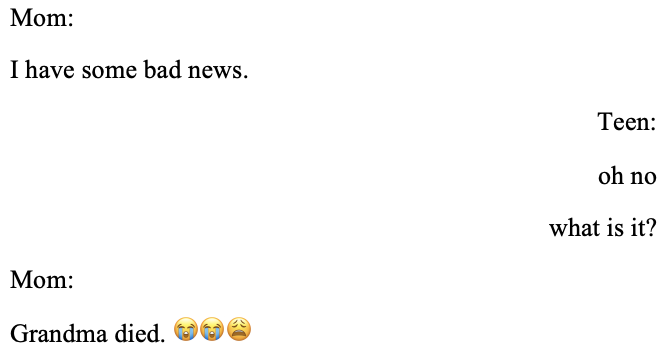
Figure 1. An example conversation between Gen X and Gen Z showing possible generational gap in the usage of humor markers – emojis in this case.

Even though the sad emojis in that exchange were used in a sad context, many people might laugh or find that inappropriate. Whether you are one of those people or someone likely to use emojis just like “Mom”, read on. As texting has grown to be a more popular form of regular communication, it may seem as if connecting with people has only become easier – but with ubiquity comes complexity. And if you are not among those at the vanguard of these complexities (the youth), you could be missing out. This brings us to the question: does expressing humor over text vary by generation? In this study we focused on Generation X and Generation Z’s use of emojis, emoticons, and other ways they chose to convey humor and tone in texts. In focusing on humor we were able to analyze the frequency of humor makers and their meanings in context. Based on our data, we found that there were definite differences in how the generations use and react to text language. Keep reading to learn what these key differences were and how we studied them (and maybe how to finally make that teenager in your life laugh).

[expander_maker id=”1″ more=”Read more” less=”Read less”]

Intro and Background 

Generation Z (those born between 1997 and 2012) grew up and learned how to communicate post-advent of the invention of instant messaging. Their texting style and speaking styles are intertwined and take inspiration from each other. On the other hand, those of Generation X (born between 1965 and 1980) had to transfer previously-established styles of humor and communication to the new technological medium (Downs, 2019). This accounts for the disconnect between considering texting to be a form of writing (like an email or letter) and considering it simply as talking put onto a screen. The term “written speech,” coined by John McWhorter, gives a name to the adaptation of texting to account for all the complexities of face-to-face communication that change how the content of a message is received: emotion, formality, humor, tone, body language and facial expression. Across platforms from iMessage to TikTok, young texters use unspoken and quickly changing combinations of punctuation, capitalization, and symbols to directly translate trends and slang into the digital world.

Methods

Following our belief that Gen X and Gen Z would communicate humor over text in significantly different ways and a path laid out by a study conducted by Sánchez-Moya and Cruz-Moya (2015), we chose to create a survey that focused on responder’s opinions on texting and their texting habits. We specifically targeted people’s habits in the use of humor markers like emojis and typed laughter by asking them to choose the most appropriate option to represent a feeling or as a response to various tonal and emotional contexts. Once we had our responses, we organized our data in terms of type of marker (emoji/emoticon/capitalization) and focused on whether the marker was used literally or creatively in relation to each generation. We expected a wider range of responses in Gen Z and more similar, literal responses from Gen X.

Results and Analysis  

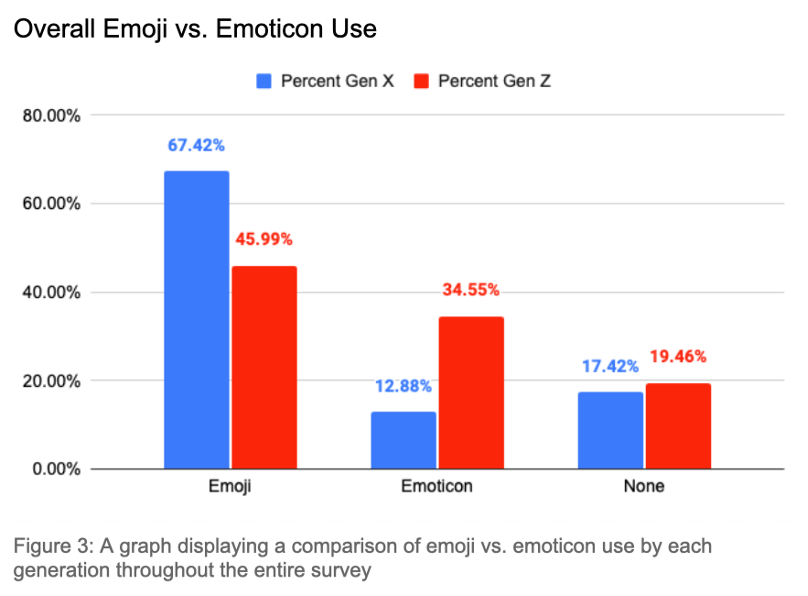
We began our analysis by categorizing the responses we received in terms of whether they were literal or not, and we additionally compared the use of emoticons and capitalization. Further, we then also analyzed the frequency of answers we received for each question. We will present examples of each of these analyses and the contexts in which they were applied.

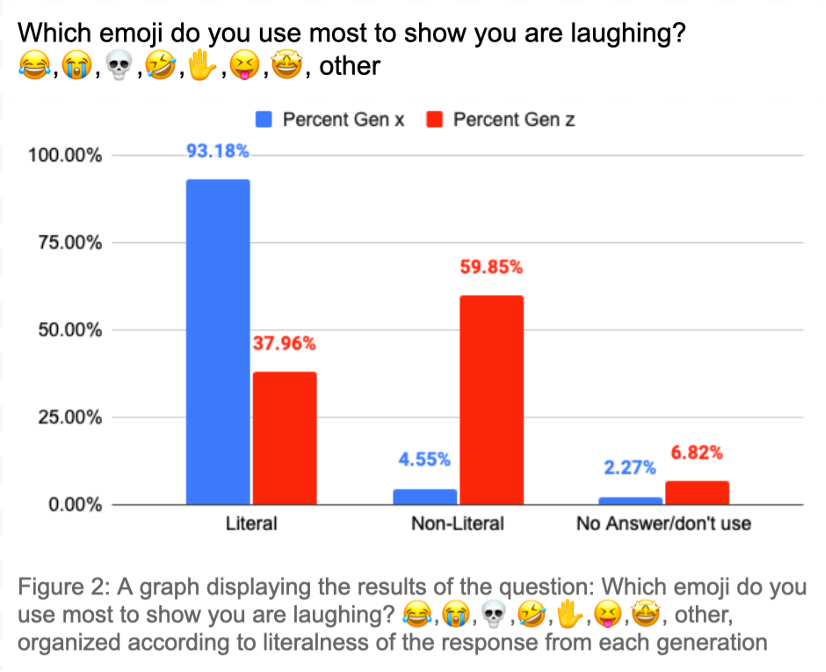
Beginning with our analysis of literal vs. non-literal use of markers, figure 2 presents a strong difference in Gen X and Gen Z’s preferences for literal and non-literal emojis.

The above graph illustrates a strong example of a general trend we found in our data: that overall, Gen X preferred to utilize emoji and other humor makers literally. In comparison, Gen Z showed a preference for less literal uses. Also, specifically for this question, within the categories of literal and non-literal, Gen X preferred a laughing emoji (😂) to show that they were laughing in 55% of their responses whereas Gen Z preferred a crying emoji (😭)–the exact opposite–to show that they were laughing in 42% of their responses. This was an even stronger non-literal response than expected suggesting a much higher degree of irony in Gen Z’s texting than in Gen X’s.

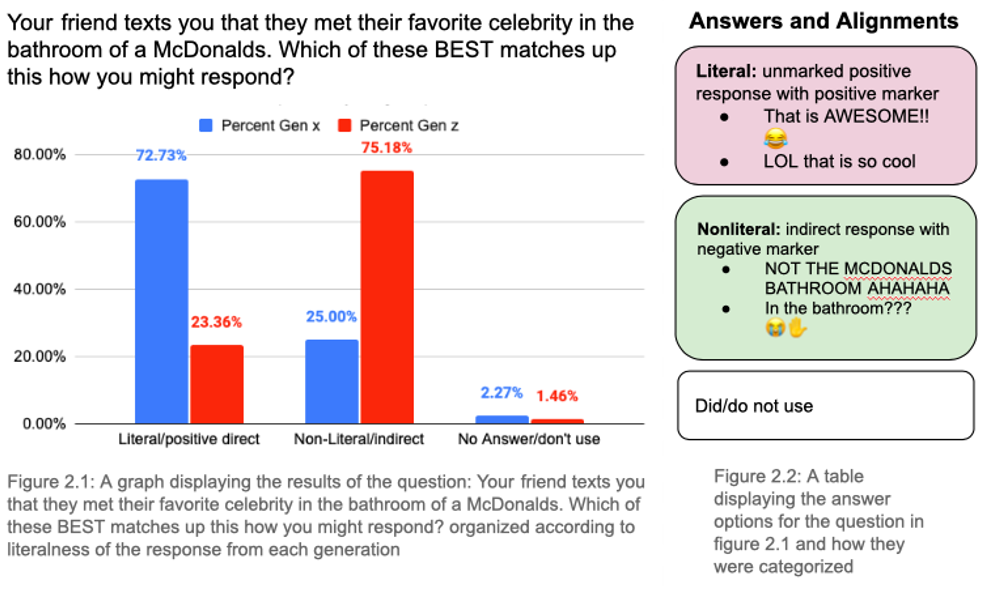
Moreover Figure 2.1 presents another strong case for Gen X’s preference for literal marker use and Gen Z’s preference for non-literal outside of just emojis. Figure 2.2 presents the response options as well as their categorization as either literal or non-literal.

Not only was Gen X’s preference for literal answers and Gen Z’s preference for non-literal answers illustrated in their selection of emojis but also in their preference for other answer types too. In the above example we took the unmarked and expected literal responses to the presented situation to be congratulatory, positive, and generally aligned with the topic of the context, whereas the non-literal responses demonstrate an indirect type of response by focusing on a non-topicalized part of the context (i.e. the bathroom). Again, we observed a strong preference from Gen X for a literal or positive response and a strong preference from Gen Z for a non-literal or indirect response.

In addition to studying the differences in how humor markers were used to convey literal and non-literal meaning we also wanted to provide insight into the different variations in the types of markers commonly used. Generally, we expected to see a more diverse use of these markers and variations, not just emojis, in Gen Z’s texting, leading us to figure 3. Figure 3 illustrates the overall differences in emoji (😂,😩) and emoticon ( :(, 🙂 ) use according to generation.

We chose to study emoji vs. emoticon use specifically as we believed that there would be a strong difference between the generations. However, both Gen X and Gen Z tended to prefer emojis. Unexpectedly, Gen X overwhelmingly preferred to use emojis over emoticons. We had thought that due to their longer history and generally less ambiguous and more established static meaning that Gen X would favor emoticons (Bai et al., 2019). This was not the case. Interestingly too, Gen Z actually tended to use more emoticons than Gen X. This result however supports our belief that Gen Z would demonstrate a broader range of humor marker use, splitting their results more evenly between emoji and emoticon. This could also demonstrate that Gen Z is exhibiting more creativity or nuanced flexibility in how they use these markers and what they take them to mean.

Next, we chose to study another variational marker, capitalization (OR SHOUTING). We chose to study capitalization in addition to emoji/emoticon differences as it is a unique action in texting that specifically denotes tone (McCulloch, 2019). Figure 4 below illustrates our comparison of capitalization use according to generation.

As shown above, Gen Z favored the use of capitalization while Gen X preferred messages that mixed capitalization and lowercase. This illustrates a stronger preference in Gen Z for using messages that convey a stronger or louder tone and demonstrates McWhorter’s idea of “written speech” in the younger generations (2017). Interestingly too, the younger generations’ relatively strong preference for “shouting” over text could indicate a recent change in what all-caps texting “means” and illustrate a higher level of comfort with the nuance of tone that all capitalized text creates. In comparison, Gen X may still interpret it as simply yelling at someone and therefore use it more sparingly. However, to corroborate those claims more testing would need to be conducted.

Finally, we got even more specific with our analyses–we categorized and analyzed the answers to each question on the survey to measure the frequency of each response per question for each generation. We did this to examine the specific texting behavior of the generations on a smaller, context-dependent scale. Figure 5 is a particularly interesting example that demonstrates the general trend in the generational behavior we observed.

We discovered, as in the above example, that Gen Z’s responses were more evenly spread out across the response options creating a much more dispersed answer graph (seen in red). Meanwhile, Gen X tended to answer more similarly to one another, strongly favoring one answer, ‘terrible 😔,’ as can be seen by the single tall blue bar. This pattern was relatively consistent across all of our data and was in line not only with our prediction that Gen Z would show a wider range of responses, but also with our prediction that Gen X would tend to use more literal responses. Moreover, another point to note in figure 5 particularly is that Gen X answered ‘terrible 😭’ 20.43% of the time, which in this context was interpreted as a literal use of a negative emoji. However, given our results in figure 1, this could also denote a more sarcastic or ironic tone. Such an analysis could also be in line with the other trend illustrated above as Gen Z showed a greater preference for answers that denote a less literal more ironic tone (terrible 🙃, terrible 😁).

Overall, our data demonstrated that Gen X tended to use emojis more literally and more consistently while Gen Z preferred to use them less literally and showed a wider range in their use. In terms of emoticons, both Gen X and Gen Z preferred emojis with Gen X showing a much stronger preference, and in cases of capitalization, Gen Z used messages in all caps much more than Gen X.

With all that said, we would like to address some possible confounds that could affect our data and analyses. Firstly, there was quite a disparity in the number of responses we received from each generation, heavily skewing toward Gen Z. This may have been because this survey was distributed by us (members of Gen Z), which also brings to light another possible issue: our own generational biases in both the analysis of the data and the creation of the survey. Additionally, this study’s construction as a multiple-choice survey poses the possibility that the choice of answers may have directed people’s responses. Moreover, we did not notice a significant effect of gender in our study. However, it could be a very interesting avenue to pursue in future research.

Discussion and Conclusion  

As seen in our data analysis, we found that there is in fact a gap in the usage of humor markers between the two generations, which supported our initial predictions. More specifically, based on the overwhelming choice by Gen X to use literal meanings, it could be suggested that they tend to use them (especially emojis) at a surface level. Meanwhile, Gen Z’s varied usage of all four markers looks to be a bit more nuanced. Their choices reflect that they use ironic and non-literal meanings frequently in humorous contexts. The variation in their responses also suggests that each marker of humor could have its own unique function or meaning depending on the context. Such variety among Gen Z could be the result of their community of practice, which frequently takes part in internet culture and has therefore been able to develop their own unique understandings of humorous texts. It also reinforces McWhorter’s earlier suggestion that texting can involve more than words–it conveys natural human conversational gestures as well. Overall, it does therefore seem fair to say that there is more at play in Gen Z’s usage.

After conducting our study, we identified limitations in our methods that leave room for improvement. As mentioned earlier, the survey was created entirely by members of Gen Z. This could prove to be problematic because the response options are potentially more biased toward a typical Gen Z response and not adequately represent typical Gen X responses. Including the input of Gen X members could have created a more balanced selection of responses. Another less obvious limitation of our study is that we did not account for phone differences. We realize that the appearance of Android and iOS emojis differ and that this difference may procure different emotional responses and therefore be used in a different context than our survey initially accounted for.

So, what are the next steps? Our findings and conclusions tell us that there is definitely room for further research on intergenerational communication over text. Improving upon this study’s weaknesses and widening its scale could provide more insights into the big differences that lie between the text-language of Gen Z and Gen X. Some new topics of interest include: different attitudes towards the appearances of emojis (i.e. Android vs. iOS), the evolution and idiosyncrasies of Gen Z’s online language, and analyses of textual gaps that may occur on the basis of factors other than generation.

References:

Bai, Q., Dan, Q., Mu, Z., & Yang, M. (2019). A Systematic Review of Emoji: Current Research and Future Perspectives. Frontiers in psychology, 10, 2221. https://doi.org/10.3389/fpsyg.2019.02221

Downs, H. (2019). Bridging the Gap: How the Generations Communicate. Concordia Journal of Communication Research, 6. https://doi.org/10.54416/SEZY7453

McCulloch, G. (2019). Because Internet. Penguin Adult HC/TR & Riverhead Books.

McWhorter, J. H. (2017). Words on the move: Why English won’t- and can’t- sit still (like, literally). Picador, Henry Holt and Company.

Sánchez-Moya, A. & Cruz-Moya, O. (2015). Whatsapp, Textese, and Moral Panics: Discourse Features and Habits Across Two Generations. Procedia – Social and Behavioral Sciences, 173, pp. 300-306. https://doi.org/10.1016/j.sbspro.2015.02.069


[/expander_maker]
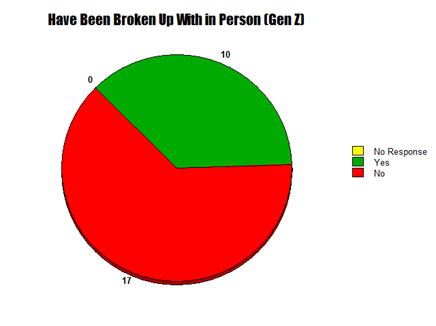
, , ,

Gen Z, Slang, and Stuff

Anonymous author, Daniela Vega, Giselle Chan,  Yuxiao Li

This study provides an analysis on the use of general extenders within Generation Z (Gen Z) online discourse. Utilizing qualitative analysis methods on social media dialogue (e.g. Youtube comments, Tweets, Spotify playlists, etc.) allows us to demonstrate how Gen Z members have created a new general extender (i.e. “and idk”). Where previous research studies on general extenders were narrowed to in-person discourse and interactions, this study examines the language pattern in the larger context of the internet across different social media discourse facilitators. It was a new context we were interested in providing research for because Gen Z is the first generation to grow up with the mass media culture, brought to them by the aforementioned social media outlets. Aptly so, Gen Z has created this new form of general extenders to expand their lexical inventory and engage in online discourse, as a pragmatic tool to index their emotions and stances. The interesting sociolinguistics findings on Gen Z and the use of general extenders are reflected on how this particular generation is constantly creating new slang terms (e.g. and idk), which builds intragenerational unity (with mutuals) but also causes intergenerational confusion (with the baby boomer generation referred to as the boomers); nonetheless, nuanced research is complicated with the lack of a corpus focusing on online discourse.

[expander_maker id=”1″ more=”Read more” less=”Read less”]

Introduction

Slang fosters in-group relationships and creates a recognizable framework of social discourse structure to identify fellow group members with. Slang is known to change regularly, generation to generation, and trend to trend. Currently, technological advances have played a huge role in the development of new stylistics in language and the creation of new lexical items. It is a language phenomenon that has been studied to showcase sociolinguistics impacts. Here we are also looking for the sociolinguistic impact, but on the focus of general extenders found in the Generation Z (Gen Z) every-day internet discourse stylistics. The speaking style of our target population, Gen Z, employs Internet slang in computer-mediated discourse, especially through videos on social media websites like YouTube, Twitter, and TikTok. We are looking to examine how they utilize it with intergenerational and intragenerational group members. We are hoping to understand if it is used to separate themselves from other groups or if there is a new development in general extenders with the same functions as previous research has defined. 

Background Information

There is previous research on the text messaging stylistics of Gen Z. There is also research on previous generations creating new slang. We will be following up these research focuses with the use of a specific linguistic event, the general extender (GE). GEs are phrases added to the end of a sentence indicating the previous word is part of a set, extending its meaning. For example, when being asked, “What did you find at the tide pools?”, one could respond by saying, “I found starfish, sea urchins, sea anemones, and stuff.” The “and stuff” is the GE, signifying the previous items were part of a larger set, in this case, of sea creatures. Researchers Tagliamonte and Denis analyzed these types of phrases and verified them to have important functions in spoken language. Those functions include referring to a set of the previous word, creating vagueness, sending a signal of unsureness, or creating solidarity between speakers. GEs can also be used to mark the end of a speaker’s turn or indicate that the previous word could become a topic of the conversation.

Common GEs used by previous generations include “and stuff” and “and things.” The oldest uses of general extenders date back to the 14th century with the GE, “and such” (Tagliamonte/Denis). GE use and types further develop with new additions appearing in 1957 with “and shit”. This includes general extender particles like “and that kind of thing” (see Figure 1).  We saw no other data on recent GEs in the late twentieth century or the current twenty first century. We are interested to find any new GEs and if possible, how they are coined and popularized by Gen Z. If there is a continuance in use of GEs from a previous generation, we will be documenting occurrences. When referring to Gen Z, we refer to individuals who are currently between 4 and 24 years old, born between 1995 and 2015. Gen Z constitutes an estimated 70 million of the population of the United States as of 2019. In looking at their screen time behavior, Gen Z watch about 68 videos per day across 5 social media platforms, including Snapchat, TikTok, Twitter, Facebook, and YouTube. This social behavior is new because of the invention of technology but does relate to multiple age groups. Gen Z, millennials (ages 18-34), and Generation Xers (ages 35-54) use social media more than baby boomers (ages 55 or more) (see Figure 2.). However, social media use is the highest in Gen Z than in other generations. This gives them the highest opportunity to host dialogue between themselves on Twitter, Facebook, YouTube, and TikTok.

Figure 1


Figure 2

Methodology

Using the qualitative method, Conversational Analysis (CA) for this study, we observe how Gen Z uses slang and GEs in their online conversations. Applied frequently in Sociology and Sociolinguistics to study social interactions, CA allowed us to analyze, compare, and document instances of GEs. The data used in our transcribed CAs were collected mostly from YouTube and Twitter, which have the highest Gen Z activity. Twitter caused difficulties because without category subjects to search for to find GE use, we were forced to scroll and read many tweets, hoping for an occurrence of a GE. We were able to search for the keywords of GEs like “and stuff”, which led to some results. We watched the most viewed YouTube videos from the popular Gen Z YouTube personalities (YouTubers) like James Charles and Kylie Jenner to begin a lexical choice analysis. When identifying the new GE, we returned to both Twitter and YouTube to search the phrase to find more instances and examples that supported our evaluation.

Results

We continuously saw a continued use of GEs including “and shit”, “and stuff, “and things”, and “or whatever”. These are continued in use from even the early 1600s. We did not witness an “and so forth” from the 1500s in a Tweet, YouTube video, YouTube comment, or TikTok made by a Gen Z community member or influential personality. We conclude because online discourse is not formal, the use of a Shakespearean aged GE would not be expected.  These previously identified GEs are not used to separate themselves from a generation but as a normal stylistic feature all generations use. We found no unique change in use for already established and identified GEs.

Through our CA data collection efforts we have successfully identified a new GE, “and idk”. This new GE is a fascinating finding sociolinguistically because it is a hybrid of already established linguistic phenomena and recently developed Internet-related acronyms. In looking at the function of “and idk,” we see it follows the same patterns of previous GEs. It continues to successfully indicate that words in the clause are part of larger set.

However, “and idk” deviates in the sense that it encodes pragmatic meaning. It contributes sentiments of vulnerability, insecurity and disconnect (see Figure 3.) In this example of “and idk”, we see it is identifying the users’ response to her lack of Twitter followers to interact with. Overall, our results serve as an expansion on previous research for GE, and we ultimately want more linguists to join in on this conversation of navigating the sociolinguistic landscape of the Internet to gain a more nuanced understanding of Gen Z-related discourse.

Figure 3. Screenshots of one of our tweets.

Discussion & Conclusion

We found GE uses allows any generation to be identified as the current younger generation because they are more typically found in informal speech. Social media discourse has allowed for changes in communication to facilitate the speed of communication speed online. While the use of the same tone you would have with friends and your in-group is also preferred because of the opportunity of anonymity and profile curation online. The research on general extenders does not include the increase, decrease, or appearance of usage at certain ages. However, we speculate if there should be research done on this, there could be identified a transition period between ages where GE use appears. We expect the GEs we identified to be added to a timeline representing its introduction, like the one we included in our research. We would hope there could be a timeline more specific for each GE within every time period, such as our focus here on Gen Z and social media. We would be interested in seeing the peaks and heights of use within the generation and the time periods where the GEs manifest. Thanks to archiving efforts for internet dialogue such as the Library of Congress Twitter Archive, the availability of data has increased. This type of data collection will allow for even further detailed research and we expect further sociolinguistic analysis.


References

A.O., Abusa’Aleek. (2015). Internet Linguistics: A Linguistic Analysis of Electronic Discourse as a New Variety of Language. International Journal of English Linguistics. 5.10.5539/ijel.v5n1p135.

Cheshire, J. (2007, April 17). Discourse variation, grammaticalisation and stuff like that. Retrieved from https://onlinelibrary.wiley.com/doi/10.1111/j.1467-9841.2007.00317.x.

Cox, Toby. (2019, July 2). How Different Generations Use Social Media. from The State of Tech. Retrieved from https://themanifest.com/social-media/how-different-generations-use-social-media

D.W. Maurer. (2013, August 16). Slang. Encyclopædia Britannica, inc. Retrieved from https://www.britann ica.com/topic/slang

Levey, & Stephen. (2012, March 1). General Extenders and Grammaticalization: Insights from London Preadolescents. Retrieved from https://academic.oup.com/applij/article/33/3/257/220662.

Sue. (1970, January 1). Young people’s language and stuff like that. Retrieved from http://linguistics-research-digest.blogspot.com/2011/10/young-peoples-language-and-stuff-like.html.

[/expander_maker]
, , , , , ,
Scroll to Top