Technology

Formality in the UCLA Community: Communication and Self-Expression in the Digital Age

Online communication has undoubtedly brought on more opportunities for misunderstanding. However, the use of linguistic elements such as internet slang and emojis represent the myriad ways that humans expand our linguistic toolbox. Through our research, collected through online surveys and interviews with several members of the UCLA community, we found that formality is shaped by many complex factors, including similarity or difference in age, gender, and power dynamics between interlocutors. The prevalence of concepts such as mirroring suggests that maintaining appropriate levels of formality in these evolving communication mediums is an intuitive process which calls upon participants to be more attentive and creative communicators. Additionally, we found that these processes reveal that, although traditional notions of formality and politeness continue to shape our ways of interacting, the very definitions of these concepts are ever-changing.

[expander_maker id=”1″ more=”Read more” less=”Read less”]

Introduction

The rapid evolution of virtual communication technology is changing the way language is used, allowing interlocutors to use a vast range of tools such as visual elements and online slang, changing the way we come to know language. This results in the creation of a new set of language practices specific to online interactions. Naomi Baron delves into the pervasive influence of digital communication has led to a shift in language structure from traditional, standardized language to one that is more fluid and de-standardized (Baron, 2012), which is what we are aiming to look at. In our research, we investigate the nuances of formality and politeness through surveys and interviews with members of the UCLA community, allowing them to explain the nuances of their own communication habits – calling into question how concepts of formality and politeness may change over time.

Kadar and Mills discuss this in their work where they delve into politeness theory; culture is sometimes treated as rigid rules, potentially portraying individuals as passive recipients. The alternative perspective views culture as “embodied practices,” emphasizing the dynamic manifestations in individuals’ daily lives. (Kader & Mills, 2011.) We seek to understand how UCLA students navigate the world of virtual communication in an academic setting. Furthermore, we aim to gain a stronger grasp on our focus group’s subjective views regarding notions of formality and politeness. Our hypothesis suggests that UCLA students adopt more formal language when communicating with authority figures, such as older individuals or those in higher positions. This implies a tendency to avoid informal tools like slang or emojis. Despite evolving social norms, traditional notions of formality and politeness continue to influence how students speak.

Our focus group, members of the UCLA community, depend heavily on digital mediums for most interactions. When it comes to messaging, emails, and social media, students’ attitudes toward formality have a large impact on their interactions. In essence, our research looks at the variety of linguistic behaviors at UCLA, the opportunities and challenges presented by digital communication, and the effects these may have on academic connections and social relationships.

Methods

We employed a combination of qualitative and quantitative methodologies to gather data across the diverse sprawl of the UCLA community. This included participants ranging from professors and students to teaching assistants and other faculty members. The data collection process was executed through in-person interviews as well as a Google Form Survey. Our dataset consisted of 10 in-person interviews and 42 survey responses, providing a comprehensive basis for an in-depth analysis of participant responses.

The in-person interviews were approximately 15-30 minutes, while the 8-question survey was designed with efficient qualitative analysis in mind. Furthermore, the in-person interviews consisted of open-ended queries addressing a range of themes related to informal vs. formal communication and touched on aspects including abbreviations, emojis, non-verbal cues, body language, tone, familiarity, time sensitivity, and slang. The online survey consisted of predetermined response options, whereas the interviews were designed to facilitate open responses. After data collection, interview transcriptions were analyzed to identify patterns of similarity and difference between the interviews and the survey responses.

Throughout the data acquisition phase, our project encountered a few challenges. One notable limitation: our data exclusively relied on self-reported behaviors, perhaps resulting in a lack of impartiality that an observation-based method, such as conversational analysis, may have provided. (Meredith, 2020.) Moreover, the authenticity of responses generated from both interviews and the survey responses were contingent upon the honesty of the interviewee or respondent. However, the online survey was anonymous, which may have generated more genuine results from the respondents, as the perceived risk of judgment is mitigated. Lastly, the data was thoroughly analyzed to identify patterns of evidence that would either support or deny our hypothesis.

Results and Analysis

The findings suggest that in most forms of communication, people tend to mirror the habits of those they interact with. There was a tendency to adapt levels of formality based on context, such as being more formal in professional or educational settings, and less formal in casual conversations or on social media. This was also influenced by the medium of communication as well as the relationship with the individual, with more formal language used in emails and with superiors, while informal language is reserved for friends or family. Many interviewees stated that they often “mirror,” or match the communication style of the person they are addressing. This could involve adopting similar speech patterns, gestures, or even body language. Furthermore, “matching energy” involves adjusting one’s approach, such as using emojis or punctuation, to align with the other person’s formality level.

Emojis and abbreviations are more common in informal settings and less in professional contexts. Frequency of communication and level of familiarity also influence language choice, with increased informal language aligning with an increase in familiarity. Our findings suggest that non-verbal cues such as body language and eye contact allow for easier communication because they create a “live feedback loop,” a term used by several interviewees. A “live feedback loop” occurs when one concentrates on another’s non-verbal cues during an interaction as a signal for understanding their unspoken thoughts and general disposition. This represents a certain level of intuitiveness and a strong attention to detail. In online communication, where non-verbal cues are absent, looking for these cues in word choice. Individuals tend to carefully proofread emails, especially those addressed to professors. In time-sensitive scenarios, certain interviewees default to casual language, while others prefer formal expressions. Additionally, the flexibility to switch between formal and informal language within the same conversation is deemed appropriate depending on the context and relationship with the interlocutor.

We hypothesized that UCLA students adjust the formality of their linguistic patterns when interacting with individuals of superior authority, such as older individuals or those in higher positions. Our findings indicated that people tend to mirror the communication habits of those they engage with, adjusting their level of formality based on context and relationship dynamics. In professional or educational settings, where a higher degree of formality is expected, individuals typically employ formal language. In casual conversations or on social media, a more relaxed tone is used. The utilization of emojis and abbreviations, common in informal settings, diminishes in professional contexts, reflecting the hypothesis that normative ideas of formality continue to influence linguistic behaviors.
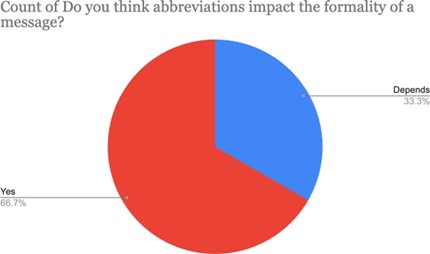
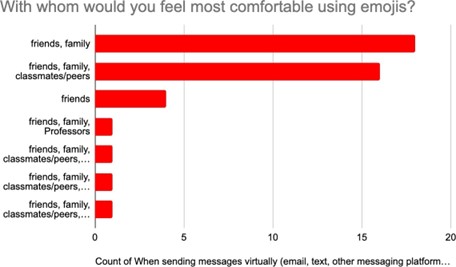
Figure 1: Responses to survey question “Do you think abbreviations impact the formality of a message?”
Figure 2: Responses to survey question: “With whom would you feel most comfortable using emojis?”

Conclusion

In conclusion, our research on the formality of linguistic patterns in virtual communication among UCLA students and faculty reveals that individuals adapt their language based on the context, medium, and relationship with the interlocutor. The findings confirm our hypothesis that students increase the formality of their linguistic patterns when communicating with authority figures, such as older individuals or those in higher positions. Emojis and abbreviations, common in informal settings, are used less frequently in professional contexts, indicating a clear distinction in language use based on the perceived formality of the situation. The concept of a “live feedback loop” in face-to-face interactions aids in understanding and adjusting communication, a feature lacking in online exchanges, where careful word choice and proofreading become essential.

Overall, this research provides valuable insights into the dynamics of virtual communication among UCLA students, emphasizing the influence of formality and politeness in linguistic patterns. Furthermore, our results reveal the delicate cooperation and reciprocity which online communication demands from its participants. Future studies could explore the impact of cultural differences on communication styles and the evolving nature of language in the digital age.

References

Baron, Naomi S., (2012). The impact of electronically-mediated communication on language standards and style’, in Terttu Nevalainen, and Elizabeth Closs Traugott (eds), The Oxford Handbook of the History of English, Oxford Academic, 6

Lorenzo-Dus, N., & Bou-Franch, P. (2013). A Cross-Cultural Investigation of Email Communication in Peninsular Spanish and British English: The Role of (In)Formality and (In)Directness. Pragmatics and Society, 4(1), 1–25. https://doi.org/10.1075/ps.4.1.01lor

Kádár, D. Z., & Mills, S. (2011). Politeness in East Asia: Chapter 2, “Politeness and culture” Cambridge University Press

O’Reilly-Shah, V. N., Lynde, G. C., & Jabaley, C. S. (2018). Is it time to start using the emoji in biomedical literature? BMJ: British Medical Journal, 363. https://www.jstor.org/stable/26964183

Meredith, Joanne. (2020). Conversation analysis, cyberpsychology, and online interaction. Social and Personality Psychology Compass, Volume 14, Issue 5.

[/expander_maker]
, , , ,

Expressions of Love and Satisfaction in Long-Distance vs. In-Person Relationships

Shadi Shans, Eleanor Moheban, Rishika Mehta, David Saidian, Monica Sargsyann

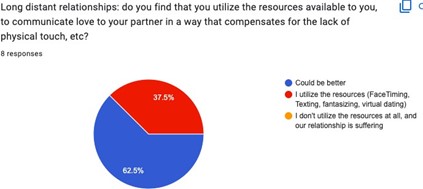
As internet relationships become more widespread in the modern world, people are relying on creative methods to display their love digitally. The objective of this study was to investigate which of the two, online or in-person couples, enjoy a stronger sense of relationship satisfaction given the means available to communicate affection. Our target group included 20 college students who were in relationships. Emojis, FaceTime calls, voice messages, as well as physical touch, and quality time are among the linguistic and communicative norms frequently used by our target audience. In general, internet communication can be useful and provide opportunities for asynchronous interaction. However, our hypothesis, which proposed that in-person communication provides a more personalized and intimate experience, leading to greater satisfaction, was confirmed.

[expander_maker id=”1″ more=”Read more” less=”Read less”]

Introduction and Background

It is well acknowledged that effectively showing affection to one’s partner leads to increased relationship satisfaction. Online and in-person relationships both rely on different resources to communicate their love for their partner. Some findings suggest that frequent internet communication cannot accurately predict the quality of a relationship due to its limitations such as misinterpretation, and lack of meaningful conversation. Conversely, face-to-face couples predict greater satisfaction, suggesting that engaging in meaningful experiences in person fosters connection in a relationship, (Lee, 2011, pg. 378). Another study by Kaitlyn Goldsmith suggested that long-distance couples use more diverse, and frequent methods of communication on text, but geographically close relationships report greater satisfaction, due to physical proximity ensuring fulfilling interpersonal interactions, (Goldsmith, 2020, pg. 300). Individuals may now enter long-distance relationships more easily thanks to technological advancements. These online partnerships rely on internet technologies such as Facetime and texting to communicate their affection. On the other hand, physical touch and quality time are the most frequently utilized resources used to express love to one’s partner in person. Through the distribution of questionnaires and two interviews with college couples, it was discovered that most couples felt that communicating affection in person allowed them to strengthen their relationship satisfaction. Yet, it was shown that long-distance relationships can still be reasonably fulfilling, only if resources like Facetime call emojis are utilized.

Methods

We administered a survey online to 20 college students, 19 males and 1 female, aged between 18-25 years old. The students were from any local university in California, 10 being in a long-distance relationship, 10 being in an in-person one. The survey included questions about basic demographic information, relationship satisfaction measures, the methods of communication that long-distance couples used to compensate for lack of physical touch, and the most common forms of communication for in-person relationships. There were also questions about the frequency of resources such as phone calls, text messages, and Facetime. The participants in virtual relationships were asked to send optional screenshots of the text messages, to show examples of certain emojis or words used that may increase love or relationship satisfaction. The results of the participants were statistically analyzed after a week, and the survey was followed up with more concrete interviews of two of the participants, one being in a long-distance relationship, the other in an in-person one. The participants were both 19-year-old females dating their significant other for over a year. The semi-structured interview was conducted on Zoom, and lasted around 12 minutes. The interview guide was developed based on results that required further analysis from the survey. The interview guide consisted of questions asking the long-distance couples about how often they feel fulfilled in their relationships, despite the challenges of long-distance such as lack of physical closeness, shared experiences, and communication difficulties during conflict. They were also asked about the means of communication they employed to compensate for lack of quality time. The in-person relationships were asked more in-depth questions about how often they express appreciation, gratitude, and love to their partner in person, and how it impacts their relationship satisfaction.

Results and Analysis

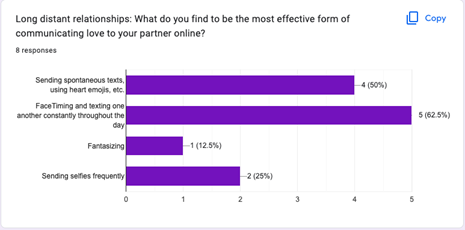
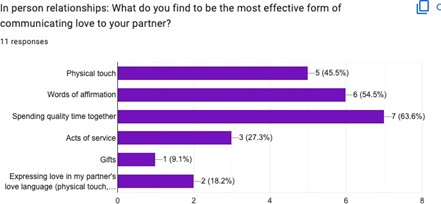
Upon review of the results of our data sampling, where women made up 60% of the sample, 90% of subjects identified as heterosexual, while one identified as bisexual. The sample was evenly divided with 50% long-distance partners and 50% in-person couples. 37.5% of participants dated their significant other for longer than a year. Facetime emerged as the most preferred method of contact for long-distance relationships, as well as the most efficient. In-person couples found quality time to be the most effective form of expressing love to their partner. Emoji-filled text messages, voice note messages, and FaceTime calls were used in long-distance relationships to compensate for the absence of physical contact. 76.9% of face-to-face relationships reported using Facetime once a day. Contradictorily, the long-distance couples used Facetime multiple times a day. They discovered that the best way to express their affection to their partners was through Facetime and constant texting throughout the day. Long-distance relationships are, on the whole, “somewhat satisfied” with their relationships. In contrast, our findings suggest that in-person relationships are highly satisfied, as Lee anticipated in her study, owing to the capacity to engage in meaningful in-person encounters. (Lee, 2011, pg. 378). Among analysis of the interview participants, it was revealed that the long-distance couples utilized Facetime and voice notes on text messages as a way to engage in deep and meaningful interpersonal conversation, whereas the in-person couples primarily utilized Facetime, and text messages to stay informed about their partners’ activities. The long-distance partner articulated that quality of communication is more valuable than the frequency, noting that having one in-depth conversation on Facetime is more efficacious than timing multiple times a day for a short period of time. The long-distance partner reported conflict in their relationship, conveying that the lack of quality time led to a sense of longing for physical touch, leading to arguments about trivial issues. The in-person partner reported that relationship satisfaction was greatest when the couple traveled together and shared enjoyable and meaningful experiences, and explained that online methods of communication were not as correlated to relationship satisfaction. Overall, the in-person partner felt increased levels of satisfaction, as the long-distance relationship wished there were more creative ways to maintain love and connection with their partner, even from a distance.

Figure 1: Results from Question 7
Figure 2: Results from Question 8
Figure 3: Results from Question 12

Discussion and Conclusions

Our study allowed us to explore what factors, and resources predict positive, or negative relationship satisfaction in both in-person and long-distance relationships. Our study illuminates the importance of addressing these individual preferences, and suggests that physical closeness, and intimacy are key components of feeling fulfilled, and satisfied in a relationship. Overall, our results benefit platform creators, as well as mental health counselors because it allows them to be aware of the areas that long-distance couples may need accommodation and find ways to increase their satisfaction. Our results highlight how necessary it is for technology creators and mental health professionals to develop effective strategies in order to ensure long-distance couples are as satisfied as in-person couples. In an article by Ann Kegley, it was mentioned that interventions from platform creators are necessary to enhance the closeness of long-distance relationships such as online date ideas including virtual escape rooms, or even services that offer personalized gift packages, that can allow couples to feel just as connected as in-person couples, regardless of the distance, (Kegley, 2018, pg. 379-381). Additionally, our results provide insight to counselors who can create intervention methods that address the complicated obstacles that come with expressing love in a distance. Psychologists may help their clients have realistic expectations, while also enabling them to brainstorm unique methods of online communication that can promote love and bond. Goldsmith suggests in a Maintaining Long Distance Relationships study, that therapists can intervene by developing a treatment focusing specifically on conflict resolution, using the principles of emotionally focused therapy to allow clients to be aware of their attachment styles, helping long-distance couples develop activities to foster a strong sense of commitment with their partner, (Goldsmith, 2020, pg.340-346). There should be further studies that address the long-term effects of long-distance and in-person relationships, and whether or not physical closeness increases the overall duration of a relationship, while exploring these patterns across various different genders, ages, and geographical locations.

References

Goldsmith, K., & Byers, E. S. (2020). Maintaining long-distance relationships: Comparison to geographically close relationships. Sexual & Relationship Therapy, 35(3), 338–361. https://doi.org/10.1080/14681994.2019.1645549https://doi-org.libdb.smc.edu/10.1080/14681994.2 018.1527027.

Kegley, J. A. (2018). Royce on self and relationships: Speaking to the digital and texting self of today. The Journal of Speculative Philosophy, 32(2), 285-303.

https://doi.org/10.5325/jspecphil.32.2.0285

Lee, P. S. N., Leung, L., Lo, V., Xiong, C., & Wu, T. (2011). Internet Communication Versus Face-to-face Interaction in Quality of Life. Social Indicators Research, 100 (3), 375–389. http://www.jstor.org/stable/41476404

 [/expander_maker]

, , , , ,

Body Language and Technology: AI Expressing Human Emotional Body Language

Kissan Desai, Elizabeth Reza, Aaron Zarrabi

Within today’s society artificial intelligence has reached levels that were once deemed unimaginable, from simple computer programming to being able to perform tasks such as mimicking human emotional body language. However, the question at hand around artificial intelligence is: to what extent can artificial intelligence “accurately” express human EBL? We answered this question through our own research on UCLA undergraduate juniors and seniors. We first asked participants to fill out a survey to gather their demographic information, followed by a zoom interview for the experimental portion. Each participant was displayed with twelve images (6 AI and 6 humans) depicting EBL. Through our examinations, we discovered that AI does have the ability to accurately mimic specific human bodily emotions; however, humans are better able to identify emotions when expressed by other humans rather than by AI. We discovered that when it came to ethnicity, culture, and gender, participants had split opinions on its effect on their overall responses, as only some believed it played a role in their ability to correctly identify the EBL of humans and AI. Our research can help technology continue to evolve, possibly to a point where society can no longer distinguish the differences between AI and humans.

[expander_maker id=”1″ more=”Read more” less=”Read less”]

Figure 1: The Dangers of Misinterpreting Body Language! (A scene in which nonverbal communication is completely misinterpreted, showing the consequences of the inability to understand.)

Introduction and Background

In order to communicate with others, humans utilize modes of both verbal and nonverbal communication. One mode of nonverbal communication is the use of emotional body language (EBL). In our research, we defined EBL as physical behaviors, mannerisms, and facial expressions–whether purposeful or subconscious–that are perceived and treated as meaningful gestures relaying emotional significance to the onlooker (de Gelder, 2006). The progressive development of artificial intelligence allows AI to mimic human behaviors (Embgen et al., 2012), as well as assess human individuals’ communication, including EBL, as seen in use of AI in job interviews (Nordmark, 2020). These combined factors lead us to question, to what extent can current AI “accurately” express human EBL?

Our target population for this research was college students, as they may potentially work alongside AI in their future workplaces. Our sample population was made up of UCLA juniors and seniors. The “accuracy” of AI’s EBL was based on the ability of our participants to identify AI expressing the emotions of anger, disgust, fear, happiness, sadness, and surprise, as compared to their ability to identify the same EBL expressed by humans. Through our research, we aimed to answer the question: To what extent can university students understand the emotions expressed by artificial intelligence through its utilization of EBL to communicate nonverbally?

We hypothesized that our participants would be able to identify AI EBL, though not as well as they would be able to identify human EBL. An additional caveat to our hypothesis was our belief that differences in EBL interpretations between our participants would be due to cultural differences harbored by our participants, as that would be a main difference between them, given they would all be around the same age range and go to the same school.

Through our project, we aimed to analyze the differences in individuals’ interpretation of human and AI EBL to hopefully make correlations between how different groups interpret certain gestures, or if there is some universal EBL. To expand upon that, we were curious if AI would be able to capture EBL that is naturally seen in humans (Hertfordshire, 2012). We finally understand the importance of different cultural norms regarding the body and as such, were attentive to this fact when asking others to study EBL, not only viewing the “multimodality in human interactions,” but also understanding the effects different cultures have through the lens of both technology and traditions colliding with one another (Macfayden, 2023).

Methods

Our experiment utilized both qualitative research as well as thematic analysis, as we looked for common themes within human-to-human and human-to-technology interaction. As seen through previous experiments, such as Stephanie Embgen’s (Embgen et al., 2012), we understand that humans do have the capability of identifying emotions through AI EBL. Through our experiment, we surveyed and interviewed 14 UCLA juniors and seniors.

Each participant was asked to fill out a Google form, providing information on their demographic information.

Figure 2: Link to Google Form filled out by participants

https://docs.google.com/forms/d/e/1FAIpQLSf01ZG57zuMVyc99y3Ew1HtaRvEIxOj8lXhSUCt 7u4VdX-xhg/viewform?vc=0&c=0&w=1&flr=0

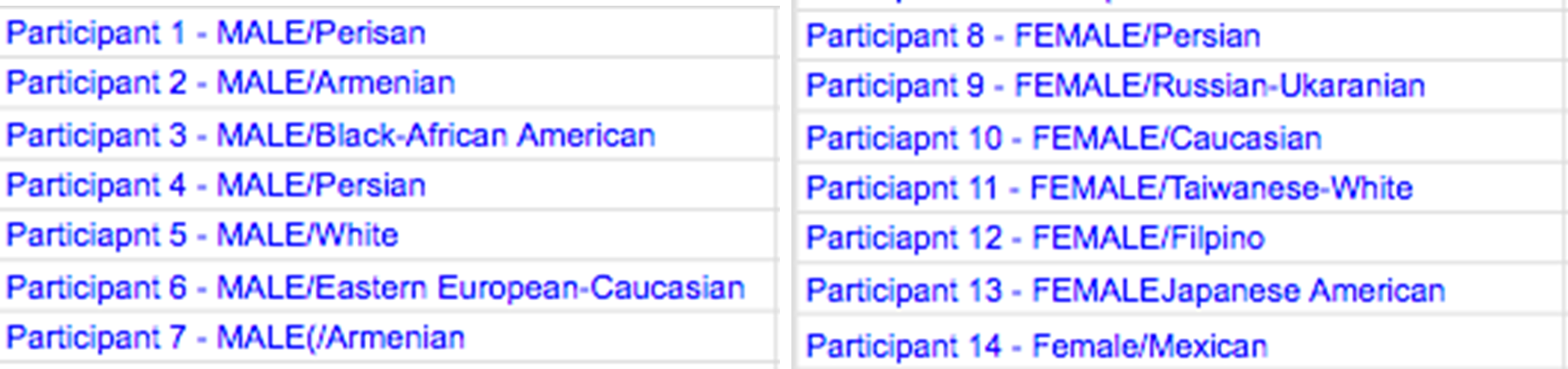
Figure 3: Participants – Gender and Culture/Ethnicity (Left column contains 7 male participants and their respective ethnic/racial identities. Right column contains 7 female participants and their respective ethnic/racial identities.)

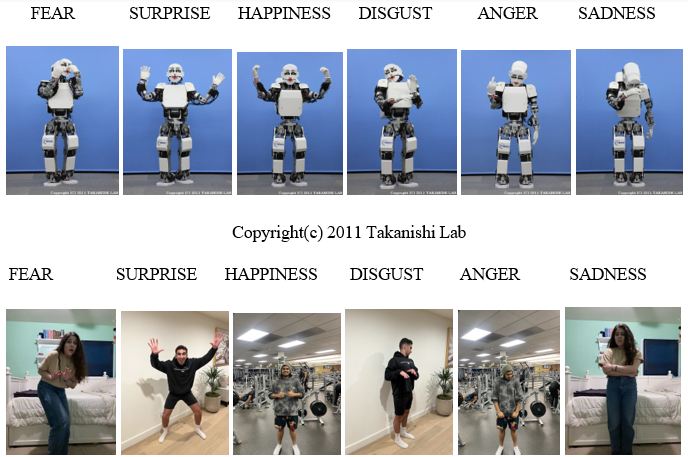
After the survey, we met with our participants via Zoom for an interview. Through the interview, our camera and audio were off while the participants’ were on. This precaution was in order to avoid any possible biases due to participants seeing our own body language or tonal changes in voice. We presented the participants with two sets of six images containing the emotions of anger, disgust, fear, happiness, sadness, and surprise. The images were sorted randomly, alternating between human and AI. The human images were created by us while the AI images were of Kobian, a robot created in the Japanese University of Waseda which is able to display numerous human emotions (Takanishi Laboratory, 2015).

Figure 4: Emotional Sequences (The images on top are of the Kobian robot expressing human emotional body language. On the bottom are humans expressing human emotional body language.)

After each image, our participants would identify the emotion, elaborating on why they chose that emotion, how they would express that emotion themselves, and then were informed which emotion was shown. At the end of the interview, we asked our participants whether they felt there were any discrepancies in their results due to their culture, ethnicity, or gender, something examined in the work of Miramar Damanhouri who asserts that the utilization of body language and other forms of non-verbal communication can lead to misinterpretation as different cultures/ethnicities have different rules and verbal cues (2018).

Figure 5: Link to Examine Interview Powerpoint and Process

https://docs.google.com/presentation/d/1ocxmTIu7mlOzKg7Y7jGVJn5i3BOIRVXSQpSu7iSWZ xQ/edit?usp=sharing

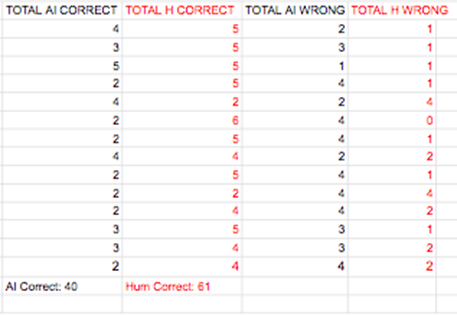
Figure 6: Results – Total AI Correct (Black) vs. Total Human Correct (Red) (Each row shows the results for a single participant and the total AI/Human images they identified correctly/incorrectly. At the bottom it’s shown that the cumulative number of correctly identified AI images were 40 for all the participants, while the cumulative number of correctly identified human images was 61 for all the participants.)

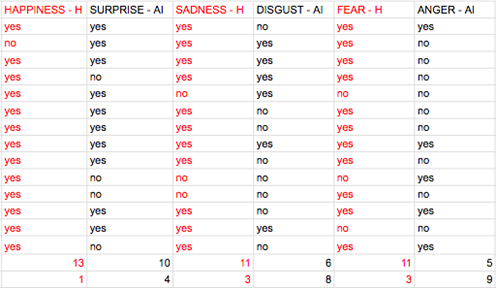
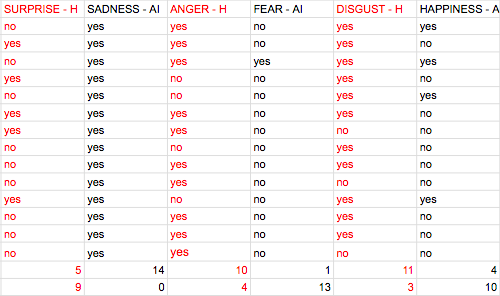
Through our results, we noticed which emotions participants had an ease or difficulty identifying. Participants had difficulties identifying the emotional expressions of Happiness (only 4 correct), Fear (only 1 correct), and Anger (only 5 correct) when expressed by AI. On the other hand, 14 participants were able to correctly identify Happiness and 10 were able to correctly identify Surprise when examining AI. When examining human EBL, participants had difficulty identifying surprise (5 correct) and had ease identifying happiness (13 correct), sadness (11 correct), disgust (11 correct), and anger (10 correct). As a whole though, participants took more time to identify AI EBL, even those they got correct, over human EBL, some of which they identified instantly.

Figure 7: Results Per Emotion (red is human; black is AI) (Table containing the results for each participant identifying the EBL displayed by both AI and humans, AI in black and human in red. A “yes” means it was correctly identified, while a “no” means it was not correctly identified.)

We hypothesized that differences in EBL interpretations would be, in part, due to the cultural, ethnic, and gender differences harbored by our participants. When examining our participants, we discovered that many felt that their ethnicity, gender, or culture hadn’t played a part in their responses, with 6 expressing that it had, 2 expressing maybe, and 7 expressing no. For example, one of our participants explained how the individuals within their respective culture don’t show much emotion, they are very straight faced, and this affected their responses.

Overall, our results showed that humans are able to identify human emotions better than AI; however, it’s important to note that within the experiment, humans were able to identify certain AI emotions over their human counterparts, showing that there is at least some level of shared understanding between humans and AI; this is something that society continues to advance in an attempt to mimic human emotions.

Figure 8: Link to Results https://docs.google.com/spreadsheets/d/1TuvKT66sn2laSej50YjwplEUTSAX-DYyMMHUxYrV DMA/edit?usp=sharing

Discussion and Conclusions

In conversations with our participants, we found there were certain human tendencies in EBL that our participants found lacking in the AI representations, such as the lack of smile lines around eyes or flushed cheeks, both of which participants found to be an integral part of EBL that they use to identify certain emotions. These characteristics were ones that AI was unable to mimic in the images we used. We also found discrepancies in how our participants viewed EBL based on how they personally expressed the emotion. These included difficulty identifying the human “surprise” example and difficulty identifying the AI “fear” example. A question we would ask the participants is if they felt that they display the emotion in the same way as the image, and when shown images that they had difficulty identifying, a majority shared that they did not express the emotion in the same way. A factor that may have contributed to these difficulties is the fact that the human images were made by us, as the researchers, based on our own individual perceptions of the EBL. Not all EBL is universal, and so differences in this vein could have affected those answers. In addition, the split results in regard to how much our participants’ race, ethnicity, and gender affected how accurately they were able to identify the EBL displayed was too close to formally draw any conclusions from, and so our hypothesis that the discrepancies between their responses and the correct answers would be due to these factors cannot at this time be proven or disproven. Further research is needed to analyze that question more thoroughly.

Overall, these findings can help to fine tune AI imitations of body language as AI continues to develop, as it has not quite mastered human EBL yet. Our findings also emphasize the way both differences and uniformity in expressing oneself through body language work to create meaning through gestures that can be understood (or misunderstood) by others that express themselves in similar/different ways.

References

Damanhouri, M. (2018). The advantages and disadvantages of body language in Intercultural communication. Khazar Journal of Humanities And Social Sciences, 21(1), 68–82. https://doi.org/10.5782/2223-2621.2018.21.1.68

de Gelder, Beatrice. “Towards the Neurobiology of Emotional Body Language.” Nature Reviews Neuroscience, vol. 7, no. 3, Mar. 2006, pp. 242–49. www.nature.com, https://doi.org/10.1038/nrn1872.

Embgen, S., Luber, M., Becker-Asano, C., Ragni, M., Evers, V., & Arras, K. O. (2012). Robot-Specific Social Cues in Emotional Body Language. 2012 IEEE RO-MAN: The 21st IEEE International Symposium On Robot and Human Interactive Communication, 1019–1025. https://doi.org/10.1109/ROMAN.2012.6343883.

Hertfordshire, A. B. U. of, Beck, A., Hertfordshire, U. of, Portsmouth, B. S. U. of, Stevens, B., Portsmouth, U. of, Kim A. Bard University of Portsmouth, Bard, K. A., Hertfordshire, L.U. of, Cañamero, L., & Metrics, O. M. V. A. (2012, March 1). Emotional body language displayed by artificial agents. ACM Transactions on Interactive Intelligent Systems. Retrieved January 27, 2023, from https://dl.acm.org/doi/abs/10.1145/2133366.2133368

Macfayden, Leah, Virtual ethnicity: The new digitization of place, body, language, and … (n.d.). Retrieved January 27, 2023, from https://open.library.ubc.ca/media/download/pdf/52387/1.0058425/

Nordmark, V. (2020, March 16). What are ai interviews? Hubert. https://www.hubert.ai/insights/what-are-ai-interviews#%3A~%3Atext%3DAI%20assessment%20filters%20the%20applications%2Cof%20behavior%20and%20team%20fit 

Takanishi Laboratory. (2015, June 24). Emotion Expression Biped Humanoid Robot KOBIAN-RIII. Takanishi.mech.waseda.ac.jp. Retrieved February 21, 2023, from http://www.takanishi.mech.waseda.ac.jp/top/research/kobian/KOBIAN-R/index.htm

YouTube. (2015, November 5). Nonverbal communication- gestures. YouTube. Retrieved February 14, 2023, from https://www.youtube.com/watch?v=0cIo0PkBs2c

 [/expander_maker]

, , ,

The Curse of Online Miscommunication

Christie Nguyen, Taymor Flower, Tatiana Paredes, Risa Nagase

With the burgeoning of technology, communication has drastically changed and shifted to texting on electronic devices. Unparalleled to this, conversations have become much more accessible, and texting has revolutionized the way we interact with one another, but at what cost? The purpose of this study was to determine the factors that lead to miscommunication in the digital world. The methodology used was survey research, in which the data collected were through questionnaires that were administered to participants individually. The participants were of the ages 18 to 22, undergraduate students at UCLA, and in a romantic, heterosexual relationship. The participants were asked a series of questions about whether or not there is miscommunication online between them and their partners. If so, they were asked to submit a screenshot demonstrating miscommunication or explain their interaction. Overall, the findings from the survey indicate that miscommunication online occurs frequently as a result of a lack of social cues, including tone, emotion, body gestures, and facial expressions. Many couples had issues with mistaking texts as a joke, missing a joke, not understanding sarcasm, not understanding passive aggressiveness, and mistaking blunt responses as rude.

[expander_maker id=”1″ more=”Read more” less=”Read less”]

Introduction and Background

With the prevalence of technology in today’s society, texting has become the most prominent form of communication. Texting is convenient and easily accessible, as it does not require all participants to be active at the same time, unlike conversing in-person or over the phone. By 2010, worldwide, there were five billion mobile connections, and it was estimated that on average, Americans sent 50 to 110 texts per day (Hall & Baym, 2011). However, the biggest issue texting entails is miscommunication, which is a result of indirectness, a lack of non-verbal cues, and a lack of impersonal connection. In computer-mediated communication, such as texting, many may use emojis to communicate, as it helps depict facial expressions and display emotions and gestures. Though, there may be incongruencies between the receiver and the sender, as the perceived meaning of the emoji may not be the intended meaning (Yang, 2019). Using emojis and texting cannot precisely convey emotions, body language, intonation, gestures, and all other cues that would be present in-person communication. For our study, we distributed surveys to individuals that are in relationships and communicate online to gauge the efficacy of communication via texting. If the participant agreed that texting results in miscommunication, we asked them to provide screenshots to corroborate our thesis. We hypothesize visual cues (e.g. facial expressions, eye contact, gestures, tone of voice) have fundamental communicative functions, and the absence of them when communicating online leads to miscommunication.

Methods

In order to conduct this study, we asked a series of questions that contextualized respondents’ opinions on, and style of, online communication; then, we asked respondents to either send in screenshots or a written account of a miscommunication with their partner. Our target audience was 18-22-year-old UCLA students in heterosexual relationships; in order to collect samples, we sent out surveys to people who we knew to be in active relationships. There were 11 survey questions in short answer format. Some of the questions that were more important in the analysis of our data were:

  • Gender identification (Male, Female, other).
  • In general, do you find it easier to communicate online or in person?
  • Why do you prefer in person/online communication more?
  • Do you feel like you can tell others what you want to say properly online? How about in person?
  • Do you feel more understood when communicating in person or online?
  • Do you find that your partner communicates in a different way than you do online?
  • Can you provide screenshots of a conversation with your partner that resulted in miscommunication? (For example: something over text that resulted in a miscommunication/argument, sarcasm that was misunderstood, misinterpreting tone, etc. No need to share anything too personal, just any type of miscommunication over text!)
  • If you can’t find any screenshots, can you provide a written account with examples of a miscommunication with your partner that occurred online?
  • How was this miscommunication resolved?

The segments of the survey we analyzed more closely were the responses related to conflict resolution in online communication. The questions relating to respondents’ perspective of online communication helped to contextualize their miscommunications with their partners; offering possible explanations to why the miscommunication happened in the first place and how dissonance in communication is resolved   The screenshots and accounts that respondents provided were the most pertinent to our analysis because they helped to emphasize the importance of body language and visual cues in communication within relationships.

Results

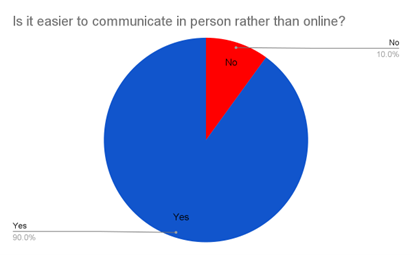
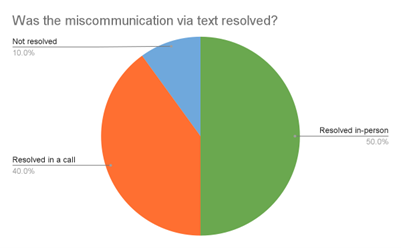
As it turns out, the results of the study indicated that a lot of miscommunication does occur when using online mediums rather than being in-person. We surveyed 20 people and when assessing our data, it revealed that 100% of our participants felt like they were more understood in person rather than online, 90% of which felt that it was easier to communicate in person as well (Figure 1). This is to say that the preferred medium to communicate is simply face-to-face. Some of our participants explicitly stated that being in person allowed for the analysis of body language, facial expressions, and tone of voice – something that texting lacks. When speaking about their interactions with their partners online, the fact that certain jokes or sarcasm would fly over their heads was common. One participant mentioned that even the tone of voice would have been enough for their partner to understand their sarcasm – something that texting did not offer. Another common occurrence was that emotions were not easily read and did not get the point across. 50% of participants then followed up and said that the miscommunication was resolved in person and 40% said that even a call afterward was helpful in getting their message across more correctly after it was not received as intended (Figure 2). When asked about if it may have been different if they would’ve talked in person rather than online, they all agreed that it would have. They reiterated that the cues that were missing from in person communication made it more difficult to understand each other.

Despite the uses of emojis, slang abbreviations, or punctuation, there still runs the risk of someone interpreting the message in an entirely different way than intended.

Figure 1: Is it easier to communicate in person rather than online?
Blue: Yes
Red: No
Figure 2: Was the miscommunication via text resolved?
Green: Yes, resolved in-person
Orange: Yes, resolved in a call
Blue: Not resolved

Similarly, because all they could see were words on a screen, participants mentioned that texting did not have the range to truly express their emotions as they felt that a lot of context would be left out and they felt the need to shorten their messages – texting did not prove to be as fluid as face-to-face conversation could have been. This is all to say that online communication feels more impersonal and cryptic than in person communication does and that ultimately leads to issues between the two parties.

In our survey, we had asked participants to provide screenshots of miscommunication, if possible, and to explain what was miscommunicated, why, and how it was miscommunicated.

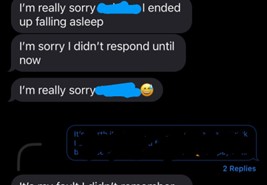
Figure 3: Misinterpreting Emoji and Conversation

In Figure 3, our participant explained that she thought her partner was ignoring her, but he had just fallen asleep. They had arranged plans together, and when he fell asleep, it completely ruined her plans because they misunderstood each other over text. Moreover, our participant explained that she was frustrated at this moment, and even more aggravated when he sent the emoji (smiley face with water drop) because she thought he was laughing and ridiculing the situation. They had called over the phone to resolve the issue, and it was more clearly understood by both parties about their intentions. It was also explained by her partner that the emoji was used to indicate nervousness, and he sent a smiling emoji to make light of the situation. This snapshot demonstrates how the use of emojis may be perceived differently, and that texting leads to miscommunication.

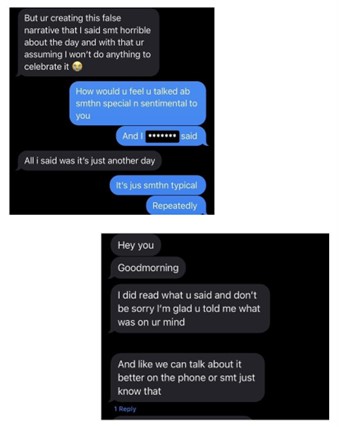
Moreover, in Figure 4, our participant had misinterpreted what their partner said and mistook it for ill intent, which led to an extremely heated argument.  The following day, their partner had suggested calling to understand each other better and to clear up any misinterpretations. This reveals how without seeing a person face-to-face and hearing their tone, it is difficult to understand their intent.

Figure 4: Misunderstanding Text and Arguing

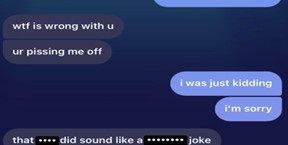
Lastly, in Figure 5, our participant includes a screenshot of his partner quickly getting aggressive with him over text. He had made a joke to her, without much indication over text that it was a joke, and that had triggered her to react angrily. With the lack of intonation, gestures, and facial expression, it is difficult to understand sarcasm over text, especially when both partners do not have the same texting styles.

Figure 5: Missing Jokes

Discussion and Conclusions

Our research has found that online communication is not as an effective medium of communication than in-person communication. The lack of non-verbal signifiers that give more depth and nuance to creating meaning are important for clear comprehension between two parties; tone of voice, inflection, facial expressions, and body language are integral to completely understanding an individual  Online communication gives society the ability to communicate with each other anywhere/anytime easily and efficiently, and still holds significant merit. The use of emojis has been understood to enhance messaging and allow more expression and personality through texts, by emphasizing certain emotions and giving more context to a written message via text. An insightful TedxTalk by Anna Lomanowska, a PhD Assistant Professor in the Department of Psychology, analyzes the challenges of communication online, and how the utilization of emojis is ineffective and leads to miscommunication. Although emojis have been very useful in capturing some nuances of people’s online messages, there is still a disconnect in comparison to in-person communication; Lomanowska cites a University of Minnesota study, which found that people disagree around 25% of the time about the meaning of emoticons and their emotional valence, giving more room to misunderstanding. 

There is a richness and depth to non-verbal communication that is impossible to recreate or replicate in text message scenarios. Communication with a romantic partner is something that is a cornerstone to a healthy relationship; disagreements and misunderstandings over text happen because there is a lack of emotional nuance and emotion, both of which are important elements in a romantic relationship that is emotionally charged and driven. Non-verbal communication signifiers can include: facial expressions, posture, gestures, eye contact, touch, space, and voice (Segal et al., n.d.). All of these elements contribute to roles of communication that can only be understood in the context of in-person interaction. Non-verbal forms of communication work to complement verbal messages, accent emotion or importance of verbal messages, substitute for verbal messages, repeat verbal messages, and even convey contradiction (where an individual says something about their body language does not match the verbal messaging) (Segal et al., n.d.).

This study emphasizes the importance of emotional nuances advanced by nonverbal cues that is lacking in online communication. This study is useful to contextualize the nature of misunderstandings that happen online and provide information to people in relationships, either romantic or platonic, on the benefits and drawbacks of meaningful conversation via text and online mediums.

References

Hall, J. A., & Baym, N. K. (2011). Calling and texting (too much): Mobile maintenance expectations, (over)dependence, entrapment, and friendship satisfaction. New Media & Society, 14(2), 316-331. https://doi.org/10.1177/1461444811415047

Segal, J., Smith, M., Robinson, L., & Boose, G. (n.d.). Nonverbal Communication and Body Language. HelpGuide.org. Retrieved March 23, 2023, from https://www.helpguide.org/articles/relationshipscommunication/Nonverbalcommunication.htm

TEDxTalks. (2019, July 10). Why Emojis Don’t Say Enough | Anna Lomanowska | TEDxUofT [Video]. YouTube. https://www.youtube.com/watch?v=1LZH_-g9FXQ&ab_channel=TEDxTalks

Yang, Y. (2019). Are you emoji savvy? Exploring nonverbal communication through emojis. Communication Teacher, 34(1), 2-7. https://doi.org/10.1080/17404622.2019.1593472

 [/expander_maker]

, , ,

You’re Just Somebody That I Used to Know

Audrey Edwards, Hung-Yi (Henry) Chen, Laksha Chhaddva, Sarah Manwani

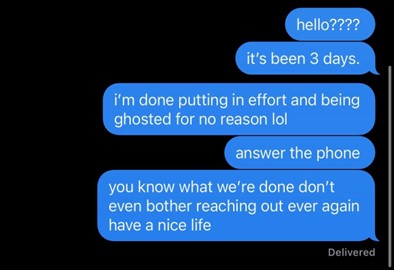
Figure 1. A text message screenshot sent in by a Gen-Zer demonstrating breakup practices over text

Let’s face it, ghosting sucks. Some may comment on the exchange above and say no response is a response, but does that provide effective closure in breakups? Although most people feel indirect breakups are outright disrespectful, the reality is that many of us are guilty of engaging in unhealthy breakup practices. However, has the rise of the Digital Age made this problem worse than before? Our study investigates how breakup practices differ amongst the two generations, Millennials, and Gen Z. Through our exploration of dating differences between these two generations using surveys and interviews, we found that tech use is more common in romantic relationships and breakups amongst Gen Z and indirect breakups are more common amongst Millennials. Ultimately, while the fact that indirect breakups wear is different, it seems like our tendency to do so is little changed by the prevalence of digital technology, one way or the other.

[expander_maker id=”1″ more=”Read more” less=”Read less”]

Introduction and Background

Our study intended to assess the effect of technology on relationship practices between Gen-Zers (born between 1997 and 2012, according to Dimock (2019)) and Millennials (born between 1981 and 1996, according to Dimock). We know that technology has impacted both Gen Z and Millennial romantic relationships, but the impact of tech use on romantic relationships is contested. Christenson’s (2018) study found that heavy social media users experience a severe decline in the quality of interpersonal relationships. On the other hand, Nicolas (2020) found that relationships formed on social media achieve similar self-disclosure and companionship as in-person relationships. More generally, Seemiller and Grace (2018) contended that Millennials were self-absorbed and ill-equipped to deal with meaningful relationships, while McGuire (2015) finds that Millennials still learn proper romantic expectations. The emergence of ghosting (the sudden cessation of communication over digital platforms) as a breakup method has further increased academic alarm, with LeFebvre and her colleagues (2019) finding that 96% of the college students they interviewed had been a part of ghosting interactions in some capacity. With this disagreement in scholarly assessments of technology and the younger generations in general, we feel that the healthiness of relationships experienced by these generations is worthwhile to study, with breakup methods as a good proxy. Baxter (1984) found that indirect breakups (without telling the partner directly, as in ghosting) were associated with self-centered breakups, prolonged the breakup process, and were a source of regret for breakups. Therefore, we expected that Gen-Zers were more likely than Millennials to use indirect breakup methods and to use technology in their breakups. If this hypothesis is true, then it demonstrates that tech use is likely to have a negative impact on breakup methods, since the biggest difference between Millennials and Gen-Zers is their exposure to tech use (as a consequence of their respective birth years).

Methods

To study the effects of technology on break-up methods, we sent a survey to Gen-Zers and Millennials that we knew and asked them to send it on to other Gen-Zers and Millennials that they knew as well. The survey was conducted through an anonymous Google Form to enable honest responses to sensitive questions. Ultimately, 27 Gen-Zers and 20 Millennials responded to the survey. The survey asked respondents how much they agreed with statements about the prevalence of technology use in their romantic relationships and their experience with breakups. The questions used the Likert scale, with respondents stating their agreement from “strongly agree” to “strongly disagree,” and binary (Yes-or-No) questions concerning whether they had encountered or engaged in specific break-up strategies described in Baxter’s (1984) study.

To complement the survey, we also conducted anonymous interviews with three Gen-Zers and two Millennials that we knew. Each interview proceeded with a set of interview questions that covered the same topics as the survey, but in an open-ended way. The interviewees were encouraged to go into detail on their experiences that relate to the questions, such as by describing the break-up experience in narrative form rather than merely categorizing it. Since the survey’s responses relied on the Likert scale and binary questions, which included no way to explain the answers, we needed a way of discovering more nuance in the relationship between technology use and healthy break-up methods. The interviews, which were fewer in number but far more detailed, provided a way to get into the details.

Results

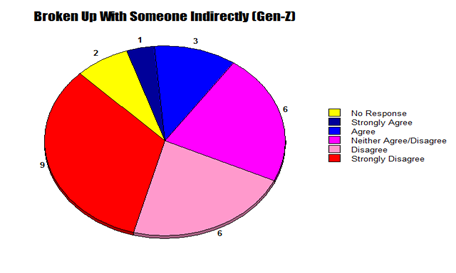
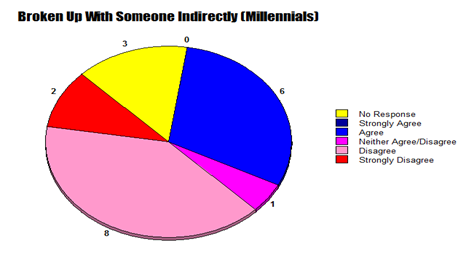
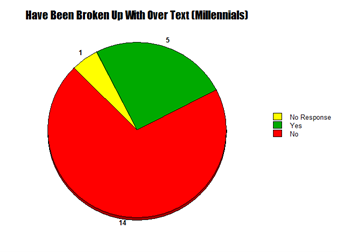
The survey results show that indirect breakup methods are less preferred by both Gen-Zers and Millennials compared with direct breakup methods.  However, Millennials are more likely to have used indirect breakup methods than Gen-Zers. 30% of Millennials report having broken up with someone indirectly, versus 15% of Gen-Zers.  The results illustrate that Gen-Zers have been broken up over text more often than Millennials, with 44% of Gen-Zers having experienced this versus 25% of Millennials. The key takeaways that we acquired from the interview questions were that both Gen-Zers and Millennials predominantly prefer direct break-ups rather than indirect breakup methods.  On the other hand, one of our Gen-Zer interviewees preferred to break up indirectly, especially if they were not in a serious relationship with their partner.  This somewhat contrasted our findings, but our interviewees still largely preferred direct over indirect breakups, and they were generally of the opinion that indirect breakups are messy and disrespectful.

Figure 2: This pie chart indicates that Generation-Z individuals most likely Strongly Disagree (9 people) or Disagree (6 people) with the statement “When terminating a relationship, you ended the relationship without ever directly stating your intention”.
Figure 3: This pie chart illustrates that Millennials disagree more than they agree with the statement “When terminating a relationship, you ended the relationship without ever directly stating your intention”.
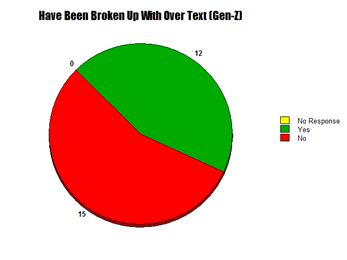
The results illustrate that Gen-Zers have been broken up over text more often than Millennials, with 44% of Gen-Zers having experienced this versus 25% of Millennials.

Analysis

According to the results, Millennials tend to break up in person, whereas Gen-Zers break up less in person and more over text than Millennials. This confirms our hypothesis that tech use is more common among Gen-Zers for breakups. On the other hand, Gen-Zers are actually less likely than Millennials to break up indirectly, which contradicts our hypothesis. While this does not necessarily indicate that tech use leads to healthier breakup methods, it does put a wrench in the scholarly speculation that they render younger generations actively unprepared for romantic relationships.

Figure 4: This pie chart shows that a vast majority of Millennials have not been broken up with over text.
Figure 5: This pie chart shows that 44% of Gen-Zers have been broken up over text.
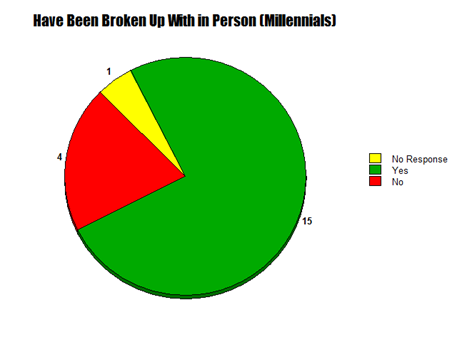
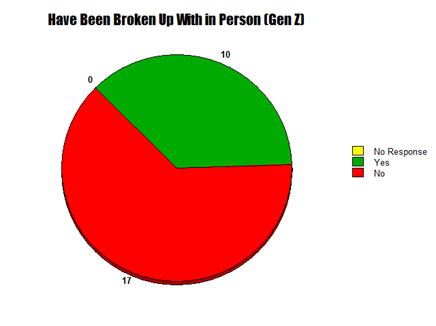
However, Millennials are more likely to have been broken up with in-person than Gen-Zers, with 75% of Millennials having experienced this versus 37% of Gen-Zers.
Figure 6: This pie chart indicates that Millennials are more likely than not to have been broken up with in person.
Figure 7: In the pie chart above, this chart illustrates that Generation-Z individuals are less likely than not to have been broken up with in person.

Discussion and Conclusion

Our hypothesis that Gen-Zers would engage in more indirect breakup methods than Millennials was incorrect. Contrary to our expectations, it doesn’t seem like Gen-Zers are less equipped than Millennials to deal with breakups. However, we found that technology was more extensively used in Gen-Zer breakups compared to Millennial break-ups. This verified our hypothesis that Gen-Zers use technology in romantic relationships more than Millennials and suggests that there was no correlation between being exposed to technology and the tendency to use indirect breakup methods. This is important because it suggests the rise of technology use by Generation Z doesn’t affect their relationship readiness as negatively as scholars fear. Moreover, neither of these two generations exhibited any special tendency towards indirect breakups compared with other generations. Baxter’s (1984) study found that 49% of the relationships examined were broken up through indirect means. This rate is much higher than the 30% of Millennials and the 15% of Generation Z who had engaged in at least one indirect breakup in our study. While the numbers are not fully convertible and the Baxter study involved more interviewees, one could reasonably conclude that Millennials and Generation Z are not more likely, and are quite possibly less likely, to use indirect breakup methods than Baxter’s Baby Boomer subjects. Of course, break-up methods are only a small part of the overall process of a relationship, but this finding supports the opinion of scholars who feel that the younger generations are as capable of healthy relationship practices as the older ones. 

References

Baxter, L. A. (1984). Trajectories of Relationship Disengagement. Journal of Social and Personal Relationships, 1(1), 29–48. https://doi.org/10.1177/0265407584011003

Christensen, S. P. (2018). Social Media Use and Its Impact on Relationships and Emotions (Order No. 28107583). Available from ProQuest Dissertations & Theses A&I; ProQuest Dissertations & Theses Global. (2442249267). https://www.proquest.com/dissertations- theses/social-media-use-impact-on-relationships-emotions/docview/2442249267/se-2

Dimock, Michael (2019). Defining Generations: Where Millennials End and Generation Z Begins. Pew Research Organization. https://www.pewresearch.org/fact-tank/2019/01/17/ where-millennials-end-and-generation-z-begins/

Krafchick, Julie and Yue Xu. (2020, March 10). Millennial vs. Gen Z Dating (No. S10E5) [Audio podcast episode]. Dateable. Drank Production. https://www.dateablepodcast. com/episode/s10e5-millennial-vs-gen-z-dating

LeFebvre, L. E., Allen, M., Rasner, R. D., Garstad, S., Wilms, A., & Parrish, C. (2019). Ghosting in Emerging Adults’ Romantic Relationships: The Digital Dissolution Disappearance Strategy. Imagination, Cognition and Personality, 39(2), 125–150. https://doi.org/10.1177/0276236618820519

Mateo, Ashley. (2019). How to Break Up With Someone Without Hurting Them. Oprah Daily LLC. https://www.oprahdaily.com/life/relationships-love/a27865922/how-to-break-up -with-someone/

McGuire, Kate, “Millennials’ perceptions of how their capacity for romantic love developed and manifests” (2015). Masters Thesis, Smith College, Northampton, MA. https://scholarworks.smith.edu/theses/659

Nicolas, É. M. (2020). The Impact of Social Media on Adolescent Attachment Style for Generation Z (Order No. 27737202). Available from ProQuest Dissertations & Theses A&I; ProQuest Dissertations & Theses Global. (2348090364). https://www.proquest.com/dissertations-theses/impact-social-media-on-adolescent-attachment/docview/2348090364/se-2

Seemiller, C., & Grace, M. (2018). Generation Z: A Century in the Making (1st ed.). Routledge. https://doi.org/10.4324/9780429442476

Further Reading and Listening

[/expander_maker]

, , , , ,

“Sorry, I Didn’t Quite Get That: The Misidentification of AAVE by Voice Recognition Software”

Shannon McCarty, Lam Pham, Alora Thresher, Alexandria Wasgatt, Emma Whamond

This study investigates the transcription accuracy by AI speech recognition systems using natural language processing when interpreting standard American English dialects (SAE) versus African American Vernacular English (AAVE). We inspect the percentage of misidentified words, and the degree to which the speech is misidentified, by AI speech recognition systems through analyzing authentic speech found in YouTube videos. The accuracy of voice recognition with respect to AAVE will be determined by selecting for distinct AAVE features, such as G-dropping, the [θ] sound, reduction of consonant clusters, and non-standard usages of be. The methodology includes feeding YouTube clips of both SAE and AAVE through an AI speech recognition software, as well as examining YouTube’s auto-generated transcripts, which are created by automatic speech recognition based on the audio of the YouTube video. The purpose of this study is to bring attention to the needs of diversity in technology with regard to language variation, so that AI speech systems such as Amazon’s Alexa or Apple’s Siri are more accessible to all members of society, as well as to help destigmatize a variety of American English that has carried social, cultural, and historical stigma for centuries.

[expander_maker id=”1″ more=”Read more” less=”Read less”]

Introduction and Background

2020—American society finds itself at the thrilling forefront of technological innovation, yet is still plagued by racial inequality and systematic racism. Our study aimed to tackle a portion of this American duality from a sociolinguistic standpoint. We investigated AI speech recognition systems and the identification differences while processing speech of the standard American English dialect (SAE) versus African American Vernacular English (AAVE). SAE is most broadly defined as the most uniform, accepted, and understood language in the US. On the other hand, AAVE is not solely slang or a lesser form of SAE; rather, it is a language variety that has systematic linguistic patterns and carries social, cultural, and historical stigmas. We believe AI speech recognition systems will reflect our country’s racial biases by misinterpreting AAVE far more often than SAE. As these technologies become more commonplace and embedded in society, our study’s goal is to shed light on whether AI speech technology is inclusive of the AAVE dialect and its speakers.

Methods

An overview of AAVE linguistic features can be found in a paper discussing the matter by Erik Thomas (2007), though we narrowed our focus on the most defining features of AAVE in this study. These included G-dropping, the th sound (as in bath) becoming the f sound (as in fast), reduction of consonant clusters at the ends of words (wes side versus west side), and the use of the verb be (Singler, 1998).

The analysis of the main facets of the verb be included the dropping of be, the habitual be (Collins, 2006), the use of BIN and be done. The heavy focus on be was due to the fact that it is one of the biggest syntactic differences between SAE and AAVE (Lanehart, 2015). As a result, the variants of be  were most likely to affect the transcription performance of voice recognition software when processing AAVE. 

This study used the abundant linguistic resources available from YouTube to exhibit the use of SAE and AAVE dialects. We compiled audio clips of authentic, normal speech in both of these varieties and fed the audio clips into an AI transcription software, specifically dictation.io/speech, as well as examined YouTube’s AI-generated closed captions. It was important to ensure that the captions we used on YouTube were the auto-generated ones, and not captions that had been manually entered by the uploader.

To determine what percentage of speech and what types of features of the dialects were misidentified by the AI speech recognition systems, we quantified the data by categorizing the accuracy of the AI transcriptions into four groups: “All,” meaning All of the words were picked up, “Most,” “Few,” or “None.”  If every single word in the audio recording was transcribed correctly by the AI speech recognition system, then that audio clip was placed in the “All words picked up” group. If most words or only a few words were transcribed correctly by the AI speech recognition system, then that audio clip was placed in “Most” and “Few” groups, respectively. And if nothing in the audio clip was transcribed correctly by the AI speech recognition system, then that audio clip was placed in the “None” group.

Our hypothesis was that the percentage of interpretation inaccuracy in AI speech recognition systems while interpreting AAVE would be significantly higher than the inaccuracy recorded by speech recognition software while interpreting SAE (i.e. more AAVE audio clips would land in the “Few” and “None” transcription accuracy groups). This would lead to an expectation that voice recognition software is globally less effective for speakers of AAVE.

Results/Analysis

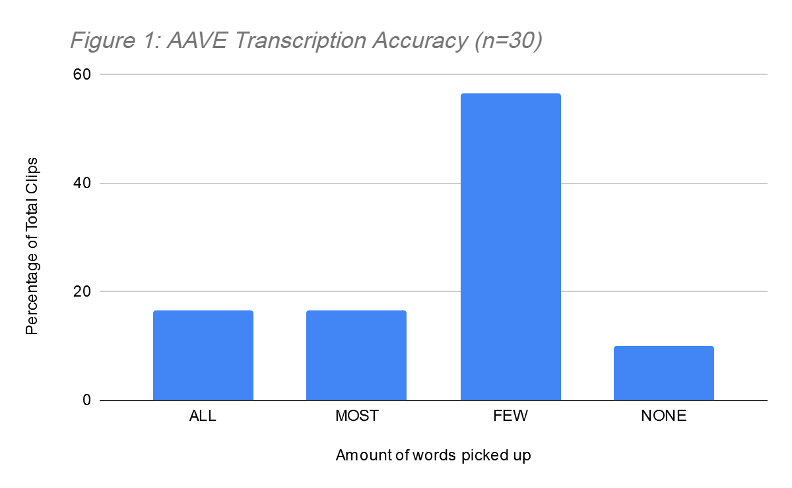
The results of this study were overall in line with the hypothesis—the transcription software picked up more SAE words than AAVE words. The vast majority of AAVE video samples collected had “Few” words transcribed correctly. Figure 1 shows the amount of AAVE words picked up by the transcription software. Our study found that for all of the clips of AAVE:

    • 16.7% “All” words were picked up
    • 16.7% “Most” words were picked up
    • 56.7% “Few” words were picked up
    • 10.0% “None” of the words were picked up

It is noteworthy that the transcription software was unable to pick up the majority of AAVE speech when the video clips were similar to the SAE video clips with regard to background noise, speaker volume, etc. We believe this is largely due to AAVE phonetics rather than AAVE syntax and word choice, which is what we were focusing on in this study.

Example 1: This clip was categorized under “Few” words being picked up; in the beginning of the segment, the speaker actually says it’s a whole buncha people in New York that we know from. (“African-American English in North Carolina”, The Language & Life Project)

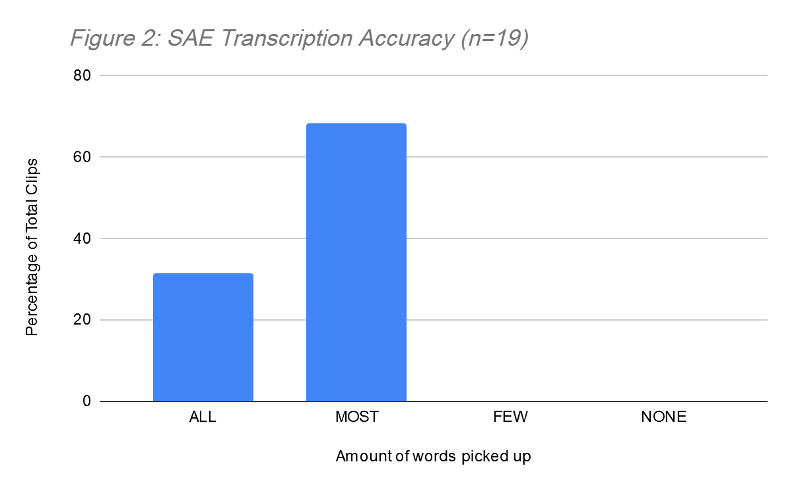
On the other hand, all video samples of SAE fell under “All” or “Most” transcription accuracy. The SAE video clips had the majority of their words picked up and transcribed correctly. According to Figure 2:

    • 31.6% of the clips had all their words picked up
    • 68.4% had the majority of their words picked up

The results of transcribing SAE versus the results of AAVE are drastically different; we believe this is largely due to the phonetic differences between the two English varieties. The only time SAE was not picked up was when the speaker was speaking faster than normal. All of the words could have blended together, and as a result, the transcription software was not able to distinguish what was being said.

Another unexpected observation for both AAVE and SAE was that women speakers were not picked up as often as male speakers; AAVE female speakers made up 66.7% of the “None” category, despite comprising less than 20% of our AAVE samples.

Limitations

We had some limitations in our project as well. Due to COVID and time restrictions, our sample size was regrettably small at only 49 clips. We also had a few clips become unusable between the time of our finding them and analyzing them. As a result of the small sample size, we ended up noticing a huge, unexpected difference between the transcription accuracy of male versus female speakers of AAVE, but we weren’t able to draw any solid conclusions as to whether this difference is representative of a larger population. However, the difference was quite apparent within the random pool we gathered, so a study with equal amounts of male and female AAVE speakers could address this issue more equitably.

Speakers that were present in the room would also have enabled a more accurate representation of AAVE and voice recognition software’s real-world interaction. Our computers and phones were limited due to the differing microphone quality, which could have influenced the amount of words the voice recognition software picked up. In addition, we had planned to use our phones’ dictation softwares as the primary method of data acquisition, which ended up being wholly impossible, so we only had the time to find and use one transcription site.

Many of the video clips were filmed in neighborhoods, with background noise included, such as cars going by, wind, and people talking. This could also have limited our transcription site and created another layer of ambiguity. However, SAE clips with similar amounts of background noise that were played were transcribed (mostly) correctly. So it is unclear if the background noise is fully a limitation or an example of voice recognition software not picking up AAVE.

Lastly, we began to wonder if the phonetics of AAVE had more of an effect on our voice recognition software than the syntax did—that is, we wondered whether the sound of AAVE was more impactful than the sentence structure. A few of us used the software to speak sentences that were syntactically AAVE, but not phonetically, as none of the researchers of this study were AAVE speakers. Those sentences were transcribed correctly, including AAVE syntax. However, we did not have enough time to pursue that avenue of research, but it would be a promising starting point for any future projects.

Discussion and Conclusions

This investigation was intended solely to pursue the question of whether there is a racially-based difference in accuracy of voice recognition software. Despite the unexpectedly small scope of our study, we believe our results are sufficient to prompt further investigation into the reasons as to why there is such a stark difference in accuracy.

To that end, a question that arises naturally is whether closing the gap in accuracy is as simple as writing and including a few more lines of code. If it is, then what’s preventing this from happening now? And if the voice recognition software instead needs to be re-constructed from the ground up, then that, in turn, spawns a whole host of follow-up questions (e.g. Who’s paying for this development? Who’s working on it? How long will it take?).

It is, as with any discussion of racially-based imbalances, also worth considering systemic variables at play. Another question worth pursuing is whether there is a higher average level of inaccessibility to the technology sector for speakers of AAVE compared to speakers of SAE, which would contribute to a broad range of consequences—one of which might be the discrepancy in accuracy of voice transcription softwares demonstrated in this study.

In 2016, Rickford and King cited Schneider (1996) to describe AAVE as “the US English dialect most examined by linguists for quite some time.” In the academic world, it’s common knowledge that the prejudices held against AAVE  — and its speakers — have no basis in fact. The drastic difference in voice recognition software transcription accuracy between SAE and AAVE is not only one more imbalance to correct in pursuit of a fully equitable society, but also a symptom of the systemic racism that influences all aspects of daily life. Studies like this one which stop at identifying the problem are only the first step; the next is to examine why the problem exists in the first place, so that work to resolve the inequity can begin.

References

Collins, C. (2006). A fresh look at habitual be in AAVE. CREOLE LANGUAGE LIBRARY, 29, 203.

Koenecke, A., Nam, A., Lake, E., Nudell, J., Quartey, M., Mengesha, Z., Toups, C., Rickford, J., Jurafsky, D., & Goel, S. (2020). Racial disparities in automated speech recognition. Proceedings of the National Academy of Sciences, 117(14), 7684-7689.

Lanehart, S. (Ed.). (2015). The Oxford Handbook of African American Language. Oxford University Press.

Lippi, R., Donati, S., Lippi-Green, R., & Donati, R. (1997). English with an accent: Language, ideology, and discrimination in the United States. Psychology Press.

Rickford, J. R., & King, S. (2016). Language and linguistics on trial: Hearing Rachel Jeantel (and other vernacular speakers) in the courtroom and beyond. Language, 92(4), 948-988.

Singler, John Victor. “What’s not new in AAVE.” American Speech 73.3 (1998): 227-256.

Thomas, E. R. (2007). Phonological and phonetic characteristics of African American vernacular English. Language and Linguistics Compass, 1(5), 450-475.

[/expander_maker]
, ,
Scroll to Top