tones

The Linguistic Switcheroo: Navigating Style-Shifts in College Discourse
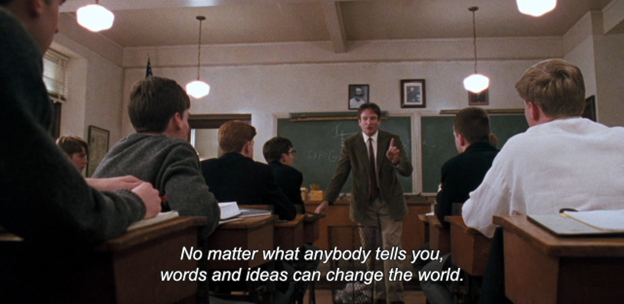
Dead Poets Society (1989)

This blog entry explores the dynamic world of language use among college students at UCLA, focusing on how they adjust their linguistic style in academic environments. We delve into the phenomenon of style-switching, where students navigate between informal conversations with peers and formal interactions with professors. Through careful observation and analysis, our research uncovers the nuances of word choice, tone, and syntax in these differing contexts. We aim to understand how social settings influence language socialization within academic communities. Our findings reveal that students tend to employ a more casual, slang-infused language among peers while adopting a more structured and formal language when engaging with faculty. These findings highlight the adaptability of linguistic practices within differing contexts, as seen in the discrepancy between a languid and relaxed setting versus an academic one, and reveal deeper insight into the social dynamics at play. Join us in exploring the intricate play of language in the college setting, where each conversation reflects the complex interplay of social norms, power dynamics, and cultural identity.

[expander_maker id=”1″ more=”Read more” less=”Read less”]

Introduction

Our research focuses on the intricate ways college students adjust their language in different academic settings, particularly at UCLA. Previous studies, like those by Patricia A. Duff and others, have highlighted language socialization in academic contexts. However, there’s less focus on how students’ language shifts in real-time interactions between diverse groups such as peers and professors. We aim to bridge this gap by analyzing how UCLA students’ word choice, tone, and syntax vary when communicating with peers versus academic staff. Our hypothesis posits that students’ language becomes more informal, slang-heavy, and less complex in peer interactions compared to more formal, carefully structured conversations with faculty, reflecting underlying power dynamics and social norms.

Here’s a link to a video by Cambridge University Press that explains “academic language” to give you an idea of what we’ll be discussing in this blog!

Methods

In our study, we centered our investigation on the linguistic style shifts among UCLA students in academic contexts. Our focus was on two primary interaction scenarios: between students themselves and between students and their professors.

People and Contexts Observed:

  • Student-Student Interactions: Conversations among peers, both within and outside classroom settings, were recorded. These interactions provided insights into the informal communication styles prevalent in peer groups.
  • Student-Professor Interactions: We also observed and recorded interactions between students and faculty members. This setting offered a contrasting view of more formal and structured communication.

What We Analyzed:

  • Word Choice: We paid close attention to the vocabulary used in different social settings. Our analysis focused on identifying the use of informal language and slang among peers, compared to more formal and academic language in interactions with professors.
  • Syntax and Structure: The complexity of sentence construction and use of grammatical structures were analyzed to observe variations in formality and complexity.
  • Tone: The emotional and attitudinal aspects of speech, such as enthusiasm, respect, or hesitation, were observed to understand the relational dynamics in different interactions. Take a look at this video to better understand the importance of how we say things, beyond what we say.

Data Collection Method:

  • A mix of participant observation and ethnographic fieldwork was employed. This involved walking with, talking with, and recording the daily life and conversations of students. Both audio recordings and hand-transcriptions of conversations were utilized.

By focusing on these observable elements in communication, our study aimed to illuminate how linguistic practices are adapted to different social contexts within the academic environment. Technicalities not central to our primary analysis, such as detailed linguistic theories, were omitted for clarity and accessibility to a general audience. This approach ensured that our study remained engaging and understandable, while still maintaining academic rigor.

Results

Here is what some of our data ended up looking like:

Student-Student Conversation

Student 1: Yeah, the bystander effect. It’s like, when there’s a bunch of people, everyone thinks someone else will step up. Ends up with no one helping. Pretty messed up and craaaazy.

Student 2: That’s tea. It makes you wonder, huh? Did you guys then talk about how different countries do things differently?

Student 1: Oh yeah, it’s all about the culture vibe. Like, some places are all “pick me girls,” while others are like “No worry girly.” (laughing)

Student 2: No literallyyyy. Social psych’s got some real “shit” going on.

Student-Professor Conversation

Student: In the lecture, you mentioned the bystander effect. Can you explain more on that?

Professor: Oh yes I can. So, the bystander effect refers to the phenomenon where individuals are less likely to offer help to a victim when other people are present. It’s often due to a fear of responsibility, where the bystander assumes someone else will intervene.

Student: I see. So how does this relate to social responsibility?

Professor: Hmm social responsibility is an individual’s obligation to act for the benefit of society at large. So like in the context of the bystander effect, it challenges the individuals to overcome the fear of responsibility and take action when they witness someone in need of help.

Student: Oh ok I get it. And last question (slight haha) what about the role of culture in social psychology?

Professor: So culture plays a significant role in shaping our social behaviors and attitudes. Different cultures have different norms and values, which could influence how people perceive and interact with each other. Like for example, individualistic cultures might emphasize personal achievements, while collectivist cultures focus on their group harmony.

Student: OK I got that down. Thank you so much for your time, Professor!

So what does this tell us?

These two conversations, both of which cover the “bystander effect” of social psychology, show completely different ways of having very similar conversations. Even though both conversations cover the bystander effect, and in each one the speaker is asking questions while one is answering and explaining, the language used is very different.

The use of slang in the student-student conversation – words like “tea,” “craaaazy,” and “literalyyyy” – are not present in the student-professor conversation. This suggests that students are perfectly capable of discussing academic topics in the way they ‘typically’ speak – with friends and in their social interactions, but they are intentionally censoring themselves and electing for “academic language” when speaking with professors.

The fact that the professor, here, is not speaking with the same total academic language, and still uses phrases such as, “so like” and “hmmm,” suggests that they do not feel the same sense of need to maintain formality in the way the student does. This shows us that despite the absence of reciprocal formality within student-professor interactions, when speaking with a faculty member or professor, the student still understands their position in this conversation as relatively powerless and more subservient.

In analyzing syntax and structure, we found conflicting conclusions in students’ willingness to formalize their speech around professors versus their peers. In conversations with peers, students tended to include longer sentences that more frequently lacked correct grammatical structure and syntax as ruled by academic standards of speech. However, these sentences were more truncated and were often shortened to mere phrases that included only enough to communicate a simple idea. In contrast, students’ interactions with the professor included simpler sentence structure, yet more grammatically correct. Student 1’s use of the phrases, “Ends up with no one helping” and “Pretty messed up and craaaazy” as well as Student 2’s response later in the conversation, “No literallyyyy” highlight this phenomenon. By standards imposed through academia’s use of American Standard English, all of these examples would be considered incorrect grammatically and incomplete in syntax. They all lack subjects and therefore rely on the context surrounding it with the conversation being had in order to correctly interpret their meanings. These examples can be contrasted with the student’s interactions with the professor, in which all sentences are complete and use academically correct syntax structure. The students’ sentences are more concise in their lack of filler words and slang, and yet grammatically more correct. This again, may point to power imbalances within these two interactions – students may feel less willing or comfortable to talk extensively with professors than with peers due to the perceived power imbalance, as well as feel more restricted in their expression, as is reflected in the formality of their structure and syntax.

The last aspect of speech we analyzed was a difference in tone. In comparing the two examples provided, we found that student to student interactions included a more playful tone, similar to banter, while the student to professor interaction held a more professional tone, lacking in comfort and familiarity. When the student talked to their peer, the two indiscriminately contributed to the conversation without self-consciousness, providing multiple affirmations and adding onto the points already stated. However, in the conversation between student and professor, the student’s conversation largely comprised of a quick and simple affirmation that they were listening to the professor’s speech, followed by another quick and concise question. The discrepancy between these two interactions again highlights the students’ need to adjust their manner of speaking due to their social status. As the student interacts with individuals with a wider gap in social standing, their speech reflects that change in the comfort at which they are capable of communicating with their counterparts.

Key and Peele, Comedy Central (2012)

Discussion and Conclusion

Academia is just one locale in which this linguistic phenomenon can be recognized. The same linguistic changes that we noticed between students speaking with fellow students, and students speaking with professors appear elsewhere. There is a palpable power dynamic between professors and students, which is reflected in the changes in word choice, syntax, and tone of students we recorded in each conversation group.

Other relationships with a similar power dynamic – for example, manager-employee or parent-child – would see similar shifts from the ‘lower’ positioned speaker’s standard casual mode of communication, and the way they communicate in these partnerships. Even more pertinent social commentary can be drawn from the linguistic-change patterns detected in our research. Power relations that result from socially constructed hierarchies, like racial differences, gender differences, or more specific circumstances like interactions with police officers, demonstrate similar linguistic changes.

This phenomenon suggests that linguistic patterns and tonal choices are not only reflections of existing social strata and power relations but are simultaneously contributing to the establishment and maintenance of these strata. Our research, therefore, both reflects and contributes to the existing literature on the interactions of linguistics and social power dynamics, via this case study on academic communication.

References

Alkhudair, R. Y. (2019). Professors’ and Undergraduate Students’ Perceptions and Attitudes Toward the Use of Code-Switching and Its Function in Academic Classrooms. International Journal of English Linguistics, 9(6), 160-. https://doi.org/10.5539/ijel.v9n6p160

Costa, J. (2015). Can Schools Dispense with Standard Language? Some Unintended Consequences of Introducing Scots in a Scottish Primary School. Journal of Linguistic Anthropology, 25(1), 25–42. https://doi.org/10.1111/jola.12069

Davydova, J. (2022). The role of social factors in the acquisition of vernacular English: A variationist study with pedagogical implications. International Journal of Applied Linguistics, 32(3), 425–441. https://doi.org/10.1111/ijal.12438

Duff, P. A. (2010). Language Socialization into Academic Discourse Communities. Annual Review of Applied Linguistics, 30(Mar), 169–192. https://doi.org/10.1017/S0267190510000048

Hamre, B. K., Pianta, R. C., Downer, J. T., DeCoster, J., Mashburn, A. J., Jones, S. M., Brown, J. L., Cappella, E., Atkins, M., Rivers, S. E., Brackett, M. A., & Hamagami, A. (2013). Teaching through Interactions: Testing a Developmental Framework of Teacher Effectiveness in over 4,000 Classrooms. The Elementary School Journal, 113(4), 461–487. https://doi.org/10.1086/669616

Hutton, S. (2022). The burden of code-switching: U-M LSA U-M COLLEGE OF LSA. U. https://lsa.umich.edu/lsa/news-events/lsa-magazine/Summer-2022/the-burden-of-code–switching.html

“I’m Retired.” Key and Peele, Keegan-Michael Key and Jordan Peele, season two, episode four, Comedy Central, 2012.

Poola, V. P., Suh, B., Parr, T., Boehler, M., Han, H., & Mellinger, J. (2021). Medical students’ reflections on surgical educators’ professionalism: Contextual nuances in the hidden curriculum. The American Journal of Surgery, 221(2), 270–276. https://doi.org/10.1016/j.amjsurg.2020.09.003

Sicoli, M. A. (2010). Shifting voices with participant roles: Voice qualities and speech registers in Mesoamerica. Language in Society, 39(4), 521–553. https://doi.org/10.1017/S0047404510000436 

Weir, Peter. Dead Poets Society. Buena Vista Pictures Distribution, 1989.

Woodbridge, A. (2021). “If I’d Heard That Earlier, It Would Have Changed My Academic Experience”: Connections Between Language Brokering and Undergraduate Academic Writing  / by Amy Woodbridge. University of California, Los Angeles.

[/expander_maker]
, , , , ,

Bridging Bytes and Cultures: The Impact of AI on Linguistic and Cultural Nuances in Online Conversations

Ley’ah Mcclain-Perez and Ivan Pantoja Tinoco

The digital era is marked by the ascension of artificial intelligence. In particular, this presentation will delve into the transformative influence of ChatGPT on the online communication landscape, particularly within the microcosm of X. This AI-driven tool created by OpenAI not only redefines user interactions but also molds the linguistic contours of digital discourse. Our inquiry is rooted in a critical analysis of ChatGPT’s integration into social platforms, assessing its impact on the quality of communication, user perceptions, attitudes, and the ensuing ethical dilemmas.

Our research navigates through the multifaceted ramifications of ChatGPT, exploring its syntactic coherence and semantic relevance, alongside its occasional pitfalls that may lead to misinterpretations. It highlights the diverse demographic engaging on X, using ChatGPT for various purposes ranging from casual interaction to more substantial exchanges, thus painting a broad spectrum of digital human-AI interaction.

This exploration is not merely an academic exercise but a pivotal discourse that contributes to understanding the nuanced dynamics of digital communication in the AI era. It poses critical questions about the future of online interactions, the role of AI in shaping public discourse, and the ethical boundaries of AI integration into social platforms.

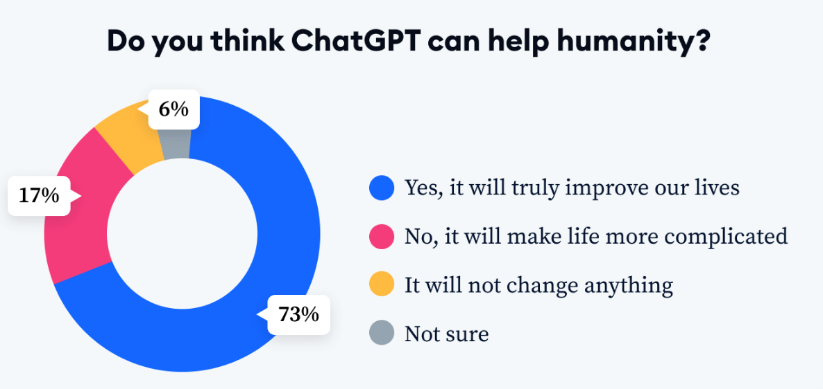
Figure 1: Demographics showing the potential of AI in the case of ChatGPT

[expander_maker id=”1″ more=”Read more” less=”Read less”]

Introduction

In the fast-paced world of online communication, the integration of artificial intelligence (AI) technologies has brought a significant shift in how people interact and engage with digital platforms such as emailing or Twitter. At the forefront of this transformation is ChatGPT, an advanced AI language model developed by OpenAI. With its widespread adoption, particularly on platforms like Twitter, ChatGPT has sparked a wave of curiosity and inquiry into its impact on interpersonal communication dynamics.

 ChatGPT’s presence on Twitter is hard to miss. Its ability to generate text responses that closely mimic human speech has made it a staple tool for many users across the platform. From casual conversations to more formal discussions, ChatGPT has seamlessly integrated into the online social media platform Twitter, which can be deceiving for those who have not incorporated AI into their lifestyles.

Twitter, renowned for its role in facilitating global connectivity, serves as a hub for real-time conversations and idea exchange. Users from diverse backgrounds come together on the platform to share thoughts, opinions, and news. With ChatGPT now part of the conversation, the dynamics of communication have undergone a subtle yet significant transformation, prompting researchers to delve deeper into its implications.

Our study seeks to address several key research questions:

  1. How does the integration of ChatGPT influence the quality and nature of communication within social media and discussion forums?
  2. What are the perceptions and attitudes of users toward ChatGPT-generated content in online interactions?
  3. What ethical considerations arise from the use of ChatGPT in facilitating online communication, and how do users navigate these concerns?
?
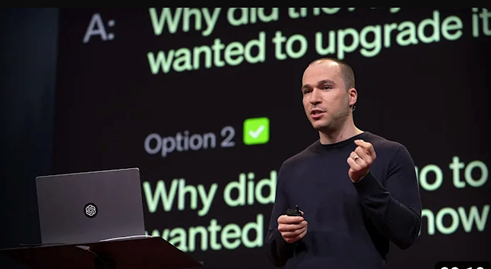
Figure 2: The Inside Story of ChatGPT’s Astonishing Potential | Greg Brockman | TED 

Methods

Our study involved a qualitative analysis of tweets gathered from X users. We collected tweets related to ChatGPT usage from teachers, recruiters, job applicants, and corporate employees. These backgrounds are important to note as these X users were most commonly found tweeting about our topic. Some keywords that we used to find tweets include “ChatGPT email,” “ChatGPT job”, and “ChatGPT ethics.” We filtered each search by tweets from the past year and tweets with the most engagement. Once we obtained these tweets, we analyzed the user’s holistic profile to ensure they were not a bot user. These keywords and filters provided a wide range of perspectives on ChatGPT integration in online communication.

Our analysis focused on categorizing tweets into for and against ChatGPT usage and into categories based on their employment background to discern users’ attitudes towards ChatGPT-generated content. In order to accomplish this, we examined the tone and vernacular of the tweets to distinguish the X user’s attitude. Furthermore, we also examined any memes or emoticons in the user’s tweets as this allowed us to better interpret the tone behind their tweet. Analyzing the tone, vernacular, memes and emoticons was crucial for us to depict any sarcasm.

Results and Analysis

After ChatGPT was implemented in online discourse, our analysis shows notable changes in the tone and linguistic expressions of conversations. The language used is a combination of official and casual, and ChatGPT comments frequently reflect the conversational tone that permeates online interactions. The limitations of AI-generated material in preserving contextual nuances are highlighted by difficulties in interpreting linguistic nuances including comedy, sarcasm, and cultural references.

Discussion

The results of our research provide a more comprehensive view of how online conversation is changing in the era of artificial intelligence. Although ChatGPT makes communication easier and improves accessibility, its effects on language use and cultural dynamics need to be carefully considered. Through adept handling of AI-generated content, we can optimize its potential to enhance digital connections while reducing the likelihood of misunderstandings and cultural insensitivity.

The key to maximizing AI-generated content’s ability to promote meaningful conversation while avoiding communicative dangers is to manage it strategically. Through the development of cultural sensitivity and contextual cue awareness, users may skillfully negotiate the complex landscape of online communication, utilizing AI’s augmentative powers without sacrificing human connection.

An ongoing conversation about the development of digital literacy and appropriate AI use is essential to this project. Giving consumers the means to understand language nuances and make sense of subtle implications helps guarantee that the emergence of AI-driven communication will continue to be a positive force for change.

References

Carrie Bradshaw Hater. “My Students Are Using CHATGPT for Their Essays and Everyone Is Turning in the Same Essay!!!” Twitter, Twitter, 4 Mar. 2024, twitter.com/nancytaughtyou/status /1764491684446900521.

Courtney Glory to Heroes Wells. “I Used CHATGPT When I Was Overtired and Needed to Get an Email to My Daughter’s Teacher That Made Sense and Didn’t Trust My Own Editing. I Don’t Care If She Knows — It’s Better than the Soup She Would Have Gotten If I Did It on My Own.” Twitter, Twitter, 28 Feb. 2024, twitter.com/ndesquiress/status/1762909572807708894.

Kepha, Brian. “Maaan ,CHATGPT Is Great at Corporate Lingo and I Love This.with It, It Is so Easy to Communicate a Serious and Business Tone Especially on Emails and Job Applications. This Is a CHATGPT Appreciation Tweet.” Twitter, Twitter, 29 Feb. 2024, twitter.com/AngelofVerdant/status/1763065674501394463.

Gawne & McCulloch. “Emoji as Digital Gestures.” Language@Internet, 2019.

Posts, Hannah. “It’s Hard to Tell. English Isn’t Her First Language, but the Communication Program I’m Using (I Lied, It’s Not Actually Email) Has a Translate Function She Could Use. in This Particular Instance She Was Just Replying, so All She Needed to Say Was ‘OK.’” Twitter, Twitter, 28 Feb. 2024, twitter.com/HannahPosted/status/1762946495324500456.

Sharma, S., & Yadav, R. (2023). Chat GPT – A Technological Remedy or Challenge for Education System. Global Journal of Enterprise Information System, 14(4), 46-51. Retrieved from https://www.gjeis.com/index.php/GJEIS/article/view/698

[/expander_maker]

, , , , ,

Differences In Sociolinguistics Among Genders In College

Kevin Adelpour, Shaylee Omrani, Ronnen Mizrahi,  Justin Azizian

Studies in sociolinguistics have revealed that there are many ways in which the relationship between language and gender varies, including the relationship between politeness and language style. Without looking deeper into the facts, members of society can draw the conclusion that it is more common for masculine people to express their affection by including their friends in activities and exchanging favors. The way that men often interact is shoulder to shoulder (such as watching television together or playing sports). Women, on the other hand, are more prone to convey weakness and vulnerability. An instance of this is how women cry to one another and confide in their feelings. We are aware of these aspects but rarely completely comprehend their importance or significance. Understanding the rationales underlying these common elements can help us better comprehend the social environment in which we live, while ultimately improving and enhancing our communications with speaking to others in everyday social interactions.

[expander_maker id=”1″ more=”Read more” less=”Read less”]

Introduction and Background

Today we are seeing many differences in communication styles and tones between men and women, especially when it comes to college students. Our goal is to deepen our understanding of the miscommunication of misconstruction of the gender system between men and women. A study by Merchant (2012) has shown that men’s and women’s communication styles have been part of the discrimination inequalities that women have faced, specifically in the workplace, which is also true in an academic setting. So, we investigated 40 male students and 40 female students and tried to confirm that men would use more direct gestures and women would use a more passive and less dominant tone than males. Since language is such an integral part of our face-to-face communication, we want to see how these communication differences would play out in language use among students at UCLA. Our research question is what are the sociolinguistic differences between men and women when communicating in a face-to-face setting at UCLA and how does that create different speech patterns in intersex conversations?

We have found that with a different look from those of males, females’ social interactions and activities would be more communicative and less information-seeking than men (Guadagno 2018). Women would use their communication style as a tool to create friendships and to have social connections, while men would use their communication style to seem dominant and assertive when communicating with people (Merchant 2012). For college students, the main way that they would communicate with each other in face-to-face communication would be based on their appearance and how they would present themselves (Gillen et al., 2006). This would include the types of symbols and body gestures that college students would have while communicating with each other. College women would tend to use more backchanneling the men when communicating, which is the attentiveness of listeners without any interruptive comments (Helweg- Larsen et.al 2004). There is a report on younger males and females especially having more of a difference in use of intensifiers where women would have a change in the sense that they would have a more innovative form more frequently (Fuchs 2017). A study has shown that women would have a less direct way of speaking because they would use directives which would minimize their status by not having so much demand involved (Netshitangani 2008).

Methods

We looked at the interactions between UCLA students with each other on campus and events happening at UCLA. We looked at forty men and forty women that are currently enrolled in UCLA and observed the ways of communication based on speech and symbols in face-to-face communication. Specifically, we looked at tone, articulation, body language, and body movements such as hand gestures and facial expressions. In addition, we also looked at the aggressive and passive ways an individual was within being confrontational, directly forceful, shy, less direct, and so on. Five diverse social contexts, and forty different students from each setting, on the school campus will be used to conduct the research. Setting affects the narrative by adding to the story, character development, mood, and theme. By enabling us, the researchers, to more clearly visualize the events and context of the encounter, it also has an impact on the conversation’s result. It’s also significant since it helps us grasp the storyline and make predictions about what will happen in the interaction.

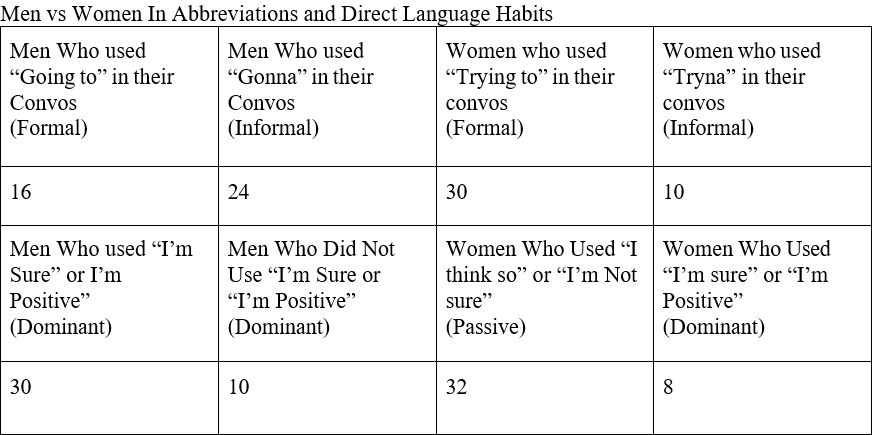
Character development is presented in the setting of an event as part of creating the mood. In these ways, setting is significant for giving characters a real sense of presence in the real world as well as for communicating what is happening in their lives. Within our research studies, we were able to identify studies that discover gender differences in speech patterns. Men use more abstract language, whereas women focus on the details. The researchers concluded that this tendency is due to power dynamics that can be altered. In addition to having different looks from those of males, female’s social interactions and activities are more communicative and less information-seeking than males (Guadagno, 2018). One may argue that the establishment and maintenance of relationships with others are the most important aspects of female communication. Other feminine communication styles include establishing equality, promoting participation, responsiveness, being personal and disclosing information, and trepidation (Fisher, 2005). Another distinction we were able to identify with their speech, is the commonality of women speaking in clear and complete sentences, while it was more commonly found to see men using words such as “runnin” instead of “running,” and “gonna,” instead of “going to.” All in all, peer relationships are crucial in the development of this concept and have a significant impact on how outsiders perceive the roles of men and women in our society.

Gender biases and stereotypes are always being reinforced in common settings of everyday lives in social interactions. By taking into account how it can enable a person to exhibit rage and related emotions without explicitly communicating these feelings, passive aggression plays a significant role in this. Individuals that exhibit passive aggressiveness frequently maintain the capacity to deny that they meant to act aggressively, which is most frequently observed in the speaking characteristics of men. According to studies, this is because of how individuals are raised starting in their early years, which eventually shapes who they are as a person. In the long run, this fits with how people perceive us and becomes a part of our identity (Gillen 2006). With the gathering of data from college students, peers are precisely examined by their approaches between various encounters and conversations. Approaching Bruin students and monitoring the linguistic distinctions between the two sexes within their expressive dialect help conclude the ultimate understanding of how we express our feelings and needs in order to socialize in common everyday interactions.

Results and Analysis

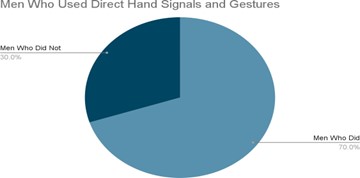
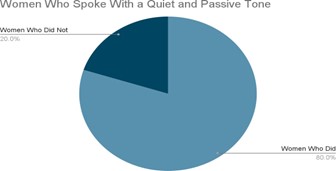
We gathered about 180 minutes of raw hands-on data which came in the form of in-person interactions and language compositions in 80 men and women at UCLA. The interactions observed were in casual social settings and we noticed precise communicative elements down to individual words used by both genders. In our observations, we found that a ratio of 6 in 10 men would often use more slang and abbreviations in their conversations with the opposite sex while disregarding formal interaction habits (table 1). Similarly, we also found that 70 percent of men used direct gestures when speaking to women which included hand signals, head motions, and facial expressions to exemplify the meanings in their conversations (chart 1). On the other hand, we also noticed that a ratio of 8 in 10 women exhibited a more passive and less dominant tone which was evident through their slower dialect and lower tone of voice in comparison to their male counterparts (chart 2). Overall, men on average were more highly likely to show forms of indirect, concise, and dominant forms of language while women showed more formal and passive habits when speaking which is evident in our data and charts below that reflect the differences in gender peer interactions between intersex conversations on campus.

Chart 1: Men’s Usage of Direct Hand Signals and Gestures
Chart 2: Women Speaking With a Quiet and Passive Tone
Table 1: Men vs Women In Abbreviations and Direct Language Habits

Discussion and Conclusions

In our research, we discovered that females communicate in a more implicit, intricate, and sentimental manner that can reflect ambiguity, cautiousness, and a lack of power, while males are perceived to have a direct, concise, and situational communication style, ultimately influencing and impacting how outsiders perceive the roles of men and women in our society. The research highlights that there are gender differences when examining communication styles. We found that females tend to place a greater emphasis on expressing emotions and building relationships through conversation, whereas males tend to focus more on information exchange and problem-solving. Nonverbal cues are also prominent when examining gender differences in communication. Females tend to be more expressive with their facial expressions and body language, while males may be more reserved in their gestures and facial expressions.

The results above underline the need of understanding various communication styles in various settings. For instance, recognizing that females frequently prioritize developing relationships through dialogue helps promote more effective teamwork and workplace communication. Recognizing that males are typically more problem-focused might also help to improve communication during the decision-making process. We may also understand and react to others’ communication more precisely and appropriately if we are aware of how males and females use nonverbal cues differently. The results add to our knowledge of how gender affects communication and can improve our ability to communicate in a variety of settings. Gender dynamics in communication highlight the ways that gender influences the way individuals communicate with one another. It is crucial to shed more light on these dynamics because gender is a vital component of identity that impacts how people interact with each other.

References

Fuchs, Robert. “Do women (still) use more intensifiers than men?: Recent change in the sociolinguistics of intensifiers in British English.” International Journal of Corpus Linguistics 22.3 (2017): 345-374.

Merchant, K. (2012). How men and women differ: Gender differences in communication styles, influence tactics, and leadership styles.

Gillen, Meghan M., and Eva S. Lefkowitz. “Gender role development and body image among male and female first year college students.” Sex roles 55 (2006): 25-37.

Helweg-Larsen, M., Cunningham, S. J., Carrico, A., & Pergram, A. M. (2004). To nod or not to nod: An observational study of nonverbal communication and status in female and male college students. Psychology of Women Quarterly, 28(4), 358-361.

Netshitangani, T. (2008). Gender differences in communication styles: The impact on the managerial work of a woman school principal. In Comunicación presentada en ANZCA08 Conference: Power and Place. Wellington, Nueva Zelanda. Recuperado el (Vol. 20).

[/expander_maker]

, , ,

Gender Bias in Celebrity Interview Questions: Topic Study at the Oscars 2023

Sofia Duffy, Lauren Nemeh, Audrey Tseng, Venus Vu

Red carpet interviews at award shows are often a hot topic that circulates on the internet and are viewed by millions of people. This being said, the quality and nature of what is said in the interviews can wildly influence the viewers. Previous research and social movements have shown that female celebrities who participate in these interviews are more likely to receive questions and comments related to their appearance compared to their male counterparts. With this in mind, we aimed to investigate gender bias in celebrity interviews through analyzing interview clips of the 2023 Oscars red carpet interviews. Specifically, we examined if there were differences in the theme of questions asked (word choice) and the quality of interviewers’ voice (tone) when interviewing male celebrities versus female celebrities.

[expander_maker id=”1″ more=”Read more” less=”Read less”]

Introduction

Celebrity interviews on the red carpet hold a prominent position within the fabric of award shows, captivating global audiences as they eagerly seek glimpses into the lives of their beloved stars. However, within this realm, a disconcerting disparity often emerges in the nature of questions posed to male and female celebrities, serving as a reflection of deep-seated gender biases and the perpetuation of societal expectations. In our study, we set our sights on the precise queries directed at celebrities during the 2023 Oscars, embarking on an investigation to unravel the discrepancies in how interviewers engage with male and female celebrity interviewees. Through a meticulous analysis of interviewers’ word choice and tone, our objective is to cultivate a comprehensive understanding of the pervasive gender biases that permeate these high-profile interactions. In doing so, we aim to unearth patterns that mirror societal gender biases and shed light on the implicit biases harbored by the interviewers themselves. By undertaking this critical exploration of language use in celebrity interviews, we contribute to the ongoing discourse surrounding gender equality in the realm of entertainment and challenge the perpetuation of gender stereotypes on the illustrious red carpet.

Background

Celebrities hold a unique position in society due to their high-profile status and influence. The media coverage they receive significantly shapes public perceptions, particularly among impressionable children and teenagers who often look up to their favorite stars. Red carpet events are particularly important because they are televised occasions with substantial social significance. Among these events, the red carpet at the Oscars stands out as the most prestigious. Celebrities are asked a series of questions, and these interactions are recorded and broadcasted worldwide. 

A study from 1956, “Age and Sex in the Interview” by Benny et al., offers valuable insights into the intersectional relationship between age and sex. Their analysis focuses on responses and utilizes post-interview surveys to gauge participants’ perspectives. Their research reveals a consistent pattern of communication inhibitions between individuals of the same age but different sexes, particularly among young men and young women. These findings underscore the complexity of interview interactions and the influence of societal expectations. 

The Oscars red-carpet pre-show in question, with its apparent glamor and spontaneity, hides a reality that is heavily scripted and choreographed, where questions and reporters are carefully selected to meet industry demands and viewer expectations. Beneath the glamor of red-carpet lies a troubling tradition of objectifying the female body as a spectacle. Over the years, women have been typecast as the sole consumers of topics involving beauty and fashion, influenced by the rise of the beauty industry and photography (Lundén, 2021, p. 212). This has perpetuated a questionable tradition of objectification, reinforcing societal beliefs about gender roles. The red carpet has become a platform where women’s appearances are harshly criticized, focusing on mean-spirited evaluations of their bodies rather than celebrating their talent and accomplishments. Additionally, while women often bear the brunt of fashion-related questions, this does not exempt men from scrutiny. Fashion discourse has expanded to include men, but the discernible imbalance in how men and women are judged persists. 

However, the emergence of the #askhermore movement in 2015 reflects a growing resistance to the recurring practice of asking women the superficial “what are you wearing” question on the red carpet. The movement encourages reporters to delve deeper and ask female celebrities more substantial questions beyond their clothing choices. In our research, we will concentrate on the questions asked to both male and female celebrities, shedding light on patterns that mirror societal gender biases and expected gender performance.

In the context of award shows, red carpet celebrity interviews hold great significance as they attract thousands of viewers seeking insights into the inner lives of these celebrities. However, the quality of questions posed to male and female celebrities differs significantly, with women often subjected to shallower inquiries about their appearance rather than their careers. The central focus of our research is to investigate the disparities in the treatment of male and female celebrity interviewees during the 2023 Oscars. Specifically, we aim to analyze the word choice and tone utilized by interviewers in their interactions with these individuals. By examining these linguistic aspects, we seek to gain a deeper understanding of the gender biases that manifest in celebrity interviews. Our research question revolves around whether interviewers hold implicit gender biases, leading to a tendency to ask female celebrities more superficial questions compared to their male counterparts. Through this inquiry, we aim to contribute to the broader conversation on gender equality within the entertainment industry and challenge the perpetuation of gender stereotypes on the red carpet.  

Project Design

For our data sample, we selected 16 video clips from the 2023 Oscars red carpet. Since we are focusing on the gender difference of the celebrity, we selected 8 interview clips where the interviewee is a male celebrity and 8 interview clips where the interviewee is a female celebrity. To reach our sample size, we gathered video clips from three media sources: Extra TV, Vanity Fair, and E! News.  In total, we analyzed 49 minutes and 53 seconds of interviews. The time varied from interview to interview, from an interview that was 41 seconds long to one that was 4 minutes and 49 seconds. We aimed to analyze whether there are differences in the interviewer’s tone and word choice based on the gender of the celebrities being interviewed. To do so, we first transcribed everything that was said by the interviewers. We omitted what the celebrities said to better focus on the style of the questions and comments and color coded the content according to these following categories:

  • Word Choice (categorizing questions/comments according to theme)
    • Red: career related questions/comments (e.g. film projects, experience working with co-stars)
    • Blue: personal related questions/comments (e.g. family, love life)
    • Green: fashion related questions/comments (e.g. outfit, makeup)
  • Tone (categorizing questions/comments according to quality of interviewer’s speech)
    • Yellow: serious tone
    • Purple: playful tone

For the purpose of our study, we treated each categorization as mutually exclusive. Next, we counted how many instances each category was used in each interview and added them up according to the gender of the celebrity. We compared the number of instances between the two genders to see if there was any relationship between them. We also placed our transcripts into a word counter in an attempt to see if any significant words were used more or less in one gender over the other. In our collection and analysis of the data, we disregarded the gender of the interviewer as we solely wanted to focus on the gender of the celebrity in relation to the type of question asked.

Based on previous knowledge, we hypothesized that:

  1. Female celebrities will be asked more questions related to their personal life and fashion.
  2. Male celebrities will be asked more questions related to their career.
  3. Interviewers will use a more playful tone when interviewing female celebrities.
  4. Interviewers will use a more serious tone when interviewing male celebrities.

Data and Results

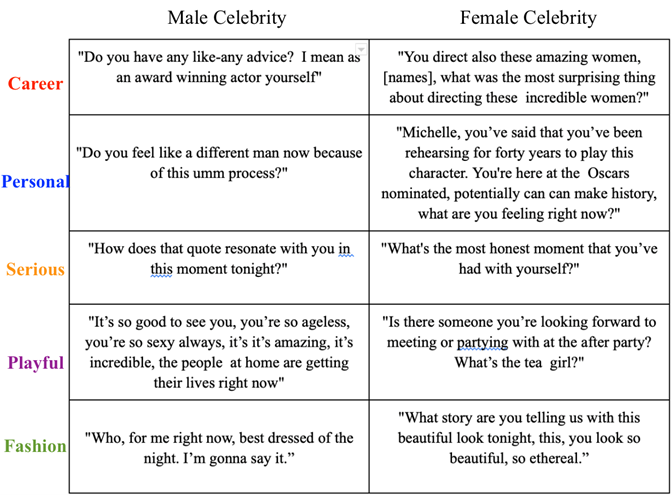
Before discussing the findings of our study, here are some examples of the types of questions/comments interviewers asked and how we categorized them. Each example is pulled from a different celebrity interview.

Figure 1: Examples of questions/comments asked to celebrity interviewees, categorized based on both gender and tone and word choice. Each question/comment is pulled from a different celebrity interview.

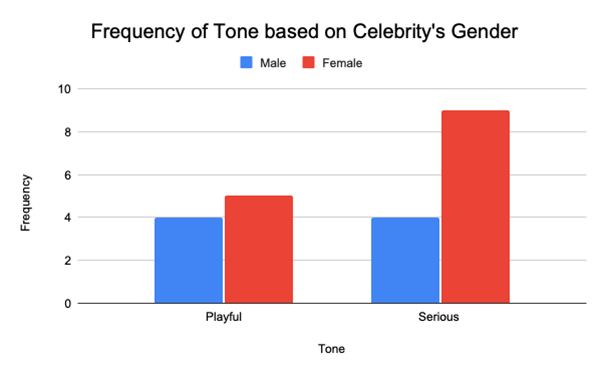
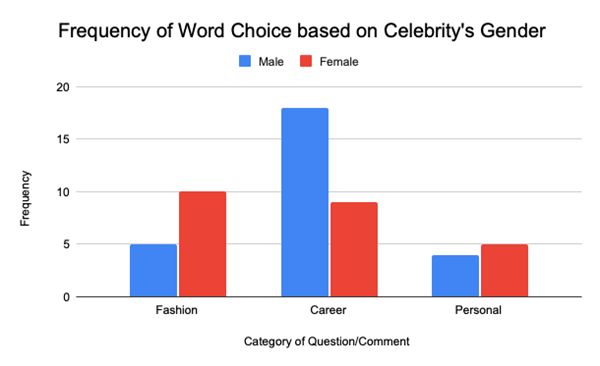
Here are our findings, separated into two bar charts. One chart is organized based on questions/comments that were categorized for tone, and the other is organized based on questions/comments that were categorized for word choice.

Figure 2: Bar chart representing data, with interviewer’s tone on the x-axis and total frequency in 16 interviews on the y-axis. Categorized based on celebrity’s gender.
Figure 3: Bar chart representing data, with interviewer’s word choice on the x-axis and total frequency in 16 interviews on the y-axis. Categorized based on celebrity’s gender.

In terms of word choice categorization, female celebrities were asked twice as much about fashion compared to men, as we recorded 10 instances for women compared to 5 for men. Male celebrities were asked career related questions twice as much as women, as we recorded 18 instances for men compared to 9 for women. We originally predicted that female celebrities would be asked more questions related to their personal life, which was proven to be incorrect as the results were roughly equivalent. Women were asked five personal questions compared to four for men.

In terms of tone, we found that women were asked twice as many questions in a serious tone compared to men (9 vs 4). However, we originally predicted that interviewers would use a more serious tone when interviewing male celebrities. We also found that male and female celebrities were spoken to in a playful tone at roughly the same frequency, with 20 instances for men compared to 18 for women.

When we put the data into a word counter, which we separated by the gender of the celebrity, we did not find any significance in the density of words used for male versus female celebrities.

Discussion and Conclusion

As we previously discussed, while we did find slight differences in the types of questions that were asked to the male versus female celebrities in our data recording, our data was not all-revealing nor conclusive. While we did find that men were asked more career-related questions whereas women were asked more fashion-related questions, we are not able to use our data to conclude that this is true for red carpet interview events in general. Our data consisted of 8 male celebrity interviews and 8 female celebrity interviews, which is not a complete representative of red carpet interviews as a whole. Further research could be done looking at a variety of different events. It would be interesting to see how/ if the results change depending on if it is a music awards event, premiere event, awards event, small event, etc. Each red carpet could be researched as an independent study, to then later compare the data. This comparison would offer insight into how the different events influence the types of questions being asked to male versus female celebrities. Alternatively, a study could be done by taking a set amount of interviews from each red carpet in order to have an accurate data sample of red carpets as a whole. This would offer insight into the trends of the questions male celebrities versus female celebrities are being asked on red carpets as a whole. Moreover, in our study we only analyzed the questions that were asked to the celebrities and did not take into account their responses. Future studies could benefit from also analyzing the responses.

It is also important to note that for the purpose of our study, we approached gender in a binary way through only analyzing the interviews of female and male celebrities. However, gender is not binary, and there is plentiful research that could be done on how transgender, non-binary, and other identifying celebrities are approached by interviewers on red carpets. In particular, we believe that it would be insightful to research and analyze the red-carpet interviews of transgender celebrities before and after transitioning to see if there are any differences in the questions that the same individual is asked. One of our male celebrities, Austin Butler had an interesting response to being asked a fashion question about his tuxedo. He responded with “What story am I telling you? I mean this Saint Laurent and I don’t know what story I’m telling you,” (Butler, 2023). This response, and others, offer insight into the history and the “why” matters of the questions that are asked on red carpets and therefore would be a useful data addition to a project like ours.

In addition to what we have already mentioned, in reflecting back on our project we have identified some factors that could improve our research. First, we did not account for the length of the interviews we were analyzing. Therefore, if there are three career-related questions in a 2 minute video, and none in a 30 second interview, it would be an inaccurate comparison. In future studies, we would better control the interview lengths. Additionally, we did not control who the interviewer was. Reflecting back, we realize that the motive and employer of the interviewer could play a large role in the types of questions that are asked. In future studies, we would definitely control who the interviewer is. Doing so would also open up an opportunity for more research through analyzing and comparing the types of questions that interviewers from different companies and magazines ask. It is evident that our research serves as a good starting point and reference for future studies.

References

Benney, M., Riesman, D., & Star, S. A. (1956). Age and Sex in the Interview. American Journal of Sociology, 62(2), 143–152. http://www.jstor.org/stable/2773344

Brownlow, S., Rosamond, J.A. & Parker, J.A. (2003). Gender-Linked Linguistic Behavior in Television Interviews. Sex Roles, 49, 121-132.  https://doi.org/10.1023/A:1024404812972

ExtraTV. (2023, March 12). Angela Bassett’s Kids Say Mom DESERVES Oscar Win (Exclusive). Youtube [Video]. https://www.youtube.com/watch?v=iM_bBHk-1HM

ExtraTV. (2023, March 12) Oscars 2023: Brendan Fraser Brings His Sons to the Red Carpet (Exclusive). Youtube [Video]. https://www.youtube.com/watch?v=dad48BVyR2A&ab_channel=extratv

ExtraTV. (2023, March 12) Oscars 2023: Colin Farrell’s Son Henry Says He’s a NICE Dad (Exclusive). Youtube [Video]. https://www.youtube.com/watch?v=WZRN4i0mIoo&ab_channel=extratv

ExtraTV. (2023, March 12) Oscars 2023: Miles Teller on Possibility of MORE ‘Top Gun’ Movies (Exclusive). Youtube [Video]. https://www.youtube.com/watch?v=BJMNzyb5Jtk&ab_channel=extratv

E! News. (2023, March 12). Oscars 2023: MUST-SEE Read Carpet Moments | E! News. Youtube [Video]. https://www.youtube.com/watch?v=-bu4OPD1PCM

Lawson, C. E., & Draper, J. (2021). Working the red carpet: a framework for analysing celebrities’ red carpet labour. Celebrity Studies, 12(4), 635-648. https://doi.org/10.1080/19392397.2020.1750969

Lundén, E. C. (2021). Twilight of the Idols. In Fashion on the Red Carpet: A History of the Oscars, Fashion and Globalization, 207–226. Edinburgh University Press. http://www.jstor.org/stable/10.3366/j.ctv1vtz84g.15

Mohammed, M. M., & Kadum, S. A. (2016). A Discoursal Analysis of Gender Differences in Selected English TV Interviews. Journal of the College of Languages (JCL), (34), 1-14. https://jcolang.uobaghdad.edu.iq/index.php/JCL/article/view/19

Nathanson, E. (2021). Aging on and off the red carpet: Joan Rivers, celebrity culture and postfeminist television. Celebrity Studies, 12(1), 51-66.  https://doi.org/10.1080/19392397.2019.1608839

Vanity Fair. (2023, March 12). After the Awards with Vanity Fair. Youtube [Video].  https://www.youtube.com/watch?v=ncn7h59Ko-U

Wang, H. C. (2009). Language and ideology: gender stereotypes of female and male artists in Taiwanese tabloids. Discourse & Society 20 (6), 747-774. https://www.jstor.org/stable/42889296

[/expander_maker]

, , , , ,

アンチ vs. Haters: How do Individualist Americans and Collectivist Japanese Net 民 Express Hate Online?

Kayenat Barak, Emily Moreira, Sae Tsunawaki, Karin Yamaoka

While social media has been a revolutionary tool for facilitating access to resources and information and connecting people globally, the power to hide behind anonymous platforms has also equipped many with the ability to spread hate online. Our project analyzes such hate comments written by Japanese and American audiences to gain insights into the sociocultural factors that shape the nature of online hostility. We chose four celebrities: one American female, one American male, one Japanese female, and one Japanese male, and used multiple social media platforms to collect a total of 120 comments. Upon categorizing these comments by type, tone, and directness, we found that there are no significant differences between comments targeted towards Japanese celebrities and American celebrities. This conclusion is fascinating, as it shows that values that characterize a certain culture, such as politeness and collectivism, and the linguistic barriers they may pose were not scientifically sound when it comes to the online world.

[expander_maker id=”1″ more=”Read more” less=”Read less”]

Introduction and Background

In today’s highly technological and globalized society, social media has quickly made itself a necessity in social relationships around the world, but the power to hide behind anonymous platforms has also equipped many with the ability to spread hate online. Ranging from cancel culture to haters, online hate culture has become so integrated to our society that it has manifested itself as an interesting sociolinguistic phenomenon. It is this precise overlap between sociolinguistics and online speech around that world that we wanted to research.

Our project compares hate comments targeted towards Japanese and American celebrities as a way to gain insight into the distinct sociocultural contexts and linguistic patterns that shape the expression of online hostility. Understanding the complexities of hate speech requires an exploration of its linguistic, cultural, and sociological dimensions. By comparing hate comments written by Japanese and American audiences, we can begin to understand the variations and similarities in the ever complex issue of online hostility. Given this context, our research question then is: How are written negative comments online directed towards popular entertainment public figures similar or different between Japanese and American speakers?

Defining hate comments becomes more intricate when we consider the linguistic, cultural, and sociological differences between Japanese and Standard American English.  Negative comments are extreme forms of “online incivility”, and they can be recognized and understood differently depending on various normative concepts and cultural backgrounds (Schmid et al., 2022). To establish a comprehensive framework of what is considered a “hate comment”, we will adopt the definition proposed by Alzarouni who writes, “those (online hate) directed to a person or a particular group to express intolerance for the individual or their ideology” (2022, p. 5). Japan’s culture emphasizes hierarchy, group harmony, and politeness which translates into a high language positionality and indirect speaking style. However, American culture promotes individualism which is expressed in the way Americans speak, such as the lack of structured high language and freedom to discuss social taboos. Additionally, resistance towards progressive ideas may be observed due to Japan’s more conservative socio-political structure (Feldman, 2023). Given the contrast in these two societies, we hypothesized that Japanese hate comments would center around comments that came as a result of maintaining the national status quo, such as promoting standardized beauty norms and criticizing mannerisms, whereas American hate comments would directly criticize celebrities based on the hater’s individual moral code rather than as a result of social constraints.

Methods

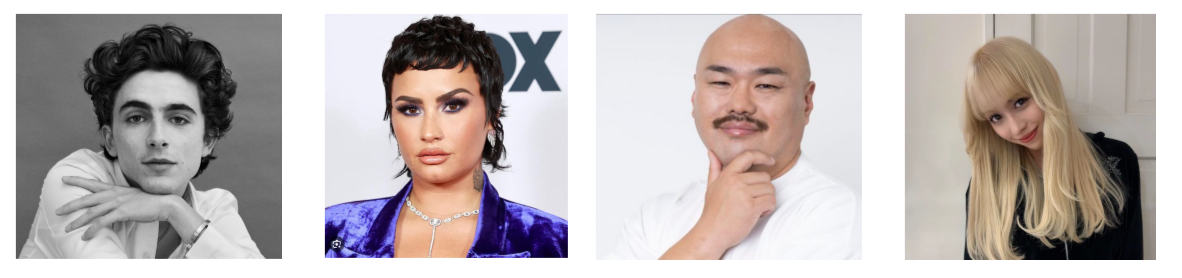
Establishing a way to test this hypothesis meant that we needed to test the frequency of our linguistic variables within a controlled environment. That being said, we collected 120 hate comments on Twitter, TikTok, and Instagram directed towards Japanese and American celebrities across 4 categories. These four categories test the correlation and frequency of hate between gender and race: Japanese male, Japanese female, American male, and American female. In order to find hate comments for these 4 categories, we collected online hate directed to our representative celebrities, Kuro-chan, Ryuchell, Timothée Chalamet, and Demi Lovato.

From left to right: Timothée Chalamet, Demi Lovato (American celebrities), Kuro-chan, and Ryuchell (Japanese celebrities)

We collected this data by choosing the 30 most interacted hate comments made in 2023 under social media posts made in the same year from the celebrities’ personal social accounts. Only comments written in Japanese and made by Japanese speakers were analyzed for our Japanese celebrities; conversely, only comments written in American English were analyzed for our American celebrities. From these 120 comments, we then analyzed frequency across three linguistic variables: type of identifiable hate, tonality, and toxicity. By identifiable hate, we wanted to categorize the hate comment in regards to what it directly criticized which we classified into 6 groups: appearance, gender identity/sexuality, private affairs, personal hatred, mockery, and violence. It is important to note that hate comments were not restricted to one category, rather they could be categorized under multiple if they fit the requirements. An example of this would be a comment made to Demi Lovato, “It’s the chin for me. 🤪” which was classified as both mockery and an appearance hating comment. In order to analyze tonality, comments could also be categorized into 4 major tonal groups: serious, comedic, pitiful, or neutral. Lastly, the variable of ‘toxicity’ stems from existing previous research conducted by Won Ik Cho and Jihyun Moon on Korean online hate comments. Cho and Moon define toxicity as 1) dependent on how hateful the speech is, and 2) its ability to influence either the victim or other commenters (2021, p. 4-5). In order to gauge toxicity, we adapted this concept to instead analyze the “directness/indirectness” of the hate comments. An example of an indirect comment would be, “lowk basic but ok” which was directed to Timothée Chalamet vs. a direct comment “気持ち悪いから目覚めんな🤢🤢🤢” (“I hope you never wake up because you are disgusting”) directed towards Kuro-chan. Through this methodology, our main goal was to count and compare the frequency of these different linguistic markers and see if there were any differences, similarities, or correlations across Japanese and American hate comments, and subsequently, global hate culture.

As a disclaimer, we wanted to acknowledge some expected fluctuations in types of online hate for each of our categories. At first, we aimed to pick noncontroversial, nationally, but not internationally, acclaimed celebrities of each country with approximately similar fame in each nation in order to minimize data alteration of any kind. However, this proved to be difficult as we were unable to find hate comments directed to popular Japanese male and female celebrities. The only hate comments we could find were made to already “controversial” Japanese celebrities. Kuro-chan is problematic for his online comedic persona which is perverted, misogynistic, and violent in nature. Ryuchell is scrutinized by the Japanese public for being a transgender woman. Given these factors, we assumed our data would be skewed and expected higher rates of violent comments directed towards Kuro-chan and more hate comments regarding gender identity directed towards Ryuchell. We also expected a higher rate of gender and sexuality hate comments directed towards Demi Lovato as well, as they are bisexual and nonbinary (she/they pronouns). Our predictions were proved partly true as our data reflects that only Ryuchell and Demi received comments in regards to their sexuality or gender identity, while neither Kuro-chan and Timothée received comments of that nature. However, the hate comments were still dispersed across several different categories.

Findings

Context

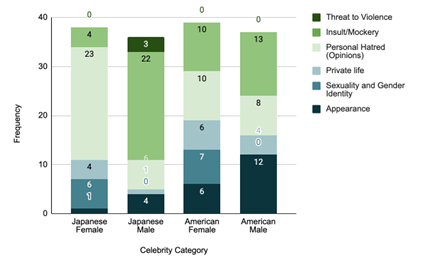
Figure 1: Aggregate counts of corresponding content categories for each comment

The data obtained from the context categories revealed both cross-cultural and cross-gender differences among the four celebrities. There were a few distinct findings we did not anticipate prior to the data collection, such as the high count of personal hatred comments toward the Japanese female celebrity as seen in Figure 1. This may come as a result of a widely disputed scandal Ryuchell was involved in last year. Yet, the discrepancy between Ryuchell and the Japanese male celebrity is still extremely wide. Timothée similarly was involved in controversy due to his dating rumors[1], but the comparable count of personal hatred comments to the American female celebrity may indicate that Japanese commenters are more harsh than Americans to controversial celebrities.

Other data that stands out in Figure 1 is the large count of insult/mockery comments targeted at the Japanese male celebrity. Again, we see a similar trend where there is a significant discrepancy between genders, rather than cross-culturally, in Japan and America. This can be explained by the general social media culture in Japan where trolling is considered a common and entertaining form of online conversation (Kaigo, 2017). Although internet trolling is seen in American online platforms as well, Japanese entertainment and comedy often involve dark humour. Another aspect of Japanese humor we see in comments and in many social conversations is “ohghiri” (大喜利), which are unique jokes that involved comedic takes on seemingly neutral or one-dimensional topics. Therefore, the combination of dark humor and ohghiri are commonly seen as a tactic of online trolling in Japan; especially when taking into account that the chosen Japanese male celebrity is a comedian, his haters may be influenced to convey their sentiments in a similar manner, perhaps as a way to mock his occupation.

Contrary to our initial hypothesis, our data showed that American celebrities received more appearance-related comments compared to their Japanese counterparts, with the aggregate count being 18 and 5, respectively. Additionally, appearance-related comments were more common for male celebrities compared to their female counterparts – almost 4 times as much for Japan, and twice as much for America. The discrepancy between genders may be attributed to the notion that commenting on a man’s appearance is less of a social taboo than commenting on a woman’s appearance. Since oftentimes women are subjects of strict beauty standards, perhaps this discourages individuals from criticizing women based on their appearance. Particularly for Timothée Chalamet, his occupation as an actor increases the frequency of hate comments regarding this appearance as attractiveness plays a significant role in his promotional activities.

Another finding that defied our hypothesis was that there were an equal number of hate comments targeting sexuality and gender identity for both Japanese celebrities and American celebrities. As we anticipated, such hate comments were exclusively directed at the female celebrities who were both members of the LGBTQ+ community. However, we assumed that a conservative society like Japan would avoid discussing topics relating to sexuality, while American progressivism meant that we expected Demi Lovato’s hate comments to be primarily about her sexuality. Surprisingly, we saw almost equal amounts of hate comments about sexuality and gender identity, where a Japanese female celebrity received 6 and the American counterpart received 7. This may be because social media permits anonymity which in turn allows commenters to code-switch and not adhere to their expected linguistic social restrictions. Japanese commenters, therefore, may feel less obligated to uphold social harmony online and express underlying opinions they would not say otherwise. Additionally, the nature of online platforms transcends cultural boundaries. The “international” online community lacks rigid cultural norms or taboos that regulate how certain topics should be treated or discussed. Therefore, Japanese commenters may be code-switching into the ‘online language’ or culture that allows them to engage in conversations that might be considered taboo in Japan.

Tone

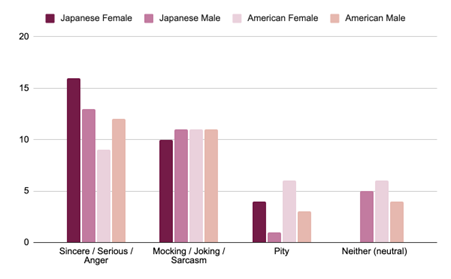
Figure 2: Each comment attributed to the style of tone by celebrities

When looking at tonality, our results show that Japanese female celebrities received the most ‘serious’ tone comments. There were no drastic differences between Japan and America when looking at tonality, excluding the pity tonality. We expected for there to be a higher rate of pity-toned comments for Japanese celebrities than for American celebrities due to Japanese culture which emphasizes politeness and humility. However, contrary to our predictions, there were more pity-toned comments for Americans overall. This may be due to the ability to be vulnerable in America, where influencers and celebrities are often encouraged to be transparent to their audience. As American celebrities tend to appeal to the masses by relating to their humanity, when celebrities face setbacks they are in turn treated with the same humanity and pity.

Another explanation for the pity tonality could be the presence of negative politeness in American online culture, as many of the pity comments we counted displayed negative politeness. Commenters at times used indirect speech to display their discontent. By framing it as a suggestion rather than a comment, the hater aimed to preserve the other person’s autonomy and avoid sounding too forceful. We think individuals in America rely on negative politeness strategies to express their criticism and avoid confrontation due to “cancel culture”.

Toxicity/Directness

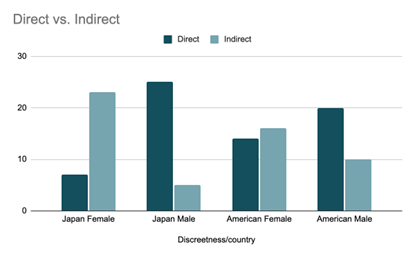
Figure 3: Comments for each celebrity separated into direct or indirect

In regards to toxicity, or directness as we refer to it in our study, we originally expected Japanese comments to be primarily indirect whereas American comments to be direct. This is based upon Japan’s high language and how it tends to place a greater emphasis on respect, politeness, and conformity, which in turn discourages individuals from expressing explicit or controversial opinions openly. In contrast, American culture generally emphasizes freedom of expression and individualism, which may lead to more direct comments being shared online. However, our results show that there was no particular pattern cross-culturally, but that a correlation did exist between genders. Overall, male celebrities tended to receive more direct comments than their female counterparts as displayed by our data.

We think that due to gender roles in both countries and views on women in Japan as submissive, they had more implicit comments. Also, it could be considered taboo to comment on a woman’s appearance directly since it can contribute to this objectification and reinforce harmful gender stereotypes. Society holds women to different standards than men when it comes to appearance and behavior and implicit comments could be used to imply those notions. Regarding the more explicit comments for Japanese male celebrities, Japanese fan culture could cause a certain devotion and obsession that can sometimes lead to more explicit or possessive comments being directed towards male celebrities.

Future Research

Due to this study’s time constraints, we cannot be certain of this idea, but a proposal for future research to test this would be to increase the sample size by collecting thousands of hate comments made to multiple celebrities within our four categories. Frequency of hate comments and their types should then be categorized and compared between not only Japan and America, but other countries around the world as well. Additionally, our findings showed that there was a stronger correlation between hate comments and gender vs. hate comments and race; thus, analyzing hate comments in accordance to both the gender of the commenter and the gender of the celebrity would also be interesting. Applying the concept of toxicity will provide insight as to whether or not speech tends to be harsher or softer when criticizing individuals of the same gender identity.

Conclusion

Ultimately, our findings showed that when categorized into types of identifiable hate, tonality, and toxicity, hate comments made by Japanese and American English speakers did not differ significantly from each other. This conclusion in particular is fascinating as it shows that the preconceived notions we had about polite vs. impolite society and linguistic barriers they may pose were not scientifically sound. In fact, it instead points that perhaps the online world may be a liminal space where culture, language, age, gender, and other sociolinguistic factors are broken down, creating instead a universal shared language and culture.

References

Alzarouni, E. (2022). Detection of Hateful Comments on Social Media Detection of Hateful Comments on Social Media. Rochester Institute of Technology. https://scholarworks.rit.edu/cgi/viewcontent.cgi?article=12308&context=theses

Cho, W. I., & Moon, J. (2021). How does the hate speech corpus concern sociolinguistic discussions? A case study on Korean online news comments. ACL Anthology. https://aclanthology.org/2021.nlp4dh-1.3/

Feldman, O. (2023). Challenging Etiquette: Insults, Sarcasm, and Irony in Japanese Politicians’ Discourse. 93–116. https://doi.org/10.1007/978-981-99-0467-9_5

Kaigo, M. (2017). The Japanese Internet Environment. Social Media and Civil Society in Japan, 1–35. https://doi.org/10.1007/978-981-10-5095-4_1

Schmid, U. K., Kümpel, A. S., & Rieger, D. (2022). How social media users perceive different forms of online hate speech: A qualitative multi-method study. New Media & Society, 146144482210911. https://doi.org/10.1177/14614448221091185

[/expander_maker]

, , , , ,
Scroll to Top