professors

The Linguistic Switcheroo: Navigating Style-Shifts in College Discourse
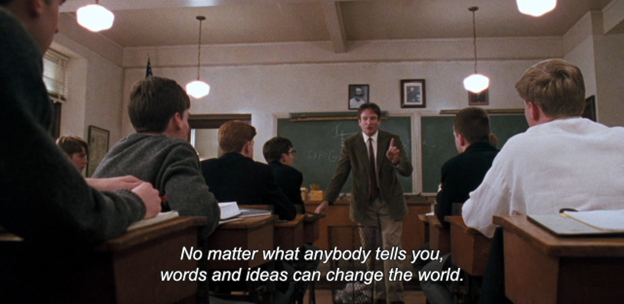
Dead Poets Society (1989)

This blog entry explores the dynamic world of language use among college students at UCLA, focusing on how they adjust their linguistic style in academic environments. We delve into the phenomenon of style-switching, where students navigate between informal conversations with peers and formal interactions with professors. Through careful observation and analysis, our research uncovers the nuances of word choice, tone, and syntax in these differing contexts. We aim to understand how social settings influence language socialization within academic communities. Our findings reveal that students tend to employ a more casual, slang-infused language among peers while adopting a more structured and formal language when engaging with faculty. These findings highlight the adaptability of linguistic practices within differing contexts, as seen in the discrepancy between a languid and relaxed setting versus an academic one, and reveal deeper insight into the social dynamics at play. Join us in exploring the intricate play of language in the college setting, where each conversation reflects the complex interplay of social norms, power dynamics, and cultural identity.

[expander_maker id=”1″ more=”Read more” less=”Read less”]

Introduction

Our research focuses on the intricate ways college students adjust their language in different academic settings, particularly at UCLA. Previous studies, like those by Patricia A. Duff and others, have highlighted language socialization in academic contexts. However, there’s less focus on how students’ language shifts in real-time interactions between diverse groups such as peers and professors. We aim to bridge this gap by analyzing how UCLA students’ word choice, tone, and syntax vary when communicating with peers versus academic staff. Our hypothesis posits that students’ language becomes more informal, slang-heavy, and less complex in peer interactions compared to more formal, carefully structured conversations with faculty, reflecting underlying power dynamics and social norms.

Here’s a link to a video by Cambridge University Press that explains “academic language” to give you an idea of what we’ll be discussing in this blog!

Methods

In our study, we centered our investigation on the linguistic style shifts among UCLA students in academic contexts. Our focus was on two primary interaction scenarios: between students themselves and between students and their professors.

People and Contexts Observed:

  • Student-Student Interactions: Conversations among peers, both within and outside classroom settings, were recorded. These interactions provided insights into the informal communication styles prevalent in peer groups.
  • Student-Professor Interactions: We also observed and recorded interactions between students and faculty members. This setting offered a contrasting view of more formal and structured communication.

What We Analyzed:

  • Word Choice: We paid close attention to the vocabulary used in different social settings. Our analysis focused on identifying the use of informal language and slang among peers, compared to more formal and academic language in interactions with professors.
  • Syntax and Structure: The complexity of sentence construction and use of grammatical structures were analyzed to observe variations in formality and complexity.
  • Tone: The emotional and attitudinal aspects of speech, such as enthusiasm, respect, or hesitation, were observed to understand the relational dynamics in different interactions. Take a look at this video to better understand the importance of how we say things, beyond what we say.

Data Collection Method:

  • A mix of participant observation and ethnographic fieldwork was employed. This involved walking with, talking with, and recording the daily life and conversations of students. Both audio recordings and hand-transcriptions of conversations were utilized.

By focusing on these observable elements in communication, our study aimed to illuminate how linguistic practices are adapted to different social contexts within the academic environment. Technicalities not central to our primary analysis, such as detailed linguistic theories, were omitted for clarity and accessibility to a general audience. This approach ensured that our study remained engaging and understandable, while still maintaining academic rigor.

Results

Here is what some of our data ended up looking like:

Student-Student Conversation

Student 1: Yeah, the bystander effect. It’s like, when there’s a bunch of people, everyone thinks someone else will step up. Ends up with no one helping. Pretty messed up and craaaazy.

Student 2: That’s tea. It makes you wonder, huh? Did you guys then talk about how different countries do things differently?

Student 1: Oh yeah, it’s all about the culture vibe. Like, some places are all “pick me girls,” while others are like “No worry girly.” (laughing)

Student 2: No literallyyyy. Social psych’s got some real “shit” going on.

Student-Professor Conversation

Student: In the lecture, you mentioned the bystander effect. Can you explain more on that?

Professor: Oh yes I can. So, the bystander effect refers to the phenomenon where individuals are less likely to offer help to a victim when other people are present. It’s often due to a fear of responsibility, where the bystander assumes someone else will intervene.

Student: I see. So how does this relate to social responsibility?

Professor: Hmm social responsibility is an individual’s obligation to act for the benefit of society at large. So like in the context of the bystander effect, it challenges the individuals to overcome the fear of responsibility and take action when they witness someone in need of help.

Student: Oh ok I get it. And last question (slight haha) what about the role of culture in social psychology?

Professor: So culture plays a significant role in shaping our social behaviors and attitudes. Different cultures have different norms and values, which could influence how people perceive and interact with each other. Like for example, individualistic cultures might emphasize personal achievements, while collectivist cultures focus on their group harmony.

Student: OK I got that down. Thank you so much for your time, Professor!

So what does this tell us?

These two conversations, both of which cover the “bystander effect” of social psychology, show completely different ways of having very similar conversations. Even though both conversations cover the bystander effect, and in each one the speaker is asking questions while one is answering and explaining, the language used is very different.

The use of slang in the student-student conversation – words like “tea,” “craaaazy,” and “literalyyyy” – are not present in the student-professor conversation. This suggests that students are perfectly capable of discussing academic topics in the way they ‘typically’ speak – with friends and in their social interactions, but they are intentionally censoring themselves and electing for “academic language” when speaking with professors.

The fact that the professor, here, is not speaking with the same total academic language, and still uses phrases such as, “so like” and “hmmm,” suggests that they do not feel the same sense of need to maintain formality in the way the student does. This shows us that despite the absence of reciprocal formality within student-professor interactions, when speaking with a faculty member or professor, the student still understands their position in this conversation as relatively powerless and more subservient.

In analyzing syntax and structure, we found conflicting conclusions in students’ willingness to formalize their speech around professors versus their peers. In conversations with peers, students tended to include longer sentences that more frequently lacked correct grammatical structure and syntax as ruled by academic standards of speech. However, these sentences were more truncated and were often shortened to mere phrases that included only enough to communicate a simple idea. In contrast, students’ interactions with the professor included simpler sentence structure, yet more grammatically correct. Student 1’s use of the phrases, “Ends up with no one helping” and “Pretty messed up and craaaazy” as well as Student 2’s response later in the conversation, “No literallyyyy” highlight this phenomenon. By standards imposed through academia’s use of American Standard English, all of these examples would be considered incorrect grammatically and incomplete in syntax. They all lack subjects and therefore rely on the context surrounding it with the conversation being had in order to correctly interpret their meanings. These examples can be contrasted with the student’s interactions with the professor, in which all sentences are complete and use academically correct syntax structure. The students’ sentences are more concise in their lack of filler words and slang, and yet grammatically more correct. This again, may point to power imbalances within these two interactions – students may feel less willing or comfortable to talk extensively with professors than with peers due to the perceived power imbalance, as well as feel more restricted in their expression, as is reflected in the formality of their structure and syntax.

The last aspect of speech we analyzed was a difference in tone. In comparing the two examples provided, we found that student to student interactions included a more playful tone, similar to banter, while the student to professor interaction held a more professional tone, lacking in comfort and familiarity. When the student talked to their peer, the two indiscriminately contributed to the conversation without self-consciousness, providing multiple affirmations and adding onto the points already stated. However, in the conversation between student and professor, the student’s conversation largely comprised of a quick and simple affirmation that they were listening to the professor’s speech, followed by another quick and concise question. The discrepancy between these two interactions again highlights the students’ need to adjust their manner of speaking due to their social status. As the student interacts with individuals with a wider gap in social standing, their speech reflects that change in the comfort at which they are capable of communicating with their counterparts.

Key and Peele, Comedy Central (2012)

Discussion and Conclusion

Academia is just one locale in which this linguistic phenomenon can be recognized. The same linguistic changes that we noticed between students speaking with fellow students, and students speaking with professors appear elsewhere. There is a palpable power dynamic between professors and students, which is reflected in the changes in word choice, syntax, and tone of students we recorded in each conversation group.

Other relationships with a similar power dynamic – for example, manager-employee or parent-child – would see similar shifts from the ‘lower’ positioned speaker’s standard casual mode of communication, and the way they communicate in these partnerships. Even more pertinent social commentary can be drawn from the linguistic-change patterns detected in our research. Power relations that result from socially constructed hierarchies, like racial differences, gender differences, or more specific circumstances like interactions with police officers, demonstrate similar linguistic changes.

This phenomenon suggests that linguistic patterns and tonal choices are not only reflections of existing social strata and power relations but are simultaneously contributing to the establishment and maintenance of these strata. Our research, therefore, both reflects and contributes to the existing literature on the interactions of linguistics and social power dynamics, via this case study on academic communication.

References

Alkhudair, R. Y. (2019). Professors’ and Undergraduate Students’ Perceptions and Attitudes Toward the Use of Code-Switching and Its Function in Academic Classrooms. International Journal of English Linguistics, 9(6), 160-. https://doi.org/10.5539/ijel.v9n6p160

Costa, J. (2015). Can Schools Dispense with Standard Language? Some Unintended Consequences of Introducing Scots in a Scottish Primary School. Journal of Linguistic Anthropology, 25(1), 25–42. https://doi.org/10.1111/jola.12069

Davydova, J. (2022). The role of social factors in the acquisition of vernacular English: A variationist study with pedagogical implications. International Journal of Applied Linguistics, 32(3), 425–441. https://doi.org/10.1111/ijal.12438

Duff, P. A. (2010). Language Socialization into Academic Discourse Communities. Annual Review of Applied Linguistics, 30(Mar), 169–192. https://doi.org/10.1017/S0267190510000048

Hamre, B. K., Pianta, R. C., Downer, J. T., DeCoster, J., Mashburn, A. J., Jones, S. M., Brown, J. L., Cappella, E., Atkins, M., Rivers, S. E., Brackett, M. A., & Hamagami, A. (2013). Teaching through Interactions: Testing a Developmental Framework of Teacher Effectiveness in over 4,000 Classrooms. The Elementary School Journal, 113(4), 461–487. https://doi.org/10.1086/669616

Hutton, S. (2022). The burden of code-switching: U-M LSA U-M COLLEGE OF LSA. U. https://lsa.umich.edu/lsa/news-events/lsa-magazine/Summer-2022/the-burden-of-code–switching.html

“I’m Retired.” Key and Peele, Keegan-Michael Key and Jordan Peele, season two, episode four, Comedy Central, 2012.

Poola, V. P., Suh, B., Parr, T., Boehler, M., Han, H., & Mellinger, J. (2021). Medical students’ reflections on surgical educators’ professionalism: Contextual nuances in the hidden curriculum. The American Journal of Surgery, 221(2), 270–276. https://doi.org/10.1016/j.amjsurg.2020.09.003

Sicoli, M. A. (2010). Shifting voices with participant roles: Voice qualities and speech registers in Mesoamerica. Language in Society, 39(4), 521–553. https://doi.org/10.1017/S0047404510000436 

Weir, Peter. Dead Poets Society. Buena Vista Pictures Distribution, 1989.

Woodbridge, A. (2021). “If I’d Heard That Earlier, It Would Have Changed My Academic Experience”: Connections Between Language Brokering and Undergraduate Academic Writing  / by Amy Woodbridge. University of California, Los Angeles.

[/expander_maker]
, , , , ,

Professor-Student Register Differences

Something students are conditioned to do is change the way they speak to people in power, specifically their professors. They want to sound knowledgeable and inquisitive, refraining from using slang, meme speaks, and overuse of filler words. One difference we were intrigued by was register changes in lectures. Register is defined as the style of speaking and writing distinguished by its formality, purpose, or audience. Key aspects include vocabulary/jargon, tone, or grammar complexity. This research explored how university students linguistically interact with their professors and classmates in upper and lower-division courses, focusing on register changes. Previous research in this field of study found that students who are fluent in two languages (English and French) use control processes to produce speech registers that are either formal or informal (Declerck et al., 2020). Our null hypothesis was that no difference in the register formality occurred between upper and lower-division courses. Our alternative hypothesis was that register changes were more significant, including the formality in upper-division courses through primarily observational methods and a supplemental survey. This research is important to analyze the way register changes can be impacted by a student’s conditioning and how professors can use this impact to reframe their lecture approach.

[expander_maker id=”1″ more=”Read more” less=”Read less”]

Background

Linguistic registers are characteristics of speaking or writing that can change situationally. These registers can reflect the speaker’s identity and the relationship between the speaker and the person they are speaking to (Agha, 2005). The observations made in upper and lower-division courses will let us know how students change their register formality and if this change is dependent on whether the class encourages a more formal register when responding to questions or communicating with one another.

Methods

Using Biber and Conrad’s guide on register analysis in Register, Genre, and Style as a reference, we approached analyzing linguistic register changes in university classrooms with the following steps:

  • Note the environment and situation of the research setting and how these can affect the characteristics of observed registers.
  • Record any register features that can be considered ‘normal.’
  • Compare and contrast the average features of the register with features of the register that were observed to be situational.

To distinguish between formal and informal register in the courses we observed, we classified formal language as any language that had proper grammar, included references to some sort of study or concept, utilized terms that are appropriate to the subject matter, and language that demonstrates respect and formality through the use of a professional tone. An informal register was classified as any language that seemed more conversational or less structured, personal or subjective, did not include terms indicative of the class material, explained certain concepts in simple language, and used a more relaxed tone when participating in discussions.

Considering this method and understanding of registers, researchers attended in-person and recorded lectures at the University of California, Los Angeles, and office hours for select courses, accumulating data from twenty lectures. The lectures were chosen based on their lower or upper division status, two lower and two upper courses. In these settings, we expected to observe a difference in the linguistic register, with the hypothesis that students in upper-division courses had a more formal register because they were experienced and ready to enter the workforce.

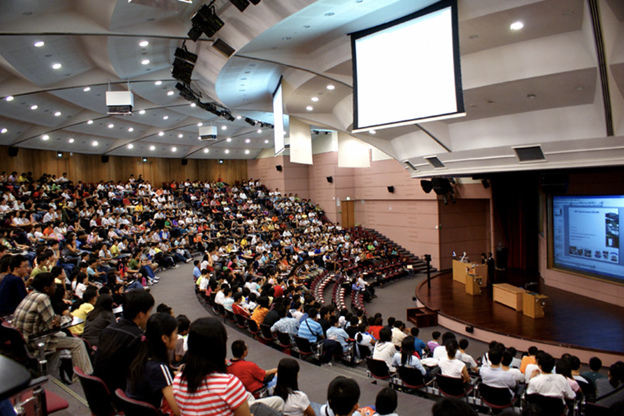
The classrooms of the lectures we researched were situated with the speaker at the front, usually on a stage or near some podium with many seats facing forward. This arrangement establishes a sense of hierarchy, control, and power. However, the practice and enforcement of this hierarchy depended on how the professors taught and carried themselves along with the room. Some professors encouraged students to speak and contribute to the discussion, while others preferred to control the conversations to remain on schedule. Student-to-student conversations were minimal but still observed.

Our goal was to observe intently during lectures how students interacted with the professor and how that differed from the conversations amongst fellow students. Also, why was this difference significant, and what factors could influence this conditioned shift in speech behavior? To supplement our observational research, we asked students and professors a 5-question multiple choice survey to gauge how they felt about their register or how aware they were of it. The questions and choices were as follows:

  1. Do you know what a linguistic register is? (Yes/Somewhat/No)
  2. Do you notice differences in speaking in upper and lower-division courses? (Yes/Somewhat/No)
  3. Do you notice how your speech changes when discussing or conversing with your peers and professors? (Yes/Somewhat/No)
  4. Do you think factors like professor approachability, classroom size, and course subject influence how you adjust your language in an academic setting?                                                                              (Yes/Somewhat/No)
  5. Are there words or phrases you use more frequently in an academic setting that you would not use elsewhere or vice versa?                                                                                                                              (Yes/Somewhat/No)

Results

Through careful observation, we noticed a significant change in the linguistic register in ten lower and ten upper-division lectures. This is in addition to the results of our supplemental survey, which revealed that students did notice a difference in their registers in their upper—and lower-division courses, noting that they indeed use a more formal register within their upper-division courses.

In upper-division courses, we noticed that students had more formal vocabularies and tended to express their ideas more structured and logically by referencing past concepts and citing where they got their answers or supporting evidence. As for lower-division courses, students used a more informal register, which led to students just trying to get their point across and ending their sentences in a way that made it seem as if they were unsure about their response. Students in lower-division courses also appeared to use words such as “um,” “uhh,” and “I think” more often than students in upper-division courses.

In a particular upper division course, the professor began every lecture by yelling “GOOD AFTERNOON” and expected a loud response, often requesting a redo if it was unsatisfactory. In an informal interview with this professor, she said it was to encourage students to have a voice in a large classroom. She stated that she would prefer a smaller classroom where they could be sitting in a circle. She often ended her lecture 30 minutes before class ended because she saw great importance in students discussing with each other and listening to different perspectives. This engagement was an attempt at breaking the hierarchical barrier of the class setting.

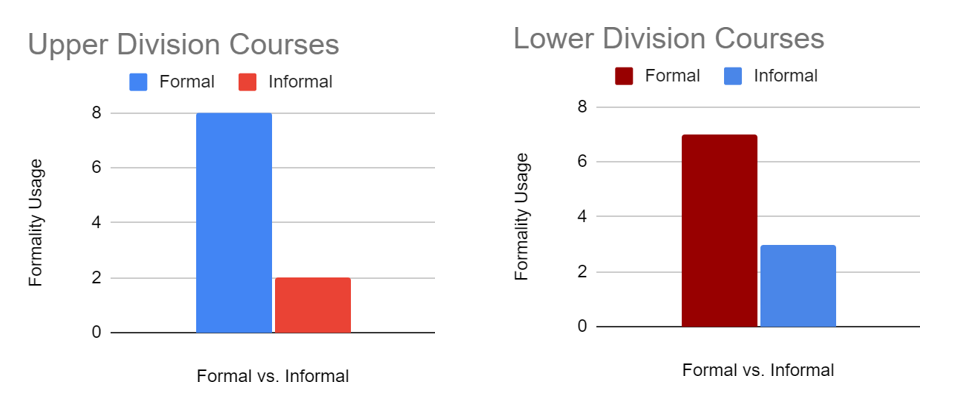
Graph 1 shows the difference in formality observed in the upper-division courses we observed throughout the ten lectures. Graph 2 shows the difference in formality observed in the
lower-division courses throughout ten lectures.

The graphs provided show the difference in formality between the upper- and lower-division courses we observed. Upper-division courses, for the most part, had formal register/language, while lower-division courses mostly had informal register/language.

Another interesting observation we noticed in both upper- and lower-division courses is that students who speak two languages and have a particular accent when talking to another student who may or may not share similar cultures seem to turn their accent off whenever they talk to an individual in a position of power, such as a professor or teacher assistant.

Analysis

These conclusions rejected our null hypothesis and supported the alternative hypothesis that there is a significant difference in the register used in upper-division courses versus those used in lower-division courses. Worth noting is that the reason for a more formal register in upper-division courses is the fact that upper-division courses necessitate the development of critical thinking, which requires students to express their ideas and responses in a more structured and logical manner, which further goes to show the complexity within the concepts seen in these courses. As shown in the graphs within the results, upper-division courses mainly used formal language, while lower-division courses used informal language. The bars on the graph that showed minimal informal or formal language in each respective course resulted from some days in the upper-division courses being relatively easygoing and not necessitating much discussion, while the formal register occurrences in lower-division courses happened as a result of professors making the student think critically about their answer and add to the discussion of the class on a specific complex concept.

Through this research, the discussion opens about how professors can facilitate change that empowers students to speak in their classrooms. With this knowledge, an improvement will likely create a better learning space while maintaining a professional register. The power dynamics do not have to be so stark that they intimidate students to not participate in lectures. However, professors should teach in a way that their course will introduce students to a more formal register early on in the course and gradually increase the emphasis on formal language as the course progresses. Especially in lower-division courses where informal linguistic register is standard, these changes will benefit students (more than likely first- and second-year students) in the long run, where future professional and academic environments will necessitate the use of formal language to express their critical thinking.

References

Agha, A., Duranti, A. (2005). Registers of Language. In A Companion to Linguistic Anthropology (pp. 23–45). https://cpb-us-w2.wpmucdn.com/web.sas.upenn.edu/dist/1/494/files/2018/08/19Agha2004RegistersOfLang-13dji2r.pdf 

Biber, D., & Conrad, S. (2019). Register, genre, and style / Douglas Biber, Susan Conrad. (Second edition.). Cambridge University Press.

Declerck, M., Ivanova, I., Grainger, J., & Duñabeitia, J. A. (2020). Are similar control processes Implemented during single and dual-language production? Evidence from switching between speech registers and languages. Bilingualism (Cambridge, England), 23(3), 694–701. https://doi.org/10.1017/S1366728919000695

Goulart, L., Gray, B., Staples, S., Black, A., Shelton, A., Biber, D., … & Wizner, S. (2020). Linguistic perspectives on register. Annual Review of Linguistics, 6, 435-455.

Washington-Harmon, T. (2024, January 5). Code-switching has benefits and risks-but why do we do it? Health. https://www.health.com/mind-body/health-diversity-inclusion/code-switching

[/expander_maker]

, , ,

Do Students Hold Their Professors to a Certain Standard?

Madison Atiabi, Araceli Valladares, Sean Freilich, Antoinette Alfaro, Brandon Elkington

Knowledge production in the global context has enabled an unprecedented ability to share information in the modern age. Because of this, International Universities like UCLA serve as a hotbed for intellectual progress over a backdrop of movements for inclusivity and representation in educational institutions. While recognizing elements of language associated with ethnicity such as accents is a sensitive topic, it is an undeniable element that comes into play when analyzing the perceptions that students hold of their professors. Even though we initially invested in how accents affect academic outcomes, this study has instead developed an understanding of subconscious biases and expectations within the academic setting that demonstrate a contradictory notion of judgment versus inclusivity. While clearly expressed to varying degrees of appreciation for different language practices, the individual word choice illustrates an intent to perform academically that is not only a standard to be upheld by professors, but to an extent to students as well.

[expander_maker id=”1″ more=”Read more” less=”Read less”]

Introduction

The development and ability to share information in the modern world is faster than ever and there has been an emphasis on developing scholarship around the diverse perspectives that come together within the global context. While there are undeniable benefits towards the development of scholarship by including international perspectives, there are a number of challenges that arise when centered around communication between speakers with different linguistic backgrounds. In attempts to understand how students perceive different elements of language, a handful of studies and experiments have been conducted as a means to better understand what incites the most favorable repertoire between students and professors. As “language is an important and necessary medium of communication,” (Kuo 2011) differences in pronunciation, intonation, rhythm, and word choice may lead to miscommunications or misinterpretations of information which can have a devastating impact in an academic setting where clear communication is crucial to success. Since how people speak demonstrates many notions of group belonging, elements of language such as accents tend to elicit stereotypical perceptions that can influence the perceptions of professors as less credible (Alexandra 2015). Considering that a student’s perception of their professors as the ambassadors of the university can have an impact on a student’s learning outcomes (Gill 1994), it is important to understand the various ways that accents and language choices such as the use of slang affect students’ perceptions of their professors. Therefore, the University of California, Los Angeles (UCLA), as an international institute provides a diverse cultural background to deepen our understanding of how accents and slang shape communication dynamics, social interactions, and language attitudes between professors and students.

Methods

When initially proposing this study, we intended to collect a variety of qualitative and quantitative data through a series of interviews, observations, and a survey as means to gather in-depth insights into how language affected the relationship between professors and students. Our original hypotheses centered around the notion that a professor’s accent would be recognized as a challenge in a student’s ability to comprehend the course material and build connections with their professors. However, in the process of developing the proposal, we acknowledged the potential for biases in the responses to our questions considering the academic nature of the project. As such, we conducted five 20-minute interviews with other UCLA students (four undergraduate and one graduate) that we had less formal relationships with hopes of receiving more open and honest responses to our lines of questioning considering the sensitivity of acknowledging a difference in language typically associated with difference in culture. As such, the interview questions focused on concerns regarding accents and the use of slang in the classroom setting and how they affect student’s perceptions of their professors and whether or not they have an expectation of a “standard” language for their professors.

 For consideration, below are the questions that were asked during the interview:

  1. Have you ever had a professor with a strong accent?
  2. How do you feel this has affected your ability to comprehend the course materials? Please elaborate.
  3. How do you feel that this has affected your interactions with your professors?
    1.  How has it affected your sense of community in the classroom?
    2. How has it affected your connectedness to the course materials?
  4. What kind of language use do you expect from your professors in a classroom setting? Do you think there is a “standard” for how professors should speak to their students?
  5. How do you feel when a professor uses slang or a younger language?
    1. How does it affect the relationship with the professor?
    2. Do these language choices affect your sense of immediacy with your professor?
    3. Does the use of slang make your professor seem less credible?
  6. Can you think of any other ways your professors build a sense of community or contribute to your education through their language?
    1. Do any other positive or negative effects of a professor’s language choices come to mind?
    2. Do the ways that your professor chooses to convey certain ideas affect your education?
  7. What changes could professors make in their language choices to improve their interactions with students?

Results and Analysis

Accents and Academics

While our respective interviews yielded varied responses due to the intimate nature of the process, there were a few constants that emerged within them. For instance, as predicted, there was an almost universal recognition that accents contributed to certain challenges within the classroom. In some cases, students revealed they had trouble understanding the course material despite efforts of professors to ensure comprehension; one student, Angel, expressed disinterest with sentiments like “I just want this lecture to end faster,” or “I’ll talk to the TA.” This reveals insight beyond our initial hypothesis; the spirit of inclusivity that is present in universities may directly contribute to the disconnect between students and professors to a degree that impacts a student’s willingness to engage with a course. Similarly, despite appreciating the beauty of different cultures coming together, Evan noted in his interview that “it was awkward and a little embarrassing to have to keep asking the same question because their strong accent made it hard for me to understand what they were saying.” Consequently, in response, it was common for students to seek more time with their TA as a solution to address issues with comprehension in lectures.

Slang Use

On the other hand, in discussions about slang use and “standard” language practices of professors, there was a surface-level appreciation for professors’ attempts to connect through slang-use and a general positive reaction. However, what a few of our interviewees argued to be more important was the use of genuine language as opposed to language that caters to a professor’s perception of what students may want to hear. Similar to the study by Martin, Weber, and Burant, the students we interviewed appeared to be able to recognize the subtleties of slang use and distinguish them from the subtexts of their uses (1997). For example, Jessica expressed that it was “cringy” when professors end up “overdoing it while trying to be relatable” because it comes off as inauthentic and pandering. Nonetheless, our interviewees expressed a general support for the use of slang words and “younger” language in the classroom. But in doing so, the words that they used represented a potentially larger concern surrounding language use in academic settings.

Unconscious Biases

When asked about whether she had any expectations for a “standard” language from her professors, Anna responded, “I don’t think slang would come in the way of teaching. Professionalism could be… um… what I’m trying to say is I don’t think language really affects the way the material is taught, and I don’t think slang should be penalized or looked down upon in the classroom setting.” While her response initially shows an understanding and support for less restrictions on language, the expression of the contrary as professionalism followed by a subtle retraction indicates a subconscious level of decorum that is to be expected from professors and the university as a whole. While our interviews only represent a minute sample of students at UCLA, the results indicate a wide range of responses that demonstrate similar notions of underlying pressures to maintain certain values.

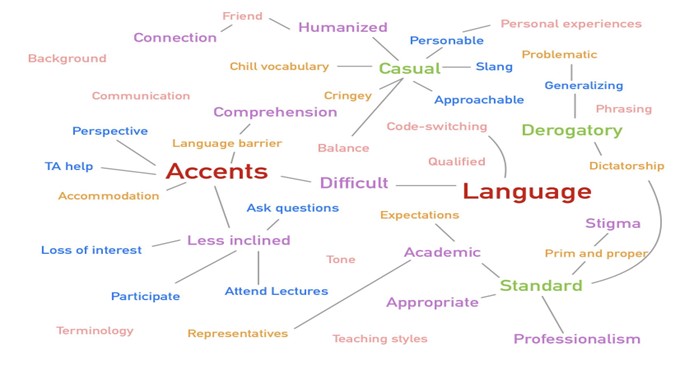
Figure 1: Common and uncommon words found throughout the five interviews

Discussion and Conclusions

Our study and its findings contribute valuable insight into our understanding of students’ perceptions and expectations of their professors within academic settings. By investigating whether students hold their professors to a certain standard and coupling our empirical findings with existing literature, our study allows for researchers to formulate testable predictions or hypotheses on the nature of student-professor relationships in the future.

Our findings not only revealed diversity in linguistic and academic standards amongst students, but also suggested a potential for underlying biases inherent within academic settings. Our research highlights the extensive influence of academic norms and expectations on linguistic practices, suggesting an unconscious pressure on both students and professors to conform to behaviors typically perceived as “professional.” Such findings emphasize the importance of working towards building inclusive learning environments that embrace linguistic diversity while also encouraging authenticity and cultural sensitivity.

This study ultimately enhances our understanding of the complex interplay between language and identity within the academic realm, inviting future discourse and exploration that would enhance student-professor relationships. By acknowledging the dynamic experiences uncovered through our research, students, professors, and institutions alike can begin to strive for an educational environment that yields successful outcomes for individuals from diverse backgrounds.

References

Gill, M. M. (1994). Accent and stereotypes: Their effect on perceptions of teachers and lecture comprehension. Journal of Applied Communication Research, 22(4), 348–361. https://doi.org/10.1080/00909889409365409

Kozlowski, Alexandra (2015). The Influence of Accents on Social Perception. Inkblot, 12-16.

Kuo, Ya-Hui. (2011). Language Challenges Faced by International Graduate Students in the United States. Journal of International Students. 1(2). ISSN: 2162-3104.

Martin, M. M., Weber, K., & Burant, P. A. (1997). Students’ Perceptions of a Teacher’s Use of Slang and Verbal Aggressiveness in a Lecture: An Experiment.

Orelus, P. W. (2020). Other People’s English Accents Matter: Challenging Standard English Accent Hegemony https://files.eric.ed.gov/fulltext/EJ1246799.pdf

 [/expander_maker]

, , , ,

How Polite is Your Professor? A Gendered Analysis of Hedging as a Tool for Student Engagement at UCLA

Layla Hernandez, Yasleen Robinson, Charlotte Norris

Throughout their lectures, professors typically engage with their students. This process often requires the professors to implement certain linguistic devices in their speech that allow for them to sound less aggressive and threatening. These linguistic features include forms of hedging. Both male and female professors rely on hedges to further display politeness when interacting with their students. In this study, we focused on how professors utilize these hedge words in ways that promote themselves in ways that are more approachable and less authoritative. We hypothesized that female professors would utilize hedges more than their male professor counterparts. Specifically focusing on the frequency of the usage of hedge words, we analyzed four sociology professors from UCLA through recordings after attending their lectures. We carefully listened to each audio and transcribed them through Conversational Analysis (CA) to further allocate the number of hedges they used when speaking with their students. A detailed analysis revealed that male and female professors do not yield significant patterns in their uses of hedges. In fact, they used them very similarly in terms of frequency and style.

[expander_maker id=”1″ more=”Read more” less=”Read less”]

Introduction

For our project, we investigated the hedges that are used by both women and men professors during their interactions with their students during their lectures. More specifically, we aimed to highlight how the usage of these linguistic markers help to ease the declarative statements they share with their students. We hypothesize that the women professors will hedge more frequently throughout their discussions with their students because hedging is unequivocally involved and ingrained in women’s speech (Lakoff, 1972). We also hypothesize that both male and female professors will utilize hedging as a means to soften their assertive/strong statements to further promote interpersonal interaction and more inclusivity within the classroom.

Background

Professors and their approaches hold great influence over the success of their students. In this way, they consciously work to provide interpersonal interactions with their students while also actively working to supply a learning environment that is inclusive and welcoming (Van Petegem et al., 2005). This process typically requires the professors to employ linguistic strategies that portray them to be less threatening and aggressive through their choice of words (hedging). Hedges are words or utterances that serve to “reduce the force of a statement” (Wright & Hosman, 2009, p. 143). The professor’s reliance on hedge words prevents them from sounding or behaving like they know everything, rather it serves as a buffer that allows for a response or objection. In this way, professors create an open forum in which students feel comfortable probing or questioning the content they are teaching without fear of judgment. Our focus will also turn to the gendered patterns of hedging among men and women professors, specifically focusing on who uses hedges more frequently.

Methods

Our main focus included examining instances of hedging and their role in yielding the authority of professors in student-teacher interactions. We focused specifically on UCLA professors in the Sociology department to avoid linguistic variation that could occur due to variations in lecture content. We collected recordings from 4 different Sociology professors at UCLA which will include three males and 1 female. We collected our data through audio recordings after attending 4 different lectures, where we keyed in on student and professor interactions. We extracted our data from two interactions from each lecture. Where we then transcribed each exchange through Conversational Analysis (CA). Through this form of analysis, we highlighted the different hedges that both female and male professors use to soften their strong statements when speaking to their students. To achieve this, we looked at each transcript individually to identify patterns specific to each professor followed by a comparison between professors of the same gender and then across genders to look for any similarities or differences that are connected to larger gendered-language patterns. We also wanted to measure the frequency of how many times each hedge word was used by each professor. Thus, after transcribing we allocated the number of hedge words they included in their interactions.

Results and Analysis

Interestingly, our results indicated that there was not a significant pattern when comparing hedge use between female and male professors. Our initial hypothesis that women would produce more instances of hedging when interacting when students in comparison to male professors was completely in misalignment with our results. In contrast, we found that both genders utilize hedges in similar ways that would further elevate their statements from sounding too forceful or impolite. We also found that in terms of frequency, male and female professors depend on the practice of hedging similarly. There wasn’t a significant pattern that demonstrated that one gender utilized the linguistic device more than the other. If anything, it dispels the common notion that women rely on hedging more than men because we see that is not the case here, both genders rely on hedges almost equally. 

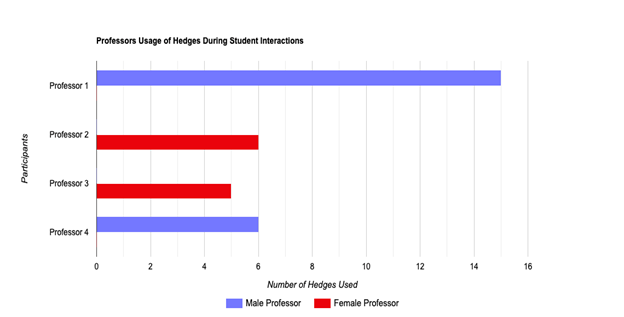
Figure 1: Professors’ Usage of Hedges During Student Interactions

Our first participant, professor 1, was unique because he was the only male as well as the only professor to demonstrate a wide and dependent use of hedging when interacting with his students. The bar graph above illustrates how professor 1 drastically differs from the other professors when examining their reliance on hedges during their interactions with their students. After completing professor 1’s (CA), we found that he accounted for a total number of 15 different instances of hedging. Each professor yielded some form of hedging, however, it seems that professor 1 superseded every other professor in terms of hedge use. After comparing him to the other professors that did not align with this pattern, we connected his use of hedging to his linguistic style and postulated that hedging may be a central linguistic feature in his everyday speech.

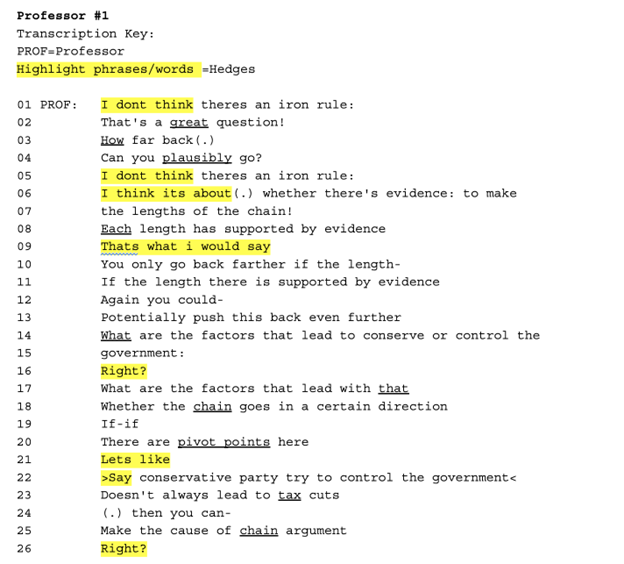
Figure 2: Transcription excerpt of Professor 1’s use of hedging

In the (CA) extracted from Professor 1’s (male) lecture, you can see a handful of the hedge words he used while engaging with his students. We classified his frequent use of the word “right” as a hedge word because we noticed that he would insert them right after finishing his strong and declarative statements. It was apparent that he depended on “right” as a means to establish an open forum that allowed for the student to respond or interject. We also interpreted his usage of “right” as a way to provoke silent agreement. This hedge word was especially important when interacting with other students as the professor relied on it with each interaction he made with his students. We also highlighted that the professor used the hedging phrase “I don’t think” several times as well. It was very clear to us that he depended on this phrase as a means of expressing uncertainty. This is an important practice because professors work to avoid behaving or sounding like they know everything because it leaves room for students to object, gauge, or comment on their statements.

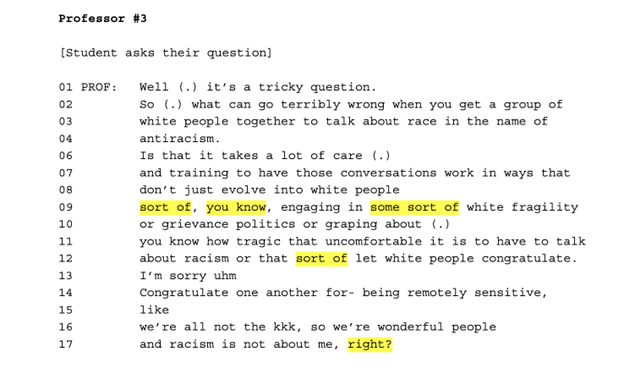
In contrast, Professor 2, 3, and 4 all displayed significantly less instances of hedge use during their interactions in comparison to Professor 1. In contrast, professor 2 (female) and professor 3 (male) included hedge words 6 times whereas professor 3 (female) only displayed 5 instances of hedges when engaging with her student. Our findings indicated that both genders relied on hedges similarly, in terms of numbers and surrounding context. Each professor integrated some sort of hedge word in ways that lessened the force of their statement, signaled agreement, or expressed cautious uncertainty.

Figure 3: Transcription excerpt of Professor 3’s use of hedging

For instance, as depicted in the conversational analysis above professor 3 (female) sporadically included hedges like “sort of” and “you know” to soften her claims and statements. We concluded that she turned to this linguistic variable to display politeness and avoid authoritative brute force that would make her sound less approachable and more aggressive. This approach allowed for a fluid and authentic interaction when replying to an inquiry made by her student, one that didn’t involve the professor imploding information on the student but rather one that left room for doubt and allowed room for responses, objections, and even interjections.

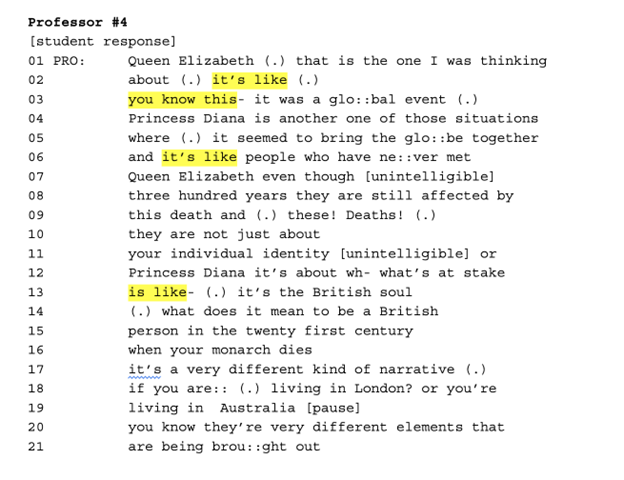
Figure 4: Transcription excerpt of Professor 4’s use of hedging

Similarly, Professor 4 (male) employs the linguistic device to lessen the magnitude of his assertions. The (CA) above shows that he utilized the phrase “it’s like” on three different occasions to display some sort of indirectness. We deemed the phrase as an instance of hedging because he used it to ease his claims so that he didn’t sound overly forceful or assertive. We also derived the conclusion that he could be employing this device as a way to create an inviting forum for further commentary or inquiries. After gathering our observations, we found that each professor depended on hedges in ways that further display themselves along with their statements as more polite to steer clear from sounding rude or unapproachable. Some obviously more than others but regardless this linguistic variable enabled them to engage with their students in an authentic and less authoritative manner.        

Discussion and Conclusion

To conclude, our results revealed that both male and female professors utilize hedging to soften their statements. We found that professors exhibited hedging as a means to soften their statements to some degree in their speech. Professors 2, 3, and 4 used hedging in similar amounts and Professor 1 stood out as an outlier in his much more frequent use of hedging. This finding contradicts our hypothesis that female professors would hedge more frequently than men. It also contradicts Lakoff’s (1972) findings and his claim that hedging is an integral part of women’s speech, so much so that women hedge more frequently than men. If our findings had been in alignment with Lakoff (1972), we would have seen female professors hedge more frequently than male professors but that was not the case.

While we did not find noticeable differences in use of hedging on the basis of gender, further analysis of our data with a less specific focus on a particular linguistic variable could reveal patterns that are not visible when the scope is narrowed on one variable. Our study was faced with multiple limitations that may have affected the outcome. With a larger sample of professors and more time to analyze the data, patterns that couldn’t be found or generalized with such a small sample could emerge. Our teaching population was also limited to one subject (sociology) and one educational setting (large university). An analysis across subjects or in different educational settings that have different goals for students might have led to different results.

There are a few other explanations for our findings and directions that our study could be taken in. Perhaps there were no noticeable patterns across male and female professors because professors have different styles of engaging students during interactions. Professor 1 (male), who hedged noticeably more than his colleagues, may choose to engage his students in direct interaction through hedging while the other professors may choose other linguistic tools to achieve the same goal. It is also possible that these professors are not focused on creating an inclusive lecture through student interaction and instead attempt to foster engagement through other parts of their lecture, resulting in a lack of hedging in their speech. Maybe their focus is not on creating an inclusive environment and rather each professor has a unique goal in the classroom that further influences their style of communication.

Furthermore, our findings raise some important questions concerning gender dynamics in teaching and in other social contexts. The Lakoff (1972) study demonstrated that gendered linguistic patterns do exist in some social contexts, but our research did not find this pattern in one particular context of university teaching. Perhaps, our findings could influence or lead to further research that could investigate how gendered speech patterns that have been documented in some contexts (e.g. hedging) appear in other social contexts such as other professional environments, in conversations between established friends, or conversations between strangers.

References

Lakoff, Robin. (1972). Language and Woman’s Place. Language in Society, 2(1), pp. 45-80. http://www.jstor.org/stable/4166707?origin=JSTOR-pdf

Oliveira, A.W., Sadler, T.D., Suslak, D.F. (2007). The linguistic construction of expert identity in professor–student discussions of science. Cultural Studies of Science Education, 2, pp. 119-150. https://doi.org/10.1007/s11422-006-9039-4

Van Petegem, K., Creemers, B. P. M., Rossel, Y., & Aelterman, A. (2005). Relationships Between Teacher Characteristics, Interpersonal Teacher Behaviour and Teacher Wellbeing. The Journal of Classroom Interaction, 40(2), pp. 34–43. http://www.jstor.org/stable/23870662

John W. Wright II & Lawrence A. Hosman (1983). Language style and sex bias in the courtroom: The effects of male and female use of hedges and intensifiers on impression information. Southern Journal of Communication, 48(2), pp. 137-152. https://doi.org/10.1080/10417948309372559

Zakia, Anisa (2018) Pragmatic study on hedging as politeness strategy in online newspaper. Universitas Islam Negeri, pp. 13. https://repository.uinjkt.ac.id/dspace/handle/123456789/45815

[/expander_maker]

, ,
Scroll to Top