Maya Merschat, Vera Mkhsian, Isabella Mottahedeh, Riley Yupitun
When streamer Clavicular accelerated his vehicle over a man during a live stream, his comment section filled not with condemnation, but with support. Fans wrote “#FreeClavicular,” and called the victim deserving.
This article examines how social media influencers, like Clavicular, construct one-sided emotional bonds where audiences feel genuine intimacy with someone who does not know them personally, a concept known as parasocial relationships first introduced by Horton & Wohl in 1956. Through specific linguistic mechanisms, these bonds produce measurable real-world consequences. Drawing on observational analysis of four influencers (Clavicular, IShowSpeed, Emiru, and Nara Smith), we analyzed video transcripts and comment sections to find how inclusive pronouns, affectionate address terms, emotional self-disclosure, and indexical language construct distinct forms of parasocial intimacy. Our findings suggest that parasocial intimacy is not a single phenomenon but a result of linguistic interactions, especially within the online spaces. The type of intimacy an influencer builds shapes not just how fans engage online, but what they are willing to do, say, and believe offline.
Keywords: parasocial relationships, influencer language, self-disclosure, indexicality, digital platforms, fan behavior
[expander_maker id=”1″ more=”Read more” less=”Read less”]
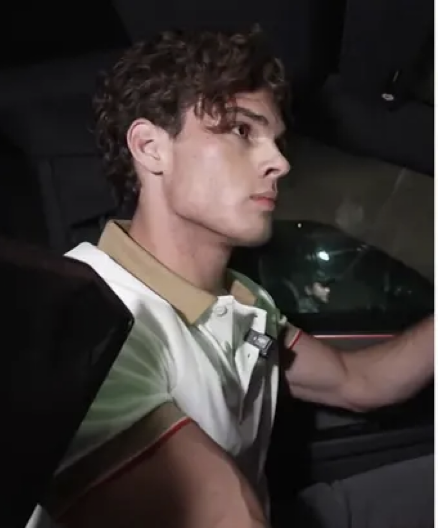
Figure 1. Streamer Clavicular moments before driving over a man who had climbed onto his vehicle.
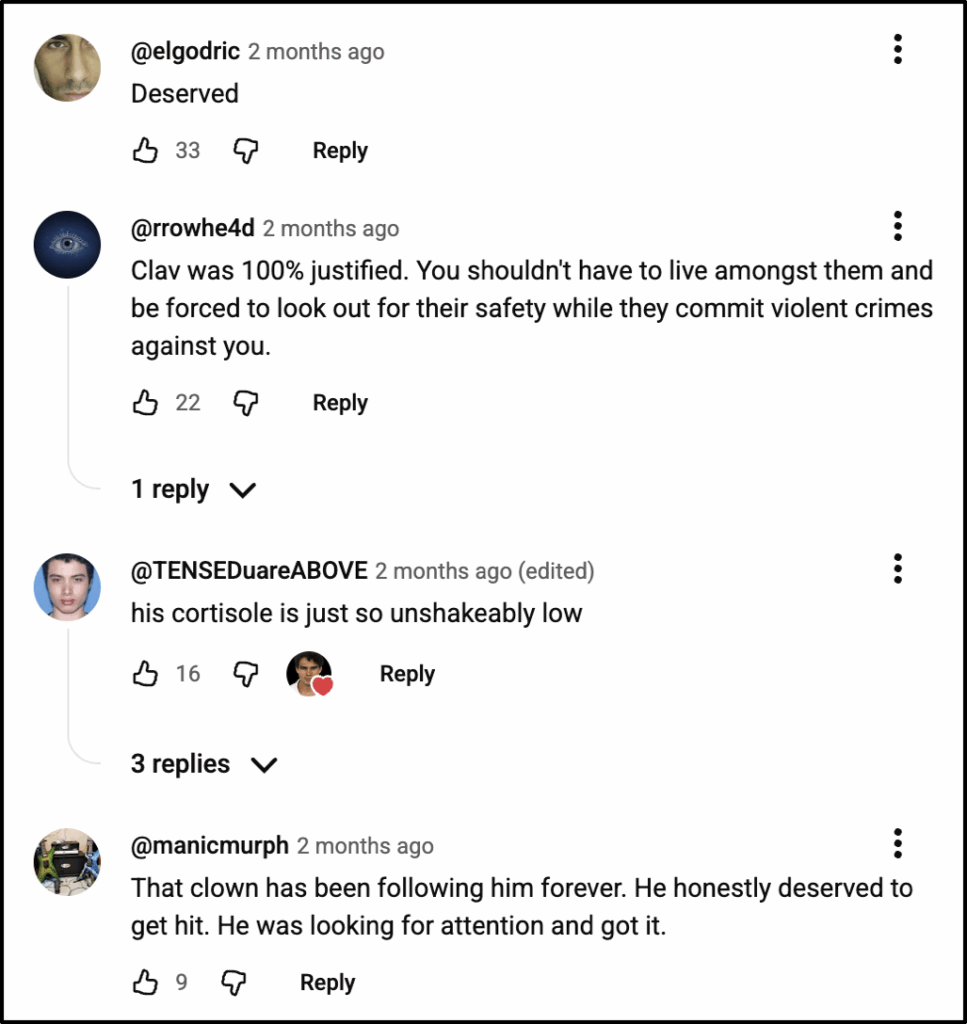
Figure 2. Fan comments posted to Clavicular’s YouTube video within hours of the incident. Approximately 80% of visible comments expressed support, defense, or celebration of the streamer’s actions.
Introduction
When Clavicular’s fans rallied behind him following a car accident in late 2025, they were demonstrating peak parasocialism. Parasocial relationships, first theorized by Horton and Wohl (1956), have existed since television, but their language has evolved. Modern influencers use linguistic tools like inclusive pronouns (“we,” “us”), affectionate address, emotional self-disclosure, and indexical language to manufacture closeness. Although parasocial relationships are widespread (Tyrväinen & Karjaluoto, 2024), research has focused more on marketing outcomes than the linguistic mechanisms behind them. This study addresses that gap by analyzing the speech and fan responses of four Gen Z influencers—Clavicular, IShowSpeed, Emiru, and Nara Smith—to examine how language constructs parasocial attachment and what behaviors it produces.
We hypothesize that inclusive pronouns, affectionate address, and self-disclosure elicit stronger parasocial responses, and that different forms of linguistic intimacy shape distinct fan behaviors—from loyalty to aspiration. We further propose that these bonds extend beyond the screen, influencing fans’ real-world attitudes and actions.
Background
Horton and Wohl described parasocial interaction as “intimacy at a distance,” where audiences feel familiar with performers. This intimacy is constructed through casualness, small talk, and direct address that mimic face-to-face interaction.
Today, influencers build intimacy through disclosive (sharing private life), reciprocal (acknowledging fans), and commercial forms, together forming an “intimacy pact” (Mardon et al., 2023). When disrupted, these relationships can intensify into possessiveness, obsessive monitoring, or anti-fan behavior.
Linguistically, intimacy is created through informal registers, direct address, terms of endearment, second-person pronouns, and spatial metaphors (Roh 2024). These features function indexically, constructing group identity. For instance, Clavicular repeatedly addresses viewers as “boys,” indexing a masculine in-group identity. When fans mirror his language, they participate in this identity, reinforcing the community his speech creates.
Methods
Our study used observational analysis of public interactions from four influencers across platforms: Clavicular (Kick), IShowSpeed (YouTube), Emiru (Twitch), and Nara Smith (TikTok). To standardize analysis, we used YouTube videos for all four cases.
For each influencer, we collected two types of data: video transcripts representing their typical communication style and corresponding comment sections, focusing on high-engagement comments. The dataset ranged from 215 comments (Nara Smith) to 9,826 (IShowSpeed).
Data was analyzed using the SPEAKING model, with specific attention to three components: Key (the emotional tone and intensity of interactions), Instruments (the platform features shaping how intimacy is performed), and Norms (the unspoken community expectations governing closeness between influencer and audience)
This study has limitations. The sample size was small—four influencers and one video each—and comment sections capture only visible fan behavior, excluding private interactions. However, consistent patterns across cases support our interpretations.
Results and Analysis
Figure 3. Linguistic Mechanisms and Fan Response Patterns Across Four Influencers
| Influencer | Primary Linguistic Mechanism | Fan Attachment Type | Boundary Violations | Real-World Consequence |
| Clavicular | Collective address, decision delegation, radical self-disclosure | Tribal/defensive | Violence defense, doxxing, forensic monitoring | Looksmaxxing ideology, bone smashing, hit-and-run defense |
| IShowSpeed | Chat as third party, spectacle, performative generosity | Romantic/ invested | Stream sniping IRL, parasocial grief | Fans directing his romantic life, extended attachment to third parties |
| Emiru | Vulnerability disclosure, advocacy framing | Empathetic/ mobilizing | Physical assault, lack of security/ security concerns | Collective institutional action against Twitch |
| Nara Smith | Aesthetic curation, strategic withholding | Aspirational/ loyal | Relationship interference, obsession, and negative talk about their children (especially their names) You could just say exposure of minors to online spaces or smth | Cross-platform tracking, deep community loyalty |
Case Study: Clavicular
Clavicular’s linguistic profile most clearly demonstrates how language produces extreme parasocial outcomes. His primary mechanism is collective address: the word “boys” appears over one hundred times in a single stream. He also delegates personal decisions (outfits, hair, drinking) to chat, creating a sense of direct participation and agency (Roh 2024).
Indexically, “boys” constructs a masculine in-group identity that fans adopt. This is evident in responses to his December 2025 incident, when he drove over an alleged stalker during a live stream. Approximately 80% of comments were supportive. Fans constructed legal defenses, used his vocabulary, and one wrote: “the only issue is he didn’t run them both over.”
This sustained loyalty reflects what Mardon et al. (2023) describe as parasocial relationships that become “negatively charged whilst maintaining their intensity.” Many comments also showed obsessive monitoring—tracking timelines, cross-referencing past streams, and reconstructing events—what Mardon et al. (2023) call “extensive online research” by fans.
Comparison Cases: Intimacy Is Not One Thing
The three remaining influencers enrich this picture, demonstrating that parasocial intimacy is not a single phenomenon but a spectrum of linguistic constructions producing distinct outcomes.
IShowSpeed’s primary mechanism is spectacle, as the chat is woven into every personal moment, including a real-life date, where he directly addresses the audience over thirty times: “Chat, was she capping or not?” The audience is living his life with him. This results in a romantic parasocial investment: when his relationship ended, fans who had never met either person wrote “I wasn’t even dating Amy like Speed was and I miss Amy.” Critically, Speed’s content also normalizes boundary violations: fans tracked him to his precise location mid-date, and rather than expressing concern, he rewarded the behavior.
Emiru’s linguistic profile offers another sharp contrast. Her primary mechanism is vulnerability disclosure, where in a 47-minute stream addressing her assault at TwitchCon, she produces statements like “I could have literally been stabbed yesterday,” “I’ve been failed so many times,” and the self-correction “I’m sorry you had to see that.” This apology resulted in multiple fan comments correcting her self-blame, which exemplifies what Mardon et al. (2023) identifies as disclosive intimacy. Emiru’s comment section shows little possessive language, little forensic monitoring, and less dehumanization than the comment sections of the other influencers, specifically the male influencers. Her disclosure triggers fan self-disclosure in return, creating a seemingly bidirectional emotional bond. However, the fact that a “fan” was able to get past security at TwitchCon and assault her shows that there are real-life implications of this more emotional bond.
Finally, Nara Smith presents our most counterintuitive finding. Her transcript in her video reveals almost no personal disclosure, she never names her husband, conceals her children’s faces, and her most intimate moment is “I overthink gift-giving.” However, fans track her across platforms, write paragraph-length content proposals, and describe her content as “giving calm, self-care, feminine and intrigue.” This gap between what she reveals and what fans feel they know is the largest of any influencer in our dataset, yet community loyalty measured by cross-platform tracking behavior might be the deepest.
Discussion and Conclusion
This study examined how influencers construct parasocial attachment through language and what consequences emerge beyond the screen. Our findings support the hypothesis that inclusive pronouns, affectionate address, and self-disclosure strengthen parasocial responses, with two key extensions.
First, intimacy is not one thing. Clavicular builds it through collective masculine address and in-group identity construction, producing loyalty strong enough to withstand a hit-and-run. IShowSpeed builds it through spectacle, producing romantic investment that extends to third parties. Emiru builds it through vulnerability, producing empathetic collective action. Nara Smith builds it through withholding, producing quiet but persistent cross-platform devotion. Each mechanism produces distinct communities with different norms and thresholds for harm, suggesting that the linguistic architecture of intimacy shapes fan behavior.
Second, context matters more than disclosure level alone. Emiru’s vulnerability typically generates little possessive or harmful behavior, while Clavicular’s similar level of disclosure produced doxxing, forensic monitoring, and defense of violence. The difference lies in the social worlds constructed through language. Male-dominated content appears to channel loyalty into in-group protection, while advocacy-oriented or feminine-coded content channels it into empathy and aspiration.
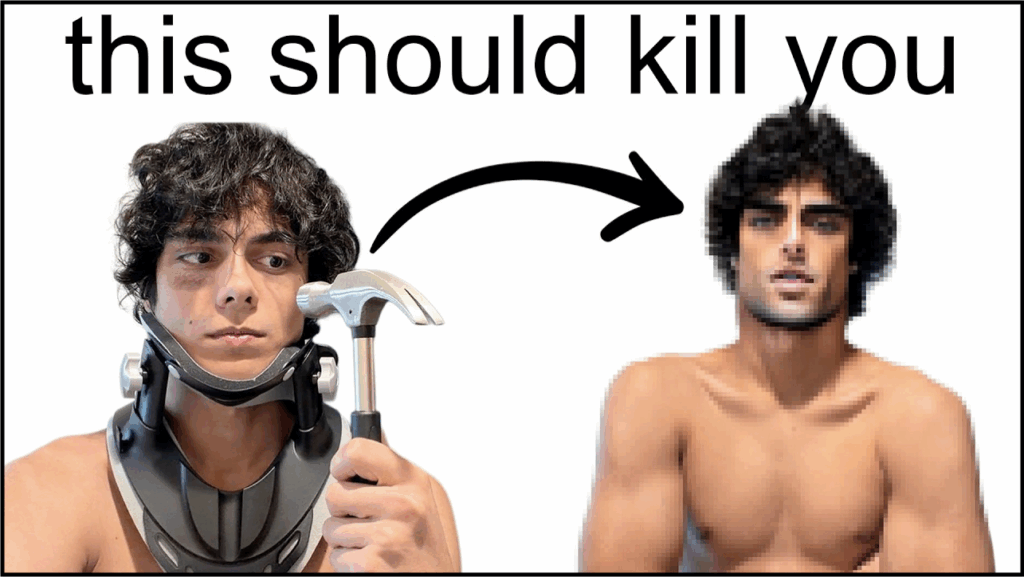
Figure 4. Screenshot from BenoftheWeek’s (2026) YouTube video based on Clavicular’s looksmaxxing community, showing instructions directing followers to strike their faces with a hammer to reshape bone structure
The implications are significant. Parasocial bonds extend beyond comment sections into physical behavior, such as looksmaxxing practices, and institutional outcomes, like collective pressure on Twitch. Horton and Wohl (1956) warned that parasocial relationships become dangerous when they override reality. Our findings suggest that contemporary influencer language makes that threshold easier to reach.
References
Addressing what happened at TwitchCon [Video]. Emiru. (2025, October 18). YouTube. https://www.youtube.com/watch?v=_USuIpVAqAw
A day in my life: Holiday shopping🤍 [Video]. Nara Smith. (2025, December 19). YouTube. https://www.youtube.com/watch?v=rIFo5UtLgn8
BenoftheWeek. (2026, January 30). I tried Clavicular’s $1000 looksmaxxing program [Video]. YouTube. https://www.youtube.com/watch?v=z4raQjuxBnU
Clavicular RUNS OVER Stream Sniper.. | FULL STREAM [Video]. Clavicular VODs. (2025, December 25). YouTube. https://www.youtube.com/watch?v=kgY1z4Rn7g4
Horton, D., & Wohl, R. R. (1956). Mass communication and para-social interaction: Observations on intimacy at a distance. Psychiatry, 19(3), 215–229. https://doi.org/10.1080/00332747.1956.11023049
iShowSpeed Goes On A Date In South Korea.. [Video]. Live Speedy. (2024, May 17). YouTube. https://www.youtube.com/watch?v=hj56_nSbDjw&list=PLZiR2JvplpXnddlBhavhc4nQeXY0G2qr5
Mardon, R., Cocker, H., & Daunt, K. (2023). When parasocial relationships turn sour: Social media influencers, eroded and exploitative intimacies, and anti-fan communities. Journal of Marketing Management, 39(11–12), 1132–1162. https://doi.org/10.1080/0267257X.2022.2149609
Roh, Y. C. (2024). Fan culture, technology, and the parasocial: How the K-pop industry advances relations between celebrities and fans [Master’s thesis, Georgetown University]. ProQuest Dissertations and Theses. https://www.proquest.com/dissertations-theses/fan-culture-technology-parasocial-how-k-pop/docview/3051223075/se-2
Tyrväinen, O., & Karjaluoto, H. (2024). Unrequited love? A mixed-methods study of parasocial engagement with social media influencers. International Journal of Information Management, 79, 102845. https://doi.org/10.1016/j.ijinfomgt.2024.102845
[/expander_maker]