gender

The Language of Love: Gendered Communication Patterns in Conflict

Analisa Sack, Paden Frye, Olivia Simons, Stella Kang, Jeorgette Cuellar

Our study explores the differences in how men and women express emotions in heterosexual relationships, particularly during conflict situations. The research investigates language dynamics among college-aged couples. Hypothetical conflict scenarios were used to elicit natural responses, which we then transcribed and analyzed. The findings reveal that women are more likely to use emotive language, engage in expressive communication, and employ collaborative discourse strategies during conflicts. In contrast, men tend to use direct communication styles, focusing on factual components and solution-oriented language. These results align with existing research on gendered communication patterns, supporting the hypothesis that media portrayals of emotional women and logical men have a basis in reality. This study underscores the importance of understanding gender-specific communication styles, offering insights that can enhance relationship counseling and educational programs. Future research directions include cross-cultural studies and longitudinal analyses to further explore these dynamics. The implications of this research are significant for developing tailored communication strategies in both personal and professional contexts.

[expander_maker id=”1″ more=”Read more” less=”Read less”]

Introduction and Background

We aim to investigate language dynamics and patterns within college-aged heterosexual relationships. With a specific focus on conversation, conflict, and conflict resolution. Communication styles in relationships affect conflict resolution and relational satisfaction. Prior studies have shown differences in male and female communication styles, but specific lexical patterns and their impact on conflict resolution are underexplored. We chose college-aged heterosexual relationships because this age group is shown to be especially important as shown in a study done by Sprecher (1993); typically, we see this age undergoing key developmental transitions and experiencing many situations that may be emotionally or relationally challenging. This study will analyze lexical patterns in conversations to understand gender dynamics in conflict resolution. We hypothesize that during conflict in heterosexual relationships, women are more likely than men to use emotive language, engage in expressive communication, and employ collaborative discourse strategies during conflict resolution, whereas men are more likely to use direct and assertive communication styles, focusing more on factual components of the situation and solution-oriented terms of speech.

Regarding social structures within college-aged relationships, previous research has suggested women are more emotionally active in relationships, but little applicable research has actually shown this. While women have expressed the consistency in emotions experienced being high, their expression of these emotions isn’t necessarily higher than that of men. Our study aimed to understand how men and women approach conflict resolution by looking at word choice and language use in particular (conversation analysis), evaluating how men and women use language differently to approach conflict. The language aspect we are examining is word choice (lexicon) and interaction patterns (conversation analysis) – more specifically, the use or lack of emotive language and expressive communication (Rogers, Ha, Byon, & Thomas, 2020, p. 112).

Methods

In order to collect relevant results, we thought it would be best to observe couples resolving a “natural” conflict. Since it would be nearly impossible to follow a couple around and wait for them to have a fight, we thought our best option would be to simulate a conflict and ask the couple to react to each other the way they would in real life. We understand and acknowledge that this might present flaws in our data due to self-reporting bias, where people tend to try making themselves seem “better” than they are in reality. Nevertheless, these are the hypothetical situations we presented:

  1. The first hypothetical (where the female partner is upset) is the following: “You are upset because last night you were trying to get ready for scheduled plans, but you felt rushed by the tasks that needed to be done before you left (go grocery shopping, cook dinner, wash dishes, etc..). You did several tasks alone while your partner sat on the couch and watched TV; he was aware that you were working hard and rushing because you needed to be somewhere, yet he didn’t help. You are trying to express that you feel abandoned because he wasn’t trying to help you.”
  2. The second hypothetical (where the male partner is upset) is the following: “You are upset because your partner was out late at a girls’ night and was being unresponsive to you. You knew that she would be out late; however, she didn’t text you the entire night, ignored your phone calls, and didn’t call back until she finally got home. She apologized, but made excuses about just ‘forgetting.’ You are trying to express that you feel ignored and hurt because she didn’t consider how you would feel about her silence.”

After we conducted the interviews, we analyzed the transcripts by deciding on five categories that best summed up the strategies the two participants used. These categories included justifications, connecting the argument to larger issues in the relationship, involving emotions, using logical approaches, and apologizing. We decided on a standardized way to tag parts of the dialogue with each strategy and then counted each instance of each strategy for both partners in both hypotheticals. We then created pie charts to visualize our data for both partners in both hypotheticals.

Results and Analysis

The most common strategy used by the female partner was connecting the argument to larger issues in the relationship, followed by justifications and involving emotions. For the male partner, justifications came first, followed by using a logical approach and apologizing.

After conducting controlled experiments with the implementation of two separate hypothetical situations to heterosexual college couples, it was observed that male partners exercise direct response tactics more often than females and utilize logical reasoning along with factual references in order to strengthen their argument, while also digressing at moments in order to avoid further conflict or off-track arguments. Previous studies have hypothesized that a woman’s willingness to exceed only factual comments in arguments is due to their lack of power or control in the outside world and their desire to hold more control in intimate spaces.
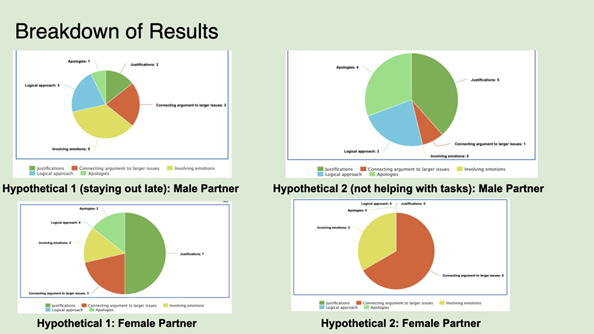
Figure 1. Results from each hypothetical separated by strategy category.

Female partners tended to use open questions and emotive language very often, expressing their feelings. Although initial questions were presented when initiating conflict resolution strategies, there were never any direct solutions posed by the female partner. Female participants also expressed a wider range of emotions, including anger, sadness, confusion, and disbelief during the conversation. Vocally, our female participant also had more shifts in tone – explicitly in words used – and differences in pitch depending on the emotions she felt at the moment. The female participant also related current conflict with previous situations where her feelings and overall well-being were disregarded, and she was forced into performing more emotionally/physically labor to make up for her partner’s negligence.

Our findings were in line with the article “Gender Differences in Perceptions of Emotionality” by Susan Sprecher used as background for the study, specifically with the idea that men will not argue as emotionally or as long as women do and tend to discuss conflicting topics without extreme emotion. We hypothesized these would be our result but ultimately gained a better understanding of the psychodynamic difference of the male versus female resolution strategy through the article’s in-depth observations.

Discussion and Conclusions

In conclusion, our hypothesis was supported by the findings of our study. We observed differences in communication during conflict resolution within heterosexual relationships. Women were more inclined to use more emotive language, characterized by a higher frequency of elements such as tag questions. This aligns with Robin Lakoff’s observations in “Language and Woman’s Place,” where tag questions – phrases like “isn’t it?” or “right?” added to the end of statements – serve to invite confirmation or agreement, thereby fostering a more inclusive and collaborative dialogue (Lakoff 54). In our research, women used tag questions seven times compared to men’s two instances. For example, in Hypothetical 1, a woman asked, “Do you trust me or my friend’s stories?” (F, 02:18), illustrating the use of tag questions to engage the listener. Conversely, men demonstrated a tendency toward a more direct communication style, often employing justifications. This logical approach focuses on explaining actions or decisions assertively. For instance, in Hypothetical 2, a man stated: “You usually just want to do stuff your own way because if I do something my way, you don’t like the way it’s done” (M, 00:49). This directness reflects a more frequent use of logical elements in his communication, aimed at justifying perspectives or actions.

Further, our results are in alignment with studies done about typical communication style differences in gender. In the article “Gender Issues: Communication Differences in Interpersonal Relationships” from Ohio State University, we learn that society has a general understanding of women having to ‘read between the lines’ in relationships: “Studies indicate that women, to a greater extent than men, are sensitive to the interpersonal meanings that lie ‘between the lines’ in the messages they exchange with their mates. That is, societal expectations often make women responsible for regulating intimacy, or how close they allow others to come” (Torppa). As we concluded from our own research, it appears that women are more inclined to connect a specific argument to the larger scope of the relationship. When something brought up in conflict triggers a larger, recurring issue, the female partner is likely to open up the conversation to what she can see by ‘reading between the lines.’

According to research done by Jessica Cindaro regarding male and female differences in communicating conflict, prior literature suggests a tendency for women to be more emotive in their communication styles, while men tend to be more direct and assertive, using emotions less. Cindaro explains that this is in part because of gender stereotypes and the environment in which men and women are raised in and the messages they receive growing up about how best to communicate (Cindaro). We see in our results that there is an even distribution involving emotions, but that the male partner takes more of a logical approach more often than the female partner.

These findings underscore the distinct communication styles of men and women, and such insights can be valuable in enhancing communication strategies across various contexts, from personal relationships to professional interactions. Also, by providing deeper insights into how communication styles differ between genders, our findings can inform relationship counseling and therapy practices, allowing therapists to develop more effective strategies that are tailored to each gender. This improved understanding can contribute to better communication and conflict resolution within relationships, ultimately supporting potentially healthier interpersonal dynamics.

In the future, our research aims to open avenues for expanding the scope of study. One possible direction is conducting cross-cultural studies to investigate whether the communication patterns we observed are consistent across different cultural contexts or if they vary significantly. This would provide a broader understanding of how cultural influences shape gender communication styles. Additionally, we could undertake longitudinal studies to track how communication styles and conflict resolution strategies evolve over time within relationships. These long-term studies can offer deeper insights into the dynamics of long-term relationships, shedding light on how communication evolves and how couples adapt their conflict resolution strategies over the years.

Another question that might be brought up in relation to our study is one of media’s influence on a person’s gender identity. In the TED Talk “Secrets of Children’s Media: Effects of Gender Stereotypes,” Rifa Momin reveals that children are influenced by the stereotypes they continuously hear as they grow up. From children’s television to storybooks, the power of media influence contributes to “children developing a sense of maleness and femaleness based off of these stereotypes and organiz[ing] their behaviors around them” (Momin). This presents a bigger question about our research: Do the stereotypes we perceive men and women to inhabit originate from their media intake? If children were not exposed to media that perpetuates gender stereotypes, would they grow up to act differently than the way society has led us to believe we’re ‘inclined’ to act?

Overall, the study we have conducted opens a wide variety of discussion topics regarding gender stereotypes, communication styles, and conflict within heterosexual college-aged relationships. While our study is not reflective of every single relationship out there, we hope we accomplished our goal of sparking conversation to further understanding about why men and women communicate differently.


References    

Cinardo, J,  (2011) Male and Female Differences in Communicating Conflict. Honors Theses. 88. https://digitalcommons.coastal.edu/honors-theses/88.

Lakoff, R. (1973). Stanford. Language and Woman’s Place. https://web.stanford.edu/class/linguist156/Lakoff_1973.pdf.

Momin, R. (2022, March). Secrets of children’s media: Effects of gender stereotypes. Rifa Momin: Secrets of Children’s Media: Effects of Gender Stereotypes | TED Talk. https://www.ted.com/talks/rifa_momin_secrets_of_children_s_media_effects_of_gender_stereotypes?language=en.

Rogers, A. A., Ha, T., Byon, J., & Thomas, C. (2020). Masculine gender‐role adherence indicates conflict resolution patterns in heterosexual adolescent couples: A dyadic, observational study. Journal of Adolescence, 79(1), 112–121. https://doi.org/10.1016/j.adolescence.2020.01.004.

Sprecher, Susan. Sexuality. SAGE Publications Inc., 1993.

Sprecher, S., & Sedikides, C. (2019, August 14). Gender differences in perceptions of emotionality: The case of close heterosexual relationships – sex roles. SpringerLink. https://link.springer.com/article/10.1007/BF00289678.

Torppa, C. B. (2010, February 25). Gender issues: Communication differences in interpersonal relationships. Ohioline. https://ohioline.osu.edu/factsheet/FLM-FS-4-02-R10.

[/expander_maker]
, , , , ,

Alpha Males: Talk of the Trade

Pauline Antonio-Nguyen, Elizabeth Gin, Anna James, Jennifer Padilla, Shanna Yu

An internet phenomenon: the Alpha Male. These men view the world in black-and-white gender roles steeped in misogyny, where women are not their equal and are expected to be subservient to them. This study takes the philosophies behind existing research done on conversation patterns between men and women and applies them to these alpha males. Do their beliefs and attitudes show up in how they speak? How do they navigate conversations compared to their non-alpha equivalents? While existing studies on aspects of speech like turn-taking and interruption have been largely inconclusive in the world of gender at large, we will be taking conversation analysis into the domain of alpha males in hopes of more conclusive results. What kind of language do they use to refer to those they find lesser, and do they interrupt women more than they do men? An alpha male’s word choices may reflect their misogynistic principles in potentially derogatory ways, and they may be more prone to interrupting others than a non-alpha male is.

[expander_maker id=”1″ more=”Read more” less=”Read less”]

Introduction and Background

The term “alpha male” has existed for many generations now. This term generally refers to a dominant individual, both within human social groups and animal behavior (Ludeman et. al, 2006). For further insight into exactly what an alpha male is, we recommend taking a look at this YouTube video discussing the “science” behind alpha males. The term has now evolved though, and in the internet sphere, it is generally accepted that “alpha males” are individuals who place heavy importance on being dominant, especially in terms of control over women. A good example is Andrew Tate, a self-proclaimed alpha male who took the internet by storm in 2023. We decided to look at two linguistic aspects: lexical items and conversational analysis — specifically interruption. An existing study on alpha males highlights their use of lexical pathways as a “means to further try to push their egotistical and misogynistic agenda” (Lawson, 2020). Additionally, in the eyes of an alpha male, women’s value is inherently tied to concepts like virginity and how subservient they are to the man who “owns” them. In terms of interruption, studies that cover whether men or women interrupt each other more have yielded mixed results, such as one where a “high-dominance predisposition,” a self-explanatory term established in-study, prompted men to interrupt more often than women with the same disposition (Rogers, 1975) versus another where others found that there was no significant difference between their test groups of men and women (Johnson & Aries, 1983). How exactly do alpha males interact with those around them, and does their behavior change based on which gender they speak with? Through our analysis, we look into the frequency of patterned and marked vocabulary and interruption as a way to enforce gender ideas and establish their place in a hierarchy.

Methods

Our main sources were TikTok and YouTube. We searched for videos using keywords — “alpha male podcasts,” “alpha male podcast women,” “alpha male podcast men,” etc. — to find videos. We compiled a total of 35 videos, mostly TikTok videos and some YouTube videos. The TikTok videos were used to give us our word frequency data, and both the TikTok videos and YouTube videos were used in our interruption data.

We thought the shorter TikTok videos would be a decently accurate portrayal of what alpha males would deem as “important” or “worthy” enough to emphasize because these clips were moments that editors had purposely picked out of longer episodes. We then made transcripts from the TikTok videos and used the search function to find out how many times a certain word was said in a certain context.

The four contexts were two alpha male contexts and two control contexts. We looked at when alpha male podcasters talked with other men and when they talked to women. For the control group, we looked at non-alpha male podcasters talking to other men and when they talked to women. As previously mentioned, we were also interested in the phenomenon of alpha males interrupting people in conversational settings. Therefore, we also kept track of the number of times that alpha males interrupted both the experimental and control groups.

Results and Analysis

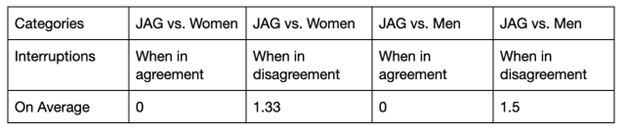
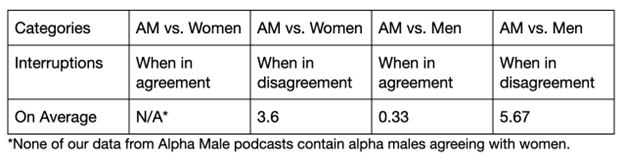
Looking at the interruption data, we saw some interesting results. Overall, we found that both alpha male podcasters and non-alpha male podcasters were actually more likely to interrupt other men than interrupt women.

Figure 3. Results of the Alpha Male interruption data.
Figure 4. Results of the Just-a-Guy interruption data.

When we look at the breakdown of whether or not the two parties were in agreement though, we found some interesting results. We found that rather than gender being the factor that affected the average number of interruptions, the more important factor was whether or not the podcasters were in agreement with the other person. We can see this particularly clearly in the data comparing alpha male podcasters talking to other men when they agree vs. when they disagree. It was a bit hard to draw a clear conclusion because we didn’t actually have any data of alpha male podcasters agreeing with women at all. Comparing this data to the non-alpha male podcasters though, alpha male podcasters overall interrupt whoever they are talking with a lot more than non-alpha male podcasters. Also, for non-alpha male podcasters, the difference in the average number of interruptions when talking to women vs. when talking to men was much smaller.

Although we often see alpha males project their dominance over women, the projection of dominance over other men is often overlooked. In our data, we can see that projecting dominance over a man may be more important than projecting dominance over a woman. After all, an alpha male is only an alpha male if he is higher up on the hierarchy than other males. These results could also be the result of the women guests allowing the alpha male podcasters to talk for longer periods of time compared to men guests. If the women were speaking less, then there would be less opportunities for the alpha male podcaster to interrupt.

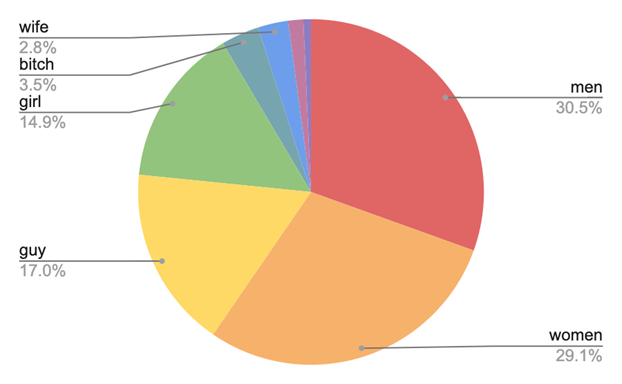
Regarding the lexical data, contrary to what we initially predicted, we did not see a high use of derogatory language towards women. Pretty substantially, the majority of words used to reference men and women were the words “men” and “women.”

Figure 1. This graph shows the breakdown of how common the words we picked were across the TikTok videos we analyzed. The two smallest slices were too small for Google Sheets to show their data. The pink slice is for the word “hoe” at 1.4%, and the purple is for the word “female” at 0.7%.

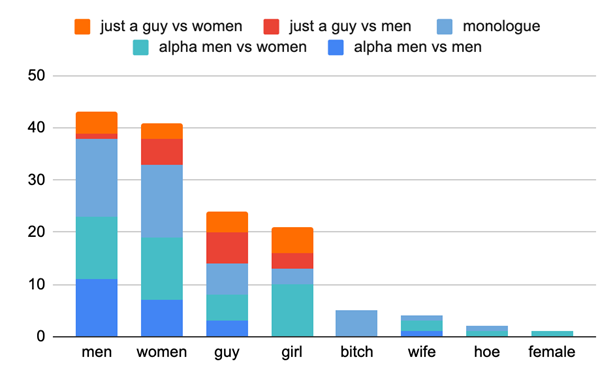
However, when looking at a breakdown of what words are used in what context, there are more interesting results.

Figure 2. This graph shows the number of times each word was used across all the TikTok videos.

As we can see, alpha male podcasters use more words to refer to women than non-alpha male podcasters. The non-alpha male podcasters used only the words “women” and “girl” and didn’t use any other references when talking about women. When talking to women, alpha male podcasters almost exclusively used the word “girl.” In our data, they never used the word “girl” when talking to other men. Similarly, alpha male podcasters only used the words “hoe” and “female” when they were talking to women.

There was only one instance of an alpha male podcaster using the word “female,” and it was when he was talking to some women about cheating. The alpha male podcaster said:

What is interesting about this is that he also used the word “women” in the same sentence. He made two categories of women, “women” and “females.” When talking about the partner who receives love from a man, he used the word “women.” When he was talking about a person that a man would have sex with, he used the word “female.” This creates a dichotomy between women who are loved — “women” — and women to have sex with — “females.”

When we compiled the data, we counted both plural and singular forms for every word, and there was an overall trend of non-alpha male podcasters using singular forms, while alpha male podcasters often used the plural forms. Usually, when non-alpha male podcasters were talking about men and women, they would be talking about specific situations, while alpha male podcasters would usually be making sweeping statements about men and women in general. In general, there seemed to be an overarching pattern of alpha male podcasters talking about the general broad topic of “men and women.” On the other hand, we actually found it a little hard to find non-alpha male podcasters talking about men and women as a broad topic, and usually, they would be talking about their own personal experiences or hypothetical situations regarding romantic relationships.

Also, non-alpha male podcasters on average seemed to be younger than the alpha male podcasters, which would explain the low frequency of the word “men” by non-alpha male podcasters. It seemed that they were more comfortable referring to themselves and other men as “guys.” Interestingly though, when comparing words referencing men and women, the words “men” and “guy” were more frequent than the words “women” and “girl.” There was only a slight difference, but it is interesting to see that it was consistent that words referring to men were used slightly more than their feminine counterparts. This could also be explained by the fact that both groups of podcasters are slightly more likely to make statements relating to themselves, as they identify as men.

The most compelling data we found in the TikTok video transcripts were words that referenced men and women, and we didn’t find any other specific words that were super frequent in the videos we looked at. There was no quantitative data on other words, but overall, alpha male podcasters definitely expressed ideas of sexism and gender essentialism much more frequently than non-alpha male podcasters did.

Discussion and Conclusions

In our study, we wanted to investigate an “alpha male’s” general language and the prevalence of certain words they use. The results of our findings suggest that alpha males do try to impose and assert dominance and interrupt others when they are speaking to others. Alpha males showed intolerance when they were faced with conversations with males or females who did not agree with their point of view.

We found a lot of interesting things in our data, things that matched up with what we originally predicted and things that did not. In our lexical item results, the frequent usage of “girl” about women by alpha male podcasters is extremely interesting. Because these men often criticize women and the behaviors they associate with women when doing so, the preference for the word “girl” when talking to women directly could be taken as a form of dismissiveness towards women and their autonomy, infantilizing them and writing them off as something that needs to be taught and controlled. In the interruption results, the assertion of dominance from alpha male podcasters escalated when there was a disagreement between alphas and other men in conversations. It seems that alpha males not only want to assert their dominance over women but also other men.

Overall, these patterns that we witnessed in our research reflect underlying tactics of dismissiveness and clear tactics of dominance used by alpha males. Unlike what we thought, alpha males were more subtle in terms of low use of marked words; they instead used unmarked words, perhaps because they realized that derogatory terms are not as socially acceptable. On the other hand, something like interruption is not something that is clearly marked or visible, so alpha males seem to fully employ that tactic.

Also, some things that are important to note is that it was pretty obvious that a lot of these alpha-male podcasters were trying to “rage bait” and get a reaction out of their guests or the audience. Most of the videos that popped up were alpha male podcasters berating women about their choices on men, speaking on how women should act, etc. Due to the nature of social media algorithms, it’s impossible to randomly pick videos. However, in a way, it does show which videos are getting viewed the most and, in turn, what the average person would be more likely to come across. Something else that we did not look at specifically was sentiment analysis. If we looked more closely at what sentiments were expressed when using “girl” vs. “women,” for example, or between alpha male podcasters and non-alpha male podcasters, we might have seen more data that lined up with our original predictions. Even if alpha male podcasters did not use derogatory terms for women, they still expressed negative sentiments about women.

Alpha males are often seen as a meme or outrageous, and even though the statements they say often are, it seems that there is some kind of conscious effort to stray away from derogatory terms that would immediately be flagged by the general public. Through our analysis, we can see that there are many other factors and tactics that seem to be a part of the repertoire of alpha males. We have only looked at the surface, but hopefully, our research could serve as a starting point for investigating other factors that go into the way alpha males speak.


References

Johnson, F. L., & Aries, E. J. (1983). Conversational patterns among same-sex pairs of late-adolescent close friends. The Journal of Genetic Psychology: Research and Theory on Human Development, 142(2), 225–238. https://doi.org/10.1080/00221325.1983.10533514.

Lawson, R. (2020, January 14). Language and masculinities: History, development, and future. Annual Review of Linguistics. https://doi.org/10.1146/annurev-linguistics-011718-011650.

Ludeman, K., & Erlandson, E. (2006). Alpha Male Syndrome. Harvard Business Press.

Russell, E.L. (2021). Masculinities, Language, and the Alpha Male. In: Alpha Masculinity. Palgrave Studies in Language, Gender and Sexuality. Palgrave Macmillan, Cham. https://doi.org/10.1007/978-3-030-70470-4_2.

Roger, Derek B., Bull, Peter E., & Smith, Sally (1998). Journal of Language and Social Psychology. The development of a comprehensive system for classifying interruptions. 7:27-34.

[/expander_maker]
, , , , ,

Gender Portrayals in Hip-Hop Lyrics

Jazmin Flores, Charlene Juarez, Javier Nuñez-Verdugo, Sofia Nyez

Hip-hop music as a genre has grown in popularity and oftentimes notoriety among younger generations for its catchy beats, the interesting artists behind them, and the relationships that come as a result of them, whether those be for better or for worse. Beyond its redeeming qualities, however, there has been a push in recent years especially to investigate the prominence of gendered violence in the form of lyricism. In this study, we analyzed the frequency with which certain gendered noun substitutions are found in the top hip-hop songs of 2023 written by men and women alike. With an emphasis on analyzing opposite-sex noun substitutions, our group found that women more often than not tend to refer to men in their music the most out of any other gender-to-gender category. Additionally, we found that women also tend to use the substitute “bitch” up to 3 times more than men do. 

[expander_maker id=”1″ more=”Read more” less=”Read less”]

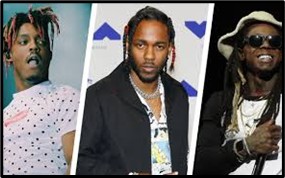
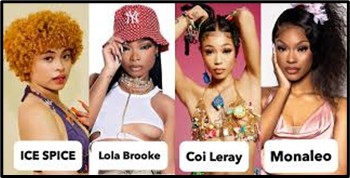
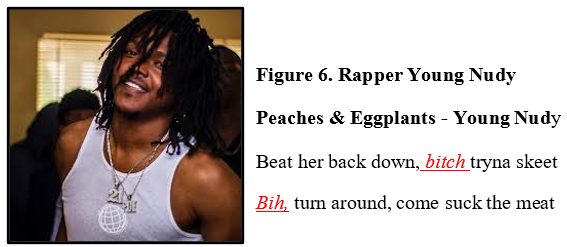
Figure 1. Several songs that will be analyzed in this article.

Introduction

Hip-hop is a largely male-dominated industry that often finds itself as an entertaining medium/genre for promoting self-pride and rapper “beef” in the form of diss tracks towards other artists. However, the genre has also found itself to be associated with more negative ideas relating to arrogance, misogyny, hypersexuality, and drugs in the public eye. This study will focus on the issues of misogyny surrounding the hip-hop/rap industry, specifically on how women are portrayed in songs via the lyrics, to understand how these communities have contributed to creating a hostile environment for women in our society. In more recent years, there has been an uptick in female rappers who have aimed to take back their power (Krasse, 2019). Female rap artists have transformed targeted, derogatory phrases like “bitch,” “hoe,” and “slut” into forms of empowerment. Through their music and lyrics, they reclaim ownership of these words, reshaping them into symbols of strength and resilience. In doing so, they redefine societal perceptions and assert their power in the face of adversity. This study will mainly focus on the differences between how male and female rappers portray the opposite gender in their music, with a strong focus on how male rappers sexualize or objectify women and how women threaten men’s masculinity. Additionally, we will also take some time to address same-gender portrayals in the hip-hop genre using similar research strategies. We will be examining this through the lexical use and variation across the aforementioned categories.

Background

In recent years, there has been a glorification of this genre of music despite its content. While we are aware that misogyny is clearly present in these songs, it is interesting to analyze how it has influenced our society for better or for worse. First, we will be focusing on the language that current male and female rap artists use in their work. Music has the power to change a person’s mood or perceptions in relation to sexism (Cobb & Boettcher, 2007). Therefore, we will also comment on how the content of current male and female rap artists’ music has affected younger generations. It is important to analyze how the use of explicit language about women has affected society’s perception of them.

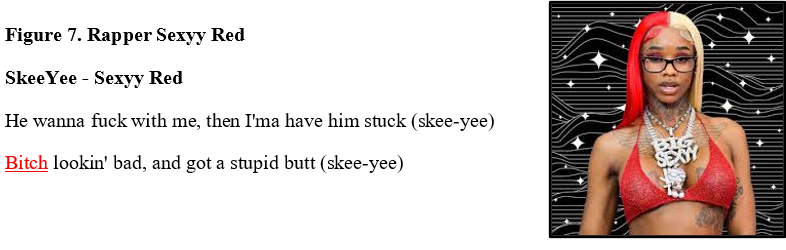
Figure 2. Popular rappers included in Spotify playlist ‘RapCaviar Presents: Best Hip-Hop Songs of 2023.’

In this study, we proposed the question: How has misogyny manifested itself in Hip-Hop/Rap music in 2023 comparatively between men and women, as demonstrated through their lyrics when addressing the same or opposite gender? Based on previously investigated data (Sallam & Shim, 2021), we expect to find that men describe women negatively at a higher rate than when they describe themselves, when women describe men, and when women describe themselves.

Methodology

In our study, we will be examining the descriptors of the genders (such as “wack”) and any noun substitutes (such as “hoe”). Popular artists like Gunna, Central Cee, and Travis Scott commonly use noun substitutes like “gold diggers,” ”bitches, and ”hoes” in reference to women. The use of insulting and/or derogatory language towards another on the basis of gender can be seen as a means of affirming the gender of the speaker. While the reasons behind such thoughts are nuanced, the pressing reason that we would like to highlight is gendered linguistic violence being a means of reinforcing traditional gender norms that paint men as superior to women. For a modern-day example of this, we can look no further than to the self-proclaimed “Alpha Male” influencer Andrew Tate, who was popular for a large part of 2023 for his social media content aimed at defending rather reductive and traditional views on gender (Radford, 2024). These views have the end goal of defending this idealized masculinity that celebrates male confidence and resentment towards women for apparently posing a threat to and stigmatizing such traditional gender norms.

The project design will consist of identifying and gathering 20 songs from 2023 male and female rappers. We have narrowed down the song selection to the top 10 rap songs by female rappers and the top 10 rap songs by male rappers from Spotify in 2023. As we analyze the lyrics of this genre, we will look at how men describe women, women describe men, men describe men, and women describe women through the use of lexical items. Specific lexical items include adjectives, phrases, and slurs that are used as forms of derogatory remarks towards the gender that is being described. To identify our data we looked at three categories of lyrics: those addressing women, those addressing men, and those talking about anything else. As a form of methodology, we will calculate how often slurs or insulting/provoking phrases are used in regard to an individual’s gender (Sallam & Shim, 2021).

Results and Analysis

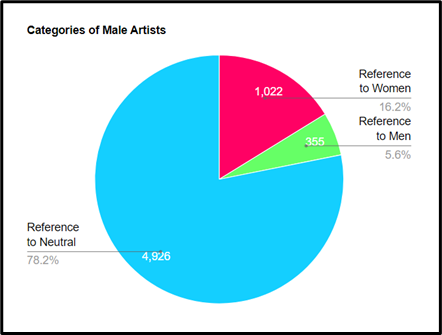
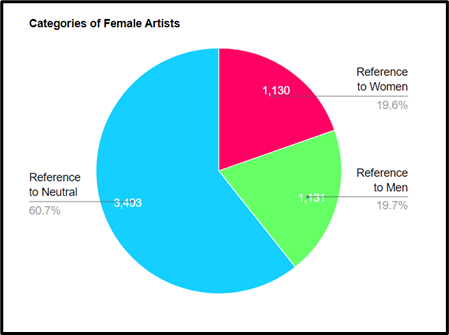
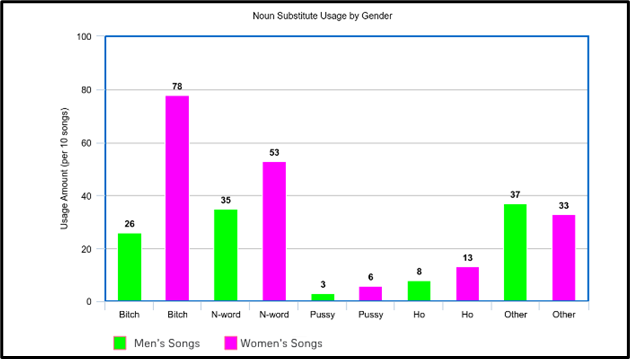
To quantify our data, we looked at three categories across the board through the use of pie charts; one for male artists and one for female artists to help us compare our data. In order to qualify this data, we created a histogram with the most commonly used noun substitutions to get a side-by-side view of its usage by both groups of artists.

Figure 3. Pie chart to tabulate how many references MALE artists make to the following three categories – towards women, towards other men, and everything else/general language.

Figure 3 shows a greater tendency for men to refer to women at 3 times the rate than they do other men when just considering gender-to-gender ratios of speech.

Figure 4. Pie chart to tabulate how many references FEMALE artists make to the following categories – towards men, towards other women, and general language usage.

Figure 4 shows different results and serves as a contradiction to our original hypothesis, showing that women in the top songs of the 2023 hip-hop genre have almost an equal ratio to referring to other women than they do to men (19.6% vs. 19.7%, respectively).

Figure 5. Bar chart tallying the total number of times a noun-substitute to refer to the opposite or same gender was used, divided by gender. Green refers to songs written and sung by men, while pink refers to the same for women.

Figure 5 directly goes against our original hypothesis that men would refer to women negatively the most out of our aforementioned gendered categories. Instead, we see that, for example, women use the selected noun substitutions (excluding “Other”) in their music more than their male counterparts in each bar with at least a 50% or more increase. Conversely, both men and women almost utilize the same rate of “Other” gendered noun substitutes. Examples of these substitutes would be “Karen” towards women and “slow” as a general derogatory noun substitute.

Discussion

Although we originally hypothesized that male artists were to have the highest scores to their female counterparts, the findings based on the data collection were that women tend to talk about men more than men talk about men. In addition, women use profanity more often than men. Specifically, the noun substitute “bitch” is used by women 3 times more than men do, which in the early stages of our study was one of the key noun substitutions. While these findings do prove the large usage of this noun substitution, we were not anticipating it to appear under female rap artists. Relating back to the hypothesis and research question, our hypothesis was disproved, given how women speaking on men was the highest subcategory. It is important to analyze hip hop for its contributions to popular culture and therefore, the influence it has on the greater population when it specifically utilizes gendered language. Some examples were seen in the number of words that were used, for instance, in Men’s Hip-Hop Top 10: there were 6,303 words versus 5,814 words for Women’s Hip-Hop Top 10. The noun substitutions for women are a direct manifestation of misogyny in hip-hop music. In the hip-hop world, words often carry a double meaning. Is it possible that we were proven wrong? Or do the usages of “bitch,” “hoe,” and “slut” carry a double meaning? It is possible that the times we simply tally these words neglected the context of its usage in the song. In particular, there is a difference when male rap artists use certain words and when female rap artists use the same word. Let’s take a look at the importance of double meaning and context:

While male artists use the noun substitution to degrade and sexualize women, female artists use it to empower women. They redefine what “bitch” means to women. By doing so, these women are taking back their power, as they no longer give men the ability to use words as weapons.

Conclusion

We believe it would be beneficial for future research to be conducted concerning this topic, as some limitations of this study included time constraints and a need for more expansion. One area of expansion includes analyzing music from other languages that hip-hop and rap are produced in besides English, and a possible comparative analysis between English-language music and foreign languages could be beneficial as a cross-cultural study. Furthermore, a study comparing the hip-hop of earlier decades to current music could also yield significant results, as hip-hop and rap are rapidly changing cultures owing to a number of factors, as detailed in Ellen Chamberlain’s TED Talk on the history of misogyny in the hip-hop industry. While a bit broad, it could also be interesting to look into some comparisons between other genres of music in conversation with the hip hop genre.

During our presentation, we were asked if the race of the rapper had anything to do with their language use. While this is probably a factor, as we investigated during the course that every aspect of a person’s personality plays a role in the way they speak, we chose to focus on the gender of the artists instead. This is because many of the artists in the hip hop industry are African American, and thus, it would be difficult to distinguish between marks of the group or marks of the music industry. We also did not want to perpetuate the stereotype of the “violent black man” or “angry black woman” through our research and decided to stick to only the gender differences. Though, it should be noted that there are definitely more factors at play in the language use of hip-hop artists besides their gender, and it could be beneficial to study more into that topic using careful consideration.

We believe that this study can fit into the larger body of research surrounding misogyny in the hip-hop industry as displayed through linguistic elements. Though the results aren’t exactly exemplary of what has been previously displayed in the literature, we believe it opens the floor for more discussion about not just the prevalence of discrimination but the forms in which it might come. While much literature believes women to be the target of discrimination from men for the most part, our research found that women not only speak about men at a higher frequency but use derogatory terms more often as well.

All in all, while progress has been made in addressing misogyny within hip-hop, rap music, and artists, there is still much work to be done. By understanding the nuances of gender representation in lyrics and challenging harmful stereotypes, the industry can move towards a more inclusive and unprejudiced community for future artists and listeners.

References

Boettcher, W. A., & Cobb M. D. (2007). Ambivalent Sexism and Misogynistic Rap Music: Does Exposure to Eminem Increase Sexism?. Wiley Online Library. https://doi.org/10.1111/j.1559-1816.2007.00292.x.

Chery, C. (2024). RapCaviar Presents: Best Hip-Hop Songs of 2023. Spotify. https://open.spotify.com/playlist/37i9dQZF1DWZFV9Asvj1J9?si=PdIXfalHQs-tcMM0hRggZg&pi=u-Abilm4LaTuW5&preview=coverart.

de Leon, A. (2007, June 6). The complex intersection of gender and hip-hop. NPR. https://www.npr.org/2007/06/06/10783904/the-complex-intersection-of-gender-and-hip-hop.

Krasse, L. (2019, Spring). A Corpus Linguistic Study of the Female Role in  Popular Music Lyrics. https://www.diva-portal.org/smash/get/diva2:1481063/FULLTEXT01.pdf.

Neff, S. (2014, May 24). Sexism Across Musical Genres: A Comparison. Undergraduate Thesis Western Michigan University. Pp. 38. https://scholarworks.wmich.edu/cgi/viewcontent.cgi?article=3486&context=honors_theses.

Prior, J. (2017, March 1). Teachers, what is gendered language?. British Council. https://www.britishcouncil.org/voices-magazine/what-is-gendered-language.

Radford, A. (2024, March 12). Who is Andrew Tate? The self-proclaimed misogynist influencer. BBC News. https://www.bbc.com/news/uk-64125045.

Sallam, A. M., & Shim, J. Y. (2021, February). Gender-biased English language in hip hop music. ARC Publications. https://www.arcjournals.org/pdfs/ijsell/v9-i2/1.pdf.

Wayne University. (2019). Misogyny in Hip Hop. TED. Retrieved June 12, 2024, from https://www.ted.com/talks/ellen_chamberlain_misogyny_in_hip_hop.

[/expander_maker]
, , , , ,

Dialogues of Fame: Unveiling Gender Dynamics in Celebrity Interviews

Elizabeth Escamilla, Penelope Hernandez, Kenzie MacDougal, Jason Ye

Human interaction is complex and, at a sociolinguistic level, can be challenging to parse. With that in mind, we chose to analyze celebrity interviews — definite and structured slices of conversation whose participants were conscious of the invisible future viewer. Informed and inspired by studies such as Julia T. Wood’s “Gendered Media: The Influence of Media on View of Gender,” Rossi and Stiver’s “Category-Sensitive Actions in Interaction,” and Tavitz and Perez’s “Language influences mass opinion toward gender and LGBT equality,” we investigate patterns of interaction and indexical shifts as they may be affected by the genders of the involved parties. Taking two-minute segments from each interview, we classified questions as personal or professional and invasive or appropriate. Anything deviating from expected interview etiquette was noted, whether that be word choice or tone of voice, as well as the reactions of any third parties. Most importantly, we classified the ways in which interviewees responded to invasive lines of questioning, specifically as one of the following: retaliatory questioning, a passive aggressive remark, a humorous deflection, a partial answer, or a direct answer. A significant trend of women receiving more invasive and personal questions quickly appeared, though our investigation suffers from a possible selection bias. Therefore, future investigations should pull from a much larger and more varied sample of interviews.

[expander_maker id=”1″ more=”Read more” less=”Read less”]

Introduction and Background

Celebrity interviews aren’t conversations that take place in a vacuum; they may be viewed by hundreds, if not thousands, of people. Additionally, the predefined question-answer format of an interview makes it easier to parse for sociolinguistic analysis. Needless to say, we found celebrity interviews to be generous data points for analyzing patterns informed by the gender identities of the involved parties.

Studies like Julia T. Wood’s “Gendered Media: The Influence of Media on View of Gender” show us how the media’s representation of men, women, and queer people may affect a viewer’s understanding of gender roles. Problematic patterns are uncovered: “men and women are portrayed in stereotypical ways that reflect and sustain socially endorsed views of gender… depictions of relationships between men and women emphasize traditional roles and normalize violence against women” (Wood, 2013). Unlike fictional movies and television shows, the interactions recorded in celebrity interviews involve real people, or at least believable personas designed with the public eye in mind. It follows that interviews with respected, famous individuals play a greater role in influencing what people deem socially acceptable behavior. Thus, when audiences watch mistreatment of women play out with little to no consequence, they may feel validated in their own experiences with misogyny, as either a perpetrator or victim.

Media is both what its creator produces and what the viewer brings to their experience with it. The manners in which interviewers and interviewees carry themselves both reflects and defines current standards for human sociolinguistic communication. Inspired by “Category-Sensitive Actions in Interaction,” we hope to identify patterns in lines of questioning and the manner in which these questions are handled. That study outlines how boundaries of social membership are exposed in ordinary interactions — “the distribution of rights and constraints to perform certain actions creates boundaries in people’s activity space, which are typically respected but sometimes exposed or even crossed” (Rossi and Stivers, 2020). As it pertains to our investigation, when an interviewee is asked an invasive question, this may be classified as a transgression of these silent boundaries.

So, we aim to contribute to a growing body of work suggesting that different behaviors and patterns of interaction vary based on the gender of the interviewee, unfortunately often at the expense of women and queer individuals.

Methodology

We chose to study a variety of variables for this project, including the frequency of personal versus professional questions, word choice and tone of voice used by the interviewer, and the methods interviewees used to navigate controversial questioning.

Upon examining an interview, we followed a set of steps to extract and prepare the data for analysis moving forward. First, it’s important to classify any questions as being professional, personal, appropriate, or invasive.  Professional questions relate strictly to the interviewee’s work, while personal questions deviate from this. Similarly, appropriate questions are given to those that are deemed socially acceptable, such as topics commonly discussed with acquaintances, while invasive questions are not. Next, we take note of any speech or tone used by either interviewer or interviewee that may deviate from the expected etiquette of interviews. From here, we classify methods used by interviewees to ease out of or address uncomfortable questioning. We chose to classify these among the following: direct answer, partial answer, humorous deflection, passive aggressive remark, or retaliatory questioning. Humorous deflection involves the use of humor in an effort to avoid responding to the question. A passive aggressive remark includes any form of snarky or sarcastic response, including those done purposefully to attack the interviewer. Retaliatory questioning is the act of answering the original question with a question of one’s own. Finally, if the selected interview happens to involve more than one interviewee, it is important to also take note of any third party reactions or interactions to awkward questioning. 

To demonstrate our methodology, we will examine an interview with Scarlett Johansson and Jeremy Renner for their film The Avengers (2012). The first question, directed at Johansson, was: “Were you able to wear undergarments [with your costume]?” This question was labeled personal and invasive. Johansson responded with a passive aggressive remark and retaliatory questioning: “I’ll leave it up to your imagination, okay, whatever you feel like I should be wearing or not wearing under that costume” (Passive Aggressive Remark) and “What is going on? What? Since when did people start asking each other about- in interviews about their underwear?” (Retaliatory Questioning). Later on in the interview, Jeremy Renner is asked a question about an injury: “I understand you got hurt pretty badly though. How’d you do that?” This was labeled as professional and appropriate, and no other notes were taken as there was no unique use of tone, word choice, or navigation methods.

Results & Analysis

In this section, we will break down the details of our results and perform analysis on each individual dataset table (interviews); let’s start with some visuals demonstrating the overall statistics.

Table 1. This table shows the totaled data from individual datasets (interviews) into one table.


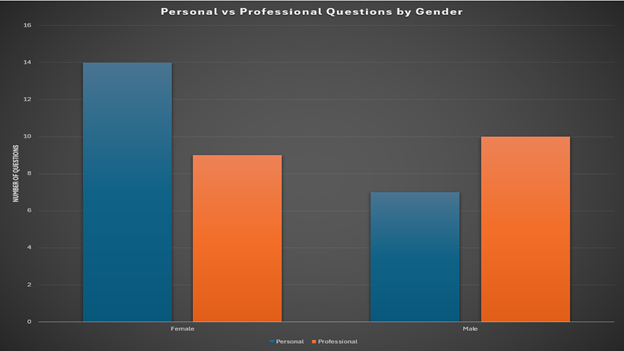
Figure 1. This graph shows the number of personal vs. professional questions the interviewees received based on their respective gender.


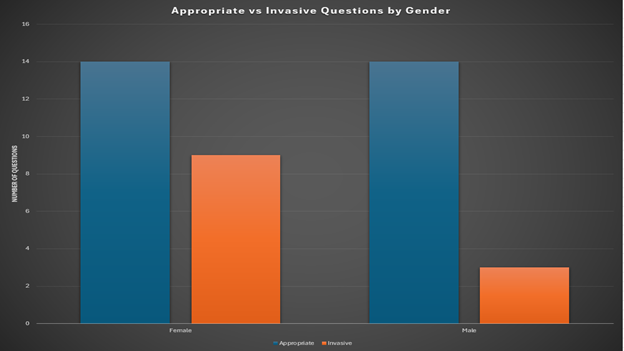
Figure 2. This graph shows the number of appropriate vs. invasive questions the interviewees received based on their respective gender.

Just from these few charts, we can already gauge a sense of skewedness, one that seems to confirm our hypothesis: female interviewees, regardless of the gender of the interviewer, are likely to encounter more personal questions compared to male interviewees. Indeed, we can see that 61% of the questions asked to female interviewees were personal, as opposed to 41% of the questions posed to their male counterparts (49% increase). On top of that, we found 39% of the questions asked to female interviewees were also invasive in nature, while only 17% were invasive for male interviewees, which is a 129% increase, more than twice as many invasive questions. This disparity in question types based on the interviewees’ gender is alarming.

To navigate these invasive lines of questioning, we found that male and female celebrities tend to employ different methods. Female celebrities mostly used retaliatory questioning, humorous deflection, and direct answers — the first two methods being more indirect ways of signaling to the interviewer that the line of questioning was inappropriate. Male celebrities, on the other hand, mostly used direct answers and passive-aggressive remarks, which we speculate is due to men feeling more comfortable asserting themselves in these socially invasive situations.

Now, having discussed the key points of our results, we will provide additional analysis on each individual dataset (interview) separately.

Table 2. Data for The Avengers interview with Scarlet Johansson and Jeremy Renner (Male Interviewer).

This first dataset/interview was already touched on in the previous section on methodology, it suggested the same disparity in question types between the female and male interviewees. Scarlet Johansson received a disproportionate amount of personal and invasive questions and had to defend herself using mainly retaliatory questioning, while Jeremy Renner received only appropriate or professional questions.

Table 3. Data for Dan Stevens and Emma Watson interview for Beauty and the Beast (Female Interviewer).

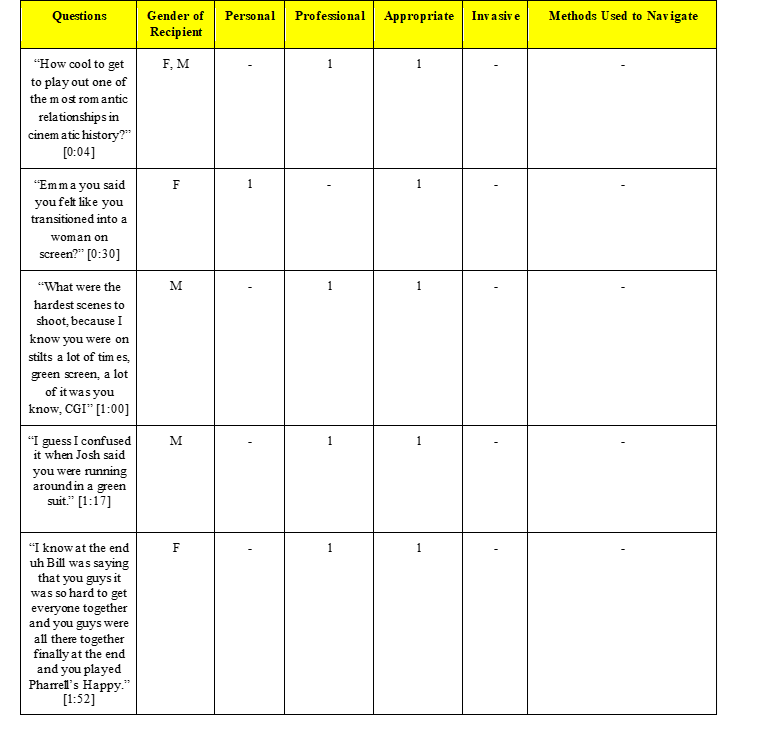
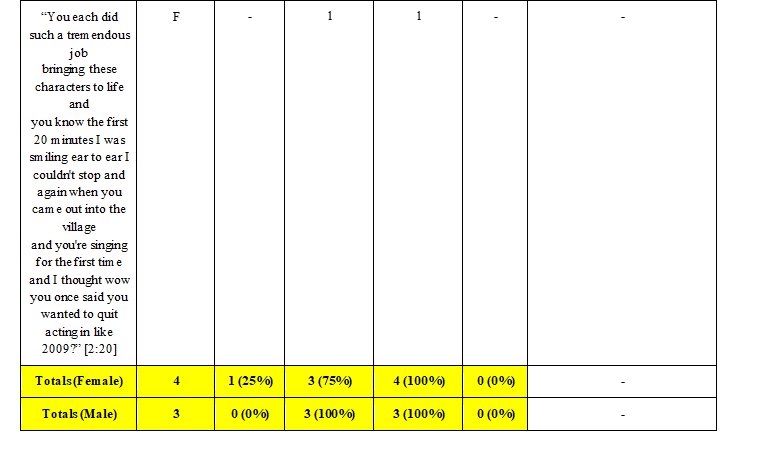
This dataset/interview is an outlier amongst all the other datasets. First thing we noticed is the empty “Methods Used to Navigate” column; we didn’t need to fill in any. All the questions were appropriate and professional with only one personal (but appropriate still) question directed at Emma Watson. Interestingly, this is also the only interview in our entire dataset pool with a female interviewer; more evidence and data would be needed to come to any meaningful conclusions about whether the gender of the interviewer correlated with the fact there were no invasive questions.

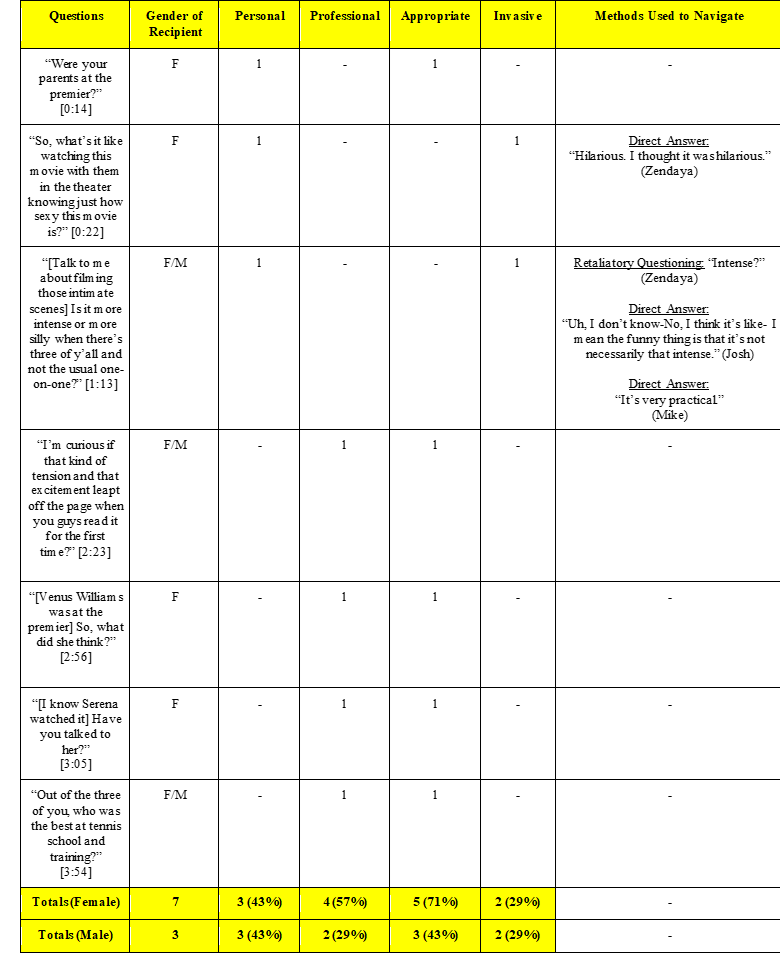
Table 4. Data for interview with Zendaya, Mike Faist, and Josh O’Connor for Challengers (Male Interviewer).

There are two invasive questions, and both were directed at Zendaya. The note-worthy takeaway here is the fact that both her co-stars Josh and Mike came to her support/rescue with direct answers trying to further alleviate the awkward situation after Zendaya responded initially with a retaliatory question.

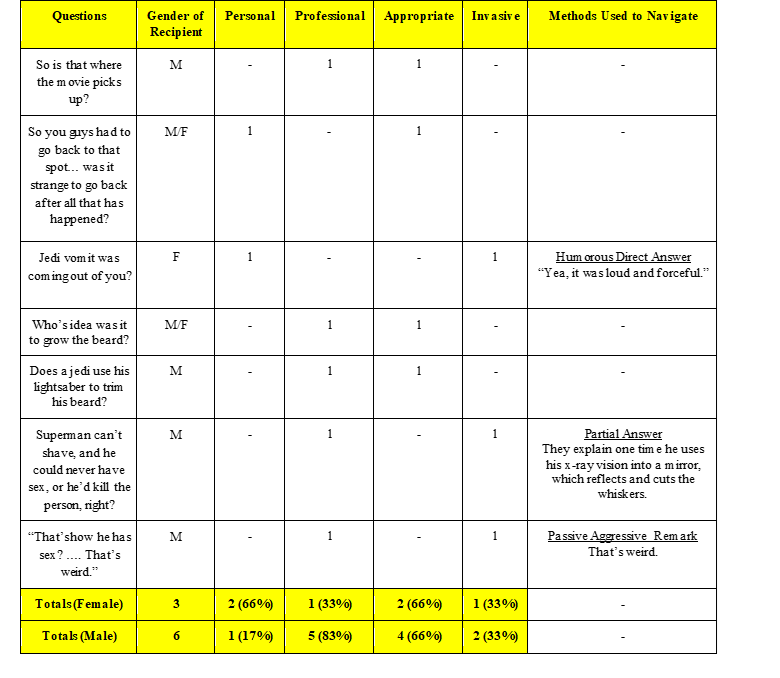
Table 5. Data for interview with the cast of Star Wars: The Last Jedi (Male Interviewer).

Out of the three invasive questions in this dataset/interview, two were directed at a male interviewee (certainly an outlier too in and of itself). Here, we see the use of a passive aggressive remark employed by the male celebrity and a partial answer instead of a more direct one, though the tone does not detract too much from a direct one. The female interviewee employed a humorous direct answer; though a direct answer, the tone is more of just a humorous answer without the impact of a completely direct response.

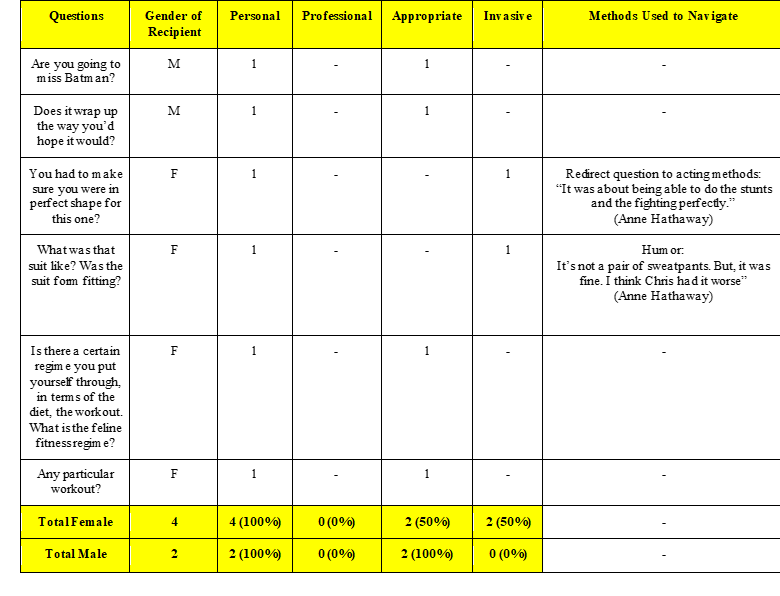
Table 6. Data for interview with Christian Bale and Anne Hathaway for The Dark Knight Rises (Male Interviewer).

Both invasive questions were directed at Anne Hathaway, and humor and deflection were used to navigate the situation. All four of the questions directed at her were personal. While the male interviewee also received only personal questions, none of them were invasive.

Circling back to our hypothesis one more time after the more detailed look into each dataset, we can establish the clear gender bias in type and appropriateness of questions posed to celebrities in interviews, with female celebrities disproportionately subjected to more personal and invasive questions — confirming our suspicions and reflecting societal attitudes and expectations around gender.

Discussion and Conclusions

Based on our findings, we can conclude that there needs to be more discussions about indexicality and societal attitudes towards celebrity culture. Our study found that female interviewees are more likely to receive personal and invasive questions compared to their male coworkers. We observed that interviewees have various strategies to navigate these invasive questions, such as using humor or redirecting the conversation. This finding aligns with our hypothesis and suggests that gender does play a significant role in the nature of questions asked in celebrity interviews.

When comparing our own study with previous research, we can view consistent results with Rossi and Stivers, Tavits and Perez, and Wood. They show that female celebrities often face questions that cross personal boundaries, contributing to the systemic stereotyping and underrepresentation of women in the media. Interestingly, in the Tavits and Perez article, they found that “the effects of feminine pronouns parallel those of gender-neutral pronouns: both heighten the salience of non-males in memory, which is then associated with people expressing more liberal opinions toward women and LGBT groups in politics” (Tavits and Perez, 2019). This article informs us of variables that affect how a viewer might perceive the interactions captured in celebrity interviews. To continue, Wood’s article on gendered media can help us to better see the media’s representation of men, women, and queer people and how that may affect a viewer’s understanding of gender roles (Julia T. Woods, 2013). Interviews play a greater role in what is acceptable and what is normalized amongst gender groups.

Our study suggests that the media continues to reinforce traditional gender roles by subjecting female celebs to more personal scrutiny. Wood did a great job at explaining this. She stated how “depictions of relationships between men and women emphasize roles and normalize violence against women” (Wood, 2013). This not only affects the celebrities themselves but also influences public perceptions of acceptable behavior towards different genders. Everything we do in the media gets translated and put into practice outside of the media. So, whatever we allow to happen online will be manifested in real life interactions.

We focused on American celebrities, but if we were to dive into other environments, we would have more evidence to contribute and offer more indications to analyze gender dynamics in media interactions. For the future, we could expand on our study by examining a more diverse range of celebrities, locations, and interview formats.

When we look at our findings holistically, we can understand how the media plays a huge role in shaping public discourse around gender. When we examine the patterns within celebrity interviews, we can see there is a large need for more equitable and respectful media strategies. In our findings, we want to emphasize and analyze these dynamics because they are crucial for social change. It is important to challenge changing media practices so they can better promote gender equality and respect for all individuals in any field of work.

In conclusion, our study not only contributes to understanding media and gender but also calls for a more conscientious and equitable approach to media representation. The media we consume online does not exist in isolation. It shapes our perceptions and behaviors in several tangible ways. Gender biases and stereotypes reinforced in digital content can manifest in real-life interactions. By promoting respectful and equitable interactions online and through interviews, we can adopt more inclusive and respectful behavior towards all genders in our everyday lives, professional or not.

References

Montiel, A. V. (2014). Media and gender a scholarly agenda for the Global Alliance on Media and gender. United Nations Educational, Scientific, and Cultural Organization.

Pewsey, G. (2021, July 13). The world owes Megan Fox an apology. Grazia. https://graziadaily.co.uk/celebrity/news/megan-fox-michael-bay/.

Rossi, G., & Stivers, T. (2020). Category-sensitive actions in interaction. Social Psychology Quarterly, 84(1), 49–74. https://doi.org/10.1177/0190272520944595.

Tavits, M., & Pérez, E. O. (2019). Language influences mass opinion toward gender and LGBT equality. Proceedings of the National Academy of Sciences, 116(34), 16781–16786. https://doi.org/10.1073/pnas.1908156116.

Wood, J. T. (2013). Gendered Media: The Influence of Media on Views of Gender. Chapel Hill, NC; Department of Communication, University of North Carolina at Chapel Hill.

[/expander_maker]
, , , ,

Tech Bros and Tech Woes: A Perspective on Gendered Sociolinguistics in the Tech Industry

Jenny Wang, Madhavi Vivek, Rajana Chhin, Audrey Chung

In the expanding realm of technology, language serves as more than just a communication tool — it is a powerful marker of identity and belonging. Our study delves into gendered linguistic practices within the tech industry, focusing on “tech bro” culture and its impact on female experience and career advancement in this male-dominated field. Through interviews with male and female tech students and analysis on social media content, podcasts, and scholarly articles, we uncovered lexical variations and interactional patterns unique to the tech community. Utilizing a blend of qualitative and quantitative methods, we observed terms like “tech debt,” distinct pitch variations, and exaggerated “urban” accents during conversation. Our findings reveal that females in tech often adapt their language to conform to the hyper-masculine expectations of the tech workplace, further reinforcing clear gender biases and stereotypes within the industry. By highlighting these subtle linguistic barriers that perpetuate gender biases, we aim to emphasize the need for a more inclusive and supportive tech environment for all individuals.

[expander_maker id=”1″ more=”Read more” less=”Read less”]

Introduction and Background

The technology industry has long been known for its clear gender gap, given its predominantly male sector enforcing stereotypes and biases against women in the workplace. Despite advancements over the years, the tech industry still exhibits pervasive gender bias, often manifested through language. Recently, the term “tech bro” has been used to characterize the toxic masculinity prevalent in the workplace (Jones 2022). Our research aims to explore the unique lexicon and interactional patterns of this group, observing how they reinforce gender stereotypes and impact female experience in tech. In other words, how does the dense network of “tech bros” correlate to their use of vernacular variables? Does gender bias exist within language commonly used by “tech bros?”

Existing literature highlights the significant role of gendered language — the words and phrases that inherently carry gender bias—in shaping workplace dynamics. For instance, terms like “chairman” and “assertive” often assume a male subject, whereas words like “bossy” and “hysterical” are typically applied to females in leadership roles (Holmes 2008). Holmes’ study suggests that women in tech adopt more masculine speech patterns to gain respect and authority, such as using direct imperatives when commanding subordinates or purposefully disengaging from workplace arguments. Despite the growing awareness of these issues, there remains a gap in understanding the specific linguistic behaviors of “tech bros” and their effects on female colleagues.

Our hypothesis claims that the linguistic practices of “tech bros” do contribute to the exclusion of women from the tech sector. This exclusion manifests in daily communication, feedback, perception of qualifications, and performance evaluations. Our research aims to find out whether the male-dominated environment serves as a barrier to community entry and inclusion for women. Additionally, we aim to study the speech variation between genders within the community and its role in building professional relationships. By analyzing tech jargon and interactional patterns, we hope to uncover the subtle and pervasive barriers that gendered language creates in promoting workplace gender equality and diversity.

Methods

In order to conduct our research, our team relied on three main methods for data collection:

  1. Media: We collected quotes from social media portrayals of the stereotypical “tech bro”.
  2. Online Tech Hubs: We gathered data from popular tech communities on platforms like Discord and cross-referenced jargon with scholarly articles.
  3. Interviews: We conducted a total of three sets of interviews with male and female identifying students in the tech industry in order to evaluate of indexical shift as well as gendered language.

Going in order, we consistently evaluated new information against previous data. Further analysis included examining the spectrograms of interview snippets for distinct phonological features.

Results and Analysis

The following section will focus on the results of our study.

1. Media

As per our methodology, one of our primary sources of information was through the portrayal of stereotypical “tech bros” on social media. While this type of content is not the most scientific, it does provide context on societal expectations placed on the average “tech bro.” The comedic video linked here demonstrates several “tech bro” characteristics while mocking common stereotypes, such as remote work culture, cost-of-living in the Bay Area, and popular hobbies and vacation spots within tech communities. Additionally, we observed that the creator of the video speaks with an exaggerated coastal urban accent, similar to those of surfers or “frat bros.” This hyper-masculine accent underscores the inherently masculine nature of “tech bro” culture and serves as a starting point for developing a hypothesis surrounding the existence of a gender gap reflected in language.

2. Online Tech Hubs

Our team visited popular internet communities within the tech industry. The following quotes were taken from a popular Discord server called cscareers.dev, which is a community for student developers seeking internship and new grad opportunities in tech with over 8000 members.

Figure 1. Pictures from a conversation on Discord server cscareers.dev.

From these quotes in Figure 1, we gather that there is a linguistic overlap between tech communities and gamer communities. This would make sense as demographically, they are both male dominated, and technology and gaming share many similarities as fields and industries. Specific jargon like “jank” to describe an interviewer of poor quality and “cracked” to describe extremely accomplished people are two examples of somewhat-expected buzzwords. According to Wiktionary, the term “jank” exists as both computing slang and video game slang, though it is rarely used in technical contexts. The usage of this term colloquially shows the adoption of computing and gamer slang in broader environments. In the same vein, “cracked,” which usually carries video gaming implications, being used to express skill levels outside of gaming also shows the adaptive nature of the jargon.

3. Interview: Indexical Shift

Our first interview was conducted with Brandon and Brian, both third-year cognitive science students at UCLA. Brandon is a product manager intern, and Brian is a software engineering intern. Because the two have an established friendship, I conducted the interview with both participants present to simulate as natural of a conversation as possible. The interview was split into first, a professional chat, and second, a casual conversation in order to evaluate for indexical shifts. Throughout the professional chat, I asked Brian and Brandon questions about their experiences in tech through their professional organizations at UCLA. The following is a transcription of a snippet of the conversation:

Brian: Ensuring like, there’s not a lot of tech debt, I think is like super important across all the projects within DevX as a whole makes everything run very smoothly and there’s no churn.

Brandon: Yeah yeah, for sure. I think that’s a huge thing too, for a lot of projects, is because people are bouncing. Um, people bounce from projects all the time, um having tech debt is just like absolutely horrendous because like people who don’t know anything about the project, for lack of a better term, like a shitload of…

For the casual conversation, I asked the participants to describe updates in their lives, as well as share gossip, as if we were catching up. This is in order to establish the most natural and comfortable environment.

Brandon: ‘Cause I remember, I had- there was something about- but anyway, I saw them together, like they were like, like homies, like they were like, headed to a party together. I was like “oh, like birds of a feather” you know? Shit, like that tracks, that hella tracks, you know? Like I’m not surprised.

Brian: That’s wild.

Generally, I noticed that participants, especially Brandon, deliberately talked slower during the professional chat. During the casual conversation, I found that Brandon tended to stutter more, as well as exhibit doubling in order to emphasize certain phrases. In the professional chat, instead of doubling phrases, he slowed down and replaced those instances with filler words.

Tech jargon was noticeably present during the professional chat, including words like:

  • Tech debt: shortcuts in code that achieve the goal faster, but at the cost of uglier, harder-to-maintain code.
  • Churn: the frequent change of resources or team members within a project.
  • Bounce (rate): the rate at which people leave or exit, typically used in the context of webpage visits.

The following spectrograms closely examine Brandon’s use of the word “shit” in both the casual and professional context.

Figure 2. Spectrogram of Brandon’s use of “shit” in a casual conversation.
Figure 3. Spectrogram of Brandon’s use of the word “shit” in a professional conversation.

Here, we can see that during the casual conversation, there is a significant increase in pitch towards the end of the word, indicating a high rising terminal, which can be especially common amongst young people. In the spectrogram for the same word used in a professional context, Brandon maintains the same pitch. This is likely because a high rising terminal is not situationally acceptable in all professional settings. For example, it is usually not encouraged during job interviews. We can gather that a “tech bro” like Brandon understands this and subconsciously omits high rising terminal in professional contexts.

4. Interview: Gender and Culture

Our second interview was conducted with Jiin Kim, a fourth year Linguistics and Computer Science major who has experience as a software engineer through her internship at Microsoft. As she explained tech-specific language throughout the interview, she defined them in layman’s terms, constantly checking to assure my comprehension of the terms as an outsider to the tech sector. She mentioned how it can be hard to feel included entirely when there is a linguistic barrier made of tech jargon and expressions that often feel very exclusive and not easily accessible to be understood. She herself felt intimidated as an incomer into an established tech workspace. Linguistically, she found herself assimilating into the culture by reflecting speech patterns of those around her—particularly those superior to her. If she finds them to speak more directly, using imperatives, she herself would do the same. Even through a digital space, if she noticed someone using more emoticons in their messages, she would reflect that frequency. As a woman in the tech space, she attributes her not having much experience with discrimination or feeling out of place with the changing ages. As a young college student in an internship program seeking to give more opportunities to a diverse group of tech-workers, she felt well-supported by her company and her peers.

Our last interview was conducted with Matt Nieva, a fourth year Computer Science and Engineering major with experience as the Development Team Director for ACM (Association for Computing Machinery) at UCLA and as a software engineering intern at Cisco. Throughout his interview, he went deep into tech jargon, throwing out multiple technical words while describing tech projects in–depth. When asked about why tech-bro culture revolves so heavily around a specific tech lexicon, he responded saying that tech-jargon is perceived as proof of expertise.  There is a certain linguistic exclusivity that makes those who use it hold more authority and credibility. These common words in tech-space also seep into his daily vocabulary as well, signifying to others that he is a member of this tech-bro community.

These are words such as:

  • Bandwidth: the energy or mental capacity required to deal with a situation
  • Parallelize: a programming term to adapt a program for running on a parallel processing term
    • This however can be used in daily life as setting two thing simultaneously in motion
  • Velocity: rate of progress; a metric for work that has been done

In efforts to assimilate, he, like Jiin, would mimic the linguistic patterns of those around him. He discovered the concept of downtalking versus uptalking—downtalking being lower in pitch and making a speaker sound more assertive, and uptalking being higher in pitch and making a speaker sound less credible. One reason why downtalking could be perceived as more respectable might be that it is, based on pitch, masculine indexing, while the other is more feminine indexing.

Discussion and Conclusion

As mentioned in the background, tech-bro culture is characterized by an informal, male-centric atmosphere that often perpetuates gender discriminatory behavior and aids in maintaining the gender gap in the tech industry. The establishment of Title IX in 1972 was a turning point for the number of women in STEM, but women still face the leftover effects of this gender power dynamic now in more covert ways. This inequality is visible in how more masculine indexing ways of leadership such as authoritative/assertive styles that assert hierarchical status difference is perceived as more valid of leadership than leading in what is considered more feminine indexing ways such as facilitating group discussion.

Beyond perceived leadership and professionalism, research has found that gender comes to play even within the informal discourse at the workplace. Small talk is a core strategy to foster team and build rapport; however it is culturally coded as feminine specifically when it is not about anything that is work related or distinctly masculine. Research showed that at a female workplace, these pre-meeting talks would last longer and delve into topics such as family, beauty, healthcare, while when studying three different New Zealand IT organizations, small talk was either non-agenda work related or about sports. This may sound trivial but interpersonal discourse is key in fostering work relationships and an overall culture. This difference is visible in humor as well, where a female boss might make a self-deprecating joke to reestablish good relations with her subordinates, workplaces that were more masculine in one meeting  consisted of humor that 90% of was sarcastic or negative jibes intended to deflate the addresses. Gender hierarchy in the workplace, particularly within the linguistic space, is covert and embedded subtly into the ways we talk, the ways we perceive authority, etc.

Our findings indicate that the sociolinguistics of the tech industry have unique qualities, including those of which have an effect on the perception of male and female individuals that work in tech. As a male-dominated field, gender bias is highly prevalent in the industry. Our aim was to strengthen this claim in which this bias is confirmed and correlated to female “success” (defined as experience and career advancement), via the exploration of the pattern of language adaptation by females to male tech industry speech. Through this study, we found that the perpetuation of this gender bias is tied to the inherent gender gap that this industry creates in that a male-dominated environment contributes to female exclusion and strict gender-based hierarchy. Our research indicates that this exclusion and hierarchy contributes to the barrier against female success in male-dominated fields such as the tech industry. The continued observation of male-dominated power structures can aid in the effort for people of all genders in high-earning fields. There is thus a need for collective action toward increasingly inclusive, supportive, and sustainable workplace environments, especially the tech industry, for female-identifying people and other minority individuals.


References

Duchene, A., & Heller, M. (2012). Language in late capitalism: Pride and profit. Routledge.

Gleeson, P. (2017). Working with Coders. https://doi.org/10.1007/978-1-4842-2701-5.

Holmes, Janet. Gendered Discourse at Work , 2 Apr. 2008, onlinelibrary.wiley.com/doi/10.1111/j.1749-818X.2008.00063.x/abstract.

Ignatow, G. (2003). “Idea hamsters” on the “Bleeding edge.” Poetics, 31(1), 1–22. https://doi.org/10.1016/s0304-422x(02)00042-6.

Jones, H., & Sudlow, B. (2022). A contemporary history of Silicon Valley as global heterotopia: Silicon Valley metaphors in the French news media. Globalizations, 19(7), 1122–1136.

Moldovan, Andrei. “Technical Language as Evidence of Expertise.” MDPI, Multidisciplinary Digital Publishing Institute, 21 Feb. 2022, www.mdpi.com/2226-471X/7/1/41.

https://www.ucats.org/a-closer-look-at-gender-diversity-in-tech-departments-across-the-usa.html

miinii (@officialmiinii). (2024) “women in computer science stand up!” https://www.tiktok.com/@officialmiinii/video/7342179255356230955.

Tripathi, Pooja (@winnie_thepooj). (2024) “POV: date with a tech bro” https://www.tiktok.com/@winnie_thepooj/video/6962561340086996230?is_from_webapp=1&sender_device=pc&web_id=7279640957828630062.

Nasso, Austin (@austinnasso). (2024) “POV: you’re talking to a tech bro” https://youtube.com/shorts/qmGL0-U2Z58?si=DAulz7gNkYjYpRVH.

https://en.wiktionary.org/wiki/jank#Etymology.

https://en.wiktionary.org/wiki/cracked

[/expander_maker]

, , , , ,

Lights, Camera, Flirtation: An Analysis of Male and Female Verbal Flirting Techniques, As Represented in 5 Romantic Comedies from 1989–2023

Sherry Zhou, Amo O’Neil, Jared Ramil, Juliana Rodas, Thalia Rothman

Our paper seeks to analyze the ways in which flirting and romantic communication has changed, in regards to both gender and societal norms. In doing so, we collected and analyzed data regarding the frequencies and distribution of flirting between main characters of five different romantic comedy movies. We collected data pertaining to four variables: frequency of compliments, pitch change from, sexual jokes, and meaningful questions. Our analysis of the data revealed a number of observations indicative of s in present day society. Most significantly, we observed an increase of female or more female presenting characters initiating flirtation over time, a reflection of changing gender norms in society. With the rise of digital media and the Internet, online content such as movies have become more impactful to the way society processes social norms. Our study calls for continued analysis of the reflections of media representations and narratives onto society, and vice versa.

[expander_maker id=”1″ more=”Read more” less=”Read less”]

Introduction and Background

The societal obsession with flirtation and romance permeates modern life at every level. It is the subject of conversations with friends, podcasts, television, books and social media posts. When it comes to how exactly to flirt, most resort to clichés like batting eyelashes and using bad pickup lines. Our research aims to analyze the ways in which the media portrays successful romance, specifically in romantic-comedy movies. Through study, we sought to understand societal shifts in romantic dynamics as portrayed in popular media and their potential implications on real-life interactions.

Flirting is a broad category of physical and verbal communication, and men and women often favor very different strategies. Gender divides in courtship can be traced through time — a study of 19th century love letters showed men expressing their passion through poetic language and elaborate vocabulary while women were expected to be reserved and polite (Wyss 2008). Modern studies showed women tend to have a more reserved flirting style, and men tend to be more playful (Hall and Xing 2015). Women were also found to be more polite with the opposite gender (Cabrera 2022), and had more interest in men’s personality traits, while men focused on women’s physical appearance (Apostolou and Christoforou 2020). Finally, gender roles were found to be strongly predictive of flirtation styles among men and women, though men were also strongly influenced by sexual orientation (Clark, Oswald, and Pedersen 2021).

Our research delves into the evolution of verbal flirting styles between male and female characters depicted in enemies-to-lovers romantic comedies from 1989 to 2023. We hypothesized that time would reveal a less strict gender divide in flirting methods; in particular, we expected female leads to be more direct with sexual comments and male leads to give more personality-related compliments and ask more questions.

Methods

Our research seeks to answer the following question: How have male and female verbal flirting styles portrayed in romantic comedies changed over time? In doing so, we watched and analyzed five different romantic comedies that spanned several decades ranging from the 1980s to the 2020s: When Harry Met Sally (1989), 10 Things I Hate About You (1999), The Proposal (2009), Set It Up (2018), and Red, White, and Royal Blue (2023) (LGBTQ+ case study).

While watching these films individuals, we noted the frequencies and distribution of four specific verbal flirting approaches, our variables, expressed by the romantic leads:

  1. Compliments: Film scenes containing romantic leads complimenting each other based on physical attractiveness or personality.
  2. Voice Pitch Changes: Noticeable pitch changes among the romantic interests were documented (i.e., whether a character’s voice went lower or higher), excluding natural vocal changes.
  3. Sexual Comments: Scenes where characters exchanged sexual remarks to each other. (e.g. lewd remarks, provocations)
  4. Questions: Questions that were asked, as a means for the romantic leads to familiarize each other (e.g. discussions of one’s past life, interests)

Our study we utilized the content analysis research method to quantify the occurrence of these four variables between the main characters of each film. Using the criteria above, we documented the frequency of each variable, and labeled which characters expressed them. Next, we determined which flirting style was mostly preferred by either men or women, as well as examining how these patterns have evolved over time. In the case study of “Red, White, and Royal Blue,” the romantic lead, Prince Henry, is portrayed as a “bottom,” indicating his flirting techniques as more feminine. The data from this film was analyzed to determine whether flirting patterns translated to heterosexual relationships.

To visualize our results, we formulated our data into two types of pie charts, both in percentages. As can be seen in Figure 2, the first chart documented gender based distribution in flirting: how frequently each character utilized all flirting styles throughout the film. The second chart, Figure 3, depicted variable distribution, showing how regularly each of the four flirting techniques that we observed was used in each film.

Results and Analysis

The results of our study on the evolution of verbal flirting styles in romantic comedies from 1989 to 2023 reveal significant trends that reflect broader societal shifts. The total instances of verbal flirting varied significantly across the movies, with “Red, White, and Royal Blue” (2023) having the highest number of recorded instances (56), followed by “When Harry Met Sally” (1989) with 42.

Figure 1: Rates of Female Leads Flirting Over Time

As can bee seen in Figure 2, Men consistently had higher instances of flirting than women in heterosexual relationships, indicating a persistent gender disparity. For example, Harry had 30 recorded instances compared to Sally’s 12, and Andrew had 17 instances versus Margaret’s 14. Although there was a slight increase in the ratio of women’s flirting over time, as can be seen in Figure 1, men still dominated the number of recorded instances. “Red, White, and Royal Blue” (2023) stands out as an exception, with a nearly equal distribution of flirting instances between the male leads, Alex and Henry, who had 29 and 27 instances, respectively.


Figure 2: Gender Based Distribution of Flirting


Figure 3: Variable Distribution of Flirting

Our study also revealed trends in the types of flirting used. As can be seen in both figures 2 and 3, meaningful questions (MQ) showed fluctuating popularity, with men generally asking more questions than women. Harry asked the most questions (18), while Andrew asked the fewest (1). Among women, Sally stood out with 11 MQs, the highest recorded for female characters. The use of sexual comments increased over time, becoming more prevalent in films like “The Proposal” andRed, White, and Royal Blue.” Physical compliments saw a decline, with women rarely complimenting men’s appearances. Sally was the only woman who did so, once, while men also showed a decreasing trend. Conversely, personal compliments became more popular, with “Set It Up” having the highest number of personal compliments among the movies analyzed. The use of pitch changes as a flirting method varied, showing no clear trend over the years.

A closer examination of the data reveals some nuanced patterns. For instance, in “10 Things I Hate About You” (1999), Patrick had 27 total recorded instances of verbal flirting, while Kat had 9. Patrick’s flirting included a mix of MQs, sexual comments, physical and personal compliments, and pitch changes. Kat’s flirting style included MQs and pitch changes, with no recorded sexual comments or physical compliments. In “The Proposal,” Andrew had 17 instances of verbal flirting, with a significant use of sexual comments and pitch changes, while Margaret had 14 instances, using more MQs and pitch changes.

In “Set It Up” (2018), Charlie had 23 recorded instances of verbal flirting, using MQs, sexual comments, and a significant number of personal compliments. Harper had 12 instances, also using MQs and pitch changes, with a balanced mix of flirting styles. “Red, White, and Royal Blue” showed a unique pattern with Alex and Henry almost equally splitting their flirting instances. Both characters used MQs, sexual comments, physical and personal compliments, and pitch changes, reflecting a more balanced and modern portrayal of romantic interactions.

Overall, the study indicates a shift towards more balanced and diverse representations of flirting styles in romantic comedies. While traditional gender roles are still evident, the increasing representation of women engaging in flirting and the balanced portrayal in “Red, White, and Royal Blue” suggest a trend towards more equal interactions. The rise in sexual comments and personal compliments points to a trend towards more open communication in romantic relationships. These results largely reflect the shift in societal gender norms, which have, in recent years, changed to emphasize female empowerment and gender equality. Our results also reflect the ways in which modern day society has become more accepting of previously frowned upon topics, such as homosexuality and sexual intercourse.

Discussion and Conclusion

Our research delves into the evolution of verbal flirting styles in romantic comedies from 1989-2023, revealing significant trends and changes that reflect broader societal shifts. Understanding these changes is crucial because media representations influence real-life perceptions and behaviors. Relationships are fundamental to our lives— they shape our experiences, influence our well-being, and give us a sense of connection and belonging. As media consumers, it is essential to be vigilant about the content we consume and the messages they convey. By critically engaging with media, we can protect our relationships from being impacted by unrealistic or harmful portrayals.

Additionally, these findings can benefit various groups. In the entertainment industry, writers, directors, and producers can use our insights to create more authentic romantic interactions that resonate with modern audiences. By understanding these evolving trends, they can develop characters and storylines that better reflect contemporary relationships. To improve communication and foster healthier romantic interactions, media professionals should strive for authenticity and diversity in portraying relationships— avoid falling back on outdated gender stereotypes and instead, reflect on the complex, evolving nature of modern romance. Educators in gender studies, communication, and media studies can build on our research to explore further how media influences societal perceptions of gender roles and relationships. They should integrate discussions of media representation into curricula on gender and communication, using film examples to illustrate the impact of societal changes on interpersonal dynamics. Our findings provide a foundation for examining the interplay between media representation and real-life communication styles. Individuals can benefit from this research by reflecting on their own communication styles and the societal norms they perpetuate. Increased awareness can foster more inclusive and egalitarian interactions in personal relationships. Additionally, recognizing and challenging the stereotypes depicted in films can help audiences consider how stereotypes might influence their own perceptions and behaviors in relationships.

By leveraging these insights, we hope to contribute to a more nuanced understanding of romantic communication and support the ongoing evolution towards more inclusive and representative portrayals of relationships in media. This not only enriches the storytelling in romantic comedies, but also promotes healthier perceptions of romance and interpersonal relationships in real life.

References

Apostolou, M., & Christoforou, C. (2020). The art of flirting: What are the traits that make it effective?. Personality and Individual Differences, 158, 109866. https://doi.org/10.1016/j.paid.2020.109866

Cabrera, L. (2022). Quantitative and qualitative analysis of politeness and gender effects in romantic comedies [Doctoral dissertation, Trinity College Dublin]. Trinity’s Acess to Research Archive, Centre for Language and Communication Studies (Theses and Dissertations).

Clark, J., Oswald, F., & Pedersen, C. L. (2021). Flirting with gender: The complexity of gender in flirting behavior. Sexuality & Culture, 25(5), 1690-1706. https://doi.org/10.1007/s12119-021-09843-8

Hall, J.A., Xing, C. (2014). The verbal and nonverbal correlates of the five flirting styles. Journal of Nonverbal Behavior, 39(1), 41–68. https://doi.org/10.1007/s10919-014-0199-8

Wyss, Eva. (2008). From the bridal letter to online flirting: Changes in text type from the nineteenth century to the internet era. Journal of Historical Pragmatics, 9(2), 225-254. https://doi.org/10.1075/jhp.9.1.04wys.

, , ,

Decoding Text Messages: Gender Differences in Communication at UCLA

Chloe Novinbakht, Kayla Broukim, Donna Yadidi, Shannon Broman, Gabriel Ebrami-Homayun

When it comes to understanding the textual differences between men and women, it can often be difficult to compare the two genders and their similarities and differences. You might be asking yourself if our research proves or contradicts general stereotypes about textual communications between genders. Our study dives into the nuances of texting habits among male and female students aged 18-23 specifically on UCLA campuses. Our research question, “How do men and women at UCLA differ in their text communication?” is answered by our research through analyzing text messages and social media interactions. We uncovered distinctive patterns in emotional expressivity, directness, and language use. This research sheds light on how gender influences digital communication, providing a deeper understanding of the social dynamics at play.

[expander_maker id=”1″ more=”Read more” less=”Read less”]

Introduction

In today’s digital age, text messaging has become a primary mode of communication, especially among university students. But do men and women text differently? This question forms the core of our investigation at UCLA, where we explore gender-associated distinctions in textual communication patterns among students. Understanding the way men and women communicate through text can provide significant insights into broader social dynamics. Our study focuses on several key aspects, including emotional expressivity, directness, and language use. Emotional expressivity examines whether women use more emojis and expressive language than men. Directness assesses if men are more straightforward in their communication compared to women. Language use looks at how vocabulary and grammatical structures differ between genders.

Background

This research will examine our research question: What gender-associated distinctions exist in textual communication patterns between men and women at UCLA? We collected text messages and social media interactions from 10 male and 10 female UCLA students aged 18-23. Our data collection included text samples from ingroup messages (female-to-female, male-to-male) and friend-to-friend text communication between men and women. Additionally, we conducted surveys through Google Forms to assess communication preferences and perceived effectiveness. We analyzed the data using content analysis to uncover patterns in language use, emotional expressivity, and directness.
Methods/ Theories

Our findings contribute to the broader understanding of gendered communication by highlighting how men and women differ in their digital interactions. These differences are influenced by societal norms and expectations, as outlined in Gender Schema Theory and Social Role Theory. Understanding these patterns can help improve communication strategies in educational settings, social interactions, and professional environments.

Gender Schema Theory suggests that societal norms and cultural expectations play a crucial role in shaping gendered communication patterns. For example, women’s use of more expressive and elaborate language may be a reflection of societal expectations for women to be more emotionally attuned and nurturing. Conversely, men’s more direct and less emotionally expressive communication style may reflect societal expectations for men to be more assertive and less emotionally expressive. For example, women might be trained to speak with more qualifiers and hedges, which would be seen in a courteous and accommodating manner. Conversely, men may be urged to speak in a more authoritative and forceful manner, in keeping with stereotypical ideas of what it means to be a man. The way that each gender speaks is perceived through the prism of cultural expectations, which can cause misunderstandings and strengthen gender stereotypes. These behaviors are ultimately sustained by socialization processes.

Social Role Theory provides a useful framework for understanding these differences. According to this theory, the roles individuals occupy within society influence their communication behaviors. Women, who are often socialized into nurturing roles, may use language that is more emotionally expressive and relational. Men who are often socialized into more dominant roles may use language that is more direct and task-oriented. While women may use more expressive language and emojis in casual conversations, they may adopt a more direct and concise communication style in professional or academic contexts. Similarly, men may use more expressive language in certain contexts, such as when communicating with close friends or family members.

Contradiction and Connection

With the former concentrating on cognitive frameworks and the latter on social roles, gender schema theory and social role theory offer complementary viewpoints on how cultural norms impact gendered communication. These may appear to be at odds with one another because social role theory emphasizes external social roles while gender schema theory emphasizes internalized cognitive patterns. In addition, gender schema theory postulates intrinsic cognitive differences while social role theory concentrates on behavior influenced by social positions. The benefit of combining these theories is that they provide a more comprehensive understanding of communication patterns by taking into account the roles played by both internal cognitive processes and external social influences.

Results and Analysis

Understanding these patterns can have practical applications in various settings. In educational contexts, for example, educators can use these insights to develop communication strategies that are more inclusive and effective for all students. In professional settings, understanding gendered communication patterns can help improve team dynamics and communication effectiveness. In social interactions, being aware of these differences can help individuals communicate more effectively with friends, family members, and colleagues. Our findings raise important questions for future research. For example, how do these gendered communication patterns develop over time? Are they influenced more by societal norms and expectations, or by individual personality traits? How do they vary across different cultural contexts? Answering these questions could provide insights into the complex dynamics of gendered communication.

Our analysis revealed several notable differences between male and female texting behaviors. Women were more likely to use emojis, particularly those expressing positive emotions. Men, on the other hand, used fewer emojis and tended to express emotions through words rather than symbols. For example, women frequently used heart emojis when sharing good news, whereas men often used simple phrases like “That’s great!”The difference in emotional expressivity extends beyond emojis. Women’s texts often included more adjectives and exclamations, enhancing the emotional tone of their messages. Men’s messages were generally more direct and concise, while women tended to use more elaborate language, providing context and additional details. For instance, in response to a good grade, a man might text, “Got an A in math,” while a woman might say, “I’m so happy! Just got an A in math after all that studying!” This difference in directness can be attributed to social norms that often associate masculinity with straightforwardness and femininity with a more detailed and context-rich style of communication.

Image-1: Female-to-female contact regarding their responses in image 1 revealed several notable differences between male and female texting behaviors. Emoji usage was higher among women, especially for those representing happy feelings. When communicating positive news, men commonly use straightforward comments like “That’s great!” whereas women more often utilize emojis. Beyond emojis, there is a gap in emotional expressivity. Women tended to use more exclamations and adjectives in their texts, which elevated the emotional content of their writing. This inclination is a reflection of larger societal norms and expectations around gender and emotional expressiveness, where women are typically encouraged to express themselves more and show more care.

Image-2: Male-to-male contact about their responses in image 2 revealed men used fewer emojis and tended to express emotions through words rather than symbols. Texts from men tended to be more direct and information-focused rather than emotionally charged. Women tended to add more context and extra information, while men were typically more direct in their remarks.

The analysis of texting behaviors between genders reveals quantitative insights:

  1. Emoji Usage:

    ○  Women: More likely to use emojis, particularly those expressing positive

    emotions such as heart emojis.

    ○  Men: Used fewer emojis and preferred to express emotions through words.

  2. Textual Expressivity:

    ○  Women: Used more adjectives and exclamations, enhancing the emotional tone of their messages.○  Men: Texts were more straightforward, focusing on the informational content rather than the emotional.

Emotional Expression:

●  Women: Frequently used heart emojis when sharing good news.

●  Men: Often used simple phrases like “That’s great!” to convey similar sentiments.

Societal Norms Reflection:

●  Women: Their texting behavior reflects broader social expectations for women to be more emotionally expressive and nurturing.

●  Men: Their texting behavior reflects societal norms that encourage men to be more assertive and less emotionally expressive.

Data Collected Via SMS/Text Message:

Female-Female: Positive news about getting a grade

Male-Male: Positive news about getting a grade

Female-Female: First Date

Male-Male: First date

Discussion and Conclusions

Our findings contribute to the broader understanding of gendered communication by highlighting how men and women differ in their digital interactions. These differences are influenced by societal norms and expectations, as outlined in Gender Schema Theory and Social Role Theory. In educational contexts, recognizing these differences can guide educators in fostering more inclusive classroom discussions and encouraging balanced participation. For instance, instructors might use these insights to create communication exercises that address both directness and expressiveness, ensuring all students feel comfortable and understood.

In professional settings, understanding gendered communication patterns can enhance team dynamics and improve workplace interactions. For example, training programs that highlight these differences can help team members appreciate diverse communication styles, leading to more effective collaboration and reduced misunderstandings. By recognizing how men and women express themselves, people can tailor their communication to better support and connect with friends, family members, and partners.

Conclusion

In conclusion, our study reveals significant gender differences in text communication among UCLA students. Women tend to use more expressive language and emojis, while men’s communication is more direct and concise. These differences are influenced by societal norms and expectations, as well as the roles individuals occupy within society. Understanding these patterns can help improve communication strategies in settings and provide an understanding of the social dynamics at play.

Ethics Declaration: All participants provided written consent for their text messages to be used in this study.

References

Ceccucci, W., Peslak, A., Kruck, S. E., & Sendall, P. (2013). Does Gender Play A Role In Text Messaging? Issues in Information Systems, 14(2), 186-194. Retrieved from https://doi.org/10.48009/2_iis_2013_186-194

Lewis, M., & Lupyan, G. (2019). Gender Stereotypes Are Reflected in the Distributional Structure of 25 Languages. https://doi.org/10.31234/osf.io/7qd3g

Muscanell, N. L., & Guadagno, R. E. (2012). Make new friends or keep the old: Gender and personality differences in social networking use. Computers in Human Behavior, 28(1), 107–112. https://doi.org/10.1016/j.chb.2011.08.016

Rubin, D. L., & Greene, K. (1992). Gender-Typical Style in Written Language. Research in the Teaching of English, 26(1), 7–40. https://doi.org/10.58680/rte199215447

Ogletree, S. M., Fancher, J., & Gill, S. (2014). Gender and texting: Masculinity, femininity, and gender role ideology. Computers in Human Behavior, 37, 49-55. https://doi.org/10.1016/j.chb.2014.04.021

, , , , , ,

Screaming, Crying, Hyperventilating: Gendered Expressions of Cry-Behavior in Horror

Kara Bryant, Nina Matloob, Sophie Reynoldson, Kayla Sakayan, Makayl Walsh

Deafening screams, fearful gasps, and streaming tears are all common characteristics displayed in one of film’s most prominent genres: horror. Horror films frequently portray situations like violence, villains, and monsters, naturally eliciting distress from the characters involved. Often, the characters exhibit various distress behaviors, including cries, shrieks, and screams. Given recent efforts to advance nuanced female representation in media, has feminism infiltrated the modern horror genre? A prevalent theme in classic horror has involved women being stereotyped as the submissive and helpless victim. Our research question analyzes how horror films perpetuate gender stereotypes through the portrayal of how men and women communicate distress. We created tallies for the instances of cry-behavior in 10 films ranging from 1960-2023. The results aligned with our hypothesis, which is that women exhibit more cry-behavior than men in horror films. In the films post 2000, the gap between cry-behaviors for women and men is smaller than in films made prior. This article discusses how gender ideals have been reinforced or uprooted, and the role of emotionality in horror films.

[expander_maker id=”1″ more=”Read more” less=”Read less”]

Introduction

How do horror films perpetuate gender stereotypes of weakness through the portrayal of how people communicate distress? Analyzing how people communicate distress in horror films through cry-behavior, which is often linked to weakness, instability, and over-emotionality, (Bylsma et al. 2019)  is a valuable way to measure how horror films underpin the notion that women are more emotional than their male counterparts (Brescoll, 2016).  We aim to assess the portrayal of gendered stereotypes by identifying the difference between how men and women communicate distress in horror films and analyzing how these portrayals of gendered behavior have evolved. Through developing an awareness of the media’s subliminal messaging that socializes our views of gendered behavior, we can uncover how to combat the internalization and perpetuation of these stereotypes and cultivate a more feminist lens in film.

Background

Our target population for this study is men and women in horror films. This film genre has become synonymous with the victimization of women. Women are often the victims while men are usually the primary perpetrators of violence, illustrating strong gender imbalances (Manaar Kamil & Jubran 2019). Another stereotype that has been identified in horror films is that women who are sexualized are most often killed first, sending the message that females who express sexuality should be punished (Cowan et al. 1990).  Women are portrayed as naive, clueless, and leading themselves to their murder (Manaar Kamil & Jubran 2019).

While much research has been done on women as victims in horror films, few researchers have examined the specific ways distress is portrayed in these films. This leads us to the aspect of communication that we wish to investigate: how people communicate distress through signs such as screaming, crying, and pleading to find the difference between how men and women are portrayed as communicating distress in horror films. Moscozo (2016) found that the horror genre may be shifting away from the defined stereotypes of women as submissive victims. Therefore, our aim is to assess if the ways gendered portrayals of distress in horror films have also evolved over time.

Methods

We hypothesize that 1) women will demonstrate more cry-behavior than men and 2) films made in the last decade (2013-2023) will show men and women displaying cry-behavior more equally than films from past decades. Each researcher watched two films defined by the “horror” genre, took notes, and tallied how the characters communicate distress and the frequency in which they do so. Five of these films were released after 2014, while the other five films were made prior to 2000.  These films include: Psycho (1960), Carrie (1976), Halloween (1978), Scream (1996), Nightmare on Elm Street (1984), Happy Death Day (2017), Get Out (2017), Us (2019), Pearl (2022), and Five Nights at Freddy’s (2023). We agreed that these films embodied the cultural zeitgeist in their respective times, making them indicators not only of popular horror but cultural moments in film. Our sample includes films with lead characters both white and non-white to minimize race as a confounding variable. We included films led by men and women, with prominent characters of both genders represented.

We coded “cry-behavior” in these films based on the characteristics outlined by Gračanin et al. (2014), including tear production, distress vocalizations, and sobbing. Our group defines distress vocalizations as: shrieks, screams, and gasps while excluding “grunts” as they are more closely identified with pain than distress. We all watched a scene from the film Scream (1996) and individually coded it. Afterwards, we compared our results to ensure our method for identifying cry-behavior was consistent before tallying cry-behaviors in each film. For example, we concurred that a continuation of hyperventilation for multiple minutes counts as one tally, but a sudden gasp during that period would count as two.

Results

Women in horror movies exhibit more cry-behavior than men. Women demonstrated cry behavior 252 times across older and newer films. Men demonstrated cry behavior 64 times. Thus, in the 316 times cry-behaviors were exhibited in all of the films combined, women represented 79.75% of cry-behavior while men accounted for 20.25%.

New horror films (those made in the past decade) present more cry-behavior than old horror films (those made before the year 2000) across both genders. New horror films demonstrate 134% more cry behavior.

Women in horror movies created before 2000 demonstrate cry behavior significantly more than men. In the 135 times cry-behavior was demonstrated in Psycho, Carrie, Halloween, Nightmare on Elm Street, and Scream, women accounted for 122 of those instances, and men only 13. Thus, women represented 90.37% of cry behaviors while men represented 9.63%. Women in horror movies created after 2000, specifically within the last decade, continue demonstrating more cry behavior than men. There were 181 demonstrations of cry-behavior in Get Out, Happy Death Day, Us, Pearl, and Five Nights at Freddy’s combined. Women exhibited cry-behavior 130 times and men 51 times, or 71.82% and 28.18% respectively.

Discussion

Overall, the results support our hypotheses. Women in horror films across past and present decades exhibit significantly more cry-behavior than men, confirming our first hypothesis. Nonetheless, even though women exhibit more cry-behavior than men, the gap is smaller in films produced in the last decade. This highlights strides towards a more equal/feminist lens in films and confirms our second hypothesis. These findings are indicative of how horror films perpetuate stereotypes of women as excessively emotional and weak. Our findings also support the topic of men being conditioned to restrain their emotions as a signal of masculinity. Interestingly, films created in the last decade had more instances of cry-behavior across both genders, which may indicate the audience’s appetite for greater emotional intensity in the films they watch. However, this may also be influenced by confounding variables such as the average runtime of films increasing in recent years.

Overall, female characters typically exhibit cry-behaviors in times of distress and danger, reinforcing the stereotype that women are overly emotional, weak, and unstable. Women display the most cry-behavior in the form of sobbing, screams, gasps, and pleading. Nightmare on Elm Street (1984)  plays into the trope of women expressing cry behavior in moments of vulnerability and weakness when they are attacked while bathing, sleeping, or cornered in isolation by the killer. In Psycho (1960), the only time a male character exhibited cry-behavior was while they were being chased and dressed as a female.

Films from the last decade display the lead female character as a killer who is motivated by her fragile and excessively emotional state. In Pearl (2022), Pearl is the sole perpetrator of violence in the film and conveys a range of emotions from rage to sadness; however, her capriciousness may contribute to stereotypes of women as unable to control their emotions since she tends to kill on a whim of rage. Most of her cry-behavior was coded for sobbing. Similarly, in Carrie (1976), the main character first expresses cry-behavior in connection to her femininity when she gets her first period in the female locker room. She exhibits cry-behavior when being targeted by students and her religious mother for her submissiveness and changing female body. Once Carrie becomes the tormentor, her cry-behavior ceases as she watches her classmates cry and scream. In contrast to modern horror films such as Pearl, Carrie gains autonomy once she sheds her emotional disposition.

The situations where cry-behavior is exhibited shift from responses of distress, to expressions of strength in modern films. For example, in the film Happy Death Day (2017), the main character, Tree, exhibits cry-behavior in states of frustration and anger rather than expressions of helplessness and defeat. In Us (2019), the lead character, Addy, is depicted as excessively emotional by her husband who complains that she overreacts. Nonetheless, Addy exhibits strength when she fights the killers. Addy utilizes cry-behavior most frequently during physical encounters, such as stabbings, beatings, and burns, a response to overcoming physical pain rather than fear. Her children exhibit cry-behavior while being held by Addy, which supports how Addy maintains strength and resilience despite the pain.   

Interestingly, modern horror also depicts female rage and instability as tools for female characters to weaponize. Rose, the female lead and perpetrator in Get Out (2017), does not exhibit cry-behavior in reaction to physical pain. She reacts with laughter and retaliates by inflicting pain onto others. Rose uses cry-behavior to weaponize her white femininity, playing into the stereotype of the damsel in distress to protect herself from who she believed were the police coming to “rescue” her. Modern films such as Get Out show how the female perpetrator might use her emotions to shift blame onto the male victim. In contrast to female horror representations, the male lead, Chris, does not sob when he is attacked. He downplays and internalizes his cry-behavior through gasps, hyperventilating, and shedding an occasional tear.

Conclusion

Although the representation of women as weak in horror films has lessened, women are still more likely than men to be depicted as unstable and excessively emotional. Modern horror films are beginning to undermine traditional notions of feminine vulnerability and have morphed emotional pain into either a catalyst for vengeful violence or fierce protection. As we work to unlearn societal understandings of emotion as a form of weakness, men demonstrate cry-behavior in times of distress. While improving, the gender imbalance of how men and women communicate distress in these films persists.

References

Brescoll, V. L. (2016). Leading with their hearts? How gender stereotypes of emotion lead to biased evaluations of female leaders. the Leadership Quarterly, 27(3), 415–428. https://doi.org/10.1016/j.leaqua.2016.02.005

Bylsma, L. M., Gračanin, A., & Vingerhoets, A. J. J. M. (2019). The neurobiology of human crying. Clinical autonomic research: Official journal of the clinical autonomic research society, 29(1), 63–73. https://doi.org/10.1007/s10286-018-0526-y

Cowan, G., O’Brien, M. (1990). Gender and survival vs. death in slasher films: A content analysis. Sex Roles, 23, 187–196. https://doi.org/10.1007/BF00289865

Gračanin, A., Bylsma, L. M., & Vingerhoets, A. J. (2014). Is crying a self-soothing behavior? Frontiers in psychology, 5, 502. https://doi.org/10.3389/fpsyg.2014.00502 

Manaar Kamil, S. & Jubran, H. S. Y. (2019). The representation of women in the horror movies: A study in selected Horror movies. Communication and Linguistics Studies, 5(1), 14. https://doi.org/10.11648/j.cls.20190501.13

Moscozo, R. D. (2016). Language in Postmodern Horror: Shifting Away from Stereotype to Heroine. Colloquy, 12, 66-86.

Mundorf, N., Weaver, J., & Zillmann, D. (1989). Effects of gender roles and self perceptions on affective reactions to horror films. Sex Roles, 20(11), 655–673. https://doi.org/10.1007/BF00288078

, , ,

All Jokes Aside – Indexing Gender and Race in Stand-Up Comedy

Ammi Lane-Volz, Cate Dark, Ava Kaiser, Grace Shoemaker, Alex Farfan

As playful and harmless as something titled “comedy” can seem, the political and cultural implications of what is deemed funny are not insignificant. From stand-up performance to jokes around the water cooler, comedy is used as a tool to socially bond, establish hierarchy, critique global affairs, and index identity. Our project set out to explore how stand-up comedians index their identities through mimicry, contrast, and slurs, specifically focusing on how they index themselves as part of versus separate from gendered and racial groups. We studied the specials of ten stand-up comedians from the Netflix series The Standups to see if they more often tended to align their identities through references to their own demographics (in-group indexing) or through references to outside groups (out-group indexing). We found several patterns that emerged, including higher instances of non-white comedians mentioning their race (three times more often), 60% of which consisted of in-group indexing. We also found the opposite to be true for gender, with men referencing gender almost twice as often as the female comedians, 55% of which consisted of out-group indexing. These patterns invite several follow-up questions on the different tactics comedians use when writing their sets and how their choices might be influenced by their place in society and membership of different social majority or minority groups.

[expander_maker id=”1″ more=”Read more” less=”Read less”]

Introduction and Background

Comedy holds significant cultural influence, serving both as a mirror reflecting societal norms and as a tool for challenging them. We identified a notable gap in research relating to how stand-up comedians utilize their demographic backgrounds. A study done on representations of race and gender within Comedy Central programming found that although the channel has made an effort to expand its brand by employing more female and racially diverse comedians, the type of jokes found within these skits reinforce power dynamics and white heteronormative masculinity (Marx 2016). Another study on stand-up comedy and cultural spread argued that stand-up comedians are able to reinforce and/or challenge existing cultural stereotypes through their sets, both within the comedic monologues themselves and in the audience’s minds (Yus 2002). Based on this research, it is evident that a comedian’s own demographic information, specifically gender and race, can play a role in the creation or reinforcement of stereotypes in comedy. Yet none of these studies discuss the ways in which comedians index their own demographics. To fill this gap, we wanted to answer the question of how comedians navigate indexing their identities by looking at the frequency of in-group versus out-group demographic references and how these references connect to broader social contexts.

Methods

For our analysis, we chose to look at ten thirty-minute stand-up specials from seasons two and three of the Netflix series The Standups. Each episode of this show focuses on a different stand-up comedian. Comedians from this show are of moderate acclaim, meaning their sets are polished (i.e. representative of a “standard” professional stand-up comedian) but the researchers and the general public may not know the comedians by name. Choosing specials from this show allowed for some standardization of the audience and venue, and provided us with a broader view of multiple professional stand-up comedians than just analyzing one or two longer specials.

Each researcher looked at two randomly chosen specials and noted each time that a comedian mentioned their own identity demographic (race, gender, sexuality, political affiliation, class, and age) and each time they made a comparison to another demographic. These comparisons included strategies like direct comparison or mimicry of another demographic’s accent or physical mannerisms. We also noted each time a comedian said a slur related to their own identity demographic and each time they said a slur related to a different demographic. Based on our preliminary data, we decided to whittle down our focus from the six demographic categories mentioned above to just race and gender. Within these categories, we split them into white vs. marginalized racial identity and men vs. women, respectively. It is also important to note that our sample was evenly split in terms of gender (five men, five women) and race (five white comedians, five comedians of color).

Data and Analysis

Using the data we collected for each comedian, we generated the following figures that summarize our findings:

Figure 1: Total Number of References Made by Each Comedian to Their Own Demographics

Figure 2: Total Number of Comparisons Made by Each Comedian to Another Demographic

As seen in Figure 1 and Figure 2, comedians tend to reference and compare their gender and race significantly more than age, class, sexuality, or political affiliation. Using this information, we were able to narrow our analysis to focus on this key demographic data.

Figure 3: Total Number of Male Vs. Females References to Gender

Figure 3 demonstrates that male comedians were much more likely to reference gender to index their identities, with comparison to another gender being the most common reference type.

Figure 4: Total Number of White Vs. Racial Minority References to Race

Figure 4 indicates that racial minority comedians referenced race about three times more than white comedians, with references to their own race being the most common reference type. 

Figure 5: Average Intersectional (Race and Gender) References to Gender

Figure 5 indicates that white men were about two times more likely to reference gender than any other demographic combination.

Figure 6: Average Intersectional (Race and Gender) References to Race

Figure 6 shows that minority men were three times more likely to reference their own race than any other combination of race and gender.

Figure 7: Total Number of Slurs Related to Comedian’s Own Demographic

Figure 8: Total Number of Slurs Unrelated to Comedian’s Own Demographics

Figure 7 shows the large majority of self-referential demographic slurs were race-related, as Black comedians tended to use the n-word multiple times in their sets. Figure 8 shows that out-group related demographic slurs were slurs related to gender and other demographics; none were race-related.

Raw Data

anthroling comedy data

Discussion

Based on our data and outside research, the frequency with which comedians index their race and gender within their sets may be linked to a few different social phenomena.

The finding that white men are more likely to index their gender identity in their comedic routines may suggest that male comedians feel compelled to incorporate their gender identity into their comedy routines, or that they find this to be more socially acceptable than women. This could reflect broader gender expectations where men are often encouraged to assert their masculinity or draw attention to their gender in public spaces (McVittie et al., 2017). Racial minority comedians’ tendency to reference their minority status could indicate a desire to confront stereotypes, draw attention to racial issues, or establish a unique comedic identity. This could stem from personal experiences of marginalization or a sense of responsibility to address racial dynamics in their performances (Sullivan et al., 2021). Additionally, the observation that power dominant demographics (white, men) more commonly used comparison than their marginalized counterparts could imply that those in positions of power feel more comfortable using comparison as a comedic tool. This could be because they have greater societal latitude to freely express themselves without fear of repercussions (Tobore, 2023). By using comparison, minority comedians risk reinforcing existing power dynamics and societal hierarchies where masculinity and whiteness are considered the norm. For a minority comedian, refraining from such comparisons can be a way to affirm their own racial or cultural identity without centering whiteness as a point of reference. Finally, the fact that gendered slurs were employed by out-group comedians, while race based slurs were only used by in-group racial minority comedians suggests a greater societal awareness or sensitivity towards racial issues than gender issues. This may stem from a recognition of the historical and ongoing harm caused by racial slurs (Wilson, 2020). Overall, our findings underscore how the comedy stage becomes a microcosm for broader societal interactions and power relations. The act of indexing one’s identity in comedy can serve as a means of negotiating power, identity, and belonging within a societal context that is stratified along lines of race, gender, and sexuality.

In general, comedy does not merely reflect the social order but actively participates in its construction and perpetuation. The comedian’s role in creating a “social contract” with the audience, wherein their narratives and identities are validated, highlights the performative aspect of social identity and the power of narrative in shaping reality. The audience is also not merely a passive receiver of comedy; they have agency in choosing where to laugh and where not to laugh. They are then an active participant in the co-creation of the comedic experience and, by extension, the social norms and power dynamics it reinforces or challenges.

Conclusion

This research underscores the potential of comedy as a site of social commentary and critique. While comedy can perpetuate stereotypes and power imbalances, it also holds the potential for subversion. Comedians who are aware of the power dynamics at play in their performances can use humor to challenge societal norms, question stereotypes, and imagine new ways of being.

In framing our findings within the broader context of power relations, language, and agency, we contribute to a deeper understanding of the role of comedy in society. This opens up important discussions about the responsibilities of comedians and audiences alike in shaping the social discourse through humor. It also suggests avenues for further research into how comedy can be used as a tool for social change, by both reinforcing and challenging the status quo.

References

Marx, N. (2016). Expanding the brand: Race, gender, and the post-politics of representation on Comedy Central. Television & New Media, 17(3), 272–287. https://doi.org/10.1177/1527476415577212

Miller, T. (Producer). (2017-2021). The Standups [TV Series]. Netflix. https://www.netflix.com/browse?jbv=80175685

McVittie, C., Hepworth, J., & Goodall, K. (2017). Masculinities and health. The Psychology of Gender and Health, 119–141. https://doi.org/10.1016/b978-0-12-803864-2.00004-3

Sullivan, J. N., Eberhardt, J. L., & Roberts, S. O. (2021). Conversations about race in black and white US families: Before and after George Floyd’s death. Proceedings of the National Academy of Sciences, 118(38). https://doi.org/10.1073/pnas.2106366118

Tobore, T. O. (2023). On power and its corrupting effects: The effects of power on human behavior and the limits of Accountability Systems. Communicative & Integrative Biology, 16(1). https://doi.org/10.1080/19420889.2023.2246793

Wilson, C. (2020, October 4). N-word: The troubled history of the racial slur. BBC News. https://www.bbc.com/news/stories-53749800

Yus, Francisco. (2002). Stand-up comedy and cultural spread: The case of sex roles. Babel A.F.I.A.L.. special issue on humour studies. 245-294. https://personal.ua.es/francisco.yus/site/Afial.pdf

[/expander_maker]

, , , , , ,

Who’s In Charge Here?

Simon Kabateck, Ethan Therieau, Naima Bukhari, Jocelyn Ramos

We wanted to look at how films portrayed gendered communication between men and women through the focus on business interactions. We believe that movies and television interpretations of business and how genders are displayed carry some underlying truth despite them being just fiction. For our study, we watched a list of fictional media, specifically television, and movies, that portrayed men and women in different business roles to observe assertive communication styles. We were curious to see if business roles or gender were more impactful in interpreting if one’s communication style would be assertive in business interactions. Our findings were that individual business roles were more significant determinants of one’s assertive patterns in communication than gender variation. The research we did was impactful for understanding how society has portrayed gendered communication across films when analyzing the roles within the business and what that possibly means for society’s interpretations of genders in a specific role in business. Further research we hope is done on real-life business observations versus fictional television so that we may get a better understanding of whether our findings show some accuracy or not when analyzing real-life interactions in business between men and women in different business positions.

[expander_maker id=”1″ more=”Read more” less=”Read less”]

Background

In the last movie you saw, can you remember how men and women were shown to interact with each other? Try connecting that thought with other movies you’ve seen in your head before continuing this article. We found interest in analyzing how gendered communication has been interpreted within films, specifically, business interactions between men and women. It is the stereotypical idea that men command business interactions in films much more than women simply because of gender stereotypes. Research by Paula Pomerenke analyzed how business conversations between men and women saw men utilize more assertive behavior than women in communication (Pomerenke,1996). Another article we explored by J.K Harter argued that one’s role in business actually dictates if an individual utilizes assertion in business conversations (Harter 2022). When comparing these two lines of research, we were faced with some gaps when we overlapped the two sets of data. What happens when we are given a woman in a dominant position or a man in a subordinate position? This led us to our main question: is assertiveness in business communication in film patterned more with the role one pertains to in business or their underlying gender?

Methods

For our study, we looked at an array of twelve different movies/television series focusing on men and women working together in business. We selected these movies that focused on the one-on-one business relationships between either a boss being a male or female and a subordinate working with them that was the opposite gender. Some of the films we watched are shown above: this includes Up In the Air, The Proposal, Suits, and The Intern. The films we looked at were from between 2000 to 2023 in release dates. We viewed six movies with men in dominant roles and women in subordinate roles and six films with women in dominant roles and men in subordinate roles.  We had each individual in our group watch each movie to observe the assertive behaviors to avoid possible gender bias of, for example, watching our own gender in a way we did not personally agree with. When we refer to business interactions that we observe, we refer to the two individuals communicating about the business they both work for, in terms of discussing problems, goals, motivations, or plans for that business. One of the movies we watched, for example, was The Proposal, starring Sandra Bullock as the head of a publishing company and Ryan Reynolds as her assistant. We would monitor each individual if they utilized the assertive behavior we found from the articles whenever we believed they engaged in communications related to the publishing company they both worked for. This process occurred for each movie, where we had everyone in our group watch the same movies so the boys and girls in our group would not create possible gender bias by watching their own gender in specific roles. While observing these films, we would look towards articles we found from our research to see if certain assertive behaviors we found in our studies of communication in business would occur. Two of the four features involved behavior, where individuals that were described to be assertive in communication would express language that contained more profanity words and would emphasize pronunciation in their words to signify meaning (Dasgupta 2012). The other two features involved nonverbal assertive behavior, which was individuals that were assertive in business communication having the tendency to keep their head still during conversation and initiate touch more frequently when conversing with other individuals (Furumo 2007). While observing these behaviors as we watched films, we would look for frequency, the context of use, possible combinations of behaviors, and other possible assertive behaviors utilized frequently across the films we watched. Our hypothesis was that we believed that business roles would be more of an obvious factor for assertive communication to occur versus one’s underlying gender. This would occur based on if the films we saw of both males and females in dominant business roles would utilize assertive behavior more than subordinate positions.

Results

Our findings portrayed that individuals in superior positions in business were more likely to express assertive patterns of communication. We were happy to see that our hypothesis on this study was proven actually right. If you look at Figure 1, you can see that we measured how many movies we saw utilized each of the assertive behavior and placed our observations of women and men in dominant positions (red and blue) and men and women in subordinate positions (orange and green). When looking at the graph, you can see men and women in dominant positions used each of the four behaviors much more in the setting of business communication than those in subordinates. Since we can see men and women both varied for each behavior depending on position, we can see that business roles played a more crucial role in interpreting when assertive behavior was more likely to be seen. Another interesting finding was that men were seen to utilize these assertive behaviors much more than women, whereas, for both dominant and subordinate positions combined, women only expressed more in one assertive trait that we looked for. Men only saw slightly more usage in dominant positions for only two of the assertive behaviors we monitored.

Figure 1: Occurrences of assertive behaviors in movies, categorized by gender,  job position, and types of assertive behavior

Conclusion

Our findings leave an impact on men and women that both perform in the business world. A highly competitive, creative, and honestly frightening place in today’s society. Men and women are past the sexist standpoint that one gender rules over the other as we see both men and women entrepreneurs, CEOS, lawyers, etc. We believe our findings impact both genders in business in the sense of communication. Anyone can establish good ideas, but delivering them and presenting them in conversation requires a level of assertiveness. The level of assertiveness controls the conversation and allows the other person to be heard. That is what our study hopes to help bring to the table toward aiding society. We do not believe that business titles one carries give one a sense of confidence and entitlement. Our hope is that our findings can carry over to perhaps the unconfident women carrying a high-end role in a business or a male intimidated by his female boss. We hope that our findings help devote confidence toward any individual in business to possibly use assertion towards presenting important information or an idea of theirs. The business world can be an intimidating place for anyone, but there is bravery in taking command in a conversation and taking the leap towards presenting your ideas and being confident within them. That is what we hope our study does the most: establishing confidence within readers to be comfortable with communicating their thoughts toward aiding a business that they work for and are passionate about.

References

Dasgupta, S. A., Suar, D., & Singh, S. (2012). Impact of managerial communication styles on employees’ attitudes and behaviors. Employee Relations, 35(2), 173–199. https://doi.org/10.1108/01425451311287862

Furumo, K., & Michael Pearson, J. (2007). Gender-based communication styles, trust, and satisfaction in virtual teams. Journal of Information, Information Technology, and Organizations (Years 1-3), 2, 047–060. https://doi.org/10.28945/138

Harter, J. K., Schmidt, F. L., & Hayes, T. L. (2022). Business-Unit-level relationship between employee satisfaction, employee engagement, and Business Outcomes: A meta-analysis. Journal of Applied Psychology, 87(2), 268–279. https://doi.org/10.1037/0021-9010.87.2.268

Pomerenke, P., Varner, I. I., & Mallar, S. (1996). The depiction of female and male professionals in business communication. Business Communication Quarterly, 59(4), 36–46. https://doi.org/10.1177/108056999605900404

 [/expander_maker]

, , , ,
Scroll to Top