college students

The Language of Love: Gendered Communication Patterns in Conflict

Analisa Sack, Paden Frye, Olivia Simons, Stella Kang, Jeorgette Cuellar

Our study explores the differences in how men and women express emotions in heterosexual relationships, particularly during conflict situations. The research investigates language dynamics among college-aged couples. Hypothetical conflict scenarios were used to elicit natural responses, which we then transcribed and analyzed. The findings reveal that women are more likely to use emotive language, engage in expressive communication, and employ collaborative discourse strategies during conflicts. In contrast, men tend to use direct communication styles, focusing on factual components and solution-oriented language. These results align with existing research on gendered communication patterns, supporting the hypothesis that media portrayals of emotional women and logical men have a basis in reality. This study underscores the importance of understanding gender-specific communication styles, offering insights that can enhance relationship counseling and educational programs. Future research directions include cross-cultural studies and longitudinal analyses to further explore these dynamics. The implications of this research are significant for developing tailored communication strategies in both personal and professional contexts.

[expander_maker id=”1″ more=”Read more” less=”Read less”]

Introduction and Background

We aim to investigate language dynamics and patterns within college-aged heterosexual relationships. With a specific focus on conversation, conflict, and conflict resolution. Communication styles in relationships affect conflict resolution and relational satisfaction. Prior studies have shown differences in male and female communication styles, but specific lexical patterns and their impact on conflict resolution are underexplored. We chose college-aged heterosexual relationships because this age group is shown to be especially important as shown in a study done by Sprecher (1993); typically, we see this age undergoing key developmental transitions and experiencing many situations that may be emotionally or relationally challenging. This study will analyze lexical patterns in conversations to understand gender dynamics in conflict resolution. We hypothesize that during conflict in heterosexual relationships, women are more likely than men to use emotive language, engage in expressive communication, and employ collaborative discourse strategies during conflict resolution, whereas men are more likely to use direct and assertive communication styles, focusing more on factual components of the situation and solution-oriented terms of speech.

Regarding social structures within college-aged relationships, previous research has suggested women are more emotionally active in relationships, but little applicable research has actually shown this. While women have expressed the consistency in emotions experienced being high, their expression of these emotions isn’t necessarily higher than that of men. Our study aimed to understand how men and women approach conflict resolution by looking at word choice and language use in particular (conversation analysis), evaluating how men and women use language differently to approach conflict. The language aspect we are examining is word choice (lexicon) and interaction patterns (conversation analysis) – more specifically, the use or lack of emotive language and expressive communication (Rogers, Ha, Byon, & Thomas, 2020, p. 112).

Methods

In order to collect relevant results, we thought it would be best to observe couples resolving a “natural” conflict. Since it would be nearly impossible to follow a couple around and wait for them to have a fight, we thought our best option would be to simulate a conflict and ask the couple to react to each other the way they would in real life. We understand and acknowledge that this might present flaws in our data due to self-reporting bias, where people tend to try making themselves seem “better” than they are in reality. Nevertheless, these are the hypothetical situations we presented:

  1. The first hypothetical (where the female partner is upset) is the following: “You are upset because last night you were trying to get ready for scheduled plans, but you felt rushed by the tasks that needed to be done before you left (go grocery shopping, cook dinner, wash dishes, etc..). You did several tasks alone while your partner sat on the couch and watched TV; he was aware that you were working hard and rushing because you needed to be somewhere, yet he didn’t help. You are trying to express that you feel abandoned because he wasn’t trying to help you.”
  2. The second hypothetical (where the male partner is upset) is the following: “You are upset because your partner was out late at a girls’ night and was being unresponsive to you. You knew that she would be out late; however, she didn’t text you the entire night, ignored your phone calls, and didn’t call back until she finally got home. She apologized, but made excuses about just ‘forgetting.’ You are trying to express that you feel ignored and hurt because she didn’t consider how you would feel about her silence.”

After we conducted the interviews, we analyzed the transcripts by deciding on five categories that best summed up the strategies the two participants used. These categories included justifications, connecting the argument to larger issues in the relationship, involving emotions, using logical approaches, and apologizing. We decided on a standardized way to tag parts of the dialogue with each strategy and then counted each instance of each strategy for both partners in both hypotheticals. We then created pie charts to visualize our data for both partners in both hypotheticals.

Results and Analysis

The most common strategy used by the female partner was connecting the argument to larger issues in the relationship, followed by justifications and involving emotions. For the male partner, justifications came first, followed by using a logical approach and apologizing.

After conducting controlled experiments with the implementation of two separate hypothetical situations to heterosexual college couples, it was observed that male partners exercise direct response tactics more often than females and utilize logical reasoning along with factual references in order to strengthen their argument, while also digressing at moments in order to avoid further conflict or off-track arguments. Previous studies have hypothesized that a woman’s willingness to exceed only factual comments in arguments is due to their lack of power or control in the outside world and their desire to hold more control in intimate spaces.
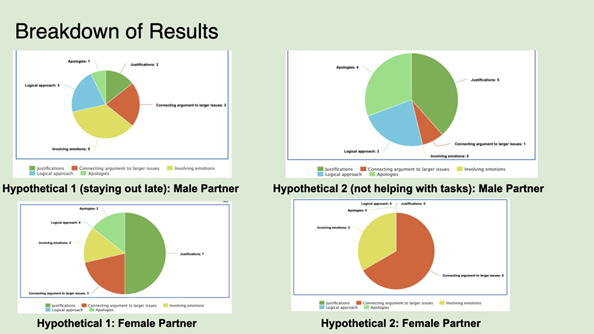
Figure 1. Results from each hypothetical separated by strategy category.

Female partners tended to use open questions and emotive language very often, expressing their feelings. Although initial questions were presented when initiating conflict resolution strategies, there were never any direct solutions posed by the female partner. Female participants also expressed a wider range of emotions, including anger, sadness, confusion, and disbelief during the conversation. Vocally, our female participant also had more shifts in tone – explicitly in words used – and differences in pitch depending on the emotions she felt at the moment. The female participant also related current conflict with previous situations where her feelings and overall well-being were disregarded, and she was forced into performing more emotionally/physically labor to make up for her partner’s negligence.

Our findings were in line with the article “Gender Differences in Perceptions of Emotionality” by Susan Sprecher used as background for the study, specifically with the idea that men will not argue as emotionally or as long as women do and tend to discuss conflicting topics without extreme emotion. We hypothesized these would be our result but ultimately gained a better understanding of the psychodynamic difference of the male versus female resolution strategy through the article’s in-depth observations.

Discussion and Conclusions

In conclusion, our hypothesis was supported by the findings of our study. We observed differences in communication during conflict resolution within heterosexual relationships. Women were more inclined to use more emotive language, characterized by a higher frequency of elements such as tag questions. This aligns with Robin Lakoff’s observations in “Language and Woman’s Place,” where tag questions – phrases like “isn’t it?” or “right?” added to the end of statements – serve to invite confirmation or agreement, thereby fostering a more inclusive and collaborative dialogue (Lakoff 54). In our research, women used tag questions seven times compared to men’s two instances. For example, in Hypothetical 1, a woman asked, “Do you trust me or my friend’s stories?” (F, 02:18), illustrating the use of tag questions to engage the listener. Conversely, men demonstrated a tendency toward a more direct communication style, often employing justifications. This logical approach focuses on explaining actions or decisions assertively. For instance, in Hypothetical 2, a man stated: “You usually just want to do stuff your own way because if I do something my way, you don’t like the way it’s done” (M, 00:49). This directness reflects a more frequent use of logical elements in his communication, aimed at justifying perspectives or actions.

Further, our results are in alignment with studies done about typical communication style differences in gender. In the article “Gender Issues: Communication Differences in Interpersonal Relationships” from Ohio State University, we learn that society has a general understanding of women having to ‘read between the lines’ in relationships: “Studies indicate that women, to a greater extent than men, are sensitive to the interpersonal meanings that lie ‘between the lines’ in the messages they exchange with their mates. That is, societal expectations often make women responsible for regulating intimacy, or how close they allow others to come” (Torppa). As we concluded from our own research, it appears that women are more inclined to connect a specific argument to the larger scope of the relationship. When something brought up in conflict triggers a larger, recurring issue, the female partner is likely to open up the conversation to what she can see by ‘reading between the lines.’

According to research done by Jessica Cindaro regarding male and female differences in communicating conflict, prior literature suggests a tendency for women to be more emotive in their communication styles, while men tend to be more direct and assertive, using emotions less. Cindaro explains that this is in part because of gender stereotypes and the environment in which men and women are raised in and the messages they receive growing up about how best to communicate (Cindaro). We see in our results that there is an even distribution involving emotions, but that the male partner takes more of a logical approach more often than the female partner.

These findings underscore the distinct communication styles of men and women, and such insights can be valuable in enhancing communication strategies across various contexts, from personal relationships to professional interactions. Also, by providing deeper insights into how communication styles differ between genders, our findings can inform relationship counseling and therapy practices, allowing therapists to develop more effective strategies that are tailored to each gender. This improved understanding can contribute to better communication and conflict resolution within relationships, ultimately supporting potentially healthier interpersonal dynamics.

In the future, our research aims to open avenues for expanding the scope of study. One possible direction is conducting cross-cultural studies to investigate whether the communication patterns we observed are consistent across different cultural contexts or if they vary significantly. This would provide a broader understanding of how cultural influences shape gender communication styles. Additionally, we could undertake longitudinal studies to track how communication styles and conflict resolution strategies evolve over time within relationships. These long-term studies can offer deeper insights into the dynamics of long-term relationships, shedding light on how communication evolves and how couples adapt their conflict resolution strategies over the years.

Another question that might be brought up in relation to our study is one of media’s influence on a person’s gender identity. In the TED Talk “Secrets of Children’s Media: Effects of Gender Stereotypes,” Rifa Momin reveals that children are influenced by the stereotypes they continuously hear as they grow up. From children’s television to storybooks, the power of media influence contributes to “children developing a sense of maleness and femaleness based off of these stereotypes and organiz[ing] their behaviors around them” (Momin). This presents a bigger question about our research: Do the stereotypes we perceive men and women to inhabit originate from their media intake? If children were not exposed to media that perpetuates gender stereotypes, would they grow up to act differently than the way society has led us to believe we’re ‘inclined’ to act?

Overall, the study we have conducted opens a wide variety of discussion topics regarding gender stereotypes, communication styles, and conflict within heterosexual college-aged relationships. While our study is not reflective of every single relationship out there, we hope we accomplished our goal of sparking conversation to further understanding about why men and women communicate differently.


References    

Cinardo, J,  (2011) Male and Female Differences in Communicating Conflict. Honors Theses. 88. https://digitalcommons.coastal.edu/honors-theses/88.

Lakoff, R. (1973). Stanford. Language and Woman’s Place. https://web.stanford.edu/class/linguist156/Lakoff_1973.pdf.

Momin, R. (2022, March). Secrets of children’s media: Effects of gender stereotypes. Rifa Momin: Secrets of Children’s Media: Effects of Gender Stereotypes | TED Talk. https://www.ted.com/talks/rifa_momin_secrets_of_children_s_media_effects_of_gender_stereotypes?language=en.

Rogers, A. A., Ha, T., Byon, J., & Thomas, C. (2020). Masculine gender‐role adherence indicates conflict resolution patterns in heterosexual adolescent couples: A dyadic, observational study. Journal of Adolescence, 79(1), 112–121. https://doi.org/10.1016/j.adolescence.2020.01.004.

Sprecher, Susan. Sexuality. SAGE Publications Inc., 1993.

Sprecher, S., & Sedikides, C. (2019, August 14). Gender differences in perceptions of emotionality: The case of close heterosexual relationships – sex roles. SpringerLink. https://link.springer.com/article/10.1007/BF00289678.

Torppa, C. B. (2010, February 25). Gender issues: Communication differences in interpersonal relationships. Ohioline. https://ohioline.osu.edu/factsheet/FLM-FS-4-02-R10.

[/expander_maker]
, , , , ,

Linguistic Features between University Students in California and New York: Reddit Version

Clyde Villacrusis, Sydnie Yu, Monique Tunnell, Michelle Kim

How often do you find yourself saying “hella” or “bet?” How does this differ for people across different regions? The research project discussed in this blog article compares linguistic markers, particularly slang, in Reddit communities of universities in New York and California. Using basic forms of natural language processing, we analyzed posts from multiple university-specific Reddit pages to identify regional slang differences. Results show distinct slang patterns reflecting local cultures — New York slang influenced by its diverse linguistic environment, and California slang shaped by surf and tech cultures. In addition, New York university students have shown that they are less susceptible to slang and jargon, as most of them are out-of-state students and therefore, grew up in a community where it is harder for them to immerse in NY culture and its language. For California students, it is easier for them to immerse in the language culture because most are in-state students. These findings highlight the role of language in forming regional identities in digital spaces, offering insights for sociolinguistic research and digital communication strategies.

[expander_maker id=”1″ more=”Read more” less=”Read less”]

Introduction and Background

As aspiring sociolinguists, we want to learn more about how different cultures can affect slang within our own communities and thus, affect their way of speech. More specifically, how do students at different universities use slang, and what are the implications of this language?

University culture is unique and cultivates an environment of relatability and unity. Language and communication play a big role in this culture, and with the rise of social media platforms, we decided to dive into a platform largely used by university students in order to analyze raw conversations between college students within a university. More specifically, we analyzed California university slang versus New York university slang. Reddit is a great place to analyze linguistic features and speech of people across the United States and how each geographical place affects their slang. Reddit is a social networking platform that was established in 2005 (Semrush, 2024). In addition, Reddit is divided into communities called “subreddits,” where people can interact and contribute with each other comfortably in their respective community. These subreddits generally consist of people with the same interests. In this case, we examined Reddit communities for universities, meaning most users go to the same college or university. Within these subreddits, users relate to one another using university- and state-specific slang.

New Yorkers have a diverse immigrant population and fast-paced urban lifestyle. They also tend to partake less in small talk and more in longer, conversational speeches (Allen 2023). In those conversations, there are a couple of common terms, such as “real talk” (attention grabber), “the city” (refers to Manhattan), and “Stoop” (steps outside of an apartment). Conversely, Californian slang and language reflect tech and entertainment culture, primarily because of the Los Angeles area or most of the tech companies that reside in San Francisco. In addition, Californians tend to use relaxed jargon and more informal speech patterns (Bucholtz, n.d). Some of the common terms they used are: “hella” (very much), “like” (mostly as a filler word), and “dank” (excellent). Based on these backgrounds we posed the questions: How do linguistic markers, especially slang, differ in New York vs. California universities on Reddit? How do regional, cultural, and social influences affect language? Do in-state versus out-of-state student populations affect the use of slang within university subreddits?

Overall, this research study examines the different linguistic features of the California and New York universities. We aim to show that these variations reflect the unique social and cultural aspects of each region, highlighting how language usage serves as a marker of regional identity in digital communication.

Methods

Earlier this year, a Reddit user named u/Watchful1 compiled data collected by other users, u/pushshift and u/raiderbdev, on posts and comments from Reddit between 2005 and 2023. We isolated six subreddits relevant to our study. We used scripts from Watchful1’s PushshiftDumps Github repository to count the occurrences of specific keywords in each subreddit from January 1, 2021 to December 31, 2023.

For web scraping, we used Python libraries like BeautifulSoup and PRAW to extract data from Reddit communities associated with universities in New York and California. We selected subreddits based on criteria such as member count, post frequency, and relevance to student life, focusing on threads that accurately represented each region’s schools.

We aimed to collect a diverse sample of posts and comments from each selected subreddit, ensuring representation across various topics, time periods, and user demographics. In cases where automated methods might miss nuances, human annotators manually reviewed and supplemented the analysis. We also prioritized ethical considerations by anonymizing or aggregating data to protect user confidentiality, ensuring compliance with Reddit’s terms of service and data usage guidelines. We also conducted thorough reliability checks to ensure the quality and accuracy of our data and analysis results.

In addition and most importantly, we intended to select a few universities because it would be time consuming and difficult to do all of the subreddits for California and New York universities. Thus, we chose to focus on a few universities in each state with the most active subreddits and number of reddit community members.

Finally, we maintained detailed internal documentation of our data collection process, including sources, sampling methods, and any preprocessing steps applied to the data.

Results and Analysis

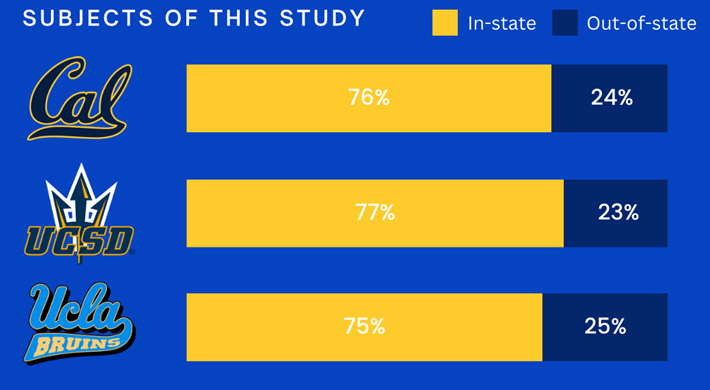
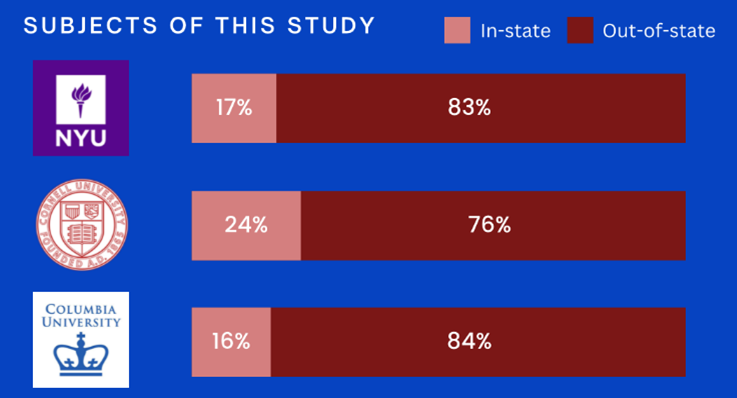
First, it is important to note the distribution of in-state versus out-of-state students. We collected this data from the universities, and the distribution is shown below.

Figure 1. Number of subjects per New York university subreddit and whether they are in-state or out-of-state students.


Figure 2. Number of subjects per Californian university subreddit and whether they are in-state or out-of-state.

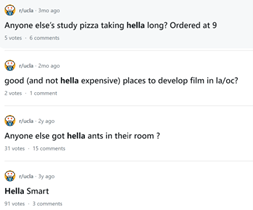
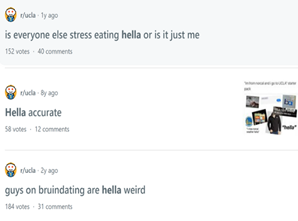
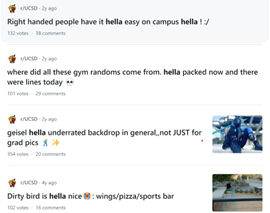
After using our methods of analyzing Californian and New York universities’ slang, we found that college students in California use the word “hella” the most at UCLA, even more than in UCSD and UCB, although it is still very prevalent in all three California schools. “Hella” means “there’s a lot of __.” The reasoning for the frequency is due to the recency of each university subreddits; the longer the comments were posted would not be helpful in determining today’s society’s slang. For instance, most of UCLA comments were from 3 to 6 months ago while UCSD and UCB’s comments were from 2-4 years ago, which is a significantly longer time. In addition, “hella” is “highly expressive [and] often” will destroy the gravity of a formal statement (Hummon 1994).

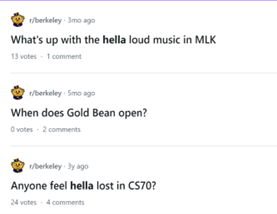
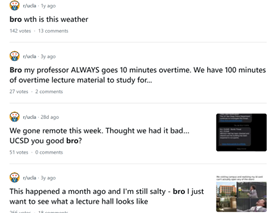
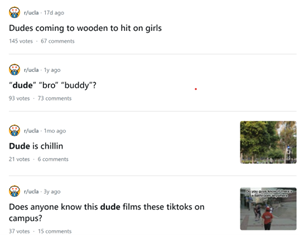
Common examples of the use of “hella” are shown below:

Figures 3 & 4. Instances of “hella” in r/ucla.


Figure 5. Instances of “hella” in r/UCSD.


Figure 6. Instances of “hella” in r/berkeley.

Secondly, we also found that college students among UCLA, UCB, and UCSD primarily frequent the slang “bro.” The comments we have found were not from too long ago, ranging from 4-9 months. Since these comments were recent, we can say that the accuracy of California universities students saying “bro” is likely. Moreover, we can also say the same for “dudes” because of how recent it is. Students say “bro” and “dudes” because omitting large chunks of a particular sentence or word helps the speaker say what they mean. In other words, it might be difficult for the speaker to say “brother,” a longer version of “bro.” Including the second half of the word loses the surrounding, cultural meaning of the sentence, i.e, “bro was not cooking” is not the same as “brother was not cooking” in terms of today’s societal norms. This shows how even slang has its own set of unspoken “rules” that must be followed to maintain a level of informality befitting more casual contexts. Shortening words seems to be a trend for making phrases more casual, and this could perhaps be due to how it allows a speaker to convey more in a shorter amount of time, as well as an implied mutual understanding between the speaker and listener that they understand the true meaning despite it being shortened, similar to a secret code. This could also be why slang usage is so prevalent nowadays, as everyone sees it as cool or modern to be part of a community that understands this secret code, the language of slang. Eventually, slang will become “accepted as equivalent to their unabbreviated and original forms” (Gordon 2020). Even though some slang words like “hella” are not widely spoken in other universities, it will be useful in the near future for linguistic research.

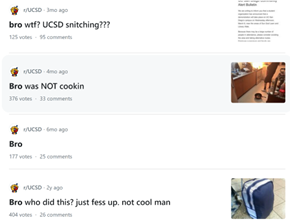
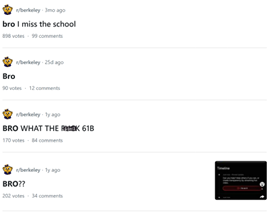
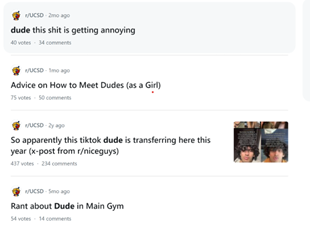
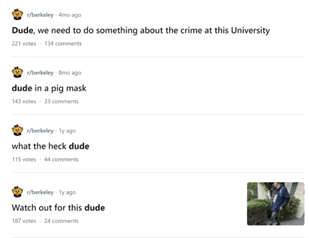
More examples of “bro” and “dudes” shown below:

Figure 7. Instances of “bro” in r/ucla.


Figure 8. Instances of “bro” in r/UCSD.


Figure 9. Instances of “bro” in r/berkeley.


Figure 10. Instances of “dude” in r/ucla.


Figure 11. Instances of “dude” in r/UCSD.


Figure 12. Instances of “dude” in r/berkeley.

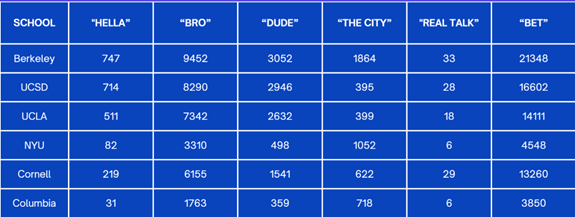
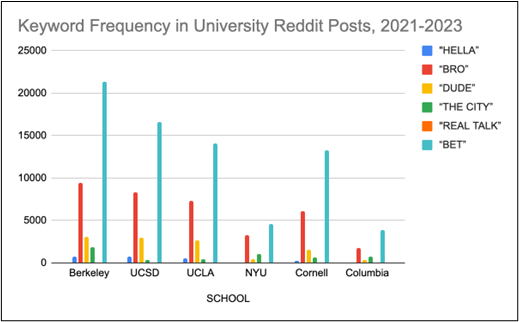
Moving on to the New York universities, we found that “the city” is used more frequently at NYU and Columbia than in Cornell. “The city” means Manhattan, and college students from NYU and Columbia use it more because they are closer to Manhattan than Cornell. However, another slang term, “real talk” (used as an attention grabber), is more common in Cornell than the two other universities. In addition, the most common frequency slang in Cornell is “bet,” meaning you are either asking the person to put money on your statement or an affirmative ‘yes.’ This is also slightly common in NYU and Columbia. Moreover, what we found interesting is that the subreddit comments of these NY slangs are from 3-4 years ago. However, when we tried to fact-check this with our current methodology using a Python script, we found that the slang “bet” is used by all universities from the west to east coast. For example, there are roughly 21,348 “bet” usages at UC Berkeley, followed by UCSD, while there are 9,452 slang “bro” at UCB. We also found that “real talk” is less common in all universities.

Here is the common occurrence table including data analyzed by the Python script between January 1, 2021 and December 31, 2023:

Figure 13. Table showing “bet” as the most common slang, followed by “bro” and “dude.”


Figure 14. Chart version of data appearing in Figure 13. The axes compare the 6 schools to the number of times their respective subreddits have said 6 different keywords from 2021 to 2023. “Bet” and “bro” dominate slang usage across all schools included in this study.

Discussion

After analyzing the linguistic features of California and New York, especially slang, we can safely say that slang words that would be considered be California slang are used heavily within Californian universities’ subreddits. This seems to have a direct correlation to the number of in-state students, unlike New York universities. We also observed several frequent uses of the same terms — “hella,” “bro,” and “bet” — across the Californian universities. In addition, we can say that college students who mainly grew up in an active social culture will most likely be accustomed to the slang and jargon around them.

Moreover, as for New York universities in their own respective subreddits, they use less frequent jargon and slang. Although still present, this seems to have a direct correlation with the amount of out-of-state students in each NY university, as fewer students grew up immersed in the New York culture and thus, are less likely to be accustomed to the city language influenced by the city’s culture.

Our research study contributes to a larger phenomenon in different ways. Firstly, by analyzing linguistic patterns in Reddit communities, the study sheds light on the social dynamics and communication styles within university-affiliated online spaces. This understanding can inform community management strategies and facilitate more effective online interactions. Secondly, our findings contribute to educational research by highlighting the role of language in shaping online discourse within academic communities. Sociolinguistic studies can benefit from a deeper understanding of how language reflects societal norms and values in digital environments.

Lastly, we can leverage insights from this research to develop more targeted and engaging digital communication strategies tailored to specific regional audiences. Understanding linguistic preferences and cultural references can enhance the effectiveness of online marketing and outreach efforts. For example, we can use common slang and jargon, such as using a lot of “bros” or “dudes,” in a men’s marketing campaign and planning how it will raise awareness.

Conclusion

Ultimately, each university and its own subreddit cultivates a community that is centered around shared and common experiences. These experiences can create and preserve slang and jargon that students feel comfortable using to express themselves. There is also a prevalent influence of regional culture on language and slang used by Redditors across the country, as shown by the different terms most used in California and New York. Even though students may move out of state to attend college, they will bring their own slang used by their hometown communities with them, rather than immediately assimilating into the language used in their new community. Overall, language stands as a symbol of hope and it is used so that other students accept and recognize one another as part of the same community.


References

Allen, I. L. (2023). The city in slang: New York Life and popular speech. Oxford University Press.

Bucholtz, M. (n.d.). Chapter 29- Word Up: Social Meanings of Slang in California Youth Culture. In A Cultural Approach to Interpersonal Communication: Essential Readings. essay.

Haas, C., Takayoshi, P., Carr, B., Hudson, K., & Pollock, R. (2011). Young People’s Everyday Literacies: The Language Features of Instant Messaging. Research in the Teaching of English, 45(4), 378–404. http://www.jstor.org/stable/23050580.

Hummon, D. M. (1994). College Slang Revisited: Language, Culture, and Undergraduate Life. The Journal of Higher Education, 65(1), 75–98. https://doi.org/10.2307/2943878.

Labov, T. (1992). Social and Language Boundaries among Adolescents. American Speech, 67(4), 339–366. https://doi.org/10.2307/455845.

Roth‐Gordon, J. (2020). Language and creativity: Slang. The International Encyclopedia of Linguistic Anthropology, 1–8. https://doi.org/10.1002/9781118786093.iela0192.

Saha, Koustuv & Choudhury, Munmun. (2021). Assessing the mental health of college students by leveraging social media data. XRDS: Crossroads, The ACM Magazine for Students. 28. 54-58. 10.1145/3481834.

“Top Websites in Worldwide (All Industries).” Semrush, www.semrush.com/trending-websites/global/all. Accessed 20 May 2024.

[/expander_maker]
, , , ,

In-Person vs. Digital Communication Styles Among Classmates

Megu Kondo, Devina Harminto, Yixing Wang, Yinlin Xie, Batool Al Yousif

In the rapidly evolving landscape of communication, the distinction between in-person and digital communication has become a focal point of linguistic and sociocultural studies. This project delves into the nuanced differences in language use, expression, and understanding across these two modes of communication. The purpose of this study is to investigate how individuals adapt language styles, tones, and dialects between in-person and digital communication. Additionally, our study aims to explore these preferences specifically among classmates, shedding light on the nuances of their communication choices. By examining various linguistic features such as informality, use of emojis, turn-taking, and the adaptation to the absence of non-verbal cues in digital platforms, this study illuminates how digital communication often necessitates a shift from traditional language norms observed in face-to-face interactions. We designed a survey using Google Forms for accessibility and ease of distribution and collected data from 30 college students (18-22 years old) who engage in both in-person and digital communication.

[expander_maker id=”1″ more=”Read more” less=”Read less”]

Introduction and Background

In the evolving landscape of communication, the distinction between in-person and digital interaction has become a key area of sociolinguistic study. This project investigates how language styles, expressions, and understandings are adapted between these two modes of communication, particularly among college students. The study examines linguistic features such as informality, emoji usage, and turn-taking, shedding light on the nuances of their communication choices.

Traditionally, in-person communication has been valued for its richness and immediacy. This mode allows for a wealth of non-verbal cues such as gestures, facial expressions, and tone of voice, all of which enrich the communication experience and help in accurately conveying emotions. Face-to-face interactions also foster a sense of connection and immediacy, which are often crucial for forming strong interpersonal relationships. On the other hand, digital communication offers unparalleled convenience and flexibility. Platforms like Snapchat, Instagram, and WeChat have revolutionized how we interact, making it possible to maintain relationships over long distances with ease. The digital transformation of communication has brought about significant changes in the linguistic practices of individuals, particularly young adults. The incorporation of multimedia elements such as images, videos, and emojis attempts to bridge the gap in emotional expression that the lack of physical presence creates. However, these elements, while helpful, often fall short of fully replicating the subtleties conveyed through face-to-face interactions. The gap highlights the potential for misunderstanding and the need for enhanced digital literacy in order to navigate the complexities of modern communication.

The primary focus of this study is to assess the preferences of college students (aged 18-22) who regularly engage in both in-person and digital communication. It aims to document their perceived advantages and drawbacks of each mode, particularly in terms of emotional expressiveness and the potential for misunderstandings. Additionally, the study delves into the phenomenon of code-switching — altering one’s language, tone, or style according to the communication platform — which reflects broader cultural identities and adaptability in digital spaces.

Methodology

To examine the differences in communication styles between in-person and digital interactions among college students, we conducted a thorough survey of students aged 18-22. Our methodology ensured that we collected data from a diverse and representative sample, which is critical for drawing meaningful conclusions.

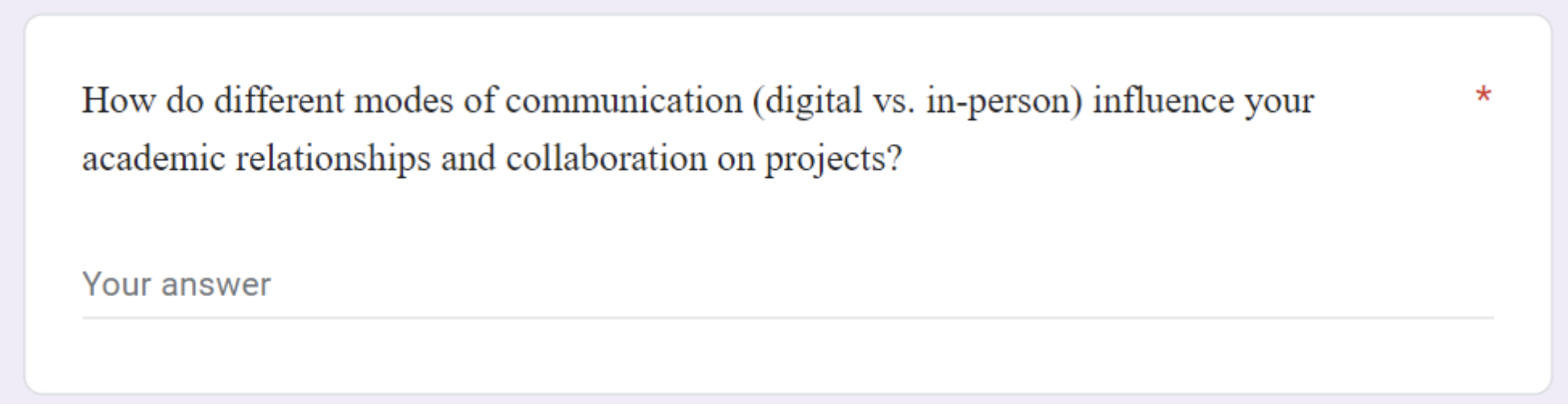
The survey was created with Google Forms, leveraging its accessibility and ease of use to reach a large audience. We divided the survey into three major sections: demographics, communication preferences, and emoji usage. The demographics section gathered basic data such as age, nationality, and primary languages spoken. The communication preferences section explored the participants’ preferred modes of communication, the differences in word and phrase usage between these modes, the ease of conveying emotions, and their awareness of changing language styles or tones. The final section focused on emoji usage, asking about frequency, meanings, and emoji-related misunderstandings. We ensured a diverse participant pool by distributing the survey through social media platforms and student groups, which reached students from a variety of cultural backgrounds and academic disciplines. 

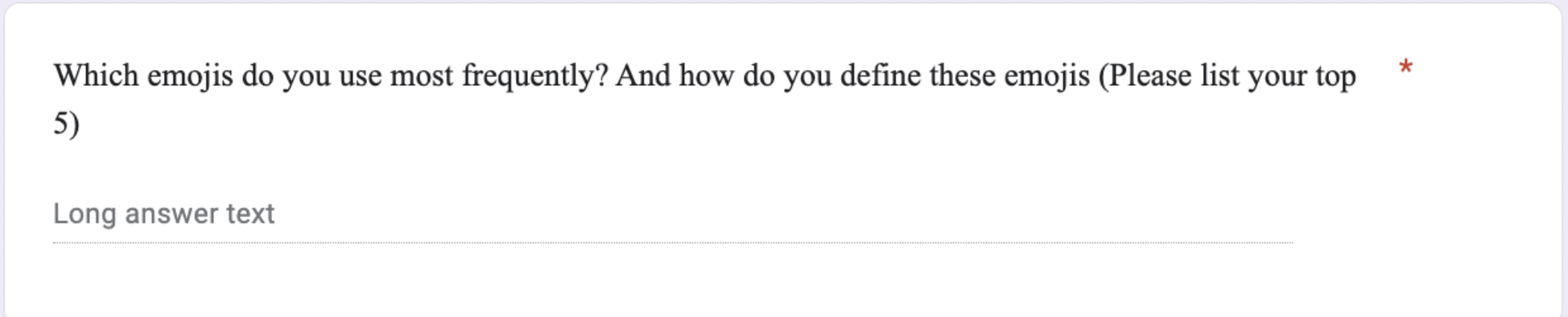
Figure 1. Example of a survey question from the section on communication preferences.

The survey responses were automatically compiled into a Google Sheets spreadsheet, allowing for efficient organization and preliminary analysis. We calculated frequencies, percentages, and averages for the quantitative data to summarize demographic information and communication preferences, giving us a clear picture of the data’s major trends and patterns. We used thematic analysis to examine qualitative data, particularly open-ended responses about emoji usage and communication preferences. This process involved coding the responses and identifying common themes, which allowed us to gain a better understanding of the participants’ experiences and perceptions. We used this methodology to gain a thorough and nuanced understanding of how college students navigate the complexities of in-person and digital communication. By analyzing both quantitative and qualitative data, we were able to identify key trends and patterns in communication styles, providing valuable insights into the changing landscape of digital communication. The use of advanced data analysis tools and rigorous thematic procedures ensured that our findings were robust and reflective of the diverse experiences within our sample. This methodology not only provided a strong framework for our research, but it also ensured that our findings were based on a diverse and representative sample, adding to the larger conversation about language use and social interaction among young adults.

Analysis and Results

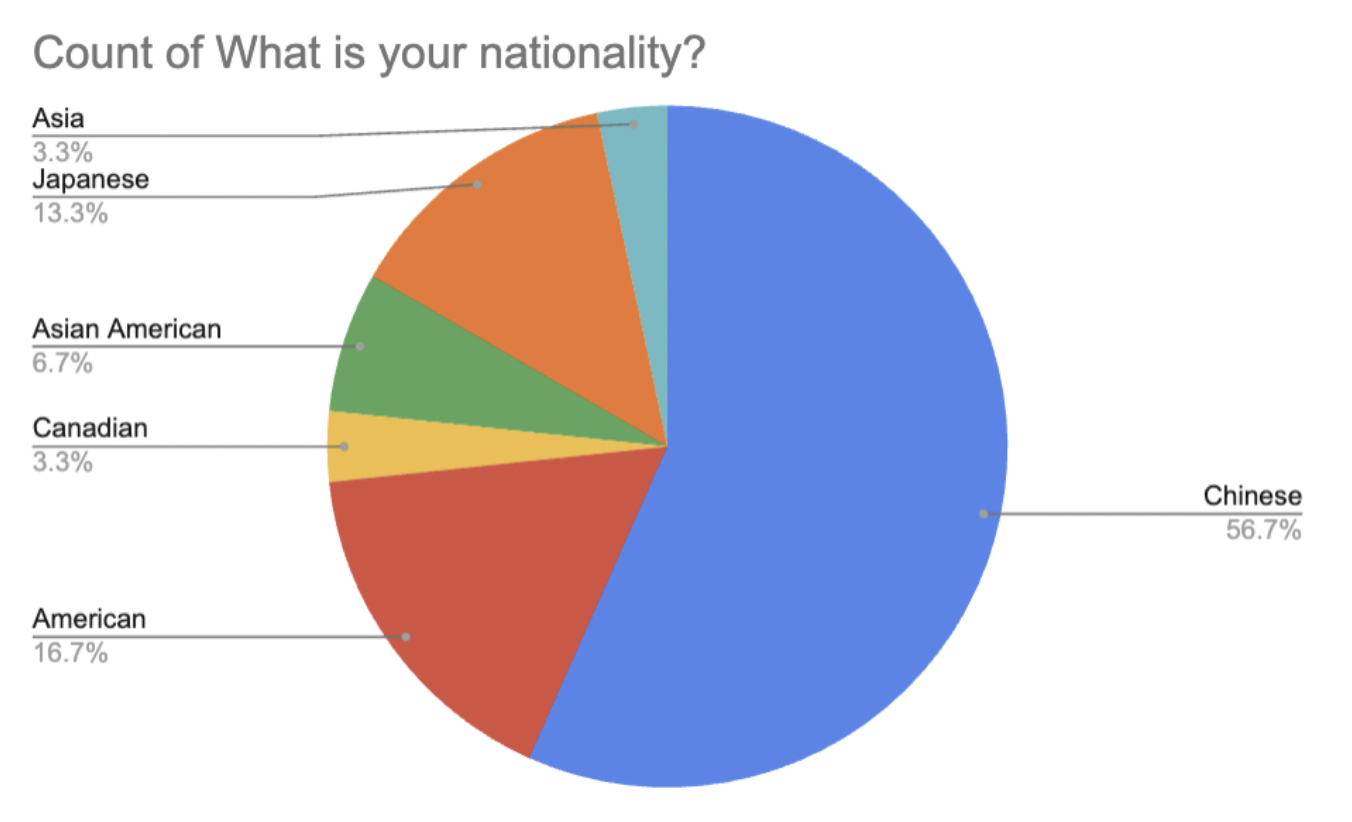
We were able to attain a total of 30 participants, whose ages were between 19 to 26. Figure 2 shows that the majority of participants were Asians at 73.3%, and the other 26.7% of the participants were American. The results of the survey garnered a better understanding of how college students prefer in-person communication over online conversation.

Figure 2. Chart detailing answers to the question “What is your nationality?”

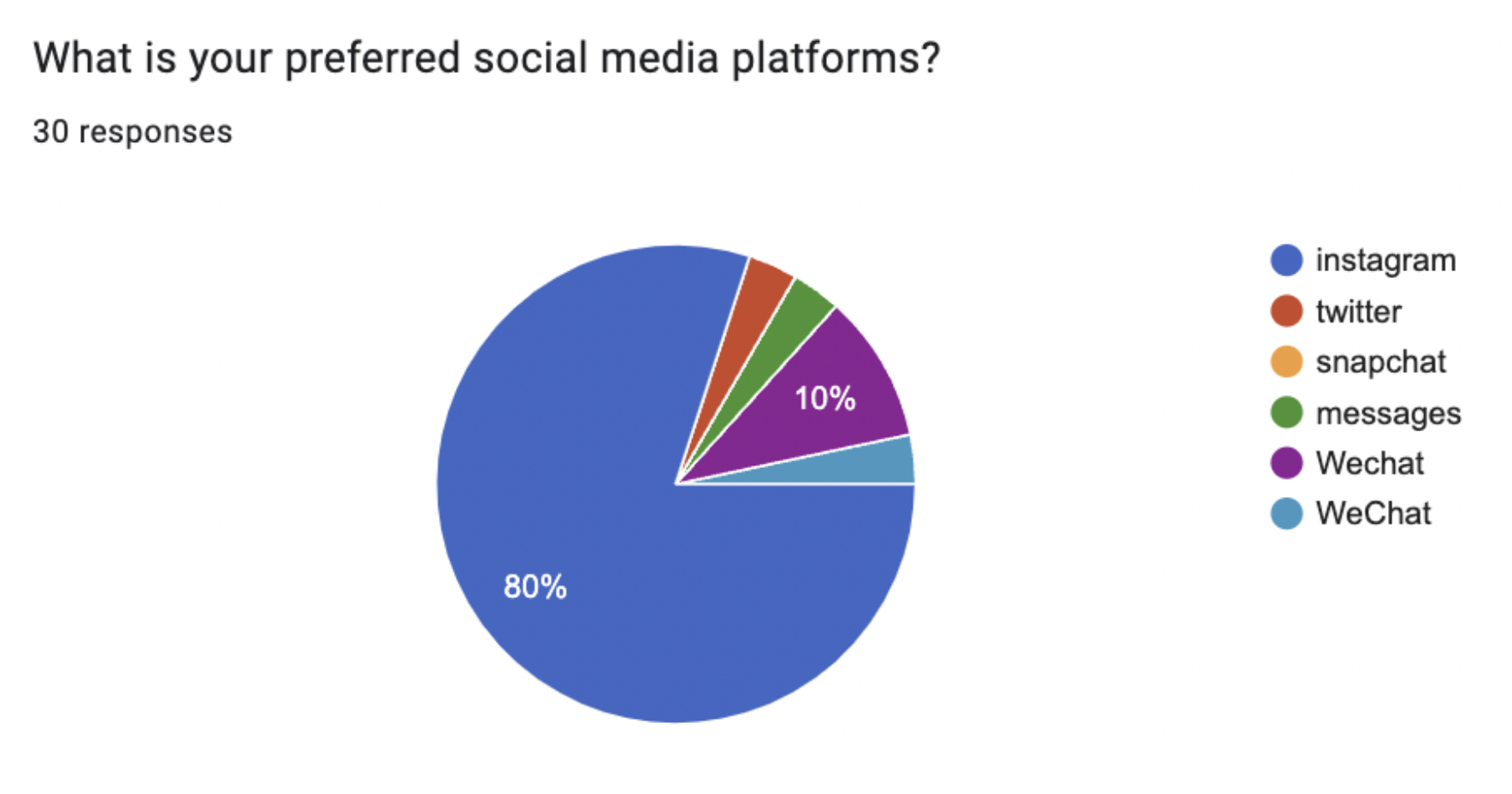
Figure 3. Chart detailing the responses to the question “What are your preferred social media platforms?”

Figure 3 shows that Instagram is the most popular social media platform among college students with 80%. 24 participants use Instagram to communicate with others since Instagram is very common among the younger generation; people can post pictures and send each other direct messages. 13.3% of the participants like to use WeChat, which is because some of them are international students who can easily communicate with their friends in China through the platform.

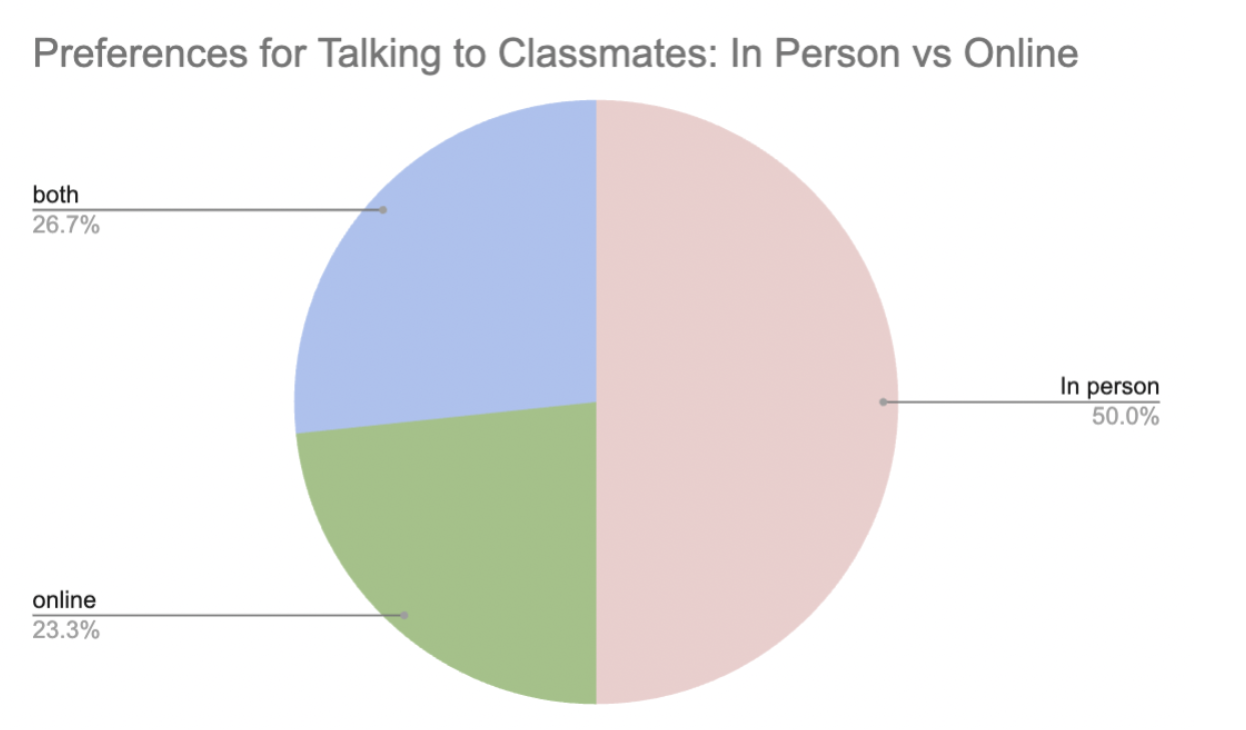
Figure 4. Chart displaying whether respondents prefer to talk to classmates online, in person, or either/both.

The data from Figure 4 shows a strong preference for in-person communication among participants, with 50% favoring this way over online interactions or a combination of both because they feel more productive communicating in person. On the other side, 23.3% prefer online communication, reflecting a significant proportion that values the convenience and accessibility of digital platforms. Meanwhile, 26.7% of participants are comfortable with both ways, suggesting a flexible communication preference that could be influenced by situational factors.

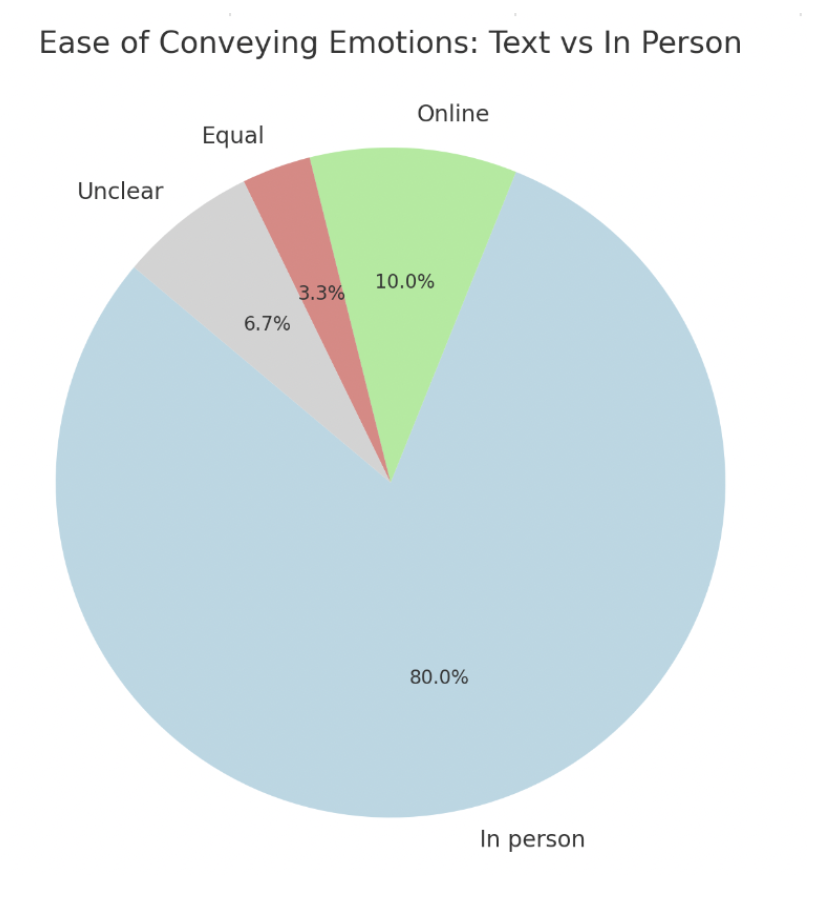
Figure 5. Chart displaying respondents’ feelings about how easy it is to convey emotion through text vs. in person.

In-person communication is generally considered to be more effective in conveying emotions than text-based communication, with 80% of respondents preferring face-to-face communication. Only 10% of respondents believe that online platforms are effective in conveying emotions, and online platforms are likely to use GIFs and emojis. This suggests that digital interactions are not perceived to be enough to express emotional states, which may lead to a lack of empathy in conversations. Face-to-face interactions remain crucial for a deeper emotional connection, underscoring the limitations of digital platforms in replicating the richness of in-person exchanges.

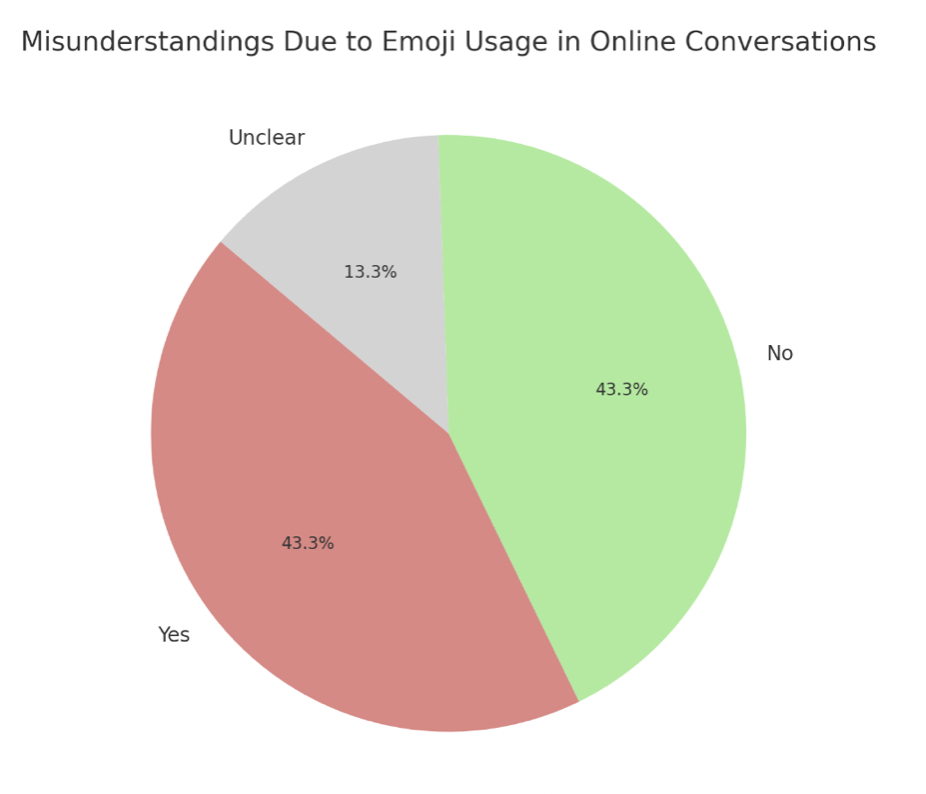
Figure 6. Chart representing whether respondents believe emojis can lead to misunderstandings.

43.3% of respondents believe that emojis can lead to misunderstandings, while the same percentage of respondents said they do not. This polarization highlights the ambiguity of emojis, which may be interpreted differently depending on individual circumstances and cultural backgrounds. The remaining 13.3% respondents were unsure of their impact. 

Figure 7. Question from emoji usage portion of survey.

Based on the data collected from our survey, it is evident that emoji interpretations vary significantly among users. An analysis of the responses revealed divergent interpretations of several emojis. For instance, the smiley emoji 😃, conventionally associated with happiness and positivity, was perceived by some participants as conveying creepiness. The skull emoji 💀, which typically signifies extreme laughter, frustration, or affection according to Apple’s official description, was interpreted by respondents as representing extreme fatigue or exhaustion, akin to the expression “I am so tired, I am dying.” Moreover, it was also seen as indicating laughter, albeit more intense and devoid of any undertones, compared to 😭. Notably, the 😭emoji has lead to the most misunderstanding in their online conversation compare to others. 😭, which Apple describes as depicting a face with an open mouth, wailing, and shedding streams of heavy tears, symbolizing inconsolable grief or intense emotions such as uncontrollable laughter or overwhelming joy, was commonly misinterpreted. Participants reported using it in adverse situations, with connotations such as “yikes” or “can’t believe my bad luck,” “need help,” and some even perceived it as laughter accompanied by a sense of embarrassment. The findings from our survey underscore the complexity and variability in emoji interpretations among users, which can be quite different from what they are officially meant to represent. This can sometimes lead to confusion in online conversations. It’s important to remember these differences when using emojis, suggesting a need for greater awareness of contextual differences in emoji usage to avoid misunderstandings and make sure our messages are clear.

For additional insights and nuances, the context of the communication also appears to play a critical role in the preferred mode. For instance, for quick updates or logistical arrangements, digital communication is often favored for its efficiency. However, for more complex discussions or sensitive topics, in-person interactions are preferred due to the richer, more nuanced exchange they enable. It is also worth noting that some students reported a gradual shift in their preferences towards digital communication as they adapted to the constraints imposed by recent global events such as the pandemic. This adaptation process reflects the dynamic nature of communication preferences in response to external changes.

Based on the data, the majority of college students still prefer and find it more effective to communicate in person, particularly for emotional interactions. The findings indicate that although some students recognize the advantages of online communication, most still believe that in-person contact is more beneficial, especially when it comes to expressing emotions, and students feel more productive since people can get through everything right away. This outcome contradicts our hypothesis, highlighting the complexity of communication preferences among college students. Further analysis shows that communication preferences may vary significantly based on factors like the student’s academic major, cultural background, and prior exposure to diverse communication platforms.

Discussion

Our findings contradict the idea that generation Z is used to being on online communication platforms. In the article by Janssen (2021), generation Z is often referred to as “digital natives.” They are considered the first generation to grow up entirely in the digital age, influencing their communication habits significantly. They are described as “native speakers” of the digital language of computers, video games, and the internet. Texting and instant messaging are preferred over traditional communication methods like phone calls and emails. Generation Z uses smartphones heavily for personal communication, often choosing texting or messaging apps over voice communication. Despite their preference for texting, generation Z adapts to professional communication norms. For example, they use email extensively at work, despite rarely using it in personal contexts. This indicates flexibility in their communication styles, adapting to different linguistic expectations based on context. Surprisingly, our findings are totally opposite from this perspective of generation Z.

For the limitations of the study, while our study focused on college students aged 18-22, this demographic may not fully represent the broader population’s communication preferences. The age group and educational environment might influence communication styles more specific to this demographic, such as familiarity with digital platforms or developmental aspects related to social interactions. Additionally, the study relies heavily on self-reported data, which can introduce bias. Participants might respond in ways they perceive as socially acceptable or based on their aspirational self-image rather than their actual behavior. This can affect the accuracy of data concerning preferred communication modes and the effectiveness of emoji usage in conveying emotions.

The phenomenon of code-switching, where individuals adapt their language based on the audience’s cultural and linguistic background, further illustrates the adaptability required in digital communication and highlights the ongoing evolution of language use on these platforms. “Another study conducted by Alfaifi (2013) on intrasentential CS in Facebook comments written by 10 Saudi Arabic-English bilinguals found that intrasentential CS was used with gossip and humor, English was used for academic and technical terms, and Arabic was used for religious topics” (Elhija 357). Digital communication often sees a higher incidence of code-switching, where bilingual or multilingual speakers switch between languages or dialects depending on the audience, topic, or platform. While this can showcase linguistic flexibility, it also highlights the challenges of maintaining cultural nuances in digital communication, which may not always provide the contextual cues necessary for appropriate language use. This underscores the persistent value of traditional communication methods in an increasingly digital world and suggests that digital platforms still need to evolve to support the subtleties of human emotion and expression fully.

Conclusion

Our study began with the hypothesis that college students would prefer online communication over in-person interactions, primarily due to the flexibility and reduced social anxiety that digital platforms are presumed to offer. This hypothesis was rooted in the belief that the modern digital environment, with its asynchronous communication and absence of physical presence, might alleviate the pressures associated with face-to-face interaction. The data, however, painted a different picture. Contrary to our expectations, 50% of the participants clearly preferred to communicate with their classmates in person, appreciating the depth of emotion and clarity that comes with real-time, face-to-face interactions. Only 23.3% expressed a preference for online communication. This finding suggests that despite the convenience of digital platforms, they are insufficient for fulfilling all communicative needs, especially those that involve emotional depth and nuance.

The results of our study provide a nuanced understanding of how college students navigate the complexities of digital and in-person communication. While digital platforms offer undeniable convenience and flexibility, our findings suggest that they do not fully replicate the emotional richness and immediacy of face-to-face interactions. Half of the participants expressed a preference for in-person communication, particularly valuing its effectiveness in conveying emotions — a fundamental aspect of human interaction that digital platforms have yet to fully capture. Moreover, our investigation into emoji use revealed a balanced scenario: emojis enhance textual communication by adding emotional depth, yet they also lead to misunderstandings in nearly half of the cases reported. This indicates a significant gap in how emotional nuances are perceived and understood in digital contexts. By realistically assessing these results, we acknowledge that while digital communication technologies have transformed how we connect and interact, they are not a complete substitute for in-person interactions. Instead, they are a complementary medium that requires further refinement to meet the emotional and contextual needs of users fully. Future research should focus on developing and testing new technologies that can better accommodate the complex dynamics of human communication, bridging the gap between the efficiency of digital communication and the emotional depth of face-to-face interactions. As a result, this study not only challenges previous assumptions about digital communication preferences but also enriches our understanding of how young adults toggle between digital and real-world interactions, shaping their social identities and relationships in the process.

References

Brenda Danet, Susan C. Herring, Introduction: the Multilingual Internet, Journal of Computer-Mediated Communication, Volume 9, Issue 1, 1 November 2003, JCMC9110, https://doi.org/10.1111/j.1083-6101.2003.tb00354.x.

Defede, N., Magdaraog, N. M., Thakkar, S. C., & Bizel, G. (2021). Understanding How Social Media Is Influencing the Way People Communicate: Verbally and Written. International Journal of Marketing Studies, 13(2), 1-. https://doi.org/10.5539/ijms.v13n2p1.

Ehrensberger-Dow, M., & Granger, S. (2019). “English as a Lingua Franca in Digital Communication: Diverse Voices, Similar Scripts?” Lexis Journal in English Lexicology, 14, 193-217. https://doi.org/10.4000/lexis.1831.

Elhija, D. A. (2023). Code Switching in Digital Communication. Open Journal of Modern Linguistics, 13, 355-372. https://doi.org/10.4236/ojml.2023.133021.

Psych Minds. (n.d.). Communication: Online vs. Face-to-Face Interactions. Retrieved from https://psychminds.com/communication-online-vs-face-to-face-interactions/.

Schroeder, J. (2019). Two Social Lives: How Differences Between Online and Offline Interaction Influence Social Outcomes. https://escholarship.org/content/qt94n9w8b9/qt94n9w8b9_noSplash_293949a5e051fffc8e1fdcc9ffc168c4.pdf?t=qdtezb.

Zhao, Y. (2021). The Impact of Digital Media on Language Styles and Communication Methods Based on Text, Image, and Video Forms. ResearchGate. https://www.researchgate.net/publication/378739166_The_Impact_of_Digital_Media_on_Language_Styles_and_Communication_Methods_Based_on_Text_Image_and_Video_Forms.

D. Janssen and S. Carradini, “Generation Z Workplace Communication Habits and Expectations,” in IEEE Transactions on Professional Communication, vol. 64, no. 2, pp. 137-153, June 2021, doi: 10.1109/TPC.2021.3069288.

Appendix

Our survey link: https://docs.google.com/forms/d/e/1FAIpQLScCFoDiKMbxxYVWXmxPAEwQIKfTjg8mx1qtZFL9oA55R9WpPg/viewform?usp=sf_link

[/expander_maker]
, , , , ,

Social Media Use Among College Students

Jasmin Carranza, Andres Guzman, Luwuam Haile, Armine Mkrtchyan, Tzlil Pinhassi

Social media plays a significant role in the lives of college students, shaping how they connect, communicate, and express themselves. Given its pervasive influence, it is natural to assume that they would have an understanding of their own language use online. This study works to uncover just that. It specifically explores the linguistic features of grammar and vocabulary use among college students on various social media sites and examines their self-awareness of these patterns. We conducted a survey asking students about their social media usage and perceptions of their language, then analyzed their interactions through provided screenshots. Our findings confirm that students adapt their language to fit the platform’s context: Snapchat and TikTok are characterized by informal language and relaxed grammar, while LinkedIn and Facebook maintain higher formality with complex grammatical structures. Students’ perceptions of their language use closely align with their actual usage, indicating a high level of self-awareness. On platforms like Twitter and Instagram, students correctly estimate their use of informal vocabulary and abbreviations while recognizing the formality of their language on LinkedIn. This research highlights the dynamic nature of language use by college students across social media platforms, showcasing their ability to navigate different communication environments effectively. Our findings underscore students’ awareness of the distinct linguistic norms required by various social networks, adjusting their language accordingly with minimal discrepancy between self-perception and actual use.

[expander_maker id=”1″ more=”Read more” less=”Read less”]

Introduction and Background

In today’s dynamic digital age, social media is a premier medium for immediate conversation and communication, significantly influencing how individuals interact and express themselves (Merchant, 2006). Platforms like Instagram, Facebook, Snapchat, Twitter, TikTok, and LinkedIn serve as tools for social interaction and spaces where unique linguistic patterns emerge. While existing research highlights variations in language use across social media, a notable gap exists in understanding how these linguistic features manifest among college students (Kemp et al., 2021). Additionally, there is limited exploration into how these students perceive their language use across different platforms and whether their perceptions align with their usage patterns. This study addresses these gaps by examining grammar and vocabulary use among college students across various social media platforms. By analyzing formality, vocabulary, use of slang, and emoji frequency, this research aims to uncover the differences in language use. Furthermore, it investigates the self-awareness of college students regarding their language use, comparing their perceptions to their actual linguistic behaviors. Thus, our research question is: How do linguistic features, specifically grammar and vocabulary use, vary across the social media platforms of college students, and how do these students’ perceptions of their language use align with their actual usage?

Methods

To explore the linguistic features and self-awareness of language use among college students on various social media platforms, our study employed a mixed-methods approach, combining quantitative surveys with qualitative content analysis. To start, we sent out a survey to students of UCLA who self-reported their language on various social media platforms. Then, participants were asked to provide screenshots of their interactions on each of the social media sites. This allowed for a direct comparison between self-reported data and actual language use. With this information, we were able to confirm or deny each student’s self-perceptions of their online language usage. The provided screenshots were anonymized to protect participants’ privacy.

Building on previous research by Skierkowski & Wood (2012) and Kemp & Clayton (2017), we hypothesized significant variations in vocabulary use, syntax, emoticon usage, and adherence to communication norms across different social networks. By investigating aspects of text messaging, including textese density and response times, for example, we provided a comprehensive understanding of language adaptation within different social circles. Ultimately, the study contributes to the broader comprehension of communication dynamics in the digital age, offering insights into how language is utilized and adapted within college students’ social networks.

Results and Analysis

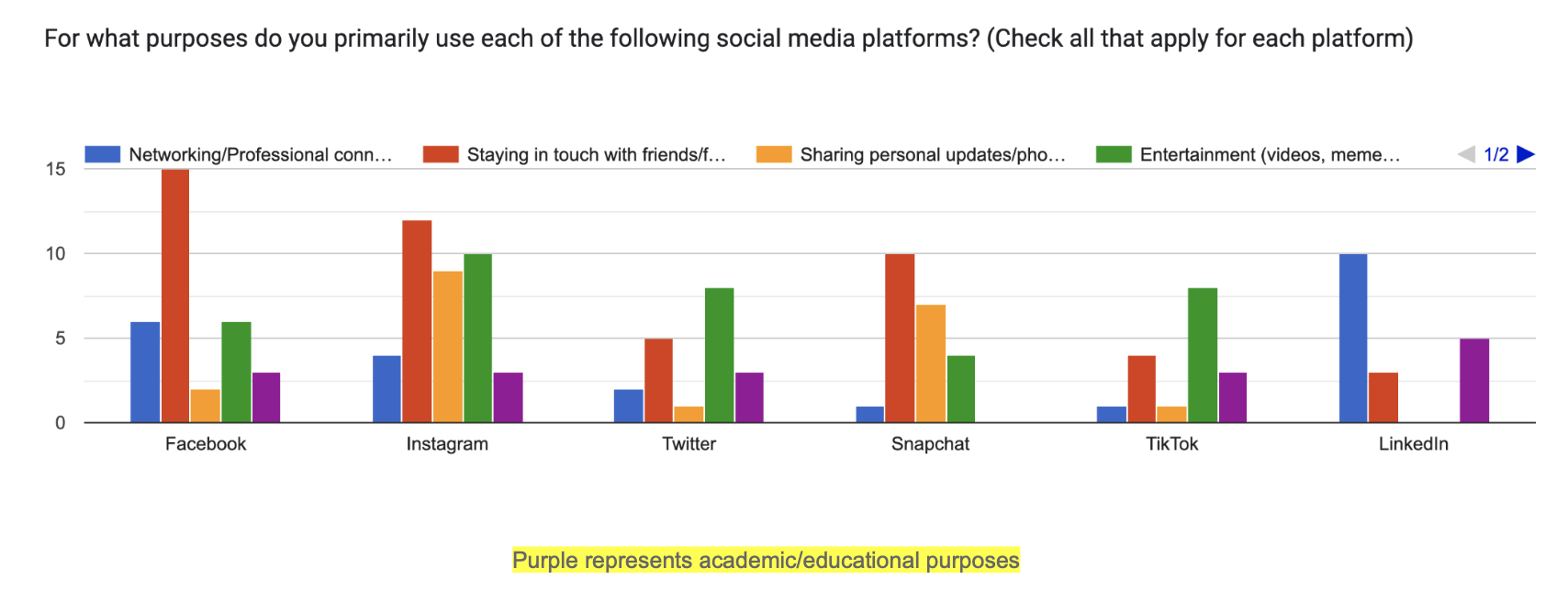
The results are important in providing insight into the nature of the linguistic choices, not only consciously but also subconsciously, by young adults in digital communication. Taking a deeper dive, we analyze the results from each platform we considered — LinkedIn, Twitter, and Instagram—and provide examples to illustrate these trends.

LinkedIn: Formal Language Use

Appearance in LinkedIn, the professional networking site, invited a thicker coat of calcified tongue for student use of semi-formal scholarly language. This meant, simply: full sentences, big words, industry talk or just a professional sheen to it overall. Analysis revealed students’ self-reports on the language they used were consistent with their actual posts.

Example: In a typical post, a student wrote, “I am thrilled to announce that I have accepted an internship position at Boeing, where I look forward to contributing to the innovative team and developing my professional skills further.”

This example underscores the formal, structured language typical of LinkedIn, reflecting the professional nature of the platform.

Twitter: Casual and Expressive Language

On Twitter, where brevity and timeliness reign, a similar but distinct trend was apparent. Students frequently used slang, abbreviations, and emoticons with whom they clearly identified, as they later recognized and reported in their questionnaires. The students were able to note the spontaneity and personal expression that helped keep their informal tone, well, informal.

Example: A tweet from one of the participants read, “Just saw the weirdest episode of my fave series ever! 😱🤣 Can’t believe what just happened… #mindblown #bingewatching.”

This tweet is representative of the casual and expressive language that defines Twitter, complete with emoticons and hashtags that add a personal touch.

Instagram: Visual and Informal Communication

Instagram, a visually rich platform, also is a part of the informal text conversation game. In sharing their pictures, students were juxtaposing the images with very informal language, often with self-deprecating serializations, and using all sorts of creative text styling. Once again, students’ perceptions of their language use and the actual content analyzed were highly correlated.

Example: An Instagram caption accompanying a beach sunset photo stated, “No filter needed for this sunset 🌅 🌊  #sunsetvibes #beachlife.”

The use of emojis and hashtags enhances the visual experience, reflecting the informal and personal communication style prevalent on Instagram.

The consistency across different platforms suggests that students possess a clear understanding of the appropriate linguistic forms for each social media context. This was particularly evident in their ability to adapt their language to match the formality of the platform, whether in professional settings like LinkedIn or more personal spaces like Twitter and Instagram.


These findings are crucial for understanding the impact of digital communication on college student’s language use and identity construction in the digital age. By demonstrating how students adeptly navigate the linguistic landscapes of various social media, this research contributes significantly to broader discussions about digital literacy and the dynamic nature of language in social media settings.

Discussion and Conclusions 

The study aimed to explore the linguistic features of grammar and vocabulary use among college students on various social media platforms and examine their self-awareness of these patterns. Our findings provide valuable insights into how social media environments shape language use and how aware students are of their linguistic behaviors online. One of the key findings of our research is the adaptability of college students’ language based on the context of the platform. On platforms like LinkedIn, which are perceived as professional and formal, students consistently used structured, complex sentences and formal vocabulary. This indicates a clear understanding of the expectations and norms of professional communication. Conversely, platforms such as Twitter and Instagram, known for their casual and expressive nature, saw students employing informal language, including slang, abbreviations, emoticons, and hashtags. Snapchat and TikTok, which emphasize spontaneity and visual content, also reflected relaxed grammar and informal vocabulary. These variations in linguistic styles underline the students’ ability to navigate different communication environments effectively.

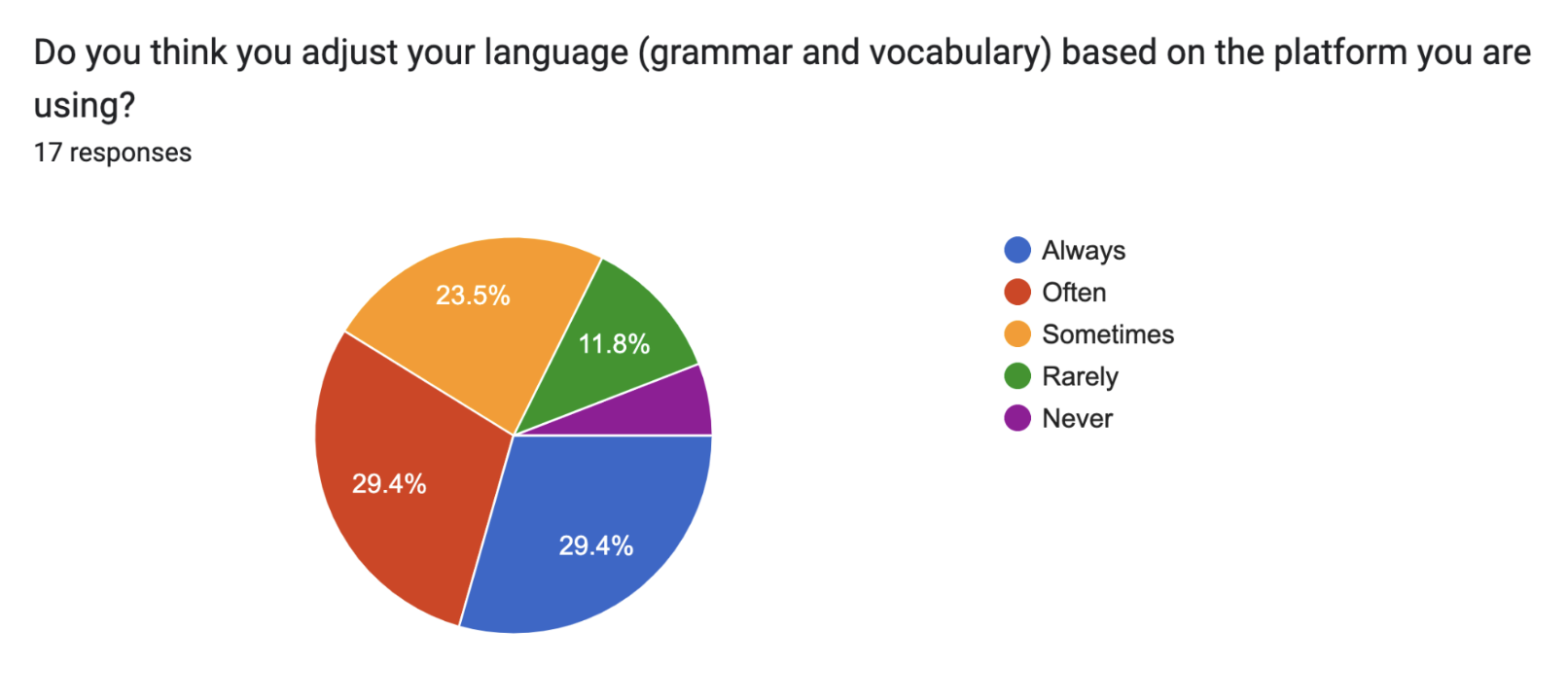
Another significant aspect of our study was the alignment between students’ perceptions of their language use and their actual usage. The survey results, paired with the analysis of online interactions, revealed that students accurately estimated their use of informal vocabulary and grammar on platforms like Twitter, Snapchat, TikTok, and Instagram. Similarly, they recognized the formality required on LinkedIn and Facebook. This high level of self-awareness suggests that students are not only aware of the different linguistic norms across social media platforms but also consciously adjust their language to fit these norms. This could be attributed to the fact that social media has a great presence in the lives of college students, making it easy to be familiar with and adapt to its expectations.

The findings of this study also help us understand how digital environments influence social interactions among young adults. The fact that college students are able to alter and modify their languages to fit several different social media platforms demonstrates a form of digital code-switching. There is a clear navigation between linguistic styles and norms, which mirrors larger societal practices of adapting communication styles in several social settings. Students are not only enhancing their digital literacy but also building their online identities that correspond to their desired social persona. As such, this adaptability in language use shows a larger phenomenon of identity formation and management in today’s digital age, where college students as well as other individuals curate their self-presentation across different platforms in online environments.

In conclusion, this research highlights the dynamic nature of language use by college students across social media platforms. Students demonstrate a keen awareness of the distinct linguistic norms required by various social networks and adjust their language accordingly. The minimal discrepancy between their self-perceptions and actual usage underscores their proficiency in navigating digital communication landscapes. These insights contribute to a broader understanding of communication dynamics in the digital age, emphasizing the importance of digital literacy. As social media continues to evolve, further research could explore how these linguistic adaptations and self-awareness develop over time and across different demographic groups. Understanding these patterns can help educators and policymakers create more effective communication skills in digital contexts, preparing students for the multifaceted nature of online interactions.

References

Kemp, N., & Clayton, J. (2017). University students vary their use of textese in digital messages to suit the recipient. Journal of Research in Reading, 40(December 2017), S141–S157. https://doi.org/10.1111/1467-9817.12074

Kemp, N., Graham, J., Grieve, R., & Beyersmann, E. (2021). The influence of textese on Adolescents’ perceptions of text message writers. Telematics and Informatics, 65, 101720. https://doi.org/10.1016/j.tele.2021.101720

Merchant, G. (2006). Identity, Social Networks, and Online Communication. E-Learning and Digital Media, 3(2), 235-244. https://doi.org/10.2304/elea.2006.3.2.235

Raccanello, Paul J. (2011) “Social networking texts among college students: identity and imagination online”. Doctoral Dissertations. 216. https://repository.usfca.edu/diss/216

Skierkowski, D., & Wood, R. M. (2012). To text or not to text? The importance of text messaging among college-aged youth. Computers in Human Behavior, 28(2), 744–756. https://doi.org/10.1016/j.chb.2011.11.023

, , ,

Friendships For the Mono- and Bi-Lingual College Student: Does The Language You Speak Make A Difference in How You Make Friends?

In the course of our research, we endeavored to examine the difference in the social life of UCLA college students, their capacity to make friends, and satisfy their need for social support with fellow students based on their status as a monolingual or bilingual speaker of English. Drawing on support from previous research dealing with different student populations, we concluded that the way bilingual students are treated and form communities is different from the way monolinguals do, whether because of “othering” by speakers who did not understand their language or culture or because they sought out connections with those who shared their ethnic or linguistic ties. It was almost universal in our interviews where bilingual speakers had a bias towards others who spoke their non-English language, and many of the monolinguals admitted to preferring the company of those who shared their language and culture. Not every speaker who our team interviewed had an exactly identical experience, however- none of our bilingual speakers derived from the same culture or spoke the same language- and there were a few interesting perspectives and outliers.

[expander_maker id=”1″ more=”Read more” less=”Read less”]

Introduction

In the course of their education, every single college student is faced with the point where they realize that they are now, effectively, adults and they are now- potentially for the first time- on their own. Many freshmen entering into university are inbound to a new city, a new county, new state, or even an entirely new country. The locale, culture, and people are all different than where they are originally from.

This gap in culture (and sometimes even language) and the responsibilities endowed by college life can make it difficult to make friends in a new place– but it is also extremely pivotal for mental and social well being to make social connections, given the loneliness of being far from home and isolation from the people one knows.

Researching into how students- particularly bilingual students- construct their new friendships is invaluable for anyone incoming to university. Using UCLA students as a representative example, we can explore some of the insights of students navigating their new social landscape. Most specifically, we want to see how- and if- monolinguals and bilinguals differ when it comes to trying to form friendships, and why.

Methods

We began our research on how bilinguals and monolinguals in college differ in making friends and their differing level of social satisfaction in the college environment by consulting various published literature on the subject, but intended to do our own interviews and surveys to see if anecdotal evidence matched the broader scientific findings. Across many different papers- from bilingual college students of Chinese or Latinx descent all the way to the bias of young monolinguals from 4 to 6 years of age- we found a fairly consistent trend: bilinguals liked grouping with other bilinguals (specifically ones of their own culture and language) and monolinguals tended a slight cognitive bias (conscious or otherwise) towards other grouping with monolinguals.

When we had seen the literature’s assessment of college friendships by bilinguals, we formed our hypothesis about the difference: that bilinguals tended to find it easier to make friends with bilinguals from their culture and that monolinguals tended either to “not care” or stick with monolinguals. We also sought out whether being bilingual was particularly helpful in making social connections compared to monolinguals, and other potential social benefits of bilingualism in a predominantly English-controlled American college environment. With our research question and secondary and tertiary objectives in mind, we put our theories and the broader literature to the test through qualitative and quantitative surveys and interviews.

Results

The results of the interviews with bilinguals were quite illustrative in relation to social connections through their first language. Using direct quotes from interviews, many of the answers were quite straightforward:

INTERVIEW 1 – BILINGUAL

I: Did you find it easier to connect and meet people who spoke the same language as you?

J: Yes, most definitely. Uhm, I really liked connecting with people who also spoke Vietnamese because there were a lot of like, you know, Vietnamese language jokes that only Vietnamese people would get.

INTERVIEW 2 – BILINGUAL

I: Have you found it easier to connect with people who speak the same language as you?

S: […] Definitely, yeah. It’s much easier. I mean, it really depends on the person. I wouldn’t say, “Oh, I’m going to go and make friends with whoever speaks Farsi”, because some people, it depends on how approachable they are or if I vibe with them. But in terms of, uh, having one thing to connect. Yes, I would say it’s much easier for me to connect to someone who speaks the same language versus non-Farsi.

INTERVIEW 3 – BILINGUAL

I: Do you find it easier to connect with people who speak the same language(s) as you?

E: Definitely, I feel like it’s easier if I can also speak your language and understand what I’m saying.

Very consistently across bilingual speakers that we interviewed, sharing a language and culture was essential for forming social ties. They expressed feeling at ease with people who spoke their own language, or how being among a bilingual speaker enhanced their experience more than it would be otherwise.

INTERVIEW 1 – MONOLINGUAL

I: Do you think language or culture has any bearing on who you choose to interact with in your day to day life?

A: Uhm, I definitely would say so… it’s easier for me to talk to or be around someone who has the same language and culture as me.

INTERVIEW 2 – MONOLINGUAL

I: Do you think language or culture has any bearing on who you choose to interact with in your day to day life?

J: […] It kinda sounds like an asshole thing to say– but I think that I’m accepting of a lot of different cultures and stuff– I think there are some subconscious elements, but I wouldn’t know what they were, there are probably some groups I don’t interact with just off of, I don’t know, vibes…

Monolinguals, in their parallel questions to the bilingual speakers, hedged a little when answering but definitely seemed to be likewise confident that they preferred to stay within their own clade of language and culture.

When it came to the respective groups, bilinguals occasionally went out of their way to specifically connect with their own cultures (the interviewee of Interview 1 professed to specifically looking for Southeast Asian clubs on campus in order to connect with others and make friends) but monolinguals had no such compunctions (no one we interviewed was, for instance, attending an “Born American Student” or “Monolingual English” club, nor did such a thing exist). When it came to making friendships, typically they went for shared hobbies unrelated to culture (in one case, gaming clubs).

This is not a zero sum game, however– in many cases, bilinguals at UCLA had the added benefit of being able to draw on their extra language in addition to monolingual strategies, meaning their opportunities for friendships were more diverse than the monolingual opportunities. Though the potential for exclusion from these more monolingual-oriented experiences is possible, rejection by monolingual speakers for language or culture was rare, if existent at all.

Many of the monolinguals we interviewed wished they had the opportunity to learn other languages and be fluent in them, viewing their English exclusion as a missed opportunity; only one subject of interview wanted to remain a monolingual, though when pressed admitted he would like to learn American Sign Language (and advocated that the rest of the US did, as well) and wasn’t sure if that counted as being multilingual. Broadly speaking in our interviews, bilinguals were happy to provide a social bridge for monolingual to monolingual interactions and delighted to get the chance to share their culture or language with others. No one regretted being bilingual or thought it made their social opportunities at UCLA worse.

Conclusion

A primary finding that stood out in our research was the absence of in-group/out-group biases within both groups. Instead, we found that linguistic diversity among the population created opportunities for cultural exchange and that in-group preferences did not completely discourage students from reaching out to other cultures. Our results revealed that bilingual students expressed stronger social ties to their cultural communities compared to their monolingual counterparts who conversely expressed a strong desire for second-language acquisition.

These findings led us to conclude that: (1) linguistic diversity can foster a positive school environment by providing opportunities for cultural exchange among different cultures, (2) in-group/out-group biases do not pose negative effects on social relationships among bilingual and monolingual students, (3) bilingualism and second-language acquisition can potentially enhance the social experience of students.

However, these findings are limited by several factors within our study. Firstly, our population of study is representative of a unique environment with a relatively higher proportion of politically liberal, ethnically diverse students than the average American university. Our research is also limited to the study of English-speaking students, restricting our data from being representative of environments with speakers of different dominant languages. Given these limitations, we believe that linguistic diversity thrives most successfully in diverse environments wherein cultural exchange is a social norm and speakers are collectively open-minded to learning

We believe that our findings contribute to a deeper understanding of the importance of second-language acquisition in childhood development to enhance social connections in adulthood and potential positive effects of bilingualism in combating cultural differences in diverse settings. Furthermore, these findings highlight the importance of language knowledge of one’s own culture in strengthening community ties and individual identity. We believe that future research in bilingual and monolingual differences should focus on studying the potential positive effects of second-language acquisition on social skills, educational development, and in overcoming cultural differences.

References

Byers‐Heinlein, K., Behrend, D. A., Said, L. M., Girgis, H., & Poulin‐Dubois, D. (2016). Monolingual and bilingual children’s social preferences for monolingual and bilingual speakers. Developmental Science, 20(4). https://doi.org/10.1111/desc.12392

Toppelberg, C. O., & Collins, B. A. (2010). Language, culture, and adaptation in immigrant children. Child and adolescent psychiatric clinics of North America, 19(4), 697–717. https://doi.org/10.1016/j.chc.2010.07.003

Wang, L., Gonzalez, P. D., Lau, P. L., Vaughan, E. L., & Costa, M. F. (2023). “Dando gracias”: Gratitude, social connectedness, and subjective happiness among bilingual Latinx college students. Journal of Latinx Psychology, 11(3), 203-219. https://doi.org/10.1037/lat0000227

Sebanc, A. M., Hernandez, M. D., & Alvarado, M. (2009). Understanding, Connection, and Identification: Friendship Features of Bilingual Spanish-English Speaking Undergraduates. Journal of Adolescent Research, 24(2), 194-217. https://doi.org/10.1177/0743558408329953

Xu, C. L. (2022). Portraying the ‘Chinese international students’: a review of English-language and Chinese-language literature on Chinese international students (2015–2020). Asia Pacific Education Review, 23(1), 151–167. https://doi.org/10.1007/s12564-021-09731-8

[/expander_maker]
, , , , ,

The Linguistic Switcheroo: Navigating Style-Shifts in College Discourse

Dead Poets Society (1989)

This blog entry explores the dynamic world of language use among college students at UCLA, focusing on how they adjust their linguistic style in academic environments. We delve into the phenomenon of style-switching, where students navigate between informal conversations with peers and formal interactions with professors. Through careful observation and analysis, our research uncovers the nuances of word choice, tone, and syntax in these differing contexts. We aim to understand how social settings influence language socialization within academic communities. Our findings reveal that students tend to employ a more casual, slang-infused language among peers while adopting a more structured and formal language when engaging with faculty. These findings highlight the adaptability of linguistic practices within differing contexts, as seen in the discrepancy between a languid and relaxed setting versus an academic one, and reveal deeper insight into the social dynamics at play. Join us in exploring the intricate play of language in the college setting, where each conversation reflects the complex interplay of social norms, power dynamics, and cultural identity.

[expander_maker id=”1″ more=”Read more” less=”Read less”]

Introduction

Our research focuses on the intricate ways college students adjust their language in different academic settings, particularly at UCLA. Previous studies, like those by Patricia A. Duff and others, have highlighted language socialization in academic contexts. However, there’s less focus on how students’ language shifts in real-time interactions between diverse groups such as peers and professors. We aim to bridge this gap by analyzing how UCLA students’ word choice, tone, and syntax vary when communicating with peers versus academic staff. Our hypothesis posits that students’ language becomes more informal, slang-heavy, and less complex in peer interactions compared to more formal, carefully structured conversations with faculty, reflecting underlying power dynamics and social norms.

Here’s a link to a video by Cambridge University Press that explains “academic language” to give you an idea of what we’ll be discussing in this blog!

Methods

In our study, we centered our investigation on the linguistic style shifts among UCLA students in academic contexts. Our focus was on two primary interaction scenarios: between students themselves and between students and their professors.

People and Contexts Observed:

  • Student-Student Interactions: Conversations among peers, both within and outside classroom settings, were recorded. These interactions provided insights into the informal communication styles prevalent in peer groups.
  • Student-Professor Interactions: We also observed and recorded interactions between students and faculty members. This setting offered a contrasting view of more formal and structured communication.

What We Analyzed:

  • Word Choice: We paid close attention to the vocabulary used in different social settings. Our analysis focused on identifying the use of informal language and slang among peers, compared to more formal and academic language in interactions with professors.
  • Syntax and Structure: The complexity of sentence construction and use of grammatical structures were analyzed to observe variations in formality and complexity.
  • Tone: The emotional and attitudinal aspects of speech, such as enthusiasm, respect, or hesitation, were observed to understand the relational dynamics in different interactions. Take a look at this video to better understand the importance of how we say things, beyond what we say.

Data Collection Method:

  • A mix of participant observation and ethnographic fieldwork was employed. This involved walking with, talking with, and recording the daily life and conversations of students. Both audio recordings and hand-transcriptions of conversations were utilized.

By focusing on these observable elements in communication, our study aimed to illuminate how linguistic practices are adapted to different social contexts within the academic environment. Technicalities not central to our primary analysis, such as detailed linguistic theories, were omitted for clarity and accessibility to a general audience. This approach ensured that our study remained engaging and understandable, while still maintaining academic rigor.

Results

Here is what some of our data ended up looking like:

Student-Student Conversation

Student 1: Yeah, the bystander effect. It’s like, when there’s a bunch of people, everyone thinks someone else will step up. Ends up with no one helping. Pretty messed up and craaaazy.

Student 2: That’s tea. It makes you wonder, huh? Did you guys then talk about how different countries do things differently?

Student 1: Oh yeah, it’s all about the culture vibe. Like, some places are all “pick me girls,” while others are like “No worry girly.” (laughing)

Student 2: No literallyyyy. Social psych’s got some real “shit” going on.

Student-Professor Conversation

Student: In the lecture, you mentioned the bystander effect. Can you explain more on that?

Professor: Oh yes I can. So, the bystander effect refers to the phenomenon where individuals are less likely to offer help to a victim when other people are present. It’s often due to a fear of responsibility, where the bystander assumes someone else will intervene.

Student: I see. So how does this relate to social responsibility?

Professor: Hmm social responsibility is an individual’s obligation to act for the benefit of society at large. So like in the context of the bystander effect, it challenges the individuals to overcome the fear of responsibility and take action when they witness someone in need of help.

Student: Oh ok I get it. And last question (slight haha) what about the role of culture in social psychology?

Professor: So culture plays a significant role in shaping our social behaviors and attitudes. Different cultures have different norms and values, which could influence how people perceive and interact with each other. Like for example, individualistic cultures might emphasize personal achievements, while collectivist cultures focus on their group harmony.

Student: OK I got that down. Thank you so much for your time, Professor!

So what does this tell us?

These two conversations, both of which cover the “bystander effect” of social psychology, show completely different ways of having very similar conversations. Even though both conversations cover the bystander effect, and in each one the speaker is asking questions while one is answering and explaining, the language used is very different.

The use of slang in the student-student conversation – words like “tea,” “craaaazy,” and “literalyyyy” – are not present in the student-professor conversation. This suggests that students are perfectly capable of discussing academic topics in the way they ‘typically’ speak – with friends and in their social interactions, but they are intentionally censoring themselves and electing for “academic language” when speaking with professors.

The fact that the professor, here, is not speaking with the same total academic language, and still uses phrases such as, “so like” and “hmmm,” suggests that they do not feel the same sense of need to maintain formality in the way the student does. This shows us that despite the absence of reciprocal formality within student-professor interactions, when speaking with a faculty member or professor, the student still understands their position in this conversation as relatively powerless and more subservient.

In analyzing syntax and structure, we found conflicting conclusions in students’ willingness to formalize their speech around professors versus their peers. In conversations with peers, students tended to include longer sentences that more frequently lacked correct grammatical structure and syntax as ruled by academic standards of speech. However, these sentences were more truncated and were often shortened to mere phrases that included only enough to communicate a simple idea. In contrast, students’ interactions with the professor included simpler sentence structure, yet more grammatically correct. Student 1’s use of the phrases, “Ends up with no one helping” and “Pretty messed up and craaaazy” as well as Student 2’s response later in the conversation, “No literallyyyy” highlight this phenomenon. By standards imposed through academia’s use of American Standard English, all of these examples would be considered incorrect grammatically and incomplete in syntax. They all lack subjects and therefore rely on the context surrounding it with the conversation being had in order to correctly interpret their meanings. These examples can be contrasted with the student’s interactions with the professor, in which all sentences are complete and use academically correct syntax structure. The students’ sentences are more concise in their lack of filler words and slang, and yet grammatically more correct. This again, may point to power imbalances within these two interactions – students may feel less willing or comfortable to talk extensively with professors than with peers due to the perceived power imbalance, as well as feel more restricted in their expression, as is reflected in the formality of their structure and syntax.

The last aspect of speech we analyzed was a difference in tone. In comparing the two examples provided, we found that student to student interactions included a more playful tone, similar to banter, while the student to professor interaction held a more professional tone, lacking in comfort and familiarity. When the student talked to their peer, the two indiscriminately contributed to the conversation without self-consciousness, providing multiple affirmations and adding onto the points already stated. However, in the conversation between student and professor, the student’s conversation largely comprised of a quick and simple affirmation that they were listening to the professor’s speech, followed by another quick and concise question. The discrepancy between these two interactions again highlights the students’ need to adjust their manner of speaking due to their social status. As the student interacts with individuals with a wider gap in social standing, their speech reflects that change in the comfort at which they are capable of communicating with their counterparts.

Key and Peele, Comedy Central (2012)

Discussion and Conclusion

Academia is just one locale in which this linguistic phenomenon can be recognized. The same linguistic changes that we noticed between students speaking with fellow students, and students speaking with professors appear elsewhere. There is a palpable power dynamic between professors and students, which is reflected in the changes in word choice, syntax, and tone of students we recorded in each conversation group.

Other relationships with a similar power dynamic – for example, manager-employee or parent-child – would see similar shifts from the ‘lower’ positioned speaker’s standard casual mode of communication, and the way they communicate in these partnerships. Even more pertinent social commentary can be drawn from the linguistic-change patterns detected in our research. Power relations that result from socially constructed hierarchies, like racial differences, gender differences, or more specific circumstances like interactions with police officers, demonstrate similar linguistic changes.

This phenomenon suggests that linguistic patterns and tonal choices are not only reflections of existing social strata and power relations but are simultaneously contributing to the establishment and maintenance of these strata. Our research, therefore, both reflects and contributes to the existing literature on the interactions of linguistics and social power dynamics, via this case study on academic communication.

References

Alkhudair, R. Y. (2019). Professors’ and Undergraduate Students’ Perceptions and Attitudes Toward the Use of Code-Switching and Its Function in Academic Classrooms. International Journal of English Linguistics, 9(6), 160-. https://doi.org/10.5539/ijel.v9n6p160

Costa, J. (2015). Can Schools Dispense with Standard Language? Some Unintended Consequences of Introducing Scots in a Scottish Primary School. Journal of Linguistic Anthropology, 25(1), 25–42. https://doi.org/10.1111/jola.12069

Davydova, J. (2022). The role of social factors in the acquisition of vernacular English: A variationist study with pedagogical implications. International Journal of Applied Linguistics, 32(3), 425–441. https://doi.org/10.1111/ijal.12438

Duff, P. A. (2010). Language Socialization into Academic Discourse Communities. Annual Review of Applied Linguistics, 30(Mar), 169–192. https://doi.org/10.1017/S0267190510000048

Hamre, B. K., Pianta, R. C., Downer, J. T., DeCoster, J., Mashburn, A. J., Jones, S. M., Brown, J. L., Cappella, E., Atkins, M., Rivers, S. E., Brackett, M. A., & Hamagami, A. (2013). Teaching through Interactions: Testing a Developmental Framework of Teacher Effectiveness in over 4,000 Classrooms. The Elementary School Journal, 113(4), 461–487. https://doi.org/10.1086/669616

Hutton, S. (2022). The burden of code-switching: U-M LSA U-M COLLEGE OF LSA. U. https://lsa.umich.edu/lsa/news-events/lsa-magazine/Summer-2022/the-burden-of-code–switching.html

“I’m Retired.” Key and Peele, Keegan-Michael Key and Jordan Peele, season two, episode four, Comedy Central, 2012.

Poola, V. P., Suh, B., Parr, T., Boehler, M., Han, H., & Mellinger, J. (2021). Medical students’ reflections on surgical educators’ professionalism: Contextual nuances in the hidden curriculum. The American Journal of Surgery, 221(2), 270–276. https://doi.org/10.1016/j.amjsurg.2020.09.003

Sicoli, M. A. (2010). Shifting voices with participant roles: Voice qualities and speech registers in Mesoamerica. Language in Society, 39(4), 521–553. https://doi.org/10.1017/S0047404510000436 

Weir, Peter. Dead Poets Society. Buena Vista Pictures Distribution, 1989.

Woodbridge, A. (2021). “If I’d Heard That Earlier, It Would Have Changed My Academic Experience”: Connections Between Language Brokering and Undergraduate Academic Writing  / by Amy Woodbridge. University of California, Los Angeles.

[/expander_maker]
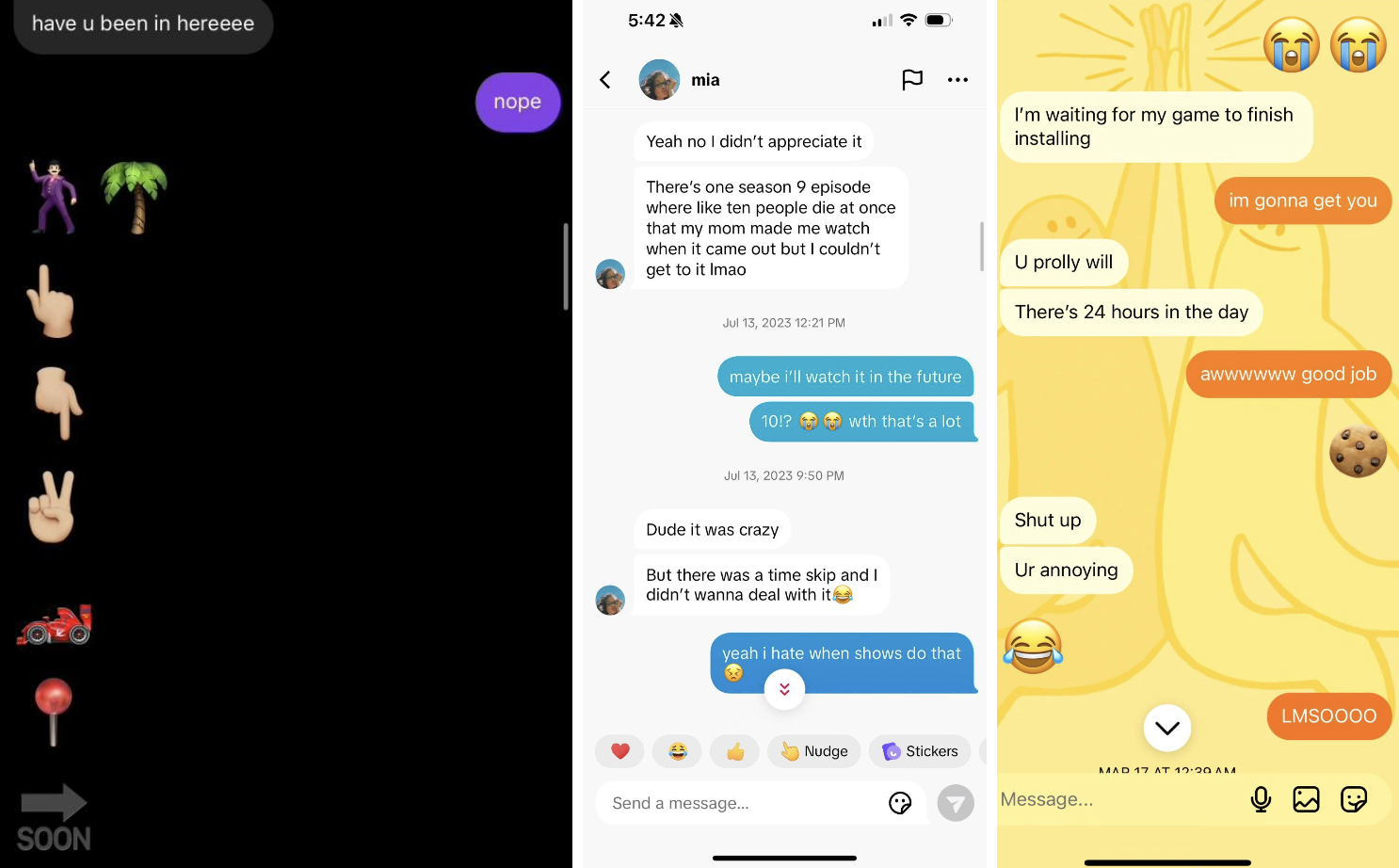
, , , , ,

Culture and Language: How Stigma Can Impact Students’ Mental Health Conversations

College students in America have had a rise in mental health concerns, finding themselves facing internal and external troubles when seeking support and open dialogue. Although past studies discuss the external factors that impact the rise in mental health concerns in college students, few discuss the cultural factors that affect these college students’ ability to seek and maintain support– particularly in the Chinese community, which has been found to carry a stigma for mental health. This study looks at the cultural influences that impact the conversation surrounding the mental health of Chinese college students. Using data from semi-structured interviews, this study frames the cultural reasons for how Chinese college students view mental health and support for mental health. Chinese UCLA undergraduate students discuss their mental health experience in three different contexts: with themselves, their family, and their friends. These students emphasize the difficulties of growing up in a community that stigmatizes mental health and lacks an open dialogue about it. Conversations growing up had impacted their own perceptions. These students needed to learn how to approach mental health conversations. The experiences and perceptions of mental health discussion of these students suggest that stigma perpetuated through communication can cause Chinese students and others from stigmatizing cultures to face various cultural challenges that hinder them from feeling confident in seeking resources.

[expander_maker id=”1″ more=”Read more” less=”Read less”]

Introduction

In recent years, there has been an increase in conversation about the mental health crisis, specifically in the student population. More than half of college students have at least one mental health problem. As mental health becomes a more significant crisis, there is a need to understand how different communities perceive and discuss the topic of mental health, as communication plays an essential role in perpetuating stigma (Rusch et al., 2005). A crucial aspect of understanding people’s perceptions of mental health would be their background.

Past studies have shown that in Chinese and other Asian communities, there is a great deal of mental health stigma, followed by a lack of knowledge and discussion on mental health. Understanding the perspective of one community of college students provides a significant opportunity to see how culture and its stigma could impact how people discuss mental health and, in turn, address it.

Background

In the Chinese community and other Asian communities, there is a mental health stigma and a lack of mental health knowledge (Yin et al., 2020; Shu et al., 2022). In recent years, there have been increased conversations about the mental health crisis, specifically in the student population. Past studies have found that more than 60% of college students have at least one mental health problem, with there being an increased rate of anxiety, depression, and suicidal ideation on college campuses (Lipson et al., 2022; Pedrelli et al., 2014).

As mental health becomes a bigger crisis, there is a need to understand how different communities perceive and discuss the topic of mental health. An important aspect of understanding people’s perception of mental health would be to consider their background.

Chinese undergraduate students may face mental health complications but struggle to address them because of their cultural stigma. In particular, perceptions of mental health by their parents may play a role in how they manage their mental health. Disconnects between immigrant parents and their children have been reported in previous studies. The variation in how people interpret language has significantly changed, and one is more likely to find a disconnect between how individuals interpret words, phrases, and expressions (Sharma & Dodsworth, 2020). Such differences may play a role in how Chinese undergraduate students perceive stigmatized topics and discuss them within their community and their parents. It is essential that we understand how culture and relationships may impact perceptions of mental health and language (Toppelberg & Collins, 2010). Understanding these variations, even if just in the Chinese undergraduate community, will allow for a better understanding of how to address stigma around critical health topics like mental health.

Methods

This research was conducted with UCLA Chinese undergraduate students. Interviewees were recruited through word-of-mouth. They participated in an in-person, 15-to-30-minute, semi-structured interview to answer open-ended questions (see Appendix). This structure allowed a natural conversation flow when discussing a heavy topic like mental health to understand how language and culture are intertwined.

Five Chinese undergraduate students participated in the interviews. Two are international students from China, and three are domestic students from America. To analyze our data, we used grounded theory to categorize and frame the prominent ideas expressed by our participants.

Positionality

Four undergraduate students conducted this study for a linguistic anthropology project. Each researcher is of a different ethnicity and background, and only one researcher is a member of the Chinese community. As college students, we recognize the significance of mental health and hope to understand the cultural and linguistic nuances of how students like us perceive mental health.

Findings and Analysis

Our five interviewees shared three main experiences, established through grounded theory to understand our interviewees’ beliefs about mental health dialogue.

Lack of Conversation

Growing up, Chinese undergraduate students did not have conversations about mental health with their parents. If these topics did come up, they were stigmatized, broad, and swept under the rug. Our participants emphasized how they have tried talking to their parents about mental health, only for the topic to be highly frowned upon and ignored. The only conversations about mental health that our participants had were stigmatizing, creating a negative perception of mental health and the lack of ability to discuss mental health.

Learning About Mental Health and its Dialogue

After coming to college, students had to grapple with mental health and how to really talk about it, especially to their peers. Starting conversations and looking for support was difficult because they felt they lacked a foundation due to their culture and how they were raised. These conversations were only sought after they started college and were away from home.

Figure 1: Quotes from two Chinese undergraduate students talking about their current journey with mental health and its dialogue. Participant 2 (left box) needed to learn how to talk to her peers. Participant 3 (right box) believed that their upbringing and their parents’ mental health stigma played a role in their ability to address their mental health.

Chinese students who grew up in a family that stigmatized mental health, primarily through conversation or a lack of conversation, came into college feeling uncomfortable with starting conversations about mental health. Even when they sought out support from friends, it was a slow process. One student stated that it was a “trial and error phase,” they were uncomfortable talking to their friends or therapist but knew it was necessary for “healing.” In the same conversation, they said they slowly learned how to “properly” tell their friends as they never learned how to. Participants implied that they feel like there is a right way to talk about mental health, but they lacked the toolkit to do so due to their cultural upbringing.

Differences Between Conversations and Language with Parents and Peers

Students meticulously choose words when talking to their parents because they recognize the culture and barriers they were raised with. When they brought mental health up as an undergraduate student, they used terms they believed would be better accepted by their parents.

Figure 2
Quotes from two Chinese undergraduate students talking about how and why there are differences in how they talk about mental health to their parents versus their peers. Participant 1 (left box) reveals how he has to think about the right words to use to talk about his mental health with his parents. Participant 4 (right box) believed that because their parents have a specific view of what mental health is, they have to be careful with how they talk about mental health, especially if it does not fit their parents’ perception.

When speaking with peers, participants believed they had a space to be accepted, compared to speaking with their parents. During these conversations with their peers, they openly use terms like “depression,” “anxiety,” and “panic attacks.” When speaking with their parents, they use euphemisms. One participant uses “stress” instead of “depressed” because their parents better understand it, though it is still brushed over in conversations. The identity that was being used in each conversation was different. Students were less afraid of being identified as “mentally struggling” when with their friends. Participants expressed that they felt it was something they were all going through. However, using these linguistic labels with parents or elders felt much too far. Three participants indicated that the words “depressed” or “anxious” held more negative weight if said in Chinese in contrast to their English-speaking friends.

Discussion and Conclusions

The beliefs and experiences of these Chinese undergraduate students imply that culture plays a role in the language people use to discuss mental health. Cultural stigma can be perpetuated through the use of communication. Our Chinese participants grew up with a lack of positive mental health dialogue. Mental health dialogues were negative and filled with stigmatizing language. This led to our participants feeling unsure about seeking conversations about mental health with their parents at home.

The lack of opportunities to learn how to discuss mental health created difficulties when it came time for them to have these conversations. When mental health became an important topic in college, where their peers and themselves faced mental health experiences, these Chinese students felt ill-prepared to conversationally start and address the topic. Because of their upbringing, they needed to learn how to reframe their and others’ potential perception of mental health to feel comfortable doing so. Recognizing their parents’ and their peers’ opposing perceptions of mental health impacts the way they choose to talk about mental health, code-switching for the comfort of their parents.

 Communities with stigmatizing cultural beliefs about mental health could lead to individuals having trouble accessing the support that they need because they lack the language to have and start conversations about their mental health. It is then essential to increase access to resources for parents and younger generations. Parents should become knowledgeable about mental health and normalize its dialogue to reduce stigmatization and be open to their children. These resources could provide younger generations with an avenue to recognize and learn about mental health and address it when necessary. Knowing the role of culture also allows professionals to be more culturally aware and adaptive.

Culture can affect how and if people communicate about topics, eventually impacting whether or not people are confident in seeking the right resources. As the mental health crisis among students rises, it is critical to consider all of the factors that could be mitigated to allow students to seek the support they need.

References

Babchuk, Wayne A. and Hitchcock, Robert K. (2013). “Grounded Theory Ethnography: Merging Methodologies for Advancing Naturalistic Inquiry,” Adult Education Research Conference. https://newprairiepress.org/aerc/2013/papers/5

Lipson, S. K., Zhou, S., Abelson, S., Heinze, J., Jirsa, M., Morigney, J., Patterson, A., Singh, M., & Eisenberg, D. (2022). Trends in college student mental health and help-seeking by race/ethnicity: Findings from the National Healthy Minds study, 2013–2021. Journal of Affective Disorders, 306, 138-147. https://doi.org/10.1016/j.jad.2022.03.038

Lu, Xing and Guo-Ming Chen. (2011)”Language change and value orientations in Chinese culture”. China Media Research, vol. 7, no. 3, pp. 56- 63. http://www.wwdw.chinamediaresearch.net/index.php/backissues?id=51

Pedrelli, P., Nyer, M., Yeung, A., Zulauf, C., & Wilens, T. (2015). College Students: Mental Health Problems and Treatment Considerations. Academic Psychiatry: The Journal of the American Association of Directors of Psychiatric Residency Training and the Association for Academic Psychiatry, 39(5), 503. https://doi.org/10.1007/s40596-014-0205-9

Toppelberg, C., & Colins, B. A. (2010). Language, culture, and adaptation in immigrant children. PubMed Central (PMC). https://www.ncbi.nlm.nih.gov/pmc/articles/PMC3526379/

Rüsch, N., Angermeyer, M. C., & Corrigan, P. W. (2005). Mental illness stigma: concepts, consequences, and initiatives to reduce stigma. European psychiatry : the journal of the Association of European Psychiatrists, 20(8), 529–539. https://doi.org/10.1016/j.eurpsy.2005.04.004

Sharma, D., & Dodsworth, R. (2020). Language variation and social networks. https://www.annualreviews.org/doi/10.1146/annurev-linguistics-011619-030524

Shu, J. L., Alleva, J. M., & Stutterheim, S. E. (2022). Perspectives on mental health difficulties amongst second-generation Chinese individuals in Germany: Stigma, acculturation, and help seeking. Journal of Community & Applied Social Psychology, 32(6), 1099-1114. https://doi.org/10.1002/casp.2620

Yin, H., Wardenaar, K.J., Xu, G. et al. Mental health stigma and mental health knowledge in Chinese population: a cross-sectional study. BMC Psychiatry 20, 323 (2020). https://doi.org/10.1186/s12888-020-02705-x

Additional Resources 

https://embed.podcasts.apple.com/us/podcast/the-impact-of-mental-health-stigma-on-chinese-americans/id539018756?i=1000326453174

https://embed.podcasts.apple.com/us/podcast/mental-illness-and-its-cultural-stigma/id1273577192?i=1000420737041

Appendix

Guiding Interview Questions

Defining Mental Health and General Questions

  1. Have you heard of mental health diagnoses? What do you consider as mental health conditions?
  2. How did you learn about the topic of mental health?
  3. Do you know anyone with mental health concerns?
  4. What causes mental health concerns?
  5. How prevalent do you think mental health concerns are within the student population?
  6. What do you think about your own/people’s mental health diagnoses/state?

Family

  1. Do you talk to your family about mental health concerns? Why/why not?
  2. How do you talk to your family about mental health concerns?
  3. Does anyone in your family talk to you about mental health?

Community

  1. Do you talk to your peers about your mental health? Why/why not?
  2. Do your peers talk to you about their mental health? Why/why not?
  3. When talking to your peers/when your peers talk to you about mental health, how do they describe and talk about it?

[/expander_maker]

, , , ,

Words Matter: How Language Shapes Career Aspirations

Corona Smith, Fehma Zahid, Tadeh Amirkhanian, and Taleen Amirkhanian 

In today’s rapidly changing society, the language we choose to use not only reflects our future aspirations but also has the ability to guide and change them. This study delves into the nuanced interplay between language and gender. Also, it examines how linguistic differences in word choice, tone, and body language shape career aspirations among a wide range of UCLA undergraduate students with diverse backgrounds. Key takeaways from the study indicate that men are indeed more likely to use, ‘stronger,’ language when discussing their futures as compared to their female counterparts. In doing so, the study aims to understand these linguistic patterns to promote an inclusive environment that empowers individuals in pursuing their aspirations – with confidence and determination – regardless of their gender.

[expander_maker id=”1″ more=”Read more” less=”Read less”]

Introduction and Background

Boss or bossy? Assertive or aggressive? These seemingly innocent adjectives are often thrown around the workplace to describe one’s peers and colleagues. However, within the realm of communication, the choice of words carries immense weight, reflecting and perpetuating societal norms and expectations. The dichotomy between being perceived as assertive versus aggressive, or bosslike versus bossy, highlights the distinct linguistic double standards that often characterize interactions between genders.

Catherine Neiner’s “Bossy, Bitchy, Brazen” is a great Ted Talk in which she discusses the way that women are perceived in work environments.

Thus, for our research project, we wanted to delve a little deeper into how men and women think about their careers. Our official research question was: Do college-aged women and men use different word choices and tones when speaking about their future career paths? In order to understand this question, let’s explore some past literature.

In previous studies of speech patterns among men and women, researchers found some evidence that women more often made use of cooperative feedback, supportive interruption, questions, accommodating behaviors, compliments, and hedging (Plug et al. 2021). They also found that, when gender identity was made salient to women in the experiment, these women used more tentative language (Plug et al. 2021).

Not only that, but further research also suggests that gender-based differences in language patterns are very common in the workplace. Kristen M. Getchell and Lauren Skinner Beitelspacher conducted research on language that was used to describe male and female CMOs through a Forbes article published in 2020.

Updated annually, this Forbes article provided Getchell & Beitelspacher with their research findings. Click here for the full article from 2023!

They found that female leaders are often described in highly gendered ways that play up their nurturing or communal skills and downplay their agentic or leadership skills (Getchell & Beitelspacher 2020). Women were more commonly described as, “emotional,” “humanizing,” and “compassionate,” while men were more often described with words like, “powerful,” “confident,” and, “bold” (Getchell & Beitelspacher 2020). Because women are spoken about so differently from men in professional settings, we hypothesized that bringing up their careers would make this gendered difference more salient to female participants, which might cause them to speak about their future in a more traditionally “female” way. We hypothesized that these differences would emerge in our research as women use more fillers, hand gestures, and adjectives emphasizing interpersonal skills as compared to their male counterparts.

Methods

In order to investigate this hypothesis, we conducted semi-structured interviews with sixteen college students at UCLA (eight male and eight female). Our participants were selected using convenience sampling. It is important to note that this sampling method could make our results less generalizable. However, since each group member found participants from their own community at UCLA, we feel that we were still able to get a relatively diverse sample, ranging across many different majors and social backgrounds. Since these interviews were semi-structured, we went in with a set of questions but also allowed participants to talk about what they found interesting or important to them. Our questions related to what our interviewees hope to do after college, how confident they are in that path, why they’ve chosen that route, and more (see appendix for a full list of questions). We recorded the interviews so that we could truly analyze the body language and tone after all of the data was collected.

In order to analyze the interview data, we created a spreadsheet that listed different patterns and elements of speech that we expected to see, such as filler words or hedging. We then counted up each time we saw or heard one of these things in order to see if men or women would differ. We also paid special attention to which verbs and adjectives we heard the most from each group. We then looked at all of this data together and came up with our results.

Results and Discussion

Based on our preliminary research, we hypothesized that college-aged women would speak with less certainty and use fewer words that emphasize power and more words that relate to compassion and emotion. And our findings showed just that. Our research showed that males were almost twice as likely to use ‘assertive’ verbs when speaking about their futures, with almost 66% making statements like: “I will be a doctor in five years”, as compared to only 34% of our female participants. Female participants generally used more modal verbs with approximately 66% of sentences using verbs like might, should, and could (i.e. “I might try to become a lawyer once I graduate”).

Here we can see the breakdown of strong and weak verbs used by our male and female interviewees.

Our research also took note of participants’ body language as they were being interviewed. Most notably, female participants were on average almost 2x more likely to use filler words (i.e. um, like, uh) when speaking about their futures, with approximately 70 instances recorded across eight participants (as compared to 37 in males). Our researchers also qualitatively noted that their female participants used more hand gestures, facial expressions, and movements when speaking and that male participants made more continuous eye contact across interviews.

Further, our analysis extended beyond verb usage to explore the skills participants took pride in, revealing further disparities based on gender. While male participants often listed tangible, technical workplace skills such as proficiency in Python and Microsoft, females were more inclined to highlight intrapersonal competencies like creativity, organization, and communication.

Among other things, these findings suggest that gendered socialization processes may influence individuals’ perceptions of their strengths, with males more likely to prioritize technical skills and females valuing interpersonal abilities. These findings offer valuable insights into the underlying societal expectations that shape individuals’ career aspirations. The use of assertive language among males and tentative language among females highlights the existence of linguistic double standards, which may contribute to disparities in career advancement and achievement.

These findings offer valuable insights into the complex interplay between language, gender, and societal expectations, illuminating the subtle ways in which linguistic cues perpetuate gender disparities in career advancement and achievement. By addressing these biases at an early stage, we can foster an inclusive environment that empowers individuals to pursue their aspirations with confidence and determination, regardless of gender.

References

Getchell, K. M., & Beitelspacher, L. S. (2020). Better marketing for female marketers: Gendered language in the Forbes CMO list. Business horizons, 63(5), 607–617.

Plug, I., Radboud University, NL, Stommel, W., Radboud University, NL, Lucassen, P. L. B. J., Radboud Univ. Medical Centre, NL, olde Hartman, T. C., et al. (2021). Do women and men use language differently in spoken face-to-face interaction? A scoping review. Review of Communication Research, 9, 43–79.

[/expander_maker]

, , , , ,

Multimodal Interactions Between Solicitors and Students on Bruinwalk

Reina, Pierce, Emily, Whitney, Nick

As the central thoroughfare on campus, Bruin Walk is a heavily trafficked walkway that is an important center of student life and interaction. Known as a place where student organizations hand out fliers about their club and fundraise, it is a site of frequent, multimodal communication between students passing by (“students”) and students marketing their clubs (“solicitors”). As students navigate solicitors from all directions who are trying to persuade them to accept their flier or buy a pastry, they must utilize different communicative strategies when indexing their acceptance or rejection of solicitors, considering norms of politeness in the unique communicative environment of Bruin Walk. Using participant observation, surveys, and interviews, this research focused on how students communicate their rejection or acceptance of solicitors in the context of politeness. We found that students overwhelmingly use non-verbal communication to signify their rejection of solicitors. Furthermore, we found that because of the unique communicative environment of Bruin Walk, students operate within altered norms of politeness. Students express their rejection in ways that normally would be considered rude, but are socially acceptable on Bruin Walk.

[expander_maker id=”1″ more=”Read more” less=”Read less”]

Introduction

If you want to get anywhere at UCLA, you’ll probably have to walk through Bruin Walk. As one of the central arteries to get to class, you will usually find a constant flow of people on Bruin Walk making it a prime location to get people’s attention and distribute information. Every weekday, student organizations, religious groups, and other groups not affiliated with UCLA set up camp on Bruin Walk. They sell food to raise money, hand out fliers to persuade people to join their club, or encourage students to support their cause. When you walk down Bruin Walk, you will certainly be bombarded by people trying to hand you fliers, see at least one club selling Porto’s pastries, or be approached by students from CalPirg asking for donations. Consequently, Bruin Walk is a site of frequent, multimodal communication between students and solicitors. Walking down Bruin Walk is a shared cultural experience of the UCLA Community, and the legacy of the phenomenon is memorialized through internet memes, skits at Spring Sing, and by tour guides explaining to potential future Bruins. While some students love checking out clubs and seeing what food is for sale, others dread the concentrated, intense intervals of social interaction it entails. As students navigate solicitors from all directions who are trying to persuade them to accept their flier or buy a pastry, they must utilize different communicative strategies when indexing their acceptance or rejection of solicitors. What are these linguistic strategies, and why do students choose them? Which ones are most frequent? Do students consider norms of politeness when interacting with solicitors? In order to answer these questions, we studied how students display rejection, support, or avoidance towards solicitors and how politeness operates in the context of Bruin Walk.

Background

Language is multimodal, meaning it encompasses more than just verbal communication and operates on “multiple levels and through multiple channels” (Jakobson, 1960, as cited in Ahearn, 2021, p. 35). Other modes of communication include “nonverbal gestures, gazes, facial expressions, body movements, written texts, computers, material objects, or other semiotic forms” (Ahearn, 2021, p. 35). Of particular interest for our research is nonverbal communication and body language as modes of meaning-making for students on Bruin Walk.

Politeness theory is a framework proposed by Brown and Levinson that seeks to understand how people use language to navigate social interaction and relationships, rooted in the concept of “face” (Brown and Levinson, 1987). Brown and Levinson describe “face” as the “public self-image that every member wants to claim for himself” (Brown and Levinson, 1987, p. 311). To make it simpler, think about the phrase “losing face”. This phrase means to be embarrassed or humiliated. Thus, people try to maintain their face in order to claim their self-image and be accepted by others. Brown and Levinson’s concept of face consists of “positive face”, which describes the desire to be approved, liked, and valued, and “negative face” which describes the desire for autonomy and freedom from imposition (Brown and Levinson, 1987, p. 311). People must cooperate with others to maintain their face, and will defend their face should it be threatened (Brown and Levinson, 1987, p. 311). Positive and negative face-threatening acts (FTAs) are those that could damage one’s self-esteem or autonomy, respectively  (Brown and Levinson, 1987, p. 313). For example, someone telling you to do something would be a negative FTA because it imposes on your autonomy. An example of a positive FTA would be declining an invitation to a party because it would. Politeness strategies are ways to mitigate FTAs (Brown and Levinson, 1987, p. 315). For example, to mitigate a negative FTA, someone could use apologetic language before asking someone to do something (I’m sorry, excuse me, etc.). Polite strategies can also be described as “face-saving acts”.

On Bruin Walk, solicitors and students must navigate dynamics of politeness with regards to positive and negative FTAs and strategies. For example, when a solicitor approaches a student, they commit a positive FTA because they risk being rejected by students. At the same time, they commit a negative FTA because they are imposing on the autonomy of students. Students navigate decisions of whether to “save the face” of solicitors or protect their own autonomy.

The target community of our research is UCLA students on Bruin Walk, including students who are walking on campus, who we call students, and those who are soliciting on Bruin Walk, who we call solicitors. The language used in this community is English, unless a specific cultural club that speaks a different language and targets members of their culture is soliciting on Bruin Walk. Solicitors set up “booths” at the tables that line either side of Bruin Walk, where solicitors might hang colorful posters and signs that visually communicate their cause. Solicitors stand in front of their tables and make statements towards students walking by encouraging them to buy something or join their club. Many clubs hand out fliers to students as well. Consequently, students passing by must respond to the high volume of solicitors trying to communicate with them as they walk by.

Methods

In order to investigate our research questions, we used participant observation, surveys, and interviews. We observed interactions on Bruin Walk during times when students would be walking to class, as these are times when most solicitors are distributing flyers. We took notes on interactions and attempted to tally students based on the types of communication they exhibited (e.g. looking away or saying “no thank you”). However, this proved difficult as hundreds of students could walk by in a period of 10 minutes during peak hours, so it was hard to tally every interaction. On one occasion of doing our fieldwork, we focused on a single solicitor (a man representing a religious group) and tallied student responses to the solicitor over a 20-minute period during a less busy time. We primarily used this data in order to draw conclusions about how students communicate on Bruin Walk.

In addition to observations, we collected seven survey responses to questions about student’s experiences on Bruin Walk. We asked about what forms of communication students use, and why they avoid or engage in interaction. We also conducted two in-depth interviews with two people to further gain insight.

Results

After observing and tallying the ways students interacted with the single solicitor from the religious group, we found that people overwhelmingly used non-verbal signals such as shaking their heads, looking down, or completely ignoring solicitors as a way to express their rejection. Only 13% of interactions with this particular solicitor, positive or negative, involved verbal communication. Furthermore, 46% of students completely ignored the solicitor.

Figure 1: Tally of 44 student interactions with religious solicitor over a 20-minute period

Through the use of surveys, we found that students had various reasons for not interacting with solicitors on Bruin Walk, often relating to time constraints and social awkwardness (See Appendix for more in-depth interviews).

Figure 2: Survey responses

Discussion

When looking at the dynamics of politeness on Bruin Walk, we found that students and solicitors use and interpret negative and positive politeness strategies in ways that differ from normal politeness interactions. The frequent use of non-verbal communication by students contrasts the mostly verbal communication (along with non-verbal such as body movement, colorful signs, etc.) that solicitors use. Furthermore, it is intertwined with dynamics of politeness.  Solicitors are almost always the initiators of interaction, committing a positive face threatening act when they risk being accepted or rejected by students, and a negative face-threatening act when they impose on the autonomy of students. Students assert autonomy and protect their negative face by using non-verbal communication to signify avoidance, and rarely make the effort to save the positive face of solicitors. Students feel that it is acceptable to completely ignore solicitors. While normally completely ignoring someone who risks their positive would be considered rude, it is socially acceptable on Bruin Walk. One solicitor we interviewed said that they didn’t think it was rude to ignore solicitors, because he empathized with the desire to be left alone (See Interview 3). However, he did think it was nice when people acknowledged him. Furthermore, solicitors adapt their politeness strategies based on the student’s behavior, demonstrating the specified nature of how some solicitors engage with students depending on the situation. This demonstrates how people engage in altered acts of politeness due to the unique communicative environment of Bruin Walk.

This research helps people understand that navigating politeness strategies is complex and that norms of politeness differ greatly in different settings even when situated within the same larger cultural context. For further study, it would be interesting to investigate the role of gender and ethnicity on Bruin Walk interactions.

References

Ahearn, L. M. (2021). Gesture, Sign Languages, and Multimodality. In Living Language: An Introduction to Linguistic Anthropology, Third Edition (pp. 35–53). John Wiley & Sons.

Brown, P., & Levinson, S.C. (1987) Politeness: Some Universals in Language Usage. Studies in Interactional Sociolinguistics. Cambridge: Cambridge University Press.

Appendix A: Interviews

Interview 1: 2nd Year Commuter Student

  1. How many times per day do you walk down Bruin Walk? Are you usually walking or with friends?
    I am usually by myself. I walk there about once or twice a day, since I commute and I usually pass by there when I go to Ackerman.
  2. Do you usually interact with solicitors down Bruin Walk? If so, what usually calls your attention?
    I don’t like to. I am a very awkward person.
  3. Do you like when solicitors interact with you down Bruin Walk?
    No.
  4. Why don’t you like interacting with solicitors down Bruin Walk?
    Because I am in a hurry to go to class, usually I am always running late.
  5. How do you think solicitors are most effective at getting your attention? What signals do they use?
    When there are a lot of people, I like to see what’s up because they might be selling something I’d be interested in.
  6. Are there certain strategies that you think are rude?
    I think it’s rude when they see me wearing my headphones and try to talk to me.
  7. Do you feel bad when you ignore a solicitor?
    YES! But I’m just trying to get to class.
  8. What do you think about the environment of Bruin Walk makes it so notorious for lots of interactions with solicitors?
    Since it’s always so busy with many students, every club provides different opportunities for students to interact with things of their liking. I really like that Bruin Walk exists for people who want to be more involved. But I personally would like to be more involved, it’s just the fact that I am a commuter that I do not have time to even join any clubs or be involved.

Interview 2: 2nd Year Student, Lives off-campus

  1. How many times per day do you walk down Bruin Walk? Are you usually walking or with friends?
    Maybe like 2-3 a day. I just walk alone.
  2. Do you usually interact with solicitors down Bruin Walk? If so, what usually calls your attention?
    I hate interacting with solicitors down Bruin Walk! I just hate it. Like I am just trying to get to class, and they are always waving their fliers, and waving their hands to get my attention. I even try to avoid walking down Bruin Walk, it’s the same thing every single time.
  3. Do you like when solicitors interact with you down Bruin Walk?
    No. Not at all.
  4. Why don’t you like interacting with solicitors down Bruin Walk?
    I am so awkward and I hate interacting with people I do not know. Especially people down Bruin Walk are annoying. I’m sorry.
  5. How do you think solicitors are most effective at getting your attention? What signals do they use?
    Honestly, I get why they do it. Some of them are just trying to make their money and that’s good. But they should know who and not to approach, especially when I have my head facing down to avoid them.
  6. Are there certain strategies that you think are rude?
    I just don’t like when they interact with me while they see me with my head down and my big headphones.
  7. Do you feel bad when you ignore a solicitor?
    Not really.
  8. What do you think about the environment of Bruin Walk makes it so notorious for lots of interactions with solicitors?
    There are different clubs that could potentially interest people. I know I have to join clubs and make more social interactions. Since I’ve been at UCLA, I have not really made friends, and I live in an apartment in Westwood, but I do not have many friends. I need to also build my resume for a better job, and I know that joining those clubs that are on Bruin Walk would be good. I am just socially awkward, but that’s something I need to work on. The good thing is that whenever I am ready Bruin Walk is there for me to go and join a club or something.

Interview 3: Solicitor for a Pre-Med Club

  1. Are there any circumstances in which you won’t approach someone?
    “If someone is intentionally avoidant I probably won’t talk to them. Body language is very indicative. If people are in a large group I probably won’t talk to them either.”
  2. Do you think it’s rude when people ignore you?
    “I don’t think it’s rude when people ignore me, but it’s nice when they acknowledge me. I get that people don’t want to be bothered, because sometimes I’m walking on Bruin Walk and just want to be left alone”

[/expander_maker]

, ,

Do actions really speak louder than words? Exploring Nonverbal Communication at UCLA Through a Lens of Internationality, Identity Formation, and Socialization

Fanny Berger, Alyssa Cole, Helena Hu, Hunter Sarmiento, Makayla Smith

This article focuses on channels of nonverbal communication across different cultures; primarily, the study conducted aims to better understand differences in including, but not limited to, gestures, facial expressions, eye contact, touch, space, and posture across different cultures. A secondary focus was also shifted to understanding how people of different cultures interpret and perceive each other’s body language in a conversational context, and to the extent to which they feel comfortable understanding others’ nonverbal communication styles. The study was conducted in two rounds: preliminary data collection was performed across UCLA students of different cultural backgrounds, with a deeper dive into select respondents from different cultural backgrounds through extensive interviewing. Respondent data reflected that most nonverbal communication is influenced by cultural upbringing and interpreting body language from someone of a different culture proves to be a challenge for most, demonstrating the impact of culture, identity, and community on how one interacts with the world.

[expander_maker id=”1″ more=”Read more” less=”Read less”]

Introduction and Background

In America’s melting pot, communication transcends cultures as people of different cultural backgrounds are in constant contact with one another, whether that be through school, work, or day-to-day living. However, beneath the surface of words lies a complex web of nonverbal cues that often serve as the silent language of our interactions. These cues, ranging from facial expressions and gestures to physical positioning and body language, play a crucial role in conveying meaning and go hand-in-hand with verbal communication in socialization and acts of interaction (Phutela, 2015). Within this realm of nonverbal communication, culture plays an essential part. According to what a culture determines, there can be several meanings attached to one form of nonverbal communication, thus making cross-cultural communication all the more necessary to understand (Jabber & Mahmood, 2020).

Today, nonverbal communication is more important than ever—advanced video technology has enabled computer-mediated communication to expand the benefits of face-to-face communication, now making non-verbal communication available in multiple formats. Here at UCLA, over 106 countries are represented within the 2023-24 school year student body, meaning that people from all over the world can connect face-to-face in both academic and non-academic settings. We became interested in understanding the meaning of nonverbal communication across different cultures, specifically how these gestures and behaviors relate to having a sense of social belonging in a culturally diverse community like UCLA.

Methods

We employed a two-step process to conduct our research and answer our primary research question: How does nonverbal communication across cultural groups contribute to one’s identity and ability to participate in various social settings, such as forming friendships and interacting with peers and professors?

The first phase involved a preliminary Google Form meant to collect data on undergraduate students at UCLA and their understanding of the relationship between body language and their culture, as well as their perception of body language within other cultures. The survey was spread through social media and word of mouth, with additional outreach to cultural clubs on campus to recruit respondents. Via the survey, we were able to collect demographic information such as one’s year at UCLA, gender identity, and cultural identity. Respondents were then asked to rate themselves on a scale regarding how comfortable they felt in nonverbally communicating or interacting with other students and faculty on campus. Similarly, they were asked to detail any instances in which nonverbal communication was misinterpreted as a result of their sociocultural differences. The collected data was then transformed into visual illustrations, such as graphs and spreadsheets, which provide indications for how people of different cultural backgrounds both understand and participate in nonverbal communication.

In the second phase, we reached out to individuals who had engaged with our survey and collected a total of five interviews from individuals from China, South Korea, Hungary, Spain, and Taiwan. Through our interviews, we were able to gain a deeper understanding of nonverbal communication and its impacts concerning cultural identity and one’s lived experience on campus. Additionally, we learned about personal experiences in which miscommunication or misinterpretations have occurred after using nonverbal communication with someone from a culture different than their own. Our respondents were able to elaborate in more detail than on their prior responses on the Google Form and explain their understanding of nonverbal communication across sociocultural contexts and interactions on campus and beyond.

Results and Analysis

Our research project on nonverbal communication between various cultural groups provides some important insights into how cultural background affects the interpretation of nonverbal cues in a variety of social contexts. The project’s survey and interview data revealed that a substantial majority of participants (76.2%) agreed that their cultural backgrounds—which included people from Chinese, South Korean, British, Taiwanese, Spanish, Hungarian, and Indian backgrounds—have an impact on their nonverbal communication, which includes gestures, facial expressions, eye contact, touch, space, and posture (Figure 1). The study also found that the three most common nonverbal communication techniques used by people with these cultural identities are facial expressions, gestures, and eye contact (Figure 2). However, 47% of the respondents reported that they felt uneasy interpreting nonverbal cues from other cultures (Figure 4), and another 24% said that they had experienced a misunderstanding of nonverbal cues from someone of a different cultural background (Figure 5). These results demonstrate the nuanced function that nonverbal cues play in cross-cultural relationships, showing that these cues can both help and hinder connection between people of different cultural backgrounds in their attempts to understand each other.

Furthermore, our results yielded information regarding socialization and identity formation on campus. Through our survey and interviews, we were able to understand that students form in and out-groups according to feelings of acceptance or isolation associated with their nonverbal communication style. The students we interviewed explained that perceived cultural influences in their nonverbal communication caused them to feel a sense of social “othering” by American students who positioned themselves above these varying cultural identities due to their variation from the American, hegemonic standard at UCLA. With this, students embodied feelings of anxiety and disconnection that enabled them to develop in-groups with other international students, while feeling like a collective out-group from American students and faculty. Similarly, our research further supports the elimination of universal forms of nonverbal communication as both the expression and interpretation of nonverbal communication differ widely according to culture. This is additionally evidenced by students’ use of code-switching in nonverbal communication on campus. Many students expressed that they picked up on more Americanized forms of nonverbal communication, such as being more forward with their gestures and body language, and adapted their own forms of nonverbal communication to conform with this standard. For example, in our interview with a South Korean student, she expressed that she has a nonverbal linguistic repertoire of both South Korean and American influence and can “tap into” each form of nonverbal communication depending on who she is talking to. Through our research, we were able to gather data on the importance of nonverbal communication in identity expression, social and scholastic inclusion, and sociocultural power dynamics.

Figure 1: Cultural Influence on Nonverbal Communication. The Y-axis represents the number of responses. The X-axis represents the scale of agreement with the prompt: 1=Not at all, 2=Very little, 3=Somewhat, 4=A good amount, 5=Definitely.

Figure 2: Most Common Forms of Nonverbal Communication. The Y-axis represents the forms of nonverbal communication. The X-axis represents the number of responses.

Figure 3: Cultural Importance of Nonverbal Communication. The Y-axis represents the number of responses. The X-axis represents the scale of agreement with the prompt: 1=Not at all, 2=Very little, 3=Somewhat, 4=A good amount, 5=Extremely.

Figure 4: Comfortability in Interpreting Nonverbal Communication from Different Cultural Backgrounds. The Y-axis represents the number of responses. The X-axis represents the scale of agreement with the prompt: 1=Not at all, 2=Very little, 3=Somewhat, 4=A good amount, 5=Extremely.

Figure 5: Cultural Influence on Misunderstandings in Nonverbal Communication.

Discussion and Conclusion

Our results illuminate that a multitude of misunderstandings within nonverbal communication arise from a difference in sociocultural upbringing. Although our results were specific to UCLA students, our research on nonverbal communication and its cultural ties serves as a model for further understanding and analyzing the implications of nonverbal communication on socialization and identity formation. College campuses are known to be extremely diverse communities, bringing in students from all around the world, thus replicating a larger world context through a social and scholastic lens. In this context, we were able to understand that cultural background largely influences how people both express and interpret nonverbal communication. Misinterpretations, as well as feelings of social isolation, were directly tied to cultural differences in nonverbal communication, with students expressing their need to code-switch and conform to American standards of nonverbal communication to feel fully comfortable interacting on campus. It is these nonverbal misunderstandings that play into the larger phenomenon of miscommunication due to cultural differences, thus pointing to the need to study this subject further.

The main point of our study was to provide awareness of a struggle that many students experience at UCLA, but, similarly, what many people face on a day-to-day basis around the world. We want to provide empathy regarding differences in communication and how cultural influence should be recognized and accepted instead of stigmatized. It is essential to understand how cultural identities influence nonverbal communication to not only ensure ease in interaction and information sharing, but to also ensure that all individuals, no matter their cultural background, feel included and understood. We hope our project further sparks discussions about nonverbal communication and its sociocultural influences in order to increase cross-cultural competence, enhance empathy, and educate others on the importance of communication.

References

Akkilinc, F. (2019, August). The Body Language of Culture. International Journal for Innovation Education and Research, 7(8), 32-39. https://www.researchgate.net/publication/335689301_The_Body_Language_of_Culture

Jabber, K. W., & Mahmood, A. A. (2020). Non-verbal communication between two non-native English speakers: Iraqi and Chinese. Theory and Practice in Language Studies, 10(2), 189-196.

Kirch, M. S. (1979). Non-Verbal Communication across Cultures. The Modern Language Journal, 63(8), 416-423. https://www.jstor.org/stable/326027

Phutela, D. (2015). The importance of non-verbal communication. IUP Journal of Soft Skills, 9(4), 43.

Ren, Z. (2014). Body Language in Different Cultures. US-China Foreign Language, 12(12). https://doi.org/10.17265/1539-8080/2014.12.008

Rugsaken, K. (2006). Body Speaks: Body Language Around the World. NACADA. https://nacada.ksu.edu/Resources/Clearinghouse/View-Articles/Body-Language-Around-the-World.aspx  

Thompson, J. (2023, May 15). How Much of Communication is Nonverbal?. The University of Texas Permian Basin. https://online.utpb.edu/about-us/articles/communication/how-much-of-communication-is-nonverbal/ 

[/expander_maker]

, , , ,
Scroll to Top