Language, Power, and Belonging: Multilingual Practices among Spanish-Speaking Communities in Los Angeles

Brooke Abess, Ria Bagga, Jin Kwak, Jennifer Montes, Michelle Parada

Key Words: Spanish, multilingual, power dynamics, Los Angeles, community

[expander_maker id=”1″ more=”Read more” less=”Read less”]

Phuong, J., Cioè-Peña, M., & Chinchilla, A. (2024). Raciolinguistics. Oxford Research Encyclopedia of Linguistics. Oxford University Press. https://doi.org/10.1093/acrefore/9780199384655.013.1001

Michnowicz, J., Trawick, S., & Ronquest, R. (2023). Spanish language maintenance and shift in a newly-forming community in the Southeastern United States: Insights from a large-class survey: Hispanic Studies Review 7(2). https://hispanicstudiesreview.cofc.edu/article/77601-spanish-language-maintenance-and-shift-in-a-newly-forming-community-in-the-southeastern-united-states-insights-from-a-large-class-survey Links to an external site.

Los Angeles Almanac.(n.d.). The Spanish language in Los Angeles County, California. https://www.laalmanac.com/population/po48s.php

Koskinen, Jeanette, and Josefine Karlsson. “Teachers as Linguistic Role Models: Language Teaching in Multilingual ECEC Settings.” Journal of Early Childhood Education Research, vol. 14, no. 2, 2025, pp. 140–68, https://doi.org/10.58955/jecer.147607.

Cenoz, J. (2013). Defining Multilingualism. Annual Review of Applied Linguistics, 33(Mar), 3–18


[/expander_maker]

Heritage Language, Linguistic Proximity Model, Language Learning Heritage Speakers and L3 Learning: Impacts on New Language Development

Victoria Sauceda, Remi Akopians, Elizabeth Escamilla, Stella Kang, Karoline Vera

Why do some languages feel easier to learn than others? For heritage speakers or individuals who grow up speaking a minority language at home while navigating the dominant language of their community, acquiring a third language (L3) comes with its own set of challenges and benefits. This study investigates whether linguistic proximity between languages makes L3 acquisition easier, focusing on Spanish heritage speakers who are learning either Parisian French, a close Romance language, or Seoul Korean, a linguistically distant language in the Koreanic language family.

Our research study examines phonetics, particularly vowel perception, to explore how proximity among language families influences language learning. In the listening comprehension methodology this study employs, participants who identified as Spanish heritage speakers and beginner or intermediate learners of French or Korean were instructed to identify shared vowels such as /a/, /i/, /o/, /u/ in all three languages or Spanish, French, and Korean. If one group had a higher accuracy percentage in identifying more of these vowels than the other, this finding could indicate that certain factors, such as linguistic proximity play an important role in learning a third language. Overall, this blog builds on these findings to explore their implications for understanding heritage speakers’ third-language acquisition experience.

[expander_maker id=”1″ more=”Read more” less=”Read less”]

Introduction and Background

Heritage learners navigate the cross-section between their home language and the dominant language in their broader societal environment, providing a unique perspective on multilingualism. A heritage learner is typically an individual raised in a household where a language other than the societal majority language is spoken, leading to high proficiency levels in both languages. Unlike general multilingual individuals, heritage learners often experience imbalanced exposure to their languages due to the switch to another dominant language, influencing their learning trajectory.

The research investigates the differences between acquiring a third language within the same language family and learning a language from a distinct family, focusing on Spanish heritage speakers. It examines the experiences of Mexican Spanish speakers who have acquired English as their second language and they are now learning Parisian French compared to Seoul Korean which is part of the koreanic family. The research aims to understand how heritage speakers handle multilingualism and the linguistic and cognitive elements influencing language acquisition outcomes.

We know that a heritage speaker can be someone who grows up speaking a minority language at home while being exposed to the dominant language in their community. Research on heritage language speakers suggests early exposure to a minority language has a major impact on their linguistic and cognitive abilities when compared to monolinguals and second-language learners. According to Westergaard’s (2016) findings, which support the Linguistic Proximity Model (LPM), both previously acquired languages impact subsequent L3 acquisition, implying that structural similarity is an important aspect in third language learning. In a more recent study, Deng (2022) analyzed the comprehensibility of tone 3 sandhi production between Mandarin and Cantonese heritage learners and non-heritage learners and found no significant differences.

These studies and researchers provide an understanding of how past linguistic knowledge influences language acquisition. The final study I will discuss supports and complements the two previous ones presented even though it is more focused on grammar, sentence structure, and production. Hopp’s (2014) study compares Turkish-German bilingual children with German monolingual children studying English as a third language to investigate the study of cross- linguistic influence on grammar. Why Hopp(2014) found regarding cross linguistics how the bilingual group’s English grammar learning was impacted by their first and second languages with the impact differing depending on the common linguistic elements. With this, we see Hopp(2014) supports Westgaard(2016) by emphasizing that cross-linguistic impact is influenced by structural similarities and language dominance which align with the LPM model.

Deng (2022) focuses on how heritage learners’ linguistic memories impact their ability to learn phonological rules, providing an in-depth assessment of specific learning challenges. Westgard (2016)gives a larger approach highlighting the importance of linguistic proximity and selective transfer in defining how learners apply their past language skills. Their study shows the ways that past linguistic exposure impacts the process of learning new languages. Examining these prior studies offers an outline of ideas, methods, and evidence that help guide the development and execution of our research.

Methods

To investigate whether Spanish heritage speakers find it easier to acquire a third language (L3) within the same language family, we conducted a phonetics-focused study comparing participants learning French, a Romance language, and Korean, a Koreanic language. In the process of gathering participants, we reached out to professors and teaching assistants in the French and Korean departments within institutions such as UCLA who distributed our survey to Korean and French learners in their class who were Spanish heritage speakers. Participants included a total of eleven participants, six Spanish heritage speakers acquiring French and five Spanish heritage speakers acquiring Korean, all at beginner or intermediate proficiency levels. Due to our limited time and Thanksgiving break overlapping with our outreach, we decided to reach out to the Spanish club and extended our research group to include intermediate speakers; this gave us the last few participants we needed. The Google form starts with qualitative questions to gather data on the participant’s proficiency and the languages they speak. Knowing the participants’ proficiency in potential languages allowed the ability to exclude participants that would result in confounding data.

We tested our hypothesis by experimenting using a listening comprehension methodology that measures the accuracy of a participant’s phonetic perception of sounds in their third acquired language of French or Korean. Consequently, the focus of this experiment was phonetics, and as a result, we examined how vowel perception has the potential to be under the influence of proximity among linguistic families. We utilized this methodology to compare the accuracy percentage of French, a language in the same Romance language family as Spanish, and Korean, a language from the Koreanic language family that is unrelated to Spanish. In the experiment, the participants completed a listening comprehension task by listening to recorded words from their respective L3s. Data was collected via Google Forms, with audio stimuli being produced through IPA reader for our French survey and recorded by a native Korean speaker for the Korean survey. The French survey tested five words and the Korean survey tested seven words, such as “dans” for French and “바다” for Korean, both containing the same shared vowel with Spanish, /a/. The participants were then instructed to manually type in what sounds they heard and were given a list of all vowels in their respective languages to choose from. During the listening comprehension task, the participants identified vowel sounds in the French or Korean words to assess their ability to identify the same vowel sounds in their respective L3. The vowels analyzed include shared sounds such as /a/, /i/, /e/, and /o/ for French and Spanish, and Korean vowels such as /a/, /u/ and /o/.

After collecting responses from respective participants, responses were analyzed for accuracy to determine whether linguistic proximity between L1 and L3 facilitated phonetic perception. By calculating the ratio of accurately identified vowels to the total number of questions and multiplying the quotient by one hundred, we were able to calculate the accuracy percentage for each survey. To compare the average accuracy between the French and Korean surveys, we took the mean scores of both surveys, accounting for all participants. Depending on the comparative accuracy percentages, we sought to assess whether linguistic proximity, such as French and Spanish in the Romance language family, provided an advantage over unrelated language pairs, such as Spanish and Korean from the Koreanic language family.

Results and Analysis

Analysis was conducted based on the participants’ accuracy in the listening comprehension task. We were able to recruit 11 participants: six French L3 learners and 5 Korean L3 learners. Surprisingly, we found that the results did not confirm our hypothesis, which stated that learning a third language within the same family is simpler and quicker for heritage Spanish speakers. Instead, we found that Korean learners performed with slightly better margins on the phonetic vowel listening task, acquiring an 87.5% accuracy, and French learners acquired an 83.3% accuracy overall. Contrary to our predictions and proposed hypothesis, these results indicate no notable advantage was observed on the impact of one’s heritage language on their L3 acquisition. The participants showed no significant benefit in their L3 acquisition of French or Korean by having acquired Spanish as a heritage language. Our intuition was that the participants would do better with French than Korean given that Spanish and French are derived from the same language family.

However, it is difficult to generalize these results to a larger population because the study did encounter setbacks that may have affected our findings. First and foremost, we had a very limited sample size. At the time of this study, we were able to reach out to various beginner and intermediate-level language courses at UCLA in French and Korean for participants, but given the specificity of our subject requirements, it was difficult to find individuals who qualified for the study. Second, we were under strict time constraints. While most research projects are able to go on for an indefinite amount of time, we had a little under 10 weeks to research and design our study, create the experiment, find participants, and run data analysis. Lastly, we were unable to use our preferred experimental software, Gorilla, due to lack of funding, so we opted for a Google form survey.

Originally we were inspired to study the connection between learning a new language and a person’s heritage language. We chose Spanish speakers in hopes of broadening our sample size. Attending university in Los Angeles, we knew we would have the most luck finding Spanish heritage speakers and having access to UCLA’s diverse student body aided in our search. In the future, we would like to examine more language families and increase our sample size to acquire a larger amount of data. We would also like to extend our research from its current focus on phonetics and explore the impact of heritage languages on the syntax, morphology, or pragmatics of other acquired languages. We felt phonetics was the best place to start because we knew we would eventually be reaching out to introductory-level language courses in French and Korean for volunteers. Phonetics is the basis of all languages and is the focus of most beginner classes, so for this reason, we chose to test the participants utilizing vowels. This guaranteed the participants had been properly exposed to sounds similar to our stimuli. While our results were not what was expected, in the future, we would like to see if these same results are consistent for morphology, syntax, pragmatics, or within other language families. To expand the study, it would be beneficial to expand syntactic data by testing the participants with questions that focus on grammar. This would allow us to see if differing grammar rules has an affect on the participants’ performance. Languages can be from the same word family and have a different word order. Some languages can even have more than one word order. Would knowing Spanish be beneficial or would it lead to more error if the participant is learning a language with a completely different word order. Similarly, morphology could be used to further the study and test if the relationship is different for morphology versus phonetics and syntax. The participants could be tested on affixes across languages. Many suffixes and prefixes are borrowed from other languages and so both French and Korean participants could be asked to identify affixes that are found in Spanish and in French and Korean. The results could show us if knowing Spanish is beneficial to identifying definitions even when the root of the word is not found in Spanish.

Visuals for Results Section:

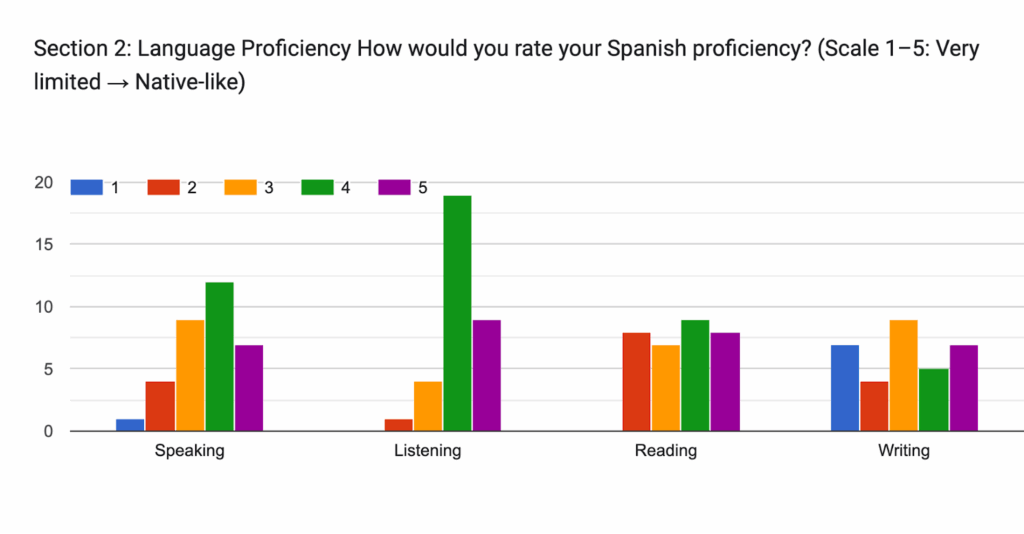
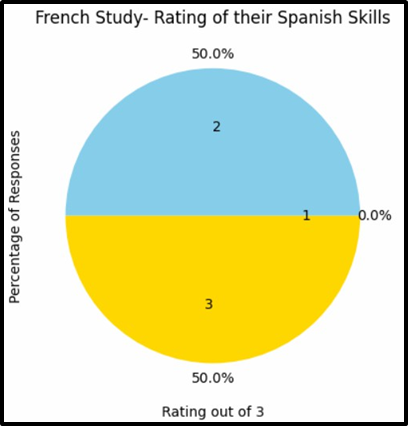
Figure 1: Participants rated their proficiency in Spanish

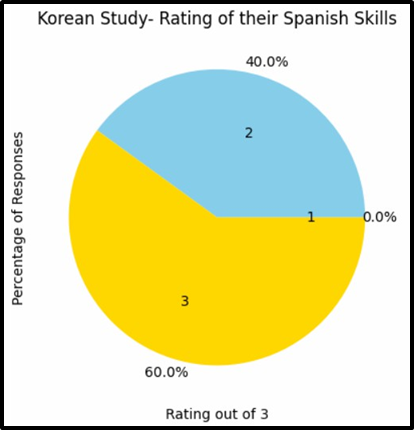
Figure 2: Participants rated their proficiency in Spanish

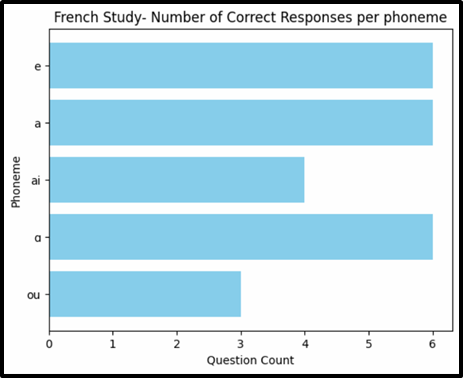
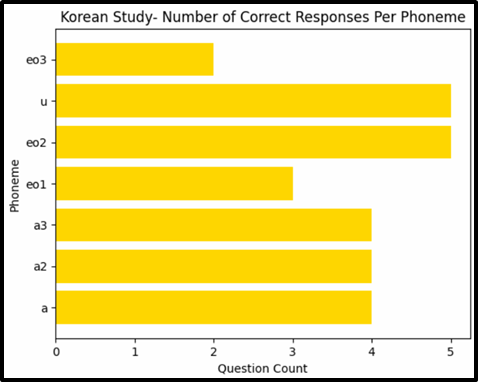
Figure 3: Participants identified the letters read out to them through an audio

Figure 4: Participants identified the letters read out to them through an audio

Appendix

Korean WordsExplanationFrench WordsExplanation
1.  사람 [ˈsʰa̠(ː)ɾa̠m]1.  Connecting the phoneme /a/ to the new character ‘아’Toute [tut]In testing the phoneme /u/ and whether learners can connect it to the orthographic element ‘ou’ Different from Spanish ‘u’
2.  바다 [pa̠da̠] 2. Dans [dɑn̚]In testing the phoneme /ɑ/ and whether learners can connect it to the orthographic element ‘a’ No such phoneme in Spanish
3.  자다 [t͡ɕa̠da̠] 3. Mais [mɛ]In testing the phoneme /ɛ/ and whether learners can connect it to the orthographic element ‘ai’ Different from Spanish representation ‘e’
4.  모자 [mo̞d͡ʑa̠]1.  Connecting the phoneme /o/ to a new character ‘오4.  Va [va]In testing the phoneme /a/ and whether learners can connect it to the orthographic element ‘a’ Control case
5.  도로 [ˈto̞(ː)ɾo̞] 5. Été [ete]In testing the phoneme /e/ and whether learners can connect it to the orthographic element ‘e’ Control case
6.  눈 [nun]1.  Connecting the phoneme /u/ to a new character ‘우’  
7.  구름 [kuɾɯm]   

Discussion and Conclusion

Looking forward, the importance of the information that this study can provide should not be overlooked. Observing potential advantages to knowing one language as an HL and learning a new one can lead to important social implications. Mainly, social stigma about speaking languages can be curbed and lessened. Much like Israel Jesus in the weekly Subtitle podcast episode titled “From linguistic shame to pride” (Spotify Studios 2023), language pride can lead to very big differences in someone’s life. Going from having shame in speaking a language to having the pride to use it to help save someone’s life (like in a medical translation setting for Israel). Give the podcast a listen to hear his story! It provides deep insight into the struggles of speaking a language considered “lesser than” or stereotyped and how knowing that that language is useful in some way can help to overcome stigma and self consciousness. This is the essence of what we hope to investigate.

References

Deng, J. (2022, December 30). The Teaching and Learning of Third Tone Sandhi: L2- and Heritage-Learners of Mandarin Chinese in Canadian University Classes. International Journal of Chinese Language Teaching. https://www.clt-international.org/journal/details/info/7ODEu8MzEx/The- Teaching-and-Learning-of-Third-Tone-Sandhi:-L2–and-Heritage-Learners-of-Mandarin-Chinese-in- Canadian-University-Classes

Hopp, H. (2014,January 18). Cross-linguistic influence in the child’s third language acquisition of grammar: Sentence comprehension and production among Turkish-German and German learners of English. Sage Journals. https://journals.sagepub.com/doi/full/10.1177/1367006917752523

Lorenz, E. (2018, August 13). Cross-Linguistic Influence in Unbalanced Bilingual Heritage Speakers on Subsequent Language Acquisition: Evidence from Pronominal Object Placement in Ditransitive Clauses. Sage Journals .https://journals.sagepub.com/doi/full/10.1177/1367006918791296

Mayr, R. (2016, October 16). Inter-generational transmission in a minority language setting: Stop consonant production by Bangladeshi heritage children and adults. Sage Journals. https://journals.sagepub.com/doi/full/10.1177/1367006916672590

Montrul, S. (2010, July 3). Dominant language transfer in adult second language learners and heritage speakers. JSTOR. https://www.jstor.org/stable/43103834?sid=primo&seq=7

Westergaard, M. (2016, May 19). Crosslinguistic influence in the acquisition of a third language: The Linguistic Proximity Model. Sage Journals. https://journals.sagepub.com/doi/10.1177/1367006916648859

Machová, L. (2019, February). The secrets of learning a new language [Video]. TED. https://www.ted.com/talks/lydia_machova_the_secrets_of_learning_a_new_language?subtitle=en

Spotify Studios. (2023). From linguistic shame to pride [Audio podcast episode]. In Subtitle. Spotify. https://open.spotify.com/episode/778VXYt9XxDUUzgKLMzQL6?si=6df3f3ab0f0c454e

[/expander_maker]

The Measure of Comprehensibility and its Role in Understanding Language

Kara Bryant, Cora He, Sydney Trieu, Monrelle Wilson

This study investigated whether being bilingual is an advantage for understanding various accents and spoken English when their first language is not English. To test this phenomenon, either L1 Mandarin, L2 English, or L1 English participants listened to minimal pair audios where they were asked to answer which word they heard, as either a free response or between two choices. The minimal pairs were chosen because one sound existed in Mandarin and English, while the other sound only existed in English. It was hypothesized that L1 Mandarin, L2 English speakers would perform better than their L1 English counterparts. The results of this study supported the hypothesis and found that L1 Mandarin speakers had greater accuracy in identifying the correct phoneme, specifically, there was a greater disparity between the two groups’ accuracy with sounds that only existed in English. These results indicated that bilinguals use a broader phonological framework, which helps them to interpret non-native accents more accurately than monolinguals. This research will help increase the corpus surrounding this area of research and could potentially inform teaching methodologies in order to build upon communication in multilingual and multicultural environments.

[expander_maker id=”1″ more=”Read more” less=”Read less”]

Introduction and Background

Our project aims to investigate how accented speech affects the ability to distinguish between phonological differences and intelligibility. According to Bsharat-Maalouf et al., the listener’s comprehension can be impacted by “the production of accented or conversational speech” (2023). Comprehension is the ability to understand speech differences and contrast between minimal pairs. In episode 61: When Accents Speak Louder than Words from the podcast Undark, Chee Kiang Ewe, a researcher and professor, explained that “because of [his] accent, on top of [him] speaking fast, it was really hard for student[s] to understand [him]” (Roberts, 2022, 4:17). This is not uncommon. Therefore, we aim to investigate whether accented English has an impact on comprehension for L1 and L2 speakers of English. We will test two different groups, one with their L1 English without any knowledge of Chinese and the second L1 Chinese, L2 English. We aim to investigate whether being bilingual is an advantage for understanding various accents and spoken English when their first language is not English. Our hypothesis is that L1 Chinese speakers will perform better on the minimal pair task since they have been exposed to both English and Chinese. Furthermore, we predict that the L1 English speakers will have a more difficult time during the task because they do not have the same amount of exposure to Chinese as the L1 Chinese speakers.

Our first target group includes L1 Chinese and L2 American English speakers. The language path for these speakers often involves overcoming significant phonetic and phonological differences between Chinese (a tonal language) and English (a stress-timed language). Research indicates that L2 English speakers with L1 Chinese backgrounds typically have trouble recognizing some English phonemes that do not exist in Chinese, such as distinguishing between /v/ and /w/, /l/ and /r/, /θ/ and /s/, and /ð/ and /d/ consonants or certain vowel distinctions (e.g., /iː/ vs. /ɪ/, /ɛ/ vs. /æ/) (Li, 2016). Studies highlight that these speakers might use different cognitive processing methods to adapt their L1 phonological awareness to understand L2 auditory input (Li, Cheng, & Kirby, 2012).

Our second target group includes Monolingual American English speakers. Monolingual English speakers comprehend audio information based on the way they know English sounds and forms, using highly automatic top-down and bottom-up processing techniques (Perfetti et al., 2005). However, exposure to non-native accents, such as a heavy Chinese accent, may create unfamiliarity that can disrupt comprehension due to different speech rhythms and systematic phonological processes that differ from unaccented speech (Vandergrift, 2007). The core linguistic aspect of this analysis is phonological awareness. Monolingual English speakers naturally process these prosodic cues but may face challenges with different phonetic segments that are absent in Chinese but present in English. The study will apply a comparative analysis of listening comprehension using cognitive processing theories. Vandergrift’s (2007) model of second language listening comprehension, which emphasizes the integration of bottom-up (decoding words and sounds) and top-down (using context and prior knowledge) processes, will guide the analysis. Perfetti et al.’s (2005) reading and listening comprehension framework will further support the understanding of how the ability to process phonological differences affects overall comprehension.

Methods

The project’s goal was to see if difficult minimal pair pronunciation in Mandarin-English bilinguals had an effect on monolingual English listeners’ comprehension. To measure this, participants’ selection of the correct target phoneme between allophone pairs was measured. For Mandarin L1 speakers, there are certain sounds in English that are perceived as allophones, which they have a difficult time distinguishing between and producing. Allophones are sounds that are perceived differently between speakers. This was done to see if there was a correlation between ambiguous or unclear pronunciation of minimal pairs and listener comprehension.

To conduct this study, a survey containing six minimal pairs, or twelve words in total, was created. Minimal pairs are two words that only differ in one sound. For example, a minimal pair in English would be “bat” and “pat”. The minimal pairs were selected as English phonemes that are difficult for Mandarin speakers to produce and distinguish between. For the experiment, the minimal pairs “vet” and “wet, “rot” and “lot”, “thin” and “sin”, “they” and “day”, “beat” and “bit”, and “bed” and “bad” were used. The “th” sound in “they” and “thin” and the “v” sound in “vet are consonant sounds not found in Mandarin, and are subsequently difficult for L1 Mandarin speakers to pronounce. Additionally, for the vowels, Mandarin does not make a contrast in vowel length, unlike English. Therefore, the vowels in “beat” and “bad” are more likely to be used interchangeably with their minimal pair counterparts (Li, 2016). For the audio sample, an L1 Mandarin speaker who was still learning English as an L2 pronounced the minimal pairs. For each minimal pair, the speaker produced the target word within a sentence to eliminate the factor of the speaker hyper-fixating on correct pronunciation. However, in the survey, the participants only heard the minimal pair/target word. This was done to eliminate the possibility that the participants would select the correct word based on context within the rest of the sentence.

The Google form survey was then distributed to 33 individuals, 22 of which were Mandarin, English bilinguals, and 11 of which were English monolinguals. The bilingual individuals only had experience with English and Mandarin. While the English monolinguals had no informal or formal exposure to Mandarin. The first section of the survey focused on demographic information. This section asked participants what their L1 and L2 were. In the second section, participants were asked to listen to the audio files. For the answers, participants were randomly assigned to a restricted or unrestricted environment for providing answers. In the unrestricted environment, participants gave their own free responses. In the restricted environments, participants were provided with two options and were asked to select between the two. For the unrestricted environment results, as long as the target phoneme was realized by participants, it would be counted as correct. Based on our project design, we hypothesized that the L1 Mandarin, L2 English speakers would perform better than their L1 English counterparts.

Results and Analysis

The data reveals that L1 Mandarin and L1 English speakers struggled with certain phonemes, most recognizably /v/ as in vet, /ð/ as in “they”, and /ɪ/ as in “bit”. These specific difficulties are thought to be due to the absence of these sounds in Mandarin, which would make them harder for L1 Mandarin speakers to produce. This might also indicate increased difficulty for L1 English listeners when comprehending selected phonemes pronounced with a Mandarin accent. In the case of L1 Mandarin speakers, they displayed greater proficiency in identifying these challenging phonemes when compared to L1 English speakers, which suggests that being bilingual may enhance adaptability when processing non-native phonological contrasts. When we introduced lexical priming through a restricted-response environment, where participants chose between two options, this significantly improved phoneme distinction and accuracy for both L1 Mandarin and English monolingual speakers. This was found to be more evident in phonemes like /v/, /ð/, and /ɪ/. For phonemes such as /w/, /s/, and /d/, restricting lexical choices sometimes led to decreased accuracy as in the case of English monolinguals. This may indicate that while lexical priming can help when distinguishing certain phonemes, it may also add confusion depending on the listener’s familiarity with the sounds. Our data reveals that L1 Mandarin speakers regularly outperform L1 English speakers when it comes to identifying difficult phonemes. This may suggest that being bilingual offers increased benefits when comprehending accented speech. This could be the result of bilinguals’ exposure to a variety of phonological systems, thus improving their ability to notice different variations in speech. On the other hand, however, L1 English speakers performed slightly better than bilinguals when identifying phonemes such as /s/, /d/, and /iː/ found in “beat”, likely due to their knowledge of native English phonological patterns. Both the L1 English monolinguals and the L2 bilingual Mandarin speakers presented a visible loss of distinction between certain vowel sounds. We found that participants would treat the phonemes /ɛ/ and /æ/ as interchangeable. This highlights the allophonic behavior observed in these two sounds.

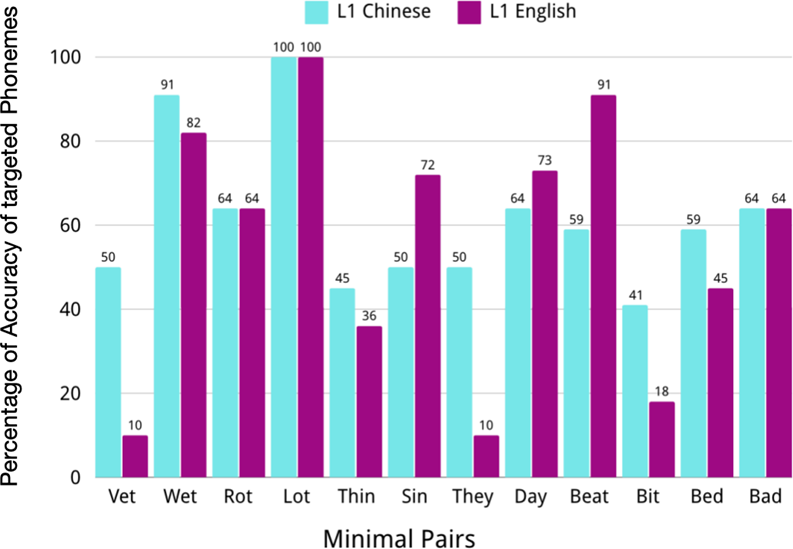
Figure 1. Accuracy of participants identifying targeted phonemes

Based on the graph, L1 Chinese speakers may demonstrate greater proficiency in identifying the phonemes /v/ in “vet” (L1 Chinese 50%, L1 English 10%), /w/ in “wet”, /θ/ in “thin”, /ð/ in “they”, /ɪ/ in “bit”, and /ɛ/ in “bed.” For the phonemes /r/ in “rot”, /l/ in “lot”, and /æ/ in “bad”, both L1 Chinese and L1 English speakers might exhibit similar levels of accuracy. However, L1 English speakers may perform slightly better in identifying the phonemes /s/ in “sin”, /d/ in “day”, and /iː/ in “beat”.

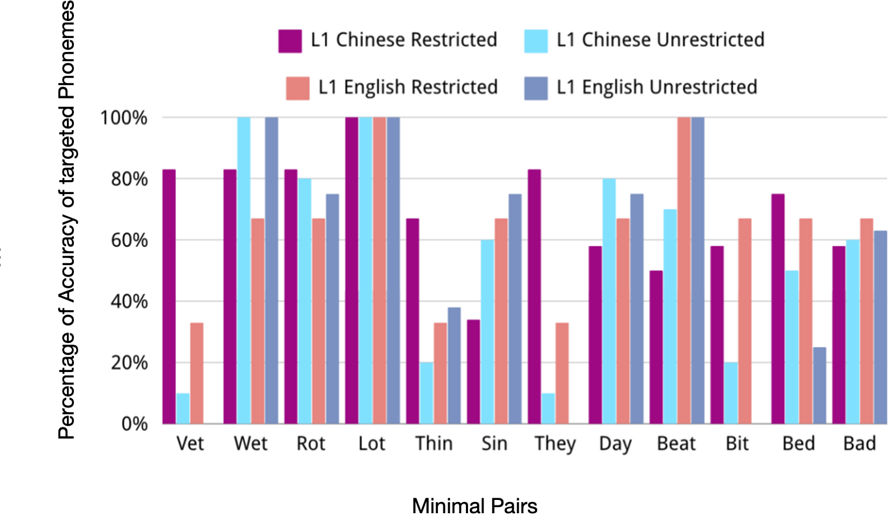
Figure 2. Accuracy of participants identifying phonemes in unrestricted and restricted lexical selections

The graph illustrates that the introduction of lexical priming significantly enhances the accuracy of identifying the phonemes /v/ in “vet”, /ð/ in “they”, /ɪ/ in “bit”, and /ɛ/ in “bed” for both L1 Chinese and L1 English speakers. Conversely, restricting the lexical selections appears to result in decreased accuracy for the phonemes /w/ in “wet”, /s/ in “sin”, and /d/ in “day.”

Discussion and Conclusion

The data demonstrates that L1 Chinese speakers generally showed a greater ability to identify phonemes in several categories than L1 English speakers, supporting our hypothesis that bilingualism offers an advantage in understanding accented speech. For phonemes such as /v/ as in “vet”, /ð/ as in “they”, /ɪ/ as in “bit”, and /ɛ/ as in “bed”, L1 Chinese speakers performed significantly better, particularly when lexical priming was introduced. This suggests that their exposure to both English and Chinese phonological systems enhances their adaptability to variations in speech, including Mandarin-accented English.

In contrast, L1 English speakers showed slightly better performance in identifying phonemes such as /s/ as in “sin”, /d/ as in “day”, and /iː/ as in “beat”. These results may reflect their familiarity with native English phonetic norms and reliance on monolingual processing strategies. Interestingly, lexical priming decreased the accuracy for certain phonemes, such as /w/ as in “wet”, /s/, and /d/, indicating that contextual cues might sometimes interfere with phoneme recognition.

These findings highlight the cognitive flexibility of bilinguals in adapting to unfamiliar phonological patterns, supporting the idea that bilingualism provides a distinct advantage in processing accented speech. The results also suggest that bilingual individuals utilize broader phonological frameworks, allowing them to overcome challenges posed by non-native accents more effectively than monolinguals.

While the hypothesis is largely supported, the findings indicate that the advantage of bilingualism is not universal across all phonemes. The performance gap between L1 Chinese and L1 English speakers was more pronounced for certain sounds, suggesting that the extent of bilingual advantage may depend on the specific phonological features being tested. Future research could explore the impact of accent exposure or phonological awareness training on phoneme recognition in accented speech. Additionally, investigating a wider range of accented speakers and phonemic contrasts could provide more comprehensive insights into the adaptability of bilingual and monolingual listeners. These findings could inform the development of teaching methodologies that leverage bilingualism to improve communication in multilingual and multicultural environments.

Furthermore, TED Talk “The Benefits of a Bilingual Brain” presented by Mia Nacamulli, demonstrates the cognitive benefits of bilingualism. This talk explores the neurological benefits of language bilingualism, such as its cognitive flexibility, mental agility, and even perceptual gifting (Nacamulli, 2015). Though the talk is a comprehensive account of how the bilingual brain functions, it raises questions about how these cognitive benefits could transfer to real-world language abilities, like being able to comprehend different accents and navigate confusing linguistic landscapes. Researchers are still exploring how bilingualism could yield tactical benefits in processing and understanding languages.

In conclusion, we set out to explore whether being bilingual provides an advantage in understanding accented English. By using minimal pairs and testing L1 Mandarin and L1 English speakers, we discovered that bilingual participants demonstrated greater accuracy in identifying challenging phonemes, especially those not present in Mandarin. Our research revealed that bilingualism offers a unique cognitive flexibility in processing linguistic variations. While the advantage was not consistent across all sounds, we found compelling evidence that exposure to multiple language systems enhances speech comprehension. These insights not only contribute to linguistic research but also suggest potential implications for developing more effective communication strategies in multilingual environments.

References

Bsharat-Maalouf, D., Degani, T., & Karawani, H. (2023). The involvement of listening effort in explaining bilingual listening under adverse listening conditions. Trends in Hearing, 27, 1–19. https://doi.org/10.1177/23312165231205107

Li, F. (2016). Contrastive Study between Pronunciation Chinese L1 and English L2 from the Perspective of Interference Based on Observations in Genuine Teaching Contexts. English Language Teaching, 9(10), 90. https://doi.org/10.5539/elt.v9n10p90

Li, M., Cheng, L., & Kirby, J. R. (2012). Phonological awareness and listening comprehension among Chinese English-immersion students. International Education, 41(2), 46–65. Retrieved from https://trace.tennessee.edu/internationaleducation/vol41/iss2/4 Nacamulli, M. (2014). The benefits of a bilingual brain [Video]. TED Talks.

https://www.ted.com/talks/mia_nacamulli_the_benefits_of_a_bilingual_brain?subtitle=en Perfetti, C. A., Landi, N., & Oakhill, J. (2005). The acquisition of reading comprehension skill.

In M. J. Snowling & C. Hulme (Eds.), The science of reading: A handbook (pp. 227–247). Blackwell.

Roberts, Lacy (Host). (2022, May 31). When Accents Speak Louder than Words (No. 61) [Audio podcast episode]. In Undark. https://undark.org/2022/05/31/podcast-61-accent-bias-sciences/

Vandergrift, L. (2007). Recent developments in second and foreign language listening comprehension research. Language Teaching, 40(3), 191-210. https://doi.org/10.1017/S0261444807004338

[/expander_maker]

From LOL to JAJA: Code Switching and Community in Spanglish TikTok Comedy

Monique Tunnell, Lori Garavartanian, Marlene Ortiz, Melina Darlas

In the world of TikTok, where creativity knows no bounds, young Latinx creators are redefining what it means to connect through language. Spanglish skits on TikTok combine Spanish and English, making a perfect mix of hilarity and relatability. But these skits do more than just make us laugh, they create a sense of belonging for bilingual audiences navigating their cultural identities in a digital space.

Our study dives into the art of Spanglish code-mixing in TikTok skits to uncover how these creators build community through humor. By analyzing videos tagged with hashtags like #Spanglish and #Humor, we explore the linguistic features behind these skits—inter-sentential alternations and intra-sentential alternations. Focusing on Mexican and Puerto Rican dialects, we explain how these tools aren’t just random word choices; they’re powerful markers of identity and in-group solidarity. We see how viewers react to these humorous takes on bilingual life by looking at comments, likes, and shares and find that these skits are sparking conversations and fostering connections that stretch across the digital Latinx diaspora.

This research sheds light on why certain Spanglish patterns hit harder, gain more traction, and resonate deeper with audiences. Whether it’s through a hilarious Chicano slang twist or a clever Puerto Rican phrase, Spanglish on TikTok proves that humor isn’t just entertainment—it’s a bridge connecting identities, cultures, and people one laugh at a time.

[expander_maker id=”1″ more=”Read more” less=”Read less”]

Introduction and Background

Code-switching is a linguistic phenomenon that has consistently signaled community and group membership, in diasporas or otherwise. It is a feature of language that has often been used to show solidarity with other members of a marginalized group or to signal generational comradery. Persistent usages of code-switching have given rise not only to unique means of language usage, but to what some would consider entirely new languages. This can be seen not only through academic observations of bilingual speakers, but also through the lived experiences of those speakers. One particular space where both academic and personal reflections are abundant is regarding the usage of “Spanglish,” a unique combination of Spanish and English used by many in the Latinx community.

Previous research on Spanglish has found that in cities like New York City, Spanish-English bilingual youth have consistently reflected their cultural belonging and showcased their understanding of bilingual cultural norms through code-switching (Montes-Alcalá, 2024). These findings have helped build an understanding of how Spanglish is evoked as a cultural and social tool, rather than simply a linguistic phenomenon.

Personal narratives have also reinforced this perception of Spanglish as a cultural device. In speaking about her Spanglish usage during a Ted Talk, high school student Alondra Posada (2018) states that Spanglish helps people communicate, especially when they are struggling to learn both Spanish and English at the same time. She also states that Spanglish is a strong representation of both her American and Latinx communities, indicating that it helps her connect and feel comfortable within both elements of her identity. Spanish professor Dra Meduri Soto (2021) reinforces this concept when speaking about the U.S. Latinx community’s usage of Spanglish. She states that her relatives in Mexico usually admired Spanglish when they heard it spoken. She emphasizes that it was hard, if not impossible, to teach them Spanglish because she had acquired it organically as part of her American Latina identity. Generally, Spanglish speakers’ own conceptions and accounts of their Spanglish use reinforces its usefulness as a communication device that brokers understanding and a sense of cultural belonging.

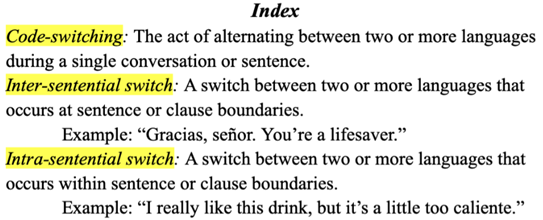
Other studies have added onto this conversation by exemplifying how Spanish-English bilinguals have adapted their usage of Spanglish to other spheres, for example by using online content like memes to resonate with each other and with a broader Latinx audience (Dickinson, 2023). In the digital age, this usage of online resources has become increasingly significant, prompting one to wonder how community building via code-switching and Spanglish has been altered by social media apps and forums, as well as how digital connectedness has molded and shaped code-switching as a whole. These questions and qualms come at a time where content posted on Tik Tok specifically has taken the world by storm, allowing young people a new platform on which to gain popularity and connect with others. Existing research (Daulay et al, 2024) has already shown that code switching in Tik Tok and Instagram comments can shift subjects and showcase bilingualism between app users. Therefore, there is some basis to assume that platforms such as Tik Tok are already being used to create community and solidarity. However, not much is known, at present, about how specific linguistic strategies, such as intra-sentential switches or inter-sentential switches, function in TikTok’s humor-driven environment to build and sustain community connections. These key terms, as well as code switching as we use it in our research, have been defined in the following index:

This study seeks to fill the gap in knowledge regarding social media code-switching tools by analyzing Spanglish TikTok skits, focusing on Mexican and Puerto Rican dialects, to uncover how creators use language to entertain, unite, and resonate with bilingual audiences. By examining linguistic patterns and audience engagement, this research sheds light on how humor and language intersect to strengthen cultural identity in a rapidly evolving digital landscape. Ultimately, the research poses the question of exactly how Spanglish in Tik Tok skits is building humor and community in the Mexican and Puerto Rican online communities and how engagement metrics are reflective of this.

Before formally addressing this question, we had four personal hypotheses. For one, we believed inter-sentential switching would occur more often than intra-sentential switching. Next, we believed many videos would have both intra and inter-sentential switching. Third, we anticipated seeing many comments with personal pronouns and “humorous” emojis. Finally, we hypothesized that comments, likes, and shares would differ more than views when inter versus intra-sentential switching was used. These hypotheses were supported at varying degrees throughout our data collection process, as we will address.

Methods

To understand how bilingual people use Spanish and English in humorous TikTok videos, we picked eight content creators aged 18 and above who use skits and hashtags such as #Spanglish and #comedy. We watched eight videos where these creators mix languages, a practice we’ve already defined as code-switching. We counted how often they switched between languages and looked at two types of code-switches, both of which have also been defined above: intra-sentential switching and inter-sentential switching.

We studied how people responded to these particular videos by checking how many likes, comments, and shares each got. For example, we looked at what kinds of jokes people found funny, how many people saved the videos, and if they shared their own, often extremely similar, experiences in the comments. This helped us see which type of code-switching typically works best to make people laugh and relate to creators. We also noticed how creators used their language background, like “Spanish de rancho” and Puerto Rican Spanish, to connect with their audiences. By studying these videos, we aimed to learn how language blending can be a tool for creativity and connection.

Data Collected: Figure 1 showcases video analytics for a subset of the eight TikTok videos we analyzed for our results analysis. Figure 2 highlights types of code switching and examples of code switches utilized within the same videos. The five videos selected were the first five observed. Additionally, they included the videos with the highest numbers of code-switching, serving as valuable data to showcase.

Video NumberDialectsViewsLikesCommentsTop Comment Themes
1“Spanish de Rancho” & American English511.9k68.5K12831) Shared experience 2) Comedic effect, including mentions of laughter
2Puerto Rican Spanish & American English263.5k67.3k2051) Shared experience  
3Puerto Rican Spanish & American English92.4k76261011) Comedic effect, including usage of “cry” and “laugh” emojis
4Mexican Spanish & American English7.8M1M45991) Shared experience, particularly in familial settings
5Mexican Spanish & American English1.1M156.5k8571) Shared experience 2) Comedic effect, including usage of “cry” and “laugh” emojis
Video NumberDialectsNumber & Types of Code-switchesExample of code-switch
1“Spanish de Rancho” & American EnglishTotal: 28 22 intra-sentential 6 inter-sentential  “I told my patient ‘encuerate’”
2Puerto Rican Spanish & American EnglishTotal: 5 3 intra-sentential 2 inter-sentential“Estamos buscando una pillow”
3Puerto Rican Spanish & American EnglishTotal: 8 6 intra-sentential 2 inter-sentential“I cannot live in a caliente place”
4Mexican Spanish & American EnglishTotal: 3 2 intra-sentential 1 inter-sentential“How to say ‘to tag’ in spanish”
5Mexican Spanish & American EnglishTotal: 15 15 intra-sentential“I speak spanglish of course cuando se me olvida..”

Tik Tok Analytics:

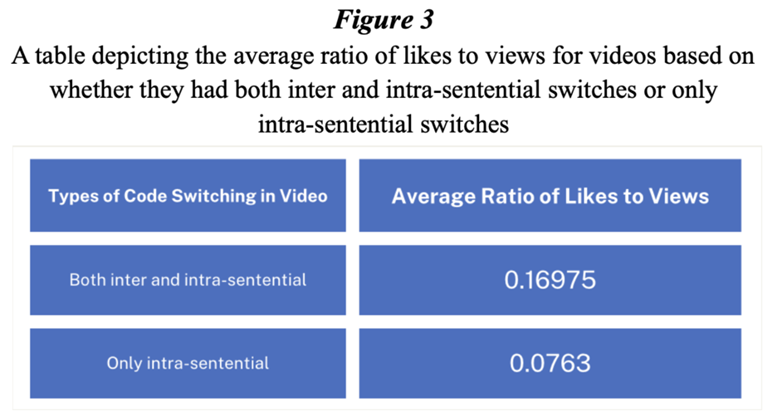
Tik Tok analytics were collected for various reasons. We wanted to see, more generally, how many views, likes, and comments Spanish-English creators were getting for their “Spanglish” centered skits and videos. More specifically, we wanted to be able to compare analytics between videos that used intra-sentential and inter-sentential switching to see if any one of them helped creators gain more popularity than the other. Within the eight total TikTok videos we observed, some words and ways of talking did seem to make videos more popular, garnering more likes and comments. It seemed as though solely using intra-sentential switching was less successful in pulling in likes, relative to the amount of views videos garnered. Figure 3, seen below, exemplifies this. As a note, the average ratios were calculated by taking the ratio of likes to views for each of the eight videos assessed and subsequently taking the mean amongst videos

As can be observed within the figure, videos with both types of switches were over two times as successful at gaining likes when compared to their counterparts with only intra-sentential switches. The videos with both inter and intra-sentential switching often used both types of switches to mirror instances between Spanish speaking parents and bilingual children, occasions which likely evoke relatability. On the other hand, the TikTok videos where people mix Spanish and English in the same sentence didn’t get as many likes or saves, perhaps because they were harder for the audience to follow.

A more qualitative analysis of the video comments also revealed that the Tik Tok audience often uses words in the comments like “I”, “myself”, and “me”, because they are relating to experiences showcased in the videos. They additionally use emojis like “😂” and “😭” to show laughter or emotion. Sometimes, the audience even mixes Spanish and English themselves.

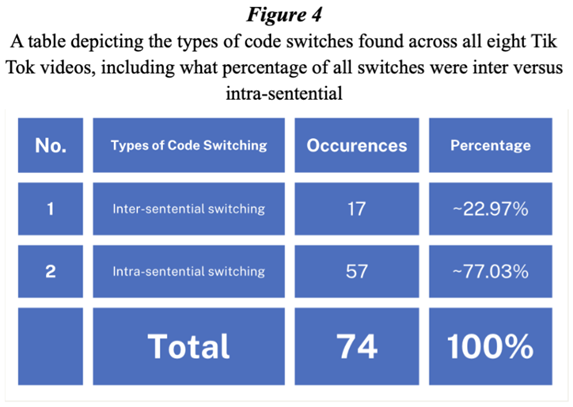
Other Results: After assessing our eight selected Tik Tok videos, we found the following, displayed in Figure 4:

We borrowed methodology previously used in an analysis of code-switching in Instagram videos (Wiraputi et al, 2021). This method looks at not only the number of code switches, but also what percentage of code switches are of a certain type. The methodology we copied had “tag-switching” as well, an extra-sentential type of switching where a speaker inserts phrases from one language into another, but we did not notice the occurrence of tag-switching within our videos and omitted it as a result. The results that we did find showed a few interesting phenomena:

  1. When Spanglish Tik Tok creators code switch in videos, they typically do so more than once. In fact, the average across eight videos was 9.25 code switches per video.
  2. Intra-sentential switching dominates code switching occurrences, taking up over 77% of the code switching we witnessed.
  3. Co-occurrence was in fact common. Only two of eight videos or 25% of content observed did not have both inter and intra-sentential switching.

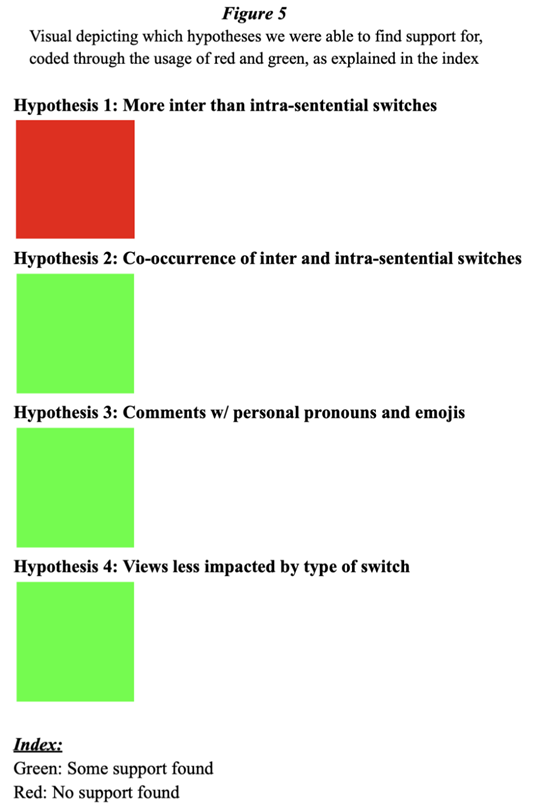
Having analyzed all our quantitative and qualitative data on video analytics, comments, and occurrence of code-switches, our results yielded the following consequences as far as our hypotheses are concerned:

Discussion and Conclusion

This study of Spanglish humor on TikTok revealed that young adult creators frequently use intra-sentential code-switching, particularly in Mexican and Puerto Rican dialects, to enhance the comedic and relatable quality of their content. Contrary to our initial hypothesis, intra-sentential switching was more prevalent than inter-sentential switching, indicating that the integration of Spanish and English within sentences may occur more commonly with bilingual audiences. Another key insight we came across was the ways in which community and identity building proceeds amongst the Latinx community in the United States. Prior to our studies, we had understood that Spanish varieties, such as that spoken in Los Angeles, are often characterized by convergence, borrowings, and switches (Sánchez-Muñoz, 2017). We had been curious about the role that convergence played on social media and on Tik Tok specifically and whether the blends we witness in real life translate to online spheres. Our analysis pointed us towards the observation that Spanglish serves as a vital tool for expressing cultural identity and fostering community solidarity online, making humor a bridge between bicultural experiences. We also noticed while studying engagement patterns that videos that incorporate both intra and inter-sentential switching see higher engagement, pointing to the idea that utilizing many different linguistic patterns within the same video boosts performance.

Some considerations we have for future research into this field is the generalizability of our findings. Since our findings are specific to TikTok and its user demographics, they may not apply universally across all digital platforms or linguistic communities. Comparative studies across different digital platforms and research completed over a longer period of time could explain how digital code-switching presents itself in other contexts. In essence, the study underscores the importance of linguistic flexibility in digital content, which not only entertains but also strengthens community ties among bilingual Latinx viewers.

References

Dickinson, K. V. (2023). What Does It Meme? English–Spanish Codeswitching and Enregisterment in Virtual Social Space. Languages, 8. https://www.researchgate.net/publication/374657133_What_Does_It_Meme_English-Spanish_Codeswitching_and_Enregisterment_in_Virtual_Social_Space

Hamidah Daulay, S., Husein Nst, A., Randia Ningsih, F., & Berutu, H. (2024). Code Switching in the Social Media Era: A Linguistic Analysis of Instagram and TikTok Users. Humanitatis Journal of Language and Literature, 10. https://www.researchgate.net/publication/383171193_Code_Switching_in_the_Social_Media_Era_A_Linguistic_Analysis_of_Instagram_and_TikTok_Users

Montes-Alcalá, C. (2024, April 15). Bilingual texting in the age of emoji: Spanish–English code-switching in SMS. MDPI. https://www.mdpi.com/2226-471X/9/4/144

Sanchez-Munoz, A. (2017). Tempted by the Words of Another: Linguistic Choices of Chicanas/os and Other Latinas/os in Los Angeles. https://www.researchgate.net/publication/345124311_Tempted_by_the_Words_of_Another_Linguistic_Choices_of_Chicanasos_and_Other_Latinasos_in_Los_Angeles

Soto, Dra. M. (2021, September 15). We Speak Spanglish ¿Y qué? World Outspoken. https://www.worldoutspoken.com/articles-blog/spanglish-its-who-we-are

Sanchez-Munoz, A. (2017). Tempted by the Words of Another:: Linguistic Choices of Chicanas/os and Other Latinas/os in Los Angeles. https://www.researchgate.net/publication/345124311_Tempted_by_the_Words_of_Another_Linguistic_Choices_of_Chicanasos_and_Other_Latinasos_in_Los_Angeles

TEDx Talks. (2018). Spanglish is a Language Too! | Alondra Posada | TEDxYouth@UrsulineAcademy. In YouTube. https://www.youtube.com/watch?v=6N8Zk_EY6G8

Wiraputri, D., & Sultara, K. (2021). Code switching found in cinta laura’s video on her instagram tv. Journal of Language and Applied Linguistics.

[/expander_maker]

Musical Multilingualism: Constraints and Creativity in Bilingual Songwriting

Cia Evangelino, Saffiya Haque, Allie Kuo, Emma Montilla, Renee Rubanowitz

In music, switching between languages isn’t just linguistic— it’s poetic. Spanglish is in the studio, and it’s topping the charts. This study explores how bilingual artistry harnesses code-switching as a creative tool as it reshapes the landscape of contemporary music.

Code-switching typically signals affiliation or belonging in a community or conveys language-specific ideas, but it evolves into a deliberate stylistic choice in music and art. However, does creative liberty coincide with linguistic constraints? Our research investigates whether song lyrics, as a form of poetry, prioritize meaning over grammatical perseverance.

This article examines how bilingual artists implement code-switching into their lyrics, analyzing their use of borrowing and blending through the lens of Code Copying Framework and Poplack’s constraints.

We focused on the bilingual lyrics of Rosalía and Kali Uchis, two Spanish-language musicians with distinct bilingual backgrounds. Our analysis revealed that Rosalía, as an L2 English speaker, predominantly uses shorter borrowings and code copies to preserve English-specific semantic nuances, often refraining from full code-switching. In contrast, Kali Uchis, a simultaneous English-Spanish bilingual, employs/favors longer, fluid borrowings at clausal boundaries, seamlessly switching between two languages line by line. We hypothesize that these differences in their approach to bilingual lyricism come from their dominant language preferences and differing linguistic proficiencies.

[expander_maker id=”1″ more=”Read more” less=”Read less”]

Introduction and Background

In today’s world, bilingual music is a new and exciting way for artists to express their identity and connect with different groups of people. Look at Rosalía or Kali Uchis, for example: they both switch seamlessly from Spanish to English, often in the middle of their lyrics. What’s really happening when these artists switch languages so effortlessly? Is it just a trendy way to mix things up, or is more happening beneath the surface?

This blog delves into how bilingual artists navigate the linguistic restrictions surrounding code-switching in music. We will test if certain constraints governing spoken Spanish and English also apply in a musical context. Specifically, we will look at whether Johanson’s (2011) code copying framework and Poplack’s constraints (1980) still hold up in a lyrical format.

To understand what happens when bilingual artists code-switch in their lyrics, it helps first to unpack what code-switching is. Code-switching occurs when a speaker alternates between two languages within or between sentences. For example, Kali Uchis has a song lyric that goes, “That’s the only thing que me da alegría,” which means “That’s the only thing that brings me joy.” Here, she casually switches from English to Spanish mid-song.

According to Poplack (1980), there are some crucial grammatical constraints that bilinguals tend to follow when switching between languages, including the free morpheme constraint, which suggests that bilinguals are more likely to switch languages when one of the languages is a free morpheme. This helps to ensure that the switch does not disrupt the sentence’s grammatical structure. However, Timm (1975) argues that not all code-switching follows strict rules. Some switches and combinations of words may sound ungrammatical to bilingual speakers. Timm states that bilinguals make code-switching decisions based on the context and what feels natural in the conversation. In other words, code-switching is as much about communication goals and cultural expression as it is about grammar. However, there is another layer to all this, which is that of music. Lyrics are more than just spoken language; they are a form of artistic expression, so they have more leeway to break the “rules” of language and grammar regarding creativity. In music, artists like Rosalía and Kali Uchis often code-switch between English and Spanish to communicate and express their identity, emotions, and cultural background. In this context, code-switching may not always conform to the strict linguistic rules established by Poplack and others. These two artists’ flexibility in language reflects their different bilingual experiences and how they shape how they mesh languages in their songs.

Methods

To understand and answer our research question, we analyzed the lyrics of two prominent Spanish-English artists, Rosalía and Kali Uchis. We chose these two artists for their unique linguistic and cultural backgrounds and active use of code- and language-switching in their music. In terms of similarities, both artists are of a similar age and release Latin/Spanish music of similar genres. We thought this genre of music in particular, would be insightful to focus on, as the informality and structure of their song lyrics are a contrast from previous code-switching examples we have looked at through this course. Both women have also each built an alternative, trend-setting brand image and self-identities that hinge largely on themes of confidence, sex positivity, femininity, and empowerment.

Rosalia, photo via Europa Press News                            Kali Uchis, photo via Felipe Q Noguiera

Beyond these similarities that allow for standardization of our data collection, we chose Rosalía and Kali Uchis because they also represent two distinct types of bilingualism and cultural experiences, providing a rich contrast for analysis. Rosalía, born in Catalonia, Spain, is a sequential bilingual who grew up speaking Spanish and Catalan as her native languages before learning English later in life — we categorized her as an L2 English speaker. While she began her music career with a strong focus on Flamenco and traditional Spanish music, Rosalía recently transitioned into Latin and alternative reggaetón-inspired pop. Kali Uchis, in contrast, is a simultaneous bilingual born in the United States to Colombian parents. Growing up, she was exposed to both Spanish and English equally, having spent significant time in both Virginia, USA and Colombia. This dual-culture childhood is reflected in the blending of the two languages in her songs. Her discography began predominantly in English but has recently shifted to more Latin music. By examining these two artists, we hoped to explore how their bilingual backgrounds shape their distinct approaches to code-switching and linguistic creativity and how their different upbringings may have manifested themselves into their music.

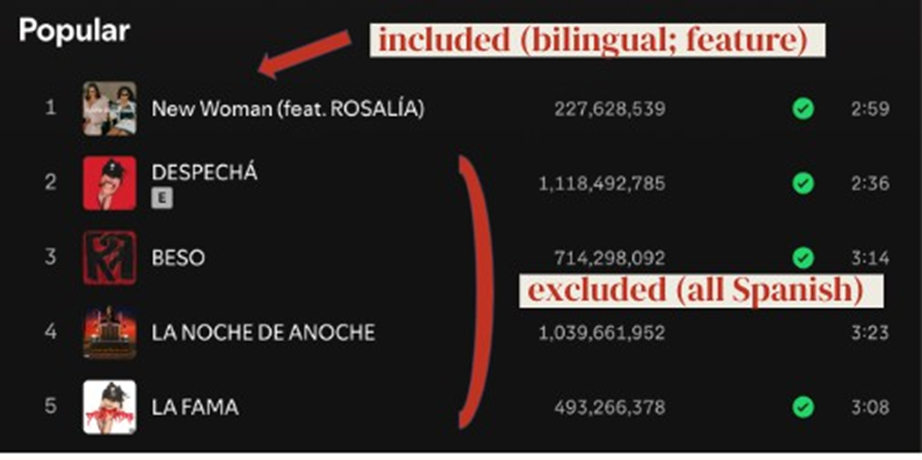
We collected data by identifying ten songs from each of these two artists. We used the metric of the number of Spotify streams per song to choose their most popular music. In our data filtering, we only ensured to include tracks where the artists held writing credits, as this guaranteed that the observed code-switching and linguistic patterns came directly from their creative process rather than external songwriters that we would not know their linguistics backgrounds. Because of this in mind, we chose to include collaborations and feature songs, such as New Woman (LISA feat. Rosalía) and SI NO ES CONTIGO – REMIX (Cris Mj feat. Kali Uchis & JHAYCO), as these song features tended to be 1) highly streamed, and 2) written by the artists themselves. Then, to narrow our focus to bilingualism in music, we excluded songs entirely in Spanish or English, as these songs were not tailored to our interests and would not illustrate instances of bilingual code-switching. Lyrics were sourced from Genius, a widely used database for accurate song transcription, translations from the Genius community comments, or from members of our group who are beginning L2 Spanish speakers.

Example of songs taken from Rosalia’s Spotify artist profile, including streams

After selecting 23 songs for our dataset, we parsed each song, compiling lines of lyrics in which a language switch occurred. To identify these switches, we applied the established definitions of intra- and inter-sentential switching and the structure of the code-copying framework. These lyrics were documented and later analyzed on a robust spreadsheet.

Song Selection Data Samples
Kali Uchis
Song: SAD GIRLZ LUV MONEY Remix – Feature   2021 Release 461.5m Approx. Spotify StreamsLyric: Yeah, you’ve been starin’ at me (¿Por qué me miras?) That’s the only thing que me da alegría Yo quiero sentirte inside of me
Song: Moonlight   2023 Release 829.8m Approx. Spotify StreamsLyric: I just wanna get high with my lover, Veo una muñeca cuando miro en el espejo
Song: telepatía   2020 ReleaseLyric: If you want it, you could take a private plane, a kilómetros estamos conectando


1.2b Approx. Spotify StreamsY me prendes aunque no me estés tocando
Song: Igual Que Un Angel   2024 Release 332m Approx. Spotify StreamsLyric: You should’ve seen the way she looked, igual que un angel Heaven’s her residence y ella no se va a caer
Rosalia
Song: Despecha   2022 Release 1.1b Approx. Spotify StreamsLyric: Hoy salgo con mi baby de la disco corona, corona, yeah
Song: New Woman – Feature   2024 Release 223m Approx. Spotify StreamsLyric: Puta, soy la Rosalía, solo sé servir
Song: TKN   2020 Release 465m Approx. Spotify StreamsLyric: Zoom en la cara, Gaspar Noe
Song: Besos Moja2   2022 Release 442.6m Approx. Spotify StreamsLyric: To’ me queda bien con una white tee To’ me quieren casar, soy una wifey

Results and Analysis

In total, we collected data from 23 different songs released between 2019 and 2024, with 10 being songs by or featuring Rosalía and 13 by or featuring Kali Uchis. From these 23 songs, we extracted 19 (38.7% of data) data samples from Rosalía and 30 (61%) data samples from Kali Uchis – resulting in 49 data samples. Generally, most code-switching occurs as an intersentential switch, which means it happens at clausal boundaries between sentences instead of within a sentence.

The results we discovered while gathering our data prove some interesting differences between how sequential and simultaneous bilinguals code-switch. For example, Rosalía, a sequential bilingual who primarily makes her music in Spanish within the Flamenco musical style, is more likely to code switch in her music when in the Latin context or if she appears as a feature on songs with Latin artists. Meanwhile, Kali Uchis, a simultaneous bilingual, is more likely to code-switch in her music in general. Unfortunately, due to time constraints, we could not investigate how heavy of a correlation each artist’s background influences their code-switching/code-coping tendencies. Still, based on the data, we can tell each artist has a preference on how bilingualism is written into their music. We expected a vast majority of code copying to occur within our data. Still, only 40.8% of data resulted from code-copying versus code-switching, with an overwhelming majority of code-copying data samples from Rosalía (80% of code-copying samples). Comparatively, Kali Uchis heavily favors code-switching, with 80% of her data samples containing some form of code-switching. She tends to favor longer phrases of code-switching instead of single-word copies. The data table below shows examples of the different types of code-copying occurring with a song from each artist.

Song Lyric Data Analysis Samples
Igual Que Un Angel – Kali Uchis Kali Uchis, Peso Pluma – Igual Que Un Ángel 0:20-0:30
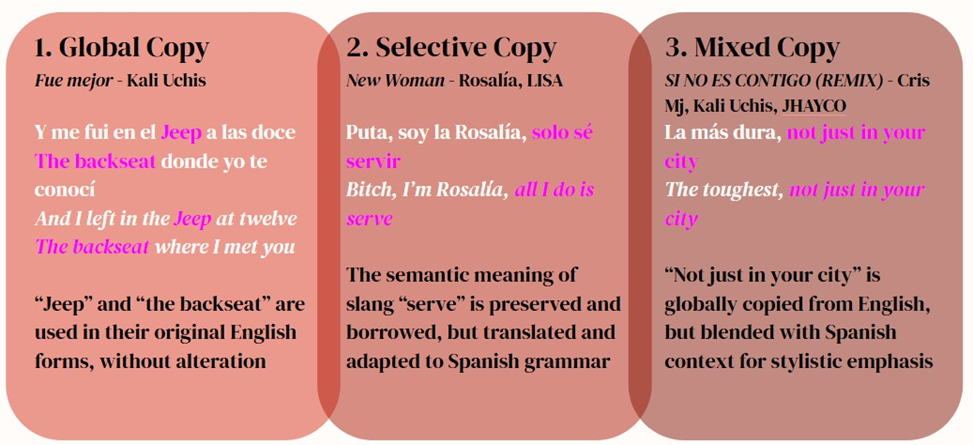
Lyric: You should’ve seen the way she looked, igual que un angel Heaven’s her residence y ella no se va a caerTranslation: You should’ve seen the way she looked like an angel Heaven’s her residence and she’s not gonna fallAnalysis: Selective copying: igual que un angel mirrors the English structure to retain meaning while adapting to Spanish syntax
fue mejor – Kali Uchis Kali Uchis – fue mejor feat. SZA 1:00-1:10
Lyric: Y me fui en el Jeep a las doce The backseat donde yo te conocíTranslation: And I left in the Jeep at twelve The backseat where I met youAnalysis: Global copy example: “Jeep” and “the backseat” are English words with all properties preserved and integrated into the lyrics
Besos Moja2 – Rosalia
Wisin & Yandel, ROSALÍA – Besos Moja2 2:22-2:33
Lyric: To’ me queda bien con una white tee To’ me quieren casar, soy una wifeyTranslation: It looks good on me with a white tee They all want to marry me, I’m a wifeyAnalysis: Global copying: the English phrases white tee and wifey are borrowed intact and function within the Spanish sentences without alteration
New Woman – Lisa feat. Rosalia LISA – NEW WOMAN feat. Rosalía 1:48 – 1:52
Lyric: Puta, soy la Rosalía, solo sé servirTranslation: Bitch, I’m Rosalía, all I do is serveAnalysis: Selective copy example: semantic meaning of “serve” is preserved, directly translated from English to Spanish

The types of copying that we came across in our data are:

  • Global copies (taking words in their unaltered form and using them within a sentence).
  • Selective copies (the structure of a word or phrase is kept while adapting to another language’s syntax).
  • Mixed copies (switching between one language to another within a sentence or phrase). From our data, a majority of the data uses mixed copying, accounting for 40% of the examples. Global copying accounted for 36% of our data, while selective copying accounted for 16%.

Discussion and Conclusion

From our corpus of lyrics, we concluded that code-switching in music tends to deviate from standard grammatical constraints and, therefore, does not strictly follow Poplack’s Constraints. Instead, code-switching in music more closely aligns with and reflects the artists’ bilingual background. Rosalía, a sequential bilingual, is more deliberate in her switches when using English in songs to identify specific concepts like “wifey” or “to serve.” On the other hand, Kali Uchis, a simultaneous bilingual, is more spontaneous in her use of code-switching; her fluidity between Spanish and English is representative of the dual integration of both languages in her identity. Still, we observed both global and selective copying in the artists’ lyrics and could conclude that global and selective copying are common and focal aspects of bilingual lyricism.

Nonetheless, we acknowledge the limitations of our investigation. Due to the temporal constraints of the quarter system, our project timeline was very restricted, and we could not expand the scope of our exploration and means of data collection. Thus, our focus on two artists and reliance on public information could have been a more comprehensive elicitation of analyses.

Revisiting our initial research questions: If certain constraints apply in spoken Spanish when code-switching to English, do they transfer over the same way into language in a musical context? What types of copying, following the code copying framework, will be found in song lyrics?

The integration of multiple languages in music has far-reaching implications for linguistic research, cultural understanding, and artistic expression. Understanding code-switching in creative language use provides insights into how language patterns manifest in nontraditional language contexts, namely under the influence of the artistic nature of lyricism and songwriting. Code-switching in music also enhances artistic expression by encouraging dynamic wordplay and rhymes across languages. It provides insights into the differences between different levels of bilingualism and types of multilingualism. Moreover, bilingual lyrics serve important cultural functions, as they represent the juxtaposition of cultures, promoting linguistic and cultural diversity, expressions, and communication. Within the music industry, multilingual music can unite different listeners’ cultures and expand the reach of artist audiences.

Although our research yields valuable insights, it needs to be more broadly generalizable to all Spanish-English or other language bilingual musicians. Future expansions of our study will include a larger sample of bilingual artists with a more extensive range of lyrical repertories from more diverse language backgrounds. It would be ideal to have direct access to artists’ accounts of their language to better understand their use and relationship with their respective languages as well as their creative processes.

An important consideration to account for in our investigation is the existence of code-switching patterns for Spanglish that do not necessarily apply to varieties of Iberian Spanish. The present investigation focused primarily on code-switching conventions within a musical genre rather than a dialect, assuming that an artist from Spain would adapt to Latin American dialectal features in this context, but dialectal differences may still occur. We are interested in understanding competing factors of bilingual acquisition and regional norms to further develop our research from this investigation, specifically, the influences of sequential and simultaneous bilingualism and regional norms for language in Latin American versus peninsular Spanish varieties. Additional research directions would look across different genres and investigate the reception of code-switched lyrics among monolingual and bilingual listeners, considering the linguistic influence of lyricism more broadly in language communities.

References

Cris MJ, Kali Uchis & JHAYCO – Si No Es Contigo (remix). Genius. (n.d.-a). https://genius.com/Cris-mj-kali-uchis-and-jhayco-si-no-es-contigo-remix-lyrics

Duran, R. P. (1984). Latino Language and Communicative Behavior. The Modern Language Journal. Exposito, Suzy. “Pop Loner Kali Uchis on Growing up Punk in Colombia and the Struggle to Stay Bilingual.” Rolling Stone, Rolling Stone, 13 Sept. 2019, www.rollingstone.com/music/music-latin/kali-uchis-isolation-colombia-interview-2018-7 00772/.

Gonzalez-Cruz, M. I. (2017). Exploring the dynamics of English/Spanish codeswitching in a written corpus. Alicante Journal of English Studies, 30 (2017), 336-361.

Johanson, L. (2011). Contact-induced change in a code-copying framework.

Lisa (ft. Rosalía) – New Woman. Genius. (n.d.). https://genius.com/Lisa-new-woman-lyrics Lipski, J. M. (2008). Varieties of Spanish in the United States. Georgetown University Press.

Loaiza, K. M. “Kali Uchis”. Lyrics to “ORQUÍDEAS” [Album]. Geffen Records, 2024. Genius, genius.com/albums/Kali-uchis/Orquideas.

Monteagudo, M. (2020). Spanglish code-switching in Latin pop music: functions of English and audience reception. https://www.duo.uio.no/handle/10852/79796

Poplack, S. (1980). Sometimes, I’ll start a sentence in Spanish Y TERMINO EN ESPAÑOL: toward a typology of code-switching1. Linguistics, 18(7-8), 581-618. https://doi.org/10.1515/ling.1980.18.7-8.581

Sayre, A. A. (2022). “Rosalia is unafraid to pull from every corner of the world.” NPR, NPR, 24 April 2022, https://www.npr.org/2022/04/24/1094491641/rosalia-is-unafraid-to-pull-from-every-corn er-of-the-world

Timm, L. A. (1975). Spanish-English Code-Switching: El Porqué y How-Not-To. Romance Philology, 28(4), 473–482. http://www.jstor.org/stable/44941606

Villa Tobella, R. ‘ROSALÍA’. Lyrics to “Motomami” [Album]. Columbia Records and Sony Music, 2022. Genius, genius.com/albums/Rosalia/Motomami.

Rosalía. (2022). Motomami [Album]. Columbia Records. Uchis, K. (2024). Orquideas [Album]. Geffen Records. Uchis, K, and SZA. “Fue Mejor.” Genius, Genius Media Group, n.d., https://genius.com/Kali-uchis-and-sza-fue-mejor-lyrics

[/expander_maker]
Code-Switching and Bilingualism in K-pop: Phonological Adaptation and Audience Engagement through Korean-English Lyrics

Hee Suh, Misuzu Nakazawa, Jafarri Nocentelli, Rutvi Shah, Joaquin Cruz

Introduction and Background

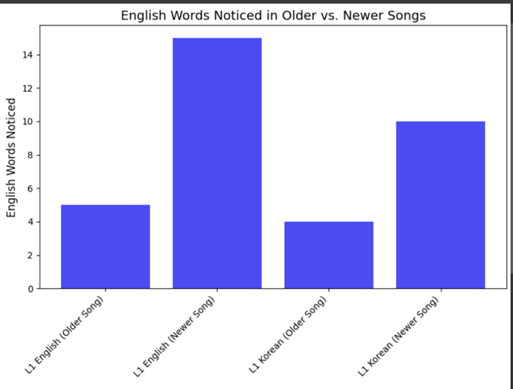
K-pop stands as a global phenomenon, not only for its captivating performances but also for its seamless integration of English and Korean. This study investigates how code-switching, which refers to alternating between two or more languages within a single sentence, enhances audience engagement in K-pop. By comparing older (pre-2015) and newer (post-2015) K-pop tracks, we analyze how the use of English has evolved alongside K-pop’s increasing global popularity. We focus on two listener demographics, L1 Korean monolingual listeners and global audiences, including L1 English monolinguals. The language aspects we are working with include intra-sentential code-switching and phonological adaptation. Our research aims to paint a comprehensive picture of code-switching’s role in shaping K-pop’s appeal. L1 Korean participants will be more likely to notice the adaptation, while L1 English speakers will likely notice increased English usage over time.

[expander_maker id=”1″ more=”Read more” less=”Read less”]

In this article, we investigate how code-switching in K-pop functions, focusing on its role in enhancing audience engagement. Intra-sentential is a type of code-switching where elements from one language (English) are embedded within a sentence structured primarily in another language (Korean). For example, a K-pop song might use an English verb or noun phrase, such as “make it rain” or “crazy 사랑” (crazy love), within a Korean sentence. This use of English within Korean sentences can enhance the song’s appeal to both Korean listeners and a global audience. Our target population includes individuals between the ages of 18 and 21, both L1 Korean monolingual speakers as well as global listeners, L1 English monolinguals, with minimal K-pop exposure. Our research will analyze phonological adaptation focusing on rhythmic and prosodic adaptations of English within Korean phrasing. This type of adaptation involves adjusting English words to fit the rhythmic and prosodic structure of Korean music. K-pop blends English into Korean lyrics by adapting to differences in rhythm where Korean’s syllable timing versus English’s stressed pattern makes the music appeal to both global and Korean listeners. The theoretical framework we will use is the Myers-Scotton’s Matrix Language Frame (MLF) to analyze how English integrates into the Korean structure and appeals to monolingual Korean listeners. The selected artists are global K-pop stars popular in LA, an ideal setting to study phonological adaptability due to the growing local fanbase of the genre (Burt, 2024). Our research question is: How has English usage in K-pop evolved across different popularity levels, and how does this linguistic adaptation resonate with different subsets of audiences (L1 Korean monolinguals versus global appeal)? Our hypothesis suggests that the use of English in K-pop has grown between 2015 and 2024. As its popularity grew internationally, code-switching has increased between Korean and English. In songs aimed at global audiences or informal settings, we expect more frequent code-switching and phonological adaptations. In contrast, songs focusing on cultural authenticity or Korean listeners may use English more selectively. Due to strategic linguistic adaptations, the patterns of syllable and stress have evolved in response to the increasing globalization of K-pop. Before this study, the specific patterns of phonological adaptation of English within K-pop and their differential impact on L1 Korean versus L1 English listeners were not fully understood.

Methods

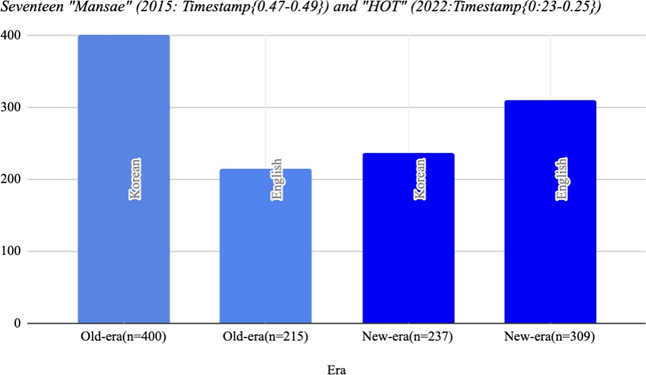
Before looking straight into the phonological particles of this study, we want to understand the difference between the English language of older and newer K-pop songs. To do so, two participating groups completed a demographic Google survey sent through emails: Three L1 English monolinguals with minimal K-pop exposure and three L1 Korean monolinguals. These two groups were explicitly chosen because L1 Korean monolinguals understand and speak the domestic language of the songs(Korean), and L1 English monolinguals with minimal exposure have limited background knowledge of the Korean language, representing the global language and audience.First participants were asked general demographics, then presented with some terms and concepts to help participants understand the study better, such as rhythm and stress and what older era, songs released before 2015 and newer eras were songs released after 2015. After understanding the terminology, they were told to listen to the first two verses of two songs: one older and one newer release track from one of the K-pop artists, BTS and Seventeen, who are popular in LA. A little background was that the debut of PSY’s song “Gangnam Style” paved the way for international concerts to rise, with the global market growing by 44.8% in 2020.(Glasby, 2021; Oos, 2023). The years 2015 and 2022 were chosen with this fact in mind, where in 2015, many of the current popular K-pop artists debuted. One of them is Seventeen, and the other is BTS. The songs from Seventeen were: “Mansae” (2015) and “HOT” (2022), and the songs from BTS were “DOPE” (2015) and “Yet to Come” (2022). At the end of the survey, we asked two essential questions: 1) Do the English lyrics in this song match the Korean rhythm and pronunciation, and 2)Can you identify specific words or phrases where the English lyrics were adapted? By identifying the two questions, we analyzed the differences in which they noticed and what type of changes each group noticed more.

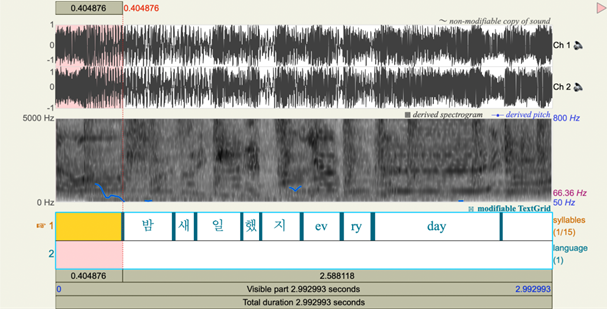
In order to conduct our qualitative data, we investigated stress patterns in the English lyrics of K-pop songs using Praat software. Stress was measured by analyzing spectrograms and waveform data, identifying syllables with higher intensity peaks, and recording their durations in milliseconds. These measurements helped us determine how stress in English lyrics was adapted to fit the balanced rhythmic structure of Korean songs. In this analysis, we also examined the alignment of stressed syllables with surrounding Korean lyrics to understand the degree of rhythmic congruence.

The methodology was designed to capture the differences in stress and rhythm between Old and New Era songs, using precise timestamps to compare English syllables embedded in bilingual lyrics. For example, in “Dope” (BTS), an Old Era track, the word “party” maintained its natural English stress pattern, with the second syllable emphasized and lasting approximately 200 milliseconds longer than the average Korean syllable. By contrast, in “Yet to Come” (BTS), a New Era song, the phrase “dreams come true” exhibited more balanced syllable durations, where each syllable was approximately 140 milliseconds, blending seamlessly into the Korean rhythm. These observations were validated through auditory analysis to ensure that the measurements aligned with listeners’ perception of rhythmic congruence.

Exploring stress and rhythmic patterns in this way is critical for understanding bilingual media consumption. In bilingual contexts like K-pop, successful integration of English lyrics into Korean songs depends on aligning distinct rhythmic and phonological systems. By adapting stress patterns to conform to Korean syllable timing, producers create a more cohesive listening experience for both local and global audiences. This analysis thus sheds light on how bilingual media can balance cultural authenticity with accessibility, enhancing its appeal across linguistic boundaries. To collect quantitative data, once again using Praat, we looked into one line from each song that contained intra-sentential code-switching to analyze the syllable duration for each language. Separating each syllable into its own section, we first measured the syllables in milliseconds and added each syllable to its belonging words. This is due to the need to account for the rhythmic adaptation of English stress patterns within Korean phrases, keeping both languages’ syllable duration more precise to compare. Then, we calculated the average syllable duration for each language and compared the length in older and newer songs to see if, in newer songs, the English words were phonologically adapted to align with their Korean counterparts.

Results and Analysis

Figure 1: BTS “DOPE” syllable duration Results and Analysis

Our study revealed increased integration of English lyrics and phonological adaptations over time. This was first highlighted in our findings from our Google survey, the data of which was converted into a graph generated by Python.

The graph below represents two pieces of data collected from the Google form. The left graph shows the results from “English Words Noticed in Older vs. Newer Songs,” and the right graph shows the “Adaptation Noticed in Older vs. Newer Songs.”

Figure 2: Google Survey Python Generated Charts

The first graph revealed that L1 English monolinguals with minimal K-pop exposure noticed significantly more English words in newer songs than in older songs. In older songs, they noticed a mean of 5 words and a mean of 15 in newer songs. Similarly, L1 Korean monolinguals also saw an increase in English lyrics, though they noticed slightly less than L1 English monolinguals. In older songs, they noticed a mean of 4 and 10 words in the newer songs. In contrast, the second graph revealed that L1 korean monolinguals were more likely to notice phonological adaptations in newer songs, reflecting shifts toward a more balanced syllable usage that aligns English with Korean rhythm and timing. As presented in the graphs, L1 English speakers were slightly less likely to realize these phonological adaptations. These findings underline how newer K-pop tracks cater to both global and domestic audiences through strategic adaptations where English lyrics are adjusted to preserve their clarity while fitting into the korean rhythm.

Our study highlights a significant evolution in the integration of English lyrics and their phonological adaptations in K-pop over time. Using Praat software, we observed how syllable durations evolved, showcasing the interplay between English stress patterns and Korean rhythmic norms across Old and New Era songs.

In “Dope” (BTS), an Old Era track, English stress often disrupted Korean rhythm. For instance, the syllable “Gent-” in “Ladies and Gentlemen” lasted 200 ms, longer than the Korean syllable “Ayo” at 180 ms. Similarly, “Cause we got fire” featured “fire” at 330 ms, highlighting mismatched timing. Conversely, the New Era track “Yet to Come” (BTS) exhibited greater alignment, with “past” and “best” balanced at 690 ms, closely matching adjacent Korean syllables. A similar trend was seen in Seventeen’s “Mansae”, where mismatches occurred with “name” at 310 ms and “teen” at 280 ms. However, in “Hot”, the New Era song, phrases like “Spicy feelin’” featured evenly timed syllables (~210 ms), harmonizing with the Korean rhythm. Aggregated averages reinforced these findings: in “Dope”, Korean syllables averaged 535 ms, while English averaged 1,183 ms, creating a 500 ms gap. This narrowed significantly in “Yet to
Come” to a 100 ms gap (639 ms vs. 726 ms). Similar alignment improvements were observed in Seventeen’s tracks. These results highlight the significance of adapting English stress patterns to fit Korean rhythms in bilingual media consumption. Such adaptations enhance accessibility for both global and local audiences, enabling K-pop to transcend language barriers. By harmonizing distinct phonological systems, producers create music that resonates culturally and emotionally with diverse audiences. This strategic linguistic integration underscores K-pop’s role as a global phenomenon, balancing cultural authenticity with international appeal.

Figure 3: Syllable Duration of Old Vs. New Era Songs Generated via Python

Figure 4: Syllable Duration for Phrases of Interest (Old vs. New Era) Generated via Python

Figure 5: Python Code For Figures 3 & 4

With the praat software, we calculated the syllable duration, looked into the average syllable duration, and input it into a bar graph using Google Sheets. In the first Figure, we analyzed the syllable duration in the signs between Old and new-era songs from BTS

Figure 6: BTS “DOPE” and “Yet to Come” Syllable Duration Comparison

In the 2015 song “DOPE”, we saw a significant gap between the average syllable duration in the korean lyrics, n=535ms, and the English lyrics, n=1,183ms, resulting in a 500ms gap. But when we looked at BTS’s new-era song “Yet to Come” in 2022, the gap between the average syllable duration for Korean, n=639ms, and English, n=726ms, the duration was closer with about a 100ms gab, aligning each syllable duration closer. The same case was shown in the artist Seventeens old-era song “Mansae” 2015 and the new-era song “HOT” 2022.

Figure 7: Seventeen “Mansae” and “HOT” Syllable Duration Comparison

In “Mansae,” the average Korean Syllable duration was n=400, and the English syllable duration was n=215, resulting in a 200 ms difference. Comparing this to the newer song “HOT,” the Average Korean Syllable duration was n=237ms, and the English syllable duration was n=309ms, a 100 ms difference. Though Seventeen’s results showed less significant change than those of BTS, both cases displayed a decrease in the duration of Korean and English lyrics in their old-era and new-era songs. BTS’s songs reflected a decline in English syllable durations compared to their newer songs; in contrast, Seventeen songs demonstrate an increase in English syllable durations. Both show how the English syllables were adjusted to align with the korean syllable durations

Discussion and Conclusion

K-pop strategically uses code-switching and phonological adaptations to engage diverse audiences while maintaining its cultural identity. Despite increased English usage due to globalization, K-pop adapts English lyrics to fit Korean phonological patterns, resonating with domestic and global fans. This reflects a careful balance between cultural preservation and international reach. L1 Korean and L1 English listeners showed increased recognition of English lyrics in newer K-pop songs. However, for different reasons, L1 English listeners noted the greater prominence of English, while L1 Korean listeners recognized the phonological adaptations to Korean rhythms. This suggests intentional design to appeal to both groups, reflecting either listener adaptation or producer strategies to bridge linguistic divides.

While globalization has amplified English use, K-pop prioritizes cultural identity. Newer songs like BTS’s “Yet to Come” and Seventeen’s “HOT” demonstrate smoother integration of English lyrics into Korean rhythms compared to older tracks like “Dope” and “Mansae,” ensuring a cohesive listening experience for Korean audiences while making English more accessible to international fans. K-pop thus acts as a bridge between local traditions and global influences, transcending language barriers without losing its roots. Higher English lyric recognition in newer songs underscores deliberate linguistic strategies by K-pop producers, highlighting the genre’s ability to adapt to globalization while preserving its cultural identity. Further research is needed to determine the consistency of these trends across different K-pop groups and genres, and expanding participant diversity could provide deeper insights into how linguistic adaptations influence listener engagement and cater to domestic and international audiences.

This study illustrates how K-pop reflects broader globalization in the media. By embracing English through linguistic adaptation, K-pop reinforces cultural identity while connecting with global audiences. Balancing cultural authenticity with international appeal, K-pop offers a model for navigating bilingualism and globalization. It contributes to discussions about language’s role in cultural preservation and global expansion and demonstrates how media can connect audiences worldwide while maintaining unique cultural heritage.

References

Burt, K. (2024). How LA became the epicenter of K-Pop fandom in the U.S. Thrillist. https://www.thrillist.com/entertainment/los-angeles/k-pop-in-la

Can Code-Switched texts activate a knowledge switch in LLMs? A case study on English-Korean Code-Switching. (n.d.). https://arxiv.org/html/2410.18436v1

Canagarajah, S. (2007). Lingua Franca English, multilingual communities, and language acquisition. Modern Language Journal, 91(s1), 923–939. https://doi.org/10.1111/j.1540-4781.2007.00678.x

Glasby, T. (2021, May 19). How K-Pop took over America: A timeline. Nylon. https://www.nylon.com/entertainment/timeline-of-k-pop-rise-in-america

Le, S., Campbell L. J., Orozco J., & SS, N. (2024). Code-Switching Habits of BTS. https://languagedlife.humspace.ucla.edu/bilingualism/code-switching-habits-of-bts/

Lee, J. (2020). Cross-linguistic prosody in K-pop music: Integrating English and Korean lyrics. Journal of Music and Linguistics, 12(3), 40–55. Luminate Data (2023). Mapping out K-pop’s global dominance. Retrieved from Luminate Data’s blog on global streaming trends.

Nazri, S. N. A., & Kassim, A. (2023). Issues and Functions of Code-switching in Studies on Popular Culture: A Systematic Literature review. International Journal of Language Education and Applied Linguistics, 13(2), 7–18. https://doi.org/10.15282/ijleal.v13i2.9585

Oos, O. (2023b, December 5). When did K-Pop start becoming a global phenomenon – ononestudios.com. ononestudios.com. =The%20genre%20began%20to%20gain,to%20television%20dramas%20and%20cuisine

Rothman, J. (2009). Understanding the nature and outcomes of early bilingualism: Romance languages as heritage languages. International Journal of Bilingualism, 13(2), 155–163. https://doi.org/10.1177/1367006909339814

Schneider, I. (2023). English’s expanding linguistic foothold in K-pop lyrics: A mixed methods approach. English Today, 40(2), 105-112. https://doi.org/10.1017/S0266078423000275

Shim, D. (2005). Hybridity and the rise of Korean popular culture in Asia. Media Culture & Society, 28(1), 25–44. https://www.researchgate.net/publication/254737351_Hybridity_and_the_Rise_of_Korea n_Popular_Culture_in_Asia

Zhang, J. (2023). Language, cultural hybridity, and resistance in K-Pop: A linguistic analysis of Korean pop music lyrics and performances. International Journal of Emerging Multidisciplinary Business Information Systems, 3(3), 1-15. https://doi.org/10.59889/ijembis.v3i3.186

[/expander_maker]
The Language of Parting: An Analysis of Communication Strategies During Relationship Termination

Kayla Rezazadh, Elina Ghaem Maghami, Chloe Zhao, and Lina Muller

Parting ways is rarely ever easy, but how we decide to terminate a romantic relationship can speak volumes about who we are, how we process our emotions, and the ways in which gender norms have influenced us. In times of heartbreak, some people might pick up the phone and dial their number, or even write out a lengthy text message. Others may keep it brief, or even vanish without a word. In this project, we wished to investigate how men and women initiate and navigate romantic endings both in person and in the digital world. We sent out a survey that asked participants ages 18-25 about their past experiences breaking up and being broken up with, as well as hypothetical scenarios on how they would handle the termination of short-term and long-term relationships. By analyzing the method of communication, followed by body language, tone, and level of directness, we were able to uncover differences in the extent of emotional expression between young men and women. 

[expander_maker id=”1″ more=”Read more” less=”Read less”]

Introduction and background

Breakups are rarely easy conversations, and how we communicate during them can profoundly shape the emotional outcome for both partners. Yet while much attention has been given to how relationships form, less is known about how they end and the role that communication plays in that process. In particular, gendered patterns in communication may shape how people express emotions, manage conflict, and seek closure when ending a relationship. Are women more likely to communicate openly and directly during a breakup, perhaps choosing a thoughtful conversation or in-person dialogue? And are men more likely to lean on indirect methods like ghosting or a quick text to avoid confrontations? Based on prior research and our observations, we hypothesized that these gendered tendencies would still appear among young adults today, even in casual dating and digital contexts. Prior research suggests that gendered socialization continues to shape how people manage difficult conversations. Women tend to report higher emotional expressivity and are more likely to value open communication (Ubando, 2026), while men often internalize norms that discourage emotional vulnerability (Cinardo, 2011; Drury, 1999). However, much of this work has focused on conflict within relationships rather than the moment of actually ending it. Our project seeks to fill this gap by exploring how gender influences the communication strategies on how adults choose when ending romantic relationships, especially in today’s digital landscape. Through this research, we hope to shape modern parting practices and how greater awareness of these patterns could foster healthier, more empathetic endings to relationships.

Methods

For our method, we created a Google form survey with 35 individuals between the ages of 18 and 25, and we presented our participants with four different hypothetical break-up scenarios, where each one varied by the length of the relationship. We proposed two hypothetical questions where participants would answer based on their preferred communication style if they were in a short-term relationship. Furthermore, we asked two hypothetical scenarios based on long-term relationships and what their communication style would be. The modes of communication we provided for the answers were digital versus in-person. According to “Gender and Conflict in Long-Term Romantic Relationship,” Hamlin conveys that “…another interesting component to improve future research includes examining how length of relationship impacts relational conflict and the type of conflict style exhibited in couples” (Hamlin, 2018). His assertion aligned with our method and findings that our goal in providing hypothetical scenarios was to elicit the modes of communication our participants would prefer when they were faced with relationship termination, whether it was short-term or long-term. Through this, we analyzed the observable elements of communication, whether that directness versus indirectness (ghosting, short messages, long messages, or phone calls) and their tone, whether they were more likely to be sympathetic with their partner or more apathetic. Through analyzing Ogolsky’s research he conducted on the the progression of college student romantic relationship, he found that “young adult relationships in the 21st century are deemed as overwhelmingly casual, with the termination of the relationship typically appearing at the 4th stage of dating labeled where conflict or obstacles either end or strengthen the relationship” (Ogolsky et al., 2025). This was useful for my group and me to examine more closely self-behavior and whether it was more common for a certain gender to be more indirect and less open in their communication style. Before presenting our hypothetical scenarios, we also asked our participants to reflect on their most recent relationship, specifically how it ended, who ended the relationship, and the form of communication used for the termination. We were able to compare whether their communication styles in their most recent relationship were similar or different from their responses in the hypothetical scenarios. Through using this method, we were able to analyze the observable elements of communication styles and analyze the differences and patterns across genders when it came to preferred communication styles in the modern dating world.

Results and Analysis

After conducting our survey, we found that our results were consistent with our predictions. It is a matter of fact – women are typically more emotional and expressive when it comes to relationship termination than men are. In our survey, one of the first questions participants answered was: How would you describe your communication style during the breakup? (In regards to their most recent breakup). Interestingly, 66% of women said they were direct and emotionally expressive, and only 11% reported being direct in their communication but emotionally restrained. Contrastingly, only 29% of men reported being direct and emotionally expressive, reporting much higher levels of emotional restraint at 41%. This fascinating difference truly illustrates a contrast in not only real-life communication but in personal approaches to termination. Further into our survey, we presented our participants with several example scenarios, two regarding in-person breakups and two regarding digital breakups. We asked them how they would react in that situation. Our short-term, in-person breakup scenario interestingly presented data contradicting our overarching argument. Here, we found that 29% (5 men) of male respondents would console their partner while 47% (8 men) would present neutral and indifferent body language. On the other hand, only 5 women also reported that they would console their partner, while an overwhelming 11 women said they would be neutral and indifferent. This goes against what we believed – illustrating that the men are more emotionally comforting when it comes to short term relationship termination. It is notable, however, that more men (4) reported showing discomfort in the scenario while only 2 women reported the same. When it comes to long term relationship termination in person, results differ as we had expected. Females showed the highest amount of consoling body language (16 women), while only 12 men reported the same. Men reported being neutral and different more frequently at 3 individuals, yet only 1 woman said the same. Such results are consistent with the findings of an article titled Language and Power in Politics. The article presents a graph which illustrates gender communicative structures – where women are typically empathetic, use emotional references, and use softened statements (Thomas et al., 2019). Men, on the other hand, tend to display solutions, use accusatory speech, and be angry (Thomas et al., 2019). Our results are consistent with these findings – and we can see that, overall, women tend to be more emotionally expressive on the basis of empathy and care than men.

Discussion and conclusions

Exposing levels of emotional expressivity and styles of communication when parting ways can reveal a lot about the way society has influenced us, especially in the way we succumb to traditional gender norms and stereotypes. A higher percentage of women self-reported that they would have open body language and console their partner regardless of relationship length, correlating to the higher levels of males self-reporting emotional restraint in past breakups. Displaying these patterns in extent of closure and vulnerability, both in real-life experiences from prior relationships and predicting behavior in future ones, can reveal how connected gender is to the degree of emotion presented in time of conflict.  In connection to a larger phenomenon, particularly gender norms, men are stereotypically perceived as more indirect, cold, and distant in conflict. In contrast, women are often classified as more elaborate, empathetic, and detailed. After analyzing the data, it appears to mirror underlying notions of masculinity among men as they demonstrated much higher levels of emotional restraint. This not only influences the nature of the relationship itself, but also the ways in which women and men begin to reinforce distinct emotional languages as a result of gendered expectations. After investigating the impact of social conditioning in conforming to gender stereotypes when parting ways, it is important to encourage healthier methods of termination that speak more closely to the identity and desire of the individual rather than to obey the norms that police them.

Cross-References: Watch this to uncover hear about 5 differences in communication between men and women: https://www.youtube.com/watch?v=udAah5Lgx6o

This clip can provide guidance on closure after a breakup:

References

Cinardo, J. (2011). Male and Female differences in communicating conflict (Honors thesis, Coastal Carolina University). Digital Commons at Coastal Carolina University.

Hamlin, E. (2018). Gender and Conflict in Long-Term Romantic Relationships. Stars, 23-35. https://stars.library.ucf.edu/cgi/viewcontent.cgi?article=7045&context=etd

Ogolsky, B. G., Dobson, K., Rivas‐Koehl, M., Kawas, G., & Hardesty, J. L. (2025). The progression of college student romantic relationship development: Stability and change over 10 years. Personal Relationships: Journal of the International Association for Relationship Research. https://doi.org/10.1111/pere.12590

Thomas, S., Greene, E., Brewer, C., Dela Cruz, J. (2019). Language and Power in Politics: A Gender Stereotype Game. Languaged Life. https://languagedlife.ucla.edu/language-and-identity/language-and-power-in-politics-a-gender-stereotype-game/

Ubando, M. (2016). Gender differences in intimacy, emotional expressivity, and relationship satisfaction. Pepperdine Journal of Communication Research, 4(1), Article 13. https://digitalcommons.pepperdine.edu/pjcr/vol4/iss1/13

[/expander_maker]
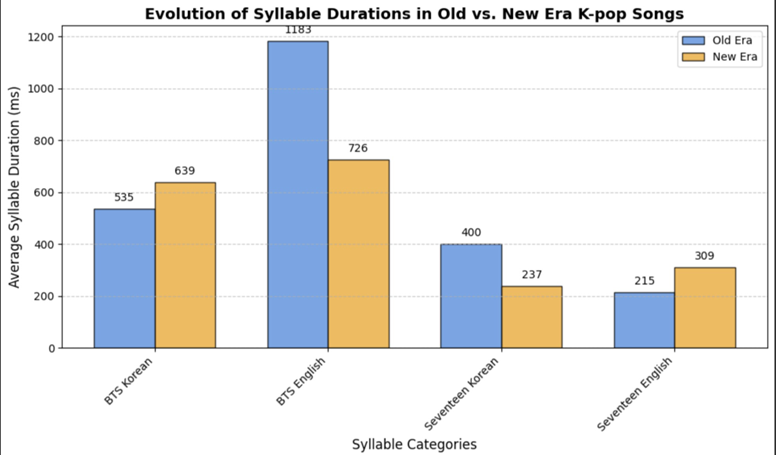
The Power of Student Reviews: Evaluating Emotionality, Gender, and Perception

Justine Fisch, Sarah Barsamian, Joselyne Hernandez, Yarina Andrade, Lesly Cabrera

What can a single review say about a professor or, more importantly, what can it imply? Today, anonymous student reviews play an increasingly crucial role in shaping a professor’s reputation, especially on platforms like Bruinwalk. Beneath the surface of these brief comments, however, lies a deeper question: are these evaluations truly about performance, or do they highlight gendered assumptions students unconsciously carry? Our study examined how the emotional tone and perceived sentiment of Bruinwalk reviews shape students’ assumptions about a professor’s gender. We analyzed ten anonymized reviews (five for female STEM professors, five for male) and surveyed 33 participants, asking them to rate emotional language, identify review sentiment, and guess the professor’s gender. Contrary to our hypothesis, highly emotional reviews were not overwhelmingly associated with female professors. However, positive reviews were disproportionately perceived to be written about female professors, revealing a strong bias linking positivity with femininity. While participants guessed professor gender with only 60% accuracy, their assumptions consistently reflected typical social expectations. These findings suggest that even when gendered language isn’t present, the perception of gender still shapes how we interpret emotion, authority, and professional competence in academic settings.

[expander_maker id=”1″ more=”Read more” less=”Read less”]

Introduction and Background

At UCLA, Bruinwalk has become a popular platform where students share their experiences, often influencing others’ decisions on which professors or classes to take. However, while these reviews may seem like casual reflections, they can also reveal underlying biases, including gender stereotypes that shape how students describe their professors. Past research has shown that female professors are often judged more on their likeability, warmth, and personality, while male professors are often judged on their authority and expertise (Mitchell & Martin, 2018). Although much of this research focuses on formal evaluations, less is known about whether these same patterns show up in online, informal reviews where students write anonymously. Our study addresses that gap by examining whether students use more emotionally charged language when reviewing female STEM professors compared to male professors on Bruinwalk. By analyzing hyper-emotional language, tone, and word choice, we aim to better understand how gendered assumptions may still shape students’ perceptions, even when reviewers are not directly asked to evaluate gender.  Our research will attempt to identify if language bias, rooted in gender stereotypes, affects how UCLA students evaluate instructors. Furthermore, we are curious to explore whether students tend to leave more emotionally charged reviews for female professors due to social norms that expect women to be more nurturing or emotionally expressive. This idea is present in a study by Basow et al. (2005), where researchers concluded that gender bias may manifest in academic contexts and that stereotypes, particularly for female professors often shape student perceptions.

Methods

Our study examined how the gender of professors influences the types of language used in student reviews, with a specific focus on hyper-emotional language. According to Hinojosa et al. (2019), hyper-emotional language includes emotionally charged adjectives, overstatements, and highly subjective expressions and we use this same definition in our survey.The analysis aimed to determine whether students are more likely to use emotionally charged positive or negative language when reviewing female STEM professors compared to male professors on Bruinwalk, a rating platform used by UCLA students. We randomly selected a total of five female and five male professors from various STEM fields. For each professor, one student review was chosen using a random number generator, resulting in ten reviews for analysis in our survey. 

Before including the reviews in our survey, we removed all gender identifying terms, such as pronouns and names to ensure anonymity and reduce any form of bias. This allowed participants to make judgements based only on the language used in each review. We then created a survey using the reviews and collected responses from 33 participants.Each participant answered three questions for each review, (1) rating the emotional level using a labeled 5-point Likert-type scale, following the methodology of Basow et al. (2006),ranging from “no emotion” to “most emotion,” (2) they identified the perceived gender of the professor based on the review, and (3) they labeled the review as either positive or negative. 

The observable communication and language aspects central to our study were word choice, tone, and emotional intensity. Reviews varied in their placement on the emotional scale, with some displaying stronger emotionality than others. Specific word choices often indicated whether a review was positive or negative, but the analysis also aimed to determine whether such language influenced perceptions of the professor’s gender. Beyond word choice, the tone of the review could shape participants’ impressions of the professor, potentially revealing underlying gender associations. This approach allowed us to compare how students interpreted emotional tone in reviews and whether certain linguistic patterns led them to associate a review with a specific gender.

The observable communication and language aspects central to our study were word choice, tone, and emotional intensity. Reviews varied in their placement on the emotional scale, with some displaying stronger emotionality than others. Specific word choices often indicated whether a review was positive or negative, but the analysis also aimed to determine whether such language influenced perceptions of the professor’s gender. Beyond word choice, the tone of the review could shape participants’ impressions of the professor, potentially revealing underlying gender associations. This approach allowed us to compare how students interpreted emotional tone in reviews and whether certain linguistic patterns led them to associate a review with a specific gender.

Results and Analysis

Emotionality vs. Gender:

Our analysis of emotionality in Bruinwalk reviews yielded results that slightly differed from our initial hypothesis. We had expected that reviewers would associate heightened emotional language more frequently with female professors. However, among reviews rated with the highest emotionality scores (4s and 5s), the distribution of gender assumptions were nearly even, as female professors were guessed 51.5% of the time and male professors at 50.9%. Within this sample, Figure one suggests that students do not appear to strongly associate either gender with more emotional reviews, at least in terms of direct emotional language. 

Figure one

Figure two

Positive and Negative vs. Gender:

In contrast, we observed more distinct gender patterns when analyzing the tone of the reviews, specifically whether they were perceived as positive or negative. As reflected in Figure two, Reviews that were interpreted as positive were associated with female professors 73% of the time, while only 26% were attributed to a male professor. Conversely, when reviews were perceived as negative, 43% guessed the professor to be female, and 56% guessed the professor to be male. Within our sample, these findings indicate a notable bias in how students associate gender with sentiment. As reflected by Figures three and four, a review written about a male professor was interpreted as positive by 93.9% of participants, yet 81.8% of them still assumed the professor was a woman. This pattern may suggest a strong link between positivity and femininity in students’ perceptions of reviews, as this trend remains fairly consistent throughout our data.

Figure three

Figure four

Guessing of Professor’s Gender: Lastly, we found that students were able to correctly guess the professor’s gender approximately 60% of the time. While slightly better than chance, this accuracy rate was lower than we had expected. Therefore, this indicates that while students may make gendered assumptions based on emotionality or tone, they are not consistent at accurately identifying a professor’s gender solely from written reviews.

Discussion and Conclusion

Our research teaches us how respondents’ perceptions of student reviews of professors and professor gender reflect gendered social and gender norms. Although this is a sample, we cannot assume that our findings are generalizable; our results suggest that the perceived sentiment by respondents in reviews affects gender perception, reinforcing gendered cultural and social norms. Women are expected to be warm, kind, and nurturing; therefore, respondents associated positive reviews with women. On the other hand, men are linked to criticism, assertiveness, and harshness, so respondents associated negative reviews with male professors. Our research suggests that gendered expectations influenced the perceived gender of the professor. Moreover, our research reveals that participants are unable to accurately identify the gender of the professor. This shows us that gender norms are not enough to assume gender. Lastly, our research suggests that emotionality within reviews is not gendered. Emotional language was used to describe female or male professors alike, and is not an indicator of professor gender.

Bruinwalk reviews are often taken into consideration by students to determine whether or not they should take a class. Student reviews are often littered with biases and have the ability to affect a professor’s reputation, even if the review is not representative of their actual teaching methods. Our research suggests that ratings may be born out of professors failing to meet students’ ideas of what their gender roles should be. In the future, we could research the intent behind students leaving reviews on Bruinwalk. Moreover, from research by JoAnn Miller and Marilyn Chamberlain (2000), we see that students have different perceptions of female and male professors and thereby different expectations. Expanding on Miller and Chamberlain’s research and using some of the data we have found in our research, we could expand on how perceptions of professors, based on their gender, shape student reviews.

Relevant Information:

In, “The Effects of Gendered Occupational Roles on Men’s and Women’s Workplace Authority,” by Jim Logan, dives deeper into the analysis of how gendered expectations can affect men and women’s authority in the workplace. After observing the emotionality of the language in BruinWalk reviews and how they seem to stem from the professor’s gender expectations, it is interesting to see how the same expectations can affect their authority.

In “Emotional Expression and Gender: How Men and Women Differ in Showing Emotions,” the article describes how the expressions of emotion are taught at a young age and how they come to shape our own expectations of who should express certain types of emotions. The article explores how we attribute certain emotions to specific genders, creating and enforcing gender roles.

References

Basow, S. A., & Montgomery, S. (2005). Student ratings and professor self-ratings of college teaching: Effects of gender and Divisional Affiliation. Journal of Personnel Evaluation in Education, 18(2), 91–106. https://doi.org/10.1007/s11092-006-9001-8 

Basow, S. A., Phelan, J. E., & Capotosto, L. (2006). Gender Patterns in College Students’ Choices of Their Best and Worst Professors. Psychology of Women Quarterly, 30(1), 25-35. https://doi.org/10.1111/j.1471-6402.2006.00259.x (Original work published 2006)

Hinojosa, J. A., E. M. Moreno, and P. Ferré. “Affective Neurolinguistics: Towards a Framework for Reconciling Language and Emotion.” Language, Cognition and Neuroscience 35, no. 7 (June 5, 2019): 813–39. https://doi.org/10.1080/23273798.2019.1620957.

Miller, J., & Chamberlin, M. (2000). Women Are Teachers, Men Are Professors: A Study of Student Perceptions. Teaching Sociology, 28(4), 283–298. https://doi.org/10.2307/1318580

Mitchell, K. M. W., & Martin, J. (2018). Gender Bias in Student Evaluations. PS: Political Science & Politics, 51(3), 648–652. Cambridge University Press, https://doi.org/10.1017/S104909651800001X.

[/expander_maker]
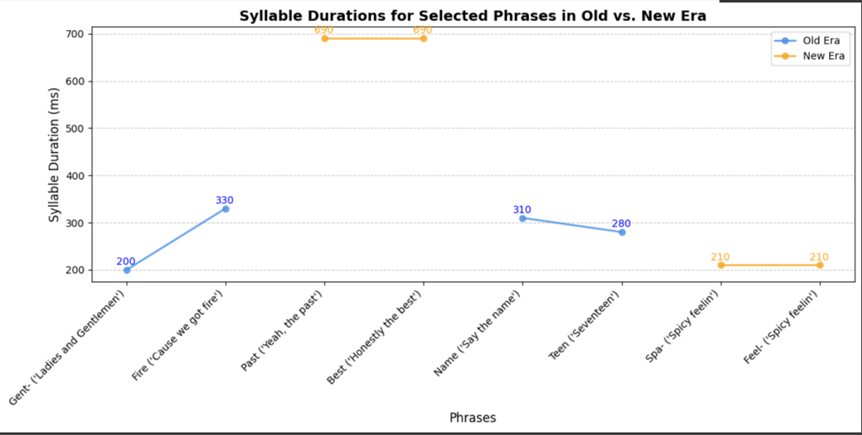
Gender and Experience Influence Workplace Communication

Mariam Arafa, Bianca Richmond, Olivia Rubin, Sydney Steinger

In the workplace, a new female intern might wonder, Why does my male boss communicate with me so differently compared to my male coworkers? Our research explores this question. Communication in the workplace is not just exchanging information; rather, it reveals social hierarchies, implicit bias, and power and gender dynamics. This study focuses on how gender and professional experience influence communication in the workplace. Working off existing literature, we examine how men often use “report talk”, assertive and task-oriented communication, and women use “rapport talk”, communication based on connection and emotions. While we were able to find research on gendered communication patterns, studies were limited in addressing how age and experience alter these patterns. To bridge this gap, we conducted a survey and interviews targeting professionals of various genders, industries, and levels of experience. Our results defend three patterns: (1) same gender communication is usually more relaxed and informal; (2) supervisors speak more formally and respectfully when addressing more experienced employees; and (3) long-term employees that have an established relationship with their boss are addressed with continued respectful but less formal communication over time. Our study provides evidence that it is not just gender that shapes workplace communication, but also experience, which subtly impacts hierarchies and norms in professional interactions within the workplace.

[expander_maker id=”1″ more=”Read more” less=”Read less”]

Introduction and Background

Communication serves as a powerful tool to observe and interpret hidden messages. In the workplace, communication depending on various parts of one’s identity may affect roles, actions, or speaking styles in professional settings; specifically gender and level of experience influence how individuals speak and are addressed. Discourse plays a large role in language and gender studies “because many masculine and feminine aspects of speech emerge during communication” (Kizi, 2024). Social hierarchies and biases can be shown through something as simple as a different tone of voice or body movement. Our research dives into these different forms of communication by gender and level of experience of the employee being addressed.

Before conducting our own research, we searched for information that could be beneficial for us to evaluate to help make conclusions. Past research showed that women and men often use different communication styles; men use report talk, which is assertive and goal-oriented, while women use rapport talk, which places importance on connection and collaboration (Mohindra and Azhar, 2012). Relating back to the workplace, these differences can lead to how workers are valued and judged in professional settings. For example, rapport talk, typically used by women, is seen as less skilled than report talk, often used by men. Additionally, communication that stereotypically aligns with feminine traits is often overlooked in performance evaluations and leadership assessments (Chai, 2022). While we were able to find plenty of research examining communication by gender in the workplace, we were unable to find research that studied age and level of experience that influence communication in the workplace. We were curious to examine the intersection between experience and gender in the workplace. Do older, more experienced women get spoken to with more respect? Do newer female employees experience more condescending tones than their male counterparts? These are questions we were hoping to answer in our own research methods.

Methods

When conducting this study, we first formulated our hypothesis: “How do both gender and professional experience influence tone, word choice, and body language used by supervisors when addressing employees in the workplace?” We wanted to come to a conclusion regarding communication for those of different genders and different positions (hierarchy-wise) in workplaces. Our method consisted of conducting a poll via Google Form, asking our respondents the same set of occupation-based questions. Our questions began with basic intro topics: age, gender, and career experience. We then dove into more personal subjects, creating a list of yes or no questions surrounding communication within the workplace. The questions focused on how each participant is treated and addressed based on their gender. We chose to make each question very straightforward (not open-ended) to avoid any biases in the study. We chose to send this survey to four people each, two of each gender. We wanted to have an equal number of males and females in the study to make our outcome as accurate and honest as possible. We chose participants of all different ages and employment levels. Some were interns, some were in the service industry, some worked high-paying corporate jobs, and some even worked for themselves. The variation amongst every participant provided us with the most transparent results. By focusing on all different backgrounds and levels of experience, we could make a consensus about gender and many different workplaces in 21st-century America. Although our questions required a yes or no response, we focused our topics around rapport and report, displaying differences amongst age, sex, and gender.

Results and Analysis

When our participants were asked if they notice differences in communication styles between their male and female bosses, 64.3% of participants replied “YES,” while 35.7% replied “NO.” One of our participants even shared that their female bosses tend to be more sincere and considerate, while their male bosses take a condescending approach in their workplace. (Johnson, 2017) This manifests itself in the specific tone used by one’s boss. We chose to ask questions about bosses of both genders to come to a consensus with report versus rapport talk. Report and rapport contribute to how each gender takes on an authoritative position, especially in an intense work environment. The results in this pie chart were supported by one of our participants, a young female intern. At the end of our survey, she wrote, “I feel like I get spoken to too harshly by my male bosses and that they give the guys that I work with much more leeway.”

Pie chart displays responses of different experiences between bosses of each gender

In addition to communication between employees and their bosses, we also factored in age to our questionnaire (as stated above). In gender-based studies, age often gets overlooked. Incorporating age as a question in our Google Form allowed us to connect the outcome to our predominantly gender-focused study. Age and gender are without a doubt connected, especially when it comes to male and female interactions on a professional level. When asking about age, 92.9% of our participants said that their age has affected their communication at work. That is almost our entire population, leaving out 7.1%. Age has a direct correlation with work experience, so it is bound to impact communication, how one is addressed by both their peers and authoritative figures, and even how they are perceived by others.

Pie chart displays correlation between age and communication in the workplaces

Younger employees are more likely to be recipients of condescending or belittling behavior. This connects to realistic factors such as lack of experience or deeper ones such as gender. Whatever the motives may be, it is inevitable that age has a direct connection to how one communicates and is communicated with in their workplace.

Discussion and Conclusion

Based on the results of our research, we found three main patterns in communication in the workplace between males and females. The first main finding is same-gender communication leads to  relaxed and informal conversation. Our evidence illustrates how females engage in rapport talk over text and this is consistent with our survey findings because about 64.3% of our respondents reported differences in communication styles between male and female bosses. In an interview, we found that female bosses were perceived as less condescending and more considerate, male bosses were described as “more self-centered.” The second main finding is that Supervisors use more formal and respectful language when addressing experienced employees. We noticed patterns of tone shifts within text conversations. This aligns with our literature review where experience and age shapes the formality in the workplace, and a polite tone may emerge toward more seasoned women. This also connects with our survey findings because 53.8% rated a 4 or 5 (on a 5-point scale) in agreement that they were addressed differently based on age or experience. The third and final theme is long-term experienced employees are spoken to with continued respect, but less formality. We found that texts between male bosses and experienced male employees are more relaxed. This aligns with Holmes and Marra (2004), relational practice evolves over time and becomes less formal with workplace bonds, and Mohindra & Azhar (2012), men adopt direct talk (report) once relationship is established. This connects to our survey results because 92.9% said their age/experience affected communication. Qualitative responses such as “I tend to feel less comfortable with male bosses” reflect same-gender or familiar dynamics. Ultimately, with our research we focused on the differences of language, tone, and communication between men and women in the workforce. Our research highlights gender roles through a lens of language. We aimed to examine the differences in language use amongst themselves, their bosses, clients, colleagues, and especially how they are addressed by their peers. We emphasized tone, word choice, and body language as a whole. Our research question was: Are women addressed with different tones, word choices, and body language than men in the workplace? We hypothesized that gender would influence workplace communication and that women are more likely to be spoken to with different linguistic and behavioral communication when compared to their male counterparts. Our hypotheses were found to be all true as our survey results demonstrated same gender communication leading to more relaxed and information conversations, supervisors being more formal with older more experienced employees, and finally, experienced employees having less formal but still respectful conversations. Our findings imply that there is only a small amount of discrimination in the workplace through communication styles or behaviors among colleagues or bosses based on one’s gender or experience. Further, when one stays longer in one job, they attain more respect and are more lenient with their formality/conversation styles. Gender can cause more formal, serious tones and closed off body language between male bosses and female workers. This is because of gender perceptions of female competence and ability to get work done. Women have to work harder to prove their capabilities and this causes women to engage in rapport talk whereas men engage in report talk. Furthermore, our findings are important because it illustrates why men and women generally use different communication styles and how it can boost their status or job performance.

References

Mohindra, V., & Azhar, S. (2012). Gender Communication: A Comparative Analysis of Communicational Approaches of Men and Women at Workplaces. IOSR Journal of Humanities and Social Science, 2, 18-27.

Chai, Y. (2022). Implicit gender-biased speeches in workplace: Embedded stereotypes and effects on women’s Career Development.

Johnson, Stefanie K. “What the Science Actually Says about Gender Gaps in the Workplace.” Harvard Business Review, 17 Aug. 2017, br.org/2017/08/what-the-science-actually-says-about-gender-gaps-in-the-workplace. Accessed 05 June 2025.

Holmes, J., & Marra, M. (2004). Relational practice in the workplace: Women’s talk or gendered discourse? Language in Society, 33(3), 377–398. https://doi.org/10.1017/S0047404504043039

Ergasheva Nozima Khasan Kizi (2024). GENDER DIFFERENCES IN COMMUNICATION IN THE WORKPLACE. Eurasian Journal of Social Sciences, Philosophy and Culture, 4 (6-1), 171-175. doi: 10.5281/zenodo.12176621

[/expander_maker]
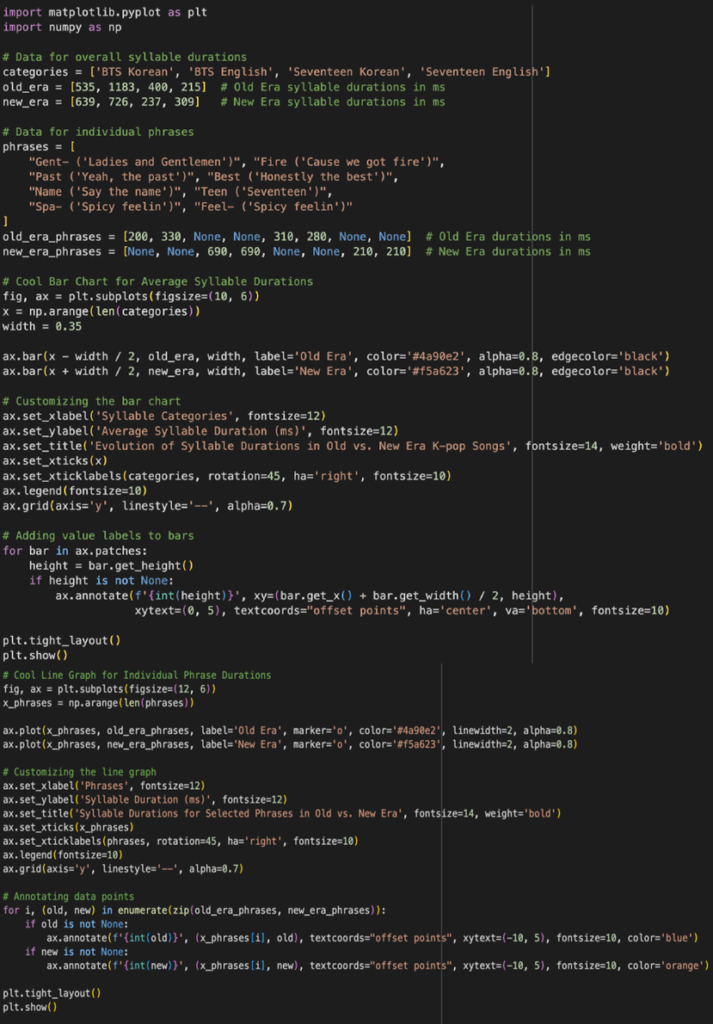
Interpretation in the Digital Age: How Ages Interpret Textual Communication

Jura Glennie, Ryan Gorji, Mikaela Edwards, Zahra Umar, Lizett Hernandez

Have you ever received a text that just said “okay.” and spent the next hour wondering if someone is mad at you or if you’re just being too Gen Z about it? These kinds of reactions highlight how digital communication is often interpreted through generational lenses that can drastically shift meaning and connection in digital conversations. In this study, we investigate how generational differences affect the interpretation and use of digital features in text-based interactions. The research examines how Generation X (born 1965-1980) and Generation Z (born 1997-2012) understand and express digital body language through the use of punctuation, capitalization, emojis, and acronyms. We hypothesize that Gen Z will use more expressive forms of digital body language while Gen X will favor more minimal or formal styles, since they did not grow up in the digital age. This study focuses on how these generational groups perceive emotions, the reasoning behind selected features, and relationship-based decisions in digital communication. Previous research shows that nonverbal cues were created and popularized by younger generations, making them more recognizable to Gen Z, which aligns with our study’s findings. The takeaways from our results suggest that while digital features are identifiable amongst these age groups, their generational differences shape their communication style and interpretations.

[expander_maker id=”1″ more=”Read more” less=”Read less”]

Introduction and Background

Texting has become a primary mode of interaction, and with it, a new kind of nonverbal language has emerged. As digital communication becomes more widely used to communicate, the rules for how one should interpret a text aren’t always agreed upon. Their interpretations vary due to our age and experience within our generational environments. What feels natural and obvious to one generation can feel informal, confusing, or new to another.

This study aims to investigate how two generations, Gen X and Gen Z, navigate digital body language. Our study begins by introducing digital body language (DBL), the way people subtly and non-verbally communicate and express themselves through their use of capitalization, punctuation, emojis, slang, acronyms, response times, etc., in constructing online messages (Irshad, 2024). Followed by an overview of our research methods and implementation. Then we present the key findings from the participants’ responses, highlighting generational differences in interpretation, tone, responses, and emoji usage. Finally, we review the broader implications of these different generations and discuss their ability to adapt when navigating unfamiliar digital cues and how their responses may be shaped by varying levels of cultural immersion in the digital age. 

As texting has become a dominant form of communication, people have developed new ways to express tone and emotion without speaking. These include punctuation, emojis, and message interpretations, which researchers often call digital body language. While these features help fill in the gaps left by the absence of facial expressions and vocal tone, their meaning can vary depending on who is reading them.

Prior studies have shown that younger generations tend to use and interpret these digital cues differently from older ones. For example, Gen Z, who grew up immersed in texting and social media, often assigns emotional weight or social meaning to features like lowercase typing or a final period. The New York Post report noted that, to young people, “using a period in messaging now looks rather emphatic, and can come across as if you’re quite cross or annoyed” (Frishberg, 2020). For example, Gen Z, who grew up immersed in texting and social media, often assigns emotional weight or social meaning to features like lowercase typing or a final period. In contrast, Gen X may interpret the same features through a more literal lens, viewing them as grammatical or functional rather than expressive. Binghamton University psychology research found that texts ending in periods were perceived as less sincere than those without punctuation, suggesting that punctuation alone can change emotional tone (Klin, 2016).

Despite growing research in online communication and generational differences, there is still limited understanding of how digital body language is interpreted across generations in casual text exchanges. Our study focuses on this gap by comparing how Gen Z and Gen X understand and use key digital features in message-based conversations. We aim to uncover whether the same text message is read differently depending on the generation of the reader, and what this might reveal about changing norms in digital communication.

Figure 1

Generational Differences in Emoji Use and Interpretation

TikTok – Generational Emoji Usage

Note. A viral TikTok humorously captures the difference between generational interpretations of emojis. The creator of the video explains, “we really gotta teach our parents how to properly use emojis…” then shows the text he received, which said “your uncle Mark died [skull emoji]”. Gen Z often uses the skull emoji to express exaggerated reactions, humor, or sarcasm, unlike Gen X, which interprets this emoji as literal death, which contributed to the message sounding comical and inappropriate.                 

Figure 2

Generational Differences in Texting

YouTube Video – Texting Across Generations

Note. A snippet from a podcast episode discusses how our digital interactions are shaped by our relationships with others. One of the speakers talks about how the way she positions her digital body language depends on the person she’s texting, saying that “different people bring out different texting sides of me” (The Council, 2025). She then goes on to talk about how this switch-up is especially prevalent when she is texting members of older generations, such as her father. When messaging her father, she’s observed that their text conversations are based entirely on message content and practicality, and there’s less of an emphasis on tone and nuances.

Methods

Data was gathered from ten participants, five members of Generation X and five members of Generation Z, through semi-structured interviews. Each interview consisted of the same exact format, but was semi-structured in the way that the design encouraged follow-up questions and elaboration from interviewees. The interviews were divided into four parts: (1) demographic and technology profile, (2) message-interpretation task, (3) punctuation and capitalization, and (4) emoji-choice scenario. The first section collected basic background information, such as age, gender, and technology usage habits. The second part presented five different text messages, written by us. Each message contained one or more features of digital body language—punctuation marks, capitalization or lack thereof, emojis, and acronyms. We showed each participant these messages, one by one, and asked them what tone they perceived and how they would respond. The third exercise was also made up of messages we designed, but it focused on only punctuation and capitalization features, such as capitalizing or not capitalizing the first word of the message, capitalizing the entire message, as well as using a period, exclamation point, or no punctuation at all. It also featured three messages with the same exact word content, but two different versions of each message: Version A and Version B. What set these versions apart were their differing levels and use of punctuation and capitalization. After presenting these two different versions, we then had participants choose which version they think is friendlier and explain why. In the final section, participants were presented with eight different emojis to choose from and asked to choose which two they’d use to respond to a message from a friend announcing a new job. Once interviewees chose their top emojis, we asked them two follow-up questions, which were why they picked those emojis and if their choices would change if the message had come from an acquaintance rather than a friend. Through these interviews, we analyzed how members of these different generations interpreted and expressed various online non-verbal cues, also known as components of digital body language. We sought to identify generational differences and patterns in how each generation processed these features.

Results and Analysis

Based on what we have collected, we have obtained results that can help us make inferences out of the differences between Gen X and Gen Z. We found most importantly that in relation to punctuation and formatting, a period (e.g., “Okay.”) is interpreted as annoyance, finality, and/or passive aggression among our Gen Z interviewees. This follows our literature base where, according to Teresa Apgar, “research suggests that younger individuals interpret text-final periods to be more negative in tone, while older individuals interpret it to be neutral” (Apgar, 2022, 1). When it came to tone shift and identification, we found that Gen Z had a strong sensitivity to changes in tone, particularly when familiar contacts shift from informal to formal texting styles that are reflected in the punctuation and capitalization. Another piece of research literature that helps us understand passive-aggressivity mentioned previously is the situation where both subject Gen Z’ers are observed: “Lisa evaluates Nelly’s [non-punctuation lowercase] reaction as inappropriate by repeating her utterance and adding an iterated question mark” (Busch, 2021, 38). Conversely, lowercase messages without periods were deemed more so as friendly and casual among Gen X interviewees. Now, when it comes to emoji use and interpretation, we found that emoji choice changes depending on the relationship for Gen Z (e.g., [flame emoji] is for close friends). This relationship-dependent emoji use selection was not as prevalent in Gen X responses. We theorize that this lack of variety in emoji usage was probably due to Gen X’s simple lack of exposure time to the emoji features. See Figure 3 below.

Figure 3

Digital Communication Cue Interpretation: Gen Z vs. Gen X

Note. This chart summarizes/simplifies our results as a whole according to relevant categories (extreme left).

Discussion and Conclusion

Our exploration into generational interpretations of digital textual communication demonstrates a divide in how meaning is constructed and perceived across age groups. Through interviews with members of both Generation X and Generation Z, we observed that the tools of modern text-based communication carry different meanings depending on one’s digital fluency and cultural context.

Within Generation Z, we noticed there to be a deeper sensitivity to the emotional and social undertones of simple texting features. Even something as minute as a period at the end of a sentence could indicate a different tone or even a conflict. Generation Z interpreted texts figuratively and consistently attempted to read between the lines.

Contrastingly, Generation X  looked at the texts in a more literal and formal light. Punctuation was used for the purpose of grammar, and emojis were viewed straightforwardly with little subtext. Some members were aware of the subtext, but did not spot it as consistently as their Gen Z counterparts.

A key insight of our study is that, while members of both generations utilize and recognize non-verbal cues in text, Gen Z appears to have developed a more nuanced form of digital literacy. Their fluency allows them to read undertones that older generations would not as easily detect, which may allow them to engage in complex, layered conversations entirely through digital platforms, where meaning is often conveyed as much by how something is said as by what is said.

As digital communication keeps evolving, the language and meaning embedded within it follow. Our findings suggest that generational gaps in digital interpretation are not just a result of age, but additionally, cultural immersion. Many members of Generation Z grew up using computers, tablets, and phones, where communication was quite text-heavy and rich with emoji use. Generation X was not introduced to the same kind of communication until their adult lives; they are perfectly capable of adapting, but the trend for this group is to interpret digital language through a more traditional, literal lens.

References

Apgar, C. T. (2022). Wait wdym?: Examining the (mis)perception of emotional valence in text messaging across generations (B.Phil. thesis, University of Pittsburgh). University of Pittsburgh.

Busch, F. (2021). The interactional principle in digital punctuation. Discourse, Context & Media, 40, 100481. https://doi.org/10.1016/j.dcm.2021.100481

Danger. [@natedanger]. (2021, April 2). Rip uncle mark #family #emoji #fyp [Video]. TikTok. https://www.tiktok.com/t/ZP8MEvPnM

Frishberg, H. (2020). Young people don’t trust anyone who uses this punctuation mark. (2020, August 24). New York Post. https://nypost.com/2020/08/24/young-people-dont-trust-anyone-who-use-this-punctuation-mark/

Irshad, S. (2024). Deciphering digital body language and the Gen-Z in new normal. Creative Saplings 2(10), 31-41. https://creativesaplings.in/index.php/1/article/view/498

Klin, C. (2016, June 12). Study: Punctuation in text messages helps replace cues found in face-to-face conversations. Binghamton University News. https://www.binghamton.edu/news/story/873/study-punctuation-in-text-messages-helps-replace-cues-found-in-face-to-face

The Council. (2025, January 31). Texting across generations: The surprising differences [Video]. YouTube. https://www.youtube.com/watch?v=JcC5_VWPf4U

[/expander_maker]
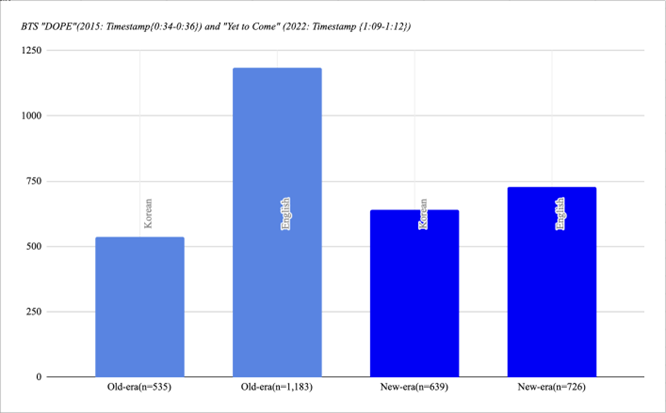
Scroll to Top