Professor-Student Register Differences

Something students are conditioned to do is change the way they speak to people in power, specifically their professors. They want to sound knowledgeable and inquisitive, refraining from using slang, meme speaks, and overuse of filler words. One difference we were intrigued by was register changes in lectures. Register is defined as the style of speaking and writing distinguished by its formality, purpose, or audience. Key aspects include vocabulary/jargon, tone, or grammar complexity. This research explored how university students linguistically interact with their professors and classmates in upper and lower-division courses, focusing on register changes. Previous research in this field of study found that students who are fluent in two languages (English and French) use control processes to produce speech registers that are either formal or informal (Declerck et al., 2020). Our null hypothesis was that no difference in the register formality occurred between upper and lower-division courses. Our alternative hypothesis was that register changes were more significant, including the formality in upper-division courses through primarily observational methods and a supplemental survey. This research is important to analyze the way register changes can be impacted by a student’s conditioning and how professors can use this impact to reframe their lecture approach.

[expander_maker id=”1″ more=”Read more” less=”Read less”]

Background

Linguistic registers are characteristics of speaking or writing that can change situationally. These registers can reflect the speaker’s identity and the relationship between the speaker and the person they are speaking to (Agha, 2005). The observations made in upper and lower-division courses will let us know how students change their register formality and if this change is dependent on whether the class encourages a more formal register when responding to questions or communicating with one another.

Methods

Using Biber and Conrad’s guide on register analysis in Register, Genre, and Style as a reference, we approached analyzing linguistic register changes in university classrooms with the following steps:

  • Note the environment and situation of the research setting and how these can affect the characteristics of observed registers.
  • Record any register features that can be considered ‘normal.’
  • Compare and contrast the average features of the register with features of the register that were observed to be situational.

To distinguish between formal and informal register in the courses we observed, we classified formal language as any language that had proper grammar, included references to some sort of study or concept, utilized terms that are appropriate to the subject matter, and language that demonstrates respect and formality through the use of a professional tone. An informal register was classified as any language that seemed more conversational or less structured, personal or subjective, did not include terms indicative of the class material, explained certain concepts in simple language, and used a more relaxed tone when participating in discussions.

Considering this method and understanding of registers, researchers attended in-person and recorded lectures at the University of California, Los Angeles, and office hours for select courses, accumulating data from twenty lectures. The lectures were chosen based on their lower or upper division status, two lower and two upper courses. In these settings, we expected to observe a difference in the linguistic register, with the hypothesis that students in upper-division courses had a more formal register because they were experienced and ready to enter the workforce.

The classrooms of the lectures we researched were situated with the speaker at the front, usually on a stage or near some podium with many seats facing forward. This arrangement establishes a sense of hierarchy, control, and power. However, the practice and enforcement of this hierarchy depended on how the professors taught and carried themselves along with the room. Some professors encouraged students to speak and contribute to the discussion, while others preferred to control the conversations to remain on schedule. Student-to-student conversations were minimal but still observed.

Our goal was to observe intently during lectures how students interacted with the professor and how that differed from the conversations amongst fellow students. Also, why was this difference significant, and what factors could influence this conditioned shift in speech behavior? To supplement our observational research, we asked students and professors a 5-question multiple choice survey to gauge how they felt about their register or how aware they were of it. The questions and choices were as follows:

  1. Do you know what a linguistic register is? (Yes/Somewhat/No)
  2. Do you notice differences in speaking in upper and lower-division courses? (Yes/Somewhat/No)
  3. Do you notice how your speech changes when discussing or conversing with your peers and professors? (Yes/Somewhat/No)
  4. Do you think factors like professor approachability, classroom size, and course subject influence how you adjust your language in an academic setting?                                                                              (Yes/Somewhat/No)
  5. Are there words or phrases you use more frequently in an academic setting that you would not use elsewhere or vice versa?                                                                                                                              (Yes/Somewhat/No)

Results

Through careful observation, we noticed a significant change in the linguistic register in ten lower and ten upper-division lectures. This is in addition to the results of our supplemental survey, which revealed that students did notice a difference in their registers in their upper—and lower-division courses, noting that they indeed use a more formal register within their upper-division courses.

In upper-division courses, we noticed that students had more formal vocabularies and tended to express their ideas more structured and logically by referencing past concepts and citing where they got their answers or supporting evidence. As for lower-division courses, students used a more informal register, which led to students just trying to get their point across and ending their sentences in a way that made it seem as if they were unsure about their response. Students in lower-division courses also appeared to use words such as “um,” “uhh,” and “I think” more often than students in upper-division courses.

In a particular upper division course, the professor began every lecture by yelling “GOOD AFTERNOON” and expected a loud response, often requesting a redo if it was unsatisfactory. In an informal interview with this professor, she said it was to encourage students to have a voice in a large classroom. She stated that she would prefer a smaller classroom where they could be sitting in a circle. She often ended her lecture 30 minutes before class ended because she saw great importance in students discussing with each other and listening to different perspectives. This engagement was an attempt at breaking the hierarchical barrier of the class setting.
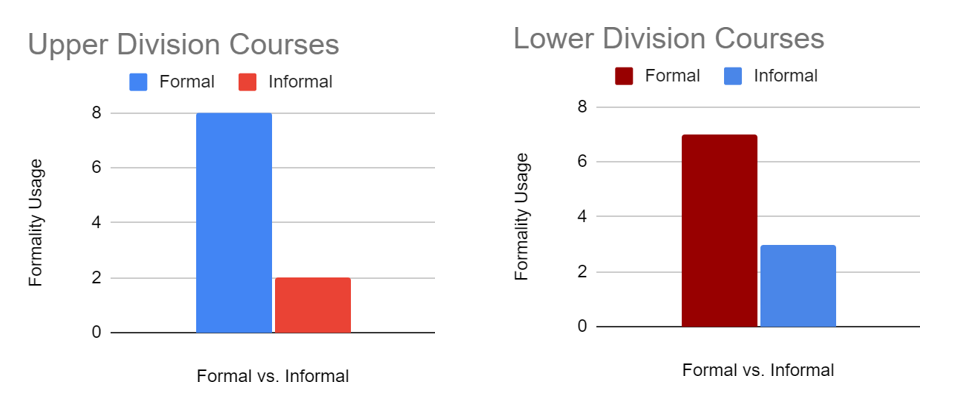
Graph 1 shows the difference in formality observed in the upper-division courses we observed throughout the ten lectures. Graph 2 shows the difference in formality observed in the
lower-division courses throughout ten lectures.

The graphs provided show the difference in formality between the upper- and lower-division courses we observed. Upper-division courses, for the most part, had formal register/language, while lower-division courses mostly had informal register/language.

Another interesting observation we noticed in both upper- and lower-division courses is that students who speak two languages and have a particular accent when talking to another student who may or may not share similar cultures seem to turn their accent off whenever they talk to an individual in a position of power, such as a professor or teacher assistant.

Analysis

These conclusions rejected our null hypothesis and supported the alternative hypothesis that there is a significant difference in the register used in upper-division courses versus those used in lower-division courses. Worth noting is that the reason for a more formal register in upper-division courses is the fact that upper-division courses necessitate the development of critical thinking, which requires students to express their ideas and responses in a more structured and logical manner, which further goes to show the complexity within the concepts seen in these courses. As shown in the graphs within the results, upper-division courses mainly used formal language, while lower-division courses used informal language. The bars on the graph that showed minimal informal or formal language in each respective course resulted from some days in the upper-division courses being relatively easygoing and not necessitating much discussion, while the formal register occurrences in lower-division courses happened as a result of professors making the student think critically about their answer and add to the discussion of the class on a specific complex concept.

Through this research, the discussion opens about how professors can facilitate change that empowers students to speak in their classrooms. With this knowledge, an improvement will likely create a better learning space while maintaining a professional register. The power dynamics do not have to be so stark that they intimidate students to not participate in lectures. However, professors should teach in a way that their course will introduce students to a more formal register early on in the course and gradually increase the emphasis on formal language as the course progresses. Especially in lower-division courses where informal linguistic register is standard, these changes will benefit students (more than likely first- and second-year students) in the long run, where future professional and academic environments will necessitate the use of formal language to express their critical thinking.

References

Agha, A., Duranti, A. (2005). Registers of Language. In A Companion to Linguistic Anthropology (pp. 23–45). https://cpb-us-w2.wpmucdn.com/web.sas.upenn.edu/dist/1/494/files/2018/08/19Agha2004RegistersOfLang-13dji2r.pdf 

Biber, D., & Conrad, S. (2019). Register, genre, and style / Douglas Biber, Susan Conrad. (Second edition.). Cambridge University Press.

Declerck, M., Ivanova, I., Grainger, J., & Duñabeitia, J. A. (2020). Are similar control processes Implemented during single and dual-language production? Evidence from switching between speech registers and languages. Bilingualism (Cambridge, England), 23(3), 694–701. https://doi.org/10.1017/S1366728919000695

Goulart, L., Gray, B., Staples, S., Black, A., Shelton, A., Biber, D., … & Wizner, S. (2020). Linguistic perspectives on register. Annual Review of Linguistics, 6, 435-455.

Washington-Harmon, T. (2024, January 5). Code-switching has benefits and risks-but why do we do it? Health. https://www.health.com/mind-body/health-diversity-inclusion/code-switching

[/expander_maker]
, , ,

Unveiling Linguistic Appropriation: A Dive into Slang Usage on Twitter

Asfa Khan and Ayub Abdul-Cader

A world where words wield power and every hashtag tells a story—welcome to the exploration of slang on Twitter.

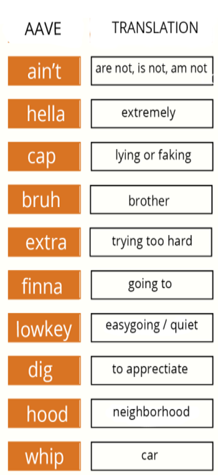
Exploring the intricate dance between language, identity, and culture, this study delves into the phenomenon of linguistic appropriation on Twitter. Focusing on the adoption of African American Vernacular English (AAVE) by non-Black individuals, particularly white working-class Twitter users, we uncover patterns that illuminate the dynamics of identity formation in digital spaces. Through analysis of tweets from Black Drag Queens and white Twitter users, we dissect linguistic elements such as phonetics, word choice, syntax, semantics, and pragmatics. Our findings reveal a nuanced picture of language use, shedding light on the motivations behind linguistic appropriation and its implications for cultural dynamics and societal norms.

[expander_maker id=”1″ more=”Read more” less=”Read less”]

Introduction

African American Vernacular English (AAVE): The Dialect We Call Our Own – Because of Them We Can

In today’s digital age, social media platforms like Twitter serve as microcosms of linguistic diversity, offering insights into how language is used and appropriated across different communities. Our study zooms in on the use of slang, particularly AAVE, among Black Drag Queens and white working-class Twitter users. The origin of these slangs has been falsified for many years, as many in the linguistic community believed working-class men were the main group who created/implemented AAVE. As seen by the UMASS research group, “early work on AAE perpetuated myths that the language variety was uniform across regions and that it was spoken primarily by working-class men, due to being conducted in inner city areas and examining a specific set of linguistic features” (Masis 2023). These myths have only further fueled the fire that is cultural appropriation, specifically in regards to AAVE slang which are primarily used and created by the Black Drag Queen Community.  By examining linguistic patterns, we aim to address the appropriation and misuse of AAVE by non-Black individuals, highlighting its impact on cultural dynamics and identity formation. This research builds upon existing literature in linguistic anthropology, which underscores the need to recognize and honor the origins of linguistic expressions while promoting mindfulness regarding their impact on marginalized communities.


Methods

We employed two primary methods for data collection: identifying key accounts and leveraging hashtags and trends related to drag culture and AAVE. By focusing on tweets from Black Drag Queens and white Twitter users, we analyzed linguistic elements such as phonetics, word choice, syntax, semantics, and pragmatics. Our analysis aimed to uncover patterns of linguistic appropriation and identity formation within digital environments.

Results

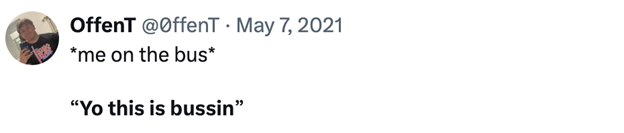
Our analysis revealed a discernible trend wherein white Twitter users demonstrate a propensity to adopt and replicate the linguistic style characteristic of Black Drag Queen Twitter users. Analyzing Tweets by white, middle-class men and Black Drag Queens helped us understand the misuses of AAVE efficiently. A white man used the words “Yo this is bussin” in a tweet and a famous phrase that originates in African communities non-individuals from communities using AAVE is cultural appropriation. Linguistic analysis allows us to understand when words are being used as cultural appropriation.

Discussion

While Black Drag Queens employ AAVE as an intrinsic component of their everyday discourse, white users often utilize it as a means to cultivate an alternative dimension of their identity primarily manifesting within the online realm of Twitter. Examples such as the use of “ass” as a postpositive particle and the alteration of “with” to “wit” exemplify this linguistic appropriation.

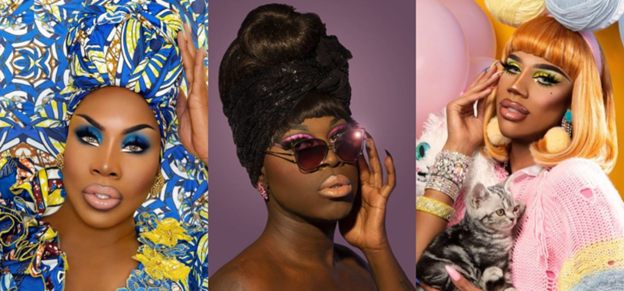
Bob the Drag Queen Teaches You Drag Slang | Vanity Fair

Our findings contribute to a deeper understanding of the complex interplay between language, identity, and culture in digital spaces. By uncovering patterns of linguistic appropriation, we shed light on the motivations behind the adoption of AAVE by non-Black individuals and its implications for cultural dynamics. This research underscores the need for individuals to be mindful of the impact of their language on marginalized communities and to respect cultural heritage and contributions. Furthermore, it highlights the importance of recognizing and honoring the origins of linguistic expressions while promoting inclusive and respectful communication practices.

This study draws inspiration from literature in linguistic anthropology, which emphasizes the role of language in shaping cultural dynamics and identity formation. Scholars have long discussed the appropriation and misuse of AAVE by non-Black individuals, highlighting its perpetuation of harmful stereotypes and inequalities. According to the UMASS research group, led by Tessa Masis, “Our results show that, contrary to sociolinguistic myths of uniformity, there is clear variation in AAE across both geographic and social dimensions (Masis 2023).”

 By building upon this literature, our research offers a nuanced analysis of linguistic appropriation on Twitter, providing insights into the motivations and implications of language use in digital environments. In the ever-evolving landscape of digital communication, the exploration of slang on Twitter serves as a window into the complexities of language, identity, and culture. Through our research, we invite readers to delve deeper into the nuances of linguistic appropriation, fostering a deeper understanding of the power dynamics at play in online discourse. As we navigate the digital labyrinth of Twitter, let us remain vigilant in our pursuit of inclusive and respectful communication practices, honoring the rich tapestry of linguistic diversity that defines our digital landscape.

 Conclusion

In the dynamic world of digital communication, where language shapes identities and cultures, our study serves as a springboard for future research endeavors exploring linguistic appropriation and digital discourse. Our research methodology lays a sturdy groundwork for data collection and analysis. By integrating the identification of key accounts with the exploration of relevant hashtags and trends, researchers can cast a wide net to gather a diverse dataset reflecting various linguistic communities on Twitter.  Our focus on analyzing linguistic elements such as phonetics, word choice, syntax, semantics, and pragmatics offers researchers a multifaceted lens through which to examine patterns of linguistic appropriation. Potential analysis tools such as the BERT machine learning tool, used by the UMASS research group in order to narrow down research methods.  These methods provide a more efficient way of analyzing tweets in specific, due to there being hundreds of millions of tweets throughout the history of the social media app. “Many feature-based studies of large corpora use keyword searches or regular expressions to detect features; however, keyword searches are limited by orthographic variation in tweets and regular expressions cannot be made for all features. To circumvent these obstacles, we use the BERT-based machine learning method used in Masis et al” (Masis, 2023).

 By employing similar analytical techniques, researchers can uncover subtle nuances in language use and identity formation within digital environments. This approach fosters a deeper understanding of the intricate interplay between language, culture, and identity in online spaces. Researchers can expand on this theme by exploring the implications of linguistic appropriation for marginalized communities and investigating strategies for promoting respectful and equitable language use in online spaces.

References

Ilbury, C. (2019). “Sassy Queens”: Stylistic orthographic variation in Twitter and the enregisterment of AAVE. Journal of Sociolinguistics. 24. 10.1111/josl.12366.

Magazine, Smithsonian. “The First Self-Proclaimed Drag Queen Was a Formerly Enslaved Man.” Smithsonian.Com, Smithsonian Institution, 9 June 2023, www.smithsonianmag.com/history/the-first-self-proclaimed-drag-queen-was-a-formerly-enslaved-man-180982311/.

Masis, Tessa; Eggleston, Chloe; Green, Lisa J.; Jones, Taylor; Armstrong, Meghan; and O’Connor, Brendan (2023) “Investigating Morphosyntactic Variation in African American English on Twitter,” Proceedings of the Society for Computation in Linguistics: Vol. 6, Article 41.DOI: https://doi.org/10.7275/zdg0-0914

[/expander_maker]

, , , , ,

The Role of Phatic Expressions in Group Identity

“How are you today?” Wait- Before you answer this, consider that this innocuous question in fact is compelling you to respond in a certain way. This phatic expression is a social tool aimed at maintaining communication channels. But these expressions also contain packets of information intended to guide the recipient’s behavior. This project aims to recognize the significance of phatic expressions in communication dynamics and how they intertwine with identity development. Our study will aim to go deep into the intricate relationship between language similarities and identity formation within the context of a vibrant Latina community. We will focus on undergraduate Latina students affiliated with UCLA’s Hermanas Unidas organization. We also gathered data on how people in the Latina community often used slang to communicate with their peers. The use of slang made their communication more personal and easier. We examined informal speech and phatic expressions in English-Spanish dialogue within the Latina community. By observing the way they spoke their language and communicated with slang, we gathered that language truly shapes relationships and reveals the complex layers of language, identity, and communication dynamics. This study will allow us to observe how language forms relationships and unravel the various layers of language, identity, and communication.

[expander_maker id=”1″ more=”Read more” less=”Read less”]

Introduction & Background

Within Jakobson’s six language functions, the emotive and conative functions are specifically those which convey information about the speaker and recipient. The latter function is generally considered to contain imperatives in the form of information about the recipient. However, certain other language functions also index facets of the identities of participants in this way or feature similar containerization. Among these are phatic expressions, those which are concerned primarily with the communication channel (Žegarac and Clark, 2024).

A commonly recognized form of phatic expression is a greeting such as, “How was your day?” Chances are, the questioner would find it frustrating if they were met with every detail of the respondent’s day. So, by asking “How are you?” The questioner is compelling the listener to respond only in a certain way. Therefore, this expression might be considered to have an imperative component. That’s not necessarily a bad thing– it provides the recipient with a quick and easy path to the locus of the conversation. But this additional capability for encoding the intentions and attitudes of the speaker can obviously be exploited for certain ends. Therefore, we were curious about whether or not phatic expressions are actually used by speakers to transmit information this way. We at first wondered about the exclusionary purposes of these expressions; for example, in the aforementioned example, the speaker is attempting to exclude a certain unwanted response. We realized that this exclusionary purpose may serve to delineate inter-group and intra-group identities. Therefore, we also asked to what extent phatic expressions index group identities in general. In fact, could phatic expressions also help to establish and maintain notions of identity by these mechanisms?

Methods

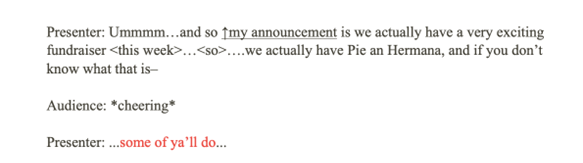
Figure 1: An instance of a phatic expression that indexes shared group knowledge

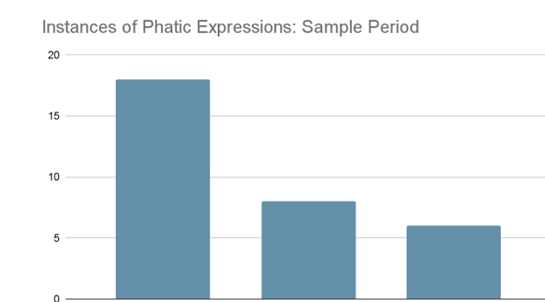
Figure 2: Use of phatic expressions during a representative 3-minute sample of presentations at a Hermanas Unidas club meeting. Instances featuring implicit imperative components, as well as instances that index specific aspects of the shared club and/or linguistic identity are indicated

Our research was conducted on two meetings for the club Hermanas Unidas de UCLA, the first being a general body meeting where group members welcome both past members and new members to meet on a weekly basis to discuss different topics and act as a debrief circle, and the second meeting being an event where past members,  also open to new members as well, meet to complete activities and talk in a more intimate space in comparison to the general body meeting. The general body meeting consisted of around 30 members, while the second event only had about 15. In both settings, members were prompted to both speak in the large setting to the entire group, and were also split into smaller groups. In these settings, we were able to analyze the communication between the members and how it shifted when there either was use of phatic expressions, or was not. This club primarily consists of Latina undergraduate members, so we were able to observe the use of phatic expressions in both Spanish and English, as well as both languages used together. When members spoke in the larger settings during the general body meetings, it was noted that the main speaker was often using words such as “y’all” and “um”, which made the speaker sound more natural when addressing the crowd, as well as the crowd being more engaging.

For this reason, we decided to analyze the presentation section of the general body meeting in order to establish a reliable baseline of phatic expression use relative to our specific areas of interest. We isolated a 3-minute segment of audio in which there were multiple presenters who would generally introduce themselves and their announcements, allowing for significant use of phatic expressions during the analyzed time period. The results are indicated in Figure 2: a significant fraction of the phatic expressions observed contain the imperative elements, index aspects of group identity, or both. During the second meeting, where members were split into groups of about 4-5 and were prompted with more personal questions. While the members were tasked to complete the activity they were given and answer these ice breaker kinds of questions, there was an instant switch in how communication was being made. We were able to hear phrases such as “I could’ve easily done Superman bro”, the word “like” and “literally”, “aw hell nah bruh” and using Spanish words when communicating (Araceli, 2010). The use of phatic expressions here also caused a more natural flow of conversation, more engaging body movement, and overall more emotion, such as laughing and smiling.      

Results and Analysis

Upon thorough analysis of our data, particularly within a 3-minute segment of the general body meeting where a club member addressed the audience with an announcement, we observed the utilization patterns of “um” and “y’all.” The incorporation of phatic expressions notably enhanced the crowd’s engagement, leading to cheers from the rest of the club members. During this significant moment, the speaker effectively conveyed information that resonated with each audience member, fostering a collective connection. The evident impact of the speaker’s language in captivating the crowd underscores the influential role of phatic expressions in communication. Moreover, we encountered similar findings in the second dataset collected during a smaller meeting. Despite the smaller group dynamics, participants’ use of phatic expressions facilitated deeper engagement among individuals, rendering conversations more meaningful. This highlights the universal efficacy of phatic expressions in fostering interpersonal connections, irrespective of the setting or audience size.

Discussion and Conclusions

In relation to language, culture, and the course content overall, analyzing the use of phatic expressions through an anthropological lens provided us with a nuanced perspective of the use of phatic expressions within interpersonal communication and interethnic encounters. Examining the usage of language functions among Latina students on campus offered us insights into their communication dynamics and social comfort levels in these settings. This also uncovered unique communication patterns and preferences and provided an intimate look into the interplay between language and social interaction. In the overall aim of our project, we planned to identify specific language functions as they appeared in conversation, specifically at the Hermanas Unidas club meetings, and analyze how expressions that serve specific functions are used to accommodate differing identities (including linguistic and club identity). One of our research questions we want to answer is “In which cases do phatic expressions serve an exclusionary purpose?”, and we identified that _these uses of exclusionary language with words like ‘bruh’, ‘like’, or ‘literally’ did not serve an intentional purpose but rather a means of reinforcing cohesion and camaraderie amongst the group of students in the campus-organization Hermanas Unidas. Additionally, we captured how these interactions and use of expressions help to shape these students’ cultural identity in various sociocultural environments whether on campus or elsewhere.

References

De Katzew, L. (2004). Interlingualism: T]he language of Chicanos/as.

Nordquist, R. (2019, March 11). Making small talk: Phatic Communication. ThoughtCo. https://www.thoughtco.com/phatic-communication-1691619

Osorio, Araceli, “The role of Spanglish in the social and academic lives of second generation Latino students: students’ and parents’ perspectives” (2010). Doctoral Dissertations. 366. https://repository.usfca.edu/diss/366

Otto Santa Ana, A. (1993). Chicano English and the nature of the Chicano language setting. Hispanic Journal of Behavioral Sciences, 15, 3-3.

Vlad Žegarac, and Billy Clark. “Phatic Interpretations and Phatic Communication.” Journal of Linguistics, vol. 35, no. 2, 1999, pp. 321–46. JSTOR, http://www.jstor.org/stable/4176528. Accessed 1 Feb. 2024

, , ,

Culture and Language: How Stigma Can Impact Students’ Mental Health Conversations

College students in America have had a rise in mental health concerns, finding themselves facing internal and external troubles when seeking support and open dialogue. Although past studies discuss the external factors that impact the rise in mental health concerns in college students, few discuss the cultural factors that affect these college students’ ability to seek and maintain support– particularly in the Chinese community, which has been found to carry a stigma for mental health. This study looks at the cultural influences that impact the conversation surrounding the mental health of Chinese college students. Using data from semi-structured interviews, this study frames the cultural reasons for how Chinese college students view mental health and support for mental health. Chinese UCLA undergraduate students discuss their mental health experience in three different contexts: with themselves, their family, and their friends. These students emphasize the difficulties of growing up in a community that stigmatizes mental health and lacks an open dialogue about it. Conversations growing up had impacted their own perceptions. These students needed to learn how to approach mental health conversations. The experiences and perceptions of mental health discussion of these students suggest that stigma perpetuated through communication can cause Chinese students and others from stigmatizing cultures to face various cultural challenges that hinder them from feeling confident in seeking resources.

[expander_maker id=”1″ more=”Read more” less=”Read less”]

Introduction

In recent years, there has been an increase in conversation about the mental health crisis, specifically in the student population. More than half of college students have at least one mental health problem. As mental health becomes a more significant crisis, there is a need to understand how different communities perceive and discuss the topic of mental health, as communication plays an essential role in perpetuating stigma (Rusch et al., 2005). A crucial aspect of understanding people’s perceptions of mental health would be their background.

Past studies have shown that in Chinese and other Asian communities, there is a great deal of mental health stigma, followed by a lack of knowledge and discussion on mental health. Understanding the perspective of one community of college students provides a significant opportunity to see how culture and its stigma could impact how people discuss mental health and, in turn, address it.

Background

In the Chinese community and other Asian communities, there is a mental health stigma and a lack of mental health knowledge (Yin et al., 2020; Shu et al., 2022). In recent years, there have been increased conversations about the mental health crisis, specifically in the student population. Past studies have found that more than 60% of college students have at least one mental health problem, with there being an increased rate of anxiety, depression, and suicidal ideation on college campuses (Lipson et al., 2022; Pedrelli et al., 2014).

As mental health becomes a bigger crisis, there is a need to understand how different communities perceive and discuss the topic of mental health. An important aspect of understanding people’s perception of mental health would be to consider their background.

Chinese undergraduate students may face mental health complications but struggle to address them because of their cultural stigma. In particular, perceptions of mental health by their parents may play a role in how they manage their mental health. Disconnects between immigrant parents and their children have been reported in previous studies. The variation in how people interpret language has significantly changed, and one is more likely to find a disconnect between how individuals interpret words, phrases, and expressions (Sharma & Dodsworth, 2020). Such differences may play a role in how Chinese undergraduate students perceive stigmatized topics and discuss them within their community and their parents. It is essential that we understand how culture and relationships may impact perceptions of mental health and language (Toppelberg & Collins, 2010). Understanding these variations, even if just in the Chinese undergraduate community, will allow for a better understanding of how to address stigma around critical health topics like mental health.

Methods

This research was conducted with UCLA Chinese undergraduate students. Interviewees were recruited through word-of-mouth. They participated in an in-person, 15-to-30-minute, semi-structured interview to answer open-ended questions (see Appendix). This structure allowed a natural conversation flow when discussing a heavy topic like mental health to understand how language and culture are intertwined.

Five Chinese undergraduate students participated in the interviews. Two are international students from China, and three are domestic students from America. To analyze our data, we used grounded theory to categorize and frame the prominent ideas expressed by our participants.

Positionality

Four undergraduate students conducted this study for a linguistic anthropology project. Each researcher is of a different ethnicity and background, and only one researcher is a member of the Chinese community. As college students, we recognize the significance of mental health and hope to understand the cultural and linguistic nuances of how students like us perceive mental health.

Findings and Analysis

Our five interviewees shared three main experiences, established through grounded theory to understand our interviewees’ beliefs about mental health dialogue.

Lack of Conversation

Growing up, Chinese undergraduate students did not have conversations about mental health with their parents. If these topics did come up, they were stigmatized, broad, and swept under the rug. Our participants emphasized how they have tried talking to their parents about mental health, only for the topic to be highly frowned upon and ignored. The only conversations about mental health that our participants had were stigmatizing, creating a negative perception of mental health and the lack of ability to discuss mental health.

Learning About Mental Health and its Dialogue

After coming to college, students had to grapple with mental health and how to really talk about it, especially to their peers. Starting conversations and looking for support was difficult because they felt they lacked a foundation due to their culture and how they were raised. These conversations were only sought after they started college and were away from home.

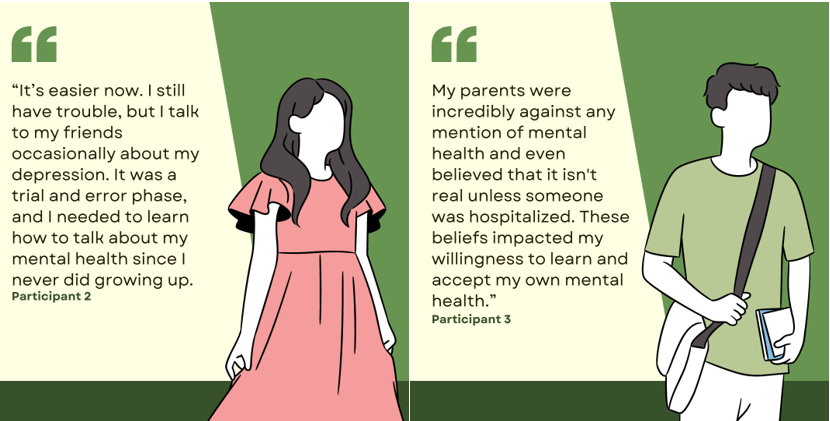
Figure 1: Quotes from two Chinese undergraduate students talking about their current journey with mental health and its dialogue. Participant 2 (left box) needed to learn how to talk to her peers. Participant 3 (right box) believed that their upbringing and their parents’ mental health stigma played a role in their ability to address their mental health.

Chinese students who grew up in a family that stigmatized mental health, primarily through conversation or a lack of conversation, came into college feeling uncomfortable with starting conversations about mental health. Even when they sought out support from friends, it was a slow process. One student stated that it was a “trial and error phase,” they were uncomfortable talking to their friends or therapist but knew it was necessary for “healing.” In the same conversation, they said they slowly learned how to “properly” tell their friends as they never learned how to. Participants implied that they feel like there is a right way to talk about mental health, but they lacked the toolkit to do so due to their cultural upbringing.

Differences Between Conversations and Language with Parents and Peers

Students meticulously choose words when talking to their parents because they recognize the culture and barriers they were raised with. When they brought mental health up as an undergraduate student, they used terms they believed would be better accepted by their parents.

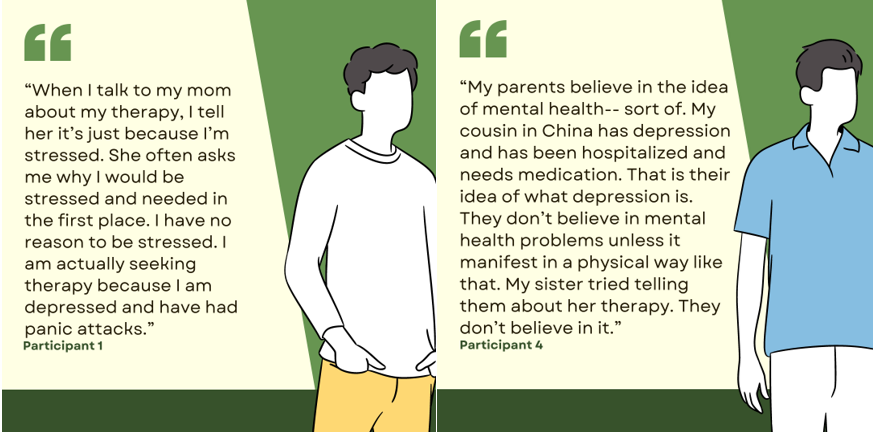
Figure 2
Quotes from two Chinese undergraduate students talking about how and why there are differences in how they talk about mental health to their parents versus their peers. Participant 1 (left box) reveals how he has to think about the right words to use to talk about his mental health with his parents. Participant 4 (right box) believed that because their parents have a specific view of what mental health is, they have to be careful with how they talk about mental health, especially if it does not fit their parents’ perception.

When speaking with peers, participants believed they had a space to be accepted, compared to speaking with their parents. During these conversations with their peers, they openly use terms like “depression,” “anxiety,” and “panic attacks.” When speaking with their parents, they use euphemisms. One participant uses “stress” instead of “depressed” because their parents better understand it, though it is still brushed over in conversations. The identity that was being used in each conversation was different. Students were less afraid of being identified as “mentally struggling” when with their friends. Participants expressed that they felt it was something they were all going through. However, using these linguistic labels with parents or elders felt much too far. Three participants indicated that the words “depressed” or “anxious” held more negative weight if said in Chinese in contrast to their English-speaking friends.

Discussion and Conclusions

The beliefs and experiences of these Chinese undergraduate students imply that culture plays a role in the language people use to discuss mental health. Cultural stigma can be perpetuated through the use of communication. Our Chinese participants grew up with a lack of positive mental health dialogue. Mental health dialogues were negative and filled with stigmatizing language. This led to our participants feeling unsure about seeking conversations about mental health with their parents at home.

The lack of opportunities to learn how to discuss mental health created difficulties when it came time for them to have these conversations. When mental health became an important topic in college, where their peers and themselves faced mental health experiences, these Chinese students felt ill-prepared to conversationally start and address the topic. Because of their upbringing, they needed to learn how to reframe their and others’ potential perception of mental health to feel comfortable doing so. Recognizing their parents’ and their peers’ opposing perceptions of mental health impacts the way they choose to talk about mental health, code-switching for the comfort of their parents.

 Communities with stigmatizing cultural beliefs about mental health could lead to individuals having trouble accessing the support that they need because they lack the language to have and start conversations about their mental health. It is then essential to increase access to resources for parents and younger generations. Parents should become knowledgeable about mental health and normalize its dialogue to reduce stigmatization and be open to their children. These resources could provide younger generations with an avenue to recognize and learn about mental health and address it when necessary. Knowing the role of culture also allows professionals to be more culturally aware and adaptive.

Culture can affect how and if people communicate about topics, eventually impacting whether or not people are confident in seeking the right resources. As the mental health crisis among students rises, it is critical to consider all of the factors that could be mitigated to allow students to seek the support they need.

References

Babchuk, Wayne A. and Hitchcock, Robert K. (2013). “Grounded Theory Ethnography: Merging Methodologies for Advancing Naturalistic Inquiry,” Adult Education Research Conference. https://newprairiepress.org/aerc/2013/papers/5

Lipson, S. K., Zhou, S., Abelson, S., Heinze, J., Jirsa, M., Morigney, J., Patterson, A., Singh, M., & Eisenberg, D. (2022). Trends in college student mental health and help-seeking by race/ethnicity: Findings from the National Healthy Minds study, 2013–2021. Journal of Affective Disorders, 306, 138-147. https://doi.org/10.1016/j.jad.2022.03.038

Lu, Xing and Guo-Ming Chen. (2011)”Language change and value orientations in Chinese culture”. China Media Research, vol. 7, no. 3, pp. 56- 63. http://www.wwdw.chinamediaresearch.net/index.php/backissues?id=51

Pedrelli, P., Nyer, M., Yeung, A., Zulauf, C., & Wilens, T. (2015). College Students: Mental Health Problems and Treatment Considerations. Academic Psychiatry: The Journal of the American Association of Directors of Psychiatric Residency Training and the Association for Academic Psychiatry, 39(5), 503. https://doi.org/10.1007/s40596-014-0205-9

Toppelberg, C., & Colins, B. A. (2010). Language, culture, and adaptation in immigrant children. PubMed Central (PMC). https://www.ncbi.nlm.nih.gov/pmc/articles/PMC3526379/

Rüsch, N., Angermeyer, M. C., & Corrigan, P. W. (2005). Mental illness stigma: concepts, consequences, and initiatives to reduce stigma. European psychiatry : the journal of the Association of European Psychiatrists, 20(8), 529–539. https://doi.org/10.1016/j.eurpsy.2005.04.004

Sharma, D., & Dodsworth, R. (2020). Language variation and social networks. https://www.annualreviews.org/doi/10.1146/annurev-linguistics-011619-030524

Shu, J. L., Alleva, J. M., & Stutterheim, S. E. (2022). Perspectives on mental health difficulties amongst second-generation Chinese individuals in Germany: Stigma, acculturation, and help seeking. Journal of Community & Applied Social Psychology, 32(6), 1099-1114. https://doi.org/10.1002/casp.2620

Yin, H., Wardenaar, K.J., Xu, G. et al. Mental health stigma and mental health knowledge in Chinese population: a cross-sectional study. BMC Psychiatry 20, 323 (2020). https://doi.org/10.1186/s12888-020-02705-x

Additional Resources 

https://embed.podcasts.apple.com/us/podcast/the-impact-of-mental-health-stigma-on-chinese-americans/id539018756?i=1000326453174

https://embed.podcasts.apple.com/us/podcast/mental-illness-and-its-cultural-stigma/id1273577192?i=1000420737041

Appendix

Guiding Interview Questions

Defining Mental Health and General Questions

  1. Have you heard of mental health diagnoses? What do you consider as mental health conditions?
  2. How did you learn about the topic of mental health?
  3. Do you know anyone with mental health concerns?
  4. What causes mental health concerns?
  5. How prevalent do you think mental health concerns are within the student population?
  6. What do you think about your own/people’s mental health diagnoses/state?

Family

  1. Do you talk to your family about mental health concerns? Why/why not?
  2. How do you talk to your family about mental health concerns?
  3. Does anyone in your family talk to you about mental health?

Community

  1. Do you talk to your peers about your mental health? Why/why not?
  2. Do your peers talk to you about their mental health? Why/why not?
  3. When talking to your peers/when your peers talk to you about mental health, how do they describe and talk about it?

[/expander_maker]

, , , ,

The Persian Identity Crisis

This study delves into the intricate relationship between language practices and the construction of individuals’ sense of belonging and cultural identity, with a specific focus on the Persian language, also known as Farsi. For second-generation Iranians residing in Los Angeles, this linguistic journey takes on a multifaceted nature, as they navigate a complex interplay between Farsi and English. This often leads to the adoption of code-switching, a phenomenon where individuals seamlessly alternate between the two languages, colloquially referred to as ‘Finglish’ or ‘Pinglish.’ Through interviews and observations within Iranian diaspora communities, this research aims to answer the following question: “Have Persians lost their self-identity and how is this reflected in language use? Our results would shed light on explaining how language proficiency, cultural adaptation, and social dynamics intertwine to shape the nuanced ways in which code-switching serves as a mechanism for negotiating and expressing multiple cultural identities, thus shedding light on its implications for Persian identity.

[expander_maker id=”1″ more=”Read more” less=”Read less”]

Introduction

The complex relationship between language practices and the construction of individual identity within diaspora communities is an interesting area to study, particularly in the context of second-generation Iranians residing in Los Angeles. Our project focuses on the Persian language, also known as Farsi, and its role in shaping cultural identity among the demographic. In the hugely diverse and multicultural landscape of Los Angeles, navigating between Farsi and English becomes a complex journey, often manifesting in code-switching or more commonly known as “Finglish”. Through a mix of interviews and observations within the Iranian diaspora, it begs the question: Have Persians lost their identity? Furthermore, what language traditions have changed to reflect that language might be a casualty of this identity crisis? Does a change need to happen to regain a sense of identity within the Fasi-speaking communities? By unraveling the complexities of language proficiency, cultural adaptation, and social dynamics, we seek to illuminate how code-switching serves as a mechanism for negotiating and expressing multiple cultural identities, thereby offering insights into the implications for Persian identity in diaspora settings.

Background

When we examine Iran’s rich history, it becomes evident that Iranians possess a heritage steeped in antiquity, vastly different from the modern Iran that it is today. This historical depth is intricately interwoven with the Persian language, serving as a tangible reflection of Iran’s multifaceted evolution. Among some Iranians, regardless of their location, Persian is revered as a cultural benchmark, embodying resilience and continuity across generations. However, the accessibility of resources pivotal for preserving and nurturing Persian proficiency varies among Iranian Americans. While some benefit from cultural events, media outlets, and language courses, others encounter barriers that impede their linguistic immersion and connection to their community.

Thus, many Iranian Americans resort to “code-switching,” a practice where an individual uses two or more language varieties in the same speech event or exchange, as defined by Woolard (2004). Within the diaspora, instances of code-switching manifest in colloquial phrases such as “is so zesht” to denote something ugly or rude, or expressions like “Kheili cute-eh,” signifying endearment. However, code-switching often elicits skepticism within the diaspora, particularly among native speakers. They perceive it as a departure from correct language usage, thereby exacerbating a disconnect between generations and contributing to the evolving linguistic landscape of Persian.

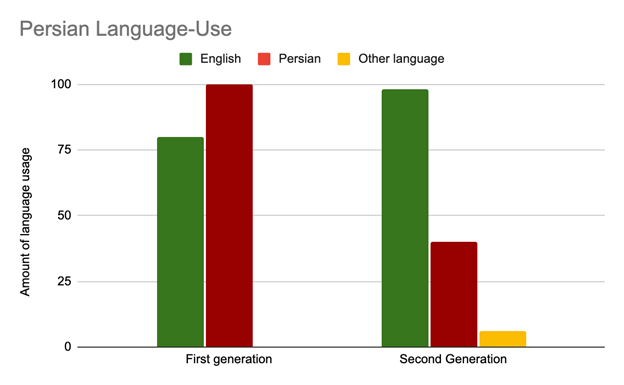
This disconnect is even more evident in the results of the ACS data analysis conducted by Bozorgmehr and Douglas (2011). Their findings reveal a notable linguistic divide within the second-generation Iranian diaspora: while 40% reported proficiency in Persian, a striking 98% acknowledged fluency in English, underscoring the prevalence of English as the dominant language of communication. As second-generation Iranians struggle with the intricacies of their linguistic identity amidst shifting cultural landscapes, this study sheds light on the nuanced dynamics shaping contemporary Persian language usage within the diaspora.

Figure 1: Persian language use among first-generation and second-generation Persians

Furthermore, in the middle of this linguistic mismatch, most of the participants in this survey acknowledge only speaking Persian, while speaking with their group of friends in Farsi alongside English. As a result, diaspora youth unknowingly serve as informal language brokers, facilitating the seamless exchange and merger of both languages in their daily lives. This informal linguistic exchange not only highlights the intricate interplay between cultural adaptation and identity creation but also demonstrates the adaptability of the second-generation Iranian diaspora.

Discussion

The information discussed in this section is a widespread concern among the Persian diaspora. It is a common question of whether Persian is being taught enough, and if not, why parents are not teaching their children Persian. Although the first generation of Iranians overwhelmingly understands Persian and could teach it to their children, they choose not to due to Persian’s position when compared to English. Should a parent teach their child Persian to keep the language alive, and thus risk their child’s ability to speak fluent English, or do they teach their child English first and risk their child’s ability to speak the native tongue well? When framed against the financial success of the Persian diaspora, it makes sense that many would stray away from teaching Persian, even when they could do so.

Survey

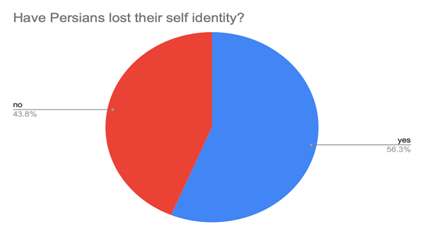
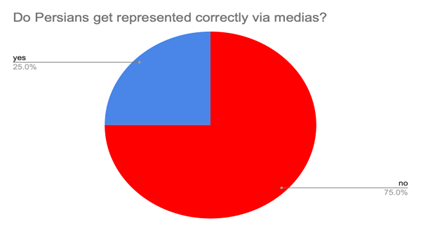
To get a better grasp of Persian Identity, we conducted a brief survey on the UCLA campus and asked participants, mainly of Iranian backgrounds, whether they believe that Persians have lost their self-identity or not. When we gained our participant’s answers and compared them to our original hypothesis, the data shown below was not surprising to us, however, what followed next was:

Figure 2: Have Persians lost their self-identity?
Figure 3: Are Persians represented correctly in the media?

Survey Experiment Conclusion

From the two surveys that we conducted, the data clearly showed us that most Persians do not believe that they have kept their original identity and almost all of them agreed that the media’s coverage of Iranians does not help at all to fix this issue. When we take the findings we gathered from this experiment and combine them with our other data, we constantly see the same trends and conclusions about the Iranian people and their identity which will be discussed in more detail below!

Discussion and Conclusion

When we take a moment to evaluate all of our data and findings that we have stated so far, it is clear to us that the Persian people have lost their identity to some shape or extent. As shown, a lot of our data and participants believe this to be true for the most part and many agreed that for the Persian community to regain their identity and status, something must change with the Iranian Regime (government) representing them back in Iran. Although we do not have public data on this topic many of our participants and even articles universally agree that a direct change to the Iranian regime influences the words views and perceptions of the Iranian people. Overall, we are pleased to report that our original hypothesis of how “Persians have lost their self-identity” is to at least some extent true and the continued destiny of whether it remains true or not simply depends on the actions that the Iranian government and Iranian people continue to take.  

References

Bozorgmehr, M., & Douglas, D. (2011). Success(ion): Second-Generation Iranian Americans. Iranian Studies, 44(1), 3–24. http://www.jstor.org/stable/27919961

Woolard, K. A. (2004). Codeswitching. In A. Durantic (Ed.), A companion to linguistic anthropology. Malden: Blackwell Publishing.

Survey Results

M150 Project Survey

[/expander_maker]

, , ,

Words Matter: How Language Shapes Career Aspirations

Corona Smith, Fehma Zahid, Tadeh Amirkhanian, and Taleen Amirkhanian 

In today’s rapidly changing society, the language we choose to use not only reflects our future aspirations but also has the ability to guide and change them. This study delves into the nuanced interplay between language and gender. Also, it examines how linguistic differences in word choice, tone, and body language shape career aspirations among a wide range of UCLA undergraduate students with diverse backgrounds. Key takeaways from the study indicate that men are indeed more likely to use, ‘stronger,’ language when discussing their futures as compared to their female counterparts. In doing so, the study aims to understand these linguistic patterns to promote an inclusive environment that empowers individuals in pursuing their aspirations – with confidence and determination – regardless of their gender.

[expander_maker id=”1″ more=”Read more” less=”Read less”]

Introduction and Background

Boss or bossy? Assertive or aggressive? These seemingly innocent adjectives are often thrown around the workplace to describe one’s peers and colleagues. However, within the realm of communication, the choice of words carries immense weight, reflecting and perpetuating societal norms and expectations. The dichotomy between being perceived as assertive versus aggressive, or bosslike versus bossy, highlights the distinct linguistic double standards that often characterize interactions between genders.

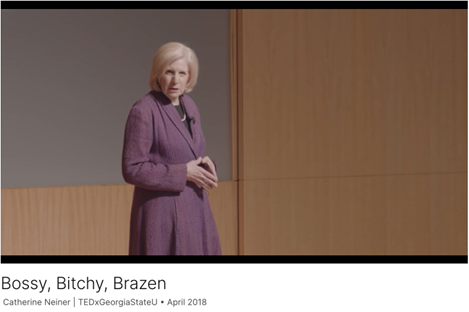
Catherine Neiner’s “Bossy, Bitchy, Brazen” is a great Ted Talk in which she discusses the way that women are perceived in work environments.

Thus, for our research project, we wanted to delve a little deeper into how men and women think about their careers. Our official research question was: Do college-aged women and men use different word choices and tones when speaking about their future career paths? In order to understand this question, let’s explore some past literature.

In previous studies of speech patterns among men and women, researchers found some evidence that women more often made use of cooperative feedback, supportive interruption, questions, accommodating behaviors, compliments, and hedging (Plug et al. 2021). They also found that, when gender identity was made salient to women in the experiment, these women used more tentative language (Plug et al. 2021).

Not only that, but further research also suggests that gender-based differences in language patterns are very common in the workplace. Kristen M. Getchell and Lauren Skinner Beitelspacher conducted research on language that was used to describe male and female CMOs through a Forbes article published in 2020.

Updated annually, this Forbes article provided Getchell & Beitelspacher with their research findings. Click here for the full article from 2023!

They found that female leaders are often described in highly gendered ways that play up their nurturing or communal skills and downplay their agentic or leadership skills (Getchell & Beitelspacher 2020). Women were more commonly described as, “emotional,” “humanizing,” and “compassionate,” while men were more often described with words like, “powerful,” “confident,” and, “bold” (Getchell & Beitelspacher 2020). Because women are spoken about so differently from men in professional settings, we hypothesized that bringing up their careers would make this gendered difference more salient to female participants, which might cause them to speak about their future in a more traditionally “female” way. We hypothesized that these differences would emerge in our research as women use more fillers, hand gestures, and adjectives emphasizing interpersonal skills as compared to their male counterparts.

Methods

In order to investigate this hypothesis, we conducted semi-structured interviews with sixteen college students at UCLA (eight male and eight female). Our participants were selected using convenience sampling. It is important to note that this sampling method could make our results less generalizable. However, since each group member found participants from their own community at UCLA, we feel that we were still able to get a relatively diverse sample, ranging across many different majors and social backgrounds. Since these interviews were semi-structured, we went in with a set of questions but also allowed participants to talk about what they found interesting or important to them. Our questions related to what our interviewees hope to do after college, how confident they are in that path, why they’ve chosen that route, and more (see appendix for a full list of questions). We recorded the interviews so that we could truly analyze the body language and tone after all of the data was collected.

In order to analyze the interview data, we created a spreadsheet that listed different patterns and elements of speech that we expected to see, such as filler words or hedging. We then counted up each time we saw or heard one of these things in order to see if men or women would differ. We also paid special attention to which verbs and adjectives we heard the most from each group. We then looked at all of this data together and came up with our results.

Results and Discussion

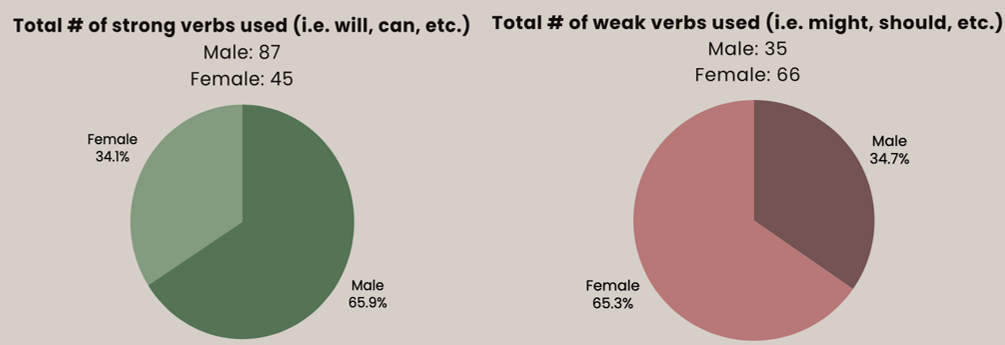
Based on our preliminary research, we hypothesized that college-aged women would speak with less certainty and use fewer words that emphasize power and more words that relate to compassion and emotion. And our findings showed just that. Our research showed that males were almost twice as likely to use ‘assertive’ verbs when speaking about their futures, with almost 66% making statements like: “I will be a doctor in five years”, as compared to only 34% of our female participants. Female participants generally used more modal verbs with approximately 66% of sentences using verbs like might, should, and could (i.e. “I might try to become a lawyer once I graduate”).

Here we can see the breakdown of strong and weak verbs used by our male and female interviewees.

Our research also took note of participants’ body language as they were being interviewed. Most notably, female participants were on average almost 2x more likely to use filler words (i.e. um, like, uh) when speaking about their futures, with approximately 70 instances recorded across eight participants (as compared to 37 in males). Our researchers also qualitatively noted that their female participants used more hand gestures, facial expressions, and movements when speaking and that male participants made more continuous eye contact across interviews.

Further, our analysis extended beyond verb usage to explore the skills participants took pride in, revealing further disparities based on gender. While male participants often listed tangible, technical workplace skills such as proficiency in Python and Microsoft, females were more inclined to highlight intrapersonal competencies like creativity, organization, and communication.

Among other things, these findings suggest that gendered socialization processes may influence individuals’ perceptions of their strengths, with males more likely to prioritize technical skills and females valuing interpersonal abilities. These findings offer valuable insights into the underlying societal expectations that shape individuals’ career aspirations. The use of assertive language among males and tentative language among females highlights the existence of linguistic double standards, which may contribute to disparities in career advancement and achievement.

These findings offer valuable insights into the complex interplay between language, gender, and societal expectations, illuminating the subtle ways in which linguistic cues perpetuate gender disparities in career advancement and achievement. By addressing these biases at an early stage, we can foster an inclusive environment that empowers individuals to pursue their aspirations with confidence and determination, regardless of gender.

References

Getchell, K. M., & Beitelspacher, L. S. (2020). Better marketing for female marketers: Gendered language in the Forbes CMO list. Business horizons, 63(5), 607–617.

Plug, I., Radboud University, NL, Stommel, W., Radboud University, NL, Lucassen, P. L. B. J., Radboud Univ. Medical Centre, NL, olde Hartman, T. C., et al. (2021). Do women and men use language differently in spoken face-to-face interaction? A scoping review. Review of Communication Research, 9, 43–79.

[/expander_maker]

, , , , ,

Bridging Bytes and Cultures: The Impact of AI on Linguistic and Cultural Nuances in Online Conversations

Ley’ah Mcclain-Perez and Ivan Pantoja Tinoco

The digital era is marked by the ascension of artificial intelligence. In particular, this presentation will delve into the transformative influence of ChatGPT on the online communication landscape, particularly within the microcosm of X. This AI-driven tool created by OpenAI not only redefines user interactions but also molds the linguistic contours of digital discourse. Our inquiry is rooted in a critical analysis of ChatGPT’s integration into social platforms, assessing its impact on the quality of communication, user perceptions, attitudes, and the ensuing ethical dilemmas.

Our research navigates through the multifaceted ramifications of ChatGPT, exploring its syntactic coherence and semantic relevance, alongside its occasional pitfalls that may lead to misinterpretations. It highlights the diverse demographic engaging on X, using ChatGPT for various purposes ranging from casual interaction to more substantial exchanges, thus painting a broad spectrum of digital human-AI interaction.

This exploration is not merely an academic exercise but a pivotal discourse that contributes to understanding the nuanced dynamics of digital communication in the AI era. It poses critical questions about the future of online interactions, the role of AI in shaping public discourse, and the ethical boundaries of AI integration into social platforms.

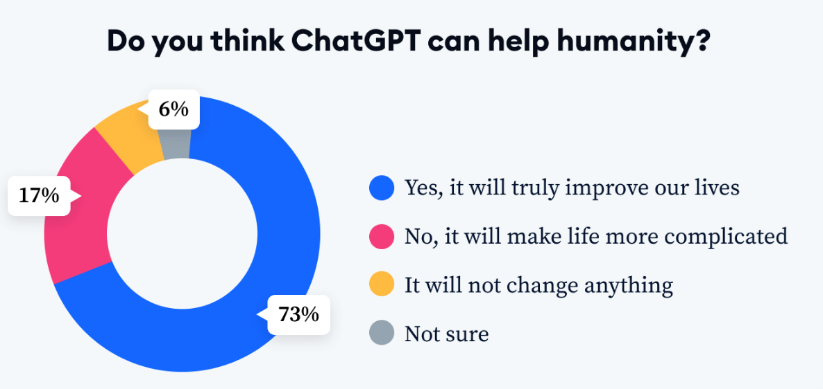
Figure 1: Demographics showing the potential of AI in the case of ChatGPT

[expander_maker id=”1″ more=”Read more” less=”Read less”]

Introduction

In the fast-paced world of online communication, the integration of artificial intelligence (AI) technologies has brought a significant shift in how people interact and engage with digital platforms such as emailing or Twitter. At the forefront of this transformation is ChatGPT, an advanced AI language model developed by OpenAI. With its widespread adoption, particularly on platforms like Twitter, ChatGPT has sparked a wave of curiosity and inquiry into its impact on interpersonal communication dynamics.

 ChatGPT’s presence on Twitter is hard to miss. Its ability to generate text responses that closely mimic human speech has made it a staple tool for many users across the platform. From casual conversations to more formal discussions, ChatGPT has seamlessly integrated into the online social media platform Twitter, which can be deceiving for those who have not incorporated AI into their lifestyles.

Twitter, renowned for its role in facilitating global connectivity, serves as a hub for real-time conversations and idea exchange. Users from diverse backgrounds come together on the platform to share thoughts, opinions, and news. With ChatGPT now part of the conversation, the dynamics of communication have undergone a subtle yet significant transformation, prompting researchers to delve deeper into its implications.

Our study seeks to address several key research questions:

  1. How does the integration of ChatGPT influence the quality and nature of communication within social media and discussion forums?
  2. What are the perceptions and attitudes of users toward ChatGPT-generated content in online interactions?
  3. What ethical considerations arise from the use of ChatGPT in facilitating online communication, and how do users navigate these concerns?
?
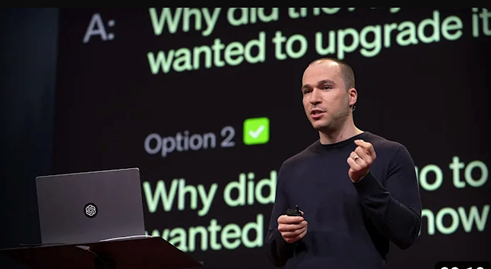
Figure 2: The Inside Story of ChatGPT’s Astonishing Potential | Greg Brockman | TED 

Methods

Our study involved a qualitative analysis of tweets gathered from X users. We collected tweets related to ChatGPT usage from teachers, recruiters, job applicants, and corporate employees. These backgrounds are important to note as these X users were most commonly found tweeting about our topic. Some keywords that we used to find tweets include “ChatGPT email,” “ChatGPT job”, and “ChatGPT ethics.” We filtered each search by tweets from the past year and tweets with the most engagement. Once we obtained these tweets, we analyzed the user’s holistic profile to ensure they were not a bot user. These keywords and filters provided a wide range of perspectives on ChatGPT integration in online communication.

Our analysis focused on categorizing tweets into for and against ChatGPT usage and into categories based on their employment background to discern users’ attitudes towards ChatGPT-generated content. In order to accomplish this, we examined the tone and vernacular of the tweets to distinguish the X user’s attitude. Furthermore, we also examined any memes or emoticons in the user’s tweets as this allowed us to better interpret the tone behind their tweet. Analyzing the tone, vernacular, memes and emoticons was crucial for us to depict any sarcasm.

Results and Analysis

After ChatGPT was implemented in online discourse, our analysis shows notable changes in the tone and linguistic expressions of conversations. The language used is a combination of official and casual, and ChatGPT comments frequently reflect the conversational tone that permeates online interactions. The limitations of AI-generated material in preserving contextual nuances are highlighted by difficulties in interpreting linguistic nuances including comedy, sarcasm, and cultural references.

Discussion

The results of our research provide a more comprehensive view of how online conversation is changing in the era of artificial intelligence. Although ChatGPT makes communication easier and improves accessibility, its effects on language use and cultural dynamics need to be carefully considered. Through adept handling of AI-generated content, we can optimize its potential to enhance digital connections while reducing the likelihood of misunderstandings and cultural insensitivity.

The key to maximizing AI-generated content’s ability to promote meaningful conversation while avoiding communicative dangers is to manage it strategically. Through the development of cultural sensitivity and contextual cue awareness, users may skillfully negotiate the complex landscape of online communication, utilizing AI’s augmentative powers without sacrificing human connection.

An ongoing conversation about the development of digital literacy and appropriate AI use is essential to this project. Giving consumers the means to understand language nuances and make sense of subtle implications helps guarantee that the emergence of AI-driven communication will continue to be a positive force for change.

References

Carrie Bradshaw Hater. “My Students Are Using CHATGPT for Their Essays and Everyone Is Turning in the Same Essay!!!” Twitter, Twitter, 4 Mar. 2024, twitter.com/nancytaughtyou/status /1764491684446900521.

Courtney Glory to Heroes Wells. “I Used CHATGPT When I Was Overtired and Needed to Get an Email to My Daughter’s Teacher That Made Sense and Didn’t Trust My Own Editing. I Don’t Care If She Knows — It’s Better than the Soup She Would Have Gotten If I Did It on My Own.” Twitter, Twitter, 28 Feb. 2024, twitter.com/ndesquiress/status/1762909572807708894.

Kepha, Brian. “Maaan ,CHATGPT Is Great at Corporate Lingo and I Love This.with It, It Is so Easy to Communicate a Serious and Business Tone Especially on Emails and Job Applications. This Is a CHATGPT Appreciation Tweet.” Twitter, Twitter, 29 Feb. 2024, twitter.com/AngelofVerdant/status/1763065674501394463.

Gawne & McCulloch. “Emoji as Digital Gestures.” Language@Internet, 2019.

Posts, Hannah. “It’s Hard to Tell. English Isn’t Her First Language, but the Communication Program I’m Using (I Lied, It’s Not Actually Email) Has a Translate Function She Could Use. in This Particular Instance She Was Just Replying, so All She Needed to Say Was ‘OK.’” Twitter, Twitter, 28 Feb. 2024, twitter.com/HannahPosted/status/1762946495324500456.

Sharma, S., & Yadav, R. (2023). Chat GPT – A Technological Remedy or Challenge for Education System. Global Journal of Enterprise Information System, 14(4), 46-51. Retrieved from https://www.gjeis.com/index.php/GJEIS/article/view/698

[/expander_maker]

, , , , ,

No Güey, Spanish Social Media is a Language Unto Itself

Social media is the vehicle that carries much of our communication and culture across the internet nowadays. Unquestionably, its relevance to today’s society is irrefutable and its ability to be used across multiple languages is something to be studied. The focus of this article looks into whether social media influences Spanish speakers in their everyday use of Spanish like how popular trends across English social media does. This study observed popular trends in Spanish social media and slang often included in posts across popular platforms like Facebook, YouTube, Twitter (X), and Instagram. Then, surveyed UCLA students and high school students discussed their use of social media and whether they use slang learned from social media in their everyday interactions. Respondents showed that while the slang and language they pick up does match what is often seen in social media, they instead stated that they primarily picked up new words from people they talk to often, like friends and family, not social media. Our findings suggest that while social media is a strongly influential phenomenon on individuals, for the Spanish speaker it is more so a reflection of changes in their language rather than being the influencer.

[expander_maker id=”1″ more=”Read more” less=”Read less”]

Introduction and Background

Our research examined the dynamic interactions that occur between Spanish-speaking people and the constantly changing social media environment. Our main goal was to investigate the complex linguistic trends and shifts in Spanish that are made possible by Internet communication. We aimed to investigate how Spanish-speaking users’ word choices and phrases have changed as a result of digital communication platforms by closely examining the impact of social media culture on language use.

Social media platforms are vibrant centers of language exchange in today’s digitally connected world, where users participate in a variety of communication activities, from chats to formal discourse. Our goal in conducting this research was to clarify how this digital world has affected the development of Spanish language usage. Determining if linguistic patterns seen in online encounters result in changes to people’s face-to-face conversational styles was one of the main goals of our research.

The various ways that social media culture affects language use in Spanish-speaking populations are clarified by our findings. As people crossed the digital environment using a combination of traditional language rules and modern terms, we saw fascinating patterns of language creation and adaptation. Additionally, our research demonstrated the close connection between language use in online contexts and physical communication styles, emphasizing the interdependence of virtual and real-world interactions.

Recognizing the subtle aspects of language change on social media platforms is essential for understanding bigger societal transformations and cultural dynamics in today’s digital world. Our research sheds light on the constantly changing nature of language and communication in modern society by exploring the linguistic changes caused by online engagement.

Methods

Our research project embarked on an in-depth exploration, delving into the dynamic evolution of the Spanish language facilitated by the pervasive influence of social media platforms. Targeting Spanish-speaking users, particularly high school and college students, our study aimed to comprehensively understand linguistic trends and shifts induced by internet culture. Specifically, we sought to discern whether users’ word choice on social media platforms diverged from their conversational language usage. Our methodology encompassed two primary approaches: social media analysis and surveys conducted among high school and college-aged Spanish speakers.

To dissect linguistic patterns prevalent on social media, we undertook a meticulous examination of word choice employed by Spanish-speaking users across platforms such as TikTok, X, and Instagram. This process involved deploying conversational analysis techniques to scrutinize the content and language structure evident in user-generated posts, comments, and interactions. Through this methodological approach, our aim was to unearth prevailing trends in language use, encompassing the prevalence of slang and informal speech styles within these digital spaces. Simultaneously, we administered surveys to high school and college students who self-identified as Spanish speakers. These surveys were thoughtfully designed to ascertain the vocabulary and language preferences of students in their online interactions. By comparing the linguistic behaviors observed on social media with those reported in the surveys, we sought to elucidate any disparities or consistencies across different communication mediums. Furthermore, qualitative interviews conducted with a subset of participants provided additional insights into how social media platforms influence language use among Spanish-speaking youth, thereby shedding light on potential shifts towards either more informal or formal speech patterns.

Overall, our research endeavors were dedicated to unraveling the intricate relationship between social media culture and language evolution within the Spanish-speaking community, with a particular focus on high school students as a pivotal demographic in this evolving digital landscape.

Results and Analysis

Our observational data showed that Spanish-speaking online users, such as influencers from top-liked posts, frequently used slang or informal words in Spanish when recording a video. The most common words throughout the posts were the following: “no mames” (no way), “bichota” (a female drug lord or female empowerment), and “de veras” (really). For example, this line with “no mames” from a YouTube video with over a million views, has become a voiceover used by other influencers across social media platforms.

However, only 8 out of 22 participants from our survey data reported learning about “no mames” and “deveras” from social media, while more than half explained learning these and other Spanish words from their family and friends. No one reported learning about “bichota” and 3 participants reported learning about abbreviations, such as “que,” “porque,” and “te quiero mucho” from social media, which contrasted from our observational data.

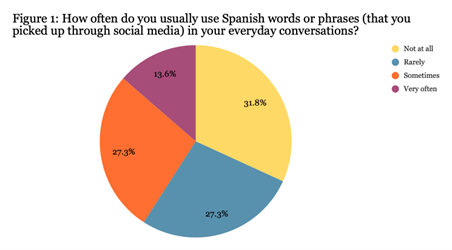
Additionally, Figure 1 shows that about 60 % of participants reported “not at all” or “rarely” using Spanish words learned through social media compared to the 40 % who “sometimes” or “very often” use these Spanish words in everyday conversation.

Figure 1: Participants’ frequency of Spanish words or phrases (picked up through social media) in everyday conversations

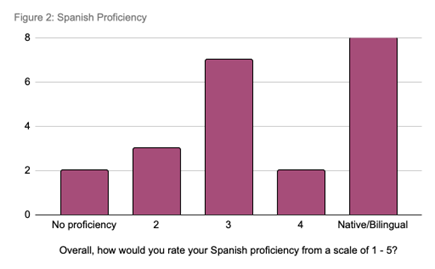
Figure 2 illustrates the Spanish language proficiency of the participants to confirm that they were from Spanish-speaking communities when making our analysis. 

Figure 2: Survey participants’ self-evaluated Spanish proficiency

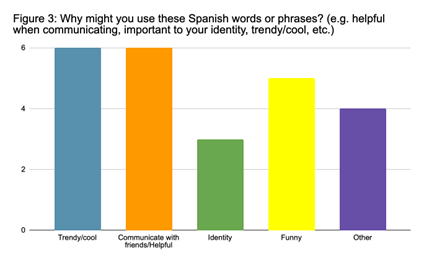
Figure 3 summarizes the participants’ reasoning for using Spanish words from social media as “trendy/cool,” “funny,” and helpful when communicating with other Spanish speakers.

Figure 3: Reasons participants use Spanish words from social media

So, while an individual can use slang in social media and in everyday conversation, they will actively choose based on who they are talking to, which may not match what they encounter or see on social media.

Discussion and Conclusions

Our research ventured into the vibrant intersection of social media and the Spanish language, revealing intriguing insights about linguistic evolution in digital spaces. Despite the prevalent use of slang and informal expressions by Spanish-speaking influencers on platforms like TikTok, X, and Instagram, our findings suggest a nuanced relationship between online language trends and everyday speech. Contrary to our initial hypothesis, the majority of surveyed Spanish speakers did not attribute their linguistic repertoire to social media influences. Instead, personal interactions with friends and family emerged as the primary sources for acquiring new slang and expressions. This indicates a significant degree of linguistic autonomy among Spanish speakers, who navigate between the informal lexicon of digital spaces and the colloquial language of real-life conversations.

While social media undoubtedly shapes contemporary discourse, its role in directly influencing everyday Spanish language use appears limited. Our participants demonstrated a discerning approach to language adoption, selectively integrating social media slang into their conversations based on context and audience. This selective assimilation underscores the adaptive nature of language use, where individuals tailor their speech to suit specific social settings and relationships.

Our study sheds light on the complex dynamics of language evolution among Spanish speakers in the age of social media. While digital platforms offer a rich tapestry of linguistic innovation, the essence of language change remains deeply rooted in human interaction and social networks. Social media, therefore, serves more as a mirror reflecting ongoing linguistic shifts rather than the primary catalyst for change.

References

Alim, H. S. (2005). Hearing What’s Not Said and Missing What Is: Black Language in White Public Space

Cycyk, L. M., & De Anda, S. (2021). Media exposure and language experience: Examining associations from home observations in Mexican immigrant families in the US. Infant Behavior & Development, 63, 101554. https://doi.org/10.1016/j.infbeh.2021.101554

Gonçalves, B., & Sánchez, D. (2016). Learning about Spanish dialects through Twitter. Revista Internacional de Lingüística Iberoamericana, 14(2 (28)), 65–75. http://www.jstor.org/stable/26379776

Gottfried, J. (2024, January 31). Americans’ Social Media Use. Pew Research Center: Internet, Science & Tech. https://www.pewresearch.org/internet/2024/01/31/americans-social-media-use/

Kircher, Ruth, and Ethan Kutlu. “Multilingual Realities, Monolingual Ideologies: Social Media Representations of Spanish as a Heritage Language in the United States.” Applied Linguistics, vol. 44, no. 6, Jan. 2023, pp. 1077–99. https://doi.org/10.1093/applin/amac076.

Li, C., & Liu, J. (2017). Effects of using social networking sites in different languages: Does Spanish or English make a difference? Computers in Human Behavior, 74, 257–264. https://doi.org/10.1016/j.chb.2017.04.031

Majors, A. L. (2017) Social Media and Discourse: A Comparative Study of English and Spanish Apologies. LSU Master’s Theses. 4425.

Ramirez, N. J., Hippe, D. S., & Lindekugel, K. (2022). Electronic media and social features of language input in bilingually-raised Latinx infants. Infant Behavior and Development, 68, 101740, ISSN 0163-6383. https://doi.org/10.1016/j.infbeh.2022.101740.

[/expander_maker]

, ,

Multimodal Interactions Between Solicitors and Students on Bruinwalk

Reina, Pierce, Emily, Whitney, Nick

As the central thoroughfare on campus, Bruin Walk is a heavily trafficked walkway that is an important center of student life and interaction. Known as a place where student organizations hand out fliers about their club and fundraise, it is a site of frequent, multimodal communication between students passing by (“students”) and students marketing their clubs (“solicitors”). As students navigate solicitors from all directions who are trying to persuade them to accept their flier or buy a pastry, they must utilize different communicative strategies when indexing their acceptance or rejection of solicitors, considering norms of politeness in the unique communicative environment of Bruin Walk. Using participant observation, surveys, and interviews, this research focused on how students communicate their rejection or acceptance of solicitors in the context of politeness. We found that students overwhelmingly use non-verbal communication to signify their rejection of solicitors. Furthermore, we found that because of the unique communicative environment of Bruin Walk, students operate within altered norms of politeness. Students express their rejection in ways that normally would be considered rude, but are socially acceptable on Bruin Walk.

[expander_maker id=”1″ more=”Read more” less=”Read less”]

Introduction

If you want to get anywhere at UCLA, you’ll probably have to walk through Bruin Walk. As one of the central arteries to get to class, you will usually find a constant flow of people on Bruin Walk making it a prime location to get people’s attention and distribute information. Every weekday, student organizations, religious groups, and other groups not affiliated with UCLA set up camp on Bruin Walk. They sell food to raise money, hand out fliers to persuade people to join their club, or encourage students to support their cause. When you walk down Bruin Walk, you will certainly be bombarded by people trying to hand you fliers, see at least one club selling Porto’s pastries, or be approached by students from CalPirg asking for donations. Consequently, Bruin Walk is a site of frequent, multimodal communication between students and solicitors. Walking down Bruin Walk is a shared cultural experience of the UCLA Community, and the legacy of the phenomenon is memorialized through internet memes, skits at Spring Sing, and by tour guides explaining to potential future Bruins. While some students love checking out clubs and seeing what food is for sale, others dread the concentrated, intense intervals of social interaction it entails. As students navigate solicitors from all directions who are trying to persuade them to accept their flier or buy a pastry, they must utilize different communicative strategies when indexing their acceptance or rejection of solicitors. What are these linguistic strategies, and why do students choose them? Which ones are most frequent? Do students consider norms of politeness when interacting with solicitors? In order to answer these questions, we studied how students display rejection, support, or avoidance towards solicitors and how politeness operates in the context of Bruin Walk.

Background

Language is multimodal, meaning it encompasses more than just verbal communication and operates on “multiple levels and through multiple channels” (Jakobson, 1960, as cited in Ahearn, 2021, p. 35). Other modes of communication include “nonverbal gestures, gazes, facial expressions, body movements, written texts, computers, material objects, or other semiotic forms” (Ahearn, 2021, p. 35). Of particular interest for our research is nonverbal communication and body language as modes of meaning-making for students on Bruin Walk.

Politeness theory is a framework proposed by Brown and Levinson that seeks to understand how people use language to navigate social interaction and relationships, rooted in the concept of “face” (Brown and Levinson, 1987). Brown and Levinson describe “face” as the “public self-image that every member wants to claim for himself” (Brown and Levinson, 1987, p. 311). To make it simpler, think about the phrase “losing face”. This phrase means to be embarrassed or humiliated. Thus, people try to maintain their face in order to claim their self-image and be accepted by others. Brown and Levinson’s concept of face consists of “positive face”, which describes the desire to be approved, liked, and valued, and “negative face” which describes the desire for autonomy and freedom from imposition (Brown and Levinson, 1987, p. 311). People must cooperate with others to maintain their face, and will defend their face should it be threatened (Brown and Levinson, 1987, p. 311). Positive and negative face-threatening acts (FTAs) are those that could damage one’s self-esteem or autonomy, respectively  (Brown and Levinson, 1987, p. 313). For example, someone telling you to do something would be a negative FTA because it imposes on your autonomy. An example of a positive FTA would be declining an invitation to a party because it would. Politeness strategies are ways to mitigate FTAs (Brown and Levinson, 1987, p. 315). For example, to mitigate a negative FTA, someone could use apologetic language before asking someone to do something (I’m sorry, excuse me, etc.). Polite strategies can also be described as “face-saving acts”.

On Bruin Walk, solicitors and students must navigate dynamics of politeness with regards to positive and negative FTAs and strategies. For example, when a solicitor approaches a student, they commit a positive FTA because they risk being rejected by students. At the same time, they commit a negative FTA because they are imposing on the autonomy of students. Students navigate decisions of whether to “save the face” of solicitors or protect their own autonomy.

The target community of our research is UCLA students on Bruin Walk, including students who are walking on campus, who we call students, and those who are soliciting on Bruin Walk, who we call solicitors. The language used in this community is English, unless a specific cultural club that speaks a different language and targets members of their culture is soliciting on Bruin Walk. Solicitors set up “booths” at the tables that line either side of Bruin Walk, where solicitors might hang colorful posters and signs that visually communicate their cause. Solicitors stand in front of their tables and make statements towards students walking by encouraging them to buy something or join their club. Many clubs hand out fliers to students as well. Consequently, students passing by must respond to the high volume of solicitors trying to communicate with them as they walk by.

Methods

In order to investigate our research questions, we used participant observation, surveys, and interviews. We observed interactions on Bruin Walk during times when students would be walking to class, as these are times when most solicitors are distributing flyers. We took notes on interactions and attempted to tally students based on the types of communication they exhibited (e.g. looking away or saying “no thank you”). However, this proved difficult as hundreds of students could walk by in a period of 10 minutes during peak hours, so it was hard to tally every interaction. On one occasion of doing our fieldwork, we focused on a single solicitor (a man representing a religious group) and tallied student responses to the solicitor over a 20-minute period during a less busy time. We primarily used this data in order to draw conclusions about how students communicate on Bruin Walk.

In addition to observations, we collected seven survey responses to questions about student’s experiences on Bruin Walk. We asked about what forms of communication students use, and why they avoid or engage in interaction. We also conducted two in-depth interviews with two people to further gain insight.

Results

After observing and tallying the ways students interacted with the single solicitor from the religious group, we found that people overwhelmingly used non-verbal signals such as shaking their heads, looking down, or completely ignoring solicitors as a way to express their rejection. Only 13% of interactions with this particular solicitor, positive or negative, involved verbal communication. Furthermore, 46% of students completely ignored the solicitor.

Figure 1: Tally of 44 student interactions with religious solicitor over a 20-minute period

Through the use of surveys, we found that students had various reasons for not interacting with solicitors on Bruin Walk, often relating to time constraints and social awkwardness (See Appendix for more in-depth interviews).

Figure 2: Survey responses

Discussion

When looking at the dynamics of politeness on Bruin Walk, we found that students and solicitors use and interpret negative and positive politeness strategies in ways that differ from normal politeness interactions. The frequent use of non-verbal communication by students contrasts the mostly verbal communication (along with non-verbal such as body movement, colorful signs, etc.) that solicitors use. Furthermore, it is intertwined with dynamics of politeness.  Solicitors are almost always the initiators of interaction, committing a positive face threatening act when they risk being accepted or rejected by students, and a negative face-threatening act when they impose on the autonomy of students. Students assert autonomy and protect their negative face by using non-verbal communication to signify avoidance, and rarely make the effort to save the positive face of solicitors. Students feel that it is acceptable to completely ignore solicitors. While normally completely ignoring someone who risks their positive would be considered rude, it is socially acceptable on Bruin Walk. One solicitor we interviewed said that they didn’t think it was rude to ignore solicitors, because he empathized with the desire to be left alone (See Interview 3). However, he did think it was nice when people acknowledged him. Furthermore, solicitors adapt their politeness strategies based on the student’s behavior, demonstrating the specified nature of how some solicitors engage with students depending on the situation. This demonstrates how people engage in altered acts of politeness due to the unique communicative environment of Bruin Walk.

This research helps people understand that navigating politeness strategies is complex and that norms of politeness differ greatly in different settings even when situated within the same larger cultural context. For further study, it would be interesting to investigate the role of gender and ethnicity on Bruin Walk interactions.

References

Ahearn, L. M. (2021). Gesture, Sign Languages, and Multimodality. In Living Language: An Introduction to Linguistic Anthropology, Third Edition (pp. 35–53). John Wiley & Sons.

Brown, P., & Levinson, S.C. (1987) Politeness: Some Universals in Language Usage. Studies in Interactional Sociolinguistics. Cambridge: Cambridge University Press.

Appendix A: Interviews

Interview 1: 2nd Year Commuter Student

  1. How many times per day do you walk down Bruin Walk? Are you usually walking or with friends?
    I am usually by myself. I walk there about once or twice a day, since I commute and I usually pass by there when I go to Ackerman.
  2. Do you usually interact with solicitors down Bruin Walk? If so, what usually calls your attention?
    I don’t like to. I am a very awkward person.
  3. Do you like when solicitors interact with you down Bruin Walk?
    No.
  4. Why don’t you like interacting with solicitors down Bruin Walk?
    Because I am in a hurry to go to class, usually I am always running late.
  5. How do you think solicitors are most effective at getting your attention? What signals do they use?
    When there are a lot of people, I like to see what’s up because they might be selling something I’d be interested in.
  6. Are there certain strategies that you think are rude?
    I think it’s rude when they see me wearing my headphones and try to talk to me.
  7. Do you feel bad when you ignore a solicitor?
    YES! But I’m just trying to get to class.
  8. What do you think about the environment of Bruin Walk makes it so notorious for lots of interactions with solicitors?
    Since it’s always so busy with many students, every club provides different opportunities for students to interact with things of their liking. I really like that Bruin Walk exists for people who want to be more involved. But I personally would like to be more involved, it’s just the fact that I am a commuter that I do not have time to even join any clubs or be involved.

Interview 2: 2nd Year Student, Lives off-campus

  1. How many times per day do you walk down Bruin Walk? Are you usually walking or with friends?
    Maybe like 2-3 a day. I just walk alone.
  2. Do you usually interact with solicitors down Bruin Walk? If so, what usually calls your attention?
    I hate interacting with solicitors down Bruin Walk! I just hate it. Like I am just trying to get to class, and they are always waving their fliers, and waving their hands to get my attention. I even try to avoid walking down Bruin Walk, it’s the same thing every single time.
  3. Do you like when solicitors interact with you down Bruin Walk?
    No. Not at all.
  4. Why don’t you like interacting with solicitors down Bruin Walk?
    I am so awkward and I hate interacting with people I do not know. Especially people down Bruin Walk are annoying. I’m sorry.
  5. How do you think solicitors are most effective at getting your attention? What signals do they use?
    Honestly, I get why they do it. Some of them are just trying to make their money and that’s good. But they should know who and not to approach, especially when I have my head facing down to avoid them.
  6. Are there certain strategies that you think are rude?
    I just don’t like when they interact with me while they see me with my head down and my big headphones.
  7. Do you feel bad when you ignore a solicitor?
    Not really.
  8. What do you think about the environment of Bruin Walk makes it so notorious for lots of interactions with solicitors?
    There are different clubs that could potentially interest people. I know I have to join clubs and make more social interactions. Since I’ve been at UCLA, I have not really made friends, and I live in an apartment in Westwood, but I do not have many friends. I need to also build my resume for a better job, and I know that joining those clubs that are on Bruin Walk would be good. I am just socially awkward, but that’s something I need to work on. The good thing is that whenever I am ready Bruin Walk is there for me to go and join a club or something.

Interview 3: Solicitor for a Pre-Med Club

  1. Are there any circumstances in which you won’t approach someone?
    “If someone is intentionally avoidant I probably won’t talk to them. Body language is very indicative. If people are in a large group I probably won’t talk to them either.”
  2. Do you think it’s rude when people ignore you?
    “I don’t think it’s rude when people ignore me, but it’s nice when they acknowledge me. I get that people don’t want to be bothered, because sometimes I’m walking on Bruin Walk and just want to be left alone”

[/expander_maker]

, ,

CODE SWITCHING!: A phenomenon among bilinguals and its deeper role in identity formation

Leon Kaprielian, Octavio Santana, Sahil Sadiq

In an era marked by globalization and multiculturalism, the phenomenon of code-switching has emerged as a crucial aspect of language dynamics and identity formation among bilinguals. The complexities of code-switching, its popularity, and its deeper ramifications for people navigating many linguistic and cultural domains are explored in this research. We examine how code-switching is used in immigrant communities as a tool for social interaction, identity negotiation, and effective communication through a multidisciplinary lens that takes into account linguistic, cognitive, cultural, and social factors. Based on naturalistic observations and interviews with Farsi, Spanish, and Arabic bilingual speakers, we investigate the complex patterns of code-switching in various age groups and social circumstances. Our research shows that code-switching is a reflection of complex social dynamics, such as social hierarchy, respect for elders, and the maintenance of cultural identity, rather than just a linguistic issue. This study emphasizes how crucial it is to comprehend language practices in a multicultural and globalized world by shedding light on the significance of code-switching in forming people’s identities and social structures.

[expander_maker id=”1″ more=”Read more” less=”Read less”]

Introduction

Code-switching was formerly thought to be a linguistic oddity, but research has since shown that it is a regular aspect of language use. It illustrates the intricate interactions between linguistic, cognitive, cultural, and social elements that influence social interaction and identity formation. Determining the mechanics of bilingualism and multiculturalism, illuminating the complex ways language influences social structures and human interaction requires an understanding of code-switching. 

What is code-switching?!

Code-switching is the fluid transition between two or more languages in a single discourse and is an effective communication and identity-negotiation technique for immigrant communities. Moreover, it is a great way for individuals to build rapport with members who speak the same language.   The informal aspect of this will lead to a higher frequency of code-switching and a willingness to express one’s cultural identity, as opposed to a formal environment.  In terms of the types of code-switching, it comes in three forms, intrasentential, intersentential, and tag switching.

Figure 1: Types of code-switching: intersentential, intra-sentential, and tag-switching

New to code-switching? Here are the methods we used and how you can do it too!

In this post, we’ll discuss methods used for collecting the data that include studying code-switching in a natural environment, and with the authentic use of language by bilingual or multilingual speakers. One of the ways we are going to collect the data is by naturalistic observation. This involves observing naturally occurring conversations in its most pure form, which is essentially the most authentic form of data collection by bilingual and multilingual individuals. To give an extra set of diversity and universality in this regard, there are going to be 3 languages discussed: Farsi, Spanish, and Arabic.

Results

Farsi (Dari)

There is a difference in the amount of code-switching in regards to whether a Gen Z immigrant is speaking with their own age group or with elders.  In Farsi, when one is speaking with elders, it occurs at a much higher frequency and it is more on the “Intersentential” level.  The reasoning is due to 1) Innate understanding that the elders prefer the native language 2) The elders’ proficiency in English is not as advanced.

In regards to when the Gen Z bilinguals speak amongst themselves, there is more English spoken, and during the naturalistic observation, the ratio was 80% English to 20% Farsi.  When the code-switching did occur, unlike with the elders, which (was usually intersentential), it was intrasentential and tag-switching

Figure 2: Frequency of code-switching among Farsi speakers (Example: “Bro he’s extremely نابغه (genius) when he explains things. – this is an example of tag-switching)

Lastly, although naturalistic observation was the main method to keep the results as organic as possible, interviews with 2 of the Gen Z members were held to articulate and discuss potential biases and limitations.  One of the members (20 years old) said the code-switching just happened naturally without much thought.  The eldest in the observation (29) said that he does it naturally but also consciously, either due to the fact certain words in Farsi seem articulated better, and also to build rapport with the group culturally, which ties into our main thesis that the phenomenon of code-switching is usually intimately linked to one’s cultural identity.

Spanish

To continue, Spanish and English bilingual speakers tend to gravitate towards an unofficial language, Spanglish. This is when English and Spanish are combined in conversation. Spanglish is a form of code-switching, setting the foundations for forming one’s identity, while simultaneously maintaining their culture.

The method used was a naturalistic observation of a phone call between a bilingual speaker and their parents. They answered the phone in English, just like they do with friends and people of the same age. Spanish was used rarely and the language used had no link to what type of person they were speaking to. The phone then got passed to the speaker’s grandma, and that is when the bilingual speaker started speaking only Spanish. The Spanish the speaker used were easy to decipher that they were speaking to someone of an older age because words like “usted”(you) and “mande”(excuse me) were used. These are formal words and are used when speaking to strangers or elders.

After tallying up the number of formal words used in the phone call, all of them came when speaking Spanish, except one coming from English. The research shows that code-switching can occur within a family and also how a change of language is made to show respect. The same goal could not be achieved with English, since Spanish has an emphasis on formal speaking, causing the speaker to have a complete shift of identity when code-switching.

Figure 2: Frequency of formal words used between Spanish and English from a bilingual speaker

Language is inherently tied to respect when concerning age, class, and gender in Spanish, showing how language can shape the way one thinks.

Arabic

Bilingual Arabic speakers are more likely to use religious jargon (inshallah, mashallah) when interacting with parents and other elders. When speaking to friends, siblings, and cousins they are most likely to speak a 70/30 mix of English and Arabic in contrast to a 20/80 mix when speaking to Elders. Another important consideration is the intonations and accents used for certain words when speaking each language. Because Arabic and English have a very different set of sounds, the same word can be pronounced differently depending on the spoken language. For example, most native speakers of both English and Arabic know that Pepsi – with a p – is the correct pronunciation of the soda, however, they will still pronounce it like Bebsi with a b sound when speaking Arabic. This is done to signal that the speaker is native in Arabic and is part of the Society of native Arabic speakers who do not use the P sound.

Discussion and Conclusions

All three languages investigated truly show just how intricate and complex languages are, especially when it comes to code-switching. Our research shows how code-switching plays an extremely crucial role in forming one’s identity and how it goes beyond just language. It reflects social dynamics like social status, respect for elders, and cultural identity preservation. Our study contributes to the gap of knowledge of understanding how native languages travel down from generation to generation in immigrant families in America, and how code-switching shapes who we are and the social groups we belong to.

References

Albirini, A. (2011). The sociolinguistic functions of codeswitching between Standard Arabic and Dialectal Arabic. Language in society, 40(5), 537-562.

Heller, M. (2020). Code-switching and the politics of language. In The bilingualism reader (pp. 163-176). Routledge.

Kachramanian, C. (2021). Bilingual Interactions: An Investigation into Code-switching and Its Purposes among Armenian-Dutch Bilinguals.

Klavans, J. L. (1985). The syntax of code-switching: Spanish and English. In Proceedings of the Linguistic Symposium on Romance Languages (Vol. 14, pp. 213-231). Amsterdam: Benjamins.

Martin-Jones, M. (1995). Code-switching in the classroom: Two decades of research. One speaker, two languages: Cross-disciplinary perspectives on code-switching, 90-111.

Myers‐Scotton, C. (2017). Code‐switching. The handbook of sociolinguistics, 217-237.

[/expander_maker]

, , , , , ,
Scroll to Top