Generational Differences in Social Media Communication

Giordano Camera, Dylan Carr, Phoebe Haas, Nicole Wasserman

Have you wondered why your dad sends you extremely long texts compared to your best friends, who use memes and slang phrases for most of their communication? In our study, we explored two generations, Generation Z and Generation X and their language use on online social networking sites. We studied different social media posts between the two generations and looked at the differences in how they communicate, especially using text-dominant platforms. We used a plethora of social media sites to validate our findings, but our main areas of study were Facebook and Twitter/X. Our study concluded that Generation Z uses fewer words, more images in their post, and more slang phrases than Generation X does. We want our findings to highlight the contrast between the way these two generations communicate, as miscommunication can lead to unnecessary conflict. Our research contributes to the process of cataloging online communication trends among different generations.

[expander_maker id=”1″ more=”Read more” less=”Read less”]

Introduction

Our group aimed to study the differences in how different generations communicate on various social media platforms. Since its creation, social media has become a place where individuals can communicate with each other in ways they could not have before. People also tend to communicate on a topic that is currently popular in a particular social group, regardless of age (You et al. 2017). Using that factor, we can find valuable data that proves our hypothesis correct. Our research method proved perfectly accurate, as all of our data was correct, with minimal gaps in our study. Our group hopes that the data findings we provided also propel researchers to study differences in communication for other generations. The prevalence of social media is only growing, so our data can act as a stepping stone for future studies.

Methods

Our primary method of data collection revolved around influential people on social media. We would look at social media posts discussing a variety of topics (such as sports, popular culture, and politics) in order to look at data from a wide range of people, like Donald Trump. We made sure to expose ourselves to Generation Z and Xers from each perspective. This is because there are a lot of varying opinions by a diverse group of people on popular posts compared to smaller tweets that may have more of a hive-mind mentality. In addition, we looked at a variety of topics to get stronger evidence and to ensure the communication differences we found were not due to any topic differences (Achinstein, 1994).

Originally, we planned to contact people on Twitter or Facebook to gather their age, but instead, we only targeted accounts where they said their age in a previous post/bio or where it was publicly available (like a celebrity). Once we collected twenty Twitter/Facebook accounts from each generation, we randomly selected three accounts from each generation to really do a deep dive on. While we didn’t interview the people behind the social media accounts that we found like the researchers at Pennsylvania state did, we found that it was unnecessary as all information was available publicly (Zhao and Rosson 2009). In a matched pairs case study, we assembled all of the posts in an easy to view format and then compared the content of each generation’s posts. We noticed a variety of clashing factors across generations, and simultaneously noticed similarities within.

Results

After conducting our research, we found that there were many differences between the ways Generation X and Generation Z communicate online in posts and tweets on social media. Our results showed that differences in online communication was not dependent on the topic of the post or tweet (ie. sports, popular culture, politics) nor the social status of the user (ie. celebrity or common folk), but rather the age generation of the user.

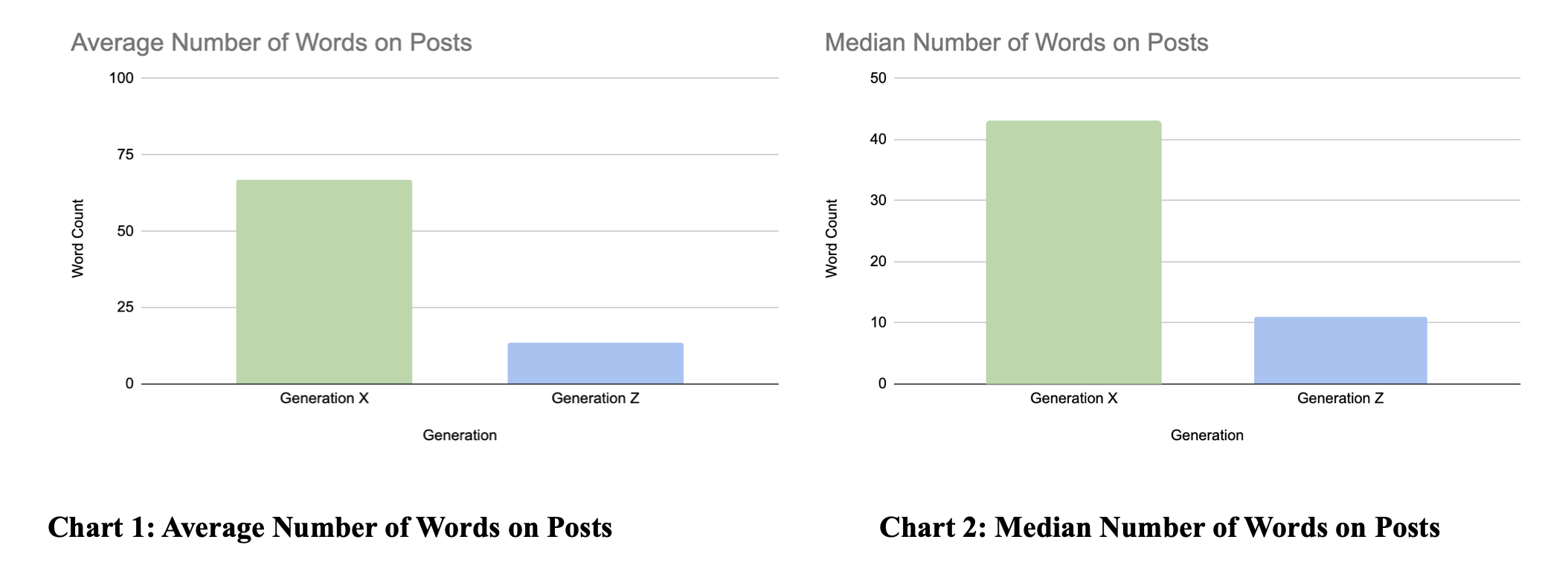
One difference we found in the posts and tweets we analyzed was the number of words that each generation tended to put in their post/tweet. As seen in Chart 1 below, the average number of words on a post/tweet by a member of Generation X was 67 words and the median was 43 words. As seen in Chart 2, the average number of words by a member of Generation Z was 13.4 words, with the median being 11 words. From this, we concluded that Generation X tended to conduct more lengthy and descriptive posts with complete sentences in comparison to the younger Generation Z.
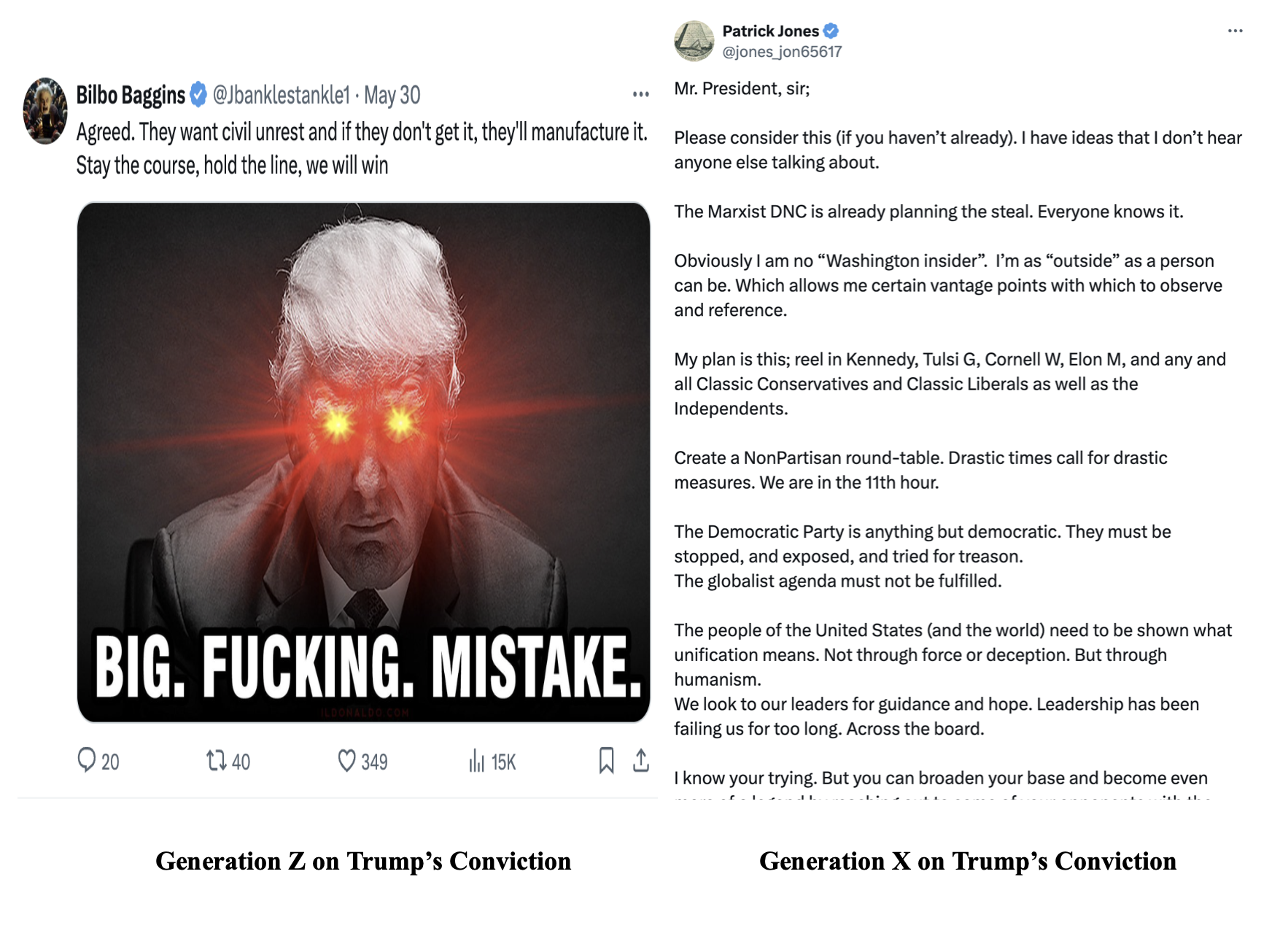
Another difference between the generations we found from our results includes the tendency for Generation Z to incorporate pictures in their posts/tweets and for the lack of imagery in posts/tweets by Generation X. Below is an instance where a member of Generation Z, Bilbo Baggins, uses a picture in their tweet about Trump’s recent conviction and the member of Generation X, Patrick Jones, does not.
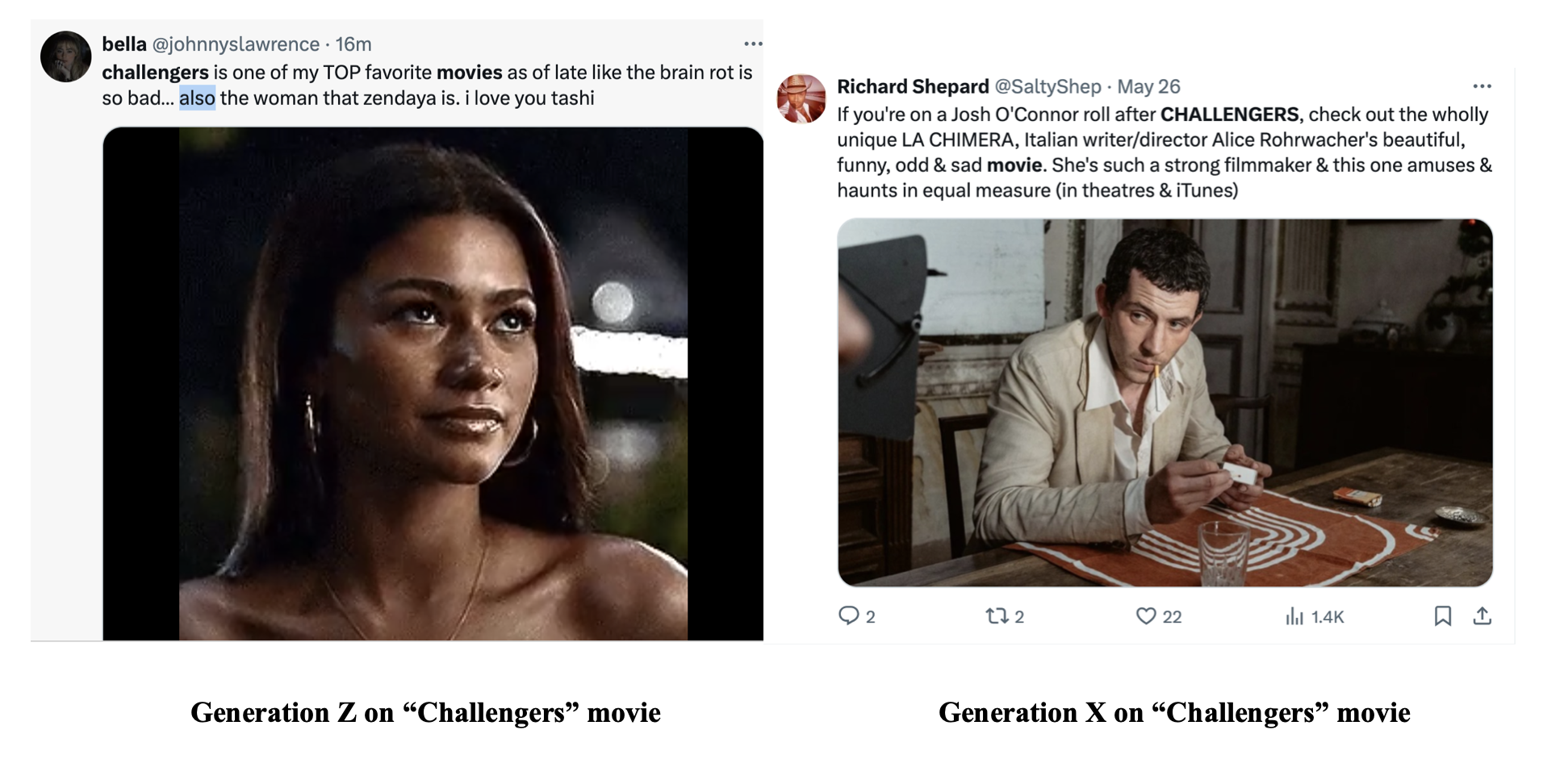
Another contrast was the tendency for Generation X to more likely include words in all capital letters and the tendency for Generation Z to have slang terms in their posts/tweets. Below is an instance where a member of Generation Z, bella, uses a slang term, “brain rot” and the member of Generation X, Richard Shepard, does not include any slang words. The term “brain rot” is a slang term used by Generation Z (TikTok “Brain Rot”: How TikTok Is Changing the Way Gen Z Speaks | Redbrick Life&Style, 2024). Also in the example below, the member of Generation X has two words in all capital letters while the member of Generation Z only has one, and it is a shorter word. Both users are discussing the recent “Challengers” movie.
Discussion

Our findings demonstrate clear online communication trends within both generations that are not shared by the other generational group. These distinct patterns in writing and visual communication on social media add to our understanding of how different generations communicate in ways that do not always align with one another. These differences can contribute to intergenerational misinterpretations and tension. Our project identified what some of the prominent generational patterns on social media are, which are beneficial findings that provide a basis for wider intergenerational understanding. Additionally, it lays the groundwork for future research, such as the intricacies of these patterns and how the other generation perceives them.

The results of our research aid in our understanding of two broader phenomena: generational differences and online communication trends. As social media continues to grow and become a staple in people of all ages’ lives, it becomes a new arena for intergenerational tension to arise and unfold. Certain aspects of an age group’s communication can be specific and unique, and does not usually reflect ill intent. This knowledge is important for maintaining dialogues between multiple age groups, so that they do not fall to misunderstandings due to believing a form of speech was rude. For example, Gen X’s use of all capital letters for certain words could potentially be read as aggressive by a younger person who rarely does so, while Gen Z’s use of slang and images may appear unserious or confusing to an older person. Previous research has demonstrated similar phenomena, such as younger people finding the use of periods in text messages to have a negative valence and make the message insincere (Gunraj et al., 2015). Knowing these communication methods are simply an attribute of their generation can ease any potential misgivings on the receiver’s end.

Analyzing the patterns found in our research can also contribute to future literature about online trends and cycles. Gen Z especially uses numerous contemporary references and constantly evolving slang terms and reference images that reflect the state of the internet and popular culture, particularly within their generation’s main bubble on the web. Our findings contribute to the academic understanding of social media trend cycles and communication.

In conclusion, our research begins to catalog numerous generation-specific social media communication patterns into the literature on online communication. We provide many examples of observable differences between how Generation X and Generation Z structure text-based posts on social networking sites, often in ways that directly contrast each other. Though we can offer hypothetical insights into potential misunderstandings these may cause, we recognize that further research is required to analyze these trends in full and begin to study how they verifiably contribute to intergenerational conflict.

References

Achinstein, P. (1994). Stronger Evidence. Philosophy of Science, 61(3), 329–350. https://www.jstor.org/stable/188049?seq=21

Gunraj, D. N., Drumm-Hewitt, A. M., Dashow, E. M., Upadhyay, S. S. N., & Klin, C. M. (2015, November 22). Texting insincerely: The role of the period in text messaging. ScienceDirect. https://www.sciencedirect.com/science/article/abs/pii/S0747563215302181?via%3Dihub

TikTok “Brain Rot”: How TikTok Is Changing The Way Gen Z Speaks | Redbrick Life&Style. (2024, April 22). Redbrick. https://www.redbrick.me/tiktok-brain-rot-how-tiktok-is-changing-the-way-gen-z-speaks/#:~:text=The%20language%20associated%20with%20Generation

You, Q., García-García, D., Paluri, M., Luo, J., & Joo, J. (2017). Cultural Diffusion and Trends in Facebook Photographs. Proceedings of the International AAAI Conference on Web and Social Media, 11(1), 347-356. https://doi.org/10.1609/icwsm.v11i1.14902

Zhao, Dejin, and Mary Beth Rosson. (2009). How and why people twitter. Proceedings of the ACM International Conference on Supporting Group Work, https://doi.org/10.1145/1531674.1531710.
, , ,

Beyond the Beat: Exploring Objectification in Rap and Country Lyrics

Riley Go, Ashley Lew, Ileen Luu, Ysabella Yuquimpo

“Don’t my baby look good in them blue jeans?” Rap music has been largely criticized for its objectification of women. Yet, why has country music not gained the same reputation? Known for being family-friendly, romantic, and inoffensive, “country music is often left out of sexual media analyses as it is traditionally thought to be less harmful than other genres of music” (Lin & Rasmussen, 2018). However, 2010s studies have exposed the phenomenon of “bro country,” in which country songs have become increasingly misogynistic and centered on attractive, young women in tight clothing and casual sex (Rasmussen & Densley, 2017). Since exposure to objectifying music can lead to harmful outcomes, such as the development of body image issues and eating disorders in adolescents (Flynn, 2016), our research aims to uncover the nuanced ways in which both rap and country music objectify women and perpetuate harmful gender stereotypes, and how they may do this in different ways.

[expander_maker id=”1″ more=”Read more” less=”Read less”]

Introduction

Our focus is on the identities of male rappers and male country musicians, examining how they use lyrics to assert dominance over women and reinforce unequal power dynamics and how these patterns may change over time. Thus, our research question is: “How do the linguistic portrayals of women differ between songs by male rappers and male country musicians from the 1990s to now?”

We hypothesize that both genres contribute to the objectification, domestication, and degradation of women. While rap music is known for overtly promoting misogyny, we hypothesized that country music promotes misogyny in more covert ways (e.g. promoting female domesticity or a possessive attitude toward women).

Male rappers, often from marginalized urban areas, may objectify women and encourage a “player” lifestyle to assert dominance and reaffirm social status within their communities. Weitzer and Kubrin (2009) found that while women were portrayed as subordinate to men in most rock and country songs, rap was the most graphic in objectifying women, rarely depicting them as independent, trustworthy, or educated.

In addition, Adams and Fuller (2006) emphasize how misogynistic lyrics in rap are often at the expense of African American women, portraying them as “ not only something to be used sexually, but…also the recipient of degrading acts, disrespect, and violent behavior.” These portrayals, in turn, reinforce the American population’s negative stereotypes about African American women, and desensitizes them to the mistreatment and abuse of women as a whole (Adams & Fuller, 2006).

Male country musicians, often from rural, conservative areas, may depict women as subservient and dependent on men, to confine them within the patriarchal systems of their communities. Rasmussen and Densley (2017) examine the emergence of “bro country” in the 2010s, characterized by songs focusing on women in revealing clothing and referring to a woman using slang. Discovering that women in country songs in the 2010s were objectified more than in the past, they call attention to the negative progress toward female empowerment within the genre (Rasmussen & Densley, 2017).

Furthermore, Rogers (2013) highlights themes in country music that depict women in traditional gender roles, promote the idea that attractive women inherently have more value, and normalize coercive sexual behavior, suggesting that sexism in country music may be more dangerous when hidden within the lyrics.

Here is a YouTube video, entitled “Why Country Music Was Awful in 2013,” poking fun at the repetitive themes present in “bro country”: https://www.youtube.com/watch?v=WySgNm8qH-I

Methods

For our methodology, we utilized Billboard’s lists of top-grossing rap and country artists, and randomly selected a subset of musicians for analysis. Afterward, we drew from Billboard to identify a top song of each artist that negatively portrayed women at least once. Covering the 1990s to now, we analyzed one top rap song and one top country song per five-year period. These songs were highly popular in their respective time periods, providing a representative snapshot of prevalent lyrical themes and content.

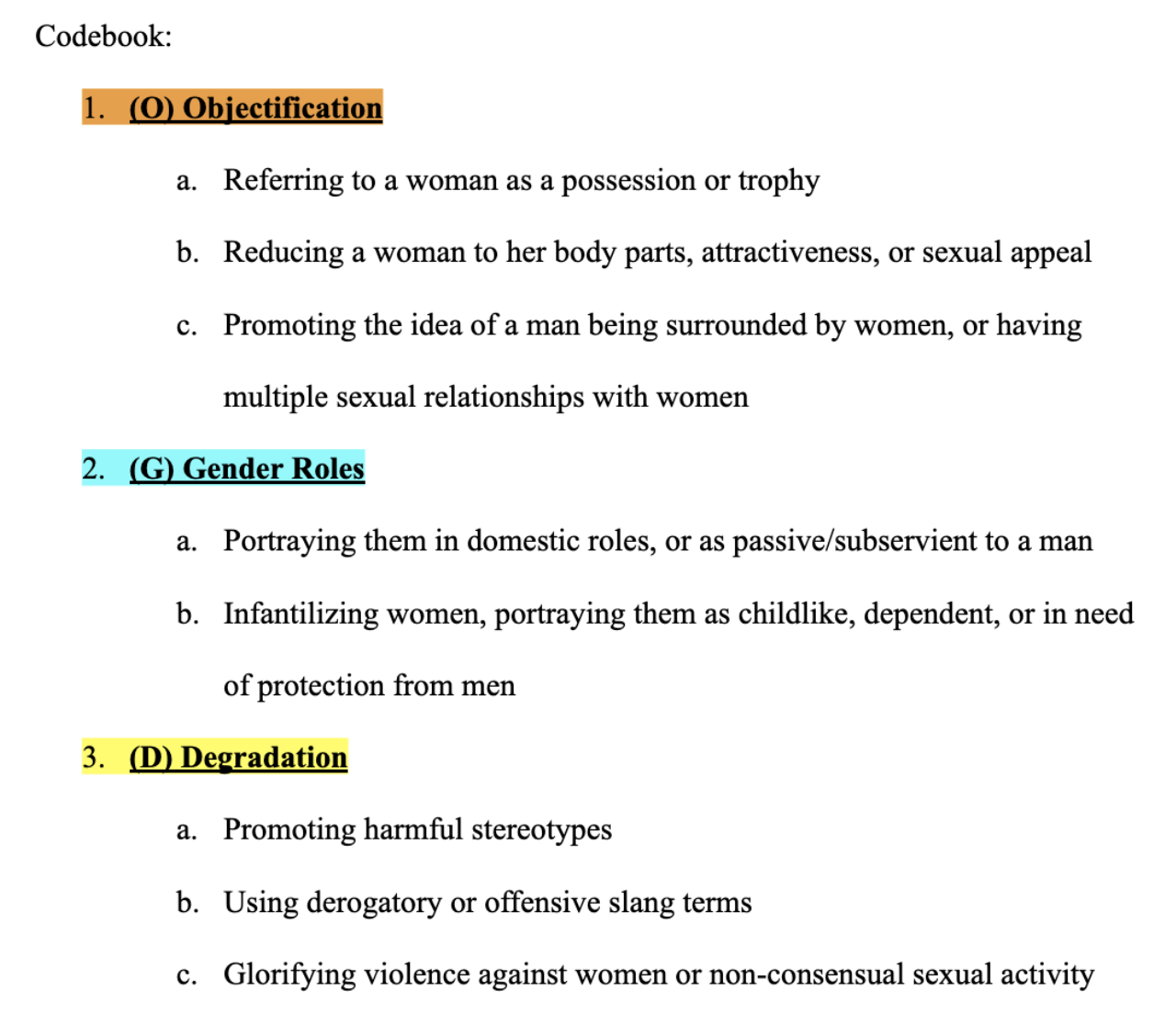
Figure 1: Our codebook, with condensed metrics from Rogers’ (2013) study. This codebook served as a comprehensive framework, enabling the operationalization of abstract concepts such as “objectification” within song lyrics.

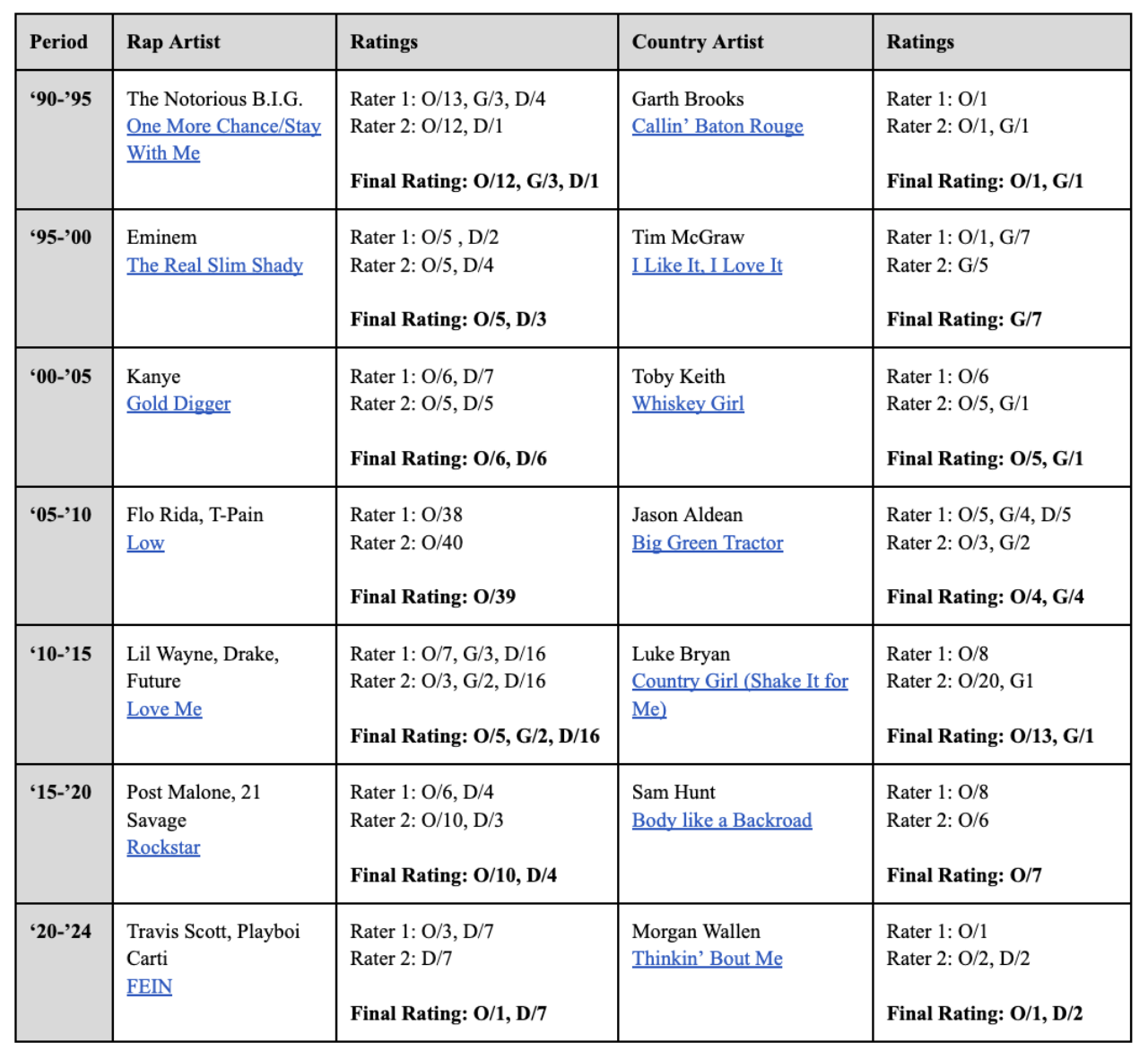
To ensure consistency, two individuals within our research team independently analyzed each song, providing it with a rating that noted the number of unrepeated lines with instances of Objectification, Gender Roles, and Degradation. In cases of disagreement, they presented their reasoning to a third party who provided the final rating.

Results

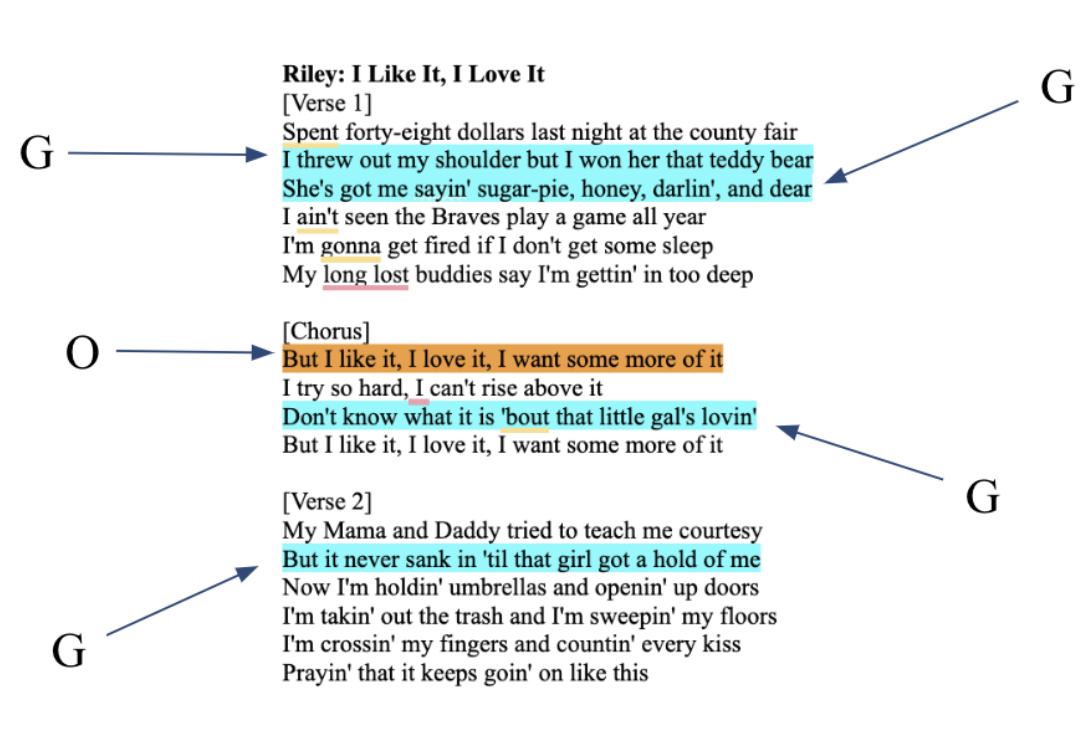
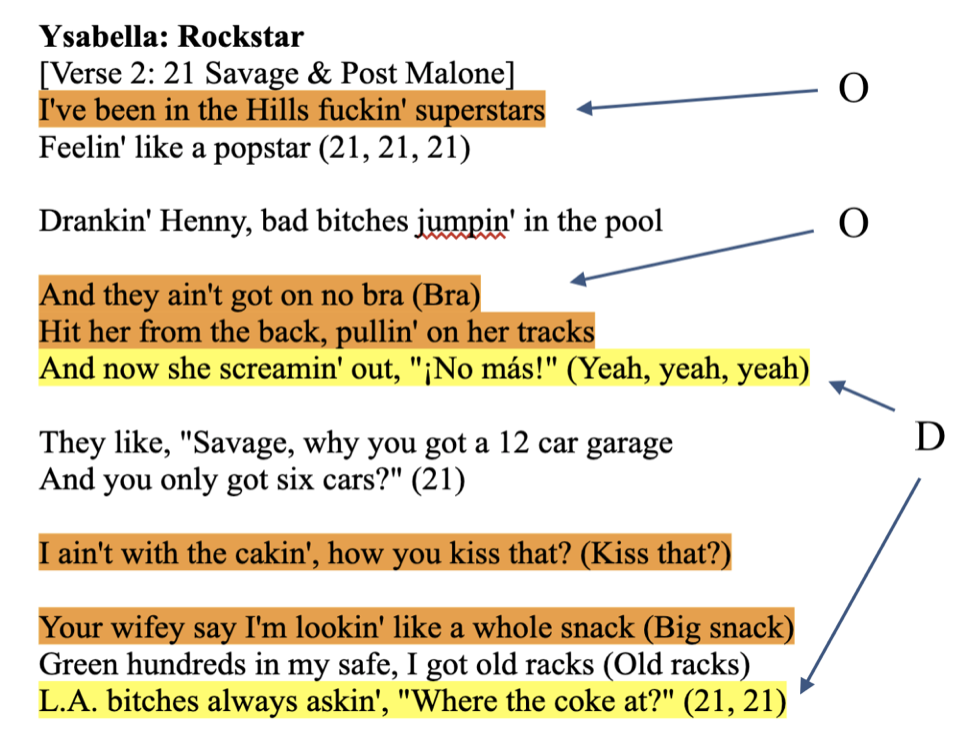
The following is an example of how instances of misogyny were identified in different songs. We noticed that in country songs, like “I Like It, I Love It”, there was a tendency for singers to use terms like “little gal” or “girl” to describe women, and this was in line with our interpretation of Gender Roles-based misogyny. We also noticed that in rap songs, like “The Real Slim Shady,” there was a tendency to call women derogatory names, or in some cases, such as in this specific song, reference violence towards women. This was in line with our interpretation of Degradation-based misogyny.

Table 1: These are our final ratings, indicating the number of unrepeated lines with instances of Objectification, Gender Roles, and Degradation. (For instance, O/12 indicates 12 instances of Objectification within the song).

Figure 2: Gender Roles and Objectification present in Tim McGraw’s country song, “I Like It, I Love It.”

Figure 3: Objectification and Degradation present in 21 Savage and Post Malone’s rap song, “Rockstar.”

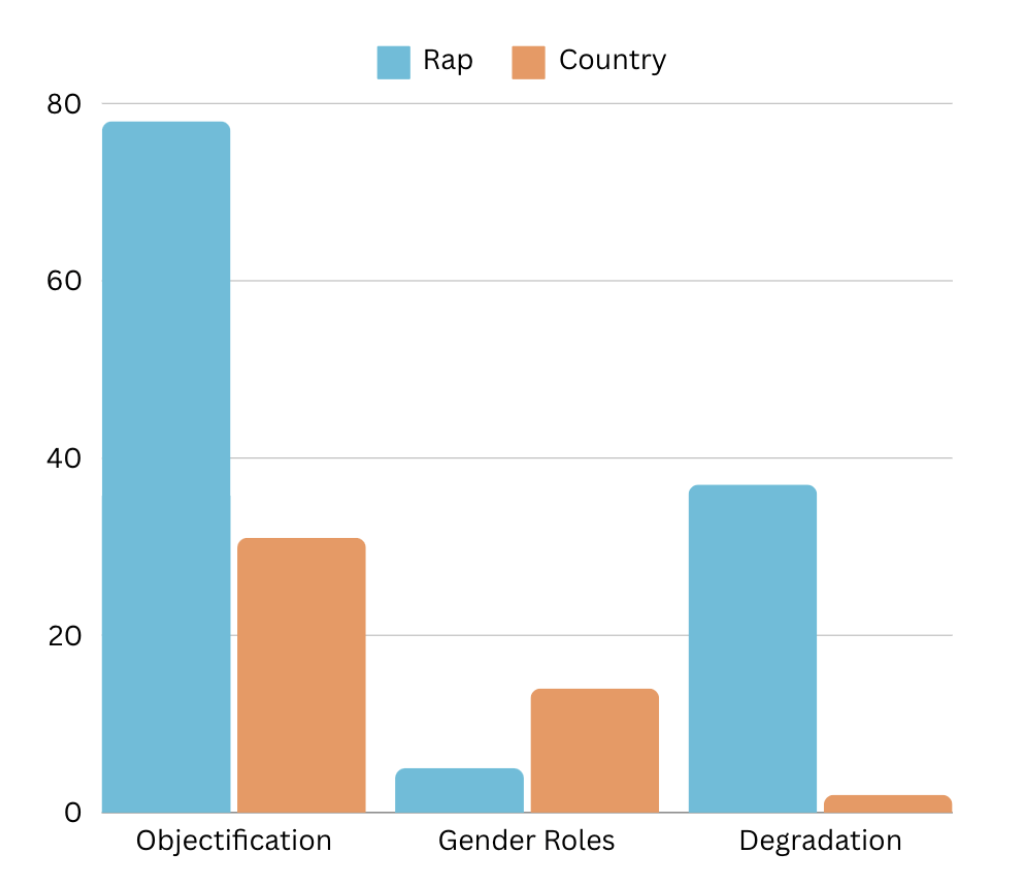
Figure 4: Bar graph, comparing the instances of Objectification, Gender Roles, and Degradation in Rap vs. Country music.

We found that rap had a total of 120 misogynistic lines, while the country had a total of 47 misogynistic lines. Objectification and Degradation-based sexism were most common in rap music, while Gender Roles-based sexism was most common in country music. This could be due to the differing attitudes towards women in rap and country music circles. Because we understand that the two genres should not be analyzed in a vacuum, their historical contexts should be considered when theorizing why they represent women in such distinctive ways.

In the late 1990s and the early 2000s, rap music saw an emergence of the subgenre, gangsta rap, which focused on the hardships of growing up in the Bronx and the culture produced by that upbringing. Violence, poverty, and criminal activity are all central themes of the lyrics of gangsta rap; thus, it follows that violently misogynistic attitudes could spawn from those topics. Further, because gangsta rap is held in such high regard as a staple of the rap genre, it makes sense that modern rap artists would try to emulate the misogynistic rhetoric of the subgenre.

Country music, on the other hand, does not necessarily have as overtly misogynistic lyrics. Instead, the genre utilizes a more subtle form of misogyny that reinforces traditional, conservative gender roles. In the United States, country music is generally associated with right-wing-leaning, Southern, Judeo-Christian values. As such, many country artists conform to those values in their personal life and lyrics. It follows that country artists would portray women in ways that conform to traditional gender roles, as doing that caters to their audiences and may also reinforce what the artists themselves believe.

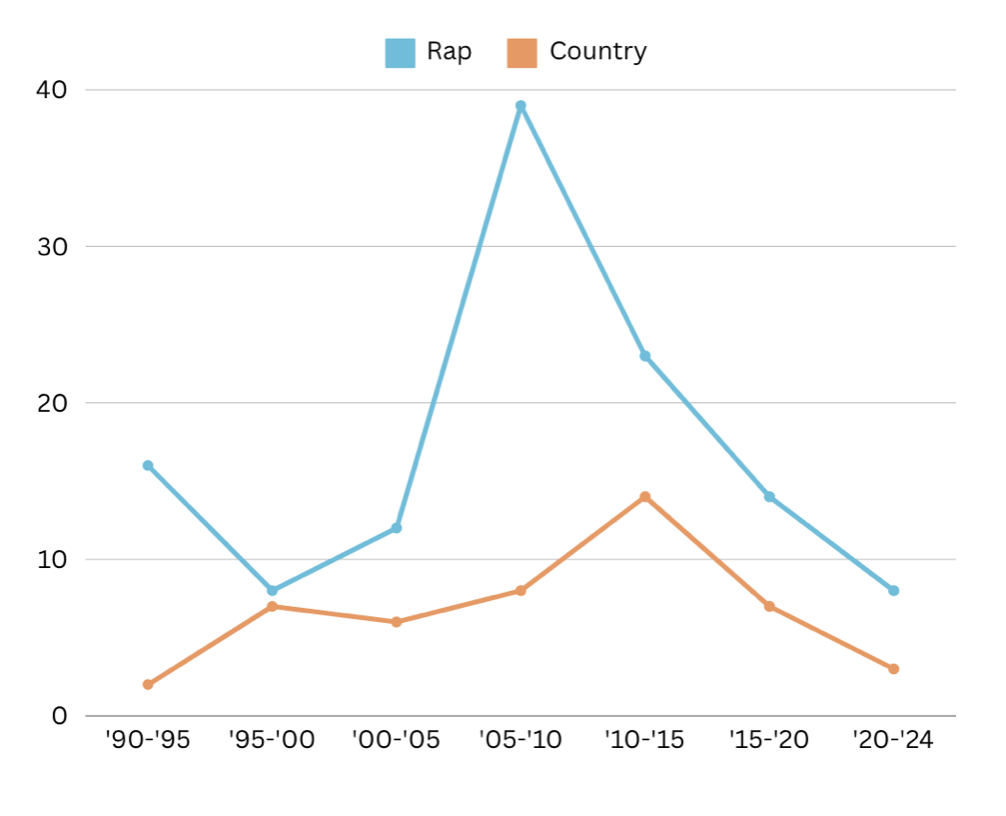
Over time, we saw a peak in misogynistic lyrics from 2005-2015, and then the numbers declined. The drop in misogynistic lyrics after 2015 is in line with the timing of the MeToo movement and other 3rd wave feminist efforts to dismantle harmful stereotypes and attitudes towards women. To stay relevant, marketable, and politically correct, male artists likely made an intentional decision to tone down the misogynistic rhetoric in songs.

Figure 5: Line graph, examining Misogyny (Objectification + Gender Roles + Degradation in total) over time in Rap vs. Country music.

Discussion

Through our song analysis, we discovered that both genres contribute to the objectification, domestication, and degradation of women. Rap music flaunts misogyny in its lyrics by calling women derogatory terms and glorifying rough, non-consensual sex and a “player” lifestyle. On the other hand, country music promotes misogyny more discreetly by infantilizing women, focusing only on their attractiveness and sexual appeal, and portraying them as subservient and dependent on men. Despite results indicating that Objectification and Degradation were higher in rap, Gender Roles exceeded in country music. Yet, these forms of misogyny are equally harmful to women, fueling both our prevalent patriarchal system and the cycle of violence against women. The impact of our analysis is solely to challenge preconceived notions about these genres and their deep-rooted association with misogyny, as well as highlight how objectifying music can both reflect and shape our reality.

While we do not want to label a music genre “problematic,” since that is harmful in itself, women are still represented as subordinate to men in rap and country, and we urge listeners and musicians to understand that the messages being conveyed fuel the cycle of female objectification.

References

Adams, T. M., & Fuller, D. B. (2006). The Words Have Changed But the Ideology Remains the Same: Misogynistic Lyrics in Rap Music. Journal of Black Studies, 36(6), 938–957. http://www.jstor.org/stable/40034353

Flynn, M. A., Craig, C. M., Anderson, C. N., & Holody, K. J. (2016). Objectification in popular music lyrics: An examination of gender and genre differences. Sex Roles, 75(3–4), 164–176. https://doi.org/10.1007/s11199-016-0592-3

Grady Smith (2013, December 20). Why Country Music Was Awful in 2013 [Video]. YouTube. https://www.youtube.com/watch?v=WySgNm8qH-I

Lin, R., & Rasmussen, E. (2018). Why don’t we get drunk and screw? A content analysis of women, sex and alcohol in country music. Journal of Popular Music Studies, 30(3), 115-128. https://doi.org/10.1525/jpms.2018.200006

Rasmussen, E.E., Densley, R.L. Girl in a Country Song: Gender Roles and Objectification of Women in Popular Country Music across 1990 to 2014. Sex Roles 76, 188–201 (2017). https://doi.org/10.1007/s11199-016-0670-6

Rogers, A. (2013). Sexism In Unexpected Places: An Analysis of Country Music Lyrics – Office of the Vice President for Research | University of South Carolina. Sc.edu. https://sc.edu/about/offices_and_divisions/research/news_and_pubs/caravel/archive/2013/2013-caravel-sexism-in-unexpected-places.php

Weitzer, R., & Kubrin, C. E. (2009). Misogyny in Rap Music: A Content Analysis of Prevalence and Meanings. Men and Masculinities, 12(1), 3-29. https://doi.org/10.1177/1097184X08327696

, , , ,

Observation of Dating Practices Through Digital Dating Profile Analysis

Natasha Franco, Savannah Phillips, Remy Averitt, Navid Toomarian

In the modern age of digital dating, the way individuals present themselves on platforms like Hinge provides valuable insight into the underlying dynamics and intentions driving their romantic pursuits. This study is motivated by the observation that relationship management and healthy dating practices arent widely covered in formal education, leaving many young adults to navigate the modern dating landscape on their own. Our study aims to analyze the linguistic patterns and differences between male and female users, analyzing how gender shapes self-presentation strategies on dating apps. By observing factors such as response length, emoji usage, and their perceived tone, in relation to their desired relationship type, we seek to understand the reasons why young adults market themselves the way they do in the virtual dating scene. The findings in this study will shed light on the complex interplay between technology, gender, and the search for a romantic connection in the 21st century.

[expander_maker id=”1″ more=”Read more” less=”Read less”]

Introduction

The rise of online dating platforms has dramatically changed how young adults seek out romantic partners. These platforms have introduced new avenues for self-presentation, communication, and relationship formation that were previously unavailable. However, this shift has also introduced new complexities, as individuals must now carefully manage their impressions and curate their self-presentations for virtual audiences (Ranzini & Lutz, 2016). Understanding the nuances of this shifting landscape is crucial, as the development of healthy romantic relationships is a key milestone in psychological development during emerging adulthood. Relationship management and healthy dating practices are not topics that are widely covered in formal education and curriculum (Lundquist & Curington, 2019). As a result, many young adults are left to navigate the modern dating world on their own, learning through trial and error how to effectively market themselves on these digital platforms. While some prior studies have examined broad gender differences in online dating profiles, there seems a lack of in-depth analysis on how these patterns manifest across the various interactive features of dating apps. Prior research has however begun to elucidate some of the gender-based patterns that emerge in online dating profiles and interactions. For instance, studies have found that women tend to provide more detailed, visually-appealing profiles compared to men, who often have shorter, more casual bios (Fink et al., 2023). However, the existing literature has primarily focused on broad superficial characteristics, leaving a gap in our understanding of how these gender-based linguistic patterns play out across the various written prompts and interactions facilitated by dating apps. Additionally, little is known about how these self-presentation strategies may shift depending on whether an individual is seeking a short-term versus long-term romantic relationship. Our study aims to address these gaps by conducting a comprehensive analysis of the linguistic choices made by young adults on the app, Hinge. Specifically, we will examine differences in response length, emoji usage, and perceived tone between men and women, and how these factors intersect with usersstated relationship intentions. By illuminating these dynamics, our research can contribute to a broader understanding of how young adults navigate the challenges and opportunities presented by online dating technologies. 

Methods

We conducted our own research in addition to analyzing previous literature. We selected Hinge profiles at random, taking participants age and relationship intentions into account. We targeted young adults between the ages of 18 to 25 who have active profiles on Hinge. We selected 60 profiles, with an equal distribution of 30 males and 30 females. For each gender group we found 15 users seeking long term relationships and 15 users seeking short term relationships. 

After obtaining the profiles we wanted to analyze for this study, we created a data coding technique to analyze each profile. To ensure consistency in data coding, we analyzed the written responses of each individual, analyzing the length, emoji use and word choice. The data will be entered into a spreadsheet, as the analysis focuses on comparing the linguistic patterns between male and female profiles and between those seeking short-term versus long-term relationships. We calculated the mean and standard deviation for the length of the responses and frequency of emoji use. 

We will use the results of our analysis to support our hypothesis: men are more likely to use assertive words and less likely to use emojis compared to women. Furthermore, we believe that men and women looking for short-term relationships will have shorter responses and use more informal language compared to people that are looking for long term relationships. Lastly, women will generally have longer, more formal responses and use more emojis than men. Our hypothesis is backed up by the results of our study.

Results/Analysis

Our analysis of 120 Hinge profiles (70 male and 50 female) reveals distinct differences in self-presentation between genders.

Relationship Goals

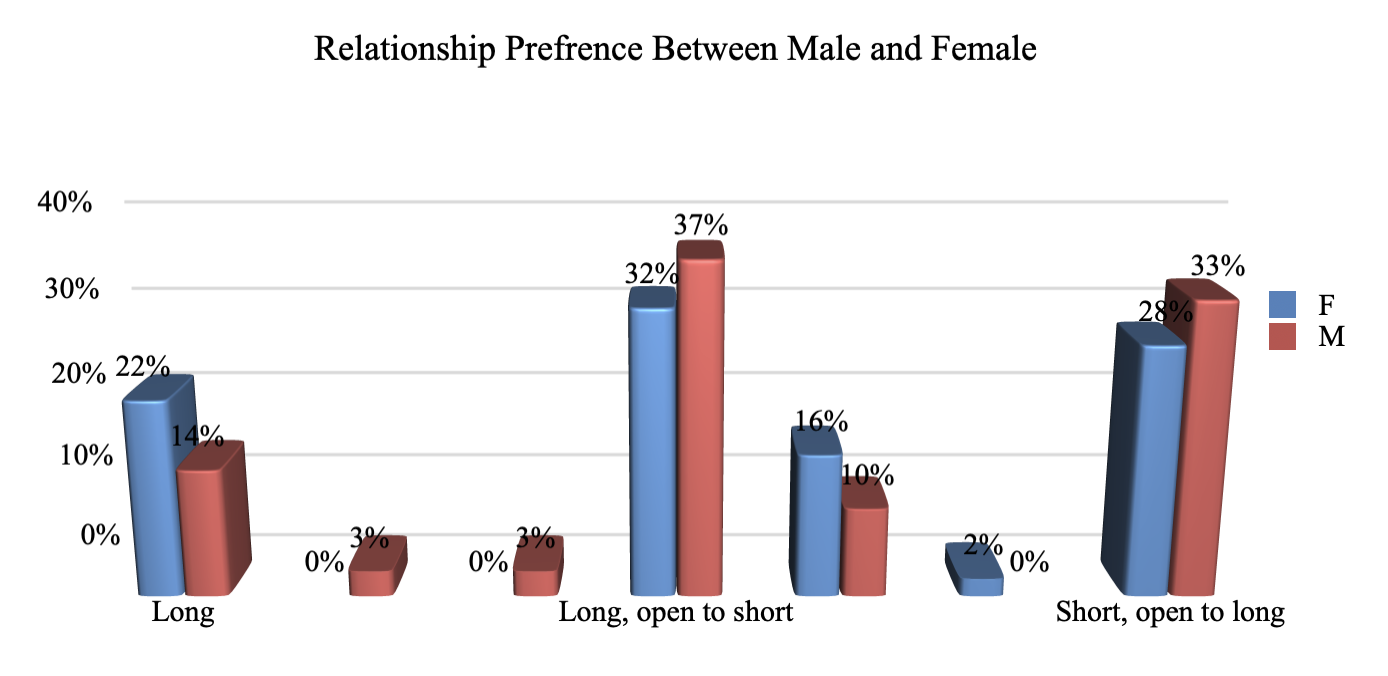
In matters concerning relationship goals, women had a higher inclination towards long terms relationship as 22% female profiles reflected this compared to 14% of the male profiles. Furthermore, 32% of women and 37% of men studying were ready to have both casual and committed relationships. There was a notably smaller proportion of profiles indicating a clear interest in short-term relationships only: 16% of the women and 10% of the men. Curiously, 28% of women and 33% of men were Fine with short-term encounters but, at the same time, were not against the idea of a lasting partnership.

Use of Emojis

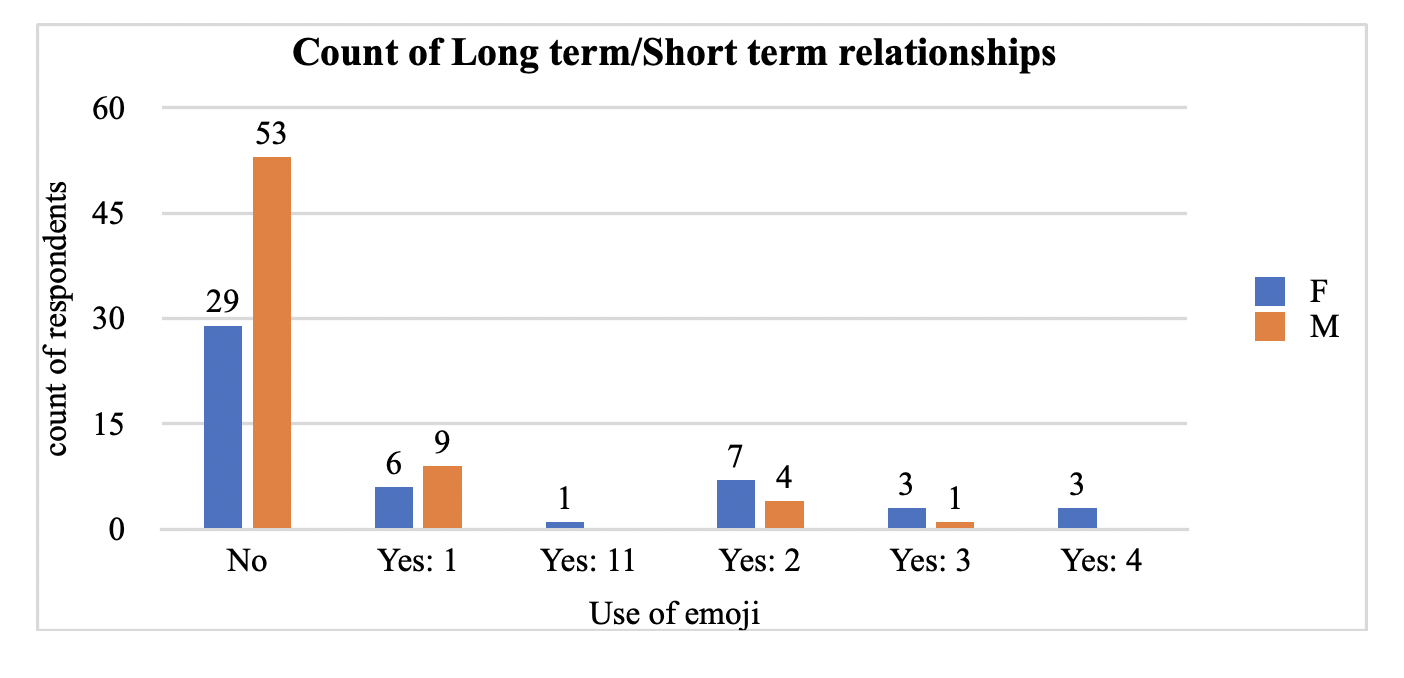
Regarding the use of emojis, the majority of profiles did not include them, with 53 men and 29 women avoiding emoji use entirely. Some profiles did use emojis, but sparingly. Specifically, six women and nine men used exactly one emoji in their profiles. There were also instances of multiple emoji use, albeit rare, with a few women incorporating up to 11 emojis in their profiles. This indicates a general trend towards minimal emoji usage across both genders.

Answer Length and Content

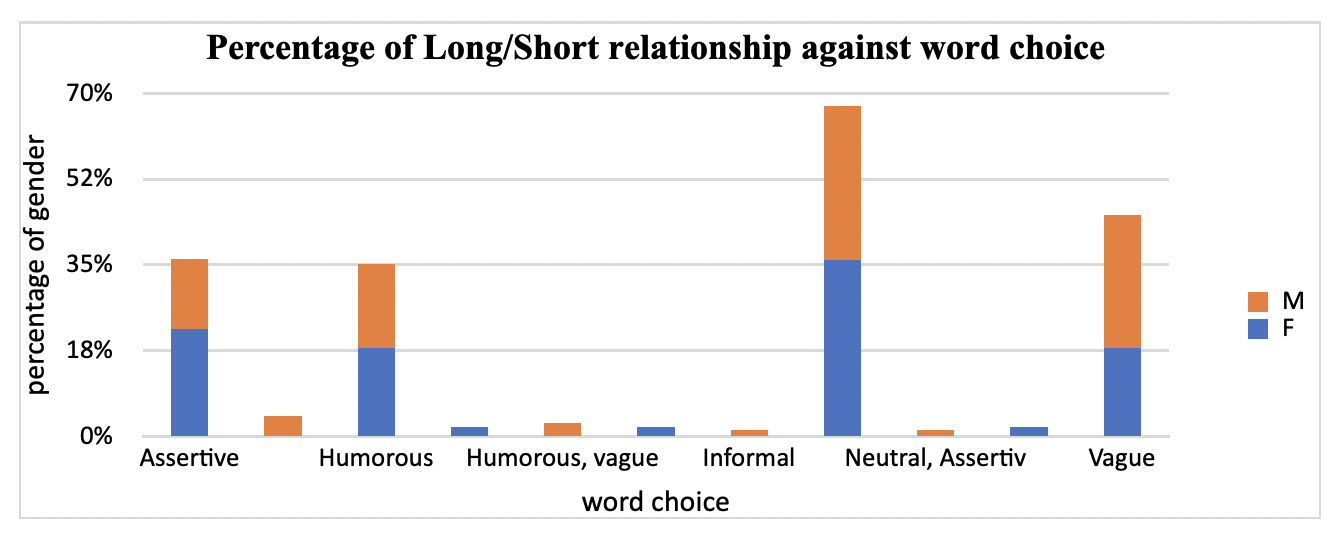
Analyzing the answer length and the content of the answers also gave evidence that more women used assertive language; 22% as against 14% of the male respondents. Another similarity was found in the fact that 18% of men and women used humor in their profiles. As for the neutral tones, these were used significantly more actively in women’s profiles, 36%, against 31% in the profiles of men. On the other hand, the percentage of men who gave haphazard responses was high; 27% while that of women was 18%.

The current findings point to the fact that men and women are different in terms of self-presenting strategies in dating apps. Females choose long-term cohabitation and employ less passionate language than males, who are a bit more permissive of their relationship preferences and give less specific answers. Finally, both genders apply humor equally, while emoji is applied rarely, being more frequent in boys’ case. These patterns show how some communication traits and relationship goals affect users’ self- representation in dating sites.

Discussion & Conclusion

When it comes to the impact of our research, our findings could enable dating app developers to create more effective profile frameworks that are more catered toward the specific intentions of men and women in their use of dating apps. This could involve prompts which are more specifically tailored toward certain intentions, such as a desire for sex, characters/word maximums or minimums for responses, easier emoji integration, among other features which could better accommodate the communication preferences and patterns identified in our study.

Additionally, educators specializing in relationship management can apply the insights from our study to advise young adults of the unique challenges that they might face in the world of online dating as opposed to dating face to face in the real world. Specifically, they would be able to educate young adults about what different communication signs mean (such as the use of emojis) in the context of whether or not an individual is looking for a long term or short term relationship. Finally, by analyzing the subtle signs and strategies used by men and women to get across their intentions on dating apps, our research enables people to craft profiles that authentically represent their personality and effectively display their specific intentions. This self presentation knowledge could also help users identify potential compatibility or mismatch in partner intentions earlier in the dating process.

Online dating apps have revolutionized the manner in which people approach and maintain romantic relationships, yet there is no established set of guidelines to aid young adults in their navigation of this new world. Signals of romantic intentions are hard enough to discern between two people interacting in the real world, let alone through a mobile device and the use of ambiguous emojis. However, our research on this phenomenon has contributed to a greater understanding of how men and women have created their own set of rules for effectively navigating the world of online dating, shedding light on certain linguistic patterns and tendencies that may accurately predict usersromantic signals and intentions. While it is hard to say whether or not these patterns and signals are universally accepted across dating apps and the online dating world as a whole, they provide an insightful look at how men and women search for romantic connection in the 21st century, with the hope that future research will expand upon the nuances of these gendered tendencies.

References

Fink, L., Ilany-Tzur, N., Yam, H., & Sokhina, S. (2023). Do women and men click differently?

Mobile devices mitigate gender differences in online dating. Information & Management, 60(2), 103750-. https://doi.org/10.1016/j.im.2022.103750

Herring, S. C., & Kapidzic, S. (2015). Teens, gender, and self-presentation in social media.

International Encyclopedia of the Social & Behavioral Sciences, 146–152.

https://doi.org/10.1016/b978-0-08-097086-8.64108-9

Ranzini, G., & Lutz, C. (2016). Love at first swipe? Explaining Tinder self-presentation and motives. Mobile Media & Communication, 5(1), 80–101. https://doi.org/10.1177/2050157916664559

, ,

To Hear or Not To Hear: Identifying Speaker Ethnicity By Auditory Clips

Caroline Breckling

This study investigates to what extent individuals are able to identify a person’s ethnicity based solely on the sound of their voice. Expanding on previous research demonstrating humans’ relative accuracy in recognizing ethnicities by voice, this investigation aims to explore whether a listener’s own ethnicity or familiarity with other ethnicities affects their accuracy in this identification. My survey, conducted with 20 participants from diverse backgrounds, asked individuals to identify the ethnicity of speakers in six different audio clips. Results indicated that participants could identify the speaker’s ethnicity with an overall accuracy of 43.3%, significantly higher than random chance, and a majority of the time, this level of accuracy went up when the guesser was from the same ethnicity group as the speaker featured in the sound bite. However, familiarity with an ethnic group did not reliably improve rates of accurate identification. These findings reflect humans’ existing ability to recognize in-group members through minimal auditory information, reflecting the lingering effects of socialization for survival in human history.

[expander_maker id=”1″ more=”Read more” less=”Read less”]

Introduction

For my inquiry, I was curious about to what degree humans are able to identify another person’s ethnicity by only hearing the sound of their voice. Some pre-existing research reflected that people were relatively proficient in recognizing ethnicity by voice; in one study, 85.7% of participants could correctly identify Black voices, 75.5% could correctly identify white voices, and 46.9% could identify Asian voices (Kushins, 2014). Another study that asked subjects to identify race from acoustic cues found that listeners could identify a speaker’s race at a rate of 60% correctness, which displayed less assured, yet still affirmative findings than Kushins’ study (Walton et. al., 1994). On a larger scale level, this research is important because it reflects the extent of the evolved and socialized abilities humans possess to identify in-group members, a necessary skill to build cultural comradery. Further studies about this trait even demonstrate that even on a neurological level, we categorize in-groups that we belong to in a different part of our brains than those we consider “other” and even react differently to their behavior, more easily forging bonds with our in-group members (Molenberghs, 2013).

These findings encouraged me to investigate how adept we are at making such connections. Do we need to look at someone or converse with someone in order to classify and welcome them into our ingroup? Or has our radar for people similar to us become so sensitive that we can simply recognize people that we consider our own by the sound of a clue as minimal as their voice? With this promising previous research in mind, I sought to take this research a step further by identifying if a participant’s own was related to their proficiency in correctly identifying the ethnicity of speakers. I hypothesized that listeners that were of a speaker’s ethnicity, or more familiar with a speaker’s ethnicity, would correctly identify the speaker’s ethnicity more often than listeners that were of a different ethnicity.

Methods

In order to investigate the extent to which individuals can accurately determine a person’s ethnic group simply by listening to their voice, I created a Google Form survey to collect data about my peers’ ability to do just this.

The notion behind my investigation requires ethnically diverse data, so I intentionally sought out participants from an array of ethnic backgrounds. Ultimately, my dataset consisted of 20 responses from participants of two genders identifying themselves as a member of one of five different ethnic groups: Asian, Black or African American, Hispanic or Latino, Middle Eastern, and White or Caucasian. There were at least two participants from each of the aforementioned ethnic groups. Unfortunately, no participants identified as American Indian, Alaska Native, Native Hawaiian, or Other Pacific Islander, which was the sixth ethnic group featured in the study.

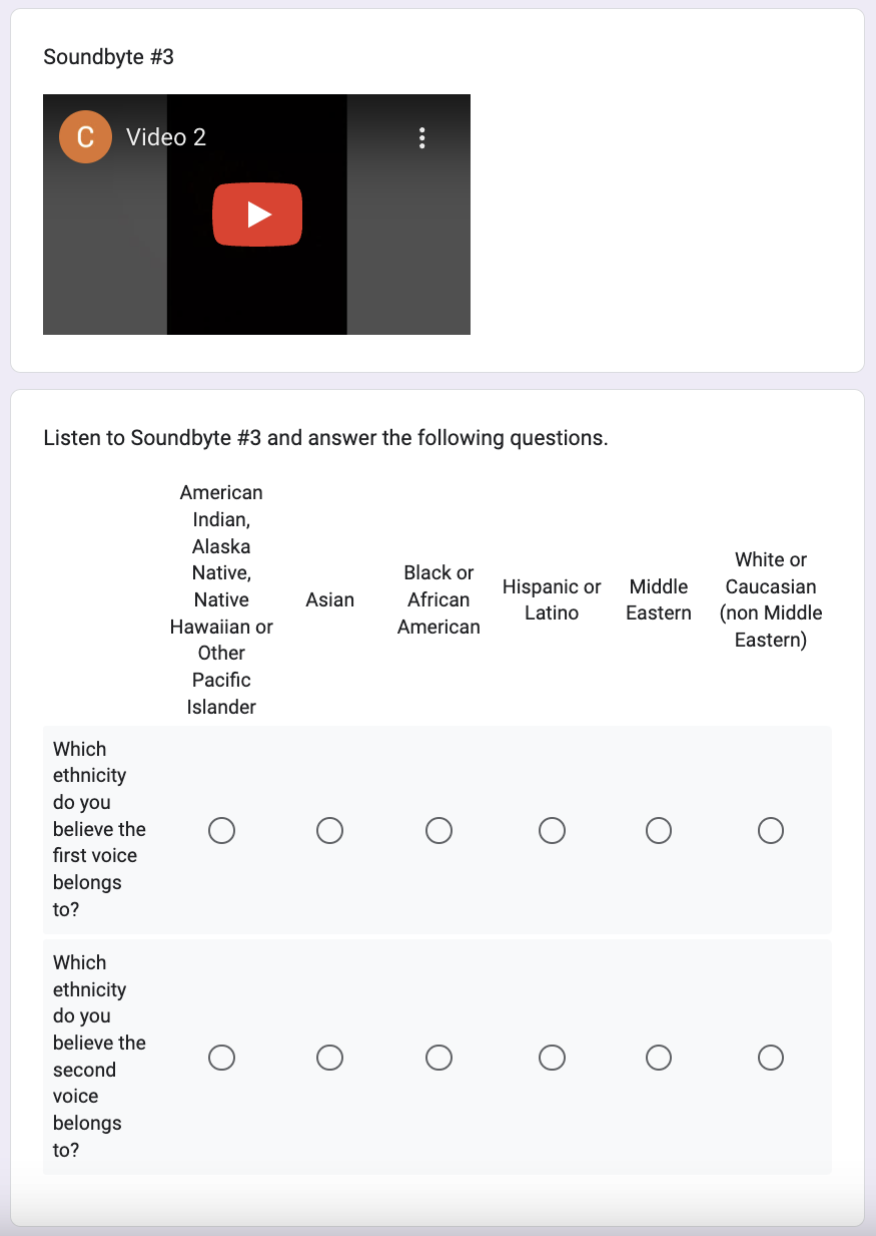
The survey began by asking participants to fill out a few questions about their demographic information, then asked participants to select which of these six aforementioned ethnic groups they felt most familiar with, both personally and through media. After this, participants listened to a set of six sound bites and then were asked to select which of the six ethnic groups (American Indian, Alaska Native, Native Hawaiian, or Other Pacific Islander, Asian, Black or African American, Hispanic or Latino, Middle Eastern, and White or Caucasian) they believed each speaker from the sound bite belonged to. See below for a visual representation of how this type of question appeared:

Figure 1: Sample survey sound bite and corresponding question

These sound bites were taken from videos on the Youtube channel called Jubilee. Although some of the sound bites featured two people speaking, data was only inspected for one of the two voices, although participants guessed the ethnicity of all speakers whose voices they heard. Each of the sound bites that the data focused on featured a speaker from a different ethnic group, although participants did not know this. You can listen to these sound bites, and even quiz yourself, here:

After collecting this data, I analyzed these findings in the following three ways:

  1. I inspected the overall responses for each sound bite to determine how accurately participants, regardless of ethnicity, were able to predict someone’s ethnicity by hearing only their voice.
  2. I inspected and compared the responses for each sound bite with the results broken down by ethnicity to determine whether or not people are more likely to predict a speaker’s ethnicity if they themselves belong to that same ethnicity.
  3. I inspected and compared the responses for each sound bite with the results broken down by participants who considered themselves familiar with a given ethnicity. For instance, inspecting the responses for the sound bite featuring an Asian speaker from all participants who selected that they were familiar with Asian culture.

Results

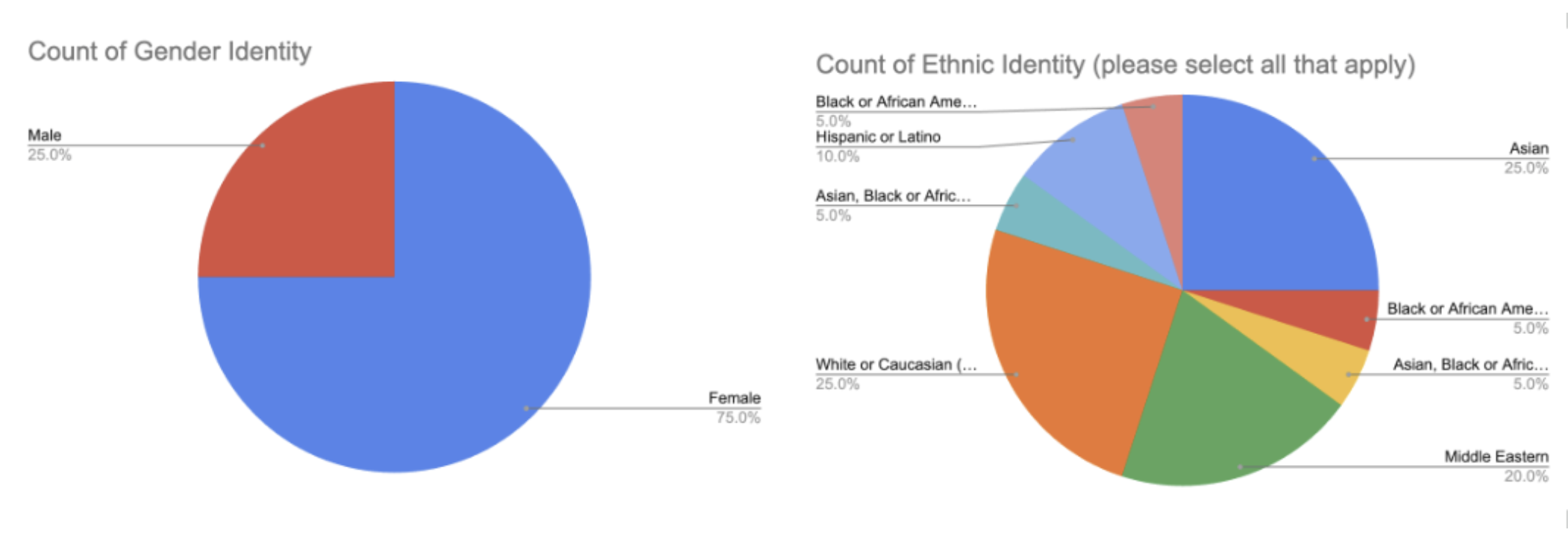
Before diving into the results, I feel it appropriate to make a few disclosures about the data that was collected throughout this study. First, the voices depicted in the sound bites in the study by no means represent the way that all people of their ethnicity speak. Additionally, because the study only contained twenty participants, the sample size is not large enough for the data to be truly representative of the general population, especially because there were only a couple of people in some of the ethnicity groups, such as the Hispanic or Latino group, with two. Here is a demographic breakdown of the participants by gender and by ethnicity:


Figure 2: Participant demographic information (n=20))


Analysis #1: Overall Accuracy

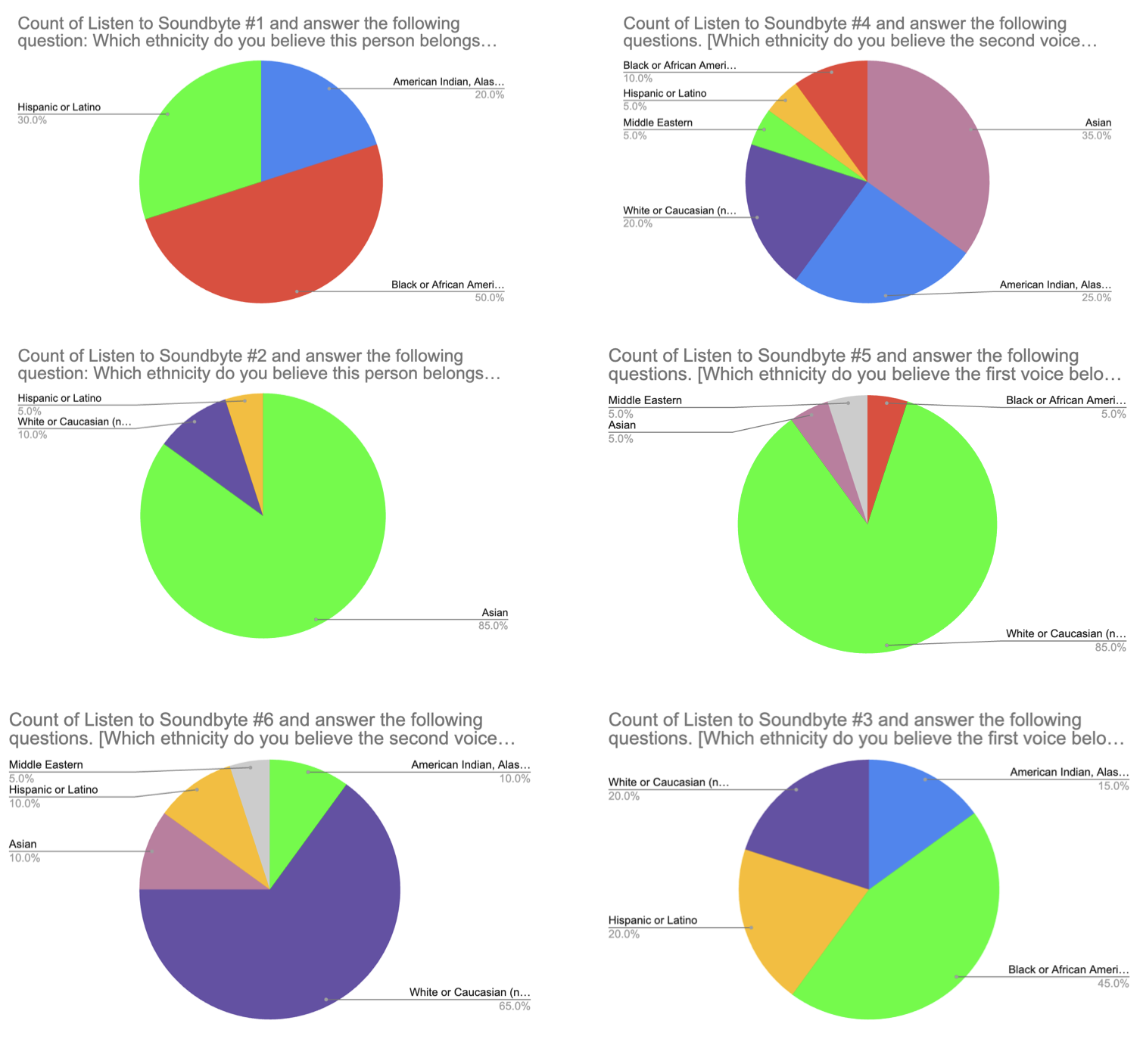
Here, my findings for my first angle of analysis demonstrate that on average, 43.3% of participants can accurately identify a speaker’s race blindly. Participants guessed the Asian and White speakers the most accurately (85%), and the Middle Eastern speaker the least accurately (5%). In each graph, the green slice indicates correct responses. Further breakdowns for each sound bite are below:


Figure 3: Breakdown of all participant guesses for each sound bite


Analysis #2: Accuracy by Ethnicity
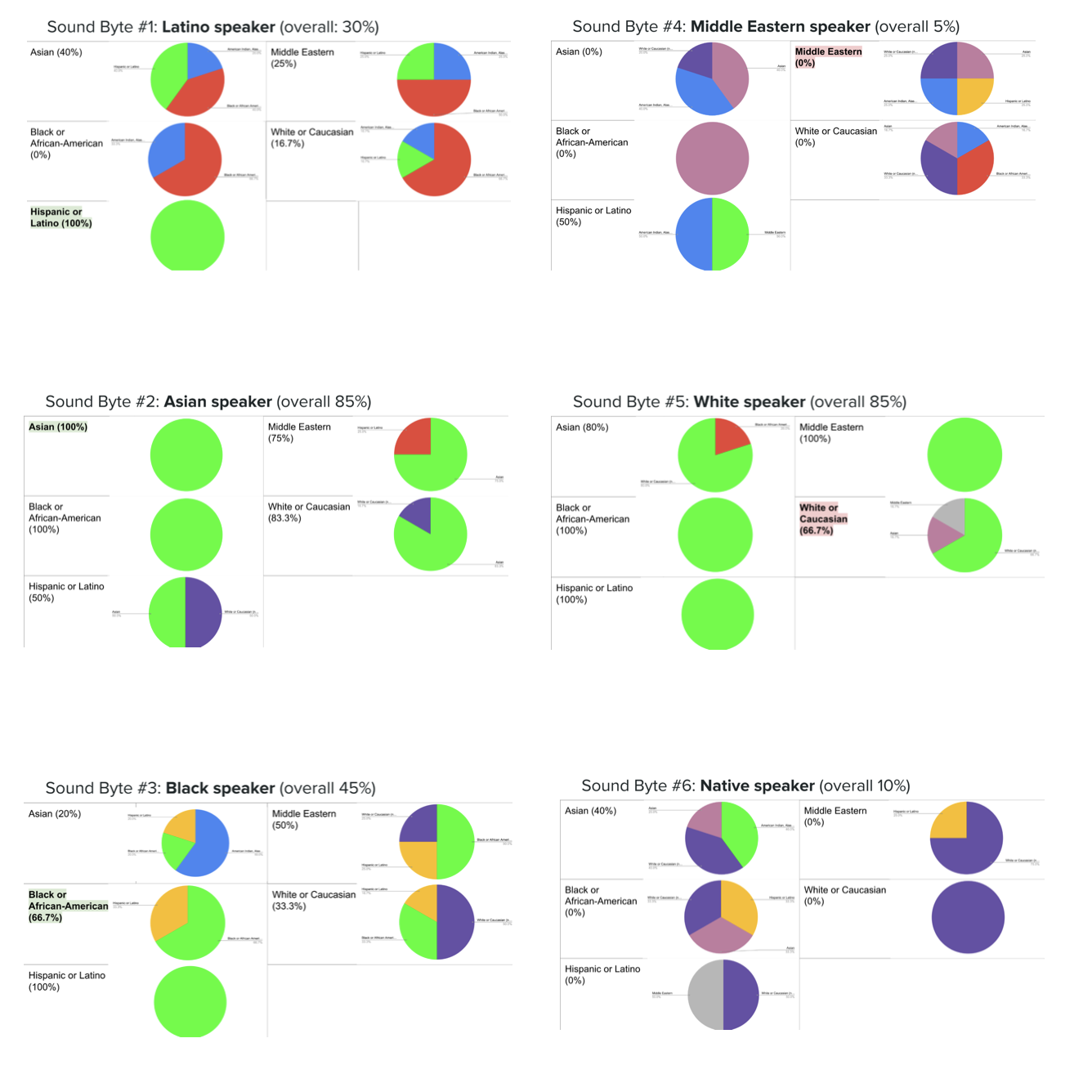
The findings for my second angle of analysis suggest that people may not necessarily have an overwhelmingly successful rate of identifying ethnicity purely from voice, but people who share an ethnicity with the voice they are hearing are more likely to identify ethnicity correctly. These results reflected that for 3 out of 5 surveyed ethnic groups, Hispanic or Latino, Asian, and Black or African-American, their average rate of successfully identifying the speaker’s voice was higher than the average rate across all ethnic groups. Interestingly, in the case of soundbite number three, which featured the Black speaker, the Hispanic and Latino group actually had a higher accuracy rate (100%) over the Black or African-American group (66.7%), although the group of Black participants still were more accurate than the overall average across all ethnicities. In the case of sound bite #4, featuring the Middle Eastern speaker, the data reflects that only one participant out of all, a Hispanic participant, correctly guessed the ethnicity of this speaker. In the case of sound bite #5, featuring the white speaker, the group of white participants actually scored lowest of the five ethnicities.

Figure 4: The graphs of each sound bite, broken down by participant ethnicity. A green highlight of the label of ethnicity means the percent correct for that ethnicity group is higher than the average percent correct across all responses, and a red highlight means the percent correct is lower than the average percent correct.


Analysis #3: Accuracy by Participants Familiar with Featured Ethnicity
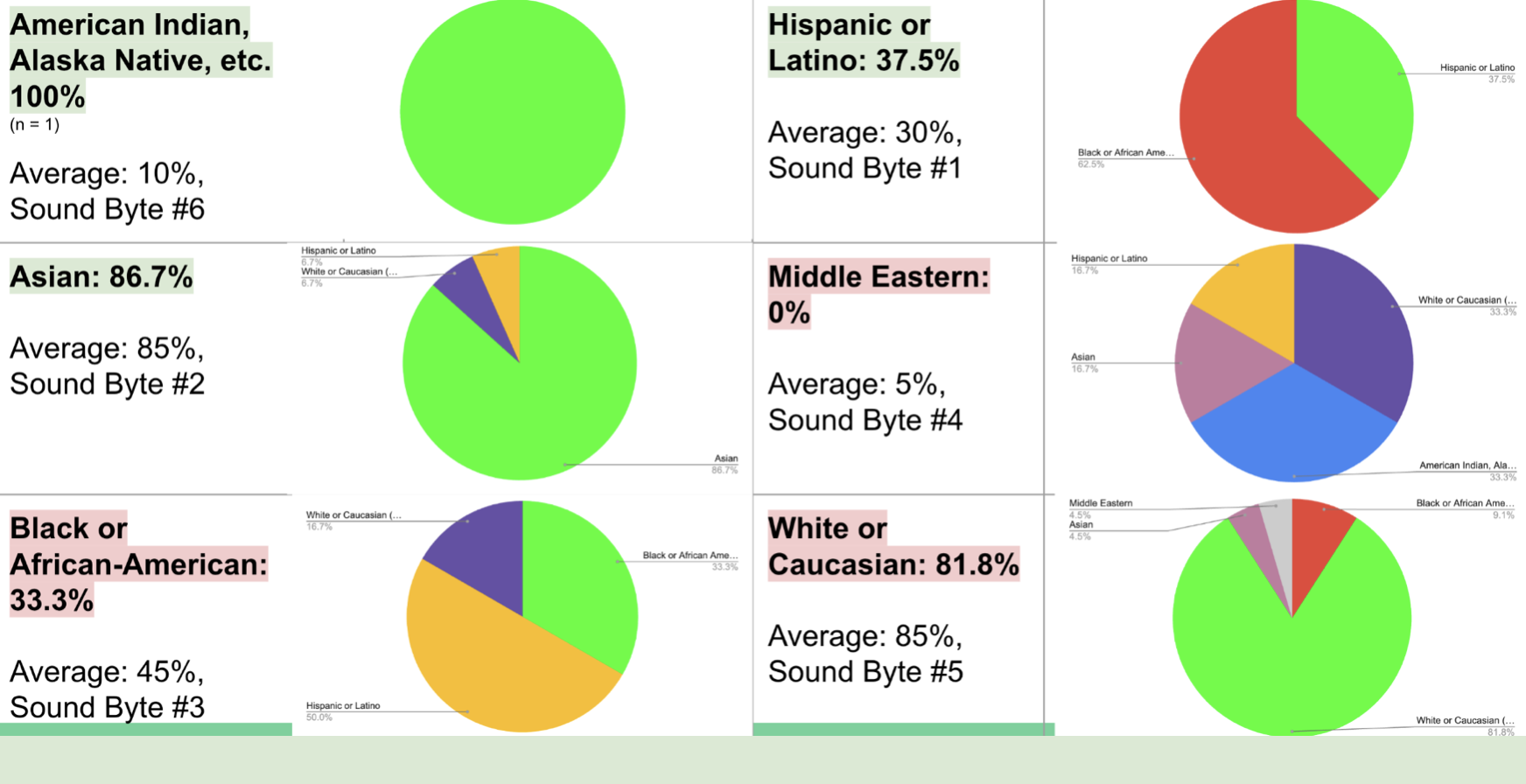
For three of the six ethnicities, Native, Asian, and Hispanic or Latino, those who identified themselves as familiar with a given ethnicity averaged a higher success rate than the average success rate for all participants. Additionally, please note that for the Native graph, there was only one respondent who indicated that they were familiar with that ethnicity.

Figure 5: Each graph displays responses of participants who identified themselves as being familiar with the given ethnicity featured in its respective sound bite. A green highlight represents the percent correct being higher than the average percent correct, and a red highlight represents the percent correct being lower than the average percent correct.

Discussion

Ultimately, the findings from my research provides evidence for humans’ ability to recognize a person’s ethnicity using their voice alone. Given that there were six ethnicities to choose from, we can assume that chance would give us a 1 in 6, or roughly 17% rate of predicting the ethnicity of a given voice correctly at random, however participants correctly identified the voice of a given speaker at a rate higher than 17% on four out of six occasions, according to the first angle of my analysis.

The second set of results reveal that 60% of groups of participants by ethnicity correctly identified voices of fellow members of their in group at a more successful rate then participants not part of their ethnic group. This finding reflects that people are more adept at recognizing a speech style that they are biologically, and likely socially, related to.
The third set of results reveal that 50% of the time people who classified themselves as being familiar with a particular identity were more accurate at identifying that particular identity over other identities that they were not familiar with. Although the first two results were in line with my hypothesis, this result is not, as I had hypothesized that being closer to an ethnicity would make a person more adept at recognizing its members. This shortcoming may either reflect that being familiar with another identity does not necessarily mean that you are better at distinguishing it, as being biologically related does, or it may reflect that people simply are not reliable judges of how familiar they are with a certain ethnic group.
Together, these findings reflect that there exist evolved mechanisms that help humans identify demographic information, such as ethnicity, about a new person using very minimal stimuli, such as just their voice. This result speaks to the fact that our ancestors’ survival relied heavily on knowing who to trust and associate with, and remnants of this trait still live within us today. Although the third angle of analysis was inconclusive, the first two angles of analysis, all participant data together versus participant data sorted by ethnic group, reveals an evident difference in in-group members recognizing fellow in-group members easier than a non in-group member.


References

Kushins, E.R. (2014). Sounding Like Your Race in the Employment Process: An Experiment on Speaker Voice, Race Identification, and Stereotyping. Race Soc Probl 6, 237–248.

Molenberghs, P. (2013). The neuroscience of in-group bias. Neuroscience & Biobehavioral Reviews, 37(8),1530-1536.

Walton, J. H., & Orlikoff, R. F. (1994). Speaker race identification from acoustic cues in the vocal signal. Journal of Speech & Hearing Research, 37(4), 738–745.

[/expander_maker]

Friendships For the Mono- and Bi-Lingual College Student: Does The Language You Speak Make A Difference in How You Make Friends?

In the course of our research, we endeavored to examine the difference in the social life of UCLA college students, their capacity to make friends, and satisfy their need for social support with fellow students based on their status as a monolingual or bilingual speaker of English. Drawing on support from previous research dealing with different student populations, we concluded that the way bilingual students are treated and form communities is different from the way monolinguals do, whether because of “othering” by speakers who did not understand their language or culture or because they sought out connections with those who shared their ethnic or linguistic ties. It was almost universal in our interviews where bilingual speakers had a bias towards others who spoke their non-English language, and many of the monolinguals admitted to preferring the company of those who shared their language and culture. Not every speaker who our team interviewed had an exactly identical experience, however- none of our bilingual speakers derived from the same culture or spoke the same language- and there were a few interesting perspectives and outliers.

[expander_maker id=”1″ more=”Read more” less=”Read less”]

Introduction

In the course of their education, every single college student is faced with the point where they realize that they are now, effectively, adults and they are now- potentially for the first time- on their own. Many freshmen entering into university are inbound to a new city, a new county, new state, or even an entirely new country. The locale, culture, and people are all different than where they are originally from.

This gap in culture (and sometimes even language) and the responsibilities endowed by college life can make it difficult to make friends in a new place– but it is also extremely pivotal for mental and social well being to make social connections, given the loneliness of being far from home and isolation from the people one knows.

Researching into how students- particularly bilingual students- construct their new friendships is invaluable for anyone incoming to university. Using UCLA students as a representative example, we can explore some of the insights of students navigating their new social landscape. Most specifically, we want to see how- and if- monolinguals and bilinguals differ when it comes to trying to form friendships, and why.

Methods

We began our research on how bilinguals and monolinguals in college differ in making friends and their differing level of social satisfaction in the college environment by consulting various published literature on the subject, but intended to do our own interviews and surveys to see if anecdotal evidence matched the broader scientific findings. Across many different papers- from bilingual college students of Chinese or Latinx descent all the way to the bias of young monolinguals from 4 to 6 years of age- we found a fairly consistent trend: bilinguals liked grouping with other bilinguals (specifically ones of their own culture and language) and monolinguals tended a slight cognitive bias (conscious or otherwise) towards other grouping with monolinguals.

When we had seen the literature’s assessment of college friendships by bilinguals, we formed our hypothesis about the difference: that bilinguals tended to find it easier to make friends with bilinguals from their culture and that monolinguals tended either to “not care” or stick with monolinguals. We also sought out whether being bilingual was particularly helpful in making social connections compared to monolinguals, and other potential social benefits of bilingualism in a predominantly English-controlled American college environment. With our research question and secondary and tertiary objectives in mind, we put our theories and the broader literature to the test through qualitative and quantitative surveys and interviews.

Results

The results of the interviews with bilinguals were quite illustrative in relation to social connections through their first language. Using direct quotes from interviews, many of the answers were quite straightforward:

INTERVIEW 1 – BILINGUAL

I: Did you find it easier to connect and meet people who spoke the same language as you?

J: Yes, most definitely. Uhm, I really liked connecting with people who also spoke Vietnamese because there were a lot of like, you know, Vietnamese language jokes that only Vietnamese people would get.

INTERVIEW 2 – BILINGUAL

I: Have you found it easier to connect with people who speak the same language as you?

S: […] Definitely, yeah. It’s much easier. I mean, it really depends on the person. I wouldn’t say, “Oh, I’m going to go and make friends with whoever speaks Farsi”, because some people, it depends on how approachable they are or if I vibe with them. But in terms of, uh, having one thing to connect. Yes, I would say it’s much easier for me to connect to someone who speaks the same language versus non-Farsi.

INTERVIEW 3 – BILINGUAL

I: Do you find it easier to connect with people who speak the same language(s) as you?

E: Definitely, I feel like it’s easier if I can also speak your language and understand what I’m saying.

Very consistently across bilingual speakers that we interviewed, sharing a language and culture was essential for forming social ties. They expressed feeling at ease with people who spoke their own language, or how being among a bilingual speaker enhanced their experience more than it would be otherwise.

INTERVIEW 1 – MONOLINGUAL

I: Do you think language or culture has any bearing on who you choose to interact with in your day to day life?

A: Uhm, I definitely would say so… it’s easier for me to talk to or be around someone who has the same language and culture as me.

INTERVIEW 2 – MONOLINGUAL

I: Do you think language or culture has any bearing on who you choose to interact with in your day to day life?

J: […] It kinda sounds like an asshole thing to say– but I think that I’m accepting of a lot of different cultures and stuff– I think there are some subconscious elements, but I wouldn’t know what they were, there are probably some groups I don’t interact with just off of, I don’t know, vibes…

Monolinguals, in their parallel questions to the bilingual speakers, hedged a little when answering but definitely seemed to be likewise confident that they preferred to stay within their own clade of language and culture.

When it came to the respective groups, bilinguals occasionally went out of their way to specifically connect with their own cultures (the interviewee of Interview 1 professed to specifically looking for Southeast Asian clubs on campus in order to connect with others and make friends) but monolinguals had no such compunctions (no one we interviewed was, for instance, attending an “Born American Student” or “Monolingual English” club, nor did such a thing exist). When it came to making friendships, typically they went for shared hobbies unrelated to culture (in one case, gaming clubs).

This is not a zero sum game, however– in many cases, bilinguals at UCLA had the added benefit of being able to draw on their extra language in addition to monolingual strategies, meaning their opportunities for friendships were more diverse than the monolingual opportunities. Though the potential for exclusion from these more monolingual-oriented experiences is possible, rejection by monolingual speakers for language or culture was rare, if existent at all.

Many of the monolinguals we interviewed wished they had the opportunity to learn other languages and be fluent in them, viewing their English exclusion as a missed opportunity; only one subject of interview wanted to remain a monolingual, though when pressed admitted he would like to learn American Sign Language (and advocated that the rest of the US did, as well) and wasn’t sure if that counted as being multilingual. Broadly speaking in our interviews, bilinguals were happy to provide a social bridge for monolingual to monolingual interactions and delighted to get the chance to share their culture or language with others. No one regretted being bilingual or thought it made their social opportunities at UCLA worse.

Conclusion

A primary finding that stood out in our research was the absence of in-group/out-group biases within both groups. Instead, we found that linguistic diversity among the population created opportunities for cultural exchange and that in-group preferences did not completely discourage students from reaching out to other cultures. Our results revealed that bilingual students expressed stronger social ties to their cultural communities compared to their monolingual counterparts who conversely expressed a strong desire for second-language acquisition.

These findings led us to conclude that: (1) linguistic diversity can foster a positive school environment by providing opportunities for cultural exchange among different cultures, (2) in-group/out-group biases do not pose negative effects on social relationships among bilingual and monolingual students, (3) bilingualism and second-language acquisition can potentially enhance the social experience of students.

However, these findings are limited by several factors within our study. Firstly, our population of study is representative of a unique environment with a relatively higher proportion of politically liberal, ethnically diverse students than the average American university. Our research is also limited to the study of English-speaking students, restricting our data from being representative of environments with speakers of different dominant languages. Given these limitations, we believe that linguistic diversity thrives most successfully in diverse environments wherein cultural exchange is a social norm and speakers are collectively open-minded to learning

We believe that our findings contribute to a deeper understanding of the importance of second-language acquisition in childhood development to enhance social connections in adulthood and potential positive effects of bilingualism in combating cultural differences in diverse settings. Furthermore, these findings highlight the importance of language knowledge of one’s own culture in strengthening community ties and individual identity. We believe that future research in bilingual and monolingual differences should focus on studying the potential positive effects of second-language acquisition on social skills, educational development, and in overcoming cultural differences.

References

Byers‐Heinlein, K., Behrend, D. A., Said, L. M., Girgis, H., & Poulin‐Dubois, D. (2016). Monolingual and bilingual children’s social preferences for monolingual and bilingual speakers. Developmental Science, 20(4). https://doi.org/10.1111/desc.12392

Toppelberg, C. O., & Collins, B. A. (2010). Language, culture, and adaptation in immigrant children. Child and adolescent psychiatric clinics of North America, 19(4), 697–717. https://doi.org/10.1016/j.chc.2010.07.003

Wang, L., Gonzalez, P. D., Lau, P. L., Vaughan, E. L., & Costa, M. F. (2023). “Dando gracias”: Gratitude, social connectedness, and subjective happiness among bilingual Latinx college students. Journal of Latinx Psychology, 11(3), 203-219. https://doi.org/10.1037/lat0000227

Sebanc, A. M., Hernandez, M. D., & Alvarado, M. (2009). Understanding, Connection, and Identification: Friendship Features of Bilingual Spanish-English Speaking Undergraduates. Journal of Adolescent Research, 24(2), 194-217. https://doi.org/10.1177/0743558408329953

Xu, C. L. (2022). Portraying the ‘Chinese international students’: a review of English-language and Chinese-language literature on Chinese international students (2015–2020). Asia Pacific Education Review, 23(1), 151–167. https://doi.org/10.1007/s12564-021-09731-8

[/expander_maker]

, , , , ,

Formality in the UCLA Community: Communication and Self-Expression in the Digital Age

Online communication has undoubtedly brought on more opportunities for misunderstanding. However, the use of linguistic elements such as internet slang and emojis represent the myriad ways that humans expand our linguistic toolbox. Through our research, collected through online surveys and interviews with several members of the UCLA community, we found that formality is shaped by many complex factors, including similarity or difference in age, gender, and power dynamics between interlocutors. The prevalence of concepts such as mirroring suggests that maintaining appropriate levels of formality in these evolving communication mediums is an intuitive process which calls upon participants to be more attentive and creative communicators. Additionally, we found that these processes reveal that, although traditional notions of formality and politeness continue to shape our ways of interacting, the very definitions of these concepts are ever-changing.

[expander_maker id=”1″ more=”Read more” less=”Read less”]

Introduction

The rapid evolution of virtual communication technology is changing the way language is used, allowing interlocutors to use a vast range of tools such as visual elements and online slang, changing the way we come to know language. This results in the creation of a new set of language practices specific to online interactions. Naomi Baron delves into the pervasive influence of digital communication has led to a shift in language structure from traditional, standardized language to one that is more fluid and de-standardized (Baron, 2012), which is what we are aiming to look at. In our research, we investigate the nuances of formality and politeness through surveys and interviews with members of the UCLA community, allowing them to explain the nuances of their own communication habits – calling into question how concepts of formality and politeness may change over time.

Kadar and Mills discuss this in their work where they delve into politeness theory; culture is sometimes treated as rigid rules, potentially portraying individuals as passive recipients. The alternative perspective views culture as “embodied practices,” emphasizing the dynamic manifestations in individuals’ daily lives. (Kader & Mills, 2011.) We seek to understand how UCLA students navigate the world of virtual communication in an academic setting. Furthermore, we aim to gain a stronger grasp on our focus group’s subjective views regarding notions of formality and politeness. Our hypothesis suggests that UCLA students adopt more formal language when communicating with authority figures, such as older individuals or those in higher positions. This implies a tendency to avoid informal tools like slang or emojis. Despite evolving social norms, traditional notions of formality and politeness continue to influence how students speak.

Our focus group, members of the UCLA community, depend heavily on digital mediums for most interactions. When it comes to messaging, emails, and social media, students’ attitudes toward formality have a large impact on their interactions. In essence, our research looks at the variety of linguistic behaviors at UCLA, the opportunities and challenges presented by digital communication, and the effects these may have on academic connections and social relationships.

Methods

We employed a combination of qualitative and quantitative methodologies to gather data across the diverse sprawl of the UCLA community. This included participants ranging from professors and students to teaching assistants and other faculty members. The data collection process was executed through in-person interviews as well as a Google Form Survey. Our dataset consisted of 10 in-person interviews and 42 survey responses, providing a comprehensive basis for an in-depth analysis of participant responses.

The in-person interviews were approximately 15-30 minutes, while the 8-question survey was designed with efficient qualitative analysis in mind. Furthermore, the in-person interviews consisted of open-ended queries addressing a range of themes related to informal vs. formal communication and touched on aspects including abbreviations, emojis, non-verbal cues, body language, tone, familiarity, time sensitivity, and slang. The online survey consisted of predetermined response options, whereas the interviews were designed to facilitate open responses. After data collection, interview transcriptions were analyzed to identify patterns of similarity and difference between the interviews and the survey responses.

Throughout the data acquisition phase, our project encountered a few challenges. One notable limitation: our data exclusively relied on self-reported behaviors, perhaps resulting in a lack of impartiality that an observation-based method, such as conversational analysis, may have provided. (Meredith, 2020.) Moreover, the authenticity of responses generated from both interviews and the survey responses were contingent upon the honesty of the interviewee or respondent. However, the online survey was anonymous, which may have generated more genuine results from the respondents, as the perceived risk of judgment is mitigated. Lastly, the data was thoroughly analyzed to identify patterns of evidence that would either support or deny our hypothesis.

Results and Analysis

The findings suggest that in most forms of communication, people tend to mirror the habits of those they interact with. There was a tendency to adapt levels of formality based on context, such as being more formal in professional or educational settings, and less formal in casual conversations or on social media. This was also influenced by the medium of communication as well as the relationship with the individual, with more formal language used in emails and with superiors, while informal language is reserved for friends or family. Many interviewees stated that they often “mirror,” or match the communication style of the person they are addressing. This could involve adopting similar speech patterns, gestures, or even body language. Furthermore, “matching energy” involves adjusting one’s approach, such as using emojis or punctuation, to align with the other person’s formality level.

Emojis and abbreviations are more common in informal settings and less in professional contexts. Frequency of communication and level of familiarity also influence language choice, with increased informal language aligning with an increase in familiarity. Our findings suggest that non-verbal cues such as body language and eye contact allow for easier communication because they create a “live feedback loop,” a term used by several interviewees. A “live feedback loop” occurs when one concentrates on another’s non-verbal cues during an interaction as a signal for understanding their unspoken thoughts and general disposition. This represents a certain level of intuitiveness and a strong attention to detail. In online communication, where non-verbal cues are absent, looking for these cues in word choice. Individuals tend to carefully proofread emails, especially those addressed to professors. In time-sensitive scenarios, certain interviewees default to casual language, while others prefer formal expressions. Additionally, the flexibility to switch between formal and informal language within the same conversation is deemed appropriate depending on the context and relationship with the interlocutor.

We hypothesized that UCLA students adjust the formality of their linguistic patterns when interacting with individuals of superior authority, such as older individuals or those in higher positions. Our findings indicated that people tend to mirror the communication habits of those they engage with, adjusting their level of formality based on context and relationship dynamics. In professional or educational settings, where a higher degree of formality is expected, individuals typically employ formal language. In casual conversations or on social media, a more relaxed tone is used. The utilization of emojis and abbreviations, common in informal settings, diminishes in professional contexts, reflecting the hypothesis that normative ideas of formality continue to influence linguistic behaviors.

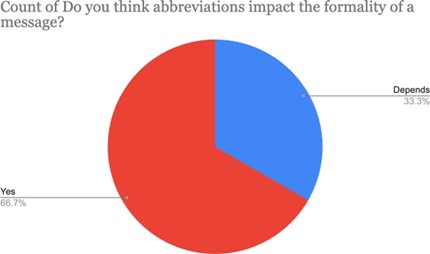
Figure 1: Responses to survey question “Do you think abbreviations impact the formality of a message?”
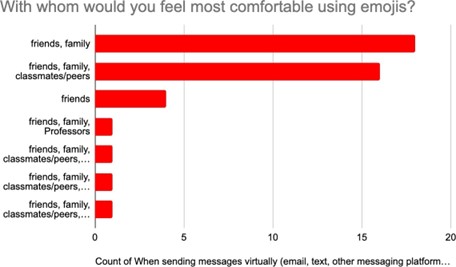
Figure 2: Responses to survey question: “With whom would you feel most comfortable using emojis?”

Conclusion

In conclusion, our research on the formality of linguistic patterns in virtual communication among UCLA students and faculty reveals that individuals adapt their language based on the context, medium, and relationship with the interlocutor. The findings confirm our hypothesis that students increase the formality of their linguistic patterns when communicating with authority figures, such as older individuals or those in higher positions. Emojis and abbreviations, common in informal settings, are used less frequently in professional contexts, indicating a clear distinction in language use based on the perceived formality of the situation. The concept of a “live feedback loop” in face-to-face interactions aids in understanding and adjusting communication, a feature lacking in online exchanges, where careful word choice and proofreading become essential.

Overall, this research provides valuable insights into the dynamics of virtual communication among UCLA students, emphasizing the influence of formality and politeness in linguistic patterns. Furthermore, our results reveal the delicate cooperation and reciprocity which online communication demands from its participants. Future studies could explore the impact of cultural differences on communication styles and the evolving nature of language in the digital age.

References

Baron, Naomi S., (2012). The impact of electronically-mediated communication on language standards and style’, in Terttu Nevalainen, and Elizabeth Closs Traugott (eds), The Oxford Handbook of the History of English, Oxford Academic, 6

Lorenzo-Dus, N., & Bou-Franch, P. (2013). A Cross-Cultural Investigation of Email Communication in Peninsular Spanish and British English: The Role of (In)Formality and (In)Directness. Pragmatics and Society, 4(1), 1–25. https://doi.org/10.1075/ps.4.1.01lor

Kádár, D. Z., & Mills, S. (2011). Politeness in East Asia: Chapter 2, “Politeness and culture” Cambridge University Press

O’Reilly-Shah, V. N., Lynde, G. C., & Jabaley, C. S. (2018). Is it time to start using the emoji in biomedical literature? BMJ: British Medical Journal, 363. https://www.jstor.org/stable/26964183

Meredith, Joanne. (2020). Conversation analysis, cyberpsychology, and online interaction. Social and Personality Psychology Compass, Volume 14, Issue 5.

[/expander_maker]

, , , ,

Cultural Identity Maintained Through Code-switching among Immigrant Generations in a Dominant English Country

The United States is often hailed as a country of immigrants, but in reality there are complex social and cultural factors which play a role in the U.S. immigrant experience, one of the greatest being language. While the U.S. has no official language, English is the predominant means of communication, and plays a large role in multi-generational communications of immigrant communities. Our research seeks to answer: how does code-switching between English and native languages influence identity formation and social interactions among different generations within immigrant communities? Through participant observation and interviews at Los Angeles Latino and Chinese American church communities, we found that first-generation immigrants code-switch more often in work and public environments, whereas second-generation immigrants code-switch for the sake of multi-generation communication. Overall, we demonstrate that through code-switching, immigrant families and subsequent generations struggle to balance assimilation into American culture and the ability to preserve their cultural identity.

[expander_maker id=”1″ more=”Read more” less=”Read less”]

Introduction and Background

According to Pew Research (2020), “more than 1 million immigrants arrive in the U.S. each year.” With the arrival of various ethnic groups to the United States, and integrating themselves into American culture, new cultural exchanges emerge. Nevertheless, discrimination against migrants persists, hindering their integration and sense of belonging. Consequently, migrants often assimilate into the dominant hegemonic groups’ culture – rejecting their own.

Because of the ongoing presence of discrimination, it is crucial to understand the impact of dominant ideologies on both first-generation migrant communities and subsequent generations.

Language plays a key role in identity formation, with immigrants often teaching their children their native languages to maintain cultural ties. However, pressures to adapt to the dominant culture often lead parents to prioritize English as a first language. So how does learning your native language influence your identity and that of your children amidst a society that prioritizes English as the official language? Multiple studies have focused on code-switching as a form of expressing cultural identity (Bosire 2006). According to Myers-Scotton (1993), code-switching is defined as the mixing of different codes (or languages) by speakers in the same conversation (video explanation on code-switching). Moreover, scholars have also highlighted code-switching as a form of learning (Kremin et al. 2022) and socializing (Wei 1995; Lee 2019). Yet, Rangel et al. (2015) have critically emphasized the amount of stigmatization code-switching continues to receive. For this reason, our research focused on code-switching among immigrant communities in the United States, particularly focusing on the contrasts and similarities between first-generation and subsequent generations of immigrants. This study contributes to the wider discussion of code-switching as we explain from a sociolinguistic perspective how migrants and subsequent generations express their identity in a country where non-standard languages are viewed as inferior to standard English. Through qualitative methods, this research answers the following questions: how does code-switching between English and native languages influence identity formation and social interactions among different generations within immigrant communities? Our findings show that through code-switching, immigrant families and subsequent generations struggle to balance assimilation into American culture and the ability to preserve their cultural identity.

Methods

We collected data from two different churches in the Los Angeles area, with participants from Chinese and Latino/a descent communities. We used both participant-observation and semi-structured interview methods. The former was to note how speakers interacted in public spaces, specifically those that are similar in purpose. The latter was to hear the opinions of our participants about their language use.

Our observations took place in group settings, during which we took notes on verbal and non-verbal interactions between three groups: first-generation, second-generation, and a mixed group of both. We chose to limit the time of our observations to 15-25 minutes (due to assignment and situational constraints). In interviews, we spoke to two first-generation parents from each ethnic demographic (Latino or Chinese), ranging from middle-aged to older adults, and with one of each of their (second-generation) children, ranging from young to regular adults.

After data collection, we first compared answers within the most specific group, for example, responses from first-generation Latinos or from second-generation Chinese Americans. Then, we compared the data between generations within the same immigrant group (e.g. responses from Latinos), and the same generation between immigrant groups (e.g. second-generation responses). These were chosen as the methods for analysis because they forced us to consider all possible nuances between the various groups and once we had data for a set of the smaller groups (same generation & ethnicity) we could accurately compare the data for the larger groups (ethnic vs generational).

Results

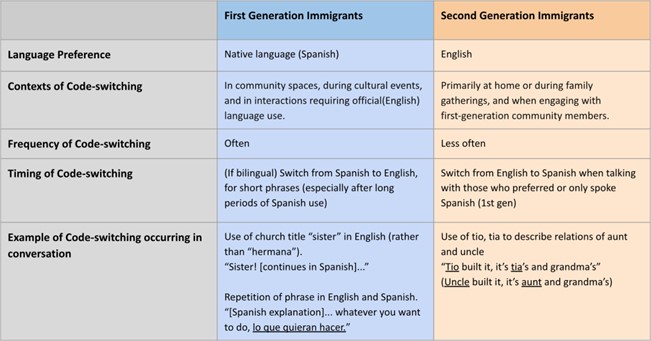
Figure 1: Comparing code-switching experiences between first-generation immigrants and second-generation immigrants

The table illustrates the comparison between first-generation immigrants and second-generation immigrants. We observed various factors of code-switching between both generations and discovered that there is a major difference in the context of code-switching. First-gen has been found to code-switch more often and will code-switch in the context of their root community’s events or situations that require using English. On the other hand, second-gen has been found to code-switch less in general. Code-switching behavior only occurs when they are speaking to people whose first choice of language is Spanish or native Spanish speakers.

Discussion and Conclusions

In conclusion, our findings touch on the importance of language use and perspectives from the first and second generations, particularly with an emphasis on the role played by code-switching among the groups. This research seeks to delve into the effect that code-switching brings in the process of identity formation and socialization of immigrant families and the generations. Therefore, it looks deeper into individual experiences and perspectives to understand the complex position this language takes in this domain. However, language behaviors observed among first and second-generation immigrants more than confirm that code-switching is the most effective tool through which to fully understand the subtleties of bilingualism and acculturation.

First-generation immigrants are struggling to learn and use English in respect to their native languages, and this shows a conscious choice to balance between assimilation and retention of culture. This has been seen in situations where some people never saw English as very important compared to their mother tongue; and that has also seemed to be the area of difficulty in integration, but to them, it’s an area of great importance. For code-switching of second-generation immigrants, it shows some ways that language influences identity and integration with society. These show movement away from an identification with American culture and toward the linguistic assimilation of their parent-native languages. Others maintain strong ties to their cultural heritage by being bilingual. They illustrate perfectly how family and personal language attitudes condition one’s approach to code-switching as a means of bicultural identity navigation. This approach further infiltrates the appreciation of code-switching as a changing and context-bound practice that reflects the challenges and opportunities presented to immigrant communities in maintaining their linguistic heritage in another environment. In this dimension, it calls for comprehensive recognition of multifarious language roles within the experience of migration. We also must observe the aspect of functionality and symbolism, and ultimately, consider the wider implications for the number of cultural identity, social integration, and intergenerational shifts.

While the researchers question the negative stamp of code-switching and non-standard language use, rather, it encourages a broader acceptance of bilingualism, or on a higher level, even of multilingualism, that respects the differences in the use of languages. This work was undertaken in order to remove the stigma from practicing code-switching, keeping in view the positive aspects of bilingualism, which pertains to strengthened cultural ties and increased flexibility of personalities. Overall, our research offers new and interesting data, bringing relevant insights and contributions to research in sociolinguistics on code-switching among immigrants. Through empirical evidence we have shown how practices of identity, cultural preservation, and adaptation intertwine with language practices. This highlights how complex the nature of language used among immigrant communities is and does provide a window into socio-cultural forces which are at play on code-switching and bilingualism. This serves to open further investigations into the complexity of the relations between language, identity, and community in diverse sociolinguistic contexts.

References

Bosire, M. (2006). Immigrant Identity: Code Switching among Kenyans in Upstate New York. In Selected Proceedings of the 35th Annual Conference on African Linguistics, ed. John Mugane et al., 44-52. Somerville, MA: Cascadilla Proceedings Project.

Budiman, A. (2020, August 20). Key findings about U.S. immigrants. Pew Research Center. https://www.pewresearch.org/short-reads/2020/08/20/key-findings-about-u-s-immigrants/.

Cher. L. L., (2019). Filling gaps or code choice? Code-switching across generations in colloquial Singapore Mandarin. Global Chinese 2019; 5(1): 1–24. https://doi.org/10.1515/glochi-2019-0001

Kremin, L. V., Alves, J., Orena, A. J., Polka, L., & Byers-Heinlein, K. (2022). Code-switching in parents’ everyday speech to bilingual infants. Journal of Child Language, 49(4), 714–740. doi:10.1017/S0305000921000118

Rangel, Natalie., Loureiro-Rodriguez, Veronica., & Moyona, Maria Irene. (2015). “Is that what I sound like when I speak?”: Attitudes towards Spanish, English, and code-switching in two Texas border towns. Spanish in Context, 12(2), 177-198. https://doi.org/10.1075/sic.12.2.01ran

Wei, Li. (1995). Code‐switching, preference marking and politeness in bilingual cross‐generational talk: Examples from a Chinese community in Britain. Journal of Multilingual and Multicultural Development,16(3), 197-214, https://doi.org/10.1080/01434632.1995.9994600

 [/expander_maker]

, , , , ,

Celebrities and Controversies: What Works and What Doesn’t in Apology Videos

In today’s high society of “cancel culture,” apologizing has become a language that has diversified. This study dives deep into the world of online apologies, exploring how the majority of our influential figures today, celebrities, use language in public apology videos to mend what’s been broken and rebuild trust with their audience. The emotions, words, and actions can all seem like an act crafted for the cameras. Through the analysis of 15 apology videos, we navigate the comments and perceptions made in the landscape of the online audience to decide whether a public apology is genuine or insincere. Using digital ethnography and discourse analysis to give us insight into solving this issue, we translate the visual and verbal cues that aren’t in the spotlight – the tone, the gestures, and the choice of words, which shape the perceptions of authenticity. But it’s not just about dissecting these apologies. We also evoke what characteristics make for a genuine apology– the unscripted words, raw emotions, and simple background. By differentiating successful apologies from those that were unsuccessful, we reveal candor in the meaning of language that is displayed in front of a public audience. Beyond what the surface entails, we explore the morality behind celebrity apologies. They can be a mirror reflecting societal values, fluctuations in power, and the road to redemption. This research is not for mere insight, but also offers a deeper understanding of what it truly is like behind the screens in this digital age. There is much power in how we express ourselves; dictating how we shape relationships, rebuild trust, and craft a shared narrative.

[expander_maker id=”1″ more=”Read more” less=”Read less”]

Introduction

Growing up, we are taught from a very young age that an apology consists of the words, “I’m sorry.” Is that all it takes as we grow up? In society today, apologies have become very normalized and with the rise of social media in place, it appears highly important to delve into the study of online public apologies by influential people, focusing on the linguistic features chosen to elicit successful apologies throughout crisis communication (Loisa, 2021). As social influencers carry much power, it is important to hold them accountable for their wrongdoings and not allow them to manipulate the public into thinking that something is okay when it is not. Through analysis, we found that sincerity and genuineness are key to carrying out a successful apology video. By having a good understanding of linguistics and the different meanings certain words and phrases obtain, we analyzed the linguistic repair strategies influencers use when creating online apology videos, validating a successful apology or a manipulative one. Through our analysis, our main concern focused on the language strategies used by content creators and celebrities in apology videos to convey sincerity and repair their image. On the contrary, we also focused on why some apology videos completely flop and are seen as manipulated tactics to convey an insincere apology.

Methods

To better understand apology videos, we decided to watch some of them. We selected 15 apology videos from a selection of prominent celebrities and content creators with over 1 million subscribers on YouTube at the time of their controversy (some lost subscribers due to their controversies and are now below 1 million subscribers as a result). We chose creator apologies resulting from major controversies that had an impact on both fans and people outside of their fan community. Critical to our study was selecting videos with varied audience responses, including, positive, negative, and mixed responses in order to gauge which strategies led to successful apologies and which ones didn’t.

Figure 1: Logan Paul’s widely-viewed and controversial apology for filming a dead body, complete with a YouTube interface, including views, likes (👍), and comments.

We fully submerged ourselves in the virtual worlds where these apologies occurred in order to gain a comprehensive understanding of the surrounding context. Our digital ethnography involved analyzing the situations that necessitated an apology and the characteristics of the individuals giving the apology. We performed discourse analysis on spoken and unspoken communication in the films, assessing elements such as intonation, physical gestures, and vocabulary selection. To comprehend audience responses, we meticulously observed the comments that garnered the highest number of likes as an indicator of public sentiment, noting which strategies succeeded or fell flat. The inquiry did not focus on the more technical parts of discourse analysis, such as specific language frameworks and computer methods, which have been covered well in previous studies (Sandlin and Gracyalny, 2018). Our analysis, however, concentrated on overarching themes and tactics deemed significant in determining perceptions of sincerity and the effectiveness of apologies.

Results

Our research yielded a variety of results on the nature of apology videos and the success or lack thereof of various apology strategies. We noted the development of a unique speech register in apology videos, something that has been expounded upon previously (Choi, 2021). Similar filming choices emerge, including directly facing the camera from the shoulders or neck up, maintaining a plain personal appearance, and setting the video in a lightly colored, simple, domestic room. Despite an uncomplicated backdrop and a lack of extravagant accessories being intended to index sincerity, we found that these decisions had no real effect on the apology’s perception.

We found three major strategies: apologizing, refuting the need to apologize and defending oneself, and apologizing while defending and minimizing one’s actions. Genuine apologies with the use of the word “Sorry” and assumption of responsibility or well-evidenced, thorough rebuttals of accusations were well-received, but poorly-evidenced or incomplete rebuttals were criticized. Fans want natural speech with an unscripted tone, criticizing apologies they perceive as stilted or relying on a script, but still want meticulous, well-thought-out responses, while also wanting concise apologies that allow anyone to grasp the core message without delving extensively into the subject matter, a high and somewhat contradictory standard. Musical apologies like Colleen Ballinger’s ukulele song apology or Sienna Mae’s interpretive dance apology were seen as bizarre and inappropriate, especially in response to accusations of grooming minors and sexual assault respectively. Sympathy-baiting distractions, like TmarTn doing baby-talk to his dog in his apology, were also heavily criticized.

Figure 2: Successful and unsuccessful characteristics of apology videos.

Gaming and commentary YouTuber PewDiePie’s apology gives us an example of some strategies being successfully employed. In his succinctly titled “My Response”, PewDiePie was praised for directly apologizing and not excusing his behavior. His acknowledgment of his status as a role model and influential figure and his need to be better, particularly due to his other recent controversies, were appreciated by fans.

Figure 3: PewDiePie’s apology, which was praised for its simplicity and direct admittance of his mistake and apology.

PewDiePie’s apology was favorably compared to later apology videos, particularly for its lack of forced emotion or other forms of sympathy-baiting. Fans derived sincerity from a lack of attempted markers of sincerity, feeling like they were not being tricked but allowed to judge only the content of the apology.


Figure 4: Responses to PewDiePie’s apology video. He was praised for directly and succinctly owning up to his mistake and his lack of excuses.

In contrast, hip-hop artist Travis Scott’s apology video gives us an example of how an apology video and its strategies can backfire. Scott was mocked for his “over-dramatic” black-and-white filter, along with the frequency with which he rubbed his face. While his frequent blinking and facial rubbing could indicate crying and remorse, viewers noted his lack of tears or an actual “I’m sorry”. It is advisable to maintain an emotional equilibrium, effectively conveying genuine emotion appropriate for the video without being excessive or appearing to force it for sympathy.


Figure 5: A screenshot from Travis Scott’s widely lambasted apology video as posted on Instagram, including the infamous black-and-white filter and forehead rubbing.

His lack of concern and failure to stop his concert while his fans were being crushed to death in the crowd contrasted with this sudden change of heart two days later seemed dishonest. Scott’s apology was widely labeled as disingenuous, something advised by lawyers or publicists to shore up his image while refusing to actually accept responsibility for legal reasons.


Figure 6: Responses to Travis Scott’s apology video. His frequent head rubbing and emotionality were widely seen as markers of insincerity, and his stilted delivery and lack of an actual acknowledgment of responsibility were considered to reveal the video’s motivations as insincere.

When actions that typically index sincerity seem forced or incongruent with the context of the apology, it becomes a target for accusations of insincerity and dishonesty, which can be crippling to any apology (Hope, 2019). It is not enough to perform actions and apology video tropes that might be perceived to index sincerity (e.g. a plain appearance, emotionality); the content and tone of the apology and their appropriateness in relation to the inciting event are more important. While some strategies are more successful than others, how they are used is most important.

Discussion and Conclusions

Studying celebrity public apologies is essential for understanding how individuals in the public eye navigate accountability and redemption. These apologies offer valuable insights into the complex strategies of communication and public relations. We can gain a better understanding of celebrities’ relationships with their fans and what each party feels they owe each other through apologies and celebrities’ motivations for apologizing (Matheson, 2023). Language, tone, and framing play pivotal roles in shaping public perception and reception of these apologies. Celebrities employ linguistic devices to manage their image and reputation, illustrating the significant impact of language on social influence. Moreover, celebrity apologies serve as cultural artifacts, reflecting broader societal values and norms. Analyzing these apologies unveils the nuanced dynamics between language, culture, and public opinion. They provide a lens through which we can explore themes such as ethics, power dynamics, and identity. Furthermore, studying celebrity apologies offers insights into psychological processes like guilt, remorse, and forgiveness. Language becomes a medium through which individuals convey sincerity, empathy, or deflect responsibility. By dissecting these linguistic choices, we gain a deeper understanding of human behavior and interpersonal dynamics. In essence, celebrity apologies serve as rich sources for examining the intersection of language, culture, psychology, and social influence. They highlight the intricate ways in which language shapes and reflects our understanding of accountability, redemption, and societal values.

Related resources:

References

Battistella, Edwin L. Sorry about That: The Language of Public Apology / Edwin L. Battistella. Oxford University Press, 2014.

Choi, G. Y., & Mitchell, A. M. (2022). So sorry, now please watch: Identifying image repair strategies, sincerity and forgiveness in Youtubers’ apology videos. Public Relations Review, 48(4), 102226. https://doi.org/10.1016/j.pubrev.2022.102226

Croley, MacKenzie. “A Linguistic View of a Twitter Apology.” Journal of Student Research (Houston, Tex.), vol. 10, no. 2, 2021, https://doi.org/10.47611/jsr.v10i2.1230.

Hope, Jessamyn. “Seven Steps to a Successful Apology.” The Hopkins Review, vol. 12, no. 1, 2019, pp. 60–80, https://doi.org/10.1353/thr.2019.0007.

Loisa, J. (2021).” I’m just letting everyone know that I’m an idiot”: Apology Strategies in YouTubers’ Apology Videos (Master’s thesis, Itä-Suomen yliopisto).

Matheson, Benjamin. “Fame and Redemption: On the Moral Dangers of Celebrity Apologies.” Journal of Social Philosophy, 2023, https://doi.org/10.1111/josp.12510.

Sandlin, J. K., & Gracyalny, M. L. (2018). Seeking sincerity, finding forgiveness: YouTube apologies as Image Repair. Public Relations Review, 44(3), 393–406. https://doi.org/10.1016/j.pubrev.2018.04.007

[/expander_maker]

, , , , ,

Gendered Language Word Perception: On the Primary Language Acquisition in Los Angeles Adolescents

Lily Eun, Maya Gibson-Ott, Desirae Barrios, Katherine Sandoval 

The Theory of Language Relativity suggests that an individual’s primary language shapes their perceptions and worldviews. Our research dives into how a gendered language like Spanish can affect object perception. The research focused on Spanish-speaking university students in Southern California; through surveys and interviews, the research illustrates how native Spanish speakers will assign gender to English words. Our research also included monolingual English-speaking participants as ‘control’ participants and native English speakers who were also bilingual in Spanish; this allowed our researchers to examine the patterns between bilingual and monolingual participants. Our findings illustrate that native Spanish speakers will assign genders to English words based on their Spanish equivalents; these findings indicate that primary languages have a strong linguistic influence on an individual’s perception regardless of their environment’s language. Our results highlight the importance bilingual assessments could have in the educational field. Accurately gauging students’ true intellect and advocating for inclusive language practices in fundamental education will be beneficial for educators to better provide the necessary resources to aid in a bilingual child’s learning. Our study highlights the implications of cross-cultural communication and the necessity of a change of assessment to be more linguistically sensitive for bilingual students.

[expander_maker id=”1″ more=”Read more” less=”Read less”]

Background

The Theory of Language Relativity is crucial to better understand human behaviors and the impacts of these behaviors in the educational world. This theory, also known as the Sapir-Whorf hypothesis, claims that the structure of an individual’s primary language changes their worldview and shapes their perceptions. This hypothesis indicates that language is not just a tool of communication but has a deeper connection to an individual’s cognitive processor. And because many individuals residing in Southern California spoke Spanish before they spoke English (Los Angeles Almanac), our research team wanted to explore how a gendered language, such as Spanish, could impact individuals’ perception of gender regarding ‘genderless’ objects. Would our participants inadvertently allot gender connotations even while speaking a genderless language—English? Our field of research has been explored by Meria Sera, a University of Minnesota professor, who found that Spanish—being a gendered language—does influence a Spanish-speaking individual’s perception (Sera 1994). Building on this, we sought to investigate whether Spanish speakers, when questioned in English about the gender of objects, would replicate Sera’s findings regardless that the questions would be in their secondary language. In the educational world, students, whose primary language is Spanish, are required to participate in all placement exams in English only. Our research aims to provide proof as to why having bilingual evaluations in fundamental grade levels is crucial to better evaluating a child’s perception of the world.

Methods

Our research observed and analyzed word choice and gender narratives. In order to expand on the implications of the process of gendering words, we surveyed over a hundred people, the majority of them being undergraduate college students. This survey showed the participants various words, for example, “dress” and asked them to determine if the word was feminine, masculine, or neither. We categorized our participants into different sections, group A who only spoke English, group B who spoke English and learned Spanish as a second language, and group C who spoke Spanish as their first language and English as their second language. Once our initial results were collected, any students interested in additional interviews were contacted a week later and they were asked to repeat the word categorization process. Our team identified any changes in answers and attempted to determine patterns in responses among Native Spanish speakers and English speakers. Furthermore, interviewees were asked to list synonyms or adjectives of a particular word, and we then had the participants categorize those words as being feminine, masculine, or neither. Our goal was to analyze whether or not the perceived gender of words consistently agreed with each other.

Take the Survey for Yourself!

Results

Figure 1: Spanish speakers’ perceived gender of the word “language”

Our results show that native Spanish speakers will indeed gender English words to match the gender of the Spanish counterparts. In our 19 responses from participants who were Native Spanish Speakers, 50% of the responses to the English words were perceived to be the same gender as the gender of the word translated into Spanish. For example, when we asked our participants to identify the gender of the English word “language,” 57.9% of native Spanish speakers identified the word as Masculine. The word “language” in Spanish translates to “el idioma,” which is masculine in gender. During our post-survey interviews, a participant discussed that it felt “more natural” to choose the respective genders, and it had not registered to them that their choices aligned with the gender of the Spanish counterpart until our follow-up interview. When we analyzed the Native English speakers who only spoke English, we found that the participants were comparatively more likely to neutralize the gender of the English words. However, Native English speakers who were conversationally fluent in Spanish showed the greatest percentage of neutralizing the gender of English words. When analyzing Native Spanish speakers and Native English speakers, our results concluded that the more fluent and culturally connected the speaker was to Spanish culture, the more likely they would be to gender English words that do not explicitly show natural gender. Additionally, in explaining why speakers both fluent in Spanish and English chose to neutralize the words, we predicted that someone’s linguistic patterns would be subconsciously integrated to match the American culture that they live and are exposed to on a daily basis.

Figure 2: Native English speakers’ perceived gender of the words “day” and “language”

Discussion

Figure 3: Rates of perceived gender in various words among native Spanish speakers
Figure 4: Rates of perceived gender in various words among native English speakers

The findings in our research show evidence as to why schools should offer bilingual evaluations to youth in the LA area instead of English. Our findings indicate that our native language affects how we think about and perceive the world. Because language alters our reality, we cannot accurately evaluate one’s intelligence level in a language separate from their native tongue. To do so is unfair and a poor representation of intellect. Such evaluations lack the ability to understand the students’ nuances of the world, and, as a result, often serve as an obstacle preventing students from pursuing a higher education. By offering bilingual evaluations to youth in the Los Angeles area we gain a more holistic view of the student’s true intelligence level; by offering these bilingual evaluations fundamental education will better provide educators with the resources they need to work alongside their bilingual students.

The implementation of our research on the gendering of words across English and Spanish may most notably have a distinguishable impact on educators and curriculum developers. Understanding how grammatical gender can influence perception and interpretation—in languages such as Spanish—can provide valuable perspective on cross-cultural communication and can foster greater empathy and inclusivity throughout foundational education discourses.

Language learners may also benefit from recognizing that the way they gender an object or word can be perceived as relating to an opposite gender when speaking in another language. Because language has a fundamental impact on perception, culture, and community, organizations may benefit from incorporating inclusive language and receiving input from individuals of different backgrounds.

References

Geeslin, K. L. (2018). The Handbook of Spanish Second Language Acquisition. Hoboken, Nj: Wiley Blackwell.

Hispanics/Latinos in Los Angeles County – By the Numbers. (n.d.). Retrieved February 16, 2024, from www.laalmanac.com website: https://www.laalmanac.com/population/po722.php#:~:text=3.6%20million

Montrul, S., Foote, R., & Perpiñán, S. (2008). Gender Agreement in Adult Second Language Learners and Spanish Heritage Speakers: The Effects of Age and Context of Acquisition. Language Learning, 58(3), 503–553. https://doi.org/10.1111/j.1467-9922.2008.00449.x

Nissen, U. K. (2002, June). Aspects of translating gender. ResearchGate. https://www.researchgate.net/publication/26402383_Aspects_of_translating_gender

Pérez-Pereira, M. (1991). The acquisition of gender: what Spanish children tell us. Journal of Child Language, 18(3), 571–590. doi:10.1017/S0305000900011259

Sera, M. D., Berge, C. A., & del Castillo Pintado, J. (1994). Grammatical and conceptual forces in the attribution of gender by English and Spanish speakers. Cognitive development, 9(3), 261-292.

[/expander_maker]

, ,

The Linguistic Switcheroo: Navigating Style-Shifts in College Discourse

Dead Poets Society (1989)

This blog entry explores the dynamic world of language use among college students at UCLA, focusing on how they adjust their linguistic style in academic environments. We delve into the phenomenon of style-switching, where students navigate between informal conversations with peers and formal interactions with professors. Through careful observation and analysis, our research uncovers the nuances of word choice, tone, and syntax in these differing contexts. We aim to understand how social settings influence language socialization within academic communities. Our findings reveal that students tend to employ a more casual, slang-infused language among peers while adopting a more structured and formal language when engaging with faculty. These findings highlight the adaptability of linguistic practices within differing contexts, as seen in the discrepancy between a languid and relaxed setting versus an academic one, and reveal deeper insight into the social dynamics at play. Join us in exploring the intricate play of language in the college setting, where each conversation reflects the complex interplay of social norms, power dynamics, and cultural identity.

[expander_maker id=”1″ more=”Read more” less=”Read less”]

Introduction

Our research focuses on the intricate ways college students adjust their language in different academic settings, particularly at UCLA. Previous studies, like those by Patricia A. Duff and others, have highlighted language socialization in academic contexts. However, there’s less focus on how students’ language shifts in real-time interactions between diverse groups such as peers and professors. We aim to bridge this gap by analyzing how UCLA students’ word choice, tone, and syntax vary when communicating with peers versus academic staff. Our hypothesis posits that students’ language becomes more informal, slang-heavy, and less complex in peer interactions compared to more formal, carefully structured conversations with faculty, reflecting underlying power dynamics and social norms.

Here’s a link to a video by Cambridge University Press that explains “academic language” to give you an idea of what we’ll be discussing in this blog!

Methods

In our study, we centered our investigation on the linguistic style shifts among UCLA students in academic contexts. Our focus was on two primary interaction scenarios: between students themselves and between students and their professors.

People and Contexts Observed:

  • Student-Student Interactions: Conversations among peers, both within and outside classroom settings, were recorded. These interactions provided insights into the informal communication styles prevalent in peer groups.
  • Student-Professor Interactions: We also observed and recorded interactions between students and faculty members. This setting offered a contrasting view of more formal and structured communication.

What We Analyzed:

  • Word Choice: We paid close attention to the vocabulary used in different social settings. Our analysis focused on identifying the use of informal language and slang among peers, compared to more formal and academic language in interactions with professors.
  • Syntax and Structure: The complexity of sentence construction and use of grammatical structures were analyzed to observe variations in formality and complexity.
  • Tone: The emotional and attitudinal aspects of speech, such as enthusiasm, respect, or hesitation, were observed to understand the relational dynamics in different interactions. Take a look at this video to better understand the importance of how we say things, beyond what we say.

Data Collection Method:

  • A mix of participant observation and ethnographic fieldwork was employed. This involved walking with, talking with, and recording the daily life and conversations of students. Both audio recordings and hand-transcriptions of conversations were utilized.

By focusing on these observable elements in communication, our study aimed to illuminate how linguistic practices are adapted to different social contexts within the academic environment. Technicalities not central to our primary analysis, such as detailed linguistic theories, were omitted for clarity and accessibility to a general audience. This approach ensured that our study remained engaging and understandable, while still maintaining academic rigor.

Results

Here is what some of our data ended up looking like:

Student-Student Conversation

Student 1: Yeah, the bystander effect. It’s like, when there’s a bunch of people, everyone thinks someone else will step up. Ends up with no one helping. Pretty messed up and craaaazy.

Student 2: That’s tea. It makes you wonder, huh? Did you guys then talk about how different countries do things differently?

Student 1: Oh yeah, it’s all about the culture vibe. Like, some places are all “pick me girls,” while others are like “No worry girly.” (laughing)

Student 2: No literallyyyy. Social psych’s got some real “shit” going on.

Student-Professor Conversation

Student: In the lecture, you mentioned the bystander effect. Can you explain more on that?

Professor: Oh yes I can. So, the bystander effect refers to the phenomenon where individuals are less likely to offer help to a victim when other people are present. It’s often due to a fear of responsibility, where the bystander assumes someone else will intervene.

Student: I see. So how does this relate to social responsibility?

Professor: Hmm social responsibility is an individual’s obligation to act for the benefit of society at large. So like in the context of the bystander effect, it challenges the individuals to overcome the fear of responsibility and take action when they witness someone in need of help.

Student: Oh ok I get it. And last question (slight haha) what about the role of culture in social psychology?

Professor: So culture plays a significant role in shaping our social behaviors and attitudes. Different cultures have different norms and values, which could influence how people perceive and interact with each other. Like for example, individualistic cultures might emphasize personal achievements, while collectivist cultures focus on their group harmony.

Student: OK I got that down. Thank you so much for your time, Professor!

So what does this tell us?

These two conversations, both of which cover the “bystander effect” of social psychology, show completely different ways of having very similar conversations. Even though both conversations cover the bystander effect, and in each one the speaker is asking questions while one is answering and explaining, the language used is very different.

The use of slang in the student-student conversation – words like “tea,” “craaaazy,” and “literalyyyy” – are not present in the student-professor conversation. This suggests that students are perfectly capable of discussing academic topics in the way they ‘typically’ speak – with friends and in their social interactions, but they are intentionally censoring themselves and electing for “academic language” when speaking with professors.

The fact that the professor, here, is not speaking with the same total academic language, and still uses phrases such as, “so like” and “hmmm,” suggests that they do not feel the same sense of need to maintain formality in the way the student does. This shows us that despite the absence of reciprocal formality within student-professor interactions, when speaking with a faculty member or professor, the student still understands their position in this conversation as relatively powerless and more subservient.

In analyzing syntax and structure, we found conflicting conclusions in students’ willingness to formalize their speech around professors versus their peers. In conversations with peers, students tended to include longer sentences that more frequently lacked correct grammatical structure and syntax as ruled by academic standards of speech. However, these sentences were more truncated and were often shortened to mere phrases that included only enough to communicate a simple idea. In contrast, students’ interactions with the professor included simpler sentence structure, yet more grammatically correct. Student 1’s use of the phrases, “Ends up with no one helping” and “Pretty messed up and craaaazy” as well as Student 2’s response later in the conversation, “No literallyyyy” highlight this phenomenon. By standards imposed through academia’s use of American Standard English, all of these examples would be considered incorrect grammatically and incomplete in syntax. They all lack subjects and therefore rely on the context surrounding it with the conversation being had in order to correctly interpret their meanings. These examples can be contrasted with the student’s interactions with the professor, in which all sentences are complete and use academically correct syntax structure. The students’ sentences are more concise in their lack of filler words and slang, and yet grammatically more correct. This again, may point to power imbalances within these two interactions – students may feel less willing or comfortable to talk extensively with professors than with peers due to the perceived power imbalance, as well as feel more restricted in their expression, as is reflected in the formality of their structure and syntax.

The last aspect of speech we analyzed was a difference in tone. In comparing the two examples provided, we found that student to student interactions included a more playful tone, similar to banter, while the student to professor interaction held a more professional tone, lacking in comfort and familiarity. When the student talked to their peer, the two indiscriminately contributed to the conversation without self-consciousness, providing multiple affirmations and adding onto the points already stated. However, in the conversation between student and professor, the student’s conversation largely comprised of a quick and simple affirmation that they were listening to the professor’s speech, followed by another quick and concise question. The discrepancy between these two interactions again highlights the students’ need to adjust their manner of speaking due to their social status. As the student interacts with individuals with a wider gap in social standing, their speech reflects that change in the comfort at which they are capable of communicating with their counterparts.

Key and Peele, Comedy Central (2012)

Discussion and Conclusion

Academia is just one locale in which this linguistic phenomenon can be recognized. The same linguistic changes that we noticed between students speaking with fellow students, and students speaking with professors appear elsewhere. There is a palpable power dynamic between professors and students, which is reflected in the changes in word choice, syntax, and tone of students we recorded in each conversation group.

Other relationships with a similar power dynamic – for example, manager-employee or parent-child – would see similar shifts from the ‘lower’ positioned speaker’s standard casual mode of communication, and the way they communicate in these partnerships. Even more pertinent social commentary can be drawn from the linguistic-change patterns detected in our research. Power relations that result from socially constructed hierarchies, like racial differences, gender differences, or more specific circumstances like interactions with police officers, demonstrate similar linguistic changes.

This phenomenon suggests that linguistic patterns and tonal choices are not only reflections of existing social strata and power relations but are simultaneously contributing to the establishment and maintenance of these strata. Our research, therefore, both reflects and contributes to the existing literature on the interactions of linguistics and social power dynamics, via this case study on academic communication.

References

Alkhudair, R. Y. (2019). Professors’ and Undergraduate Students’ Perceptions and Attitudes Toward the Use of Code-Switching and Its Function in Academic Classrooms. International Journal of English Linguistics, 9(6), 160-. https://doi.org/10.5539/ijel.v9n6p160

Costa, J. (2015). Can Schools Dispense with Standard Language? Some Unintended Consequences of Introducing Scots in a Scottish Primary School. Journal of Linguistic Anthropology, 25(1), 25–42. https://doi.org/10.1111/jola.12069

Davydova, J. (2022). The role of social factors in the acquisition of vernacular English: A variationist study with pedagogical implications. International Journal of Applied Linguistics, 32(3), 425–441. https://doi.org/10.1111/ijal.12438

Duff, P. A. (2010). Language Socialization into Academic Discourse Communities. Annual Review of Applied Linguistics, 30(Mar), 169–192. https://doi.org/10.1017/S0267190510000048

Hamre, B. K., Pianta, R. C., Downer, J. T., DeCoster, J., Mashburn, A. J., Jones, S. M., Brown, J. L., Cappella, E., Atkins, M., Rivers, S. E., Brackett, M. A., & Hamagami, A. (2013). Teaching through Interactions: Testing a Developmental Framework of Teacher Effectiveness in over 4,000 Classrooms. The Elementary School Journal, 113(4), 461–487. https://doi.org/10.1086/669616

Hutton, S. (2022). The burden of code-switching: U-M LSA U-M COLLEGE OF LSA. U. https://lsa.umich.edu/lsa/news-events/lsa-magazine/Summer-2022/the-burden-of-code–switching.html

“I’m Retired.” Key and Peele, Keegan-Michael Key and Jordan Peele, season two, episode four, Comedy Central, 2012.

Poola, V. P., Suh, B., Parr, T., Boehler, M., Han, H., & Mellinger, J. (2021). Medical students’ reflections on surgical educators’ professionalism: Contextual nuances in the hidden curriculum. The American Journal of Surgery, 221(2), 270–276. https://doi.org/10.1016/j.amjsurg.2020.09.003

Sicoli, M. A. (2010). Shifting voices with participant roles: Voice qualities and speech registers in Mesoamerica. Language in Society, 39(4), 521–553. https://doi.org/10.1017/S0047404510000436 

Weir, Peter. Dead Poets Society. Buena Vista Pictures Distribution, 1989.

Woodbridge, A. (2021). “If I’d Heard That Earlier, It Would Have Changed My Academic Experience”: Connections Between Language Brokering and Undergraduate Academic Writing  / by Amy Woodbridge. University of California, Los Angeles.

[/expander_maker]

, , , , ,
Scroll to Top