Sociolinguistics

(Ap)parent Gender: Gendered Language and its Use in Asian American Parenting

Kara Chu, Iffet Dogan, Jay Iyengar, and Alisara Koomthong

The following research seeks to observe linguistic variability in the way Asian immigrant parents speak to their Asian American sons compared to their daughters. Participants for the study include two female participants and one male participant who recorded phone calls with their parents sharing both good news and bad news. The phone calls were analyzed for linguistic variability through word choice and intonation use by the participants’ parents. In addition to data collection, scenes from television shows that represent Asian American family dynamics were analyzed to find possible linguistic variability in the way parents spoke to their daughters in comparison to their sons. This research aimed to uncover the use of gendered language within the cultural norms of Asian American parent-child relationships. More positive language and lower tonal variability were found with the parents of the boy, while more practical language and higher tonal variability were generally found with the parents of the girls.

[expander_maker id=”1″ more=”Read more” less=”Read less”]

Introduction

Children are known to absorb cultural linguistic expectations and gender norms imposed on them from interactions with their parents and caregivers. We are seeking to explore the common gender differences that children of Asian immigrant parents experience when speaking to their parents. By analyzing the parents’ supportive phrases, negative phrases, tone, and pitch in varying situations, we will look at the difference in language use towards sons versus daughters. Research has shown that mothers talk more and use more supportive language with their daughters than with their sons (Leaper et al., 1998). We hypothesize that our findings will align with existing gender research, and we aim to go one step further by viewing the data with a cultural lens to examine the intersection between how gender and culture may affect the children’s self identity.

Background

Asian families hail from a wide variety of cultures on the Asian continent, many of which are rooted in patriarchy. These customs have resulted in internalized misogyny within many Asian American families, leading to a distinct difference in the way they treat sons versus daughters. Fong (1997) addresses how Asian American women are in “the midst of conflicting values, identity crises, consciousness raising” all while developing their sense of womanhood (92). Asian Americans are subject to harmful stereotypes, which often include the rhetoric that Asian American women are submissive and incompetent compared to men. This is why we find it valuable to study if there are any linguistic markers that would help us understand how this difference in expectations is communicated to children. We are seeking to observe not only the linguistic variation in the way Asian women are spoken to in comparison to men, but also to make connections about whether that inflicts an altered self-image for Asian American women.

Methods

For our methodology, we wanted to recruit men and women from Asian-American family households that speak English with their parents. Due to our specific demographic, we could only find three Asian-American participants in their 20s: two women and one man. Initially, we had one more male participant, but he decided to drop out at the last minute. Each participant gave out their versions of good news and bad news (i.e. aced an exam, dropped out of school) that aligned with their lives, which enabled them to steer the conversation freely and have our results be as natural as possible. After obtaining all the participants’ and their parents’ consent to be recorded, we collected the recordings of their conversations of them delivering their news and getting their parents’ reactions. One of our female participants presented fake good and bad news while the male and the second female participants’ news were true. Only our male participant had both of his parents in the conversation while the rest interacted with either their mother or their father.

In order to support our data, we examined scenes from television shows relevant to our experiment: Never Have I Ever and Kim’s Convenience. It provided us insight into how media portrays the relationship between parents and their children in an Asian-Western household. In Never Have I Ever, the scene we chose was when the mother assumed the worst in Devi (her daughter) after Devi’s classmate said “Well you know Devi. She is a real firecracker.” In Kim’s Convenience, we used two scenes: the first was an interaction between the daughter and her parents and the second was between the mother and the son. Both were delivering the bad news to the parents and we were able to find a significant difference in how they were treated.

Results

1. Word Choice

We began by analyzing word choices used by the parents in response to good and bad news. All words have tones, and individuals make choices to use certain words/tones to convey more meaning than literal definition (Bakhtin, 1982). When certain tones are repeated in conversation with a specific individual it can begin to have an effect on their mood and lead to longer-term consequences. A study by Richter et al. (2010) provides more support for this by analyzing MRI scans of individuals when certain tone-words are spoken to them, noting that brains react differently to words with different moods and the subjects’ emotions can be changed by language itself (Richter et al., 2010). When parents apply this approach to their children, consistent usage of certain language can have long-lasting effects on development.

Our first subject’s (a girl) parent was less congratulatory than the other parents and seemed to place high expectations on his child:

Figure 1. [8:58-9:10]

06  KID: I like kept messing up my interview questions and they were like asking me things and just the structure was really weird so like I think I did really bad

07  PAR: Oh no (.) You always do so well

He uses comparative statements in response to the bad news: “you always do so well.” He also focuses on areas where the student’s grades may be falling rather than offering comfort. Even in response to good news, he begins with a question, as if doubting the ability of her child to succeed:

Figure 2. [6:53-7:07]

01  KID: You know the um homework I was doing earlier today? I got a hundred percent(.) My grade came back already

02  PAR: You wait you got a hundred percent what?

03  KID: On the homework I was just doing

04  PAR: Awesome;

05  KID: Yeah

The congratulatory “awesome” that the parent offers is the only positive word choice in the entire conversation. Even so, our analysis of tone points towards the positivity of such a statement being muffled at best. At other points in our first subject’s conversation, he focuses on how much his child’s success will be affected, rather than mollifying her emotions. Regardless, it appears he still has the best interests of his child at heart.

Our second subject’s (a girl) parent took a similar tone. Instead of positive language use, when speaking to her child, she stays within the bounds of advice and hedging:

Figure 3. [2:41-2:56]

01 KID: It’s just really embarrassing

02 (2.1)

03 PAR: Then you talk to your advisor ask that fo:r advice that what you to do some things it is out of your control you can’t do anything (.) don’t stress for that

She is more concerned with her child’s actions and success than her well-being, and uses direct language (the ‘command’ to talk to her advisor) to ensure that happens. In response to good news, she uses the words “not bad”:

Figure 4. [4:48-5:01]

04  PAR: How-how many hou:rs does he require you to help [him?]

05  KID: [three] hours a week

06 PAR: OH not bad

07 KID: Yeah (.) yeah

08 PAR: That’s good

And in response to the student’s worries, she offers advice and stresses the idea of working hard. Girl 2’s parent is practical and expects independence from her child, and uses her language to communicate that to her daughter. She continues in the conversation to use neutral or negative language, even in positive reactions, implying through her “negative” reaction to her daughter that what she is doping should not be thought of positively; only that it is expected behavior.

On the other hand, our male subject’s parents do provide some practical advice, but we note a lot more positive language in their interactions. When presented with good news, the boy’s parents’ language and tone are happy, with audible laughter and multiple positive statements:

Figure 5. [0:00 – 0:30]

01  KID: Good news is that I got an A on my environmental econ midterm

02  DAD: Oh [very nice] (1.5) [yeah]

03  MOM:     [mmm:::]        [congratulations!]

04  MOM&DAD:(inaudible)<<laughing>>

05  MOM: Good job!

06  KID: Thank you.

07  MOM: <<laughing>>

And perhaps even more interesting, when confronted with bad news about his budget, the parents continue to use words like “thank you for letting us know” and place trust in his ability to handle his business, telling him to keep track of his own budget:

Figure 6. [0:42-1:01]

08  KID: ‘Ca-’cause like I feel like–it feels like I’m spending too much but I’m like–I . should probably keep track of my budget better (0.1) [so:] (0.2) we’ll see

09  MOM&DAD: [Oh:]

10  DAD: You stay within your budget?

11  KID: Well–I–I need to be better about that. [So we’ll see]

12  DAD: [Oh okay]

13  DAD: Well, thank you for letting us know about [that]. So, you know,

14  MOM: [yes]

15  DAD: Keep track of your budget(1.2)and how much you spent.

We do not have enough data to tell whether these are truly differences between treatment of girl/boy children or simply differences in parent personality, as we know parent gender in addition to having one parent versus two parents present can affect the conversation. However, there are minute trends in word choice that differentiate the two genders. The boy’s parents are more positive about his accomplishments and more trusting of his faults, while the girls’ parents take a more high-expectation position and are more neutral about their efforts.

2. Intonation

In addition to evaluating word choice, we also put the recordings into a speech analysis software called Praat to analyze pitch and intonation. According to previous research, intonation, which is the change in pitch, is a really important part of communicating a speaker’s emotions and their attitude towards the listener (Wells, 2006). Their pitch will differ depending on what emotion the speaker is conveying.

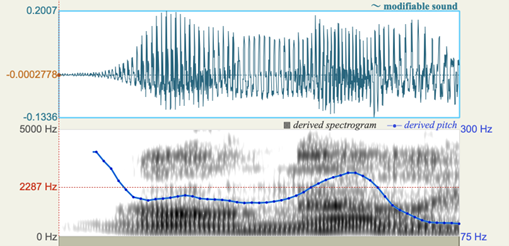
The first thing we looked at was the parents’ initial short one-word response to the child’s piece of bad news. For the boy, it was “Sooo,” and for the girls it was “Oh no” and “Okay?” as seen in Figures 7 – 9. These spectrograms show the strength of certain frequencies as a speaker talks. Their pitch is indicated by the blue line. We used a pitch range of 75 to 300 Hz for male speakers and 75 to 500 Hz for female speakers, as females have a higher speaking pitch. We found pretty consistently that the parents of the girls had higher tonal variability, meaning their pitch changed a lot, while the parents of the boy had low tonal variability. However, we acknowledge that the content of the speech can have an effect on the speaker’s pitch which can make it hard to compare one to one.
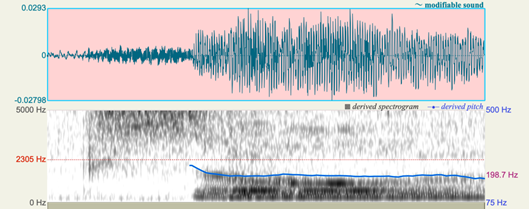

Figure 7. To Boy, “Sooo” – Low tonal variability
Figure 8. To Girl 2, “Okay” – High tonal variability
Figure 9. To Girl 1, “Oh no” – High tonal variability

All the parents asked their kids a question after hearing the bad news. For the boy, one question his parent asked was “you don’t have enough?” which has a low tonal variation, as seen in Figure 10. He doesn’t increase pitch at the end which you would normally expect from a question, especially a yes or no question.

Figure 10. To Boy, “You don’t have enough?” – Low tonal variability

On the other hand, you can see the parent of Girl 1 varied a lot in intonation in Figure 11 during the question, “So how does that affect your grade?”. Girl 2’s parent’s pitch didn’t change as much throughout the sentence, but a big pitch increase is seen at the end of the yes or no question “If you fail, can you retake the class for the next quarter or whatsoever?” in Figure  12. This expresses itself much more like a question as opposed to the boy’s parent, whose question ends on a level pitch similar to a statement.
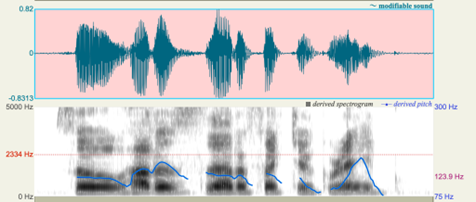
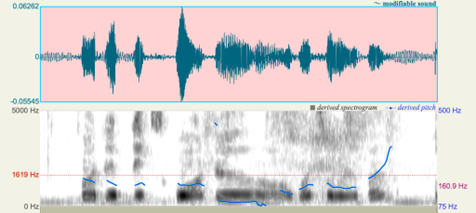
Figure 11. To Girl 1, “So how does that affect your grade?” – High tonal variability
Figure 12. To Girl 2, “…for the next quarter or whatsoever?” – Ends on rising pitch

This difference in parents’ tonal variation for questions is consistent with the parents’ tonal variation in their one word responses. For responses to bad news, the parents of daughters used more tonal variability than the parents of the son.

However, for the responses to the good news, we couldn’t find a clear difference between the boy and the girls. For both, the parents said congratulations, which for the boy has more variety and ends on a falling tone while for the girl has a level tone at a high pitch. We looked at another congratulatory phrase from the parents, and you can see variety for both the boy and girls. We believe this could mean that parents react to good news similarly regardless of gender pitchwise.
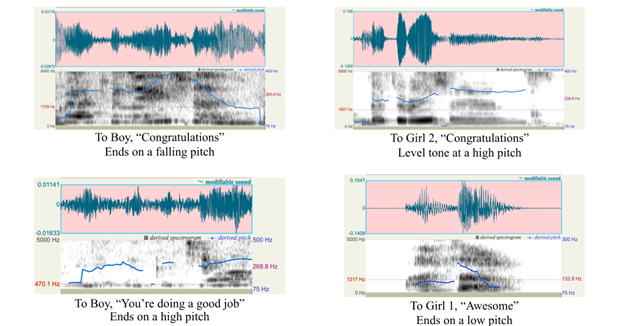
Figure 13. Varied pitches for parent responses to good news

3. Media

Media plays a large role in reflecting the dynamics between Asian American parents and their children. One example of this is Devi from the show Never Have I Ever.

B: well you know Devi (.) she’s a real firecracker.

N: Oh no :: what did she do?

In this particular scene, Devi’s classmate Ben refers to her as a “firecracker” to which her mother, Nalini immediately assumes the worst and jumps to the conclusion that Devi did something wrong. In general with Devi’s character, in the midst of developing into womanhood and growing up, she is constantly given these types of negative reinforcement about her personality traits that are commonly misconstrued as “unladylike”. She is outspoken and expressive and often reprimanded for being that way, as this particular scene represents. Media representations such as the show Never Have I Ever are reflective of these kinds of parent-child relationships and interactions that many Asian American women face in real life.

In Kim’s Convenience, Jung is the oldest and the only son of the family where high expectations were placed on him. He told his mother that he applied for a new position in a car rental company that has higher pay and responsibilities, however, his mother interpreted it negatively.

Jung: Assistant manager, Umma. And it’s a good job. It’s got more pay, benefits, and more responsibility.

Umma: So does doctor or judge or (1.2) website design!

The mother’s response was a clear indication that she was not satisfied with her son’s choice. She wanted him to choose a career that is more reputable, such as a doctor, a judge, or a website designer. It is a portrayal of Asian parents’ ideas of what is best for their children by setting high standards for them to follow.

Janet is the youngest and only daughter of the family. In comparison to Jung, she has fewer responsibilities and lower expectations than him other than to be obedient. In Season 1, Episode 10, Janet’s friend revealed to her parents that she got a job without their approval.

Umma: Janet, you get job?

Gerald: At the car rental store. She starts tomorrow.

Umma: At Handy Car Rental?

Janet: Yeah

Umma:(1.6)*sigh* N(h)o, Janet. You work here. You tell them it’s

   mistake. Tell her, Appa

Appa: You know what’s a big mistake? Pork rind. Never sell. Look.

[5:39-5:48]


Janet: I need the job, Umma. How else am I going to earn any actual money?

Umma: We work something out. Right, Appa?

Appa: And what’s the deal with the wine gum? Not wine, not gum.

In this scene, both parents were dismissive of her but in different manners. The mother was trying to reassure her that she did not need a different job because she is already working at their family’s store and was persistent for her daughter to stay. The father, on the other hand, reacted by not responding to her news. Instead, he decided to change the topic as if it did not matter to him. It’s a representation of how parents would have low expectations from their daughter in this scene but try to influence her to be compliant with them. Her individuality can only be accepted if it aligns with their concept of what is best for her.

Conclusion

We found that hedging was used by parents of both boys and girls, but that girls’ parents used it significantly more. The parents of our male subject also spent a lot of time reacting to and understanding his problem, while the girl’s parents tended to offer more vague advice and “close off” subjects as soon as they were done offering their piece on the subject, before moving on to the next subject unless the child brought it up again. For both genders, the parents provided serious advice, but the advice for the boy was more direct when it was given while the girls’ parents provided mostly vaguer advice to their children, often having to do with working harder or being more resolute in the face of challenges. When presented with issues in the students’ lives, the girls’ parents were significantly more negative or neutral in speech, and placed far higher expectations through their word choice when reacting to bad news, while the boy’s parents were hopeful and positive in tone, implying a sense of trust in their child’s ability to fix his issue. Intonation varied less for the boy’s parents than it did for the girls’ parents, and the girls’ parents’ intonation varied the most especially when reacting to bad news.

The data has not supported pre-existing research studies on this topic and our hypothesis that more supportive and positive language would be used with the girls. While we were able to dissect and analyze the data that gave some clear distinctions between sons and daughters, the obstacle of finding participants does not allow us to give a definite conclusion or correlation from our small sample and apply it to the general public. There are several factors as to why we cannot definitively conclude that gender is the sole cause of the linguistic differences. For instance, parents may have more progressive views that are from Western or American culture instead of their heritage and/or not speaking the inherited language with their children. Another contributor includes the level of closeness and comfort. The data would have been stronger if we included various levels of connection between parents and their children to observe any similarities and differences in their language. If we have the opportunity to conduct this experiment again, we would take more time on the recruiting process as that was our main issue. Additionally, we would want both parents present when interacting with our participants so everything is more consistent. Regardless, our study provides an often-forgotten insight to the relationships between Asian American students and their families, and through such understanding, we can only hope to foster more thoughtful and egalitarian approaches to parenting children.

References

Bakhtin, M. M., & Holquist, M. (2000). The dialogic imagination: Four essays. University of Texas Press.

Fong, Lina Y. S. (1997). Asian-American Women: An Understudied Minority. The Journal of Sociology & Social Welfare, 24(1), pp. 7.

Leaper, C., Anderson, K. J., & Sanders, P. (1998). Moderators of gender effects on parents’ talk to their children: A meta-analysis. Developmental Psychology, 34(1), 3–27.

Wells, J. C. (2006). English Intonation PB and Audio CD: An Introduction. Cambridge: Cambridge University Press.

Richter, M., Eck, J., Straube, T., Miltner, W. H. R., & Weiss, T. (2010). Do words hurt? brain activation during the processing of pain-related words. Pain, 148(2), 198–205.                              https://doi.org/10.1016/j.pain.2009.08.009

[/expander_maker]
, , , ,

The Use of Gendered Language in Interviews of Male and Female Athletes

Julia Offerman, Isabelle Sandback, Samantha Morgan, and Niki Agarwal

Societal viewpoints regarding sports can be partially attributed to gender bias in sports commentating and interviews. This is true even for tennis, which has become very gender-inclusive in terms of media coverage, as well as respect for female athletes. Still, many studies have found biases in language used for male and female tennis players—but have not examined interviews or interview questions. In this study, we analyzed six post-game interviews of mixed doubles tennis players to ascertain if there was a difference in questions directed to female and male tennis players. We observed the proportion of emotional and practical questions directed to each, as well as the proportion of questions regarding the interviewee themself, their partner, or teamwork for each player. We found that the women were asked significantly more emotional questions than their male counterparts, but that both were asked relatively similar percentages of interviewee-partner-teamwork questions. This study has important implications for language, respect, and gender-inclusivity surrounding tennis and women’s sports, as well as interview protocol between men and women interviewees in other fields. These metrics analyzed could be used in these other cases, and ideally, the differences should be mitigated in order to promote equality in interviews.

[expander_maker id=”1″ more=”Read more” less=”Read less”]

Background

Although media coverage of tennis has been more gender-inclusive than other sports, biases are still present in the language used by interviewers when interacting with male versus female tennis players. In our study, we analyzed the post-match interviews of mixed-doubles teams, which consisted of one female player and one male player, to see if word choice and question type display any gendered bias. This allowed us to test the hypothesis that gender-based bias found in broadcasting also extends to in-person interviews with the athletes.

Gendered language in tennis has served as the subject of several studies. Though the definition of gender may be fluid depending on context and background, tennis itself has established a gender line between male and female that we used as our baseline. Previous studies, such as Messner and Jensen (1993), have compared the broadcasts of men’s and women’s tennis matches because they are usually held at the same venue and given equal amounts of coverage.

Articles reporting on the 2015 Australian Open were analyzed for “gender-specific descriptors” in a 2016 study conducted by Adrian Yip (2016). It was found that “stereotypical beliefs about females were largely reinforced in mediated gender representations,” and specifically focused on the disproportional discussion of women’s appearance, mental-weakness, and other stereotypical female traits (Yip, 2016). The 2015 Australian Open media coverage was additionally analyzed by the International Review for the Sociology of Sport, and strong gendered differences in how announcers “created spectacle” and described athletes during the live matches were found (Quayle et al., 2019). Commentators were again analyzed during the 2018 US Open and found that they reported emotionality more frequently with female athletes (Gerbasi, 2019).

Despite the focus on bias in sports media coverage, no studies have looked at how gender bias shows up in press conferences and interviews. Interactions with the players deserve their own focus since reporters are not describing the athletes or offering their own commentary, which therefore makes it more difficult to identify examples of stereotypes or biased language.

Overall, we expect that female athletes will be asked more emotional-coded questions and males will be asked more practical-coded questions. In addition, we hypothesize that women will be asked more questions about their partner than men will be asked about their partner, and that women will be asked more questions about teamwork in general. If we see these differences, we can determine that there may be bias in the question choice when directed towards female and male athletes.

Methods

For our study, we looked at post-match interviews from Grand Slam tennis tournaments and decided to focus exclusively on mixed-doubles teams. Since a mixed-doubles pair includes one female and one male athlete who are both being interviewed about the same match, gender is isolated as a difference between the players; therefore, the differences in the questions posed to each athlete could be indicative of gender biases. We chose to analyze 6 formal interviews of players that were successful (had each won major tournaments before both in individual and doubles events) and well-known within the tennis world. The interviews totaled 71 minutes for analysis. Additionally, we chose to disregard the gender of the interviewers because the questions seemed to be highly scripted and therefore not indicative of the interviewers’ personal biases. After an initial scan, we conducted two waves of analysis: one that marked the subject of the question (i.e. emotional versus practical) and one that marked the referent of the question.

For the first part, we defined “emotional questions” as questions that either are meant to elicit an emotional reaction or ask about the player’s feelings. We looked for keywords or question topics that indicate emotions, specifically focusing on—but not limited to—the following list of keywords and concepts: therapy, emotional wellbeing, “feel,” personal life, emotional reaction to the results of the match, “happy” instead of “satisfied,” support. We used this framework in order to tally and average the number of emotional questions directed towards the female and male athletes.

An example of an emotional question is the following, posed to Serena Williams at the 2019 Wimbledon Tournament:

(1) “You said you had gone to see a therapist after the-dealing with the uh US Open incident, can you just talk about that process-what it did for you and how maybe it has affected you going forward?” – Question to Serena Williams in the Second Round Mixed Doubles Press Conference Wimbledon 2019 (0:16)

This targets both personal life and therapy, making the question emotional. Other times, the lexical choices indicated gender biases—competition related for the male player and emotional/psychological interaction for the female—such as in the following questions:

(2) “Were you surprised at how well you came together, you really seemed to have excellent chemistry this week?” – Question to Martina Hingis in the Mixed Doubles Finals Press Conference Australian Open 2015 (5:55)

(3) “How is the mixed doubles helping mentally and physically your, you know, your ambition to get back to singles?” – Question to Andy Murray in the Mixed Doubles Second Round Press Conference Wimbledon 2019 (6:38)

(4) “How did it feel to hit so many return winners against Martin?” – Question to Serena in the Second Round Mixed Doubles Press Conference Wimbledon 2019 (9:17)

In the second round of analysis, we tracked each question’s referent by sorting them into three possible categories: questions referring to the interviewee, questions referring to the interviewee’s partner, and questions referring to teamwork. We marked questions as referring to the interviewee when they asked about the player’s personal life, mental health, individual match play, opinions on larger news stories, etc., such as in the following question:

(5) “Andy, on TV you said that uh once Wimbledon finishes, hopefully on Sunday, you’re gonna practice a bit more singles? Does that mean you’ve made your decision about if you’ll go to the US Open or you will try the US swing as a singles player?” – Question to Andy Murray in the Second Round Mixed Doubles Press Conference Wimbledon 2019 (0:48)

Questions were marked as referring to the interviewee’s partner when players were asked about the other’s personality, habits, or style of play, such as in this example:

(6) “What is it about playing with Jamie that is so good for you?” – Question to Bethany Mattek-Sands in the Mixed Doubles Final Post-Match Interview US Open 2019 (2:29)

Finally, questions were marked as referring to teamwork when players were specifically asked about their partnership or future plans to play together. For instance:

(7) “You said on court that you only sort of teamed up again in the last couple weeks, was there ever a chance that you weren’t going to play together?” – Question to Neal Skupski in the Mixed Doubles Final Press Conference Wimbledon 2022 (11:42)

We conducted a paired t-test for each set of averages in order to determine the statistical significance of our results.

Results

On average, male tennis players were asked 58.33% of questions and females 41.67%, which was not significantly different (p-value=0.16).

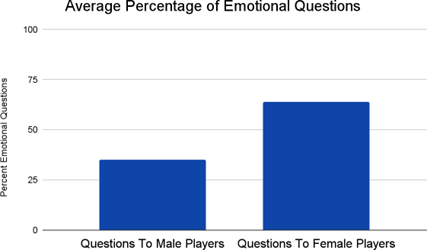
Of the questions asked to the male partner, 35.83% were emotional-based and 64.33% to the female partner. This gives a two-tailed p-value of 0.006, which is very significant. Out of the total emotional questions, the female partner was asked 64.5% of the questions on average, with a p-value of 0.04, also significant.

Figure 1: The average percentage of questions that are emotional-based asked to the male and female tennis players; the percentage is the number of emotional questions divided by total questions asked to each partner.

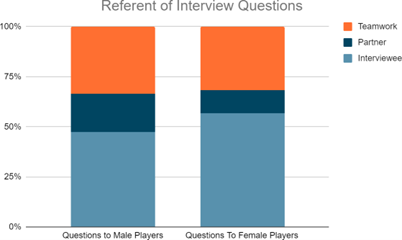
Of the questions asked to the male, 51.4% referred to themselves, 17.7% referred to their partner, and 30.9% referred to teamwork. Of the questions asked to the female, 54.6% referred to themselves, 14.8% referred to their partner, and 30.6% referred to teamwork. The p-value between these two groups is over 0.9, indicating that there is no significant difference between the questions for male and female tennis players regarding if the question is about themselves, their partner, or teamwork.

Figure 2: The average percentage of questions asked about the interviewee, partner, and teamwork to each gender. The averages are comparable for each group; the percentages are taken out of total questions asked.

Discussion

Overall, the study indicated that there were some significant differences in the questions directed at male and female tennis players, but certain aspects were more likely to be gender specific than others. Based on the data, we can accept our hypothesis that female tennis players tend to be asked more emotion-based questions than male tennis players on average. We cannot, however, accept our hypothesis that female tennis players are asked more questions about their partner than male tennis players are, as the proportions are similar. This could indicate that emotional versus practical questions could be a metric for examining gender bias in sports interviews, but interviewee-centered versus partner-centered versus teamwork-centered may not be—at least, for mixed doubles tennis.

This has several implications not only for current perceptions of men’s and women’s sports, but for future actions that should be taken in order to mitigate gender bias in sports interviews. Based on the current understanding, interviewers direct more emotional questions towards female tennis players, which can undermine their competitive and athletic ability. If equal respect is going to be given to male and female athletes, the proportion of emotional and practical questions should be comparable for both genders—and this must be done deliberately. Though emotional aspects can be relevant in an interview or discussion with athletes, the priority should likely be the competitive aspects to establish any athlete’s prowess as paramount. “Gender Inequality in Sports: Women Face a Double Bind” from the publication The Hilltop Monitor, talks about a running hashtag back in 2015 called “#CoverTheAthlete.” This hashtag was created in order for people to highlight how male and female athletes were interviewed online and in the news, or, more importantly, how females were asked questions not related to their skill or game, but ones about personal life, looks, emotions, and how they felt about the male-side of sports. The author’s hypothesis was to see if there was a link between these interview differences and female athletes’ pay. Women are paid incredibly lower versions of their male-counterparts’ salaries. “The Women’s National Basketball Association (WNBA) had a 2018 salary cap of $110,000 while the National Basketball Association (NBA) minimum salary was $582,186” (Porth 2019). The blog argues that gendered language and lower pay go hand in hand; if female athletes are going to be interviewed like their games do not matter, then their games will matter less to people, resulting in less revenue. Does the request “can you give us a twirl” sound like what an interviewer would ask to a serious, skilled player? It might be why women’s sports are seen as less serious than men’s.

Furthermore, tennis is a sport in which female athletes are seen as relatively equivalent to their male counterparts when compared to athletes in other sports. This suggests that the disparity could be even greater in other sports, underscoring a need for studies such as these to explore the way gender bias presents itself. The emotional and practical question metric could be applicable in these cases as well, and the necessity for similarity in questions directed to athletes of different genders in order to promote equal respect is key. Further differences in interview questions between men and women may be present in other industries and fields, which is another area for future development.

In order to truly determine if gender biases were present in these interviews, we specifically needed to limit the scope of this study to focus on quantifiable and qualifiable differences in the questions asked to male and female athletes. However, each athlete has multiple other aspects of their identities that could affect how they are perceived, such as race and age. There are intersections between said identities that may play an additional role in the choice of questions directed to them. Broadening the extent of this study could help account for some of these intersections. In addition, a longer study with more interviews would be ideal in order to further solidify the relationships noted.

There are efforts that can be made to help reduce the biases held regarding women’s sports in general, which can be considered a possible cause of the difference in questions posed in interviews. The International Women’s Day campaign offers a few ways that individuals can combat biases in women’s sports. Encouraging young women and girls and supporting them in sports can help instill equitable perceptions at a young age. Additionally, closing the gender gap in sports salaries will improve the legitimacy of women in the field. One of the easiest ways anybody can make a difference is simply supporting professional sports in any way, from attending a game to buying merchandise (“Support female athletes”). Supporting women and being aware of the stereotypes reflected in their sports interviews will contribute to the effort in improving gender inequities. This study, among many others, has revealed evidence of gender biases and awareness of this prejudice can allow for progress towards eliminating it.

References

AK. (2016, June 4). Martina Hingis and Leander Paes seal career grand slams at French Open. https://www.youtube.com/watch?v=D8Fh-fF8Zek

Australian Open TV. (2015, February 1). Martina Hingis and Leander Paes press conference—Australian Open 2015. https://www.youtube.com/watch?v=cAPoYiZHzeU

Cooky, & Messner, M. A. (2018). No slam dunk: gender, sport and the unevenness of social change / Cheryl Cooky and Michael A. Messner. Rutgers University Press. https://muse.jhu.edu/chapter/2124054

Gerbasi, A. (2019). Game, Set, and Match: A Content Analysis on the Commentating of Tennis Broadcasters for the 2018 US Open Championship Weekend. [Master’s thesis, East Tennessee State University]. ProQuest, https://dc.etsu.edu/etd/3575

Messner, Duncan, M. C., & Jensen, K. (1993). Separating the Men from the Girls: The Gendered Language of Televised Sports. Gender & Society, 7(1), 121–137. https://doi.org/10.1177/089124393007001007

Porth, M. C. (2019). Gender Inequality in Sports: Women face a double bind – The Hilltop Monitor. Retrieved December 8, 2022, from https://hilltopmonitor.jewell.edu/gender-inequality-in-sports-the-double-bind-women-face/

Quayle, M., Wurm, A., Barnes, H., Barr, T., Beal, E., Fallon, M., Flynn, R., McGrath, D., McKenna, R., Mernagh, D., Pilch, M., Ryan, E., Wall, P., Walsh, S., & Wei, R. (2019). Stereotyping by omission and commission: Creating distinctive gendered spectacles in the televised coverage of the 2015 Australian Open men’s and women’s tennis singles semi-finals and finals. International Review for the Sociology of Sport, 54(1), 3–21. https://doi.org/10.1177/1012690217701889

Support female athletes worldwide and help #breakthebias in women’s Sport. International Women’s Day. Retrieved December 7, 2022, from https://www.internationalwomensday.com/Missions/17255/Support-female-athletes-worldwide-and-help-BreakTheBias-in-women-s-sport

US Open Tennis Championships. (2019, September 7). Mixed Doubles Final—Ceremony and Post Game Interview | US Open 2019. https://www.youtube.com/watch?v=QMDNRmO1cyY

Wimbledon. (2019a, July 9). Andy Murray & Serena Williams Second Round Mixed Doubles Press Conference Wimbledon 2019. https://www.youtube.com/watch?v=cqckd0HxyWY

Wimbledon. (2019b, July 10). Andy Murray & Serena Williams Third Round Press Conference Wimbledon 2019. https://www.youtube.com/watch?v=o_AD9GhiFNA

Wimbledon. (2022, July 8). Neal Skupski and Desirae Krawczyk Final Press Conference | Wimbledon 2022. https://www.youtube.com/watch?v=DamI3-8RWjU

Yip, A. (2018). Deuce or advantage? Examining gender bias in online coverage of professional tennis. International Review for the Sociology of Sport, 53(5), 517–532. https://doi.org/10.1177/1012690216671020

[/expander_maker]

, , , ,

너 Halloween costume으로 뭐 할 꺼야?(What are you going to do for your Halloween Costume?): Code-Switching Patterns in Korean-English Bilingual speakers

Sarah Bassiry (Sky), Michelle Chan, Seohyung Hong (Alena), Christina Jang, and Jasmine Miranda

Through media platforms and conversations bilingual speakers engage in, we unconsciously and frequently code-switch across languages. Yet, the lingering interpretation of how style-shifting is done in Korean-English speakers continues to be scrutinized. In this study, researchers investigated observable linguistic patterns across three contrastive Korean-English populations and examined their code-switching temperaments within both languages. Six participants engaged in casual conversations with a researcher and were audio recorded in order to gather sufficient evidence. The participants were then asked to complete a background survey and had a follow-up interview post experiment. Detailed analysis from this study revealed that there were distinct results amongst all participants with cultural topic types and amount of code-switching occurrences. These preliminary results show that some participants had more occurrences of intrasentential code-switching in discussions that were culturally/contextually related to the embedded language. The study highlights how code-switching can influence and is more affected by the speaker’s linguistic identity than the topic of conversation.

[expander_maker id=”1″ more=”Read more” less=”Read less”]

Introduction and Background

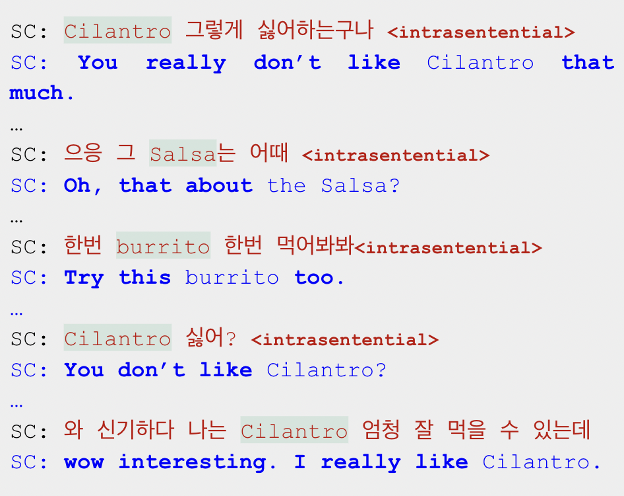
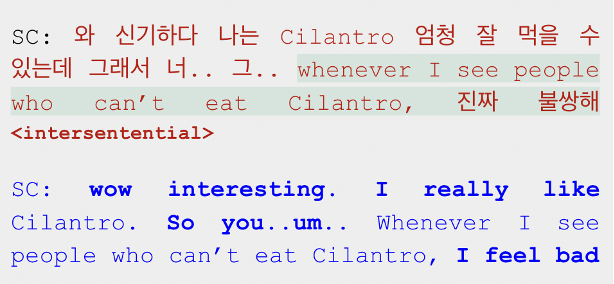
This study strives to investigate sociolinguistic patterns found in the code-switching of Korean-English bilingual college students, focusing on the frequency and cultural context of the code-switching as well as the type of code-switching utilized. Code-switching is defined as the capacity of multilingual to fluidly switch between several languages (Bullock & Toribio, 2009). The categories of code-switching types were interjections, intrasentential code-switching, and intersentential code-switching as defined by prior research in the field. Inter-sentential switching takes place in two different sentences with one sentence spoken in the primary language and the other one uttered in a second language; meanwhile, intra-sentential switching occurs within a sentence with a word specifically alternated to a second language (Mohamad Khalil & Mohd Shahril Firda, 2018). (1) and (2) below show examples of intrasentential and intersentential code-switching from the data recorded for this study.

  1. Intrasentential CS- example from Participant A (1:38~1:50)
Image 1: Example of intrasentential CS. Matrix Language: Korean; embedded Language: English

2. Intersentential CS- example from Participant A (1:51~1:58)


Image 2: Example of intersentential CS

The researchers followed the basis of the Matrix Language Frame Model (MLF) which holds the idea that code-switching has a matrix language and is the more dominant language that provides the morphosyntactic frame. Whereas, an embedded language is known as the language from which smaller elements are inserted (Myers-Scotton, 1933). Koban (2013) provides a detailed account of code-switching amongst Turkish-English bilinguals and has documented greater higher frequencies of intra-sentential code-switching as opposed to inter-sentential code-switching. This finding supports what the researchers hypothesize in this current study. Another implication the researchers examined was whether the participant’s language background and cultural background had any noticeable effect on their code-switching behavior. 

Methodology

A total of 6 undergraduate students (mean age 22.16 years) studying at the University of California, Los Angeles, participated in the experiment. The population targets three different Korean-English bilingual college students  (1st gen. Korean-Americans[A, B], 1.5 gen. Immigrant Korean/Korean-American [C, D], & Korean international students studying abroad in the U.S.[E, F]). The experiment was conducted through spontaneous casual-style speech in a one-on-one format with the researchers and was audio recorded. Upon completion of the experiment, relevant background information was collected from the participants through a background survey (age, country of birth, age of exposure to both languages, comfort language) and a follow-up interview with questions facilitated by the researchers. Researchers transcribed and translated applicable segments of the recorded material and then analyzed linguistic patterns in code-switching occurrences as well as findings tailored to sociolinguistic occurrences. The experiment per participant lasted an average of 30 minutes.

Results and Analysis

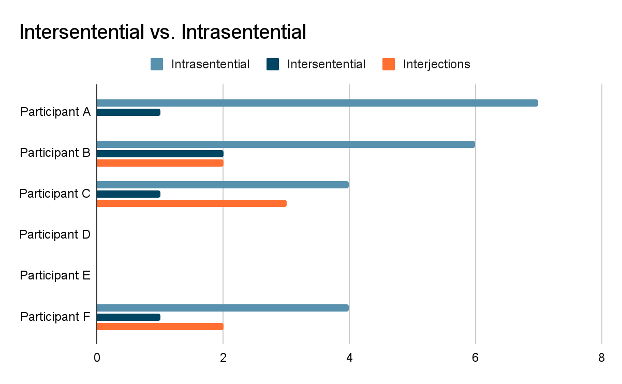
Figure 1: Intersentential vs. Intrasentential

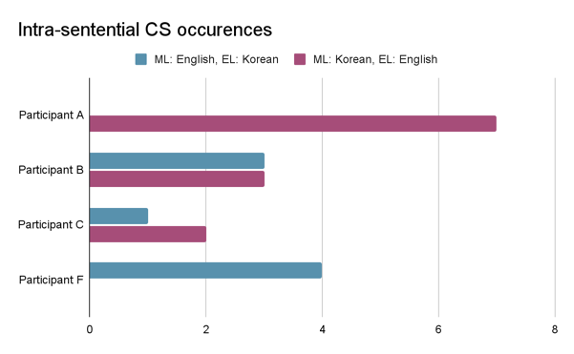
We found a two-way effect with intra vs. intersentential and the number of CS occurrences. This effect revealed that participants showed higher frequencies of intrasentential code-switching as opposed to intersentential which holistically supports what the researchers expected (see Figure 1). Participants A, B, C & F used this intrasentential shift in the middle of their sentences and without hesitation. This denotes a shift between Korean and English and shows that these participants are almost if not always unaware of the shift in this language (see Figure 2).

Figure 2: Intra-sentential CS occurrences

The most eye-catching result from Figure 2 reveals that Participant A showed no occurrences of code-switching as the matrix language being English, even though this same participant notated that his dominant language was English in the survey.

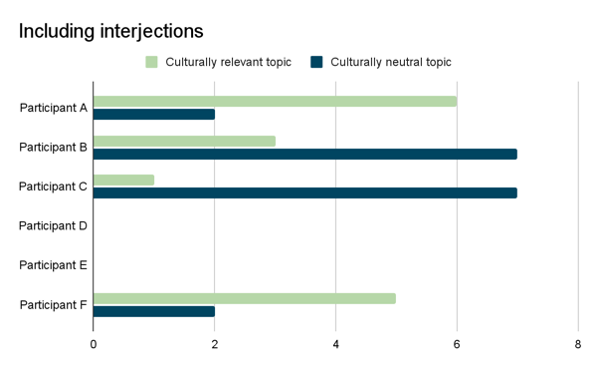
Figure 3: Interjections
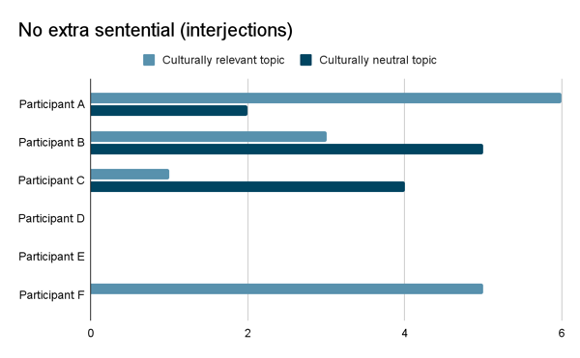
Figure 4: No interjections

Figure 3 compares the CS occurrences according to the cultural relevance of the topic including intrasentential, intersentential, and extra-sentential occurrences. We can see from Figure 3 that participants B and C, showed more CS occurrences for culturally neutral topics which went against our hypothesis that people with code-switch more in topics culturally relevant to the embedded language. Even when excluding interjections, which we thought would less be influenced by the cultural relevance, we can still see such a result remains the same in Figure 4.

So for participants B and C, we underwent an additional in-depth analysis to see how their linguistic background influenced their CS behavior.

A comparison of participants A and B’s observed code-switching as well as their self-reported views of code-switching provides insight into the conscious and subconscious factors affecting their code-switching behavior and choices regarding their language use. Both where born and raised mostly in the USA and also expressed being most comfortable code-switching when speaking with other Korean-American friends.  Prior research suggests that among bilinguals with social profiles including the identities related to both languages, code-switching may become the unmarked choice (Myers-Scotton, 1993), which seemed to be the case for some of the data examples we found in A and B.

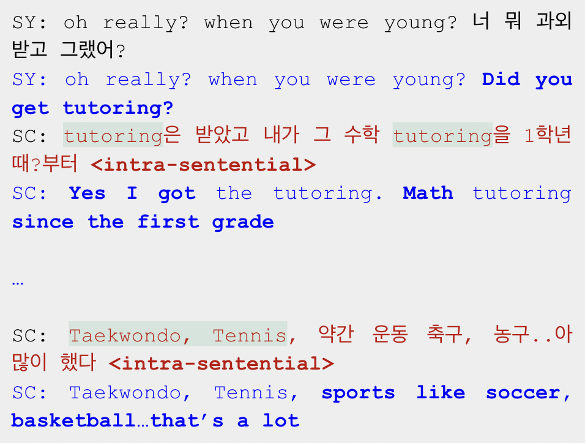
Image 3: Participant A’s Unmarked CS Behavior (28:55~29:46)

Looking at the data example in image 3, participant A uses the English word “tutoring” for his first utterance even though the question was phrased in Korean. This could be attributed to him being less familiar with the Korean word “과외” but at the same time, it could also be because he uses CS as an unmarked linguistic choice. Also for his second utterance, it is notable that he lists two of the sports name in English but the latter two in Korean; obviously it isn’t that he doesn’t know the word “Soccer” and “Basketball” in English, rather he seems to be code-switching this time more unconsciously. The in-person interview revealed that he himself thinks he code-switches so often that it is almost second nature to him. So the CS occurrence in this excerpt is an example of CS being an unmarked choice.

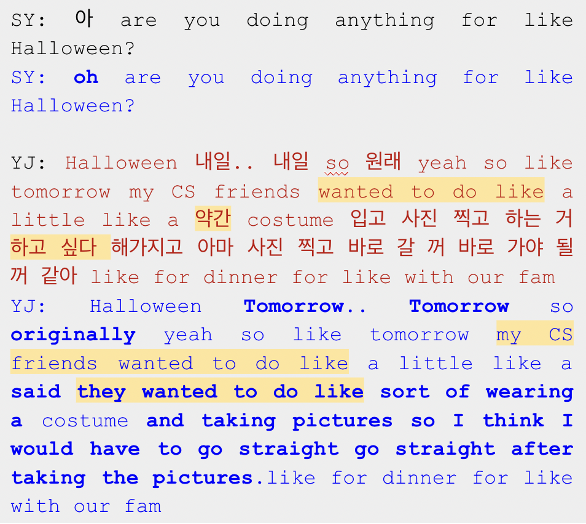
Image 4: Participant B’s Unmarked CS Behavior (14:20~14:40)

In participant B’s data example in image 4, it is worth noting that the part “wanted to do like” is repeated both in English and Korean in the intersentential CS with a change in the matrix language. This could potentially be a piece of evidence that for participant B, CS is such an unmarked choice that he would unconsciously switch the matrix language to Korean even though Halloween, being a culture-specific event, would be more easily expressed in English.

However, at the same time, the in-person interview revealed that participant A and B showed a difference when it came to the need to intentionally use more Korean.  Participant A mentioned that “a Korean should be able to speak at least a decent level of the Korean language” (translated from Korean), which accounts for his intrasentential CS occurring mainly as Korean as the Matrix language. This also relates to the larger concept of a diaspora factor which adds an additional layer to bilingualism as “diaspora identities combine multiple points of identification, thus embodying and asserting how diversity and difference are lived and experienced as a process of entanglement” (McKittrick, 2009). Mills (2005) also discussed how in their 2001, 2004, and 2005 studies they found that in their target population of British-Pakistani bilingual diaspora that “the heritage language represents the community as being a crucial identifier and bond to the immediate and wider diasporic group (and that) their languages where crucial for maintaining their sense of identity as being both British and Pakistani” (Mills, 2005). While there are of course differences between each diaspora community, this theme of diaspora navigating their identity between cultures and the close connection to identity and community that languages tend to have for members of this type of community has shown up in many past studies on diaspora populations. The 1st generation Korean-American bilinguals (A and B) where the only subgroup in our study where both participants of that background showed frequent occurrences of code switching.  Given the nature of diaspora populations and the results found in our study, our findings seem to support a conclusion that for Korean-Americans, code-switching is generally the unmarked choice and often used to index their Korean heritage as well as an in-group identity of being between two cultures as part of the Korean diaspora in America. Though Participants A and B had similar frequencies of code-switching overall, Participant A’s follow-up interview responses expressed a more conscious intention to index his Korean heritage as well as an in-group identity of being between two cultures as part of the Korean diaspora in America. Participant B on the other hand stated in the follow-up interview that he does not really feel the need to intentionally speak more Korean possibly attributing to his higher level of fluency and a longer period of studying the Korean language. Interestingly, Participant B actually had the highest rates of overall code switching, further showing how code -switching tends to be the unmarked choice within bilinguals whose identity is linked to both of their languages, such as bilinguals who are part of a diaspora population.

For participant C, she used English as the dominant language in the culturally relevant topic, Halloween, as opposed to the culturally neutral topic, buying tickets for a game, which shows that the American-culture-oriented topic did affect her linguistic behavior. However, at the same time, she showed fewer CS occurrences for the culturally relevant topic, which can be explained by her motivation for CS being a lack of proficiency in English for certain words which would occur regardless of the topic.

Another result noticeable in Figure 1 was that participant D and E did not show any occurrences of CS at all. In the interview, participant D said that even if the person they were speaking with was a Korean-English bilingual, he would consciously not code-switch if the topic was serious because there would be the need to convey his intentions in a more clear-cut manner through his native language, which seemed to be the case for the 40-minute conversation recorded.

On the other hand, the participant’s usual frequent use of CS with the interviewer and his response that he feels the need to consciously speak more English in the States to improve his English-speaking skills implies that CS is a marked linguistic choice for him to index his identity as a more fluent English-speaking international student in a community where the majority of the people speak English as their mother tongue. This relates to the social status of English in Korean society. In Korea where western countries, mainly the United States, are viewed as “superpowers” due to political and historical reasons (Cho, 2021). English has been shown to be greatly publicized and commonized especially in educational institutions (Choi & Kim, 2021). In other words, speaking English fluently symbolizes higher social status thus it developed an advanced elite image. It has been observed that bilingual immigrant families in the US are experiencing linguistic discrimination in that they have accents when speaking English which is labeled as broken and unintelligent (Tedx Talks, 2018, 2:30). It may explain the motivation of participant D trying to intentionally speak more English as he can to purposely present an international bilingual elite image.

Participant E responded that she would avoid code-switching to English when talking with native Korean speakers even if they were fluent in English. It has been observed that code-switching can be regarded as showing off when the interlocutors have unequal language proficiency (Fangzhe, 2019). In order to prevent being interpreted as bragging about her language ability, participant E intentionally avoids code-switching. Thus to her, CS was shown to be the marked linguistic choice and the markedness entailed a more negative connotation as a person who feels the need to “show off” their English or seem more “American”. And through this linguistic behavior, she may be able to feel a sense of belonging with her immigrant friends whose dominant language is Korean.

Thus both participants showed that the agency of the speaker to index (or not to index) a certain identity intervenes in the choice of an absence of CS, which aligned with our analysis for participant A, B, and C.

Additionally, the 1st generation immigrants tended to show more CS occurrences compared to international students which relate to how in previous studies it has been proven that language was affected by people’s aspirations, stances, and attitudes (Tedx Talks, 2014, 11:05). In other words, the linguistic behaviors of the participants would be affected not only by their current community of practice but also by the in-group they expected themselves to be placed in the future. So for the former group, because they aspired to stay in the States for the rest of their lives, they would be frequently exposed to a  linguistic environment in which CS would be the unmarked choice such as with  their college Korean American friends or with their family. For the international students, they would only be staying in the States for less than a year, after which they would return to South Korea where CS would generally be accepted as a marked choice even sometimes with negative connotations.

Conclusion

This experiment provided an opportunity for us to closely examine code-switching patterns in bilingual Korean-English speakers. The researchers pondered on observable linguistic patterns in three contrastive Korean-English populations in relation to code-switching behaviors. Thorough analysis of the findings indicates different relationships between linguistic behaviors and sociolinguistic identities. The overall analysis from this study reveals that code-switching is in fact more affected by the speaker’s linguistic identity rather than what topic is being conversed. The findings provide sufficient evidence that people index code-switching as part of the in-group identity and thus accepting code-switching as an unmarked choice would produce more code-switching occurrences comparatively to those who code-switched to index a marked linguistic pattern.                   


References

Bullock, B., & Toribio, A. (2009). Themes in the study of code-switching. In B. Bullock & A. Toribio (Eds.), The Cambridge Handbook of Linguistic Code-switching (pp. 1-18). Cambridge University Press. https://doi.org/10.1017/CBO9780511576331.002

Cho, J. (2021). English fever and American dreams: The impact of Orientalism on the evolution of English in Korean society. English Today, 37(3), 142–147. https://doi.org/10.1017/S026607841900052X

Choi, Tatar, B., & Kim, J. (2021). Bilingual signs at an “English only” Korean university: place-making and “global” space in higher education. International Journal of Bilingual Education and Bilingualism, 24(9), 1431–1444. https://doi.org/10.1080/13670050.2019.1610353

Fangzhe. (2019, May 7). Code-switching: showing off? Educational Sociolinguistics. https://bild-lida.ca/educationalsociolinguistics/uncategorized/code-switching-showing-off/#:~:text=In%20this%20case%2C%20code%2Dswitching,that%20you%20are%20showing%20off.

Koban, D. (2013). Intra-sentential and inter-sentential code-switching in Turkish-English bilinguals in New York City, U.S. Procedia – Social and Behavioral Sciences, 70, 1174–1179. https://doi.org/10.1016/j.sbspro.2013.01.173

McKittrick, K. (2009). Diaspora. International Encyclopedia of Human Geography, 156–161. https://doi.org/10.1016/b978-008044910-4.00938-x

Mills, J. (2005). Connecting communities: Identity, language and diaspora. International Journal of Bilingual Education and Bilingualism, 8(4), 253–274. https://doi.org/10.1080/13670050508668610

Mohamad Khalil, S., & Mohd Shahril Firda, M. S. Z. (2018). Inter-sentential and intra-sentential code switching in parliamentary debate. International Journal of Modern Languages And Applied Linguistics, 2(4), 29–31. https://doi.org/10.24191/ijmal.v2i4.7691

Myers-Scotton, C. (1993). Common and uncommon ground: Social and structural factors in codeswitching. Language in Society, 22(4), 475–503. https://doi.org/10.1017/s0047404500017449

Tedx Talks. (2014, Nov. 21). TEDxDublin – Vera Regan – What your speaking style, like, says about you [Video]. YouTube. https://www.youtube.com/watch?v=jAGgKE82034&t=593s

Tedx Talks. (2018, July 25). TEDxWWU – Karen Leung – Embracing multilingualism and eradicating linguistic bias [Video]. YouTube. https://www.youtube.com/watch?v=S8QrGsxeEq8

[/expander_maker]

, , ,

My Poor Little Meow Meow: K-Pop Fans and the Parasocial Abuse of Positive Politeness

Blai Puigmal Burcet, Emma Montilla, Latisha Sumardy, Sophia Wang

Korean popular music (K-pop) started off as a small subculture in the 1990s but began taking off in the West in the mid-2010s and since then has become increasingly popular and mainstream. K-pop fans are known for their borderline obsessive behavior and for finding personal validation through parasocial relationships (Kim & Kim, 2020), fostered by their online communication style. Social media as a mode of communication is unique due to its lack of a second interlocutor and how people take the tactics they use online to real-life interactions. We analyzed language use among English-speaking K-pop fans online, specifically regarding inappropriate usage of positive politeness strategies (PPS) towards celebrities. We hypothesized that tweets directed towards male celebrities will contain more PPS than those directed towards female celebrities. After analyzing replies to BTS and Blackpink, we confirmed our hypothesis as there is 2.6 times as much PPS usage in BTS’s replies versus Blackpink’s replies. The sudden and immense popularity of K-pop, stan culture, and the obsessive tendencies of fans is evident not only in the abuse of PPS online, but also in real life as we begin to see instances of fetishization of Asian American men.

[expander_maker id=”1″ more=”Read more” less=”Read less”]

Introduction/Background

K-pop has piqued our interest because the industry itself intentionally encourages fans to develop a parasocial relationship with celebrities. They succeed in this by publishing large amounts of content in the form of live broadcasts, vlogs, Instagram posts, collectible trading cards of idols included in albums, fansigns, etc. that all fabricate a sense of closeness and personal connection with the members of the group. (Ardhiyansyah et al., 2021) Fans pride themselves on knowing as much as they possibly can about members of their favorite groups, and it is common to make “guide” videos for new fans to get familiar with their faves. An example is YouTube user JinHit’s video “who is BTS? (un)helpful guide to BTS” (2021) that catalogs each BTS member’s quirks and habits for fans to memorize. Fans have also developed a K-pop-specific vocabulary that utilizes Korean loanwords to refer to different practices in the fan community, and there are entire guides on this as well, such as kpoptrash’s “a beginner’s guide to kpop vocabulary” (2020). We focused on English-speaking fans because we are interested in the explosion of K-pop’s popularity in America and the global West, and how their borderline obsessive behavior affects how they interact with real life Asian populations.

We focused on positive politeness strategies (PPS) used by K-pop fans on social media towards their favorite celebrities. According to Brown & Levinson (1987), PPS is typically reserved for use between interlocutors that have a close relationship. It includes specific linguistic features such as compliments, inside jokes, and nicknames, as it represents a language that is more personal, authentic, and used in informal situations between family and friends. When it is misused, PPS becomes a negative face threatening act that does not respect the interlocutor’s personal agency. In our case, PPS is being misused by fans towards celebrities with whom they have a one-sided relationship. They do not have a realistic chance of getting a response from these celebrities, but interact with them in a parasocial way as if they did. This particular use of PPS contributes to the fetishization of Korean celebrities, setting a precedent of inappropriate interactions that bleed into real life and how K-pop fans interact with average Asian American men. We expect to see that more PPS will be directed at men than women, and that the rise of K-pop fan communities and fan specific interactions has correlated to a rise in fetishization of East Asian men.

Methods

For this study, we decided to analyze the responses to 7 BTS and 7 Blackpink tweets from their official Twitter accounts, @BTS_twt and @BLACKPINK. We chose BTS and Blackpink because in terms of sales they are the biggest K-pop boy and girl groups in the West (McIntyre 2022), and we believe that analyzing fan interactions with these groups provides a baseline for how Western fans would interact with other K-pop groups as well. We picked the first 25 users’ replies in English under each chosen tweet. From our data pool, we omitted any tweets that either consisted of one-word phrases or were in mixed English and another language in order to make sure that our data was consistent. In total, we collected 350 users’ replies to these 14 tweets. The specific criteria that we looked for in the data were instances of fans using nicknames versus using the artists’ real names; any use of intimate language such as terms of endearment or diminutives or intimate verbs like “to love”; use of possessive language such as “my” or “our” in reference to these celebrities; and any direct 2nd person statements in the replies.

In regard to our target population, we decided not to narrow down our subjects by any specific age, gender, or location due to the anonymous nature of Twitter as a social media platform. Anonymity plays a big role in how people talk to each other online, as a prominent feature of social media is the comfort of not being able to see the person that you are sending the message or reply to. Because of this, we decided that age, gender, and location would not have a very strong impact on how people online would interact, and would be difficult for us as researchers to confirm based on looking at each Twitter user’s profile alone. However, we expect that the average English-speaking K-pop fan would probably be a female teenager located in the United States.

Data Analysis

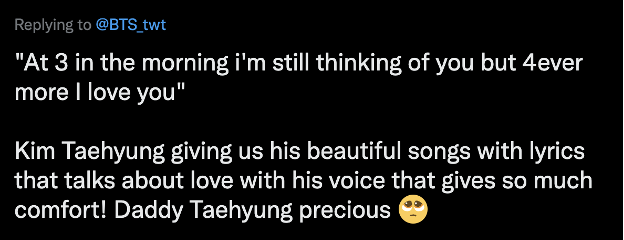
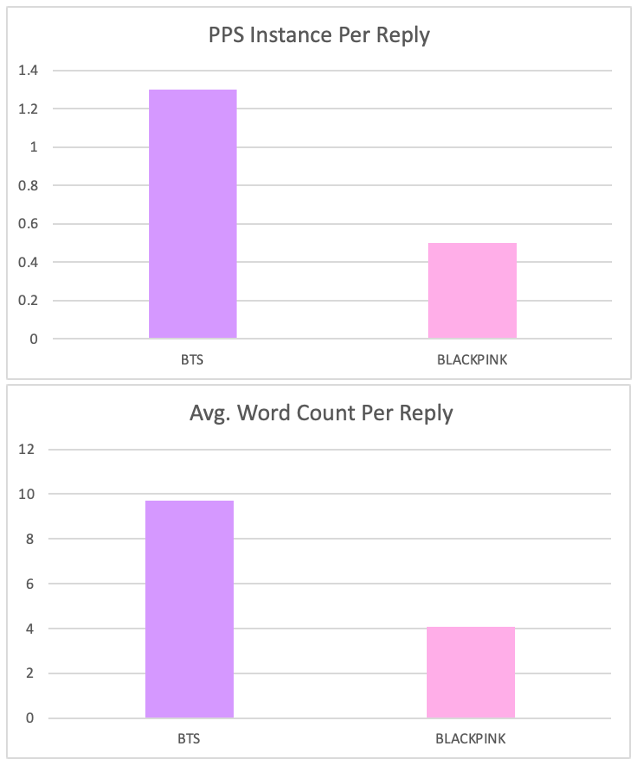
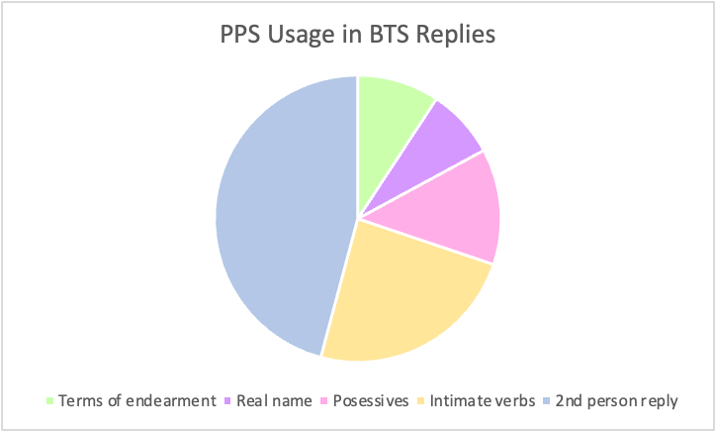
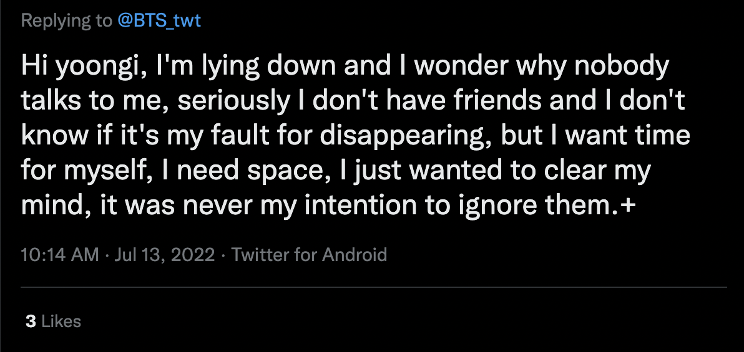
Initially, we found that there were about 1.3 instances of PPS per BTS reply versus 0.5 instances of PPS per Blackpink reply. The average word count of a reply to BTS was 9.7 words, and the average word count of a reply to Blackpink was 4.1 words. This difference in word count means that the average response to Blackpink reads something like “Jennie is such a queen”, while the average reply to BTS looks more like this:

The most commonly used word overall in BTS’s replies was “you”, which co-occurred the most with verbs “love” and “miss”. BTS members were more likely to be referred to by their real names or nicknames chosen by fans rather than their stage names as well. The second-person reply containing “you” was by far the most commonly used instance of PPS, followed by intimate verbs.

PPS Usage in BTS Replies: 2nd person reply 46%, intimate verbs 24%, possessives 13%, real name 8%, terms of endearment 9%

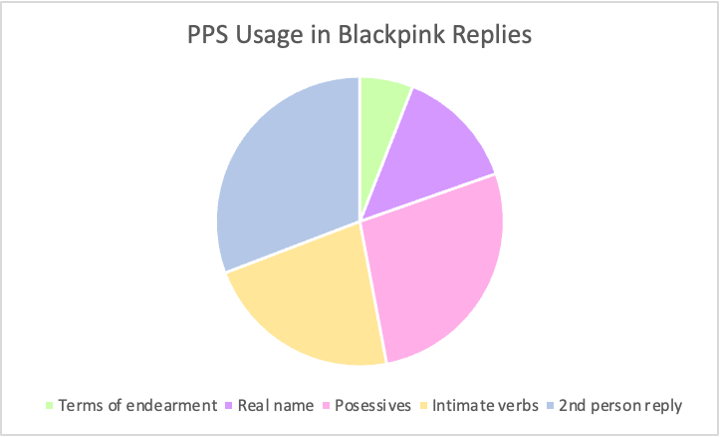
There was a similar pattern in Blackpink’s replies: the most commonly used word was “you”, but it was more often referring to YG, Blackpink’s management company, rather than Blackpink themselves. The most common co-occurrence with “you” was still “love”, although miss did not appear in the sample at all. The most used PPS category once again was the 2nd person reply followed by possessives “my” and “our” and then intimate verbs.

PPS Usage in Blackpink Replies: 2nd person reply 31%, possessives 27%, intimate verbs 22%, real name 14%, terms of endearment 6%

The higher word count in BTS’s replies correlated with more personal messages, where fans would overshare in a reply thread about their hardships, especially to do with their lack of an IRL social life. Although it doesn’t fit into the specific PPS criteria defined earlier, it qualitatively shows the one-sided relationship between BTS and their fans and what the fans feel comfortable saying online. Higher word average word count could also explain why there are more PPS usages per tweet in the BTS sample.

The comment continued for 5 more tweets in thread

More cute, romantic terms of endearment were used to describe BTS in their replies, while Blackpink fans were more likely to use terms of endearment to praise their performance and talent. The most common term for BTS was “baby” while, in comparison, the most common for Blackpink was “queen”. BTS’s fans were also more likely to make up their own nicknames for the members, while Blackpink fans stayed consistent with each other. For example, Blackpink’s rapper Lisa was called only Lisa or Lalisa, while BTS’s V was called a whole group of different names, including but not limited to Taehyung, Tae, Taetae, Taebear, and Jubbly. No one in the sample referred to him solely as V, the name he performs under. BTS fans were also more likely to refer to the artist as “boyfriend” or “bf” than Blackpink fans were to call the artists their “girlfriend” or “gf”.

There is a difference between the way BTS and Blackpink’s Twitter accounts are presented which could partially account for the difference in fan interactions: @BTS_twt is made to seem like the members themselves are posting, while @BLACKPINK is clearly run by their management and is more promotional than personal in nature. BTS’s posting style on Twitter, which gives a closer (although still heavily stylized and manufactured) look at the artists’ lives, could incentivize posting more personal replies if it seems like BTS could potentially see or even interact with them. This is what leads to fans feeling comfortable utilizing PPS in one-sided interactions with BTS, while Blackpink’s style of social media posts keeps their fans at a distance and makes sure that they know they are celebrities rather than their friends. Blackpink has also had consistent issues with their management underpromoting them and leaving out certain members in promotional material, so fans who know this and know that Blackpink’s company is running the account will not feel as comfortable being intimate with a corporation that is causing issues for their idols.

Discussion and Social Implications

Overall, we found that there was 2.6 times as much PPS usage per reply to BTS than per reply to Blackpink. The word choice in BTS’s replies was also more diminutive and focused on their cuteness rather than attractiveness or talent, and contained suggestions of a one-sided relationship that was not present in Blackpink’s replies. So what does this mean, and how does it affect Western society?

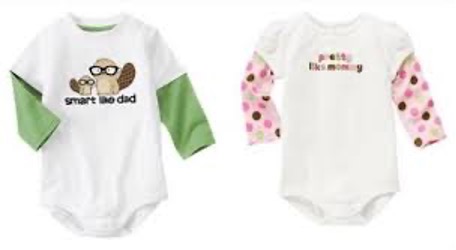
Historically, in the Western world, women tended to be infantilized while men were not. For example, newborn baby girls have been described as “sweet” four times as often as little boys, and many advertisements targeted towards women often depicted them as incompetent and child-like (Huot 2013).

Captions read: smart like dad, pretty like mommy

Our data goes against this Western gender norm as we see evidence of the male group being more infantilized and diminutized than the female group. And it doesn’t stop at celebrities: the obsessive desire for a relationship with these idols has leaked into reality and now affects the Asian American male population. Previously in America, Asian men in the dating pool were stereotyped as effeminate and asexual (Kao 2018) but there has been a shift in how American women view Asian men as romantic or sexual objects because of the popularity of K-pop.

 For example, from Stewart (2021):

Some Asian American men even think the K-pop phenomenon, which is often heralded as a boon for Asian male representation, is causing a fetishization of certain types of Asian men that complicates their love lives. [One] says he recently matched with a girl on Tinder who wrote in her bio that she was ‘looking for her K-pop boyfriend.’ He says her bio made him feel uncomfortable, and he didn’t meet up with her, since he wants to be seen for who he is, not as an embodiment of a stereotype.

This phenomenon has also begun to affect the K-pop industry itself: as the popularity of boy groups increase in the West, they lean into the audience’s desires and develop softer, more subversive (from a Western perspective) personas. According to Lee et at. (2020), many Westerners are drawn to Asian masculinity and find it “refreshing” and project this desire onto male celebrities as well as Asian men they encounter in real life. This produces a positive feedback loop of online fans infantilizing BTS, and then BTS increasing their cuter concepts in their promotional materials to cater to those fan desires, which then affect real life interactions.

K-pop fans have also begun to apply the same “stanning” techniques to Korean celebrities outside of the idol industry, such as breakout star of the 2022 World Cup Cho Gue-sung, a player on the South Korean national team. Tweets have surfaced from K-pop fans comparing him to idols purely because of his ethnicity and using PPS in tweets about him they would typically use for K-pop stars. (Youn, 2022) Even though as an athlete Cho already fits into a more stereotypically Western masculine archetype, he is not free of the soft, cute stereotypes that have already been applied to Korean idols before him.

Conclusion

Some may say that it is a positive thing, or a compliment to these celebrities and Asian men, that they are now the ones being sexualized after decades of asexual stereotypes and low romantic desire in the Western world (Stewart 2021). However, this is not the “equality” we should strive for. Fetishization is a form of discrimination and racism that affects real people and communities, not just the far away idols on social media in a different continent. We should not be infantilizing or fetishizing women, Asian men, or anyone. We should also question how social media allows these internet communities to encourage this behavior. The internet is a valuable tool for bringing people together, but it also houses insidious communities that can easily and accessibly indoctrinate users into harmful mindsets.


References

Ardhiyansyah, A., Maharani, D., Permata, S. S., & Mansur, U. (2021). K-pop marketing tactics that build fanatical behavior. Nusantara Science and Technology Proceedings, 66–70. http://nstproceeding.com/index.php/nuscientech/article/download/396/381

Brown, P., & Levinson, S. C. (1987). Politeness: Some universals in language usage. Cambridge University Press.

JinHit. (2021, May 25.) Who is BTS? (un)helpful guide to BTS (2021) [Video]. YouTube. https://www.youtube.com/watch?v=tkSGKGJYe4k

Kao, G., Balistreri, K. S., & Joyner, K. (2018). Asian American men in romantic dating markets. Contexts, 17(4), 48–53. https://doi.org/10.1177/1536504218812869

Kim, M., & Kim, J. (2020). How does a celebrity make fans happy? Interaction between celebrities and fans in the social media context. Computers in Human Behavior, 111,106419. https://doi.org/10.1016/j.chb.2020.106419

Kpoptrash. (2020, February 11.) A beginner’s guide to kpop vocabulary [Video]. Youtube. https://www.youtube.com/watch?v=CvigAv2mW5c

Lee J.J., Lee, R., & Park, J. (2020). Unpacking k-pop in America: The subversive potential of male k-pop idols’ soft masculinity. International Journal of Communication, 14, 20. https://ijoc.org/index.php/ijoc/article/view/13514

Stewart, J. Y. (2021, August 5.) How America tells me and other Asian American men we’re not attractive. The Seattle Times. https://www.seattletimes.com/life/i-grew-up-thinking-being-asian-detracted-from-my-masculinity-heres-how-america-tells-me-and-other-asia n-american-men-theyre-not-attractive/

McIntyre, H. (2022). Blackpink ties Twice for the most bestselling albums in the U.S. among women in k-pop. Forbes Hollywood & Entertainment. https://www.forbes.com/sites/hughmcintyre/2022/09/30/blackpink-ties-twice-for-the-most-bestselling-albums-in-the-us-among-women-in-k-pop/?sh=752b00107909

Youn, S. (2022, December 7.) How Cho Gue-sung became the breakout thirst trap of the World Cup. NBC News. https://www.nbcnews.com/news/asian-america/cho-gue-sung-became-breakout-thirst-trap-world-cup-rcna60525

[/expander_maker]

, ,

Texting in Romantic Relationships: “I lvoe u” and Other Typographical Errors

Danbi Jang, Tomoe Murata, Mayu Yamamoto, Gale Nickels

This research study investigates how young men and women in relationships react toward typos and seeks to identify any differences. Based on previous research findings, we hypothesized that women are more likely to retype typos compared to men since men have been shown to communicate primarily for practicality, while women have been shown to put more social importance on texting. An alternative hypothesis we investigated was that as the intimacy levels and mutual understanding increase within the relationship, both partners prefer to leave typos uncorrected. To test these hypotheses, participants were asked to fill out a survey, asking about the length of the texting and relationship periods, how close they think they are with their partner, and what they prefer to do when they make typos. They were also asked to share screenshots of typos where they misspelled a word. The results indicated that women had a higher rate of correcting typos than men, which supported our hypothesis; however, the difference was not substantial enough to make a conclusion. We did find, however, that intimacy levels had a much stronger correlation with typo correction likelihood. Thus, the main finding of our study is that intimacy is the best factor in predicting whether the person corrects or leaves typos in relationship-based text messaging, not gender.

[expander_maker id=”1″ more=”Read more” less=”Read less”]

Introduction

There is no doubt that texting is the dominant form of written communication of our age. Depending on who you ask, by comparison, emailing and letter-writing seem formal at best, and antiquated at worst. Young adults between 18 and 24 are estimated to send about 110 texts per day (Smith, 2019), which is reflected in endless pop culture references to mobile phones and SMS. For instance, Lana Del Rey in “Take Me to Paris” sings, “Text me when you get home safely,” summarizing one of many social rituals that have arisen from text communication. Texting is a key daily ritual in most communities all over the world.

However, unlike face-to-face communication, texting achieves something unique: documentation. The recipient of a text can take a screenshot and collect ‘receipts’ at any moment, so it is more important than ever that the social face a text communicates is exactly as intended. Another example of this in the music industry is presented by Drake in “H.Y.F.R:” “…That’s when I text (sic.) her and told her I love her, then right after texted and told her I’m faded,” demonstrating how accountability in texting can be circumvented by claiming lack of sobriety and other means. So, texting conveys many layers of nuance and social significance that might not be apparent at first glance. However, texts are shot back and forth so quickly that a problem often arises: typos. They can usually be quickly remedied by retyping the offending word with an asterisk appended, but even the act of correcting a typo holds implications. For instance, leaving a typo can be perceived as comedic or aloof, while retyping it might convey earnestness or carefulness. This led us to question if certain people are more likely to correct or leave typos depending on their individual traits. Specifically, we targeted the groups that are thought to text each other most frequently: couples.

When discussing romantic dynamics, gender is often a key focus of previous research. In the past, it has been shown that in text messages, females tend to emphasize visibility while males emphasize utility (Ilie et al., 2002). This indicated that women are inclined to organize their messages in such a way that their meaning and intentions are best conveyed. Another research study found that women have been seen to use texts as a means of promoting and maintaining social relationships at a higher level than men (Aning & Yaa, 2022). If it is true that women tend to place more emotional and social importance on texting than men, this may be a reason for them to take errors more seriously and cause them to retype. Thus, we hypothesized that women are more likely to retype or correct mistakes than men when they make a typographical error in a text message.

However, we found it important to explore possibilities outside of gendered explanations as well. Our alternative hypothesis is that as the level of intimacy within a relationship increases over time, both partners correct less frequently. We predict this may be the case as over time, couples might have a better understanding of each other’s texting style, leading to a higher threshold for typos needing clarification. Also, as the relationship progresses, couples have had time to adjust and feel more comfortable within the relationship. Thus, we approached addressing these two hypotheses with a specific question in mind: Is gender a good predictor of typo correction in texts between couples?

Methods

To investigate those hypotheses, we targeted a population consisting of men and women in their early 20s who are in a romantic relationship. Another criterion was that they text their partners in Standard American English every day; however, it was not a requirement that English be their first language. We specified the age as 20s and the language as Standard American English to narrow our population to Generation Z and Millenials, as these are the groups that have had the most exposure to digital communication in their lifetimes. Additionally, this research study chose to target heterosexual, gender-conforming couples. This limitation might have been a source of selection bias; thus, we recognize that the patterns we find within these pairings may not translate when extrapolated to couples outside of this binary. Exploring outside of this subpopulation with regard to romantic texting trends may be an interesting candidate for future research.

We recruited the participants by posting the survey on the UCLA Linguistics Discord server, Instagram stories, and Slack chats with students at UCLA. The way of gathering responses on listed social media is considered to be the most effective since our targeted population is the young generation. For the data collection, we utilized a multi-faceted strategy similar to that which is employed by Wagner et al. (2022). The total data set we collected included 22 responses: 10 from males and 12 from females. First, participants were given a survey that collected information about the length and nature of the relationship, as well as open-ended questions about their reactions to their typos. Next, they were asked to submit one or more screenshots where they made a non-grammatical spelling mistake, corrected or otherwise, as shown in Fig 1. We defined a typo in this research as an unintentional misspelled word, not a grammatical typo. Intentional errors for the sake of showing cuteness or aloofness towards their partner were also excluded. It is possible that the nature of the messages could have affected the content of our data. That is, participants might have excluded typos that were particularly embarrassing, which might lead to biased data; however, for the purposes of this study, we considered this to be potentially beneficial for targeting the social aspect of typo correction instead of the practicality aspect.

Particularly embarrassing typos may include big spelling mistakes that are incomprehensible and thus must be corrected for the message to be understood. If these sorts of typos are less likely to occur, we speculated that the collected data might be of better quality. Thus, the omission of embarrassing responses was not mitigated in the data collection process.

Figure 1: Submission Screen for the Screen Shots of Typos

Results & Analysis

From our 22 participants, we collected a total of 25 screenshots: 14 from women and 11 from men. Two excerpts of these screenshots from our data are shown in Figures 2.1 and 2.2.

Figure 2.1: No error correction
Figure 2.2: Error correction


In addition, since all respondents indicated they are texting in standard English, all responses are included in the analysis. The participant responses to each question varied widely, suggesting a diverse range of intimacy and familiarity levels within our participant pool. Participants ranged from 11 to 96 months of knowing their partner, 6 to 96 months of dating, and 3 to 96 months of texting.

First, to test our first hypothesis that women are more likely to retype or correct errors than men, we began by analyzing the responses of each gender.

Figure 3: Rounded down after the decimal

Figure 3 above shows the percentages of responses to the question about whether or not to correct the typos in the survey for males and females, respectively. As the figure shows, 58% of women correct typographical errors, while 40% of men do so, suggesting that women are more likely to correct typographical errors and seemingly supporting our hypothesis. However, given that the difference between the gender is only 18% and that more than 40% of women leave misspelled words as is, it may not be sufficient to conclude that it is a strong predictor. Thus, we decided to test whether intimacy level is a good predictor, as predicted by our second hypothesis.

To test whether the more intimate one feels, the less likely one is to correct a typo in a message; we obtained correlation coefficients. Because the period of knowing each other, dating, or texting may be more strongly correlated with typo correction than the intimacy with the partner, they were also included as variables in addition to intimacy. The correlation coefficient between gender and typo correction is also calculated. For the analysis of the correlation values, a positive value signifies that an increase in one variable increases the other variable, and if the value is negative, an increase in one variable decreases the other variable. Furthermore, the closer a value is to positive or negative 1, the stronger the correlation is.

Figure 4: Correlation coefficients of each variable to typographical correction

Figure 4 summarizes the correlation coefficients of each variable to typographical correction. First, a moderate negative correlation with a coefficient of -0.4 was identified between self-reported intimacy levels and the likelihood of correcting typographical errors. In other words, as intimacy increases, the likelihood of correcting typos decreases or vice versa, which supports our second hypothesis. Now, our remaining question, whether gender is a valid predictor of the likelihood of correcting typos, turned out to be largely uncorrelated since the coefficient is -0.18, although these two are indeed negatively correlated and better predictors than the length of the relationship, period of texting, and how long it’s been since they met each other.

Discussion and conclusions

After finding the correlation coefficients for our variables, we saw that gender was not actually a very good predictor of the likelihood of correcting typos. While it was a stronger predictor than the length of the relationship and how long it has been since they met each other, it is still very weak.

So, we concluded that our second hypothesis, that intimacy would be a better predictor of typo correction likelihood, was better supported. We found a moderate negative correlation between self-reported intimacy levels and the likelihood of correcting typos. That is, the more intimate a partner rated their relationship, the less likely they were to correct a typo. This finding makes sense in the context of prior research, which has shown that as romantic relationships develop, linguistic behaviors become more similar between couples. So, this could suggest that time allows for an increased understanding of language between partners and conversations that reflect a common outlook (Brinberg & Ram, 2021). The relationship between self-reported intimacy and the correction observed in our study suggests that the need for clarification over typos may have decreased as a result of an increased understanding of each other’s language.

Furthermore, these findings show us that the subtleties and subconscious behaviors we exhibit around our romantic partners are not static. The way we text in a relationship likely has much more to do with the person we are texting and how comfortable we are than any one personality trait. Also, thinking back to the findings of previous studies, our results suggest that the “rules of texting” that Wagner et al. proposed (2022) might not apply accurately to longer-term couples, as our findings imply that the implicit social behaviors that Wagner et al.’s rules define might change as intimacy levels grow.


References

Aning, E., & Bediako, Y. A. (2022). Gender differences in Short Message Service texts among Sandwich students: a Sociolinguistic Analysis. IOSR Journal Of Humanities And Social Science, 27(1), 48–56.

Brinberg, M., & Ram, N. (2021). Do new romantic couples use more similar language over time? Evidence from intensive longitudinal text messages. Journal of Communication, 71(3), 454–477. https://doi.org/10.1093/joc/jqab012

Ilie, V., Van Slyke, C., Green, G., & Lou, H. (2005). Gender differences in perceptions and use of communication technologies. Information Resources Management Journal, 18(3), 13–31. https://doi.org/10.4018/irmj.2005070102

Smith, A. (2019). How americans use text messaging. Pew Research Center: Internet, Science & Tech. https://www.pewresearch.org/internet/2011/09/19 /how-americans-use-text-messaging/

Wagner, T., Punyanunt-Carter, N., & McCarthy, E. (2022). Rules, reciprocity, and emojis: An exploratory study on flirtatious texting with romantic partners. Southern Communication Journal, 1–15. https://doi.org/10.1080/1041794x.2022.2108889

[/expander_maker]

Is the Gender-Neutral Spanish Movement Gaining Steam? We surveyed 122 individuals to find out what they think.

Jakob Franco, Juan Salcedo, Krystal Quinto, T. Singh

Our research group entered this project seeking to gain clarity on the continued reception of a controversial topic within modern Spanish, the use of gender-neutral suffixes for some traditionally gendered nouns and pronouns. Perhaps most famously within the United States, the term “Latinx” has become a cultural lightning rod in relation to ongoing debates about the progression of social activism (Higa & Dunham, 2022). However, the Spanish language community is far from a monolith, with grassroots movements in multiple Latin-American countries seeking to make the grammatical change as well (Lankes, 2022). We began our research then seeking to assess the rates of use for these terms, particularly in informal settings, as well as to directly gauge opinions on the subject through a variety of survey methods. Ultimately, we also wanted to assess trends within the backgrounds of those who did or did not use these terms to see if these rates correlated with sociodemographic data or opinions on other social issues. Our data provided a nuanced picture that both confirmed many of our predictions about the backgrounds of our research participants, especially in regard to age and political affiliation, but confounded others. The data bore out a fairly strong consensus against adopting the gender-neutral suffixes.

[expander_maker id=”1″ more=”Read more” less=”Read less”]

Introduction & Background

In recent years, the topic of gender neutrality within the Spanish Language has been a major point of contention as well as the terms used to describe Latin American communities. Spanish is a gendered language currently with a masculine default, but some individuals have proposed alternatives such as replacing the masculine suffix -o for neutral terms with an -x or -e. Proponents of such a change argue it would help promote inclusivity and challenge embedded patriarchal norms while opponents suggest it is unnecessary or even harmful to the preservation of Spanish as a whole. This topic has been the focus of much controversy to the point where gender-neutral Spanish was entirely banned by the government of Argentina (Lankes, 2022). This podcast from Vocal Fries elaborates on the history of gender neutral Spanish in Argentina and its recent controversy: (Gillon & Figueroa, 2018). The goal of this study was to investigate individual attitudes towards gender-neutral Spanish as well as gather input on the actual use of gender-neutral Spanish. This was achieved through a survey of 122 individuals of varying backgrounds and an analysis of Spanish meme accounts in social media. We hypothesized that older individuals and individuals on the right of the political spectrum would be more likely to have negative attitudes towards gender-neutral Spanish and its use. In the following section, we will take a deep dive into the two methodologies that served as the backbone of this research project.

Methodology

Survey

We created a survey using Google Forms, consisting of four separate sections. The first section consisted of collecting background information on the respondents such as their age, education level, gender identity, political ideology, social media usage, etc. The second section inquired about their language background and familiarity with Spanish and gender-neutral Spanish. The third section used the likert scale to assess different opinions on gender-neutral Spanish. In this section, respondents were provided with five different statements and were then asked to state whether they agreed or disagreed with the statement on a 1-5 scale. Finally, the respondents were provided with a text-entry box with no limit and were encouraged to share their thoughts on gender-neutral Spanish. This was done in order to collect more detailed opinions on this nuanced matter in order to ensure that opinions outside the scope of the survey questions would be accounted for. The survey we created and utilized for this study can be found in Appendix A of this paper.

This survey was distributed across two different social media platforms: Instagram and Reddit. The majority of the respondents came from Reddit where this survey managed to gain some traction. Additionally, less than 5% of the respondents were friends and family members whom the survey was distributed to as well. In total, we collected 122 responses to our survey.

Memes

We set about finding memes relevant to our survey respondents as well as within the online Spanish community as a whole. As such, we looked for Spanish language meme accounts on these platforms which had at least 10,000 followers, were active within the last month, and were Latin American based. This last parameter helped limit the scope of Spanish varieties we encountered and reflected the background of our survey respondents more closely. We ultimately found 20 accounts across the aforementioned platforms which met our criteria. Then for each of these accounts, we analyzed the first 20 posts of theirs that contained nouns or pronouns which referred to individuals of an unspecified gender. These are the types of words which would be traditionally gendered as masculine that proponents of “Lenguaje Inclusivo” (or Inclusive Language in English) argue should be altered to include a gender-neutral suffix. We then took note of the appearance of gendered or neutral suffixes in these select posts for each account. We classified loan words that fit the same use case within a separate category as well. Qualitatively, we also took notes on the general content of the accounts to help with later comparisons in relation to their rates of gender-neutral suffix usage.

Results & Analysis

Survey

The overall response to the survey was overwhelmingly negative with respondents being quite upset that this survey was even being conducted in the first place. This resulted in our respondents being very vocal in stating their opinions and many even left very detailed thoughts on the matter in the text-entry section. The data we collected was analyzed in two different ways: firstly, Google Forms provides statistics for each question; it generates graphs and charts for each question and provides a percentage breakdown for the responses to each question. Secondly, we downloaded and exported all of the responses into an excel spreadsheet, which we then filtered for various different factors in order to find correlations in the data. In the following few sections, the results will be broken down and discussed section by section:

Section 1: Background Information

64.8 % of our respondents were aged 19-29. This was followed by 30-39 year-olds who comprised 14.8% of respondents. Following closely behind this age group, were 1-18 year-olds who made up 13.9% of respondents. 40 and up respondents were in the minority. 57.4% of our respondents were male, while 33.6% were female. The rest were comprised of non-binary individuals and those that preferred not to answer. The education levels were varied, but the majority of respondents had a higher education background of some sort. When it came to political ideology, almost 50% of respondents identified as either left or far left, while 26.4% self-identified as centrists/moderates. We had initially predicted that right-leaning individuals would be more likely to oppose gender-neutral Spanish, while left-leaning individuals would be more in favor of it. This turned out to not be the case at all; our data analysis revealed that out of 68 left-leaning respondents, 40 respondents had a strongly negative or negative opinion towards gender-neutral Spanish – a staggering 58.8%. In comparison, exactly 50% of individuals who self-identified as right-leaning had a strongly negative or negative opinion towards gender-neutral Spanish. In other words, left-leaning individuals were actually 8.8% more likely to be in opposition to gender-neutral Spanish, completely in contrast to what we had originally hypothesized. This will be discussed further in later sections.

Figure 1: Age breakdown of survey respondents

Section 2: Language Background & Familiarity with Gender-Neutral Spanish & Terminology

A total of 91.8% of our respondents were Spanish speakers with more than 75% identifying as intermediate and up in fluency. 25.4% of these speakers self-identified as being native Spanish speakers. However, given that only 27.9% of the respondents said that Spanish was their first language growing up, approximately 6 of these respondents were most likely heritage speakers. When it came to having heard of gender-neutral Spanish, 73% of respondents said they’d heard of the term and 82% said they’d heard of the term “Latinx”. 12.3% had heard of gender-neutral Spanish and 9% “Latinx”, but weren’t sure what these terms meant. Out of all of our respondents, only 23% said they’d used gender-neutral Spanish, while 77% claimed to never have used it. Those that did use it, primarily used it on social media. Finally, 50% of all respondents said they had a strongly negative opinion of gender-neutral Spanish, while only 9.8% said they had a strongly positive opinion.

Figure 2: Percentage of individuals who have heard term “Latinx”

Section 3: Statement Assessment

In this section, respondents were provided with 5 different statements relating to gender-neutral Spanish and its usage and were then asked to assess whether they strongly disagreed with the statement (a rating of 1), or strongly agreed with it (a rating of 5). A rating of 2 was “disagree”, 3 was “neutral”, and 4 was “agree”. 73.8% of respondents expressed that they did not believe that regular gendered Spanish promotes harmful stereotypes that favor one gender over the other. 54.1% of respondents actually felt that gender-neutral Spanish is degrading to the original language and culture. 69.7% disagreed with the sentiment that it’s easy to make the switch to using gender-neutral Spanish. 69.6% of respondents expressed that they would not prefer to speak a gender-neutral version of Spanish over gendered Spanish.

Figure 3: Survey respondent opinion breakdown on whether gender-neutral Spanish promotes a more inclusive society

The sentiments expressed in the fourth section of the survey will be discussed in the discussion section.

Memes

Our data for the meme pages largely lined up with that of our survey responses discussed above but with some key divergence. Only three out of the 20 accounts we looked at, or 15%, ever used gender neutral suffixes in their posts. Of these three accounts, two used exclusively gender neutral suffixes and the last one used the gender neutral terms twice as often as gendered forms. This suggests individuals will generally commit to using the neutral form almost exclusively if they use it at all with the large majority of individuals never doing so.

Interestingly, the two accounts which used gender neutral loanwords from English never used a neutral suffixed Spanish.

While we could not collect substantial demographic information about the administrators of the social media accounts themselves due to their predominantly anonymous nature. However, we could look at the content of their posts to see if certain subject matter correlated with a greater likelihood to use gender neutral suffixes. We found that two of the accounts which used gender neutral suffixes engaged in political discussions supporting left politics within their meme posts such as @pelaeldiente on Instagram. While our survey suggests that the political left holds even worse opinions of gender neutral suffixes than the right, the meme accounts suggest they are more likely to include it in their language.

Discussion

Today, the US recognizes people who are non-binary as an official gender option on a federal level. Inclusivity is a term that can be difficult to define, but Díaz et al. (2022) define an inclusive language as, “’Inclusive’ of many (disenfranchised) communities across the intersections of gender-orientation, race, ethnicity, ability, religion, age, social class, etc. For this reason, many scholars have committed to advocacy of gender nonconforming communities, particularly, trans and non-binary subjects, prefer the use of the term “non-binary” (lenguaje no binario) or “gender neutral” language…” (p. 4). However, Real Academia Española does not acknowledge more than two genders in the language. The adoption of gender neutral Spanish would need the support of a large swath of Spanish speakers at all levels of society to take hold and our data suggests this coalition remains a distant possibility at the moment. Additionally, ethical concerns regarding this topic remain as well with Salinas (2020) writing “Latinx might be unpronounceable for some people of Latin American descent” (p. 153). Perhaps there is a way to become more inclusive, but Salinas argues to take into consideration whether the people of that region can even pronounce Latinx, as it does not follow morphological or phonemic rules of the language.

In the fourth section of the survey, respondents were given the opportunity to express their thoughts on gender-neutral Spanish and the pervading sentiment was that gender-neutral Spanish is “a push by white academics onto a culture who doesn’t want it,” and that it is nothing but another attempt at linguistic imperialism. One respondent said, “As a latino, I find latinx to be one of the worst things to come out of academia and is a barrier to having the broader latino community embrace progressive ideas.” Yet another respondent said, “‘Latinx’ is a colonialist, classist solution dreamt up by white people speaking on behalf of minorities.” Many respondents also questioned why there’s so much focus on incorporating gender-neutrality into Spanish when the same is not true for other gendered languages such as French. Proponents of gender-neutral Spanish expressed concerns over the suffix “x” and expressed a need for better alternatives that make more phonological sense for Spanish speakers.  You can watch this tik-tok to hear more opinions on this divisive subject.

Figure 4: Survey respondents’ long-form opinions on gender-neutral Spanish

Examining the responses of non-binary individuals to the survey reveals that even this community remains divided on the subject. Of the 6 non-binary respondents to the survey, they were evenly divided in holding positive or negative views of gender-neutral Spanish and most do not use it in their everyday lives. This spread of opinions does not provide a clear mandate in favor of gender-neutral Spanish but also shows a higher level of support than among the general population. Some scholars such as Bonnin and Coronel (2021) argue, “The use of gender-neutral forms, and even of languages with less gendered grammar, helps women to overcome stereotyped gender roles and develop as active agents in institutions” (p.1). However, this sentiment only holds true if the change itself is received well by the populations it attempts to support and not as a performative intrusion. Further research into the role gendered language plays in gender roles and stereotypes within society remains necessary, especially to assess how these opinions continue to shift over time.

Conclusion

Overall, the question of whether the Spanish language, and perhaps other gendered languages, may function, or merely be accepted, as a more gender-inclusive language remains inconclusive. As the data from our surveys demonstrates, attitudes towards changing the Spanish language to be gender-neutral remain resistant and largely skeptical of whether it is even necessary. Surprisingly, negative attitudes towards the topic arose regardless of demographic, contrary to our hypothesis that individuals with political ideologies that are more left-leaning would be more likely to gravitate towards gender-inclusive language which would seemingly aid in neutralizing harmful gender stereotypes. It seems that other concerns were voiced by survey participants that justified moving away from changing the language in its entirety, from concerns that terms like “Latinx” could be viewed as a form of linguistic imperialism and thoughts that for the language to change the culture must change first. Our research done in social media reflects similar perspectives with gender-neutral Spanish suffixes being utilized by only three of the social media accounts we studied. So although the world seems to be progressing towards being more gender-inclusive, feelings towards language change are passionate and as of now, at least in the Spanish language, the majority of speakers are not inclined to change the language, especially if they aren’t the ones deciding the changes.

References

Bonnin, J. E., & Coronel, A. A. (2021). Attitudes toward gender-neutral Spanish: Acceptability and adoptability. Frontiers in Sociology, 6. https://doi.org/10.3389/fsoc.2021.629616

Diaz, A. R., Mejía, G., & Villamizar, A. G. (2022). Gender neutral and non-binary language practices in the Spanish language classroom: Tensions between disciplinary and societal changes. L2 Journal, 14(3). https://doi.org/10.5070/l214356302

Ehrlich, S., & King, R. (1992). Gender-based language reform and the social construction of meaning. Discourse & Society, 3(2), 151–166. http://www.jstor.org/stable/42887784

Galvez, A. (2022). The Journey to a Consensus of Gender-Neutral Language in Spanish: Does -x

Really Mark the Spot? . Journal of the Student Personnel Association at Indiana University,

48–56. Retrieved from https://scholarworks.iu.edu/journals/index.php/jiuspa/article/view/34412

Gillon, K. & Figueroa, M. (1 October 2018) “TODOS/TODAS/TODES ADDENDUM” In Vocal Fries. https://vocalfriespod.com/2018/10/01/episode-30-todos-todas-todes-addendum/.

Gong, Y. (2016). Online discourse of masculinities in transnational football fandom: Chinese Arsenal fans’ talk around ‘gaofushuai’ and ‘diaosi.’ Discourse & Society, 27(1), 20–37. https://www.jstor.org/stable/26376413

Higa, J., & Dunham, M. (n.d.). Can linguistic innovations bridge the gender divide?: Inclusive language in contemporary Spanish social media. UVM ScholarWorks. Retrieved October 28, 2022, from https://scholarworks.uvm.edu/src/2019/program/153/

Tavits, M. & Pérez, E. O. (2019). Language influences mass opinion toward gender and LGBT equality. Proceedings of the National Academy of Sciences 116(34): 16781-16786. Salinas, C. (2020). The complexity of the “X” in latinx: How latinx/A/O students relate to, identify with, and understand the term latinx. Journal of Hispanic Higher Education, 19 (2),

149–168. From https://doi.org/10.1080/15348431.2017.1390464

Lankes, A. (2022, July 20). In Argentina, one of the world’s first bans on gender-neutral language. The New York Times. Retrieved December 9, 2022, from

https://www.nytimes.com/2022/07/20/world/americas/argentina-gender-neutral-spanish.html

[/expander_maker]
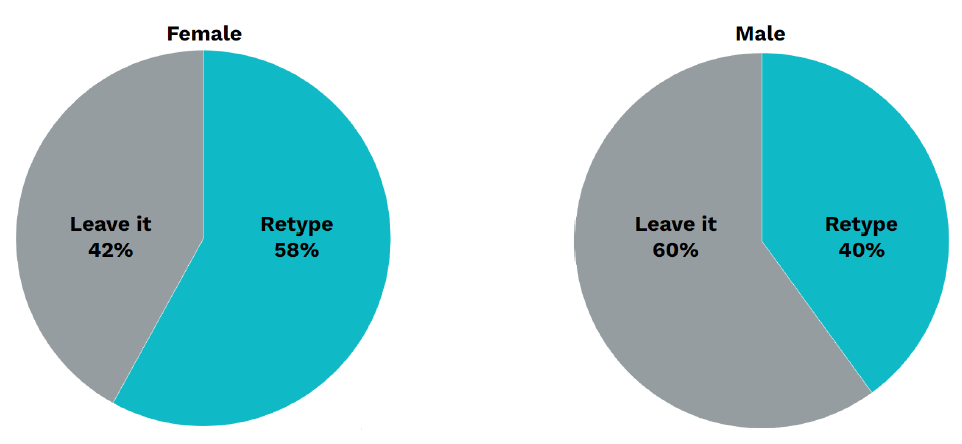
Long-Term Implications of Accent Representation in Children’s Media

Roni Grushkevich, Claire Lim, Kendall Vanderwouw, Daniel Zhou

Who is the most memorable villain you remember from your childhood era? We hypothesize that most individuals will remember a villain portrayed with a heavy accent. This is due to the phenomenon of othering and the idea that children will have a hard time connecting with a character that sounds different from them and the standard variety. We will use the childhood show, Phineas and Ferb, to see if this is true. Through the conduction of a survey, analyzing voice recordings in Praat, and doing sound analysis from an episode of Phineas and Ferb we will be able to see the phenomenon of othering. In Praat, we proved this phenomenon by showing that Dr. Doofenshmirtz, the antagonist, has a lower /æ/ F1 formant than Phineas and a native American English speaker. Additionally, analyzing the Hail Doofania episode, we were able to prove that Doofenshmirtz pronounced 6 sounds differently from a native American English speaker. All this proves the idea that villains are portrayed differently with negative attributes on children’s TV shows.

[expander_maker id=”1″ more=”Read more” less=”Read less”]

Introduction/Background

Our group proposes to do research on the effects of villainization in children’s shows, which has possible long-term implications on people’s perceptions of membership in their ingroup. This membership perception can be encapsulated by the phenomenon of othering. Othering is a process in which a more powerful and/or influential group reinforces differences and authority over another (Williams & Korn, 2017). Hence, our project aims to look at whether adoption of othering by children’s shows’ producers for villainous characters influences the audience’s perceptions of who is “good” (ingroup) and who is “bad” (outgroup).

Previous studies conducted by sociolinguists Calvin Gidney and Julie Dobrow (1998) indicated most foreign accented villains in children’s shows were exclusively European such as German, British, and Russian. These accents in particular are often characterized with high arrogance, intelligence, and socioeconomic status while low on friendliness, pleasantness, and honesty (Shah, 2019). These sentiments towards European accents may be reflective of World War II, Revolutionary War, and Cold War hostilities that dominated media/propaganda during the time.

We choose to look at the children’s show Phineas and Ferb, where the main antagonist, Dr. Doofenshmirtz, is portrayed with an exaggerated foreign accent. Heroes typically speak in the standard dialect and embody idealistic standards (Dobrow & Gidney, 1998), which holds true for the show’s protagonists, Phineas and Ferb. Through these differences in speech patterns, nonstandard accents become associated with “otherness” and antagonism (Constable, 2021).

Specifically, we will examine the phonetic production of vowels by accented English-speaking villains. When villains “mispronounce” English vowels, it is an obvious symbol of their communicative differences. That said, Dr. Doofenshmirtz is a great character to analyze as he does not speak the standard variety like most viewers. In addition, we plan to explore another linguistic variable that distinguishes Doofenshmirtz’s speech from the American standard.

Survey

To supplement the studies we will be citing, we also found it important to explore the existence of accented villains within the media we consumed as children and the types of accents they adopt. To do this, we constructed a preliminary survey prompting college-aged students (aged 18 to 24) to name “the most memorable villain from the movies/shows [they] watched as a child (age 2-10).” In the second iteration of the survey, participants were asked if they distinctly recall the villain expressing an accent coupled with any overall impressions they had of the villain. The survey was shared amongst UCLA students and other college friends, as long as all participants fell within the age range.

Figure 1

The results of the survey demonstrated a strong prevalence of foreign accents in the villains chosen, evidenced by Figure 1. Out of 38 total responses, 23 responses were accented villains. Not only was a clear statistical significance demonstrated of the trend, but actually a majority of the villain choices were associated with foreign accents. Given the breadth of types of respondents coming from California to Uganda to Singapore accompanied by the complete autonomy of selection of the villain, the survey results highlight the abundance of accented villains in popular media.

Figure 2

In addition, the values from Figure 2 present an interesting observation regarding the variety and uniqueness of villain selections. In total there were only 24 unique villains chosen. Of those 24 villains, only 10 were actually accented. The disparity between the number of accented villains and number of accented responses is explained by the incredibly high number of repeat selections of villains that are accented. For instance, Ursula (who adopts a condescending British accent) from The Little Mermaid was listed five times and Dr. Doofenshmirtz was repeated four times. In fact, of the 14 duplicate responses, 12 contained accented villains. This informs on the consolidation of popular children’s media; most children consume much of the same television shows and movies (Disney).

Another interesting note revolves around the traits that stand out or make the villain memorable. The comments on the impressions of the villain fell into two camps: “scary”/“intimidating” or “cool”/“respectable”. Not a single comment mentioned how the villain sounds or their voice. The “othering” of the villains through accented speech takes an implicit or passive effect on the viewer rather than being the focal point. The viewer then subconsciously categorizes the character in the out group. These observations and key takeaways from the survey helped propel the main research portion of the study and guided the choice of Dr. Heinz Doofenshmirtz as the character to analyze. 

Methods

Our main goal in collecting data was to show that Doofenshmirtz follows German pronunciation patterns when speaking English. His nonstandard speech is meant to “other” him from the protagonists, determining his characterization as “bad.” Therefore, our data took a two-pronged approach: first, we used the spectrogram software Praat to analyze sound files of subjects speaking. This way, we could look at Doofenshmirtz’s articulatory properties and point to which features distinguish him as German-sounding. Then, we sent speakers of English to watch an episode of the show and comment on which non-standard features they heard him using. Between these two methods, we gained an understanding of both how Doofenshmirtz speaks and how English-speakers perceive his speech.

When researching in Praat, we looked at the vowels /i/ and /æ/. /i/ exists in both English and German, so we expected no statistical difference in the articulation of a German versus English speaker. On the other hand, the /æ/ sound exists in English but not German. In English, German-speakers tend to replace this sound with the higher vowel /ɛ/, which is easier to produce based on its presence in the German language.

We used samples from four subjects in Praat, two German-accented speakers and two “standard” American speakers. Our “baseline” German accent came from a 50-year-old native speaker who grew up in Düsseldorf but now lives in California. We were particularly interested to see how his speech compared to the German-accented Doofenshmirtz (who, intriguingly enough, was voiced by an American actor). We also took a sample from an 18-year-old native Californian, who we determined to have “standard” vowel production. Finally, we compared her speech to the pronunciation of the show’s protagonist, Phinneas (who was also voiced by an American actor, but was intended to have “standard” production).  We wanted to ensure that our samples were comparable, so our first three subjects all produced Doofenshmirtz’s catchphrase: “Curse you, Perry the Platypus!” (/i/ is found in the word /ˈperi /, while /æ/ is prominent in /ˈplætəpəs/). Although no samples existed of Phinneas saying this sentence, we located a similar sentence where he still said both words in proximity.

Our other group of data came from observing Doofenshmirtz’s speech throughout an episode. Inherently, the sounds of the German language differ from those of English. Some sounds feel tricky or unnatural to non-native speakers. Speakers often replace an English sound with a similar foreign counterpart they know how to produce, just as how a German speaker might replace /æ/ with the /ɛ/ sound of their native language. Often, it is this sound substitution that creates the phenomenon of an accent. For our project, we wanted to see how American individuals perceived Doofenshmirtz’s so-called accent. We asked two college-aged subjects to watch Season 1, Episode 26 – “Out of Toon / Hail Doofania” and explain how his speech compares to the substitutions we’d expect of a German-speaker.

Results/Analysis

Praat

In Praat, we used the “View & Edit” feature to analyze something called formants (lines on a spectrogram that indicate a concentration of energy). For this project, we were mainly concerned with the first formant (F1), which shows vowel height. We found that all of our subjects had similar F1 formants for the vowel /i/. Since this sound exists in both languages, non-native speakers made no substitutions when speaking English. Our Hz values ranged from 376.7 to 460, meaning there was less than a 100-Hz difference between how the two most differently accented speakers produced the vowel. Therefore, the data showed no trends in production variations for Germans and Americans in /i/.

On the other hand, the data showed interesting patterns when it came to /æ/. We predicted that German speakers would have a lower F1 value than English-speakers (due to the fact that /ɛ/ has a lower F1 than /æ/). Overall, we found this to be true. Our authentic German subject had the lowest F1 of the group at 714.1. Likewise, our highest formant value came from “standard” speaker Phineas at 1239. Interestingly, the dubbed voices had a much higher average F1 formant, which we hypothesized had something to do with the nature of the audio files. If we separate our samples by this type of audio file (real speakers vs dubbed speakers), we find that German speakers’ formants are 100-150 Hz lower than those of American speakers. This indicates that they do, in fact, produce ash more similar to /ɛ/.

Figure 3

Sound Analysis

We paid attention to foreign-sounding allophones, compared to a Californian English speaker’s pronunciation, in Hail Doofania. We only analyzed Dr. Doofenshmirtz’s speech and ignored any pronunciation deviations in his song.

In his speech, we identified 6 sounds that were pronounced differently from how a Californian English speaker would pronounce the sounds. The most frequently occurring deviations were his pronunciation of the alveolar approximant ([ɹ]) and voiced postalveolar affricate ([dʒ]). 23 of the 34 deviations were [ɹ] and 6 deviations were [dʒ]. We identified pronunciation deviations just from hearing and our personal judgments given the time and resource constraints of this project.

We looked at the German International Phonetic Alphabet (IPA) sounds to see if the allophones used by Dr. Doofenshmirtz were from the German sound repository. We proposed that his mispronunciation of English allophones was because he was borrowing German sounds to pronounce English sounds. But, the sounds that Dr. Doofenshmirtz used were actually not found in the German IPA

As the allophones used by German speakers for the different analyzed sounds were not what Dr. Doofenshmirtz used, we came up with 2 possible explanations to account for Dr. Doofenshmirtz’s different pronunciations.

First, we suggest that the producers might have wanted to distance Dr. Doofenshmirtz from a German identity. Perhaps they wanted Dr. Doofenshmirtz to have some accent aspects which alluded to a German identity but not have the character be too strongly associated with a German identity. Podesva (2011) posits that the creation of an identity or a “persona” utilizes several linguistic features, and different components of a linguistic feature are adopted depending on the context the speaker is in. This suggests that a bricolage of linguistic features are used to construct an identity. For Dr. Doofenshmirtz, this means that his identity as an individual from Drusselstein (a fictional East European country) was not solely reliant on his accent but on other features too. Hence, it is possible that the show’s producers did not use the German allophones to pronounce the different Californian English sounds to index Dr. Doofenshmirtz’s heritage, but utilized other linguistic and non-linguistic features to do so.

Second, it could be because Dr. Doofenshmirtz is voiced by Dan Povenmire, a native Californian English speaker. Thus, Dr. Doofenshmirtz’s mispronunciation could stem from how a Californian English speaker perceives a German accent to sound like and not how an actual German accent sounds like.

Interestingly, we found that our German speaker pronounced the sounds we studied, in the same way that Californian English speakers do. We attribute this to his exposure to the Californian English accent and was able to distinguish the different allophones and use them according to the context he was in.

Discussion and Conclusions

We looked at the amount of time Dr. Doofenshmirtz spoke in Hail Doofania to gauge the significance of his accent’s contribution to his identity. Dr. Doofenshmirtz had 112 seconds of speech time in the 9 minute and 11 second episode (551 seconds). This equates to about 20% of the episode. As such, Doofenshmirtz has only 20% of the episode to leave an impression on the audience, making it crucial for the producers to adopt several indices to create Doofenshmirtz’s character as an “evil scientist”. The identified indices were: his accent, his clothing (lab coat), the content of his speech (his plans to take over the Tri-state Area) and actions (fighting with Perry the Platypus).

We felt that some younger audience members might be too young to comprehend the sinister nature of Dr. Doofenshmirtz’s plans and might instead rely on auditory and visual cues (his accent and attire & fight scenes, respectively) to index Dr. Doofenshmirtz as a villain. By extension, we think that it is possible for these auditory and visual cues to lay the groundwork for associations that these child audiences make with someone who is “bad” and in an outgroup.

Given that it is more likely for children to come across speakers of different accents than people dressed in lab coats in their everyday lives, we believe that it is possible for them to consequently (because of cartoon villains having accents) associate people with accents as members of an outgroup. This demonstrates how accented villains are part of the phenomenon of othering and can influence children’s perception of “good” and “bad”.

We believe that the results we obtained through Praat were very useful. They supported our findings and proved that accented speakers sound different from the standard. We wish we had more time to obtain and analyze more data. On the other hand, the survey results were not very helpful. We were not able to come to any conclusions through the survey results, but we definitely feel that the survey pushed us in the right direction.

One of the most important takeaways that we believe show producers should know is that they must be mindful of the stereotypes they create or reinforce in their audience. These shows have long term implications that heavily influence individuals.


References

Constable, E. (2021, March 17). Dear Disney, stop teaching kids that foreign accents are evil. LHS Epic. https://lhsepic.com/9602/opinion/dear-disney-stop-teaching-kids-that-foreign-accents-are-evil/

Dobrow, J. R., & Gidney, C. L. (1998). The Good, the Bad, and the Foreign: The Use of Dialect in Children’s Animated Television. The Annals of the American Academy of Political and Social Science, 557, 105-119. JSTOR. https://www.jstor.org/stable/1049446

Flege, J. E., Bohn, O.-S., & Jang, S. (1997). Effects of experience on non-native speakers’ production and perception of English vowels. Journal of Phonetics, 24(4), 437-470. ScienceDirect. https://doi.org/10.1006/jpho.1997.0052

Paquette-Smith, M., Buckler, H., White, K. S., Choi, J., & Johnson, E. K. (2019). The Effect of Accent Exposure on Children’s Sociolinguistic Evaluation of Peers. Developmental Psychology, 5(4), 809-822. American Psychological Association. https://psycnet.apa.org/doi/10.1037/dev0000659

Phineas and Ferb Wiki. (n.d.). Drusselstein | Phineas and Ferb Wiki | Fandom. Phineas and Ferb Wiki. https://phineasandferb.fandom.com/wiki/Drusselstein

Shah, A. P. (2019). Why are Certain Accents Judged the Way they are? Decoding Qualitative Patterns of Accent Bias. Advances in Language and Literary Studies, 10(3), 128-139. Australian International Academic Centre PTY.LTD. https://doi.org/10.7575/aiac.alls.v.10n.3p.128

Sharma, M. (2016). CHAPTER SEVEN: Disney and the Ethnic Other: A Semiotic Analysis of American Identity. In Teaching with Disney (pp. 95-107). Peter Lang AG. Williams, M. G., & Korn, J. (2017). Othering and Fear: Cultural Values and Hiro’s Race in Thomas & Friends’ Hero of the Rails. Journal of Communication Inquiry, 41(1), 22-41. SAGE. 10.1177/0196859916656836

[/expander_maker]
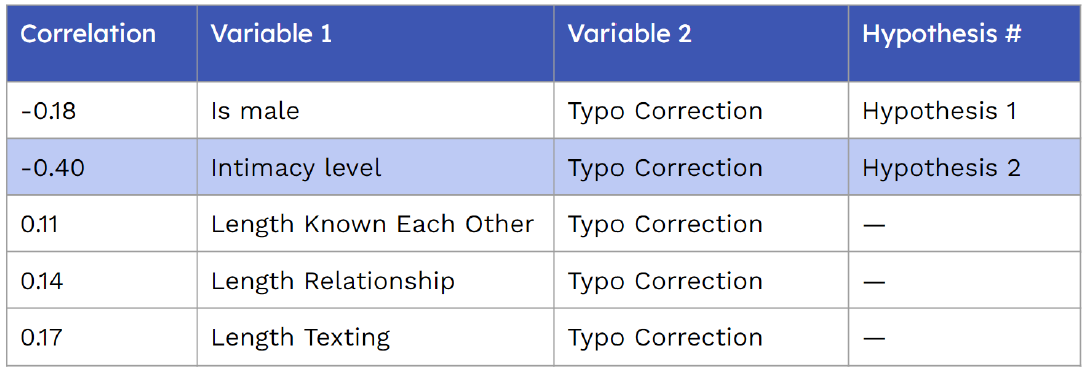
, , ,

How Social Commentary Became a Place for Gendered Norm Subversion

Sylvia Hopkins

Content/Trigger Warning: This article discusses sexual assault

Social commentary has become much more common and impactful to everyday people and their lives. In current times, social commentary is mostly used in social justice spaces with the intent of raising awareness, educating people, or calling out people and institutions for problematic behavior. In the past, only academics and media broadcasters were able to social commentate on a large scale. Traditionally, social commentary was largely limited to class-privileged and college-educated people who were overwhelmingly white and male. The rise of the internet and social media has allowed people who would not have previously had the resources to share their ideas to now be able to broadcast their ideas to thousands, if not millions of people. Because of this new-found accessibility, there has been a huge increase in marginalized people creating and engaging in social commentary. The recent increases in accessibility are not only good for diversity, but also for subverting gender norms.

[expander_maker id=”1″ more=”Read more” less=”Read less”]

Introduction and Background

According to common gender norms, girls and women are expected to soften their language and avoid being direct, and to not employ harsh rhetoric. In contrast, boys and men are allowed and expected to not not soften their language, to be direct, and use harsh rhetoric. But these trends are not being seen in social commentary; female social commentators are routinely using harsh rhetoric and being direct with their wordage and their messaging, all while male social commentators are doing the opposite, they are regularly using soft and indirect rhetoric.

Social commentary is not something that has drawn the attention of many researchers, and the works that exist on it primarily deal with the potential political consequences and mass spread of misinformation. Gender and linguistics in social commentary spaces has not been properly researched, this project aims to fill in some of the gaps and provide understanding by analyzing videos from social commentators.

Methods

The design of this project was to transcribe four total YouTube videos from different social commentators, two female and two male, about the same topic and cross-analyze them. The common topic for this project was a sexual assault scene Bridgerton, a show that recently came out on Netflix, it was chosen because it was recent and stirred lots of pushback, criticism, and commentary. The sexual assault scene details Daphne sexually assaulting her husband, Simon, in an attempt to become pregnant. This scene was considered disturbing by a mass audience and all social commentators in this sample also found it disturbing. Cross analysis was based on the use of cursing, euphemisms, and dysphemisms.

The three linguistic features that were analyzed in this project are word choice (curse words), as well as euphemisms and dysphemisms. The use of curse words is relevant because cursing is considered in most spaces and contexts to be socially unpleasant and harsh. Cursing is something that men are not regularly punished for or discouraged from doing, while women are often told that cursing is not “lady-like”. Aditi Sharma explores the gendered double standards for cursing in her article Why Do Women Have Such Limited Swear Words To Ab(Use)? Euphemisms and dysphemisms are relevant because when someone uses an euphemism, they are trying to be less harsh and soften their words, while with dysphemisms, they are trying to make their words harsher for rhetorical effect.

Results

Transcriptions 1 and 2 both came from male commentators, Luke Alexander and Jack Edwards. Neither of them used cursing or dysphemisms, and one of them (Luke Alexander) used an euphemism. Neither of them used the word “rape”, Luke Alexander instead spelled out “R-A-P-E” to avoid saying “rape” or “sexual assault”. In contrast, neither of the female commentators used euphemisms and both of them used the word “rape” directly instead of using a euphemism or spelling it out like Alexander.

Thumbnail image from Luke Alexander’s (Example 1) YouTube Video

Transcriptions 3 and 4 came from female commentators, Nicole a.k.a. “A Seventeenth Grade Nothing” and Ashley Arden. As stated before they did not use euphemisms and both referred to sexual assault directly by saying “rape”. Nicole is the only commentator in this sample that curses. Ashley Arden’s states that this scene is “ugliest scene I’ve ever watched in a teen show”. Both Nicole’s and Ashley Arden’s commentaries are blunt and direct, neither of them use any linguistic feature to soften their tone, wordage, or message. This is the opposite for Luke Alexander and Jack Edwards, neither of them use the word “rape” and neither of them use dysphemisms.

Discussion

Each of the commentators are norm-breakers. Luke Alexander, Nicole, and Jack Edwards in relation to cursing. Nicole for her cursing, Alexander and Edwards for their complete lack of cursing. In Example 3, Nicole curses, this makes her a norm-breaker because it is considered socially unacceptable in many contexts for women to curse. Contrasting Nicole, neither of the male commentators use cursing, which makes them also norm-breakers in most non-formal settings, it is considered appropriate, and often expected for men to curse. Luke Alexander, Nicole, and Ashley Arden are norm-breakers with respect to euphemisms.  Luke Alexander uses a euphemism when he refers to semen as “children juice” and spelling out rape instead of saying it directly. This goes against gendered norms because men are expected to use direct language when communicating, therefore to not use euphemisms. Neither Nicole nor Ashley Arden use euphemisms, which makes them both norm-breakers for not using euphemisms to soften their language, which is something women are expected to do. When women use direct language they can be labeled as “aggressive” or “masculine”.

Conclusion

The purpose of this research was to see if social commentary has created a space for people to subvert gendered linguistic norms and if so, what does it mean for society as a whole. The answer put simply is yes, people of different genders are shown to subvert gender norms, this was shown through looking at the use of cursing, euphemisms, and dysphemisms. This has significant meaning for society, because while gender norms, not just ones dealing with language, are being moved away from, they are still very present and often harm people.

The internet made the ability to social commentate so much more accessible than it had ever been, and this accessibility gave diversity, it gave voices that were not being listened to a way to be heard on a mass scale. Accessibility also gave women and men the ability to communicate to mass audiences in ways that violate gender norms, which is not only significant for the commentators themselves, but also the people that watch them. When people see people that mirror their identities subverting gender norms it gives a sort of permission to the viewer to do the same. This subversion of gender norms can allow people to express themselves more authentically without being punished or ridiculed. While having gender norms is not inherently evil, they are largely oppressive and tie into larger patterns of violence. When people violate gender norms, they can be subject to violence; there are countless examples of this, some of which are women being killed for being rude to men, men who engage in femininity are often the victims of hate-crimes, women being murdered in honor killings, and many more. Subverting gender norms with linguistics is subverting gender norms as a whole, and doing so makes society freer and safer.

References

Crespo-Fernández, E. (n.d.). Sex in Language: Euphemistic and Dysphemistic Metaphors in Internet forums. Bloomsbury Publishing. Retrieved February 6, 2021, from https://books.google.com/books?hl=en&lr=&id=iInaCQAAQBAJ&oi=fnd&pg=PP1&d=Dysphemism+gender&ots=JeoliQi9La&sig=lTkW2xCP0sZu2YZzWv498Q8IgNY#v=nepage&q=Dysphemism%20gender&f=false

Definitions for social commentary. (n.d.). Retrieved February 21, 2021, from https://www.definitions.net/definition/social+commentary

Info & Stats For Journalists. (2015). National Sexual Violence Resource Center

Kimmons, R., & Veletsianos, G. (2016). Education scholars’ evolving uses of twitter as a conference backchannel and social commentary platform [Abstract]. British Education Research Association, 47(3), 445-464.

Lapadat, J. C., & Lindsay, A. C. (1999). Transcription in Research and Practice: From Standardization of Technique to Interpretive Positionings. Sage Journal.

Orlando, E., & Saab, A. (2020). Slurs, Stereotypes and Insults. Springer Link, 599-621.

Popa-Wyatt, M. (2020). Reclamation: Taking Back Control of Words. Brill, 97(1), 159-176.

Rape culture & statistics. (2014, June 07). Retrieved March 8, 2021, from

Rape Culture & Statistics

Sharma, A. (n.d.). Why do women have such limited swear words to ab(use)? Retrieved March, 2021, from https://www.bingedaily.in/article/women-swear-words-sexist-patriarchy

Swanson, S. C., & Szymanski. (n.d.). From pain to power: An exploration of activism, the #Metoo movement, and healing from sexual assault trauma. Journal of Counseling  Psychology.

[/expander_maker]
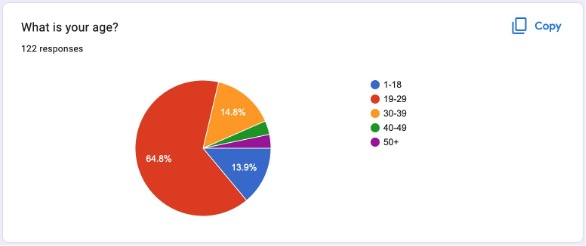


“Like…my whole face is just crooked!”: Self-Deprecation in Actors and Actresses

Sapna Ramappa

Why and how do people use self-deprecation? Do people use it to “fish for compliments” or just seem more relatable? This article highlights the prevalence and utilization of self-deprecating language among actors and actresses in interviews on late-night talk shows. Interviews with four female celebrities and four male celebrities on The Ellen Degeneres Show and The Tonight Show Starring Jimmy Fallon were analyzed in order to discern any potential gender differences in the intentions and execution of self-deprecation that celebrities employ. Accounts of self-deprecation were sorted into categories of self-deprecation (physical appearance, professional/intellectual competence, personality traits, and behavior) and pitch alterations (higher or lower pitches). Ultimately, this study found that the use of self-deprecation is not as gendered as previously thought, which could illuminate how being a public figure in an industry that is quick to scrutinize one’s physical appearance and performance can influence the ways in which people perceive themselves and speak about themselves.

[expander_maker id=”1″ more=”Read more” less=”Read less”]

Introduction and Background:

Just as self-affirmation can inspire individuals to strive for healthy and positive behaviors, self-deprecating language can potentially also affect the ways that we perceive ourselves and others (Epton & Harris, 2008). Self-deprecating humor is a valuable tool employed by comedians to show humility and lightheartedness (Speer, 2019). But who tends to use this form of humor more often and for what purpose? 

In previous studies, female comedians have been found to use self-satire more often than their male peers (Russell, 2002). This humor serves as a non-threatening way to make the comedian more “acceptable” and “appropriate” by placing herself as the joke itself. However, self-deprecation is not just limited to making fun of one’s physical appearance. People use self-deprecating humor directed at their behaviors, personality traits, intellectual/professional abilities, social status, success, or physical appearance (Greengross & Miller, 2008). However, there are no existing studies that reveal gender differences in the categories of self-deprecation use. The findings of this project can provide more insight on how men and women are socialized to behave and view aspects of their own identity. 

Men and women may also differ in the ways that they use self-deprecating humor; male speakers have been found to use a higher pitched voice when using humor and female speakers have been found to use a lower pitched voice when compared to their normal voices (Purandare & Litman, 2006). This study, which analyzed the use of self-deprecation in male and female celebrities on late-night television interviews, suggests that there are no significant gender differences in how often celebrities use self-deprecation and the “professional/intellectual competencies” and “physical attractiveness” categories. However, there are gender differences in the “behaviors” and “personality traits” categories and the ways the celebrities use pitch changes.

Methods:

This study analyzed interviews with male and female celebrities on two late-night talk shows, The Ellen DeGeneres Show and The Tonight Show Starring Jimmy Fallon. The female actresses analyzed were Jennifer Lawrence, Emma Stone, Anne Hathaway, and Anna Kendrick, and the male actors analyzed were Chris Evans, Zac Efron, Jake Gyllenhaal, and Ryan Reynolds, for a total of 16 interviews. The study looked at celebrity gender, interviewer gender, the count of self-deprecating humor used, the category of self-deprecation, and the presence and/or type of pitch change used in self-deprecating humor. Self-deprecation accounts were identified and categorized if the celebrities used any negative statements towards themselves with regards to the four categories: “behaviors”, “personality traits”, “professional/intellectual competencies”, or “physical attractiveness”. Pitch changes were identified if the celebrities used a drastic and extremely noticeable higher or lower pitch while using self-deprecating language. Frequencies of self-deprecation were then calculated to compare self-deprecation in relation to celebrity interviewee gender, categories of self-deprecation, and pitch changes.

Table 1: The different combinations of variables looked at in 16 interviews.

Results and Analysis:

Frequencies/Counts of Self-Deprecating Humor: 

Table 2: The count of self-deprecation used in each interview, the length of each interview, and the calculated frequency in self-deprecation count per minute.
Table 3: The total count and average frequency of self-deprecation in male and female celebrities.

Throughout all interviews, female celebrities used 18 accounts of self-deprecation with an average frequency of 0.43/minute and male celebrities used 16 accounts with an average frequency of 0.41/minute. The frequency difference between female and male celebrities was 0.02, which indicates that there is no significant gender difference here. 

Categorizations of Self-Deprecating Humor: 

Table 4: The count and category of self-deprecation used in each interview.
Table 5: The breakdown of self-deprecation categories in all male and female celebrity interviews.

The evidence shows that there is no significant gender difference in the “professional/intellectual competence” and “physical appearance” categories, but there are gender differences in the “behavior” and “personality traits” categories. Women use more self-deprecation about their behaviors and men use more self-deprecation for their personality traits. 

Example 1: Jennifer Lawrence with Ellen DeGeneres (Category: Physical Appearance)

This is a clear example of self-deprecation in the “physical appearance” category: Jennifer Lawrence makes fun of her appearance (specifically her face, her smile, and her hair) on a specific photo in Lines 6-7, Line 14, and Line 17.

Pitch Change Used for Self-Deprecating Humor: 

Table 6: The count and pitch change (either higher or lower) used in each interview.

Both female and male interviewees only utilized higher pitch changes when evoking self-deprecating humor.

Table 7: The count of pitch changes and the proportion of pitch changes out of the overall self-deprecation count.

Though the pitch change count looks similar in female (4) and male interviewees (5), male celebrities used higher pitch changes in 31% of self-deprecation accounts whereas female celebrities only used higher pitch changes in 22% of the time.

Example 2: Ryan Reynolds and Jimmy Fallon (higher pitch change, Line 2-3)

In this example, Ryan Reynolds uses an animated voice and higher pitch when saying the word “vest”, to make fun of what he was wearing.

Discussion and Conclusions:

The study did not find significant gender differences in the frequency of self-deprecation used in this sample of actors and actresses. Additionally, men and women both used similar amounts of self-deprecation when speaking about their professional/intellectual success and their physical appearance. There are several reasons why this may be. 

This study solely analyzed self-deprecation used by actors and actresses, so their career path (given the cut-throat nature of Hollywood) may create an environment where they place a lot of value in how they look and how they perform, thus impacting how they speak about themselves. Celebrities are placed to a near superhuman standard of beauty and their physical appearance is often on display for the public to openly criticize, so celebrities may be more inclined to point out their own flaws before the public does so. The use of self-deprecation in the “professional/intellectual” category may be more gender-neutral, considering that all celebrities want to achieve success. Additionally, because these interviews are used to humanize celebrities, self-deprecation may be used to help establish rapport between the guests, interviewers, and celebrities; this tool can help them come across as relatable, humble, and likeable. Though there were gender differences in the “personality traits” and “behavior” categories, it is unclear whether these categories are too similar to be separated or if there are actual gender differences in the use of “behavior” as a constructed aspect of identity and “personality traits” as an essential aspect of identity. Due to potential differences in the topics of the interviews themselves, it must be noted that certain interviewees may have had more opportunities to use self-deprecating humor, which could skew the results.

When assessing pitch changes, the study found that they were used quite sparingly among men and women (the proportion of pitch changes used in all accounts of self-deprecation was 22% in women and 31% in men). However, all of the pitch changes across genders were higher pitch changes, which contradicts earlier findings that showed that women switch to a lower pitch when using humor (Purandare & Litman, 2006). Because the subjects studied are professional actors and actresses, they may not be modulating their pitch as much in an interview setting when compared to their normal discussions or while acting.

Ultimately, the similarities between male and female celebrities in the frequency and in the “physical appearance” and “professional/intellectual competency” categories of self-deprecation indicate that male and female celebrities have similar aspects of their identities that they choose to self-criticize. These analyses can provide greater insight on what it means to be a public figure in an industry that places enormous importance on success and physical appearance.


References:

[/expander_maker]
 

, , , ,

Are some NBA slang terms too vague? Absolutely!

Isaac Verdugo, Riley Kwinn, Brendan Xiong, and Gustavo Gutierrez

NBA (National Basketball Association) slang is widely used by basketball fans all over the world. NBA slang is formed and developed with NBA history. It has unique features and functions that give NBA fans the opportunity to express their opinions about the game of basketball in creative ways. NBA slang reflects NBA culture. A sociolinguistic study of NBA slang helps people know more about NBA culture and fans of different teams. The following study discusses semantic change in NBA slang terminology within Los Angeles Lakers and Los Angeles Clippers communities of practice through discourse analysis. First, we selected four common NBA slang terms that are used in this sports league and provide their generic definitions. We then analyzed online basketball discourses to look for ways in which fans from both teams use the NBA slang terms that we are examining. Third, we used a corpus analysis toolkit, AntConc, which helped us find patterns of concordance within our data. We concluded by making generalizations about the use of our selected terms by Lakers and Clippers fans and determined trends through analysis.

[expander_maker id=”1″ more=”Read more” less=”Read less”]

In this study we sought to understand why NBA slang is used in online communities of practice. This helps identify connections within communities of practice because basketball fans are tight-knit, have frequent interaction, develop shared goals and knowledge about basketball, and create new NBA slang. Because many basketball fans use NBA slang to refer to a particular team and/or player, the meaning will vary depending on who you ask; some use older meanings from previous eras of the NBA, whereas others use newer meanings that fit today’s NBA style of play. By analyzing the use of four NBA slang terms (foul, skill, superteam, flagrant foul), it will help us understand how they have changed in meaning over time. Next, we will compare and contrast the usage between Lakers-Clippers fans. We chose these two teams specifically because they are from the city of Los Angeles and have drastically different histories; the Lakers are the most famous NBA franchise of all-time with 17 championships, whereas the Clippers have none (Los Angeles Clippers vs. Los Angeles Lakers, n.d.).

That being said, we attempted to answer the following question:

(1) What sorts of semantic change has NBA slang experienced within Lakers and Clippers communities of practice?

Background

Previous research in semantic change shows that words or real world entities change over time. More specifically, words change semantically and this change is reflected in the way words are being used (Wijaya & Yeniterzi, 2011, “Introduction” section). This linguistic aspect of semantic change also applies to NBA slang. For example, in the 20th century of the NBA, the NBA slang term Greatest of All Time or GOAT, was used to describe how successful a player and/or team was based on the number of championships they won. However, NBA fans have added new layers onto its meaning over time, such that basketball IQ, skillset, defensive rating, and other basketball qualities are relevant in the discussion of “Who’s the GOAT?” While the NBA uses generic definitions for NBA slang terms, it does not necessarily mean that fans will use that particular definition in every basketball context. Because of this, NBA slang terms are extremely nuanced, which is why the word GOAT highlights one of our goals to lay out differing traits of the four terms we will examine.

Another frequently used NBA slang term is skill. Skill in the NBA during the 1960s meant being able to run down the court efficiently, shoot the ball from close range, and defend. However, in the 1970s, skill was about playmaking abilities, too. One paper addressing a similar topic discussed the importance of player impact, “Berri tried to determine if Karl Malone or Michael Jordan was more valuable, and he found that Dennis Rodman was most valuable because of his rebounding ability” (Whitmoyer, 2019, p. 4). The significance of this quote shows that many teams prefer having a player who impacts the game of basketball in more than one aspect. Many believe that Michael Jordan is the best basketball player of all time, but Whitmoyer argues that Dennis Rodman is. This shows that there are different views about a player’s importance, which is part of what we will explore in our project.

Methodology

We analyzed the NBA slang terms on online basketball discourses such as Twitter, Reddit, and Instagram, where we collected 100 Lakers-Clippers samples relating to these terms for a total of 400 samples. Then, we used AntConc, a corpus analysis software that made it much easier to compare the surrounding environments of all the data samples for each term. Lastly, we made generalizations about the use of the NBA slang terms and determined trends in our data through analysis. This method allowed us to gather more samples and data from online discourses than we would have surveying/interviewing basketball fans with the amount of time we had for the project, and helped us address the question in our introduction by allowing us to identify common trends in a data set that would be far too large to analyze without the assistance of corpus linguistics software.

Results: Data Analysis

In Figure 1, we see a list of words that AntConc found that foul was commonly used within the same sentence, as flop appeared the most with a total of 73 samples.

Figure 1. Total frequency of words that AntConc found for the NBA slang term foul.

With this software, we were able to discover that foul has a new meaning added to it that can be used in more contexts than before with the use of flop. This concept is known as widening, which is a type of semantic change. Throughout the history of the NBA, the generic definition of foul has remained the same, referring to “illegal personal contact with an opponent and/or unsportsmanlike behavior” (How Fouling Works in Basketball: 6 Common Fouls Explained, 2020, para. 2), which can be seen in Figure 2.

Figure 2. Tim Duncan (#21) fouls Monta Ellis (#11) after bumping him in mid-air when scoring a lay-up.

However, the word foul has become too vague in today’s NBA that Lakers and Clippers fans have used a more specific word to describe the actions that opponents do to get the foul call in their favor — flop. A “flop” is an attempt to fool referees into calling undeserved fouls by exaggerating the effect of contact with an opposing player (Explanation of Anti-Flopping Rule, 2012, para. 2), which can be seen in Figure 3.

Figure 3. Mario Chalmers (#15) flops and sells the contact after Danny Green (#4) swipes through to create space.

The use of flop for a non-foul changes the meaning of foul because opponents fall to the ground when contact is drawn, whether minimal or not. The act of flopping is changing the way the game of basketball is played since referees must distinguish between what is and isn’t a foul, which they tend to struggle with.

Both Lakers and Clippers fans use flop as a way to express their anger when they believe there wasn’t any illegal contact by the opponent, but referees think otherwise. This finding shows how the meaning of foul has been expanded by these fans because flopping is more common today than it was before in the NBA. Instead of fans saying “That was not a foul,” fans can now say “That was a flop,” when there was little or no physical contact by the opponent. This semantic change of the word foul allowed these fans to be more specific and provide a reasonable judgment about a certain basketball play, instead of giving a biased opinion with no context. Because there was a high frequency of data where the slang term foul was used with flop in the same sentence than without it, it suggests that they both go hand-in-hand when fans debate a foul call.

The second word we examined was skill. Skill is “the ability to do something well; expertise” (Oxford University Press (OUP), n.d.). In the 20th century of the NBA, skill was synonymous with players who could run down the court efficiently and score more than 15+ points on a regular basis. However, in today’s game skill is used in many other ways such as passing, as observed in Figure 4.

Figure 4. LeBron James (#23) makes an incredible no-look pass to teammate Ante Zizic (#41) who dunks the ball.

There are different connotations as to what skill implicates. According to the data via AntConc in Figure 5 and 6, skill was used the most within members of the Lakers community when discussing Kobe Bryant, an all-time great with elite footwork, shooting, post-moves, and defense that contributes to what skill means. Clippers fans most used skill in reference to flopping, identifying it as a ‘skill’, or point guard ‘skills’ which implies a specific attribute derived by a select group of positioned players. In the online discourse data, Kobe [Bryant] was mentioned most to embody skill because of his scoring ability, footwork, shooting, defense, basketball IQ, work ethic, and athleticism. Other players like Kawhi Leonard, Patrick Beverly, and Ivica Zubac were mentioned a combined 7 times in the data set, a stark contrast to Kobe Bryant’s 22.

Figure 5. Total frequency of words that AntConc found for the NBA slang term skill.


Figure 6. Total frequency for Kawhi Leonard, Ivica Zubac, and Patrick Beverly via AntConc.

The data suggests that semantically, skill has changed from what it was once meant over the last few decades among these communities of practice. Skill in basketball does in fact include scoring ability, but it also incorporates many other factors that make up a player’s complete value on the court (Locklin, 2021, para. 3). Skill no longer identifies a player who can run down the court efficiently and score 15+ a game but instead, is the marker for players who embody proficient attributes in all areas of the game.

The third word we examined was superteam. This term can be defined as “already established All-Star players coming together to a team to form a super team (Urban Dictionary: Superteam (NBA), 2018). Many of the fans’ conversations from the data involved debates about the exact definition of the term. It was more commonly used as one word, rather than as two separate words, though there was no significant difference in its intended meaning; fans often responded to one variation with the other. Superteam seems less rooted in one literal definition, and more tied to the emotional idea of a “team that is unfairly good,” as the meaning seems to change depending on the context it’s used in. The people using superteam seemed more intent on winning debates than using the word “correctly.” The term has therefore seemed to experience a significant semantic widening such that its meaning changes depending on a) the people using it, and b) the greater context of which teams are performing well in the NBA.

Most of the data samples were gathered from Lakers fans since there has never been a Clippers team that was considered so good that it was unfair. The only instance superteam was used to describe the Clippers was when a fan claimed Kawhi Leonard, a current player on the Clippers, had “tried to make a superteam,” with the implication being that he had failed. The primary topics discussed in the data we gathered for this term were: 1) whether or not LeBron [James] had actually deserved the championship titles he had won after forming multiple ”superteams,” and 2) whether or not this year’s Lakers roster had in fact been a “superteam” despite not winning a championship nor making the playoffs in 2022, as can be seen in Figure 7.

Figure 7. Lakers 2021-22 roster with 3 All-Stars: Anthony Davis (#3), LeBron James (#6), & Russell Westbrook (#0)


Figure 8. A tweet about LeBron’s critics who are downplaying his past successes for forming ‘superteams.’


Figure 9. Another tweet where a fan chastised the 2021-22 Lakers for not making the playoffs, despite qualifying as a ‘superteam.’

Unsurprisingly, the teams most commonly associated with superteam were either current or retired All-Star players from teams such as the Cavaliers, Warriors, Heat, Nets, and Lakers, as observed in Figure 10. The high frequency of Lakers relative to the other teams is due to the fact that most of these data are from Lakers’ fans’ discourse.

Figure 10. Total frequency of words that AntConc found for the NBA slang term superteam (focus on the column second from the left and the corresponding term on the far right)

According to the official NBA website, a flagrant foul is excessive contact beyond a regular foul. There are two types, a Flagrant 1 is unnecessary contact against a player committed by an opponent, whereas a Flagrant 2 is unnecessary and excessive contact against a player (Flagrant Fouls, n.d.).

The main semantic change we found from Lakers and Clippers fans regarding this word is elevation, where one uplifts an utterance, and degeneration, where negative light is shone on a statement. Tweets by Lakers fans are uplifting, with one of them proclaiming that the Lakers are equals to every other team. The tweet from the Clippers fan is degenerated through its angry intonation. The Lakers tweet also has more likes, and popularity equates to less negativity as “fearful and negative tweets [have]…low virality” (Cheung‐Blunden et al., 2021, p. 19). The less popular Clippers fan tweet uses strong word choice through swearing.

The primary cause for this difference is team status. The Lakers fan sounded less angry because of the history of his team, as he is comfortable with the prestige and numerous championship titles of the Lakers. The Clippers are not as well-known as the Lakers. Less prestigious teams have fewer fans because their teams are not as competitive as others. Therefore, the fans of such teams are very committed and passionate to be able to stick through team struggles. Furthermore, “high levels of identification with a sports team are positively related to fan display and verbal response” ​​(Rocca & Vogl-Bauer, 1999, p. 244). The intense feeling for one’s team drives Clippers fans to use strong language.

Discussion

According to new research about American slang, there are unique features that influence it based on its originality (Zhou & Fan, 2013). Similarly, we learned that NBA slang is used because of its originality. NBA fans were creative with how they turned generic definitions of the NBA slang terms to more catchy and specific meanings. In addition, these new words and meanings are commonly used by NBA fans for the pleasure of being in fashion and appear to have a deep understanding about the game of basketball. When these fans use NBA slang terminology, it tends to validate their opinion about basketball because it is solely used by basketball fans.

One social factor that influences the use of NBA slang terms is social media. Social media has allowed NBA fans to discuss and share their opinions about basketball that reach millions of people, as can be seen in some figures above. A second social factor is basketball commentators because they enjoy commenting on live-basketball games using descriptive language, and find that NBA slang is more direct and simpler to use than the generic definitions.

An individual factor that influences NBA slang are peoples’ knowledge and skills about the game of basketball. Their knowledge and skills about the game of basketball lets them feel entitled to have a valid opinion about a particular team and/or player.

These findings support our thesis statement that both Lakers and Clippers fans would experience semantic change to NBA slang because of how much the NBA has evolved. More specifically, many NBA slang terms have been outdated, and it was expected that these fans would use different meanings to these slang terms to fit today’s NBA style of play.

Conclusion

Linguists can benefit from our research because they are interested in real world phenomena. As such, they are descriptive and study how people actually talk, where some use NBA slang as part of their everyday speech, and not prescriptive regarding how people “should” talk. Because linguists study semantics, our research allows for linguists to study more in-depth the role that NBA slang has for basketball fans to know what certain words mean, what makes them have more than one meaning, why those meanings exist, and others.

A possible future direction of our research would be for researchers to replicate this study on a much larger scale through ethnographic research to ensure that there is enough data gathered from both groups. Ethnographic research can improve this study because it involves observing a particular group and site over a long period of time, which could gather a large amount of data about the use of NBA slang at basketball games.


References

Cheung‐Blunden, V., Sonar, K. U., Zhou, E. A., & Tan, C. (2021). Foreign disinformation operation’s affective engagement: Valence versus discrete emotions as drivers of tweet popularity. Analyses of Social Issues and Public Policy, 21(1), 980–997. https://doi.org/10.1111/asap.12262

Explanation of Anti-Flopping Rule. (2012, October 5). NBA Official. Retrieved June 8, 2022, from https://official.nba.com/explanation-of-anti-flopping-rule/

Flagrant Fouls. (n.d.). NBA Official. Retrieved June 8, 2022, from https://official.nba.com/trigger/review-of-called-foul/

How Fouling Works in Basketball: 6 Common Fouls Explained. (2020, November 8). MasterClass. Retrieved June 8, 2022, from https://www.masterclass.com/articles/how-fouling-works-in-basketball#quiz-0

Locklin, W. (2021, July 15). What is “Skill” in NBA Basketball. The Wright Way Network. Retrieved June 8, 2022, from https://twsn.net/2021/07/what-is-skill-in-nba-basketball

Los Angeles Clippers vs. Los Angeles Lakers. (n.d.). Diffen. Retrieved June 8, 2022, from https://www.diffen.com/difference/Los_Angeles_Clippers_vs_Los_Angeles_Lakers

Oxford University Press (OUP). (n.d.). Skill. Lexico.Com. Retrieved June 8, 2022, from https://www.lexico.com/en/definition/skill

Rocca, K. A., & Vogl‐Bauer, S. (1999). Trait verbal aggression, sports fan identification, and perceptions of appropriate sports fan communication. Communication Research Reports, 16(3), 239–248. https://doi.org/10.1080/08824099909388723

Urban Dictionary: Superteam (NBA). (2018, May 28). Urban Dictionary. Retrieved June 8, 2022, from https://www.urbandictionary.com/define.php?term=Superteam%20%28NBA%29

Whitmoyer, E. (2019). Measuring Greatness in the NBA. Scholars Crossing. Retrieved June 8, 2022, from https://digitalcommons.liberty.edu/honors/845/

Wijaya, D. T., & Yeniterzi, R. (2011). Understanding semantic change of words over centuries. Proceedings of the 2011 International Workshop on DETecting and Exploiting Cultural diversiTy on the Social Web – DETECT ’11. https://doi.org/10.1145/2064448.2064475

Zhou, Y., & Fan, Y. (2013). A Sociolinguistic Study of American Slang. Theory and Practice in Language Studies, 3(12). https://doi.org/10.4304/tpls.3.12.2209-2213

[/expander_maker]


, , , ,
Scroll to Top