Sociolinguistics

K-Netizen: Examining Possessive Behavior in K-pop Social Media Discourse

Matthew Lee, Sam Lin, Huimin Liu, Francisco Morales, Annika Park

In recent years, Korean popular music, or K-pop, has led the way for a meteoric rise in global popularity of Korean culture. According to Sue Jin Lee’s study, “The Korean Wave: The Seoul of Asia,” this Korean wave—hallyu in Korean—has garnered a worldwide fanbase whose members create communities online centered around their favorite groups and idols. These K-pop fans primarily interact with their favorite artists and each other via social media posts and comments, creating online communities of internet citizens (netizens) that are each focused around certain idols. There is, however, a negative perception of Korean netizens who are seen by international fans as overly critical of K-pop groups and labels, possessive of idols, and having a sense of entitlement to celebrities. This study examines the question: does this perception of possessive Korean K-pop fans hold true? If so, what is the reason for this behavior? To find answers, the use of personal possessive pronouns in social media comments is examined to gauge possessiveness in Korean and international fans, informing a further discussion about Korean nationalism at play in K-pop social media interactions.
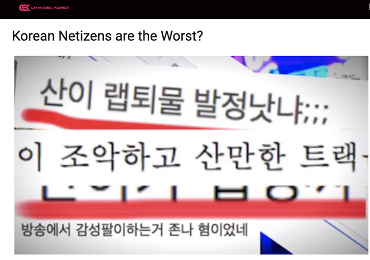
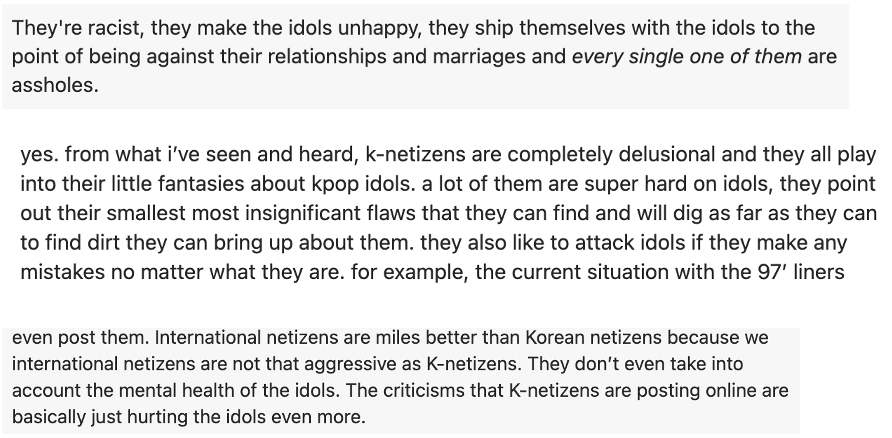
Figure 1: Social media backlash towards Korean K-pop fans from international fans

[expander_maker id=”1″ more=”Read more” less=”Read less”]

Introduction and Background

With the growing accessibility of online platforms like Facebook, Twitter, and Instagram, Korean and English-speaking social media users can react in real time to K-pop events and news. In typing up posts and leaving comments, fans create an online persona for themselves based solely around their love for certain music groups; the most devoted of these fans have been dubbed “K-pop stans.” We assert that with the growth of the Korean wave comes a sense of entitlement or possessiveness from specifically Korean fans towards their favorite idols. Our research aims to find patterns of these possessiveness or entitled tendencies in Korean social media users, and we believe that Korean fans will demonstrate these themes much more strongly than international fans of K-pop.

The idea of a netizen, or an “internet citizen,” originated in the 1990s and served as a descriptor for engineers and early Internet users who “participate in the affairs of governing and making decisions about the internet and about how the internet can impact offline society,” according to scholar Ronda Hauben’s Amateur Computerist. Over time, the term has evolved to become a broader description of anyone actively engaged in online communities. Within the past five years, Korean social media circles have especially embraced the word to the point where there is a specific word for Korean internet users: the “K-netizen,” which has the reputation of being extremely assertive and opinionated as a result of the strong sense of community they have created online. This membership may promote a sense of belonging and perhaps nationalism as an extension of their Korean citizenship, sentiment that may also extend to how K-netizens view K-pop idols. Since the K-pop industry is a major part of the South Korean culture and economy, K-netizens could feel that they are entitled to ownership over idols as a result of this interesting intersection of internet subculture with nationalism. We later explore this concept as an explanation for possessiveness in Korean fans.

Methods

In order to quantify the possessiveness of fans towards K-pop idols, we gathered instances of pronoun use by Korean and international commenters when referring to their favorite artists in social media discourse. Examples of these uses include phrases such as “your idol,” “my idol,” “our idol,” “mine,” etc. To narrow the scope of our search, research members strictly look at comments on Facebook responding to posts about three controversial breaking-news stories in regards to K-pop celebrities outlined below:

  1. HyunA and Dawn’s announcement of dating: HyunA, a singer and former member of the group Wonder Girls, and Dawn, a member of the group Pentagon, were dropped from their agency once they announced they were dating.
  2. G-Dragon and Kiko Mizuhara’s announcement of breaking up: G-Dragon is a singer who is part of boy’s group the BIGBANG, and Kiko Mizuhara is a Japanese celebrity. They were rumored to be in a relationship for years, but nothing was confirmed until it was announced that they had broken up in 2015.
  3. The Burning Sun scandal: this was a large-scale entertainment and prostitution exposé that involved multiple prominent celebrities in the K-POP entertainment industry.

[Researchers had originally initiated the project with four cases, an additional scandal involving high school bullying, but decided to omit it because they could not find enough substantial data for the case and the data gathered for other three cases was sufficient.]

Each controversy will be analyzed through two different posts announcing the news—one in English and one in Korean—in order to compare the initial reactions of Korean and international fans.

Results and Analysis
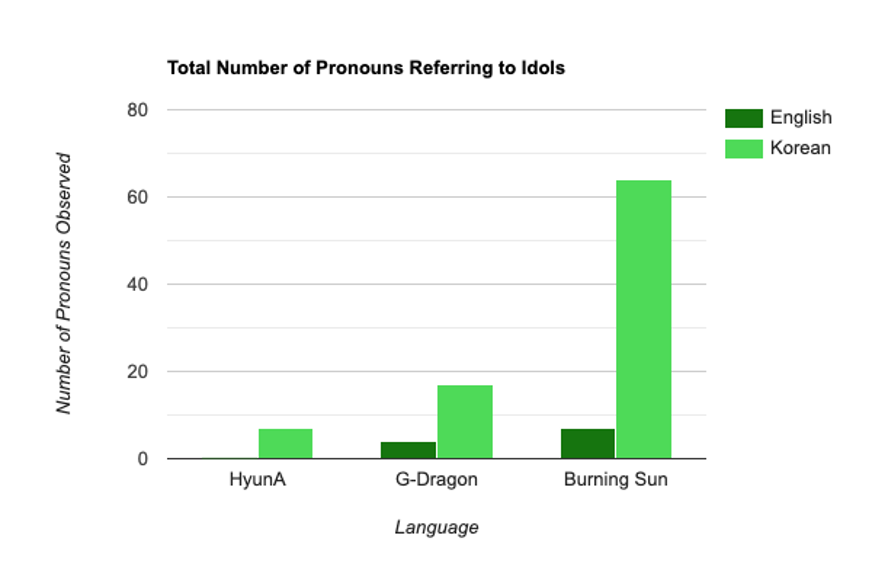
Figure 2. Total Number of Pronouns Referring to Idols

This graph visually illustrates the clear difference between how K-netizens and international fans view and react to idols. For each case, the number of Korean pronouns used at least doubled the number of English pronouns used.
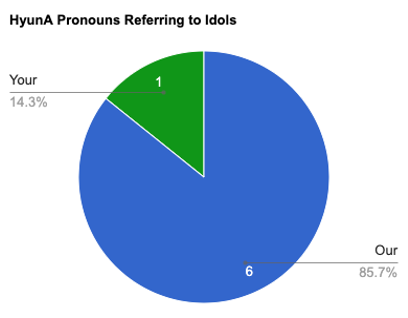
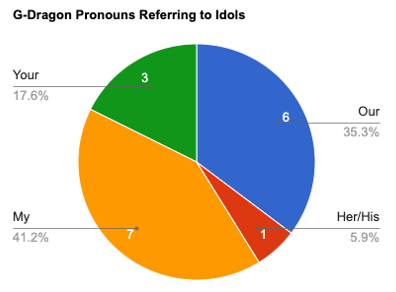
Figure 3. Types of Pronouns Used in Reference to Idols: HyunA


Figure 4. Types of Pronouns Used in Reference to Idols: G-Dragon


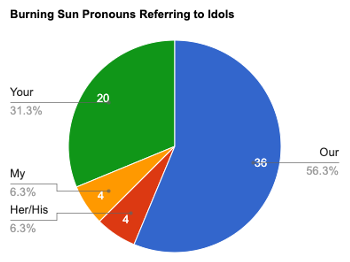
Figure 5. Types of Pronouns Used in Reference to Idols: Burning Sun

The three graphs above show the breakdown in types of pronouns used by idols in each of the three scandals. In the HyunA and Burning Sun case, the use of “our” was most prominent. However, for the G-Dragon case, the use of “my” was most common. This finding can be explained through the nature of the scandals being examined—the G-Dragon scandal was a break-up announcement and many comments expressed relief and excitement that he could be “theirs” once again. The HyunA case garnered more reaction to the fact that her and her boyfriend were dropped by their label, so a lot of people expressed sympathy (thus a communal “our” would be more common); the Burning Sun case evoked a more national response due to the scale of the scandal.

Discussion

After compiling data from Facebook posts, we find evidence consistent with our claim that K-netizens use possessive nouns when referring to idols more frequently than international, English-speaking fans. Though the total number of pronouns used in general was similar for both the Korean and English comments, our results show “possessive pronouns”—those used in contexts such as “that’s my girl” or “he’s all yours”—to be up to nine times more frequent in the Korean posts. International fans displayed uses of terms such as “idols” and “biases” to demonstrate devotion and obsession, but not necessarily a sense of “ownership” of the K-pop stars as the Korean commenters did. Given these results, it seems that the popular perception of K-netizens as being overly possessive of their favorite idols holds some level of truth.

There may be many small factors affecting the observed usage of possessive pronouns, but we believe that the primary cause for possessive behavior from Korean fans stems from a deep-seeded nationalism within K-netizens that can be observed through K-pop social media interactions. The possessive pronoun “our” was used especially frequently in the Burning Sun scandal, most often in contexts referring to “our nation” (Korea). While the HyunA and G-Dragon scandals deal with dating and are mostly only scandals in the eye of the public, the Burning Sun case involved much more serious allegations of prostitution, sexual coercion, and possible police corruption. This seems to lead to more extreme responses in Korean comments, where K-netizens express shock that their country would be involved in such behavior.

Here are some examples of the comments from the Burning Scandal post:
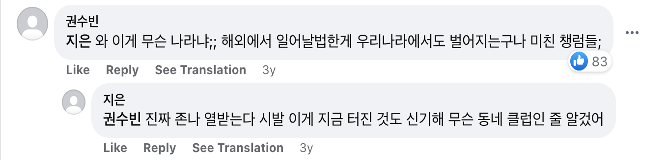
Translation: @Jieun Wow, what country is this? What’s happening overseas is happening in our country too; those crazy people.


Translation: Why do people live so stupidly that they blindly trust money? Our country’s people are so scary that they even made the president step down.

As stated earlier, the hallyu wave of Korean culture has been driven by K-pop through the last decade, leading Korean citizens and government to hold K-pop to an extremely high standard. Korean nationalism is founded on pride in successes that can be seen internationally, so K-pop’s dominance of global charts makes it a cultural focus across the country (Koo 2020). Another example of this type of nationalism includes the nationwide buzz over Korean athletes that experience success overseas; this is seen most recently with soccer star Son Heung-Min headlining Korean news and covered at great length for becoming a prominent figure in the European football scene. While this and many other instances demonstrate Korean nationalism to be celebratory and uplifting, the problem arises when these globally successful entertainers involve themselves in “scandalous” events in the eyes of the international or Korean public. Because K-pop idols are seen as representatives of Korea and Korean culture, K-netizens are quick and harsh in their criticism of any action that could be seen as harmful to the image they want to portray to the global audiences. This explains the “bringing shame to our nation” type of comments observed in the Burning Sun scandal; though perhaps justified in this situation, the Korean comments criticizing K-pop celebrities for dating exemplifies a level of  “ownership” or authority akin to that of parents toward their children. This possessiveness leads to the international perception of Korean fans as sharing the same negative or toxic traits that they would associate with a “tiger” or “helicopter” parent.

The very concept of a “K-netizen” may also play a part in perpetuating nationalistic, possessive tendencies in Korean fans. If “netizen” gives a label to avid users of the Internet, K-netizen defines a space specific to Koreans which allows them to be closed off to the rest of the wide-open Internet. By giving themselves this label, K-netizens engage only in interactions within their own language and culture, opposite to how international fans utilize the Internet to interact with others across the globe. According to the article “Online Language: The Role of Culture in Self-Expression and Self-Construal on Facebook,” collectivism is significantly higher among Asian Americans than Caucasian Americans (De Andrea 2010). While this finding doesn’t have a one-to-one relation to the focus of our study, we assume a similar truth given the homogeneity of Korea and implications of the term K-netizen. This collectivism leads to a cycle within Korean K-pop social media where new users are introduced to the idea that they have power over or possession of the celebrities that they follow, eventually adopting linguistic traits exemplifying these behaviors much like they would in traditional Communities of Practice.

Conclusion

The nationalistic tendencies and resulting toxic comments of K-netizens isn’t a problem that we feel we can or should fix; rather, it is one that provides insight into the role that nationalism plays in social media interactions between users around the world and within their own language groups or countries. Further research into operations behind Korean social media may reveal the importance of these comments in forming the best possible product to be seen by the rest of the world. On a larger scale, we would like to see this study performed with the international entertainment exports of other countries; perhaps social media comments about artists from the United Kingdom or actors from France can reveal aspects of those countries’ nationalism and how they display these traits online.

Our data was mostly limited by sample size and platform. Though we focused on Facebook comments due to the site’s popularity among Korean social media users and its ease of access to centralized posts, we recognize that much of the international discourse about K-pop happens on newer sites like Twitter and Instagram. A more comprehensive study would compile comments from all of these sites to get a more accurate representation of linguistic features displayed. Additionally, we cannot guarantee that all of the Korean comments on Facebook were written by Korean citizens, but we assume that most of them were given that the posts were made by news sites based in Korea. Despite these shortcomings, we believe that our results show an accurate representation of the differences between Korean and international commenters when it comes to K-pop discourse. This topic has yet to be explored in depth from a sociolinguistics perspective, but the continual growth of social media makes it an issue worth researching and examining in greater detail.


References

DeAndrea, D.C. et al. “Online Language: The Role of Culture in Self-Expression and Self-Construal on Facebook.” Journal of Language and Social Psychology, Vol. 29, No. 4, Dec. 2010, pp.425-442, doi: 10.1177/0261927X10377989

Goi, C. L. (n.d.). Cyberculture: Impacts on Netizen. Retrieved April 30, 2022, from https://citeseerx.ist.psu.edu/viewdoc/download?doi=10.1.1.674.3277&rep=rep1&type=pdf

Hauben, R. Amateur Computerist Newsletter – Ais.org. 2021, http://www.ais.org/~jrh/acn/ACn34-2_one_column.pdf#page=2

Jung, S. (n.d.). Fan activism, cybervigilantism, and Othering mechanisms in K-pop fandom. Transformative Works and Cultures. Retrieved April 29, 2022, from https://journal.transformativeworks.org/index.php/twc/article/download/300/287?inline=1

Koo, Jeung Mo. “K-pop from Local to Global: A Study on Cultural Nationalism in Korean Pop Culture.” The Columbia Journal of Asia, 2022, from https://journals.library.columbia.edu/index.php/cja/article/view/9355.

Lee, S. J. Elon Journal of Undergraduate Research in Communications. Elon University, 2011, https://eloncdn.blob.core.windows.net/eu3/sites/153/2017/06/EJSpring12_Full.p

[/expander_maker]

, , , ,

A Study on Randall Park: Linguistic Marks of Second-generation Asian-Americans

Joon Chang, Mabel Gong, Yanqi Qing, Esther Li, Yoori Kwak

Abstract

The term “Asian American” was coined by the late Japanese historian Yuji Ichioka in the late 1960s, in the midst of the burgeoning affirmative action movement advocated by African-Americans and other minorities. His original intention in introducing this ethno-racial identity was to deny the disparaging term “oriental” that Westerners had imposed on Asian Americans (Zhou, 2013). Over time, the Asian American identity became more widely accepted by Americans and Asians, and ethnicity grew to be an increasingly important point of discussion in today’s society. Second-generation Asian Americans who grew up in this environment, under the fusion of heritage and mainstream American cultures may reflect a hybrid self-identity. This hybrid self-identity can also be observed and expressed through the form of language.

Acknowledgement

First and foremost, we would like to thank Dr. Daria Bahtina and Ms. Mercedes Douglas who provided us with valuable advice from the beginning of the topic selection process and helped us tremendously when we encountered difficulties in the construction of the projects. In addition, we would like to thank each and every group member for their hard work and dedication to this project, it was the efforts of each of us that brought the project to life.

[expander_maker id=”1″ more=”Read more” less=”Read less”]

Introduction and Background

Asian-Americans are part of a wave of immigrants who began arriving in the United States decades ago seeking more socioeconomic flexibility. They are now one of the fastest growing minority populations and have become a vital group to American society and culture. As such, it is worth noting that second-generation Asian-Americans, who grew up at the intersection of their heritage culture and mainstream American culture, have a unique self-identification. These Asian-Americans tend to integrate their heritage language characteristics into English, in a manner that reflects their definition of self and ethno-cultural orientation as an expression of their hybrid identity.

To better understand the unique linguistic characteristics of second-generation Asian-Americans, we conducted a case study focused on California native Asian-American Randall Park. Through transcript analysis and observation of prosodic features during his interviews and stand-up comedy shows, we attempt to answer the following questions: Does Park have unique prosodic features or linguistic shifts that identify him as uniquely Asian-American? Does Park code-switch for his social identity? What stylistic shifts are observable in his performances that support these phonetic and prosodic shifts?

Korean Americans are the fifth most popular Asian-American group in the U.S. with an estimated population of 1.6 million (Ryu et al., 2013). According to the 2020 national census, 17% of California’s population consisted of Asian-Americans, a stark increase from 2010’s 13% (U.S. Census Bureau, 2020).

Figure 1: Randall Park

Randall Park is an American actor, comedian, and writer. Park was born on March 23, 1974, in Los Angeles to Korean immigrants and grew up in Castle Heights, CA (Empire, 2022). A graduate of Hamilton High School’s Humanities Magnet Program, Park began attending UCLA in 1993. He later co-founded “Lapu, the Coyote that Cares”, the largest and longest running Asian-American theater company on campus and received his M.A. in Asian-American Studies in 1999.

We selected Park as the research subject because his media is easily accessible, he is well-connected with his Asian-American identity, and he is a good representation of individuals thriving at the intersection of East and West cultures.

Method

Much of the research performed on Asian-American speech has focused on cultural and linguistic borrowing from other American ethnicities to create an Asian-American speech community. Angela Reyes has several studies displaying Asian-American culture and speech as borrowing from African American dialect (Reyes 2005). However, our study will look into a different aspect of borrowing and look into the influence first generation immigrants have on their second generation children’s speech. Although second generation Asian-Americans are born and raised in the United States, they still produce observable prosodic features that are not fully native American English. To find these features, we will perform a case study on Park.

To narrow the focus of this study, we chose to examine only one Asian-American male celebrity. Park is proficient in both English and Korean. It is worth noting that all of the acting roles that Park saw success with tapped into his Asian-American background for comedic effect. This makes him an optimal subject for our study, as he has navigated Asian-American English with an acute awareness of utilizing variants relevant to different entertainment contexts — both naturally in interview and live speech settings, and more exaggerated in acting roles. 

Several studies have identified phonological characteristics common among Asian-American English speakers. A survey conducted by the UC Berkeley Phonetics and Phonology Lab in 2016 regarding the “unique English Vowel Spaces of Asian-American Californians,” found one such feature where “Korean and South Asian speakers of Californian English had a more fronted foot vowel than the White speakers” (Cheng). A study by Lauren Hall-Lew and Rebecca Starr, who studied Chinese Americans in the San Francisco Bay Area, found additional vowel production differences where boat was pronounced beh-oat and the cot/caught vowels were merged to produce the same sound (Hall-Lew). Using these studies as a reference, we will analyze speech samples from Park, develop phonetic transcripts, and confirm whether the conclusions of the study corroborate with Park’s speech.

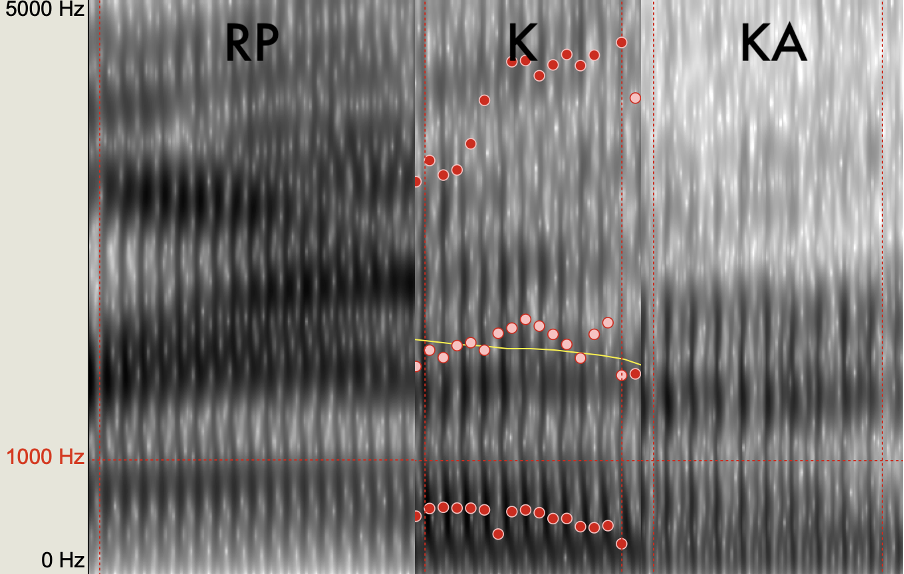
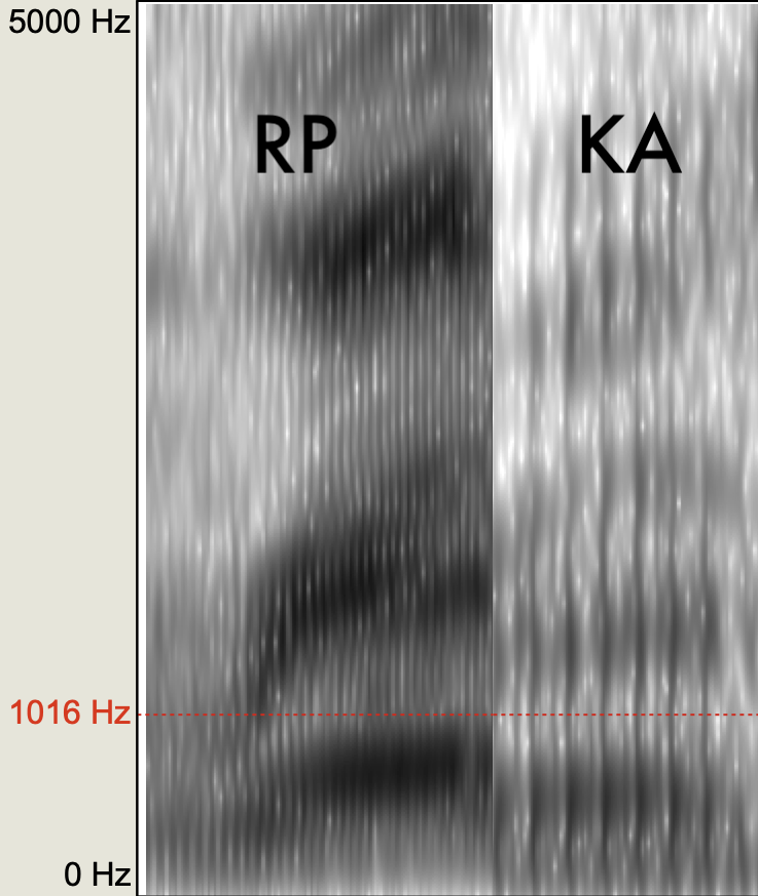
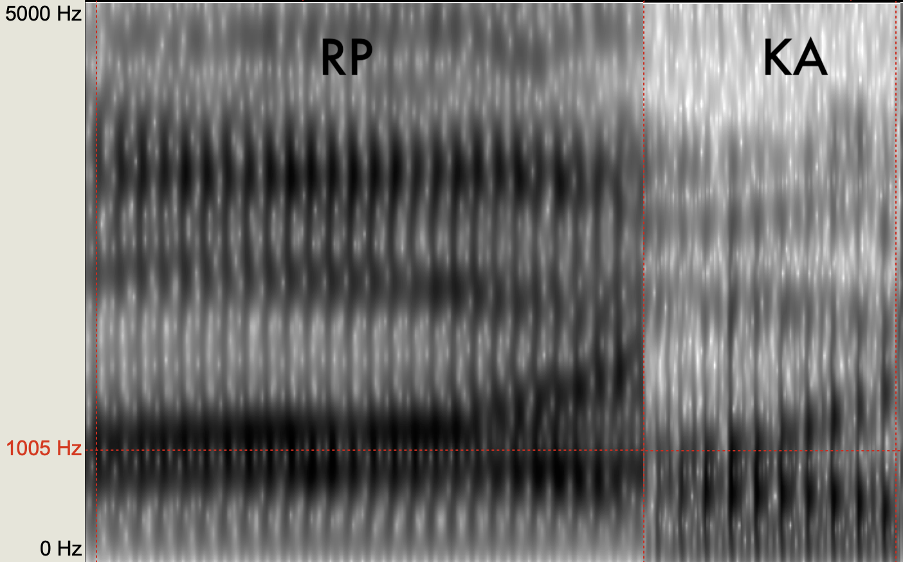
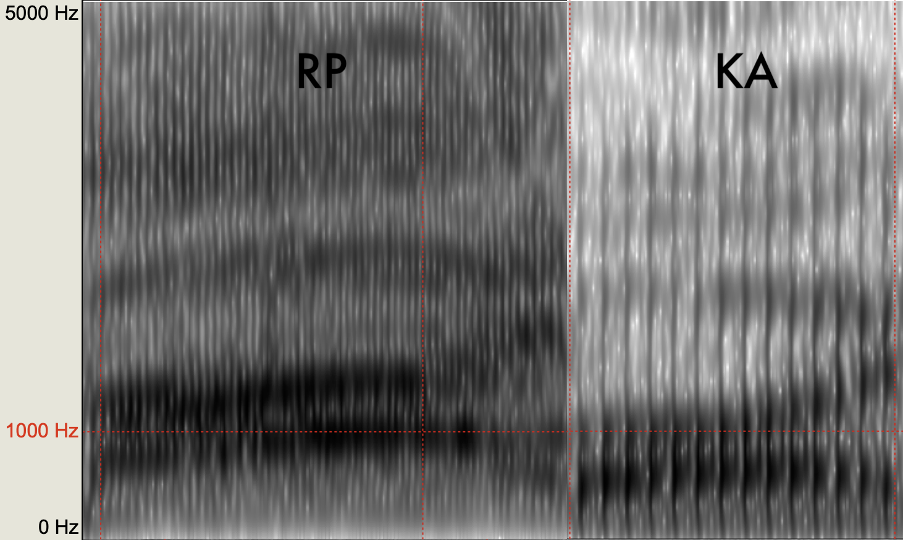
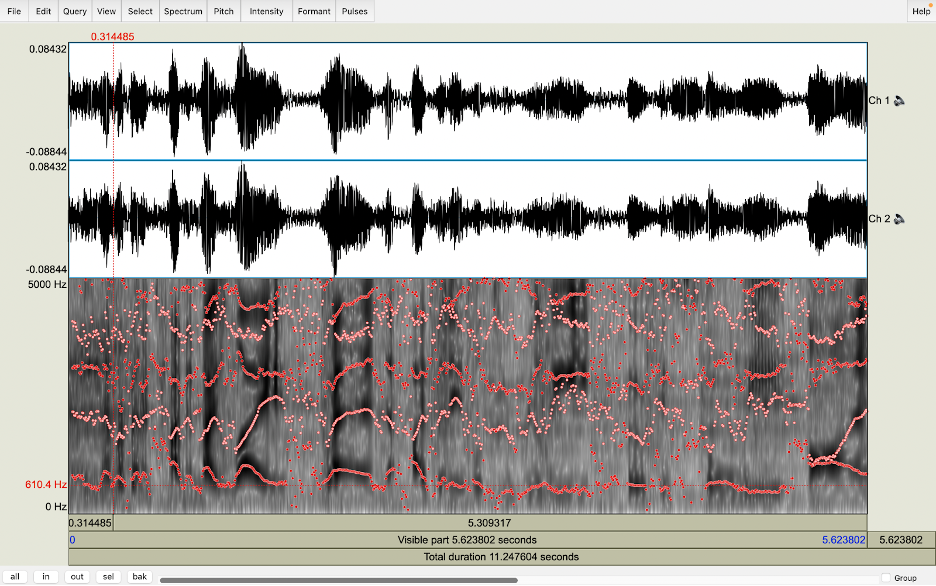
We hypothesized that second-generation Asian-Americans integrate their heritage language characteristics into English, which reflects their definition of self and ethno-cultural orientation as an expression of their hybrid identity. To verify our hypothesis, we examined 96 minutes of Park’s interviews and stand-up clips, during which we observed his unique production of the /u/ (i.e. boot), /ɛ/ (i.e. bet), /ɑ/ (i.e. father), and /aʊ/ (i.e. how) vowels. We selected 29 words samples from these video clips in which he produced these vowels and analyzed the spectrograms of each vowel using PRAAT. Of the 29 samples, 14 samples were discarded due to low sound quality, short phoneme duration, and unreadable spectrograms.

The 15 words we analyzed on PRAAT were:

/u/: movie, restroom, shoots

/ɛ/: friends, parents, restroom

/ɑ/: audience, body, job, mom, palms, trauma

/aʊ/: around, down, how

To use as comparison for Park’s pronunciation of these vowels, we had a male native Korean speaker and a male Korean American pronounce these 15 words. The native Korean was a 24-year-old monolingual born in South Korea who began his English education in the third grade. Due to the characteristics of English education in Korea, his English pronunciation is heavily accented. The Korean American was a 22-year-old bilingual, fluent in both English and Korean, who lived his entire life in Southern California. The Korean American had no noticeable accent when speaking English.

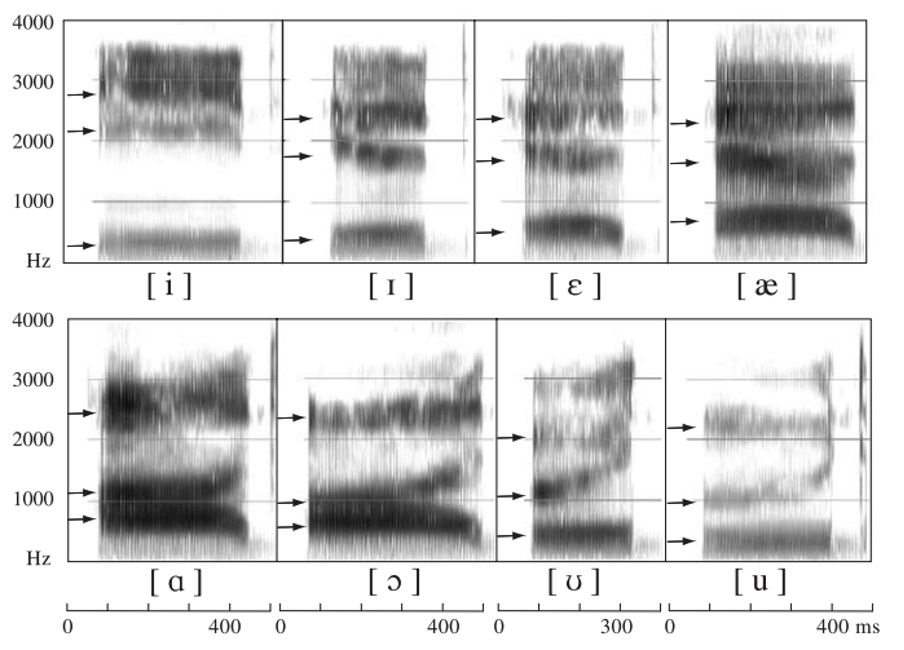
Using PRAAT, the section of sound containing the vowel was then isolated for further analysis. These vowel sections for each of the three individuals – Park, Native Korean, and Korean American – were compared with each other when spectrogram readability was possible to observe differences or similarities. A control sample from existing data on an American male speaker’s vowels was used to compare with the three Korean individuals (Figure 2).

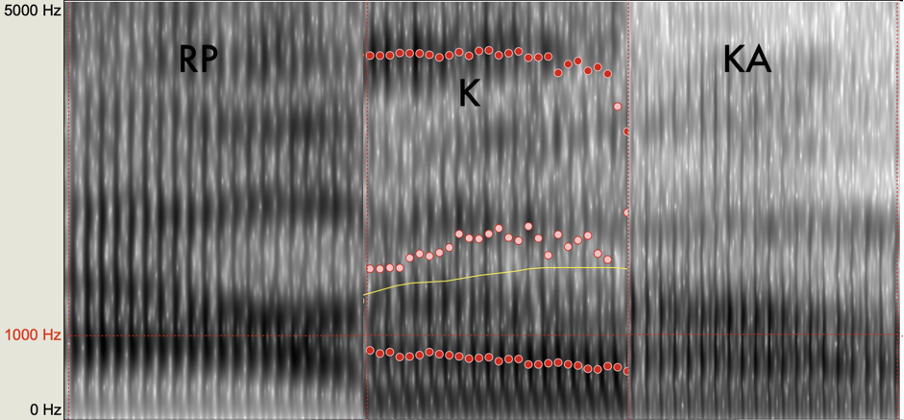
Within the spectrograms of the vowels for the individuals, the F1 and F2 formants were observed in particular. Formants are concentrated areas of acoustic energy around a particular frequency in speech waves. The first formant (F1) is inversely related to vowel height, indicating the height of the tongue during vowel production. The second formant (F2) is related to the degree of backness of a vowel, indicating the front or back position of the tongue during vowel production.

Figure 2: American Male Vowel Spectrogram (Ladefoged, 2006)

Results and Analysis

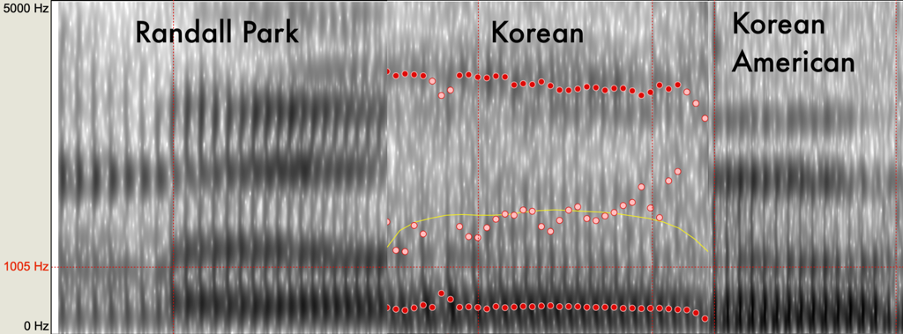
Two examples of the /u/ vowel as in the word “boot” were the words “movie”  and “restroom”. In the spectrograms of these two words (Figures 3 and 4), all three Koreans had higher F1 and F2 values than the American speaker (Figure 2). Also, Park’s F1 and F2 values were higher than the Korean American speakers. This shows that all three Koreans had a higher and more front tongue position than the American speaker in the pronunciation of this vowel, with Park’s being higher than the other speakers. This higher and more front pronunciation of the “oo” vowel can be heard in Park’s pronunciation as he says the high, central /ʉ/ vowel compared to the high, back /u/.

Figure 3: Spectrogram of /u/ from “Movie” (https://youtube.com/clip/UgkxrGNwV57voWS1HsCG_0hTomRVcL96ifno)
Figure 4: Spectrogram of /u/ from “Restroom” (https://youtube.com/clip/UgkxVWnYPx4R-M-ASxdZSp8qByJx1kjzLtnG)

Two examples for the /ɛ/ vowel such as in “bet” are the words “friends” and “restroom”. Looking at the spectrograms for this vowel (Figures 5 and 6), we can see that all three Koreans had slightly higher F1 and F2 values than the American speaker (Figure 2), with Park’s being the highest. Similar to the findings of the /u/ vowel, we can see that the three Koreans had higher and more front tongue positions during the /ɛ/ vowel production with Park’s being greater than the Native Korean and Korean American. In Park’s pronunciation of the /ɛ/ vowel, the higher and more front /e/ vowel used in Spanish can be heard compared to the /ɛ/ vowel used in English.

Figure 5: Spectrogram of /ɛ/ from “Friends” (https://youtube.com/clip/Ugkxpl0-5yD2NO7_j3shYwZrLGxf2tLSg6L6)
Figure 6: Spectrogram of /ɛ/ from “Restroom” (https://youtube.com/clip/UgkxVWnYPx4R-M-ASxdZSp8qByJx1kjzLtnG)

Examples of the /ɑ/ vowel such as in “father” were “body” and “audience”. In this vowel, Park had higher F1 and F2 values than all other speakers including the American male (Figures 2, 7 and 8). There were no significant differences between the American male’s and the Korean American’s F1 and F2 values. Park had a slightly higher F2 value than the American speaker, indicating a more front pronunciation than the other speakers.

Figure 7: Spectrogram of /ɑ/ from “Audience” (https://youtube.com/clip/UgkxoGfTm6TTUg12GWM4SCM6lNqVWPAj3Fp_)
Figure 8: Spectrogram of /ɑ/ from “Body” (https://youtube.com/clip/Ugkx3yTNOhVKaSNX305q2daASzLa_BiGlOiz)

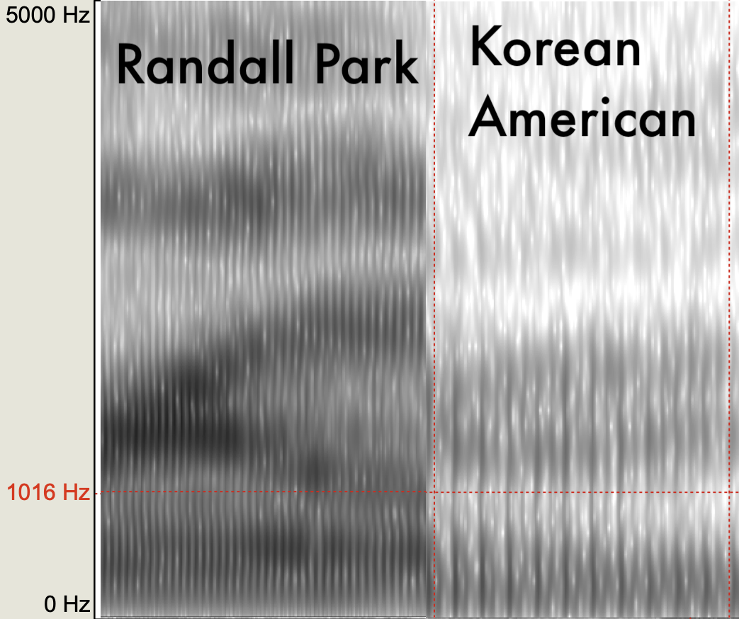
A vowel that Park had a unique pronunciation of that is not available from the American male is the diphthong /aʊ/ such as in “town.” A diphthong is a sound formed by the combination of two vowels in a single syllable. An example of this sound from Park was in the word “how”. In this sound, Park and the Korean American had nearly identical F2 values (Figure 9). However, Park had a slightly higher F1 value than both the Korean and Korean American, showing he had a slightly higher tongue position in this production.

Figure 9: Spectrogram of /aʊ/ from “How” (https://youtube.com/clip/UgkxzucRmH9iypLVR5X24STFmGqpSeY22xbn)

These productions of vowels had little variation among different shows and interviews of Park. Although his pronunciation of the /u/,  /ɛ/, /ɑ/, and /aʊ/ vowels remained relatively the same, several linguistic characteristics not part of his normal speech appeared during style shifts when taking on different stances.

In his stand-up comedy show on Comedy Central, several linguistic features that accompany his style shifts can be observed. The first linguistic style shift occurred at the sentence “bunch a kids just pointing at me and laughing at me”. At this moment, by raising the volume and tone of his own voice, g-dropping, and using “a” instead of “of,” Park implied that the behavior of bullying which was enacted by non-Asian children was a bad thing by putting those linguistic styles that are not his normal speaking style. Next, his second style shift happened with the words “I am confident now”. At the moment, he spoke in a higher tone with an authoritative voice, shifting his style to show that he has overcome his past trauma of being bullied and is now embracing his Asian heritage in a positive way. And lastly, he showed his style shift with the sentence “and I feel so good”. At this point, he spoke in a breathy and calm voice, with a lower tone. These linguistic styles all represented the peace he found after releasing his bad memories of bullying. These prosodic features or linguistic style shifts support his Asian-American identity. This could be supported by the characteristics of the Asian-American Identity Development Model of Kim (1981). The first shift mentioned above shows he went through Ethnic Awareness and White identification as an Asian-American when he was in middle school. After going through those bullies, he realized he is marked as a distinct ethnicity which is non-American, and also as one who suffers racial prejudice from the White. The second style shift shows that he still acknowledges that he is different from unmarked Americans as he did as a child, however, now accepts his ethnic heritage rather than tries to escape from it. This also supports that he does code-switch for his ethnic identity as a Korean American.

Discussion and Conclusion

This case study and research provided an opportunity for us to closely examine some socio-linguistic factors and impacts of the growing Asian-American diaspora. Additionally, we gained a better understanding of how second-generation Asian-Americans integrate into society through a linguistic lens. We hope that some of the findings of this study may be helpful in supporting English learners from similar backgrounds as our subject, potentially used as supplemental material in curriculum design. In the field of socio-linguistics, the existing studies focused on Asian-Americans are not as extensive as other ethno-racial groups. Thus, this project may serve as a good starting point for future research and development and we hope to inspire more studies to be conducted in this area.

Potential subjects we considered for our case study will serve as excellent focuses for future development. Asian-American comedian and actress Ali Wong was one example, where a closer examination of second-generation Asian-American females and a comparative study with Park be conducted. Additionally, case studies on Asian-Americans in different social contexts outside of entertainment can be valuable, in which case politician Andrew Yang can serve as a good jumping-off point. Since our study narrowed in on a native California, a deeper analysis of how U.S. regional differences can contribute to second-generation Asian-American English would be insightful.


References

Cheng, Andrew. A Survey of English Vowel Spaces of Asian-American Californians. UC Berkeley PhonLab Annual Report, 22 Aug. 2018, https://escholarship.org/uc/item/4w84m8k4.

Chin, G. J. (2008, April 18). The Civil Rights Revolution comes to immigration law: A new  look at the immigration and nationality act of 1965. SSRN. Retrieved May 12, 2022, from https://papers.ssrn.com/sol3/papers.cfm?abstract_id=1121504

Comedy Central. ( 2016, July 26). Randall Park – Bullies & Diarrhea – This Is Not Happening – Uncensored. YouTube, uploaded by https://www.youtube.com/watch?v=zLGnli1JFpw&ab_channel=ComedyCentral.

Chung, S. (2015). History of Korean immigration to America, from 1903 to present. History of Korean Immigration to America, from 1903 to Present | Boston Korean Diaspora Project. Retrieved May 13, 2022, from https://sites.bu.edu/koreandiaspora/issues/history-of-korean-immigration-to-america-from-1903-to-present/

David B. Hanna. (1997). Do I Sound “Asian” to You?: Linguistic Markers of Asian-American Identity. University of Pennsylvania Working Papers in Linguistics: Vol. 4:Iss.2, Article 10. https://repository.upenn.edu/cgi/viewcontent.cgi?article=1791&context=pwpl

Elaine W. Chun, Ironic Blackness as Masculine Cool: Asian-American Language and Authenticity on YouTube, Applied Linguistics, Volume 34, Issue 5, December 2013, Pages 592–612. https://doi.org/10.1093/applin/amt023

Empire. (2022). Randall Park. Empire. Retrieved May 13, 2022, from https://www.empireonline.com/people/randall-park/

Hall-Lew, & Starr, R. L. (2010). Beyond the 2nd generation: English use among Chinese Americans in the San Francisco Bay Area. English Today, 26(3), 12–19. https://doi.org/10.1017/S0266078410000155

Homeland Security. (2013). Message from secretary Alejandro N. Mayorkas on National Police week 2022. Home | Homeland Security. https://www.dhs.gov/

Jimmy Kimmel Live. (2015, Feb 12). Randall Park on Becoming an Actor. YouTube, uploaded by https://www.youtube.com/watch?v=1xwB9pIAWVU&ab_channel=JimmyKimmelLive

Jung, E. Alex (2019, May 29). Randall Park’s small-town L.A. Vulture. Retrieved May 13, 2022, from https://www.vulture.com/2019/05/randall-park-always-be-my-maybe.html

Kim, Jean. (1981). “Processes of Asian-American identity development : a study of Japanese American women’s perceptions of their struggle to achieve positive identities as Americans of Asian ancestry.” Doctoral Dissertations 1896 – February 2014. 3685. https://scholarworks.umass.edu/dissertations_1/3685

Ladefoged, P. (2006). A course in phonetics. Thomson Wadsworth.

Larry King. (2017, May 11). If You Only Knew: Randall Park. Youtube, uploaded by https://www.youtube.com/watch?v=OgRWv16jfNA&ab_channel=LarryKing

Muzaffar Chishti, F. H. M. C. (2017, March 2). Fifty Years On, the 1965 Immigration and Nationality Act continues to reshape the United States. migrationpolicy.org. Retrieved May 13, 2022, from                                           https://www.migrationpolicy.org/article/fifty-years-1965-immigration-and-nationality-act-continues-reshape-united-states

Newman, & Wu, A. (2011). “DO YOU SOUND ASIAN WHEN YOU SPEAK English?” RACIAL IDENTIFICATION AND VOICE IN CHINESE AND KOREAN Americans’ ENGLISH. American Speech, 86(2), 152–178. https://doi.org/10.1215/00031283-1336992

Reyes, A. (2002). “Are you losing your culture?”: poetics, indexicality and Asian-American identity. Discourse Studies, 4(2), 183–199. https://doi.org/10.1177/14614456020040020401

Reyes, A. (2005). Appropriation of African American slang by Asian-American youth. Journal of Sociolinguistics, 9(4), 509–532. https://doi.org/10.1111/j.1360-6441.2005.00304.x

Reyes, A. and Lo, A., 2009. Beyond yellow English: toward a linguistic anthropology of Asian Pacific America. Oxford: Oxford University Press. https://oxford.universitypressscholarship.com/view/10.1093/acprof:oso/9780195327359.001.0001/acprof-9780195327359

Reyes, A. (2017, September 1). Language, Identity, and Stereotype among Southeast Asian-American Youth The Other Asian: The Other Asian (1st ed.). Routledge. https://doi.org/10.4324/9781315092027

Ryu, S. Y., Crespi, C. M., & Maxwell, A. E. (2013, December). A bi-national comparative      study of health behaviors of Koreans in South Korea and Korean Americans in California. Journal of immigrant and minority health. Retrieved May 13, 2022, from https://www.ncbi.nlm.nih.gov/pmc/articles/PMC3530654/

Shankar, S. (2011). Asian-American Youth Language Use: Perspectives Across Schools and Communities. Review of Research in Education, 35(1), 1–28. https://doi.org/10.3102/0091732X10383213

Team Coco. (2021, Mar 2). Randall Park Shrieked During his ‘Wanda Vision’ Fight Scene. YouTube, uploaded by https://www.youtube.com/watch?v=Py6zbMO0XvE&ab_channel=TeamCoco

The Daily Show with Trevor Noah. (2019, Jun 12). Randall Park – Taking Cues from Fans and Real Life for “Always Be My Maybe. Youtube, uploaded by https://www.youtube.com/watch?v=nbY34h54av0&ab_channel=TheDailyShowwithTrevorNoah

The Late Show with Stephen Colbert. (2016, Oct 18). Randall Park Feared He’d Be Kidnapped After His Role In ‘The Interview’. YouTube. uploaded by https://www.youtube.com/watch?v=nbfsEmeA9n4&ab_channel=TheLateShowwithStephenColbert

U.S. Census. (2020). United States. https://www.census.gov/quickfacts/US.

Zhou, Min. (2013). “Asian”, “Yellow”, and “Honorary White”? -Social positioning and identity of Asian communities in the American racial stratification system. PKU Department of Sociology, Beijing. http://www.shehui.pku.edu.cn/upload/editor/file/20180829/20180829114227_4964.pdf

[/expander_maker]
Sociolinguistic Activism and White Fragility

Jamie Seals, Makena Larson, Betsy Benavides, Faith McCormick

When looking at the work previously done on the intersection of white fragility and sociolinguistics, we noticed a gap in research that we wanted to fill. We conducted interviews between two white peers, the topic of conversation being sensitive topics such as race and racism. We hypothesized that the interviewees would take a neutral stance when speaking on the subject of race. We looked specifically at word choice, stance, and circumlocution. Using conversation analysis on all three interviews conducted, we were able to look at these linguistic elements and draw conclusions. It was found that interviewees used circumlocution, hedged and hummed, and all held a very particular stance. In our article, we delve more deeply into what we found, the examples of conversation analysis, and what the most significant takeaways were.

[expander_maker id=”1″ more=”Read more” less=”Read less”]

Introduction

For our project, we wanted to take a sociolinguistic approach to look at white fragility and discussions pertaining to sensitive topics. We looked specifically at how white people respond to questions regarding race and racism. When looking at previous work examining the intersection of white fragility and sociolinguistics, we found a lack of research that we wanted to supplement and deepen. We wanted to look at white fragility by conducting interviews with two white peers regarding race, which we could not find had ever been done. Previous research done by Robert DiAngelo, highlighted a discomfort that white people had when dealing with issues of race, “a single required multicultural education course taken in college, or required “cultural competency training” in their workplace, is the only time they may encounter a direct and sustained challenge to their racial understandings.” (DiAngelo, 2011). DiAngelo’s, along with others’ work done on white fragility, led us to our final decision on the aspects of our interviews. We conducted interviews between two white peers, both of which were twenty to twenty-two years old. We wanted to analyze these interviews specifically through a sociolinguistic lens, which makes our research unique. Our research is necessary because, by better understanding how white people feel regarding race and discussions about it, we can start to break down walls between one another and have more open conversations. These discussions allow for transparency and a sense of stronger community values within the UCLA culture and in our greater society. Furthermore, we believe that conversation is very important which is why we looked at it in depth. We did conversation analysis on our three interviews and examined them by looking at circumlocution, word choice, and stance. We hypothesized that all the participants would take a neutral stance, and we found this to be accurate but much more nuanced than we had expected. 

Methodology and Results

After careful thought and consideration throughout our experiment, we found that within our three interviews it was vital to keep in mind what key linguistic features we were searching for when conducting the research portion of our project. Having both the interviewer and the interviewee identifying as white, we hoped this environment would create a sense of comfort within the conversation. We also reassured the individuals that this was a safe space to speak freely and reflect on what they have personally experienced here at UCLA. After analyzing the recordings of each interview and uploading the conversations through Trint, a transcription processing application, we were able to effectively observe the outcome of our data and look at the speech and language patterns between the two speakers. Our first finding from the interviews was how there was still an obvious level of uncomfortability between the interviewer and interviewee when asking the questions. For example, in the second interview, the interviewee is asked the question, “do you think racism exists in UCLA culture or on campus?” The interviewee responds by saying, “yes, but it’s not like I’ve seen it directly.” This response is important to our study because it proves how students here are aware that here on campus there are individuals experiencing racism. However, they quickly reassure us that they are not involved or a part of the problem at hand. Throughout the interviews, we also noticed how, when asking the question, “Do you think UCLA is inclusive to all students?” The individuals were swift to respond and say no. However when asked if they believe racism exists on campus or in the culture here at UCLA, they take more time and reply hesitantly with “yes, Uhm, probably” (Interview 2). This longer pause can signal that the interviewee could be slightly caught off guard or uncomfortable answering the question, in fear of giving the wrong response. Secondly, we found that in our third interview, when the individual was asked about racism at UCLA, they responded with, “I heard from the grapevine that….” This immediately personifies to the interviewer that the individual wants to be excluded from the information they are about to share. The interviewer does this in a way to agree that, yes, there is exclusion here on campus happening but wants to ensure she is not accounted for in that statement. This is critical for our study because it helps us reveal how quick students are to agree there is blatant inequality here at UCLA, but in a way, they would like to acknowledge it is problematic but are quick to cover themselves before even pressing more into the issue. The second interviewee, at the opening of the conversation, also expressed their feelings on how they felt about these questions. When asked if they think UCLA is inclusive to all students, they respond with, “uh, this is not a fun topic to talk about” in the recording, the student pauses and then nervously laughs while saying this is not a fun topic to talk about. The nervous laugh along with them voicing how this is not a fun topic to talk about, are both powerful indicators the individual was hesitant to talk on this subject without feeling uncomfortable. We must circle back to our hypothesis stating these students would take a neutral stance. It is clear from our findings that our pool of participants remained completely neutral throughout the interview. All three students agreed they benefited from white privilege at UCLA, however when being asked these questions about race, we found they all displayed levels of discomfort and attempted to sever themselves from any racist or discriminatory acts people might be experiencing or hearing about in UCLA culture or campus.

Discussion

Although all three interviewees had different responses to the questions, we found a few patterns across the three. Upon answering each question, interviewees would often find ways to distance themselves from the issue. From saying things like “I’ve heard”, “Actually, I can’t really think of an example, so maybe not” or “Yes, but it’s not like I’ve seen it directly.” This is what sociologist Caprice Hollins describes as the individual approach White individuals often use when speaking about race. Individuals may find ways to maintain a positive self-image by pushing away their closeness to these issues or moving around the topic of conversation (2020, Hollis). To add onto this, something we picked up on was the interviewees avoidance using racialized language, instead opting for terms like “minorities” or “different race” instead. This is what is described as aversive racism, or racism that is manifested in subtle ways (Diangelo, 2018, p.59). Furthermore, they never directly state their opinion on some of the questions, often finding a sort of a neutral position or a middle ground. This type of stance is known as a form of White solidarity, where individuals in conversation will often build on this idea of a “common stance” regarding race-related issues. These stances rely on both silence on racial matters and a subconscious implied unity between parties to uphold this solidarity (DiAngelo, 2018, p.72). When all three of the interviewees used this back and forth, yes and no response, it is possible that they are not able to navigate that common ground which could lead to some of the discomfort demonstrated.

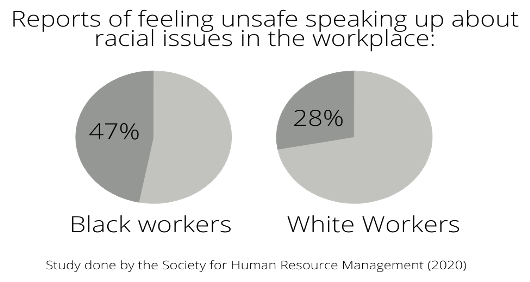
After conducting our study, most of what we saw fell in line with what sociologists are saying about conversations on race, however it does not match some of the quantitative data we found. The stances we picked up on during the interview were things we expected but did not expect to find clear discomfort. This is what prompted us to look into other research where we found that White individuals feel significantly less discomfort speaking about these topics compared to Black individuals. The following Figure 1 is demonstrative of a 2020 study done by the Society for Human Resource Management which collected data from 1,275 participants about their workplace environment. While our study focuses on universities, we feel that the study on the workplace environment is still relevant to our topic. The study found that 47% of Black respondents do not feel safe speaking out about issues of racial justice compared to 28% of White respondents who said they do not feel safe for the same reason (2020, p.11). There can be many reasons for this discrepancy. While this data could indicate that our 3 interviewees happened to be a part of the 28% of people who feel uncomfortable, it’s also possible that the perception of themselves is different than the way others (us interviewers) perceive them. If given the opportunity, we would have a second round of interviews where we would ask not only about racial issues but also how individuals feel about speaking on racial issues.

Figure 1

Observing our results and how they fit into a broader context, racial issues and racial justice has always been prevalent, deeply and radically well-established, and formed in society. UCLA represents its own subcategory of society, as a community. By theoretical implications, these findings we provided show to be significant in spaces of policy, practice, and further research. Additions are also made to the existing discussion of race and social inequalities related to. By practical applications, it presents how we can better self-reflect and ask ourselves: if certain conditions were fulfilled, not only for the student body but beyond that. Our findings can be extended to other situations, such as friend groups, educational spaces, relatives, and workplaces. Anywhere we find a place of interaction and community, this study could be applicable. Our findings help us understand a broader topic of the foundations of human interaction. With continued conversations regarding social injustice, we are better equipped to integrate our worldviews, as well as comprehend and be attentive to that of others. We can improve and create equitability for all, resulting in better representation, accountability, uplifting underrepresented groups, and improving the overall well-being of one another.

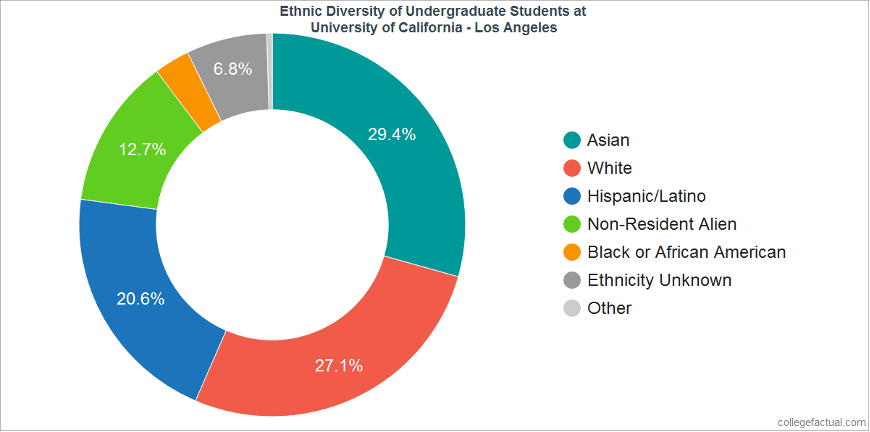
As seen below, a chart of the ethnic diversity of undergraduate students at UCLA. An article was written at Penn State in 2018 by the Diversity group in response to College Factual’s ranking of UCLA’s diversity and ethnicity. The article aimed at identifying and examining how diverse of an institution UCLA is. We found this article written at Penn State to be extremely critical and relevant to our work because it perfectly analyzes the exact breakdown of each ethnicity present on campus at UCLA. From this data in the chart, we are allowed the opportunity to more effectively determine the disproportions or inequalities that may be prevalent based just on the percentages of various ethnicities here at UCLA As seen in the chart, carefully note how the orange percentage of the chart is not even listed and exact percentage. In this chart the color that represents individuals of black or African American ethnicity accounts for less than 4% or the entire student body. This statistic is crucial to the argument we pose in our experiment because the percentage of African American and black individuals is disproportionately represented on campus here at UCLA, while the percentage of white or Caucasian presence on campus stands at 27.1% the second to highest percentage of all ethnicities listed.

Figure 2- UCLA Student Demographics Chart, 2018


References

DiAngelo, Robin (2011). White fragility. International Journal of Critical Pedagogy 3(3):54–70.

DiAngelo, D. R. (2018). White Fragility: Why It’s So Hard for White People to Talk About Racism. Beacon Press.

Diversity at UCLA – Diversity. (2018, March 8). Sites at Penn State. Retrieved June 8, 2022, from https://sites.psu.edu/pasternakcivic/2018/03/08/diversity-at-ucla/

Hollis, C. (2020). What white people can do to move race conversations forward. Youtube.com. Retrieved 6 7, 2022, from https://youtu.be/7iknxhxEn1o

Society for Human Resource Management. (2020). Together Forward. The Journey to Equity and Inclusion. Retrieved 6 5, 2022, from https://shrmtogether.wpengine.com/wp-content/uploads/2020/08/20-1412_TFAW_Report_RND7_Pages.pdf

[/expander_maker]

, , , , ,

The Gendered Life of Five-Year Olds: How Language Perpetuates Gender Conformity in Children

Brandon, Dianely, Giselle, Rukhsar, and Victoria

The objective of this study was to analyze the initiation of gendered language compliance during child development by focusing on the production of language in English-speaking five-year-old children. We hypothesized that boys are more likely to display linguistic features associated with men in their language in comparison to girls conforming to features related to their gender. We examined conversations between five-year-old boys and girls from the television series The Secret Life of Five Year Olds for our research. Considering that there wasn’t quantitative data involved in this study, our conversational analysis approach provides insightful language distinctions between the boys and girls: the boys had higher rates of interruptions/utterances and were more assertive in general. In contrast, the girls were less blunt and downplayed their criticism. Our hypothesis was supported to some degree; boys will play into gendered language, but so will girls. This study is significant because it allows parents and society to hold more self-awareness in the unconscious gender norms they are enforcing onto their children at a young age.

[expander_maker id=”1″ more=”Read more” less=”Read less”]

Introduction

It is widely accepted that social perceptions of gender usually influence language.

Many studies have been done on gender and language regarding children. Still, the direct correlational role that the embedded gender association in language has on gender identity development within children appears underexplored in literature. Our objective with this study was to analyze the initiation of gendered language compliance during child development by focusing on language production in English-speaking five-year-old children. Our research involved examining conversations between five-year-old boys and girls from the television series The Secret Life of Five Year Olds. We focused on linguistic components such as intensifier adverbs, imperatives, and gender-specific categories of adjectives, as these have provided insights in past research about gender norm reproductions and deviations. We emphasize these specific linguistic features because we felt as though they help address and mold the gender stereotypes and expectations for the children. We hypothesize that boys are more likely to display linguistic features associated with men in their language than girls conforming to their respective gender.

Background

Our proposal aims to understand the relationship that language has with children and their socialization of gender conformity. We chose English-speaking five-year-olds for our research as previous research has shown that by age five, the linguistic capabilities of children are adult-like. Children in the age range of six to ten have solidified their schemas about gender and social norms, so we felt as though studying the age just before this range may allow us to understand the progression and perhaps find intervention methods. According to Owen and Padron (2015), several linguistic features have been specific to each gender. In their study, Owen and Padron observed intensifier adverbs, imperatives, and adjectives in the language of toy advertisements and found substantial evidence on how gender is differentiated through language. These are the linguistic features we chose to examine in our research.

Methods

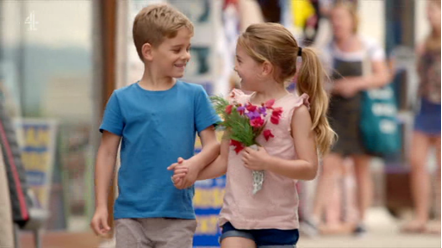
Figure 1 – The Secret Life of Five-Year Olds: Jack and Sienna (promo picture).

To search for the linguistic elements of intensifier adverbs, imperatives, gender-specific categories of adjectives, and turn-taking in the language of five-year-old children, we applied conversational analysis, as a theoretical framework, to a British documentary called The Secret Life of Five-Year Olds (see Figure 1). By selecting various clips that were available on YouTube of children’s playtime interactions and interviews, we analyzed natural conversations between the same and opposite gender.

Transcription software programs, such as Otter.ai, were used to transcribe some of the clips initially; however, each one was also manually transcribed using the Jefferson Transcription System to ensure accuracy and included as many linguistic details as possible can be derived. Figure 2 denotes the transcription notation we used for the purposes of our study. To analyze the data, we used a qualitative approach, namely that we situated the presence of the linguistic element we sought for in a social context to derive its meaning about gender conformity. The data and results outlined in the following section elaborate our findings and interpretations.

Figure 2.   Jefferson Transcription System

[word]        overlapping talk

><; <>        quickened or slowed down speech

↑↓            rise or drop in intonation

=             latching or continuation of speech with no pause

(.)           slight pause of no particular length

(1.4)         pause of a particular length

WORD          loud or shouted words

wo:rd         stretched sound

word          rise in volume or emphasis

((word))      comments or descriptions

Results & Analysis

To study intensifier usage, analysis was done on a clip of an experiment designed to provoke a strong reaction: lemonade spiked with salt. The documentary crew attempted to gauge the children’s empathy, but the intent to produce an intense response made it an ideal source of intensifying language.

According to Owen and Padron, “[adult] females used intensifiers […] more frequently than did males.” (2015, p. 70). However, this is not in line with the behavior of the children in the clip analyzed. The boys reacted very strongly to the salted lemonade, complaining, oddly enough, that it was too sweet: “it’s disgusting”; “it’s way too sweet”; “I’m gonna be sick tonight,”; etc. (Figure 3). Conversely, the girls used much less strident language when reacting negatively, and rather than using intensifiers, were prone to using downtoners and hedges: “a teeny bit too much lemon”; “even though I liked it”; “I loved it but”; etc. (Figure 4):

Figure 3. An excerpted transcript of the boys’ reactions to the salty lemonade

1 ELI Uhh- >no< that is disgusting

2 OBS What^ you don’t like it ?

3 ELI it’s too swe:et

4 HAR >it’s way too sweet and I’m gonna be sick tonight<

5 OLI I can’t have any more [that is disgusting]

6 ELI                       [I’m not having any] 

7     more that’s disgusting
Figure 4. A similar excerpt, of the girls' reactions to the salty lemonade

1 SIE it was a tee::ny bit too much lemon

2 ALI I lo::ved the lemon insi:de it ,

3 SIE I think it’s (.) incredible but >I don’t like the lemon

4     in it< I loved it- I loved it [oka^y] ,

5 ALI                               [I loved it]

6 TIA ((shouting)) I LOVED IT BUT I DIDN’T LIKE THE LEMON IN IT

A longitudinal study of word-type acquisition in children aged 3–10, conducted by the Child Language Data Exchange System (CHILDES) in 1987, provides some enlightening context. Among the 85 children analyzed for this aspect of the study, intensifier use was either equal or slightly skewed in favor of usage by males before the age of 5. Between the ages of 5 and 10, intensifier use gradually shifted to be slightly skewed in favor of female children, although again not by a significant margin (Schweinberger 2016, sl. 8). When considered in the context of Owen & Padron’s study, this indicates that the gendered division of intensifier use begins only at or after the age of the children in the analyzed video. Therefore, it would be reasonable to conclude that this pattern of gendered language use either a) requires more socialization and b) is less heavily socially emphasized than other gendered language divisions observed in children’s speech at this age.

It is also worth noting that, while the language usage in this clip contradicts the findings of other research papers, it does not contradict the test the filmmakers were running: namely, if there was a gendered difference in whether the children would attempt to cushion their analyses to spare the caretaker’s feelings. In this aspect, the children behaved as expected, with the girls softening their negative reactions where the boys did not. Adding on to the previous potential conclusion, it may be that the societal expectation that women have to ‘be nice’ either takes precedence over the socialization of intensifiers, or that the former occurs earlier in life than the latter.

Deborah Tannen states there are power imbalances in language (1990, pg. 81). She notes that there is a battle for dominance in language where men often interrupt and overlap. According to Tannen’s difference, speech model females have a different culture to male speech structure. This can explain how girls and boys follow different linguistic rules. Interruptions can be shown in two manners: the first to show the listener is excited about the content and the other as a means to purposefully take the role of speaker (Tannen, 1994. p.54). Turn-to-talk is a conversation procedure where the listener intuitively or is indicated to reply in the conversation; this can be done using lexical markers like question and answer. We compared how both genders use turn-taking and interruptions differently. The following data set can be found in season one, episode three of The Secret Life of Five Year Olds on YouTube.

Figure 5 - Season 1 ep 3 (Timestamp 18:12-18:31)

A:Alfie G:George CT:Caretaker


15 A:  That’s not a planet? it’s a, star

16 CT: >What do you guys↑ know about the sun<

17 G:  ITS MADE OF LAVA

18 A:  =No↑ the sun’s not made out of lava it’s made out of

       Gas you billy bummox

19 G:  =No its made of la::va:

20 A:  I looked at books and it said it’s made of gas you 

       big lummox

21 G: They- They’re wrong↑ it’s made [out of la:va]

22 A: [no gas]

In the following conversation between Alfie and George we see multiple pieces of overlap and some interruption. Alfie begins by using overlap which can be signaled by the “[ ]” symbol. Alfie corrects George but follows his statement with an insult. We can see that this begins a competition between the two. They fight back and forth, overlapping each other similarly as when two siblings fight. However, in this instance, we see that overlap is used as a mode to be the last speaker. In turn-taking, the last speaker at the end of an argument can be seen as a “winner.” Each boy competes to “win” the conversation thus proving and establishing their hierarchical rank at the top.

Figure 6- Season 1 ep 3 (Timestamp 17:41-17:53)

E:Ellie A:Alfie


6 E:  What’s↑ another, way that you can get the rolling disease

7 A:  Ehh

8 E:  Touching the grass↑

9 A:  Oh- Oh I-↑((know)) picking the grass

10 E: Okay↑ pick (.) pick (.) pick (.)

11 A: YAY↑

12 E: Cowa:bunga? (h) This is so much fun

Ellie uses many characteristics in this interaction with Alfie found in Figure 6. First, we see Ellie asking Alfie questions; she uses elision to elicit a response from Alfie as a means to keep him engaged in their conversation (Goffman, 1976, p. 265). When she does not hear a response from Alfie, she tries to give him an example. Alfie replies with what he thinks should be the answer, and Ellie immediately agrees. She goes as far as physically picking the grass to show Alfie her support for his answer. In the difference model approach, Tannen and Shari Kendal state that girls follow turn-taking rituals higher than males, who dominate the conversation and speak more often (1983, pg. 83). Throughout the entire episode, we see that Alfie is the main participant in their daily activities and often takes the main speaker role.

Discussion & Conclusion

This study builds upon previous studies revolving around children conforming to their gender and linguistic elements. Our conversational analysis confirms our hypothesis that boys are quite prominent in displaying linguistic features that are concerning masculinity enforced towards males. Girls are also conforming to the soft-spoken and less dominant persona that’s enforced within females. The footage from The Secret Life of 5 Year-Olds supports our hypothesis as it exemplifies how boys stick to the masculine persona that boys are labeled. From analyzing the transcripts, we’ve seen how boys were more likely to speak and interrupt in comparison to the girls. The lemonade video specifically showed how the boys used harsh intensifiers while the girls were less strident when criticizing the lemonade. The interaction between Alfie and George represents how males have the tendency to come up top in the conversation to assert their stance. Overall, there were no drastic surprises as the boys and girls acted according to their respective stereotypical gender.

Exploring the depths of these 5-year-olds’ linguistic mannerisms allows us as a society, especially parents, to become more cognizant of the unconscious bias norms that are enforced upon children in modern western culture. Gaining more insight into these matters provides parents better guidance to incorporate a gender-neutral standing when raising their children. With today’s progressiveness on gender neutrality, it’s essential to know how influential reinforcing gendered language can be on children’s use of the stereotypical linguistic elements as gendered language can play a big role in shaping our identity and assertiveness in society. Further research can help us understand the level of magnitude gendered language has on children. Perhaps even by studying the growth of the children’s speech as they grow into adults, we can see the effect gendered language can have on them as adults and in their working environments.


References

Goffman, E., 1976. Replies and Responses in Language in Society 5.3, 257-314

Owen, P. R., & Padron, M. (2015, June 1). The Language of Toys: Gendered Language in Toy Advertisements. Digital Collections at Texas State University. Retrieved April 29, 2022, from https://digital.library.txstate.edu/handle/10877/12878

Schweinberger, M. (2016, March 31 – April 2). On the acquisition of intensifier constructions. 17. Norddeutsches Linguistisches Kolloquium (17. NLK). Hamburg; Germany. Retrieved from https://www.academia.edu/77407086/On_the_acquisition_of_intensifier_constructions.

Tannen, D. (1990). You just don’t understand: Women and Men in Conversation. New York, NY: Morrow.

Tannen, D. (1994). Gender and Discourse. New York: Oxford University Press.

[/expander_maker]
Does Saying ‘Fuck’ During a Conversation Mean You’re Less Friendly, Less Smart, and Less Honest? Yup.

Brooke Lim

The fact of the matter is, we have all at some point said a casual ‘bitch’ or ‘fuck’ during a conversation with both new and old friends. But does that make the other person in the conversation look at us under a new light? Profanity is a crucial part of our society’s language expression, even having a grammatical structure of its own (Bergen, 2016). With only a handful of exceptions, across time and most cultures, use of language that has been seen as profane has been discouraged by a bulk of the living society. Whether it is being chastised for saying ‘shit’ at the dinner table by your mom or being given detention by your teacher for saying ‘motherfucker’ during class, many have experienced being overtly and even covertly reprimanded for their use of obscenities.

[expander_maker id=”1″ more=”Read more” less=”Read less”]

Introduction and Background

First impressions are shaped by a myriad of superficial ideals. Whether it is the way someone presents themself physically (Willis & Todorov, 2006), how they are described by others (Asch, 1952), or even the way one shakes another person’s hand. These opinions are established based on mostly shallow facts. Similar to physical appearance, language use can also determine what particular opinions are formed.

This research proposal mainly intended to gain insight into how word choice influences judgment when used during social situations by examining if it alters one’s impression formation. The main goal was to better understand the attitude people have about profane words by assessing the reactions the general public has to curse words.

A couple of studies have already been done on the relationship between profanity use and  speaker perception, the most notable, in my opinion, being ‘Language Choice Matters: When Profanity Affects How People Are Judged’ (DeFrank & Kahlbaugh, 2018.) To very briefly summarize, the study found that there is indeed a link between profanity use and poorer perceptions against the speaker. Additionally, it was also found that those use profanities were generally seen as nonconforming, less intelligent, and less friendly. However, it disregarded the speaker’s gender when examining the influence profane language has when used during conversations and the disparities that may come with it.

In addition to what DeFrank and Kahlbaugh have researched, I would also like to explore the relationship, or maybe the lack of a relationship between profanity use and speaker perception and how different gender identities might also shape judgment.

My first hypothesis was that overall impressions against the speaker using profane language will be the poorest amongst the other speakers. I also hypothesized that participants that are regularly exposed to profanities (whether they use them or hear them), are more likely to form impressions that are neutral to the speakers using obscenities. Lastly, I hypothesized that female participants will rate male speakers with more poor/negative ratings compared to female speakers. The main question I intended on answering with this study was, ‘Does using profane language change the way one is perceived by others?’ I also aimed to answer a subset of questions, ‘Does regular exposure to profane language skew one’s ability to form a negative opinion against users of profanities ?’ and ‘Is there a general consensus that male speakers using profane language will be rated poorer compared to their female counterparts?’

Methods

I used an online survey which was sent out through text and social media. Participants were asked to evaluate the vulgarity of 6 (Fuck, Bitch, Shit, Asshole/Ass, Motherfucker, Pussy) of the most commonly used swear words in California using Likert-type scales ranging from 1 (not vulgar) to 10 (extremely vulgar.) I chose to omit slurs.

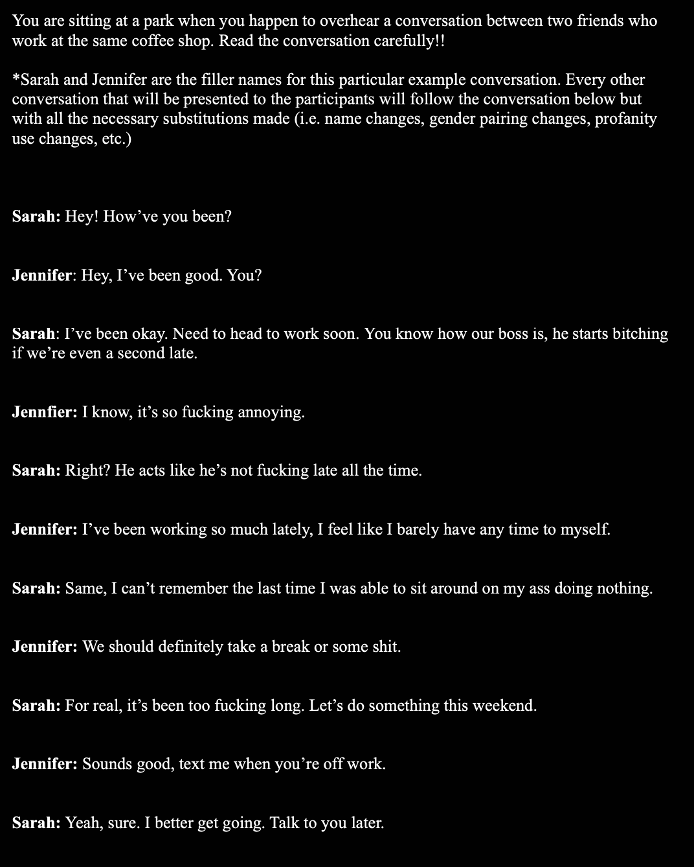
Participants were also asked how frequently they use and hear profanities. Afterwards, participants were presented with a set of conversations, all being slightly altered versions of the same conversation with and without the use of profanity alongside substitutions for their more ‘inoffensive’ counterparts. The speakers were paired as follows: male/female, male/male, and female/female. Also included were certain conditions where no speaker is using profanity, one speaker is using profanity, and two speakers are using profanity. Each of the aforementioned conditions occurred in all of the previously mentioned speaker gender pairings. To circumvent any variables, the core content of the conversations remained strictly consistent. The ONLY variable that was adjusted was whether there is or there is not profane language being used. Additionally, the conversations a participant interacted with were randomly decided through an online random number generator.  Participants were then asked to rate a speaker on trustworthiness, intelligence, and friendliness. The conversation below was presented to the participants.

Using Google Forms, I was able to collect voluntary response samples from my target population (18 – 25 year old non-religious native US California English speakers.) A total of 138 responses were received. 37 responses from males and 101 responses from females. Collecting the data through an online survey was the most reliable way to address my RQ. Creating controlled contexts was easier, and so was operationalizing the responses I received.

Results and Analysis

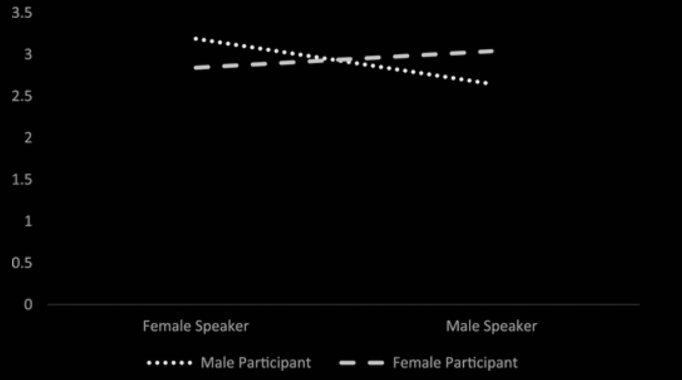
Figure 1: Female VS Male Participants Offensiveness Rating

On average, male participants saw female speakers. Female participants saw male speakers were more offensive in context than they rated male ale speakers as more offensive in context than did female speakers.

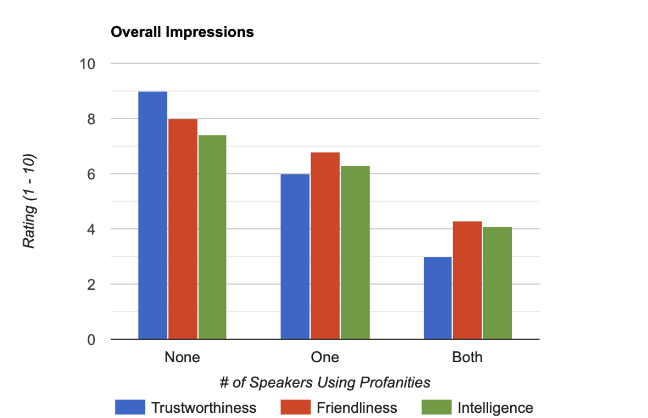
Figure 2: Overall Impressions Between Number of Profane Language Users

On a (1 – 10) scale, ratings were generally higher when none of the speakers were using profanities, and significantly lower when both speakers used profane language (independent of gender).

I recorded and analyzed the level of exposure to profanities on a daily basis as well as the frequency at which the conversation speakers were being rated on a scale of 1 – 10. Additionally, I recorded and analyzed the frequency of female participants rating male speakers more offensive than female speakers and vice versa.

Discussion and Conclusion

The use of obscenities DID result in less favorable impression ratings of the speaker in overall impression on intelligence, trustworthiness, and friendliness (See Figure 2). There was no evidence that regular exposure to obscenities meant neutral impressions against profane language users would be formed. Female participants saw male speakers more offensive in context than they did with female speakers and the same goes for male participants seeing female speakers as more offensive (See Figure 1).

Profanity use leads to poorer impression ratings, independent of the speaker’s gender. Profanity creates the perception of vulgarity, which in turn leads to the impression of reduced trustworthiness, sociability, and intelligence, no matter the gender.

Just a little extra random fun fact that came out of my survey’s data that I couldn’t fit into my presentation! The word that was found to be most vulgar amongst the participants of my survey was ‘bitch.’ If I’m allowed to speculate, I believe this could be due to the word ‘bitch’ having a derogatory connotation towards women specifically, and I had a lot more female participants, more than half, make up the study pool. Furthermore, I also found a pattern in which female participants rated ‘bitch’ and ‘bastard’ more offensive than the male participants in the study, which may reinforce my earlier speculation. But of course there is no true evidence behind what I’ve said, but I think future research about this topic would lead to some interesting results.

The limited male responses from the data collected leads some results to be interpreted with caution! Future research could examine the specific categories of profanity to determine if words from different categories differ in their power. Implications from this study and future research can help with understanding how language choices affect the way people are judged.

Similarly, another study conducted by Paradise, Cohl, Zweig (1980), found that, no matter the gender of profane language speakers, the act itself, the use of obscenities, led to impressions of reduced competence and less positive overall impressions.

I believe that these findings as well as my study’s data are indispensable in garnering a much deeper understanding of how one’s presentation of self and how someone chooses what words to say affects perception in ways that are fully unknown.

The words someone chooses to use will not only leave an emotional impact (which could be another topic for the future), but also a potentially long-lasting impression that may be difficult to alter. It is important to understand what image language projects and to understand that word choice/language choices DO matter.


References

Asch, S. E. (1952). Social Psychology. Social Psychology. https://doi.org/10.1037/10025-000

Bergen, B. (2016). What the f: What swearing reveals about our language, our brains, and ourselves. New York, NY: Basic Books.

DeFrank, M., & Kahlbaugh, P. (2018). Language choice matters: When profanity affects how       people are judged. Journal of Language and Social Psychology, 38(1), 126–141. https://doi.org/10.1177/0261927×18758143

Paradise, L. V., Cohl, B., Zweig, J. (1980). Effects of profane language and physical attractiveness on perceptions of counselor behavior. Journal of Counseling Psychology, 27, 620-624.

Willis, J., & Todorov, A. (2006). First Impressions. Psychological Science, 17(7), 592–598. https://doi.org/10.1111/j.1467-9280.2006.01750.x

[/expander_maker]
Latecomers’ Usage of the [ɹ] Sound and Identity Construction

Bingbing Liu, Kejia Zhang, Nina Cai, Ze Ning, Zehao Yao

Recent sociolinguistic studies show interests in exploring people’s language practices and their corresponding social influences. In China, the rapid development of the society has attracted more and more people immigrating from the countryside to the city. Beijing, one of the most prosperous cities in China, welcomes immigrants coming from various cities. When different groups live together, their linguistic varieties actively interact with each other in a long run. This study focuses on the comparison between the insiders who were born and raised in Beijing and latecomers who settled down there in later times. Through observing their usages of [ɹ] sound, this study displays the pattern that latecomers might imitate the pronunciation of this sound and use it daily life, but they will not overcompensate it nor use in inappropriate contexts. Also, this study demonstrates that the acquisition of specific linguistic features is social-cultural affected, which is related to the speaker’s personalities, life experience, and preferences.

[expander_maker id=”1″ more=”Read more” less=”Read less”]

Introduction

China has witnessed a dramatic economic boost since the 1970s when the Reform and Opening-up Policy was promoted. Along with the acceleration of industrialization and urbanization, the social classes were changing due to massive internal immigration. Beijing, the most rigorous city in China, was the place where the capital, information, people, and culture were centralized. Numerous people swarmed into the city and settled there. These latecomers not only got used to the life there but also were influenced by local cultures. The use of the accent, the most frequently encounter in daily life, strongly influenced people’s perception of others and their own identities.

One of the most apparent features of the Beijing accent is the rhotacization of the [ɹ] sound, which usually occurs in syllable finals and is used as a diminutive suffix (Eckert 2018). It is often used to distinguish a local from an immigrant because it is hard to imitate and master. This study shows the latecomer’s acquisition and use of the [ɹ] sound in their daily life, and their understanding of the relation between the feature and identity construction. This paper includes several parts. A brief introduction and studies and research at home and abroad will be first presented. Then, the participants’ backgrounds and research methodology are introduced. After that, the data collection and interview recordings are displayed and analyzed. Finally, major findings are discussed in detail.

Literature Review

The rhotacization of [ɹ] sound was firstly studied phonetically because it works as a maker to distinguish a local in Beijing from a non-local. Many scholars have studied this phenomenon. According to Xu (2020), the morphosyntactic meanings of the [ɹ] sound is gradually diminishing, while it is used as a phonetic suffix attached at the end of words. Rather than focusing on the linguistic essence of the [ɹ] sound, other scholars pay attention to the socio-cultural influences of the Beijing accent. Zhang and Liu (2017) conducted a project on Northeast immigrants’ attitudes towards the Beijing accent. In their project, they found that female immigrants who tend to imitate [ɹ] sound are perceived as more educated, professional, and powerful the society, which helps to promote their social status. Besides, Liu (2018) observed that Chinese speakers in America with Chinese accents are more likely to welcome and accept each other because they are linked to national identities and a sense of belonging, which increases the interactions between immigrants. Dong and Blommaert (2009) have developed a theory, working on the relationship between space, scale, and accent. They suggest that the Beijing accent also catches immigrants’ attention since it symbolizes mandarin or the official language in China, which is beneficial for immigrants to interact with locals and assimilate into their cultures. Zhang (2005) studied the difference in language usage between the professionals in foreign companies and professionals in state-owned companies. She found that phonological variables of [ɹ] sound were not equally used in the market. Professionals in foreign companies frequently used [ɹ] sound to construct their identity as a new social class relating to consumerism, wealth, and citizenship, while their counterparts working in the state-owned companies prefer local accents. That obviously reflects the social stratification caused by various language usages.

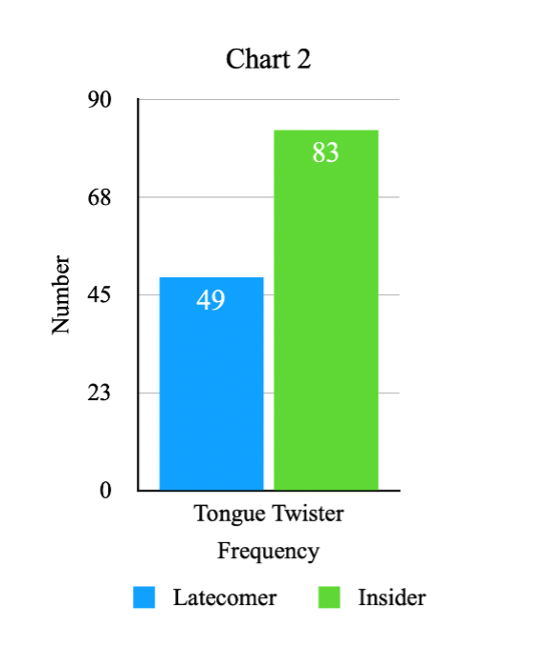
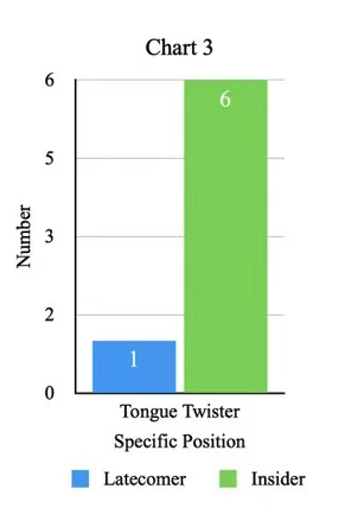
However, limited studies focus on the latecomer’s usage of [ɹ] sound and how they used it to build their identities at the same time. This study aims at studying how this specific sound could be employed in linguistic capital and identity creation in Beijing, based on the research on the difference in the sound between insiders and latecomers, and the frequency and accuracy of using this sound. The hypothesis is that latecomers might overcompensate by using it more frequently than insiders, but not always correctly.

Methodology

The experimental approaches used in this study are to analyze the participants’ recordings and interviews. Participants are chosen using “a friend of a friend” since one of the group members is from Beijing. There are 24 people, aged 20 to 40, 12 males and 12 females, who were divided into two groups, insiders and latecomers respectively. Latecomers all have lived in Beijing for more than five years while insiders living here from birth. To make the experiment more general and accurate, other factors such as age and gender were excluded.

Two well-thought-out scripts were given to participants, one is a narrative paragraph and another is a tongue twister. The tongue twister contains a lot of [ɹ] sounds and is very intuitive to observe. However, having a tongue twister may not be enough because they may become defensive and consider adding or removing [ɹ] sounds. Thus, another narrating paragraph was added, which focuses on everyday conversation. From which we can see how they add or subtract [ɹ] sounds without being prepared. After all our observers have read the tongue twisters and narration paragraphs, the recording can then be analyzed to determine how many [ɹ] each person uses and where everyone is using [ɹ]. We try to find out if any interesting phenomena would occur, then investigate the causes of this linguistic behavior. Distributing and asking the participants to read the scripts without their prior knowledge of the research makes their speeches more natural, and that let us find interesting patterns of the locality of the [ɹ] sound.

The following video is an interview about Xiaotong Guan, a native speaker with authentic Beijing accent. The narrating paragraph chosen for our participants was extracted from the video, starting from 2:24 to 2:42. To better understand the Beijing accent and the [ɹ] sound, another video is provided which shows the clear distinction with and without the [ɹ] sound. 

Authentic Beijing Accent with the [ɹ] sound – Xiaotong Guan

Master the Beijing Accent with Chinese Stand-Up

Analysis

This study picked one script from our interview of the participant and wrote it in the Pinyin written system, and recordings of one of each participant’s pronunciations among the two groups. The data shows that insiders were adding more [ɹ] sounds than latecomers. Then, two charts show the result of the collected data. To show the differences in the data more visually, this study marked the areas of difference in red (refer to Appendix).

Chart 1: The Number of the Sound in Paragraph Showing the Different Frequency Between Latecomer and Insider
Chart 2: The Number of the Sound in Tongue Twist Showing the Different Frequency Between Latecomer and Insider

As the two tables above show, concerning the frequency of use of er sounds, in the case of interviews, latecomers used them 26 times however insiders used them 42 times. The percentage ratio is 62% to 100%. This means that insiders used the [ɹ] tone 100% of the time, while latecomers used the [ɹ] tone 62% of the time. In the case of tongue twister, latecomers used it 49 times, but insiders used it 83 times. The percentage ratio is 54% to 93%. The result indicates that in the “standard” case, the number of [ɹ] sound was used should have been 90 because two participants of the insiders did not add the [ɹ] sound where it should have been added, thus resulting in a non 100% value.

Based on this result, the researcher analyzed the data from a positional perspective, this study found two specific examples of the tongue twisters.

Example 1 一串串(means ‘Strings of..’)
Yi   chuan-er   chuan-er
Example 2 一段段(means ‘Paragraphs of..’)
Yi   Duan-er  Duan-er

The data shows that two examples have the same pattern position of the [ɹ] sound insertion, i.e., insiders add both er sound to not only the penultimate but also the final word. However, most of the latecomers only add the [ɹ] sound to the final word. The specific data is that only one latecomer has the same insertion as the insiders whereas all 6 insiders add [ɹ] sound at both positions. The percentage ratio would be 17% to 100%, just like the data shows in Chart 3.

Chart 3: The Number of the Correct Position in Tongue Twister Added by Latecomer and Insider

Discussion and Conclusion

One of our major findings was that our previous assumptions were tested completely false by data analysis. We were expecting that latecomers use more [ɹ] sounds than insiders while talking about frequency. In addition, we were expecting latecomers would use the [ɹ] sound in incorrect positions. However, the result of the data showed the opposite.

The result from the data of our research appears to go against our hypothesis, which is that we think people who moved to Beijing in later times will employ “erhua” sounds more often, but not in the appropriate position. However, two of our (latecomer) participants stood out to us. The first participant was referred to P1. P1 employed the least of the [ɹ] sound among all of our participants from the two scripts we sent out. The second participant, P2, had employed the [ɹ] sound in an appropriate position and the frequency matched with locals. Due to the extreme differences shown in our data, we proceeded to interview them.

There are different linguistic findings from our interview for the two participants such as nature of personality, identity/language attitude, and linguistic capital. For P1, she is introverted. In the interview, she stated, “ I am more of an introvert, so I don’t like to socialize. I came here with a few friends from my town, and I usually only hang out with them.” A second finding from the interview for P1 is her identity/Language Attitude. The participant expressed that she does not believe in language prestige. Moreover, she is proud of her identity, so she doesn’t think adapting a Beijing accent is essential for her to live there.

Interestingly, our P2 participant expressed a different view on this matter. During the interview with P2, we found out about her attitude towards her Linguistic Capital. The participant believes that adapting a Beijing accent will help her in the future whether it’s for more job opportunities, networking, and better future, education, and an environment for her children. These findings connect with the Ted x Talks video on Youtube “Why your speaking style, like, says about you” by Vera Regan. The research tries to understand why people use the small word “like” in their casual speech. The results of the research communicate that language helps individuals to express their agency and choices. They let people freely identify with a country or a place, and they speak about people’s long-term plans. For P1, she identifies with her hometown and she is proud of her own identity. P2 identifies with Beijingese, thus, she adapts a Beijing accent to express that. She also has thought about her future in Beijing which comply with the long-term plans as in the research stated above.

For this research, since our target population focuses on the Beijing latecomers, studying their frequency of using the [ɹ] sound allows us to learn more about their social status including social identities, recognition, and self-identity construction. According to the main findings, we found that participants who used the [ɹ] sound more frequently are those people who tend to have a long-term plan to stay in Beijing and are willing to be socially reintegrated. In the process of research, we also encounter a few constraints due to the small number of participants which could cause limitations to the research results. First of all, there is actually no way of the “correct” Beijing accent since the geographical location and environment in which one lives will also affect the pronunciation of the [ɹ] sound. For example, people from the east side of Beijing may speak differently from those from the south side, Chongwen may speak slightly differently from Xuanwu, and even people from the same alley may have some minor differences in the use of [ɹ].  Therefore, we did not include an answer key for the “ɹ” sound in both the paragraph and the tongue twister. Instead, we could only take local Beijing participants’ pronunciation as the “standard” way and compare it with the latecomers to analysis amount of “ɹ” sound. The second limitation would be the sample volume. If we are only able to record and interview people in our social circle, the number is defined.

Among these local participants, most of them are the same age as us since we are still students with a fixed network, so classmates and friends while growing up are our first choice. The limited sample due to the lack of the diversity of age, occupation and other aspects caused our participants to not be representative enough. We assume that all latecomers would present similar data as we collected, but we ignore the fact that different social status and the stage of maturity would also possibly affect our hypothesis. Based on this limitation, our future research will pay more attention and develop our research on these social aspects to discover if there are any interesting patterns such as the differences of older people and new generation using [ɹ], as well as how people adopt the sound differently in various fields and positions. Moreover, we are passionate about learning the understanding of various demographic groups towards morphosyntactic functions of rhotacization as well as different expressions such as word choices for Beijing people specifically compared to people from other regions.


References

Dong, J. & Blommaert, J. (2009). Space, scale and accents: Constructing migrant identity in Beijing. Multilingua, 28(1), 1-23. https://doi.org/10.1515/mult.2009.001

Eckert, P. (2018). Meaning and linguistic variation: The third wave in sociolinguistics. Cambridge University Press.

Liu, K. F. (2018). Chinese Speakers in America: Diglossia as Style. essay: critical writing at Pomona College, 2(2), 5.

Xu, Z. (2020). Choosing rhotacization site in Beijing Mandarin: The role of perceptual similarity. University of California, Los Angeles.

Zhang, Q. (2005). A Chinese yuppie in Beijing: Phonological variation and the construction of a new professional identity. Language in society, 34(3), 431-466.

Zheng, M., & Liu, J. (2017, June). Language Attitude and Linguistic Practice of Northeastern Migrants in Beijing, China. In Proceedings of the 29th North American Conference on Chinese Linguistics (NACCL-29) (Vol. 2), Michigan State University.


Appendix 1

Paragraph


1

latecomer

/insider

2

latecomer

/insider


3

latecomer

/insider


4

latecomer

/insider


5

latecomer

/insider

6

latecomer

/insider

干活儿

ganhuo-er

1/1 1/1 1/1 -/1 1/1 -/1
官儿

guan-er

1/1 1/1 1/1 -/1 1/1 -/1
从小儿 congxiao-er 1/1 1/1 -/1 -/1 -/1 1/1
外套儿

waitao-er

1/1 1/1 1/1 -/1 1/1 1/1
这块儿 zhekuai-er 1/1 1/1 1/1 -/1 1/1 -/1
出门儿 chumen-er -/1 1/1 -/1 -/1 -/1 -/1
别这儿

biezhe-er

-/1 1/1 1/1 1/1 1/1 1/1
Tongue twister 1 latecomer

/insider

2 latecomer

/insider


3 latecomer

/insider


4 latecomer

/insider


5

latecomer

/insider

6

latecomer

/insider

哥俩儿

gelia-er

-/1 1/1 1/1 -/1 1/1 1/1
脸蛋儿

liandan-er

1/1 1/1 1/1 -/1 1/1 -/1
手拉手儿 shoulashou-er -/1 -/1 1/1 -/1 -/1 1/1
一块玩儿 yikuaiwan-er 1/1 1/1 1/1 -/1 1/1 1/1
一串串儿 yichuanchuan-er 1/1 1/1 1/1 -/1 1/1 1/1
一段段儿 yiduanduan-er 1/1 1/1 1/1 -/1 1/1 -/1
贪玩儿

tanwan-er

1/1 1/1 1/1 -/1 1/1 1/1
小猫儿 xiaomao-er 1/1 -/1 -/1 -/1 -/1 -/1
圆圈儿 yuanquan-er 1/1 1/1 1/1 -/1 -/1 1/1
小狗儿 xiaomao-er 1/1 1/1 1/1 -/1 -/1 -/1
庙台儿

miaotai-er

-/- -/1 1/1 -/1 1/- -/1
小鸡儿

xiaoji-er

-/- -/1 1/1 -/1 -/- 1/-
小米儿

xiaomi-er

-/- -/1 1/1 -/1 -/- 1/1
小鱼儿

xiaoyu-er

-/- -/1 1/1 -/1 1/1 1/1
水泡儿 shuipao-er 1/1 -/1 1/1 -/1 1/1 1/1


Tongue twister 1 latecomer

/insider

2 latecomer

/insider


3 latecomer

/insider


4 latecomer

/insider


5

latecomer

/insider

6

latecomer

/insider

一串串儿 yichuanchuan-er 1/1 1/1 1/1 -/1 1/1 1/1
一串儿串儿 yichuanchuan-er -/1 -/1 -/1 -/1 1/1 -/1
一段段儿 yiduanduan-er 1/1 1/1 1/1 -/1 1/1 -/1
一段儿段儿 yiduanduan-er -/1 -/1 -/1 -/1 1/1 -/1

[/expander_maker]
, , , ,

Love at First Voice

Jasmine Beroukhim, Nicole Palleja, Marydith Macabale, and Jaee Shin

Netflix’s hit dating show, Love is Blind has captured the attention of millions of viewers for its original take and format. In the show the contestants are separated by gender, and converse with one another through pods where a wall separates them from seeing each other. The show reimagines dating by erasing material aspects of a contestant’s identity right down to the sound of their voice. Throughout the show noticeable shifts in voice were apparent, and while it is well documented that humans have an innate capacity to shift styles through their voices, little research has been completed on how vocal changes are expressed in the discourse of reality dating shows.  Our study focused on the implications of vocal modulations in the context of reality television to investigate how an individual’s voice can contribute to the shaping of identity. In discussing this topic, we are interested in how the human voice can be used to influence perception and how women’s voices may reflect their perceived gender roles. We believe it is crucial to better understand the power of the human voice in leveraging perceptions and the societal and cultural reasons why a woman’s voice may change when speaking to a potential partner.

[expander_maker id=”1″ more=”Read more” less=”Read less”]

Introduction and Background

Our research focused on the first episode from Love is Blind which featured Jessica Batton, a 34-year-old white woman from Chicago, who works as a Regional Manager.  The public coined her iconic voice as a “sexy baby voice,” but the “sexy baby voice” was only apparent when she spoke to potential matches and disappeared when she relayed her experience in camera confessional interviews. “Sexy baby voice” according to linguists is achieved by raising your pitch and engaging in upspeak where the phrase ends with a rising pitch. Through our analysis we labeled Jessica’s two voices as “sexy baby voice” and her “professional voice.” In order to concretely measure the changes of her vocal modulation our study utilized the linguistic tool, PRAAT by inputting voice recordings from the show and comparing Jessica’s “sexy baby voice” used in the pods versus her “professional voice” utilized in the individual camera confessionals. Furthermore, we used conversational analysis to juxtapose her dual voices and to deepen our understanding of Jessica and determine if her pitch use fluctuated in accordance to the subject of her discussion. By creating a transcript between Jessica and her potential partner, we were able to illustrate the nuanced changes described through PRAAT and what the speaker was indexing through her vocal modulation.

Hypothesis
We expect Jessica to employ a higher vocal pitch when she is interacting with a male suitor, in the pods versus utilizing lower vocal pitch, consistent with a professional speaking voice, during her individual, camera confessionals. We expected our research findings to be consistent with our hypothesis in accordance with Jessica’s fluctuating voice pitch depending on her contextual setting and how such use of varying vocal pitches are reflective of her attempt to index two different identities in her personal and professional life.

Methodology/Project Design

We chose to limit our primary data collection to Season 1, Episode 1, entitled Is Love Blind as Jessica garnered the most screen time compared to other episodes later in the season, as she navigated the complexities of finding true love between two potential partners: Barnett and Mark. This case study was particularly notable to use because her modulating voice samples, according to professional or personal context, would provide us with substantial material to analyze throughout the episode. In our research, we collected a total of four samples and chose samples where a dramatic change in voice was evident Another reason for choosing these four samples was their back-to-back nature. Jessica used her professional voice when giving an interview and then used her “sexy baby voice” moments later when entering the pod. We then put the four samples into PRATT, which allowed us to draw conclusions about formant values, pitch, and intensity, when speaking to future relationship prospects versus one-on-one camera confessional. We then created a transcript of each of the 4 samples and used conversational analysis methodologies. We then collected 12 additional samples that we ran through PRATT with the purpose of observing her pitch formants. The subject content of the vocal samples was not analyzed. We watched the relevant episode, recorded Jessica’s speech, transcribed her voice samples into PRATT, created a transcript, and subsequently analyzed her pitch patterns in relation to what she was saying. By carefully analyzing the linguistic features of Jessica’s voice, we were able to deepen our understanding of Jessica as a social being as she indexed construction of her identity when speaking to relationship prospects versus addressing the camera directly in individual confessionals. 

Literature Review: Woman’s Vocal modulation in Dating Context

Helen Sautason, an English and Linguistic Professor at York St. John University in London offers insight into why a woman’s voice may change when speaking to a potential partner. In Sautason’s words, “the speaker will put themselves in a position where they sound less powerful because they have a belief that men find that attractive, and they don’t want (men) to feel threatened. There’s always been a value placed on girlish femininity” (Dazed, 2020, p. 2). Additionally, in a study entitled, “Voice Pitch Modulation in Human Mate Choice,” thirty adult men and women were observed in real time speed-dating events; their vocal patterns were analyzed for pitch changes. What was concluded from this study was that “women spoke in a higher-pitched and less monotone voice on speed dates with men they chose as potential mates.” The authors of the research observed that “the trade-off implied by this dichotomy suggests that women may volitionally raise their voice pitch to signal youth and femininity but lower their pitch in contexts where they wish to be taken seriously, or to indicate intimacy to a listener” (Pisanski et al., 2018, p. 2). As we examine our focus episode, we see that this observation is evident.  

Data Analysis: Pitch Formants

The differences in frequencies translate directly to pitch differentiation. A lower frequency indicates a lower pitch, while a higher frequency indicates a higher pitch. Figure 1 is a visual representation of Jessica’s first on-screen confessional where she introduces herself as a contestant on the show for the first time. Here she used her professional voice which produced a low F1 frequency of 606Hz. 

Figure 1: Professional Voice

Figure 2 is a visual representation of Jessica’s first time in the pods where she meets Barnett.  Here she used her sexy which produced a high F1 frequency of 1069Hz. 

Figure 2: Sexy-Baby Voice (Barnett)

Her use of two different voices and varying pitches is a direct attempt to index two different identities. There is a juxtaposition of two “first moments” that are happening within the context of Jessica’s introduction as an on-screen character to the world. Excerpt 1 provides a direct transcription of what Jessica says in her camera confessional, where her F1 produced a frequency of 606Hz (line 1).

Excerpt 1: Jessica’s First Confessional Interview “Professional Voice” 

[6:38- 7:00]

1 Jess: My name is Jessica Batton I'm from Rock Falls Illinois

2       <I’ve had> a rigid set of: standards I would only date a

3       guy between 1 to 5 years older I would only date (0.1)

4       athletes because I’m really athletic

Here, the audience is led to believe that Jessica is an established and serious woman looking for a mature relationship, to fit the bill of her desired qualities of a man, which is consistent with her use of a lower pitch voice register. The second introduction of Jessica portrays a different picture of her identity to Barnett, which contrasts sharply with her introduction to the world; a direct transcription of what Jessica says in the pods can be found in Excerpt 2 where her F1 produced a frequency of 1069Hz (line 8). 

Excerpt 2: Jessica’s Initial Pod Meeting “Sexy Baby Voice”

[6:38- 7:00]

1 Jess: But  I’m 34 years old and I may not find someone based

2       on:: the criteria that I’ve::: put in place for myself

3       I’m ready to start a family and::  I want to have:::

4       the most perfect marriage

5 Mark: What’s your name,

6 Jess: I’m Jessica_

7 Mark: Jessica_  Nice to meet you Jessica  I’m Mark 

8 Jess: Nice to meet you  Mark ?

Suddenly, she is bubbly, girlish, and demure, consistent with her use of the high pitch, feminine, sexy-baby voice register. It is implied that Jessica’s use of the sexy baby voice serves her the purpose of portraying herself as a likable woman that should be seen as desirable to the male gaze, or in this case, the male ear. Shortly after Jessica’s sexy baby voice driven interaction with Barnett, it appears that her high-pitched voice had captivated the attention of Barnett who comments on how nice her voice sounds. 

Similarly, the initial meeting between Jessica and Mark, her second potential romantic partner on the show, merited our attention and examination as it was another unique instance of Jessica’s voice modulation. Before meeting Mark Jessica gave a camera confessional discussing her past dating. When analyzing the F1 formant frequencies of her “professional voice,” in her camera confessional her F1 frequency produced a value of: 607Hz. The visual representation of her formants can be found in Figure 3. 

Figure 3: Professional Voice

Minutes after Jessica’s camera confessional Jessica enters the pods where Jessica leverages her “sexy-baby” voice. In the pods, her pitch had increased and produced a value of 810Hz, a drastic difference in pitch from her interview frequency of 607Hz. The visual representation of her formants can be seen in Figure 4.

Figure 4: Sexy-Baby Voice (Mark)

Excerpt 3 provides a transcription of Jessica’s use of her professional voice, which produced a low F1 of 607Hz (lines 1-4). 

Excerpt 3: Jessica’s Confessional Interview “Professional Voice” 

[30:23-30:30]

1 Jess:  There’s never been a time in my life (.) when I’ve been

2        able to really (0.1) focus solely on finding love_

3        here in the experiment (0.1) you spend every second  

4        of every minute searching for your soul mate

Jessica’s statement pushes the perception of Jessica’s social identity as a professional “working woman”’ who does not have time to spare to be dating. In the study, “Voice Pitch Modulation In Human Mate Choice”, the authors explain the common perception of women who have a lower-pitched voice as “consistently judged as more dominant, competent and mature, and as better leaders than women with a higher voice pitch” (Pisanski et al., 2018, p. 2). It is therefore not a coincidence that Jessica uses her “professional voice” emulating a pitch drop when speaking about her personal life and lack of time to engage in dating.

Excerpt 4  provides a direct transcription of Jessica’s conversations with Mark, where her sexy baby voice was used frequently, and produced a high F1 frequency of 810Hz.

Excerpt 4: Jessica’s Pod Meeting “Sexy Baby Voice”

[31:26- 32:11]

1 Mark:  holy shit we’re the same fucking person (.) and it's 

2        like (.) I want to raise my kids with religion

3        Christianity you know because that’s how I was raised 

4 Jess:  yeah

5 Mark:  and you know (.) I have a tattoo on my ribs (.) like  

6        it’s a cross with my parents initials on the top and

7        bottom (.) my sister and brother on an empty plaque

8 Jess:  wow 

9 Mark:  so when I have kids I can initial their names on it  

10       (.) and Psalm 19:14 going across it

11 Jess:  °I love that (.) that makes me so happy 

12 Mark:  (( laughs)) 

13        (0.2)

14 Mark:  how many kids do you want?

15 Jess:  three

16 Mark:  three (,) ? I'm down

17 Jess:  ok

18 Mark:  I want two boys and a girl

19 Jess:  I like that ,

20 Mark:  my face hurts

21 Jess:  why ?

22 Mark:  I’m smiling a lot

23 Jess:  you are?

24 Mark:  maybe

25 Jess:  that makes me so happy

Throughout the conversation, her replies were short and affirmative of Mark’s feelings and sentiments about religion and the number of children they desire. A study titled “New Zealand Women Are Good to Talk to: An Analysis of Politeness Strategies In Interaction” explains that American women are supportive and cooperative conversationalists; they act as an ideal and responsive audience – usually to men.” (Holmes, 1993, p. 92) The idea that women often act as “an ideal and responsive audience” to men, might explain the use of Jessica’s “sexy baby voice” in this interaction with Mark and the need to protect his ego.  There exists a contrast between Jessica’s dual identities because with her professional voice, we interpret her as a head strong working woman, versus with her sexy baby voice we tend to perceive her as flirty, and submissive “dumb blonde” archetype (refer to Figure 5 for an image of Jessica). 

Figure 5: Jessica Batton

For the purposes of confirming our hypothesis, we collected further data reinforcing Jessica’s consistent use of vocal modulations in response to alternating scenarios. The data presented in Figure 6 is a series of F1 frequencies that reaffirm Jessica’s use of higher pitch in her romantic interactions and lower pitch in her on-screen camera confessionals while reflecting on her life experiences.

Figure 6: Jessica’s pitch variation in two contexts throughout one show episode


Conclusions

There have been numerous studies conducted on voice modulation in various settings and even dating simulations, however, the objective of our study is to fill the gap in the body of research in the context of reality dating television, analyzing how individuals use their voices as a means of connecting with a potential partner who cannot physically see them.

In Love is Blind, we found that Jessica Batton deliberately altered her voice in order to make her sound more attractive to potential suitors, and that her sexy baby voice contrasted sharply with the pitch frequency she used when speaking directly to the camera. Therefore, based on Jessica’s varying voice modulation patterns in response to differentiated social contexts, we reaffirm the notion that voice can be used as a tool to construct and index an identity in specific social environments.  When completing our case study, we were cognizant of the limitations, more so, that a reality television show can easily manipulate an image of a woman through the editing of the production team  Our research was also limited as we only conducted a case study and did not analyze if this applied to others on the show, and did not analyze other episodes to mark if there was a change. In light of this, although our study does not definitively establish that women change their voice in the situational context of all reality dating television, it is one glaring instance of the degree to which shifting vocal modulation can affect the external perception of a person’s identity. 


References

Dazed. (2020, March 9).  Investigating the ‘sexy baby voice’ phenomenon. Dazed.
https://www.dazeddigital.com/life-culture/article/48255/1/investigating-the-sexy-baby-voice-phenomenon-love-isblind#:~:text=The%20’sexy%20baby%20voice’%20typically,s
mall%20body%20size%20(sigh).

Guardian News and Media. (2020, February 26).  What is ‘sexy baby voice’? We spoke to a sociologist to find out more. The Guardian. https://www.theguardian.com/lifeandstyle/2020/feb/26/what-is-sexy-baby-voicesociolo gist

Holmes, J. (2002, July 3).  New Zealand women are good to talk to: An analysis of politeness strategies in interaction. Journal of Pragmatics. Retrieved May 16, 2022, from
https://www.sciencedirect.com/science/article/pii/0378216693900784

Hughes, S. M., & Puts, D. A. (2021, November 1).  Vocal modulation in human mating and competition. Philosophical Transactions of the Royal Society B: Biological Sciences. Retrieved May 16, 2022, from https://royalsocietypublishing.org/doi/pdf/10.1098/rstb.2020.0388

Pisanski, K., Plachetka , J., Gmiterek , M., & Reby, D. (2018, December 18).  Voice pitch modulation in human mate choice.  Proceedings. Biological sciences. Retrieved May 16, 2022, from https://pubmed.ncbi.nlm.nih.gov/30963886/#:~:text=Within%2Dindividual%20analyses%20indicated%20that,a%20mutual%20preference%20(matches)

Zurbriggen, E. L., & Morgan, E. M. (2006, January).  Who wants to marry a millionaire? reality  dating television programs, attitudes toward sex, and sexual behaviors – sex roles. SpringerLink. Retrieved May 16, 2022, from
https://link.springer.com/article/10.1007/s11199-005-8865-2


[/expander_maker]
How LOL got between X and Z

Michelle Johnson, Kayla Sasser, Lucy (Chenyi) Wang, Grace Shoemaker, and Lien Joy Campbell

Figure 1. An example conversation between Gen X and Gen Z showing possible generational gap in the usage of humor markers – emojis in this case.

Even though the sad emojis in that exchange were used in a sad context, many people might laugh or find that inappropriate. Whether you are one of those people or someone likely to use emojis just like “Mom”, read on. As texting has grown to be a more popular form of regular communication, it may seem as if connecting with people has only become easier – but with ubiquity comes complexity. And if you are not among those at the vanguard of these complexities (the youth), you could be missing out. This brings us to the question: does expressing humor over text vary by generation? In this study we focused on Generation X and Generation Z’s use of emojis, emoticons, and other ways they chose to convey humor and tone in texts. In focusing on humor we were able to analyze the frequency of humor makers and their meanings in context. Based on our data, we found that there were definite differences in how the generations use and react to text language. Keep reading to learn what these key differences were and how we studied them (and maybe how to finally make that teenager in your life laugh).

[expander_maker id=”1″ more=”Read more” less=”Read less”]

Intro and Background 

Generation Z (those born between 1997 and 2012) grew up and learned how to communicate post-advent of the invention of instant messaging. Their texting style and speaking styles are intertwined and take inspiration from each other. On the other hand, those of Generation X (born between 1965 and 1980) had to transfer previously-established styles of humor and communication to the new technological medium (Downs, 2019). This accounts for the disconnect between considering texting to be a form of writing (like an email or letter) and considering it simply as talking put onto a screen. The term “written speech,” coined by John McWhorter, gives a name to the adaptation of texting to account for all the complexities of face-to-face communication that change how the content of a message is received: emotion, formality, humor, tone, body language and facial expression. Across platforms from iMessage to TikTok, young texters use unspoken and quickly changing combinations of punctuation, capitalization, and symbols to directly translate trends and slang into the digital world.

Methods

Following our belief that Gen X and Gen Z would communicate humor over text in significantly different ways and a path laid out by a study conducted by Sánchez-Moya and Cruz-Moya (2015), we chose to create a survey that focused on responder’s opinions on texting and their texting habits. We specifically targeted people’s habits in the use of humor markers like emojis and typed laughter by asking them to choose the most appropriate option to represent a feeling or as a response to various tonal and emotional contexts. Once we had our responses, we organized our data in terms of type of marker (emoji/emoticon/capitalization) and focused on whether the marker was used literally or creatively in relation to each generation. We expected a wider range of responses in Gen Z and more similar, literal responses from Gen X.

Results and Analysis  

We began our analysis by categorizing the responses we received in terms of whether they were literal or not, and we additionally compared the use of emoticons and capitalization. Further, we then also analyzed the frequency of answers we received for each question. We will present examples of each of these analyses and the contexts in which they were applied.

Beginning with our analysis of literal vs. non-literal use of markers, figure 2 presents a strong difference in Gen X and Gen Z’s preferences for literal and non-literal emojis.

The above graph illustrates a strong example of a general trend we found in our data: that overall, Gen X preferred to utilize emoji and other humor makers literally. In comparison, Gen Z showed a preference for less literal uses. Also, specifically for this question, within the categories of literal and non-literal, Gen X preferred a laughing emoji (😂) to show that they were laughing in 55% of their responses whereas Gen Z preferred a crying emoji (😭)–the exact opposite–to show that they were laughing in 42% of their responses. This was an even stronger non-literal response than expected suggesting a much higher degree of irony in Gen Z’s texting than in Gen X’s.

Moreover Figure 2.1 presents another strong case for Gen X’s preference for literal marker use and Gen Z’s preference for non-literal outside of just emojis. Figure 2.2 presents the response options as well as their categorization as either literal or non-literal.

Not only was Gen X’s preference for literal answers and Gen Z’s preference for non-literal answers illustrated in their selection of emojis but also in their preference for other answer types too. In the above example we took the unmarked and expected literal responses to the presented situation to be congratulatory, positive, and generally aligned with the topic of the context, whereas the non-literal responses demonstrate an indirect type of response by focusing on a non-topicalized part of the context (i.e. the bathroom). Again, we observed a strong preference from Gen X for a literal or positive response and a strong preference from Gen Z for a non-literal or indirect response.

In addition to studying the differences in how humor markers were used to convey literal and non-literal meaning we also wanted to provide insight into the different variations in the types of markers commonly used. Generally, we expected to see a more diverse use of these markers and variations, not just emojis, in Gen Z’s texting, leading us to figure 3. Figure 3 illustrates the overall differences in emoji (😂,😩) and emoticon ( :(, 🙂 ) use according to generation.

We chose to study emoji vs. emoticon use specifically as we believed that there would be a strong difference between the generations. However, both Gen X and Gen Z tended to prefer emojis. Unexpectedly, Gen X overwhelmingly preferred to use emojis over emoticons. We had thought that due to their longer history and generally less ambiguous and more established static meaning that Gen X would favor emoticons (Bai et al., 2019). This was not the case. Interestingly too, Gen Z actually tended to use more emoticons than Gen X. This result however supports our belief that Gen Z would demonstrate a broader range of humor marker use, splitting their results more evenly between emoji and emoticon. This could also demonstrate that Gen Z is exhibiting more creativity or nuanced flexibility in how they use these markers and what they take them to mean.

Next, we chose to study another variational marker, capitalization (OR SHOUTING). We chose to study capitalization in addition to emoji/emoticon differences as it is a unique action in texting that specifically denotes tone (McCulloch, 2019). Figure 4 below illustrates our comparison of capitalization use according to generation.

As shown above, Gen Z favored the use of capitalization while Gen X preferred messages that mixed capitalization and lowercase. This illustrates a stronger preference in Gen Z for using messages that convey a stronger or louder tone and demonstrates McWhorter’s idea of “written speech” in the younger generations (2017). Interestingly too, the younger generations’ relatively strong preference for “shouting” over text could indicate a recent change in what all-caps texting “means” and illustrate a higher level of comfort with the nuance of tone that all capitalized text creates. In comparison, Gen X may still interpret it as simply yelling at someone and therefore use it more sparingly. However, to corroborate those claims more testing would need to be conducted.

Finally, we got even more specific with our analyses–we categorized and analyzed the answers to each question on the survey to measure the frequency of each response per question for each generation. We did this to examine the specific texting behavior of the generations on a smaller, context-dependent scale. Figure 5 is a particularly interesting example that demonstrates the general trend in the generational behavior we observed.

We discovered, as in the above example, that Gen Z’s responses were more evenly spread out across the response options creating a much more dispersed answer graph (seen in red). Meanwhile, Gen X tended to answer more similarly to one another, strongly favoring one answer, ‘terrible 😔,’ as can be seen by the single tall blue bar. This pattern was relatively consistent across all of our data and was in line not only with our prediction that Gen Z would show a wider range of responses, but also with our prediction that Gen X would tend to use more literal responses. Moreover, another point to note in figure 5 particularly is that Gen X answered ‘terrible 😭’ 20.43% of the time, which in this context was interpreted as a literal use of a negative emoji. However, given our results in figure 1, this could also denote a more sarcastic or ironic tone. Such an analysis could also be in line with the other trend illustrated above as Gen Z showed a greater preference for answers that denote a less literal more ironic tone (terrible 🙃, terrible 😁).

Overall, our data demonstrated that Gen X tended to use emojis more literally and more consistently while Gen Z preferred to use them less literally and showed a wider range in their use. In terms of emoticons, both Gen X and Gen Z preferred emojis with Gen X showing a much stronger preference, and in cases of capitalization, Gen Z used messages in all caps much more than Gen X.

With all that said, we would like to address some possible confounds that could affect our data and analyses. Firstly, there was quite a disparity in the number of responses we received from each generation, heavily skewing toward Gen Z. This may have been because this survey was distributed by us (members of Gen Z), which also brings to light another possible issue: our own generational biases in both the analysis of the data and the creation of the survey. Additionally, this study’s construction as a multiple-choice survey poses the possibility that the choice of answers may have directed people’s responses. Moreover, we did not notice a significant effect of gender in our study. However, it could be a very interesting avenue to pursue in future research.

Discussion and Conclusion  

As seen in our data analysis, we found that there is in fact a gap in the usage of humor markers between the two generations, which supported our initial predictions. More specifically, based on the overwhelming choice by Gen X to use literal meanings, it could be suggested that they tend to use them (especially emojis) at a surface level. Meanwhile, Gen Z’s varied usage of all four markers looks to be a bit more nuanced. Their choices reflect that they use ironic and non-literal meanings frequently in humorous contexts. The variation in their responses also suggests that each marker of humor could have its own unique function or meaning depending on the context. Such variety among Gen Z could be the result of their community of practice, which frequently takes part in internet culture and has therefore been able to develop their own unique understandings of humorous texts. It also reinforces McWhorter’s earlier suggestion that texting can involve more than words–it conveys natural human conversational gestures as well. Overall, it does therefore seem fair to say that there is more at play in Gen Z’s usage.

After conducting our study, we identified limitations in our methods that leave room for improvement. As mentioned earlier, the survey was created entirely by members of Gen Z. This could prove to be problematic because the response options are potentially more biased toward a typical Gen Z response and not adequately represent typical Gen X responses. Including the input of Gen X members could have created a more balanced selection of responses. Another less obvious limitation of our study is that we did not account for phone differences. We realize that the appearance of Android and iOS emojis differ and that this difference may procure different emotional responses and therefore be used in a different context than our survey initially accounted for.

So, what are the next steps? Our findings and conclusions tell us that there is definitely room for further research on intergenerational communication over text. Improving upon this study’s weaknesses and widening its scale could provide more insights into the big differences that lie between the text-language of Gen Z and Gen X. Some new topics of interest include: different attitudes towards the appearances of emojis (i.e. Android vs. iOS), the evolution and idiosyncrasies of Gen Z’s online language, and analyses of textual gaps that may occur on the basis of factors other than generation.

References:

Bai, Q., Dan, Q., Mu, Z., & Yang, M. (2019). A Systematic Review of Emoji: Current Research and Future Perspectives. Frontiers in psychology, 10, 2221. https://doi.org/10.3389/fpsyg.2019.02221

Downs, H. (2019). Bridging the Gap: How the Generations Communicate. Concordia Journal of Communication Research, 6. https://doi.org/10.54416/SEZY7453

McCulloch, G. (2019). Because Internet. Penguin Adult HC/TR & Riverhead Books.

McWhorter, J. H. (2017). Words on the move: Why English won’t- and can’t- sit still (like, literally). Picador, Henry Holt and Company.

Sánchez-Moya, A. & Cruz-Moya, O. (2015). Whatsapp, Textese, and Moral Panics: Discourse Features and Habits Across Two Generations. Procedia – Social and Behavioral Sciences, 173, pp. 300-306. https://doi.org/10.1016/j.sbspro.2015.02.069


[/expander_maker]
, , ,

Ukraine in Transition: The Process of Reducing Russian Language Usage

Iscelle Abad, Zhuoen Li, Ira Throne, Ryan Tsai, Max Yudowitz

With the ongoing invasion of Ukraine, language in the country is changing. In response to the war, many natives have expressed a desire to switch their primary language in daily life from Russian to Ukrainian. Although it’s been a while since it was conducted, the 2001 All-Ukrainian population census estimated that roughly 29.6% of the Ukrainian Population spoke Russian as a native language, equalling roughly 14.3 million people. Since there has been no new census conducted in over 10 years, it’s hard to approximate the exact number of Russian and Ukrainian speakers today. However, a recent 2022 national poll conducted by the independent sociological research group RATING (Рейтинг) showed that, among respondents, in the last 10 years the number of native Ukrainian speakers has steadily grown from 57% in 2012 to 76% in 2022 with the percent of native Russian speakers at around 20%.

Figure 1: Map showing the distribution of languages and ethnicities in Ukraine.

Given that a fair number of the population are not completely fluent in Ukrainian, the attempt to switch over has not been easy for everyone. The adjustment of switching primary language within a community is usually a long-term process spanning generations, but given the unique circumstances, many Ukrainians are going through it at an accelerated pace within just a few months.

Since this is a turning point for Ukraine linguistically, some crucial questions are necessary. How are people going through this process? What aspects of the transition come easier to people, and what struggles are they dealing with during this transition? Are there some sort of unique transitional stages that Ukrainians are going through in the same way?

[expander_maker id=”1″ more=”Read more” less=”Read less”]

These are the questions that prompted our research. An unprecedented level of media availability allows insight into how some speakers are utilizing code-switching (changing between different languages when speaking) in their daily lives today, almost in real-time. Some anecdotes that can give insight into how some Ukrainians are experiencing this change can be read in interviews in this article: Enemy tongue: eastern Ukrainians reject their Russian birth language | Ukraine | The Guardian. Another example is the subjects of our study, Ukrainian vloggers, who have made a noticeable shift from primarily speaking in Russian to primarily speaking in Ukrainian. Initially, before conducting this study, we anticipated that the subjects at first would most frequently code-switch from Russian to Ukrainian when they are telling jokes or just by inserting common words into their conversation.

The subjects of our study are three YouTube bloggers from a channel called “Lions on a Jeep” who spoke almost exclusively in Russian until after the full-fledged invasion of Ukraine started. They’re men in their late 20s – early 30s and were familiar with Ukrainian before, although they didn’t seem to actively use it on a daily basis. Starting March 3, 2022, they began to record live streams in their effort to collect donations for the Ukrainian military. Their first 2 streams were almost completely in Russian, but during the 3rd stream they started switching to Ukrainian at different rates. As of right now, they are still recording their streams and have transitioned to speaking Ukrainian for the most part. We collected over 70 speech samples from several live streams of theirs. The frequency, amount of videos in a short period of time, and the unedited and casual format of the conversation helped to consistently and closely analyze the transition.

Before gathering data, we divided the transition into 3 predicted stages: At the first stage they speak mostly Russian with some high frequency insertion of words/phrases from Ukrainian. At the second stage, they use more Ukrainian and there is continued high frequency insertion Ukrainian in addition to full switching between Russian and Ukrainian. Finally, at the third stage, they use mostly Ukrainian, occasionally borrowing words/phrases from Russian. We looked at the those stages individually for each speaker and then noted the code-switches that they had. We categorized each switch as a word, phrase, sentence, or clause, and counted the number of each type as they occurred. We then noted the context of each switch for further analysis so that we could more easily discover any code-switching patterns present later on.

When observing code switching, we used the categories of phrases, sentences, words, and clauses to organize cases. Phrases refer to switches from one language to the other halfway through a sentence, sentences refer to complete thoughts in one language, words to certain isolated switches, and clauses to small sentences embedded within larger ones. The main categories of contexts for code-switches in our data that we found were common Ukrainian word insertion, when showing national pride, humor, a slip, incorrectly using a Russian word believing it’s Ukrainian, and switching when not knowing the translation.

It’s clear to see these different kinds of contexts when looking at short examples such as in Figure 2. Here we can see that the speaker is inserting a Russian word into a Ukrainian sentence. Russian “уже” is a high-frequency word that closely resembles Ukrainian “вже”, so this is most likely a slip.

Figure 2: An example of a slip.  Red=Ukrainian and Blue=Russian.

In the second example in Figure 3, we can see how wordplay is utilized. The word “сварка” means argument in Ukrainian and in Russian it means welding. One of the subjects said in Ukrainian that he had an argument (“сварка”) with his mom, and the speaker joked that they were making a metal structure with his mom, and thus there was “сварка”, meaning welding. Here we can see how the speaker used a word that exists in both languages but used it with Russian meaning for a comic effect.

Figure 3: An example of switching humorously. Red=Ukrainian and Blue=Russian.

In Figure 4, the speaker was clearly struggling to recall the right word, so he inserted the phrase in Russian into a Ukrainian sentence.

Figure 4: An example of switching when not sure of the right word. Red=Ukrainian, Blue=Russian, and Pink=A mix of Ukrainian and Russian.

A clear example of the speakers assuming what they are saying is a correct word in Ukrainian can be seen in Figure 5.

Figure 5: Incorrect assumption of a word as Ukrainian. Red=Ukrainian, Blue=Russian, and Pink=A mix of Ukrainian and Russian.

The name of one of the speakers (Євген) is used in the nominative case, as it would be in Russian, whereas in Ukrainian, the vocative case (Євгене) should be used. “Bсе” is pronounced with a Ukrainian accent and is a hybrid of the Russian “всё” and the Ukrainian “усе”. The Russian word “понятно” is pronounced with a Ukrainian accent, and the speaker most likely assumes it to be a valid Ukrainian word. This seems to be a common pattern because we’ve seen several instances of it.

The speaker first uses masculine gender in Figure 6, because the Russian word for language “язык” is masculine, but then corrects himself and uses feminine gender, which is correct for the Ukrainian word “мова.” Also, you can see that he is inserting a clause in Ukrainian to prove that he has some proficiency in the language and show his Ukrainian identity.

Figure 6: Example of switch to show national pride. Red=Ukrainian and Blue=Russian.

Lastly, in Figure 7, the speaker is saying a common Ukrainian phrase that has been used extensively and is embedded by 2 sentences in Russian.

Figure 7: Example of switch when inserting a common phrase. Red=Ukrainian and Blue=Russian.

In cases of Ukrainian word insertion, speakers would add in phrases or words that are used regularly, such as greetings or slogans. Because of its fairly clear division amongst the stages in Table 1, we believe that the speakers first used phrases they were familiar and confident with as they began to transition as a way to clearly and immediately signal their solidarity and intent to distance themselves from Russian.

Table 1: The frequency of each pattern in Russian and Ukrainian at each stage as a percentage.

The speakers also used Ukrainian phrases and words to express national identity and pride. Similarly, to the case of common words and phrases, this behavior, as seen in Table 2, was utilized more in stage one than stages two and three to quickly and easily express their Ukrainian identity.

Table 2: The frequency of each context in each stage as a percentage.

The use of this context eventually decreased, just like common words and phrases did, as the speakers grew more confident in Ukrainian and did not need to quickly express their pride, since speaking the language fluently accomplished the task. This use to express national identity was higher than we originally thought it would be, and it was somewhat surprising to see it happen so often.

Another pattern we observed was the use of code-switching in a humorous or comedic manner. This kind of code-switching is intentional and utilizes parts of both languages such as intonation and meaning to create a joke or a wordplay. However, the frequency of humor, shown in Table 2, was surprising, as we anticipated it to be far higher than it actually was in stage one. The use of humorous code-switching was present scarcely in stage one, not at all in stage two, and was most prominent in stage three.

Slips in our data involved a speaker starting a sentence in Ukrainian but accidentally reverting to Russian before they finished expressing their thought. In some cases, the speakers would realize they had slipped and correct themselves, but in others the speakers would continue, finishing the thought in Russian. Table 2 also shows that slips accounted for the majority of code-switches from stages two and three. This is likely due to the speakers using primarily Ukrainian for the second and third stages, so slips in the first stage are less common given that little Ukrainian is actually being used.

We were able to find recurring contexts related to speakers as well. As we previously mentioned, speakers would often code-switch at the start in order to index themselves as Ukrainians. The speakers did so relatively the same amount, but Speaker M did this slightly more than the other speakers, as shown in Table 3.

Table 3: The frequency of each context for each speaker as a percentage.

The use of humor however showed a greater disparity. Speaker V humorously code-switched to a far greater percentage than his counterparts. A better mastery and confidence of the language would likely allow the speakers to make more jokes and use differences between the two languages more effectively. We found that Speaker V seems to have the greatest ability of the three to speak Ukrainian. He demonstrated this by completely skipping stage two and barely needing any time to transition, so we believe that he was able to use the language more effectively to make jokes through his knowledge of both languages and their differences.

Since Speaker V displayed different code-switching patterns when compared with his counterparts and did less code-switching in general, he did not at any point use clause insertion when code-switching, as in Table 4, which showed more evidence as to his strength in the language. For Speaker A, we noticed that he code-switched more sentences than Speakers V and M, especially when switching from Ukrainian to Russian.

Table 4: The frequency of each pattern in Russian and Ukrainian for each speaker as a percentage.

Looking further than these 3 subjects and this specific context, the data from our study may be a useful reference when looking at rapid language transition in other countries or perhaps what people tend to struggle with versus what they find easy when changing their primary language both in Ukraine and in other places. As this kind of research continues, we might be able to gain insight into how this rapid language transition could result in, or perhaps already has resulted in, new linguistic features such as an emerging accent or dialect and the creation of new words or slang from primarily Russian speakers becoming primarily Ukrainian speakers. If you are looking for additional information about the languages’ history and how they are being used in the ongoing war today, the following blog post, Ukrainian vs Russian: How Do These Languages Differ, is very useful.


References

Azhniuk, B. (2017). Ukrainian Language Legislation and the National Crisis. Harvard Ukrainian Studies, 35(1/4), pp. 311–329. http://www.jstor.org/stable/44983546

Gardner-Chloros, P. (2009). Code-switching. Cambridge, England: Cambridge University Press.

Krishnan, S., Noor, N., and Rasmani, K. (2011). Analysis on Stages of Code-switching by Bilingual Educators: A Case Study. International Conference on Applied Sciences, Mathematics and Humanities 2011, pp.  475-481. https://www.researchgate.net/publication/338357063_ANALYSIS_ON_STAGES_OF_CODE-SWITCHING_BY_BILINGUAL_EDUCATORS_A_CASE_STUDY

Mahootian, S. (2020). Bilingualism (Routledge Guides to Linguistics). London and New York: Routledge Taylor & Francis Group.

Myers-Scotton, C. (1993). Common and Uncommon Ground: Social and Structural Factors in Codeswitching. Language in Society, 22(4), pp. 475–503. http://www.jstor.org/stable/4168471

Rating Group. (2022, March 19). The Sixth National Poll: the Language Issue in Ukraine. Retrieved May 13, 2022, from https://ratinggroup.ua/en/research/ukraine/language_issue_in_ukraine_march_19th_2022.html

San, H. K. (2009). Chinese-English Code-switching in Blogs by Macao Young People (Publication No. 9877103) [Master’s thesis, The University of Edinburgh]. Edinburgh Research Archive.

State Statistics Committee of Ukraine. (2003-2004). All-Ukrainian population census 2001. Retrieved May 13, 2022, from http://2001.ukrcensus.gov.ua/eng/

[/expander_maker]
On Language Attitudes, Heritage Language Maintenance, and Biracial Identity Formation

Karin Antablian, Leslie Cheng, Tabitha Haskins, Kaoru Kaburagi, anonymous author.

This study is an investigation of the relationship between biracial individuals and their association or dissociation with their cultural heritage. Using monoracial individuals as a control, we utilize survey methods and metalinguistic interviews to expand upon Cheng and Lee’s (2009) model, focusing particularly on how language attitudes and heritage language maintenance influence biracial identity indexation. In doing so, our purpose is twofold. First, we aim to establish what connections exist between attitudes towards heritage language learning and language maintenance. Second, we aim to better understand how language maintenance affects biracial identity. We found that while monoracial and biracial individuals both have positive perceptions of heritage language learning, these attitudes tend to be stronger among monoracial individuals. Additionally, we found that cultural identity was more turbulent among biracial individuals, but that they were more likely to perceive heritage language maintenance as a way to assert and connect with their multicultural heritage.

[expander_maker id=”1″ more=”Read more” less=”Read less”]

Introduction and Background

The United States is becoming an increasingly multiracial, multilingual nation. While still constituting a relatively small portion of the population, people of mixed race make up the fastest growing demographic in America – in the past decade alone, the multiracial population within the United States has increased by 276 percent, from 9 million people in 2010 to 33.8 million people in 2020. Furthermore, since 1980, the number of people who speak a language other than English at home has more than doubled (US Census Bureau, 2020). In light of these changing demographics, research surrounding biracial identity and attitudes towards bilingualism is becoming particularly paramount.

In crossing over cultural boundaries and racial lines, biracial individuals exist at the crossroads of disparate backgrounds that at times may be at odds with one another. Existing within this liminal space “in between,” so to speak, can contribute to the formation of a “marginal” identity, feelings of conflict when negotiating identity (Poston, 1990), or distance from their cultural heritage (Bracey, Bámaca, & Umaña-Taylor, 2004). 

However, it is understood that when an individual perceives facets of their identity to be compatible, the individual’s sense of self becomes more unified, a process known as identity integration (Syed & McLean, 2016). Models of identity integration have been applied to examine the process of biracial identity negotiation in various domains. One framework of particular interest comes from Cheng and Lee (2009), who present four methods of identity indexation among those of biracial descent. These classifications represent how the individual navigates their cultural identity in society, and also serve as an indicator for the degree of conflict or turbulence that the individual has over their own identity. The classifications are as follows:

  • Intersections: Identification with individuals of related groups
  • Dominance: Identification with individuals of one primary group
  • Compartmentalization: Identification with a group is situationally dependent
  • Merger: Simultaneous, cross-group identifications

The present study applies Cheng and Lee’s framework to investigate the relationship between biracial individuals and their association or dissociation with their cultural identity. More specifically, we look at the role of heritage language maintenance in informing the stances and alignments of biracial individuals. Following the conclusions of Lee (2002), which suggests strong correlations between an individual’s heritage language proficiency and their cultural identity, there exists the question of whether dual language use within the home generates a hyper-salient cultural identity — or an aversion towards particular cultural indexations.

Using monoracial students as a point of reference, we hypothesized that biracial students may exhibit more conflicted, turbulent attitudes or be more ambivalent towards bilingualism due to parents of differing cultural backgrounds, which would be reflected in how they culturally identify themselves. We also hypothesized that monoracial students may be more inclined to learn the heritage language, as both parents are likely to show a unified attitude towards bilingualism and thus exhibit less cultural conflict.

Methods

We utilized survey methods and metalinguistic interviews to collect data. In total, we surveyed 32 college students and interviewed 9 college students. Out of those that we surveyed, 27 participants were of monoracial descent and 5 participants were biracial descent. 5 interviewees were of monoracial descent and 4 interviewees were of biracial descent. While participants came from a variety of cultural and linguistic backgrounds, the majority came from Asian backgrounds (n=26). All biracial participants were half white.

Our survey contained two sections. In the first section, we asked participants questions about their language demographic background information (e.g., What is your primary language? If you speak another language at home please list them.) We also asked whether they belong to a cultural community and/or they grew up in one. In the second section, participants ranked their agreements on a scale of 1-5 with a series of statements. Statements concerned both parents’ attitudes towards bilingualism (e.g., My parent thinks it’s important I learn another language.) as well as their personal attitudes (e.g., If I ever have kids, I would want them to know a second language.)

After surveying participants, we conducted interviews to further investigate their experiences and possible differences in attitudes towards bilingualism between parental units, especially if the student is of biracial descent. During the interviews, we focused more on how biracial students indexed themselves and looked at possible connections to their linguistic backgrounds (e.g., “What were your caregivers’ attitudes towards your heritage language(s)? Were they supportive, against learning it? Did their attitudes change as you got older?”)

Results

Unsurprisingly, both biracial and monoracial students had positive perceptions of bilingualism, and thought their parents had positive perceptions of bilingualism as well. However, these groups differed in how strong these positive perceptions were. Since the survey asked participants to rank how strongly they agreed with a series of positive and negative statements about bilingualism from a scale of 1 (strongly disagree) to 5 (strongly agree), we were able to observe the distribution of their responses. Figure 1 below shows the distribution of responses of monoracial students and Figure 2 shows the distribution of responses for biracial students regarding how much the participants agreed that their parents have positive attitudes towards bilingualism.

Figure 1. Monoracial students’ level of agreement on their parents having positive attitudes towards bilingualism


Figure 2. Biracial students’ level of agreement on their parents having positive attitudes towards bilingualism


Although both monoracial and biracial students thought their parents had generally positive views towards bilingualism, the monoracial students agreed more strongly than the biracial students. The monoracial students picked “strongly” agree over 50% of the time, whereas the biracial students only picked that 30% of the time. Monoracial students also agreed (ranking either 4 or 5) with the positive statements over 70% of the time whereas the biracial students only ranked the statements 4 or 5 50% of the time. Although this is merely a correlation, it is an interesting observation to note that could lead to more studies in the future.

For the interviews, there was variation across both monoracial and biracial students in how strongly their parents advocated for their learning in the heritage language. This is unsurprising given how each household is different and the variety of factors that shape parents’ decisions to teach the heritage language or not. Time may be an important factor, and the parents’ own fluency in the language may hinder or encourage this passing on of language to their children.

However, we did notice specifically that for biracial students who later chose to learn the heritage language on their own, they emphasized a want to connect to their heritage, especially since it gives a sort of “validity” to their cultural identities. Elaine, a half-Peruvian half-White student stated, “Once I started learning Spanish I had… more validity to my identity as a Peruvian because it’s like even though I didn’t look like it, well…I can speak in this language.” Biracial students appeared more questioning of their identities compared to monoracial students since they were not necessarily as exposed to their heritage culture and may feel more “outside” the culture due to their mixed appearance. They appeared to be more questioning of their own identities especially if they couldn’t speak the heritage language well, as language is often seen as a pillar of cultural identity.

On the other hand, the monoracial students we interviewed appeared to comfortably identify with the X-American label, for example Asian-American or Mexican-American. When asked about cultural identity, one student whose parents are first-generation Korean immigrants stated that she identifies as “just Korean-American” and “never really questioned it because [she] grew up in [a predominantly Asian area with a lot of other Koreans”. Presumably, she grew up in a household that was unified in culture and language, and people would not question her “Koreanness” based on her appearance. It is interesting to note that so-called “hyphenated” Americans have earned a spot in the mainstream social discourse of American society, yet biracial students have not necessarily done so due to the diversity in their parents’ heritages. A biracial identity is not easily constructed across all groups because there is such a mix of cultures.

Discussion

Overall, there were not drastic differences between the attitudes of the parents of monoracial individuals versus biracial individuals. There was a large degree of uniformity in the belief that being multilingual is a beneficial skill to have, albeit varying degrees of implementation. There were significant differences in the participants themselves, however. Among our monoracial survey population, we see that the majority of them informally acquired their heritage language and that the heritage language is the dominant language of the home. Among our biracial survey population, English is the predominant language at home, with only half of our participants having acquired their heritage language. With the exception of a single participant, the heritage language was formally acquired.

The most interesting difference between these two groups was that those of the biracial population exhibited a demonstrated awareness of their language indexation that monoracial individuals did not. One participant, Yukari, shares of how her Japanese mother passed down the Japanese language to her:

“When I was living in Japan, I honestly felt I was pretty privileged since the people around me were also half Japanese, but a lot of them didn’t know how to speak Japanese and so I had the sense of pride that ‘Oh, I can speak Japanese’ and I thought it was a good thing because I consider Japan my home, so being able to communicate with not only my family, but the community was a really important thing to me… If I wasn’t able to speak Japanese, I feel like I would’ve connected more to my American side of the family. I would’ve considered myself more as white instead of Japanese.”

Yukari’s experience, building off of the information presented by Elaine previously, allows us to draw parallels between these two participant’s experiences. Each biracial individual indicated a high level of indexation through their heritage language. Both Elaine and Yukari used their heritage language to make a claim to their non-white identity. Not only was this consciously done, but each of them used their heritage language to navigate social circumstances and interactions. Considering the point made by Cheng and Lee (2009) (see quote below), it is evident that in the increasingly multicultural, multilingual United States, more and more biracial individuals are operationalizing their heritage language to make claim to a multifaceted and multicultural identity.

“People change their identification strategies depending on individual constraints such as attention and cognitive resources, and contextual factors such as situational cues that make a particular social identity more or less salient.” (Cheng & Lee, 2009).

One limitation to our study was that the survey responses we collected were not evenly distributed between monoracial (n=27) and biracial students (n=5). Furthermore, we tried to keep our survey as simple and concise as possible, so we were limited in the number of questions we could ask. There’s only so much a survey can cover in terms of nuances in attitudes towards bilingualism. Lastly, even with our interviews, the participants tended to only talk about topics adjacent to our questions, so this was only the tip of the iceberg as well. We hope that despite these limitations, our study serves as a foundation to more discourse and research about biracial students, language use, and cultural identity in the future.

In conclusion, there was little to no significant variation between parents of monoracial and biracial individuals in perceptions of bilingualism. The greatest factor for heritage language acquisition was its presence, or lack thereof, in the home. Our research did provide evidence for cognizant identity indexation through heritage language acquisition on the part of the biracial individuals. This was in direct contrast to the motivations for heritage language use in monoracial individuals. Moving forwards, it would be beneficial to investigate ways that language is encouraged through the maternal line, as our data gave some implications for this. Our sample size, however, does not provide enough variation or control to determine the validity of this statement.


Additional Resources 

This Ted Talk is given by two high school sophomores who talk about the experience of being biracial as well as some common misconceptions about biracial individuals. It’s a personal account of being biracial that also emphasizes the ways language can exclude people or deny their identities.

Check out this related Languaged Life blog post from a previous class to find out more about social factors that inform language maintenance within multilingual families!


References

Bracey, J.R., Bámaca, M.Y. & Umaña-Taylor, A.J (2004). Examining ethnic identity and self-Esteem among biracial and monoracial adolescents. Journal of Youth and Adolescence 33, 123–132. https://doi.org/10.1023/B:JOYO.0000013424.93635.68

Cheng, C., & Lee, F. (2009). Multiracial identity integration: Perceptions of conflict and distance among multiracial individuals. Journal of Social Issues, 65(1), 51-68. DOI: 10.1111/j.1540-4560.2008.01587.x

Foster-Frau, S., Mellnik, T., Blanco, A. (2021, October 8). ‘We’re talking about a big, powerful phenomenon’: Multiracial Americans drive change. The Washington Post. https://www.washingtonpost.com/nation/2021/10/08/mixed-race-americans-increase-census/

Lee, J. (2002). The Korean language in America: The role of cultural identity in heritage language learning, language, culture and curriculum, 15(2), 117-133, DOI: 10.1080/07908310208666638

Poston, W. S. (1990). The biracial identity development model: A needed addition. Journal of Counseling & Development, 69(2), 152–155. https://doi.org/10.1002/j.1556-6676.1990.tb01477.x

Syed, M., McLean, K.C. (2015). Understanding identity integration: Theoretical, methodological, and applied Issues. Journal of Adolescence, 47, 109-118. https://doi.org/10.1016/j.adolescence.2015.09.005.

United States Census Bureau. (2022, March 25). 2020 Census illuminates racial and ethnic composition of the country. https://www.census.gov/library/stories/2021/08/improved-race-ethnicity-measures-reveal-united-states-population-much-more-multiracial.html

United States Census Bureau. (2020). Populations and people. https://data.census.gov/cedsci/profile?g=0400000US06

[/expander_maker]
Scroll to Top