social media

Are some NBA slang terms too vague? Absolutely!

Isaac Verdugo, Riley Kwinn, Brendan Xiong, and Gustavo Gutierrez

NBA (National Basketball Association) slang is widely used by basketball fans all over the world. NBA slang is formed and developed with NBA history. It has unique features and functions that give NBA fans the opportunity to express their opinions about the game of basketball in creative ways. NBA slang reflects NBA culture. A sociolinguistic study of NBA slang helps people know more about NBA culture and fans of different teams. The following study discusses semantic change in NBA slang terminology within Los Angeles Lakers and Los Angeles Clippers communities of practice through discourse analysis. First, we selected four common NBA slang terms that are used in this sports league and provide their generic definitions. We then analyzed online basketball discourses to look for ways in which fans from both teams use the NBA slang terms that we are examining. Third, we used a corpus analysis toolkit, AntConc, which helped us find patterns of concordance within our data. We concluded by making generalizations about the use of our selected terms by Lakers and Clippers fans and determined trends through analysis.

[expander_maker id=”1″ more=”Read more” less=”Read less”]

In this study we sought to understand why NBA slang is used in online communities of practice. This helps identify connections within communities of practice because basketball fans are tight-knit, have frequent interaction, develop shared goals and knowledge about basketball, and create new NBA slang. Because many basketball fans use NBA slang to refer to a particular team and/or player, the meaning will vary depending on who you ask; some use older meanings from previous eras of the NBA, whereas others use newer meanings that fit today’s NBA style of play. By analyzing the use of four NBA slang terms (foul, skill, superteam, flagrant foul), it will help us understand how they have changed in meaning over time. Next, we will compare and contrast the usage between Lakers-Clippers fans. We chose these two teams specifically because they are from the city of Los Angeles and have drastically different histories; the Lakers are the most famous NBA franchise of all-time with 17 championships, whereas the Clippers have none (Los Angeles Clippers vs. Los Angeles Lakers, n.d.).

That being said, we attempted to answer the following question:

(1) What sorts of semantic change has NBA slang experienced within Lakers and Clippers communities of practice?

Background

Previous research in semantic change shows that words or real world entities change over time. More specifically, words change semantically and this change is reflected in the way words are being used (Wijaya & Yeniterzi, 2011, “Introduction” section). This linguistic aspect of semantic change also applies to NBA slang. For example, in the 20th century of the NBA, the NBA slang term Greatest of All Time or GOAT, was used to describe how successful a player and/or team was based on the number of championships they won. However, NBA fans have added new layers onto its meaning over time, such that basketball IQ, skillset, defensive rating, and other basketball qualities are relevant in the discussion of “Who’s the GOAT?” While the NBA uses generic definitions for NBA slang terms, it does not necessarily mean that fans will use that particular definition in every basketball context. Because of this, NBA slang terms are extremely nuanced, which is why the word GOAT highlights one of our goals to lay out differing traits of the four terms we will examine.

Another frequently used NBA slang term is skill. Skill in the NBA during the 1960s meant being able to run down the court efficiently, shoot the ball from close range, and defend. However, in the 1970s, skill was about playmaking abilities, too. One paper addressing a similar topic discussed the importance of player impact, “Berri tried to determine if Karl Malone or Michael Jordan was more valuable, and he found that Dennis Rodman was most valuable because of his rebounding ability” (Whitmoyer, 2019, p. 4). The significance of this quote shows that many teams prefer having a player who impacts the game of basketball in more than one aspect. Many believe that Michael Jordan is the best basketball player of all time, but Whitmoyer argues that Dennis Rodman is. This shows that there are different views about a player’s importance, which is part of what we will explore in our project.

Methodology

We analyzed the NBA slang terms on online basketball discourses such as Twitter, Reddit, and Instagram, where we collected 100 Lakers-Clippers samples relating to these terms for a total of 400 samples. Then, we used AntConc, a corpus analysis software that made it much easier to compare the surrounding environments of all the data samples for each term. Lastly, we made generalizations about the use of the NBA slang terms and determined trends in our data through analysis. This method allowed us to gather more samples and data from online discourses than we would have surveying/interviewing basketball fans with the amount of time we had for the project, and helped us address the question in our introduction by allowing us to identify common trends in a data set that would be far too large to analyze without the assistance of corpus linguistics software.

Results: Data Analysis

In Figure 1, we see a list of words that AntConc found that foul was commonly used within the same sentence, as flop appeared the most with a total of 73 samples.
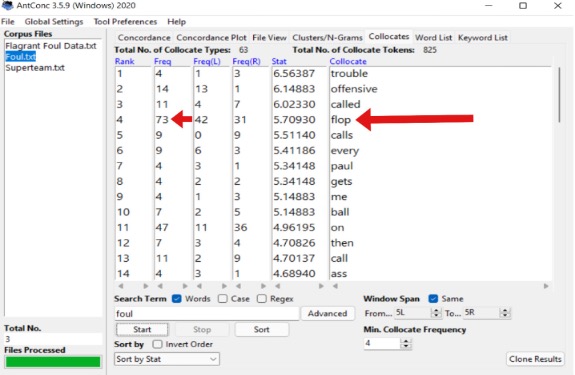
Figure 1. Total frequency of words that AntConc found for the NBA slang term foul.

With this software, we were able to discover that foul has a new meaning added to it that can be used in more contexts than before with the use of flop. This concept is known as widening, which is a type of semantic change. Throughout the history of the NBA, the generic definition of foul has remained the same, referring to “illegal personal contact with an opponent and/or unsportsmanlike behavior” (How Fouling Works in Basketball: 6 Common Fouls Explained, 2020, para. 2), which can be seen in Figure 2.
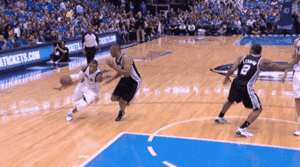
Figure 2. Tim Duncan (#21) fouls Monta Ellis (#11) after bumping him in mid-air when scoring a lay-up.

However, the word foul has become too vague in today’s NBA that Lakers and Clippers fans have used a more specific word to describe the actions that opponents do to get the foul call in their favor — flop. A “flop” is an attempt to fool referees into calling undeserved fouls by exaggerating the effect of contact with an opposing player (Explanation of Anti-Flopping Rule, 2012, para. 2), which can be seen in Figure 3.
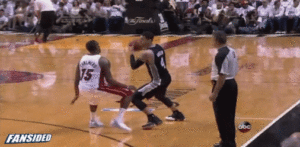
Figure 3. Mario Chalmers (#15) flops and sells the contact after Danny Green (#4) swipes through to create space.

The use of flop for a non-foul changes the meaning of foul because opponents fall to the ground when contact is drawn, whether minimal or not. The act of flopping is changing the way the game of basketball is played since referees must distinguish between what is and isn’t a foul, which they tend to struggle with.

Both Lakers and Clippers fans use flop as a way to express their anger when they believe there wasn’t any illegal contact by the opponent, but referees think otherwise. This finding shows how the meaning of foul has been expanded by these fans because flopping is more common today than it was before in the NBA. Instead of fans saying “That was not a foul,” fans can now say “That was a flop,” when there was little or no physical contact by the opponent. This semantic change of the word foul allowed these fans to be more specific and provide a reasonable judgment about a certain basketball play, instead of giving a biased opinion with no context. Because there was a high frequency of data where the slang term foul was used with flop in the same sentence than without it, it suggests that they both go hand-in-hand when fans debate a foul call.

The second word we examined was skill. Skill is “the ability to do something well; expertise” (Oxford University Press (OUP), n.d.). In the 20th century of the NBA, skill was synonymous with players who could run down the court efficiently and score more than 15+ points on a regular basis. However, in today’s game skill is used in many other ways such as passing, as observed in Figure 4.
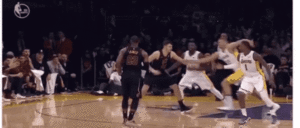
Figure 4. LeBron James (#23) makes an incredible no-look pass to teammate Ante Zizic (#41) who dunks the ball.

There are different connotations as to what skill implicates. According to the data via AntConc in Figure 5 and 6, skill was used the most within members of the Lakers community when discussing Kobe Bryant, an all-time great with elite footwork, shooting, post-moves, and defense that contributes to what skill means. Clippers fans most used skill in reference to flopping, identifying it as a ‘skill’, or point guard ‘skills’ which implies a specific attribute derived by a select group of positioned players. In the online discourse data, Kobe [Bryant] was mentioned most to embody skill because of his scoring ability, footwork, shooting, defense, basketball IQ, work ethic, and athleticism. Other players like Kawhi Leonard, Patrick Beverly, and Ivica Zubac were mentioned a combined 7 times in the data set, a stark contrast to Kobe Bryant’s 22.
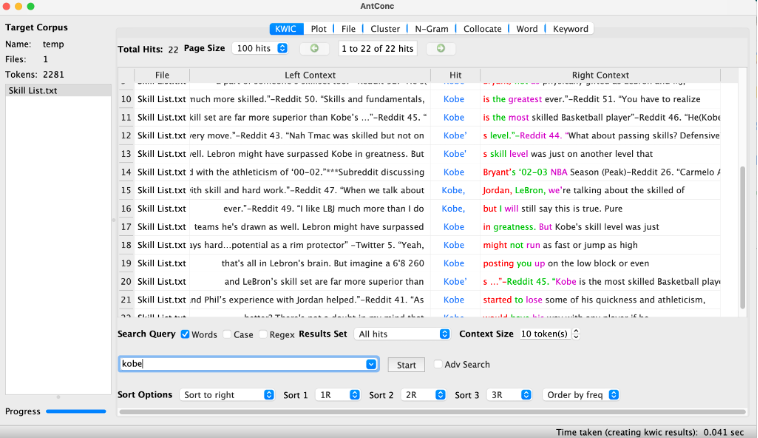
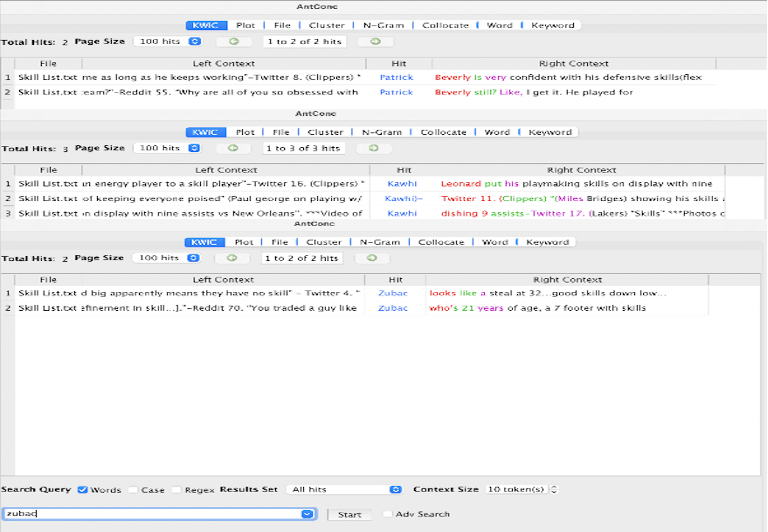
Figure 5. Total frequency of words that AntConc found for the NBA slang term skill.


Figure 6. Total frequency for Kawhi Leonard, Ivica Zubac, and Patrick Beverly via AntConc.

The data suggests that semantically, skill has changed from what it was once meant over the last few decades among these communities of practice. Skill in basketball does in fact include scoring ability, but it also incorporates many other factors that make up a player’s complete value on the court (Locklin, 2021, para. 3). Skill no longer identifies a player who can run down the court efficiently and score 15+ a game but instead, is the marker for players who embody proficient attributes in all areas of the game.

The third word we examined was superteam. This term can be defined as “already established All-Star players coming together to a team to form a super team (Urban Dictionary: Superteam (NBA), 2018). Many of the fans’ conversations from the data involved debates about the exact definition of the term. It was more commonly used as one word, rather than as two separate words, though there was no significant difference in its intended meaning; fans often responded to one variation with the other. Superteam seems less rooted in one literal definition, and more tied to the emotional idea of a “team that is unfairly good,” as the meaning seems to change depending on the context it’s used in. The people using superteam seemed more intent on winning debates than using the word “correctly.” The term has therefore seemed to experience a significant semantic widening such that its meaning changes depending on a) the people using it, and b) the greater context of which teams are performing well in the NBA.

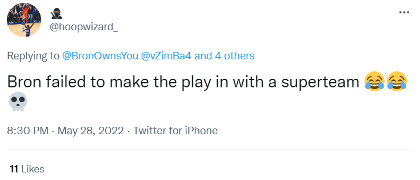
Most of the data samples were gathered from Lakers fans since there has never been a Clippers team that was considered so good that it was unfair. The only instance superteam was used to describe the Clippers was when a fan claimed Kawhi Leonard, a current player on the Clippers, had “tried to make a superteam,” with the implication being that he had failed. The primary topics discussed in the data we gathered for this term were: 1) whether or not LeBron [James] had actually deserved the championship titles he had won after forming multiple ”superteams,” and 2) whether or not this year’s Lakers roster had in fact been a “superteam” despite not winning a championship nor making the playoffs in 2022, as can be seen in Figure 7.
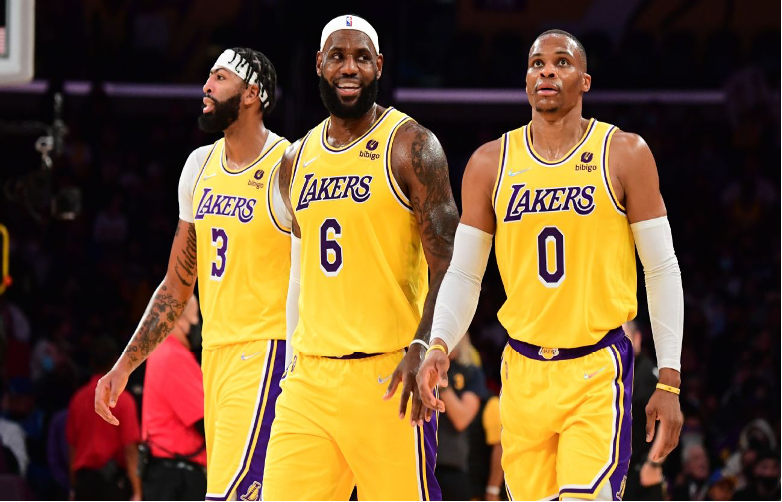
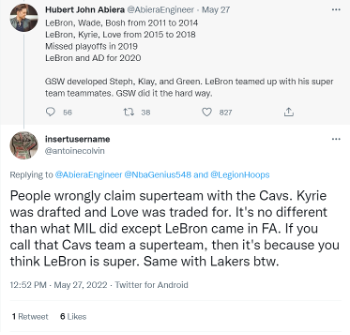
Figure 7. Lakers 2021-22 roster with 3 All-Stars: Anthony Davis (#3), LeBron James (#6), & Russell Westbrook (#0)


Figure 8. A tweet about LeBron’s critics who are downplaying his past successes for forming ‘superteams.’


Figure 9. Another tweet where a fan chastised the 2021-22 Lakers for not making the playoffs, despite qualifying as a ‘superteam.’

Unsurprisingly, the teams most commonly associated with superteam were either current or retired All-Star players from teams such as the Cavaliers, Warriors, Heat, Nets, and Lakers, as observed in Figure 10. The high frequency of Lakers relative to the other teams is due to the fact that most of these data are from Lakers’ fans’ discourse.
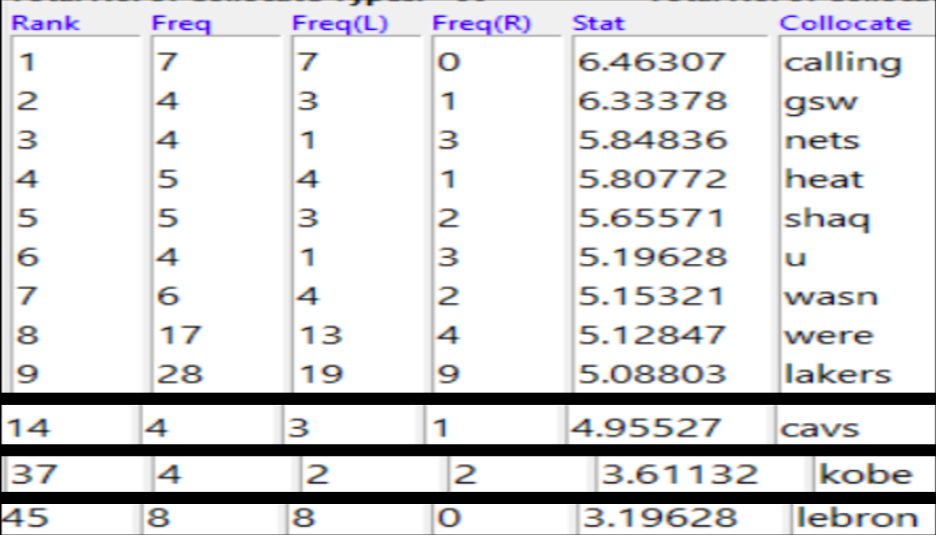
Figure 10. Total frequency of words that AntConc found for the NBA slang term superteam (focus on the column second from the left and the corresponding term on the far right)

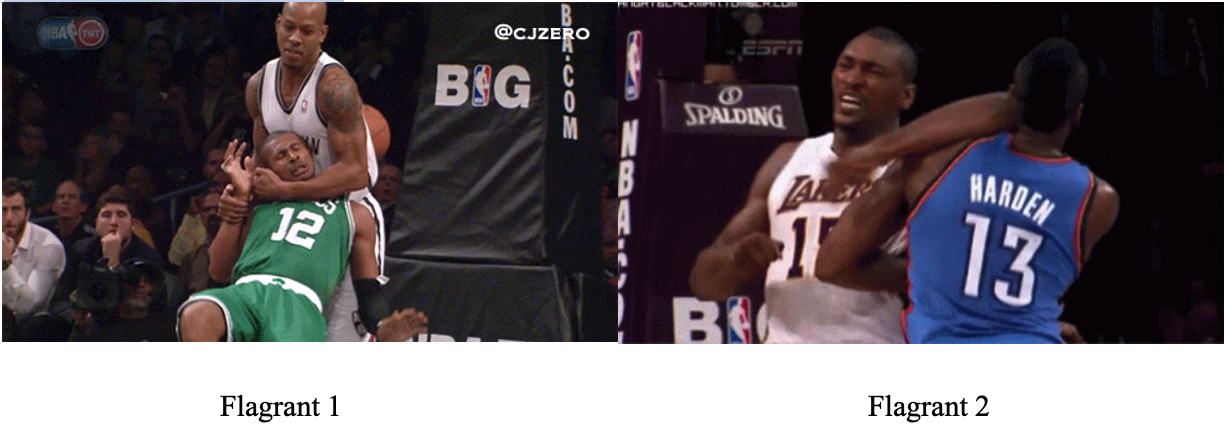
According to the official NBA website, a flagrant foul is excessive contact beyond a regular foul. There are two types, a Flagrant 1 is unnecessary contact against a player committed by an opponent, whereas a Flagrant 2 is unnecessary and excessive contact against a player (Flagrant Fouls, n.d.).
The main semantic change we found from Lakers and Clippers fans regarding this word is elevation, where one uplifts an utterance, and degeneration, where negative light is shone on a statement. Tweets by Lakers fans are uplifting, with one of them proclaiming that the Lakers are equals to every other team. The tweet from the Clippers fan is degenerated through its angry intonation. The Lakers tweet also has more likes, and popularity equates to less negativity as “fearful and negative tweets [have]…low virality” (Cheung‐Blunden et al., 2021, p. 19). The less popular Clippers fan tweet uses strong word choice through swearing.
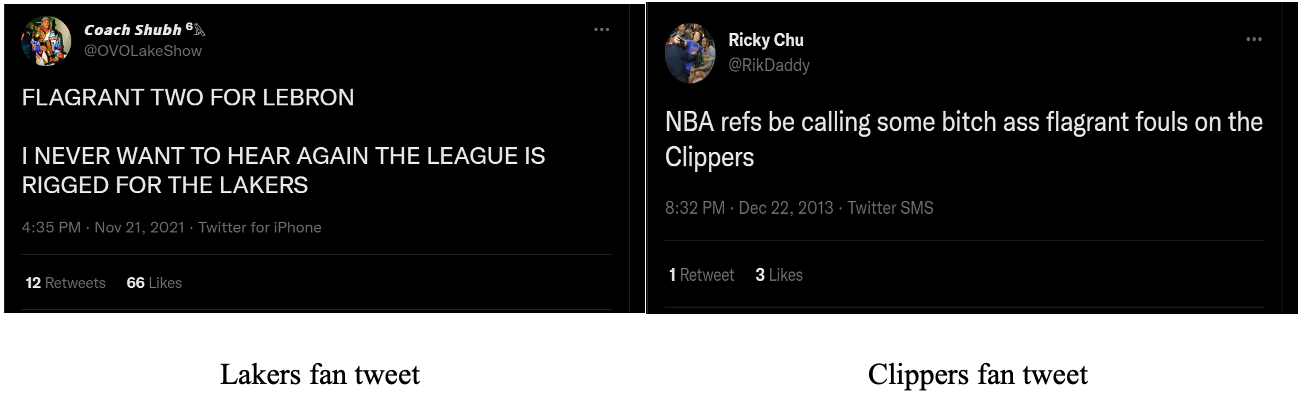
The primary cause for this difference is team status. The Lakers fan sounded less angry because of the history of his team, as he is comfortable with the prestige and numerous championship titles of the Lakers. The Clippers are not as well-known as the Lakers. Less prestigious teams have fewer fans because their teams are not as competitive as others. Therefore, the fans of such teams are very committed and passionate to be able to stick through team struggles. Furthermore, “high levels of identification with a sports team are positively related to fan display and verbal response” ​​(Rocca & Vogl-Bauer, 1999, p. 244). The intense feeling for one’s team drives Clippers fans to use strong language.

Discussion

According to new research about American slang, there are unique features that influence it based on its originality (Zhou & Fan, 2013). Similarly, we learned that NBA slang is used because of its originality. NBA fans were creative with how they turned generic definitions of the NBA slang terms to more catchy and specific meanings. In addition, these new words and meanings are commonly used by NBA fans for the pleasure of being in fashion and appear to have a deep understanding about the game of basketball. When these fans use NBA slang terminology, it tends to validate their opinion about basketball because it is solely used by basketball fans.

One social factor that influences the use of NBA slang terms is social media. Social media has allowed NBA fans to discuss and share their opinions about basketball that reach millions of people, as can be seen in some figures above. A second social factor is basketball commentators because they enjoy commenting on live-basketball games using descriptive language, and find that NBA slang is more direct and simpler to use than the generic definitions.

An individual factor that influences NBA slang are peoples’ knowledge and skills about the game of basketball. Their knowledge and skills about the game of basketball lets them feel entitled to have a valid opinion about a particular team and/or player.

These findings support our thesis statement that both Lakers and Clippers fans would experience semantic change to NBA slang because of how much the NBA has evolved. More specifically, many NBA slang terms have been outdated, and it was expected that these fans would use different meanings to these slang terms to fit today’s NBA style of play.

Conclusion

Linguists can benefit from our research because they are interested in real world phenomena. As such, they are descriptive and study how people actually talk, where some use NBA slang as part of their everyday speech, and not prescriptive regarding how people “should” talk. Because linguists study semantics, our research allows for linguists to study more in-depth the role that NBA slang has for basketball fans to know what certain words mean, what makes them have more than one meaning, why those meanings exist, and others.

A possible future direction of our research would be for researchers to replicate this study on a much larger scale through ethnographic research to ensure that there is enough data gathered from both groups. Ethnographic research can improve this study because it involves observing a particular group and site over a long period of time, which could gather a large amount of data about the use of NBA slang at basketball games.


References

Cheung‐Blunden, V., Sonar, K. U., Zhou, E. A., & Tan, C. (2021). Foreign disinformation operation’s affective engagement: Valence versus discrete emotions as drivers of tweet popularity. Analyses of Social Issues and Public Policy, 21(1), 980–997. https://doi.org/10.1111/asap.12262

Explanation of Anti-Flopping Rule. (2012, October 5). NBA Official. Retrieved June 8, 2022, from https://official.nba.com/explanation-of-anti-flopping-rule/

Flagrant Fouls. (n.d.). NBA Official. Retrieved June 8, 2022, from https://official.nba.com/trigger/review-of-called-foul/

How Fouling Works in Basketball: 6 Common Fouls Explained. (2020, November 8). MasterClass. Retrieved June 8, 2022, from https://www.masterclass.com/articles/how-fouling-works-in-basketball#quiz-0

Locklin, W. (2021, July 15). What is “Skill” in NBA Basketball. The Wright Way Network. Retrieved June 8, 2022, from https://twsn.net/2021/07/what-is-skill-in-nba-basketball

Los Angeles Clippers vs. Los Angeles Lakers. (n.d.). Diffen. Retrieved June 8, 2022, from https://www.diffen.com/difference/Los_Angeles_Clippers_vs_Los_Angeles_Lakers

Oxford University Press (OUP). (n.d.). Skill. Lexico.Com. Retrieved June 8, 2022, from https://www.lexico.com/en/definition/skill

Rocca, K. A., & Vogl‐Bauer, S. (1999). Trait verbal aggression, sports fan identification, and perceptions of appropriate sports fan communication. Communication Research Reports, 16(3), 239–248. https://doi.org/10.1080/08824099909388723

Urban Dictionary: Superteam (NBA). (2018, May 28). Urban Dictionary. Retrieved June 8, 2022, from https://www.urbandictionary.com/define.php?term=Superteam%20%28NBA%29

Whitmoyer, E. (2019). Measuring Greatness in the NBA. Scholars Crossing. Retrieved June 8, 2022, from https://digitalcommons.liberty.edu/honors/845/

Wijaya, D. T., & Yeniterzi, R. (2011). Understanding semantic change of words over centuries. Proceedings of the 2011 International Workshop on DETecting and Exploiting Cultural diversiTy on the Social Web – DETECT ’11. https://doi.org/10.1145/2064448.2064475

Zhou, Y., & Fan, Y. (2013). A Sociolinguistic Study of American Slang. Theory and Practice in Language Studies, 3(12). https://doi.org/10.4304/tpls.3.12.2209-2213

[/expander_maker]


, , , ,

K-Netizen: Examining Possessive Behavior in K-pop Social Media Discourse

Matthew Lee, Sam Lin, Huimin Liu, Francisco Morales, Annika Park

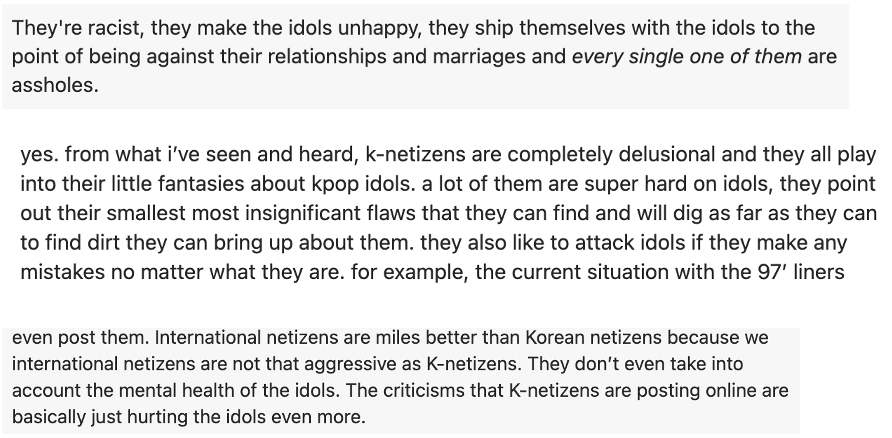
In recent years, Korean popular music, or K-pop, has led the way for a meteoric rise in global popularity of Korean culture. According to Sue Jin Lee’s study, “The Korean Wave: The Seoul of Asia,” this Korean wave—hallyu in Korean—has garnered a worldwide fanbase whose members create communities online centered around their favorite groups and idols. These K-pop fans primarily interact with their favorite artists and each other via social media posts and comments, creating online communities of internet citizens (netizens) that are each focused around certain idols. There is, however, a negative perception of Korean netizens who are seen by international fans as overly critical of K-pop groups and labels, possessive of idols, and having a sense of entitlement to celebrities. This study examines the question: does this perception of possessive Korean K-pop fans hold true? If so, what is the reason for this behavior? To find answers, the use of personal possessive pronouns in social media comments is examined to gauge possessiveness in Korean and international fans, informing a further discussion about Korean nationalism at play in K-pop social media interactions.

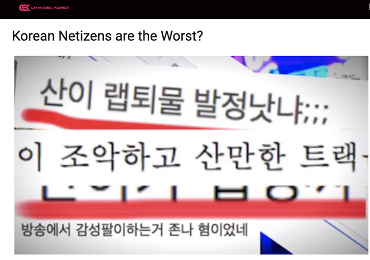
Figure 1: Social media backlash towards Korean K-pop fans from international fans

[expander_maker id=”1″ more=”Read more” less=”Read less”]

Introduction and Background

With the growing accessibility of online platforms like Facebook, Twitter, and Instagram, Korean and English-speaking social media users can react in real time to K-pop events and news. In typing up posts and leaving comments, fans create an online persona for themselves based solely around their love for certain music groups; the most devoted of these fans have been dubbed “K-pop stans.” We assert that with the growth of the Korean wave comes a sense of entitlement or possessiveness from specifically Korean fans towards their favorite idols. Our research aims to find patterns of these possessiveness or entitled tendencies in Korean social media users, and we believe that Korean fans will demonstrate these themes much more strongly than international fans of K-pop.

The idea of a netizen, or an “internet citizen,” originated in the 1990s and served as a descriptor for engineers and early Internet users who “participate in the affairs of governing and making decisions about the internet and about how the internet can impact offline society,” according to scholar Ronda Hauben’s Amateur Computerist. Over time, the term has evolved to become a broader description of anyone actively engaged in online communities. Within the past five years, Korean social media circles have especially embraced the word to the point where there is a specific word for Korean internet users: the “K-netizen,” which has the reputation of being extremely assertive and opinionated as a result of the strong sense of community they have created online. This membership may promote a sense of belonging and perhaps nationalism as an extension of their Korean citizenship, sentiment that may also extend to how K-netizens view K-pop idols. Since the K-pop industry is a major part of the South Korean culture and economy, K-netizens could feel that they are entitled to ownership over idols as a result of this interesting intersection of internet subculture with nationalism. We later explore this concept as an explanation for possessiveness in Korean fans.

Methods

In order to quantify the possessiveness of fans towards K-pop idols, we gathered instances of pronoun use by Korean and international commenters when referring to their favorite artists in social media discourse. Examples of these uses include phrases such as “your idol,” “my idol,” “our idol,” “mine,” etc. To narrow the scope of our search, research members strictly look at comments on Facebook responding to posts about three controversial breaking-news stories in regards to K-pop celebrities outlined below:

  1. HyunA and Dawn’s announcement of dating: HyunA, a singer and former member of the group Wonder Girls, and Dawn, a member of the group Pentagon, were dropped from their agency once they announced they were dating.
  2. G-Dragon and Kiko Mizuhara’s announcement of breaking up: G-Dragon is a singer who is part of boy’s group the BIGBANG, and Kiko Mizuhara is a Japanese celebrity. They were rumored to be in a relationship for years, but nothing was confirmed until it was announced that they had broken up in 2015.
  3. The Burning Sun scandal: this was a large-scale entertainment and prostitution exposé that involved multiple prominent celebrities in the K-POP entertainment industry.

[Researchers had originally initiated the project with four cases, an additional scandal involving high school bullying, but decided to omit it because they could not find enough substantial data for the case and the data gathered for other three cases was sufficient.]

Each controversy will be analyzed through two different posts announcing the news—one in English and one in Korean—in order to compare the initial reactions of Korean and international fans.

Results and Analysis

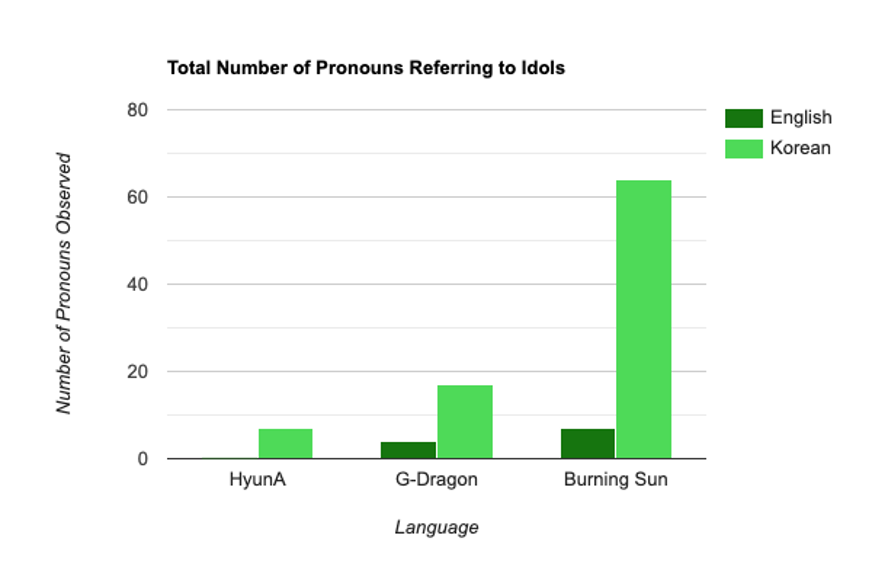
Figure 2. Total Number of Pronouns Referring to Idols

This graph visually illustrates the clear difference between how K-netizens and international fans view and react to idols. For each case, the number of Korean pronouns used at least doubled the number of English pronouns used.

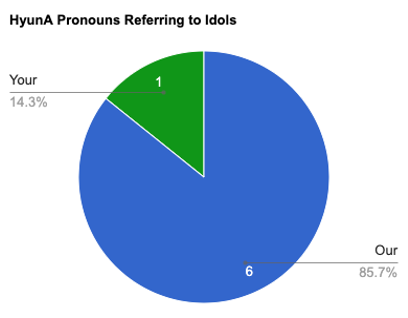
Figure 3. Types of Pronouns Used in Reference to Idols: HyunA


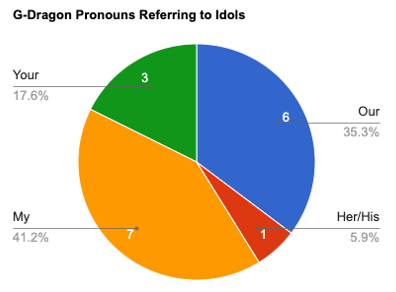
Figure 4. Types of Pronouns Used in Reference to Idols: G-Dragon


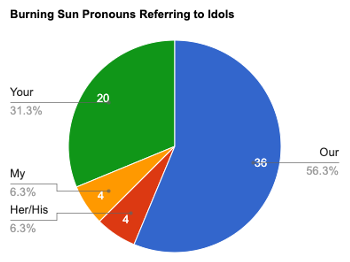
Figure 5. Types of Pronouns Used in Reference to Idols: Burning Sun

The three graphs above show the breakdown in types of pronouns used by idols in each of the three scandals. In the HyunA and Burning Sun case, the use of “our” was most prominent. However, for the G-Dragon case, the use of “my” was most common. This finding can be explained through the nature of the scandals being examined—the G-Dragon scandal was a break-up announcement and many comments expressed relief and excitement that he could be “theirs” once again. The HyunA case garnered more reaction to the fact that her and her boyfriend were dropped by their label, so a lot of people expressed sympathy (thus a communal “our” would be more common); the Burning Sun case evoked a more national response due to the scale of the scandal.

Discussion

After compiling data from Facebook posts, we find evidence consistent with our claim that K-netizens use possessive nouns when referring to idols more frequently than international, English-speaking fans. Though the total number of pronouns used in general was similar for both the Korean and English comments, our results show “possessive pronouns”—those used in contexts such as “that’s my girl” or “he’s all yours”—to be up to nine times more frequent in the Korean posts. International fans displayed uses of terms such as “idols” and “biases” to demonstrate devotion and obsession, but not necessarily a sense of “ownership” of the K-pop stars as the Korean commenters did. Given these results, it seems that the popular perception of K-netizens as being overly possessive of their favorite idols holds some level of truth.

There may be many small factors affecting the observed usage of possessive pronouns, but we believe that the primary cause for possessive behavior from Korean fans stems from a deep-seeded nationalism within K-netizens that can be observed through K-pop social media interactions. The possessive pronoun “our” was used especially frequently in the Burning Sun scandal, most often in contexts referring to “our nation” (Korea). While the HyunA and G-Dragon scandals deal with dating and are mostly only scandals in the eye of the public, the Burning Sun case involved much more serious allegations of prostitution, sexual coercion, and possible police corruption. This seems to lead to more extreme responses in Korean comments, where K-netizens express shock that their country would be involved in such behavior.

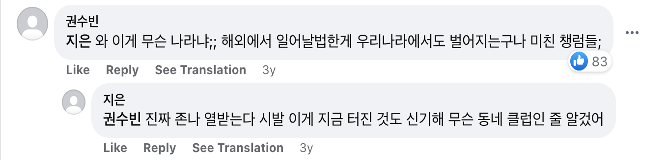
Here are some examples of the comments from the Burning Scandal post:

Translation: @Jieun Wow, what country is this? What’s happening overseas is happening in our country too; those crazy people.


Translation: Why do people live so stupidly that they blindly trust money? Our country’s people are so scary that they even made the president step down.

As stated earlier, the hallyu wave of Korean culture has been driven by K-pop through the last decade, leading Korean citizens and government to hold K-pop to an extremely high standard. Korean nationalism is founded on pride in successes that can be seen internationally, so K-pop’s dominance of global charts makes it a cultural focus across the country (Koo 2020). Another example of this type of nationalism includes the nationwide buzz over Korean athletes that experience success overseas; this is seen most recently with soccer star Son Heung-Min headlining Korean news and covered at great length for becoming a prominent figure in the European football scene. While this and many other instances demonstrate Korean nationalism to be celebratory and uplifting, the problem arises when these globally successful entertainers involve themselves in “scandalous” events in the eyes of the international or Korean public. Because K-pop idols are seen as representatives of Korea and Korean culture, K-netizens are quick and harsh in their criticism of any action that could be seen as harmful to the image they want to portray to the global audiences. This explains the “bringing shame to our nation” type of comments observed in the Burning Sun scandal; though perhaps justified in this situation, the Korean comments criticizing K-pop celebrities for dating exemplifies a level of  “ownership” or authority akin to that of parents toward their children. This possessiveness leads to the international perception of Korean fans as sharing the same negative or toxic traits that they would associate with a “tiger” or “helicopter” parent.

The very concept of a “K-netizen” may also play a part in perpetuating nationalistic, possessive tendencies in Korean fans. If “netizen” gives a label to avid users of the Internet, K-netizen defines a space specific to Koreans which allows them to be closed off to the rest of the wide-open Internet. By giving themselves this label, K-netizens engage only in interactions within their own language and culture, opposite to how international fans utilize the Internet to interact with others across the globe. According to the article “Online Language: The Role of Culture in Self-Expression and Self-Construal on Facebook,” collectivism is significantly higher among Asian Americans than Caucasian Americans (De Andrea 2010). While this finding doesn’t have a one-to-one relation to the focus of our study, we assume a similar truth given the homogeneity of Korea and implications of the term K-netizen. This collectivism leads to a cycle within Korean K-pop social media where new users are introduced to the idea that they have power over or possession of the celebrities that they follow, eventually adopting linguistic traits exemplifying these behaviors much like they would in traditional Communities of Practice.

Conclusion

The nationalistic tendencies and resulting toxic comments of K-netizens isn’t a problem that we feel we can or should fix; rather, it is one that provides insight into the role that nationalism plays in social media interactions between users around the world and within their own language groups or countries. Further research into operations behind Korean social media may reveal the importance of these comments in forming the best possible product to be seen by the rest of the world. On a larger scale, we would like to see this study performed with the international entertainment exports of other countries; perhaps social media comments about artists from the United Kingdom or actors from France can reveal aspects of those countries’ nationalism and how they display these traits online.

Our data was mostly limited by sample size and platform. Though we focused on Facebook comments due to the site’s popularity among Korean social media users and its ease of access to centralized posts, we recognize that much of the international discourse about K-pop happens on newer sites like Twitter and Instagram. A more comprehensive study would compile comments from all of these sites to get a more accurate representation of linguistic features displayed. Additionally, we cannot guarantee that all of the Korean comments on Facebook were written by Korean citizens, but we assume that most of them were given that the posts were made by news sites based in Korea. Despite these shortcomings, we believe that our results show an accurate representation of the differences between Korean and international commenters when it comes to K-pop discourse. This topic has yet to be explored in depth from a sociolinguistics perspective, but the continual growth of social media makes it an issue worth researching and examining in greater detail.


References

DeAndrea, D.C. et al. “Online Language: The Role of Culture in Self-Expression and Self-Construal on Facebook.” Journal of Language and Social Psychology, Vol. 29, No. 4, Dec. 2010, pp.425-442, doi: 10.1177/0261927X10377989

Goi, C. L. (n.d.). Cyberculture: Impacts on Netizen. Retrieved April 30, 2022, from https://citeseerx.ist.psu.edu/viewdoc/download?doi=10.1.1.674.3277&rep=rep1&type=pdf

Hauben, R. Amateur Computerist Newsletter – Ais.org. 2021, http://www.ais.org/~jrh/acn/ACn34-2_one_column.pdf#page=2

Jung, S. (n.d.). Fan activism, cybervigilantism, and Othering mechanisms in K-pop fandom. Transformative Works and Cultures. Retrieved April 29, 2022, from https://journal.transformativeworks.org/index.php/twc/article/download/300/287?inline=1

Koo, Jeung Mo. “K-pop from Local to Global: A Study on Cultural Nationalism in Korean Pop Culture.” The Columbia Journal of Asia, 2022, from https://journals.library.columbia.edu/index.php/cja/article/view/9355.

Lee, S. J. Elon Journal of Undergraduate Research in Communications. Elon University, 2011, https://eloncdn.blob.core.windows.net/eu3/sites/153/2017/06/EJSpring12_Full.p

[/expander_maker]

, , , ,

Pattern Differences Between Voices Across Sina Weibo and Their Indications on Speakers’ Sociolinguistic Ideologies

Wenqian Guo

This study investigates how and why a specific speaker’s linguistic behavioral patterns may differ across channels on the same social media platform. Specifically, this research addresses important components in conversations, such as grammaticality and illocutionary indications, as well as the emoji feature that is exclusive to online media, the Chinese social media platform Sina Weibo in this case. Through comparing speakers’ comments between posts on the state-controlled People’s Daily Weibo channel and the “super-topic” free discussion forum on social, cultural, and political events, it is clear that the topics being addressed and the functions that different channels serve in each case, respectively, contribute to the speakers’ different perceptions of these channels. Additionally, from individual speakers’ responses in interviews during the study, the special censorship nature of social media in China and the exclusively superior accessibility of state-controlled media also complicate speakers’ linguistic choices, emphasizing their consideration of locating “safety” and practical usefulness on social media. As there remains limited previous research focusing on this specific area, this research hopes to offer new insights on exploring sociolinguistic ideologies embedded in Mandarin online communication.

[expander_maker id=”1″ more=”Read more” less=”Read less”]

Examples

1. Discussions of Social Events

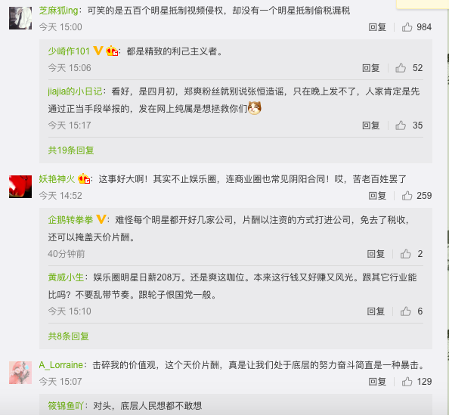
Event: The China Tax Administration declares its serious attitudes towards the actress Zheng Shuang’s tax fraud and evasion event

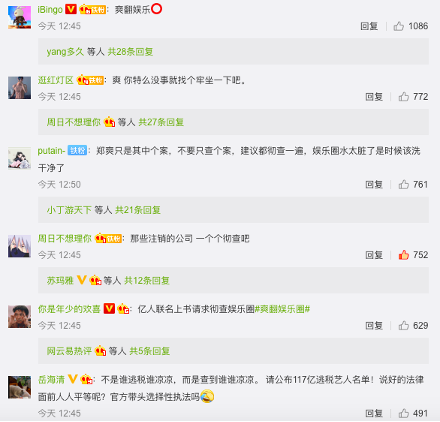
Fig. 1 Screenshot of the Zheng Shuang Event Under the People’s Daily Channel
Fig. 2 Screenshot of the Zheng Shuang Event Under the Free Discussion Forum
  • Comments under People’s Daily: mostly well-formed sentences, with either full SVO structures or simplified VO structures with implicit subjects in place, regarding one’s attitude toward the unfair privilege associated with Zheng, along with active and academic-like usage of vocabularies that urge for the government’s investigation. Emojis are more used in illustrative, direct manners.
  • Comments under the free discussion forum: fragmented, short phrases popping up randomly; the presence of “four-letter words” associated with negative emotions; pure complaints about unfairness that the general public is subjected to when compared with privileged individuals like Zheng. Emojis are more used in metaphoric and illocutionary manners.

2. Discussions of Cultural Events

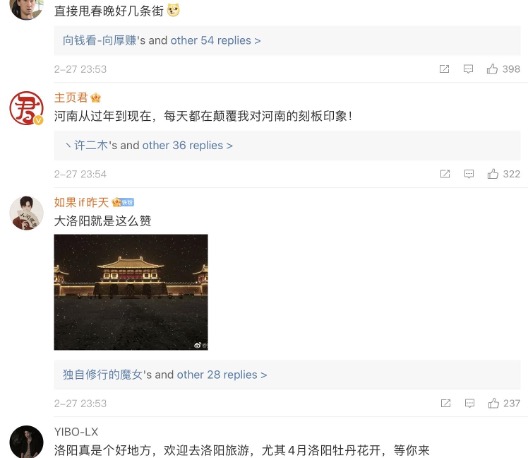
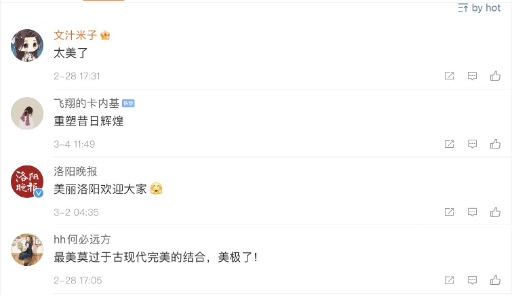
Event: Around this year’s Spring Festival, the capital city of the Tang Dynasty, Luoyang, reconstructed the palace city of Tang and held light festivals that also reflected on the glorious past days.

Fig. 3 Screenshot of the Luoyang light festival Under the People’s Daily Channel
Fig. 4 Screenshot of the Luoyang light festival Under the Free Discussion Forum

Informal expressions and phrases that lack complete sentence structures appear frequently. As for contents, while comments under both platforms contain recurrent praise for the beauty of the reconstructed ancient city, specifically, among comments under the People’s Daily, there are some noticeable distinctions. For example, there are comments that urge the national government to propagate the replication of such efforts in other cities, as well as comments of local people of Luoyang that take the commenting channel as a place to advertise their cities to potential visitors who come from other cities. This clearly marks the distinctive characteristic that only the state-controlled People’s Daily channel could be entitled to, as being the representation of the government’s voices, the public may consider it as a direct and effective channel to communicate with the government, as well as its easy accessibility and widely accepted popularity makes it appropriate for propagation. On the other hand, the free discussion forum could not similarly reach the government, as well as it may not be entitled to that high level of popularity and accessibility, given that many people would not visit the forum if not necessary or not interested.

[/expander_maker]


,

Do you LOL out loud? Screen time influence on internet slang irl

Julia Baylon, Rachel Rim, Carolina Guerrero, Hebbah Elokour, and Caelynn Hwang

If you’re a college student reading this, you are a key individual in the composition of the Gen Z identity. Gen Z, today’s 18-23-year-olds, is defined by its fervent slang usage as well as its notorious association with and attachment to technology. Commonly used components of technology in Gen Z include social media platforms, such as Instagram, Snapchat, Twitter, TikTok, and Discord. This study investigates the relationship between the two variables of time exposed to social media and slang-impacted conversational speech style. As slang rapidly evolves to shape communication and accommodate the construction and expression of individual identity, we begin to ponder, where does this language style come from, and to what extent does it influence our diction? Through conversational analysis and survey/questionnaire conduction, we hope to understand the explicit impact of social media on conversational slang and whether or not the results support our hypothesis, which argues that greater usage of slang on the internet and/or overall internet presence will result in a higher frequency of slang used in real life.

[expander_maker id=”1″ more=”Read more” less=”Read less”]

Our burning question

In a direct relationship with the evolution of social speech, internet slang has transformed from being a marked informal language style to an everyday form of communication. Internet slang influences both the communicative behavior that individuals in society practice along with their daily usage of language. Previous research on first language acquisition reveals that exposure to the respective language is a crucial component to the extent of production ability. Implementing the same argument, we hypothesize that exposure to the internet, where there is an abundance of slang, will affect the frequency that internet-users produce slang in conversation. This study ultimately seeks to understand our proposed research question that asks:  Does the time exposed to social media affect an individual’s conversational speech style and does this influence bleed into their different social media platforms varying informality? 

How did we approach this?

In this study, undergraduate university students will be the target population; the age range is between 18 to 22 years old. Data collection will occur in two parts, first, case studies of three to four recorded conversations, each at least 15 minutes long, will be observed to determine the frequency of slang words used by each participant. The latter half of the data collection will comprise a self-report survey, in which the participant will disclose their social media, respective user handle, and average screen time for each platform. The survey will then prompt participants to reflect and report individual uses of abbreviations, acronyms, and other slang. It concludes with a free response question of whether they think that internet slang influence has a positive or negative impact on speech.

Ultimately, we aimed to examine any correlations between screen time, app usage, self-reported analyses of slang used in real life, and actual usage of slang in real life. The participants involved in this study were unaware of the purpose of the study beforehand, as well, to elicit as natural-sounding conversation as possible. Furthermore, the participants were all friends of the co-authors, to hopefully eliminate any biases potentially introduced by the onset of an “interview-like” setting. The participants were all also friends of the co-authors since during quarantine we were admittedly unsure how to go about encountering people we didn’t already know and recording natural conversations between them.

Our Findings

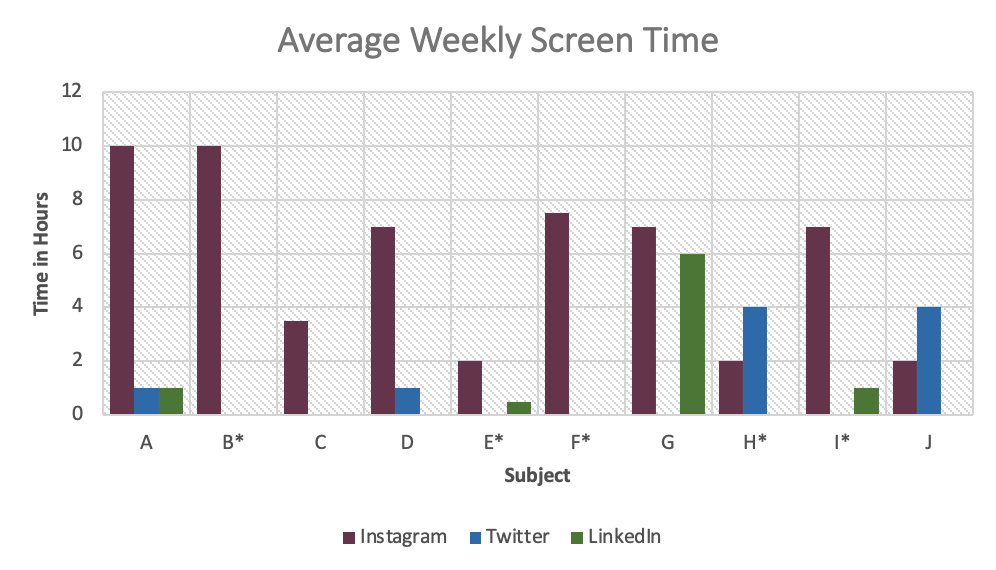
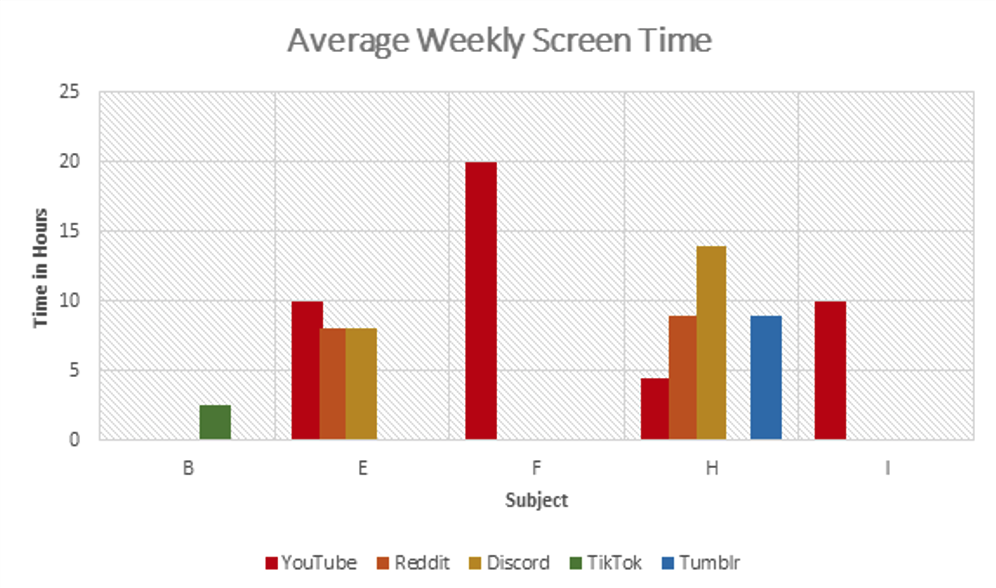
We asked individuals if they used Instagram, Twitter, LinkedIn, and Facebook. If they answered “yes”, they reported their average weekly screen time based off their devices’ reports or guestimate. 

Figure 1: Self-reported screen time.                                                                                               * Reported additional socials. Only Subject F reported screen time for Facebook (2 hrs)

We asked the participants if they used any other socials not mentioned in the survey and, if the did, to list them and report their screen time.

Figure 2: Additional socials. Only the subjects who reported any screen time are displayed.


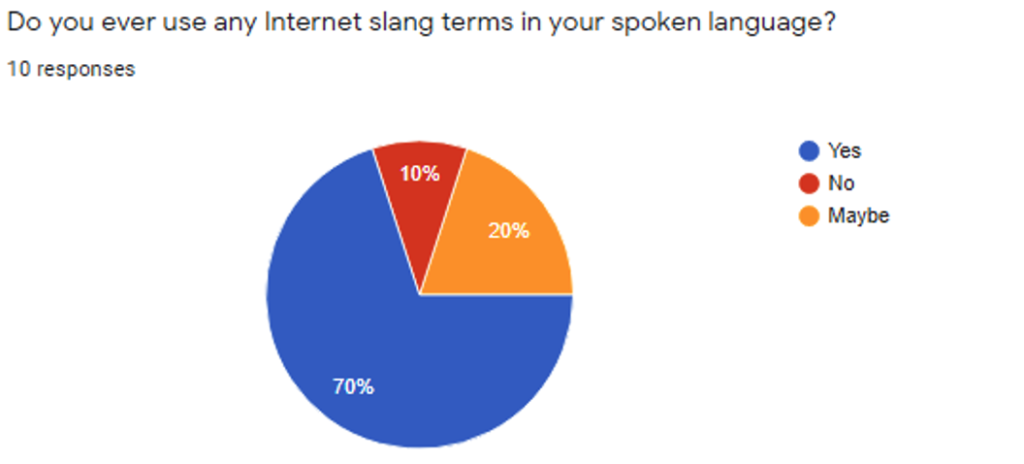
Each of the 10 subjects was asked to assess whether they used Internet slang in their spoken language. The results are displayed here in this pie chart, with the overwhelming majoring responding “yes.”

Figure 3: Self-reported usage of slang in everyday speech


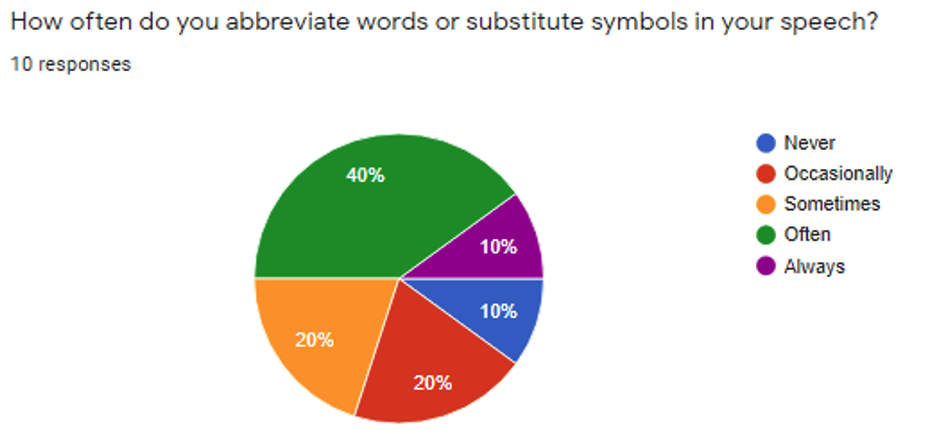
Each of the 10 subjects was asked to assess whether they substituted words in their spoken language. Results appear to be mixed, but again with the majority indicating that they do so at least “Sometimes.”

Figure 4: Self-reported usage of abbreviations in everyday speech


Although Subject A(she/her) had a pretty high average screen time (see Figure 1), the frequency of internet slang used in speech and posts is very little. Looking through her different social media platforms we found that in 2020, 0% of her Instagram posts, 0% of her LinkedIn posts, and 2.5% of her Twitter posts contained slang. About 45-55 minutes of recorded speech were collected for Subject A; this data was collected in the form of a phone call with a friend and the conversation topics were school, quitting a part-time retail job, a trip   to a museum, and apartment life. The results showed very little slang used (3 instances) in the form of emphasized agreement. When the friend expressed being happy living away from home and great dislike at going home for long periods of time, Subject A said “Facts! Period.” There was just one other instance of internet speech used but it was within the same conversation. While analyzing the recorded speech, we were surprised that, in the conversation about the job she hated and quit or the conversation about her trip to a museum, she did not use any slang. The tone of the first was annoyed/frustrated, while the second was very emotional and exciting. However, the Subject used the slang when the tone of the conversation was more neutral; perhaps it was the realization of the neutrality and therefore it was an effort to make the conversation more lively, or it just so happens that she thinks moving out and getting an apartment was the best decision of her life and gets excited when others feel the same. The interesting part was that after the recording was taken and the nature of the experiment revealed, Subject A laughed and expressed that she gave us a lot of material but was surprised when informed that she had only used slang 3 times. This overestimation of slang was seen among the other participants as well (see Figures 3 and 4). In the post-conversation survey, when asked if the influence of internet slang had a positive or negative effect, she answered,

“I think a little bit of both. It’s fun to use and say when with friends or in public. It also helps to reduce tension in conversations or with strangers. However, it is embarrassing and worrisome when people only speak like that or use the slang in essays, emails, etcetera.”

Additionally, Subjects E(he/him) and H(he/him) were also of note due to their significant presence on gaming platforms such as Discord (see Figure 2). During roughly 17 minutes of recorded speech, we were surprised to learn that there was little slang used (sick made an appearance a few times, as well as the occasional expletive), given that the gaming culture has evolved to contain speech community-specific language, which was confirmed in the post-conversation study and their Discord posts. Although their slang was not as active in their other social media platforms, Subject E had 68.7% of posts show slang and Subject H had 31.8% of posts show slang on their Discord (ACM Studio). This large difference between them can be attributed to Subject H’s position of co-presidents of ACM Studio, so his posts tended to be announcements, therefore, a bit more formal. The context of the conversation was generally relaxed and took place while cooking dinner. The topics of conversation strayed away from gaming topics, as there was a third individual present (not included in the study, as she is a co-author of this blog) who isn’t as big in the gaming community. Instead, the conversion-focused on classes, general Instagram-related topics, career focuses, and the like. However, in the post-conversation “debriefing” survey, the participants indicated a higher usage of gamer slang when talking to other gamers/about gaming-related topics. This included words such as pog, gg, F (..to pay respects), and broken (as in someone or something who is unfairly overpowered). As was discovered with Subject A, Subjects E and H also overestimated the extent to which they used slang in their everyday speech, indicating on the post-conversation survey that they believed their speech to “often” or at least “occasionally” use slang words.

The larger sociolinguistic picture

When trying to rationalize how little slang was used by the subjects, the words of sociolinguist Vera Regan came to mind. During her TEDxDublin, “What your speaking style, like, says about you” talk, she discusses how people’s language reflects their values, their goals, and their perception of themselves (2014). So, although Subject A is constantly exposed to internet slang, she will only choose the words that best represent her, as she is right now and who she wants to be in the future. As researchers, it highlighted for us how language is not only a tool for communication but also a form of creative expression that can hint at identity markers (like where we work, where we are from, our interests, etc.) like our style and choice in clothes.

In conclusion, throughout our study, we came to three main observations. The first observation states that some participants may have overestimated the extent to which they use slang in their speech. According to Kim and Ra, a higher frequency of the use of slang in one’s speech might be highly correlated to the limited means of communication that is available to reflect or express emotions, whether it is in written text or on social media (Kim and Ra, 2003). On the other hand, in real life, conveying emotions can come in the forms of facial expressions, voice tones, etc. Future studies investigating the effect of the use of emojis and uppercase letters would be interesting and may be useful to expand on the topic. Based on the data that we collected, our second observation stated that gender has little to no observable variance in our results. Our last observation indicates the conclusion that the topic of the conversation only seems to apply to the usage of speech in specific contexts. For instance, the speech observed of participants during playing a certain online game has sparked specific slang used in that specific game or common around social media platforms.

For future direction, it would be interesting to perform a study relating to specific speech communities. Our study unintentionally tapped on the gamer community, and an in-depth study on the usage of gamer lingo exclusively, correlated to the context in which it’s used (both online and in real life) could provide more detailed insight.


Acknowledgments

We would like to acknowledge everyone who participated in our study, especially the conversation participants who, after agreeing to participate, were told: “We’re gonna record our conversation for a bit. Don’t worry about it, okay? And no, sorry, we can’t tell you why until after. Just talk normally.” and then had to deal with the resulting confusion for a few minutes after.


References

An H. Kuppens (2010) Incidental foreign language acquisition from media exposure, Learning, Media and Technology, 35:1, 65-85, DOI: 10.1080/17439880903561876

Kim Y.S., Ra DY. (2003). Constructing an Internet Chatting Dictionary for Mapping Chatting Language to Standard Language. Lecture Notes in Computer Science, 2713. DOI: 10.1007/3-540-45036-X_72

TEDx Talks. (2014, November 21). What your speaking style, like, says about you | Vera Regan | TEDxDublin [Video]. YouTube. https://youtu.be/jAGgKE82034

[/expander_maker]

, , ,

A Digital Take on Modern Model Minority: Not So Subtle Asian Traits

Subin Kim, Jihee Choi, Fiona Dai, Chris Ngo

This study investigates social implications of Asian Americans being stereotyped as a model minority. The notion of the model minority basically highlights only positive aspects and successes of a group, while ignoring or downplaying the negative aspects and characteristics. Many Asian Americans have been preconceived as “nerdy” which fits the stereotype of the model minority. To be more specific to this topic, we examined how the idea of the model minority is actually used in Asian Americans’ daily life through the most popular medium of social interaction among adolescents and young adults nowadays– social media. Based on the purpose for this study, data was collected from a Facebook group called Subtle Asian Traits which has more than 1.6 million members and is shared with diverse posts of the discourse styles mostly related to Asian cultures. The posts were then analyzed for content involving the concept of model minority, and divided into two categories. Between the two groups are those fitting the stereotype of model minority, and those in which involve school de-emphasis content and African American Vernacular English (AAVE) slang. Through analyzing this study, the model minority was considered to connect with positive outcomes and reduce some negative effects of discrimination.

[expander_maker id=”1″ more=”Read more” less=”Read less”]

Introduction

Society tends to categorize people based on certain traits and characteristics. These traits are shaped by an individual’s own background through ethnicity, culture, gender, and upbringing. Although most people know that individuals are varied in personality and traits, they tend to have preconceived notions about groups of people due to these categorizations, or stereotypes. Stereotype experiences are often associated with negative discrimination due to their conceptual overlap. However, we want to differentiate the two ideas in this study since previous research has found positive effects of certain stereotypes (Kiang, Witkow, and Thompson, 2015) and therefore stereotypes can be examined with or without negative discrimination. To further distinguish these two concepts, we will define negative discrimination as “biased actions or behaviors toward an individual due to his or her group membership” that are typically adverse based on Fishbein’s study on “Peer Prejudice and discrimination” (1996). Many studies in recent years have demonstrated the efficiency function of stereotypes which reduces one’s cognitive load (Sherman & Frost, 2000). That is, when one is dealing with cognitively demanding duty, such as multitasking, one can rely on stereotypes to save processing capacity and thus increase working efficiency.

We will focus on this stereotype often associated with Asians, the model minority image of Asians as diligent overachievers in this paper. The model minority image was formally identified over a half century ago (Peterson, 1966), and it still persists in social environment today. According to Poon, Squire, Kodama, Byrd, Chan, Manzano, Furr, and Bishundat (2015), the model minority is “a monolithically hardworking racial group whose high achievement undercuts claims of systemic racism made by other racially minoritized populations”. The idea of the model minority highlights the successes of the group, while ignoring or down playing the negative aspects and characteristics. In this specific case, Asians are typically seen as a “good” minority that succeeds and are considered “honorary whites”. It also lends itself regarding racism against Asians becoming normalized due to the fact that the traits of Asian stereotypes are considered desirable. Prior study has suggested that the model minority image of Asians could provoke unfair treatment from peers in the form of negative discrimination (Niwa, Way, & Hughes, 2014).

Due to model minority status highlighting academic success, Kiang et al. have examined the developmental implications of being stereotyped as model minority in Asian American adolescents (2015). The time period from adolescence to early adulthood is worth investigating because one goes through ethnic exploration and identity formation within this time frame and later become stable. Moreover, research has shown that over 99% of Asian adolescents have had at least one in which they perceived as being stereotyped as a model minority (Thompson & Kiang, 2010). Kiang et al. (2015) have measured perceived stereotypes and negative discrimination using self-report surveys, but no study has yet examined perceived model minority through the most popular medium of social interaction among adolescents and young adults nowadays ­– Facebook.

In this paper, we aim to investigate the implications behind Asian adolescents and young adults’ stereotypes and ethnic-based social interaction on social media by virtue of analyzing the model minority concept related posts on the Facebook group called Subtle Asian Traits. Kiang et al., (2015) have found that the model minority experience is connected to positive outcomes and can reduce some of the negative effects of discrimination on academic adjustment through the quantitative method. We will qualitatively test whether their findings still hold true in social media.

Background

We primarily collected data for this study on a Facebook group called Subtle Asian Traits. Facebook is one of the most widely used social networking services in the U.S. Facebook may be used to facilitate new relationships and maintain existing relationships according to Ellison, Steinfield, and Lampe’s study on Facebook “friends” (2007). Similarly, Facebook can be a great tool for groups with common characteristics to express their respective identities. For the same reason, a group of high school students who share the same ethnic identities–Asian Australians–formed the Subtle Asian Traits Facebook group one year ago with the intention of creating a platform for English speaking Asians to exchange their shared cultural experiences.

We wish to investigate the discourse style the population uses in the Facebook group. It has more than 1.6 million members and contains memes–humorous images, videos, microtexts, etc.–that are mostly related to Asian culture. In the group, the largest population was Chinese, followed by Vietnamese, Filipinos, Koreans and Taiwanese. In addition, the group is made of people from all Asian countries. This is including, but not limited to: Malaysia, Japan, Indonesia, Cambodia, Thailand and Hong Kong. The group’s population tend to be from a variety of places, but is mostly composed of Westernized Asians.

The stereotypes that people usually have for Asians is that they portray positive characteristics such as being nerdy and intelligent; however, every group or ethnicity cannot be defined by the same features or characteristics. Therefore, Asians cannot be considered that they conform to a “nerdy” and successful stereotypes. To break this discrimination, we will discuss how the newer generation of English speaking Asians are diverging from the model minority stereotype by creating a counter culture that tends to appropriate African American vernacular English (AAVE). According to the journal “Appropriation of African American slang by Asian American youth”, the author explains that non-African Americans have followed and imitated African American black culture and slang. It is shown that one’s identity is identified by the language and slang that he or she uses, not discriminated by race. Likewise, the group such as the Subtle Asian Trait were created to humorously refine negative images and change stereotypes.

Project Design

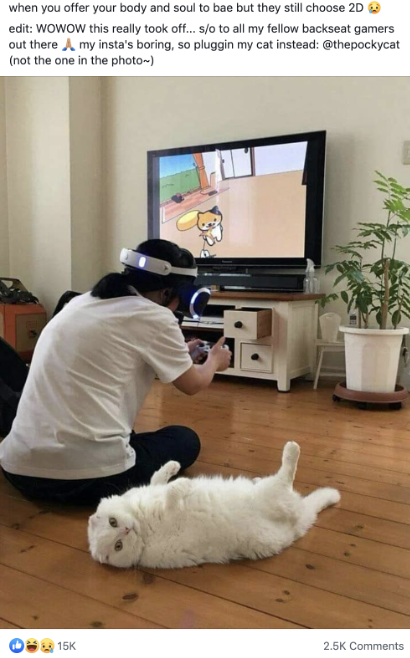
The data sample in this study consisted of fifty-six posts from the Subtle Asian Traits Facebook group. We first chose two categories of keywords: 1) academic related such as “study,” “exams”, and 2) AAVE slang, e.g., Finna, Bae, Plug, Finesse. Then we manually selected thirty posts for the academic related category and twenty-six posts for the AAVE category. Furthermore, because the average “likes”– a characteristic of the posts occurred from members’ agreement with the post within this Facebook group–was 1,000 to 2,500, we decided to only include those posts that had over 2,000 “likes” so that the posts we selected were able to represent what was popular in this 1.6 million member Facebook group.

Figure1: an example of a post from the Subtle Asian Traits Facebook group.

Results

The results for our data were divided into two groups. One group showed a tendency to match the characteristics of the model minority. The other group did not fit this mold, but instead showed signs of attempting to break free from it.

In one group, English-speaking Asians express difficulties and hardship about getting stressed when they study. They showed more empathy for their difficulties when involving Asian social content such as Doraemon, Soju, and Bangtan Boys. Some data is still focused on exam and studying, which shows doing well on exams is a popular topic within the group. In the other group, English-speaking Asians attempted to change stereotypes by emulating black culture and AAVE slang. One of the data showed empathy for a new culture using AAVE words such as ‘peeps’ and ‘twerking’. Furthermore, for example, people used AAVE ‘sup’ combing their language ‘wo’ which means ‘I’, so they could make AAVE word ‘wassup’ with their own meaning that ‘say hello to myself’. They tended to be more interested in content regarding partying and general school de-emphasis items. This stands in contrast to the current perception of the Asian model minority of nerdy, submissive, and rule abiding. Overall, our data showed that some of English-speaking Asians stuck to the concept of model minority, but the other tried to change and deviate their stereotypes.

Discussion and Conclusions

The results showed primarily two different distinct groups within Subtle Asian Traits. While these groups have some overlap, there is a significant voice and content difference. Our hypothesis mainly discussed only one of these groups, those conforming to the modern model minority stereotype. Within our research, however, we did encounter this counter group that seeks to diverge from previous notions thought about Asians. This split can be attributed to those forming groups based on shared stereotype-based interactions, and also those seeking to separate from previous ideals and instead relating to other ethnic groups.

For those breaking from the idea of the model minority, it can be seen that many seek identity within other minority groups. A previous study has shown that Asians borrowing AAVE slang terms are often an attempt to be the “Other Asian” and rely on stereotypes of other racial groups to construct an identity of their own (Reyes, 2005). This “Other Asian” changes the view of the Asian model minority and shifts the focus to a new perspective. The model minority is often a binary view that many individuals in this group find themselves forcibly conforming to. Rather than using AAVE to “act black” or as a different race, it can be argued that this new group uses slang to create their own identify, separate from any previous groups. While fashioning a new identity, however, those in this new subgroup can still visibly benefit from the positive outcomes of the model minority.

A previous study has shown that the effect of discrimination on Asian American adults’ distress varied depending on social context and the environment’s ethnic density (Syed & Juan, 2012). However, with the emergence of social media, such as Facebook and the prevalent usage of such platform among adolescents and young adults, we argue that the distress can be attenuated by sharing similar stereotyped-based social experience with each other on social media and thus creating a in-group sentiment. Additionally, Kiang et al. (2015) has suggested potential differences among Asians who reside in traditional settlement areas, such as Los Angeles or New York City, that have a long history of immigration and non-traditional ones that are emerging immigrant communities. Through the increasing popularity of social media usage, we believe that the regional differences will be diminished.

The model minority related posts have shown a system of camaraderie amongst the group users on Subtle Asian traits. As stated before, the model minority experience is oftentimes connected with positive outcomes and can actually reduce some of the negative effects of discrimination. Through the posts analyzed, the in-group sentiments created have shown a positive impact in which members relate to academically based posts. The posts show positive reinforcement towards the idea of high academic achievement, while also maintaining the positive aspects of the model minority stereotype.

Two new forms of Asian identity have emerged as a result of new age model minority. The two orientations have allowed for Asian youth and young adults to connect and establish new identities, while participating in their own new form of subculture. As it takes a discourse approach, social media allows for more analysis on the creation of new identities and formations of previous stereotypes and groups.


References

Ellison, N. B., Steinfield, C., & Lampe, C. (2007). The benefits of Facebook ‘‘friends’’: Social capital and college students’ use of online social network sites. Journal of Computer-Mediated Communication, 12(4), 2–3. Retrieved 24.11.19 from http://jcmc.indiana.edu/vol12/issue4/ellison.html

Fishbein, H. D. (1996). Peer prejudice and discrimination: Evolutionary, cultural, and     developmental dynamics. Boulder, CO: Westview Press.

Kiang, L., Witkow, M.R. & Thompson, T.L. J Youth Adolescence (2016) 45: 1366. https://doi.org/10.1007/s10964-015-0336-7

Niwa, E. Y., Way, N., & Hughes, D. L. (2014). Trajectories of ethnic– racial discrimination among ethnically diverse early adolescents: Associations with psychological and social adjustment. Child Development, 85, 2339–2354. doi:10.1111/cdev.12310.

Peterson, W. (1966). Success story: Japanese-American style. New York Times Magazine, 9, 20–43.

Poon, OiYan; Squire, Dian; Kodama, Corinne; Byrd, Ajani; Chan, Jason; Manzano, Lester; Furr, Sara; Bishundat, Devita (June 2016). “A Critical Review of the Model Minority Myth in Selected Literature on Asian Americans and Pacific Islanders in Higher Education”. Review of Educational Research. 86 (2): 469–502. doi:10.3102/0034654315612205. ISSN 0034-6543.

Reyes, A. (2005), Appropriation of African American slang by Asian American youth1. Journal of Sociolinguistics, 9: 509-532. doi:10.1111/j.1360-6441.2005.00304.x

Sherman, J. W., & Frost, L. A. (2000). On the Encoding of Stereotype-Relevant Information Under Cognitive Load. Personality and Social Psychology Bulletin, 26(1), 26–34. https://doi.org/10.1177/0146167200261003

Syed, M., & Juan, M. J. D. (2012). Discrimination and psychological distress: Examining the moderating role of social context in a nationally representative sample of Asian American adults. Asian American Journal of Psychology, 3, 104–120. doi:10. 1037/a0025275.

Thompson, T. L., & Kiang, L. (2010). The model minority stereotype: Adolescent experiences and links with adjustment. Asian American Journal of Psychology, 1(2), 119–128. doi:10.1037/a0019966.

[/expander_maker]

, ,

Gen Z, Slang, and Stuff

Anonymous author, Daniela Vega, Giselle Chan,  Yuxiao Li

This study provides an analysis on the use of general extenders within Generation Z (Gen Z) online discourse. Utilizing qualitative analysis methods on social media dialogue (e.g. Youtube comments, Tweets, Spotify playlists, etc.) allows us to demonstrate how Gen Z members have created a new general extender (i.e. “and idk”). Where previous research studies on general extenders were narrowed to in-person discourse and interactions, this study examines the language pattern in the larger context of the internet across different social media discourse facilitators. It was a new context we were interested in providing research for because Gen Z is the first generation to grow up with the mass media culture, brought to them by the aforementioned social media outlets. Aptly so, Gen Z has created this new form of general extenders to expand their lexical inventory and engage in online discourse, as a pragmatic tool to index their emotions and stances. The interesting sociolinguistics findings on Gen Z and the use of general extenders are reflected on how this particular generation is constantly creating new slang terms (e.g. and idk), which builds intragenerational unity (with mutuals) but also causes intergenerational confusion (with the baby boomer generation referred to as the boomers); nonetheless, nuanced research is complicated with the lack of a corpus focusing on online discourse.

[expander_maker id=”1″ more=”Read more” less=”Read less”]

Introduction

Slang fosters in-group relationships and creates a recognizable framework of social discourse structure to identify fellow group members with. Slang is known to change regularly, generation to generation, and trend to trend. Currently, technological advances have played a huge role in the development of new stylistics in language and the creation of new lexical items. It is a language phenomenon that has been studied to showcase sociolinguistics impacts. Here we are also looking for the sociolinguistic impact, but on the focus of general extenders found in the Generation Z (Gen Z) every-day internet discourse stylistics. The speaking style of our target population, Gen Z, employs Internet slang in computer-mediated discourse, especially through videos on social media websites like YouTube, Twitter, and TikTok. We are looking to examine how they utilize it with intergenerational and intragenerational group members. We are hoping to understand if it is used to separate themselves from other groups or if there is a new development in general extenders with the same functions as previous research has defined. 

Background Information

There is previous research on the text messaging stylistics of Gen Z. There is also research on previous generations creating new slang. We will be following up these research focuses with the use of a specific linguistic event, the general extender (GE). GEs are phrases added to the end of a sentence indicating the previous word is part of a set, extending its meaning. For example, when being asked, “What did you find at the tide pools?”, one could respond by saying, “I found starfish, sea urchins, sea anemones, and stuff.” The “and stuff” is the GE, signifying the previous items were part of a larger set, in this case, of sea creatures. Researchers Tagliamonte and Denis analyzed these types of phrases and verified them to have important functions in spoken language. Those functions include referring to a set of the previous word, creating vagueness, sending a signal of unsureness, or creating solidarity between speakers. GEs can also be used to mark the end of a speaker’s turn or indicate that the previous word could become a topic of the conversation.

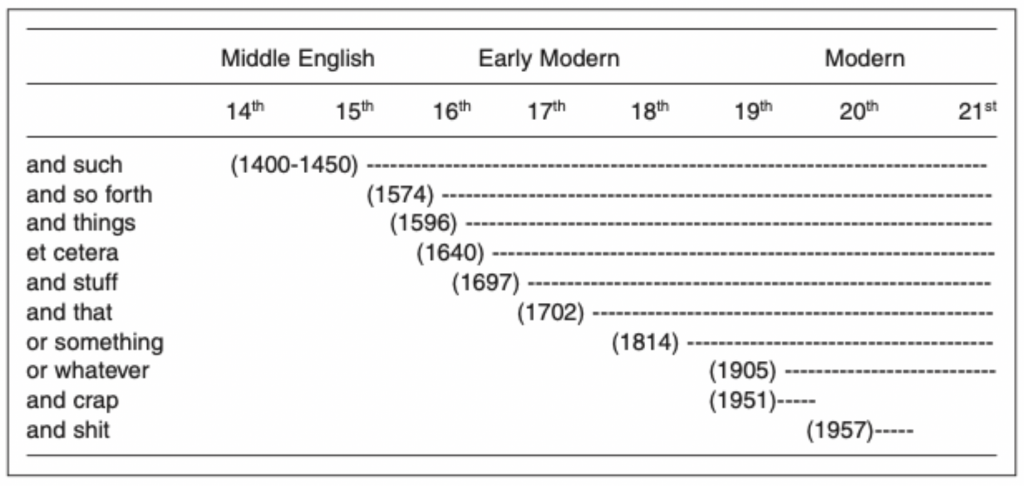
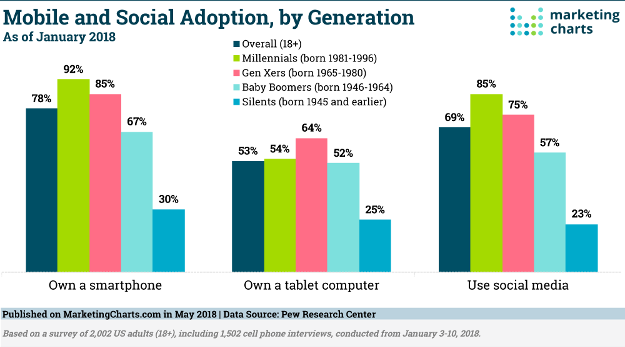
Common GEs used by previous generations include “and stuff” and “and things.” The oldest uses of general extenders date back to the 14th century with the GE, “and such” (Tagliamonte/Denis). GE use and types further develop with new additions appearing in 1957 with “and shit”. This includes general extender particles like “and that kind of thing” (see Figure 1).  We saw no other data on recent GEs in the late twentieth century or the current twenty first century. We are interested to find any new GEs and if possible, how they are coined and popularized by Gen Z. If there is a continuance in use of GEs from a previous generation, we will be documenting occurrences. When referring to Gen Z, we refer to individuals who are currently between 4 and 24 years old, born between 1995 and 2015. Gen Z constitutes an estimated 70 million of the population of the United States as of 2019. In looking at their screen time behavior, Gen Z watch about 68 videos per day across 5 social media platforms, including Snapchat, TikTok, Twitter, Facebook, and YouTube. This social behavior is new because of the invention of technology but does relate to multiple age groups. Gen Z, millennials (ages 18-34), and Generation Xers (ages 35-54) use social media more than baby boomers (ages 55 or more) (see Figure 2.). However, social media use is the highest in Gen Z than in other generations. This gives them the highest opportunity to host dialogue between themselves on Twitter, Facebook, YouTube, and TikTok.

Figure 1


Figure 2

Methodology

Using the qualitative method, Conversational Analysis (CA) for this study, we observe how Gen Z uses slang and GEs in their online conversations. Applied frequently in Sociology and Sociolinguistics to study social interactions, CA allowed us to analyze, compare, and document instances of GEs. The data used in our transcribed CAs were collected mostly from YouTube and Twitter, which have the highest Gen Z activity. Twitter caused difficulties because without category subjects to search for to find GE use, we were forced to scroll and read many tweets, hoping for an occurrence of a GE. We were able to search for the keywords of GEs like “and stuff”, which led to some results. We watched the most viewed YouTube videos from the popular Gen Z YouTube personalities (YouTubers) like James Charles and Kylie Jenner to begin a lexical choice analysis. When identifying the new GE, we returned to both Twitter and YouTube to search the phrase to find more instances and examples that supported our evaluation.

Results

We continuously saw a continued use of GEs including “and shit”, “and stuff, “and things”, and “or whatever”. These are continued in use from even the early 1600s. We did not witness an “and so forth” from the 1500s in a Tweet, YouTube video, YouTube comment, or TikTok made by a Gen Z community member or influential personality. We conclude because online discourse is not formal, the use of a Shakespearean aged GE would not be expected.  These previously identified GEs are not used to separate themselves from a generation but as a normal stylistic feature all generations use. We found no unique change in use for already established and identified GEs.

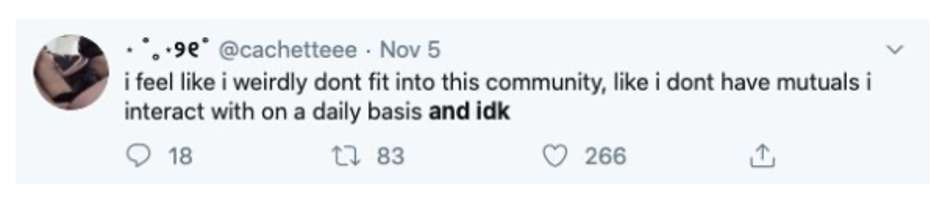
Through our CA data collection efforts we have successfully identified a new GE, “and idk”. This new GE is a fascinating finding sociolinguistically because it is a hybrid of already established linguistic phenomena and recently developed Internet-related acronyms. In looking at the function of “and idk,” we see it follows the same patterns of previous GEs. It continues to successfully indicate that words in the clause are part of larger set.

However, “and idk” deviates in the sense that it encodes pragmatic meaning. It contributes sentiments of vulnerability, insecurity and disconnect (see Figure 3.) In this example of “and idk”, we see it is identifying the users’ response to her lack of Twitter followers to interact with. Overall, our results serve as an expansion on previous research for GE, and we ultimately want more linguists to join in on this conversation of navigating the sociolinguistic landscape of the Internet to gain a more nuanced understanding of Gen Z-related discourse.

Figure 3. Screenshots of one of our tweets.

Discussion & Conclusion

We found GE uses allows any generation to be identified as the current younger generation because they are more typically found in informal speech. Social media discourse has allowed for changes in communication to facilitate the speed of communication speed online. While the use of the same tone you would have with friends and your in-group is also preferred because of the opportunity of anonymity and profile curation online. The research on general extenders does not include the increase, decrease, or appearance of usage at certain ages. However, we speculate if there should be research done on this, there could be identified a transition period between ages where GE use appears. We expect the GEs we identified to be added to a timeline representing its introduction, like the one we included in our research. We would hope there could be a timeline more specific for each GE within every time period, such as our focus here on Gen Z and social media. We would be interested in seeing the peaks and heights of use within the generation and the time periods where the GEs manifest. Thanks to archiving efforts for internet dialogue such as the Library of Congress Twitter Archive, the availability of data has increased. This type of data collection will allow for even further detailed research and we expect further sociolinguistic analysis.


References

A.O., Abusa’Aleek. (2015). Internet Linguistics: A Linguistic Analysis of Electronic Discourse as a New Variety of Language. International Journal of English Linguistics. 5.10.5539/ijel.v5n1p135.

Cheshire, J. (2007, April 17). Discourse variation, grammaticalisation and stuff like that. Retrieved from https://onlinelibrary.wiley.com/doi/10.1111/j.1467-9841.2007.00317.x.

Cox, Toby. (2019, July 2). How Different Generations Use Social Media. from The State of Tech. Retrieved from https://themanifest.com/social-media/how-different-generations-use-social-media

D.W. Maurer. (2013, August 16). Slang. Encyclopædia Britannica, inc. Retrieved from https://www.britann ica.com/topic/slang

Levey, & Stephen. (2012, March 1). General Extenders and Grammaticalization: Insights from London Preadolescents. Retrieved from https://academic.oup.com/applij/article/33/3/257/220662.

Sue. (1970, January 1). Young people’s language and stuff like that. Retrieved from http://linguistics-research-digest.blogspot.com/2011/10/young-peoples-language-and-stuff-like.html.

[/expander_maker]

, , , , , ,
Scroll to Top