social media

No Güey, Spanish Social Media is a Language Unto Itself

Social media is the vehicle that carries much of our communication and culture across the internet nowadays. Unquestionably, its relevance to today’s society is irrefutable and its ability to be used across multiple languages is something to be studied. The focus of this article looks into whether social media influences Spanish speakers in their everyday use of Spanish like how popular trends across English social media does. This study observed popular trends in Spanish social media and slang often included in posts across popular platforms like Facebook, YouTube, Twitter (X), and Instagram. Then, surveyed UCLA students and high school students discussed their use of social media and whether they use slang learned from social media in their everyday interactions. Respondents showed that while the slang and language they pick up does match what is often seen in social media, they instead stated that they primarily picked up new words from people they talk to often, like friends and family, not social media. Our findings suggest that while social media is a strongly influential phenomenon on individuals, for the Spanish speaker it is more so a reflection of changes in their language rather than being the influencer.

[expander_maker id=”1″ more=”Read more” less=”Read less”]

Introduction and Background

Our research examined the dynamic interactions that occur between Spanish-speaking people and the constantly changing social media environment. Our main goal was to investigate the complex linguistic trends and shifts in Spanish that are made possible by Internet communication. We aimed to investigate how Spanish-speaking users’ word choices and phrases have changed as a result of digital communication platforms by closely examining the impact of social media culture on language use.

Social media platforms are vibrant centers of language exchange in today’s digitally connected world, where users participate in a variety of communication activities, from chats to formal discourse. Our goal in conducting this research was to clarify how this digital world has affected the development of Spanish language usage. Determining if linguistic patterns seen in online encounters result in changes to people’s face-to-face conversational styles was one of the main goals of our research.

The various ways that social media culture affects language use in Spanish-speaking populations are clarified by our findings. As people crossed the digital environment using a combination of traditional language rules and modern terms, we saw fascinating patterns of language creation and adaptation. Additionally, our research demonstrated the close connection between language use in online contexts and physical communication styles, emphasizing the interdependence of virtual and real-world interactions.

Recognizing the subtle aspects of language change on social media platforms is essential for understanding bigger societal transformations and cultural dynamics in today’s digital world. Our research sheds light on the constantly changing nature of language and communication in modern society by exploring the linguistic changes caused by online engagement.

Methods

Our research project embarked on an in-depth exploration, delving into the dynamic evolution of the Spanish language facilitated by the pervasive influence of social media platforms. Targeting Spanish-speaking users, particularly high school and college students, our study aimed to comprehensively understand linguistic trends and shifts induced by internet culture. Specifically, we sought to discern whether users’ word choice on social media platforms diverged from their conversational language usage. Our methodology encompassed two primary approaches: social media analysis and surveys conducted among high school and college-aged Spanish speakers.

To dissect linguistic patterns prevalent on social media, we undertook a meticulous examination of word choice employed by Spanish-speaking users across platforms such as TikTok, X, and Instagram. This process involved deploying conversational analysis techniques to scrutinize the content and language structure evident in user-generated posts, comments, and interactions. Through this methodological approach, our aim was to unearth prevailing trends in language use, encompassing the prevalence of slang and informal speech styles within these digital spaces. Simultaneously, we administered surveys to high school and college students who self-identified as Spanish speakers. These surveys were thoughtfully designed to ascertain the vocabulary and language preferences of students in their online interactions. By comparing the linguistic behaviors observed on social media with those reported in the surveys, we sought to elucidate any disparities or consistencies across different communication mediums. Furthermore, qualitative interviews conducted with a subset of participants provided additional insights into how social media platforms influence language use among Spanish-speaking youth, thereby shedding light on potential shifts towards either more informal or formal speech patterns.

Overall, our research endeavors were dedicated to unraveling the intricate relationship between social media culture and language evolution within the Spanish-speaking community, with a particular focus on high school students as a pivotal demographic in this evolving digital landscape.

Results and Analysis

Our observational data showed that Spanish-speaking online users, such as influencers from top-liked posts, frequently used slang or informal words in Spanish when recording a video. The most common words throughout the posts were the following: “no mames” (no way), “bichota” (a female drug lord or female empowerment), and “de veras” (really). For example, this line with “no mames” from a YouTube video with over a million views, has become a voiceover used by other influencers across social media platforms.

However, only 8 out of 22 participants from our survey data reported learning about “no mames” and “deveras” from social media, while more than half explained learning these and other Spanish words from their family and friends. No one reported learning about “bichota” and 3 participants reported learning about abbreviations, such as “que,” “porque,” and “te quiero mucho” from social media, which contrasted from our observational data.

Additionally, Figure 1 shows that about 60 % of participants reported “not at all” or “rarely” using Spanish words learned through social media compared to the 40 % who “sometimes” or “very often” use these Spanish words in everyday conversation.
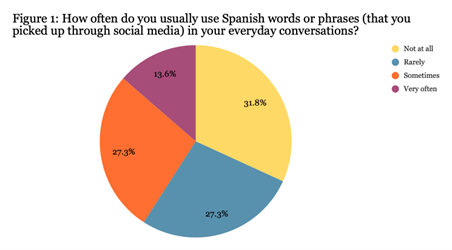
Figure 1: Participants’ frequency of Spanish words or phrases (picked up through social media) in everyday conversations

Figure 2 illustrates the Spanish language proficiency of the participants to confirm that they were from Spanish-speaking communities when making our analysis. 
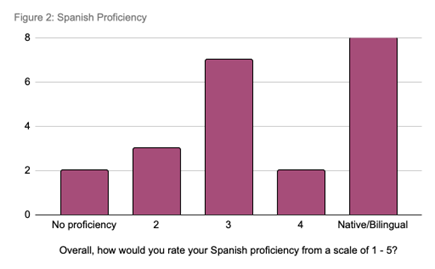
Figure 2: Survey participants’ self-evaluated Spanish proficiency

Figure 3 summarizes the participants’ reasoning for using Spanish words from social media as “trendy/cool,” “funny,” and helpful when communicating with other Spanish speakers.
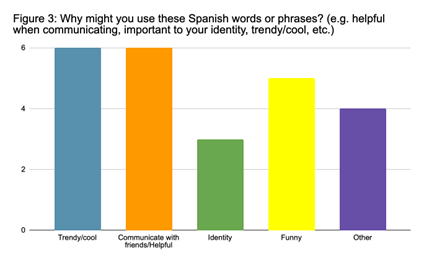
Figure 3: Reasons participants use Spanish words from social media

So, while an individual can use slang in social media and in everyday conversation, they will actively choose based on who they are talking to, which may not match what they encounter or see on social media.

Discussion and Conclusions

Our research ventured into the vibrant intersection of social media and the Spanish language, revealing intriguing insights about linguistic evolution in digital spaces. Despite the prevalent use of slang and informal expressions by Spanish-speaking influencers on platforms like TikTok, X, and Instagram, our findings suggest a nuanced relationship between online language trends and everyday speech. Contrary to our initial hypothesis, the majority of surveyed Spanish speakers did not attribute their linguistic repertoire to social media influences. Instead, personal interactions with friends and family emerged as the primary sources for acquiring new slang and expressions. This indicates a significant degree of linguistic autonomy among Spanish speakers, who navigate between the informal lexicon of digital spaces and the colloquial language of real-life conversations.

While social media undoubtedly shapes contemporary discourse, its role in directly influencing everyday Spanish language use appears limited. Our participants demonstrated a discerning approach to language adoption, selectively integrating social media slang into their conversations based on context and audience. This selective assimilation underscores the adaptive nature of language use, where individuals tailor their speech to suit specific social settings and relationships.

Our study sheds light on the complex dynamics of language evolution among Spanish speakers in the age of social media. While digital platforms offer a rich tapestry of linguistic innovation, the essence of language change remains deeply rooted in human interaction and social networks. Social media, therefore, serves more as a mirror reflecting ongoing linguistic shifts rather than the primary catalyst for change.

References

Alim, H. S. (2005). Hearing What’s Not Said and Missing What Is: Black Language in White Public Space

Cycyk, L. M., & De Anda, S. (2021). Media exposure and language experience: Examining associations from home observations in Mexican immigrant families in the US. Infant Behavior & Development, 63, 101554. https://doi.org/10.1016/j.infbeh.2021.101554

Gonçalves, B., & Sánchez, D. (2016). Learning about Spanish dialects through Twitter. Revista Internacional de Lingüística Iberoamericana, 14(2 (28)), 65–75. http://www.jstor.org/stable/26379776

Gottfried, J. (2024, January 31). Americans’ Social Media Use. Pew Research Center: Internet, Science & Tech. https://www.pewresearch.org/internet/2024/01/31/americans-social-media-use/

Kircher, Ruth, and Ethan Kutlu. “Multilingual Realities, Monolingual Ideologies: Social Media Representations of Spanish as a Heritage Language in the United States.” Applied Linguistics, vol. 44, no. 6, Jan. 2023, pp. 1077–99. https://doi.org/10.1093/applin/amac076.

Li, C., & Liu, J. (2017). Effects of using social networking sites in different languages: Does Spanish or English make a difference? Computers in Human Behavior, 74, 257–264. https://doi.org/10.1016/j.chb.2017.04.031

Majors, A. L. (2017) Social Media and Discourse: A Comparative Study of English and Spanish Apologies. LSU Master’s Theses. 4425.

Ramirez, N. J., Hippe, D. S., & Lindekugel, K. (2022). Electronic media and social features of language input in bilingually-raised Latinx infants. Infant Behavior and Development, 68, 101740, ISSN 0163-6383. https://doi.org/10.1016/j.infbeh.2022.101740.

[/expander_maker]
, ,

Going Greek?

Jasmin Lopez, Samantha Solowitz, Max Orroth, Esther Lin, anonymous author

Collegiate Greek life has been around for centuries, fraternities first being established in 1775 followed by sororities in 1851, giving both men and women the opportunity to become a member of an exclusive association promising brotherhood and sisterhood to all who join. The mysterious and vague identity of these fraternities and sororities became a tradition, with members specifically using terms and/or slang that make sense only to those involved. The purpose of our blog is to recognize the meaning behind Greek life slang, and how this particular lexicon represents a departure from formal language. We delve into the nuances of Greek life, from its rich history and recruitment process to understanding its cultural shift in linguistic trends and social dynamics. Through the use of online videos and fieldwork, we explored how Greek life slang terms develop a strong sense of social acquisition for those directly involved while simultaneously maintaining a form of mystery for those who are not.

[expander_maker id=”1″ more=”Read more” less=”Read less”]

Background

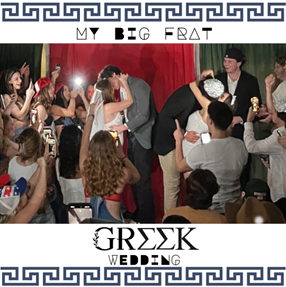
Pictured: A faux wedding, strangers kissing, the crowd going crazy. Credit: Max Orroth

As I (Max) walked into the Phi Kappa Psi house on a Tuesday night for a frat wedding (a faux wedding, two fraternities/sororities come together to host their chosen couple), a brother greeted me: “Hey welcome bro, tonights gonna be so ferda.” I didn’t understand what he meant by this at all, specifically ferda,  and when I asked what the word meant I never got a straight answer. It was clear at this moment, to me and the brothers of Phi Psi, that I was an outsider. I did not understand their secret slang, and for the rest of the night, I felt like a toddler asking what words everyone seemed to know meant.

The example above showcases an ingroup outgroup dynamic. Through this experience, we sought to understand the slang evoked in the Greek life college setting, towards a cultural shift in linguistic and social status. Through the use of online videos and fieldwork, we explored how Greek life slang acquisition is used to communicate valuable insight into fraternities and sororities. This project draws on two main questions; How does Greek slang separate members of Greek life from the broader collegiate community? And, How do Greek organizations undergo a socialization process through linguistic genres?

Introduction to Greek Life

The origins of Greek culture can be identified in the late 18th century when the initial Greek-letter societies were founded (Harding, 1972). Greek life is a conduit for lifelong friendships, countless parties to attend, and the opportunity to live in a mansion with 20-50 peers (Jones, 1976). However, the daily lives of some “brothers” and “sisters” are widely known to be exclusionary, insular, and with roots in the secretive masonic lodges (Dymchuk, 2020). The groups are segmented into fraternities for men and sororities for women. Like most groups, Greek life holds its own set of slang terms, and priori language is only understood within the community. Slang is not an official language, but is characterized by familiar coloring (Izmaylova et al., 2017). Familiar coloring refers to certain words being associated with a specific group, used to linguistically signal identity and ingroup status. More specific to the linguistic environment we studied, college slang amongst undergraduates pulls from both broad lexicons as well as university and context-specific slang (Hummon, 1994). We hypothesize that at its core, greek life slang represents a departure from formal language, often characterized by its genre. This departure of informality is developed through sociocultural language acquisition (Ochs & Schieffelin, 1984). The social functions of slang are manifold. Firstly, it serves as a marker of group identity, fostering a sense of camaraderie among those who share a common slang lexicon (Bucholtz, 2012). The slang lexicons used by sorority members and fraternities alike use phrases, symbols, and handshakes only known to collegiate Greek members, differing from the common use of slang found by nonmembers.

Ready to embark on a Greek life journey?

We were not! This is why our methods are participant observation and visual anthropology. We examined how the words and phrases are used in context and how they deviate from mainstream slang through visual anthropology (Abasi & Taylor, 2007).

Methods

For our methods, we used TikTok and YouTube videos; which involve heavy use of acronyms, Greek letter symbols, and code language. 

Picture is Lauren Norris via YouTube, 2023

Some popular accounts on TikTok were @makeupbymckenna and @emmaortiz24.

@makeupbymckenna’s TikTok videos titled “GRWM” (get ready with me) displayed a full day of the “Last rush week ever.” While @emmaortiz24 showcases a “GRWM” with Penn State recruitment trips. “Day in the Life” were mostly made by women in sororities representing “PNM”, “PIE PIE”, “DLAM”, “Olemiss”, etc. In the introduction to one of the TikTok videos, a girl is doing her makeup to get ready for sorority recruitment as a “TriDelt” and talking about the amount of “PNMs” that are going to be at their “house.” She advises those who will be participating in the recruitment process to make intentional relationships with other “PNMs” from their “pledge class” or “active number.” In a similar video, a girl advises her audience to let their “Pie Pie” know if they are going to be late to an event.

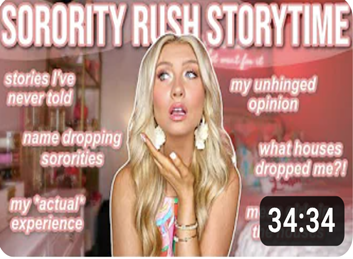
The YouTube videos we looked at were videos about “rushing” which is the recruitment process for joining a sorority. The picture above is Lauren Norris, talking extensively about her experience of being “dropped” from sorority Pi Beta Phi. This was a contrast from the TikTok videos which seem to be an audience for sisters “in” the sorority. Whereas, Lauren talks about her experience of being “out” of the organization.

Although the videos were meant to be informative, the slang used in the videos made it difficult to understand the symbolic meaning of words such as rush, dropped, sisters, and acronyms. Our research results in a complex web of terminology that defines, unites, and separates members of Greek life from the broader collegiate community.

Results

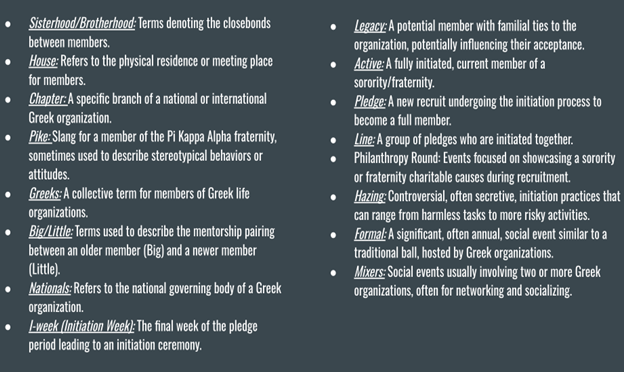
Here is a compiled list of the common slang terms used in Greek culture:

Additional Resource: Greek Life Glossary – Montclair University

Analysis

New members of Greek organizations seem to undergo a rapid socialization process to become competent members of their respective communities. In videos such as “GRMW(Get Ready with me)” or “Day in the life,” the general public may recognize the language used within the videos but certain keywords would not be understood unless one had previous knowledge of them. These videos demonstrate that a majority of the slang used are English words or acronyms that may seem out of context to those unfamiliar with Greek life and possibly even completely change their meaning (Nardyuzhev et al, 2017), solidifying the barrier between those within the community and those outside it. Our analysis of Greek life slang reveals a rich and complex language system that serves multiple functions: it cements the bonds between members, upholds traditions, and sets the community apart from the broader campus, and society.

Conclusion

Throughout this study, we analyzed Greek life culture through their unique sociolinguistic and cultural acquisition. This research has provided a comprehensive exploration of the multifaceted dynamics within Greek life, encompassing indexical slang, language social acquisition, online communities, and symbolic vocabulary. Through an interdisciplinary approach, the group was able to integrate sociolinguistics, visual anthropology, and analysis, to uncover the intricate interplay between language, identity, and rituals within Greek organizations. Through research into archetypes and codes that generate sense, our findings determine that symbols did not hold the ultimate meaning, but rather offered a vast array of interpretation possibilities; they served as a gnoseological key, a means of self-learning and learning about “philosophical knowledge,” and a medium for the development of the adept’s gnoseological qualities. To an outgroup member, this translates into a form of social acquisition during the initiation process, a crest or secret message is revealed as a rite of passage, only to be mentioned among the membership for exclusive purposes. Greek organizations separate ideology from each other by ascribing symbolic meaning to their group organization. Hence the various phrases, symbols, and handshakes are showcased in varied TikToks, YouTube, and the Greek wedding ritual. This socialization process is enacted by active members, who are assigned the task of formal recruitment. This process entails acts of initiation that signal the acquisition of the group’s values, pledges, and ultimately the group’s acceptance.

References

Bucholtz, M. (2012). Word Up: Social Meanings of Slang in California Youth Culture. eScholarship, University of California.

Dymchuk, A. (2020). Masonic symbolism in the context of philosophical anthropology searches. Skhid, 1(165), 60–66. https://doi.org/10.21847/1728-9343.2020.1(165).197068

Harding, Thomas S. (1972), College Literary Societies: Their Contribution to Higher Education in the United States, 1815–1876, New York, New York: privately published

Hummon, D. M. (1994). College Slang Revisited: Language, Culture, and Undergraduate Life. The Journal of Higher Education, 65(1), 75–98. https://doi.org/10.2307/2943878doi.org/10.2307/2943878

Izmaylova, G.R., Zamaletdinova, G.R., & Zholshayeva, M.S. (2017). Linguistic and social features of slang. International Journal of Scientific Study, 5(6), 75-78.

Jones, B. M. (1976). The American fraternity. In Paper presented at the meeting of the National Interfraternity Conference, Williamsburg, VA.

Ochs, E., & Schieffelin, B. B. (1984). Language acquisition and socialization: Three developmental stories and their implications. In R. A. Shweder & R.A. LeVine (Eds.), Culture Theory: Essays on Mind, Self, and Emotion. CUP, pp. 276-320.

Nardyuzhev, V. I., Nardyuzhev, I. V., Marfina, V. E., & Kurinin, I. N. (2017). AMERICAN SLANG: DIACHRONIC ANALYSIS. RUDN Journal Of Informatization In Education, 14(4), 399-405. doi: 10.22363/2312-8631-2017-14-4-399-405

[/expander_maker]

, , , , ,

Pero Like… The Prevalence of Spanglish Use in Instagram Over the Course of a Six Year Time Span (from 2018 – 2024)

Alayla Navarro, Apoorva Gunti, Jester Mediano, Kaitlin Carlos, Steven Arias

Through social media, the exercise of language has never been more documented. Online communication in the Anthropocene is commonplace in many parts of the world, expanding the prevalence of language mixing, such as Spanglish. This can be brought on by different factors. Our research aims to track how over time, Spanglish became a relatively common way of speaking in social media apps like Instagram. We present data analyzing three different social media accounts on Instagram that employ the use of Spanglish vocabulary, exhibiting a positive correlation of Spanglish use over time. The analysis is done on the Instagram comments under posts targeting the Hispanic community. The comments were randomly chosen and manually examined, where we looked at whether the comment had Spanish/Spanglish and what the comments meant. The increase was documented over the time period of 2018-2024, where Instagram users utilized Spanglish the least in 2018 and the most in 2024. We also expand on this idea and analyze the prevalence of both Spanglish and the use of Spanish in an English-language dominated social media platform, such as Instagram, where the latter saw a larger increase over the time period we documented.

[expander_maker id=”1″ more=”Read more” less=”Read less”]

Introduction and Background

Because of different factors like stigmatization, languages like Spanish have constantly been derided in the United States. Up until recently, the use of Spanish has been a point of contention. Through rising acceptance of Spanish in popular media such as TV shows, movies, and through the popularization of Spanish-speaking artists, Spanish itself has made its way into mainstream acceptance in the United States. This phenomena can also be seen in social media like Instagram where comedic accounts like meme pages whose main language is Spanish is followed by hundreds of thousands of people. Through those social media pages, the use of Spanglish also became increasingly common as the acceptance of Spanish slowly became accepted. By tracking comments and responses from those Spanish meme pages on Instagram ranging from 2018 all the way to 2024, we aim to see how the use of hybrid language increased over time.

Methods

The project design sought to examine the frequency of hybrid language use and code-switching among online bilingual Spanish and English-speaking individuals over time. The expressions to be analyzed were sourced from the comments sections of three Instagram accounts that foreground Latin American culture, have large follower bases, and have posted consistently for the time span this study examines: perolike, so.mexican, and corridoybandas.

From these accounts, three posts from 2018-19, 2021, and 2024 were taken from each. 50 comments were selected as impartially as possible from those 9 posts, and collated into tables that marked expressions as either fully English, or as having some presence of Spanglish or Spanish. After investigating the increasing or decreasing prevalence of Spanglish use with these comments over the span of 6 years, expressions were then translated and interpreted to determine how users authenticate or negate aspects of culture and personal identity.

Results

After compiling Instagram comments and categorizing them, we created tables tracking the change in frequency of the use of Spanish and Spanglish on Instagram comments over the time period of 2018 to 2024, shown in figures one and two. Figure one has data in tally form and figure two has data in percentage form.

Figure 1: Use of Spanish and Spanglish comments on Instagram account by tally (out of 50)
Figure 2: Use of Spanish and Spanglish comments on Instagram account by percentage

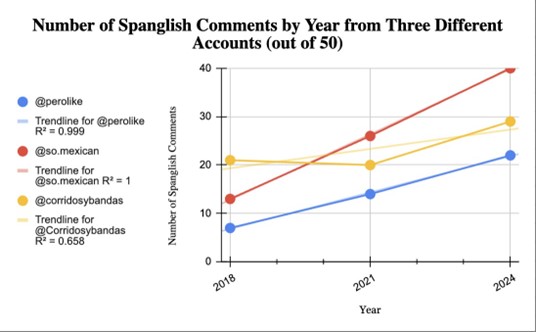
We then used this data to create a graph, in which all three Instagram accounts show a positive correlation over time, indicating an increase in the use of Spanglish within the comment sections of these accounts. Figure three shows this graph.

Figure 3: Number of Spanglish comments by year from three different accounts (out of 50)

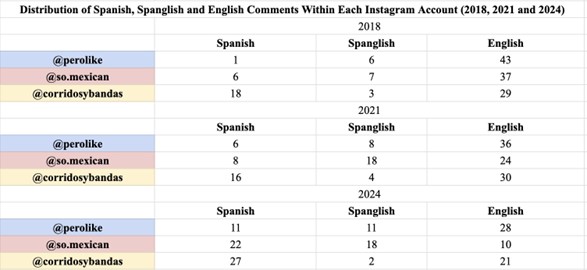
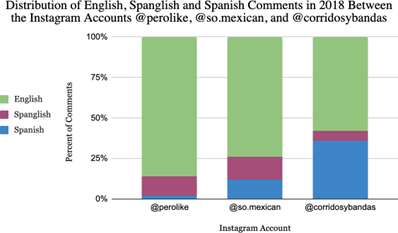
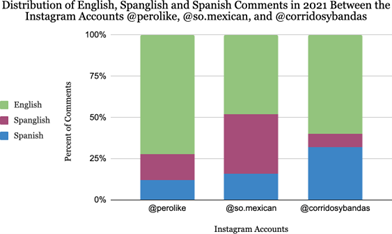
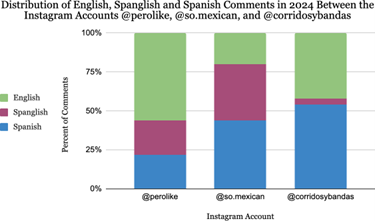
We also went further and analyzed the prevalence of Spanglish and Spanish. We separated these two categories specifically to understand and categorize hybrid-language use versus the use of a different language in an English-predominant social media platform. A table of data distributing Spanish, Spanglish, and English Comments between the three Instagram accounts, separated by year, is listed below in figure four.

Figure 4: Distribution of Spanish, Spanglish, and English comments within each Instagram account (2018, 2021, and 2024)

We took this data table and transformed the data into a column chart, as listed below in figures five, six, and seven.

Figure 5: Distribution of Spanish, Spanglish, and English comments within each Instagram account (2018)
Figure 6: Distribution of Spanish, Spanglish, and English comments within each Instagram account (2021)
Figure 7: Distribution of Spanish, Spanglish, and English comments within each Instagram account (2024)

Based on these distributions, although the use of both Spanglish and Spanish generally have increased, the use of Spanish has increased at a greater rate than Spanglish. This increase is specifically highlighted with the @corridosybandas Instagram account.

Discussion

According to Crooks (2004), new communication technologies, such as social media platforms like Instagram, have influenced the formation of linguistic and social identities from its users, allowing for shifts and adaptations of the language. To further expand on past literature findings, we identify Spanglish as an indexical tool used to assert a sense of belonging with a twist. Our findings indicate that within the Spanish-speaking culture, Spanglish users exploit Spanish’s emergent language development and constant linguistic varieties it possesses at the user’s convenience, with intention (Wentker and Schneider, 2022). This is seen during 2018-2019 in comments of the account @so.mexican where the use of Spanglish was low and was predominantly English. This is similar to the finding by Maliani (2021), where 43% of Indonesian bilingual speakers inserted English words in their tweets. Although this article explored the different forms of code mixing, our research took this trend to the next level by looking into the context of which these words were used. Our research identified a trend where users consistently chose Spanish word insertions that referred to cultural traditions or types of relations used by that community. For example, the use of “la dieta”, “otro taco” (“the diet” “another taco”) from the commenter indicated that users have experienced this cultural concept of risking your diet for tacos, a deeply desired food by people within this community. This asserts belonging within the community by relating to an experience shared by other members.

Another form of word insertion commonly found was the use of relational words translated into Spanish, such as “Tio,” “Tia,” and “Mami”, respectively translating to “uncle”and “aunt”, and the slang word for “beautiful girl”. We can conclude, with these insertions, that this Spanglish use was intentional, with the goal of connecting to the community and identifying as a member themselves.

A second finding expanding beyond current literature is the user’s demonstration of their own Spanglish ideologies and how they express these expectations when someone does not follow them. From past literature, we have understood the following: code-switching is intentional and asserts sense of belonging, social media allows for adaptation and variation of language, code-switching differs from face-to-face and online uses, and non-native English speakers have increasingly opted to use their native language within online platforms (Crooks, 2004; Dailey-O’Cain, 2017; Maliani, 2021; Wentker and Schneider, 2022). In 2021, users critiqued a post on their use of Spanglish, which stated “When todos andan muriendo de frio but tienes tu cobija de tigre” (translating to: “when everyone is dying from the cold but you have your tiger blanket”). The commenters corrected the post by sharing what Spanglish is and described their “improper use” of it as “forced” and “dumb.” This demonstrates how in addition to social media allowing for Spanglish users of varying levels to be confident in using Spanglish more frequently, those who consider themselves experts in this language can inform and correct other users through social media platforms as well. This adds to past literature because it opens up a new door for a different view on Spanglish. With this finding, we can have a small piece to the bigger picture of Spanglish use. We can now look further and ask ourselves, what is Spanglish from the perspective of fluent Spanglish users, what ideologies and expectations do they have in terms of Spanglish linguistics and how might this perspective change depending on the region in which this speaker resides?

Conclusion

In conclusion, the normalization and usage of Spanglish, a hybrid language that incorporates elements from both English and Spanish, has increased and become relevant in digital spaces like social media. Despite Spanglish’s contested history, it serves as a means of cultural affiliation and experience for many in the Mexican and Latin American communities. Although the research contains limitations, such as not knowing the location of users, the results are indicative that an increase in usage and frequency has occurred.

References

Cook, S. E. (2004). New Technologies and Language Change: Toward an Anthropology of Linguistic Frontiers. Annual Review of Anthropology, 33, 103-115. https://www.jstor.org/stable/25064847

Dailey-O’Cain, Jennifer. “Language Ideologies, Multilingualism, and Social Media.” Trans-National English in Social Media Communities, edited by Jennifer Dailey-O’Cain, Palgrave Macmillan UK, 2017, pp. 23–60. Springer Link, https://doi.org/10.1057/978-1-137-50615-3_2.

Maliani, P. (2021, August). Code mixing as language style in communication through Social Mediatwitter.Researchgate. https://www.researchgate.net/publication/357686277_CODE_MIXING_AS_LANGUAG E_STYLE_IN_COMMUNICATION_THROUGH_SOCIAL_MEDIA_TWITTER

Piasente, J. (2013). Looking for identity in a multicultural world: The Case of Spanglish in the United States.

Wentker, M., & Schneider, C. (2022). And she be like ‘tenemos frijoles en la casa’: Code-switching and identity construction on YouTube. Languages, 7(3), 219. https://doi.org/10.3390/ languages7030219

 [/expander_maker]

, , , ,

The Impact of Social Media on Romantic Relationships

Chloë Chavez, Sydney Weissman, Ashley Paras, Alejandro Valdez

Interacting on social media is nothing new. We’ve all felt, or at least have heard of people in romantic relationships interacting with others on these platforms, and how it can create feelings of jealousy or uncertainty. Commenting and liking other people’s posts and direct messages could be seen as factors as to why these feelings could become relevant and cause problems in a relationship. We believe that romantic relationships showing behaviors such as these, on other people’s posts besides their partners will cause conflict and negatively affect the overall relationship. An anonymous survey was administered to UCLA students, ages 18-25, that asked whether or not communication online affected how they viewed or felt about their romantic relationships, as well as asking if arguments had ever occurred due to social media engagement. The results were interesting and said a lot about this generation’s relationship with social media.

[expander_maker id=”1″ more=”Read more” less=”Read less”]

Introduction

At the base of this research project is the proposal of how communicative behaviors used on social media negatively impact romantic relationships. Our research is narrowly focusing on behavior patterns on social media, and how expressing attention to other people can oftentimes cause jealousy and conflict. The online portrayal of relationships is nothing new, and therefore relevant in nearly all of Gen-Z’s everyday lives. Our research question reads: do online behaviors, such as liking and commenting on others’ posts, direct messaging, and overall online engagement cause jealousy and conflict in romantic relationships? Communication via social media affects our interpersonal relationships, and we hypothesize that online behaviors can cause jealousy and conflict in romantic relationships. 

Background 

The constant pressure social media holds on individuals and relationships may predicate feelings of jealousy, comparison, low self-concept, envy, and suspicion. Prior research has indicated that social media triggers jealousy and feelings of uncertainty, even when danger is not present (Frampton, Fox, 2018). Altering linguistic norms with different people, (i.e. in a relationship) and using style-shifting is necessary not only in person but also on social media to maintain a healthy relationship.

When going into a relationship with no feelings of paranoia or doubt, social media’s presence only heightened attachment anxiety, feelings of jealousy, and misunderstanding (Sullivan, 2021). Thus, research has shown that language used within social media impacts those within a romantic relationship negatively. Comments, likes, and direct messaging are common sociolinguistic indicators that can work in favor or against relationships. 

Methods

An anonymous survey conducted a cross-sectional study at the University of California, Los Angeles. This study was completely voluntary. Participants were UCLA students in a relationship, between 18-25 years old. The study was created on Google forms and links were distributed online through social media platforms and text messages. By sending out open-ended, Likert scale, and multiple choice questions we collected data regarding behaviors shown on social media platforms. With the knowledge that indexical variables include words that change their meaning based on the context used, this study was designed to answer the wider question- how do communicative behaviors via social media (comments, likes, direct messages) impact romantic relationships? Apart from hosting the online survey, a collection of organized data based on predefined research, methodology, graphs, and qualified questions provided by researchers in the past 10 years led the new study. When wanting to discover more about the effects social media has on romantic relationships, we observed the different communicative behaviors used on social media.

Results and Analysis

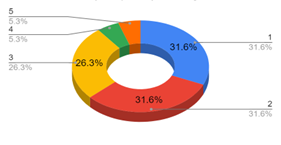
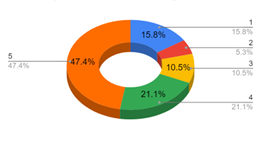
Figure 1: How often do you post your significant other on social media?

This question had a point scale of 1 to 5, with 1 being “not frequently” and 5 being “very often.” As seen in Figure 1, participants reported that they never or rarely post their partner, with only two individuals selecting choices ‘4’ and ‘5’. Option ‘1’ and ‘2’ received an equal proportion (31.6), with the median receiving a percentage of 26.3.

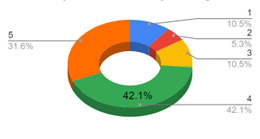
Figure 2: How do you feel when your significant other posts you on social media?
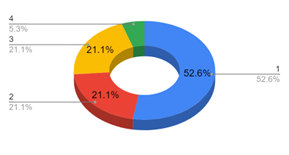
Figure 3: How do you feel about your significant other commenting on other people’s posts?

Both data charts, Figures 2 and 3, are critical for our study since they disprove our hypothesis that showing affection for someone other than our significant other through social media might encourage sentiments of jealousy among couples. Figure 2 had a point scale ranging from 1-5, with one being “not happy” and five being “happy.” Figure 3 was scored on a 1-5 scale, with 1 being “uncomfortable/angry” and 5 being “don’t mind.” More than half of the participants answered a ‘4’ or a ‘5,’ demonstrating that this type of behavior (affection for others via social media) does not promote jealousy.


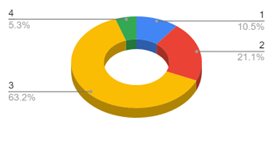
Figure 4: Has engagement on social media (you commenting on others’ posts, liking a post, story reactions, direct messaging) ever instigated an argument between you and your partner?

This data is also important for our hypothesis because it disproves it. Figure 4 used a point scale of 1-5, with 1 indicating “never” and 5 indicating “frequently.” More than half of those in the survey said social media had never caused an argument in their relationship.

Figure 5: What does it mean to you when your significant other likes other people’s posts on social media?

Figure 5 used a 1-5 point scale, with 1 being “not happy” and 5 being “happy.” There’s a large percentage of responses in the median range in this data. This might imply that they are indifferent to their partner’s actions on social media. In this chart, participants who chose ‘3’ remain neutral which portrays neutrality in response to their partner liking others’ posts. Participants may also perceive conversations about feelings of jealousy to be more casual than the conversation being a conflict.

Discussion

After analyzing our results from survey responses and screenshots, we found that the data did not support our overall hypothesis that behavior on social media caused conflict amongst romantic partners. Through a series of questions, the majority of participants revealed that their partners did not post about their significant other often, which correlated with the trend that most participants responded that social media engagement does not cause conflict in their relationships. This also correlates to the question regarding individuals in a relationship commenting on others’ posts or direct messaging others on social media. Most of our respondents revealed that they were unaffected and did not care about partners engaging in these behaviors. Despite social media potentially increasing jealousy and conflict based on prior research, our studies show that romantic relationships are not negatively impacted by user involvement on social media. Rather than conflict arising, feelings of anxiety were reported. Screenshots gathered from our data were exchanges of texts not demonstrating a conflict, but rather how social media instigates feelings of anxiety. Thus, comments and direct messages are elements of communication that we presumed would indicate affection toward another person that would cause arguments and jealousy.

Limitations

While our data does not support our hypothesis, there are limitations to our study that may have influenced the results gathered. Participants may have been reluctant to share the absolute truth for fear that the survey was not completely anonymous. Some partners in a relationship strive for perfection and hide all aspects of their relationship that could taint the views that people have of them. Additionally, people may not be comfortable admitting that they experience conflicts in their relations because of social media. This also ties into the idea of relationships having different perspectives toward the parameters that define conflict. There are different severities of conflict, and couples may differ on what is considered a conflict versus a simple discussion. Lastly, the struggle to gain responses on our survey may skew our results as our sample size is not large enough to make generalizations about an entire population size. While we had nineteen respondents, these may have all been couples that have sufficient communication with their partner, limiting the arguments that exist from social media. However, if the survey had more respondents, we could have conducted a more concrete generalization in response to how social media impacts romantic relations in the realms of jealousy and conflict through linguistic exchanges.

Future Studies

Future studies could expand on this topic and focus more on elements of communication that impact face-to-face communication among romantic partners. This can include factors such as the difference between masculine and feminine communication styles and how these aspects of language affect romantic relationships. Further, looking at the difference in communication between genders would be a future study that could aid in understanding more in-depth the effect communication online has on our relationships.

References

Abbasi, I. S. (2018). Social Media and committed relationships: What factors make our romantic relationship vulnerable? Social Science Computer Review, 37(3), 425–434. https://doi.org/10.1177/0894439318770609

Arikewuyo, A. O., Lasisi, T. T., Abdulbaqi, S. S., Omoloso, A. I., & Arikewuyo, H. O. (2020). Evaluating the use of social media in escalating conflicts in romantic relationships. Journal of Public Affairs, 22(1). https://doi.org/10.1002/pa.2331

Beaukboom, C. & Utz, S. (2011). The Role of Social Network Sites in Romantic Relationships: Effects on Jealousy and Relationship Happiness. Journal of Computer-Mediated Communication, 16(4). 511-527.

Frampton, & Fox, J. (2018). Social Media’s Role in Romantic Partners’ Retroactive Jealousy: Social Comparison, Uncertainty, and Information Seeking. Social Media + Society, 4(3), 205630511880031–. https://doi.org/10.1177/2056305118800317

Sullivan, K. T. (2021). Attachment Style and Jealousy in the Digital Age: Do Attitudes About Online Communication Matter? Frontiers in Psychology, 12, 678542–678542. https://doi.org/10.3389/fpsyg.2021

Appendix

Are there social media rules for relationships? 

 [/expander_maker]

, ,

“Get Ready With Me: Blog Post Edition”: How Influencers Self-Brand on TikTok

Emerson Howard, Kaira Edwards, Kat Balchunas, Kylee Bourbon, Nicole Hernandez

“Ok storytime.” “Get ready with me to go to class.” “Doing my makeup for literally no reason.” We can’t get enough.

Why are “get ready with me” videos so captivating? Are the communicative methods used what contributes to flop or fame…. a like or dislike…a slay or a nay?

In recent years, a new wave of social media “influencing” has emerged. The phenomenon of self-branding, the continuous action of establishing an image or identity of oneself, is most relevant in such an industry. We sought to investigate how influencers’ slang and body language used in “Get Ready With Me (GRWM)” videos conveys or does not convey a sense of perceived authenticity from followers. Our study focuses on three popular lifestyle influencers and their GRWM videos on the platform TikTok. We sought to identify patterns of body language, speech, and audience perception within GRWM videos that allow our subjects to establish and maintain an authentic relationship with their audiences. We hypothesized the intimate and casual nature of GRWM videos allow creators to establish a more personal connection with their audience if accompanied by a positive tone of voice, use of inside slang, as well as high levels of engagement.

[expander_maker id=”1″ more=”Read more” less=”Read less”]

Introduction and Background

TikTok is a rapidly growing social media platform which revolves around the creation and sharing of short, user-generated videos (Montag et. al, 2021). The app launched in 2016 and since then has provided an outlet for social media influencers, who are users that obtain a large following through posts, engagement, and advertising (Abidin, 2015). Our study looks specifically at white, female lifestyle influencers aged 18-30 who are recognized for documenting seemingly inconsequential and mundane elements of everyday life such as putting on makeup, getting dressed, etc. These influencers communicate personal information about themselves to create a sense of intimacy between them and their followers, emphasizing their realness and relatability (Abidin, 2015). Like any other social media influencer, lifestyle influencers create a “brand” for themselves by developing a consistent theme and style for their account through patterns of language, images, and content in order to create a certain expectation for how people should perceive them (Marshall).

To provide a basis for our understanding of how TikTok influencers create a ‘brand’ for themselves, we apply Erving Goffman’s dramaturgical approach to the digital media space to explain how influencers put on a performance through self-branding. Goffman’s dramaturgical theory proposes that everyday interactions are like a play in which humans put on a performance. This phenomenon is often displayed on social media in which influencers curate their posts and profiles to express an idealized presentation of self. Influencers employ impression management by being selective with what to post publicly, in order to preserve the identity they have curated for themselves—their “brand.” We feel that GRWM videos uniquely blur the line between Goffman’s concepts of backstage and frontstage, since these videos are predicated on providing followers with a sense of intimacy, seeing the ‘backstage’ of an influencer’s daily life. These videos commodify intimacy by providing the audience with the impression they are privy to intimate and generally inaccessible aspects of the influencer’s lives—this is what makes lifestyle influencer branding successful (Abidin, 2015).

Methods

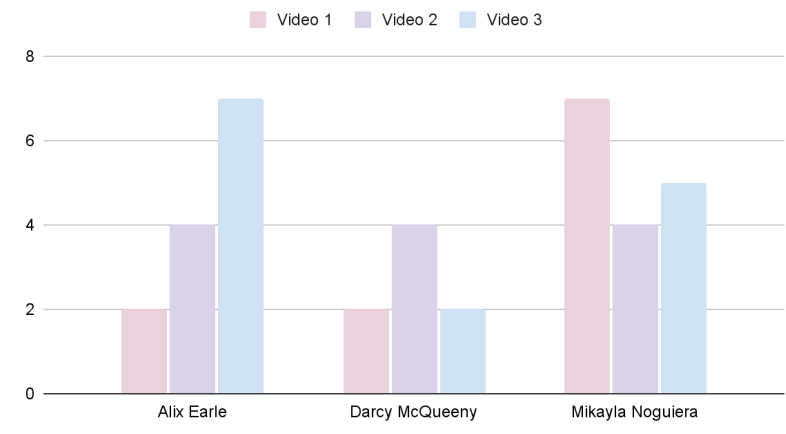
For our data, we gathered and analyzed the three most recent “GRWM” videos from February 17th to March 1st, from the selected lifestyle influencers: Alix Earle, Darcy McQueeny, and Mikyla Nogueira, to investigate how they create a persona through language and behavior patterns. We gathered our data via the TikTok social media platform and the data was collected in two separate categories: video content and audience response. To observe video content, we looked at their patterns of communication including their body language, as well as their use of “inside slang.” We then observed audience response by focusing on the top seven comments to investigate whether there was a more positive or negative reception, as well as the number of likes per comment. This allowed us to measure each influencer’s level of audience engagement, level of influencer engagement, and engagement sentiment. We then took into account any differences and similarities that may exist amongst the influencers and how those aspects account for the way they’re perceived.

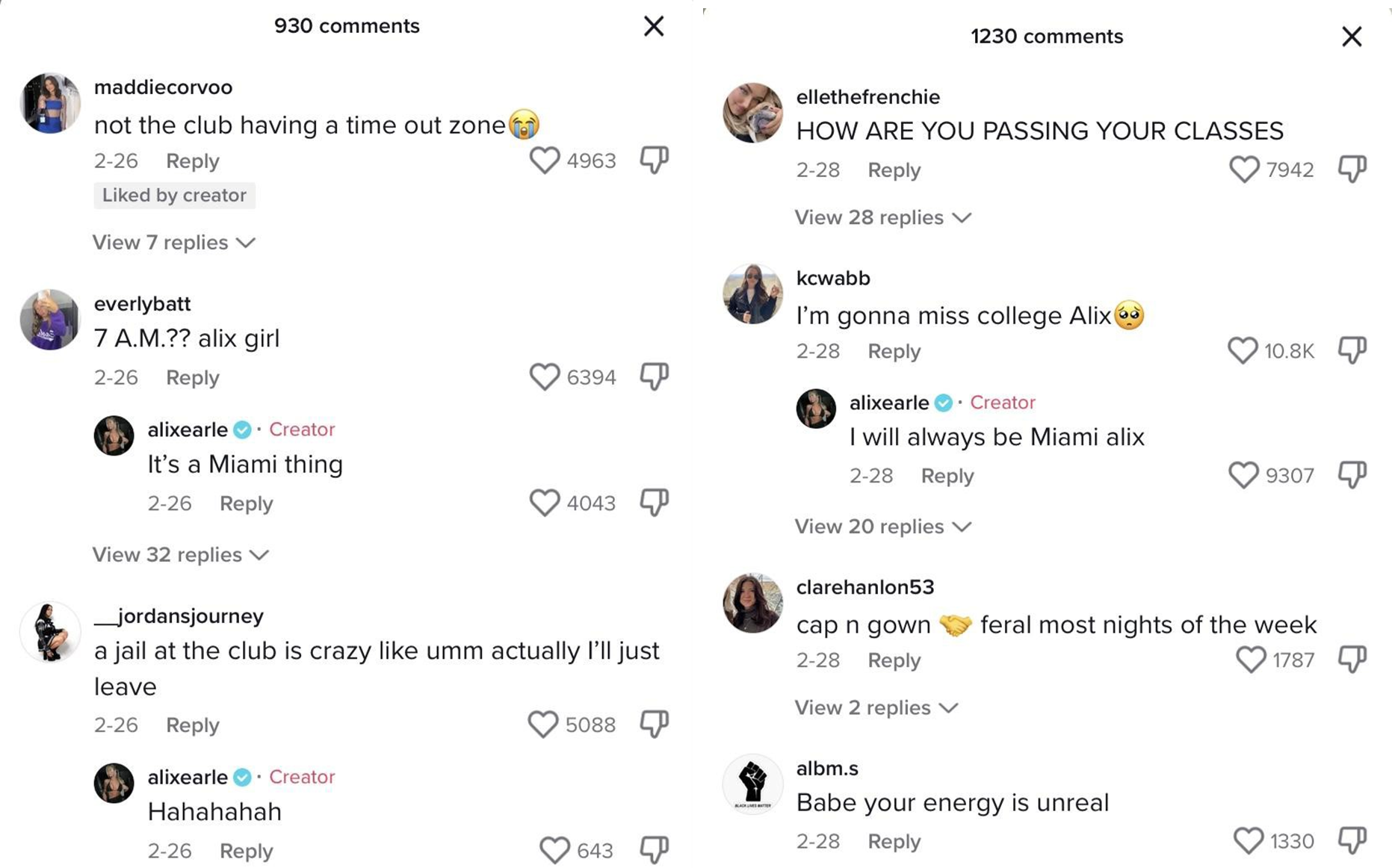
Screenshots of TikTok comments on influencer Alix Earle’s posts

Results and Analysis

Our research both confirmed and rejected aspects of our hypothesis that GRWM videos allow creators to establish a more personal connection with their audience if accompanied by a positive tone of voice, use of inside slang, as well as high levels of engagement. After measuring the creator response rates within their comment sections, we noticed that Mikayla Nogueira had the highest level of engagement with viewers (see Figure 6).

Figure 6: Number of Responses to Top 7 Comments

She not only responded to comments more frequently than other creators but also in a variety of ways: liking, messaging, and video responding. However, Alix appeared to have more audience engagement (see Figures 3 and 5) of all influencers we investigated despite her not interacting with them as much as Mikayla.

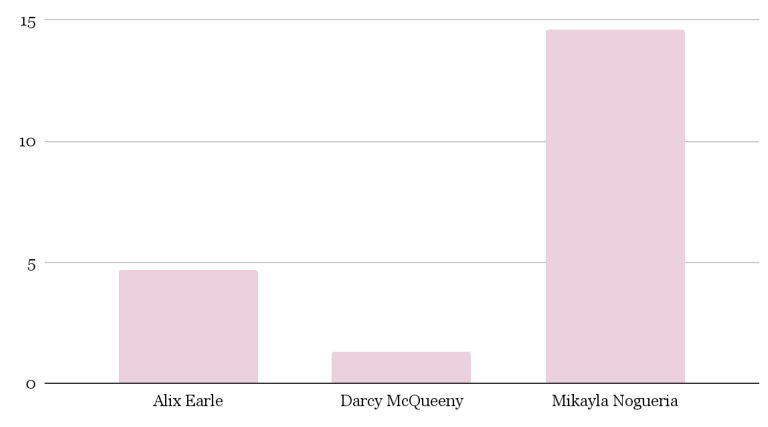
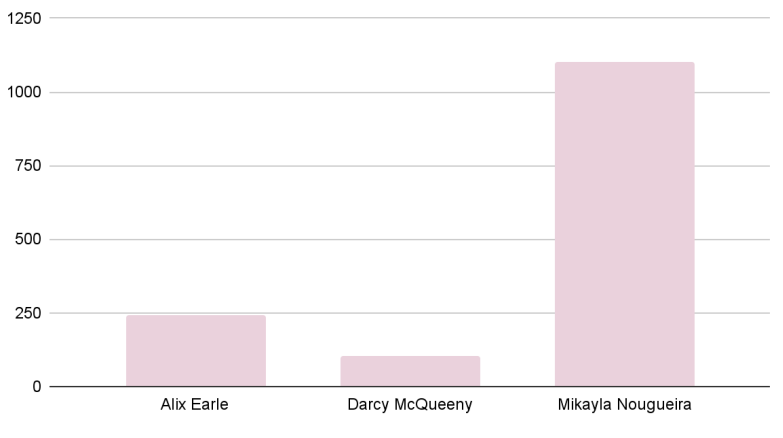
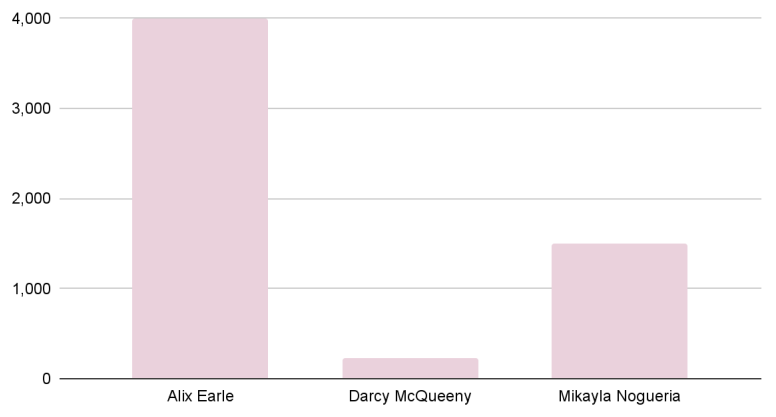
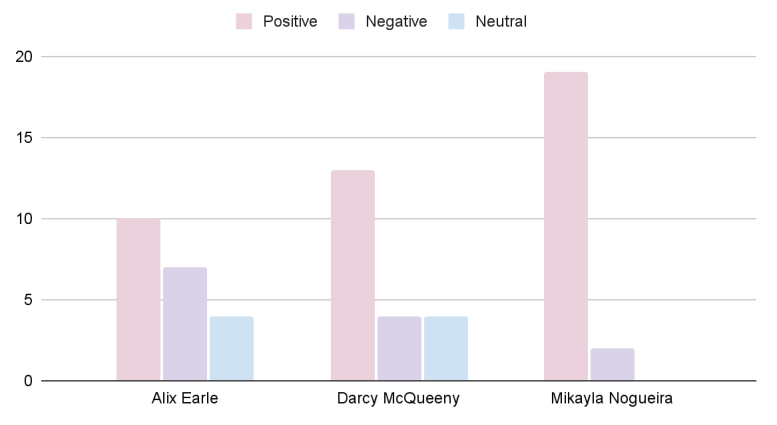
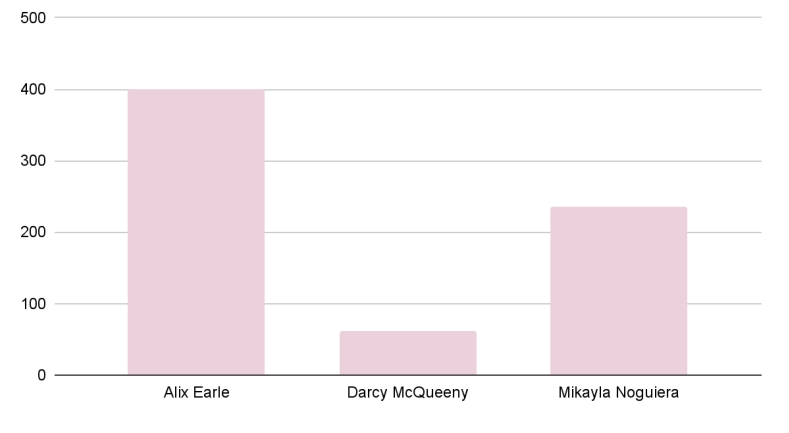
Despite having greater creator engagement, followers (see Figures 1 and 2) and the most positive engagement sentiments (see Figure 4), Mikayla Nogueira received less likes per GRWM video (see Figure 5) and likes on the top 7 comments (see Figure 3) per GRWM video (236.4k / 1,506), than Alix Earle (400.9k / 3,996). Darcy McQueeny received the least likes per video and comments (61.8k / 227).

Figure 1: Follower Count (in Millions)
Figure 2: Total Likes on All Videos (in Millions)
Figure 3: Average Likes on Top 7 Comments (in Thousands)
Figure 4: Connotations of Top 7 Comments on 3 Observed Videos
Figure 5: Average Likes on 3 Observed Videos (in Thousands)

Through our analysis of this data we established that, as opposed to our hypothesis, it is a “laid-back” neutral tone of voice, use of inside slang, and moderate levels of engagement that is most popular within GRWM videos and most effective in garnering audience engagement.

We observed that Alix is a very good storyteller, creating a more laid-back demeanor and anecdotal style of GRWM videos that is more relatable amongst audiences. Mikayla can seem too enthusiastic, as if she is trying too hard to be liked and seen as a positive person (i.e. “Thank you!!! [exuding love face emoji]”); while Alix interacts just like a friend would on Facetime and responds to comments similar to how friends respond to texts; in a more neutral and moderate manner (i.e. “Hahahahah,” “No”). Mikayla expresses herself very openly and her outgoing personality may be a bit overwhelming for some. Additionally, her high level of engagement with her comment section may appear to some as trying too hard. Contrastingly, Alix exudes a more relaxed persona, talking about her friends as if the audience knows them personally, to solidify this ‘friend-like’ relationship, and utilizing slang such as “it’s not giving” throughout various videos and “losers,” which she notes is used by her own friend group, allowing the audience to feel included. We found that Darcy McQueeny utilizes a monotone/unengaging tone of voice and scarcely engages with comments, resulting in her low levels of likes, audience engagement, and negative engagement sentiments.

Discussion and Conclusions

In relevance to class, this course is centered around social communication and how our everyday speech and interactions are revealing of identity and character. We are able to better understand tone in internet gestures the more we partake in them. Additionally, verbal variation, in that influencers are distinguished on TikTok by speech variation. We also suspect that the successful influencers don’t switch from their normal and internet personality. If we had more time, we would be interested in conducting more research about this.

With self-branding on social media having an ever-growing prominence in modern social communication, especially among our age group, we thought this topic was relevant and crucial to study. Now when we navigate our social media presence, we are keener on how the language and the level of formality we use affects those viewing us.

The limitations in our research included the use of interpretive/qualitative data, restricted data (3 videos, 3 creators), and a narrow demographic (young, white, girls).

References

Abidin, C., (2015). Communicative Intimacies: Influencers and Perceived Interconnectedness. Ada: A Journal of Gender, New Media, & Technology, 8, 1-16: http://adanewmedia.org/2015/11/issue8-abidin/

BBC Radio 4. (2015, April 15). Erving Goffman and the Performed Self [Video]. YouTube. https://youtu.be/6Z0XS-QLDWM

Goffman, E. (1959). The Presentation of Self in Everyday Life. New York: Anchor Books.

Hogan, B. (2010). The Presentation of Self in the Age of Social Media: Distinguishing Performances and Exhibitions Online. Bulletin of Science, Technology & Society, 30(6), 377–386. https://doi.org/10.1177/0270467610385893

Jennings, R. (2018). What Is TikTok? The App That Used to Be Musical.ly, Explained. Vox, www.vox.com/culture/2018/12/10/18129126/tiktok-app-musically-meme-cringe.

Marshall, S. (n.d.). An introduction to brand building through social media – learn. Canva. https://www.canva.com/learn/introduction-brand-building-social-media/

Montag, C., Yang, H., & Elhai, J. D. (2021). On the psychology of TikTok use: A first glimpse from empirical findings. Frontiers in Public Health, 9, https://doi.org/10.3389/fpubh.2021.641673

Pulse Advertising. (2021, September 1). What Is an Influencer? | Influencer Marketing Explained [Video]. YouTube. https://youtu.be/JLiKXW82tjE

TikTok Videos

[/expander_maker]

, , , ,

From Slay to On Fleek: Linguistic Features of Millennial and Gen Z Internet Communication

Aileen Dieu, Makenna Kumlue, Nicholas Litt, Jazmine Pineda, Rafael Santos

The social media community is truly that, a community. Groups of people gather based on common interests to share ideas, offer support, and even criticize opposing views, for better or worse. Millennials were the first generation to create an online community, and through that, a whole new array of lingo, trends, and even celebrities arose. Then, Gen Z entered social media and created their online community filled with their interpretations of millennial slang, as well as bringing a whole new batch of slang to the mix. However, the interactions between both groups yield confusion, amusement towards popular trends in either community, and even irritation due to a lack of comprehension of new terms. In our research, we observed the specific tokens and behavior displayed by both groups individually and in interactions with one another across varying social media platforms. We found varied sentence structure, emoji use, and critical attitudes of Millennials towards Gen Z slang. Yet, for the most part, Millennials and Gen Z communities interact fairly effectively across some parts of the internet.

[expander_maker id=”1″ more=”Read more” less=”Read less”]

Background

Digital communication plays a crucial role daily. Regardless of occupation, race, gender, or class, social media is a form of communication with others and provides a place to express opinions to a targeted audience. Social media usage began around 1997 with a website called “Six Degrees” where people could communicate with close contacts. This was popular among the Millennial generation (1981-1996), and the emergence of another application called “MySpace” in 2004 was another big hit (Ortiz-Ospina, 2019). Fast forward a decade later, Generation Z (1997-2012) has evolved to also use multiple social media platforms at once (not as much as Millennials). Recent studies showed that Millennials use 5 to 6 social media platforms at once while Generation Z use around 2 to 3 social media platforms (Vacalares et al., 2023). The advancement of technology along with the comfort of being more expressive in an online setting was appealing to Generation Z, as we see them use more current social media apps than millennials today. As a result, they have created their forms of communication and language styles that are derived from digital trends (Jeresano et al., 2022).

The types of slang used are also motivated by a sense of social conformity. Depending on the app, the social norms differ greatly based on the demographics of users as well as the app’s intended purpose. If anyone were to talk outside the “social norms” of the app, it would lead to negative feedback, loss of followers, and a negative social media presence (Taber et al., 2023). Generation Z also utilizes social media apps for various purposes such as education, shopping, entertainment, and socializing (Mude, 2023). We hope to explore more on the types of linguistic features seen across various apps like TikTok, Instagram, X, and Facebook among Millennials and Generation Z individuals. How would these differences reflect evolving cultural and technological influences?

Methods

Data for this article was acquired through observation and analysis of different word usage on various social media platforms such as TikTok, Instagram, X, and Facebook, based on usage and popularity. Observations were then assigned to team members by platform and instances of slang were captured as screenshots (See Figure 1) and then analyzed by individuals. Instances of slang, word choice, tone, and sentence structure were assigned a rating of Gen Z or Millennial based on prior perception and/or investigation of user age. Perceptions of Gen Z versus Millennial word usage and choice were based on a consensus around Gen Z’s abbreviation usage and knowledge of contemporary media culture (Jeresano et al., 2022), in comparison to the Millennial generation’s lower intelligibility for newer slang (Taber et al., 2023). The team then convened and analyzed for further patterns of linguistic choice and feature. Lack of or inaccurate user information was addressed to the best of our ability.

Figure 1. Sample posts with instances of slang usage.

Results and Analysis

There were some semantic communication barriers between those we identified as Millennials and Generation Z. Both generations demonstrated similar morphological features within their slang, namely, acronyms and euphemisms (Which may be due to the platform’s format, like character limits and censorship). However, the resemblances begin to deviate when examining specific slang words and phrases. Our data exhibits the referential and ironic nature of Generation Z’s coined words and phrases rapidly generated and circulated across each platform. These coined words and phrases, derived from internet culture and AAVE (African American Vernacular English), contain a level of specificity within them that, to use properly, one must know the original to some extent. Accordingly, our collected data suggests that Millennials tend to use outdated or misused slang or are entirely oblivious to the terms.

Therefore, there appears to be frustration and confusion between Millennial and Generation Z interactions, primarily exhibited on the Millennial side. In Generation Z-dominated media, like TikTok, the cross-generational interactions are question-oriented. Our data includes numerous accounts of deemed Millennials seeking meaning and context behind creators’ and commenters’ posts to better understand the jokes and discourse occurring (See Figure 2). However, apps containing older demographics tend to display rejection, ridicule, or misunderstanding of Generation Z’s communication style. Additionally, these apps depict Millennials attempting to increase their engagement and flaunt their relevance through overcompensation, i.e., frequently using slang and emojis. Thus, generating derision from members of Generation Z who come across their content. 

Figure 2. A Millennial TikTok user obtaining an understanding of a popular culture reference from the video content and learning Generation Z coined slang through user-to-user engagement within the comment section.

However, it is essential to note that the gap between generational differences in slang is shortening due to high social media exposure and interactions across generations. With the growing demographics of Generation Z-dominated apps, there tends to be more exposure to viral content from which these terms are derived. Additionally, personal interactions between each generation further the understanding and adoption of coined words and phrases. While our data exhibits the semantic communication barriers between Millennials and Generation Z, we question whether this issue will remain prevalent in the foreseeable future.

Discussion

Our results provide insights into the linguistic differences and communication trends between Millennials and Generation Z individuals in social media. Through observation of various social media platforms such as TikTok, Instagram, X (formerly Twitter), and Facebook, our research highlights distinct linguistic features and communication practices exhibited by each generation.​ Millennials tend to use “outdated” slang words and phrases, while Gen Z incorporates slang derived from abbreviations and references to other viral trends. ​This reflects the evolving cultural and technological influences on language use, with Gen Z being more influenced by internet culture and current trends. The demographics of each social media platform also play a role in the linguistic practices observed, which suggests that the linguistic features seen on these platforms may be influenced by the dominant generation using them. ​

TikTok demonstrates semantic barriers in communication between Millennials and Gen Z. Gen Z individuals on TikTok use coined words and phrases derived from internet culture and AAVE (African American Vernacular English), heavy acronym usage, and euphemisms. On Instagram, Gen Z users use informal slang with abbreviations and unique vocabulary from internet culture. At the same time, Millennials exhibit a more formal writing style with complete sentences, positive affirmations, and subtle humor. ​Both Millennials and Gen Z individuals use X, but there are some differences in their linguistic practices. ​Gen Z shows strong use of irony, informality, and word choice derived from current internet culture and technology. ​Millennials, on the other hand, use outdated terms and references, specific to their periodical upbringing, and have a more formal sentence structure.

Conclusion

In conclusion, the linguistic differences and communication trends observed between Millennials and Generation Z in social media reflect the evolving cultural and technological influences on language use. ​ Each generation exhibits distinct linguistic features and practices, influenced by their respective demographics and exposure to internet culture. ​ The interactions between Millennials and Gen Z online highlight both generational differences and a willingness to engage in a compromised social bubble. ​ Further research in this area can provide a deeper understanding of how language evolves in the digital age and its impact on intergenerational communication.

References

Taber, L., Dominguez, S., & Whittaker, S. (2023). Ignore the Affordances; It’s the Social Norms: How Millennials and Gen-Z Think About Where to Make a Post on Social Media. Proceedings of the ACM on Human-Computer Interaction, 7(CSCW2), 1–26. doi.org/10.1145/3610102

Jeresano, E. M., & Carretero, M. D. (2022). Digital Culture and Social Media Slang of Gen Z. United International Journal for Research & Technology, 3(4), 11-25. 

Vacalares, S. T., Salas, A. F. R., Babac, B. J. S., Cagalawan, A. L., & Calimpong, C. D. (2023, June 11). The Intelligibility of Internet Slangs Between Millennials and Gen Zers: A Comparative Study. International Journal of Science and Research Archive. doi.org/10.30574/ijsra.2023.9.1.0456

Mude, G., & Undale, S. (2023). Social Media Usage: A Comparison Between Generation Y and Generation Z in India. International Journal of E-Business Research, 19(1), 1–20. doi.org/10.4018/ijebr.317889

Ortiz-Ospina, E. (2019) “The Rise of Social Media” Our World In Data ourworldindata.org/rise-of-social-media. [/expander_maker]
, , ,

this is our linguistics project…lol

Max Orroth, Arielle Gordon, Jillian Litke

We’ve all heard of the acronym lol, short for “laugh out loud”, and have used it in more than one context. Lol differs from other internet-born acronyms, like ROTFL, as it has become widespread across social platforms all over the world and has maintained a role in American English vernacular to this day. Some use it to “soften the blow” of a harsh statement. For others, it is tacked onto the end of a sentence to convey sarcasm or passive-aggressiveness, but does that mean its meaning has changed over time? Our study analyzed a series of tweets from Twitter to determine if the use of lol has increased in passive-aggressive contexts from 2008-2022. We also categorized where lol appeared in the tweet, such as the beginning of it, the middle, or the end to help determine the true meaning or intent of the tweet.

[expander_maker id=”1″ more=”Read more” less=”Read less”]

Introduction

How does the three-letter acronym lol manage to make its way into so many of our online conversations, even those that aren’t inherently funny? Lol is one of the first internet terms to become popularized and has been in use for a while, thus the acronym finds itself in a myriad of situations, each with an abundance of meanings, making it somewhat of a linguistic chameleon. Is lol being used more commonly in a passive-aggressive sense than its original meaning? How does this .com-era defining acronym persist through the years, picking up new meanings and uses as it travels around the globe via our interconnected home, the internet? This is what we wanted to investigate– whether passive-aggressive uses of lol have risen in popularity in the past 15 years. Prior to our research, lol’s role as a lexical item has been studied from many different angles. Authors Tagliamonte and Denis (2008) identify the acronym as an interlocutor involvement signal, playing a similar role as “mmhmm” does in face-to-face conversation; denoting that the utterer is engaged in an exchange. Similarly, Varnhagen et al. (2010) found that lol is the pioneer of a new acronym-based lexicon arising from the internet. Markman (2017) also found lol to be a discourse marker, a lexical item that lets a conversation partner know when a statement is done over text. Schneebeli (2020) identifies how the acronym’s placement in a clause can shift its meaning and give statements a new meaning or mood when added. This prior research gives insight to the role lol plays in the syntax and flow of conversations, but, to our knowledge, no studies have chronicled the term’s evolution and shift in use over time. Given that both the internet and the acronym have evolved since its first use in 1989, we feel a current examination is missing from the literature on internet language. Looking at English speaking Twitter from 2008-2022, the salience of lol’s usage as a marker for passive aggression has increased, revealing a broader ability for internet slang to evolve much faster than in-person language due to an abundance of use, communication, the internet’s own growth, and humans finding more of a home online every day.

Methods

To test our hypothesis, we searched Twitter from 2008 to 2022 for tweets that used lol. We gathered 20 random tweets per year for a total of 300. To account for virality as a potential confounding variable, we grouped tweets by how many likes they received and made sure to select 5 tweets per group, per year. We had four engagement groups: Low (0-50 likes), Medium (50-300 likes), High (300-1000 likes), and Ultra-high (1000+ likes). After collecting data from Twitter, we then decided whether each tweet was passive-aggressive and whether lol was positioned clause-final, clause-initial, or somewhere else. To determine whether a tweet used lol to be passive-aggressive we looked at multiple criteria, including lol not signifying its original meaning (“laugh out loud”), whether the tweet conveyed a rude or negative sentiment, whether it targeted a person or situation, or if removing lol lessened the tweet’s attack. Sometimes, we could also look at replies or quote tweets to get more information about the context of each tweet to solidify our decision. 

Results

We found that since 2008, English speaking Twitter users have been steadily increasing their use of lol to be passive-aggressive (Figure 1). Using Google-Sheets built-in capabilities, we calculated a Pearson’s r of 0.767, indicating a moderate-strong positive correlation between the frequency of passive-aggressive lols and the year it was tweeted. Our data showed that passive-aggressive lols peaked in 2016 (50%) and 2021 (55%).  

Figure 1: Frequency of passive-aggressive tweets across each year studied (2008-2022)

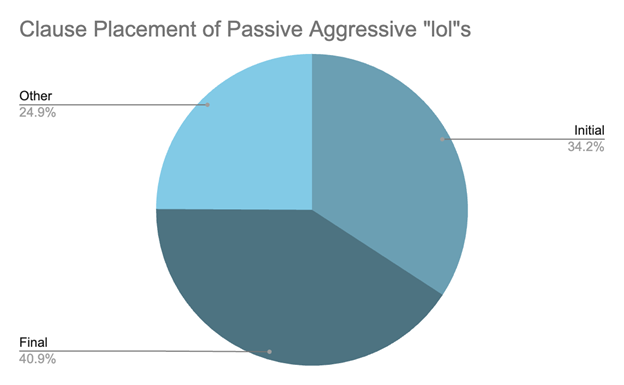
On clause placement, we found that slightly more tweets had lol at clause-final (~41%) than clause-initial (~34%), with about 25% of tweets placing lol in a location indeterminable as final or initial (Figure 2). 

Figure 2: Breakdown of clause placement of lol across all tweets gathered

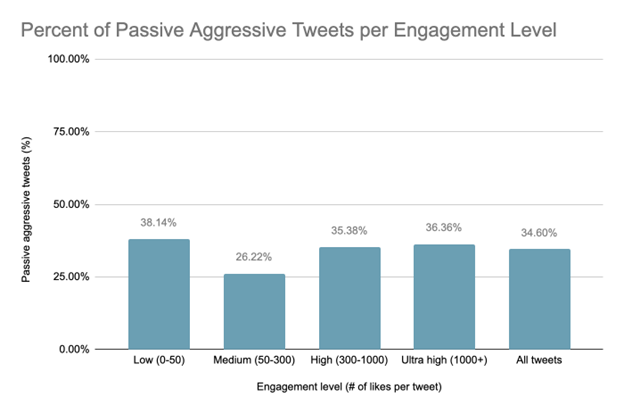
Overall, out of the 300 tweets analyzed, 34.6% were determined to be passive-aggressive uses of lol (Figure 3). For all but one group, we did not find any significant deviation from this number when tweets were grouped in their engagement groups across all years. Among tweets in the Medium group (50-100 likes), 28.6% were determined to be passive-aggressive uses of lol

Figure 3: Frequency of passive-aggressive tweets among engagement groups and all tweets

Discussion and Conclusion

Due to our data displaying a moderate-strong positive correlation, we concluded that the use of lol to convey passive-aggressiveness increased from 2008-2022. We observed peaks of passive-aggressive tweets during 2016 and 2021. While we are unsure why those peaks occurred during those years, we hypothesize that it was due to political and social turmoil in America. 2016 was when Donald Trump was elected president, and that divided our nation. 2021 was also when COVID evolved into Omicron, and America was again divided on whether wearing a mask was an infringement of our rights. Such factors could influence the use of passive-aggressive lols, and this trend might be an area for future research. We also analyzed the clause placement of passive-aggressive lols and found that the majority appeared clause-finally at 40.9%. Clause-initial lols appeared at 34.2%, and the rest were considered in the ‘other’ category in which the acronym was embedded in the clause. This supports previous research in which clause-initial lol tends to serve as a discourse structuring lexical item such as an immediate reaction whereas clause-finally typically suggests a more aggressive demeanor (Schneebeli, 2020). Finally, we analyzed the passive-aggressive lols per engagement level of the tweet to determine if one engagement group had significantly more or less passive-aggressive tweets, and we observed that there were significantly less tweets in the medium group. However, we do believe that that is an outlier since the rest of the cohorts are in the mid-30 % in regard to passive-aggressive tweets.

There were certainly limitations that should be considered alongside our findings. Due to the time constraints within which the research was conducted, only 20 tweets were found per year studied. Ideally, our findings would be derived from a broader sample, and even include other languages aside from English. Constraining the time frame even more, the advanced search feature on Twitter would only display tweets from September to December of each year, potentially creating a bias towards tensions and events during the Fall and Winter months such as elections, holidays, and harsh weather. Additionally, Twitter search would not allow us to filter tweets by the country of origin, only language. Though the site is most popular amongst American users, there is no way to know if the tweet authors were from the United States, the United Kingdom, Australia, or some other English-speaking individual. Lastly, our study was looking at passive aggression; though one can typically read tension through a screen, since we were not present for all the interactions or posts, we cannot say for certain if the tweet was delivered in an aggressive way. Despite our systematic approach to determining whether a tweet was aggressive, it is impossible to know the tweet authors’ true intentions behind their posts. We cannot say how these limitations affected our data and results but would be curious to have the study done on a larger scale, including multiple languages, and over a larger period. 

Nevertheless, lol’s modality is an example of how the internet can accelerate language evolution. Since the term’s creation with the rest of Instant Messaging language, it’s since taken on countless other meanings in addition to signaling passive aggression. This process, which might normally take decades to accomplish, is now achieved in 20 years. This is partly due to the unprecedented availability of other people’s discourse on the internet and online platforms like Twitter. One could read hundreds of tweets every day and the same tweet could be seen by hundreds of thousands of people. This level of contact between speakers catalyzes the creation of slang words and evolution of other terms like lol. Additionally, Twitter’s characteristics as a social media platform encourages widespread adoption of new language forms. Given that it’s mainly discourse-based, users look to the language of other tweets to inform how they should adapt their own language. This emulation of linguistic behaviors can drive language evolution, like we’ve seen with passive-aggressive lols. Although we did not study other internet language acronyms (ROTFL, lmao, etc.), we noticed anecdotally that lol seems particularly susceptible to being adopted for other uses beyond its literal meaning. Perhaps the term’s shortness, broad meaning, and ease to type into a phone screen have allowed it to garner such an expedited evolution. Future research might investigate what makes lol such a linguistic chameleon and why it has remained relevant in cultural discourse to a greater extent than many other IM language creations that evolved at the same time. 

Aside from the explicit findings, our study offers broader implications to the field of sociolinguistics. We were able to identify a few studies on lol, but not nearly as many as expected considering the popularity of the term. This study contributes to this burgeoning sector of the field. Lol’s breadth of uses offer a plethora of research topics — we could conduct this study with an entirely different meaning of the term and find something new and relevant to report. In general, there is a deficit in studies of online language use. Nowadays, a message can be sent from Japan to Canada in a matter of seconds, and on Twitter you can see hundreds of tweets from all around the world with a simple scroll of your thumb. As the world grows more dependent on the internet and humans increasingly engage in online communication, studies of this nature are of the utmost importance for the future of sociolinguistics. Lastly, this research topic came from phenomena we have noticed in our day to daytime spent on social media and engaging in digitally based conversations. Sociolinguistics as a field studies language use and the social implications behind it; this study gives validity to anecdotal experiences as a legitimate course of study and provides a deeper understanding of the terms we use daily.

References

Markman, K. M. (2017, October 30). Exploring the Pragmatic Functions of the Acronym LOL in Instant Messenger Conversations, doi: https://doi.org/10.31235/osf.io/3du86.

Sloan, L., Morgan, J., Burnap, P., & Williams, M. (2015). Who tweets? Deriving the demographic characteristics of age, occupation and social class from Twitter user meta-data. PLoS One, 10(3), doi: https://doi.org/10.1371/journal.pone.0115545.

Schneebeli, C. (2020). Where lol is: function and position of lol used as a discourse marker in YouTube comments. Discours. Revue de linguistique, psycholinguistique et informatique. A journal of linguistics, psycholinguistics and computational linguistics, 27.

Tagliamonte, S. A. & Denis, D. (2008). Linguistic Ruin? LOL! Instant Messaging and Teen Language. American Speech, 83(1), 3-34.

Varnhagen, C.K., McFall, G.P., Pugh, N., Routledge, L., Sumida-MacDonald, H. & Kwong, T.E. (2010). lol: new language and spelling in instant messaging. Reading and Writing 23, 719–733.

[/expander_maker]
, , ,

アンチ vs. Haters: How do Individualist Americans and Collectivist Japanese Net 民 Express Hate Online?

Kayenat Barak, Emily Moreira, Sae Tsunawaki, Karin Yamaoka

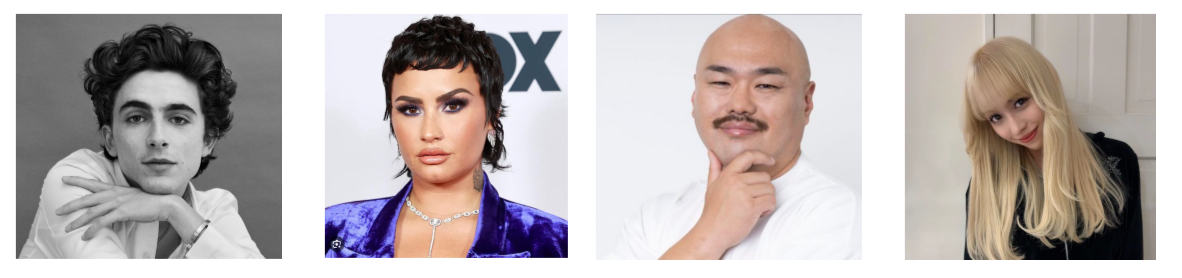
While social media has been a revolutionary tool for facilitating access to resources and information and connecting people globally, the power to hide behind anonymous platforms has also equipped many with the ability to spread hate online. Our project analyzes such hate comments written by Japanese and American audiences to gain insights into the sociocultural factors that shape the nature of online hostility. We chose four celebrities: one American female, one American male, one Japanese female, and one Japanese male, and used multiple social media platforms to collect a total of 120 comments. Upon categorizing these comments by type, tone, and directness, we found that there are no significant differences between comments targeted towards Japanese celebrities and American celebrities. This conclusion is fascinating, as it shows that values that characterize a certain culture, such as politeness and collectivism, and the linguistic barriers they may pose were not scientifically sound when it comes to the online world.

[expander_maker id=”1″ more=”Read more” less=”Read less”]

Introduction and Background

In today’s highly technological and globalized society, social media has quickly made itself a necessity in social relationships around the world, but the power to hide behind anonymous platforms has also equipped many with the ability to spread hate online. Ranging from cancel culture to haters, online hate culture has become so integrated to our society that it has manifested itself as an interesting sociolinguistic phenomenon. It is this precise overlap between sociolinguistics and online speech around that world that we wanted to research.

Our project compares hate comments targeted towards Japanese and American celebrities as a way to gain insight into the distinct sociocultural contexts and linguistic patterns that shape the expression of online hostility. Understanding the complexities of hate speech requires an exploration of its linguistic, cultural, and sociological dimensions. By comparing hate comments written by Japanese and American audiences, we can begin to understand the variations and similarities in the ever complex issue of online hostility. Given this context, our research question then is: How are written negative comments online directed towards popular entertainment public figures similar or different between Japanese and American speakers?

Defining hate comments becomes more intricate when we consider the linguistic, cultural, and sociological differences between Japanese and Standard American English.  Negative comments are extreme forms of “online incivility”, and they can be recognized and understood differently depending on various normative concepts and cultural backgrounds (Schmid et al., 2022). To establish a comprehensive framework of what is considered a “hate comment”, we will adopt the definition proposed by Alzarouni who writes, “those (online hate) directed to a person or a particular group to express intolerance for the individual or their ideology” (2022, p. 5). Japan’s culture emphasizes hierarchy, group harmony, and politeness which translates into a high language positionality and indirect speaking style. However, American culture promotes individualism which is expressed in the way Americans speak, such as the lack of structured high language and freedom to discuss social taboos. Additionally, resistance towards progressive ideas may be observed due to Japan’s more conservative socio-political structure (Feldman, 2023). Given the contrast in these two societies, we hypothesized that Japanese hate comments would center around comments that came as a result of maintaining the national status quo, such as promoting standardized beauty norms and criticizing mannerisms, whereas American hate comments would directly criticize celebrities based on the hater’s individual moral code rather than as a result of social constraints.

Methods

Establishing a way to test this hypothesis meant that we needed to test the frequency of our linguistic variables within a controlled environment. That being said, we collected 120 hate comments on Twitter, TikTok, and Instagram directed towards Japanese and American celebrities across 4 categories. These four categories test the correlation and frequency of hate between gender and race: Japanese male, Japanese female, American male, and American female. In order to find hate comments for these 4 categories, we collected online hate directed to our representative celebrities, Kuro-chan, Ryuchell, Timothée Chalamet, and Demi Lovato.

From left to right: Timothée Chalamet, Demi Lovato (American celebrities), Kuro-chan, and Ryuchell (Japanese celebrities)

We collected this data by choosing the 30 most interacted hate comments made in 2023 under social media posts made in the same year from the celebrities’ personal social accounts. Only comments written in Japanese and made by Japanese speakers were analyzed for our Japanese celebrities; conversely, only comments written in American English were analyzed for our American celebrities. From these 120 comments, we then analyzed frequency across three linguistic variables: type of identifiable hate, tonality, and toxicity. By identifiable hate, we wanted to categorize the hate comment in regards to what it directly criticized which we classified into 6 groups: appearance, gender identity/sexuality, private affairs, personal hatred, mockery, and violence. It is important to note that hate comments were not restricted to one category, rather they could be categorized under multiple if they fit the requirements. An example of this would be a comment made to Demi Lovato, “It’s the chin for me. 🤪” which was classified as both mockery and an appearance hating comment. In order to analyze tonality, comments could also be categorized into 4 major tonal groups: serious, comedic, pitiful, or neutral. Lastly, the variable of ‘toxicity’ stems from existing previous research conducted by Won Ik Cho and Jihyun Moon on Korean online hate comments. Cho and Moon define toxicity as 1) dependent on how hateful the speech is, and 2) its ability to influence either the victim or other commenters (2021, p. 4-5). In order to gauge toxicity, we adapted this concept to instead analyze the “directness/indirectness” of the hate comments. An example of an indirect comment would be, “lowk basic but ok” which was directed to Timothée Chalamet vs. a direct comment “気持ち悪いから目覚めんな🤢🤢🤢” (“I hope you never wake up because you are disgusting”) directed towards Kuro-chan. Through this methodology, our main goal was to count and compare the frequency of these different linguistic markers and see if there were any differences, similarities, or correlations across Japanese and American hate comments, and subsequently, global hate culture.

As a disclaimer, we wanted to acknowledge some expected fluctuations in types of online hate for each of our categories. At first, we aimed to pick noncontroversial, nationally, but not internationally, acclaimed celebrities of each country with approximately similar fame in each nation in order to minimize data alteration of any kind. However, this proved to be difficult as we were unable to find hate comments directed to popular Japanese male and female celebrities. The only hate comments we could find were made to already “controversial” Japanese celebrities. Kuro-chan is problematic for his online comedic persona which is perverted, misogynistic, and violent in nature. Ryuchell is scrutinized by the Japanese public for being a transgender woman. Given these factors, we assumed our data would be skewed and expected higher rates of violent comments directed towards Kuro-chan and more hate comments regarding gender identity directed towards Ryuchell. We also expected a higher rate of gender and sexuality hate comments directed towards Demi Lovato as well, as they are bisexual and nonbinary (she/they pronouns). Our predictions were proved partly true as our data reflects that only Ryuchell and Demi received comments in regards to their sexuality or gender identity, while neither Kuro-chan and Timothée received comments of that nature. However, the hate comments were still dispersed across several different categories.

Findings

Context

Figure 1: Aggregate counts of corresponding content categories for each comment

The data obtained from the context categories revealed both cross-cultural and cross-gender differences among the four celebrities. There were a few distinct findings we did not anticipate prior to the data collection, such as the high count of personal hatred comments toward the Japanese female celebrity as seen in Figure 1. This may come as a result of a widely disputed scandal Ryuchell was involved in last year. Yet, the discrepancy between Ryuchell and the Japanese male celebrity is still extremely wide. Timothée similarly was involved in controversy due to his dating rumors[1], but the comparable count of personal hatred comments to the American female celebrity may indicate that Japanese commenters are more harsh than Americans to controversial celebrities.

Other data that stands out in Figure 1 is the large count of insult/mockery comments targeted at the Japanese male celebrity. Again, we see a similar trend where there is a significant discrepancy between genders, rather than cross-culturally, in Japan and America. This can be explained by the general social media culture in Japan where trolling is considered a common and entertaining form of online conversation (Kaigo, 2017). Although internet trolling is seen in American online platforms as well, Japanese entertainment and comedy often involve dark humour. Another aspect of Japanese humor we see in comments and in many social conversations is “ohghiri” (大喜利), which are unique jokes that involved comedic takes on seemingly neutral or one-dimensional topics. Therefore, the combination of dark humor and ohghiri are commonly seen as a tactic of online trolling in Japan; especially when taking into account that the chosen Japanese male celebrity is a comedian, his haters may be influenced to convey their sentiments in a similar manner, perhaps as a way to mock his occupation.

Contrary to our initial hypothesis, our data showed that American celebrities received more appearance-related comments compared to their Japanese counterparts, with the aggregate count being 18 and 5, respectively. Additionally, appearance-related comments were more common for male celebrities compared to their female counterparts – almost 4 times as much for Japan, and twice as much for America. The discrepancy between genders may be attributed to the notion that commenting on a man’s appearance is less of a social taboo than commenting on a woman’s appearance. Since oftentimes women are subjects of strict beauty standards, perhaps this discourages individuals from criticizing women based on their appearance. Particularly for Timothée Chalamet, his occupation as an actor increases the frequency of hate comments regarding this appearance as attractiveness plays a significant role in his promotional activities.

Another finding that defied our hypothesis was that there were an equal number of hate comments targeting sexuality and gender identity for both Japanese celebrities and American celebrities. As we anticipated, such hate comments were exclusively directed at the female celebrities who were both members of the LGBTQ+ community. However, we assumed that a conservative society like Japan would avoid discussing topics relating to sexuality, while American progressivism meant that we expected Demi Lovato’s hate comments to be primarily about her sexuality. Surprisingly, we saw almost equal amounts of hate comments about sexuality and gender identity, where a Japanese female celebrity received 6 and the American counterpart received 7. This may be because social media permits anonymity which in turn allows commenters to code-switch and not adhere to their expected linguistic social restrictions. Japanese commenters, therefore, may feel less obligated to uphold social harmony online and express underlying opinions they would not say otherwise. Additionally, the nature of online platforms transcends cultural boundaries. The “international” online community lacks rigid cultural norms or taboos that regulate how certain topics should be treated or discussed. Therefore, Japanese commenters may be code-switching into the ‘online language’ or culture that allows them to engage in conversations that might be considered taboo in Japan.

Tone

Figure 2: Each comment attributed to the style of tone by celebrities

When looking at tonality, our results show that Japanese female celebrities received the most ‘serious’ tone comments. There were no drastic differences between Japan and America when looking at tonality, excluding the pity tonality. We expected for there to be a higher rate of pity-toned comments for Japanese celebrities than for American celebrities due to Japanese culture which emphasizes politeness and humility. However, contrary to our predictions, there were more pity-toned comments for Americans overall. This may be due to the ability to be vulnerable in America, where influencers and celebrities are often encouraged to be transparent to their audience. As American celebrities tend to appeal to the masses by relating to their humanity, when celebrities face setbacks they are in turn treated with the same humanity and pity.

Another explanation for the pity tonality could be the presence of negative politeness in American online culture, as many of the pity comments we counted displayed negative politeness. Commenters at times used indirect speech to display their discontent. By framing it as a suggestion rather than a comment, the hater aimed to preserve the other person’s autonomy and avoid sounding too forceful. We think individuals in America rely on negative politeness strategies to express their criticism and avoid confrontation due to “cancel culture”.

Toxicity/Directness

Figure 3: Comments for each celebrity separated into direct or indirect

In regards to toxicity, or directness as we refer to it in our study, we originally expected Japanese comments to be primarily indirect whereas American comments to be direct. This is based upon Japan’s high language and how it tends to place a greater emphasis on respect, politeness, and conformity, which in turn discourages individuals from expressing explicit or controversial opinions openly. In contrast, American culture generally emphasizes freedom of expression and individualism, which may lead to more direct comments being shared online. However, our results show that there was no particular pattern cross-culturally, but that a correlation did exist between genders. Overall, male celebrities tended to receive more direct comments than their female counterparts as displayed by our data.

We think that due to gender roles in both countries and views on women in Japan as submissive, they had more implicit comments. Also, it could be considered taboo to comment on a woman’s appearance directly since it can contribute to this objectification and reinforce harmful gender stereotypes. Society holds women to different standards than men when it comes to appearance and behavior and implicit comments could be used to imply those notions. Regarding the more explicit comments for Japanese male celebrities, Japanese fan culture could cause a certain devotion and obsession that can sometimes lead to more explicit or possessive comments being directed towards male celebrities.

Future Research

Due to this study’s time constraints, we cannot be certain of this idea, but a proposal for future research to test this would be to increase the sample size by collecting thousands of hate comments made to multiple celebrities within our four categories. Frequency of hate comments and their types should then be categorized and compared between not only Japan and America, but other countries around the world as well. Additionally, our findings showed that there was a stronger correlation between hate comments and gender vs. hate comments and race; thus, analyzing hate comments in accordance to both the gender of the commenter and the gender of the celebrity would also be interesting. Applying the concept of toxicity will provide insight as to whether or not speech tends to be harsher or softer when criticizing individuals of the same gender identity.

Conclusion

Ultimately, our findings showed that when categorized into types of identifiable hate, tonality, and toxicity, hate comments made by Japanese and American English speakers did not differ significantly from each other. This conclusion in particular is fascinating as it shows that the preconceived notions we had about polite vs. impolite society and linguistic barriers they may pose were not scientifically sound. In fact, it instead points that perhaps the online world may be a liminal space where culture, language, age, gender, and other sociolinguistic factors are broken down, creating instead a universal shared language and culture.

References

Alzarouni, E. (2022). Detection of Hateful Comments on Social Media Detection of Hateful Comments on Social Media. Rochester Institute of Technology. https://scholarworks.rit.edu/cgi/viewcontent.cgi?article=12308&context=theses

Cho, W. I., & Moon, J. (2021). How does the hate speech corpus concern sociolinguistic discussions? A case study on Korean online news comments. ACL Anthology. https://aclanthology.org/2021.nlp4dh-1.3/

Feldman, O. (2023). Challenging Etiquette: Insults, Sarcasm, and Irony in Japanese Politicians’ Discourse. 93–116. https://doi.org/10.1007/978-981-99-0467-9_5

Kaigo, M. (2017). The Japanese Internet Environment. Social Media and Civil Society in Japan, 1–35. https://doi.org/10.1007/978-981-10-5095-4_1

Schmid, U. K., Kümpel, A. S., & Rieger, D. (2022). How social media users perceive different forms of online hate speech: A qualitative multi-method study. New Media & Society, 146144482210911. https://doi.org/10.1177/14614448221091185

[/expander_maker]
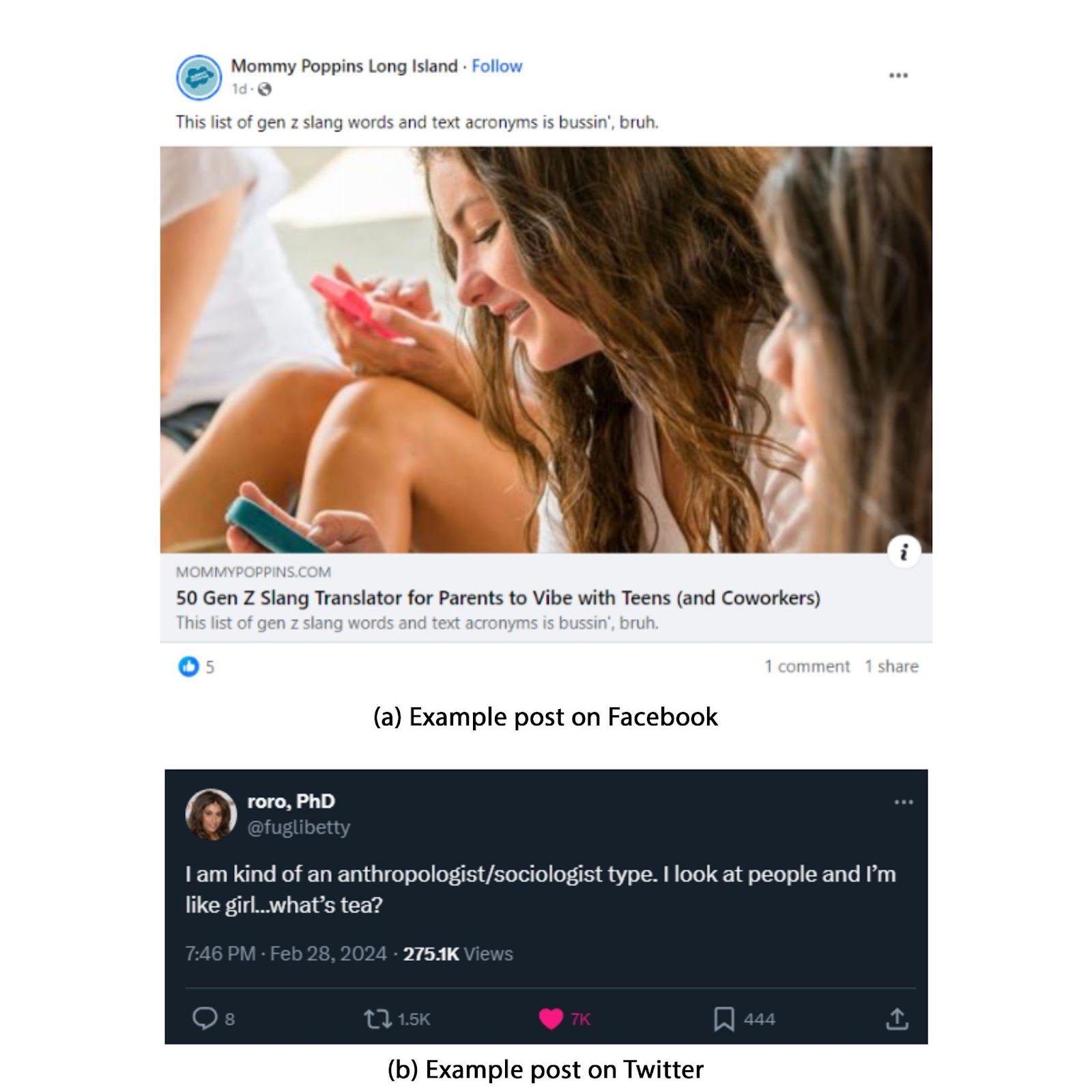
, , , , ,

Is Instagram the New Duolingo? Investigating How Social Media Usage Affects Heritage Language Competence

Sarah Bassiry (Sky), Anna Harutyunyan, Akina Nishi, Jasmine Shao

Diaspora communities and heritage language speakers are a very unique population when it comes to language and bilingualism. Heritage speakers vary greatly in their language skills, language background, and environment. As heritage speakers are generally exposed to their heritage language only at home or in other limited contexts such as a cultural community group, this study investigated to see if social media may also be a context of heritage language exposure for some heritage speakers. If so, this study investigates the role social media might play in language competence. Four Eastern Armenian and four Mandarin heritage speakers attending UCLA and one native speaker in each language, were participants in this study. The participants were given a language background survey, a grammaticality judgment test, and an elicitation task judged by a dominant native speaker using a Likert scale. Initially, we expected to see a positive correlation between social media usage in the heritage language and the participants’ heritage language skills. However, the results did not provide sufficient evidence to support this hypothesis. Thus, further testing with a larger sample size is recommended to further investigate whether or not there might be a correlation.

[expander_maker id=”1″ more=”Read more” less=”Read less”]

Introduction and Background

The concept of bilingualism is interesting to discuss in the context of heritage speaker populations, as these groups include speakers of a vast variety of language competence. Heritage language speakers ‘may or may not be frequent users of the language or exceptionally proficient in the language” (Mahootian, 2000). Many heritage speakers are also receptive bilinguals, which Nakamura (2019) notes, “does not imply zero production of the weaker language but highly limited language use in interaction.” These speakers usually have strong listening and comprehension skills but weaker production skills in their heritage language.

This study sets out to determine if there is a correlation between heritage speakers’ social media consumption in their heritage language and their competence in that language. A prior study on bilinguals and newspaper consumption conducted by Moring (2011) et al., found media to be an instrumental resource in maintaining language competence. Flewitt and Zhao (2020) also conducted a study investigating the relationship between heritage speakers and social media usage. In their study, they observed two adolescent Mandarin Chinese heritage speakers and their usage of WeChat to connect with relatives in the heritage language. They found that WeChat acted as a “springboard to include multilingual practices” and facilitated a motivating environment of supportive feedback from interlocutors for their language to grow.

Given the previous research in the field, we hypothesized that our study would show that more frequent social media consumption in the heritage language will be correlated with a higher degree of language competence. Previous studies have noted that in the case of young children, engagement with social media often involves “several types of learning and socialization occurring all at once” (Zhao, 2019). In this study, we aimed to observe the role social media activity plays in the heritage language competence of young adults at UCLA.

Methods

The population this study investigated was heritage speakers of either Mandarin or Eastern Armenian who attend UCLA, testing 4 participants for each language. This project utilized survey methods, grammaticality judgment tasks, and elicitation tasks to investigate the research questions.

Our general survey asked participants basic questions regarding demographics, social media usage in the heritage language, and information regarding details of heritage language background and exposure. Two separate grammaticality judgment tests with 20 questions each were created by bilingual speakers of each language from the research team. The Eastern Armenian task tested plural suffixation and word order, the morphosyntactic structure of the language. The Mandarin task tested participants’ knowledge of aspect markers and measured words. We chose to test structures that differ from English, which are commonly lost by heritage speakers. They also included romanization and audio recordings of the tasks to account for the varying degrees of literacy.

The elicitation tasks consisted of a story-retelling exercise where the participants were virtually shown an animated short story from Youtube in the heritage language and then asked to retell the story in the heritage language. A Likert scale was then used by a native speaker to judge each participant’s fluency levels as they viewed the recording of the participant’s elicitation.

Results

Figure 1. Self-Evaluated Language Interaction Survey Results (Eastern Armenian).
Figure above shows that more than half of the participants use social media in their heritage language and received formal education in Armenian.

The participants in the study varied in the production and comprehension levels of their respective heritage languages, and their use of social media in the heritage language.

Eastern Armenian heritage speakers varied in their production and comprehension levels of the language. Based on the results of the elicitation and grammaticality tasks, it appears that receptive knowledge is not necessarily related to expressive knowledge. For instance, the native speaker ranked participants B2 and B3 as the lowest proficient speakers of the heritage language, but these same participants had two of the highest scores for correctly identifying grammaticality judgments in their heritage language.

Figure 2. Grammaticality & Elicitation Tasks Results (Eastern Armenian).
Figure above shows that participants had varying results on the grammaticality judgment tasks and the elicitation task. Only B4 has high scores on both tasks.

Additionally, the Eastern Armenian heritage speakers who score the highest on the elicitation and grammaticality judgment tasks consumed social media in various amounts, ranging from rarely or never to as frequent as daily consumption. Participants B2 and B3 scored the highest on the grammaticality judgment tasks, but B3 said that they rarely or never consume social media in their heritage language, while participant B2 did so on a daily basis, in formats of video, audio, and text. Participant B4 scored highest on the elicitation task and the second highest on the grammaticality judgment tasks, and used social media in the form of Instagram video multiple times a month. Lastly, participant B1 scored the lowest on the elicitation task and had a somewhat low score on the grammaticality judgment task. They consume social media in their heritage language on a weekly basis in the form of audio and text.

All in all, the data from our Eastern Armenian speakers does not represent any correlation between social media usage and heritage language competence.

Figure 3. Self-Evaluated Language Interaction Survey Results (Mandarin).
Figure above shows that more than half of the participants received formal education in Mandarin and only a quarter of the participants use social media in Mandarin.

Our Mandarin heritage speaker participants also varied in their levels of fluency. Diverging from the lack of relationship we observed in Armenian, those who performed highly on one test usually performed highly on the other. Only one of our four participants for Mandarin, participant A2, expressed consumption of social media in Mandarin, and this participant also had the highest score on the grammaticality judgment tasks. This speaker could serve as one data point to support our hypothesis that heritage language social media consumption is correlated to higher levels of retention in the heritage language. However, participant A4 scored second highest on both tasks, but they do not consume social media in Mandarin. Participants A1 and A3 also do not consume social media in their heritage language and received lower scores on both tests. Although the rough possibility of a correlation exists in the Mandarin data set, there is not enough evidence to definitively support our hypothesis.

Figure 4. Grammaticality & Elicitation Tasks Results (Mandarin).
Figure above shows that participants had varying results on the grammaticality judgment tasks and the elicitation task. Only A2 has high scores on both tasks.

Discussion and Conclusion

As a result of our investigation, we were unable to find supporting evidence for our initial hypothesis that higher social media consumption in the heritage language corresponds with higher competency in the heritage language. Some factors that led to this conclusion is the lack of concrete and frequent social media usage among the participants. For instance, in the Mandarin heritage speakers cohort, participant A2 claimed they use social media and received the highest scores on both tasks as seen in Figure 4, however, participant A4 who claimed they don’t use social media got the second-highest scores in the task. Similarly, in the Armenian heritage speaker cohort, participants B2 and B3 received similar results in both tasks (Figure 2) and the two highest on the grammaticality judgment task. However, participant B3 claimed they use social media never/rarely, while participant B2 uses social media on a daily basis. The contrast can be thought of to be due to formal instruction in the heritage language.

Our new finding, formal education, correlated with higher scores on both tasks.  For instance, participants B2, B3, and B4 received formal instruction in learning Eastern Armenian. The Mandarin heritage speaker who performed the highest on both tasks, A4, also received formal education in Mandarin. This correlation was of interest for other scholars who claim that the lack of formal education has negative effects on the acquisition of the heritage language; children who don’t receive formal education do not learn the formal registers, vocabulary, and complex structures in written language (Montrul, 2010). Our data reflects the aforementioned claim as the participants who did not receive formal instruction in Eastern Armenian and Mandarin performed the lowest or second lowest on the grammaticality judgment task which tests their knowledge of the language grammar. While formal education can be a factor that influences higher competency in the heritage language, this correlation has to be interpreted in terms of production or grammatical knowledge. This is because the participants who received formal education performed well on the grammaticality judgment task, but not as well on the elicitation task. These results show that analysis between formal education and heritage language competency should be further investigated.

Another factor that can influence the participant’s competence in the heritage language is the age of exposure. There is contrasting data on how the age of exposure relates to language competence. Proponents of the Critical Period Hypothesis claim that children should be exposed to a language at a certain age to be able to acquire it native-like (Mahootian, 2020). Others claim that other factors such as ‘the child’s temperament or motivation’ can affect their learning of a language (Yuldasheva, 2021). In our research, we found that 7 out of the 8 participants in our study claimed that they were exposed to their heritage language from 0 to 3 years old, with one exception, A4, who claimed they were exposed to their heritage language from 4 to 8 years old. In addition, more than half of the participants, 5 out of 8, claimed that they were exposed to both English and the heritage language at the age of 0-3, simultaneously. The participant who performed the best on both tasks in Mandarin claimed to have been exposed to English and Mandarin simultaneously from the age of 0-3. The participant who performed the best on both tasks in Eastern Armenian stated that they were exposed to English from the age of 4-8 and Armenian, from the age of 0-3. This shows that age of exposure may not play a major role in the heritage speaker’s language competency. Perhaps, the difference lies in simultaneous and sequential bilingualism. Age of exposure to the heritage language may be a sufficient factor in the heritage language competency, however, this factor has to be accompanied by other factors, perhaps, social media consumption and formal education in the heritage language.

Another finding is that there may be a correlation between longer attendance to formal instruction and higher social media usage. Social media in the heritage language provides an extension to the traditional classroom setting. Going back to Zhao & Flewitt’s case study, heritage language speakers’ language practices on WeChat extended their “Chinese-speaking social world and provided them with opportunities to engage in contextualized, transnational heritage language and literacy practices beyond their home and Saturday Chinese school environment.” (Zhao & Flewitt, 2020). We could make the claim that formal instruction and social media in the heritage language complement one another to learn, and a longer history of instruction may motivate the bilingual speaker to seek more natural and conversation-based learning environments, such as social media.

 Overall, claiming that the heritage speakers’ competency in the heritage language correlates with their social media consumption would be invalid based on the findings of our research. Other variables that can account for this contrast are formal education in the heritage language or age of exposure to the language. Perhaps, formal education in the heritage language could account for these three heritage speakers’ higher performance on the grammaticality judgment and in one of the cases, the elicitation task. In a similar manner, the age of exposure to the language can be a variable that influences the results. A detailed analysis above shows that these are sufficient factors of heritage language competency and the limitations of our study prevent further research into these variables. Some of the limitations of our study include a smaller sample size. With a larger sample size, the findings of our research could be more reliable and generalizable.

However, it was interesting to see a small sample size showcase such a wide variety of language proficiency. Bilingual heritage speakers have unique backgrounds in their heritage language because of many internal and external factors, such as “the role of the school system and other institutions, the historical experiences of particular language communities, the unique circumstances involved in the adoption by some communities or individuals of proxy HLs as part of the complex multiple identities of contemporary life, and the specifiable impact of a language ecological pattern over the life cycle of individuals and families” (Lo Blanco, 2001). Our participants had different characteristics, such as high proficiency in listening but lower proficiency in writing, or vice versa, as well as the amount of formal education, ranging from a couple of years to over 10 years.

For future research, if these methods are adapted, we suggest that elicitation tasks are performed in an in-person setting rather than virtual, where the native speaker listens to the heritage speaker’s elicitation and rates them in person. Additionally, the elicitation tasks should be reviewed by different native speakers. We believe that these changes will allow the results to be more reliable and generalizable.

References

Lo Bianco, J. (2001). Language Policies: State Texts For Silencing and Giving Voice. Difference, Silence and Textual Practice: Studies in Critical Literacy, 31-71.

Mahootian, S. (2019). Bilingualism. Routledge.

Montrul, S. (2010). Current issues in heritage language acquisition. Annual Review of Applied Linguistics, 30, 3-23.

Moring, T., Husband, C., Lojander-Visapää, C., Vincze, L., Fomina, J., & Mänty, N. N. (2011). Media use and Ethnolinguistic Vitality in bilingual communities. Journal of Multilingual and Multicultural Development, 32(2), 169–186. https://doi.org/10.1080/01434632.2010.541918

Nakamura, J. (2019). Receptive bilingual children’s use of language in interaction. Studies in Language Sciences, 18, 46-66.

Yuldasheva, D. (2021). Age and The Second Language Acquisition. Research Jet Journal of Analysis and Inventions, 2(04), 124-130.

Zhao, S. (2019). Social media, video data and heritage language learning. In G. Falloon, J. Rowsell, & N. Kucirkova (Eds.), The Routledge International Handbook of Learning with Technology in Early Childhood. Routledge.

Zhao, S., & Flewitt, R. (2020). Young Chinese immigrant children’s language and literacy practices on social media: a translanguaging perspective. Language and Education, 34(3), 267–285. https://doi.org/10.1080/09500782.2019.1656738.

[/expander_maker]
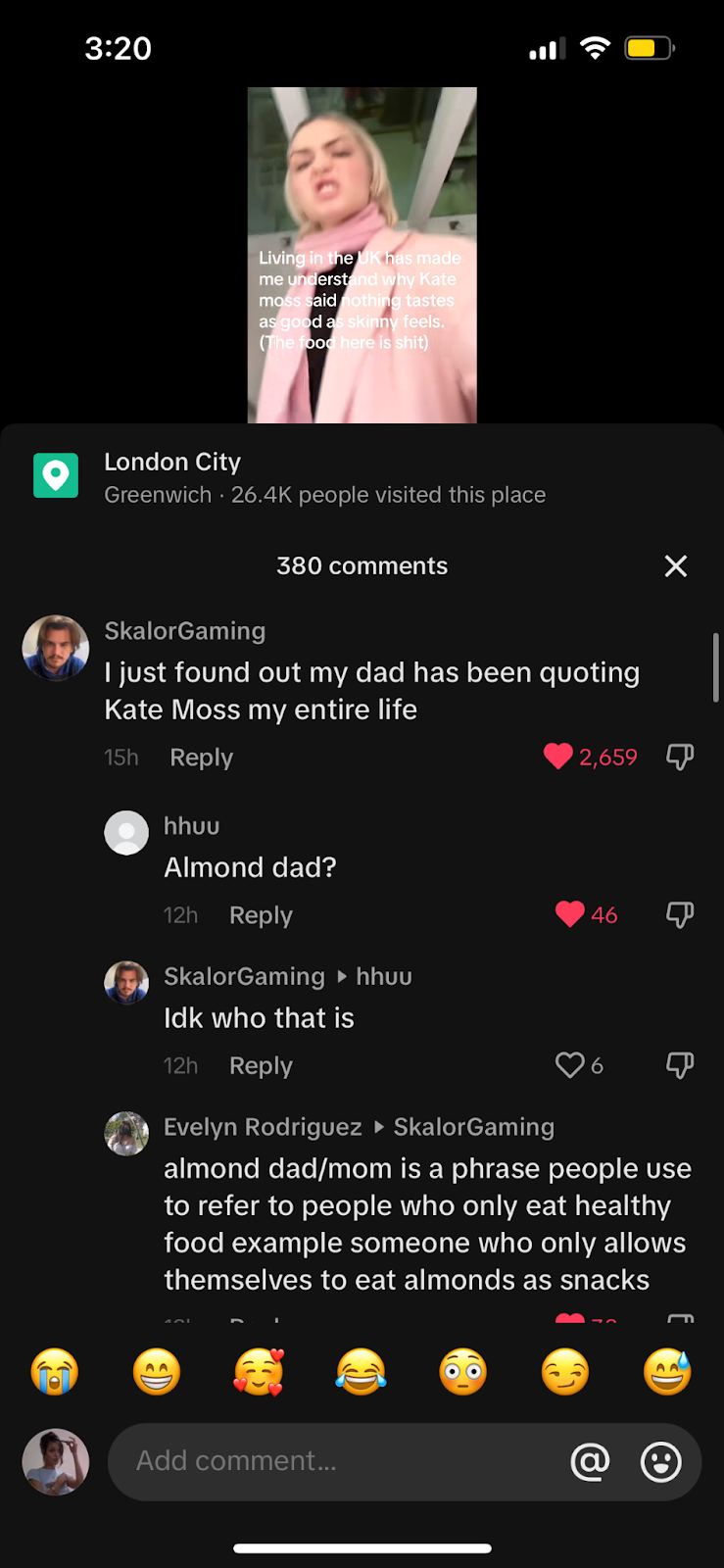
, ,

My Poor Little Meow Meow: K-Pop Fans and the Parasocial Abuse of Positive Politeness

Blai Puigmal Burcet, Emma Montilla, Latisha Sumardy, Sophia Wang

Korean popular music (K-pop) started off as a small subculture in the 1990s but began taking off in the West in the mid-2010s and since then has become increasingly popular and mainstream. K-pop fans are known for their borderline obsessive behavior and for finding personal validation through parasocial relationships (Kim & Kim, 2020), fostered by their online communication style. Social media as a mode of communication is unique due to its lack of a second interlocutor and how people take the tactics they use online to real-life interactions. We analyzed language use among English-speaking K-pop fans online, specifically regarding inappropriate usage of positive politeness strategies (PPS) towards celebrities. We hypothesized that tweets directed towards male celebrities will contain more PPS than those directed towards female celebrities. After analyzing replies to BTS and Blackpink, we confirmed our hypothesis as there is 2.6 times as much PPS usage in BTS’s replies versus Blackpink’s replies. The sudden and immense popularity of K-pop, stan culture, and the obsessive tendencies of fans is evident not only in the abuse of PPS online, but also in real life as we begin to see instances of fetishization of Asian American men.

[expander_maker id=”1″ more=”Read more” less=”Read less”]

Introduction/Background

K-pop has piqued our interest because the industry itself intentionally encourages fans to develop a parasocial relationship with celebrities. They succeed in this by publishing large amounts of content in the form of live broadcasts, vlogs, Instagram posts, collectible trading cards of idols included in albums, fansigns, etc. that all fabricate a sense of closeness and personal connection with the members of the group. (Ardhiyansyah et al., 2021) Fans pride themselves on knowing as much as they possibly can about members of their favorite groups, and it is common to make “guide” videos for new fans to get familiar with their faves. An example is YouTube user JinHit’s video “who is BTS? (un)helpful guide to BTS” (2021) that catalogs each BTS member’s quirks and habits for fans to memorize. Fans have also developed a K-pop-specific vocabulary that utilizes Korean loanwords to refer to different practices in the fan community, and there are entire guides on this as well, such as kpoptrash’s “a beginner’s guide to kpop vocabulary” (2020). We focused on English-speaking fans because we are interested in the explosion of K-pop’s popularity in America and the global West, and how their borderline obsessive behavior affects how they interact with real life Asian populations.

We focused on positive politeness strategies (PPS) used by K-pop fans on social media towards their favorite celebrities. According to Brown & Levinson (1987), PPS is typically reserved for use between interlocutors that have a close relationship. It includes specific linguistic features such as compliments, inside jokes, and nicknames, as it represents a language that is more personal, authentic, and used in informal situations between family and friends. When it is misused, PPS becomes a negative face threatening act that does not respect the interlocutor’s personal agency. In our case, PPS is being misused by fans towards celebrities with whom they have a one-sided relationship. They do not have a realistic chance of getting a response from these celebrities, but interact with them in a parasocial way as if they did. This particular use of PPS contributes to the fetishization of Korean celebrities, setting a precedent of inappropriate interactions that bleed into real life and how K-pop fans interact with average Asian American men. We expect to see that more PPS will be directed at men than women, and that the rise of K-pop fan communities and fan specific interactions has correlated to a rise in fetishization of East Asian men.

Methods

For this study, we decided to analyze the responses to 7 BTS and 7 Blackpink tweets from their official Twitter accounts, @BTS_twt and @BLACKPINK. We chose BTS and Blackpink because in terms of sales they are the biggest K-pop boy and girl groups in the West (McIntyre 2022), and we believe that analyzing fan interactions with these groups provides a baseline for how Western fans would interact with other K-pop groups as well. We picked the first 25 users’ replies in English under each chosen tweet. From our data pool, we omitted any tweets that either consisted of one-word phrases or were in mixed English and another language in order to make sure that our data was consistent. In total, we collected 350 users’ replies to these 14 tweets. The specific criteria that we looked for in the data were instances of fans using nicknames versus using the artists’ real names; any use of intimate language such as terms of endearment or diminutives or intimate verbs like “to love”; use of possessive language such as “my” or “our” in reference to these celebrities; and any direct 2nd person statements in the replies.

In regard to our target population, we decided not to narrow down our subjects by any specific age, gender, or location due to the anonymous nature of Twitter as a social media platform. Anonymity plays a big role in how people talk to each other online, as a prominent feature of social media is the comfort of not being able to see the person that you are sending the message or reply to. Because of this, we decided that age, gender, and location would not have a very strong impact on how people online would interact, and would be difficult for us as researchers to confirm based on looking at each Twitter user’s profile alone. However, we expect that the average English-speaking K-pop fan would probably be a female teenager located in the United States.

Data Analysis

Initially, we found that there were about 1.3 instances of PPS per BTS reply versus 0.5 instances of PPS per Blackpink reply. The average word count of a reply to BTS was 9.7 words, and the average word count of a reply to Blackpink was 4.1 words. This difference in word count means that the average response to Blackpink reads something like “Jennie is such a queen”, while the average reply to BTS looks more like this:

The most commonly used word overall in BTS’s replies was “you”, which co-occurred the most with verbs “love” and “miss”. BTS members were more likely to be referred to by their real names or nicknames chosen by fans rather than their stage names as well. The second-person reply containing “you” was by far the most commonly used instance of PPS, followed by intimate verbs.

PPS Usage in BTS Replies: 2nd person reply 46%, intimate verbs 24%, possessives 13%, real name 8%, terms of endearment 9%

There was a similar pattern in Blackpink’s replies: the most commonly used word was “you”, but it was more often referring to YG, Blackpink’s management company, rather than Blackpink themselves. The most common co-occurrence with “you” was still “love”, although miss did not appear in the sample at all. The most used PPS category once again was the 2nd person reply followed by possessives “my” and “our” and then intimate verbs.

PPS Usage in Blackpink Replies: 2nd person reply 31%, possessives 27%, intimate verbs 22%, real name 14%, terms of endearment 6%

The higher word count in BTS’s replies correlated with more personal messages, where fans would overshare in a reply thread about their hardships, especially to do with their lack of an IRL social life. Although it doesn’t fit into the specific PPS criteria defined earlier, it qualitatively shows the one-sided relationship between BTS and their fans and what the fans feel comfortable saying online. Higher word average word count could also explain why there are more PPS usages per tweet in the BTS sample.

The comment continued for 5 more tweets in thread

More cute, romantic terms of endearment were used to describe BTS in their replies, while Blackpink fans were more likely to use terms of endearment to praise their performance and talent. The most common term for BTS was “baby” while, in comparison, the most common for Blackpink was “queen”. BTS’s fans were also more likely to make up their own nicknames for the members, while Blackpink fans stayed consistent with each other. For example, Blackpink’s rapper Lisa was called only Lisa or Lalisa, while BTS’s V was called a whole group of different names, including but not limited to Taehyung, Tae, Taetae, Taebear, and Jubbly. No one in the sample referred to him solely as V, the name he performs under. BTS fans were also more likely to refer to the artist as “boyfriend” or “bf” than Blackpink fans were to call the artists their “girlfriend” or “gf”.

There is a difference between the way BTS and Blackpink’s Twitter accounts are presented which could partially account for the difference in fan interactions: @BTS_twt is made to seem like the members themselves are posting, while @BLACKPINK is clearly run by their management and is more promotional than personal in nature. BTS’s posting style on Twitter, which gives a closer (although still heavily stylized and manufactured) look at the artists’ lives, could incentivize posting more personal replies if it seems like BTS could potentially see or even interact with them. This is what leads to fans feeling comfortable utilizing PPS in one-sided interactions with BTS, while Blackpink’s style of social media posts keeps their fans at a distance and makes sure that they know they are celebrities rather than their friends. Blackpink has also had consistent issues with their management underpromoting them and leaving out certain members in promotional material, so fans who know this and know that Blackpink’s company is running the account will not feel as comfortable being intimate with a corporation that is causing issues for their idols.

Discussion and Social Implications

Overall, we found that there was 2.6 times as much PPS usage per reply to BTS than per reply to Blackpink. The word choice in BTS’s replies was also more diminutive and focused on their cuteness rather than attractiveness or talent, and contained suggestions of a one-sided relationship that was not present in Blackpink’s replies. So what does this mean, and how does it affect Western society?

Historically, in the Western world, women tended to be infantilized while men were not. For example, newborn baby girls have been described as “sweet” four times as often as little boys, and many advertisements targeted towards women often depicted them as incompetent and child-like (Huot 2013).

Captions read: smart like dad, pretty like mommy

Our data goes against this Western gender norm as we see evidence of the male group being more infantilized and diminutized than the female group. And it doesn’t stop at celebrities: the obsessive desire for a relationship with these idols has leaked into reality and now affects the Asian American male population. Previously in America, Asian men in the dating pool were stereotyped as effeminate and asexual (Kao 2018) but there has been a shift in how American women view Asian men as romantic or sexual objects because of the popularity of K-pop.

 For example, from Stewart (2021):

Some Asian American men even think the K-pop phenomenon, which is often heralded as a boon for Asian male representation, is causing a fetishization of certain types of Asian men that complicates their love lives. [One] says he recently matched with a girl on Tinder who wrote in her bio that she was ‘looking for her K-pop boyfriend.’ He says her bio made him feel uncomfortable, and he didn’t meet up with her, since he wants to be seen for who he is, not as an embodiment of a stereotype.

This phenomenon has also begun to affect the K-pop industry itself: as the popularity of boy groups increase in the West, they lean into the audience’s desires and develop softer, more subversive (from a Western perspective) personas. According to Lee et at. (2020), many Westerners are drawn to Asian masculinity and find it “refreshing” and project this desire onto male celebrities as well as Asian men they encounter in real life. This produces a positive feedback loop of online fans infantilizing BTS, and then BTS increasing their cuter concepts in their promotional materials to cater to those fan desires, which then affect real life interactions.

K-pop fans have also begun to apply the same “stanning” techniques to Korean celebrities outside of the idol industry, such as breakout star of the 2022 World Cup Cho Gue-sung, a player on the South Korean national team. Tweets have surfaced from K-pop fans comparing him to idols purely because of his ethnicity and using PPS in tweets about him they would typically use for K-pop stars. (Youn, 2022) Even though as an athlete Cho already fits into a more stereotypically Western masculine archetype, he is not free of the soft, cute stereotypes that have already been applied to Korean idols before him.

Conclusion

Some may say that it is a positive thing, or a compliment to these celebrities and Asian men, that they are now the ones being sexualized after decades of asexual stereotypes and low romantic desire in the Western world (Stewart 2021). However, this is not the “equality” we should strive for. Fetishization is a form of discrimination and racism that affects real people and communities, not just the far away idols on social media in a different continent. We should not be infantilizing or fetishizing women, Asian men, or anyone. We should also question how social media allows these internet communities to encourage this behavior. The internet is a valuable tool for bringing people together, but it also houses insidious communities that can easily and accessibly indoctrinate users into harmful mindsets.


References

Ardhiyansyah, A., Maharani, D., Permata, S. S., & Mansur, U. (2021). K-pop marketing tactics that build fanatical behavior. Nusantara Science and Technology Proceedings, 66–70. http://nstproceeding.com/index.php/nuscientech/article/download/396/381

Brown, P., & Levinson, S. C. (1987). Politeness: Some universals in language usage. Cambridge University Press.

JinHit. (2021, May 25.) Who is BTS? (un)helpful guide to BTS (2021) [Video]. YouTube. https://www.youtube.com/watch?v=tkSGKGJYe4k

Kao, G., Balistreri, K. S., & Joyner, K. (2018). Asian American men in romantic dating markets. Contexts, 17(4), 48–53. https://doi.org/10.1177/1536504218812869

Kim, M., & Kim, J. (2020). How does a celebrity make fans happy? Interaction between celebrities and fans in the social media context. Computers in Human Behavior, 111,106419. https://doi.org/10.1016/j.chb.2020.106419

Kpoptrash. (2020, February 11.) A beginner’s guide to kpop vocabulary [Video]. Youtube. https://www.youtube.com/watch?v=CvigAv2mW5c

Lee J.J., Lee, R., & Park, J. (2020). Unpacking k-pop in America: The subversive potential of male k-pop idols’ soft masculinity. International Journal of Communication, 14, 20. https://ijoc.org/index.php/ijoc/article/view/13514

Stewart, J. Y. (2021, August 5.) How America tells me and other Asian American men we’re not attractive. The Seattle Times. https://www.seattletimes.com/life/i-grew-up-thinking-being-asian-detracted-from-my-masculinity-heres-how-america-tells-me-and-other-asia n-american-men-theyre-not-attractive/

McIntyre, H. (2022). Blackpink ties Twice for the most bestselling albums in the U.S. among women in k-pop. Forbes Hollywood & Entertainment. https://www.forbes.com/sites/hughmcintyre/2022/09/30/blackpink-ties-twice-for-the-most-bestselling-albums-in-the-us-among-women-in-k-pop/?sh=752b00107909

Youn, S. (2022, December 7.) How Cho Gue-sung became the breakout thirst trap of the World Cup. NBC News. https://www.nbcnews.com/news/asian-america/cho-gue-sung-became-breakout-thirst-trap-world-cup-rcna60525

[/expander_maker]
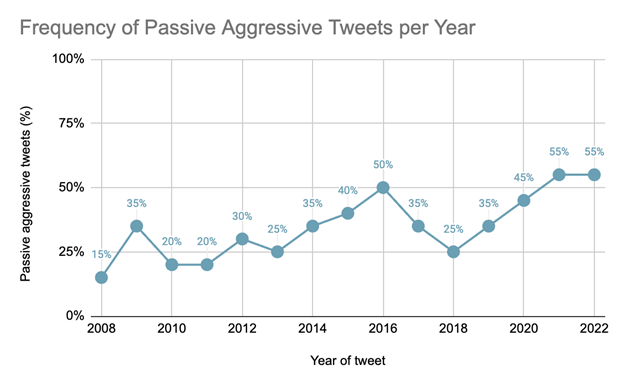
, ,
Scroll to Top