InterGen Connect: Bridging the Communication Gap Between Generations in the Workforce
Roksana Kohansedgh, Ryan Kolaini, Melissa Mehrabifar, Shawhin Sahabi
Working in a professional environment, online communication can be challenging, particularly across generations. After exploring Generation Z (1997-2012) and Baby Boomers (1946-1964), we hypothesized that they have undeniably different styles of communication that lead to misunderstandings and inefficiencies in the workforce. Baby Boomers typically prefer email communication and phone calls, while Generation Z highly prefers the use of informal, digital communication through social media and text message. Using our own methods, we analyzed this research by conducting a study at a law office, surveying 20 employees including both genders, aged 18-27 and 60-69. With the use of existing research, a background was introduced to gather data on why exactly these generations prefer a certain style of communication. Delving into the findings of our own research, the results were apparent: Boomers prefer formal language and traditional communication platforms, whereas Generation Z leans towards a relaxed approach, using slang and emojis. This generational difference showed the inefficiency in the ability to communicate effectively with one another in the discussion section. Finally, in order to bridge the gap, implications and cross generational training were introduced in the conclusion to facilitate knowledge in communicating effectively between the two cohorts.
[expander_maker id=”1″ more=”Read more” less=”Read less”]
Introduction
Bounded by the demands of the modern workforce, mutual respect and collaboration is formed through effective communication. The research delves into two distinct groups, 10 Baby Boomers (aged 60-69) and 10 Generation Z (aged 18-27), collaborating in a law office. By analyzing and conducting our own research on their communication styles and patterns, their differences in communication through lexicality and formality are unveiled, and uncovers the misunderstandings of how the two cohorts communicate, ultimately aiming to resolve misunderstandings. This research is driven by its research question: How do communication styles differ among the two generations in the workforce, and what influences these variations within the workforce? By analyzing existing research as well as our own research, we aim to uncover the reasons behind their differences in communicating, as well as propose. This will help create a more inclusive and effective workplace where everyone can communicate smoothly and understand each other better.
Background
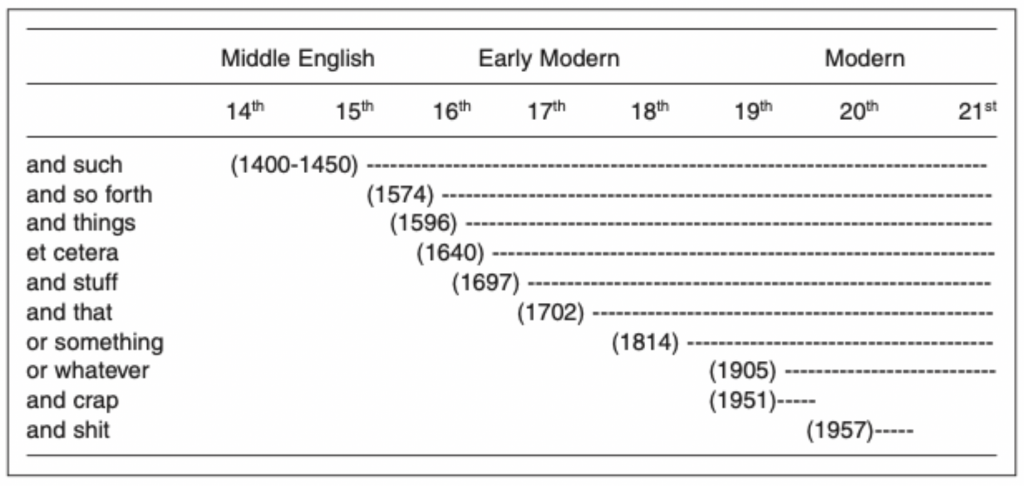
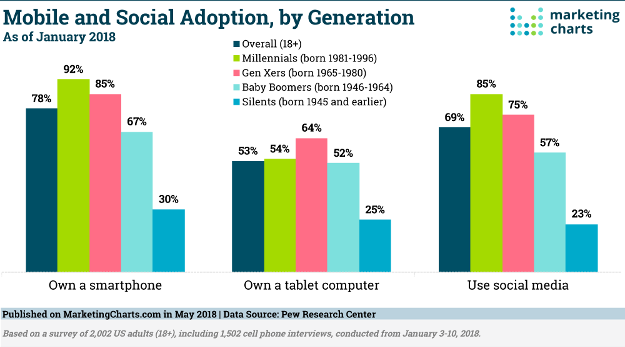
In society, Baby Boomers are known to have grown up in an era with limited technology, and therefore relying entirely on traditional communication methods. Viewing it as a sign of professionalism and authority, Baby Boomers value formality and directness when communicating. In an article by Jennifer (M.I) Loh, Jane Strachan and Raechel Johns, it is revealed that Baby Boomers preferred exemplifying a “professional” demeanor when communicating online in professional contexts. 80% of Baby Boomers revealed that they are more thorough with their grammar and overall language when texting their colleagues than when they text or email friends or family. (Loh, Strachan, & Johns p. 1522, 2021). This highlights their belief in holding a position of authority when in the workplace, unwilling to stray away from the traditional manner of communication. Conversely, the informality of communication that may seem unprofessional to the Baby Boomer generation, is seen as “direct” to Generation Z. Since Generation Z essentially grew up around the use of advanced technology, they are entirely comfortable with a plethora of online communication platforms, and prefer a more informal style of communication. In a study done by Bencsik Andrea, Horváth-Csikós Gabriella, and Juhász Tímea, the data depicted in a chart revealed that “The boundaries of work and entertainment overlap” (Bencsik, p. 95, 2016). The data is then further explained when it says that because they grow up around technology, Generation Z feels comfortable in a digital, less formal environment, permeating into their work lives. The abbreviations they use make for more of a direct and quick approach to communicating. (Bencsik, p. 93, 2016). The use of slang, like “lol” “and omg” are used in order to be more efficient and comfortable with their coworkers when communicating.
Methods
In order to effectively explore and investigate communicative differences between these two different generations, a mixed-methods study was conducted, analyzing both qualitative and quantitative data. In terms of qualitative data, we conducted a study with 20 employees from a law office, consisting of 10 Baby Boomers (aged 60-69) and 10 employees from Generation Z (aged 18-27) on a google form survey. Narrowing in our research, we examined each cohort’s communicative styles, online preferences for communication platforms, formality, and use of slang. The survey tested their comfortability with certain online communication platforms through close-ended questions, and asked open-ended questions on how they would personally respond to emails and text messages, monitoring their slang, formality, or lack thereof. Additionally, it is important to note that, to avoid bias, we collected data on age and gender at the end of the survey.
Results and Analysis
In terms of the analysis and results of the data, it revealed a significant difference in generational communication style, contributing to the various difficulties communicating across generations.
QUALITATIVE INSIGHTS:
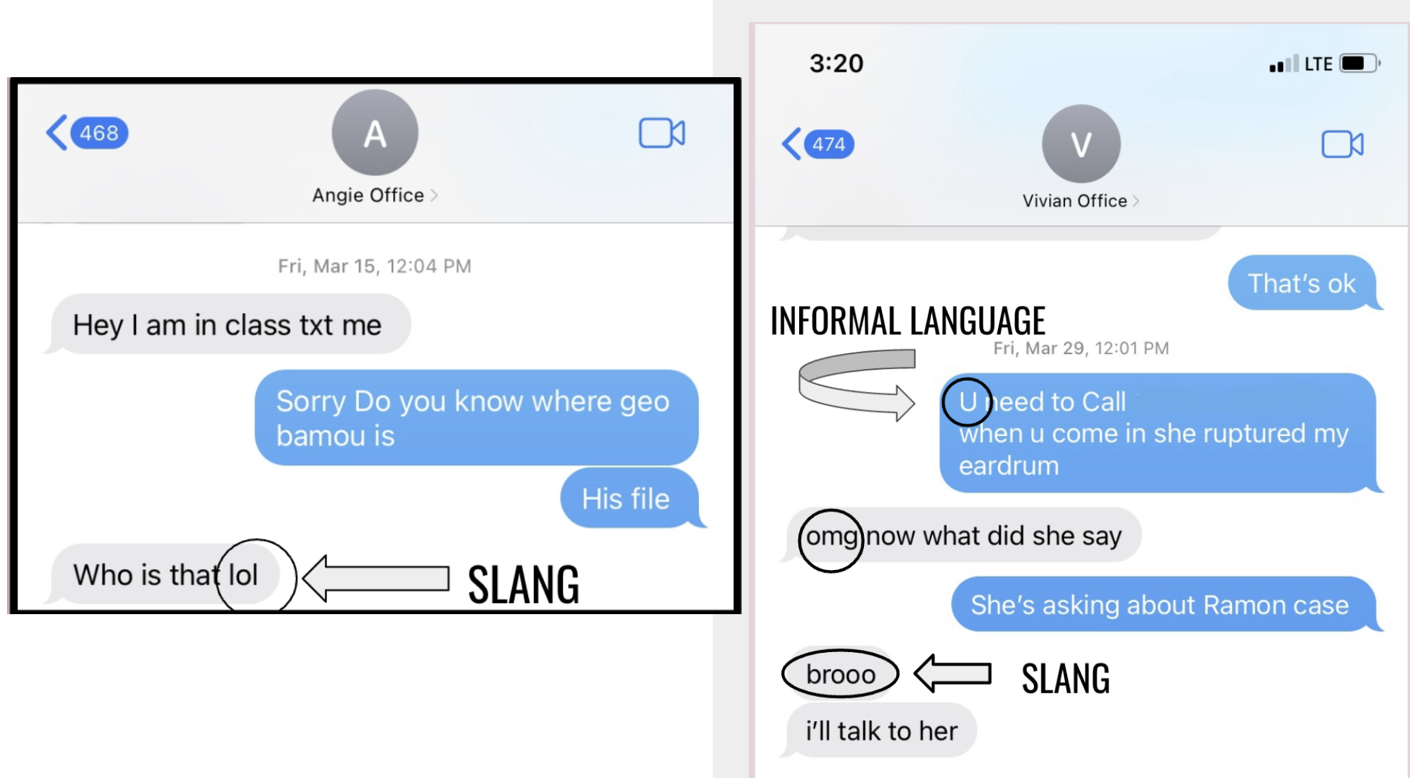
Our qualitative insights revealed that Baby Boomers emphasize formality and proper grammar, viewing it as a sign of professionalism and authority. The apparent Baby Boomer showed a more formal, authoritative approach. As shown in both examples, full sentences, proper punctuation, and directness is used. Within our qualitative insights, we observed distinct differences in the use of language and formality. (See Image one and two)
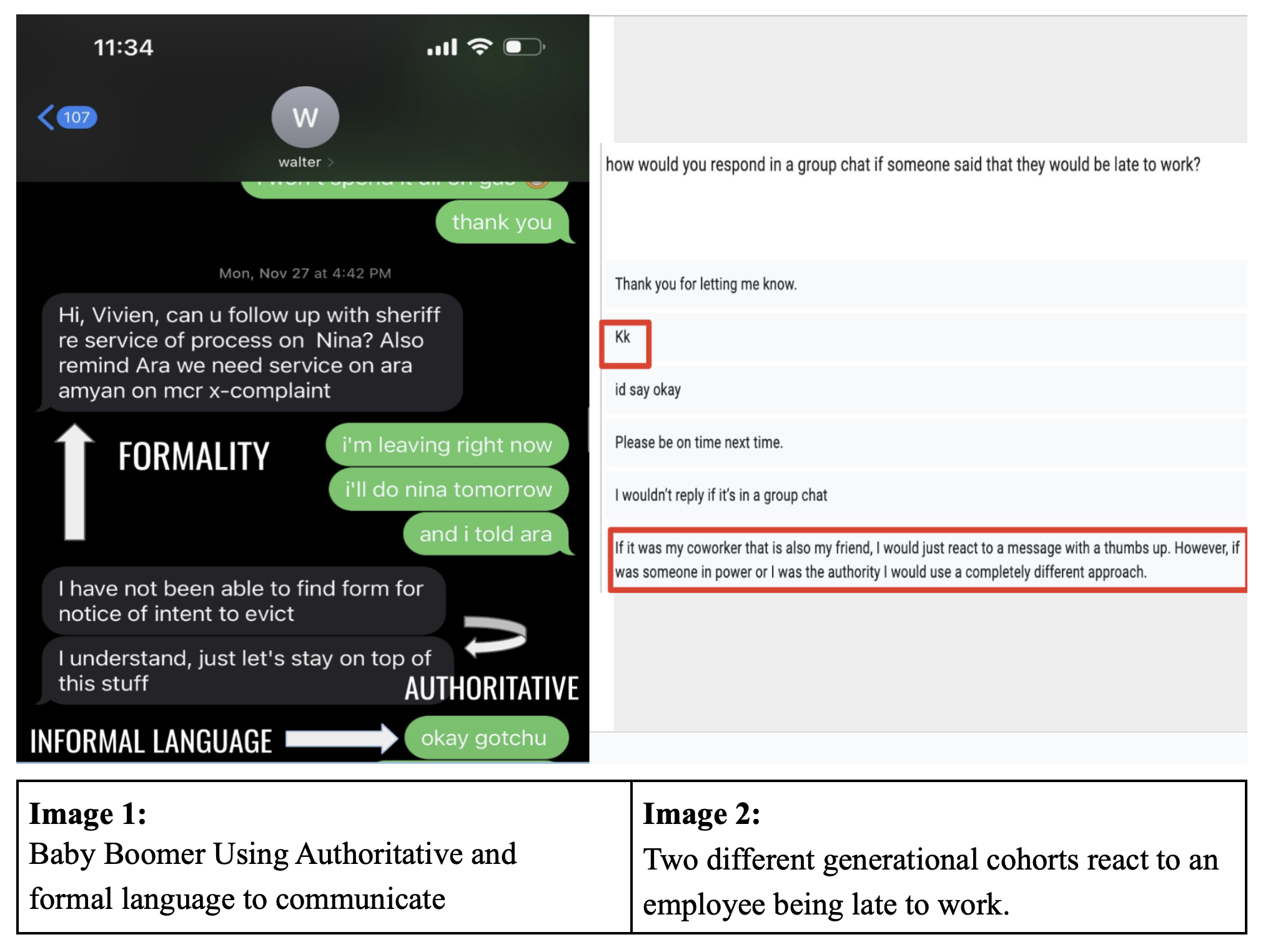
In Image two, it is shown how Generation Z often uses slang and informal language in a given scenario, favoring brevity and efficiency over traditional formality. In contrast, in image one, the Baby Boomers’ use in formal language asserts their authoritativeness, allowing for a more traditional approach.
QUANTITATIVE INSIGHTS
The data in the chart shows a clear preference for communicative platforms between Generation Z and Baby Boomers. We focused on two different types of platforms of communication: email and instant messaging (like instagram, snapchat, and text message).
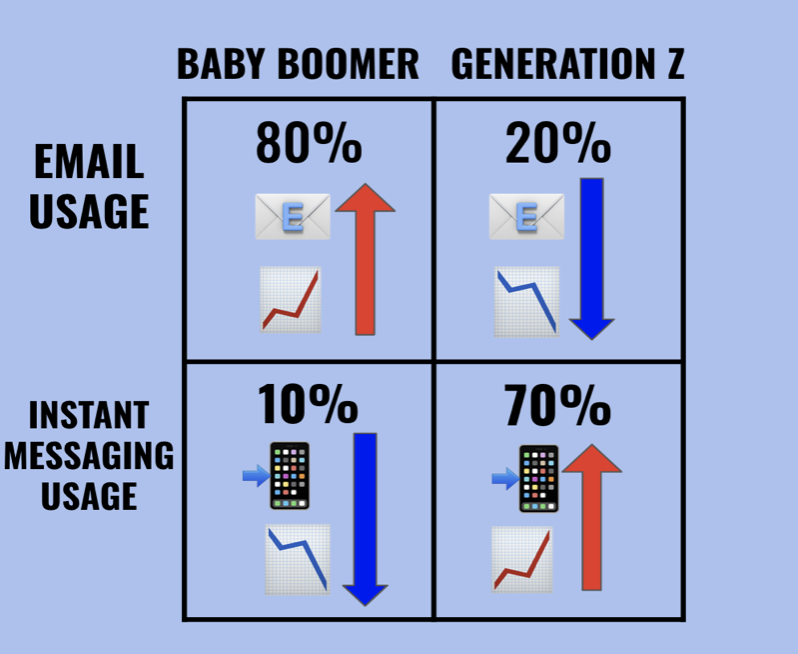
Baby Boomers use email for 80% of their professional communications, preferring its formal format. They use instant messaging for only 20%, due to its informal structure and their preference for traditional methods. In contrast, Generation Z uses email for only 30% of their communications, often when required. They prefer instant messaging, which makes up 70% of their workplace communications, valuing its efficiency and quick interactions.
DISCUSSION
Baby Boomers: The Formal Communicators
Baby boomers grew up in times of more face-to-face communication than virtual reality, and formal written communications were very popular. They associate formality with being professional and reliable. It comes; therefore, more naturally to them that they favor emails, formal meetings, and structured ways of communication. Their style of formal, direct lines of communication actually goes to make a point in the Baby Boomers’ favor—that professionalism lies in good punctuation and clear-sighted authority. As Venter (2017) states, “Baby Boomers communicate mostly using face-to-face communication, telephone conversations and e-mail. They will seldom use blogs, wikis, social networking sites and texting or instant messaging in more formal situations, such as in the work context.”
Generation Z: Digital Native
On the other hand, Generation Z was brought up on the internet and the digital means of communication, and therefore, they embrace the style of casual and instant communication. They prefer informal language that is rich in slang, dramatic expressions, and even emojis to express emotions. They prefer digital platforms more: social media and messaging applications for communication. This is mainly a representation of a world that is fast and interconnected, where it is important to be quick and efficient in communication.Taneja, Wu, and Edgerly (2018) highlight that “Generation Z prefers to communicate through more private social media platforms such as Snapchat and Whisper.”
Our study identifies the distinct communication styles of Baby Boomers and Generation Z, highlighting why misunderstandings occur in the workplace. Baby Boomers prefer formal, structured communication, while Generation Z favors informal, rapid styles, leading to potential friction. Subramaniam and Razak (2014) note, “There is also the element of interjection such as ‘la’, ‘ah’ and ‘lah’ in the posts; it shows the informal style of posts.” Understanding these preferences allows organizations to tailor strategies for a more inclusive environment.
CONCLUSION
When focusing on the communication gap between Baby Boomers and Generation Z, it is essential to scope the different aspects of intergenerational interaction in a cohesive and productive work environment. This research project reveals the different communication preferences and patterns of the two generations, and how each generation has many differences. When highlighting these differences, Baby Boomers prefer a more formal touch to their communication, whereas Generation Z drives towards convenience and simplicity through social media and messaging apps. These differences not only reflect the differences between the people born in those particular generations but also reflect how advancements in our society have played out.
Our research proposed implementing specific training protocols to address generational communication challenges, fostering empathy and reducing confusion. Programs like “Global Courseware” and “SkillPath” can create a healthy, transparent work environment with flexible communication. For example, combining email updates with instant messaging for quick follow-ups can help bridge communicative differences. These strategies enhance collaboration and understanding, creating a more inclusive workplace. Our research not only offered solutions to communication barriers but also fostered a healthier workplace, reflecting rapid technological advancements and improving productivity and job satisfaction.
Additionally, we provide links to relevant podcasts and news broadcasts that delve deeper into generational communication differences and strategies for effective workplace communication.
https://www.youtube.com/watch?v=VicCUIEwpLk
https://www.youtube.com/watch?v=KteUn6scFqE
https://www.youtube.com/watch?v=6LD8CZIUeDU
Acknowledgements
We thank the employees of the participating law office for their time and insights, and our academic advisors for their guidance and support in this research project.
By fostering an understanding of generational communication differences, we can create more effective and cohesive workplaces.
References
Bencsik, A., Juhász, T., & Horváth-Csikós, G. (2016). Y and Z Generations at Workplaces. Journal of Competitiveness, 6(3), 90–106. https://doi.org/10.7441/joc.2016.03.06
Loh, J. (M. I., Strachan, J., & Johns, R. (2021). How rude is rude: an exploratory study among Australian Millennials, Generation “X” and Baby Boomers mobile phone users. Behaviour & Information Technology, 40(14), 1516–1527. https://doi.org/10.1080/0144929X.2020.1764106
Subramaniam, V., & Razak, N. A. (2014). Examining language usage and patterns in online conversation: Communication gap among Generation Y and Baby Boomers. Procedia, Social and Behavioral Sciences, 118, 468–474. https://doi.org/10.1016/j.sbspro.2014.02.064
Taneja, H., Wu, A. X., & Edgerly, S. (2018). Rethinking the generational gap in online news use: An infrastructural perspective. New Media & Society, 20(5), 1792–1812. https://doi.org/10.1177/1461444817707348
Venter, E. (2017). Bridging the communication gap between generation Y and the baby boomer generation. International Journal of Adolescence and Youth, 22(4), 497-507. https://doi.org/10.1080/02673843.2016.1267022