gender differences

Breaking the Code: Understanding the Dynamics of Gendered Communication through Report Talk and Rapport Talk

Xiaotong Xi, Jullie Gu, Yaruo Tang, Scarlet Gu

This research explores Tannen’s original idea of report and rapport talk on gendered communication under a more modern context by investigating the conversational styles of college students aged 18-25. While previous research conducted by Tannen mainly utilized qualitative observational case studies, this research gathered quantitative data on gendered patterns in a conversational style by conducting surveys on 72 participants and 3 observational studies with detailed conversational data recorded. The research findings from both categories indicate that women’s conversational styles approach rapport talk more frequently by communicating with a tentative communication style and empathetic tone and topics surrounding personal experience. On the other hand, men approach report talk by using an assertive communication style, with conversation topics surrounding their own expertise and factual information.

[expander_maker id=”1″ more=”Read more” less=”Read less”]

Introduction and Background

People grew up with the expectation to adhere to different socially constructed labels. Men and women grew up under different expected gender roles, thus developing different gender-based cultures. This research explores the variations in communication styles fostered by the different cultures between men and women. In the book “You Just Don’t Understand,” Tannen explored the phenomenon that women intend to pursue intimate connections while men intend to build status in communication, which is further referred to as rapport vs. report talk (Tannen, 2007). To be more precise, our research defines rapport talk as a conversational style with features including a tentative communication style, topics surrounding personal feelings, and an empathetic tone; and report talk as a communication style of assertive tone, nonverbal cues to assert dominance, and topics surrounding personal expertise and factual information.

Elaborating on Tannen’s previous qualitative approach, our research aims to explore gendered patterns of gendered communication under modern contexts through quantitative methods, targeting the research population as college students aged 18-25. To quantify the data, this research collected survey responses and conversational elements from observations, categorized them as either rapport or report talk features, and compared the frequency of these features that appear in the communications for both genders.

To investigate the research question, “To what extent do women pursue intimate connections within communications regarding friendship while men pursue status?” We surveyed 72 effective participants on communication style and content-related questions. The survey supplemented observations on three conversations between friend groups and gathered quantitative data. Based on the research data, men perform report talk that establishes status more frequently, while women are more inclined to use rapport talk that builds intimate connections.

Methodology

The research first conducted surveys to gather data from 100 college students aged 18-25. The survey consists of 16 questions to examine cross and same-gendered communications, including analyzing patterns of frequency, length, and responses to specific scenarios, categorizing answers based on the rapport and report talk elements, and recording the frequency they occurred (Martin Terre Blanche et al., 2006).
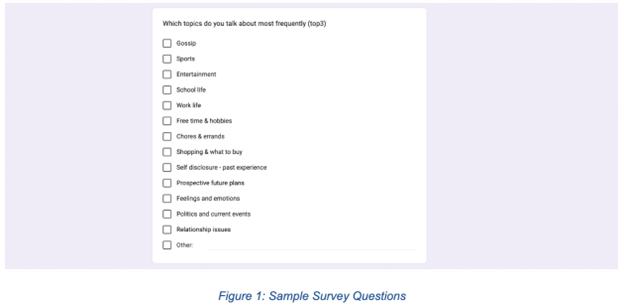
Figure 1: Sample Survey Questions

The research also conducted three real-life observations to analyze the gendered pattern in conversation under more natural and authentic contexts. Conversations were recorded but presented with made-up names. Participants were selected from survey respondents. Conversations were coded with different elements that fall into rapport or report talk category.

Analysis – Survey

Due to the small sample size and potential diversity of non-binary gender, our research focused on the population who identifies as male (48%) or female (52%). 72 out of 100 were considered effective data, excluding participants outside the age range (18-25) and non-binary gender (Reiter, 2017).
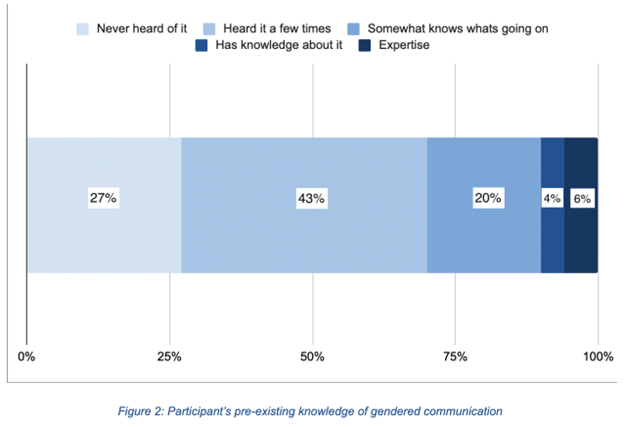
Figure 2: Participant’s pre-existing knowledge of gendered communication

As shown in figure 2, over 80% of participants had little to no knowledge about gendered communication, reducing the barrier of choosing the most appropriate answers; however, gendered communication patterns are never new, as shown in figure 3, female and male had completely different reactions towards Rachel and Ross sharing their kiss from the beloved show Friends (Crane, 1995).
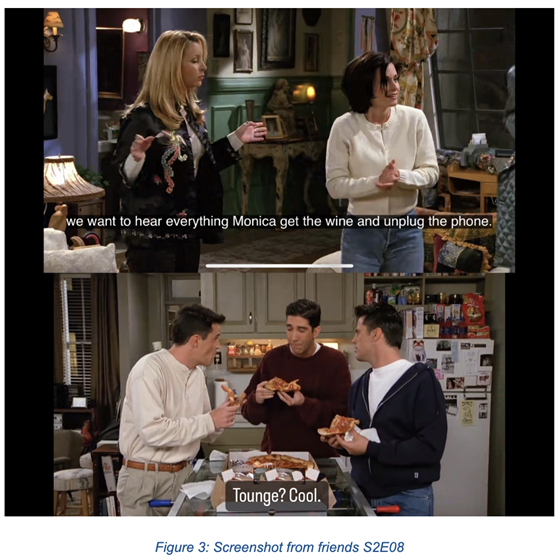
Figure 3: Screenshot from “Friends” (S2, E08)

Figure 4 shows the top 3 chosen topics participants reckon to recurrently talk about. Among females, the most discussed topics include school life, gossiping, hobbies, and entertainment. Most male communications depicted school life, sports, self-disclosure, and prospective future plans. As anticipated, females chose intimate topics, while males did talk more about sports and future plans. Surprisingly, self-disclosure – a sign of intimacy and connection, also appeared frequently among males. Opposite-gendered communication topics are extremely similar to patterns of same-gendered communication.
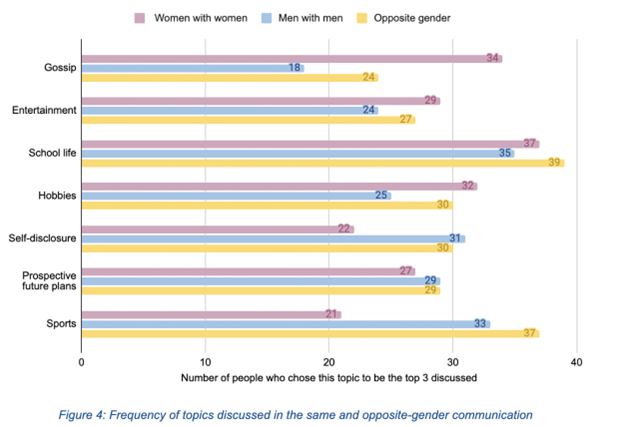
Figure 4: Frequency of topics discussed in the same and opposite-gender communication

However, the frequency of topics may be too broad, and the selection of topics could be biased even with support from past literature reviews. Therefore, the participants were given a short, explicit situation to choose their most likely reaction.

As demonstrated by comparing figures 5 and 6, men and women have completely different attitudes towards gossiping. 51% of the male respondents have a positive or neutral attitude toward gossiping, while 62% of the female respondents reacted positively. From figure 4, 66% of the male and 92% of the female respondents have chosen to gossip as a commonly discussed topic. Even though participants knew the survey was anonymous, untruthful answers may still be chosen (Manza, 2018). Therefore, the survey is applied as supplementary material for later observations.
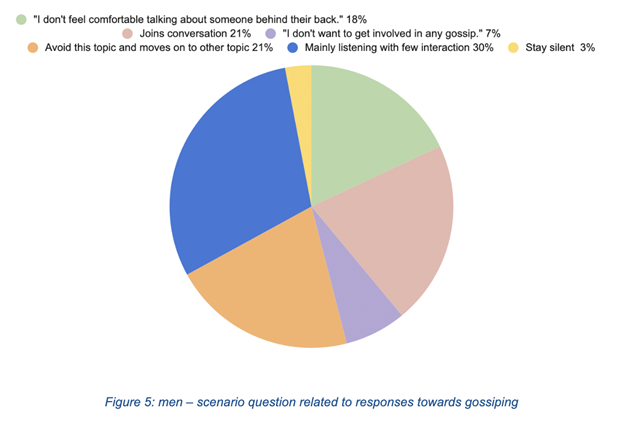
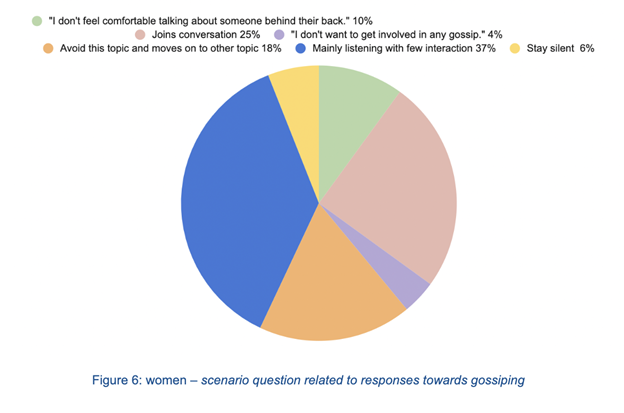
Figure 5: Men – scenario question related to responses towards gossiping
Figure 6: Women – scenario question related to responses towards gossiping

Analysis – Observation

Quantitative Analysis

The data collected demonstrates an explicit distinction in communication styles between genders. We categorized various features under report talk or rapport talk, as labeled in the x-axis of figures 7 and 8 (Klinetob & Smith, 1996). To be more precise, the use of direct and assertive communication styles includes declarative statements or giving direct orders and less polite or deferential language, making direct requests, or stating their opinions without apology. For example, “I’m absolutely certain…” “Trust me, I know what I’m talking about…” “Let me tell you…”. Nonverbal cues to assert dominance or authority can be implied by taking up more physical space. Indirect and tentative communication style refers to hedge words or phrases like “kind of” or “sort of” or more polite or deferential language, such as asking questions instead of making statements or using euphemisms instead of direct language.
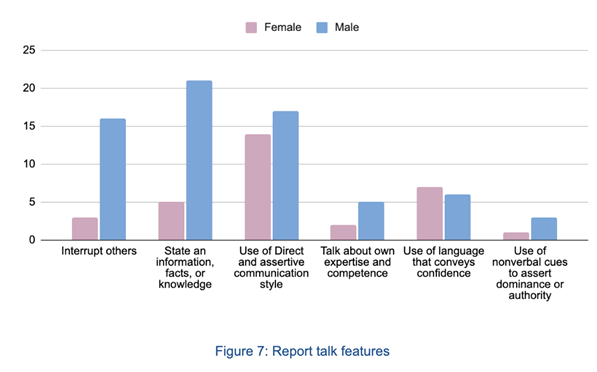
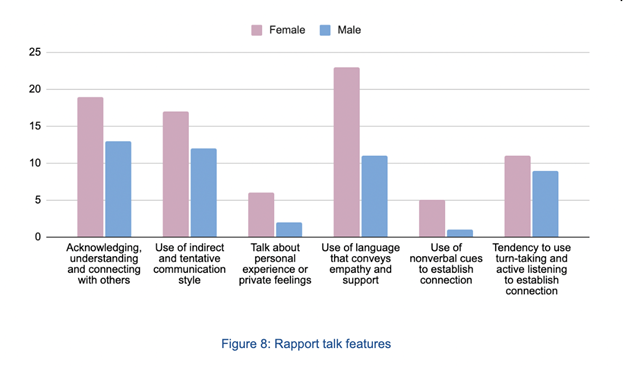
Figure 7: Report talk features
Figure 8: Rapport talk features
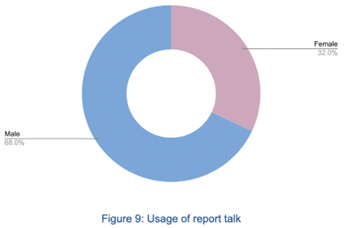
Figure 9: Usage of report talk
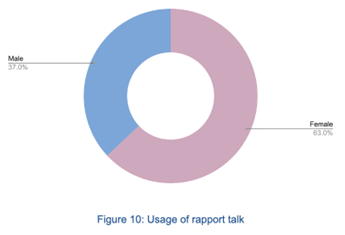
Figure 10: Usage of rapport talk

Male participants in the study used more direct and assertive communication styles than female participants, who used more indirect and tentative ones. Regarding report talk features, male participants were found to interrupt others more frequently than female participants. In addition, male participants were observed using nonverbal cues to assert dominance or authority, such as taking up more physical space. Female participants were found to use more rapport talk features. They were observed acknowledging, understanding, and connecting with others more frequently than male participants.

Female participants used more indirect and tentative communication styles, such as hedge words or phrases and deferential language. Regarding nonverbal cues, female participants were more likely to have physical contact to establish a connection with others.

However, communication styles can vary significantly between individuals. The data collected in our research does not suggest that all male or female individuals use the same communication styles (Locander & Ladik, 2017). Nevertheless, the data indicate differences in communication styles between genders, supporting the rapport and report talk theory.

Qualitative Analysis – Conversation A

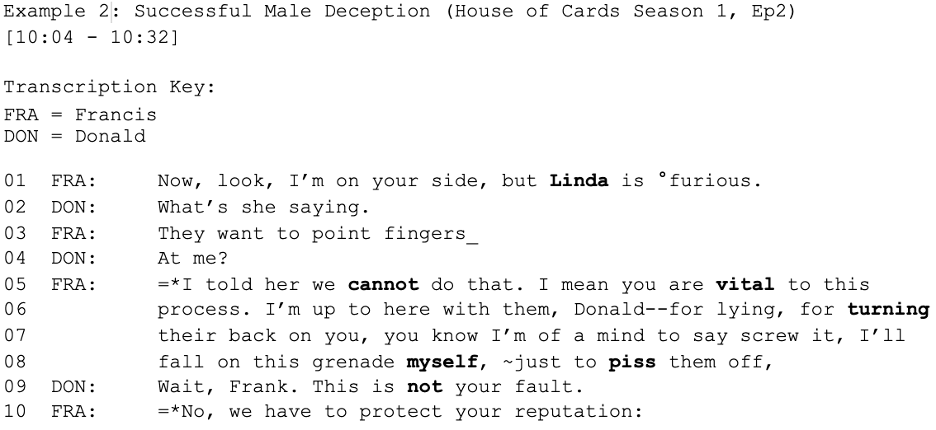
From extract A; male participants exhibit more report talk features by making direct statements and offering their opinions, while all three female participants utilize more rapport talk features by acknowledging and supporting others, expressing empathy and understanding, and using more indirect and tentative language.
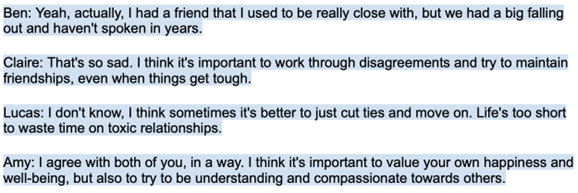
Extract A-1: Conversation regarding friendship

Ben and Lucas both exhibit more report talk features by offering their opinions and making direct statements about friendship. Ben shares his personal experience of a friendship that ended in a falling out, and Lucas shares his perspective on cutting ties and moving on from toxic relationships. Both men contribute to the discussion by offering their thoughts on maintaining friendships as people’s lives change over time:
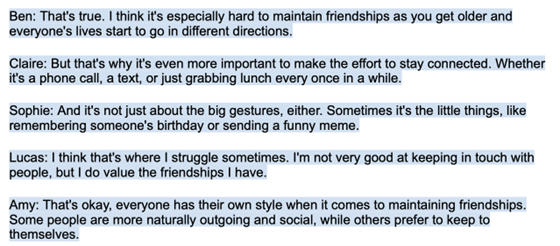
Extract A-2: conversation regarding friendship

Females, as shown in A-2, tend to use more rapport talk features by building connections and supporting others. Amy introduces the topic of friendships ending and asks the group if they’ve experienced this before. Sophie shows empathy for Ben’s experience and emphasizes the importance of working through disagreements and maintaining friendships. Amy also acknowledges Ben’s and Lucas’s perspectives, showing she values their contributions to the conversation. Overall, extract A demonstrates a balance between report talk and rapport talk (Taylor, 2003).

Qualitative Analysis – Conversation B

From extract B, male participants Chris and John exhibit report talk features by interrupting others and making direct statements. For example, Chris interrupts Maggie to assert his opinion on the best way to maintain friendships:
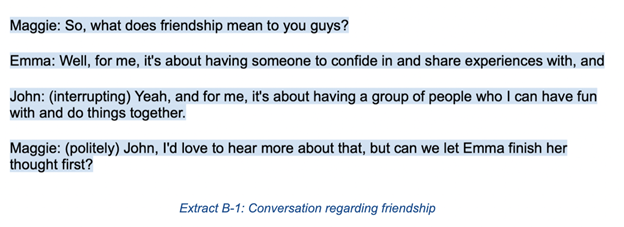
Extract B-1: Conversation regarding friendship

As from extract B-2, female participants, Maggie and Emma, use more rapport talk features. They acknowledge and support others, like when Maggie expresses empathy for Chris’s recent stress at work. They also use more indirect and tentative language, such as when Emma suggests a possible activity for the group but asks for others’ opinions before making a final decision:
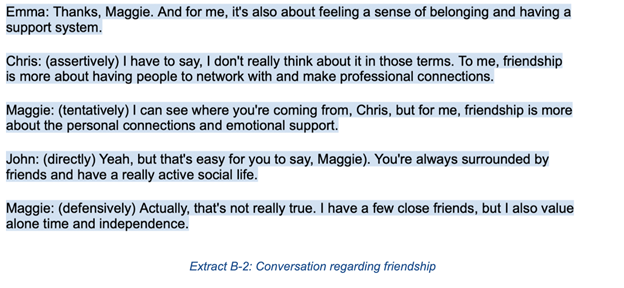
Extract B-2: Conversation regarding friendship

Participants also differ in the level of engagement, male participant John speaks the most in conversation B, contributing to almost half of the number of turns. Female participant Maggie, who spoke the most in conversation A, spoke the least in this conversation and only contributed 10% of the total turns.

Conclusion and Discussion

Overall, this research finding aligns with Tannen’s argument that ‘men perform report talk while women perform rapport talk.’ The results also corroborate the previous hypothesis regarding the difference in gendered communications. Signs of report and rapport talk are revealed through both survey data and observational conversations. Differences in communication styles and content may be related to gender and cultural norms; men are socialized to be more assertive and competitive, while women are socialized to be more nurturing and supportive.

Wider implications of our study include: Individuals could reduce the chances of miscommunication and understand each other fluently in the future by conducting more in-depth and variant social exchanges. Employers can adopt workplace communication strategies to reduce potential discriminatory acts. Businesses and social media platforms, or products with targeted audiences could adjust their plans and features accordingly, improving user engagement (Gunter, 2009).

References

Crane, D. (1995, November 6). Friends – Season 2 (No. 8) [TV – series]. NBC.

Gamble, T. K., & Gamble, M. W. (2020). The Gender Communication Connection. Milton: Taylor and Francis. https://doi.org/10.4324/9780367822323.

Gunter, R. (2009). THE EMERGENCE OF GENDERED PARTICIPATION STYLES IN SCIENCE-RELATED DISCUSSIONS: IMPLICATIONS FOR WOMEN’S PLACE IN SCIENCE. Journal of Women and Minorities in Science and Engineering, 15(1), 53–75. https://doi.org/10.1615/jwomenminorscieneng.v15.i1.40

Klinetob, N. A., & Smith, D. A. (1996). Demand-Withdraw Communication in Marital Interaction: Tests of Interspousal Contingency and Gender Role Hypotheses. Journal of Marriage and Family, 58(4), 945–957. https://doi.org/10.2307/353982

Locander, W. H., & Ladik, D. M. (2017). CEO Tweet Behavior: The Use of Metaphors and Gendered Communication Style. Journal of Managerial Issues, 29(4), 365–379. http://www.jstor.org/stable/45176558

Manza, J. (2018). The sociology project. Pearson Canada Inc.

Martin Terre Blanche, Durrheim, K., & Painter, D. (2006). Research in practice: applied methods for the social sciences. University Of Cape Town Press.

Reiter, B. (2017). Theory and methodology of exploratory social science research. Ttu-Ir.tdl.org. https://hdl.handle.net/2346/86610

Tannen, D. (2007). You Just Don’t Understand. William Morrow Paperbacks.

Taylor, F. (2003). Content Analysis and Gender Stereotypes in Children’s Books. Teaching Sociology, 31(3), 300–311. https://doi.org/10.2307/3211327

[/expander_maker]
, , , ,

Breaking Gender Barriers: Exploring Communication and Leadership Styles in UCLA Undergraduates

Rita Chen, Jeannine Xu, Sydney Shi

The study aimed to investigate the differences in leadership styles between male and female undergraduate students in group discussions. Previous research had shown that men are often perceived as more dominant and directive, while women prioritize building connections and understanding. The study focused on an academic setting, with researchers observing 36 UCLA undergraduate students discussing a topic for 10 minutes. Observations were made of both verbal and gestural communication features of each individual, and an observational checklist was used to categorize behaviors into six main traits of authoritative or collaborative leadership style. Results supported the hypothesis that male students displayed more authoritative traits, such as confidence and dominance, while female students displayed more collaborative traits, such as empathy and supportiveness. Interestingly, female participants also displayed the authoritative trait of “clarity” more than their male counterparts. The findings of this study suggest that traditional gender roles continue to influence communication patterns and highlight the importance of advocating for a more inclusive society where all genders have equal opportunities to succeed in leadership roles.

[expander_maker id=”1″ more=”Read more” less=”Read less”]

Introduction and Background

Although gender roles are constantly changing and the concept of gender is becoming more fluid, traditional gender roles continue to influence our communication patterns. Starting from childhood, individuals socialized to conform to gender norms, which specifically have a substantial power over decision making and leadership styles in group settings. (Carter et al., 2019) While women prioritize building connections and understanding in their interpersonal relationships, men aim to establish their identity and status through demonstrating independence and control over the conversation.

Such gender differences stemmed our interest in investigating how male and female leadership styles may differ within a group setting. Previous research had investigated different styles of management communication between males and females under a professional setting, suggesting that while females are generally perceived to be more concerned and attentive than males as leaders, male were perceived to be more dominant and directive. (Baird & Bradley, 1979)

Instead of observing different leadership styles within a professional setting, we intended to focus on an academic setting, more specifically we narrowed down our target population to UCLA undergraduate students. We intend to study the differences between male and female leadership styles by observing their gestural and verbal communication features. Specifically, a previous finding shows that men often spread their arms over a chair or lean over the table during discussion to expand their personal space as a symbol of confidence (Greenwood 2017). Conversely, women are more likely to act conservatively in their own personal space, which could be stereotypically viewed as less assertive or less successful than men in group discussions. Therefore, we hypothesized that male students are more likely to be the authoritative leader while female students are more likely to be the collaborative leader in a group discussion in college classrooms. We aim to test this gendered difference in leadership style and advocate for a more inclusive society where all genders have equal opportunities to succeed in leadership roles.

Methods

Our study was conducted at the University of California, Los Angeles (UCLA). We observed 36 UCLA undergraduate junior and senior students to analyze if their behaviors qualify for authoritative or collaborative leadership styles in discussions. Regarding the experiment, we randomly selected 36 students and divided them into 6 groups that each contained 3 females and 3 males. By giving each group the same topic, which was “What is your view on ChatGPT and AI control, we asked each group to discuss and share their thoughts about this question in 10 minutes. During the discussion, each of us researchers observed one group and focused specifically on gestures and verbal expressions of each individual and recorded our observation on an observational list, which allowed us to have a unified interpretation of authoritative and collaborative leadership styles. In this case, we asked 12 questions and categorized them into six main traits with dominance, confidence, and clarity being traits of authoritative style and sympathy, consideration, and supportiveness being traits of collaborative style. For example, we included questions like “Did anyone expand their gestures?” in order to remind ourselves to look for these specific behaviors. After the discussion, each participant also filled out the same observational checklist to evaluate the behaviors of their peers. By collecting 36 responses from the sample and 6 checklists from researchers, we constructed two figures to compare and contrast the variation between different genders regarding their leadership styles in group discussions.

Results and Analysis

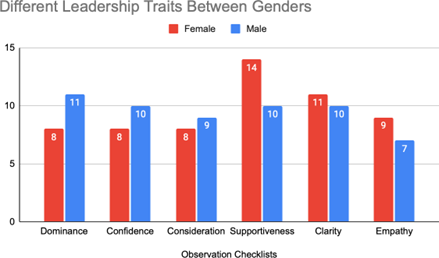
According to Figure 1, the results from our study supported our hypothesis that male students are more likely to be the authoritative leader while female students are more likely to be the collaborative leader in a group discussion in college classrooms. Based on 36 responses, we found that in a class discussion setting, more male students display traits of authoritative style such as confidence and dominance, while more female students display traits of collaborative leadership styles like empathy and supportiveness. An interesting finding was that female participants also illustrated a high amount of authoritative leadership style, females even displayed the authoritative trait “clarity” more than their male participants. Figure 2 shows the specific leadership traits performed by male and female participants:

Figure 1 Shows Different Leadership Traits Between Genders

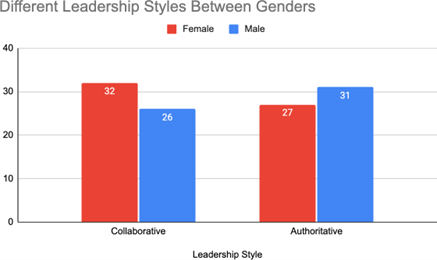
After we obtained the different traits that our female and male participants showed, we summarized these traits into the two big categories: collaborative and authoritative as shown in Figure 2. The authoritative traits are dominance, confidence, and clarity. The collaborative traits are supportiveness, empathy, and consideration. After calculation, we found that 32 female participants portrayed collaborative leadership traits while 26 male participants showed collaborative leadership. On the other hand, 27 female participants showed authoritative leadership style and 31 male participants showed authoritative leadership styles. Looking at this summarized chart, we can see a clearer distinction of the authoritative and collaborative traits females and males utilize as in their leadership.

Figure 2 Shows Different Leadership Styles Between Genders

One limiting aspect of the result is the study’s sampling population. Our study participant population only consisted of full-time UCLA undergraduate students. This is limiting to the external validity of the study’s results, as full-time UCLA undergraduate students are not a good representation of the general population. The study should keep in mind the education level and environment of UCLA students in comparison to the average population in our society.

Discussion and Conclusion

In this study, we have examined the relationship between gender and leadership styles among college students. Our findings support the traditional gender stereotype that males tend to exhibit more authoritative behaviors, while females tend to display more collaborative behaviors. This is likely due to the societal expectations and gender roles that shape individuals’ approach to leadership roles later in life. Our study has revealed that socialization plays a critical role in shaping gender roles and expectations, which in turn influences leadership styles.

However, we also found that our results are not entirely consistent with the traditional gender stereotype. Despite male students exhibiting more authoritative behaviors overall, female students exhibited a higher frequency of “clarity” traits, an authoritative leadership style, than their male counterparts. This could be attributed to the increasing gender equality and social status, which have enabled more women to develop and display leadership qualities, including more assertive and authoritative styles.

Our study’s broader impact lies in its contribution to creating more inclusive classroom environments that value and recognize diverse leadership styles. Educational institutions can use our findings to design more inclusive classroom settings and curriculum and create a more supportive and inclusive learning environment for all students. Furthermore, our study can help students recognize the disparities in leadership styles and work effectively together.

In conclusion, our study highlights the role of socialization in shaping gender roles and expectations and how they influence leadership styles. It also suggests that the increasing gender equality and social status have allowed more females to develop and display authoritative leadership styles. However, effective leadership depends on the context, and both leadership styles can be successful.

In conclusion, our study highlights the role of socialization in shaping gender roles and expectations and how they influence leadership styles. It also suggests that the increasing gender equality and social status have allowed more females to develop and display authoritative leadership styles. However, effective leadership depends on the context, and both leadership styles can be successful.

References

Carter, M. F., Franz, T. M., Gruschow, J. L., & VanRyne, A. M. (2019). The gender conformity conundrum: The effects of irrelevant gender norms on public conformity. The Journal of Social Psychology, 159(6), 761–765. https://doi.org/10.1080/00224545.2019.1586636

Baird, J. E., & Bradley, P. H. (1979). Styles of Management and Communication: A Comparative Study of men and women. Communication Monographs, 46(2), 101–111. https://doi.org/10.1080/03637757909375995

Greenwood, B. (2017, November 21). How can gender affect negotiation? Work. Retrieved February 21, 2023, from https://work.chron.com/can-gender-affect-negotiation-5771.html

[/expander_maker]

, ,

Why it’s Really Not You, It’s Them. Hook Up Culture, Explained

Have you ever wondered why participants of hook-up culture have a hard time communicating with one another? Whether it’s differences in intentions or the usage of different communication styles, it’s likely that they’re not on the same page. As a result of our extensive research, this paper will highlight the reality of hook-up culture and the big question that haunts the community: How do participants of hook-up culture communicate differently than the ingrained standards we see within long-term relationships? Our hypothesis specifically focused on the idea that communication within hook-up culture will differ between genders and communication styles, ultimately creating a larger gap between methods of communication in short-term and long-term relationships. With the help of our studies, we were able to identify the use of code-switching through emojis and slang, common communication themes (vernaculars and communicative traits), and overall motivations! Overall, we hope to help many be able to overcome communication barriers within hook-up culture in order to see some healthy change within our social dynamics and communication!

[expander_maker id=”1″ more=”Read more” less=”Read less”]

Introduction and Background

The goal of our paper was to research the intricacies of a prevalent communication topic in our generation: “hook-up culture”. More specifically, we chose to focus on the motivations behind each gender’s experiences or participation in hook-up culture, ultimately allowing us to analyze the different communication patterns exhibited as well. Hook-ups within “hook-up culture” are defined as, “… activities [that] may include a wide range of sexual behaviors, such as kissing, oral sex, and penetrative intercourse …. these encounters often transpire without any promise of, or desire for, a more traditional romantic relationship…” (Garcia/Merriwether, 2012).  With this definition, the rise of hookup culture is then marked by the phenomenon of, “…increasingly normative among adolescents in North America, representing a marked shift in openness and uncommitted sex…” (Garcia/Merriwether, 2012). As a result, our research was conducted on the basis that hook-up culture is prevalent within our society. However, given the constraints of our research project, we had research gaps that prevented us from reaching further conclusions, including the short amount of time we had to conduct our research (given more time we would research a larger group). Another limitation was due to the lack of empirical research on hook-up culture due to the prominence of the topic only flourishing within this past decade.

Our last limitation came as a result of the demographic in which we focused on. Obviously, our demographic was catered to college students, but there may be different results if our demographic was different– so that most definitely should be noted. However, our research, as shown throughout this blog post, will illustrate that our hypothesis is mostly supported by our conducted research. Our research highlights different modes of communication, varying personal intentions, and the popularity of hook-up culture amongst college-aged students.

Methods

Within our method, we looked at different sources of information such as scholarly articles, scholarly speeches (TedTalk), and our own research conducted through the usage of Google Forms. Our scholarly references ranged from communicating commitment in a romantic relationship to communication in the modern hook-up culture, but we made sure to organize an array of valuable sources that would not only prove our hypothesis but also explain our results within our conducted survey. We distributed a survey (through GroupMe chats, Instagram stories, and professors showcasing it at the beginning of class) to our wide demographic of students at UCLA who have knowledge or a basic understanding of hook-up culture, ultimately granting us valuable responses that could help us with our research on how communication differs within hook-up culture through studying gender imbalances/differences in viewpoints and styles. Through our survey, we politely asked our respondents to share their experiences with hook-up culture and answer our specific questions to the best of their abilities. Additionally, there were no incentives and we made sure to inform them that their responses would be anonymous and removable at any point in time. We asked 10 specific questions in connection to our research and our own personal wonderings alongside an entry method for attachments of physical experiences with hook-up culture. Some examples of our questions were: check off boxes of emojis you’ve used when communicating with a prospective partner or how to communicate your intentions to a prospective partner, therefore giving us a deep understanding and a specific answer to the ideas that our research would mention but not specifically answer for us. Within our research, we analyzed communication styles such as emojis or slang, collective gender differences within communication patterns and beliefs, and overall values within personal communication styles and methods such as direct vs. passive communication. For more information on our exact survey, here is a direct link to it: https://forms.gle/cGUqi9sAmSsGQoNX8.   

Results and Analysis

In summary, our hypothesis focused on how romantic communication differs between types of connections/relationships (hook-up partners vs long-term relationships), and how each gender engaged with each category differently. Through our extensive research methods, we found that there were factual differences between male and female ideologies. For example, there were similarities within our target audience such as age, education status, and lifestyles – which played a role in the situations these individuals would imagine and partake in throughout their experiences with or without hook-up culture. Our respondents were 50% male and 50% female, mostly aged at 21 to 23 years old by 87.5%. Now, the differences range from gender perceptions/mindset, communication styles, and personal values/needs.

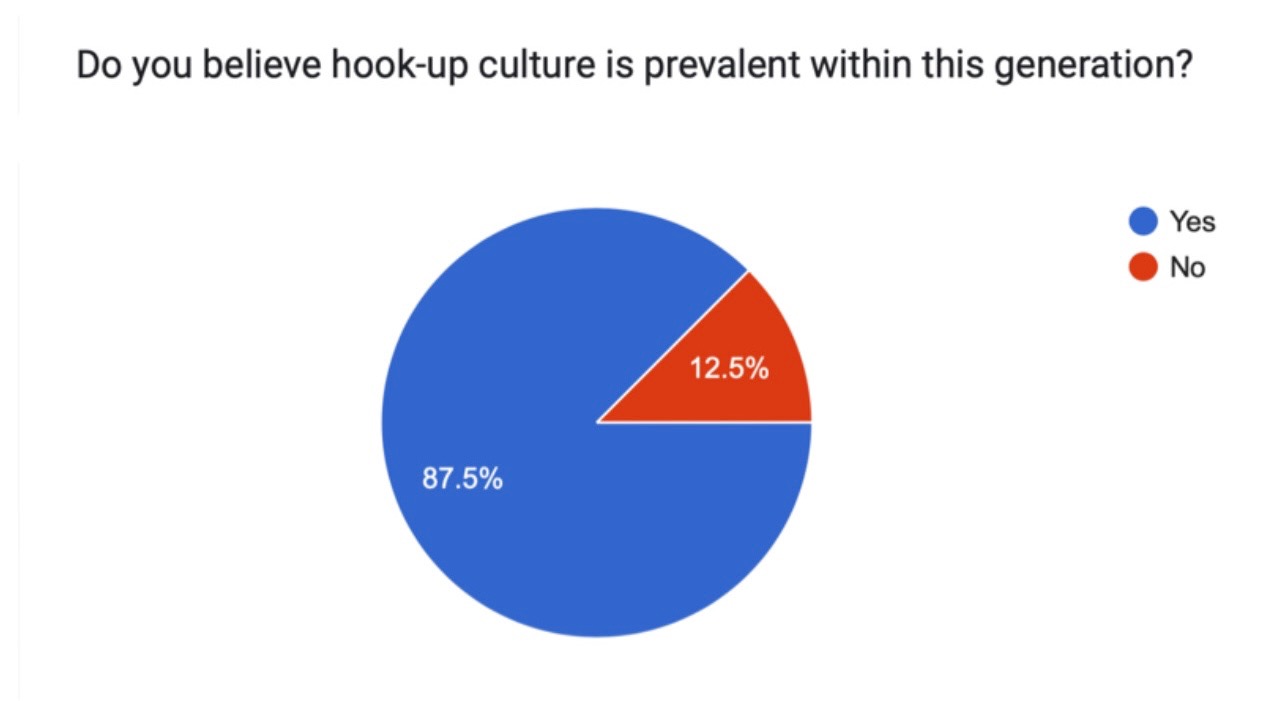
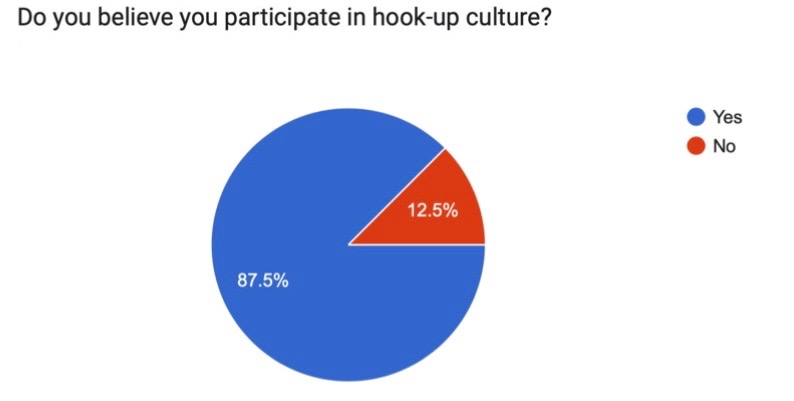
Our survey questions were able to support our hypothesis. For further context, here are some of the most important pieces of information gained from our studies. When asked about hook-up culture in our generation and if they (respondents) participate in hook-up culture, 87.5% answered yes (Figures 1 and 2). 

Figure 1: Do you believe hook-up culture is prevalent within this generation?
Figure 2: Do you believe you participate in hookup culture?

With most of our respondents knowing about or experiencing hook-up culture, the results of our survey would most definitely help us understand the reality of hookup-culture whether it proved or disproved our hypothesis. Now, our questions became more specific in order to curate a representative sample of patterns within hook-up culture. Furthermore, these two questions below provided the most valuable information within our survey research.

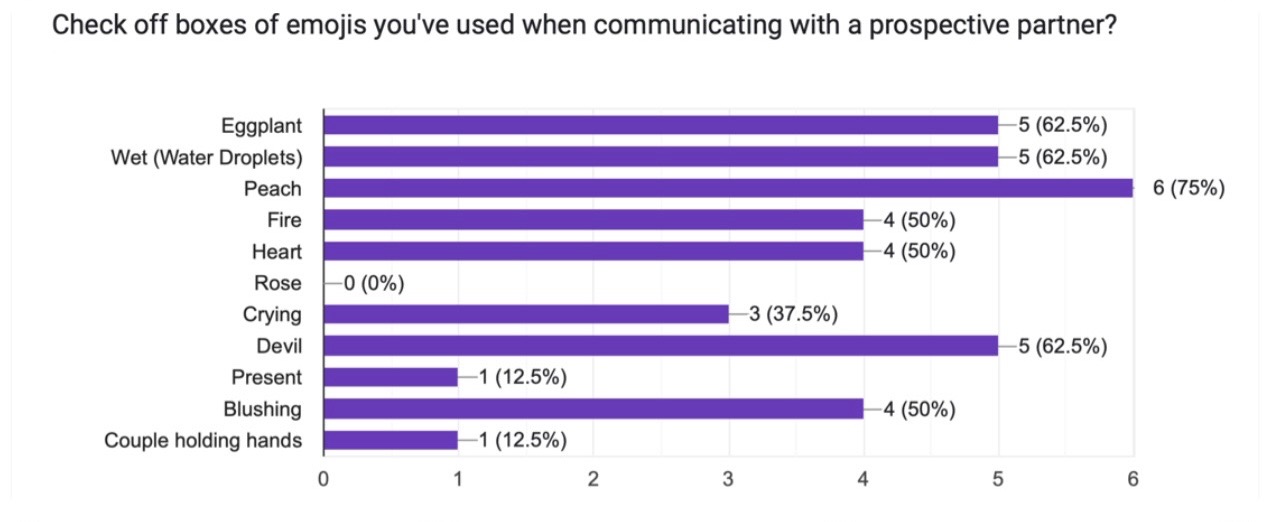
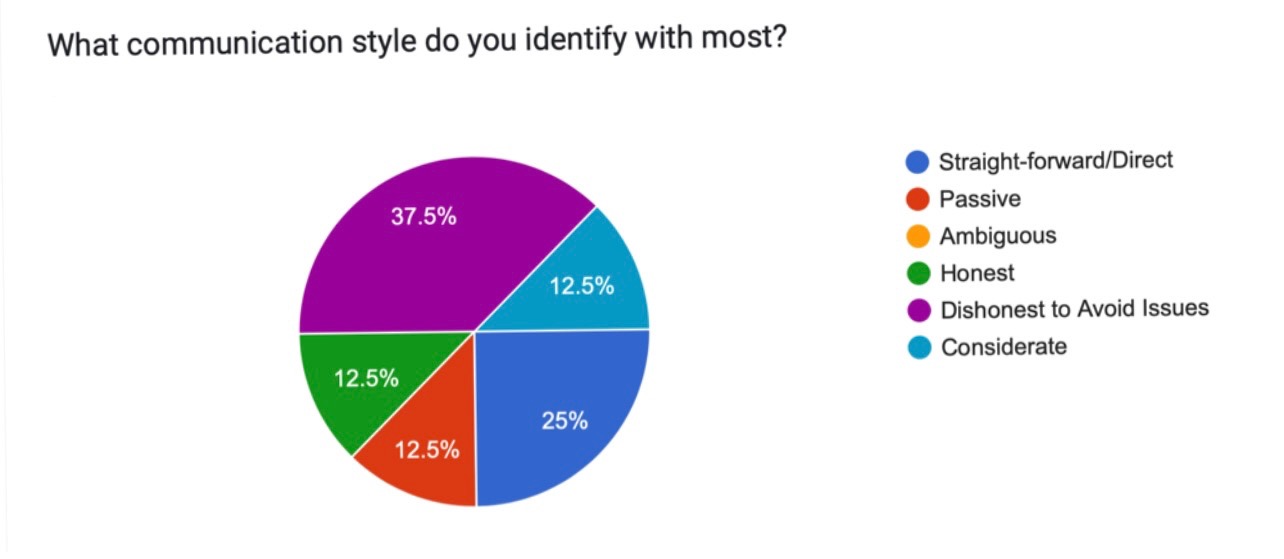
Within our hypothesis, we predicted that there would be a difference between communication styles and methods. So, with our own experience with hook-up culture, and our learnings from Amanda N. Gesselmen’s research article on “Emoji as affective signals for relationship-oriented digital communication”, we were able to create our question about the influence of emojis on romantic communication and how different ones convey different meanings (casual hook-up vs long-term love). As can be seen, a majority of respondents affiliated with emojis were deemed to be used for “sexting” within hook-up culture communication (Figure 3). For further support, on our side, we can see that most of our respondents that used those emojis are also the same individuals who announced their participation in hook-up culture as well. Next, Figure 4 provided us with the different communication styles we noted through romantic communication in general, but we mentally sorted them into different categories that would analyze different perspectives. For example, those who answered that their communication style was direct and dishonest were usually men (remember: one can be directly dishonest– they are not mutually exclusive). On the other hand, those who answered that their communication style was more honest, considerate, and passive were women. Through these results, we were able to see that there IS a difference of communication styles between genders AND relationship/partner status (hook-up vs long-term). Furthermore, we were able to conclude that men’s expectations are more short-term and casual while female expectations are more long-term and exclusive, ultimately impacting their different communication styles that portray most men as direct, dishonest, dominant, selfish, and confident while portraying most women as passive, considerate, committed, and honest.

Figure 3: Emojis used when communicating with a prospective partner
Figure 4: Communication styles of survey respondents

Discussion and Conclusions

As discussed at the beginning of the paper, ‘hook-up culture’ has gained high levels of popularity, and more recently amongst younger generations. With influential communication-based platforms and media, such as TikTok, “…. popular culture is simultaneously representing aspects of actual contemporary sexual behavior and providing sexual scripts for emerging adults…”, which has potentially played a role in why we concluded the results from our research as we did (Garcia / Merriwether, 2012). Our results suggest a few common themes within the communication patterns of ‘hookup culture’. As seen in the data above, our results suggest that there is a correlation between men’s motivations for just wanting to participate in casual sexual intercourse, whereas women want to participate in sexual intercourse more so in the pursuit of a serious partner, thus suggesting genders do in fact have different motivations when participating in hookup culture. Additionally, our results show a form of ‘code-switching’ that occurs when individuals use emojis and slang to communicate within hook-up culture. Furthermore, code-switching is defined as, “…the practice of selecting or altering linguistic elements so as to contextualize talk in interaction…”, which we see has occurred when individuals interchanged emoji’s arbitrary meanings with more sexual notions only in the context of hook-up culture communication (Nilep, 2006).  Additionally, we saw that the most popular ages amongst participants who take part in hookup culture range from 21-23. Given these results, and the inferences we’ve made from our research, our paper concludes that communication with hookup culture has a unique nature to it that involves various tactics in order to achieve that ‘hook-up goal’, and that there are many mechanical and analytical parts involved in the motivations behind hook up culture. However, depending on who you are, it’s highly likely that if you aren’t achieving that dream ‘hook up’ it really isn’t you, it’s them.

References

Ackerman, J. M., Griskevicius, V., & Li, N. P. (2009). Let’s get serious: Communicating commitment in romantic relationships. PsycEXTRA Dataset. https://doi.org/10.1037/e615882011-144

Garcia, J. R., Reiber, C., Massey, S. G., & Merriwether, A. M. (2012). Sexual Hookup Culture: A Review. Review of General Psychology, 16(2), 161–176. https://doi.org/10.1037/a0027911

Gesselman, A. N., Ta, V. P., & Garcia, J. R. (2019). Worth a thousand interpersonal words: Emoji as affective signals for relationship-oriented digital communication. PLOS ONE, 14(8). https://doi.org/10.1371/journal.pone.0221297

Klinger, L. (n.d.). Hookup Culture on College Campuses: Centering College Women, Communication Barriers, and Negative Outcomes. https://doi.org/https://scholarworks.gvsu.edu/csal/vol3/iss2/5/

Lundquist, J. H., & Curington, C. V. (2019). Love me Tinder, love me sweet. Contexts, 18(4), 22–27. https://doi.org/10.1177/1536504219883848

Nilep, C. (2006). “Code Switching” in Sociocultural Linguistics. Colorado Research in Linguistics, 19. https://doi.org/10.25810/hnq4-jv62

Pham, J. M. (2017). Beyond hookup culture: Current trends in the study of college student sex and where to next. Sociology Compass, 11(8). https://doi.org/10.1111/soc4.12499

Tom Tong, S., & Walther, J. B. (2010). Just say ‘‘no thanks’’: Romantic rejection in computer-mediated communication. Journal of Social and Personal Relationships, 28(4), 488–506. https://doi.org/10.1177/0265407510384895

Webb, S. (n.d.). Communication in the Modern Hookup Culture: A Literature Review. https://doi.org/https://commons.lib.jmu.edu/lexia/vol4/iss1/3/

Wood, M. (n.d.). Addressing Context with Hymes’s SPEAKING Model. https://doi.org/https://the-ofla-cardinal.org/2018/01/14/addressing-context-with-hymess-speaking-model/

Appendix

NPR Podcast – Hook-up Culture: The Unspoken Rules of Sex on College Campuses https://www.npr.org/transcripts/552582404

TedTalk – Stripping Down the Hook-up Culture: The Need for Emotional Visibility https://youtu.be/EhzOohyAZjs

 [/expander_maker]

, , , , ,

Differences In Sociolinguistics Among Genders In College

Kevin Adelpour, Shaylee Omrani, Ronnen Mizrahi,  Justin Azizian

Studies in sociolinguistics have revealed that there are many ways in which the relationship between language and gender varies, including the relationship between politeness and language style. Without looking deeper into the facts, members of society can draw the conclusion that it is more common for masculine people to express their affection by including their friends in activities and exchanging favors. The way that men often interact is shoulder to shoulder (such as watching television together or playing sports). Women, on the other hand, are more prone to convey weakness and vulnerability. An instance of this is how women cry to one another and confide in their feelings. We are aware of these aspects but rarely completely comprehend their importance or significance. Understanding the rationales underlying these common elements can help us better comprehend the social environment in which we live, while ultimately improving and enhancing our communications with speaking to others in everyday social interactions.

[expander_maker id=”1″ more=”Read more” less=”Read less”]

Introduction and Background

Today we are seeing many differences in communication styles and tones between men and women, especially when it comes to college students. Our goal is to deepen our understanding of the miscommunication of misconstruction of the gender system between men and women. A study by Merchant (2012) has shown that men’s and women’s communication styles have been part of the discrimination inequalities that women have faced, specifically in the workplace, which is also true in an academic setting. So, we investigated 40 male students and 40 female students and tried to confirm that men would use more direct gestures and women would use a more passive and less dominant tone than males. Since language is such an integral part of our face-to-face communication, we want to see how these communication differences would play out in language use among students at UCLA. Our research question is what are the sociolinguistic differences between men and women when communicating in a face-to-face setting at UCLA and how does that create different speech patterns in intersex conversations?

We have found that with a different look from those of males, females’ social interactions and activities would be more communicative and less information-seeking than men (Guadagno 2018). Women would use their communication style as a tool to create friendships and to have social connections, while men would use their communication style to seem dominant and assertive when communicating with people (Merchant 2012). For college students, the main way that they would communicate with each other in face-to-face communication would be based on their appearance and how they would present themselves (Gillen et al., 2006). This would include the types of symbols and body gestures that college students would have while communicating with each other. College women would tend to use more backchanneling the men when communicating, which is the attentiveness of listeners without any interruptive comments (Helweg- Larsen et.al 2004). There is a report on younger males and females especially having more of a difference in use of intensifiers where women would have a change in the sense that they would have a more innovative form more frequently (Fuchs 2017). A study has shown that women would have a less direct way of speaking because they would use directives which would minimize their status by not having so much demand involved (Netshitangani 2008).

Methods

We looked at the interactions between UCLA students with each other on campus and events happening at UCLA. We looked at forty men and forty women that are currently enrolled in UCLA and observed the ways of communication based on speech and symbols in face-to-face communication. Specifically, we looked at tone, articulation, body language, and body movements such as hand gestures and facial expressions. In addition, we also looked at the aggressive and passive ways an individual was within being confrontational, directly forceful, shy, less direct, and so on. Five diverse social contexts, and forty different students from each setting, on the school campus will be used to conduct the research. Setting affects the narrative by adding to the story, character development, mood, and theme. By enabling us, the researchers, to more clearly visualize the events and context of the encounter, it also has an impact on the conversation’s result. It’s also significant since it helps us grasp the storyline and make predictions about what will happen in the interaction.

Character development is presented in the setting of an event as part of creating the mood. In these ways, setting is significant for giving characters a real sense of presence in the real world as well as for communicating what is happening in their lives. Within our research studies, we were able to identify studies that discover gender differences in speech patterns. Men use more abstract language, whereas women focus on the details. The researchers concluded that this tendency is due to power dynamics that can be altered. In addition to having different looks from those of males, female’s social interactions and activities are more communicative and less information-seeking than males (Guadagno, 2018). One may argue that the establishment and maintenance of relationships with others are the most important aspects of female communication. Other feminine communication styles include establishing equality, promoting participation, responsiveness, being personal and disclosing information, and trepidation (Fisher, 2005). Another distinction we were able to identify with their speech, is the commonality of women speaking in clear and complete sentences, while it was more commonly found to see men using words such as “runnin” instead of “running,” and “gonna,” instead of “going to.” All in all, peer relationships are crucial in the development of this concept and have a significant impact on how outsiders perceive the roles of men and women in our society.

Gender biases and stereotypes are always being reinforced in common settings of everyday lives in social interactions. By taking into account how it can enable a person to exhibit rage and related emotions without explicitly communicating these feelings, passive aggression plays a significant role in this. Individuals that exhibit passive aggressiveness frequently maintain the capacity to deny that they meant to act aggressively, which is most frequently observed in the speaking characteristics of men. According to studies, this is because of how individuals are raised starting in their early years, which eventually shapes who they are as a person. In the long run, this fits with how people perceive us and becomes a part of our identity (Gillen 2006). With the gathering of data from college students, peers are precisely examined by their approaches between various encounters and conversations. Approaching Bruin students and monitoring the linguistic distinctions between the two sexes within their expressive dialect help conclude the ultimate understanding of how we express our feelings and needs in order to socialize in common everyday interactions.

Results and Analysis

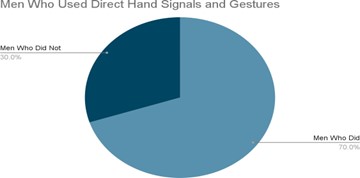
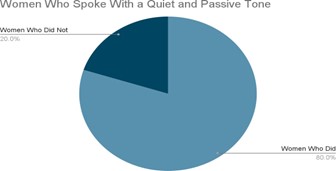
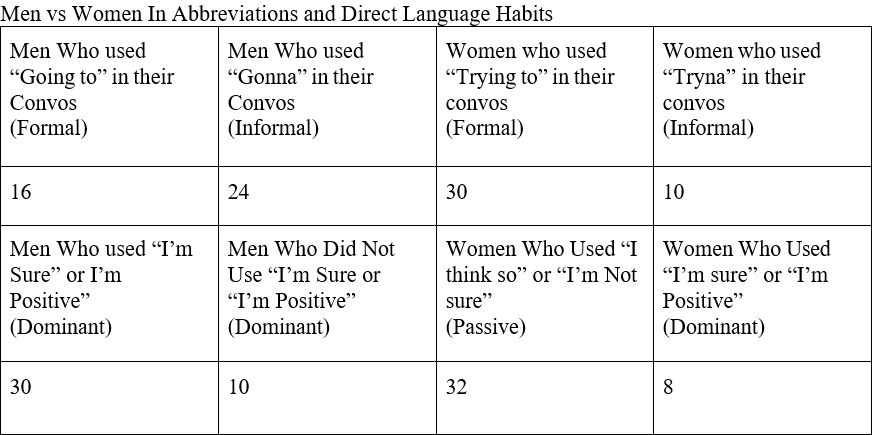
We gathered about 180 minutes of raw hands-on data which came in the form of in-person interactions and language compositions in 80 men and women at UCLA. The interactions observed were in casual social settings and we noticed precise communicative elements down to individual words used by both genders. In our observations, we found that a ratio of 6 in 10 men would often use more slang and abbreviations in their conversations with the opposite sex while disregarding formal interaction habits (table 1). Similarly, we also found that 70 percent of men used direct gestures when speaking to women which included hand signals, head motions, and facial expressions to exemplify the meanings in their conversations (chart 1). On the other hand, we also noticed that a ratio of 8 in 10 women exhibited a more passive and less dominant tone which was evident through their slower dialect and lower tone of voice in comparison to their male counterparts (chart 2). Overall, men on average were more highly likely to show forms of indirect, concise, and dominant forms of language while women showed more formal and passive habits when speaking which is evident in our data and charts below that reflect the differences in gender peer interactions between intersex conversations on campus.

Chart 1: Men’s Usage of Direct Hand Signals and Gestures
Chart 2: Women Speaking With a Quiet and Passive Tone
Table 1: Men vs Women In Abbreviations and Direct Language Habits

Discussion and Conclusions

In our research, we discovered that females communicate in a more implicit, intricate, and sentimental manner that can reflect ambiguity, cautiousness, and a lack of power, while males are perceived to have a direct, concise, and situational communication style, ultimately influencing and impacting how outsiders perceive the roles of men and women in our society. The research highlights that there are gender differences when examining communication styles. We found that females tend to place a greater emphasis on expressing emotions and building relationships through conversation, whereas males tend to focus more on information exchange and problem-solving. Nonverbal cues are also prominent when examining gender differences in communication. Females tend to be more expressive with their facial expressions and body language, while males may be more reserved in their gestures and facial expressions.

The results above underline the need of understanding various communication styles in various settings. For instance, recognizing that females frequently prioritize developing relationships through dialogue helps promote more effective teamwork and workplace communication. Recognizing that males are typically more problem-focused might also help to improve communication during the decision-making process. We may also understand and react to others’ communication more precisely and appropriately if we are aware of how males and females use nonverbal cues differently. The results add to our knowledge of how gender affects communication and can improve our ability to communicate in a variety of settings. Gender dynamics in communication highlight the ways that gender influences the way individuals communicate with one another. It is crucial to shed more light on these dynamics because gender is a vital component of identity that impacts how people interact with each other.

References

Fuchs, Robert. “Do women (still) use more intensifiers than men?: Recent change in the sociolinguistics of intensifiers in British English.” International Journal of Corpus Linguistics 22.3 (2017): 345-374.

Merchant, K. (2012). How men and women differ: Gender differences in communication styles, influence tactics, and leadership styles.

Gillen, Meghan M., and Eva S. Lefkowitz. “Gender role development and body image among male and female first year college students.” Sex roles 55 (2006): 25-37.

Helweg-Larsen, M., Cunningham, S. J., Carrico, A., & Pergram, A. M. (2004). To nod or not to nod: An observational study of nonverbal communication and status in female and male college students. Psychology of Women Quarterly, 28(4), 358-361.

Netshitangani, T. (2008). Gender differences in communication styles: The impact on the managerial work of a woman school principal. In Comunicación presentada en ANZCA08 Conference: Power and Place. Wellington, Nueva Zelanda. Recuperado el (Vol. 20).

[/expander_maker]

, , ,

Gender Bias in Celebrity Interview Questions: Topic Study at the Oscars 2023

Sofia Duffy, Lauren Nemeh, Audrey Tseng, Venus Vu

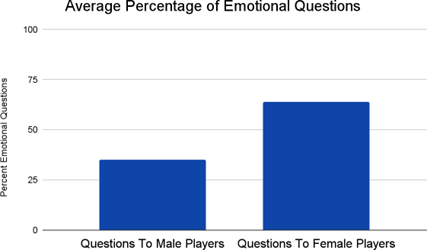
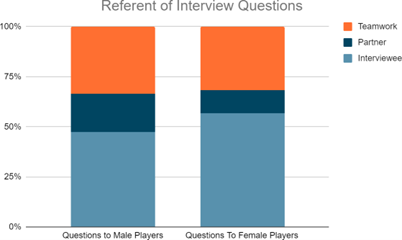
Red carpet interviews at award shows are often a hot topic that circulates on the internet and are viewed by millions of people. This being said, the quality and nature of what is said in the interviews can wildly influence the viewers. Previous research and social movements have shown that female celebrities who participate in these interviews are more likely to receive questions and comments related to their appearance compared to their male counterparts. With this in mind, we aimed to investigate gender bias in celebrity interviews through analyzing interview clips of the 2023 Oscars red carpet interviews. Specifically, we examined if there were differences in the theme of questions asked (word choice) and the quality of interviewers’ voice (tone) when interviewing male celebrities versus female celebrities.

[expander_maker id=”1″ more=”Read more” less=”Read less”]

Introduction

Celebrity interviews on the red carpet hold a prominent position within the fabric of award shows, captivating global audiences as they eagerly seek glimpses into the lives of their beloved stars. However, within this realm, a disconcerting disparity often emerges in the nature of questions posed to male and female celebrities, serving as a reflection of deep-seated gender biases and the perpetuation of societal expectations. In our study, we set our sights on the precise queries directed at celebrities during the 2023 Oscars, embarking on an investigation to unravel the discrepancies in how interviewers engage with male and female celebrity interviewees. Through a meticulous analysis of interviewers’ word choice and tone, our objective is to cultivate a comprehensive understanding of the pervasive gender biases that permeate these high-profile interactions. In doing so, we aim to unearth patterns that mirror societal gender biases and shed light on the implicit biases harbored by the interviewers themselves. By undertaking this critical exploration of language use in celebrity interviews, we contribute to the ongoing discourse surrounding gender equality in the realm of entertainment and challenge the perpetuation of gender stereotypes on the illustrious red carpet.

Background

Celebrities hold a unique position in society due to their high-profile status and influence. The media coverage they receive significantly shapes public perceptions, particularly among impressionable children and teenagers who often look up to their favorite stars. Red carpet events are particularly important because they are televised occasions with substantial social significance. Among these events, the red carpet at the Oscars stands out as the most prestigious. Celebrities are asked a series of questions, and these interactions are recorded and broadcasted worldwide. 

A study from 1956, “Age and Sex in the Interview” by Benny et al., offers valuable insights into the intersectional relationship between age and sex. Their analysis focuses on responses and utilizes post-interview surveys to gauge participants’ perspectives. Their research reveals a consistent pattern of communication inhibitions between individuals of the same age but different sexes, particularly among young men and young women. These findings underscore the complexity of interview interactions and the influence of societal expectations. 

The Oscars red-carpet pre-show in question, with its apparent glamor and spontaneity, hides a reality that is heavily scripted and choreographed, where questions and reporters are carefully selected to meet industry demands and viewer expectations. Beneath the glamor of red-carpet lies a troubling tradition of objectifying the female body as a spectacle. Over the years, women have been typecast as the sole consumers of topics involving beauty and fashion, influenced by the rise of the beauty industry and photography (Lundén, 2021, p. 212). This has perpetuated a questionable tradition of objectification, reinforcing societal beliefs about gender roles. The red carpet has become a platform where women’s appearances are harshly criticized, focusing on mean-spirited evaluations of their bodies rather than celebrating their talent and accomplishments. Additionally, while women often bear the brunt of fashion-related questions, this does not exempt men from scrutiny. Fashion discourse has expanded to include men, but the discernible imbalance in how men and women are judged persists. 

However, the emergence of the #askhermore movement in 2015 reflects a growing resistance to the recurring practice of asking women the superficial “what are you wearing” question on the red carpet. The movement encourages reporters to delve deeper and ask female celebrities more substantial questions beyond their clothing choices. In our research, we will concentrate on the questions asked to both male and female celebrities, shedding light on patterns that mirror societal gender biases and expected gender performance.

In the context of award shows, red carpet celebrity interviews hold great significance as they attract thousands of viewers seeking insights into the inner lives of these celebrities. However, the quality of questions posed to male and female celebrities differs significantly, with women often subjected to shallower inquiries about their appearance rather than their careers. The central focus of our research is to investigate the disparities in the treatment of male and female celebrity interviewees during the 2023 Oscars. Specifically, we aim to analyze the word choice and tone utilized by interviewers in their interactions with these individuals. By examining these linguistic aspects, we seek to gain a deeper understanding of the gender biases that manifest in celebrity interviews. Our research question revolves around whether interviewers hold implicit gender biases, leading to a tendency to ask female celebrities more superficial questions compared to their male counterparts. Through this inquiry, we aim to contribute to the broader conversation on gender equality within the entertainment industry and challenge the perpetuation of gender stereotypes on the red carpet.  

Project Design

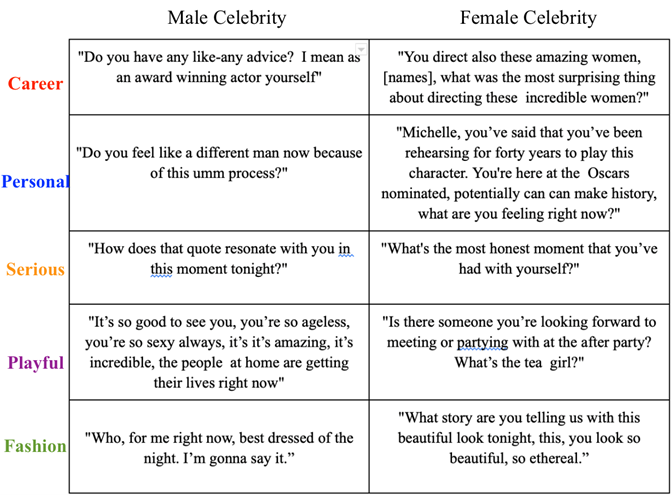
For our data sample, we selected 16 video clips from the 2023 Oscars red carpet. Since we are focusing on the gender difference of the celebrity, we selected 8 interview clips where the interviewee is a male celebrity and 8 interview clips where the interviewee is a female celebrity. To reach our sample size, we gathered video clips from three media sources: Extra TV, Vanity Fair, and E! News.  In total, we analyzed 49 minutes and 53 seconds of interviews. The time varied from interview to interview, from an interview that was 41 seconds long to one that was 4 minutes and 49 seconds. We aimed to analyze whether there are differences in the interviewer’s tone and word choice based on the gender of the celebrities being interviewed. To do so, we first transcribed everything that was said by the interviewers. We omitted what the celebrities said to better focus on the style of the questions and comments and color coded the content according to these following categories:

  • Word Choice (categorizing questions/comments according to theme)
    • Red: career related questions/comments (e.g. film projects, experience working with co-stars)
    • Blue: personal related questions/comments (e.g. family, love life)
    • Green: fashion related questions/comments (e.g. outfit, makeup)
  • Tone (categorizing questions/comments according to quality of interviewer’s speech)
    • Yellow: serious tone
    • Purple: playful tone

For the purpose of our study, we treated each categorization as mutually exclusive. Next, we counted how many instances each category was used in each interview and added them up according to the gender of the celebrity. We compared the number of instances between the two genders to see if there was any relationship between them. We also placed our transcripts into a word counter in an attempt to see if any significant words were used more or less in one gender over the other. In our collection and analysis of the data, we disregarded the gender of the interviewer as we solely wanted to focus on the gender of the celebrity in relation to the type of question asked.

Based on previous knowledge, we hypothesized that:

  1. Female celebrities will be asked more questions related to their personal life and fashion.
  2. Male celebrities will be asked more questions related to their career.
  3. Interviewers will use a more playful tone when interviewing female celebrities.
  4. Interviewers will use a more serious tone when interviewing male celebrities.

Data and Results

Before discussing the findings of our study, here are some examples of the types of questions/comments interviewers asked and how we categorized them. Each example is pulled from a different celebrity interview.

Figure 1: Examples of questions/comments asked to celebrity interviewees, categorized based on both gender and tone and word choice. Each question/comment is pulled from a different celebrity interview.

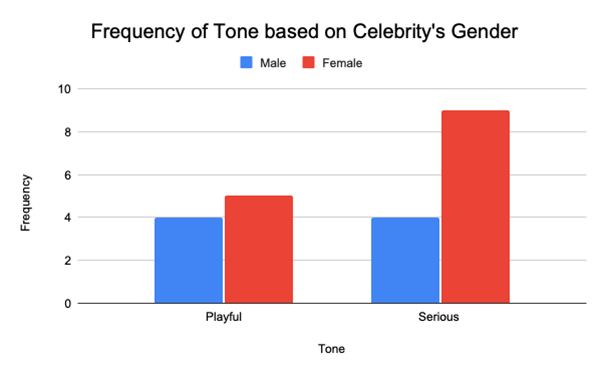
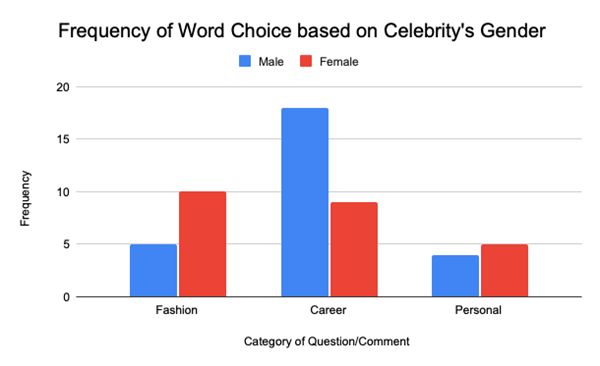
Here are our findings, separated into two bar charts. One chart is organized based on questions/comments that were categorized for tone, and the other is organized based on questions/comments that were categorized for word choice.

Figure 2: Bar chart representing data, with interviewer’s tone on the x-axis and total frequency in 16 interviews on the y-axis. Categorized based on celebrity’s gender.
Figure 3: Bar chart representing data, with interviewer’s word choice on the x-axis and total frequency in 16 interviews on the y-axis. Categorized based on celebrity’s gender.

In terms of word choice categorization, female celebrities were asked twice as much about fashion compared to men, as we recorded 10 instances for women compared to 5 for men. Male celebrities were asked career related questions twice as much as women, as we recorded 18 instances for men compared to 9 for women. We originally predicted that female celebrities would be asked more questions related to their personal life, which was proven to be incorrect as the results were roughly equivalent. Women were asked five personal questions compared to four for men.

In terms of tone, we found that women were asked twice as many questions in a serious tone compared to men (9 vs 4). However, we originally predicted that interviewers would use a more serious tone when interviewing male celebrities. We also found that male and female celebrities were spoken to in a playful tone at roughly the same frequency, with 20 instances for men compared to 18 for women.

When we put the data into a word counter, which we separated by the gender of the celebrity, we did not find any significance in the density of words used for male versus female celebrities.

Discussion and Conclusion

As we previously discussed, while we did find slight differences in the types of questions that were asked to the male versus female celebrities in our data recording, our data was not all-revealing nor conclusive. While we did find that men were asked more career-related questions whereas women were asked more fashion-related questions, we are not able to use our data to conclude that this is true for red carpet interview events in general. Our data consisted of 8 male celebrity interviews and 8 female celebrity interviews, which is not a complete representative of red carpet interviews as a whole. Further research could be done looking at a variety of different events. It would be interesting to see how/ if the results change depending on if it is a music awards event, premiere event, awards event, small event, etc. Each red carpet could be researched as an independent study, to then later compare the data. This comparison would offer insight into how the different events influence the types of questions being asked to male versus female celebrities. Alternatively, a study could be done by taking a set amount of interviews from each red carpet in order to have an accurate data sample of red carpets as a whole. This would offer insight into the trends of the questions male celebrities versus female celebrities are being asked on red carpets as a whole. Moreover, in our study we only analyzed the questions that were asked to the celebrities and did not take into account their responses. Future studies could benefit from also analyzing the responses.

It is also important to note that for the purpose of our study, we approached gender in a binary way through only analyzing the interviews of female and male celebrities. However, gender is not binary, and there is plentiful research that could be done on how transgender, non-binary, and other identifying celebrities are approached by interviewers on red carpets. In particular, we believe that it would be insightful to research and analyze the red-carpet interviews of transgender celebrities before and after transitioning to see if there are any differences in the questions that the same individual is asked. One of our male celebrities, Austin Butler had an interesting response to being asked a fashion question about his tuxedo. He responded with “What story am I telling you? I mean this Saint Laurent and I don’t know what story I’m telling you,” (Butler, 2023). This response, and others, offer insight into the history and the “why” matters of the questions that are asked on red carpets and therefore would be a useful data addition to a project like ours.

In addition to what we have already mentioned, in reflecting back on our project we have identified some factors that could improve our research. First, we did not account for the length of the interviews we were analyzing. Therefore, if there are three career-related questions in a 2 minute video, and none in a 30 second interview, it would be an inaccurate comparison. In future studies, we would better control the interview lengths. Additionally, we did not control who the interviewer was. Reflecting back, we realize that the motive and employer of the interviewer could play a large role in the types of questions that are asked. In future studies, we would definitely control who the interviewer is. Doing so would also open up an opportunity for more research through analyzing and comparing the types of questions that interviewers from different companies and magazines ask. It is evident that our research serves as a good starting point and reference for future studies.

References

Benney, M., Riesman, D., & Star, S. A. (1956). Age and Sex in the Interview. American Journal of Sociology, 62(2), 143–152. http://www.jstor.org/stable/2773344

Brownlow, S., Rosamond, J.A. & Parker, J.A. (2003). Gender-Linked Linguistic Behavior in Television Interviews. Sex Roles, 49, 121-132.  https://doi.org/10.1023/A:1024404812972

ExtraTV. (2023, March 12). Angela Bassett’s Kids Say Mom DESERVES Oscar Win (Exclusive). Youtube [Video]. https://www.youtube.com/watch?v=iM_bBHk-1HM

ExtraTV. (2023, March 12) Oscars 2023: Brendan Fraser Brings His Sons to the Red Carpet (Exclusive). Youtube [Video]. https://www.youtube.com/watch?v=dad48BVyR2A&ab_channel=extratv

ExtraTV. (2023, March 12) Oscars 2023: Colin Farrell’s Son Henry Says He’s a NICE Dad (Exclusive). Youtube [Video]. https://www.youtube.com/watch?v=WZRN4i0mIoo&ab_channel=extratv

ExtraTV. (2023, March 12) Oscars 2023: Miles Teller on Possibility of MORE ‘Top Gun’ Movies (Exclusive). Youtube [Video]. https://www.youtube.com/watch?v=BJMNzyb5Jtk&ab_channel=extratv

E! News. (2023, March 12). Oscars 2023: MUST-SEE Read Carpet Moments | E! News. Youtube [Video]. https://www.youtube.com/watch?v=-bu4OPD1PCM

Lawson, C. E., & Draper, J. (2021). Working the red carpet: a framework for analysing celebrities’ red carpet labour. Celebrity Studies, 12(4), 635-648. https://doi.org/10.1080/19392397.2020.1750969

Lundén, E. C. (2021). Twilight of the Idols. In Fashion on the Red Carpet: A History of the Oscars, Fashion and Globalization, 207–226. Edinburgh University Press. http://www.jstor.org/stable/10.3366/j.ctv1vtz84g.15

Mohammed, M. M., & Kadum, S. A. (2016). A Discoursal Analysis of Gender Differences in Selected English TV Interviews. Journal of the College of Languages (JCL), (34), 1-14. https://jcolang.uobaghdad.edu.iq/index.php/JCL/article/view/19

Nathanson, E. (2021). Aging on and off the red carpet: Joan Rivers, celebrity culture and postfeminist television. Celebrity Studies, 12(1), 51-66.  https://doi.org/10.1080/19392397.2019.1608839

Vanity Fair. (2023, March 12). After the Awards with Vanity Fair. Youtube [Video].  https://www.youtube.com/watch?v=ncn7h59Ko-U

Wang, H. C. (2009). Language and ideology: gender stereotypes of female and male artists in Taiwanese tabloids. Discourse & Society 20 (6), 747-774. https://www.jstor.org/stable/42889296

[/expander_maker]

, , , , ,

アンチ vs. Haters: How do Individualist Americans and Collectivist Japanese Net 民 Express Hate Online?

Kayenat Barak, Emily Moreira, Sae Tsunawaki, Karin Yamaoka

While social media has been a revolutionary tool for facilitating access to resources and information and connecting people globally, the power to hide behind anonymous platforms has also equipped many with the ability to spread hate online. Our project analyzes such hate comments written by Japanese and American audiences to gain insights into the sociocultural factors that shape the nature of online hostility. We chose four celebrities: one American female, one American male, one Japanese female, and one Japanese male, and used multiple social media platforms to collect a total of 120 comments. Upon categorizing these comments by type, tone, and directness, we found that there are no significant differences between comments targeted towards Japanese celebrities and American celebrities. This conclusion is fascinating, as it shows that values that characterize a certain culture, such as politeness and collectivism, and the linguistic barriers they may pose were not scientifically sound when it comes to the online world.

[expander_maker id=”1″ more=”Read more” less=”Read less”]

Introduction and Background

In today’s highly technological and globalized society, social media has quickly made itself a necessity in social relationships around the world, but the power to hide behind anonymous platforms has also equipped many with the ability to spread hate online. Ranging from cancel culture to haters, online hate culture has become so integrated to our society that it has manifested itself as an interesting sociolinguistic phenomenon. It is this precise overlap between sociolinguistics and online speech around that world that we wanted to research.

Our project compares hate comments targeted towards Japanese and American celebrities as a way to gain insight into the distinct sociocultural contexts and linguistic patterns that shape the expression of online hostility. Understanding the complexities of hate speech requires an exploration of its linguistic, cultural, and sociological dimensions. By comparing hate comments written by Japanese and American audiences, we can begin to understand the variations and similarities in the ever complex issue of online hostility. Given this context, our research question then is: How are written negative comments online directed towards popular entertainment public figures similar or different between Japanese and American speakers?

Defining hate comments becomes more intricate when we consider the linguistic, cultural, and sociological differences between Japanese and Standard American English.  Negative comments are extreme forms of “online incivility”, and they can be recognized and understood differently depending on various normative concepts and cultural backgrounds (Schmid et al., 2022). To establish a comprehensive framework of what is considered a “hate comment”, we will adopt the definition proposed by Alzarouni who writes, “those (online hate) directed to a person or a particular group to express intolerance for the individual or their ideology” (2022, p. 5). Japan’s culture emphasizes hierarchy, group harmony, and politeness which translates into a high language positionality and indirect speaking style. However, American culture promotes individualism which is expressed in the way Americans speak, such as the lack of structured high language and freedom to discuss social taboos. Additionally, resistance towards progressive ideas may be observed due to Japan’s more conservative socio-political structure (Feldman, 2023). Given the contrast in these two societies, we hypothesized that Japanese hate comments would center around comments that came as a result of maintaining the national status quo, such as promoting standardized beauty norms and criticizing mannerisms, whereas American hate comments would directly criticize celebrities based on the hater’s individual moral code rather than as a result of social constraints.

Methods

Establishing a way to test this hypothesis meant that we needed to test the frequency of our linguistic variables within a controlled environment. That being said, we collected 120 hate comments on Twitter, TikTok, and Instagram directed towards Japanese and American celebrities across 4 categories. These four categories test the correlation and frequency of hate between gender and race: Japanese male, Japanese female, American male, and American female. In order to find hate comments for these 4 categories, we collected online hate directed to our representative celebrities, Kuro-chan, Ryuchell, Timothée Chalamet, and Demi Lovato.

From left to right: Timothée Chalamet, Demi Lovato (American celebrities), Kuro-chan, and Ryuchell (Japanese celebrities)

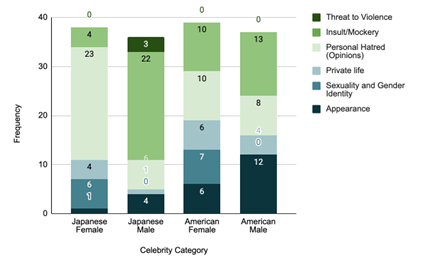
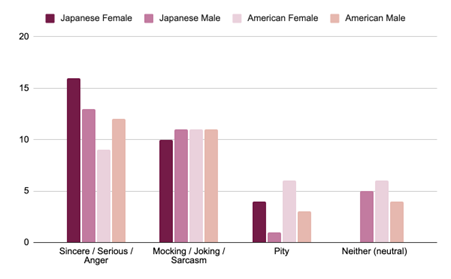
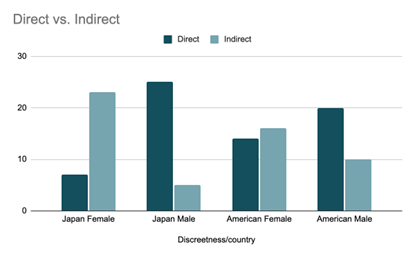
We collected this data by choosing the 30 most interacted hate comments made in 2023 under social media posts made in the same year from the celebrities’ personal social accounts. Only comments written in Japanese and made by Japanese speakers were analyzed for our Japanese celebrities; conversely, only comments written in American English were analyzed for our American celebrities. From these 120 comments, we then analyzed frequency across three linguistic variables: type of identifiable hate, tonality, and toxicity. By identifiable hate, we wanted to categorize the hate comment in regards to what it directly criticized which we classified into 6 groups: appearance, gender identity/sexuality, private affairs, personal hatred, mockery, and violence. It is important to note that hate comments were not restricted to one category, rather they could be categorized under multiple if they fit the requirements. An example of this would be a comment made to Demi Lovato, “It’s the chin for me. 🤪” which was classified as both mockery and an appearance hating comment. In order to analyze tonality, comments could also be categorized into 4 major tonal groups: serious, comedic, pitiful, or neutral. Lastly, the variable of ‘toxicity’ stems from existing previous research conducted by Won Ik Cho and Jihyun Moon on Korean online hate comments. Cho and Moon define toxicity as 1) dependent on how hateful the speech is, and 2) its ability to influence either the victim or other commenters (2021, p. 4-5). In order to gauge toxicity, we adapted this concept to instead analyze the “directness/indirectness” of the hate comments. An example of an indirect comment would be, “lowk basic but ok” which was directed to Timothée Chalamet vs. a direct comment “気持ち悪いから目覚めんな🤢🤢🤢” (“I hope you never wake up because you are disgusting”) directed towards Kuro-chan. Through this methodology, our main goal was to count and compare the frequency of these different linguistic markers and see if there were any differences, similarities, or correlations across Japanese and American hate comments, and subsequently, global hate culture.

As a disclaimer, we wanted to acknowledge some expected fluctuations in types of online hate for each of our categories. At first, we aimed to pick noncontroversial, nationally, but not internationally, acclaimed celebrities of each country with approximately similar fame in each nation in order to minimize data alteration of any kind. However, this proved to be difficult as we were unable to find hate comments directed to popular Japanese male and female celebrities. The only hate comments we could find were made to already “controversial” Japanese celebrities. Kuro-chan is problematic for his online comedic persona which is perverted, misogynistic, and violent in nature. Ryuchell is scrutinized by the Japanese public for being a transgender woman. Given these factors, we assumed our data would be skewed and expected higher rates of violent comments directed towards Kuro-chan and more hate comments regarding gender identity directed towards Ryuchell. We also expected a higher rate of gender and sexuality hate comments directed towards Demi Lovato as well, as they are bisexual and nonbinary (she/they pronouns). Our predictions were proved partly true as our data reflects that only Ryuchell and Demi received comments in regards to their sexuality or gender identity, while neither Kuro-chan and Timothée received comments of that nature. However, the hate comments were still dispersed across several different categories.

Findings

Context

Figure 1: Aggregate counts of corresponding content categories for each comment

The data obtained from the context categories revealed both cross-cultural and cross-gender differences among the four celebrities. There were a few distinct findings we did not anticipate prior to the data collection, such as the high count of personal hatred comments toward the Japanese female celebrity as seen in Figure 1. This may come as a result of a widely disputed scandal Ryuchell was involved in last year. Yet, the discrepancy between Ryuchell and the Japanese male celebrity is still extremely wide. Timothée similarly was involved in controversy due to his dating rumors[1], but the comparable count of personal hatred comments to the American female celebrity may indicate that Japanese commenters are more harsh than Americans to controversial celebrities.

Other data that stands out in Figure 1 is the large count of insult/mockery comments targeted at the Japanese male celebrity. Again, we see a similar trend where there is a significant discrepancy between genders, rather than cross-culturally, in Japan and America. This can be explained by the general social media culture in Japan where trolling is considered a common and entertaining form of online conversation (Kaigo, 2017). Although internet trolling is seen in American online platforms as well, Japanese entertainment and comedy often involve dark humour. Another aspect of Japanese humor we see in comments and in many social conversations is “ohghiri” (大喜利), which are unique jokes that involved comedic takes on seemingly neutral or one-dimensional topics. Therefore, the combination of dark humor and ohghiri are commonly seen as a tactic of online trolling in Japan; especially when taking into account that the chosen Japanese male celebrity is a comedian, his haters may be influenced to convey their sentiments in a similar manner, perhaps as a way to mock his occupation.

Contrary to our initial hypothesis, our data showed that American celebrities received more appearance-related comments compared to their Japanese counterparts, with the aggregate count being 18 and 5, respectively. Additionally, appearance-related comments were more common for male celebrities compared to their female counterparts – almost 4 times as much for Japan, and twice as much for America. The discrepancy between genders may be attributed to the notion that commenting on a man’s appearance is less of a social taboo than commenting on a woman’s appearance. Since oftentimes women are subjects of strict beauty standards, perhaps this discourages individuals from criticizing women based on their appearance. Particularly for Timothée Chalamet, his occupation as an actor increases the frequency of hate comments regarding this appearance as attractiveness plays a significant role in his promotional activities.

Another finding that defied our hypothesis was that there were an equal number of hate comments targeting sexuality and gender identity for both Japanese celebrities and American celebrities. As we anticipated, such hate comments were exclusively directed at the female celebrities who were both members of the LGBTQ+ community. However, we assumed that a conservative society like Japan would avoid discussing topics relating to sexuality, while American progressivism meant that we expected Demi Lovato’s hate comments to be primarily about her sexuality. Surprisingly, we saw almost equal amounts of hate comments about sexuality and gender identity, where a Japanese female celebrity received 6 and the American counterpart received 7. This may be because social media permits anonymity which in turn allows commenters to code-switch and not adhere to their expected linguistic social restrictions. Japanese commenters, therefore, may feel less obligated to uphold social harmony online and express underlying opinions they would not say otherwise. Additionally, the nature of online platforms transcends cultural boundaries. The “international” online community lacks rigid cultural norms or taboos that regulate how certain topics should be treated or discussed. Therefore, Japanese commenters may be code-switching into the ‘online language’ or culture that allows them to engage in conversations that might be considered taboo in Japan.

Tone

Figure 2: Each comment attributed to the style of tone by celebrities

When looking at tonality, our results show that Japanese female celebrities received the most ‘serious’ tone comments. There were no drastic differences between Japan and America when looking at tonality, excluding the pity tonality. We expected for there to be a higher rate of pity-toned comments for Japanese celebrities than for American celebrities due to Japanese culture which emphasizes politeness and humility. However, contrary to our predictions, there were more pity-toned comments for Americans overall. This may be due to the ability to be vulnerable in America, where influencers and celebrities are often encouraged to be transparent to their audience. As American celebrities tend to appeal to the masses by relating to their humanity, when celebrities face setbacks they are in turn treated with the same humanity and pity.

Another explanation for the pity tonality could be the presence of negative politeness in American online culture, as many of the pity comments we counted displayed negative politeness. Commenters at times used indirect speech to display their discontent. By framing it as a suggestion rather than a comment, the hater aimed to preserve the other person’s autonomy and avoid sounding too forceful. We think individuals in America rely on negative politeness strategies to express their criticism and avoid confrontation due to “cancel culture”.

Toxicity/Directness

Figure 3: Comments for each celebrity separated into direct or indirect

In regards to toxicity, or directness as we refer to it in our study, we originally expected Japanese comments to be primarily indirect whereas American comments to be direct. This is based upon Japan’s high language and how it tends to place a greater emphasis on respect, politeness, and conformity, which in turn discourages individuals from expressing explicit or controversial opinions openly. In contrast, American culture generally emphasizes freedom of expression and individualism, which may lead to more direct comments being shared online. However, our results show that there was no particular pattern cross-culturally, but that a correlation did exist between genders. Overall, male celebrities tended to receive more direct comments than their female counterparts as displayed by our data.

We think that due to gender roles in both countries and views on women in Japan as submissive, they had more implicit comments. Also, it could be considered taboo to comment on a woman’s appearance directly since it can contribute to this objectification and reinforce harmful gender stereotypes. Society holds women to different standards than men when it comes to appearance and behavior and implicit comments could be used to imply those notions. Regarding the more explicit comments for Japanese male celebrities, Japanese fan culture could cause a certain devotion and obsession that can sometimes lead to more explicit or possessive comments being directed towards male celebrities.

Future Research

Due to this study’s time constraints, we cannot be certain of this idea, but a proposal for future research to test this would be to increase the sample size by collecting thousands of hate comments made to multiple celebrities within our four categories. Frequency of hate comments and their types should then be categorized and compared between not only Japan and America, but other countries around the world as well. Additionally, our findings showed that there was a stronger correlation between hate comments and gender vs. hate comments and race; thus, analyzing hate comments in accordance to both the gender of the commenter and the gender of the celebrity would also be interesting. Applying the concept of toxicity will provide insight as to whether or not speech tends to be harsher or softer when criticizing individuals of the same gender identity.

Conclusion

Ultimately, our findings showed that when categorized into types of identifiable hate, tonality, and toxicity, hate comments made by Japanese and American English speakers did not differ significantly from each other. This conclusion in particular is fascinating as it shows that the preconceived notions we had about polite vs. impolite society and linguistic barriers they may pose were not scientifically sound. In fact, it instead points that perhaps the online world may be a liminal space where culture, language, age, gender, and other sociolinguistic factors are broken down, creating instead a universal shared language and culture.

References

Alzarouni, E. (2022). Detection of Hateful Comments on Social Media Detection of Hateful Comments on Social Media. Rochester Institute of Technology. https://scholarworks.rit.edu/cgi/viewcontent.cgi?article=12308&context=theses

Cho, W. I., & Moon, J. (2021). How does the hate speech corpus concern sociolinguistic discussions? A case study on Korean online news comments. ACL Anthology. https://aclanthology.org/2021.nlp4dh-1.3/

Feldman, O. (2023). Challenging Etiquette: Insults, Sarcasm, and Irony in Japanese Politicians’ Discourse. 93–116. https://doi.org/10.1007/978-981-99-0467-9_5

Kaigo, M. (2017). The Japanese Internet Environment. Social Media and Civil Society in Japan, 1–35. https://doi.org/10.1007/978-981-10-5095-4_1

Schmid, U. K., Kümpel, A. S., & Rieger, D. (2022). How social media users perceive different forms of online hate speech: A qualitative multi-method study. New Media & Society, 146144482210911. https://doi.org/10.1177/14614448221091185

[/expander_maker]

, , , , ,

How Do Gender Stereotypes from 1973 Hold Up in Modern Media?

Griffin Gamble, Shayan Karmaly, Rahul Reddy, and Michael Zhan

Our team was interested in looking at some speech features that were found primarily in women’s speech in a famous study by Robin Lakoff in 1973. We wanted to see if Lakoff’s findings were still prevalent in today’s media. In our study, we followed two characters, Robin Scherbatsky and Barney Stinson, in the TV show How I Met Your Mother. When analyzing their various conversations with friends throughout the show, we focused on two of the many speech features that Lakoff initially identified – tag questions and intensifiers. We separated their conversations into two social contexts – single-gender and mixed-gender conversations. We were curious to see if the frequency of the speech features would increase or decrease depending on the type of social situation that Robin and Barney were in. In addition, we were interested in the overall frequency of tag questions and intensifiers in Robin’s speech versus Barney’s speech because, according to Lakoff, these speech features should be more prominent in female speech (1973). We found that Barney had more tag questions and intensifiers per line than Robin, but in single-gender situations, Robin had significantly more intensifiers per line.

[expander_maker id=”1″ more=”Read more” less=”Read less”]

Introduction and Background

Our research hoped to answer the following questions: Are tag questions and intensifiers still predominantly found in women’s speech more than in men’s speech? Does the gender of the speaker’s conversation partners play a role in how often speakers will use tag questions and intensifiers? One of the reasons that we are interested in both these questions and revisiting Lakoff’s findings is that since 1973, there have been many changes to gender norms as well as the ways that people represent themselves. In general, people are a lot more tolerant and accepting of differences, so we predict it could be the case that the gender stereotypes in language have changed as well.

While we initially planned on getting live recordings of UCLA students in different social contexts, we quickly realized that this would be difficult to accomplish within the ten weeks allotted for this study. It would also be placing a large burden on the participant as they would need to record themselves as they went about their already busy day. Because of this difficulty, we shifted gears toward analyzing TV show characters. It ended up working out because one of the research methods that Lakoff (1973) used in her initial study was observing the media, so we decided to do the same with the show How I Met Your Mother.

From left to right: Barney Stinson (Neil Patrick Harris), Robin Scherbatsky (Cobie Smulders), Ted Mosby (Bob Saget), Lily Aldrin (Alyson Hannigan), Marshall Eriksen (Jason Segel)

The show is a rom-com about five friends who live their lives and navigate the social setting of New York. We chose this show because it’s only been eight years since the show finished and the main cast all exhibit male and female gender stereotypes. Specifically, the two characters we followed are Robin and Barney because while they both exhibit typical stereotypes for their gender, they also often portray stereotypical gender norms of the opposite gender.

Methods

We analyzed six episodes of How I Met Your Mother which totaled two hours of footage and 559 lines from our two characters combined. We specifically picked episodes that Robin and Barney were featured in so they would have more lines and we could collect more data from them. When watching the episodes and reading the transcripts, we noted each time Robin or Barney used either of the two speech features. We wrote down the speech feature that was used, the character that said it, and whether it was a single-gender or mixed-gender situation. For each episode, we created a separate section on our spreadsheet for inputting the data and an area sectioned off for calculating the total counts.

It is important to note that not all tag questions are equal and they may not share the same function to portray the speaker as having less authority or power (Cameron 76). While you can use a tag question as a self-lowering device by giving your interlocutor the floor to respond to your statement, you can also use a tag question as an aggressive tool. For example, “You aren’t all that great, are you?” That said, all the tag questions in our data were of the hedging type. Here is an example from Robin, “If you’re going to be this disgusting, we’re not watching this, okay?”

Robin Scherbatsky (Cobie Smulders), looking shocked

Results/Analysis

So what exactly were our findings? Overall, we analyzed six episodes totaling two hours of footage and our findings were different from what we expected to find based on existing research. In (Seigler & Seigler, 1976, p. 169) and (Kramer, 1977, p. 159) both studies found that gender stereotypes in speech aligned with Lakoff’s theory. Keep in mind, these studies were focused on the perceptions of speech, not what each gender actually says in real life. We expected to find that the speech characteristics that were once associated primarily with women’s speech can now be found equally in both male and female speech, and are no longer strong indicators of the gender of the speaker. This was our hypothesis. Below, I will go into details including visualizations that display what we ended up analyzing.

Our data consisted of two different social contexts for analysis. Specifically, we looked at mixed-gender situations (where there was at least one male and one female in a social setting) and at single-gender situations (where there was only one gender in a social setting). For the purposes of the experiment, the genders will refer to non-trans males and females who identify as the gender that they were born with. Now, let’s look at the data:

Table 1 – Number of Tag Questions

As we can see in Table 1, we examined situations in which Robin and Barney are in mixed-gender and single-gender lines for the purposes of the tag questions. For this, we tried to choose episodes where we thought the two characters would have an equal number of lines in this context and to our convenience, they did for the mixed-gender situations, but NOT for the single-gender ones. So, while Robin and Barney have nearly the same number of total mixed-gender lines, Barney had 31.5% more tag questions. On the other hand, Robin led this category in single-gender situations!

Table 2 – Number of Intensifiers (Per Line)

Similarly, when looking at Table 2, we can see that Barney had 34.5% more intensifiers and from the raw data, it would actually seem as if Barney is the winner in both categories, however, when we equalize the data (as shown in the graph), Robin has more intensifiers per line in the single-gender situations. The tricky part of this table is that it shows the analysis per line rather than the total amount. We decided not to go with raw numbers so that it is not confusing to look at the total speaking time, but rather easier to look at the date per line. This average is more precise since it allows us to equalize the data for both Barney and Robin. And if we look more specifically at the single-gender situations, Robin actually has roughly half of Barney’s lines. Overall though, the single-gender data is pretty sparse; therefore, we can conclude that it’s not super conclusive of anything.

Discussion and Conclusions

The conclusion that can be drawn from our analysis and findings is that Lakoff’s speech features that were stereotypically and data-backed as either higher for men or women no longer hold true in modern times. We can see from our data that speech features that were shown in Lakoff’s research as higher for women such as tag questions and intensifiers were actually around the same for Barney and Robin. In some cases, they were even higher for the male focus of the study, Barney. Although we were not able to find much data for single-gender situations, from the evidence that we do have we can conclude that modern-day society has moved into a third-wave sociolinguistics lens that puts much more emphasis on the individual when compared to the past. After taking into consideration the time gap between the gender stereotypes of 1973 and the stereotypes of today in 2022, we can see that our hypothesis did indeed hold true where these outdated assumptions on stereotypical speech features can no longer be linked to a single gender. This makes sense as we now live in a much more gender-fluid and accepting society than in the past where everyone was strictly grouped as masculine and feminine and deviating from the norm was shunned by most. Some high-quality TED talks that reinforce these ideas are “Language around Gender and Identity Evolves” presented by Archie Crowley and “How Language Shapes the Way We Think” presented by Lera Boroditsky. The first TED talk by Archie delves into how language is ever-changing and a powerful tool to allow people to identify themselves and find something that makes them feel comfortable. In the second TED talk, Lera uses scientifically backed data to prove that language does indeed shape the way we think and how we have over 7,000 cognitive universes, each linked with a language as each language gives the user a unique way of viewing the world and is very impactful in shaping the way we view the things around us without us even knowing. Both presentations talk about language being a powerful tool for self-expression and tie into our appeal that language should not be confined to preconceived notions of gender schema as it might have been in the past. Language should be something that brings people closer together instead of a weapon that further alienates people. If there were more time, we would have liked to expand upon our research by analyzing real people instead of just fictional TV characters and comparing the results. We also realize that analyzing real people would mean we would also need to account for external influencing factors such as race, occupation, geographical origin, etc.

While we began looking at how speaker agency can play a role in changing one’s speech through single and mixed-gender situations, it would be valuable in a future study to analyze different types of conversations. For example, an argumentative conversation may have significantly fewer self-lowering tag questions while it might have more intensifiers to help get the point across. Podesva’s (2011) study could be used as inspiration for a framework for how to conduct a study involving participants that move through discrete social contexts.

References

Cameron, D., McAlinden, F., & O’Leary, K. (1988). Lakoff in context: The social and linguistic functions of tag questions. Women in their speech communities, 74, 93.

How language shapes the way we think | Lera Boroditsky. (May 2, 2018). https://www.youtube.com/watch?v=RKK7wGAYP6k

Kramer, C. (1977). Perceptions of Female and Male Speech. Language and Speech, 20(2), 151–161. https://doi.org/10.1177/002383097702000207

Lakoff, R. (1973). Language and Woman’s Place. Language in Society, 2(1), 45–80. http://www.jstor.org/stable/4166707

Language around gender and identity evolves (And always has) | Archie Crowley. (April 16, 2021). https://www.youtube.com/watch?v=XguYZXUChhY

Podesva, R. J. (2011). The California Vowel Shift and Gay Identity. American Speech, 86(1), 32–51. https://doi.org/10.1215/00031283-1277501

Siegler, D. M., & Siegler, R. S. (1976). Stereotypes of Males’ and Females’ Speech. Psychological Reports, 39(1), 167–170. https://doi.org/10.2466/pr0.1976.39.1.167

[/expander_maker]
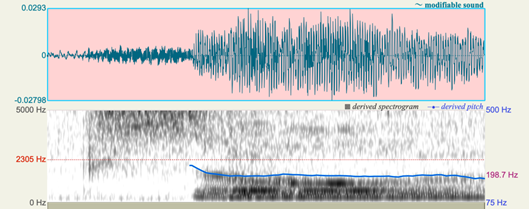
, , , , ,

(Ap)parent Gender: Gendered Language and its Use in Asian American Parenting

Kara Chu, Iffet Dogan, Jay Iyengar, and Alisara Koomthong

The following research seeks to observe linguistic variability in the way Asian immigrant parents speak to their Asian American sons compared to their daughters. Participants for the study include two female participants and one male participant who recorded phone calls with their parents sharing both good news and bad news. The phone calls were analyzed for linguistic variability through word choice and intonation use by the participants’ parents. In addition to data collection, scenes from television shows that represent Asian American family dynamics were analyzed to find possible linguistic variability in the way parents spoke to their daughters in comparison to their sons. This research aimed to uncover the use of gendered language within the cultural norms of Asian American parent-child relationships. More positive language and lower tonal variability were found with the parents of the boy, while more practical language and higher tonal variability were generally found with the parents of the girls.

[expander_maker id=”1″ more=”Read more” less=”Read less”]

Introduction

Children are known to absorb cultural linguistic expectations and gender norms imposed on them from interactions with their parents and caregivers. We are seeking to explore the common gender differences that children of Asian immigrant parents experience when speaking to their parents. By analyzing the parents’ supportive phrases, negative phrases, tone, and pitch in varying situations, we will look at the difference in language use towards sons versus daughters. Research has shown that mothers talk more and use more supportive language with their daughters than with their sons (Leaper et al., 1998). We hypothesize that our findings will align with existing gender research, and we aim to go one step further by viewing the data with a cultural lens to examine the intersection between how gender and culture may affect the children’s self identity.

Background

Asian families hail from a wide variety of cultures on the Asian continent, many of which are rooted in patriarchy. These customs have resulted in internalized misogyny within many Asian American families, leading to a distinct difference in the way they treat sons versus daughters. Fong (1997) addresses how Asian American women are in “the midst of conflicting values, identity crises, consciousness raising” all while developing their sense of womanhood (92). Asian Americans are subject to harmful stereotypes, which often include the rhetoric that Asian American women are submissive and incompetent compared to men. This is why we find it valuable to study if there are any linguistic markers that would help us understand how this difference in expectations is communicated to children. We are seeking to observe not only the linguistic variation in the way Asian women are spoken to in comparison to men, but also to make connections about whether that inflicts an altered self-image for Asian American women.

Methods

For our methodology, we wanted to recruit men and women from Asian-American family households that speak English with their parents. Due to our specific demographic, we could only find three Asian-American participants in their 20s: two women and one man. Initially, we had one more male participant, but he decided to drop out at the last minute. Each participant gave out their versions of good news and bad news (i.e. aced an exam, dropped out of school) that aligned with their lives, which enabled them to steer the conversation freely and have our results be as natural as possible. After obtaining all the participants’ and their parents’ consent to be recorded, we collected the recordings of their conversations of them delivering their news and getting their parents’ reactions. One of our female participants presented fake good and bad news while the male and the second female participants’ news were true. Only our male participant had both of his parents in the conversation while the rest interacted with either their mother or their father.

In order to support our data, we examined scenes from television shows relevant to our experiment: Never Have I Ever and Kim’s Convenience. It provided us insight into how media portrays the relationship between parents and their children in an Asian-Western household. In Never Have I Ever, the scene we chose was when the mother assumed the worst in Devi (her daughter) after Devi’s classmate said “Well you know Devi. She is a real firecracker.” In Kim’s Convenience, we used two scenes: the first was an interaction between the daughter and her parents and the second was between the mother and the son. Both were delivering the bad news to the parents and we were able to find a significant difference in how they were treated.

Results

1. Word Choice

We began by analyzing word choices used by the parents in response to good and bad news. All words have tones, and individuals make choices to use certain words/tones to convey more meaning than literal definition (Bakhtin, 1982). When certain tones are repeated in conversation with a specific individual it can begin to have an effect on their mood and lead to longer-term consequences. A study by Richter et al. (2010) provides more support for this by analyzing MRI scans of individuals when certain tone-words are spoken to them, noting that brains react differently to words with different moods and the subjects’ emotions can be changed by language itself (Richter et al., 2010). When parents apply this approach to their children, consistent usage of certain language can have long-lasting effects on development.

Our first subject’s (a girl) parent was less congratulatory than the other parents and seemed to place high expectations on his child:

Figure 1. [8:58-9:10]

06  KID: I like kept messing up my interview questions and they were like asking me things and just the structure was really weird so like I think I did really bad

07  PAR: Oh no (.) You always do so well

He uses comparative statements in response to the bad news: “you always do so well.” He also focuses on areas where the student’s grades may be falling rather than offering comfort. Even in response to good news, he begins with a question, as if doubting the ability of her child to succeed:

Figure 2. [6:53-7:07]

01  KID: You know the um homework I was doing earlier today? I got a hundred percent(.) My grade came back already

02  PAR: You wait you got a hundred percent what?

03  KID: On the homework I was just doing

04  PAR: Awesome;

05  KID: Yeah

The congratulatory “awesome” that the parent offers is the only positive word choice in the entire conversation. Even so, our analysis of tone points towards the positivity of such a statement being muffled at best. At other points in our first subject’s conversation, he focuses on how much his child’s success will be affected, rather than mollifying her emotions. Regardless, it appears he still has the best interests of his child at heart.

Our second subject’s (a girl) parent took a similar tone. Instead of positive language use, when speaking to her child, she stays within the bounds of advice and hedging:

Figure 3. [2:41-2:56]

01 KID: It’s just really embarrassing

02 (2.1)

03 PAR: Then you talk to your advisor ask that fo:r advice that what you to do some things it is out of your control you can’t do anything (.) don’t stress for that

She is more concerned with her child’s actions and success than her well-being, and uses direct language (the ‘command’ to talk to her advisor) to ensure that happens. In response to good news, she uses the words “not bad”:

Figure 4. [4:48-5:01]

04  PAR: How-how many hou:rs does he require you to help [him?]

05  KID: [three] hours a week

06 PAR: OH not bad

07 KID: Yeah (.) yeah

08 PAR: That’s good

And in response to the student’s worries, she offers advice and stresses the idea of working hard. Girl 2’s parent is practical and expects independence from her child, and uses her language to communicate that to her daughter. She continues in the conversation to use neutral or negative language, even in positive reactions, implying through her “negative” reaction to her daughter that what she is doping should not be thought of positively; only that it is expected behavior.

On the other hand, our male subject’s parents do provide some practical advice, but we note a lot more positive language in their interactions. When presented with good news, the boy’s parents’ language and tone are happy, with audible laughter and multiple positive statements:

Figure 5. [0:00 – 0:30]

01  KID: Good news is that I got an A on my environmental econ midterm

02  DAD: Oh [very nice] (1.5) [yeah]

03  MOM:     [mmm:::]        [congratulations!]

04  MOM&DAD:(inaudible)<<laughing>>

05  MOM: Good job!

06  KID: Thank you.

07  MOM: <<laughing>>

And perhaps even more interesting, when confronted with bad news about his budget, the parents continue to use words like “thank you for letting us know” and place trust in his ability to handle his business, telling him to keep track of his own budget:

Figure 6. [0:42-1:01]

08  KID: ‘Ca-’cause like I feel like–it feels like I’m spending too much but I’m like–I . should probably keep track of my budget better (0.1) [so:] (0.2) we’ll see

09  MOM&DAD: [Oh:]

10  DAD: You stay within your budget?

11  KID: Well–I–I need to be better about that. [So we’ll see]

12  DAD: [Oh okay]

13  DAD: Well, thank you for letting us know about [that]. So, you know,

14  MOM: [yes]

15  DAD: Keep track of your budget(1.2)and how much you spent.

We do not have enough data to tell whether these are truly differences between treatment of girl/boy children or simply differences in parent personality, as we know parent gender in addition to having one parent versus two parents present can affect the conversation. However, there are minute trends in word choice that differentiate the two genders. The boy’s parents are more positive about his accomplishments and more trusting of his faults, while the girls’ parents take a more high-expectation position and are more neutral about their efforts.

2. Intonation

In addition to evaluating word choice, we also put the recordings into a speech analysis software called Praat to analyze pitch and intonation. According to previous research, intonation, which is the change in pitch, is a really important part of communicating a speaker’s emotions and their attitude towards the listener (Wells, 2006). Their pitch will differ depending on what emotion the speaker is conveying.

The first thing we looked at was the parents’ initial short one-word response to the child’s piece of bad news. For the boy, it was “Sooo,” and for the girls it was “Oh no” and “Okay?” as seen in Figures 7 – 9. These spectrograms show the strength of certain frequencies as a speaker talks. Their pitch is indicated by the blue line. We used a pitch range of 75 to 300 Hz for male speakers and 75 to 500 Hz for female speakers, as females have a higher speaking pitch. We found pretty consistently that the parents of the girls had higher tonal variability, meaning their pitch changed a lot, while the parents of the boy had low tonal variability. However, we acknowledge that the content of the speech can have an effect on the speaker’s pitch which can make it hard to compare one to one.

Figure 7. To Boy, “Sooo” – Low tonal variability
Figure 8. To Girl 2, “Okay” – High tonal variability
Figure 9. To Girl 1, “Oh no” – High tonal variability

All the parents asked their kids a question after hearing the bad news. For the boy, one question his parent asked was “you don’t have enough?” which has a low tonal variation, as seen in Figure 10. He doesn’t increase pitch at the end which you would normally expect from a question, especially a yes or no question.

Figure 10. To Boy, “You don’t have enough?” – Low tonal variability

On the other hand, you can see the parent of Girl 1 varied a lot in intonation in Figure 11 during the question, “So how does that affect your grade?”. Girl 2’s parent’s pitch didn’t change as much throughout the sentence, but a big pitch increase is seen at the end of the yes or no question “If you fail, can you retake the class for the next quarter or whatsoever?” in Figure  12. This expresses itself much more like a question as opposed to the boy’s parent, whose question ends on a level pitch similar to a statement.

Figure 11. To Girl 1, “So how does that affect your grade?” – High tonal variability
Figure 12. To Girl 2, “…for the next quarter or whatsoever?” – Ends on rising pitch

This difference in parents’ tonal variation for questions is consistent with the parents’ tonal variation in their one word responses. For responses to bad news, the parents of daughters used more tonal variability than the parents of the son.

However, for the responses to the good news, we couldn’t find a clear difference between the boy and the girls. For both, the parents said congratulations, which for the boy has more variety and ends on a falling tone while for the girl has a level tone at a high pitch. We looked at another congratulatory phrase from the parents, and you can see variety for both the boy and girls. We believe this could mean that parents react to good news similarly regardless of gender pitchwise.

Figure 13. Varied pitches for parent responses to good news

3. Media

Media plays a large role in reflecting the dynamics between Asian American parents and their children. One example of this is Devi from the show Never Have I Ever.

B: well you know Devi (.) she’s a real firecracker.

N: Oh no :: what did she do?

In this particular scene, Devi’s classmate Ben refers to her as a “firecracker” to which her mother, Nalini immediately assumes the worst and jumps to the conclusion that Devi did something wrong. In general with Devi’s character, in the midst of developing into womanhood and growing up, she is constantly given these types of negative reinforcement about her personality traits that are commonly misconstrued as “unladylike”. She is outspoken and expressive and often reprimanded for being that way, as this particular scene represents. Media representations such as the show Never Have I Ever are reflective of these kinds of parent-child relationships and interactions that many Asian American women face in real life.

In Kim’s Convenience, Jung is the oldest and the only son of the family where high expectations were placed on him. He told his mother that he applied for a new position in a car rental company that has higher pay and responsibilities, however, his mother interpreted it negatively.

Jung: Assistant manager, Umma. And it’s a good job. It’s got more pay, benefits, and more responsibility.

Umma: So does doctor or judge or (1.2) website design!

The mother’s response was a clear indication that she was not satisfied with her son’s choice. She wanted him to choose a career that is more reputable, such as a doctor, a judge, or a website designer. It is a portrayal of Asian parents’ ideas of what is best for their children by setting high standards for them to follow.

Janet is the youngest and only daughter of the family. In comparison to Jung, she has fewer responsibilities and lower expectations than him other than to be obedient. In Season 1, Episode 10, Janet’s friend revealed to her parents that she got a job without their approval.

Umma: Janet, you get job?

Gerald: At the car rental store. She starts tomorrow.

Umma: At Handy Car Rental?

Janet: Yeah

Umma:(1.6)*sigh* N(h)o, Janet. You work here. You tell them it’s

   mistake. Tell her, Appa

Appa: You know what’s a big mistake? Pork rind. Never sell. Look.

[5:39-5:48]


Janet: I need the job, Umma. How else am I going to earn any actual money?

Umma: We work something out. Right, Appa?

Appa: And what’s the deal with the wine gum? Not wine, not gum.

In this scene, both parents were dismissive of her but in different manners. The mother was trying to reassure her that she did not need a different job because she is already working at their family’s store and was persistent for her daughter to stay. The father, on the other hand, reacted by not responding to her news. Instead, he decided to change the topic as if it did not matter to him. It’s a representation of how parents would have low expectations from their daughter in this scene but try to influence her to be compliant with them. Her individuality can only be accepted if it aligns with their concept of what is best for her.

Conclusion

We found that hedging was used by parents of both boys and girls, but that girls’ parents used it significantly more. The parents of our male subject also spent a lot of time reacting to and understanding his problem, while the girl’s parents tended to offer more vague advice and “close off” subjects as soon as they were done offering their piece on the subject, before moving on to the next subject unless the child brought it up again. For both genders, the parents provided serious advice, but the advice for the boy was more direct when it was given while the girls’ parents provided mostly vaguer advice to their children, often having to do with working harder or being more resolute in the face of challenges. When presented with issues in the students’ lives, the girls’ parents were significantly more negative or neutral in speech, and placed far higher expectations through their word choice when reacting to bad news, while the boy’s parents were hopeful and positive in tone, implying a sense of trust in their child’s ability to fix his issue. Intonation varied less for the boy’s parents than it did for the girls’ parents, and the girls’ parents’ intonation varied the most especially when reacting to bad news.

The data has not supported pre-existing research studies on this topic and our hypothesis that more supportive and positive language would be used with the girls. While we were able to dissect and analyze the data that gave some clear distinctions between sons and daughters, the obstacle of finding participants does not allow us to give a definite conclusion or correlation from our small sample and apply it to the general public. There are several factors as to why we cannot definitively conclude that gender is the sole cause of the linguistic differences. For instance, parents may have more progressive views that are from Western or American culture instead of their heritage and/or not speaking the inherited language with their children. Another contributor includes the level of closeness and comfort. The data would have been stronger if we included various levels of connection between parents and their children to observe any similarities and differences in their language. If we have the opportunity to conduct this experiment again, we would take more time on the recruiting process as that was our main issue. Additionally, we would want both parents present when interacting with our participants so everything is more consistent. Regardless, our study provides an often-forgotten insight to the relationships between Asian American students and their families, and through such understanding, we can only hope to foster more thoughtful and egalitarian approaches to parenting children.

References

Bakhtin, M. M., & Holquist, M. (2000). The dialogic imagination: Four essays. University of Texas Press.

Fong, Lina Y. S. (1997). Asian-American Women: An Understudied Minority. The Journal of Sociology & Social Welfare, 24(1), pp. 7.

Leaper, C., Anderson, K. J., & Sanders, P. (1998). Moderators of gender effects on parents’ talk to their children: A meta-analysis. Developmental Psychology, 34(1), 3–27.

Wells, J. C. (2006). English Intonation PB and Audio CD: An Introduction. Cambridge: Cambridge University Press.

Richter, M., Eck, J., Straube, T., Miltner, W. H. R., & Weiss, T. (2010). Do words hurt? brain activation during the processing of pain-related words. Pain, 148(2), 198–205.                              https://doi.org/10.1016/j.pain.2009.08.009

[/expander_maker]

, , , ,

The Use of Gendered Language in Interviews of Male and Female Athletes

Julia Offerman, Isabelle Sandback, Samantha Morgan, and Niki Agarwal

Societal viewpoints regarding sports can be partially attributed to gender bias in sports commentating and interviews. This is true even for tennis, which has become very gender-inclusive in terms of media coverage, as well as respect for female athletes. Still, many studies have found biases in language used for male and female tennis players—but have not examined interviews or interview questions. In this study, we analyzed six post-game interviews of mixed doubles tennis players to ascertain if there was a difference in questions directed to female and male tennis players. We observed the proportion of emotional and practical questions directed to each, as well as the proportion of questions regarding the interviewee themself, their partner, or teamwork for each player. We found that the women were asked significantly more emotional questions than their male counterparts, but that both were asked relatively similar percentages of interviewee-partner-teamwork questions. This study has important implications for language, respect, and gender-inclusivity surrounding tennis and women’s sports, as well as interview protocol between men and women interviewees in other fields. These metrics analyzed could be used in these other cases, and ideally, the differences should be mitigated in order to promote equality in interviews.

[expander_maker id=”1″ more=”Read more” less=”Read less”]

Background

Although media coverage of tennis has been more gender-inclusive than other sports, biases are still present in the language used by interviewers when interacting with male versus female tennis players. In our study, we analyzed the post-match interviews of mixed-doubles teams, which consisted of one female player and one male player, to see if word choice and question type display any gendered bias. This allowed us to test the hypothesis that gender-based bias found in broadcasting also extends to in-person interviews with the athletes.

Gendered language in tennis has served as the subject of several studies. Though the definition of gender may be fluid depending on context and background, tennis itself has established a gender line between male and female that we used as our baseline. Previous studies, such as Messner and Jensen (1993), have compared the broadcasts of men’s and women’s tennis matches because they are usually held at the same venue and given equal amounts of coverage.

Articles reporting on the 2015 Australian Open were analyzed for “gender-specific descriptors” in a 2016 study conducted by Adrian Yip (2016). It was found that “stereotypical beliefs about females were largely reinforced in mediated gender representations,” and specifically focused on the disproportional discussion of women’s appearance, mental-weakness, and other stereotypical female traits (Yip, 2016). The 2015 Australian Open media coverage was additionally analyzed by the International Review for the Sociology of Sport, and strong gendered differences in how announcers “created spectacle” and described athletes during the live matches were found (Quayle et al., 2019). Commentators were again analyzed during the 2018 US Open and found that they reported emotionality more frequently with female athletes (Gerbasi, 2019).

Despite the focus on bias in sports media coverage, no studies have looked at how gender bias shows up in press conferences and interviews. Interactions with the players deserve their own focus since reporters are not describing the athletes or offering their own commentary, which therefore makes it more difficult to identify examples of stereotypes or biased language.

Overall, we expect that female athletes will be asked more emotional-coded questions and males will be asked more practical-coded questions. In addition, we hypothesize that women will be asked more questions about their partner than men will be asked about their partner, and that women will be asked more questions about teamwork in general. If we see these differences, we can determine that there may be bias in the question choice when directed towards female and male athletes.

Methods

For our study, we looked at post-match interviews from Grand Slam tennis tournaments and decided to focus exclusively on mixed-doubles teams. Since a mixed-doubles pair includes one female and one male athlete who are both being interviewed about the same match, gender is isolated as a difference between the players; therefore, the differences in the questions posed to each athlete could be indicative of gender biases. We chose to analyze 6 formal interviews of players that were successful (had each won major tournaments before both in individual and doubles events) and well-known within the tennis world. The interviews totaled 71 minutes for analysis. Additionally, we chose to disregard the gender of the interviewers because the questions seemed to be highly scripted and therefore not indicative of the interviewers’ personal biases. After an initial scan, we conducted two waves of analysis: one that marked the subject of the question (i.e. emotional versus practical) and one that marked the referent of the question.

For the first part, we defined “emotional questions” as questions that either are meant to elicit an emotional reaction or ask about the player’s feelings. We looked for keywords or question topics that indicate emotions, specifically focusing on—but not limited to—the following list of keywords and concepts: therapy, emotional wellbeing, “feel,” personal life, emotional reaction to the results of the match, “happy” instead of “satisfied,” support. We used this framework in order to tally and average the number of emotional questions directed towards the female and male athletes.

An example of an emotional question is the following, posed to Serena Williams at the 2019 Wimbledon Tournament:

(1) “You said you had gone to see a therapist after the-dealing with the uh US Open incident, can you just talk about that process-what it did for you and how maybe it has affected you going forward?” – Question to Serena Williams in the Second Round Mixed Doubles Press Conference Wimbledon 2019 (0:16)

This targets both personal life and therapy, making the question emotional. Other times, the lexical choices indicated gender biases—competition related for the male player and emotional/psychological interaction for the female—such as in the following questions:

(2) “Were you surprised at how well you came together, you really seemed to have excellent chemistry this week?” – Question to Martina Hingis in the Mixed Doubles Finals Press Conference Australian Open 2015 (5:55)

(3) “How is the mixed doubles helping mentally and physically your, you know, your ambition to get back to singles?” – Question to Andy Murray in the Mixed Doubles Second Round Press Conference Wimbledon 2019 (6:38)

(4) “How did it feel to hit so many return winners against Martin?” – Question to Serena in the Second Round Mixed Doubles Press Conference Wimbledon 2019 (9:17)

In the second round of analysis, we tracked each question’s referent by sorting them into three possible categories: questions referring to the interviewee, questions referring to the interviewee’s partner, and questions referring to teamwork. We marked questions as referring to the interviewee when they asked about the player’s personal life, mental health, individual match play, opinions on larger news stories, etc., such as in the following question:

(5) “Andy, on TV you said that uh once Wimbledon finishes, hopefully on Sunday, you’re gonna practice a bit more singles? Does that mean you’ve made your decision about if you’ll go to the US Open or you will try the US swing as a singles player?” – Question to Andy Murray in the Second Round Mixed Doubles Press Conference Wimbledon 2019 (0:48)

Questions were marked as referring to the interviewee’s partner when players were asked about the other’s personality, habits, or style of play, such as in this example:

(6) “What is it about playing with Jamie that is so good for you?” – Question to Bethany Mattek-Sands in the Mixed Doubles Final Post-Match Interview US Open 2019 (2:29)

Finally, questions were marked as referring to teamwork when players were specifically asked about their partnership or future plans to play together. For instance:

(7) “You said on court that you only sort of teamed up again in the last couple weeks, was there ever a chance that you weren’t going to play together?” – Question to Neal Skupski in the Mixed Doubles Final Press Conference Wimbledon 2022 (11:42)

We conducted a paired t-test for each set of averages in order to determine the statistical significance of our results.

Results

On average, male tennis players were asked 58.33% of questions and females 41.67%, which was not significantly different (p-value=0.16).

Of the questions asked to the male partner, 35.83% were emotional-based and 64.33% to the female partner. This gives a two-tailed p-value of 0.006, which is very significant. Out of the total emotional questions, the female partner was asked 64.5% of the questions on average, with a p-value of 0.04, also significant.

Figure 1: The average percentage of questions that are emotional-based asked to the male and female tennis players; the percentage is the number of emotional questions divided by total questions asked to each partner.

Of the questions asked to the male, 51.4% referred to themselves, 17.7% referred to their partner, and 30.9% referred to teamwork. Of the questions asked to the female, 54.6% referred to themselves, 14.8% referred to their partner, and 30.6% referred to teamwork. The p-value between these two groups is over 0.9, indicating that there is no significant difference between the questions for male and female tennis players regarding if the question is about themselves, their partner, or teamwork.

Figure 2: The average percentage of questions asked about the interviewee, partner, and teamwork to each gender. The averages are comparable for each group; the percentages are taken out of total questions asked.

Discussion

Overall, the study indicated that there were some significant differences in the questions directed at male and female tennis players, but certain aspects were more likely to be gender specific than others. Based on the data, we can accept our hypothesis that female tennis players tend to be asked more emotion-based questions than male tennis players on average. We cannot, however, accept our hypothesis that female tennis players are asked more questions about their partner than male tennis players are, as the proportions are similar. This could indicate that emotional versus practical questions could be a metric for examining gender bias in sports interviews, but interviewee-centered versus partner-centered versus teamwork-centered may not be—at least, for mixed doubles tennis.

This has several implications not only for current perceptions of men’s and women’s sports, but for future actions that should be taken in order to mitigate gender bias in sports interviews. Based on the current understanding, interviewers direct more emotional questions towards female tennis players, which can undermine their competitive and athletic ability. If equal respect is going to be given to male and female athletes, the proportion of emotional and practical questions should be comparable for both genders—and this must be done deliberately. Though emotional aspects can be relevant in an interview or discussion with athletes, the priority should likely be the competitive aspects to establish any athlete’s prowess as paramount. “Gender Inequality in Sports: Women Face a Double Bind” from the publication The Hilltop Monitor, talks about a running hashtag back in 2015 called “#CoverTheAthlete.” This hashtag was created in order for people to highlight how male and female athletes were interviewed online and in the news, or, more importantly, how females were asked questions not related to their skill or game, but ones about personal life, looks, emotions, and how they felt about the male-side of sports. The author’s hypothesis was to see if there was a link between these interview differences and female athletes’ pay. Women are paid incredibly lower versions of their male-counterparts’ salaries. “The Women’s National Basketball Association (WNBA) had a 2018 salary cap of $110,000 while the National Basketball Association (NBA) minimum salary was $582,186” (Porth 2019). The blog argues that gendered language and lower pay go hand in hand; if female athletes are going to be interviewed like their games do not matter, then their games will matter less to people, resulting in less revenue. Does the request “can you give us a twirl” sound like what an interviewer would ask to a serious, skilled player? It might be why women’s sports are seen as less serious than men’s.

Furthermore, tennis is a sport in which female athletes are seen as relatively equivalent to their male counterparts when compared to athletes in other sports. This suggests that the disparity could be even greater in other sports, underscoring a need for studies such as these to explore the way gender bias presents itself. The emotional and practical question metric could be applicable in these cases as well, and the necessity for similarity in questions directed to athletes of different genders in order to promote equal respect is key. Further differences in interview questions between men and women may be present in other industries and fields, which is another area for future development.

In order to truly determine if gender biases were present in these interviews, we specifically needed to limit the scope of this study to focus on quantifiable and qualifiable differences in the questions asked to male and female athletes. However, each athlete has multiple other aspects of their identities that could affect how they are perceived, such as race and age. There are intersections between said identities that may play an additional role in the choice of questions directed to them. Broadening the extent of this study could help account for some of these intersections. In addition, a longer study with more interviews would be ideal in order to further solidify the relationships noted.

There are efforts that can be made to help reduce the biases held regarding women’s sports in general, which can be considered a possible cause of the difference in questions posed in interviews. The International Women’s Day campaign offers a few ways that individuals can combat biases in women’s sports. Encouraging young women and girls and supporting them in sports can help instill equitable perceptions at a young age. Additionally, closing the gender gap in sports salaries will improve the legitimacy of women in the field. One of the easiest ways anybody can make a difference is simply supporting professional sports in any way, from attending a game to buying merchandise (“Support female athletes”). Supporting women and being aware of the stereotypes reflected in their sports interviews will contribute to the effort in improving gender inequities. This study, among many others, has revealed evidence of gender biases and awareness of this prejudice can allow for progress towards eliminating it.

References

AK. (2016, June 4). Martina Hingis and Leander Paes seal career grand slams at French Open. https://www.youtube.com/watch?v=D8Fh-fF8Zek

Australian Open TV. (2015, February 1). Martina Hingis and Leander Paes press conference—Australian Open 2015. https://www.youtube.com/watch?v=cAPoYiZHzeU

Cooky, & Messner, M. A. (2018). No slam dunk: gender, sport and the unevenness of social change / Cheryl Cooky and Michael A. Messner. Rutgers University Press. https://muse.jhu.edu/chapter/2124054

Gerbasi, A. (2019). Game, Set, and Match: A Content Analysis on the Commentating of Tennis Broadcasters for the 2018 US Open Championship Weekend. [Master’s thesis, East Tennessee State University]. ProQuest, https://dc.etsu.edu/etd/3575

Messner, Duncan, M. C., & Jensen, K. (1993). Separating the Men from the Girls: The Gendered Language of Televised Sports. Gender & Society, 7(1), 121–137. https://doi.org/10.1177/089124393007001007

Porth, M. C. (2019). Gender Inequality in Sports: Women face a double bind – The Hilltop Monitor. Retrieved December 8, 2022, from https://hilltopmonitor.jewell.edu/gender-inequality-in-sports-the-double-bind-women-face/

Quayle, M., Wurm, A., Barnes, H., Barr, T., Beal, E., Fallon, M., Flynn, R., McGrath, D., McKenna, R., Mernagh, D., Pilch, M., Ryan, E., Wall, P., Walsh, S., & Wei, R. (2019). Stereotyping by omission and commission: Creating distinctive gendered spectacles in the televised coverage of the 2015 Australian Open men’s and women’s tennis singles semi-finals and finals. International Review for the Sociology of Sport, 54(1), 3–21. https://doi.org/10.1177/1012690217701889

Support female athletes worldwide and help #breakthebias in women’s Sport. International Women’s Day. Retrieved December 7, 2022, from https://www.internationalwomensday.com/Missions/17255/Support-female-athletes-worldwide-and-help-BreakTheBias-in-women-s-sport

US Open Tennis Championships. (2019, September 7). Mixed Doubles Final—Ceremony and Post Game Interview | US Open 2019. https://www.youtube.com/watch?v=QMDNRmO1cyY

Wimbledon. (2019a, July 9). Andy Murray & Serena Williams Second Round Mixed Doubles Press Conference Wimbledon 2019. https://www.youtube.com/watch?v=cqckd0HxyWY

Wimbledon. (2019b, July 10). Andy Murray & Serena Williams Third Round Press Conference Wimbledon 2019. https://www.youtube.com/watch?v=o_AD9GhiFNA

Wimbledon. (2022, July 8). Neal Skupski and Desirae Krawczyk Final Press Conference | Wimbledon 2022. https://www.youtube.com/watch?v=DamI3-8RWjU

Yip, A. (2018). Deuce or advantage? Examining gender bias in online coverage of professional tennis. International Review for the Sociology of Sport, 53(5), 517–532. https://doi.org/10.1177/1012690216671020

[/expander_maker]
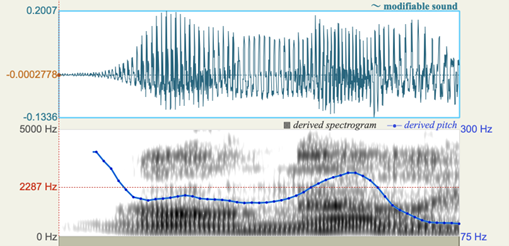
, , , ,

A Linguistic Analysis of Gender Differences in Lying Behaviors Among Politicians

Joe Pei

What constitutes an authentic lie? Do males and females lie differently, especially when they are purposeful? Lying has always been a mysterious part of people’s everyday social lives, as it varies from individual to individual. This study aims at uncovering patterns embedded in deceptions among different genders. Politicians are naturally perfect subjects with which to study deception strategies, as they often need to lie to achieve various goals — covering a bad habit in the past, hiding a contrary political stance, or making an empty promise to gain ballots. They are usually also the most deliberate, as sometimes a lie being exposed might lead to the end of their career. This study looks at the different language patterns in House of Cards, a famous American political drama that closely resembles a true officialdom. Upon reading this article, you will be fascinated by the unconventional gender differences the study discerns in forming and delivering deceptions.

[expander_maker id=”1″ more=”Read more” less=”Read less”]

Background

Whether admitted or not, much of our social behavior is controlled for the purpose of interpersonal presentation (DePaulo, 1992), and lying constitutes a considerable portion of our social behavior. On the one hand, much research has been conducted around the topic, and past research and studies have found many strategies self-reported by good liars. On the other hand, a heterogeneous sample of written and spoken text reveals consistent gender differences in language use (Newman et al. 2008). This paper combines former studies on gender differences and lying behaviors and takes it one step further to study how men and women tell lies differently and especially whether, in addition to common strategies implemented by good liars of both genders, some strategies are more evident in successful male deceptions, while others are more evident in female deceptions.

Through analyzing selected language features with conversation analysis, as well as looking at the presence of politeness patterns, the study finds various unconventional gender differences in forming and delivering deceptions, which gives novel insights on how men and women set up different images in their environments and thus survive and move up differently.

Methods

In this research, data was collected from House of Cards. The main focus was on Francis and Claire Underwood, a couple who worked their way up the officialdom and later became the 46th and the 47th president of the United States. In this analysis, four instances of deceptions, two successful ones and two unsuccessful ones, were collected for each gender and are analyzed and compared from word choices to deliveries. Successfulness was defined as whether the other interlocutor believed in the deception.

In the conversations collected, several aspects of the speech were analyzed in depth. On a macro level, the main focus was on whether a kind image was set up with compliments and politeness strategies. On a micro level, the focus was on rising and falling intonation, length and frequency of pauses, and latching (meaning there is no gap between the end of a prior turn and the start of a new turn).

Results and Analysis

In the tables below, information regarding the number and lengths (in parentheses) of pauses, the changes in intonation, the number of latching, and usage of compliments and other politeness strategies was collected for each conversation and each gender:

Table 1: Collected patterns of selected features among female deceptions.
Figure 1: Comparison between selected features among female deceptions.

The conversation analysis of selected features showed different patterns between successful and failed deceptions for males and females. For females, the figure reveals to us that the differences were mainly in changes in the intonation patterns. Pauses were sometimes present and sometimes absent, and so were latching, but there were significantly more rising intonations in failed deceptions.

Figure 2 is an example of a successful female deception:

Figure 2: Transcript of a successful female deception.

The speech took place when Francis and Claire were having disputes on their political beliefs, so Claire went back to her hometown. Annoyed by the rumors of their marital problems, Francis and Claire decided to lie to the public that Claire’s trip was to visit her mother who got sick. Claire’s intonation was notably flat throughout her speech, except for a slight rising intonation in the last sentence. There were two pauses in the speech, one after the word ‘battling’ and another after ‘dignity,’ possibly to strengthen these words. Most notably, Claire did not use any compliment or show any sign of politeness. She purely stated the made-up reason behind her coming back to her hometown and requested for the media to respect their privacy and nothing more. The finding contradicted the standard model of women’s language according to Lakoff (Lakoff, 1973), which stated that women use more rising intonations and polite forms.

Table 2: Collected patterns of selected features among male deceptions.
Figure 3: Comparison between selected features among male deceptions.

For males, there were also varying patterns of successful and failed deceptions. Intonation patterns and latchings were somewhat random, unlike in the female deceptions. More pauses were present in failed deceptions, while there was no pause in successful ones.

Figure 4 presents an example of a successful male deception:

Figure 4: Transcript of a successful male deception.

The conversation took place when Francis was blamed for a mistake when he and Donald Blithe (a member of the House of Representatives) were responsible for reforming an education act. He tried to make Donald believe it was his fault so he could resign and hand his power entirely to Francis. He used two latchings in lines 5 and 10, possibly expressing that he was quick and firm in his response, thus showing he was recalling rather than making up a story. There were not many changes in intonation patterns except for a slight falling contour in line 3, and this was common in male speeches as men used less rising intonations, and frequently the speeches stayed constant in terms of intonation. There were many strengthenings of words in Francis’ response in between lines 5 and 8. His voice was raised in pitch. The emphasis was mainly on words that complemented Donald — words like ‘vital,’ and words that showed Francis’ hatred towards the made-up “betrayal” against Donald. With those emphases, Francis was likely to convey pathos to Donald and quickly gained his trust.

The two genders also displayed opposite results in their usage of politeness. The successful female deceptions displayed no compliments, while the failed deceptions showed signs of compliments and politeness. For males in a successful deception, the lie teller always showed signs of politeness and even gave compliments, while in unsuccessful ones, these features were not present.

Discussion and Conclusion

In this research, analysis showed that male and female successful lie tellers differ not only in their delivery but most surprisingly, in the different attitudes they displayed towards the other interlocutor. It was more or less understandable that for males in an officialdom, they needed to make nice to let the other interlocutors feel respected and in turn, make a good impression in front of them and appear convincing. However, for females, successful lie tellers actually abandoned the use of compliments and politeness strategies and appeared more assertive and competent. The finding presented in the paper coincides with William Labov’s famous gender paradox theorem, which states that “women conform more closely than men to sociolinguistic norms that are overtly prescribed, but conform less than men when they are not” (Labov, 2001). Officialdom is undoubtedly a new environment for women, and there are not many “overtly prescribed” norms for them to conform to. It might be because of this that women tend to utilize new and unexpected strategies, which in turn helps them survive and move up in officialdom differently from males. In the future, more studies can be done to further explore other environments and positions to which women were traditionally less exposed.


References

DePaulo, B. M. (1992). Nonverbal behavior and self-presentation. Psychological bulletin, 111(2), 203.

Labov, W. (2001). Principles of linguistic change Volume 2: Social factors. Language in Society. Oxford University Press.

Lakoff, R. (1973). Language and woman’s place. Language in society, 2(1).

Newman, M. L., Groom, C. J., Handelman, L. D., & Pennebaker, J. W. (2008). Gender differences in language use: An analysis of 14,000 text samples. Discourse Processes, 45(3).

[/expander_maker]

, , , ,
Scroll to Top