Sociolinguistics

“Do You Even Lift, Bruh… or Sis?” 💪: A Look into the Online Gendered Communication of Fitness Influencers on YouTube

Hyung Joon (Joe) Kim, Jenny Elliott, Madeleine Song, Sophia King, Alison Tcheguini

With the rise of social media influencers, online public figures have become more attentive to how they communicate with their followers. In our research study, we assess the features of online gendered communication in comparison to the in-person gendered communication theories.

To do this, we chose YouTube fitness influencers as our main scope of study because “fitness” is a relatively gender-neutral category. By analyzing the influencers’ online comments, we discovered notable differences between male and female influencers’ responses to their fans. We found that women use certain linguistic features more frequently and that they used them in greater varieties. We believed this to be an indication of an emotional and expressive way of communicating. On the other hand, men generally used these linguistic tools less frequently and in less variety.

Overall, both males and females used supportive and rapport language. This is indicative of the fact that both seek to establish solidarity with their respective fan base. However, we found that men and women use these linguistic features to different extents, and differing the types of linguistic tools they use. In this regard, we observed a dichotomy of “calm vs emotional” which is a modern adaptation of the well-established “report vs rapport” model.

[expander_maker id=”1″ more=”Read more” less=”Read less”]

Introduction

Regardless of their content, social media influencers aim to grow and maintain an audience to ensure their platforms are marketable and profitable. We found there are several linguistic techniques these influencers adopt to build connections with their fans. In particular, they replied to their followers’ comments under their videos to facilitate connection with their audience, and, when doing so, utilized rapport-building linguistic features.

In general, men and women have been understood to communicate differently in the process of forming connections. We wanted to further investigate differences across genders in connection-building communication in the context of online social platforms.

These concepts guided our research, as we examine the linguistic differences of male and female influencers in their written responses to followers’ comments online. 

Background

Due to our scope of interest in influencers’ platform maintenance, we examined existing literature on gendered and computer-mediated communication.

The dominance model suggests that female language use reflects male dominance in society (Lakoff, 1975), whereas the difference model proposes that differences in language between men and women reflect different cultures of conversation (Tannen, 1990). Despite both styles serving the same communicative function, women use rapport-oriented conversation, which is more emotional, while men use report-talk, reporting fact-based information and competing for hierarchy in conversation (Tannen, 1990). Further work has been done on gendered communication differences to see what linguistic features can be attributed to men: in homosocial contexts, men use expressions like “dude” or “bro,” as their way of performing male expectations, indexing their heterosexuality to promote heterosexuality as their preferred orientation. (Van Herk, 2018, p.109).

Since we are looking at social media influencers, we also looked at computer-mediated communication (CMC) studies to see how these patterns reflect in a modern online context. The content of CMC messages by females is more expressive than males, reflecting a female’s social role of being emotionally expressive and collaborative, as mentioned in the Tannen’s model (Fox et. al., 2007, p. 395). Regarding CMC-specific linguistic features like emoticons, studies suggest that females use emoticons as a means of expressing solidarity, support, positive feelings, and gratitude––reinforcing the existing stereotype that females are more emotional than males (Wolf, 200, p. 827). Literature on text-based punctuation in online messages suggests that digital cues, such as excessive punctuation and capitalization, increased the bonding of female friendships (Sherman et. al., 2013). These cues were made frequently by young women to convey emotion in their text-based conversations.

Our main research question is the following: “To what extent does the gender identity of YouTube fitness influencers affect the digital linguistic expressions they use to establish solidarity with their followers?”

In our research, we observed that females used more frequent expressions than males across four different features we examined; however, by narrowing down on more specific sub-categories under the features, we found that even though males and females used different linguistic expressions, both male and female fitness influencers were using different tools to pursue the same purpose of establishing solidarity with their fans.

Methods

We conducted our study by analyzing the computer-mediated communication used by ten female and ten male YouTubers. We narrowed our sample choice by selecting YouTubers who belong to the fitness industry, create fitness content for YouTube, and speak English. Our sample was categorized into two sections: influencers with less than one million subscribers (Table 1) and influencers with over one million subscribers (Table 2). To avoid bias, data were collected from each influencer by randomly selecting ten interaction-based comments from two randomly selected workout videos.

We categorized our data into four linguistic features based on the most salient differences we observed among the comments of male and female fitness influencers. Our data was analyzed based on the frequency of emojis, exclamation points, capitalization, and pet names. In terms of emojis, we looked at the types of emojis that were being used differently by males and females. The specific emojis were grouped into three distinct categories: facial expressions, gestures, and non-human symbols (fire, stars, sweat, etc).
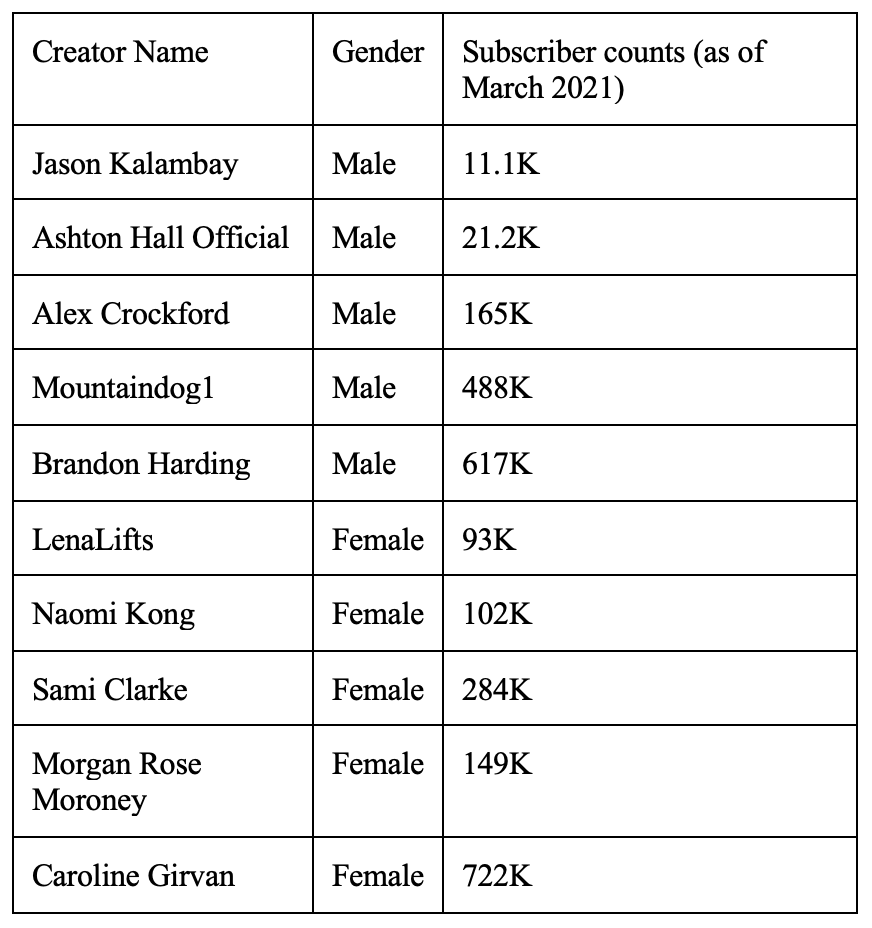
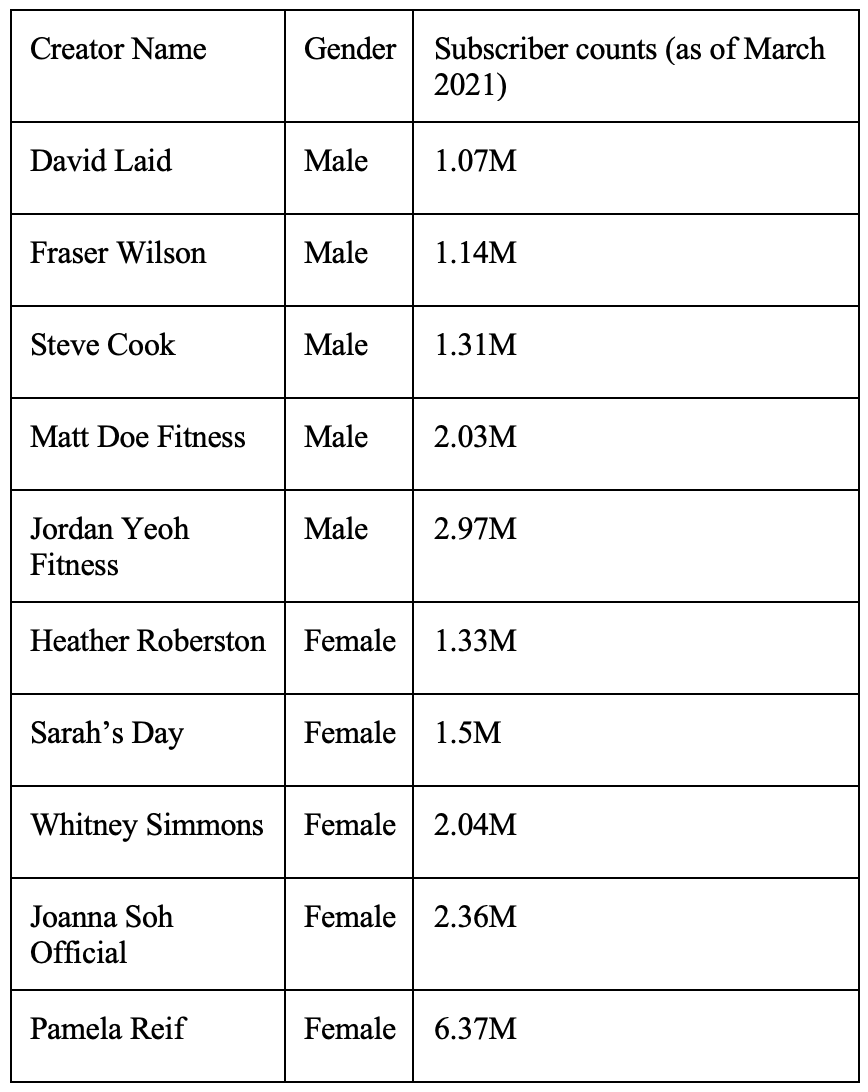
Table 1. Fitness influencers with less than 1M Followers

Results and Analysis

First, we looked at the use of emojis in YouTube comments from female and male influencers. Symbol and facial expression emojis were popular for women, using a variety of faces such as 🤪 and hearts 💖.
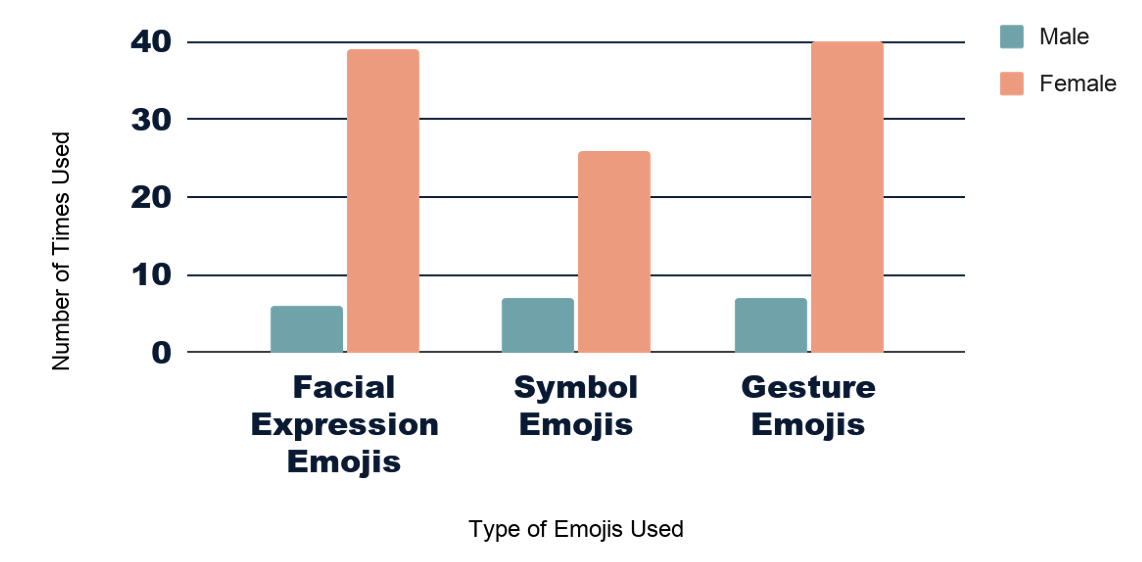
Figure 1: Emoji Usage: Make vs Female Influencers

Men also used emojis frequently but the specific emojis they used differed from what females used––males instead opted for symbols like 🔥 or 💦. 

Overall, women used more expressive facial emojis along with many gesture emojis (Figure 1). In general, women used facial expression, symbol and gesture emojis more frequently than men.

Second, we analyzed punctuation by examining the use of exclamation points in influencers’ responses to comments. Women tended to use exclamation points in most of their replies, often using several exclamation points in a row. In contrast, males did not use exclamation points as frequently, and when they did, they only used 1-2 per comment.
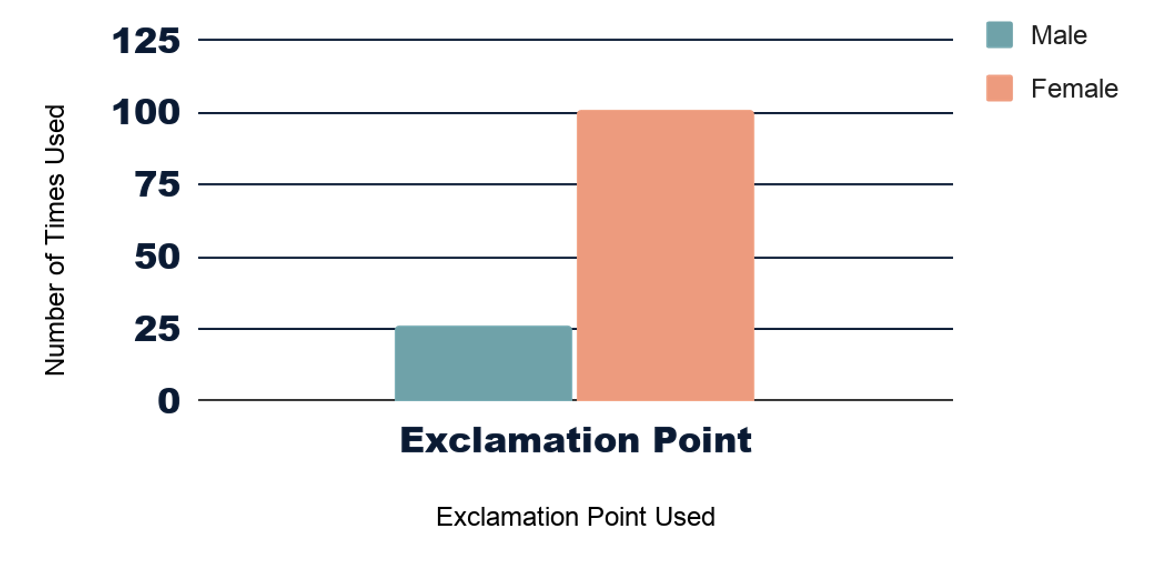
Figure 2: Exclamation Usage: Male vs Female Influencers

While men did use exclamation points, they did not use them to the same extent as women. Women used exclamation points more frequently, totaling over 100 times throughout comments compared to just over 25 by men (Figure 2). The number of comments in which these features appeared was identical for male and female. Females typically used digital cues including excessive punctuation to better convey emotion online.

Next, we considered influencers’ usage of capitalized words within sentences. We found that female influencers were more inclined to capitalize individual words or phrases when replying to comments. Women often capitalized words of encouragement like “good job” yay” or “yesss”. Conversely, men rarely utilized the capitalization of words.
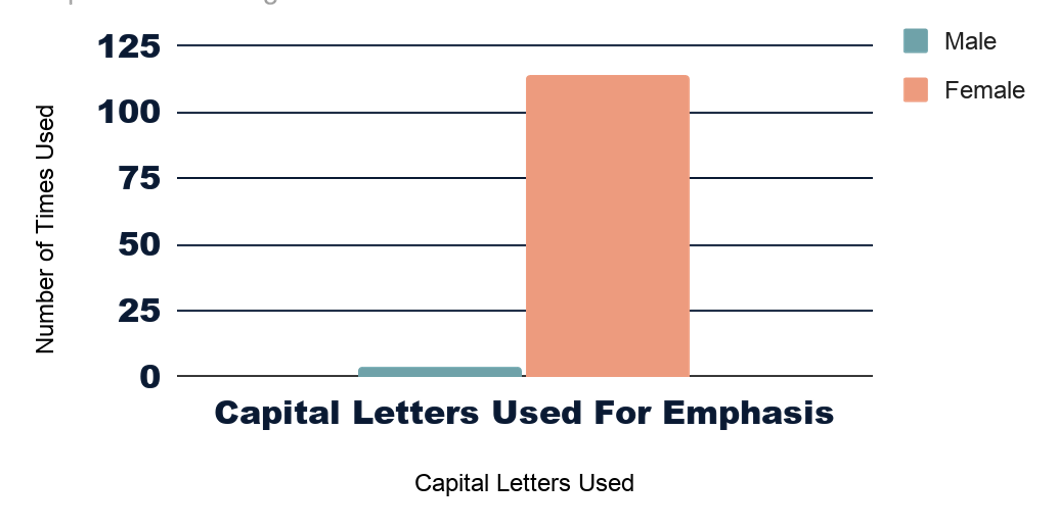
Figure 3: Capital Letter Usage: Male vs Female Influencers

The capitalization of words (particularly for emphasis) was used by females at a higher rate than their male counterparts. Whereas women did this over 100 times throughout our data, men did not even reach a count of 5 (Figure 3).

Finally, we looked at the pet names influencers used when responding to comments. Female fitness influencers often used words such as “girl,” “queen,” and “babe” to address their followers, whereas males used terms like “man,” “buddy,” and “mate” to address their followers in a similar supportive fashion. Figures 5 and 6 display the overall comparisons of the four linguistic features’ rate of appearance in 10 comments written by the male and female social influencers.
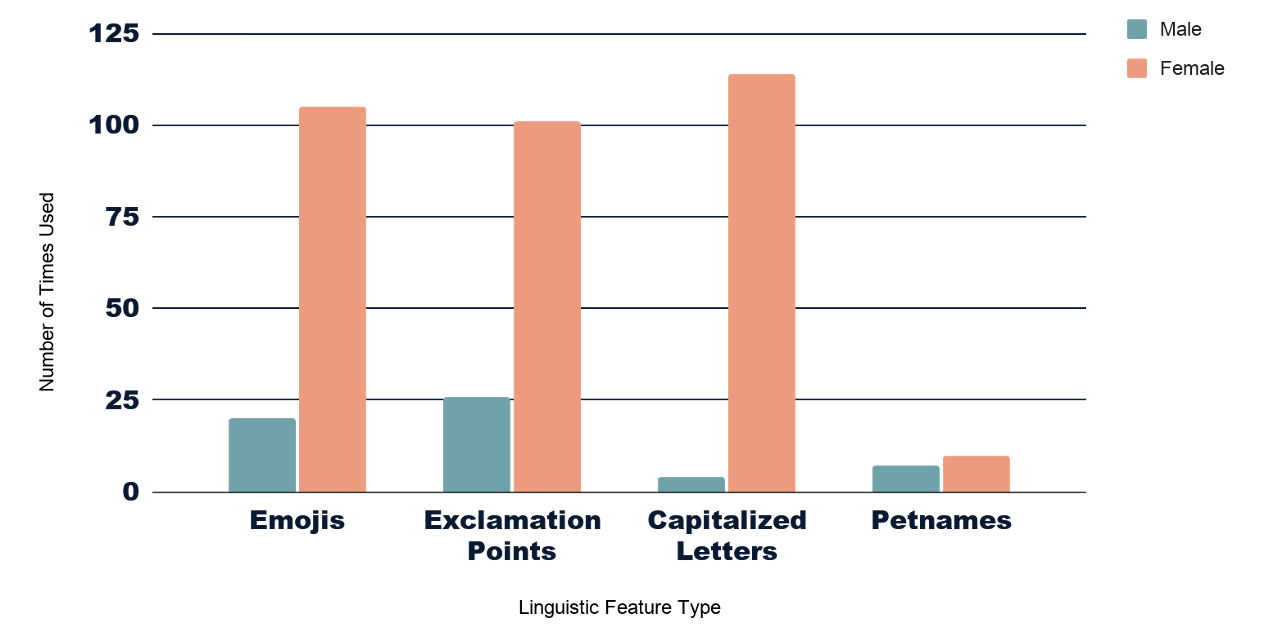
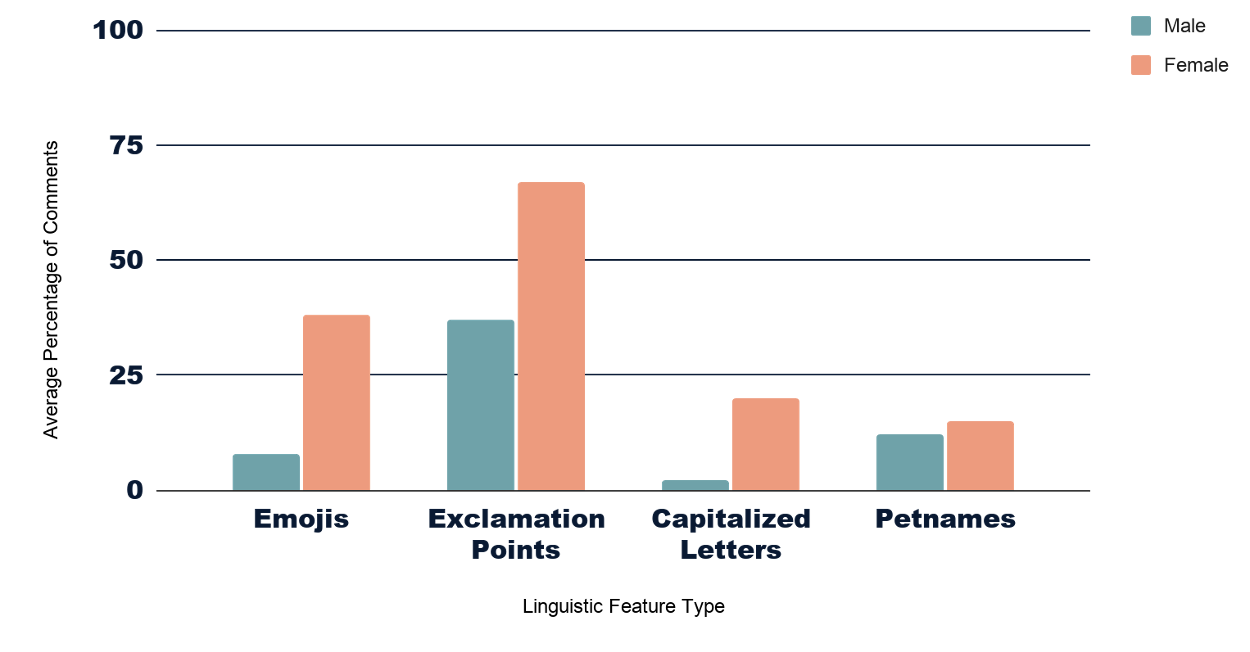
Figure 5: Usage of Linguistic Features of Solidarity: Male vs Female Influencers
Figure 6: Usage of Linguistic Features of Solidarity by Percentage: Male vs Female Influencers

We observed that females used pet names more frequently than males, but the difference was not as large (Figure 7). 
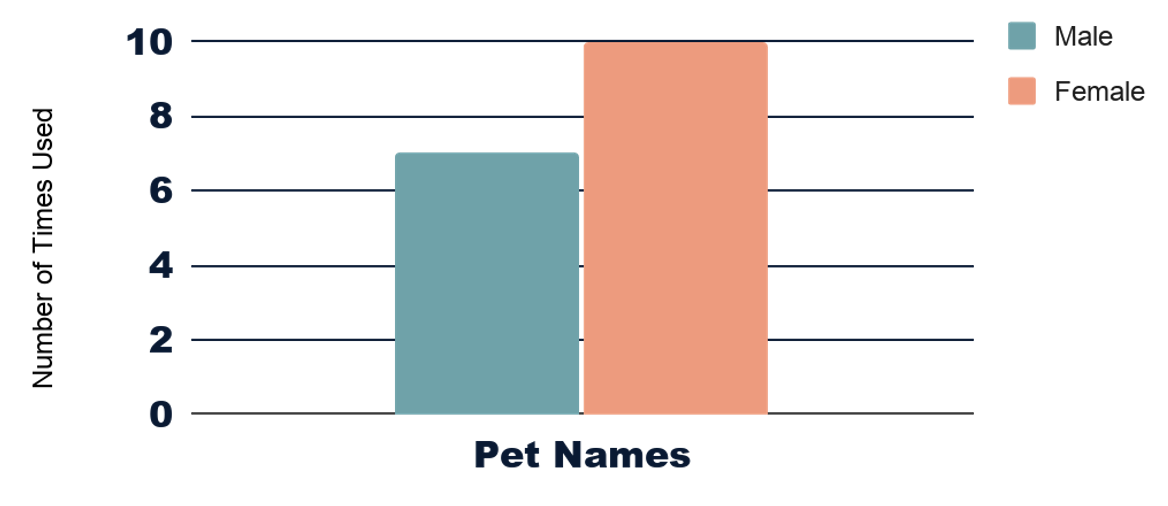
Figure 7: Pet Name Usage: Male vs Female Influencers


Discussion and Conclusions

There are four key insights that summarize our research results.
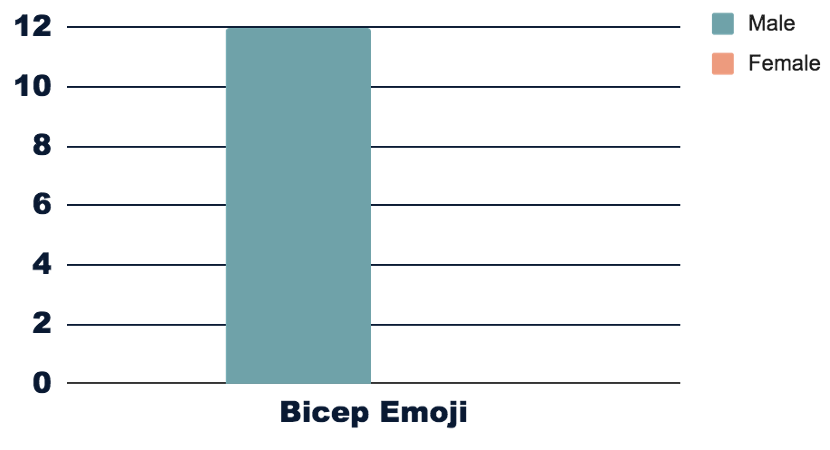
First, by taking a closer observation at the types of emojis male influencers used, we found that males usually used bicep emojis whereas females did not use them at all. Females generally used more emojis across all emoji categories. However, by narrowing down to a more specific sub-parameter within symbolic emojis, we observed that males were in fact using a different tool to strengthen their relationship with their predominantly male fans. 

This insight suggests that in CMC, both males and females likely strive to establish solidarity with their fans but through different linguistic tools. On social media platforms, influencers of all genders are driven by financial motivations to attract viewers by crafting themselves as more responsive and supportive than their competitors.

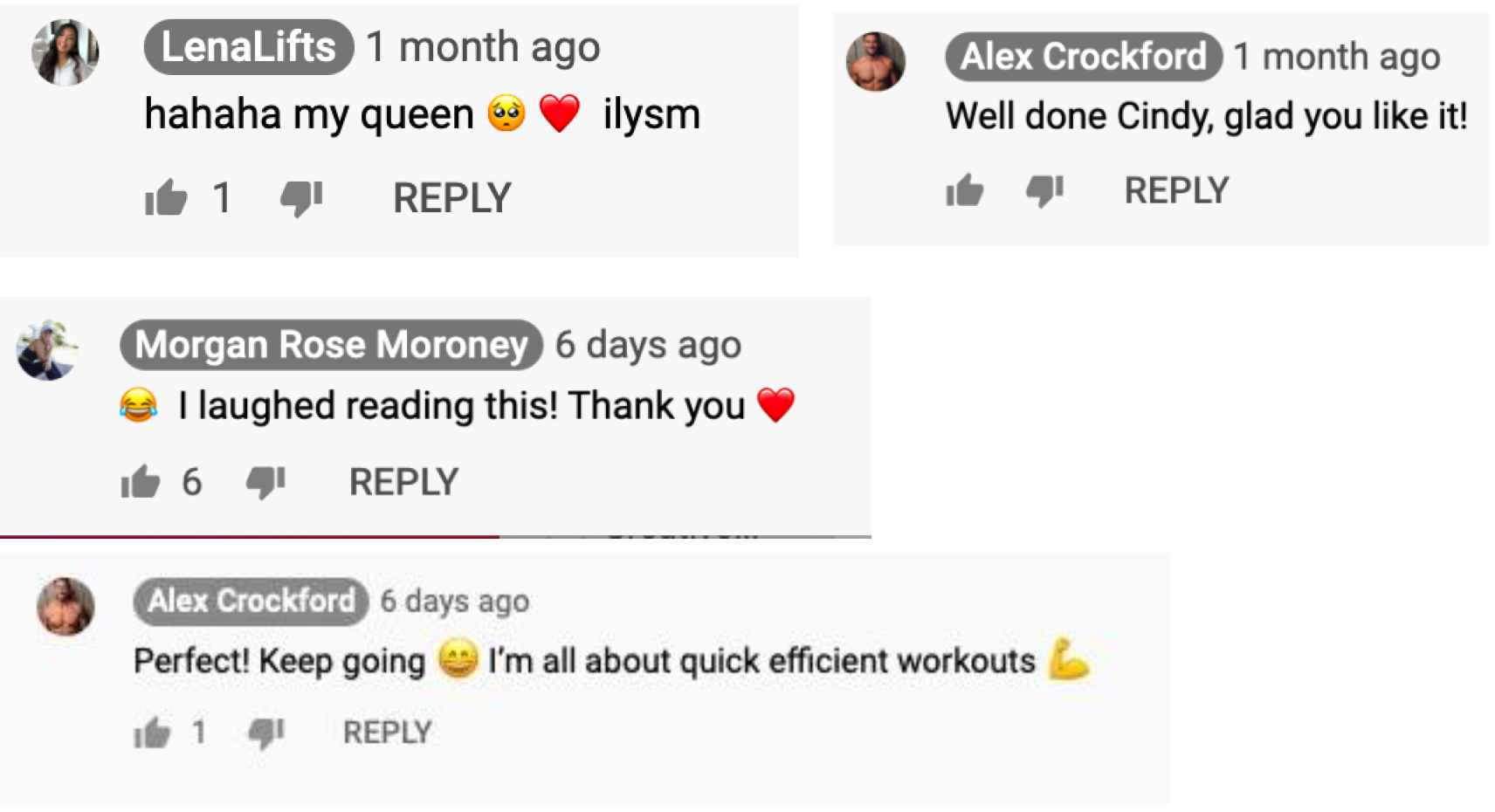
Second, the nature of the male influencers’ comments was more action-oriented than that of female influencers’ comments. For example, males often posted comments such as “Keep going” and “Well done!”, whereas females often posted gratitude-expressing, emotional comments such as, “Thank you!!!” and “ILY MY QUEEEEN”.
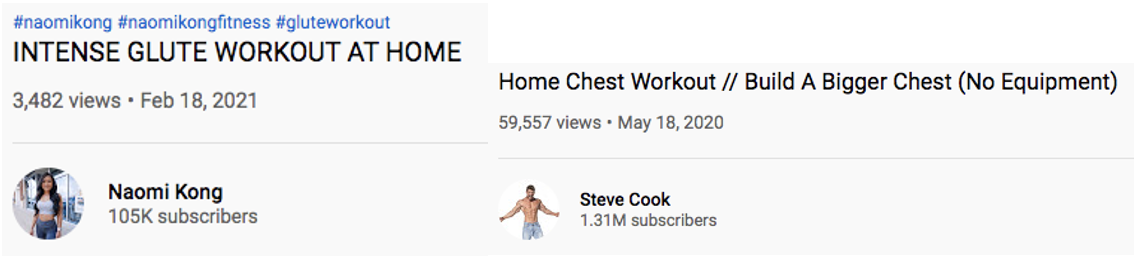
This second point illuminates that most of these interactions took place between same-sex followers and influencers. This phenomenon could be attributed to the fact that the fitness objectives of the videos were inherently geared to target the followers of the same sex as the influencers. For example, we noticed that the majority of the videos created by female fitness stars tend to have titles such as, “Intense Glute Workout”, but males posted videos with titles like “Build a Bigger Chest”. These fitness videos align the body areas that respective genders tend to visually prioritize when developing their body muscles. In general, females are more self-conscious of their leg and glute areas whereas males typically focus on building the size of their upper body.
Third, we observed a dichotomy of ‘emotional vs calm’ which is a digital adaptation of the ‘report vs rapport” model. In particular, male influencers’ average length of comments is significantly less than female influencers’ average length of comments. The male influencers’ responses were calmer than those female influencers. We think this ‘emotional vs calm’ dichotomy is a formal theorization of what computer-mediated gender communication can look like in the context of our digital influencer study. Our research also invites further studies by future socio-linguistic scholars interested in the intersection between gendered communication and online social media platforms.

Lastly, with male influencers specifically, we observed that those with a smaller following responded more frequently to comments than those with a larger following. Once reaching a certain level of popularity (over 1 million), males responded less frequently. We theorize this is because males use more feedback only before their platform grows to a certain level of popularity. Given that our study only examines 20 social influencers on YouTube, we’d like to invite future researchers to conduct more studies in these areas.

In short, our research study shows that females are predominantly more expressive than males across all 4 linguistic categories, but males have more frequently used bicep emojis in particular. In addition, even though females’ responses were visibly more expressive in terms of the frequency and variety of emoji usage, both males and females were pursuing the same purpose of establishing solidarity with their fans, by using different tools.

We argue that the Tannen model is being applied differently in the context of computer-mediated communication and the nature of social media, as social influencers, whether male or female – are in positions to appeal to their general audience. We also propose the “emotional vs calm” dichotomy observed from gendered communication in online platforms and invite further research to be done in this area.

Among several, one limitation of our research is that we did not incorporate the nature of the followers’ comments that the influencers responded to. In general, we observed that most viewers’ comments were positive, grateful, and supportive. This research invites future studies to undertake how the responses would look different towards comments that are hateful or negative. In addition, more studies on how non-famous males and females differ in their digital communication on social online platforms are needed.


References

Bamman, D., Eisenstein, J. and Schnoebelen, T. (2014), Gender identity and lexical variation in social media. J Sociolinguistics, 18: 135-160. https://doi.org/10.1111/josl.12080

Fox, A. B., Bukatko, D., Hallahan, M., & Crawford, M. (2007). The Medium Makes a Difference: Gender Similarities and Differences in Instant Messaging. Journal of Language and Social Psychology, 26(4), 389–397. https://doi.org/10.1177/0261927X07306982

Herk, G. V. (2018). Gender. In What Is Sociolinguistics? (pp. 96-116). Wiley Blackwell.

Lakoff, Robin. 1975. Language and woman’s place. New York: Harper Colophon Books.

Sherman, L. E., Michikyan, M., & Greenfield, P. M. (2013). The effects of text, audio, video, and in-person communication on bonding between friends. Cyberpsychology: Journal of Psychosocial Research on Cyberspace, 7(2), Article 3. https://doi.org/10.5817/CP2013-2-3

Tannen, D. (1990). “Put Down That Paper and Talk to Me!”: Rapport-talk and Report-talk. In You Just Don’t Understand: Women and Men in Conversation (pp. 74-95). HarperCollins.

Wolf, A. (2000). Emotional Expression Online: Gender Differences in Emoticon Use. CyberPsychology & Behavior, 3(5), 827–833. https://doi.org/10.1089/10949310050191809

[/expander_maker]
“Of course, right” and “I was just asking to ask”: Women’s Relationship With Cooperative Language and Their Perception

Zoe Curran, Emmeline Hutchinson, Rylee Mangan, Kamiron Werking-Volk

Why do we like Elle Woods from Legally Blonde? Why do we dislike Miranda Priestly from The Devil Wears Prada? Of course, part of it is because that is who the movie tells us to like and dislike, but is another aspect of that how they use language?

Based on existing knowledge that men and women use communication differently, taking divergent paths to accomplish tasks, we sought to determine how these variations distinctly affect men and women. We focused specifically on the effects on women and how their language use changes their perception. Are they the heroine or the villain? Are they the sweetheart or the b*tch? Our study examined the representation of women in the media and explored the implications of cooperative conversational styles on a woman’s perceived image.

We predicted that the way women in movies use language to facilitate, or inhibit, conversation contributes to their perception in aspects that do not affect men. Based on scenic analysis and tracking of key features, we found a correlation between the characters’ use of cooperative linguistic features and their representation in the film that may be integrated into everyday life.

[expander_maker id=”1″ more=”Read more” less=”Read less”]

Introduction and Background

Did you know that women are 33% more likely to be interrupted when speaking with men? And that men speak almost twice as often as women in formal conversation? As an all-female research group, we wanted to explore why we were being cut off in some conversations and completely ignored in others (read more about this topic here). Previous findings state that females utilize conversational styles that foster connection and community, while males utilize styles that attempt to strengthen their independence and dominance over the discussion’s topics (Ersoy, 2008). We do understand that men and women converse differently, but why did it seem like our communicative style was inferior when it is an attempt to be more engaging?

An explanation to this unbalanced communication might be women’s more active use of minimal encouragers, nonverbal gestures, and agreements that are intended to facilitate conversation but as we experienced, can yield opposite results. We geared our research towards understanding the implications of what we have termed Cooperative Conversation Linguistic Features (henceforth, CCLFs). CCLFs are a collection of words, phrases, and nonverbal gestures that promote a cooperative speaking style to encourage a conversational partner. These features help balance the conversation by allowing the speaker to continue talking. However, a woman’s increased use of these features can render them as a less-dominant speaker who might be inferred as subordinate and less powerful. To determine if there is a relationship between CCLFs and the speaker’s perceived identity we studied how women and their control, or lack of, the conversation affects their image and in an essence their likeability.

We studied samples of both same-sex and cross-sex conversation groups in popular media. Although movies are not perfect depictions of real life, stereotypes are often constructed from visible patterns of behavior and actions of real people (Kubrak, 2020). Media characters exaggerate the usage and effect of these linguistic features in a manner that can be studied effectively. We hypothesized that female characters’ increased usage of CCLFs will be associated with perceptions of decreased power, confidence and intelligence. We believed it would also be associated with increased likability in the eyes of the audience and/or their conversational counterparts.

Methods

High-stakes conversations between female and male counterparts in contemporary films where there was either a negotiation, conflict or high-profile discussion were analyzed. Our chosen films included The Devil Wears Prada, The Proposal, Erin Brockovich, Fargo, Legally Blonde, and The Social Network. Eight female characters from a total of six films were examined and individually identified as cooperative or uncooperative roles. These characters included iconic figures such as Elle Woods, the protagonist in Legally Blonde, who was coded as highly cooperative, versus Miranda Priestly, the antagonist in The Devil Wears Prada, coded as highly uncooperative.

We counted the number of CCLFs and uncooperative actions (henceforth, UAs) displayed by female characters. CCLFs included minimal encouragers and cooperative overlap, which we defined as words or phrases that serve to promote intimacy, support the conversational partner and indicate encouragement. Another CCLF of interest was cooperative nonverbal cues like making consistent eye contact, nodding, leaning in and making supportive hand gestures. Our last CCLF was facilitating questions, which we defined as any question that served to stimulate conversation, support the conversational topic or encourage the conversational partner. In order to have a full picture of how cooperative vs noncooperative characters are constructed in film, we also documented the number of UAs. These were defined as verbal and nonverbal communication that was disruptive or uncooperative in nature, such as changing the conversational topic, not responding, disruptive interruptions, lack of eye contact, walking away, or arguing with the counterpart’s motives or ideas. We adopted many of these features from Selma Ersoy’s work on collaborative versus competitive communication styles (2008) and added other components we felt assisted or inhibited conversation from our own experiences and the experiences of peers.

Read more about the difference between cooperative overlap and interrupting here!

Quantitative methods were used to calculate the frequency of CCLFs and UAs for each character. Qualitative methods were used to evaluate any unique features of the specific conversational styles of the characters and to make note of how the character of interest was perceived by other characters in the scene.

Results and Analysis

Perhaps unsurprisingly, we noticed a dramatic disparity between the ‘cooperative’ and ‘uncooperative’ groups. Across the board, the women in the cooperative group used the CCLFs at a greater rate. These women also used the uncooperative actions at a substantially lower rate than the uncooperative group: the cooperative group only using them three times in all of their scenes. Much differently, the women in the uncooperative group frequently used the UAs at a total of 17 times. Additionally, the women in the uncooperative group rarely used CCLFs to foster cooperative conversation. Only one uncooperative character used these features at all, for a total of three uses.

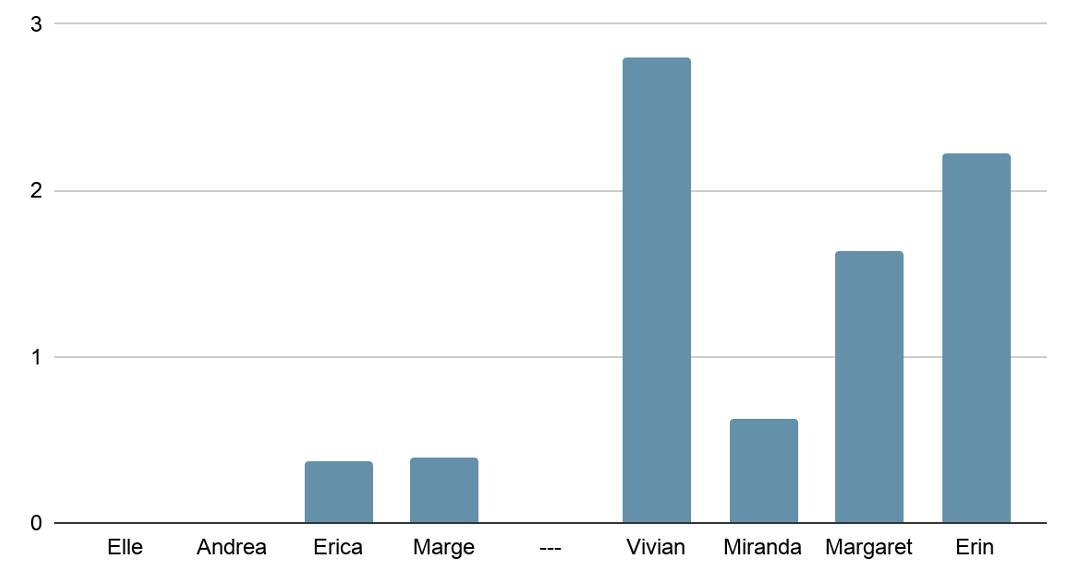
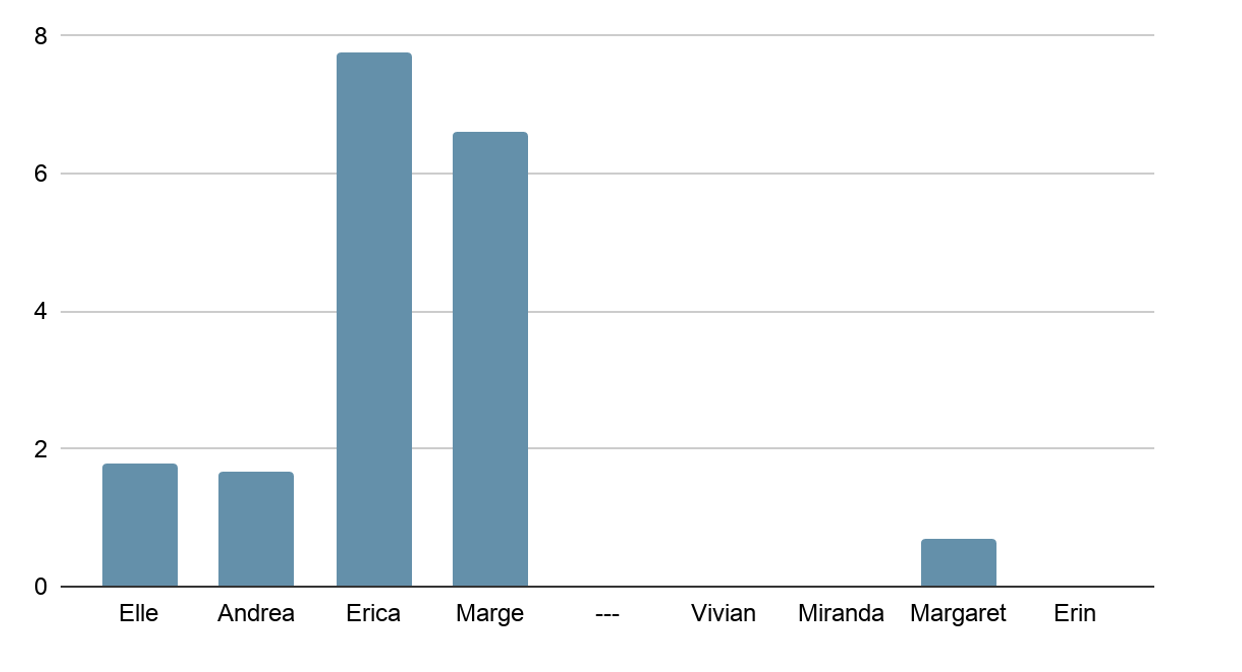
Since we were watching movie scenes of various lengths to collect data, we found it important to ensure that the scene length was not skewing our information. To avoid this misrepresentation, we converted the number of features used to the rate the characters used them. This information was calculated as the specific feature usage per minute. We found that Erica Albright and Marge Gunderson were standouts in their high rate of CCLF use at approximately 8 and 7 per minute respectively. Simply put, Erica would use a CCLF every seven and a half seconds in a conversation, and Marge every eight and a half seconds (find our example scene with Erica here). The women in the uncooperative group had a much lower use of CCLF’s per minute, with all but one character using 0 per minute.

Figure 1: Characters’ CCLF Use Per Minute. The x-axis includes the women involved in the study separated by an empty column “—”. The separation indicates the distinct groupings of these women in the cooperative (left) and uncooperative (right) groups. The y-axis measures the CCLFs used per minute by the women. The women in the cooperative group overall used CCLFs at a higher rate per minute.

We also converted the uncooperative actions to a use per minute rating and found that characters such as Vivian and Erin (uncooperative group members) had the highest rates of use at approximately three and two per minute respectively.

Figure 2: The Characters’ Rates of Uncooperative Action Usage per Minute. The x-axis includes the women involved in the study separated by an empty column “—”. The separation indicates the distinct groupings of these women in the cooperative (left) and uncooperative (right) groups. The y-axis measures the UAs used per minute. The women in the cooperative group used UAs much less frequently than the women in the uncooperative group.

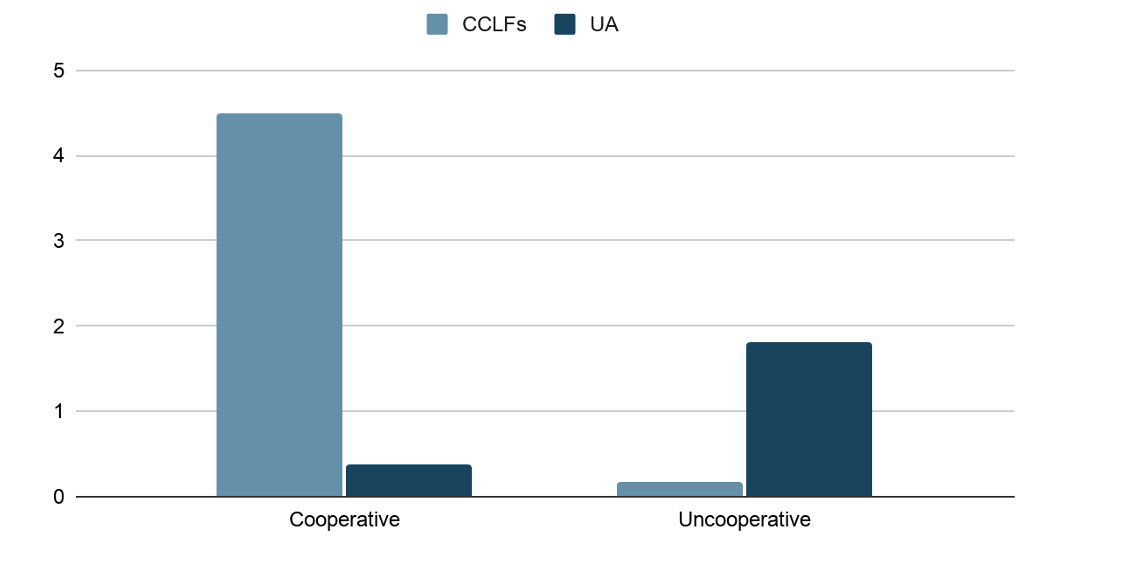
Overall, our data showed that the cooperative group had a higher rate of CCLF use than the uncooperative group, comparing an average of 4.5 features per minute to 0.175 features per minute.

Figure 3: The Average Use of CCLFs and Uncooperative Actions (UA) by the Cooperative and Uncooperative Groups. The x-axis shows the two categories of women in our study: cooperative and uncooperative, and the y-axis indicates the number of features used per minute by the groups. The units of measurement are the number of features used per minute. The cooperative group used a dramatically higher frequency of CCLF features than the uncooperative (4.5 per minute vs 0.175 per minute). Also, the cooperative group had a lower rate of Uncooperative Action use compared to the uncooperative group (0.38 per minute vs 1.82 per minute).

The opposite was found with the uncooperative actions, with the cooperative group using them much less frequently at an average rate of 0.38 per minute, compared to the uncooperative at 1.82 per minute. These stark differences can be more clearly described as the cooperative group using CCLFs at a rate 26 times that of the uncooperative group, and using UAs at a rate about 5 times less than the uncooperative group.

Discussion and Conclusions

As for how the use of CCLFs and UAs relates to perception of the character we noticed a common connection between the use of CCLFs among characters that the audience is supposed to like, the people we are supposed to root for, as well as a connection between the characters who used more UAs and their positions as villains in the narrative.

To paint a clearer picture let’s look at the movie Legally Blonde. Elle, a character from our cooperative group is the hero of the movie, while Vivian from the uncooperative group is one of the main antagonists. We as an audience are not supposed to side with Vivian until she changes her ways and becomes friends with Elle. (See our example scenes with Elle and Vivian). This is not a motif isolated to Legally Blonde since the same can be seen in The Proposal. Sandra Bullocks’ character Margaret Tate is called a “witch” and a “monster” by her peers, sending a clear signal to audiences on what to think of her character. It is not until her character’s journey to her relationship with the male lead, Andrew Paxton, and her becoming somewhat nicer that she gets praise and a happy ending.

In our sample these same motifs simply did not exist for men. A prime example of this being Mark Zuckerberg in The Social Network, a character that practices disruptive communication. He is offstandish and objectively unkind in the opening scene and throughout the movie, adopting many of the UAs we identified, but at the end of the movie he is still praised. The audience sympathizes with Mark and despite his flaws he is not given a redemption arc in his movie, he is simply allowed to exist. The male characters we observed did not have to be perfect or traditionally nice to be liked. We believe that this may reflect a broader standard that women are held to in the real world. Our research speaks to how movies shape us and give us hints about who we are supposed to be.

For more insights on how movies shape us, watch this TEDTalk.

Although our study stuck to a relatively strict gender binary and focused on white, middle to upper class, straight coded characters, we feel it brings up valid questions about the perception of women and what standard women are held to both in media and in real life.


References and Used Sources

Borresen, Kelsey. “How To Know If You’re An Interrupter Or A ‘Cooperative Overlapper’.” HuffPost, HuffPost, 4 Mar. 2021, www.huffpost.com/entry/interrupting-or-cooperative-overlapping_l_603e8ae9c5b601179ec0ff4e.

Ersoy, S. (2008). Men compete, women collaborate. Kristianstad University: Language and Gender. http://www.diva-portal.org/smash/get/diva2:231309/FULLTEXT01.pdf

Fincher, D. (2010). The Social Network. Columbia Pictures.

Kubrak, T. (2020). Impact of Films: Changes in Young People’s Attitudes after Watching a Movie. Behavioral Sciences, 10(5). https://doi.org/10.3390/bs10050086

Luketic, R. (2001). Legally Blonde. Metro-Goldwyn-Mayer & Marc Platt Productions.

Stokes, C. (2012, November). How movies teach manhood. https://www.ted.com/talks/colin_stokes_how_movies_teach_manhood

Susan Chira. (2017, June). The Universal Phenomenon of Men Interrupting Women—The New York Times. Retrieved March 17, 2021, from https://www.nytimes.com/2017/06/14/business/women-sexism-work-huffington-kamala-harris.html

[/expander_maker]

, , , ,

Laugh Now… Because It Won’t Be Funny Later

Angelena Escobar, Debora Gotta, Lilly Khatirnia, Talia Kazandjian

Comedy and laughter are often viewed as universal languages. It is said that comedians have the capacity to produce discourse about the darkest and most challenging aspects of life, all the while making us laugh. This meant nothing was really off the table for comedians in the 90’s and early 00’s. However, in the last five years especially, with the massive rise of social media and cancel culture, we have seen both celebrities and private citizens being reprimanded or heavily criticized for their current or past actions. Comedians, especially, who were appreciated for their dark and uncensored humor, are now having to rethink their entire routine. Keeping that in mind, is comedy still regarded as it once was or have societal values changed enough to transform the stand up comedy landscape?

[expander_maker id=”1″ more=”Read more” less=”Read less”]

Introduction

Figure 1: Kevin Hart

Stand-up comedy is one of the major sources of entertainment. It began to hit the ground running in the early 50’s and 60’s, in which socially aware comedians made their way into the spotlight (Pulliam,1991, pg 164). However, stand-up comedy did not reach its peak until the 1970’s. The main purpose of comedy was to showcase current events, culture, and the personal lives of comedians (Zoglin, 2009, pg. 3). This essentially meant that a large amount of what was taking place during a certain point of history would be a focal point of comedic routines. Comedians also implemented their personal stories as a part of their jokes. While comedy has obviously been used for comedic purposes, it has been a factor in social change as well. In “Stand-up Comedy as a Tool for Social Change”, Manwell claims it is important to draw attention to negative stereotypes to be socially progressive. He emphasizes how humor that “draws criticism for being offensive and for perpetuating negative stereotypes” is, in actuality, progressive, because it pushes the boundaries of what is socially acceptable (Manwell, 2008, pg. 50). While Manwell piece was published too early to comment on the age of social media and social awareness, the implementation of stereotypes into comedians’ stand-up routines is crucial as it allows the audience to be more socially aware.

Background

Although there has been some research done on the topic of comedians using language, there has not been research done focusing on how comedians use language to create a comedic effect. Stand-up can be succinctly described as an Anglo-American form of comedy where a solo performer aims at repeatedly making her co-present audience laugh, primarily through personal narrative. Comedians manipulate language and use comedic elements to generate humor.

Methods

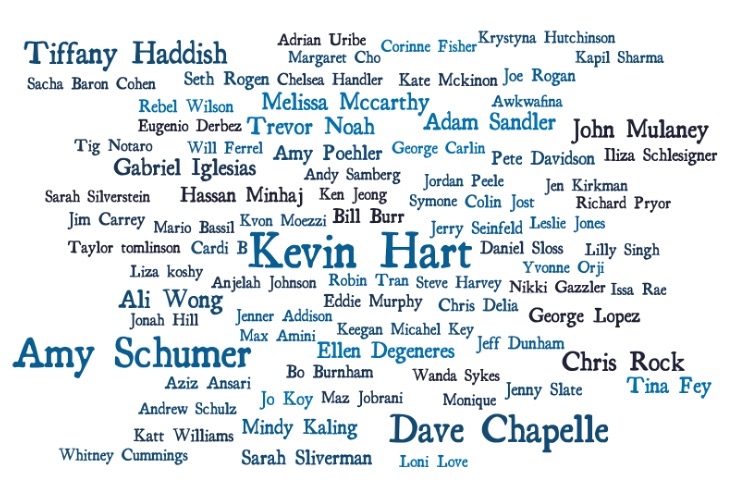
Our project was consistently developing the more information we found; therefore, we continued to tweak and modify our research question. At the beginning of our analysis, we sent out an anonymous survey to our friends and family. We received a total of 62 responses from individuals aged 18-49. There were multiple questions in that survey that were not as helpful as we continued working on our project; however, one was very important. We asked our survey takers to name both male and female stand-up comedians, and as it is seen within the word cloud: Tiffany Haddish, Amy Schumer, Dave Chappelle, and Kevin Hart were the most popular ones. Seeing that Kevin Hart garnered 50% of the responses when asked for male comedians, it was a determinant in deciding which comedian to focus on and what kind of research we can do based on him.

Figure 2: A word cloud containing the names of the comedians named by the participants. The size of the name corresponds to the frequency the comedian was listed.

After deciding that we would work on Kevin Hart, we started to explore his past shows and decided to focus mainly on Seriously Funny, I’m a Grown Little Man, and Zero F**ks Given. These shows span a period of eleven years where we are able to observe and analyze the evolution of Kevin Hart and how/if his comedy have been influenced by fast changing social norms and values.

Figure 3: I’m A Grown Little Man (2009), Seriously Funny (2010), Zero F**ks Given (2020)

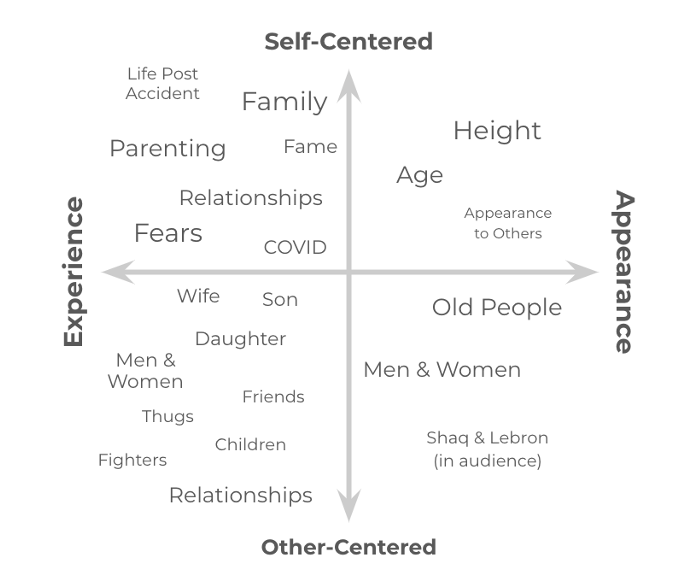
For our work to become more organized, we also decided to divide the jokes we looked at into four categories. It starts with the jokes being self-centered or other-centered, then within that there is a range of it being based on experience or appearance. Self-centered experience jokes are about Kevin Hart’s own personal experiences; Self-centered appearance jokes are about Hart’s appearance or how he is perceived outwardly; Other-centered experience jokes are about other people’s or a group of people’s actions or experiences; Other-centered appearance jokes are about how they look when they behave or are about other outward appearance features. The chart below shows the different topics of jokes Kevin Hart discussed throughout his comedy shows.

Figure 4: A visual representation of the types of jokes analyzed

Results and Analysis

The Use of Other-Centered and Community Based Jokes vs. Self-Centered

In I’m A Grown Little Man, Hart seemed to be more focused on community-based jokes. He used examples of the people he met and recreated scenarios with those individuals to portray how they acted in certain situations. One example is a specific scenario in which Hart imitates rappers and thugs to humor his audience– reflecting back to the theory of other-centered jokes. Hart made little jokes about his personal life because people weren’t as sensitive about certain topics/groups/stereotypes as they are now. Another example is the joke Hart made about a previous girlfriend of his that was White. He talked about her dad and turned it into a racial joke which the audience then took as humorous but would probably offend some people today. Hart acts out his jokes using code-switching and he indexes various communities by using alternate slang. He performs tone & slang differently when making jokes about the Black community compared to language used to connect with the White community.

Kevin Hart – Thug Laugh

Kevin Hart – Rich White Guy Laugh

In past comedy routines, Kevin Hart often used other-centered jokes in which he would use other communities as the primary focus of his jokes. While not all of Hart’s jokes were offensive, there were some that would not currently be socially acceptable. Hart has exhibited change in his most-recent stand-up, Zero F**ks Given, he tends to focus on himself and his family rather than making others the center of his joke. This not only depicts how Hart has evolved, but also showcases how the norms of what’s acceptable in comedy and society has been redefined. Considering the fact that this generation is more aware and sensitive to offensive topics, comedians are often pivoting and reconstructing their comedic routines in order to suit everyone. In the segment posted below, Hart uses intonation when telling the story about his daughter liking different guys every week. His voice rises and falls depending on what part of the story he is sharing. When name calling his daughter or son, he is relatively flat and speaking matter of factly and during other parts, he’s more animated and eccentric. Whereas before, the more offensive statements were other-centered, now the more “risque remarks “ are about him and his family. This is a significant sign of evolution in his routines reflecting social norm changes. The omission of teasing other people can stand as evidence that Hart has transformed his routines and has decided to become more adaptable to the times.

Kevin Hart – My Children


The Delivery of Jokes: No Filter vs. Socially Aware

This section of analysis focuses on Seriously Funny, Hart’s second recorded show in the touring part of his career. In this stage, he had a nonchalant attitude towards his jokes: no prevalent social awareness, no expected repercussions–and seemingly no filter–joking about any topic. Later, he defended these offensive jokes by saying “funny is funny”. To an extent, he’s correct as jokes now deemed offensive were successfully funny back then, in terms of success being measured by the intensity-and-length-of audience laughter. The change in the jokes he said is a great example of how societal norms/values have changed over time. What was accepted then, isn’t accepted now, what was funny then is now offensive. The following video is a segment from Seriously Funny. Hart’s joke is successfully delivered, and he effectively creates comedic effect through his use of intonation (the audible changes in his voice for emphasis), indexicality (personifying other people), and body gestures (for visualization of the story).  When he jokes about his son’s first gay moment, he clearly impersonates his son, the other child, and the woman who intervenes. Though his voice does not change much, unlike other segments he has done, his acting is very clear and he is able to distinctively act like the characters in his story through body motions. When he behaves like his son, he taps into how he described his son earlier in the show. He had claimed his son was, “a dumb kid that doesn’t really know what he’s doing” and shows this by waving his arms in all directions with no real or distinct rhythm. When he talks about the women who interferes, he becomes very calm and speaks in a standard tone of voice suggesting that there was no apparent problem between the two children. Lastly when he indexes his-self in that moment, he returns to an angry defensive tone and body language. Though this joke was comically effective back in 2010, this joke in particular has led to backlash–ultimately leading to Hart stepping down from being the 2019 Oscars Host. 

Watch the video and determine whether or not a joke like this would fly in current times: Kevin Hart – “My Son’s First Gay Moment” Seriously Funny (2010)

Contrastingly, in his latest comedy special, which aired in 2020 after his Oscar scandal, Kevin Hart is much more careful and aware of what he says and the types of jokes that he makes. Whereas before, the jokes were just delivered, now he actually uses self-repair in order to correct what he says or “soften the blow”. In the following video, there is an instance when he is about to make a joke on greeters, he pauses himself and makes a premise that he “… has nothing against greeters…” He makes it clear that he understands that it is an important and useful job, but it is something he does not have to or want to do. By making these comments, he’s able to go on with the joke, having established the foundation that he respects the occupation and does not see it as a bad thing. This can stand as an example of disaligning responses where Hart is able to “… revise or back down from… prior actions in order to permit preferred responses to be produced instead” (Whitehead, 2015, pg 4). In a time where there is heavy criticism to any kind of offensive remarks, making those preemptive comments or jokes about “cancelling” itself may make it so that those viewing the show don’t take it to heart as an offensive statement but rather a simple joke. He is mindful and concerned with how the wider/mainstream audience will interpret his joke. He is more socially aware of potentially offensive comments in his jokes. He is self-censoring which initiates self-repair. He does this by using specifically the use of intonation and indexicality to defer between the times that he is speaking as himself and the “persona” of those that may be after him post this joke. For example, when he impersonates the lady that is filming him as he eats his burger in front of McDonalds, he acts aggressive, angry, and accusatory. His hand is in front of him as if he is holding a phone and filming and his eyes are wide open (kind of as if he were crazy). When he is back to being himself he just describes what he did in a more relaxed tone and continues with the joke.

To further demonstrate what we mean, here are two segments from his latest comedy show attached below, where Kevin Hart makes the extra effort to communicate that he is not being offensive or seriously making a statement.

“Kevin Hart Loves Wal-Mart Greeters” Zero F***ks Given (2020)

“Why Kevin Hart Hates Snitches” Zero F***ks Given (2020)


Discussion/Conclusion

Our research aim was to understand whether societal norms have changed in the past 10 years by investigating one of comedy’s biggest stars, Kevin Hart. Starting from Seriously Funny to Zero F*cks Given, we observed an evolution in Hart’s shows–leading to conclude that societal norms and values have indeed changed. What was once received as humorous and funny may now be unacceptable by the mainstream. This generation is much more vocal about the types of jokes and statements one can make about a community. We came to this conclusion by analyzing the language used by Hart. By using different communication tools, both verbal and nonverbal, (code switching, indexicality, intonation, self-repair) we gained a greater understanding of societal value changes and impacts on systems within society, like entertainment. Despite his controversial past, Kevin Hart remains incredibly popular (as was evidenced by our survey and his record breaking show attendances). As we conclude this post, we wonder: Would you also agree with our conclusion? Where do you think the relationship with comedy and risqué remarks is headed in the future?


References

Manwell, C. F. (2008). STAND-UP COMEDY AS A TOOL FOR SOCIAL CHANGE. https://lsa.umich.edu/content/dam/english-assets/migrated/honors_files/Manwell%20Colleen-Stand-Up%20Comedy%20as%20a%20Tool%20For%20Social%20Change.pdf.

Pulliam, G. (1991). Stock Lines, Boat-Acts, and Dickjokes: A Brief Annotated Glossary of Standup Comedy Jargon. American Speech, 66(2), 164-170. doi:10.2307/455884

Whitehead, K. (2015). Everyday Antiracism in Action: Preference Organization in Responses to Racism. JOURNAL OF LANGUAGE AND SOCIAL PSYCHOLOGY, 34(4), 374-389. http://dx.doi.org/10.1177/0261927X15586433 Retrieved from https://escholarship.org/uc/item/7767x91b

Zoglin, R. (2009). Comedy at the edge: how stand-up in the 1970s changed America. Bloomsbury USA.


[/expander_maker]

, , , ,

Does Gender Affect Learning Outcomes In Undergraduate STEM Majors?

Anonymous Author

The Learning Assistant program at UCLA aims to create a positive and engaging learning environment where undergraduate students who have mastered a certain course’s material can help teach that material to students who are currently in the class. This study observed ten undergraduate Learning Assistants at UCLA to determine whether there was a difference in how often positive and negative politeness were used in discussion sections. The differences in their usage were looked at from a gendered perspective: the study sought to determine whether similarities or differences in gender resulted in one kind of politeness getting used more often than another. The study ultimately determined that, when looking at same-gendered interactions, positive politeness was used more commonly in same-gendered interactions than different-gendered interactions. However, what about negative politeness? Would gender differences potentially make Learning Assistants act with more hesitancy, and, therefore, use it more frequently? This article provides the answer to this question, as well as goes into greater depth about this study’s intriguing findings.

[expander_maker id=”1″ more=”Read more” less=”Read less”]

Background

At UCLA, undergraduate students who have excelled in certain STEM classes can return to those courses and help teach current students as part of the Learning Assistant program. As part of the Learning Assistant program, undergraduate Learning Assistants attempt to foster an inclusive learning environment where students can better understand the topics covered in their respective courses. They are trained to promote an interactive environment, even through Zoom, as well as use a Socratic questioning style which encourages students to think independently (Talbot et. al 2015). As seen in this video, Learning Assistants are encouraged to let students figure out the answer themselves rather than feeding it to them. Promoting interaction and encouraging independent thinking, according to the program, force students to think more critically about the content they have to learn, and, as a result, develop a more solid understanding compared to if one were to just passively teach it (Furtak and Kunter, 2012).

However, a problem potentially arises when looking at the interactions between Learning Assistants and students themselves. In order to promote inclusivity, LAs are encouraged to act with kindness and politeness towards the students (Sellami et al., 2017). Creating a warm, supportive atmosphere has been shown to improve with facilitating student learning (Jardine et al., 2020). However, the kinds of polite statements which the Learning Assistants use may differ based on their gender, as well as potentially even the gender of the student who they are addressing. This may potentially lead to differential learning outcomes based on gender due to different levels of support from the Learning Assistants. This study sought to answer one major question: do LAs tend to use a certain kind of politeness more than another when students identified as the same gender as themselves?

Methodology

This study collected data from ten Learning Assistants for an organic chemistry class, five male and five female, who agreed to participate. These Learning Assistants recorded their discussion sections, which were held over Zoom, and sent them as attachments in emails for this study’s analysis.

When analyzing the conversations that Learning Assistants had with students, this study looked for two main kinds of politeness: positive and negative politeness. Each of these was categorized in the following ways (Brown and Levinson, 1987):

Positive Politeness: Words of affirmation towards a person who is part of an in-group or considered a friend. A very casual and friendly statement with the intent of encouragement or support.

Negative Politeness: A more formal and avoidant strategy used to maintain distance between the user and the target. There is more restraint with negative politeness and, occasionally, apologetic wording. It may involve hedging, which is used to add uncertainty or decrease assertiveness to a particular statement.

When analyzing each of the Zoom recordings, this study categorized Learning Assistant-student interactions based on the LA’s gender, the student’s gender, and whether the student’s provided answer was correct or incorrect. The number of instances of each kind of politeness was tallied for each recording. This was then divided by the number of minutes the LAs spent talking to the students in order to obtain frequencies for each kind of politeness. The frequencies for each LA were averaged, and then analyzed as data below.

Analysis

We can use the technique of discourse analysis (Janks, 1997) to analyze the conversation in Example 1 between a male Learning Assistant and a male student. 

Transcription Key:

MLA indicated Male Learning Assistant

MST indicates Male Student

FST indicates Female Student

(time) indicates a pause for [time] seconds

- indicates a short, untimed pause

: indicates a stretched syllable

(.h) indicates an inhalation

Underline indicates positive politeness phrases


Italics indicates negative politeness phrases

For the purposes of confidentiality, the actual names of the students and LA will be replaced in conversations with MST/FST/MLA, respectively.
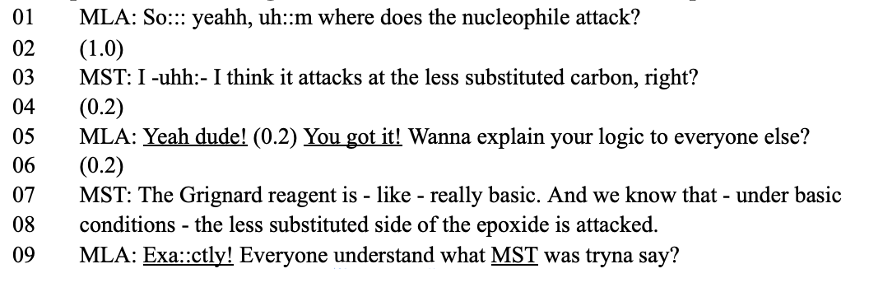
Example 1: Male Learning Assistant with Male Student, Correct Response

In Example 1, the male Learning Assistant uses four instances of positive politeness with the male student. When looking at this conversation with the idea of a student’s perceived levels of support in mind, one can see how this student would feel very supported. The casual language which the Learning Assistant uses, such as “dude,” as well as the phrases of encouragement such as “You got it!” and “Exactly!” would most likely make this student feel as if his answer was validated and that he belonged in such a learning environment. The four instances of positive politeness, marked using an underline, reaffirm the student that he is correct. The Learning Assistant’s action of making this student more comfortable in the discussion section may, in turn, make him feel more confident about his ability to succeed in the class.

Now let’s take a look at an example of a conversation where the same male Learning Assistant interacts with a female student:

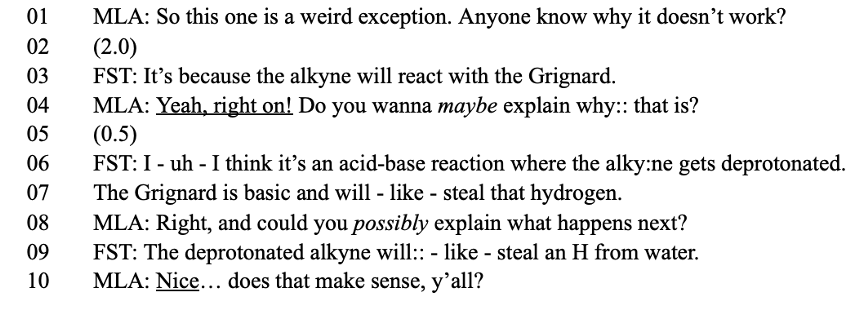
Example 2: Male Learning Assistant withFemale Student, Correct Response

Much like the male student from the previous example, the female student in Example 2 also answered the male Learning Assistant’s question correctly. However, the Learning Assistant’s response towards her answer was not as comforting and casual as it was with the male student. For example, he only used two instances of positive politeness compared to the four he used in the previous example. Additionally, he now uses two instances of negative politeness, indicated in italics, when asking her to further explain her answer.

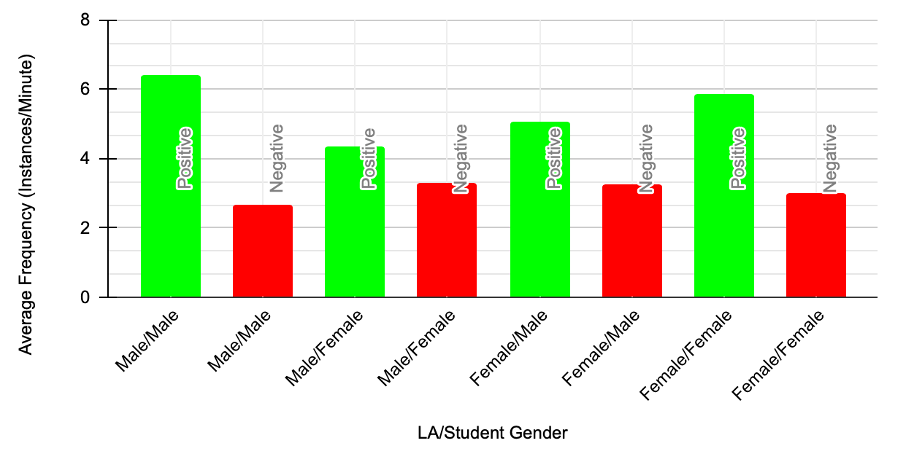
Similar overall trends to the two examples above are seen when looking at the combined data of this study. This data is pictured in the two graphs below:

Figure 1: Average Frequencies of Positive and Negative Politeness After Correct Responses

There are two major points of interest in Figure 1. First, when looking at each interaction, every correct response yielded more frequent positive politeness than negative politeness. However, more importantly, one can notice that male LA/male student and female LA/female student interactions have more frequent use of positive politeness than the other two kinds of interactions with different LA/student genders. This finding supports the idea that positive politeness is more commonly used when an LA interacts with a student of the same gender.

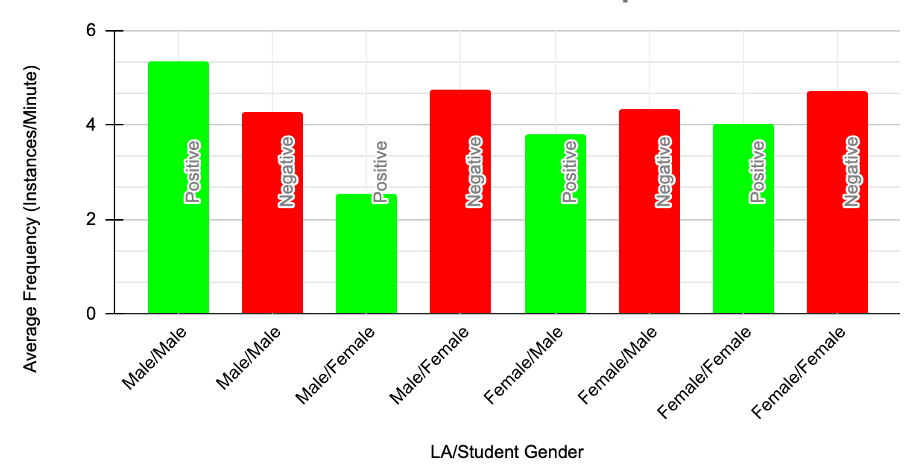
Figure 2: Average Frequencies of Positive and Negative Politeness After Incorrect Responses

The results for incorrect responses in Figure 2 are not as conclusive as they were for correct responses. Once again, this data shows that positive politeness is used more frequently when a student and LA have the same gender compared to when they have different genders. More importantly, however, is the fact that female/female interactions had more instances of negative politeness than female/male interactions here. This finding disproves the idea that negative politeness is dependent on gender in interactions. Unlike positive politeness, which was higher in same-gendered interactions for both examples, negative politeness does not have any trend with relation to gender.

Conclusion

After analyzing the data, the study ultimately concluded two things. The first conclusion reached was that positive politeness is used more frequently when Learning Assistants interact with students who share the same gender as them. In addition to this, however, the study also concluded that the frequency of negative politeness is independent of the Learning Assistant and student’s genders.

The finding that positive politeness is higher in same-gendered interactions may have implications with regard to perceived student support: students may feel more supported if they interact with LAs who identify with their same gender compared to LAs who do not. Increasing awareness of this issue amongst LAs may allow them to be cognizant of the existence of such a bias, and therefore, would help them know to be just as supportive towards differently-gendered students. Similar future studies should include non-binary participants in order to extend the results past the gender binary.


References

Brown, P., & Levinson, S. C. (1987). Politeness: Some Universals in Language Usage. In Politeness: Some universals in language usage (pp. 311-323). Cambridge: Cambridge University Press.

Furtak, E. M., & Kunter, M. (2012). Effects of autonomy-supportive teaching on student learning and motivation. The Journal of Experimental Education,80(3), 284-316. doi:10.1080/00220973.2011.573019

Janks, H. (1997). Critical discourse analysis as a research tool. Discourse: Studies in the  Cultural Politics of Education,18(3), 329-342. doi:10.1080/0159630970180302

Jardine, H., Levin, D.M., & Cooke, T. (2020). Group Active Engagement in Introductory Biology: The Role of Undergraduate Teaching and Learning Assistants.

Sellami, N., Shaked, S., Laski, F. A., Eagan, K. M., & Sanders, E. R. (2017). Implementation of a learning assistant program improves student performance on higher-order assessments. CBE—Life Sciences Education,16(4). doi:10.1187/cbe.16-12-0341

Talbot, R.M., Hartley, L., & Wee, B. (2015). Transforming Undergraduate Science Education With Learning Assistants: Student Satisfaction in Large Enrollment Courses. The journal of college science teaching, 44, 24.

[/expander_maker]

What is the Situation with Celebrities’ InToNaTiOn?

Juan Alvaro, Darshini Gupta, Lauren Tropio

In today’s day and age, a social media presence has become not only essential but  also a platform that defines us as individuals. In February of 2019, a statistic  showed that 90% of adults ages 18-29 use social networks because it is the new


“norm”. Up until the creation of more popular apps and interactive websites, social media was arguably far from a necessity and was seen as a way of  communicating or staying up to date with current news.

Now due to this shift, social media is seen as a defining characteristic of a  business or person. Also, interactive media and networks have given  bloggers, celebrities, etc credibility and a larger audience to influence  and illustrate their linguistic style that varies across written and  recorded platforms. Studying the individuals that society defines as “influencers” reveals the transformation of identities, and patterns of  intonation that take place on various social media, with these “celebrities” altering these tendencies between each media platform.

To get a better idea on how different intonation patterns can convey personality,  and based on the responses we got from a survey distributed to college aged  students, we decided to look more in depth on three people: Kylie Jenner, Jojo Siwa,  and David Dobrik. These three different personalities offered a different aspect of  intonation patterns, Kylie Jenner representing little variation, Jojo Siwa  representing a different approach with many variation patterns, and David Dobrik  being somewhere in the middle. We studied these individuals by going through their  content on various platforms (Youtube, Instagram, Twitter, etc). By studying these  influencers across the intonation spectrum, we can get a sense of what aspects of  intonation patterns can be used to display a specific persona.

[expander_maker id=”1″ more=”Read more” less=”Read less”]

Kylie Jenner

The first person we decided to look at was Kylie Jenner. She  started out by being a part of the Kardashian/Jenner family  and a reality show from the young age of 9, now is known  around the world as one of the youngest billionaires and has  many business ventures as well! She has been in the limelight and been immersed in the influencer culture for a large part of her life. She is one of  the highest paid influencers and her millions of followers across platforms makes  her a perfect candidate to study. 

Looking through her Youtube videos, the first thought that stood out was her use of  uptalk and vocal fry. ​In this video, one can see that her speech is characterized with a rising  pattern at the end of her sentences, which is uptalk, and how she also uses a very  low register in her speech giving a creaky sound which is vocal fry. Even the  comments on her post took notice of her use of uptalk and not surprisingly were  divided on it, some thinking it sounded more professional while others were  bothered. Another viewer also pointed out how all of the Kardashian/Jenners speak  this way and though this could just be a part of Kylie’s linguistic style it could also  be a way for her to solidify part of her identity, which has been associated with this  family her entire life. Another thing that stood out studying her videos was Kylie’s limited variation in  her intonation. ​In this video, even when Kylie is making exclamations like “7!” or “ooooh what’s a 7 pump” her intonation does not change much and it. It almost feels  like there is more excitement or variation in my transcript of those comments! In a  more recent video, she goes on to explain how she restrains her personality or  almost plays a character in videos and on social media deliberately, in which she  could possibly be using intonation as a tool to show less of her personality while still  giving new content.  Looking through her Instagram posts, we noticed that she portrays a very similar  intonation pattern through her captions. 

By using no capitalization and very few exclamation points and punctuation in her  posts, she is able to convey a certain tone with an unwavering pitch, which is  similar to her speaking style.  

David Dobrik

Many may know him for his infamous 4 minute and 20  second vlogs or his debut on an application called Vine in  2013, but today he is recognized for his presence on various written and video platforms. He is probably more successful than I will ever be in my  lifetime, having millions of followers across, YouTube,  Instagram, Twitter, and Tik Tok. David also has a  networth of over 15 million at the age of 24.

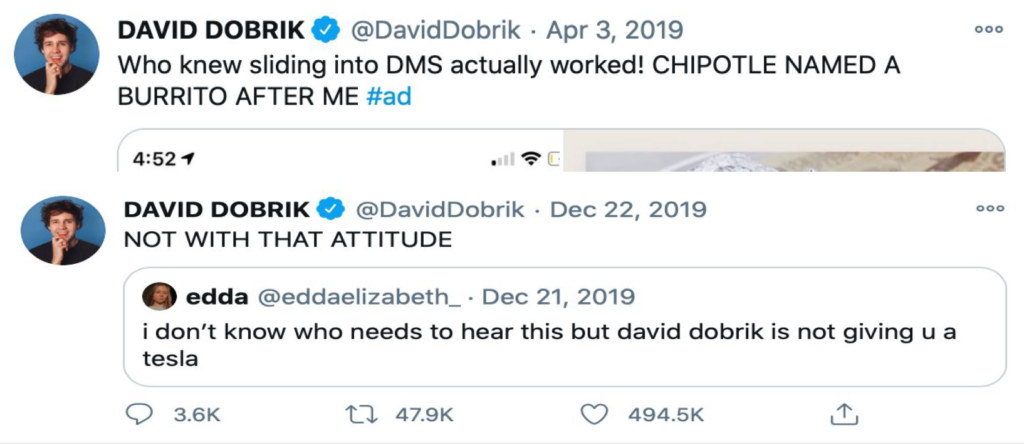
When it comes to his identity and how he portrays himself across tweets versus his  vlog content, one would potentially think he was two different people. In his written  work David used capitals throughout. “CHIPOTLE NAMED A BURRITO AFTER ME” is  an example of how explosive he can be. Or “NOT WITH THAT ATTITUDE”  demonstrates that aggressive identity one would think he would have. When  reading either of these, one may even interpret these tweets as YELLING at you!

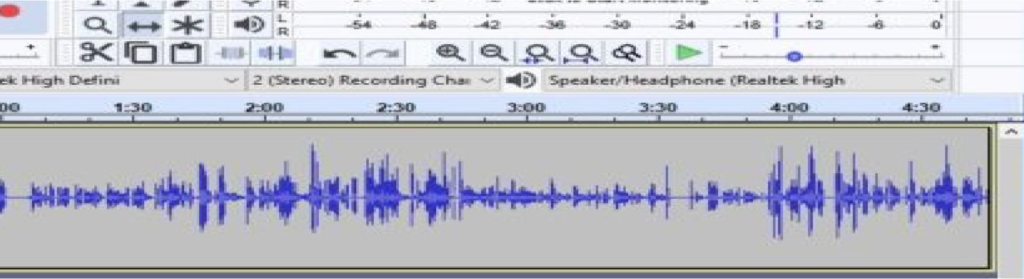
On the other hand, after observing hours of videos produced by David, there were very few instances where he continued this kind of eruptive intonation. The only  times he changed his tone or portrayed himself as “loud” was when he was  laughing. To better understand where his inflection lies in his videos, we used Audacity to visualize where this burst of intonation exists. Below you can see a clip of David speaking where the loudest and tallest waves represent him laughing. The in  between represents his normal speaking voice.  

We found David to be the most inconsistent when it came to his intonation, which is  why we also saw him as a good middle ground between Kylie and JoJo. Having  someone like David Dobrik, he is a good individual to have as the intermediary  control. He shows viewers how much intonation JoJo Siwa has and how little  intonation Kylie Jenner has. He originally identified as a YouTuber, but I believe as he tried to transition to other  platforms his identity became inconsistent. It seems he uses capitals in his written media to grab attention more than showcase who he is as a person. His random capitalizations and phrases where he seems to be yelling at his audience, could be a publicity stunt more than an identity trait. He does have moments of strong intonation variation but it does lack that sense of constant variation like his  written platforms would infer. Maybe it is time someone takes his computer and  turns his CAPS lock OFF!  

Jojo Siwa

Jojo Siwa or more formally known as Joelle Joanie Siwa is a  well known American dancer, singer, actress on  Nickelodeon, and also an infamous influence on YouTube.  She has 12 million subscribers on Youtube and about 10  million followers on instagram. Jojo Siwa began to attract  the public’s eye in 2014 at the age of 11 years. Since then she  has had hundreds of millions of views on her videos and is known for being very outgoing and extroverted with sporadic behavior and  varying intonation in her voice. Her pitch varies in order to allure the audience and  attract their interest so that she can get them to invest their time on her. 

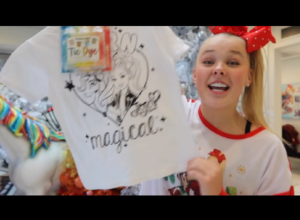
She shares very similar styles of intonation across both video and written platforms as she uses lots of exclamations in her statements. In one of her most recent videos, Jojo Siwa mentions the word “Tie-dye” twice in consecutive order, however uses two different variations of intonation. The first time she uses the word, she includes rising intonation and the second time the tone is falling intonation. She proceeds to say the word a few more times throughout the video with varying types of intonation. What’s also worth mentioning is that Jojo Siwa tends to lengthen the duration of her vowels and adds nasality in her voice, however that may be due to the nature of her vocal chords. She employs all these  different linguistic aspects in order to promote her character as an influencer and  attract her audience to purchase her merchandise. This compulsive behavior really  targets and pulls the interest of many as comments mention the love for the way  she behaves.

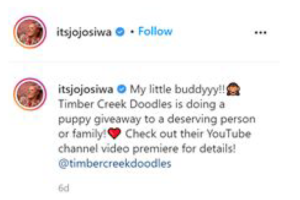
Similar to her voice on video platforms, she tends to add all capital lettering in her  posts and repeats letters to add emotional appeals. Her social media accounts all  carry the same text aesthetic involving this very family friendly speech. Her voice is very reminiscent in her tweets and IG messages and wants to persuade people to get  involved in her life. As you notice there are also lots of exclamation marks and use of emoji’s and by her facial expressions, she always appears to give off an ecstatic/ overly-cheery identity/personality. She is meant to appeal to children, which is why  she constantly gives off this radiant energy. 

Overall findings

After interpreting what we observed and our results, the conclusion drawn was  that social media platforms give influencers the chance to expose their pitch range, identity, and intonation variation. This differed between all the celebrities studied. These influencers construct an identity through social media platforms and their  style may shift but it does not always, as it is really dependent on the person.  Intonation is just one of the tools influencers may or may not choose to employ in  their linguistic style and we can see that based on these three personalities. Although intonation is an effective tool to display a persona, it is not always used or  consistent. These influencers choose to embrace their own identity which is best  catered towards the content they are trying to put out. 


References

“Kylie Jenner Net Worth”. Forbes. November 1, 2020. https://www.forbes.com/profile/kylie-jenner/?sh=43cb99fc55b5.

“Jo Jo Siwa Biography”. Biography. Biography. Retrieved 24 Dec 2019.

de Aquino Carlsson, A. (2018). Persuasion in social media : A study of Instagram  influencers’ usage of persuasive speech acts (Dissertation).

Ge, Jing, and Ulrike Gretzel. “Emoji Rhetoric: a Social Media Influencer Perspective.” Journal of Marketing Management​, vol. 34, no. 15-16, 2018, pp. 1272–1295., doi:10.1080/0267257x.2018.1483960.

Leskin, P. (2020, February 02). The rise of David Dobrik, a 23-year-old YouTuber worth over $7 million who got his start making 6-second videos. Retrieved  December 12, 2020, from https://www.businessinsider.com/david-dobrik-net-worth-youtube-career-v ine-liza-koshy-2019-9

Pew Research Center. (2020, June 05). Demographics of Social Media Users and Adoption in the United States. Retrieved November 17, 2020, from

Social Media Fact Sheet

Siwa, JoJo. “Its JoJo Siwa”. YouTube. Retrieved September 26, 2020.
WIRED (December 16, 2018). “David Dobrik Answers the Web’s Most Searched Questions”. Retrieved January 31, 2020 – via YouTube.

[/expander_maker]

Yeah, Um… So Like, Are Filler Words Considered Feminine?

Jennifer Beck, Jaymie Bernardo, Theo Chen, Karl Danielsen, and Calista Eaton-Steinberg

At some point in your life, you have probably experienced the intense awkward silence that comes about when it’s your turn to speak and you have no idea how to respond. Whether you’re not sure how to answer a question or you simply got lost in your train of thought, perhaps you’ve found yourself choosing one of these coping mechanisms to deal with that moment of dreaded stillness in the conversation: (1) you accept the silence and ponder your next move; (2) you fill the silence with filler words to buy time. Filler words such as “like,” “well,” and “um” are a common occurrence for people in conversation who are thinking of what to say. If you pay attention, you might notice that you use these words unconsciously in daily conversation, not even noticing when they slip out.

By observing, collecting, and analyzing video interviews, our study focuses on the correlation between gender and filler words in Californian college students. Studying the use of filler words in different genders of the cis-binary will allow researchers to better understand the way that gender and filler word usage interact. The purpose of this study is to clarify the assumption that women use more filler words than men due to persisting social pressures and the social implications of filler words.

[expander_maker id=”1″ more=”Read more” less=”Read less”]

Introduction and Background

Professor Eckert discusses in her linguistic studies that women typically have a different linguistic role in society compared to men (Eckert, 2012, pp. 90). When men speak, they try to keep up a persona that exudes confidence. As filler words explicitly foreground someone’s lack of confidence in speaking – they indicate that the speaker does not feel entirely certain about the things they are saying – men are presumed to more commonly avoid using filler words. In comparison, women generally assume a more mediating role in conversation (Van Herk, 2017, pp.110), so they might be expected to use more filler words.

Finding a connection between gender and filler word usage could indicate that one gender is less affected by the negative traits associated with filler words. In other words, one gender group may feel less social pressure to avoid filler words despite their pre-existing negative implications. Alternatively, one gender might actually prefer using filler words as modes of marking discourse to connect and organize the things they say in specific ways (Divett, 2014, pp. 37-42). A paper in the Journal of Language and Social Psychology found that men and women both use filler words equally when filling pauses, but that women use them more as discourse markers (Laserna et al., 2014, pp. 332-334). In this way, women use filler words to assert their authority in a conversation by directing its path and indicating it is their turn to speak. Due to the unprofessional associations with filler words, we hypothesize that women will use filler words more than men, as women face lower levels of societal pressure to sound professional. They may also utilize these words more often to direct conversation. We conducted a small-scale study of casual interactions between college-age men and women to assess the patterns of filler word use.

Methods

We analyzed 15 interviews of Californian college students posted on college-related YouTube channels. These casual one-on-one interviews asked random students basic questions about their college experiences. We looked at results from women interviewing men and men interviewing women and calculated the number of filler words (including “um/uh,” “like,” “yeah,” “so,” “I mean,” and “you know”) relative to the number of total words spoken.                                                                                                                                        
Results/analysis

Previous research into this topic suggests that women do, in fact, use more filler words than men (Laserna et al., 2014, pp. 332-334). However, as gender roles become less important to our modern society, the previously discovered results may have become outdated. We set out to see if we could reproduce other studies’ outcomes in a modern, progressive college setting, while simultaneously seeking out answers as to what factors could cause the gendered differences in filler word usage.

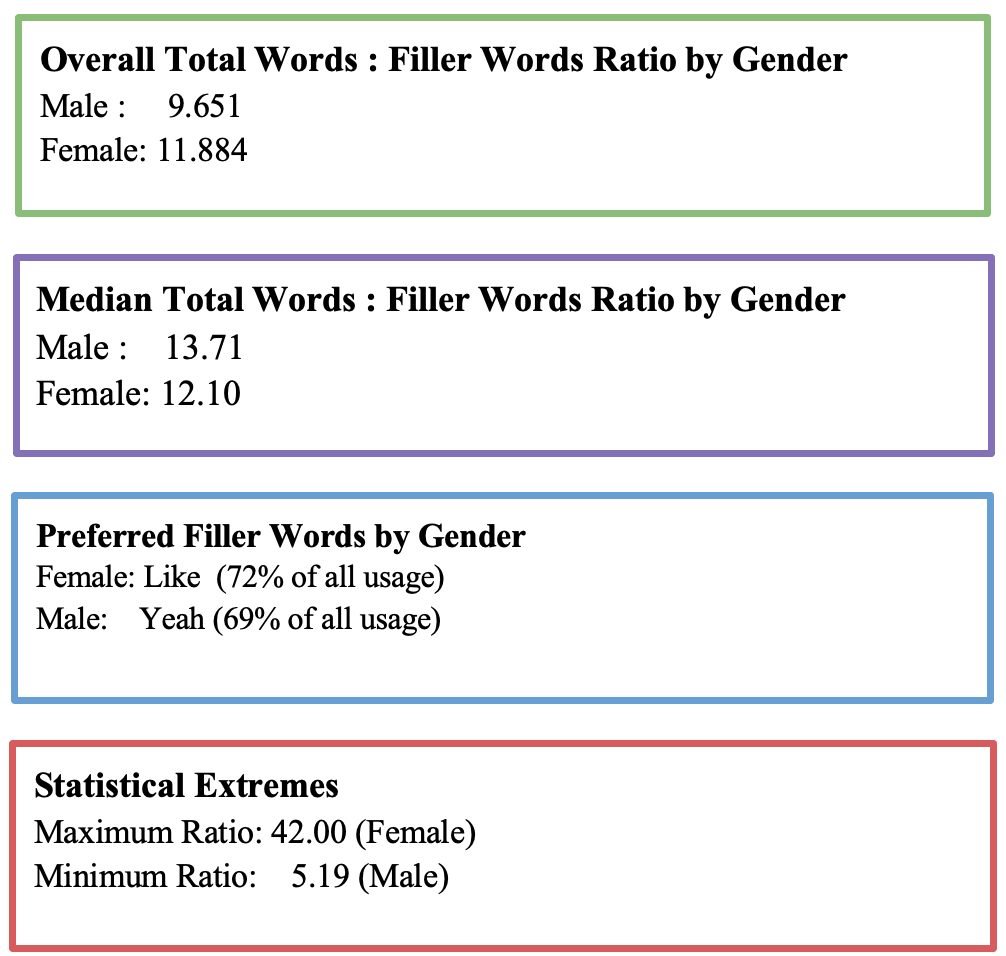
While our final results matched those of previous studies in confirming a gender difference, the difference we found was not what we expected. Below are a couple of statistics from our data collection:

Figure 1: The most significant data from our research; note the difference between mean and median results.

Looking at the overall ratio result, our results did not support the previous findings on this topic. Women surveyed actually used significantly fewer filler words than men. Looking at the overall total words to filler words ratio, males displayed a 9.651 ratio, while females displayed a 11.885 ratio, showcasing a 2.233 difference in filler word usage between the two genders. Oddly enough, the median of the data contrasted this. The median female used more fillers than the median male. This could potentially mean that men tend more towards extremes, while women speak more similarly across the board. Indeed, one interview with a male revealed the most filler word usage of all interviews, as the male spoke with almost one filler word per five words.

In spite of the inconclusive results of our mean/median analysis, two segments of the data did show a clear trend. Across all interviews, women and men showed preferences as groups for different filler words. Women favored the word “like,” which is increasingly androgynous but still closely associated with the “valley girl” archetype. Men, in place of using the effeminate “like,” preferred words such as “yeah.” It appears that both genders selected their filler words carefully to index different personas, even if they used filler words at similar rates. This means that social pressure is still strongly at play in word choice, even if neither gender has a stronger need for the confidence lent by decreased filler usage.

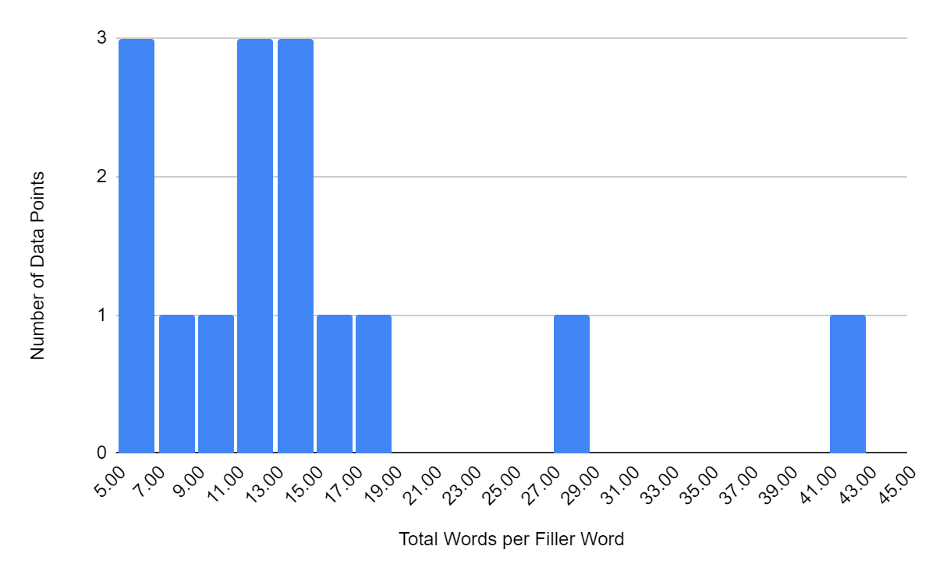
Both genders together indicated another interesting trend: the presence of two, not one, spikes on the graph of filler ratios. Figure 1 below shows that there is a peak of people using ~6 words/filler word and one of people using ~13 words/filler word. This two-peak system indicates that there are likely two separate modes of speech people use, one casual with a higher ratio of fillers, and one formal with a lower ratio. Filler word use overall is likely distributed across two standard deviations centered at these spikes.

Figure 2: A histogram showing the number of interviews with a certain filler ratio. Make note of the two separate peaks – one at 6, and one at 13.


Discussion/Conclusion

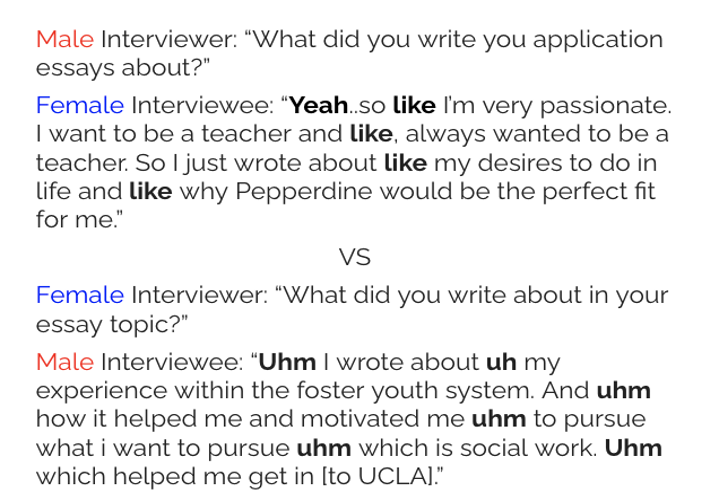
Our research shows that the differences in filler word usage across genders are more complex than previous findings suggest. Figure 2 below shows the transcript between two different interviews we observed, both being asked similar questions. You can see the female interviewee produces five filler words out of 43 words total. On the other hand, the male interviewee produces six filler words out of a total 40 words. The margin of filler word usage is slim here. As we mentioned before, females have been found to favor the filler word, “like” while men favored “yeah”. You will note that in this case, the male favored the word, “Uhm.”  While not every male favors the same word, overall data suggests that there is still a generally consistent difference between male and female filler word choice, especially in the use of “like.”

This could be a result of gender stereotypes for speech – “like” and “so” are associated more with femininity, while “um” and “yeah” seem more masculine. There aren’t rules for who can say what, but speech can be very gendered. Part of it might be conscious – for example, males might avoid “like” for fear of sounding feminine – but it might also be a result of who these people are spending time around and what kind of speech they naturally pick up from friends and family.

Figure 3: Transcripts of two interview segments, both involving the opposing gender. Extracted from ProWrite Admissions YouTube channel.


It is important to keep in mind that the data used for our results was extracted from online videos of causal speech. Casual speech with a fellow young person allows for a more comfortable setting, therefore allowing for more filler words to be used. Because these videos were spontaneous and filmed, it is also possible that certain participants were more nervous than others, causing them to use more filler words as they collected their thoughts. Some people are more anxious speaking spontaneously in front of a camera, which would definitely affect their mannerisms, while other people might love being filmed and thrive in the same situation, speaking with confidence and ease.

Our current research sought to analyze the long-lived stereotype of women using more filler words than men, which may exist due to the even older stereotype of women having less intelligence. With these results, we come to the conclusion that college-aged males within California use filler words more frequently in casual speech than college-aged women in California. This could result from a number of factors. For one, more male college students are in STEM fields (Blackwood, 2020) where interpersonal skills are de-emphasized, and students might use more fillers. Men could also be more willing to index a casual persona in interviews because there are fewer expectations against their intelligence that they want to combat. With the persisting sociological stereotypes that deem women less intelligent, women have to work twice as hard in order to gain the respect that men have, especially within the work field (Eckert, 2012, pp. 90). Women are held to different expectations than men, which could impede on filler word usage.

Furthermore, a strong negative social stigma exists around young women who use filler words, especially “like.” Frequent use of the word “like” is a characteristic of the valley girl accent, a Californian accent associated with wealthy, unintelligent, and annoying young women. (This NPR article talks about some other ways that women’s language is stigmatized and disrespected). Since women have to overcome these pre-existing stereotypes, it is possible that they consciously work harder at not using filler words.

Should this research be conducted in another state with another age range, or in a more formal setting, the results may differ. However, our data challenges a conventional understanding of filler word use, suggesting that this topic is very complex and requires further investigation. Potential future research could look into formal interviews between an employer and potential employee, and whether this context decreases filler word use, regardless of gender. Research could also look into stereotypes surrounding different filler words, and whether these stereotypes consciously affect filler word use.


References

Crimson Education. (2013). Home [YouTube Channel], from https://www.youtube.com/c/CrimsonEducation/about

Divett, S., Duvall, E., Graham, T. Robbins, A. (2014) How and why people use filler words (pp. 35-46). https://schwa.byu.edu /files/2014/12/F2014-Robbins.pdf

Eckert, P. (2012). Three waves of variation study: The emergence of meaning in the study of sociolinguistic variation. Annual Review of Anthropology, 41, 87-100.

Laserna, C., Pennebaker, J., Seih, Y. (2014). Um . . . Who Like Says You Know: Filler Word Use as a Function of Age, Gender, and Personality. Journal of Language and Social Psychology. 33(3), 328-335. DOI: 10.1177/0261927X1452699 OR https://www.researchgate .net/publication /27 5005568_Um_Who_Like_Says_You_Know_Filler_Word_Use_as_a_Function_of_Age_Gender_and_Personality

ProWrite Admissions. (2017). Home [YouTube Channel]. YouTube. Retrieved November 16, 2020, from https://www.youtube.com/channel/UCpjORe_vOMevyxImw90igLw

Van Herk, G. (2017) Gender. What is Sociolinguistics? Wiley Blackwell. (pp. 97-115)

W.K.C., Kate Blackwood. (2020, July 1.). Gender gaps in STEM college majors emerge in high school. Cornell Chronicle. https://news.cornell.edu/stories/2020/07/gender-gaps-stem-college-majors-emerge-high-school

[/expander_maker]

, , , ,

Turn on Your Camera, Foo : Slang and Visual Cues in the Classroom

Jiajun Weng, Chris Lam, Christine Chang, Terri See Lok Ho, Wei Lin

Have you ever wondered whether understanding what your classmates are saying and the seeing their cameras is essential to succeed in the course?

You’re not alone.

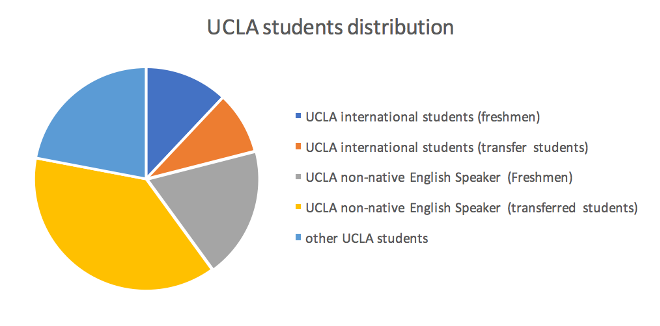
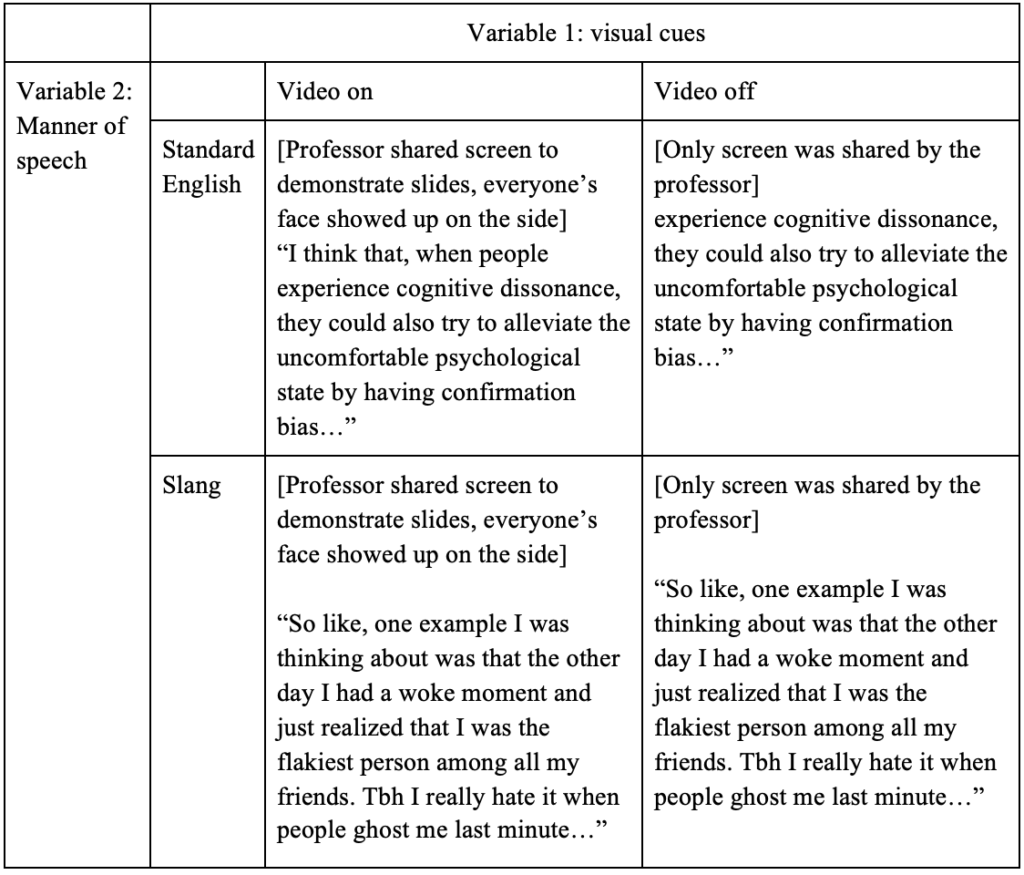
During this special period, education has primarily moved on to online. Many international students from UCLA taking online courses claim that they feel alienated in the class because they cannot see their classmates when their classmates are talking, and they sometimes cannot understand the online slang used by their classmates. Does the usage of online slang and lack of visual cues truly impact their learning experience?

For finding out the answer to this question, we conducted a study to investigate how the use of slang and the lack of visual cues contribute to international students’ comprehension difficulties and their feelings of alienation. The survey sample comprised entirely of UCLA students. By analyzing the data, we found that interestingly, their feeling of alienation was not affected by usage of online slang nor lack of visual cues. Furthermore, we found that their comprehension was not associated with inclusiveness. That is, it shows that one can still succeed in the class even if one feels alienated.

[expander_maker id=”1″ more=”Read more” less=”Read less”]

Introduction

International students in an English-speaking country such as the United States face various challenges related to language. For instance, they struggle with the use of slang and cultural references in a classroom setting. In Bradford’s research, he found that “Teaching colloquial speech in any language can be important for acquisition and assimilation into the language’s cultural group” (Bradford, 2010). In a separate study, Albalawi found that some L2 learners indicate learning slang is helpful for students to fit in socially in college and gain confidence (Albalawi, 2014). Both articles demonstrate that learning the slang of other cultural groups is a crucial tool for L2 learners to master if they want to become more assimilated. However, some of these difficulties in comprehension can be overcome by implicit cues such as facial expressions and gestures (Sueyoshi & Hardison, 2005).

A comment about Figure 1 below showing the breakdown of UCLA students and their experience with English. Moving onto online learning platforms during the global COVID-19 pandemic, international students face new challenges like adapting to the lack of visual cues — such as facial expression and gestures — as well as the colloquial way people speak during Zoom lectures. As a consequence, international students’ ability to comprehend course materials may be compromised by the lack of social cues. With limited understanding of course material, these students could subsequently feel disconnected, or even isolated from the class, and hence disengaged with the course.

International students who engage primarily on non-English social media platforms, such as Wechat, Weibo or KakaoTalk, may have found it more difficult to navigate higher education in this virtual environment. Within this experimental study, we investigated how the use of slang and the lack of visual cues contribute to international students’ comprehension difficulties and their feelings of alienation. Specifically, we expected to find increased feelings of alienation and reduced engagement among international students in the face of online English jargon and little visual cues. However, we hypothesized that the use of slang should not significantly impact students when visual cues are present in the recorded lecture because non-verbal communication can be an important source of motivation and concentration for students’ learning as well as a tool for taking and maintaining attention (Zeki ,2009).

Figure 1: UCLA students’ distribution


Collecting Data: Setting up a Classroom

An experimental study was conducted to test our hypotheses about how the manner of people’s speech during the lecture and visual cues (i.e., facial cues and gestures) interacted with each other to influence international students’ understanding of the course materials and their feeling as a member of the class. In the current experiment, we showed our 16 international student participants one of the four Zoom lecture recordings in which we systematically varied the manner of speech of people in that class, as well as the presence of visual cues. To manipulate people’s manner of speech during class, the student confederates discussed the class material in standard English or in a colloquial manner that involved the use of English slangs, like “btw” or “hella”. To manipulate the presence (or absence) of visual cues such as facial cues and gestures, confederates in the current class video will either turn on or off their camera and showed their face and hand movement during the lecture recordings. Please see Table 1 for a demonstration.

Table 1: Matrix of variables and samples of corresponding experimental script


After the participant watched one of the four mock zoom lecture recordings, they were instructed to complete a questionnaire that assessed their understanding of the lecture content, which is about this basic psychological phenomenon called the cognitive dissonance theory. Besides the objective measure of participants’ understanding of the class material, their subjective perception of how well they understood the lecture was also assessed. Finally, we measure how much these participants feel like a member of the class and the likelihood of engaging with the lecture if they were present in the Zoom meeting room.

Results and What They Mean

Figure 2: Video On and using Slang trail; participants’ feeling of alienation


Our findings supported the initial hypothesis that having video on in these online lectures affected students’ level of comprehension. However, there wasn’t a statistically meaningful difference in feelings of exclusion. In particular, the analysis showed that there was a meaningful difference between the results of the survey question regarding subjective comprehension conducted with the students who watched the lecture with video and without video, regardless of whether there was slang or standard English used. However, even by looking at Figure 2 and Figure 3, it is clear that students felt excluded either way.

Figure 3: ’Video Off and using Slang trial; participants’ feeling of alienation


The same was true regarding our initial hypotheses about slang usage. The study showed a statistically meaningful difference in level of self-reported comprehension, but not on the feelings of exclusion. Visually comparing Figures 2 and 4 shows that the responses to the question about alienation were not meaningfully different when video was on vs. off in Figures 3 and 5. Even a cursory review of the results of all the survey questions that attempted to measure feelings of exclusion and alienation showed high levels across the board, boding negatively for online classes as a whole.

Figure 4: Video On and using Standard English trial; participants’ feeling of alienation


Figure 5: Video Off and using Standard English trial; participants’ feeling of alienation


And perhaps the most important result came from comparing the interaction factors of video and slang in the comprehension question. What our study found was that while there is a statistically meaningful difference in individual comprehension in response to both factors, i.e., video and slang, there was not significant interaction between them when it came to self-reported levels of comprehension. That is to say, contrary to our initial hypothesis, a factor like having video on doesn’t necessarily interact meaningfully with the differences caused by slang usage in comprehension.

Figure 6: The rate of participants correctly answering the quiz questions


However, when it comes to the actual analysis of the answers to the quiz questions, not just self-reported comprehension, there is a noticeable interaction factor. Figure 6 shows that when slang is used, the presence of video had a significant impact on actual comprehension as measured through the quizzes, whereas video had less impact when standard English was used. 

There are, of course, various factors that could be complicating this kind of analysis. The subjects chosen for the mock lesson, were it more or less visual, may have more of an effect on how these two variables interact. The length of the lesson may have an impact on all these variables depending on how often it becomes relevant that video is used or not. This study is not necessarily definitive but poses some important questions on how all of these variables can be utilized by educators in aiding comprehension and limiting alienation in classrooms.

Conclusion: The Classroom and Beyond

All in all, more research should be done with regards to the virtual learning environments that most of the world was thrown into due to the pandemic. There may be many key improvements to education in general, whether online classes are here to stay for a while or not. From our initial hypothesis that English slang negatively impacts international students’ engagement with and understanding of classroom material, we find that comprehension may be hindered by slang usage and a lack of visual cues, independently; however, international students seem to feel like they do not “fit in” with the class regardless of these variables, and their aptitude does not seem to suffer because of that in general.

We live in an ever growing technologically dependent society, yet online meetings can often feel like an obstacle and/or a divider when compared to in-person classes. In the article “Depression and Everyday Social Activity, Belonging, and Well-Being,” Michael and Todd stated that “When people experience positive social interactions, they should be more likely to feel a sense of belonging.” Alongside virtual meetings in the workplace, there is a lot that can be done by the hosts to improve distracting and frustrating video calls. Based on this small study, we recommend professors and teachers to encourage students to turn on their videos, with the caveat that there may be personal and privacy challenges. We can say that there may be evidence that doing so will help students’ comprehension of the material. We also suggest addressing slang and jargon when it arises in the classroom, making sure to at least clarify rather than exacerbate what may negatively impact some students’ learning outcome.

There are an endless number of questions to be asked in the realm of education research, with regards to both online and in-person mediums. Perhaps this experiment may be repeated with a live virtual classroom setting to really capture engagement and chat-box interaction data. Furthermore, there is something to be examined in asynchronous learning, i.e., these pre-recorded lectures in the study that subjects independently and asynchronously watched. In a pandemic that generates so many struggles, personally and in education, there is the possibility that Zoom lectures are a breakthrough to education access the world needs; we just need to optimize and adapt to it, rather than conceding at its shortcomings.


Further info

The PowerPoint form of this blog entry

A TedTalk which talks about the relationship between inclusiveness and your manner of speech


References

Albalawi, A.S. (2014). Saudi L2 learners’ knowledge and perceptions of academic English slang. [Order No. 1566835]. Southern Illinois University at Carbondale.

Bradford P.B. (2010). The acquisition of colloquial speech and slang in second language learners of English in El Paso, Texas . [Order No. 1484150]. The University of Texas at El Paso.

Steger, M. F., & Kashdan, T. B. (2009). Depression and Everyday Social Activity, Belonging, and Well-Being. Journal of counseling psychology, 56(2), 289–300. https://doi.org/10.1037/a0015416

Sueyoshi, A. & Hardison, D.M. (2005). The Role of Gestures and Facial Cues in Second Language Listening Comprehension. Language Learning, 55: 661-699. https://doi.org/10.1111/j.0023-8333.2005.00320.x

Zeki, C. P. (2009). The importance of non-verbal communication in classroom management. Procedia-Social and Behavioral Sciences, 1(1), 1443-1449.

[/expander_maker]

, , ,

Driving from 101 to The 101: An Analysis of Determiner Usage in Californian Speech

Pranav Singh, Melissa Yang, Yoosoo Jang, Ross Perry, and Nathan Midkiff

Do you refer to Highway 101 as “101” or “the 101”? Perhaps many people have seen the case of putting ‘the’ in front of the highway. A determiner, like “the”, is an important element of grammar, and is usually used in front of a noun that has a specific meaning. But the rule of determiner “the” can be ignored in particular cases. We can also observe from the mass media that it is sometimes a little different when referring to highways. We found two videos from YouTube that show different ways to call Highway 101 according to region.

In the news on Los Angeles, Highway 101 is referred to as ‘the 101’.

In the news on San Francisco, Highway 101 is referred to as ‘101’.

Most people know that language can be influenced by culture and geography, but the majority of people do not know how they’ve influenced the language. Little research has been done to explore what reasons affect the difference between regions especially in referring to highways, so in this study we aim to analyze the connection between specific sociological/geographic factors and the usage of “the 101” or “101” by collecting data.

[expander_maker id=”1″ more=”Read more” less=”Read less”]

Introduction

On the outside, California may be seen as a monolithic region that has developed its culture around the year-round sunny skies and proximity to beaches. However, locals of the state have a much more varied view of the state and often see it as made up of distinct regions (Bucholtz et al., 2007). The most apparent divide would be between Northern California and Southern California, and good representations of these two regions would be the San Francisco Bay Area for Northern California and Los Angeles (LA) for Southern California, as both are extremely popular areas for their respective regions.

The divide between these two regions has created a difference in speech and cultures. One such difference is the way Bay Area locals omit the determiner “the” before referring to highways, while LA locals include the determiner “the” before referring to highways. For example, Bay Area locals would refer to highway 101 as just “101” while LA locals would refer to highway 101 as “the 101.” This is a widely acknowledged phenomenon, but there hasn’t been much empirical evidence to back up the claim that LA locals use “the” before referring to highways more than Bay Area locals do. So we’ve decided to examine whether or not this claim can be sustained with concrete evidence.

In addition, we believe that if there happens to be an increased usage of the determiner for LA locals, then this may be a result of a more prominent driving culture for the LA region than the Bay Area region. The LA region may have a culture that revolves around driving due to driving’s necessity and time-consumption. Driving takes up a large chunk of time in LA locals’ lives, both physically and mentally, so its importance is reflected in the usage of “the”, as the determiner is often used to signify importance or familiarity for the following noun (Birner, 1994).

Methods

In order to analyze this, we turned to the social media platform Reddit. Using the community pages (“subreddits”) for the Bay Area and Los Angeles (https://www.reddit.com/r/bayarea/ and https://www.reddit.com/r/LosAngeles/), we collected a sample of posts on each subreddit which referenced U.S. Highway 101. We chose to examine discussions of US-101 because this highway runs plays a major role in transit in both of these communities. It runs through both San Francisco and San Jose, two of the major cities which make up what is considered the Bay Area, and it runs through a large part of Los Angeles. We wanted to choose a highway that is common to both of the regions in order to rule out the possibility of the determiner use being a purely lexical distinction that is used only in combination with the names of specific roads.

We turned to Reddit for our data collection because it provided us good access to the members of the community in a natural setting. And, we decided that because this distinction was of a lexical nature, that it was likely to carry over into the written speech of both communities. Most importantly, by examining these Reddit communities, we are studying the speech patterns of people according to their identity. By participating in an online forum specific to a community, an individual establishes that they identify as being a member of that community, therefore showing that our observations are measuring people who identify as Los Angeles or Bay Area residents.

We collected a sample of posts discussing U.S. 101 from each subreddit, then observed the proportion of those in which the determiner “the” was used before the highways number. In order to examine the importance of the highway in each community, we then examined the proportion of posts in each subreddit that made reference to U.S. 101 within the past 3 months.

Results

What we observed was that members of the Los Angeles subreddit did, in fact, use the determiner “the” more often when referring to U.S. 101. In r/LosAngeles, 16 out of the 23 posts collected referred to U.S. 101 as “the 101”, whereas in r/BayArea, only 3 posts did so in the same sample size. In both communities, posts without determiner use included simply referring to “101”, or including other technical terms related to highways, such as “N”, “North”, “S”, “South” etc.

Figure 1: Comparing the proportion of posts that mention U.S. 101 that use the determiner between r/BayArea and r/LosAngeles

Our analysis of the rate of discussion about U.S 101 revealed that in the Los Angeles community, 14 of the 6364 posts from the past 3 months referred to the highway, and in the Bay Area Community, 11 out of the 5637 posts from the same time period did so. While Los Angeles referred to the highway only slightly more, leading to us being uncertain of its significance, the similarity between the rates at least shows that our belief that the highway was of similar importance to both communities is substantiated.

Figure 2: Comparing the proportion of total posts in the past three months that mention U.S. 101 between r/BayArea and r/LosAngeles


If we perform some simple statistical tests on this data, we can see that what we guessed is true. Our first test, looking at use of the word “the” before the highway number, was statistically significant, with a p-value of p=0.00005. This means that if our hypothesis was incorrect, and the Los Angeles subreddit didn’t use the determiner more often, then there would be a probability of 0.005% of getting the data we collected. This means it is very likely from our sample that our hypothesis is correct. However, when we do the same calculation on our test, looking at all posts in a three-month period, we get a p-value of 0.38209. This means that we are not able to conclude anything about how often the subreddits mention U.S. 101. Therefore our tests support the common belief that people from Los Angeles say “the 101”, but we can’t be sure if they talk about the 101 more than the Bay Area, so our experiments aren’t able to give a conclusive reason as to why people from Los Angeles say “the 101”.

There have been some limitations in our study that prevent certain conclusions. For one, our research is purely correlational, so we can’t say that the increased importance of driving resulted in the usage of “the” before freeways. Instead, we can only say that as the importance of driving increased, so did the usage of “the”. In addition, we only look at the 101 as a representation of all Californian freeways and the Reddit forum as representation of each community. But there may be many highways that have different circumstances than the 101, and there may be many different kinds of people that don’t use Reddit. And those who do use Reddit and choose to post may have unique motivations to do so, which skews our representation of the communities even more. This means that our results don’t necessarily apply to other freeways or the complete LA/Bay Area community, so we can’t be too general with our conclusions.

Conclusions

The usage of “the” with the highway 101 is much more common in the Los Angeles area than in the Bay Area. This is a well-known phenomenon: the California residents in our group unilaterally recognized that there was a divide between Northern and Southern California residents and that Los Angeles residents favored usage of “the.” In the article “‘The’ culture war” from the University of Pennsylvania’s Language Log, the author Mark Liberman cites a San Francisco advertisement reading:

“Bank while you wait for the BART or the Muni”

The Language Log viewer who sent in the advertisement claims that the company has “clearly … lost their SF roots” (Liberman, “‘The’ culture war”). This notion of “losing” a geographical identity by using a particular linguistic feature associated with another geographic location shows evidence of the determiner “the” possibly indexing a Southern California identity. However, it’s important to note that this phenomenon might be unique to highway names. Later in the article, Liberman brings up Northern California “the”-isms, such as “the Embarcadero” and “the Bay Bridge”, while also referring to a surprising group of Southern California non-“the”-isms, such as “Wilshire Boulevard” and “Rodeo Drive.”

Are highways special for this purpose? Is there something inherently important about public transportation infrastructure that makes a Los Angeles resident that much more of a Los Angeles resident? We cannot say for sure, but we aren’t the only people who notice it.

In the Saturday Night Live   skit “The Californians: Stuart Has Cancer,” the linguistic cues that appear to index a Los Angeles-area identity are the exaggerated, annoying, and comedically out-of-place references to driving and highways. For example, when the character Stuart comes home to find his lover eating another man’s face (figuratively of course, this isn’t “The Transylvanians”), he tells him to leave in the following way:

“I said go home! Get back on San Vicente, take it to the 10, switch over to the 405 North, and let it dump you out onto Mulholland where you belong!” (Saturday Night Live, 2013, 1:03)

No rational spouse is thinking of giving the object of their wife’s extramarital desire directions home. Usually, pop culture tends to handle this situation with a crisp “I think you should get the f*** out right now.” But this is the key point: the writers are calling attention to Californians’ fascination with car culture by making it the central focus of every sentence, markedly indicating that Californians are obsessed with cars, getting stuck in traffic on highways, and memorizing every street name they encounter. And to further confirm findings from the Language Log article, when referring to the I-10 and the I-405, Stuart uses the determiner “the” while choosing not to use it for the street names of Mulholland and San Vicente.

From our empirical results in this study, we see that Los Angeles residents have a predilection for using the determiner “the” and talking about highways like US-101. And from our external links in this section, we can see that this phenomenon is well-known. We see that highway talk and the determiner “the” might be ways that Los Angeles residents are viewed to exert their local identity, and we would recommend that budding sociolinguistics researchers devote attention to how “car culture” affects Californians in other ways that we might not have captured.


Reference

Birner, B. et al. (1994). “Uniqueness, Familiarity, and the Definite Article in English.” Proceedings of the Twentieth Annual Meeting of the Berkeley Linguistics Society: General Session Dedicated to the Contributions of Charles J. Fillmore.

Bucholtz, M. et al. (2007). Hella Nor Cal or Totally So Cal? The Perceptual Dialectology of California. University of California, Santa Barbara.

CBS Los Angeles. (2018, November 9). The Woolsey Fire Jumps The 101 Freeway. YouTube. https://www.youtube.com/watch?v=H4AU_U9YwlM

KPIX CBS SF Bay Area. (2020, August 18). San Jose Police Standoff That Shut Down Hwy 101 Comes To Dramatic End. YouTube. https://www.youtube.com/watch?v=1OSYGcRN5P4

Liberman, M. (2010, December 16). ‘The’ culture war [Web log post]. Retrieved December 16, 2020, from https://languagelog.ldc.upenn.edu/nll/?p=2844

Saturday Night Live. (2013, August 12). The Californians: Stuart Has Cancer – SNL. YouTube. https://www.youtube.com/watch?v=Tt-tG6ufH90

[/expander_maker]

, ,

Periodt, Sis!   Gender Identity and TikTok Term Usage

Camille Lanese, Chang Liu, Heather Pritchard, Merton Ung, Tracy Zeng

If you were to go on TikTok right now, one word might stand out to you: “periodt.” With a hashtag including more than 632 million views and endless videos with teenagers exclaiming “and that’s on periodt!”, you might wonder what is up with this word. In our study we examined exactly who is using the term “periodt” and when they are using it. Through surveying college-aged students, we examined if factors such as gender identity and sexual orientation affected whether or not TikTok users used the term “periodt” online or in their daily lives. After looking through the results, we concluded that gender identity and sexual orientation seemed to affect whether TikTok user knew of the word “periodt,” but had no impact on when they used the term. Overall, most participants were most comfortable using the term online, and were extremely uncomfortable with the idea of using “periodt” in a professional setting. In the future we aim to further examine the origins of “periodt” and how people acquire it as a word.

[expander_maker id=”1″ more=”Read more” less=”Read less”]

Introduction

TikToks are vertically filmed videos 6-60 seconds long. TikTokers play off various viral trends with repeated phrases and terms, and introduce new lexical items into users’ everyday speech. Importantly, users comment on others’ TikToks and share TikToks on other social media platforms. Also of note, TikTok users will write specific hashtags in their captions to make their videos appear on the “For You page”, the place where TikTok users discover new videos. Due to a combination of the users comments, hashtags, and sharing it is common for new words to become extremely viral through widespread use. TikTok’s powerful influence is reflected by the fact that the social media platform has over 800 million users worldwide. Thus, TikTok forms a kind of speech community with jargon through interaction between speakers. We analyzed college-aged students’ usage of the TikTok lexical item “periodt”, used to emphasize a point or signal the end of a discussion. We hope to answer, does a speaker’s gender identity and/or sexual orientation affect whether they adopt TikTok terms into real-life social interactions?

Figure 1: a YouTube compilation of female AAVE speakers saying Periodt

Background

The field of sociolinguistics understands linguistic variation as an “essential feature of language” through which speakers “index” aspects of their identity (Eckert 2012: 94). Specifically, gender is performance, in which speakers use linguistic features to construct and reinscribe their gender for their audience (Butler 1990: 179). For the older 18+ TikTok population, which includes our target population, using TikTok language requires more speaker agency because TikTok is not the norm, and thus TikTok language indexes aspects of identity for these speakers. Holloway and Valentine (2014) show that a teenager’s identity can become a mixture of their online and offline influences, since teenagers perceive both their online and offline identities as real spaces. Based on the studies by Eckert and Butler we see that a person’s identity is reflected in their lexicon. Our study seeks to examine whether the influence of the online spaces of TikTok will be reflected in our participant’s lexicons. Podesva (2011) analyzed the Californian vowel-shift for one LGBTQIA+ speaker and demonstrates that speakers use phonological features to index their identity. Podseva focuses on speech acoustics in various social settings. Our study is different from this in the way that we are examining our participant’s lexicons, and in the way that we are analyzing a large number of people rather than one person. The study that was most similar to ours was Banman’s (2014) which analyzed Tweets by men and women and compared gender markers such as pronouns. Banman et. al found that there are lexical items strongly associated with each gender. Our study is similar because we also seek to examine the lexical differences between gender, but also different because we are also examining their sexual orientation. To learn more about gender and other demographics in social media, check out this TED Talk by Johanna Blakley.

Figure 2: Rickey Thompson, openly gay American actor, using “periodt” on Twitter

Methods

We collected data from 100-200 American college students (aged 18-22) through an online survey with questions about usage of TikTok lexical items as well as gender and sexual orientation. Our preliminary hypothesis was that members of the LGBTQIA+ community are more likely to know and actively use TikTok language, since many TikTok terms are associated with said community. We also hypothesized that self-identified females are more likely to use TikTok terms, because of TikTok’s origins in Musical.ly and because self-identified females are usually the pioneers of new lexical items. The word that we chose to analyze was “periodt”, since it is a word that not only has roots in the LGBTQIA+ community, but was also popularized through TikTok by the use of hashtags and viral audios used in various videos. If you’re interested, check out this TED Talk by Dao Nguyen that discusses what kinds of videos and topics go viral.

Results

We received 109 total responses. Of those, we received 80 female responses, 26 male responses, and 3 nonbinary responses. Although our percentage of female responses was disproportionate, we still found that a far greater majority of female respondents were familiar with the term.

Table 1: Percentage of respondents familiar with the term “periodt”, by gender

Similarly, according to our hypothesis, when sorted by self-reported sexual identity, all of our LGBTQIA+ respondents were familiar with the term, while a smaller percentage of our heterosexual respondents were familiar with the term. At the same time, we are aware that there is further diversity within the queer community, so analyzing the entire LGBTQIA+ community as one homogenous section does weaken our analysis.

Table 2: Percentage of respondents familiar with the term “periodt”, by sexual orientation


Figure 3: How comfortable participants are using TikTok terms in different scenarios from a scale of 1 to 5, including all participants that know the term “periodt”


Figure 4: How comfortable participants are using TikTok terms in different scenarios from a scale of 1 to 5, divided by both gender identity and sexual orientation


Regardless of gender identity and sexual orientation, overall, the participants feel the most comfortable using the term “periodt” online with their peers, a little less comfortable when using it face-to-face with peers, and almost equally uncomfortable when using it online and face-to-face with a professor/boss. When using the term with peers, female and non-binary participants feel slightly more comfortable when using it online than using it face-to-face. From our data, male LGBTQIA+ participants clearly feel more comfortable than other groups when using the term “periodt” with their peers online and face-to-face, and slightly more comfortable when using it with a professor/boss online. But since only 2 LGBTQIA+ male participants responded, we cannot confirm that this pattern applies to most people with this gender identity and sexual orientation. Also based on the results we received, non-binary participants feel less comfortable than other groups when using the term with their peers online and face-to-face. But since only 3 non-binary participants responded, we cannot confirm that this pattern applies to most people with this gender identity and sexual orientation.

Discussion and conclusions

Based on our results, we conclude that gender identity and sexual orientation seems to affect the familiarity with newly-emerged TikTok terms, but have little effect on the usage of those terms in both online and in-person settings. We collected data on many factors that we didn’t have the time or space to explore, such as participants’ native languages and hometowns. We also asked participants which other TikTok terms they were familiar with, which in the future could be helpful to contextualize “periodt” among other TikTok lexical items. An additional factor that we didn’t have the space to explore was race. Although the word “periodt” originates from the African American community, we did not analyze whether our participant’s knowledge of the word could originate from their racial backgrounds. The final shortcoming of our study was our lack of LGBTQIA+ participants. In an ideal study, our study would have equal amounts of participants for every subdivision we analyzed, especially for the male LGBTQIA+ participants.

In further studies, we would be interested in correlating time spent on TikTok with comfort using the word. Then, we would analyze whether time spent on the app factors more into TikTok term usage than gender or sexual identity (Holloway and Valentine, 2014). A similar study could also be performed on other words that have become popular with AAVE and LGBTQIA+ roots, like “shady, tea, sis”, but on platforms like YouTube or Twitter. Also of interest, how do people, especially non-binary and LGBTQIA+ groups, acquire TikTok terms? Our study asked whether the participants knew the word, but not whether the participants learned the word from TikTok. A few more specific questions to investigate include: Is there a difference in the usage between talking with close friends and classmates? Is there a difference when talking with the same group of people, but about different topics?

Our study regarding the term “periodt” is also important for broader research and issues. The large number of participants using “periodt” despite not knowing the origins of the word is emblematic of the larger issue of erasure in western society. Despite the fact that “periodt” has its origin from AAVE, the word was co-opted by the LGBTQIA+ community during the late 1960s. “Periodt” was then popularized in mainstream culture as a word that indexes LGBTQIA+ membership, since it was popularized by shows like Rupaul’s Drag Race, Queer eye, and various YouTube content creators. Prior to TikTok, “periodt” was only popular within the LGBTQIA+ and African American communities. After “periodt” was popularized on TikTok through famous audios, and hashtags, the word had become viral and it was no longer used exclusively by the queer and African American communities. Our study shows an abundance of users who use “periodt” without actually knowing the origin of the word. Other viral phrases that were created by the black community and was co-opted by the LGBTQIA+ along with “periodt” that do not have their origins widely acknowledged would be “spill the tea, sis, yas, queen, shady”. Acknowledgement of the origins of “periodt” is important because of the U.S. erasure of black and queer history.


References

Bamman, David, et al. “Gender Identity and Lexical Variation in Social Media.” Journal of Sociolinguistics, vol. 18, no. 2, 2014, pp. 135–160., doi:10.1111/josl.12080.

Butler, Judith. 1990. Gender Trouble: Feminism and the Subversion of Identity. New York: Routledge

Eckert, P. (2012). Three waves of variation study: The emergence of meaning in the study of sociolinguistic variation. Annual Review of Anthropology, 41, 87-100.

Holloway, Sarah, and Gill Valentine. “Cyberkids? Exploring Children’s Identities and Social Networks in On-Line and Off-Line Worlds.” 2014, doi:10.4324/9781315011257.

Kulkarni, Vivek, and William Yang Wang. “TFW, DamnGina, Juvie, and Hotsie-Totsie: On the Linguistic and Social Aspects of Internet Slang.” 22 Dec. 2017.

Podesva, R. (2011). The California vowel shift and gay identity. American Speech, 86(1), 32-51

[/expander_maker]

Code-Switching Between Mandarin Chinese and English: Do You Use “lol” or “xswl”?

Wenqian Guo, Sum Yi Li, Yichen Lyu, Sok Kwan Wong, Yingge Zhou

Code-switching has become increasingly common as globalization allows international exchanges across cultures to take place more frequently. And as studying abroad becomes more accessible to students around the world, more speech communities with distinctive code-switching patterns are being formed. As we pondered the topic for our research project, we looked around and realized that not only are the majority of our group members native Mandarin speakers studying in the US, but collectively we also belong to this wider speech community that tends to code-switch between Mandarin and English. We could not help but wonder — do local students in China talk like us at all? And is there a reasoning behind the way we talk? It is these questions that formed the basis of our research.

For the project, we narrowed down our research to focus on just Internet slang used on WeChat, China’s answer to WhatsApp. Through our proprietary survey and by combing through chat history we collected from our participants, we discovered some very interesting findings. Continue reading to find out how and why Mandarin-speaking international students in the US code switch on WeChat.

[expander_maker id=”1″ more=”Read more” less=”Read less”]

Introduction and background

Chinese students who study in the U.S. often code switch between Mandarin and English and our project was aimed at examining the motivations behind the phenomenon.

We specifically looked into our subjects’ texting patterns on messaging app WeChat and compared them to Chinese students either residing in China or other non-English speaking countries in an attempt to confirm our assumption that code-switching is prevalent among Chinese students in the US. We also surveyed the students and asked for reasons behind their choice of words. We hypothesized that convenience as well as a desire to appear foreign-educated are what motivated the code-switching.

We based our project on Luke’s (1984) study on language mixing in Hong Kong, where English words are often inserted into Cantonese conversations. Luke (1984) concluded that code-switching in Hong Kong is partly pragmatically motivated (when the objects being discussed do not have Chinese translation) and partly socially motivated (when the individuals want to identify as better educated and westernized).

We extended Luke’s (1984) study to cover Mandarin Chinese, which is spoken in Mainland China. Presumably English mixing is more prevalent in Hong Kong because it is a former British colony. Code switching is not common among locals in China, but it is observed among individuals who have exposure in English-speaking countries.

Methods

The target population for our project consists of two major groups: college students who study in the US and college students who study in their home country China. Both groups of students are native Mandarin speakers. Our data collection was divided into two parts. First, we created a survey to ask both groups of students to select from provided word choices under different text conversation scenarios and provide us with a reason behind each choice. The participants were also asked to specify how frequently they would code-switch in their daily conversations with friends and family on WeChat. Second, we collected a series of chat history based on three main topics, namely schoolwork, casual conversations and sensitive topics. For the survey, we interviewed a total of 17 students from UCLA as our sampling for the groups of students who are foreign educated. We also interviewed a total of 6 college students who are based in China.

Results

For the purpose of discussion, our project referred to college students who study overseas as “US students” and those who study in China as “local students”.

School Work Survey Question 1: Which word would you use when you want to talk about a homework assignment that will be due soon. For example, “我明天有个作业___”. (Tomorrow I have some homework__)

For the first survey question regarding homework assignment, all of the US students chose the English word “due”, while the majority of the local students chose the equivalent Chinese words “要交”. Even though most students from both groups attributed their choice to a similar reason, which is language habit, from the perspective of the US students, “language habit” refers to a way to try to assimilate into the American culture, while in the context of the local students, it is more of an innate and natural habit.

School Work Survey Question 2: Which word would you use when you want to unenroll a class you have registered before? For example, “这节课不符合我的时间表, 我想__这节课”. (This class doesn’t match my schedule, I want to __ this class.)

For the second survey question relating to unenrolling classes, all of the US students chose the English word “drop”, while the majority of the local students picked the Chinese equivalent “退选”. However, both groups have different reasons behind their word choice. The majority of the US students said they chose the word “drop” because there is no equivalent translation in Chinese. On the other hand, the local students preferred using Chinese due to language habits influenced by their friends and family.

Based on the reasons the participants provided, it appears that being in different environments and different speech communities are the main reason students develop different language habits. Besides, the source of learning also influences their word choices. The US students tend to find it hard to find Chinese translation for words related to schoolwork since they learned these words in an English-speaking environment.

Casual Conversation Survey Question 1:  Which word would you use if you want to express laughter or something that is funny when you are chatting with your friends.

When asked how they would express laughter when texting, the majority of the US students chose the Chinese words “哈哈哈哈” (“Hahahaha”), while the majority of the local students picked another Chinese phrase “笑死我了” (“I laugh to death”). Even though both groups of students used Chinese to express laughter, each side has their own reason for the specific choice. The US students said they preferred “哈哈哈哈” (“Hahahaha”) as a language habit, while the local students preferred “笑死我了” (“I laugh to death”) because they believed the expression could better demonstrate their emotions and the situation. The results showed that Mandarin-speaking college students preferred to use Chinese when expressing laughter regardless of where they are studying.

Casual Conversation Survey Question 2: How often do you often replace words in a sentence from Chinese to English when you are chatting with your friends? For example, “我一会儿有个meeting or presentation”, “让我来表演一段rap”.

When asked how frequently they code-switch between Chinese and English when texting their friends and family, the majority of the US students said at least once every one to two days. Meanwhile, half of the local students said they seldom code-switch — only at least once every few weeks or months during their daily conversations.

Sensitive Topic Survey Question 1: What kind of curse words would you use most frequently when you are chatting with your Mandarin speaking friends?

When asked which curse words they most frequently use, both groups of students chose “卧槽/我操/我靠” (roughly translated as “Damn it/Fuck”) but for different reasons. The US students said this option best describes their feelings, while the local students said it sounds less harsh than the other choices.

Sensitive Topic Survey Question 2: Which word would you use when you need to discuss something that is related to the issue of sexual assault. For example “你上个月有听说那条新闻吗?有个女生被__了”. (Did you hear the news? A girl was __)

When asked what words they would use to say “rape”, the majority of both the US and local students chose the Chinese words “强奸”, instead of “rape” in English or the abbreviation “QJ”. Most local students said they did not worry whether the word sounds too direct or inappropriate but would rather want to just say what really happened. Similarly, the US students said they felt more comfortable with the Chinese words.

Our survey: English version and Chinese version

Chat History Analysis

The chat history was obtained from Chinese students studying in the US. The words marked red were originally in English, while those in black are translations from Mandarin.

This is a conversation between two participants about the recent US election. P1 said they expected people to stop protesting in two days. Instead of using the Chinese words (“游行”) for protest, P1 code-switched from Mandarin to English. Since protests are rare in China, and the Chinese words for protests are rarely used, presumably it is easier for the participant to just use the English word when texting.

Marked code-switching is observed when P1 expresses a slight disagreement with P2. As P2 feels empathetic to Trump, P1 emphasizes with English to express that they don’t feel sad for Trump’s loss.

Another interesting point is that P2 referred to Trump as “Grandpa Trutru”, his Chinese nickname. Chinese people sometimes use nicknames to refer to important politicians, which is likely stemmed from China’s censorship on sensitive topics. Discussions about certain politicians are considered highly sensitive, so to avoid censorship, they come up with nicknames for the politicians. For example, Trump is also known as “懂王” (“the king who knows it all”), while Biden is “睡王” (“the sleepy king”). The use of nicknames exudes a sense of humor as well as dials down the seriousness of the discussion of political issues.

In casual conversations, code-switching again lends convenience and gives emphasis. It also constructs a common identity among people in the conversation. In the above conversation, the participant is telling a story about their roommate being forcefully taken away to the hospital after answering routine behavioral questions wrong, which is a well-known cultural shock among Chinese students studying in the US. As this routine is not performed in China, the participant constantly code-switched on noun and verb phrases for convenience. Also, all participants of this conversation are Chinese international students. The code-switching builds a common identity among them because the participant expects everyone to know the consequences of answering yes to routine behavioral questions. The last two sentences are examples of marked code-switching that emphasize on the participant’s disbelief: The participant is surprised that his roommate answered yes. It is a final revelation of the ending to this anecdote.

Similarly, in the above conversation, code-switching again serves as building a common identity among Chinese students in the US. The participants constantly chose to use short English vernaculars, such as “yes,” “go,” and “yea.” This indicates that they have been immersed in an English-speaking environment, so when expressing agreement and excitement, they tend to code-switch to English. Also, P1 ignored all English spacing in the conversation. This is because when typing English with the Chinese keyboard, adding spacing can be time-consuming. For convenience, P1 simply ignored the spacing during texting. Even so, P1 chose to respond in English, demonstrating that it is more natural for them to use these English vernacular phrases.

In academic scenarios, code-switching almost entirely occurs in jargon. By using English jargons such as “peer interaction” and “mutual engagement”, the participants demonstrated their educational background as foreign.

Discussion and Conclusion

From the aforementioned data findings, it can be concluded that Chinese students who study abroad and those who only study in China show different patterns in their language usage. When it comes to schoolwork and casual conversations, insertions of English words into Chinese sentences and code-switching between English and Chinese are mainly observed among students who study abroad, while less so is seen among the domestic students. This difference can likely be attributed to a lack of translation equivalence, as many school work-related words are only applicable in the US. The same goes for casual conversations. It is therefore not difficult to understand why the US students would tend to code-switch to English when there seems to be a lack of translation equivalence in Chinese.

Besides, the needs for social and emotional expressions evoked by surrounding cultural environments and contexts also contribute to the different language patterns and code-switching. In China, a conservative country both culturally and politically, pro-government language is encouraged, while the freedom of speech is repressed. This repression has in turn cultivated stronger needs for expressing emotions among the local students, leading to their choice of more confrontational and direct wordings when discussing sensitive topics. On the other hand, a higher frequency of code-switching among the US students revealed their needs to be identified as foreign-educated and share common identities with other speech participants of similar backgrounds.

Our findings point to the important roles that social surroundings and the kind of language encouraged within these environments could play in one’s speech patterns and code-switching. That being said, the language choices that the participants made are not entirely dependent on their own characteristics but are rather choices commonly negotiated by one’s surrounding social context as a whole. This contextual-based understanding therefore sets a reminder for future conversation analysis and sociolinguistic study, that one’s speech patterns could not be analyzed and identified without incorporating the nature of the surrounding speech contexts and cultural environments.


More on the topic:

Video about attitudes toward code switching in China

Paper on Chinese-English code-switching in conversations

References

K.K. Luke (1984), Expedient and Orientational Language Mixing in Hong Kong, York Papers in Linguistics 11, 191-201

[/expander_maker]

, , , , ,
Scroll to Top