Redemption for Him, Ruin for Her: Gender Bias in Cancel Culture
Eva Melnik, Arsema Solomon, Gabriel Gumbiner, Cody Dukhonvy, Jessica Podgur
Do you ever wonder why some celebrities successfully resurface after being cancelled, while others disappear forever? Online culture constantly reshapes the reputations of public figures. Our project aims to understand how gender plays a role in who gets forgiven and who does not. We began our project by collecting and analyzing social media responses from TikTok and Reddit on four high-profile public figures: James Charles, Dr Disrespect, Chrissy Teigen, and Colleen Ballinger. From this data, we found consistent patterns suggesting that public reactions are not gender neutral. Misconduct by male figures was often responded to with humor or calls for their redemption that downplayed their misconduct. In contrast, women were subjected to moral judgments, body shaming, and attacks on their character. James Charles received mixed responses, suggesting that gender expression and sexuality also play a role. Our findings support existing research on gendered digital surveillance and expand it by showing how language, tone, and content of online discourse reinforce gender double standards. Our study reveals that cancel culture public commentary reflects and reinforces gendered power imbalances by normalizing male misconduct and inflating women’s. Further, our findings encourage reform in the digital language of cancel culture.
Introduction and Background
Our project examines how responses to cancel culture operate within and reinforce gender norms. Male misconduct is downplayed through humor and trivialization, and women are held to a higher standard of morality. Further, we argue that cancel culture perpetuates existing power imbalances between men and women. Current research examines cancel culture from moral and emotional lenses, but fails to consider gender’s role in shaping public responses. Our project bridges this gap by analyzing qualitative thematic and linguistic data from social media comments and interpreting how gender influences the reactions.Cancel culture is the widespread phenomenon of cancelling, the public shaming and withdrawal of support from figures engaged in unacceptable behavior (Minkkinen, 2024). Reactions range from moral activism to cyberbullying, and support to moral outrage (Forster & Spitz, 2015). Research shows that cancel culture reflects gender norms. Sailofsky (2021) and Bouvier (2020) found that men’s misconduct is mitigated through “redemption talk.” Ochs & Taylor (1996) show men use narrative control to preserve authority. Dubrofsky (2011), Marwick & Caplan (2018), Cohen (2010), Aprill (2022), Banet-Weiser (2018), and Sobande (2021) show us that women face strict media surveillance around their physical appearance, emotional expression, and perceived morality. Cameron (2005), Ng (2020), and Kosnik & Feldman (2019) demonstrate how gendered expectations shape language and digital expression.
Methods
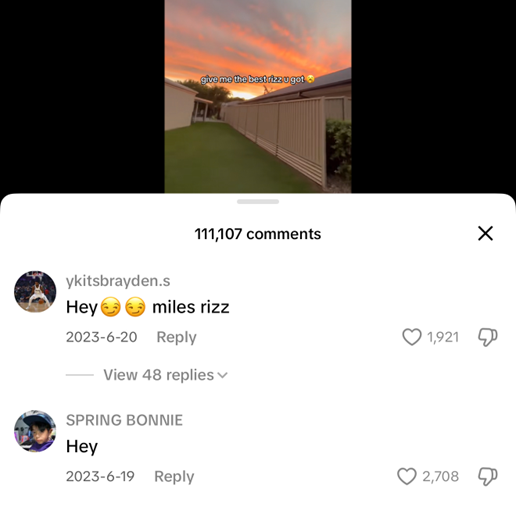
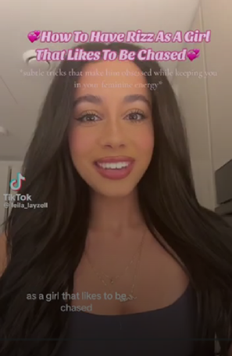
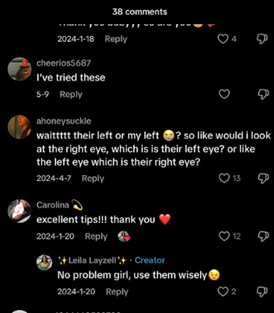
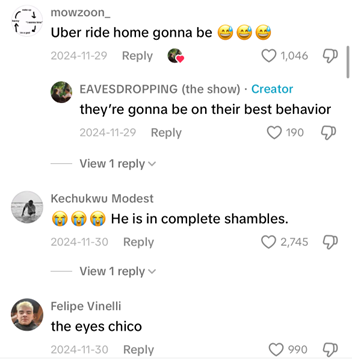
Our study applies qualitative and thematic discourse analysis to public commentary on four canceled public figures. James Charles, Dr. Disrespect, and Colleen Ballinger were all canceled for inappropriate communication with minors, while Chrissy Teigen was canceled for online harassment and bullying. We collected nondiscriminatory data from TikTok and Reddit, then randomly selected six comments per public figure from the collected data. Our analysis focused on the emerging patterns found in themes, tone, and sentiment. We then noted how the patterns we identified reflect gendered expectations and reactions in common culture. Thematic analysis was established by coding each comment for language, tone, and sentiment patterns. These codes were grouped into themes such as character attack, moral absolutism, victim reframing, body shaming, suspicion of feminine personas, redemption, minimization, believability, audience support, and jokes about appearance. We illustrated our findings with four graphs that were created by counting the occurrences of each theme per person and gender across the sample. Our graphs visually represent and compare the most common reaction themes and how they vary by case and gender.
Results and Analysis
Our findings revealed clear patterns of gendered responses in cancel culture discourse, supported by our thematic and linguistic data.
Male Figures – The responses to James Charles and Dr Disrespect were centered around humor and redemption. Charles and Disrespect received seven instances of redemption talk, five of minimization, and four of audience support. Commenters joked about the men nine times, using humor to deflect accountability, aligning with Sailofsky’s (2021) theory of minimizing male misconduct. Our findings suggest a pattern of forgiving and rationalizing men’s misconduct.
Female Figures – Chrissy Teigen and Colleen Ballinger were subjected to severe judgments. They faced seven attacks on their character, four of moral absolutism, and four of body shaming. The responses focused on the women’s appearance and morality, reflecting the severity of emotional surveillance of women in media (Dubrofsky, 2011). The data also revealed only three instances of jokes in the responses. Call-outs were also much more common for women than men, who had nine occurrences compared to two, highlighting a harsher scrutiny and lower tolerance for women and their misconduct.
Public defenses also suggested a gendered pattern. Men were defended through the minimization and trivialization of their actions and allowances for redemption. Supporting the theory of a double standard in forgiveness and trust, the women did not receive public support or defenses in the responses.
The findings support our thesis by demonstrating how responses to cancel culture are shaped by gender norms. Women are evaluated by what they do and who they are perceived to be. On the other hand, men are more likely to be separated from their actions and allowed to return to their careers. The unequal responses found in the cancellation discourse limit women’s ability to save their reputations from permanent ruin. This suggests that cancel culture does not function as a neutral or impartial form of accountability. Instead, cancel culture is shaped by gender norms and expectations. Rather than responding based on the severity of the misconduct, the public’s responses were contingent on gendered norms and assumptions that reflect who is viewed as redeemable or not.
Discussion and Conclusion
Our findings illustrate how cancel culture functions as a way to police morality, identity, and credibility in a gendered way. Male public figures like James Charles and Dr Disrespect were discussed using themes of understanding, minimization of their misconduct, and the allowance for their redemption. In contrast, responses to Chrissy Teigen and Colleen Ballinger centered on moral absolutism, character attacks, and body shaming. Our analysis suggests men are judged by their perceived intent or potential for change, while women are evaluated based on who people think they ought to be. Further, our findings suggest the personas of the influencers we examined add context to gendered standards. This is particularly important with a figure like James Charles. Charles is a male influencer who goes against traditional masculinity norms. Perhaps due to his perceived femininity and sexual orientation, he did not receive the same protection from appearance-based jokes as men like Dr Disrespect, who personifies stereotypical masculinity. However, his status as a male may have shielded him from the level of cruelty directed at women, particularly Chrissy Teigen, whose appearances were targeted ruthlessly.
The patterns we identified support existing literature on gendered surveillance, digital public shaming, and current understandings of respectability politics. The consistency in findings across public figures also supports the idea that cancel culture is not the equalizing accountability that people understand it to be. Instead, it reinforces double standards across genders. Women are more likely to face moral scrutiny tied to their appearance and character, while men are afforded redemption. Our research expands the understanding of online accountability and public discourse by exposing how cultural scripts of gendered forgiveness, credibility, and judgment persist even in places meant to challenge norms. As participants in online culture, we play a role in the narratives that shape the perception of public figures. Being mindful of how we respond to public figures’ misconduct, through the language we use and standards we uphold, can help challenge and reform gender bias in media scrutiny. Holding people accountable is important, but we must do so objectively and with self-awareness in order to foster an equitable digital society.
Figure 1: Thematic Findings in Cancelled Women’s Discourse
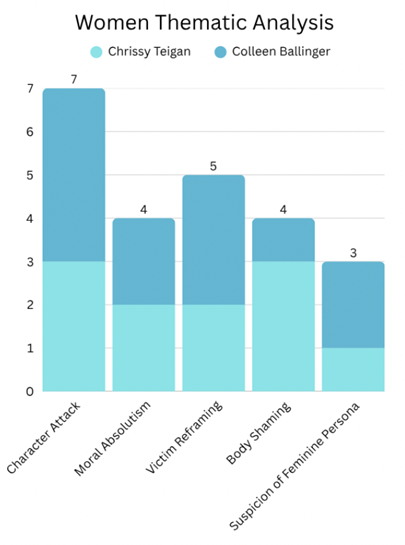
Figure 2: Thematic Findings in Cancelled Men’s Discourse
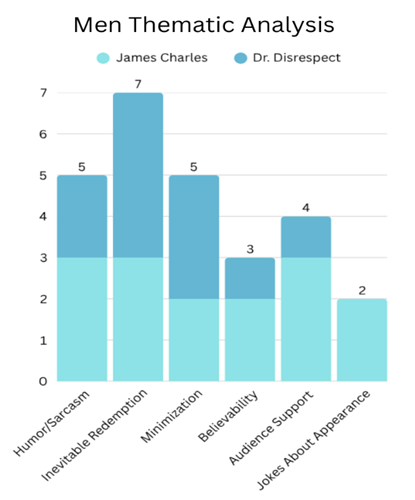
X-axis: Categories Identified in Comment Sections Y-axis: Number of Occurrences
Figure 3: Linguistic Findings in Cancelled Women’s Discourse
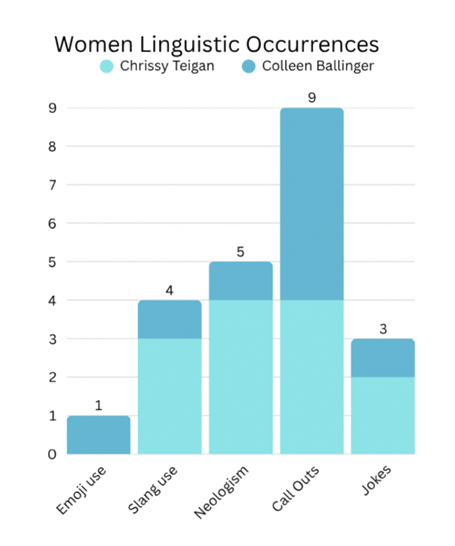
Figure 4: Linguistic Findings in Cancelled Men’s Discourse
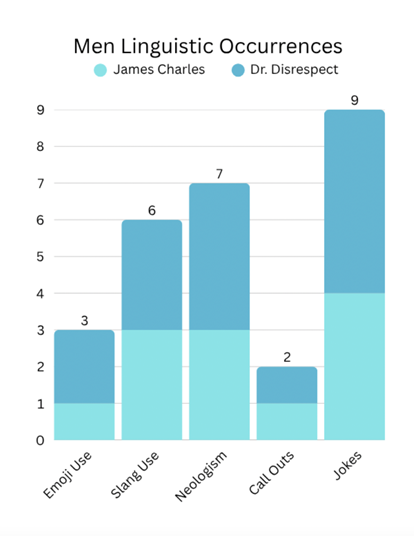
X-axis: Linguistic Categories Identified in Comment Sections Y-axis: Number of Occurrences
YouTube Videos on Cancel Culture
- James Charles Misconduct
James Charles Career Is Basically Dead. Why?
- Discussion Surrounding Dr Disrespect’s Misconduct Dr Disrespect Situation Just Got Worse
- Chrissy Teigen Misconduct
The rise and fall of ‘undercover bully’ Chrissy Teigen
- Colleen Ballinger Misconduct Colleen Ballinger Controversy: The FULL Story Break Down | E! News
- Problems in Cancel Culture TED Talk
Cancel Culture: The Decline and Disconnect Within Society | Jasmine Iacullo | TEDxYouth@NBPS
Keywords
- Gendered forgiveness: the observed phenomena of the act or severity of forgiveness being correlated to the presented gender of the accused or wrongdoer
- Asymmetric accountability: Individuals or groups are held responsible for their actions asymmetrically. The consequences, repercussions, or scrutiny they face are not equal to those of other individuals or groups.
- Misconduct minimization: downplaying the significance or severity of one’s wrongdoing through various methods to reduce guilt, shame, or accountability
- Aesthetic and emotional surveillance: The act of monitoring and analyzing a public figure’s appearance and emotions, especially women’s, to control, influence, or make judgments comparative to societal and gender norms
- Redemption: the successful offset or compensation for a defect, misconduct, or failure
References
Aprill, Julie, “The Effects of Moral Violations on Parasocial Relationships with Influencers” (2024). Electronic Theses and Dissertations. 3981. https://digitalcommons.library.umaine.edu/etd/3981
Banet-Weiser, S. (2018). Empowered: Popular Feminism and Popular Misogyny. Duke University Press. https://doi.org/10.2307/j.ctv11316rx
Bouvier, G. (2020). Racist call-outs and cancel culture on Twitter: The limitations of the platform’s mechanisms for accountability. Discourse, Context & Media, 38, 100431. https://doi.org/10.1016/j.dcm.2020.100431
Cameron, D. (2005). Language, Gender, and Sexuality: Current issues and new directions. Applied Linguistics, 26(4), 482–502. https://doi.org/10.1093/applin/ami027
Cohen, E. L. (2010). Expectancy violations in relationships with friends and media figures. Communication Research Reports, 27(2), 97–111. https://doi.org/10.1080/08824091003737836
De Kosnik, A., & Feldman, K. (Eds.). (2019). #identity: Hashtagging race, gender, sexuality, and nation. University of Michigan Press https://library.oapen.org/bitstream/handle/20.500.12657/24497/9780472901098.pdf
Dubrofsky, R. E. (2011). The Surveillance of Women on Reality TV: Watching The Bachelor and The Bachelorette. Lexington Books https://digitalcommons.usf.edu/spe_facpub/646
Marwick, A. E., & Caplan, R. (2018). Drinking male tears: Language, the manosphere, and networked harassment. Feminist Media Studies, 18(4), 543–559. https://doi.org/10.1080/14680777.2018.1450568
Minkkinen, L. (2024b). “Girl, you’re still cancelled”: analysis of public ‘cancel culture’ Apologies and responses. https://jyx.jyu.fi/jyx/Record/jyx_123456789_95151#description
Ng, E. (2020). No grand pronouncements here. . .: Reflections on cancel culture and digital media participation. Television & New Media, 21(6), 621–627. https://doi.org/10.1177/1527476420918828
Ochs, E. and Taylor, C.” (1996) The Father Knows Best:’ Dynamic in Family Dinner Narratives.” In Gender Articulated: Language and the Socially Constructed Self. K.Hall (ed). Routledge. Pp.97-121.
Sailofsky, D. (2021). Masculinity, cancel culture and woke capitalism: Exploring Twitter response to Brendan Leipsic’s leaked conversation. International Review for the Sociology of Sport, 57(5), 734-757. https://doi.org/10.1177/10126902211039768 (Original work published 2022)
Sobande, F. (2021). Spectacularized and branded digital (re)presentations of Black women on YouTube. Television & New Media, 22(2), 131–146. https://doi.org/10.1177/1527476420983745
Tukachinsky Forster, Rebecca & Spitz, Daniel. (2025). I Love You, but I Have Got to Cancel You: Psychological Consequences of Participation in Cancel Culture. Psychology of Popular Media. 10.1037/ppm0000598.