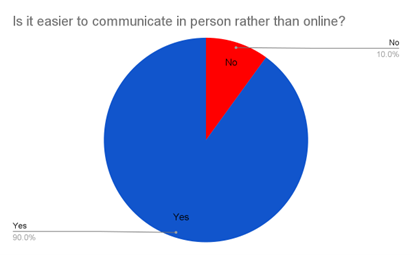
Have you ever wondered how code-switching and bilingualism can differ depending on the person you are communicating with? Do you feel that it can have an impact on relationships that are formed between people among different generations? This study explores how bilingual individuals across many generations who speak Armenian and English or Spanish and English may alter their approaches to communication when interacting with certain people. Additionally, we were curious to find out whether or not the closeness of people’s relationships affects their formality when communicating and code-switching. In order to find results, we conducted numerous semi-structured interviews and listened in on the conversations between college students and their relatives, while paying attention to word choice, syntax, and grammar when speaking. We concluded that (87%) of our interviewees believe that their relationship with their elders determines the formality of their communication style, often leading to difficulty when expressing oneself. By studying code-switching and bilingualism, we discovered a relationship between identity and communication that spans across generations.
Throughout our research, our target audience is the diaspora of bilingual individuals of a variety of age ranges, who speak either Spanish and English or Armenian and English. Our main goal is to focus on code-switching and the ways in which people of different generations communicate with one another. From our research, we sought to understand how students’ perspectives on being bilingual play a crucial role in understanding how speaking two languages can have an impact on their daily lives as they socialize with elders and people of their age. Prior to conducting any of our research, we hypothesized that Spanish and Armenian bilingual individuals would speak with more formality when with older family members and switch to speaking with less formality when with those whom they are closer to in age and relationship.
Methods
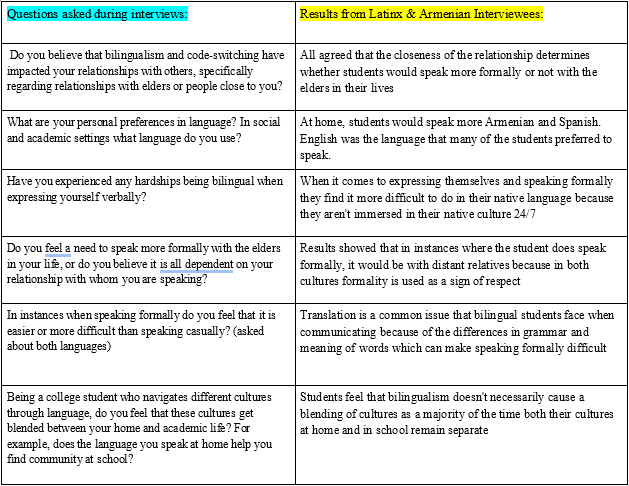
We looked at bilingual students who spoke English, and either Armenian or Spanish. We wanted to look at interactions between older and younger generations, so we focused on college students, as well as two parents with college children to have a contrasting perspective. Listening to phone calls allowed us to figure out which language was being used and when, although this method only allowed us to listen to one side of the conversation. We did this to see if there was a specific timing or reason that bilingual speakers switched the language being used. Another element we listened for in these phone calls was how formally college students were talking to those who were older than them. We determined formal speech by whether the speaker used slang, curses, or other language that would not be considered proper when speaking to the older generation. For Spanish speakers, the formal ‘usted’ was an indication of formal speech. After listening to phone calls, we also conducted interviews. The interview questions we used were open-ended and the same questions were used for all participants. We decided to use open-ended questions to allow freedom in responses. The questions asked can be found below, but all had to do with the participants’ thoughts on bilingualism as well as how they interact with those of the older generation.
Results and Analysis
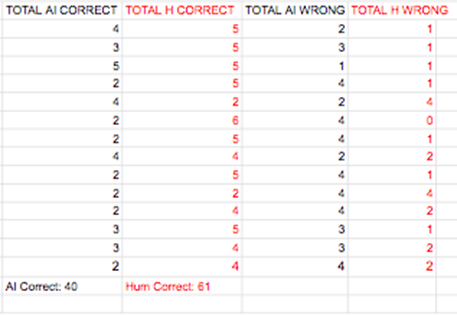
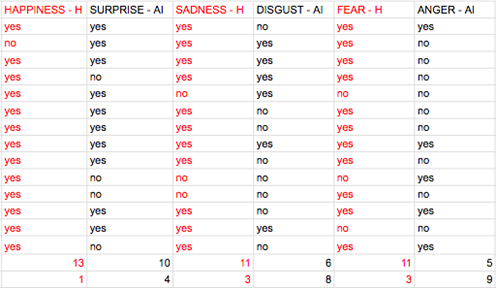
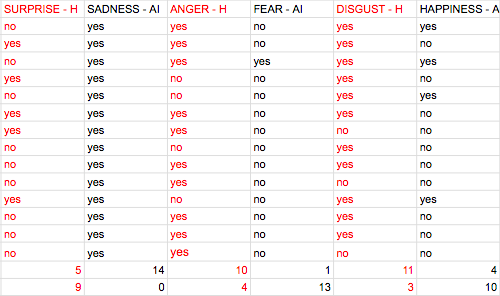
Figure 1: Summary of interview questions and answers
Discussion and Conclusions
In conclusion, our research has provided us with valuable insights into the intricacies of code-switching among bilingual individuals within the Spanish-English and Armenian-English speaking diasporas. By focusing on intergenerational communication patterns, we have uncovered the significance of word choice and formality levels in interactions between different age groups. Our findings highlighted that the main influential factor for one’s word choice and formality of speaking was having respect for older individuals with whom they are communicating as such respect is a cultural facet. This evidence sheds light on the intricate connections between language, cultural norms, and social relationships, showing how language use is shaped by both internal and external environmental factors. Overall, our research has given us an extensive and comprehensive understanding of the nuanced ways in which bilingual individuals communicate in various social situations.
References
Babino, A., & Stewart, M. A. (2017). “I Like English Better”: Latino Dual Language Students’ Investment in Spanish, English, and Bilingualism. Journal of Latinos and Education, 16(1), 18–29. https://doi.org/10.1080/15348431.2016.1179186
Heredia, R. R., & Altarriba, J. (2001). Bilingual Language Mixing: Why Do Bilinguals Code-Switch? Current Directions in Psychological Science, 10(5), 164–168. http://www.jstor.org/stable/20182730
Mata, R. “Bilingualism Is Good but Codeswitching Is Bad: Attitudes about Spanish in Contact with English in the Tijuana – San Diego Border Area.” Critical Inquiry in Language Studies, vol. 20, no. 4, 2023, pp. 386–407, https://doi.org/10.1080/15427587.2022.2136672.
Meisel, J. M. (1994). CODE-SWITCHING IN YOUNG BILINGUAL CHILDREN: The Acquisition of Grammatical Constraints. Studies in Second Language Acquisition, 16(4), 413–439. http://www.jstor.org/stable/44487780
Code Switching in Bilingual Development: a video showing examples of children coded-switching to give readers an audio/visual representation of what code-switching is
Talla Khattat, Jacob Gutierrez, Edna Tovar, Grace Yang, Al Jackson, Espie Maldonado
Why do all military characters in animation films have Southern accents? Throughout this blog, we aim to understand the world of languages in animated films and take you along with us. Audience members digest the creative choices that are made on screen and unconsciously learn to associate linguistic patterns with certain sociocultural elements. This research paper aims to observe the linguistic elements of accents and dialects to understand the correlating relationship with the language ideologies and cultural attitudes. We observed the films Aristocats (1970), The Secret of NIMH (1982), The Rescuers Down Under (1990), and Zootopia (2016), and categorized the different patterns observed based on several different elements. Our findings show that minority accents can be tokenized to invoke assumptions about a character in order to save screen time. We call on future research to understand how impactful some of these harmful depictions can be and emphasize the importance of respectful representation.
Many would agree that animated films are a huge part of one’s childhood. From Disney princes and princesses to a mice version of the United Nations, everyone enjoyed their fair share of animated movies. The beauty of animation is the freedom to shape an entire world from the ground up, where every character is completely designed from scratch, and every choice, from costume, to music, to voice is made intentionally. With this freedom also comes challenges with needing to establish connections from what is seen on screen with the minds of the audience. From the start of the film, the creators need to quickly establish character relations and connections. Here, they use language shorthands that the audience is indirectly familiar with to signal the persona of the character. Our group’s research question aimed to understand throughout a series of animated films what traits or roles are typically associated with certain accents, language varieties, styles, or registers? Within this realm, we also wanted to understand how Standard American English would be treated compared to other accents or dialects. We hypothesized that non-standard varieties of English/Non-English will be associated or invoked when connected to ‘bad’ or side characters, while standard American English will be most often connected to ‘good’ characters or protagonists.
Previous research has indicated that the cultural value of individualism in the United States is reflected in the use of standard English, which often leads to a lack of tolerance towards other languages or English language variations (Wiley, 1996). Although Disney animated films are often translated into standard English, it hinders the complexity of modern language and erases many cultural elements (Bruti, 2009). Moreover, we have also found that language elements can be used to invoke association about certain groups of people in film. Previous work completed by Meek shows how language and race perform character portrayals and as the audience, we witness this work that is being “done”. (Meek, 2006). In other words, accents are often used to not only demonstrate an ethnicity, but also substantiate a portrayal of a certain stereotype associated with a certain group of people.
Methods
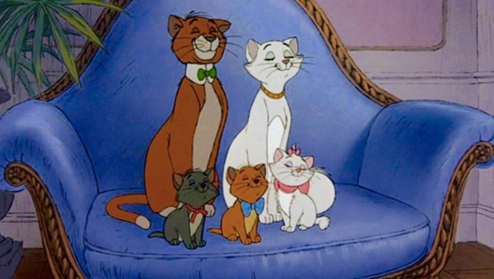
To gather data about the language ideologies and characters linked to them, we analyzed four different films; The Aristocats, The Secret of NIMH, The Rescuers: Down Under, and Zootopia. Particularly, we noted what accents and languages were used (or created) in these films and what characters or themes they were associated with. We chose to focus on animated animal characters since we felt that filmmakers could ‘get away with more’ and because language is the main humanizing factor in animal characters, we could better see how language/accents were being used to invoke assumptions about the character.
Watching the movies completely through and inspired by the methodology of a paper written by Janne Sønnesyn, we then categorized our character findings into several categories including their: language/accent, role in the movie, costume, character features, gender, and other distinguishable elements. In sum,we analyzed 66 characters along these 6 categories.
Moreover, by codifying our analyses, we can answer the research question, what traits or roles are associated with certain accents, language varieties, styles, and registers? How do the filmmakers express differentiation amongst characters through the use of language and character design?
Results and Analysis
After empirically analyzing our data, we found several patterns that confirmed part of our hypothesis and refuted others. We looked at our data as an aggregate, combining the findings from all four movies and examining the results in this way.
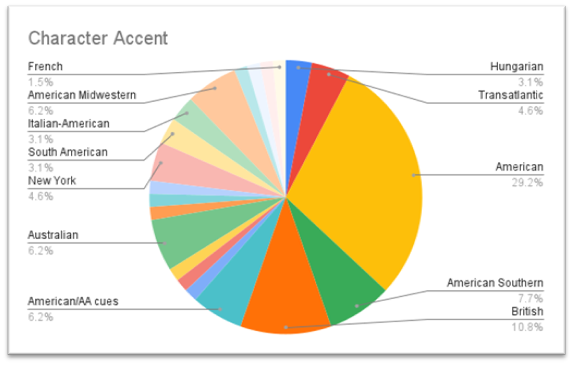
Figure 2: Character accent pie chart by percentage
First Result
Referencing Figure 1 which provides a visual representation of the distribution of the observed character accents, we were able to establish four distinct results. Firstly, we found that the protagonist(s) of the films indeed were associated with the American Standard English accent 54% of the time. Furthermore, 100% of the protagonists had European or American accents — in other words, no minority population accents were represented in the protagonists of these films.
Second Result
This point leads to a second key finding that minority population accents were typically attached to side characters. In fact, 64% of all side characters had a minority accent. Put differently, minority population accents were overrepresented in this character role and underrepresented in others. Heroes did not tend to have minority population accents. Notably however, no antagonist had a minority population accent either — which refuted part of our hypothesis.
Figure 3: Character ‘Duke Weaselton’ from Zootopia
Along the same lines as our minority population accents, non-rhotic accents (accents that ‘drop’ the pronunciation of ‘r’), were commonly used in connection to characters of low socioeconomic status or working class. Some examples of these non-rhotic accents were the New York accent and AAVE (African American Vernacular). We noted 5 characters that used a non-rhotic accent; 3 were associated with petty crime,1 was a working-class shop employee, and 1 was a ‘street’ cat (what we interpreted as houseless for our analysis). Figure 2 depicts one such character from Zootopia, Duke Weaselton, who has a New York accent and is one of the movie’s shady characters — involved in thievery, bootlegging, and evading arrest.
Third Result
Another pattern that emerged was the use of the American Southern Accent to invoke themes of militarism, violence, and unintelligence. Of all 5 characters observed to have the American Southern Accent, 2 were antagonists, 4 invoked themes of militarism (deduced through plot; such as one of the antagonists, McLeach —figure 4 — having the American Southern Accent and a past in the military), and 3 were displayed as unintelligent (deduced through plot — such as one character with the American Southern Accent calling, as seen in this clip (“It’s In My DNA – Zootopia” ‘DNA’, “dunnuh”).
Figure 4: The Rescuer’s: Down Under villain, McLeach
Fourth Result
The final pattern that we noticed through our data is that ‘sophisticated’ characters had American and European accents 88% of the time. We coded ‘sophisticated’ as characters that were portrayed as respected, legendary, wise, or graceful, which we deduced through plot and surrounding character reactions. For instance, one character in The Secret of NIMH was sought out in answer to the protagonist’s dilemma, since they were canonically ‘all-knowing’ and powerful. Of the 9 characters we coded as ‘sophisticated’, only one did not have an American or British accent.
Discussion and Conclusions
This study offers insights into the impact of accent features on stereotypes among animal characters in animation. While we cannot definitively speak on behalf of the filmmakers as to whether these depictions were intentional, we establish these findings as results of our observations. Furthermore, we recognize that these choices could be made subconsciously.
Media is one of the greatest socialization agents. Animated films play a huge role in influencing children’s perceptions of the world and other people. With repeated representation of problematic stereotypes, viewers will believe they are true. Our data spans 46 years, emphasizing that while progress has been made, there is a long way to go. While there are less explicitly harmful linguistic stereotypes being utilized, it is still true that protagonists consistently speak with ASE while side characters are relegated to minority accents. The biggest difference throughout time is a diversification of accents, but their distribution has remained the same. We must also consider the level of authority as a source of knowledge Disney has. For those who do not question the status quo, they are even more likely to believe in stereotypes when they come from a ‘reputable’ source like Disney. For this reason, it is crucial for filmmakers and powerful studios to be responsible and inclusive with the media they produce.
To further broaden our understanding of this phenomenon, it would be worthwhile to extend research to human characters in Disney animated films. According to Brous, this type of linguistic stereotyping occurs in films such as Frozen, Coco, and Moana (2020). It is clear that the negative representation through accents extends further than cartoon animals. Søraa’s work would be useful to explore a film like Brave, where the setting itself contributes to reflecting stereotypes portrayed through linguistic markers (2019). With regards to minority cultures, Towbin et al. would serve as a resource to study how non-dominant cultures are represented negatively, which can be seen in Pinocchio, Alice in Wonderland, Peter Pan, Oliver, and Aladdin (2004).
It is also essential to acknowledge the issue of stigmatization of the female characters in Disney movies, as highlighted by Soares (2017). According to Växjö (2014), Disney princesses exhibit many stereotypical linguistic features, so their characters adhere to the traditional gender roles and expectations. Moreover, it is important to examine the impact of misrecognizing accents and linguistic features in television and how it might affect child viewers, causing them to internalize negative stereotypes portrayed in animated programs. Wenke’s article (1998) can serve as a source for exploring how children’s attitudes towards people and activities can be influenced by the portrayal of linguistic elements in television programs.
In the end, the impacts of animated films and the representations of different peoples, cultures, and identities can have long-lasting impacts on the people, more importantly children who watch animated films. While it’s not a direct issue, the unintended consequences of filmmakers, animators, and writers have an important job in creating media that is representative, respectful, and for audiences of all ages, as many animated forms of media have previously encouraged and helped spread harmful stereotypes of minorities for decades.
Meek, B. A. (2006). And the Injun Goes “How!”: Representations of American Indian English in White Public Space. Language in Society, 35(1), 93–128. http://www.jstor.org/stable/4169479
Reitherman, W. (1970). The Aristocats. United States; Walt Disney Pictures.
Schumacher, T. (2012). The Rescuers Down Under. United States; Walt Disney Pictures.
Soares, T. (2017). Animated Films and Linguistic Stereotypes: a Critical Discourse Analysis of Accent Use in Disney Animated Films Part of the Bilingual, Multilingual, and Multicultural Education Commons Recommended Citation Soares, Telma O. (2017). Animated Films and Linguistic Stereotypes: a Critical Discourse Analysis of Accent Use in Disney. https://vc.bridgew.edu/cgi/viewcontent.cgi?referer=&httpsredir=1&article=1053&context=theses
Spencer, C. (2016). Zootopia. United States; Walt Disney Animation Studios.
Towbin, M. A., Haddock, S. A., Zimmerman, T. S., Lund, L. K., & Tanner, L. R. (2004). Images of gender, race, age, and sexual orientation in Disney feature-length animated films. Journal of Feminist Family Therapy, 15(4), 19–44. https://doi.org/10.1300/j086v15n04_02
Wiley, T. G., & Lukes, M. (1996). English-Only and Standard English Ideologies in the U.S. TESOL Quarterly, 30(3), 511–535. https://doi.org/10.2307/3587696
Cecilia Schmitz, Tommy Silva, Sinahi Torres, Ye Won Yoon
Communication takes a variety of forms including communication through the use of body language, but oftentimes different genders have shown differences in the way they use it to portray themselves. Previous research has indicated that men will participate in “manspreading” which consists of spreading out typically in public spaces, while women accommodate others. Other research shows that people tend to spread out when they feel a sense of dominance. In order to fill any possible knowledge gap, we formed a study to discover how relevant this research is to UCLA undergraduates. Our study was based on the research question: Do men and women use spatial movement and orientation differently, and does this reflect their respective gender identity? We hypothesized that men do take up more space than women and that women’s contracted body language would only be around men. This left room for interesting questions: do men always take up more space? Do the way women use body language get influenced by the gender they are around? As you continue to read our study, you will uncover whether this is relevant or if we notice other trends amongst the students.
Body language can often better indicate aperson’s expressionthan words and their face (Aviezer, et al., 2012). Many observations have shown body language differences betweengenders: men use it to assert dominance, whereas women accommodate others (Jane, 2017,). Using this, we saw how relevant it is to students at UCLA and compared whether this form of dominance is seen mainly amongst men, women, or both. Discourse is increasing about “man-spreading”: men seated and spreading their legs into others’ space (Vrugt, & Luyerink, 2000). We furthered this research focusing on the way that our target population takes up space and presents themselves through their body in their everyday life to see the difference and create a reflection of the current gender indexicality. We wanted to see if spatial orientation and body language are used to reinforce gender roles with a question: Do men and women use spatial movement and orientation differently, and does this reflect their respective gender identity? Based on current research, as well as our own observations on our fellow undergraduate UCLA population, we hypothesized that men will take up more space than women; however, we also predicted that women will occupy more space when they are only surrounded by women.
Methods
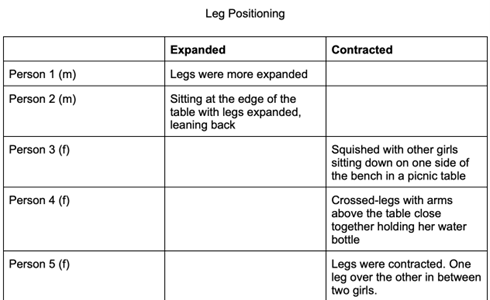
For the observational research method, we observed three different sample groups: only males, only females, and both together, in order to answer the question of if men and women use spatial movement and orientation differently. We observed and took photographs and timelapses to see if the subjects expanded or contracted their legs, turned their feet in or out, and folded or splayed their arms when sitting. We were interested in seeing how participants used their legs, arms, and feet to expand their body frame and occupy more space, used their extremities to contract and occupy less space, or simply rested to occupy their natural body frame position. To document this, we kept a chart of body positions after each observation. Here is a detailed explanation of how we specifically observed the male-only group:
We observed a group of 15 self-identifying males in a locker room: each male was seated and was spaced out so they were at least 1.5 feet from the person next to them, meaning they each had plenty of space to expand their body position however they wanted without coming into contact with the person next to them. Every single male sat in a position that occupied space beyond their body frame. Legs were the way that most men expanded their bodies, and for every man whose feet were placed on the floor, their feet were turned outwards. While leg and foot positions were used to expand body size 100% of the time, arm position changed very frequently. Overall, at least half of the males spent a significant amount of time with their arms within their body frame. We additionally observed a group of four females watching a movie on a bed in a dorm room: they were in closer proximity, trying to fit onto one bed. Each female had their legs contracted into each other, not expanding outwards. Three of the four females had their feet turned in and their arms folded; the fourth female had their feet under a blanket and thus not visible and their arms were splayed.
To see how our subjects’ observations reflected their respective gender identities and the body language that goes along with them by repeating this process with each observation group, we also conducted interviews in which we asked our subjects whether their friends when in a crowded space, assert their personal space or accommodate others. To analyze our data, we compared already existing research to our own observations, in order to figure out which, if any, of the theories are relevant to our findings. We then compared our answers with the observations collected on how body language is associated with gender and what the body language itself is associated with.
Image 1: Photograph of female-only group’s body language (4th member joined later)Figure 1: Example of chart to keep track of seated leg positioning
Results and Analysis (Observation Results and Interview Results)
Observation Results
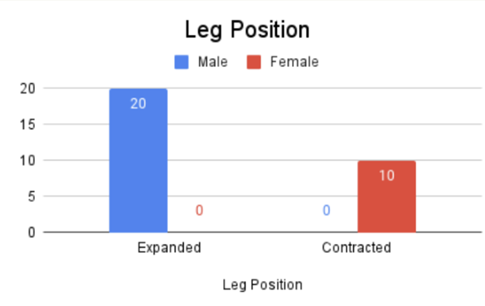
Our results found that males generally took up more space; females in general tended to contract as seen by the graphs documenting each genders’ distribution in the form of body language: all 20 men expanded their legs and all 10 women contracted.
Figure 2: Leg position observations graph (x-axis: contracted vs expanded y-axis: amount of people of either male or female)
Our data was consistent with our hypothesis that men take up more space than women, but we incorrectly predicted that women’s contracted body language would only be around men; instead, they were contracted all of the time. For example, while observing a club meeting on campus, we observed that all three men took up space with their legs, had their feet turned in, and three out of the three had their arms around another chair. On the other hand, the three women that were observed kept their legs close to their bodies, they had their feet faced forward, and two out of the three kept their arms on their bodies. Additionally, the all-female group without the presence of men was mostly contracted, with their legs, feet, and arms withdrawn into themselves.
Interview Results
Our interview of UCLA undergrads largely indicated a perception that men take up more space with their body language than women. We did not want to limit their answers to yes or no and gave options on their body position they noticed they were in most of the time. All but 1 found that men expanded their body shape in asserting their personal space, while all but 2 expressed that female companions would accommodate their space for others. Another question that we focused on in the interview was one that asked respondents if they notice a particular way of how authoritative figures in their life take up space.
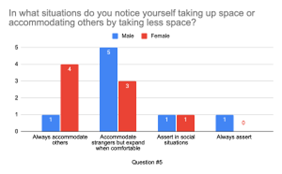
Figure 3: Female and male responses to, “In what situations do you notice yourself taking up space or accommodating others by taking less space?”
In this particular question, the responses varied in their positioning because they had to incorporate the many situations they were in. We hypothesized that there would be a mix of responses due to this. We also took into account that it could be a sensitive, abrupt question to ask the respondents and left it optional for them to answer.
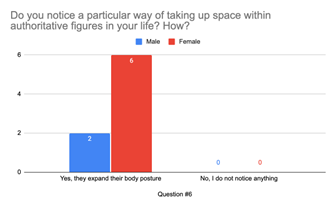
Figure 4: Female and male responses to, “Do you notice a particular way of taking up space within authoritative figures in your life?”
Out of 8 responses that we received, 6 females said that they did notice this pattern while 2 males said that they have noticed this trend. Although we can’t necessarily conclude a correlation between dominance and the way that people take up space, we do see a theme within our research and the participants in it.
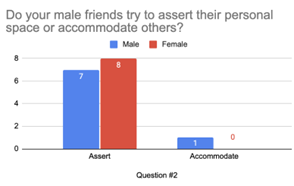
Figure 5: Female and male responses to, “Do your male friends either assert space or accommodate others?” (x-axis: whether they assert space or accommodate others, y-axis: amount of respondents)
In the graph shown below, we are able to indicate that 7 out of 8 male participants believe that their male friends assert their space. Looking at the female participant’s response, it shows an unwavering belief that their male friends assert their space.
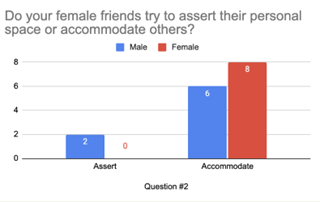
Figure 6: Female and male responses to, “Do your female friends either assert space or accommodate others?” (x-axis: whether they assert space or accommodate others, y-axis: amount of respondents)
We also asked the question to focus on the female body positioning, the results are shown in the figure below. 2 out of 8 male participants felt their female friends asserted space, while 6 of them noticed them accommodating space. All of the female respondents listed that they notice their female friends in accommodating space for others.
Discussion and Conclusions:
Overall, this study was designed to acknowledge the way that we and others take up space which can help us be more considerate of how it comes off to others as well as utilize it to indicate different parts of our identity, whether it be masculinity, femininity, or authority. It is also important to take into consideration that there may be limitations to this study because it was performed in the time span of only ten weeks and was focused on a population limited to UCLA undergraduates. For example, in regards to the male-only data set, there are some unique features of this data set that could impact their body position. All of these males are soccer players. They were in their locker room and surrounded by their teammates; thus, they were in a room where they have spent a lot of time in and were surrounded by people who they are comfortable with, all of which could have a big impact on the way they chose to situate their body position. Nonetheless, these findings do suggest that men are typically more inclined to assert their space in social spaces while women will tend to contract when around any gender. Using the theoretical frameworks that we learned in class, we can also postulate that men consciously or subconsciously occupy more space, especially with their legs, to indicate their masculinity; women may contract their limbs to indicate femininity. However, based on our interview questions, our findings also suggest that people view power and position of authority as a factor linked to how much space people assert. In the future, it would be interesting to study how body language and gender identity are linked with authority; how do men and women use body language differently when they want to convey power?
Ethics Declaration
All participants gave their verbal consent to be studied for body language, and all participants voluntarily completed the Google Forms survey.
Aviezer, H., Trope, Y., & Todorov, A. (2012). Body Cues, Not Facial Expressions, Discriminate Between Intense Positive and Negative Emotions. Science, 338(6111), 1225–1229. https://doi.org/10.1126/science.1224313
Vrugt, & Luyerink, M. (2000). THE CONTRIBUTION OF BODILY POSTURE TO GENDER STEREOTYPICAL IMPRESSIONS. Social Behavior and Personality, 28(1), 91–103. https://doi.org/10.2224/sbp.2000.28.1.91
Shadi Shans, Eleanor Moheban, Rishika Mehta, David Saidian, Monica Sargsyann
As internet relationships become more widespread in the modern world, people are relying on creative methods to display their love digitally. The objective of this study was to investigate which of the two, online or in-person couples, enjoy a stronger sense of relationship satisfaction given the means available to communicate affection. Our target group included 20 college students who were in relationships. Emojis, FaceTime calls, voice messages, as well as physical touch, and quality time are among the linguistic and communicative norms frequently used by our target audience. In general, internet communication can be useful and provide opportunities for asynchronous interaction. However, our hypothesis, which proposed that in-person communication provides a more personalized and intimate experience, leading to greater satisfaction, was confirmed.
It is well acknowledged that effectively showing affection to one’s partner leads to increased relationship satisfaction. Online and in-person relationships both rely on different resources to communicate their love for their partner. Some findings suggest that frequent internet communication cannot accurately predict the quality of a relationship due to its limitations such as misinterpretation, and lack of meaningful conversation. Conversely, face-to-face couples predict greater satisfaction, suggesting that engaging in meaningful experiences in person fosters connection in a relationship, (Lee, 2011, pg. 378). Another study by Kaitlyn Goldsmith suggested that long-distance couples use more diverse, and frequent methods of communication on text, but geographically close relationships report greater satisfaction, due to physical proximity ensuring fulfilling interpersonal interactions, (Goldsmith, 2020, pg. 300). Individuals may now enter long-distance relationships more easily thanks to technological advancements. These online partnerships rely on internet technologies such as Facetime and texting to communicate their affection. On the other hand, physical touch and quality time are the most frequently utilized resources used to express love to one’s partner in person. Through the distribution of questionnaires and two interviews with college couples, it was discovered that most couples felt that communicating affection in person allowed them to strengthen their relationship satisfaction. Yet, it was shown that long-distance relationships can still be reasonably fulfilling, only if resources like Facetime call emojis are utilized.
Methods
We administered a survey online to 20 college students, 19 males and 1 female, aged between 18-25 years old. The students were from any local university in California, 10 being in a long-distance relationship, 10 being in an in-person one. The survey included questions about basic demographic information, relationship satisfaction measures, the methods of communication that long-distance couples used to compensate for lack of physical touch, and the most common forms of communication for in-person relationships. There were also questions about the frequency of resources such as phone calls, text messages, and Facetime. The participants in virtual relationships were asked to send optional screenshots of the text messages, to show examples of certain emojis or words used that may increase love or relationship satisfaction. The results of the participants were statistically analyzed after a week, and the survey was followed up with more concrete interviews of two of the participants, one being in a long-distance relationship, the other in an in-person one. The participants were both 19-year-old females dating their significant other for over a year. The semi-structured interview was conducted on Zoom, and lasted around 12 minutes. The interview guide was developed based on results that required further analysis from the survey. The interview guide consisted of questions asking the long-distance couples about how often they feel fulfilled in their relationships, despite the challenges of long-distance such as lack of physical closeness, shared experiences, and communication difficulties during conflict. They were also asked about the means of communication they employed to compensate for lack of quality time. The in-person relationships were asked more in-depth questions about how often they express appreciation, gratitude, and love to their partner in person, and how it impacts their relationship satisfaction.
Results and Analysis
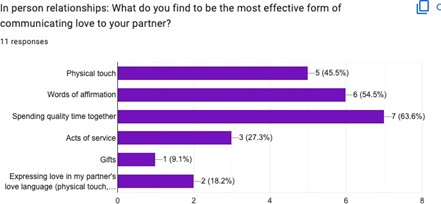
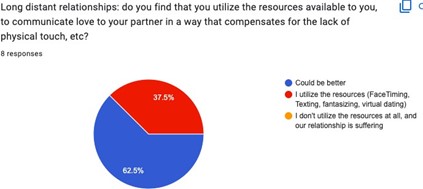
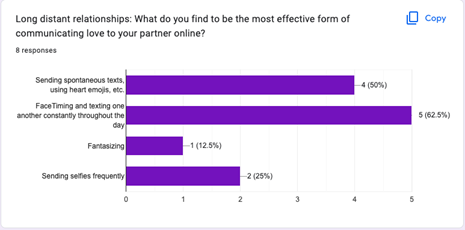
Upon review of the results of our data sampling, where women made up 60% of the sample, 90% of subjects identified as heterosexual, while one identified as bisexual. The sample was evenly divided with 50% long-distance partners and 50% in-person couples. 37.5% of participants dated their significant other for longer than a year. Facetime emerged as the most preferred method of contact for long-distance relationships, as well as the most efficient. In-person couples found quality time to be the most effective form of expressing love to their partner. Emoji-filled text messages, voice note messages, and FaceTime calls were used in long-distance relationships to compensate for the absence of physical contact. 76.9% of face-to-face relationships reported using Facetime once a day. Contradictorily, the long-distance couples used Facetime multiple times a day. They discovered that the best way to express their affection to their partners was through Facetime and constant texting throughout the day. Long-distance relationships are, on the whole, “somewhat satisfied” with their relationships. In contrast, our findings suggest that in-person relationships are highly satisfied, as Lee anticipated in her study, owing to the capacity to engage in meaningful in-person encounters. (Lee, 2011, pg. 378). Among analysis of the interview participants, it was revealed that the long-distance couples utilized Facetime and voice notes on text messages as a way to engage in deep and meaningful interpersonal conversation, whereas the in-person couples primarily utilized Facetime, and text messages to stay informed about their partners’ activities. The long-distance partner articulated that quality of communication is more valuable than the frequency, noting that having one in-depth conversation on Facetime is more efficacious than timing multiple times a day for a short period of time. The long-distance partner reported conflict in their relationship, conveying that the lack of quality time led to a sense of longing for physical touch, leading to arguments about trivial issues. The in-person partner reported that relationship satisfaction was greatest when the couple traveled together and shared enjoyable and meaningful experiences, and explained that online methods of communication were not as correlated to relationship satisfaction. Overall, the in-person partner felt increased levels of satisfaction, as the long-distance relationship wished there were more creative ways to maintain love and connection with their partner, even from a distance.
Figure 1: Results from Question 7Figure 2: Results from Question 8Figure 3: Results from Question 12
Discussion and Conclusions
Our study allowed us to explore what factors, and resources predict positive, or negative relationship satisfaction in both in-person and long-distance relationships. Our study illuminates the importance of addressing these individual preferences, and suggests that physical closeness, and intimacy are key components of feeling fulfilled, and satisfied in a relationship. Overall, our results benefit platform creators, as well as mental health counselors because it allows them to be aware of the areas that long-distance couples may need accommodation and find ways to increase their satisfaction. Our results highlight how necessary it is for technology creators and mental health professionals to develop effective strategies in order to ensure long-distance couples are as satisfied as in-person couples. In an article by Ann Kegley, it was mentioned that interventions from platform creators are necessary to enhance the closeness of long-distance relationships such as online date ideas including virtual escape rooms, or even services that offer personalized gift packages, that can allow couples to feel just as connected as in-person couples, regardless of the distance, (Kegley, 2018, pg. 379-381). Additionally, our results provide insight to counselors who can create intervention methods that address the complicated obstacles that come with expressing love in a distance. Psychologists may help their clients have realistic expectations, while also enabling them to brainstorm unique methods of online communication that can promote love and bond. Goldsmith suggests in a Maintaining Long Distance Relationships study, that therapists can intervene by developing a treatment focusing specifically on conflict resolution, using the principles of emotionally focused therapy to allow clients to be aware of their attachment styles, helping long-distance couples develop activities to foster a strong sense of commitment with their partner, (Goldsmith, 2020, pg.340-346). There should be further studies that address the long-term effects of long-distance and in-person relationships, and whether or not physical closeness increases the overall duration of a relationship, while exploring these patterns across various different genders, ages, and geographical locations.
Kegley, J. A. (2018). Royce on self and relationships: Speaking to the digital and texting self of today. The Journal of Speculative Philosophy, 32(2), 285-303.
Lee, P. S. N., Leung, L., Lo, V., Xiong, C., & Wu, T. (2011). Internet Communication Versus Face-to-face Interaction in Quality of Life. Social Indicators Research, 100 (3), 375–389. http://www.jstor.org/stable/41476404
Yoonhye Kim, Yuka Tanaka, Asaka Minami, Eugene Jo, Zivana Ongko
Have you ever wondered why a simple text message can be interpreted differently by people from different cultures? We were curious about how cultural differences affect communication in romantic relationships and identify the causes of miscommunication among people from different cultural backgrounds. This study compares how college students from East Asian and American cultures express love through text messages and explores the cultural factors that contribute to these differences. The study surveyed 30 college students between 18-24 years old, consisting of 15 American students and 15 East Asian international students from China, Japan, and South Korea. Participants provided demographic information, self-reported love languages, and text message screenshots, and their language was analyzed as direct or indirect speech. Results showed that American students tend to express love through more direct language, using terms of endearment and direct declarations of love, whereas East Asian students use more indirect and implicit expressions of affection. The study highlights the cultural differences in the understanding of love and expressions of affection, shaped by norms, values, individualism, and collectivism. The findings suggest that cultural factors play a significant role in shaping linguistic expressions of love and the use of nonverbal cues in text messages.
Love comes in many forms, and the means of communicating love vary across countries and cultures. This study aims to compare how college students from East Asian and American cultures express love through linguistic expression, specifically in text messages. The focus is on the directness of verbal expressions of affection and the contextual meaning of indirective expressions. Our research question is: “What are the differences in verbal (text) and nonverbal (emoji) communication in expressing love through text messages between college students in America and East Asian countries who have been in a romantic relationship for more than one month, and what cultural factors contribute to these differences?” We hypothesize that American students tend to express love through a more romantic language characterized by directness and expressiveness in their verbal expressions of love, whereas East Asian students may also be more hesitant to express their feelings directly (e.g., these students tend to respect cultural norms that value modesty and reserve in emotional expression). The use of nonverbal cues like emojis in text messages may be more prevalent in East Asian cultures due to their tendency to utilize an indirect style of language.
Background
Cultural differences in the understanding of love are shaped by norms, values, and expressions of love are influenced by individualism and collectivism (Kline and Zhang, 2008). American cultures are more passionate and erotic, while East Asian cultures tend to be more pragmatic. Individualistic cultures, like those found in America, tend to place a higher value on individual autonomy and self-expression, leading to a more open and expressive approach to love and relationships (Seki et al., 2002). In America, college students often use terms of endearment, pet names (e.g., sweetie, baby, babe, honey), and direct declarations of love in their text messages (e.g., “I love you,” “I miss you,” “Thinking of you,” “Can’t wait to see you,” “You mean everything to me”). In contrast, the collectivist cultures of many Asian countries prioritize interdependence and social harmony, leading to a more reserved and indirect approach. Students from East Asian countries tend to express love through a pragmatic love language, using more indirect and implicit expressions, such as indirect compliments or expressions of concern (e.g., “Did you eat,” “I will pick you up,” “How’s your day”).
East Asians tend to use emojis more frequently as a subtle way to express affection or interest, rather than relying on explicit statements. (Togans et al., 2021). Additionally, East Asians were “more careful in which emojis they used in situations, being more sensitive to show their concerns for others” (Johnson, 2021). Love is represented more directly in Western cultures which emphasize sexual communication and passion, while Eastern Asian cultures emphasize care and pragmatism. Gesselman et al. ‘s (2019) study found that emojis express complex feelings with a single symbol, enhancing successful intimate relationships. Frequent use of emojis is linked to stronger interpersonal connections and facilitates emotional expression in romantic relationships (Gesselman et al., 2019).
Methods
We aim to conduct a study on 30 college students between the ages of 18 and 24, comprising 15 American students and 15 East Asian international students from China, Japan, and South Korea. Our research will examine how these two groups differ in their use of verbal language, with regard to directness, as well as the use of emojis, in expressing affection through text messages. American students tend to express their emotions using direct language like “I love you” or “I miss you,” whereas East Asian students tend to use implicit expressions of affection like “Did you eat?” or “You must be tired today” and more emojis to convey their concern for their partner. Participants will complete a Google Form, providing demographic information and self-reported love languages used in text messages with their partners. They will have the option to submit text message screenshots and participate in a follow-up interview to give more context about their mood and situation when sending specific messages. We will inform participants that their responses will remain anonymous, and they can select the text message segments they wish to share, as well as delete or hide particular segments of their screenshots. For analysis purposes, we’ll sort the Google Form responses into two groups: American and East Asian students, then analyze their language to categorize it as direct or indirect speech. We had difficulty finding previous studies that offer clear-cut criteria for distinguishing between direct and indirect expressions of affection in verbal communication, so we developed our own. We define direct expressions of affection as those that convey affection even when the words are taken as they are, such as “I love you” or “I care about you,” while indirective expressions of affection are those that are less explicit in their phrasing yet manage to convey feelings of love through their tone or context, such as “Are you eating and sleeping well?”
Results and Analysis
Utilizing the data from our survey, we were able to generate the following figures that summarize results to key questions.
Figure 1: What do you call your partner?
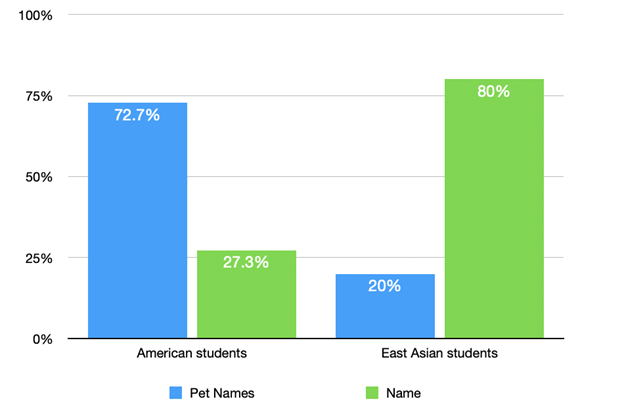
As seen in Figure 1, about 72.7 % of American students tend to use direct language and terms of endearment like “baby” or “sweetie,” while 80% of East Asian students use names to refer to their partners rather than pet names. Cultural differences can be observed in the way people refer to their partners, as evident from the varying practices between American and East Asian students.
Figure 2: Verbal expressions used by American students vs. East Asian students
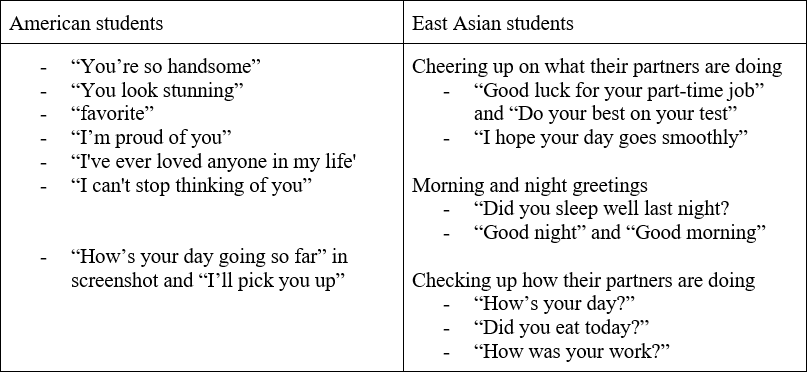
Using Figure 2’s data, we analyzed direct and indirect expressions of love in caring for one’s partner, and found that both groups show care and concern, albeit with different approaches. While Americans tend to use more explicit direct language, as we anticipated, such as expressing their love and thoughts toward their partners through direct compliments, Asians tend to use more indirect language, such as offering encouragement, sending morning and night greetings, and checking on their partners’ well-being daily. Interestingly, however, the expressions “I love you” and “I miss you” are frequently present in both American and Asian cultures. Additionally, Americans tend to employ more direct language, such as “looking forward to meeting you soon,” while Asians tend to use more indirect language, such as “I want the weekend to come already.” The use of different subjects in their messages also accentuates the contrast in directness.
Figure 3: How often do you use emojis in your text message? (The chart displays the numerical values that correspond to the quantity of individuals)
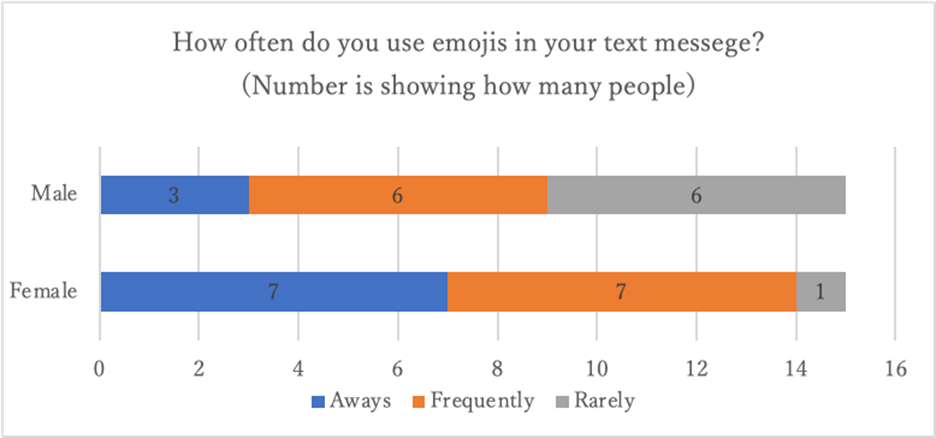
Lastly, we examined the differences in emoji usage between East Asian and American students, and the results were unexpected. Contrary to our initial hypothesis, cultural background had little effect on emoji usage, while gender and personality traits had more dominant factors. Additionally, we analyzed the use of emojis by gender, and Figure 3 illustrates that females used emojis more frequently and explicitly, often with a literal heart, while males used heart emojis combined with other images, such as 😍 and 😘. Interestingly, despite their tendency to use indirect verbal language, Asian students were not hesitant to use direct emojis like ❤️or 🫶to express love.
Discussion and Conclusions
The present study sheds light on the cultural differences in the expression of romantic love between American and East Asian students. Our results confirm that American students tend to use more direct language and pet names when referring to their partners, reflecting the culture’s emphasis on individualism and direct communication. These expressions allow individuals to convey their personal feelings and affection directly. Interestingly, both groups frequently use the expressions “I love you” and “I miss you,” indicating that these phrases hold universal significance in expressing romantic love. We also found that American students tend to employ more explicit direct language, while East Asian students use more indirect language, such as offering encouragement and checking on their partners’ well-being daily. In contrast to our initial hypothesis, we found that cultural background had little effect on emoji usage, while gender and personality traits had a bigger impact on the use of emoji.
Moreover, our study highlights the seeming balance of indirectness with words and more direct emojis used by East Asian students, challenging the common stereotype of East Asians as being overly indirect in communication. While it is challenging to draw a definitive conclusion, we have proposed several possible explanations for this phenomenon based on cultural and linguistic factors. Indirectness is often considered polite in East Asian cultures, while emojis can effectively convey emotions and meanings that are difficult to express in words. Even shy individuals may use emojis to express their affection and maintain a balance of love in text conversations. Understanding the nuances of both direct and indirect expressions of affection can help bridge communication gaps in these situations. The practical implications of this research extend to education and counseling, providing strategies to support students from diverse cultural backgrounds in their relationships.
References
Caldwell-Harris, Kronrod, A., & Yang, J. (2013). Do More, Say Less: Saying “I Love You” in Chinese and American Cultures. Intercultural Pragmatics, 10(1), 41–69. https://doi.org/10.1515/ip-2013-0002
Gesselman, Ta, V. P., & Garcia, J. R. (2019). Worth a thousand interpersonal words: Emoji as affective signals for relationship-oriented digital communication. PLoS ONE, 14(8), e0221297–e0221297. https://doi.org/10.1371/journal.pone.0221297
Kline, Horton, B., & Zhang, S. (2008). Communicating love: Comparisons between American and East Asian university students. International Journal of Intercultural Relations, 32(3), 200–214. https://doi.org/10.1016/j.ijintrel.2008.01.006
Laursen, Furman, W., & Mooney, K. S. (2006). Predicting Interpersonal Competence and Self-Worth From Adolescent Relationships and Relationship Networks: Variable-Centered and Person-Centered Perspectives. Merrill-Palmer Quarterly, 52(3), 572–600. https://doi.org/10.1353/mpq.2006.0030
SEDIKIDES, OLIVER, M. B., & CAMPBELL, W. K. (1994). Perceived benefits and costs of romantic relationships for women and men: Implications for exchange theory. Personal Relationships, 1(1), 5–21. https://doi.org/10.1111/j.1475-6811.1994.tb00052.x
Seki, Matsumoto, D., & Imahori, T. T. (2002). The Conceptualization and Expression of Intimacy in Japan and the United States. Journal of Cross-Cultural Psychology, 33(3), 303–319. https://doi.org/10.1177/0022022102033003006
SPRECHER, & TORO-MORN, M. (2002). A study of men and women from different sides of Earth to determine if men are from Mars and women are from Venus in their beliefs about love and romantic relationships. Sex Roles, 46(5-6), 131–147. https://doi.org/10.1023/A:1019780801500
Togans, Holtgraves, T., Kwon, G., & Morales Zelaya, T. E. (2021). Digitally saving face: An experimental investigation of cross-cultural differences in the use of emoticons and emoji. Journal of Pragmatics, 186, 277–288. https://doi.org/10.1016/j.pragma.2021.09.016
Wilkins, & Gareis, E. (2006). Emotion expression and the locution “I love you”: A cross-cultural study. International Journal of Intercultural Relations, 30(1), 51–75. https://doi.org/10.1016/j.ijintrel.2005.07.003
Language is often considered a window into a culture, but what happens when that window starts to close? In many families, heritage language communication can be a complex and nuanced issue, especially when it comes to older and younger siblings. While the older generation may have grown up speaking the language fluently, their younger siblings may struggle to maintain their proficiency. Data was collected and analyzed, showing the trend that older siblings were more proficient than their younger siblings when communicating with their parents in their heritage language. This correlates with our background research which discusses sibling language proficiency and code-switching within bilingual families. We explore the communicative differences between parents and their children, and how confidence when speaking, code-switching, and understanding of the heritage language all play small roles in the relationship children have with their parents. Our main findings indicated that the younger siblings had less proficiency and that parents were more likely to support heritage language use with their older child, which could create a closer relationship between them.
A few questions we aimed to understand were: When examining heritage language communication between a parent and their second-generation children, is one sibling more proficient than the other when corresponding with the parent? Are communication dynamics and abilities differing between siblings, and? How is the confidence and language style of one sibling different from the other sibling when in communication with the parent? We hypothesized that if the older sibling is more proficient in the heritage language than the younger sibling, then the parent often will encourage the less proficient sibling to communicate more in the heritage language as one may avoid using the language due to difficulty.
Siblings play an important role in shaping the overall language environment within immigrant families, and their language choices influence the family language policy. Older siblings often act as language experts and help younger siblings develop their language skills (Kheirkhah & Cekaite, 2017). However, younger siblings may find it easier to use English over their heritage language, leading to more code-switching, which is defined as the alternation between two or more languages in the context of a conversation or situation.
Heritage language ties how siblings communicate with their parents as data has shown that bilingual Chinese language speakers strived to maintain their language due to their parents’ wish for them to know Chinese strongly. Language is the factor that facilitates communication between family, siblings, and spouses (Budiyana, 2017). Heritage language is important as it strengthens and reinforces bonds with the heritage community and leads to greater overall connectedness with family and friends who also speak the language (Vallance 2015).
Methods
We explored data from five bilingual families: one parent and two children with varying proficiencies in a heritage language. All participants signed a consent agreement (parents signed for their adolescent children under 18) and completed a survey that functioned both as a pre-selection tool and a way to gather relevant socio-demographic info, where asked age of all participants, all languages spoken, and amount of years the language has been spoken. Names and any identifiable information were removed to maintain participants’ anonymity.
Parents were asked to sit down with each sibling and audio-record a conversation in the heritage language to the best of their abilities, asking for up to ten minutes of audio recording. The parent was asked to maintain the flow of the conversation by asking follow-up questions when their child responded to the question posed to observe a more natural conversation. We tasked each parent and sibling to answer three conversational questions: “Tell me about your favorite part of your day today,” “Let’s discuss a movie TV show that you recently watched that you enjoyed,” and “What is your favorite thing to do on the weekend?” By gathering audio recordings, we were able to notice differences between the pairs of siblings in comparing the number of times each sibling code-switched, their confidence levels, and whether a sibling self-corrected or if a parent was inclined to correct their child when errors were made. Through observing these three key features in heritage language-speaking siblings and their conversations with a parent, we can better understand the role language holds in maintaining a relationship between siblings and parents.
Results and Analysis
From our five sets of participants, one parent and two siblings per set, we transcribed, counted, and observed the frequency of each sibling’s code-switching from their heritage language to English. From this data, we counted the number of code-switches that younger siblings produced and calculated that on average they would switch to English twelve times in ten minutes, which is around 83% of the time. When the same method was used to count and calculate for the older siblings, we concluded that they code-switched on average seven times within their ten-minute conversations, equaling 70% of the time.
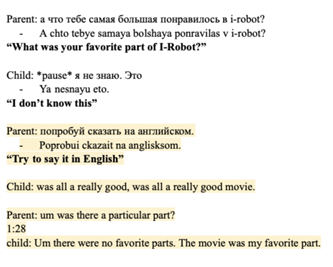
Through observing code-switching patterns, we noticed that parents were more likely to correct their older children when they made errors or code-switched from their heritage language to English. When it came to younger siblings, parents were more lenient in allowing their children to continue speaking in English as shown in an example in Figure 1.
Figure 1- Conversation between parent and younger child- parent allows for English language use
The younger sibling in this example is asked by the parent to respond in Russian, and when the sibling responds in English, the parent continues to follow up in the non-heritage language. One can also observe that earlier in the transcript the younger sibling can say that they don’t know how to say something using their heritage language, right before code-switching to English. The younger sibling also seems to avoid giving many details when speaking, as they are less confident in using the heritage language throughout their speech. One can observe this when the sibling uses a filler word before reiterating the same two responses to their parent.
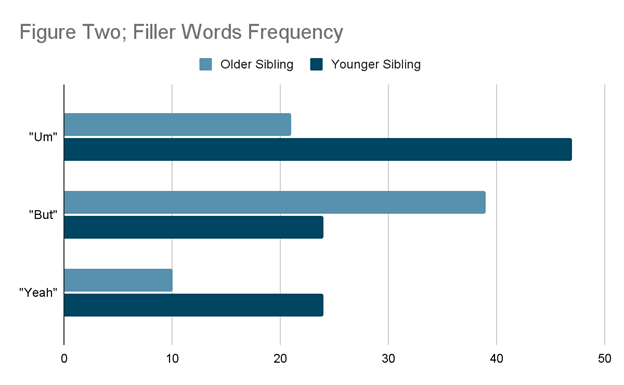
We observed noticeable differences in confidence levels between siblings when conversing with parents in the audio recording. Siblings used filler words like, “um” “but” and “yeah” which indicated how sure one was when answering a question. This analysis revealed that higher usage of filler words showed that a sibling was less confident in using their heritage language when answering questions. We counted the number of filler words used throughout all interviews and showed them in Figure 2.
Figure 2- Amount of times siblings use filler words in speech
This data was collected to validate our results as we compared the number of filler words used to the level of confidence siblings showed in their language use. “Um” was used significantly more than “But” and “Yeah” as it was used as a break when one was thinking of more dialogue. “But” was used significantly more by the older sibling and was observed to occur before or after they code-switched to transition back to the other language. “Yeah” was used less often, but was an indicator used when one was finishing a train of thought. Many siblings had limited vocabulary when speaking, so it was imperative to our study to track the number of filler words.
Discussion and Conclusions
Researching heritage language maintenance within families opens one’s eyes to the efforts parents make to preserve and pass on their language to their children. Many aspects play into siblings’ understanding, communication, and confidence when using a heritage language, and we as researchers were able to uncover differences between how older and younger siblings communicate with their parents. The hypothesis we explored was that older siblings are more proficient in the heritage language as compared to the younger siblings, and because of this, the parents would encourage the less proficient sibling to communicate more in the heritage language as a way to improve their language skills. After observing a variety of communication aspects between siblings and parents, we were able to conclude that our hypothesis was partially true. We found that out of all our sibling pairs, every younger sibling was less proficient in speaking their heritage language, as they code-switched more often and exhibited less confidence through using filler words, in comparison to the older siblings who demonstrated a stronger grasp of the language. As researchers, we hypothesized that the less proficient sibling, within our data being the younger one, would be more likely to get corrected by their parents when making grammatical mistakes, or code-switching, but we were wrong. It was more likely that a parent would correct the older sibling’s heritage language use and allow the younger and less proficient sibling to speak English. We can consider the idea that parents are more likely to correct their older children as a way to preserve and maintain their proficiency, knowing that the younger sibling holds less strength in the language.
If we had more time to further this study, we would most likely broaden the number of subjects we had, provide deeper questions, and use surveys to gauge more attitudes on language use, and the impact it has on parent and child relationships. A few limitations that we did not consider were whether the genders of siblings played a role in their proficiency, if parents being immigrants played a role in proficiency, and whether the age at which the language was learned played a factor in subject experiences. We were able to conclude that older siblings were much more likely to be the stronger speakers when it came to using the heritage language, in comparison to their younger siblings. Unfortunately, we could not fully determine if parents had a closer bond with the more proficient children, but we can assume that they can connect more through bilingual communication.
References
Altman, C., Burstein Feldman, Z., Yitzhaki, D., Armon Lotem, S., & Walters, J. (2013). Family language policies, reported language use and proficiency in Russian – Hebrew bilingual children in Israel. Journal of Multilingual and Multicultural Development,35(3), 216-234. doi:10.1080/01434632.2013.852561
Budiyana, Y. E. (2017). Students’ parents’ attitudes toward Chinese heritage language maintenance. Theory and Practice in Language Studies,7(3), 195. doi:10.17507/tpls.0703.05
Kheirkhah, M., & Cekaite, A. (2017). Siblings as language socialization agents in bilingual families. International Multilingual Research Journal,12(4), 255-272. doi:10.1080/19313152.2016.1273738
Nitta, F. (1996). Socialization of “International children”. Kazoku Syakaigaku Kenkyu,8(8). doi:10.4234/jjoffamilysociology.8.97
SORENSON DUNCAN, T., & PARADIS, J. (2020). Home language environment and children’s second language acquisition: The special status of input from older siblings. Journal of Child Language,47(5), 982-1005. doi:10.1017/s0305000919000977
Tess Ebrami-Homayun, Saba Kalepari, Hannah Pezeschki, Shaina Tavari
One in five parents reports that they will never have a conversation regarding sex education with their children. The avoidance and uncomfortable nature of this conversation led us to explore the differences in communicative patterns between mothers and fathers to find what gives this conversation these attributes. To conduct our research as UCLA undergraduate students, we analyzed various media portrayals coming from advertisements, movies, and TV shows. We looked at how often euphemisms and communication aspects occur. In our research, we were able to find distinct patterns in every “talk,” such as low tones/long pauses, similar settings, conversation ending on a ‘high,’ indirectness/vague word choice, awkwardness/shame, and lack of eye contact. By bringing attention to these patterns, we can provide parents with a better understanding of how to communicate sexual health concerns to their children.
“The talk” refers to the first and awkward time when a parent(s) explicitly discusses sex and sexual health with their children, often showing typology themes of awkwardness and seriousness that are attributed to “the talk.” This conversation has an uncomfortable and awkward connotation attached to it, leading us to want to explore the linguistic and communicative patterns that collectively work together to give “the talk” this connotation (Ashcraft, 2017). In our study, we found a difference in the way parents speak to their children about sexual health depending on the child’s gender. This TED talk highlights the importance of having “the talk” to combat the negative association with the subject of sex (Talking dirty: De-stigmatising conversations on sex | Kate Dawson | TEDxGalway). Our target population is various types of media portrayals within the last 20 years of “the talk” between parents and children between the ages of 13-20. Our study attempted to answer the research question of how different communication aspects between mothers and fathers culminate in the shameful nature of “the talk.” We predicted that our research would show different communicative patterns between mothers and fathers (Grossman, 2022). Furthermore, we discovered common communicative patterns in “the talk” between mothers and fathers, such as low tones/long pauses, similar settings, resolution, awkward body language, and indirectness, including vague word choice.
Methods
The methodological design we used to collect data for our research on “the talk” was looking at available digital media examples depicting “the talk” between a parent and their child, specifically scenes from TV shows, YouTube videos, or ads using stereotypical patterns associated with “the talk.” Every member of the group had a similar idea of what to look out for in the data samples: awkwardness, similar settings, conversations about sex specifically and not puberty, long pauses, lack of eye contact, indirectness or vague word choice, and a resolution at the end of the conversation. We collected seven media portrayals from advertisements and scenes from movies and TV shows, to see how often euphemisms and communication aspects occur.
Results and Analysis
From our data results, we discovered that “mothers display similar levels of concern toward sons and daughters” about “the talk,” while fathers exclusively spoke to their sons about the talk (Butler, 2008). These results reflect similar gender stereotypes regarding the mother’s and father’s roles in the household, where the father is the ‘breadwinner,’ and the mother is the ‘homemaker’ (Robles, 2017). Mothers are often expected to take on extra household tasks, including having “the talk,” without any additional credit. Contrastingly, fathers simply have to go to work to provide income for the household, receiving praise for being the ‘king of the house.’
Notably, our results should not be taken as true results of an experiment since we did not conduct inferential statistics. In the 7 data samples we coded, the results showed low tones/long pauses, similar settings, conversation ending on a ‘high’, indirectness/vague word choice, awkwardness/shame, and lack of eye contact.
Low tones and long pauses
Low tones and long pauses were specifically prevalent in the mothers giving “the talk,” while fathers were more abrupt and aggressive in their tone of voice. This difference can show the natural softness present in mothers as opposed to fathers generally being more abrasive in their speech (Darling & Hicks, 1982). For example, in the TV show Young Sheldon, the father is giving “the talk” to his son, but his tone of voice suggests his disinterest (Figure 1):
“I’m just gonna grab a beer.”- Dad
“Has he had the talk yet?”- Grandma asked Sheldon’s Father
“Cmon’ Connie”- Dad rolling his eyes at the grandmother
“You’re probably not going to [have sex]”- Dad to his son Sheldon
In Young Sheldon, the father is seen completely brushing off the conversation and discouraging his son from having “the talk.” In contrast, what we found in the mothers in our data sample; for example, in Big Mouth, frequently talk in a low tone to support their daughter, who claimed to have had a bad sex experience and no longer wants to have sex. The mothers in our data were much more willing to have “the talk,” using softer tones to suggest supportiveness and understanding of the uncomfortable conversation.
Figure 1- Young Sheldon getting “the talk” from his father: His father does not have a low tone here.
Settings
There were also similar settings in all the data samples; nearly every scene was on a bed or couch, with the parent and child sitting on opposite ends. The lighting in our data was mostly dim, probably to depict a sense of uncomfortableness for the subjects in the data. The settings were consistent between mothers and fathers when having “the talk” with their children. For example, in Sex Education, Otis is having “the talk” with his mother in their living room on the couch (Figure 2):
“Do you want to talk about it?- Mom
*Otis in silence*
“I want you to know you can talk to me about anything. This is a safe place”- Mom
“This is not a safe place mom, you need to stop analyzing everything I do”- Otis as he storms out of the room
The mother was supportive in this conversation, while Otis was wildly uncomfortable. Part of this could be from the setting of the room, which was dimly lit, and because they are sitting on the couch trying to keep a distance between themselves. If the lighting is dim, the person is likely to feel uncomfortable (Michigan State University, 2018).
Figure 2- Sex Education characters having “the talk” on a couch: Otis and his mother are seen awkwardly sitting on the couch, and the room has dim lighting.
Ending on a ‘high’
In our data samples, “the talk” always ended on a ‘high’; there was always a resolution by the end. For example, in the Amazon ad (Figure 3) we sampled, the conversation between the mother and her daughter went like:
“I’m glad we had this talk”- Mom
“Me too”- Daughter
While the conversation is happening, the parents and the child are uncomfortable. However, by the end of “the talk,” there is some sort of resolution to end the conversation and address that the conversation was necessary.
Figure 3- Mother and Daughter in the Amazon Ad getting “the talk”: The mother and daughter are about to hug in this image after “the talk”, showing resolution.
Indirectness and Vague Word Choice
There was also indirectness and vague word choice in all of our data samples. Patterns associated with indirectness included avoiding the word “sex” explicitly and the general topic of sex in the conversation. For example, in our Bridgerton sample, Lady Bridgerton ends the conversation when her daughter asks about sex. (Figure 4):
“How does a lady come to be with child?” – Eloise to her Mother
“What Eloise?”- Mother
“I thought a lady had to be married.”- Eloise
“Eloise that is more than enough!”- Mother
*Eloise’s brothers enter the conversation*
“Don’t look at me”- Brothers
“I do hope the two of you [the brothers] are not encouraging improper topics of conversation”- Mother to Brothers sitting with Eloise
“Not at all Mother”- Brothers
In this conversation analysis the mother shuts down the conversation by avoiding using the word “sex,” and by deeming the conversation in general as ‘unladylike.’ Eloise did not even know what ‘sex’ was, as she thought it was a product of marriage.
Figure 4: Bridgerton Mother and Daughter having “the talk”: When approached with a question related to sex, Lady Bridgerton abruptly shuts down the conversation in efforts to avoid the topic.
Awkwardness and Shame
Awkwardness and shame are heavily associated with “the talk” from our gatherings. We found that themes of awkwardness and shame are present in all seven data samples. One example is from That 70’s Show, where we see the father on numerous occasions responding in an abrupt tone to demonstrate his strict attitude against sex to his son (Figure 5):
“Let’s talk about birth control” – Kitty Forman to her son
“Birth control? Don’t do it. That’s your birth control” – Red Forman responding to Kitty Forman to his son
“Did you know Lori is flunking out of college?” – Eric Forman asking both parents
“Don’t change the subject. You got strange thought in your little head mister and that Don is a nice girl” – Red Forman told his son in response
“Red, you’re giving him the wrong idea about sex. It’s not dirty-” – Kitty Forman in response to Red
“But it’s not clean either” – Red Forman’s response
The father was frequently stern in his approach to clearly show his son that sex is a ‘dirty’ activity he should not partake in. When it came to his son, he was quick to highlight all the reasons he should not do it because it’s shameful. The father inflicts shame on his son for even mentioning sex, while the mother tries to alleviate that shame by deeming “sex” as “not dirty.” Both parents should make their children feel comfortable and build up their self-esteem with “the talk” to normalize it (Keeton, 2019).
Figure 5- That 70s Show: In this scene, Red Forman engages in the conversation, attaching a shameful connotation to sex, while Lori expresses support and speaks more relaxed.
Eye Contact
Lastly, we noticed a lack of eye contact during “the talk” until the resolution occurred at the end. Lack of eye contact may be associated with the awkwardness of “the talk,” where neither the parent nor child wants to be there having the conversation. Avoiding eye contact can be a way that humans try to avoid the conversation as a whole (Parvez, 2023). This can be seen in our data sample from Friday Night Lights, where the mother is having “the talk” with her daughter. (Figure 6):
“What about Birth control?”- Mother
“Mom, I don’t want to talk about it.”- Daughter
“That’s the conversation.”- Mother
“Yes, we’re using birth control”- Daughter
In the beginning parts of the conversation, the daughter visibly looks uncomfortable. Not only does her body posture suggest it, but also the lack of eye contact while talking about contraceptive use. This suggests that the mother and daughter are uncomfortable with this topic (Mullis, 2020). While the conversation is obviously awkward between the mother and daughter, the mother still has a low tone of voice while trying to be supportive of the daughter’s decision to start having sex.
Figure 6- Friday Night Lights Mother and Daughter having “the talk”: They are avoiding eye contact while talking about safe sex.
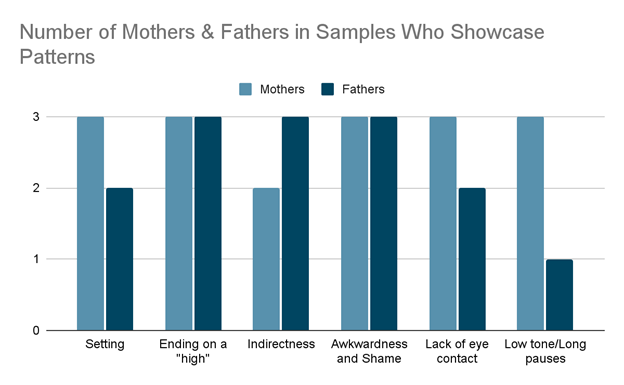
Based on our 7 data samples and the above-mentioned communicative patterns relevant to “the talk” when analyzing the data, we see the gendered differences between mothers and fathers during “the talk.” Figure 8 provides a bar chart depicting how often each communicative pattern in “the talk” that we mention appears with each parent.
Discussion and Conclusions
Having identified the communicative patterns culminating in the uncomfortable nature of this conversation, parents can approach this situation differently in efforts to create a more welcoming and comfortable environment for them and their child. The samples show common themes within “the talk” in regard to communicative patterns between mothers and fathers. While our data samples supported our predictions, it is important to note that we did not conduct a true experiment or present inferential statistics. Any quotes we used to back up our results are only with the assumption that if we properly conducted an experiment, our results would be generalized to the public, however, we cannot because these are not true scientific results.
A parent’s word choice and level of directness regarding sexual health have the potential to impact their body confidence and safety (Ashcraft, 2017). The data collected shows that by changing or eliminating said behaviors, like maintaining eye contact and avoiding long pauses, parents can work towards fostering a welcoming environment when having this conversation with their children. In our attempt to examine the ways the media portrays “the talk,” we wanted to see how mothers and fathers approach the conversation, and whether it differs when talking to their sons or daughters. While “the talk” is naturally uncomfortable, it is inevitable, so children can have an honest education on sex. Hence, the importance of demonstrating the ways different approaches may foster either a successful or unsuccessful educational experience between a parent and child. By considering the various familial dynamics during “the talk” that could create an awkward and uncomfortable atmosphere, we may emphasize effective tools to help improve the overall outcome of the conversation and strengthen family communication.
Figure 7- Chart showing the difference in the mother and father’s communicative patterns (0= it did not appear with that parent in the sample 1= barely present in the sample 2= moderately present in the sample 3= highly present in the sample)
Ashcraft, Amie M, and Pamela J Murray. “Talking to Parents About Adolescent Sexuality.” Pediatric clinics of North America vol. 64,2 (2017): 305-320. doi:10.1016/j.pcl.2016.11.002
Butler, R., and Shalit-Naggar, R., (2008). “Gender and Patterns of Concerned Responsiveness in Representations of the Mother-Daughter and Mother-Son Relationship.” JSTOR, https://www.jstor.org/stable/27563524, pp. 836-851.
Darling, C. A., & Hicks, M. W. (1982). Parental influence on adolescent sexuality: Implications for parents as educators. Journal of Youth and Adolescence, 11(3), 231–245. https://doi.org/10.1007/bf01537469
Grossman, J. M., Richer, A. M., Hernandez, B. F., & Markham, C. M. (2022). Moving from Needs Assessment to Intervention: Fathers’ Perspectives on Their Needs and Support for Talk with Teens about Sex. International journal of environmental research and public health, 19(6), 3315. https://doi.org/10.3390/ijerph19063315
Herron, K. (2019). Sex Education. Eleven Company, Retrieved from Season 1 Episode 1 on Netflix.
Mullis, M. D., Kastrinos, A., Wollney, E., Taylor, G., & Bylund, C. L. (2020). International barriers to parent-child communication about sexual and reproductive health topics: a qualitative systematic review. Sex Education, 21(4), 387–403. https://doi.org/10.1080/14681811.2020.1807316
Robles, J., and Kurylo, A. (2017). “Let’s Have the Men Clean up’: Interpersonally Communicated Stereotypes as a Resource for Resisting Gender-Role Prescribed Activities.” JSTOR, https://www.jstor.org/stable/26378342, pp. 673-693.
Within today’s society artificial intelligence has reached levels that were once deemed unimaginable, from simple computer programming to being able to perform tasks such as mimicking human emotional body language. However, the question at hand around artificial intelligence is: to what extent can artificial intelligence “accurately” express human EBL? We answered this question through our own research on UCLA undergraduate juniors and seniors. We first asked participants to fill out a survey to gather their demographic information, followed by a zoom interview for the experimental portion. Each participant was displayed with twelve images (6 AI and 6 humans) depicting EBL. Through our examinations, we discovered that AI does have the ability to accurately mimic specific human bodily emotions; however, humans are better able to identify emotions when expressed by other humans rather than by AI. We discovered that when it came to ethnicity, culture, and gender, participants had split opinions on its effect on their overall responses, as only some believed it played a role in their ability to correctly identify the EBL of humans and AI. Our research can help technology continue to evolve, possibly to a point where society can no longer distinguish the differences between AI and humans.
Figure 1: The Dangers of Misinterpreting Body Language! (A scene in which nonverbal communication is completely misinterpreted, showing the consequences of the inability to understand.)
Introduction and Background
In order to communicate with others, humans utilize modes of both verbal and nonverbal communication. One mode of nonverbal communication is the use of emotional body language (EBL). In our research, we defined EBL as physical behaviors, mannerisms, and facial expressions–whether purposeful or subconscious–that are perceived and treated as meaningful gestures relaying emotional significance to the onlooker (de Gelder, 2006). The progressive development of artificial intelligence allows AI to mimic human behaviors (Embgen et al., 2012), as well as assess human individuals’ communication, including EBL, as seen in use of AI in job interviews (Nordmark, 2020). These combined factors lead us to question, to what extent can current AI “accurately” express human EBL?
Our target population for this research was college students, as they may potentially work alongside AI in their future workplaces. Our sample population was made up of UCLA juniors and seniors. The “accuracy” of AI’s EBL was based on the ability of our participants to identify AI expressing the emotions of anger, disgust, fear, happiness, sadness, and surprise, as compared to their ability to identify the same EBL expressed by humans. Through our research, we aimed to answer the question: To what extent can university students understand the emotions expressed by artificial intelligence through its utilization of EBL to communicate nonverbally?
We hypothesized that our participants would be able to identify AI EBL, though not as well as they would be able to identify human EBL. An additional caveat to our hypothesis was our belief that differences in EBL interpretations between our participants would be due to cultural differences harbored by our participants, as that would be a main difference between them, given they would all be around the same age range and go to the same school.
Through our project, we aimed to analyze the differences in individuals’ interpretation of human and AI EBL to hopefully make correlations between how different groups interpret certain gestures, or if there is some universal EBL. To expand upon that, we were curious if AI would be able to capture EBL that is naturally seen in humans (Hertfordshire, 2012). We finally understand the importance of different cultural norms regarding the body and as such, were attentive to this fact when asking others to study EBL, not only viewing the “multimodality in human interactions,” but also understanding the effects different cultures have through the lens of both technology and traditions colliding with one another (Macfayden, 2023).
Methods
Our experiment utilized both qualitative research as well as thematic analysis, as we looked for common themes within human-to-human and human-to-technology interaction. As seen through previous experiments, such as Stephanie Embgen’s (Embgen et al., 2012), we understand that humans do have the capability of identifying emotions through AI EBL. Through our experiment, we surveyed and interviewed 14 UCLA juniors and seniors.
Each participant was asked to fill out a Google form, providing information on their demographic information.
Figure 2: Link to Google Form filled out by participants
Figure 3: Participants – Gender and Culture/Ethnicity (Left column contains 7 male participants and their respective ethnic/racial identities. Right column contains 7 female participants and their respective ethnic/racial identities.)
After the survey, we met with our participants via Zoom for an interview. Through the interview, our camera and audio were off while the participants’ were on. This precaution was in order to avoid any possible biases due to participants seeing our own body language or tonal changes in voice. We presented the participants with two sets of six images containing the emotions of anger, disgust, fear, happiness, sadness, and surprise. The images were sorted randomly, alternating between human and AI. The human images were created by us while the AI images were of Kobian, a robot created in the Japanese University of Waseda which is able to display numerous human emotions (Takanishi Laboratory, 2015).
Figure 4: Emotional Sequences (The images on top are of the Kobian robot expressing human emotional body language. On the bottom are humans expressing human emotional body language.)
After each image, our participants would identify the emotion, elaborating on why they chose that emotion, how they would express that emotion themselves, and then were informed which emotion was shown. At the end of the interview, we asked our participants whether they felt there were any discrepancies in their results due to their culture, ethnicity, or gender, something examined in the work of Miramar Damanhouri who asserts that the utilization of body language and other forms of non-verbal communication can lead to misinterpretation as different cultures/ethnicities have different rules and verbal cues (2018).
Figure 5: Link to Examine Interview Powerpoint and Process
Figure 6: Results – Total AI Correct (Black) vs. Total Human Correct (Red) (Each row shows the results for a single participant and the total AI/Human images they identified correctly/incorrectly. At the bottom it’s shown that the cumulative number of correctly identified AI images were 40 for all the participants, while the cumulative number of correctly identified human images was 61 for all the participants.)
Through our results, we noticed which emotions participants had an ease or difficulty identifying. Participants had difficulties identifying the emotional expressions of Happiness (only 4 correct), Fear (only 1 correct), and Anger (only 5 correct) when expressed by AI. On the other hand, 14 participants were able to correctly identify Happiness and 10 were able to correctly identify Surprise when examining AI. When examining human EBL, participants had difficulty identifying surprise (5 correct) and had ease identifying happiness (13 correct), sadness (11 correct), disgust (11 correct), and anger (10 correct). As a whole though, participants took more time to identify AI EBL, even those they got correct, over human EBL, some of which they identified instantly.
Figure 7: Results Per Emotion (red is human; black is AI) (Table containing the results for each participant identifying the EBL displayed by both AI and humans, AI in black and human in red. A “yes” means it was correctly identified, while a “no” means it was not correctly identified.)
We hypothesized that differences in EBL interpretations would be, in part, due to the cultural, ethnic, and gender differences harbored by our participants. When examining our participants, we discovered that many felt that their ethnicity, gender, or culture hadn’t played a part in their responses, with 6 expressing that it had, 2 expressing maybe, and 7 expressing no. For example, one of our participants explained how the individuals within their respective culture don’t show much emotion, they are very straight faced, and this affected their responses.
Overall, our results showed that humans are able to identify human emotions better than AI; however, it’s important to note that within the experiment, humans were able to identify certain AI emotions over their human counterparts, showing that there is at least some level of shared understanding between humans and AI; this is something that society continues to advance in an attempt to mimic human emotions.
In conversations with our participants, we found there were certain human tendencies in EBL that our participants found lacking in the AI representations, such as the lack of smile lines around eyes or flushed cheeks, both of which participants found to be an integral part of EBL that they use to identify certain emotions. These characteristics were ones that AI was unable to mimic in the images we used. We also found discrepancies in how our participants viewed EBL based on how they personally expressed the emotion. These included difficulty identifying the human “surprise” example and difficulty identifying the AI “fear” example. A question we would ask the participants is if they felt that they display the emotion in the same way as the image, and when shown images that they had difficulty identifying, a majority shared that they did not express the emotion in the same way. A factor that may have contributed to these difficulties is the fact that the human images were made by us, as the researchers, based on our own individual perceptions of the EBL. Not all EBL is universal, and so differences in this vein could have affected those answers. In addition, the split results in regard to how much our participants’ race, ethnicity, and gender affected how accurately they were able to identify the EBL displayed was too close to formally draw any conclusions from, and so our hypothesis that the discrepancies between their responses and the correct answers would be due to these factors cannot at this time be proven or disproven. Further research is needed to analyze that question more thoroughly.
Overall, these findings can help to fine tune AI imitations of body language as AI continues to develop, as it has not quite mastered human EBL yet. Our findings also emphasize the way both differences and uniformity in expressing oneself through body language work to create meaning through gestures that can be understood (or misunderstood) by others that express themselves in similar/different ways.
References
Damanhouri, M. (2018). The advantages and disadvantages of body language in Intercultural communication. Khazar Journal of Humanities And Social Sciences, 21(1), 68–82. https://doi.org/10.5782/2223-2621.2018.21.1.68
de Gelder, Beatrice. “Towards the Neurobiology of Emotional Body Language.” Nature Reviews Neuroscience, vol. 7, no. 3, Mar. 2006, pp. 242–49. www.nature.com,https://doi.org/10.1038/nrn1872.
Embgen, S., Luber, M., Becker-Asano, C., Ragni, M., Evers, V., & Arras, K. O. (2012). Robot-Specific Social Cues in Emotional Body Language. 2012 IEEE RO-MAN: The 21st IEEE International Symposium On Robot and Human Interactive Communication, 1019–1025. https://doi.org/10.1109/ROMAN.2012.6343883.
Hertfordshire, A. B. U. of, Beck, A., Hertfordshire, U. of, Portsmouth, B. S. U. of, Stevens, B., Portsmouth, U. of, Kim A. Bard University of Portsmouth, Bard, K. A., Hertfordshire, L.U. of, Cañamero, L., & Metrics, O. M. V. A. (2012, March 1). Emotional body language displayed by artificial agents. ACM Transactions on Interactive Intelligent Systems. Retrieved January 27, 2023, from https://dl.acm.org/doi/abs/10.1145/2133366.2133368
With the burgeoning of technology, communication has drastically changed and shifted to texting on electronic devices. Unparalleled to this, conversations have become much more accessible, and texting has revolutionized the way we interact with one another, but at what cost? The purpose of this study was to determine the factors that lead to miscommunication in the digital world. The methodology used was survey research, in which the data collected were through questionnaires that were administered to participants individually. The participants were of the ages 18 to 22, undergraduate students at UCLA, and in a romantic, heterosexual relationship. The participants were asked a series of questions about whether or not there is miscommunication online between them and their partners. If so, they were asked to submit a screenshot demonstrating miscommunication or explain their interaction. Overall, the findings from the survey indicate that miscommunication online occurs frequently as a result of a lack of social cues, including tone, emotion, body gestures, and facial expressions. Many couples had issues with mistaking texts as a joke, missing a joke, not understanding sarcasm, not understanding passive aggressiveness, and mistaking blunt responses as rude.
With the prevalence of technology in today’s society, texting has become the most prominent form of communication. Texting is convenient and easily accessible, as it does not require all participants to be active at the same time, unlike conversing in-person or over the phone. By 2010, worldwide, there were five billion mobile connections, and it was estimated that on average, Americans sent 50 to 110 texts per day (Hall & Baym, 2011). However, the biggest issue texting entails is miscommunication, which is a result of indirectness, a lack of non-verbal cues, and a lack of impersonal connection. In computer-mediated communication, such as texting, many may use emojis to communicate, as it helps depict facial expressions and display emotions and gestures. Though, there may be incongruencies between the receiver and the sender, as the perceived meaning of the emoji may not be the intended meaning (Yang, 2019). Using emojis and texting cannot precisely convey emotions, body language, intonation, gestures, and all other cues that would be present in-person communication. For our study, we distributed surveys to individuals that are in relationships and communicate online to gauge the efficacy of communication via texting. If the participant agreed that texting results in miscommunication, we asked them to provide screenshots to corroborate our thesis. We hypothesize visual cues (e.g. facial expressions, eye contact, gestures, tone of voice) have fundamental communicative functions, and the absence of them when communicating online leads to miscommunication.
Methods
In order to conduct this study, we asked a series of questions that contextualized respondents’ opinions on, and style of, online communication; then, we asked respondents to either send in screenshots or a written account of a miscommunication with their partner. Our target audience was 18-22-year-old UCLA students in heterosexual relationships; in order to collect samples, we sent out surveys to people who we knew to be in active relationships. There were 11 survey questions in short answer format. Some of the questions that were more important in the analysis of our data were:
Gender identification (Male, Female, other).
In general, do you find it easier to communicate online or in person?
Why do you prefer in person/online communication more?
Do you feel like you can tell others what you want to say properly online? How about in person?
Do you feel more understood when communicating in person or online?
Do you find that your partner communicates in a different way than you do online?
Can you provide screenshots of a conversation with your partner that resulted in miscommunication? (For example: something over text that resulted in a miscommunication/argument, sarcasm that was misunderstood, misinterpreting tone, etc. No need to share anything too personal, just any type of miscommunication over text!)
If you can’t find any screenshots, can you provide a written account with examples of a miscommunication with your partner that occurred online?
How was this miscommunication resolved?
The segments of the survey we analyzed more closely were the responses related to conflict resolution in online communication. The questions relating to respondents’ perspective of online communication helped to contextualize their miscommunications with their partners; offering possible explanations to why the miscommunication happened in the first place and how dissonance in communication is resolved The screenshots and accounts that respondents provided were the most pertinent to our analysis because they helped to emphasize the importance of body language and visual cues in communication within relationships.
Results
As it turns out, the results of the study indicated that a lot of miscommunication does occur when using online mediums rather than being in-person. We surveyed 20 people and when assessing our data, it revealed that 100% of our participants felt like they were more understood in person rather than online, 90% of which felt that it was easier to communicate in person as well (Figure 1). This is to say that the preferred medium to communicate is simply face-to-face. Some of our participants explicitly stated that being in person allowed for the analysis of body language, facial expressions, and tone of voice – something that texting lacks. When speaking about their interactions with their partners online, the fact that certain jokes or sarcasm would fly over their heads was common. One participant mentioned that even the tone of voice would have been enough for their partner to understand their sarcasm – something that texting did not offer. Another common occurrence was that emotions were not easily read and did not get the point across. 50% of participants then followed up and said that the miscommunication was resolved in person and 40% said that even a call afterward was helpful in getting their message across more correctly after it was not received as intended (Figure 2). When asked about if it may have been different if they would’ve talked in person rather than online, they all agreed that it would have. They reiterated that the cues that were missing from in person communication made it more difficult to understand each other.
Despite the uses of emojis, slang abbreviations, or punctuation, there still runs the risk of someone interpreting the message in an entirely different way than intended.
Figure 1: Is it easier to communicate in person rather than online? Blue: Yes Red: NoFigure 2: Was the miscommunication via text resolved? Green: Yes, resolved in-person Orange: Yes, resolved in a call Blue: Not resolved
Similarly, because all they could see were words on a screen, participants mentioned that texting did not have the range to truly express their emotions as they felt that a lot of context would be left out and they felt the need to shorten their messages – texting did not prove to be as fluid as face-to-face conversation could have been. This is all to say that online communication feels more impersonal and cryptic than in person communication does and that ultimately leads to issues between the two parties.
In our survey, we had asked participants to provide screenshots of miscommunication, if possible, and to explain what was miscommunicated, why, and how it was miscommunicated.
Figure 3: Misinterpreting Emoji and Conversation
In Figure 3, our participant explained that she thought her partner was ignoring her, but he had just fallen asleep. They had arranged plans together, and when he fell asleep, it completely ruined her plans because they misunderstood each other over text. Moreover, our participant explained that she was frustrated at this moment, and even more aggravated when he sent the emoji (smiley face with water drop) because she thought he was laughing and ridiculing the situation. They had called over the phone to resolve the issue, and it was more clearly understood by both parties about their intentions. It was also explained by her partner that the emoji was used to indicate nervousness, and he sent a smiling emoji to make light of the situation. This snapshot demonstrates how the use of emojis may be perceived differently, and that texting leads to miscommunication.
Moreover, in Figure 4, our participant had misinterpreted what their partner said and mistook it for ill intent, which led to an extremely heated argument. The following day, their partner had suggested calling to understand each other better and to clear up any misinterpretations. This reveals how without seeing a person face-to-face and hearing their tone, it is difficult to understand their intent.
Figure 4: Misunderstanding Text and Arguing
Lastly, in Figure 5, our participant includes a screenshot of his partner quickly getting aggressive with him over text. He had made a joke to her, without much indication over text that it was a joke, and that had triggered her to react angrily. With the lack of intonation, gestures, and facial expression, it is difficult to understand sarcasm over text, especially when both partners do not have the same texting styles.
Figure 5: Missing Jokes
Discussion and Conclusions
Our research has found that online communication is not as an effective medium of communication than in-person communication. The lack of non-verbal signifiers that give more depth and nuance to creating meaning are important for clear comprehension between two parties; tone of voice, inflection, facial expressions, and body language are integral to completely understanding an individual Online communication gives society the ability to communicate with each other anywhere/anytime easily and efficiently, and still holds significant merit. The use of emojis has been understood to enhance messaging and allow more expression and personality through texts, by emphasizing certain emotions and giving more context to a written message via text. An insightful TedxTalk by Anna Lomanowska, a PhD Assistant Professor in the Department of Psychology, analyzes the challenges of communication online, and how the utilization of emojis is ineffective and leads to miscommunication. Although emojis have been very useful in capturing some nuances of people’s online messages, there is still a disconnect in comparison to in-person communication; Lomanowska cites a University of Minnesota study, which found that people disagree around 25% of the time about the meaning of emoticons and their emotional valence, giving more room to misunderstanding.
There is a richness and depth to non-verbal communication that is impossible to recreate or replicate in text message scenarios. Communication with a romantic partner is something that is a cornerstone to a healthy relationship; disagreements and misunderstandings over text happen because there is a lack of emotional nuance and emotion, both of which are important elements in a romantic relationship that is emotionally charged and driven. Non-verbal communication signifiers can include: facial expressions, posture, gestures, eye contact, touch, space, and voice (Segal et al., n.d.). All of these elements contribute to roles of communication that can only be understood in the context of in-person interaction. Non-verbal forms of communication work to complement verbal messages, accent emotion or importance of verbal messages, substitute for verbal messages, repeat verbal messages, and even convey contradiction (where an individual says something about their body language does not match the verbal messaging) (Segal et al., n.d.).
This study emphasizes the importance of emotional nuances advanced by nonverbal cues that is lacking in online communication. This study is useful to contextualize the nature of misunderstandings that happen online and provide information to people in relationships, either romantic or platonic, on the benefits and drawbacks of meaningful conversation via text and online mediums.
References
Hall, J. A., & Baym, N. K. (2011). Calling and texting (too much): Mobile maintenance expectations, (over)dependence, entrapment, and friendship satisfaction. New Media & Society, 14(2), 316-331. https://doi.org/10.1177/1461444811415047
Segal, J., Smith, M., Robinson, L., & Boose, G. (n.d.). Nonverbal Communication and Body Language. HelpGuide.org. Retrieved March 23, 2023, from https://www.helpguide.org/articles/relationshipscommunication/Nonverbalcommunication.htm
TEDxTalks. (2019, July 10). Why Emojis Don’t Say Enough | Anna Lomanowska | TEDxUofT [Video]. YouTube. https://www.youtube.com/watch?v=1LZH_-g9FXQ&ab_channel=TEDxTalks
Yang, Y. (2019). Are you emoji savvy? Exploring nonverbal communication through emojis. Communication Teacher, 34(1), 2-7. https://doi.org/10.1080/17404622.2019.1593472
This research explores Tannen’s original idea of report and rapport talk on gendered communication under a more modern context by investigating the conversational styles of college students aged 18-25. While previous research conducted by Tannen mainly utilized qualitative observational case studies, this research gathered quantitative data on gendered patterns in a conversational style by conducting surveys on 72 participants and 3 observational studies with detailed conversational data recorded. The research findings from both categories indicate that women’s conversational styles approach rapport talk more frequently by communicating with a tentative communication style and empathetic tone and topics surrounding personal experience. On the other hand, men approach report talk by using an assertive communication style, with conversation topics surrounding their own expertise and factual information.
People grew up with the expectation to adhere to different socially constructed labels. Men and women grew up under different expected gender roles, thus developing different gender-based cultures. This research explores the variations in communication styles fostered by the different cultures between men and women. In the book “You Just Don’t Understand,” Tannen explored the phenomenon that women intend to pursue intimate connections while men intend to build status in communication, which is further referred to as rapport vs. report talk (Tannen, 2007). To be more precise, our research defines rapport talk as a conversational style with features including a tentative communication style, topics surrounding personal feelings, and an empathetic tone; and report talk as a communication style of assertive tone, nonverbal cues to assert dominance, and topics surrounding personal expertise and factual information.
Elaborating on Tannen’s previous qualitative approach, our research aims to explore gendered patterns of gendered communication under modern contexts through quantitative methods, targeting the research population as college students aged 18-25. To quantify the data, this research collected survey responses and conversational elements from observations, categorized them as either rapport or report talk features, and compared the frequency of these features that appear in the communications for both genders.
To investigate the research question, “To what extent do women pursue intimate connections within communications regarding friendship while men pursue status?” We surveyed 72 effective participants on communication style and content-related questions. The survey supplemented observations on three conversations between friend groups and gathered quantitative data. Based on the research data, men perform report talk that establishes status more frequently, while women are more inclined to use rapport talk that builds intimate connections.
Methodology
The research first conducted surveys to gather data from 100 college students aged 18-25. The survey consists of 16 questions to examine cross and same-gendered communications, including analyzing patterns of frequency, length, and responses to specific scenarios, categorizing answers based on the rapport and report talk elements, and recording the frequency they occurred (Martin Terre Blanche et al., 2006).
Figure 1: Sample Survey Questions
The research also conducted three real-life observations to analyze the gendered pattern in conversation under more natural and authentic contexts. Conversations were recorded but presented with made-up names. Participants were selected from survey respondents. Conversations were coded with different elements that fall into rapport or report talk category.
Analysis – Survey
Due to the small sample size and potential diversity of non-binary gender, our research focused on the population who identifies as male (48%) or female (52%). 72 out of 100 were considered effective data, excluding participants outside the age range (18-25) and non-binary gender (Reiter, 2017).
Figure 2: Participant’s pre-existing knowledge of gendered communication
As shown in figure 2, over 80% of participants had little to no knowledge about gendered communication, reducing the barrier of choosing the most appropriate answers; however, gendered communication patterns are never new, as shown in figure 3, female and male had completely different reactions towards Rachel and Ross sharing their kiss from the beloved show Friends (Crane, 1995).
Figure 3: Screenshot from “Friends” (S2, E08)
Figure 4 shows the top 3 chosen topics participants reckon to recurrently talk about. Among females, the most discussed topics include school life, gossiping, hobbies, and entertainment. Most male communications depicted school life, sports, self-disclosure, and prospective future plans. As anticipated, females chose intimate topics, while males did talk more about sports and future plans. Surprisingly, self-disclosure – a sign of intimacy and connection, also appeared frequently among males. Opposite-gendered communication topics are extremely similar to patterns of same-gendered communication.
Figure 4: Frequency of topics discussed in the same and opposite-gender communication
However, the frequency of topics may be too broad, and the selection of topics could be biased even with support from past literature reviews. Therefore, the participants were given a short, explicit situation to choose their most likely reaction.
As demonstrated by comparing figures 5 and 6, men and women have completely different attitudes towards gossiping. 51% of the male respondents have a positive or neutral attitude toward gossiping, while 62% of the female respondents reacted positively. From figure 4, 66% of the male and 92% of the female respondents have chosen to gossip as a commonly discussed topic. Even though participants knew the survey was anonymous, untruthful answers may still be chosen (Manza, 2018). Therefore, the survey is applied as supplementary material for later observations.
Figure 5: Men – scenario question related to responses towards gossipingFigure 6: Women – scenario question related to responses towards gossiping
Analysis – Observation
Quantitative Analysis
The data collected demonstrates an explicit distinction in communication styles between genders. We categorized various features under report talk or rapport talk, as labeled in the x-axis of figures 7 and 8 (Klinetob & Smith, 1996). To be more precise, the use of direct and assertive communication styles includes declarative statements or giving direct orders and less polite or deferential language, making direct requests, or stating their opinions without apology. For example, “I’m absolutely certain…” “Trust me, I know what I’m talking about…” “Let me tell you…”. Nonverbal cues to assert dominance or authority can be implied by taking up more physical space. Indirect and tentative communication style refers to hedge words or phrases like “kind of” or “sort of” or more polite or deferential language, such as asking questions instead of making statements or using euphemisms instead of direct language.
Figure 7: Report talk featuresFigure 8: Rapport talk featuresFigure 9: Usage of report talkFigure 10: Usage of rapport talk
Male participants in the study used more direct and assertive communication styles than female participants, who used more indirect and tentative ones. Regarding report talk features, male participants were found to interrupt others more frequently than female participants. In addition, male participants were observed using nonverbal cues to assert dominance or authority, such as taking up more physical space. Female participants were found to use more rapport talk features. They were observed acknowledging, understanding, and connecting with others more frequently than male participants.
Female participants used more indirect and tentative communication styles, such as hedge words or phrases and deferential language. Regarding nonverbal cues, female participants were more likely to have physical contact to establish a connection with others.
However, communication styles can vary significantly between individuals. The data collected in our research does not suggest that all male or female individuals use the same communication styles (Locander & Ladik, 2017). Nevertheless, the data indicate differences in communication styles between genders, supporting the rapport and report talk theory.
Qualitative Analysis – Conversation A
From extract A; male participants exhibit more report talk features by making direct statements and offering their opinions, while all three female participants utilize more rapport talk features by acknowledging and supporting others, expressing empathy and understanding, and using more indirect and tentative language.
Extract A-1: Conversation regarding friendship
Ben and Lucas both exhibit more report talk features by offering their opinions and making direct statements about friendship. Ben shares his personal experience of a friendship that ended in a falling out, and Lucas shares his perspective on cutting ties and moving on from toxic relationships. Both men contribute to the discussion by offering their thoughts on maintaining friendships as people’s lives change over time:
Extract A-2: conversation regarding friendship
Females, as shown in A-2, tend to use more rapport talk features by building connections and supporting others. Amy introduces the topic of friendships ending and asks the group if they’ve experienced this before. Sophie shows empathy for Ben’s experience and emphasizes the importance of working through disagreements and maintaining friendships. Amy also acknowledges Ben’s and Lucas’s perspectives, showing she values their contributions to the conversation. Overall, extract A demonstrates a balance between report talk and rapport talk (Taylor, 2003).
Qualitative Analysis – Conversation B
From extract B, male participants Chris and John exhibit report talk features by interrupting others and making direct statements. For example, Chris interrupts Maggie to assert his opinion on the best way to maintain friendships:
Extract B-1: Conversation regarding friendship
As from extract B-2, female participants, Maggie and Emma, use more rapport talk features. They acknowledge and support others, like when Maggie expresses empathy for Chris’s recent stress at work. They also use more indirect and tentative language, such as when Emma suggests a possible activity for the group but asks for others’ opinions before making a final decision:
Extract B-2: Conversation regarding friendship
Participants also differ in the level of engagement, male participant John speaks the most in conversation B, contributing to almost half of the number of turns. Female participant Maggie, who spoke the most in conversation A, spoke the least in this conversation and only contributed 10% of the total turns.
Conclusion and Discussion
Overall, this research finding aligns with Tannen’s argument that ‘men perform report talk while women perform rapport talk.’ The results also corroborate the previous hypothesis regarding the difference in gendered communications. Signs of report and rapport talk are revealed through both survey data and observational conversations. Differences in communication styles and content may be related to gender and cultural norms; men are socialized to be more assertive and competitive, while women are socialized to be more nurturing and supportive.
Wider implications of our study include: Individuals could reduce the chances of miscommunication and understand each other fluently in the future by conducting more in-depth and variant social exchanges. Employers can adopt workplace communication strategies to reduce potential discriminatory acts. Businesses and social media platforms, or products with targeted audiences could adjust their plans and features accordingly, improving user engagement (Gunter, 2009).
References
Crane, D. (1995, November 6). Friends – Season 2 (No. 8) [TV – series]. NBC.
Gamble, T. K., & Gamble, M. W. (2020). The Gender Communication Connection. Milton: Taylor and Francis. https://doi.org/10.4324/9780367822323.
Gunter, R. (2009). THE EMERGENCE OF GENDERED PARTICIPATION STYLES IN SCIENCE-RELATED DISCUSSIONS: IMPLICATIONS FOR WOMEN’S PLACE IN SCIENCE. Journal of Women and Minorities in Science and Engineering, 15(1), 53–75. https://doi.org/10.1615/jwomenminorscieneng.v15.i1.40
Klinetob, N. A., & Smith, D. A. (1996). Demand-Withdraw Communication in Marital Interaction: Tests of Interspousal Contingency and Gender Role Hypotheses. Journal of Marriage and Family, 58(4), 945–957. https://doi.org/10.2307/353982
Locander, W. H., & Ladik, D. M. (2017). CEO Tweet Behavior: The Use of Metaphors and Gendered Communication Style. Journal of Managerial Issues, 29(4), 365–379. http://www.jstor.org/stable/45176558
Manza, J. (2018). The sociology project. Pearson Canada Inc.
Martin Terre Blanche, Durrheim, K., & Painter, D. (2006). Research in practice: applied methods for the social sciences. University Of Cape Town Press.
Reiter, B. (2017). Theory and methodology of exploratory social science research. Ttu-Ir.tdl.org. https://hdl.handle.net/2346/86610
Tannen, D. (2007). You Just Don’t Understand. William Morrow Paperbacks.
Taylor, F. (2003). Content Analysis and Gender Stereotypes in Children’s Books. Teaching Sociology, 31(3), 300–311. https://doi.org/10.2307/3211327