Content/Trigger Warning: This article discusses sexual assault
Social commentary has become much more common and impactful to everyday people and their lives. In current times, social commentary is mostly used in social justice spaces with the intent of raising awareness, educating people, or calling out people and institutions for problematic behavior. In the past, only academics and media broadcasters were able to social commentate on a large scale. Traditionally, social commentary was largely limited to class-privileged and college-educated people who were overwhelmingly white and male. The rise of the internet and social media has allowed people who would not have previously had the resources to share their ideas to now be able to broadcast their ideas to thousands, if not millions of people. Because of this new-found accessibility, there has been a huge increase in marginalized people creating and engaging in social commentary. The recent increases in accessibility are not only good for diversity, but also for subverting gender norms.
Introduction and Background
According to common gender norms, girls and women are expected to soften their language and avoid being direct, and to not employ harsh rhetoric. In contrast, boys and men are allowed and expected to not not soften their language, to be direct, and use harsh rhetoric. But these trends are not being seen in social commentary; female social commentators are routinely using harsh rhetoric and being direct with their wordage and their messaging, all while male social commentators are doing the opposite, they are regularly using soft and indirect rhetoric.
Social commentary is not something that has drawn the attention of many researchers, and the works that exist on it primarily deal with the potential political consequences and mass spread of misinformation. Gender and linguistics in social commentary spaces has not been properly researched, this project aims to fill in some of the gaps and provide understanding by analyzing videos from social commentators.
Methods
The design of this project was to transcribe four total YouTube videos from different social commentators, two female and two male, about the same topic and cross-analyze them. The common topic for this project was a sexual assault scene Bridgerton, a show that recently came out on Netflix, it was chosen because it was recent and stirred lots of pushback, criticism, and commentary. The sexual assault scene details Daphne sexually assaulting her husband, Simon, in an attempt to become pregnant. This scene was considered disturbing by a mass audience and all social commentators in this sample also found it disturbing. Cross analysis was based on the use of cursing, euphemisms, and dysphemisms.
The three linguistic features that were analyzed in this project are word choice (curse words), as well as euphemisms and dysphemisms. The use of curse words is relevant because cursing is considered in most spaces and contexts to be socially unpleasant and harsh. Cursing is something that men are not regularly punished for or discouraged from doing, while women are often told that cursing is not “lady-like”. Aditi Sharma explores the gendered double standards for cursing in her article Why Do Women Have Such Limited Swear Words To Ab(Use)? Euphemisms and dysphemisms are relevant because when someone uses an euphemism, they are trying to be less harsh and soften their words, while with dysphemisms, they are trying to make their words harsher for rhetorical effect.
Results
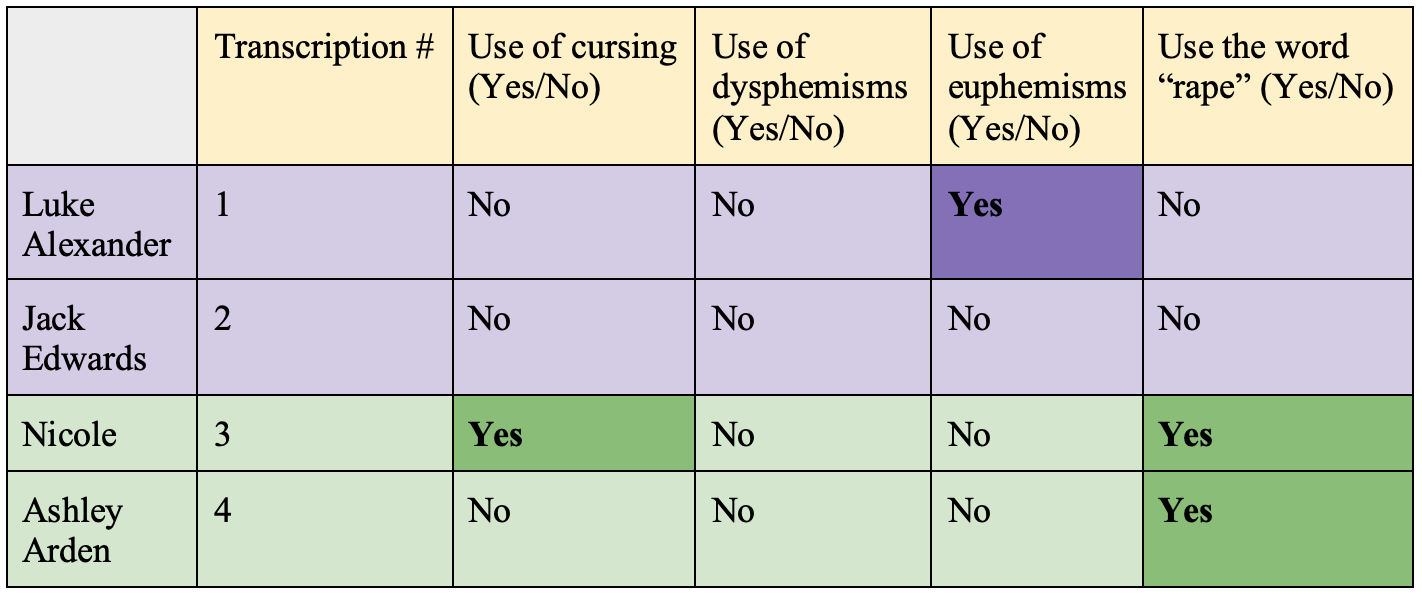
Transcriptions 1 and 2 both came from male commentators, Luke Alexander and Jack Edwards. Neither of them used cursing or dysphemisms, and one of them (Luke Alexander) used an euphemism. Neither of them used the word “rape”, Luke Alexander instead spelled out “R-A-P-E” to avoid saying “rape” or “sexual assault”. In contrast, neither of the female commentators used euphemisms and both of them used the word “rape” directly instead of using a euphemism or spelling it out like Alexander.
Thumbnail image from Luke Alexander’s (Example 1) YouTube Video
Transcriptions 3 and 4 came from female commentators, Nicole a.k.a. “A Seventeenth Grade Nothing” and Ashley Arden. As stated before they did not use euphemisms and both referred to sexual assault directly by saying “rape”. Nicole is the only commentator in this sample that curses. Ashley Arden’s states that this scene is “ugliest scene I’ve ever watched in a teen show”. Both Nicole’s and Ashley Arden’s commentaries are blunt and direct, neither of them use any linguistic feature to soften their tone, wordage, or message. This is the opposite for Luke Alexander and Jack Edwards, neither of them use the word “rape” and neither of them use dysphemisms.
Discussion
Each of the commentators are norm-breakers. Luke Alexander, Nicole, and Jack Edwards in relation to cursing. Nicole for her cursing, Alexander and Edwards for their complete lack of cursing. In Example 3, Nicole curses, this makes her a norm-breaker because it is considered socially unacceptable in many contexts for women to curse. Contrasting Nicole, neither of the male commentators use cursing, which makes them also norm-breakers in most non-formal settings, it is considered appropriate, and often expected for men to curse. Luke Alexander, Nicole, and Ashley Arden are norm-breakers with respect to euphemisms. Luke Alexander uses a euphemism when he refers to semen as “children juice” and spelling out rape instead of saying it directly. This goes against gendered norms because men are expected to use direct language when communicating, therefore to not use euphemisms. Neither Nicole nor Ashley Arden use euphemisms, which makes them both norm-breakers for not using euphemisms to soften their language, which is something women are expected to do. When women use direct language they can be labeled as “aggressive” or “masculine”.
Conclusion
The purpose of this research was to see if social commentary has created a space for people to subvert gendered linguistic norms and if so, what does it mean for society as a whole. The answer put simply is yes, people of different genders are shown to subvert gender norms, this was shown through looking at the use of cursing, euphemisms, and dysphemisms. This has significant meaning for society, because while gender norms, not just ones dealing with language, are being moved away from, they are still very present and often harm people.
The internet made the ability to social commentate so much more accessible than it had ever been, and this accessibility gave diversity, it gave voices that were not being listened to a way to be heard on a mass scale. Accessibility also gave women and men the ability to communicate to mass audiences in ways that violate gender norms, which is not only significant for the commentators themselves, but also the people that watch them. When people see people that mirror their identities subverting gender norms it gives a sort of permission to the viewer to do the same. This subversion of gender norms can allow people to express themselves more authentically without being punished or ridiculed. While having gender norms is not inherently evil, they are largely oppressive and tie into larger patterns of violence. When people violate gender norms, they can be subject to violence; there are countless examples of this, some of which are women being killed for being rude to men, men who engage in femininity are often the victims of hate-crimes, women being murdered in honor killings, and many more. Subverting gender norms with linguistics is subverting gender norms as a whole, and doing so makes society freer and safer.
References
Crespo-Fernández, E. (n.d.). Sex in Language: Euphemistic and Dysphemistic Metaphors in Internet forums. Bloomsbury Publishing. Retrieved February 6, 2021, from https://books.google.com/books?hl=en&lr=&id=iInaCQAAQBAJ&oi=fnd&pg=PP1&d=Dysphemism+gender&ots=JeoliQi9La&sig=lTkW2xCP0sZu2YZzWv498Q8IgNY#v=nepage&q=Dysphemism%20gender&f=false
Definitions for social commentary. (n.d.). Retrieved February 21, 2021, from https://www.definitions.net/definition/social+commentary
Info & Stats For Journalists. (2015). National Sexual Violence Resource Center
Kimmons, R., & Veletsianos, G. (2016). Education scholars’ evolving uses of twitter as a conference backchannel and social commentary platform [Abstract]. British Education Research Association,47(3), 445-464.
Lapadat, J. C., & Lindsay, A. C. (1999). Transcription in Research and Practice: From Standardization of Technique to Interpretive Positionings. Sage Journal.
Orlando, E., & Saab, A. (2020). Slurs, Stereotypes and Insults. Springer Link, 599-621.
Popa-Wyatt, M. (2020). Reclamation: Taking Back Control of Words. Brill,97(1), 159-176.
Rape culture & statistics. (2014, June 07). Retrieved March 8, 2021, from
Sharma, A. (n.d.). Why do women have such limited swear words to ab(use)? Retrieved March, 2021, from https://www.bingedaily.in/article/women-swear-words-sexist-patriarchy
Swanson, S. C., & Szymanski. (n.d.). From pain to power: An exploration of activism, the #Metoo movement, and healing from sexual assault trauma. Journal of Counseling Psychology.
Why and how do people use self-deprecation? Do people use it to “fish for compliments” or just seem more relatable? This article highlights the prevalence and utilization of self-deprecating language among actors and actresses in interviews on late-night talk shows. Interviews with four female celebrities and four male celebrities on The Ellen Degeneres Show and The Tonight Show Starring Jimmy Fallon were analyzed in order to discern any potential gender differences in the intentions and execution of self-deprecation that celebrities employ. Accounts of self-deprecation were sorted into categories of self-deprecation (physical appearance, professional/intellectual competence, personality traits, and behavior) and pitch alterations (higher or lower pitches). Ultimately, this study found that the use of self-deprecation is not as gendered as previously thought, which could illuminate how being a public figure in an industry that is quick to scrutinize one’s physical appearance and performance can influence the ways in which people perceive themselves and speak about themselves.
Introduction and Background:
Just as self-affirmation can inspire individuals to strive for healthy and positive behaviors, self-deprecating language can potentially also affect the ways that we perceive ourselves and others (Epton & Harris, 2008). Self-deprecating humor is a valuable tool employed by comedians to show humility and lightheartedness (Speer, 2019). But who tends to use this form of humor more often and for what purpose?
In previous studies, female comedians have been found to use self-satire more often than their male peers (Russell, 2002). This humor serves as a non-threatening way to make the comedian more “acceptable” and “appropriate” by placing herself as the joke itself. However, self-deprecation is not just limited to making fun of one’s physical appearance. People use self-deprecating humor directed at their behaviors, personality traits, intellectual/professional abilities, social status, success, or physical appearance (Greengross & Miller, 2008). However, there are no existing studies that reveal gender differences in the categories of self-deprecation use. The findings of this project can provide more insight on how men and women are socialized to behave and view aspects of their own identity.
Men and women may also differ in the ways that they use self-deprecating humor; male speakers have been found to use a higher pitched voice when using humor and female speakers have been found to use a lower pitched voice when compared to their normal voices (Purandare & Litman, 2006). This study, which analyzed the use of self-deprecation in male and female celebrities on late-night television interviews, suggests that there are no significant gender differences in how often celebrities use self-deprecation and the “professional/intellectual competencies” and “physical attractiveness” categories. However, there are gender differences in the “behaviors” and “personality traits” categories and the ways the celebrities use pitch changes.
Methods:
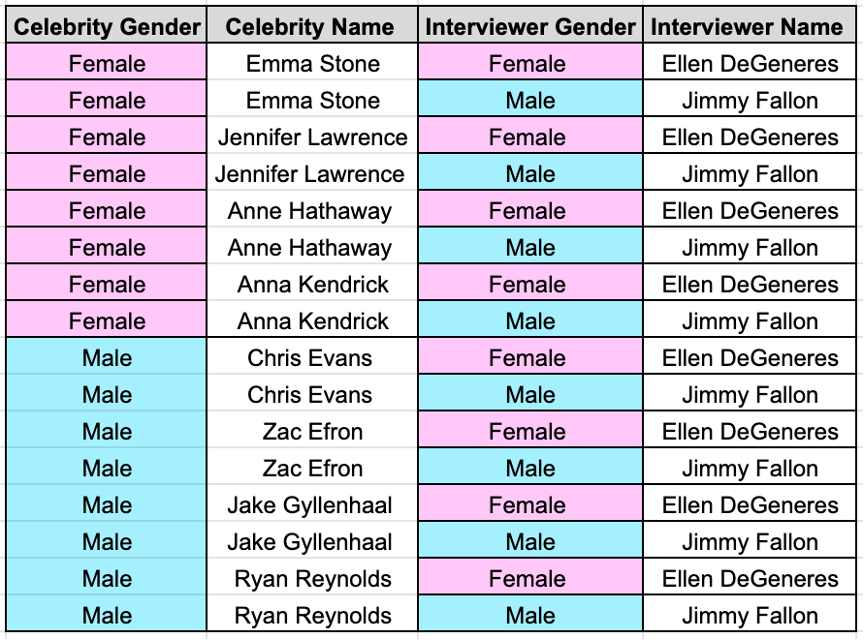
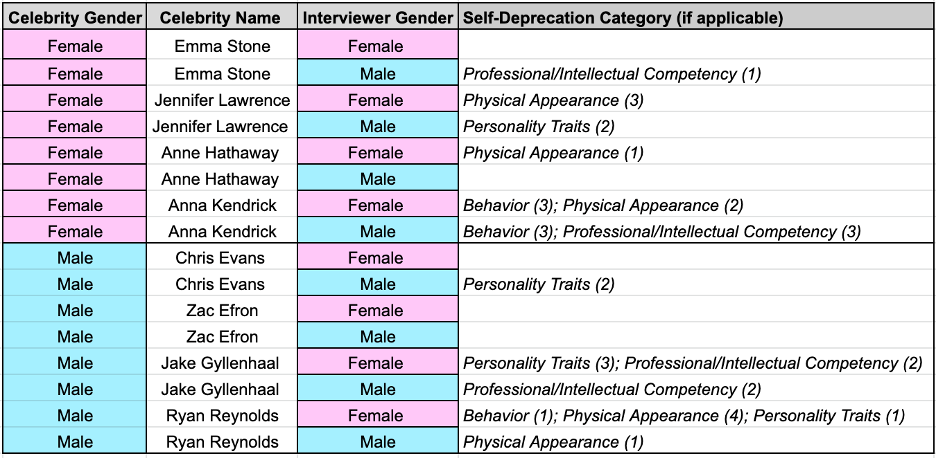
This study analyzed interviews with male and female celebrities on two late-night talk shows, The Ellen DeGeneres Show and The Tonight Show Starring Jimmy Fallon. The female actresses analyzed were Jennifer Lawrence, Emma Stone, Anne Hathaway, and Anna Kendrick, and the male actors analyzed were Chris Evans, Zac Efron, Jake Gyllenhaal, and Ryan Reynolds, for a total of 16 interviews. The study looked at celebrity gender, interviewer gender, the count of self-deprecating humor used, the category of self-deprecation, and the presence and/or type of pitch change used in self-deprecating humor. Self-deprecation accounts were identified and categorized if the celebrities used any negative statements towards themselves with regards to the four categories: “behaviors”, “personality traits”, “professional/intellectual competencies”, or “physical attractiveness”. Pitch changes were identified if the celebrities used a drastic and extremely noticeable higher or lower pitch while using self-deprecating language. Frequencies of self-deprecation were then calculated to compare self-deprecation in relation to celebrity interviewee gender, categories of self-deprecation, and pitch changes.
Table 1: The different combinations of variables looked at in 16 interviews.
Results and Analysis:
Frequencies/Counts of Self-Deprecating Humor:
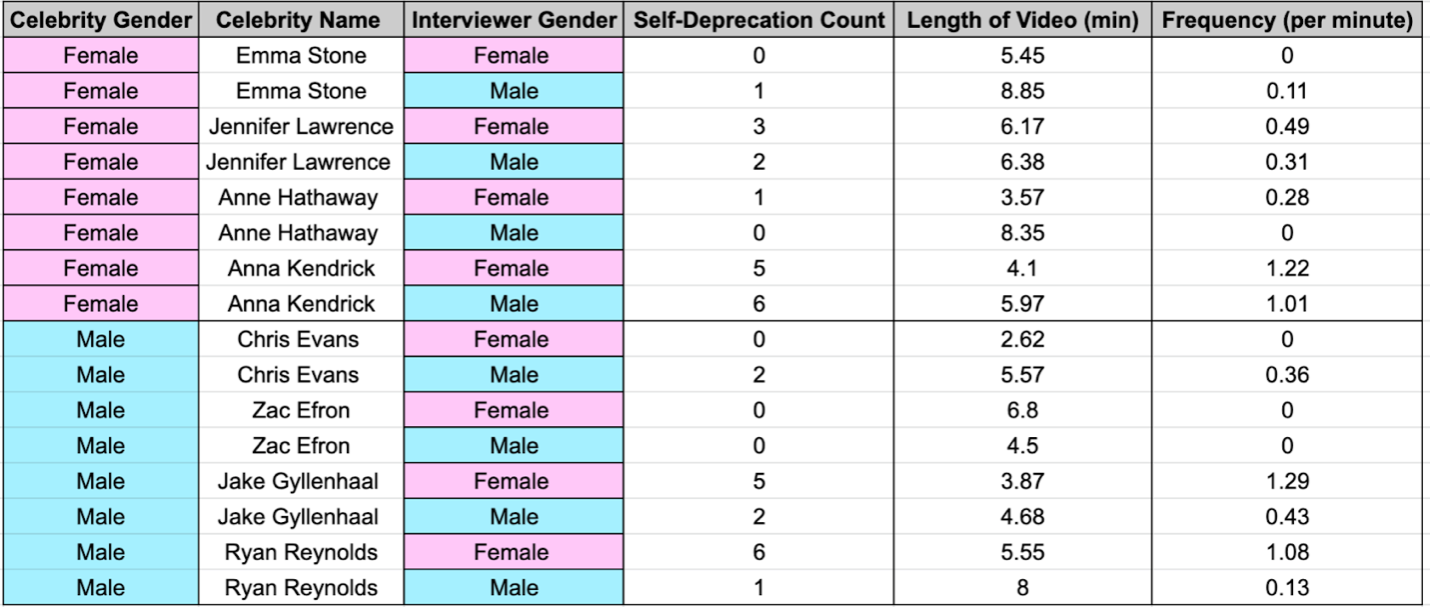
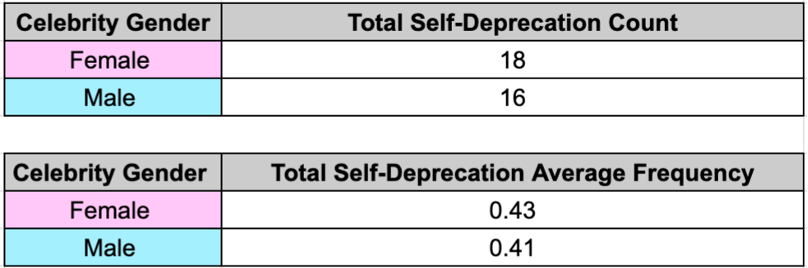
Table 2: The count of self-deprecation used in each interview, the length of each interview, and the calculated frequency in self-deprecation count per minute.Table 3: The total count and average frequency of self-deprecation in male and female celebrities.
Throughout all interviews, female celebrities used 18 accounts of self-deprecation with an average frequency of 0.43/minute and male celebrities used 16 accounts with an average frequency of 0.41/minute. The frequency difference between female and male celebrities was 0.02, which indicates that there is no significant gender difference here.
Categorizations of Self-Deprecating Humor:
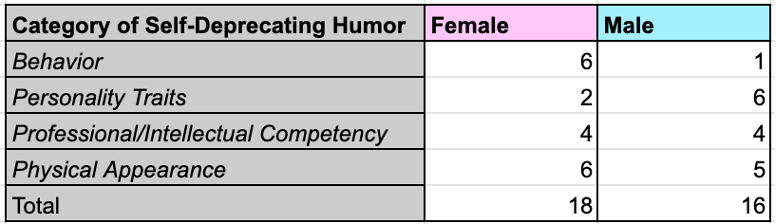
Table 4: The count and category of self-deprecation used in each interview.Table 5: The breakdown of self-deprecation categories in all male and female celebrity interviews.
The evidence shows that there is no significant gender difference in the “professional/intellectual competence” and “physical appearance” categories, but there are gender differences in the “behavior” and “personality traits” categories. Women use more self-deprecation about their behaviors and men use more self-deprecation for their personality traits.
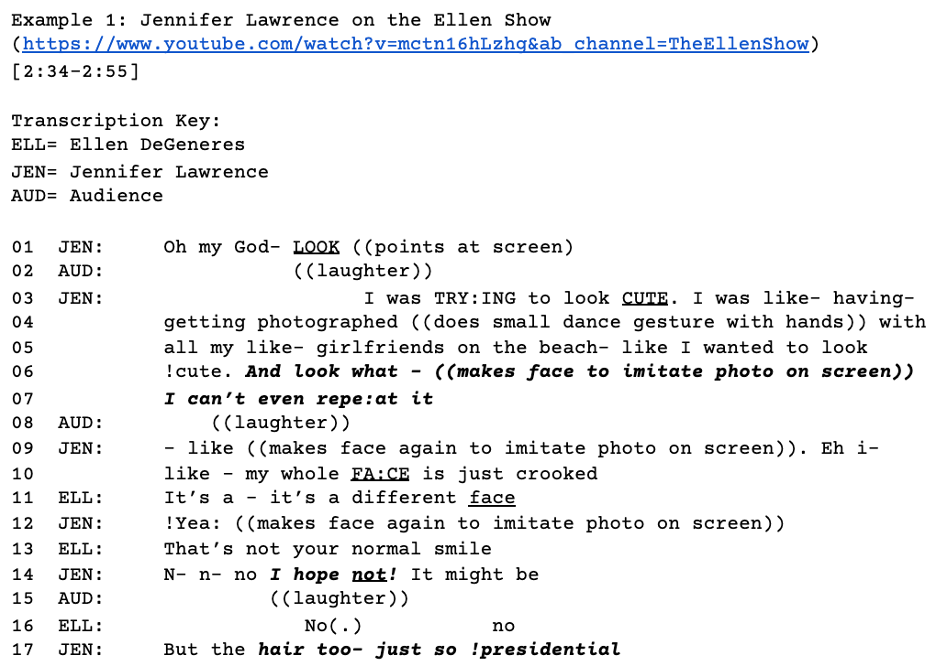
Example 1: Jennifer Lawrence with Ellen DeGeneres (Category: Physical Appearance)
This is a clear example of self-deprecation in the “physical appearance” category: Jennifer Lawrence makes fun of her appearance (specifically her face, her smile, and her hair) on a specific photo in Lines 6-7, Line 14, and Line 17.
Pitch Change Used for Self-Deprecating Humor:
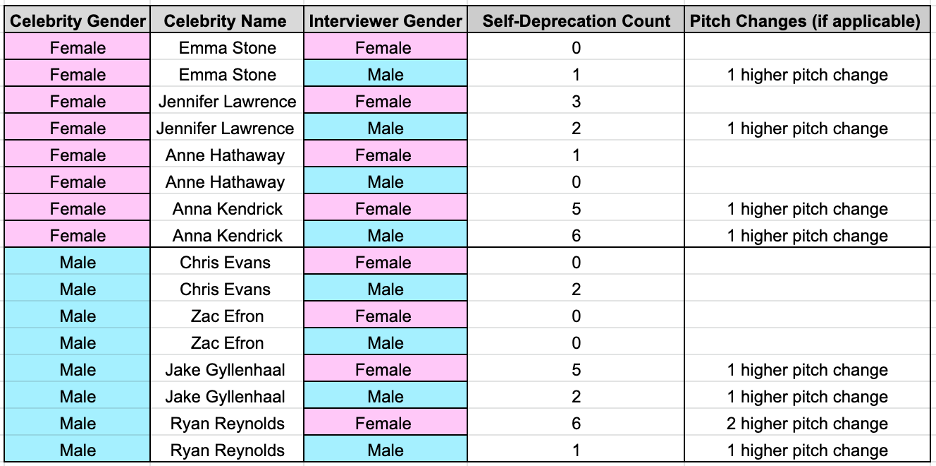
Table 6: The count and pitch change (either higher or lower) used in each interview.
Both female and male interviewees only utilized higher pitch changes when evoking self-deprecating humor.
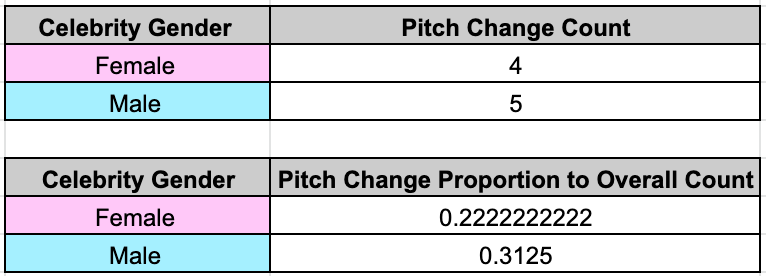
Table 7: The count of pitch changes and the proportion of pitch changes out of the overall self-deprecation count.
Though the pitch change count looks similar in female (4) and male interviewees (5), male celebrities used higher pitch changes in 31% of self-deprecation accounts whereas female celebrities only used higher pitch changes in 22% of the time.
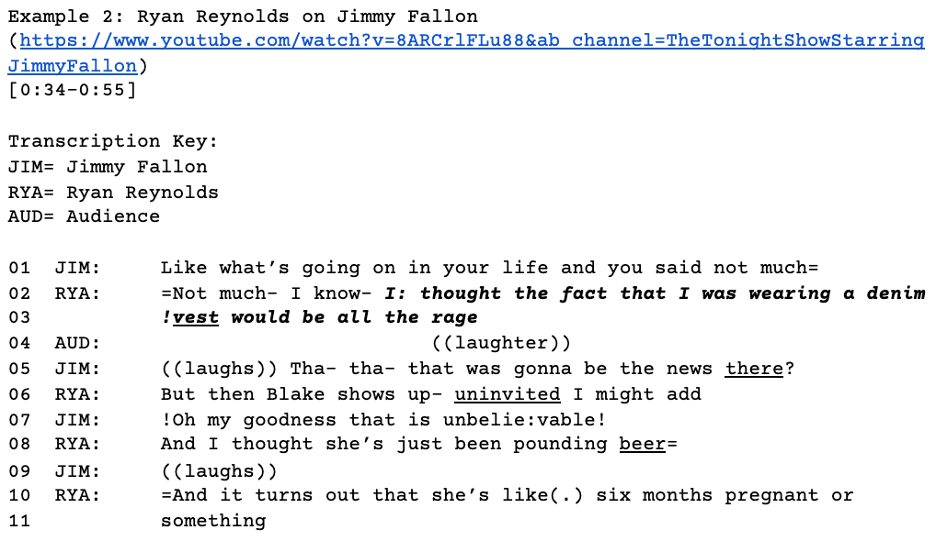
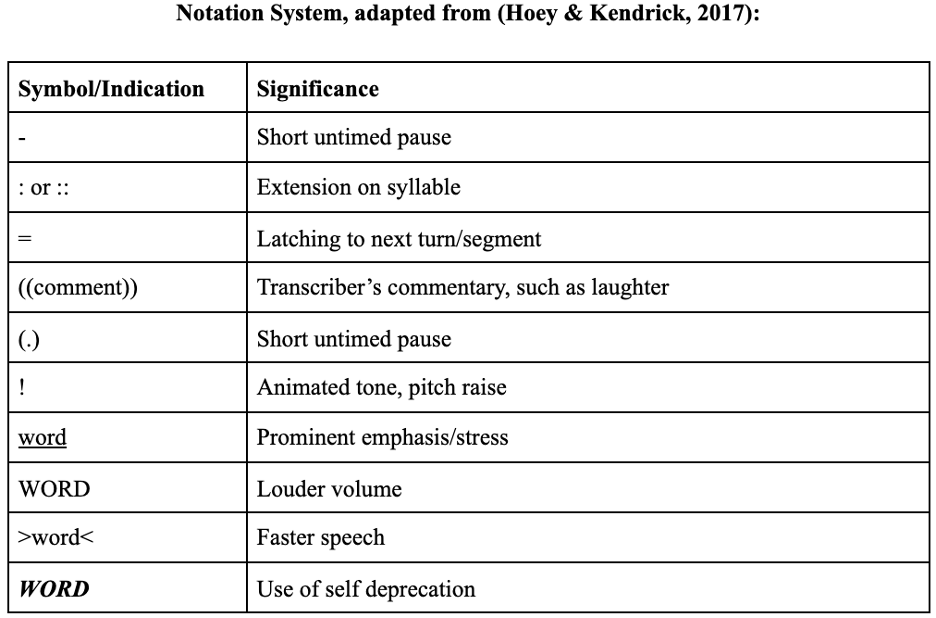
Example 2: Ryan Reynolds and Jimmy Fallon (higher pitch change, Line 2-3)
In this example, Ryan Reynolds uses an animated voice and higher pitch when saying the word “vest”, to make fun of what he was wearing.
Discussion and Conclusions:
The study did not find significant gender differences in the frequency of self-deprecation used in this sample of actors and actresses. Additionally, men and women both used similar amounts of self-deprecation when speaking about their professional/intellectual success and their physical appearance. There are several reasons why this may be.
This study solely analyzed self-deprecation used by actors and actresses, so their career path (given the cut-throat nature of Hollywood) may create an environment where they place a lot of value in how they look and how they perform, thus impacting how they speak about themselves. Celebrities are placed to a near superhuman standard of beauty and their physical appearance is often on display for the public to openly criticize, so celebrities may be more inclined to point out their own flaws before the public does so. The use of self-deprecation in the “professional/intellectual” category may be more gender-neutral, considering that all celebrities want to achieve success. Additionally, because these interviews are used to humanize celebrities, self-deprecation may be used to help establish rapport between the guests, interviewers, and celebrities; this tool can help them come across as relatable, humble, and likeable. Though there were gender differences in the “personality traits” and “behavior” categories, it is unclear whether these categories are too similar to be separated or if there are actual gender differences in the use of “behavior” as a constructed aspect of identity and “personality traits” as an essential aspect of identity. Due to potential differences in the topics of the interviews themselves, it must be noted that certain interviewees may have had more opportunities to use self-deprecating humor, which could skew the results.
When assessing pitch changes, the study found that they were used quite sparingly among men and women (the proportion of pitch changes used in all accounts of self-deprecation was 22% in women and 31% in men). However, all of the pitch changes across genders were higher pitch changes, which contradicts earlier findings that showed that women switch to a lower pitch when using humor (Purandare & Litman, 2006). Because the subjects studied are professional actors and actresses, they may not be modulating their pitch as much in an interview setting when compared to their normal discussions or while acting.
Ultimately, the similarities between male and female celebrities in the frequency and in the “physical appearance” and “professional/intellectual competency” categories of self-deprecation indicate that male and female celebrities have similar aspects of their identities that they choose to self-criticize. These analyses can provide greater insight on what it means to be a public figure in an industry that places enormous importance on success and physical appearance.
Isaac Verdugo, Riley Kwinn, Brendan Xiong, and Gustavo Gutierrez
NBA (National Basketball Association) slang is widely used by basketball fans all over the world. NBA slang is formed and developed with NBA history. It has unique features and functions that give NBA fans the opportunity to express their opinions about the game of basketball in creative ways. NBA slang reflects NBA culture. A sociolinguistic study of NBA slang helps people know more about NBA culture and fans of different teams. The following study discusses semantic change in NBA slang terminology within Los Angeles Lakers and Los Angeles Clippers communities of practice through discourse analysis. First, we selected four common NBA slang terms that are used in this sports league and provide their generic definitions. We then analyzed online basketball discourses to look for ways in which fans from both teams use the NBA slang terms that we are examining. Third, we used a corpus analysis toolkit, AntConc, which helped us find patterns of concordance within our data. We concluded by making generalizations about the use of our selected terms by Lakers and Clippers fans and determined trends through analysis.
In this study we sought to understand why NBA slang is used in online communities of practice. This helps identify connections within communities of practice because basketball fans are tight-knit, have frequent interaction, develop shared goals and knowledge about basketball, and create new NBA slang. Because many basketball fans use NBA slang to refer to a particular team and/or player, the meaning will vary depending on who you ask; some use older meanings from previous eras of the NBA, whereas others use newer meanings that fit today’s NBA style of play. By analyzing the use of four NBA slang terms (foul, skill, superteam, flagrant foul), it will help us understand how they have changed in meaning over time. Next, we will compare and contrast the usage between Lakers-Clippers fans. We chose these two teams specifically because they are from the city of Los Angeles and have drastically different histories; the Lakers are the most famous NBA franchise of all-time with 17 championships, whereas the Clippers have none (Los Angeles Clippers vs. Los Angeles Lakers, n.d.).
That being said, we attempted to answer the following question:
(1) What sorts of semantic change has NBA slang experienced within Lakers and Clippers communities of practice?
Background
Previous research in semantic change shows that words or real world entities change over time. More specifically, words change semantically and this change is reflected in the way words are being used (Wijaya & Yeniterzi, 2011, “Introduction” section). This linguistic aspect of semantic change also applies to NBA slang. For example, in the 20th century of the NBA, the NBA slang term Greatest of All Time or GOAT, was used to describe how successful a player and/or team was based on the number of championships they won. However, NBA fans have added new layers onto its meaning over time, such that basketball IQ, skillset, defensive rating, and other basketball qualities are relevant in the discussion of “Who’s the GOAT?” While the NBA uses generic definitions for NBA slang terms, it does not necessarily mean that fans will use that particular definition in every basketball context. Because of this, NBA slang terms are extremely nuanced, which is why the word GOAT highlights one of our goals to lay out differing traits of the four terms we will examine.
Another frequently used NBA slang term is skill. Skill in the NBA during the 1960s meant being able to run down the court efficiently, shoot the ball from close range, and defend. However, in the 1970s, skill was about playmaking abilities, too. One paper addressing a similar topic discussed the importance of player impact, “Berri tried to determine if Karl Malone or Michael Jordan was more valuable, and he found that Dennis Rodman was most valuable because of his rebounding ability” (Whitmoyer, 2019, p. 4). The significance of this quote shows that many teams prefer having a player who impacts the game of basketball in more than one aspect. Many believe that Michael Jordan is the best basketball player of all time, but Whitmoyer argues that Dennis Rodman is. This shows that there are different views about a player’s importance, which is part of what we will explore in our project.
Methodology
We analyzed the NBA slang terms on online basketball discourses such as Twitter, Reddit, and Instagram, where we collected 100 Lakers-Clippers samples relating to these terms for a total of 400 samples. Then, we used AntConc, a corpus analysis software that made it much easier to compare the surrounding environments of all the data samples for each term. Lastly, we made generalizations about the use of the NBA slang terms and determined trends in our data through analysis. This method allowed us to gather more samples and data from online discourses than we would have surveying/interviewing basketball fans with the amount of time we had for the project, and helped us address the question in our introduction by allowing us to identify common trends in a data set that would be far too large to analyze without the assistance of corpus linguistics software.
Results: Data Analysis
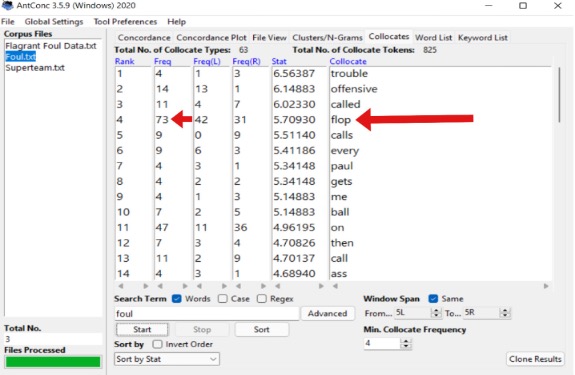
In Figure 1, we see a list of words that AntConc found that foul was commonly used within the same sentence, as flop appeared the most with a total of 73 samples.
Figure 1. Total frequency of words that AntConc found for the NBA slang term foul.
With this software, we were able to discover that foul has a new meaning added to it that can be used in more contexts than before with the use of flop. This concept is known as widening, which is a type of semantic change. Throughout the history of the NBA, the generic definition of foul has remained the same, referring to “illegal personal contact with an opponent and/or unsportsmanlike behavior” (How Fouling Works in Basketball: 6 Common Fouls Explained, 2020, para. 2), which can be seen in Figure 2.
Figure 2. Tim Duncan (#21) fouls Monta Ellis (#11) after bumping him in mid-air when scoring a lay-up.
However, the word foul has become too vague in today’s NBA that Lakers and Clippers fans have used a more specific word to describe the actions that opponents do to get the foul call in their favor — flop. A “flop” is an attempt to fool referees into calling undeserved fouls by exaggerating the effect of contact with an opposing player (Explanation of Anti-Flopping Rule, 2012, para. 2), which can be seen in Figure 3.
Figure 3. Mario Chalmers (#15) flops and sells the contact after Danny Green (#4) swipes through to create space.
The use of flop for a non-foul changes the meaning of foul because opponents fall to the ground when contact is drawn, whether minimal or not. The act of flopping is changing the way the game of basketball is played since referees must distinguish between what is and isn’t a foul, which they tend to struggle with.
Both Lakers and Clippers fans use flop as a way to express their anger when they believe there wasn’t any illegal contact by the opponent, but referees think otherwise. This finding shows how the meaning of foul has been expanded by these fans because flopping is more common today than it was before in the NBA. Instead of fans saying “That was not a foul,” fans can now say “That was a flop,” when there was little or no physical contact by the opponent. This semantic change of the word foul allowed these fans to be more specific and provide a reasonable judgment about a certain basketball play, instead of giving a biased opinion with no context. Because there was a high frequency of data where the slang term foul was used with flop in the same sentence than without it, it suggests that they both go hand-in-hand when fans debate a foul call.
The second word we examined was skill. Skill is “the ability to do something well; expertise” (Oxford University Press (OUP), n.d.). In the 20th century of the NBA, skill was synonymous with players who could run down the court efficiently and score more than 15+ points on a regular basis. However, in today’s game skill is used in many other ways such as passing, as observed in Figure 4.
Figure 4. LeBron James (#23) makes an incredible no-look pass to teammate Ante Zizic (#41) who dunks the ball.
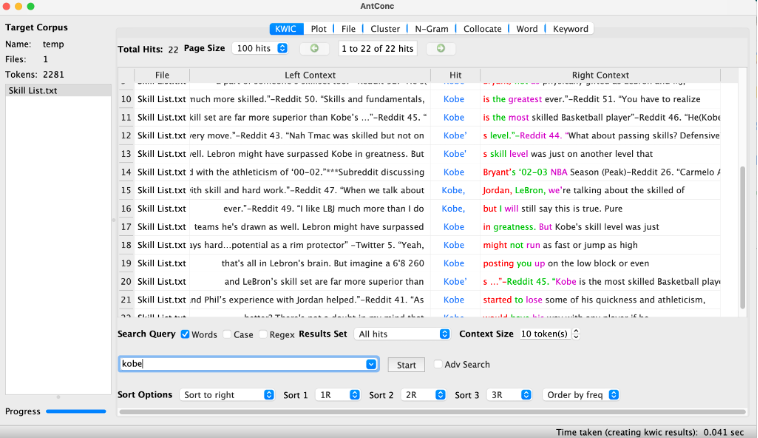
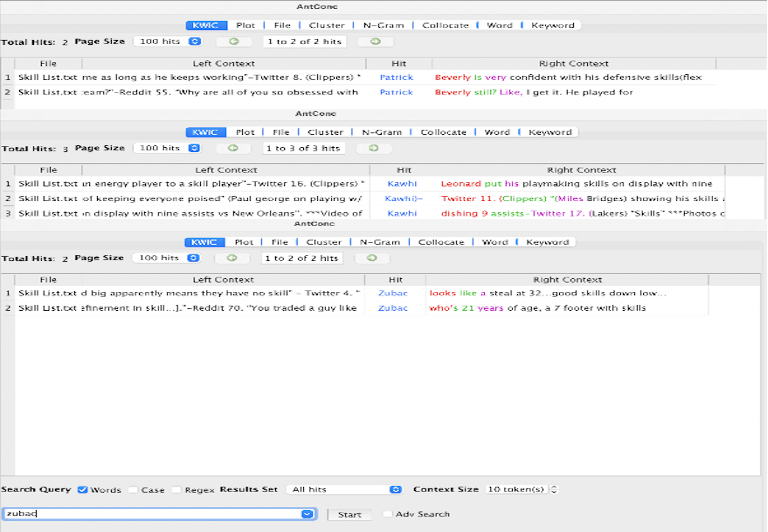
There are different connotations as to what skill implicates. According to the data via AntConc in Figure 5 and 6, skill was used the most within members of the Lakers community when discussing Kobe Bryant, an all-time great with elite footwork, shooting, post-moves, and defense that contributes to what skill means. Clippers fans most used skill in reference to flopping, identifying it as a ‘skill’, or point guard ‘skills’ which implies a specific attribute derived by a select group of positioned players. In the online discourse data, Kobe [Bryant] was mentioned most to embody skill because of his scoring ability, footwork, shooting, defense, basketball IQ, work ethic, and athleticism. Other players like Kawhi Leonard, Patrick Beverly, and Ivica Zubac were mentioned a combined 7 times in the data set, a stark contrast to Kobe Bryant’s 22.
Figure 5. Total frequency of words that AntConc found for the NBA slang term skill.
Figure 6. Total frequency for Kawhi Leonard, Ivica Zubac, and Patrick Beverly via AntConc.
The data suggests that semantically, skill has changed from what it was once meant over the last few decades among these communities of practice. Skill in basketball does in fact include scoring ability, but it also incorporates many other factors that make up a player’s complete value on the court (Locklin, 2021, para. 3). Skill no longer identifies a player who can run down the court efficiently and score 15+ a game but instead, is the marker for players who embody proficient attributes in all areas of the game.
The third word we examined was superteam. This term can be defined as “already established All-Star players coming together to a team to form a super team” (Urban Dictionary: Superteam (NBA), 2018). Many of the fans’ conversations from the data involved debates about the exact definition of the term. It was more commonly used as one word, rather than as two separate words, though there was no significant difference in its intended meaning; fans often responded to one variation with the other. Superteam seems less rooted in one literal definition, and more tied to the emotional idea of a “team that is unfairly good,” as the meaning seems to change depending on the context it’s used in. The people using superteam seemed more intent on winning debates than using the word “correctly.” The term has therefore seemed to experience a significant semantic widening such that its meaning changes depending on a) the people using it, and b) the greater context of which teams are performing well in the NBA.
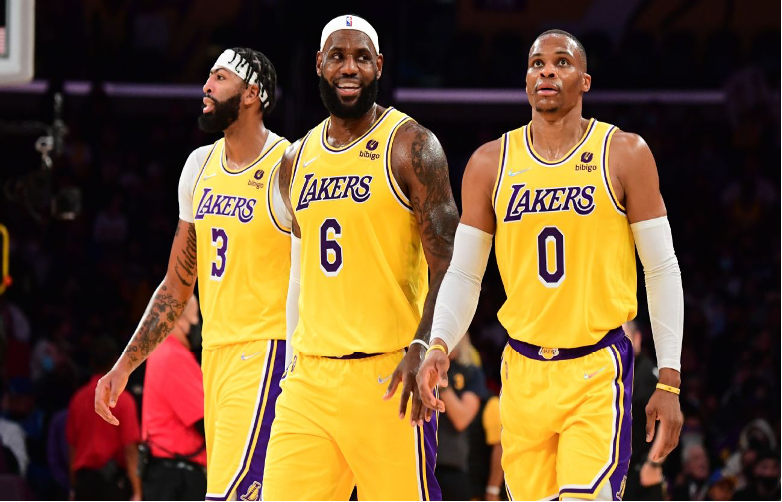
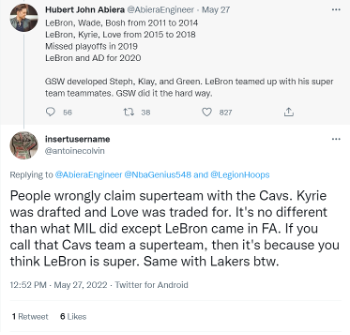
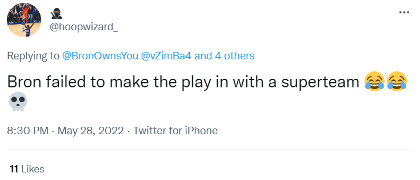
Most of the data samples were gathered from Lakers fans since there has never been a Clippers team that was considered so good that it was unfair. The only instance superteam was used to describe the Clippers was when a fan claimed Kawhi Leonard, a current player on the Clippers, had “tried to make a superteam,” with the implication being that he had failed. The primary topics discussed in the data we gathered for this term were: 1) whether or not LeBron [James] had actually deserved the championship titles he had won after forming multiple ”superteams,” and 2) whether or not this year’s Lakers roster had in fact been a “superteam” despite not winning a championship nor making the playoffs in 2022, as can be seen in Figure 7.
Figure 7. Lakers 2021-22 roster with 3 All-Stars: Anthony Davis (#3), LeBron James (#6), & Russell Westbrook (#0)
Figure 8. A tweet about LeBron’s critics who are downplaying his past successes for forming ‘superteams.’
Figure 9. Another tweet where a fan chastised the 2021-22 Lakers for not making the playoffs, despite qualifying as a ‘superteam.’
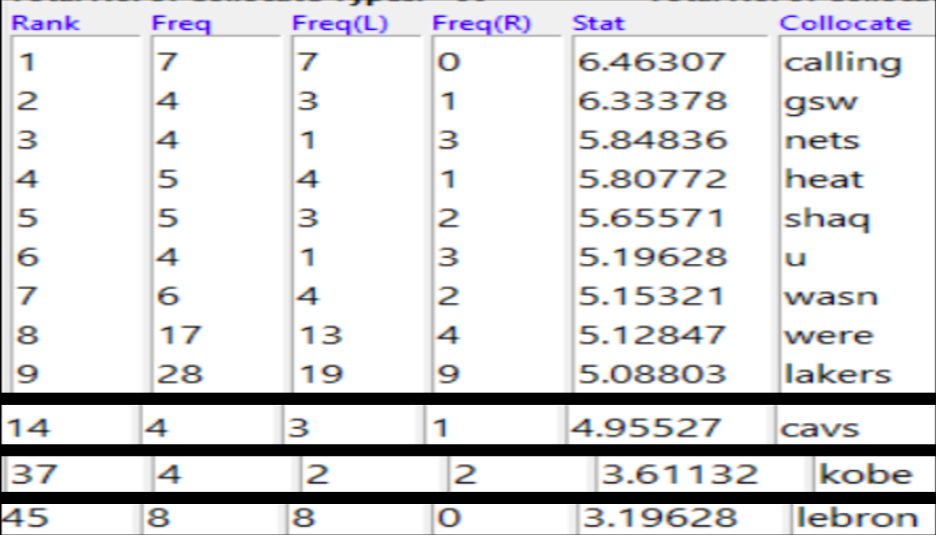
Unsurprisingly, the teams most commonly associated with superteam were either current or retired All-Star players from teams such as the Cavaliers, Warriors, Heat, Nets, and Lakers, as observed in Figure 10. The high frequency of Lakers relative to the other teams is due to the fact that most of these data are from Lakers’ fans’ discourse.
Figure 10. Total frequency of words that AntConc found for the NBA slang term superteam (focus on the column second from the left and the corresponding term on the far right)
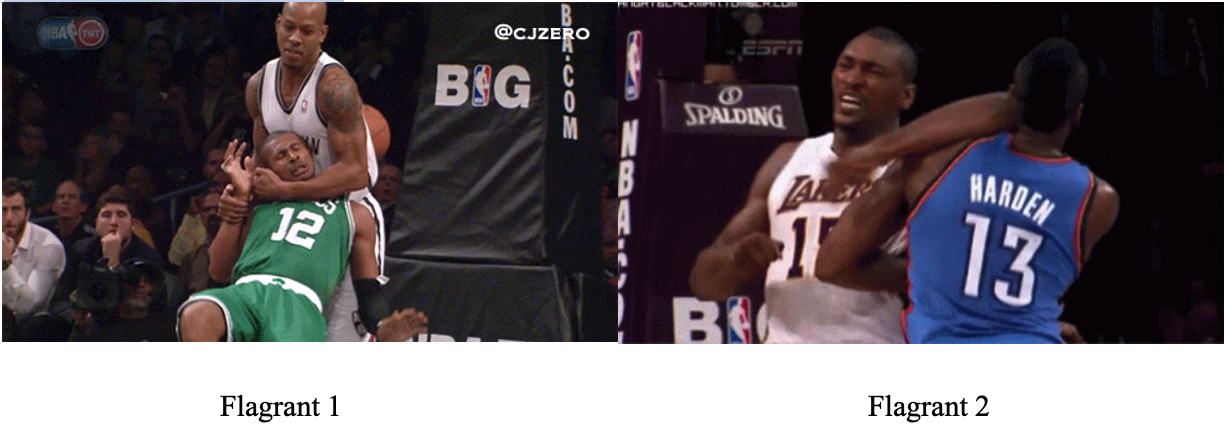
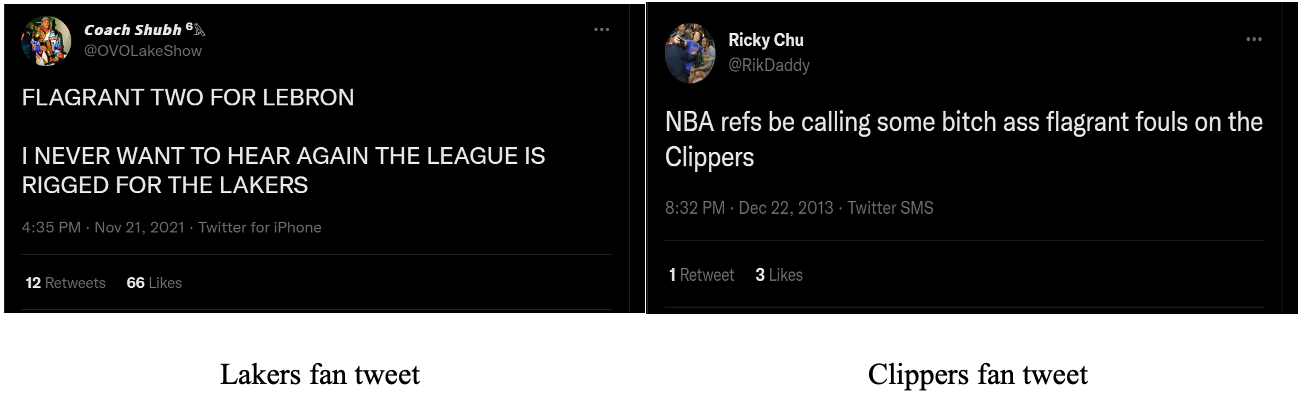
According to the official NBA website, a flagrant foul is excessive contact beyond a regular foul. There are two types, a Flagrant 1 is unnecessary contact against a player committed by an opponent, whereas a Flagrant 2 is unnecessary and excessive contact against a player (Flagrant Fouls, n.d.).
The main semantic change we found from Lakers and Clippers fans regarding this word is elevation, where one uplifts an utterance, and degeneration, where negative light is shone on a statement. Tweets by Lakers fans are uplifting, with one of them proclaiming that the Lakers are equals to every other team. The tweet from the Clippers fan is degenerated through its angry intonation. The Lakers tweet also has more likes, and popularity equates to less negativity as “fearful and negative tweets [have]…low virality” (Cheung‐Blunden et al., 2021, p. 19). The less popular Clippers fan tweet uses strong word choice through swearing.
The primary cause for this difference is team status. The Lakers fan sounded less angry because of the history of his team, as he is comfortable with the prestige and numerous championship titles of the Lakers. The Clippers are not as well-known as the Lakers. Less prestigious teams have fewer fans because their teams are not as competitive as others. Therefore, the fans of such teams are very committed and passionate to be able to stick through team struggles. Furthermore, “high levels of identification with a sports team are positively related to fan display and verbal response” (Rocca & Vogl-Bauer, 1999, p. 244). The intense feeling for one’s team drives Clippers fans to use strong language.
Discussion
According to new research about American slang, there are unique features that influence it based on its originality (Zhou & Fan, 2013). Similarly, we learned that NBA slang is used because of its originality. NBA fans were creative with how they turned generic definitions of the NBA slang terms to more catchy and specific meanings. In addition, these new words and meanings are commonly used by NBA fans for the pleasure of being in fashion and appear to have a deep understanding about the game of basketball. When these fans use NBA slang terminology, it tends to validate their opinion about basketball because it is solely used by basketball fans.
One social factor that influences the use of NBA slang terms is social media. Social media has allowed NBA fans to discuss and share their opinions about basketball that reach millions of people, as can be seen in some figures above. A second social factor is basketball commentators because they enjoy commenting on live-basketball games using descriptive language, and find that NBA slang is more direct and simpler to use than the generic definitions.
An individual factor that influences NBA slang are peoples’ knowledge and skills about the game of basketball. Their knowledge and skills about the game of basketball lets them feel entitled to have a valid opinion about a particular team and/or player.
These findings support our thesis statement that both Lakers and Clippers fans would experience semantic change to NBA slang because of how much the NBA has evolved. More specifically, many NBA slang terms have been outdated, and it was expected that these fans would use different meanings to these slang terms to fit today’s NBA style of play.
Conclusion
Linguists can benefit from our research because they are interested in real world phenomena. As such, they are descriptive and study how people actually talk, where some use NBA slang as part of their everyday speech, and not prescriptive regarding how people “should” talk. Because linguists study semantics, our research allows for linguists to study more in-depth the role that NBA slang has for basketball fans to know what certain words mean, what makes them have more than one meaning, why those meanings exist, and others.
A possible future direction of our research would be for researchers to replicate this study on a much larger scale through ethnographic research to ensure that there is enough data gathered from both groups. Ethnographic research can improve this study because it involves observing a particular group and site over a long period of time, which could gather a large amount of data about the use of NBA slang at basketball games.
References
Cheung‐Blunden, V., Sonar, K. U., Zhou, E. A., & Tan, C. (2021). Foreign disinformation operation’s affective engagement: Valence versus discrete emotions as drivers of tweet popularity. Analyses of Social Issues and Public Policy, 21(1), 980–997. https://doi.org/10.1111/asap.12262
Locklin, W. (2021, July 15). What is “Skill” in NBA Basketball. The Wright Way Network. Retrieved June 8, 2022, from https://twsn.net/2021/07/what-is-skill-in-nba-basketball
Los Angeles Clippers vs. Los Angeles Lakers. (n.d.). Diffen. Retrieved June 8, 2022, from https://www.diffen.com/difference/Los_Angeles_Clippers_vs_Los_Angeles_Lakers
Oxford University Press (OUP). (n.d.). Skill. Lexico.Com. Retrieved June 8, 2022, from https://www.lexico.com/en/definition/skill
Rocca, K. A., & Vogl‐Bauer, S. (1999). Trait verbal aggression, sports fan identification, and perceptions of appropriate sports fan communication. Communication Research Reports, 16(3), 239–248. https://doi.org/10.1080/08824099909388723
Urban Dictionary: Superteam (NBA). (2018, May 28). Urban Dictionary. Retrieved June 8, 2022, from https://www.urbandictionary.com/define.php?term=Superteam%20%28NBA%29
Whitmoyer, E. (2019). Measuring Greatness in the NBA. Scholars Crossing. Retrieved June 8, 2022, from https://digitalcommons.liberty.edu/honors/845/
Wijaya, D. T., & Yeniterzi, R. (2011). Understanding semantic change of words over centuries. Proceedings of the 2011 International Workshop on DETecting and Exploiting Cultural diversiTy on the Social Web – DETECT ’11. https://doi.org/10.1145/2064448.2064475
Zhou, Y., & Fan, Y. (2013). A Sociolinguistic Study of American Slang. Theory and Practice in Language Studies, 3(12). https://doi.org/10.4304/tpls.3.12.2209-2213
Matthew Lee, Sam Lin, Huimin Liu, Francisco Morales, Annika Park
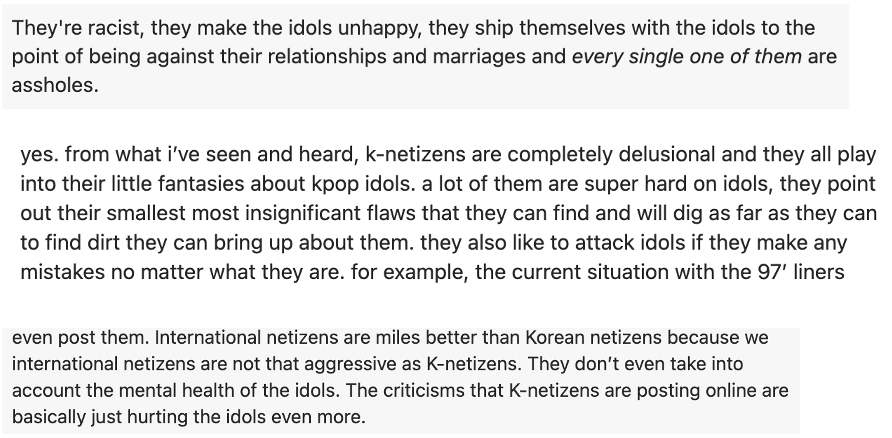
In recent years, Korean popular music, or K-pop, has led the way for a meteoric rise in global popularity of Korean culture. According to Sue Jin Lee’s study, “The Korean Wave: The Seoul of Asia,” this Korean wave—hallyu in Korean—has garnered a worldwide fanbase whose members create communities online centered around their favorite groups and idols. These K-pop fans primarily interact with their favorite artists and each other via social media posts and comments, creating online communities of internet citizens (netizens) that are each focused around certain idols. There is, however, a negative perception of Korean netizens who are seen by international fans as overly critical of K-pop groups and labels, possessive of idols, and having a sense of entitlement to celebrities. This study examines the question: does this perception of possessive Korean K-pop fans hold true? If so, what is the reason for this behavior? To find answers, the use of personal possessive pronouns in social media comments is examined to gauge possessiveness in Korean and international fans, informing a further discussion about Korean nationalism at play in K-pop social media interactions.
Figure 1: Social media backlash towards Korean K-pop fans from international fans
Introduction and Background
With the growing accessibility of online platforms like Facebook, Twitter, and Instagram, Korean and English-speaking social media users can react in real time to K-pop events and news. In typing up posts and leaving comments, fans create an online persona for themselves based solely around their love for certain music groups; the most devoted of these fans have been dubbed “K-pop stans.” We assert that with the growth of the Korean wave comes a sense of entitlement or possessiveness from specifically Korean fans towards their favorite idols. Our research aims to find patterns of these possessiveness or entitled tendencies in Korean social media users, and we believe that Korean fans will demonstrate these themes much more strongly than international fans of K-pop.
The idea of a netizen, or an “internet citizen,” originated in the 1990s and served as a descriptor for engineers and early Internet users who “participate in the affairs of governing and making decisions about the internet and about how the internet can impact offline society,” according to scholar Ronda Hauben’s Amateur Computerist. Over time, the term has evolved to become a broader description of anyone actively engaged in online communities. Within the past five years, Korean social media circles have especially embraced the word to the point where there is a specific word for Korean internet users: the “K-netizen,” which has the reputation of being extremely assertive and opinionated as a result of the strong sense of community they have created online. This membership may promote a sense of belonging and perhaps nationalism as an extension of their Korean citizenship, sentiment that may also extend to how K-netizens view K-pop idols. Since the K-pop industry is a major part of the South Korean culture and economy, K-netizens could feel that they are entitled to ownership over idols as a result of this interesting intersection of internet subculture with nationalism. We later explore this concept as an explanation for possessiveness in Korean fans.
Methods
In order to quantify the possessiveness of fans towards K-pop idols, we gathered instances of pronoun use by Korean and international commenters when referring to their favorite artists in social media discourse. Examples of these uses include phrases such as “your idol,” “my idol,” “our idol,” “mine,” etc. To narrow the scope of our search, research members strictly look at comments on Facebook responding to posts about three controversial breaking-news stories in regards to K-pop celebrities outlined below:
HyunA and Dawn’s announcement of dating: HyunA, a singer and former member of the group Wonder Girls, and Dawn, a member of the group Pentagon, were dropped from their agency once they announced they were dating.
G-Dragon and Kiko Mizuhara’s announcement of breaking up: G-Dragon is a singer who is part of boy’s group the BIGBANG, and Kiko Mizuhara is a Japanese celebrity. They were rumored to be in a relationship for years, but nothing was confirmed until it was announced that they had broken up in 2015.
The Burning Sun scandal: this was a large-scale entertainment and prostitution exposé that involved multiple prominent celebrities in the K-POP entertainment industry.
[Researchers had originally initiated the project with four cases, an additional scandal involving high school bullying, but decided to omit it because they could not find enough substantial data for the case and the data gathered for other three cases was sufficient.]
Each controversy will be analyzed through two different posts announcing the news—one in English and one in Korean—in order to compare the initial reactions of Korean and international fans.
Results and Analysis
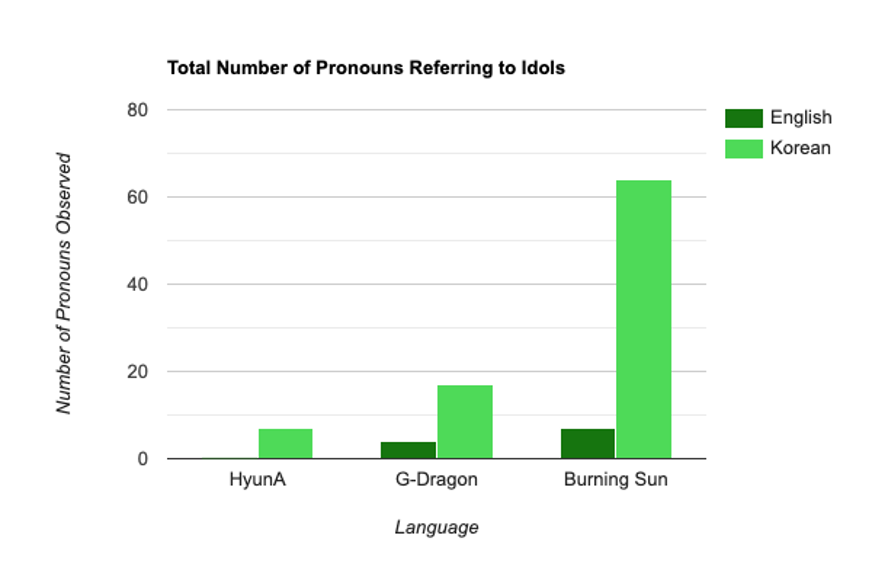
Figure 2. Total Number of Pronouns Referring to Idols
This graph visually illustrates the clear difference between how K-netizens and international fans view and react to idols. For each case, the number of Korean pronouns used at least doubled the number of English pronouns used.
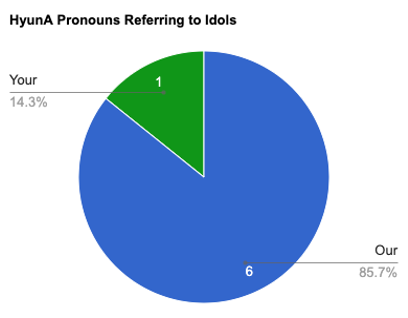
Figure 3. Types of Pronouns Used in Reference to Idols: HyunA
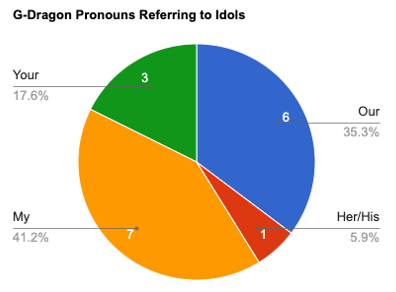
Figure 4. Types of Pronouns Used in Reference to Idols: G-Dragon
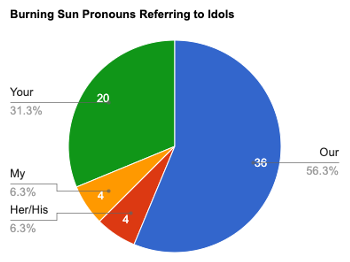
Figure 5. Types of Pronouns Used in Reference to Idols: Burning Sun
The three graphs above show the breakdown in types of pronouns used by idols in each of the three scandals. In the HyunA and Burning Sun case, the use of “our” was most prominent. However, for the G-Dragon case, the use of “my” was most common. This finding can be explained through the nature of the scandals being examined—the G-Dragon scandal was a break-up announcement and many comments expressed relief and excitement that he could be “theirs” once again. The HyunA case garnered more reaction to the fact that her and her boyfriend were dropped by their label, so a lot of people expressed sympathy (thus a communal “our” would be more common); the Burning Sun case evoked a more national response due to the scale of the scandal.
Discussion
After compiling data from Facebook posts, we find evidence consistent with our claim that K-netizens use possessive nouns when referring to idols more frequently than international, English-speaking fans. Though the total number of pronouns used in general was similar for both the Korean and English comments, our results show “possessive pronouns”—those used in contexts such as “that’s my girl” or “he’s all yours”—to be up to nine times more frequent in the Korean posts. International fans displayed uses of terms such as “idols” and “biases” to demonstrate devotion and obsession, but not necessarily a sense of “ownership” of the K-pop stars as the Korean commenters did. Given these results, it seems that the popular perception of K-netizens as being overly possessive of their favorite idols holds some level of truth.
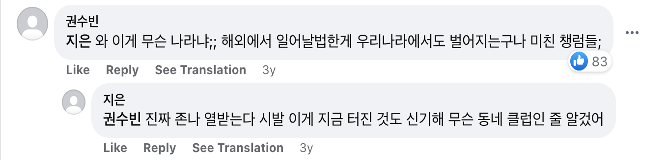
There may be many small factors affecting the observed usage of possessive pronouns, but we believe that the primary cause for possessive behavior from Korean fans stems from a deep-seeded nationalism within K-netizens that can be observed through K-pop social media interactions. The possessive pronoun “our” was used especially frequently in the Burning Sun scandal, most often in contexts referring to “our nation” (Korea). While the HyunA and G-Dragon scandals deal with dating and are mostly only scandals in the eye of the public, the Burning Sun case involved much more serious allegations of prostitution, sexual coercion, and possible police corruption. This seems to lead to more extreme responses in Korean comments, where K-netizens express shock that their country would be involved in such behavior.
Here are some examples of the comments from the Burning Scandal post:
Translation: @Jieun Wow, what country is this? What’s happening overseas is happening in our country too; those crazy people.
Translation: Why do people live so stupidly that they blindly trust money? Our country’s people are so scary that they even made the president step down.
As stated earlier, the hallyu wave of Korean culture has been driven by K-pop through the last decade, leading Korean citizens and government to hold K-pop to an extremely high standard. Korean nationalism is founded on pride in successes that can be seen internationally, so K-pop’s dominance of global charts makes it a cultural focus across the country (Koo 2020). Another example of this type of nationalism includes the nationwide buzz over Korean athletes that experience success overseas; this is seen most recently with soccer star Son Heung-Min headlining Korean news and covered at great length for becoming a prominent figure in the European football scene. While this and many other instances demonstrate Korean nationalism to be celebratory and uplifting, the problem arises when these globally successful entertainers involve themselves in “scandalous” events in the eyes of the international or Korean public. Because K-pop idols are seen as representatives of Korea and Korean culture, K-netizens are quick and harsh in their criticism of any action that could be seen as harmful to the image they want to portray to the global audiences. This explains the “bringing shame to our nation” type of comments observed in the Burning Sun scandal; though perhaps justified in this situation, the Korean comments criticizing K-pop celebrities for dating exemplifies a level of “ownership” or authority akin to that of parents toward their children. This possessiveness leads to the international perception of Korean fans as sharing the same negative or toxic traits that they would associate with a “tiger” or “helicopter” parent.
The very concept of a “K-netizen” may also play a part in perpetuating nationalistic, possessive tendencies in Korean fans. If “netizen” gives a label to avid users of the Internet, K-netizen defines a space specific to Koreans which allows them to be closed off to the rest of the wide-open Internet. By giving themselves this label, K-netizens engage only in interactions within their own language and culture, opposite to how international fans utilize the Internet to interact with others across the globe. According to the article “Online Language: The Role of Culture in Self-Expression and Self-Construal on Facebook,” collectivism is significantly higher among Asian Americans than Caucasian Americans (De Andrea 2010). While this finding doesn’t have a one-to-one relation to the focus of our study, we assume a similar truth given the homogeneity of Korea and implications of the term K-netizen. This collectivism leads to a cycle within Korean K-pop social media where new users are introduced to the idea that they have power over or possession of the celebrities that they follow, eventually adopting linguistic traits exemplifying these behaviors much like they would in traditional Communities of Practice.
Conclusion
The nationalistic tendencies and resulting toxic comments of K-netizens isn’t a problem that we feel we can or should fix; rather, it is one that provides insight into the role that nationalism plays in social media interactions between users around the world and within their own language groups or countries. Further research into operations behind Korean social media may reveal the importance of these comments in forming the best possible product to be seen by the rest of the world. On a larger scale, we would like to see this study performed with the international entertainment exports of other countries; perhaps social media comments about artists from the United Kingdom or actors from France can reveal aspects of those countries’ nationalism and how they display these traits online.
Our data was mostly limited by sample size and platform. Though we focused on Facebook comments due to the site’s popularity among Korean social media users and its ease of access to centralized posts, we recognize that much of the international discourse about K-pop happens on newer sites like Twitter and Instagram. A more comprehensive study would compile comments from all of these sites to get a more accurate representation of linguistic features displayed. Additionally, we cannot guarantee that all of the Korean comments on Facebook were written by Korean citizens, but we assume that most of them were given that the posts were made by news sites based in Korea. Despite these shortcomings, we believe that our results show an accurate representation of the differences between Korean and international commenters when it comes to K-pop discourse. This topic has yet to be explored in depth from a sociolinguistics perspective, but the continual growth of social media makes it an issue worth researching and examining in greater detail.
References
DeAndrea, D.C. et al. “Online Language: The Role of Culture in Self-Expression and Self-Construal on Facebook.” Journal of Language and Social Psychology, Vol. 29, No. 4, Dec. 2010, pp.425-442, doi: 10.1177/0261927X10377989
Goi, C. L. (n.d.). Cyberculture: Impacts on Netizen. Retrieved April 30, 2022, from https://citeseerx.ist.psu.edu/viewdoc/download?doi=10.1.1.674.3277&rep=rep1&type=pdf
Jung, S. (n.d.). Fan activism, cybervigilantism, and Othering mechanisms in K-pop fandom. Transformative Works and Cultures. Retrieved April 29, 2022, from https://journal.transformativeworks.org/index.php/twc/article/download/300/287?inline=1
Koo, Jeung Mo. “K-pop from Local to Global: A Study on Cultural Nationalism in Korean Pop Culture.” The Columbia Journal of Asia, 2022, from https://journals.library.columbia.edu/index.php/cja/article/view/9355.
Lee, S. J. Elon Journal of Undergraduate Research in Communications. Elon University, 2011, https://eloncdn.blob.core.windows.net/eu3/sites/153/2017/06/EJSpring12_Full.p
The term “Asian American” was coined by the late Japanese historian Yuji Ichioka in the late 1960s, in the midst of the burgeoning affirmative action movement advocated by African-Americans and other minorities. His original intention in introducing this ethno-racial identity was to deny the disparaging term “oriental” that Westerners had imposed on Asian Americans (Zhou, 2013). Over time, the Asian American identity became more widely accepted by Americans and Asians, and ethnicity grew to be an increasingly important point of discussion in today’s society. Second-generation Asian Americans who grew up in this environment, under the fusion of heritage and mainstream American cultures may reflect a hybrid self-identity. This hybrid self-identity can also be observed and expressed through the form of language.
Acknowledgement
First and foremost, we would like to thank Dr. Daria Bahtina and Ms. Mercedes Douglas who provided us with valuable advice from the beginning of the topic selection process and helped us tremendously when we encountered difficulties in the construction of the projects. In addition, we would like to thank each and every group member for their hard work and dedication to this project, it was the efforts of each of us that brought the project to life.
Introduction and Background
Asian-Americans are part of a wave of immigrants who began arriving in the United States decades ago seeking more socioeconomic flexibility. They are now one of the fastest growing minority populations and have become a vital group to American society and culture. As such, it is worth noting that second-generation Asian-Americans, who grew up at the intersection of their heritage culture and mainstream American culture, have a unique self-identification. These Asian-Americans tend to integrate their heritage language characteristics into English, in a manner that reflects their definition of self and ethno-cultural orientation as an expression of their hybrid identity.
To better understand the unique linguistic characteristics of second-generation Asian-Americans, we conducted a case study focused on California native Asian-American Randall Park. Through transcript analysis and observation of prosodic features during his interviews and stand-up comedy shows, we attempt to answer the following questions: Does Park have unique prosodic features or linguistic shifts that identify him as uniquely Asian-American? Does Park code-switch for his social identity? What stylistic shifts are observable in his performances that support these phonetic and prosodic shifts?
Korean Americans are the fifth most popular Asian-American group in the U.S. with an estimated population of 1.6 million (Ryu et al., 2013). According to the 2020 national census, 17% of California’s population consisted of Asian-Americans, a stark increase from 2010’s 13% (U.S. Census Bureau, 2020).
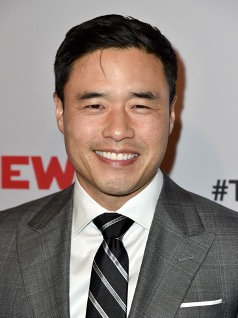
Figure 1: Randall Park
Randall Park is an American actor, comedian, and writer. Park was born on March 23, 1974, in Los Angeles to Korean immigrants and grew up in Castle Heights, CA (Empire, 2022). A graduate of Hamilton High School’s Humanities Magnet Program, Park began attending UCLA in 1993. He later co-founded “Lapu, the Coyote that Cares”, the largest and longest running Asian-American theater company on campus and received his M.A. in Asian-American Studies in 1999.
We selected Park as the research subject because his media is easily accessible, he is well-connected with his Asian-American identity, and he is a good representation of individuals thriving at the intersection of East and West cultures.
Method
Much of the research performed on Asian-American speech has focused on cultural and linguistic borrowing from other American ethnicities to create an Asian-American speech community. Angela Reyes has several studies displaying Asian-American culture and speech as borrowing from African American dialect (Reyes 2005). However, our study will look into a different aspect of borrowing and look into the influence first generation immigrants have on their second generation children’s speech. Although second generation Asian-Americans are born and raised in the United States, they still produce observable prosodic features that are not fully native American English. To find these features, we will perform a case study on Park.
To narrow the focus of this study, we chose to examine only one Asian-American male celebrity. Park is proficient in both English and Korean. It is worth noting that all of the acting roles that Park saw success with tapped into his Asian-American background for comedic effect. This makes him an optimal subject for our study, as he has navigated Asian-American English with an acute awareness of utilizing variants relevant to different entertainment contexts — both naturally in interview and live speech settings, and more exaggerated in acting roles.
Several studies have identified phonological characteristics common among Asian-American English speakers. A survey conducted by the UC Berkeley Phonetics and Phonology Lab in 2016 regarding the “unique English Vowel Spaces of Asian-American Californians,” found one such feature where “Korean and South Asian speakers of Californian English had a more fronted foot vowel than the White speakers” (Cheng). A study by Lauren Hall-Lew and Rebecca Starr, who studied Chinese Americans in the San Francisco Bay Area, found additional vowel production differences where boat was pronounced beh-oat and the cot/caught vowels were merged to produce the same sound (Hall-Lew). Using these studies as a reference, we will analyze speech samples from Park, develop phonetic transcripts, and confirm whether the conclusions of the study corroborate with Park’s speech.
We hypothesized that second-generation Asian-Americans integrate their heritage language characteristics into English, which reflects their definition of self and ethno-cultural orientation as an expression of their hybrid identity. To verify our hypothesis, we examined 96 minutes of Park’s interviews and stand-up clips, during which we observed his unique production of the /u/ (i.e. boot), /ɛ/ (i.e. bet), /ɑ/ (i.e. father), and /aʊ/ (i.e. how) vowels. We selected 29 words samples from these video clips in which he produced these vowels and analyzed the spectrograms of each vowel using PRAAT. Of the 29 samples, 14 samples were discarded due to low sound quality, short phoneme duration, and unreadable spectrograms.
The 15 words we analyzed on PRAAT were:
/u/: movie, restroom, shoots
/ɛ/: friends, parents, restroom
/ɑ/: audience, body, job, mom, palms, trauma
/aʊ/: around, down, how
To use as comparison for Park’s pronunciation of these vowels, we had a male native Korean speaker and a male Korean American pronounce these 15 words. The native Korean was a 24-year-old monolingual born in South Korea who began his English education in the third grade. Due to the characteristics of English education in Korea, his English pronunciation is heavily accented. The Korean American was a 22-year-old bilingual, fluent in both English and Korean, who lived his entire life in Southern California. The Korean American had no noticeable accent when speaking English.
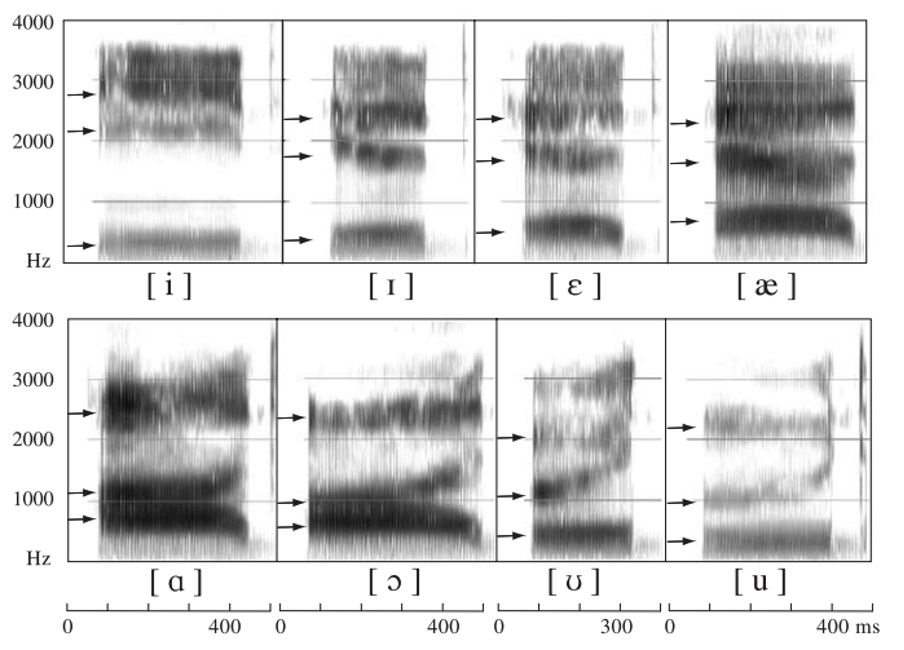
Using PRAAT, the section of sound containing the vowel was then isolated for further analysis. These vowel sections for each of the three individuals – Park, Native Korean, and Korean American – were compared with each other when spectrogram readability was possible to observe differences or similarities. A control sample from existing data on an American male speaker’s vowels was used to compare with the three Korean individuals (Figure 2).
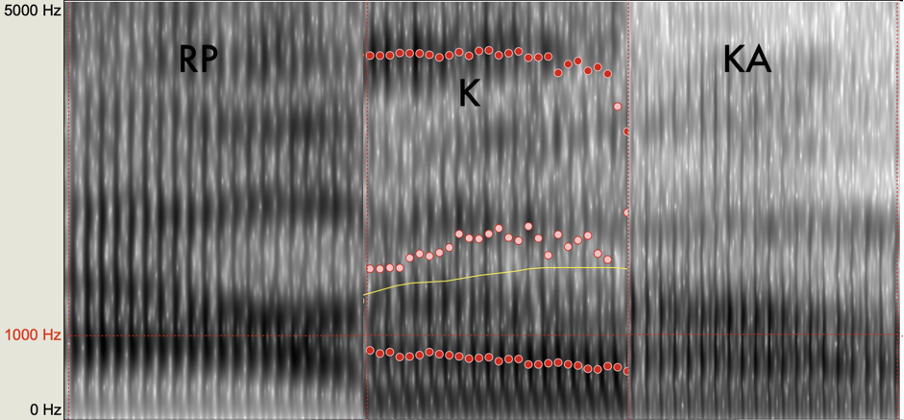
Within the spectrograms of the vowels for the individuals, the F1 and F2 formants were observed in particular. Formants are concentrated areas of acoustic energy around a particular frequency in speech waves. The first formant (F1) is inversely related to vowel height, indicating the height of the tongue during vowel production. The second formant (F2) is related to the degree of backness of a vowel, indicating the front or back position of the tongue during vowel production.
Figure 2: American Male Vowel Spectrogram (Ladefoged, 2006)
Results and Analysis
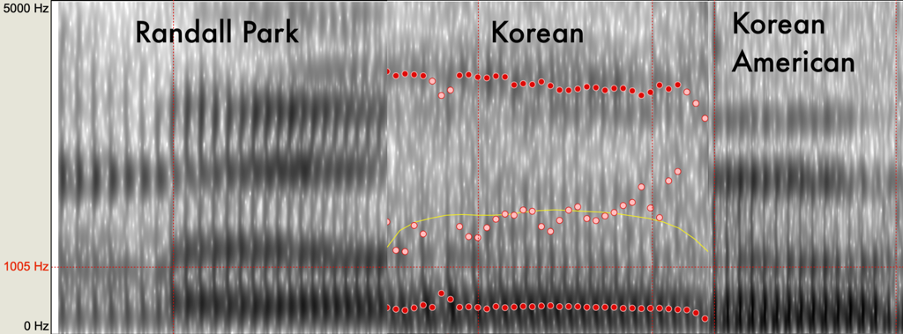
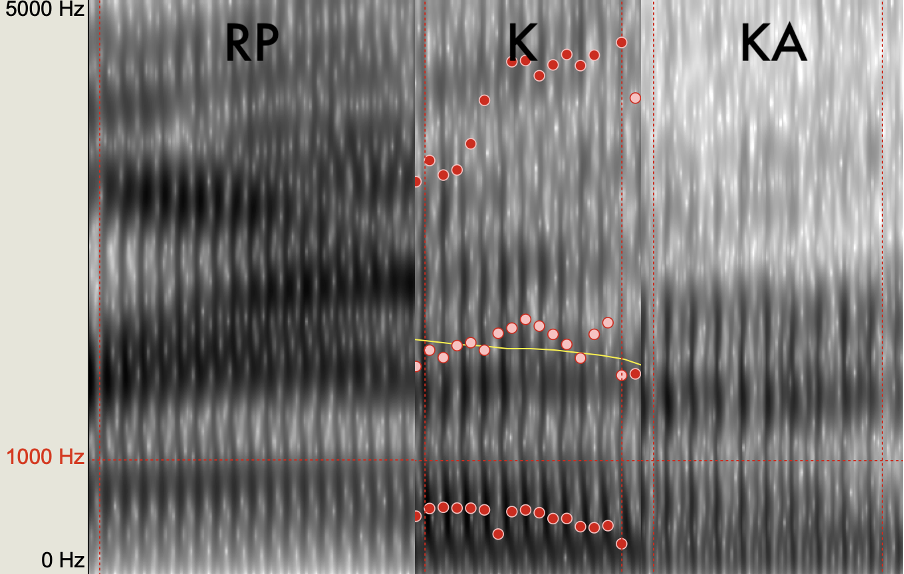
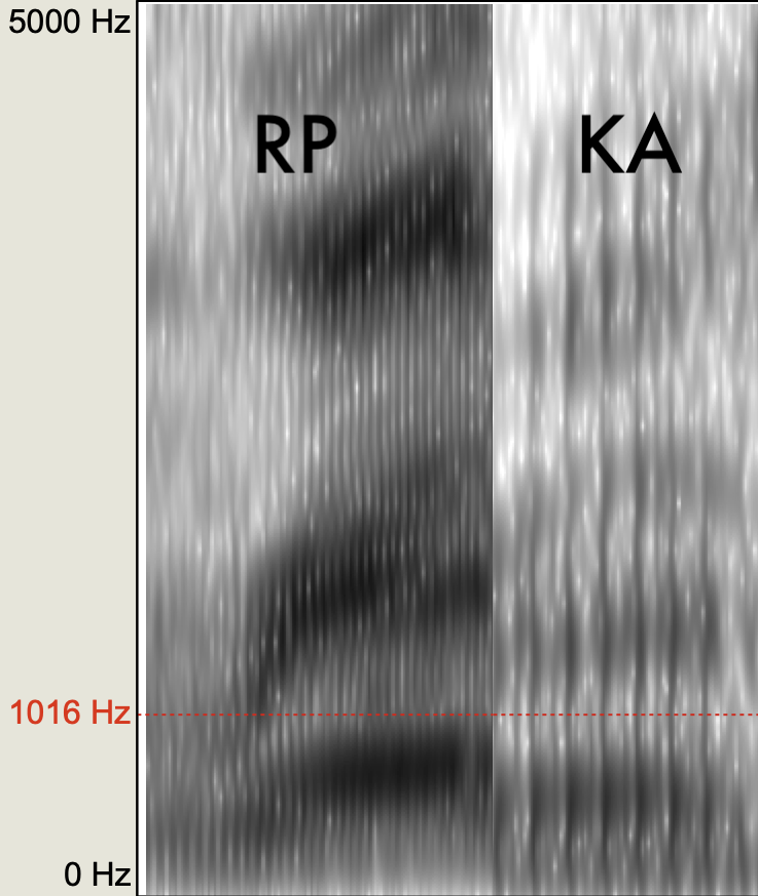
Two examples of the /u/ vowel as in the word “boot” were the words “movie” and “restroom”. In the spectrograms of these two words (Figures 3 and 4), all three Koreans had higher F1 and F2 values than the American speaker (Figure 2). Also, Park’s F1 and F2 values were higher than the Korean American speakers. This shows that all three Koreans had a higher and more front tongue position than the American speaker in the pronunciation of this vowel, with Park’s being higher than the other speakers. This higher and more front pronunciation of the “oo” vowel can be heard in Park’s pronunciation as he says the high, central /ʉ/ vowel compared to the high, back /u/.
Figure 3: Spectrogram of /u/ from “Movie” (https://youtube.com/clip/UgkxrGNwV57voWS1HsCG_0hTomRVcL96ifno)Figure 4: Spectrogram of /u/ from “Restroom” (https://youtube.com/clip/UgkxVWnYPx4R-M-ASxdZSp8qByJx1kjzLtnG)
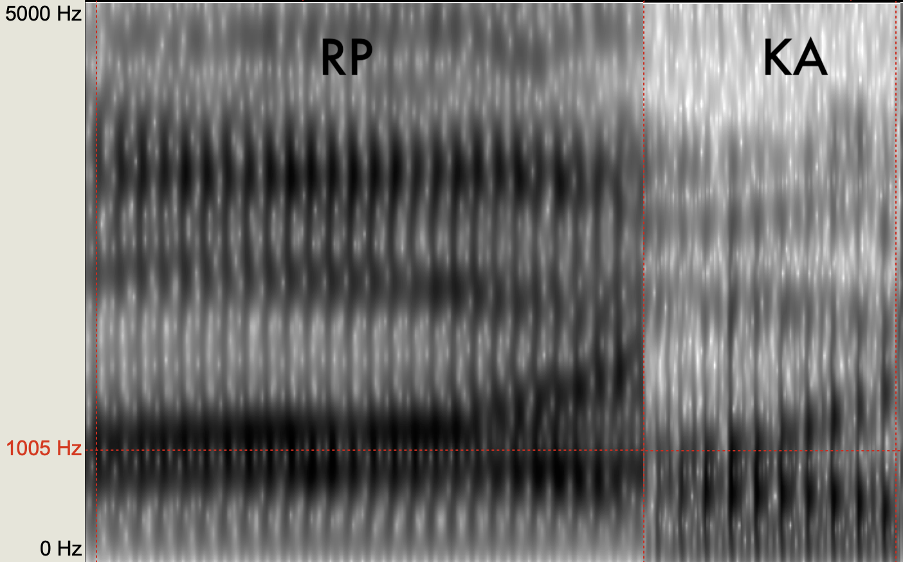
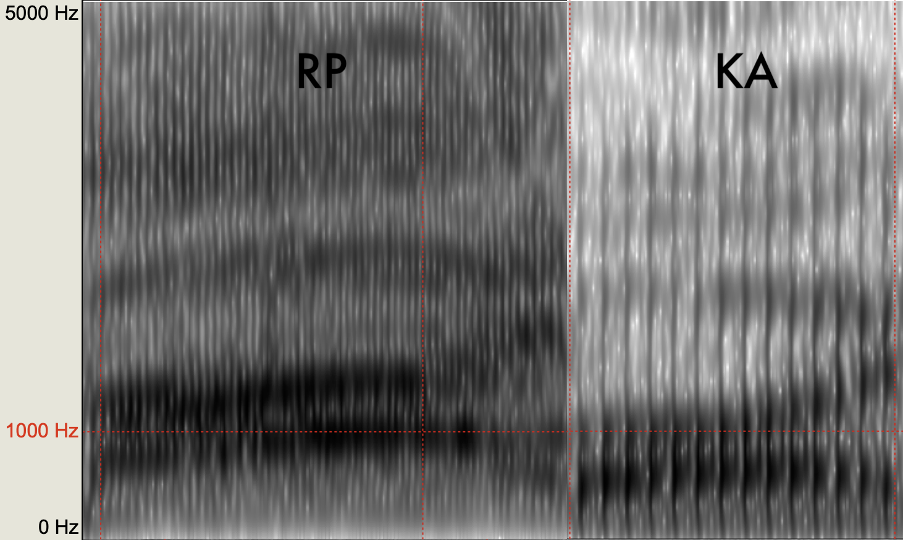
Two examples for the /ɛ/ vowel such as in “bet” are the words “friends” and “restroom”. Looking at the spectrograms for this vowel (Figures 5 and 6), we can see that all three Koreans had slightly higher F1 and F2 values than the American speaker (Figure 2), with Park’s being the highest. Similar to the findings of the /u/ vowel, we can see that the three Koreans had higher and more front tongue positions during the /ɛ/ vowel production with Park’s being greater than the Native Korean and Korean American. In Park’s pronunciation of the /ɛ/ vowel, the higher and more front /e/ vowel used in Spanish can be heard compared to the /ɛ/ vowel used in English.
Figure 5: Spectrogram of /ɛ/ from “Friends” (https://youtube.com/clip/Ugkxpl0-5yD2NO7_j3shYwZrLGxf2tLSg6L6)Figure 6: Spectrogram of /ɛ/ from “Restroom” (https://youtube.com/clip/UgkxVWnYPx4R-M-ASxdZSp8qByJx1kjzLtnG)
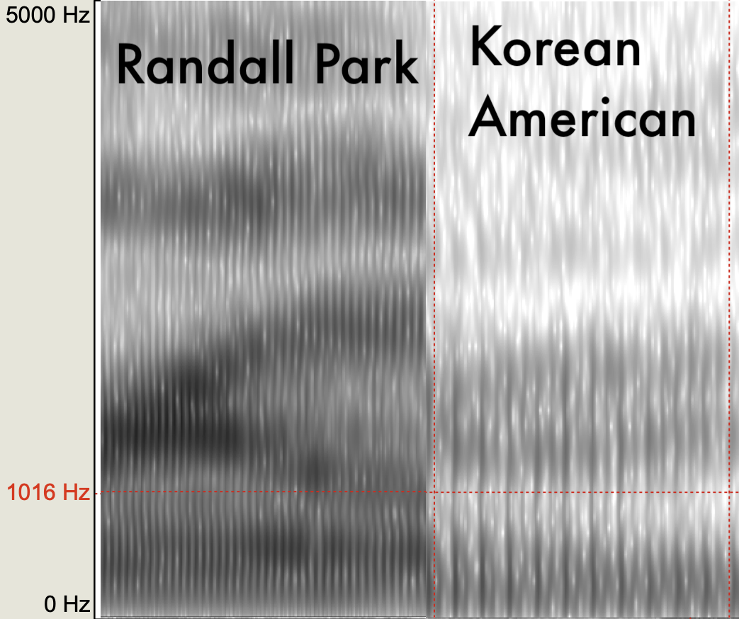
Examples of the /ɑ/ vowel such as in “father” were “body” and “audience”. In this vowel, Park had higher F1 and F2 values than all other speakers including the American male (Figures 2, 7 and 8). There were no significant differences between the American male’s and the Korean American’s F1 and F2 values. Park had a slightly higher F2 value than the American speaker, indicating a more front pronunciation than the other speakers.
Figure 7: Spectrogram of /ɑ/ from “Audience” (https://youtube.com/clip/UgkxoGfTm6TTUg12GWM4SCM6lNqVWPAj3Fp_)Figure 8: Spectrogram of /ɑ/ from “Body” (https://youtube.com/clip/Ugkx3yTNOhVKaSNX305q2daASzLa_BiGlOiz)
A vowel that Park had a unique pronunciation of that is not available from the American male is the diphthong /aʊ/ such as in “town.” A diphthong is a sound formed by the combination of two vowels in a single syllable. An example of this sound from Park was in the word “how”. In this sound, Park and the Korean American had nearly identical F2 values (Figure 9). However, Park had a slightly higher F1 value than both the Korean and Korean American, showing he had a slightly higher tongue position in this production.
Figure 9: Spectrogram of /aʊ/ from “How” (https://youtube.com/clip/UgkxzucRmH9iypLVR5X24STFmGqpSeY22xbn)
These productions of vowels had little variation among different shows and interviews of Park. Although his pronunciation of the /u/, /ɛ/, /ɑ/, and /aʊ/ vowels remained relatively the same, several linguistic characteristics not part of his normal speech appeared during style shifts when taking on different stances.
In his stand-up comedy show on Comedy Central, several linguistic features that accompany his style shifts can be observed. The first linguistic style shift occurred at the sentence “bunch a kids just pointing at me and laughing at me”. At this moment, by raising the volume and tone of his own voice, g-dropping, and using “a” instead of “of,” Park implied that the behavior of bullying which was enacted by non-Asian children was a bad thing by putting those linguistic styles that are not his normal speaking style. Next, his second style shift happened with the words “I am confident now”. At the moment, he spoke in a higher tone with an authoritative voice, shifting his style to show that he has overcome his past trauma of being bullied and is now embracing his Asian heritage in a positive way. And lastly, he showed his style shift with the sentence “and I feel so good”. At this point, he spoke in a breathy and calm voice, with a lower tone. These linguistic styles all represented the peace he found after releasing his bad memories of bullying. These prosodic features or linguistic style shifts support his Asian-American identity. This could be supported by the characteristics of the Asian-American Identity Development Model of Kim (1981). The first shift mentioned above shows he went through Ethnic Awareness and White identification as an Asian-American when he was in middle school. After going through those bullies, he realized he is marked as a distinct ethnicity which is non-American, and also as one who suffers racial prejudice from the White. The second style shift shows that he still acknowledges that he is different from unmarked Americans as he did as a child, however, now accepts his ethnic heritage rather than tries to escape from it. This also supports that he does code-switch for his ethnic identity as a Korean American.
Discussion and Conclusion
This case study and research provided an opportunity for us to closely examine some socio-linguistic factors and impacts of the growing Asian-American diaspora. Additionally, we gained a better understanding of how second-generation Asian-Americans integrate into society through a linguistic lens. We hope that some of the findings of this study may be helpful in supporting English learners from similar backgrounds as our subject, potentially used as supplemental material in curriculum design. In the field of socio-linguistics, the existing studies focused on Asian-Americans are not as extensive as other ethno-racial groups. Thus, this project may serve as a good starting point for future research and development and we hope to inspire more studies to be conducted in this area.
Potential subjects we considered for our case study will serve as excellent focuses for future development. Asian-American comedian and actress Ali Wong was one example, where a closer examination of second-generation Asian-American females and a comparative study with Park be conducted. Additionally, case studies on Asian-Americans in different social contexts outside of entertainment can be valuable, in which case politician Andrew Yang can serve as a good jumping-off point. Since our study narrowed in on a native California, a deeper analysis of how U.S. regional differences can contribute to second-generation Asian-American English would be insightful.
References
Cheng, Andrew. A Survey of English Vowel Spaces of Asian-American Californians.UC Berkeley PhonLab Annual Report, 22 Aug. 2018, https://escholarship.org/uc/item/4w84m8k4.
Chin, G. J. (2008, April 18). The Civil Rights Revolution comes to immigration law: A new look at the immigration and nationality act of 1965. SSRN. Retrieved May 12, 2022, from https://papers.ssrn.com/sol3/papers.cfm?abstract_id=1121504
Elaine W. Chun, Ironic Blackness as Masculine Cool: Asian-American Language and Authenticity on YouTube,Applied Linguistics, Volume 34, Issue 5, December 2013, Pages 592–612. https://doi.org/10.1093/applin/amt023
Hall-Lew, & Starr, R. L. (2010). Beyond the 2nd generation: English use among Chinese Americans in the San Francisco Bay Area.English Today, 26(3), 12–19. https://doi.org/10.1017/S0266078410000155
Homeland Security. (2013). Message from secretary Alejandro N. Mayorkas on National Police week 2022. Home | Homeland Security. https://www.dhs.gov/
Kim, Jean. (1981). “Processes of Asian-American identity development : a study of Japanese American women’s perceptions of their struggle to achieve positive identities as Americans of Asian ancestry.” Doctoral Dissertations 1896 – February 2014. 3685. https://scholarworks.umass.edu/dissertations_1/3685
Ladefoged, P. (2006). A course in phonetics. Thomson Wadsworth.
Newman, & Wu, A. (2011). “DO YOU SOUND ASIAN WHEN YOU SPEAK English?” RACIAL IDENTIFICATION AND VOICE IN CHINESE AND KOREAN Americans’ ENGLISH.American Speech, 86(2), 152–178. https://doi.org/10.1215/00031283-1336992
Reyes, A. (2002). “Are you losing your culture?”: poetics, indexicality and Asian-American identity. Discourse Studies, 4(2), 183–199. https://doi.org/10.1177/14614456020040020401
Reyes, A. (2017, September 1). Language, Identity, and Stereotype among Southeast Asian-American Youth The Other Asian: The Other Asian (1st ed.). Routledge. https://doi.org/10.4324/9781315092027
Ryu, S. Y., Crespi, C. M., & Maxwell, A. E. (2013, December). A bi-national comparative study of health behaviors of Koreans in South Korea and Korean Americans in California. Journal of immigrant and minority health. Retrieved May 13, 2022, from https://www.ncbi.nlm.nih.gov/pmc/articles/PMC3530654/
Shankar, S. (2011). Asian-American Youth Language Use: Perspectives Across Schools and Communities. Review of Research in Education, 35(1), 1–28. https://doi.org/10.3102/0091732X10383213
When looking at the work previously done on the intersection of white fragility and sociolinguistics, we noticed a gap in research that we wanted to fill. We conducted interviews between two white peers, the topic of conversation being sensitive topics such as race and racism. We hypothesized that the interviewees would take a neutral stance when speaking on the subject of race. We looked specifically at word choice, stance, and circumlocution. Using conversation analysis on all three interviews conducted, we were able to look at these linguistic elements and draw conclusions. It was found that interviewees used circumlocution, hedged and hummed, and all held a very particular stance. In our article, we delve more deeply into what we found, the examples of conversation analysis, and what the most significant takeaways were.
Introduction
For our project, we wanted to take a sociolinguistic approach to look at white fragility and discussions pertaining to sensitive topics. We looked specifically at how white people respond to questions regarding race and racism. When looking at previous work examining the intersection of white fragility and sociolinguistics, we found a lack of research that we wanted to supplement and deepen. We wanted to look at white fragility by conducting interviews with two white peers regarding race, which we could not find had ever been done. Previous research done by Robert DiAngelo, highlighted a discomfort that white people had when dealing with issues of race, “a single required multicultural education course taken in college, or required “cultural competency training” in their workplace, is the only time they may encounter a direct and sustained challenge to their racial understandings.” (DiAngelo, 2011). DiAngelo’s, along with others’ work done on white fragility, led us to our final decision on the aspects of our interviews. We conducted interviews between two white peers, both of which were twenty to twenty-two years old. We wanted to analyze these interviews specifically through a sociolinguistic lens, which makes our research unique. Our research is necessary because, by better understanding how white people feel regarding race and discussions about it, we can start to break down walls between one another and have more open conversations. These discussions allow for transparency and a sense of stronger community values within the UCLA culture and in our greater society. Furthermore, we believe that conversation is very important which is why we looked at it in depth. We did conversation analysis on our three interviews and examined them by looking at circumlocution, word choice, and stance. We hypothesized that all the participants would take a neutral stance, and we found this to be accurate but much more nuanced than we had expected.
Methodology and Results
After careful thought and consideration throughout our experiment, we found that within our three interviews it was vital to keep in mind what key linguistic features we were searching for when conducting the research portion of our project. Having both the interviewer and the interviewee identifying as white, we hoped this environment would create a sense of comfort within the conversation. We also reassured the individuals that this was a safe space to speak freely and reflect on what they have personally experienced here at UCLA. After analyzing the recordings of each interview and uploading the conversations through Trint, a transcription processing application, we were able to effectively observe the outcome of our data and look at the speech and language patterns between the two speakers. Our first finding from the interviews was how there was still an obvious level of uncomfortability between the interviewer and interviewee when asking the questions. For example, in the second interview, the interviewee is asked the question, “do you think racism exists in UCLA culture or on campus?” The interviewee responds by saying, “yes, but it’s not like I’ve seen it directly.” This response is important to our study because it proves how students here are aware that here on campus there are individuals experiencing racism. However, they quickly reassure us that they are not involved or a part of the problem at hand. Throughout the interviews, we also noticed how, when asking the question, “Do you think UCLA is inclusive to all students?” The individuals were swift to respond and say no. However when asked if they believe racism exists on campus or in the culture here at UCLA, they take more time and reply hesitantly with “yes, Uhm, probably” (Interview 2). This longer pause can signal that the interviewee could be slightly caught off guard or uncomfortable answering the question, in fear of giving the wrong response. Secondly, we found that in our third interview, when the individual was asked about racism at UCLA, they responded with, “I heard from the grapevine that….” This immediately personifies to the interviewer that the individual wants to be excluded from the information they are about to share. The interviewer does this in a way to agree that, yes, there is exclusion here on campus happening but wants to ensure she is not accounted for in that statement. This is critical for our study because it helps us reveal how quick students are to agree there is blatant inequality here at UCLA, but in a way, they would like to acknowledge it is problematic but are quick to cover themselves before even pressing more into the issue. The second interviewee, at the opening of the conversation, also expressed their feelings on how they felt about these questions. When asked if they think UCLA is inclusive to all students, they respond with, “uh, this is not a fun topic to talk about” in the recording, the student pauses and then nervously laughs while saying this is not a fun topic to talk about. The nervous laugh along with them voicing how this is not a fun topic to talk about, are both powerful indicators the individual was hesitant to talk on this subject without feeling uncomfortable. We must circle back to our hypothesis stating these students would take a neutral stance. It is clear from our findings that our pool of participants remained completely neutral throughout the interview. All three students agreed they benefited from white privilege at UCLA, however when being asked these questions about race, we found they all displayed levels of discomfort and attempted to sever themselves from any racist or discriminatory acts people might be experiencing or hearing about in UCLA culture or campus.
Discussion
Although all three interviewees had different responses to the questions, we found a few patterns across the three. Upon answering each question, interviewees would often find ways to distance themselves from the issue. From saying things like “I’ve heard”, “Actually, I can’t really think of an example, so maybe not” or “Yes, but it’s not like I’ve seen it directly.” This is what sociologist Caprice Hollins describes as the individual approach White individuals often use when speaking about race. Individuals may find ways to maintain a positive self-image by pushing away their closeness to these issues or moving around the topic of conversation (2020, Hollis). To add onto this, something we picked up on was the interviewees avoidance using racialized language, instead opting for terms like “minorities” or “different race” instead. This is what is described as aversive racism, or racism that is manifested in subtle ways (Diangelo, 2018, p.59). Furthermore, they never directly state their opinion on some of the questions, often finding a sort of a neutral position or a middle ground. This type of stance is known as a form of White solidarity, where individuals in conversation will often build on this idea of a “common stance” regarding race-related issues. These stances rely on both silence on racial matters and a subconscious implied unity between parties to uphold this solidarity (DiAngelo, 2018, p.72). When all three of the interviewees used this back and forth, yes and no response, it is possible that they are not able to navigate that common ground which could lead to some of the discomfort demonstrated.
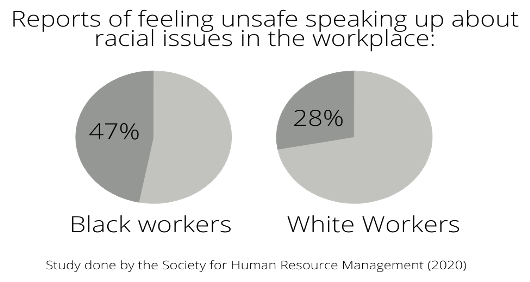
After conducting our study, most of what we saw fell in line with what sociologists are saying about conversations on race, however it does not match some of the quantitative data we found. The stances we picked up on during the interview were things we expected but did not expect to find clear discomfort. This is what prompted us to look into other research where we found that White individuals feel significantly less discomfort speaking about these topics compared to Black individuals. The following Figure 1 is demonstrative of a 2020 study done by the Society for Human Resource Management which collected data from 1,275 participants about their workplace environment. While our study focuses on universities, we feel that the study on the workplace environment is still relevant to our topic. The study found that 47% of Black respondents do not feel safe speaking out about issues of racial justice compared to 28% of White respondents who said they do not feel safe for the same reason (2020, p.11). There can be many reasons for this discrepancy. While this data could indicate that our 3 interviewees happened to be a part of the 28% of people who feel uncomfortable, it’s also possible that the perception of themselves is different than the way others (us interviewers) perceive them. If given the opportunity, we would have a second round of interviews where we would ask not only about racial issues but also how individuals feel about speaking on racial issues.
Figure 1
Observing our results and how they fit into a broader context, racial issues and racial justice has always been prevalent, deeply and radically well-established, and formed in society. UCLA represents its own subcategory of society, as a community. By theoretical implications, these findings we provided show to be significant in spaces of policy, practice, and further research. Additions are also made to the existing discussion of race and social inequalities related to. By practical applications, it presents how we can better self-reflect and ask ourselves: if certain conditions were fulfilled, not only for the student body but beyond that. Our findings can be extended to other situations, such as friend groups, educational spaces, relatives, and workplaces. Anywhere we find a place of interaction and community, this study could be applicable. Our findings help us understand a broader topic of the foundations of human interaction. With continued conversations regarding social injustice, we are better equipped to integrate our worldviews, as well as comprehend and be attentive to that of others. We can improve and create equitability for all, resulting in better representation, accountability, uplifting underrepresented groups, and improving the overall well-being of one another.
As seen below, a chart of the ethnic diversity of undergraduate students at UCLA. An article was written at Penn State in 2018 by the Diversity group in response to College Factual’s ranking of UCLA’s diversity and ethnicity. The article aimed at identifying and examining how diverse of an institution UCLA is. We found this article written at Penn State to be extremely critical and relevant to our work because it perfectly analyzes the exact breakdown of each ethnicity present on campus at UCLA. From this data in the chart, we are allowed the opportunity to more effectively determine the disproportions or inequalities that may be prevalent based just on the percentages of various ethnicities here at UCLA As seen in the chart, carefully note how the orange percentage of the chart is not even listed and exact percentage. In this chart the color that represents individuals of black or African American ethnicity accounts for less than 4% or the entire student body. This statistic is crucial to the argument we pose in our experiment because the percentage of African American and black individuals is disproportionately represented on campus here at UCLA, while the percentage of white or Caucasian presence on campus stands at 27.1% the second to highest percentage of all ethnicities listed.
Figure 2- UCLA Student Demographics Chart, 2018
References
DiAngelo, Robin (2011). White fragility. International Journal of Critical Pedagogy 3(3):54–70.
DiAngelo, D. R. (2018). White Fragility: Why It’s So Hard for White People to Talk About Racism. Beacon Press.
Diversity at UCLA – Diversity. (2018, March 8). Sites at Penn State. Retrieved June 8, 2022, from https://sites.psu.edu/pasternakcivic/2018/03/08/diversity-at-ucla/
Hollis, C. (2020). What white people can do to move race conversations forward. Youtube.com. Retrieved 6 7, 2022, from https://youtu.be/7iknxhxEn1o
Society for Human Resource Management. (2020). Together Forward. The Journey to Equity and Inclusion. Retrieved 6 5, 2022, from https://shrmtogether.wpengine.com/wp-content/uploads/2020/08/20-1412_TFAW_Report_RND7_Pages.pdf
The objective of this study was to analyze the initiation of gendered language compliance during child development by focusing on the production of language in English-speaking five-year-old children. We hypothesized that boys are more likely to display linguistic features associated with men in their language in comparison to girls conforming to features related to their gender. We examined conversations between five-year-old boys and girls from the television series The Secret Life of Five Year Olds for our research. Considering that there wasn’t quantitative data involved in this study, our conversational analysis approach provides insightful language distinctions between the boys and girls: the boys had higher rates of interruptions/utterances and were more assertive in general. In contrast, the girls were less blunt and downplayed their criticism. Our hypothesis was supported to some degree; boys will play into gendered language, but so will girls. This study is significant because it allows parents and society to hold more self-awareness in the unconscious gender norms they are enforcing onto their children at a young age.
Introduction
It is widely accepted that social perceptions of gender usually influence language.
Many studies have been done on gender and language regarding children. Still, the direct correlational role that the embedded gender association in language has on gender identity development within children appears underexplored in literature. Our objective with this study was to analyze the initiation of gendered language compliance during child development by focusing on language production in English-speaking five-year-old children. Our research involved examining conversations between five-year-old boys and girls from the television series The Secret Life of Five Year Olds. We focused on linguistic components such as intensifier adverbs, imperatives, and gender-specific categories of adjectives, as these have provided insights in past research about gender norm reproductions and deviations. We emphasize these specific linguistic features because we felt as though they help address and mold the gender stereotypes and expectations for the children. We hypothesize that boys are more likely to display linguistic features associated with men in their language than girls conforming to their respective gender.
Background
Our proposal aims to understand the relationship that language has with children and their socialization of gender conformity. We chose English-speaking five-year-olds for our research as previous research has shown that by age five, the linguistic capabilities of children are adult-like. Children in the age range of six to ten have solidified their schemas about gender and social norms, so we felt as though studying the age just before this range may allow us to understand the progression and perhaps find intervention methods. According to Owen and Padron (2015), several linguistic features have been specific to each gender. In their study, Owen and Padron observed intensifier adverbs, imperatives, and adjectives in the language of toy advertisements and found substantial evidence on how gender is differentiated through language. These are the linguistic features we chose to examine in our research.
Methods
Figure 1 – The Secret Life of Five-Year Olds: Jack and Sienna (promo picture).
To search for the linguistic elements of intensifier adverbs, imperatives, gender-specific categories of adjectives, and turn-taking in the language of five-year-old children, we applied conversational analysis, as a theoretical framework, to a British documentary called The Secret Life of Five-Year Olds (see Figure 1). By selecting various clips that were available on YouTube of children’s playtime interactions and interviews, we analyzed natural conversations between the same and opposite gender.
Transcription software programs, such as Otter.ai, were used to transcribe some of the clips initially; however, each one was also manually transcribed using the Jefferson Transcription System to ensure accuracy and included as many linguistic details as possible can be derived. Figure 2 denotes the transcription notation we used for the purposes of our study. To analyze the data, we used a qualitative approach, namely that we situated the presence of the linguistic element we sought for in a social context to derive its meaning about gender conformity. The data and results outlined in the following section elaborate our findings and interpretations.
Figure 2. Jefferson Transcription System[word] overlapping talk><; <> quickened or slowed down speech↑↓ rise or drop in intonation= latching or continuation of speech with no pause(.) slight pause of no particular length(1.4) pause of a particular lengthWORD loud or shouted wordswo:rd stretched soundword rise in volume or emphasis((word)) comments or descriptions
Results & Analysis
To study intensifier usage, analysis was done on a clip of an experiment designed to provoke a strong reaction: lemonade spiked with salt. The documentary crew attempted to gauge the children’s empathy, but the intent to produce an intense response made it an ideal source of intensifying language.
According to Owen and Padron, “[adult] females used intensifiers […] more frequently than did males.” (2015, p. 70). However, this is not in line with the behavior of the children in the clip analyzed. The boys reacted very strongly to the salted lemonade, complaining, oddly enough, that it was too sweet: “it’s disgusting”; “it’s way too sweet”; “I’m gonna be sick tonight,”; etc. (Figure 3). Conversely, the girls used much less strident language when reacting negatively, and rather than using intensifiers, were prone to using downtoners and hedges: “a teeny bit too much lemon”; “even though I liked it”; “I loved it but”; etc. (Figure 4):
Figure 3. An excerpted transcript of the boys’ reactions to the salty lemonade
1 ELI Uhh- >no< that is disgusting2 OBS What^ you don’t like it ?3 ELI it’s too swe:et4 HAR >it’s way too sweet and I’m gonna be sick tonight<5 OLI I can’t have any more [that is disgusting]6 ELI [I’m not having any] 7 more that’s disgusting
Figure 4. A similar excerpt, of the girls' reactions to the salty lemonade
1 SIE it was a tee::ny bit too much lemon2 ALI I lo::ved the lemon insi:de it ,3 SIE I think it’s (.) incredible but >I don’t like the lemon4 in it< I loved it- I loved it [oka^y] ,5 ALI [I loved it]6 TIA ((shouting)) I LOVED IT BUT I DIDN’T LIKE THE LEMON IN IT
A longitudinal study of word-type acquisition in children aged 3–10, conducted by the Child Language Data Exchange System (CHILDES) in 1987, provides some enlightening context. Among the 85 children analyzed for this aspect of the study, intensifier use was either equal or slightly skewed in favor of usage by males before the age of 5. Between the ages of 5 and 10, intensifier use gradually shifted to be slightly skewed in favor of female children, although again not by a significant margin (Schweinberger 2016, sl. 8). When considered in the context of Owen & Padron’s study, this indicates that the gendered division of intensifier use begins only at or after the age of the children in the analyzed video. Therefore, it would be reasonable to conclude that this pattern of gendered language use either a) requires more socialization and b) is less heavily socially emphasized than other gendered language divisions observed in children’s speech at this age.
It is also worth noting that, while the language usage in this clip contradicts the findings of other research papers, it does not contradict the test the filmmakers were running: namely, if there was a gendered difference in whether the children would attempt to cushion their analyses to spare the caretaker’s feelings. In this aspect, the children behaved as expected, with the girls softening their negative reactions where the boys did not. Adding on to the previous potential conclusion, it may be that the societal expectation that women have to ‘be nice’ either takes precedence over the socialization of intensifiers, or that the former occurs earlier in life than the latter.
Deborah Tannen states there are power imbalances in language (1990, pg. 81). She notes that there is a battle for dominance in language where men often interrupt and overlap. According to Tannen’s difference, speech model females have a different culture to male speech structure. This can explain how girls and boys follow different linguistic rules. Interruptions can be shown in two manners: the first to show the listener is excited about the content and the other as a means to purposefully take the role of speaker (Tannen, 1994. p.54). Turn-to-talk is a conversation procedure where the listener intuitively or is indicated to reply in the conversation; this can be done using lexical markers like question and answer. We compared how both genders use turn-taking and interruptions differently. The following data set can be found in season one, episode three of The Secret Life of Five Year Olds on YouTube.
Figure 5 - Season 1 ep 3 (Timestamp 18:12-18:31)A:Alfie G:George CT:Caretaker
15 A: That’s not a planet? it’s a, star16 CT: >What do you guys↑ know about the sun<17 G: ITS MADE OF LAVA18 A: =No↑ the sun’s not made out of lava it’s made out of Gas you billy bummox19 G: =No its made of la::va:20 A: I looked at books and it said it’s made of gas you
big lummox21 G: They- They’re wrong↑ it’s made [out of la:va]22 A: [no gas]
In the following conversation between Alfie and George we see multiple pieces of overlap and some interruption. Alfie begins by using overlap which can be signaled by the “[ ]” symbol. Alfie corrects George but follows his statement with an insult. We can see that this begins a competition between the two. They fight back and forth, overlapping each other similarly as when two siblings fight. However, in this instance, we see that overlap is used as a mode to be the last speaker. In turn-taking, the last speaker at the end of an argument can be seen as a “winner.” Each boy competes to “win” the conversation thus proving and establishing their hierarchical rank at the top.
Figure 6- Season 1 ep 3 (Timestamp 17:41-17:53)E:Ellie A:Alfie6 E: What’s↑ another, way that you can get the rolling disease7 A: Ehh8 E: Touching the grass↑9 A: Oh- Oh I-↑((know)) picking the grass10 E: Okay↑ pick (.) pick (.) pick (.)11 A: YAY↑12 E: Cowa:bunga? (h) This is so much fun
Ellie uses many characteristics in this interaction with Alfie found in Figure 6. First, we see Ellie asking Alfie questions; she uses elision to elicit a response from Alfie as a means to keep him engaged in their conversation (Goffman, 1976, p. 265). When she does not hear a response from Alfie, she tries to give him an example. Alfie replies with what he thinks should be the answer, and Ellie immediately agrees. She goes as far as physically picking the grass to show Alfie her support for his answer. In the difference model approach, Tannen and Shari Kendal state that girls follow turn-taking rituals higher than males, who dominate the conversation and speak more often (1983, pg. 83). Throughout the entire episode, we see that Alfie is the main participant in their daily activities and often takes the main speaker role.
Discussion & Conclusion
This study builds upon previous studies revolving around children conforming to their gender and linguistic elements. Our conversational analysis confirms our hypothesis that boys are quite prominent in displaying linguistic features that are concerning masculinity enforced towards males. Girls are also conforming to the soft-spoken and less dominant persona that’s enforced within females. The footage from The Secret Life of 5 Year-Olds supports our hypothesis as it exemplifies how boys stick to the masculine persona that boys are labeled. From analyzing the transcripts, we’ve seen how boys were more likely to speak and interrupt in comparison to the girls. The lemonade video specifically showed how the boys used harsh intensifiers while the girls were less strident when criticizing the lemonade. The interaction between Alfie and George represents how males have the tendency to come up top in the conversation to assert their stance. Overall, there were no drastic surprises as the boys and girls acted according to their respective stereotypical gender.
Exploring the depths of these 5-year-olds’ linguistic mannerisms allows us as a society, especially parents, to become more cognizant of the unconscious bias norms that are enforced upon children in modern western culture. Gaining more insight into these matters provides parents better guidance to incorporate a gender-neutral standing when raising their children. With today’s progressiveness on gender neutrality, it’s essential to know how influential reinforcing gendered language can be on children’s use of the stereotypical linguistic elements as gendered language can play a big role in shaping our identity and assertiveness in society. Further research can help us understand the level of magnitude gendered language has on children. Perhaps even by studying the growth of the children’s speech as they grow into adults, we can see the effect gendered language can have on them as adults and in their working environments.
References
Goffman, E., 1976. Replies and Responses in Language in Society 5.3, 257-314
Owen, P. R., & Padron, M. (2015, June 1). The Language of Toys: Gendered Language in Toy Advertisements. Digital Collections at Texas State University. Retrieved April 29, 2022, from https://digital.library.txstate.edu/handle/10877/12878
The fact of the matter is, we have all at some point said a casual ‘bitch’ or ‘fuck’ during a conversation with both new and old friends. But does that make the other person in the conversation look at us under a new light? Profanity is a crucial part of our society’s language expression, even having a grammatical structure of its own (Bergen, 2016). With only a handful of exceptions, across time and most cultures, use of language that has been seen as profane has been discouraged by a bulk of the living society. Whether it is being chastised for saying ‘shit’ at the dinner table by your mom or being given detention by your teacher for saying ‘motherfucker’ during class, many have experienced being overtly and even covertly reprimanded for their use of obscenities.
Introduction and Background
First impressions are shaped by a myriad of superficial ideals. Whether it is the way someone presents themself physically (Willis & Todorov, 2006), how they are described by others (Asch, 1952), or even the way one shakes another person’s hand. These opinions are established based on mostly shallow facts. Similar to physical appearance, language use can also determine what particular opinions are formed.
This research proposal mainly intended to gain insight into how word choice influences judgment when used during social situations by examining if it alters one’s impression formation. The main goal was to better understand the attitude people have about profane words by assessing the reactions the general public has to curse words.
A couple of studies have already been done on the relationship between profanity use and speaker perception, the most notable, in my opinion, being ‘Language Choice Matters: When Profanity Affects How People Are Judged’ (DeFrank & Kahlbaugh, 2018.) To very briefly summarize, the study found that there is indeed a link between profanity use and poorer perceptions against the speaker. Additionally, it was also found that those use profanities were generally seen as nonconforming, less intelligent, and less friendly. However, it disregarded the speaker’s gender when examining the influence profane language has when used during conversations and the disparities that may come with it.
In addition to what DeFrank and Kahlbaugh have researched, I would also like to explore the relationship, or maybe the lack of a relationship between profanity use and speaker perception and how different gender identities might also shape judgment.
My first hypothesis was that overall impressions against the speaker using profane language will be the poorest amongst the other speakers. I also hypothesized that participants that are regularly exposed to profanities (whether they use them or hear them), are more likely to form impressions that are neutral to the speakers using obscenities. Lastly, I hypothesized that female participants will rate male speakers with more poor/negative ratings compared to female speakers. The main question I intended on answering with this study was, ‘Does using profane language change the way one is perceived by others?’ I also aimed to answer a subset of questions, ‘Does regular exposure to profane language skew one’s ability to form a negative opinion against users of profanities ?’ and ‘Is there a general consensus that male speakers using profane language will be rated poorer compared to their female counterparts?’
Methods
I used an online survey which was sent out through text and social media. Participants were asked to evaluate the vulgarity of 6 (Fuck, Bitch, Shit, Asshole/Ass, Motherfucker, Pussy) of the most commonly used swear words in California using Likert-type scales ranging from 1 (not vulgar) to 10 (extremely vulgar.) I chose to omit slurs.
Participants were also asked how frequently they use and hear profanities. Afterwards, participants were presented with a set of conversations, all being slightly altered versions of the same conversation with and without the use of profanity alongside substitutions for their more ‘inoffensive’ counterparts. The speakers were paired as follows: male/female, male/male, and female/female. Also included were certain conditions where no speaker is using profanity, one speaker is using profanity, and two speakers are using profanity. Each of the aforementioned conditions occurred in all of the previously mentioned speaker gender pairings. To circumvent any variables, the core content of the conversations remained strictly consistent. The ONLY variable that was adjusted was whether there is or there is not profane language being used. Additionally, the conversations a participant interacted with were randomly decided through an online random number generator. Participants were then asked to rate a speaker on trustworthiness, intelligence, and friendliness. The conversation below was presented to the participants.
Using Google Forms, I was able to collect voluntary response samples from my target population (18 – 25 year old non-religious native US California English speakers.) A total of 138 responses were received. 37 responses from males and 101 responses from females. Collecting the data through an online survey was the most reliable way to address my RQ. Creating controlled contexts was easier, and so was operationalizing the responses I received.
Results and Analysis
Figure 1: Female VS Male Participants Offensiveness Rating
On average, male participants saw female speakers. Female participants saw male speakers were more offensive in context than they rated male ale speakers as more offensive in context than did female speakers.
Figure 2: Overall Impressions Between Number of Profane Language Users
On a (1 – 10) scale, ratings were generally higher when none of the speakers were using profanities, and significantly lower when both speakers used profane language (independent of gender).
I recorded and analyzed the level of exposure to profanities on a daily basis as well as the frequency at which the conversation speakers were being rated on a scale of 1 – 10. Additionally, I recorded and analyzed the frequency of female participants rating male speakers more offensive than female speakers and vice versa.
Discussion and Conclusion
The use of obscenities DID result in less favorable impression ratings of the speaker in overall impression on intelligence, trustworthiness, and friendliness (See Figure 2). There was no evidence that regular exposure to obscenities meant neutral impressions against profane language users would be formed. Female participants saw male speakers more offensive in context than they did with female speakers and the same goes for male participants seeing female speakers as more offensive (See Figure 1).
Profanity use leads to poorer impression ratings, independent of the speaker’s gender. Profanity creates the perception of vulgarity, which in turn leads to the impression of reduced trustworthiness, sociability, and intelligence, no matter the gender.
Just a little extra random fun fact that came out of my survey’s data that I couldn’t fit into my presentation! The word that was found to be most vulgar amongst the participants of my survey was ‘bitch.’ If I’m allowed to speculate, I believe this could be due to the word ‘bitch’ having a derogatory connotation towards women specifically, and I had a lot more female participants, more than half, make up the study pool. Furthermore, I also found a pattern in which female participants rated ‘bitch’ and ‘bastard’ more offensive than the male participants in the study, which may reinforce my earlier speculation. But of course there is no true evidence behind what I’ve said, but I think future research about this topic would lead to some interesting results.
The limited male responses from the data collected leads some results to be interpreted with caution! Future research could examine the specific categories of profanity to determine if words from different categories differ in their power. Implications from this study and future research can help with understanding how language choices affect the way people are judged.
Similarly, another study conducted by Paradise, Cohl, Zweig (1980), found that, no matter the gender of profane language speakers, the act itself, the use of obscenities, led to impressions of reduced competence and less positive overall impressions.
I believe that these findings as well as my study’s data are indispensable in garnering a much deeper understanding of how one’s presentation of self and how someone chooses what words to say affects perception in ways that are fully unknown.
The words someone chooses to use will not only leave an emotional impact (which could be another topic for the future), but also a potentially long-lasting impression that may be difficult to alter. It is important to understand what image language projects and to understand that word choice/language choices DO matter.
References
Asch, S. E. (1952). Social Psychology. Social Psychology. https://doi.org/10.1037/10025-000
Bergen, B. (2016). What the f: What swearing reveals about our language, our brains, and ourselves. New York, NY: Basic Books.
DeFrank, M., & Kahlbaugh, P. (2018). Language choice matters: When profanity affects how people are judged. Journal of Language and Social Psychology, 38(1), 126–141. https://doi.org/10.1177/0261927×18758143
Paradise, L. V., Cohl, B., Zweig, J. (1980). Effects of profane language and physical attractiveness on perceptions of counselor behavior. Journal of Counseling Psychology, 27, 620-624.
Willis, J., & Todorov, A. (2006). First Impressions. Psychological Science, 17(7), 592–598. https://doi.org/10.1111/j.1467-9280.2006.01750.x
Bingbing Liu, Kejia Zhang, Nina Cai, Ze Ning, Zehao Yao
Recent sociolinguistic studies show interests in exploring people’s language practices and their corresponding social influences. In China, the rapid development of the society has attracted more and more people immigrating from the countryside to the city. Beijing, one of the most prosperous cities in China, welcomes immigrants coming from various cities. When different groups live together, their linguistic varieties actively interact with each other in a long run. This study focuses on the comparison between the insiders who were born and raised in Beijing and latecomers who settled down there in later times. Through observing their usages of [ɹ] sound, this study displays the pattern that latecomers might imitate the pronunciation of this sound and use it daily life, but they will not overcompensate it nor use in inappropriate contexts. Also, this study demonstrates that the acquisition of specific linguistic features is social-cultural affected, which is related to the speaker’s personalities, life experience, and preferences.
Introduction
China has witnessed a dramatic economic boost since the 1970s when the Reform and Opening-up Policy was promoted. Along with the acceleration of industrialization and urbanization, the social classes were changing due to massive internal immigration. Beijing, the most rigorous city in China, was the place where the capital, information, people, and culture were centralized. Numerous people swarmed into the city and settled there. These latecomers not only got used to the life there but also were influenced by local cultures. The use of the accent, the most frequently encounter in daily life, strongly influenced people’s perception of others and their own identities.
One of the most apparent features of the Beijing accent is the rhotacization of the [ɹ] sound, which usually occurs in syllable finals and is used as a diminutive suffix (Eckert 2018). It is often used to distinguish a local from an immigrant because it is hard to imitate and master. This study shows the latecomer’s acquisition and use of the [ɹ] sound in their daily life, and their understanding of the relation between the feature and identity construction. This paper includes several parts. A brief introduction and studies and research at home and abroad will be first presented. Then, the participants’ backgrounds and research methodology are introduced. After that, the data collection and interview recordings are displayed and analyzed. Finally, major findings are discussed in detail.
Literature Review
The rhotacization of [ɹ] sound was firstly studied phonetically because it works as a maker to distinguish a local in Beijing from a non-local. Many scholars have studied this phenomenon. According to Xu (2020), the morphosyntactic meanings of the [ɹ] sound is gradually diminishing, while it is used as a phonetic suffix attached at the end of words. Rather than focusing on the linguistic essence of the [ɹ] sound, other scholars pay attention to the socio-cultural influences of the Beijing accent. Zhang and Liu (2017) conducted a project on Northeast immigrants’ attitudes towards the Beijing accent. In their project, they found that female immigrants who tend to imitate [ɹ] sound are perceived as more educated, professional, and powerful the society, which helps to promote their social status. Besides, Liu (2018) observed that Chinese speakers in America with Chinese accents are more likely to welcome and accept each other because they are linked to national identities and a sense of belonging, which increases the interactions between immigrants. Dong and Blommaert (2009) have developed a theory, working on the relationship between space, scale, and accent. They suggest that the Beijing accent also catches immigrants’ attention since it symbolizes mandarin or the official language in China, which is beneficial for immigrants to interact with locals and assimilate into their cultures. Zhang (2005) studied the difference in language usage between the professionals in foreign companies and professionals in state-owned companies. She found that phonological variables of [ɹ] sound were not equally used in the market. Professionals in foreign companies frequently used [ɹ] sound to construct their identity as a new social class relating to consumerism, wealth, and citizenship, while their counterparts working in the state-owned companies prefer local accents. That obviously reflects the social stratification caused by various language usages.
However, limited studies focus on the latecomer’s usage of [ɹ] sound and how they used it to build their identities at the same time. This study aims at studying how this specific sound could be employed in linguistic capital and identity creation in Beijing, based on the research on the difference in the sound between insiders and latecomers, and the frequency and accuracy of using this sound. The hypothesis is that latecomers might overcompensate by using it more frequently than insiders, but not always correctly.
Methodology
The experimental approaches used in this study are to analyze the participants’ recordings and interviews. Participants are chosen using “a friend of a friend” since one of the group members is from Beijing. There are 24 people, aged 20 to 40, 12 males and 12 females, who were divided into two groups, insiders and latecomers respectively. Latecomers all have lived in Beijing for more than five years while insiders living here from birth. To make the experiment more general and accurate, other factors such as age and gender were excluded.
Two well-thought-out scripts were given to participants, one is a narrative paragraph and another is a tongue twister. The tongue twister contains a lot of [ɹ] sounds and is very intuitive to observe. However, having a tongue twister may not be enough because they may become defensive and consider adding or removing [ɹ] sounds. Thus, another narrating paragraph was added, which focuses on everyday conversation. From which we can see how they add or subtract [ɹ] sounds without being prepared. After all our observers have read the tongue twisters and narration paragraphs, the recording can then be analyzed to determine how many [ɹ] each person uses and where everyone is using [ɹ]. We try to find out if any interesting phenomena would occur, then investigate the causes of this linguistic behavior. Distributing and asking the participants to read the scripts without their prior knowledge of the research makes their speeches more natural, and that let us find interesting patterns of the locality of the [ɹ] sound.
The following video is an interview about Xiaotong Guan, a native speaker with authentic Beijing accent. The narrating paragraph chosen for our participants was extracted from the video, starting from 2:24 to 2:42. To better understand the Beijing accent and the [ɹ] sound, another video is provided which shows the clear distinction with and without the [ɹ] sound.
This study picked one script from our interview of the participant and wrote it in the Pinyin written system, and recordings of one of each participant’s pronunciations among the two groups. The data shows that insiders were adding more [ɹ] sounds than latecomers. Then, two charts show the result of the collected data. To show the differences in the data more visually, this study marked the areas of difference in red (refer to Appendix).
Chart 1: The Number of the Sound in Paragraph Showing the Different Frequency Between Latecomer and InsiderChart 2: The Number of the Sound in Tongue Twist Showing the Different Frequency Between Latecomer and Insider
As the two tables above show, concerning the frequency of use of er sounds, in the case of interviews, latecomers used them 26 times however insiders used them 42 times. The percentage ratio is 62% to 100%. This means that insiders used the [ɹ] tone 100% of the time, while latecomers used the [ɹ] tone 62% of the time. In the case of tongue twister, latecomers used it 49 times, but insiders used it 83 times. The percentage ratio is 54% to 93%. The result indicates that in the “standard” case, the number of [ɹ] sound was used should have been 90 because two participants of the insiders did not add the [ɹ] sound where it should have been added, thus resulting in a non 100% value.
Based on this result, the researcher analyzed the data from a positional perspective, this study found two specific examples of the tongue twisters.
Example 1
一串串(means ‘Strings of..’)
Yi chuan-er chuan-er
Example 2
一段段(means ‘Paragraphs of..’)
Yi Duan-er Duan-er
The data shows that two examples have the same pattern position of the [ɹ] sound insertion, i.e., insiders add both er sound to not only the penultimate but also the final word. However, most of the latecomers only add the [ɹ] sound to the final word. The specific data is that only one latecomer has the same insertion as the insiders whereas all 6 insiders add [ɹ] sound at both positions. The percentage ratio would be 17% to 100%, just like the data shows in Chart 3.
Chart 3: The Number of the Correct Position in Tongue Twister Added by Latecomer and Insider
Discussion and Conclusion
One of our major findings was that our previous assumptions were tested completely false by data analysis. We were expecting that latecomers use more [ɹ] sounds than insiders while talking about frequency. In addition, we were expecting latecomers would use the [ɹ] sound in incorrect positions. However, the result of the data showed the opposite.
The result from the data of our research appears to go against our hypothesis, which is that we think people who moved to Beijing in later times will employ “erhua” sounds more often, but not in the appropriate position. However, two of our (latecomer) participants stood out to us. The first participant was referred to P1. P1 employed the least of the [ɹ] sound among all of our participants from the two scripts we sent out. The second participant, P2, had employed the [ɹ] sound in an appropriate position and the frequency matched with locals. Due to the extreme differences shown in our data, we proceeded to interview them.
There are different linguistic findings from our interview for the two participants such as nature of personality, identity/language attitude, and linguistic capital. For P1, she is introverted. In the interview, she stated, “ I am more of an introvert, so I don’t like to socialize. I came here with a few friends from my town, and I usually only hang out with them.” A second finding from the interview for P1 is her identity/Language Attitude. The participant expressed that she does not believe in language prestige. Moreover, she is proud of her identity, so she doesn’t think adapting a Beijing accent is essential for her to live there.
Interestingly, our P2 participant expressed a different view on this matter. During the interview with P2, we found out about her attitude towards her Linguistic Capital. The participant believes that adapting a Beijing accent will help her in the future whether it’s for more job opportunities, networking, and better future, education, and an environment for her children. These findings connect with the Ted x Talks video on Youtube “Why your speaking style, like, says about you” by Vera Regan. The research tries to understand why people use the small word “like” in their casual speech. The results of the research communicate that language helps individuals to express their agency and choices. They let people freely identify with a country or a place, and they speak about people’s long-term plans. For P1, she identifies with her hometown and she is proud of her own identity. P2 identifies with Beijingese, thus, she adapts a Beijing accent to express that. She also has thought about her future in Beijing which comply with the long-term plans as in the research stated above.
For this research, since our target population focuses on the Beijing latecomers, studying their frequency of using the [ɹ] sound allows us to learn more about their social status including social identities, recognition, and self-identity construction. According to the main findings, we found that participants who used the [ɹ] sound more frequently are those people who tend to have a long-term plan to stay in Beijing and are willing to be socially reintegrated. In the process of research, we also encounter a few constraints due to the small number of participants which could cause limitations to the research results. First of all, there is actually no way of the “correct” Beijing accent since the geographical location and environment in which one lives will also affect the pronunciation of the [ɹ] sound. For example, people from the east side of Beijing may speak differently from those from the south side, Chongwen may speak slightly differently from Xuanwu, and even people from the same alley may have some minor differences in the use of [ɹ]. Therefore, we did not include an answer key for the “ɹ” sound in both the paragraph and the tongue twister. Instead, we could only take local Beijing participants’ pronunciation as the “standard” way and compare it with the latecomers to analysis amount of “ɹ” sound. The second limitation would be the sample volume. If we are only able to record and interview people in our social circle, the number is defined.
Among these local participants, most of them are the same age as us since we are still students with a fixed network, so classmates and friends while growing up are our first choice. The limited sample due to the lack of the diversity of age, occupation and other aspects caused our participants to not be representative enough. We assume that all latecomers would present similar data as we collected, but we ignore the fact that different social status and the stage of maturity would also possibly affect our hypothesis. Based on this limitation, our future research will pay more attention and develop our research on these social aspects to discover if there are any interesting patterns such as the differences of older people and new generation using [ɹ], as well as how people adopt the sound differently in various fields and positions. Moreover, we are passionate about learning the understanding of various demographic groups towards morphosyntactic functions of rhotacization as well as different expressions such as word choices for Beijing people specifically compared to people from other regions.
References
Dong, J. & Blommaert, J. (2009). Space, scale and accents: Constructing migrant identity in Beijing. Multilingua, 28(1), 1-23. https://doi.org/10.1515/mult.2009.001
Eckert, P. (2018). Meaning and linguistic variation: The third wave in sociolinguistics. Cambridge University Press.
Liu, K. F. (2018). Chinese Speakers in America: Diglossia as Style. essay: critical writing at Pomona College, 2(2), 5.
Xu, Z. (2020). Choosing rhotacization site in Beijing Mandarin: The role of perceptual similarity. University of California, Los Angeles.
Zhang, Q. (2005). A Chinese yuppie in Beijing: Phonological variation and the construction of a new professional identity. Language in society, 34(3), 431-466.
Zheng, M., & Liu, J. (2017, June). Language Attitude and Linguistic Practice of Northeastern Migrants in Beijing, China. In Proceedings of the 29th NorthAmerican Conference on Chinese Linguistics (NACCL-29) (Vol. 2), Michigan State University.
Jasmine Beroukhim, Nicole Palleja, Marydith Macabale, and Jaee Shin
Netflix’s hit dating show, Love is Blind has captured the attention of millions of viewers for its original take and format. In the show the contestants are separated by gender, and converse with one another through pods where a wall separates them from seeing each other. The show reimagines dating by erasing material aspects of a contestant’s identity right down to the sound of their voice. Throughout the show noticeable shifts in voice were apparent, and while it is well documented that humans have an innate capacity to shift styles through their voices, little research has been completed on how vocal changes are expressed in the discourse of reality dating shows. Our study focused on the implications of vocal modulations in the context of reality television to investigate how an individual’s voice can contribute to the shaping of identity. In discussing this topic, we are interested in how the human voice can be used to influence perception and how women’s voices may reflect their perceived gender roles. We believe it is crucial to better understand the power of the human voice in leveraging perceptions and the societal and cultural reasons why a woman’s voice may change when speaking to a potential partner.
Introduction and Background
Our research focused on the first episode from Love is Blind which featured Jessica Batton, a 34-year-old white woman from Chicago, who works as a Regional Manager. The public coined her iconic voice as a “sexy baby voice,” but the “sexy baby voice” was only apparent when she spoke to potential matches and disappeared when she relayed her experience in camera confessional interviews. “Sexy baby voice” according to linguists is achieved by raising your pitch and engaging in upspeak where the phrase ends with a rising pitch. Through our analysis we labeled Jessica’s two voices as “sexy baby voice” and her “professional voice.” In order to concretely measure the changes of her vocal modulation our study utilized the linguistic tool, PRAAT by inputting voice recordings from the show and comparing Jessica’s “sexy baby voice” used in the pods versus her “professional voice” utilized in the individual camera confessionals. Furthermore, we used conversational analysis to juxtapose her dual voices and to deepen our understanding of Jessica and determine if her pitch use fluctuated in accordance to the subject of her discussion. By creating a transcript between Jessica and her potential partner, we were able to illustrate the nuanced changes described through PRAAT and what the speaker was indexing through her vocal modulation.
Hypothesis We expect Jessica to employ a higher vocal pitch when she is interacting with a male suitor, in the pods versus utilizing lower vocal pitch, consistent with a professional speaking voice, during her individual, camera confessionals. We expected our research findings to be consistent with our hypothesis in accordance with Jessica’s fluctuating voice pitch depending on her contextual setting and how such use of varying vocal pitches are reflective of her attempt to index two different identities in her personal and professional life.
Methodology/Project Design
We chose to limit our primary data collection to Season 1, Episode 1, entitled Is Love Blind as Jessica garnered the most screen time compared to other episodes later in the season, as she navigated the complexities of finding true love between two potential partners: Barnett and Mark. This case study was particularly notable to use because her modulating voice samples, according to professional or personal context, would provide us with substantial material to analyze throughout the episode. In our research, we collected a total of four samples and chose samples where a dramatic change in voice was evident Another reason for choosing these four samples was their back-to-back nature. Jessica used her professional voice when giving an interview and then used her “sexy baby voice” moments later when entering the pod. We then put the four samples into PRATT, which allowed us to draw conclusions about formant values, pitch, and intensity, when speaking to future relationship prospects versus one-on-one camera confessional. We then created a transcript of each of the 4 samples and used conversational analysis methodologies. We then collected 12 additional samples that we ran through PRATT with the purpose of observing her pitch formants. The subject content of the vocal samples was not analyzed. We watched the relevant episode, recorded Jessica’s speech, transcribed her voice samples into PRATT, created a transcript, and subsequently analyzed her pitch patterns in relation to what she was saying. By carefully analyzing the linguistic features of Jessica’s voice, we were able to deepen our understanding of Jessica as a social being as she indexed construction of her identity when speaking to relationship prospects versus addressing the camera directly in individual confessionals.
Literature Review: Woman’s Vocal modulation in Dating Context
Helen Sautason, an English and Linguistic Professor at York St. John University in London offers insight into why a woman’s voice may change when speaking to a potential partner. In Sautason’s words, “the speaker will put themselves in a position where they sound less powerful because they have a belief that men find that attractive, and they don’t want (men) to feel threatened. There’s always been a value placed on girlish femininity” (Dazed, 2020, p. 2). Additionally, in a study entitled, “Voice Pitch Modulation in Human Mate Choice,” thirty adult men and women were observed in real time speed-dating events; their vocal patterns were analyzed for pitch changes. What was concluded from this study was that “women spoke in a higher-pitched and less monotone voice on speed dates with men they chose as potential mates.” The authors of the research observed that “the trade-off implied by this dichotomy suggests that women may volitionally raise their voice pitch to signal youth and femininity but lower their pitch in contexts where they wish to be taken seriously, or to indicate intimacy to a listener” (Pisanski et al., 2018, p. 2). As we examine our focus episode, we see that this observation is evident.
Data Analysis: Pitch Formants
The differences in frequencies translate directly to pitch differentiation. A lower frequency indicates a lower pitch, while a higher frequency indicates a higher pitch. Figure 1 is a visual representation of Jessica’s first on-screen confessional where she introduces herself as a contestant on the show for the first time. Here she used her professional voice which produced a low F1 frequency of 606Hz.
Figure 1: Professional Voice
Figure 2 is a visual representation of Jessica’s first time in the pods where she meets Barnett. Here she used her sexy which produced a high F1 frequency of 1069Hz.
Figure 2: Sexy-Baby Voice (Barnett)
Her use of two different voices and varying pitches is a direct attempt to index two different identities. There is a juxtaposition of two “first moments” that are happening within the context of Jessica’s introduction as an on-screen character to the world. Excerpt 1 provides a direct transcription of what Jessica says in her camera confessional, where her F1 produced a frequency of 606Hz (line 1).
Excerpt 1: Jessica’s First Confessional Interview “Professional Voice”

[6:38- 7:00]

1 Jess: My name is Jessica Batton I'm from Rock Falls Illinois

2       <I’ve had> a rigid set of: standards I would only date a

3       guy between 1 to 5 years older I would only date (0.1)

4       athletes because I’m really athletic
Here, the audience is led to believe that Jessica is an established and serious woman looking for a mature relationship, to fit the bill of her desired qualities of a man, which is consistent with her use of a lower pitch voice register. The second introduction of Jessica portrays a different picture of her identity to Barnett, which contrasts sharply with her introduction to the world; a direct transcription of what Jessica says in the pods can be found in Excerpt 2 where her F1 produced a frequency of 1069Hz (line 8).
Excerpt 2: Jessica’s Initial Pod Meeting “Sexy Baby Voice”

[6:38- 7:00]

1 Jess: But  I’m 34 years old and I may not find someone based

2       on:: the criteria that I’ve::: put in place for myself

3       I’m ready to start a family and::  I want to have:::

4       the most perfect marriage

5 Mark: What’s your name,

6 Jess: I’m Jessica_

7 Mark: Jessica_  Nice to meet you Jessica  I’m Mark

8 Jess: Nice to meet you  Mark ?
Suddenly, she is bubbly, girlish, and demure, consistent with her use of the high pitch, feminine, sexy-baby voice register. It is implied that Jessica’s use of the sexy baby voice serves her the purpose of portraying herself as a likable woman that should be seen as desirable to the male gaze, or in this case, the male ear. Shortly after Jessica’s sexy baby voice driven interaction with Barnett, it appears that her high-pitched voice had captivated the attention of Barnett who comments on how nice her voice sounds.
Similarly, the initial meeting between Jessica and Mark, her second potential romantic partner on the show, merited our attention and examination as it was another unique instance of Jessica’s voice modulation. Before meeting Mark Jessica gave a camera confessional discussing her past dating. When analyzing the F1 formant frequencies of her “professional voice,” in her camera confessional her F1 frequency produced a value of: 607Hz. The visual representation of her formants can be found in Figure 3.
Figure 3: Professional Voice
Minutes after Jessica’s camera confessional Jessica enters the pods where Jessica leverages her “sexy-baby” voice. In the pods, her pitch had increased and produced a value of 810Hz, a drastic difference in pitch from her interview frequency of 607Hz. The visual representation of her formants can be seen in Figure 4.
Figure 4: Sexy-Baby Voice (Mark)
Excerpt 3 provides a transcription of Jessica’s use of her professional voice, which produced a low F1 of 607Hz (lines 1-4).
Excerpt 3: Jessica’s Confessional Interview “Professional Voice”

[30:23-30:30]

1 Jess:  There’s never been a time in my life (.) when I’ve been

2        able to really (0.1) focus solely on finding love_

3        here in the experiment (0.1) you spend every second

4        of every minute searching for your soul mate
Jessica’s statement pushes the perception of Jessica’s social identity as a professional “working woman”’ who does not have time to spare to be dating. In the study, “Voice Pitch Modulation In Human Mate Choice”, the authors explain the common perception of women who have a lower-pitched voice as “consistently judged as more dominant, competent and mature, and as better leaders than women with a higher voice pitch” (Pisanski et al., 2018, p. 2). It is therefore not a coincidence that Jessica uses her “professional voice” emulating a pitch drop when speaking about her personal life and lack of time to engage in dating.
Excerpt 4 provides a direct transcription of Jessica’s conversations with Mark, where her sexy baby voice was used frequently, and produced a high F1 frequency of 810Hz.
Excerpt 4: Jessica’s Pod Meeting “Sexy Baby Voice”

[31:26- 32:11]

1 Mark:  holy shit we’re the same fucking person (.) and it's

2        like (.) I want to raise my kids with religion

3        Christianity you know because that’s how I was raised

4 Jess:  yeah

5 Mark:  and you know (.) I have a tattoo on my ribs (.) like

6        it’s a cross with my parents initials on the top and

7        bottom (.) my sister and brother on an empty plaque

8 Jess:  wow

9 Mark:  so when I have kids I can initial their names on it

10       (.) and Psalm 19:14 going across it

11 Jess:  °I love that (.) that makes me so happy

12 Mark:  (( laughs))

13        (0.2)

14 Mark:  how many kids do you want?

15 Jess:  three

16 Mark:  three (,) ? I'm down

17 Jess:  ok

18 Mark:  I want two boys and a girl

19 Jess:  I like that ,

20 Mark:  my face hurts

21 Jess:  why ?

22 Mark:  I’m smiling a lot

23 Jess:  you are?

24 Mark:  maybe

25 Jess:  that makes me so happy
Throughout the conversation, her replies were short and affirmative of Mark’s feelings and sentiments about religion and the number of children they desire. A study titled “New Zealand Women Are Good to Talk to: An Analysis of Politeness Strategies In Interaction” explains that American women are supportive and cooperative conversationalists; they act as an ideal and responsive audience – usually to men.” (Holmes, 1993, p. 92) The idea that women often act as “an ideal and responsive audience” to men, might explain the use of Jessica’s “sexy baby voice” in this interaction with Mark and the need to protect his ego. There exists a contrast between Jessica’s dual identities because with her professional voice, we interpret her as a head strong working woman, versus with her sexy baby voice we tend to perceive her as flirty, and submissive “dumb blonde” archetype (refer to Figure 5 for an image of Jessica).
Figure 5: Jessica Batton
For the purposes of confirming our hypothesis, we collected further data reinforcing Jessica’s consistent use of vocal modulations in response to alternating scenarios. The data presented in Figure 6 is a series of F1 frequencies that reaffirm Jessica’s use of higher pitch in her romantic interactions and lower pitch in her on-screen camera confessionals while reflecting on her life experiences.
Figure 6: Jessica’s pitch variation in two contexts throughout one show episode
Conclusions
There have been numerous studies conducted on voice modulation in various settings and even dating simulations, however, the objective of our study is to fill the gap in the body of research in the context of reality dating television, analyzing how individuals use their voices as a means of connecting with a potential partner who cannot physically see them.
In Love is Blind, we found that Jessica Batton deliberately altered her voice in order to make her sound more attractive to potential suitors, and that her sexy baby voice contrasted sharply with the pitch frequency she used when speaking directly to the camera. Therefore, based on Jessica’s varying voice modulation patterns in response to differentiated social contexts, we reaffirm the notion that voice can be used as a tool to construct and index an identity in specific social environments. When completing our case study, we were cognizant of the limitations, more so, that a reality television show can easily manipulate an image of a woman through the editing of the production team Our research was also limited as we only conducted a case study and did not analyze if this applied to others on the show, and did not analyze other episodes to mark if there was a change. In light of this, although our study does not definitively establish that women change their voice in the situational context of all reality dating television, it is one glaring instance of the degree to which shifting vocal modulation can affect the external perception of a person’s identity.
Hughes, S. M., & Puts, D. A. (2021, November 1). Vocal modulation in human mating and competition. Philosophical Transactions of the Royal Society B: Biological Sciences. Retrieved May 16, 2022, from https://royalsocietypublishing.org/doi/pdf/10.1098/rstb.2020.0388
Zurbriggen, E. L., & Morgan, E. M. (2006, January). Who wants to marry a millionaire? reality dating television programs, attitudes toward sex, and sexual behaviors – sex roles. SpringerLink. Retrieved May 16, 2022, from https://link.springer.com/article/10.1007/s11199-005-8865-2