Bilingualism

Assessing Gender Bias in Praise Language on UCLA BruinWalk

Lane Dreslin, Alison Johnson, Kyra Magda, Emily Posner, Eliana Shyley Simhai 

UCLA’s student review website, BruinWalk, has approximately 18,800 users and 85,000-course reviews (Danesh & Danesh, 2021). Student evaluations are a pivotal research for several students, however, a 2021 study found that “student evaluations of teaching seem to measure conformity with gendered expectations, rather than teaching quality…” (Adams et al., 2021). In American culture, gender expectations for men include strength, assertiveness, & drive, while gender expectations for women include niceness, sociability, & interpersonal sensitivity (Prentice & Carranza, 2002). Instructors seem to receive praise for conforming to gender expectations – women as nurturers and men as leaders in the classroom (Adams et al., 2022). Similarly, a 2023 study on gender bias in student evaluations found that the most common praise terms used for female professors revolved around kindness and support, while males were most frequently praised for intelligence and knowledge (Zheng et al., 2023). Therefore, praise words may function as rewards for conforming to gender norms. Our research project focuses on UCLA BruinWalk reviews and the possible presence of gender bias in student word choice.

Read more

Introduction

As students navigate through the difficult times of college, having access to reviews on professors may put them at ease when selecting their classes. Students at the University of California, Los Angeles, can utilize a website called BruinWalk to review their professors. On the website, they can compare and contrast each professor that teaches a specific course. Students can give a rating based on five stars and share their opinion on a class they took in an optional text-based response column. Our background research suggests that students may share certain expectations and values on adherence to gender expectations and reflect this bias in their reviews. In our research, our goal was to determine if there is a pattern of gender bias in how professors are praised in reviews on BruinWalk. Additionally, we assessed whether there is a higher frequency of gender bias in praise toward female professors in STEM based classes versus those within the Social Sciences department. We decided to incorporate this question into our research because women are currently underrepresented in STEM fields (Nimmesgern, 2016). Additionally, a study of an American university found that when STEM classes moved from online to in person, female professors received lower student ratings (Babin and Hussey, 2023). The researchers attributed this to students’ increased ability to perceive gender expression in an in-person setting.

Methods

Our research question asks: “Do UCLA students assign different praise words to male and female professors?” We hypothesize that we will find a difference in praise that reflects gender bias in student reviews on BruinWalk. In other words, when it comes to male professors, we expect to see words that describe and allude to intelligence, demonstrating how men are often viewed as more knowledgeable in their field. However, when it comes to women, we anticipate words such as “nice” or “approachable” to be used, suggesting that women are valued more for their personality and embodying stereotypically “feminine” characteristics. We tested our hypothesis by analyzing the reviews of UCLA professors from Bruinwalk.  The two areas of focus were STEM related classes and the Social Science department. We selected three courses from each department and identified two male and two female professors from each of those courses. The selection of the courses was simply based on finding a course that had at least two male and female professors with a significant number of reviews, as it was somewhat difficult to find reviews of female professors in the STEM department. Our chosen courses from the social science department were COMM 1, PSYCH 10, and POL SCI 10. For STEM related classes, we selected ASTR 3, COMPTING 10A, and LIFESCI 30B.

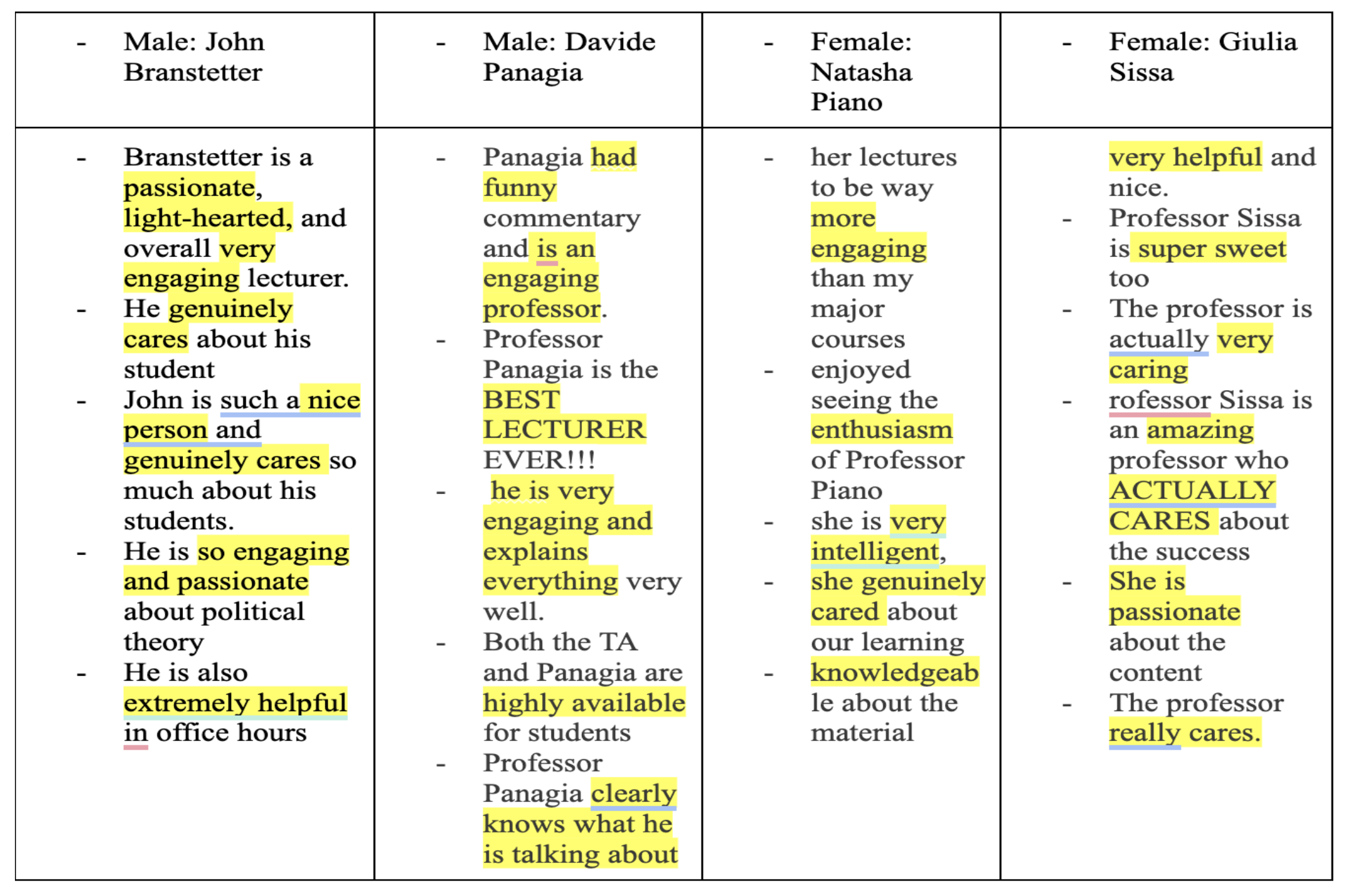
Figure 1: Columns of BruinWalk reviews of UCLA professors by gender, with praise words highlighted.

After finding classes with enough reviews, we sorted them by “most recent” and inputted praise terms from the five reviews that were most recent. For the purposes of our research, sentences with negation words were excluded from our data. After finding reviews that adhered to our guidelines, we copied and pasted them into a document and highlighted the specific praise words. We also ensured that our praise words reflected the quality of the professor as opposed to the course as a whole. Following our collection, we compared the praise words used to describe the male and female professors by counting them. Next, we determined students’ most common praise words and their frequency by inserting our data into the databasic.io website, which determined the most commonly used descriptors. Lastly, we inputted the data into the Free Word Cloud Generator website to create a word cloud that served as a visual aid to support our hypothesis.

Results

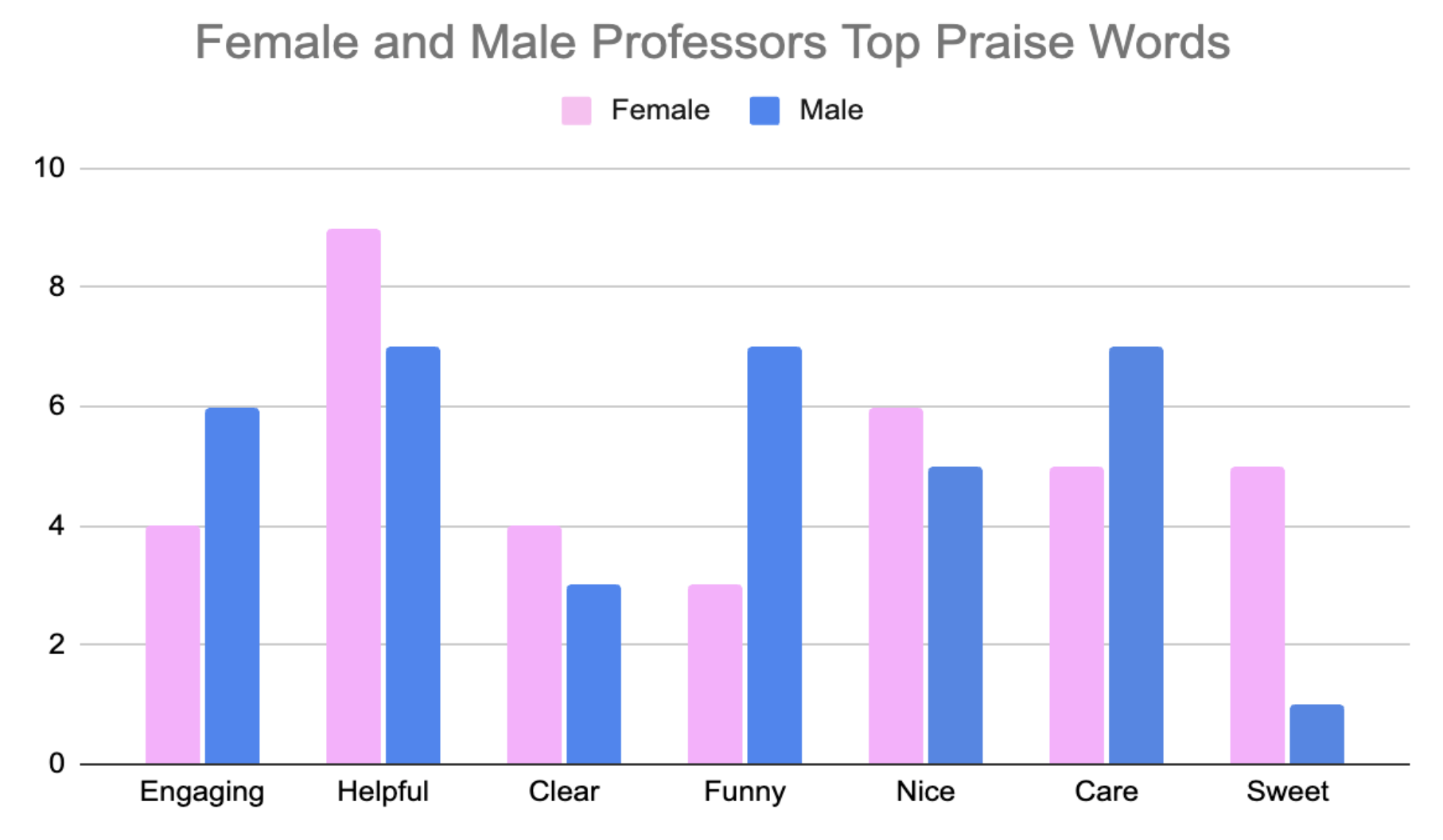
After conducting our research, we were able to determine the most frequent words used to describe female professors and male professors on BruinWalk.  The most common terms used to describe male professors overall were engaging (11.9%), helpful (10.6% ), funny (7.6%), and nice (7.6%). The most common terms used to describe female professors overall were helpful (12.3%), cares (7.5%), nice (6.6%), and sweet (6.6%).

Figure 2: Visual representation of the most common praise words used for UCLA professors on BruinWalk, by gender.

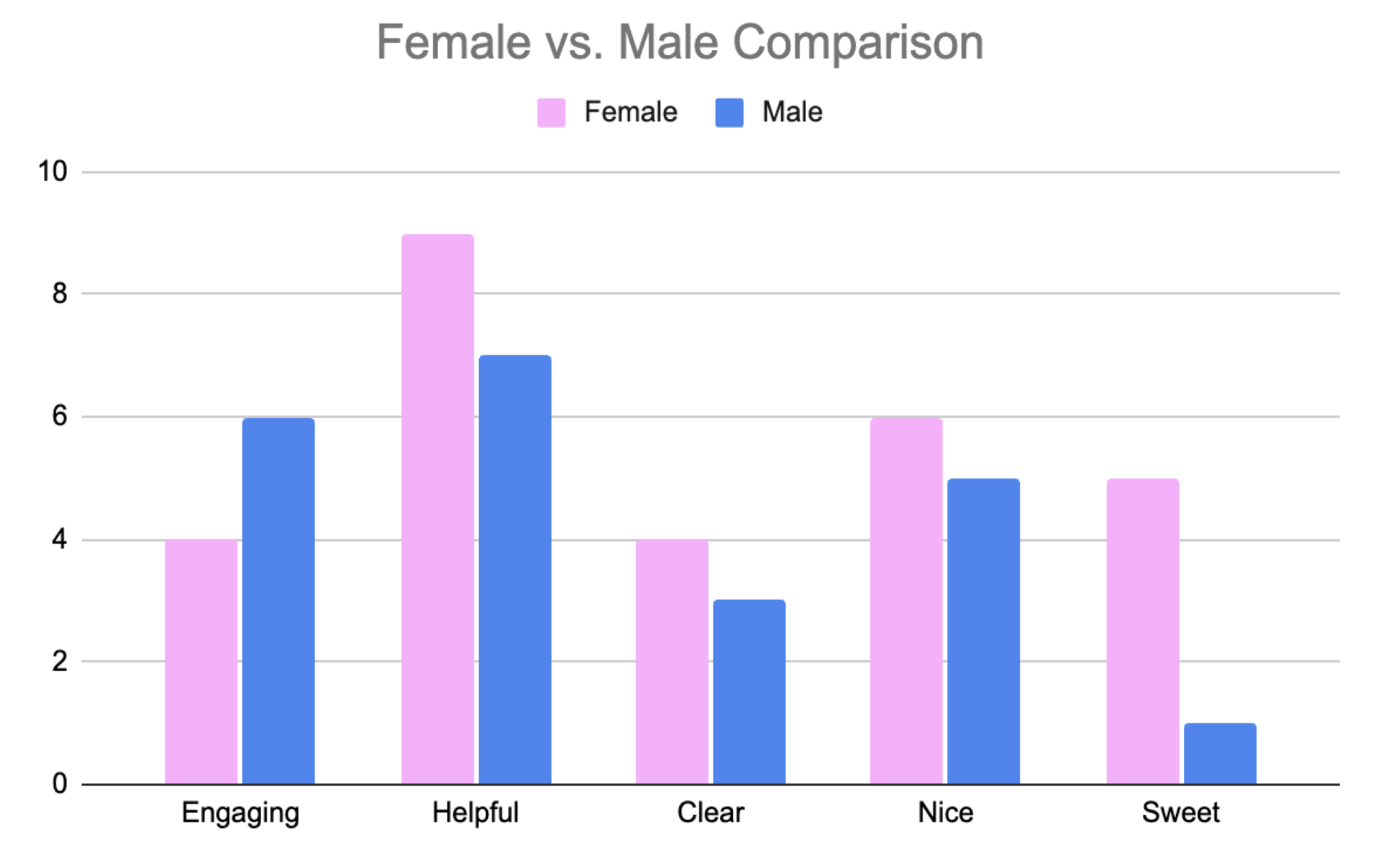
Both male and female professors were frequently praised for being helpful and nice, indicating a universal appreciation for these traits regardless of gender. However, female professors were far more likely to be described as “sweet” and valued for their “nurturing” qualities. On the other hand, male professors were more likely to be described as “funny” and valued for being engaging as an instructor. While the overall results indicated patterns of gender bias, No significant differences were observed between student evaluations in STEM classes and the Social Sciences. For female STEM professors, the most common terms used were clear (9.6%), cares (9.6%), and nice (7.7%). For female Social Science professors, the most common terms used were helpful (18.5%), clear (9.3%), and sweet (9.3%).

Figure 3: Frequency of praise words female professors received at higher counts than male professors

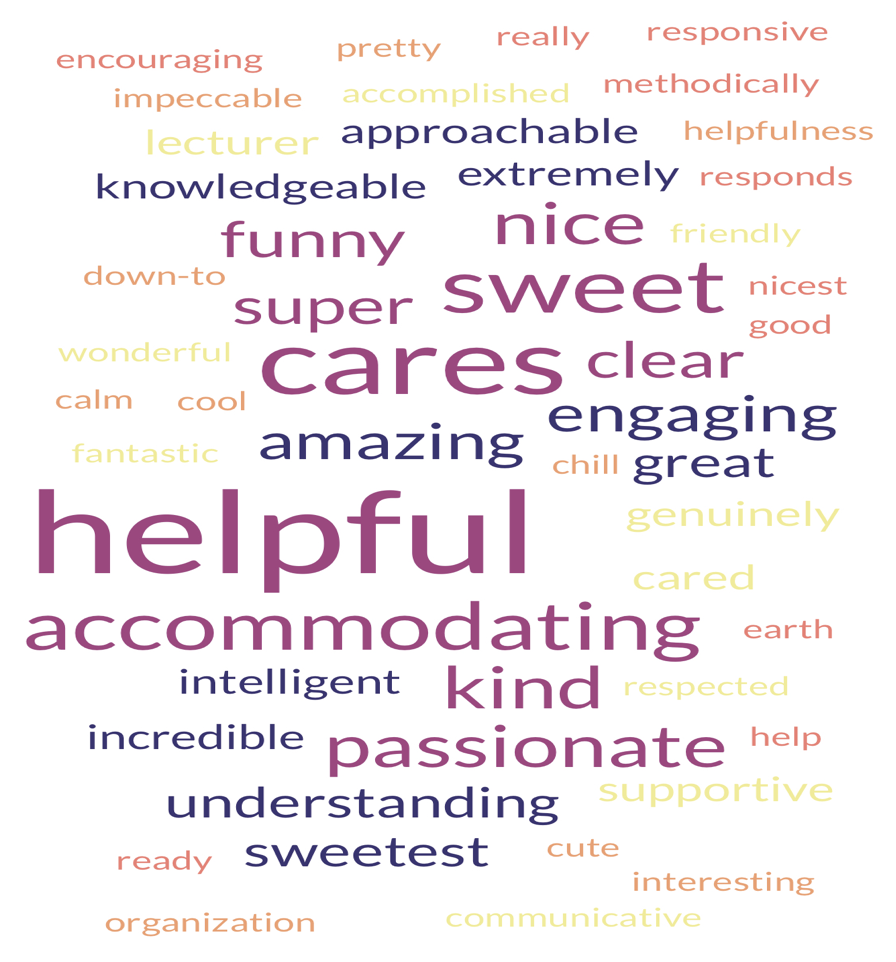
Figure 4: Female Professor Word Cloud

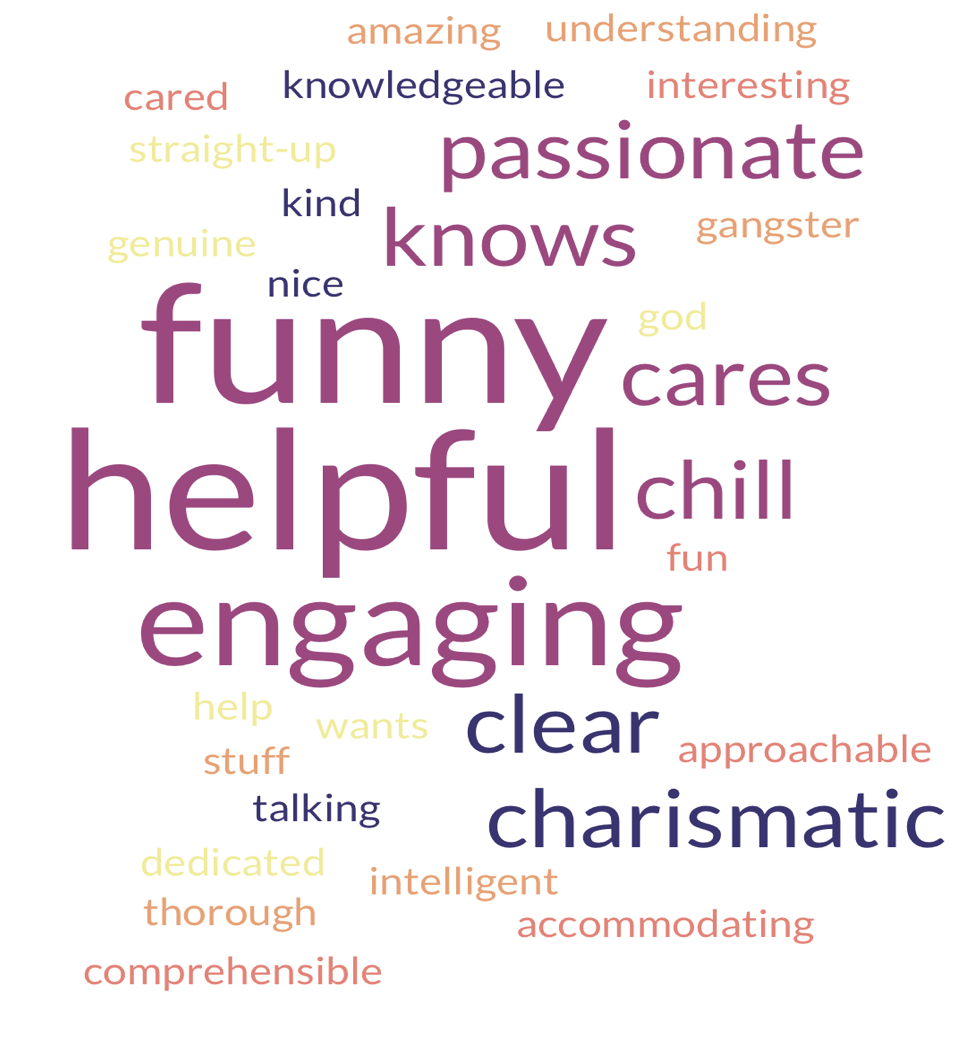
Figure 5: Male Professor Word Cloud

Analysis

The results of our data reveal identifiable patterns in how female and male professors are perceived by their students. There were notable differences in the descriptive terms used that reflect broader social stereotypes and gender expectations. The frequency of the terms “cares” and “sweet’ ‘ highlights the importance of emotional investment by female professors and the broader “nurturing” role. Furthermore, it aligns with traditional gender roles that expect women to exhibit nurturing and empathetic behaviors.

Conversely, male professors were more likely to be described as “funny” and “engaging.” In the male professors evaluations, 11.9 % used the word “engaging,” and 7.6% of evaluations used the word “funny.” These terms suggest that male professors are often perceived as bringing humor and more dynamic interaction into the classroom, highlighting societal expectations that men should be entertaining and charismatic.

Overall, it appears that the more male professors exhibit engaging and humorous behaviors, the more they are praised, and the more female professors exhibit nurturing characteristics, the more they are praised. Therefore, we could ask, “do violations of gender expectations earn less praise, and, therefore, lower instructor ratings?” For example, our results indicate that women are praised more than men for being sweet and supportive. No female professor was praised for being assertive, engaging, or humorous. Therefore, further research into what response these more masculine stereotypes receive when they are performed by women would be an intriguing study.

Interestingly, no significant differences were observed between student evaluations in STEM and social sciences, suggesting that the gendered perceptions of professors remain consistent across disciplines. However, a closer look at the data does reveal subtle distinctions. Results from female professor evaluations in STEM show that the descriptive term “clear” (9.6%)  is the most common, suggesting that clarity is particularly valued. This is likely because STEM fields contain complex material that requires clear communication and instruction. On the other hand, female professor evaluations in social sciences most commonly use the term “helpful” (18.6%). The higher frequency of “helpful” in Social Sciences might reflect the field’s emphasis on student support and guidance. Therefore, complying with gender expectations of clarity or supportiveness may earn professors more praise and possibly higher ratings in each field. Conversely, the difference could also indicate that performing both attributes in both STEM and non STEM fields could result in higher praise. Future research into how female professors are rated in STEM and non STEM areas of study could provide informative results.

Conclusion and discussion

The findings of our research show that gender expectations can influence the words students use when evaluating their professors. The larger phenomenon within the boundaries of gender communication shows how student perceptions of their professors can differ. A student reviewing a male professor may assess the quality of his instruction from the perspective of how he adhered to traditionally masculine stereotypes. On the other hand, a student reviewing a female professor may assess the quality of her teaching based on how she adhered to traditionally feminine expectations. Our results suggest a clear pattern in how students communicate about their professors of different genders. Conclusively, we have collected data that supports these claims concerning our original research question.

References

Adams, S., Bekker, S., Fan, Y., Gordon, T., Shepherd, L. J., Slavich, E., & Waters, D. (2021,    

March 16). Gender bias in student evaluations of teaching: “punish[ing] those who fail to do their gender right” – higher education. SpringerLink. https://link.springer.com/article/10.1007/s10734-021-00704-9

Babin, J. J., & Hussey, A. (2023). Gender penalties and solidarity — Teaching evaluation differentials in and out of STEM. Economics Letters, 226, 111083. https://doi.org/10.1016/j.econlet.2023.111083

Danesh, N., & Danesh, E. (2021, April 12). Behind the bruin: Taking an inside look at UCLA

review website Bruinwalk. Daily Bruin.

https://dailybruin.com/2021/04/12/behind-the-bruin-taking-an-inside-look-at-ucla-review-website-bruinwalk

Nimmesgern, H. (2016). Why are women underrepresented in STEM fields? Chemistry, 22(11), 3529–3530. https://doi.org/10.1002/chem.201600035

Prentice, D. A., & Carranza, E. (2002). What Women and Men Should Be, Shouldn’t be, are Allowed to be, and don’t Have to Be: The Contents of Prescriptive Gender Stereotypes. Psychology of Women Quarterly, 26(4), 269–281. https://doi.org/10.1111/1471-6402.t01-1-00066

Zheng, X., Vastrad, S., He, J., & Ni, C. (2023). Contextualizing gender disparities in online

teaching evaluations for professors. PloS One, 18(3), e0282704. https://doi.org/10.1371/journal.pone.0282704


Assessing Gender Bias in Praise Language on UCLA BruinWalk Read Post »

Texting; Is it deeper than we think?

Jaslin Mostadim, Briyana Bekhrad, Sofia Peykar, Talia Behjou, Ashley Javaherian

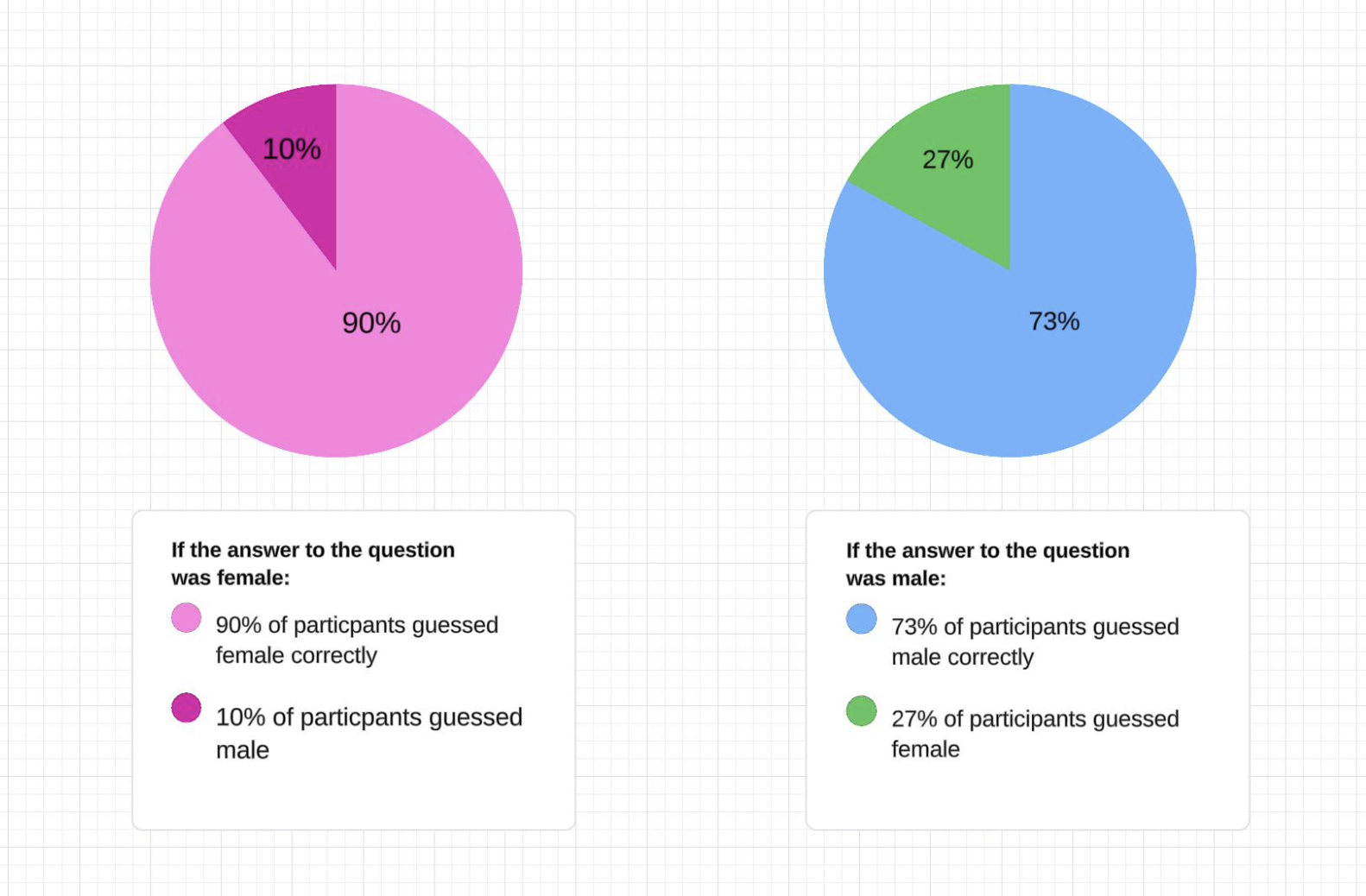
Imagine you just received this anonymous text, “Hiiii!!😊 ”, would you be able to guess the gender of this message? Well, what if we told you that although stereotypical, if you answered with “woman”, you would be correct. In a world that is majorly socially constructed, our research project attempts to examine the world of SMS communication and the gendered differences between males and females. To do so, our group conducted a two part survey consisting of 25 questions which enable us to decide whether or not communication via text message is gendered based on the following five factors: emoticon use, punctuation, abbreviations, tentativeness, and text length. Once data was collected, an analysis was performed which concluded that four of the five factors studied within our survey agreed with the societal expected norms for men and women when texting. The results indicate that women agreed with four of the five studied factors as they tend to use more emoticons, tentativeness, punctuation and longer texts when communicating in comparison to their male counterparts. As for the fifth factor, our study allows us to deduce that both men and women tend to use abbreviations in a similar fashion when texting. The conducted study found that 90%, were able to successfully answer females as the correct answer for the questions and 73% of participants were able to successfully answer males as the correct answer for some of the questions. This data supports that men and women have distinct communicative styles when texting as the majority of our participants were able to decide what gender that anonymous text was sent from. Our hypothesis was proven mostly correct in that socialized gender stereotypes affect the use of emoticons, punctuation, tentativeness and text lengths when texting.

Read more

Introduction and Background

There is no doubt that texting is one of the major means of communication, especially today. It allows us to communicate with who we please, when we please. But, our topic allows us to dive deep and determine whether there is a difference between male and female texting and if so, how the texting patterns differ. This was done through analyzing their uses of emoticons, punctuation, abbreviations, text length, and tentativeness. We already know that communication styles, more specifically while texting, can differ between other factors such as those in varying generations, but we are looking at exactly how these texting styles and mannerisms contrast between the female and male gender. We have identified a gap when it comes to understanding the miscommunication between males and females when texting, and have deduced that it is due to their opposing texting styles and strategies.

To mention, there are some pre-existing studies on some of our chosen texting patterns, such as Robin Lakoff’s Deficit Theory. Lakoff’s theory explores the idea that the use of tentativeness in communication is favored by women as they text with less certainty (Leaper et al, 2011). Similarly, another collective group of researchers have concluded that there are higher rates of tentative speech whilst texting in comparison to males (Ling et al, 2014). But, our research aims to conclude the genuine reasonings of these text choices and tactics between males and females through analyzing all five factors, and what it implies for the male and female gender categories. With our contribution, we will be able to find the source of this disconnect, understand the male and female texting patterns, and why such tactics exist. Our research is guided by the hypothesis that females and males text in accordance to gendered stereotypes with females using more emoticons, abbreviations, proper punctuation, longer texts, and more tentative messages than males.

Methods

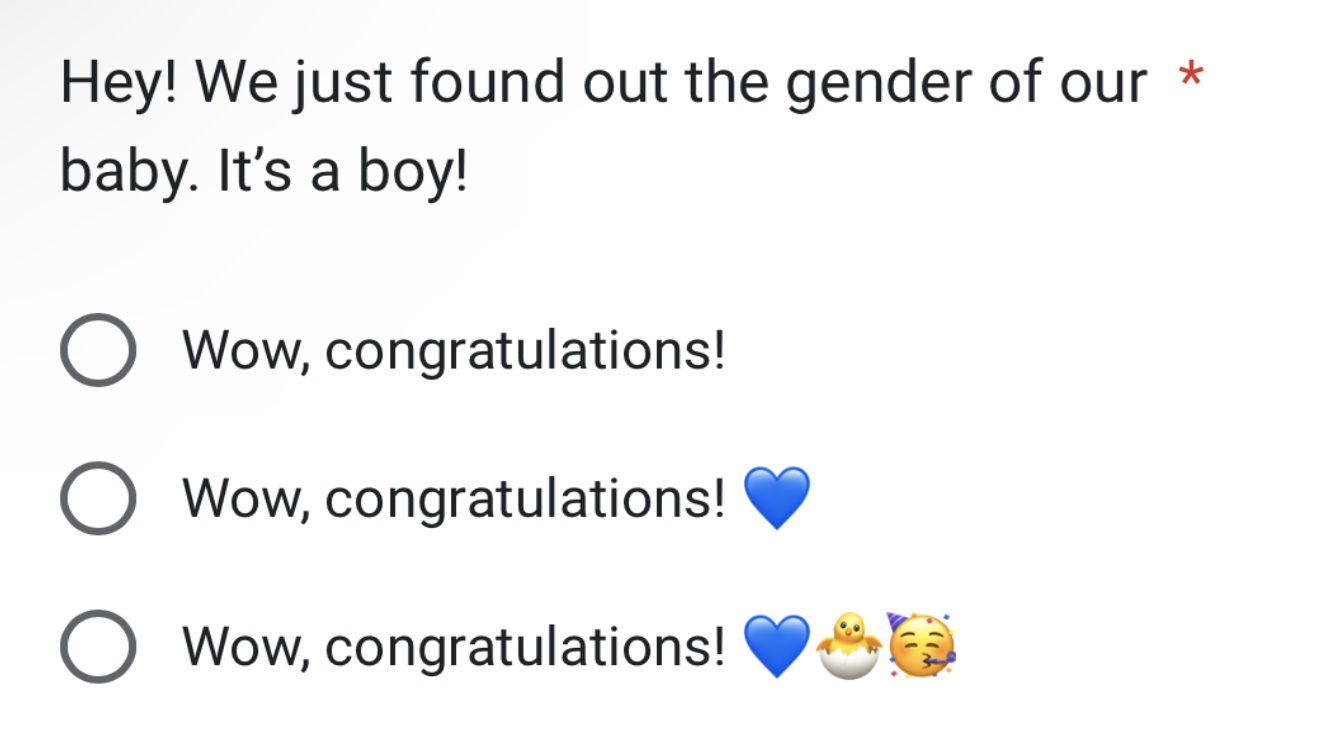
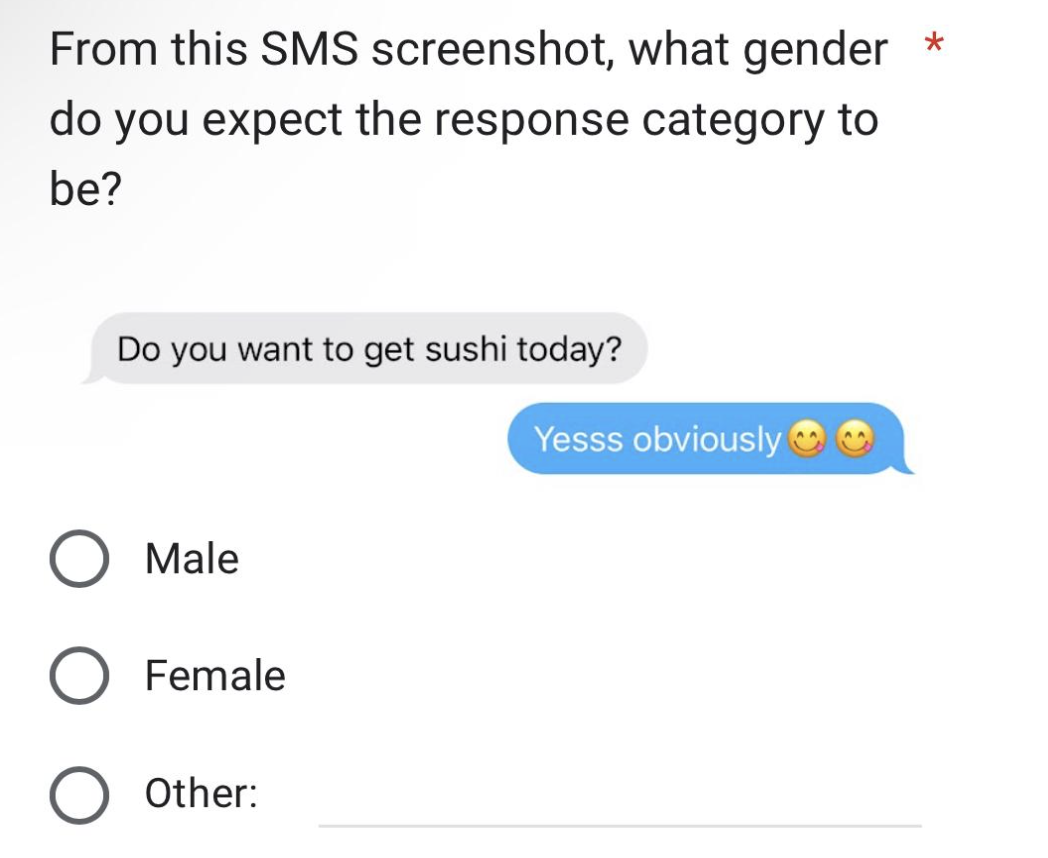
The target sample for our mixed methods approach includes 15 males and 15 females who are undergraduate students from UCLA, of ages 19-23, who regularly engage in text-based communication. The individuals partaking in the study are of homogeneous demographics and middle-class backgrounds. We will collect our data by administering a survey, which will contain two parts. The entirety of our survey will include 25 questions. The first part will include a message and three possible text replies with two questions regarding each of the five factors that we will study. When asked about the aspect we are observing, the response choices will range from least to most expressive. It is coded so that option 1 is hypothesized to be more popular with males while option 3 is coded to be more popular with females. An example of this can be seen in Figure 1. The second part of the survey displays a series of text message conversations that were sent in from our study pool and asks to identify if a male or female was responding. This approach will decipher whether and how SMS texting is gendered and its contributing patterns. This can be seen in Figure 2, which shows an example of a survey question.

Figure 1- An example question from the first part of the survey which is analyzing emoticon use by providing a test message and three response options.

Figure 2- An example question from the second part of the survey which asks whether they expect the response to be given by a male or female.

Results and Analysis

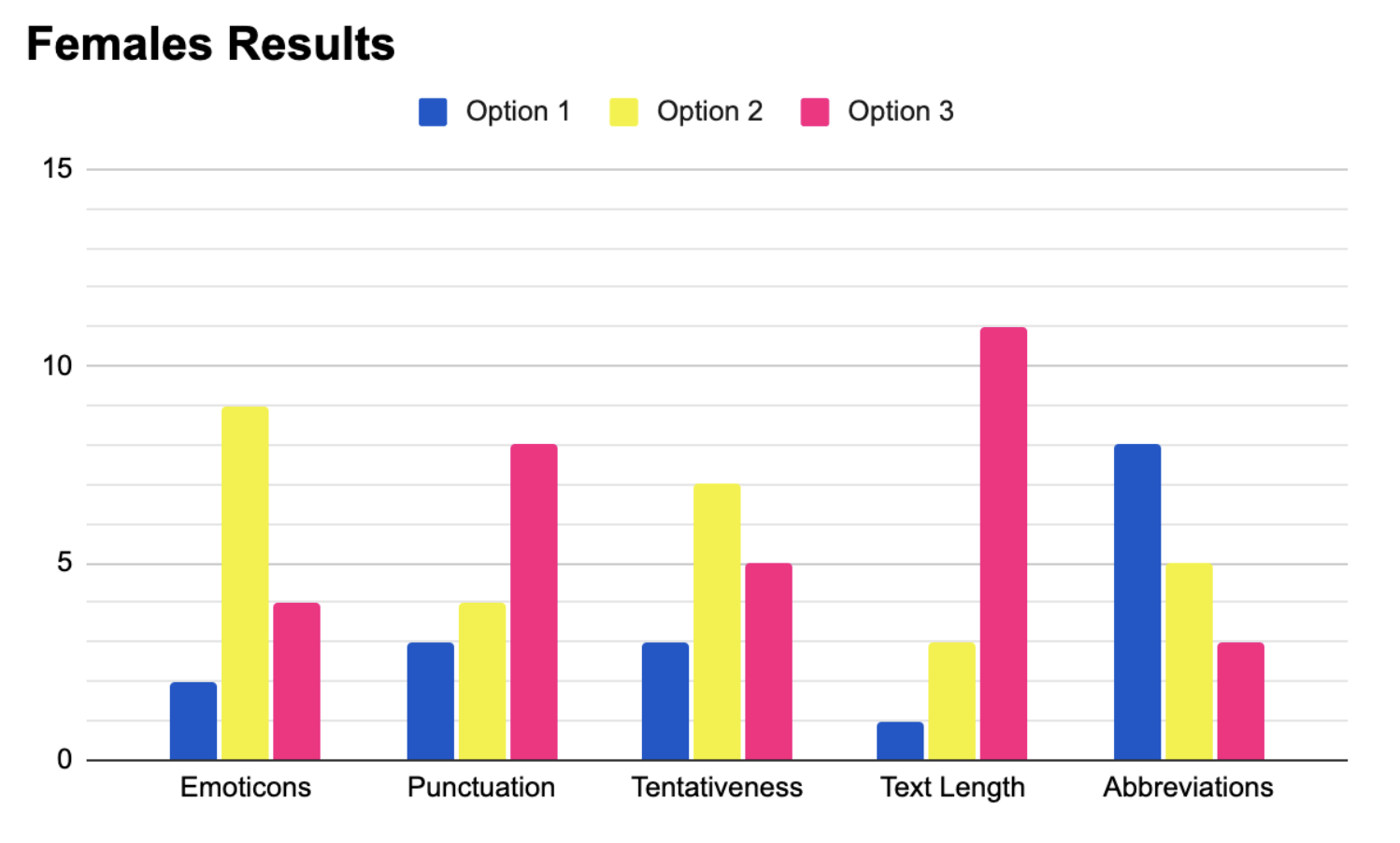
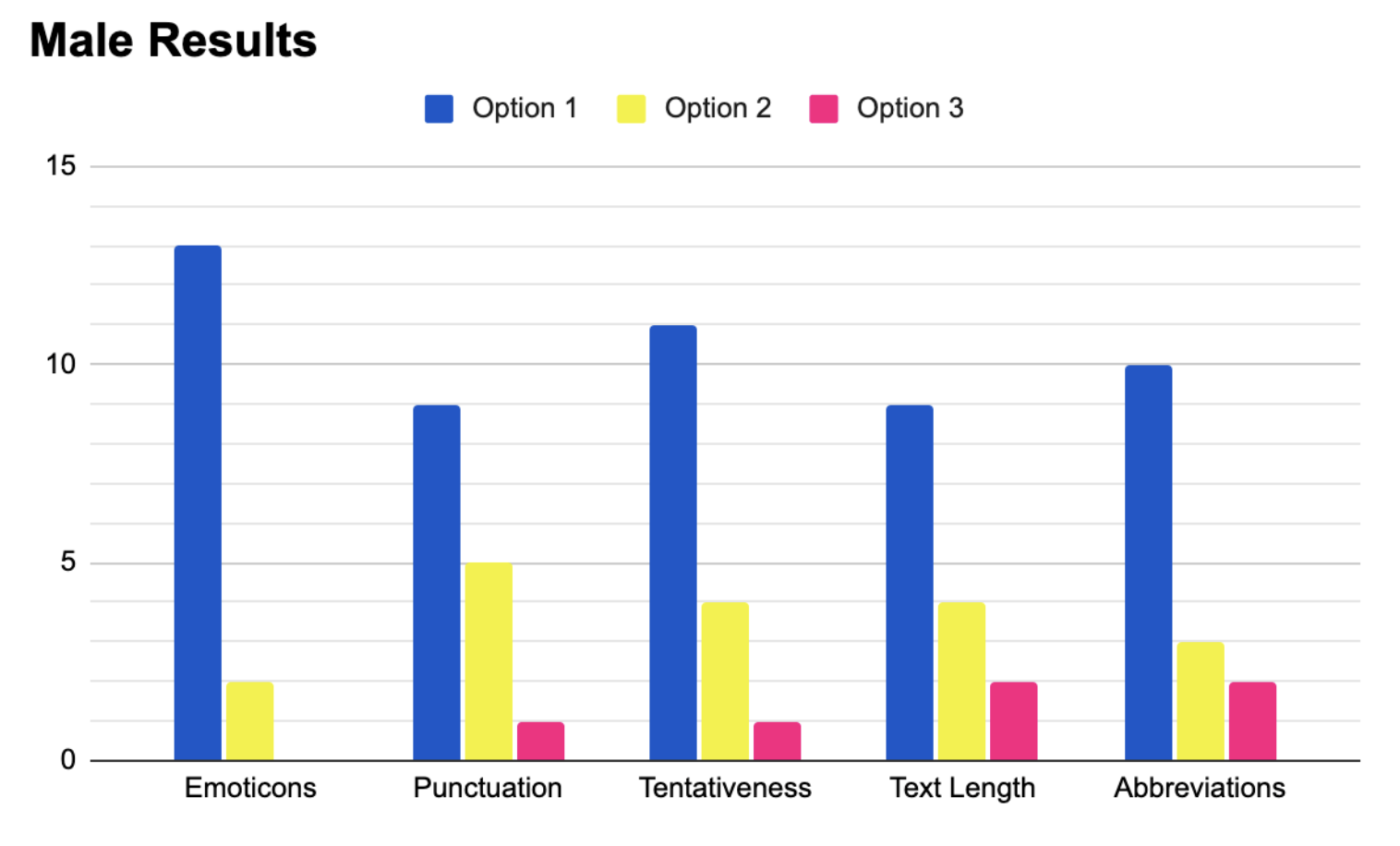
After analyzing our survey results, we found that our research supports the majority of our hypothesis of how texting communication patterns differ between men and females. By analyzing text messages and our conducted survey, it can be inferred that women tend to use more emoticons, punctuation, tentativeness, and longer text messages in comparison to their male counterparts. Although the other factors of our hypothesis were proven correct, we found that abbreviation usage is similar between males and females. These factors were not consistent with 100% of our respondents, but we were able to deduce that four out of the five analyzed factors agree with our hypothesis. As shown in Figure 3, 11/15 females chose option 3 for text length, while only 2/15 males chose option 3. Additionally, 60% of the males choose option 1, which proves our hypothesis in regards to text length. For punctuation, 8/15 females picked option 3, while just 1/15 males chose option 3. Instead the more popular option chosen by the males was option 1, which is shown in Figure 4. For all of the five factors, more than half of the males picked option 1 as their response to the survey questions, while the majority of females tended to pick either option 2 or 3. Also, our research proved that females were more likely to choose option 1 which was coded for males, in comparison to males choosing option 3 which was coded towards females.

Figure 3- Collected data from female participants from our survey regarding the five main factors studied. (First part of the survey)

Figure 4- Collected data from male participants from our survey regarding the five main factors studied. (First part of the survey).

The second part of our survey offered screenshots of text messages where the respondent decides whether they expect the text message to be sent from a female or male. Shown in Figure 5, our results gathered that 90%, or 27/30 participants, were able to successfully answer females as the correct answer for the questions, whereas 10% guessed incorrectly. We also gathered that 73%, 22/30 participants, were able to successfully answer males as the correct answer for some of the questions, whereas 27% guessed incorrectly. These results prove to us that males are less likely to text like females, because more participants were able to correctly answer the questions where the answer was “females.” This demonstrates the clear differences in texting styles between females and males, as most participants immediately identified the responses to some of these questions as female.

Figure 5- Results to the second part of our survey regarding the percentage of participants who answered the questions correctly relating to females or males. (Second part of survey).

A blog post that cross references with our research data discusses the “do’s” and “don’ts” of texting a female. The author of the blog starts out with, “Hello Gentlemen,…” aiming towards men only. Through our own research, we found that women text longer messages, whereas men are vague and text short messages. The author prompts; “If a guy texts me ‘Hey’ and nothing else, how am I to respond? With another “Hey”? or “Hey, How are you?” But then, the guy is making ME do all the heavy lifting of asking how he is doing when he wasn’t courteous enough to inquire how I was doing” (Elenamusic, 2013).” Our study as well as current research indicates that in one way men expect a more detailed response from women. This relates back to our hypothesis that women tend to use longer, more expressive and more tentative texting styles than men, and one reason is because society has socialized this gendered texting style. The author’s example shows the ambiguity in interpreting a short message like “Hey” from a male, focusing on tentativeness in communication, as the recipient is unsure how to respond. This text conversation implies that men’s short messages can put all the pressure on women to try to carry the conversation. This proves to our research how women usually text longer messages rather than men, texting short and vague messages.

Discussion and Conclusion

We analyzed the texting behaviors of male and female undergraduate students uncovering differences in their communication styles. Our findings provide evidence that females often use more emoticons, proper punctuation, tentativeness, longer messages. This is supported by previous literature that suggests that females favor displaying expression through emoticon use (Ceccucci et al, 2013). Additionally, women were found to use more expressive punctuations, following the theme of expressive messages (Waseleski, 2017).

Aligning with previous studies, our results demonstrate that females consistently use more emoticons and longer texts while males use few to none emoticons and fewer words. Emoticons and text length serve as emotional cues, allowing females to emanate their emotions via text-communication. Females were also found to use proper punctuation and abbreviations in their messages to enhance clarity and efficiency in their messages. Lastly, females compose more tentative messages, characterized by the use of hedge words such as “maybe.” Hedge words and tentativeness display uncertainty which aligns with traditional gender norms of masculinity and femininity. Furthermore, females and males tend to display similar patterns when it comes to the use of abbreviations. Keong’s study agrees with our findings as it explains that males and females use abbreviations at similar rates (Keong et al, 2012).

Our study highlights the importance of understanding gendered differences in texting to improve communication. As online communication continues to grow, face to face conversations become less prevalent. Messages can easily be misconstrued over text. Raising awareness of gender differences can contribute to reducing misconceptions of messages, enhancing interpersonal interactions and communication efficiency. Future research should explore these texting behaviors considering additional factors such as cultural influences and personality traits. Broadening the scope of studies such as this can create a more comprehensive understanding of digital communication as it becomes a permanent aspect of our future.

References

Abdulrazaq, A. Gill, S. K., Noorezam, M., & Keong, Y.C., (2012). Gender Difference and Culture in English Short Message Service Language among Malay University Students. 3L: The Southeast Asian Journal of English Language Studies, 18(2), 67–74

Baron, N. S., Ling, R., Lenhart, A., & Campbell, S. W. (2014). “Girls Text Really Weird”: Gender, Texting and Identity Among Teens. Journal of Children and Media, 8(4), 423–439. https://doi.org/10.1080/17482798.2014.931290

Ceccucci, W., Peslak, A., Kruck, S.E., & Sendall, P.,. (2013). Does Gender Play a Role in Text Messaging? Issues in Information Systems, 14(2), 186–194. https://doi.org/10.48009/2_iis_2013_186-194

Leap, C., Robnett, R. D. (2011). Women Are More Likely Than Men to Use Tentative Language, Aren’t They? A Meta-Analysis Testing for Gender Differences and Moderators. Psychology of Women Quarterly, 35(1), 129–142. https://doi.org/10.1177/0361684310392728

Music, E. (2014). The Do’s and Don’ts of Texting a Girl. The Single Guys Guide to Dating. https://singleguysguidetodating.wordpress.com/2013/11/08/the-dos-and-donts-of-texting- a-girl/

Waseleski, C. (2006). Gender and the Use of Exclamation Points in Computer-Mediated Communication: An Analysis of Exclamations Posted to Two Electronic Discussion Lists. Journal of Computer-Mediated Communication, 11(4), 1012–1024. https://doi.org/10.1111/j.1083-6101.2006.00305.x

Texting; Is it deeper than we think? Read Post »

Emoji Secrets: Unveiling How Gender and Sexuality Influence Emoji Usage among UCLA Undergraduates

Fangfei Liu, Nuoya Liu, Suzy Xu, Shengliang Jin, Kelly Wu

In the digital communication era, emojis have become a new form of vibrant visual language that transcends words into icons that convey emotions and ideas. Imagine this: It’s a typical Friday evening, and a group of friends at UCLA are planning their weekend via text messages. One friend, excited about the upcoming party, sends a string of emojis – a bottle of champagne , a partying face , and a confetti ball . Another friend, more reserved, responds with just a simple thumbs up. As these messages fly back and forth, a fascinating question arises: what do these tiny digital symbols say about us? Can these tiny digital symbols reveal deeper insights into our identities and social interactions? In fact, emojis not only distribute information but also reveal more profound aspects of an individual’s identity. This research focuses on the intersection between gender and sexuality and how these identity factors play a role in influencing emoji usage among UCLA undergraduate students. By launching a mixed-methods approach, the study combines statistical analysis and qualitative content examination to indicate trends and patterns in emoji selection. The findings highlight significant differences in emoji use across genders and sexual orientations and provide insights into the various ways that individual identities shape their digital expressions.

Read more

Introduction

👋👋 Hey! The rise of digital communication has introduced emojis as a new form of language, expressing emotions, ideas, and more. Emojis hold symbolic significance and cultural connotations, making them a rich subject for linguistic analysis and in-text communication studies. Here’s the link to a TED talk titled “Emoji: The Language of the Future” by Tracey Pickett, which discusses the cultural significance and evolution of emojis.

When investigating in-text communication dynamics, especially in the context of gender and sexuality, Deborah Tannen’s difference model of communication (2007) lays a theoretical foundation, suggesting that men and women use distinct styles of speech: men typically adopt a report style focused on conveying information, whereas women use a rapport style aimed at building relationships with high involvement.

Despite growing research, there’s a gap in understanding how gender and sexuality intersect with emoji usage. Our study aims to investigate how these identity categories influence emoji use among UCLA undergraduates. By employing mixed methods, including statistical analysis and qualitative content analysis, we will identify trends and nuances in emoji selection among different gender and sexual identity groups. This research will contribute to the broader understanding of how diverse identity factors shape digital communication.

Background

Emojis are small digital icons that help with facilitating emotions and expressions during online interactions today. The icons are prevalent among the younger generation, such as college students, who are active users of online communication platforms. Prior research has indicated emojis’ socio-linguistic significance, reflecting the user’s identity, emotional state, and cultural background. Gender and sexuality are two critical factors in examining the dynamics of emoji use, and our research aims to investigate the impact these two factors have on college students’ use of emojis in online conversations.

Gender differences in emoji use have been a subject of interest in existing literature, as highlighted in Herring et al.’s research. They found distinct patterns of emoji use among different gender groups. For instance, women tend to use emojis that express solidarity and support, while men are inclined towards emojis related to sarcasm and teasing (Herring et al. 2018). The influence of sexual orientation on emoji use habits among LGBTQ+ individuals has also been explored by other scholars. Gray, for instance, has noted that emojis serve as in-group codes that aid in identity expression (Gray 2023). Our research will focus on the impact of gender and sexuality on emoji usage among diverse UCLA undergraduate students and discover the characteristics of emoji habits among different groups shaped by their backgrounds.

Methods

In this study, we used a mixed-methods approach (i.e., including statistical analysis and qualitative content analysis) in this study to identify trends, preferences, and nuances in emoji selection among different gender and sexual identity groups.

This research incorporates a convenience sampling, whereby our group members send online Google Forms to a total of 50 UCLA students to collect data on their use of emojis. And, our online survey included demographic questions about race, school year, gender, and sexual orientation. It also included the collection of screenshots of emojis that they used frequently. Finally, after completing the data collection, we analyzed all the data by using R studio and

Excel software to assess the statistical correlation between gender identity and the frequency of using certain emojis.

Results and Analysis

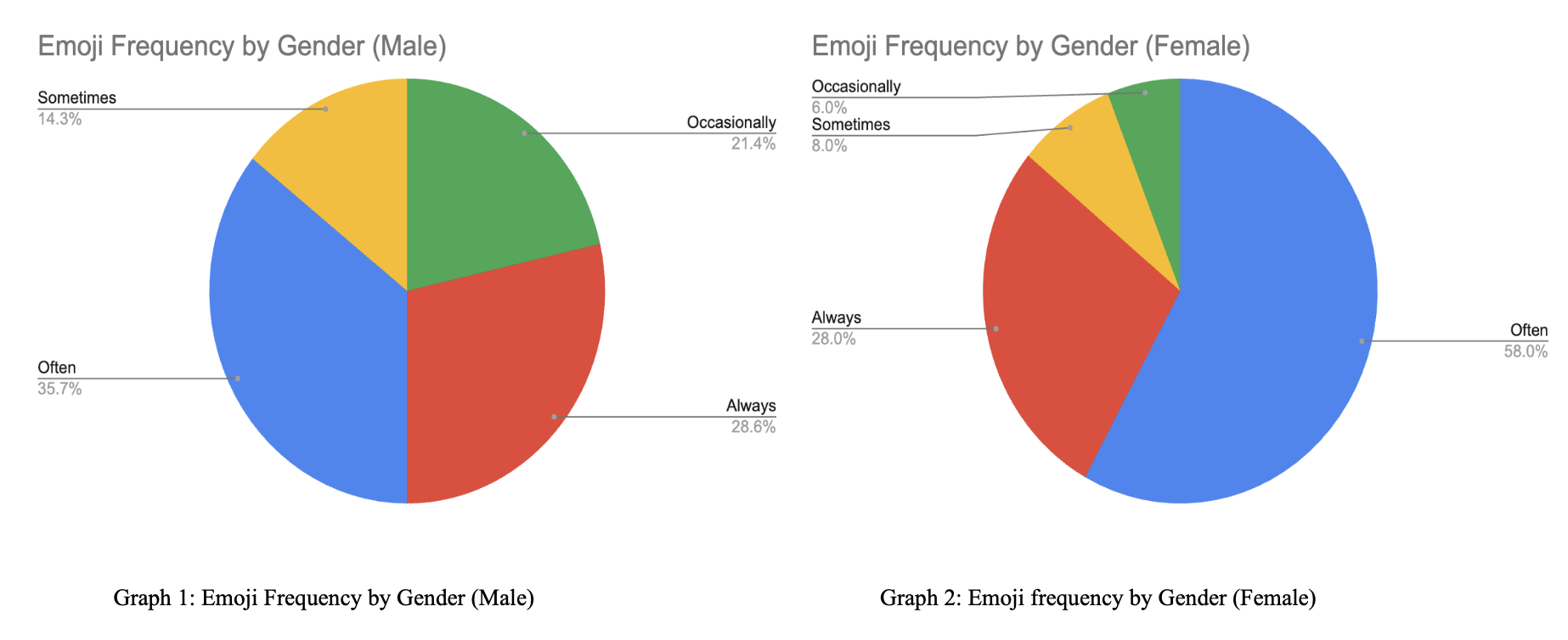
After collecting responses from all 50 UCLA undergraduates, our research presents a comprehensive analysis of the data collected on emoji usage among undergraduate students at UCLA by including both quantitative data and tabular analysis as well as qualitative content analysis. First, the data were processed to create a dataset with the frequency and types of emojis used by different groups. The pie graphs shown below illustrate the emoji frequency based on students’ gender while indicating that female students use emojis more frequently than male students do. For instance, the number of female students who selected the option “often” is 23% higher than that of male students; there are more than 1⁄5 of the male students select the option “occasionally” to show their dispreferred attitude of utilizing emojis when texting with others.

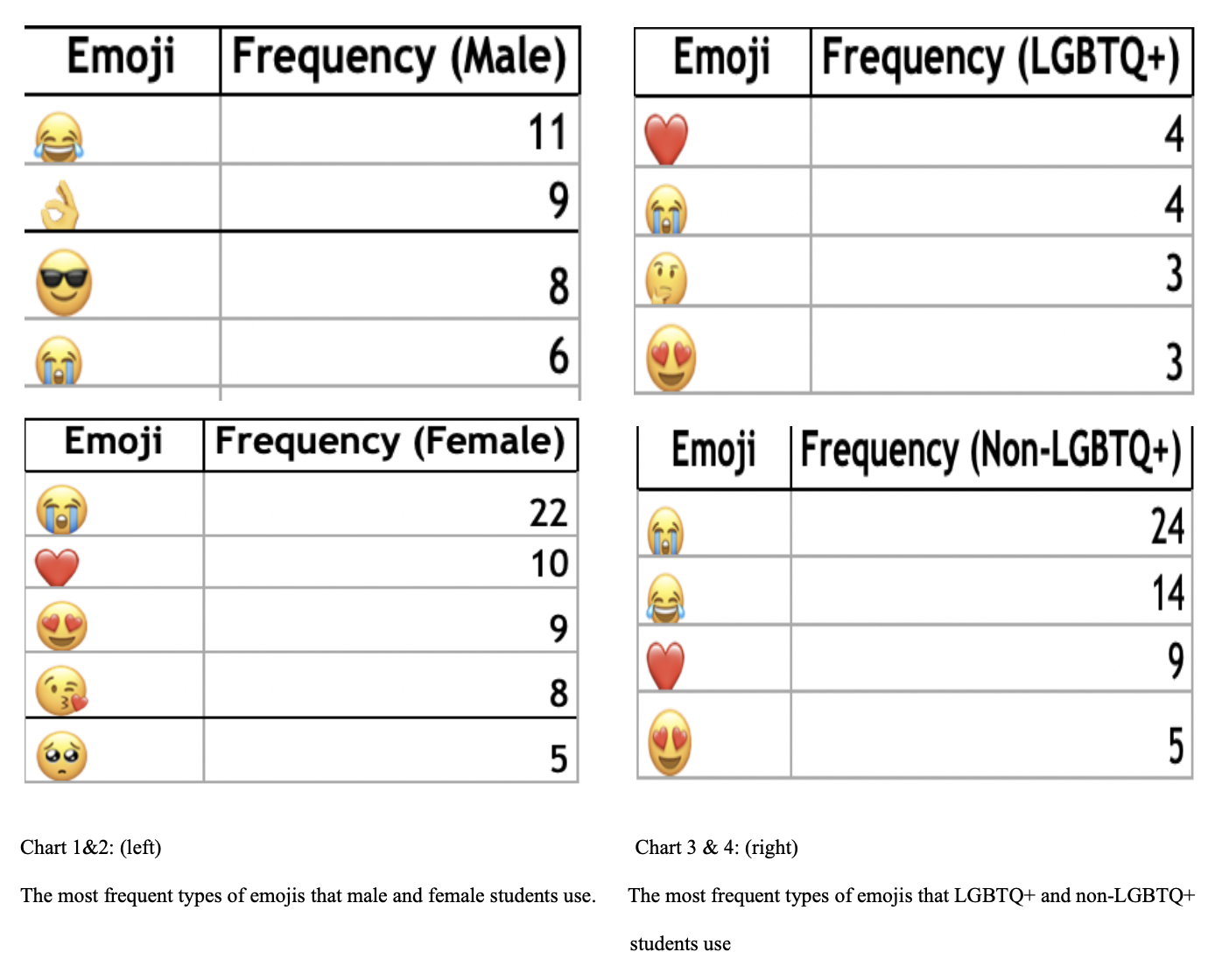
We also created some charts showing the top 5 most frequently used emojis based on students’ gender and sexual orientation. On the left side, charts 1 & 2 show the most frequent types of emojis that male and female students use during online communication. From here, we could see that the average number of different emojis used by females was significantly higher, indicating a broader expressive range. More specifically, emojis such as 😭, ❤️, 😍, and 🥺 were predominantly used by female students, emphasizing a wider variety and a relatively higher frequency of emoji usage. On the contrary, male students demonstrated a more limited and functional use of emojis. Emojis included 😂, 😎, 👌 and reflected their preference for simpler, less emotionally varied communication.

On the right side, charts 3 & 4 show the emoji frequency based on students’ sexual orientation as LGBTQ+ students exhibited distinctive patterns in emoji usage. While emojis such as ❤️ and 😍 were used by LGBTQ+ members to convey nuanced social interactions, some emojis such as 🤔️, which might not be as prevalent among heterosexual students, were used for unique identity expressions.

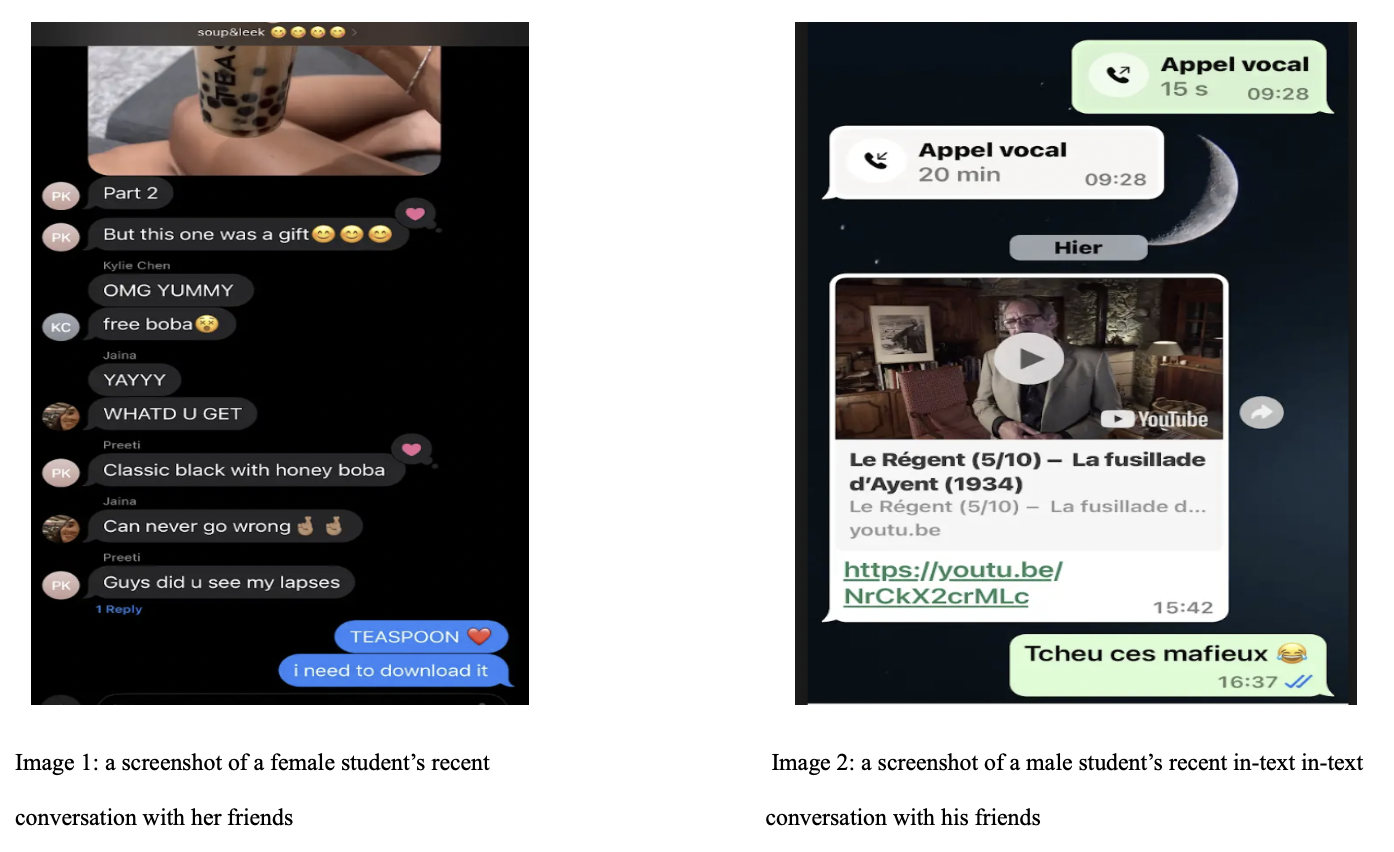
Besides doing quantitative analysis, we also focus on content analysis which examines the context and meanings behind emoji usage for each gender and sexuality group through collecting screenshots of their recent in-text conversation where they used emoji. From the gender perspective, female students tend to use emojis to express a wide range of emotions, from joy and love to sadness and empathy. For instance, emojis like 😭 and 🥺 often appear in conversations involving apologies or sharing emotional experiences, indicating a high level of emotional expressiveness; The use of ❤️ and 😍 highlights the importance of emotional support and connectivity in their interactions.

From Image 1, a female student claimed that she used a heart next to a “teaspoon” because she loves their boba. This illustrates her desire of providing emotional feedback to maintain her social bonds with her friends. Nevertheless, male students tend to use a narrower range of emojis to add humor and casualness into their interaction. Emojis such as 😂 and 😎 are commonly used in light-hearted conversations, indicating a preference for maintaining a relaxed and friendly tone. From Image 2, a male student was reacting to a funny video and this indicates his tendency to be friendly and approachable while implicitly showing his preference of having a simple and straightforward conversation.

From the sexuality perspective, members of the LGBTQ+ community use emojis to convey complex social interactions and support. Some emojis which might not be as prevalent among heterosexual students, appear to express empathy and encouragement while highlighting positivity and uniqueness in conversations.

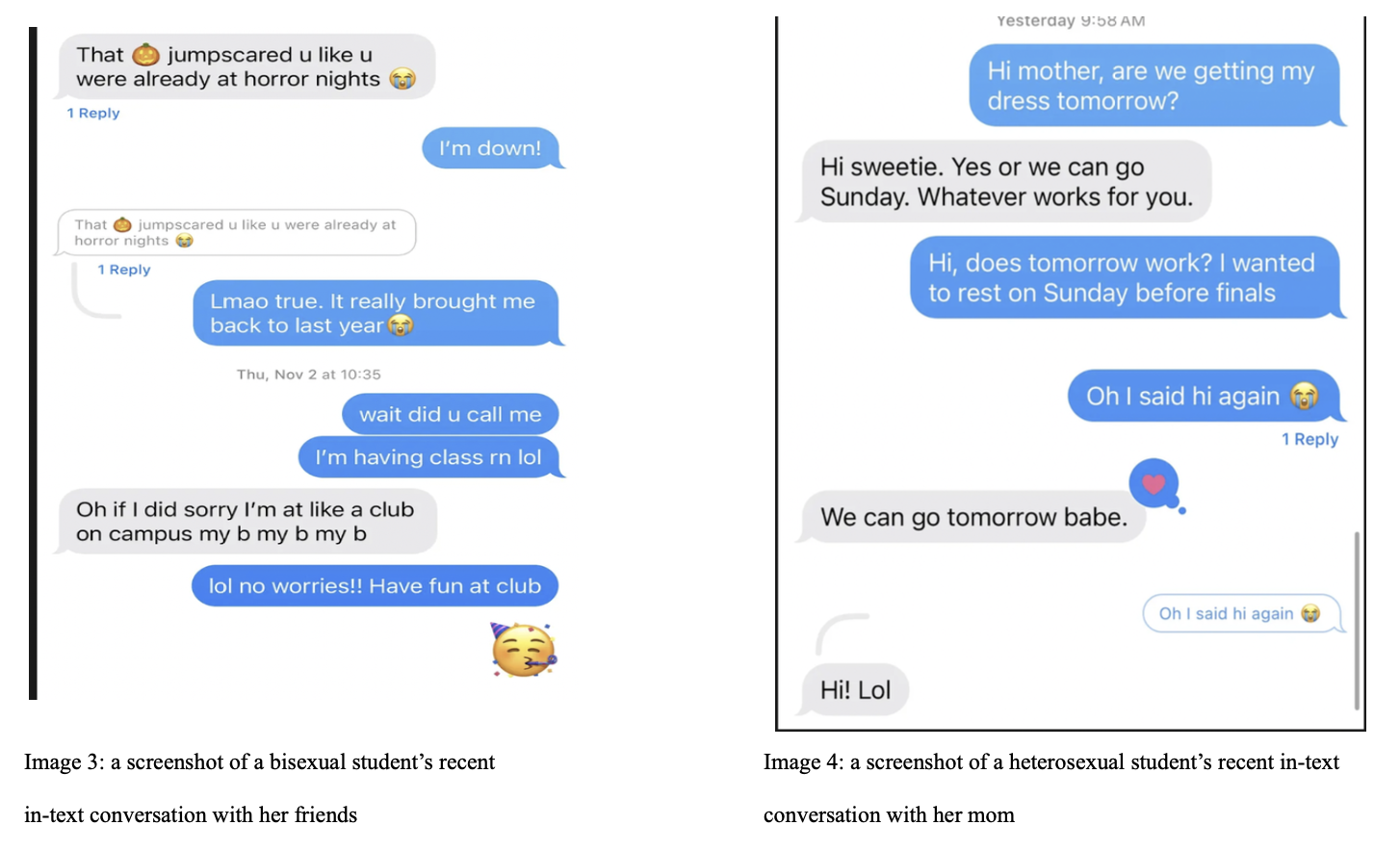
From Image 3, a bisexual female student said that she was wishing her male friend to have a fun night at the club. The emojis such 🥳 and 🎃 reflects the LGBTQ+ users’ different approach to expressing encouragement and connectivity. Conversely, non-LGBTQ+ students tend to utilize a standard set of emojis that are widely understood and conventional in the community. Emojis such as 👍 and 👌 were commonly used to suggest a preference for simplicity and directness during conversation. In Image 4, a heterosexual female student was texting her mom and asking her when she would like to come with her to get a dress for graduation. The appearance of the emoji 😭 reflects a preference for widely recognized emotional expressions while indicating her demand to facilitate clear and efficient communication.

Discussion

The results of our study highlight notable variations in the use of emojis among UCLA undergraduates according to gender and sexual orientation, which has important societal ramifications for interpersonal interactions. In contrast to males, who often use emojis less frequently and instead concentrate on humor or information sharing, women are more likely to utilize a wide variety of emojis to communicate emotions and foster connections. Emojis are a tool that LGBTQ+ people use to communicate who they are and to challenge social standards. By accommodating a variety of communication styles, recognizing these distinctive patterns can promote teamwork in educational and professional contexts, improve relationships with others by encouraging better understanding and empathy, and support the acceptance and normalization of LGBT identities. By adopting these realizations, we may build a more compassionate and diverse society where digital communication tools are tailored to meet the diverse needs of all users.

Conclusion

The findings of this study support our hypothesis that there are significant differences in the frequency and types of emojis used between male and female undergraduate students at UCLA. Female students tend to use emojis more frequently and choose from a wider variety, including emoticons like 🥺, 😭, ❤️, and 😍, indicating high emotional expressiveness. On the other hand, male students prefer a narrower range of emojis such as 😂 and 😎, reflecting humor and casualness in their communication style.

Moreover, our findings suggest that members of the LGBTQ+ community, such as gay and lesbian individuals, use emojis in distinct ways to express identity and convey nuanced social interactions not as prevalent among heterosexual students. LGBTQ+ individuals often use emojis like ✨, 🌟, and 🥳 highlighting positivity, uniqueness, and emotional depth in their digital expressions. In contrast, non-LGBTQ individuals tend to use simpler emojis like 👌 and 👍 and 😭, indicating a preference for directness and simplicity in their communication. These findings have important implications for understanding how gender and sexuality influence emoji usage in digital communication. They shed light on the complexities of digital interaction and social media communication, informing future studies in this area.

References

Bai, Q., Dan, Q., Mu, Z., & Yang, M. (2019). A Systematic Review of Emoji: Current Research and Future Perspectives. Frontiers in Psychology, 10, 2221. https://doi.org/10.3389/fpsyg.2019.02221

Gray, M. (2023). Emojis and the Expression of Queer Identity: A Sentiment Analysis Approach. Master’s Thesis, University of Georgia, Athens, Georgia.

Herring, S. C., & Dainas, A. R. (2018). Receiver interpretations of emoji functions: A gender perspective. In Proceedings of the 1st International Workshop on Emoji Understanding and Applications in Social Media. Stanford, CA.

Jones, L. L., Wurm, L. H., Norville, G. A., & Mullins, K. L. (2020). Sex differences in emoji use, familiarity, and valence. Computers in Human Behavior, 108, 106305. https://doi.org/10.1016/j.chb.2020.106305

Pickett, T. (Speaker). (2017, May 17). Emoji: The Language of the Future [Video]. TEDxGreenville. YouTube. https://www.youtube.com/watch?v=Dzlek8nMrc8

Tannen, D. (2007). You just don’t understand: Women and men in conversation (1st Harper pbk. ed., pp. 74-96). New York, NY: Harper.

Wolf, A. (2004). Emotional expression online: Gender differences in emoticon use. CyberPsychology & Behavior, 3(5). Mary Ann Liebert, Inc. https://www.liebertpub.com/doi/abs/10.1089/10949310050191809

, , , ,

Emoji Secrets: Unveiling How Gender and Sexuality Influence Emoji Usage among UCLA Undergraduates Read Post »

Decoding Text Messages: Gender Differences in Communication at UCLA

Chloe Novinbakht, Kayla Broukim, Donna Yadidi, Shannon Broman, Gabriel Ebrami-Homayun

When it comes to understanding the textual differences between men and women, it can often be difficult to compare the two genders and their similarities and differences. You might be asking yourself if our research proves or contradicts general stereotypes about textual communications between genders. Our study dives into the nuances of texting habits among male and female students aged 18-23 specifically on UCLA campuses. Our research question, “How do men and women at UCLA differ in their text communication?” is answered by our research through analyzing text messages and social media interactions. We uncovered distinctive patterns in emotional expressivity, directness, and language use. This research sheds light on how gender influences digital communication, providing a deeper understanding of the social dynamics at play.

Read more

Introduction

In today’s digital age, text messaging has become a primary mode of communication, especially among university students. But do men and women text differently? This question forms the core of our investigation at UCLA, where we explore gender-associated distinctions in textual communication patterns among students. Understanding the way men and women communicate through text can provide significant insights into broader social dynamics. Our study focuses on several key aspects, including emotional expressivity, directness, and language use. Emotional expressivity examines whether women use more emojis and expressive language than men. Directness assesses if men are more straightforward in their communication compared to women. Language use looks at how vocabulary and grammatical structures differ between genders.

Background

This research will examine our research question: What gender-associated distinctions exist in textual communication patterns between men and women at UCLA? We collected text messages and social media interactions from 10 male and 10 female UCLA students aged 18-23. Our data collection included text samples from ingroup messages (female-to-female, male-to-male) and friend-to-friend text communication between men and women. Additionally, we conducted surveys through Google Forms to assess communication preferences and perceived effectiveness. We analyzed the data using content analysis to uncover patterns in language use, emotional expressivity, and directness.
Methods/ Theories

Our findings contribute to the broader understanding of gendered communication by highlighting how men and women differ in their digital interactions. These differences are influenced by societal norms and expectations, as outlined in Gender Schema Theory and Social Role Theory. Understanding these patterns can help improve communication strategies in educational settings, social interactions, and professional environments.

Gender Schema Theory suggests that societal norms and cultural expectations play a crucial role in shaping gendered communication patterns. For example, women’s use of more expressive and elaborate language may be a reflection of societal expectations for women to be more emotionally attuned and nurturing. Conversely, men’s more direct and less emotionally expressive communication style may reflect societal expectations for men to be more assertive and less emotionally expressive. For example, women might be trained to speak with more qualifiers and hedges, which would be seen in a courteous and accommodating manner. Conversely, men may be urged to speak in a more authoritative and forceful manner, in keeping with stereotypical ideas of what it means to be a man. The way that each gender speaks is perceived through the prism of cultural expectations, which can cause misunderstandings and strengthen gender stereotypes. These behaviors are ultimately sustained by socialization processes.

Social Role Theory provides a useful framework for understanding these differences. According to this theory, the roles individuals occupy within society influence their communication behaviors. Women, who are often socialized into nurturing roles, may use language that is more emotionally expressive and relational. Men who are often socialized into more dominant roles may use language that is more direct and task-oriented. While women may use more expressive language and emojis in casual conversations, they may adopt a more direct and concise communication style in professional or academic contexts. Similarly, men may use more expressive language in certain contexts, such as when communicating with close friends or family members.

Contradiction and Connection

With the former concentrating on cognitive frameworks and the latter on social roles, gender schema theory and social role theory offer complementary viewpoints on how cultural norms impact gendered communication. These may appear to be at odds with one another because social role theory emphasizes external social roles while gender schema theory emphasizes internalized cognitive patterns. In addition, gender schema theory postulates intrinsic cognitive differences while social role theory concentrates on behavior influenced by social positions. The benefit of combining these theories is that they provide a more comprehensive understanding of communication patterns by taking into account the roles played by both internal cognitive processes and external social influences.

Results and Analysis

Understanding these patterns can have practical applications in various settings. In educational contexts, for example, educators can use these insights to develop communication strategies that are more inclusive and effective for all students. In professional settings, understanding gendered communication patterns can help improve team dynamics and communication effectiveness. In social interactions, being aware of these differences can help individuals communicate more effectively with friends, family members, and colleagues. Our findings raise important questions for future research. For example, how do these gendered communication patterns develop over time? Are they influenced more by societal norms and expectations, or by individual personality traits? How do they vary across different cultural contexts? Answering these questions could provide insights into the complex dynamics of gendered communication.

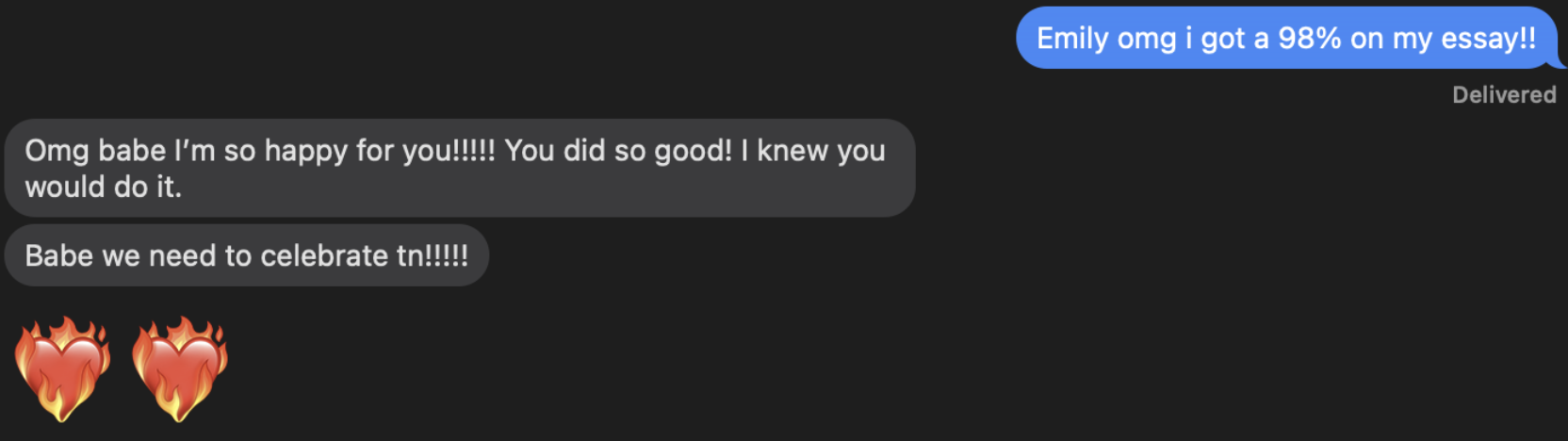
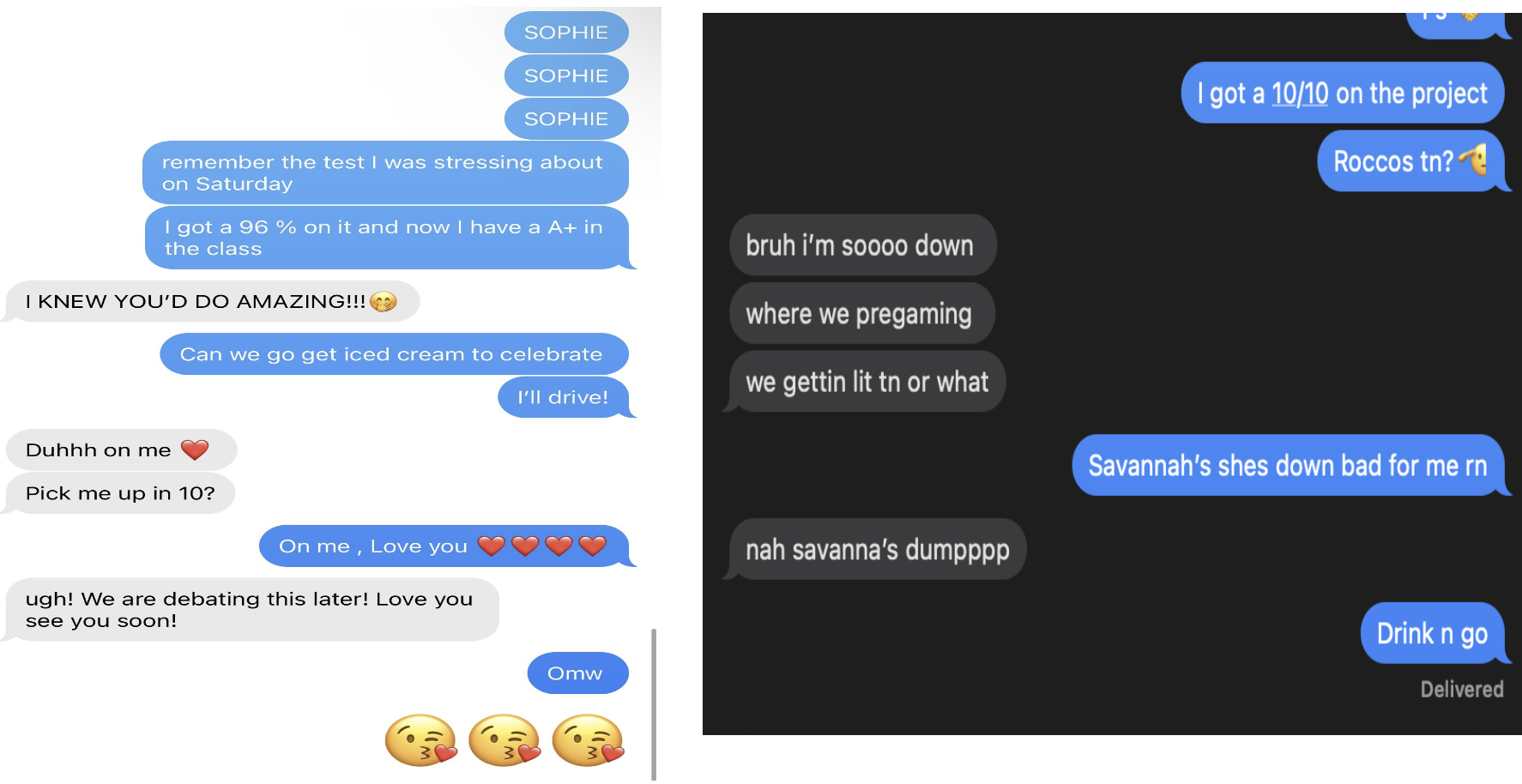
Our analysis revealed several notable differences between male and female texting behaviors. Women were more likely to use emojis, particularly those expressing positive emotions. Men, on the other hand, used fewer emojis and tended to express emotions through words rather than symbols. For example, women frequently used heart emojis when sharing good news, whereas men often used simple phrases like “That’s great!”The difference in emotional expressivity extends beyond emojis. Women’s texts often included more adjectives and exclamations, enhancing the emotional tone of their messages. Men’s messages were generally more direct and concise, while women tended to use more elaborate language, providing context and additional details. For instance, in response to a good grade, a man might text, “Got an A in math,” while a woman might say, “I’m so happy! Just got an A in math after all that studying!” This difference in directness can be attributed to social norms that often associate masculinity with straightforwardness and femininity with a more detailed and context-rich style of communication.

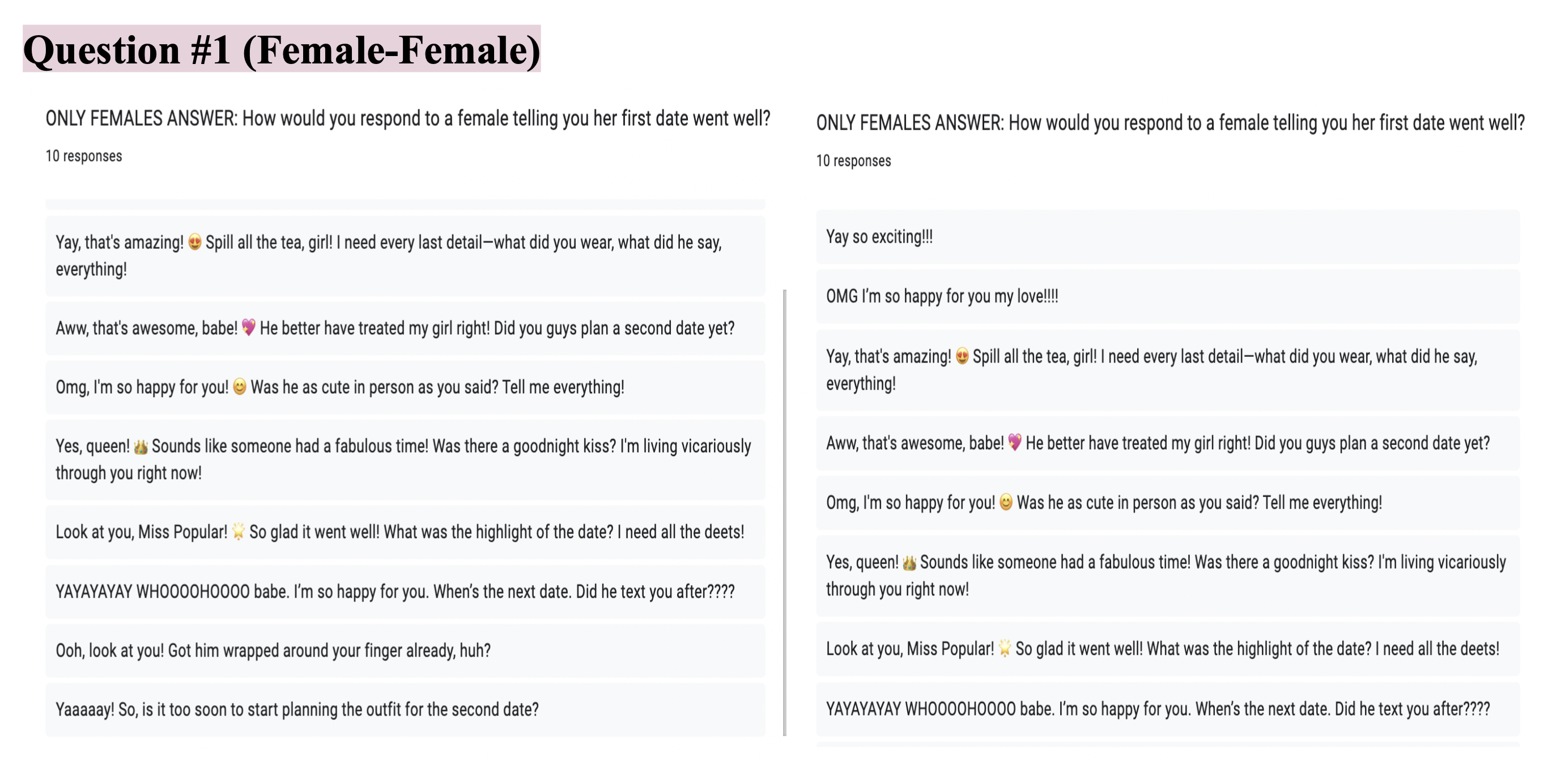
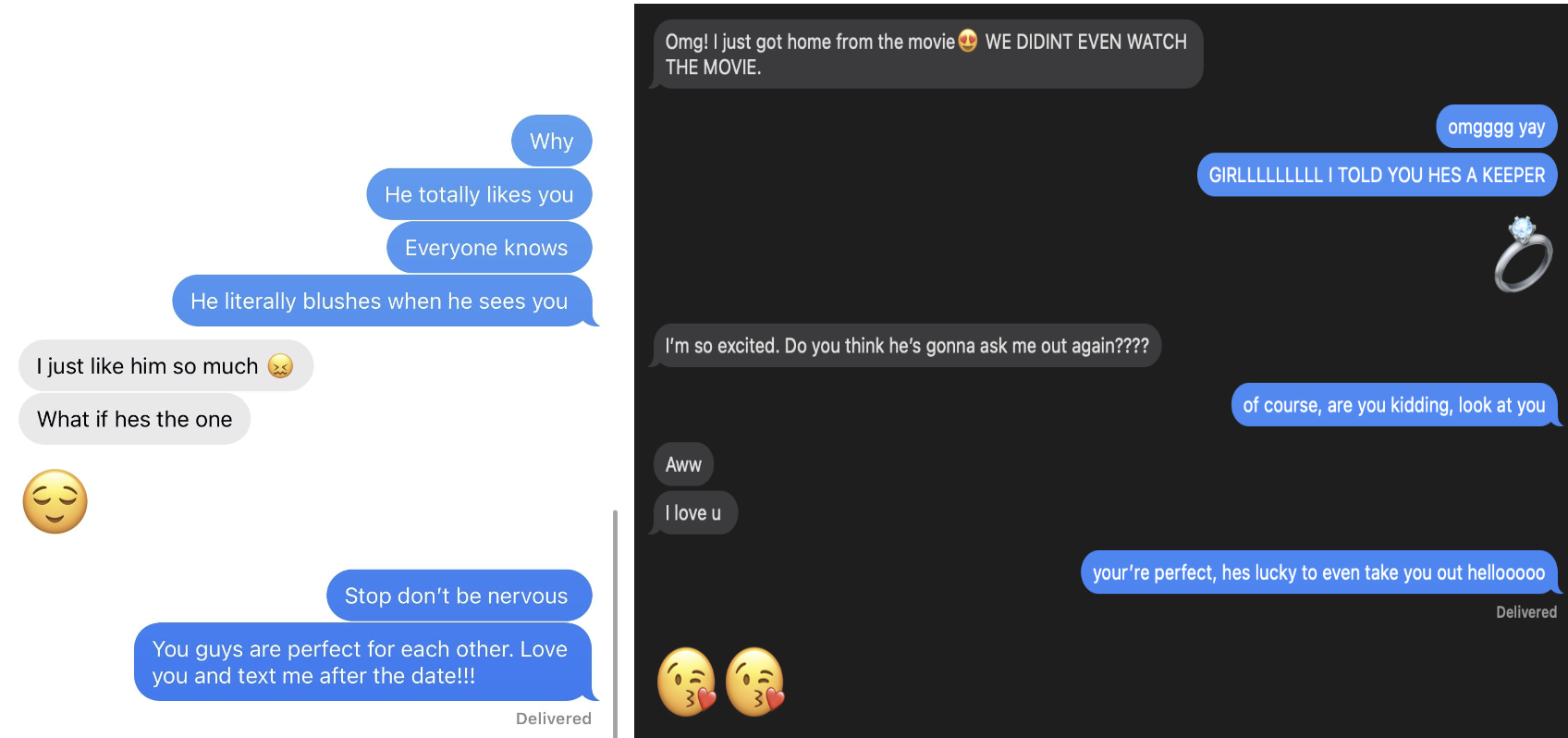
Image-1: Female-to-female contact regarding their responses in image 1 revealed several notable differences between male and female texting behaviors. Emoji usage was higher among women, especially for those representing happy feelings. When communicating positive news, men commonly use straightforward comments like “That’s great!” whereas women more often utilize emojis. Beyond emojis, there is a gap in emotional expressivity. Women tended to use more exclamations and adjectives in their texts, which elevated the emotional content of their writing. This inclination is a reflection of larger societal norms and expectations around gender and emotional expressiveness, where women are typically encouraged to express themselves more and show more care.

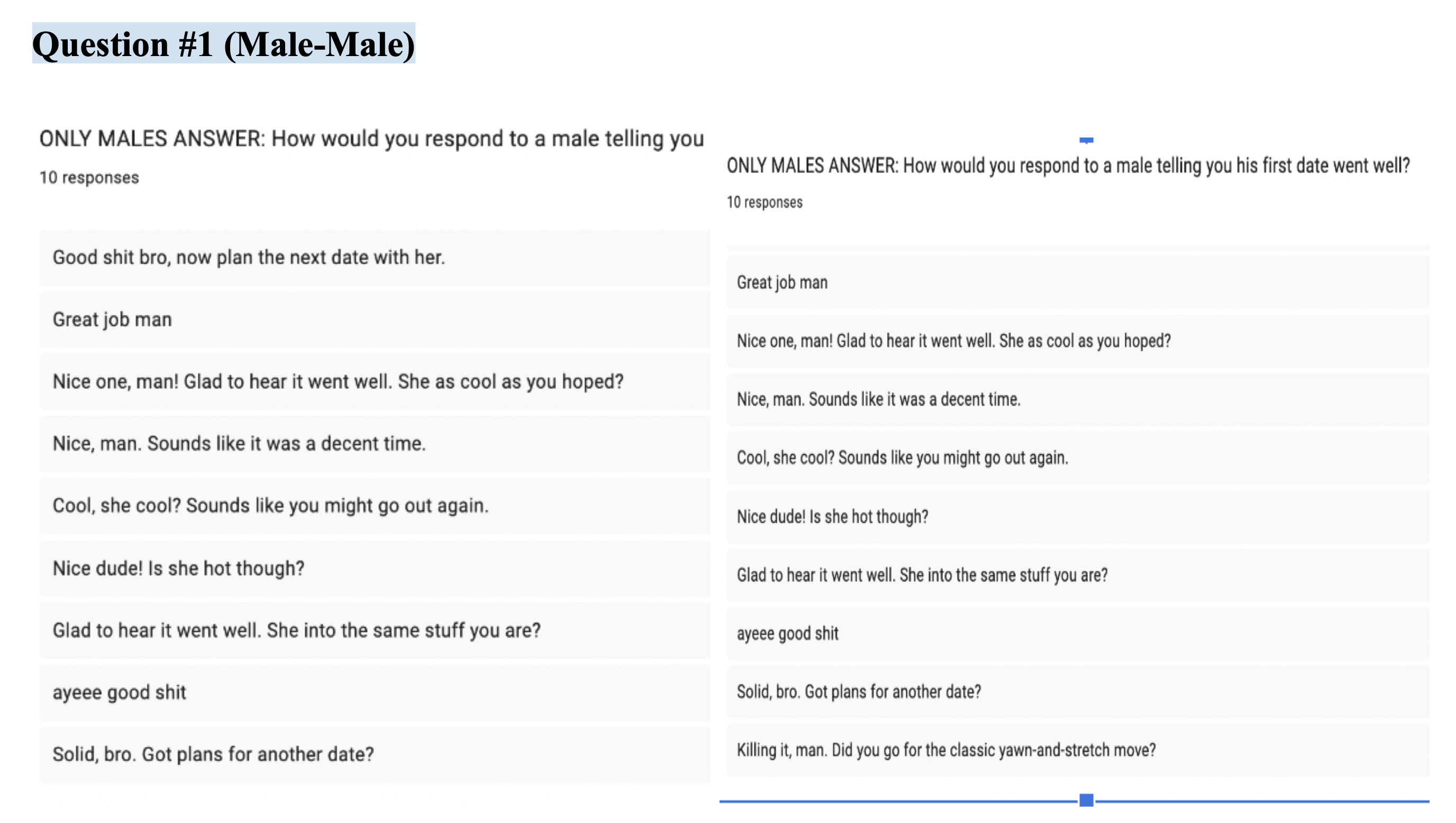
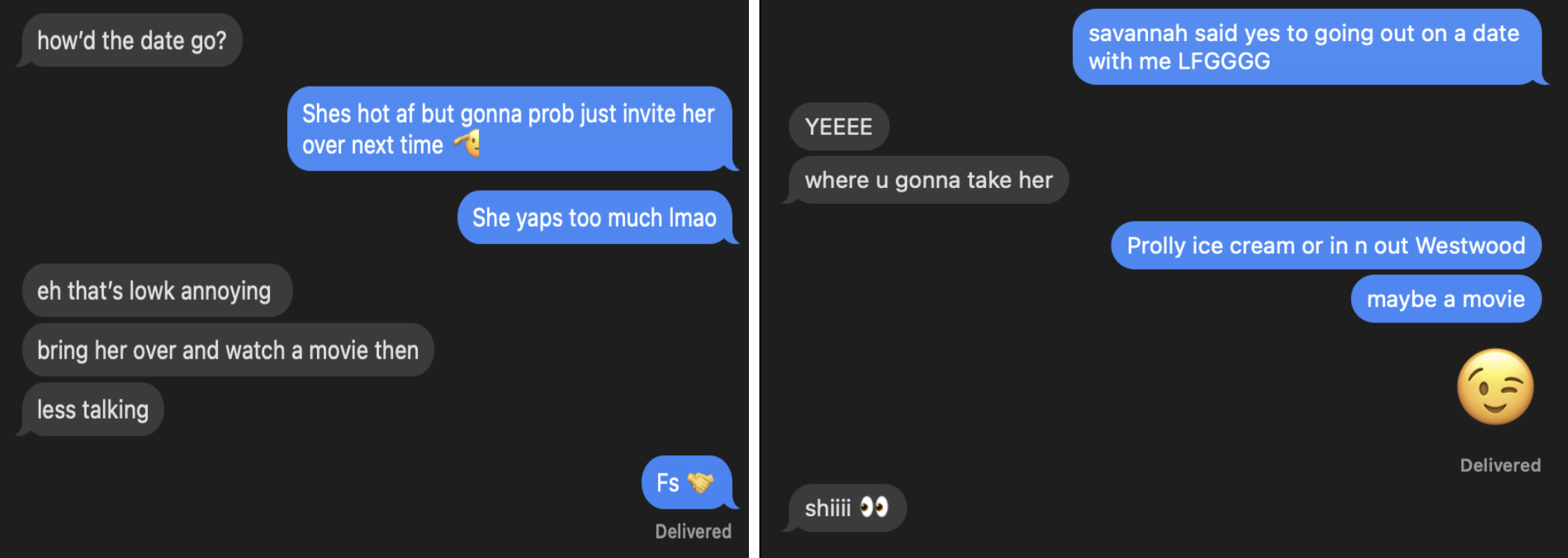
Image-2: Male-to-male contact about their responses in image 2 revealed men used fewer emojis and tended to express emotions through words rather than symbols. Texts from men tended to be more direct and information-focused rather than emotionally charged. Women tended to add more context and extra information, while men were typically more direct in their remarks.

The analysis of texting behaviors between genders reveals quantitative insights:

  1. Emoji Usage:

    ○  Women: More likely to use emojis, particularly those expressing positive

    emotions such as heart emojis.

    ○  Men: Used fewer emojis and preferred to express emotions through words.

  2. Textual Expressivity:

    ○  Women: Used more adjectives and exclamations, enhancing the emotional tone of their messages.○  Men: Texts were more straightforward, focusing on the informational content rather than the emotional.

Emotional Expression:

●  Women: Frequently used heart emojis when sharing good news.

●  Men: Often used simple phrases like “That’s great!” to convey similar sentiments.

Societal Norms Reflection:

●  Women: Their texting behavior reflects broader social expectations for women to be more emotionally expressive and nurturing.

●  Men: Their texting behavior reflects societal norms that encourage men to be more assertive and less emotionally expressive.

Data Collected Via SMS/Text Message:

Female-Female: Positive news about getting a grade

Male-Male: Positive news about getting a grade

Female-Female: First Date

Male-Male: First date

Discussion and Conclusions

Our findings contribute to the broader understanding of gendered communication by highlighting how men and women differ in their digital interactions. These differences are influenced by societal norms and expectations, as outlined in Gender Schema Theory and Social Role Theory. In educational contexts, recognizing these differences can guide educators in fostering more inclusive classroom discussions and encouraging balanced participation. For instance, instructors might use these insights to create communication exercises that address both directness and expressiveness, ensuring all students feel comfortable and understood.

In professional settings, understanding gendered communication patterns can enhance team dynamics and improve workplace interactions. For example, training programs that highlight these differences can help team members appreciate diverse communication styles, leading to more effective collaboration and reduced misunderstandings. By recognizing how men and women express themselves, people can tailor their communication to better support and connect with friends, family members, and partners.

Conclusion

In conclusion, our study reveals significant gender differences in text communication among UCLA students. Women tend to use more expressive language and emojis, while men’s communication is more direct and concise. These differences are influenced by societal norms and expectations, as well as the roles individuals occupy within society. Understanding these patterns can help improve communication strategies in settings and provide an understanding of the social dynamics at play.

Ethics Declaration: All participants provided written consent for their text messages to be used in this study.

References

Ceccucci, W., Peslak, A., Kruck, S. E., & Sendall, P. (2013). Does Gender Play A Role In Text Messaging? Issues in Information Systems, 14(2), 186-194. Retrieved from https://doi.org/10.48009/2_iis_2013_186-194

Lewis, M., & Lupyan, G. (2019). Gender Stereotypes Are Reflected in the Distributional Structure of 25 Languages. https://doi.org/10.31234/osf.io/7qd3g

Muscanell, N. L., & Guadagno, R. E. (2012). Make new friends or keep the old: Gender and personality differences in social networking use. Computers in Human Behavior, 28(1), 107–112. https://doi.org/10.1016/j.chb.2011.08.016

Rubin, D. L., & Greene, K. (1992). Gender-Typical Style in Written Language. Research in the Teaching of English, 26(1), 7–40. https://doi.org/10.58680/rte199215447

Ogletree, S. M., Fancher, J., & Gill, S. (2014). Gender and texting: Masculinity, femininity, and gender role ideology. Computers in Human Behavior, 37, 49-55. https://doi.org/10.1016/j.chb.2014.04.021

, , , , , ,

Decoding Text Messages: Gender Differences in Communication at UCLA Read Post »

How Slang Creates and Perpetuates Gendered Power Dynamics in Greek Life

Alexa Waldman, Teresa Humbert, Morgan Moseley, Luke Kim

Prior to joining greek life, I was exposed to the stereotype that sorority girls were mean and hierarchical whereas fraternity boys were friendly and laid back. I was told to be prepared for girls to make comments that impose their superiority to make me feel small. However, during rush, I found that I was addressed with respect in every conversation. The girls always made sure to use words like “affordable” instead of “cheap,” and constantly parroted that slang phrase “Panhel love,” which means that each sorority chapter has love and respect for the rest.

On the other hand, boys who had gone through fraternity recruitment expressed that they were not treated with respect and that the older members made sure to establish power imbalances. They would use words like “facey”, meaning that someone is good looking enough to be in the fraternity and “moldable”, meaning that someone has good traits but can become better if he joins the fraternity. They used these terms in front of the potential members to impose their authority.

In our project, we studied slang used by sorority and fraternity members in order to determine how patterned language usage has the power to create and perpetuate gendered power imbalances and interorganizational hierarchies.

Read more

Introduction and Background

Greek Life, which dates back to the 18th century, is a significant part of campus communities all across America. While many individuals see Greek life as a way to gain friendships and connections, the portrayal of Greek life in media, such as film and on social platforms, has suggested power imbalances within the institution and has casted a negative light on the organizations. Many stereotypes portray sorority girls as snobby and clicky, and portray fraternity members as inclusive and laid back. Our group was interested in investigating if there is truth behind these narratives.

We addressed the gap in patterned slang use between sorority and fraternity members to determine how speech can point to and maintain power imbalances. We predicted that because members of each individual organization share common language patterning, slang could be used to reinforce group identities. Moreover, we predicted that differences in communication practices between fraternities and sororities (as seen through slang) reflect and reinforce underlying gender power imbalances.

When taking a closer look, we found that there are flaws in the stereotypes surrounding Greek Life. In fact, our preconceived notions that sorority girls are clicky and enforce power imbalances, and that fraternity members are more inclusive and have less of a hierarchical structure were not supported by our evidence. Instead, by analyzing speech patterning in these

institutions, we found that fraternity members use slang to create a hierarchical structure within their chapter, compete with other fraternities, and facilitate gender imbalances of power between sororities and fraternities. On the other hand, we found that sorority members tend to have a symmetrical power dynamic within their chapters and promote friendship and inclusion with the other sororities through their use of slang. Overall, our research challenges the stereotypes that surround Greek life, revealing the flaws in common narratives about the power dynamics within Greek Life communities

Methods

Our research was conducted in sorority and fraternity houses over the course of a month. Each person in our group sat down with members of Greek Life for interviews that lasted about 20-30 minutes each. The interviewer asked open-ended questions in order to allow the sorority and fraternity members to freely explain their experiences. In the interviews, we asked questions such as “can you describe the slang words used most in your chapter? How does slang suggest/ create power imbalances? What topics does your slang refer to the most?” Some questions differed for sorority and fraternity members as we wanted to understand how each institution perceived the other. We asked sorority members what slang they thought fraternity members use the most and what topics they believed this slang surrounded. We asked fraternity members the same questions about sorority members.

We also focused on understanding relationships within and between sororities as well as within and between fraternities. For this reason, we interviewed people from different grades, from different chapters, and with different positions of power. For example, we questioned the president of a fraternity along with a sophomore and a freshman. We similarly talked to members on the executive boards of different sororities, and interviewed seniors, juniors, sophomores, and freshmen in these same organizations. We interviewed people in different positions/ grades in two fraternities and three sororities.

Interviewing a diverse range of people within multiple chapters of both sororities and fraternities gave us a multifaceted picture of the contexts in which slang is used, how slang is used, why slang is used, and the effect of slang. This researching process specifically gave us insights into how slang has different purposes and effects when used by sororities and fraternities.

Results and Analysis

Our research demonstrates how sorority members harness slang to facilitate an environment of inclusion and harmony within and between sorority chapters. On the other hand, we found that fraternity members utilize slang to create power imbalances within chapters, between chapters, and between fraternities and sororities. Many fraternity brothers discussed that power imbalances within their organization were especially evident in the difference of social status between new members and brothers that had already been initiated into the chapter. For example, new members are called “pledges” in every fraternity. This slang word is

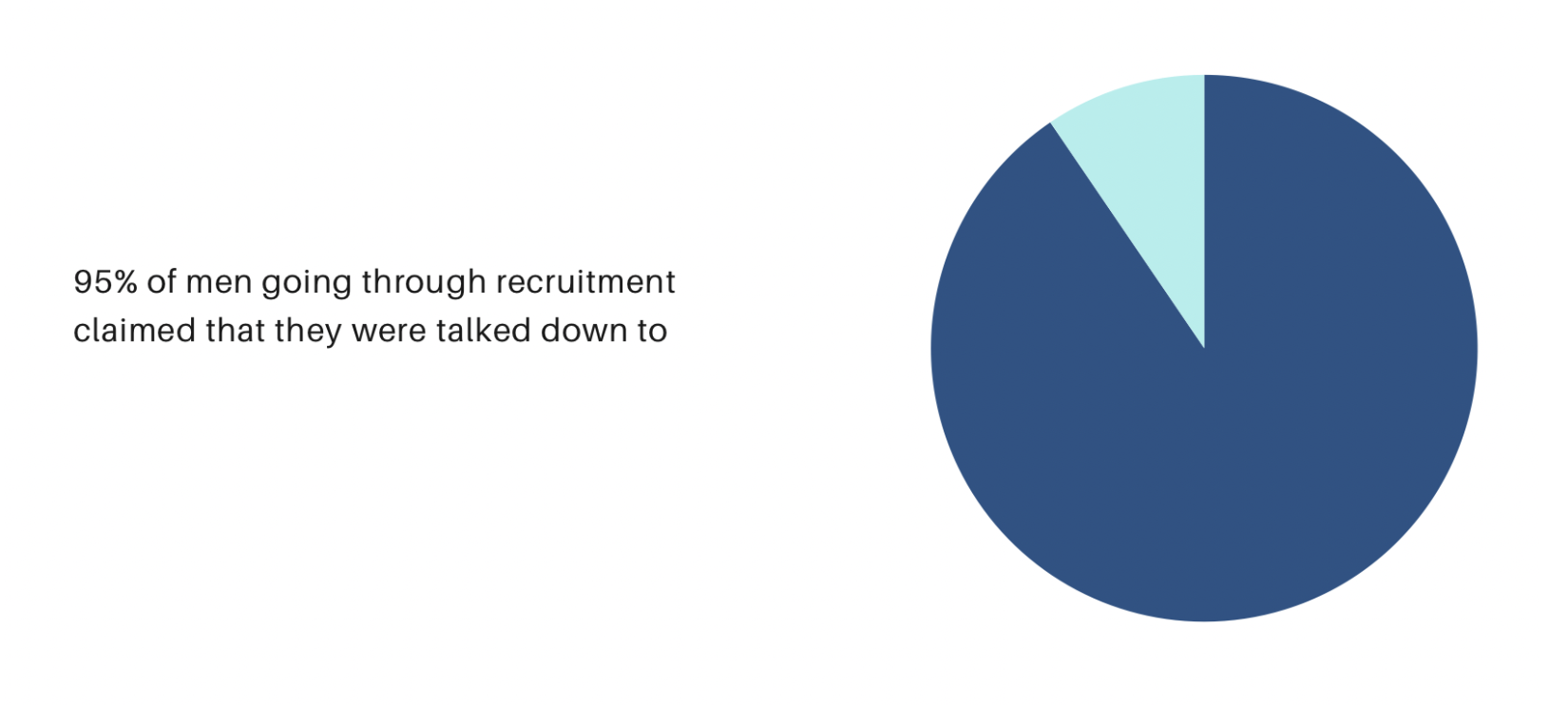
used to emphasize their inferiority to the rest of the boys in the chapter. In one chapter, new members are collectively called “the stinkys” to signify that they smell bad, a further example of how official members degrade their new members. 95% of the fraternity members we interviewed said that they had experienced being talked down to while they were going through the recruitment process.

Figure 1

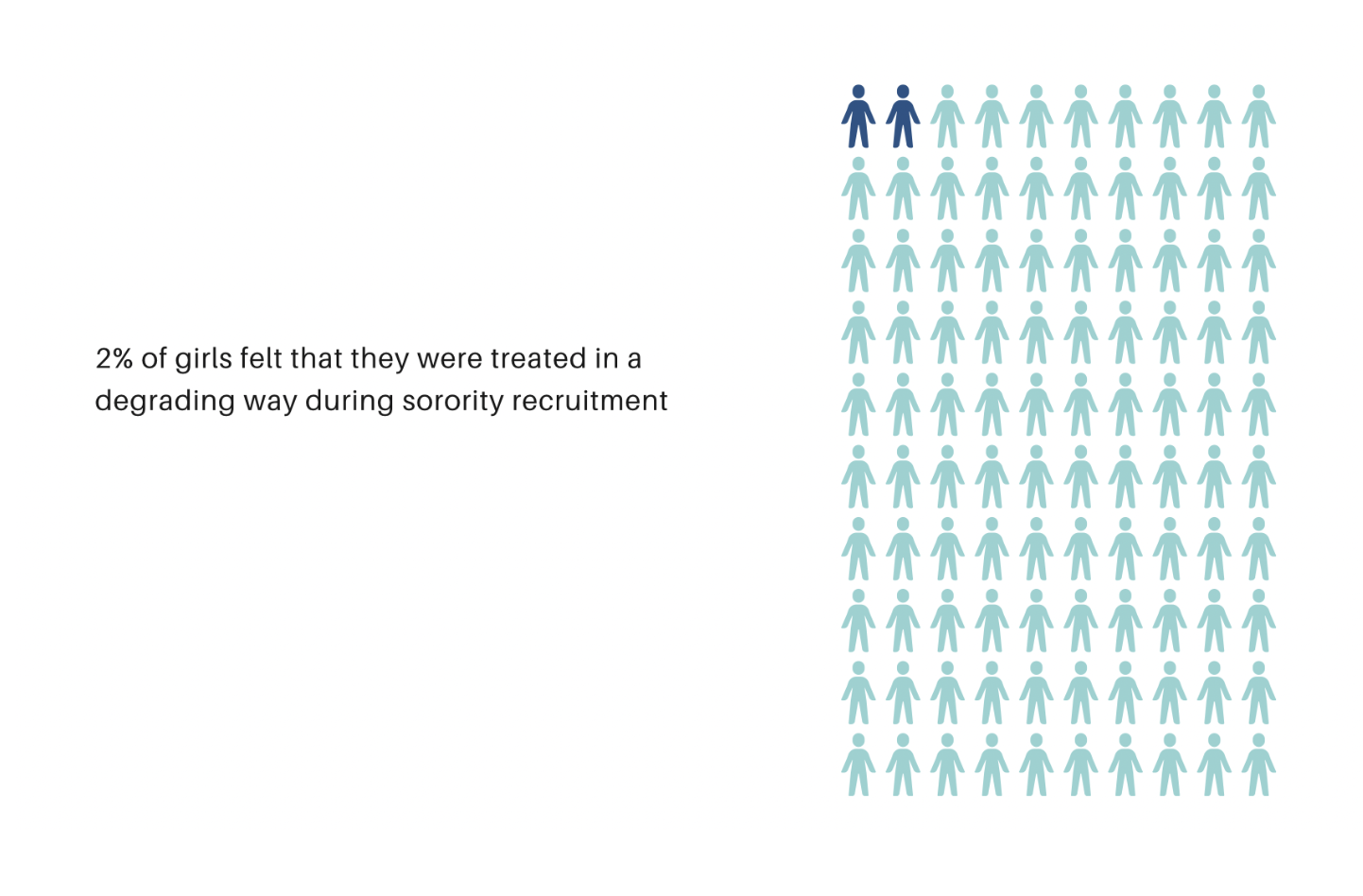
On the other hand, many sorority members expressed how they did not feel the pressure of power imbalances during recruitment or within their chapter. For example, active members in the sorority Alpha Phi were calling the new members “Phisters” – a chapter-specific slang word for “sisters” — from the moment that they got their bid. Furthermore, even though new members are typically called “pledges,” which has connotations of inferiority, sororities are in the habit of abbreviating “pledge class” to “PC” in order to rid the slang of its power to demean new members. While fraternity brothers relinquish the title of “pledge” the moment they are initiated as members, sorority members continue to refer to their “PC” in terms of the community and cohesiveness of each group that joined the sorority at the same time. In interviewing sorority sisters, we found that only 2% of members felt that they were talked down to during recruitment.

Figure 2

Through our interviewing process, we also encountered slang that perpetuated gendered power dynamics between sororities and fraternities. Our data suggested that this type of slang is used mainly by fraternity men towards or about sorority members. For example, fraternity men use derogatory slang words such as “ran through ” and “been around” to describe women that they want to demean for being (what they consider to be) overly sexually active. Sorority women expressed that when fraternity men act in the same way, it is considered normal and there are no slang words used to discuss them in a negative light. This example demonstrates how slang is used to perpetuate power imbalances that are prevalent throughout the country within gender-specific institutions.

Discussion and Conclusions

Overall, our research suggests that sororities have a more egalitarian and encouraging culture whereas fraternities have a clear hierarchical structure and competitive environment. These findings add to our understanding of gendered power dynamics in social organizations. The hierarchical nature of fraternity culture is reflected in the slang they use, which highlights the competitive environment and the importance of rank and authority.

Our research indicates that these organizations’ internal cultures are significantly shaped by their communication patterns as members of fraternities and sororities speak in ways that both reflect and perpetuate their respective power structures. Fraternity men use slang to enforce power imbalances which produces a feedback loop: the more slang is used to create imbalances, the more imbalances exist, and thus the more this slang is used. On the other hand, sorority women utilize slang to establish a cohesive and inclusive environment, and this environment breeds further use of unifying speech patterning. Additionally, our study emphasizes how crucial it is to evaluate media representations of social groupings and prejudices as our research contradicts a widely held presentation of these organizations.

Our research is important in bringing awareness to power imbalances and injustices that go unnoticed or are simply accepted by fraternity members. Our findings may incite fraternity members to evaluate their slang usage and strive to use language that facilitates a more equal, safe, and positive environment in the future. One possible solution is the implementation of workshops and training sessions focused on inclusive and respectful communication within Greek organizations. Educating members about the impact of language can foster a more supportive atmosphere, reducing hierarchical behaviors in fraternities and enhancing the positive dynamics in sororities.

References

Appalachian State University. (2024). Fraternity and sorority life. History of Fraternities/Sororities. https://fsl.appstate.edu/history-of-greek-life

Handler, L. (1995). In the Fraternal Sisterhood: Sororities as Gender Strategy. Gender and Society, 9(2), 236–255. http://www.jstor.org/stable/189873

Izmaylova, G. A., Zamaletdinova, G. R., & Zholshayeva, M. S. (2017). Linguistic and social features of slang. International Journal of Scientific Study, 5(6), 75-78. 10.17354/ijssSept/2017/016

McLemore, C. A. (1991). The pragmatic interpretation of English intonation: Sorority speech (Order No. 9128305). Available from ProQuest Dissertations & Theses A&I; ProQuest Dissertations & Theses Global. (303946119).https://www.proquest.com/dissertations-theses/pragmatic-interpretation-en glish-intonation/docview/303946119/se-2?accountid=14512

Morgan, Emma, “Losing Yourself: Cults, Greeks, and Sociological Theories of Self and Identity” (2021). Honors Program Theses. 138. https://scholarship.rollins.edu/honors/138

Rowan University. (2024). “Benefits.” Benefits of Greek Life. https://sites.rowan.edu/oslp/greekaffairs/benefits/

Scott, John Finley. (1965). “The American College Sorority: Its Role in Class and Ethnic Endogamy.” American Sociological Review, vol. 30, no. 4, pp. 514–27. JSTOR, https://www.jstor.org/stable/2091341

Thompson, Bailey Airs. (2017). “#Sorority girl: The Sorority Socialization Process through the Construction and Maintenance of the Individual and Chapter Sorority Identity.” DSpace Repository, 1-15. ttu-ir.tdl.org/items/742e3cc2-4d41-4b94-9efe-018b9bf98f54.

How Slang Creates and Perpetuates Gendered Power Dynamics in Greek Life Read Post »

The Sexist Side of Hollywood Interviews

Emily Chinn, Kai Wang, Soleil Danico, and Takuma Sato

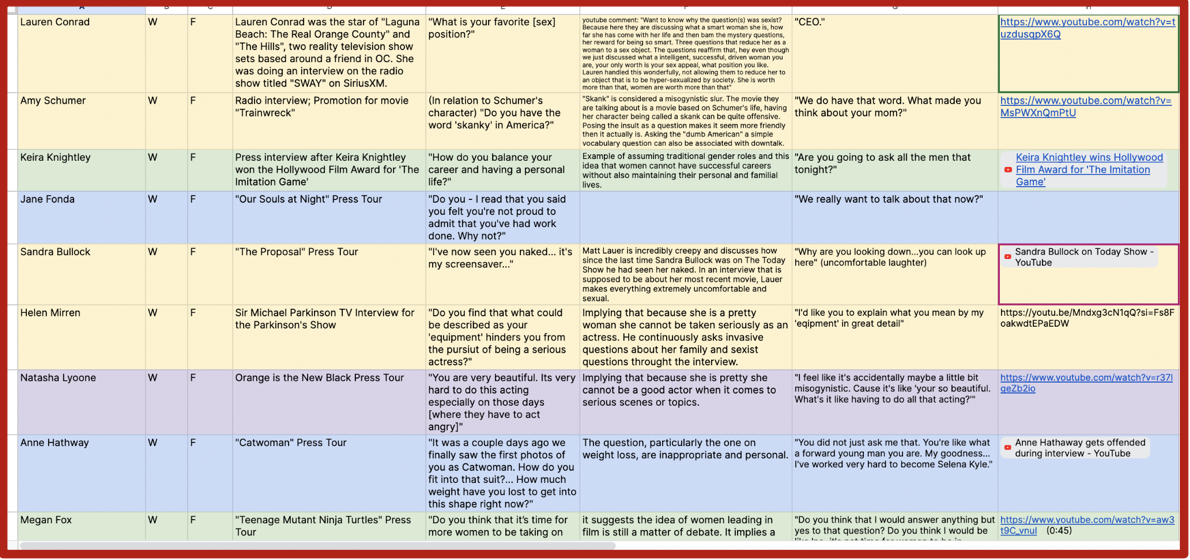
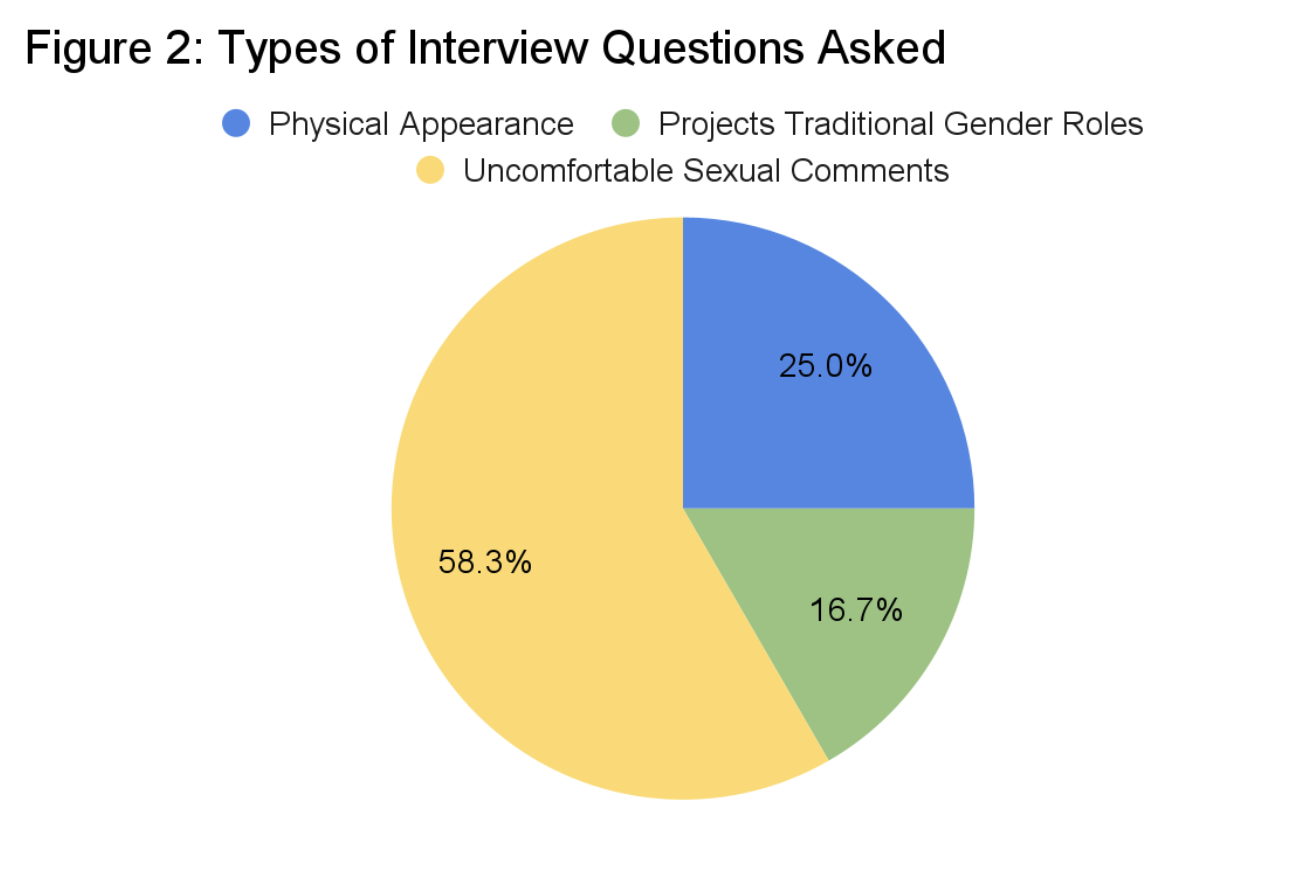
In order for a movie to become a blockbuster, it needs to be properly promoted. Press tours are some of the most common tactics for garnering attention for an upcoming film and give the actors the platform to showcase their passion and personality. Still, the differentiation of questions and communication between actors and actresses is undoubtedly prevalent.  The present article focuses on identifying the distinct patterns of gendered communication evident in celebrity press tour interviews. By viewing and analyzing the press tour interviews of actresses, we found a common pattern of questions that focus on physical appearance, project traditional gender roles, or are uncomfortable and unnecessarily sexual. Our results led us to the conclusion that there is a distinct gendered difference in the word choice and questions of actresses and actors, prompting the urge for more equitable questions and proper training in the entertainment industry.

Read more

The Sexist Side of Hollywood Interviews Read Post »

To Hear or Not To Hear: Identifying Speaker Ethnicity By Auditory Clips

Caroline Breckling

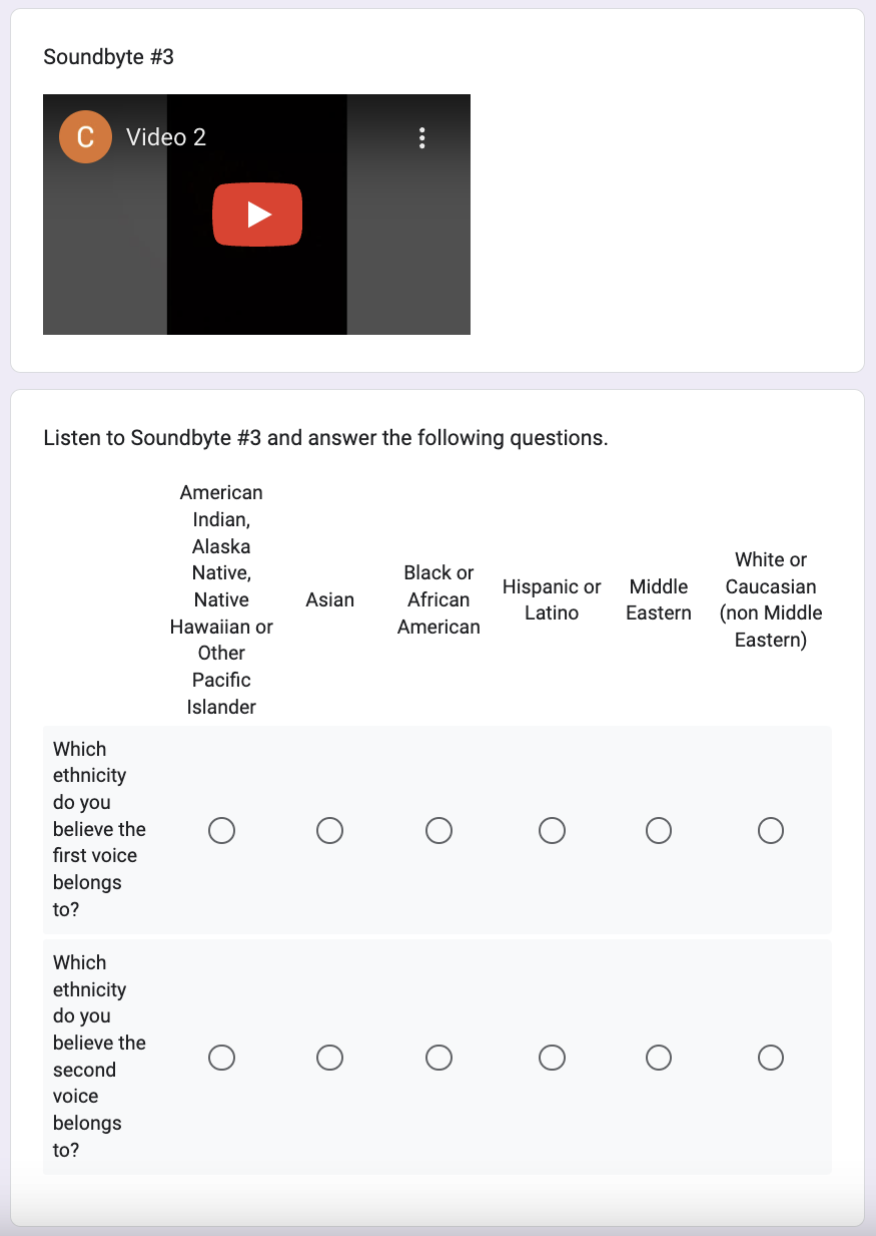
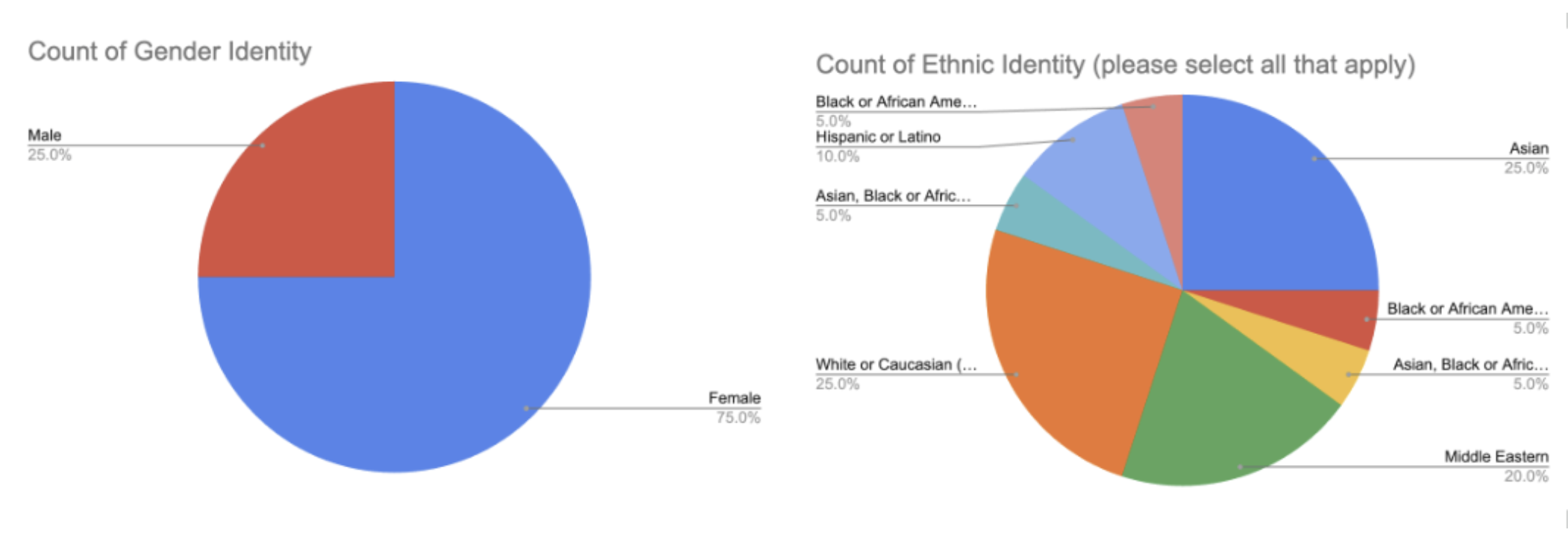
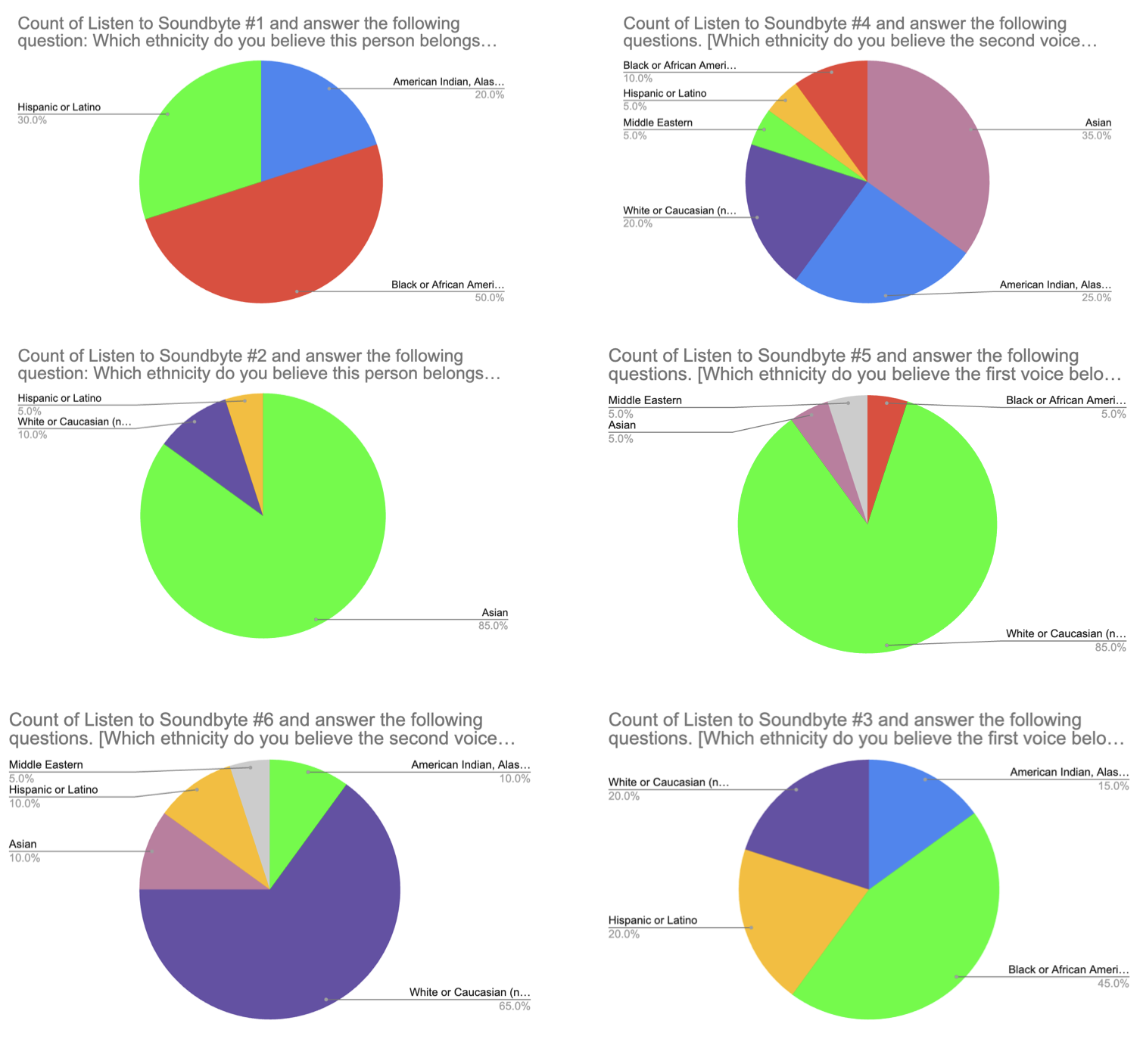
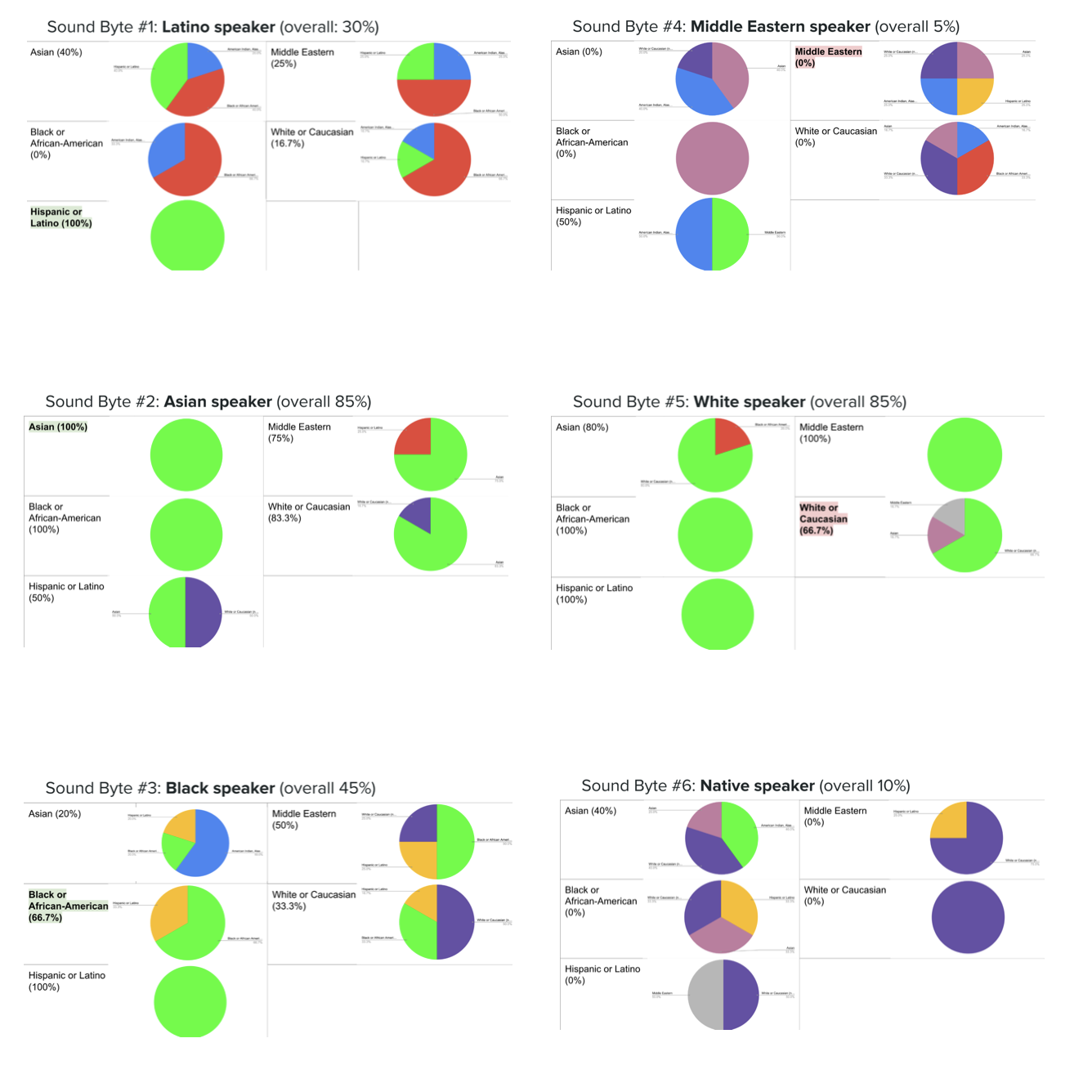
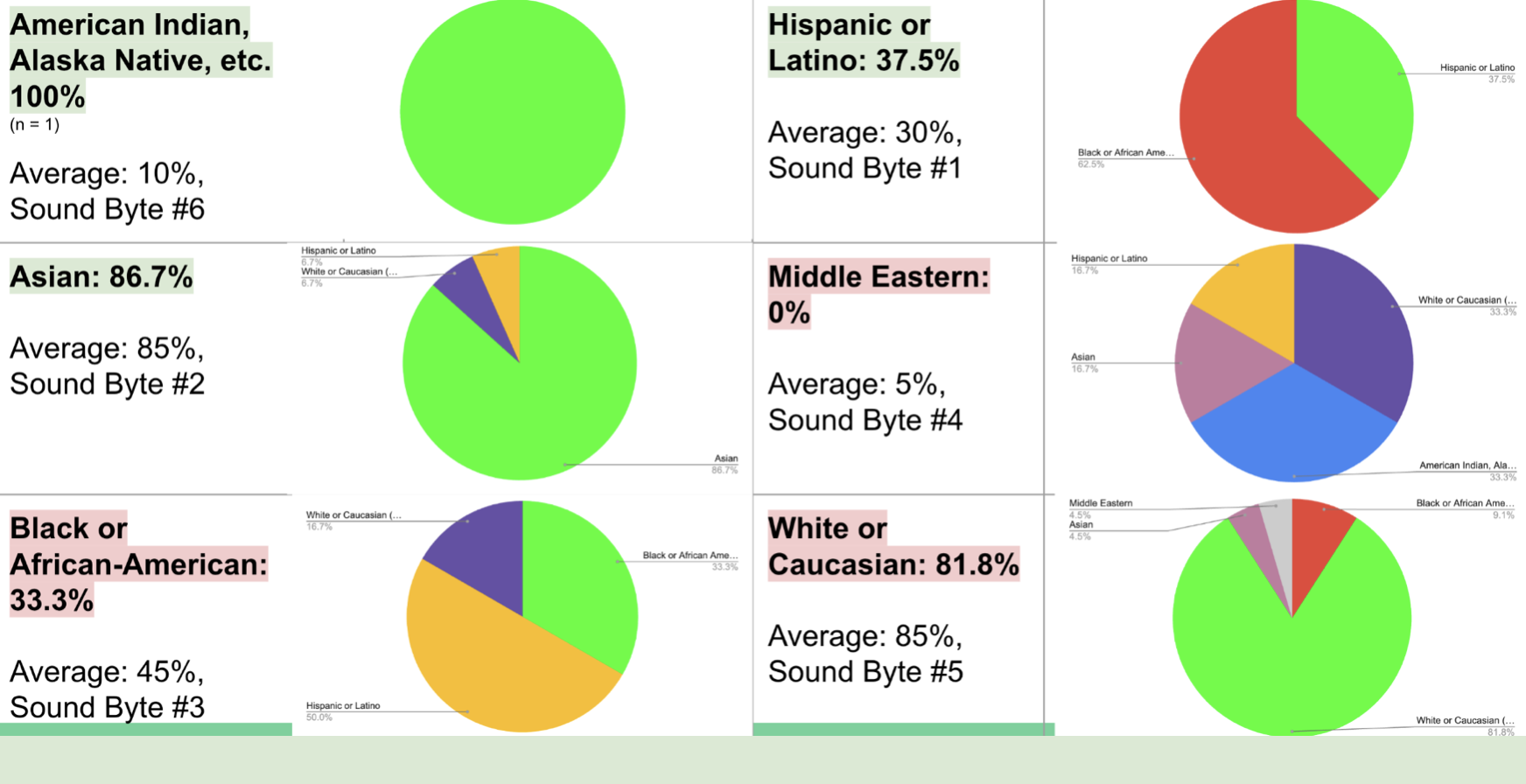
This study investigates to what extent individuals are able to identify a person’s ethnicity based solely on the sound of their voice. Expanding on previous research demonstrating humans’ relative accuracy in recognizing ethnicities by voice, this investigation aims to explore whether a listener’s own ethnicity or familiarity with other ethnicities affects their accuracy in this identification. My survey, conducted with 20 participants from diverse backgrounds, asked individuals to identify the ethnicity of speakers in six different audio clips. Results indicated that participants could identify the speaker’s ethnicity with an overall accuracy of 43.3%, significantly higher than random chance, and a majority of the time, this level of accuracy went up when the guesser was from the same ethnicity group as the speaker featured in the sound bite. However, familiarity with an ethnic group did not reliably improve rates of accurate identification. These findings reflect humans’ existing ability to recognize in-group members through minimal auditory information, reflecting the lingering effects of socialization for survival in human history.

Read more

To Hear or Not To Hear: Identifying Speaker Ethnicity By Auditory Clips Read Post »

Friendships For the Mono- and Bi-Lingual College Student: Does The Language You Speak Make A Difference in How You Make Friends?

In the course of our research, we endeavored to examine the difference in the social life of UCLA college students, their capacity to make friends, and satisfy their need for social support with fellow students based on their status as a monolingual or bilingual speaker of English. Drawing on support from previous research dealing with different student populations, we concluded that the way bilingual students are treated and form communities is different from the way monolinguals do, whether because of “othering” by speakers who did not understand their language or culture or because they sought out connections with those who shared their ethnic or linguistic ties. It was almost universal in our interviews where bilingual speakers had a bias towards others who spoke their non-English language, and many of the monolinguals admitted to preferring the company of those who shared their language and culture. Not every speaker who our team interviewed had an exactly identical experience, however- none of our bilingual speakers derived from the same culture or spoke the same language- and there were a few interesting perspectives and outliers.

Read more
, , , , ,

Friendships For the Mono- and Bi-Lingual College Student: Does The Language You Speak Make A Difference in How You Make Friends? Read Post »

Gendered Language Word Perception: On the Primary Language Acquisition in Los Angeles Adolescents

Lily Eun, Maya Gibson-Ott, Desirae Barrios, Katherine Sandoval 

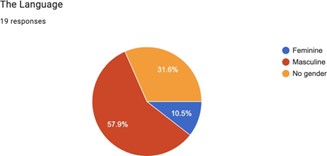
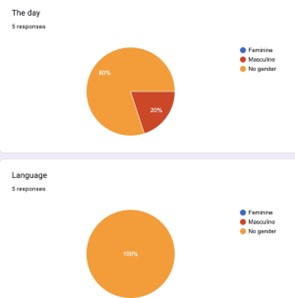
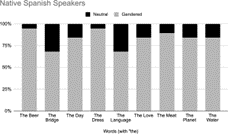
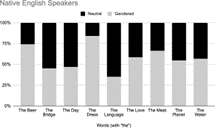
The Theory of Language Relativity suggests that an individual’s primary language shapes their perceptions and worldviews. Our research dives into how a gendered language like Spanish can affect object perception. The research focused on Spanish-speaking university students in Southern California; through surveys and interviews, the research illustrates how native Spanish speakers will assign gender to English words. Our research also included monolingual English-speaking participants as ‘control’ participants and native English speakers who were also bilingual in Spanish; this allowed our researchers to examine the patterns between bilingual and monolingual participants. Our findings illustrate that native Spanish speakers will assign genders to English words based on their Spanish equivalents; these findings indicate that primary languages have a strong linguistic influence on an individual’s perception regardless of their environment’s language. Our results highlight the importance bilingual assessments could have in the educational field. Accurately gauging students’ true intellect and advocating for inclusive language practices in fundamental education will be beneficial for educators to better provide the necessary resources to aid in a bilingual child’s learning. Our study highlights the implications of cross-cultural communication and the necessity of a change of assessment to be more linguistically sensitive for bilingual students.

Read more
, ,

Gendered Language Word Perception: On the Primary Language Acquisition in Los Angeles Adolescents Read Post »

CODE SWITCHING!: A phenomenon among bilinguals and its deeper role in identity formation

Leon Kaprielian, Octavio Santana, Sahil Sadiq

In an era marked by globalization and multiculturalism, the phenomenon of code-switching has emerged as a crucial aspect of language dynamics and identity formation among bilinguals. The complexities of code-switching, its popularity, and its deeper ramifications for people navigating many linguistic and cultural domains are explored in this research. We examine how code-switching is used in immigrant communities as a tool for social interaction, identity negotiation, and effective communication through a multidisciplinary lens that takes into account linguistic, cognitive, cultural, and social factors. Based on naturalistic observations and interviews with Farsi, Spanish, and Arabic bilingual speakers, we investigate the complex patterns of code-switching in various age groups and social circumstances. Our research shows that code-switching is a reflection of complex social dynamics, such as social hierarchy, respect for elders, and the maintenance of cultural identity, rather than just a linguistic issue. This study emphasizes how crucial it is to comprehend language practices in a multicultural and globalized world by shedding light on the significance of code-switching in forming people’s identities and social structures.

Read more

, , , , , ,

CODE SWITCHING!: A phenomenon among bilinguals and its deeper role in identity formation Read Post »

Scroll to Top