texting

The Generational Effects on Code-switching in Conversation Content and Word Choice

Isabelle Sandbank, Leonardo Diaz-Garcia, Huiyu Liu, Taehwan Kim

This study investigates the variations in code-switching behaviors between undergraduate students and faculty members at UCLA, with an emphasis on the generational impacts on word choice and conversation content. It utilizes a mixed-methods approach that incorporates surveys and text analysis, and it reveals that while both professors and students code-switch, there are clear disparities in their patterns of when they do it. In particular, younger students regularly code-switch with abbreviated phrases or words, whereas senior faculty members and professors typically tend to use formal language. Additionally, it also reveals that the word and phrase choices used while code-switching differ between generations, with younger students selecting more colloquial language when talking about day-to-day affairs and older faculty members favoring more modern language use and more serious topics. These results have significant repercussions for comprehending how generational disparities influence language practices and social identities.

[expander_maker id=”1″ more=”Read more” less=”Read less”]

Introduction 

UCLA is known for being a very multicultural and diverse university, according to the school’s website. Through its population, it represents 118 countries and is home to over 5,000 international students (UCLA Facts & Figures, 2023). Within this body are multilingual students, professors, and faculty, some of which have the ability to switch between two languages, or varieties, at once, also known as code-switching (CS) (Washington-Harmon, 2022). Code-switching, a widely used technique, enables multilingual speakers to jump between languages without losing the syntax or structure of the prior language. People often code-switch from one language, such as English, to another, like their home language, in order to identify with a specific social group or convey specific information. Through the categorization of code-switched words in text messages, we were able to distinguish linguistic variations in word choice between bilingual UCLA undergraduates and the older professors and faculty members of the university to show that age affects the content of CS.

Background

Code-switching (CS) is a common phenomenon in multilingual communities (Bhatti, 2018). It is often a useful communicative tactic for bilingual communities as they believe code-switching helps them express what they want to communicate more clearly, directly, and efficiently (Bahous, 2013). It’s interesting to see that many who code-switch do not realize it- most students who speak in a bilingual environment do not realize that they are infusing English terminology when using a non-English language, and it seems that audience, context, identity and the effectiveness of information transmission will make multilingual people code-switch (Sichyova, 2005). This isn’t from unawareness due to a young age, as a recent study shows that even teachers do not realize that they code-switch (Bahous, 2013). Although we are aware of code-switching among both professors and students, there is still a lack of research that examines the linguistic disparities between these two cohorts.

Changes in CS patterns are also inseparably linked to personal experience. The speaker will tend to change languages according to the conversational style of the person whom they’re talking to; they will move between obvious CS and non-obvious CS, indicating their position in the group (Ellison, 2021). According to the findings of the Ellison study, which looked at the patterns of code-switching between languages such as Hindi and English, it was found that people of different ages often have distinctive and unique methods when it comes to changing between languages.

Does this mean that students and professors differ in their word choice of code-switching as well? Although previous research has looked at code-switching situations, this is currently a new idea and one we would like to explore.

Methodology

The population includes two distinct school cohorts, comprising of undergraduate students and faculty members at UCLA, with different age groups and unique school identities. Yet, each has something in common: they are all bilinguals. The experiment was conducted by sending out surveys to the UCLA community and asking them to share conversation logs screenshots. In the survey, participants would be asked about their demographic (i.e. gender, age, and school identity), their awareness of code-switching, and the frequency of code-switching in different scenarios. Furthermore, the participants were requested to share their email addresses voluntarily to facilitate follow-up communication, enabling us to collect the screenshots of their conversation logs at the end of the survey.

We used the judgmental sampling method, which uses our knowledge to select the individuals or cases to be included in the sample based on the research question addressed. Judgmental sampling method is a method that targets a population and maximizes the benefits of the analysis (Jagero, 2011). This provided a direction for data collection for our project.

After collecting surveys and participants’ conversation logs, researchers translated, transcribed, and categorized their code-switched sentences and words before analyzing possible patterns of code-switching between our established age parties (undergraduate students and faculty/professors).

Acknowledging the potential for bias in our study prior to presenting our findings is vital. The text samples are more susceptible to bias compared to our surveys. This is because there is a possibility that certain participants may have selectively shared specific segments of their text conversation with us, and the screenshots of the conversations shared by students and teachers may only represent a subset of the entire conversation.

While we may use alternate techniques of data gathering in future research, we must emphasize that for this specific study, we must consider the chance that it may not be composed of all possible data. Privacy issues are in fact a delicate subject that cannot be ignored, but something we would’ve hoped to get around.

Results and Analysis 

Our research revealed that undergraduate students had a proclivity to employ abbreviated phrases or words via code-switching more often than faculty, who were more inclined to incorporate formal language while code-switching. By comparing two sets of conversational logs between undergraduate students and faculty, we observed that the former demonstrated a higher rate of code-switching within the logs as well.
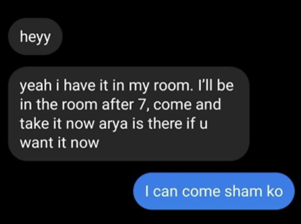
Figure 1: CS Text message in English (switching to Hindi) from undergraduate student to another Shaam ko: “right now”

Our analysis revealed that undergraduate students were more apt to partake in code-switching during informal conversations with close friends. We observed this phenomenon primarily through the use of nouns pertaining to daily life (e.g., lunch, cafe, and waitlist, see Figure 2). Moreover, these students tended to initiate sentences with shorter verbal phrases such as “I gonna” and “I am”, while also utilizing code-switching at the conclusion of a sentence when they wished to express a particular time frame, specifically denoting in English for requests to happen “right now” or “today” (see Figure 1).
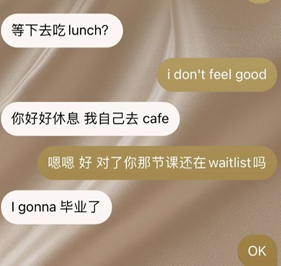
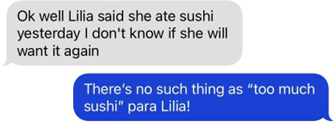
Figure 2: CS Text message in Mandarin (switching to English) from undergraduate student to another
Figure 3: CS Text message in English (switching to Spanish) from faculty to another older adults
Figure 4: CS Text message in Russian (switching to English) from professor to another older adult

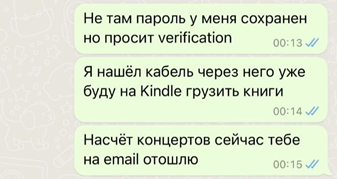
Faculty seem to talk most about modern issues such as technology or politics, but at times, even in simple conversations such as talking about what to eat for dinner, they may code-switch just to use the word “for” in their native language (see Figure 3). Prepositions were a common code-switched word in faculty conversations. Further screenshots provided by UCLA faculty revealed a preference for proper nouns and more formal terms, such as “Kindle,” “verification,” and “email” (see Figure 4). Our data demonstrated that undergraduate students code-switched more often than faculty members when communicating through text messaging, or at times, more common to professors, email.
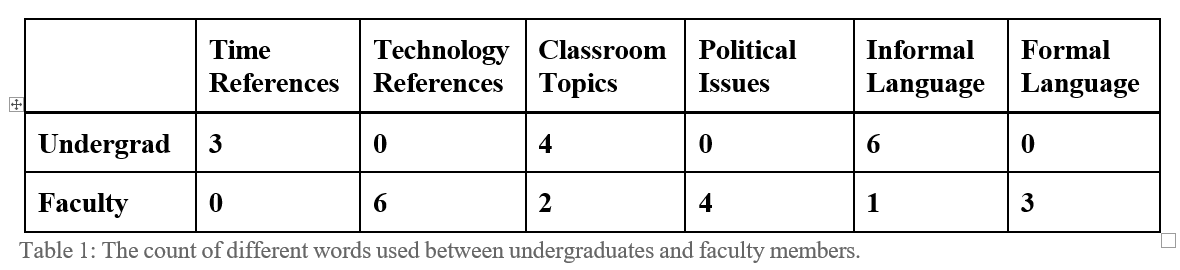
As stated so far, we’ve found code-switched words to fall into similar categories, such as prepositions, technological terms, legal jargon, or classroom topics. Table 1 categorizes the words used between undergraduates and faculty in order to more easily display the differences between both groups. The last two categories are a little vague- informal language relates to any time in which the participants shortened their words (example: “u” for “you”). Formal language relates to any time in which participants used words often meant to be polite (example: Mr. or Mrs.).
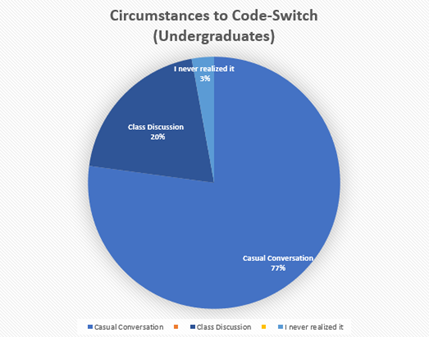
Figure 5: Pie Chart Denoting Undergraduate Code-Switching Circumstances (Casual Conversation: 27, Class Discussion: 7, I never realized it: 1); n = 35

In our survey, we asked both parties under which circumstance they code-switched in more to see if it may provide an explanation for the texting outcomes we obtained. For example, perhaps faculty talked about citizenship and taxes because they were talking to employers, and maybe undergraduates spoke about getting waitlisted and class because they were codeswitching during class discussions. Yet our survey results show that most students code-switch in casual conversation with their friends, with only 20% of undergraduates code-switching during class-related activities.
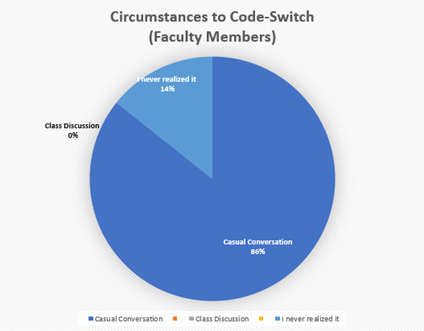
Figure 6: Pie Chart Denoting Faculty/Professor Code-Switching Circumstances (Casual Conversation: 6, Class Discussion: 0, I never realized it: 1);  n = 7

Here, our hypothesis is once again proven wrong, displaying that none of our older participants code-switched with employers but instead solely during casual conversation. There was an option to state where else they code-switch, but all other participants (except for those who couldn’t recall or stated they didn’t realize it) said that they only code-switch among friends and family during casual conversation.
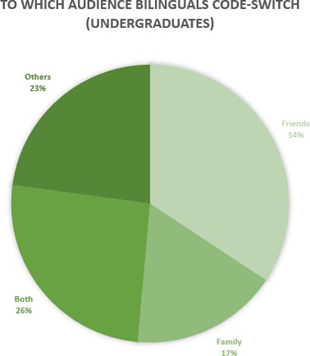
Figure 7: Pie Chart Denoting Audience of Undergraduate Code-switching (Family: 6, Friends: 12, Both: 9, Others: 8); n = 35

Using the same dataset, we made another distinction between undergraduate students and faculty members using one of the questionnaires from the survey: To which specific audience did you code-switch to more often? There are four variables that we chose to analyze, which are Friends, Family, Both, and others. The data of “others” include answers like, “teachers,” “people my age who look ethnically similar to me,” and “work environment.” The pie-chart above represents the data of undergraduate students. Based on the chart, we could tell how undergrads tend to CS with friends the most, followed by both friends and family (2nd), others (3rd), and family (4th). This corroborates the notion that bilingual undergraduate students are more likely to engage in code-switching during informal settings, such as chatting with friends, rather than in more intimate settings, like family discussions.
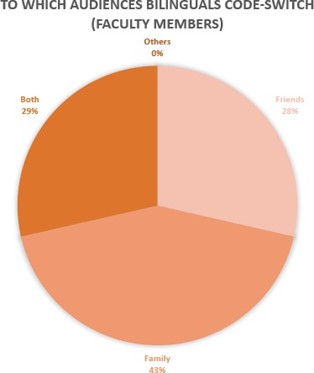
Figure 8: Pie Chart Denoting Audience of Faculty/Professor Code-switching (Family: 3, Friends: 2, Both: 2, Others: 0); n = 7

Next, this is another pie-chart that represents the data of faculty members and professors. Based on the chart, we could tell that UCLA faculty members and professors tend to CS with family members the most, followed by both (2nd), friends (2nd), and others (3rd). In contrast to the data regarding undergraduates, it is evident that faculty members tend to code-switch more frequently in personal settings, such as family conversations.

Conclusion

This research focused on the possibility of age affecting the way that bilinguals code-switch, both in content and environment. Through analysis of text messages and survey data, we were able to display some common bilingual texting patterns in UCLA undergraduates and faculty. Our research showed that bilingual people, regardless of age, do tend to transition between languages in casual conversations rather than in more formal, workplace or educational, situations. However, we saw some intriguing contrasts in the subjects that younger and older bilinguals code-switched about. It seems that when talking about less casual subjects, like political issues and business, older bilinguals are more inclined to switch languages. This could be the result of having more exposure to these kinds of interactions, while younger bilinguals may not code-switch in these certain situations because they have not yet encountered these themes as frequently. Our research also revealed that bilinguals’ code-switching behavior is influenced by the setting in which they are in. In casual situations, like conversations with friends, bilingual undergraduates tend to engage in code-switching more frequently than the faculty, who tend to reserve code-switching for more personal environments, such as with their families. The complexity of bilingualism and code-switching, as well as the ways that environment and age can affect these behaviors, are highlighted by our study. Understanding these subtleties is crucial for efficient communication and social integration in an increasingly linked society.

Although it seems as if most bilingual individuals, no matter the age, code-switch in casual conversations, older bilinguals tend to code-switch when talking about less casual topics, such as political issues and business, while younger bilinguals code-switch about daily life issues, like where to get lunch next.

References

Bahous, R. N., Nabhani, M. B., & Bacha, N. N. (2013, August 20). Code-switching in higher education in a multilingual environment: a Lebanese exploratory study. Language Awareness, 23(4), 353–368. https://doi.org/10.1080/09658416.2013.828735

Bhatti, A., Shamsudin, S., & Said, S. B. M. (2018, May 14). Code-Switching: A Useful Foreign Language Teaching Tool in EFL Classrooms. English Language Teaching, 11(6), 93. https://doi.org/10.5539/elt.v11n6p93

Ellison, T. M., & Si, A. (2021, June 28). A quantitative analysis of age-related differences in Hindi–English code-switching. International Journal of Bilingualism, 25(6), 1510–1528. https://doi.org/10.1177/13670069211028311

Jagero, N., & Odongo, E. K. (2011, March 30). Patterns and Motivations of Code Switching among Male and Female in Different Ranks and Age Groups in Nairobi Kenya. International Journal of Linguistics, 3(1). https://doi.org/10.5296/ijl.v3i1.1164

Mabule, D. R. (2015). What is this? Is It Code Switching, Code Mixing or Language Alternating? Journal of Educational and Social Research. https://doi.org/10.5901/jesr.2015.v5n1p339

Sichyova, O. N. (2005, November 22). A note on Russian-English code switching. World Englishes, 24(4), 487–494. https://doi.org/10.1111/j.0883-2919.2005.00432.x

Washington-Harmon, T. (2022, May 23). This survival tactic many BIPOC use could be harmful to their mental health. Health. Retrieved March 11, 2023, from https://www.health.com/mind-body/health-diversity-inclusion/code-switching

[/expander_maker]
, , , ,

How LOL got between X and Z

Michelle Johnson, Kayla Sasser, Lucy (Chenyi) Wang, Grace Shoemaker, and Lien Joy Campbell

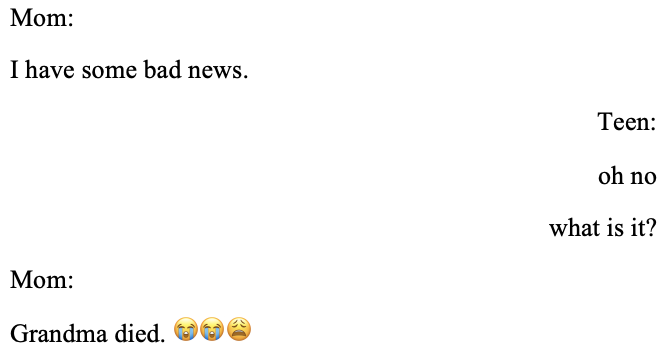
Figure 1. An example conversation between Gen X and Gen Z showing possible generational gap in the usage of humor markers – emojis in this case.

Even though the sad emojis in that exchange were used in a sad context, many people might laugh or find that inappropriate. Whether you are one of those people or someone likely to use emojis just like “Mom”, read on. As texting has grown to be a more popular form of regular communication, it may seem as if connecting with people has only become easier – but with ubiquity comes complexity. And if you are not among those at the vanguard of these complexities (the youth), you could be missing out. This brings us to the question: does expressing humor over text vary by generation? In this study we focused on Generation X and Generation Z’s use of emojis, emoticons, and other ways they chose to convey humor and tone in texts. In focusing on humor we were able to analyze the frequency of humor makers and their meanings in context. Based on our data, we found that there were definite differences in how the generations use and react to text language. Keep reading to learn what these key differences were and how we studied them (and maybe how to finally make that teenager in your life laugh).

[expander_maker id=”1″ more=”Read more” less=”Read less”]

Intro and Background 

Generation Z (those born between 1997 and 2012) grew up and learned how to communicate post-advent of the invention of instant messaging. Their texting style and speaking styles are intertwined and take inspiration from each other. On the other hand, those of Generation X (born between 1965 and 1980) had to transfer previously-established styles of humor and communication to the new technological medium (Downs, 2019). This accounts for the disconnect between considering texting to be a form of writing (like an email or letter) and considering it simply as talking put onto a screen. The term “written speech,” coined by John McWhorter, gives a name to the adaptation of texting to account for all the complexities of face-to-face communication that change how the content of a message is received: emotion, formality, humor, tone, body language and facial expression. Across platforms from iMessage to TikTok, young texters use unspoken and quickly changing combinations of punctuation, capitalization, and symbols to directly translate trends and slang into the digital world.

Methods

Following our belief that Gen X and Gen Z would communicate humor over text in significantly different ways and a path laid out by a study conducted by Sánchez-Moya and Cruz-Moya (2015), we chose to create a survey that focused on responder’s opinions on texting and their texting habits. We specifically targeted people’s habits in the use of humor markers like emojis and typed laughter by asking them to choose the most appropriate option to represent a feeling or as a response to various tonal and emotional contexts. Once we had our responses, we organized our data in terms of type of marker (emoji/emoticon/capitalization) and focused on whether the marker was used literally or creatively in relation to each generation. We expected a wider range of responses in Gen Z and more similar, literal responses from Gen X.

Results and Analysis  

We began our analysis by categorizing the responses we received in terms of whether they were literal or not, and we additionally compared the use of emoticons and capitalization. Further, we then also analyzed the frequency of answers we received for each question. We will present examples of each of these analyses and the contexts in which they were applied.

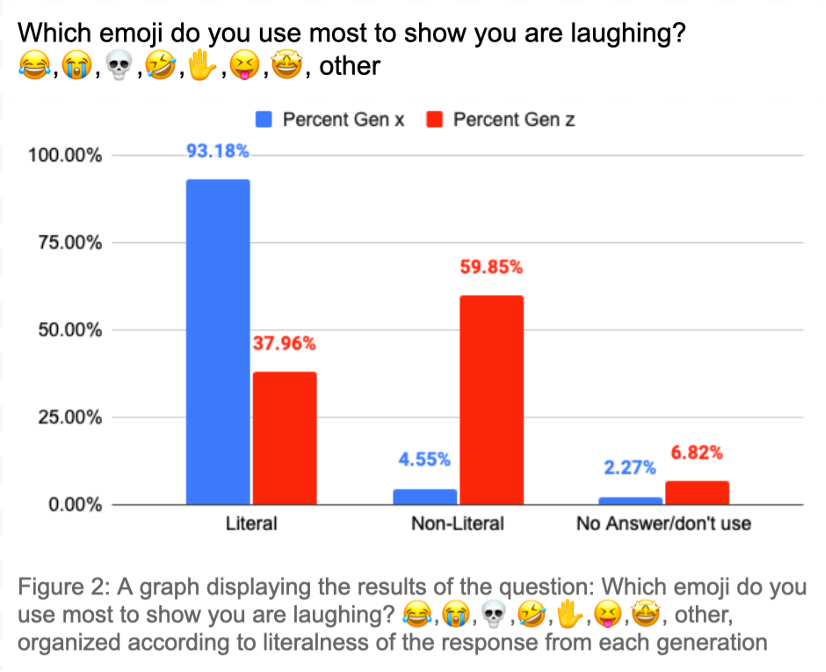
Beginning with our analysis of literal vs. non-literal use of markers, figure 2 presents a strong difference in Gen X and Gen Z’s preferences for literal and non-literal emojis.

The above graph illustrates a strong example of a general trend we found in our data: that overall, Gen X preferred to utilize emoji and other humor makers literally. In comparison, Gen Z showed a preference for less literal uses. Also, specifically for this question, within the categories of literal and non-literal, Gen X preferred a laughing emoji (😂) to show that they were laughing in 55% of their responses whereas Gen Z preferred a crying emoji (😭)–the exact opposite–to show that they were laughing in 42% of their responses. This was an even stronger non-literal response than expected suggesting a much higher degree of irony in Gen Z’s texting than in Gen X’s.

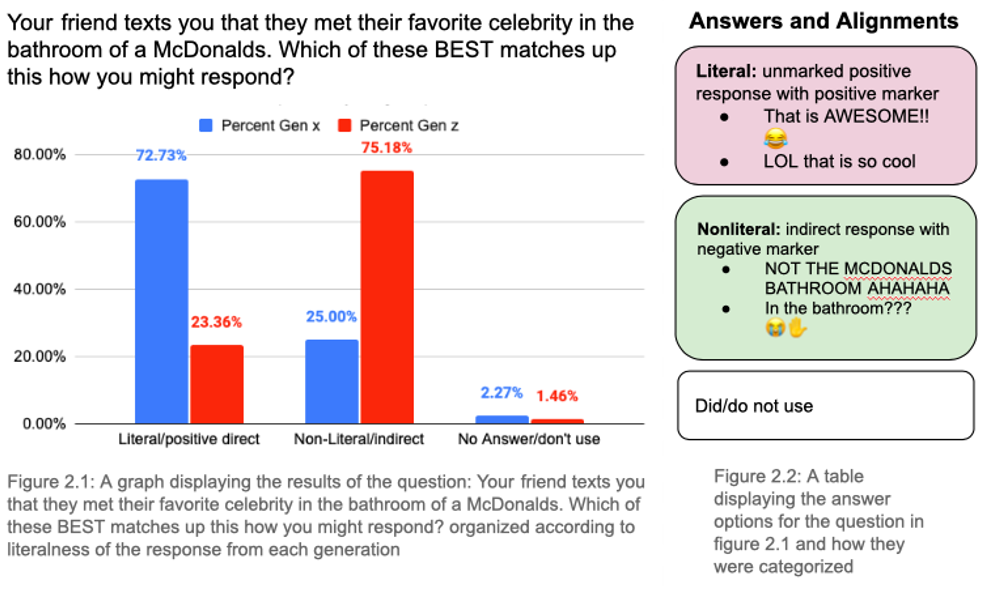
Moreover Figure 2.1 presents another strong case for Gen X’s preference for literal marker use and Gen Z’s preference for non-literal outside of just emojis. Figure 2.2 presents the response options as well as their categorization as either literal or non-literal.

Not only was Gen X’s preference for literal answers and Gen Z’s preference for non-literal answers illustrated in their selection of emojis but also in their preference for other answer types too. In the above example we took the unmarked and expected literal responses to the presented situation to be congratulatory, positive, and generally aligned with the topic of the context, whereas the non-literal responses demonstrate an indirect type of response by focusing on a non-topicalized part of the context (i.e. the bathroom). Again, we observed a strong preference from Gen X for a literal or positive response and a strong preference from Gen Z for a non-literal or indirect response.

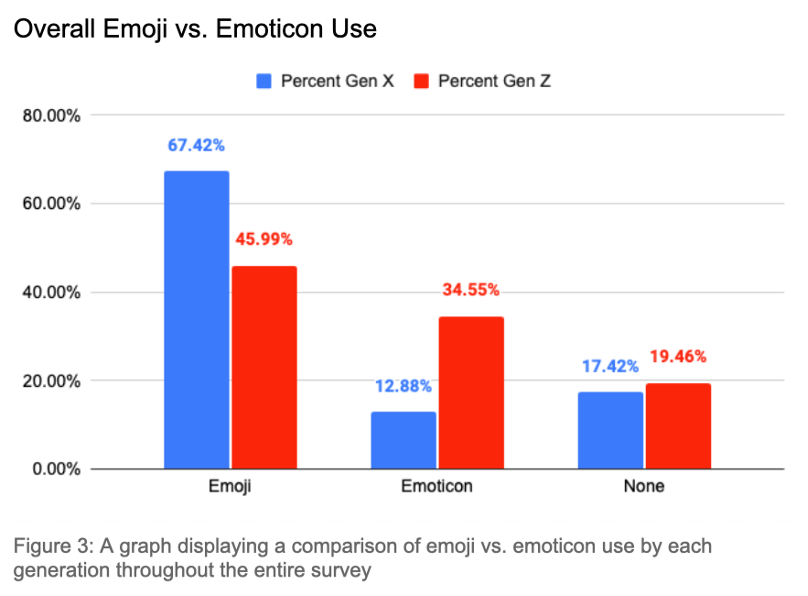
In addition to studying the differences in how humor markers were used to convey literal and non-literal meaning we also wanted to provide insight into the different variations in the types of markers commonly used. Generally, we expected to see a more diverse use of these markers and variations, not just emojis, in Gen Z’s texting, leading us to figure 3. Figure 3 illustrates the overall differences in emoji (😂,😩) and emoticon ( :(, 🙂 ) use according to generation.

We chose to study emoji vs. emoticon use specifically as we believed that there would be a strong difference between the generations. However, both Gen X and Gen Z tended to prefer emojis. Unexpectedly, Gen X overwhelmingly preferred to use emojis over emoticons. We had thought that due to their longer history and generally less ambiguous and more established static meaning that Gen X would favor emoticons (Bai et al., 2019). This was not the case. Interestingly too, Gen Z actually tended to use more emoticons than Gen X. This result however supports our belief that Gen Z would demonstrate a broader range of humor marker use, splitting their results more evenly between emoji and emoticon. This could also demonstrate that Gen Z is exhibiting more creativity or nuanced flexibility in how they use these markers and what they take them to mean.

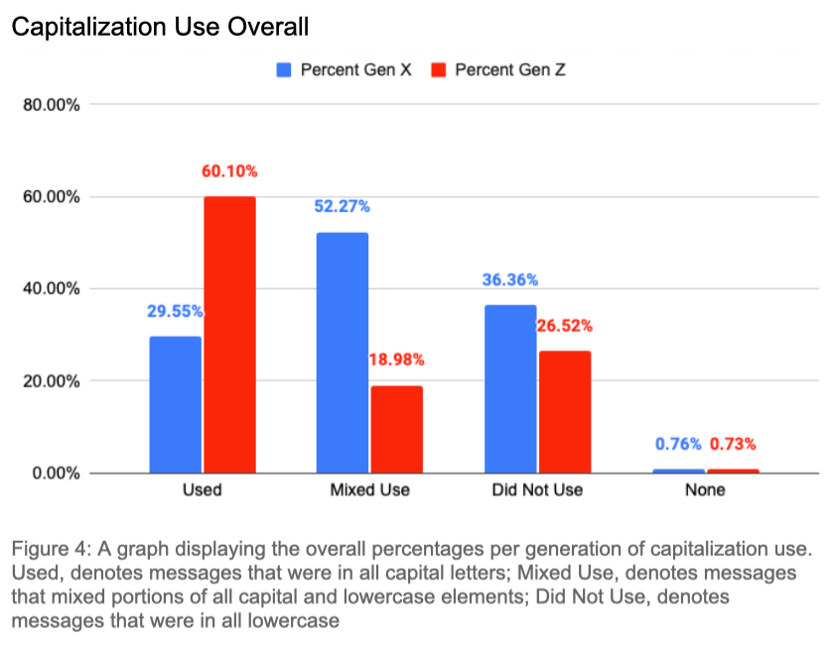
Next, we chose to study another variational marker, capitalization (OR SHOUTING). We chose to study capitalization in addition to emoji/emoticon differences as it is a unique action in texting that specifically denotes tone (McCulloch, 2019). Figure 4 below illustrates our comparison of capitalization use according to generation.

As shown above, Gen Z favored the use of capitalization while Gen X preferred messages that mixed capitalization and lowercase. This illustrates a stronger preference in Gen Z for using messages that convey a stronger or louder tone and demonstrates McWhorter’s idea of “written speech” in the younger generations (2017). Interestingly too, the younger generations’ relatively strong preference for “shouting” over text could indicate a recent change in what all-caps texting “means” and illustrate a higher level of comfort with the nuance of tone that all capitalized text creates. In comparison, Gen X may still interpret it as simply yelling at someone and therefore use it more sparingly. However, to corroborate those claims more testing would need to be conducted.

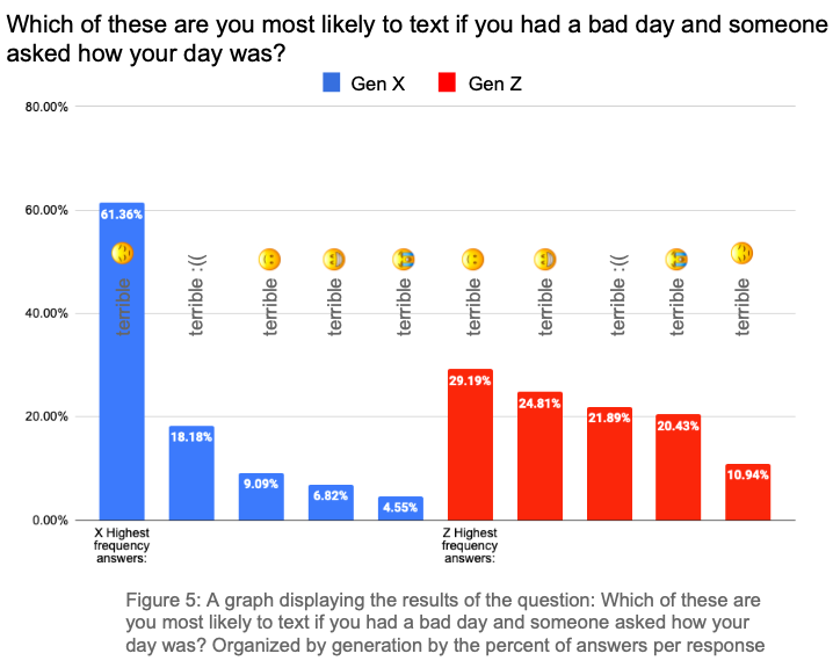
Finally, we got even more specific with our analyses–we categorized and analyzed the answers to each question on the survey to measure the frequency of each response per question for each generation. We did this to examine the specific texting behavior of the generations on a smaller, context-dependent scale. Figure 5 is a particularly interesting example that demonstrates the general trend in the generational behavior we observed.

We discovered, as in the above example, that Gen Z’s responses were more evenly spread out across the response options creating a much more dispersed answer graph (seen in red). Meanwhile, Gen X tended to answer more similarly to one another, strongly favoring one answer, ‘terrible 😔,’ as can be seen by the single tall blue bar. This pattern was relatively consistent across all of our data and was in line not only with our prediction that Gen Z would show a wider range of responses, but also with our prediction that Gen X would tend to use more literal responses. Moreover, another point to note in figure 5 particularly is that Gen X answered ‘terrible 😭’ 20.43% of the time, which in this context was interpreted as a literal use of a negative emoji. However, given our results in figure 1, this could also denote a more sarcastic or ironic tone. Such an analysis could also be in line with the other trend illustrated above as Gen Z showed a greater preference for answers that denote a less literal more ironic tone (terrible 🙃, terrible 😁).

Overall, our data demonstrated that Gen X tended to use emojis more literally and more consistently while Gen Z preferred to use them less literally and showed a wider range in their use. In terms of emoticons, both Gen X and Gen Z preferred emojis with Gen X showing a much stronger preference, and in cases of capitalization, Gen Z used messages in all caps much more than Gen X.

With all that said, we would like to address some possible confounds that could affect our data and analyses. Firstly, there was quite a disparity in the number of responses we received from each generation, heavily skewing toward Gen Z. This may have been because this survey was distributed by us (members of Gen Z), which also brings to light another possible issue: our own generational biases in both the analysis of the data and the creation of the survey. Additionally, this study’s construction as a multiple-choice survey poses the possibility that the choice of answers may have directed people’s responses. Moreover, we did not notice a significant effect of gender in our study. However, it could be a very interesting avenue to pursue in future research.

Discussion and Conclusion  

As seen in our data analysis, we found that there is in fact a gap in the usage of humor markers between the two generations, which supported our initial predictions. More specifically, based on the overwhelming choice by Gen X to use literal meanings, it could be suggested that they tend to use them (especially emojis) at a surface level. Meanwhile, Gen Z’s varied usage of all four markers looks to be a bit more nuanced. Their choices reflect that they use ironic and non-literal meanings frequently in humorous contexts. The variation in their responses also suggests that each marker of humor could have its own unique function or meaning depending on the context. Such variety among Gen Z could be the result of their community of practice, which frequently takes part in internet culture and has therefore been able to develop their own unique understandings of humorous texts. It also reinforces McWhorter’s earlier suggestion that texting can involve more than words–it conveys natural human conversational gestures as well. Overall, it does therefore seem fair to say that there is more at play in Gen Z’s usage.

After conducting our study, we identified limitations in our methods that leave room for improvement. As mentioned earlier, the survey was created entirely by members of Gen Z. This could prove to be problematic because the response options are potentially more biased toward a typical Gen Z response and not adequately represent typical Gen X responses. Including the input of Gen X members could have created a more balanced selection of responses. Another less obvious limitation of our study is that we did not account for phone differences. We realize that the appearance of Android and iOS emojis differ and that this difference may procure different emotional responses and therefore be used in a different context than our survey initially accounted for.

So, what are the next steps? Our findings and conclusions tell us that there is definitely room for further research on intergenerational communication over text. Improving upon this study’s weaknesses and widening its scale could provide more insights into the big differences that lie between the text-language of Gen Z and Gen X. Some new topics of interest include: different attitudes towards the appearances of emojis (i.e. Android vs. iOS), the evolution and idiosyncrasies of Gen Z’s online language, and analyses of textual gaps that may occur on the basis of factors other than generation.

References:

Bai, Q., Dan, Q., Mu, Z., & Yang, M. (2019). A Systematic Review of Emoji: Current Research and Future Perspectives. Frontiers in psychology, 10, 2221. https://doi.org/10.3389/fpsyg.2019.02221

Downs, H. (2019). Bridging the Gap: How the Generations Communicate. Concordia Journal of Communication Research, 6. https://doi.org/10.54416/SEZY7453

McCulloch, G. (2019). Because Internet. Penguin Adult HC/TR & Riverhead Books.

McWhorter, J. H. (2017). Words on the move: Why English won’t- and can’t- sit still (like, literally). Picador, Henry Holt and Company.

Sánchez-Moya, A. & Cruz-Moya, O. (2015). Whatsapp, Textese, and Moral Panics: Discourse Features and Habits Across Two Generations. Procedia – Social and Behavioral Sciences, 173, pp. 300-306. https://doi.org/10.1016/j.sbspro.2015.02.069


[/expander_maker]

, , ,
Scroll to Top