Slang

this is our linguistics project…lol

Max Orroth, Arielle Gordon, Jillian Litke

We’ve all heard of the acronym lol, short for “laugh out loud”, and have used it in more than one context. Lol differs from other internet-born acronyms, like ROTFL, as it has become widespread across social platforms all over the world and has maintained a role in American English vernacular to this day. Some use it to “soften the blow” of a harsh statement. For others, it is tacked onto the end of a sentence to convey sarcasm or passive-aggressiveness, but does that mean its meaning has changed over time? Our study analyzed a series of tweets from Twitter to determine if the use of lol has increased in passive-aggressive contexts from 2008-2022. We also categorized where lol appeared in the tweet, such as the beginning of it, the middle, or the end to help determine the true meaning or intent of the tweet.

[expander_maker id=”1″ more=”Read more” less=”Read less”]

Introduction

How does the three-letter acronym lol manage to make its way into so many of our online conversations, even those that aren’t inherently funny? Lol is one of the first internet terms to become popularized and has been in use for a while, thus the acronym finds itself in a myriad of situations, each with an abundance of meanings, making it somewhat of a linguistic chameleon. Is lol being used more commonly in a passive-aggressive sense than its original meaning? How does this .com-era defining acronym persist through the years, picking up new meanings and uses as it travels around the globe via our interconnected home, the internet? This is what we wanted to investigate– whether passive-aggressive uses of lol have risen in popularity in the past 15 years. Prior to our research, lol’s role as a lexical item has been studied from many different angles. Authors Tagliamonte and Denis (2008) identify the acronym as an interlocutor involvement signal, playing a similar role as “mmhmm” does in face-to-face conversation; denoting that the utterer is engaged in an exchange. Similarly, Varnhagen et al. (2010) found that lol is the pioneer of a new acronym-based lexicon arising from the internet. Markman (2017) also found lol to be a discourse marker, a lexical item that lets a conversation partner know when a statement is done over text. Schneebeli (2020) identifies how the acronym’s placement in a clause can shift its meaning and give statements a new meaning or mood when added. This prior research gives insight to the role lol plays in the syntax and flow of conversations, but, to our knowledge, no studies have chronicled the term’s evolution and shift in use over time. Given that both the internet and the acronym have evolved since its first use in 1989, we feel a current examination is missing from the literature on internet language. Looking at English speaking Twitter from 2008-2022, the salience of lol’s usage as a marker for passive aggression has increased, revealing a broader ability for internet slang to evolve much faster than in-person language due to an abundance of use, communication, the internet’s own growth, and humans finding more of a home online every day.

Methods

To test our hypothesis, we searched Twitter from 2008 to 2022 for tweets that used lol. We gathered 20 random tweets per year for a total of 300. To account for virality as a potential confounding variable, we grouped tweets by how many likes they received and made sure to select 5 tweets per group, per year. We had four engagement groups: Low (0-50 likes), Medium (50-300 likes), High (300-1000 likes), and Ultra-high (1000+ likes). After collecting data from Twitter, we then decided whether each tweet was passive-aggressive and whether lol was positioned clause-final, clause-initial, or somewhere else. To determine whether a tweet used lol to be passive-aggressive we looked at multiple criteria, including lol not signifying its original meaning (“laugh out loud”), whether the tweet conveyed a rude or negative sentiment, whether it targeted a person or situation, or if removing lol lessened the tweet’s attack. Sometimes, we could also look at replies or quote tweets to get more information about the context of each tweet to solidify our decision. 

Results

We found that since 2008, English speaking Twitter users have been steadily increasing their use of lol to be passive-aggressive (Figure 1). Using Google-Sheets built-in capabilities, we calculated a Pearson’s r of 0.767, indicating a moderate-strong positive correlation between the frequency of passive-aggressive lols and the year it was tweeted. Our data showed that passive-aggressive lols peaked in 2016 (50%) and 2021 (55%).  
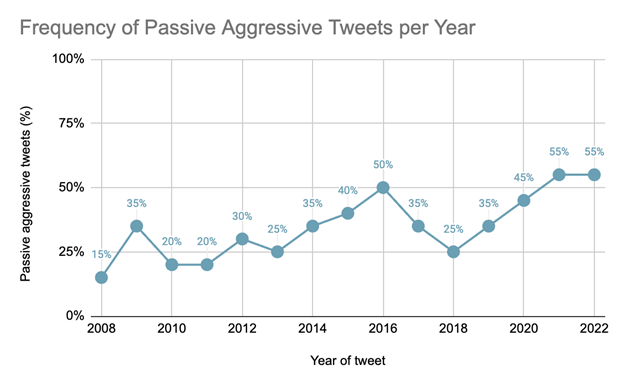
Figure 1: Frequency of passive-aggressive tweets across each year studied (2008-2022)

On clause placement, we found that slightly more tweets had lol at clause-final (~41%) than clause-initial (~34%), with about 25% of tweets placing lol in a location indeterminable as final or initial (Figure 2). 
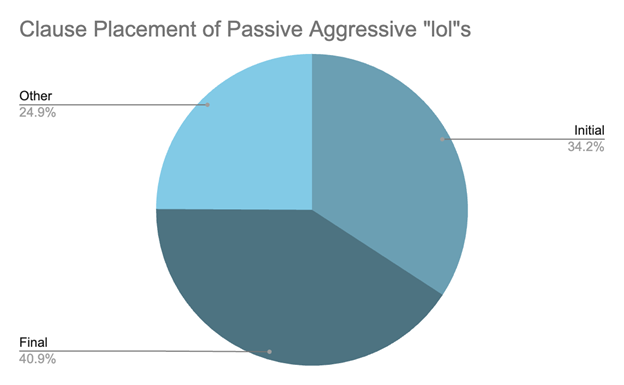
Figure 2: Breakdown of clause placement of lol across all tweets gathered

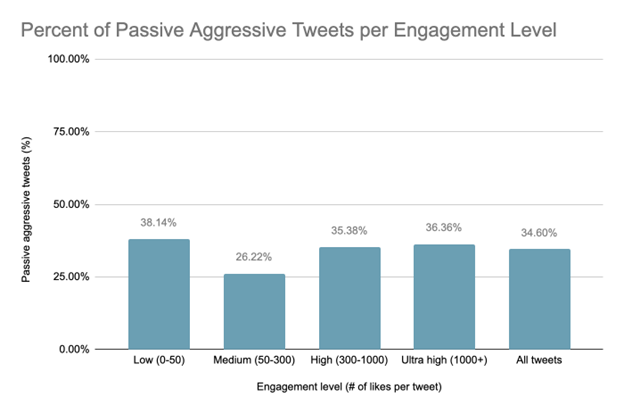
Overall, out of the 300 tweets analyzed, 34.6% were determined to be passive-aggressive uses of lol (Figure 3). For all but one group, we did not find any significant deviation from this number when tweets were grouped in their engagement groups across all years. Among tweets in the Medium group (50-100 likes), 28.6% were determined to be passive-aggressive uses of lol

Figure 3: Frequency of passive-aggressive tweets among engagement groups and all tweets

Discussion and Conclusion

Due to our data displaying a moderate-strong positive correlation, we concluded that the use of lol to convey passive-aggressiveness increased from 2008-2022. We observed peaks of passive-aggressive tweets during 2016 and 2021. While we are unsure why those peaks occurred during those years, we hypothesize that it was due to political and social turmoil in America. 2016 was when Donald Trump was elected president, and that divided our nation. 2021 was also when COVID evolved into Omicron, and America was again divided on whether wearing a mask was an infringement of our rights. Such factors could influence the use of passive-aggressive lols, and this trend might be an area for future research. We also analyzed the clause placement of passive-aggressive lols and found that the majority appeared clause-finally at 40.9%. Clause-initial lols appeared at 34.2%, and the rest were considered in the ‘other’ category in which the acronym was embedded in the clause. This supports previous research in which clause-initial lol tends to serve as a discourse structuring lexical item such as an immediate reaction whereas clause-finally typically suggests a more aggressive demeanor (Schneebeli, 2020). Finally, we analyzed the passive-aggressive lols per engagement level of the tweet to determine if one engagement group had significantly more or less passive-aggressive tweets, and we observed that there were significantly less tweets in the medium group. However, we do believe that that is an outlier since the rest of the cohorts are in the mid-30 % in regard to passive-aggressive tweets.

There were certainly limitations that should be considered alongside our findings. Due to the time constraints within which the research was conducted, only 20 tweets were found per year studied. Ideally, our findings would be derived from a broader sample, and even include other languages aside from English. Constraining the time frame even more, the advanced search feature on Twitter would only display tweets from September to December of each year, potentially creating a bias towards tensions and events during the Fall and Winter months such as elections, holidays, and harsh weather. Additionally, Twitter search would not allow us to filter tweets by the country of origin, only language. Though the site is most popular amongst American users, there is no way to know if the tweet authors were from the United States, the United Kingdom, Australia, or some other English-speaking individual. Lastly, our study was looking at passive aggression; though one can typically read tension through a screen, since we were not present for all the interactions or posts, we cannot say for certain if the tweet was delivered in an aggressive way. Despite our systematic approach to determining whether a tweet was aggressive, it is impossible to know the tweet authors’ true intentions behind their posts. We cannot say how these limitations affected our data and results but would be curious to have the study done on a larger scale, including multiple languages, and over a larger period. 

Nevertheless, lol’s modality is an example of how the internet can accelerate language evolution. Since the term’s creation with the rest of Instant Messaging language, it’s since taken on countless other meanings in addition to signaling passive aggression. This process, which might normally take decades to accomplish, is now achieved in 20 years. This is partly due to the unprecedented availability of other people’s discourse on the internet and online platforms like Twitter. One could read hundreds of tweets every day and the same tweet could be seen by hundreds of thousands of people. This level of contact between speakers catalyzes the creation of slang words and evolution of other terms like lol. Additionally, Twitter’s characteristics as a social media platform encourages widespread adoption of new language forms. Given that it’s mainly discourse-based, users look to the language of other tweets to inform how they should adapt their own language. This emulation of linguistic behaviors can drive language evolution, like we’ve seen with passive-aggressive lols. Although we did not study other internet language acronyms (ROTFL, lmao, etc.), we noticed anecdotally that lol seems particularly susceptible to being adopted for other uses beyond its literal meaning. Perhaps the term’s shortness, broad meaning, and ease to type into a phone screen have allowed it to garner such an expedited evolution. Future research might investigate what makes lol such a linguistic chameleon and why it has remained relevant in cultural discourse to a greater extent than many other IM language creations that evolved at the same time. 

Aside from the explicit findings, our study offers broader implications to the field of sociolinguistics. We were able to identify a few studies on lol, but not nearly as many as expected considering the popularity of the term. This study contributes to this burgeoning sector of the field. Lol’s breadth of uses offer a plethora of research topics — we could conduct this study with an entirely different meaning of the term and find something new and relevant to report. In general, there is a deficit in studies of online language use. Nowadays, a message can be sent from Japan to Canada in a matter of seconds, and on Twitter you can see hundreds of tweets from all around the world with a simple scroll of your thumb. As the world grows more dependent on the internet and humans increasingly engage in online communication, studies of this nature are of the utmost importance for the future of sociolinguistics. Lastly, this research topic came from phenomena we have noticed in our day to daytime spent on social media and engaging in digitally based conversations. Sociolinguistics as a field studies language use and the social implications behind it; this study gives validity to anecdotal experiences as a legitimate course of study and provides a deeper understanding of the terms we use daily.

References

Markman, K. M. (2017, October 30). Exploring the Pragmatic Functions of the Acronym LOL in Instant Messenger Conversations, doi: https://doi.org/10.31235/osf.io/3du86.

Sloan, L., Morgan, J., Burnap, P., & Williams, M. (2015). Who tweets? Deriving the demographic characteristics of age, occupation and social class from Twitter user meta-data. PLoS One, 10(3), doi: https://doi.org/10.1371/journal.pone.0115545.

Schneebeli, C. (2020). Where lol is: function and position of lol used as a discourse marker in YouTube comments. Discours. Revue de linguistique, psycholinguistique et informatique. A journal of linguistics, psycholinguistics and computational linguistics, 27.

Tagliamonte, S. A. & Denis, D. (2008). Linguistic Ruin? LOL! Instant Messaging and Teen Language. American Speech, 83(1), 3-34.

Varnhagen, C.K., McFall, G.P., Pugh, N., Routledge, L., Sumida-MacDonald, H. & Kwong, T.E. (2010). lol: new language and spelling in instant messaging. Reading and Writing 23, 719–733.

[/expander_maker]
, , ,

Are some NBA slang terms too vague? Absolutely!

Isaac Verdugo, Riley Kwinn, Brendan Xiong, and Gustavo Gutierrez

NBA (National Basketball Association) slang is widely used by basketball fans all over the world. NBA slang is formed and developed with NBA history. It has unique features and functions that give NBA fans the opportunity to express their opinions about the game of basketball in creative ways. NBA slang reflects NBA culture. A sociolinguistic study of NBA slang helps people know more about NBA culture and fans of different teams. The following study discusses semantic change in NBA slang terminology within Los Angeles Lakers and Los Angeles Clippers communities of practice through discourse analysis. First, we selected four common NBA slang terms that are used in this sports league and provide their generic definitions. We then analyzed online basketball discourses to look for ways in which fans from both teams use the NBA slang terms that we are examining. Third, we used a corpus analysis toolkit, AntConc, which helped us find patterns of concordance within our data. We concluded by making generalizations about the use of our selected terms by Lakers and Clippers fans and determined trends through analysis.

[expander_maker id=”1″ more=”Read more” less=”Read less”]

In this study we sought to understand why NBA slang is used in online communities of practice. This helps identify connections within communities of practice because basketball fans are tight-knit, have frequent interaction, develop shared goals and knowledge about basketball, and create new NBA slang. Because many basketball fans use NBA slang to refer to a particular team and/or player, the meaning will vary depending on who you ask; some use older meanings from previous eras of the NBA, whereas others use newer meanings that fit today’s NBA style of play. By analyzing the use of four NBA slang terms (foul, skill, superteam, flagrant foul), it will help us understand how they have changed in meaning over time. Next, we will compare and contrast the usage between Lakers-Clippers fans. We chose these two teams specifically because they are from the city of Los Angeles and have drastically different histories; the Lakers are the most famous NBA franchise of all-time with 17 championships, whereas the Clippers have none (Los Angeles Clippers vs. Los Angeles Lakers, n.d.).

That being said, we attempted to answer the following question:

(1) What sorts of semantic change has NBA slang experienced within Lakers and Clippers communities of practice?

Background

Previous research in semantic change shows that words or real world entities change over time. More specifically, words change semantically and this change is reflected in the way words are being used (Wijaya & Yeniterzi, 2011, “Introduction” section). This linguistic aspect of semantic change also applies to NBA slang. For example, in the 20th century of the NBA, the NBA slang term Greatest of All Time or GOAT, was used to describe how successful a player and/or team was based on the number of championships they won. However, NBA fans have added new layers onto its meaning over time, such that basketball IQ, skillset, defensive rating, and other basketball qualities are relevant in the discussion of “Who’s the GOAT?” While the NBA uses generic definitions for NBA slang terms, it does not necessarily mean that fans will use that particular definition in every basketball context. Because of this, NBA slang terms are extremely nuanced, which is why the word GOAT highlights one of our goals to lay out differing traits of the four terms we will examine.

Another frequently used NBA slang term is skill. Skill in the NBA during the 1960s meant being able to run down the court efficiently, shoot the ball from close range, and defend. However, in the 1970s, skill was about playmaking abilities, too. One paper addressing a similar topic discussed the importance of player impact, “Berri tried to determine if Karl Malone or Michael Jordan was more valuable, and he found that Dennis Rodman was most valuable because of his rebounding ability” (Whitmoyer, 2019, p. 4). The significance of this quote shows that many teams prefer having a player who impacts the game of basketball in more than one aspect. Many believe that Michael Jordan is the best basketball player of all time, but Whitmoyer argues that Dennis Rodman is. This shows that there are different views about a player’s importance, which is part of what we will explore in our project.

Methodology

We analyzed the NBA slang terms on online basketball discourses such as Twitter, Reddit, and Instagram, where we collected 100 Lakers-Clippers samples relating to these terms for a total of 400 samples. Then, we used AntConc, a corpus analysis software that made it much easier to compare the surrounding environments of all the data samples for each term. Lastly, we made generalizations about the use of the NBA slang terms and determined trends in our data through analysis. This method allowed us to gather more samples and data from online discourses than we would have surveying/interviewing basketball fans with the amount of time we had for the project, and helped us address the question in our introduction by allowing us to identify common trends in a data set that would be far too large to analyze without the assistance of corpus linguistics software.

Results: Data Analysis

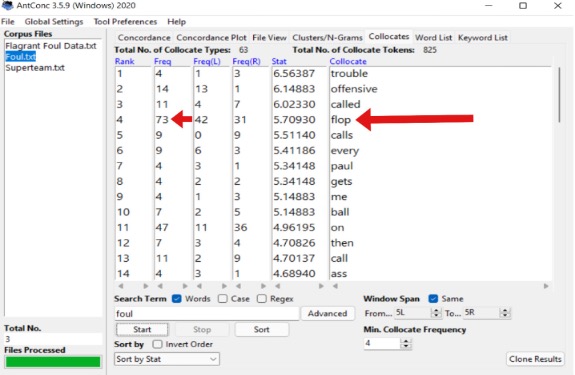
In Figure 1, we see a list of words that AntConc found that foul was commonly used within the same sentence, as flop appeared the most with a total of 73 samples.

Figure 1. Total frequency of words that AntConc found for the NBA slang term foul.

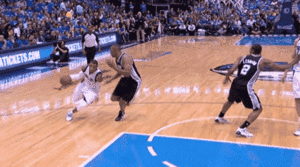
With this software, we were able to discover that foul has a new meaning added to it that can be used in more contexts than before with the use of flop. This concept is known as widening, which is a type of semantic change. Throughout the history of the NBA, the generic definition of foul has remained the same, referring to “illegal personal contact with an opponent and/or unsportsmanlike behavior” (How Fouling Works in Basketball: 6 Common Fouls Explained, 2020, para. 2), which can be seen in Figure 2.

Figure 2. Tim Duncan (#21) fouls Monta Ellis (#11) after bumping him in mid-air when scoring a lay-up.

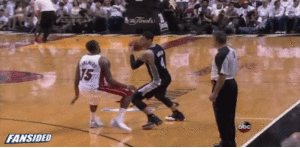
However, the word foul has become too vague in today’s NBA that Lakers and Clippers fans have used a more specific word to describe the actions that opponents do to get the foul call in their favor — flop. A “flop” is an attempt to fool referees into calling undeserved fouls by exaggerating the effect of contact with an opposing player (Explanation of Anti-Flopping Rule, 2012, para. 2), which can be seen in Figure 3.

Figure 3. Mario Chalmers (#15) flops and sells the contact after Danny Green (#4) swipes through to create space.

The use of flop for a non-foul changes the meaning of foul because opponents fall to the ground when contact is drawn, whether minimal or not. The act of flopping is changing the way the game of basketball is played since referees must distinguish between what is and isn’t a foul, which they tend to struggle with.

Both Lakers and Clippers fans use flop as a way to express their anger when they believe there wasn’t any illegal contact by the opponent, but referees think otherwise. This finding shows how the meaning of foul has been expanded by these fans because flopping is more common today than it was before in the NBA. Instead of fans saying “That was not a foul,” fans can now say “That was a flop,” when there was little or no physical contact by the opponent. This semantic change of the word foul allowed these fans to be more specific and provide a reasonable judgment about a certain basketball play, instead of giving a biased opinion with no context. Because there was a high frequency of data where the slang term foul was used with flop in the same sentence than without it, it suggests that they both go hand-in-hand when fans debate a foul call.

The second word we examined was skill. Skill is “the ability to do something well; expertise” (Oxford University Press (OUP), n.d.). In the 20th century of the NBA, skill was synonymous with players who could run down the court efficiently and score more than 15+ points on a regular basis. However, in today’s game skill is used in many other ways such as passing, as observed in Figure 4.

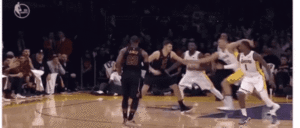
Figure 4. LeBron James (#23) makes an incredible no-look pass to teammate Ante Zizic (#41) who dunks the ball.

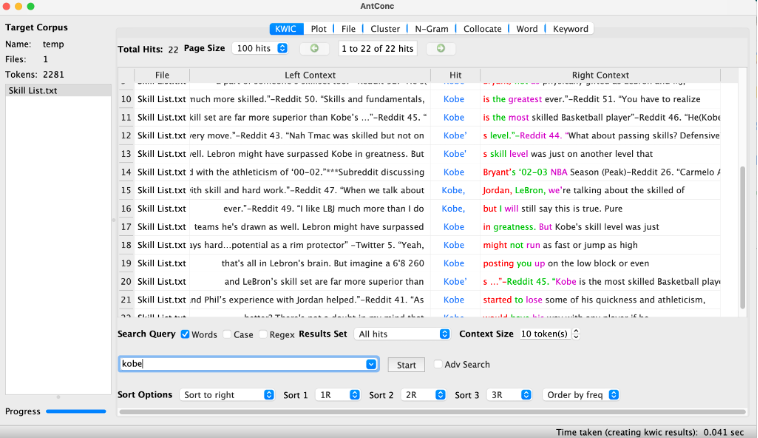
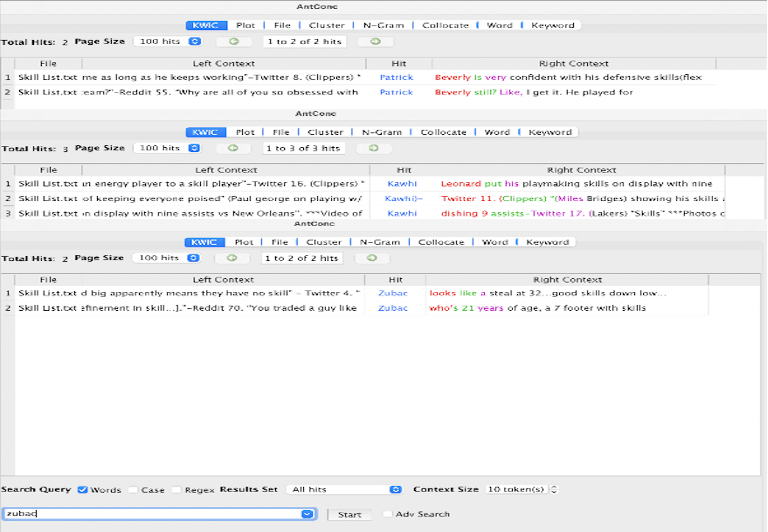
There are different connotations as to what skill implicates. According to the data via AntConc in Figure 5 and 6, skill was used the most within members of the Lakers community when discussing Kobe Bryant, an all-time great with elite footwork, shooting, post-moves, and defense that contributes to what skill means. Clippers fans most used skill in reference to flopping, identifying it as a ‘skill’, or point guard ‘skills’ which implies a specific attribute derived by a select group of positioned players. In the online discourse data, Kobe [Bryant] was mentioned most to embody skill because of his scoring ability, footwork, shooting, defense, basketball IQ, work ethic, and athleticism. Other players like Kawhi Leonard, Patrick Beverly, and Ivica Zubac were mentioned a combined 7 times in the data set, a stark contrast to Kobe Bryant’s 22.

Figure 5. Total frequency of words that AntConc found for the NBA slang term skill.


Figure 6. Total frequency for Kawhi Leonard, Ivica Zubac, and Patrick Beverly via AntConc.

The data suggests that semantically, skill has changed from what it was once meant over the last few decades among these communities of practice. Skill in basketball does in fact include scoring ability, but it also incorporates many other factors that make up a player’s complete value on the court (Locklin, 2021, para. 3). Skill no longer identifies a player who can run down the court efficiently and score 15+ a game but instead, is the marker for players who embody proficient attributes in all areas of the game.

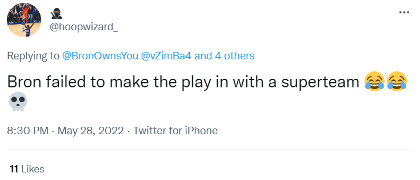
The third word we examined was superteam. This term can be defined as “already established All-Star players coming together to a team to form a super team (Urban Dictionary: Superteam (NBA), 2018). Many of the fans’ conversations from the data involved debates about the exact definition of the term. It was more commonly used as one word, rather than as two separate words, though there was no significant difference in its intended meaning; fans often responded to one variation with the other. Superteam seems less rooted in one literal definition, and more tied to the emotional idea of a “team that is unfairly good,” as the meaning seems to change depending on the context it’s used in. The people using superteam seemed more intent on winning debates than using the word “correctly.” The term has therefore seemed to experience a significant semantic widening such that its meaning changes depending on a) the people using it, and b) the greater context of which teams are performing well in the NBA.

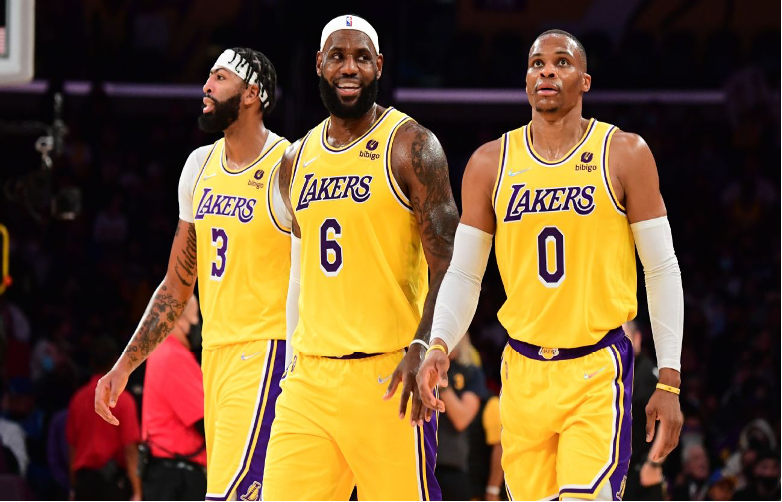
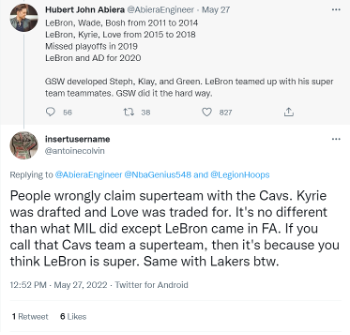
Most of the data samples were gathered from Lakers fans since there has never been a Clippers team that was considered so good that it was unfair. The only instance superteam was used to describe the Clippers was when a fan claimed Kawhi Leonard, a current player on the Clippers, had “tried to make a superteam,” with the implication being that he had failed. The primary topics discussed in the data we gathered for this term were: 1) whether or not LeBron [James] had actually deserved the championship titles he had won after forming multiple ”superteams,” and 2) whether or not this year’s Lakers roster had in fact been a “superteam” despite not winning a championship nor making the playoffs in 2022, as can be seen in Figure 7.

Figure 7. Lakers 2021-22 roster with 3 All-Stars: Anthony Davis (#3), LeBron James (#6), & Russell Westbrook (#0)


Figure 8. A tweet about LeBron’s critics who are downplaying his past successes for forming ‘superteams.’


Figure 9. Another tweet where a fan chastised the 2021-22 Lakers for not making the playoffs, despite qualifying as a ‘superteam.’

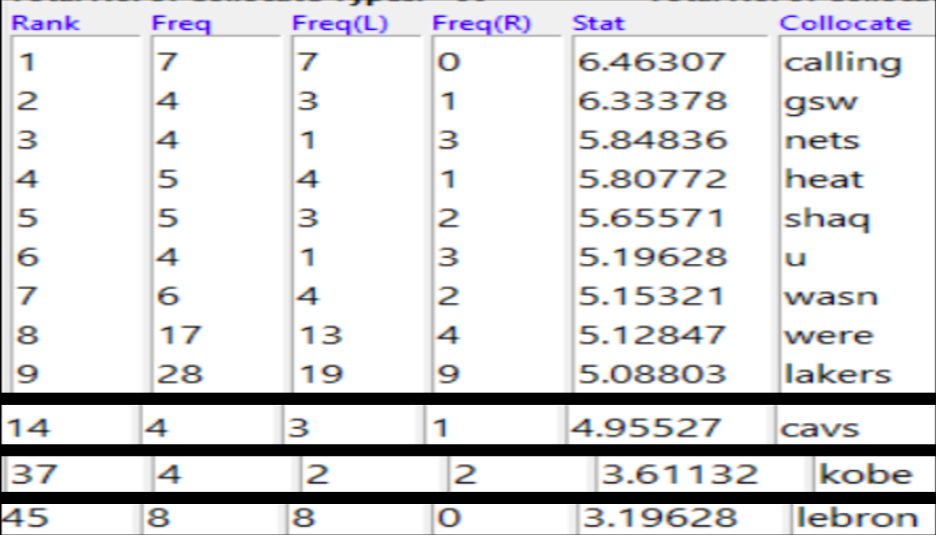
Unsurprisingly, the teams most commonly associated with superteam were either current or retired All-Star players from teams such as the Cavaliers, Warriors, Heat, Nets, and Lakers, as observed in Figure 10. The high frequency of Lakers relative to the other teams is due to the fact that most of these data are from Lakers’ fans’ discourse.

Figure 10. Total frequency of words that AntConc found for the NBA slang term superteam (focus on the column second from the left and the corresponding term on the far right)

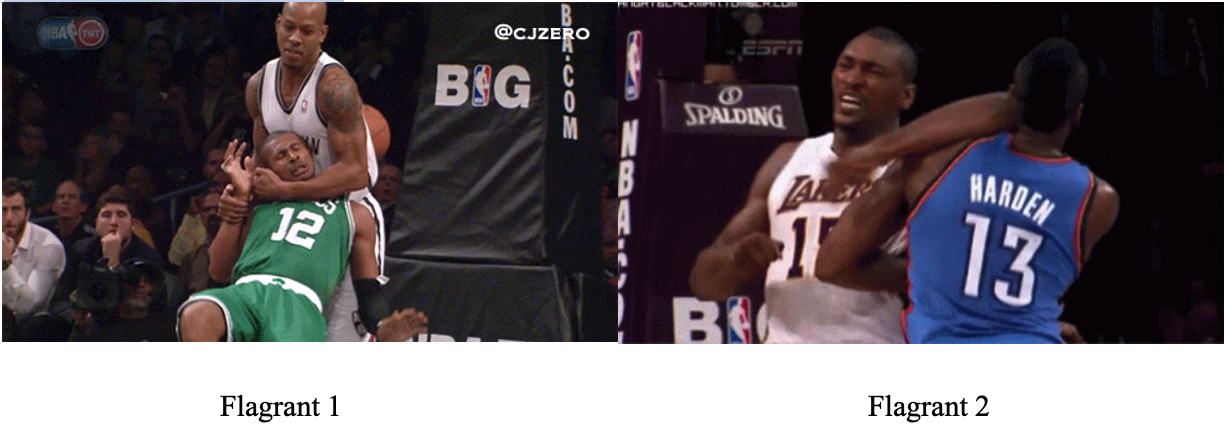
According to the official NBA website, a flagrant foul is excessive contact beyond a regular foul. There are two types, a Flagrant 1 is unnecessary contact against a player committed by an opponent, whereas a Flagrant 2 is unnecessary and excessive contact against a player (Flagrant Fouls, n.d.).

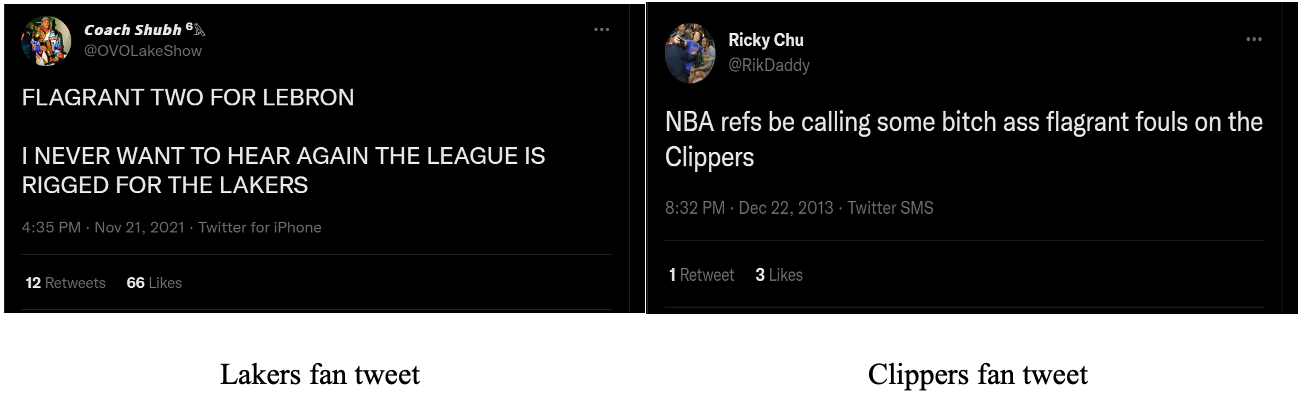
The main semantic change we found from Lakers and Clippers fans regarding this word is elevation, where one uplifts an utterance, and degeneration, where negative light is shone on a statement. Tweets by Lakers fans are uplifting, with one of them proclaiming that the Lakers are equals to every other team. The tweet from the Clippers fan is degenerated through its angry intonation. The Lakers tweet also has more likes, and popularity equates to less negativity as “fearful and negative tweets [have]…low virality” (Cheung‐Blunden et al., 2021, p. 19). The less popular Clippers fan tweet uses strong word choice through swearing.

The primary cause for this difference is team status. The Lakers fan sounded less angry because of the history of his team, as he is comfortable with the prestige and numerous championship titles of the Lakers. The Clippers are not as well-known as the Lakers. Less prestigious teams have fewer fans because their teams are not as competitive as others. Therefore, the fans of such teams are very committed and passionate to be able to stick through team struggles. Furthermore, “high levels of identification with a sports team are positively related to fan display and verbal response” ​​(Rocca & Vogl-Bauer, 1999, p. 244). The intense feeling for one’s team drives Clippers fans to use strong language.

Discussion

According to new research about American slang, there are unique features that influence it based on its originality (Zhou & Fan, 2013). Similarly, we learned that NBA slang is used because of its originality. NBA fans were creative with how they turned generic definitions of the NBA slang terms to more catchy and specific meanings. In addition, these new words and meanings are commonly used by NBA fans for the pleasure of being in fashion and appear to have a deep understanding about the game of basketball. When these fans use NBA slang terminology, it tends to validate their opinion about basketball because it is solely used by basketball fans.

One social factor that influences the use of NBA slang terms is social media. Social media has allowed NBA fans to discuss and share their opinions about basketball that reach millions of people, as can be seen in some figures above. A second social factor is basketball commentators because they enjoy commenting on live-basketball games using descriptive language, and find that NBA slang is more direct and simpler to use than the generic definitions.

An individual factor that influences NBA slang are peoples’ knowledge and skills about the game of basketball. Their knowledge and skills about the game of basketball lets them feel entitled to have a valid opinion about a particular team and/or player.

These findings support our thesis statement that both Lakers and Clippers fans would experience semantic change to NBA slang because of how much the NBA has evolved. More specifically, many NBA slang terms have been outdated, and it was expected that these fans would use different meanings to these slang terms to fit today’s NBA style of play.

Conclusion

Linguists can benefit from our research because they are interested in real world phenomena. As such, they are descriptive and study how people actually talk, where some use NBA slang as part of their everyday speech, and not prescriptive regarding how people “should” talk. Because linguists study semantics, our research allows for linguists to study more in-depth the role that NBA slang has for basketball fans to know what certain words mean, what makes them have more than one meaning, why those meanings exist, and others.

A possible future direction of our research would be for researchers to replicate this study on a much larger scale through ethnographic research to ensure that there is enough data gathered from both groups. Ethnographic research can improve this study because it involves observing a particular group and site over a long period of time, which could gather a large amount of data about the use of NBA slang at basketball games.


References

Cheung‐Blunden, V., Sonar, K. U., Zhou, E. A., & Tan, C. (2021). Foreign disinformation operation’s affective engagement: Valence versus discrete emotions as drivers of tweet popularity. Analyses of Social Issues and Public Policy, 21(1), 980–997. https://doi.org/10.1111/asap.12262

Explanation of Anti-Flopping Rule. (2012, October 5). NBA Official. Retrieved June 8, 2022, from https://official.nba.com/explanation-of-anti-flopping-rule/

Flagrant Fouls. (n.d.). NBA Official. Retrieved June 8, 2022, from https://official.nba.com/trigger/review-of-called-foul/

How Fouling Works in Basketball: 6 Common Fouls Explained. (2020, November 8). MasterClass. Retrieved June 8, 2022, from https://www.masterclass.com/articles/how-fouling-works-in-basketball#quiz-0

Locklin, W. (2021, July 15). What is “Skill” in NBA Basketball. The Wright Way Network. Retrieved June 8, 2022, from https://twsn.net/2021/07/what-is-skill-in-nba-basketball

Los Angeles Clippers vs. Los Angeles Lakers. (n.d.). Diffen. Retrieved June 8, 2022, from https://www.diffen.com/difference/Los_Angeles_Clippers_vs_Los_Angeles_Lakers

Oxford University Press (OUP). (n.d.). Skill. Lexico.Com. Retrieved June 8, 2022, from https://www.lexico.com/en/definition/skill

Rocca, K. A., & Vogl‐Bauer, S. (1999). Trait verbal aggression, sports fan identification, and perceptions of appropriate sports fan communication. Communication Research Reports, 16(3), 239–248. https://doi.org/10.1080/08824099909388723

Urban Dictionary: Superteam (NBA). (2018, May 28). Urban Dictionary. Retrieved June 8, 2022, from https://www.urbandictionary.com/define.php?term=Superteam%20%28NBA%29

Whitmoyer, E. (2019). Measuring Greatness in the NBA. Scholars Crossing. Retrieved June 8, 2022, from https://digitalcommons.liberty.edu/honors/845/

Wijaya, D. T., & Yeniterzi, R. (2011). Understanding semantic change of words over centuries. Proceedings of the 2011 International Workshop on DETecting and Exploiting Cultural diversiTy on the Social Web – DETECT ’11. https://doi.org/10.1145/2064448.2064475

Zhou, Y., & Fan, Y. (2013). A Sociolinguistic Study of American Slang. Theory and Practice in Language Studies, 3(12). https://doi.org/10.4304/tpls.3.12.2209-2213

[/expander_maker]


, , , ,

Turn on Your Camera, Foo : Slang and Visual Cues in the Classroom

Jiajun Weng, Chris Lam, Christine Chang, Terri See Lok Ho, Wei Lin

Have you ever wondered whether understanding what your classmates are saying and the seeing their cameras is essential to succeed in the course?

You’re not alone.

During this special period, education has primarily moved on to online. Many international students from UCLA taking online courses claim that they feel alienated in the class because they cannot see their classmates when their classmates are talking, and they sometimes cannot understand the online slang used by their classmates. Does the usage of online slang and lack of visual cues truly impact their learning experience?

For finding out the answer to this question, we conducted a study to investigate how the use of slang and the lack of visual cues contribute to international students’ comprehension difficulties and their feelings of alienation. The survey sample comprised entirely of UCLA students. By analyzing the data, we found that interestingly, their feeling of alienation was not affected by usage of online slang nor lack of visual cues. Furthermore, we found that their comprehension was not associated with inclusiveness. That is, it shows that one can still succeed in the class even if one feels alienated.

[expander_maker id=”1″ more=”Read more” less=”Read less”]

Introduction

International students in an English-speaking country such as the United States face various challenges related to language. For instance, they struggle with the use of slang and cultural references in a classroom setting. In Bradford’s research, he found that “Teaching colloquial speech in any language can be important for acquisition and assimilation into the language’s cultural group” (Bradford, 2010). In a separate study, Albalawi found that some L2 learners indicate learning slang is helpful for students to fit in socially in college and gain confidence (Albalawi, 2014). Both articles demonstrate that learning the slang of other cultural groups is a crucial tool for L2 learners to master if they want to become more assimilated. However, some of these difficulties in comprehension can be overcome by implicit cues such as facial expressions and gestures (Sueyoshi & Hardison, 2005).

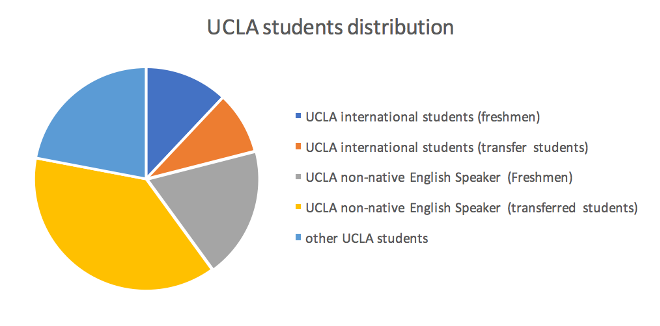
A comment about Figure 1 below showing the breakdown of UCLA students and their experience with English. Moving onto online learning platforms during the global COVID-19 pandemic, international students face new challenges like adapting to the lack of visual cues — such as facial expression and gestures — as well as the colloquial way people speak during Zoom lectures. As a consequence, international students’ ability to comprehend course materials may be compromised by the lack of social cues. With limited understanding of course material, these students could subsequently feel disconnected, or even isolated from the class, and hence disengaged with the course.

International students who engage primarily on non-English social media platforms, such as Wechat, Weibo or KakaoTalk, may have found it more difficult to navigate higher education in this virtual environment. Within this experimental study, we investigated how the use of slang and the lack of visual cues contribute to international students’ comprehension difficulties and their feelings of alienation. Specifically, we expected to find increased feelings of alienation and reduced engagement among international students in the face of online English jargon and little visual cues. However, we hypothesized that the use of slang should not significantly impact students when visual cues are present in the recorded lecture because non-verbal communication can be an important source of motivation and concentration for students’ learning as well as a tool for taking and maintaining attention (Zeki ,2009).

Figure 1: UCLA students’ distribution


Collecting Data: Setting up a Classroom

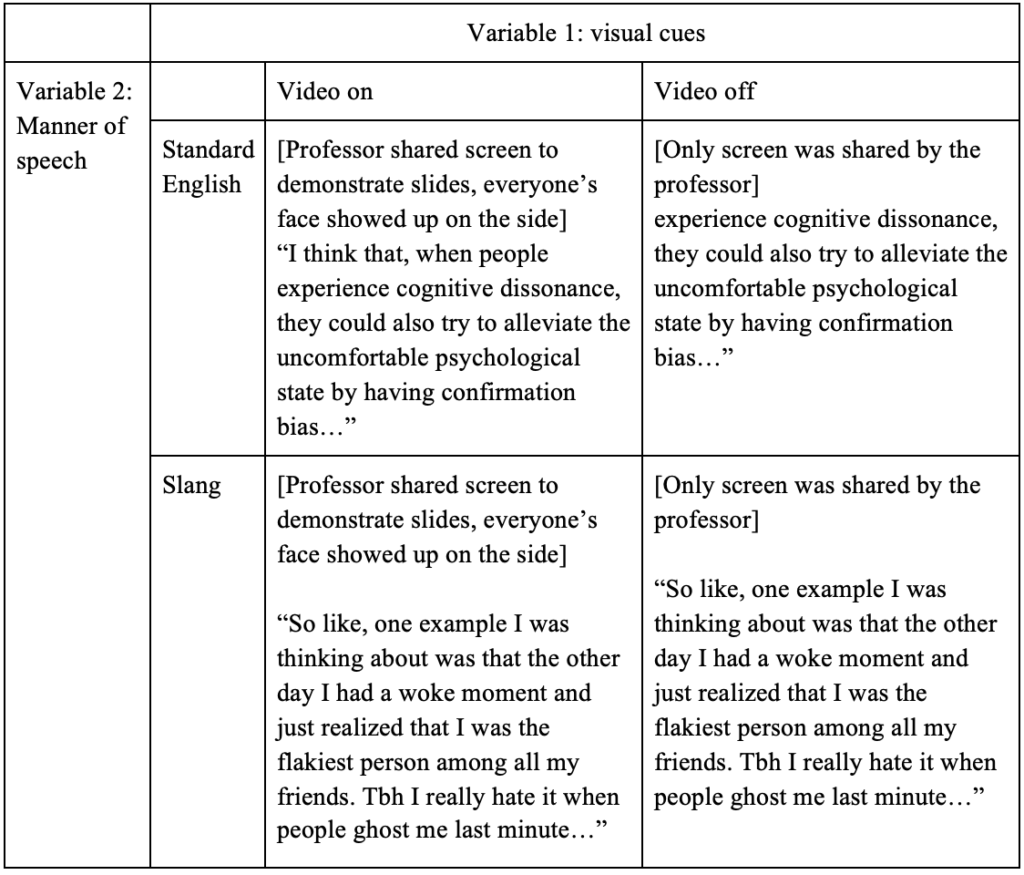
An experimental study was conducted to test our hypotheses about how the manner of people’s speech during the lecture and visual cues (i.e., facial cues and gestures) interacted with each other to influence international students’ understanding of the course materials and their feeling as a member of the class. In the current experiment, we showed our 16 international student participants one of the four Zoom lecture recordings in which we systematically varied the manner of speech of people in that class, as well as the presence of visual cues. To manipulate people’s manner of speech during class, the student confederates discussed the class material in standard English or in a colloquial manner that involved the use of English slangs, like “btw” or “hella”. To manipulate the presence (or absence) of visual cues such as facial cues and gestures, confederates in the current class video will either turn on or off their camera and showed their face and hand movement during the lecture recordings. Please see Table 1 for a demonstration.

Table 1: Matrix of variables and samples of corresponding experimental script


After the participant watched one of the four mock zoom lecture recordings, they were instructed to complete a questionnaire that assessed their understanding of the lecture content, which is about this basic psychological phenomenon called the cognitive dissonance theory. Besides the objective measure of participants’ understanding of the class material, their subjective perception of how well they understood the lecture was also assessed. Finally, we measure how much these participants feel like a member of the class and the likelihood of engaging with the lecture if they were present in the Zoom meeting room.

Results and What They Mean

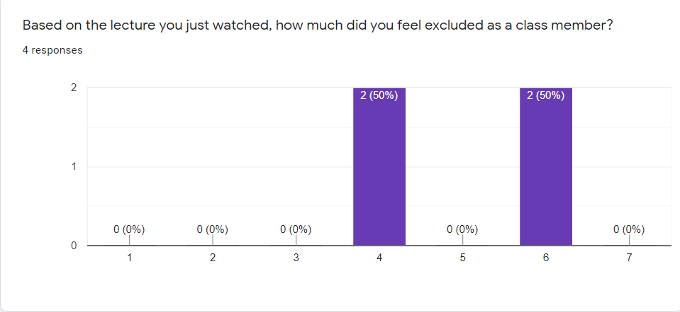
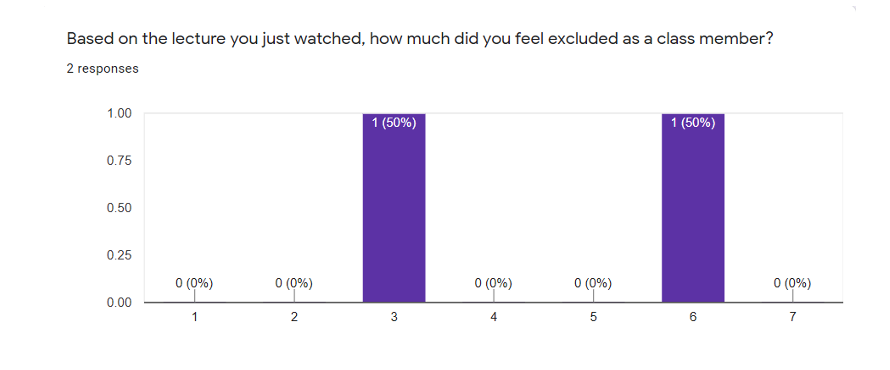
Figure 2: Video On and using Slang trail; participants’ feeling of alienation


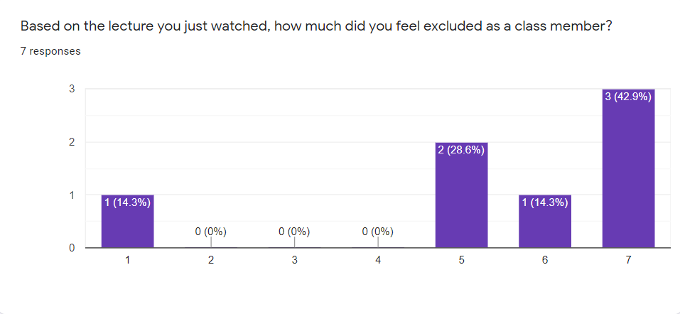
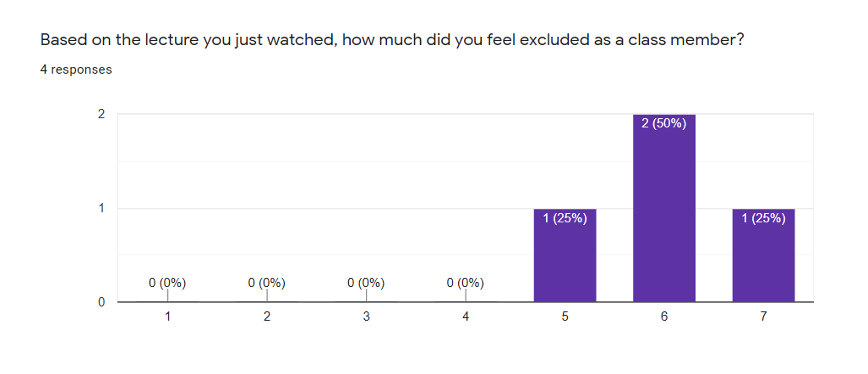
Our findings supported the initial hypothesis that having video on in these online lectures affected students’ level of comprehension. However, there wasn’t a statistically meaningful difference in feelings of exclusion. In particular, the analysis showed that there was a meaningful difference between the results of the survey question regarding subjective comprehension conducted with the students who watched the lecture with video and without video, regardless of whether there was slang or standard English used. However, even by looking at Figure 2 and Figure 3, it is clear that students felt excluded either way.

Figure 3: ’Video Off and using Slang trial; participants’ feeling of alienation


The same was true regarding our initial hypotheses about slang usage. The study showed a statistically meaningful difference in level of self-reported comprehension, but not on the feelings of exclusion. Visually comparing Figures 2 and 4 shows that the responses to the question about alienation were not meaningfully different when video was on vs. off in Figures 3 and 5. Even a cursory review of the results of all the survey questions that attempted to measure feelings of exclusion and alienation showed high levels across the board, boding negatively for online classes as a whole.

Figure 4: Video On and using Standard English trial; participants’ feeling of alienation


Figure 5: Video Off and using Standard English trial; participants’ feeling of alienation


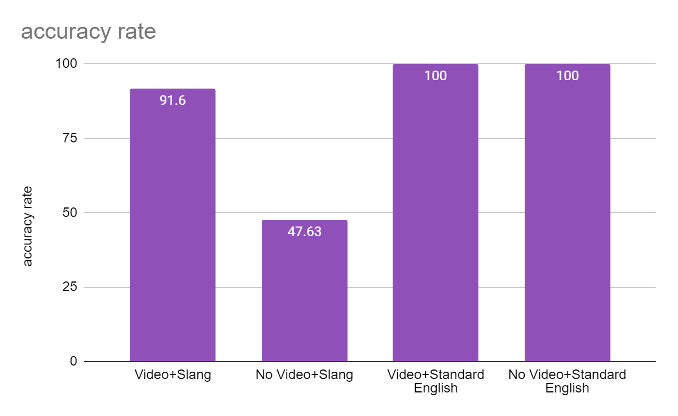
And perhaps the most important result came from comparing the interaction factors of video and slang in the comprehension question. What our study found was that while there is a statistically meaningful difference in individual comprehension in response to both factors, i.e., video and slang, there was not significant interaction between them when it came to self-reported levels of comprehension. That is to say, contrary to our initial hypothesis, a factor like having video on doesn’t necessarily interact meaningfully with the differences caused by slang usage in comprehension.

Figure 6: The rate of participants correctly answering the quiz questions


However, when it comes to the actual analysis of the answers to the quiz questions, not just self-reported comprehension, there is a noticeable interaction factor. Figure 6 shows that when slang is used, the presence of video had a significant impact on actual comprehension as measured through the quizzes, whereas video had less impact when standard English was used. 

There are, of course, various factors that could be complicating this kind of analysis. The subjects chosen for the mock lesson, were it more or less visual, may have more of an effect on how these two variables interact. The length of the lesson may have an impact on all these variables depending on how often it becomes relevant that video is used or not. This study is not necessarily definitive but poses some important questions on how all of these variables can be utilized by educators in aiding comprehension and limiting alienation in classrooms.

Conclusion: The Classroom and Beyond

All in all, more research should be done with regards to the virtual learning environments that most of the world was thrown into due to the pandemic. There may be many key improvements to education in general, whether online classes are here to stay for a while or not. From our initial hypothesis that English slang negatively impacts international students’ engagement with and understanding of classroom material, we find that comprehension may be hindered by slang usage and a lack of visual cues, independently; however, international students seem to feel like they do not “fit in” with the class regardless of these variables, and their aptitude does not seem to suffer because of that in general.

We live in an ever growing technologically dependent society, yet online meetings can often feel like an obstacle and/or a divider when compared to in-person classes. In the article “Depression and Everyday Social Activity, Belonging, and Well-Being,” Michael and Todd stated that “When people experience positive social interactions, they should be more likely to feel a sense of belonging.” Alongside virtual meetings in the workplace, there is a lot that can be done by the hosts to improve distracting and frustrating video calls. Based on this small study, we recommend professors and teachers to encourage students to turn on their videos, with the caveat that there may be personal and privacy challenges. We can say that there may be evidence that doing so will help students’ comprehension of the material. We also suggest addressing slang and jargon when it arises in the classroom, making sure to at least clarify rather than exacerbate what may negatively impact some students’ learning outcome.

There are an endless number of questions to be asked in the realm of education research, with regards to both online and in-person mediums. Perhaps this experiment may be repeated with a live virtual classroom setting to really capture engagement and chat-box interaction data. Furthermore, there is something to be examined in asynchronous learning, i.e., these pre-recorded lectures in the study that subjects independently and asynchronously watched. In a pandemic that generates so many struggles, personally and in education, there is the possibility that Zoom lectures are a breakthrough to education access the world needs; we just need to optimize and adapt to it, rather than conceding at its shortcomings.


Further info

The PowerPoint form of this blog entry

A TedTalk which talks about the relationship between inclusiveness and your manner of speech


References

Albalawi, A.S. (2014). Saudi L2 learners’ knowledge and perceptions of academic English slang. [Order No. 1566835]. Southern Illinois University at Carbondale.

Bradford P.B. (2010). The acquisition of colloquial speech and slang in second language learners of English in El Paso, Texas . [Order No. 1484150]. The University of Texas at El Paso.

Steger, M. F., & Kashdan, T. B. (2009). Depression and Everyday Social Activity, Belonging, and Well-Being. Journal of counseling psychology, 56(2), 289–300. https://doi.org/10.1037/a0015416

Sueyoshi, A. & Hardison, D.M. (2005). The Role of Gestures and Facial Cues in Second Language Listening Comprehension. Language Learning, 55: 661-699. https://doi.org/10.1111/j.0023-8333.2005.00320.x

Zeki, C. P. (2009). The importance of non-verbal communication in classroom management. Procedia-Social and Behavioral Sciences, 1(1), 1443-1449.

[/expander_maker]
, , ,

Do you LOL out loud? Screen time influence on internet slang irl

Julia Baylon, Rachel Rim, Carolina Guerrero, Hebbah Elokour, and Caelynn Hwang

If you’re a college student reading this, you are a key individual in the composition of the Gen Z identity. Gen Z, today’s 18-23-year-olds, is defined by its fervent slang usage as well as its notorious association with and attachment to technology. Commonly used components of technology in Gen Z include social media platforms, such as Instagram, Snapchat, Twitter, TikTok, and Discord. This study investigates the relationship between the two variables of time exposed to social media and slang-impacted conversational speech style. As slang rapidly evolves to shape communication and accommodate the construction and expression of individual identity, we begin to ponder, where does this language style come from, and to what extent does it influence our diction? Through conversational analysis and survey/questionnaire conduction, we hope to understand the explicit impact of social media on conversational slang and whether or not the results support our hypothesis, which argues that greater usage of slang on the internet and/or overall internet presence will result in a higher frequency of slang used in real life.

[expander_maker id=”1″ more=”Read more” less=”Read less”]

Our burning question

In a direct relationship with the evolution of social speech, internet slang has transformed from being a marked informal language style to an everyday form of communication. Internet slang influences both the communicative behavior that individuals in society practice along with their daily usage of language. Previous research on first language acquisition reveals that exposure to the respective language is a crucial component to the extent of production ability. Implementing the same argument, we hypothesize that exposure to the internet, where there is an abundance of slang, will affect the frequency that internet-users produce slang in conversation. This study ultimately seeks to understand our proposed research question that asks:  Does the time exposed to social media affect an individual’s conversational speech style and does this influence bleed into their different social media platforms varying informality? 

How did we approach this?

In this study, undergraduate university students will be the target population; the age range is between 18 to 22 years old. Data collection will occur in two parts, first, case studies of three to four recorded conversations, each at least 15 minutes long, will be observed to determine the frequency of slang words used by each participant. The latter half of the data collection will comprise a self-report survey, in which the participant will disclose their social media, respective user handle, and average screen time for each platform. The survey will then prompt participants to reflect and report individual uses of abbreviations, acronyms, and other slang. It concludes with a free response question of whether they think that internet slang influence has a positive or negative impact on speech.

Ultimately, we aimed to examine any correlations between screen time, app usage, self-reported analyses of slang used in real life, and actual usage of slang in real life. The participants involved in this study were unaware of the purpose of the study beforehand, as well, to elicit as natural-sounding conversation as possible. Furthermore, the participants were all friends of the co-authors, to hopefully eliminate any biases potentially introduced by the onset of an “interview-like” setting. The participants were all also friends of the co-authors since during quarantine we were admittedly unsure how to go about encountering people we didn’t already know and recording natural conversations between them.

Our Findings

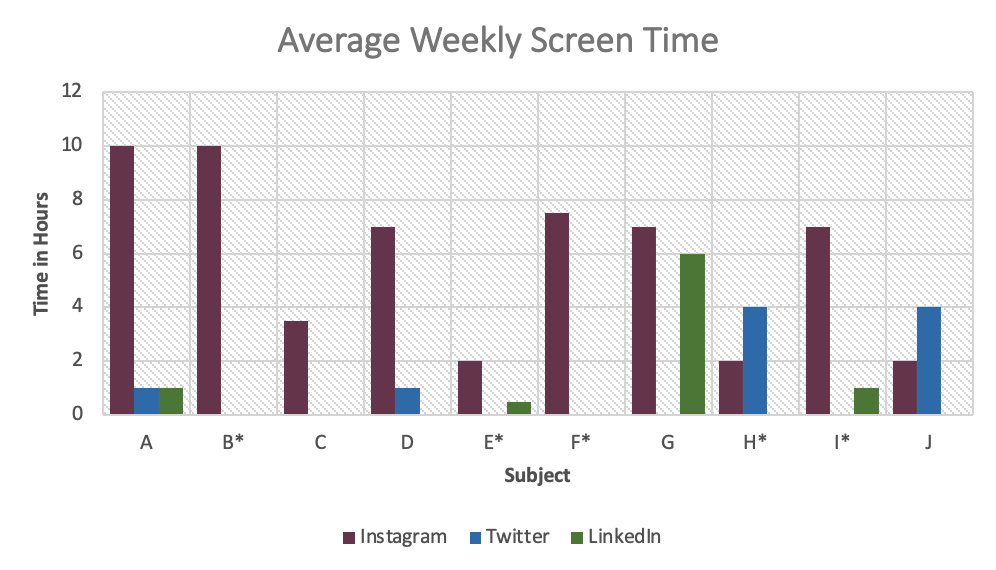
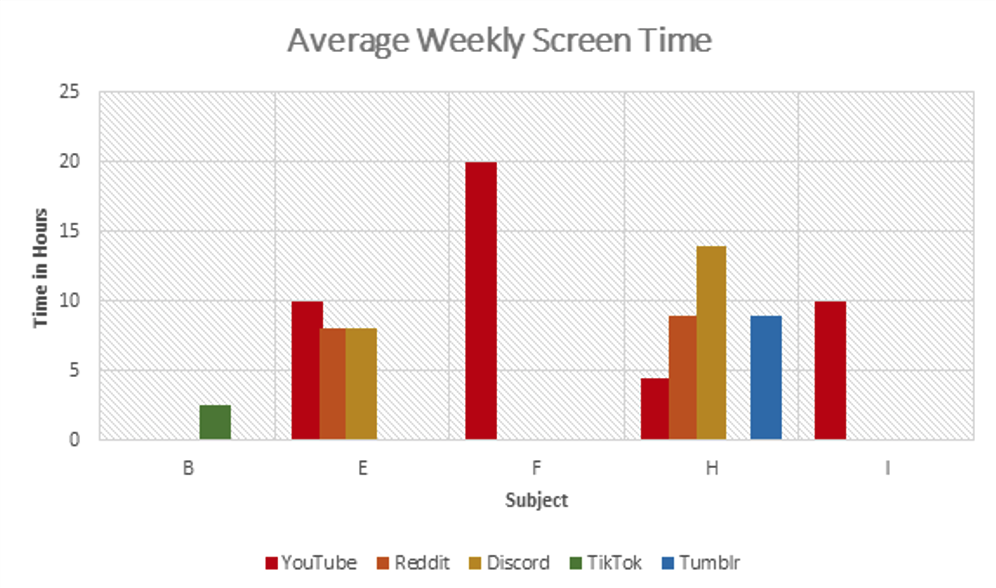
We asked individuals if they used Instagram, Twitter, LinkedIn, and Facebook. If they answered “yes”, they reported their average weekly screen time based off their devices’ reports or guestimate. 

Figure 1: Self-reported screen time.                                                                                               * Reported additional socials. Only Subject F reported screen time for Facebook (2 hrs)

We asked the participants if they used any other socials not mentioned in the survey and, if the did, to list them and report their screen time.

Figure 2: Additional socials. Only the subjects who reported any screen time are displayed.


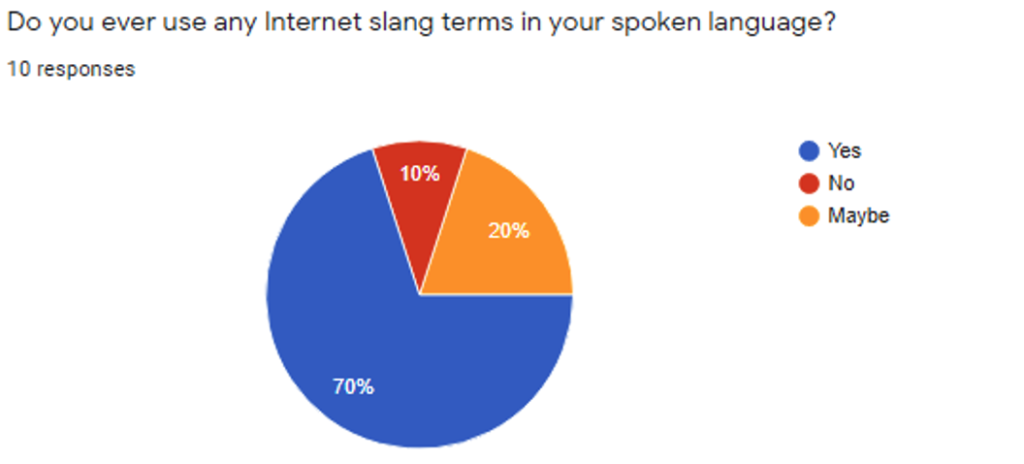
Each of the 10 subjects was asked to assess whether they used Internet slang in their spoken language. The results are displayed here in this pie chart, with the overwhelming majoring responding “yes.”

Figure 3: Self-reported usage of slang in everyday speech


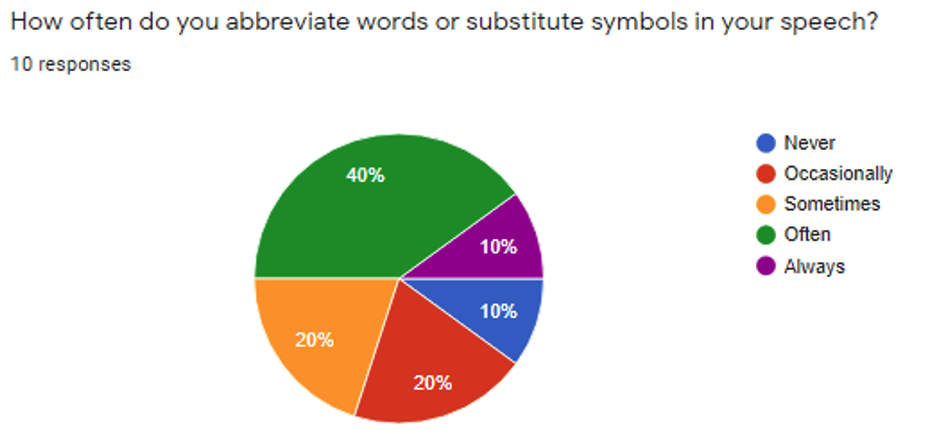
Each of the 10 subjects was asked to assess whether they substituted words in their spoken language. Results appear to be mixed, but again with the majority indicating that they do so at least “Sometimes.”

Figure 4: Self-reported usage of abbreviations in everyday speech


Although Subject A(she/her) had a pretty high average screen time (see Figure 1), the frequency of internet slang used in speech and posts is very little. Looking through her different social media platforms we found that in 2020, 0% of her Instagram posts, 0% of her LinkedIn posts, and 2.5% of her Twitter posts contained slang. About 45-55 minutes of recorded speech were collected for Subject A; this data was collected in the form of a phone call with a friend and the conversation topics were school, quitting a part-time retail job, a trip   to a museum, and apartment life. The results showed very little slang used (3 instances) in the form of emphasized agreement. When the friend expressed being happy living away from home and great dislike at going home for long periods of time, Subject A said “Facts! Period.” There was just one other instance of internet speech used but it was within the same conversation. While analyzing the recorded speech, we were surprised that, in the conversation about the job she hated and quit or the conversation about her trip to a museum, she did not use any slang. The tone of the first was annoyed/frustrated, while the second was very emotional and exciting. However, the Subject used the slang when the tone of the conversation was more neutral; perhaps it was the realization of the neutrality and therefore it was an effort to make the conversation more lively, or it just so happens that she thinks moving out and getting an apartment was the best decision of her life and gets excited when others feel the same. The interesting part was that after the recording was taken and the nature of the experiment revealed, Subject A laughed and expressed that she gave us a lot of material but was surprised when informed that she had only used slang 3 times. This overestimation of slang was seen among the other participants as well (see Figures 3 and 4). In the post-conversation survey, when asked if the influence of internet slang had a positive or negative effect, she answered,

“I think a little bit of both. It’s fun to use and say when with friends or in public. It also helps to reduce tension in conversations or with strangers. However, it is embarrassing and worrisome when people only speak like that or use the slang in essays, emails, etcetera.”

Additionally, Subjects E(he/him) and H(he/him) were also of note due to their significant presence on gaming platforms such as Discord (see Figure 2). During roughly 17 minutes of recorded speech, we were surprised to learn that there was little slang used (sick made an appearance a few times, as well as the occasional expletive), given that the gaming culture has evolved to contain speech community-specific language, which was confirmed in the post-conversation study and their Discord posts. Although their slang was not as active in their other social media platforms, Subject E had 68.7% of posts show slang and Subject H had 31.8% of posts show slang on their Discord (ACM Studio). This large difference between them can be attributed to Subject H’s position of co-presidents of ACM Studio, so his posts tended to be announcements, therefore, a bit more formal. The context of the conversation was generally relaxed and took place while cooking dinner. The topics of conversation strayed away from gaming topics, as there was a third individual present (not included in the study, as she is a co-author of this blog) who isn’t as big in the gaming community. Instead, the conversion-focused on classes, general Instagram-related topics, career focuses, and the like. However, in the post-conversation “debriefing” survey, the participants indicated a higher usage of gamer slang when talking to other gamers/about gaming-related topics. This included words such as pog, gg, F (..to pay respects), and broken (as in someone or something who is unfairly overpowered). As was discovered with Subject A, Subjects E and H also overestimated the extent to which they used slang in their everyday speech, indicating on the post-conversation survey that they believed their speech to “often” or at least “occasionally” use slang words.

The larger sociolinguistic picture

When trying to rationalize how little slang was used by the subjects, the words of sociolinguist Vera Regan came to mind. During her TEDxDublin, “What your speaking style, like, says about you” talk, she discusses how people’s language reflects their values, their goals, and their perception of themselves (2014). So, although Subject A is constantly exposed to internet slang, she will only choose the words that best represent her, as she is right now and who she wants to be in the future. As researchers, it highlighted for us how language is not only a tool for communication but also a form of creative expression that can hint at identity markers (like where we work, where we are from, our interests, etc.) like our style and choice in clothes.

In conclusion, throughout our study, we came to three main observations. The first observation states that some participants may have overestimated the extent to which they use slang in their speech. According to Kim and Ra, a higher frequency of the use of slang in one’s speech might be highly correlated to the limited means of communication that is available to reflect or express emotions, whether it is in written text or on social media (Kim and Ra, 2003). On the other hand, in real life, conveying emotions can come in the forms of facial expressions, voice tones, etc. Future studies investigating the effect of the use of emojis and uppercase letters would be interesting and may be useful to expand on the topic. Based on the data that we collected, our second observation stated that gender has little to no observable variance in our results. Our last observation indicates the conclusion that the topic of the conversation only seems to apply to the usage of speech in specific contexts. For instance, the speech observed of participants during playing a certain online game has sparked specific slang used in that specific game or common around social media platforms.

For future direction, it would be interesting to perform a study relating to specific speech communities. Our study unintentionally tapped on the gamer community, and an in-depth study on the usage of gamer lingo exclusively, correlated to the context in which it’s used (both online and in real life) could provide more detailed insight.


Acknowledgments

We would like to acknowledge everyone who participated in our study, especially the conversation participants who, after agreeing to participate, were told: “We’re gonna record our conversation for a bit. Don’t worry about it, okay? And no, sorry, we can’t tell you why until after. Just talk normally.” and then had to deal with the resulting confusion for a few minutes after.


References

An H. Kuppens (2010) Incidental foreign language acquisition from media exposure, Learning, Media and Technology, 35:1, 65-85, DOI: 10.1080/17439880903561876

Kim Y.S., Ra DY. (2003). Constructing an Internet Chatting Dictionary for Mapping Chatting Language to Standard Language. Lecture Notes in Computer Science, 2713. DOI: 10.1007/3-540-45036-X_72

TEDx Talks. (2014, November 21). What your speaking style, like, says about you | Vera Regan | TEDxDublin [Video]. YouTube. https://youtu.be/jAGgKE82034

[/expander_maker]
, , ,
Scroll to Top