“Swag Toh Dekho:” Hindi-English Code-Switching in Bollywood Movies of the Last 30 Years
Krithi de Souza, Kara Bryant, Sophia Adams, Medha Kini
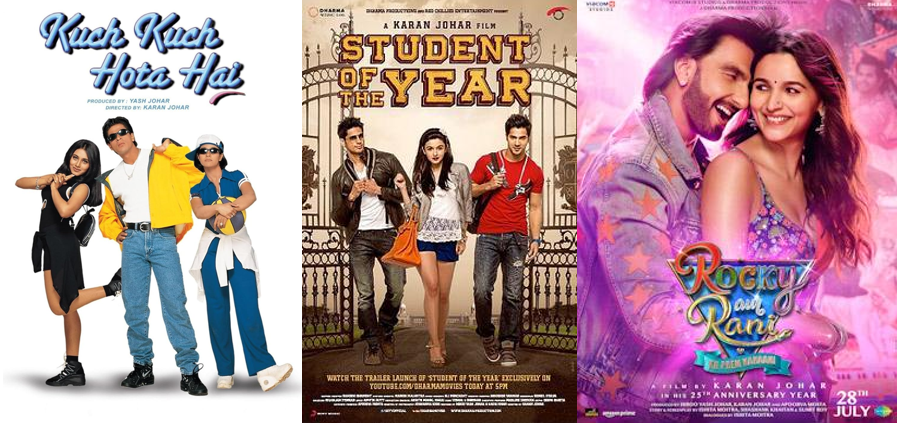
Bollywood! We know (and love) the films for their grand and magnificent dance sequences, epic love stories, and extra long running times. Bollywood is often referred to as the “Indian Hollywood,” and this Hindi cinema industry has a large fanbase of its own. But how much overlap is there between Bollywood and Hollywood? Is there a strong language barrier that separates them? If you’ve watched a modern Bollywood movie, you would know that English words are often scattered throughout the script or used for funny catch phrases and apologetic remarks. But has that always been the case? In our project, we analyze the code-switching in three different Bollywood movies — Kuch Kuch Hota Hai, Student of the Year, and Rocky aur Rani Kii Prem Kahaani — all made by the famous filmmaker, Karan Johar. Each movie was released in a different decade, and we wanted to know how code-switching in Bollywood movies has changed as time passed. Read more to find out about the patterns we observed as the movies became more recent!
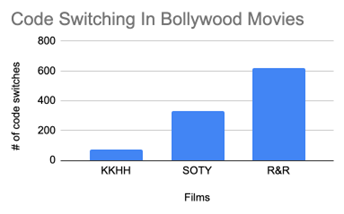
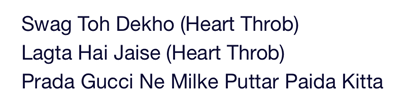
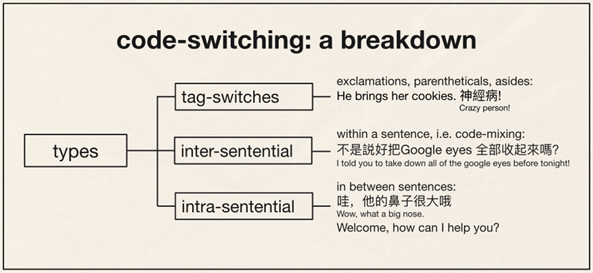
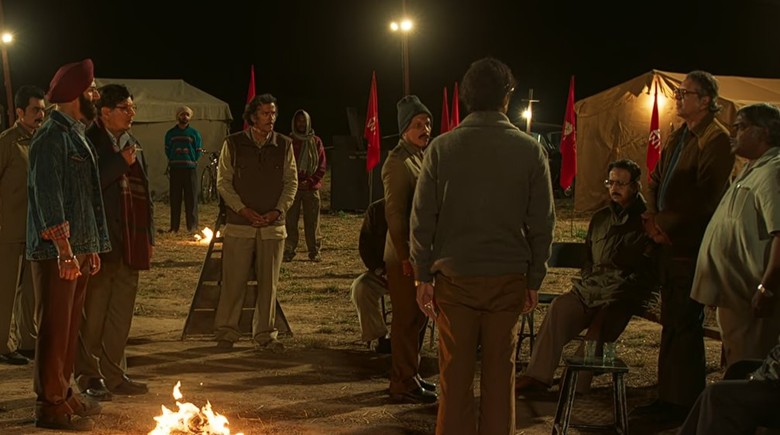
Introduction and Background In this project, we decided to focus on changes in code-switching from the 1990s onward in order to analyze how globalization and other factors have impacted screenwriting in Bollywood. Hindi-English code-switching has been a part of Indians’ vernaculars for over a century. Far before the advent of the internet age, British colonial rule led to English being incorporated into Hindi to indicate prestige and education (Rai, 2009). Then, as globalization increased over the last 30 years, particularly through the development of the internet as a global resource, more and more Indians gained access to English content through online means. In addition to formalized English education, the population increasingly consumed media produced in English. This came in the form of professionally developed productions such as English-language movies and television, as well as informal, interpersonal content such as social media videos coming from YouTube, Tiktok, and more. Moreover, the Indian economy liberalizing in 1991 brought more access to things such as satellite TV, social media, and other global market products (Kumar, 2013). All this likely affected how often characters code-switched in Bollywood movies. Our hypothesis is that code-switching will increase overall as the year of release for the films progresses. In other words, as time passes, code-switching will occur more often and become more prevalent in the films as a result of increasing globalization and access to English media. To measure this, we have chosen three Bollywood movies that were produced across three decades — Kuch Kuch Hota Hai (KKHH) (1998), Student of the Year (2012), and Rocky aur Rani Kii Prem Kahaani (Rocky aur Rani) (2023) — to analyze. They are all written by the same screenwriter, Karan Johar, in an attempt to eliminate variables across different filmmakers’ tastes. They all also come from roughly the same genre, romantic comedies, for the same reason. We will use this data to draw conclusions about how much exposure the effects of globalization had on the Bollywood industry. Furthermore, we will be able to say how English use in Bollywood films reflects English use in different populations within India in real life. Methodology Based on existing research, we found many different ways to categorize code switches in movies. Our data collection was modeled after a study done on code-switching in three Bollywood movies from three different decades (Anttila, 2015). We categorized the code-switching into two different types: proper code-switching and loanwords. Loanwords are what we define as phrases that were otherwise incorporated into a Hindi matrix sentence, such as the sentence “तु नहिइ educated है” or “tuu nahiiN educated hai” (Translation: “You are not educated”). “Proper” code-switching as we are defining it for this research project occurred when characters included full phrases or sentences in English, such as “How are you?” (Bali et. al, 2014). Watch this short clip to see an example of code-switching in Rocky aur Rani. Each film was watched by at least two members of our team to minimize errors. While watching the movie, every instance of code-switching by the main characters was tallied into one of these two categories. When multiple instances of English words were uttered in a phrase, we used our best judgment to determine its categorization. We only tallied the code-switching of two to three main characters per movie to minimize variables across character type (age, class, education) and maintain a reasonable scope for project. Results and Analysis The oldest movie, KKHH, focuses on a best friend duo. Between those two main characters, they produced 13 loanwords and 58 proper code switches, for a total of 71 code switches overall. The next movie, Student of the Year, was released 14 years later. We counted 193 loanwords and 135 proper code switches across three main characters, or 328 code switches overall. Lastly, Rocky aur Rani came out 12 years after that and had 328 loanwords and 290 proper code switches between two main characters, totaling 618 overall code switches. The total number of code switches across the three movies can be visualized in the bar graph below: Given the data, our hypothesis was correct. The amount of code switches steadily increased across all three movies. Notably, we focused on one fewer protagonists in Rocky aur Rani, yet it still almost doubled the number of total code switches. Thus, we see that over the last 30 years, English usage in Bollywood movies has gone up considerably. There were several patterns we noticed while analyzing the code switches. Many of the most common instances of code-switching came from characters using popular English phrases, such as “thank you,” “I’m sorry,” or “you’re welcome.” All of these were considered proper code switches for the purposes of our study, although there was some debate of whether they should be considered a single loanword unit because of how they were tied to one meaning. For example, we never saw a code switch like “thank आप,” or “thank aap” (Translation: “thank you”). One of the biggest changes we noticed over the years was the use of Hindi-English code-switching in songs. Most Bollywood movies are musicals regardless of genre. Music is inherent to the industry, and we counted code-switching in the lyrics of songs the same way we counted spoken lines of dialogue. KKHH has eight songs, Student of the Year has seven, and Rocky aur Rani has eleven. KKHH had no code-switching in the songs. Every song was sung exclusively in Hindi. Student of the Year had slightly more code-switching in the songs, particularly in Shanaya’s entrance song, “Gulabi Ankhen,” which included many brand names. Additionally, there was one song titled in English, “The Disco Song.” Although the title is not an exclusive indicator of English use in the song itself, it does reveal a trend that English was becoming more accepted in the music side of Bollywood. This pattern continued with Rocky aur Rani, which had two songs with some English in the title: “What Jhumka?” and “Heart Throb.” More importantly, the content of the songs throughout the movie had regular code switches. It appears that songs are more resistant to incorporating English, since KKHH had code-switching in dialogue but not songs. However, by 2024, English was heavily included in Bollywood song lyrics. code This may be related to Shet (2022)’s findings that code-switching in film songs signifies purpose in discourse rather than for “aesthetic” purposes like in dialogue. Another pattern was the use of brand names as a form of code-switching. Given that English can be a signifier of prestige, this effect is heightened when the code-switching indexes luxury items. Characters in Student of the Year and Rocky aur Rani regularly referenced brands such as Louis Vuitton, Ferrari, Jimmy Choo, and Versace. The character Rocky in Rocky aur Rani did this the most consistently. His character is upper class and frequently mentions his possessions by brand name. Interestingly, his code-switching often indexes a superficial, vapid personality as a result. This counters what Antilla (2015) found in her assessment, that English had become a language of professionalism and accomplishment. Rocky frequently uses English slang, but since he uses it haphazardly and without formal education, he is sometimes considered an idiot by those around him. Therefore, we can surmise that not only is the amount of English code-switching changing, but that its meaning in Bollywood is changing too. Both code-switching in songs and use of brand names can be seen in the example below, which shows three lines from the verse of the song “Heart Throb” in Rocky aur Rani. In just this excerpt, lasting six seconds in the song, there are five loanwords: “swag,” “heart throb” twice, “Prada,” and “Gucci.” The line roughly translates to “Look at the swag, it’s like Prada and Gucci gave birth to a son.” Thus, we see Rocky using English slang (“swag,” “heart throb”) and brand names (Prada, Gucci) to signify coolness and style. Discussion and Conclusion Our analysis of our three films — Kuch Kuch Hota Hai, Student of the Year, and Rocky aur Rani Kii Prem Kahaani — show a clear trend of increasing code-switching. Since these three films came out in sequential decades following the explosion of the internet age and social media usage, the data supports our hypothesis that globalization and media exposure are driving forces behind these changes. Each film demonstrates a greater frequency of English phrases and loanwords, suggesting that modern day Bollywood films are catering to an audience that is more familiar with an inclusion of English. However, there are several limitations to our study. In future research, it would be helpful to have access to the scripts, so we can accurately count the number of code-switches used in the films. Our method of manually tallying code-switching instances while watching the movies might not have captured every instance accurately. Having access to scripts that we could read would provide a more precise count and better context for each instance of code-switching. Additionally, we focused on three films from a single filmmaker, which might not fully represent broader trends across the industry. Future research could address these limitations by expanding our method to include films from various filmmakers and genres and collect data from multiple characters, not just the protagonists. Furthermore, it would be beneficial to perform research confirming the correlation between code-switching in Bollywood and English usage in real life. We could do this by exploring the perception of English among viewers who recently finished watching Bollywood movies. Researchers can also analyze if non-English speakers’ perception of English changes after watching a Bollywood film due to the presence of code-switching between Hindi and English. Another possibility would be to compare native Hindi speakers’ code-switching with that of the fictional characters to see if the frequency is comparable. This would be one way to determine whether Hindi-English code-switching changes when it is scripted versus non-scripted. Therefore, due to this research, researchers can discover the impact code-switching has on society. Since our research project effectively replicated Anttila (2015)’s project studying three movies from 1988, 1996, and 2005, it will be interesting to see if the use of Hindi-English code-switching will continue to trend upward. Anttila found that code-switching increased over time across her three movies, just like we did. But if this study were performed again another ten years from now, will English in Bollywood movies continue to increase or will it eventually stagnate? Is there a “saturation point” for English usage? At a certain point, the question becomes when is the movie itself “bilingual” rather than the characters? In conclusion, analyzing Bollywood movies can help assess how English is perceived and used in India. The findings suggest that English is steadily increasing across Bollywood. Since media is a reflection of its society, we can conclude that English access is increasing overall in India, thus reflecting trends of a globalized society and proliferation of digital media. This increase in code-switching suggests that English is becoming more ingrained in everyday society in India, not just as a symbol of prestige but also as a tool for communication. Due to the creation of the Internet and the rise in social media, there is now greater access to English across India. These platforms provided greater access to English content in the media. This creates a positive feedback loop because as more people use the Internet, their exposure to English increases, encouraging them to adopt English in their vernaculars, which in turn exposes more people to English. Our research project highlights the increasing presence of English in Bollywood films, reflecting broader societal changes driven by globalization and digital media. References Anttila, H. (2015). “You come-come, memsaab” Code-switching in Sherni (1988), Raja Hindustani (1996) and Dus (2005) (Publication No. 6357) [Master’s Thesis, University of Vaasa]. OSUVA Open Science. Bali, K., Sharma, J., Choudhury, M., & Vyas, Y. (2014). “I am borrowing ya mixing?” An analysis of English-Hindi code mixing in Facebook. Proceedings of The First Workshop on Computational Approaches to Code Switching, 116-126. https://aclanthology.org/W14-3914.pdf. Kumar, A. (2013). Globalization and Changing Patterns in the Hindi Cinema Industry. Journal of South Asian Studies, 29(2), 433-448 Rai, A. (2009). English in Postcolonial India: History, Politics, and Cultures. Oxford University Press. Shet, J. P., & Premkumar G. (2022). To switch and mix or not to: Code switching and code mixing in Indian film songs. Journal of Positive School Psychology, 6(3), 1417-1430. https://www.journalppw.com/index.php/jpsp/article/view/1672.