Code-Switching

Parent & Child Communication Dynamics in Heritage Language Speakers

Jessica Nepomnyshy, Andrew Gerbs, Christabel Odoi

Language is often considered a window into a culture, but what happens when that window starts to close? In many families, heritage language communication can be a complex and nuanced issue, especially when it comes to older and younger siblings. While the older generation may have grown up speaking the language fluently, their younger siblings may struggle to maintain their proficiency. Data was collected and analyzed, showing the trend that older siblings were more proficient than their younger siblings when communicating with their parents in their heritage language. This correlates with our background research which discusses sibling language proficiency and code-switching within bilingual families. We explore the communicative differences between parents and their children, and how confidence when speaking, code-switching, and understanding of the heritage language all play small roles in the relationship children have with their parents. Our main findings indicated that the younger siblings had less proficiency and that parents were more likely to support heritage language use with their older child, which could create a closer relationship between them.

[expander_maker id=”1″ more=”Read more” less=”Read less”]

Introduction and Background

A few questions we aimed to understand were: When examining heritage language communication between a parent and their second-generation children, is one sibling more proficient than the other when corresponding with the parent? Are communication dynamics and abilities differing between siblings, and? How is the confidence and language style of one sibling different from the other sibling when in communication with the parent? We hypothesized that if the older sibling is more proficient in the heritage language than the younger sibling, then the parent often will encourage the less proficient sibling to communicate more in the heritage language as one may avoid using the language due to difficulty.

Siblings play an important role in shaping the overall language environment within immigrant families, and their language choices influence the family language policy. Older siblings often act as language experts and help younger siblings develop their language skills (Kheirkhah & Cekaite, 2017). However, younger siblings may find it easier to use English over their heritage language, leading to more code-switching, which is defined as the alternation between two or more languages in the context of a conversation or situation.

Heritage language ties how siblings communicate with their parents as data has shown that bilingual Chinese language speakers strived to maintain their language due to their parents’ wish for them to know Chinese strongly. Language is the factor that facilitates communication between family, siblings, and spouses (Budiyana, 2017). Heritage language is important as it strengthens and reinforces bonds with the heritage community and leads to greater overall connectedness with family and friends who also speak the language (Vallance 2015).

Methods

We explored data from five bilingual families: one parent and two children with varying proficiencies in a heritage language. All participants signed a consent agreement (parents signed for their adolescent children under 18) and completed a survey that functioned both as a pre-selection tool and a way to gather relevant socio-demographic info, where asked age of all participants, all languages spoken, and amount of years the language has been spoken. Names and any identifiable information were removed to maintain participants’ anonymity.

Parents were asked to sit down with each sibling and audio-record a conversation in the heritage language to the best of their abilities, asking for up to ten minutes of audio recording. The parent was asked to maintain the flow of the conversation by asking follow-up questions when their child responded to the question posed to observe a more natural conversation. We tasked each parent and sibling to answer three conversational questions: “Tell me about your favorite part of your day today,” “Let’s discuss a movie TV show that you recently watched that you enjoyed,” and “What is your favorite thing to do on the weekend?” By gathering audio recordings, we were able to notice differences between the pairs of siblings in comparing the number of times each sibling code-switched, their confidence levels, and whether a sibling self-corrected or if a parent was inclined to correct their child when errors were made. Through observing these three key features in heritage language-speaking siblings and their conversations with a parent, we can better understand the role language holds in maintaining a relationship between siblings and parents.

Results and Analysis

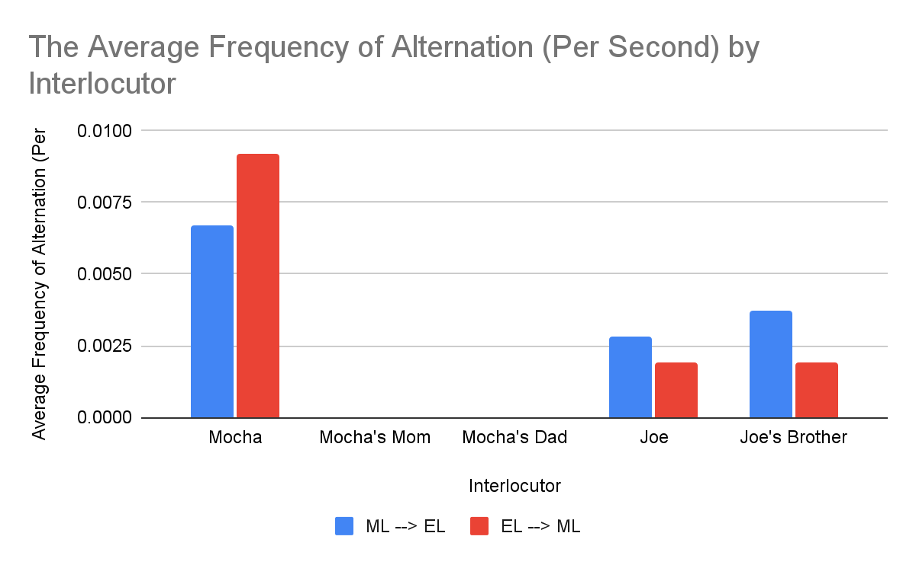
From our five sets of participants, one parent and two siblings per set, we transcribed, counted, and observed the frequency of each sibling’s code-switching from their heritage language to English. From this data, we counted the number of code-switches that younger siblings produced and calculated that on average they would switch to English twelve times in ten minutes, which is around 83% of the time. When the same method was used to count and calculate for the older siblings, we concluded that they code-switched on average seven times within their ten-minute conversations, equaling 70% of the time.

Through observing code-switching patterns, we noticed that parents were more likely to correct their older children when they made errors or code-switched from their heritage language to English. When it came to younger siblings, parents were more lenient in allowing their children to continue speaking in English as shown in an example in Figure 1.
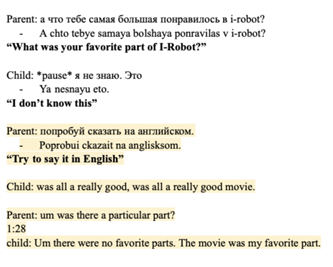
Figure 1- Conversation between parent and younger child- parent allows for English language use

The younger sibling in this example is asked by the parent to respond in Russian, and when the sibling responds in English, the parent continues to follow up in the non-heritage language. One can also observe that earlier in the transcript the younger sibling can say that they don’t know how to say something using their heritage language, right before code-switching to English. The younger sibling also seems to avoid giving many details when speaking, as they are less confident in using the heritage language throughout their speech. One can observe this when the sibling uses a filler word before reiterating the same two responses to their parent.

We observed noticeable differences in confidence levels between siblings when conversing with parents in the audio recording. Siblings used filler words like, “um” “but” and “yeah” which indicated how sure one was when answering a question. This analysis revealed that higher usage of filler words showed that a sibling was less confident in using their heritage language when answering questions. We counted the number of filler words used throughout all interviews and showed them in Figure 2.
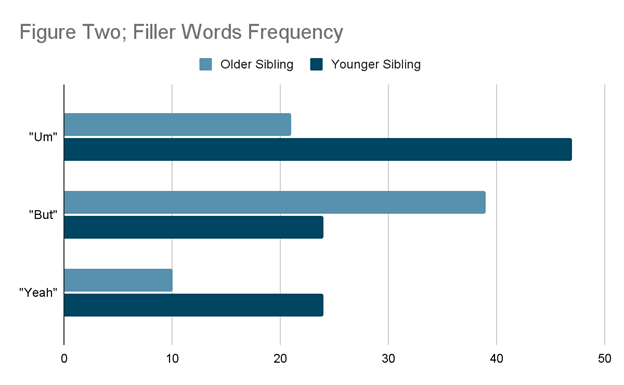
Figure 2- Amount of times siblings use filler words in speech

This data was collected to validate our results as we compared the number of filler words used to the level of confidence siblings showed in their language use. “Um” was used significantly more than “But” and “Yeah” as it was used as a break when one was thinking of more dialogue. “But” was used significantly more by the older sibling and was observed to occur before or after they code-switched to transition back to the other language. “Yeah” was used less often, but was an indicator used when one was finishing a train of thought. Many siblings had limited vocabulary when speaking, so it was imperative to our study to track the number of filler words.

Discussion and Conclusions

Researching heritage language maintenance within families opens one’s eyes to the efforts parents make to preserve and pass on their language to their children. Many aspects play into siblings’ understanding, communication, and confidence when using a heritage language, and we as researchers were able to uncover differences between how older and younger siblings communicate with their parents. The hypothesis we explored was that older siblings are more proficient in the heritage language as compared to the younger siblings, and because of this, the parents would encourage the less proficient sibling to communicate more in the heritage language as a way to improve their language skills. After observing a variety of communication aspects between siblings and parents, we were able to conclude that our hypothesis was partially true. We found that out of all our sibling pairs, every younger sibling was less proficient in speaking their heritage language, as they code-switched more often and exhibited less confidence through using filler words, in comparison to the older siblings who demonstrated a stronger grasp of the language. As researchers, we hypothesized that the less proficient sibling, within our data being the younger one, would be more likely to get corrected by their parents when making grammatical mistakes, or code-switching, but we were wrong. It was more likely that a parent would correct the older sibling’s heritage language use and allow the younger and less proficient sibling to speak English. We can consider the idea that parents are more likely to correct their older children as a way to preserve and maintain their proficiency, knowing that the younger sibling holds less strength in the language.

If we had more time to further this study, we would most likely broaden the number of subjects we had, provide deeper questions, and use surveys to gauge more attitudes on language use, and the impact it has on parent and child relationships. A few limitations that we did not consider were whether the genders of siblings played a role in their proficiency, if parents being immigrants played a role in proficiency, and whether the age at which the language was learned played a factor in subject experiences. We were able to conclude that older siblings were much more likely to be the stronger speakers when it came to using the heritage language, in comparison to their younger siblings. Unfortunately, we could not fully determine if parents had a closer bond with the more proficient children, but we can assume that they can connect more through bilingual communication.

References

Altman, C., Burstein Feldman, Z., Yitzhaki, D., Armon Lotem, S., & Walters, J. (2013). Family language policies, reported language use and proficiency in Russian – Hebrew bilingual children in Israel. Journal of Multilingual and Multicultural Development, 35(3), 216-234. doi:10.1080/01434632.2013.852561

Budiyana, Y. E. (2017). Students’ parents’ attitudes toward Chinese heritage language maintenance. Theory and Practice in Language Studies, 7(3), 195. doi:10.17507/tpls.0703.05

Kheirkhah, M., & Cekaite, A. (2017). Siblings as language socialization agents in bilingual families. International Multilingual Research Journal, 12(4), 255-272. doi:10.1080/19313152.2016.1273738

Nitta, F. (1996). Socialization of “International children”. Kazoku Syakaigaku Kenkyu, 8(8). doi:10.4234/jjoffamilysociology.8.97

SORENSON DUNCAN, T., & PARADIS, J. (2020). Home language environment and children’s second language acquisition: The special status of input from older siblings. Journal of Child Language, 47(5), 982-1005. doi:10.1017/s0305000919000977

Vallance, A. (2015, 12 21). The Importance of Maintaining a Heritage Language while Acquiring the Host Language. https://digitalcommons.wayne.edu/cgi/viewcontent.cgi?article=1021&context=honorstheses#:~:text=Maintaining%20the%20heritage%20language%20strengthens,who%20also%20speak%20the%20language

 [/expander_maker]
, , , , ,

Impassioned Speech: ¿Lo has visto?

Nikki Lee, Kiara Mares, Jamie Seals, Ally Shirman

In everyday conversations, bilingual speakers frequently code-switch between their languages. With our modern society, we can see this becoming prevalent in media during emotional scenes with bilingual characters; specifically in movies and TV shows. In this study, we investigated three different shows and movies with bilingual actors who use their heritage language as a part of their character to see whether there is a correlation with code-switching in highly emotional situations. We chose three sources to gather this data that have at least one bilingual main character; Jane the Virgin (2014), Everything Everywhere All At Once (2022), and Modern Family (2009). For each source, we analyzed around 120 minutes to have an equal amount of data. Analysis of this data found that code-switching during emotional scenes did occur, but was more prevalent in more recent media. The study helps to show that code-switching is becoming more representative for bilingual speakers in modern media.

[expander_maker id=”1″ more=”Read more” less=”Read less”]

Introduction and Background

Entertainment media heavily relies on creating a connection between the viewers and the characters and themes presented. The characters in media are often the biggest attraction because of their relatability. Thus, the representation of characters with different backgrounds, including gender, ethnicity, age, socioeconomic status, etc. is very powerful in shaping viewer and societal perceptions. Characters rely heavily on language and emotion to give away key details and shape who they are and what their role is. This is especially evident in American entertainment media with actors who play ethnic characters, with cultures other than dominant U.S. culture. Bilingualism and code-switching are some of the biggest tools used to portray identity within these characters’ roles. This makes their heritage language use very strategic and intentional for character depiction. Recognizing the power of media and how it aims to reflect real-life ideas, our project focuses on where entertainment media uses second languages, and how it intersects with emotion to reflect ideas about a language or a character.

Our project focuses specifically on bilingual actors within entertainment media who use their heritage language as part of their character. We want to investigate when this heritage language is used and if it is associated with highly emotional scenes or situations. Research on language and emotion in real-life scenarios has indicated that language use and choice can be influenced by emotions that we correlate with that language. Looking specifically at American media, our goal is to observe whether or not heritage language use occurs in more emotional situations than non-emotional scenes, and identify if there are emotions that occur more often in a heritage or dominant language. This project will be focusing on language contexts, both positive and negative, and then observing what language it occurs in. Based on our own experiences with code-mixing, media depictions, and language perceptions, we hypothesize that in highly emotional situations, characters will code-switch to their heritage language, other than English. We predict that the characters are written to represent real-life bilingual speakers to deepen their character and the media. Many viewers may find this relatable or can connect with the cultural identity of both languages being presented – which could contribute to further media representations.

Gaps in Research

Though bilingual speakers often use one language in specific settings, and the other in other settings (e.g. heritage language at home and in informal contexts, and dominant language in formal settings like work, especially if that second language is the standard language of their country), they also often use both languages at once (Ferguson, 1959). This most commonly happens when speaking to other bilingual people, but it does happen elsewhere as well. This use of both languages at once is referred to most commonly as code-switching, where interlocutors will use both languages at their disposal within the same utterances, often without consciously making the decision to do so. Though there are many ways and uses of communicating via multiple languages at once, a prominent trigger for code-switching comes from emotionally arousing situations. One study found that, through direct observation of participants in a high-stress problem-solving task, people code-switched more frequently when expressing negative emotions. Specifically, participants switched to their heritage language to express these negative feelings rather than using the dominant language (Williams, Srinivasan, Liu, Lee, Zhou, 2020). We anticipate that our study will recognize some of the same characteristics of code-switching and plan to focus on a character, then identify the number of situations in which this occurs.

Additionally, in these highly arousing emotional situations, it is more likely that speakers use their first language to react, rather than their second language. We see this in the study conducted by Ariana Mohammadi titled, “Swearing in a second language: the role of emotions and perceptions.” Additionally, a study conducted by Shahrzad Mahootian covers these emotional situations in their study and they state, …the list of evocative switches was “more meaningful” in Spanish, that they carried “more emotional power,” (“emotional statements will be said in Spanish. English is not sufficient”) that they were used to “create solidarity,” that they were “much stronger” when said in Spanish (Mahootian 2005). This study helps to show how speakers would be more motivated to code-switch in order to convey their words more effectively between themselves and their listeners. As we have shown, there has been a good amount of research done on the connections between code-switching and heritage language use with emotion but this research has not been carried over to the media. There has not been research done specifically on character use of code-switching and heritage language use and the emotion of their character or scene. We hope to fill this gap with our research in this project and we can anticipate that the media we have chosen for our study will be able to reflect these previous findings.

Methods

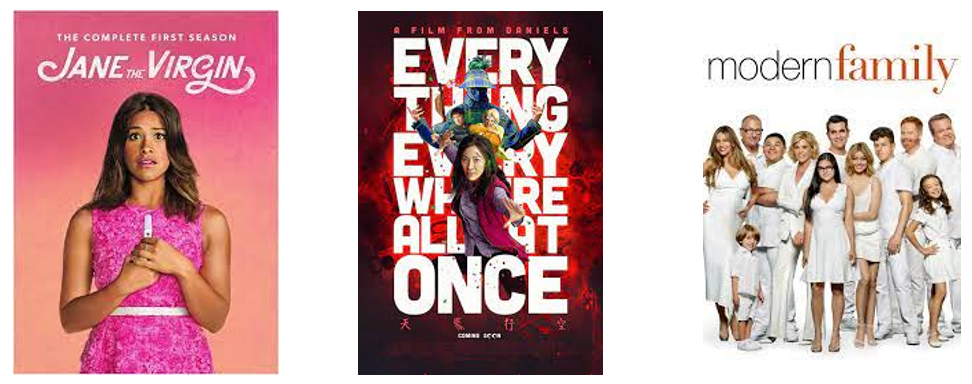
To understand whether code-switching occurs in half or more emotional instances in media, we used three sources that each include at least one bilingual main character and are from the 21st century. Specifically, Jane the Virgin (2014), Everything Everywhere All At Once (2022), and Modern Family (2009).

From left to right: Jane the Virgin (2014), Everything Everywhere All At Once (2022), Modern Family (2009)

Additionally, we made sure that all three of these sources’ bilingual characters’ heritage languages were relevant to the characters themselves, but not a dominant focus for the storylines. All bilingual characters were interacting in a space where their heritage language is not the dominant language (which is English in all three sources).

We analyzed roughly 120 minutes of each source to ensure that the amount of data we collected from each would be equal, based on the length of Everything Everywhere All at Once. (We looked at three Jane the Virgin episodes (each ~40 minutes), and 6 Modern Family episodes (each ~20 minutes)).

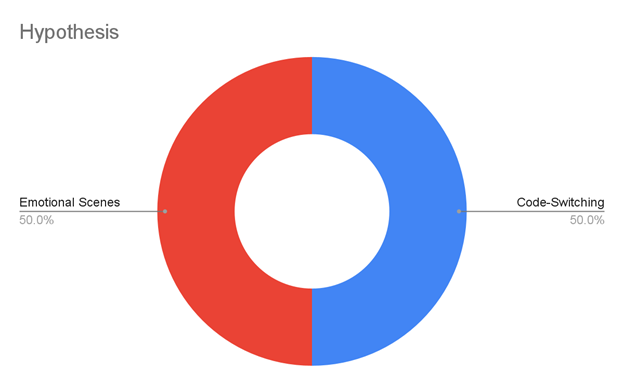
We noted (coded) each instance of an emotional scene in each source, as well as instances of code-switching within these emotional scenes. This would allow us to calculate a ratio (number of code-switching instances in emotional scenes divided by the total number of emotional scenes), and thus a percentage, to understand how accurate our hypothesis is.

Before coding each source, we defined what “emotional” meant to ensure that each researcher was coding via the same guidelines. Highly emotional instances could come in the form of:

  • Voice: raised voice, yelling, screaming, whimper
  • Exaggerated body language
  • Clearly emotional facial expressions that last (e.g. no microexpressions)
  • Crying

Results

Everything Everywhere All At Once

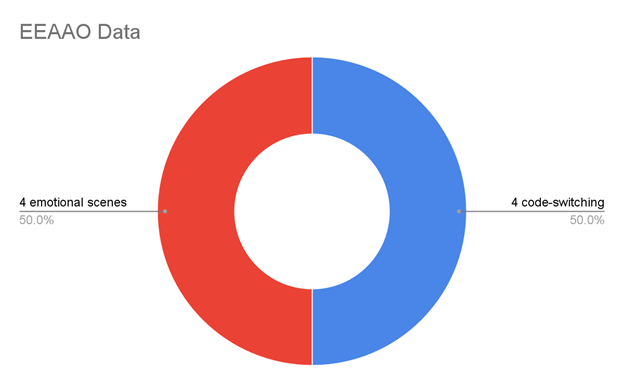
4 code-switching instances in 8 total emotional scenes → 50% code-switching

Jane the Virgin

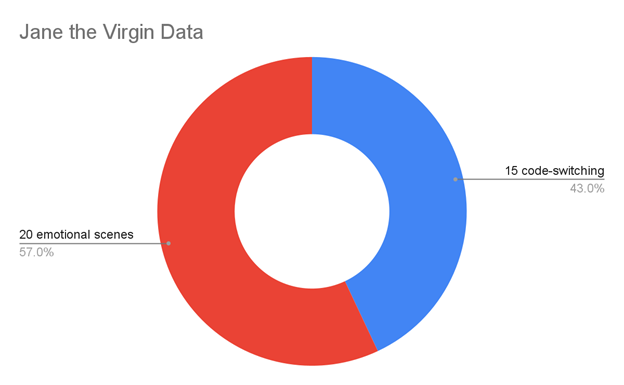
15 code-switching instances in 35 total emotional scenes → 43% code-switching

Modern Family

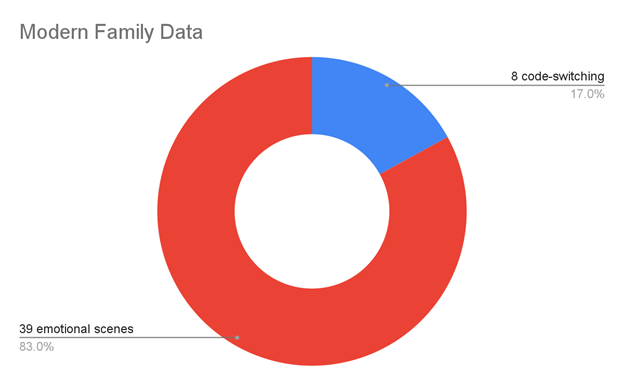
8 code-switching instances in 47 total emotional scenes → 17% code-switching

Combined: 27/90 → 30% of all emotional scenes across the three sources included code-switching.

Everything Everywhere All At Once was the only source to meet the hypothesis that at least half of the emotional scenes would include code-switching. However, it is important to note that there was quite a bit of diversity in how many instances of emotional scenes there were per source. Everything Everywhere All At Once only included eight, likely because it has deep themes compared to the sitcom-like shows, and the scenes are generally longer. Modern Family, on the other hand, is fast-paced (only 20 minutes per episode) and includes generally more exaggerated characters, leading to their behaviors being more exaggerated and emotional as well. This is reflected in the 47 total emotional scenes, compared to the eight from the movie.

However, even though Modern Family had the most emotional scenes, it had the lowest ratio (17%) – this is likely because there is only one bilingual character (Gloria), giving her fewer opportunities and reasons to code-switch (e.g. code-switching out of instinct when stepping on a Lego, versus code-switching to communicate an idea to someone who also speaks English and Spanish that she wouldn’t otherwise be able to explain).

Visual Media

Patterns and Analysis

Results of our study did not exactly align with our data but did highlight some interesting patterns. There were three particular patterns that were recurring in the data and had a similar basis to previous research in the realm of bilingualism in the media.

The first pattern observed from our data was the use of bilingual code-switching for reference terms. In all three of the media forms, characters code-switched when referring to another character they were close to or comfortable with. In Jane the Virgin, this was observed with the consistent referral to Jane’s grandmother as “abuela,” even when the rest of the sentence was in English. ‘Gloria’ in Modern Family also did this frequently when referring to her husband with terms of endearment such as “mi amor” (season 9, episode 3) and when referring to Haley’s children as “mis niños” (season 11, episode 6). This pattern touched on previous research that found that heritage language is used when speakers are more comfortable, which would make sense for using with family (Cho, 2015).

Modern Family Phil makes Gloria cry

Another pattern observed was use of bilingual code-switching as a form of addressing certain audiences. During scenes where characters were in the presence of other bilingual characters, or when they wanted to speak to someone directly, sometimes to the extent of using language to be private. This example was seen in Everything Everywhere All At Once when ‘Evelyn’ is standing up to ‘Gong Gong’ and switches between languages to focus on different scenarios, despite him understanding each of the languages. Evelyn chooses to code switch from Cantonese, English, and finally Mandarin to allow the listeners of that scene, her daughter and husband, to better understand her feelings. Other scenes like in Jane the Virgin used code-switching to Spanish to make sure the police didn’t understand their plan of action while he was in the room. This pattern is reflective of previous research that concluded that negative languages are more typically expressed in the heritage language, which could explain why it was used to exclude someone from a conversation (Williams, Srinivasan, Liu, Lee, Zhou, 2020).

Everything Everywhere All At Once (2022) – Evelyn Stands Up To Gong Gong | HD

Jane the Virgin used code-switching to Spanish

Finally, we observed bilingual code-switching as an indicator of urgency. Characters who were experiencing a sense of urgency and trying to communicate this hurry used code-switching to do so. This example can be seen in Everything Everywhere All At Once when Evelyn is dealing with multiple stressful situations while her family members are adding to that stress, which makes her frantic. The audience can see her emotions overflow as she code switches from Mandarin to English in order to fully express her frustration in that situation. Given that urgency could be related to other feelings, such as stress and desperation, this observation came closest with our hypothesis.

Despite the shows having different content matter, being different genres and having different amounts of bilingual characters (and thus different instances of code-switching), these were patterns that overlapped in at least two of the three media examples used. The patterns occurred in various examples throughout each of the shows and seemed to be consistent parts of the character and their role in the plot. Each of the patterns identified was relevant in various instances throughout the shows and highlighted some real-life uses for code–switching and bilingualism. Although it wasn’t what we were expecting, it definitely taught us a lot about what to expect for bilingualism in both media and everyday life.

Limitations

Within our study, there were some limitations that potentially contributed to the results being different than our predictions, but definitely impacted the process. In relation to content, our project primarily focused on three media examples. Had we used more than two shows and one film, our results may have had more range in code-switching and examples of bilingualism. Essentially, a wider range in media examples would have been more beneficial for getting a wider scope of media examples. This connects with the second limitation: variation within the media content examples. Modern Family definitely had more “feel-good,” positive moments which is different from Jane the Virgin which dealt with heavier themes and was more of a drama. While this variation was definitely better for maximizing examples of bilingual code-switching, the lack of consistent storylines and genres didn’t allow for the same amount of opportunities for code-switching during impassioned speech. Instead, the variation in content and storylines would have made code-switching more of a chance occurrence than a predictable feature.

Finally, perhaps the most impactful limitation in our research project was that most characters were the only bilingual characters in the show. This was specifically the case for Modern Family, where ‘Gloria’ was the only character who spoke Spanish and didn’t have any other main character to speak it with. In Jane the Virgin, even though ‘Jane’ and ‘Xiomara’ were Spanish-English bilinguals, they would respond in English and ‘Abuela’ was the only one who spoke Spanish the entire time. Each of these limitations could have contributed to the results and for future studies would be important to avoid.

Future Study

Considering the limitations previously mentioned and in collaboration with the patterns mentioned, a refined, future study would certainly involve a wider range of media for observation. For standardization purposes, it would be important for shows to be produced and based in the US, be from the same range of years (as in our example, the last two decades/the 21st century), and have the same amount of minutes watched, but this new study would focus on shows with more bilingual characters. Considering these elements and our previous interest in bilingualism and code-switching in the media, further research conducted could be based upon media that covers different backgrounds to be more inclusive towards the American audience. We can see a trend of this from big companies, like Disney, who have produced movies like Encanto and Turning Red. With this trend of inclusivity, there is a high possibility of representation for bilingual speakers in future media. In turn, this would allow for more possible studies to look into the instances of code-switching during emotional scenes.

Conclusion

This analysis of bilingualism in media is a good first step for better understanding how bilingual and multicultural people are represented through TV, specifically to American, English-dominant audiences. However, no broad conclusions can be drawn from this study alone; without a large sample size, we may have missed important themes and patterns on the representation of code-switching from real life, or the patterns that we did find may not appear to the same degree on a larger scale.

A larger sample size, both in terms of the amount of minutes analyzed for each source, and the amount of diverse sources chosen, should be used to create a clearer picture of how writers choose to represent bilingual characters’ language use in media.

Despite the limitations and potential to make this study broader, this introductory analysis still has shown how some patterns of code-switching (proven to be common via research studies mentioned earlier) in real life are accurately represented in media as well. As the representation of multicultural and multilingual people in the United States is being more and more encouraged in American media, the more we are actually seeing it. As in Everything Everywhere All At Once – the most recent, and most diverse, media source used in this study, it was the one source that did meet our hypothesis (50% code-switching in emotional scenes).

As screenwriters continue to portray a more accurate representation of the diversity in the United States, the more we should expect to see multi-language dialogue, filled with code-switching in these shows and movies. In future studies, a specific focus on the function of code-switching by bilingual characters, both in and out of emotional contexts, could give even more insight into how multilingual and multicultural people are represented in older media versus current media. Some examples of code-switching (and code-mixing) functions include keeping conversations private from others, raising the status of the agent who is speaking, making side comments or humorous remarks, emphasizing what is being said, or reiterating something (Gumperz, 1982). Taking this approach and categorizing the linguistic reasons for code-switching would be a great potential first step for understanding where United States media companies are at in terms of true representation of the diversity in this country.

References

Cho, G. (2015). “Perspectives vs. Reality of Heritage Language Development Voices from Second-Generation Korean-American High School Students.” https://files.eric.ed.gov/fulltext/EJ1065385.pdf

Ferguson, C. A. (1959). “Diglossia” WORD, vol. 15, no. 2, pp 325-340., https://doi.org/10.1080/00437956.1959.11659702

Gumperz. (1982). Conversational code switching. Discourse Strategies, 59–99.

https://doi.org/10.1017/cbo9780511611834.006

Lee, J. S. (2010, April 23). The Korean Language in America: The Role of Cultural Identity in Heritage Language Learning. Taylor & Francis Online. Retrieved February 5, 2023, from https://www.tandfonline.com/doi/abs/10.1080/07908310208666638

Mahootian, S. (2005). Linguistic change and social meaning: Codeswitching in the media. International Journal of Bilingualism, 9(3-4), 361-375.

Mohammadi, A. N. (2020). Swearing in a second language: the role of emotions and perceptions. Taylor and Francis Online. https://www.tandfonline.com/doi/full/10.1080/01434632.2020.1755293

Williams A, Srinivasan M, Liu C, Lee P, Zhou Q. Why do bilinguals code-switch when emotional? Insights from immigrant parent-child interactions. Emotion. 2020 Aug;20(5):830-841. doi: 10.1037/emo0000568. Epub 2019 Mar 14. PMID: 30869940; PMCID: PMC6745004

[/expander_maker]
, , ,

The Generational Effects on Code-switching in Conversation Content and Word Choice

Isabelle Sandbank, Leonardo Diaz-Garcia, Huiyu Liu, Taehwan Kim

This study investigates the variations in code-switching behaviors between undergraduate students and faculty members at UCLA, with an emphasis on the generational impacts on word choice and conversation content. It utilizes a mixed-methods approach that incorporates surveys and text analysis, and it reveals that while both professors and students code-switch, there are clear disparities in their patterns of when they do it. In particular, younger students regularly code-switch with abbreviated phrases or words, whereas senior faculty members and professors typically tend to use formal language. Additionally, it also reveals that the word and phrase choices used while code-switching differ between generations, with younger students selecting more colloquial language when talking about day-to-day affairs and older faculty members favoring more modern language use and more serious topics. These results have significant repercussions for comprehending how generational disparities influence language practices and social identities.

[expander_maker id=”1″ more=”Read more” less=”Read less”]

Introduction 

UCLA is known for being a very multicultural and diverse university, according to the school’s website. Through its population, it represents 118 countries and is home to over 5,000 international students (UCLA Facts & Figures, 2023). Within this body are multilingual students, professors, and faculty, some of which have the ability to switch between two languages, or varieties, at once, also known as code-switching (CS) (Washington-Harmon, 2022). Code-switching, a widely used technique, enables multilingual speakers to jump between languages without losing the syntax or structure of the prior language. People often code-switch from one language, such as English, to another, like their home language, in order to identify with a specific social group or convey specific information. Through the categorization of code-switched words in text messages, we were able to distinguish linguistic variations in word choice between bilingual UCLA undergraduates and the older professors and faculty members of the university to show that age affects the content of CS.

Background

Code-switching (CS) is a common phenomenon in multilingual communities (Bhatti, 2018). It is often a useful communicative tactic for bilingual communities as they believe code-switching helps them express what they want to communicate more clearly, directly, and efficiently (Bahous, 2013). It’s interesting to see that many who code-switch do not realize it- most students who speak in a bilingual environment do not realize that they are infusing English terminology when using a non-English language, and it seems that audience, context, identity and the effectiveness of information transmission will make multilingual people code-switch (Sichyova, 2005). This isn’t from unawareness due to a young age, as a recent study shows that even teachers do not realize that they code-switch (Bahous, 2013). Although we are aware of code-switching among both professors and students, there is still a lack of research that examines the linguistic disparities between these two cohorts.

Changes in CS patterns are also inseparably linked to personal experience. The speaker will tend to change languages according to the conversational style of the person whom they’re talking to; they will move between obvious CS and non-obvious CS, indicating their position in the group (Ellison, 2021). According to the findings of the Ellison study, which looked at the patterns of code-switching between languages such as Hindi and English, it was found that people of different ages often have distinctive and unique methods when it comes to changing between languages.

Does this mean that students and professors differ in their word choice of code-switching as well? Although previous research has looked at code-switching situations, this is currently a new idea and one we would like to explore.

Methodology

The population includes two distinct school cohorts, comprising of undergraduate students and faculty members at UCLA, with different age groups and unique school identities. Yet, each has something in common: they are all bilinguals. The experiment was conducted by sending out surveys to the UCLA community and asking them to share conversation logs screenshots. In the survey, participants would be asked about their demographic (i.e. gender, age, and school identity), their awareness of code-switching, and the frequency of code-switching in different scenarios. Furthermore, the participants were requested to share their email addresses voluntarily to facilitate follow-up communication, enabling us to collect the screenshots of their conversation logs at the end of the survey.

We used the judgmental sampling method, which uses our knowledge to select the individuals or cases to be included in the sample based on the research question addressed. Judgmental sampling method is a method that targets a population and maximizes the benefits of the analysis (Jagero, 2011). This provided a direction for data collection for our project.

After collecting surveys and participants’ conversation logs, researchers translated, transcribed, and categorized their code-switched sentences and words before analyzing possible patterns of code-switching between our established age parties (undergraduate students and faculty/professors).

Acknowledging the potential for bias in our study prior to presenting our findings is vital. The text samples are more susceptible to bias compared to our surveys. This is because there is a possibility that certain participants may have selectively shared specific segments of their text conversation with us, and the screenshots of the conversations shared by students and teachers may only represent a subset of the entire conversation.

While we may use alternate techniques of data gathering in future research, we must emphasize that for this specific study, we must consider the chance that it may not be composed of all possible data. Privacy issues are in fact a delicate subject that cannot be ignored, but something we would’ve hoped to get around.

Results and Analysis 

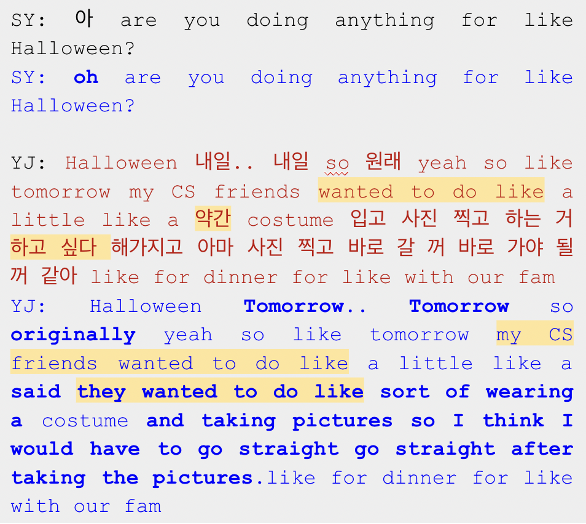
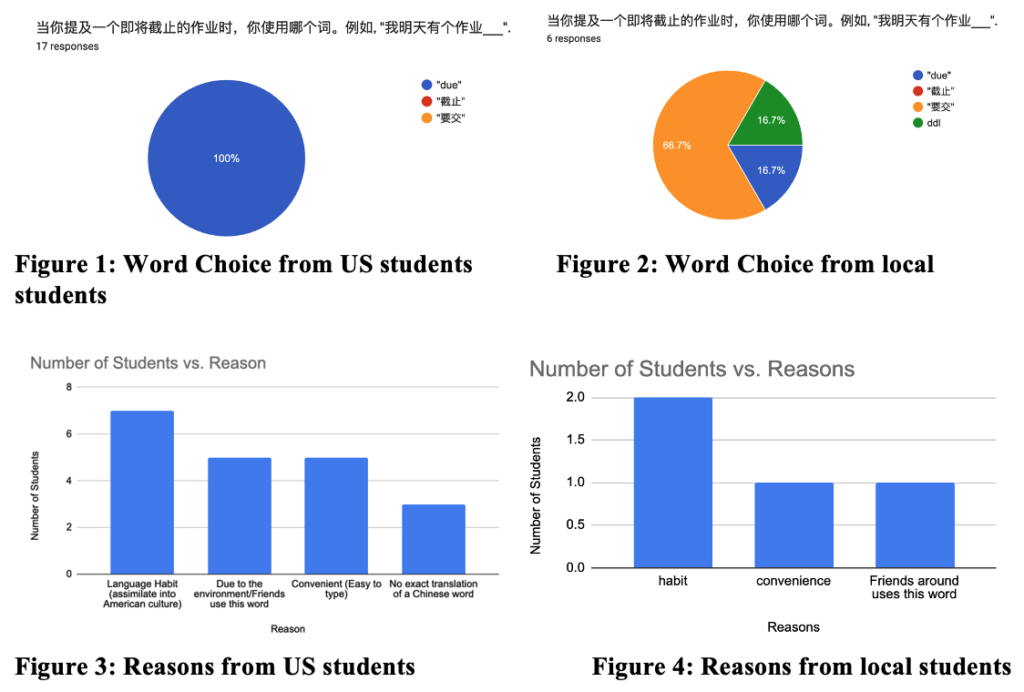
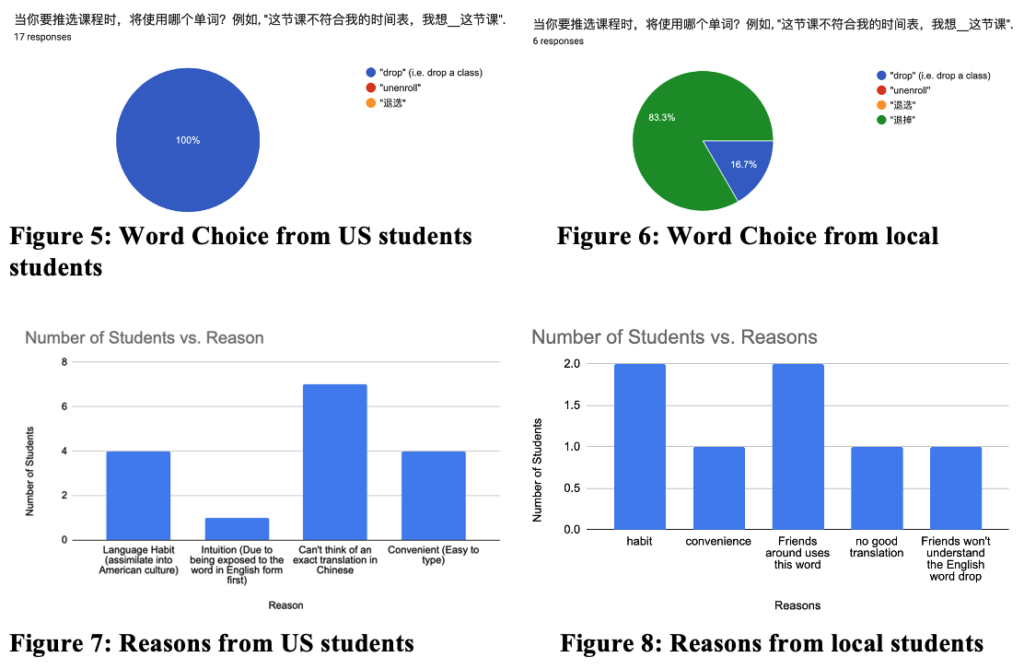
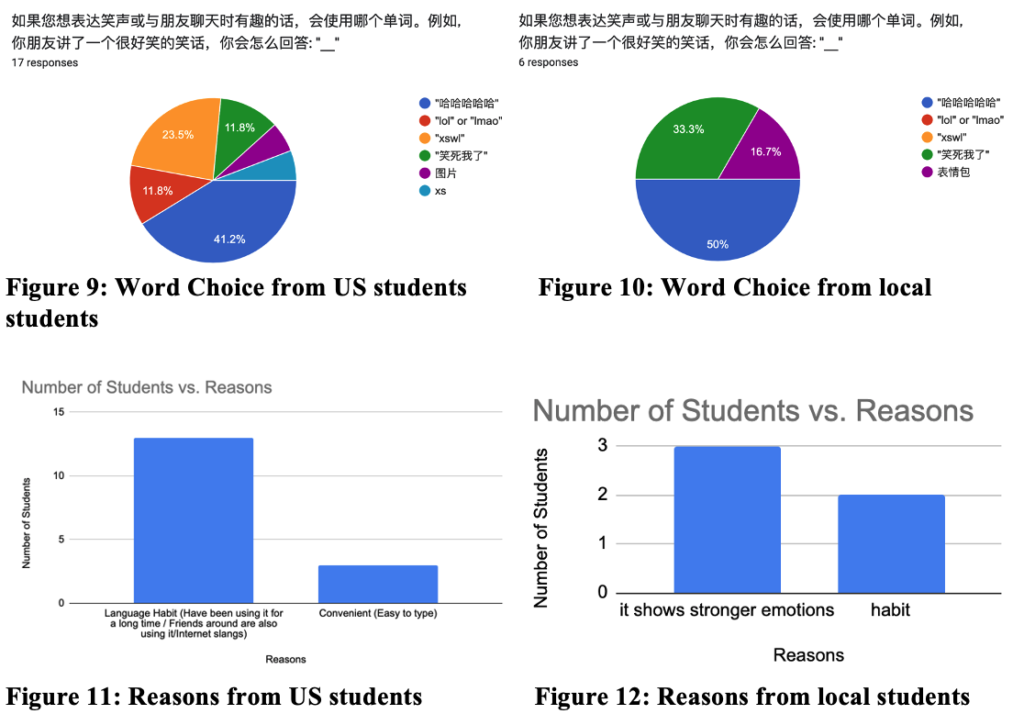
Our research revealed that undergraduate students had a proclivity to employ abbreviated phrases or words via code-switching more often than faculty, who were more inclined to incorporate formal language while code-switching. By comparing two sets of conversational logs between undergraduate students and faculty, we observed that the former demonstrated a higher rate of code-switching within the logs as well.

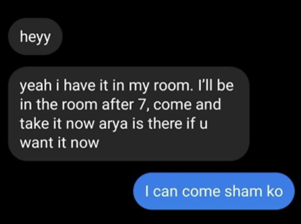
Figure 1: CS Text message in English (switching to Hindi) from undergraduate student to another Shaam ko: “right now”

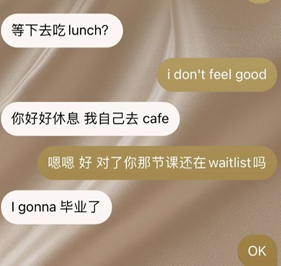
Our analysis revealed that undergraduate students were more apt to partake in code-switching during informal conversations with close friends. We observed this phenomenon primarily through the use of nouns pertaining to daily life (e.g., lunch, cafe, and waitlist, see Figure 2). Moreover, these students tended to initiate sentences with shorter verbal phrases such as “I gonna” and “I am”, while also utilizing code-switching at the conclusion of a sentence when they wished to express a particular time frame, specifically denoting in English for requests to happen “right now” or “today” (see Figure 1).

Figure 2: CS Text message in Mandarin (switching to English) from undergraduate student to another
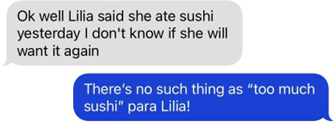
Figure 3: CS Text message in English (switching to Spanish) from faculty to another older adults
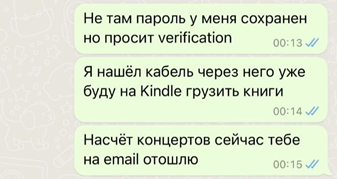
Figure 4: CS Text message in Russian (switching to English) from professor to another older adult

Faculty seem to talk most about modern issues such as technology or politics, but at times, even in simple conversations such as talking about what to eat for dinner, they may code-switch just to use the word “for” in their native language (see Figure 3). Prepositions were a common code-switched word in faculty conversations. Further screenshots provided by UCLA faculty revealed a preference for proper nouns and more formal terms, such as “Kindle,” “verification,” and “email” (see Figure 4). Our data demonstrated that undergraduate students code-switched more often than faculty members when communicating through text messaging, or at times, more common to professors, email.

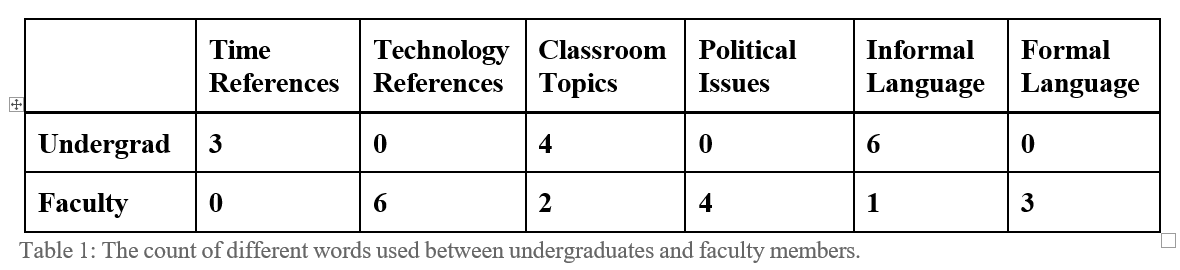
As stated so far, we’ve found code-switched words to fall into similar categories, such as prepositions, technological terms, legal jargon, or classroom topics. Table 1 categorizes the words used between undergraduates and faculty in order to more easily display the differences between both groups. The last two categories are a little vague- informal language relates to any time in which the participants shortened their words (example: “u” for “you”). Formal language relates to any time in which participants used words often meant to be polite (example: Mr. or Mrs.).

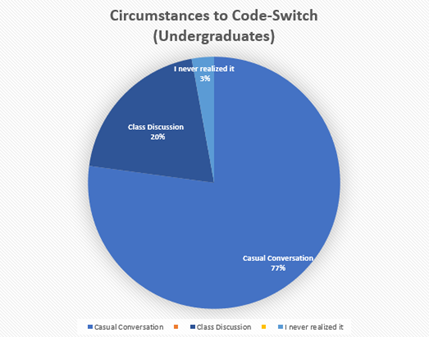
Figure 5: Pie Chart Denoting Undergraduate Code-Switching Circumstances (Casual Conversation: 27, Class Discussion: 7, I never realized it: 1); n = 35

In our survey, we asked both parties under which circumstance they code-switched in more to see if it may provide an explanation for the texting outcomes we obtained. For example, perhaps faculty talked about citizenship and taxes because they were talking to employers, and maybe undergraduates spoke about getting waitlisted and class because they were codeswitching during class discussions. Yet our survey results show that most students code-switch in casual conversation with their friends, with only 20% of undergraduates code-switching during class-related activities.

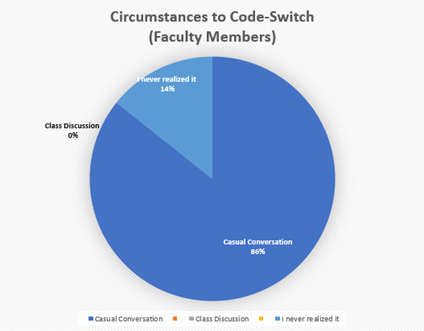
Figure 6: Pie Chart Denoting Faculty/Professor Code-Switching Circumstances (Casual Conversation: 6, Class Discussion: 0, I never realized it: 1);  n = 7

Here, our hypothesis is once again proven wrong, displaying that none of our older participants code-switched with employers but instead solely during casual conversation. There was an option to state where else they code-switch, but all other participants (except for those who couldn’t recall or stated they didn’t realize it) said that they only code-switch among friends and family during casual conversation.

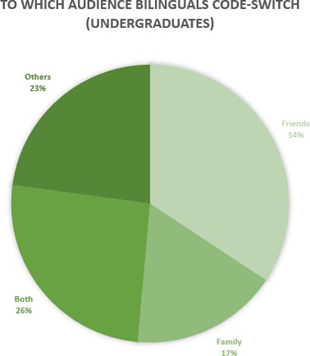
Figure 7: Pie Chart Denoting Audience of Undergraduate Code-switching (Family: 6, Friends: 12, Both: 9, Others: 8); n = 35

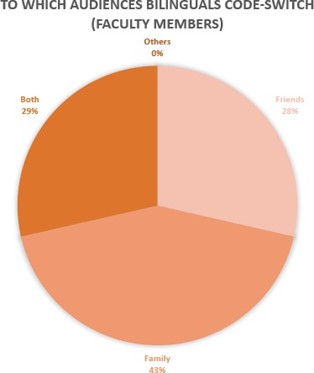
Using the same dataset, we made another distinction between undergraduate students and faculty members using one of the questionnaires from the survey: To which specific audience did you code-switch to more often? There are four variables that we chose to analyze, which are Friends, Family, Both, and others. The data of “others” include answers like, “teachers,” “people my age who look ethnically similar to me,” and “work environment.” The pie-chart above represents the data of undergraduate students. Based on the chart, we could tell how undergrads tend to CS with friends the most, followed by both friends and family (2nd), others (3rd), and family (4th). This corroborates the notion that bilingual undergraduate students are more likely to engage in code-switching during informal settings, such as chatting with friends, rather than in more intimate settings, like family discussions.

Figure 8: Pie Chart Denoting Audience of Faculty/Professor Code-switching (Family: 3, Friends: 2, Both: 2, Others: 0); n = 7

Next, this is another pie-chart that represents the data of faculty members and professors. Based on the chart, we could tell that UCLA faculty members and professors tend to CS with family members the most, followed by both (2nd), friends (2nd), and others (3rd). In contrast to the data regarding undergraduates, it is evident that faculty members tend to code-switch more frequently in personal settings, such as family conversations.

Conclusion

This research focused on the possibility of age affecting the way that bilinguals code-switch, both in content and environment. Through analysis of text messages and survey data, we were able to display some common bilingual texting patterns in UCLA undergraduates and faculty. Our research showed that bilingual people, regardless of age, do tend to transition between languages in casual conversations rather than in more formal, workplace or educational, situations. However, we saw some intriguing contrasts in the subjects that younger and older bilinguals code-switched about. It seems that when talking about less casual subjects, like political issues and business, older bilinguals are more inclined to switch languages. This could be the result of having more exposure to these kinds of interactions, while younger bilinguals may not code-switch in these certain situations because they have not yet encountered these themes as frequently. Our research also revealed that bilinguals’ code-switching behavior is influenced by the setting in which they are in. In casual situations, like conversations with friends, bilingual undergraduates tend to engage in code-switching more frequently than the faculty, who tend to reserve code-switching for more personal environments, such as with their families. The complexity of bilingualism and code-switching, as well as the ways that environment and age can affect these behaviors, are highlighted by our study. Understanding these subtleties is crucial for efficient communication and social integration in an increasingly linked society.

Although it seems as if most bilingual individuals, no matter the age, code-switch in casual conversations, older bilinguals tend to code-switch when talking about less casual topics, such as political issues and business, while younger bilinguals code-switch about daily life issues, like where to get lunch next.

References

Bahous, R. N., Nabhani, M. B., & Bacha, N. N. (2013, August 20). Code-switching in higher education in a multilingual environment: a Lebanese exploratory study. Language Awareness, 23(4), 353–368. https://doi.org/10.1080/09658416.2013.828735

Bhatti, A., Shamsudin, S., & Said, S. B. M. (2018, May 14). Code-Switching: A Useful Foreign Language Teaching Tool in EFL Classrooms. English Language Teaching, 11(6), 93. https://doi.org/10.5539/elt.v11n6p93

Ellison, T. M., & Si, A. (2021, June 28). A quantitative analysis of age-related differences in Hindi–English code-switching. International Journal of Bilingualism, 25(6), 1510–1528. https://doi.org/10.1177/13670069211028311

Jagero, N., & Odongo, E. K. (2011, March 30). Patterns and Motivations of Code Switching among Male and Female in Different Ranks and Age Groups in Nairobi Kenya. International Journal of Linguistics, 3(1). https://doi.org/10.5296/ijl.v3i1.1164

Mabule, D. R. (2015). What is this? Is It Code Switching, Code Mixing or Language Alternating? Journal of Educational and Social Research. https://doi.org/10.5901/jesr.2015.v5n1p339

Sichyova, O. N. (2005, November 22). A note on Russian-English code switching. World Englishes, 24(4), 487–494. https://doi.org/10.1111/j.0883-2919.2005.00432.x

Washington-Harmon, T. (2022, May 23). This survival tactic many BIPOC use could be harmful to their mental health. Health. Retrieved March 11, 2023, from https://www.health.com/mind-body/health-diversity-inclusion/code-switching

[/expander_maker]
, , , ,

Code-Switching Habits of BTS

Sylvia Le, Lien Joy Campbell, Jose Orozco, Noah SS

Do you know BTS? – If you answered no, where have you been? In the past five years Korean pop music (K-pop) has undergone a global explosion. Built into the successful business model of K-pop is the central idea of English as a Lingua Franca. While several studies throughout the years have focused on code combinations in lyrics, our study addresses specifically code-switching in a less structured environment: interviews. We elected to focus on the “biggest boy band in the world” and, arguably, the most well-known and culturally recognizable act in the international K-pop industry, BTS. The central question driving us was: does code-switching correlate to the success of BTS? In this study, we focused on interviews from three parts of BTS’s career and analyzed them for the structure, type, and cause of code-switching, while also comparing the frequency to their album sales and streams. We found that while language as a tool for international growth may be tangible, it is perhaps not as productively used as we assumed.

[expander_maker id=”1″ more=”Read more” less=”Read less”]

Background

Oftentimes, musicians and artists have found language to be a barrier between them and larger, global audiences. As artists, they are responsible for their audience connecting with their work, as well as their audience connecting with them as artists – and the way we use language in conversation has a huge impact on other people’s perception of us. So, the language in which an artist communicates can play a huge role in the reception of their work and the way they connect with fans and audiences. Recently, this has been a distinct element of modern music, where global streaming and social media connection is at an all-time high. In particular, K-Pop groups have found an increasingly English-speaking audience.

Recognizing this, we chose to investigate more deeply whether K-Pop groups have relied more on code-switching when interacting with their audience. Specifically, we wanted to analyze how K-Pop groups have used English, incorporating it into their interviews, music, and public persona, to garner a wider audience, as according to Ahn (2021), English is one of the main factors associated with the success of K-pop on the world stage.

Code-switching, for our purposes, may be defined as the practice of alternating between two or more languages or varieties of language in conversation.

While plenty of K-Pop groups have, over the years, made serious international inroads, it is arguable that none have achieved as much success as the boy band Bangtan Sonyeondan, BTS. They debuted in 2013 producing and performing hardcore hip-hop music and enjoyed their first breakthrough and commercial success in 2015, after the release of HYYH, a Youth series demonstrating their evolving musical style. Alongside the shift in music, they began using “more elaborate storylines” and “multi-layered narratives” to create the BTS Universe. HYYH was aimed at the Chinese market, but after the Chinese government closed its market to K-pop in 2016 due to the THAAD crisis, BTS was one of the first K-pop bands to actively aim at the US market, the largest and most influential in the world. Now, BTS is widely regarded as the biggest boy band in the world (Parc & Kim, 2020).

Given the established desirability of the US market from Shin and Kim (2013) and an understanding of the growing power of English as lingua franca in Asia from Kirkpatrick (2010), we chose to study instances specifically of BTS’ English/Korean code-switching.

Methodology

Several studies have focused on the use of code-switching in the actual performance and songs of K-Pop. We believed that studying English in interviews would be more casual and supplement previous lyric research. We were inspired by a study conducted by Octaviani and Yamin (2020) on the triggers of code-switching in the TV show, The Immigration, and a thesis conducted by Luthfiyani (2014) based on code-switching in the TV show, The After School Club.

Our data took the form of BTS’ interviews given to English-speaking international press/media. The selection of these was based on the popularity of the interviews as well as their chronological position in BTS’s career. Exempting their hiatus years, we split BTS’ career into three parts. We analyzed the two most viewed international interviews, via YouTube, from the beginning (2013-2015), the middle (2016-2018), and the most recent part of their career (2019-2021).

As BTS present themselves as a group and to account for variance in Korean/English proficiency, we elected to analyze them as a group rather than on an individual basis. Instances of single word assent, echoing, and “noise” were not counted as instances of switching, as they generally contributed to the sound texture of the interviews rather than content.

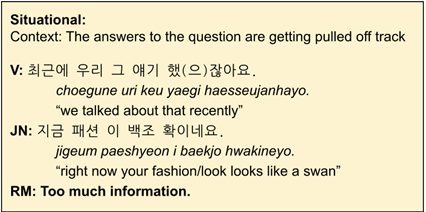
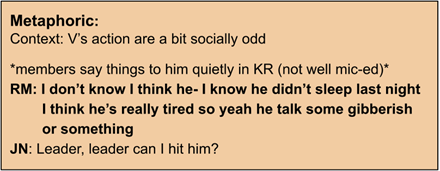
We then analyzed BTS’s rate of codeswitching and compared this to their album sales and song streams. We also categorized the switching as intrasentential, intersentential, and extrasentential as originally introduced by Poplack (1980). We additionally analyzed the type of code-switching in relation to Blom and Gumperz (1972) and Yohena’s (2003) categorizations: situational and metaphorical code-switching. Situational code-switching is based in situations where the speakers find that they speak one language in one situation and another in a different situation with no topic change. Metaphorical code-switching happens when there is a topic change (formal to informal, official to personal, serious to humorous, and politeness to solidarity). Finally, we analyzed the contextual motivations for code-switching using the frame of functions laid out by Holmes (2013).

We predicted that the frequency of code-switching would increase in reflection of their international career growth, and that their code-switching would grow in contextual complexity in relation to growing exposure to international environments. We further predicted that the contexts of code-switching would display more metaphorical use, too, as an indicator of their growing international group identity.

Results and Analysis

Before presenting our results, there are some confounders and limitations from our study that must be addressed. One limitation was our small sample size. This was a case study done for only one band and due to time limitations, we analyzed a small number of interviews. The conductors of this research are not native Korean speakers, so some of the code-switching analysis was aided by outlet provided subtitles, which could lead to mistakes due to cultural differences in the language and phrases that are used during Korean code-switching. Finally, band-wide analysis lacks granular specificity. It is difficult to draw causational lines in band-data, there being many extraneous variables, so although our study deduces a correlation, we cannot conclude causation.

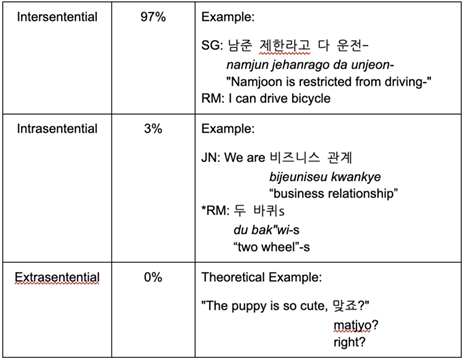
We began our analysis by looking at the structures in which code-switching occurred. We found that there was an overwhelming preference for intersentential code-switching, see Figure 1.

Figure 1: Table illustrating structural types of code-switching and the rate at which they appear in the data. Also included are example sentences from the data, exempting the theoretical example. Additionally of note is the singular instance of a word level/morpheme mix with the Korean NP and English plural morpheme -s

Interestingly, most intersentential examples were the result of turn-taking by the speaker. This points to the conclusion that most code-switching occurred independently and did not involve grammatical combinatorial structures. Typically, code-switching preferentially occurs intrasententially, as Koban (2013) confirmed with English/Turkish bilinguals. However, in this case, perhaps the semi-structured nature of interviews produces a preference for providing “complete” answers resulting in standalone sentence switches. Additionally, intersentential switching may be more accessible as they could have time to prep and foresight into normal interview questions.

In terms of the total lack of extrasentential switching observed, there are two primary possible causes. The first is that this form of switching – most often found in the form of tag questions – likely is more common in contact situations, as well as in situations where the languages occur in a more balanced distribution and particularly productive phrases remain active across both languages, which, due to the language imbalance observed in BTS, is less likely. The second possible cause is the interview format, which is not conducive to the use of tag questions.

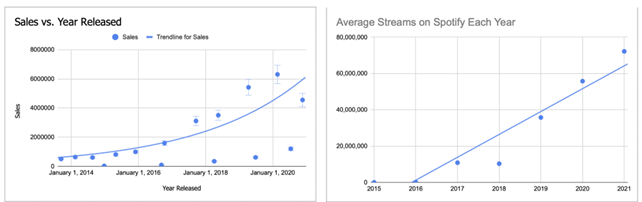
We next compared the rate of code-switching that BTS engaged in throughout their career in relation to their album sales and streams. Firstly, we found that BTS’ popularity grew exponentially over the years we studied. We compared their sales over time and the amount of their streams of Spotify over time and both showed a clear increase, as shown in Figure 2.

Figure 2: BTS’ record sales over per release as well as their average streams on Spotify per year

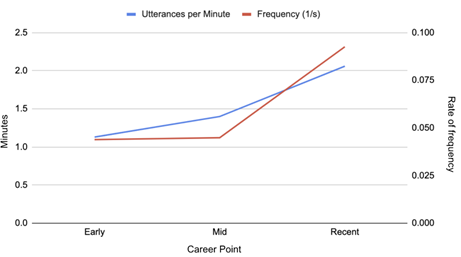
This was directly proportional to another criteria we considered that calculated the amount of English utterances the group produced per minute. There was a similar exponential increase with 1.13/min. in their Early era, 1.40/min. in their Mid era, and 2.06/min. in their Recent era, shown in Figure 3. This increase was directly proportional with the impact of their music and, therefore, their brand, strongly suggesting that their use of code-switching is related to their popularity and global exposure.

Figure 3: English utterances per minute across the three time periods as well as the frequency 1/s of the code switches across the time periods

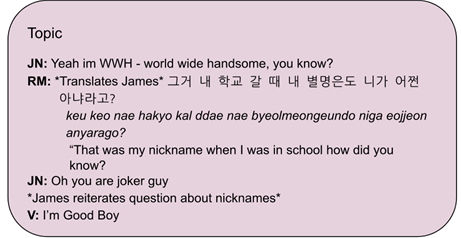
Additionally, we looked at the styles of code-switching that the band engaged in utilizing the framework of situational and metaphoric switching. The data samples found in Figures 4 and 5 are examples of these switches.

Figure 4: An example of situational code-switching note that RM uses a switch to English to recenter the interview’s social context on the interview and transition to the next question [BTS Answer the Web’s Most Searched Questions: 2:50 – 2:54]
Figure 5: An example of metaphoric code-switching. Note that RM transitions more strongly than in figure (4) in social position from fellow to leader and on-screen translator to repair the socially awkward/non-answer by V, and to create distance between himself and V’s display [BTS Chats to Andy Trieu at SBS PopAsia HQ: 2:52 – 3:08]
Interestingly, the two examples are relatively similar. The defining feature between these two are the stances conveyed. In the situational switch, RM is stopping the Korean conversation to transition the conversation to a new topic and it is directed at the members to refocus them. In comparison, the metaphoric switch conveys both emotional distance from V, as well as a shift in his attention and language goal from being a team-member to the leader, so there is a social position change conveyed as well. Additionally, Jin acknowledges RM’s switch, displaying solidarity by making a joke also in English, targeting V’s “weird behavior.”

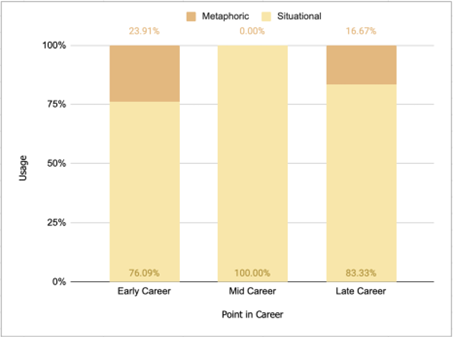
In our comparison of situational vs. metaphoric switching over their career, we found that there was a strong preference for situational code-switching, as seen in Figure 6.

Figure 6: The percentage of use for both metaphoric and situational code-switching in relation to BTS’ early career, mid career, and late career. Interestingly there was no metaphoric switching found in their mid career

Our data shows a general preference for situational switching overall and unexpectedly very little change in metaphoric switching. Metaphoric switching remained consistently low, even dipping to 0% in their mid-career. However, this may be due to the interviews that were analyzed for this period. This was unexpected, however, metaphoric switching is more indicative of a speaker’s internal world, or how they situate themselves in a social interaction, which lends itself to more advanced multilingual speech – this may require a higher English proficiency to be used strategically than many BTS members currently possess. This can be corroborated by the fact that many of the metaphoric switches observed were performed by RM, who is fluent in English, and the most balanced and practiced bilingual of the group.

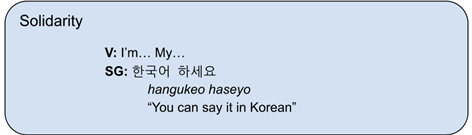
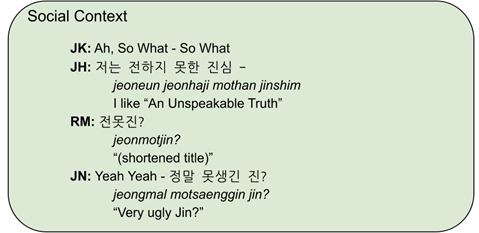
The final aspect of code-switching that we analyzed was Holmes’ influencing factors, which can be defined as

  1. Participant: motivated by a change in the participants or goal receiver of utterance
  2. Solidarity: signaling shared group membership
  3. Social Context: motivated by a change in the social dimension of conversation
  4. Topic: motivated when a specific topic is more accessible in one language

The data samples found in Figure 7-Figure 10 provide examples of these different influencing factors.

Figure 7: An example in which RM code-switches as the goal receiver of the sentences changes from James Corden to the rest of his members. [BTS Carpool Karaoke: 8:01 – 8:05]
Figure 8: Suga, recognizing V’s struggles, switches to Korean to show solidarity with V as a fellow Korean speaker and member. [BTS Reveal Their Hidden Talents, Impersonate Each Other, and Reveal Their Celebrity Crushes to Andy Trieu: 2:14 – 2:20]
Figure 9: J-Hope switches to Korean to say his favorite song on the album, after joking with the puppies about the title track; it is a reaction to the socially more formal question. Interestingly this triggers the other members to switch to Korean and continue joking. (Jin’s comment is a play on words that sounds like the shortened version of the title RM uses to confirm with J-Hope) [BTS Plays With Puppies While Answering Fan Questions: 1:49 – 1:57]
Figure 10: Unlike the last example in Figure 7, where RM’s translation and subliminal signal that a switch to Korean is fine, the conversation continues in English, as some members have specific nicknames. This is a topic that they are more comfortable discussing in English [BTS Carpool Karaoke: 5:15 – 5:36]
In our analysis of our data, we found that complexity actually decreased somewhat from their early career to their mid/recent career as seen in Figure 11.

Figure 11: Comparisons in the different influencing factors that affected BTS’ code-switching throughout their career

Moreover, the complexity of code-switching exhibited in their mid and recent careers did not show the same distribution of influencing factors – with notable shifts in the prominence of Social Context and Participants. This could be due to the style of interviews, as well as growing sensitivity to interacting with English-speaking interviewers/hosts. However, the decrease in overall complexity from their early career points to a relatively consistent pattern of code-switching in terms of broad contextual influence.

Discussions and Conclusions

In recent years K-Pop has undergone a surge in popularity and groups like BTS have begun to code-switch more to relate with fans. With English being a lingua franca, we analyzed the code-switching between Korean to English from BTS. Some unexpected findings were that metaphorical switching did not increase as they began to grow. Originally, we thought that metaphorical switching would increase, but this was not the case. BTS displayed a preference for situational switching and there was little change in their metaphorical usage. We also believed that their code-switching would grow in complexity as they gained greater exposure to international environments, but this was not the case as per our research. This data is significant because it provided a greater insight into code-switching and how L2 language learners switch more in a certain style than others. It may also demonstrate that outside pressure to use an L2 language – in this case English – may not have as much effect on the actual surfacing of this language in use.

We found that most intersentential examples were member-by-member, which suggested that code-switching in this case was a standalone feature in the languages. We typically have seen new language learners start from intrasentential code-switching. This could be true for some learners, but perhaps intersentential sentences are sometimes simpler in structure and less complex. They are used in isolation, so it is easier to remember, and these types of sentences are used in everyday conversations so they are easier to pick up. So, complex mixing may be less frequent amongst BTS due to this reason, as more complicated structures require more advanced knowledge of the language. Such limited access to L2 can shape a language learner’s usage of metaphoric language as well, since it requires more proficiency in the language. Learners may struggle to use and understand metaphorics efficiently as they cannot comprehend the nuances such as with cultural references or ties. Since BTS is a Korean group, the cultural aspects of code-switching also bring in further struggles when attempting to switch to English, predominantly American English.

In conclusion, the code-switching for BTS was mainly intersentential, as the data demonstrated. There were clear preferences for intersentential code-switching over other types. We believe that this was due to the fact that the group is not very proficient in English. Based on the data that we collected, BTS code-switching has stayed relatively constant throughout the years, further illustrating the fact that they had a preference for the type of switching they use. Generally speaking, groups code-switch with friends and family when they are most comfortable. These groups may also code-switch to impress others or to send a different perception of themselves to a larger audience. Having the group code switch amongst themselves could have helped gain further attraction among fans. Meanwhile, code-switching would have also been used to convey their English skills, as it is an important language to learn in the fields of business and music.

There was an increase in overall code-switching as the group grew in international popularity. This makes sense, as they have to spread to keep up with demand. Due to this, corporations tend to gravitate to these markets where they can capitalize the most. From this standpoint, it makes sense as to why groups like BTS code switch to English rather than another language, or why their prevalence is so large among English-speaking nations and across the world. However, with the rising popularity of K-pop and Korean culture internationally, too, there has been a spike in Korean language and culture studies, so perhaps there will be a lessening of overt pressure to perform multilingualism in the future. Overall, it appears that the usage of English has aided BTS’ popularity; however, it may not be as definitively related to their success in the international music industry as we assumed.

While there were certain limitations to our study, as mentioned previously, in the larger phenomena of linguistics and bilingualism with its relation to code-switching, the data and analysis we had created could be important for future work. Future research could focus on the effects of code-switching on BTS’ audience and their reactions to it rather than how often they code-switch and why, encompassing whether or not the perception of code-switching amongst fans enhances or detracts from their appreciation of the music. On a similar note, we could also analyze the cultural implications of code-switching and how it impacts Korean culture on a global scale. This data can help future researchers better understand code-switching and its impacts on an audience relating to global sales, popularity, and positive outlook.

References

Ahn, H. (2021). English and K-pop: The case of BTS 1. English in East and South Asia, 212-225.

Blom, Jan-Petter, and John Gumperz. (1972). “Social Meaning in Linguistic Structures: Code Switching in Northern Norway.” In: John Gumperz and Del Hymes (eds.): Directions in Sociolinguistics:Sociolinguistics: The Ethnography Communication, 407-434.

Holmes, J. (2013). An Introduction to Sociolinguistics (4th ed.). Routledge. https://doi.org/10.4324/9781315833057

Kirkpatrick, A. (2011). English as an Asian lingua franca and the multilingual model of ELT. Language Teaching, 44(2), 212-224. DOI:10.1017/S0261444810000145

Koban, D. (2013). Intra-sentential and Inter-sentential Code-switching in Turkish-English Bilinguals in New York City, U.S. Procedia – Social and Behavioral Sciences, 70, 1174–1179. doi:10.1016/j.sbspro.2013.01.173

Luthfiyani, F. (2014). Code-switching and Code Mixing on Korean Television Music Show After School Club (thesis). UIN Syarif Hidayatullah Jakarta: Fakultas Adab dan Humaniora, Jakarta.

Nilep, C. (2006). “Code-switching” in Sociocultural Linguistics. Colorado Research in Linguistics, 19. https://doi.org/10.25810/hnq4-jv62

Octaviani, Andita Dyah & Yamin, Haruki Manik Ayu. (2020, July 30). The Rise of English Among K- Pop Idols: Language Varieties in The Immigration. Proceedings of the International University Symposium on Humanities and Arts (INUSHARTS 2019), 117-121. DOI: 10.2991/assehr.k.200729.023

Parc, J., & Kim, Y. (2020). Analyzing the reasons for the global popularity of BTS: A new approach from a business perspective. Journal of International Business and Economy, 21(1), 15-36.

Poplack, S. (1980). Sometimes I’ll start a sentence in Spanish y termino en Español: Toward a typology of CS. Linguistics 18, 581-618.

Shin, S.I. & Kim, L. (2013). Organizing K-Pop: Emergence and Market Making of Large Korean Entertainment Houses, 1980–2010. East Asia 30, 255–272. DOI: 10.1007/s12140-013-9200-0

Yohena, S. O. (2003). Metaphorical code-switching revisited. (Vol. 38, pp. 138–158). essay, Ferris University.

[/expander_maker]
, , ,

Code-switching and Conversation Consistency: How Bilingual Speakers Code-switch to Communicate Effectively

Danbi Jang, Louise Chen, Katherine Escobar, Alena Hong

Bilingual speakers code-switch for conversation consistency. Code-switching is more effective when describing cultural words with only that language and when both speakers are in an argument situation because code-switching increases conversation compatibility. Our research looked at the Kim’s Convenience Season 1 show and analyzed the Korean-Canadian bilingual family code-switching pattern. We analyzed Kim’s family’s conversation and found that intra-sentential code-switching is the most frequent type. Additionally, we realized that the function of each code-switching frequently happens for expressing identity, objectification, interjection, and clarifying repetition. The results showed that bilingual code-switching is necessary and efficient between two bilingual speakers when they intend to create connections with each other or solve problems. As a result, code-switching creates smoother conversations for bilingual speakers so they rather naturally mix two languages than only talking in one.

[expander_maker id=”1″ more=”Read more” less=”Read less”]

Introduction and Background

If you are a bilingual speaker, you must code-switch at least once. Bilingual communities frequently use code-switching. It has become a powerful communication tool for expressing and developing language skills. Code-switching is the process in which a bilingual (or multilingual) person alternates between two (or more) different languages in a bilingual (or multilingual) communication environment. There are several reasons bilinguals do code-switching. According to past research by Stępkowska (2022), bilingual people may demonstrate dissimilar verbal behavior in their two languages. Interlocutors perceive languages differently depending on their language in a given context. Additionally, attitudes toward languages permeate daily life and impact communication patterns within the couple (ibid.). Based on past research, we were curious whether bilingual speakers are more compatible than speakers who do not code-switch. According to another research, code-switching gives “a built-in sensibility that conversational regularities are both content-independent and context-sensitive” (Dumanig et al., 2015). Therefore, our research question is how bilingual speakers code-switch to communicate effectively. We mainly focused on Korean-Canadian bilingual speakers’ families and close friends, as well as investigated how Korean-English bilingual speakers code-switch to communicate effectively in complicated discussion situations and daily life.

Methods

We mainly collected data from the show Kim’s Convenience, season 1. We observed code-switching in bilingual speakers, how frequently they switched, and what purpose and function the code-switch served to communicate with other bilingual speakers in conversations. We attempted to provide transcriptions of specific examples of code-switching. We analyzed the type of code-switching primarily in categories of Inter-sentential, Intra-sentential, and Extra-sentential code-switching. We defined Inter-sentential code-switching as the language switch done at sentence boundaries, like sentences before, in the middle, or after another sentence. In our data, we have mostly seen this type of code-switching in fluent bilingual speakers. Intra-sentential code-switching is done within the sentences, with no pauses or interruptions to indicate a shift. The speakers in the show usually switched this type when they called Korean appellations, or greetings within part of the sentence. Finally, we found extra-sentential code-switching, which is switching a slang or a single word from one language to another (ESEN, 2022). In addition, we defined culturally related words or phrases such as 갈비찜(galbi-jjim) and those expressing feelings and interjections as extra-sentential code-switching.

Furthermore, we investigated the functions and purpose of code-switching and how the speakers resolved their disputes and communicated well based on the context of conversations. We classified the functions of code-switching into four which are interjections, objectification, clarifying repetition, and expressing identity. Then, we focused on examining when the bilingual speakers use code-switching to communicate more effectively in the conversation. Also, we quantified whether the data retrieved from the show conveyed more compatibility and resulted in conflicts resolved by observing any frequent types of code-switching and different functions of code-switching in speech patterns of the show. We hypothesized that code-switching plays a different role in each context, helping promote effective communication.

Results and Analysis

From the data we collected, we observed that code-switching is a highly-efficient communication tool for the Korean-English bilingual Kim’s family. At the same time, there are several talks taking place in between the monolingual speaker and the bilingual speaker. In the same way that code-switching helps bilinguals solve problems more easily and quickly in situations where there might be an argument, misunderstandings tend to last longer and occur more frequently in monolinguals because they cannot do code-switching. For instance, in episode 7 from 18:15-19:13, there is a good example of a monolingual and bilingual argument about Taekwondo and Hapkido that doesn’t go smoothly. Here we include a shortened version of the script.

Mr. Kim:  wah you know 태권도(Taekwondo)?

Customer:  Not really but I’m a big fan.

Mr. Kim:  They have 태권도 (Taekwondo) in Africa?

Customer:  oh yeah! Somalia won silver at the 2003 international open.

Mr.Kim:  wow impressive! You don’t look Somalian.

Customer:  No I’m not. This is just a Taekwondo fact.

Mr. Kim:  태권도(Taekwondo) is Korean.

Customer:  I know.

Mr. Kim:  I am a Korean

Customer:  I know.

Mr. Kim:  합기도(Hapkido) is Korean too!

Customer:  Hapkido?

Mr. Kim:  Yea but the much better fight style! Choi he invited 합기도(Hapkido) while serve in the military in Japan.

Customer:  So.. in a way it could also be considered as Japanese martial art.

Mr.Kim:  No! (angry face) You joking me?

Customer:  no… I just meant… Taekwondo was invented by Korean too?

Mr.Kim:  Of course Korean!

Customer:  I didn’t realize Korean was that strong!

In this case, Mr. Kim and the monolingual customer have a small fight because the customer does not truly know about Taekwondo or Hapkido, but he thinks he does. So, the original topic was to discuss a group of children learning Taekwondo, but due to the misunderstanding, Mr. Kim needs to expand more about Taekwondo and Hapkido knowledge. In a way, it implies that there is a higher chance for monolingual speakers to have misunderstanding or misapprehension thus reducing the consistency of the conversation. When the same situation happens on two bilingual speakers, they don’t need to stop and explain the content of their code-switching. According to Brezjanovic-Shogren (2002), code-switching “establishes a connection between the contributions of the participants thus making the conversation coherent. Considering participants are always “talking about something”, focusing on the “description of the topic” will answer directly what is the topic of the conversation.” This suggests that code-switching helps speakers stay on a certain topic and creates consistency for the conversation. Thus, there is a positive relationship between code-switching and communication.

There are three types of code-switching, intra-sentential, inter-sentential, and extra-sentential. To our surprise, intra-sentential is far more numerous than the other two types (See Fig.1). This is because inserting another language phrases or words is more natural and simple than whole sentences. A significant number of these intra-sentential data come from Korean appellations, such as 아빠(Dad), 엄마(Mom), 아줌마(Auntie). The transformation of the titles into Korean reflects the function of code-switching in expressing identity and establishing connection. Prihatin (2018) proves that code-switching occurs to express identity when an individual wishes to express solidarity with a social group. According to the statistics (See Fig.2), this function is the most common one, accounting for 77.7 percent. There are also three other major roles of code-switching, namely, objectification (11.5%), interjection (7.4%), and clarifying repetition (3.4%). Code-switching uses for objectification can quickly help speakers get a more concrete image in their mind about the topic. Because this function is often present on culturally relevant code-switching, it can often be classified as the extra-sentential type. For example, Mr. Kim says Korean 합기도 (Hapkido) instead of English pronunciation Hapkido in episode 7 where the conversation takes place between him and his bilingual daughter, Janet. Because Hapkido is a Korean traditional activity, Mr. Kim wants Janet to quickly recall what 합기도(Hapkido) is and all the information related to it. This is where the advantage of code-switching comes in. Sometimes people code-switch to interrupt someone, this is the function called Interjection, doing so helps get attention or start a new topic. In other cases, code-switching is able to emphasize or reaffirm the topic when the speaker does clarifying repetition (See Appendix).

Fig. 1. Frequency of each type of code-switching in Kim’s Convenience
Season 1


Fig. 2. Percentage of each function of code-switching in Kim’s Convenience, Season 1

Discussion and Conclusions

The findings from our study contributed to our understanding of interpersonal communication, more so how to make communication more effective through the use of code-switching. Our data suggests that code-switching occurs as a way to fulfill a purpose in communication such as expressing identity through the ability to relate to cultural values and strengthen relationship bonds. Additionally, through other functions such as objectification, repetition, and interjections, it improves communication by clearing any misunderstanding for phrases that do not translate well into the dominant language. In a similar field of research, Helena Merschdorf presented a TED Talk about the paradox of intercultural communication. Her studies suggest that there are invisible understandings, where biases from our primary language and culture can cause misunderstandings and misconstrue due to societal norm differences (Merschodorf, 2022). In the case of Kim’s Convenience, we found that code-switching occurred to address these societal differences. As the show was based in Canada, the respectful terms don’t translate with the same cultural significance so characters would code switch in order to express their Korean identity, avoiding an invisible understanding of potential disrespect or disregard for their Korean heritage. For example, in episode 8, the context surrounds a neighborhood pastor for Koreans, though all are welcome. The pastor is very close with the Kims as he is a frequent patron at the convenience store, but because he takes advantage of his important and influential role at the church, he believes he can get away with taking gum without needing to pay anything. The Kims are obviously worried because the continual free gum will begin to add up once rent is due, or Pastor Choi could begin to take something of greater value should he get comfortable not paying. Mrs. Kim did not want to let this continue, so she code switches and says “목사님 (Moksanim) I think we cannot…” (E8, 20:41). The purpose of this code switch was to express their Korean identity by using a formality to show respect to Pastor Choi despite telling him something that he probably would not like to hear. Because the formality does not translate in English, the code-switch in this instance eliminates a misunderstanding of disrespect as Mrs. Kim did not want to let the pastor continue misunderstanding their kindness for generosity.

Originally, our focus was to explore if code-switching would make communication more effective in couples that are in an argument. What we ended up studying was the types of code-switches and the instances in which they occur. By isolating four different purposes for the code-switch, we unveiled that by serving one of those purposes, code-switching was used to prevent miscommunication or to find a way to clarify true meaning despite a language barrier. As Merschodorf (2022) suggested, a way to prevent misunderstandings is to take into account the different linguistic knowledge from other cultures before communicating. By doing so it would prevent any marginalization or discriminatory language. This could be done through “pidgin” languages such as Konglish or Spanglish, where combining two languages that were stripped to the simplest forms, may serve as a means to accommodate both parties in a conversation in a way that keeps all cultural identities intact. Though marginalization can be perceived as a phenomenon usually concerned with targeting an individual’s identity, excluding someone through unfamiliar words and phrases without considering their needs can also be a form of marginalizing. Code-switching can then resolve this issue by allowing speakers to clarify what their true intending may be in an inclusive manner. This could be seen in episode 9 of Kim’s Convenience, where this episode follows interactions between Pastor Nina and Mrs. Kim. Mrs. Kim was dealing with embarrassment over her son’s Jung intimate relations with someone from the church, so when Pastor Nina said she heard something about Mrs. Kim, her mind was worried that there was gossip about how sexually active her son is though Pastor Nina was talking about 갈비찜, the meat dish galbi-jjim (E9, 10:03). Her attempt to code switch was to affirm and create a closer relationship with one of her church regulars, Mrs. Kim, by relating to her culture and being inclusive of the Korean language. Additionally, she asks Mrs. Kim if her pronunciation was correct, showing that she is eliminating an egocentric bias of assuming she was correct, and actively seeks feedback from Mrs. Kim as she recognizes that she is unfamiliar with Korean linguistic culture. Overall, our findings uncover that code-switching in a broader context serves to prevent misunderstandings as a result of a language barrier, through the fulfillment of communication purposes such as expressing identity, objectification, repetition for clarification, and interjections for emphasis. Without such purposes in mind, perhaps code-switching might not have an influence on the quality of communication between speakers as misunderstandings could occur without the clarification and inclusivity that code-switching can elucidate.

References

Brezjanovic-Shogren, J. (2002). ANALYSIS OF CODE-SWITCHING AND CODE-MIXING AMONG BILINGUAL CHILDREN: TWO CASE STUDIES OF SERBIAN-ENGLISH LANGUAGE INTERACTION. Wichita State University, 1-82. https://soar.wichita.edu/bitstream/handle/10057/5051/t11060_Brezjanovic%20Shogren.pdf?sequence=3&isAllowed=y

Choi, I., Kohler, R., White, K., dirs. Kim’s Convenience. 2016; Ottawa, Ont.: Canadian Broadcasting Corporation (CBC). Netflix. https://www.netflix.com/browse?jbv=80199128

Choi, I., Kohler, R., White, K., writers. Kim’s Convenience. Season 1, episode 7, “Hapkido.” Directed by Dawn Wilkinson, featuring Paul Sun-Hyung Lee. Aired November 22, 2016, in Canadian Broadcasting Corporation (CBC). https://www.netflix.com/watch/80236367?trackId=14170289&tctx=2%2C0%2Cb8235341-19ea-4083-9317-21b3f05687f2-7917841%2CNES_EDA12732B35623D7FB1CFDD00F5D6A-B9F225DDE3A711-4A0417714B_p_1679516526251%2C%2C%2C%2C%2C80199128%2CVideo%3A80199128

Choi, I., Kohler, R., White, K., writers. Kim’s Convenience. Season 1, episode 8, “Service.” Directed by James Genn, featuring Paul Sun-Hyung Lee, Jean Yoon, and Hiro Kanagawa. Aired November 29, 2016, in Canadian Broadcasting Corporation (CBC). https://www.netflix.com/watch/80236368?trackId=14170289&tctx=2%2C0%2Cb8235341-19ea-4083-9317-21b3f05687f2-7917841%2CNES_EDA12732B35623D7FB1CFDD00F5D6A-B9F225DDE3A711-4A0417714B_p_1679516526251%2C%2C%2C%2C%2C80199128%2CVideo%3A80199128

Choi, I., White, K., writers. Kim’s Convenience. Season 1, episode 9, “Best Before.” Directed by James Genn, featuring Jean Yoon and Amanda Brugel. Aired December 6, 2016, in Canadian Broadcasting Corporation (CBC). https://www.netflix.com/watch/80236369?trackId=14170289

ESEN, S. (2022). Code switching: Definition, types, and examples – owlcation. Code Switching: Definition, Types, and Examples. https://owlcation.com/humanities/Code-Switching-Definition-Types-and-Examples-of-Code-Switching

Merschodorf, H. (2022, June 17). The Surprising Paradox of Intercultural Communication [Video]. TED. https://www.ted.com/talks/helena_merschdorf_the_surprising_paradox_of_intercultural_communication?utm_campaign=tedspread&utm_medium=referral&utm_source=tedcomshare

Pietikäinen, K.,S. (2014). ELF couples and automatic code-switching. Journal of English as a Lingua Franca, 3(1), 1-26. https://doi.org/10.1515/jelf-2014-000

Prihatin, Y. (2018). CODE SWITCHING USED BY ENGLISH DEPARTMENT STUDENTS OF PANCASAKTI UNIVERSITY ON FACEBOOK. View of code switching used by English department students of Pancasakti University on facebook. https://journal.peradaban.ac.id/index.php/jdpbi/article/view/358/287

Yun, S. (2009). The socializing role of codes and code -switching among Korean children in the U.S (Order No. 3356438). Available from Linguistics and Language Behavior Abstracts (LLBA). (305085390).https://www.proquest.com/dissertations-theses/socializing-role-codes-code-switching-among/docview/305085390/se-2

[/expander_maker]
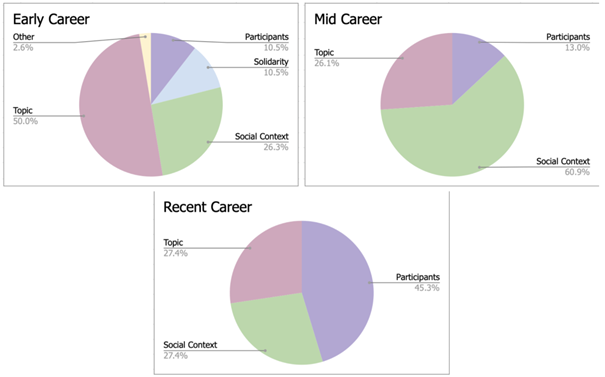
, , ,

너 Halloween costume으로 뭐 할 꺼야?(What are you going to do for your Halloween Costume?): Code-Switching Patterns in Korean-English Bilingual speakers

Sarah Bassiry (Sky), Michelle Chan, Seohyung Hong (Alena), Christina Jang, and Jasmine Miranda

Through media platforms and conversations bilingual speakers engage in, we unconsciously and frequently code-switch across languages. Yet, the lingering interpretation of how style-shifting is done in Korean-English speakers continues to be scrutinized. In this study, researchers investigated observable linguistic patterns across three contrastive Korean-English populations and examined their code-switching temperaments within both languages. Six participants engaged in casual conversations with a researcher and were audio recorded in order to gather sufficient evidence. The participants were then asked to complete a background survey and had a follow-up interview post experiment. Detailed analysis from this study revealed that there were distinct results amongst all participants with cultural topic types and amount of code-switching occurrences. These preliminary results show that some participants had more occurrences of intrasentential code-switching in discussions that were culturally/contextually related to the embedded language. The study highlights how code-switching can influence and is more affected by the speaker’s linguistic identity than the topic of conversation.

[expander_maker id=”1″ more=”Read more” less=”Read less”]

Introduction and Background

This study strives to investigate sociolinguistic patterns found in the code-switching of Korean-English bilingual college students, focusing on the frequency and cultural context of the code-switching as well as the type of code-switching utilized. Code-switching is defined as the capacity of multilingual to fluidly switch between several languages (Bullock & Toribio, 2009). The categories of code-switching types were interjections, intrasentential code-switching, and intersentential code-switching as defined by prior research in the field. Inter-sentential switching takes place in two different sentences with one sentence spoken in the primary language and the other one uttered in a second language; meanwhile, intra-sentential switching occurs within a sentence with a word specifically alternated to a second language (Mohamad Khalil & Mohd Shahril Firda, 2018). (1) and (2) below show examples of intrasentential and intersentential code-switching from the data recorded for this study.

  1. Intrasentential CS- example from Participant A (1:38~1:50)
Image 1: Example of intrasentential CS. Matrix Language: Korean; embedded Language: English

2. Intersentential CS- example from Participant A (1:51~1:58)


Image 2: Example of intersentential CS

The researchers followed the basis of the Matrix Language Frame Model (MLF) which holds the idea that code-switching has a matrix language and is the more dominant language that provides the morphosyntactic frame. Whereas, an embedded language is known as the language from which smaller elements are inserted (Myers-Scotton, 1933). Koban (2013) provides a detailed account of code-switching amongst Turkish-English bilinguals and has documented greater higher frequencies of intra-sentential code-switching as opposed to inter-sentential code-switching. This finding supports what the researchers hypothesize in this current study. Another implication the researchers examined was whether the participant’s language background and cultural background had any noticeable effect on their code-switching behavior. 

Methodology

A total of 6 undergraduate students (mean age 22.16 years) studying at the University of California, Los Angeles, participated in the experiment. The population targets three different Korean-English bilingual college students  (1st gen. Korean-Americans[A, B], 1.5 gen. Immigrant Korean/Korean-American [C, D], & Korean international students studying abroad in the U.S.[E, F]). The experiment was conducted through spontaneous casual-style speech in a one-on-one format with the researchers and was audio recorded. Upon completion of the experiment, relevant background information was collected from the participants through a background survey (age, country of birth, age of exposure to both languages, comfort language) and a follow-up interview with questions facilitated by the researchers. Researchers transcribed and translated applicable segments of the recorded material and then analyzed linguistic patterns in code-switching occurrences as well as findings tailored to sociolinguistic occurrences. The experiment per participant lasted an average of 30 minutes.

Results and Analysis

Figure 1: Intersentential vs. Intrasentential

We found a two-way effect with intra vs. intersentential and the number of CS occurrences. This effect revealed that participants showed higher frequencies of intrasentential code-switching as opposed to intersentential which holistically supports what the researchers expected (see Figure 1). Participants A, B, C & F used this intrasentential shift in the middle of their sentences and without hesitation. This denotes a shift between Korean and English and shows that these participants are almost if not always unaware of the shift in this language (see Figure 2).

Figure 2: Intra-sentential CS occurrences

The most eye-catching result from Figure 2 reveals that Participant A showed no occurrences of code-switching as the matrix language being English, even though this same participant notated that his dominant language was English in the survey.

Figure 3: Interjections
Figure 4: No interjections

Figure 3 compares the CS occurrences according to the cultural relevance of the topic including intrasentential, intersentential, and extra-sentential occurrences. We can see from Figure 3 that participants B and C, showed more CS occurrences for culturally neutral topics which went against our hypothesis that people with code-switch more in topics culturally relevant to the embedded language. Even when excluding interjections, which we thought would less be influenced by the cultural relevance, we can still see such a result remains the same in Figure 4.

So for participants B and C, we underwent an additional in-depth analysis to see how their linguistic background influenced their CS behavior.

A comparison of participants A and B’s observed code-switching as well as their self-reported views of code-switching provides insight into the conscious and subconscious factors affecting their code-switching behavior and choices regarding their language use. Both where born and raised mostly in the USA and also expressed being most comfortable code-switching when speaking with other Korean-American friends.  Prior research suggests that among bilinguals with social profiles including the identities related to both languages, code-switching may become the unmarked choice (Myers-Scotton, 1993), which seemed to be the case for some of the data examples we found in A and B.

Image 3: Participant A’s Unmarked CS Behavior (28:55~29:46)

Looking at the data example in image 3, participant A uses the English word “tutoring” for his first utterance even though the question was phrased in Korean. This could be attributed to him being less familiar with the Korean word “과외” but at the same time, it could also be because he uses CS as an unmarked linguistic choice. Also for his second utterance, it is notable that he lists two of the sports name in English but the latter two in Korean; obviously it isn’t that he doesn’t know the word “Soccer” and “Basketball” in English, rather he seems to be code-switching this time more unconsciously. The in-person interview revealed that he himself thinks he code-switches so often that it is almost second nature to him. So the CS occurrence in this excerpt is an example of CS being an unmarked choice.

Image 4: Participant B’s Unmarked CS Behavior (14:20~14:40)

In participant B’s data example in image 4, it is worth noting that the part “wanted to do like” is repeated both in English and Korean in the intersentential CS with a change in the matrix language. This could potentially be a piece of evidence that for participant B, CS is such an unmarked choice that he would unconsciously switch the matrix language to Korean even though Halloween, being a culture-specific event, would be more easily expressed in English.

However, at the same time, the in-person interview revealed that participant A and B showed a difference when it came to the need to intentionally use more Korean.  Participant A mentioned that “a Korean should be able to speak at least a decent level of the Korean language” (translated from Korean), which accounts for his intrasentential CS occurring mainly as Korean as the Matrix language. This also relates to the larger concept of a diaspora factor which adds an additional layer to bilingualism as “diaspora identities combine multiple points of identification, thus embodying and asserting how diversity and difference are lived and experienced as a process of entanglement” (McKittrick, 2009). Mills (2005) also discussed how in their 2001, 2004, and 2005 studies they found that in their target population of British-Pakistani bilingual diaspora that “the heritage language represents the community as being a crucial identifier and bond to the immediate and wider diasporic group (and that) their languages where crucial for maintaining their sense of identity as being both British and Pakistani” (Mills, 2005). While there are of course differences between each diaspora community, this theme of diaspora navigating their identity between cultures and the close connection to identity and community that languages tend to have for members of this type of community has shown up in many past studies on diaspora populations. The 1st generation Korean-American bilinguals (A and B) where the only subgroup in our study where both participants of that background showed frequent occurrences of code switching.  Given the nature of diaspora populations and the results found in our study, our findings seem to support a conclusion that for Korean-Americans, code-switching is generally the unmarked choice and often used to index their Korean heritage as well as an in-group identity of being between two cultures as part of the Korean diaspora in America. Though Participants A and B had similar frequencies of code-switching overall, Participant A’s follow-up interview responses expressed a more conscious intention to index his Korean heritage as well as an in-group identity of being between two cultures as part of the Korean diaspora in America. Participant B on the other hand stated in the follow-up interview that he does not really feel the need to intentionally speak more Korean possibly attributing to his higher level of fluency and a longer period of studying the Korean language. Interestingly, Participant B actually had the highest rates of overall code switching, further showing how code -switching tends to be the unmarked choice within bilinguals whose identity is linked to both of their languages, such as bilinguals who are part of a diaspora population.

For participant C, she used English as the dominant language in the culturally relevant topic, Halloween, as opposed to the culturally neutral topic, buying tickets for a game, which shows that the American-culture-oriented topic did affect her linguistic behavior. However, at the same time, she showed fewer CS occurrences for the culturally relevant topic, which can be explained by her motivation for CS being a lack of proficiency in English for certain words which would occur regardless of the topic.

Another result noticeable in Figure 1 was that participant D and E did not show any occurrences of CS at all. In the interview, participant D said that even if the person they were speaking with was a Korean-English bilingual, he would consciously not code-switch if the topic was serious because there would be the need to convey his intentions in a more clear-cut manner through his native language, which seemed to be the case for the 40-minute conversation recorded.

On the other hand, the participant’s usual frequent use of CS with the interviewer and his response that he feels the need to consciously speak more English in the States to improve his English-speaking skills implies that CS is a marked linguistic choice for him to index his identity as a more fluent English-speaking international student in a community where the majority of the people speak English as their mother tongue. This relates to the social status of English in Korean society. In Korea where western countries, mainly the United States, are viewed as “superpowers” due to political and historical reasons (Cho, 2021). English has been shown to be greatly publicized and commonized especially in educational institutions (Choi & Kim, 2021). In other words, speaking English fluently symbolizes higher social status thus it developed an advanced elite image. It has been observed that bilingual immigrant families in the US are experiencing linguistic discrimination in that they have accents when speaking English which is labeled as broken and unintelligent (Tedx Talks, 2018, 2:30). It may explain the motivation of participant D trying to intentionally speak more English as he can to purposely present an international bilingual elite image.

Participant E responded that she would avoid code-switching to English when talking with native Korean speakers even if they were fluent in English. It has been observed that code-switching can be regarded as showing off when the interlocutors have unequal language proficiency (Fangzhe, 2019). In order to prevent being interpreted as bragging about her language ability, participant E intentionally avoids code-switching. Thus to her, CS was shown to be the marked linguistic choice and the markedness entailed a more negative connotation as a person who feels the need to “show off” their English or seem more “American”. And through this linguistic behavior, she may be able to feel a sense of belonging with her immigrant friends whose dominant language is Korean.

Thus both participants showed that the agency of the speaker to index (or not to index) a certain identity intervenes in the choice of an absence of CS, which aligned with our analysis for participant A, B, and C.

Additionally, the 1st generation immigrants tended to show more CS occurrences compared to international students which relate to how in previous studies it has been proven that language was affected by people’s aspirations, stances, and attitudes (Tedx Talks, 2014, 11:05). In other words, the linguistic behaviors of the participants would be affected not only by their current community of practice but also by the in-group they expected themselves to be placed in the future. So for the former group, because they aspired to stay in the States for the rest of their lives, they would be frequently exposed to a  linguistic environment in which CS would be the unmarked choice such as with  their college Korean American friends or with their family. For the international students, they would only be staying in the States for less than a year, after which they would return to South Korea where CS would generally be accepted as a marked choice even sometimes with negative connotations.

Conclusion

This experiment provided an opportunity for us to closely examine code-switching patterns in bilingual Korean-English speakers. The researchers pondered on observable linguistic patterns in three contrastive Korean-English populations in relation to code-switching behaviors. Thorough analysis of the findings indicates different relationships between linguistic behaviors and sociolinguistic identities. The overall analysis from this study reveals that code-switching is in fact more affected by the speaker’s linguistic identity rather than what topic is being conversed. The findings provide sufficient evidence that people index code-switching as part of the in-group identity and thus accepting code-switching as an unmarked choice would produce more code-switching occurrences comparatively to those who code-switched to index a marked linguistic pattern.                   


References

Bullock, B., & Toribio, A. (2009). Themes in the study of code-switching. In B. Bullock & A. Toribio (Eds.), The Cambridge Handbook of Linguistic Code-switching (pp. 1-18). Cambridge University Press. https://doi.org/10.1017/CBO9780511576331.002

Cho, J. (2021). English fever and American dreams: The impact of Orientalism on the evolution of English in Korean society. English Today, 37(3), 142–147. https://doi.org/10.1017/S026607841900052X

Choi, Tatar, B., & Kim, J. (2021). Bilingual signs at an “English only” Korean university: place-making and “global” space in higher education. International Journal of Bilingual Education and Bilingualism, 24(9), 1431–1444. https://doi.org/10.1080/13670050.2019.1610353

Fangzhe. (2019, May 7). Code-switching: showing off? Educational Sociolinguistics. https://bild-lida.ca/educationalsociolinguistics/uncategorized/code-switching-showing-off/#:~:text=In%20this%20case%2C%20code%2Dswitching,that%20you%20are%20showing%20off.

Koban, D. (2013). Intra-sentential and inter-sentential code-switching in Turkish-English bilinguals in New York City, U.S. Procedia – Social and Behavioral Sciences, 70, 1174–1179. https://doi.org/10.1016/j.sbspro.2013.01.173

McKittrick, K. (2009). Diaspora. International Encyclopedia of Human Geography, 156–161. https://doi.org/10.1016/b978-008044910-4.00938-x

Mills, J. (2005). Connecting communities: Identity, language and diaspora. International Journal of Bilingual Education and Bilingualism, 8(4), 253–274. https://doi.org/10.1080/13670050508668610

Mohamad Khalil, S., & Mohd Shahril Firda, M. S. Z. (2018). Inter-sentential and intra-sentential code switching in parliamentary debate. International Journal of Modern Languages And Applied Linguistics, 2(4), 29–31. https://doi.org/10.24191/ijmal.v2i4.7691

Myers-Scotton, C. (1993). Common and uncommon ground: Social and structural factors in codeswitching. Language in Society, 22(4), 475–503. https://doi.org/10.1017/s0047404500017449

Tedx Talks. (2014, Nov. 21). TEDxDublin – Vera Regan – What your speaking style, like, says about you [Video]. YouTube. https://www.youtube.com/watch?v=jAGgKE82034&t=593s

Tedx Talks. (2018, July 25). TEDxWWU – Karen Leung – Embracing multilingualism and eradicating linguistic bias [Video]. YouTube. https://www.youtube.com/watch?v=S8QrGsxeEq8

[/expander_maker]
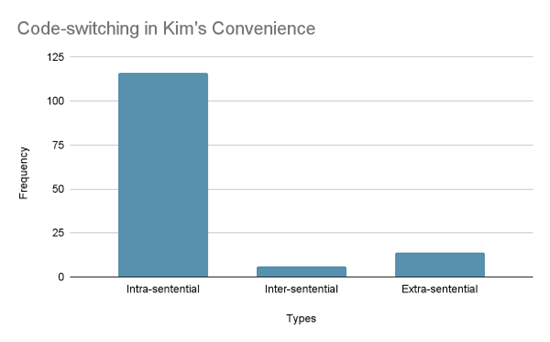
, , ,

Where are you from? I don’t know but did you ask the question in English? ¿o en Español?

Sarah Arjona, Yeeun Heo, Erika Yagi, Minyoung Yoon, Bryan Zhao

Have you ever imagined growing up next to the pyramids or the Eiffel tower? Some Third Culture Kids (TCKs) do so without being Egyptian or French, because they live abroad with their parents. Although extensive research has been done on code-switching, not a lot of this research has focused on code-switching in TCKs. This study explores the code-switching of Spanish English multilingual TCKs in formal and informal settings. To test our hypothesis that TCKs code-switch more often in informal settings among their peers, we conducted one-on-one interviews and a group activity with three tween and teen Spanish English multilingual TCKs over Zoom. We analyzed the frequency of their code-switching as well as the length of their code-switching. Our findings suggest that TCKs do code switch more often in the informal setting but it may not only be influenced by setting type but also by age and attitude.

[expander_maker id=”1″ more=”Read more” less=”Read less”]

Introduction and Background

If your parents are from Spain, but you grew up everywhere else like Zimbabwe and Vietnam, you would be considered a Third Culture Kid (TCK). TCKs are those regarded as growing up outside of their parents’ home countries as in the example above, and they are often known to be multilingual due to their diverse backgrounds (Barker & Moore, 2012; Bonebright, 2010; Pollock et al., 2017). There are currently over 230 million expatriates in this world, and many are accompanied by their children who would be considered TCKs (United Nations, 2019). TCKs can impart other important skills, such as adapting effortlessly to environmental changes, relating easily to other cultures, having strong communication skills, and being open-minded.


Although many of the TCK studies are conducted around English speakers, this research looks at Spanish speaking families, as Spanish is the language with second most native speakers in the world, surpassing English (Ahearn, 2021). However, while there are over 8000 English speaking international schools around the world, Spanish based schools outside of Spanish-speaking countries are not as accessible (Sharma, 2016). So how would they go about using their language skills, especially code-switching?

Code-switching is defined as interchanging among different languages in a speech (Ahearn 2021), or using one’s mental lexicon to a fuller extent. Code-switching occurs in both formal and informal settings (Jacobson 2002). Informal settings can be with friends, family and peers, and formal settings with strangers in structured settings (Jacobson 2002). Code-switching is often motivated by social factors such as the topic or the speaker’s attitude toward the topic, identity creation and solidarity (Myers Scotton, 1993; Van Herk, 2017).

Since TCKs are extremely adaptable, they may show some code-switching in both settings. Our hypothesis is that they are more likely to code-switch in an informal setting and more frequently so when surrounded by peers who share one or more languages.

Methods

Three TCKs, Maria, Juan, and Ana were recruited for this research. All three of them are multinational, but have at least one Spanish parent whom they speak Spanish with. Maria and Juan also speak French at home, whereas Ana speaks only English and Spanish. All three have attended English-speaking schools and are thus multilingual in at least English and Spanish. They are all TCKs as they have lived abroad for the most part of their lives, including in countries such as Ethiopia, Haiti, and Sierra Leone.

Figure 1: Information about participants

These three TCKs participated in two meetings, one formal and one informal setting. We used Jacobson’s definition of these settings, where the formal setting is defined to be with strangers in a structured, official environment, and the informal setting with friends and family (2002).

Formal Activity: One-on-one zoom interview (15 minutes)

TCKs were interviewed about themselves by a Spanish and English-speaking interviewer in both languages. The language in which the questions were posed alternated between English and Spanish and the TCKs were encouraged to answer in both languages. The purpose of this interview was to induce the TCKs to use proper nouns and speak of familiar experiences, providing them a situation to code-switch.

Informal Activity: Group Game Night (30minutes)

All three TCKs participated in a game night together, hosted by the same interviewer from the prior meeting. The game consisted of building two stories; one in English and one in Spanish as the matrix language. The task was to continue a single storyline by taking turns to say a part for 15 minutes in English and 15 minutes in Spanish. Students were given no further instruction about whether they could code-switch or not. This task allowed the participants to feel comfortable and enjoy the meeting, which we hypothesized initially would lead to more frequent use of code-switching.

Results/Analysis

To capture our results, we counted the number of code-switches in each interview and took note of the duration of each segment. This data is recorded in Figure 2 below. We also cataloged each instance of code-switching by noting its timestamp, duration, and verbal content.

Figure 2: Interview duration and code-switch count

We first analyzed our data by calculating the rate of code-switching per minute for each participant in each setting by dividing the number of code-switches by the length of time the participant spoke in the segment. Note that in the group interviews, each participant spoke for approximately the same amount of time. We also calculated the average length of each code switch, with the same segmentation. Figure 3 displays these findings below.

Figure 3: Rate and length of code-switching

During the individual interviews, Ana code-switched the most frequently out of the three participants, at a rate of 0.76 times per minute and an average length of 2 seconds per code-switch. Ana’s number of code-switches from English to Spanish and Spanish to English were about the same. However, her English to Spanish code-switchings consisted of almost exclusively filler words and discourse markers. For example, Ana would often say “Um..” in an English accent before continuing to answer her question that was asked in Spanish as in the examples below during her individual interview recording.

Moreover, she used English starter words such as “Probably…” and “Like…” before answering in Spanish. On the other hand, her Spanish to English code-switching included more meaningful utterances and lasted for a longer period each time. The Spanish to English code-switchings include words and even whole phrases to enhance her answer. Juan had two instances of code-switching during his individual interview, which were also filler words. Lastly, our third participant, Maria, did not code-switch at all during her individual interview.

None of the participants code-switched during the English group activity. The direct correlation for having more code-switching during the Spanish activity isn’t clear, but there are a few factors that can be discussed. The strongest factor might be that students are more comfortable with English in general. They also confirmed that English is their strongest language during the interview. Another may be because the interviewer herself did little to no code-switching throughout the whole study, at least not at a word level. Finally, the interviewer’s Spanish variety is different from the interviewees (which will be further elaborated under limitation), which may have an impact on the participants’ use of Spanish.

However, for each participant, both the rate of code-switching and the average length of a code-switch were greatest during the Spanish group interview. Ana, who code-switched the most compared to her peers during her individual interview, did so even slightly more often during the Spanish group interview at a rate of 0.77 times per minute. The length of her code-switching was also significantly longer during the latter interview, at 6 seconds on average compared to 2 in the former. Juan, who code-switched a few times during his individual interview, also raised his rate of switching during the Spanish group interview to 0.19 switches per minute, and the average length to 4 seconds per switch. Finally, even Maria, who demonstrated no code-switching during the other interviews, did have a number of switches during the Spanish group interview, at a rate of 0.38 times per minute. Interestingly, Maria also displayed the highest average length of a code-switch, at 8 seconds per switch.

Our hypothesis suggests that the individual interviews invoked less code-switching because they were more formal and were also the first time for the participants and the interviewer to meet and have a real conversation. The individual interviews consisted entirely of questions and answers, which limited free interactions with the interviewer and the interviewees. On the other hand, the group activity was more in the format of a fun conversation where participants spoke relatively freely and even interrupted each other to add and comment on things. Some of the reasons why they may not have code-switched as often during the individual interviews could be explained by other factors as well. Age may have played a role because our youngest participant, Ana, was the one to code-switch most often in both the formal and the informal meetings. Moreover, Juan, the oldest of the participants, acted as a facilitator throughout the group meeting to correct the other participant’s Spanish utterances. There was an instance where Maria struggled to find the Spanish word for ‘emotional’ and Juan stepped in to help and encourage Maria to say the corrected phrase.

Another instance was when Ana said “el cure” – using the masculine form for ‘the’ and then the English word “cure” – and Juan corrects her by saying “la cura” with the correct feminine form of “the,” correcting both her improper form of the article and her use of the English “cure.” Participant’s intentions and plans may also have affected the frequency of code-switching, as in the Ted Talk with Vera Regan (2014). Juan, who code-switched the least out of all three participants, plans to go to Spain in the future for college. His plans on moving to Spain may have had an impact on his view of the Spanish language, leading him to have a more practical take on the concept of language.

Discussion and Conclusions

By looking at TCKs in formal and informal settings, we observe their code-switching patterns, which is significant because it contributes to our understanding of TCKs as extremely adaptable and open-minded. The data supports our hypothesis that TCKs code-switch more in informal settings among their peers because participants code-switched more often in the group activity than in the one-on-one interviews. Additionally, there were correlations with age in that the oldest participants, Juan and Maria, code-switched the least and more at the phrase and sentence levels. The youngest participant Ana, on the other hand, code-switched the most and more at the word level. We also saw a correlation between less code-switching and attitude in the oldest participant, Juan, as he tended to code-switch the least. Juan made efforts to speak only either Spanish or English at a time and he guided the other two participants by providing the appropriate Spanish word when the other participants code-switched to English from Spanish at the word level. These behaviors may be attributed to Juan’s assumption of a facilitator role during the group activity, his practical view on language, and his future plan to live in Spain.

Future Directions

In order to further explore age as a significant factor in code-switching, the study can be replicated with different age groups. The focus would be on whether there are patterns between older participants and less code-switching as well as on the level of code-switching. Another direction the study can take is to compare code-switching across groups with different attitudes. For example, we could compare code-switching between a group of participants that have future plans to live in a Spanish-speaking country and a group that doesn’t have such plans. Lastly, the study can be expanded to compare across different varieties of Spanish, matching participants with interviewers that speak their variety of Spanish. This study focuses on speakers of a variety of Spanish from Spain. Future studies may expand into different varieties of Latin American Spanish as well as varieties of U.S. Spanish and more.

Limitations

 It is worth mentioning that although the interviewers and participants both spoke English and Spanish, they spoke different varieties of Spanish. While the participants spoke Spain Spanish, the interviewer spoke Los Angeles/Southern California Spanish heavily influenced by Mexican Spanish and Guatemalan Spanish varieties.

Additionally, most of the questions asked during the one-on-one interviews were yes/no questions. Another thing to consider is that the interviewer did not code-switch. All these factors may have affected the creation of a setting that allowed for a more spontaneous elicitation of code-switching.


References

Ahearn, Laura. 2021. Living Language: An Introduction to Linguistic Anthropology. Hoboken, NJ: John Wiley & Sons.

Barker, G. G., & Moore, A. M. (2012). Confused or multicultural: Third culture individuals’ cultural identity. International Journal of Intercultural Relations, 36(4), 553–562. https://doi.org/10.1016/j.ijintrel.2011.11.002

Bonebright, D. A. (2010). Adult third culture kids: HRD challenges and opportunities. Human Resource Development International, 13(3), 351–359. https://doi.org/10.1080/13678861003746822

Herk, V. G. (2018). What is Sociolinguistics? (2nd ed.). John Wiley & Sons, Inc.

Jacobson, R. (2002). Broadening Language Use Options in Formal Discourse: The Malaysian Experience. Retrieved July, 13, 2014.

Jess. (2018, February 6). Employee benefits & third culture kids: What do global citizens want most from employers? Pacific Prime’s Blog. https://www.pacificprime.com/blog/third-culture-kids.html

Myers-Scotton, C. (1993). Common and uncommon ground: Social and structural factors in codeswitching. Language in society, 475-503.

Pollock, D. C., Van Reken, R. E., & Pollock, M. V. (2017). Third Culture Kids: Growing up among worlds (3rd ed.). Boston, MA: Nicholas Brealey Publishing.

Regan, V. (2014, November 21). What your speaking style, like, says about you. Tedx Talks. https://www.youtube.com/watch?v=jAGgKE82034&t=593s&ab_channel=TEDxTalks.

Sharma, Y. (2016, February 24). Asia drives demand for international schools. BBC News. https://www.bbc.com/news/business-35533953

United Nations. (2019). International Migrant Stock 2019. United Nations Population Division | Department of Economic and Social Affairs. https://www.un.org/en/development/desa/population/migration/data/estimates2/estimates19.asp

[/expander_maker]
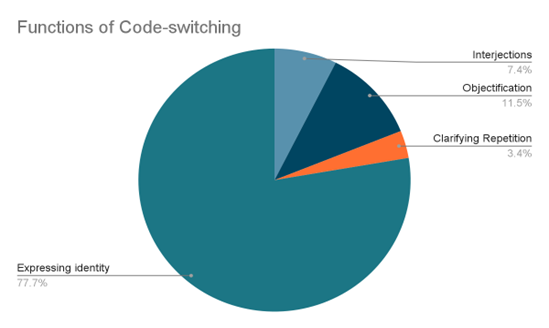
, , ,

Testing the Matrix Language Frame (MLF) Hypothesis with Modern East Asian language-English Bilingual Speakers of Code Switching – Insertion & Alternation

Hyung Joon (Joe) Kim, Mocha Ito, Irene Han, Sena Ji, Luis Flores

Our study tests the validity of the Myers-Scotton’s (1993) Matrix Language Frame (MLF) hypothesis in light of modern Japanese-English and Korean-English bilingual speakers’ code-switching data (Myers-Scotton & Jake, 2009). Code-switching (CS) is the umbrella term for the use of more than one code, such as languages, dialects, sub-dialects, and accent, within or across conversations. Our focus is on two sub-elements of intra-sentential CS: alternation and insertion. We test the hypothesis by looking at whether the Morpheme Order Principle and the System Morpheme Principle hold true in our transcribed data of a total of 5 bilingual participants’ conversations in two separate groups. Our analysis reveals three new insights, which show that the two principles of the MLF hypothesis can be overriden under certain linguistic restrictions and in specific psycho-social context, as well as the fact that the frequency of alternation is positively correlated with the bilingual speaker’s proficiency in his or her first language.

[expander_maker id=”1″ more=”Read more” less=”Read less”]

Introduction/ Background

The study of bilingual code switching began in the 1900s. However, the way how East-Asian descent Americans code switch in their conversations with another bilingual interlocutor is an area that has not been addressed as much by modern linguistic scholars, despite the consistent increase in the population of East Asian-American bilingual speakers in the last few decades. It is estimated that approximately 14.1 million Asians have immigrated to the US since the 1850s (Migration Information Source, 2020). The obtaining of a second language by the 1.5 or 2nd generation immigrants in America has led to a number of intra-racial cultural issues. For example, the rapid code-switching that 1.5 or 2nd generation bilingual children often use has led to intra-cultural division between the 1st generation immigrant parents and their children. This is because the parents are often more used to conversing in their mother tongue Asian language, whereas the 1.5 and 2nd generation children are used to mixing more than two languages in their speech.

In fact, there is a sizable void in the existing literature in the field of Asian-American bilingual code-switching. Linguists have undertaken studies on code switching with rarer and more exotic pairs of languages, such as Lingala-Swahili (Bokamba, 1988) and Turkish-Dutch (Backus, 1992), but not as extensively on East Asian language-English pairs. Our study aims to fill the void in the study of bilingualism by focusing on how bilingual speakers of East Asian language and English converse with their bilingual family members. We focus our analysis on insertion and Alternation. Insertion is using one primary language that forms the main grammatical frame, but inserting words from the second language into the sentence. Alternation is the back-and-forth switching between one language and another, involving a full switch to a different languages’ grammatical frame. We hope that our empirical research assists in bridging the generational disparity between the 1st generation and 1.5/2nd generation Asian American immigrants.

Our study tests the validity of the MLF Hypothesis. The hypothesis proposes two principles: The Morpheme Order Principle and the System Morpheme Principle. These principles are distinguished by Myers-Scotton’s terminology, known as the content morphemes and system morphemes. Content morphemes are words like nouns, verbs, adjectives that express semantic meanings and assign or receive thematic roles (they are structured into grammar by system morphemes). Their counterpart, system morphemes are functional words (words that have little meaning but express grammatical relations. i.e. propositions, articles, conjunctions, etc) that express the relation between content morphemes and do not assign or receive thematic roles (i.e. roles of noun phrases).

The Morpheme Order Principle states that in a sentence with mixed constituents from the Matrix Language (first language) and Embedded Language (second language), the surface morpheme order must not violate that of the Matrix Language (ML).

The System Morpheme Principle states that in a sentence with mixed constituents from the ML and EL, all system morphemes which have grammatical relations external to their head constituent must come from the ML.

In short, we propose the three following hypotheses:

First, EL system morphemes can have grammatical relations external to their heads. This overrides the System Morpheme Principle. We provide support by showcasing an example of EL system morphemes in our Japanese-English data.

Second, in a bilingual speaker’s speech with mixed constituents from ML + EL, the surface morpheme order constructed by the ML can be violated. The second finding overrides the Morpheme Order Principle. We show that there can be a disruption of an ML surface morpheme order in a sentence with ML + EL constituents in our Korean-English data.

Third, bilingual speakers that are more proficient in their first language engage in higher average frequency and longer total duration of alternation.

Methods

Table 1 shows the background information about the five bilingual speakers that took part in our research. Two were Korean-English bilingual speakers and three were Japanese-English bilingual speakers. All three Japanese-English bilingual speakers were fluent in both languages. The two Japanese parents’ first language was Japanese and their second language was English. Mocha’s first language was English, and her second language was Japanese. For the Korean-English bilingual speakers, both interlocutors were native speakers of Korean. Their first language (ML) was Korean, and their second language (EL) was English. The two Korean participants spent the majority of their lives (20 years and 15 years respectively) living in Korea than outside of Korea.

Table 1. Interlocutor background

The Japanese student (Mocha) recorded 20 minutes of conversation with two of her parents and the Korean student (Joe) recorded 18 minutes of conversation with his older brother. Both students listened to the recording and transcribed the conversations with their family member(s). The sections spoken in a non-English language were translated into English.

After transcribing, we broke down our insertion data in order to examine the first two following aspects: the possibility of EL system morphemes that have grammatical relations external to their heads, and the violation of ML surface morpheme order of a sentence with ML+EL constituents. These findings would invalidate the System Morpheme Principle, and the Morpheme Order Principle, respectively. Third, we examined the total duration of alternation (in seconds), as well as the average frequency of alternation (per second), to assess the correlation between the tendency to engage in alternation and the proficiency in the speaker’s first language or second language.

Results/Analysis

First, we counted the total number of times alternation and insertion appeared in each language pair.

Table 2. The total number of insertion and alternation in Japanese-English and Korean-English bilingual conversations.

After counting, we categorized the inserted words into content and system morphemes. We observed if content and system morphemes are present in both ML and EL for the Japanese-English and Korean-English conversations.

Table 3. Insertion of content and system morphemes in ML and EL for Korean-English conversations.


Table 4. Insertion of content and system morphemes in ML and EL for Japanese-English conversations.

In Table 3, morphemes like nouns, negation, adjectives, and fillers appeared the most In the Korean-English data. In Table 4, nouns, particles and conjunctions appeared the most in the Japanese-English data. A bar chart in Figure 1 is based on Tables 3 and 4 summarizes morpheme insertion by interlocutor. 

Table 1. Morpheme insertion by interlocutor.

With this visual representation of the distribution of morpheme insertions, we were ready to test the System Morpheme Principle, which states that in a sentence with mixed elements of ML + EL, all system morphemes with grammatical relations external to their heads have to come from ML. Clearly, we could see that Mocha and Joe’s brother inserted system morpheme in EL. To invalidate this principle, we first had to confirm that the system morphemes in our data have grammatical relations external to their heads; then, prove that those system morphemes are from the EL, thereby negating the logic that all system morphemes must come from ML.

Excerpt 1. Example of EL system morpheme in Japanese-English data.

M: Mocha
Y: Mocha’s mother

Mocha’s EL system morphemes: no (の), kara (から)

M: Linguisticsのrequisiteほとんど終わってるから。
   Linguistics no requisite hotondo owatteru kara.

M: たぶんだけどESLだと思うよ
   for most [of]  finished  already. 

M: Tabun ESL dato omou yo
   Probably that [I] think

(I already finished most of the prerequisites for linguistics. I think it’s probably ESL)

Y:良かったね。でもMastersわどうするの?

(That’s good for you. But what are you going to do about Masters?)

In the excerpt above, Mocha, whose EL is Japanese, is inserting Japanese system morphemes, no and kara into the sentence. Words like no の is a system morpheme, because it is a functional word with little content meaning similar to a preposition. But no (の) bears grammatical relations with the latter EL system morphemes, owatteru kara (終わってるから). This a grammatical relationship external to the head of no (の), which is ‘Linguistics’.

Therefore, Mocha’s conversation with her mother clearly indicates the possibility of an EL system morpheme that bears an external relationship to its head, overriding the System Morpheme Principle.

Next, we went on to test the Morpheme Order Principle.

Excerpt 2. A sentence with ML+EL constituents with violated ML surface morpheme order.

J: Joe

D: Joe’s Brother

J: 그래도, 이제, 좀, free 하게 다니거나 그럴 수가 없지

   Geraedo,eejae,jom,   ha-gae daniguna geurul sooga up-jee

(But, now, a little, we can’t roam around freely)

D: New York  이미, it’s poppin’

           eun ee-mi,

(New York is already, it’s poppin’)

In Excerpt 2, Joe’s brother uses the English NP “New York” to begin the sentence, which is followed by a Korean particle eun (은) and adverb ee-mi (이미), which means ‘already’. According to the Korean surface morpheme order, the morpheme that must always follow a Korean adverb has to be either a verb or an adjective attached to a past-tense inflection suffix, such as neut-eut-uh (늦었어), which is an adjective + past tense inflection suffix, such as:

neut-da (늦다) + –eut-uh (-었어)

Adjective stem + past tense inflection suffix

However, in our raw data, we see that the adverb ee-mi (이미), is followed by the English possessive determiner, “it’s”, which violates the ML (Korean) surface morpheme order of a sentence with ML+EL mixed constituents. Therefore, the example in our Korean-English bilingual conversation invalidates Myers-Scotton’s Surface Morpheme Order Principle.

Lastly, we analyzed our alternation data by calculating the total duration (s) of alternation between ML and EL.

Table 2. The total duration of alternation (s) between ML and EL.

In Table 2, duration is the total length of alternated sentences (in seconds), including from the beginning of a sentence in language A to the end of the sentence in language B after the end of alternation. For example,

D: 호원 예술대, 재즈 피아노. Supposedly it’s one of the top three

     Howon-Yesooldae, Jazz Piano

(Ho Won Music School, B.S. in Jazz Piano)

The entire sentence above was counted as one case of alternation, lasting between 5~10 seconds. Among Japanese-English interlocutors, Mocha’s speech showed the longest duration of alternation, resulting in more than 80 seconds in alternated sentences. For the Korean-English data, Joe’s brother spent more than 70 seconds in alternated sentences.

Table 3. The average frequency of alternation (/s).

Similarly, in Table 3, Mocha and Joe’s brother exhibited the highest average frequency of alternation (in their respective bilingual group). The frequency was calculated by dividing the number of total times each interlocutor used alternation in his or her speech, by the total duration of each conversation.

Based on our findings, we predict that those with more years of experience speaking in their first language tend to engage in alternation more. In our data set, Mocha and Joe’s brother have had more years of speaking & learning their first language at their home country (Mocha, 21 years; Joe’s Brother, 20 years), in contrast to their family members (Mocha’s parents, 19 and 3 years; Joe, 12 years at home). We hypothesize that a bilingual speaker with a stronger foundation in their first language may feel more comfortable alternating to a foreign language, although other factors not addressed in this study such as the speech content, psycho-social relationship with the interlocutor, and environmental factors may equally play a role.

Conclusions

The formal theorization of Myers-Scotton’s Matrix Language Framework hypothesis (1993, 2009) formed the groundwork for the study of bilingual CS since the 1990’s. Our empirical quantitative study focused on a syntactical analysis of how 1.5 and 2nd generation Japanese-English and Korean-English bilingual speakers CS today, offering evidence against the two basic principles of the MLF Hypothesis. We also demonstrate a positive correlation between the engagement in alternation and the proficiency in the bilingual speaker’s first language.

Our findings aim to advance the study of modern bilingual CS by pointing out that scholars must continue to understand the syntactic inner-mechanism of the more sizable bilingual population’s CS, in particular, the East Asian language-English pair. This is because of the greater socio-linguistic implications these studies can have, such as the reduction in the generational gap between millions of Asian immigrant parents and millennial children, and the broader academic recognition of the quickly-changing nature of multilingual culture in Asia in this global age.

We invite scholars to continue to look into areas not addressed in this study, such as the role of psycho-social elements, level of intimacy between interlocutors, and other greater socio-linguistic and anthropological factors that may affect how future bilingual speakers may engage in CS.

Lastly, our findings stress the importance of being well-versed in one’s first language, as our study shows that a bilingual speaker who has spent more years speaking in his or her first language finds it easier to fully switch to a different language than those who have had less years of experience learning their mother tongue language at their home country.


References

Backus, A. (1992). Patterns of language mixing: a study in Turkish-Dutch bilingualism.

Bokamba, E. G. (1988). Code-mixing, language variation, and linguistic theory: Evidence from Bantu languages. Lingua76(1), 21-62.

Code-switching (G4) – Language Contact. Language Contact. (2011, October 8). https://sites.google.com/site/hongkonglinguistics/Downhome/Topic1/part1knowledgerepresentationinprolog20. Last accessed 10/08/2021.

Indian immigrants in the Unites States (2020) Migration Information Source. https://www.migrationpolicy.org/article/indian-immigrants-united-states-2019. Last accessed 10/08/2021.

Myers-Scotton, C. (1993). Common and uncommon ground: social and structural factors in codeswitching. Language and Society, 22 (pp. 475-503).

Myers-Scotton, C., & Jake, J. (2009). A universal model of code-switching and bilingual language processing and production. In B. E. Bullock & A. J. Toribio (Eds.), The Cambridge handbook of linguistic code-switching (pp. 336–357). Cambridge University Press.

Code-switching (G4) – Language Contact. Language Contact. (2011, October 8).

https://sites.google.com/site/hongkonglinguistics/Downhome/Topic1/part1knowledgerepresentationinprolog20.

Shim, Ji Young. 2021. OV and VO variation in code-switching (Current Issues in Bilingualism 1). Berlin: Language Science Press.

[/expander_maker]
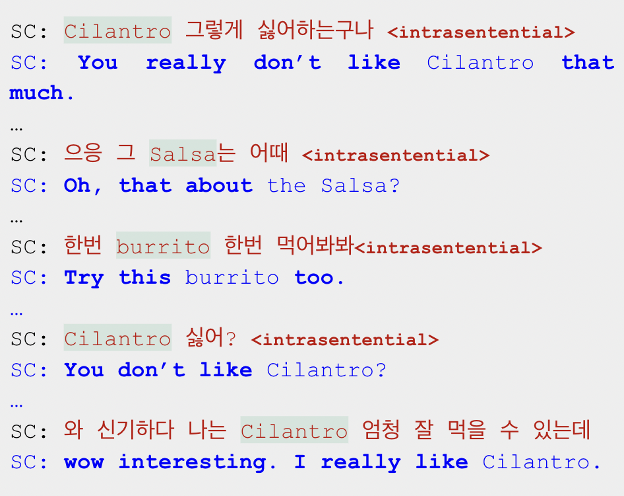
, , , , ,

Code-Switching Between Mandarin Chinese and English: Do You Use “lol” or “xswl”?

Wenqian Guo, Sum Yi Li, Yichen Lyu, Sok Kwan Wong, Yingge Zhou

Code-switching has become increasingly common as globalization allows international exchanges across cultures to take place more frequently. And as studying abroad becomes more accessible to students around the world, more speech communities with distinctive code-switching patterns are being formed. As we pondered the topic for our research project, we looked around and realized that not only are the majority of our group members native Mandarin speakers studying in the US, but collectively we also belong to this wider speech community that tends to code-switch between Mandarin and English. We could not help but wonder — do local students in China talk like us at all? And is there a reasoning behind the way we talk? It is these questions that formed the basis of our research.

For the project, we narrowed down our research to focus on just Internet slang used on WeChat, China’s answer to WhatsApp. Through our proprietary survey and by combing through chat history we collected from our participants, we discovered some very interesting findings. Continue reading to find out how and why Mandarin-speaking international students in the US code switch on WeChat.

[expander_maker id=”1″ more=”Read more” less=”Read less”]

Introduction and background

Chinese students who study in the U.S. often code switch between Mandarin and English and our project was aimed at examining the motivations behind the phenomenon.

We specifically looked into our subjects’ texting patterns on messaging app WeChat and compared them to Chinese students either residing in China or other non-English speaking countries in an attempt to confirm our assumption that code-switching is prevalent among Chinese students in the US. We also surveyed the students and asked for reasons behind their choice of words. We hypothesized that convenience as well as a desire to appear foreign-educated are what motivated the code-switching.

We based our project on Luke’s (1984) study on language mixing in Hong Kong, where English words are often inserted into Cantonese conversations. Luke (1984) concluded that code-switching in Hong Kong is partly pragmatically motivated (when the objects being discussed do not have Chinese translation) and partly socially motivated (when the individuals want to identify as better educated and westernized).

We extended Luke’s (1984) study to cover Mandarin Chinese, which is spoken in Mainland China. Presumably English mixing is more prevalent in Hong Kong because it is a former British colony. Code switching is not common among locals in China, but it is observed among individuals who have exposure in English-speaking countries.

Methods

The target population for our project consists of two major groups: college students who study in the US and college students who study in their home country China. Both groups of students are native Mandarin speakers. Our data collection was divided into two parts. First, we created a survey to ask both groups of students to select from provided word choices under different text conversation scenarios and provide us with a reason behind each choice. The participants were also asked to specify how frequently they would code-switch in their daily conversations with friends and family on WeChat. Second, we collected a series of chat history based on three main topics, namely schoolwork, casual conversations and sensitive topics. For the survey, we interviewed a total of 17 students from UCLA as our sampling for the groups of students who are foreign educated. We also interviewed a total of 6 college students who are based in China.

Results

For the purpose of discussion, our project referred to college students who study overseas as “US students” and those who study in China as “local students”.

School Work Survey Question 1: Which word would you use when you want to talk about a homework assignment that will be due soon. For example, “我明天有个作业___”. (Tomorrow I have some homework__)

For the first survey question regarding homework assignment, all of the US students chose the English word “due”, while the majority of the local students chose the equivalent Chinese words “要交”. Even though most students from both groups attributed their choice to a similar reason, which is language habit, from the perspective of the US students, “language habit” refers to a way to try to assimilate into the American culture, while in the context of the local students, it is more of an innate and natural habit.

School Work Survey Question 2: Which word would you use when you want to unenroll a class you have registered before? For example, “这节课不符合我的时间表, 我想__这节课”. (This class doesn’t match my schedule, I want to __ this class.)

For the second survey question relating to unenrolling classes, all of the US students chose the English word “drop”, while the majority of the local students picked the Chinese equivalent “退选”. However, both groups have different reasons behind their word choice. The majority of the US students said they chose the word “drop” because there is no equivalent translation in Chinese. On the other hand, the local students preferred using Chinese due to language habits influenced by their friends and family.

Based on the reasons the participants provided, it appears that being in different environments and different speech communities are the main reason students develop different language habits. Besides, the source of learning also influences their word choices. The US students tend to find it hard to find Chinese translation for words related to schoolwork since they learned these words in an English-speaking environment.

Casual Conversation Survey Question 1:  Which word would you use if you want to express laughter or something that is funny when you are chatting with your friends.

When asked how they would express laughter when texting, the majority of the US students chose the Chinese words “哈哈哈哈” (“Hahahaha”), while the majority of the local students picked another Chinese phrase “笑死我了” (“I laugh to death”). Even though both groups of students used Chinese to express laughter, each side has their own reason for the specific choice. The US students said they preferred “哈哈哈哈” (“Hahahaha”) as a language habit, while the local students preferred “笑死我了” (“I laugh to death”) because they believed the expression could better demonstrate their emotions and the situation. The results showed that Mandarin-speaking college students preferred to use Chinese when expressing laughter regardless of where they are studying.

Casual Conversation Survey Question 2: How often do you often replace words in a sentence from Chinese to English when you are chatting with your friends? For example, “我一会儿有个meeting or presentation”, “让我来表演一段rap”.

When asked how frequently they code-switch between Chinese and English when texting their friends and family, the majority of the US students said at least once every one to two days. Meanwhile, half of the local students said they seldom code-switch — only at least once every few weeks or months during their daily conversations.

Sensitive Topic Survey Question 1: What kind of curse words would you use most frequently when you are chatting with your Mandarin speaking friends?

When asked which curse words they most frequently use, both groups of students chose “卧槽/我操/我靠” (roughly translated as “Damn it/Fuck”) but for different reasons. The US students said this option best describes their feelings, while the local students said it sounds less harsh than the other choices.

Sensitive Topic Survey Question 2: Which word would you use when you need to discuss something that is related to the issue of sexual assault. For example “你上个月有听说那条新闻吗?有个女生被__了”. (Did you hear the news? A girl was __)

When asked what words they would use to say “rape”, the majority of both the US and local students chose the Chinese words “强奸”, instead of “rape” in English or the abbreviation “QJ”. Most local students said they did not worry whether the word sounds too direct or inappropriate but would rather want to just say what really happened. Similarly, the US students said they felt more comfortable with the Chinese words.

Our survey: English version and Chinese version

Chat History Analysis

The chat history was obtained from Chinese students studying in the US. The words marked red were originally in English, while those in black are translations from Mandarin.

This is a conversation between two participants about the recent US election. P1 said they expected people to stop protesting in two days. Instead of using the Chinese words (“游行”) for protest, P1 code-switched from Mandarin to English. Since protests are rare in China, and the Chinese words for protests are rarely used, presumably it is easier for the participant to just use the English word when texting.

Marked code-switching is observed when P1 expresses a slight disagreement with P2. As P2 feels empathetic to Trump, P1 emphasizes with English to express that they don’t feel sad for Trump’s loss.

Another interesting point is that P2 referred to Trump as “Grandpa Trutru”, his Chinese nickname. Chinese people sometimes use nicknames to refer to important politicians, which is likely stemmed from China’s censorship on sensitive topics. Discussions about certain politicians are considered highly sensitive, so to avoid censorship, they come up with nicknames for the politicians. For example, Trump is also known as “懂王” (“the king who knows it all”), while Biden is “睡王” (“the sleepy king”). The use of nicknames exudes a sense of humor as well as dials down the seriousness of the discussion of political issues.

In casual conversations, code-switching again lends convenience and gives emphasis. It also constructs a common identity among people in the conversation. In the above conversation, the participant is telling a story about their roommate being forcefully taken away to the hospital after answering routine behavioral questions wrong, which is a well-known cultural shock among Chinese students studying in the US. As this routine is not performed in China, the participant constantly code-switched on noun and verb phrases for convenience. Also, all participants of this conversation are Chinese international students. The code-switching builds a common identity among them because the participant expects everyone to know the consequences of answering yes to routine behavioral questions. The last two sentences are examples of marked code-switching that emphasize on the participant’s disbelief: The participant is surprised that his roommate answered yes. It is a final revelation of the ending to this anecdote.

Similarly, in the above conversation, code-switching again serves as building a common identity among Chinese students in the US. The participants constantly chose to use short English vernaculars, such as “yes,” “go,” and “yea.” This indicates that they have been immersed in an English-speaking environment, so when expressing agreement and excitement, they tend to code-switch to English. Also, P1 ignored all English spacing in the conversation. This is because when typing English with the Chinese keyboard, adding spacing can be time-consuming. For convenience, P1 simply ignored the spacing during texting. Even so, P1 chose to respond in English, demonstrating that it is more natural for them to use these English vernacular phrases.

In academic scenarios, code-switching almost entirely occurs in jargon. By using English jargons such as “peer interaction” and “mutual engagement”, the participants demonstrated their educational background as foreign.

Discussion and Conclusion

From the aforementioned data findings, it can be concluded that Chinese students who study abroad and those who only study in China show different patterns in their language usage. When it comes to schoolwork and casual conversations, insertions of English words into Chinese sentences and code-switching between English and Chinese are mainly observed among students who study abroad, while less so is seen among the domestic students. This difference can likely be attributed to a lack of translation equivalence, as many school work-related words are only applicable in the US. The same goes for casual conversations. It is therefore not difficult to understand why the US students would tend to code-switch to English when there seems to be a lack of translation equivalence in Chinese.

Besides, the needs for social and emotional expressions evoked by surrounding cultural environments and contexts also contribute to the different language patterns and code-switching. In China, a conservative country both culturally and politically, pro-government language is encouraged, while the freedom of speech is repressed. This repression has in turn cultivated stronger needs for expressing emotions among the local students, leading to their choice of more confrontational and direct wordings when discussing sensitive topics. On the other hand, a higher frequency of code-switching among the US students revealed their needs to be identified as foreign-educated and share common identities with other speech participants of similar backgrounds.

Our findings point to the important roles that social surroundings and the kind of language encouraged within these environments could play in one’s speech patterns and code-switching. That being said, the language choices that the participants made are not entirely dependent on their own characteristics but are rather choices commonly negotiated by one’s surrounding social context as a whole. This contextual-based understanding therefore sets a reminder for future conversation analysis and sociolinguistic study, that one’s speech patterns could not be analyzed and identified without incorporating the nature of the surrounding speech contexts and cultural environments.


More on the topic:

Video about attitudes toward code switching in China

Paper on Chinese-English code-switching in conversations

References

K.K. Luke (1984), Expedient and Orientational Language Mixing in Hong Kong, York Papers in Linguistics 11, 191-201

[/expander_maker]
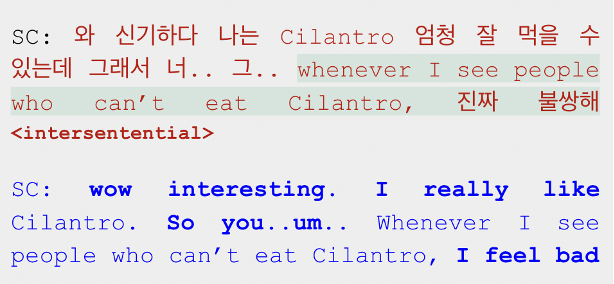
, , , , ,

Fun, Cool, Hip Title Here: AAVE Usage in Twitter Memes

Nick Ushiyama, Stella Oganesyan, Ava Boehm, Rachel Lee, Alesha Vaughn

Love them or hate them, almost everyone active on social media has come into contact with memes at some point. Chances are, one or more of those memes used a variety of English called AAVE, or African American Vernacular English. This variety originated from working-class African Americans and displays words (lexicon), word order (syntax), word pronunciation/spelling (phonology), and word combination (morphology) different from the Standard American English (SAE) taught in schools (Rickford et al., 2015). In our study, we tried to better understand how and why meme-makers switch between AAVE and SAE in their posts. We expected meme-posting Twitter users to use switching as a way to signal to readers that their posts should be read within the unique guidelines of meme-culture humor. For our research, we collected hundreds of memes and distributed a survey to see how people interpreted the switches. The results confirmed our expectations.

[expander_maker id=”1″ more=”Read more” less=”Read less”]

Introduction and background

A meme is a piece of cultural information that holds certain ideologies or behavioral concepts and is transmitted from person to person. The word ‘meme’ stems from the Greek word ‘mimeme.’ The root mim- means to mimic and the English suffix –eme is used to imply a unit of linguistic information, as seen in words such as phoneme and lexeme. The term ‘meme’ was coined from ‘gene’ and similar to a biological gene, the nature of a meme is to mutate or replicate when being transferred from person to person. The world of social media is full of memes as they are seen as a major part of today’s popular culture.

We noticed that a good handful of popular memes contain AAVE regardless of whether or not the original poster was a member of the Black Community. These memes were quite popular, too, which makes the use of AAVE within memes apparently index ‘coolness’ or ‘hipness’. There also wasn’t just one part of AAVE that memes utilized, but instead integrated syntactic, lexical, phonological, and morphological aspects of the dialect.

Figure 1a: An Example of AAVE Switching Involving a Syntactic Feature (“he b getting yelled at”)
Figure 1b: An Example of AAVE Switching Using a Lexical Feature (“the class was wildin”)

AAVE has been studied pretty extensively by linguists in the past. Of the studies that are relevant to our project, most of them show different ways that AAVE contributes to identity. That is, they show that people use it to communicate things about themselves to others. Those things could be anything from membership in social groups (Rickford et al., 2015; Anderson, 1999; Labov 1973; Sweetland, 2002), to particular attitudes (Ilbury, 2020). However, almost none of this research looks at AAVE on social media, let alone in Twitter memes.

For youths, social media is quickly becoming one of the richest sites for creating cultural connections. As such, the linguistic norms that are founded there can quickly become widespread. Our work addresses this understudied, but extremely significant, domain of AAVE usage. We set out anticipating that meme-creators would incorporate AAVE in their posts to tell readers that those posts should be read and interpreted as memes.

Methods

Occurrences in Memes

Before we tested our hypothesis, we first had to figure out what kinds of switches were occurring between SAE and AAVE. As such, we collected instances of AAVE usage in memes by visiting meme-posting pages on Instagram. We recorded whether these AAVE features were syntactic, lexical, phonological, or morphological in nature, and we also considered what topics the memes addressed. Figure 2 below explains which topics we observed.

Figure 2: Topic List and Definitions

Survey

Upon gaining a lay of the land, a survey was designed. We sent it out in order to receive data that would allow us to address our hypothesis. In the survey, participants first provided consent to publish their (anonymously-attributed) data. They then stated their age and level of experience with memes.

Following this demographic collection portion, the participants were exposed to examples of memes in which one AAVE feature (and therefore one switch) was used. They were then asked…

    • Whether they believed the usage of AAVE was ironic (disingenuous) or not given a poster’s race (African American and non-African American).
    • What they believed the posters were trying to do by switching from SAE to AAVE
    • Whether they believed their answer to (2) would change if the poster’s race was the opposite of that presented in (1).

At the end of the survey, we asked them to respond to the following question if they had identified any switch as ironic: “If you said that some usages were ironic, do you think that irony is meant to indicate something about how the humor in the posts should be interpreted?” This allowed us to directly address our hypothesis.

Results/analysis

Occurrences in Memes

The meme data consisted of the type of linguistic feature involved in the switch from SAE to AAVE and the topic that the meme addressed. We calculated the number of occurrences for syntactic, lexical, phonological, and morphological features per topic, and the results are presented below in Figure 3.

Figure 3: Raw Number of AAVE Occurrences per Topic

We then calculated the percentages of each occurrence per topic, and these results can be seen below in Figure 4.

Figure 4: Raw Percentages of AAVE Occurrences per Topic (NOTE: overall here means all topics combined)

In terms of the overall number of AAVE features observed, the data showed a clear preference for AAVE syntactic features, followed by lexical, phonological, and morphological features. This order of preference occurred in 4 out of the 11 identified topics. The most popular topic of memes was daily routines, while the least popular was the occupation topic.

From our survey, we received a total of twenty seven completed responses. Twenty six participants were in the age range of 19 – 29 (approximately the same age as meme-posters), and one older participant (age 38) was also included in the data given their experience level with memes. Out of the four possible meme experience levels, only 3 were observed (options 2, 3, and 4). Figures 5a and 5b summarize their meme experience:

Figure 5a: Breakdown of Participant Meme Experience
Figure 5b: The Meme Experience Levels we Observed

We then averaged irony scores for each example among meme-experience groups, age groups, and overall. The irony score represented how strongly participants believed the poster’s switch would occur as a natural tendency as opposed to a conscious choice. Except for the fourth example (which participants did not view as having a switch at all), irony scores were greater when the poster was assumed to be non-African American. The meme-experience group who chose option three had higher irony scores than those who actually made memes. That said, this difference was not statistically significant according to an F-test and a ttest between the two groups. This data can be seen below in Figures 6a and 6b.

Figure 6a: Irony Score Per Participant Age
Figure 6b: Irony Score Per Meme Experience Group

We then analyzed short answer responses, which consisted of what participants believed switches indicated about the humor of the examples. We boiled down their statements into ‘themes’ of explanation and counted how many responses fell into these themes. We specifically focused on themes relating to humor and noted how strongly these were represented among the three present meme experience levels. A summary of the response data can be seen below in Figures 7a-e.

Figure 7a: Short Answer Data Summarized – How Many Different Themes (Dispersion) and How Many Rejected Responses (n/a portion)
Figure 7b: Short Answer Data Summarized – Ratio of Humorous Themes to Total Entries Under Varying Poster-Race Assumptions for Each Example
Figure 7c: Short Answer Data Summarized – Different Meme Experience Levels’ Ratio of Humorous Themes to Total Valid Entries for Each Example (NOTE: red cells are option 4 group, white cells are option 3 group)
Figure 7d: Short Answer Data Summarized – Mode (Most popular Theme) and Values of Mode For Each Example
Figure 7e: Short Answer Data Summarized – Disagreement in What Switches Meant for Each Example

As seen in Figure 7e, we calculated the degree of disagreement on what switching meant for each example. Generally, there was less disagreement when participants were told that the poster was not African American, and overall disagreement increased in later examples considerably.

Finally, we sorted responses to the final question, regarding what ironic switching was meant to indicate about how humor should be interpreted. Not every participant was instructed to answer this question, only those who indicated that ironic code-switching to AAVE was present in the previous examples. Out of the 21 responses that were eligible, 85.71% of participants believed ironic switching indexed something about how the humor of the meme should be evaluated.

The most popular response was a positive confirmation of the question. The most popular elaborated response stated that switching to AAVE signaled to read the post as a meme. To be read as a “meme” is best explained by one participant’s response:

“Yes, I believe that switching to AAVE shows to users that it is not a formal post but instead casual, humorous, and meant to be related to.”

Discussion and conclusions

Our most significant finding was the general consensus that meme-posters use AAVE to indicate how the humor in their posts should be interpreted. And indeed, our hypothesis was confirmed: participants directly stated the switch to AAVE was done so the humor of memes would be evaluated along comedic standards specific to memes (as opposed to stand-up or sketch comedy). This would suggest that AAVE has become associated with humor. And to be sure, there are negative consequences to this association. The variety could be portrayed as something humorous, lighthearted, and not to be taken seriously. One of our participants in fact commented that AAVE’s appearance in memes is justified because “certain vernacular have a playful connotation that doesn’t imply seriousness.” Obviously, this would pose a problem for those who use the variety in their daily lives, in that their speech would be trivialized and even seen as unfit for participation in larger economic and civil institutions.

Our raw data also suggested that neither age nor meme experience significantly affected the likelihood to see irony in AAVE usage. At least one of our examples however was flawed and may have skewed the data. And in fact, given final question responses, it’s likely that being in the higher meme experience group did make participants slightly less likely to view switching as ironic. It is tempting to draw the conclusion that greater experience with memes in turn translates to lower likelihood to view AAVE usage as cultural appropriation. One participant in the option four group actually recognized that SAE to AAVE switching could constitute appropriation. However, they also noted that it is unlikely that there are ill intentions around the usage itself. They believed that though meme culture may inadvertently stigmatize the variety, the community itself is not systematically “anti-black.” All of this said, we cautiously state here that the negative consequences of AAVE usage in memes do not escape some members of the meme community but also that they don’t view their actions as malicious. As such, it’s unlikely that AAVE usage will cease any time soon.

The greatest number of AAVE features found in memes were syntactic features, the first three survey examples (containing the two syntactic switches) displayed greater numbers of humorous entries, and these first three also included lower levels of disagreement towards the meanings of switches. This suggests that AAVE syntax is not only more heavily associated with memes but is also the most used type of feature in communicating information about humor. And indeed this aligns with what Sweetland (2002) claimed regarding AAVE usage: AAVE syntax was the primary means of linguistically indicating a belonging to the AAVE speech community. Meme posters are arguably not, however, trying to indicate belonging to the AAVE speech community, so there are two likely implications this finding could have. Perhaps the users are trying to imitate and evoke stereotypes regarding African Americans. Conversely, the users could be attempting to signal in-group status of their own. That is, they could be trying to say “I’m a member of the meme community, too!” by switching. We make no conclusions here since we lack evidence to prove either, but leave readers with the understanding that, regardless of humor, there are real world consequences to this type of usage.


References

Anderson, E. (2000). Code of the street: Decency, violence, and the moral life of the inner city. W. W. Norton & Company

Ilbury, C. (2020). “Sassy Queens”: Stylistic orthographic variation in Twitter and the enregisterment of AAVE. Journal of Sociolinguistics, 24(2), 245-264. doi:10.1111/josl.12366

Labov, W. (1973). The linguistic consequences of being a lame. Language in Society, 2(1), 81- 115. doi:10.1017/s0047404500000075

Rickford, J. R., Duncan, G. J., Gennetian, L. A., Gou, R. Y., Greene, R., Katz, L. F., Kessler, R. C., Kling, J. R., Sanbonmatsu, L., Sanchez-Ordoñez, A. E., Sciandra, M., Thomas, E., & Ludwig, J. (2015). Neighborhood effects on use of African-American Vernacular English. Proceedings of the National Academy of Sciences, 112(38), 11817–11822. https://doi.org/10.1073/pnas.1500176112

Sweetland, J. (2002). Unexpected but authentic use of an ethnically-marked dialect. Journal of Sociolinguistics, 6(4), 514–538. https://doi.org/10.1111/1467-9481.00199


[/expander_maker]
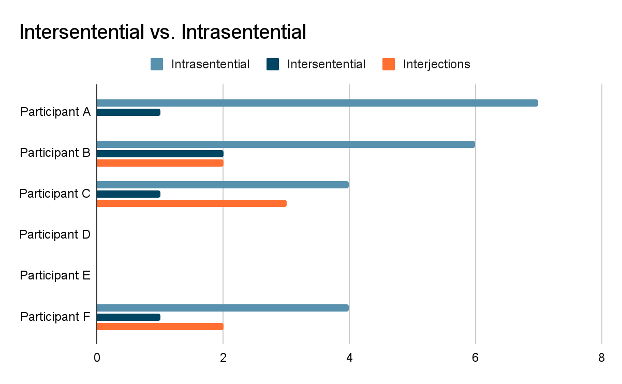
, ,
Scroll to Top