Bridging Bytes and Cultures: The Impact of AI on Linguistic and Cultural Nuances in Online Conversations
Ley’ah Mcclain-Perez and Ivan Pantoja Tinoco
The digital era is marked by the ascension of artificial intelligence. In particular, this presentation will delve into the transformative influence of ChatGPT on the online communication landscape, particularly within the microcosm of X. This AI-driven tool created by OpenAI not only redefines user interactions but also molds the linguistic contours of digital discourse. Our inquiry is rooted in a critical analysis of ChatGPT’s integration into social platforms, assessing its impact on the quality of communication, user perceptions, attitudes, and the ensuing ethical dilemmas.
Our research navigates through the multifaceted ramifications of ChatGPT, exploring its syntactic coherence and semantic relevance, alongside its occasional pitfalls that may lead to misinterpretations. It highlights the diverse demographic engaging on X, using ChatGPT for various purposes ranging from casual interaction to more substantial exchanges, thus painting a broad spectrum of digital human-AI interaction.
This exploration is not merely an academic exercise but a pivotal discourse that contributes to understanding the nuanced dynamics of digital communication in the AI era. It poses critical questions about the future of online interactions, the role of AI in shaping public discourse, and the ethical boundaries of AI integration into social platforms.
Introduction
In the fast-paced world of online communication, the integration of artificial intelligence (AI) technologies has brought a significant shift in how people interact and engage with digital platforms such as emailing or Twitter. At the forefront of this transformation is ChatGPT, an advanced AI language model developed by OpenAI. With its widespread adoption, particularly on platforms like Twitter, ChatGPT has sparked a wave of curiosity and inquiry into its impact on interpersonal communication dynamics.
ChatGPT’s presence on Twitter is hard to miss. Its ability to generate text responses that closely mimic human speech has made it a staple tool for many users across the platform. From casual conversations to more formal discussions, ChatGPT has seamlessly integrated into the online social media platform Twitter, which can be deceiving for those who have not incorporated AI into their lifestyles.
Twitter, renowned for its role in facilitating global connectivity, serves as a hub for real-time conversations and idea exchange. Users from diverse backgrounds come together on the platform to share thoughts, opinions, and news. With ChatGPT now part of the conversation, the dynamics of communication have undergone a subtle yet significant transformation, prompting researchers to delve deeper into its implications.
Our study seeks to address several key research questions:
- How does the integration of ChatGPT influence the quality and nature of communication within social media and discussion forums?
- What are the perceptions and attitudes of users toward ChatGPT-generated content in online interactions?
- What ethical considerations arise from the use of ChatGPT in facilitating online communication, and how do users navigate these concerns?
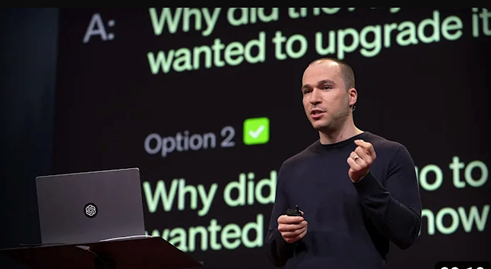
Figure 2: The Inside Story of ChatGPT’s Astonishing Potential | Greg Brockman | TED
Methods
Our study involved a qualitative analysis of tweets gathered from X users. We collected tweets related to ChatGPT usage from teachers, recruiters, job applicants, and corporate employees. These backgrounds are important to note as these X users were most commonly found tweeting about our topic. Some keywords that we used to find tweets include “ChatGPT email,” “ChatGPT job”, and “ChatGPT ethics.” We filtered each search by tweets from the past year and tweets with the most engagement. Once we obtained these tweets, we analyzed the user’s holistic profile to ensure they were not a bot user. These keywords and filters provided a wide range of perspectives on ChatGPT integration in online communication.
Our analysis focused on categorizing tweets into for and against ChatGPT usage and into categories based on their employment background to discern users’ attitudes towards ChatGPT-generated content. In order to accomplish this, we examined the tone and vernacular of the tweets to distinguish the X user’s attitude. Furthermore, we also examined any memes or emoticons in the user’s tweets as this allowed us to better interpret the tone behind their tweet. Analyzing the tone, vernacular, memes and emoticons was crucial for us to depict any sarcasm.
Results and Analysis
After ChatGPT was implemented in online discourse, our analysis shows notable changes in the tone and linguistic expressions of conversations. The language used is a combination of official and casual, and ChatGPT comments frequently reflect the conversational tone that permeates online interactions. The limitations of AI-generated material in preserving contextual nuances are highlighted by difficulties in interpreting linguistic nuances including comedy, sarcasm, and cultural references.
Discussion
The results of our research provide a more comprehensive view of how online conversation is changing in the era of artificial intelligence. Although ChatGPT makes communication easier and improves accessibility, its effects on language use and cultural dynamics need to be carefully considered. Through adept handling of AI-generated content, we can optimize its potential to enhance digital connections while reducing the likelihood of misunderstandings and cultural insensitivity.
The key to maximizing AI-generated content’s ability to promote meaningful conversation while avoiding communicative dangers is to manage it strategically. Through the development of cultural sensitivity and contextual cue awareness, users may skillfully negotiate the complex landscape of online communication, utilizing AI’s augmentative powers without sacrificing human connection.
An ongoing conversation about the development of digital literacy and appropriate AI use is essential to this project. Giving consumers the means to understand language nuances and make sense of subtle implications helps guarantee that the emergence of AI-driven communication will continue to be a positive force for change.
References
Carrie Bradshaw Hater. “My Students Are Using CHATGPT for Their Essays and Everyone Is Turning in the Same Essay!!!” Twitter, Twitter, 4 Mar. 2024, twitter.com/nancytaughtyou/status /1764491684446900521.
Courtney Glory to Heroes Wells. “I Used CHATGPT When I Was Overtired and Needed to Get an Email to My Daughter’s Teacher That Made Sense and Didn’t Trust My Own Editing. I Don’t Care If She Knows — It’s Better than the Soup She Would Have Gotten If I Did It on My Own.” Twitter, Twitter, 28 Feb. 2024, twitter.com/ndesquiress/status/1762909572807708894.
Kepha, Brian. “Maaan ,CHATGPT Is Great at Corporate Lingo and I Love This.with It, It Is so Easy to Communicate a Serious and Business Tone Especially on Emails and Job Applications. This Is a CHATGPT Appreciation Tweet.” Twitter, Twitter, 29 Feb. 2024, twitter.com/AngelofVerdant/status/1763065674501394463.
Gawne & McCulloch. “Emoji as Digital Gestures.” Language@Internet, 2019.
Posts, Hannah. “It’s Hard to Tell. English Isn’t Her First Language, but the Communication Program I’m Using (I Lied, It’s Not Actually Email) Has a Translate Function She Could Use. in This Particular Instance She Was Just Replying, so All She Needed to Say Was ‘OK.’” Twitter, Twitter, 28 Feb. 2024, twitter.com/HannahPosted/status/1762946495324500456.
Sharma, S., & Yadav, R. (2023). Chat GPT – A Technological Remedy or Challenge for Education System. Global Journal of Enterprise Information System, 14(4), 46-51. Retrieved from https://www.gjeis.com/index.php/GJEIS/article/view/698