Fanquan language: How Chinese Fandom Culture Sweeps the Nation
Hanlin Meng, Ming Chen, Tianyuan Yan, Weilin Zeng
‘yyds, u1s1, dbq…’ These indecipherable words all come from a prominent and active group of young people in China, namely the fans who are promoting campaigns for their idols online and call themselves Fanquan, the fan circle. As exclusive as their language seems, it has actually gained popularity among the masses. Would they eventually make it into the mainstream culture as some people are concerned about? Or would they perish after a short time period as others predict? We aim to examine the correlation between the emotional polarities of popular words from Fanquan language and their popularities, in order to gain some insight on the future of this online language register. We predict that Fanquan lexicon with positive and commendatory attributes are more easily accepted and used by the public. We have also found some fascinating phenomena going on with this virtual register such as language policing, through which we can show that people’s attitudes towards the language are actually reflections of their attitudes towards the population of its users.
Introduction and background
According to Yunfei Tan, a Chinese fan culture researcher, “In China, communities known as “fan circle” (饭圈, fànquān), transliterated from the English word ‘fan,’ have become prominent on Weibo, WeChat, QQ, and other social media platforms in the last decade distinguishing themselves from individual fans (散粉, sǎnfěn) who support their idols independently.” (Tan, 2020) In the 2010s, with the popularity of the Internet and the maturity of social media platforms like Sina Weibo, the fans of actors and singers started converging and building their groups on social media platforms. According to China People Think bank, most of these groups are combined by online female fans under 18 years old. On the one hand, the generations born in the 21st century enjoy decent material conditions to support their entertainment. On the other hand, most of them have no siblings due to the Chinese one-child policy, so they lack companions in their growth. The Internet is the best access for the fans who live diversely, to connect with others. Data shows that the number of fans in first-tier cities and fourth-tier cities is 10% higher than those living in other cities. (Yin, 2019) A salient characteristic of Fanquan language is its unique word choice on Media. Most words are original in various ways, so they are hard to understand for the people out of the circle. The exclusion makes the group enjoy their uniqueness, but it is observed that some novel words would spread in their daily conversation with others. Previous studies suggest some features of Fanquan lexicon that facilitate the spreading. (Lu, 2020) First of all, they are reproducible, which allows outsiders to mimic the use of Fanquan words. Secondly, the meanings of these words can change over time or in different contexts.
For example, “宝藏男孩” is used by fans to describe a male idol who has a tainted background. However, it is widely used outside the circle to refer to one who is versatile and gifted. It is evident that the emotions related to Fanquan lexicon can change drastically in the process of spreading. Finally, the spreading is heavily affected by people’s choice of words. Widely used Fanquan lexicon varieties are often related to trending events or applicable in multiple scenarios.
Based on previous studies, we decided to investigate the relationship between the spreading of Fanquan lexicon varieties and the emotions evoked by them. Fanquan words can be categorized as positive words and negative words. Usually, positive words are used to praise their idols. For example, the word ‘juejuezi’ is a popular Fanquan word to express admiration and can always be seen in the comments of their idols’ weibo (a platform like Twitter). However, there are also negative words for attacking the users who have negative words about their idols. The phrase ‘penzi’ is used to humiliate others that criticize their idols. We hypothesized that positive Fanquan words are more widely spread and accepted due to the variability of their meanings and more applicable scenarios compared to negative words.
Methods
Our methods consist of two parts. The first step was conducting interviews with Fanquan language users around us regarding their personal observations. Based on their accounts, we could hypothesize about the mechanisms under their linguistic behaviors. It follows that the second step was to collect responses to a list of survey questions about people’s actual use of Fanquan words and their preferences for semantic positivity or negativity.
Results and analysis
We found three interviewees, using Fanquan language at different levels and their idols are successful in different fields. Zhang Shihang has been an idol of a Korean band since her junior high. Defining herself as a moderately active user, Zhang treated Fanquan language positively and explained that the spread of the language was a process of renewing cyber languages. She added, “Fanquan word is easier to type on the keyboard and cover some ‘dangerous’ words at the same time. For example, we never say ‘jizi’ because the word related to money would be censored. Instead, we call it ‘jz’ to avoid the trouble.” Zhang always unconsciously uses yyds (greatest of all time), juele (perfect), and plmm (beautiful girls), these positive Fanquan words when talking with friends. She was pleased to explain these words to her friends to spread fan culture. Wang Durian, a fan of a Chinese table tennis player, is a severe user. She only uses the word for fun without thinking of its value. She agreed that Fanquan words are easy to understand within the circle, but she has to explain the meaning to her friends who are distant from the culture. The word she likes to use is also “yyds”.
From another interviewee, we have received some quite different opinions. Han, a 24-year-old female who has studied applied linguistics and education, expressed her concerns with the negative impact Fanquan language may have on standard Mandarin. For example, according to her, yyds (English cool, awesome) can express a lot of emotions, so people would cease to specify the language use and a lot of emotion words could die out. She has provided us with new perspectives to work on in terms of different biases on Fanquan language.
Focusing on the application degree as well as the public acceptance towards fandom lexicon, we surveyed 105 young people about their use of Fanquan words and preference for positive/neutral/negative words.
Diagram#1 shows data that was generated from question number 2 “Which following words do you know the meaning of?” Among the total of 105 participants of question 2, 89 know the meaning of more than half of the options. This further proves that – fandom lexicon is nowadays quite of a phenomenal word choice category. According to the data generated from Q2, fandom lexicon with positive attributes was chosen as “know the meaning of it” 338 times, this result has proven that they are wider known by the outsiders.
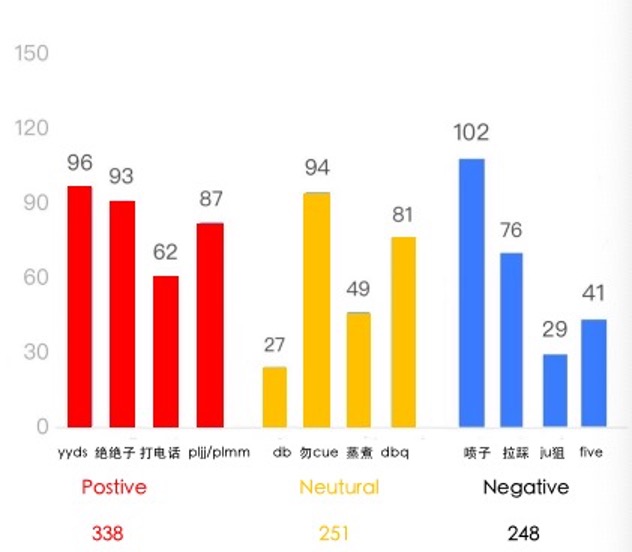
Diagram#2 shows data which were generated from question number 3 “Which of the following words have you used before?” None of the options were left unchosen thus further explains that fandom lexicon are being widely applied to common daily context by outsiders of fan group members. According to the numerical data generated from Q3, fandom lexicon varieties with positive attributes are more likely to be applied at daily practice in comparison to those with neutral or negative attributes.
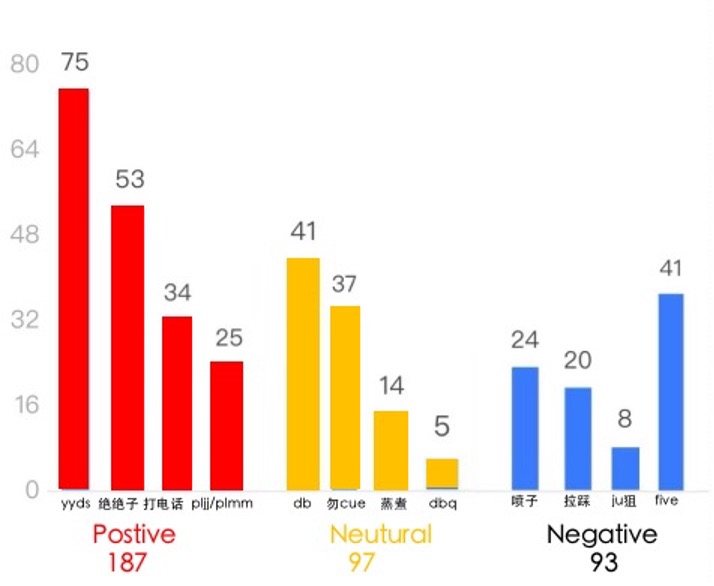
In summary, the survey shows that the fan dictionary is not only widely known and accepted by outsiders in the fan group, but also accepted by the public and used for various purposes. In addition, another important thing we realized from this survey is that fandom dictionaries with positive attributes are generally more likely to be applied outside of fandom activities.
Since it is not very straightforward to investigate a language in its entirety in such a short passage, we would like to reference a theoretical framework from an earlier study by Teahlyn Crow (2019) on K pop language in online fandoms. First of all, we have identified the fans that are currently inventing Fanquan language as a community of speech, but we must also realize that Fanquan words alone have a wider variety of audience. The speaker does not have to fully develop their competence in Fanquan language before they can use it quite freely. That being said, it seems that the indexicalities of Fanquan words are still very robust. If a person uses Fanquan words frequently, then they are automatically identified to be a regular Fanquan language user, and there exists a stereotype that only active fans in online forums are such users. For example, the fans of a particular idol must coin words for themselves and for their idol. Identities can become very refined through language use. One can determine from a post that the fan might be a fan who not only loves her idol, but also wishes her idol to express love for another idol. This is called a CP fan, an abbreviation from English word couple.
The construction of a fan identity works both ways. Some online communities have an implicit rule that, when it comes to idol-related contents, only those who use Fanquan language can be considered true fans. Therefore, fans can create bonds and their own identities by performing linguistic activities.
Moreover, what we have found from Fanquan language features is astonishingly similar to what Crow (2019) has found in online Korean K-pop fandom and what Gardiner (2019) has found in online Japanese pop culture fandom. The most notable shared feature is language mixing including loanwords and some code-switching. The aforementioned word, CP fan, is an abbreviation made by blending English and Chinese, and there are a number of new word-compounding rules that could demonstrate fandom’s innovative power with languages. It is also worth mentioning that while Gardiner (2019) found Japanese fandom words to be mainly nouns or noun phrases, we do not see such restrictions with Mandarin fandom words. Rather, the exclusivity of Fanquan words is its most debated characteristic. The more involved the person is in the fandom culture, the more they are willing to use the language outside of fandoms and even offline in daily life, but interviewees who are not so invested in fan campaigns have commented that they do not wish Fanquan language to spread further, because it has no intrinsic value (c.f. Han’s example). Finally, the interviewees all agree that negative Fanquan language is only used to attack malicious people online. Our survey has attested that positive words are more likely to be used in communication outside of fandoms, while the negative words are not uncommon inside fandoms. These words have gotten out their original registers and acquired mainstream acceptance.
Discussion and conclusions
Overall, we have verified our hypothesis through interview analyses as well as survey data. The knowledge of Fanquan language is not limited to fans, but the majority of young people might have contact with it through friends, suggesting that Fanquan language and the fandom culture at its background are actually very influential. Those Fanquan words that can be used more widely are mostly positive words, although some negative words have emerged as not uncommon. More data is required to verify if those negative words are being widely used outside of fandoms, which can pose substantial challenges to our theory.
Furthermore, during our investigation with specific Fanquan words, we found that interestingly, negative Fanquan words are considered to be even more vicious than swears in standard Chinese, despite the fact that the latter typically involves offense on family while the former only involves the idols. This has been used as evidence by critics against Fanquan language on its hostility or aggressiveness. We hypothesize that the emerging stereotype imposed on Fanquan language declares that it has a more aggressive nature than standard language because of its association with a higher percentage of aggressive usage or users. Such attitudes have been accurately reflected in current Chinese literature and argued with little evidence. For example, Lv (2020) claims that all language that does not conform to mainstream culture, or themes of the current political agenda, should be eliminated and ‘purified’. Such censoring targeting Fanquan language is a form of language policing, which we did not anticipate but came up as a highly relevant issue that deserves more sociolinguistic research.
References
Crow, T. F. (2019). K-Pop, Language, and Online Fandom: An Exploration of Korean Language Use and Performativity amongst International K-Pop Fans. Northern Arizona University.
Gardiner, R. E. A. (2019). ‘Weeaboo Japanese’: exploring English-Japanese language-mixing in online Japanese popular culture fandom: a thesis presented in partial fulfilment of the requirements for the degree of Master in Philosophy in Linguistics at Massey University, Albany, New Zealand (Doctoral dissertation, Massey University).
Lv, W. (2020). The Analysis of the Language of “Fanquan” under the Perspective of Sociolinguistics. Modern Linguistics, 08(02), 185–191. https://doi.org/10.12677/ml.2020.82026
Lu, Huiran. 以模因理论解读“饭圈”用语传播,Journal of News Research,May. 2020, https://www.cnki.com.cn/Article/CJFDTotal-XWDK202010132.htm






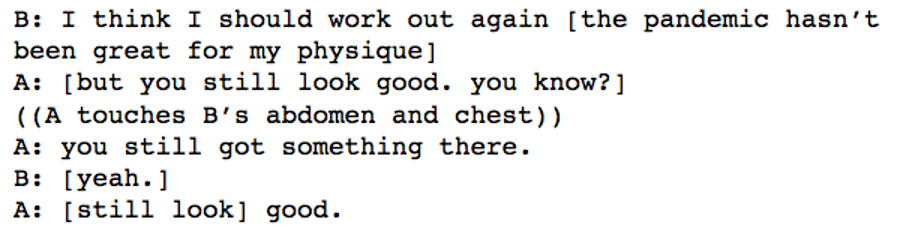



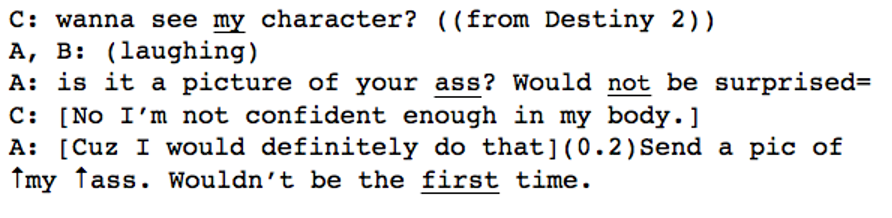


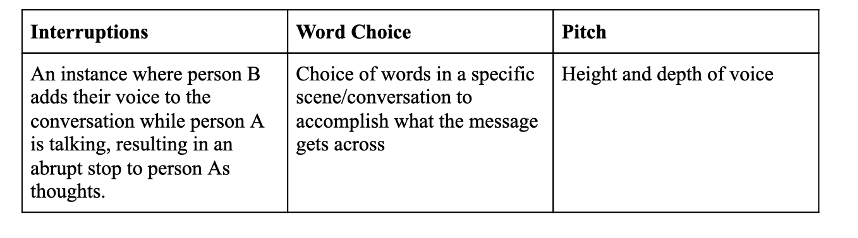
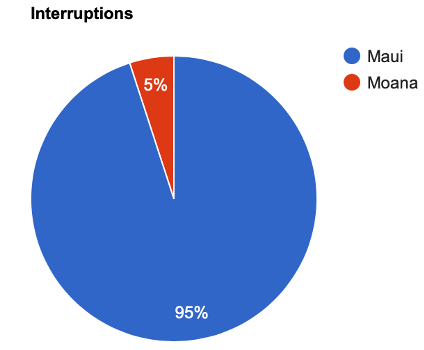
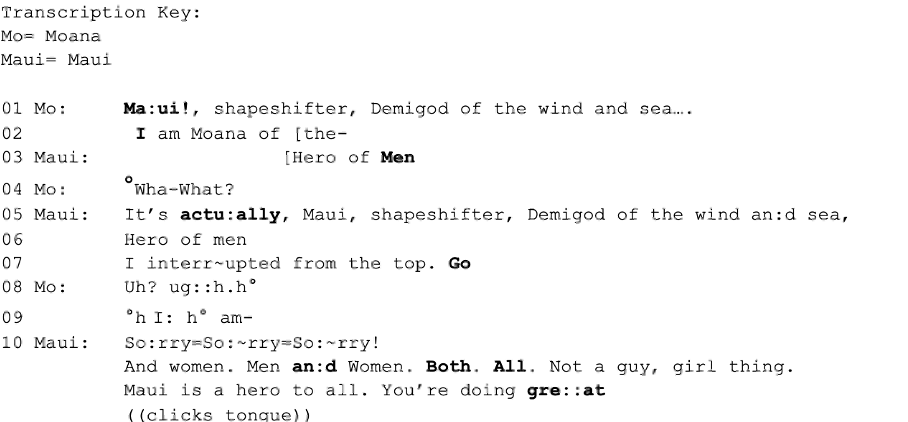
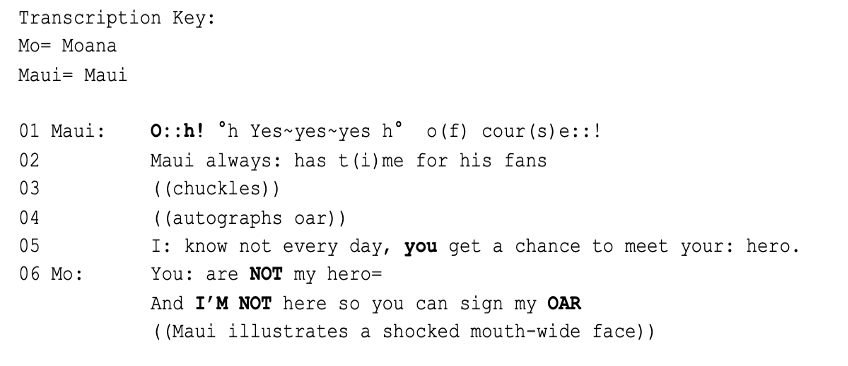
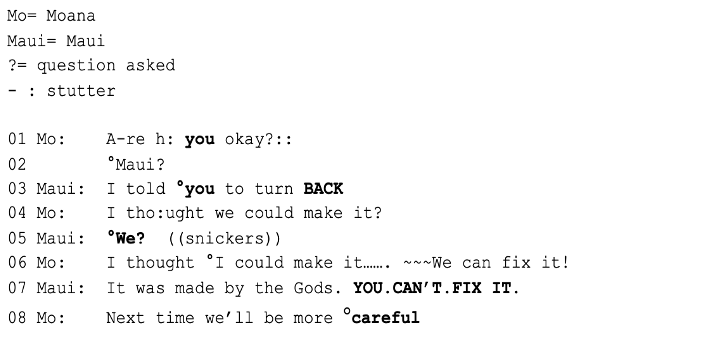
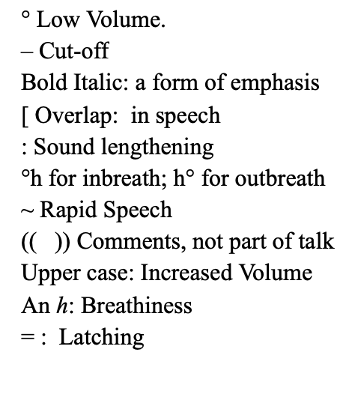
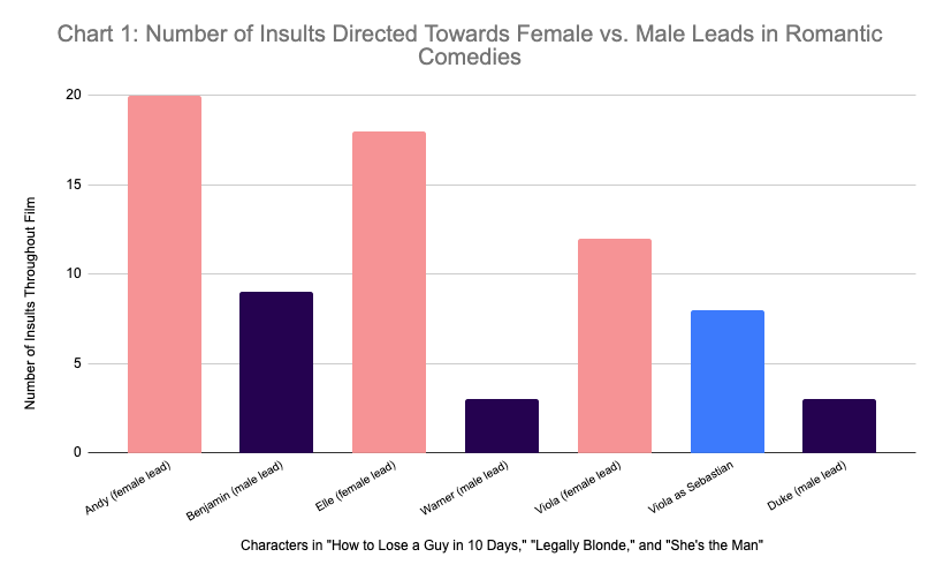
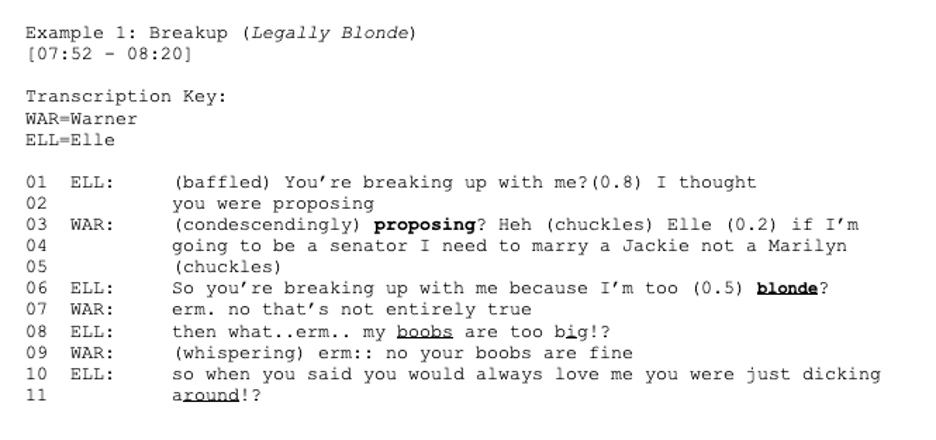
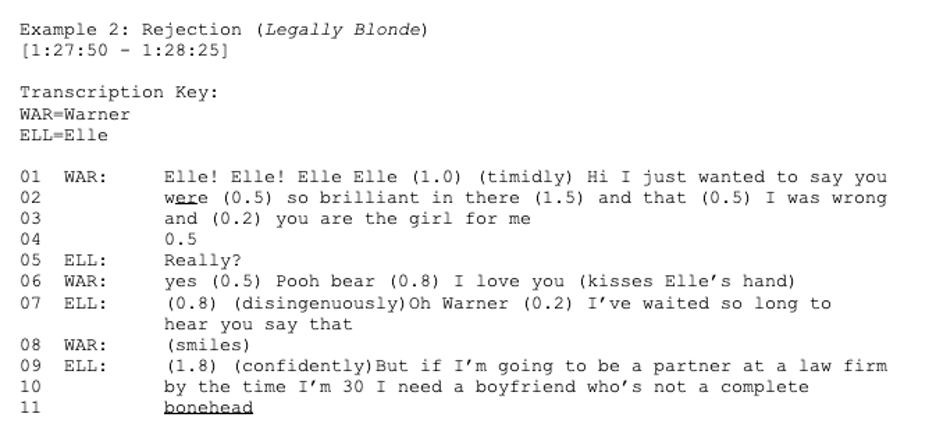
 While watching each film, I took notes on the context of each insult, the speaker and the recipient, word choice, intonation, impact of the insults, and the frequency of insults directed towards the male and female main characters in each film. Close attention was paid towards insults perpetuating gender stereotypes including the need for males and females to adhere to heteronormative societal standards, women’s obligation to maintain a specific aesthetic appearance and that her appearance contributes to her worth as a person, the necessity for women to act lady-like (including the need to not be “too” sexually active) to be accepted, the idea that women are inherently inferior intelligently, physically, and professionally, and that men must refrain from showing emotion in order to appear manly.