Language Use in Sports
Liam Anderson
The interaction between coach and athlete is one that is gendered and incorporates the dominance model. The show the Last Chance U gives examples of how coaches use gendered word choice and vulgar language to interact with their male athletes. What was found is that coaches want their athletes to be mentally tough but this can sometimes get stacked with vulgar language. This vulgar language is on top of all of the stress and pressure of the sport at hand. This is when it becomes gendered because the vulgar language is expected to be handled with mental aspects of the sport. Male athletes are not supposed to show any emotion, which is a male gender stereotype which incorporates the dominance model. This leads to coaches perpetuating male gender stereotypes when trying to get the most out of their athletes through promoting mental toughness. Through this, sports continues to perpetuate gender stereotypes that we are trying to get rid of.
Introduction
Have you ever seen a coach cuss out an athlete for doing something wrong? Coaches will use vulgar language towards their male athletes to try and get the most out of them and make them perform better. The use of vulgar language towards male athletes that coaches use can be seen as gendered as it can perpetuate male stereotypes. Stereotypical male characteristics like being strong and not showing emotion can be perpetuated through the word choice of coaches. This research will give a linguistics view on how sports can further gender stereotypes like being the strongest and most dominant male. This incorporates the dominance model and can be seen through the interaction between coach and athlete. The dominance model is the stereotypical notion that men are above women in society. Coaches word choice and tone affect the interaction between coach and male athletes and how this can incorporate the dominance model and perpetuate gender stereotypes. To look at these aspects the show Last Chance U will be analyzed to give examples of discussion between coach and athlete. The show Last Chance U is about junior college football athletes trying to make it to a Division 1 program and this is their last chance of making it in football.
Methods
The methods that were used to answer these questions were by watching the show Last Chance U. The show gives lots of interaction between coaches and male athletes and how their relationship is on the field. This type of source gives lots of conversations and allows to dissect information about coaches’ word choice and tone. The show also gives multiple perspectives of coaches and athletes which allows for further analyzing from each side. It also gives examples of coaches talking negatively to athletes and what words are used to try and get the best out of the athletes. Through multiple seasons there were a lot of examples and information that gave a good representation of the interaction between coach and athlete.
Different linguistic studies also helped with analyzing the interaction between coach and athlete. The linguistic studies helped identify what the interactions that were going on in Last Chance U meant and how this was shown linguistically. Through different studies on the linguistics of sports it gave a background knowledge of what types of words and tones coaches would use with their athletes. These studies helped in finding answers to how coaches used word choice and tone to perpetuate gender stereotypes.
Results
The results found that linguistically there are a lot of gendered interactions between coach and athletes that incorporate the dominance model. The idea of being mentally tough was found as an aspect that coaches pushed on athletes. This idea of being mentally tough is that an athlete must be mentally tough and be able to handle the mental stress of a sport as well as the physical. Mental toughness seems to improve sports performance based on Chang (2012), “Numerous studies have indicated that mental toughness plays a significant role in successful sports performance”. Therefore, so many coaches push for mental toughness and can even overextend the limits of mental toughness with vulgar language. Through vulgar language and negative word choice coaches can stack this with mental toughness to try and push their athlete. In Feezell (2008) Coach Knight uses vulgar language and justifies it by saying that the athlete should handle it by being mentally tough. Based on Feezell (2008), “Coaches like Knight might think they’re only trying properly to motivate an athlete, but the possible damage done by a coach’s tirade might still be palpable and unacceptable”. Coaches will use vulgar language and harsh word choice to try and push their athlete but this can be confused for mental toughness. This is stacked on top of mental toughness and it is expected for male athletes to be able to handle it because of male gender stereotypes. This type of motivation from a coach is perpetuating the male stereotype that males are not supposed to show emotion.
Discussion/Conclusion
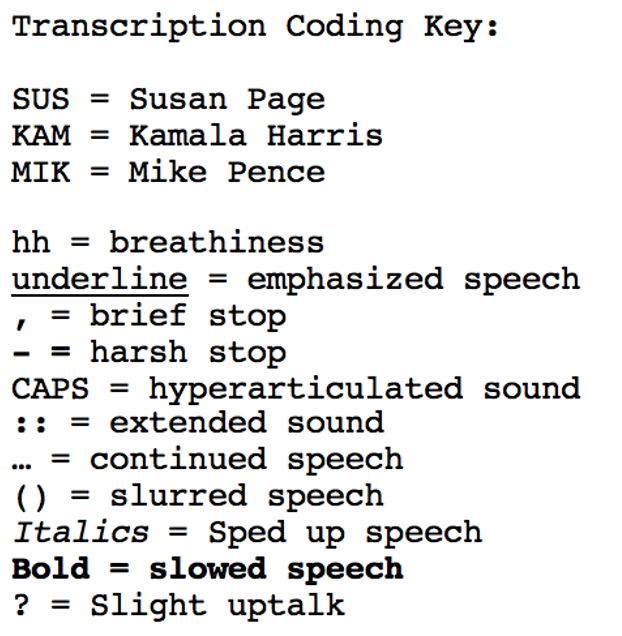
Coaches will use harsh language with their athletes to try and perform better but sometimes this can result in the athlete using it themselves to push themselves. There is a lot of pressure for athletes to do well so they will use vulgar language themselves. Below is a transcription from Tovares (2010).

This transcription is of an athlete talking to themselves while running a marathon and it shows some of the pressure that the athlete is facing. The vulgar language is present in transcription, and it is showing what mental toughness is all about. This is what a coach would push for an athlete to do because it is an example of mental toughness. This language is reflecting the gender stereotype and is a way of establishing masculinity. This falls right into the incorporation of the dominance model because emotions are supposed to be put aside for men and this is an example of bottling up emotion.
Example 1 from the show Last Chance U demonstrates how the word choice of coaches can become gendered and even make them feel marked. Marked is when someone feels like an outsider or does not fit in fully. This example is at practice when the coach Diaz pulls Malik to the side and tells him that he is making him look bad in front of everyone else.
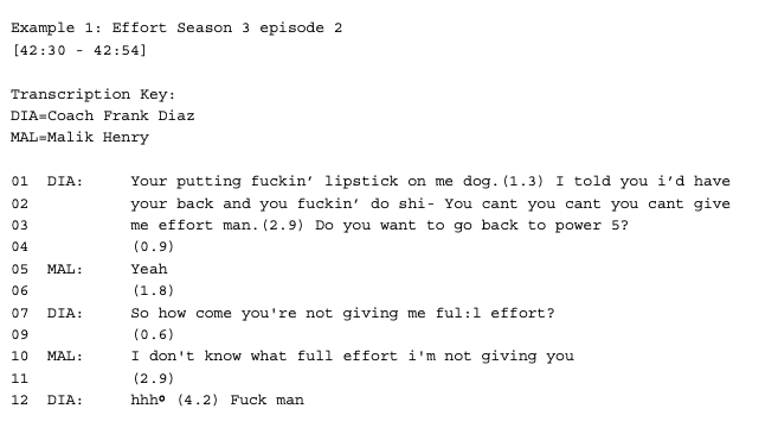
The word choice of “lipstick” and “fuckin’” make this interaction between coach and athlete gendered. The coach is referring to how Malik is making him look like a woman on the football field. This in football is unacceptable for a football coach and is something that coach Diaz lets Malik know. This is an idea of markedness because coach Diaz feels like an outsider with his reference of feeling like he has lipstick on his face. This gendered interaction perpetuates male stereotypes and makes it seem like you can only be a strong and emotionless man to be on the football team.
The hall of mirrors effect could be present in this research because by searching up the topic some of the information that contradicts my claim could be overlooked. The sources that were used fit my claim and therefore no sources that contradicted it were found which is why the paper could fall into the hall of mirrors effect. This research contributes to the larger phenomenon that sports drive a lot of stereotypes that society is trying to rid of but they stay in sports.
References
Chang, Yu-Kai, Lin Chi, and Chih-Shiung Huang. “Mental Toughness in Sport: A Review and Prospect.” International Journal of Sport and Exercise Psychology, vol. 10, no. 1, 2012, pp. 79-92. ProQuest, https://search.proquest.com/scholarly-journals/mental-toughness-sport-review-prospect/docview/1011870028/se-2?accountid=14512, doi:http://dx.doi.org/10.1080/1612197X.2012.661202.
Tovares, Alla V. “Managing the Voices: Athlete Self-Talk as a Dialogic Process.”Journal of Language and Social Psychology, vol. 29, no. 3, 2010, pp. 261-277. ProQuest, https://search.proquest.com/scholarly-journals/managing-voices-athlete-self-talk-as-dialogic/docview/758115517/se-2?accountid=14512.
Feezell, Randolph. “Vulgarians of the World Unite: Sport, Dirty Language, and Ethics.” Journal of the Philosophy of Sport, vol. 35, no. 1, May 2008, pp. 17–42. EBSCOhost, doi:10.1080/00948705.2008.9714725.


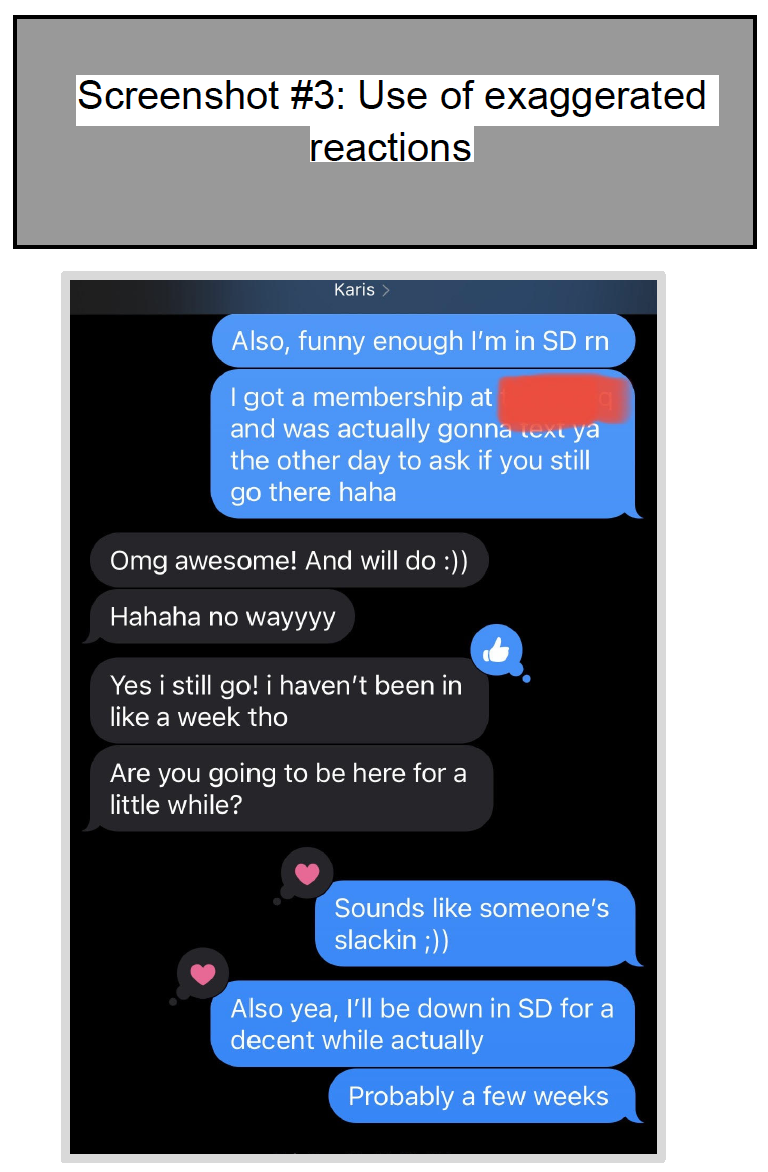
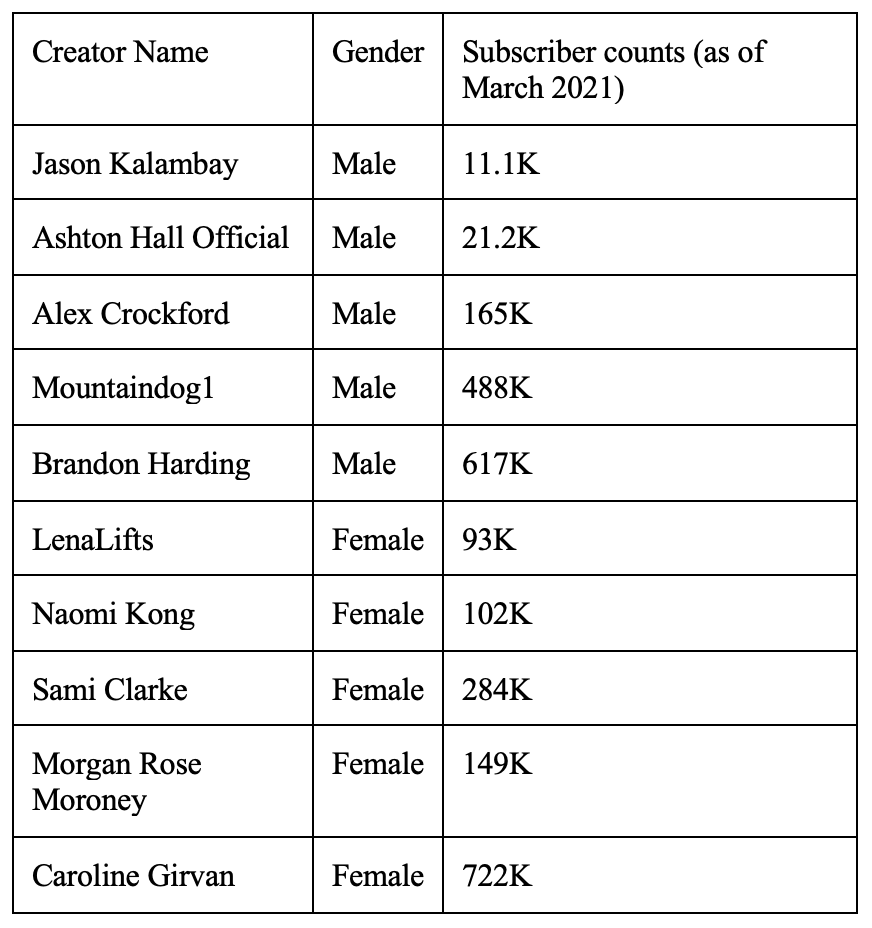
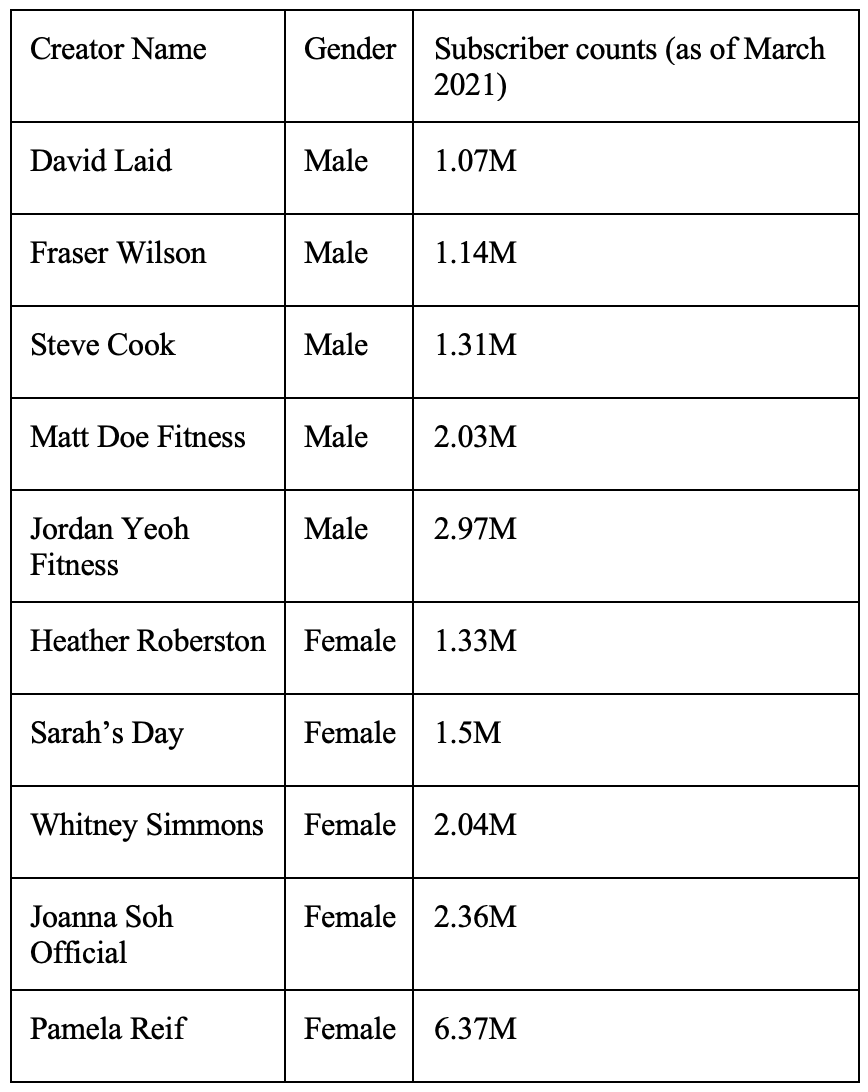
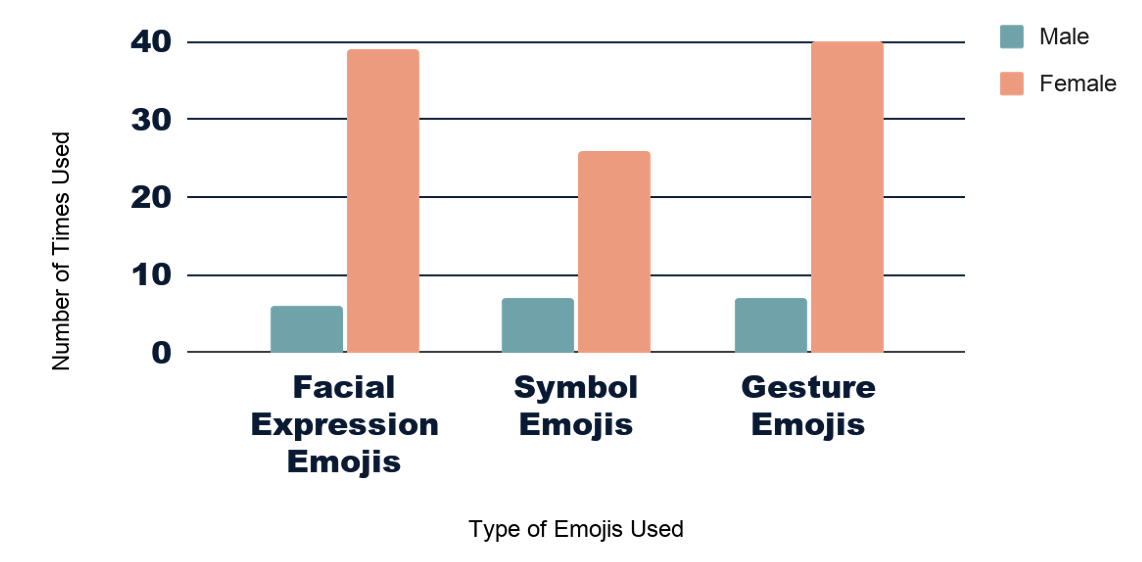
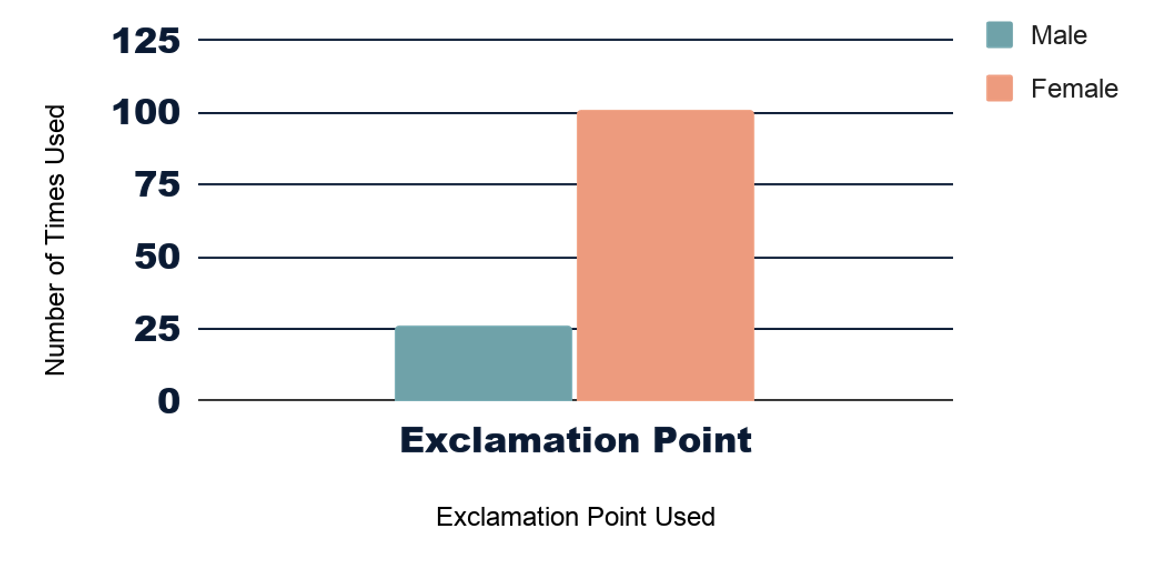
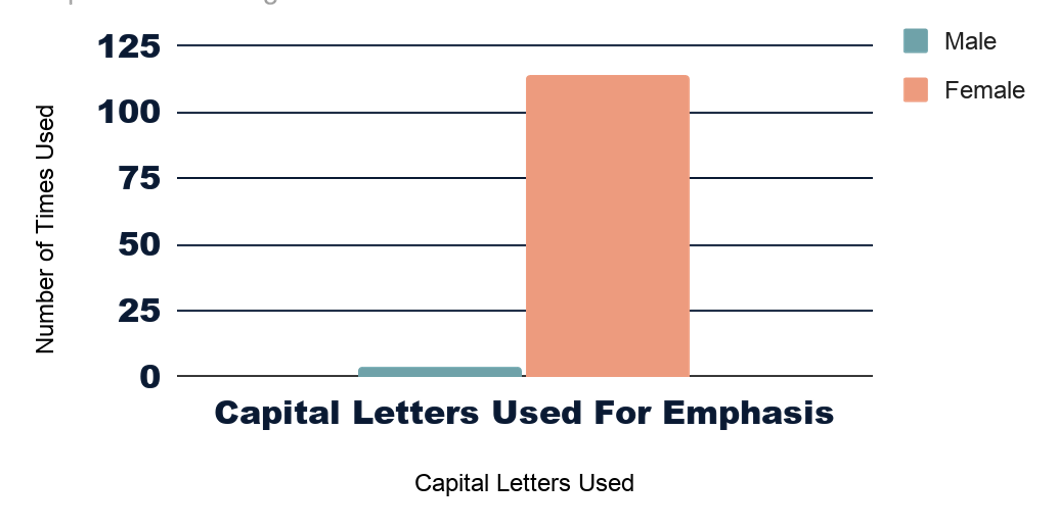
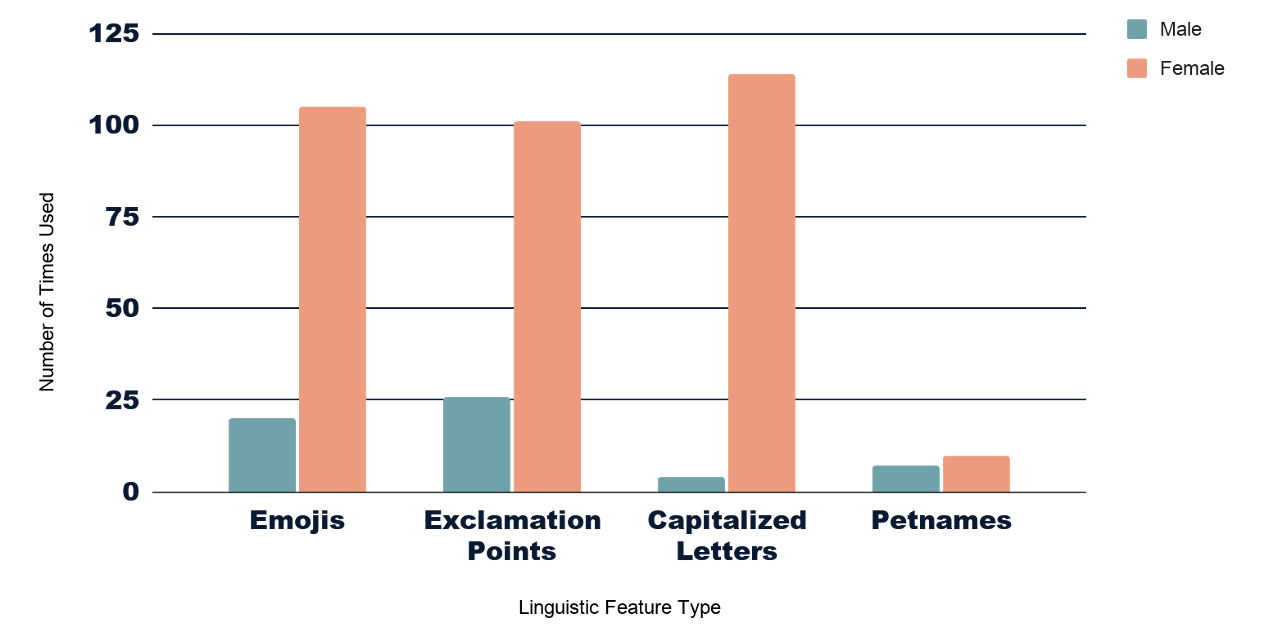
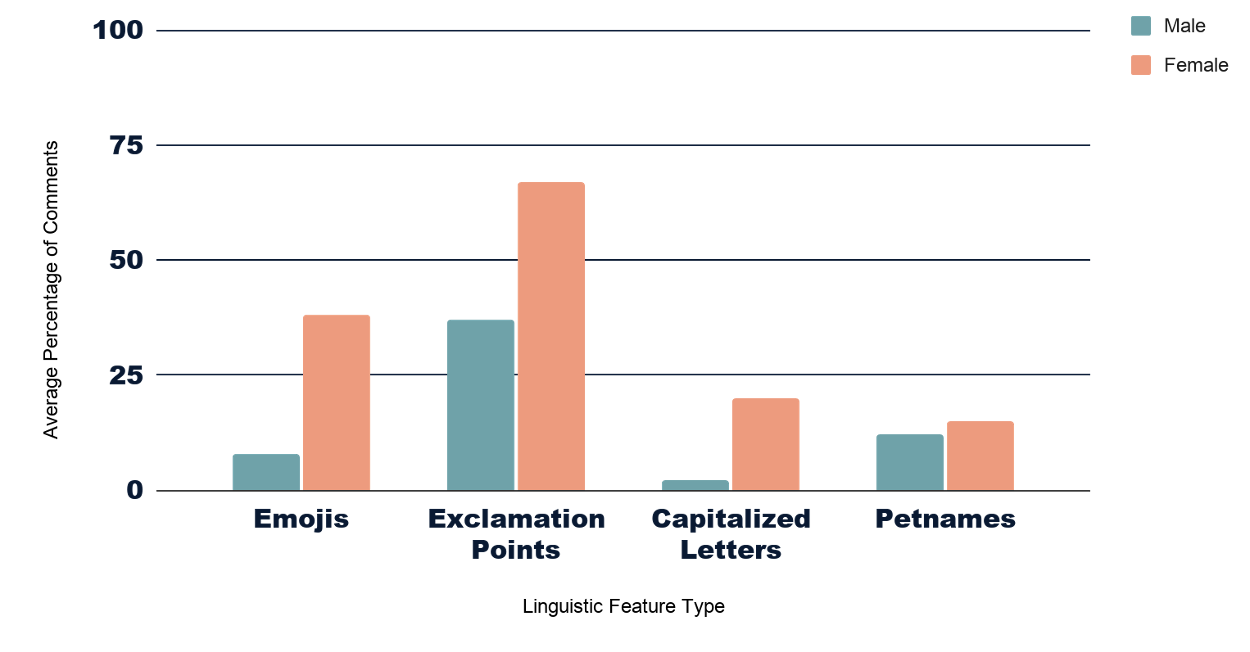
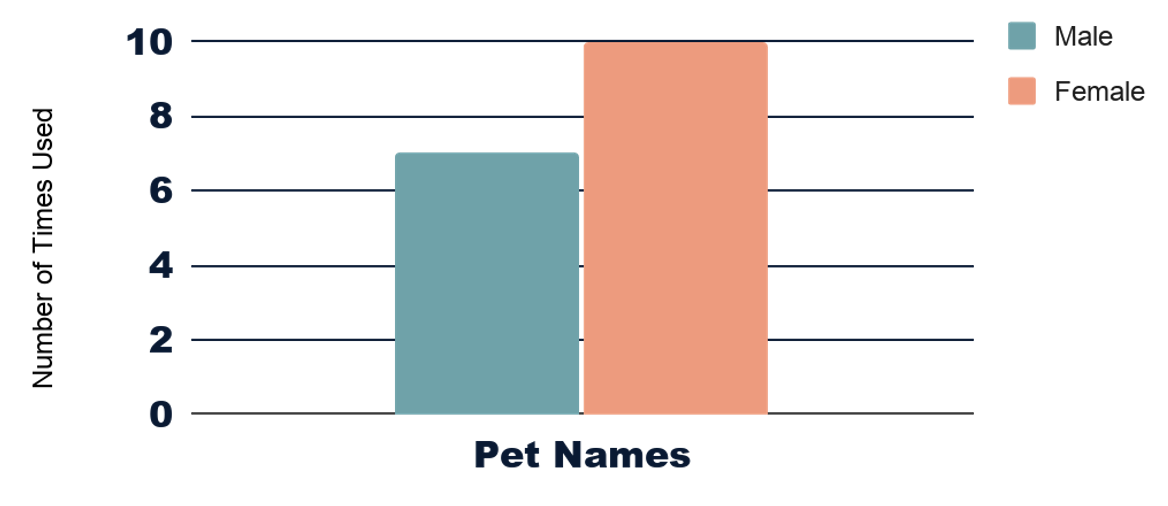
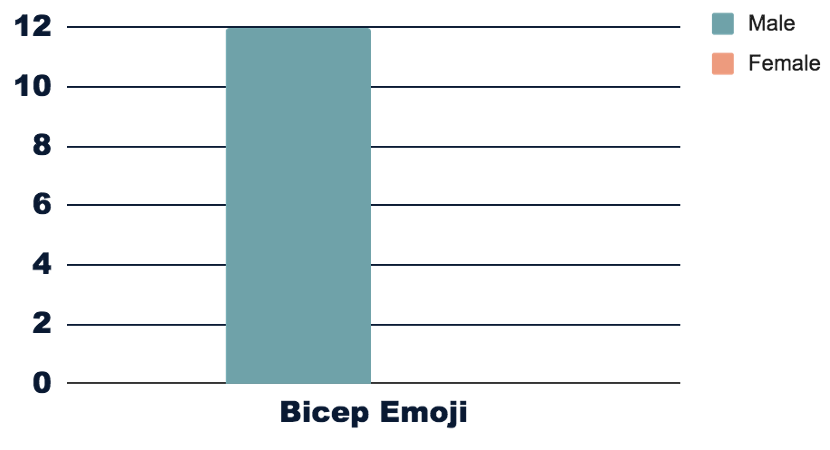 First, by taking a closer observation at the types of emojis male influencers used, we found that males usually used bicep emojis whereas females did not use them at all. Females generally used more emojis across all emoji categories. However, by narrowing down to a more specific sub-parameter within symbolic emojis, we observed that males were in fact using a different tool to strengthen their relationship with their predominantly male fans.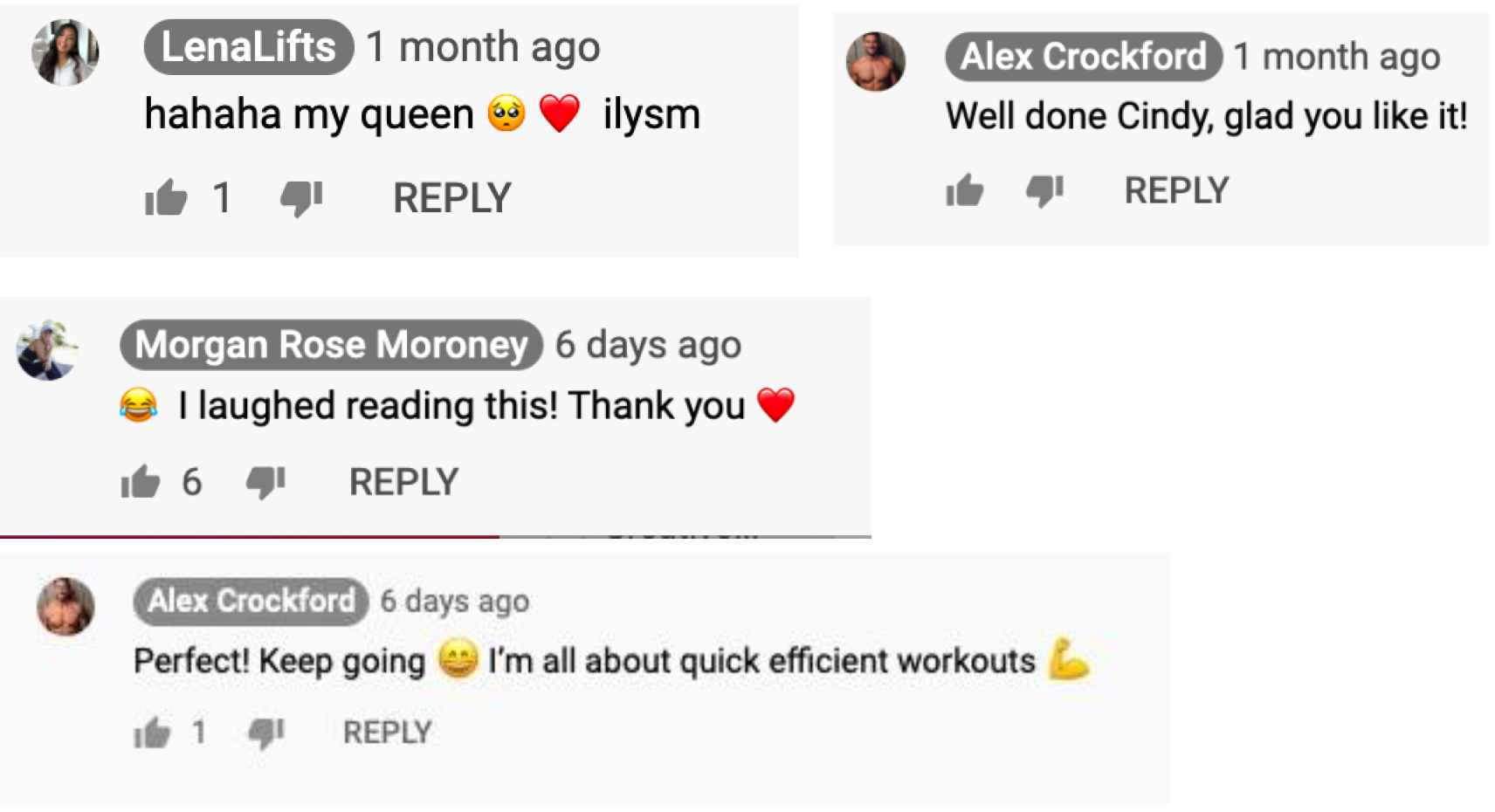


 In today’s day and age, a social media presence has become not only essential but also a platform that defines us as individuals. In February of 2019, a statistic showed that 90% of adults ages 18-29 use social networks because it is the new
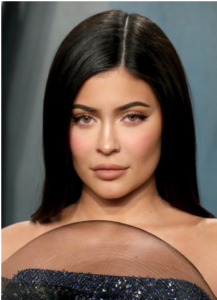 The first person we decided to look at was Kylie Jenner. She started out by being a part of the Kardashian/Jenner family and a reality show from the young age of 9, now is known around the world as one of the youngest billionaires and has many business ventures as well! She has been in the limelight and been immersed in the influencer culture for a large part of her life. She is one of the highest paid influencers and her millions of followers across platforms makes her a perfect candidate to study.