2024

Three Stars is for Authenticity: Cuisine and its Impact on Yelp Reviews

Mae Altarac, Chloe Chang, Alyssa Cheung, Larissa Li, Tiffany Lieu

Societal expectations affect nearly every aspect of our daily lives, even extending as far as what we choose to include in restaurant reviews. Although the main purpose of reading reviews is to learn about the restaurant itself, researchers can also learn about patterns of stereotypes based on the content of reviews. In our study, we aim to explore whether the inherent biases in reviews are influenced by expectations of the restaurant’s cuisine and price point. The intersection between culture and restaurant reviews has been informally explored extensively on social media. For instance, TikTok user RocketJump (2022), in his viral video, made the claim that 3.5 stars is the ideal “sweet spot” for authentic Chinese food – potentially reflecting different expectations across cultures. Guided by three hypotheses, our research found that Chinese restaurants at higher price points were more likely to receive negative reviews than American restaurants while the reverse is true for cheaper restaurants. In addition, we found patterns in reviews indicating that Chinese restaurants tend to focus more on food quality than American restaurants, and that reviews for more expensive restaurants focused more on service in comparison to cheaper restaurants. Price and cuisine greatly affected lexical decisions when it came to reviewing restaurants, reflecting preconceived biases reviewers held.

Read more

Introduction and Background

As our society becomes more globalized, intercultural exchanges have increasingly permeated people’s everyday lives. Some of the most prevalent sites for such exchanges are restaurants, for which popular review websites like Yelp provide a vast pool of data to study. Existing studies on Yelp reviews focus on factors within the reviewer that influence the content of the review. For instance, a study on Mexican restaurant reviews linked a focus on authenticity in the reviews with a desire to seem worldly (Gottlieb, 2015). While this research establishes motivation for users leaving reviews, there is little discussion about how these differences manifest themselves in reviews based on the cuisines of restaurants. Additionally, as a general trend, cultural restaurants are the targets of more othering language in reviews by people from outside the culture (Mkono, 2011). Within the broad category of cultural restaurants, Chinese restaurants, in particular, have experienced an increase in negative reviews since the start of the COVID-19 pandemic (Kim & Kam, 2023). Since 2020, Chinese restaurants have become an increasingly necessary field of study to explore the effects of the pandemic on discrimination. This research project attempts to fill a gap in the literature by exploring the research question: Does the cultural identity and price point of a restaurant impact the consumer’s reviews of the establishment? Through analysis of reviews, we examine how word choice and content are guided by cuisine.

Methods

We compiled Yelp reviews from Chinese and American restaurants in Westwood in Los Angeles, California in a similar manner to existing studies (Gottlieb, 2015). In total, we selected eight restaurants to study: two Chinese restaurants and two American restaurants from the $-$$ range on Yelp, and two Chinese restaurants and two American restaurants from the $$$-$$$$ range. To maintain consistency and ensure sufficient data, we selected the most popular restaurants in these categories from Yelp’s database. By sampling from multiple price points, we aimed to mitigate the influence of price on any culturally-related disparities in restaurant reviews.

Data was gathered from a four-year period (2020-2024) to reduce year-to-year variations and outdated reviews. Furthermore, we focused on data from 2020 onwards as the COVID-19 pandemic has shown to have a negative impact on the reviews of many Chinese restaurants (Kim & Kam, 2023). Data prior to this time range could skew results due to discrepancies in perceptions of Chinese restaurants before and after the start of the pandemic.

Reviews were categorized as negative if they fell within the 1 to 2-star range on Yelp and positive if they fell within the 4 or 5-star range. Utilizing content analysis, a coder read through reviews and tallied all mentions of comments from each of the following categories: food quality, service quality, cleanliness, ambiance, and value.

For our main and second hypothesis, we controlled for the variable of price by aggregating and comparing reviews of Chinese and American restaurants within the same price range, either lower-priced ($-$$) or higher-priced ($$$-$$$$). To test the third hypothesis, we compared reviews from the four expensive restaurants with those from the four cheap restaurants with the selected sample.

Results and Analysis

Hypothesis I, which proposes that Chinese restaurants are more likely to receive negative reviews compared to American restaurants, is partially supported by our data. We compared the proportion of negative reviews for Chinese and American restaurants within the same price range, calculating this by dividing the number of negative reviews by the total number of reviews for each restaurant type. The results, shown in Figure 1, indicate that in the cheap price range, Chinese restaurants received a lower proportion of negative reviews (0.09) than American restaurants (0.24), contrary to our hypothesis. However, in the expensive price range, Chinese restaurants received a higher proportion of negative reviews (0.55) compared to American restaurants (0.22), which supports the hypothesis. With p-values of less than .05, both of these results are statistically significant. In addition, it is worth noting that American restaurants had a relatively consistent proportion of negative reviews across different price ranges, whereas Chinese restaurants saw a higher proportion of negative reviews at higher prices. This aligns with Roest and Rindfleisch’s (2010) finding that people are more critical of expensive restaurants, but our data indicates that this increased scrutiny specifically applies to Chinese restaurants but not American restaurants.
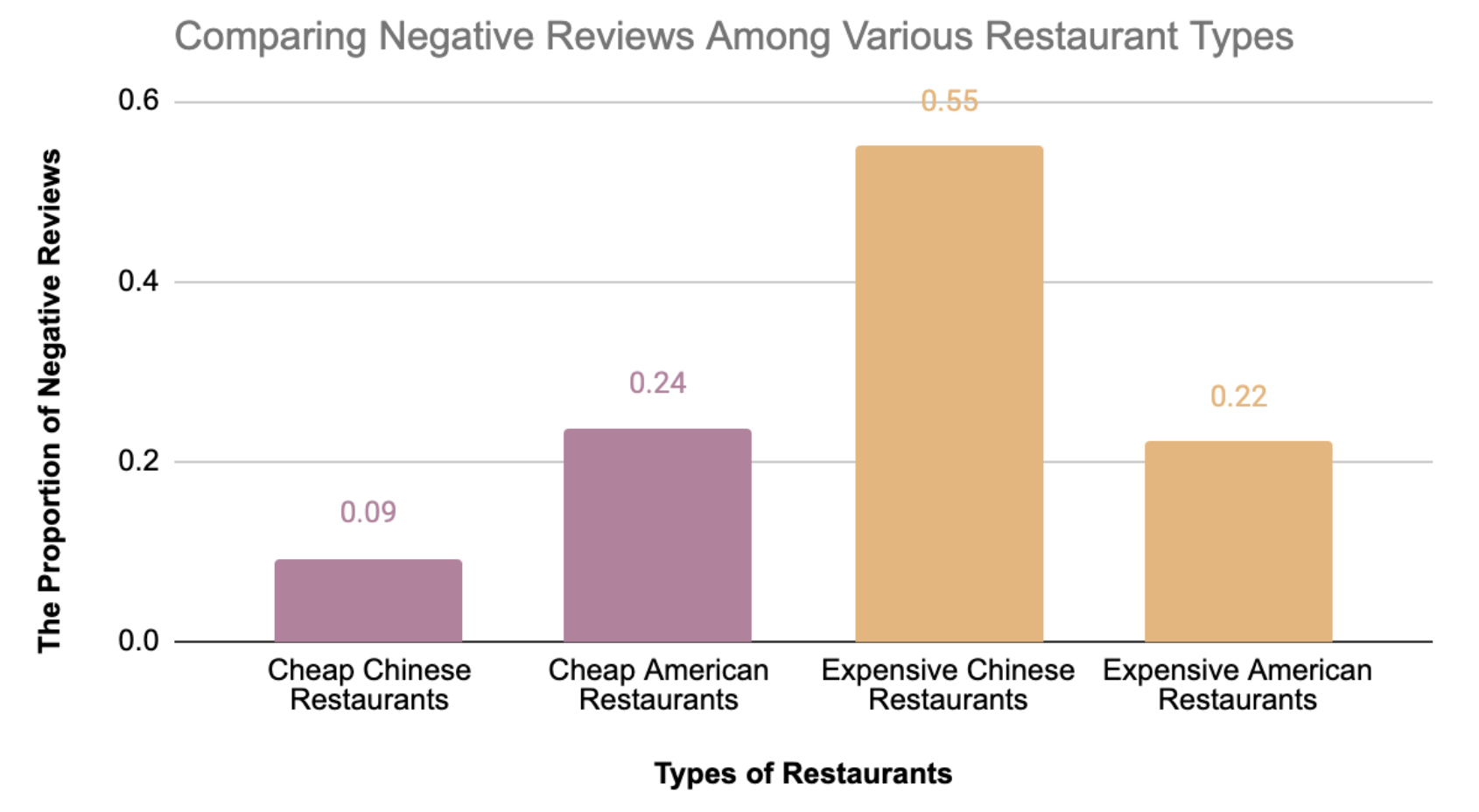
Figure 1. Proportion of negative reviews by restaurant types and price range Hypothesis II, which is that all reviews of Chinese restaurants will tend to emphasize

Hypothesis II, which is that all reviews of Chinese restaurants will tend to emphasize food quality more than those of American restaurants, is supported. Reviews were split into positive (4-5 stars) and negative (1-2 stars) and sorted into five categories: Food Quality, Service, Cleanliness, Ambiance, and Value. We compared the proportion of each category for both positive and negative reviews. Figure 2 presents the proportion of each category in positive reviews. Positive reviews for all four types of restaurants emphasize food quality the most. The proportions of food quality in positive reviews for both cheap (0.91) and expensive (0.91) Chinese restaurants are higher than those for cheap (0.8) and expensive (0.73) American restaurants. Figure 3 displays the proportion of each category in negative reviews. Proportions of negative reviews focusing on food quality are higher for cheap (0.89) and expensive (0.64) Chinese restaurants compared to cheap (0.39) and expensive (0.45) American restaurants. At both the positive and negative levels, the p-values are less than .05 and are thus significant.
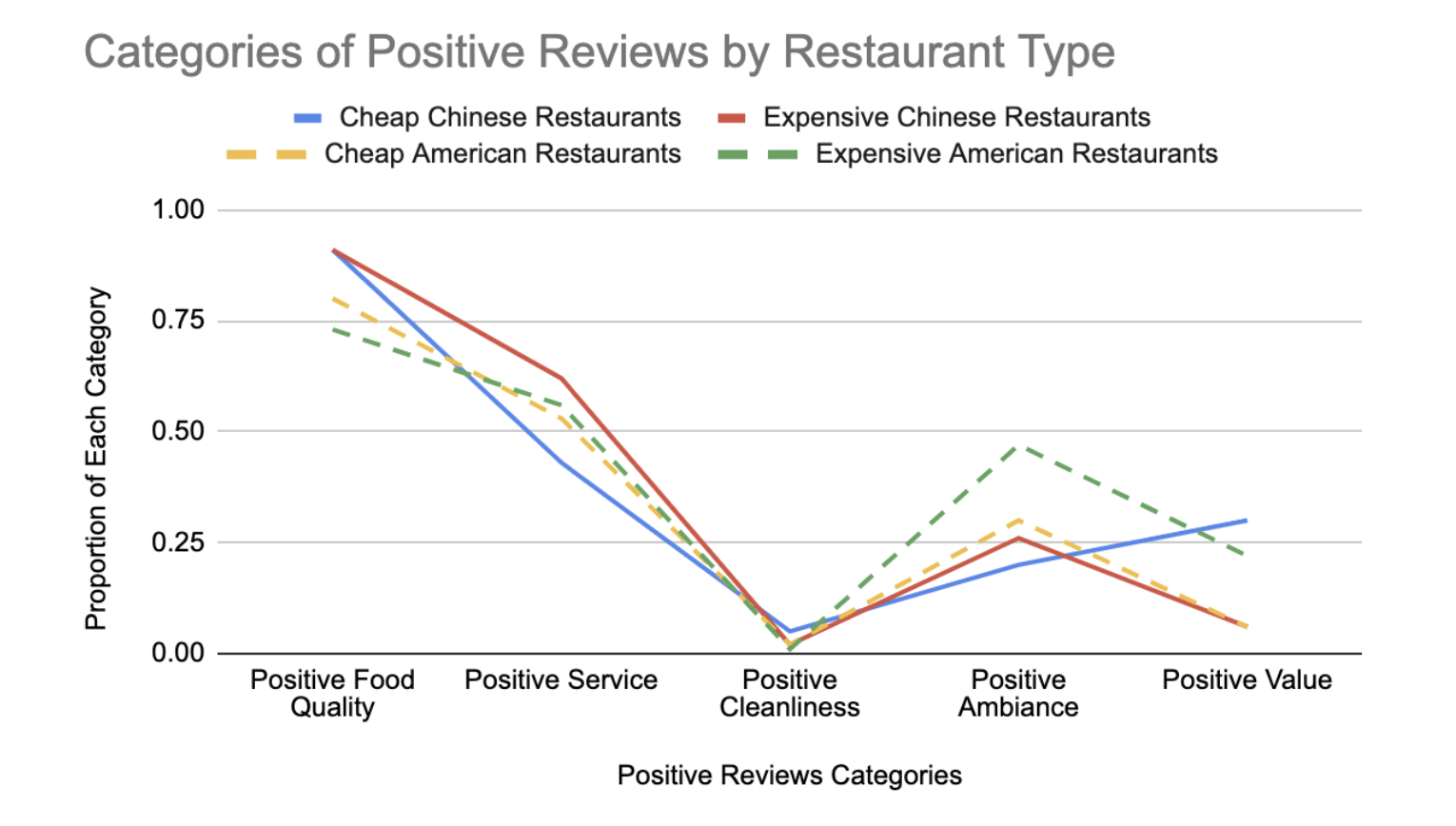
Figure 2. Proportion of positive review categories by restaurant types. The solid lines represent Chinese restaurants; the dashed lines represent American restaurants
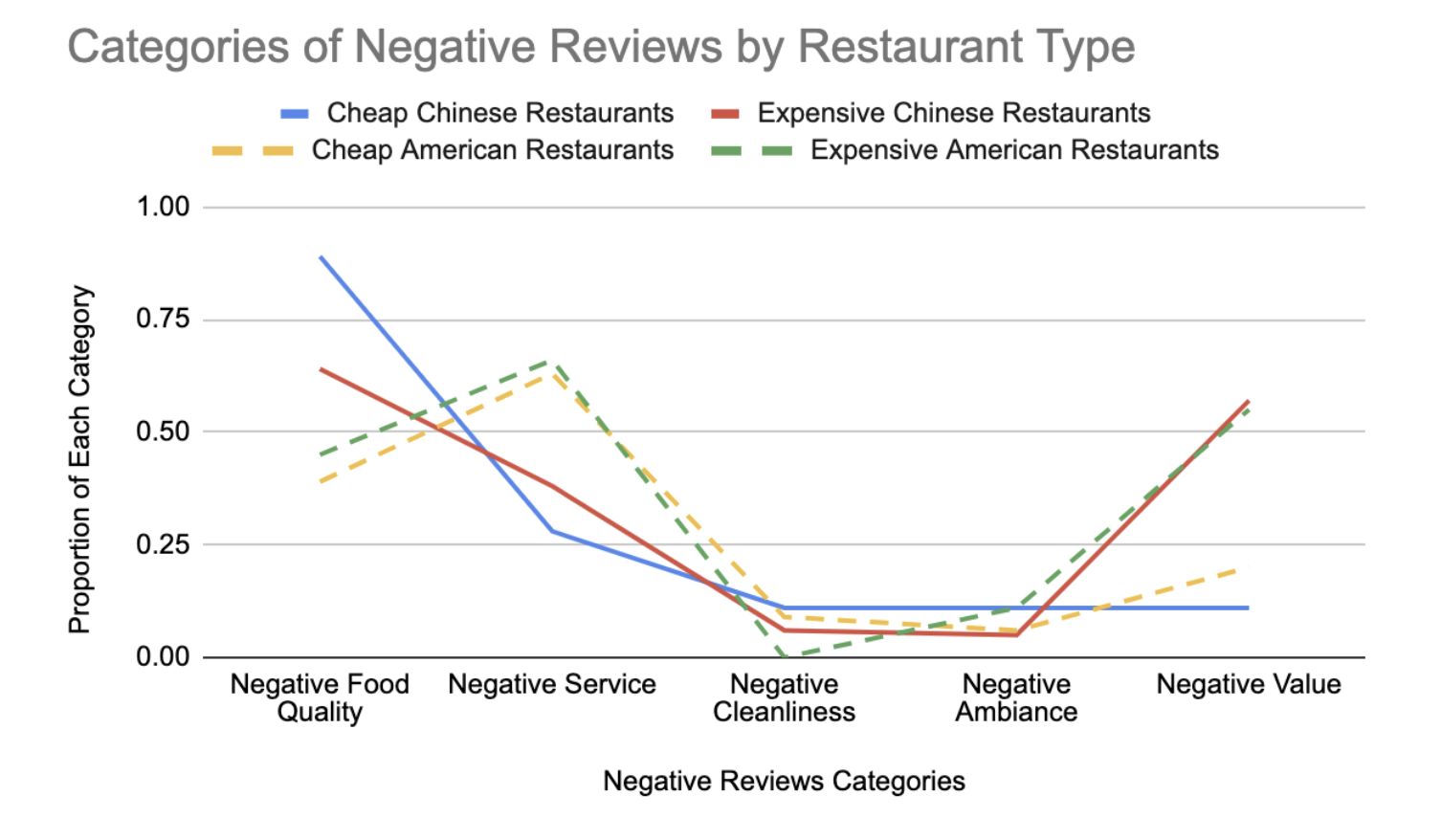
Figure 3. Proportion of negative review categories by restaurant types. The solid lines represent Chinese restaurants; the dashed lines represent American restaurants

Hypothesis III, which states that all reviews of high-end restaurants will place a greater emphasis on service compared to less expensive establishments, is supported. We compared the same sample of restaurants at the two different price points and calculated the proportion of reviews focused on service for all restaurants studied. As illustrated in Figure 4, expensive Chinese restaurants have higher proportions of both negative (0.38) and positive (0.62) reviews emphasizing service compared to cheap Chinese restaurants, which have proportions of 0.28 for negative reviews and 0.43 for positive reviews. The same pattern is observed in American restaurants, although the difference in proportions across the cheap and expensive American restaurants is not as pronounced. Nonetheless, with p-values all less than .05, these results are significant.
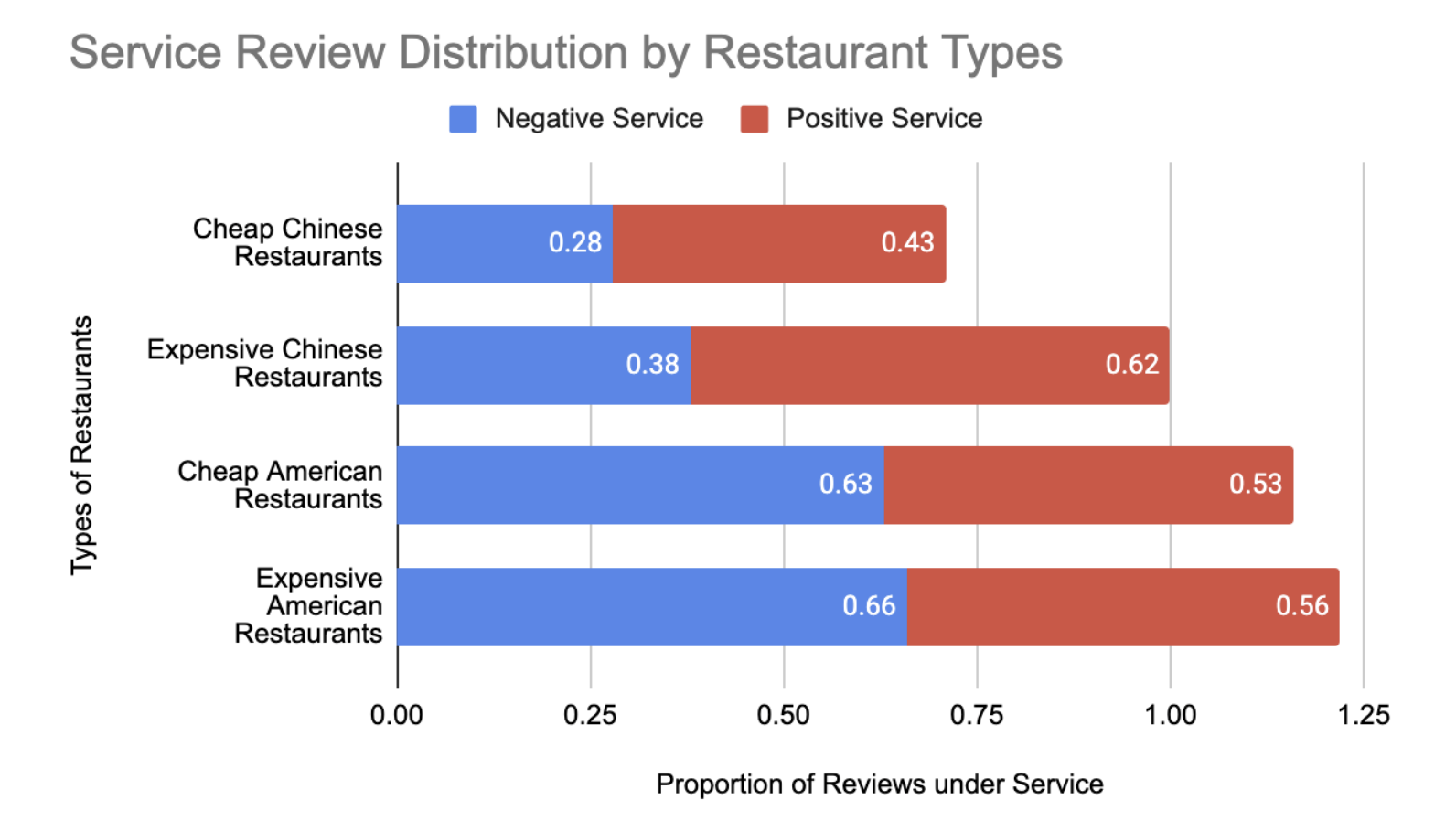
Figure 4. Proportion of positive and negative service reviews by restaurant types Discussion & Conclusion

Human perception and communication are shaped by existing stereotypes and preconceived notions of biases upheld by social groups. The results of our study indicate that, within the restaurant industry, the cultural background of a restaurant plays a significant role in determining the type of reviews it receives, particularly in the context of price. Our data suggests that consumers may hold different standards for high-end Chinese restaurants, potentially influenced by societal expectations that “authentic” ethnic restaurants will be “dirtier” (Gottlieb, 2015). Additionally, our data indicates that food quality is a dominant theme in reviews for Chinese restaurants, regardless of whether the review is positive or negative – suggesting that patrons of Chinese restaurants may prioritize food quality more when evaluating their dining experience. Moreover, the focus on service in reviews of high-end restaurants, regardless of cuisine, underscores the critical role that service quality plays in shaping consumer perceptions in upscale dining contexts (Aktaş Polat, 2022). With the proliferation of these reviews, the corresponding stereotypes about ethnic restaurants, cultural focuses, and expectations based on price level are continually reinforced and spread. Not only do these findings have implications for the patronage of restaurants, but they also impact how cultural institutions and groups are perceived and treated. Future research examining how these patterns and trends exist across dining establishments in different regions could increase awareness of social biases embedded within reviewing sites like Yelp, fostering a more culturally sensitive society.

References

Aktaş Polat, S. (2022). Analysis of fine dining restaurant reviews for perception of Customers Restaurant Service Quality. Journal of Tourism and Gastronomy Studies. https://doi.org/10.21325/jotags.2022.974

Gottlieb, D. (2015). “Dirty, authentic…delicious”: Yelp, Mexican restaurants, and the appetites of Philadelphia’s new middle class. Gastronomica, 15(2), 39–48. https://doi.org/10.1525/gfc.2015.15.2.39

Kim, E., & Kam, C. (2023). Othering in everyday life: Anti-Chinese bias in the COVID-19 pandemic. Public Opinion Quarterly, 87(3), 733–748. https://doi.org/10.1093/poq/nfad035

Mkono, M. (2011). The othering of food in touristic eatertainment: A netnography. Tourist Studies, 11(3), 253–270. https://doi.org/10.1177/1468797611431502

Roest, H., & Rindfleisch, A. (2010). The influence of quality cues and typicality cues on restaurant purchase intention. Journal of Retailing and Consumer Services, 17(1), 10–18. https://doi.org/10.1016/j.jretconser.2009.08.007

Wong, F. [@rocketjump]. (2022, September 12). Why I only go to Chinese Restaurants with 3.5 star ratings [Video]. TikTok.

https://vm.tiktok.com/ZTLoh5Sqp/
, , ,

How Slang Creates and Perpetuates Gendered Power Dynamics in Greek Life

Alexa Waldman, Teresa Humbert, Morgan Moseley, Luke Kim

Prior to joining greek life, I was exposed to the stereotype that sorority girls were mean and hierarchical whereas fraternity boys were friendly and laid back. I was told to be prepared for girls to make comments that impose their superiority to make me feel small. However, during rush, I found that I was addressed with respect in every conversation. The girls always made sure to use words like “affordable” instead of “cheap,” and constantly parroted that slang phrase “Panhel love,” which means that each sorority chapter has love and respect for the rest.

On the other hand, boys who had gone through fraternity recruitment expressed that they were not treated with respect and that the older members made sure to establish power imbalances. They would use words like “facey”, meaning that someone is good looking enough to be in the fraternity and “moldable”, meaning that someone has good traits but can become better if he joins the fraternity. They used these terms in front of the potential members to impose their authority.

In our project, we studied slang used by sorority and fraternity members in order to determine how patterned language usage has the power to create and perpetuate gendered power imbalances and interorganizational hierarchies.

Read more

Introduction and Background

Greek Life, which dates back to the 18th century, is a significant part of campus communities all across America. While many individuals see Greek life as a way to gain friendships and connections, the portrayal of Greek life in media, such as film and on social platforms, has suggested power imbalances within the institution and has casted a negative light on the organizations. Many stereotypes portray sorority girls as snobby and clicky, and portray fraternity members as inclusive and laid back. Our group was interested in investigating if there is truth behind these narratives.

We addressed the gap in patterned slang use between sorority and fraternity members to determine how speech can point to and maintain power imbalances. We predicted that because members of each individual organization share common language patterning, slang could be used to reinforce group identities. Moreover, we predicted that differences in communication practices between fraternities and sororities (as seen through slang) reflect and reinforce underlying gender power imbalances.

When taking a closer look, we found that there are flaws in the stereotypes surrounding Greek Life. In fact, our preconceived notions that sorority girls are clicky and enforce power imbalances, and that fraternity members are more inclusive and have less of a hierarchical structure were not supported by our evidence. Instead, by analyzing speech patterning in these

institutions, we found that fraternity members use slang to create a hierarchical structure within their chapter, compete with other fraternities, and facilitate gender imbalances of power between sororities and fraternities. On the other hand, we found that sorority members tend to have a symmetrical power dynamic within their chapters and promote friendship and inclusion with the other sororities through their use of slang. Overall, our research challenges the stereotypes that surround Greek life, revealing the flaws in common narratives about the power dynamics within Greek Life communities

Methods

Our research was conducted in sorority and fraternity houses over the course of a month. Each person in our group sat down with members of Greek Life for interviews that lasted about 20-30 minutes each. The interviewer asked open-ended questions in order to allow the sorority and fraternity members to freely explain their experiences. In the interviews, we asked questions such as “can you describe the slang words used most in your chapter? How does slang suggest/ create power imbalances? What topics does your slang refer to the most?” Some questions differed for sorority and fraternity members as we wanted to understand how each institution perceived the other. We asked sorority members what slang they thought fraternity members use the most and what topics they believed this slang surrounded. We asked fraternity members the same questions about sorority members.

We also focused on understanding relationships within and between sororities as well as within and between fraternities. For this reason, we interviewed people from different grades, from different chapters, and with different positions of power. For example, we questioned the president of a fraternity along with a sophomore and a freshman. We similarly talked to members on the executive boards of different sororities, and interviewed seniors, juniors, sophomores, and freshmen in these same organizations. We interviewed people in different positions/ grades in two fraternities and three sororities.

Interviewing a diverse range of people within multiple chapters of both sororities and fraternities gave us a multifaceted picture of the contexts in which slang is used, how slang is used, why slang is used, and the effect of slang. This researching process specifically gave us insights into how slang has different purposes and effects when used by sororities and fraternities.

Results and Analysis

Our research demonstrates how sorority members harness slang to facilitate an environment of inclusion and harmony within and between sorority chapters. On the other hand, we found that fraternity members utilize slang to create power imbalances within chapters, between chapters, and between fraternities and sororities. Many fraternity brothers discussed that power imbalances within their organization were especially evident in the difference of social status between new members and brothers that had already been initiated into the chapter. For example, new members are called “pledges” in every fraternity. This slang word is

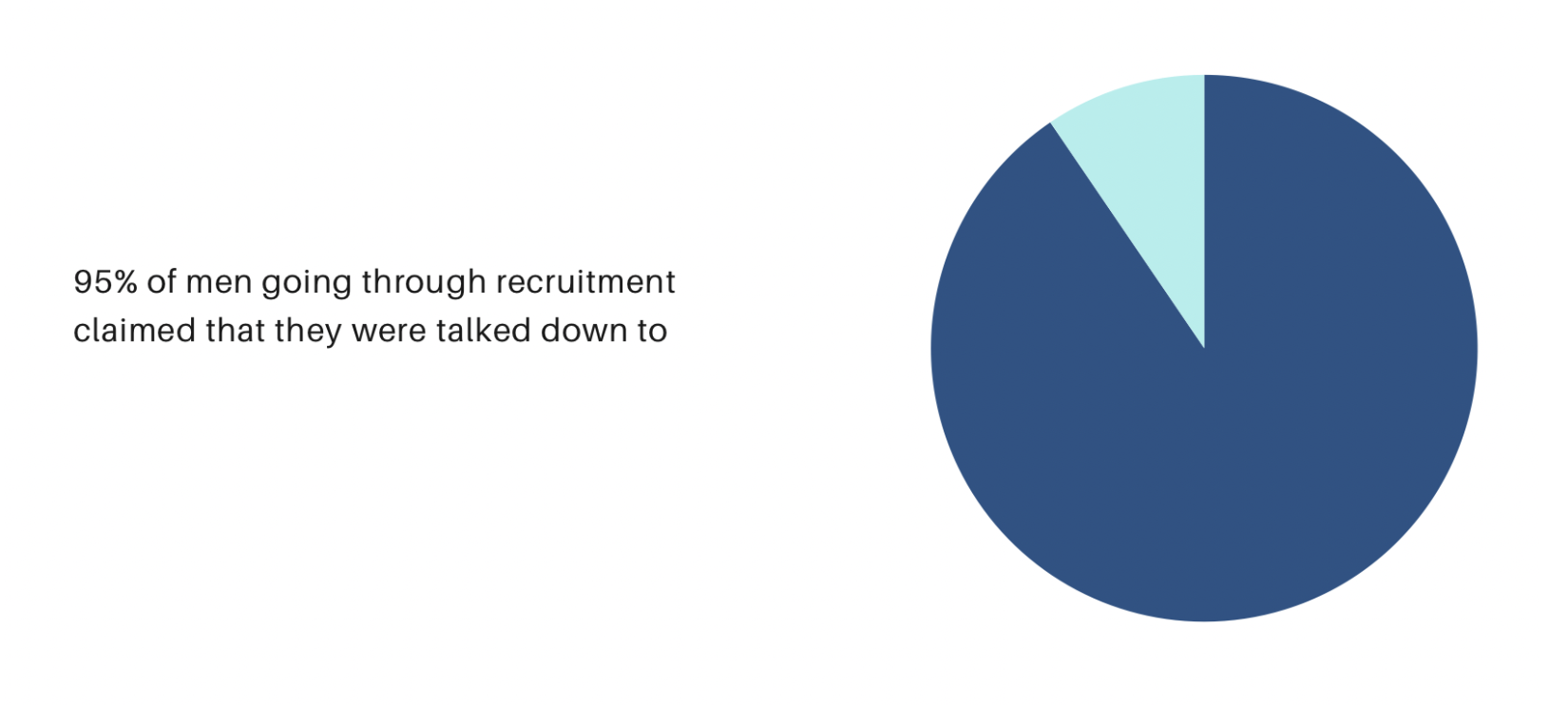
used to emphasize their inferiority to the rest of the boys in the chapter. In one chapter, new members are collectively called “the stinkys” to signify that they smell bad, a further example of how official members degrade their new members. 95% of the fraternity members we interviewed said that they had experienced being talked down to while they were going through the recruitment process.

Figure 1

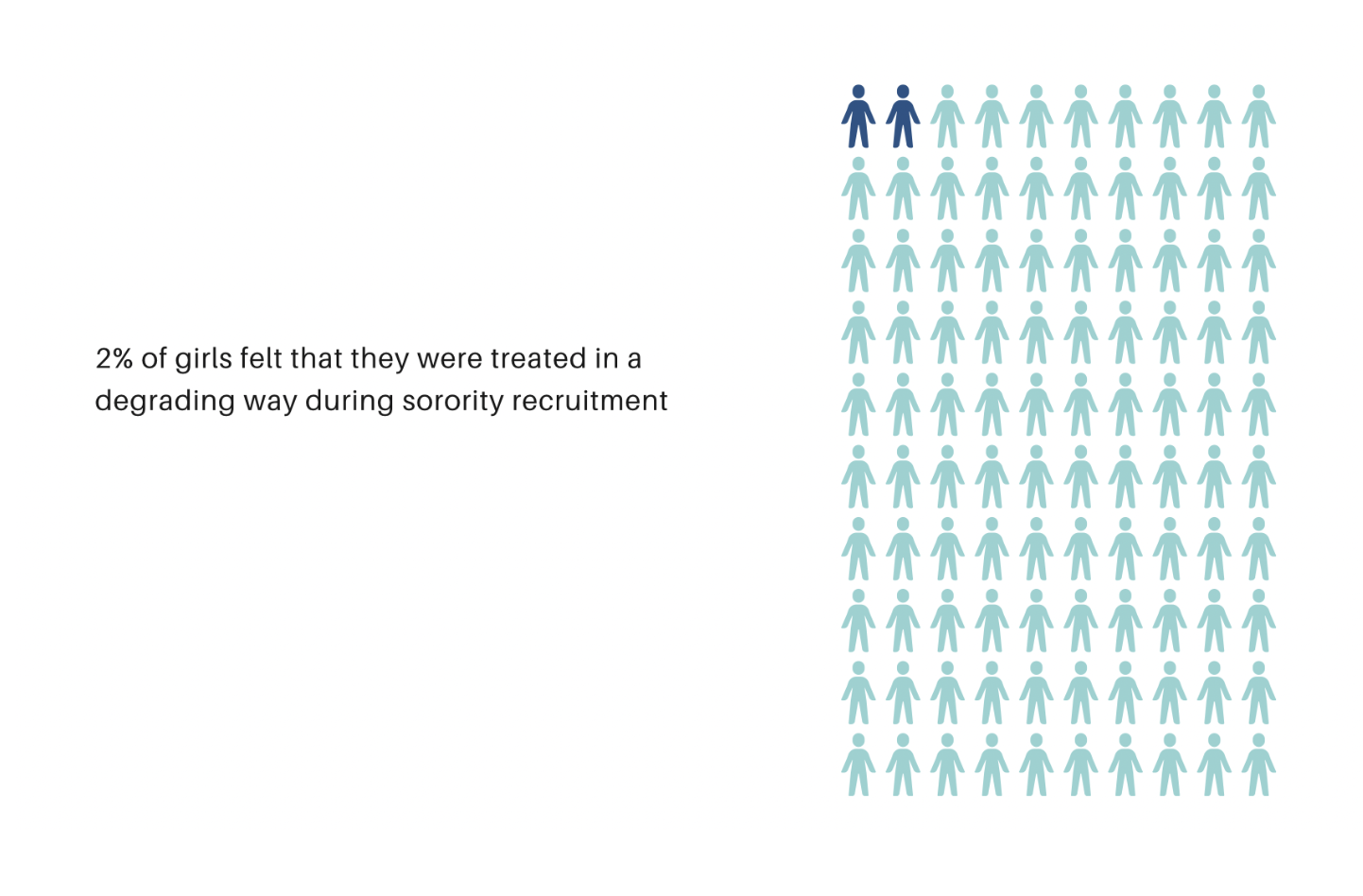
On the other hand, many sorority members expressed how they did not feel the pressure of power imbalances during recruitment or within their chapter. For example, active members in the sorority Alpha Phi were calling the new members “Phisters” – a chapter-specific slang word for “sisters” — from the moment that they got their bid. Furthermore, even though new members are typically called “pledges,” which has connotations of inferiority, sororities are in the habit of abbreviating “pledge class” to “PC” in order to rid the slang of its power to demean new members. While fraternity brothers relinquish the title of “pledge” the moment they are initiated as members, sorority members continue to refer to their “PC” in terms of the community and cohesiveness of each group that joined the sorority at the same time. In interviewing sorority sisters, we found that only 2% of members felt that they were talked down to during recruitment.

Figure 2

Through our interviewing process, we also encountered slang that perpetuated gendered power dynamics between sororities and fraternities. Our data suggested that this type of slang is used mainly by fraternity men towards or about sorority members. For example, fraternity men use derogatory slang words such as “ran through ” and “been around” to describe women that they want to demean for being (what they consider to be) overly sexually active. Sorority women expressed that when fraternity men act in the same way, it is considered normal and there are no slang words used to discuss them in a negative light. This example demonstrates how slang is used to perpetuate power imbalances that are prevalent throughout the country within gender-specific institutions.

Discussion and Conclusions

Overall, our research suggests that sororities have a more egalitarian and encouraging culture whereas fraternities have a clear hierarchical structure and competitive environment. These findings add to our understanding of gendered power dynamics in social organizations. The hierarchical nature of fraternity culture is reflected in the slang they use, which highlights the competitive environment and the importance of rank and authority.

Our research indicates that these organizations’ internal cultures are significantly shaped by their communication patterns as members of fraternities and sororities speak in ways that both reflect and perpetuate their respective power structures. Fraternity men use slang to enforce power imbalances which produces a feedback loop: the more slang is used to create imbalances, the more imbalances exist, and thus the more this slang is used. On the other hand, sorority women utilize slang to establish a cohesive and inclusive environment, and this environment breeds further use of unifying speech patterning. Additionally, our study emphasizes how crucial it is to evaluate media representations of social groupings and prejudices as our research contradicts a widely held presentation of these organizations.

Our research is important in bringing awareness to power imbalances and injustices that go unnoticed or are simply accepted by fraternity members. Our findings may incite fraternity members to evaluate their slang usage and strive to use language that facilitates a more equal, safe, and positive environment in the future. One possible solution is the implementation of workshops and training sessions focused on inclusive and respectful communication within Greek organizations. Educating members about the impact of language can foster a more supportive atmosphere, reducing hierarchical behaviors in fraternities and enhancing the positive dynamics in sororities.

References

Appalachian State University. (2024). Fraternity and sorority life. History of Fraternities/Sororities. https://fsl.appstate.edu/history-of-greek-life

Handler, L. (1995). In the Fraternal Sisterhood: Sororities as Gender Strategy. Gender and Society, 9(2), 236–255. http://www.jstor.org/stable/189873

Izmaylova, G. A., Zamaletdinova, G. R., & Zholshayeva, M. S. (2017). Linguistic and social features of slang. International Journal of Scientific Study, 5(6), 75-78. 10.17354/ijssSept/2017/016

McLemore, C. A. (1991). The pragmatic interpretation of English intonation: Sorority speech (Order No. 9128305). Available from ProQuest Dissertations & Theses A&I; ProQuest Dissertations & Theses Global. (303946119).https://www.proquest.com/dissertations-theses/pragmatic-interpretation-en glish-intonation/docview/303946119/se-2?accountid=14512

Morgan, Emma, “Losing Yourself: Cults, Greeks, and Sociological Theories of Self and Identity” (2021). Honors Program Theses. 138. https://scholarship.rollins.edu/honors/138

Rowan University. (2024). “Benefits.” Benefits of Greek Life. https://sites.rowan.edu/oslp/greekaffairs/benefits/

Scott, John Finley. (1965). “The American College Sorority: Its Role in Class and Ethnic Endogamy.” American Sociological Review, vol. 30, no. 4, pp. 514–27. JSTOR, https://www.jstor.org/stable/2091341

Thompson, Bailey Airs. (2017). “#Sorority girl: The Sorority Socialization Process through the Construction and Maintenance of the Individual and Chapter Sorority Identity.” DSpace Repository, 1-15. ttu-ir.tdl.org/items/742e3cc2-4d41-4b94-9efe-018b9bf98f54.

The Sexist Side of Hollywood Interviews

Emily Chinn, Kai Wang, Soleil Danico, and Takuma Sato

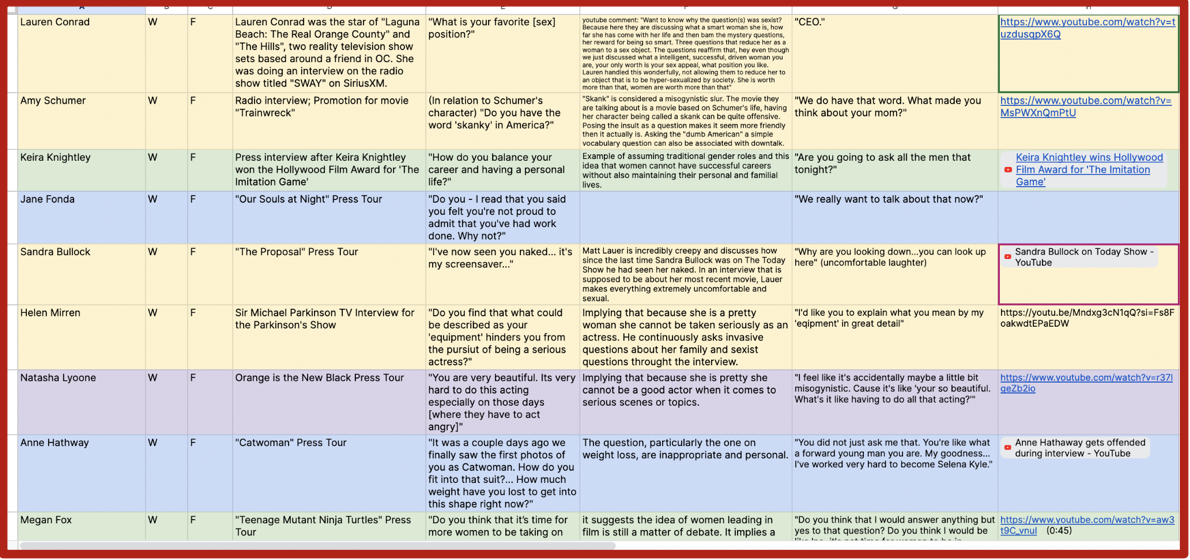
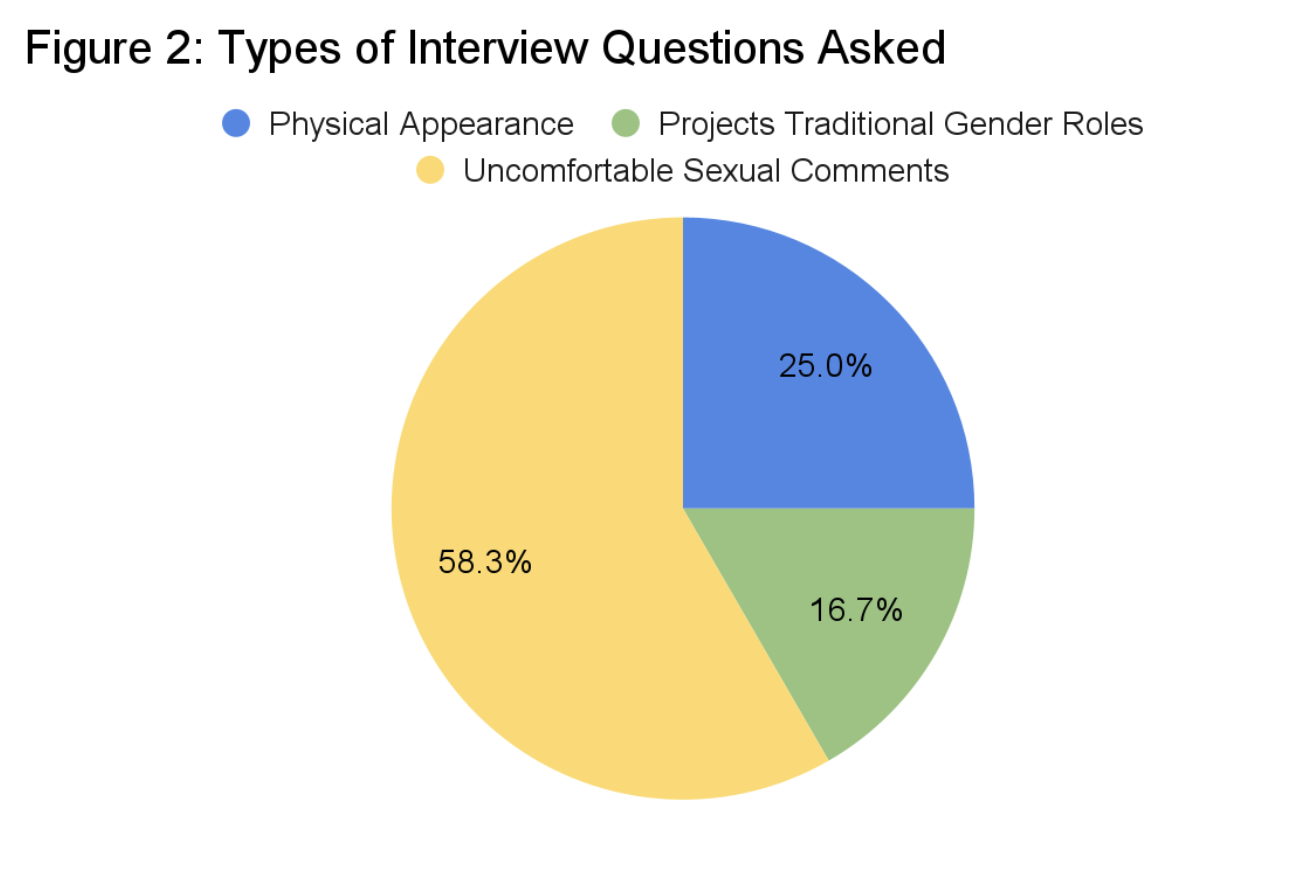
In order for a movie to become a blockbuster, it needs to be properly promoted. Press tours are some of the most common tactics for garnering attention for an upcoming film and give the actors the platform to showcase their passion and personality. Still, the differentiation of questions and communication between actors and actresses is undoubtedly prevalent.  The present article focuses on identifying the distinct patterns of gendered communication evident in celebrity press tour interviews. By viewing and analyzing the press tour interviews of actresses, we found a common pattern of questions that focus on physical appearance, project traditional gender roles, or are uncomfortable and unnecessarily sexual. Our results led us to the conclusion that there is a distinct gendered difference in the word choice and questions of actresses and actors, prompting the urge for more equitable questions and proper training in the entertainment industry.

Read more

Generational Differences in Social Media Communication

Giordano Camera, Dylan Carr, Phoebe Haas, Nicole Wasserman

Have you wondered why your dad sends you extremely long texts compared to your best friends, who use memes and slang phrases for most of their communication? In our study, we explored two generations, Generation Z and Generation X and their language use on online social networking sites. We studied different social media posts between the two generations and looked at the differences in how they communicate, especially using text-dominant platforms. We used a plethora of social media sites to validate our findings, but our main areas of study were Facebook and Twitter/X. Our study concluded that Generation Z uses fewer words, more images in their post, and more slang phrases than Generation X does. We want our findings to highlight the contrast between the way these two generations communicate, as miscommunication can lead to unnecessary conflict. Our research contributes to the process of cataloging online communication trends among different generations.

Read more

Introduction

Our group aimed to study the differences in how different generations communicate on various social media platforms. Since its creation, social media has become a place where individuals can communicate with each other in ways they could not have before. People also tend to communicate on a topic that is currently popular in a particular social group, regardless of age (You et al. 2017). Using that factor, we can find valuable data that proves our hypothesis correct. Our research method proved perfectly accurate, as all of our data was correct, with minimal gaps in our study. Our group hopes that the data findings we provided also propel researchers to study differences in communication for other generations. The prevalence of social media is only growing, so our data can act as a stepping stone for future studies.

Methods

Our primary method of data collection revolved around influential people on social media. We would look at social media posts discussing a variety of topics (such as sports, popular culture, and politics) in order to look at data from a wide range of people, like Donald Trump. We made sure to expose ourselves to Generation Z and Xers from each perspective. This is because there are a lot of varying opinions by a diverse group of people on popular posts compared to smaller tweets that may have more of a hive-mind mentality. In addition, we looked at a variety of topics to get stronger evidence and to ensure the communication differences we found were not due to any topic differences (Achinstein, 1994).

Originally, we planned to contact people on Twitter or Facebook to gather their age, but instead, we only targeted accounts where they said their age in a previous post/bio or where it was publicly available (like a celebrity). Once we collected twenty Twitter/Facebook accounts from each generation, we randomly selected three accounts from each generation to really do a deep dive on. While we didn’t interview the people behind the social media accounts that we found like the researchers at Pennsylvania state did, we found that it was unnecessary as all information was available publicly (Zhao and Rosson 2009). In a matched pairs case study, we assembled all of the posts in an easy to view format and then compared the content of each generation’s posts. We noticed a variety of clashing factors across generations, and simultaneously noticed similarities within.

Results

After conducting our research, we found that there were many differences between the ways Generation X and Generation Z communicate online in posts and tweets on social media. Our results showed that differences in online communication was not dependent on the topic of the post or tweet (ie. sports, popular culture, politics) nor the social status of the user (ie. celebrity or common folk), but rather the age generation of the user.

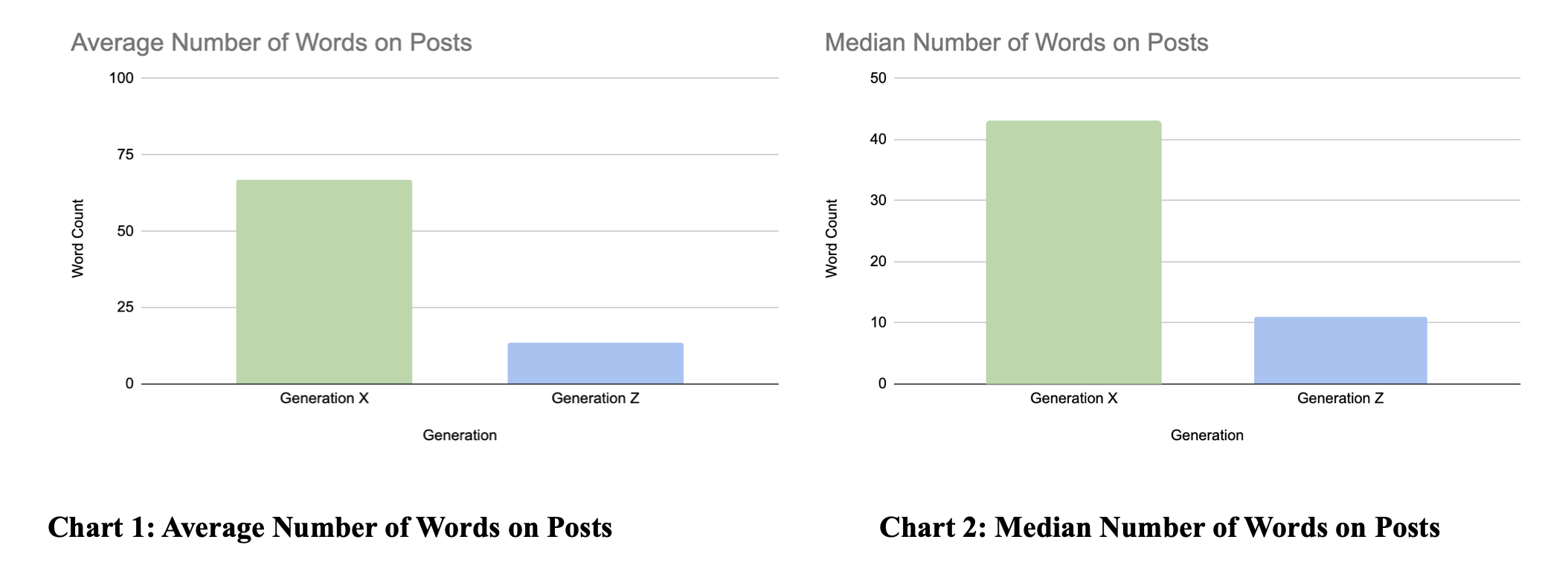
One difference we found in the posts and tweets we analyzed was the number of words that each generation tended to put in their post/tweet. As seen in Chart 1 below, the average number of words on a post/tweet by a member of Generation X was 67 words and the median was 43 words. As seen in Chart 2, the average number of words by a member of Generation Z was 13.4 words, with the median being 11 words. From this, we concluded that Generation X tended to conduct more lengthy and descriptive posts with complete sentences in comparison to the younger Generation Z.

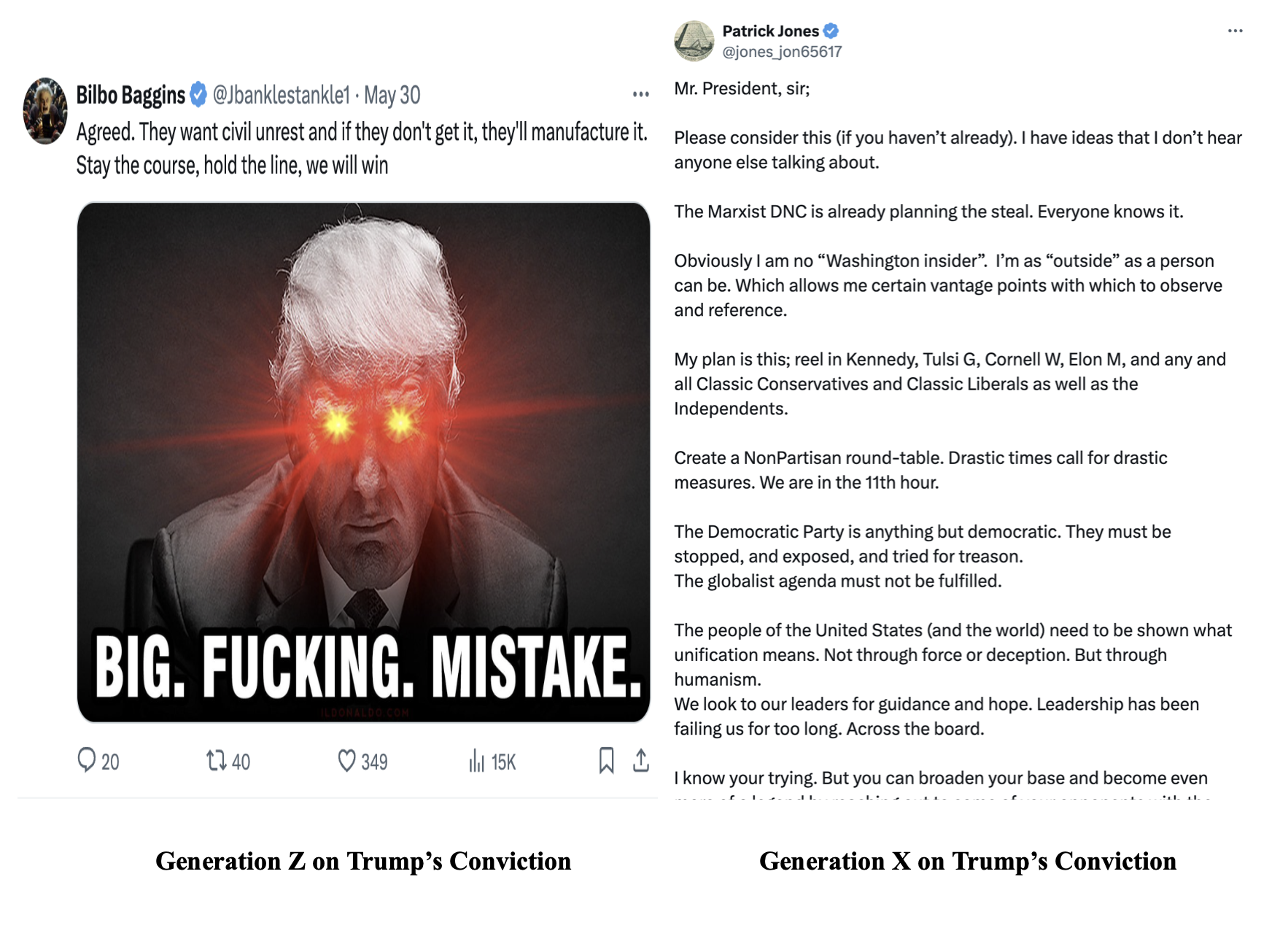
Another difference between the generations we found from our results includes the tendency for Generation Z to incorporate pictures in their posts/tweets and for the lack of imagery in posts/tweets by Generation X. Below is an instance where a member of Generation Z, Bilbo Baggins, uses a picture in their tweet about Trump’s recent conviction and the member of Generation X, Patrick Jones, does not.

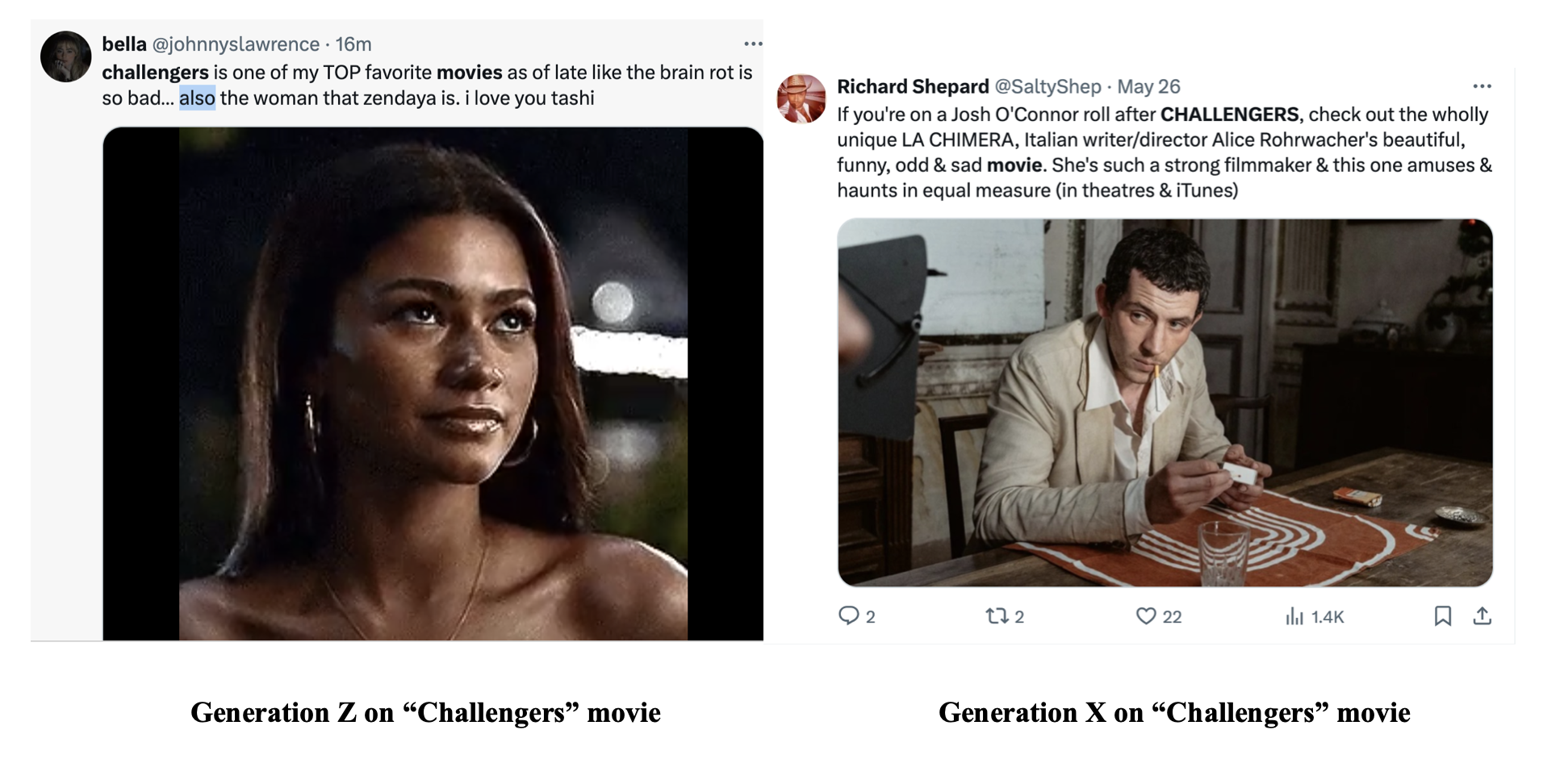
Another contrast was the tendency for Generation X to more likely include words in all capital letters and the tendency for Generation Z to have slang terms in their posts/tweets. Below is an instance where a member of Generation Z, bella, uses a slang term, “brain rot” and the member of Generation X, Richard Shepard, does not include any slang words. The term “brain rot” is a slang term used by Generation Z (TikTok “Brain Rot”: How TikTok Is Changing the Way Gen Z Speaks | Redbrick Life&Style, 2024). Also in the example below, the member of Generation X has two words in all capital letters while the member of Generation Z only has one, and it is a shorter word. Both users are discussing the recent “Challengers” movie.

Discussion

Our findings demonstrate clear online communication trends within both generations that are not shared by the other generational group. These distinct patterns in writing and visual communication on social media add to our understanding of how different generations communicate in ways that do not always align with one another. These differences can contribute to intergenerational misinterpretations and tension. Our project identified what some of the prominent generational patterns on social media are, which are beneficial findings that provide a basis for wider intergenerational understanding. Additionally, it lays the groundwork for future research, such as the intricacies of these patterns and how the other generation perceives them.

The results of our research aid in our understanding of two broader phenomena: generational differences and online communication trends. As social media continues to grow and become a staple in people of all ages’ lives, it becomes a new arena for intergenerational tension to arise and unfold. Certain aspects of an age group’s communication can be specific and unique, and does not usually reflect ill intent. This knowledge is important for maintaining dialogues between multiple age groups, so that they do not fall to misunderstandings due to believing a form of speech was rude. For example, Gen X’s use of all capital letters for certain words could potentially be read as aggressive by a younger person who rarely does so, while Gen Z’s use of slang and images may appear unserious or confusing to an older person. Previous research has demonstrated similar phenomena, such as younger people finding the use of periods in text messages to have a negative valence and make the message insincere (Gunraj et al., 2015). Knowing these communication methods are simply an attribute of their generation can ease any potential misgivings on the receiver’s end.

Analyzing the patterns found in our research can also contribute to future literature about online trends and cycles. Gen Z especially uses numerous contemporary references and constantly evolving slang terms and reference images that reflect the state of the internet and popular culture, particularly within their generation’s main bubble on the web. Our findings contribute to the academic understanding of social media trend cycles and communication.

In conclusion, our research begins to catalog numerous generation-specific social media communication patterns into the literature on online communication. We provide many examples of observable differences between how Generation X and Generation Z structure text-based posts on social networking sites, often in ways that directly contrast each other. Though we can offer hypothetical insights into potential misunderstandings these may cause, we recognize that further research is required to analyze these trends in full and begin to study how they verifiably contribute to intergenerational conflict.

References

Achinstein, P. (1994). Stronger Evidence. Philosophy of Science, 61(3), 329–350. https://www.jstor.org/stable/188049?seq=21

Gunraj, D. N., Drumm-Hewitt, A. M., Dashow, E. M., Upadhyay, S. S. N., & Klin, C. M. (2015, November 22). Texting insincerely: The role of the period in text messaging. ScienceDirect. https://www.sciencedirect.com/science/article/abs/pii/S0747563215302181?via%3Dihub

TikTok “Brain Rot”: How TikTok Is Changing The Way Gen Z Speaks | Redbrick Life&Style. (2024, April 22). Redbrick. https://www.redbrick.me/tiktok-brain-rot-how-tiktok-is-changing-the-way-gen-z-speaks/#:~:text=The%20language%20associated%20with%20Generation

You, Q., García-García, D., Paluri, M., Luo, J., & Joo, J. (2017). Cultural Diffusion and Trends in Facebook Photographs. Proceedings of the International AAAI Conference on Web and Social Media, 11(1), 347-356. https://doi.org/10.1609/icwsm.v11i1.14902

Zhao, Dejin, and Mary Beth Rosson. (2009). How and why people twitter. Proceedings of the ACM International Conference on Supporting Group Work, https://doi.org/10.1145/1531674.1531710.

, , ,

Beyond the Beat: Exploring Objectification in Rap and Country Lyrics

Riley Go, Ashley Lew, Ileen Luu, Ysabella Yuquimpo

“Don’t my baby look good in them blue jeans?” Rap music has been largely criticized for its objectification of women. Yet, why has country music not gained the same reputation? Known for being family-friendly, romantic, and inoffensive, “country music is often left out of sexual media analyses as it is traditionally thought to be less harmful than other genres of music” (Lin & Rasmussen, 2018). However, 2010s studies have exposed the phenomenon of “bro country,” in which country songs have become increasingly misogynistic and centered on attractive, young women in tight clothing and casual sex (Rasmussen & Densley, 2017). Since exposure to objectifying music can lead to harmful outcomes, such as the development of body image issues and eating disorders in adolescents (Flynn, 2016), our research aims to uncover the nuanced ways in which both rap and country music objectify women and perpetuate harmful gender stereotypes, and how they may do this in different ways.

Read more

Introduction

Our focus is on the identities of male rappers and male country musicians, examining how they use lyrics to assert dominance over women and reinforce unequal power dynamics and how these patterns may change over time. Thus, our research question is: “How do the linguistic portrayals of women differ between songs by male rappers and male country musicians from the 1990s to now?”

We hypothesize that both genres contribute to the objectification, domestication, and degradation of women. While rap music is known for overtly promoting misogyny, we hypothesized that country music promotes misogyny in more covert ways (e.g. promoting female domesticity or a possessive attitude toward women).

Male rappers, often from marginalized urban areas, may objectify women and encourage a “player” lifestyle to assert dominance and reaffirm social status within their communities. Weitzer and Kubrin (2009) found that while women were portrayed as subordinate to men in most rock and country songs, rap was the most graphic in objectifying women, rarely depicting them as independent, trustworthy, or educated.

In addition, Adams and Fuller (2006) emphasize how misogynistic lyrics in rap are often at the expense of African American women, portraying them as “ not only something to be used sexually, but…also the recipient of degrading acts, disrespect, and violent behavior.” These portrayals, in turn, reinforce the American population’s negative stereotypes about African American women, and desensitizes them to the mistreatment and abuse of women as a whole (Adams & Fuller, 2006).

Male country musicians, often from rural, conservative areas, may depict women as subservient and dependent on men, to confine them within the patriarchal systems of their communities. Rasmussen and Densley (2017) examine the emergence of “bro country” in the 2010s, characterized by songs focusing on women in revealing clothing and referring to a woman using slang. Discovering that women in country songs in the 2010s were objectified more than in the past, they call attention to the negative progress toward female empowerment within the genre (Rasmussen & Densley, 2017).

Furthermore, Rogers (2013) highlights themes in country music that depict women in traditional gender roles, promote the idea that attractive women inherently have more value, and normalize coercive sexual behavior, suggesting that sexism in country music may be more dangerous when hidden within the lyrics.

Here is a YouTube video, entitled “Why Country Music Was Awful in 2013,” poking fun at the repetitive themes present in “bro country”: https://www.youtube.com/watch?v=WySgNm8qH-I

Methods

For our methodology, we utilized Billboard’s lists of top-grossing rap and country artists, and randomly selected a subset of musicians for analysis. Afterward, we drew from Billboard to identify a top song of each artist that negatively portrayed women at least once. Covering the 1990s to now, we analyzed one top rap song and one top country song per five-year period. These songs were highly popular in their respective time periods, providing a representative snapshot of prevalent lyrical themes and content.

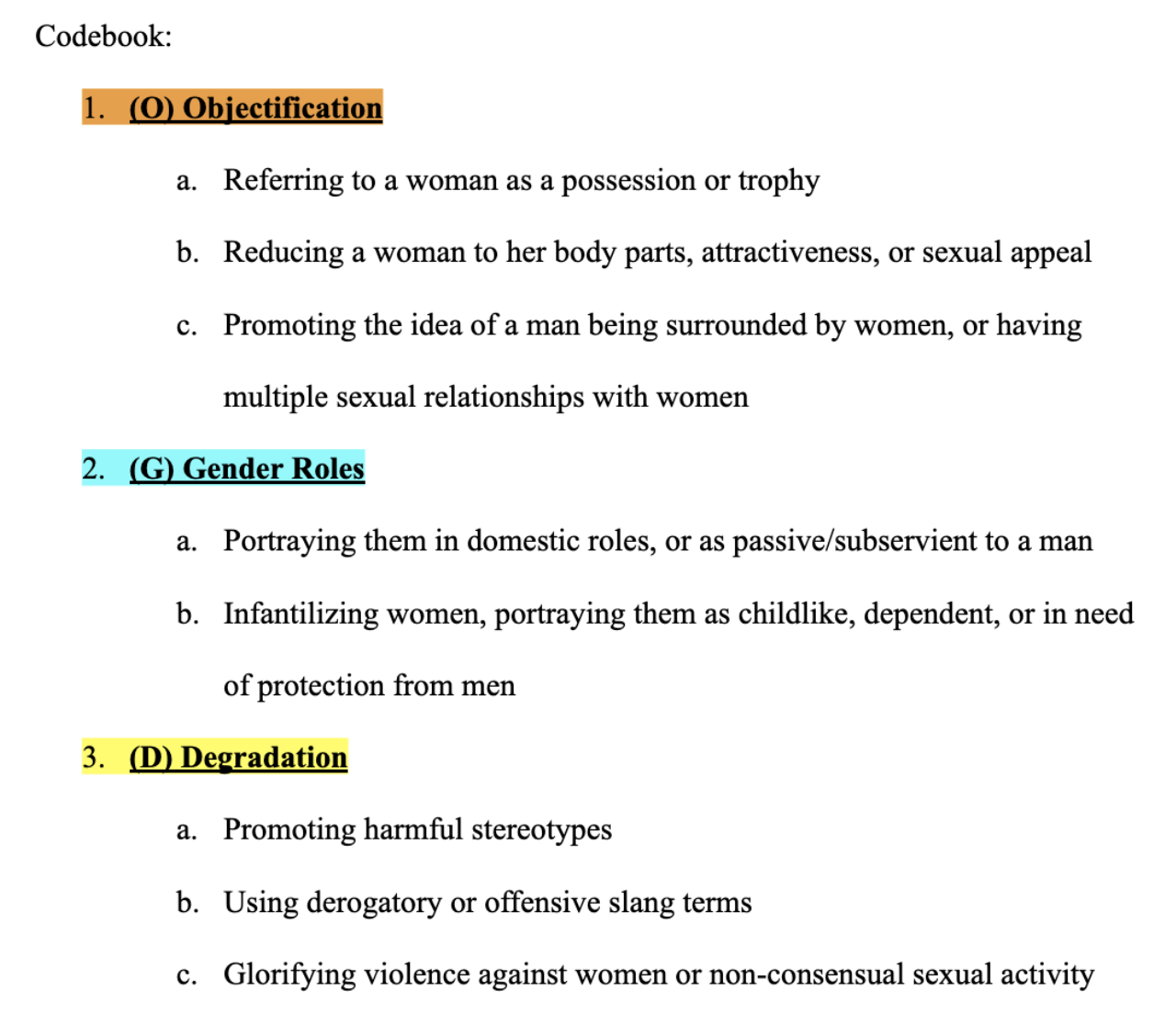
Figure 1: Our codebook, with condensed metrics from Rogers’ (2013) study. This codebook served as a comprehensive framework, enabling the operationalization of abstract concepts such as “objectification” within song lyrics.

To ensure consistency, two individuals within our research team independently analyzed each song, providing it with a rating that noted the number of unrepeated lines with instances of Objectification, Gender Roles, and Degradation. In cases of disagreement, they presented their reasoning to a third party who provided the final rating.

Results

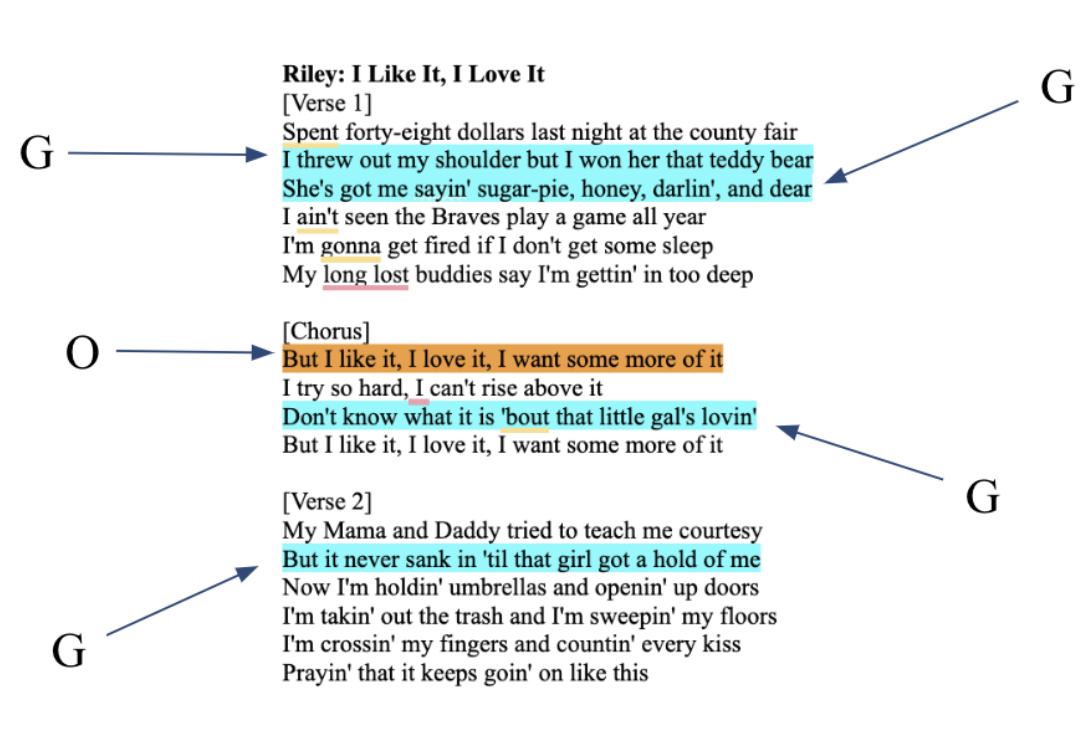
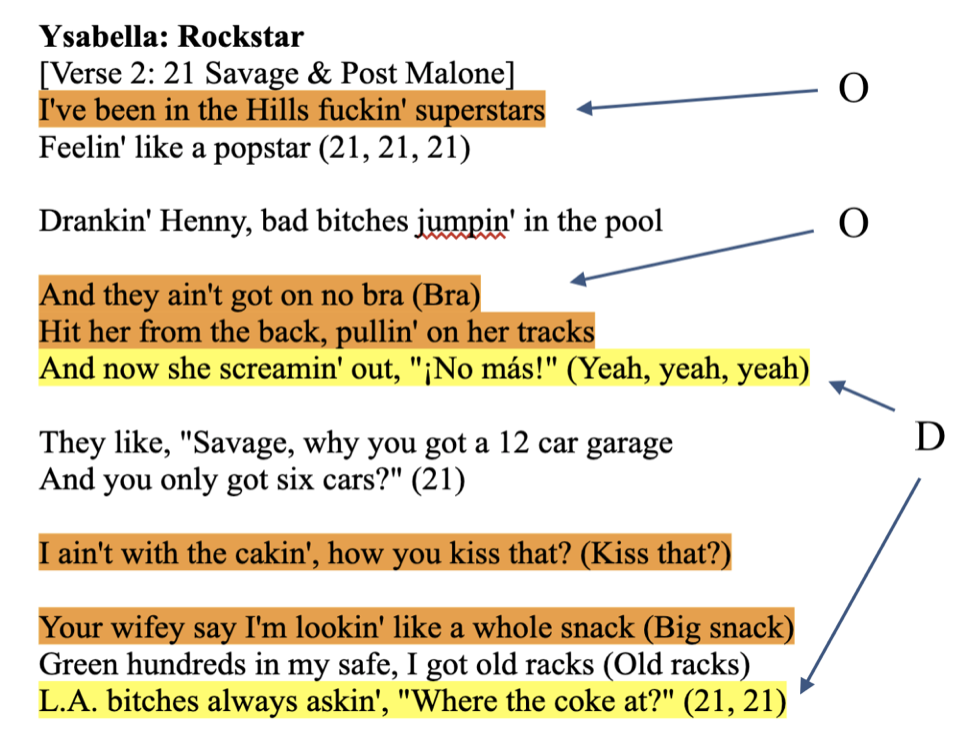
The following is an example of how instances of misogyny were identified in different songs. We noticed that in country songs, like “I Like It, I Love It”, there was a tendency for singers to use terms like “little gal” or “girl” to describe women, and this was in line with our interpretation of Gender Roles-based misogyny. We also noticed that in rap songs, like “The Real Slim Shady,” there was a tendency to call women derogatory names, or in some cases, such as in this specific song, reference violence towards women. This was in line with our interpretation of Degradation-based misogyny.

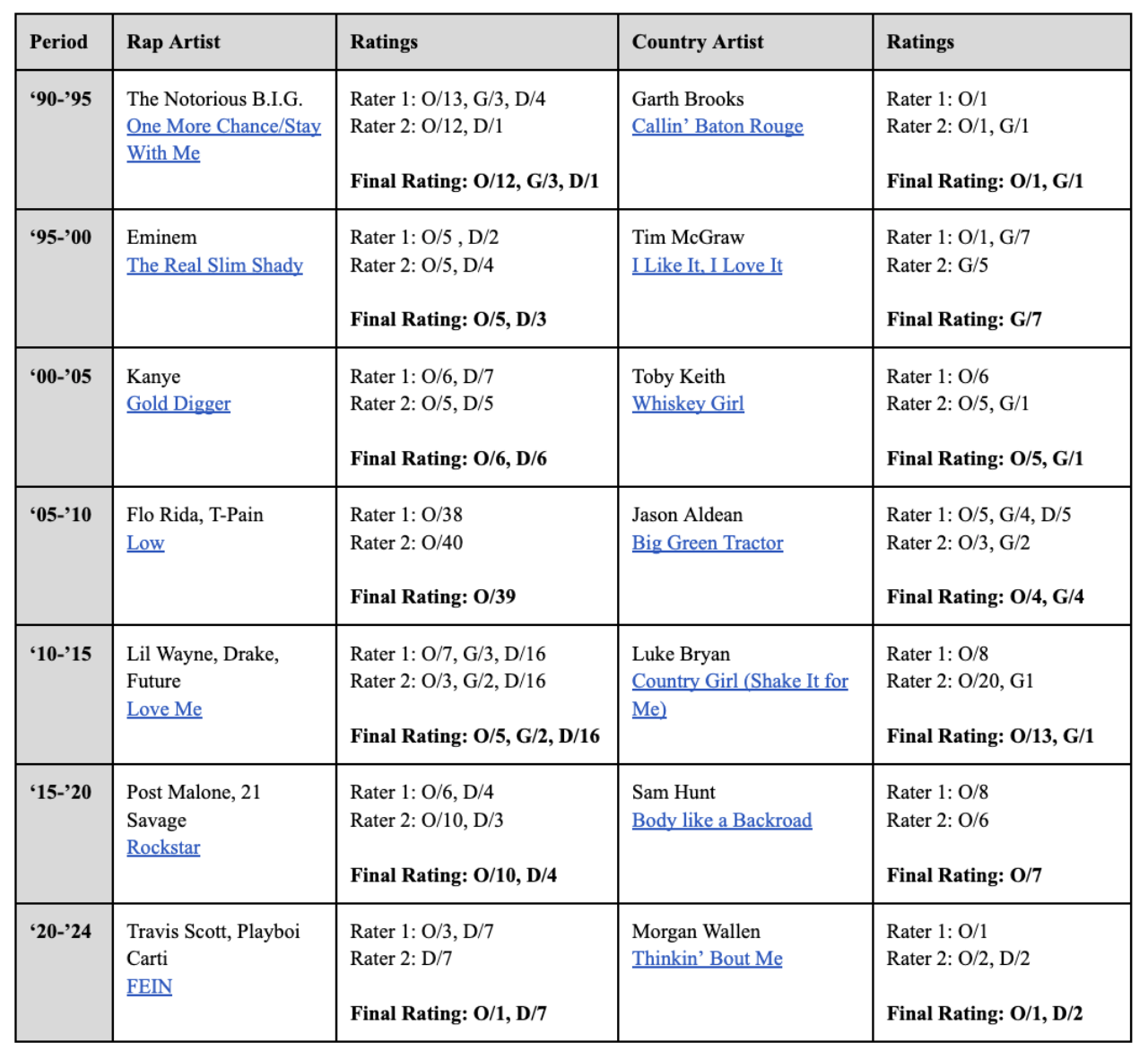
Table 1: These are our final ratings, indicating the number of unrepeated lines with instances of Objectification, Gender Roles, and Degradation. (For instance, O/12 indicates 12 instances of Objectification within the song).

Figure 2: Gender Roles and Objectification present in Tim McGraw’s country song, “I Like It, I Love It.”

Figure 3: Objectification and Degradation present in 21 Savage and Post Malone’s rap song, “Rockstar.”

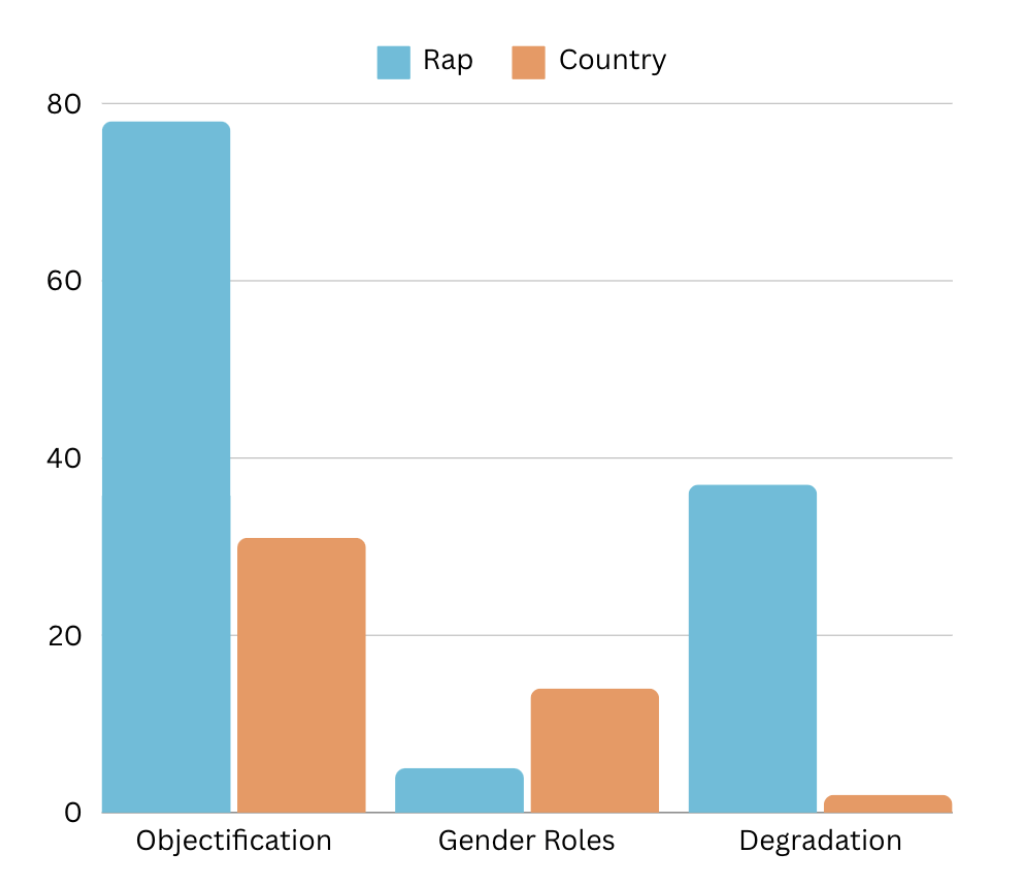
Figure 4: Bar graph, comparing the instances of Objectification, Gender Roles, and Degradation in Rap vs. Country music.

We found that rap had a total of 120 misogynistic lines, while the country had a total of 47 misogynistic lines. Objectification and Degradation-based sexism were most common in rap music, while Gender Roles-based sexism was most common in country music. This could be due to the differing attitudes towards women in rap and country music circles. Because we understand that the two genres should not be analyzed in a vacuum, their historical contexts should be considered when theorizing why they represent women in such distinctive ways.

In the late 1990s and the early 2000s, rap music saw an emergence of the subgenre, gangsta rap, which focused on the hardships of growing up in the Bronx and the culture produced by that upbringing. Violence, poverty, and criminal activity are all central themes of the lyrics of gangsta rap; thus, it follows that violently misogynistic attitudes could spawn from those topics. Further, because gangsta rap is held in such high regard as a staple of the rap genre, it makes sense that modern rap artists would try to emulate the misogynistic rhetoric of the subgenre.

Country music, on the other hand, does not necessarily have as overtly misogynistic lyrics. Instead, the genre utilizes a more subtle form of misogyny that reinforces traditional, conservative gender roles. In the United States, country music is generally associated with right-wing-leaning, Southern, Judeo-Christian values. As such, many country artists conform to those values in their personal life and lyrics. It follows that country artists would portray women in ways that conform to traditional gender roles, as doing that caters to their audiences and may also reinforce what the artists themselves believe.

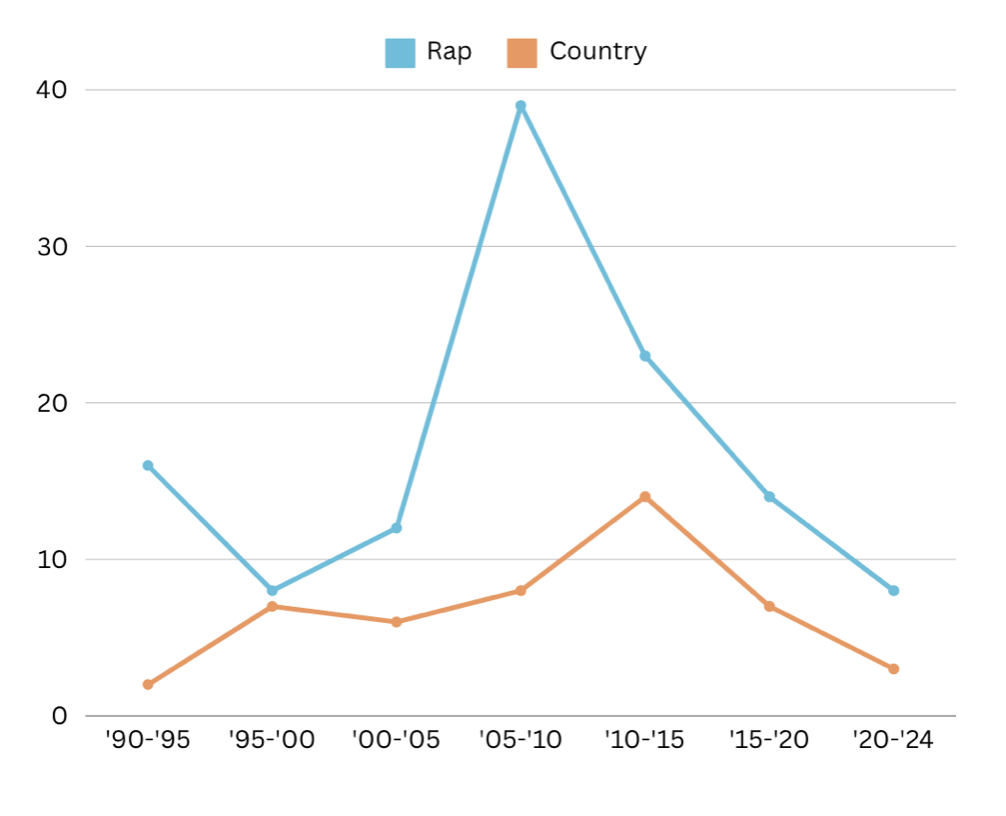
Over time, we saw a peak in misogynistic lyrics from 2005-2015, and then the numbers declined. The drop in misogynistic lyrics after 2015 is in line with the timing of the MeToo movement and other 3rd wave feminist efforts to dismantle harmful stereotypes and attitudes towards women. To stay relevant, marketable, and politically correct, male artists likely made an intentional decision to tone down the misogynistic rhetoric in songs.

Figure 5: Line graph, examining Misogyny (Objectification + Gender Roles + Degradation in total) over time in Rap vs. Country music.

Discussion

Through our song analysis, we discovered that both genres contribute to the objectification, domestication, and degradation of women. Rap music flaunts misogyny in its lyrics by calling women derogatory terms and glorifying rough, non-consensual sex and a “player” lifestyle. On the other hand, country music promotes misogyny more discreetly by infantilizing women, focusing only on their attractiveness and sexual appeal, and portraying them as subservient and dependent on men. Despite results indicating that Objectification and Degradation were higher in rap, Gender Roles exceeded in country music. Yet, these forms of misogyny are equally harmful to women, fueling both our prevalent patriarchal system and the cycle of violence against women. The impact of our analysis is solely to challenge preconceived notions about these genres and their deep-rooted association with misogyny, as well as highlight how objectifying music can both reflect and shape our reality.

While we do not want to label a music genre “problematic,” since that is harmful in itself, women are still represented as subordinate to men in rap and country, and we urge listeners and musicians to understand that the messages being conveyed fuel the cycle of female objectification.

References

Adams, T. M., & Fuller, D. B. (2006). The Words Have Changed But the Ideology Remains the Same: Misogynistic Lyrics in Rap Music. Journal of Black Studies, 36(6), 938–957. http://www.jstor.org/stable/40034353

Flynn, M. A., Craig, C. M., Anderson, C. N., & Holody, K. J. (2016). Objectification in popular music lyrics: An examination of gender and genre differences. Sex Roles, 75(3–4), 164–176. https://doi.org/10.1007/s11199-016-0592-3

Grady Smith (2013, December 20). Why Country Music Was Awful in 2013 [Video]. YouTube. https://www.youtube.com/watch?v=WySgNm8qH-I

Lin, R., & Rasmussen, E. (2018). Why don’t we get drunk and screw? A content analysis of women, sex and alcohol in country music. Journal of Popular Music Studies, 30(3), 115-128. https://doi.org/10.1525/jpms.2018.200006

Rasmussen, E.E., Densley, R.L. Girl in a Country Song: Gender Roles and Objectification of Women in Popular Country Music across 1990 to 2014. Sex Roles 76, 188–201 (2017). https://doi.org/10.1007/s11199-016-0670-6

Rogers, A. (2013). Sexism In Unexpected Places: An Analysis of Country Music Lyrics – Office of the Vice President for Research | University of South Carolina. Sc.edu. https://sc.edu/about/offices_and_divisions/research/news_and_pubs/caravel/archive/2013/2013-caravel-sexism-in-unexpected-places.php

Weitzer, R., & Kubrin, C. E. (2009). Misogyny in Rap Music: A Content Analysis of Prevalence and Meanings. Men and Masculinities, 12(1), 3-29. https://doi.org/10.1177/1097184X08327696

, , , ,

Observation of Dating Practices Through Digital Dating Profile Analysis

Natasha Franco, Savannah Phillips, Remy Averitt, Navid Toomarian

In the modern age of digital dating, the way individuals present themselves on platforms like Hinge provides valuable insight into the underlying dynamics and intentions driving their romantic pursuits. This study is motivated by the observation that relationship management and healthy dating practices arent widely covered in formal education, leaving many young adults to navigate the modern dating landscape on their own. Our study aims to analyze the linguistic patterns and differences between male and female users, analyzing how gender shapes self-presentation strategies on dating apps. By observing factors such as response length, emoji usage, and their perceived tone, in relation to their desired relationship type, we seek to understand the reasons why young adults market themselves the way they do in the virtual dating scene. The findings in this study will shed light on the complex interplay between technology, gender, and the search for a romantic connection in the 21st century.

Read more

Introduction

The rise of online dating platforms has dramatically changed how young adults seek out romantic partners. These platforms have introduced new avenues for self-presentation, communication, and relationship formation that were previously unavailable. However, this shift has also introduced new complexities, as individuals must now carefully manage their impressions and curate their self-presentations for virtual audiences (Ranzini & Lutz, 2016). Understanding the nuances of this shifting landscape is crucial, as the development of healthy romantic relationships is a key milestone in psychological development during emerging adulthood. Relationship management and healthy dating practices are not topics that are widely covered in formal education and curriculum (Lundquist & Curington, 2019). As a result, many young adults are left to navigate the modern dating world on their own, learning through trial and error how to effectively market themselves on these digital platforms. While some prior studies have examined broad gender differences in online dating profiles, there seems a lack of in-depth analysis on how these patterns manifest across the various interactive features of dating apps. Prior research has however begun to elucidate some of the gender-based patterns that emerge in online dating profiles and interactions. For instance, studies have found that women tend to provide more detailed, visually-appealing profiles compared to men, who often have shorter, more casual bios (Fink et al., 2023). However, the existing literature has primarily focused on broad superficial characteristics, leaving a gap in our understanding of how these gender-based linguistic patterns play out across the various written prompts and interactions facilitated by dating apps. Additionally, little is known about how these self-presentation strategies may shift depending on whether an individual is seeking a short-term versus long-term romantic relationship. Our study aims to address these gaps by conducting a comprehensive analysis of the linguistic choices made by young adults on the app, Hinge. Specifically, we will examine differences in response length, emoji usage, and perceived tone between men and women, and how these factors intersect with usersstated relationship intentions. By illuminating these dynamics, our research can contribute to a broader understanding of how young adults navigate the challenges and opportunities presented by online dating technologies. 

Methods

We conducted our own research in addition to analyzing previous literature. We selected Hinge profiles at random, taking participants age and relationship intentions into account. We targeted young adults between the ages of 18 to 25 who have active profiles on Hinge. We selected 60 profiles, with an equal distribution of 30 males and 30 females. For each gender group we found 15 users seeking long term relationships and 15 users seeking short term relationships. 

After obtaining the profiles we wanted to analyze for this study, we created a data coding technique to analyze each profile. To ensure consistency in data coding, we analyzed the written responses of each individual, analyzing the length, emoji use and word choice. The data will be entered into a spreadsheet, as the analysis focuses on comparing the linguistic patterns between male and female profiles and between those seeking short-term versus long-term relationships. We calculated the mean and standard deviation for the length of the responses and frequency of emoji use. 

We will use the results of our analysis to support our hypothesis: men are more likely to use assertive words and less likely to use emojis compared to women. Furthermore, we believe that men and women looking for short-term relationships will have shorter responses and use more informal language compared to people that are looking for long term relationships. Lastly, women will generally have longer, more formal responses and use more emojis than men. Our hypothesis is backed up by the results of our study.

Results/Analysis

Our analysis of 120 Hinge profiles (70 male and 50 female) reveals distinct differences in self-presentation between genders.

Relationship Goals

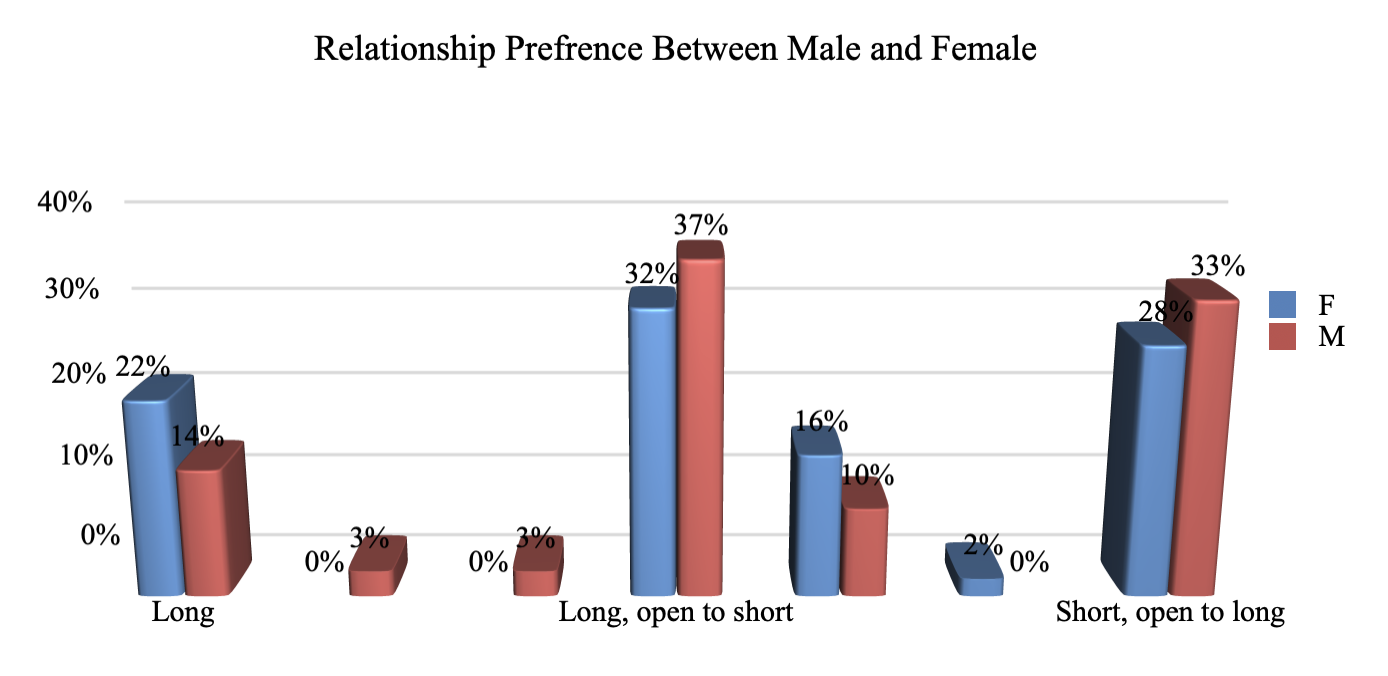
In matters concerning relationship goals, women had a higher inclination towards long terms relationship as 22% female profiles reflected this compared to 14% of the male profiles. Furthermore, 32% of women and 37% of men studying were ready to have both casual and committed relationships. There was a notably smaller proportion of profiles indicating a clear interest in short-term relationships only: 16% of the women and 10% of the men. Curiously, 28% of women and 33% of men were Fine with short-term encounters but, at the same time, were not against the idea of a lasting partnership.

Use of Emojis

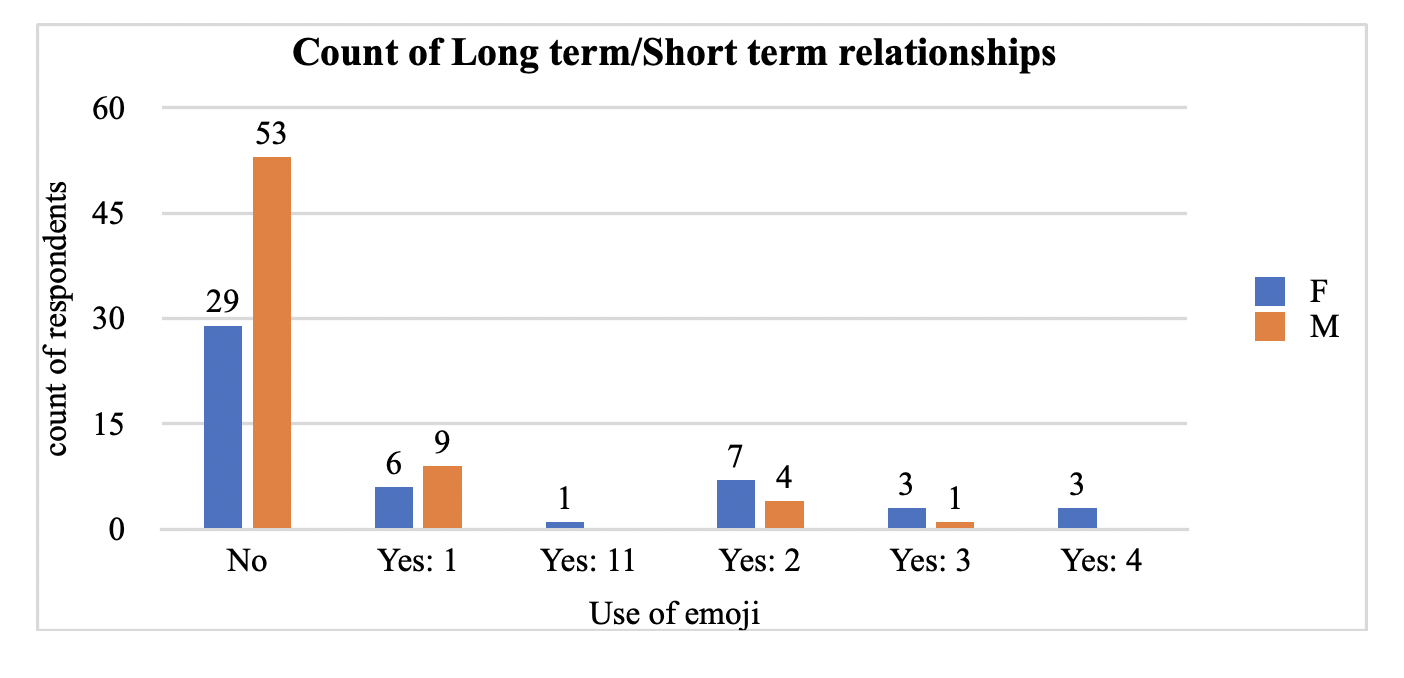
Regarding the use of emojis, the majority of profiles did not include them, with 53 men and 29 women avoiding emoji use entirely. Some profiles did use emojis, but sparingly. Specifically, six women and nine men used exactly one emoji in their profiles. There were also instances of multiple emoji use, albeit rare, with a few women incorporating up to 11 emojis in their profiles. This indicates a general trend towards minimal emoji usage across both genders.

Answer Length and Content

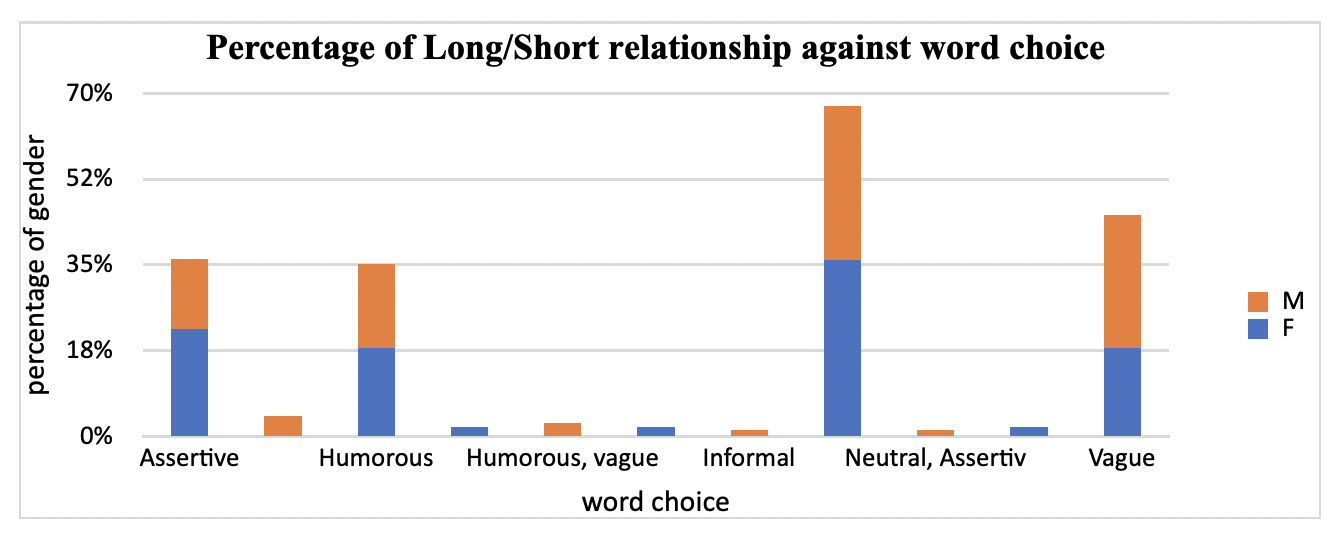
Analyzing the answer length and the content of the answers also gave evidence that more women used assertive language; 22% as against 14% of the male respondents. Another similarity was found in the fact that 18% of men and women used humor in their profiles. As for the neutral tones, these were used significantly more actively in women’s profiles, 36%, against 31% in the profiles of men. On the other hand, the percentage of men who gave haphazard responses was high; 27% while that of women was 18%.

The current findings point to the fact that men and women are different in terms of self-presenting strategies in dating apps. Females choose long-term cohabitation and employ less passionate language than males, who are a bit more permissive of their relationship preferences and give less specific answers. Finally, both genders apply humor equally, while emoji is applied rarely, being more frequent in boys’ case. These patterns show how some communication traits and relationship goals affect users’ self- representation in dating sites.

Discussion & Conclusion

When it comes to the impact of our research, our findings could enable dating app developers to create more effective profile frameworks that are more catered toward the specific intentions of men and women in their use of dating apps. This could involve prompts which are more specifically tailored toward certain intentions, such as a desire for sex, characters/word maximums or minimums for responses, easier emoji integration, among other features which could better accommodate the communication preferences and patterns identified in our study.

Additionally, educators specializing in relationship management can apply the insights from our study to advise young adults of the unique challenges that they might face in the world of online dating as opposed to dating face to face in the real world. Specifically, they would be able to educate young adults about what different communication signs mean (such as the use of emojis) in the context of whether or not an individual is looking for a long term or short term relationship. Finally, by analyzing the subtle signs and strategies used by men and women to get across their intentions on dating apps, our research enables people to craft profiles that authentically represent their personality and effectively display their specific intentions. This self presentation knowledge could also help users identify potential compatibility or mismatch in partner intentions earlier in the dating process.

Online dating apps have revolutionized the manner in which people approach and maintain romantic relationships, yet there is no established set of guidelines to aid young adults in their navigation of this new world. Signals of romantic intentions are hard enough to discern between two people interacting in the real world, let alone through a mobile device and the use of ambiguous emojis. However, our research on this phenomenon has contributed to a greater understanding of how men and women have created their own set of rules for effectively navigating the world of online dating, shedding light on certain linguistic patterns and tendencies that may accurately predict usersromantic signals and intentions. While it is hard to say whether or not these patterns and signals are universally accepted across dating apps and the online dating world as a whole, they provide an insightful look at how men and women search for romantic connection in the 21st century, with the hope that future research will expand upon the nuances of these gendered tendencies.

References

Fink, L., Ilany-Tzur, N., Yam, H., & Sokhina, S. (2023). Do women and men click differently?

Mobile devices mitigate gender differences in online dating. Information & Management, 60(2), 103750-. https://doi.org/10.1016/j.im.2022.103750

Herring, S. C., & Kapidzic, S. (2015). Teens, gender, and self-presentation in social media.

International Encyclopedia of the Social & Behavioral Sciences, 146–152.

https://doi.org/10.1016/b978-0-08-097086-8.64108-9

Ranzini, G., & Lutz, C. (2016). Love at first swipe? Explaining Tinder self-presentation and motives. Mobile Media & Communication, 5(1), 80–101. https://doi.org/10.1177/2050157916664559

, ,

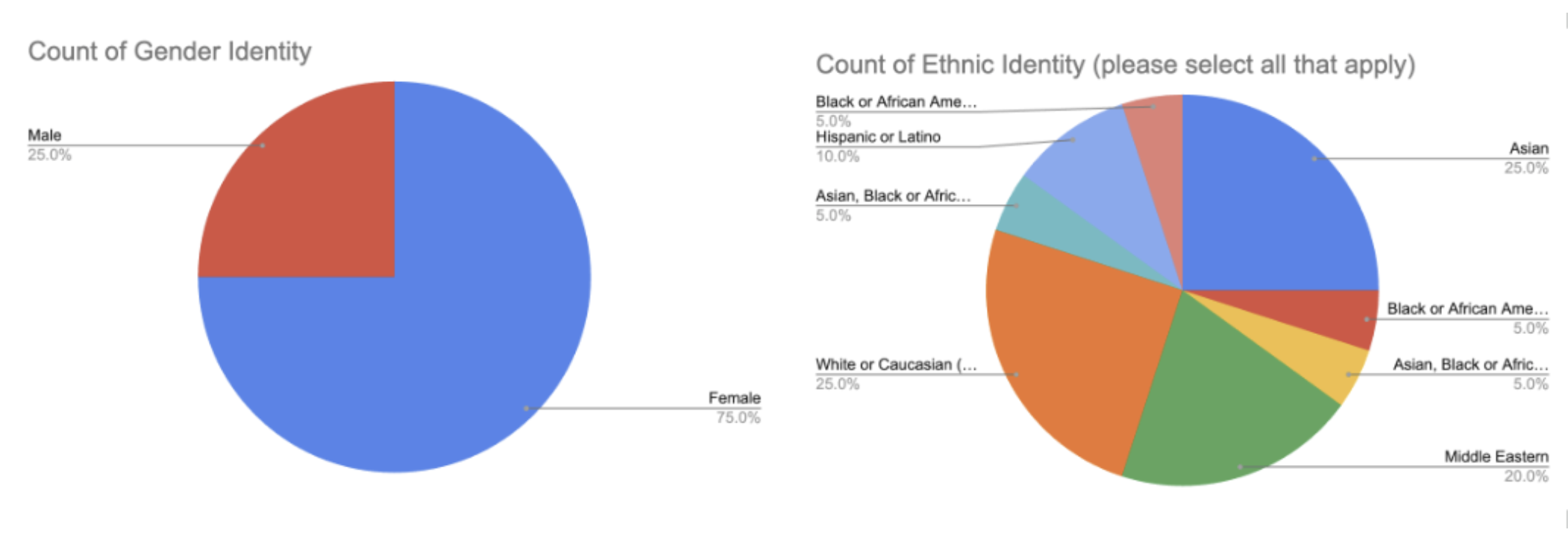
To Hear or Not To Hear: Identifying Speaker Ethnicity By Auditory Clips

Caroline Breckling

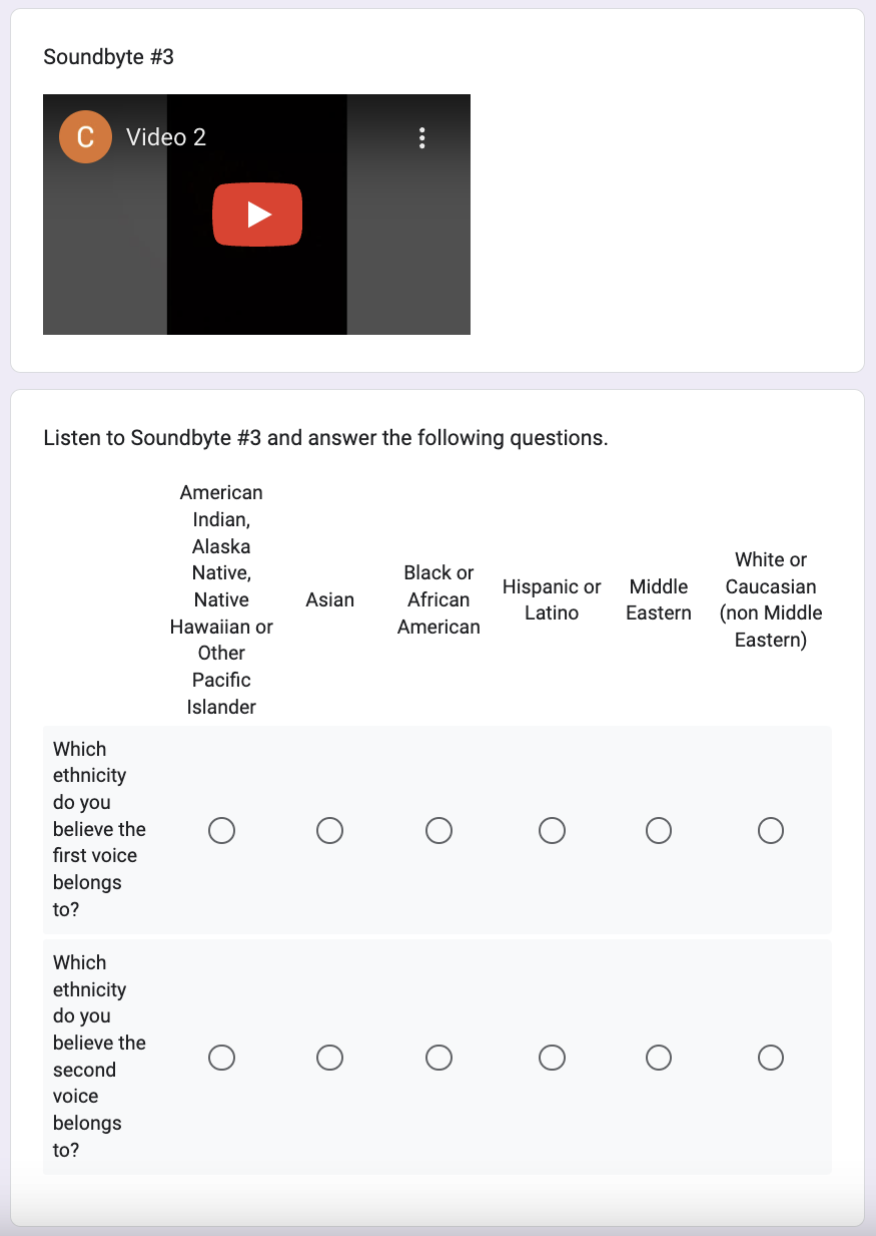
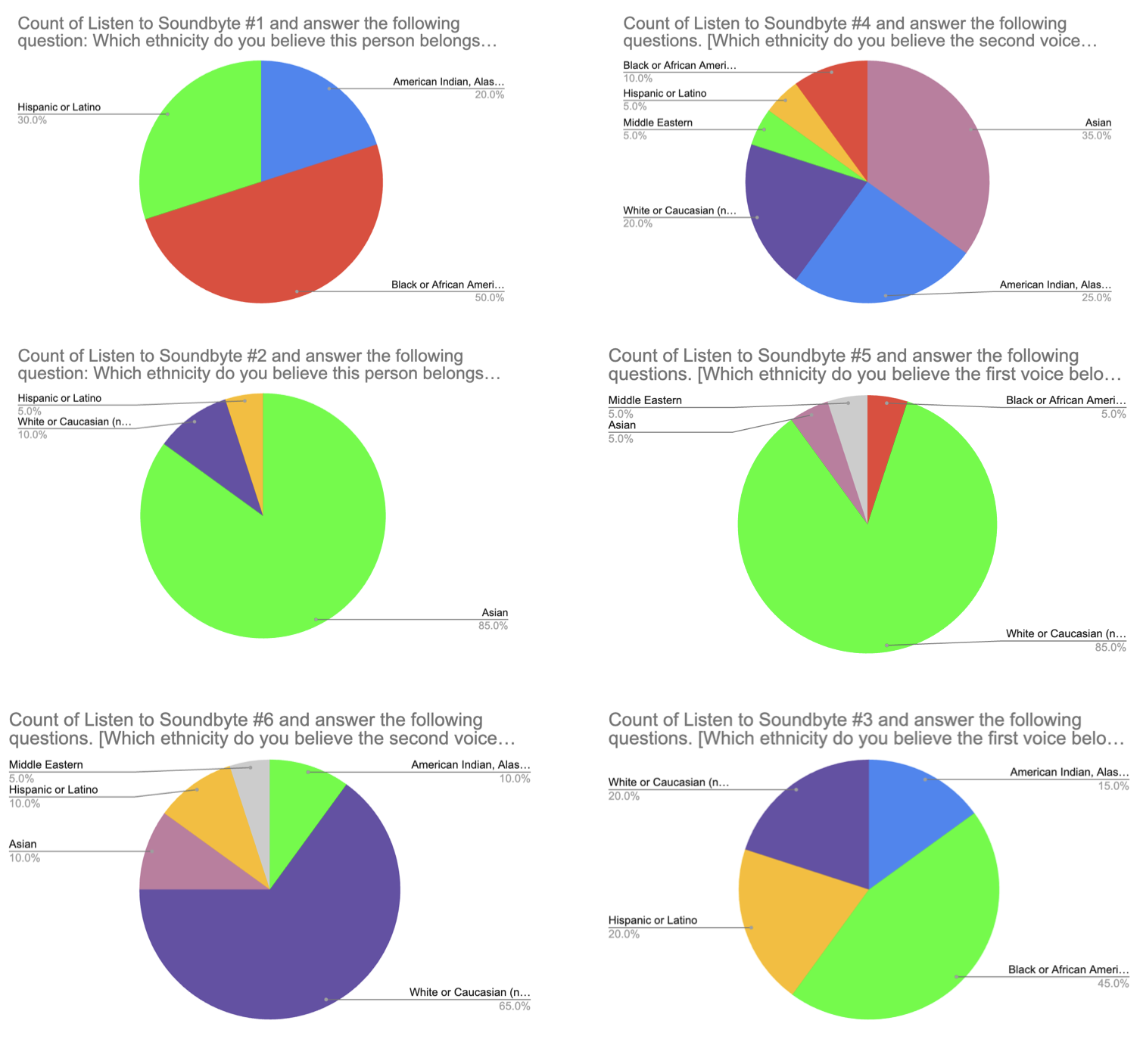
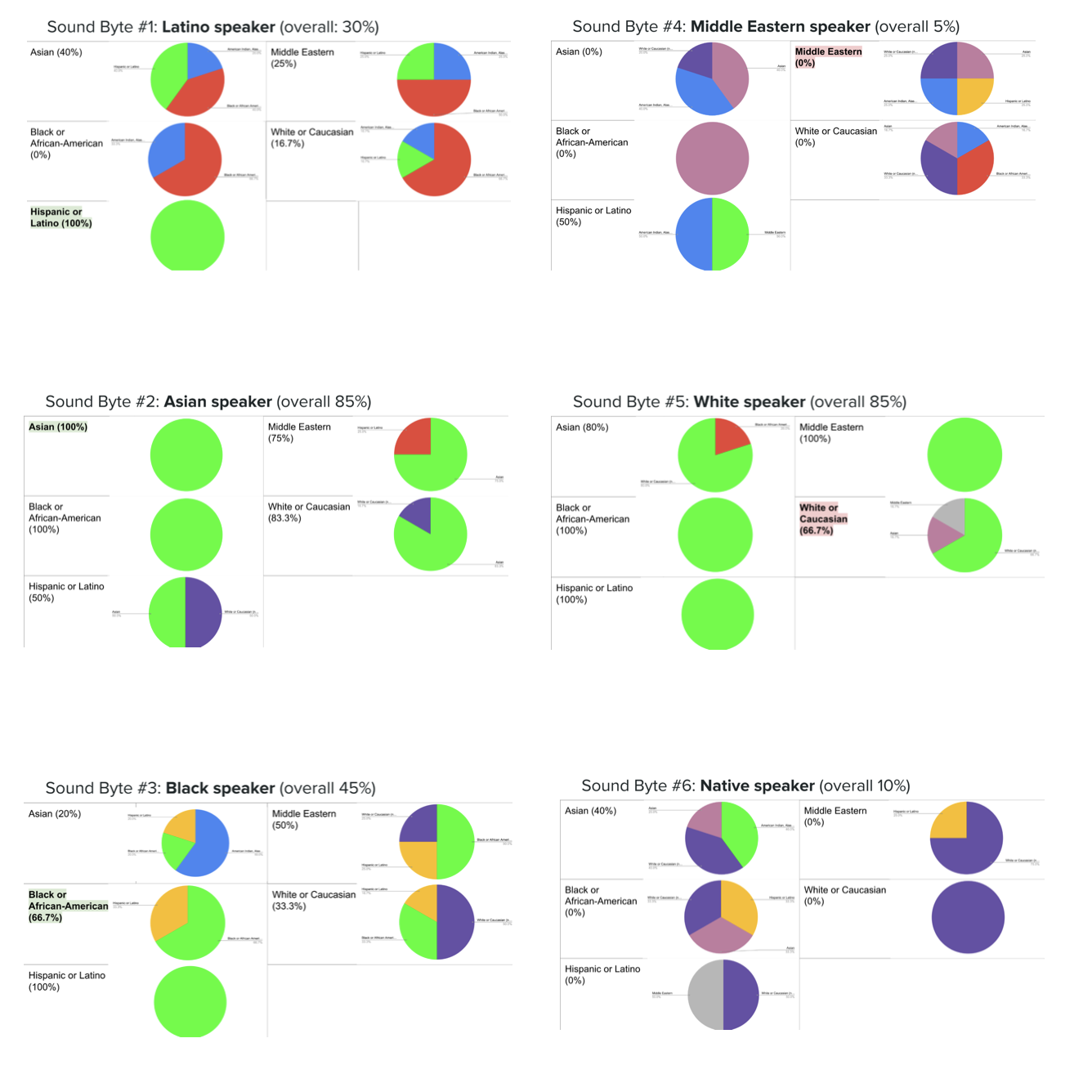
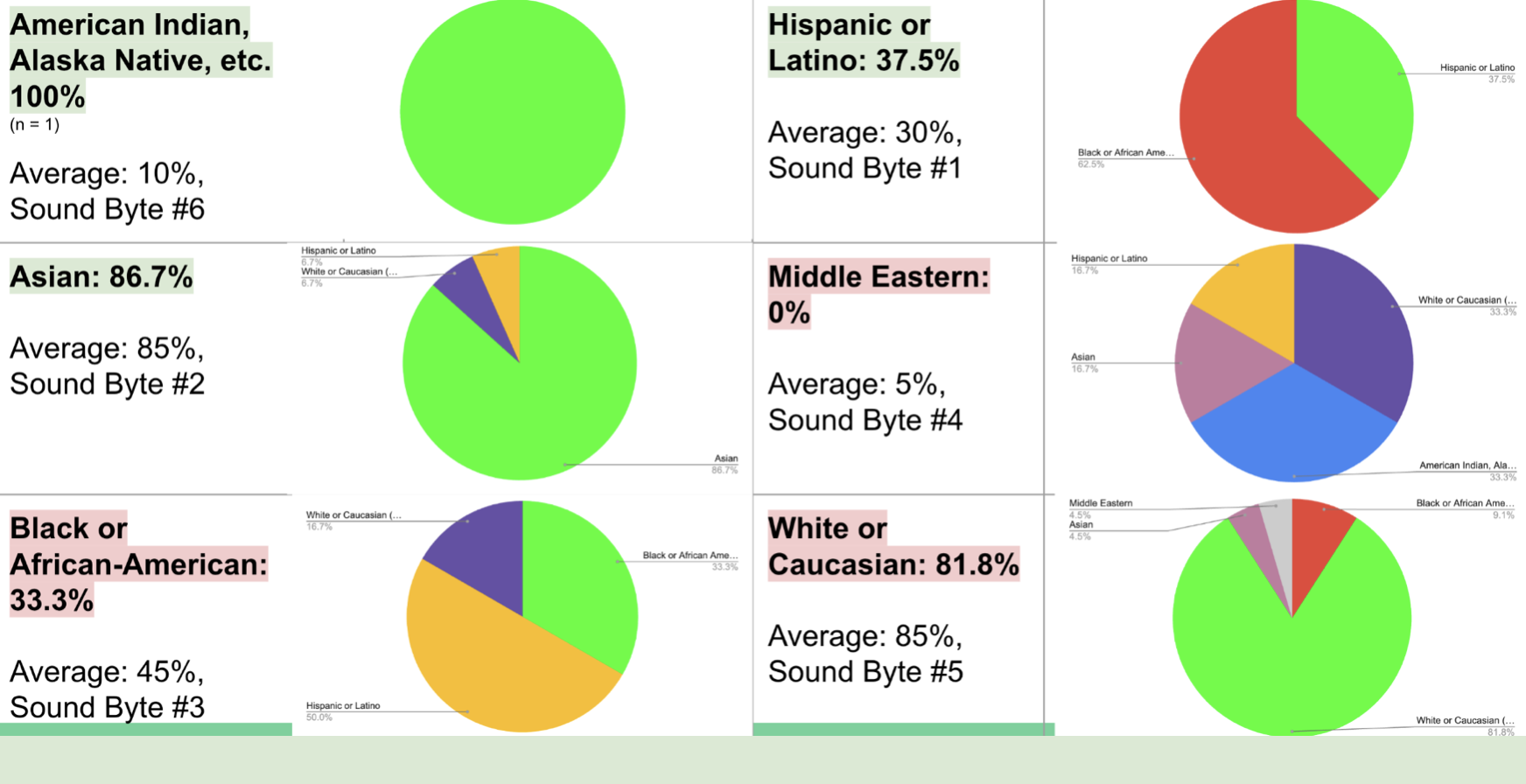
This study investigates to what extent individuals are able to identify a person’s ethnicity based solely on the sound of their voice. Expanding on previous research demonstrating humans’ relative accuracy in recognizing ethnicities by voice, this investigation aims to explore whether a listener’s own ethnicity or familiarity with other ethnicities affects their accuracy in this identification. My survey, conducted with 20 participants from diverse backgrounds, asked individuals to identify the ethnicity of speakers in six different audio clips. Results indicated that participants could identify the speaker’s ethnicity with an overall accuracy of 43.3%, significantly higher than random chance, and a majority of the time, this level of accuracy went up when the guesser was from the same ethnicity group as the speaker featured in the sound bite. However, familiarity with an ethnic group did not reliably improve rates of accurate identification. These findings reflect humans’ existing ability to recognize in-group members through minimal auditory information, reflecting the lingering effects of socialization for survival in human history.

Read more

Friendships For the Mono- and Bi-Lingual College Student: Does The Language You Speak Make A Difference in How You Make Friends?

In the course of our research, we endeavored to examine the difference in the social life of UCLA college students, their capacity to make friends, and satisfy their need for social support with fellow students based on their status as a monolingual or bilingual speaker of English. Drawing on support from previous research dealing with different student populations, we concluded that the way bilingual students are treated and form communities is different from the way monolinguals do, whether because of “othering” by speakers who did not understand their language or culture or because they sought out connections with those who shared their ethnic or linguistic ties. It was almost universal in our interviews where bilingual speakers had a bias towards others who spoke their non-English language, and many of the monolinguals admitted to preferring the company of those who shared their language and culture. Not every speaker who our team interviewed had an exactly identical experience, however- none of our bilingual speakers derived from the same culture or spoke the same language- and there were a few interesting perspectives and outliers.

Read more
, , , , ,

Formality in the UCLA Community: Communication and Self-Expression in the Digital Age

Online communication has undoubtedly brought on more opportunities for misunderstanding. However, the use of linguistic elements such as internet slang and emojis represent the myriad ways that humans expand our linguistic toolbox. Through our research, collected through online surveys and interviews with several members of the UCLA community, we found that formality is shaped by many complex factors, including similarity or difference in age, gender, and power dynamics between interlocutors. The prevalence of concepts such as mirroring suggests that maintaining appropriate levels of formality in these evolving communication mediums is an intuitive process which calls upon participants to be more attentive and creative communicators. Additionally, we found that these processes reveal that, although traditional notions of formality and politeness continue to shape our ways of interacting, the very definitions of these concepts are ever-changing.

Read more
, , , ,

Cultural Identity Maintained Through Code-switching among Immigrant Generations in a Dominant English Country

The United States is often hailed as a country of immigrants, but in reality there are complex social and cultural factors which play a role in the U.S. immigrant experience, one of the greatest being language. While the U.S. has no official language, English is the predominant means of communication, and plays a large role in multi-generational communications of immigrant communities. Our research seeks to answer: how does code-switching between English and native languages influence identity formation and social interactions among different generations within immigrant communities? Through participant observation and interviews at Los Angeles Latino and Chinese American church communities, we found that first-generation immigrants code-switch more often in work and public environments, whereas second-generation immigrants code-switch for the sake of multi-generation communication. Overall, we demonstrate that through code-switching, immigrant families and subsequent generations struggle to balance assimilation into American culture and the ability to preserve their cultural identity.

Read more
, , , , ,
Scroll to Top