2024

Differences in Gender Expressions Online

Antoinette Woodson, Sydney Hesel, Paolo Barrientos, Amar Ebrahim, Nada Gad

Our research project functions to explore the different communication patterns and tendencies between males and females on social media. More specifically how these gender dynamics influence the communication styles. Our motivations for the research stem from our own personal experiences with gender stereotypes on social media. Additionally, we wanted to understand the potential sources of miscommunication between generations to further shed light on the different ways individuals express themselves on social media.

Existing studies have provided insight into how gender dynamics influence communication behavior. Differences in language use, emotional expression, and interaction frequency between genders have been shown to be factors influencing communication preference and understanding. To address these questions, the research team collected data from social media posts and comments made by Gen-Z individuals, both celebrities and non-celebrities, across different gender combinations. To further address these areas, our research group collected data from social media posts including comments, gender of commenters, and gender of posters for both celebrities and non-celebrities and across different gender combinations. We analyzed language choice, emoji usage, and patterns in interactions to identify common trends and tendencies within online communication.

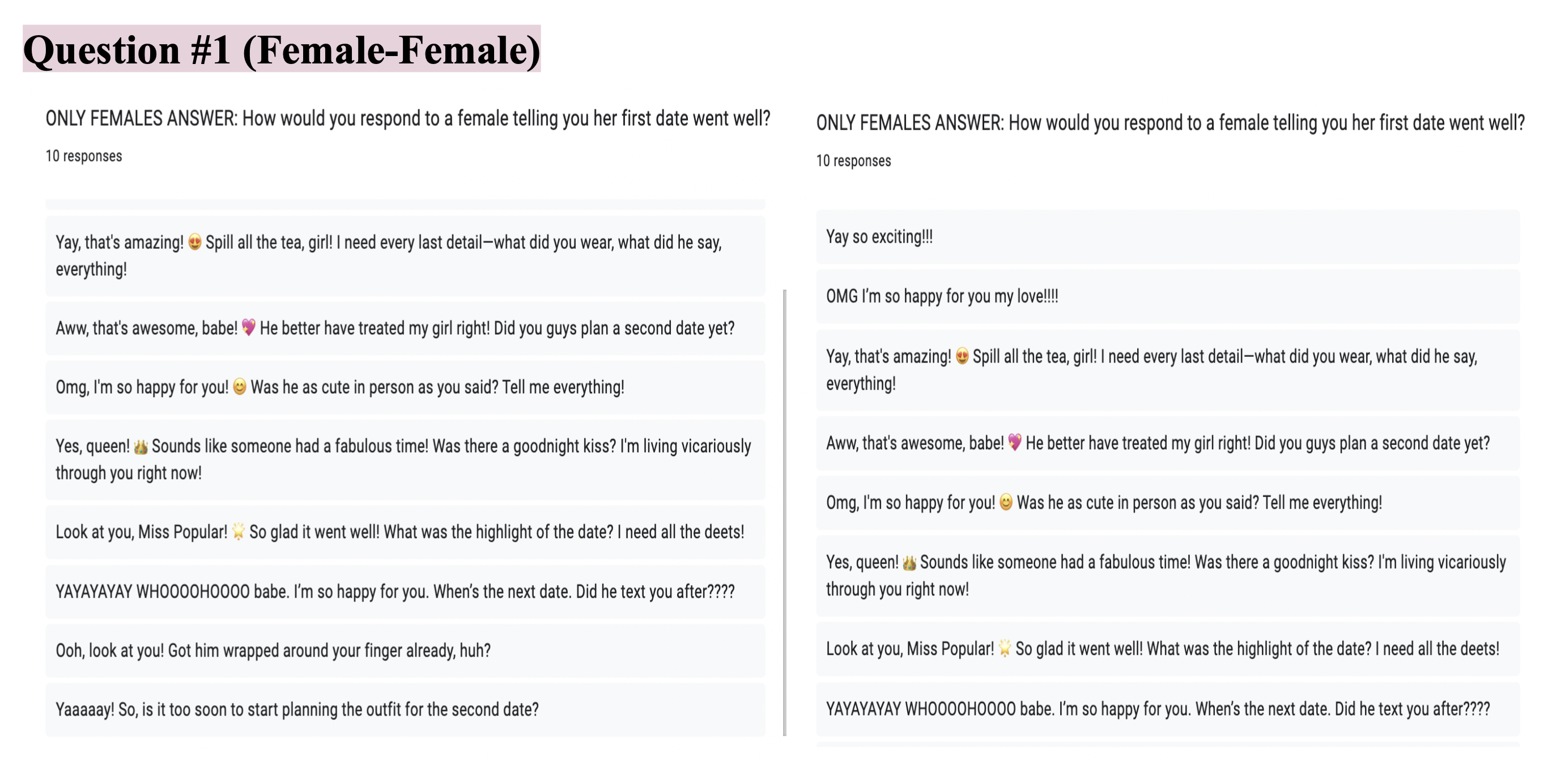
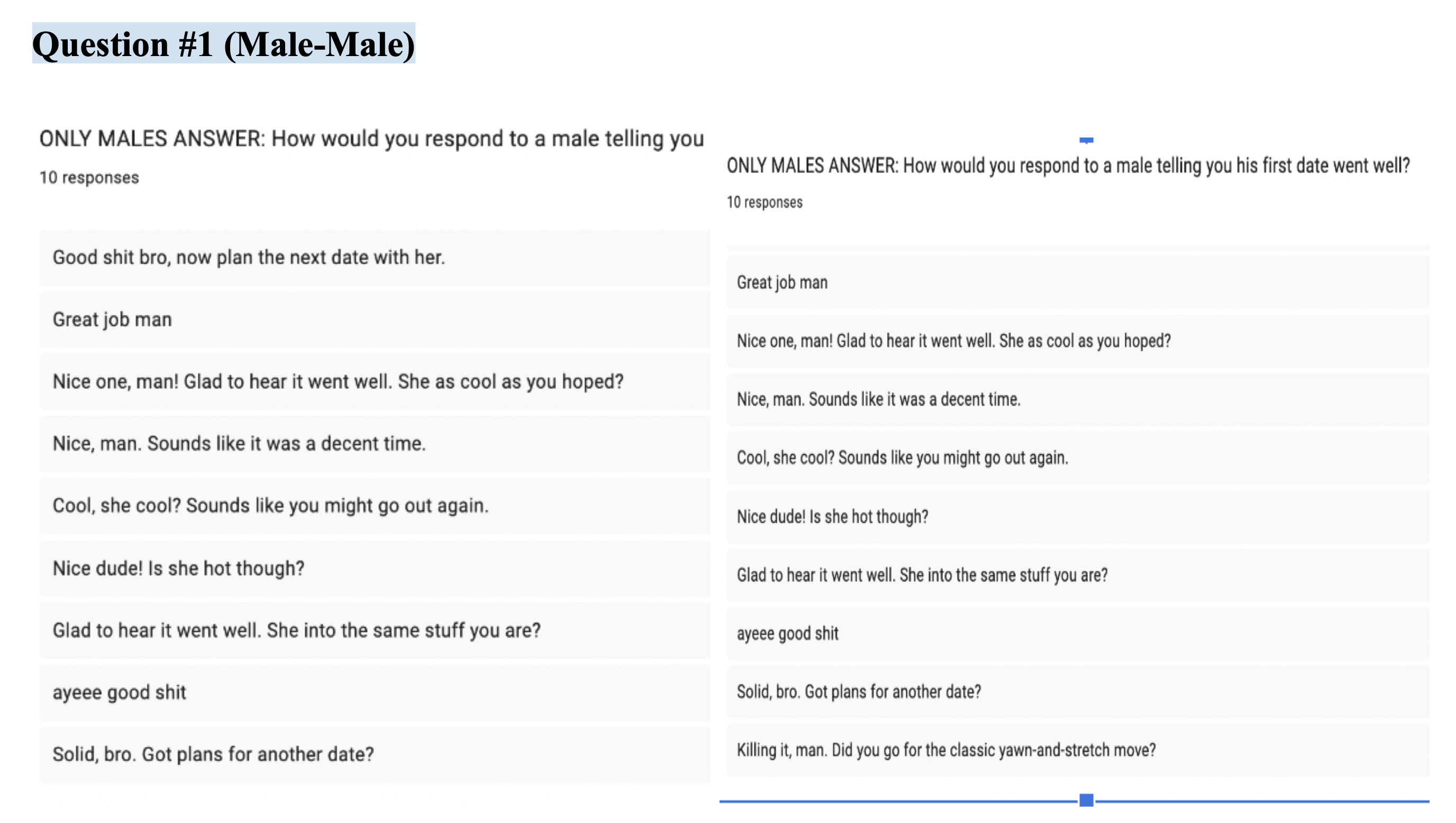
Our results revealed definite communication patterns among gendered groups. Females were more likely to use affectionate/emotionally expressive language and frequently compliment physical appearance or express admiration. Males were commonly more rational and material in their communication style as they focused on achievements and tangible qualities. The red heart and fire emojis were the most commonly used among all groups in the study.

Read more

Introduction

This project researches differences in how people express themselves online depending on their gender, specifically through examining lexical variation on the social media platform Instagram. The population we are targeting are young adults, male and female ages 18-25, who are active users on the social media platform, Instagram. Our research will focus on studying the communication pattern differences between men and women on Instagram. Many sources and research findings show that men and women express themselves differently online, specifically in lexical variation. In online communication, lexical variation refers to word choice, emoticon use, hashtags, and phrases in interactions with people. We will observe the word choice and variation in expressions depending on the gender of the user, and also observe how it can change depending on what gender they are interacting with. We seek to analyze the differences in the context of comments on self-presentation posts through the comments on these posts, excluding business or advertisement posts. Our central focus is to study the relationship between gender and lexical variation on people’s Instagram. The goal of this study is to determine the difference in how males and females interact and express themselves online.

Background

The target population of the research belongs to the older segment of Generation Z. People belonging to this generation grew up with the internet, constantly communicating through consuming and creating digital media. Research indicates that Gen Zs are more comfortable using technology to communicate, even over face-to-face communication (Bredbenner, 2020). The most commonly used form of communication for this generation is through social media, which influences social norms between the genders. (Ridgeway, 1999). Our research looks at the relationship between gender and language variation, specifically on social media. Literature exploring the language variations in Instagram captions suggests that women were more likely to use polite phrases while men used more assertive language (Sari et al, 2020). The lexical variation between men and women suggests that women use more pronounced, emotional and expressive terms, kinship terms, and hesitation words, while men use more swear and taboo words, and friendship terms (Bamman, 2012). The differences between how men and women communicate online can even be seen through their use of emoticons, with women using emoticons to express feeling and support, while men used them primarily for teasing and sarcasm when in their own gender groups (Wolf, 2004). When both genders were interacting with each other in the same group, the men adopted the female standard of expressing more emoticons (Wolf, 2004). Furthermore, gender differences in lexical variation, more specifically in hashtag selection are mainly in part due to women’s higher levels of self-expression and more emotional interpersonal communication (Ye et al., 2017). Contrarily, men are more oriented toward goals and more inclined to share rational and objective information (Ye et al., 2017).

Methods

In approaching the study we first identified the most efficient way to collect data without skewing the results, while also collecting as much data as possible in order to decrease the likelihood of the results being distorted by a small sample size. To do so, we tasked each member working on the study to find a set of 20 posts from a pool of Gen-Z male and female celebrities, and Gen-Z male and female colleagues/friends. After each member found the posts, they were then tasked with identifying the top 5 comments and the gender of the user posting said comment, totaling to 500 data points. Those data points were then entered into a document, which allowed for the facilitation of isolating groups by gender of the poster and the commenter. With the data now isolated, the team identified patterns that could be used to prompt Chat-GPT-4 to search through the data. The data was then inserted into the model which calculated the quantities of the common keywords and emojis. The organized data provided allowed for convenient and efficient analysis based on the number of tendencies within each demographic. We double-checked 10% of the data to ensure accuracy in counting, and to ensure misspellings or slang versions of words were accounted for.

Results
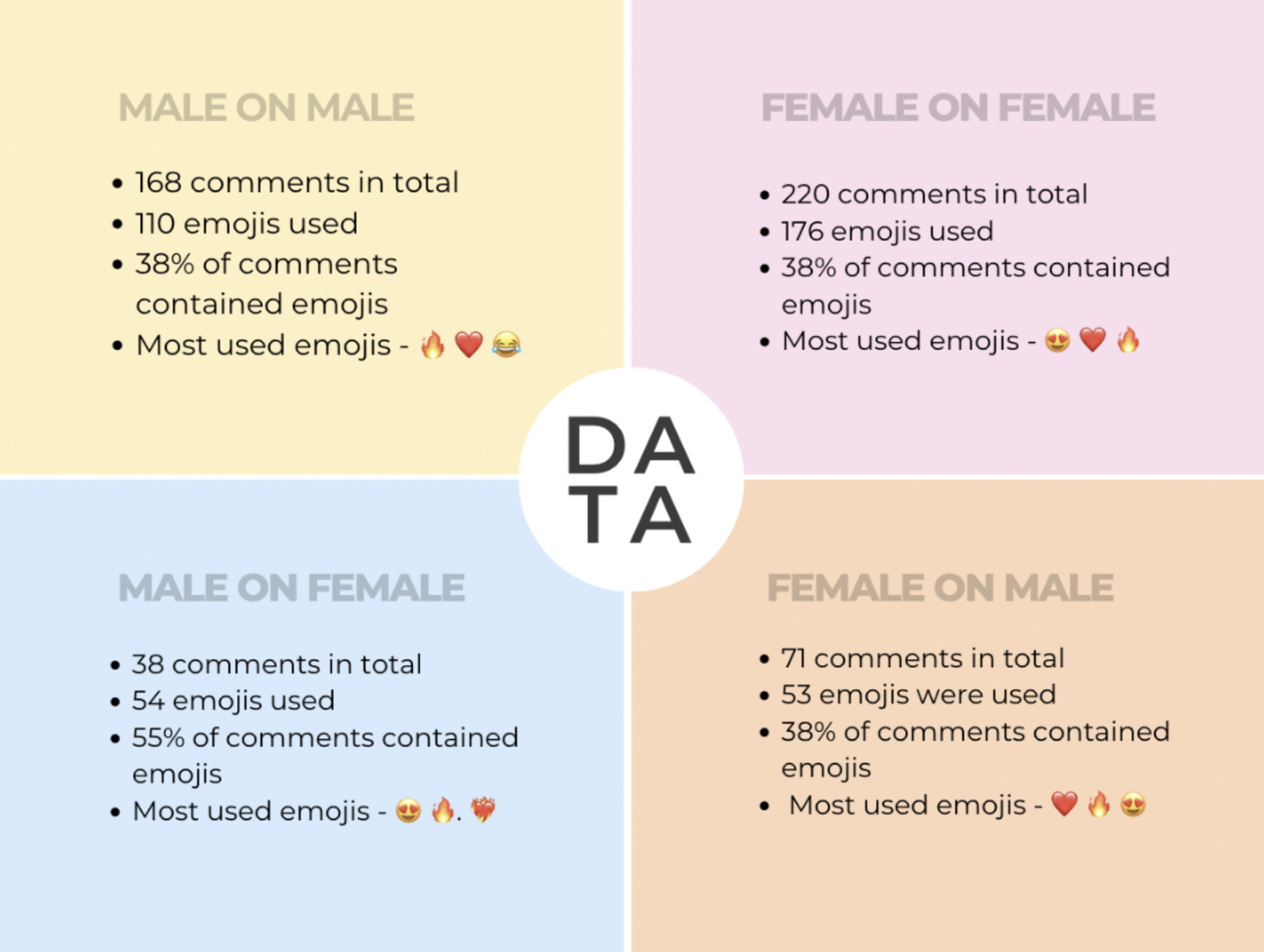
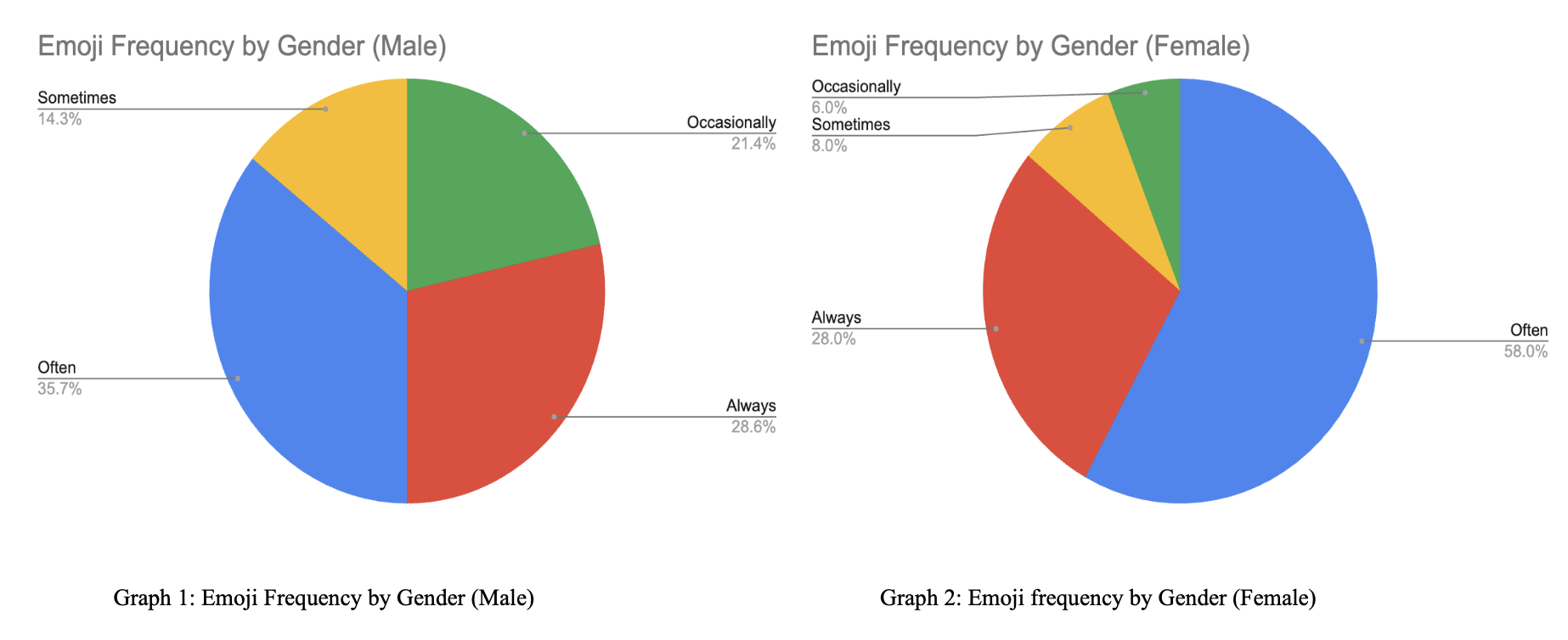
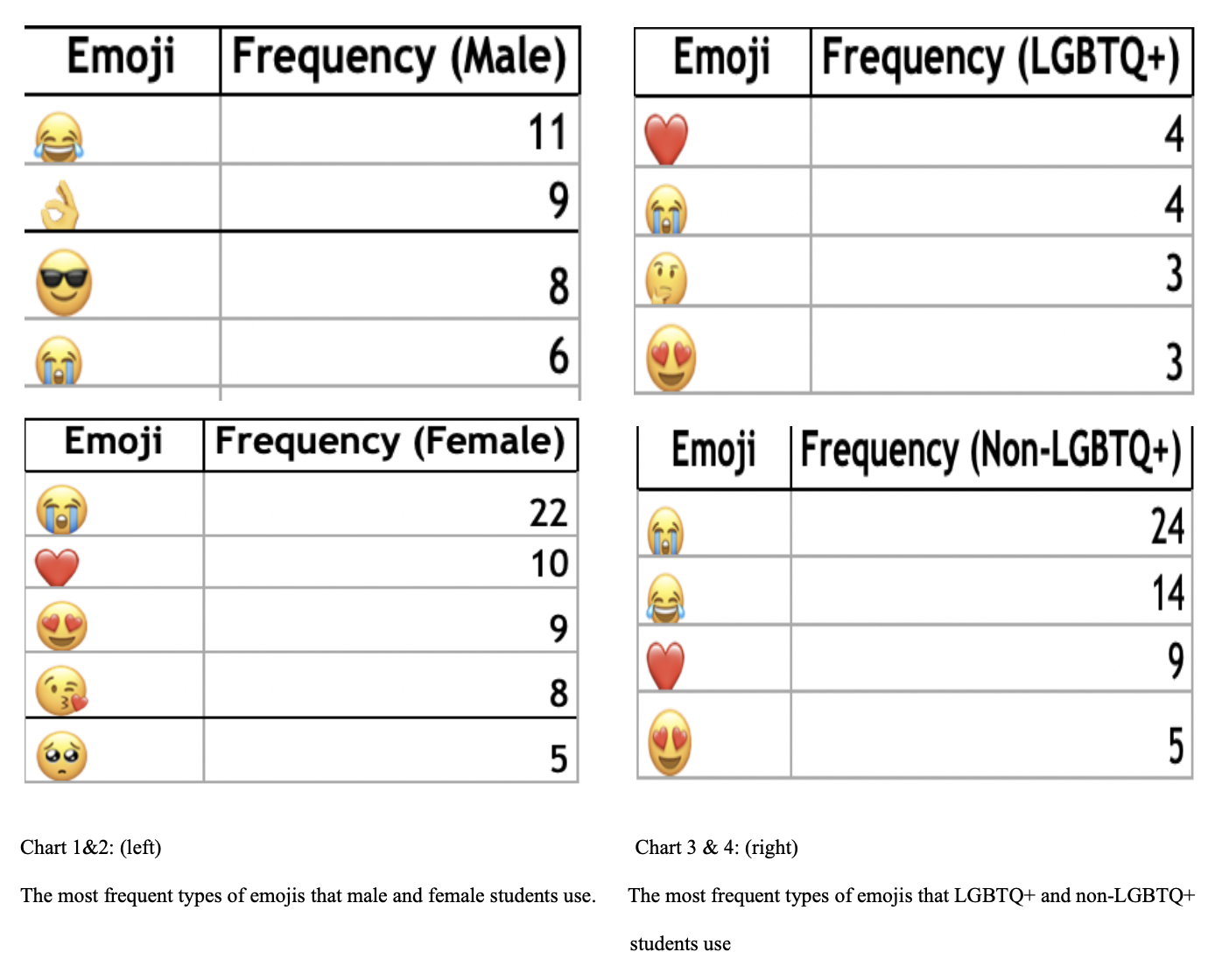
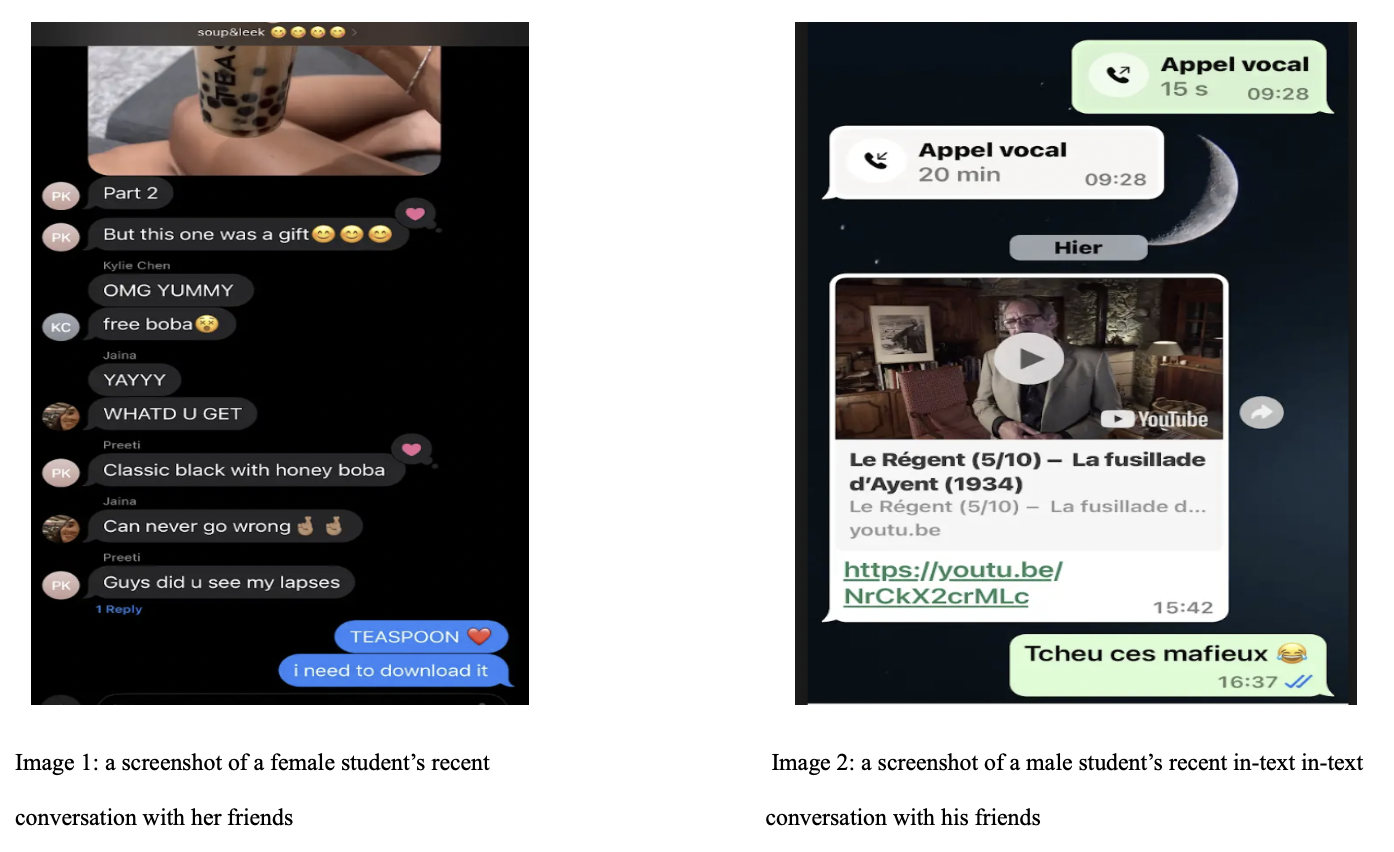
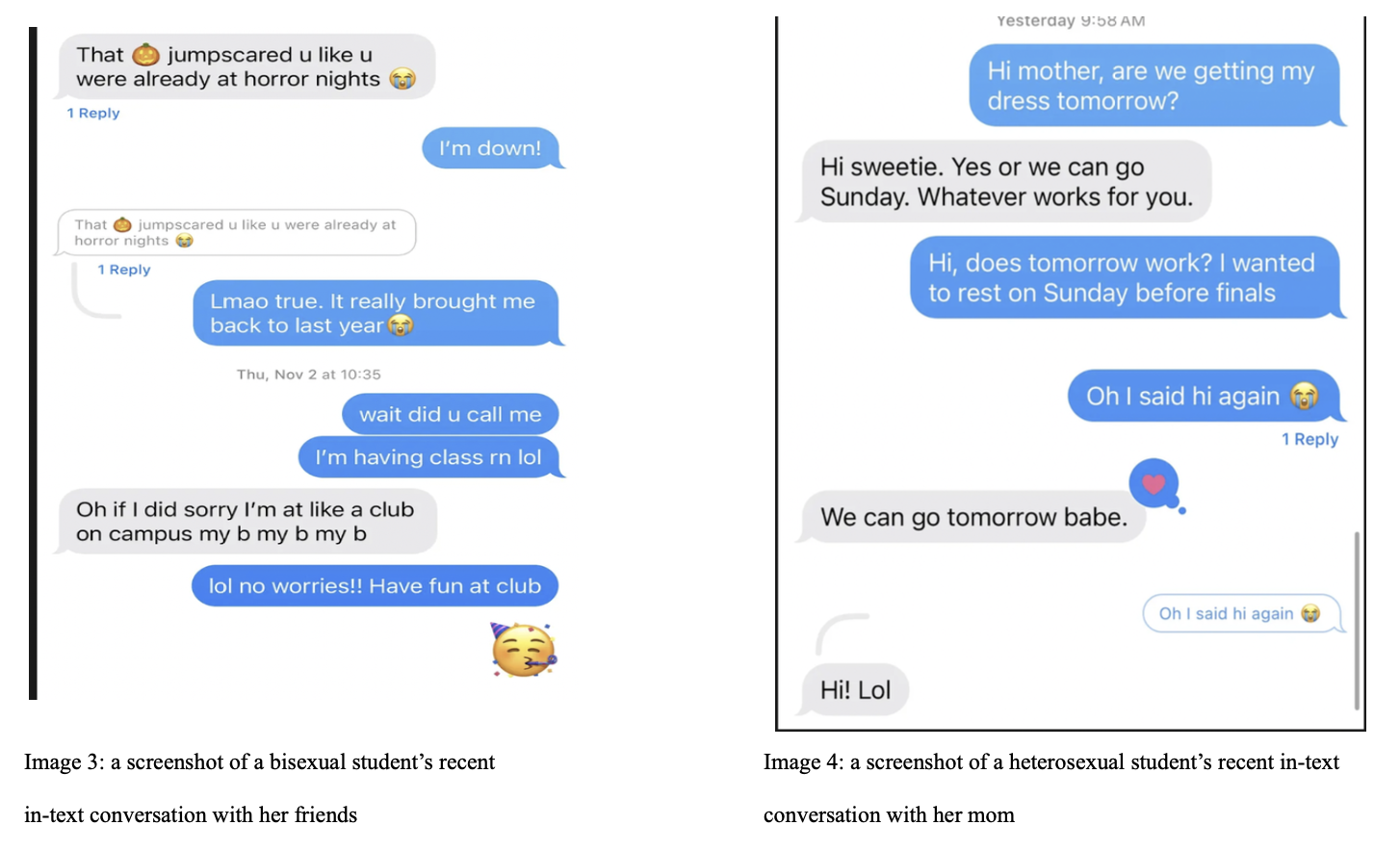
After completing our data collection and graph, we found that both genders commented more on posts made by their same gender. We also found that females commented the most out of all the user groups with 44% of the data being women commenting the most on other posts done by women. The graph shows the total number of male-on-male comments was 168 with 110 emojis used. The female-on-female comments had a total of 220 and 176 emojis were used. We can see that females use more emojis than males, but males spread their emojis out more throughout comments, whereas women typically stack their emojis more in one comment. The male-on-female comments showed much less interaction with only 38 comments in total but 54 emojis were used. Lastly, the female on male also contained much less engagement with 71 comments and 53 emojis used. The results show that females still engage and interact more with both males and females in online comments on Instagram. We also looked at the top three emojis used by males and females. The most commonly used emojis by females were the heart eyes, heart, and fire emoji, and the male’s most common emojis were heart, laughing, and fire emoji when commenting on males, and heart eyes, heart, and fire emoji when commenting on females. Males tended to adopt the heart-eyes emoji when talking to females.

One of the main subjects we decided to observe and quantify in the data was word choice, and in what contexts words were used most frequently. When females commented on other female’s posts, the most commonly used words were emotional compliments. For example, words expressing feelings of admiration and compliments, such as “beautiful,” “pretty,” “gorgeous,” “stunning,” and, “cute”, appeared in 33% of comments. Additionally, “love” and “lovely” appeared in 22% of comments. The use of “love” only appeared 5 other times in another category, females commenting on male posts. When females commented on male posts, their compliments began to exclude words such as “beautiful,” “pretty,” “gorgeous,” and “stunning,” and were more likely to use “cute” as an emotional compliment. While we cannot prove the cause of why this would happen, we can infer that the level of emotional expression is being limited. Other commonly used words were “ate,” “best,” and “serving,” all of which lean towards a more material expression of admiration, used to express that someone is stylish or confident. Additionally, a tendency that stood out among female commenters was their tendency to add letters onto words. We infer that this is done to add emphasis, for example, “Elllie_rose” comments ”the cat pic you are kiddinggggggg” on a post by user “Rubylyn”, having the same effect as drawn-out words in verbal dialogue. This was done in 8% of all comments made by female users, and only 2% by male users.

When males commented on other males’ posts, they used adjectives that were less emotional, being more material, and more rational. For example, some of their top used words were “fit” and “fitted”, which express praise for the poster’s outfit, which is inherently material.

Additionally, words such as “winning” and “mid”, a slang term expressing mediocracy, exemplify compliments utilizing rational words, rather than emotional words. These comments are still supportive, however lean towards observations suggesting achievement rather than forward admiration. However, this changed when males commented on female’s posts, with their top words changing to “gorgeous,” “cute,” and, “queen”. These words were not used at all on other males’ posts, so male users are more overtly changing their lexical choices when commenting on female posts. This is a contrast to the female commentators, who seem to have dialed back their compliments but did not change their word choice as overtly.

Discussion

Our findings indicate some lexical variation dependent on gender on social media. Females utilize a more expressive and emotional communication style, especially when engaging with other females. Their comments consist of affectionate compliments that boost confidence. This behavior shows the supportive nature of female interactions on digital platforms. Their style changes slightly when commenting on male posts, dialing back the emotional strength of the compliments. Additionally, the language and emojis used by women tend to amplify the emotional intensity of their interaction. Males tend to imply that something is cool or impressive, using more material terms. However, when interacting with women’s posts, men use more affectionate communication. Our findings could be interpreted to reveal how current gender norms and stereotypes influence digital communication. Males’ interactions often center around achievements, while females’ interactions are rich in compliments. Despite our findings, we find it difficult to make concrete conclusions given the limited size of our data. The data could have been skewed by unknown factors, thus any concrete conclusions from this data require further studies of Gen-Z’s tendencies within comment sections on Instagram. Our research into

Instagram comments adds to the understanding of how males and females communicate online, and what changes occur during cross-gender interactions. That being said, we hope our findings and study are able to set the stage for future research to help understand gender norms.

References

Bamman, D., Eisenstein, J., & Schnoebelen, T. (2012). Gender identity and lexical variation in social media. Journal of Sociolinguistics, 18(2), 135–160. https://doi.org/10.1111/josl.12080

Bredbenner, Jamie, and Lisa M. Parcell. “Generation Z: A Study of Its Workplace

Communication Behaviors and Future Preferences.” Generation z: A Study of Its Workplace Communication Behaviors and Future Preferences, Wichita State University, 2020.

Ridgeway, C. L., & Smith-Lovin, L. (1999). The gender system and interaction. Annual Review of Sociology, 25(1), 191–216. https://doi.org/10.1146/annurev.soc.25.1.191

Sari, I. P., Gunawan, W., & Sudana, D. (2020). Language variations in Instagram captions.

Proceedings of the 4th International Conference on Language, Literature, Culture, and Education (ICOLLITE 2020). https://doi.org/10.2991/assehr.k.201215.053

Wolf, A. (2004). Emotional expression online: Gender differences in emoticon use. CyberPsychology & Behavior, 3(5), 827–833. https://doi.org/10.1089/10949310050191809

Ye, Z., Hashim, N. H., Baghirov, F., & Murphy, J. (2017). Gender differences in Instagram hashtag use. Journal of Hospitality Marketing & Management, 27(4), 386–404. https://doi.org/10.1080/19368623.2018.1382415
An Examination of Code-Switching Patterns: Who is More Prone to Code-Switching, Males or Females?

Jessica Chou, Kelly Yatsko and Alexandra Flores

Every Black, Indigenous and person of color (BIPOC) in America has likely code-switched in social interactions, either consciously or unconsciously. Code-switching, or the practice of alternating between two languages or varieties of language, is common amongst people of color when speaking to other BIPOC individuals as opposed to white Americans in order to reduce stereotypes. Motivated by this notion as well as previous studies on code-switching in young adults, we sought to discover the effects of gender on code-switching frequency in young adults. We examined YouTube videos from channels such as “Cut” and “Jubilee” to examine how often young adults from diverse backgrounds code-switch when discussing a variety of topics, both serious and lighthearted. Our project initially attempted to confirm previous findings which indicate that young women tend to code-switch more frequently than their male counterparts. However, our data revealed that the young men in these videos code-switched as often and even more frequently than young women in certain videos. Our findings reflect the idea that all BIPOC individuals feel the need to code-switch regardless of gender. Acknowledging this finding can aid in breaking down racial and gender stereotypes and improve communication among young adults of different identities.

Introduction and background

Our research project explores the frequency of code-switching amongst young people in an informal setting based on two aspects of their identity. Code-switching is defined as a practice where people alternate between two languages or varieties of language in a given conversation. Our team was motivated by the notion that people of color tend to code-switch between more informal language when speaking to other people of color, otherwise known as their in-group, versus the use of more formal and standardized language with white Americans, or their out-group. We then decided to go further and examine the frequency of code-switching based on gender. Similarly to racial stereotypes, people of different genders often speak differently in accordance with the demeanor they wish to present to others. Through this study, we hope to better understand the effects of both racial and gender stereotypes that can affect young people’s communication styles and the variety of language they choose to use amongst their peers.

It has been previously discovered that people of color tend to alter their language patterns when speaking to white people as a form of social preservation (Baugh 2002). This is part of the problem that motivated our team to examine code-switching in informal social situations amongst peers. In a previous study, it has also been found that code-switching amongst young people is a way to facilitate conversation, switch from topic to topic, and build rapport (Muthusamy 2010). Code-switching was also found on social media when young people are unable to translate between languages, strengthening the idea that code-switching is common amongst young people on informal channels, even those that are written rather than verbal (Almoaily 2023). Additionally, we hoped to study the differences in code-switching between men and women. In a previous study on gender differences in code-switching, it was discovered that while both genders frequently code-switch when speaking to their peers, women generally tended to use code-switched forms of language 5% more frequently than their male counterparts (Kane 2020). Kane also defines two different forms of code-switching: inter-sentential, which is code-switching between sentences, and intra-sentential, which is code-switching within a sentence. These are the two forms of code-switching we decided to search for when gathering data. In line with these studies, we initially sought to prove that when speaking to other young adults about a variety of topics, women code-switch more frequently than their male counterparts.

Methodology

Our team analyzed code-switching among BIPOC young adults communicating with one another in YouTube videos, examining if males or females engage in code-switching more than the other. We hypothesize that females will code-switch more than males due to what we have learned in Communication 188B, such as how Tannen (1990) found that women are more agreeable and potentially more sub-consciously adaptable when communicating due to “rapport”. Additionally, studies have pointed to women being more susceptible to standardizing their speech such as one conducted in America and Britain by Eckert (2012). Our hypothesis is also based on our shared experience of a “white/valley girl” voice many young adults adopt in Los Angeles as college students at UCLA.

Our data comes from YouTube channels, “Jubilee” and “Cut”. These YouTube channels produce content that often examines and confronts identity-based differences between opposing social groups. We have selected these videos because they have high production value, allowing them to source their participants from a broad range of backgrounds. Their videos focus on asking thought-provoking questions that appropriately juxtapose the behaviors of people with different backgrounds and address hard-hitting topics. We analyzed the language and communication styles that young adults participating in the videos use, particularly observing how BIPOC communication style changes when they are speaking with members of their ingroup. In attempts to reduce or weaken stereotypes against themselves, BIPOC individuals will often utilize more formal language and speaking patterns, such as a more assertive/skillful tone, in conversation with their White counterparts, rather than speaking colloquially, or using non-standard grammar patterns. We specifically looked for aspects of language including formality of speech, usage of slang words, and tone.

Results and analysis

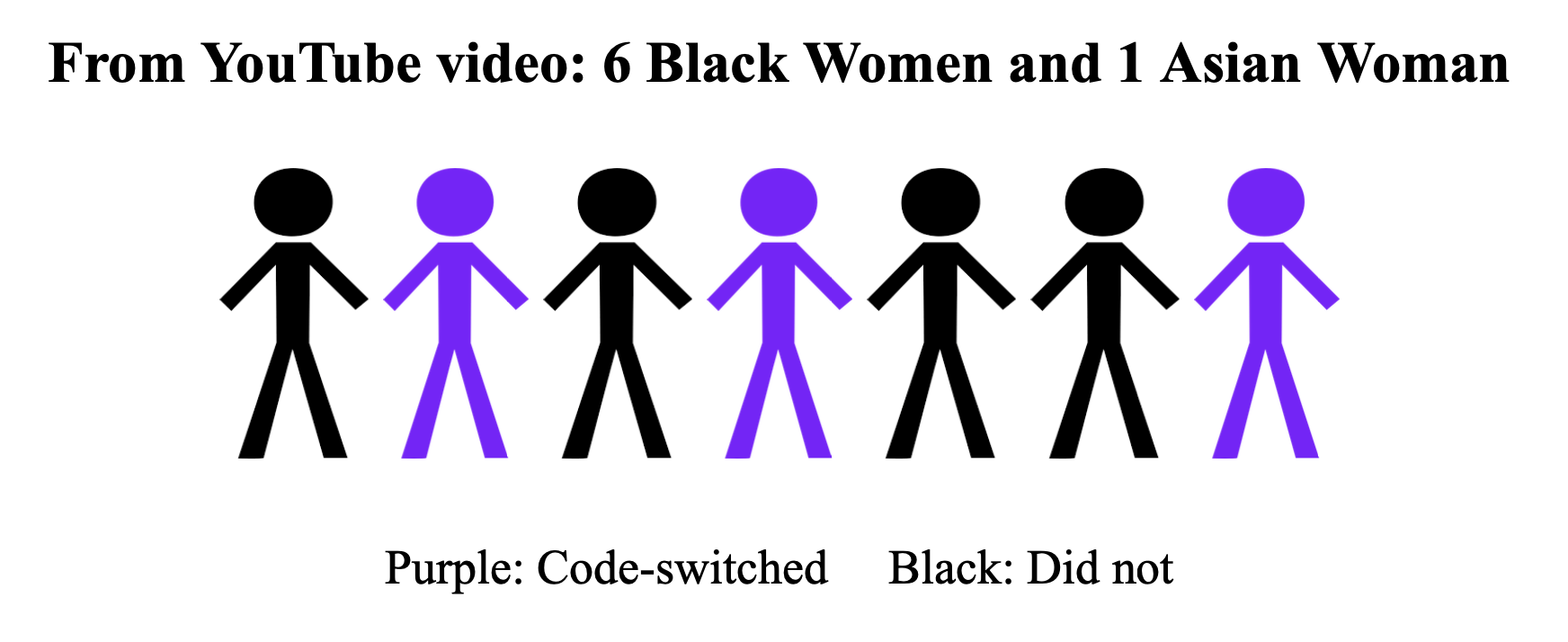
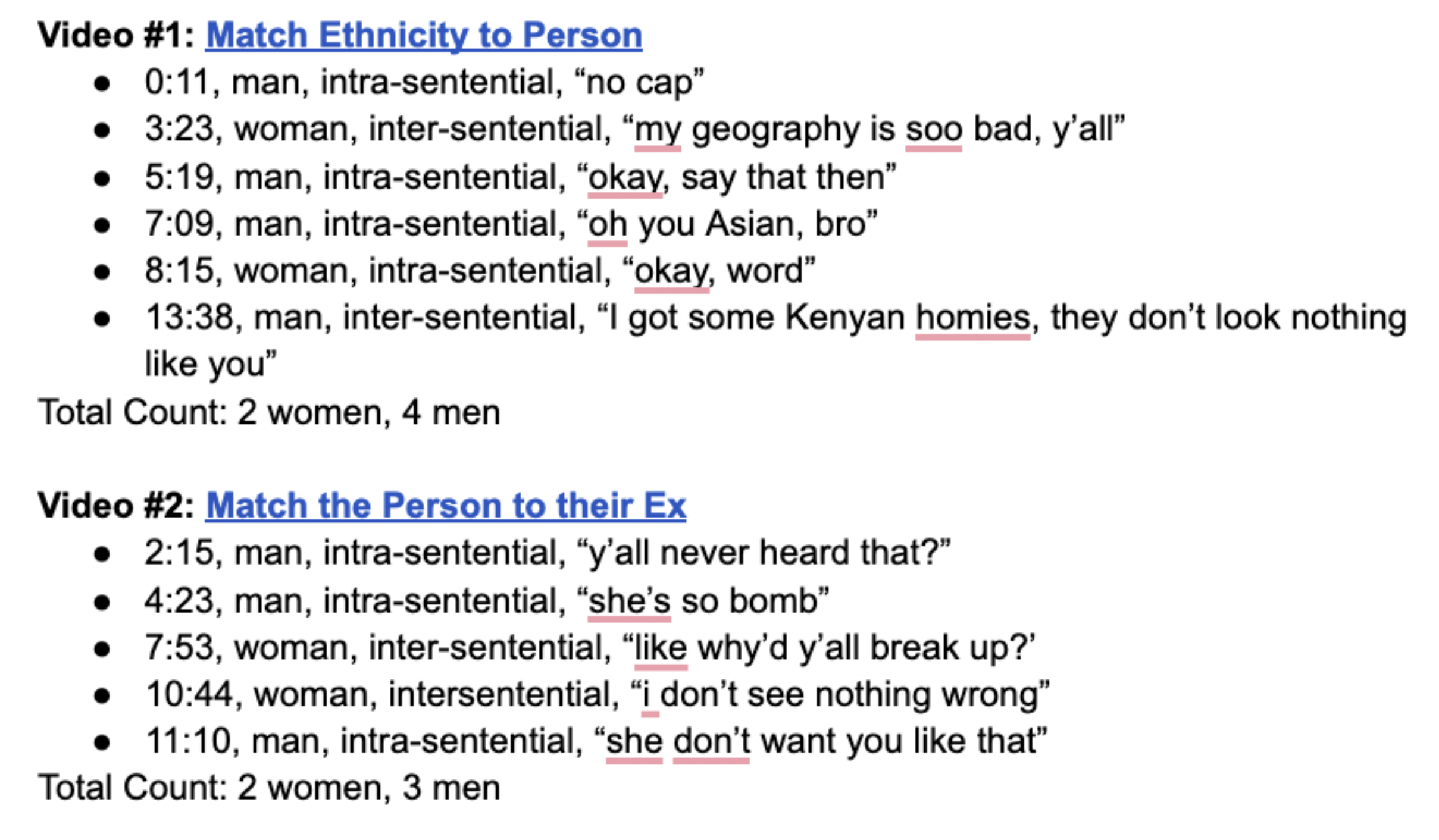
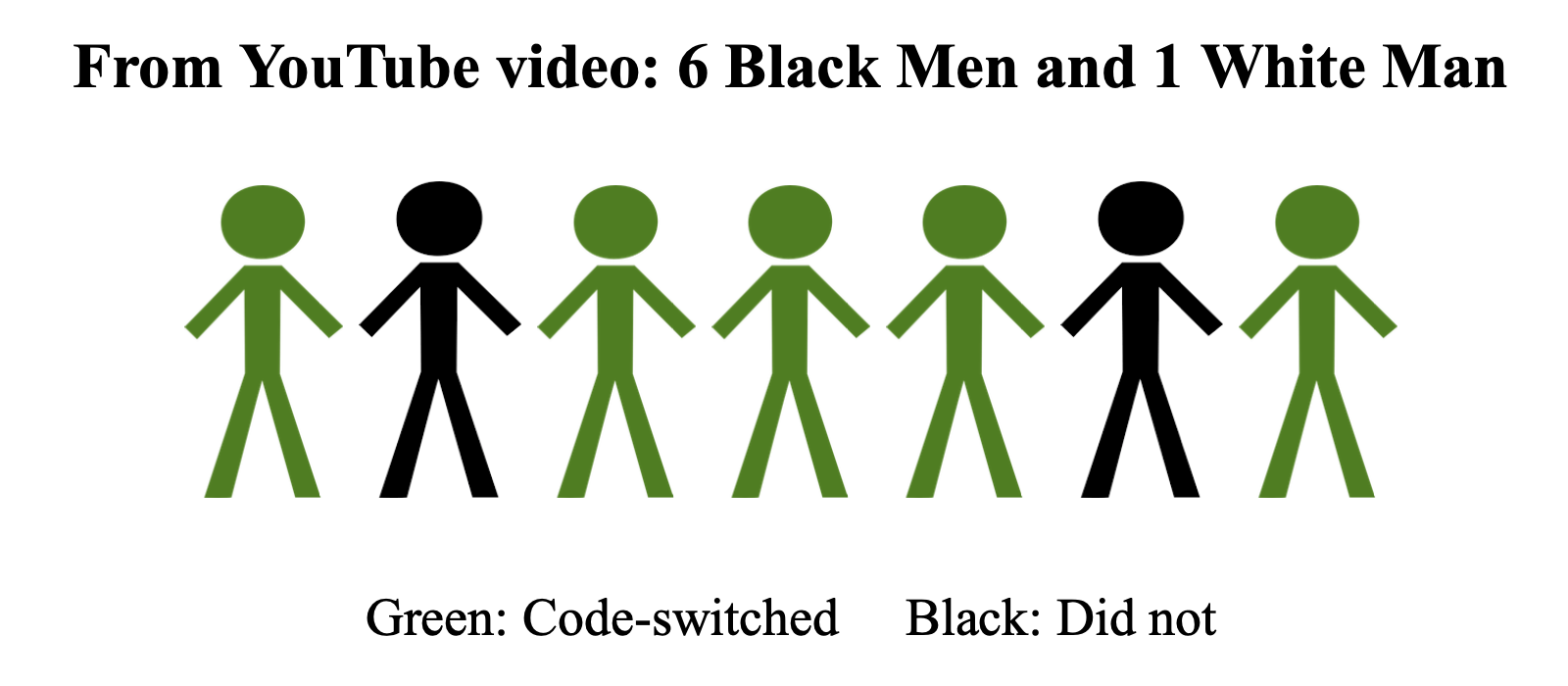
In one video we found that 4 men code-switched whereas only 2 women code-switched when interacting with BIPOC. In another video, 4 men code-switched intra-sentially and 2 women code-switched inter-sentially. In two other videos where participants were blindfolded and in a group of their gender only on camera, men still code-switched more than women. In the video, 6 Black women and 1 Asian woman, the women shared having to speak in a “customer service voice” which supports how women are more susceptible to standardization but may maintain their standardized language on camera when communicating with other BIPOC. The video of 6 Black men and 1 White man showed the men voting off the only openly gay man as the secret white man, this could be due to how although he used Black Vernacular English (BVE), he spoke in a softer tone and pitch overall. The differences in code-switching exhibited by the men and women in these communities are partially due to the demeanor they wish to present; men are more likely to use these forms of code-switching to stimulate more of a camaraderie-like environment, while women foster more of a connecting or empathetic one. Our findings did not support our hypothesis and concluded that males code-switch more than females. However, we must acknowledge that the unique setting of the videos may have impacted our conclusion. Further research may clarify other factors in code-switching, including sexuality and gender expression or diverse settings.

Discussion and conclusions

Our findings lead us to suggest that men will code-switch just as much if not more than women definitely reaffirms the presence of this negative stereotype against women suggesting that they are the leaders in exhibiting this behavior. Particularly, we found that men are more likely to use intrasentential forms of code-switching, while women will gravitate more towards intersentential code-switching. Some of the differences in code-switching exhibited by the men and women in these communities is partially due to the demeanor they wish to present; men are more likely to use these forms of code-switching in order to stimulate more of a camaraderie-like environment, while women foster more of a connecting or empathetic one. Understanding that these behaviors are associated with specific genders provides us with some further insight on how language is used to navigate the social world and belonging, in addition to negotiating identity and power dynamics.

In understanding this behavior in both genders, and being mindful of this information, one can supplement it as the call to action by altering their actions in a positive light. This can help break misconceptions about gendered communication behaviors and reduce the stigma associated with code-switching, especially for women who have been unfairly criticized for it in the past. By refuting this stereotype, and refuting the connection between code-switching and femininity or masculinity, we can help promote gender equality. If we are more aware of this, we can foster stronger interpersonal relationships in various social settings, like work, school, etc., because they are operating off less fear of judgment, and more on trust/empathy.

Confidence and authenticity in expression and identity can lead to inclusive communication patterns and practices where people feel validated in being themselves. In attempts to reduce or weaken stereotypes against themselves, BIPOC individuals will often utilize more formal language and speaking patterns, such as a more assertive/skillful tone in conversation with their White counterparts, rather than speaking colloquially or using varying grammatical patterns, such as African American Vernacular English. Since code-switching for BIPOC can be considered a negative stereotype because of the cultural identity conflict and linguistic insecurities that come with it, especially in more marginalized areas, embracing this idea also validates BIPOC individuals; changing this concept into a positive one can be beneficial for them to navigate different linguistic and cultural arenas.

References

Almoaily, M. (2023). Code-switching functions in online advertisements on Snapchat. PLOS ONE, 18(7). https://doi.org/10.1371/journal.pone.0287478

Baugh, J. (2002). Black Linguistics: Language, Society, and Politics in Africa and the Americas. Routledge; 1st edition, 8, 155-168.

Eckert, P. (2012). Three Waves of Variation Study: The Emergence of Meaning in the Study of Sociolinguistic Variation. The Annual Review of Anthropology

Kane, H. (2020). Language Variation: A Case Study of Gender Differences in Wolof-French Codeswitching. International Journal of Language and Linguistics, 8(4), 122-127. https://doi.org/10.11648/j.ijll.20200804.11

Muthusamy, P. (2010). Codeswitching in Communication: A Sociolinguistic Study of Malaysian Secondary School Students. Pertanika Journal of Social Sciences and Humanities, 18(2), 407-415.

Tannen, D. (1990). You Just Don’t Understand: Women and Men in Conversation. Social Interaction in Everyday Life Contemporary.

Lights, Camera, Flirtation: An Analysis of Male and Female Verbal Flirting Techniques, As Represented in 5 Romantic Comedies from 1989–2023

Sherry Zhou, Amo O’Neil, Jared Ramil, Juliana Rodas, Thalia Rothman

Our paper seeks to analyze the ways in which flirting and romantic communication has changed, in regards to both gender and societal norms. In doing so, we collected and analyzed data regarding the frequencies and distribution of flirting between main characters of five different romantic comedy movies. We collected data pertaining to four variables: frequency of compliments, pitch change from, sexual jokes, and meaningful questions. Our analysis of the data revealed a number of observations indicative of s in present day society. Most significantly, we observed an increase of female or more female presenting characters initiating flirtation over time, a reflection of changing gender norms in society. With the rise of digital media and the Internet, online content such as movies have become more impactful to the way society processes social norms. Our study calls for continued analysis of the reflections of media representations and narratives onto society, and vice versa.

Read more

Introduction and Background

The societal obsession with flirtation and romance permeates modern life at every level. It is the subject of conversations with friends, podcasts, television, books and social media posts. When it comes to how exactly to flirt, most resort to clichés like batting eyelashes and using bad pickup lines. Our research aims to analyze the ways in which the media portrays successful romance, specifically in romantic-comedy movies. Through study, we sought to understand societal shifts in romantic dynamics as portrayed in popular media and their potential implications on real-life interactions.

Flirting is a broad category of physical and verbal communication, and men and women often favor very different strategies. Gender divides in courtship can be traced through time — a study of 19th century love letters showed men expressing their passion through poetic language and elaborate vocabulary while women were expected to be reserved and polite (Wyss 2008). Modern studies showed women tend to have a more reserved flirting style, and men tend to be more playful (Hall and Xing 2015). Women were also found to be more polite with the opposite gender (Cabrera 2022), and had more interest in men’s personality traits, while men focused on women’s physical appearance (Apostolou and Christoforou 2020). Finally, gender roles were found to be strongly predictive of flirtation styles among men and women, though men were also strongly influenced by sexual orientation (Clark, Oswald, and Pedersen 2021).

Our research delves into the evolution of verbal flirting styles between male and female characters depicted in enemies-to-lovers romantic comedies from 1989 to 2023. We hypothesized that time would reveal a less strict gender divide in flirting methods; in particular, we expected female leads to be more direct with sexual comments and male leads to give more personality-related compliments and ask more questions.

Methods

Our research seeks to answer the following question: How have male and female verbal flirting styles portrayed in romantic comedies changed over time? In doing so, we watched and analyzed five different romantic comedies that spanned several decades ranging from the 1980s to the 2020s: When Harry Met Sally (1989), 10 Things I Hate About You (1999), The Proposal (2009), Set It Up (2018), and Red, White, and Royal Blue (2023) (LGBTQ+ case study).

While watching these films individuals, we noted the frequencies and distribution of four specific verbal flirting approaches, our variables, expressed by the romantic leads:

  1. Compliments: Film scenes containing romantic leads complimenting each other based on physical attractiveness or personality.
  2. Voice Pitch Changes: Noticeable pitch changes among the romantic interests were documented (i.e., whether a character’s voice went lower or higher), excluding natural vocal changes.
  3. Sexual Comments: Scenes where characters exchanged sexual remarks to each other. (e.g. lewd remarks, provocations)
  4. Questions: Questions that were asked, as a means for the romantic leads to familiarize each other (e.g. discussions of one’s past life, interests)

Our study we utilized the content analysis research method to quantify the occurrence of these four variables between the main characters of each film. Using the criteria above, we documented the frequency of each variable, and labeled which characters expressed them. Next, we determined which flirting style was mostly preferred by either men or women, as well as examining how these patterns have evolved over time. In the case study of “Red, White, and Royal Blue,” the romantic lead, Prince Henry, is portrayed as a “bottom,” indicating his flirting techniques as more feminine. The data from this film was analyzed to determine whether flirting patterns translated to heterosexual relationships.

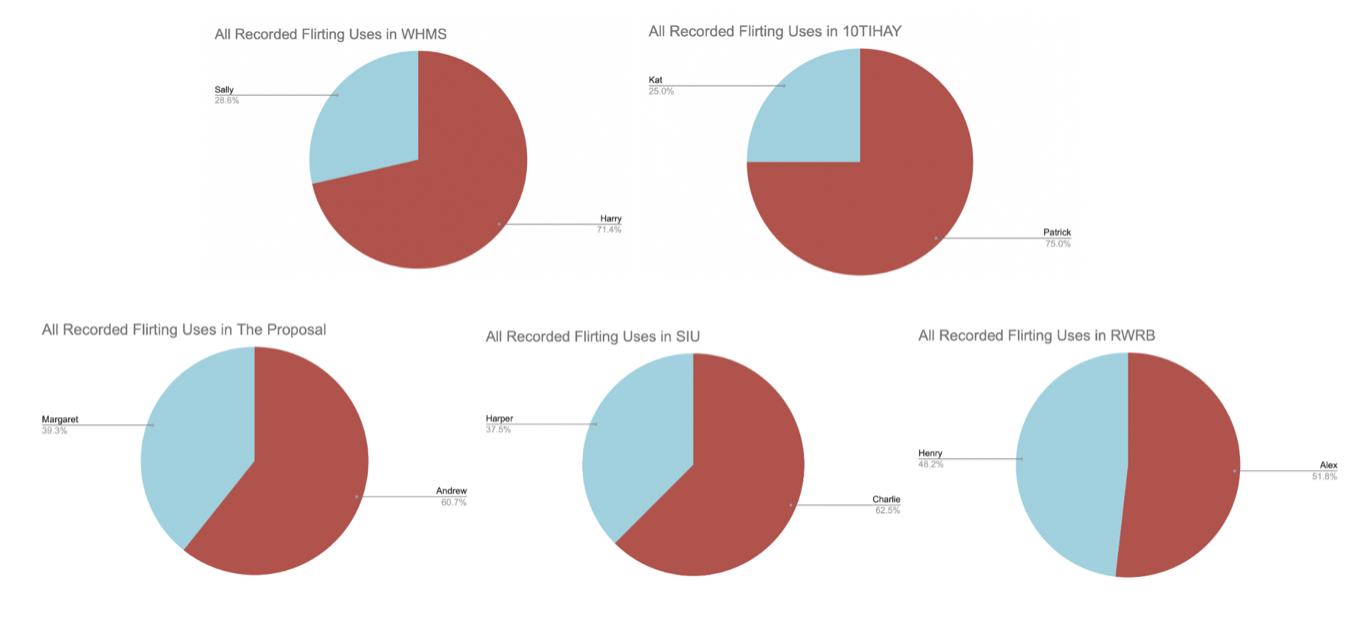
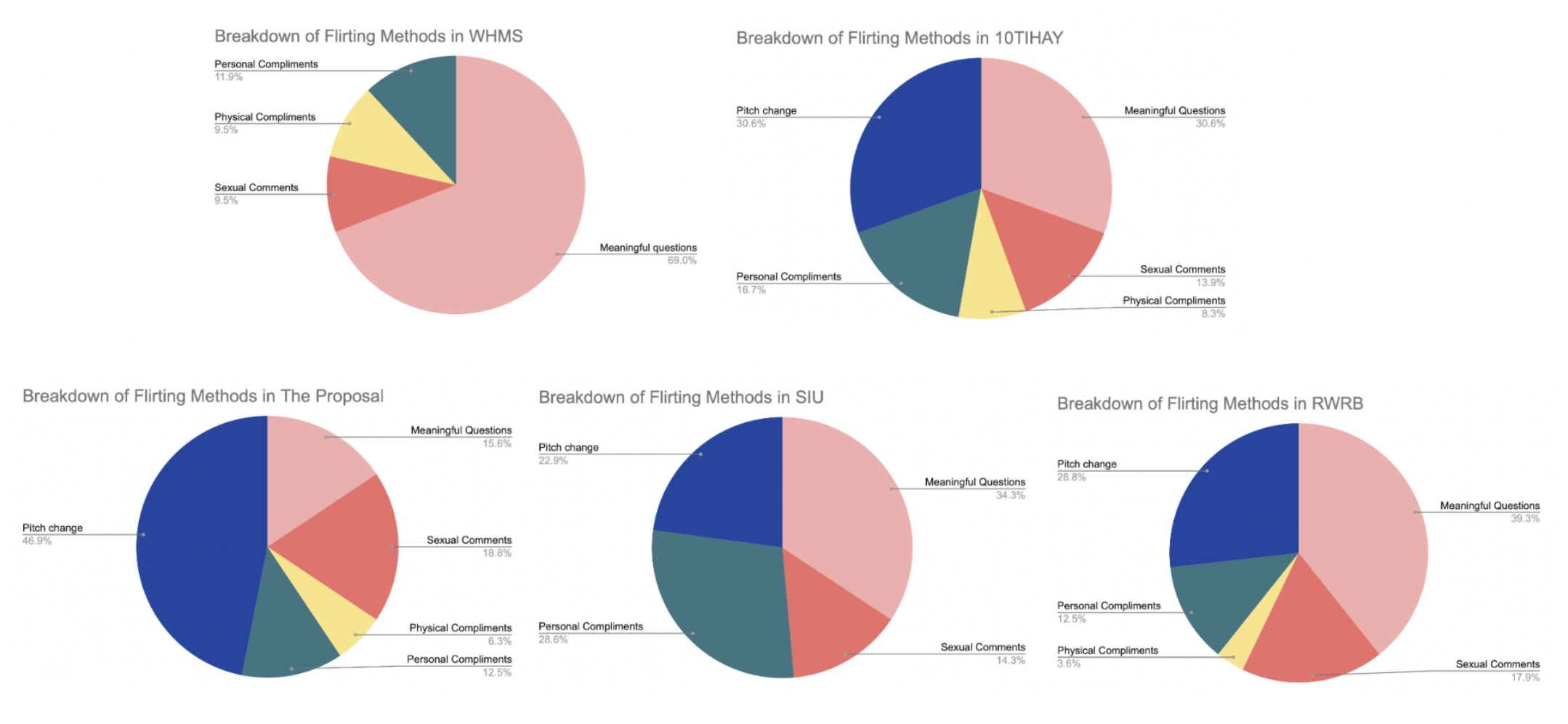
To visualize our results, we formulated our data into two types of pie charts, both in percentages. As can be seen in Figure 2, the first chart documented gender based distribution in flirting: how frequently each character utilized all flirting styles throughout the film. The second chart, Figure 3, depicted variable distribution, showing how regularly each of the four flirting techniques that we observed was used in each film.

Results and Analysis

The results of our study on the evolution of verbal flirting styles in romantic comedies from 1989 to 2023 reveal significant trends that reflect broader societal shifts. The total instances of verbal flirting varied significantly across the movies, with “Red, White, and Royal Blue” (2023) having the highest number of recorded instances (56), followed by “When Harry Met Sally” (1989) with 42.

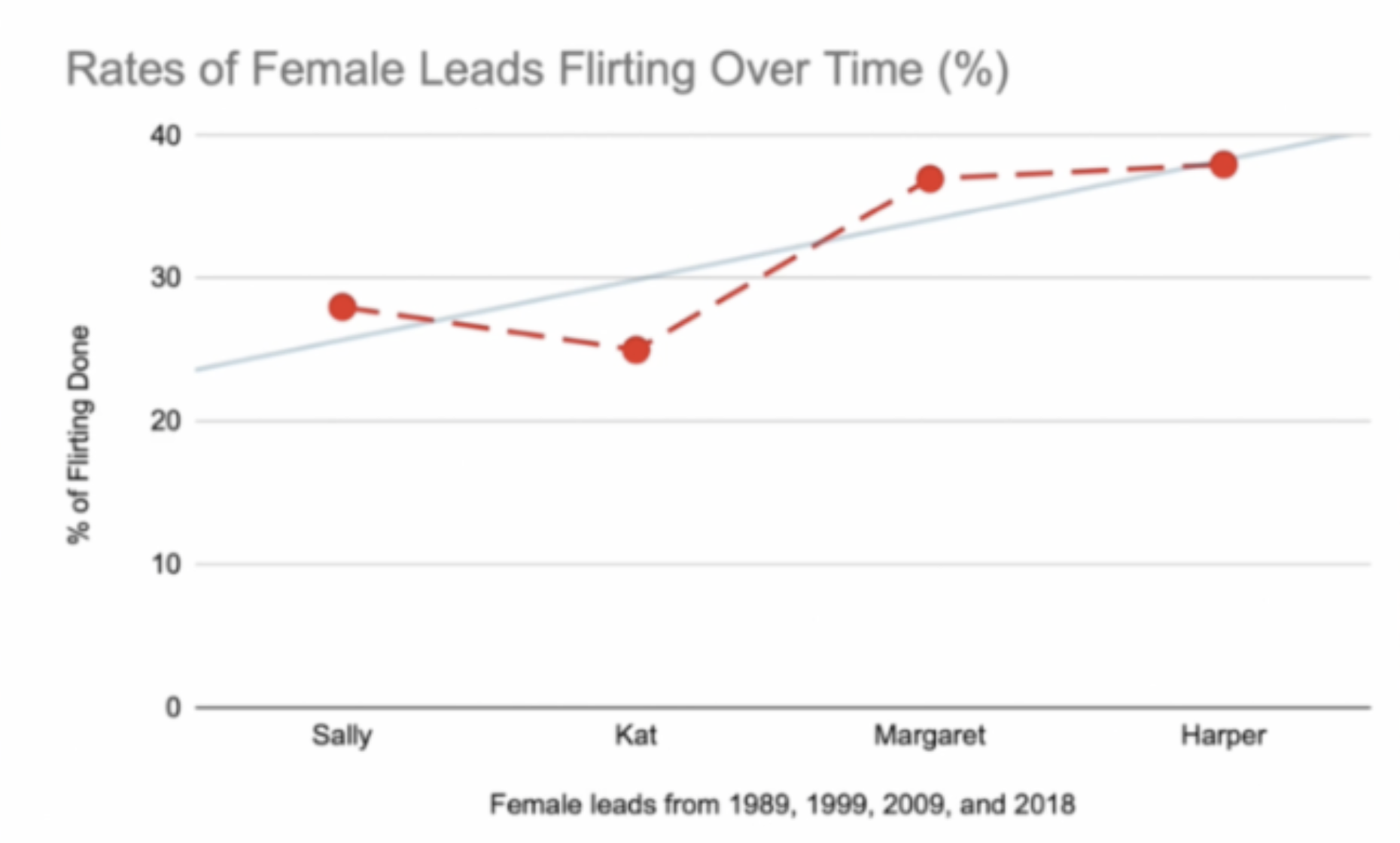
Figure 1: Rates of Female Leads Flirting Over Time

As can bee seen in Figure 2, Men consistently had higher instances of flirting than women in heterosexual relationships, indicating a persistent gender disparity. For example, Harry had 30 recorded instances compared to Sally’s 12, and Andrew had 17 instances versus Margaret’s 14. Although there was a slight increase in the ratio of women’s flirting over time, as can be seen in Figure 1, men still dominated the number of recorded instances. “Red, White, and Royal Blue” (2023) stands out as an exception, with a nearly equal distribution of flirting instances between the male leads, Alex and Henry, who had 29 and 27 instances, respectively.


Figure 2: Gender Based Distribution of Flirting


Figure 3: Variable Distribution of Flirting

Our study also revealed trends in the types of flirting used. As can be seen in both figures 2 and 3, meaningful questions (MQ) showed fluctuating popularity, with men generally asking more questions than women. Harry asked the most questions (18), while Andrew asked the fewest (1). Among women, Sally stood out with 11 MQs, the highest recorded for female characters. The use of sexual comments increased over time, becoming more prevalent in films like “The Proposal” andRed, White, and Royal Blue.” Physical compliments saw a decline, with women rarely complimenting men’s appearances. Sally was the only woman who did so, once, while men also showed a decreasing trend. Conversely, personal compliments became more popular, with “Set It Up” having the highest number of personal compliments among the movies analyzed. The use of pitch changes as a flirting method varied, showing no clear trend over the years.

A closer examination of the data reveals some nuanced patterns. For instance, in “10 Things I Hate About You” (1999), Patrick had 27 total recorded instances of verbal flirting, while Kat had 9. Patrick’s flirting included a mix of MQs, sexual comments, physical and personal compliments, and pitch changes. Kat’s flirting style included MQs and pitch changes, with no recorded sexual comments or physical compliments. In “The Proposal,” Andrew had 17 instances of verbal flirting, with a significant use of sexual comments and pitch changes, while Margaret had 14 instances, using more MQs and pitch changes.

In “Set It Up” (2018), Charlie had 23 recorded instances of verbal flirting, using MQs, sexual comments, and a significant number of personal compliments. Harper had 12 instances, also using MQs and pitch changes, with a balanced mix of flirting styles. “Red, White, and Royal Blue” showed a unique pattern with Alex and Henry almost equally splitting their flirting instances. Both characters used MQs, sexual comments, physical and personal compliments, and pitch changes, reflecting a more balanced and modern portrayal of romantic interactions.

Overall, the study indicates a shift towards more balanced and diverse representations of flirting styles in romantic comedies. While traditional gender roles are still evident, the increasing representation of women engaging in flirting and the balanced portrayal in “Red, White, and Royal Blue” suggest a trend towards more equal interactions. The rise in sexual comments and personal compliments points to a trend towards more open communication in romantic relationships. These results largely reflect the shift in societal gender norms, which have, in recent years, changed to emphasize female empowerment and gender equality. Our results also reflect the ways in which modern day society has become more accepting of previously frowned upon topics, such as homosexuality and sexual intercourse.

Discussion and Conclusion

Our research delves into the evolution of verbal flirting styles in romantic comedies from 1989-2023, revealing significant trends and changes that reflect broader societal shifts. Understanding these changes is crucial because media representations influence real-life perceptions and behaviors. Relationships are fundamental to our lives— they shape our experiences, influence our well-being, and give us a sense of connection and belonging. As media consumers, it is essential to be vigilant about the content we consume and the messages they convey. By critically engaging with media, we can protect our relationships from being impacted by unrealistic or harmful portrayals.

Additionally, these findings can benefit various groups. In the entertainment industry, writers, directors, and producers can use our insights to create more authentic romantic interactions that resonate with modern audiences. By understanding these evolving trends, they can develop characters and storylines that better reflect contemporary relationships. To improve communication and foster healthier romantic interactions, media professionals should strive for authenticity and diversity in portraying relationships— avoid falling back on outdated gender stereotypes and instead, reflect on the complex, evolving nature of modern romance. Educators in gender studies, communication, and media studies can build on our research to explore further how media influences societal perceptions of gender roles and relationships. They should integrate discussions of media representation into curricula on gender and communication, using film examples to illustrate the impact of societal changes on interpersonal dynamics. Our findings provide a foundation for examining the interplay between media representation and real-life communication styles. Individuals can benefit from this research by reflecting on their own communication styles and the societal norms they perpetuate. Increased awareness can foster more inclusive and egalitarian interactions in personal relationships. Additionally, recognizing and challenging the stereotypes depicted in films can help audiences consider how stereotypes might influence their own perceptions and behaviors in relationships.

By leveraging these insights, we hope to contribute to a more nuanced understanding of romantic communication and support the ongoing evolution towards more inclusive and representative portrayals of relationships in media. This not only enriches the storytelling in romantic comedies, but also promotes healthier perceptions of romance and interpersonal relationships in real life.

References

Apostolou, M., & Christoforou, C. (2020). The art of flirting: What are the traits that make it effective?. Personality and Individual Differences, 158, 109866. https://doi.org/10.1016/j.paid.2020.109866

Cabrera, L. (2022). Quantitative and qualitative analysis of politeness and gender effects in romantic comedies [Doctoral dissertation, Trinity College Dublin]. Trinity’s Acess to Research Archive, Centre for Language and Communication Studies (Theses and Dissertations).

Clark, J., Oswald, F., & Pedersen, C. L. (2021). Flirting with gender: The complexity of gender in flirting behavior. Sexuality & Culture, 25(5), 1690-1706. https://doi.org/10.1007/s12119-021-09843-8

Hall, J.A., Xing, C. (2014). The verbal and nonverbal correlates of the five flirting styles. Journal of Nonverbal Behavior, 39(1), 41–68. https://doi.org/10.1007/s10919-014-0199-8

Wyss, Eva. (2008). From the bridal letter to online flirting: Changes in text type from the nineteenth century to the internet era. Journal of Historical Pragmatics, 9(2), 225-254. https://doi.org/10.1075/jhp.9.1.04wys.

, , ,

Assessing Gender Bias in Praise Language on UCLA BruinWalk

Lane Dreslin, Alison Johnson, Kyra Magda, Emily Posner, Eliana Shyley Simhai 

UCLA’s student review website, BruinWalk, has approximately 18,800 users and 85,000-course reviews (Danesh & Danesh, 2021). Student evaluations are a pivotal research for several students, however, a 2021 study found that “student evaluations of teaching seem to measure conformity with gendered expectations, rather than teaching quality…” (Adams et al., 2021). In American culture, gender expectations for men include strength, assertiveness, & drive, while gender expectations for women include niceness, sociability, & interpersonal sensitivity (Prentice & Carranza, 2002). Instructors seem to receive praise for conforming to gender expectations – women as nurturers and men as leaders in the classroom (Adams et al., 2022). Similarly, a 2023 study on gender bias in student evaluations found that the most common praise terms used for female professors revolved around kindness and support, while males were most frequently praised for intelligence and knowledge (Zheng et al., 2023). Therefore, praise words may function as rewards for conforming to gender norms. Our research project focuses on UCLA BruinWalk reviews and the possible presence of gender bias in student word choice.

Read more

Introduction

As students navigate through the difficult times of college, having access to reviews on professors may put them at ease when selecting their classes. Students at the University of California, Los Angeles, can utilize a website called BruinWalk to review their professors. On the website, they can compare and contrast each professor that teaches a specific course. Students can give a rating based on five stars and share their opinion on a class they took in an optional text-based response column. Our background research suggests that students may share certain expectations and values on adherence to gender expectations and reflect this bias in their reviews. In our research, our goal was to determine if there is a pattern of gender bias in how professors are praised in reviews on BruinWalk. Additionally, we assessed whether there is a higher frequency of gender bias in praise toward female professors in STEM based classes versus those within the Social Sciences department. We decided to incorporate this question into our research because women are currently underrepresented in STEM fields (Nimmesgern, 2016). Additionally, a study of an American university found that when STEM classes moved from online to in person, female professors received lower student ratings (Babin and Hussey, 2023). The researchers attributed this to students’ increased ability to perceive gender expression in an in-person setting.

Methods

Our research question asks: “Do UCLA students assign different praise words to male and female professors?” We hypothesize that we will find a difference in praise that reflects gender bias in student reviews on BruinWalk. In other words, when it comes to male professors, we expect to see words that describe and allude to intelligence, demonstrating how men are often viewed as more knowledgeable in their field. However, when it comes to women, we anticipate words such as “nice” or “approachable” to be used, suggesting that women are valued more for their personality and embodying stereotypically “feminine” characteristics. We tested our hypothesis by analyzing the reviews of UCLA professors from Bruinwalk.  The two areas of focus were STEM related classes and the Social Science department. We selected three courses from each department and identified two male and two female professors from each of those courses. The selection of the courses was simply based on finding a course that had at least two male and female professors with a significant number of reviews, as it was somewhat difficult to find reviews of female professors in the STEM department. Our chosen courses from the social science department were COMM 1, PSYCH 10, and POL SCI 10. For STEM related classes, we selected ASTR 3, COMPTING 10A, and LIFESCI 30B.

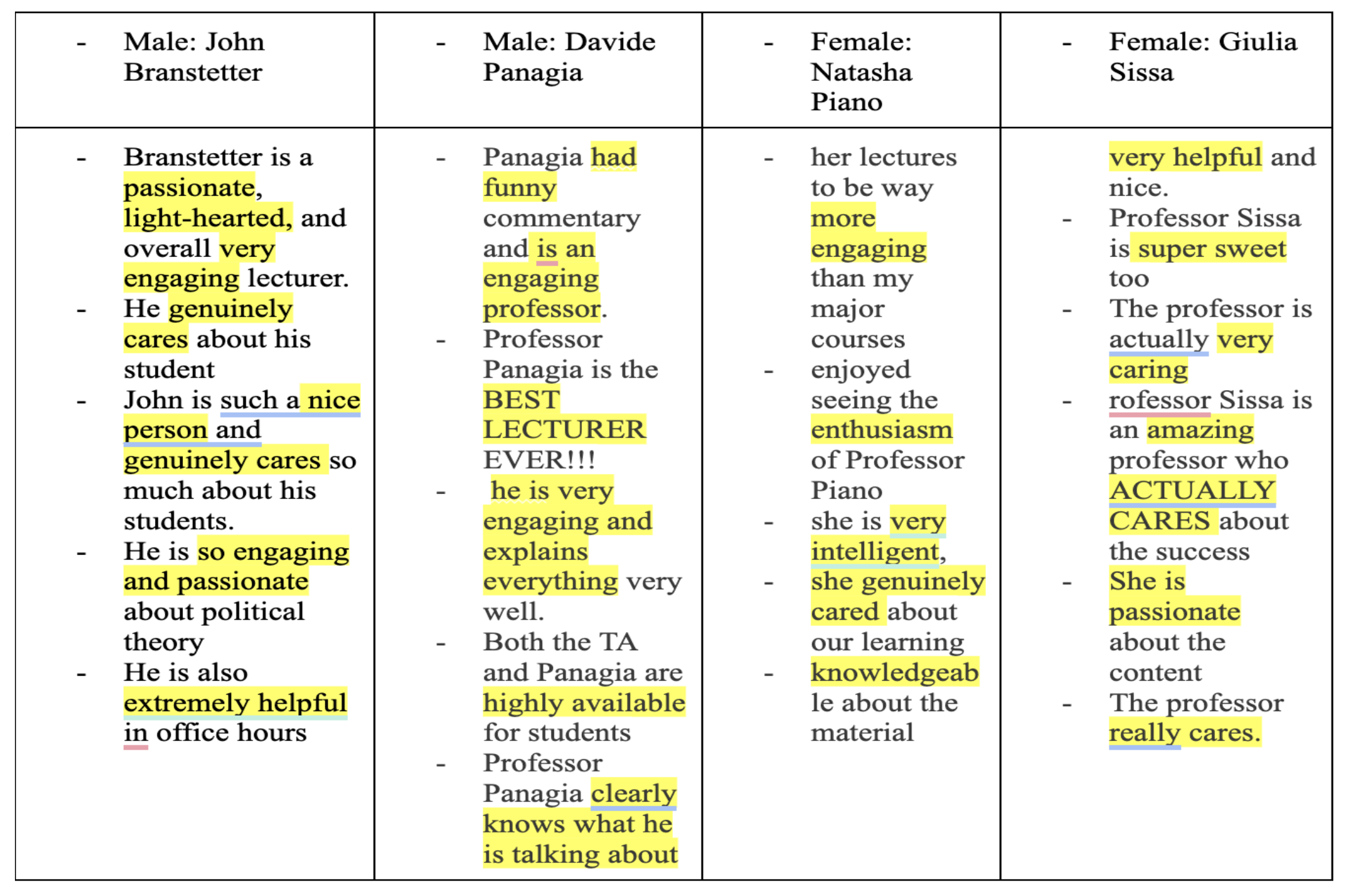
Figure 1: Columns of BruinWalk reviews of UCLA professors by gender, with praise words highlighted.

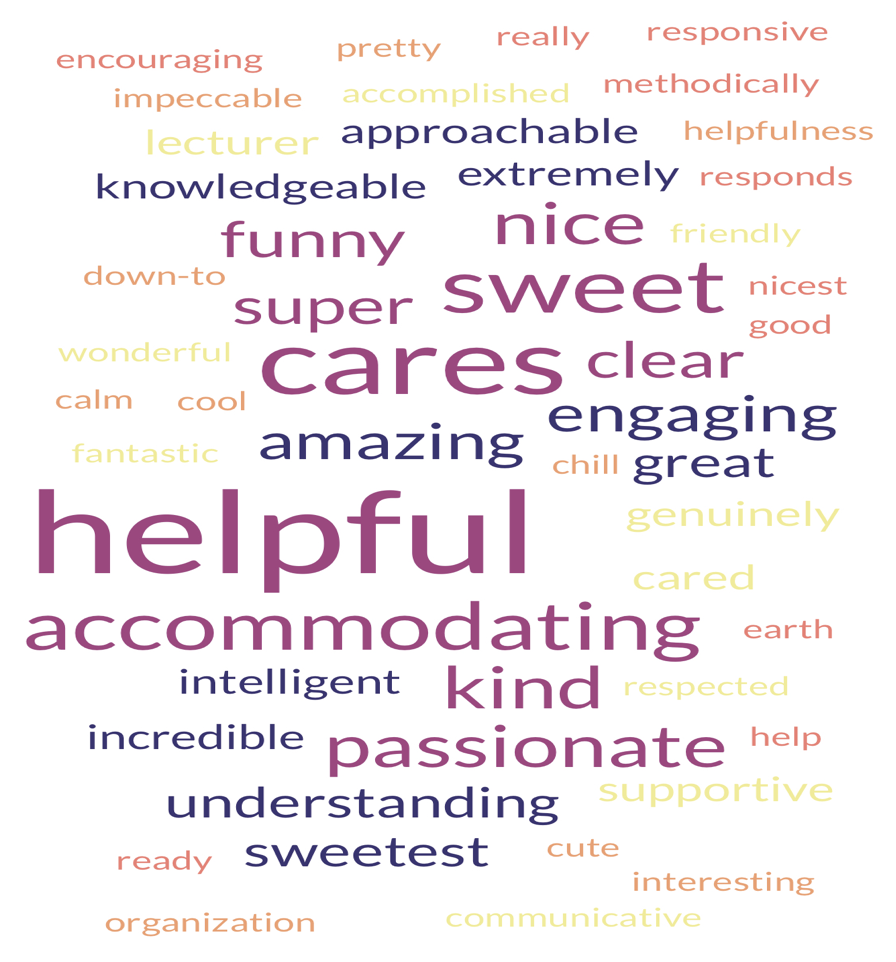
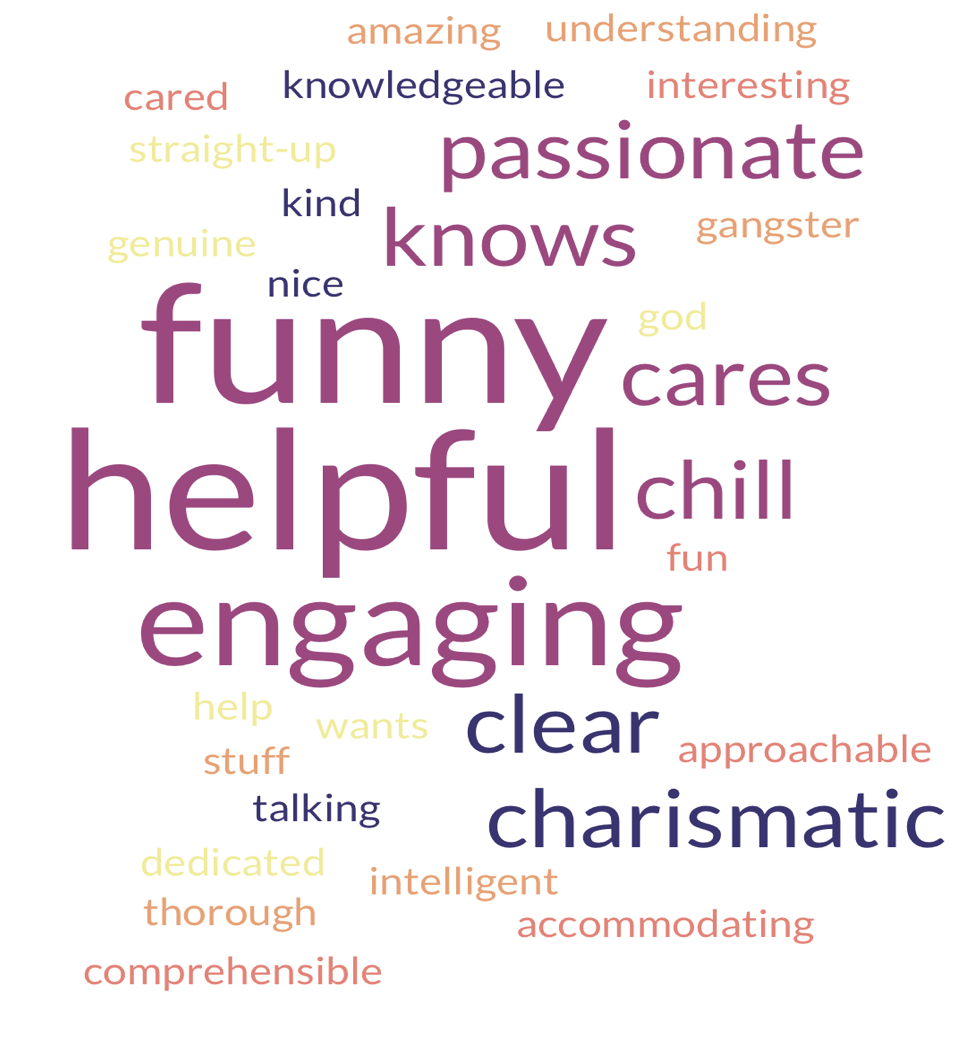
After finding classes with enough reviews, we sorted them by “most recent” and inputted praise terms from the five reviews that were most recent. For the purposes of our research, sentences with negation words were excluded from our data. After finding reviews that adhered to our guidelines, we copied and pasted them into a document and highlighted the specific praise words. We also ensured that our praise words reflected the quality of the professor as opposed to the course as a whole. Following our collection, we compared the praise words used to describe the male and female professors by counting them. Next, we determined students’ most common praise words and their frequency by inserting our data into the databasic.io website, which determined the most commonly used descriptors. Lastly, we inputted the data into the Free Word Cloud Generator website to create a word cloud that served as a visual aid to support our hypothesis.

Results

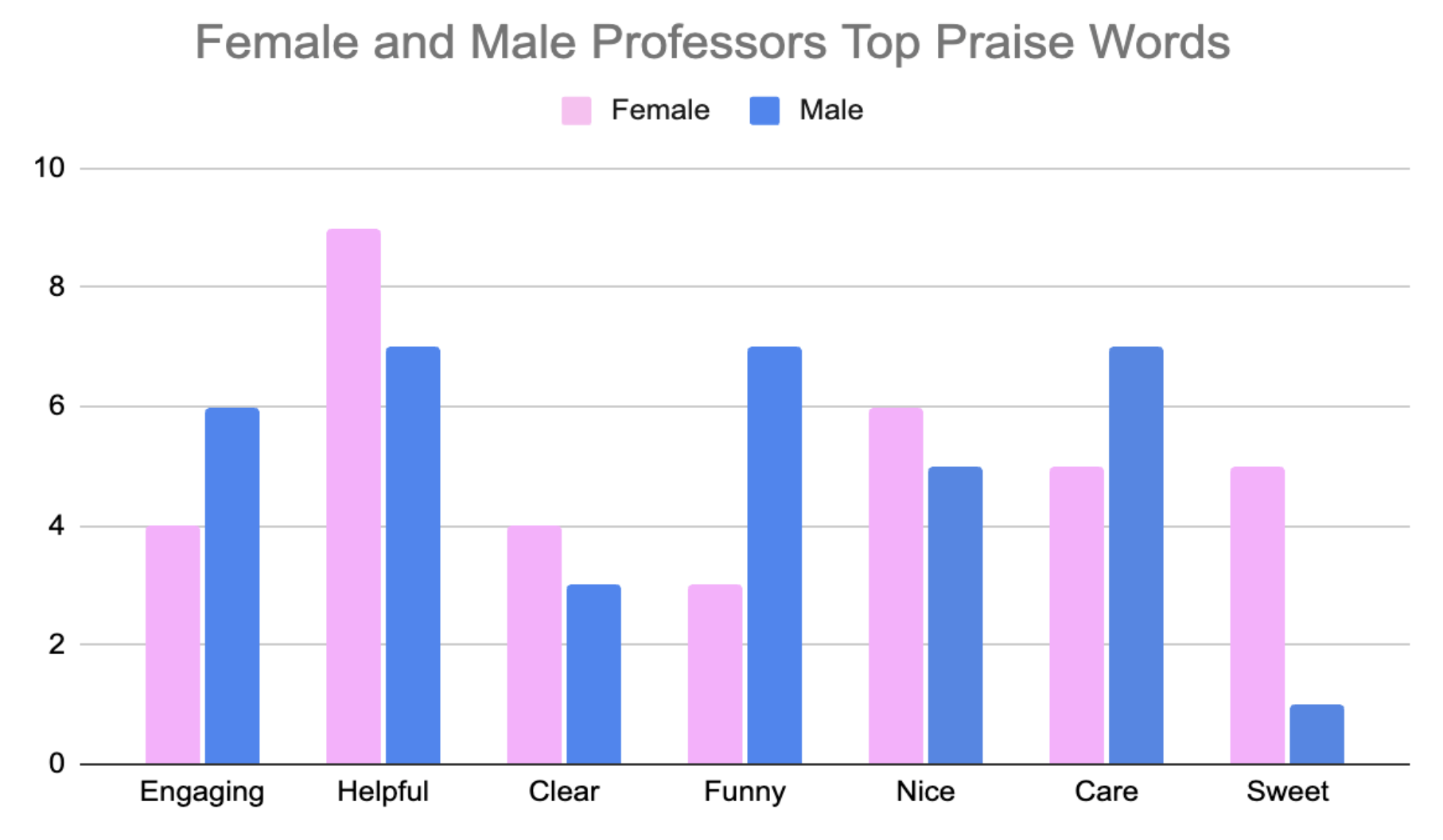
After conducting our research, we were able to determine the most frequent words used to describe female professors and male professors on BruinWalk.  The most common terms used to describe male professors overall were engaging (11.9%), helpful (10.6% ), funny (7.6%), and nice (7.6%). The most common terms used to describe female professors overall were helpful (12.3%), cares (7.5%), nice (6.6%), and sweet (6.6%).

Figure 2: Visual representation of the most common praise words used for UCLA professors on BruinWalk, by gender.

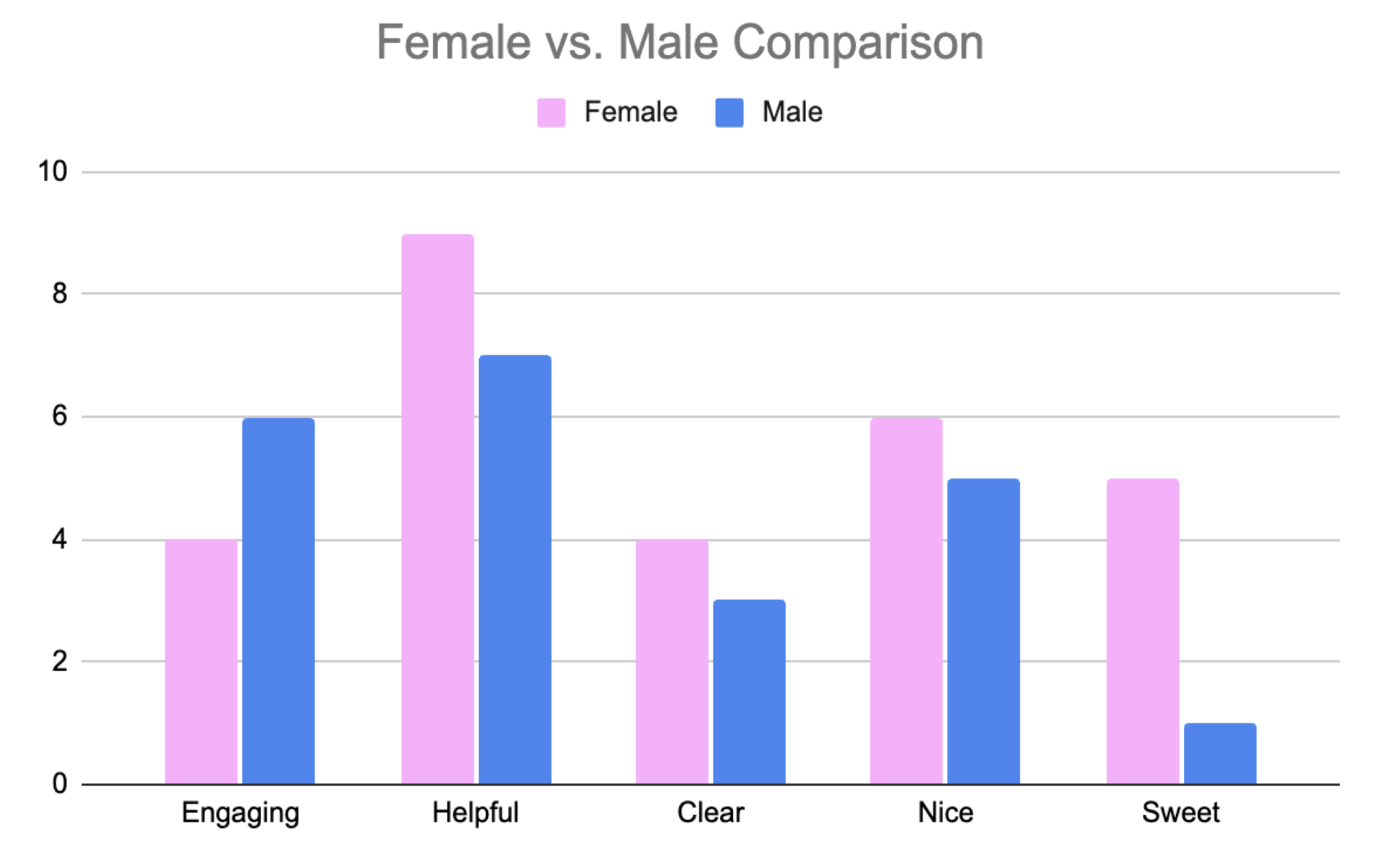
Both male and female professors were frequently praised for being helpful and nice, indicating a universal appreciation for these traits regardless of gender. However, female professors were far more likely to be described as “sweet” and valued for their “nurturing” qualities. On the other hand, male professors were more likely to be described as “funny” and valued for being engaging as an instructor. While the overall results indicated patterns of gender bias, No significant differences were observed between student evaluations in STEM classes and the Social Sciences. For female STEM professors, the most common terms used were clear (9.6%), cares (9.6%), and nice (7.7%). For female Social Science professors, the most common terms used were helpful (18.5%), clear (9.3%), and sweet (9.3%).

Figure 3: Frequency of praise words female professors received at higher counts than male professors

Figure 4: Female Professor Word Cloud

Figure 5: Male Professor Word Cloud

Analysis

The results of our data reveal identifiable patterns in how female and male professors are perceived by their students. There were notable differences in the descriptive terms used that reflect broader social stereotypes and gender expectations. The frequency of the terms “cares” and “sweet’ ‘ highlights the importance of emotional investment by female professors and the broader “nurturing” role. Furthermore, it aligns with traditional gender roles that expect women to exhibit nurturing and empathetic behaviors.

Conversely, male professors were more likely to be described as “funny” and “engaging.” In the male professors evaluations, 11.9 % used the word “engaging,” and 7.6% of evaluations used the word “funny.” These terms suggest that male professors are often perceived as bringing humor and more dynamic interaction into the classroom, highlighting societal expectations that men should be entertaining and charismatic.

Overall, it appears that the more male professors exhibit engaging and humorous behaviors, the more they are praised, and the more female professors exhibit nurturing characteristics, the more they are praised. Therefore, we could ask, “do violations of gender expectations earn less praise, and, therefore, lower instructor ratings?” For example, our results indicate that women are praised more than men for being sweet and supportive. No female professor was praised for being assertive, engaging, or humorous. Therefore, further research into what response these more masculine stereotypes receive when they are performed by women would be an intriguing study.

Interestingly, no significant differences were observed between student evaluations in STEM and social sciences, suggesting that the gendered perceptions of professors remain consistent across disciplines. However, a closer look at the data does reveal subtle distinctions. Results from female professor evaluations in STEM show that the descriptive term “clear” (9.6%)  is the most common, suggesting that clarity is particularly valued. This is likely because STEM fields contain complex material that requires clear communication and instruction. On the other hand, female professor evaluations in social sciences most commonly use the term “helpful” (18.6%). The higher frequency of “helpful” in Social Sciences might reflect the field’s emphasis on student support and guidance. Therefore, complying with gender expectations of clarity or supportiveness may earn professors more praise and possibly higher ratings in each field. Conversely, the difference could also indicate that performing both attributes in both STEM and non STEM fields could result in higher praise. Future research into how female professors are rated in STEM and non STEM areas of study could provide informative results.

Conclusion and discussion

The findings of our research show that gender expectations can influence the words students use when evaluating their professors. The larger phenomenon within the boundaries of gender communication shows how student perceptions of their professors can differ. A student reviewing a male professor may assess the quality of his instruction from the perspective of how he adhered to traditionally masculine stereotypes. On the other hand, a student reviewing a female professor may assess the quality of her teaching based on how she adhered to traditionally feminine expectations. Our results suggest a clear pattern in how students communicate about their professors of different genders. Conclusively, we have collected data that supports these claims concerning our original research question.

References

Adams, S., Bekker, S., Fan, Y., Gordon, T., Shepherd, L. J., Slavich, E., & Waters, D. (2021,    

March 16). Gender bias in student evaluations of teaching: “punish[ing] those who fail to do their gender right” – higher education. SpringerLink. https://link.springer.com/article/10.1007/s10734-021-00704-9

Babin, J. J., & Hussey, A. (2023). Gender penalties and solidarity — Teaching evaluation differentials in and out of STEM. Economics Letters, 226, 111083. https://doi.org/10.1016/j.econlet.2023.111083

Danesh, N., & Danesh, E. (2021, April 12). Behind the bruin: Taking an inside look at UCLA

review website Bruinwalk. Daily Bruin.

https://dailybruin.com/2021/04/12/behind-the-bruin-taking-an-inside-look-at-ucla-review-website-bruinwalk

Nimmesgern, H. (2016). Why are women underrepresented in STEM fields? Chemistry, 22(11), 3529–3530. https://doi.org/10.1002/chem.201600035

Prentice, D. A., & Carranza, E. (2002). What Women and Men Should Be, Shouldn’t be, are Allowed to be, and don’t Have to Be: The Contents of Prescriptive Gender Stereotypes. Psychology of Women Quarterly, 26(4), 269–281. https://doi.org/10.1111/1471-6402.t01-1-00066

Zheng, X., Vastrad, S., He, J., & Ni, C. (2023). Contextualizing gender disparities in online

teaching evaluations for professors. PloS One, 18(3), e0282704. https://doi.org/10.1371/journal.pone.0282704


Inebriated Communication: Determining Alcohol’s Effect on Young Adults’ Speech Patterns

Justine Jue, Myra Abdallah, Julia Gevorgian, Ryan Bowman

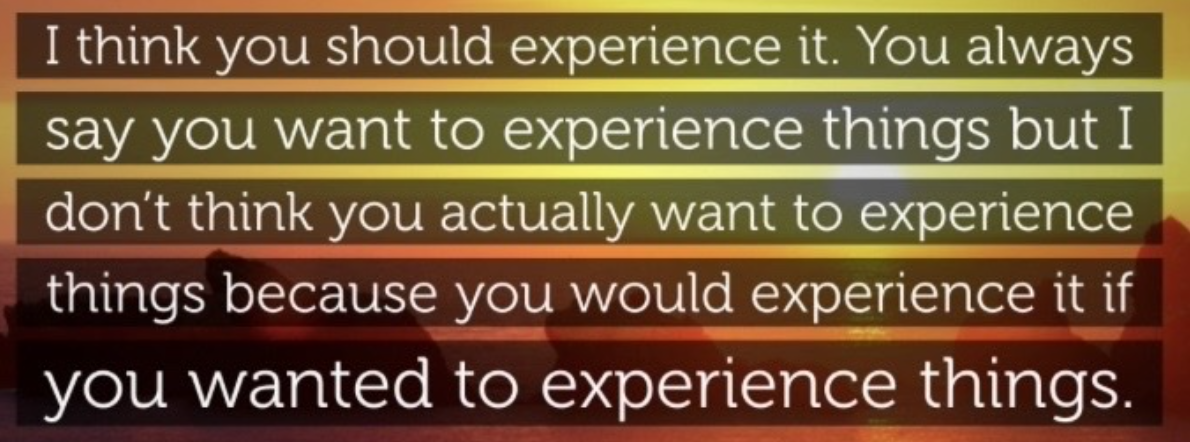
Alcohol consumption does not just affect the way you may act, but can also have a great effect on what you say as well. In this study, we determine how alcohol consumption affects the ways young adults communicate and articulate their speech. Our research focused on articulation, speed of speech, communication fluidity, changes in intonation, and creativity of responses. Given previous research that analyzes how alcohol can affect communication style and speech, we anticipated to find differences in the way individuals communicate when drunk versus when sober. Our research was focused on students attending UCLA ages 21-23 and looked at their speech patterns as they read a provided quote and analyzed their responses when asked to conduct an email when drunk versus sober. Our study provided interesting results following the interviews conducted with our willing participants showing that there is a noticeable difference in communication and speech style following intoxication.

Read more

Background

At the age of 21 years old, upon reaching the legal drinking age, young adults begin to indulge in drinking among peers, boosting their sociability. With social drinking being at an all-time high for individuals of this age group, differences can be examined in the way that people communicate when they are intoxicated versus when they are sober. Alcohol is known to have a considerable effect on cognitive ability and motor coordination, which in turn impairs speech production (Hollien et al., 2001). Research conducted on the impact of alcohol on first and second languages has indicated that inebriated individuals are likely to have slower speech and problems articulating their thoughts into words (Offrede et al., pg.683). Other studies have also demonstrated the ways in which alcohol consumption affects speech. In a study by Tisljár-Szabó et al., it was found that subjects made significantly more speech errors and took more pauses when speaking in an alcohol-influenced state (Tisljár-Szabó et al., 1989). Similarly, a study conducted by Martin and Pisoni found that alcohol consumption had considerably reduced subjects’ speaking rate as they prolonged vowels and consonants (Martin & Pisoni, 1989). In summary, research on this topic has generally concluded that intoxication causes articulation rate to decrease, pauses to increase, and more speech errors to be committed. In conducting our own research and collecting our data, we expected to find similar results consistent with previous studies. For our project, we hoped to explore the ways in which alcohol consumption might affect speech articulation and communication. 

Methods

To determine the effect of alcohol on speech, we each interviewed three of our friends, who are UCLA students ranging from the ages of 21-23. Our study was a within-subject experiment as we used the same subjects for the sober and drunk parts of our study to help ensure internal validity. In “Effects of alcohol on the acoustic-phonetic properties of speech: Perceptual and Acoustic Analyses. Alcoholism, Clinical and Experimental Research,they stated that having the participants experience every level of your study for this specific design will give you the most reliable results (Martin & Pisoni, 1989). To collect our data, we had our friends read a passage aloud and verbally pretend to write an email to a professor asking for an extension on an assignment while sober. With their permission, we audio-recorded them while they spoke so we could analyze their speech patterns. We listened and took notes of each participant’s audio recording, sober and drunk, and compared notes afterward. We wanted to see whether there were differences in the speed of their speech, the words they used, and how they pronounced their words sober versus drunk. We chose this way of interviewing our friends to answer our research question because, normally, one’s responses vary when they are drunk, so our two methods would exemplify what we were looking for. 

Results and Analysis 

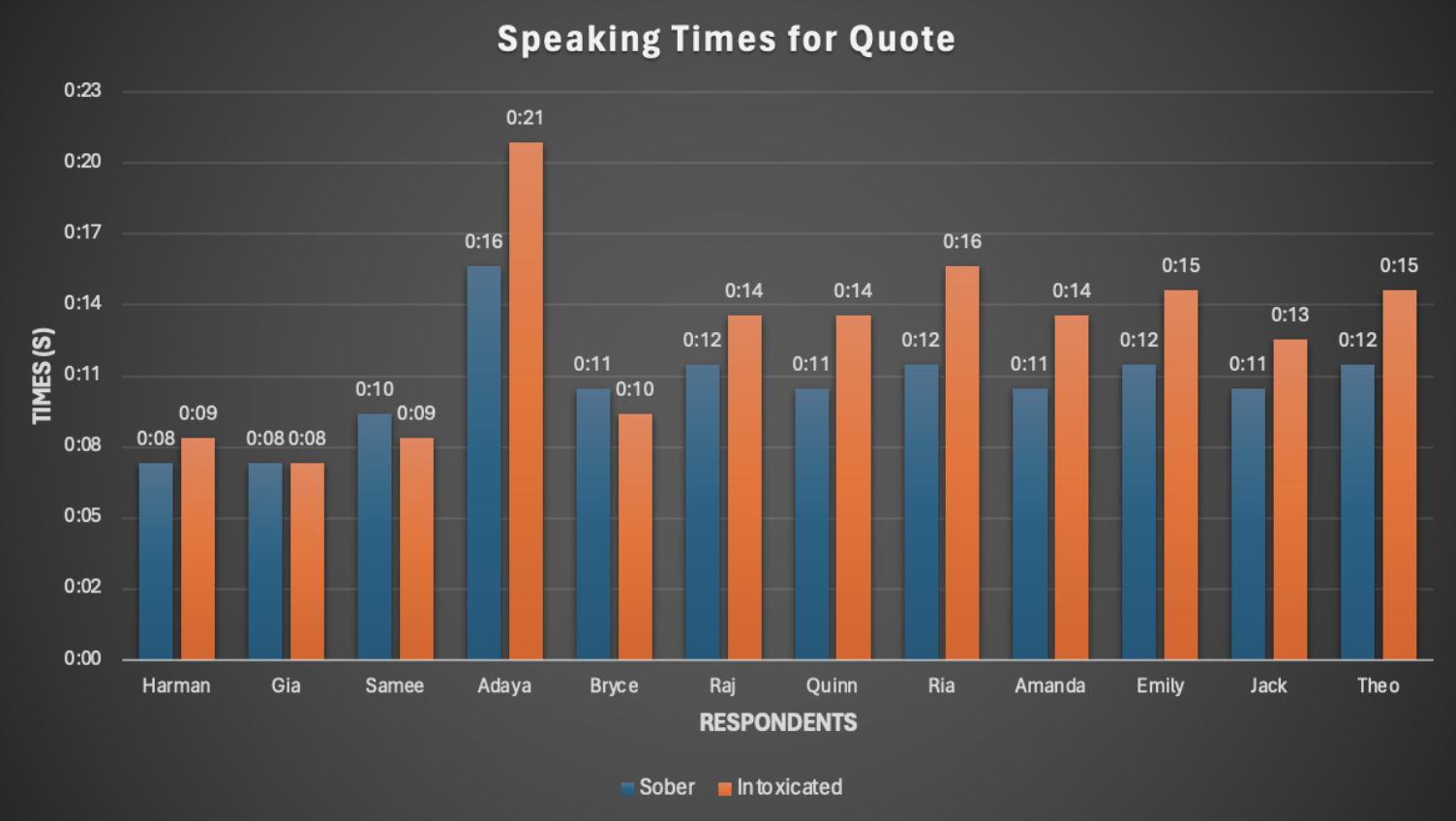
When collecting and analyzing our data, we found differences in the way that our participants read the provided quote in a sober state versus an intoxicated state. When intoxicated, 2 participants read the quote faster, 9 participants read the quote slower, and 1 participant read it at the same rate. Among most of our participants, alcohol consumption caused a decrease in articulation rate, which is consistent with the findings of previous studies.

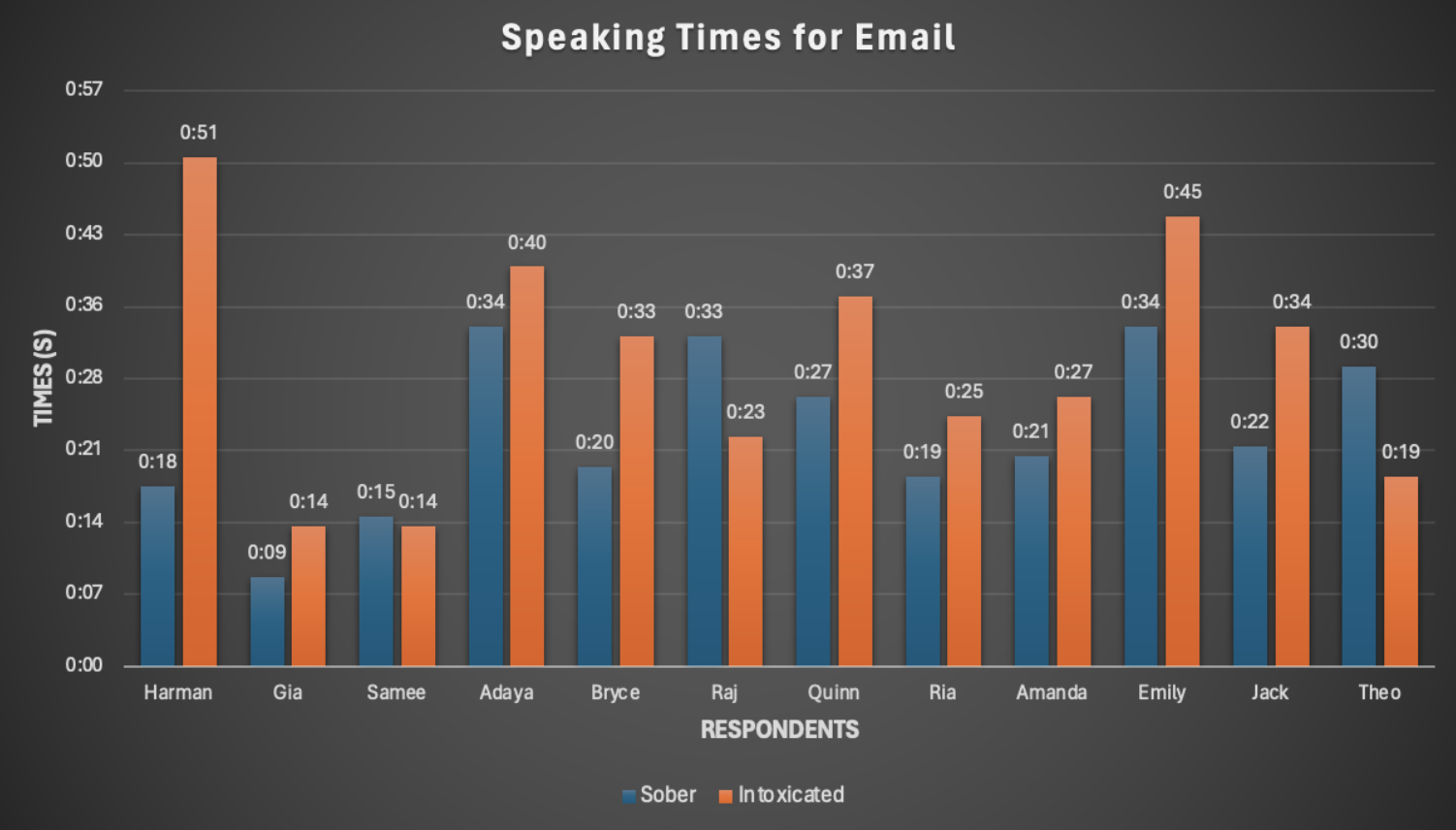
For the email portion of our study, we saw many of our participants show changes in their speech when they were sober versus drunk. Some of the main differences we viewed were the number of words they used and the creativity of their responses. For example, while recording the verbal email sober, one participant talked for 18 seconds about how they would ask for an extension. In their response, they were direct, concise, and used professional language. However, when they did this part again while intoxicated, they talked for 51 seconds. This same participant was also much more creative in their response while intoxicated and paused frequently. Additionally, each participant became much more casual with their speech, and many of them exemplified a great amount of laughter and enthusiasm in their responses when they were intoxicated. One of the last differences we saw while intoxicated was that participants started utilizing filler words such as “um” and “like,” which caused more pauses in their responses. Overall, there was a notable difference in our participants’ responses when drunk versus when sober, with our participants loosening their communication styles. 

Discussion and Conclusion

While conducting our research and looking at our results, we realized the limitations that occurred during our experiment. Although we found there to be differences in speech within each respondent from being sober and intoxicated, these differences varied as the level of intoxication was different for each respondent. This is because even when trying to control the amount of alcohol we gave each respondent, the variation in height and weight of each of the respondents affected how intoxicated each individual got. Another possible limitation was that the respondents had knowledge that they were being studied, which may have resulted in them trying to control their responses more and concentrating more on the words and phrases they were saying. This could also result in them exaggerating certain things when speaking to make it seem like they were either more intoxicated or sober than they actually were. Finally, even though our results show that alcohol is able to cause differences in speech, our study only focused on young adults as respondents. As a result, the research that we did may not be an accurate representation of the effects alcohol has on speech for the general public, as there may be variations with age that could occur. 

With the consumption of alcohol, we found that our participants’ tone, speed, words chosen, and focus were all affected for some more than others. For some individuals, these components varied, with some having no change, some having changes in some areas, and others having all these changes present in their interview. In “Alcohol’s Effect on Some Formal Aspects of Verbal Social Communication,” Smith et al. were interested in the variation that the dosage of alcohol provides for the level of inability to communicate in comparison to when sober (1975). Our research supported Smith et al.’s findings in that alcohol did have an effect on the way individuals communicate (1975). Their findings suggested that even in low doses of alcohol consumption, there were differences in the way that their participants communicated when drunk versus when sober. Our findings were similar in that when our participants consumed alcohol, there was a noticeable difference in communication. Individuals consuming alcohol are, therefore, likely to have an impact on the way they communicate, whether great or minimal. The way people articulate their sentences, their tone, the speed of their speech, their focus, and even the words chosen are all components that are likely to be affected by alcohol intoxication. 

References

Hollien, H., DeJong, G., Martin, C., Schwartz, R., & Liljegren, K. (2001). Effects of ethanol intoxication on speech suprasegmentals. The Journal of the Acoustical Society of America, 110(6), 3198–3206. DOI: 10.1121/1.1413751.

Martin, C. S., & Pisoni, D. B. (1989). Effects of alcohol on the acoustic-phonetic properties of speech: Perceptual and Acoustic Analyses. Alcoholism, Clinical and Experimental Research, 13(4), 577–587. DOI: 10.1111/j.1530-0277.1989.tb00381.x.

Offrede, T. F., Jacobi, J., Rebernik, T., de Jong, L., Keulen, S., Veenstra, P., Noiray, A., & Wieling, M. (2021). The impact of alcohol on L1 versus L2. Language and speech, 64(3), 681-692. DOI: 10.1177/0023830920953169.

Smith, R. C. (1975). Alcohol’s Effect on Some Formal Aspects of Verbal Social Communication. Archives of General Psychiatry., 32(11), 1394–1398.

DOI: 10.1001/archpsyc.1975.01760290062007.

Tisljár-Szabó, E., Rossu, R., Varga, V., & Pléh, C. (1989). The Effect of Alcohol on Speech Production. Journal of Psycholinguistic Research, 43(6), 737–748. DOI: 10.1007/s10936-013-9278-y.

Texting; Is it deeper than we think?

Jaslin Mostadim, Briyana Bekhrad, Sofia Peykar, Talia Behjou, Ashley Javaherian

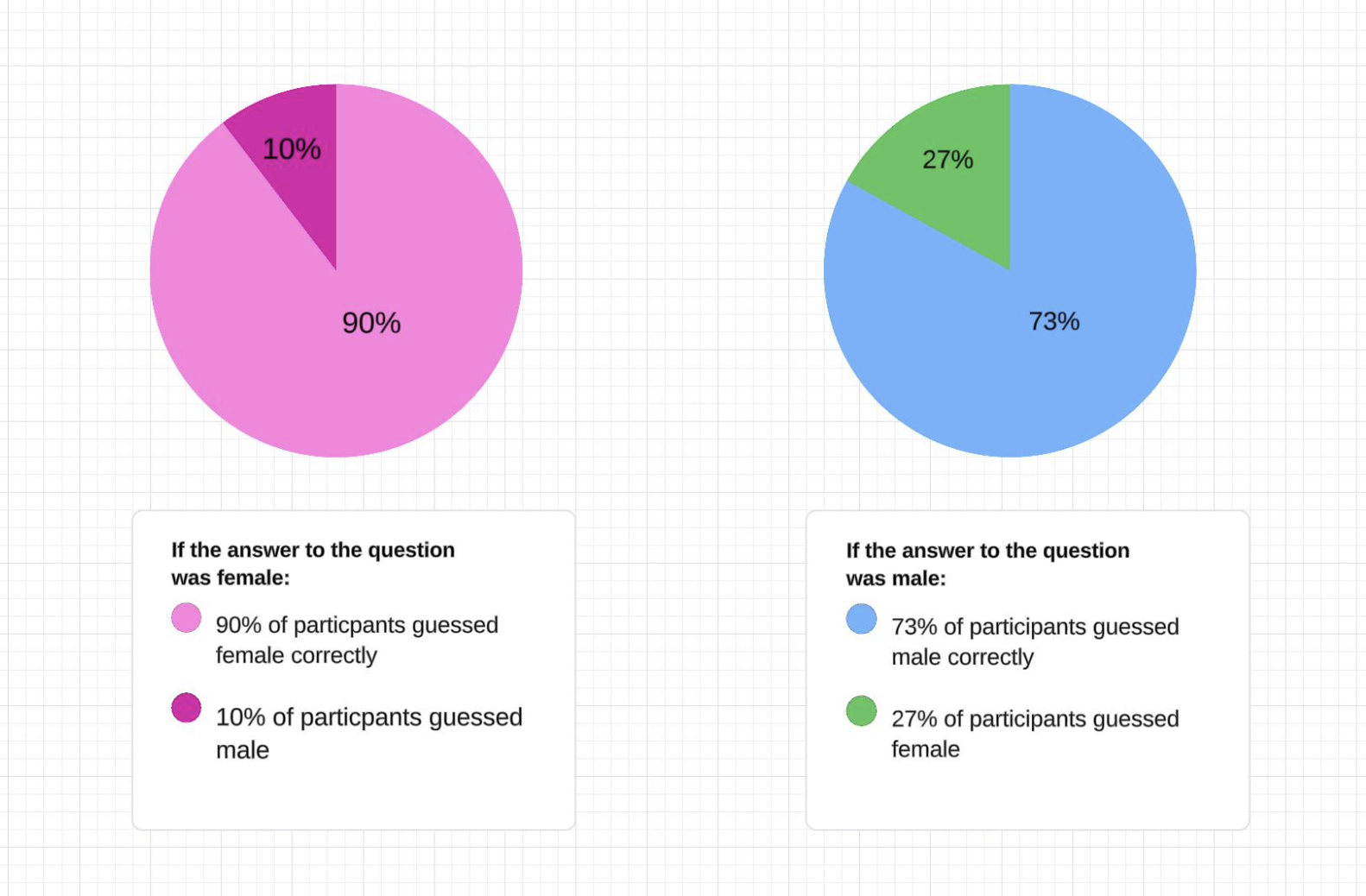
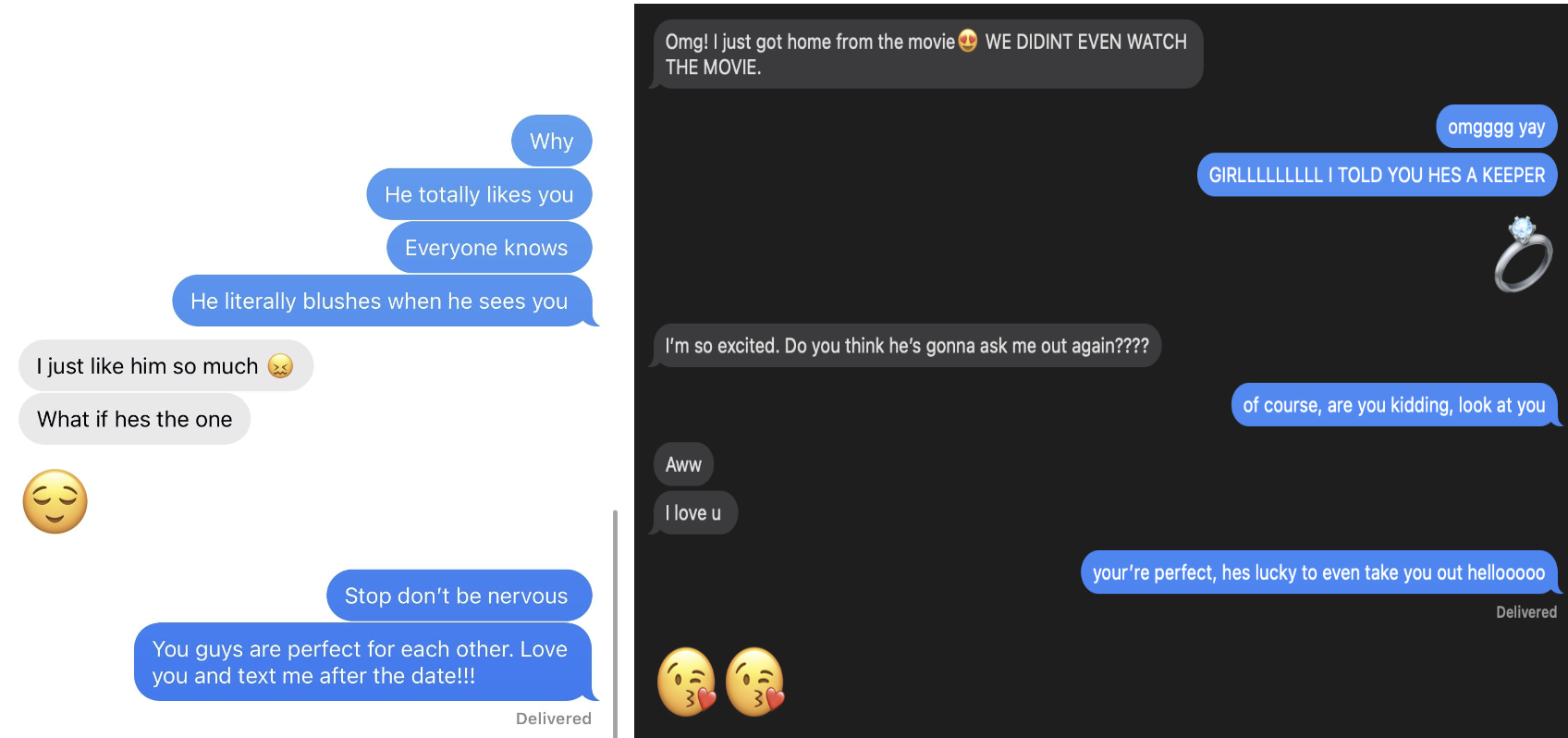
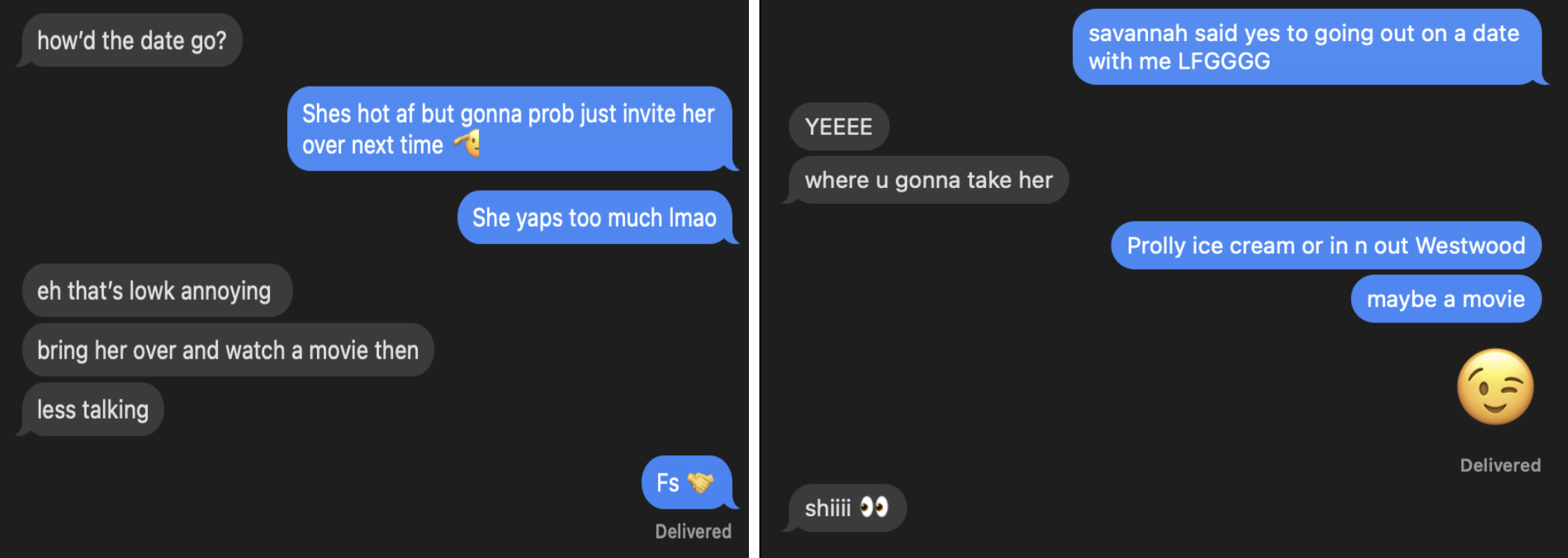
Imagine you just received this anonymous text, “Hiiii!!😊 ”, would you be able to guess the gender of this message? Well, what if we told you that although stereotypical, if you answered with “woman”, you would be correct. In a world that is majorly socially constructed, our research project attempts to examine the world of SMS communication and the gendered differences between males and females. To do so, our group conducted a two part survey consisting of 25 questions which enable us to decide whether or not communication via text message is gendered based on the following five factors: emoticon use, punctuation, abbreviations, tentativeness, and text length. Once data was collected, an analysis was performed which concluded that four of the five factors studied within our survey agreed with the societal expected norms for men and women when texting. The results indicate that women agreed with four of the five studied factors as they tend to use more emoticons, tentativeness, punctuation and longer texts when communicating in comparison to their male counterparts. As for the fifth factor, our study allows us to deduce that both men and women tend to use abbreviations in a similar fashion when texting. The conducted study found that 90%, were able to successfully answer females as the correct answer for the questions and 73% of participants were able to successfully answer males as the correct answer for some of the questions. This data supports that men and women have distinct communicative styles when texting as the majority of our participants were able to decide what gender that anonymous text was sent from. Our hypothesis was proven mostly correct in that socialized gender stereotypes affect the use of emoticons, punctuation, tentativeness and text lengths when texting.

Read more

Introduction and Background

There is no doubt that texting is one of the major means of communication, especially today. It allows us to communicate with who we please, when we please. But, our topic allows us to dive deep and determine whether there is a difference between male and female texting and if so, how the texting patterns differ. This was done through analyzing their uses of emoticons, punctuation, abbreviations, text length, and tentativeness. We already know that communication styles, more specifically while texting, can differ between other factors such as those in varying generations, but we are looking at exactly how these texting styles and mannerisms contrast between the female and male gender. We have identified a gap when it comes to understanding the miscommunication between males and females when texting, and have deduced that it is due to their opposing texting styles and strategies.

To mention, there are some pre-existing studies on some of our chosen texting patterns, such as Robin Lakoff’s Deficit Theory. Lakoff’s theory explores the idea that the use of tentativeness in communication is favored by women as they text with less certainty (Leaper et al, 2011). Similarly, another collective group of researchers have concluded that there are higher rates of tentative speech whilst texting in comparison to males (Ling et al, 2014). But, our research aims to conclude the genuine reasonings of these text choices and tactics between males and females through analyzing all five factors, and what it implies for the male and female gender categories. With our contribution, we will be able to find the source of this disconnect, understand the male and female texting patterns, and why such tactics exist. Our research is guided by the hypothesis that females and males text in accordance to gendered stereotypes with females using more emoticons, abbreviations, proper punctuation, longer texts, and more tentative messages than males.

Methods

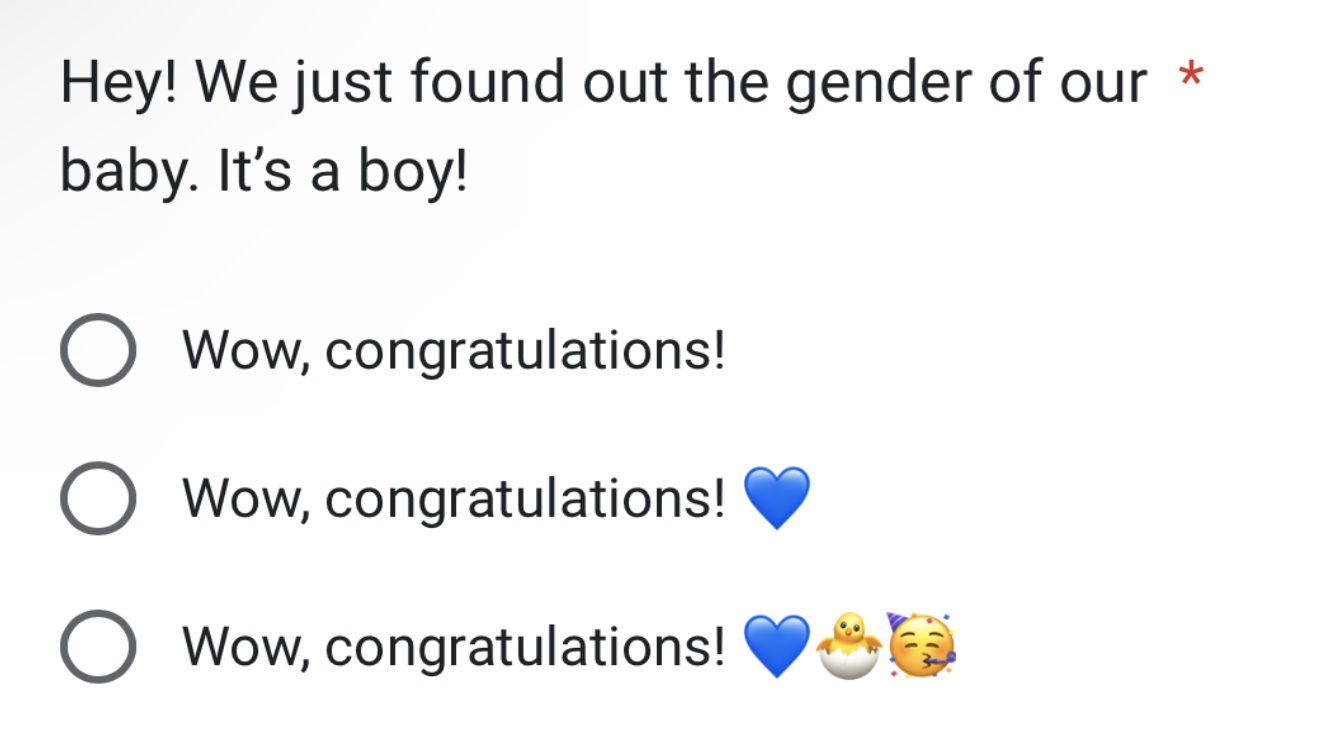
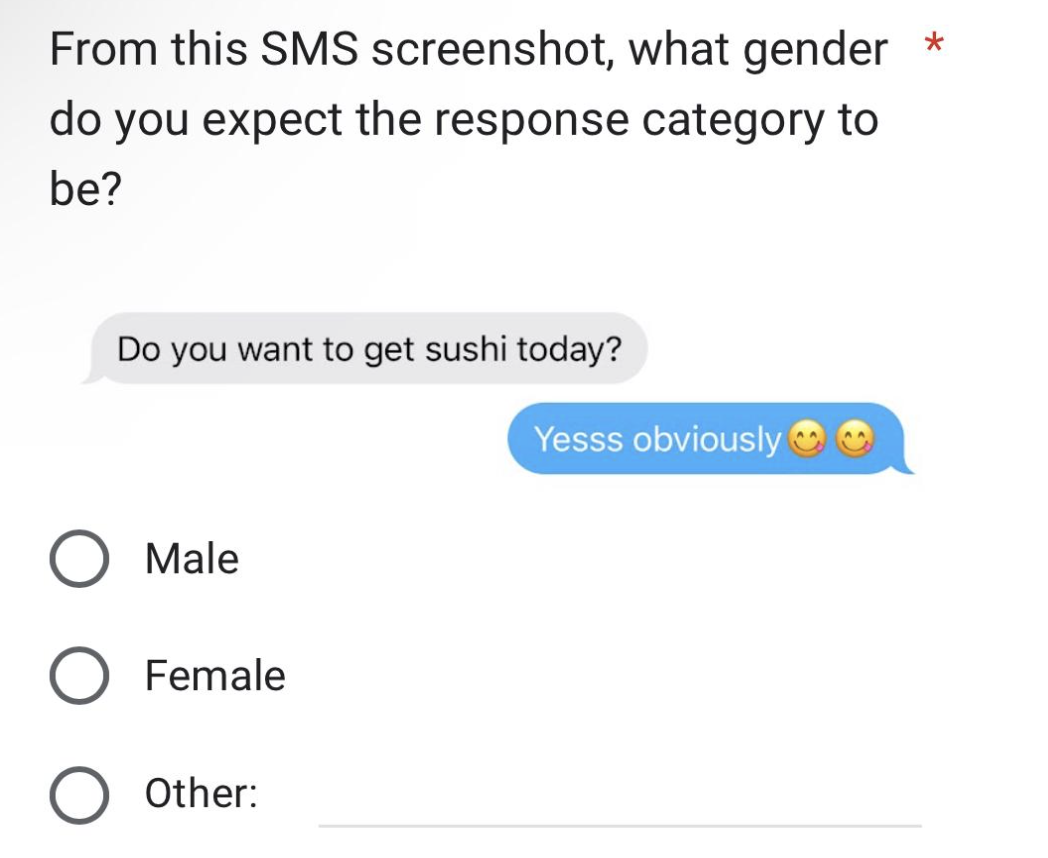
The target sample for our mixed methods approach includes 15 males and 15 females who are undergraduate students from UCLA, of ages 19-23, who regularly engage in text-based communication. The individuals partaking in the study are of homogeneous demographics and middle-class backgrounds. We will collect our data by administering a survey, which will contain two parts. The entirety of our survey will include 25 questions. The first part will include a message and three possible text replies with two questions regarding each of the five factors that we will study. When asked about the aspect we are observing, the response choices will range from least to most expressive. It is coded so that option 1 is hypothesized to be more popular with males while option 3 is coded to be more popular with females. An example of this can be seen in Figure 1. The second part of the survey displays a series of text message conversations that were sent in from our study pool and asks to identify if a male or female was responding. This approach will decipher whether and how SMS texting is gendered and its contributing patterns. This can be seen in Figure 2, which shows an example of a survey question.

Figure 1- An example question from the first part of the survey which is analyzing emoticon use by providing a test message and three response options.

Figure 2- An example question from the second part of the survey which asks whether they expect the response to be given by a male or female.

Results and Analysis

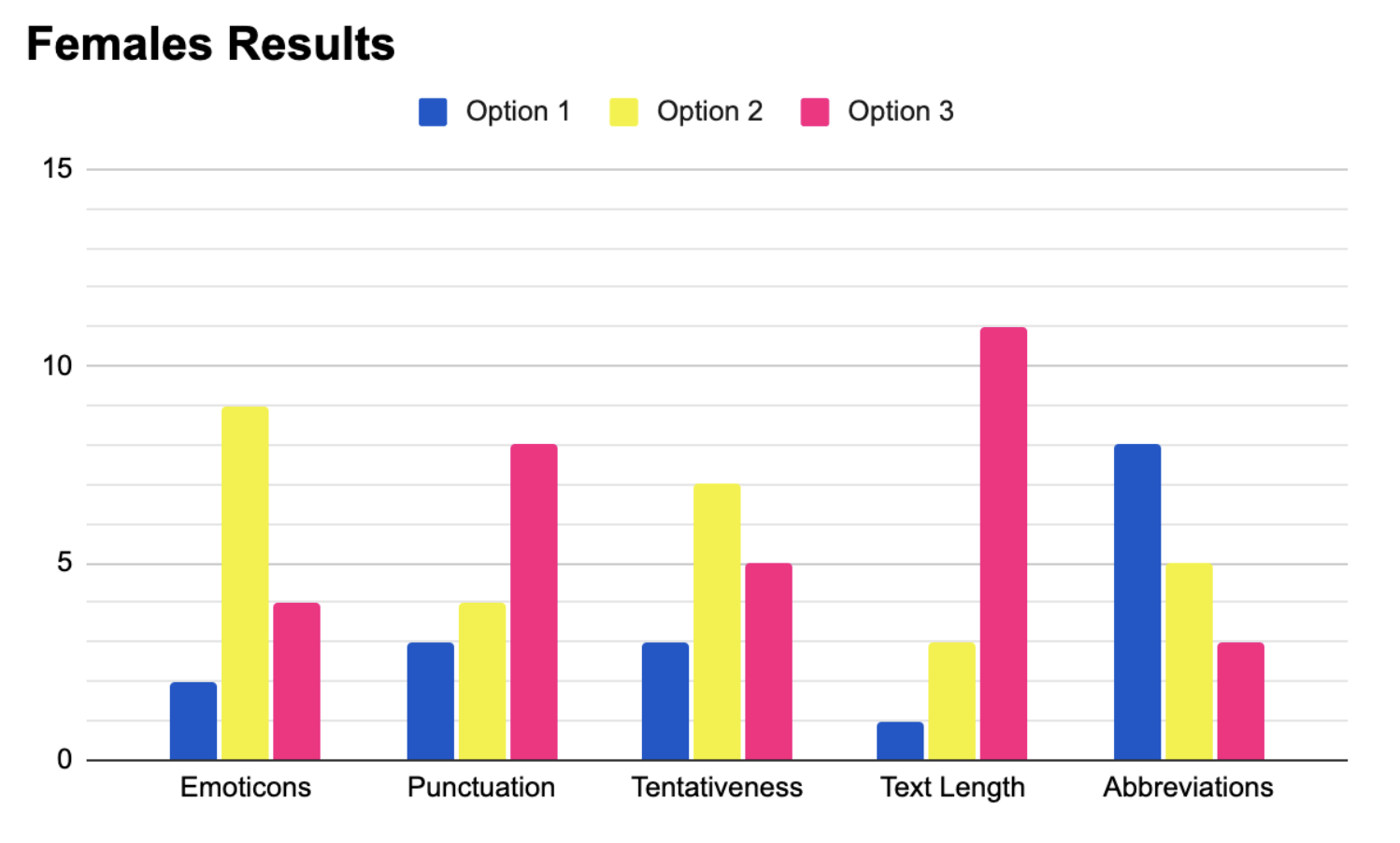
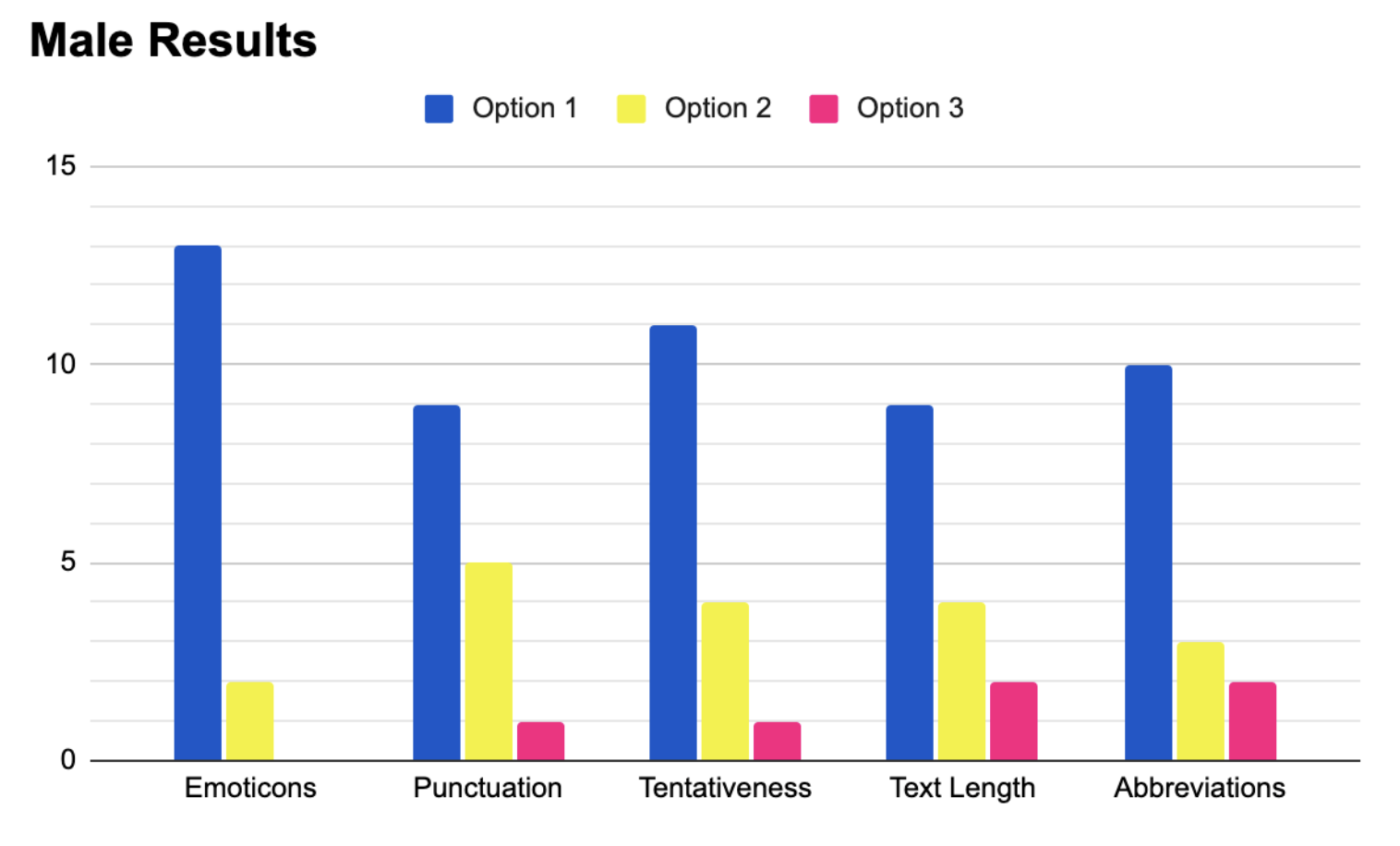
After analyzing our survey results, we found that our research supports the majority of our hypothesis of how texting communication patterns differ between men and females. By analyzing text messages and our conducted survey, it can be inferred that women tend to use more emoticons, punctuation, tentativeness, and longer text messages in comparison to their male counterparts. Although the other factors of our hypothesis were proven correct, we found that abbreviation usage is similar between males and females. These factors were not consistent with 100% of our respondents, but we were able to deduce that four out of the five analyzed factors agree with our hypothesis. As shown in Figure 3, 11/15 females chose option 3 for text length, while only 2/15 males chose option 3. Additionally, 60% of the males choose option 1, which proves our hypothesis in regards to text length. For punctuation, 8/15 females picked option 3, while just 1/15 males chose option 3. Instead the more popular option chosen by the males was option 1, which is shown in Figure 4. For all of the five factors, more than half of the males picked option 1 as their response to the survey questions, while the majority of females tended to pick either option 2 or 3. Also, our research proved that females were more likely to choose option 1 which was coded for males, in comparison to males choosing option 3 which was coded towards females.

Figure 3- Collected data from female participants from our survey regarding the five main factors studied. (First part of the survey)

Figure 4- Collected data from male participants from our survey regarding the five main factors studied. (First part of the survey).

The second part of our survey offered screenshots of text messages where the respondent decides whether they expect the text message to be sent from a female or male. Shown in Figure 5, our results gathered that 90%, or 27/30 participants, were able to successfully answer females as the correct answer for the questions, whereas 10% guessed incorrectly. We also gathered that 73%, 22/30 participants, were able to successfully answer males as the correct answer for some of the questions, whereas 27% guessed incorrectly. These results prove to us that males are less likely to text like females, because more participants were able to correctly answer the questions where the answer was “females.” This demonstrates the clear differences in texting styles between females and males, as most participants immediately identified the responses to some of these questions as female.

Figure 5- Results to the second part of our survey regarding the percentage of participants who answered the questions correctly relating to females or males. (Second part of survey).

A blog post that cross references with our research data discusses the “do’s” and “don’ts” of texting a female. The author of the blog starts out with, “Hello Gentlemen,…” aiming towards men only. Through our own research, we found that women text longer messages, whereas men are vague and text short messages. The author prompts; “If a guy texts me ‘Hey’ and nothing else, how am I to respond? With another “Hey”? or “Hey, How are you?” But then, the guy is making ME do all the heavy lifting of asking how he is doing when he wasn’t courteous enough to inquire how I was doing” (Elenamusic, 2013).” Our study as well as current research indicates that in one way men expect a more detailed response from women. This relates back to our hypothesis that women tend to use longer, more expressive and more tentative texting styles than men, and one reason is because society has socialized this gendered texting style. The author’s example shows the ambiguity in interpreting a short message like “Hey” from a male, focusing on tentativeness in communication, as the recipient is unsure how to respond. This text conversation implies that men’s short messages can put all the pressure on women to try to carry the conversation. This proves to our research how women usually text longer messages rather than men, texting short and vague messages.

Discussion and Conclusion

We analyzed the texting behaviors of male and female undergraduate students uncovering differences in their communication styles. Our findings provide evidence that females often use more emoticons, proper punctuation, tentativeness, longer messages. This is supported by previous literature that suggests that females favor displaying expression through emoticon use (Ceccucci et al, 2013). Additionally, women were found to use more expressive punctuations, following the theme of expressive messages (Waseleski, 2017).

Aligning with previous studies, our results demonstrate that females consistently use more emoticons and longer texts while males use few to none emoticons and fewer words. Emoticons and text length serve as emotional cues, allowing females to emanate their emotions via text-communication. Females were also found to use proper punctuation and abbreviations in their messages to enhance clarity and efficiency in their messages. Lastly, females compose more tentative messages, characterized by the use of hedge words such as “maybe.” Hedge words and tentativeness display uncertainty which aligns with traditional gender norms of masculinity and femininity. Furthermore, females and males tend to display similar patterns when it comes to the use of abbreviations. Keong’s study agrees with our findings as it explains that males and females use abbreviations at similar rates (Keong et al, 2012).

Our study highlights the importance of understanding gendered differences in texting to improve communication. As online communication continues to grow, face to face conversations become less prevalent. Messages can easily be misconstrued over text. Raising awareness of gender differences can contribute to reducing misconceptions of messages, enhancing interpersonal interactions and communication efficiency. Future research should explore these texting behaviors considering additional factors such as cultural influences and personality traits. Broadening the scope of studies such as this can create a more comprehensive understanding of digital communication as it becomes a permanent aspect of our future.

References

Abdulrazaq, A. Gill, S. K., Noorezam, M., & Keong, Y.C., (2012). Gender Difference and Culture in English Short Message Service Language among Malay University Students. 3L: The Southeast Asian Journal of English Language Studies, 18(2), 67–74

Baron, N. S., Ling, R., Lenhart, A., & Campbell, S. W. (2014). “Girls Text Really Weird”: Gender, Texting and Identity Among Teens. Journal of Children and Media, 8(4), 423–439. https://doi.org/10.1080/17482798.2014.931290

Ceccucci, W., Peslak, A., Kruck, S.E., & Sendall, P.,. (2013). Does Gender Play a Role in Text Messaging? Issues in Information Systems, 14(2), 186–194. https://doi.org/10.48009/2_iis_2013_186-194

Leap, C., Robnett, R. D. (2011). Women Are More Likely Than Men to Use Tentative Language, Aren’t They? A Meta-Analysis Testing for Gender Differences and Moderators. Psychology of Women Quarterly, 35(1), 129–142. https://doi.org/10.1177/0361684310392728

Music, E. (2014). The Do’s and Don’ts of Texting a Girl. The Single Guys Guide to Dating. https://singleguysguidetodating.wordpress.com/2013/11/08/the-dos-and-donts-of-texting- a-girl/

Waseleski, C. (2006). Gender and the Use of Exclamation Points in Computer-Mediated Communication: An Analysis of Exclamations Posted to Two Electronic Discussion Lists. Journal of Computer-Mediated Communication, 11(4), 1012–1024. https://doi.org/10.1111/j.1083-6101.2006.00305.x

InterGen Connect: Bridging the Communication Gap Between Generations in the Workforce

Roksana Kohansedgh, Ryan Kolaini, Melissa Mehrabifar, Shawhin Sahabi

Working in a professional environment, online communication can be challenging, particularly across generations. After exploring Generation Z (1997-2012) and Baby Boomers (1946-1964), we hypothesized that they have undeniably different styles of communication that lead to misunderstandings and inefficiencies in the workforce. Baby Boomers typically prefer email communication and phone calls, while Generation Z highly prefers the use of informal, digital communication through social media and text message. Using our own methods, we analyzed this research by conducting a study at a law office, surveying 20 employees including both genders, aged 18-27 and 60-69. With the use of existing research, a background was introduced to gather data on why exactly these generations prefer a certain style of communication. Delving into the findings of our own research, the results were apparent: Boomers prefer formal language and traditional communication platforms, whereas Generation Z leans towards a relaxed approach, using slang and emojis. This generational difference showed the inefficiency in the ability to communicate effectively with one another in the discussion section. Finally, in order to bridge the gap, implications and cross generational training were introduced in the conclusion to facilitate knowledge in communicating effectively between the two cohorts.

Read more

Introduction

Bounded by the demands of the modern workforce, mutual respect and collaboration is formed through effective communication. The research delves into two distinct groups, 10 Baby Boomers (aged 60-69) and 10 Generation Z (aged 18-27), collaborating in a law office. By analyzing and conducting our own research on their communication styles and patterns, their differences in communication through lexicality and formality are unveiled, and uncovers the misunderstandings of how the two cohorts communicate, ultimately aiming to resolve misunderstandings. This research is driven by its research question: How do communication styles differ among the two generations in the workforce, and what influences these variations within the workforce? By analyzing existing research as well as our own research, we aim to uncover the reasons behind their differences in communicating, as well as propose. This will help create a more inclusive and effective workplace where everyone can communicate smoothly and understand each other better.

Background

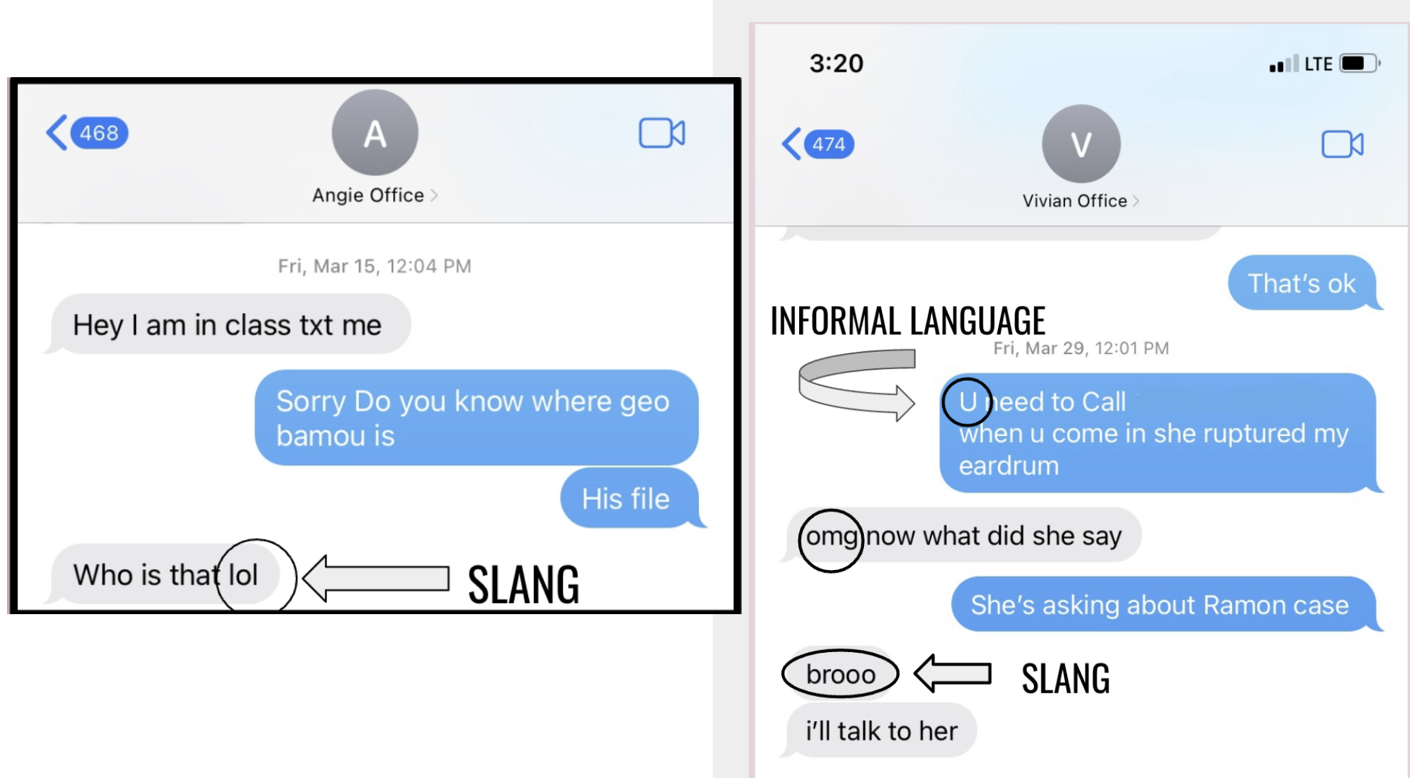
In society, Baby Boomers are known to have grown up in an era with limited technology, and therefore relying entirely on traditional communication methods. Viewing it as a sign of professionalism and authority, Baby Boomers value formality and directness when communicating. In an article by Jennifer (M.I) Loh, Jane Strachan and Raechel Johns, it is revealed that Baby Boomers preferred exemplifying a “professional” demeanor when communicating online in professional contexts. 80% of Baby Boomers revealed that they are more thorough with their grammar and overall language when texting their colleagues than when they text or email friends or family. (Loh, Strachan, & Johns p. 1522, 2021). This highlights their belief in holding a position of authority when in the workplace, unwilling to stray away from the traditional manner of communication. Conversely, the informality of communication that may seem unprofessional to the Baby Boomer generation, is seen as “direct” to Generation Z. Since Generation Z essentially grew up around the use of advanced technology, they are entirely comfortable with a plethora of online communication platforms, and prefer a more informal style of communication. In a study done by Bencsik Andrea, Horváth-Csikós Gabriella, and Juhász Tímea, the data depicted in a chart revealed that “The boundaries of work and entertainment overlap” (Bencsik, p. 95, 2016). The data is then further explained when it says that because they grow up around technology, Generation Z feels comfortable in a digital, less formal environment, permeating into their work lives. The abbreviations they use make for more of a direct and quick approach to communicating. (Bencsik, p. 93, 2016). The use of slang, like “lol” “and omg” are used in order to be more efficient and comfortable with their coworkers when communicating.

Methods

In order to effectively explore and investigate communicative differences between these two different generations, a mixed-methods study was conducted, analyzing both qualitative and quantitative data. In terms of qualitative data, we conducted a study with 20 employees from a law office, consisting of 10 Baby Boomers (aged 60-69) and 10 employees from Generation Z (aged 18-27) on a google form survey. Narrowing in our research, we examined each cohort’s communicative styles, online preferences for communication platforms, formality, and use of slang. The survey tested their comfortability with certain online communication platforms through close-ended questions, and asked open-ended questions on how they would personally respond to emails and text messages, monitoring their slang, formality, or lack thereof. Additionally, it is important to note that, to avoid bias, we collected data on age and gender at the end of the survey.

Results and Analysis

In terms of the analysis and results of the data, it revealed a significant difference in generational communication style, contributing to the various difficulties communicating across generations.

QUALITATIVE INSIGHTS:

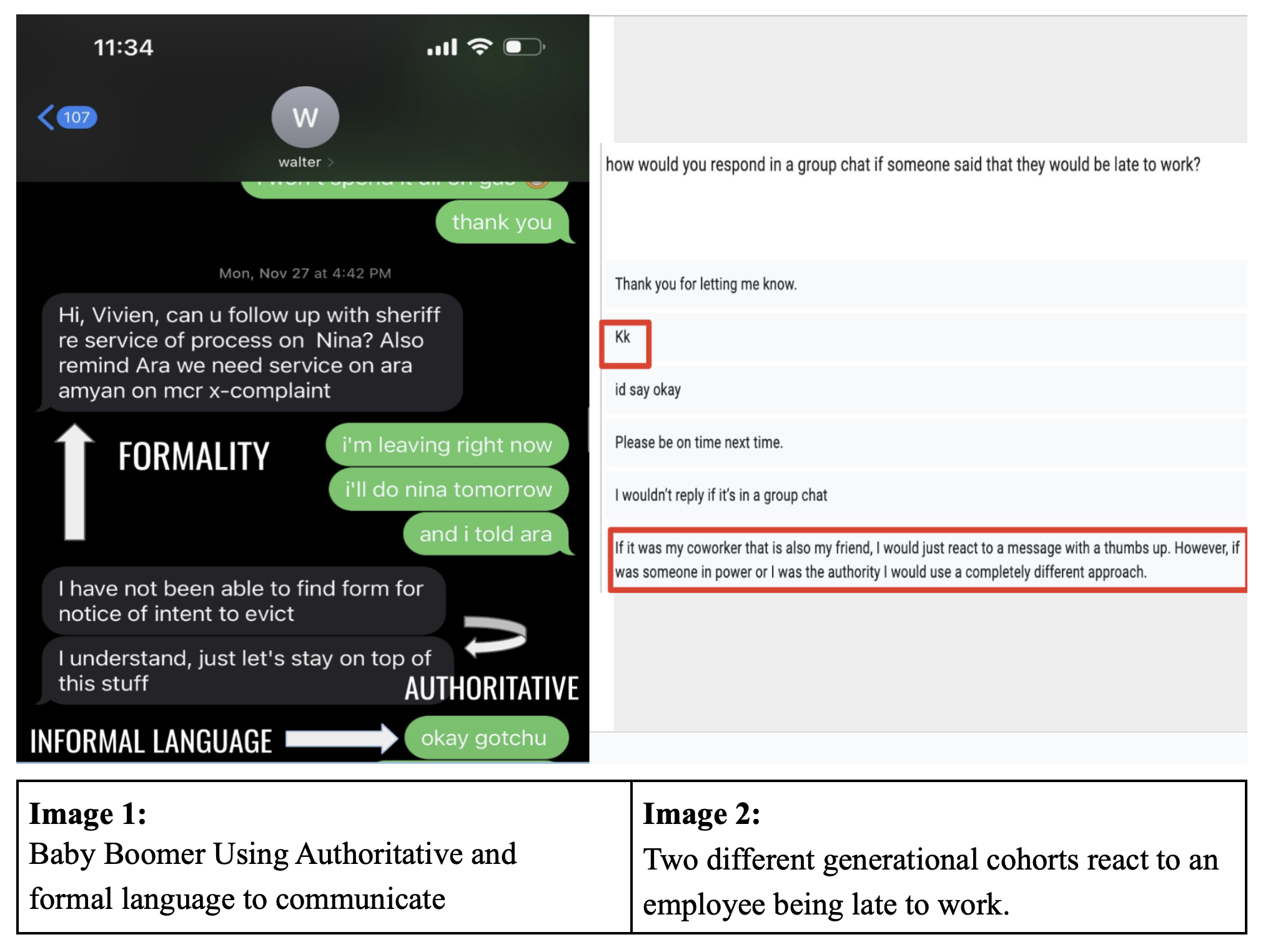
Our qualitative insights revealed that Baby Boomers emphasize formality and proper grammar, viewing it as a sign of professionalism and authority. The apparent Baby Boomer showed a more formal, authoritative approach. As shown in both examples, full sentences, proper punctuation, and directness is used. Within our qualitative insights, we observed distinct differences in the use of language and formality. (See Image one and two)

In Image two, it is shown how Generation Z often uses slang and informal language in a given scenario, favoring brevity and efficiency over traditional formality. In contrast, in image one, the Baby Boomers’ use in formal language asserts their authoritativeness, allowing for a more traditional approach.

QUANTITATIVE INSIGHTS

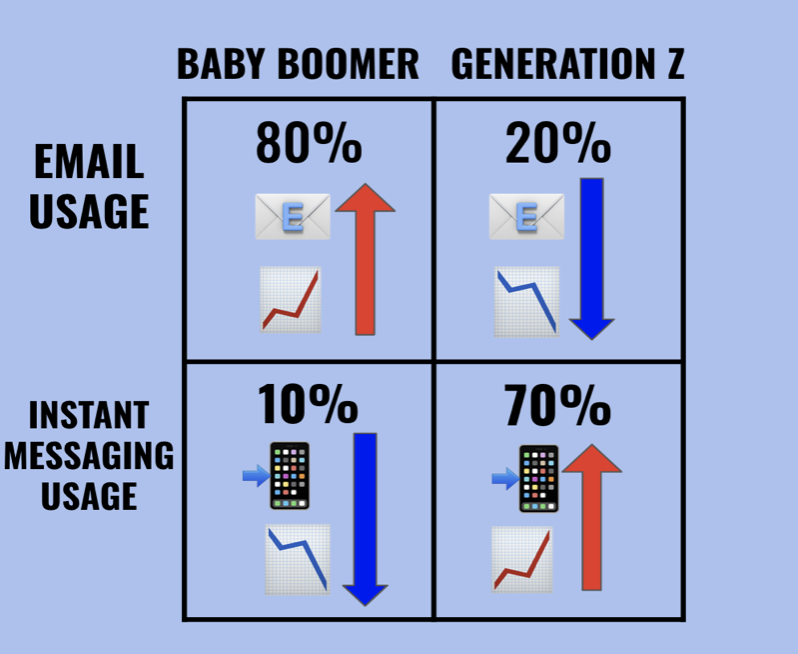
The data in the chart shows a clear preference for communicative platforms between Generation Z and Baby Boomers. We focused on two different types of platforms of communication: email and instant messaging (like instagram, snapchat, and text message).

Baby Boomers use email for 80% of their professional communications, preferring its formal format. They use instant messaging for only 20%, due to its informal structure and their preference for traditional methods. In contrast, Generation Z uses email for only 30% of their communications, often when required. They prefer instant messaging, which makes up 70% of their workplace communications, valuing its efficiency and quick interactions.

DISCUSSION

Baby Boomers: The Formal Communicators

Baby boomers grew up in times of more face-to-face communication than virtual reality, and formal written communications were very popular. They associate formality with being professional and reliable. It comes; therefore, more naturally to them that they favor emails, formal meetings, and structured ways of communication. Their style of formal, direct lines of communication actually goes to make a point in the Baby Boomers’ favor—that professionalism lies in good punctuation and clear-sighted authority. As Venter (2017) states, “Baby Boomers communicate mostly using face-to-face communication, telephone conversations and e-mail. They will seldom use blogs, wikis, social networking sites and texting or instant messaging in more formal situations, such as in the work context.”

Generation Z: Digital Native

On the other hand, Generation Z was brought up on the internet and the digital means of communication, and therefore, they embrace the style of casual and instant communication. They prefer informal language that is rich in slang, dramatic expressions, and even emojis to express emotions. They prefer digital platforms more: social media and messaging applications for communication. This is mainly a representation of a world that is fast and interconnected, where it is important to be quick and efficient in communication.Taneja, Wu, and Edgerly (2018) highlight that “Generation Z prefers to communicate through more private social media platforms such as Snapchat and Whisper.”

Our study identifies the distinct communication styles of Baby Boomers and Generation Z, highlighting why misunderstandings occur in the workplace. Baby Boomers prefer formal, structured communication, while Generation Z favors informal, rapid styles, leading to potential friction. Subramaniam and Razak (2014) note, “There is also the element of interjection such as ‘la’, ‘ah’ and ‘lah’ in the posts; it shows the informal style of posts.” Understanding these preferences allows organizations to tailor strategies for a more inclusive environment.

CONCLUSION

When focusing on the communication gap between Baby Boomers and Generation Z, it is essential to scope the different aspects of intergenerational interaction in a cohesive and productive work environment. This research project reveals the different communication preferences and patterns of the two generations, and how each generation has many differences. When highlighting these differences, Baby Boomers prefer a more formal touch to their communication, whereas Generation Z drives towards convenience and simplicity through social media and messaging apps. These differences not only reflect the differences between the people born in those particular generations but also reflect how advancements in our society have played out.

Our research proposed implementing specific training protocols to address generational communication challenges, fostering empathy and reducing confusion. Programs like “Global Courseware” and “SkillPath” can create a healthy, transparent work environment with flexible communication. For example, combining email updates with instant messaging for quick follow-ups can help bridge communicative differences. These strategies enhance collaboration and understanding, creating a more inclusive workplace. Our research not only offered solutions to communication barriers but also fostered a healthier workplace, reflecting rapid technological advancements and improving productivity and job satisfaction.

Additionally, we provide links to relevant podcasts and news broadcasts that delve deeper into generational communication differences and strategies for effective workplace communication.

https://www.youtube.com/watch?v=VicCUIEwpLk

https://www.youtube.com/watch?v=KteUn6scFqE

https://www.youtube.com/watch?v=6LD8CZIUeDU

Acknowledgements

We thank the employees of the participating law office for their time and insights, and our academic advisors for their guidance and support in this research project.

By fostering an understanding of generational communication differences, we can create more effective and cohesive workplaces.

References

Bencsik, A., Juhász, T., & Horváth-Csikós, G. (2016). Y and Z Generations at Workplaces. Journal of Competitiveness, 6(3), 90–106. https://doi.org/10.7441/joc.2016.03.06

Loh, J. (M. I., Strachan, J., & Johns, R. (2021). How rude is rude: an exploratory study among Australian Millennials, Generation “X” and Baby Boomers mobile phone users. Behaviour & Information Technology, 40(14), 1516–1527. https://doi.org/10.1080/0144929X.2020.1764106

Subramaniam, V., & Razak, N. A. (2014). Examining language usage and patterns in online conversation: Communication gap among Generation Y and Baby Boomers. Procedia, Social and Behavioral Sciences, 118, 468–474. https://doi.org/10.1016/j.sbspro.2014.02.064

Taneja, H., Wu, A. X., & Edgerly, S. (2018). Rethinking the generational gap in online news use: An infrastructural perspective. New Media & Society, 20(5), 1792–1812. https://doi.org/10.1177/1461444817707348

Venter, E. (2017). Bridging the communication gap between generation Y and the baby boomer generation. International Journal of Adolescence and Youth, 22(4), 497-507. https://doi.org/10.1080/02673843.2016.1267022

, , , , ,

Emoji Secrets: Unveiling How Gender and Sexuality Influence Emoji Usage among UCLA Undergraduates

Fangfei Liu, Nuoya Liu, Suzy Xu, Shengliang Jin, Kelly Wu

In the digital communication era, emojis have become a new form of vibrant visual language that transcends words into icons that convey emotions and ideas. Imagine this: It’s a typical Friday evening, and a group of friends at UCLA are planning their weekend via text messages. One friend, excited about the upcoming party, sends a string of emojis – a bottle of champagne , a partying face , and a confetti ball . Another friend, more reserved, responds with just a simple thumbs up. As these messages fly back and forth, a fascinating question arises: what do these tiny digital symbols say about us? Can these tiny digital symbols reveal deeper insights into our identities and social interactions? In fact, emojis not only distribute information but also reveal more profound aspects of an individual’s identity. This research focuses on the intersection between gender and sexuality and how these identity factors play a role in influencing emoji usage among UCLA undergraduate students. By launching a mixed-methods approach, the study combines statistical analysis and qualitative content examination to indicate trends and patterns in emoji selection. The findings highlight significant differences in emoji use across genders and sexual orientations and provide insights into the various ways that individual identities shape their digital expressions.

Read more

Introduction

👋👋 Hey! The rise of digital communication has introduced emojis as a new form of language, expressing emotions, ideas, and more. Emojis hold symbolic significance and cultural connotations, making them a rich subject for linguistic analysis and in-text communication studies. Here’s the link to a TED talk titled “Emoji: The Language of the Future” by Tracey Pickett, which discusses the cultural significance and evolution of emojis.

When investigating in-text communication dynamics, especially in the context of gender and sexuality, Deborah Tannen’s difference model of communication (2007) lays a theoretical foundation, suggesting that men and women use distinct styles of speech: men typically adopt a report style focused on conveying information, whereas women use a rapport style aimed at building relationships with high involvement.

Despite growing research, there’s a gap in understanding how gender and sexuality intersect with emoji usage. Our study aims to investigate how these identity categories influence emoji use among UCLA undergraduates. By employing mixed methods, including statistical analysis and qualitative content analysis, we will identify trends and nuances in emoji selection among different gender and sexual identity groups. This research will contribute to the broader understanding of how diverse identity factors shape digital communication.

Background

Emojis are small digital icons that help with facilitating emotions and expressions during online interactions today. The icons are prevalent among the younger generation, such as college students, who are active users of online communication platforms. Prior research has indicated emojis’ socio-linguistic significance, reflecting the user’s identity, emotional state, and cultural background. Gender and sexuality are two critical factors in examining the dynamics of emoji use, and our research aims to investigate the impact these two factors have on college students’ use of emojis in online conversations.

Gender differences in emoji use have been a subject of interest in existing literature, as highlighted in Herring et al.’s research. They found distinct patterns of emoji use among different gender groups. For instance, women tend to use emojis that express solidarity and support, while men are inclined towards emojis related to sarcasm and teasing (Herring et al. 2018). The influence of sexual orientation on emoji use habits among LGBTQ+ individuals has also been explored by other scholars. Gray, for instance, has noted that emojis serve as in-group codes that aid in identity expression (Gray 2023). Our research will focus on the impact of gender and sexuality on emoji usage among diverse UCLA undergraduate students and discover the characteristics of emoji habits among different groups shaped by their backgrounds.

Methods

In this study, we used a mixed-methods approach (i.e., including statistical analysis and qualitative content analysis) in this study to identify trends, preferences, and nuances in emoji selection among different gender and sexual identity groups.

This research incorporates a convenience sampling, whereby our group members send online Google Forms to a total of 50 UCLA students to collect data on their use of emojis. And, our online survey included demographic questions about race, school year, gender, and sexual orientation. It also included the collection of screenshots of emojis that they used frequently. Finally, after completing the data collection, we analyzed all the data by using R studio and

Excel software to assess the statistical correlation between gender identity and the frequency of using certain emojis.

Results and Analysis

After collecting responses from all 50 UCLA undergraduates, our research presents a comprehensive analysis of the data collected on emoji usage among undergraduate students at UCLA by including both quantitative data and tabular analysis as well as qualitative content analysis. First, the data were processed to create a dataset with the frequency and types of emojis used by different groups. The pie graphs shown below illustrate the emoji frequency based on students’ gender while indicating that female students use emojis more frequently than male students do. For instance, the number of female students who selected the option “often” is 23% higher than that of male students; there are more than 1⁄5 of the male students select the option “occasionally” to show their dispreferred attitude of utilizing emojis when texting with others.

We also created some charts showing the top 5 most frequently used emojis based on students’ gender and sexual orientation. On the left side, charts 1 & 2 show the most frequent types of emojis that male and female students use during online communication. From here, we could see that the average number of different emojis used by females was significantly higher, indicating a broader expressive range. More specifically, emojis such as 😭, ❤️, 😍, and 🥺 were predominantly used by female students, emphasizing a wider variety and a relatively higher frequency of emoji usage. On the contrary, male students demonstrated a more limited and functional use of emojis. Emojis included 😂, 😎, 👌 and reflected their preference for simpler, less emotionally varied communication.

On the right side, charts 3 & 4 show the emoji frequency based on students’ sexual orientation as LGBTQ+ students exhibited distinctive patterns in emoji usage. While emojis such as ❤️ and 😍 were used by LGBTQ+ members to convey nuanced social interactions, some emojis such as 🤔️, which might not be as prevalent among heterosexual students, were used for unique identity expressions.

Besides doing quantitative analysis, we also focus on content analysis which examines the context and meanings behind emoji usage for each gender and sexuality group through collecting screenshots of their recent in-text conversation where they used emoji. From the gender perspective, female students tend to use emojis to express a wide range of emotions, from joy and love to sadness and empathy. For instance, emojis like 😭 and 🥺 often appear in conversations involving apologies or sharing emotional experiences, indicating a high level of emotional expressiveness; The use of ❤️ and 😍 highlights the importance of emotional support and connectivity in their interactions.

From Image 1, a female student claimed that she used a heart next to a “teaspoon” because she loves their boba. This illustrates her desire of providing emotional feedback to maintain her social bonds with her friends. Nevertheless, male students tend to use a narrower range of emojis to add humor and casualness into their interaction. Emojis such as 😂 and 😎 are commonly used in light-hearted conversations, indicating a preference for maintaining a relaxed and friendly tone. From Image 2, a male student was reacting to a funny video and this indicates his tendency to be friendly and approachable while implicitly showing his preference of having a simple and straightforward conversation.

From the sexuality perspective, members of the LGBTQ+ community use emojis to convey complex social interactions and support. Some emojis which might not be as prevalent among heterosexual students, appear to express empathy and encouragement while highlighting positivity and uniqueness in conversations.

From Image 3, a bisexual female student said that she was wishing her male friend to have a fun night at the club. The emojis such 🥳 and 🎃 reflects the LGBTQ+ users’ different approach to expressing encouragement and connectivity. Conversely, non-LGBTQ+ students tend to utilize a standard set of emojis that are widely understood and conventional in the community. Emojis such as 👍 and 👌 were commonly used to suggest a preference for simplicity and directness during conversation. In Image 4, a heterosexual female student was texting her mom and asking her when she would like to come with her to get a dress for graduation. The appearance of the emoji 😭 reflects a preference for widely recognized emotional expressions while indicating her demand to facilitate clear and efficient communication.

Discussion

The results of our study highlight notable variations in the use of emojis among UCLA undergraduates according to gender and sexual orientation, which has important societal ramifications for interpersonal interactions. In contrast to males, who often use emojis less frequently and instead concentrate on humor or information sharing, women are more likely to utilize a wide variety of emojis to communicate emotions and foster connections. Emojis are a tool that LGBTQ+ people use to communicate who they are and to challenge social standards. By accommodating a variety of communication styles, recognizing these distinctive patterns can promote teamwork in educational and professional contexts, improve relationships with others by encouraging better understanding and empathy, and support the acceptance and normalization of LGBT identities. By adopting these realizations, we may build a more compassionate and diverse society where digital communication tools are tailored to meet the diverse needs of all users.

Conclusion

The findings of this study support our hypothesis that there are significant differences in the frequency and types of emojis used between male and female undergraduate students at UCLA. Female students tend to use emojis more frequently and choose from a wider variety, including emoticons like 🥺, 😭, ❤️, and 😍, indicating high emotional expressiveness. On the other hand, male students prefer a narrower range of emojis such as 😂 and 😎, reflecting humor and casualness in their communication style.

Moreover, our findings suggest that members of the LGBTQ+ community, such as gay and lesbian individuals, use emojis in distinct ways to express identity and convey nuanced social interactions not as prevalent among heterosexual students. LGBTQ+ individuals often use emojis like ✨, 🌟, and 🥳 highlighting positivity, uniqueness, and emotional depth in their digital expressions. In contrast, non-LGBTQ individuals tend to use simpler emojis like 👌 and 👍 and 😭, indicating a preference for directness and simplicity in their communication. These findings have important implications for understanding how gender and sexuality influence emoji usage in digital communication. They shed light on the complexities of digital interaction and social media communication, informing future studies in this area.

References

Bai, Q., Dan, Q., Mu, Z., & Yang, M. (2019). A Systematic Review of Emoji: Current Research and Future Perspectives. Frontiers in Psychology, 10, 2221. https://doi.org/10.3389/fpsyg.2019.02221

Gray, M. (2023). Emojis and the Expression of Queer Identity: A Sentiment Analysis Approach. Master’s Thesis, University of Georgia, Athens, Georgia.

Herring, S. C., & Dainas, A. R. (2018). Receiver interpretations of emoji functions: A gender perspective. In Proceedings of the 1st International Workshop on Emoji Understanding and Applications in Social Media. Stanford, CA.

Jones, L. L., Wurm, L. H., Norville, G. A., & Mullins, K. L. (2020). Sex differences in emoji use, familiarity, and valence. Computers in Human Behavior, 108, 106305. https://doi.org/10.1016/j.chb.2020.106305

Pickett, T. (Speaker). (2017, May 17). Emoji: The Language of the Future [Video]. TEDxGreenville. YouTube. https://www.youtube.com/watch?v=Dzlek8nMrc8

Tannen, D. (2007). You just don’t understand: Women and men in conversation (1st Harper pbk. ed., pp. 74-96). New York, NY: Harper.

Wolf, A. (2004). Emotional expression online: Gender differences in emoticon use. CyberPsychology & Behavior, 3(5). Mary Ann Liebert, Inc. https://www.liebertpub.com/doi/abs/10.1089/10949310050191809

, , , ,

Decoding Text Messages: Gender Differences in Communication at UCLA

Chloe Novinbakht, Kayla Broukim, Donna Yadidi, Shannon Broman, Gabriel Ebrami-Homayun

When it comes to understanding the textual differences between men and women, it can often be difficult to compare the two genders and their similarities and differences. You might be asking yourself if our research proves or contradicts general stereotypes about textual communications between genders. Our study dives into the nuances of texting habits among male and female students aged 18-23 specifically on UCLA campuses. Our research question, “How do men and women at UCLA differ in their text communication?” is answered by our research through analyzing text messages and social media interactions. We uncovered distinctive patterns in emotional expressivity, directness, and language use. This research sheds light on how gender influences digital communication, providing a deeper understanding of the social dynamics at play.

Read more

Introduction

In today’s digital age, text messaging has become a primary mode of communication, especially among university students. But do men and women text differently? This question forms the core of our investigation at UCLA, where we explore gender-associated distinctions in textual communication patterns among students. Understanding the way men and women communicate through text can provide significant insights into broader social dynamics. Our study focuses on several key aspects, including emotional expressivity, directness, and language use. Emotional expressivity examines whether women use more emojis and expressive language than men. Directness assesses if men are more straightforward in their communication compared to women. Language use looks at how vocabulary and grammatical structures differ between genders.

Background

This research will examine our research question: What gender-associated distinctions exist in textual communication patterns between men and women at UCLA? We collected text messages and social media interactions from 10 male and 10 female UCLA students aged 18-23. Our data collection included text samples from ingroup messages (female-to-female, male-to-male) and friend-to-friend text communication between men and women. Additionally, we conducted surveys through Google Forms to assess communication preferences and perceived effectiveness. We analyzed the data using content analysis to uncover patterns in language use, emotional expressivity, and directness.
Methods/ Theories

Our findings contribute to the broader understanding of gendered communication by highlighting how men and women differ in their digital interactions. These differences are influenced by societal norms and expectations, as outlined in Gender Schema Theory and Social Role Theory. Understanding these patterns can help improve communication strategies in educational settings, social interactions, and professional environments.

Gender Schema Theory suggests that societal norms and cultural expectations play a crucial role in shaping gendered communication patterns. For example, women’s use of more expressive and elaborate language may be a reflection of societal expectations for women to be more emotionally attuned and nurturing. Conversely, men’s more direct and less emotionally expressive communication style may reflect societal expectations for men to be more assertive and less emotionally expressive. For example, women might be trained to speak with more qualifiers and hedges, which would be seen in a courteous and accommodating manner. Conversely, men may be urged to speak in a more authoritative and forceful manner, in keeping with stereotypical ideas of what it means to be a man. The way that each gender speaks is perceived through the prism of cultural expectations, which can cause misunderstandings and strengthen gender stereotypes. These behaviors are ultimately sustained by socialization processes.

Social Role Theory provides a useful framework for understanding these differences. According to this theory, the roles individuals occupy within society influence their communication behaviors. Women, who are often socialized into nurturing roles, may use language that is more emotionally expressive and relational. Men who are often socialized into more dominant roles may use language that is more direct and task-oriented. While women may use more expressive language and emojis in casual conversations, they may adopt a more direct and concise communication style in professional or academic contexts. Similarly, men may use more expressive language in certain contexts, such as when communicating with close friends or family members.

Contradiction and Connection

With the former concentrating on cognitive frameworks and the latter on social roles, gender schema theory and social role theory offer complementary viewpoints on how cultural norms impact gendered communication. These may appear to be at odds with one another because social role theory emphasizes external social roles while gender schema theory emphasizes internalized cognitive patterns. In addition, gender schema theory postulates intrinsic cognitive differences while social role theory concentrates on behavior influenced by social positions. The benefit of combining these theories is that they provide a more comprehensive understanding of communication patterns by taking into account the roles played by both internal cognitive processes and external social influences.

Results and Analysis

Understanding these patterns can have practical applications in various settings. In educational contexts, for example, educators can use these insights to develop communication strategies that are more inclusive and effective for all students. In professional settings, understanding gendered communication patterns can help improve team dynamics and communication effectiveness. In social interactions, being aware of these differences can help individuals communicate more effectively with friends, family members, and colleagues. Our findings raise important questions for future research. For example, how do these gendered communication patterns develop over time? Are they influenced more by societal norms and expectations, or by individual personality traits? How do they vary across different cultural contexts? Answering these questions could provide insights into the complex dynamics of gendered communication.

Our analysis revealed several notable differences between male and female texting behaviors. Women were more likely to use emojis, particularly those expressing positive emotions. Men, on the other hand, used fewer emojis and tended to express emotions through words rather than symbols. For example, women frequently used heart emojis when sharing good news, whereas men often used simple phrases like “That’s great!”The difference in emotional expressivity extends beyond emojis. Women’s texts often included more adjectives and exclamations, enhancing the emotional tone of their messages. Men’s messages were generally more direct and concise, while women tended to use more elaborate language, providing context and additional details. For instance, in response to a good grade, a man might text, “Got an A in math,” while a woman might say, “I’m so happy! Just got an A in math after all that studying!” This difference in directness can be attributed to social norms that often associate masculinity with straightforwardness and femininity with a more detailed and context-rich style of communication.

Image-1: Female-to-female contact regarding their responses in image 1 revealed several notable differences between male and female texting behaviors. Emoji usage was higher among women, especially for those representing happy feelings. When communicating positive news, men commonly use straightforward comments like “That’s great!” whereas women more often utilize emojis. Beyond emojis, there is a gap in emotional expressivity. Women tended to use more exclamations and adjectives in their texts, which elevated the emotional content of their writing. This inclination is a reflection of larger societal norms and expectations around gender and emotional expressiveness, where women are typically encouraged to express themselves more and show more care.

Image-2: Male-to-male contact about their responses in image 2 revealed men used fewer emojis and tended to express emotions through words rather than symbols. Texts from men tended to be more direct and information-focused rather than emotionally charged. Women tended to add more context and extra information, while men were typically more direct in their remarks.

The analysis of texting behaviors between genders reveals quantitative insights:

  1. Emoji Usage:

    ○  Women: More likely to use emojis, particularly those expressing positive

    emotions such as heart emojis.

    ○  Men: Used fewer emojis and preferred to express emotions through words.

  2. Textual Expressivity:

    ○  Women: Used more adjectives and exclamations, enhancing the emotional tone of their messages.○  Men: Texts were more straightforward, focusing on the informational content rather than the emotional.

Emotional Expression:

●  Women: Frequently used heart emojis when sharing good news.

●  Men: Often used simple phrases like “That’s great!” to convey similar sentiments.

Societal Norms Reflection:

●  Women: Their texting behavior reflects broader social expectations for women to be more emotionally expressive and nurturing.

●  Men: Their texting behavior reflects societal norms that encourage men to be more assertive and less emotionally expressive.

Data Collected Via SMS/Text Message:

Female-Female: Positive news about getting a grade

Male-Male: Positive news about getting a grade

Female-Female: First Date

Male-Male: First date

Discussion and Conclusions

Our findings contribute to the broader understanding of gendered communication by highlighting how men and women differ in their digital interactions. These differences are influenced by societal norms and expectations, as outlined in Gender Schema Theory and Social Role Theory. In educational contexts, recognizing these differences can guide educators in fostering more inclusive classroom discussions and encouraging balanced participation. For instance, instructors might use these insights to create communication exercises that address both directness and expressiveness, ensuring all students feel comfortable and understood.

In professional settings, understanding gendered communication patterns can enhance team dynamics and improve workplace interactions. For example, training programs that highlight these differences can help team members appreciate diverse communication styles, leading to more effective collaboration and reduced misunderstandings. By recognizing how men and women express themselves, people can tailor their communication to better support and connect with friends, family members, and partners.

Conclusion

In conclusion, our study reveals significant gender differences in text communication among UCLA students. Women tend to use more expressive language and emojis, while men’s communication is more direct and concise. These differences are influenced by societal norms and expectations, as well as the roles individuals occupy within society. Understanding these patterns can help improve communication strategies in settings and provide an understanding of the social dynamics at play.

Ethics Declaration: All participants provided written consent for their text messages to be used in this study.

References

Ceccucci, W., Peslak, A., Kruck, S. E., & Sendall, P. (2013). Does Gender Play A Role In Text Messaging? Issues in Information Systems, 14(2), 186-194. Retrieved from https://doi.org/10.48009/2_iis_2013_186-194

Lewis, M., & Lupyan, G. (2019). Gender Stereotypes Are Reflected in the Distributional Structure of 25 Languages. https://doi.org/10.31234/osf.io/7qd3g

Muscanell, N. L., & Guadagno, R. E. (2012). Make new friends or keep the old: Gender and personality differences in social networking use. Computers in Human Behavior, 28(1), 107–112. https://doi.org/10.1016/j.chb.2011.08.016

Rubin, D. L., & Greene, K. (1992). Gender-Typical Style in Written Language. Research in the Teaching of English, 26(1), 7–40. https://doi.org/10.58680/rte199215447

Ogletree, S. M., Fancher, J., & Gill, S. (2014). Gender and texting: Masculinity, femininity, and gender role ideology. Computers in Human Behavior, 37, 49-55. https://doi.org/10.1016/j.chb.2014.04.021

, , , , , ,

Screaming, Crying, Hyperventilating: Gendered Expressions of Cry-Behavior in Horror

Kara Bryant, Nina Matloob, Sophie Reynoldson, Kayla Sakayan, Makayl Walsh

Deafening screams, fearful gasps, and streaming tears are all common characteristics displayed in one of film’s most prominent genres: horror. Horror films frequently portray situations like violence, villains, and monsters, naturally eliciting distress from the characters involved. Often, the characters exhibit various distress behaviors, including cries, shrieks, and screams. Given recent efforts to advance nuanced female representation in media, has feminism infiltrated the modern horror genre? A prevalent theme in classic horror has involved women being stereotyped as the submissive and helpless victim. Our research question analyzes how horror films perpetuate gender stereotypes through the portrayal of how men and women communicate distress. We created tallies for the instances of cry-behavior in 10 films ranging from 1960-2023. The results aligned with our hypothesis, which is that women exhibit more cry-behavior than men in horror films. In the films post 2000, the gap between cry-behaviors for women and men is smaller than in films made prior. This article discusses how gender ideals have been reinforced or uprooted, and the role of emotionality in horror films.

Read more

Introduction

How do horror films perpetuate gender stereotypes of weakness through the portrayal of how people communicate distress? Analyzing how people communicate distress in horror films through cry-behavior, which is often linked to weakness, instability, and over-emotionality, (Bylsma et al. 2019)  is a valuable way to measure how horror films underpin the notion that women are more emotional than their male counterparts (Brescoll, 2016).  We aim to assess the portrayal of gendered stereotypes by identifying the difference between how men and women communicate distress in horror films and analyzing how these portrayals of gendered behavior have evolved. Through developing an awareness of the media’s subliminal messaging that socializes our views of gendered behavior, we can uncover how to combat the internalization and perpetuation of these stereotypes and cultivate a more feminist lens in film.

Background

Our target population for this study is men and women in horror films. This film genre has become synonymous with the victimization of women. Women are often the victims while men are usually the primary perpetrators of violence, illustrating strong gender imbalances (Manaar Kamil & Jubran 2019). Another stereotype that has been identified in horror films is that women who are sexualized are most often killed first, sending the message that females who express sexuality should be punished (Cowan et al. 1990).  Women are portrayed as naive, clueless, and leading themselves to their murder (Manaar Kamil & Jubran 2019).

While much research has been done on women as victims in horror films, few researchers have examined the specific ways distress is portrayed in these films. This leads us to the aspect of communication that we wish to investigate: how people communicate distress through signs such as screaming, crying, and pleading to find the difference between how men and women are portrayed as communicating distress in horror films. Moscozo (2016) found that the horror genre may be shifting away from the defined stereotypes of women as submissive victims. Therefore, our aim is to assess if the ways gendered portrayals of distress in horror films have also evolved over time.

Methods

We hypothesize that 1) women will demonstrate more cry-behavior than men and 2) films made in the last decade (2013-2023) will show men and women displaying cry-behavior more equally than films from past decades. Each researcher watched two films defined by the “horror” genre, took notes, and tallied how the characters communicate distress and the frequency in which they do so. Five of these films were released after 2014, while the other five films were made prior to 2000.  These films include: Psycho (1960), Carrie (1976), Halloween (1978), Scream (1996), Nightmare on Elm Street (1984), Happy Death Day (2017), Get Out (2017), Us (2019), Pearl (2022), and Five Nights at Freddy’s (2023). We agreed that these films embodied the cultural zeitgeist in their respective times, making them indicators not only of popular horror but cultural moments in film. Our sample includes films with lead characters both white and non-white to minimize race as a confounding variable. We included films led by men and women, with prominent characters of both genders represented.

We coded “cry-behavior” in these films based on the characteristics outlined by Gračanin et al. (2014), including tear production, distress vocalizations, and sobbing. Our group defines distress vocalizations as: shrieks, screams, and gasps while excluding “grunts” as they are more closely identified with pain than distress. We all watched a scene from the film Scream (1996) and individually coded it. Afterwards, we compared our results to ensure our method for identifying cry-behavior was consistent before tallying cry-behaviors in each film. For example, we concurred that a continuation of hyperventilation for multiple minutes counts as one tally, but a sudden gasp during that period would count as two.

Results

Women in horror movies exhibit more cry-behavior than men. Women demonstrated cry behavior 252 times across older and newer films. Men demonstrated cry behavior 64 times. Thus, in the 316 times cry-behaviors were exhibited in all of the films combined, women represented 79.75% of cry-behavior while men accounted for 20.25%.

New horror films (those made in the past decade) present more cry-behavior than old horror films (those made before the year 2000) across both genders. New horror films demonstrate 134% more cry behavior.

Women in horror movies created before 2000 demonstrate cry behavior significantly more than men. In the 135 times cry-behavior was demonstrated in Psycho, Carrie, Halloween, Nightmare on Elm Street, and Scream, women accounted for 122 of those instances, and men only 13. Thus, women represented 90.37% of cry behaviors while men represented 9.63%. Women in horror movies created after 2000, specifically within the last decade, continue demonstrating more cry behavior than men. There were 181 demonstrations of cry-behavior in Get Out, Happy Death Day, Us, Pearl, and Five Nights at Freddy’s combined. Women exhibited cry-behavior 130 times and men 51 times, or 71.82% and 28.18% respectively.

Discussion

Overall, the results support our hypotheses. Women in horror films across past and present decades exhibit significantly more cry-behavior than men, confirming our first hypothesis. Nonetheless, even though women exhibit more cry-behavior than men, the gap is smaller in films produced in the last decade. This highlights strides towards a more equal/feminist lens in films and confirms our second hypothesis. These findings are indicative of how horror films perpetuate stereotypes of women as excessively emotional and weak. Our findings also support the topic of men being conditioned to restrain their emotions as a signal of masculinity. Interestingly, films created in the last decade had more instances of cry-behavior across both genders, which may indicate the audience’s appetite for greater emotional intensity in the films they watch. However, this may also be influenced by confounding variables such as the average runtime of films increasing in recent years.

Overall, female characters typically exhibit cry-behaviors in times of distress and danger, reinforcing the stereotype that women are overly emotional, weak, and unstable. Women display the most cry-behavior in the form of sobbing, screams, gasps, and pleading. Nightmare on Elm Street (1984)  plays into the trope of women expressing cry behavior in moments of vulnerability and weakness when they are attacked while bathing, sleeping, or cornered in isolation by the killer. In Psycho (1960), the only time a male character exhibited cry-behavior was while they were being chased and dressed as a female.

Films from the last decade display the lead female character as a killer who is motivated by her fragile and excessively emotional state. In Pearl (2022), Pearl is the sole perpetrator of violence in the film and conveys a range of emotions from rage to sadness; however, her capriciousness may contribute to stereotypes of women as unable to control their emotions since she tends to kill on a whim of rage. Most of her cry-behavior was coded for sobbing. Similarly, in Carrie (1976), the main character first expresses cry-behavior in connection to her femininity when she gets her first period in the female locker room. She exhibits cry-behavior when being targeted by students and her religious mother for her submissiveness and changing female body. Once Carrie becomes the tormentor, her cry-behavior ceases as she watches her classmates cry and scream. In contrast to modern horror films such as Pearl, Carrie gains autonomy once she sheds her emotional disposition.

The situations where cry-behavior is exhibited shift from responses of distress, to expressions of strength in modern films. For example, in the film Happy Death Day (2017), the main character, Tree, exhibits cry-behavior in states of frustration and anger rather than expressions of helplessness and defeat. In Us (2019), the lead character, Addy, is depicted as excessively emotional by her husband who complains that she overreacts. Nonetheless, Addy exhibits strength when she fights the killers. Addy utilizes cry-behavior most frequently during physical encounters, such as stabbings, beatings, and burns, a response to overcoming physical pain rather than fear. Her children exhibit cry-behavior while being held by Addy, which supports how Addy maintains strength and resilience despite the pain.   

Interestingly, modern horror also depicts female rage and instability as tools for female characters to weaponize. Rose, the female lead and perpetrator in Get Out (2017), does not exhibit cry-behavior in reaction to physical pain. She reacts with laughter and retaliates by inflicting pain onto others. Rose uses cry-behavior to weaponize her white femininity, playing into the stereotype of the damsel in distress to protect herself from who she believed were the police coming to “rescue” her. Modern films such as Get Out show how the female perpetrator might use her emotions to shift blame onto the male victim. In contrast to female horror representations, the male lead, Chris, does not sob when he is attacked. He downplays and internalizes his cry-behavior through gasps, hyperventilating, and shedding an occasional tear.

Conclusion

Although the representation of women as weak in horror films has lessened, women are still more likely than men to be depicted as unstable and excessively emotional. Modern horror films are beginning to undermine traditional notions of feminine vulnerability and have morphed emotional pain into either a catalyst for vengeful violence or fierce protection. As we work to unlearn societal understandings of emotion as a form of weakness, men demonstrate cry-behavior in times of distress. While improving, the gender imbalance of how men and women communicate distress in these films persists.

References

Brescoll, V. L. (2016). Leading with their hearts? How gender stereotypes of emotion lead to biased evaluations of female leaders. the Leadership Quarterly, 27(3), 415–428. https://doi.org/10.1016/j.leaqua.2016.02.005

Bylsma, L. M., Gračanin, A., & Vingerhoets, A. J. J. M. (2019). The neurobiology of human crying. Clinical autonomic research: Official journal of the clinical autonomic research society, 29(1), 63–73. https://doi.org/10.1007/s10286-018-0526-y

Cowan, G., O’Brien, M. (1990). Gender and survival vs. death in slasher films: A content analysis. Sex Roles, 23, 187–196. https://doi.org/10.1007/BF00289865

Gračanin, A., Bylsma, L. M., & Vingerhoets, A. J. (2014). Is crying a self-soothing behavior? Frontiers in psychology, 5, 502. https://doi.org/10.3389/fpsyg.2014.00502 

Manaar Kamil, S. & Jubran, H. S. Y. (2019). The representation of women in the horror movies: A study in selected Horror movies. Communication and Linguistics Studies, 5(1), 14. https://doi.org/10.11648/j.cls.20190501.13

Moscozo, R. D. (2016). Language in Postmodern Horror: Shifting Away from Stereotype to Heroine. Colloquy, 12, 66-86.

Mundorf, N., Weaver, J., & Zillmann, D. (1989). Effects of gender roles and self perceptions on affective reactions to horror films. Sex Roles, 20(11), 655–673. https://doi.org/10.1007/BF00288078

, , ,
Scroll to Top