Tech Bros and Tech Woes: A Perspective on Gendered Sociolinguistics in the Tech Industry
Jenny Wang, Madhavi Vivek, Rajana Chhin, Audrey Chung
In the expanding realm of technology, language serves as more than just a communication tool — it is a powerful marker of identity and belonging. Our study delves into gendered linguistic practices within the tech industry, focusing on “tech bro” culture and its impact on female experience and career advancement in this male-dominated field. Through interviews with male and female tech students and analysis on social media content, podcasts, and scholarly articles, we uncovered lexical variations and interactional patterns unique to the tech community. Utilizing a blend of qualitative and quantitative methods, we observed terms like “tech debt,” distinct pitch variations, and exaggerated “urban” accents during conversation. Our findings reveal that females in tech often adapt their language to conform to the hyper-masculine expectations of the tech workplace, further reinforcing clear gender biases and stereotypes within the industry. By highlighting these subtle linguistic barriers that perpetuate gender biases, we aim to emphasize the need for a more inclusive and supportive tech environment for all individuals.
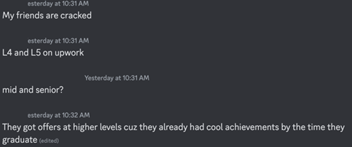
Introduction and Background The technology industry has long been known for its clear gender gap, given its predominantly male sector enforcing stereotypes and biases against women in the workplace. Despite advancements over the years, the tech industry still exhibits pervasive gender bias, often manifested through language. Recently, the term “tech bro” has been used to characterize the toxic masculinity prevalent in the workplace (Jones 2022). Our research aims to explore the unique lexicon and interactional patterns of this group, observing how they reinforce gender stereotypes and impact female experience in tech. In other words, how does the dense network of “tech bros” correlate to their use of vernacular variables? Does gender bias exist within language commonly used by “tech bros?” Existing literature highlights the significant role of gendered language — the words and phrases that inherently carry gender bias—in shaping workplace dynamics. For instance, terms like “chairman” and “assertive” often assume a male subject, whereas words like “bossy” and “hysterical” are typically applied to females in leadership roles (Holmes 2008). Holmes’ study suggests that women in tech adopt more masculine speech patterns to gain respect and authority, such as using direct imperatives when commanding subordinates or purposefully disengaging from workplace arguments. Despite the growing awareness of these issues, there remains a gap in understanding the specific linguistic behaviors of “tech bros” and their effects on female colleagues. Our hypothesis claims that the linguistic practices of “tech bros” do contribute to the exclusion of women from the tech sector. This exclusion manifests in daily communication, feedback, perception of qualifications, and performance evaluations. Our research aims to find out whether the male-dominated environment serves as a barrier to community entry and inclusion for women. Additionally, we aim to study the speech variation between genders within the community and its role in building professional relationships. By analyzing tech jargon and interactional patterns, we hope to uncover the subtle and pervasive barriers that gendered language creates in promoting workplace gender equality and diversity. Methods In order to conduct our research, our team relied on three main methods for data collection: Going in order, we consistently evaluated new information against previous data. Further analysis included examining the spectrograms of interview snippets for distinct phonological features. Results and Analysis The following section will focus on the results of our study. 1. Media As per our methodology, one of our primary sources of information was through the portrayal of stereotypical “tech bros” on social media. While this type of content is not the most scientific, it does provide context on societal expectations placed on the average “tech bro.” The comedic video linked here demonstrates several “tech bro” characteristics while mocking common stereotypes, such as remote work culture, cost-of-living in the Bay Area, and popular hobbies and vacation spots within tech communities. Additionally, we observed that the creator of the video speaks with an exaggerated coastal urban accent, similar to those of surfers or “frat bros.” This hyper-masculine accent underscores the inherently masculine nature of “tech bro” culture and serves as a starting point for developing a hypothesis surrounding the existence of a gender gap reflected in language. 2. Online Tech Hubs Our team visited popular internet communities within the tech industry. The following quotes were taken from a popular Discord server called cscareers.dev, which is a community for student developers seeking internship and new grad opportunities in tech with over 8000 members. From these quotes in Figure 1, we gather that there is a linguistic overlap between tech communities and gamer communities. This would make sense as demographically, they are both male dominated, and technology and gaming share many similarities as fields and industries. Specific jargon like “jank” to describe an interviewer of poor quality and “cracked” to describe extremely accomplished people are two examples of somewhat-expected buzzwords. According to Wiktionary, the term “jank” exists as both computing slang and video game slang, though it is rarely used in technical contexts. The usage of this term colloquially shows the adoption of computing and gamer slang in broader environments. In the same vein, “cracked,” which usually carries video gaming implications, being used to express skill levels outside of gaming also shows the adaptive nature of the jargon. 3. Interview: Indexical Shift Our first interview was conducted with Brandon and Brian, both third-year cognitive science students at UCLA. Brandon is a product manager intern, and Brian is a software engineering intern. Because the two have an established friendship, I conducted the interview with both participants present to simulate as natural of a conversation as possible. The interview was split into first, a professional chat, and second, a casual conversation in order to evaluate for indexical shifts. Throughout the professional chat, I asked Brian and Brandon questions about their experiences in tech through their professional organizations at UCLA. The following is a transcription of a snippet of the conversation: Brian: Ensuring like, there’s not a lot of tech debt, I think is like super important across all the projects within DevX as a whole makes everything run very smoothly and there’s no churn. Brandon: Yeah yeah, for sure. I think that’s a huge thing too, for a lot of projects, is because people are bouncing. Um, people bounce from projects all the time, um having tech debt is just like absolutely horrendous because like people who don’t know anything about the project, for lack of a better term, like a shitload of… For the casual conversation, I asked the participants to describe updates in their lives, as well as share gossip, as if we were catching up. This is in order to establish the most natural and comfortable environment. Brandon: ‘Cause I remember, I had- there was something about- but anyway, I saw them together, like they were like, like homies, like they were like, headed to a party together. I was like “oh, like birds of a feather” you know? Shit, like that tracks, that hella tracks, you know? Like I’m not surprised. Brian: That’s wild. Generally, I noticed that participants, especially Brandon, deliberately talked slower during the professional chat. During the casual conversation, I found that Brandon tended to stutter more, as well as exhibit doubling in order to emphasize certain phrases. In the professional chat, instead of doubling phrases, he slowed down and replaced those instances with filler words. Tech jargon was noticeably present during the professional chat, including words like: The following spectrograms closely examine Brandon’s use of the word “shit” in both the casual and professional context. Here, we can see that during the casual conversation, there is a significant increase in pitch towards the end of the word, indicating a high rising terminal, which can be especially common amongst young people. In the spectrogram for the same word used in a professional context, Brandon maintains the same pitch. This is likely because a high rising terminal is not situationally acceptable in all professional settings. For example, it is usually not encouraged during job interviews. We can gather that a “tech bro” like Brandon understands this and subconsciously omits high rising terminal in professional contexts. 4. Interview: Gender and Culture Our second interview was conducted with Jiin Kim, a fourth year Linguistics and Computer Science major who has experience as a software engineer through her internship at Microsoft. As she explained tech-specific language throughout the interview, she defined them in layman’s terms, constantly checking to assure my comprehension of the terms as an outsider to the tech sector. She mentioned how it can be hard to feel included entirely when there is a linguistic barrier made of tech jargon and expressions that often feel very exclusive and not easily accessible to be understood. She herself felt intimidated as an incomer into an established tech workspace. Linguistically, she found herself assimilating into the culture by reflecting speech patterns of those around her—particularly those superior to her. If she finds them to speak more directly, using imperatives, she herself would do the same. Even through a digital space, if she noticed someone using more emoticons in their messages, she would reflect that frequency. As a woman in the tech space, she attributes her not having much experience with discrimination or feeling out of place with the changing ages. As a young college student in an internship program seeking to give more opportunities to a diverse group of tech-workers, she felt well-supported by her company and her peers. Our last interview was conducted with Matt Nieva, a fourth year Computer Science and Engineering major with experience as the Development Team Director for ACM (Association for Computing Machinery) at UCLA and as a software engineering intern at Cisco. Throughout his interview, he went deep into tech jargon, throwing out multiple technical words while describing tech projects in–depth. When asked about why tech-bro culture revolves so heavily around a specific tech lexicon, he responded saying that tech-jargon is perceived as proof of expertise. There is a certain linguistic exclusivity that makes those who use it hold more authority and credibility. These common words in tech-space also seep into his daily vocabulary as well, signifying to others that he is a member of this tech-bro community. These are words such as: In efforts to assimilate, he, like Jiin, would mimic the linguistic patterns of those around him. He discovered the concept of downtalking versus uptalking—downtalking being lower in pitch and making a speaker sound more assertive, and uptalking being higher in pitch and making a speaker sound less credible. One reason why downtalking could be perceived as more respectable might be that it is, based on pitch, masculine indexing, while the other is more feminine indexing. Discussion and Conclusion As mentioned in the background, tech-bro culture is characterized by an informal, male-centric atmosphere that often perpetuates gender discriminatory behavior and aids in maintaining the gender gap in the tech industry. The establishment of Title IX in 1972 was a turning point for the number of women in STEM, but women still face the leftover effects of this gender power dynamic now in more covert ways. This inequality is visible in how more masculine indexing ways of leadership such as authoritative/assertive styles that assert hierarchical status difference is perceived as more valid of leadership than leading in what is considered more feminine indexing ways such as facilitating group discussion. Beyond perceived leadership and professionalism, research has found that gender comes to play even within the informal discourse at the workplace. Small talk is a core strategy to foster team and build rapport; however it is culturally coded as feminine specifically when it is not about anything that is work related or distinctly masculine. Research showed that at a female workplace, these pre-meeting talks would last longer and delve into topics such as family, beauty, healthcare, while when studying three different New Zealand IT organizations, small talk was either non-agenda work related or about sports. This may sound trivial but interpersonal discourse is key in fostering work relationships and an overall culture. This difference is visible in humor as well, where a female boss might make a self-deprecating joke to reestablish good relations with her subordinates, workplaces that were more masculine in one meeting consisted of humor that 90% of was sarcastic or negative jibes intended to deflate the addresses. Gender hierarchy in the workplace, particularly within the linguistic space, is covert and embedded subtly into the ways we talk, the ways we perceive authority, etc. Our findings indicate that the sociolinguistics of the tech industry have unique qualities, including those of which have an effect on the perception of male and female individuals that work in tech. As a male-dominated field, gender bias is highly prevalent in the industry. Our aim was to strengthen this claim in which this bias is confirmed and correlated to female “success” (defined as experience and career advancement), via the exploration of the pattern of language adaptation by females to male tech industry speech. Through this study, we found that the perpetuation of this gender bias is tied to the inherent gender gap that this industry creates in that a male-dominated environment contributes to female exclusion and strict gender-based hierarchy. Our research indicates that this exclusion and hierarchy contributes to the barrier against female success in male-dominated fields such as the tech industry. The continued observation of male-dominated power structures can aid in the effort for people of all genders in high-earning fields. There is thus a need for collective action toward increasingly inclusive, supportive, and sustainable workplace environments, especially the tech industry, for female-identifying people and other minority individuals. References Duchene, A., & Heller, M. (2012). Language in late capitalism: Pride and profit. Routledge. Gleeson, P. (2017). Working with Coders. https://doi.org/10.1007/978-1-4842-2701-5. Holmes, Janet. Gendered Discourse at Work , 2 Apr. 2008, onlinelibrary.wiley.com/doi/10.1111/j.1749-818X.2008.00063.x/abstract. Ignatow, G. (2003). “Idea hamsters” on the “Bleeding edge.” Poetics, 31(1), 1–22. https://doi.org/10.1016/s0304-422x(02)00042-6. Jones, H., & Sudlow, B. (2022). A contemporary history of Silicon Valley as global heterotopia: Silicon Valley metaphors in the French news media. Globalizations, 19(7), 1122–1136. Moldovan, Andrei. “Technical Language as Evidence of Expertise.” MDPI, Multidisciplinary Digital Publishing Institute, 21 Feb. 2022, www.mdpi.com/2226-471X/7/1/41. https://www.ucats.org/a-closer-look-at-gender-diversity-in-tech-departments-across-the-usa.html miinii (@officialmiinii). (2024) “women in computer science stand up!” https://www.tiktok.com/@officialmiinii/video/7342179255356230955. Tripathi, Pooja (@winnie_thepooj). (2024) “POV: date with a tech bro” https://www.tiktok.com/@winnie_thepooj/video/6962561340086996230?is_from_webapp=1&sender_device=pc&web_id=7279640957828630062. Nasso, Austin (@austinnasso). (2024) “POV: you’re talking to a tech bro” https://youtube.com/shorts/qmGL0-U2Z58?si=DAulz7gNkYjYpRVH.